From the FasterSkier archive — posts syndicated from athletes’ and coaches’ own blogs between 2004 and 2012, kept online as published. Current coverage is at fasterskier.com.

Tag: ZDF

  • Fourcade Finally Wins in Pokljuka; Another Top 20 for Bailey; Career-Best for Christian Gow

    Fourcade Finally Wins in Pokljuka; Another Top 20 for Bailey; Career-Best for Christian Gow

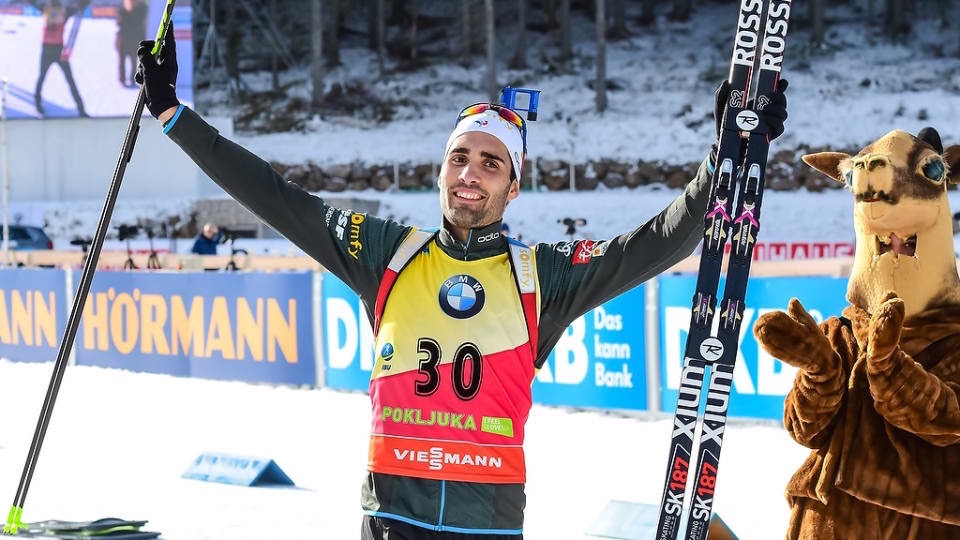
    France’s Martin Fourcade celebrating his victory in the men’s 10 k sprint at Friday's IBU World Cup in Pokljuka, Slovenia. (Photo: IBU)
    Even the chamois (native to Pokljuka’s Julian Alps) is clapping: France’s Martin Fourcade celebrates his victory in the men’s 10 k sprint at Friday’s IBU World Cup in Pokljuka, Slovenia. (Photo: IBU)

    (Note: This article has been updated to include comments from Canada’s Scott Gow.)

    The exact details of Martin Fourcade’s record book depend a bit on who you ask.

    The official statistics of the International Biathlon Union (IBU) say the French biathlete got his 50th IBU World Cup victory on Friday in the men’s 10-kilometer sprint in Pokljuka, Slovenia.

    By his own count, he claims he already hit that milestone last week and this was his 52nd victory, including two gold-medal races at the Olympics, which the IBU does not include in its World Cup tally. By any measure Fourcade is very successful, making him two-for-two in sprint victories this season.

    If he keeps competing long enough at such a high level, the 29-year-old Fourcade might be well on a trajectory to one day overtake the most successful biathlete of all time, Norway’s Ole Einar Bjørndalen who has 94 and counting. Fourcade already surpassed his countryman Raphaël Poirée last season to move into second position on the all-time list of World Cup winners (he is also already ahead of the leading female biathlete of all time, Sweden’s Magdalena Forsberg, who has 42).

    But back to the present: A sunny day with calm wind conditions and firm snow set the stage for excellent shooting, with more than 20 athletes staying clean in the prone and standing stages while cheered on by a few thousand enthusiastic fans in the stands in Pokljuka.

    Leaving the range after his standing shooting, Fourcade trailed Norway’s Johannes Thingnes Bø by 0.5 seconds. But on that final lap, Fourcade asserted his current dominance on World Cup biathlon courses, crossing the finish line 13.7 seconds ahead of the Norwegian in a time of 23:11.7 minutes before briefly pumping his fist when he saw his result on the video wall.

    “When I saw we were on the same time after the second shooting, I knew everything was possible,” Fourcade explained to German broadcaster ZDF in a post-race interview. “I had good times this year on the last loop, and so I was pretty confident about my chances to win when I heard [from the coaches] I was at the same time as Johannes.”

    “During the last lap I heard I was almost at the same time as Martin after the second shooting,” Bø commented on that final lap during the press conference. “So I just had to speed as fast as I could, and yeah today it was [only] enough for second place.

    “I think it was a good race under the circumstances…,” he added. “You see the result list today, it’s not so fun to be behind Martin again, but I am in front of Anton [Shipulin], Emil [Svendsen] and Simon Schempp, they are all very strong names… So I am happy with this race.”

    “It was an amazing competition,” Fourcade told ZDF. “It was really hard, much harder than last week in Östersund. I am really proud to win today in spite of all the clean shootings [by other athletes]. I waited a long time for my first victory ever in Pokljuka.”

    That last detail was important to Fourcade, stressing in his opening statement of the press conference that he now has won a race at every (regular) World Cup venue where he has competed.

    “You know, I waited for a long time to win in Pokljuka. It’s the last site in the biathlon World Cup where I never won before,” he said. “So this is a special day for me.”

    Shooting clean just like all the other top finishers, Russia’s Anton Shipulin claimed the third position on the podium (0+0, +15.1), able to defend a narrow lead to Norway’s Emil Hegle Svendsen after the final shooting stage on the last lap (0+0, +20.9).

    This was Shipulin’s first podium finish of the new season, after placing third last year in the overall World Cup with seven podium finishes (excluding relays).

    During the press conference, Shipulin stated via a translator that he was very motivated by the recent performances of his teammates.

    “Of course I was very happy for the guys [Babikov and Tsvetkov, who placed first and second in the pursuit race a week ago] because they are also pretty new to the team,” he said. “And right away they had a super performance in Östersund.”

    “The altitude plays its role,” Shipulin explained when asked about his race. “The tracks are a little bit difficult, especially during the last loop it was hard, but I managed it today and I am on the podium.”
    Despite narrowly missing out on that podium finish, Svendsen was encouraged by his improving race results.

    “I am happy with my performance,” he told the IBU in an interview. “A month ago I didn’t [even] think I’d be here. So I am happy with the way things are going, and I am on the right way.”

    Starting with bib 88, Fourcade’s teammate Quentin Fillon Maillet became the closest challenger for the podium among the late starters as the race progressed. Also with two clean shootings, he left the range in fourth place, just 11.5 seconds behind the then-leader Bø and ahead of Shipulin, but lost further ground on the final lap and one more position to finish fifth (0+0, +27.0).

    “I look at the results and see the strongest and toughest guys made it into the top ten,” Shipulin said according to a translator, when asked about Saturday’s pursuit at the press conference. “I think the race will be very interesting, and I will try my best.”

    Five North American Men Qualify for Pursuit, Again
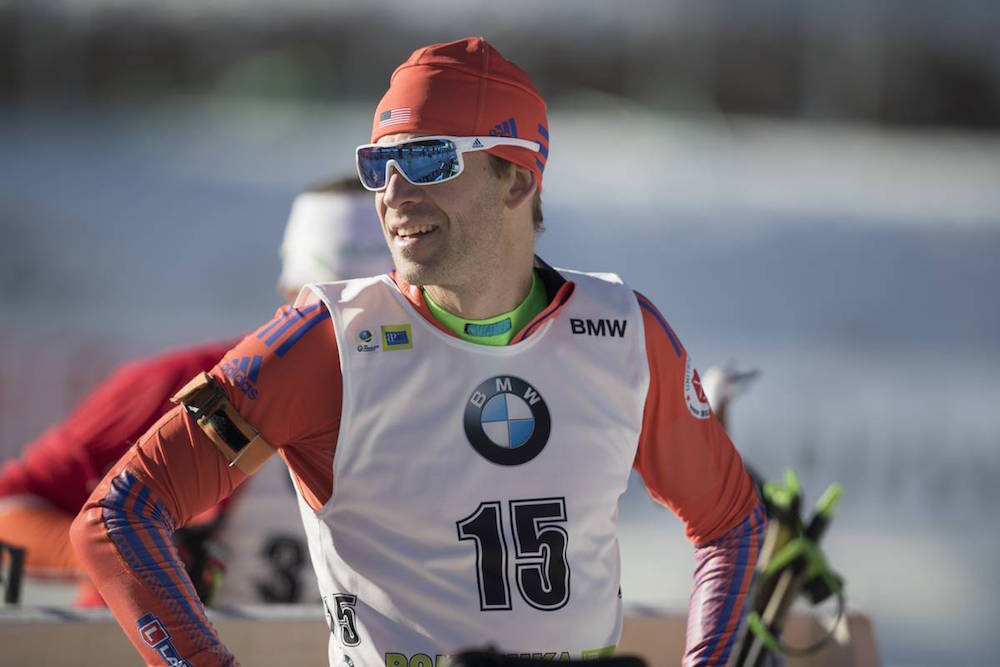
    09.12.2016, Pokljuka, Slovenia (SLO): US Biathlon's Lowell Bailey on sprint day at the IBU World Cup in Pokljuka, Slovenia. He placed 18th for his fourth-straight top 20 this season. (Photo: USBA/NordicFocus)
    US Biathlon’s Lowell Bailey on sprint day at the IBU World Cup in Pokljuka, Slovenia. He placed 18th for his fourth-straight top 20 this season. (Photo: USBA/NordicFocus)

    In a repeat from the previous World Cup weekend in Östersund, Lowell Bailey again achieved the best result of the North American starters on Friday. Like the top of the field, he managed to shoot clean, but his overall course time ranked 54th (out of 104). Bailey finished 1:13.3 behind Fourcade for 18th place (0+0), his fourth-straight top 20 in as many individual races held this season.

    “I’m happy with the top-20 and hoping for my ski-speed to improve tomorrow,” Bailey wrote in an email to FasterSkier.

    In a US Biathlon press release, he said he was satisfied with his shooting, but “didn’t feel great on the tracks. I hope I can bounce back tomorrow and work into the top ten.”

    For Biathlon Canada, Scott Gow also shot clean in both stages, and despite starting out a bit slower, he managed to ski his fastest lap on the third loop to finish in 23rd (0+0, +1:16.7). It was the best World Cup sprint result for the Canmore resident, and second-best (excluding relays) following an 18th place in the individual at last season’s World Championships in Oslo, Norway.

    “I’m happy to have raced back into the top 30. It was especially gratifying after a sub-par effort last weekend,” Gow said, according to a Biathlon Canada press release. “My goals are to have multiple top-30 results this year and hit some in the top 16 so today was a good start towards accomplishing those goals.”

    Gow, 26, was one of more than 20 racers to shoot clean.

    “I’ve been focused on maintaining a high shooting average for the duration of the season so I attribute my clean shooting to having good fundamentals, and being somewhat in the ‘shooting zone’ with no crazy environmental conditions to worry about,” he said. “After our poor start, our team and staff have been working hard to make sure everything is perfect. I think today was the culmination of everyone giving a little extra attention to all the important details.”
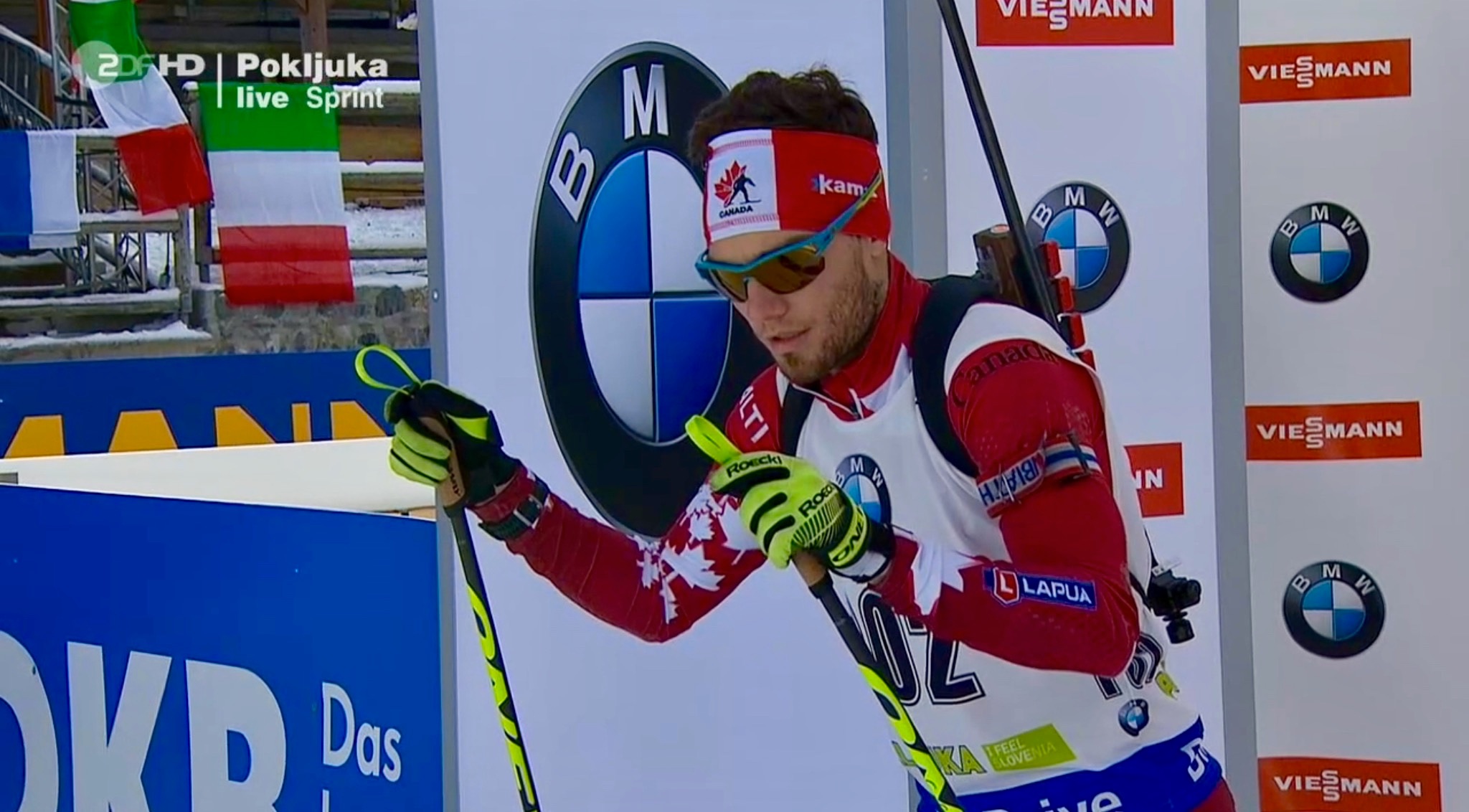
    Biathlon Canada’s Christian Gow at the start of the men’s 10 k sprint on Friday at the IBU World Cup in Pokljuka, Slovenia. Gow placed 33rd for a career best. (Photo: ZDF/IBU broadcast)
    Biathlon Canada’s Christian Gow at the start of the men’s 10 k sprint on Friday at the IBU World Cup in Pokljuka, Slovenia. Gow placed 33rd for a career best. (Photo: ZDF/IBU broadcast)

    His younger brother Christian Gow also shot clean and finished in the World Cup points in 33rd (0+0, +1:30.9), for the best result of his career so far.

    Teammate Brendan Green was 52nd with two misses (1+1, +1:55.6).

    One position behind him, Bailey’s teammate Tim Burke finished 53rd despite three penalty laps (2+1, +1:58.4), thanks to skiing the 26th-fastest course time and his fastest loop of the day on the last loop.

    The third U.S. starter, Russell Currier placed 65th with two penalties (1+1, +2:18.4), just missing out on the top-60 qualification criterion for the pursuit again and this time even by only five seconds.

    Canada’s Macx Davies started out with a clean prone shooting stage and was shown by the international TV broadcast coming into his standing shooting bout with a competitive split time, but he missed two targets and ended up 80th (0+2, +2:58.4).

    Biathlon Canada team veteran Nathan Smith did not start in Pokljuka on Friday, and for US Biathlon, Leif Nordgren and Sean Doherty are currently on the “injured reserve list”.

    The times back to the winner from the sprint carry over into the pursuit race on Saturday.

    Results | Pursuit start list (starts at 5:45 a.m. EST). Stream live at Eurovisionsports.tv.

    — Alex Kochon contributed reporting
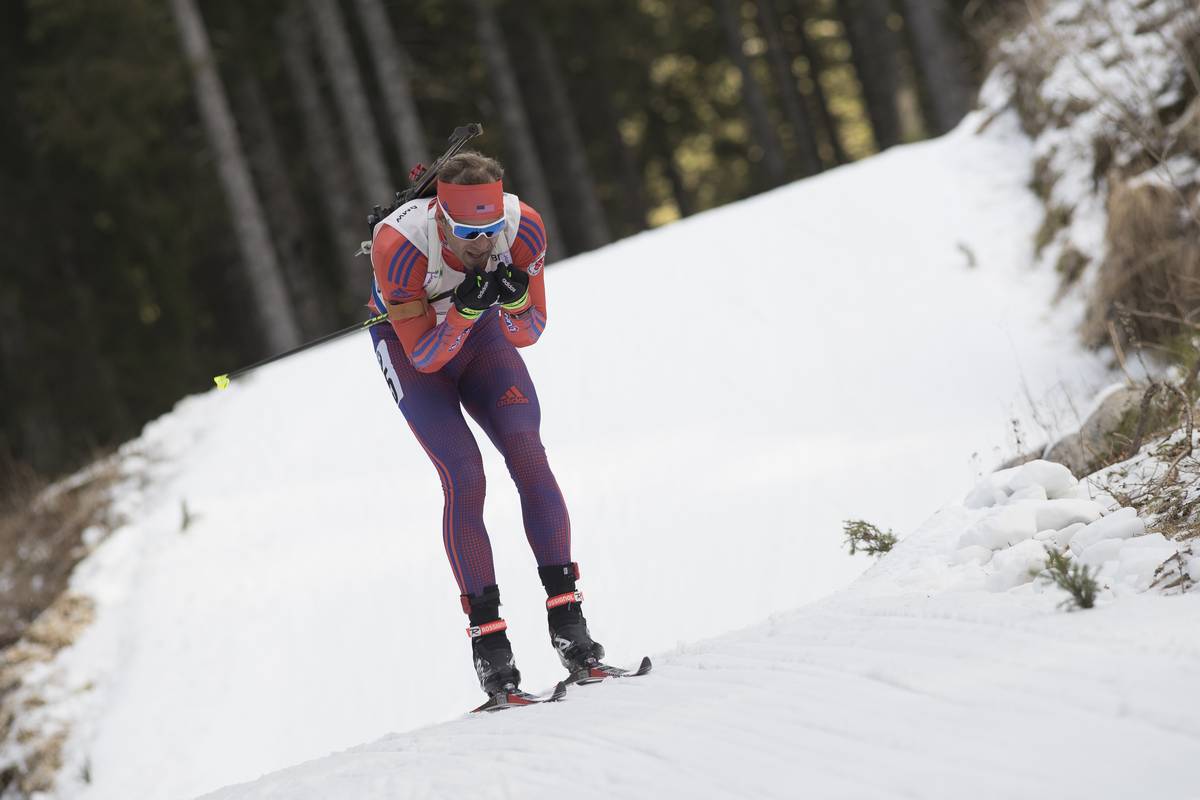
    Lowell Bailey (US Biathlon) racing to 18th on Friday in the men's 10 k sprint at the IBU World Cup in Pokljuka, Slovenia. (Photo: USBA/NordicFocus)
    Lowell Bailey (US Biathlon) racing to 18th on Friday in the men’s 10 k sprint at the IBU World Cup in Pokljuka, Slovenia. (Photo: USBA/NordicFocus)
  • With 1 Year Old at Home, Dorin Habert Wins Pokljuka Sprint

    With 1 Year Old at Home, Dorin Habert Wins Pokljuka Sprint

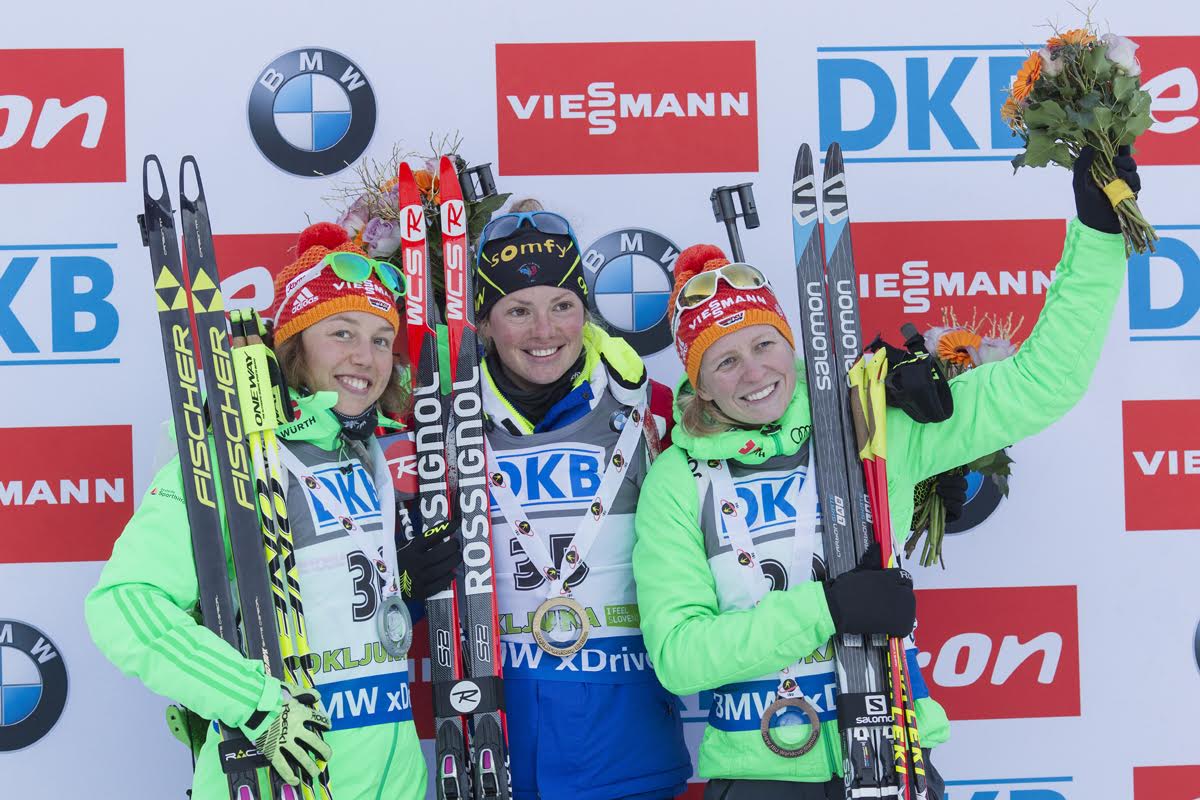
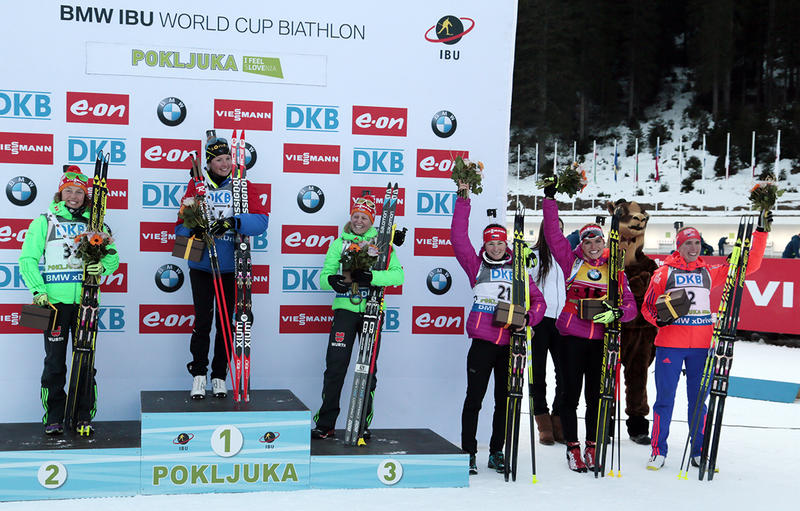
    The women's 7.5 k sprint podium on Friday at the IBU World Cup in Pokljuka, Slovenia, with winner Marie Dorin Habert of France (c), and two Germans: Laura Dahlmeier (l) in second and Franziska Hildebrand (r) in third. (Photo: Fischer/NordicFocus)
    The women’s 7.5 k sprint podium on Friday at the IBU World Cup in Pokljuka, Slovenia, with winner Marie Dorin Habert of France (c), and two Germans: Laura Dahlmeier (l) in second and Franziska Hildebrand (r) in third. (Photo: Fischer/NordicFocus)

    Note: This article has been corrected to include American Susan Dunklee’s sixth-place pursuit finish last season in Antholz, Italy. On Friday in Pokljuka, Slovenia, Dunklee tied her best result last season and posted her best sprint finish in two years.

    This season, several of the best cross-country skiers in the world, including Norway’s Marit Bjørgen, Kikkan Randall of the U.S. Ski Team, and Finland’s Aino-Kaisa Saarinen, are taking a sabbatical while expecting the birth of their first children. If the skiing of France’s young mother Marie Dorin Habert is any indication, they really don’t need to worry about making successful comebacks.

    For quite a while during the women’s 7.5 kilometer sprint at the International Biathlon Union (IBU) World Cup in Pokljuka, Slovenia, it looked like Germany could achieve another victory on Friday — just like the team did a week ago with a podium sweep of the sprint in Hochfilzen, Austria. But Dorin Habert had other plans and claimed the top spot on the podium with a winning time of 20:17.8 minutes.

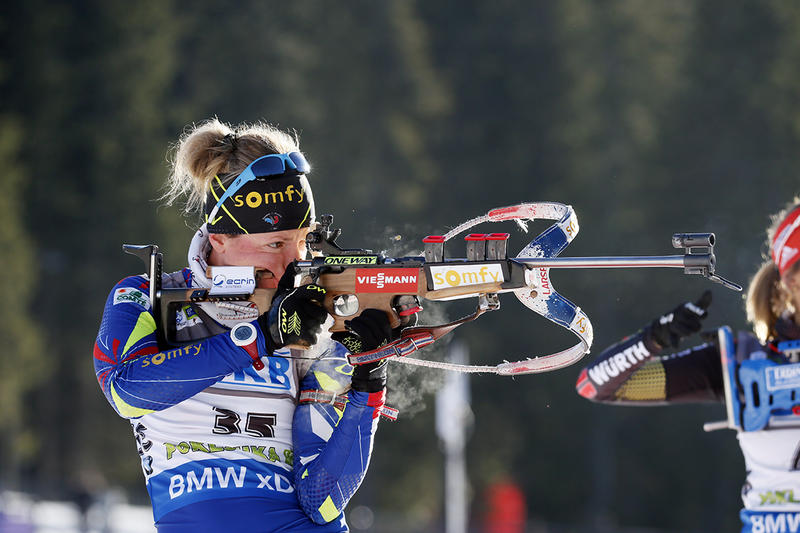
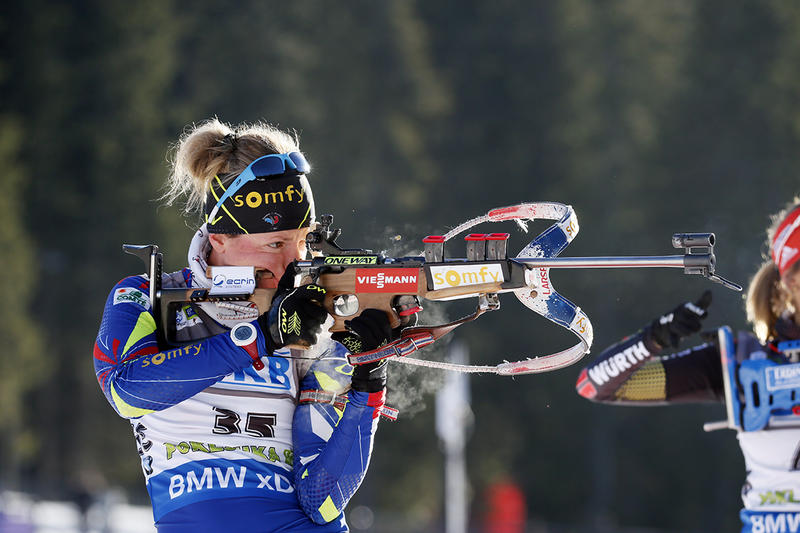
    France's Marie Dorin Habert takes aim during the standing stage of Friday's sprint at the IBU World Cup in Pokljuka, Slovenia. She cleaned the two-stage race and won by 1.1 seconds. (Photo: IBU/Kvetoslav Frgal)
    France’s Marie Dorin Habert takes aim during the standing stage of Friday’s sprint at the IBU World Cup in Pokljuka, Slovenia. She cleaned the two-stage race and won by 1.1 seconds. (Photo: IBU/Kvetoslav Frgal)

    Last March, the 29-year-old French biathlete was the big surprise of 2015 IBU World Championships in Kontiolahti, Finland, with two gold medals (in the sprint and pursuit) and two silvers (relay and mixed relay), which she achieved just half a year after the birth of her daughter Adele in September 2014. She returned to the World Cup last January.

    On Friday, Dorin Habert added and first victory of the season (and third World Cup win) to her list of achievements, beating two Germans, Laura Dahlmeier — the winner of last week’s pursuit — by 1.1 seconds and Franziska Hildebrand, the winner of last week’s sprint, by 13.0 seconds.

    Under sunny skies with calm, stable wind, just like the men raced in Thursday, all of the three women on the podium shot clean in the two-stage race, incurring no penalties.

    Asked how she is managing her life with a 1-year-old while competing as a World Cup athlete, Dorin Habert explained in an English interview with German broadcaster ZDF: “It is very complicated to organize everything. I am lucky because my husband [retired French biathlete Lois Habert] can sometimes go with me. He is a commentator on TV for Eurosport France,” she said.

    He and the baby joined her at the first IBU World Cup in Östersund, and last week, Adele returned home while Dorin Habert raced in Hochfilzen.

    “This week she is with me in the hotel in Bled [Slovenia] with the nanny,” she explained. “So very nice, but very complicated to organize the travel and flights and everything.”

    Dorin Habert started 35th on Friday and after two flawless stages, she left range for the second time trailing Dahlmeier, in bib 30, by 5.4 seconds.

    “My standing [shooting] was very bad throughout all the start of the season,” Dorin Habert told ZDF. “[Today is] the first time that I am okay, so I’m very happy for that.”

    Already skiing fast and with the added advantage of hearing her coaches call out split times to the leaders, Dahlmeier and Hildebrand, Dorin Habert pushed hard on the final loop to make up the deficit. Descending down a small ramp into the stadium, she entered the finishing straight with long, gliding steps while swinging her arms without using her poles, and crossed the line 13 seconds faster than Hildebrand (who started 20th) to take the lead. At the end of the day, nobody else out of 105 starters could catch her, although Dahlmeier came within 1.1 seconds at the finish.

    “I am not surprised, but I am very happy,” Dorin Habert said of her win at an IBU press conference. She posted the third-fastest course time.

    “I did a good job on the shooting range. I worked hard on my standing shooting,” she added. “It was hard on the skis, as we had a lot of races last week. I tried to be very concentrated on each target.”

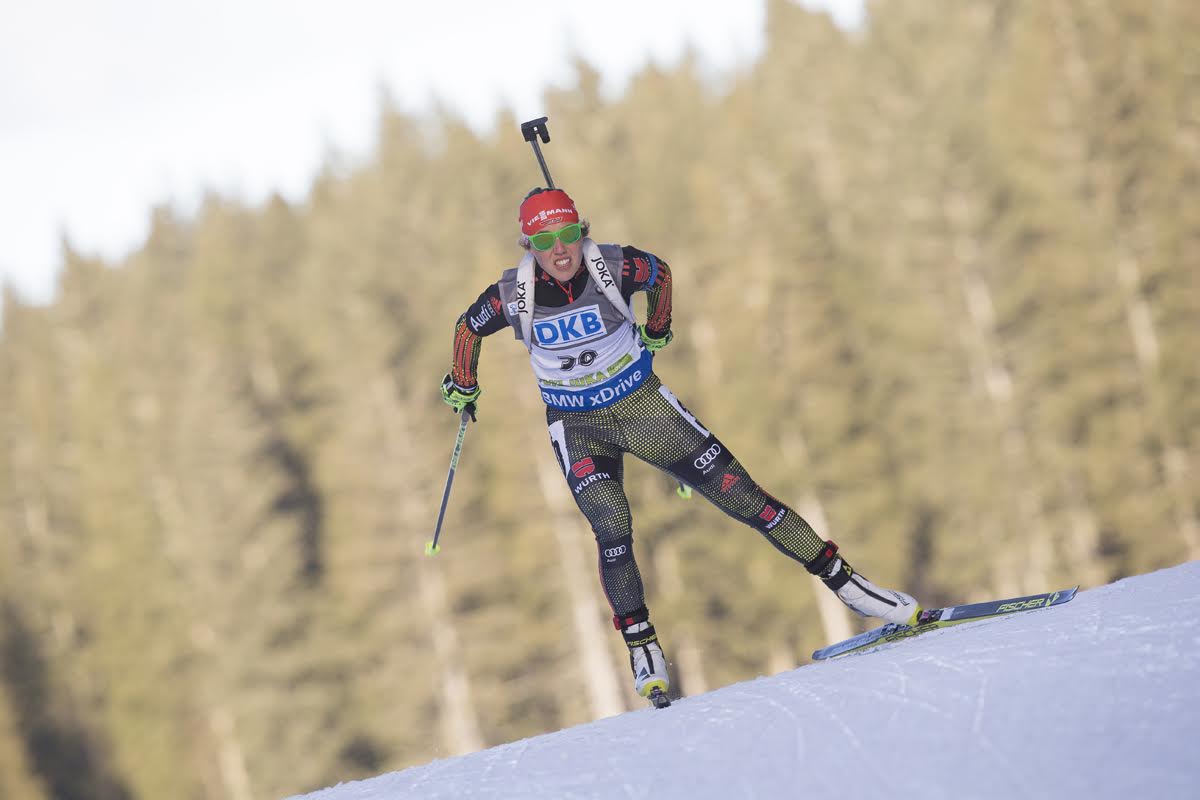
    Germany's Laura Dahlmeier racing to second in the women's IBU World Cup sprint in Pokljuka, Slovenia. (Photo: Fischer/NordicFocus)
    Germany’s Laura Dahlmeier racing to second in the women’s IBU World Cup sprint in Pokljuka, Slovenia. (Photo: Fischer/NordicFocus)

    Looking like the winner for a long time, Dahlmeier shot clean and skied the fourth-fastest overall course time.Despite missing out on another win by just over a second, the 22-year-old German was very satisfied with her performance.

    “This is the first time this season that I’ve managed to shoot a ‘zero’ [no misses],” she told ZDF. “I’m extremely excited to be back on the podium. I knew it would be a close race, and that you really would have to deliver a ‘zero’ on the shooting range.

    “It was a perfect day for me,” she said at the press conference. “Marie was first today, we will see what happens tomorrow. I am happy about my form. We are a little higher above sea level, and that’s stressful [on the body]. I am already looking forward to the Christmas break.”

    Dahlmeier missed the World Cup opener in Östersund, Sweden, with a nagging cold. She’ll start Saturday’s pursuit 1 second behind Dorin Habert and 12 seconds ahead of Hildebrand, her teammate.

    Like the other two podium finishers, Hildebrand, 28, took her time on the shooting range to hit all 10 targets. Her standing shooting time ranked 96th.

    “I had to catch my breath after the second or third shot. From my point of view that was a great series, all very secure hits, everything in, everything white,” Hildebrand told ZDF. “That saved me today.”

    But she more than made up for a few lost seconds on the range by avoiding the penalty lap and skiing fast, recording the fifth-ranked overall course time. From the last shooting to the finish she still lost about ten seconds to Dahlmeier, but for a reason: “I’m a little bit under the weather today,” she said. “I didn’t know how it would work. I felt during the race, especially on the last lap, that I was not quite as fresh anymore. But I think it was still a great race, and overall I’m really satisfied.”

    Showing the depth of their team, all six of Germany’s starters finished in the top 15 with Maren Hammerschmidt in seventh, Franziska Preuss in ninth, Vanessa Hinz in 13th, and Miriam Gössner in 15th. Less than two years after leaving the 2014 Olympics without any women’s biathlon medals — and with several decorated athletes such as Magdalena Neuner and Andrea Henkel (now Andrea Burke) having retired in recent years — the team feels like it is on a good trajectory again.

    “We trained hard. We are a good team, and we can push each other to become better,” Hildebrand said in the press conference.

    “We have proven that we have arrived at the top again, and you always have to account for us,” Dahlmeier told ZDF. “I hope we can keep this up all season, and then achieve our peak at the World Championships [in March].”

    Fourth place went to Veronika Vítková of Czech Republic, who finished 16.4 seconds behind Dorin Habert, also with two clean stages. Her teammate and overall World Cup leader Gabriela Soukalová placed fifth (+25.2), as the best athlete who had to ski a penalty lap (with a single standing miss).

    American Susan Dunklee placed sixth for her best sprint result in two seasons. She finished 30.6 seconds behind Dorin Habert and 17.6 seconds off the podium. She might have been able to make it had she avoided her penalty lap in the prone shooting, and was the second-best athlete with a penalty on Friday. She’ll start 31 seconds back in the pursuit.

    The women's top six at the flower ceremony following the IBU World Cup sprint in Pokljuka, Slovenia, with Marie Dorin Habert of France in first, Germany's Laura Dahlmeier and Franziska Hildebrand in second and third, respectively, Veronika Vitkova and Gabriela Soukalova of the Czech Republic in fourth and fifth, and American Susan Dunklee (far right) in sixth. (Photo: IBU/Kvetoslav Frgal)
    The women’s top six at the flower ceremony following the IBU World Cup sprint in Pokljuka, Slovenia, with Marie Dorin Habert of France in first, Germany’s Laura Dahlmeier and Franziska Hildebrand in second and third, respectively, Veronika Vitkova (third from r) and Gabriela Soukalova (second from r) of the Czech Republic in fourth and fifth, and American Susan Dunklee (far right) in sixth. (Photo: IBU/Kvetoslav Frgal)

    Pursuit up next

    The times back from Dorin Habert as the winner of the sprint carry over into the pursuit race on Saturday.

    “Everyone can expect a very exciting race,” Dahlmeier told ZDF. “The shooting range will be decisive again. You just have to shoot well, and then everything is possible, I am looking forward to it.

    “Everything is possible,” she said in the press conference. “It is difficult to predict who will win, but I will fight for the first place in tomorrow’s competition.”

    Results

  • 19 Miles of Cable and One Espresso Machine: Biathlon, from Trail to TV

    19 Miles of Cable and One Espresso Machine: Biathlon, from Trail to TV

    A small selection of the 19 miles of cable used to televise the World Cup biathlon races in Fort Kent.

    If you want to know about how biathlon travels from the trails onto television, the first thing you need to know about is cable.

    In Fort Kent, the site of Maine’s second biathlon World Cup in as many weeks, the stuff is everywhere.

    It’s mostly black, but also orange, blue, white, red, green, and yellow. It snakes along the sides of the trails, hangs neatly coiled from racks, and explodes into massive, spaghetti-like snarls when it reaches the television compound, at the top of a steep hill overlooking the stadium here.

    There’s some 19 miles of it in all, connecting 33 cameras to the two trailers used to produce the coverage. The longest run was 4,800 feet—“through conduits, culverts, underneath roads,” according to Rob Heinz, a utility technician in charge of the set-up.

    From the feed of races, it’s tough to see the kind of work it takes to produce the television broadcast. Even on site, at the venue, it’s still hard to tell—by the time the races go off, the cables and cameras are hidden, the producers and technical staff blending into a swarm of volunteers.

    But in fact, capturing the competitions and beaming them back across the Atlantic to Europe is a massive undertaking—one that demands more than 100 trained workers, including 54 who flew from here from Germany.

    Heinz, a gruff, bulky, mohawked New Yorker, is a member of the crew brought in by Kent Gordis Productions, the firm contracted to televise the two biathlon World Cup weekends in northern Maine—the circuit’s first trip to the U.S. in seven years.

    It takes a trained eye to distinguish the crew members from volunteers, in the hive of the stadium. For the most part, they move about unobtrusively. But look closely, and you can pick them out—they’re a little bigger, sport sweatshirts rather than Patagonia or North Face jackets, and are the only people on site who would dare light up a cigarette.

    Yeah, it’s TV, but it’s not glamorous work—all that cable has to get carried, strung, and labeled by somebody.

    The trail heading up from Fort Kent's stadium to the TV production headquarters.

    “We build it all, and then we troubleshoot,” Heinz said. “Whatever they tell us to do, as long as the check clears.”

    Biathlon may be small potatoes in the U.S., where the only way to see the sport is on the internet. But in Europe, it’s huge: nearly six million Germans watched a single broadcast of last week’s races in Presque Isle.

    Work at the two Maine venues began all the way back on January 27th, when crew members for Gordis arrived.

    They came with two production trucks rented from a Florida company—$12 million behemoths with top-of-the-line audio and video equipment—along with all that cable, and a massive, house-sized generator to power it all.

    Between Fort Kent and Presque Isle, there was 150,000 feet of cable in total—a quantity that is essentially unprecedented, Heinz said, except for maybe the Super Bowl.

    “Nothing even approaches this kind of numbers,” he said.

    In fact, one of the main reasons that the Florida company, F+F Productions, got the contract to supply the equipment for the biathlon races was because they already owned so much cable–which they acquired by pulling it out of last year’s Olympic venues in Vancouver.

    Rob Heinz.

    “That’s how they got this gig,” said Dave Crosson, who’s on site as one of two technical managers overseeing production for Gordis.

    Because Germany is wild about biathlon, there are actually two separate television feeds that are broadcast from northern Maine—one for the German networks, and one for all the other countries that show the races, like Norway and Russia.

    The German station, ZDF, gets more shots and interviews of German athletes, while the international audience sees a more generic show.

    Gordis brought in its workers from the U.S. and Quebec; ZDF has its own biathlon production team, including journalists, cameramen, video mixers, and, crucially, its own espresso machine, housed in an editing trailer.

    “That’s very important,” said Chris Kirdorf, a ZDF set manager. “You can’t drink the American coffee.”

    That Bases Loaded Moment

    Biathlon has exploded in popularity in Europe in the past decade, and one of the reasons is that it makes for great television.

    Graphics—which are generated electronically by the timing system and targets—help viewers follow athletes while they’re out on course. And each trip to the shooting range provides 30 seconds of some of the most concentrated suspense in sports.

    “In every competition, you have that bases loaded, bottom of the ninth, down-by-three-runs moment, when it’s make or break for the athlete on the firing line,” said Max Cobb, the CEO of the U.S. Biathlon Association (USBA). “Who stands on the podium comes down to that last, final shot…and then you still have a ski race to go after that.”

    Ironically, biathlon isn’t televised at all in the U.S.—a bid to package the races in Maine and show them nationally fell through when some key USBA contacts retired, Cobb said.

    But in Europe, the sport is one of the largest. The International Biathlon Union (IBU) calculates that its World Cup season in 2010 drew nearly 500 million total viewing sessions—and that’s not including the Olympics, which tallied 300 million more.

    More of the cable used for the broadcast in Fort Kent.

    The rights for the broadcasting are sold by the IBU to the European Broadcast Union—a confederation of stations across the continent. Germany is a huge market, as evidenced by the 5.8 million from that country that saw the prime time mixed relay last weekend in Presque Isle, but Russia and Norway are, too.

    Money from the rights makes up the bulk of the revenue for the IBU, according to Nicole Resch, its president.

    The last four-year contract, from 2006 to 2010, was for 40 million euros ($55 million), according to numbers obtained by the Christian Science Monitor. Resch wouldn’t release the figures for the new one, from 2011 to 2014, but it’s reportedly 60 percent larger—nearly $90 million—according to one industry insider.

    In addition to direct revenue from the rights, the exposure from television also helps the IBU attract its sponsors, which include BMW, beer producer Erdinger, and energy and heating companies.

    The Test Event

    The racing in Fort Kent happens down in the stadium and out on the trails, but the TV production happens in the two F+F trucks at the top of the hill.

    Each one takes inputs from half the cameras, and the feeds are shared on a network to give each truck access to all 33 shots.

    One truck is used for the international feed, and the other for the ZDF broadcast—which is directed by a lean, well-coiffed German named Andreas Lauterbach.

    On the last day before the first race in Fort Kent, Lauterbach is in position at the middle of his truck’s main

    The wall of images in one of the production trucks.

    console. To his right is the technical director, a heavyset, balding German with a dazzling array of different-colored buttons in front of him, which he uses to switch between cameras and effects at Lauterbach’s command.

    To Lauterbach’s left is his spotter, a mustachioed older man with even less hair than the technical director. In front of all of them is a large wall of LCD screens, each of which is divided into different pictures. In total, there are 78 separate images, showing graphics, commercials, slow-motion relay clips, and the feeds from all 33 cameras.

    On this day, last Wednesday, Lauterbach and his team are directing a TV test race, to make sure everything’s firing before the real competitions get underway.

    Instead of the best biathletes in the world, the start list includes a mix of former and current second-tier skiers. There are two coaches from the Maine Winter Sports Center, Seth Hubbard and Will Sweetser, along with five other area athletes: Katrina Howe, Russell Currier, Melinda McAleese, Lauren Jacobs, and Meagan Toussaint.

    As the screens display images of the athletes preparing in the start area, Lauterbach sits at his post in the darkened truck, giving directions.

    “Get me some bib numbers.” “International again. Go to 13. Go to four.”

    With the huge number of screens, it takes a while to figure out what’s going on. The live German feed for ZDF is being shown in a large picture on the upper lefthand side of the wall, while the international feed is directly adjacent, to the right.

    The rest of the cameras show live shots from around the course, and in the stadium. Each has a number, and when Lauterbach wants to switch, he simply tells the technical director.

    The athletes get going, and begin making their way around the course. On the massive climb just a few hundred

    Craftsbury Green Racing Project's Lauren Jacobs as Finnish biathlete Mari Laukkanen.

    meters from the start, it’s clear they’re not the same caliber of skiers the announcers are used to seeing—the German commentary is being piped into the truck through a PA system—and there’s some good-natured chuckling.

    As the racers approach the first checkpoint, each gets a split time. They’ve all been assigned names of elite biathletes: Hubbard is Belarussian Olympic medalist Darya Domracheva; Currier is Julian Eberhard, an Austrian.

    Lauterbach’s job seems close to impossible—he somehow has to keep tabs on all the athletes and all the screens, then pick out the shots and graphics he wants from the nearly 80 images. He’s middle aged, wearing glasses, tight jeans, a soft shell, and a turtle-neck, and he seems at home in his chair in front of the console.

    Lauterbach only gets agitated when the technical director doesn’t switch between cameras quickly enough, and even then, his sharpness seems more like a way to signal urgency than actual irritation.

    “Zoom out. Follow—zoom in. And, wait for four. Go to four, and, graphic.”

    On the first loop, it’s Sweetser drawing the attention—he even features in a slow-motion replay. Hubbard cleans his first shooting, and the announcers call it: “Darya Domracheva—suuuupaaah.” But gradually, it becomes clear that Currier, a U.S. National Team member in bib 77, has taken the lead. The spotter lets Lauterbach know when Currier enters each shot.

    “Seventy-seven is coming in 27.”

    For the most part, the German feed mirrors the international one, until Lauterbach cuts to a finish-line interview—actually one member of the ZDF crew talking to another.

    The whole thing wraps up in roughly 40 minutes, from start to finish. Then, Lauterbach chats on an intercom with each of his cameramen, making sure all the shots are dialed in, unseemly cables hidden from view, and advertising banners getting their full exposure.

    For the American and Canadian cameramen, it’s rare they’ll have an opportunity like this one, to shoot biathlon or cross-country skiing. The operators in the key positions are experienced Germans, but according to Crosson, the

    Director Andreas Lauterbach (L), with his technical director to the right.

    technical manager, everyone else knows enough that the pictures heading over to Europe will still be decent.

    “It’s a job, it’s a craft, it’s an art—they know how to do it,” he said. “They are professional enough to know what is a good shot—TV is basically seeing what other people did, and trying to make it better.”

    The test race over, the television crew still has to get through four days and six races before they can even think about going home. They’re all staying in Presque Isle, an hour away, and consequently were contending with early-morning wake-ups and long days in single-digit temperatures.

    They’ll remain in northern Maine for another day after the athletes, coaches, and spectators have departed—through early Tuesday morning, when Heinz said he’d be on a flight back to New York.

    “Three weeks—missing the family, icy weather,” he said. “I get into LaGuardia at 9:40….I’ll be having lunch at home.”