Tag: Zone 3

  • Wednesday Workout: Threshold Running with NTDC Thunder Bay

    Wednesday Workout: Threshold Running with NTDC Thunder Bay

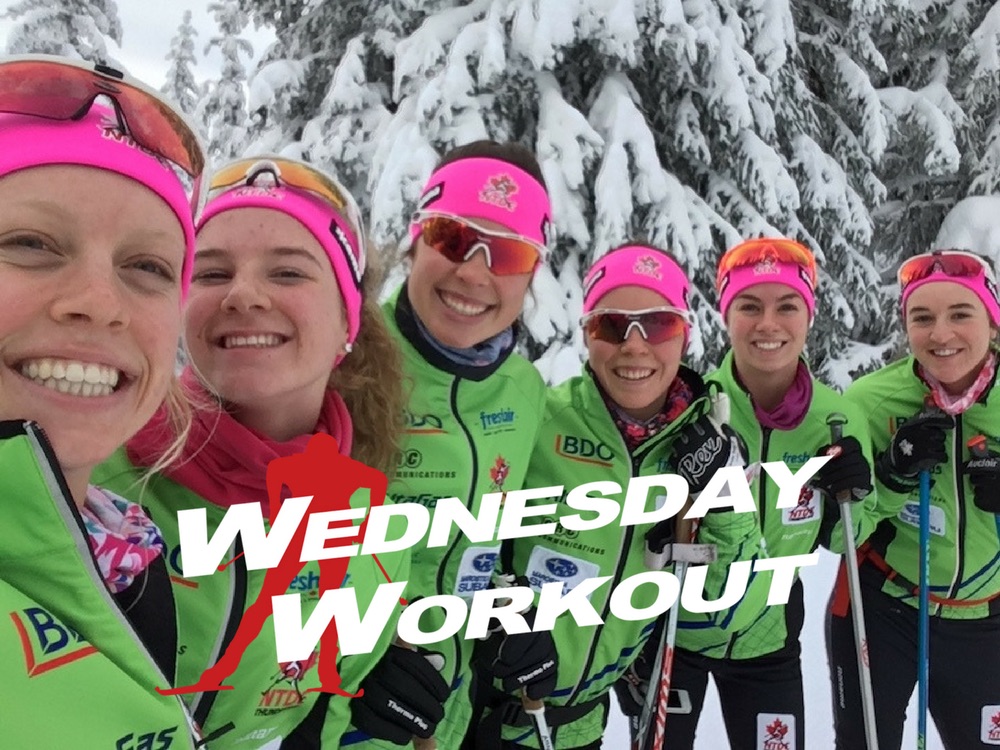
    NTDC Thunder Bay teammates (from l to r) Sadie White, Lisle Compton, Annika Richardson, Katherine Stewart-Jones, Alannah MacLean, and Mia Serratore at Sovereign Lake near Vernon, B.C., last December. The entire women’s team qualified for World Cup Finals in Quebec City last March based on their strong performances on the NorAm circuit. (Photo: Sadie White)

    Coming off a big showing at 2017 World Cup Finals last March in Quebec City, the Thunder Bay National Team Development Centre (NTDC) — which sent six women and two men to the season-ending finals — is raring to go this winter.

    The 14-member team is based out of Thunder Bay, Ontario, right in the middle of Canada. And while it might be a long ways from water (as Canada’s westernmost Atlantic port, some 3,700 kilometers from the mouth of the St. Lawrence seaway), Thunder Bay has a storied history in cross-country skiing, largely deriving from Finnish immigrants. The Lappe Nordic Ski Centre, which will host 2017 Canadian Ski Nationals, and Tapiola ski trails (referenced in the workout below) are at the heart of that history.

    Fast-forward to the present, NTDC Thunder Bay as one of Canada’s big-three national-team training centres continues to gain momentum with some of the nation’s top skiers, many of which are women. Katherine Stewart-Jones, the overall NorAm leader at the end of last season, was renominated to the Canadian national U25 Team this spring, and Annika Richardson and Lisle Compton are members of the national Junior Team.

    The following dryland workout was co-written by Stewart-Jones, Richardson, Compton, Alannah MacLean, Sadie White, and Mia Serratore, with contributions from Angus Foster and head coach Timo Puiras. So while the NTDC Thunder Bay team is currently fine-tuning for the season on snow at Lappe, here’s a running workout for those of us in less wintery climates.

    ***

    “At NTDC Thunder Bay, we are proud to have one of the largest and strongest women’s training groups in Canada. With six girls on the training centre, ranging from Junior to U23 to Senior Women, there is a wide range of strengths and specializations within the group.
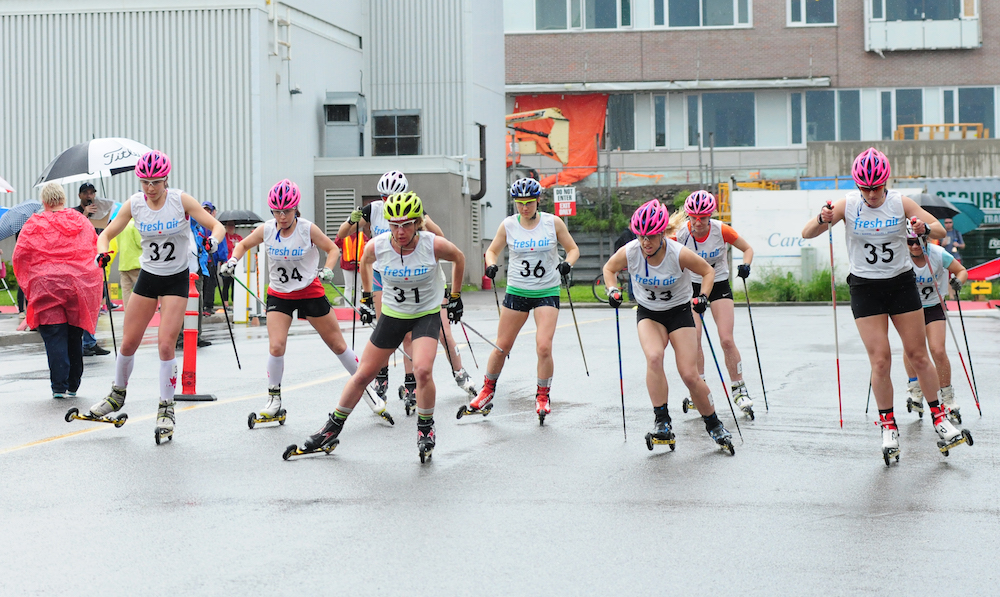
    Annika (32), Katherine (34), Caitlin Gregg (31), Hannah Shields (36), Sadie (33), Lisle (behind), Mia (35) starting the Canada 150 NTDC Rollerski race in downtown Thunder Bay, ON, July 1st, 2017. This was the second ever sanctioned roller ski race in Canada.
    NTDC Thunder Bay’s Annika Richardson (32), Katherine Stewart-Jones (34), Sadie White (33), Lisle Compton (behind) and Mia Serratore (35), and Lappe Nordic’s Hannah Shields (36), chase American Caitlin Gregg (31) out of the start of the inaugural Canada 150 Rollerski Race in downtown Thunder Bay on July 1, 2016. (Photo: Anna Buske)

    During the training season, the goal is to build base fitness and speed to create a good foundation for the ski season. One way to develop fitness is with Zone 3 intensity. Our go-to threshold workout is running intensity on a 750-meter loop at the Tapiola Ski Trails.

    Instead of your typical track running workout, we run multiple loops of a relatively flat, hard-packed dirt trail at a prescribed lap pace. The aim is to stay as consistent as possible throughout the entire workout and to have the most even lap times upon completion of each set. Depending on prescribed lap times, this may be a workout with a partner or it may be solo, but it is an opportunity to focus on your own workout without trying to compete at your training partner’s pace.

    The Workout: Zone 3 running intensity

    Purpose: Target Zone3/threshold energy systems and improve efficiency

    Warmup:

    • Warmup: 15- to 30-minute run to wake the body up and get in the zone
    • Dynamic joint prep: Some dynamic stretching to loosen up and prepare the body to move well! Think lunge with a side twist, ABC’s, karaoke, downward dog – all of these help to elongate muscles, warm up your body, and reduce the possibility of injury
    • Activation sprints: A set of sprints to really get things moving and create a bit of lactate in the body. Aim for roughly 5 x 8 seconds with about 2 minutes of rest between each sprint, with a focus on being snappy and aggressive so that you go into a workout with a bit of fatigue and lactate in your muscles that you have to work through.

    Determine max lap:

    Prescribed pace or prescribed lap time is determined from the data acquired from the incremental-workload, running-treadmill test performed during the team’s testing camp in late May. The resulting calculated pace is the time that we must try and maintain for each lap throughout the workout. This pace is anaerobic threshold, or a pace that is “comfortably hard”. The prescribed pace is individualized for each athlete to ensure that the workout is completed according to that athlete’s running speed.

    Periodically throughout the summer the team will run a “max lap” to recalibrate the prescribed pace. The max lap is one all-out effort of the 750 m loop.

    Workout:

    • 3 x 5 laps at your prescribed pace (depending on the athlete this can range somewhere between 2.5 to 3.5 minutes per lap) – pace should be comfortably hard for each athlete

    Prescribed pace:

    Maintaining a consistent pace for each lap will help to increase anaerobic threshold, the point at which your body gets tired at a steady state. Some athletes establish markers on the loop to get an idea of pacing (i.e. I have to pass this tree at 1:28 to run a 3:15 loop). We lap our watch for every loop in the set to monitor average heart rate per lap, and to see if that average increases, decreases or stays consistent throughout the duration of the workout. If you look like you are working too hard or your average heart rate increases drastically, the coaches will take a lactate. If it’s too high, you’re in trouble! Actually, [our coaches] Timo or Camille [Cheskey] will either read just your lap pace for the next set or you’ll be told to run alone because you were getting too competitive with your teammates.

    Recovery: One easy lap and a quick drink break (approximately 5 minutes between sets)

    Cool Down: Slow jog for 20-30 minutes with a couple surges into Zone 2 help to flush out all the lactic acid that built up in your legs throughout the workout. Some athletes will sit in the creek that runs beside the Tapiola trails as a form of cold tubbing.

    The data from lap times and average heart rate is entered into a Google Drive document after each Tapiola workout. This serves as a tool to see lap time +/- the prescribed pace and heart rate across all laps and sets. All this data helps monitor how you are improving with each workout. If you’re capable of maintaining a consistent heart rate, then the pace will speed up for the next Tapiola intensity!
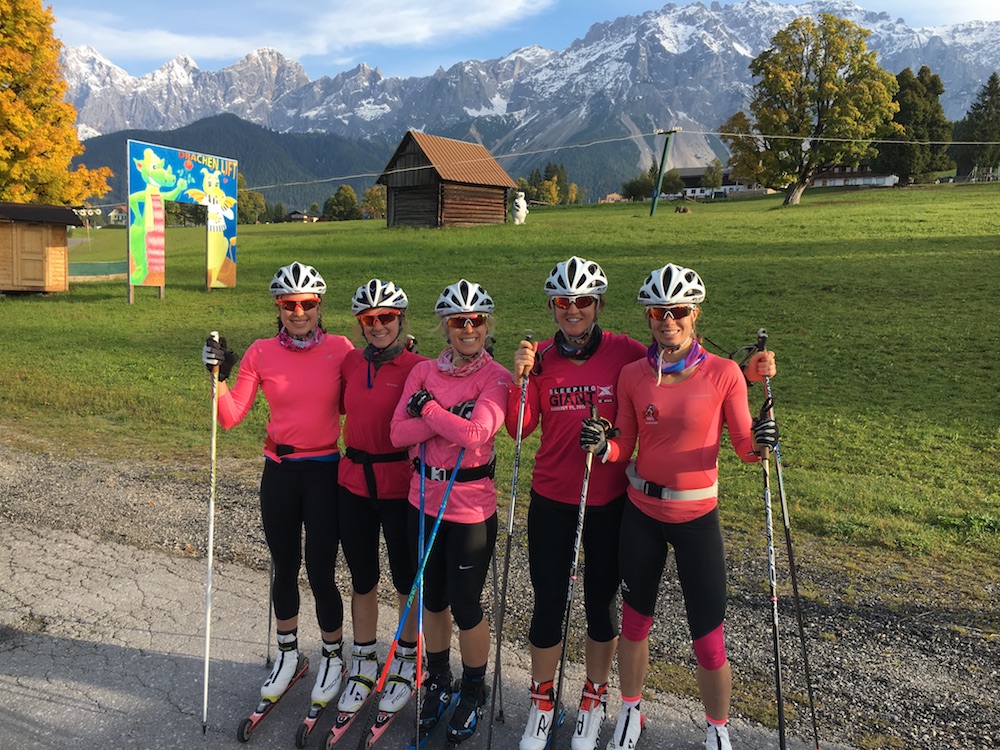
    Annika, Lisle, Sadie, Mia and Alannah in Ramsau, Austria during our most recent training camp in September (2017). Photo was taken before our first ski on the roller ski specific paved track. The pink outfits were not coordinated.
    Annika Richardson, Lisle Compton, Sadie White, Mia Serratore, and Alannah MacLean in Ramsau, Austria, before their first session on a rollerski-specific paved track during a training camp this past September. The pink outfits were not coordinated. (Photo: Timo Puiras)

    The goal of Tapiola is CONSISTENCY. Mental preparation and focus are the two keys for success. The pace is individually tailored to personal running speed to ensure that every athlete completes the workout at a speed that is best for them. However, this isn’t a workout where you can wing it. When you start to get tired by the last set, as you should be, maintaining good running technique and pacing requires conscious effort. Also, the athlete that runs the most consistent laps gets 10 points and a parrot sticker from Timo (a Finnish tradition).

    Tapiola workouts start in June and we’ll run different variations of the workout described above about 6-10 times throughout the summer. It’s always surprising how much easier a Tapiola workout feels the second or third time you do it, even at a faster prescribed pace. It also has a big pay off in our running speed and fitness as we build into the training and racing seasons. This is one of our favourite workouts as part of NTDC Thunder Bay and why we wanted to share it with you!

    Happy running!”
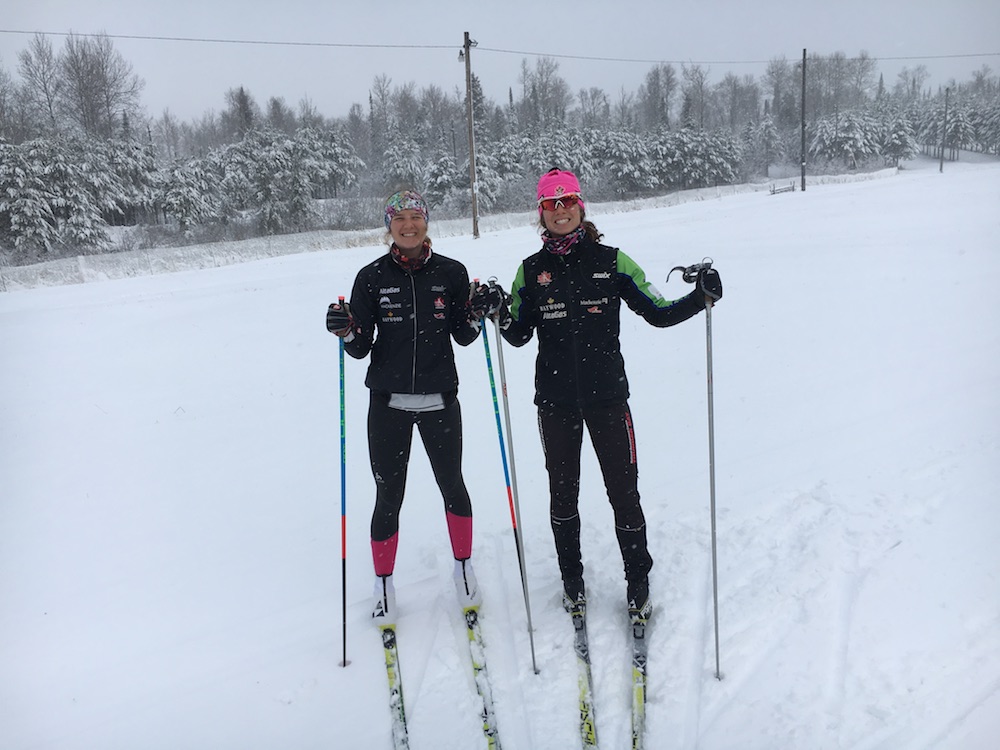
    NTDC Thunder Bay teammates Lisle Compton (l) and Alannah MacLean during the first day of natural snowfall on Oct. 27 at Lappe Nordic near Thunder Bay, Ontario. (Photo: Grant Hall)
  • Wednesday Workout: Race Prep Intensity with Palmer-Charrette

    Wednesday Workout: Race Prep Intensity with Palmer-Charrette

    Evan Palmer-Charrette (left, in green) during an intensity session with his National Team Development Centre (NTDC) Thunder Bay teammates Angus Foster (front) and Julian Smith (right) at the Canmore Nordic Centre last November. (Photo: Timo Puiras)

    Evan Palmer-Charrette, of Thunder Bay’s National Team Development Centre (NTDC), had an eventful 2016/2017 season, starting with compartment syndrome surgery in the summer to remedy an issue that had plagued him for four years, his first U23 World Championships, his first World Cup races in Quebec, and his first national title.

    Palmer-Charrette finished the season ranked second in the overall NorAm standings behind Russell Kennedy (Canmore Nordic/Team R.A.D.) after notching four NorAm podiums. One of those included his third-place finish in the classic sprint at Canadian Ski Nationals, behind two U.S.-based university skiers, which made him the top Canadian.

    “Awesome to be Canadian champion, but a surprise for sure in a classic sprint,” he told FasterSkier at nationals, reflecting his preference for distance racing.

    A week later at SuperTour Finals in Fairbanks, Alaska, Palmer-Charrette placed second in the skate sprint behind winner Logan Hanneman of Alaska Pacific University. He was FasterSkier’s pick for Canadian Continental Skier of the Year and turned 23 this past Sunday. Palmer-Charrette is currently testing at the Canadian Sport Institute Ontario in Toronto and plans to spend another season with the NTDC in Thunder Bay. He started the new training year with an on-snow volume camp at Sovereign Lake in British Columbia.

    He submitted the following workout regarding race-prep intensity.

    ***

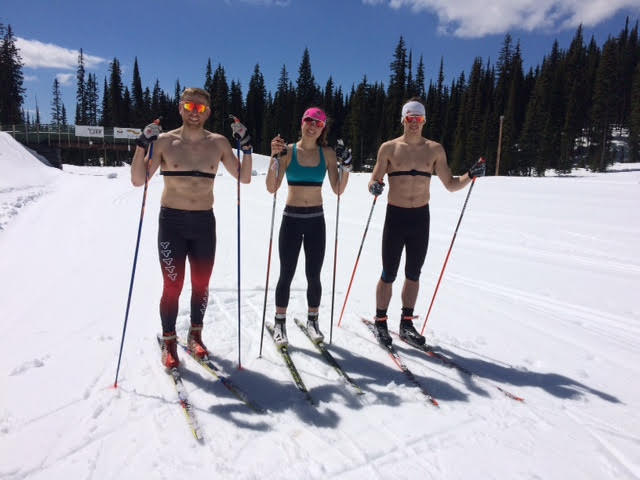
    Evan Palmer-Charrette (right) with teammate Annika Richardson and former teammate Greg Kilroy (Courtesy photo)
    Evan Palmer-Charrette (r) with NTDC Thunder Bay teammate Annika Richardson (c) and former teammate Greg Kilroy. (Courtesy photo)

    “From an early start, most everyone knows it is crucial to warm up well the morning of a race to experience each energy system before you put yourself through it during the real deal. I have heard a number of junior athletes surprised to hear that it’s a common practice to put in an intensity workout within a day or two of a race, I was the same as a junior, I would always do some sprints and a bit of speed but nothing with serious structure that I tracked and replicated like the intensity I would do in my race morning warm-up.

    Race prep intensity (RPI) is a great way to get the body fine-tuned for a race weekend, especially in the early season when you don’t have as much racing and intensity under the belt. Now, this is not an exam-style cram before the test workout to try and get in better shape two days out, just something light much like you would do the morning of a race. More often than not, you will have traveled for a ski race and a light intensity is a great way to shake the body out and get a feel for a new race course skiing it the same speed you will in a race.

    The Warmup

    Start out with an easy recovery pace to begin the ski. Closing in on a race weekend, there are very minimal benefits for pushing the pace while skiing easy, but overdoing it can leave the body feeling fatigued. During the warmup, pick up the pace to a point where it feels comfortable, well below threshold, but enough of an increase that you feel like you are gliding rather than shuffling and apply some power to feel the snap in your limbs. I like to do 2-4 minutes of Zone 2 to get the body ready.

    The Workout

    • Zone 3: If your first race or the big race is a sprint, I like to take two laps at a moderate Zone 3 effort. Trying to ski the course as smooth as I can and getting a sense for where the technical sections are that I will use for the following intervals of the workout. If you are prepping for a distance race, I like to do my 5-6 minutes of Zone 3 on what I think will be the most challenging section of the course, getting a feel for cresting the big A-climb into a technical downhill without perfectly rested legs.  
    • Zone 4: This is the most variable portion of the workout. As I mentioned earlier, depending on the time of year I might adjust my RPI workout to how I am feeling — this is generally the section that takes on the change. By the latter half of the race season, if I’m going into a multi-race weekend I’ll skip the stage altogether, however prior to Christmas, I have added more repetitions or duration.
    • Sprints: 3 x 30 seconds is really just an example, but a good amount to put some snap in the legs and get an idea of what the upcoming course will throw at you. These qualifier-pace sprints are best done on the technical sections of the course that really allow you to get a feel for how a tricky transition or corner will ski while in a race situation.

    The Cool Down

    Wrap the workout up with a good cool down to flush out the legs making sure to get in at least 25-30 minutes. I like to throw in a few Zone 2 surges if my legs were not feeling great during the intensity to try and flush them out a bit more. If it’s cold, I’ll change my top I wore during the workout, there is nothing worse than getting a chill and catching a cold a day or two before a race.”

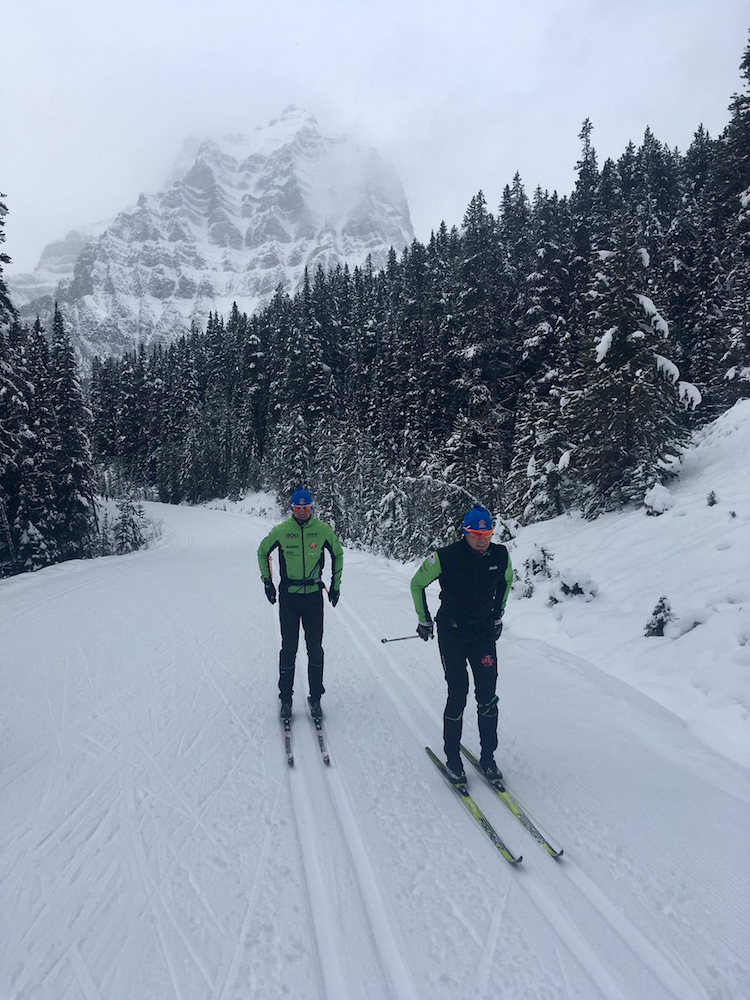
    Michael Somppi leads Evan Palmer-Charrette during a cool down ski at Lake Louise near Canmore, Alberta, in November 2016. (Photo: Timo Puiras)
    Evan Palmer-Charrette (l) and Michael Somppi during a cool-down ski at Lake Louise near Canmore, Alberta, in November 2016. (Photo: Timo Puiras)
  • Wednesday Workout: Fast, Uphill V2

    Wednesday Workout: Fast, Uphill V2

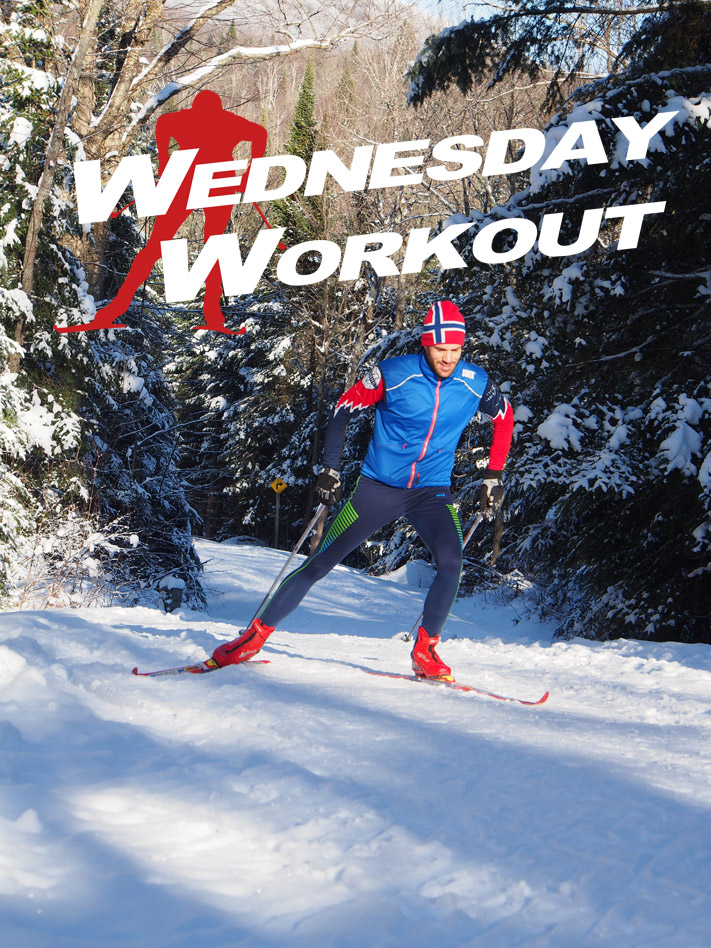
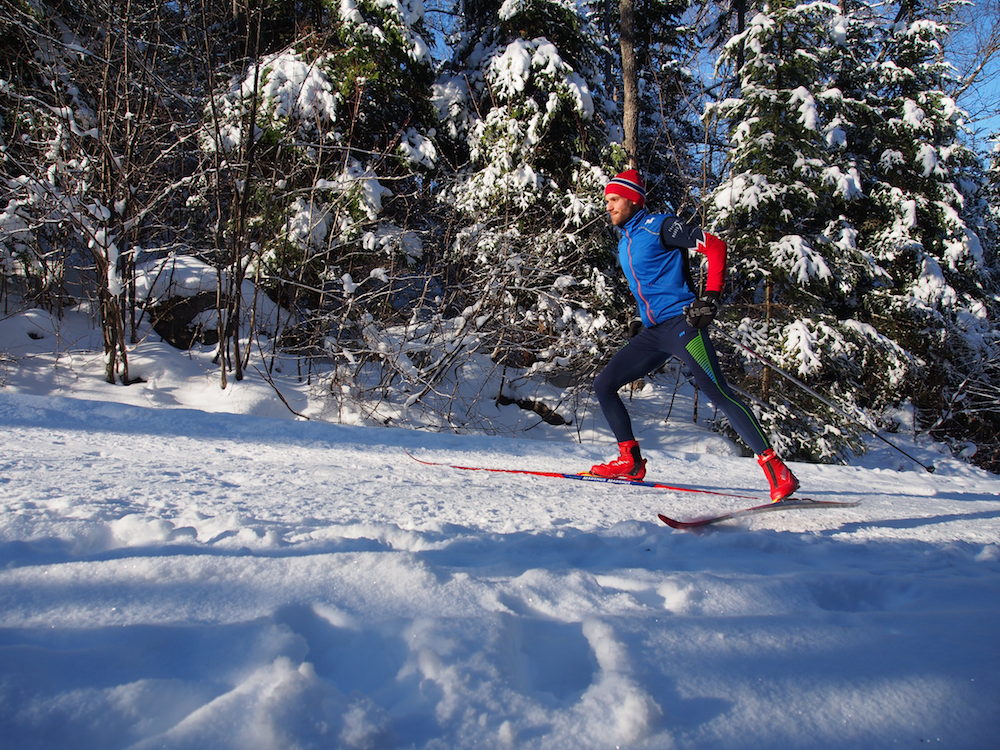
    Author François Léger Dionne concentrates on short, fast V2 strides at L3 intensity.
    Author François Léger Dionne concentrates on short, fast V2 strides at L3 intensity at the Far Hills Ski Center in Val-David, Quebec.

    This week, our focus shifts to a common theme amongst racers and trainers: uphill V2. Just like double poling is the go-to technique for most skiers in World Cup classic races  — watch those motionless legs during classic sprints and even throughout the 90 kilometres of Sweden’s legendary Vasaloppet! — V2 technique has really become their freestyle mainstay. And while we generally switch to V2 on flats and slight uphills, there are many benefits of using it on steeper climbs.

    For V2 to be effective on uphills, it is crucial to shorten the stride and increase the tempo. Forget long, smooth gliding on each ski. Don’t worry about full-arm extension when poling. Take the load off the triceps and focus instead on stabilizing the shoulders with the lats muscles. This will enable faster arm movements and a quicker reset between each push-off. The arms and upper body should dictate the pace of the V2 strides. Legs and hips should in turn follow and be the true power source of the technique.

    Let the power come primarily from the legs and hips; the arms should dictate the pace. Author François Léger Dionne concentrates on short, fast V2 strides at L3 intensity at the Far Hills Ski Center in Val-David, Quebec.
    Let the power come primarily from the legs and hips; the arms should dictate the pace. Author François Léger Dionne concentrates on short, fast V2 strides at L3 intensity at the Far Hills Ski Center in Val-David, Quebec.

    When doing V2 at low intensity, I noticed many skiers (often youngsters) tend to rely mostly on their upper body. Poor push-off from each leg usually isn’t a consequence of muscle weakness. It can simply be the result of a lack of muscle memory training.    One effective way to engage those leg and hip muscles (mainly: quads, glutes, tensor fascia latae, psoas, iliacus) is skiing without poles. Twenty to 30 minutes, broken down in sets depending on your level, will do the trick.

    When skating without poles, concentrate on keeping your balance and push off with the entire leg (from hip flexion to big toe propulsion). As much as possible, don’t use your upper body for momentum. Avoid over-rotation of the hips and keep your spine long and vertical.

    After a proper warmup, followed by a no-pole ski session, you’re ready for short uphill V2 bursts. The idea is to initiate proper leg and hip movements through no-pole skating at a comfortable pace, and using this muscle activation and awareness for V2 climbs.

    The basic workout:

    20 minutes warmup: low intensity V2 (with poles)

    20-30 minutes of no-pole skating (Level 1-2 intensity), broke down in sets of five minutes or more depending on your level

    15-20 X 30 seconds repeats of uphill V2 (L3 or threshold intensity) with 1 minute recovery between each rep.

    30 minutes cool-down

    Improving your ability to power through uphills using only V2 will not only make you a overall stronger freestyle skier, it will help your body tone with the fast pace of sprints. You may also increase your V2 speed at the foot of real steep climbs (before switching to offset) and at the top of them when forward momentum is at it’s lowest.

    Notes:

    • To make the no-pole session more challenging, you can extend your arms on each side (holding the middle part of your poles). This will help prevent hip over-rotation.
    • For the uphill V2 repeats, find a hill you would tend to climb in offset, yet is attackable using V2 only.