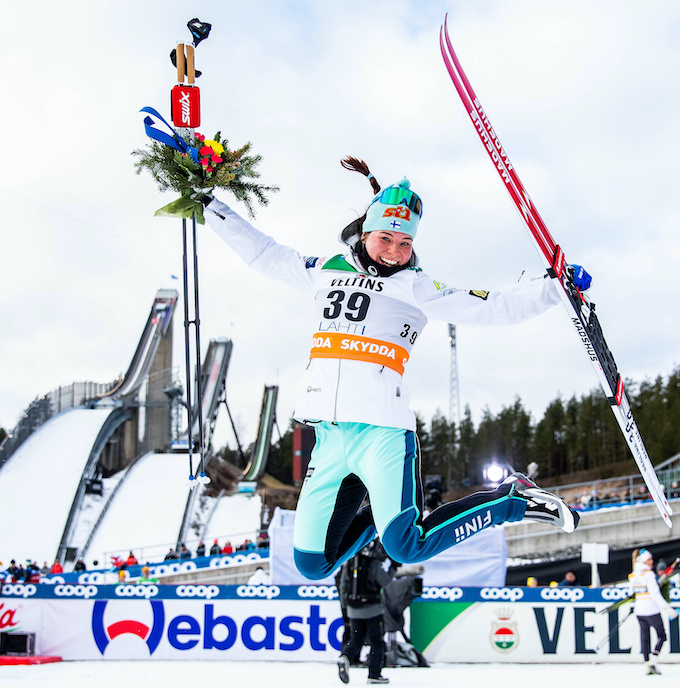
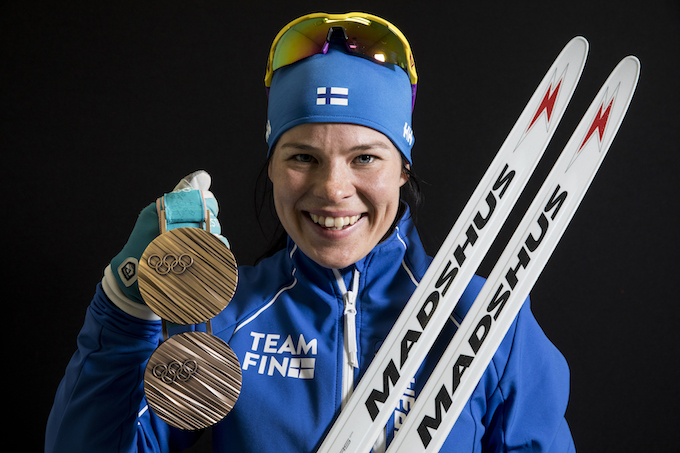
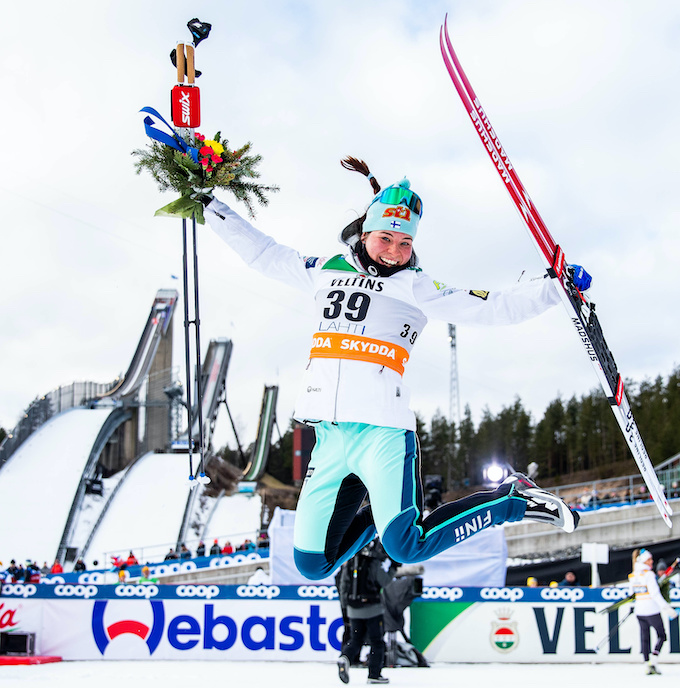
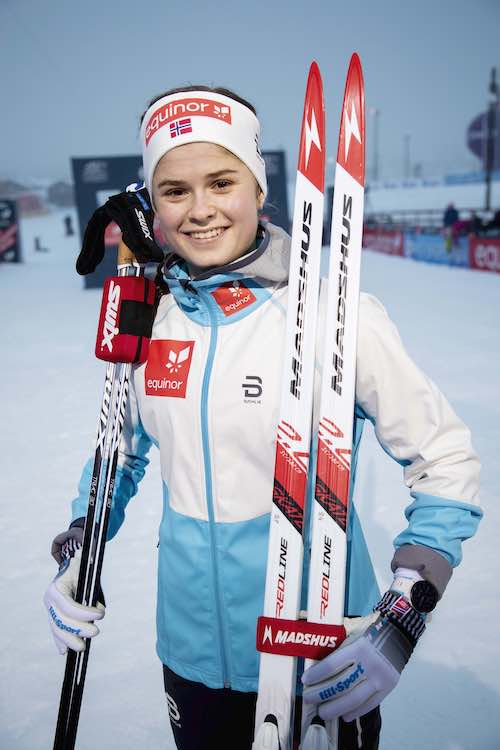
As a part of her “Project Beijing,” Krista Pärmäkoski has signed a new two-year contract with her long-term partner Madshus.
The 29-year-old Finnish skier is aiming for the podium both at the 2021 FIS World Championships in Obersdorf (GER) and the 2022 Winter Olympics in Beijing (China).
While months in the works, the contract was an easy decision for both sides, and Pärmäkoski will be racing on Madshus skis and ski boots through the 2022 Olympics.
“I believe that you can win Olympic and World Championships medals with Madshus skis,” says Pärmäkoski, who has been really satisfied with the Madshus service and product development.
“Over the past years, we have been able to take part in the development of Madshus skis and carbon boots. Madshus has a really professional development team, and the communication and team work has worked really well.”
Pärmäkoski, who has skied on Madshus skis all of her career, has competed in three Olympic Games (Vancouver 2010, Sochi 2014 and PyeongChang 2018) and six FIS World Championships (Liberec 2009, Oslo 2011, Val di Fiemme 2013, Falun 2015, Lahti 2017 and Seefeld 2019), taking home a total of four Olympic medals and six World Championship medals.
“Actually, my very first skis, which were so-called combi-skis, were Madshus skis. All of my skis have been the same brand ever since my childhood, so it has been quite a journey together,” Pärmäkoski says.
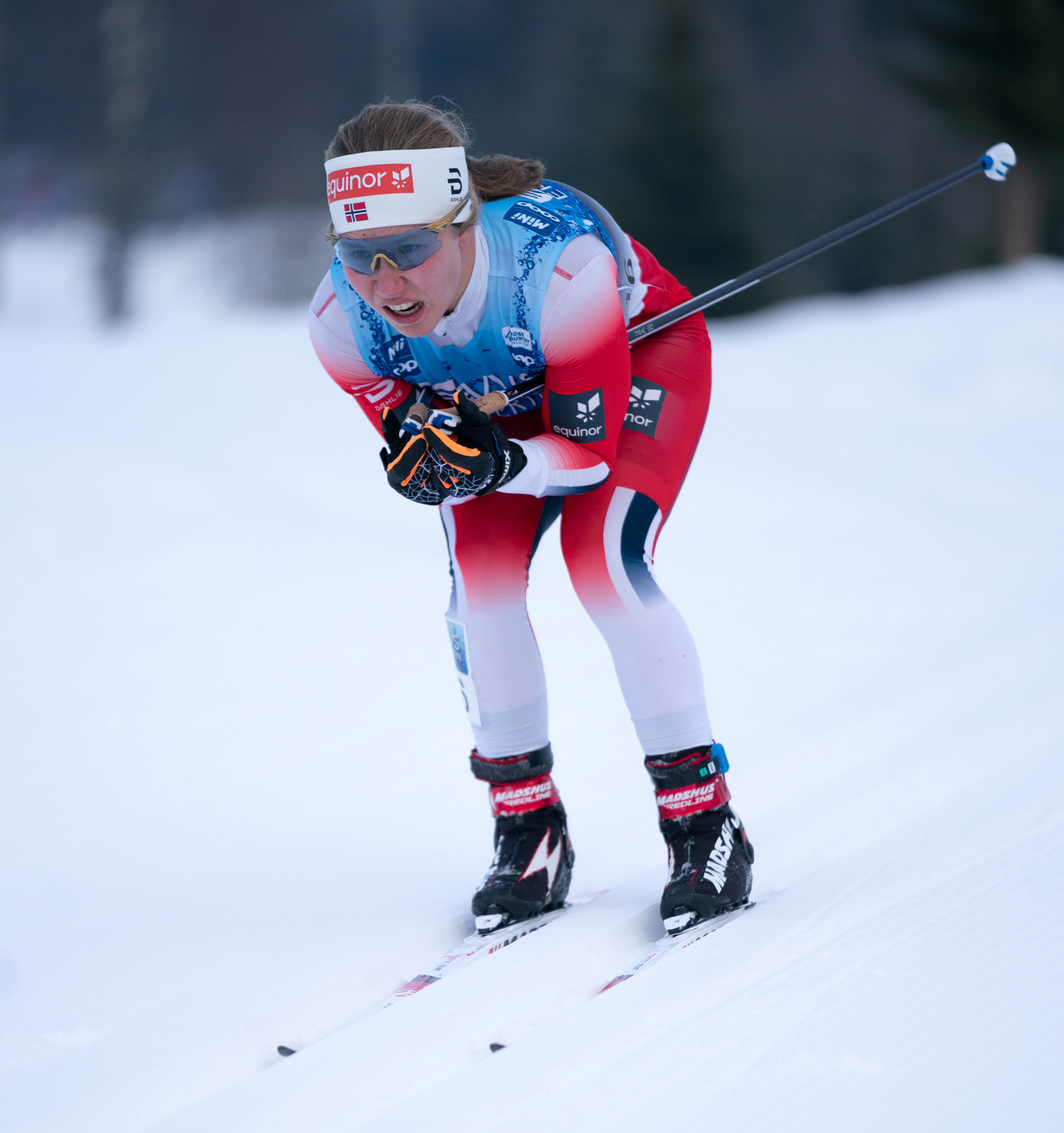
Krista Parmakoski (FIN) took home two individual medals from the 2018 Olympic Winter Games in Pyeongchang, South Korea (KOR). Photo: Nordic Focus
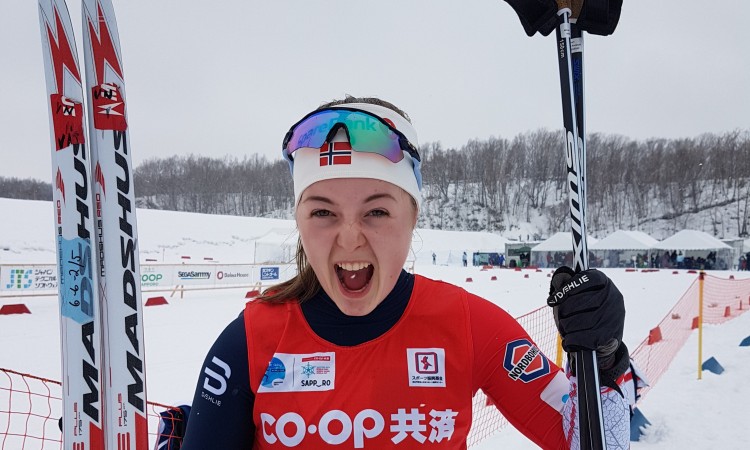
The 18-year-old junior racer will be the youngest member of the elite squad of the 2020/21 Norwegian national cross-country ski team.
“I’m super excited to be a part of a team with so many incredibly experienced skiers. I know I have a lot to learn, and I feel very privileged. At the same time, I hope I can contribute to the team, even though I am the youngest,” Helene Marie Fossesholm says.
Helene Marie Fossesholm is coming off a season where she bagged two individual gold medals at the FIS Junior World Championships, earned the bronze medal in the 15-kilometer classic mass start at the Norwegian senior national championships as well as making the podium at several national and international FIS races and placing fifth at the World Cup in Falun (SWE) in February.
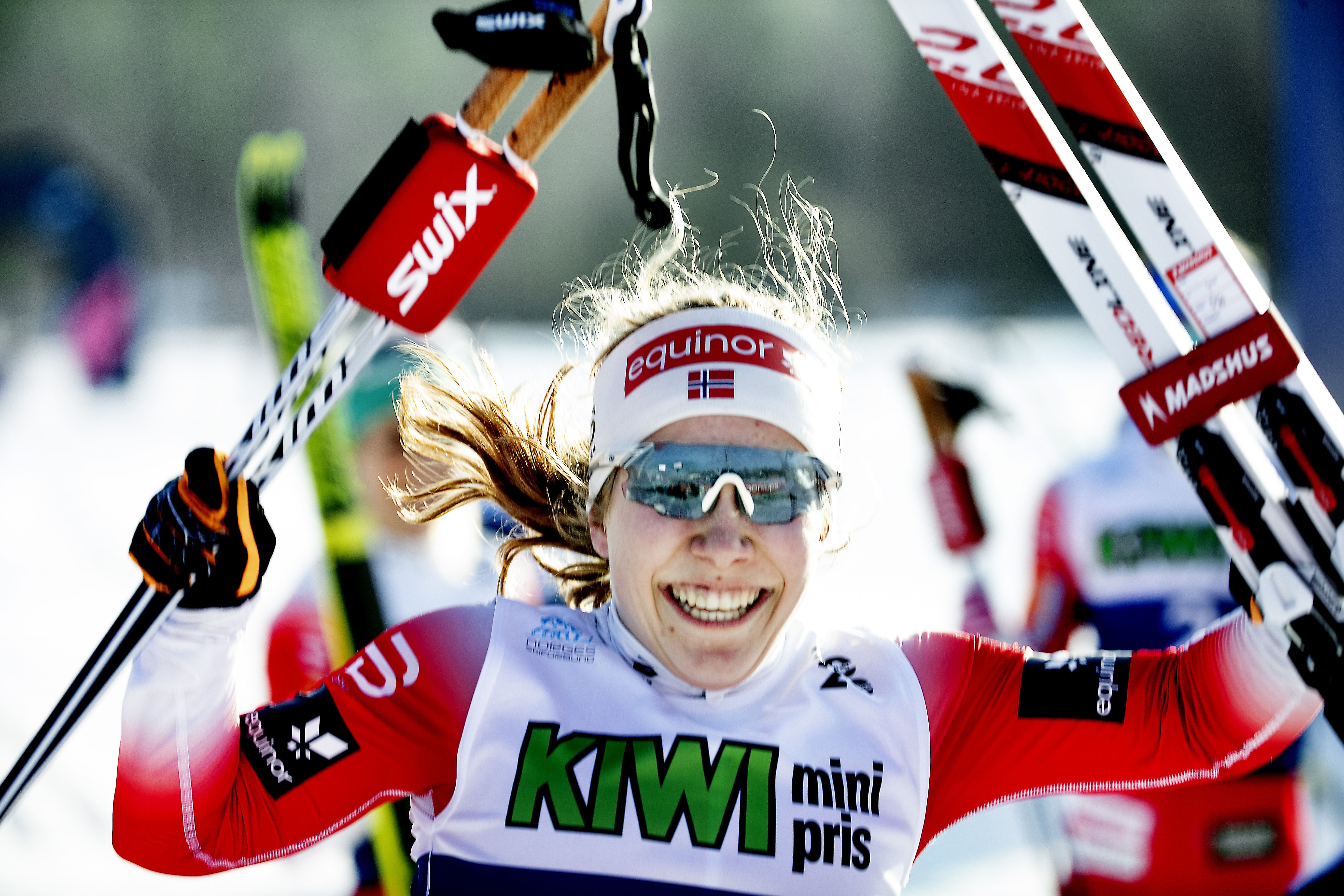
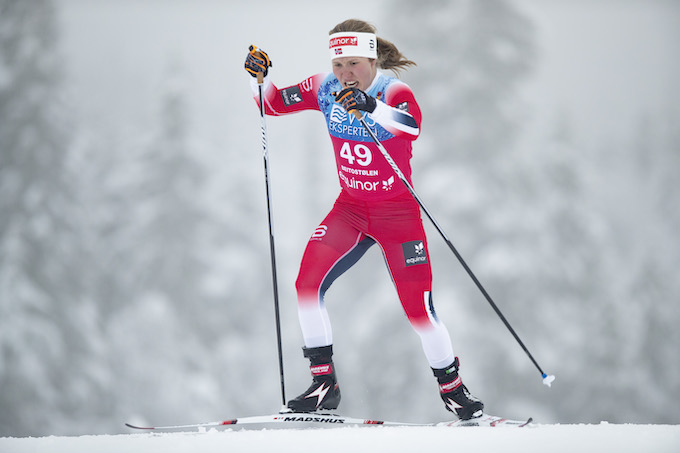
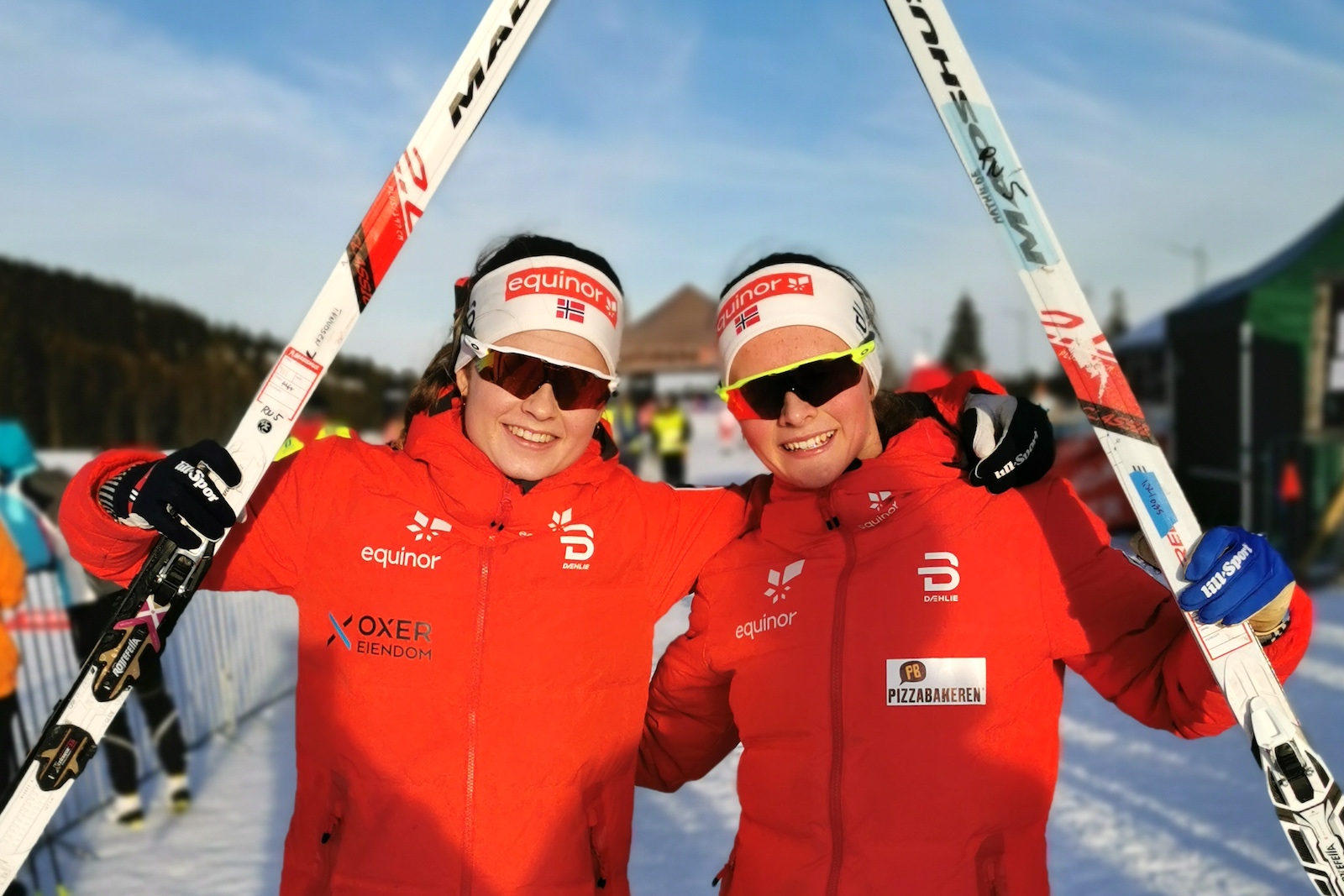
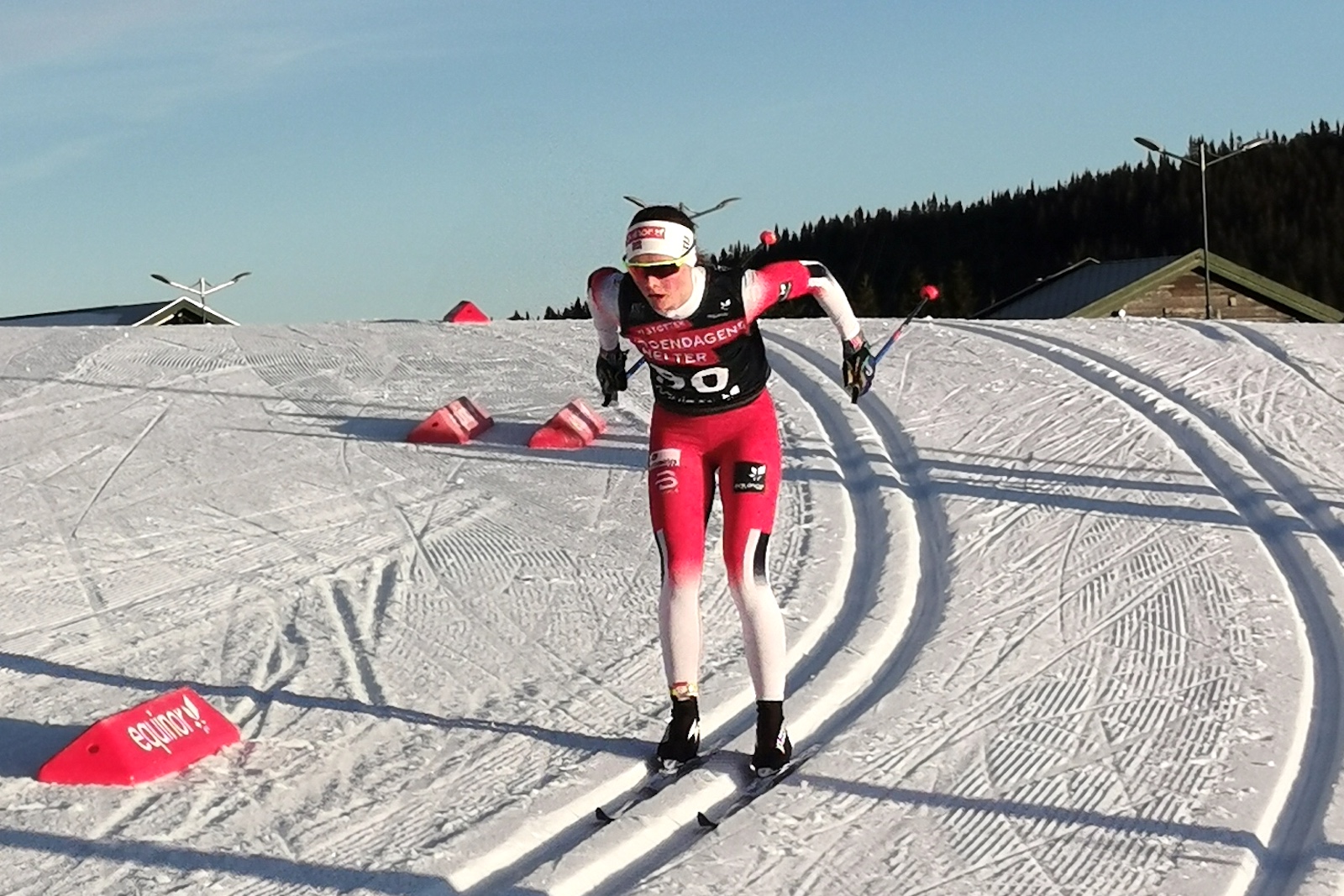
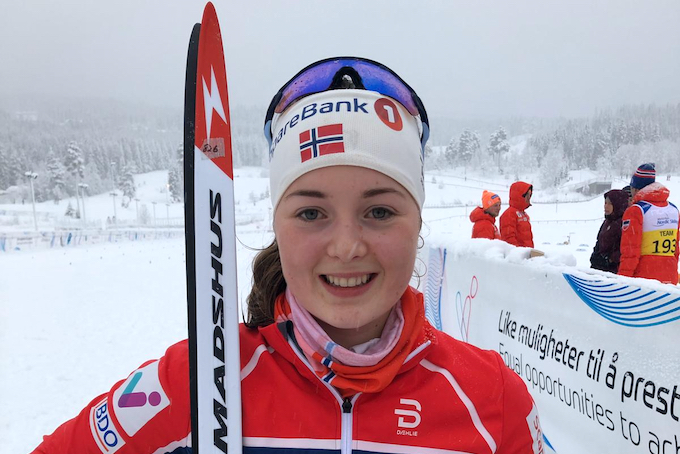
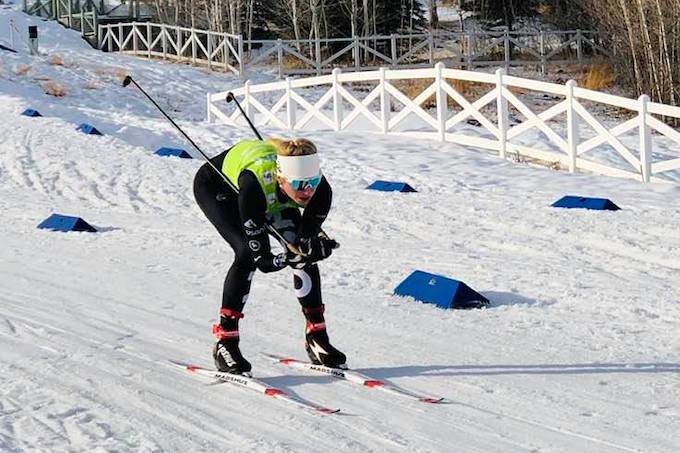
Helene Marie Fossesholm was third the 10-kilometer skate race at at the 2020 FIS season opener at Beitostølen (NOR) in November. Photo: Madshus
Both national team coaches and cross-country expert commentators are impressed with the young athlete.
“It is unusual to select such a young junior for the elite national team at the senior level, but she is an exceptional cross-country racer. She is also extremely mature for her age, and is better equipped to handle the transition from junior racing to the World Cup level,” says cross-country expert commentator Torgeir Bjørn following the national team announcement on Tuesday.
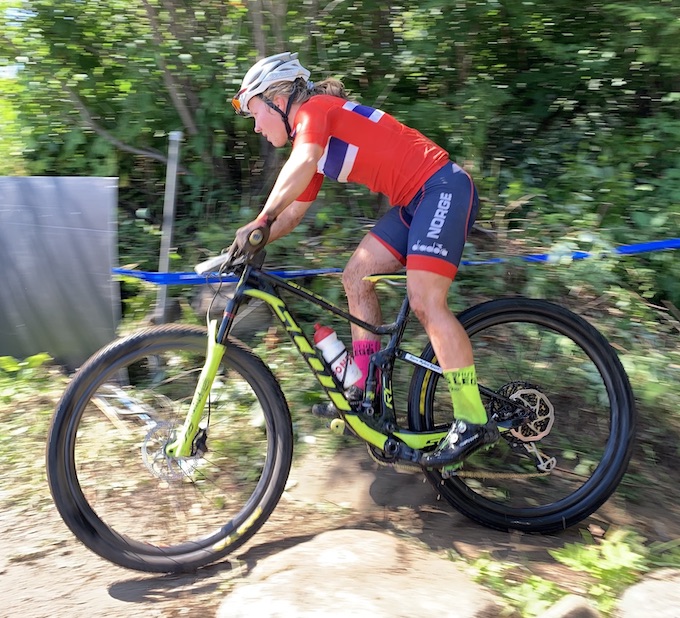
While the talented junior was also named to the Norwegian national elite mountain bike team earlier this year, Fossesholm has now decided to make cross-country skiing her main focus.
“Given this opportunity, I have to prioritize cross-country skiing. But I don’t give up cycling all together. I will always use my mountain bikes as well,” she says.
Helene Marie Fossesholm was third at the 2019 UCI Mountain Bike World Championships. Photo: Eddy Knudsen Storsæter
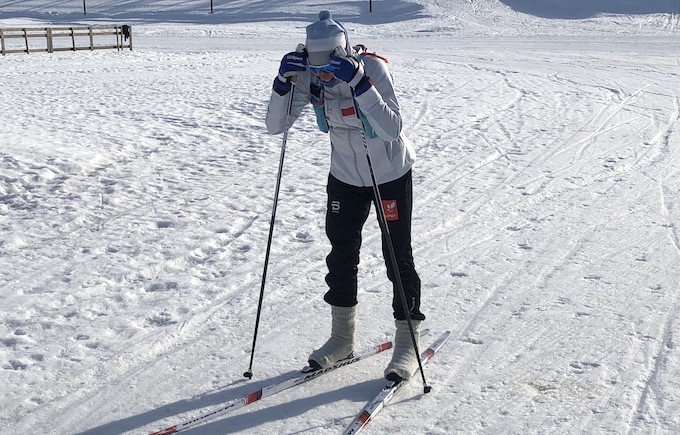
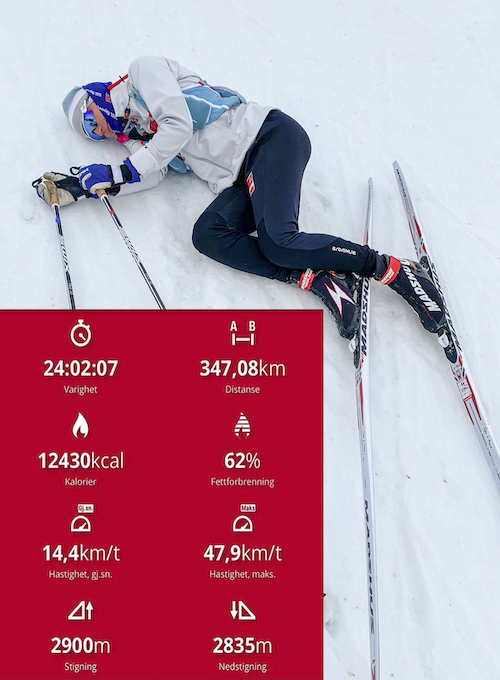
Thea Krokan Murud (NOR) skied 347 kilometers in 24 hours. The former World Cup skier, who switched to marathons prior to the 2019-20 season, admits it was a challenging project.
“347 kilometers is far, and 24 hours is a long time to be out skiing. I’m glad I did it, but it was harder than I had expected. I’ve skied a number of marathons this winter, but this 24-hour ski wasn’t really anything I had planned for or prepared for,” says the 25-year-old, explaining that the idea came about on a whim.
“I had done a 100-kilometer workout earlier in the week, and since the race season had been cut due to the corona virus, I thought it would be fun to try to ski for 24 hours. When my good friend and training buddy as of lately Julie Vollan Bø said she’d join me, it was a go. Three days later, we did it,” Murud says.
347 kilometers is 28 kilometers short of a world record for distance skied by a female in 24 hours, which is 375.5 kilometers posted in 2018, but Murud is in no hurry to try to beat that record.
“My goal was simply to ski for 24 hours. While I was at it, I decided it would be fun to see if I could log 300 kilometers. When I had reached that goal, I felt that everything else was a bonus. At that point, there were still a few hours to go until I had 24 hours. I felt confident I would make it, but my pace slowed significantly,” she explains.
Story continues below
Thea Krokan Murud (NOR) after her 24-hour ski. She logged 347 kilometers between 4pm on March 28 and 4pm on March 29, 2020. Photo: Submitted
Murud completed her 24-hour ski doing laps on the 15-kilometer Ingalåmi race course in Lillehammer (NOR). The route was carefully selected based on a few critical requirements: It was somewhat sheltered and offered varied terrain without too much altitude.
“You definitely don’t want a lot of climbing when you’re skiing for that long, but I don’t think I could handle skiing 24 hours on a totally flat lake either, so I felt like we nailed the course pretty well, Murud says.
What do you eat to last through such a long event?
“Simply put: A lot. You need a lot of energy, so you have to pack a lot of food, and food that you enjoy eating and that is easily digested and quickly absorbed. I packed homemade sweet rolls, simple rice, lots of energy bars and gels, a variety of sports drink, energy drinks and coke, as well as some jelly candy men. I tried to eat and drink every hour, and switched between real food such as rolls or rice one time, and bars, chocolate and candy the next. Usually on long workouts and races, I get hungry toward the end. This was different, and eating was a lot of work. During the last four or five hours, I really only enjoyed the jelly men, and luckily, I had stuffed my pockets full of them. I think they were a hugely contributing factor to making it through the 24 hours.”
What was the biggest challenge?
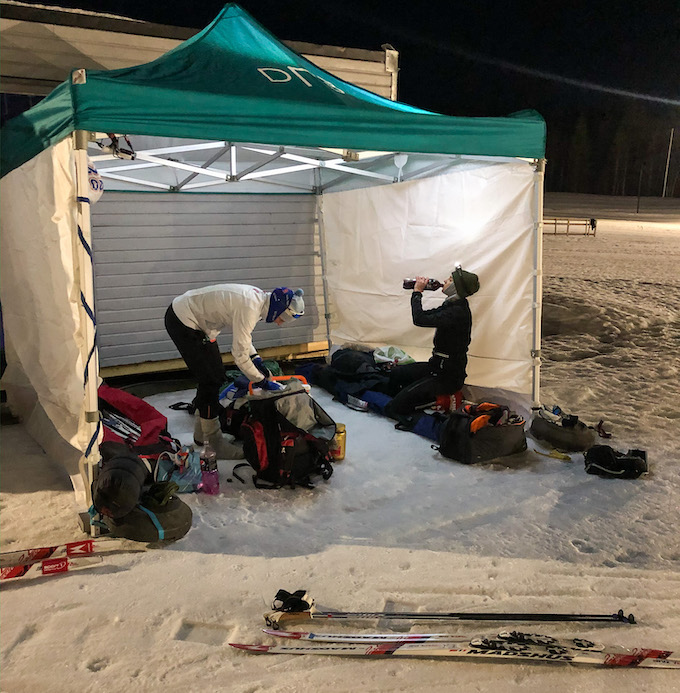
“For me, it was skiing through the night. After the sun went down, the temperature dropped to minus 16 degrees Celsius. I had to put on a lot of clothes to stay warm, and somehow it was tolerable. Julie had a harder time with the cold, and about 3 am, she was miserable and no longer able to eat or drink, and she just had to quit. When she left, it got really lonely, and I’m also scared of the dark. I don’t know exactly what I’m scared of, but I have never liked the dark.”
Story continues below
For Thea Krokan Murud, skiing through the night was the hardest part of the 24-hour ski, especially after her friend called it quits. Photo: Submitted
What kept you going at that point?
“I knew that if I quit, I would never make another attempt at a 24-hour ski.”
What was the highlight of the stunt?
“When Julie quit, she said she would come back after getting warm again, and I figured she might join me for the tail end of the project. But about 6:30 in the morning, she was back. Then the sun came up, and skiing into the sunrise after hours alone in the dark was just unreal. I am really glad I did it, but I’m totally amazed at Julie. She skied 250 kilometers with barely any long ski workouts this winter prior to the last couple of weeks when she has skied a few with me.”
As reliable as a Swiss watch and as versatile as a Swiss army knife: From sprints to distance races and relays, the talented Swiss junior has dominated the podiums since the first race of the season. She won three medals at the 2020 Youth Olympics in Lausanne (SUI) in January. Six weeks later, she followed suit and took home three medals from the 2020 FIS Junior Nordic World Championships in Oberwiesenthal (GER). Did we mention she’s only 16 years old?
We had a chat with Siri Wigger from Zürich (SUI) after her first season at the FIS junior level. And what a season it was!
Did you expect to win Olympic and World Championship medals in your very first season at the junior level?
“I didn’t expect it, but I was hoping for it. Last year I won the junior category at the Swiss Championships, even though I wasn’t technically old enough to enter those races. I also won the Swiss Cup-races in December, so I knew I could ski fast. But at the Swiss Cup, there are not that many competitors, and I mostly know who they are. At the Youth Olympics and at the World Championships, I was competing against a lot more skiers and skiers from many other countries. When I won the first gold medal in Lausanne, I was really happy. I hoped I could win the next race too, and I was very happy to take another gold medal. I felt like people were expecting me to win medals, so I put a lot of pressure on myself. At the World Championships, I was a little more relaxed. But then I took three medals there too. That was just crazy and it motivates me to train more.”
You were also on the Swiss team that won the gold medal in the relay at the World Championships – did you expect to win the relay?
“Not at all! We hoped for the best and thought that if we were lucky, we could maybe hope to be on the podium. So, when we won the relay, we were totally overwhelmed. It was amazing for the team, because it was the first time in history that Switzerland won a relay at the Junior World Championships. These are girls I have known for a long time, so hopefully we can continue to race relays together and maybe even take medals at the senior level. That would be really cool.”
What is your race strategy?
“I usually like to go all out from the start and try to get a gap on the other racers. I try to just focus om myself, but sometimes it’s hard to not get caught up in what the other racers are doing. If I hear from the coaches that others are like five seconds ahead of me or five seconds behind me, I start to worry that maybe they will start to go faster. Then I tell myself that maybe they are getting tired, so just push myself as hard as I can, and keep going.”
When you do sprint races, what is your strategy for the heats?
“Normally, I like to take the leading position from the start, but it depends on how the race is stacked. Sometimes I try to not go so hard in the quarterfinal and the semifinal but just ski fast enough to advance to the next heat. That way, I save some energy for the final. But in the final, it’s always all out.”
How did you get so good – where did it all start?
“Both of my parents are skiers, so both my brother and I grew up skiing. I have skied since I learned to walk, and I love skiing. I can’t decide whether I like skate or classic better, or if I prefer sprint or distance races. I like them all. I just love being outside in nature, skiing on the beautiful tracks. I really love competing and the feeling of pushing myself too, and all the really nice people I meet everywhere through my sport.”
Are you training with a club or a team?
“For the last three years, I’ve been attending a special winter sports school for students who focus on all kinds of ski disciplines: we have alpine skiers, freestyle skiers, snowboarders, cross-country skiers and biathletes here. It’s a boarding school, so I live there during the week and then go home or to races on the weekends. We get to train half of the day and go to school half of the day. That works really well. I am not a part of the Swiss national team because I am too young, but we have a development team with selected juniors from each age category. This team meets about five weeks throughout the year, and it’s really helpful.”
How much do you train in a typical week and throughout the year?
“We do workouts every day except for one rest day. How many hours we train each week depends on the season, where we are in the season and if we are doing a lot of competitions. For the overall year, I log about 620 hours total. In the summer, we do much of the same kind of training as we do in the winter. We run and roller ski, but maybe a little more running than roller skiing. I also like to ride my bike a lot, both road bike and mountain bike. Just like with classic and skate skiing, I can’t decide which I like better; I like them both for different reasons.”
How do you go about strength training?
“Strength training is definitely an important part of our training program, but what we do for strength training varies a lot depending on the season. During the race season, we generally have one session per week of plyometrics, which is all kinds of explosive exercises. In the dryland season, we have cycles where we focus on either general strength in the weight room where the goal is to get stronger overall or endurance strength. Each of the focus periods last a few weeks each. In addition, we do core- and stabilizing strength workouts two or three times per week all through the year. These are short, 20-minute circuit sessions with body weight exercises.”
What are your favorite workouts?
“I love intervals – all kinds of intervals and hard sessions. I like short, fast intervals and longer, controlled intervals, and I like the way intensity training makes me feel. I like the feeling of pushing myself hard, and I feel that those workouts make me stronger and faster. But I also really love going on longer outings where we ski at an easy pace for several hours.”
Who are some of your role models, and why?
“I have several, for different reasons. Dario Cologna (Swiss World Cup skier with four Olympic gold medals, three World Championship medals and four-time winner of both the overall FIS World Cup and the FIS Tour de Ski) is from my country and just really good year after year, and that’s inspiring. I have also admired Ingvild Flugstad Østberg (NOR) since I was a little girl. She used to ski on the same skis as I do, and she’s super-fast and very strong. Stina Nilsson (SWE) is also really fun to watch. I started noticing her a few years ago. She’s amazing. won every sprint and she wasn’t just the winner. She was simply much faster than everyone else. I am sad that she is not doing cross-country anymore but switched to biathlon.”
It’s March, it’s spring, and skiing is not at all over!
While the corona virus pandemic cut the race season short this year, and group events are discouraged in order to prevent spreading the virus, this is perfect time for skiing and exploring with your closest family.
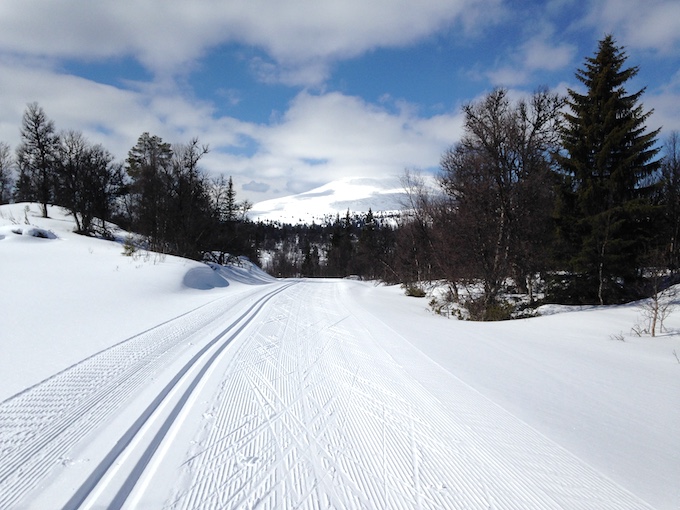
Spring offers some of the best skiing of the season. The days are longer and the snow has been piling up through the whole winter and the snow pack is often thick well into April and beyond. Play, tour and train to your brains out. Slushy conditions and/or bad tracks? Bonus! Here’s why: Slush makes for excellent technique training. Mastering the difficult stuff helps you improve your overall skills.
Here are some tips on how to get the most from the season and your thoughts away from the virus.
Story continues below
Taking your family skiing is a great way to bond and get your thoughts away from everything else. Photo: Inge Scheve
Ski to a sheltered area and set up camp
Digging in the snow is a perennial hit with everyone. Snow cave and igloos, ski jumps and moguls, snowmen and snow castles are classic constructions, but use your imagination. Just make sure to bring dry mittens and gloves for everyone.
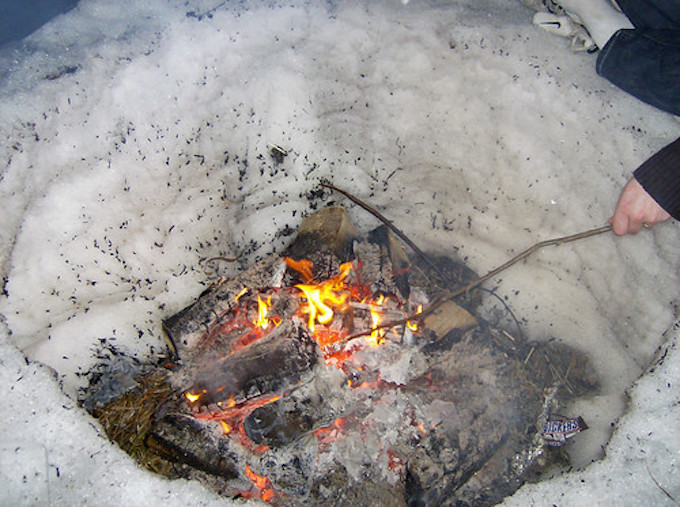
Cook your lunch on an open fire
Most kids love cooking their food outside. Consider bringing some fire wood and fire starter to build a camp fire that doubles as a lunch kitchen. While roasting hotdogs never go out of style, there are other options. Try bringing pancake or waffle batter in a thermos or other tightly closed container and make them on the open fire. Old-fashioned, non-electric waffle irons can often be found in secondhand stores or flea markets. Bonus: These irons are great for making grilled cheese sandwiches as well!
Story continues below
Add some ski play
Try your favorite games such as tag, obstacle course, jumping, parallel slalom, trick skiing, dancing…. Your imagination is the only limit. No matter what you choose it will deliver a lot of bang for the effort: intensity, balance, technique, ski feel – and lots of laughs and good times.
Get out early
Crust skiing is amazing, whether classic or skating. But remember that crust turns to slush only a few hours after the sun comes up. So, if crust skiing is on your agenda, you need to get up early and enjoy the crust while it lasts.
Story continues below
The crust is waiting for you! Photo: Inge Scheve
Get the right equipment
Worried that your skis won’t work when the conditions change radically from the start of the ski to the end of your spring adventure? No need for concern: Just grab a pair of IntelliGrip®skin skis. The unique skin and ski construction delivers both kick and glide on crust and ice as well as slush and slop.
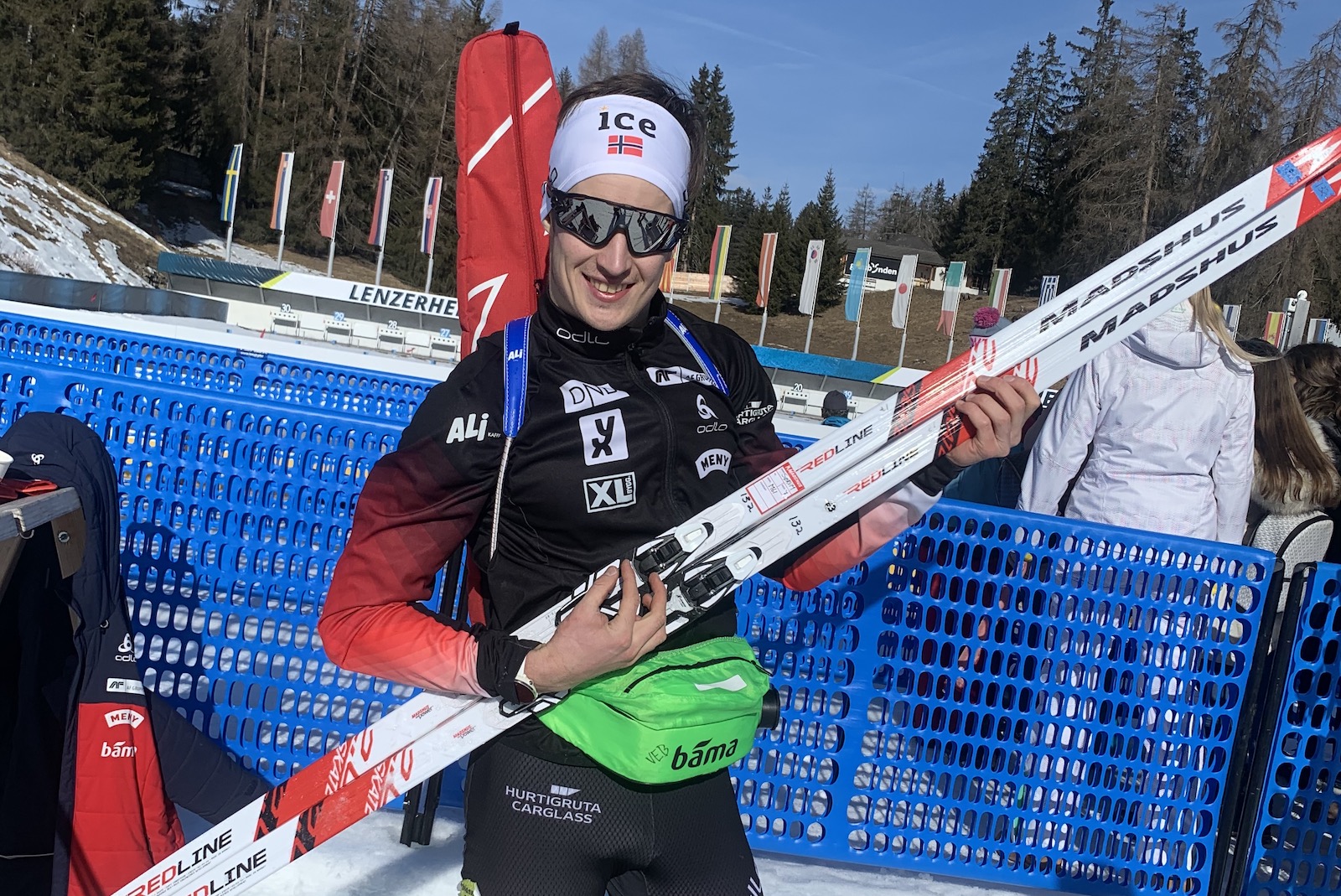
Sturla Holm Lægreid (NOR) at the IBU Open European championships in Minsk (BLR) where he impressed the national team enough to name him to the World Cup team for the sprint race in Nove Mesto (CZE) this weekend. Photo: Nordic Focus
Madshus juniors and U23 racers bagged no less than a dozen medals at the 2020 U23 and Junior World Championships in Oberwiesenthal (GER), dominating the tracks in both the individual and team competitions.
Starting out, the young Madshus talents earned three medals and several top-10 finishes just in the opening weekend. In the junior girls’ sprint final on Saturday, three of the six racers were on Madshus skis and equipment.
Helene Marie Fossesholm (NOR), who crashed out of the medals in the sprint after qualifying first on Saturday, returned to the track on Monday, winning the gold medal in the junior women’s 5-kilometer classic race by a comfortable margin. On Wednesday, the 18-year-old won the 10-kilometer skate race with a gap of more than a full minute to second place.
At the same time, Siri Wigger (SUI), was third in the sprint on Saturday. The young Swiss racer, who is a first-year junior, just returned from the 2020 Youth Olympic Winter Games with a handsome bucket of medals, also pulled in to bronze in the 5-kilometer classic on Monday. Then on Friday, she helped Switzerland to gold in the relay – where Tilde Bångmann skied the first leg for Sweden and set her team up for bronze.
And just hours later, Team USA pulled into gold in the junior men’s relay, the second US relay medal of the day: the junior girls won silver.
Amundsen: the U23 medal machine
Among the U23 racers, Harald Østberg Amundsen (NOR) dominated the individual events, helping himself to three individual medals in four days: After his bronze in the sprint on Sunday, the 21-year-old moved up to silver in the men’s 15-kilometer classic race on Tuesday. On Thursday, the medal machine won the gold in the 30-kilometer skate race, which he owned from start to finish.
Finally, on Saturday, Amundsen capped the championship week in Oberwiesenthal with gold in the mixed relay – with twin sister Hedda Østberg Amundsen anchoring the team for her first medal of the week. The relay gold was Harald’s second gold and 4th medal in six days!
The overall medal count for the week comes out to six gold medals, two silver medals and four bronze medals between the juniors and the U23-racers.
Biathlon juniors on a roll
While the cross-country skiers ruled the World Championships in Germany, junior biathlete Sivert Bakken (NOR) cleaned up at the IBU Cup, bagging three victories in three days in Minsk (BLR).
Fellow Madshus junior Sturla Lægreid impressed the Norwegian national team with his performances at the IBU European Championships that he was given the opportunity to race the sprint competition at the IBU World Cup in Nove Mesto (CZE) this weekend. He signed off with an impressive 13 place after shooting clean at the range.
The rising Madshus stars racers are posting impressive championships results, while veteran World Cup athletes deliver in Lahti.
Starting off, Siri Wigger (SUI) bagged the bronze in the Junior World Championships sprint in Oberwiesenthal (GER) on Saturday, while Matvey Eliseev (RUS) went straight for the gold in the men’s 10km sprint at the biathlon European Championships.
On Sunday, the young Madshus athletes earn three championship medals in one day: Harald Østberg Amundsen (NOR) took home the bronze from the sprint at the U23 Word Championships in Oberwiesenthal (GER), while Sturla Lægreid (NOR) won the silver medal at the European Biathlon Championships pursuit in Minsk (BLR) and Sivert Bakken (NOR) won the bronze. Earlier in the week, Anastasyia Merkushyna helped Ukraine to the bronze medal in the single mixed relay at the European Biathlon Championships.
Sturla Lægreid (NOR)won the silver medal at the IBU European Championships in Minsk this weekend. Photo: Eivin Rundberg
On Monday, Helene Marie Fossesholm (NOR) cruised into gold in the 5km classic at the Junior World Championships – with a comfortable margin to second place. Fossesholm also posted the fastest qualifier time and won her quarterfinal heat in the sprint race on Saturday, but crashed out of the medal fight in the final. “I had amazing skis today, and it was really fun to win the gold here today,” Fossesholm said after her impressive performance.
The FIS Junior and U23 World Championships in Oberwiesenthal continue through March 7, with classic distance races March 3 (U23), freestyle distance races March 4 (junior) and March 5 (U23), and relays March 6 (junior) and March 7 (U23).
Story continues below
Harald Østberg Amundsen won the bronze medal at the FIS U23 Nordic World Championships in Oberwiesenthal (GER) on Sunday. Photo: @Flyingpointroad.com
At the FIS World Cup, Krista Pärmäkoski (FIN) was third in the 10-kilometer classic race at the cross-country World Cup on home turf in Lahti on Saturday. On Sunday, Pärmäkoski earned her second World Cup podium in two days, anchoring Finland to second place in the relay, where Rebecca Öhrn helped Sweden to third place making it a double Madshus podium. In the afternoon Alexander Bessmertnykh helped Russia to third place in the men’s relay. The FIS cross-country World Cup moves on to Norway for sprint races in Drammen on March 4 and 30km/50km classic races in Oslo on March 7 and 8.
Krista Pärmäkoski was 3rd in the 10-kilometer classic race on home turf in Lahti on Saturday. On Sunday she anchored Finland to 2nd place in the relay. Photo: Nordic Focus
IBU world championships biathlon, medals, Antholz (ITA). Photo: Manzoni/NordicFocus
Madshus biathletes took home a handsome handful of medals from the IBU biathlon championships in Anterselva (ITA) last week. Let us fill you in:
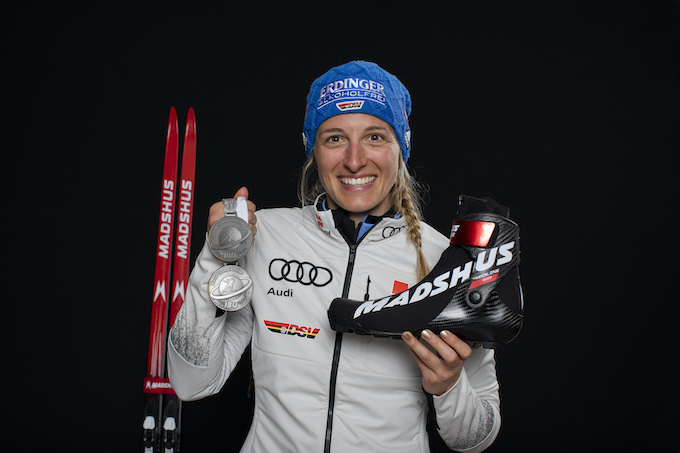
Vanessa Hinz (above) first earned the silver medal after shooting clean at the range and delivering strong on the trails in the 15-kilometer competition on February 18. Then she helped Germany to silver in the women’s relay on February 22, likewise nailing every target and making speed on the track.
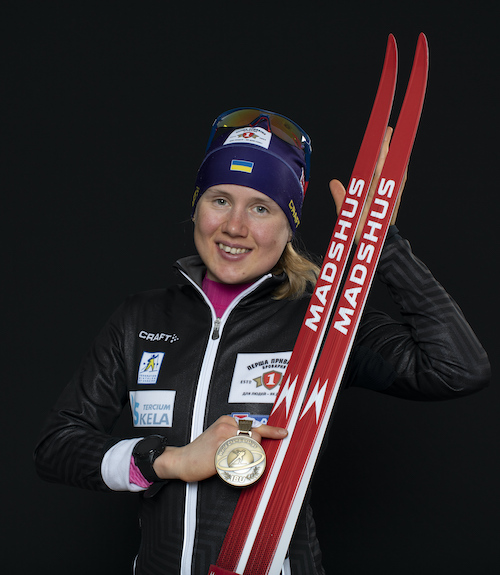
Also in the women’s relay, Anastasiya Merkushyna raced the first leg for Ukraine and set her team up for the bronze medal, putting Madshus racers on two steps of the podium in the same race.
Later that afternoon, Benedikt Doll anchored Germany to bronze in the men’s relay, upping the medal count to three on the same day!
Story continues below
Anastasiya Merkushyna helped Ukraine to bronze in the relay at the 2020 IBU World Championships. Photo: Nordic Focus
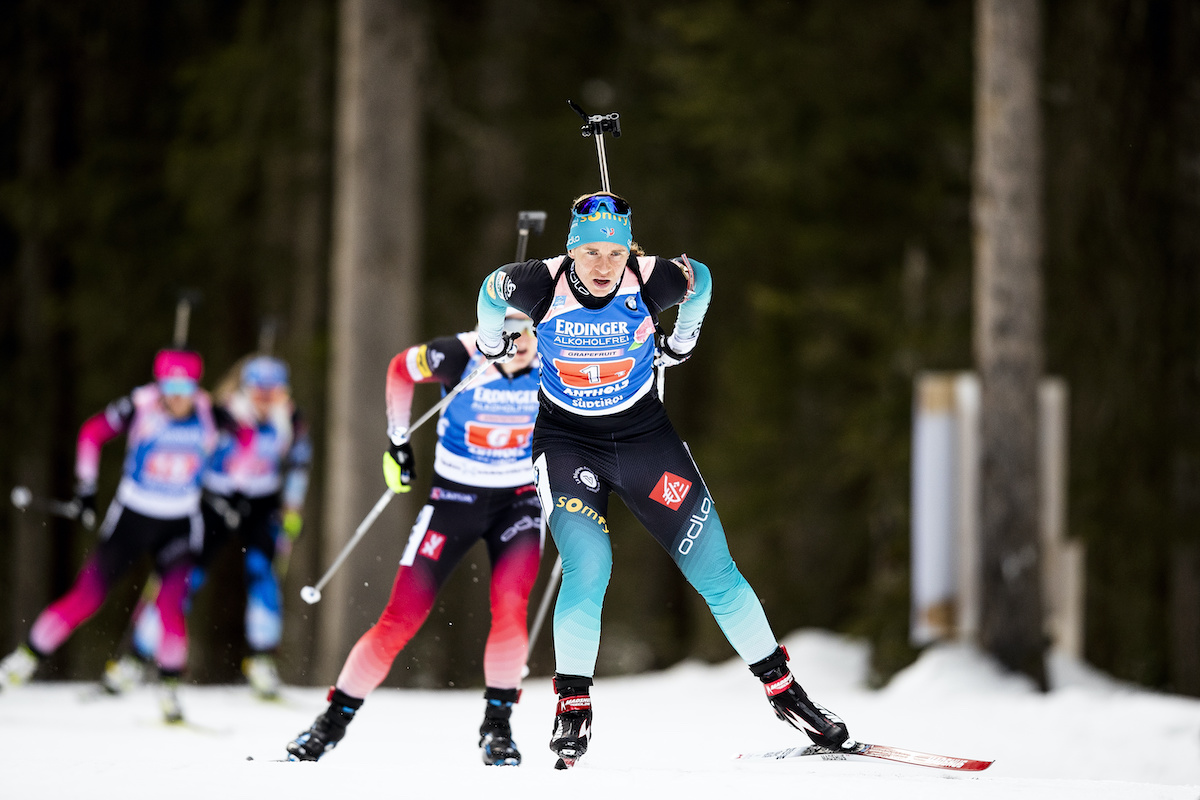
Additionally, Anaïs Bescond skied France to the podium for the bronze medal in the single mixed relay on February 18, her eighth World Championship medal.
Anais Bescond during the single mixed relay where she helped France to bronze at the 2020 IBU World Championships. Photo: Nordic Focus
Veteran biathlete Benedikt Doll (GER) anchored Germany to the bronze medal in the relay at the 2020 IBU World Championships – the third Madshus medal on the same day! Photo: Nordic Focus
Helene Marie Fossesholm (NOR) is six seconds from the podium in her second-ever World Cup race, while Vilde Nilsen (NOR) wins the overall FIS Para World Cup.
Coming off a three-day winning streak in Germany and her ninth consecutive World Cup victory this weekend, Nilsen has already bagged the overall Para World Cup victory, although only half of the scheduled World Cup events this season are completed.
Despite missing more than a 100 of her scheduled workouts this summer due to a back injury, she has won all the races in the FIS Para World Cup so far this season, and the 19-year-old is hungry for more.
“Given my age, there is reason to believe that there is a lot more fun to be had for me in ski racing,” Nilsen said after her victory on Sunday.
Story continues below
Vilde Nilsen has already won the overall FIS Para World Cup, although the season is only half-way through. Photo: NSF
At the 10-kilometer FIS cross-country World Cup skate race in Falun (SWE), turbo junior Helene Marie Fossesholm hauls into fifth place. The 18-year-old was only six seconds from the podium, despite starting far back in the field and crashing once during the race.
“When I saw one of the guys move up from 64th place to the very front in the men’s race earlier in the day, I realized that it’s totally possible to climb a lot of places. I tried to not stress out too much in the beginning, but at the same time, it’s important to be on the move since everyone wants to get ahead,” says Fossesholm.
Next up, Fossesholm is heading to the FIS Junior World Championships in Germany in the end of February, where she will be the indisputable favorite to the gold medals.
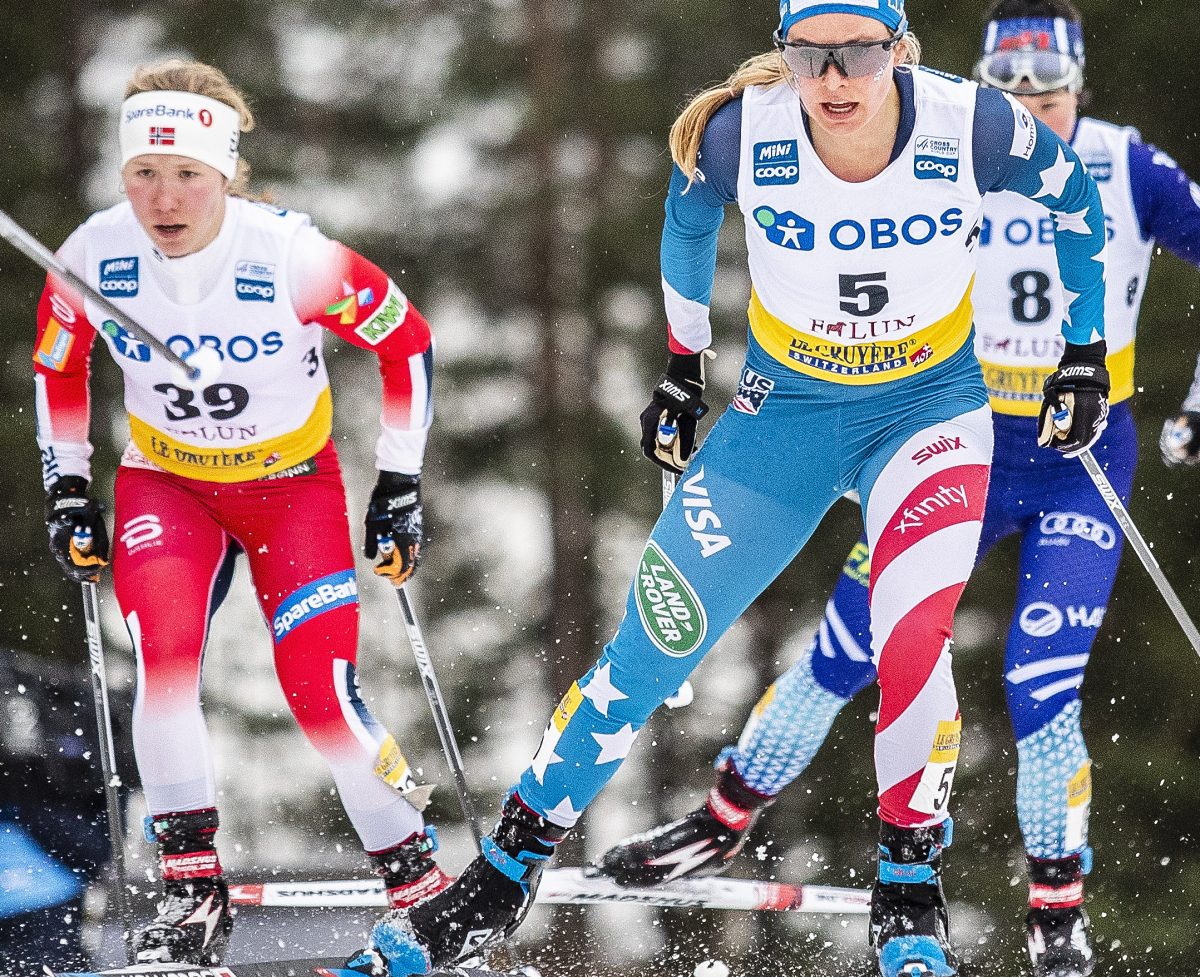
Junior star Helene Marie Fossesholm (left) was fifth in the 10km skate race at the World Cup in Falun (SWE), while Krista Pärmäkoski (far right) was 10th. Photo: Nordic Focus
Madshus racers clean up the podiums across the board, first at the FIS Nordic Junior Competition in Falun (SWE) and then at the 2020 IBU Youth and Junior World Championships in Lenzerheide (SUI) and at the Norwegian National Championships.
Starting with the IBU biathlon Junior World Championships, Madshus racer Vebjørn Sørum (NOR) went straight for the podium. First, he took home the silver medal in the junior men’s 15km individual competition on January 27. Then, he advanced to gold at the next opportunity, winning the 10-kilometer sprint on Saturday by almost half a minute. Then, just a couple of hours later, Åsne Skrede (NOR) caps the day with the silver medal in the girl’s 7.5-kilometer sprint.
Åsne Skrede at the IBU Junior World Championsips in Lenzerheide.
At the 2020 Norwegian National Championships, Madshus young and promising cross-country skiers send a chill down the backs of the established elite . In a field worthy of a World Cup, they delivered podium finishes four days in a row, as well as numerous top-10 results.
On the first day of the 4-day championships in Konnerud, rising talent Harald Østberg Amundsen took home the silver medal in the 15-kilometer skate race – only two seconds from the gold.
Just hours before Østberg Amundsen’s epic silver medal, Madshus racers had claimed four of the top 12 spots in the women’s 10-kilometer skate race.
On Friday, Mathilde Skjærdalen Myhrvold snagged the bronze medal in the women’s classic sprint.
Story continues below
Mathilde Myhrvold after her medal in the classic sprint finale at the Norwegian National Championships. Photo: Geir Olsen
On Saturday, Madshus turbo junior Helene Marie Fossesholm (NOR) crushed the senior elite, cruising into bronze in the 15km classic ahead of current Olympians and World Cup racers.
While her competitors are skiing full-time at the World Cup level, Fossesholm is still juggling her skiing career with education, and came to the senior National Championships straight from a busy week at school.
“I didn’t have the best preparations for the 15-kilometer classic, but that morning, I just felt really good, and I decided to just go for it,” Fossesholm said after her bronze medal race on Saturday.
For the 18-year-old, the 2020 FIS Junior Nordic World Championships in Oberwiesenthal (GER) in the end of February is the main goal for the season. However, national team coaches are already starting to consider her for international races and World Cups at the senior level.
Finally, on Sunday, Tiril Liverud Knudsen skied the first leg of the women’s relay for the national championships host club Konnerud, helping her team to the bronze medal.
In a season with no major international championships at the World Cup level, the Norwegian Nationals are among the most competitive and prestigious events this winter. Besides medals, fame and glory, there were team selections to the upcoming World Cups and the brand new FIS Ski Tour, which is also a part of the 2020 FIS World Cup, on the line for the racers this year.
Also, Lars Ivar Skårset (NOR) won both the races at the Nordic Combined Continental Cup this weekend, after being first and second in the COC races the previous weekend.
Story continues below
Helene Marie Fossesholm after winning the bronze medal in the 15km classic mass start at the Norwegian National Championships. Photo: Geir Olsen
However, the action started well before the IBU Youth and Junior World Championships and the Norwegian nationals.
In Falun, the Madshus cross-country skiers took home a handsome collection of hardware from the 2020 FIS Nordic Junior competition, which took place on January 24 to 26.
On Friday, Johannes Staune-Mittet earned the bronze in the men’s 15km classic race.
On Saturday, Edvin Anger (SWE), who had just returned from the 2020 Youth Olympics in Lausanne (SUI), had the fastest qualifier time. Right behind Anger, Måns Skoglund (SWE) and Nils Bergström (SWE) had the second and third fastest times. Anger advanced to win the final with Skoglund in second place and Madshus racer Johannes Lønnestad Flaaten (NOR) in third place, sweeping up the sprint medals.
Then, on the final day of the championships, Lønnestad Flaaten and Staune Mittet helped Norway to gold in the relay.
At the same time, Falun was also hosting the FIS Cup. Rising Swedish star Lovisa Modig was third in the 15-kilometer skate race on Sunday, while Simon Andersson was fourth.
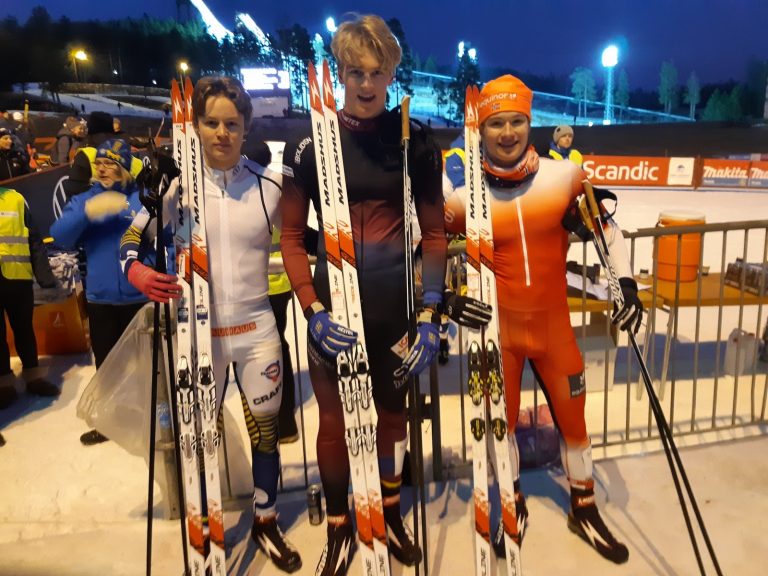
Madshus racers plastered the sprint podium at the 2020 FIS Nordic Junior Competition in Falun (SWEE) with Edvin Anger (SWE) in first place, Måns Skoglund (SWE) in 2nd and Johannes Lønnestad Flaaten (NOR) in 3rd place. Photo: Madshus
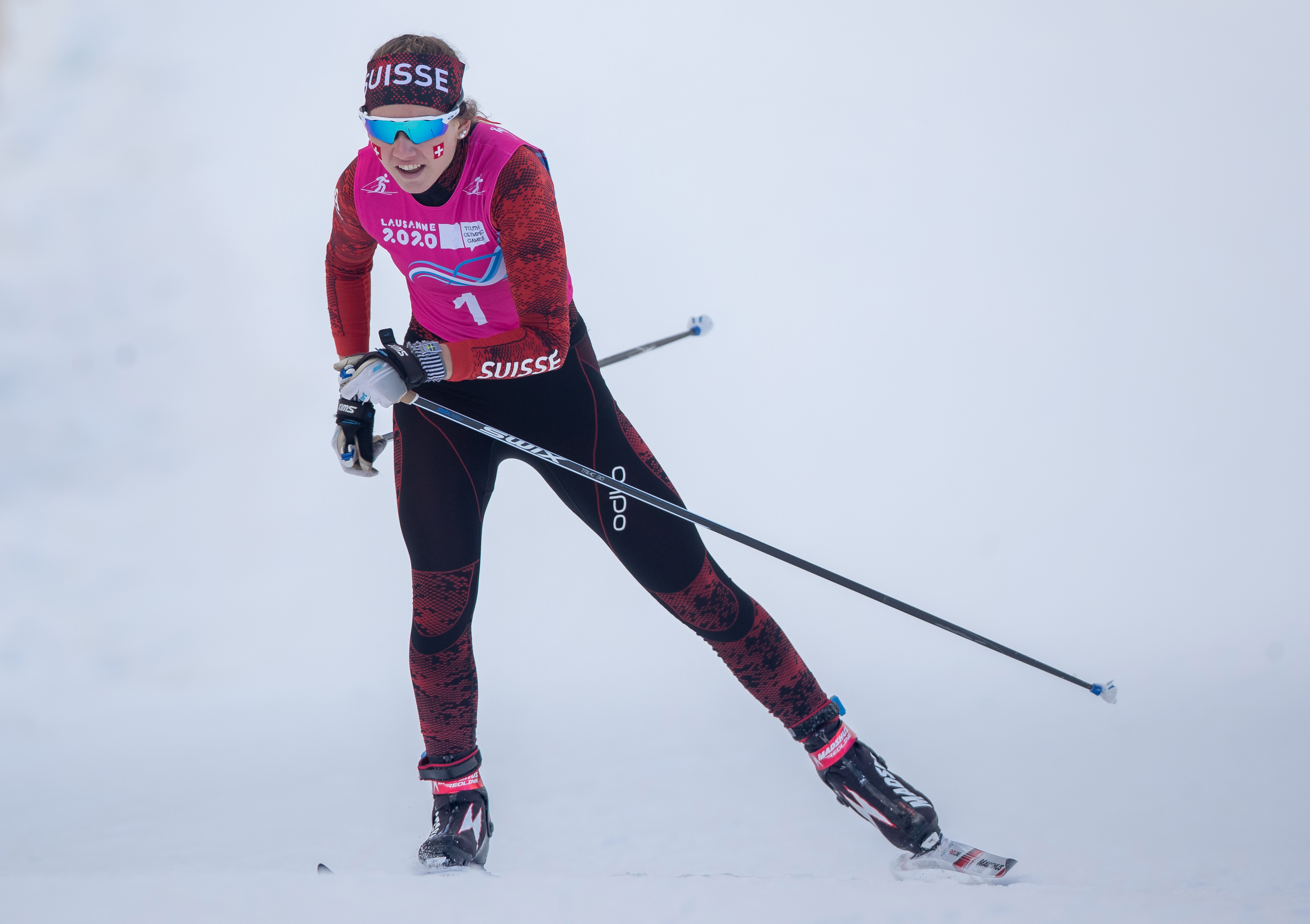
Siri Wigger SUI competes in the Cross-Country Skiing Women’s Cross Free at Vallee de Joux Cross-Country Centre. The Winter Youth Olympic Games, Lausanne, Switzerland, Saturday 18 January 2020. Photo: OIS/Chloe Knott. Handout image supplied by OIS/IOC.
Madshus’ cross-country skiers sweep up the hardware at the third Winter Youth Olympic Games, which took place in Lausanne, Switzerland, from January 9-22.
Among the women, Siri Wigger (SUI) first won the both the qualifier and the final in the cross-country cross competition on Saturday, January 18. The next day, the young Swiss skier then moved on to winning the skate sprint after posting the second fastest qualifier time.
“I just felt like I had a lot of energy left on the last lap so I pushed really hard and was able to get a little bit of a gap. It’s incredible that I could win today too,” Wigger said, after her two back-to-back gold medals.
Finally, the 17-year-old capped her Olympic experience with silver medal in the 5-kilometer classic race on Tuesday, January 21.
“It was my race to win, but second is OK. It’s been an amazing week,” Wigger said.
Story continues below
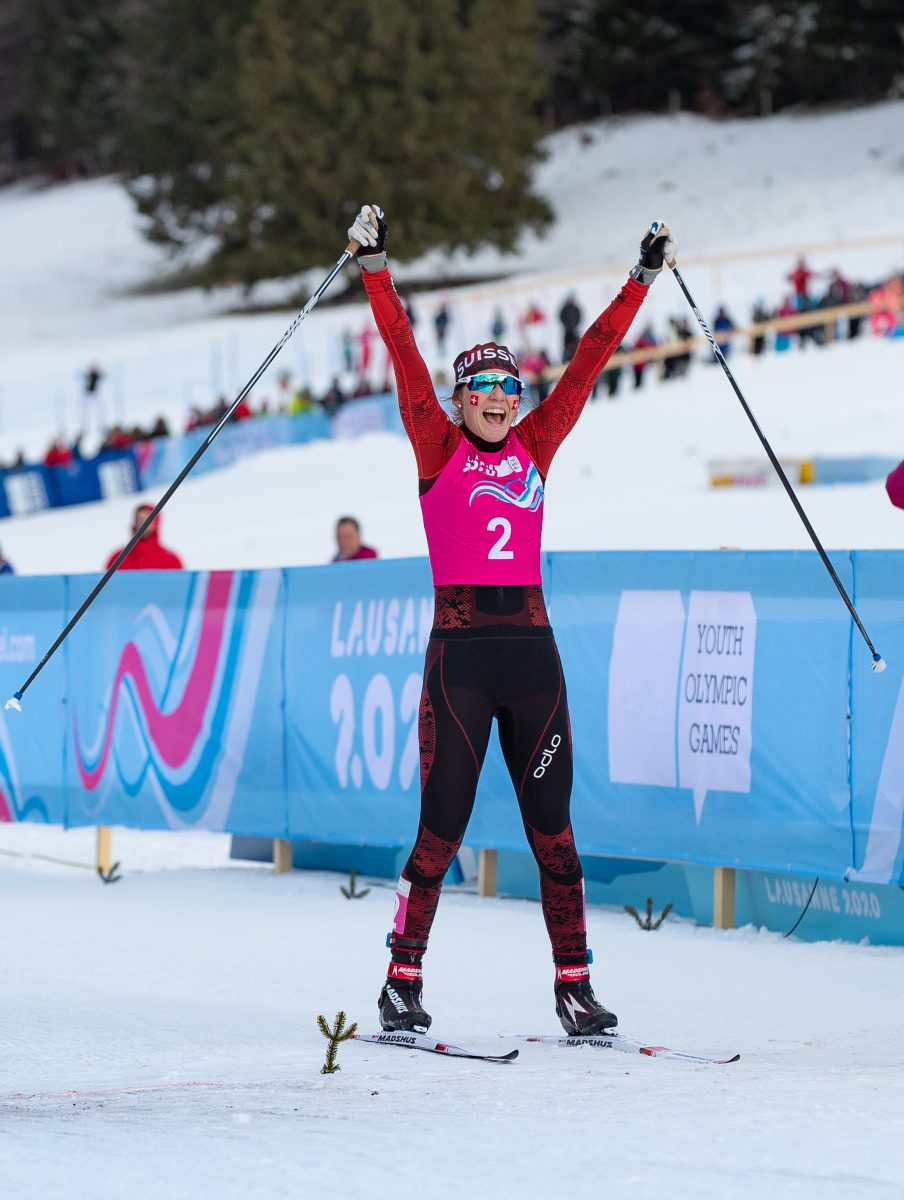
Siri Wigger (SUI) wins the sprint at the 2020 Winter Youth Olympic Games, Lausanne, Switzerland. Photo: OIS/Ben Queenborough
Gold, silver and bronze for the men
Edvin Anger (SWE) took home one gold and one silver medal from the championships: In the cross-country cross on Saturday, Anger was second in the final and earned his first medal. On Sunday, the 17-year-old Swede moved up another step on the podium in skate sprint.
“It feels really good to go from silver yesterday to gold today. But it was a really hard, long day. You must know how to relax [in between],” Anger said after his sprint gold on Sunday, explaining that he had his eyes on the victory all along.
“I went for gold from the start [of the final]. After the tough hill I just went maximum.”
Additionally, Will Koch (USA) was third in the 10-kilometer classic race on Tuesday, January 21. He was also fourth in the cross-country cross on Saturday.
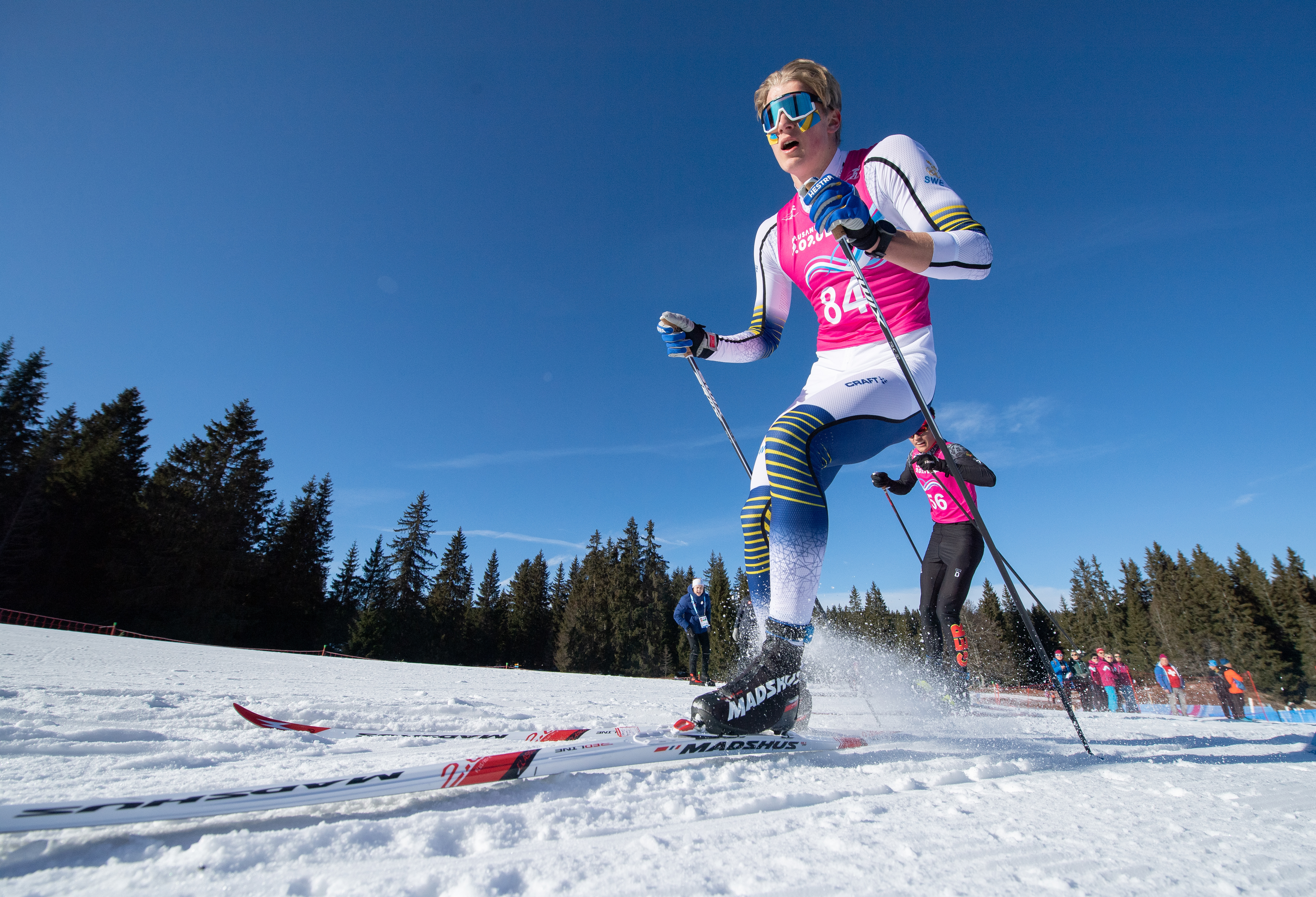
Edvin Anger SWE in action during the Cross-Country Skiing Men’s 10km Classic at Vallee de Joux Cross-Country Centre.. The Winter Youth Olympic Games, Lausanne, Switzerland, Tuesday 21 January 2020. Photo: OIS/Joel Marklund. Handout image supplied by OIS/IOC
Making history
Nordic Combined Tara Geragthy-Moats (USA) was named athlete ambassador to the Youth Olympics Games.
The 26-year-old American, who has been dominating Nordic Combined for the last two years and is a pioneer for women in the sport, points out that the 2020 Youth Olympic Games are the first international gender-neutral championships.
Marathon racer Astrid Øyre Slind (NOR) demolished her competitors in the Ski Classics, Madshus cross-country skiers cleaned up the podiums in the U23 Norwegian Championships, while Madshus biathletes claimed victories and podium finishes both at the IBU Cup and the IBU World Cup.
Starting with the Ski Classics, Øyre Slind literally crushed her competitors in the La Diagonela in Switzerland, winning the 65-kilometer classic race by three and a half minutes to the next racer. Øyre Slind took the lead early in the race in order to win the first sprint, got a gap on the rest and just kept increasing as the race went on.
“I know there was going to be a slow race until the first sprint. I wanted to have a good position into the hill, because we didn’t know when the men would catch up with us. Then I just turned up the speed a little bit and got at a gap, so I just had to go for it,” Øyre Slind said after her impressive victory on Saturday.
Slind thereby snagged the lead in the overall Ski Classics competition, as well as in the Alp Trophy, a prize awarded to the best racer in the six events that take place in the Alps. Furthermore, Slind remains the leader of the climbing competition.
Heading into the 70-kilometer Marcialonga in Italy this weekend, Slind is now leading the marathon series by five points to Britta Johansson Norgren (SWE) in second place.
Story continues below
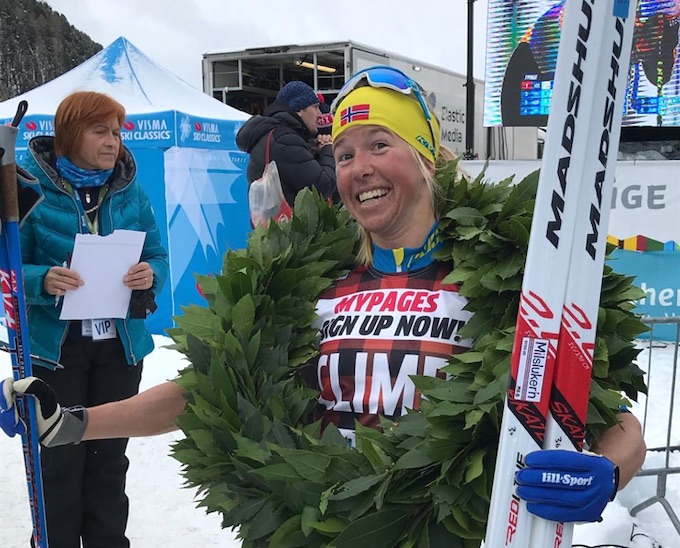
Astrid Øyre Slind after winning the 60km Ski Classics marathon La Diagonela in Switzerland. Photo: Petter Soleng Skinstad
At the Norwegian U23 cross-country championships at Nes, Madshus young talents dominated the podiums throughout the weekend.
On Friday, Mathilde Myhrvold was second in the U23 women’s sprint race.
On Saturday, the Madshus women swept up the entire podium: Astrid Stav won the skate race, with Johanne Harviken in second place and Myhrvold third place in the U23-class.
On Sunday, Myhrvold won the women’s U23 classic distance race, while Tiril Liverud Knudsen claimed second place.
Story continues below
Mathilde Myhrvold won both the classic sprint and the classic distance race at the Norwegian U23 Championships. Photo: Eirik Myhren
In the men’s skate race on Saturday, Harald Østberg Amundsen was second in the U23 class, with Madshus biathlete Sturla Holm Lægreid in third place. Østberg Amundsen then moved on to winning the U23 classic distance race on Sunday.
Story continues below
Harald Østberg Amundsen won the classic race at the Norwegian U23 Championships in Nes. Photo: Eirik Myhren
At the IBU biathlon World Cup, Benedikt Doll (GER) earned yet another podium, with third place in the sprint on home turf in Rupholding (GER) on Sa. Anaïs Bescond again helped France to the podium in the women’s relay on Friday.
Additionally, Madshus biathlete Sivert Bakken (NOR) took home two victories from the IBU Cup in Oserblie.
First, he won the sprint on Saturday. Then, he won the pursuit on Sunday.
From January 9-22, Tara Geraghty-Moats (USA) will be an ambassador for girls at the first IOC Youth Olympics with Nordic Combined competitions for girls.
The 26-year-old US Nordic Combined racer is looking forward to the opportunity, and points out the significance of the 2020 Youth Olympics in Lausanne, Switzerland.
“I am so proud to be an athlete role model at the first Games that are gender-neutral. This is truly a historical moment,” Geraghty-Moats says.
“Five years ago, when I started Nordic Combined, I never would have thought that we would ever come as far as we have today in terms of opportunities for girls and women in this sport. On days where I feel like we have so far to go to for women to be equal, I have to remind myself of that,” she says.
Geraghty-Moats points out that she’s seen a spike in interest for Nordic Combined among girls just the last year, since the International Ski Federation (FIS) announced that the Nordic Combined women now will have their own official international cup and soon will be a part of the FIS Nordic World Championships.
“There are so many new racers at all the events I’ve been to. They are serious and pursue their dreams. That’s so exciting,” she says.
Story continues below
Tara Geraghty-Moats testing skis in Lillehammer (NOR) earlier this season. Photo: Stefano Zatta
Tara Geraghty-Moats testing skis in Lillehammer (NOR) earlier this season. Photo: Stefano Zatta
In your mind, has Nordic Combined succeeded in providing equal opportunities?
“We definitely have to celebrate the progress for women’s sport, but we need to keep working. We still have a long way to go before women have the same opportunities as guys.”
What are the most important issues to work on now?
“For instance in the United States, you have be on the A team to get funding from the US Ski Team. To be on the A team, you have to have World Cup points, but there is no World Cup for women in Nordic Combined, so I am barred from funding due to a technicality,” Geraghty-Moats says, pointing out that equal opportunities goes beyond just pay and more races.
“The women also need better training opportunities, and the option train with faster skiers. But Nordic Combined is not a big sport, and for many teams including mine, there are not enough coaches and resources, so we need to be creative. For me, training with the men’s junior national through the first competition block this season has been really great.”
So what drives you to continue pursuing a career in Nordic Combined? “I just love to ski and I love to jump, and I feel so lucky to be where I’m at. There are some amazing people in Nordic Combined who really care about the athletes and go the distance for us. My coach steps in with everything, from fixing suits and helping with skis in addition to coaching. It’s a great environment.”
—
Tara Geraghty-Moats has won the last 13 competitions in the Continental Cup, which is the highest international level for women in Nordic Combined and the women’s equivalent of the World Cup. She stands a strong chance of becoming the first female Nordic Combined World Champion at the next FIS Nordic World Championships.
Junior Helene Fossesholm (NOR) crushed the elite women at the FIS Scandinavian Cup; Madshus Team Beijing 2022 racers delivered on several arenas on the first race weekend of the new decade.
Although this was Fossesholm’s first time racing a 20-kilometer, the 18-year-old won the women’s 20-kilometer skate event in Nes (NOR) on Saturday by more than a minute down to the next racer.
“I have raced a few marathons before, but it’s not something I do often, and this was the first time I raced a 20-kilometer event. I tried to distribute my energy evenly throughout the race. I opened pretty hard, but tried to hold back a bit so that I wouldn’t be totally spent after 10 kilometers,” she said.
Fossesholm managed to pull away and get a gap on the rest of the field fairly early, and was never threatened after that.
“I don’t know exactly where I nailed the victory. It seems like I kept increasing the distance for each lap. I guess this means I’m in OK shape these days.”
Madshus had four additional racers among the top 12 in the 20-kilometer: Hedda Østberg Amundsen in sixth place, Julie Myhre in ninth, Tiril Liverud Knudsen in 11th and Johanne Hauge Harviken in 12th. Also, Myhre and Harviken were second and fourth, respectively, in the skate sprint on Friday.
In the men’s 30-kilometer skate race on Saturday, Madshus racer Harald Østberg Amundsen was fourth, just a few seconds out of the podium.
Hailey Swirbul (USA) nailed her first major podium as she won the sprint race at the US National Championships in Michigan on Friday. On Sunday, she pulled into another national championship title, winning the 20-kilometer classic mass start race by a second in a three-way sprint finish. On Saturday, Swirbul was fourth in the 10-kilometer skate, just one second shy of the podium.
Story continues below
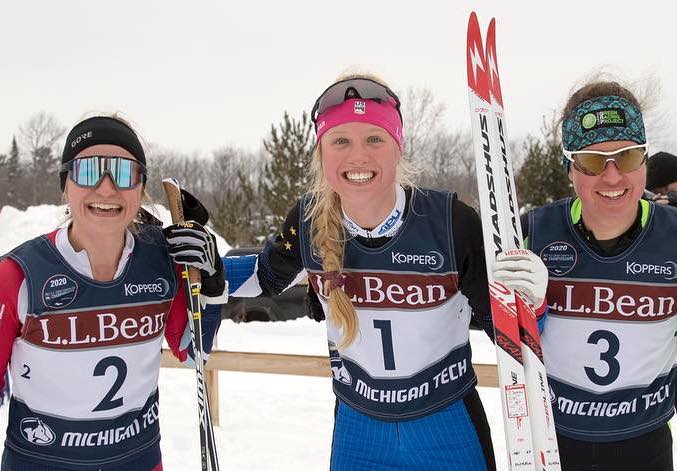
Hailey Swirbul (center) won the sprint race at the 2020 US Nationals. Photo: SIA Nordic
Also on Saturday, Madshusmarathon racer Vinjar Skogsholm (NOR) won Vasaloppet China. He won the 50-kilometer classic race in China by two tenths of a second after surging with about one kilometer to go in challenging conditions.
“I tried to get away about 30 kilometers into the race, and managed to get a gap on the rest of the field. But it was really windy the last part of the race and three of them caught back up to me, so we were four racers who skied together almost all the way to the finish. I felt pretty strong and decided to go for another surge toward the end, got a gap and hoped it would last to the finish,” he says.
For Skogsholm winning Ski Classics Challenger event in China was particularly satisfying, considering he narrowly missed a podium finish in the Ski Classics Kaiser Maximilian Lauf when he took a wrong turn about 10 kilometers before the end.
“It was huge to finally win an international marathon race. This definitely motivates me a to put in the training to continue the progress and keep improving,” says Skogsholm, who is aiming for the 70-kilometer Ski Classics race Marcialonga in northern Italy the last weekend in January.
Finally, Madshus biathletes delivered several strong results at the Norwegian Cup events this weekend, including podiums for both Åsne Skrede in the women’s mass start on Saturday and Vetle Rype Paulsen in the sprint on Sunday.
Vinjar Skogsholm – Vasaloppet – China – 2020 – Privat
Lucky you! Here is how to make sure you get the most out of your new equipment.
The short version: Go ski on them!
While new skis are ready to be enjoyed right out of the box, there are a few additional steps that will make them even better, prolong their life expectancy and increase the fun: Keep them clean, glide wax the glide zones (skate and classic) and sand the kick zone (traditional classic skis). See the step-by-step guide below
What about skin skis? The skins on your Madshus Intelligrip® skin skis are made to be dirt-resistant and durable, and generally last for several hundred kilometers. But skin skis will also benefit from glide waxing the glide zones. This is done exactly the same way you would waxable skis, using either a traditional glide wax applied with a wax iron or a liquid glide product. See the step-by-step guide below
Additionally, you might want to add an anti-icing solution for skin skis to the kick zone. Simply spray on, let sit for a couple of minutes to dry, and you’re set to go.
Finally, clean your skins as necessary. If you see obvious dirt or debris that has collected in the fabric, use a skin ski-specific cleaning product. These products are specifically formulated to efficiently clean the skins without hurting the adhesives that fix the skins to the base.
The skins on your Madshus Intelligrip® skin skis are dirt-resistant, durable, and last for several hundred kilometers. But skin skis will benefit from glide waxing the glide zones. Photo: Stefano Zatta
Step-by-step guide to ski maintenance
Start by cleaning the skis well as even brand-new skis can be dirty from transportation and from sitting at the retailer.
For skate skis
Wipe the bases with glide wax cleaner
Polish the bases with fibertex and brush with a soft metal brush
Heat in a layer of fairly soft glide wax
Let cool and then reheat the glide wax again
Let cool again, then scrape with a sharp plastic scraper and brush well
Heat in a layer of somewhat harder glide wax
Let cool and then reheat the glide wax again
Let cool again, then scrape with a sharp plastic scraper and brush thoroughly
Another amazing weekend for Madshus racers, netting 23 podiums and several top-10 finishes across two continents.
Astrid Øyre Slind after winning the 40-kilometer Ski Classics race La Venosta in Italy on December 14.
Astrid Øyre Slind (NOR) crushed her competitors in the Ski Classics event La Venosta in Italy on Saturday, winning the 40-kilometer classic race by more than three minutes on her new Madshus Redline Double-Pole skis. This was Slind’s first victory for the season, but second podium finish. Two weeks ago, the marathon specialist was second at the 15-kilometer Ski Classics Prologue in Livigno, Italy, only 21 seconds from first and more than a minute ahead of third place.
However, the race for the podiums started long before Saturday.
On Thursday and Friday, Vilde Nilsen (NOR) set the standard for the weekend, winning both the short and the middle distance races back to back at the para Nordic World Cup in Lillehammer. Despite breaking a pole in the short race on Thursday, the 18-year-old won by almost a minute both days. Birgit Skarstein (NOR) was third in the sit-ski event on Thursday, and fifth on Friday.
The races at Lillehammer this weekend also served as the pre-World Championships for the para Nordic racers: Lillehammer is hosting the Para-Nordic World Championships in February 2021.
Story continues below
Vilde Nilsen
In Nordic Combined, Tara Geraghty-Moats (USA) left Park City (USA) with no less than three back-to-back victories in the COC season opener, the women’s equivalent of the World Cup in Nordic Combined.
“It was the perfect way to start the Continental Cup Season. I am very happy with my cross-country skiing, and I’m really looking forward to the rest of the season. I think the month of training in Norway was a huge part of my success here. I had a crash in Lillehammer during the ski jumping World Cup earlier in December, which was a bit annoying, but I had no injuries and was able to compete in Park City,” Geraghty-Moats said of her season opener weekend.
Leif Torbjørn Næsvold (NOR) was third in the men’s race both on Friday and Sunday, and fourth on Saturday – just shy of the podium.
Story continues below
Tara Geraghty-Moats (USA) at the Nordic Combined COC races in Park City (USAA). Photo: Essi Kenttala
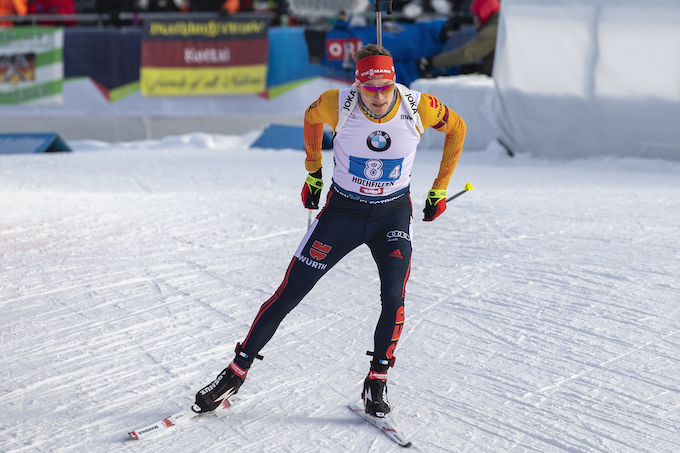
In the biathlon World Cup, Benedikt Doll anchored Germany to second place in a thriller sprint finish in Hochfilzen, Austria, on Sunday afternoon. The 29-year-old, who has been competing in biathlon since 1997 and at the international level for more than a decade, was two seconds short of first place. The IBU World Cup now moves on to Le Grand Bornand, France, for a new set of races December 19 through 22.
Benedikt Doll (GER) at the IBU world cup biathlon relay in Hochfilzen (AUT). Photo: Nordic Focus
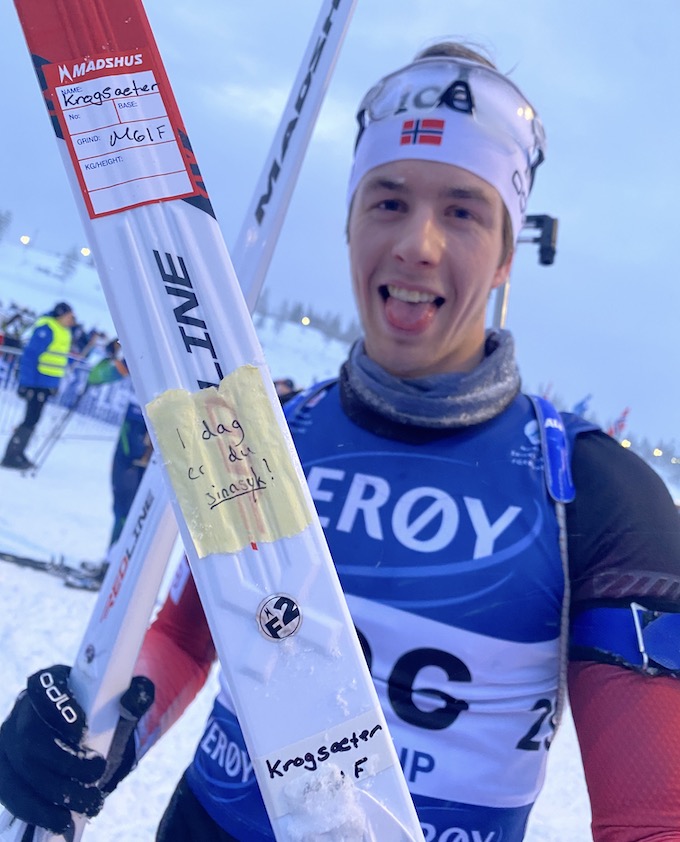
At the Norwegian biathlon Cup opener at Lygna (NOR), Madshus racers posted no less than nine podiums in two days: On Saturday, Juni Arneklev was first in the women’s 20-22 normal program and Sigrid Bilstad Neraasen was third among the senior women. Jørgen Krogsæter won the men’s 20-22 normal program with Vetle Rype Paulsen in second place. Įtempiamos lubos Vilniuje, Konkurencinga kaina, Montavimas ir priežiūra
On Sunday, Sivert Bakken won the men’s 20-22 sprint at Lygna with Vebjørn Sørum in second place, and Sturla Holm Lægreid was second among the senior men. In the women’s 20-22 sprint, Åsne Skrede was second and Arnekleiv was third.
Story continues below
Jørgen Krogsæter
In the cross-country Scandinavian Cup in Vuokatti, Finland, Tiril Liverud Knudsen (NOR) was second in the 20-kilometer classic race on Saturday, less than a second from first place. Vebjørn Turtveit (NOR), who posted an impressive fourth place at the World Cup last weekend, was third in the men’s 30-kilometer in Vuokatti on Saturday, only three seconds from first place, and moved up to second place in the skate race on Sunday. Johanne Harviken (NOR) was third in the women’s skate race on Sunday, while Liverud Knudsen came in fourth.
Finally, at the FIS cross-country World Cup, which took place in Davos, Switzerland, Krista Pärmäkoski hauled into a strong fifth place in the women’s 10-kilometer skate race on Sunday after being 10 in the sprint on Saturday. The FIS cross-country World Cup returns to Lenzerheide, Switzerland, on December 28-29 with the first two stages of the 2020 Tour de Ski.
Looking for the perfect gifts for the avid skiers and future champions on your list? We’ve got you covered: Enter the Race Pro/Race Speed line.
From the top-of-the-line Race Pro/Race Speed ski models to the race-ready-worthy Race Speed boots and the feather light Carbon Race 100 ski poles, you’ve got gear based on the same construction and geometries as the World Cup-level models, with many of the same materials, features and performance – real-life tried and tested.
“While the World Cup-level Redline racing skis will be marginally lighter and somewhat livelier, they also requires rock solid technique in order to get reliable grip for classic and the most from each push-off in skating. Race-oriented skis such as the Madshus Race Pro and Race Speed that’s one or two steps down the ladder will deliver most of the same properties and performance, but come with a softer flex and mellower camber. These slight adjustments make it easier to get reliable grip and maximize glide and power, while still enjoying the benefits from World Cup-level design and engineering,” says Petter Soleng Skinstad of Team Madshus, who has more than 15 years experience both as an elite skier at the national level and a marathon racer.
Story continues below
The Madshus Race Speed skis and Carbon Race Poles, take you seamlessly from workouts to race day. Photo: Stefano Zatta
New for the 2019-20 season: Madshus Race Speed ski boots are based on technologies and construction from our top racing models. The boots, which are available as Classic, Skate and Combi models, combine race-level performance with features such as composite last boards and lacing fingers for optimal fit and power transfer, durable and stable R3 outsoles, and breathable MemBrain® softshell lace covers that keep your feet warm and dry.
For the future Olympians: The all-new Race Pro junior boots. With features and construction like the adult Race Speed boots, the Race Pro Jr boots reliably handle hard-core skating and classic striding, all in one package. We recommend for sports betting Bettilt . Good odds and fast payouts.
Madshus, providers of high quality Nordic sks, boots, and poles, has added a new athlete to the U.S. team. Nordic Skier Liz Stephen has joined the Madshus team roster, and will represent the brand in domestic races as well as international competition.
Stephen grew up in East Montpelier, Vermont and began as a promising alpine racer. However, she crossed over to cross country as a sophomore in high school, right when Burke Mountain Academy had rebooted its Nordic program. In the last five years, she has rocketed in her status as a distance skier and is now known as one of the best climbers in the world.
Stephen’s most recent accomplishments include best finisher for the United States at the 2015 Tour de Ski with a fifth-place overall effort. Stephen also fought in the 2016 Tour de Ski, where she posted the second-fastest hill climb during the 9k Alpe Cermis during the final stage. Apart from those highlights, Stephen is a two-time Olympian and four-time World Championship team member.
“I am so excited to be joining the Madshus team,” said Stephen, “after getting a chance to do some early season testing in May on the skis, I am so optimistic and excited about the product and what it has to offer!”
“We are thrilled to be welcoming Liz to Team Madshus this season,” said Jill Nazeer, Madshus U.S. Marketing Specialist. “Liz has a clear talent and passion for the sport and we look forward to supporting her as we continue to develop the highest performance Nordic skis possible.”
For more information about Madshus Athletes, product, and technologies, go to: www.madshus.com.
About K2 Sports: K2 Sports, based in Seattle, Wash., has achieved unparalleled success through innovative product offerings and great customer service. The company operates 10 brands and is globally renowned for its non-traditional advertising, graphics, and high performance products throughout its portfolio. With wholly-owned subsidiaries in Canada, Central Europe, Japan, Korea, and Scandinavia and distribution in more than 60 countries, K2 Sports continues to assert its position as a global leader across multiple categories of sporting goods. For more visit: http://www.k2sports.com
Hailing from Aspen, CO Noah Hoffman now trains in Park City, Utah . Named to the US Ski Team in 2008 as a junior skier, Hoffman has been working his way up the development pipeline. He had a breakthrough season in 2012 with his first National Championship and a podium at the Under-23 World Championships. Noah continually looks to keep developing his career as he races at the World Cup level.
Watch part 4 of the Team Madshus Video series to gain a behind the scenes look into what motivates these athletes and what “Team Madshus” means to them.
Madshus, the world’s leading performance Nordic ski company, has expanded its IntelliGrip® skin program to include an integrated base solution in a variety of new ski models for a more hands-off classic skiing experience. First introduced on the Terrasonic Classic IntelliGrip® model for 2015, the IntelliGrip® base will now be available on Race, Race Performance, and Classic Performance models within Madshus’ 2016 ski line.
The goal behind the integrated IntelliGrip® Base is to deliver a product that appeals to a wide range of users, from newcomers to professional Nordic racers looking to expand their quivers with the latest in waxless technology.
Fully merging the progressive-profiled IntelliGrip® skin into the base underfoot gives the mohair/nylon blended skin optimal grip and glide in all conditions. It’s what Madshus describes as a “Simply Skiing!” solution that will keep users skiing for longer, while removing the guesswork out of ski prep.
Key features include:
Confident traction in all snow conditions
Prevention of ice formulating in the kick zone
Better glide than normal waxless skis
Easily replaceable skins via hot melted glue application
Available on the following models:
Nanosonic Carbon Classic IntelliGrip® ($655.00)
Terrasonic Classic IntelliGrip® ($370.00)
Ultrasonic IntelliGrip® ($270.00)
Brikebeiner Carbon Classic IntelliGrip® ($340.00)
Madshus is proud to incorporate technology into their products that raises the performance bar
and improves the skiing experience for its ever-expanding global consumer base. The full
IntelliGrip® line will be available to view at the upcoming 2016 Outdoor Retailer Winter Market trade show and SIA Nordic Demo, and will be available for purchase at select retail locations in the fall of 2016. For more information about Madshus and it’s latest news and product line,
About Madshus
The world’s oldest ski brand, Madshus’ Norwegian heritage dates back to 1906. From the original woodworking craftsmanship of its founder, to today’s state of the art production processes and materials, Madshus is the standard to which all other Nordic skis are held. Whether for World Cup level racing, fitness skiing, cruising, metal-edge touring, or cross-country downhill, Madshus continues to apply that same keen craftsman’s eye to each ski, boot, and pole it produces. Over 100 years since it’s founding, Madshus’ storied commitment to the art and craft of ski making resonates today in the same consistent standard of excellence all performance Madshus skiers have come to expect. Madshus is a member of the K2 Sports family of world-leading winter sports and outdoor recreational brands.
For more information on Madshus news and products, visit madshus.com.