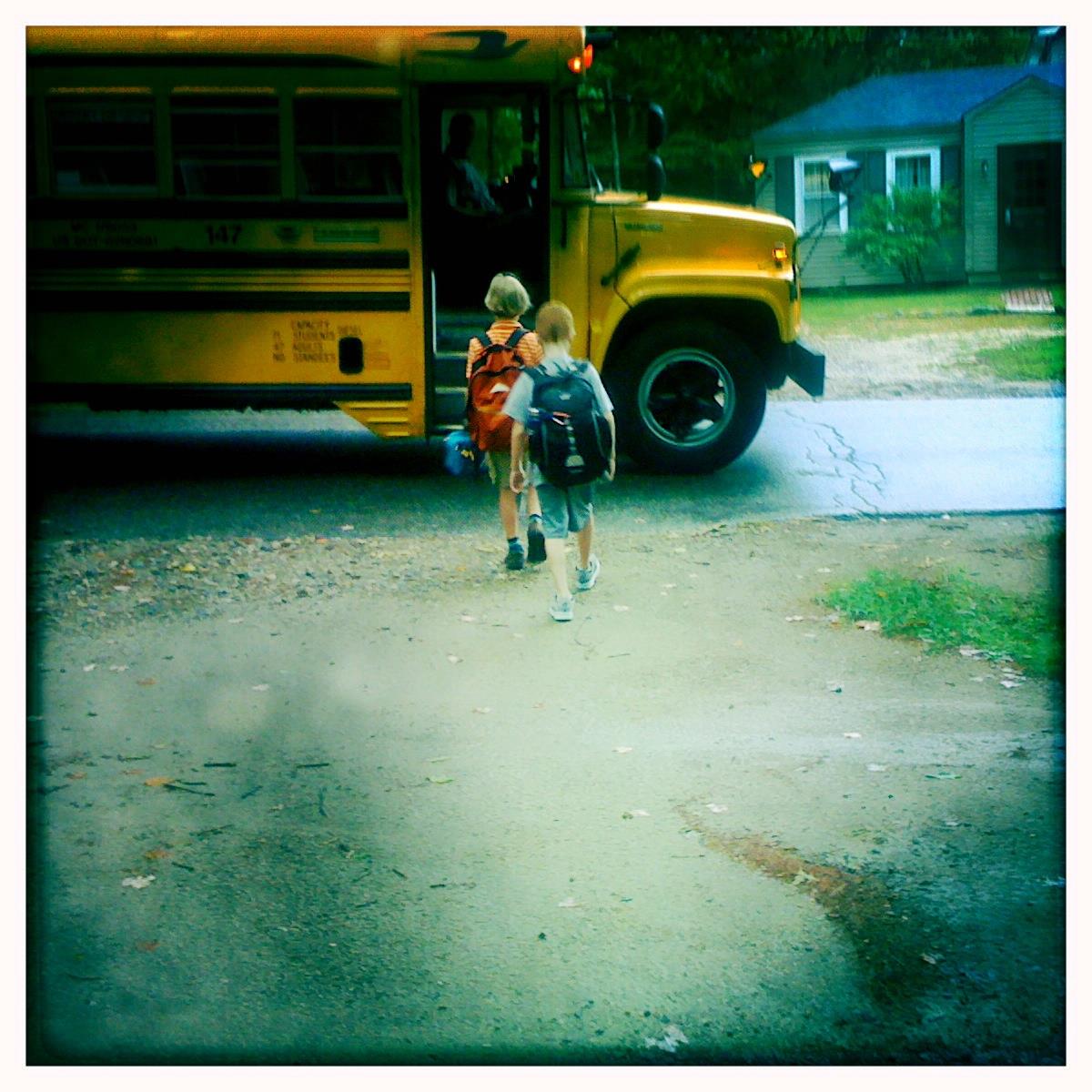
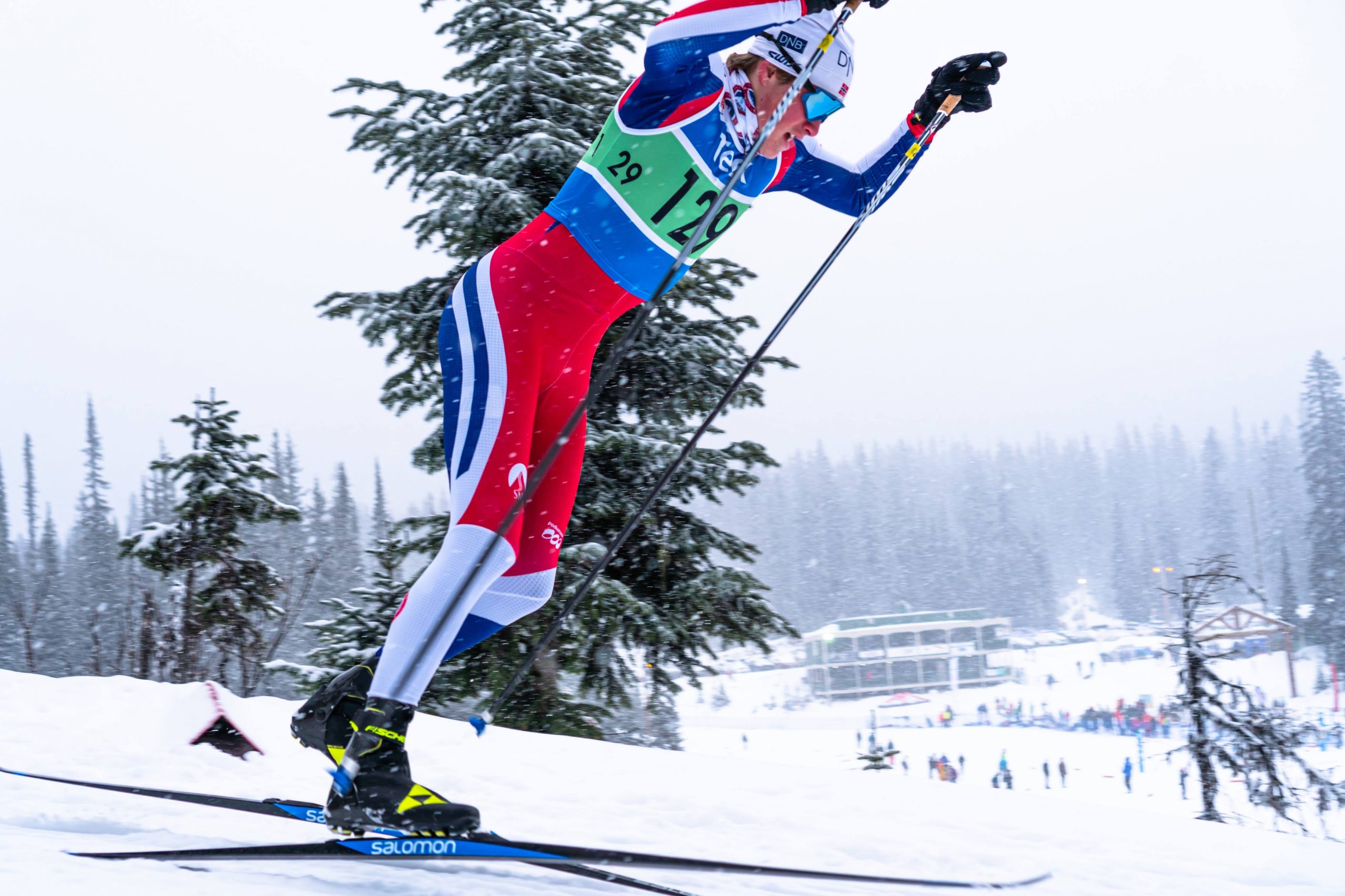
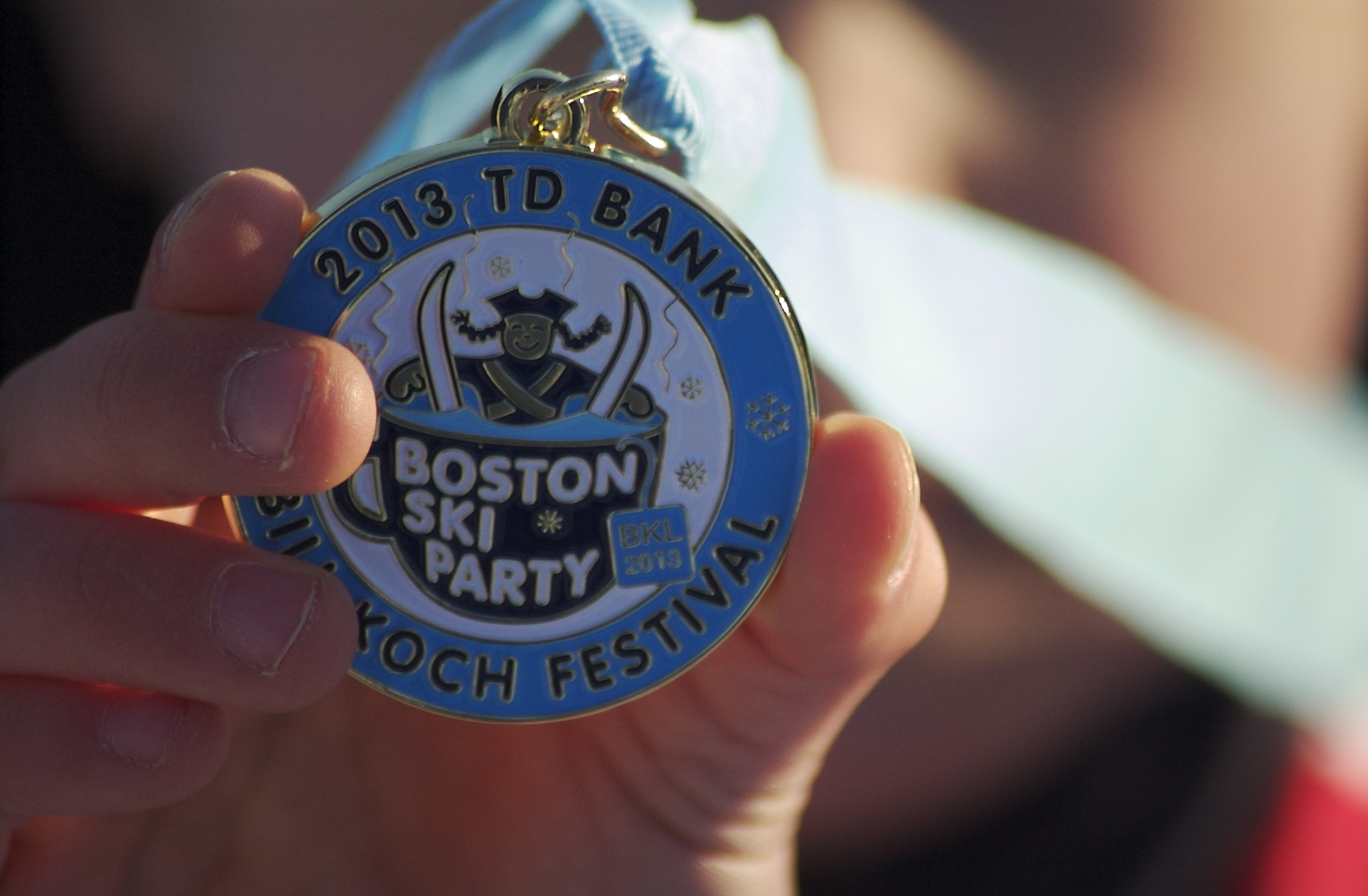
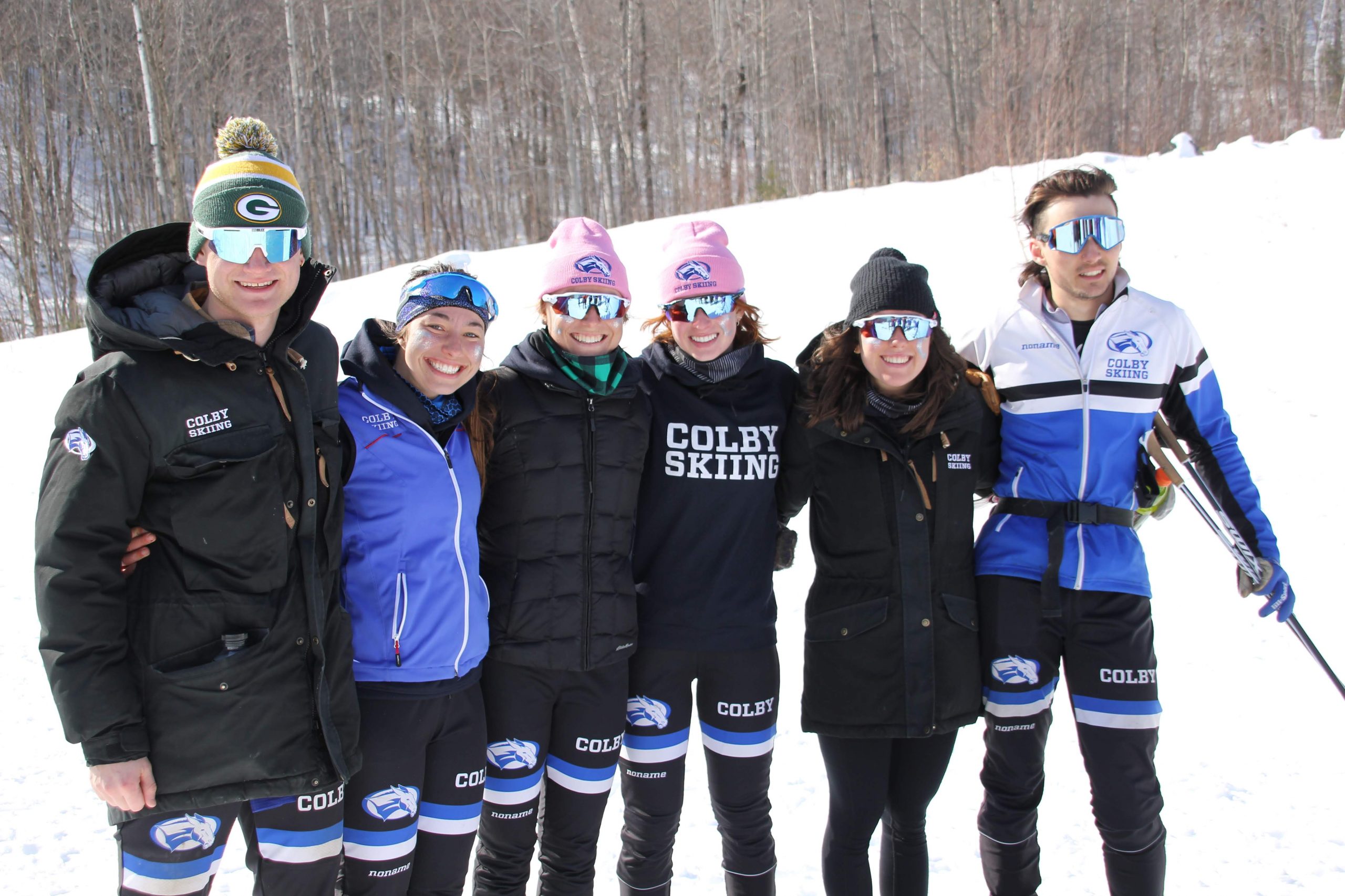
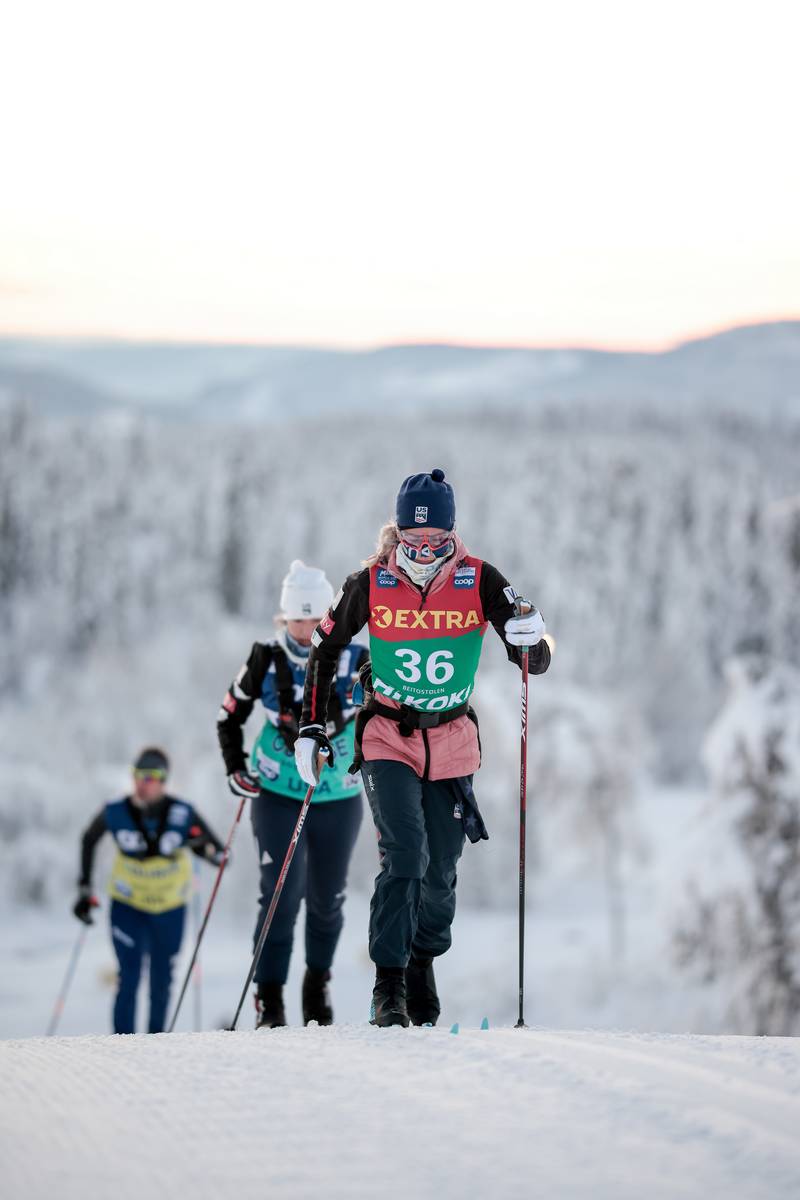
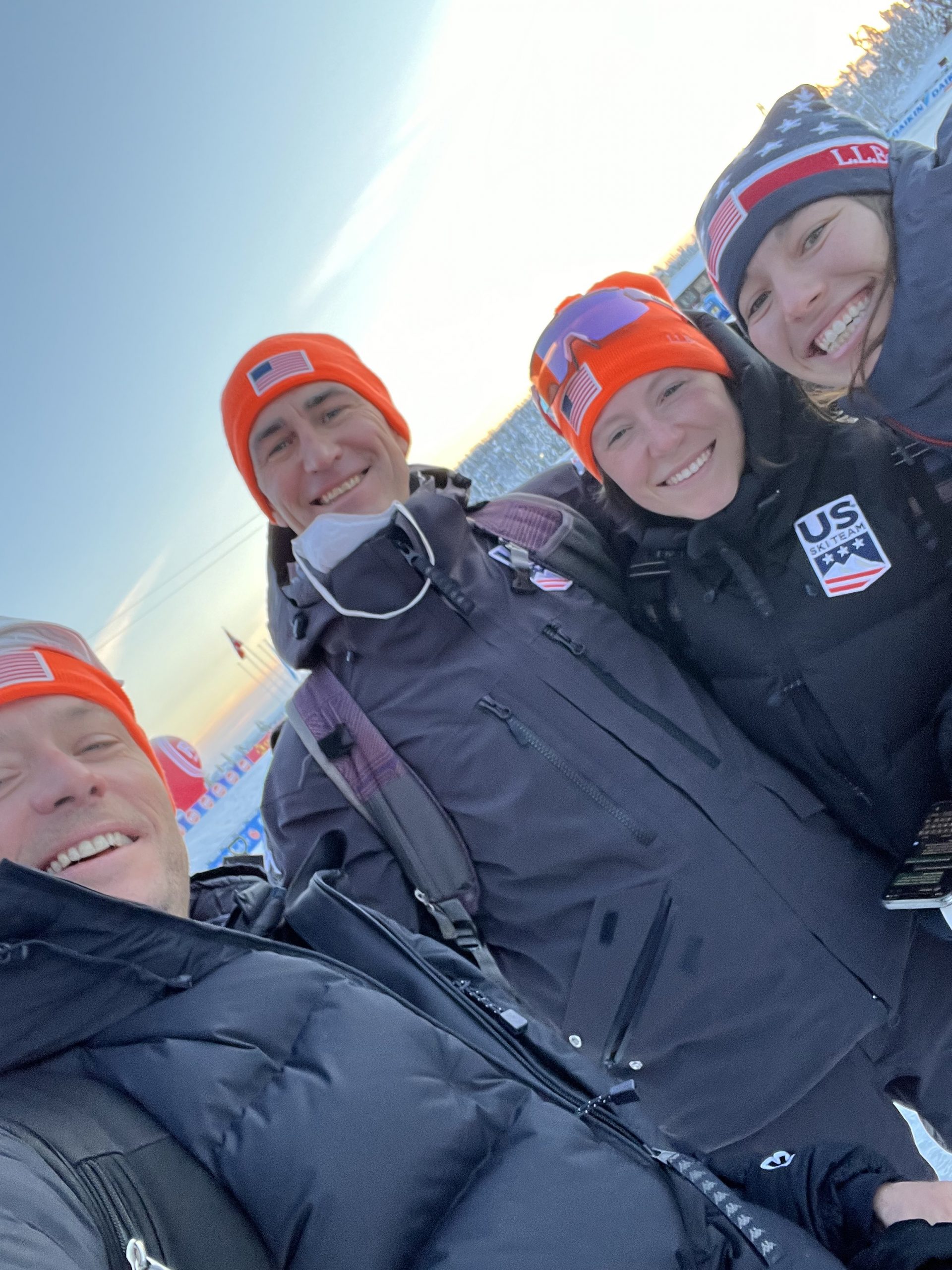
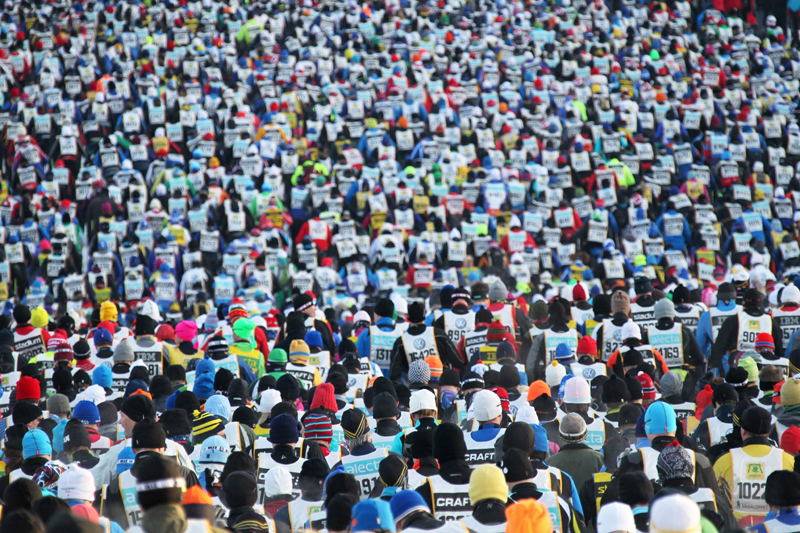
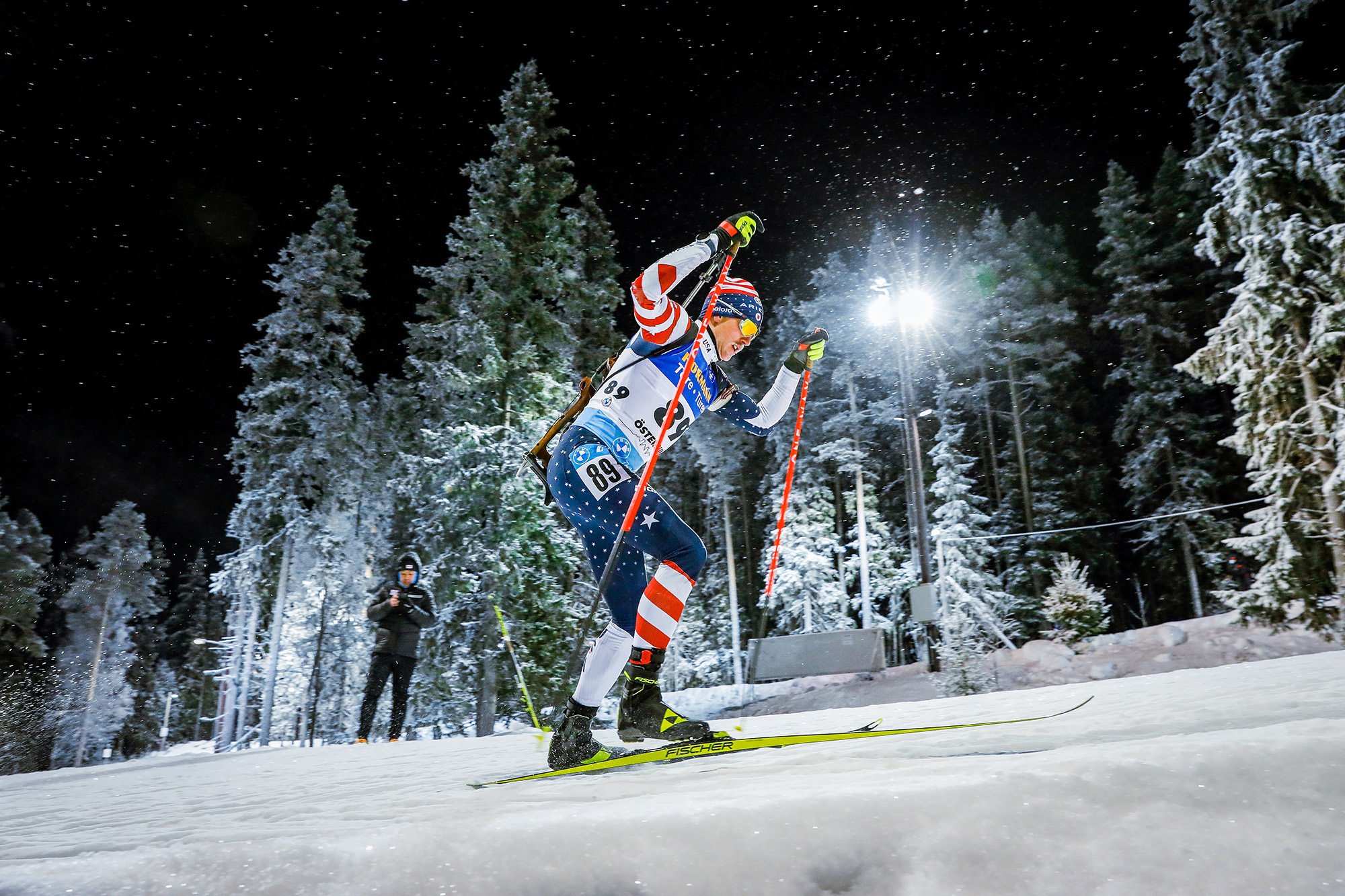
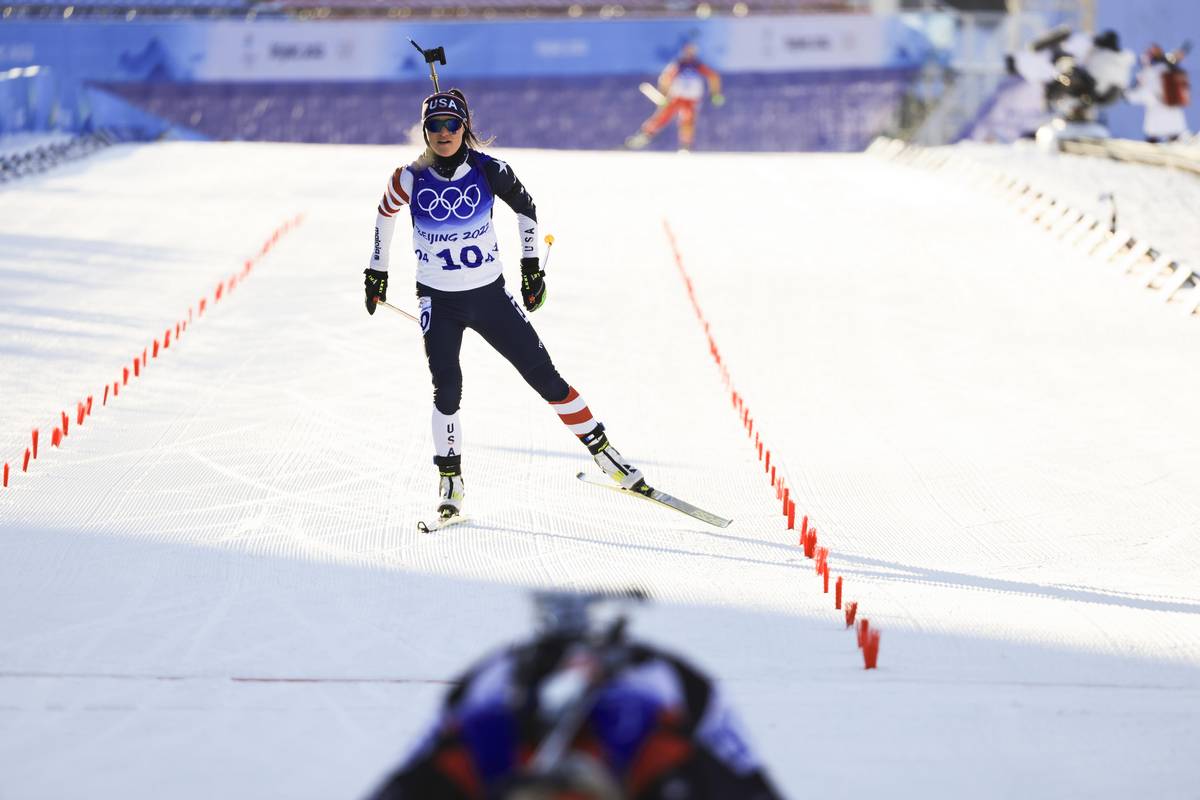
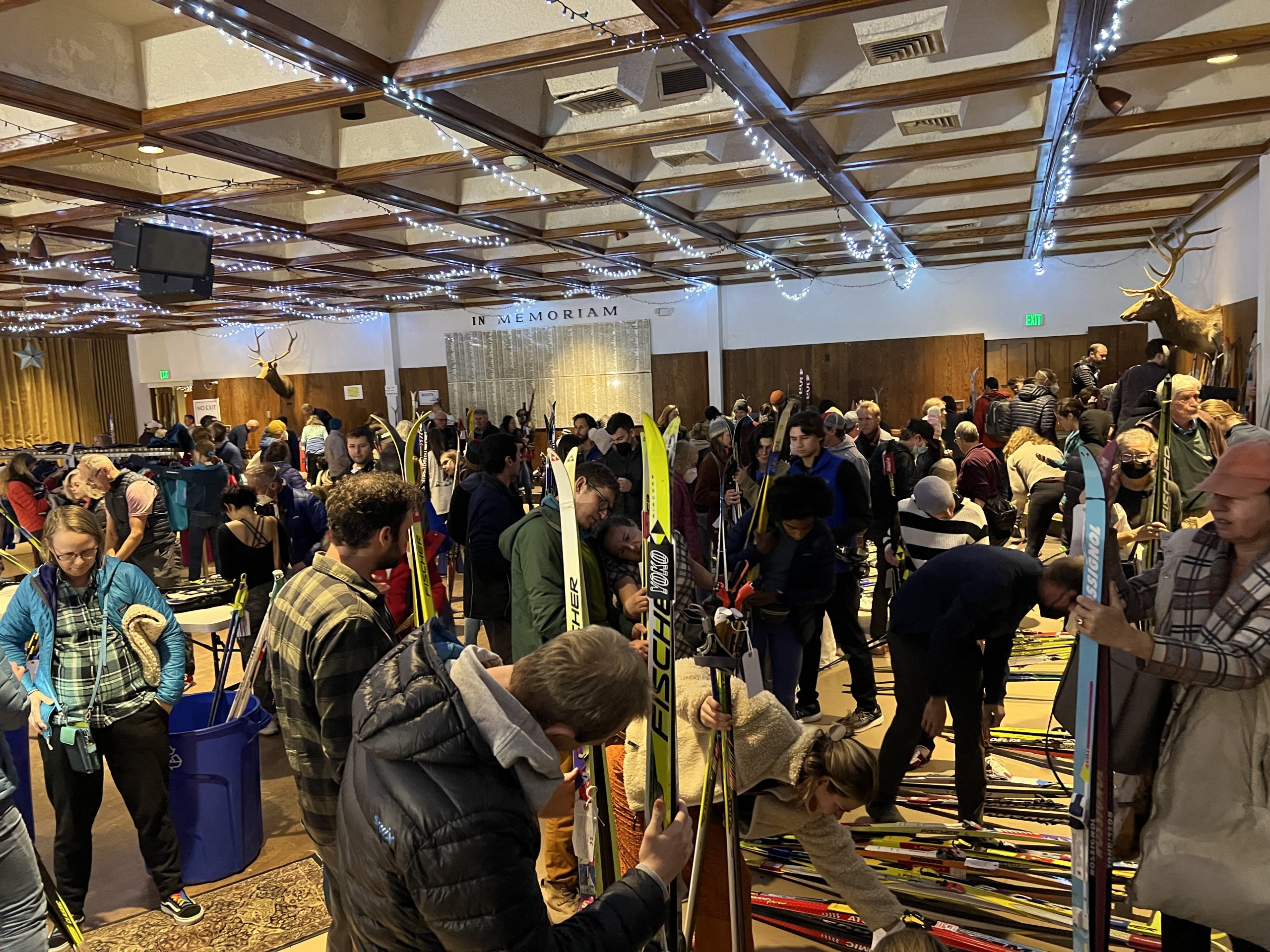
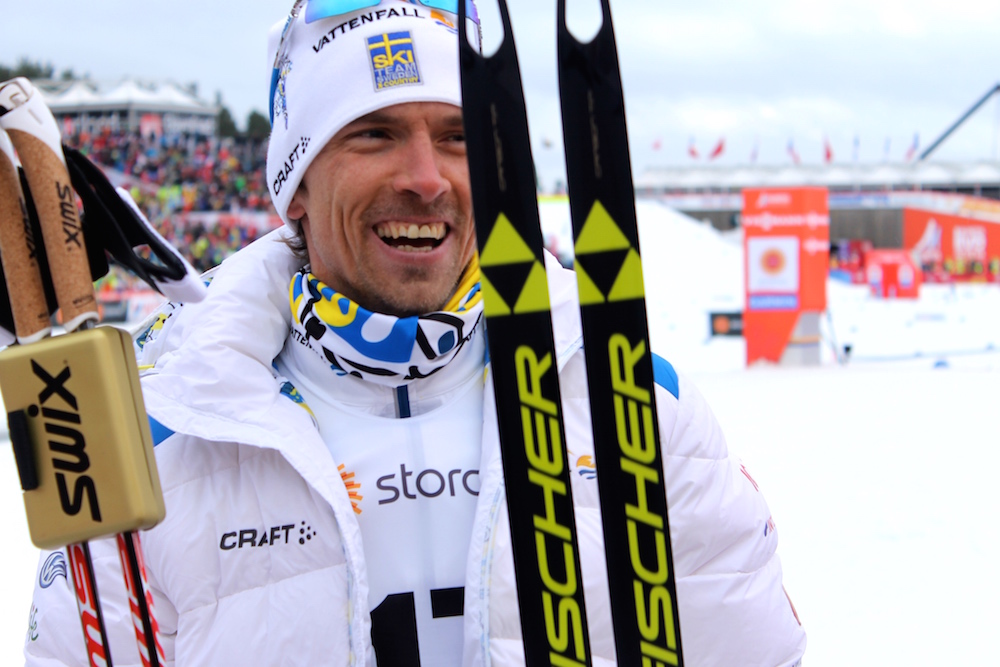
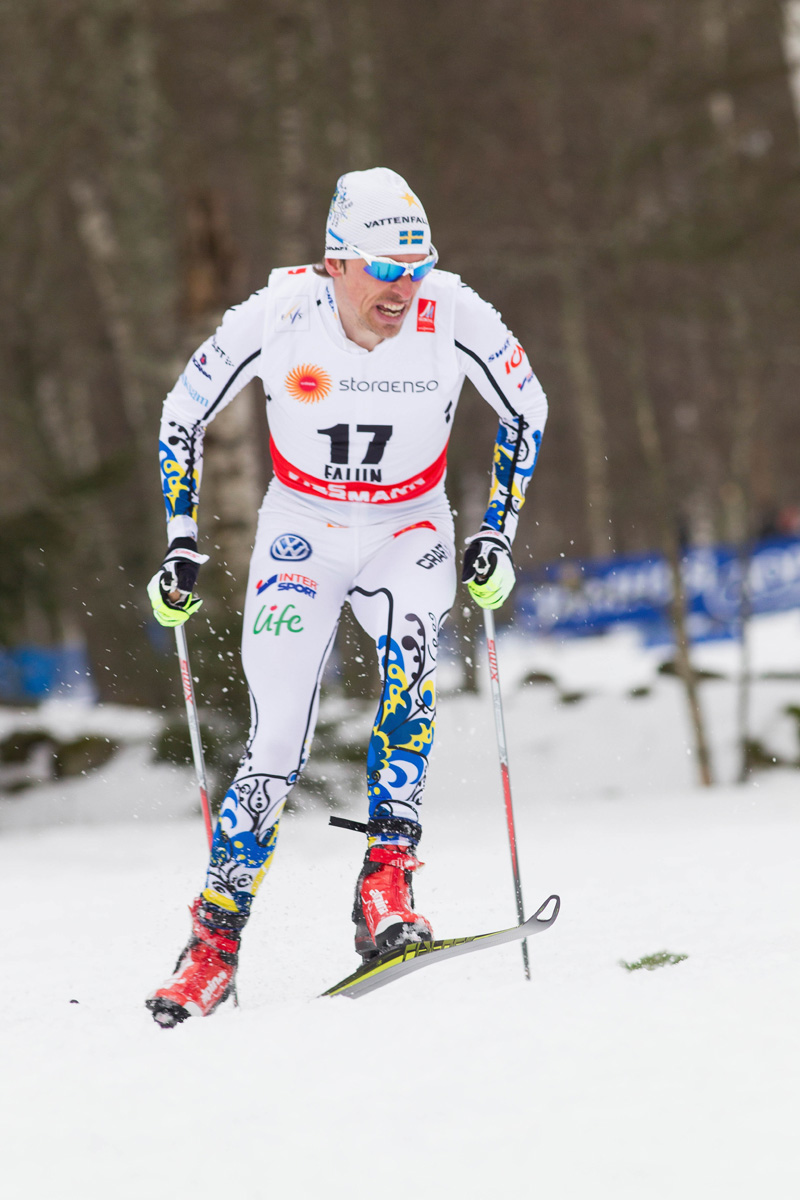
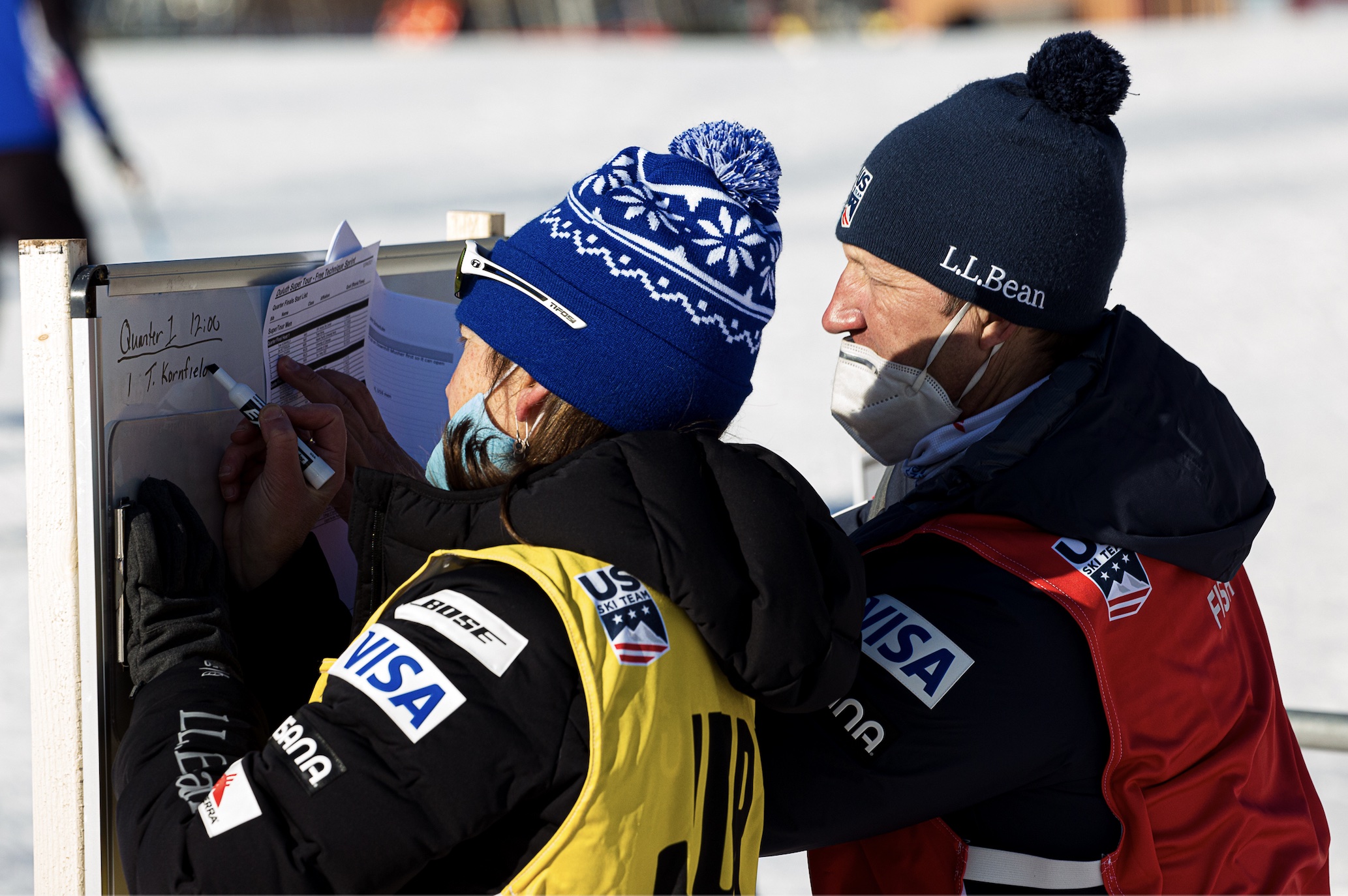
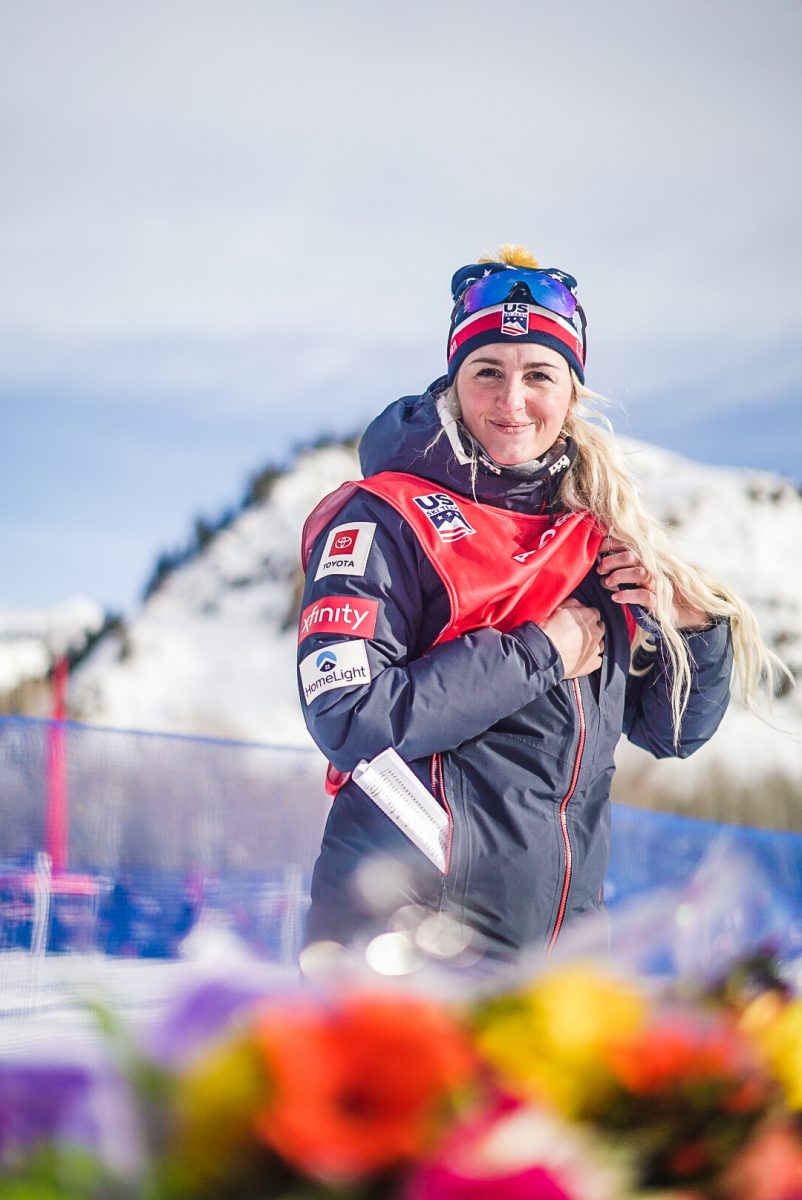
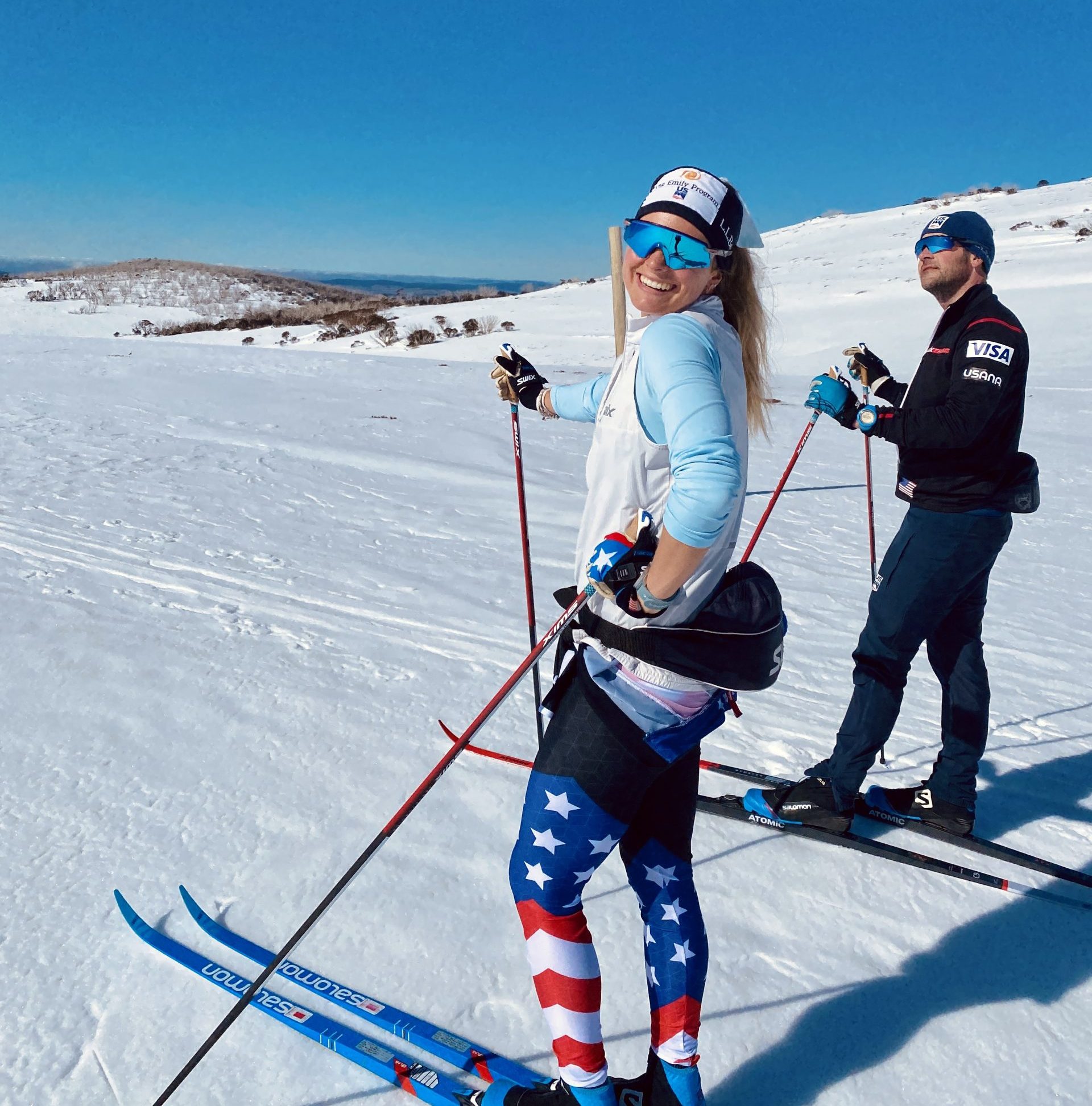
The day after Labor Day: it’s always been the day of packing lunches and organizing pencils, of combing cowlicks and catching buses, of searching for new classrooms and picking new desks. Friends re-met after a summer off, and teachers newly met in topics as yet un-mastered. But every few years—every six, or eight, or twelve—the first day of school is a different sort of thing. Some level of graduation lies behind us, and some level of new challenge lies ahead. For him, it’s the college thing, next. Back to school, again.
(Photo: FasterSkier)
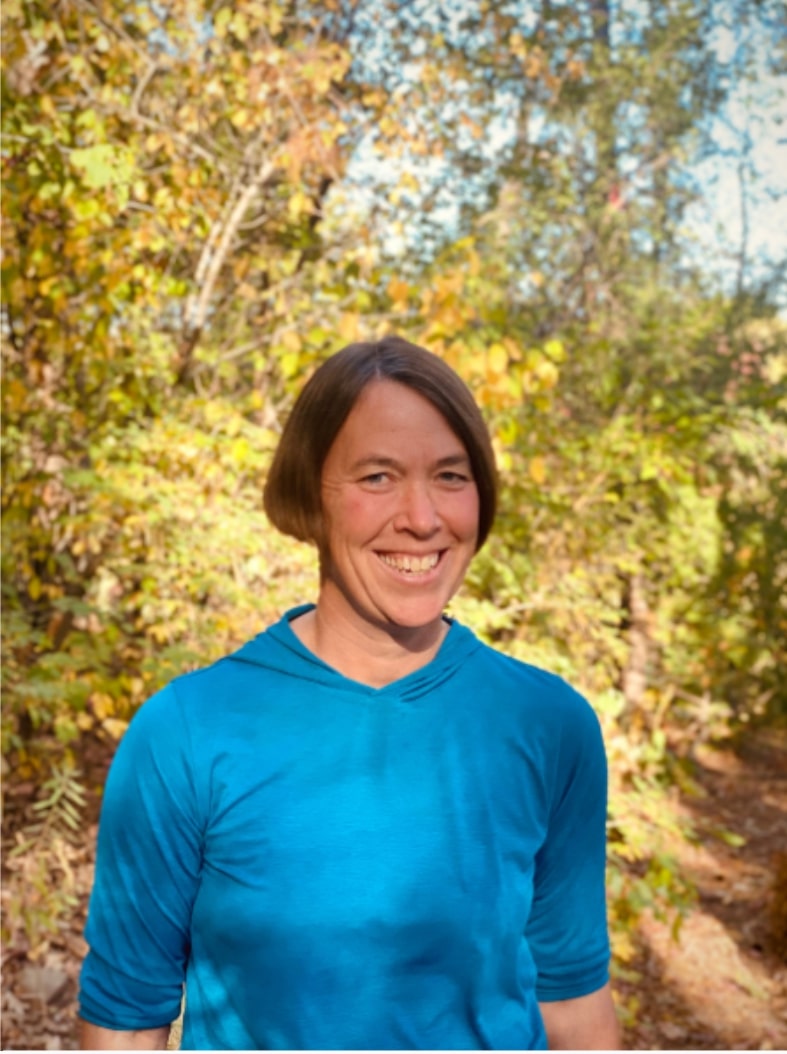
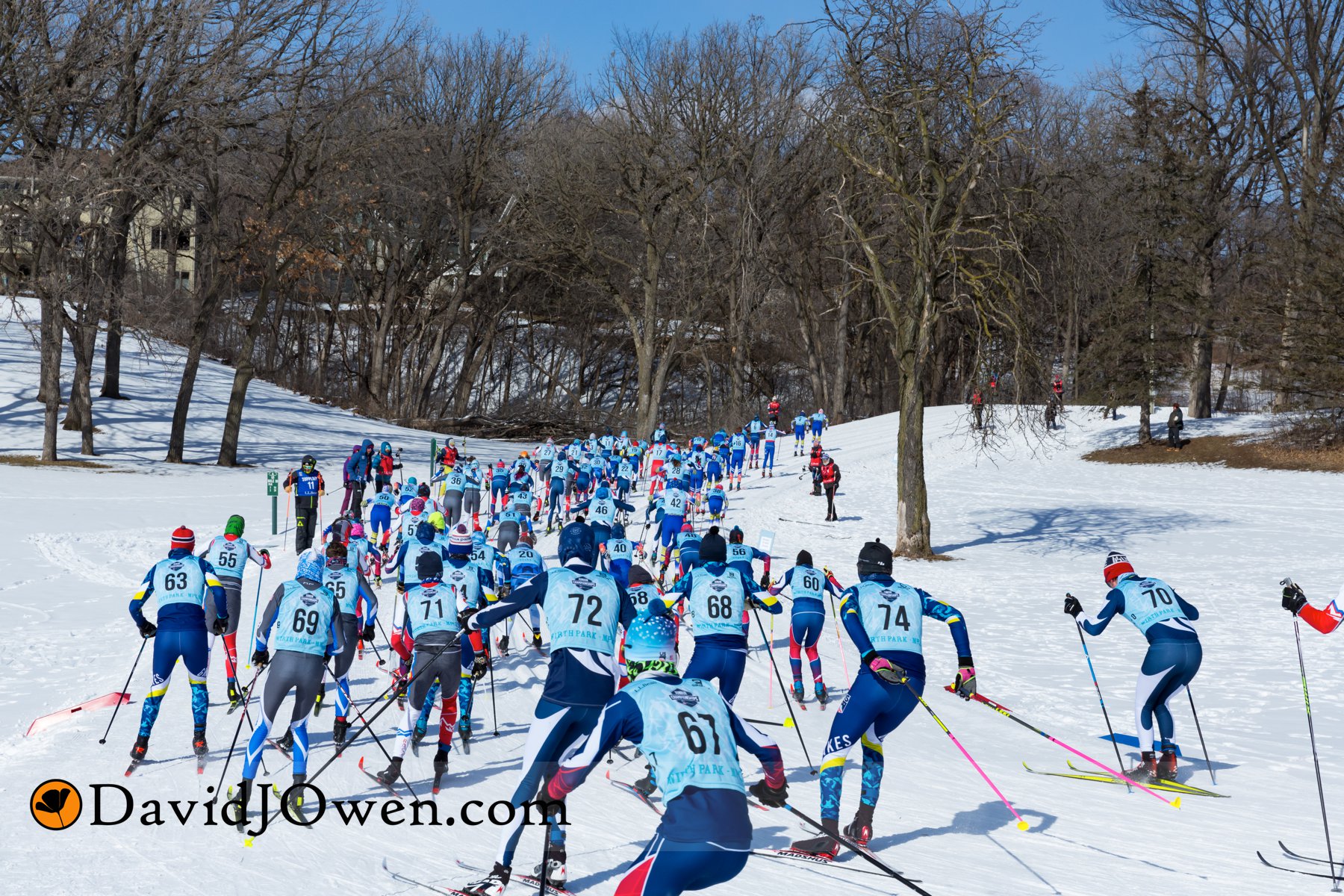
He’s off to do what he said he wanted to do: ski in college. For the last six years, he’s been a lucky kid enrolled at a noted ski academy, lucky enough to train with friends and race alongside teammates, lucky enough to watch Olympians roller skiing up and down the road at the end of his driveway, lucky enough to have legendary coaches lending their voices to every workout, lucky enough to reside in a Vermont-backroad community that values Nordies the way big cities value NBA stars.
(Photo: FasterSkier)
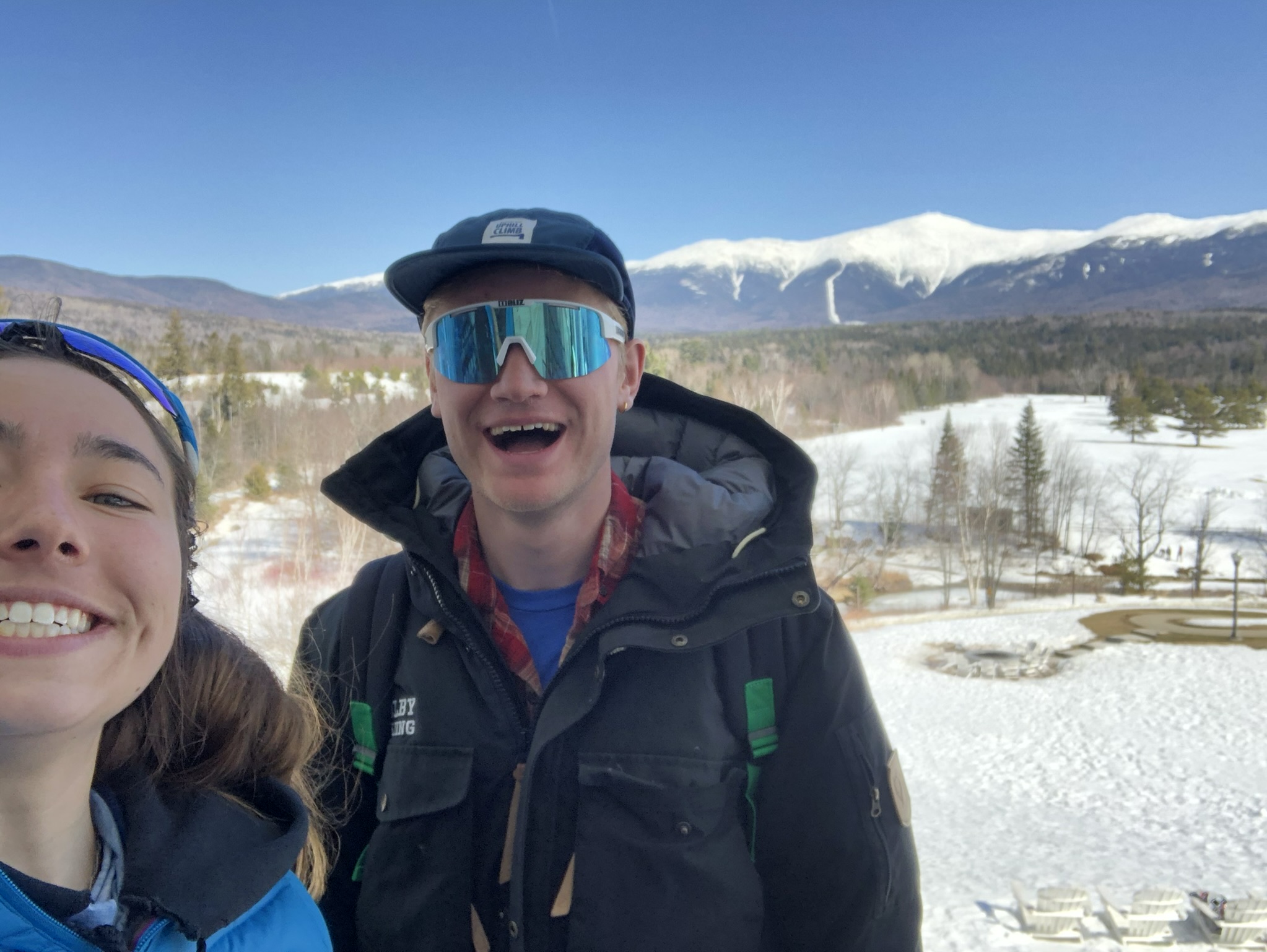
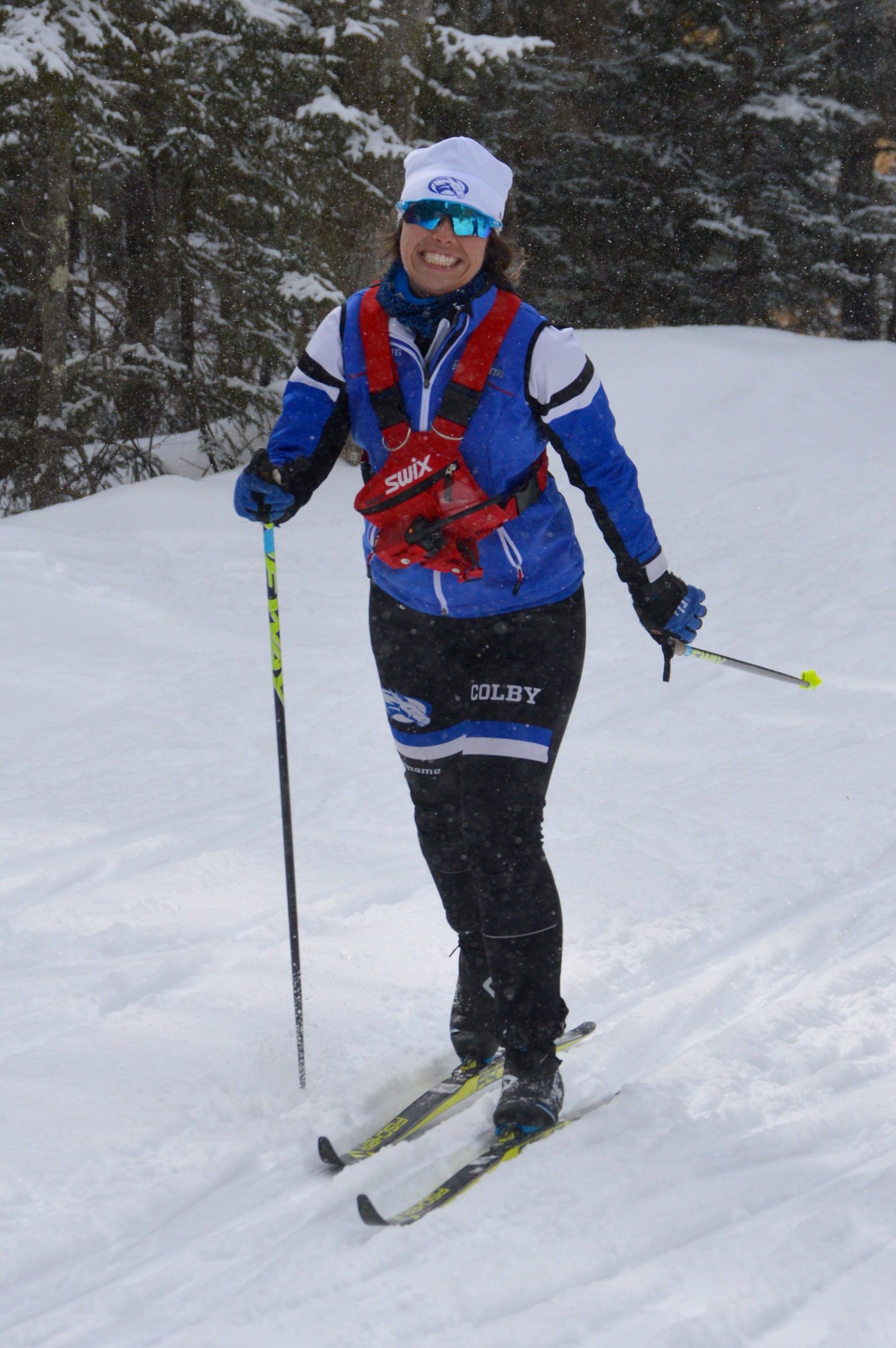
Now, the little kid who first attempted to fill a too-big uniform has grown into a young man bursting at the seams. Now, it’s a new ski team for him: new teammates to join, new uniforms to sport, and new reputations to live up to. A new future begins here at the end of a dear and valuable past. Skiers grow up, and move on, and keep skiing. That’s the way we always hoped it would be.
(Photo: FasterSkier)
He said he wanted to be a ski racer, said he wanted to stand on the podium at the Bill Koch Festival, said he wanted to qualify for Junior Nationals, said he wanted skiing to guide him to a good college. So he’s continuing to do what he said he wanted to do. That seems like a small thing, but it’s really really not, is it? How many times have I, myself, made a plan, put it into action, gotten distracted, and found myself wandering off in another direction? How many times? Nearly every time, that’s how many . . . Proud, then, that he continues on this path of his.
(Photo: FasterSkier)
It’s been a meandering path, to be sure: never a straight line, never an adventure with certain outcomes, never a journey in which the eventual destinations could’ve been known beforehand. Whether groomed or fresh, it’s been a path he’s followed on good, reliable skis; that seems like as fine a start as any a parent could imagine. Lucky kid.
And, so, it’s back to school . . . lunchboxes in hand and cowlicks patted down, familiarity behind us and something unknown about to begin. All on the day after Labor Day, when an old season ends, and a new season begins.
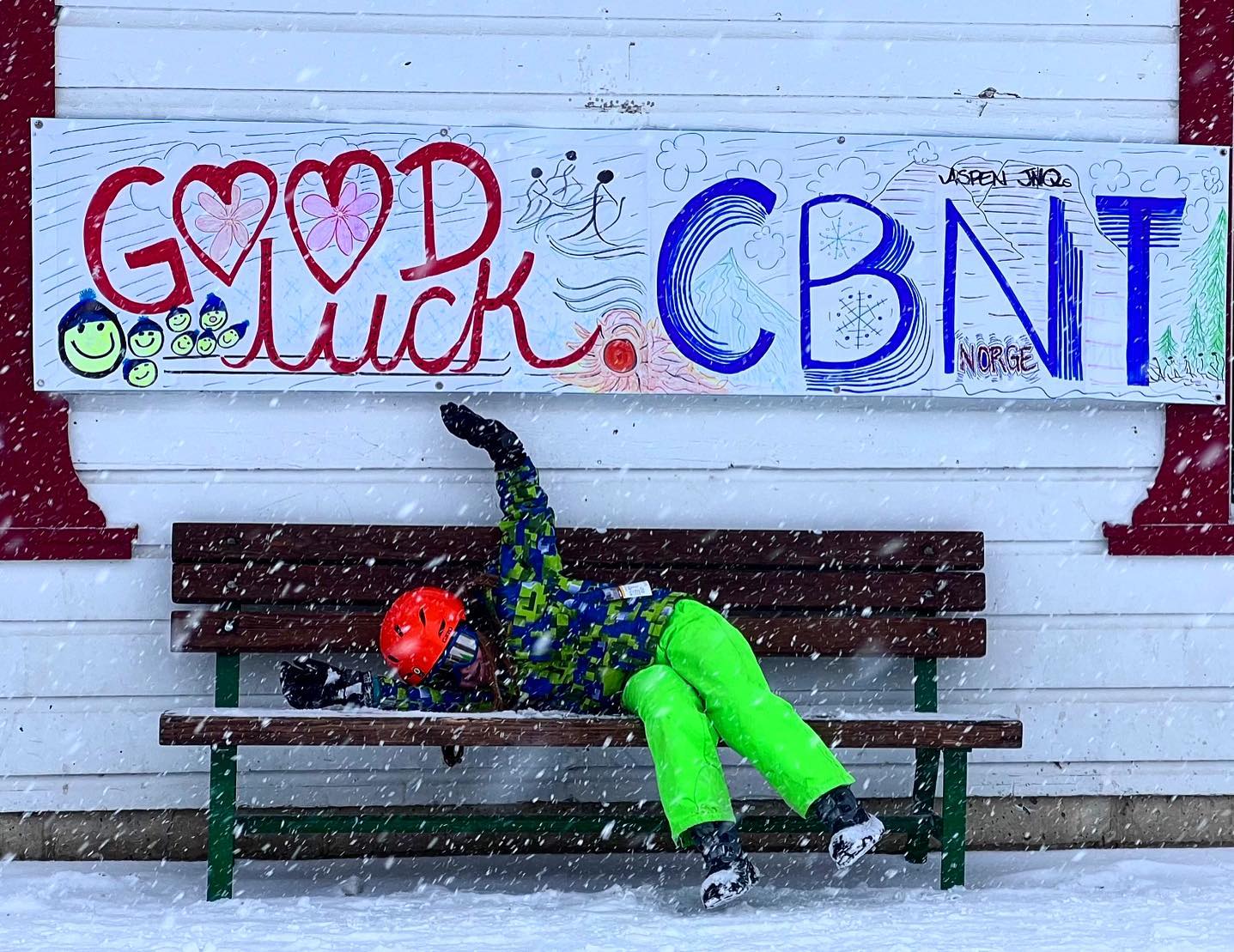
A banner on Crested Butte’s Victorian-era City Hall bids the Crested Butte Nordic Team (CBNT) well last winter. (Photo: Crested Butte Nordic)
Even for the US Postal Service, delivering mail to the end of the road at 9,000 feet is a challenge. Home delivery is out of the question: in Crested Butte, Colorado, you need a PO box, no matter who you are. As a consequence, a trip to pick up packages at the Post Office is something you make a day out of, and each member of the disparate factions that make up life in our mountain town—the ranchers, cowboys, ski bums, remote workers, and millionaire second homeowners—has to wait their turn. The post office is an egalitarian space by necessity.
I was taking my turn last March when I picked up a phone call from Than Acuff. An all-trades character in a town that has knack for producing them, Than is most prominently the Crested Butte News’one-man sports department, where he covers the gamut from homegrown Olympians to local beer league softball in his “Sports Barrel.” When I answered, I let on that I’m at the Post Office, and he responds, “So that means we can go really in-depth, right?!?”
As it turns out, we did. We talked through how the Crested Butte Nordic Team (CBNT) had just finished our last Junior National Qualifier, and how a handful of our athletes now had their sights set on Junior Nationals in Fairbanks, Alaska. We covered how, as a coach, I was proudly looking forward to following our athletes up to Alaska.
Then, we slipped into retrospection. When the season started out last November, it was my first as the Head Coach in town, after taking over a growing program from Molly Susla, our previous leader of nearly a decade. It was a quick learning curve, as we were slated to host the first race of the year for Rocky Mountain Nordic last December. Than and I started there, and traced a throughline from the support that had poured into putting on that race to what turned out to be an extraordinarily successful season for CBNT. We both agreed that the weekend had been the best of what our small town could be. Parents whose kids had outgrown CBNT decades ago took day-long shifts volunteering on course, little kids came out to look up to our junior skiers, our steadfast local photographer Xavi Fane (who’s photographs are featured in this article) weaved through the woods in his Telemark gear to get the best shot, the Mayor came by just to say hi, and one of our parents, Pat O’Neil, supplied a self-curated mix of Taylor Swift, Johnny Cash, and the Grateful Dead from which a random sample of the color commentary went, “Jerry Garcia, BIG nordic skiing fan, not many people know.” It was cold. It was fun. It was quirky. It was tough. It had also set a tone for the Crested Butte kids that followed them throughout their season. Up front, they saw that to be successful in the sport of skiing they didn’t have to aspire to be anything that they weren’t already. All we had to do as a team was lean into the qualities that shaped them as people, and the community they lived in.
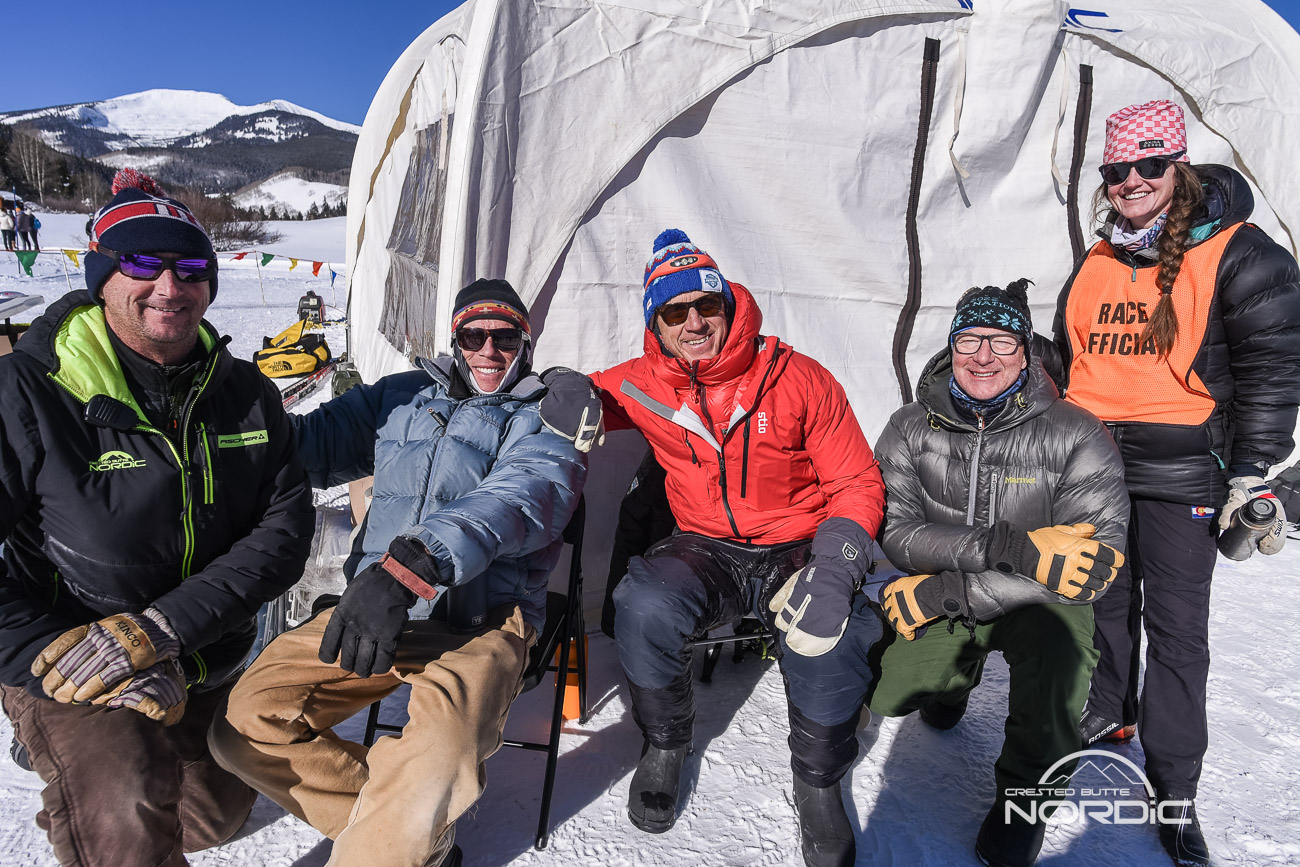
Some of Crested Butte’s hearty volunteers (l-r) Kevin Krill, Rich Smith, Tony Veit, Tim White, and Emma Lohr. (Photo: Xavi Fane).
After reminiscing, I said bye to Than, and from right behind me in the post office line, a voice went, “That was super fun to hear!” I turned to find Carol Kastning, whose son Andrew had skied on the Team in another iteration, long before my time, and had gone on to race and coach in Alaska, where, a couple weeks after this conversation, he would lend his voice as a commentator for Junior Nationals. Mrs. Kastning and I proceeded to recap my impromptu report, before starting to trace the throughline of that season the other way, back in time, to illuminate a nordic community that had waxed and waned in its character over the years, but never in its spirit. The theme recurred: in Crested Butte, nordic skiing had been a constant fixture, a solitary winter pursuit that so many in this deep pocket of the world had figured out how to form a life, and a community, around.
Other members of the post office line chimed in with their variations on that theme. There were old hippies who had cleared out the mine tailings and equipment to lay the ski trails we now use every day, and parents whose kids had just taken their first stride on skis and now wanted to join in, too. Two people conversing turned into five, and then ten. A moment in the last remaining egalitarian space in town echoed out towards the past and future of a community, and did so focused around skiing.
I picked up my packages and started to walk back to my office at the Crested Butte Nordic Center. Fresh snowflakes were falling. That directed my disposition up towards the mountains, and thoughts of skiing them rose to the top of my mind. Quickly, they were met by more thoughts about the little post office gathering I had just left that had looked to make meaning out what skiing them meant.
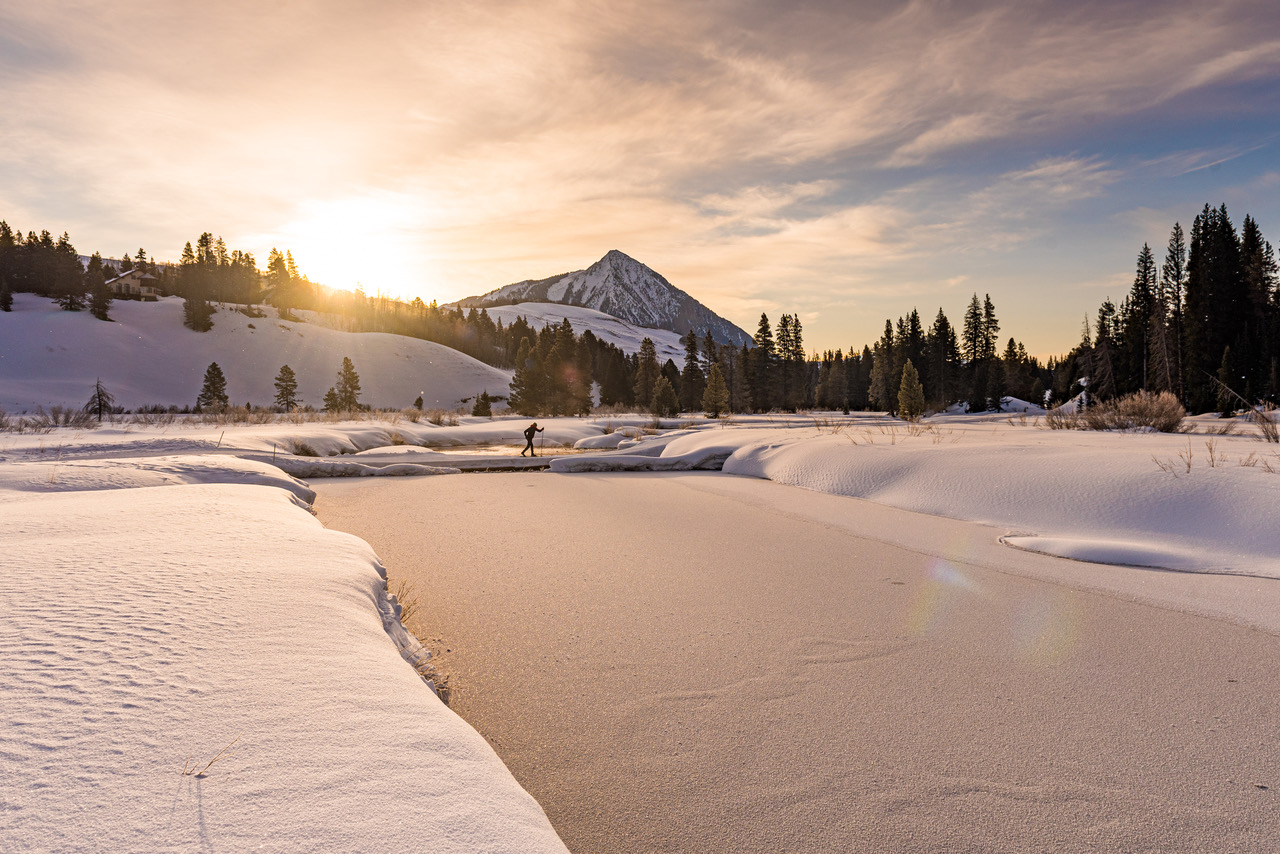
Looking down the Slate River at Mt. Crested Butte during a winter morning. (Photo: Xavi Fane)
I decided it was best not to search too hard. The essence of Crested Butte, this mountain town, most probably was located up in the mountains. Get two tectonic forces deep down in the Earth crashing against each other, and they’ll push up a mountain range. Likewise, the forces that move life along in a mountain town follow the same physics. On one plate, the landscape drives some kind of radically democratic impulse. Sublime is the mood of the high country, on its peaks and in its low, endless expanses. It’s rendered an uncharacteristic cession of human hubris, caused us to have marked off thousands of miles of the Rocky Mountains as land that was made for you and me – National Forests, Parks, and Wilderness Areas. On the opposing plate, however, there is the ever-more-exuberant desire to own it for oneself. Where those two forces have collided, a history has formed. For thousands of years, the Ute came to the Slate River Valley where Crested Butte currently lies in the summer and left when the snow fell, before the coal miners showed up to stake their claim. After a century, a generation of Hippies moved into those miners’ abandoned shacks, and 50 years later, a Billionaire owns half of town. Those same miners’ shacks come affixed with seven figures in the real estate ads that look to sell them.
Viewed that way—through the lens of this latest convergence—skiing, of the cross-country variety, seemed to me the chosen medium for the Crested Butte community to keep its particular impulses as a place made for you and me a vivid thing. Seventy years ago, the coal mine that had once owned the town closed down. In the intervening time, the people of Crested Butte built, of all things, a Nordic Center where the coal mine once stood. On that March morning outside the Post Office, I chose to believe that wasn’t a coincidence.
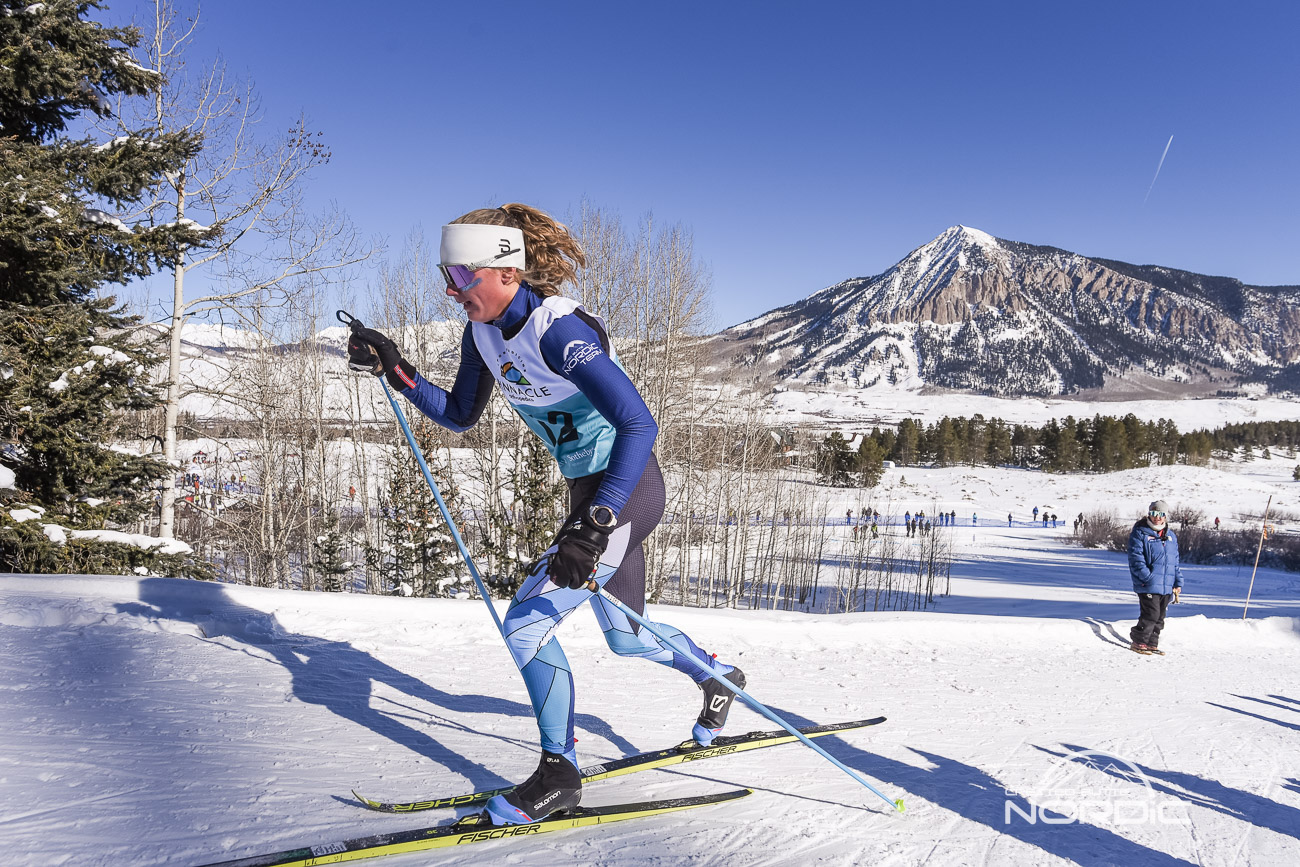
Sawyer Ezzell (CBNT) skis up the a-climb with Mt. Crested Butte behind. (Photo: Xavi Fane).
That sure sent me on a tangent; one which is, in many ways, ongoing. The snowflakes in March turned out to be a small part in the grand procession of what would end up being one of the biggest winters on record in Crested Butte. When I met up with the CBNT athletes in June to start summer training, we were still on snow. Then, for the next twelve weeks, we worked on growing as skiers, as athletes, and as members of our community, matching the way we trained to the temperament of the place we were doing it in. We learned that anytime of year is a good time to hop on snow, that long days running in the mountains feel short when in good company, and that while the journey towards being the best we can be is immeasurably long, the effort toward it takes place everyday.
All the while, construction was starting on what will become the new Crested Butte Nordic Center, “the Outpost.” What began in June with bricks from the old coal coke ovens being dug up outside our present Center is now a maze of exterior plywood walls and interior studs, due to be completed this winter. On Friday, August 12th, the entirety of the Crested Butte nordic community got together to celebrate this bigger, better version of the Crested Butte Nordic Center, which will hopefully hold a bigger, better, version of ourselves.
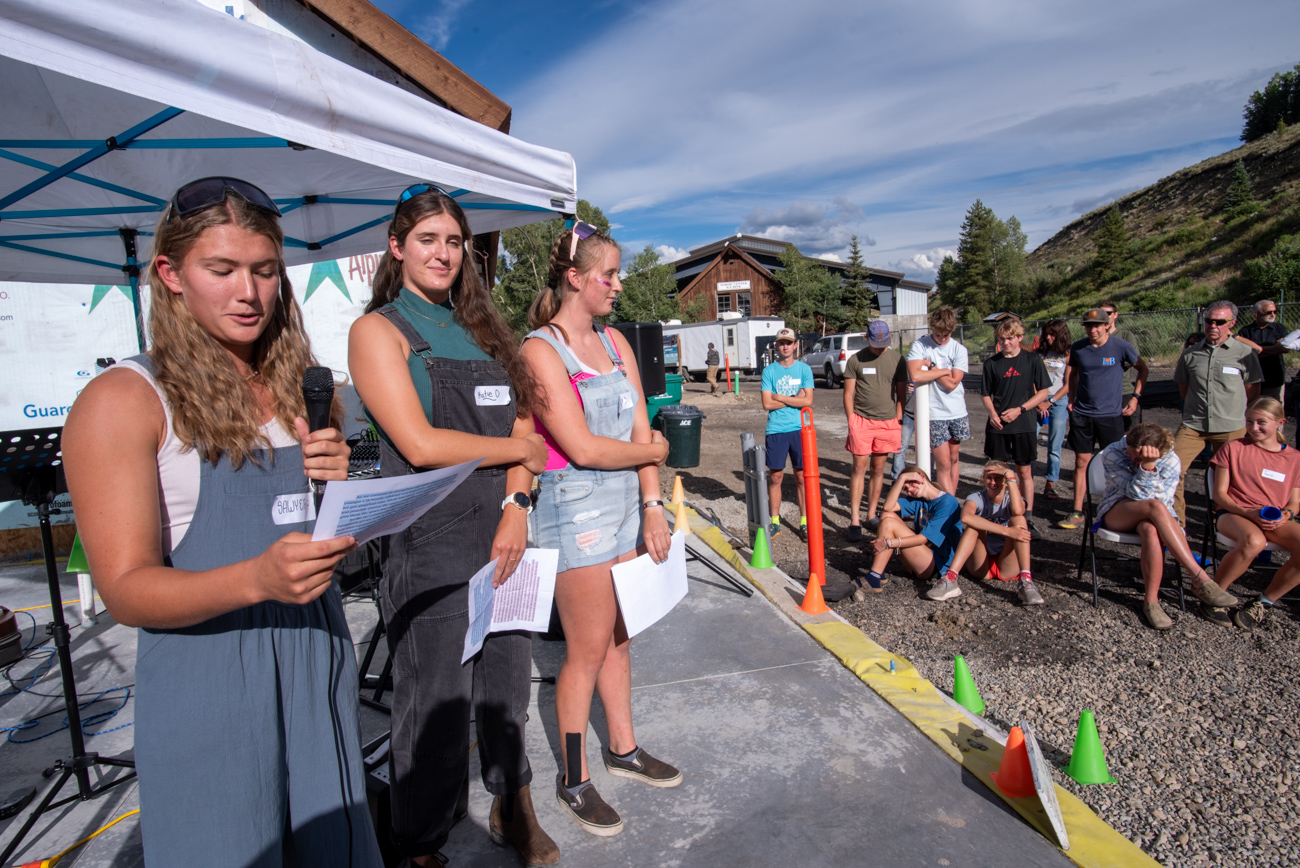
As part of that celebration, I was asked to make a few remarks, alongside a couple of the Crested Butte Nordic Team athletes. Those remarks are printed below. They reflect on the meaning of building a ski community which, while particular to our community, is reflective of the mechanism skiing plays in building community anywhere our sport is practiced.
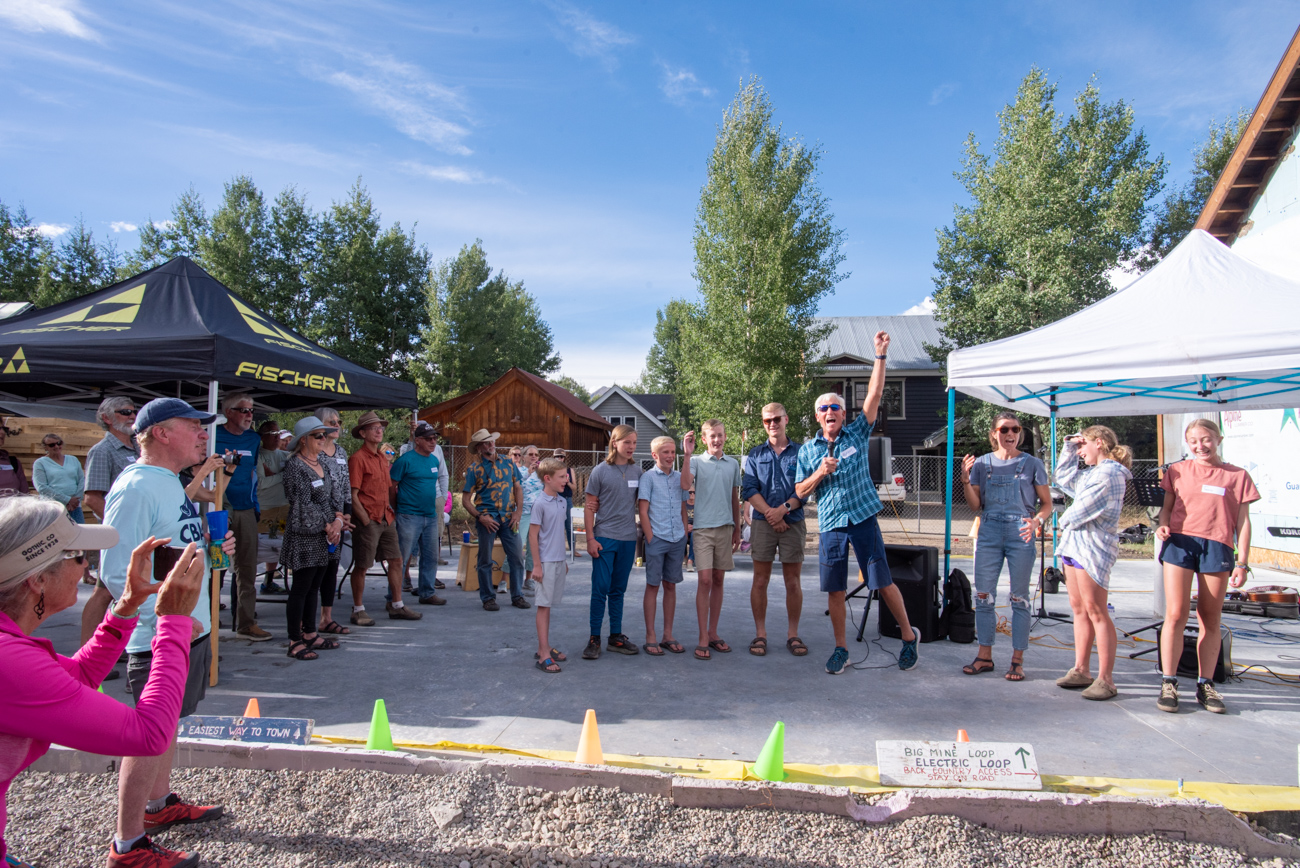
Murray Banks delivers remarks alongside members of the Crested Butte Devo Team during a celebration of the new Crested Butte Nordic Center this month. (Photo: Xavi Fane)
We also reflect briefly on and on our new team room’s namesake, Murray Banks, a name familiar to many from the New England ski community. As a coach for nearly fifty years, he played a pivotal role in founding Mansfield Nordic in Vermont’s Champlain Valley. He continued as a driving force in the Crested Butte nordic community for nearly twenty years. Those who know him know his disposition, and energy, are those of a much younger person. As a counter, my own penchant for being a bit of an old soul has created a middle-ground for us to form a relationship that has been an outsized blessing since I moved to town. The best way to paint the ethos of our Crested Butte coaching staff with him and I in it is that at the wax bench on a given race weekend, you’ll find one coach who has over fifty years of experience and one coach who has three years, and the latter is supposedly in charge. We push, pull, and complement. Where his knowledge of pine tar ends, my knowledge of fluoro-free top coats begins.
Most pertinent to the purpose of sharing here, I’ve included the words shared by three of our Crested Butte Nordic Team athletes on what skiing, the ski community, and growing up with Crested Butte Nordic means to them. They are Piper O’Neil, Katie O’Neil, and Sawyer Ezzell, and their words should hold everyone over for inspiration until the snow falls, not only here in Crested Butte, but in the many ski communities like it that have used this sport as a medium to turn a solitary pursuit and its lessons into a source of positive community-building.
(l-r) Sawyer Ezzell, Katie O’Neil, and Piper O’Neil—members of the Crested Butte Nordic Team—deliver remarks during a celebration of the new Crested Butte Nordic Center. (Photo: Xavi Fane)
The following are remarks delivered at the ground-breaking of the new Crested Butte Nordic Center, the Outpost, on Friday, August 12th.
(Edited for length and clarity)
Remarks of Ben Theyerl:
I tend to hold that skiing itself doesn’t change us, but instead that it allows us to recognize latent qualities within ourselves. I also tend to think that there’s no better place to understand this fact than here in Crested Butte. These towering peaks around us, the mountain meadows, and the ancient pine and aspen stands – they are here, in this valley, whether we experience them or not. What skiing represents is a way to get there: a medium to see that world as it is, and once seen, it’s a different world. Shades of green, blue, and white become richer, and with them the shades of life do too. The instant becomes glacial, each breath brings in joy – in the moment, and in the work left to do.
All that is to say, that my job as a ski coach isn’t to mold young people into anything that they aren’t already. Rather, my job is, interval-to-interval, practice-to-practice, ski-to-ski, and stride-to-stride, to help them know themselves; to discover the unique qualities within themselves that make them not just better skiers, but better teammates, friends, and members of their communities, and specifically of this community of Crested Butte. This summer, over the past couple winters, I’ve been alongside the kids here as they’ve gotten to know the mountains that surround us, to tread carefully and with steady steps towards peaks, valleys, finish lines, and each other. At each turn, it seems they choose to take the option to do more, to be open to more, to push themselves. I mean that in the sport of ski racing, yes, but I also mean that in all the other parts of life skiing touches. Each day they wake up and choose to take more joy in their experiences, choose to invite others in wherever possible, and choose not to dull the edges of the love they can show towards others, and towards the world.
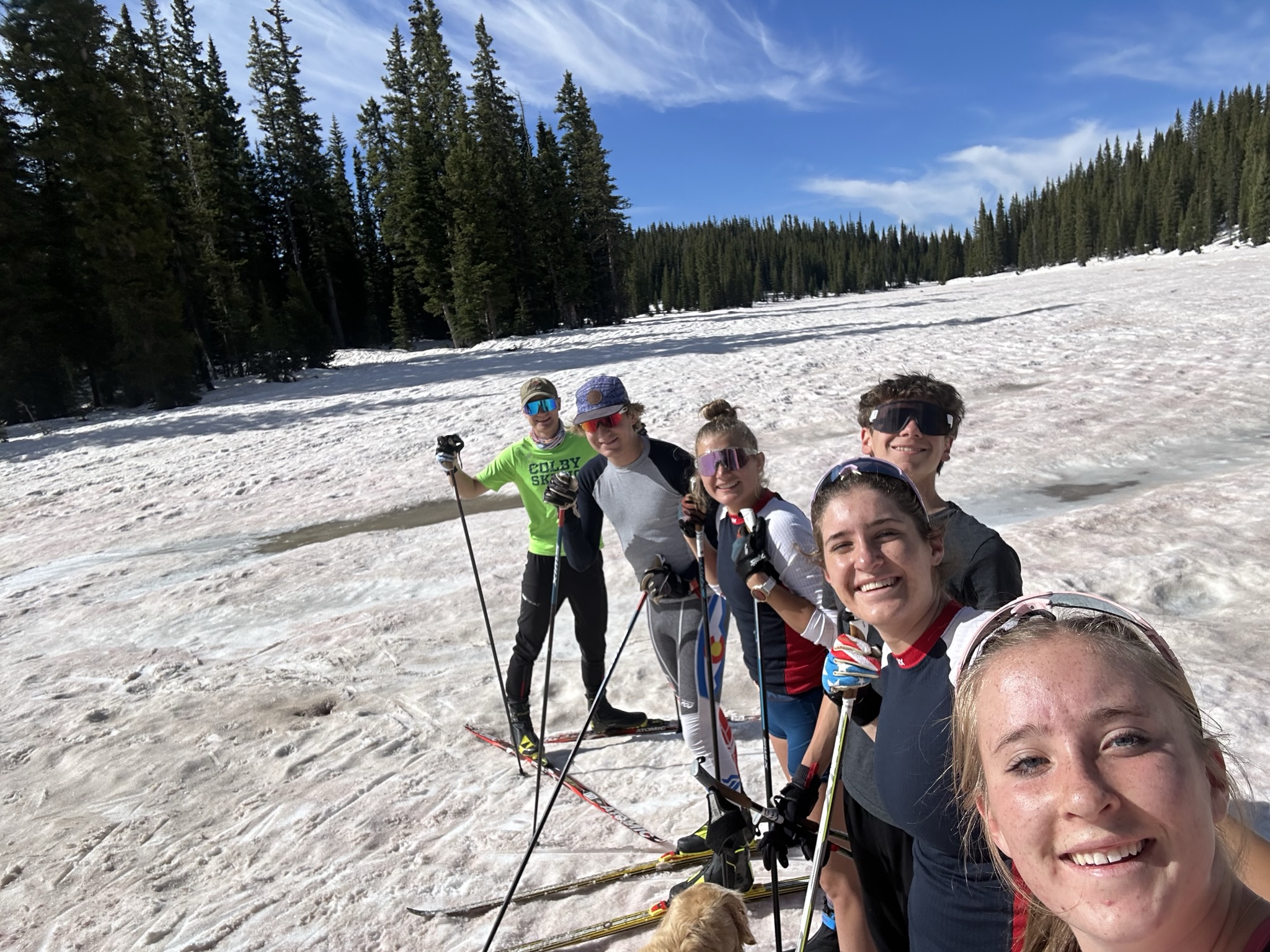
Members of the Crested Butte Nordic Team get in a late June ski in the Elk Mountains earlier this year. (Photo: Courtesy Image)
They have, in short, managed to lace the practice of skiing with value and meaning. And, even more impressively, they have managed to match those values with the place that they practice it in. This little town where there remains a sense that we’re all in this together, where there’s a rough nod to the little bit of everything, I do that belongs to you, full of down-to-Earth and dream-chasing folks, learning and growing in a little valley where the only platitude is that it is one of the most beautiful places on Earth. In this community, Crested Butte, this new building represents a place for that praxis these kids have formed to grow; a bigger, better version of Crested Butte Nordic to hold a bigger, better, version of ourselves.
A couple of our skiers, Sawyer Ezzell, Piper O’Neil and Katie O’Neil, will cover the details (read their remarks below) of what exactly that is going to look like in a few seconds, but before they do, I just wanted to pause and reflect on what we’ve built here. To match the practice of skiing with values that build community is a monumental task, which even after it has happened, can easily disappear, or be transitory. We can tend to forget that here. That the community created here is infinitesimally fragile compared to the mountains that surround us and shape our experience here. Which is why, as someone tasked with tending to that community, it gives me a whole lot of comfort that our Team Room will be named after someone who is a testament to the possibility that values and the communities, they form can remain durable, because he has done so, and done so on skis for over a half-a-century: Murray Banks.
To speak on what Murray means to this ski community would be redundant to this audience. I’m lucky enough to say though, that my journey in this sport has extended far beyond skiing in this valley, and that has given me a glimpse into what he has brought, and means, to a wider ski community – one that spans a whole continent, and a whole lot of time. Before he was here, he was back in Vermont, and via the confluence of time and place many of the kids that he coached back there were at one point or another teammates or competitors, and are friends of mine. What I was struck by when I started reflecting conversations with these friends is that no matter who the skier is, the conversation never remains at a surface level very long. It’s never, ‘how’s Murray?’ ‘Oh, he’s doing well.’ Invariably, our conversation turns quickly towards the very core of why we do this sport. We point towards the most significant lesson he teaches: to find joy in this sport, and more importantly, to never waver in spreading it. To take the path towards inclusion, towards reveling in the joy of life, and in, ultimately, building a community that reflects the things about life that make it important.
When you see joy inching its way into your life, be it via skis or elsewhere, you ought to loose the doorjambs, feed it, let it fill up your spirit, and then immediately work hard to spread it to as many others as you can. That’s what this new iteration of Crested Butte Nordic looks to do, and in doing so, continues a role that skiing has played in shaping this community that we hope will last as long as these mountains around us stand.
I’ll hand it over to Piper, Katie and Sawyer to expand on what this new iteration will look like…
Remarks of Piper O’Neil, Katie O’Neil, and Sawyer Ezzell:
Over the last four years, the Crested Butte Nordic Team has expanded from only filling the first row in our van to filling the whole van all the way to the back and hoping that the door still shuts.
In our new Team Room in the Outpost, we are excited to have a space that’s truly our own. As a team that views itself more as a family, we can’t wait to make the Team Room a home where we can grow as athletes, as a team, and as people. One of our team values is making sure the physical and mental health of our athletes is put first. We can focus on having the time and space to build a solid foundation where athletes feel safe to address personal struggles and support each other. As we continue to strengthen our team and program, the younger CB Nordic athletes will hopefully fall into the family we got absorbed into. More and more athletes are eager to ski and pursue the sport competitively, and the Outpost will give them the space and resources to do just that.
With this new facility the program can further develop into what we know it can be. We believe in the value of empowerment through investment, and we are endlessly grateful for the time and funding that went into creating this new and amazing space for us. As the parents of the team and Nordic Center Staff know, we basically live at the Nordic Center, so we are so appreciative for never ending care and support. So from the Nordic Team family, thank you so much for giving our family a real home.
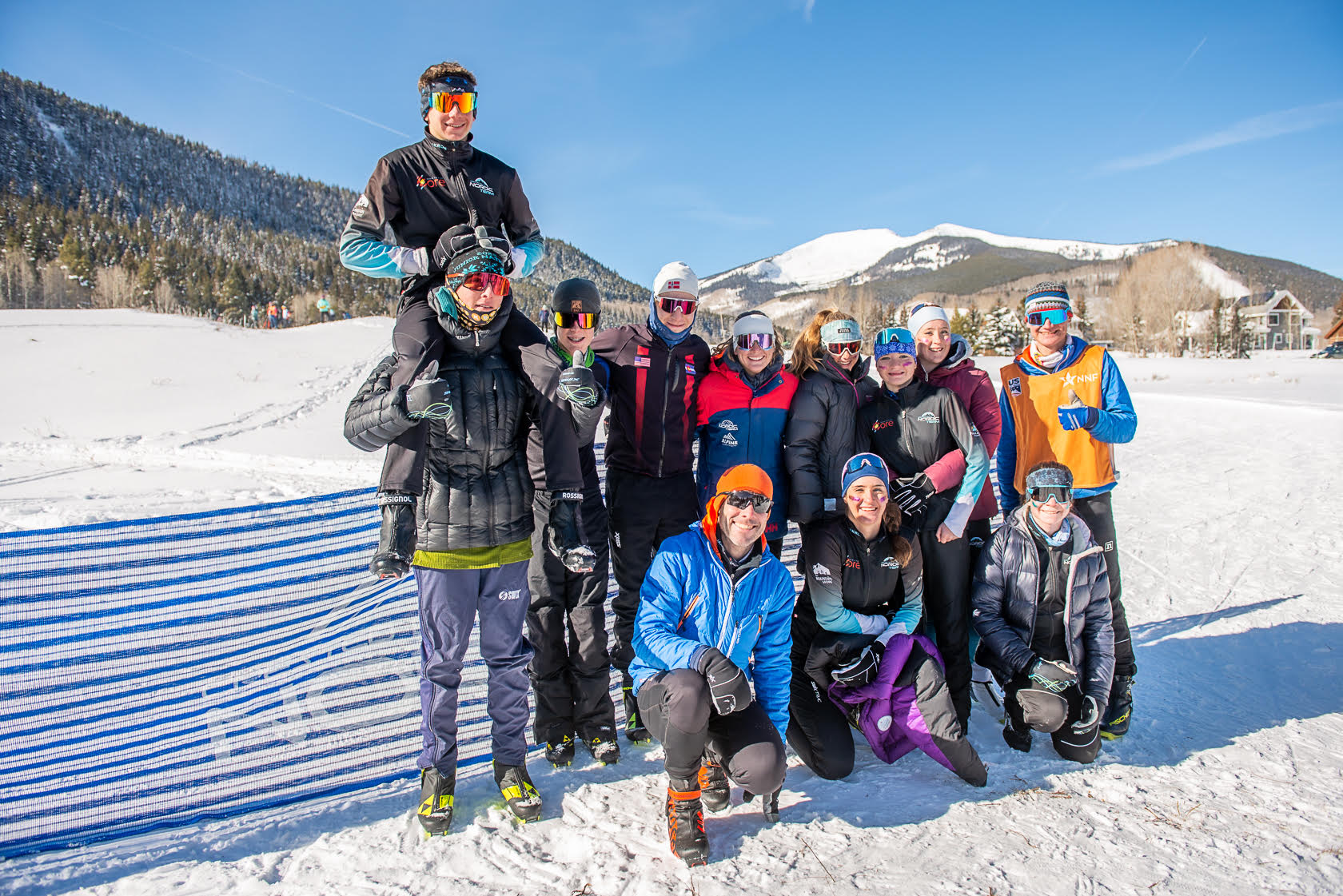
Members of the Crested Butte Nordic Team last winter. (Photo: Alison White)
Some times, the races couldn’t be held. Other times, not everyone could get to the races. Such was the case for Nordic skiing during the pandemic. If such limitations occur again in the future, will virtual racing become a viable alternative? (Photo: Tornow/Muniz, American Birkebeiner)
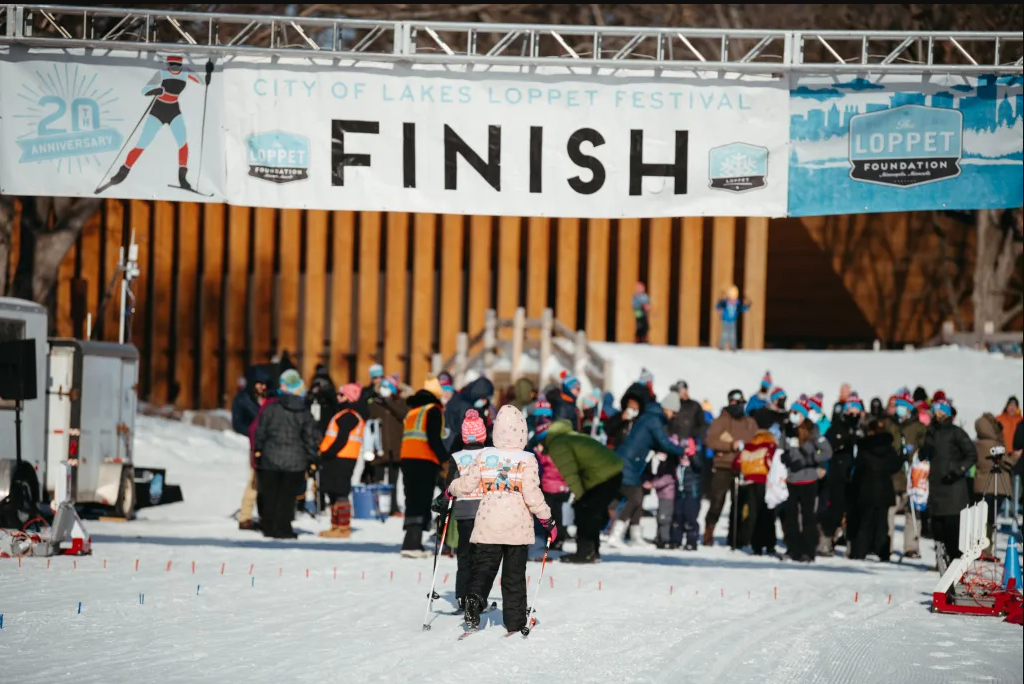
White-knuckled, we caravanned down I-94 from St. Cloud to Minneapolis in the midst of a bomb cyclone of wind, snow, and ice. Braving the conditions, we crawled toward our destination: the 2021, hybrid City of Lakes Loppet at Theodore Wirth Park. Due to the COVID-19 pandemic—and a hearty desire to stay healthy for the remainder of the ski season—we decided to drive separately. Now, we were inching our way to a late start for our Thursday morning staggered start times of 9:00 and 9:02. There was no way we’d make it on time.
As race directors presented various solutions for completing their races during the winter of 2020-2021, many Nordic skiers were scrambling to salvage a season that had been fractured by a global pandemic. Previously, we had gathered en masse at venues in Minneapolis, Hayward, Calumet and numerous other host towns for days of socializing, racing, and celebrating. Now we found ourselves with virtual starts at different times and venues scattered across North America. Armed with smart watches, cell phones, or (in some cases) witnesses willing to testify to distance and time, cross-country skiers raced their way to another successful event completion. As we all uploaded our times and compared our performances, we were left wondering about the legitimacy of these “virtual” races: were we really racing? Against whom? These questions got us thinking whether these virtual race formats—including skiing different venues, at different times, or even substituting an activity other than skiing—are viable long-term solutions to hosting Nordic ski events in the face of climate change, where winters are getting warmer and the ski season is getting shorter with less predictable snowfall.
To address these issues, we developed a survey to gather the insights of Nordic skiers across North America. With the help of the American Birkebeiner Ski Foundation, the Loppet Foundation, and Stearns and Wright County Parks, we received feedback from over 1,300 participants. In our first article, we addressed the question of how we self-identify as cross-country skiers and how this relates to culture, diversity, and opportunity in our sport. In part two, we focus on skiers’ perceptions of virtual ski events, our likes and dislikes, and whether these are legitimate forms of racing. To address these questions, we evaluated a subset of our survey participants: the 829 cross-country skiers who completed at least one virtual ski event during the 2020-2021 ski season. Thus, while our survey results aren’t necessarily a reflection of the entire Nordic ski community, they do represent the voices of skiers who experienced firsthand the pros and cons of virtual racing.
Racing? Virtual?
As we try to better understand how our cross-country ski community responded to the COVID-19 race schedule—and what it means as we move into a world of less predictable winters—two terms become particularly important: “virtual” and “racing.” Although we may all have a general idea about what these terms mean, neither is particularly straightforward as we look at the myriad opinions regarding the “virtual race” schedule of the 2020-2021 race season. For our own purposes, as skiers who practice anthropology, the two terms vary in how they are defined. Although countless articles have been published on the philosophy of racing and what constitutes a race, the term “racing” in our study is one that we left to our survey participants to define. This means that we are not going to provide a definition of “race” or “racing,” at least not yet. Instead, we teased the meaning of cross-country ski racing from the responses that our Nordic ski community provided in the survey. Thus, “racing” is defined internally, by the skiers. We own it.
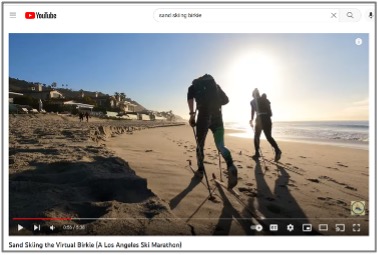
Figure 1: Virtual Birkie skiers sand skiing on a Los Angeles area beach. (Photo/Video: youtube.com)
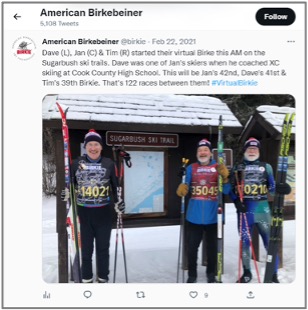
On the other hand, the term “virtual” is one that was defined for all of us, at least as it applied to the COVID race season of 2020-2021. And the definition of “virtual” might have strayed a bit from what we normally think of as “virtual.” For the most part, the virtual options presented to us for completing our annual ski marathons didn’t involve pulling out the VR headsets or hopping onto the treadmill or trainer for a Zwift or Rouvy session—though in some cases, it might have. Instead, virtual options included such things as actually skiing on snow, but in a different location than the original race, or skiing at the official race venue but on a different day than the traditional start. For some races, such as the American Birkebeiner, other activities such as running, cycling, swimming, rowing, or roller skiing could be substituted for skiing on snow (Figure 1). Regardless of activity choice, substrate, and location, distance and time were measured using a GPS watch or app, or the testimony of a witness who could verify time and distance. We got to choose how we completed our events given a range of “virtual” options that were made available to us. Although COVID is not currently the threat it was two years ago, at least some event organizers are still offering virtual options this winter. The virtual option could turn out to stick around longer than many of us anticipated.
Do we dislike virtual events?
As we perused our survey results, we were struck by the wide range of responses, both positive and negative, that skiers had with the various alternative cross-country ski formats subsumed under the term “virtual.” We noticed that, given the opportunity to discuss both their likes and dislikes of virtual racing, positive responses (n=864) outnumbered negative responses (n=613) by over 30%. A look at these results allows us to get a handle on how we, as a community, define racing as well as our attitudes about whether virtual cross-country ski events can be considered legitimate races. We’ll begin our discussion with the dislikes that virtual skiers expressed about the events they participated in.
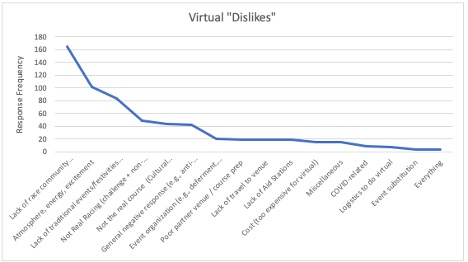
Figure 2: Patterns of things virtual skiers disliked about virtual cross-country ski races.
Figure 2 summarizes the 613 individual, negative responses that virtual ski participants provided. Overwhelmingly (> 55%) the dislikes about virtual cross-country ski events focused on the lack of social interactions, energy, and festivals that surround typical Nordic ski races. The single, most common dislike (n=165) that skiers expressed was that they missed the community and camaraderie that surrounds these events. This was followed by the lack of atmosphere, energy, and excitement (n=101), and lack of traditional events and festivities, including things like gear expos, after-parties, and “Main Street” finishes. Following these first three dislikes, we see a drop in responses.
Coming in at number 4 in the list of dislikes, with 9% (n=49), was the critique that virtual events, in one way or another, are not real racing. Although only 17 of the 629 dislikes explicitly stated that virtual events used during the COVID-19 pandemic did not constitute real racing, we identified several additional responses that are closely related to this category. These additional “not real racing” responses do two things: 1) they provide valid critiques of virtual events; 2) they identify important elements of a ski race that allow us to tease out the definition. Fifteen respondents argued that virtual events lack competition. Additional critiques include non-comparable times (n=10), no official, mass start time (n=4), and that virtual event participants ski on different courses in different places (n=3). This mix of responses highlights some key elements that define a cross-country ski race: a competition between skiers where times are legitimately comparable because of a scheduled start time on a designated course using official timing.
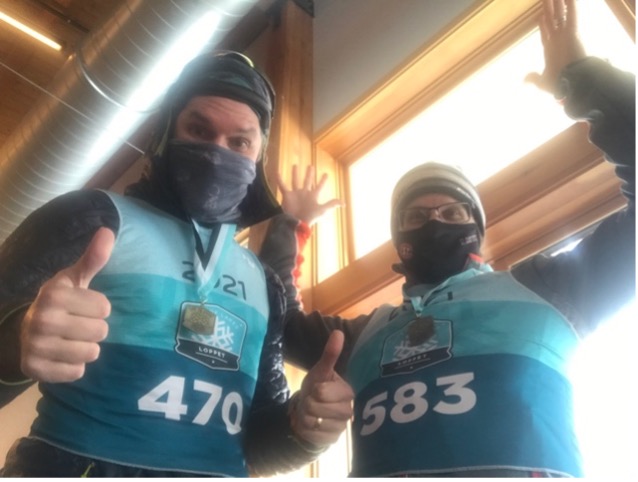
Figure 3: The authors, Matt Tornow (left) and Mark Muñiz, celebrate their completion of the hybrid City of Lakes Loppet.
So, when we (M&M; Figure 3) were slipping down I-94 to ski the hybrid City of Lakes Loppet, would we be racing? Technically, we missed our start times, so that criterion might be compromised. However, we were still allowed to race, and we certainly skied within the open window for the event. When we got to the start on Wirth Lake, it was empty except for a volunteer starter who explained the course, and particularly the finish, where we were instructed to do two laps around the stadium. We were competing with the clock, but also with other skiers that we might have seen on the course. We also compared our finishing times with those who completed the event at different times and on different days. Whether or not we skied the same course is a sticking point. By the time we got to the final 10k around the stadium, the conditions had degraded to the point where drifting snow and downed course markers had made identifying the intended course impossible. Tornow’s two laps differed slightly from each other, as evidently he missed a turn at some point. Muñiz did the same lap twice to finish his race. This resulted in different distances: 30.5k for Tornow and nearly 34k for Muñiz. While the official race distance was recorded as a 30k, other racers recorded different distances too. Maps posted to Strava show that Olympians Caitlin and Brian Gregg each skied 31.2k to complete their hybrid Loppets. While some differences in distance are almost certainly the result of different recording devices (e.g., watches, phones) and related apps, it’s also evident that Tornow, Muñiz, and the Greggs all skied slightly different courses for the same race. Without analyzing the maps of all participants in the 2021 hybrid City of Lakes Loppet, we really don’t know how our times compared with the other racers. Similar concerns might arise from skiing the same course at different times. Our late start on Thursday morning resulted in more accumulated snowfall on the course and more drifting. We’re not making excuses, but those who skied the race earlier in the week or the following day would have had very different (better) conditions. Apply this complexity to events that allowed skiers to use entirely different courses (e.g., Virtual Birkebeiner and Virtual Vasaloppet) and we can quickly see that the race criteria of legitimately comparable times and distances are easily violated for virtual events.
Rounding out the top five dislikes, skiers did not like the fact that they were not skiing on the real course. This is a sentiment that, like the top three responses, relate to the social aspects of the event by focusing on the traditional place and cultural landscape where cross-country ski events occur. These top five responses (72%; n=443) all focus on the social meaning of the event, whether it be interpersonal relationships, competition between ski racers, or interaction with a traditional, cultural landscape.
Rather than focusing on the cultural meanings associated with cross-country ski events, the remaining 28% of dislikes shift the focus of critique to the mechanics of virtual racing. The sixth most common dislike was a general, “virtual stinks” kind of response. While not explaining why they disliked virtual events, these 42 responses express a general dissatisfaction with the substitution of virtual events for traditional, in-person, mass-start races.
There is a sharp drop in the number of responses following the “virtual stinks” critique. Twenty virtual skiers were dissatisfied with the organization of their virtual events. These dislikes ranged from a lack of communication and dissatisfaction with virtual interaction to the inability to defer their registrations to future, in-person events. There was a three-way tie for the eighth most common dislike between: dissatisfaction with partner venues and course prep; the lack of aid stations; and a desire to travel to the host town for the event. Rounding out the dislikes were the high cost of virtual events (n=15), a general dissatisfaction with the situation surrounding COVID-19 (n=9), figuring out logistics (n=8), and event substitution (n=4). There were also fifteen “miscellaneous” responses that included things like not winning a raffle, missing foreign culture, and lack of motivation.
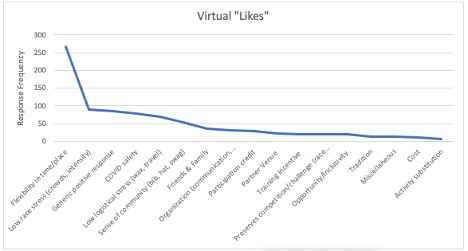
Figure 4: Patterns of things virtual skiers liked about virtual ski races.
What was there to like, then?
With all of the negative feedback, we’re left wondering if there was anything we actually liked about these virtual events. It turns out, that there was a lot to like, and skiers had about 30% more good things to say about their virtual races than bad things. Figure 4 shows that about a third of survey participants (n=266) said that they liked the flexibility that virtual ski options provided regarding when and where the event could be completed. For virtual events offered during the pandemic, skiers could choose their own venue and could complete their races at any time. This was clearly a bonus to many skiers. The next most common like (n=89) was the lowered race stress that comes from virtual events. Although many skiers disliked the fact that virtual racing wasn’t real racing, a greater number of skiers indicated that they liked the lower stress, less-crowded trails, and lower intensity of virtual race formats. Following a general “virtual is great” response and an appreciation for COVID safety (which came in third and fourth, respectively), the lower logistical stress afforded by not having to travel, figure out wax, and get to the starting line on time rounded out the top five. Thus, three of the top five likes of virtual racing were related to the fact that the virtual events were fundamentally different than typical races and were generally less stressful.
Although the top three dislikes of virtual events revolved around missing the sense of community that big cross-country ski events provide, not all virtual racers saw it this way. The sixth most common thing that skiers liked about virtual events was the sense of community that they created. The sense of community resulted from seeing others skiing their virtual events in their race bibs or displaying the swag that comes with participation in hallmark ski events. For many racers, wearing Birkie swag publicly associates them with finishing one of the toughest ski marathons in North America. Whether or not they finished the race on the course in Wisconsin or on a local trail in some other state is a secondary talking point. Others also appreciated the opportunity to ski with friends and family who had different abilities (7th ranked). Thus, virtual options provided a real sense of community, albeit different from that found with traditional mass gatherings.
Figure 5: Skiing virtually during the COVID-19 pandemic allowed many skiers, such as these long-time Birkie skiers, the chance to maintain tradition and share their experiences with others through social media.
There were a number of skiers who were happy that, during the middle of the COVID pandemic, races were held at all, and many of these folks (n=31) gave ‘shout-outs’ to the organizers who pulled these virtual events together, maintained communications, and provided platforms for reporting results. In addition to praising the race organizers, 23 skiers also gave kudos to partner venues, who provided certified, groomed courses to use specifically in completing the virtual Birkie. Squeezed between organizer and partner venue shout-outs, the ninth most common like about virtual racing was getting credit for participating. This sentiment ties into the fourteenth ranked like (n=14): preserving tradition. For many skiers, participating in these events is steeped in tradition, and the chance to participate in a COVID-safe, socially distanced format provided skiers the opportunity to keep the tradition alive (Figure 5).
Although very few positive responses explicitly called their virtual events “races,” the racing sentiment is expressed in some of them. Twenty-one skiers liked that the virtual options available to them provided impetus to continue their race training. An equal number of skiers liked that virtual events preserved the challenge and competition of a race experience. Thus, while about 9% of virtual participants thought of virtual racing as “not real racing,” 5% liked the racing aspects of virtual events.
Just as virtual events provided skiers the opportunity to ski with friends and family with different abilities, they also provided opportunities for skiers to take part in events that they might not otherwise have been able to participate in. Our data indicate that about 10% of our total number of respondents (127/1300) had never completed a sanctioned, Nordic ski event prior to the COVID-19 pandemic. Of these 127 skiers, 42 (33%) indicated that they took part in a race during the 2020-21 season and 34 of them chose a virtual option. Whether the virtual option provided impetus for these first-time cross-country ski racers to participate in these events is unclear. What is clear is that 20 skiers indicated that they liked the opportunity to participate that the virtual options provided. Thus, for these 20 skiers at least, virtual races provided the opportunity to participate in ways that otherwise might not exist.
Aside from cost and a number of miscellaneous responses such as adjusted, shorter distances, or positive memories associated with a chosen alternative venue, the likes are rounded out by those who appreciated the opportunity to substitute an activity other than skiing to complete their event. This was a big bonus to skiers who found themselves on a snowless landscape during the COVID-19 pandemic.
Our questionaires revealed that gathering at the venue and socializing as cross-country ski athletes is perhaps an important part of race participation. How well will virtual races be able to fill that fundamental need?
So where does this leave us?
If we look at the sheer numbers of likes versus dislikes, it’s clear that virtual skiers had more good things to say about virtual events than bad. Does this mean that virtual skiers liked their respective events? Maybe. There were certainly things to like about the opportunities provided to “race” under the social distancing guidelines of COVID-19. Simply the fact that we could ski at all was enough to make many skiers happy. Add to that the flexibility, inclusivity, low stress, and opportunities to socialize and compete, and the virtual response to COVID seems like a success. Of course, the lack of community, excitement, and celebration seemed to weigh heavily on virtual ski participants. While many skiers liked the lack of stressors and logistics that come with virtual racing, many of those same skiers disliked the fact that these virtual events weren’t “real races.” So, what is it about a “real race” that is so appealing and motivates us? It’s something more than just legitimately comparable times because of standard starts on a designated course using official timing. Real races require honest head-to-head competition between us as we strive to do our best, that pushes us to be even better than we could ever be on our own. If virtual races cannot provide this, then they fall short for many people.
Holding our ski events virtually during a time when hosting mass gatherings was neither practical nor safe was probably the best solution. As Ben Popp, Executive Director of the American Birkebeiner Ski Foundation, said “while it isn’t as good as an in-person event… it was still something that you planned around, talked about and went and did. It kept you engaged in a larger community and working towards a goal.” But, as winters become more irregular, with warmer temperatures and less predictable snowfall, is this format something that skiers would accept on a more regular basis? What would a transition to virtual ski events do to our sense of community? To our desire to compete? These are questions that we’ll address next, as we explore the impact of virtual events on the Nordic ski community and culture and consider the ways that event organizers can maintain or even grow participation in our sport in light of climate change.
Mark P. Muñiz, PhD, is a Minnesota transplant who grew up in Florida, but enjoys a cold snowy winter over a hot humid summer any time. His cross-country ski adventures have included loppet races and volunteer coaching for the Minnesota Youth Ski League. In the warm season he loves cycling and is still a little wary of jumping on rollerskis. He currently teaches as a Professor in the Dept. of Anthropology at St. Cloud State University, MN.
Matt A. Tornow, PhD, is a Professor of Anthropology at St. Cloud State University in Minnesota. His research interests focus on primate adaptation and behavior, including that of humans. As a native of central Illinois, he spent much of his youth and early adulthood driving north to seek out the snow. Now he spends his winters skiing the local trails and doing a little racing. When there’s no snow on the ground, you can find Matt running through the woods somewhere.
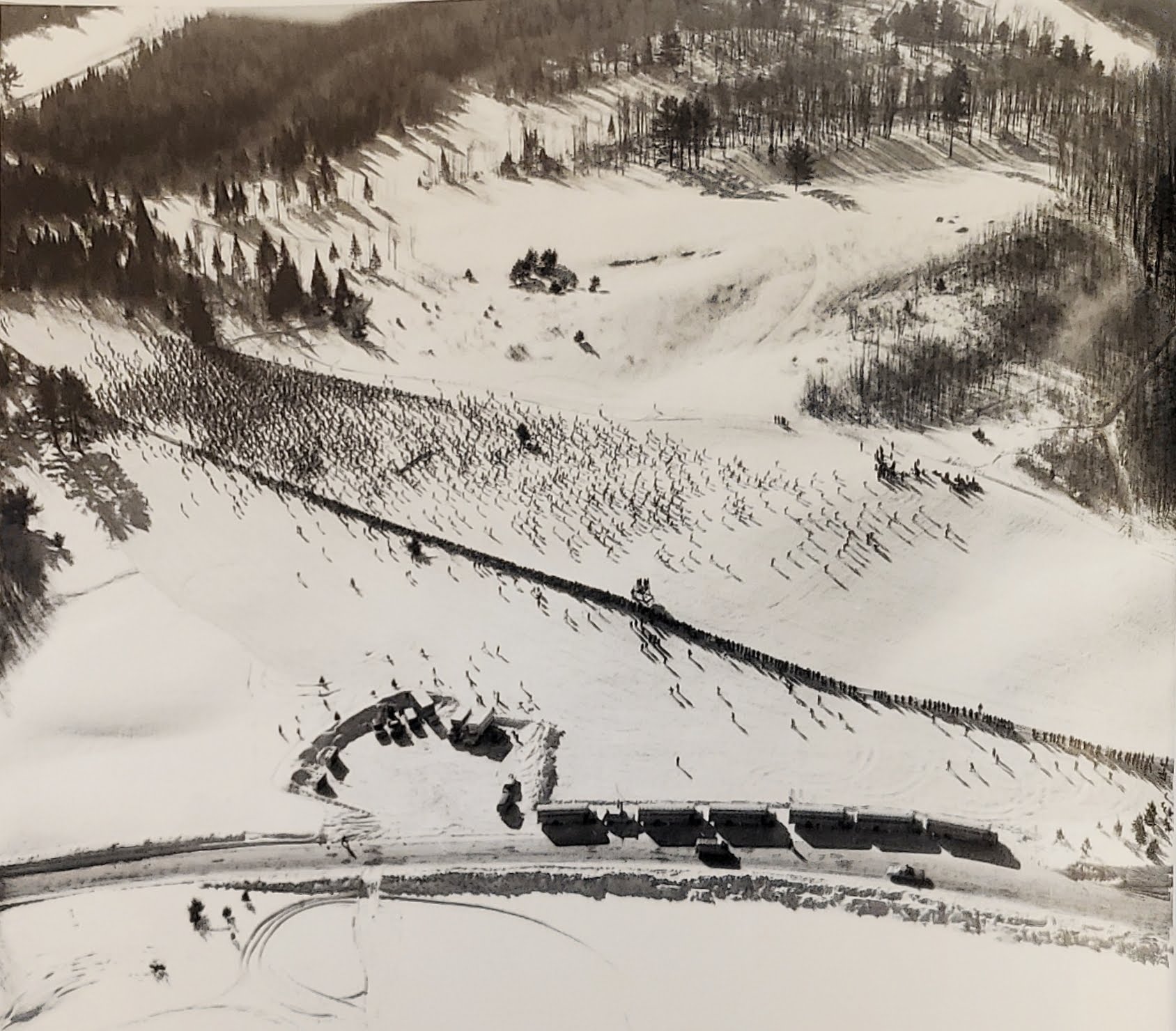
American Birkebeiner VI in 1979. The “Birkie” will celebrate its 50th anniversary next February. (Photo: Telemark Education Foundation).
Tony Wise could see 10,000 years at once. The last ice age had sent a glacier down over Wisconsin, and then tore it back. In the process, the landscape and lilt of a place emerged. Deep-pocketed kettles, ridges, gentle and subtle rolling hills, all draped in the needly green of the pines. Gaze at it, and time didn’t seem like something that moved forward, but instead danced within the bounds of a whole epoch. A 400ft moraine that rose up from the Superior Upland outside of Cable, Wisconsin: the Ojibwe called it kawabaming—the place to look out from. Look out, and it kept going. Time stretched out and blurred, forward and back. Ten thousand years didn’t seem like much.
Wise was a local boy who had just returned from serving as a tank commander overseas during World War II. During his service in Europe, he’d found himself in the Bavarian Alps, where he’d been introduced to a way of moving across the Earth that filled the metaphysical space found on top of the local hill he now stood on. Skiing was an ancient way to front the winter, and a wholly new thrill in each and every turn. Hopes and histories were about to mix as Wise sought to purchase a piece of Wisconsin land to develop into a sking destination. Wise carved a number into one side of birch tree. Walt Kliszcz—a local railroad man who held the deed—carved a number into the other side. They met in the middle: $750.00. Wise renamed the hill Mt. Telemark, then built a ski hill, a lodge, a race, and a dream.
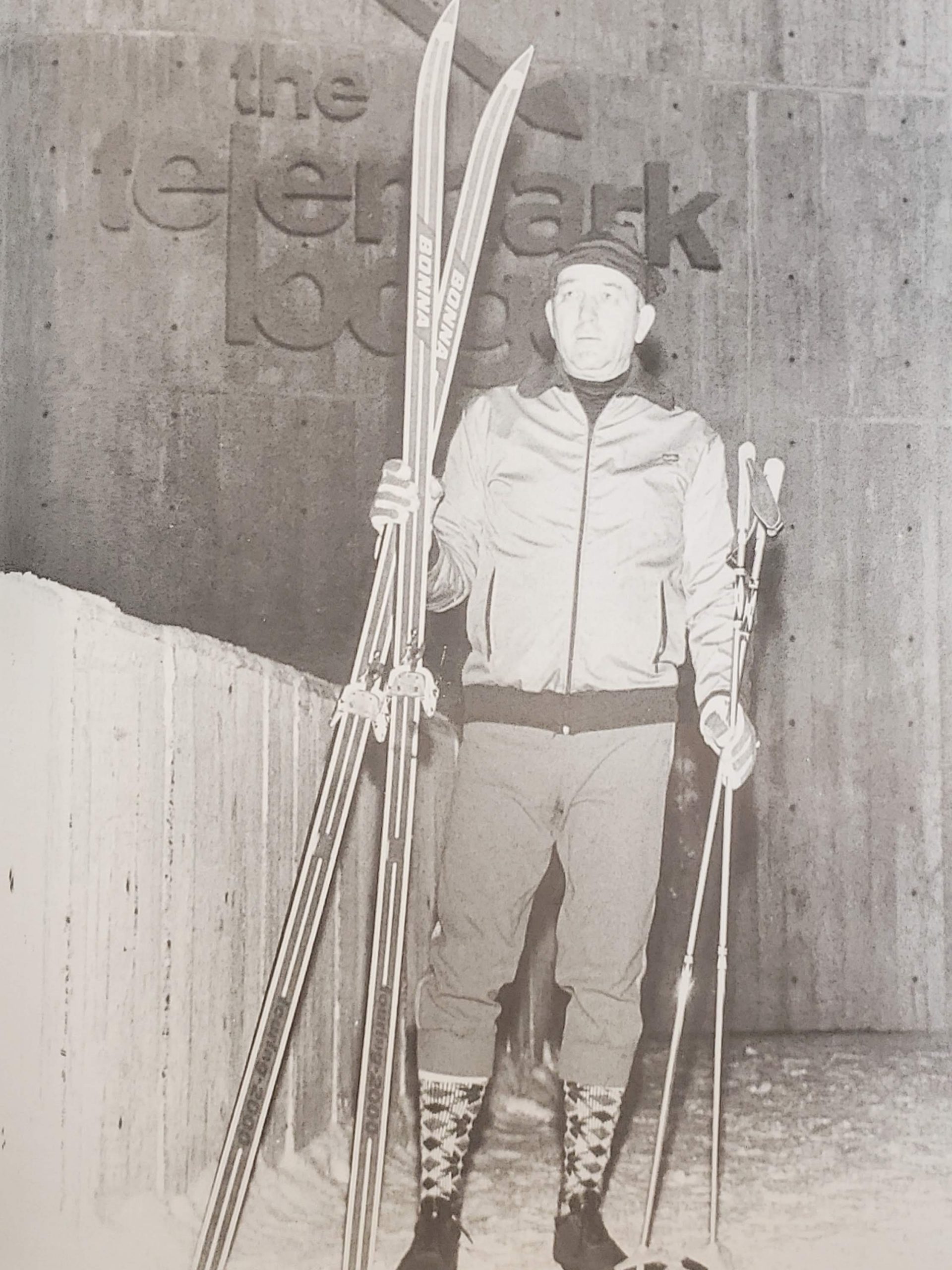
Tony Wise in 1972 outside of the old Telemark Lodge in Cable, Wisconsin. (Photo: Telemark Education Foundation).
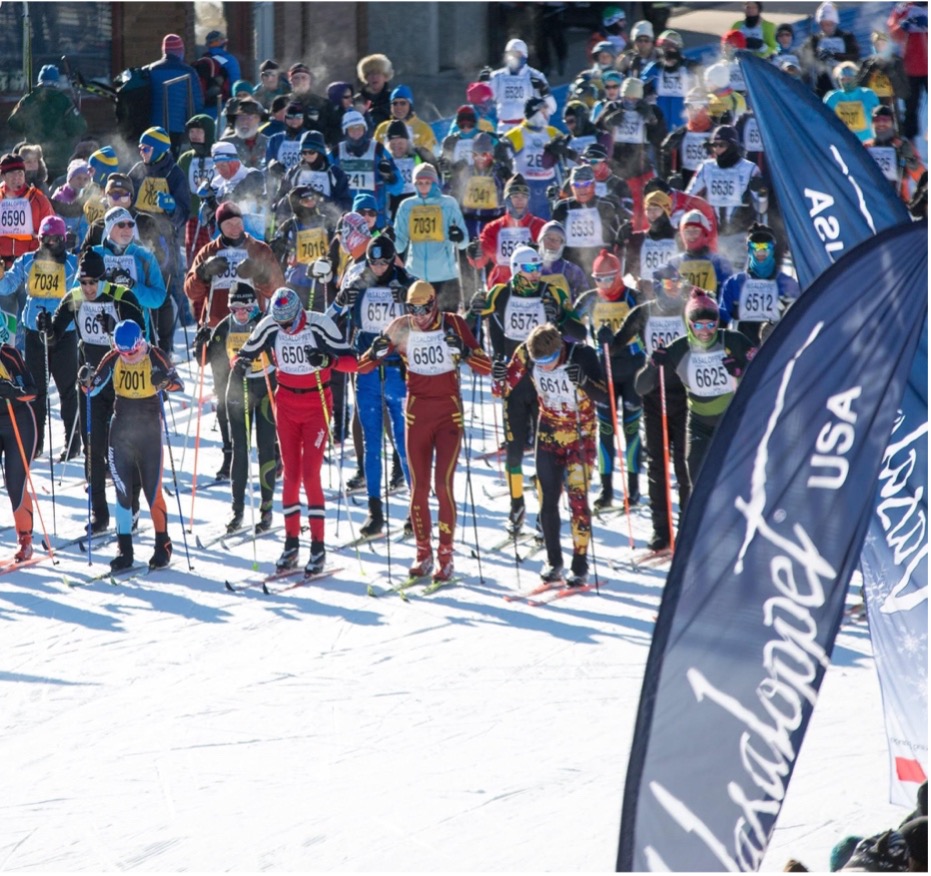
Everything that successively unfurled was united by the understanding of time and place that Wise found at the top of Mt. Telemark. In transformation, there was always tradition. In 1973, when Wise set out to start a cross-country ski race, he simply adopted a Norwegian legend from 1206—the Birkebeiners—who saved the country by ushering the baby Prince Haakon to safety on skis. In its first year, the American Birkebeiner had 35 participants. In 2023, the “Birkie” was up to 13,000. In each ski stride over each glacial ridge and valley in the interim, the Birkie began to be interwound with the place Wise had set it in. The challenge was always there. Ski 50 kilometers. Like no other race out there though, people could find themselves having quickly done twenty or thirty Birkies over as many years. Soon, there were so many in that category they started a club for them all, the Birchleggers. It all added to the legend of Wise’s race, starting out there in the shadow of the place to look out from.
Which all leads to the big irony for the American Birkebeiner in 2023. For a race in a place that has staked itself on blurring the very concept of time to match the place it exists in, there is one span that is all anyone around the Birkie can talk about these days: 50 years. The American Birkebeiner is starting out on its 50th anniversary year.
Tony Wise himself now belongs to the realm of Paul Bunyan and the Birkebeiners—legends out there among the Northwoods. His careful balance of plotting out the new in the landscape is being heralded by a whole cadre of dedicated staff, volunteers, and skiers at the American Birkebeiner Ski Foundation (ABSF). At the helm is Ben Popp, ABSF Executive Director since 2013. He’s another homegrown local who has inherited Wise’s ebullient energy and community-focused spirit.
When FasterSkier caught up with Popp to talk all things Birkie, he put the passage of fifty years right back into Birkie terms. “It’s been on the horizon for fifty years,” he said. “And yet, it feels like it came up super-fast!” Which is to say that the Birkie remains comfortable dancing within multiple timelines. While shovels hit the ground in one place, the groundwork is being laid out for the race’s biggest milestone yet come February 2024.
Popp’s way of directing all that energy follows what he calls a “three-step filter: 1) what is the history behind what we want to do? 2) Does what we’re doing build on that history in a way that’s good for what we define as the “Birkie” community, and 3) Can we do it sustainably?” What that has yielded during the first ten years of Popp’s tenure is a bolstered Birkie Trail system, including a new start area, increased participation in the Birkie’s now year-round event schedule, and a larger staff, presence, and place for the Birkie in the Hayward, the Northwoods, and the ski community writ large.
The filter is starting to be reflexive in time. The two big projects ahead for the Birkie in its semicentennial include looking back and figuring out the right way to mark the occasion at next year’s American Birkebeiner event, while also transforming Mt. Telemark and the remnants of the former resort into a world-class ski facility.
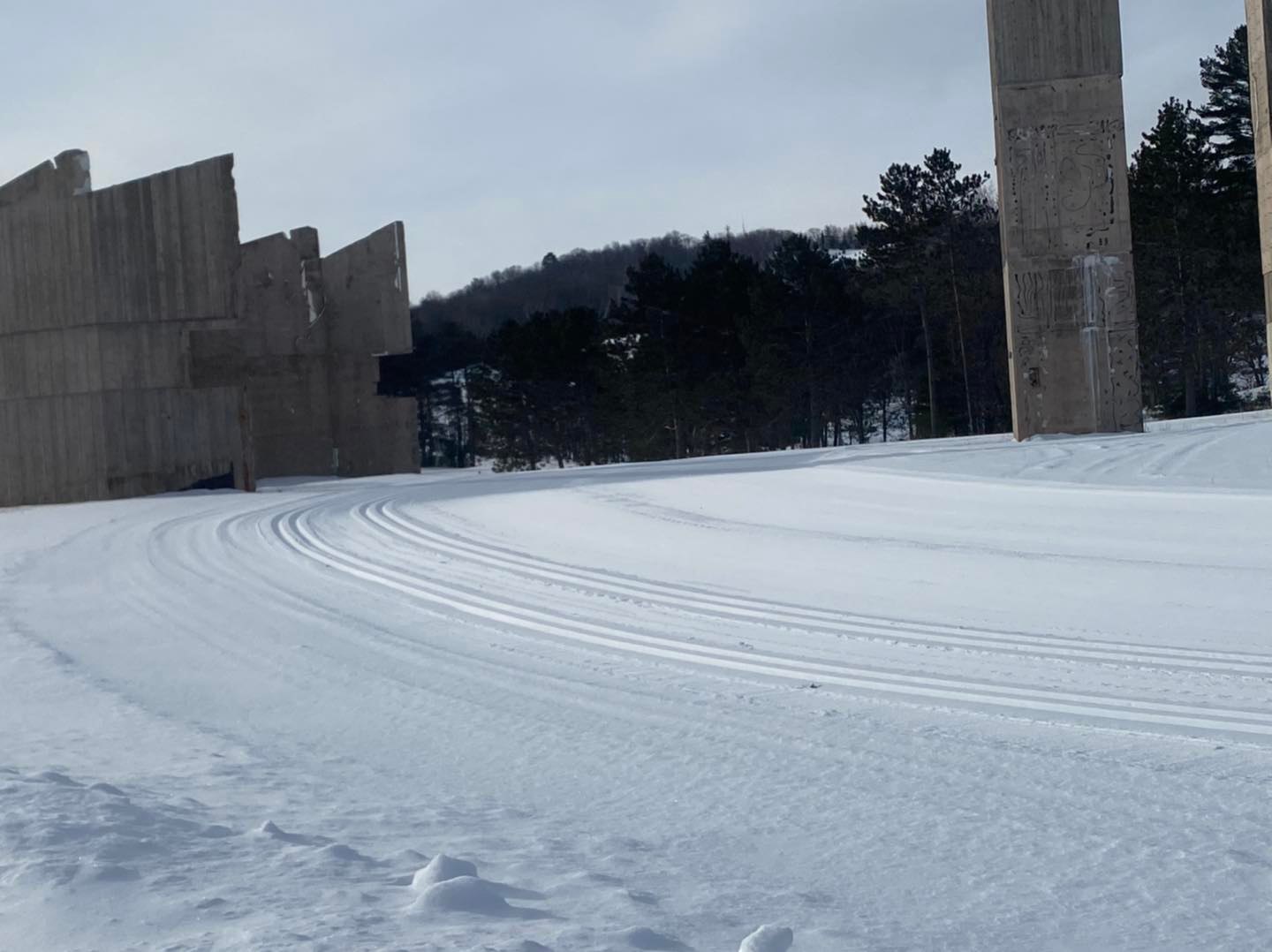
The ski trail affectionately dubbed “Tele-henge,” the ABSF’s ski trail through the old lobby, and future site of Mt. Telemark Village. (Photo: ABSF)
Telemark Looks Out Again
It was the “only place where the Lodge is bigger than the hill,” said Olympic gold medalist Alpine skier Billy Kidd at the opening of Tony Wise’s Telemark Lodge in 1970. With 400 rooms, the hotel offered more rooms than the ski hill outside had vertical feet. The Lodge was an outstretched behemoth that was demolished in 2021. All that now remains are towering old brutalist walls, deemed “Tele-henge” by the skiers down the hill at the new Birkie start line area. The meandering tale of how the Telemark Lodge got to Stonehenge status though, had left specters that still glowed with life. Mainly, the Birkebeiner, and the sport of cross-country skiing that it had helped build in the United States.
Which has got the Birkie Foundation dreaming big. After years of unstable ownership, the lodge was acquired by ABSF in 2018. Once the Lodge was condemned and demolished two years ago, the creative energies started to flow.
“For Telemark, there’ll be three big pieces: the ski trails, the mountain bike trails, and the Base Camp building” says Popp. A partnership with Wisconsin-based Trek Bicycles, along with a major grant from the One Track Mind Foundation promises to build an additional 17 miles of single-track mountain bike trail on top of the existing Chequamegon Area Mountain Bike Association (CAMBA) trail network over the next three to four years. Rock Solid Trail Contracting, the builders behind the renowned trails in Copper Harbor, Michigan, are on the job. “Four miles are already done, and by the end of this summer, we’ll have nine miles added on,” says Popp.
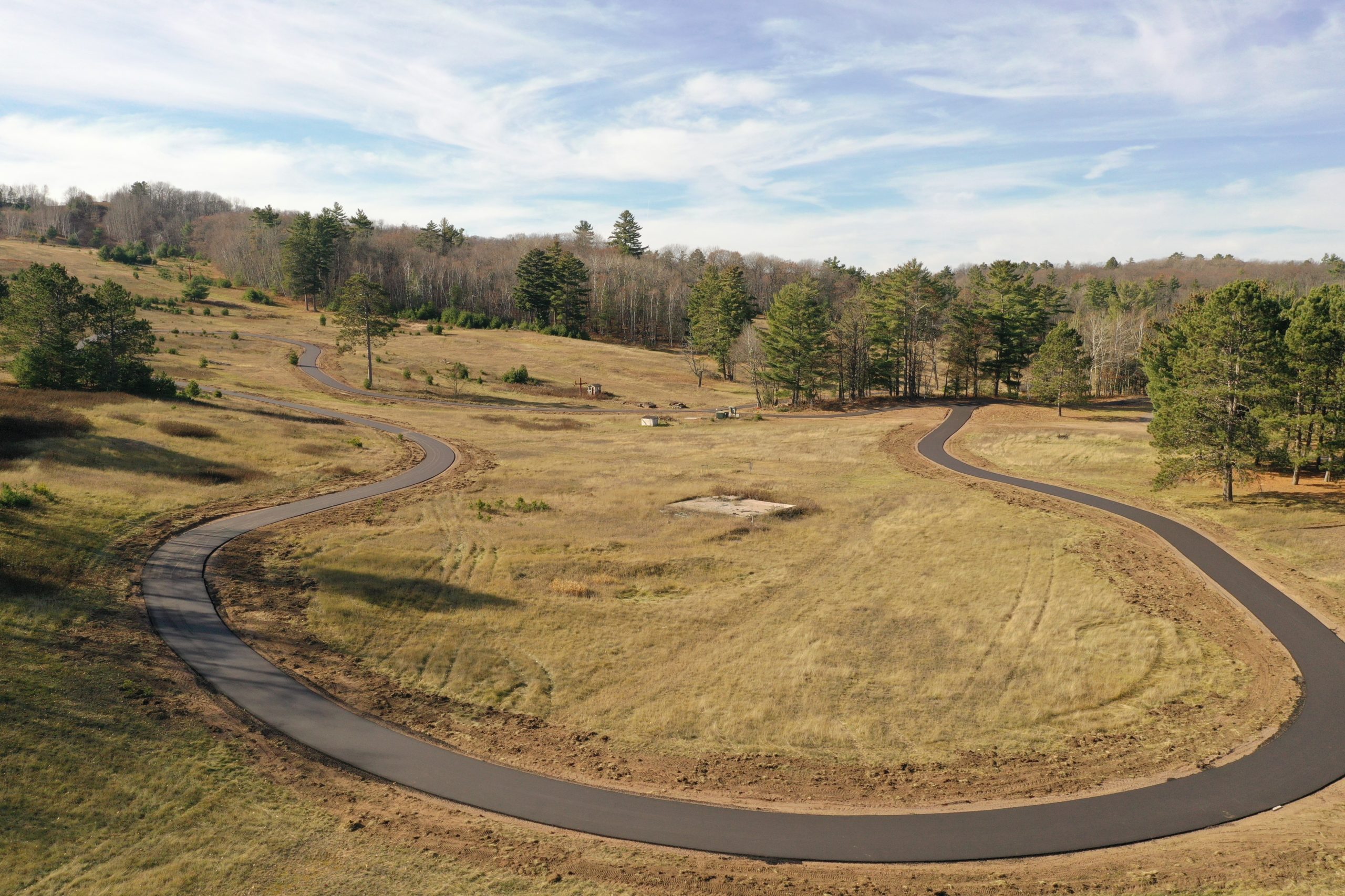
The new rollerski loop at the base of Mt. Telemark, outside of Cable, Wisconsin. (Photo: ABSF)
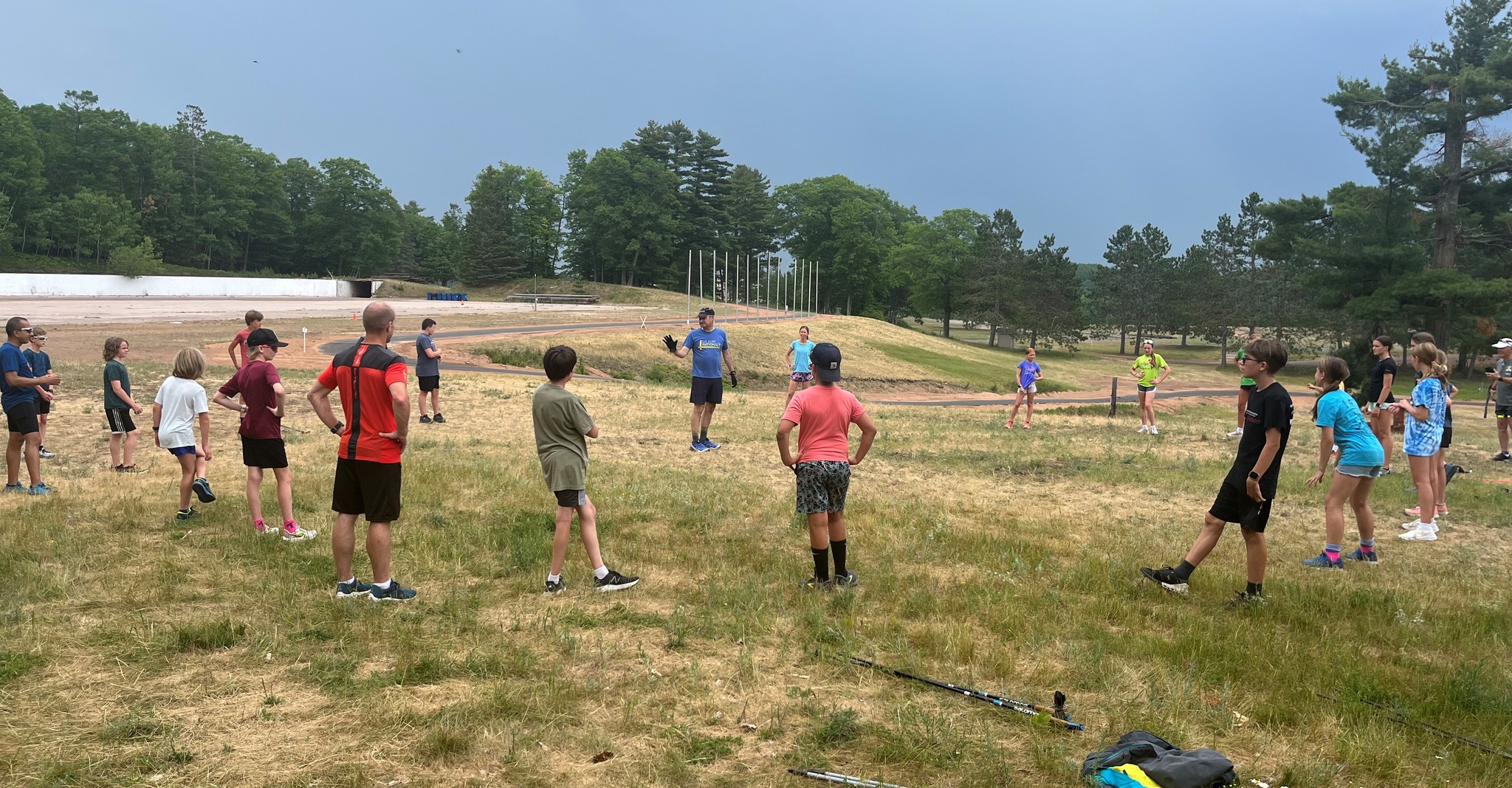
Over at the Birkie start-line, the pavement of a new 5-kilometer rollerski loop—the first of its kind in the Midwest—is “just now starting to cure,” says Popp. The loop is laid through the old remnants of the Telemark base area and is giving skiers from everywhere access to Birkie terrain year-round for the first time. The loop is slated to host Central Cross-Country Skiing’s (CXC) Regional Elite Group (REG) camp later this summer, and just hosted its first Igor Legacy U14 camp this summer. The trail also become a favorite multi-use trail. “We get some older folks just strolling out there,” said Popp. “Hard place for a walk!”
As for the winter ski trails themselves, the ABSF’s focus isn’t so much on building new trails, but rather restoration of trails. Down at the base of Mt. Telemark, in view of abandoned Alpine ski lift towers, are the cuts and juts of a trail designed by American ski pioneers Marty Hall, Sven Wiik, and John Caldwell. These trails once hosted the Gitchee Gami Games with fields that included not just the best American skiers of the era, Bill Koch, Martha Rockwell, Stan Dunklee, Tim Caldwell, but notable names from ski history like Oddvar Bra and Arto Koivisto. A contemporaneous Sports Illustrated article on the 1977 edition reported that it was part of a then “controversial series” put on by the International Ski Federation (FIS), what would become the World Cup. An aged wooden sign between two tall maples identifies these as “The Telemark World Cup Trails.” With some clearing and modifications for grooming, skiers will be able to take to them again. The World Cup trails have an outsized place in the purpose of the whole Telemark Village project. While not the most resource-intensive, the project drives, or rather, skis, to the heart of the sport the Birkie community ultimately comes together around, and also represents the unique dance of making, and re-making, the energy of Telemark and all it stood for.
The resource-intensive side is there though, in the form of the planned “Telemark Base Camp Building,” an estimated $3.5 million nordic center that will come fully equipped to welcome World Cup athletes and first-timers alike. “I think the heart of what Telemark represented could be captured by the idea that on a given afternoon back in the day, you might have Bill Koch and a kid who’d never heard of the sport an hour before in the same place, and we want to get back to that,” says Popp on the essence driving the Base Camp’s purpose.
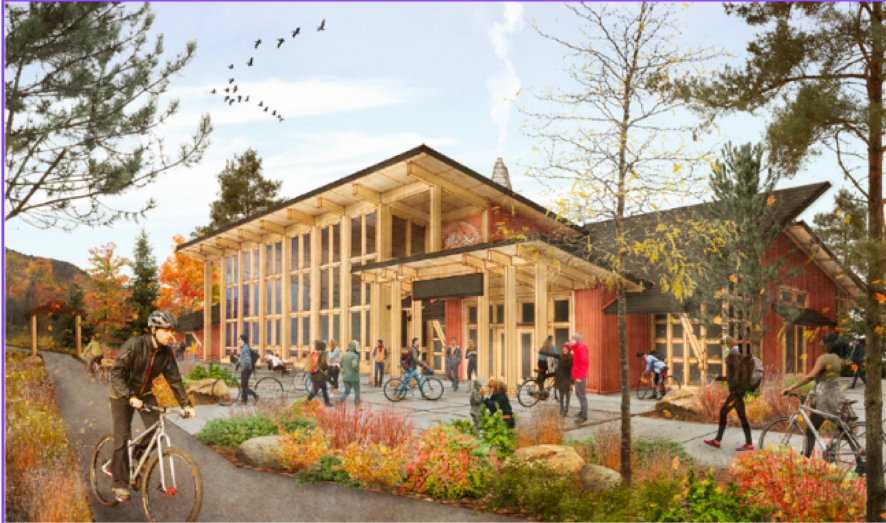
The Telemark Village Base Camp building is the next priority in the Birkie’s major restoration of the former Telemark Lodge site. (Photo: ABSF)
The plans call for a full-service nordic center—rentals, changing rooms, spaces for local business partners to sell coffee and food—while also acting as a jumping off point to experience the unique history of Telemark. Key to that is using the remnants of the Lodge to build a park-like plaza, where a collaborative project with the local Cable history museum will lay out Birkie history back to when Tony Wise carved his number into an old Birch tree.
The final piece of the project is up at the top of Mt. Telemark where an observation tower is being built out of recycled lift towers from Wise’s original alpine ski operation. The tower will act as a capstone on the Telemark project that Popp says tells Birkie they’re doing things right, “There’s a throughline in that project that really reiterates how there really is a rootedness in the values of honoring our history, and the history of this place. There were two people down in Spooner, Wisconsin who donated to make the tower possible, which included the naming rights, and they asked that it honor the original Ojibwe name of the area. So how do we make that happen? Well, the person to naturally ask is an Ojibwe Tribal Historian, and it just so happens that the only guy to do all fifty Birkie races, Ernie St. Germaine, is the preeminent Ojibwe historian.”
The former Telemark Lodge stadium hosts CXC’s U14 Igor Legacy Camp last weekend. (Photo: Ted Theyerl)
In other words, the drive of this version Telemark is to keep all that was contained in the old Telemark going. The ABSF capital campaign around it totals $10.5 million, with Popp saying, “we’re about half-way there on fundraising, and we feel like have about half of what we want to build done.” The purpose though, remains clear, “ultimately, that money isn’t ours. It’s an amalgamation of a whole lot of people and communities that value what the Birkie is. When you think about all 250,000 people that have completed the race since 1973, plus many more who touch our trails, or volunteer, or touch us in some other way, it’s a lot of angles that we want to make sure we’re covering in any single project. It’s pretty cool to have that presence, and to have that responsibility.”
“Celebrate in the Right Way” at the 50th Birkie
Just how expansive the Birkie community has become in 50 years makes for a big proposition come next February: “With the 50th, we really want to do justice to the countless people that have taken part in anything we have done over the past half century” says Popp, “The guiding question is what is a meaningful way to make sure that we represent what this thing, the Birkie, really means?”
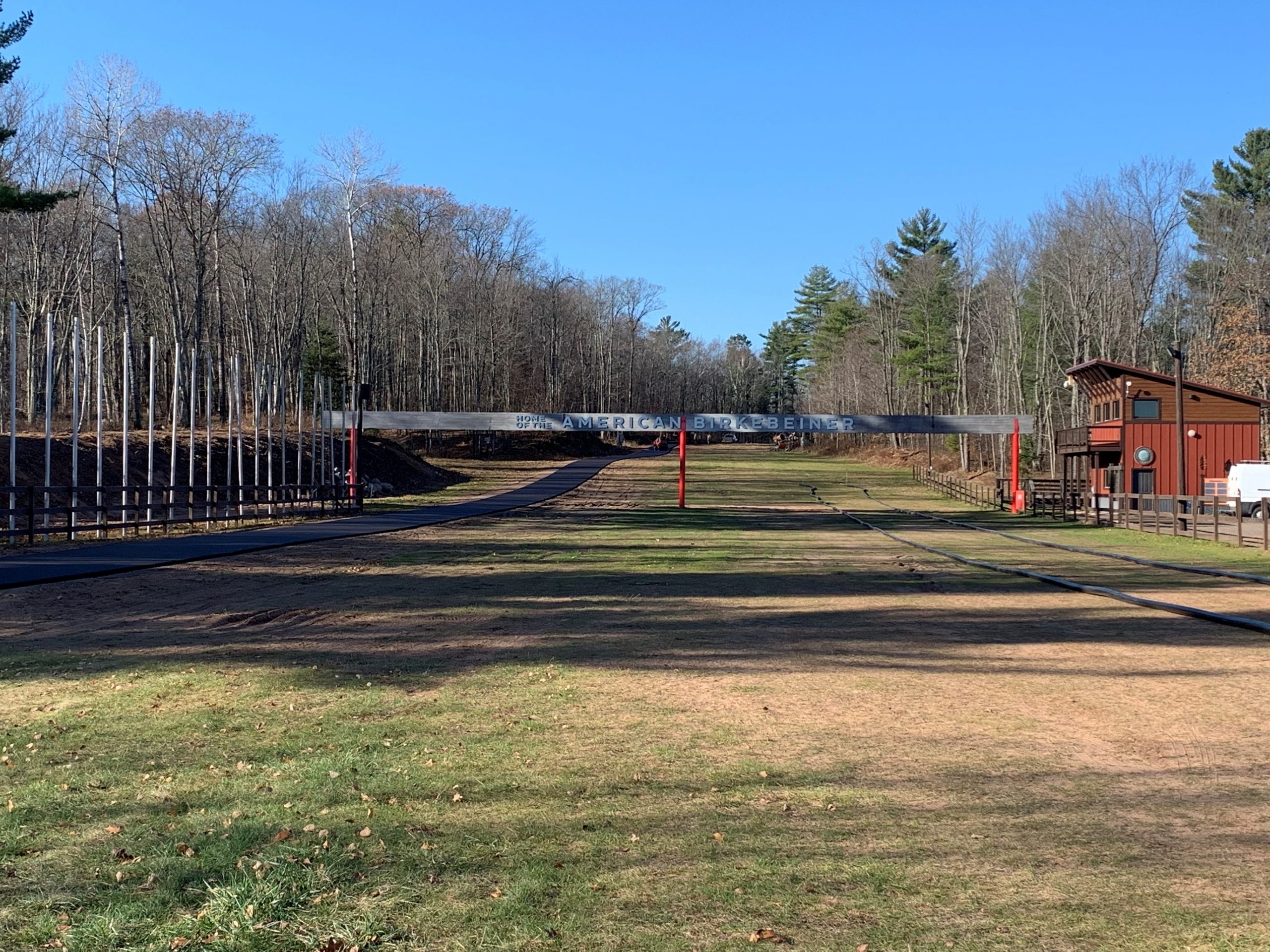
The Birkie start line area in Spring 2023. (Photo: ABSF)
For the Birkie Foundation, those preparations started well in advance of the coming anniversary year, and included, at least at first, a kind of disappointment. In keeping with the kind of full circle nature that the Birkie paints with time, plans were underway to make the 50th Birkie the first World Cup ski race in Cable since Wise’s Gitchi Gami Games in 1977. A joint bid was underway with the Loppet Foundation in Minneapolis, Minnesota to make the World Cup’s 2023 North American tour one that covered city style racing in the Twin Cities, paired with the US’ most prominent international ski event. “At some point though,” says Popp, “we had to make a decision that was best for the Birkie organization, and we decided we couldn’t take on that financial risk without it potentially leading to us not being able to do the community-oriented projects that are already underway.”
The Loppet’s World Cup bid was accepted, which means the World Cup will visit the Midwest Friday February 17th to Monday, February 19th, one week before the 50th running of the American Birkebeiner on Saturday, February 27th. “It’s going to create an unbelievable atmosphere within the Midwest,” says Popp, “for ten days, no matter how you engage with cross-country skiing, all roads will lead here.” The Loppet Foundation, on its part, has also alluded that while the official World Cup joint bid may have passed, the spirit of the World Cup’s return to the United States will be bonded to the celebration of the Birkie’s 50th anniversary.
If registrations are any indication, the roads leading to the Midwest will be busy come February. “The pace has been incredible, we’ve had Birkie start wave after wave fill so far,” says Popp. In planning out what those registrants will experience, there’s been an approach to plot out change carefully. After all, says Popp, “if what the Birkie is has gotten us to fifty years, we want to make sure that we’re not messing with it!” The overall approach to race planning then, is one that is looking to accentuate the best aspects of the Birkie, rather than change them wholesale.
While no official announcement is expected until August, Popp says that the Birkie has “secured some agreements to keep some of the best World Cup athletes in the Midwest to do the Birkie.” It’s a step taken to help honor the marked competitiveness that has been set the race apart in American skiing throughout its history. “We’ve had Bjorn Daehlie, Vegard Ulvang, and what I’m willing to bet is the majority of American Olympic cross-country skiers, do the race, and we want to build on that legacy next year,” says Popp.
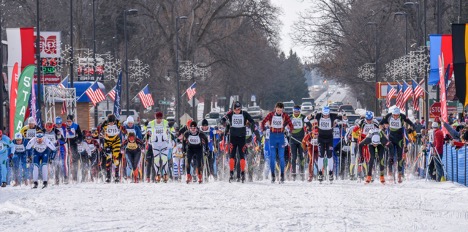
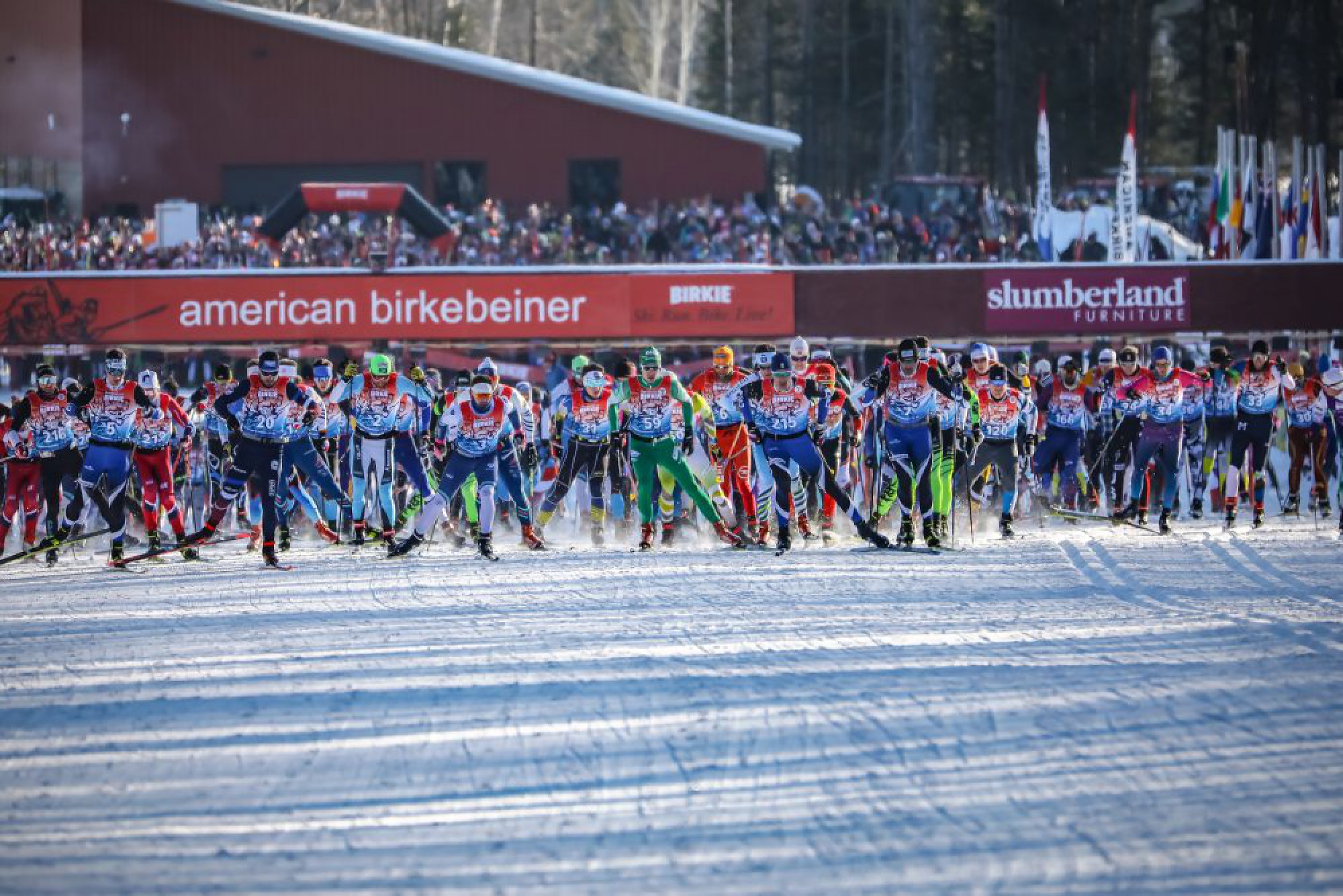
The Men’s elite field starts at the American Birkebeiner in 2023. (Photo: ABSF)
The Birkie is also looking to honor the kinds of characters and legends who have all added to the races lore. “One of the first groups we always go to plotting our next steps is the Birchleggers—those who have done 20+ races— because that really represents the beating heart of what we do” says Popp. In initial outreach, the Birchleggers returned a clear essence that the Birkie will key in on in the year approaching the 50th anniversary race. “What stuck out is that there was two paradoxical ideas which really play well together: they were saying, 1) My experience with the Birkie is unique to me, and that’s why I keep doing it, and 2) I want new people to be able to come to the race and form their own unique experience too.”
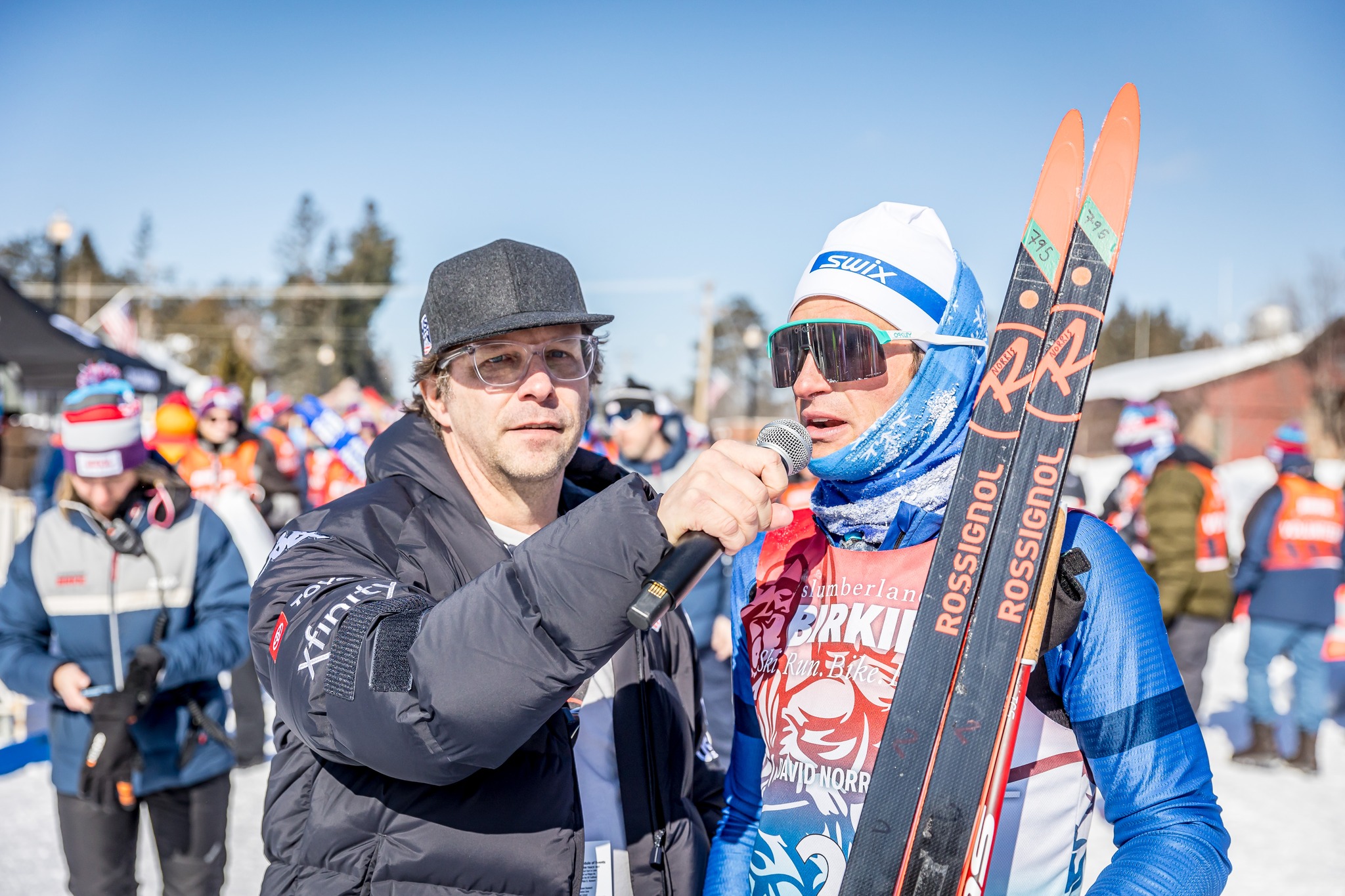
What does that look like in practice? Popp finds anecdotal evidence in the king of the Birchleggers, Ernie St. Germaine. The only active “Birkie founder,” one of the original 35 racers in 1973, St. Germaine plans on being the only skier to complete all 50 races come next February. St. Germaine has dutifully made the fifty-kilometer trek every February, but in recent years, has done so sans the crowded field on race day as part of the Birkie’s “open track” option. “It was something that fell into our laps with COVID, right?” says Popp, “but we realized was one way to allow some of our most dedicated skiers to continue being part of the race. Yes, most are going to want to be part of Saturday, but for some, the time, the space, and the camaraderie afforded doing so on the Wednesday before opens up a whole new way to engage.”
St. Germaine has continued on the spirit of inclusivity beyond just his racing as well. He has been a key part of the ABSF’s “Birkie One” initiative to “to reduce barriers and increase participation in skiing, running, and biking for marginalized groups in communities near and far.” An active member of the Ojibwe tribe, St. Germaine has helped bridge the Birkie with the local Anishinabeg people, including initiatives to restore trails on the Lac Courte Oreilles College campus outside of Hayward. The initiative has also helped the Birkie see where the existing infrastructure around the race, and the places people use to train for the race, can be more accessible. The paved rollerski loop at Telemark, for example, was officially designated mixed-use when it opened, to allow trail access to those who otherwise might not be able to access unpaved roads.
And finally, there are plans for the 50th Birkie to be a Birkie. For thousands to front the powerlines, then climb to the high point, flow through “OO,” over and with the terrain. For each individual to take on climbing “B**** Hill,” and over Fish Hatchery, and the Lake, and the International Bridge onto Main St., Hayward, Wisconsin, before swapping the thousands of stories that form in the ridges and creases of the land between.
It’s out there where the Birkie still dances within the bounds of some kind of glacial time, surrounded by glacial terrain. A new fixture of the place that Tony Wise once dreamed of among the tamaracks and pines. Over 50 years, the stories have multiplied, the time blurred and stretched, the particular feeling becoming something ever more complicated. Best not break its power into pieces. It’s all got coined under one tent, one community, this thing called the “Birkie.” Best to keep it there, and say what has been said on Main St. Hayward, Wisconsin at the end of February a thousand times before: “Can’t wait for next year!”
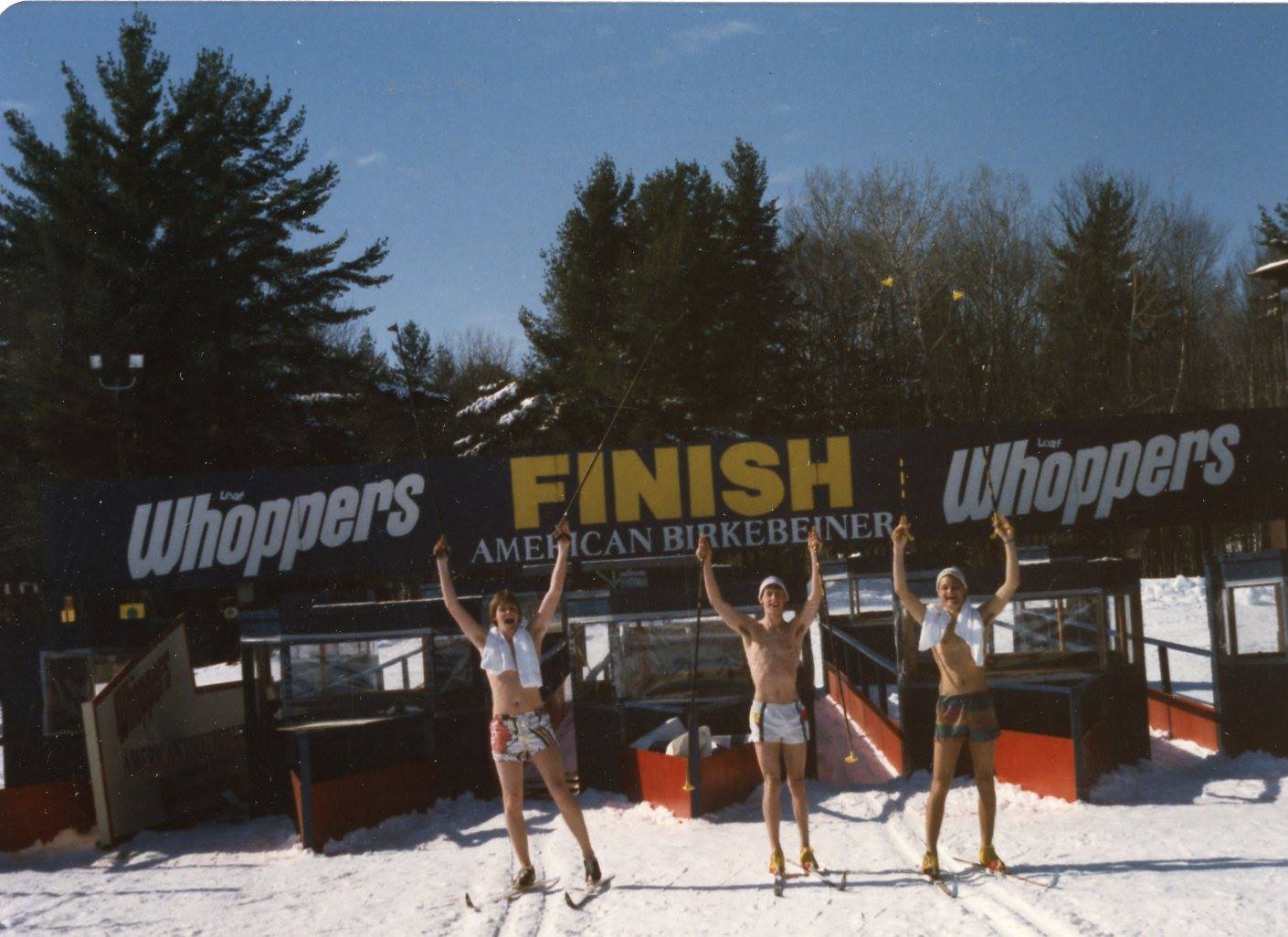
Birkie finishers celebrate in 1991. True to Birkie form, all three are still involved in the race in 2023. (Photo: Ted Theyerl)
If you need a little diversion from whatever you do in the off season and want to connect with skiing’s past, check out this 30 minute documentary on YouTube about Jackrabbit Johannsen. This 1975 video produced by the National Film Board of Canada chronicles the life of the Norwegian outdoorsman turned backwoods legend.
Johannsen is widely credited with being one of the first Europeans to popularize cross-country skiing in North America. I’m not certain how widely known Johannsen is outside of the Midwest and Canada, but around those parts, his name and legend are commonly known, even to younger skiers.
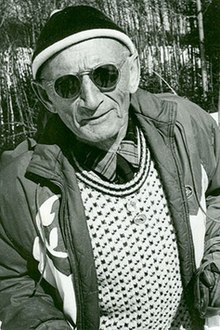
Jackrabbit is a skiing legend. The 1975 video about his life was filmed when Johannsen was 100 years old. The producers probably didn’t imagine they would miss another 11 years of this amazing man’s journey. (Photo: WikiCommons)
The Johannsen documentary harkens back to skiing’s heritage; simpler times, when people skied on wooden skis, in tweed sportcoats, wearing neckties, and wool caps. It was a time when ski trails were just a little wider than the width of a skier with poles, unlike today’s superhighways through the woods. The documentary provides an interesting look back—when grooming meant a couple of people going out on a trail ahead of skiers or—if you were lucky—a snowmobile dragging something behind it to smooth the path a bit.
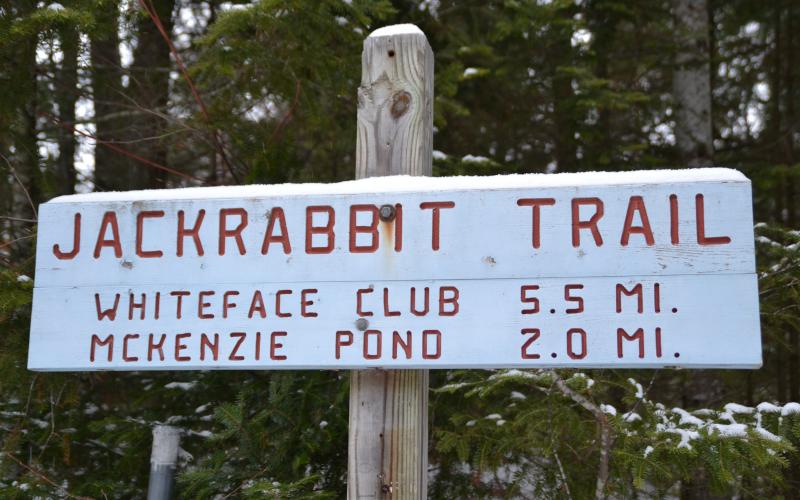
One of several Jackrabbit trails in North America. This one in the Lake Placid, NY area.
The video chronicles Jackrabbit’s life from his childhood to his 100th year of life in Canada. He led an amazing life full of ups and downs, but through it all skiing persisted at his core. Johannsen lived all around North America, but it was a trip to Canada in 1903 that led to his relocation there in the 1930s after his life savings had been wiped out from the great depression. As it turned out, losing everything is what freed Johanssen, and turned him into the legend he would become. Johannsen was an extremely active skier and outdoorsman well into his late 90s, and there’s nice video which shows this.
Johannsen died in 1987 at age 111—yes, that’s right, 111—after a lifetime spent as outdoorsman, ski trail builder, and namesake of the Canadian ski development program (which produced many famous Canadian skiers). For his efforts he was awarded the Order of Canada, one of the highest civilian Canadian honors. Jackrabbit knew eight languages, including Cree.
Next time you feel like complaining about trail grooming, remember there was a time when this was considered state of the art racing conditions. (Photo: WikiCommons)
For most skiers, cross-country skiing is more of a way of life rather than a sporting pursuit. This video is a gentle reminder that there’s more to skiing than worrying about the fastest wax, the proper ski camber, or having the best technique—something we may occasionally forget when reading about the hyper competitive world of ski racing.
This video is a poignant reminder that there’s both a history and an ethos of skiing that speaks to something deeper in each of us. Jackrabbit Johannsen was the very embodiment of that message. Watching a 100 year old putter around on skis will definitely give you cause to pause and reflect.
Among Johannsen’s many talents was producing his own line of ski wax. Here is a box of Johannsen’s “solid” klister from the author’s collection of antique ski wax. (Photo: Ken Roth)
This short film is definitely a product of its era, and the pacing, editing, and narration reflect it. Viewers born in the digital age may find this video difficult to watch because of that; but you should stick with it as the content is well worth viewing. The Jackrabbit video won’t change your life, but it will give you an appreciation for a bygone era of skiing. For older viewers—those in masters and super-masters categories—it will be a helpful reminder that there’s always a little bit more to get out of life. As Jackrabbit himself said in his hundredth year, “I live in the present…I think of the old days with pleasure and thankfulness… but the best thing I can do is get all I can of our present day of living.”
There’s a wonderful line from the movie and play The Man Who Shot Liberty Valance: “When the legend becomes fact, print the legend.” When it comes to Jackrabbit Johannsen, the fact and the legend are one.
So, give yourself 30 minutes to be transported back into the past and visit with a man who, it’s fair to say, literally transformed skiing in North America.
For more details on the well-lived life of Herman Jackrabbit Johannsen, there’s a very cleverly named Sports Illustrated article about his life, The Old Man and the Ski.
This plaque marks the spot of Jackrabbit’s house (Photo: WikiCommons)
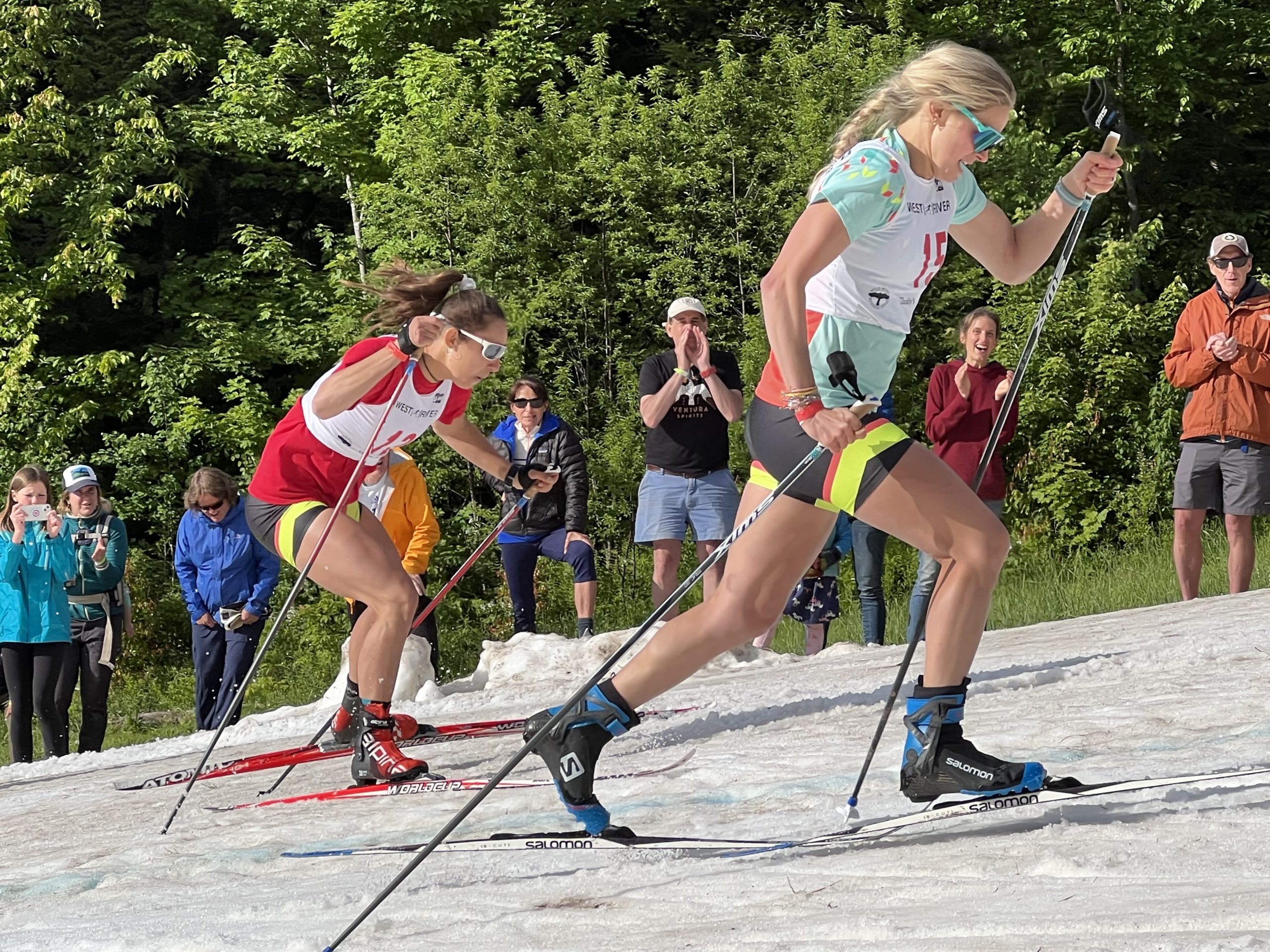
SMST2 standouts, Jessie Diggins and Julia Kern, race the hotly contested Women’s Final at Magic Mountain, Vermont. Diggins’ fish-scale mini-skis turned out to be the secret weapon. (Photo: Fasterskier)
June 3, Magic Mountain Ski Area, Londonderry Vermont
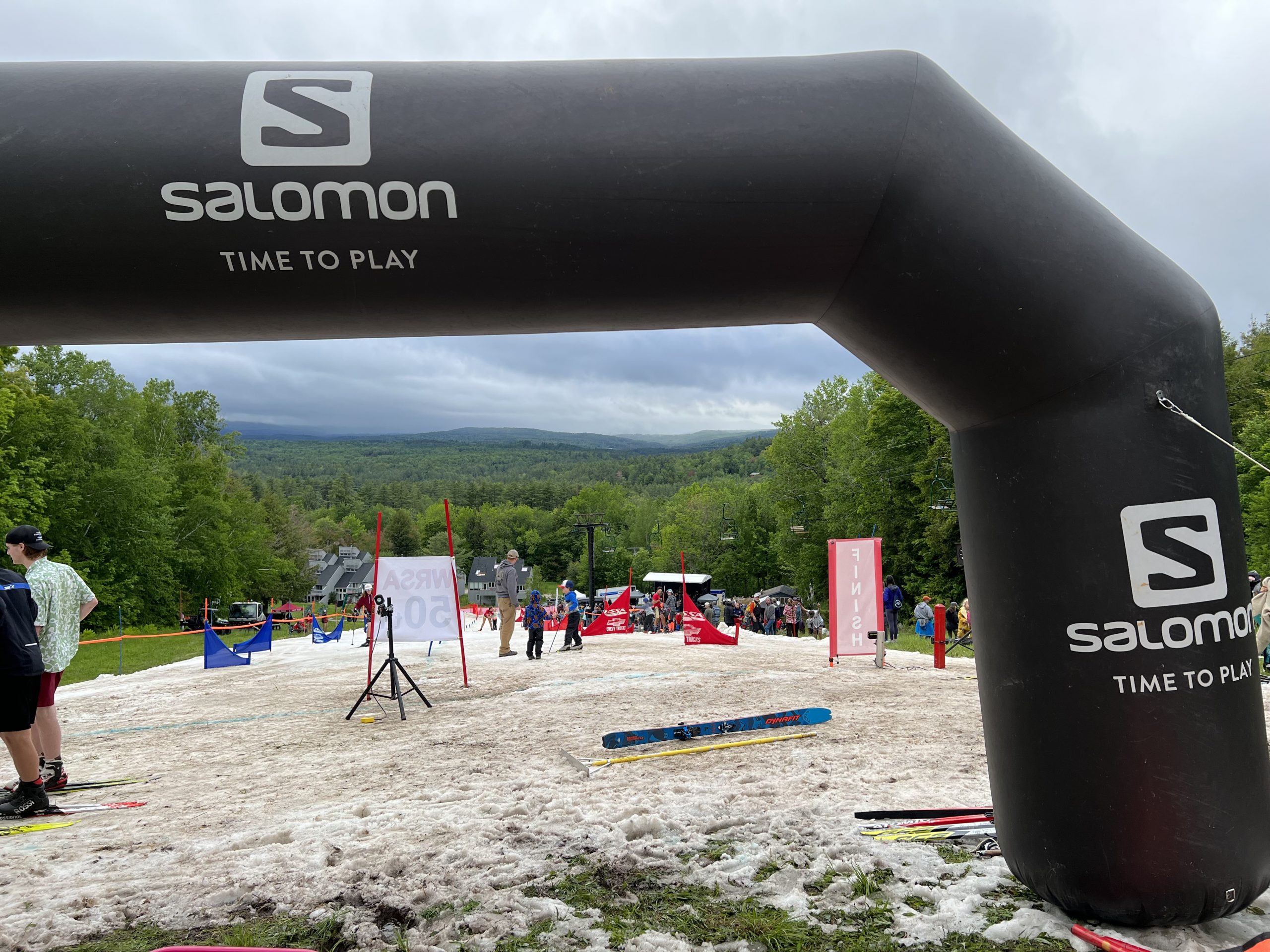
It’s full summer in the Green Mountains of Vermont: high temperatures and summer thunderstorms, every tree leaf-covered, every meadow knee-deep in new grass, and the entire world the richest shade of green. Even those New England resorts that pride themselves on being the very last to keep their chairlifts turning had packed it in a week ago. But there’s still snow at Magic Mountain, stored for just such a day beneath mounds of fresh straw, uncovered just in time for SMST2 and West River Nordic to stage a late, late, late-season fund raiser. It was a magic day . . .
The very last day of skiing in Southern Vermont; West River Nordic, SMST2, and Magic Mountain pull off the miracle. (Photo: FasterSkier)
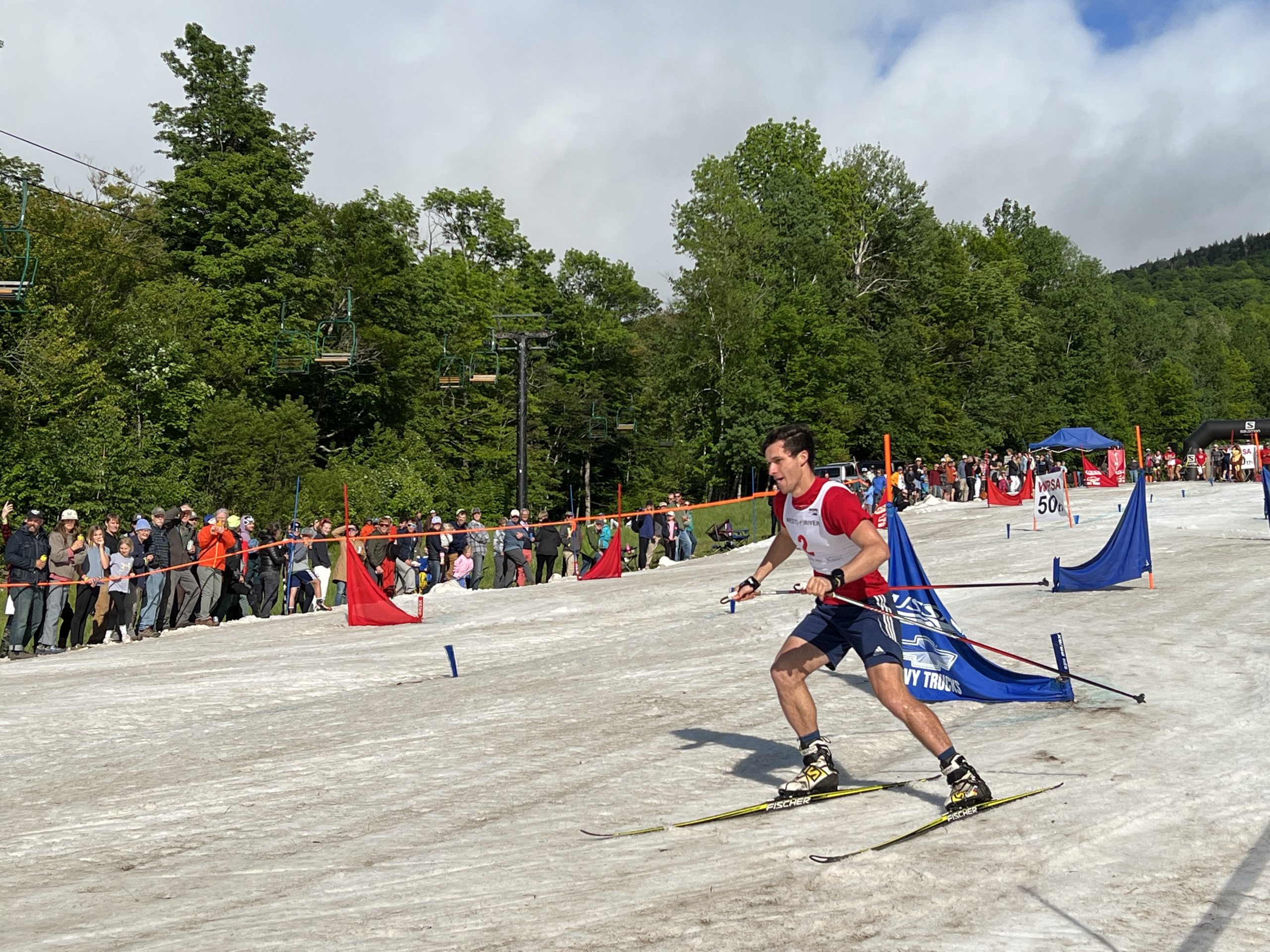
The day’s races were both collegially lighthearted, and heatedly competitive. A two-lane slalom course challenged racers in head-to-head heats: slaloming down the gated course (a tricky prospect on nordic skis), a steeply banked turn-around at the bottom, followed by an all-out sprint back to the top.
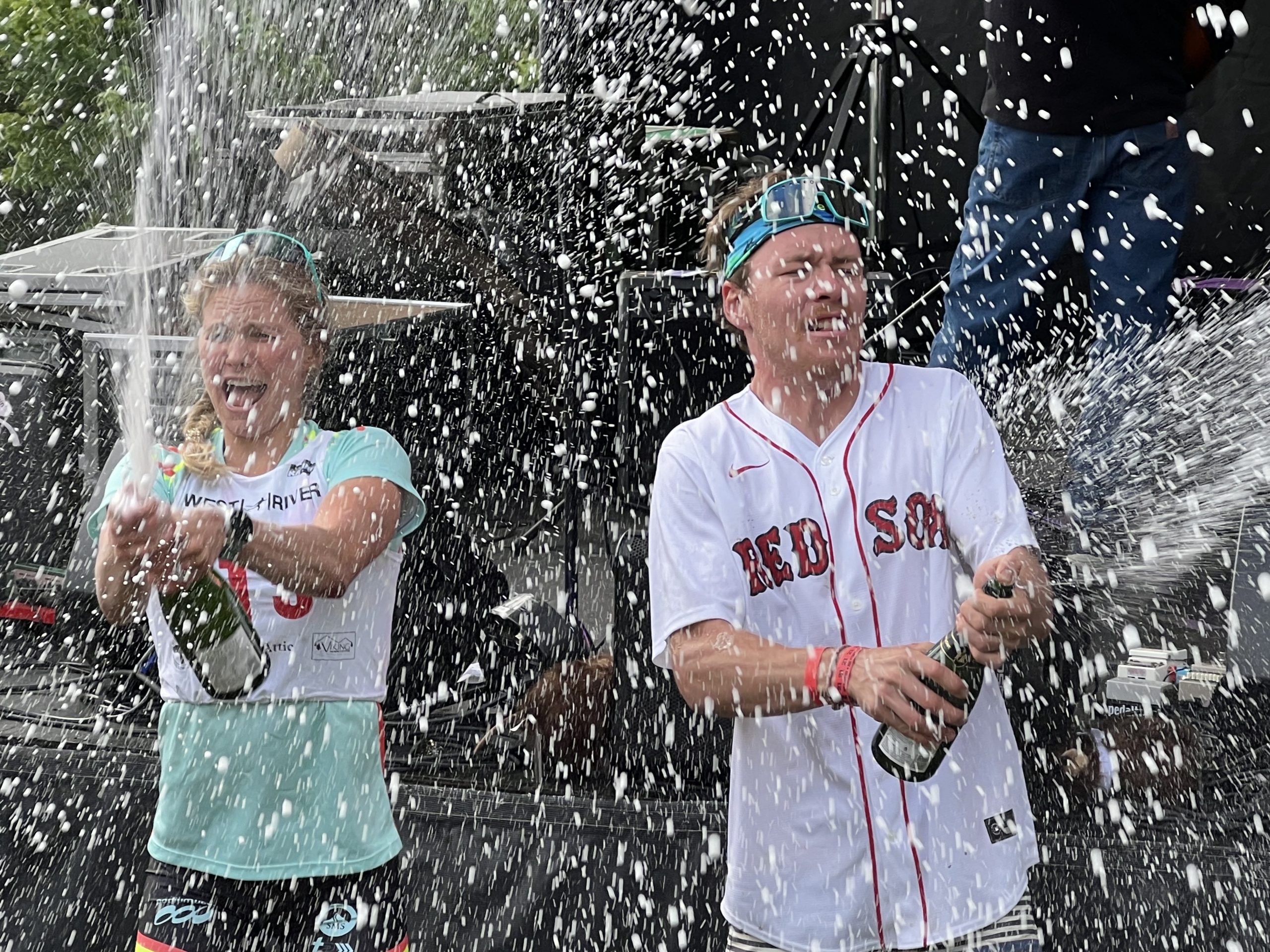
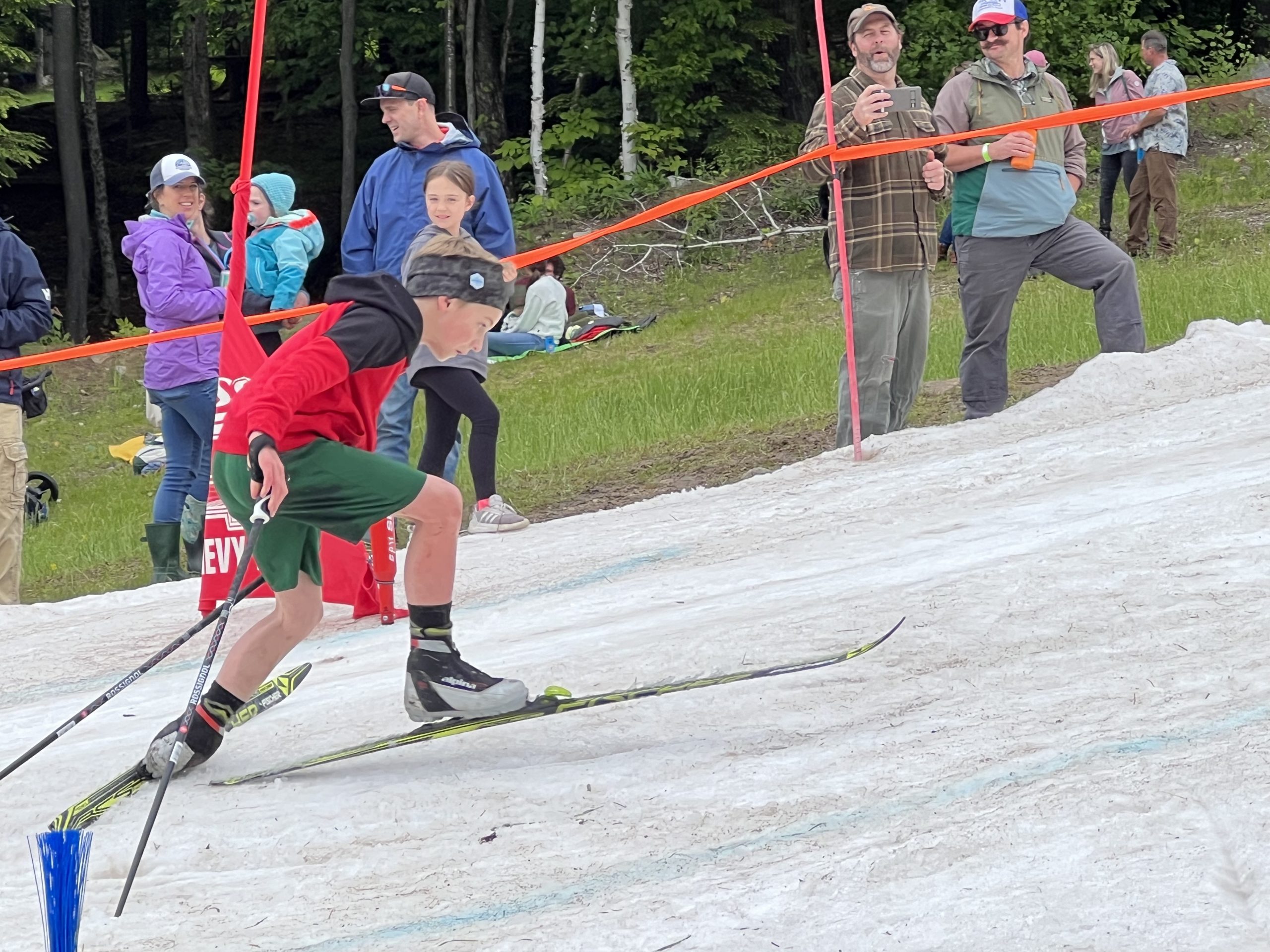
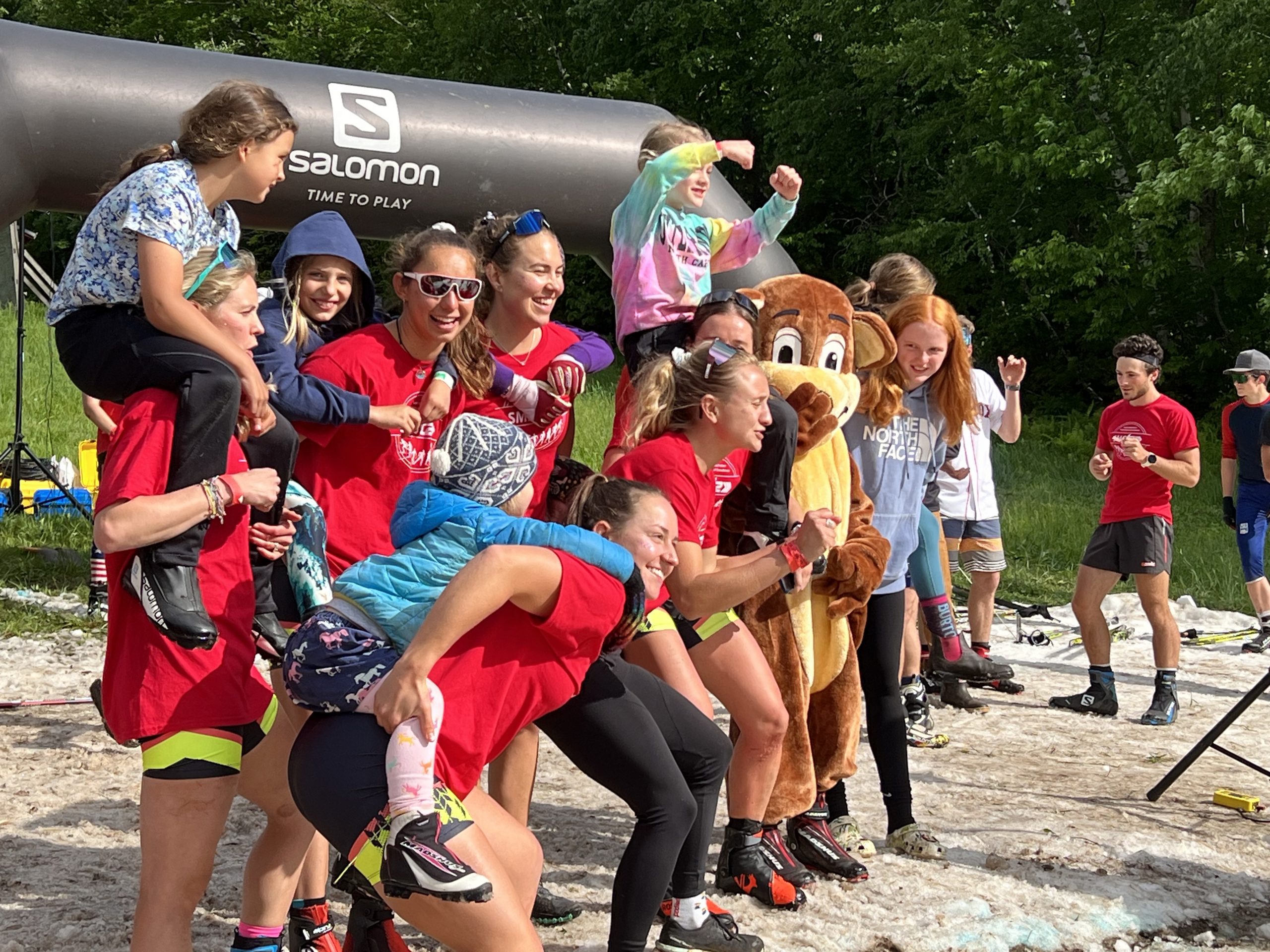
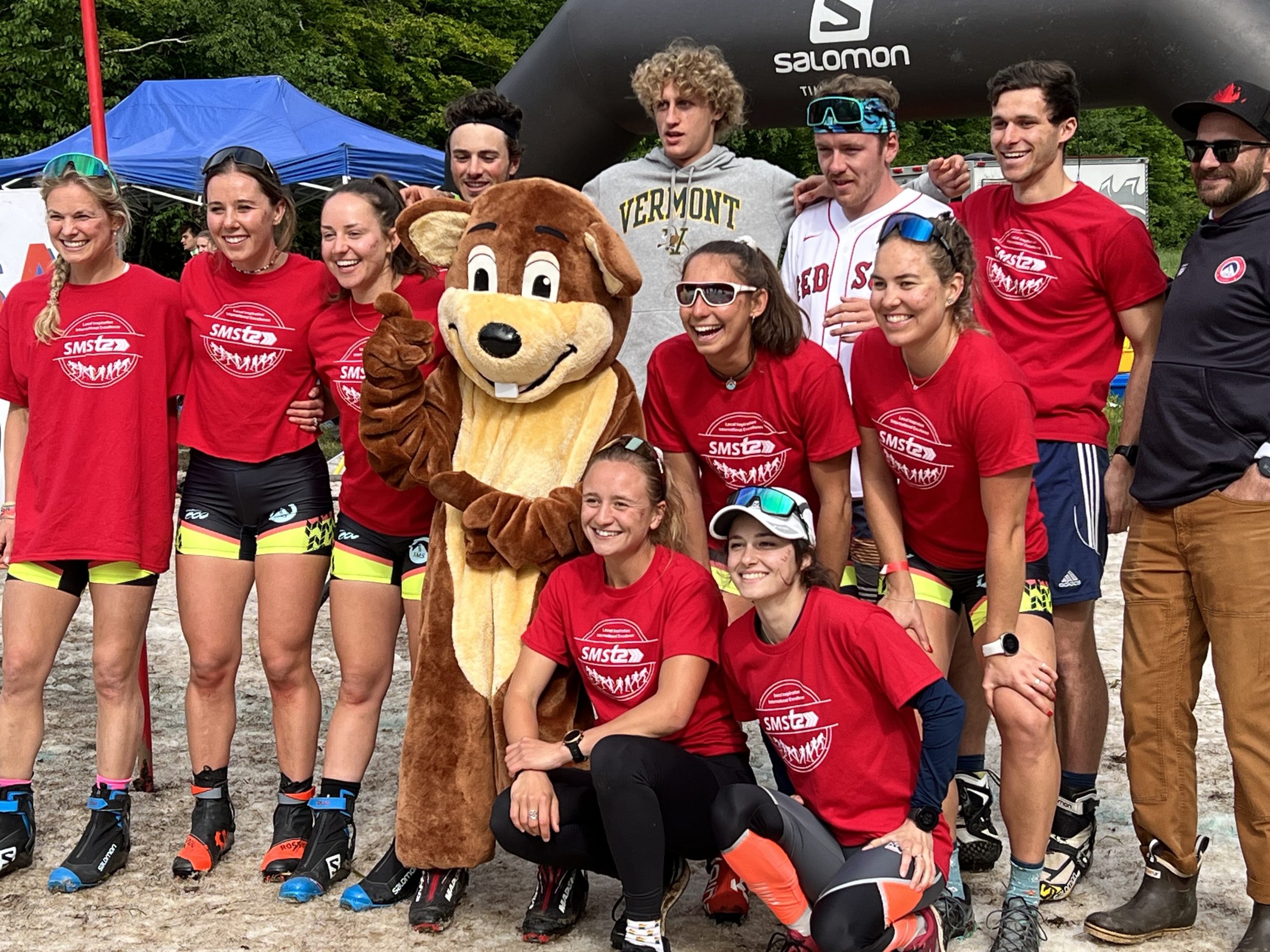
Jessie Diggins and Ben Ogden—Champagne on the podium at Magic Mountain, Londonderry Vermont. (Photo: FasterSkier)
The day was staged as a fund-raiser for the West River Sports Association, a local organization celebrating its 50th year bringing organized soccer and cross country skiing to kids in southern Vermont.
“This is our club’s primary fund raising effort,” said Jennie Freeman, former Director and current board member of West River Sports Association. “[It’s] now become an annual event on the first Saturday in June.”
Like many family-oriented ski organizations, West River relies upon the involvement of families and volunteers to cultivate skiing in winter communities. And the Dual Slalom event staged at Magic Mountain is just one more way that local kids get to rub shoulders with the professionals and Olympians of SMST2.
“Jessie’s even talked about getting the Euros over here next year, hosting a training camp and including this event as part of the activities. How fun would that be!”
SMST2 team member, Adam Witkowski, charging through the quarterfinals. (Photo: FasterSkier)
SMST2 athletes and West River Nordic volunteers provided the energy and the labor to clear the mounds of insulating straw from the precious snow pile. Shovels and rakes, truck beds and wheelbarrows: this was old fashioned ski racing with the competitors, themselves, pitching in to set up the course and create the venue. The field included local contenders, near beginners, junior competitors, and masters standouts; all hoping to give SMST2 athletes a run for their money. World Cup and Olympic competitors could be seen holding back to keep things close in early heats, but when they decided to turn on the after-burners it really was an impressive spectacle to witness. And how fun it was to have the very best skiers putting on a show right here on this little patch of Southern Vermont snow.
Live bands kept the crowds entertained while all entrants got the chance to qualify, followed by a set of heats to determine the day’s champion.
“It’s really cool to see. Honestly, I just love the vibe here,” said Will Koch, SMST2 team member and lifetime area resident. “It’s amazing being part of this atmosphere, and getting to grow up in place where this is what people do for fun.”
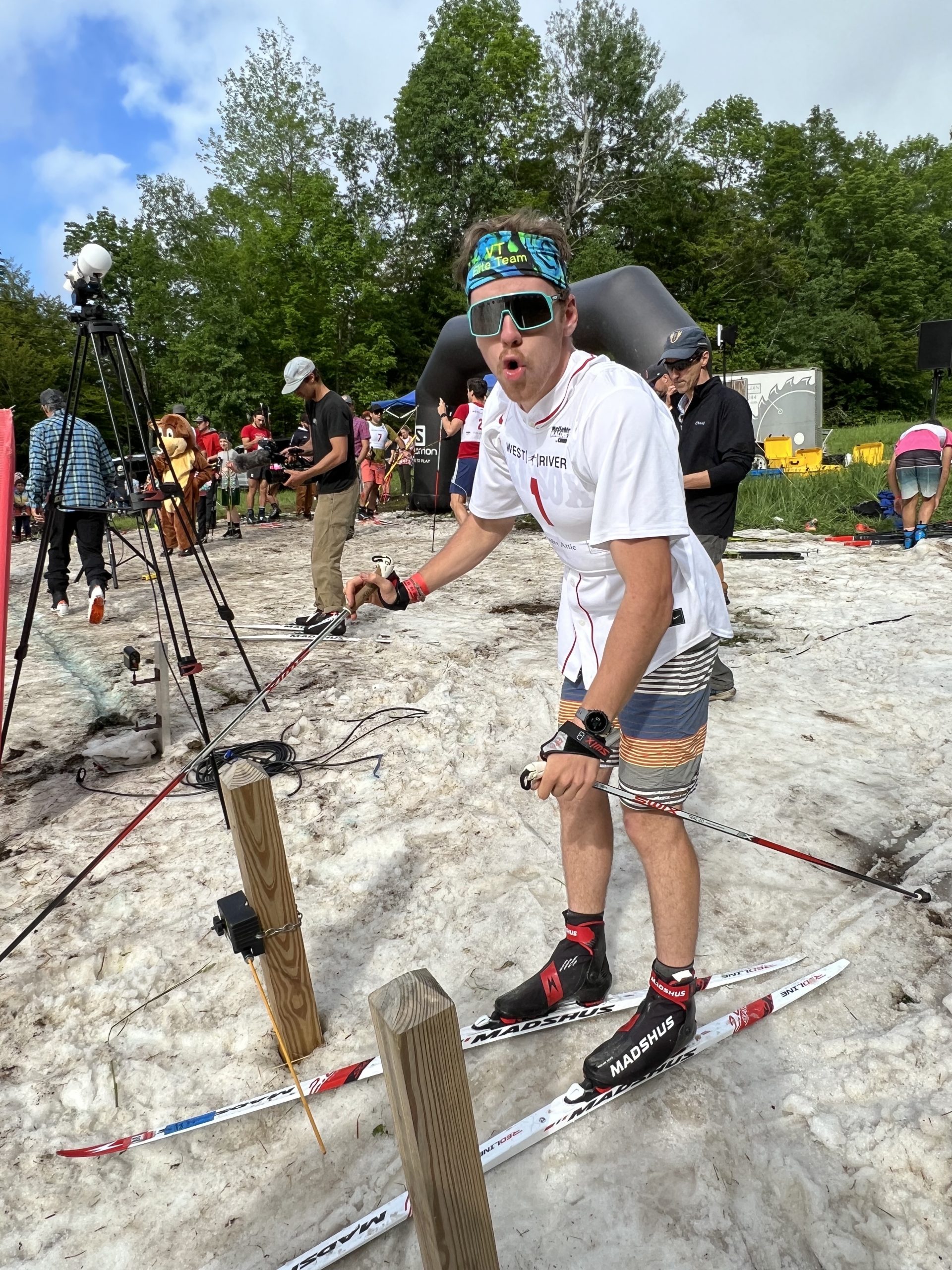
Ben Ogden in the starting gate—a lighthearted day, but not seeming all that different from his regular, World Cup, race-day persona. (Photo: FasterSkier)
Much to the crowd’s delight, Jessie Diggins and Ben Ogden emerged as the day’s winners . . . though Diggins did so on a pair of borrowed kid’s-length fishscale skis that somehow still seemed to be the secret weapon appropriate for the day.
Commenting on the victories from Diggins and Ogden, SMST2 team member, Will Koch said, “The results of this are somehow not too different from how we would stack up in a normal ski race.”
Guests and competitors of all ages were able to try out the Magic Mountain race course. (Photo: FasterSkier)
Peru, Landgrove, Londonderry, Stratton—this unassuming part of Vermont has cultivated some of America’s finest nordic skiers. Jessie Diggins keeps a home in Stratton. The Ogden family (Ben, Katharine, Charlotte) lives at the bottom of the valley, Sverre Caldwell (founder of SMST2, of Stratton Mountain School’s nordic program, and father of Sophie, Izzie, Austin) lives just down the road from 1976 Olympic silver medallist and Overall World Cup Champion Bill Koch (father of Will). Earlier generations of American champions grew up training just beyond the next ridge in the village of Putney, where John Caldwell directed the careers of the Americans who first began chasing the European stars of the sport. That list of pioneers included Bob Gray, Martha Rockwell, Bill Koch, Jennifer Caldwell, Tim Caldwell, and Sverre Caldwell, himself.
This part of southern Vermont has long been a favored training destination for Diggins, Julia Kern, Simi Hamilton, and a host of national and international standouts. Recently retired American Olympian and World Cup medalist, Sophie Caldwell, is still known to identify Wild Wings Ski Touring Center (Peru, Vermont) as her favorite place to ski. The tradition of nordic skiing is a long and enduring one in these valleys, and the nordic skiing lifestyle continues to thrive here, even today.
Summer skiing in Southern Vermont: SMST2 and young athletes from West River Nordic enjoy a partnership that continues to benefit both. (Photo: FasterSkier)
NCAA champions, Junior World Champions, World Champions, World Cup winners, Olympic medalists: some of America’s most accomplished skiers were once kids, themselves, growing up on these dirt roads, grassy slopes, and snowy trails. They’ve seen it all and done it all in the sport of nordic skiing; SMST2, and West River Nordic continue working to ensure that this proud legacy continues.
SMST2: home in Vermont to begin another season. (Photo: Fasterskier)
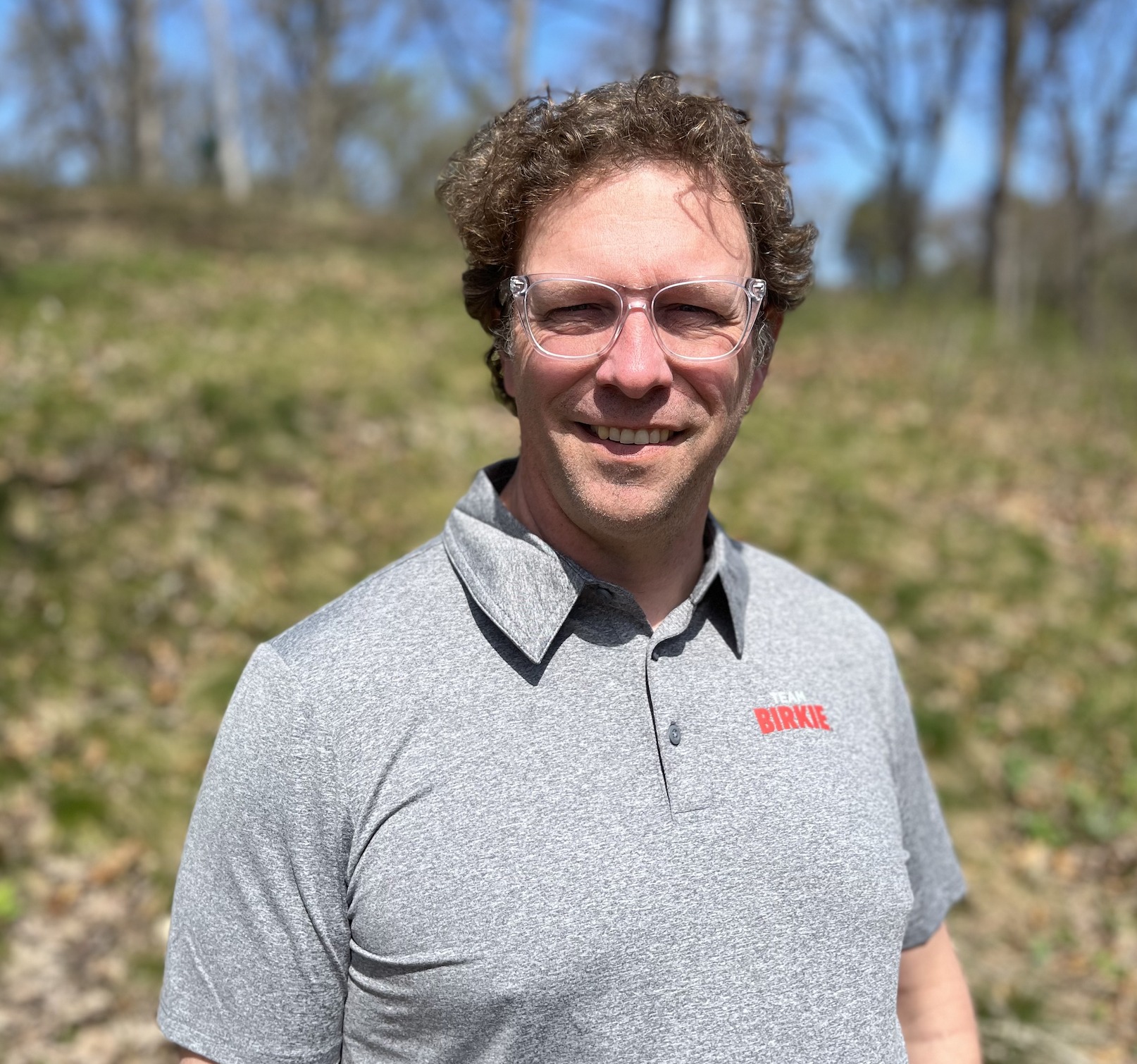
Newly appointed Team Birkie Head Coach, Chad Salmela. (Photo: Team Birkie)
Chad Salmela has a gift for pinpointing the critical characteristics of a moment and building something special from it. See “Here Comes Diggins,” the emphatically shouted announcement of an historic performance in American skiing, one that defined the careers of Olympic champions Jessie Diggins and Kikkan Randall, and of Salmela, himself. When it comes to Nordic skiing, Salmela knows what to say, how to put analysis into a context that audiences will understand, how to involve both enthusiasm and nuance. Now, as he takes on a new role deeply rooted in the Midwest ski community, he understands the nuance through-and-through.
Salmela has been named new Head Coach of Team Birkie, marking the latest milestone in his long and varied journey as one of American skiing’s renaissance characters. He has been a top junior, US Biathlon team member, US Biathlon coach, successful college program-building coach at St. Scholastica in skiing and (in his current day-job) running, Thresholdpodcaster (current side gig), American Birkebeiner finish-line announcer (current side-side-gig), a Duluth nordic skiing fixture, sometime Fasterskiercontributor, occasional pop culture zeitgeist, and yes, “the voice of the Olympic cross-country skiing on NBC.” The ski community possesses a special commitment, passion, and thoughtfulness towards the sport, but rarely does a single individual in it have all those dials turned to the max. Chad does. And so, when people go looking for all those things that make the sport great, they find them reflected in Chad.
At his core, though, Chad Salmela is a coach; one stepping back into skiing seven years after his last coaching job. During the interim, he has been a full-time running coach. In fact, in his new role at Team Birkie, he will still be a full-time running coach. Salmela is stepping in as Head Coach with Team Birkie part-time. Which begs the question, what is Team Birkie going to look like?
It’s all part of the plan to innovate and develop the elite club model: more coaches, enmeshed in the wider Midwest ski community, with backing from Central Cross-Country Skiing (CXC), the Loppet Foundation (the Loppet), and the American Birkebeiner Ski Foundation (the Birkie). All of it is going towards a “commitment to the idea of elite team in the Midwest.”
The plan will require some hammering out: that’s where Chad Salmela steps in, thinking through—and putting into action—much of what goes into US Skiing. Which made for an opportune time for FasterSkier to catch up with Salmela for a conversation that captured his thoughts on the vision for Team Birkie, how coaching philosophy has developed over the years, and what excites him about jumping back into practicing as a coach after years spent analyzing an evolving sport.
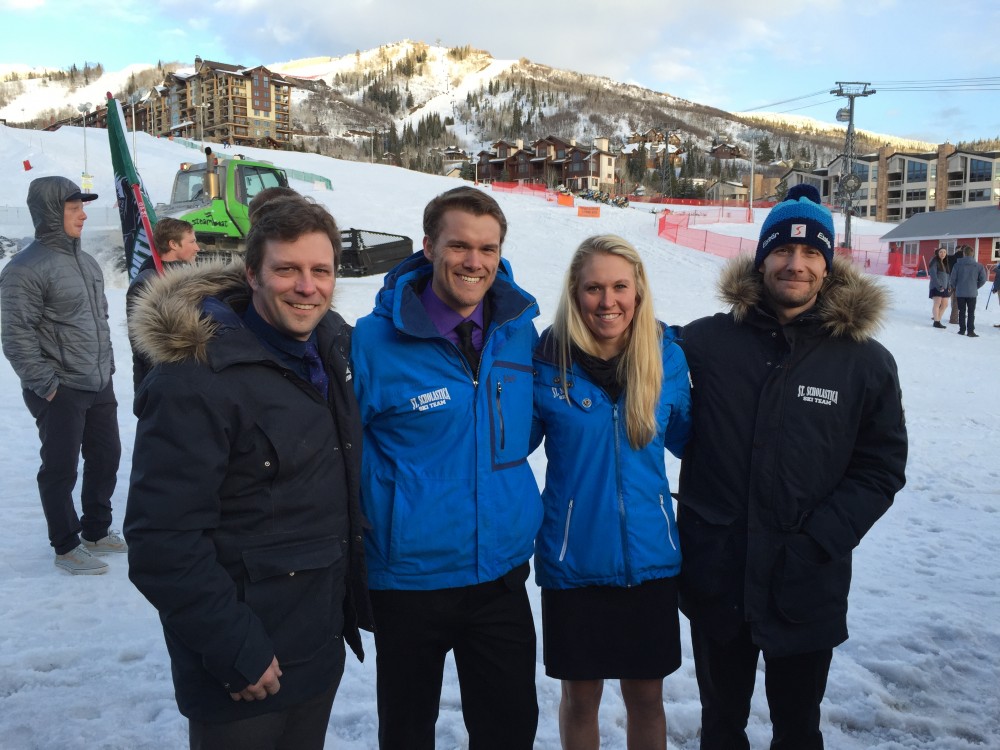
Chad Salmela (far left) at the 2016 NCAA qualifiers with College of St. Scholastica (CSS) skiers Reitler Hodgert and Kelsey Dickinson as well as assistant nordic coach, Josh Tesch. Seven years on, Salmela is stepping back into coaching skiing with Team Birkie. (Courtesy Photo)
This interview has been edited for length and clarity.
Ben Theyerl/FasterSkier (FS): How did you end up in the role of Head Coach for Team Birkie?
Chad Salmela (CS): It’s been a long process. I told Yuriy Gustev (CXC Skiing Executive Director) flat out no when he first approached me. But as most people who know Yuriy know, he has a good way of getting you to say yes.
I quit coaching skiing seven years ago at the St. Scholastica for a lot of really good personal reasons. Skiing is uniquely demanding to coach on any level. The deciding factor to go ahead here was that I can manage Team Birkie time-wise, from Duluth, and I do not have to leave my job coaching running at St. Scholastica. That is not something I could not have done when I first switched from coaching skiing to coaching running. My training plans are templated, recruiting systems are in place, the budget is workable year-to-year.
When it comes to why Team Birkie? It isn’t something that the Midwestern ski community really wants to see fizzle out again.
I think I see stepping in as stepping into a positive trend in program development for US Skiing. I think we’ve got away from “guru-ism,” where one coach has all the answers. I used to want that as an athlete. We all want that. But the idea here is that athletes won’t be working with one coach, they’ll be working with a whole bunch of coaches. At its core, we are looking to do this collaboratively.
FS: Before we dig into the details of that structure, what are the aspects of nordic skiing that you’ve missed?
CS: Coming back to a sport you’ve spent a lot of your life in is a joyful experience on its own. I still am not ready to hop into a wax trailer or follow the circuit, but I’m at a stage as a coach where I’ve not only gone through being an athlete and then coming back to the sport as a coach, but have also gone through the sport as a coach, left, and am now coming back again. That’s quite the journey.
I also have really missed the technical aspects of this sport. Which is funny, I used to get dinged as a ski coach because my athletes felt like I didn’t spend enough on technique. The technical complexity of skiing tough; it’s been ingrained in me as an observer of skiing. I got my start coaching when I was brought in to the US Biathlon program in 1998 to work with their athletes on technique, because at the time, there was a perception that we were way behind the Europeans. Back then, I was essentially pulling from stuff I was seeing watching Thomas Alsgaard or Ole Einar Bjørndalen in Europe, and back here it called into question some of the really common things we were talking about in America. I guess that’s when I got a reputation for being a coach with an opinion.
Fast-forward to today. I’ve been following skiing as a commentator, and the appeal is still the same. In the last seven years, freestyle technique has changed a lot. Where power is going and when has changed a lot. That is all stuff I’ve gotten to watch, but not work with athletes on. Last week, Zak sent over some of his clips from Bend Camp and it was really fun to start digging in on.
FS: Is the structure of Team Birkie going to undergo any wholesale changes?
CS: I don’t entirely know what it is going to look like yet. I don’t have any plans to make wholesale changes to the program, but I think those decisions will emerge as the we start to get going.
It’s a decision not to change. Like Zak; I don’t really want to mess with what Zak is doing. I don’t have a lot of experience coaching elite athletes at his stage of development. I have a lot of experience developing them to the elite level. Zak already has a system that has got him 98% of the way to where he wants to be. His best friend, Leo Hipp, has been writing his training plan, and it has worked. I see my job as coming in and just seeing if there are little things to poke at in his process and provide an extra person to review what went well and what went bad. I hope I can help him find the 2%, right? At his level, that is the difference between being hoping to qualify for a sprint heat and putting yourself in the mix to make the Final every week.
Coaching is always a mix of art and science. I recognize that I am not the answer. I am a possible collaborator to get to an answer. That’s the important tone that I’m trying to set as a coach.
FS: There is a diverse set of coaching talent working with Team Birkie. What value do you see in pulling together a lot of coaches from across the Midwest together, versus, say, you doing it all yourself?
CS: I think it’s primarily out of necessity. The constraints on my time made me open to the the idea that putting a good group of people together would make the team stronger.
I feel really fortunate to have younger coaches to work with who I think all have great experiences, but maybe aren’t ready to take on a whole program like this. I feel like I want to approach this role as more the “high performance director” or whatever you want to call it. Let the younger coaches who are excited to be on the circuit be at the races, living and breathing the coaching experience, and I can help them put all those things into a perspective that will create a cohesive program for our athletes to follow throughout the training year.
FS: Do you feel like the profession of ski coaching is any more complicated these days than it was when you first started?
CS: No, I just think we understand more than we did thirty years ago. Back then, we didn’t know what we didn’t know.
I think we’ve all come into a tighter orbit around some basic truths about training that we can abide by. To pick things up as a coach has gotten simpler as a result. You need to work hard. You need to be consistent. You need to be focused. You need to do a lot of it. Do that, and you are 95% to the elite level. The extra 5% is technical knowledge and experience. That is what coaches can bring to the table. It also happens to be where the difference is on the international stage.
FS: When it comes to implementing the vision you have for Team Birkie with the coaching staff you have, what does it look like day-to-day?
CS: It still is kind of impossible to tell because we haven’t started the programs yet. I would describe it as “fuzzy but coming into view.” I am ok leaving it there at this stage. I’d rather design the program in a way that is going to work for what we have. I don’t want to retrofit. Most of our athletes have a way and a place they’re comfortable with training right now as it is. So like Zak, right, is probably going to end up training mostly in Norway this summer. We have athletes who are coaching or working with Loppet Nordic Racing. Again, we don’t want to be intrusive into the basic building blocks of what they are doing.
FS: You’ve returned a couple of times to Zak Ketterson in talking about getting this program rolling. He has been a strong advocate for Team Birkie and the idea of professional skiing while based out of the Midwest. Does it feel like he is a kind of co-creator in what Team Birkie is going to look like in the future?
CS: The elite program as it stands is basically Zak. If he hadn’t said that we should keep this going, I don’t know if it would. His desire has brought us Midwesterners into focus though. Simply, he is a good example that we are not doing all we can to support developing athletes here. If they don’t have a place to ski after college, then we can’t expect them to stay in the region. If Zak wants it, then others probably do too, and we should be stepping up and doing it. Our collective commitment is to the idea of an elite team in the Midwest. That is what we want to create going forward.
As for the coaching, based on our first interactions over the past couple of weeks, I think we’re off to a really good start. Zak is probably more respectful of what I have to say than I feel I’ve earned with him, which is a testament to his character.
FS: There have been a few iterations of an elite Midwest team in the past, and you’ve been around to see them all. There was the original Team Birkie (which existed ~1990-95) and then notably, the CXC Elite Team that included Jessie Diggins, Adam Martin, Bryan Fish and Jason Cork, among others. When you look back at those, are there any lessons learned about creating something that is truly sustainable for a longer period of time?
CS: It’s a great question that I’m not sure I have a clear answer to. I wasn’t really around for the original Team Birkie idea, but I was very familiar with the CXC Elite Team. Why did that go away? It was a victim of its own success, mostly. Bryan Fish and Jason Cork both went from CXC directly to the US Ski Team, and US Skiing has benefitted immensely from it. There was talented coaches who could have continued that CXC Elite Team, but the timing just kind of snapped the whole thing. You have to develop key people before they become your key people.
If you wanted to identify why the Midwest has had a harder time re-establishing something since the CXC Team, I think there is a kind of paradox at play. Our strengths, when they aren’t focused, become weaknesses. The Midwest has more developing athletes racing than any other region in the country, but we have always been more dispersed than other regions. We have a lot of talent in a lot of different places and different programs. Once we focus some of that energy, good things happen. We’ve also had kids growing up here and having to leave to do the next level of skiing for a long time. Whether it was college or club, we would keep a relatively small portion of the talented skiers from the Midwest staying in the Midwest. They were, and still are, going to New England, Alaska, or the West. That is a pretty large logistical hiccup in supporting our homegrown skiers. So, if anything, what we’re now trying to do is focus up our energy again. We want kids from the Midwest to feel like we have their backs.
FS: At the “elite” club level, there are a lot of different models to make things sustainably successful. Is there something about the challenge of coming up with that which is exciting to you, versus, say, a college program?
CS: I think it’s more about where the program is and where I can take it. That’s been a fixture of my coaching career. I’ve always walked into “underdog” programs. I’ve never inherited the Green Bay Packers, you know?
FS: (As a Packers fan) I don’t know if you would want that mess right now…
CS: Yes. But like, the Scholastica program didn’t exist when I was hired. US Biathlon was on the fringe of the sport when I was there. There are a lot of challenges that come with picking up a kind of fixer-upper, but there are also a lot of opportunities to do things creatively.
FS: Are there natural strengths for Team Birkie that you can see building on?
CS: I think those are really clear. This is the only ski program in a major metropolitan area. For some, that is an absolute turn-off, but for others, it is really exciting. There is a draw; there’s a reason why the World Cup is coming here next year, right? Our athletes who have left still feel connected too. Jessie Diggins has been based out of Vermont for a decade and she is still gunning relentlessly for a World Cup here. That is something genuinely special, and so for me, is the energy in which a program like Team Birkie needs to exist in. The Midwest, especially this year, is the hub of American excitement around skiing, and that gives us a platform to build on that draw.
FS: Has the excitement around the recent milestones in American skiing, a lot of which you have been the voice for, motivated you to return to coaching at all?
CS: I really don’t know. I think the key thing is that I wasn’t looking to get back into coaching. I understood why Team Birkie reached out to me though, and so now, I am willing to give it a shot. The most telling thing was when I laid it out to my wife, she just shrugged and went, “yeah, it sounds like the perfect thing for you.”
Chad Salmela in another of his varied roles, interviewing David Norris after his win in the 2023 American Birkebiener. (Photo: (c) 2023 American Birkebeiner Ski Foundation)
FS: I suspect a lot of our readers know you first and foremost through your commentary work for NBC and Ski and Snowboard Live. Both there, and in this conversation, we’re hearing from a guy who has been thinking about this sport for a long time in a thoughtful, sustained, and focused way. As you hop into coaching and developing the sport again, how do you think we are doing on that front?
CS: I think the US is doing a relatively good job. The biggest thing we are doing now compared to thirty years ago is keeping talent in the sport long enough to make the decision that they truly want to go for the top level. We have never done that at as high a hit rate as we are now. That speaks to a huge amount of time and focus by a lot of people to get the sport in the United States organized. You couldn’t even list all the names that were important, it was a huge effort. There are old timers and people younger than me who have all contributed.
FS: Where do think the domestic circuit you are stepping into plays in that?
CS: I think the pro teams are a good thing. Strong investment in the circuit they compete in is good too. It’s not all straight-forward. As the US Team on the World Cup has become one of the best programs in the world, the gap between the two circuits has grown. There’s also, the, for lack of a better word, “pay-to-play” problem. I think the clubs provide a way to help mitigate that slightly, we have to provide a way for the people who want to pursue the sport to the highest levels to afford it.
CS: I have had to learn and develop, for sure. I was a brash kid when I was say, a 20-year-old kid. When you are brash, you are hiding insecurities. Age and attitude go hand-in-hand. I think as I matured, I found ways to manage my insecurities better, and in that respect, have become a better coach.
Improving as a coach requires you to ask what you are missing in your own motivations. The need to be competitive comes naturally. Thinking about the science and philosophy around being competitive does not always. A lot of growth comes simply because the ultimate arbiter in a sport like this is performance. You are kind of, what I call, scrubbing yourself on the washboard of the sport, physically and emotionally, and there is a lot of value to that. What I worry most about as a coach is that you might lose the meaning of doing the sport in just focusing on winning. That is so easy to do when you are in your 20s or 30s, and now as a father, it is the biggest thing I think about getting my kids into the sport.
Coaching-wise, when you first start out a program, you aren’t as preoccupied with winning, but more so performing at a level that people are going to want to be part of the program going forward. That can cause you to hold on too tight. I definitely said things that were a little more callous than needed to be said because if you are putting everything into it, you will get tired, and you will get frustrated. You learn from making mistakes like that. For every two athletes who like what I have done as a coach for them, there are probably a dozen that do not feel that way. That is one of the laws of coaching. It is not because you are setting out to make someone upset. It’s that you are a little too focused on the wrong things with that athlete.
That, if anything, is what has helped me grow as a coach. I have gotten better at really focusing on what matters to everybody on a team, so that people get something out of it that isn’t frustration. This sport is hard enough that there will be plenty of frustration over the course of your career, no matter who you are.
More than anything, I want people to get a great experience from being on a team. They should have a great experience that makes their lives better. You are not going to get good out of bad. You are going to get good out of good and finding that tone from everyone involved is how the strongest programs are built.
Jessie Diggins skis at Theodore Wirth Park in 2020, following the cancellation of the scheduled World Cup there due to the COVID-19 pandemic. (Photo: Brian Peterson)
For the Loppet Foundation, the Minneapolis nonprofit at the heart of the Twin Cities ski community, and responsible for organizing that 2020 World Cup, the loss couldn’t be met with any emotion but sadness: two years of hard work organizing since the World Cup bid was secured in 2018—and many years before that advocating for the idea of a Minneapolis World Cup—all gone due to a world that had changed.
Working in a changing world, though, would turn out to suit the Loppet Foundation’s strengths. Since its founding 20 years ago to “Connect people to the outdoors through experiences that grow community,” the Loppet has completely transformed the cross-country ski community in the Twin Cities, Minnesota, and the greater Midwest. What started as a nonprofit organizing the City of Lakes Loppet,has grown to include a slew of recreational programming, spawned one of the country’s best competitive junior clubs with Loppet Nordic Racing, re-imagined Theodore Wirth Park’s ski trails into a world-class venue, and, indeed, organized a World Cup.
For most of the Loppet’s history, the title of Executive Director belonged to John Munger. Munger moved on from the position in 2020, replaced by current Executive Director, Claire Wilson. Since Wilson’s arrival, the Loppet has hosted Junior Nationals and SuperTours, overseen an explosion of participation in cross-country skiing in Minneapolis that has seen pass sales double five times over, and youth participation in the Minnesota Youth Ski League double too. Then, last month, it was announced that the goal for 2024 would be the same as in 2020—bring a FIS World Cup race to the United States.
Loppet Foundation Executive Director Claire Wilson. (Photo: Loppet Foundation)
This week, FasterSkier had a chance to catch up with Wilson on how the excitement around the World Cup is helping shape the Loppet’s plans, what the 2024 President’s Day weekend World Cup will actually look like, and the Loppet’s journey from lost dreams in 2020 to dreaming again of American World Cup racing in 2024.
This interview has been edited for length and clarity.
Ben Theyerl/FasterSkier (FS): How are you and the Loppet feeling about the World Cup coming to Minneapolis in 2024?
Claire Wilson (CW): The excitement here is really palpable. I have people who aren’t even connected to the skiing world reaching out to say, ‘we’ve already saved the date and we can’t wait!’ And then inside the ski community, well, I think it’s engaged everyone, here in the Twin Cities, but well beyond that as well. There are people from across the country who’ve been in contact to ask how they could help.
I was also just in Norway at Holmenkollen and Drammen with Torsten Brinkema, who’s a local filmmaker working on our promotional materials, and our whole experience there with the US Ski Team and with that wider world ski community really reiterated just how excited everyone is to finally be headed to the United States for a World Cup again.
FS: There’s definitely excitement being stirred again after a ‘near-miss’ hosting in 2020. When, after that, did the Loppet Foundation decide that a World Cup was worth doing again in 2024?
CW: It took a lot of discernment to decide if this was really something we wanted to try again, because it’s very unusual to have a relatively small nonprofit organizing something as big as a World Cup. The scale of the risk, and the opportunity, is just bigger than what most community organizations can take on.
We had to start by asking ourselves, ‘Is this in alignment with out mission? Does this help increase access to the outdoors and grow connections to the outdoors?’ We spent a lot of time listening, with staff, with the wider Twin Cities community, and eventually, we landed on yes.
Then we looked at that mission in context. In Minneapolis, growing connection to the outdoors means building our ski community to be more inclusive. The number of skiers in the Twin Cities has grown substantially in the past decade. Theodore Wirth Park has become the jewel of a world-class park system and become a world-class ski venue. So the world stage, for that venue and for our community, was the logical next step.
There was also a window we recognized here. Jessie Diggins has been supporting the idea of bringing a World Cup to Minnesota for a decade now. And right now, the US Ski Team has an especially strong contingent of athletes with Midwestern roots; Jessie, Zak Ketterson, Alayna Sonnesyn, and Kevin Bolger. This is a unique moment where we felt like we could bring all these athletes who’ve spread out across the world back home.
Community is kind of where it all come back to, really. When we went to FIS initially, they were looking at us hosting on a Tuesday in March. Then though, they came back to us and offered President’s Day weekend, where they would be the possibility to bring the ski community here to watch a whole weekend and then ski together on the Monday afterwards. It aligned the opportunity with what we felt was important and aligned with our values. It just really all came together well.
FS: I couldn’t help but notice that this World Cup also coincides with when the US ski community starts head to the Midwest for the American Birkebeiner in Hayward, Wisconsin the following weekend, too…
CW: Exactly. We’re hoping that the timing will help create a really special couple of weeks here for everyone.
FS: You mention the excitement from beyond the Midwest. Was there a sense in deciding to host the World Cup that this would be serving the wider ski community?
CW: Absolutely. As soon as the Loppet expressed interest, we had the Share Winter Foundation, our presenting partner, and US Ski and Snowboard reach out to express that this was something both organizations wanted to support us in. For both, their partnership was crucial centering this World Cup around being inclusive. Their support will make the event free and accessible, and hopefully fuel growth for the sport here far past this one event.
FS: When does being ‘inclusive’ at a World Cup event look like for the Loppet Foundation?
CW: A lot of it making it just as accessible for those who ski and for those who, maybe, don’t right now. Location-wise, this is going to be one of the most accessible World Cups for any audience to get to. We’re in the middle of a major metropolitan area, less than 20 minutes away from an international airport, with a whole lot of people that might never have thought about cross-country skiing in immediate proximity to a world-class event. And again, it’s a big deal that Share Winter is helping to make this a free event for spectators.
FS: Even though the 2020 World Cup didn’t happen, you went through the whole process of planning a World Cup event. What is the Loppet taking into 2024 from that ‘dress rehearsal,’ of sorts?
CW: We learned a whole lot. The organizing committee is pretty much the exact same from last time around, and this is my second go-around too.
The truth is, there were things that we definitely underprepared for in 2020, and having had that planning process allowed us to spot what they were so we could improve them this time.
The main area was staffing. We just realized that we need a lot of volunteers, and that it is better to overstaff than understaff an event like this.
The other thing is really recognizing that we’re in a unique position as organizers compared to the venues that regularly host the World Cup in Europe. We’re a small nonprofit. We aren’t subsidized by the government. Making this a high-quality event will take a lot of resources, and that could risk expending the Loppet in a way that severely impacts our ability to continue to serve our community. So recognizing that we are dependent on commercial sales to make this a success, and going out searching for sponsors early, is a key change.
FS: I’ll linger on the boring bureaucratic stuff for one more second. What does the process of putting in a World Cup bid and having it accepted look like?
CW: For us, it’s been a complete joint effort with US Ski and Snowboard. The governing body and the host organization put in a bid to FIS (International Ski Federation), and then there’s a lot of negotiation that really, even now, is still ongoing.
The process has been easier for us this time around because all organizations involved are invested in bringing the World Cup to North America, especially after 2020. Minneapolis was a natural spot for FIS to look at, as we are such a hub for the sport in the United States, and then it was a matter of working with Nordiq Canada to help make a North American tour for the World Cup that was going to promote the sport in both countries. I think FIS is happy, US Ski and Snowboard is happy, Canada is happy, and importantly, athletes from everywhere in the sport, not just North America, are excited to be coming here.
FS: You’ve mentioned that the challenges of the Loppet putting this on as a nonprofit. Are their advantages to that too?
CW: The biggest thing is that we’re rooted in the community we’re hosting this event in. Jessie Diggins being a big promoter, for example, that comes with her understanding and believing in the community we have here.
There’s a lot of expertise that is spread among talented individuals in this community. We just had a SuperTour. We hosted Junior Nationals. We put on the City of Lakes Loppet Festival and events throughout the year, and many of the people that will be involved at Theodore Wirth Park next year are responsible for shaping it into what it is today.
What binds us all together is a deep commitment to growing the sport, expanding access to the outdoors, and a belief in the uniqueness of skiing here. The view you get the skyline at the top of Theodore Wirth Park, that’s one-of-a-kind in the ski world, and we have a whole ski community that’s as unique as that too.
The Minneapolis skyline visible in the distance from the finish area at Theodore Wirth Park on a cold, sunny, March day during Junior Nationals. (Photo: David J Owen Photography)
FS: Part of the mission with hosting the World Cup is growing the sport. At least in Minnesota, there’s already been a pretty dramatic wave of growth underway. How are you looking to leverage that at the Loppet through this event?
CW: There was the COVID bump obviously, but why everyone is really interested in skiing in Minnesota really does go back to Jessie Diggins and how she has represented the US and Minnesota. It’s so apparent anytime there’s a high school race at Wirth—we’ve had to post signs reminding kids to clean up their glitter for goodness sakes!
The Minneapolis Parks Board keeps coming to us with record pass sales every year. Before 2018, say, the most passes they sold was around 2,000/year. We’ve been over 10,000/year for the past couple years now. At the Loppet Foundation, that’s allowed us to expand our programming, and the World Cup is probably best viewed in that light. We’re riding the momentum by bringing the inspiration that’s been driving growth from afar right here, from Jessie Diggins to Zak Ketterson to all of the skiers on the World Cup.
FS: When we talk about ‘here,’ we’re talking about Theodore Wirth Park. The ski trails have been there for a long time, but even fifteen years ago, there wasn’t really even a thought that it was a World Cup-type trail system. What has the Loppet put into that park to bring it up to this moment, where it will be a World Cup venue?
CW: I think Theodore Wirth Park is best described as the DNA of our organization. From the beginning, the Loppet’s goal was to recognize that we already had something special with a network of ski trails five minutes away from downtown, and capitalizing on it would lift the neighborhood, the Twin Cities, and skiing all at once.
What started with attempts at snowmaking quickly grew into the desire to re-work the courses there so that they would be world-class, and then, the biggest piece, was putting in the Trailhead Center. The Trailhead has become a kind of landmark in Minneapolis, and that means we’re getting people who have never been connected to the skiing and biking opportunities present here coming to us, getting engaged, joining, and adding to our community.
FS: Yeah, like that Wirth 5 k course certainly isn’t just a groomed golf course anymore…
CW: No it definitely isn’t, and that comes down to having really talented trail designers who knew what makes this space special. It’s no accident that you crest the biggest hill and get a view of the skyline, or that it’s super spectator friendly. I’ve skied this loop everyday this winter and I still find spots where I go, ‘that was really well thought through.’
Skiers from all over the country round the first corner of the Theodore Wirth Park course in the U16 Boys 5 k Classic at Junior Nationals in Minneapolis. (Photo: David J Owen Photography)
FS: Is the 5 k people are skiing now, that racers at Junior Nationals last year and the SuperTour a month ago skied, the one you’re using for the World Cup?
CW: Yes, pending final FIS approval. The distance and sprint course will be the same that skiers have been getting acquainted with the past couple of years for those big events, and will be groomed the day after too. That should allow skiers to compare their times on our course to the World’s best.
FS: That could be a humbling experience a week before the Birkie for a lot of skiers…
CW: Our hope is the cool factor outweighs any blow to confidence people will experience, for sure.
FS: Is there confirmation on the exact World Cup races that the Loppet will be hosting in terms of distances, techniques?
CW: What’s on the draft calendar is a sprint race followed by a distance race. That though, is still under negotiation, and the technique and distances are largely up to FIS’ discretion.
FS: The World Cup season just ended, but before it did the Loppet was able to send over a delegation to observe the Holmenkollen Marathon and the Drammen City Sprints in Norway. What observations did you come back with from seeing those two World Cups?
CW: It was a total thrill to experience the amount of energy over there.
Honestly, our biggest takeaway was that we don’t need a lot of additional bells and whistles. Fans and skiers will bring the energy. In 2020 here, we had such a big focus on creating ancillary events. We were going to have a big rock concert, and the Minnesota Vikings cheerleaders were going to come. But what we saw in Norway, and what I think will hold here, is that if you put on quality racing, that’s more than enough. The fans make their own fun. and are ultimately coming because they have a passion for this sport, so let them do what they do!
From our organizing perspective, that was a bit of a revelation. Operationally, this is a really complex undertaking, but programmatically, it’s fairly simple. We will put the world’s best cross-country skiers on a stage that they can do what they do, you know?
FS:And the US Ski Team was really supportive when you were over there?
CW: In the week we were there, I don’t think there was an interview that US skiers did where they didn’t mention their excitement about skiing a World Cup at home next season. Every interaction we had was just really positive.
FS: Lastly, as we look at the year between now and the World Cup, what can we expect to see from the Loppet Foundation?
CW: Around the event, we’ll be doing a lot work to highlight the athletes and people making this event possible to as broad an audience as possible. We’ll also be looking for volunteers, putting some cool promotional materials out, and the ski community will want to look for tickets when they become available.
And we’ll still be hosting our regular programming. People can still expect the City of Lakes Loppet Festival, the Luminary, our kids programming and all of that.
We probably won’t be taking on a SuperTour, or Junior Nationals, or anything on that scale, but the ski community can rest assured that we’ll still be hosting a weekend where over President’s Day where everyone, and I mean everyone, from the ski world and beyond can come to Minneapolis and celebrate skiing together.
The Loppet Foundation’s City of Lakes Loppet in 2022 at Theodore Wirth Park, home of the World Cup in 2024. (Photo: Loppet Foundation).
The author and Annika Martell in New Hampshire, 2020. Martell was one of the National Nordic Foundation’s inaugural Trail to Gold Fellows, and interned on the World Cup in December. (Photo: Courtesy Image/Annika Martell)
All friendships have a mythology, and all mythologies have their origin story. For Annika Martell and me, that origin story takes place in a marsh outside of West Bend, Wisconsin.
Anni and I did not meet until college—we were both part of the incoming class of 2020 at Colby College that arrived on campus in Waterville, Maine in August 2016, but my mother and her father were both raised in this same heart of heartlands north of Milwaukee. At our first practice as members of the Colby College Nordic Ski Team, Anni pulled out a set of rollerskis from a ski box. Seeing that she had stuck a Green Bay Packers sticker on both rear fenders, I exclaimed, “Go Pack Go.” The smile she returned let me know that in those nerve-racked early days in the world of high-brow liberal arts education, I had found an allie in my uncut Midwestern goofiness. Through those early uneven steps out into the world, Anni was there as a steady presence to celebrate who I was in my most unfashionable, and true, self—a kid who had seen very little of the world beyond Eau Claire, Wisconsin, was all in on loving his God, his family, and the Green Bay Packers, and for whom the American Birkebeiner may as well have been the center of the universe.
Which brings us back to the marsh outside of West Bend. After a few months of knowing each other, Anni asked me if she could tell me a weird story, and what flowed out from it was an instant recognition of a shared memory in myself. Shared grins followed, and we traveled back to that place that Wisconsin occupies in both our minds: pure nostalgia, memories of family, a place for all the good feelings of the past. There in a marsh was a little blonde-haired boy. He’d gone for Friday fish fry with his family—very Wisconsin sentence—gotten a stray quarter and put it in one of those toy machines where once you turn the knob far enough, it clicks, and a cheap trinket comes out in a plastic capsule. He had gotten a ring, and then promptly dropped it on the family walk around the marsh afterward. A little black-haired girl had come to the rescue, helped find that little toy ring, and then they went their separate ways until they met in Maine all grown up. The moral of the fable: Even before I knew that I knew her, Anni Martell had helped me find my diamond in the rough.
These days she is still helping me be that diamond in the rough and doing the same for an ever-growing number of athletes she has worked with in her young career as a ski coach. Most days, that includes the Williams College Nordic Ski Team, but this season it has also meant the US Ski Team, as she traveled to intern with the coaching staff through Beitostolen and Davos as one of the National Nordic Foundation’s Trail to Gold Fellows.
When she returned, I heard tales from my friend of taking those exciting first steps onto the top level of our sport. I was all ears; I was inspired. What follows details the experiences and reflections of one of this year’s Trail to Gold Fellows, and captures the early journey through the profession for a talented coach within the US ski community from the perspective of her FasterSkier reporting friend.
ADVERTISEMENT
The Trail to Gold Fellowship Comes Together
“I think some of the key moments in my coaching journey have happened when mentors, coaches, colleagues or friends around me didn’t expect that they were making a real impact,” said Anni when I caught up to her after her stint on the World Cup. That might be a sentiment familiar to many coaches out there—that proud moment when an athlete reflects on a tip or cue that stuck with them without your knowing—but it isn’t one that many coaches find themselves reflecting on about themselves. In the case of the Trail to Gold Fellowship—launched last summer in a partnership between the Olympic Women’s Book Project, Women Ski Coach’s Association, and National Nordic Foundation—bringing an experience to talented women coaches that would have an unsuspecting impact was the essence of the program’s impetus. The Fellowship is sending talented Women coaches to the World Cup this season, but its existence has come as the result of a cumulative impact of skiers and the ski community over a long period of the sport’s history.
Martell subs for coaching duty during her college days…a sign of things to come. (Photo: Joe Bianco)
That connection to such a length of time comes via the 2021 publication of Trail to Gold: The Journey of 53 Women Skiers, which recounts the story of each woman to have represented the United States in cross-country skiing at the Olympics from 1973 to 2018. As Ella Hall recounted in her book review at the time of publication, the impetus of that book resulted from an exercise by the women’s contingent of the US Ski Team in 2013-14 where members interviewed team members from the history of Women’s skiing in the United States. It proved true to the principles of skiing—accentuated all that was good about the individuals involved—and soon organization, camaraderie, and a drive started to formally connect the larger community of skiers past and present. The U.S. Nordic Olympic Women’s group (USNOW) was formed in 2018 out of a meeting of Kikkan Randall and Alison Owen-Bradley to provide continued support for competitive Women’s skiing in the United States, with a book committee (headed by Sue Long Wemyss) resulting in the publication of Trail to Gold.
Trail to Gold, the Journey of 53 Women Skiers, written and compiled by the skiers themselves. (Photo: Women’s Cross Country Olympic Book Project).
Last summer, the committee that Wemyss had fronted connected with the Women’s Ski Coaches Association (WSCA) with the idea of continuing the type of internship that Bourne had completed with the US Ski Team with the proceeds from the sale of Trail to Gold. US Ski Team Head Coach Matt Whitcomb brought the idea to the National Nordic Foundation, where he serves as a Board Member. NNF joined to provide additional funding, and the Trail to Gold Fellowship became a reality. The inaugural class was announced in November.
The Trail to Gold for Annika Martell
There are the friends you work with, and the friends you escape work with. Then there are the rare ones with whom you can do both. Initially, skiing was the latter for Anni and myself: our escape. Then, over the space of the last two years, skiing became the former: our professions. As a consequence, when we catch up these days, it is usually registers as some kind of impromptu ski coaching conference. A phone call that begins with “I just saw your old roommate last weekend” can quickly morph into a conversation about the virtues of running Start Oslo versus a Klister-Hard wax cover. Implicit in that is a fluidity that features as a strength of the US ski community: athletes can play coach; coaches can sometimes play athletes; and to truly understand athlete development, coaches can work on multiple different registers of development all at the same time.
Anni has found that current and ridden it well. Originally from Minnesota, she engaged in that understated but important practice in America’s most robust high school league where athletes regularly get involved in teaching learn-to-ski with the Minnesota Youth Ski League. That followed her when she was my teammate at Colby, where our team made a regular practice of helping with the Bill Koch club at Quarry Road in Waterville, Maine. From there, for Anni, it was a more formal step into coaching. As our final season racing on the collegiate circuit wrapped up in the spring of 2020, she had secured an internship with the US Biathlon Association to work with their athletes in Lake Placid that summer, and with it, her coaching journey had begun in earnest. Then there was a season at Ford Sayre in Hanover, New Hampshire working with their Junior program, before moving into her current position as Assistant Coach at Williams College.
Colby Seniors at the Chummy Broomhall Maine State Collegiate Championships in 2020 (Photo: Linda Kerker)
That quick journey was motivated by “some amazing coaches and role models I looked up to in the coaching profession, from the Bill Koch League all the way up to the national team,” says Anni. There is an approach couched within that statement, a seriousness to viewing coaching as a craft in which one should grow and develop. More uniquely, with Anni, is an ability to view her development as a coach with super seriousness, while projecting to her athletes the joy and fun that taking the sport of ski racing seriously can be.
In her willingness to see coaching as a craft—one that takes a long journey to master—Anni has identified something that US Skiing is still busy learning on a national scale. Coaching development requires as serious a commitment as athlete development.
ADVERTISEMENT
Trail to Gold: On the World Cup
That coach development is a growing priority for US skiing is fundamental to the Trail to Gold Fellowship’s mission. On the organizers end, the T2G Fellowship represents a commitment to providing promising Women coaches with the experience and credentials required to correct a historic inequity on the highest level of coaching within the United States development system. For an individual coach like Anni, it represented “a great opportunity to learn. There’s so much to learn from people we come into contact with: techs, coaches, and, of course, athletes!” Anni joined Naomi Kiekintveld (APU/Anchorage South), Liz Stephen (Park City), Caitlin Gregg (Team Birkie), and Lizzie Larkins (Montana State) in the inaugural class of T2G Fellows when they were announced by the NNF in November.
Anni’s two-week stint on the World Cup included the back end of Period I (December 9-December 18), a weekend in Beitostolen, Norway followed by a mad dash to the Alps in Davos, Switzerland. That was a big opportunity, but it was also one Anni says she considered carefully: the Fellowship meant two weeks away from the Williams Ski Team during a crucial block leading into the Eastern Carnival Circuit. “I talked with [Williams Head Coach Steve Monsulick], and we decided that it was a great opportunity, and also would benefit our program through the lessons learned [on the World Cup too].”
On the actual “role” she played within the US Ski Team staff, Anni said that “it was really twofold: one part coach, one part wax technician.” Anni further divided the World Cup coaching experience into two types of days: “training, and race-days, which are all hands on deck.”
In Period I, the US Ski Team coaching staff included Head Coach Matt Whitcomb, Program Director Chris Grover, and D-Team Coach Kristen Bourne. On training days, Anni said that the “coaching” aspect of the staff’s job was on display in a way that goes unconsidered by most. “The athletes and coaches really are committed to improvement the whole time. On training days, coaches organize athlete training sessions, shoot video, offer technique advice, provide training and recovery council, discuss tactics – on top of all the other logistics involved with the World Cup—which requires some kind of superpower it seems.” Anni also added that her days were particularly busy on training days, as she cycled between coaching and learning the ropes as a wax tech.“[There was] a lot of testing: [wax], structure, ski selection,” she said.
On race days, the big takeaway was that even, and especially, on the World Cup, it’s “all hands on deck.” Changes to FIS policy this summer mean that for each team to gain their full allotment of Coaches’ bibs (required for course access), two of those bibs must go to Women coaches. For the US, having a Trail to Gold Fellow at all World Cup races this season means being able to use the full allotment of bibs. For Anni, this meant that she spent most race day mornings as a Fellow testing wax out on course alongside Kristen Bourne and the US Ski Team athletes.
Martell follows Jessie Diggins on course in Beitostolen last December. New FIS rules this year mean two on-course bibs are reserved for female staff members. (Photo: Nordic Focus)
The two week period that coincided with Anni’s Fellowship found the US Team at the end of the intense three-week opening period of the World Cup this year which saw three, consecutive three-race weekends in Ruka, Lillehammer, and Beitostolen. By Beitostolen, fatigue and sickness had found their way into the camp. Some skiers would miss starts; others would look to manage their fatigue within the bigger picture of their goals for the season. Still, the US saw skiers turn in top 10 finishes in both the weekend’s classic sprint, and 10 k classic. Sunday’s Team Relay would pose a unique challenge to the US team, though. For most athletes, a decision had to be made: push through for the pride of the team—a foundational principle that the US has held to in building success over the past decade—or rest and push for results in Davos.
In the end, the US ended up not starting either Jessie Diggins or Rosie Brennan—two parts of the Team Relay that won in Falun in 2021—and scratched one of their two teams for the Beitostolen 4 x 5 k Relay. Head Coach Matt Whitcomb said he “[felt] weird to say I support [the decision to rest] as a coach,” describing it as “emotionally tough.” But it was a decision with a clear forward-looking motive. At Davos, the US team felt there was “a good chance to end Period I on a high note.”
When Davos came, the US started the weekend off strong—2nd place in the skate sprint for Jessie Diggins—and then ended on nothing less than a definitive highlight in program history: Jessie Diggins first and Rosie Brennan third in the 20 k skate. For Anni, it felt like a “culminating moment” for the whole T2G Fellowship experience. “One of the biggest things I’ll take away from [those two weeks] is that our athletes are SO resilient,” she said. “The mental toughness it takes to be resilient when results don’t go your way, and know when to take care of yourself was fully on display in that tough decision to hold off and bounce back. And [Jessie and Rosie] just skied their hearts out [in that Davos race], it was amazing to watch it unfold. ” Through two weeks, a whole odyssey had played out for the US team—trial, tough decisions, will, determination and all—and had resolved into an extraordinary ending. The diamond had been pulled from the rough.
And with that, Anni had helped do for the US Ski Team what she had done for me as a friend. Of what she is taking back to the US, she says that it is a mix of small and big things. On the smaller end, she says that “the wax technician experience is invaluable on the [World Cup]. There’s just no good way to mimic that, and I’m leaving with techniques and hacks that I’ll use in the wax solving problem going forward.” On the grander scale, though, there is the experience that speaks to who Anni is as a person, and the community that has fed into accentuating her proudest qualities. “There’s such a rising tide lifting up women in US skiing and ski coaching,” she said. “And I think the continuation of that is so important on the World Cup and elsewhere in US Skiing. I think I’m more conscious of the messages I send when offering trust and placing values on other others’ experiences.”
The weekend after the eastern Carnival season had ended in March 2020, Anni Martell and I took a trip. We were both seniors, and both headed to NENSA’s U16 Festival in Chittenden, Vermont to coach, before meeting up with a bunch of Colby teammates to race the Bretton Woods Marathon in New Hampshire. Coaching, racing, all in one go: we had entered that liminal space of post-ski racing life, but we were still skiing, for sure. The world was also in a liminal space, whether it knew it or not. A week later, the COVID pandemic would begin in earnest, Colby College would shut its doors, and we’d retreat back to where we came from—leeward towards our childhood bedrooms in the Midwest.
New England had just let up from its latest Nor’Easter, the freeze-thaw cycle had just begun in earnest, and through the backroads from Maine to Vermont there was nothing but spring, sunshine, and brightness ahead. As we traveled we talked and talked: about the friends we’d made through skiing and now loved outright, about what after four years of racing in New England had stuck with us. We speculated on where our friends would be going after graduation, and where we’d end up. It was a peaceful coda to a chapter in both our lives that was about to end in a big rush and panic.
There was a kind of finalized idealism that permeated the whole thing—the sureness you have right at the end of your youth about the world, before you learn that it’s way bigger than you ever imagined. We couldn’t help but look forward, sure only that we wanted to find a place to give every aspect of what we had to the world. Two years on from that moment, we met up at Theodore Wirth Park in Minneapolis, and I heard tales from a friend who spoke about how the last two weeks coaching on the World Cup had taught her that “[coaching] is about trying new things, being curious, investigative, analytical, but also rational and methodical, it’s everything—ALL aspects.” It seemed we had found that place we were looking for: skiing, and all that our journey in the sport—and in the community it creates—amplifies about ourselves, and our friends.
Annika Martell (R) alongside US Ski Team coaching staff in Beitostolen, Norway, last December. Martell was part of NNF’s inaugural Trail to Gold Fellowship class. (Photo: Courtesy Image/Matt Whitcomb)
Wherever cross country skiers come from, whatever our heritage, whatever our native culture, most of us seem to identify as Vikings in the end. Lifetime souvenir: finisher’s belt buckle from American Birkebeiner, 1981. (Photo: FasterSkier)
The message from the event organizer was devastating . . . we’d been waiting years to cheer on World Cup skiers in person. Jessie Diggins had worked her magic to get the Sprint Finals onto American soil—and here in Minneapolis no less! But COVID was spreading misery across the globe and our race was cancelled: the Sprint World Cup Finals would not occur. $300 in tickets gone in an email. No swag or alternative compensation ever did arrive. Devastating . . .
As the world recoiled from COVID—as World Cup teams and FIS were making ever-evolving decisions on how best to handle the pandemic—event organizers and citizen racers across the Midwestern US were also scrambling to figure out how to salvage what they could from the 2020-21 winter. Having already registered for multiple loppet events, we were now faced with having to choose between bailing on the events to avoid the COVID risk, or race them in some weird new format. Beyond the normal array of choices regarding classic or freestyle, clothing, food, hydration, and myriad wax options, we now had to decide what “virtual format” to use.
The Covid Pandemic meant the end of mass start citizen racing. In its absence, numerous events turned to Virtual Racing formats. (Photo: Fischer/Nordic Focus)
Virtual Racing
The 2021 Vasaloppet in Mora, MN allowed racers to all ski on the same day but used staggered starts with individual timing to avoid congregating in a large crowd. The City of Lakes Loppet in Minneapolis allowed virtual racers to ski on the official course, but scheduled individual start times over multiple days. The American Birkebeiner in Wisconsin was the most liberal with its definition of “virtual racing” and offered wide-ranging options that included skiing at official partner venues around the country, skiing at local non-partnered trails, and even doing other non-ski activities (run, bike, swim, etc.). These all counted as participating in the 2021 virtual Birkie. We signed up for all three of these races and did the Vasaloppet and City of Lakes Loppet in person on the official courses, but completed the virtual Birkie by skiing on our local trails. It was interesting.
While virtual racing seemed like a stop-gap measure to salvage the 2021 season, it got us thinking. The recent explosion in popularity of virtual online racing and the steady rise of e-sports demonstrates how the modern definition of sport and fair competition is changing. The temporary virtual ski solution to the pandemic may become more permanent in light of climate change that is making winters shorter and warmer. In 2015, Vasaloppet USA required competitors to do laps on a frozen lake because there was not enough snow on the trail. In 2017, the American Birkebeiner couldn’t be held due to a lack of snow. As climate change grows worse, FIS has managed to maintain the World Cup season at venues throughout Europe by creating ribbons of artificial snow on fields of brown and green. Premier races in Minnesota and Wisconsin have started making snow too; however, temperature trends suggest that even making artificial snow may be a challenge in the coming years. Will virtual events become standard alternatives to cancellations if we can’t even ski on artificial snow?
Surveys, Questions, and Culture
As cross-country skiers who happen to be anthropologists, we decided to conduct some research. The leadership at the American Birkebeiner Ski Foundation recognized the significance of the questions we were asking and agreed to partner with us on the project. They graciously promoted the survey and shared the link with cross-country skiers across North America in order to find out what they thought about virtual racing and a whole lot more. We were also fortunately supported by the Loppet Foundation.
1300 amazing skiers took the time to complete our survey and informed us about:
1) How cross-country skiers define their culture and community, and what this indicates about diversity within our sport;
2) Whether or not people actually like virtual events and if they consider them legitimate forms of racing;
3) How virtual races might impact our sense of culture and community; and,
4) What event organizers can do to maintain and grow our community in light of the negative impacts of climate change on winter. This article is the first in a four-part series that will share the results of what we learned. So what did we learn?
XC Ski Community?
Nearly 100 percent of the people who took the survey feel like they are part of some kind of ski community, but who are these people and who do they include in their group? Do they act like me? Would they buy me a beer at the pub? Almost all of us (97%) include friends and family in our definition of cross-country ski community, and about two-thirds of us also include people who ski at the same places and events that we do. We think of these folks as an “event community.” Just over half of the respondents expanded their community network to include their ski clubs and other organizations, and a full 50% join us by including all free-heel skiers in our broad understanding of Nordic ski community. As academics and master skiers (who would like to become faster skiers!), we were curious to know how we compared to the survey demographics. About two-thirds of the survey participants are between 40 and 69 years old, and surprisingly only 7% are under 29 years old. While the majority self-identify as male or masculine, a third are female or feminine. A fraction of one percent identify as non-binary gender, which is underrepresented in Nordic skiing compared to the US average. More than 9 out of 10 have a college education and over half hold graduate degrees. Almost 40% earn a six-figure salary while only about 14% earn less than $50k, which highlights the perception that cross-country skiing is an expensive sport. As anthropologists, we also wanted to know how cross-country skiers defined their race and ethnicity and 986 respondents typed in a wide range of answers. Fewer than 2% reported a racial description that did not include some form of “white” or “Caucasian.” A total of 7 skiers identified as Hispanic/Latino, 6 as Asian, 3 as African-American, and only 2 as American Indian. These numbers are not representative of the US population percentages and highlight the lack of diversity in our sport, suggesting the need to make our sport more open and accessible to underrepresented groups.
Figure 1. Approximate geographic distribution of survey participants in the contiguous US and Canada.
With a basic understanding of who took the survey—and who is included in their ski communities—we then asked how they draw the geographic boundary around their self-perceived community. Based on cell tower locations used by 1188 people to access our online survey, they represent 47 US states, five Canadian provinces, and regions of Norway and England. As Figure 1 shows, the Upper Midwest appears to be the center of the North American cross-country universe! While this is likely a result of the ABSF distributing the survey to their virtual skiers who often look towards Hayward, WI when they draw their maps, as Minnesotans we’re happily biased in seeing the Midwest as skiing Valhalla. Thus, there’s probably a correlation between the need to travel from large urban Midwestern cities to ski the Birkie and the 43% of respondents that defined their community as “regional.” What we didn’t expect was the low proportion of people (8%) who thought of their community on a national scale, compared with those who think internationally (20%). There might be a couple of reasons for this. International coverage of World Cup and Olympic races creates a large-scale perspective for many skiers that naturally subsumes a more restricted national-scale perspective. Additionally, lack of easily accessible video coverage and live commentary of national ski events (e.g., NCAA, US Super Tour) hinders a fan’s ability to engage at a national level.
Community, Culture, and Engagement
With geographic boundaries drawn and scales of community in mind, we then wanted to know if people who call themselves “cross-country skiers” actually ski. It may seem like a funny question, but one never knows. When there’s snow on the ground, the overwhelming majority (82%) of cross-country skiers engage in the sport at least twice a week. While everyone considers themselves a cross-country skier during the winter, 62% of the respondents think this way year round. Do these “year-rounders”, actually practice what they preach? By and large they do. A little over a third ski more than three times per week, and this is what we might expect. What we didn’t expect to find out is that almost 4% of “year-rounders” actually skied less than once per week. Do as they say, not as they do! This is interesting because on the surface it highlights an apparent contradiction between self-identity and behavior. One might expect that those who identify as year-round skiers would ski more than average, not less. But digging a little deeper into our data we see that most of the year-rounders who don’t ski that often are probably training in the off season for those one or two big races during the winter. In terms of engaging in the culture, these folks are as much cross-country skiers as those who log hundreds of kilometers on the snow every winter. How can this be possible?
Figure 2. Patterns in how people engage with cross-country ski culture.
Survey respondents chose between seven different ways in which they engage in cross-country ski culture, and also wrote their own answers. The pattern of responses between the year-rounders who ski all the time and those who hardly ski at all are statistically indistinguishable (Figure 2). And this pattern even holds across the entire sample of 1300. Essentially everyone told us they ski in the winter. Somewhat surprisingly, 89% replied that they also wax their own skis. Think of all those burned finger tips and ruined carpets! What was not a surprise is that participating in organized ski events came in third. Project Runway fans will be happy to know that a full three-quarters of the respondents style out in their favorite ski-brand clothing to signal their cultural membership. Tied for fifth, 66% follow professional races and skiers, and read ski news through online or print media. Almost 200 people typed in other ways they engage in the culture that were not on our list. The most frequent response was coaching/teaching, but socializing with friends and family, grooming/trail maintenance, and training were also common responses (Figure 3). Physical behaviors, material culture, economic investment, active information seeking, and coaching/teaching are all common pathways to engage in cross-country ski culture.
Figure 3. Range of write-in responses for how people engage with cross-country ski culture.
So when does cross-country skiing become part of something larger? To answer this question we go back to the final category of engagement in Figure 2: “As part of Scandinavian culture.” We recognize that the term “Nordic” traditionally includes Finland, in addition to the Scandinavian countries of Norway, Sweden, Denmark, Iceland, and the Faroe Islands (that share an Old Norse language stock). We asked the question about engagement using the term “Scandinavian culture” instead of “Nordic culture” so that survey respondents could think about cross-country skiing as a standalone sport, rather than an embedded cultural act. We hoped to avoid persuading respondents that “Nordic skiing” meant they were automatically participating in “Nordic culture.” A total of 280 respondents (21.5%) told us that they engage in cross-country ski culture as part of a larger engagement with Scandinavian culture.
When people cross-country ski as a way to engage with Scandinavian culture (and more broadly Nordic culture), skiing becomes the journey rather than the destination. The cultural concept of friluftsliv is the perfect example of a life well-lived through regular engagement with nature and using cross-country skiing as a means to that end. The FIS Cross-Country Homologation Manual (FIS 2021) demonstrates how cultural practices and perspectives that historically originated in the Nordic nations are at the heart of our sport. The manual establishes standards and guidelines for ensuring race courses adhere to principles of safe and fair competition, but just as importantly, “to maintain the original ‘soul of the sport’.” In the sections titled “Preserving Cross Country Heritage” and “Environmental Aspects,” the manual references the early history of skiing and societal expectations for the relationship between cross-country skiers and nature. Nordic cultural heritage is thoroughly embedded in the ideals, iconography, and language used to describe our sport.
Figure 4. A Viking re-enactor blows the horn to start the annual Barneloppet kids race, sponsored by the Sons of Norway and the Minnesota Youth Ski League, St. Cloud, MN.
Many North American skiers attend iconic events with cultural and symbolic associations focused on the Viking image (e.g., American Birkebeiner, Vasaloppet USA, SISU Ski Fest, City of Lakes Loppet), and this is especially evident in Minnesota (Figure 4). For those whose immigrant family histories include Nordic ancestors, cross-country skiing may indeed be part of their cultural heritage. But for many others, it is not. Regarding ethnicity, only 46 of the survey respondents (3.5%) clearly identified as Scandinavian. Many respondents described their ethnicity as “European” or “northern European” that might include Scandinavian countries so this result is considered a minimum. Of these 46 respondents, 74% indicated they cross-country ski “as part of Scandinavian culture.” This strong correlation is expected given the important role of skiing in Nordic countries and reinforces the direct association captured in the very name of the sport. Just as importantly, a quarter of these respondents didn’t see a necessary connection between Scandinavian ethnicity and the act of cross-country skiing. Of particular interest, some folks identified their ethnicity as not Scandinavian (e.g., Taiwanese, Asian-Pacific Islander, Czechoslovakian, Lithuanian, German, Dutch, Polish, Swiss, Scottish), while also indicating that they ski as a way to engage with Scandinavian culture. This demonstrates how people can use sport to intentionally cross cultural boundaries.
12,500 racers participated in the 90-kilometer classic race at the Vasaloppet in Mora, Sweden in 2019. (Photo: vasaloppet.se)
The relationship between race, ethnicity, and cross-country skiing is complex. While ethnic Scandinavians strongly associate cross-country skiing with their culture, so too will other folks who are not Scandinavian. Notably, more than three-quarters of the respondents (regardless of racial identity) didn’t emphasize a connection with Scandinavian culture at all. In North America, we may want to give some careful consideration to the ways in which we promote the sport to new members. Modern Viking iconography and associated cultural ideals may appeal to some cross-country skiers and event organizers because of a shared cultural background. Events that have built part of their public image on Scandinavian heritage do not necessarily need to change; however, promoting other positive aspects such as a healthy lifestyle, getting outside in winter, and building a bond with nature may appeal to a wider audience and could be important factors for promoting diversity and growth of the sport for everyone. The fun and excitement of competitive endurance racing is another big attractor for many people, and we will address the impacts of changing climate and virtual formats on this in subsequent articles.
We have learned that there are definite cross-country ski communities, and that skiers engage in the culture in very recognizable ways. In general, we mostly like to ski a couple of times a week with friends and family, and regularly attend organized ski events at a regional scale. We’re gearheads who enjoy geeking out on wax and ski technology, and we communicate our love for the culture through the clothes we wear. We’re also apparently older, well-educated, cis-gendered white people, but these demographics may be biased towards folks who skied the American Birkebeiner. Even if biased, this sample of skiers is very relevant to this research because they have an important contribution to make when examining the potential impacts of virtual ski events. Cultures evolve and adapt. Climate change is forcing the Nordic ski community to deal with warmer and shorter winters. What happens to our culture and community if virtual racing becomes part of our adaptation to the near-term future? We explore this question next by looking at the pros and cons of virtual racing through the eyes of those who lived through it.
Mark P. Muñiz, PhD is a Minnesota transplant who grew up in Florida, but enjoys a cold snowy winter over a hot humid summer any time. His cross-country ski adventures have included loppet races and volunteer coaching for the Minnesota Youth Ski League. In the warm season he loves cycling and is still a little wary of jumping on rollerskis. He currently teaches as a Professor in the Dept. of Anthropology at St. Cloud State University, MN.
Matthew A. Tornow, PhD is a Professor of Anthropology at St. Cloud State University in Minnesota. His research interests focus on primate adaptation and behavior, including that of humans. As a native of central Illinois, he spent much of his youth and early adulthood driving north to seek out the snow. Now he spends his winters skiing the local trails and doing a little racing. When there’s no snow on the ground, you can find Matt running through the woods somewhere.
Cross country skiers are all about snowy adventures, rosy cheeks, wintry days, wintry nights. FasterSkier wishes each of our friends the happiest of holidays, and the snowiest of new years.
Originally launched in 2012, the NNF Cup celebrates club excellence in America’s premier domestic ski competition by tallying performance of club teams across the SuperTour season. The NNF Cup was awarded to Alaska Pacific University last season.
The recent success of the US on the World Cup and at the Olympic level has been fueled by a renewed commitment by US ski clubs to provide a club structure that supports athletes from their time as Juniors through to post-college senior professional racing. With the NNF CUP, the National Nordic Foundation wants to celebrate the spirit and creativity at play in providing US skiers with structured programs for their continued development, and nod to the competitive nature of these programs by adding a club-wide aspect to their performance-oriented goals.
NNF Board Chairman Yuriy Gustev says that, “Not only do the clubs create a positive learning and skill development environment for the youth, but they also provide essential support to develop athletes and surround themselves with high-level coaches and race service staff. The NNF Cup is a way we can recognize the efforts of our clubs, and our Board of Directors is happy to sponsor it again this season.”
NNF Cup standings will be updated weekly on our website. The full SuperTour schedule can be found here. Individual SuperTour standings can be found here.
You can read full recaps of each race from FasterSkier: including the Classic Sprint, Skate Mass Start 10 k, and Skate Sprint. The SuperTour heads to Sun Valley, Idaho this Saturday, and Sunday to continue its round around the West during Period 1.
Score top 3 club skiers who finish in the top 10 using Continental Cup scoring in each event.
Scoring for making camps
15 points for athletes qualifying for U16 Camp. No limit per club.
30 points per athlete qualifying for camps. No limit per club.
There will be three team standings: Male, Female and Overall
Overall winner will win the NNF Cup and be awarded a traveling trophy.
NNF Cup Standings After Sovereign Lakes, British Columbia Races
The first round of races in British Columbia this past week saw a strong start for a number of college teams, while defending NNF Cup champions APU also got off to a strong start – narrowly missing the top 3 in the week’s overall standings.
Overall
1st. University of Utah – 323 points.
2nd. University of Colorado – 285 points.
3rd. Bridger Ski Foundation Pro Team – 260 points.
WSCA founder Maria Stuber (College of St. Scholastica) presents on the WSCA mission in Oslo, Norway, 2019. (Photo: Courtesy Image)
Formed in 2019, the Women’s Ski Coaches Association (WSCA) has been a consistent and ardent supporter of creating gender equality in all areas of North American skiing. With WSCA founders—St. Scholastica Head Coach Maria Stuber and Staffer, Craftsbury Green Racing Project Biathlete (and former St. Scholastica skier) Kelsey Dickinson at the organizational core—a strong actor-network has been formed to advocate for women in the ski coaching profession. This has included some notable partnerships with organizations at the heart of US Skiing, including the foundation of theTrail to Gold Fellowship with the National Nordic Foundation this season which will see five women coaches complete a two-week internship on the World Cup this season.
In its latest program launch last month, the WSCA turned to the ski industry. The GearUP program, which announced its first cohort last month, will see ten women coaches from across the North American ski community outfitted with gear from participating ski brands. Fischer, Rossignol, Salomon, Atomic, Madshus, and Swix are all participating. The coaches in this inaugural cohort are all working with representatives of their paired brands, providing the experience of building a lasting relationship with a ski company. Those relationships are often the difference between a club having a reliable way to outfit skiers, and having to patch together equipment from limited inventories, ski swaps, and used marketplaces.
The impetus for GearUP comes from a perceived skew in the “social capital” within our sport. WSCA staffer Kelsey Dickinson addressed that discrepancy in an interview with FasterSkier:
“I don’t think it is a secret that getting [ski equipment] in [the United States and Canada] is almost entirely up to who you know, and that disproportionately skews towards male coaches when a disproportionate number of brand representatives are male.” says Dickinson. That has fostered a space in the skiing community where women coaches struggle to establish themselves: “It’s not that there is intentional exclusion on the part of these brands. [It’s more so] that there are a bunch of coaches vying for a limited number of brand representatives, and there isn’t a lot of thought put into who is working with who.” The individual interactions in the ski industry sum up to a culture that has excluded women coaches, even if it has formed passively: “The ski coach needs equipment, and they will go to whoever they know best. [The brand representative] is more likely to respond to an old teammate, or an old coach…with both parts of that equation being disproportionately male in [the United States ski community], it has tended to exclude women [coaches],” said Dickinson.
WSCA Staffer and Craftsbury Green Racing Project Athlete Kelsey Dickinson skiing to third in the 10 k pursuit at last year’s U.S. Biathlon Nationals. (Photo: John Lazenby/lazenbyophoto.com)
The motivation behind GearUP is to deliberately change some of the individual interactions of ski coaches with brand representatives so that it leads to a cultural shift where women coaches are more welcome in the ski industry space. For nearly every major ski brand in North America, it was an easy sell. “There was almost no hesitation by any of the big ski brands,” said Dickinson. “Once we went to them and said, ‘this is a place where we don’t think women coaches feel welcome and here is why’ they almost universally came back with a response that said, ‘we are willing to help out however we can to start correcting [the culture] on our end.’”
The result was that every major ski brand (Fischer, Rossignol, Atomic, Salomon, and Madshus), as well as Swix, signed on to outfit at least one female coach with a pair of skate skis, a pair of classic skis, and other brand accessories. Swix agreed to provide the whole cohort with two pairs of poles each. Originally, the program was intended to covereight coaches, but Dickinson and Stuber were able to secure two more additional spots to expand the cohort of coaches to ten. “We had sixty-one applications, which was way more than [WSCA] or the brands expected,” said Dickinson. “Once we went to [equipment sponsors] with the quality of that applicant pool, they were willing to expand the program to reflect the commitment of women coaches in the nordic community.”
(l-r) WSCA members Maria Stuber (CSS), Kristen Bourne (Now with the US Ski Team), Kristen Monahan-Smith (Michigan Tech), and Tracey Cote (Colby College) at NCAA Championships in Jackson, New Hampshire in 2021. (Courtesy Photo).
The inaugural cohort was announced last month, and Dickinson and Stuber are already brainstorming about the potential for future expansion of GearUP. “Part of why we wanted to do this now is that with the [supply-chain issues of the past few seasons] there was a pressing need for coaches, and also a kind of challenge to brands,” said Dickinson. “We know it’s hard, but this might be an opportunity to come out of this difficult moment with a better culture for women—and women coaches—going forward.”
Future iterations of GearUP will hopefully include a greater percentage of the applicant pool being outfitted, along with more brands from the periphery of the ski industry being involved. Even more crucial may be that new relationships may extend beyond a pair of new skis and boots. “Hopefully, this is resonating out right now,” said Dickinson. “The brand representatives are meeting our coaches and realizing there’s entire clubs and programs with great women coaches that have just been out of the loop on getting the equipment they need, when they need it, to be successful in skiing. At the end of the day, [GearUP] isn’t about skis, it is about skiing.”
The Inaugural WSCA GearUP Program Cohort
Patricia Casey – Alaska Nordic Racing Program (Eagle River, Alaska).
Aliya Brown – Bogus Basin Nordic Team (Boise, Idaho).
Leslie Bode – Thunder Bay National Team Development Centre (Thunder By, Ontario).
Katie Eichten – Spooner Rails On Trails (Spooner, Wisconsin).
Rachel Koroscil – Canmore Nordic Ski Club (Canmore, Alberta).
Dana Hatton – Yarmouth High School (Yarmouth, Maine).
Sydney Michalak – Crosscut Mountain Sports Center (Bozeman, Montana).
Callie Knapp – Endurance United (Minneapolis, Minnesota).
Mackenzie Rizio – Mount Anthony Union High School/Prospect Mountain Ski Club (Bennington, Vermont).
Kirsys Campbell – Jackson Hole Ski Club (Jackson, Wyoming).
The National Nordic Foundation (NNF) would like to extend a sincere thank you for the astounding display of generosity and belief in supporting a world-class skiing development system during last week’s Drive for 25. We are humbled, and incredibly grateful, to be part of a grassroots movement propelling our sport forward in this country. This year’s Drive for 25 further demonstrated that our American ski community is a rare one where all of its members are working for good of this sport that we all love, and not for ourselves.
Between mail, online, and general donations, the US nordic community raised $110,609 from 1211 during last week’s Drive for 25. Crossing the threshold of raising $100,000, and the threshold of 1,000 donations, unlocked a pair of matching grants worth $100,000 apiece, or $200,000 total. With those goals achieved, the total raised from our Drive for 25 totaled $310,609, making it the largest Drive for 25 in our organization’s 20+ year history.
To have our biggest fundraiser ever in a non-Olympic year is impressive. To do it in a single week is a dizzying accomplishment. That is what the US nordic community stepped up to do last week; demonstrating an ongoing commitment to building a nordic skiing program that can compete with any in the world. With this funding, the National Nordic Foundation has a strong base from which to bolster its financial health, support our pillar projects this season, and fund innovative and forward-thinking approaches to sport development for some of the most promising skiers in the world. We want to thank everyone who donated, our ambassadors who fundraised, and the entire ski community from coast-to-coast for making this year’s Drive for 25 a special moment in our sport that will have a lasting legacy stretching out from here into the future.
Sincerely,
The National Nordic Foundation
Yuriy Gusev (Board Chairman), Matt Whitcomb, Joey Caterinichio, Sophie Caldwell Hamilton, Laura McCabe, Kikkan Randall, Erika Flowers, Reese Brown, Ben Theyerl
Silverstar, BC, November 2022: early snow makes for a happy holiday. (photo: Gerry Furseth/FasterSkier)
In the west, snow has been falling for some weeks, and consistently low temperatures (and no significant rain) have allowed western skiers to enjoy early snow. West Yellowstone, Steamboat, Grand Mesa, Breckenridge, Devil’s Thumb—just to name a few—have all been seeing snowy trails and smiling skiers. And it sounds like a storm is headed for Leavenworth, WA and the Methow Valley.
Silverstar, BC is snow-covered and open for business, with teams soon to arrive from other parts of Canada and the States: University of Colorado, University of Denver, BSF Pro Team, Montana State University, Dartmouth College, Stratton Mountain School, Green Mountain Valley School, and many more. Plenty of team jackets soon to be out there on the trails.
North American eastern venues are also open for this Holiday week: Craftsbury, Rikert, Lake Placid, and others. We haven’t heard skiers reporting from Mt. Ste. Anne yet, but there’s just gotta be snow that far north, as well as up in Presque Isle and Fort Kent. Eastern cross country centers that feature snow-making definitely have the advantage at this time of year, but temperatures have begun dropping and heavy rains seem to have held off. Snow is coming soon to a trail near you . . .
November snow along the Madison River, West Yellowstone, Montana. (photo: FasterSkier)
A common sight in the Intermountain West for the past 35 years: Rick Kapala on race day. Kapala is stepping away from coaching, and into sport development, this season. (Photo: Sun Valley Ski Education Foundation – SVSEF).
“I’m sorry, but once I start talking cross-country skiing, I can’t stop,” admits Rick Kapala. Remove the “talking” from that statement, and it’s still a succinct summary of long-time Sun Valley coach Rick Kapala’s career.
This season will mark the first time in thirty-five years that Kapala won’t be manning the wax bench on race day for the Sun Valley Ski Education Foundation. This summer, he turned to a new role at the Sun Valley Ski Education Foundation withthe title “Sport Development Director.” In his stead, formerBates College Coach Becky Woods will take over his former Program Director duties.
For those who have known Kapala during his long tenure in US skiing, his new title signals an exciting prospect. Kapala has been a constant, forward-thinking mind in US Skiing. He has played a role in creating a domestic professional skiing scene, helped start theNational Nordic Foundation, and counts a plethora of key figures in US Skiing as his former athletes, coaches, and mentees.
FasterSkier caught up with Kapala to reflect on his own journey to this point and get a glimpse into some of the most exciting ideas pushing US Skiing, from one of its most passionate minds.
(This interview has been edited for length and clarity.)
FS/FasterSkier (FS): Let’s start with your biography as a coach. Can you give us a summary of your career as a coach and at Sun Valley?
Rick Kapala (RK): Coaching for me started at my alma mater, Michigan Technological University (Michigan Tech), the year I graduated. Then I moved out west and I coached for a couple years in Washington state at a club program run by Pacific Lutheran University.
Then I moved to Anchorage which was where I was really fortunate in my timing. I landed coaching at West Anchorage High School as their ski coach, track, and cross-country coach. And the stable of athletes I had there was full. Nina Campbell, Joey Caterinichio, and Chris Grover are just a few your readers might know. I was really lucky that was my first exposure to sort of an “all-in” type coaching job. Then I came down to Sun Valley in the summer of 1987 and have been here ever since.
FS: What did the Sun Valley team look like when you got to Idaho?
RK: We had a pretty good little program, this being the ski town that it is. The Alpine program was big, but the cross-country team was this small, ancillary program. We had seven to nine on the high school team, and then seven or eight middle schoolers.
FS: How did you approach building out that program back then? Was it adding a younger development program? Bolstering numbers for the high schoolers?
RK: There was a separate, kind of “Bill Koch League” (learn-to-ski) type program in the Valley. We assimilated that and made it our Devo program under the umbrella of our offerings. The program immediately began to grow from there. I attribute that to having really good coaches at that younger age who were really invested in the right way over the course of the first four or five years I was in Sun Valley. That eventually led to steady growth for the Comp (high school) program. That model is the basic infrastructure of a club. The same can be said about New England with theBill Koch League, or in Minneapolis withthe Minnesota Youth Ski League. Really dedicated coaches at the younger level are what end up powering competitive programs.
FS: At what point did Sun Valley grow beyond the junior programming? When did the Gold Team (Sun Valley’s Pro Team) and Post-Grad programs start to develop?
RK: The genesis of theGold Team was a really fortuitous set of circumstances. We had a great coach, Chris Grover (who Kapala had coached at West Anchorage), landed in Sun Valley after the Nagano Olympics in 1998. He had been with the national team, but at the time there were budget cuts. Grover, coming off of that, had a pretty profound instinct that skiing couldn’t just develop within the [United States Ski and Snowboard Association]. He came to me and said, “we should start a pro team [in Sun Valley],” which, in retrospect, was such an important development because it allowed us to imagine a whole new ecosystem for our programming.
Having Grover come off of the national team also made it an easy prospect to get athletes here.Chris Cook, for example, got cut loose from the national team, and Grover was able to step in and give him an obvious avenue to keep pursuing professional skiing. That was key—having an avenue to go down. Cook won a national championship the first year he was at Sun Valley, and then made it to the Olympic Games.
That was a part of the fortuitous nature I talked about too. That the next Olympics were in Salt Lake City [in 2002]. The Gold Team was originally the Olympic Development Program—we got told eventually we couldn’t use that name, but it gave us a lot of visibility from the community here in Sun Valley, and a clear “brand” for talented skiers to know what they were pursuing here.
Ben Lustgarten and Rick Kapala at a SVSEF training session in 2014 (Photo: Ben Lustgarten).
FS:What strikes me as interesting about that “fortuitous” timing is that there was a push around US skiing at the same time Sun Valley’s team got started to have those Olympic Development programs around the country, but most of them weren’t nearly as sustainable as Sun Valley ended up being. In the past few years, we’re seeing a renewed push to introduce more pro racing opportunities across the country, whether that’sBridger Ski Foundation’s team in Bozeman, orTeam Birkie in the Midwest. What are some of the things that have made Sun Valley sustainable that could help make those programs sustainable as well?
RK: Whenever I get a question like this, I always start with a disclaimer. Sun Valley is a really unique place that affords us some big advantages when it comes to building and sustaining new programming. We have one of the richest traditions of skiing in the country, and it is still a ski town—it hasn’t sprawled out in the same way that other places have. It is also a fairly affluent community.
The industry here is skiing too, that always is going to be an advantage. We have an outsized role in our community because of that. When we roller ski in the summer, people are cheering on our kids, that’s not happening in other places, right?
I think we have had to center our approach around the idea that we are a community asset here. We try to have success, just like any sports team, but what we are really trying to be is the highest-quality recreational and competitive opportunity for kids in our valley. That gives kids the resources they need to take skiing as far as they can. Whether that was Morgan Arritola, or now Sammy Smith and Cora Faye Scott. They all came through a program that at the start was really a way to get out and involved in our community and kept true to that impetus. Naturally, that is going to engender warmth and engagement from outside of just the ski community. There is also making sure that the talent that is coming through the Gold Team, for example, is able to invest in the wider community here. We need to make sure they have the chance to do that. And they have.
I am not saying the model here is the model everywhere. What theLoppet Foundation has done to make skiing the big deal it is in Minneapolis—that’s phenomenal—they figured out how to balance programming, events, and facilities in a way where kids might just want to go skiing on Sundays rather than watch the Minnesota Vikings play football. And not every kid will, but they have the option to and feel like it is worth it. That is so important.
Or in Anchorage, right, skiers are on the front page of the newspaper. That’s a big deal. It is the same in Sun Valley, and I think that speaks to creating a community ecosystem that celebrates and invests in skiing.
FS: I am struck by how the skiers that the Gold Team has a pretty consistent mix of kids from your junior program and from other programs across the country . . .
RK: That’s super intentional. There just needs to be a critical mass to be able to inspire and also, provide a high-quality training environment. Johnny Hagenbuch, right now, for example: when he got to a point as a junior, having the Gold Team for him to hop into for training made a big difference in his development.
FS: With regard to “development,” we haven’t covered your new position in detail. You’re moving from individual athletic development to a more club-wide role. What does that look like in Sun Valley, and how do you see what you’re doing in Sun Valley pertaining to US Skiing in general?
RK: Well first, I don’t want to say I have answers beyond the community here. I think keeping my focus here is really important.
My new position as “Sport Development Director” is multi-pronged. I’m still doing the resource development for the Nordic Team and coordinating events like the upcoming SuperTour. Then, there are a few other initiatives that follow along the lines of thinking, “what is the next thing?” in sport development. One of those is coach education. In our organization [at Sun Valley] we have about one-hundred coaches on the payroll during the season. Right now, the coaches certification process they go through is kind of transactional with US Ski and Snowboard, right? Meaning they take this coaches’ course and maybe do a continuing education credit, but that might be it. One thing I think is big incongruency in [American] skiing right now is that we work on cultivating a growth mindset for our athletes, but we don’t have the same mentality for our coaches, let alone the resources to make it possible. I think that’s where we need to go. Like Doctors have the American Medical Association, we need to have an organization—or use our existing organizations—to cultivate a culture of what I’d call “professional development.” As a ski community, we’re past the point where we are simply hiring people to coach based on the merits of their skiing. I think it is a positive development that it is a distinguishable profession, but now we need to do the work to not make it a profession where everyone is kind of self-educating.
Kapala out in the Idaho mountains in 2022. (Photo: SVSEF).
FS: I’ve been thinking about that a lot the past few weeks, coming off of theNational Coaches’ Symposium and off ofDr. Stephen Seiler’s talk with NNF last week (which Kapala was partly the brainpower behind). My operable knowledge of physiology as a coach up to now was based on what I learned at an REG camp presentation as a sixteen- or seventeen-year-old kid, and all of a sudden it was like, “whoa, this whole field has evolved a bunch” and I came away with three or four things I was ready to change in my coaching right away . . .
RK: Yeah, and that coaches conference happens what, every two years? Imagine if we made that part of coaching culture. That collaboration and knowledge-sharing: it is imperative. I’ve been paying attention to the system of coaching in international soccer, for example, where American coaches are going over to Germany and realizing just how beneficial the structure and rigor of coaching education is over there.
FS: As in, the accreditation system?
RK: Not so much the accreditation, but more so just how seriously they invest in all the individual aspects of sport development. Like this American soccer coach I was listening to a podcast with [Jesse Marsch, who came up through the German coaching system and now is the first American coach in English Premier League history with Leeds United]. He said he had a year-long course in sports psychology just to get accredited in Germany. We are no year to making that investment in something as beneficial as that.
One of my other initiatives is on that front: I’d like to create a dedicated professional position at Sun Valley who can work with our athletes on sports psychology and wellness. We have always been great at catering to the physical aspects of our athletes, but not the emotional, or just human, aspect of human athletic performance.
FS: Putting the resources to institutionalize new developments in athletic performance seems to be a theme of your work. I ran across an articlefrom our archives where you talk about making training camps, like the U16 camp system, a regular part of the developmental pipeline in the US. That was a decade ago, and now, that’s well-established across US skiing. Is sports psychology and wellness the next front for that you think?
RK: The U16 camp idea was a collaborative idea that came from a couple coaches at REG camp being like, “this is a great system, why aren’t we expanding this type of incentive and experience to kids at the crucial point where they decide to go all in on skiing or not?” And we could do it quickly with relatively few resources. That is the same thing with wellness and catering to that aspect of our athletes. I actually think it is even more important in the American context, too, because we’re correcting for that persistent “toughness” or “suck-it-up” mentality that is a feature in our athletic culture. That has never worked when you look at skiing.
FS: It was interesting that in Johan Olsson’s presentation at the National Coaching Symposium a couple weeks ago, he citeda study on [UCLA’s legendary basketball coach John Wooden] where the main finding was essentially that his main feedback to his players was positive, rather than negative; that was a revelation in the 1970s.
RK: Yeah, and then a couple years after that, [Indiana University basketball coach] Bobby Knight was throwing chairs at his players! Somewhere it got lost, and so we still have to address it in the landscape of our coaching.
FS: Is the answer doing more coach education and dedicating resources to making it part of our clubs?
RK: Yes, I also think it goes to a base-level of empathy. One of the cool things about skiing now versus when I first started coaching is that there is a critical mass of people—coaches or even just parents of athletes—who went through all the highs and lows of ski racing as athletes themselves. We have a depth of knowledge present in skiing that just did not exist in the 1970s and 1980s, and it is so helpful as an athlete to not just have one coach, but a support network, that can help you navigate a really hard, and really rewarding sport. That is special, and we have that going for us.
FS: How do you incorporate that experience into the practice of coaching?
RK: I actually think it is a community thing. Which enough individuals working together is always going to lead to. At the end of the day, that is what we have that is special. I’ve been in this game long enough to see how skiing connections last. Our kids meet other kids from across Intermountain West at JNQs, and they go on to become their friends, neighbors, teammates later in life. It just lasts.
I think about what drives our community to do this sport a lot. There’s certainly not a lot of money in it, and there is not the capital of a lot of Division One college scholarships on offer. I think the ethos of it truly is that the people in cross-country skiing love it deeply. Love it individually, and together.
FS: That’s a beautiful way to say a really true thing. Just to try and collect some of the themes I am seeing run through this, the “Rick Kapala” philosophy towards skiing development seems to include a community powered by that ethos—that love of skiing you talk about—that provides a “complete ecosystem” in terms of the resources needed for athletes to succeed. And you seem to be very careful to say that needs to match the specific context of the place in which the ski community exists.
RK: I think that is fairly well put. The levers we can pull in Sun Valley are different than what those in Minneapolis—or you in Crested Butte—can pull. So you have to be collaborative and observe what works and what doesn’t in the place you are, and then take in knowledge from other places too. That’s how we ultimately make skiing in this country go ’round.
We can’t just do what the Norwegians or Swedes are doing. We have to think about how we do things soundly, but differently. We have been successful in doing that to some extent, but there is always room to improve—which was the most important lesson of my coaching career.
FS: And that’s the most important thing you’re now bringing to development?
RK: For sure.
Long-time SVSEF XC Program Director Rick Kapala. (Photo: SVSEF)
On Sunday, October 30 Nils Vikander passed away in Levanger, Norway at the age of 80. He is survived by his wife of 30 years Margarita who was by his side until his last days. Nils spent his life sharing his passion for Nordic skiing and his deep love for Nature. He inspired and mentored many and is known for his talents for connecting ideas and people.
Nils began his ski career in Sweden, where cross-country and Alpine skiing have been a part of winter season for generations of children, youngsters and adults. The whole family, which included four boys spent winter holidays on trails and slopes of Nordic landscapes. When Vikander family moved to Montreal they brought their passion for skiing overseas. Although as a student Nils devoted a lot of his time to swimming and had been a member of Swim Team McGill, cross country skiing had become his real passion, something he was burning for until the last days of his life. Nils participated in the Canada Games as an athlete in swimming and Nordic skiing. He also worked extensively as a coach as his career evolved in the Nordic skiing direction. He supported the Canada Games concept by speaking and writing about the importance of sport bringing people together. His own ski career continued when he moved back to Europe at the end of 1980s well into his 60s, and he had an impressive participation record in many different ski races in Sweden and Norway, including Vasaloppet and Birkebeiner.
Nils’ career as a Nordic ski coach took him all across Canada and the United States. Highlights include coaching the New Brunswick team and the Tobique Academy. He also worked as a coach in the Northwest Territories, Alberta and with the Lake Superior Division. In the United States, Nils was the head coach of the Montana State University team and also had a posting at the Telemark Academy in Wisconsin. He was very supportive of the idea of athletes having an opportunity to continue their studies while continuing to train and compete. In addition to regional coaching, Nils had many National coaching team assignments. His calm demeanour and his specialization in the psychology of sport made him a valuable member of the coaching teams.
The life of Nils Vikander was a life lived in the outdoors. The world will miss his adventurous spirit.
In addition to coaching, Nils enjoyed the technical side of the sport. He served as a technical delegate for numerous national and international level competitions. Ski trail design and build projects were another area of technical interest. He had the skill to bring together talented trail designers and was known for bringing innovative thinking to the design process.
Nils decided to move to Norway in 1986 as he wanted to pursue his love of Nordic skiing in the birthplace of the sport. His work in Norway continued in a more academic direction and involved teaching and research in the fields of sport psychology, coaching, sport philosophy and friluftsliv/outdoor life. His publication record accounts hundreds of titles including work on his passion for articulating the importance of Nature. The book “Nature First” was published in collaboration with a team of like minded scholars. The book is in its second edition and is used as an important resource guide for teachers. Last year Nils summarized his 50 years of experience in cross-country skiing and his vision of the future of the sport in an impressive paper which he sent to all like- and unlike minded colleagues and members of cross-country bodies around the world.
Nils is a giant in the world of Nordic skiing and in the world of Nature studies. He has inspired and mentored countless numbers of athletes, students, colleagues and indeed friends. It is through these multiple connections, that he leaves behind a legacy of people who will continue to work to support the theme of caring for Nature and who will carry the love of skiing in their bones.
Next time you are out skiing and you feel the joy of gliding over the snow, you will know that Nils is with you in spirit!
Julia Kern leads the pack during the first leg of the 4 x 5 k mixed relay in Falun, SWE in March 2022. (Photo: NordicFocus)
This season’s cross-country and biathlon World Cup races promise to be some of the most exciting in recent years; however, this season also presents dramatic changes in how American fans will be able to—or unable to—watch races. The new season will be quite different from what we’ve come to expect in seasons past. NBC’s coverage is gone; it will be replaced by a combination of paid streaming services and accessing European coverage.
Cross-Country
There will no longer be coverage of cross-country events through NBC or any of its platforms. Fortunately, coverage of World Cup races held in Europe will be available on Ski and Snowboard Live—specifically, https://usskiandsnowboard.org/latest—allowing access that’s searchable for any cross-country World Cup race. U.S. Ski and Snowboard has told FasterSkier to expect commentary with these broadcasts.
The bad news related to viewing options for European races is that viewers will need to pay in order to watch. There will be several payment options:
There will be a monthly all access pass ($15.99/month) which provides full viewing of all sports on the channel. If you watch more than the Nordic sports, this will be your choice.
For cross-country only fans, there will be a “Monthly Discipline Pass.” While this may sound like some type of high school program for misbehaving students, it’s actually a platform that allows viewers to enjoy all coverage in the sport of their choice ($8.99/month). If there’s one race in particular you want to watch, you pay $1.99 for any single event.
There are known alternatives for those who want to access coverage in the VPN universe (virtual private network), but that’s not something FasterSkier has investigated in regard to cross-country events.
Sean Doherty (USA) – IBU World Cup Biathlon, sprint men, Oestersund (SWE). (Photo: NordicFocus)
Biathlon
As of this writing, there will not be network coverage of biathlon events by any American broadcaster or streaming service! The principal option will be to watch via Eurovision live stream: go to https://www.eurovisionsports.tv/ibu/ for coverage of individual races. According to U.S. Biathlon, they are still investigating other streaming options for the American audience. U.S. Biathlon also indicated that “without NBC (coverage), American viewers should be able to watch live via this link this year.” Races should also be available later for replay. “It is our understanding that you may need to create an account, but it should be free and there will be no need for a VPN as NBC is not a rights holder this season…”
Joanne Reid (USA) -(Photo: NordicFocus)
A recent test of Eurovision’s site indicated that viewers would be able to use the link without a VPN, and could gain full access to the entire biathlon race library.
Better or Worse?
Depending upon streaming options that viewers have accessed in the past, these broadcast/streaming changes may be an improvement or a deterioration in coverage options. Being able to watch Eurovision without a VPN will be a game changer for many. Stay tuned to FasterSkier for updates—especially in Biathlon coverage—as changes may occur.
Skis and boots, gloves and clothing, uniforms and race suits, collectors items and miscellaneous treasures: the annual Ski Swap is where bargains are found, where hand-me-downs are passed on, where new ski adventures begin.
The Elk’s Lodge, the hotel conference room, the middle school gymnasium: those are the places where skiers gather in the fall of the year. Those are the sorts of places reserved by clubs, teams, retailers, and those whose garages and basements are chock-full of skis, poles, boots, suits, and miscellaneous ski-related gear. It’s time for the annual Ski Swap and Sale.
Cross country skiing is not a sport that’s rich with sponsorship, or that benefits from big prize money, of that is bankrolled by a population of wealthy, deep-pocketed devotees. To keep trail systems going, to keep clubs going, to keep young skiers and masters’ programs going, many organizations seek to support their needs through the staging of seasonal ski sales. These are events where institutional knowledge comes in handy: someone needs to remember how things were done last season. Who makes the signs? Who does event advertising? How to tag and price the items? How to collect sales revenue? How to pay those whose gear has sold? Where does the cash register go? What about the folding chairs and display tables? What’s the wifi password? Has anyone checked the bathrooms? The whole thing adds up to the sort of Mom n’ Pop operation on which our sport depends: many hands making light work, many being introduced to our sport, and many snowy days ahead of us.
Signs of the times . . . this is the season of bargains, deals, and hand-me-downs.
This is how the ski season begins. So watch for classified ads in the local paper, for notices in Shopper Give-Aways, for posters on local bulletin boards, for reminders on social media. The Ski Swap and Sale is coming soon to a ballroom, conference room, gymnasium near you; whether as buyers or a sellers, those are the places where skiers gather in the fall of the year.
And at the end of the evening—after all the sellers have been paid, and the chairs and tables folded, and the signs taken down, and the floors swept—then we’ll drive home through the autumn darkness with backseats full of treasures—both new and used—to speed us across the snow that is soon to arrive.
Residents of the Elk’s Lodge oversee Ski Swap activities.
Convened for the first time since the pandemic, USSS’s biennial coaches National Coaches’ Symposium brings focus to US Skiing’s progress, and highlights the ever-evolving nature of the sport.
U.S. Ski and Snowboard Development Team Coach Greta Anderson encourages athletes during the men’s 30k distance race during the 2022 U.S. Cross Country Championships in Soldier Hollow. (Photo: Tobias Albrigtsen / @untraceableg)
Last held in 2019, the US Ski and Snowboard’s National Coaches’ Symposium has traditionally provided insight into program priorities and training philosophies of those coaches working directly with the US Ski Team. With in-person conventions having been interrupted by the Covid pandemic, this season’s re-convening of the two-day Coaches’ Symposium represented a welcome return to the dialogue that has typically benefitted the Nordic skiing community. The virtual venue ostensibly helped reduce attendance costs for coaches, but also spoke to a key theme of accessibility and collaboration touched on as a strength of contemporary US skiing throughout the conference.
Friday
U.S. Ski Team head coach Matt Whitcomb (right) and Julia Kern course-side during the 4 x 5 k mixed relay amidst the 2021-2022 World Cup Finals in Falun, SWE. (Photo: NordicFocus)
Friday’s program began with an introduction from US Ski Team Sport Development Director, Bryan Fish. “There’s 138 people on the call right now,” Fish said, which reminded attendees that the audience was larger than could have fit into the Center of Excellence in Park City where previous symposiums had convened. There was much important information that presenters were to convey, and many eager listeners had gathered to hear it.
Dr. Hans Kristian Stadheim
Friday’s keynote speaker was Dr. Hans Kristian Stadheim, the current British National Team Endurance Performance Director, and a coach long-renowned for his intricate and scientific approach to endurance as it specifically applies to nordic skiing. As Matt Whitcomb commented in his introduction of Dr. Stadheim, “when you’re at the World Cup, Hans stands out as the one who’s really digging into what makes [ski training and racing] work.”
Hans Kristian Stadheim, current Director for the British National Ski Team. (Photo: Courtesy Image).
Stadheim’s presentation, “The Norwegian training method and experiences working with British team,” discussed the evidence behind current trends in nordic ski training, including the principles behind Norway’s dominance that Stadheim applied to building an elite program in Britain. He used his coaching with Simen Hegstad Krüger (NOR) as a case study for pointing out the training trajectory that the Norweigans follow for fostering a skier from junior to Olympic champion. The big takeaway from this example was that, “[The Norwegian] method is a gradual increase in training load with stress on limiting high volume at an early age.”
That point fueled a lively Q and A facilitated by Matt Whitcomb, which focused on implications for coaches working with junior and college athletes. Stadheim—along with useful addendums from Whitcomb—provided thoughts on balancing Threshold and VO2 max work, recovery metrics, and fitting individualized training into a team environment. Key recommendations included:
Intensity work for juniors should focus heavily on increasing VO2 max.
Recovery should be gauged dynamically using analytical tools and athlete perception.
Building a national program requires retention of a robust base of athletes from the junior level through to higher levels of competition.
The remainder of Friday’s program featured discussions and demonstrations by medical and training staff members of the US Ski Team. Jen Kimball and Tschana Schillier, alongside Luke Jager, demonstrated mobility and strength movements that target particular weaknesses seen in cross-country athletes. Dr. Heather Cichanowski and Dr. Tod Olin detailed the medical community’s interest in the high occurrence of respiratory issues among competitive skiers, chiefly asthma and vocal cord dysfunction. Then, Jessica LaRoche wrapped up the program with a talk on athlete wellness.
Saturday
Johan Olsson smiles after winning the 15 k freestyle at the 2015 FIS Nordic World Ski Championships in Falun, Sweden. (Photo: NordicFocus).
Johan Olsson
Saturday’s presentations began with a keynote from Swedish skiing legend Johan Olsson. Since his retirement in 2015, Olsson has developed a career as a TV contributor to Swedish National Television’s (SVT) ski coverage. From a career that included fourteen Olympic and World Championship medals (2nd only to Gunde Svan in the history of Swedish skiing), Olsson shared anecdotes that illustrated breakthroughs in his approach to ski racing, with a special focus on mental preparation. Olsson’s career took place prior to the detailed focus on mental preparation and wellness in training that are common at the elite level today. His anecdotes, therefore, illustrated an innovative individual approach that soon saw parts become common in competitive skiing today.
Johan Olsson during the 2015 World Championships in Falun, Sweden. Olsson won the 15 k skate in Falun. (Photo: NordicFocus)
In one anecdote, Olsson detailed how his development of a dedicated mental approach to racing grew out of his own treatment for anxiety. After a disappointing 15k Classic at 2009 World Championships, Olsson’s wife Anna (also an accomplished Swedish skier) prescribed a self-imposed grieving period for him. “You have until 6pm tonight to be sad,” she said. “But then you will come to dinner and be the same positive Johan you always are.” Olsson popped in a cassette tape of “the saddest Neil Young songs I could find” and went about devising psychological strategies not unlike those found in Sport Psychology books today. A year later—at the 2010 Vancouver Olympics—Olsson’s charge in his relay leg saw Team Sweden win Gold in the event for the first time since Calgary in 1988. It was the culmination of a persistent application of techniques he had devised while wallowing in the saddest songs of Neil Young who—in an ironic twist—was seen passing through the crowd while Olsson stood atop the Olympic podium. Full circle, indeed.
Bryan Fish
Bryan Fish described trends in training and development philosophy on which he and US Ski and Snowboard are currently focused. Fish’s presentation implicitly conveyed the strong progress US Skiing has made, as well as identifying next steps. Strong points identified include a philosophy towards “not training the most, but training really well,” an emphasis on strength training, and a spirit of collaboration among US Ski Team programs, local clubs, and regional associations.
Bryan Fish, U.S. Ski and Snowboard Sport XC Development Manager, at a SuperTour in Duluth last December. (Photo: Jordan Woods/Woods Creek Productions)
Greta Anderson
What Bryan Fish had described as US Ski Team’s “holistic approach” was a continued focus during Greta Anderson’s presentation. Anderson spoke in detail on the number of athletes being reached by international trips, national training/elite groups, and regional elite groups. She further emphasized the ways each region uniquely incorporates its ski resources into this developmental program. For example, Eastern collegiate coaches played active roles in the Eastern/Midwestern U16 camp. In the Midwest, Team Birkie pros and U14 Dream Camp both expanded the region’s Regional Elite Group camp to more skiers. Anderson reiterated that these types of partnerships with clubs and programs feeding the US’ national development pathway were likely to continue. Matt Whitcomb quickly followed with an appeal to mobilize the US skiing community through the National Nordic Foundation, which will hold its annual Drive to 25 from November 21st-25th this year.
US Ski and Snowboard Cross Country D-Team head coach Greta Anderson supports athletes during the Sun Valley SuperTour races in January. (Photo: Tobias Albrigtsen / @untraceableg)
Jason Cork
In the final presentation of the symposium, Jason Cork narrowed US skiing’s development focus from the entire system to just one athlete: Jessie Diggins. In a candid and entertaining talk that considered the ethereal mix of trust, knowledge, and competence required in the coach-athlete relationship, Cork delved into the minutiae of training numbers, and how data derived from Diggins’ training logs reveals pertinent information about peaking. He rattled off Diggins’ history-making results in a casual tone, while being much more serious about the types of workouts, training cycles, and long-term trajectories that led to World Cup Overall wins and Olympic medals. Those accomplishments would tend to suggest that American skiing is doing things right, and that this symposium was a valuable opportunity to describe the knowledge, the practice, and the craft of bringing those performances about.
Jason Cork and Jessie Diggins out on a sunny day in Australia last August. Cork has worked with Diggins for 12 seasons, stretching back to their time on the CXC Elite Team. (Photo: Julia Kern)
“Let’s let this knowledge radiate out to our athletes,” said Bryan Fish in closing out US Ski and Snowboard’s first-ever virtual coaching symposium. It was a call-to-action that resonated on Zoom screens across America, leaving a whole community of coaches ready for the demanding season to come.