Category: XCFeeds

A collection of live feeds from cross-country ski blogs around the web.
  • USOC article: From ski coach to Olympian

    Peggy Shinn, a contributing editor for the USOC tracked me down after the skate sprint in Rumford to conduct this interview.  She waited patiented outside of drug testing for me to provide a sample…. (thanks Peggy!)  If you’d prefer to read the article through the official link, I’ve provided it here.

    Holly Brooks: From ski coach to Olympian

    Peggy Shinn January 11, 2011

    Holly_brooks

    Photo: Peggy Shinn
    Caption: Holly Brooks leads the quarterfinals of the women’s freestyle sprint at the 2011 U.S. Cross-Country Ski Championships at Black Mountain in Rumford, Maine.
    RUMFORD, Maine — Most Olympic athletes were child prodigies in their respective sports. Or at least offered glimpses of future greatness — like a podium finish at nationals.
    Not Holly Brooks.
    The 28-year-old cross-country skier finished in the latter half of results through college. Not once did she qualify for NCAAs, and her best finish at the U.S. Cross-Country Ski Championships in 2004 — the only year she competed at that level during college — was 49th.
    “I would look from the bottom up on results lists to see where I finished that day,” she says. “I was really mediocre.”
    Now, Brooks could be the hero for middle-of-the-pack athletes who harbor Olympic Dreams.
    “I never made world juniors, I never made U23s, I never made the Scando trip, nothing,” she says. (The Scando trip is an annual rite for developing cross-country skiers to compete in the Scandinavian countries.)
    Six years after she graduated from college — and after only five months of full-time training — Brooks made the Olympics.
    Now, fresh off her first national crown — the sprint classic title which she won on January 2 at 2011 U.S. Cross-Country Ski Championships at Black Mountain in Rumford, Maine — Brooks wants to represent the U.S. again, this time at the 2011 World Championships in Oslo, Norway, in February.
    So how did Brooks go from mediocrity to Olympic athlete in the span of six years?
    Her story starts on Snoqualmie Pass, east of Seattle where she grew up. Her parents were Nordic ski instructors there, and they put Brooks and her triplet siblings on skis when they were two or three years old, recalls Brooks.
    Competition wasn’t as much a part of the Brooks’ family plan as enjoying the outdoors and teaching others to enjoy it as well. At night, they would ski to the family cabin, spend the night, and ski out the next day.
    “It was only three kilometers (to the cabin),” says Brooks. “But when you’re a kid, that’s a big deal.”
    By age 12, she was helping her parents teach skiing.
    “I had this instructor coat,” Brooks says. “I still remember it. I was so proud of it. It was royal blue, neon pink, and neon orange, and it came down to my knees.”
    Skiing was limited to weekends and an occasional weeknight. In high school, she started racing, and when she entered Whitman College in Walla Walla, Washington, in 2000, she joined the soccer, track, and ski teams. At the time, Whitman skiers competed in the USCSA (U.S. Collegiate Ski Association), not the NCAA.
    Before Brooks’ junior year, Whitman’s ski team joined the NCAA and began competing against the best college racers — many recruited from Europe, such as Olympian Katrin Smigun from Estonia.
    Against this stiff competition, Brooks’ best result was 20th. She never qualified for the NCAA Championships.
    Brooks graduated from Whitman in 2004 with a degree in sociology and environmental studies and moved to Anchorage, Alaska. Although she did not want to compete, she loved to ski and wanted to stay involved in the sport. When her college roommate’s mother got her a part-time job as the Nordic ski coach for West Anchorage High School, she took it.
    The program was billed as “small,” but Brooks discovered she was in charge of over 100 kids.
    To pay the bills, she also took another part-time job at an environmental consulting firm.
    Through coaching, she met the who’s-who of Alaskan Nordic skiing, including her future husband Rob Whitney, who’s a former U.S. Ski Team member, and Erik Flora, a former NCAA All-American.
    In 2006, Flora was hired to run Alaska Pacific University’s Nordic Ski Center, started a decade ago as a regional Olympic development program. APU skiers have included World Championship silver medalist Kikkan Randall and 2010 Olympian James Southam.
    Flora hired Brooks to help coach APU’s extensive programs. She was thrilled to have a full-time job coaching and was assigned the juniors, masters (adults), and women’s-only programs.
    The job consumed her time, but she skied every day along with her charges.
    “I’m not one of those coaches who stands on the sidelines,” she says. “I like to coach my juniors by following them on an interval or having them follow me.”
    When she accompanied the juniors to races, she skied even more.
    “Coaches ski test (at races) and probably put in like 40 kilometers a day,” she says, laughing.
    But she had no idea how fit she had become. She was just doing her job.
    Whitney, who was a favorite to make the 1998 and 2002 Olympic teams but fell short, knew Brooks could keep up with the best and urged her to compete.
    “I saw her talent, and I’m like you can do this,” says Whitney, who is now a firefighter in Anchorage. “She’d say, ‘No no no.’ It almost got to the point where I was pestering her.”
    In March 2008, Brooks entered the Tour of Anchorage “for kicks.” She competed in the 50k freestyle event and won, beating Kasandra Rice, a two-time NCAA All-American cross-country skier.
    The following February, Brooks entered the 2009 American Birkebeiner, a renowned 50k cross-country ski race in Hayward, Wisconsin. She was in a photo finish for first with 2006 Olympian Rebecca Dussault (Dussault won by a toe-length.)
    Back in Alaska, Brooks entered the 2009 U.S. Distance Cross-Country Championships and finished fourth in the 15k. In the race’s wax cabin, U.S. Ski Team coach Matt Whitcomb asked, “So Holly, are you going to make a run for the Olympics?”
    “I was like, ‘Yah, right,” she remembers. “It was such a joke.”
    “It’s the end of the season, everyone’s tired, this is a total fluke,” she thought.
    Then came the Mt. Marathon in Seward, Alaska, on July 4, 2009. It’s a brutal three-mile running race that climbs over 3,000 feet in 1.5 miles, then descends down cliffs and waterfalls back to Seward.
    Brooks was leading the race — ahead of Kikkan Randall — when she passed out and collapsed four blocks from the finish. Brooks woke up in the emergency room and was diagnosed with exertional rhabdomyolsis, an uncommon condition where the cell membranes in the muscles break down, and the muscle cells’ contents are released into the blood stream. The result: her legs stopped working.
    Lying in the ER, hooked up to an IV, Brooks had a thought.
    “This sounds really corny, but I had this vision that I was going to try to make the Olympics,” she admits. “I had come close to doing really well in this big race. That lit my competitive drive and got the athletic fire started over again.”
    First, though, she had to finish the Mt. Marathon. Only finishers can enter the following year, and Brooks wanted to compete again. So she checked herself out of the hospital, hobbled across the finish line, then checked back into the hospital.
    Also on Brooks’ agenda that summer: A wedding. She and Whitney married on July 11, 2009.
    After the Mt. Marathon, she took off eight weeks to let her legs heal. Then Brooks sat down with Flora and told him her plans.
    “Erik, I think I want to try ski racing,” she sheepishly admitted.
    Then she whispered the next part: “I kind of want to make a run for the Olympics.”
    Rather than laughing, Flora nodded and said OK.
    When Brooks stated her goal to her husband, Whitney’s first thought was, “Finally!”
    “I wouldn’t have nagged her for that long if I didn’t strongly believe she could do it,” he says. “I was so frustrated with the fact that I didn’t make [an Olympic team]. When you see someone who has the potential to make it, you’re like, ‘You’ve got to do it, man.’”
    On August 24, 2009, Brooks began training with APU’s Elite team.
    Three months later, she entered the SuperTour races in West Yellowstone, Montana, winning the 10k freestyle and finishing second in the 5k classic.
    “There I was at age 27, never having won a race in my life really … ,” she says, trailing off.
    Over the next month, Brooks won two more SuperTour races and finished on the podium in three NorAms (including one win) in every event from sprints to 10k classic races.
    Then came the 2010 U.S. Cross-Country Ski Championships, a de facto Olympic Trials for the nation’s Nordic skiers. Top results would likely lead to an Olympic berth.
    Her best race at nationals was second in the 20k classic race behind Randall. While waiting to hear if she made the team, she went back to work at APU. Twenty days after nationals, U.S. Ski Team coach Pete Vordenberg called to tell her she had made the team.
    “I think I’m one of the few Olympians with a full-time job,” Brooks told an Anchorage Daily News reporter who called as she drove to work that day.
    With little international experience (she competed in her first World Cup two weeks before the Olympics), Brooks traveled to Whistler and competed in five events at the 2010 Olympics. Her best result was 35th in the 30k classic race — not a surprise given that she had peaked earlier in the season in an effort to make the Olympic team.
    From coach to Olympian, Brooks says there was no big secret to her success, other than “skiing her butt off” for five years as a coach. But she does credit luck.
    “I married the right guy,” she says. “I met Erik Flora. All of these things just fell into place. It was perfect circumstance. That’s what I had without knowing it.”
    Now one of the top cross-country skiers in the U.S., Brooks is working part-time at APU and training full-time. She won more SuperTour and NorAms this season. And at the 2011 U.S. Cross-Country Championships, she took the classic sprint title and finished second in the 20k freestyle race behind fellow 2010 Olympian Liz Stephen.
    Brooks is in Lake Placid, N.Y., this week, competing in more SuperTour races while she awaits word about who will represent the U.S. at the 2011 World Championships.
    “It’s a little bit ironic that most of my international experience comes at championship races,” she says. “But you have to start somewhere.”
    Strange to think of a 28-year-old just starting on an international athletic career. But she sees maturity and stability in her life as an asset.
    “I have an amazing husband, I have a great job, I have a really solid education, and I’m working toward [a masters in counseling at the University of Alaska-Anchorage],” she says. “With those things in place, I can be at this a couple years.”
    Or more precisely, three more years.
    “I would love to aim at Sochi,” she says, without a hint of sheepishness.
    Peggy Shinn is a freelance contributor for teamusa.org. This story was not subject to the approval of the United States Olympic Committee or any National Governing Bodies.
  • USOC article: From ski coach to Olympian

    Peggy Shinn, a contributing editor for the USOC tracked me down after the skate sprint in Rumford to conduct this interview.  She waited patiented outside of drug testing for me to provide a sample…. (thanks Peggy!)  If you’d prefer to read the article through the official link, I’ve provided it here.

    Holly Brooks: From ski coach to Olympian

    Peggy Shinn January 11, 2011

    Holly_brooks

    Photo: Peggy Shinn
    Caption: Holly Brooks leads the quarterfinals of the women’s freestyle sprint at the 2011 U.S. Cross-Country Ski Championships at Black Mountain in Rumford, Maine.
    RUMFORD, Maine — Most Olympic athletes were child prodigies in their respective sports. Or at least offered glimpses of future greatness — like a podium finish at nationals.
    Not Holly Brooks.
    The 28-year-old cross-country skier finished in the latter half of results through college. Not once did she qualify for NCAAs, and her best finish at the U.S. Cross-Country Ski Championships in 2004 — the only year she competed at that level during college — was 49th.
    “I would look from the bottom up on results lists to see where I finished that day,” she says. “I was really mediocre.”
    Now, Brooks could be the hero for middle-of-the-pack athletes who harbor Olympic Dreams.
    “I never made world juniors, I never made U23s, I never made the Scando trip, nothing,” she says. (The Scando trip is an annual rite for developing cross-country skiers to compete in the Scandinavian countries.)
    Six years after she graduated from college — and after only five months of full-time training — Brooks made the Olympics.
    Now, fresh off her first national crown — the sprint classic title which she won on January 2 at 2011 U.S. Cross-Country Ski Championships at Black Mountain in Rumford, Maine — Brooks wants to represent the U.S. again, this time at the 2011 World Championships in Oslo, Norway, in February.
    So how did Brooks go from mediocrity to Olympic athlete in the span of six years?
    Her story starts on Snoqualmie Pass, east of Seattle where she grew up. Her parents were Nordic ski instructors there, and they put Brooks and her triplet siblings on skis when they were two or three years old, recalls Brooks.
    Competition wasn’t as much a part of the Brooks’ family plan as enjoying the outdoors and teaching others to enjoy it as well. At night, they would ski to the family cabin, spend the night, and ski out the next day.
    “It was only three kilometers (to the cabin),” says Brooks. “But when you’re a kid, that’s a big deal.”
    By age 12, she was helping her parents teach skiing.
    “I had this instructor coat,” Brooks says. “I still remember it. I was so proud of it. It was royal blue, neon pink, and neon orange, and it came down to my knees.”
    Skiing was limited to weekends and an occasional weeknight. In high school, she started racing, and when she entered Whitman College in Walla Walla, Washington, in 2000, she joined the soccer, track, and ski teams. At the time, Whitman skiers competed in the USCSA (U.S. Collegiate Ski Association), not the NCAA.
    Before Brooks’ junior year, Whitman’s ski team joined the NCAA and began competing against the best college racers — many recruited from Europe, such as Olympian Katrin Smigun from Estonia.
    Against this stiff competition, Brooks’ best result was 20th. She never qualified for the NCAA Championships.
    Brooks graduated from Whitman in 2004 with a degree in sociology and environmental studies and moved to Anchorage, Alaska. Although she did not want to compete, she loved to ski and wanted to stay involved in the sport. When her college roommate’s mother got her a part-time job as the Nordic ski coach for West Anchorage High School, she took it.
    The program was billed as “small,” but Brooks discovered she was in charge of over 100 kids.
    To pay the bills, she also took another part-time job at an environmental consulting firm.
    Through coaching, she met the who’s-who of Alaskan Nordic skiing, including her future husband Rob Whitney, who’s a former U.S. Ski Team member, and Erik Flora, a former NCAA All-American.
    In 2006, Flora was hired to run Alaska Pacific University’s Nordic Ski Center, started a decade ago as a regional Olympic development program. APU skiers have included World Championship silver medalist Kikkan Randall and 2010 Olympian James Southam.
    Flora hired Brooks to help coach APU’s extensive programs. She was thrilled to have a full-time job coaching and was assigned the juniors, masters (adults), and women’s-only programs.
    The job consumed her time, but she skied every day along with her charges.
    “I’m not one of those coaches who stands on the sidelines,” she says. “I like to coach my juniors by following them on an interval or having them follow me.”
    When she accompanied the juniors to races, she skied even more.
    “Coaches ski test (at races) and probably put in like 40 kilometers a day,” she says, laughing.
    But she had no idea how fit she had become. She was just doing her job.
    Whitney, who was a favorite to make the 1998 and 2002 Olympic teams but fell short, knew Brooks could keep up with the best and urged her to compete.
    “I saw her talent, and I’m like you can do this,” says Whitney, who is now a firefighter in Anchorage. “She’d say, ‘No no no.’ It almost got to the point where I was pestering her.”
    In March 2008, Brooks entered the Tour of Anchorage “for kicks.” She competed in the 50k freestyle event and won, beating Kasandra Rice, a two-time NCAA All-American cross-country skier.
    The following February, Brooks entered the 2009 American Birkebeiner, a renowned 50k cross-country ski race in Hayward, Wisconsin. She was in a photo finish for first with 2006 Olympian Rebecca Dussault (Dussault won by a toe-length.)
    Back in Alaska, Brooks entered the 2009 U.S. Distance Cross-Country Championships and finished fourth in the 15k. In the race’s wax cabin, U.S. Ski Team coach Matt Whitcomb asked, “So Holly, are you going to make a run for the Olympics?”
    “I was like, ‘Yah, right,” she remembers. “It was such a joke.”
    “It’s the end of the season, everyone’s tired, this is a total fluke,” she thought.
    Then came the Mt. Marathon in Seward, Alaska, on July 4, 2009. It’s a brutal three-mile running race that climbs over 3,000 feet in 1.5 miles, then descends down cliffs and waterfalls back to Seward.
    Brooks was leading the race — ahead of Kikkan Randall — when she passed out and collapsed four blocks from the finish. Brooks woke up in the emergency room and was diagnosed with exertional rhabdomyolsis, an uncommon condition where the cell membranes in the muscles break down, and the muscle cells’ contents are released into the blood stream. The result: her legs stopped working.
    Lying in the ER, hooked up to an IV, Brooks had a thought.
    “This sounds really corny, but I had this vision that I was going to try to make the Olympics,” she admits. “I had come close to doing really well in this big race. That lit my competitive drive and got the athletic fire started over again.”
    First, though, she had to finish the Mt. Marathon. Only finishers can enter the following year, and Brooks wanted to compete again. So she checked herself out of the hospital, hobbled across the finish line, then checked back into the hospital.
    Also on Brooks’ agenda that summer: A wedding. She and Whitney married on July 11, 2009.
    After the Mt. Marathon, she took off eight weeks to let her legs heal. Then Brooks sat down with Flora and told him her plans.
    “Erik, I think I want to try ski racing,” she sheepishly admitted.
    Then she whispered the next part: “I kind of want to make a run for the Olympics.”
    Rather than laughing, Flora nodded and said OK.
    When Brooks stated her goal to her husband, Whitney’s first thought was, “Finally!”
    “I wouldn’t have nagged her for that long if I didn’t strongly believe she could do it,” he says. “I was so frustrated with the fact that I didn’t make [an Olympic team]. When you see someone who has the potential to make it, you’re like, ‘You’ve got to do it, man.’”
    On August 24, 2009, Brooks began training with APU’s Elite team.
    Three months later, she entered the SuperTour races in West Yellowstone, Montana, winning the 10k freestyle and finishing second in the 5k classic.
    “There I was at age 27, never having won a race in my life really … ,” she says, trailing off.
    Over the next month, Brooks won two more SuperTour races and finished on the podium in three NorAms (including one win) in every event from sprints to 10k classic races.
    Then came the 2010 U.S. Cross-Country Ski Championships, a de facto Olympic Trials for the nation’s Nordic skiers. Top results would likely lead to an Olympic berth.
    Her best race at nationals was second in the 20k classic race behind Randall. While waiting to hear if she made the team, she went back to work at APU. Twenty days after nationals, U.S. Ski Team coach Pete Vordenberg called to tell her she had made the team.
    “I think I’m one of the few Olympians with a full-time job,” Brooks told an Anchorage Daily News reporter who called as she drove to work that day.
    With little international experience (she competed in her first World Cup two weeks before the Olympics), Brooks traveled to Whistler and competed in five events at the 2010 Olympics. Her best result was 35th in the 30k classic race — not a surprise given that she had peaked earlier in the season in an effort to make the Olympic team.
    From coach to Olympian, Brooks says there was no big secret to her success, other than “skiing her butt off” for five years as a coach. But she does credit luck.
    “I married the right guy,” she says. “I met Erik Flora. All of these things just fell into place. It was perfect circumstance. That’s what I had without knowing it.”
    Now one of the top cross-country skiers in the U.S., Brooks is working part-time at APU and training full-time. She won more SuperTour and NorAms this season. And at the 2011 U.S. Cross-Country Championships, she took the classic sprint title and finished second in the 20k freestyle race behind fellow 2010 Olympian Liz Stephen.
    Brooks is in Lake Placid, N.Y., this week, competing in more SuperTour races while she awaits word about who will represent the U.S. at the 2011 World Championships.
    “It’s a little bit ironic that most of my international experience comes at championship races,” she says. “But you have to start somewhere.”
    Strange to think of a 28-year-old just starting on an international athletic career. But she sees maturity and stability in her life as an asset.
    “I have an amazing husband, I have a great job, I have a really solid education, and I’m working toward [a masters in counseling at the University of Alaska-Anchorage],” she says. “With those things in place, I can be at this a couple years.”
    Or more precisely, three more years.
    “I would love to aim at Sochi,” she says, without a hint of sheepishness.
    Peggy Shinn is a freelance contributor for teamusa.org. This story was not subject to the approval of the United States Olympic Committee or any National Governing Bodies.
  • USOC article: From ski coach to Olympian

    Peggy Shinn, a contributing editor for the USOC tracked me down after the skate sprint in Rumford to conduct this interview.  She waited patiented outside of drug testing for me to provide a sample…. (thanks Peggy!)  If you’d prefer to read the article through the official link, I’ve provided it here.

    Holly Brooks: From ski coach to Olympian

    Peggy Shinn January 11, 2011

    Holly_brooks

    Photo: Peggy Shinn
    Caption: Holly Brooks leads the quarterfinals of the women’s freestyle sprint at the 2011 U.S. Cross-Country Ski Championships at Black Mountain in Rumford, Maine.
    RUMFORD, Maine — Most Olympic athletes were child prodigies in their respective sports. Or at least offered glimpses of future greatness — like a podium finish at nationals.
    Not Holly Brooks.
    The 28-year-old cross-country skier finished in the latter half of results through college. Not once did she qualify for NCAAs, and her best finish at the U.S. Cross-Country Ski Championships in 2004 — the only year she competed at that level during college — was 49th.
    “I would look from the bottom up on results lists to see where I finished that day,” she says. “I was really mediocre.”
    Now, Brooks could be the hero for middle-of-the-pack athletes who harbor Olympic Dreams.
    “I never made world juniors, I never made U23s, I never made the Scando trip, nothing,” she says. (The Scando trip is an annual rite for developing cross-country skiers to compete in the Scandinavian countries.)
    Six years after she graduated from college — and after only five months of full-time training — Brooks made the Olympics.
    Now, fresh off her first national crown — the sprint classic title which she won on January 2 at 2011 U.S. Cross-Country Ski Championships at Black Mountain in Rumford, Maine — Brooks wants to represent the U.S. again, this time at the 2011 World Championships in Oslo, Norway, in February.
    So how did Brooks go from mediocrity to Olympic athlete in the span of six years?
    Her story starts on Snoqualmie Pass, east of Seattle where she grew up. Her parents were Nordic ski instructors there, and they put Brooks and her triplet siblings on skis when they were two or three years old, recalls Brooks.
    Competition wasn’t as much a part of the Brooks’ family plan as enjoying the outdoors and teaching others to enjoy it as well. At night, they would ski to the family cabin, spend the night, and ski out the next day.
    “It was only three kilometers (to the cabin),” says Brooks. “But when you’re a kid, that’s a big deal.”
    By age 12, she was helping her parents teach skiing.
    “I had this instructor coat,” Brooks says. “I still remember it. I was so proud of it. It was royal blue, neon pink, and neon orange, and it came down to my knees.”
    Skiing was limited to weekends and an occasional weeknight. In high school, she started racing, and when she entered Whitman College in Walla Walla, Washington, in 2000, she joined the soccer, track, and ski teams. At the time, Whitman skiers competed in the USCSA (U.S. Collegiate Ski Association), not the NCAA.
    Before Brooks’ junior year, Whitman’s ski team joined the NCAA and began competing against the best college racers — many recruited from Europe, such as Olympian Katrin Smigun from Estonia.
    Against this stiff competition, Brooks’ best result was 20th. She never qualified for the NCAA Championships.
    Brooks graduated from Whitman in 2004 with a degree in sociology and environmental studies and moved to Anchorage, Alaska. Although she did not want to compete, she loved to ski and wanted to stay involved in the sport. When her college roommate’s mother got her a part-time job as the Nordic ski coach for West Anchorage High School, she took it.
    The program was billed as “small,” but Brooks discovered she was in charge of over 100 kids.
    To pay the bills, she also took another part-time job at an environmental consulting firm.
    Through coaching, she met the who’s-who of Alaskan Nordic skiing, including her future husband Rob Whitney, who’s a former U.S. Ski Team member, and Erik Flora, a former NCAA All-American.
    In 2006, Flora was hired to run Alaska Pacific University’s Nordic Ski Center, started a decade ago as a regional Olympic development program. APU skiers have included World Championship silver medalist Kikkan Randall and 2010 Olympian James Southam.
    Flora hired Brooks to help coach APU’s extensive programs. She was thrilled to have a full-time job coaching and was assigned the juniors, masters (adults), and women’s-only programs.
    The job consumed her time, but she skied every day along with her charges.
    “I’m not one of those coaches who stands on the sidelines,” she says. “I like to coach my juniors by following them on an interval or having them follow me.”
    When she accompanied the juniors to races, she skied even more.
    “Coaches ski test (at races) and probably put in like 40 kilometers a day,” she says, laughing.
    But she had no idea how fit she had become. She was just doing her job.
    Whitney, who was a favorite to make the 1998 and 2002 Olympic teams but fell short, knew Brooks could keep up with the best and urged her to compete.
    “I saw her talent, and I’m like you can do this,” says Whitney, who is now a firefighter in Anchorage. “She’d say, ‘No no no.’ It almost got to the point where I was pestering her.”
    In March 2008, Brooks entered the Tour of Anchorage “for kicks.” She competed in the 50k freestyle event and won, beating Kasandra Rice, a two-time NCAA All-American cross-country skier.
    The following February, Brooks entered the 2009 American Birkebeiner, a renowned 50k cross-country ski race in Hayward, Wisconsin. She was in a photo finish for first with 2006 Olympian Rebecca Dussault (Dussault won by a toe-length.)
    Back in Alaska, Brooks entered the 2009 U.S. Distance Cross-Country Championships and finished fourth in the 15k. In the race’s wax cabin, U.S. Ski Team coach Matt Whitcomb asked, “So Holly, are you going to make a run for the Olympics?”
    “I was like, ‘Yah, right,” she remembers. “It was such a joke.”
    “It’s the end of the season, everyone’s tired, this is a total fluke,” she thought.
    Then came the Mt. Marathon in Seward, Alaska, on July 4, 2009. It’s a brutal three-mile running race that climbs over 3,000 feet in 1.5 miles, then descends down cliffs and waterfalls back to Seward.
    Brooks was leading the race — ahead of Kikkan Randall — when she passed out and collapsed four blocks from the finish. Brooks woke up in the emergency room and was diagnosed with exertional rhabdomyolsis, an uncommon condition where the cell membranes in the muscles break down, and the muscle cells’ contents are released into the blood stream. The result: her legs stopped working.
    Lying in the ER, hooked up to an IV, Brooks had a thought.
    “This sounds really corny, but I had this vision that I was going to try to make the Olympics,” she admits. “I had come close to doing really well in this big race. That lit my competitive drive and got the athletic fire started over again.”
    First, though, she had to finish the Mt. Marathon. Only finishers can enter the following year, and Brooks wanted to compete again. So she checked herself out of the hospital, hobbled across the finish line, then checked back into the hospital.
    Also on Brooks’ agenda that summer: A wedding. She and Whitney married on July 11, 2009.
    After the Mt. Marathon, she took off eight weeks to let her legs heal. Then Brooks sat down with Flora and told him her plans.
    “Erik, I think I want to try ski racing,” she sheepishly admitted.
    Then she whispered the next part: “I kind of want to make a run for the Olympics.”
    Rather than laughing, Flora nodded and said OK.
    When Brooks stated her goal to her husband, Whitney’s first thought was, “Finally!”
    “I wouldn’t have nagged her for that long if I didn’t strongly believe she could do it,” he says. “I was so frustrated with the fact that I didn’t make [an Olympic team]. When you see someone who has the potential to make it, you’re like, ‘You’ve got to do it, man.’”
    On August 24, 2009, Brooks began training with APU’s Elite team.
    Three months later, she entered the SuperTour races in West Yellowstone, Montana, winning the 10k freestyle and finishing second in the 5k classic.
    “There I was at age 27, never having won a race in my life really … ,” she says, trailing off.
    Over the next month, Brooks won two more SuperTour races and finished on the podium in three NorAms (including one win) in every event from sprints to 10k classic races.
    Then came the 2010 U.S. Cross-Country Ski Championships, a de facto Olympic Trials for the nation’s Nordic skiers. Top results would likely lead to an Olympic berth.
    Her best race at nationals was second in the 20k classic race behind Randall. While waiting to hear if she made the team, she went back to work at APU. Twenty days after nationals, U.S. Ski Team coach Pete Vordenberg called to tell her she had made the team.
    “I think I’m one of the few Olympians with a full-time job,” Brooks told an Anchorage Daily News reporter who called as she drove to work that day.
    With little international experience (she competed in her first World Cup two weeks before the Olympics), Brooks traveled to Whistler and competed in five events at the 2010 Olympics. Her best result was 35th in the 30k classic race — not a surprise given that she had peaked earlier in the season in an effort to make the Olympic team.
    From coach to Olympian, Brooks says there was no big secret to her success, other than “skiing her butt off” for five years as a coach. But she does credit luck.
    “I married the right guy,” she says. “I met Erik Flora. All of these things just fell into place. It was perfect circumstance. That’s what I had without knowing it.”
    Now one of the top cross-country skiers in the U.S., Brooks is working part-time at APU and training full-time. She won more SuperTour and NorAms this season. And at the 2011 U.S. Cross-Country Championships, she took the classic sprint title and finished second in the 20k freestyle race behind fellow 2010 Olympian Liz Stephen.
    Brooks is in Lake Placid, N.Y., this week, competing in more SuperTour races while she awaits word about who will represent the U.S. at the 2011 World Championships.
    “It’s a little bit ironic that most of my international experience comes at championship races,” she says. “But you have to start somewhere.”
    Strange to think of a 28-year-old just starting on an international athletic career. But she sees maturity and stability in her life as an asset.
    “I have an amazing husband, I have a great job, I have a really solid education, and I’m working toward [a masters in counseling at the University of Alaska-Anchorage],” she says. “With those things in place, I can be at this a couple years.”
    Or more precisely, three more years.
    “I would love to aim at Sochi,” she says, without a hint of sheepishness.
    Peggy Shinn is a freelance contributor for teamusa.org. This story was not subject to the approval of the United States Olympic Committee or any National Governing Bodies.
  • USOC article: From ski coach to Olympian

    Peggy Shinn, a contributing editor for the USOC tracked me down after the skate sprint in Rumford to conduct this interview.  She waited patiented outside of drug testing for me to provide a sample…. (thanks Peggy!)  If you’d prefer to read the article through the official link, I’ve provided it here.

    Holly Brooks: From ski coach to Olympian

    Peggy Shinn January 11, 2011

    Holly_brooks

    Photo: Peggy Shinn
    Caption: Holly Brooks leads the quarterfinals of the women’s freestyle sprint at the 2011 U.S. Cross-Country Ski Championships at Black Mountain in Rumford, Maine.
    RUMFORD, Maine — Most Olympic athletes were child prodigies in their respective sports. Or at least offered glimpses of future greatness — like a podium finish at nationals.
    Not Holly Brooks.
    The 28-year-old cross-country skier finished in the latter half of results through college. Not once did she qualify for NCAAs, and her best finish at the U.S. Cross-Country Ski Championships in 2004 — the only year she competed at that level during college — was 49th.
    “I would look from the bottom up on results lists to see where I finished that day,” she says. “I was really mediocre.”
    Now, Brooks could be the hero for middle-of-the-pack athletes who harbor Olympic Dreams.
    “I never made world juniors, I never made U23s, I never made the Scando trip, nothing,” she says. (The Scando trip is an annual rite for developing cross-country skiers to compete in the Scandinavian countries.)
    Six years after she graduated from college — and after only five months of full-time training — Brooks made the Olympics.
    Now, fresh off her first national crown — the sprint classic title which she won on January 2 at 2011 U.S. Cross-Country Ski Championships at Black Mountain in Rumford, Maine — Brooks wants to represent the U.S. again, this time at the 2011 World Championships in Oslo, Norway, in February.
    So how did Brooks go from mediocrity to Olympic athlete in the span of six years?
    Her story starts on Snoqualmie Pass, east of Seattle where she grew up. Her parents were Nordic ski instructors there, and they put Brooks and her triplet siblings on skis when they were two or three years old, recalls Brooks.
    Competition wasn’t as much a part of the Brooks’ family plan as enjoying the outdoors and teaching others to enjoy it as well. At night, they would ski to the family cabin, spend the night, and ski out the next day.
    “It was only three kilometers (to the cabin),” says Brooks. “But when you’re a kid, that’s a big deal.”
    By age 12, she was helping her parents teach skiing.
    “I had this instructor coat,” Brooks says. “I still remember it. I was so proud of it. It was royal blue, neon pink, and neon orange, and it came down to my knees.”
    Skiing was limited to weekends and an occasional weeknight. In high school, she started racing, and when she entered Whitman College in Walla Walla, Washington, in 2000, she joined the soccer, track, and ski teams. At the time, Whitman skiers competed in the USCSA (U.S. Collegiate Ski Association), not the NCAA.
    Before Brooks’ junior year, Whitman’s ski team joined the NCAA and began competing against the best college racers — many recruited from Europe, such as Olympian Katrin Smigun from Estonia.
    Against this stiff competition, Brooks’ best result was 20th. She never qualified for the NCAA Championships.
    Brooks graduated from Whitman in 2004 with a degree in sociology and environmental studies and moved to Anchorage, Alaska. Although she did not want to compete, she loved to ski and wanted to stay involved in the sport. When her college roommate’s mother got her a part-time job as the Nordic ski coach for West Anchorage High School, she took it.
    The program was billed as “small,” but Brooks discovered she was in charge of over 100 kids.
    To pay the bills, she also took another part-time job at an environmental consulting firm.
    Through coaching, she met the who’s-who of Alaskan Nordic skiing, including her future husband Rob Whitney, who’s a former U.S. Ski Team member, and Erik Flora, a former NCAA All-American.
    In 2006, Flora was hired to run Alaska Pacific University’s Nordic Ski Center, started a decade ago as a regional Olympic development program. APU skiers have included World Championship silver medalist Kikkan Randall and 2010 Olympian James Southam.
    Flora hired Brooks to help coach APU’s extensive programs. She was thrilled to have a full-time job coaching and was assigned the juniors, masters (adults), and women’s-only programs.
    The job consumed her time, but she skied every day along with her charges.
    “I’m not one of those coaches who stands on the sidelines,” she says. “I like to coach my juniors by following them on an interval or having them follow me.”
    When she accompanied the juniors to races, she skied even more.
    “Coaches ski test (at races) and probably put in like 40 kilometers a day,” she says, laughing.
    But she had no idea how fit she had become. She was just doing her job.
    Whitney, who was a favorite to make the 1998 and 2002 Olympic teams but fell short, knew Brooks could keep up with the best and urged her to compete.
    “I saw her talent, and I’m like you can do this,” says Whitney, who is now a firefighter in Anchorage. “She’d say, ‘No no no.’ It almost got to the point where I was pestering her.”
    In March 2008, Brooks entered the Tour of Anchorage “for kicks.” She competed in the 50k freestyle event and won, beating Kasandra Rice, a two-time NCAA All-American cross-country skier.
    The following February, Brooks entered the 2009 American Birkebeiner, a renowned 50k cross-country ski race in Hayward, Wisconsin. She was in a photo finish for first with 2006 Olympian Rebecca Dussault (Dussault won by a toe-length.)
    Back in Alaska, Brooks entered the 2009 U.S. Distance Cross-Country Championships and finished fourth in the 15k. In the race’s wax cabin, U.S. Ski Team coach Matt Whitcomb asked, “So Holly, are you going to make a run for the Olympics?”
    “I was like, ‘Yah, right,” she remembers. “It was such a joke.”
    “It’s the end of the season, everyone’s tired, this is a total fluke,” she thought.
    Then came the Mt. Marathon in Seward, Alaska, on July 4, 2009. It’s a brutal three-mile running race that climbs over 3,000 feet in 1.5 miles, then descends down cliffs and waterfalls back to Seward.
    Brooks was leading the race — ahead of Kikkan Randall — when she passed out and collapsed four blocks from the finish. Brooks woke up in the emergency room and was diagnosed with exertional rhabdomyolsis, an uncommon condition where the cell membranes in the muscles break down, and the muscle cells’ contents are released into the blood stream. The result: her legs stopped working.
    Lying in the ER, hooked up to an IV, Brooks had a thought.
    “This sounds really corny, but I had this vision that I was going to try to make the Olympics,” she admits. “I had come close to doing really well in this big race. That lit my competitive drive and got the athletic fire started over again.”
    First, though, she had to finish the Mt. Marathon. Only finishers can enter the following year, and Brooks wanted to compete again. So she checked herself out of the hospital, hobbled across the finish line, then checked back into the hospital.
    Also on Brooks’ agenda that summer: A wedding. She and Whitney married on July 11, 2009.
    After the Mt. Marathon, she took off eight weeks to let her legs heal. Then Brooks sat down with Flora and told him her plans.
    “Erik, I think I want to try ski racing,” she sheepishly admitted.
    Then she whispered the next part: “I kind of want to make a run for the Olympics.”
    Rather than laughing, Flora nodded and said OK.
    When Brooks stated her goal to her husband, Whitney’s first thought was, “Finally!”
    “I wouldn’t have nagged her for that long if I didn’t strongly believe she could do it,” he says. “I was so frustrated with the fact that I didn’t make [an Olympic team]. When you see someone who has the potential to make it, you’re like, ‘You’ve got to do it, man.’”
    On August 24, 2009, Brooks began training with APU’s Elite team.
    Three months later, she entered the SuperTour races in West Yellowstone, Montana, winning the 10k freestyle and finishing second in the 5k classic.
    “There I was at age 27, never having won a race in my life really … ,” she says, trailing off.
    Over the next month, Brooks won two more SuperTour races and finished on the podium in three NorAms (including one win) in every event from sprints to 10k classic races.
    Then came the 2010 U.S. Cross-Country Ski Championships, a de facto Olympic Trials for the nation’s Nordic skiers. Top results would likely lead to an Olympic berth.
    Her best race at nationals was second in the 20k classic race behind Randall. While waiting to hear if she made the team, she went back to work at APU. Twenty days after nationals, U.S. Ski Team coach Pete Vordenberg called to tell her she had made the team.
    “I think I’m one of the few Olympians with a full-time job,” Brooks told an Anchorage Daily News reporter who called as she drove to work that day.
    With little international experience (she competed in her first World Cup two weeks before the Olympics), Brooks traveled to Whistler and competed in five events at the 2010 Olympics. Her best result was 35th in the 30k classic race — not a surprise given that she had peaked earlier in the season in an effort to make the Olympic team.
    From coach to Olympian, Brooks says there was no big secret to her success, other than “skiing her butt off” for five years as a coach. But she does credit luck.
    “I married the right guy,” she says. “I met Erik Flora. All of these things just fell into place. It was perfect circumstance. That’s what I had without knowing it.”
    Now one of the top cross-country skiers in the U.S., Brooks is working part-time at APU and training full-time. She won more SuperTour and NorAms this season. And at the 2011 U.S. Cross-Country Championships, she took the classic sprint title and finished second in the 20k freestyle race behind fellow 2010 Olympian Liz Stephen.
    Brooks is in Lake Placid, N.Y., this week, competing in more SuperTour races while she awaits word about who will represent the U.S. at the 2011 World Championships.
    “It’s a little bit ironic that most of my international experience comes at championship races,” she says. “But you have to start somewhere.”
    Strange to think of a 28-year-old just starting on an international athletic career. But she sees maturity and stability in her life as an asset.
    “I have an amazing husband, I have a great job, I have a really solid education, and I’m working toward [a masters in counseling at the University of Alaska-Anchorage],” she says. “With those things in place, I can be at this a couple years.”
    Or more precisely, three more years.
    “I would love to aim at Sochi,” she says, without a hint of sheepishness.
    Peggy Shinn is a freelance contributor for teamusa.org. This story was not subject to the approval of the United States Olympic Committee or any National Governing Bodies.

  • Wet weather fails to dampen the ski season

    The Mantec Ski Numericontrol 140 at Nordic Ultratune

    A warm wet “pineapple express” has brought rain and balmy weather to the inland Northwest, melting about 1/3 of our local snowpack.     Fortunately we have plenty of snow to survive this weekend warm-up, and the forecast is calling for cooler temps and a bit of fresh snow to return us to our regularly scheduled winter.      The sooner the better!

    Meanwhile, the ski service work continues to churn along – it’s the busiest season ever at Nordic Ultratune.    Gold, silver and bronze medals were won at the recent national championships on skis prepared on the Nordic Ultratune grinder.      The Technolami Mantec Ski Numericontrol 140 NC continues to turn out beautiful skis.

  • Wet weather fails to dampen the ski season

    The Mantec Ski Numericontrol 140 at Nordic Ultratune

    A warm wet “pineapple express” has brought rain and balmy weather to the inland Northwest, melting about 1/3 of our local snowpack.     Fortunately we have plenty of snow to survive this weekend warm-up, and the forecast is calling for cooler temps and a bit of fresh snow to return us to our regularly scheduled winter.      The sooner the better!

    Meanwhile, the ski service work continues to churn along – it’s the busiest season ever at Nordic Ultratune.    Gold, silver and bronze medals were won at the recent national championships on skis prepared on the Nordic Ultratune grinder.      The Technolami Mantec Ski Numericontrol 140 NC continues to turn out beautiful skis.

  • Wet weather fails to dampen the ski season

    The Mantec Ski Numericontrol 140 at Nordic Ultratune

    A warm wet “pineapple express” has brought rain and balmy weather to the inland Northwest, melting about 1/3 of our local snowpack.     Fortunately we have plenty of snow to survive this weekend warm-up, and the forecast is calling for cooler temps and a bit of fresh snow to return us to our regularly scheduled winter.      The sooner the better!

    Meanwhile, the ski service work continues to churn along – it’s the busiest season ever at Nordic Ultratune.    Gold, silver and bronze medals were won at the recent national championships on skis prepared on the Nordic Ultratune grinder.      The Technolami Mantec Ski Numericontrol 140 NC continues to turn out beautiful skis.

  • Liberec Sprint Recap

    Once again many thanks to Jan at WorldOfXC.com for providing the sprint split data. Clearly we need to begin with the women this week:

    For some reason the qualification round times seem a fair bit slower than many of the times from the rest of the day. I’ve noticed that the women’s heats do tend to get slightly faster as the day goes on, but this is rather extreme. I wonder if the weather or snow conditions played a role.

    The women’s field almost seems split into two distinct groups looking at this one race: the folks who’s quarterfinal times barely made it down to the median and everyone else. Marit Björgen stands out with her insanely fast qualification time. What’s of interes to me here is that this qualification effort seems dominant compared to everyone else just in that round, but it became clear as the day progressed that many other skiers were capable of skiing the course roughly that fast, or even faster. (Of course, it’s still possible the conditions sped up as the day went on.) By all reports Björgen missed advancing due to some contact and tactical issues rather than being beat on fitness, so I don’t see much reason to think that her fast qualification time hurt her.

    The big story on this side of the pond, of course, is Kikkan Randall. An impressive win, mostly I think because of how unsurprising it is at this point. The way she’s been skiing in the freestyle sprints, when Björgen failed to advance you had to think that Randall liked her chances. It’s nice to have a North American skier to follow for whom reaching the podium is becoming an expected outcome rather than a hoped for outcome if everything goes right.

    Here’s a look at the women broken down by semifinal:

    I’m going to attempt a discussion of the men’s race, but there are problems. Sadly, the live timing data source had some “issues” with a few of the quarterfinal times. The quarterfinal times for Matias Strandvall, Federico Pellegrino, Johan Kjoelstad, Alexei Petukhov, Jesper Modin and Calle Halfvarsson we obviously wrong, being nearly 20 seconds faster than basically everyone else’s on the day. This make me suspect what else might be wrong, but I couldn’t find anything clearly messed up aside from those six times.

    What I’ve done is sacrilege for a statistician: I “made up” sensible times. Specifically I gave them each quarterfinal times that preserved the correct order within each quarterfinal but placed them no more than 0.5-1.0 seconds ahead of the “known” times. I feel dirty just writing this. But I finally decided that since nothing truly important is riding on me getting this data right, it’s not big deal. So here’s the men race focusing on the people in the final (which you can watch here):

    Again, keep in mind that several of these quarterfinal times are likely off by around a second. Even so, we can see that Jesper Modin didn’t quite have the legs for the final (I think he was pushed off the back on a climb ~2 minutes in or so). Also, with Hattestad and Pellegrino stringing out the final over the last few hundred meters we ended up with some sizable gaps between each skier. This makes them look slower in the final then they might otherwise have been, since they will often let up if it’s clear they aren’t going to be sprinting to overtake or hold off anyone.

    And here’s a look at the race broken down by semifinals:

    Again, don’t forget that six of those quarterfinal times are likely wrong; perhaps not by much, but still. Caveat emptor.

    Related posts:

    1. <Düsseldorf Sprint Recap
    2. <Flashback: Kuusamo Sprint
    3. <Recap: Davos Sprint


  • First week back on the World Cup

    IN a matter of minutes I will be off to the next stop on the tour – beautiful Antholz/Anterselva Italy in the South Tyrolian region. But before I go, here are a few thoughts from my first week back on the World Cup this year.


    In an interview I was asked how yesterday’s 10km Pursuit went:  It feels right to be back on the World Cup. I don’t take any race for granted and even though I didn’t shoot well, I skied well and held on the best I could. I only made one Pursuit race last year, so to do it right off the bat, I was more than happy to be on the startline. 


    Biathlon in Ruhpolding, Germany is a bit of biathlon on steriods: the venue can pack up to 30,000 spectators (loud, drunken, braut-eating, horn-blowing, flag-waving, cheering spectators), the course feels like you are skiing on a highway they are so wide, these are the steepest hills we climb that they are aptly referred to as “walls” and “waterfalls” and this year’s new downhill felt like you came out of the sky like a falling star.  I started out the week with an Individual Race – 15km, 4 shooting stages, 1-minute penalties per miss, then followed by a Sprint – 7.5km, 2 shootings, penalty loops, and Pursuit – 10km, rapid fire starts, 4 shooting stages, penalty loops. I felt better with each race on the course because I am happy with where my overall fitness is at this point in the year and feel confident in my technique to adapt to world-class level courses. This is the best I’ve felt racing in January in a long time and with each week I work to build on that momentum. I was inconsistent with shooting, with some great elements and some unfocused shots. I am okay with that for this week. It was good to have some non-Trials races to work back into racing at this level. My shooting speed, process and range times are competitive, so now it is only a matter of hitting a “10” – the center of the target. 


    Looking forward, I am really glad about a good set of upcoming races: Antholz World Cup, followed by 2 US WORLD CUPS! This will be the highest level of competition I will have raced on home soil. The season is starting to unfold after a disciplined and solid track from NorAms to IBU Cups to back on the World Cup.


    Super psyched to hear about Kikkan Randall’s and Pete Frenette’s great performances this week! I’ll get in some good Eurosport time next week and hope to watch some more. Lake Placid’s Supertour went well and there was plenty of snow! The kids I work with at the local elementary school even got watch! 
    All together, all is well.
    Best,
    Haley

  • 67 Days On The Road

    I left Hayward, WI 67 days ago on November 11th to travel to 7 different training/racing venues and compete in 7 races. Today I flew back to the Midwest and tomorrow I am headed home to unpack my bags and recharge for a few days. Minneapolis has more snow than I have ever seen here and I am looking forward to skiing in the Midwest for a few weeks.
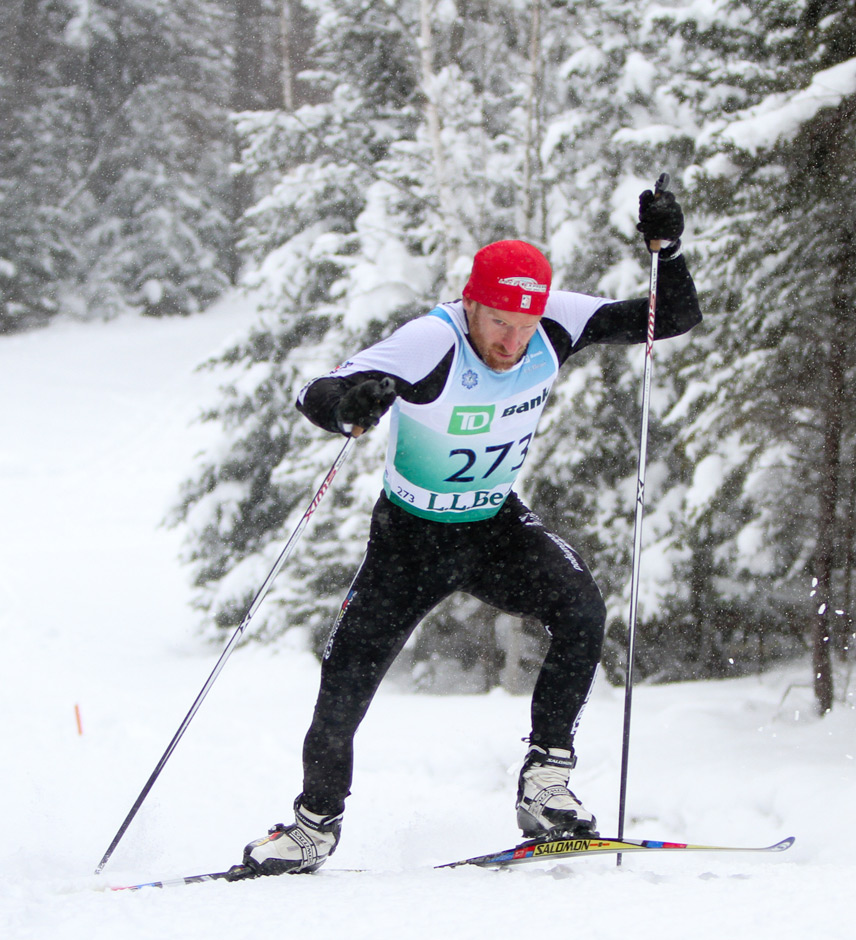
    15k Freestyle Lake Placid Super Tour (click to see the evil eye) Photo Credit: Fasterskier.com
    Originally I planned to fly back to the Midwest after US Nationals in Maine, however the Super Tour series was headed to Lake Placid along with a good portion of the skiers headed to World Championships. I didn’t want to miss it.
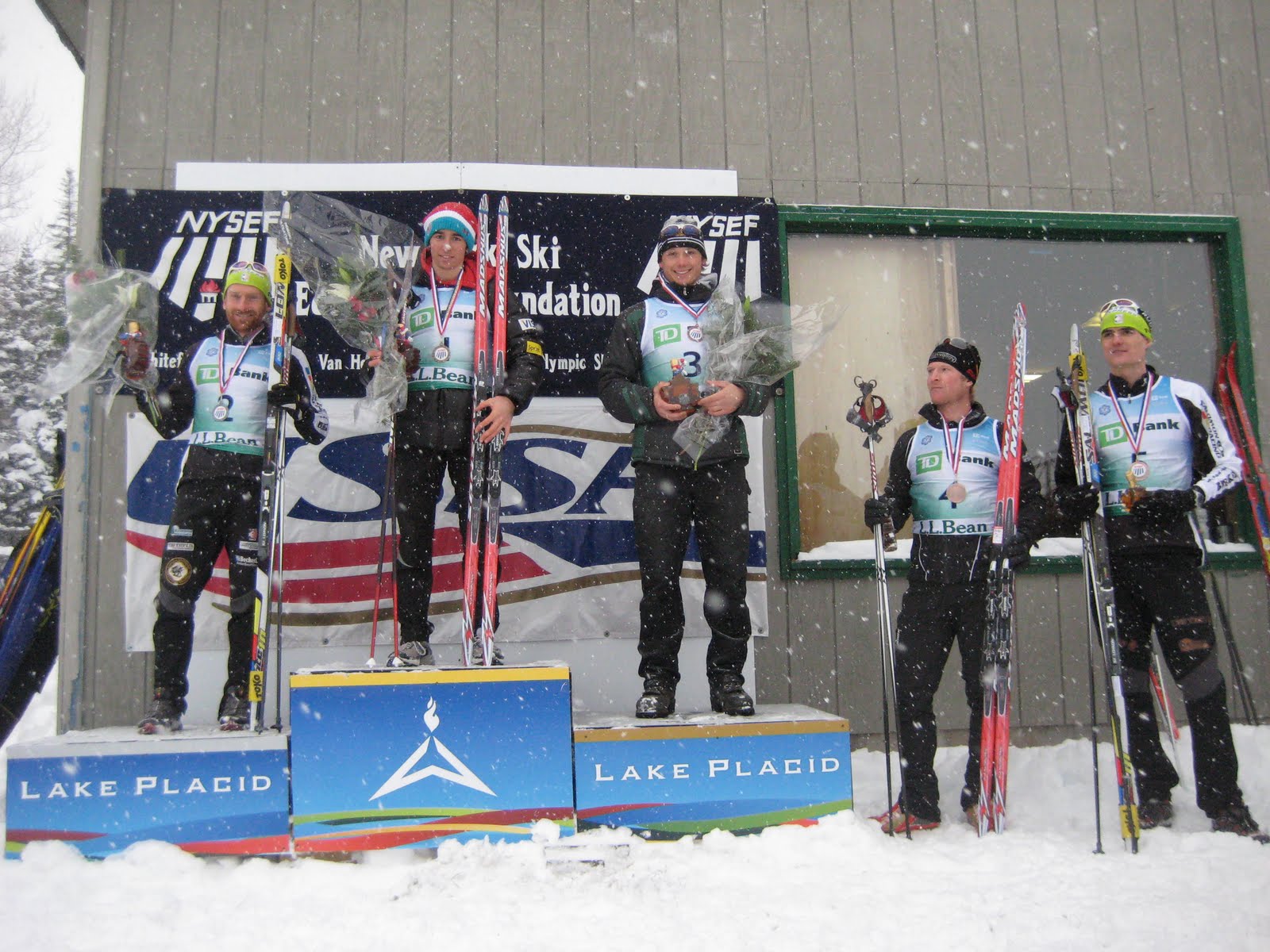
    Men’s 15k Freestyle Podium
    Each fall I have traveled to Lake Placid with my teammates for our hardest training camp of the year. It was fun to see snow on the ground and check out the ski trails from the 1980 Olympics. Although I have been ski racing a long time it is still very exciting for me to experience a new venue, plus I love to race.
  • 67 Days On The Road

    I left Hayward, WI 67 days ago on November 11th to travel to 7 different training/racing venues and compete in 7 races. Today I flew back to the Midwest and tomorrow I am headed home to unpack my bags and recharge for a few days. Minneapolis has more snow than I have ever seen here and I am looking forward to skiing in the Midwest for a few weeks.
    15k Freestyle Lake Placid Super Tour (click to see the evil eye) Photo Credit: Fasterskier.com
    Originally I planned to fly back to the Midwest after US Nationals in Maine, however the Super Tour series was headed to Lake Placid along with a good portion of the skiers headed to World Championships. I didn’t want to miss it.
    Men’s 15k Freestyle Podium
    Each fall I have traveled to Lake Placid with my teammates for our hardest training camp of the year. It was fun to see snow on the ground and check out the ski trails from the 1980 Olympics. Although I have been ski racing a long time it is still very exciting for me to experience a new venue, plus I love to race.
  • 67 Days On The Road

    I left Hayward, WI 67 days ago on November 11th to travel to 7 different training/racing venues and compete in 7 races. Today I flew back to the Midwest and tomorrow I am headed home to unpack my bags and recharge for a few days. Minneapolis has more snow than I have ever seen here and I am looking forward to skiing in the Midwest for a few weeks.
    15k Freestyle Lake Placid Super Tour (click to see the evil eye) Photo Credit: Fasterskier.com
    Originally I planned to fly back to the Midwest after US Nationals in Maine, however the Super Tour series was headed to Lake Placid along with a good portion of the skiers headed to World Championships. I didn’t want to miss it.
    Men’s 15k Freestyle Podium
    Each fall I have traveled to Lake Placid with my teammates for our hardest training camp of the year. It was fun to see snow on the ground and check out the ski trails from the 1980 Olympics. Although I have been ski racing a long time it is still very exciting for me to experience a new venue, plus I love to race.
  • 67 Days On The Road

    I left Hayward, WI 67 days ago on November 11th to travel to 7 different training/racing venues and compete in 7 races. Today I flew back to the Midwest and tomorrow I am headed home to unpack my bags and recharge for a few days. Minneapolis has more snow than I have ever seen here and I am looking forward to skiing in the Midwest for a few weeks.
    15k Freestyle Lake Placid Super Tour (click to see the evil eye) Photo Credit: Fasterskier.com
    Originally I planned to fly back to the Midwest after US Nationals in Maine, however the Super Tour series was headed to Lake Placid along with a good portion of the skiers headed to World Championships. I didn’t want to miss it.
    Men’s 15k Freestyle Podium
    Each fall I have traveled to Lake Placid with my teammates for our hardest training camp of the year. It was fun to see snow on the ground and check out the ski trails from the 1980 Olympics. Although I have been ski racing a long time it is still very exciting for me to experience a new venue, plus I love to race.
  • Things Improve at Lake Placid

    Check out the the evil eye.

    Here is a picture from faster skier.  With more snow and a podium finish, I felt it was a good end to my skiing on the east coast.   The 15k skate race was my best Continental Cup (Super Tour) of the year.   The course was quite flat, with only several steep short climbs, and a seemingly endless section of gradual twisty terrain. There was little rest and transitions aplenty.   We did three laps, me and 200 other skiers, and I tried to keep the same pace on all three.   13:03, 13:21, and 13:21.  Close!   skate results

    The classic race the day before was on another course involving a steep ‘interval like’ climb literally from the bottom to the top of the Lake Placid Olympic jumps.  Five laps on a 2 K course.   Classic results 

    Thanks to the waxing help from Janice Sibilla, the competitive Programs Director for the New England Nordic Ski Assoc.

     Heading back to the midwest for some better snow and local races.

  • Race Snapshot: IBU WC 5 Pursuit

    A pretty good day for Lowell Bailey and a decent race for Laura Spector. And of course more good racing from the Berger family.

    Related posts:

    1. <Race Snapshot: IBU WC 1 Men/Women’s Pursuit
    2. <Race Snapshot: IBU WC 2 Men’s Pursuit
    3. <Race Snapshot: IBU WC 2 Women’s Pursuit


  • Seefeld Individual #2 29th place

    Today was the best result of the season so far. I know that I can do much much better but I will settle for points right now, Having two decent racing and some of my best jumping of the year, I feel like things are going up towards world championships. I was really happy with my jumping today as I was my longest jump on the hill in competition and I had some pretty tough wind as well. I knew the cross county was going to hard, but I tried my best to stay toward the front of the packs the best as possible! I had some very fast skiers behind me so I wanted to make sure I could stay with them as long as possible!

    Tomorrow I am off to Harrachov, Czech Republic for the last competitions before world championships. I will try to keep this same level and try to improve a little but not expect to much

  • Finland, Estonia, France, Norway, OSLO!!!!


    Wow, its time for the Championships!! From here on out, its the big stuff. After finishing my first block of preparation races, I am now headed into the european block of racing. Right now I am sitting in the Portland, Maine airport waiting to start my journey to Helsinki, Finland for a preparation training camp before U23 World Champs. It’s a bit sad to split from my team after living in close quarters with them for the past 10 weeks- but also fun to see them all go their different directions for racing as well. Some of them I will meet up with as soon as U23’s, and others I will reunite with in Oslo for World Champs

    This year, U23’s and World Juniors take place in Otepaa, Estonia. The fun part is there is a World Cup the weekend before, so by the time we arrive- organizers will have everything nice and dialed, and courses will be perfectly skid in! This years group of US racers is a unique bunch. This will be my sixth year going on this World Junior/U23 trip, and this is by far the strongest bunch I have headed over with. I think there are great things that could happen- which is super fun to go into the Championships feeling like! I will be meeting up with several of my teammates, Reese Hanneman, Kinzie Loan, and Becca Rorabough overseas- which is super fun!
    After US Nationals I got the word that I qualified for the World Champ team in Oslo, which is SUPER exciting. It has been a goal sitting in the back side of my head all summer and fall, but with the new program switch I wasn’t sure how it was all going to work out. I couldn’t be happier though, and I am super fired up to get into my first big race! All my norwegian buddies keep telling me that is is going to be the race I remember for the rest of my life. Oslo is the center for nordic skiing, so having the World Champs there sounds like it is going to be quite the celebration! I can’t wait!! I will also be accompanied by my teammates Kikkan Randall (who just won a world cup yesterday), Lars Flora, and Holly Brooks as well as my coach, Erik! Wahoooo!
    Wrapping up my US Tour and moving onto my European Tour- here we go!! Time to board the plane!!

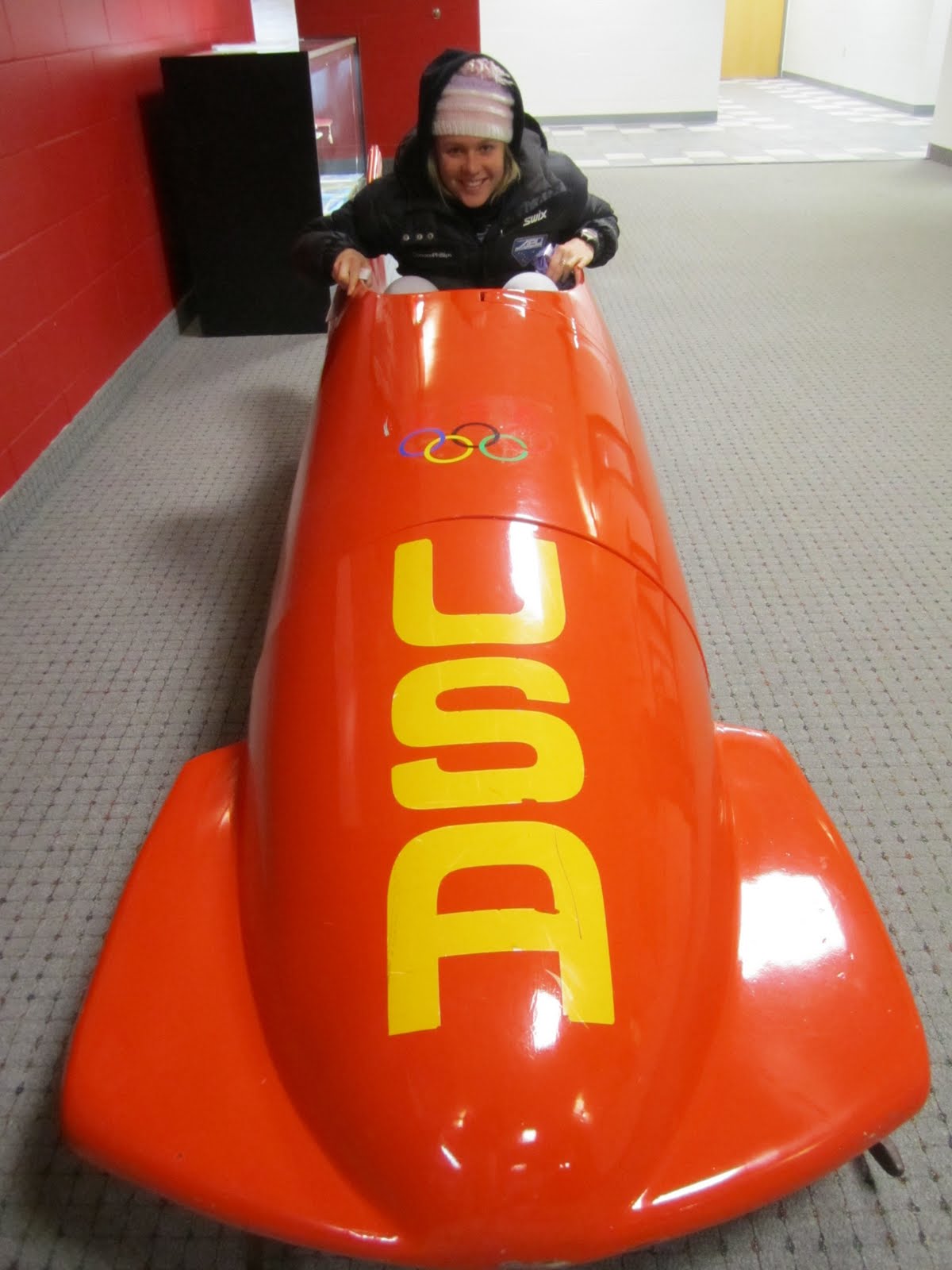
    Living it up in the Olympic Training Center

    Womans Team departs Maine

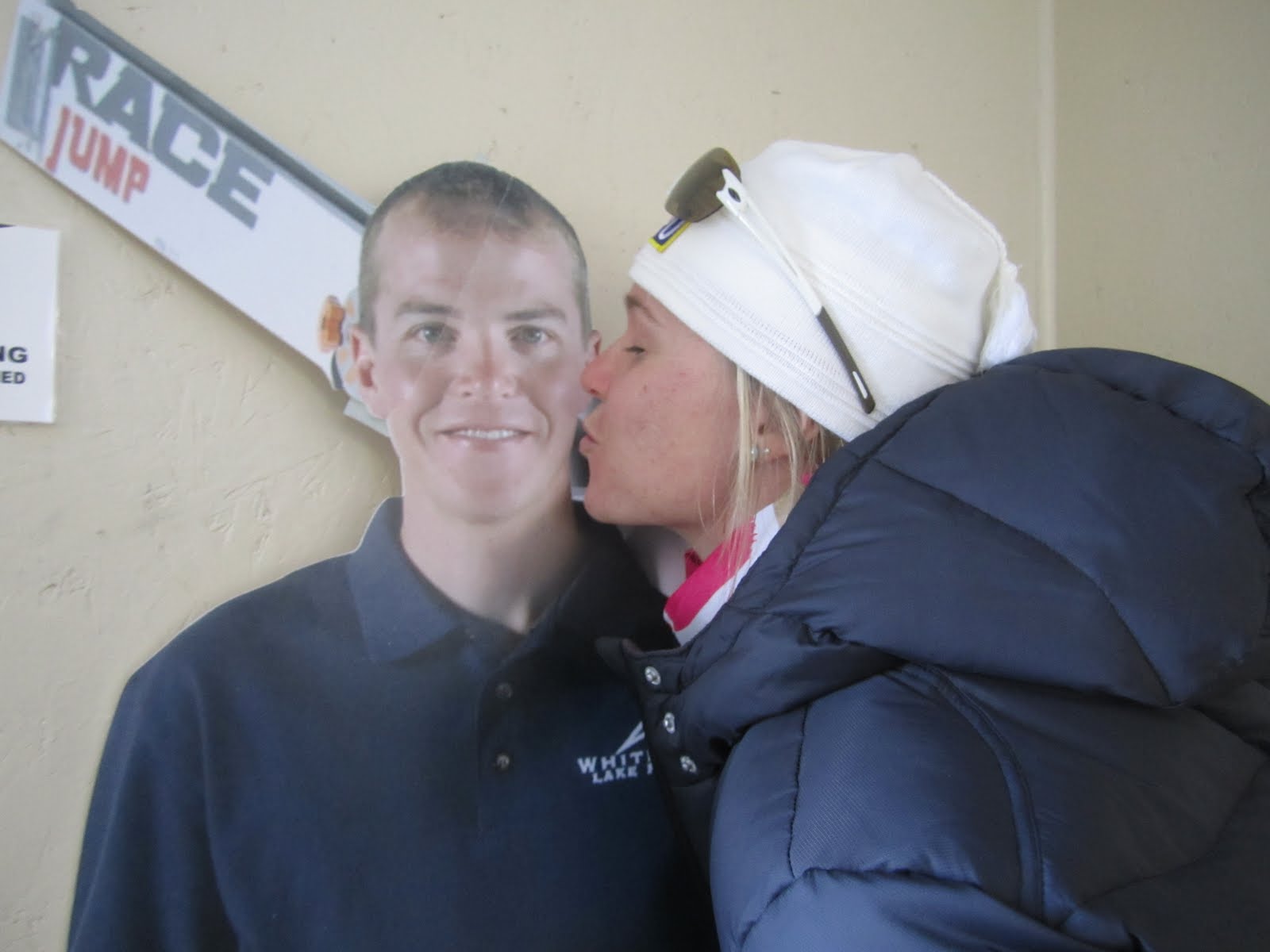
    One last minute good luck kiss from Olympic Medalist, Billy Demong
  • Liberec, Czech

    I made the trip over the pond to Liberec, Czech last monday to race the WC Skate sprint. I did not feel very good coming into this race. I was healthy, but the jet lag hit me hard this time. My legs had no snap. I could feel it all week and especially during the qualifier. I’ve had this happen to me in the past. Last year a week before U23’s I had “jet lag legs” in a race. I had one of the worst races of my life, and then just a week later my snap was back for the U23’s. I find that it takes my body between 7-10 days to fully recover from the travel from Canada. I qualified 42nd here in Liberec and I was around 1.5 seconds from the top 30.
    In the future I have to try and arrive in Europe a little earlier than this time. I am really looking forward to the next World Cup next weekend in ESTONIA! my bus leaves in 15 minutes, I am on my way to Prague for the night and then a full travel day tomorrow. Prague-Munich-Helsinki-5 hour layover-Tallinn-3hour drive to Otepää. Its going to be a long day.

  • Liberec, Czech

    I made the trip over the pond to Liberec, Czech last monday to race the WC Skate sprint. I did not feel very good coming into this race. I was healthy, but the jet lag hit me hard this time. My legs had no snap. I could feel it all week and especially during the qualifier. I’ve had this happen to me in the past. Last year a week before U23’s I had “jet lag legs” in a race. I had one of the worst races of my life, and then just a week later my snap was back for the U23’s. I find that it takes my body between 7-10 days to fully recover from the travel from Canada. I qualified 42nd here in Liberec and I was around 1.5 seconds from the top 30.
    In the future I have to try and arrive in Europe a little earlier than this time. I am really looking forward to the next World Cup next weekend in ESTONIA! my bus leaves in 15 minutes, I am on my way to Prague for the night and then a full travel day tomorrow. Prague-Munich-Helsinki-5 hour layover-Tallinn-3hour drive to Otepää. Its going to be a long day.

  • Liberec, Czech

    I made the trip over the pond to Liberec, Czech last monday to race the WC Skate sprint. I did not feel very good coming into this race. I was healthy, but the jet lag hit me hard this time. My legs had no snap. I could feel it all week and especially during the qualifier. I’ve had this happen to me in the past. Last year a week before U23’s I had “jet lag legs” in a race. I had one of the worst races of my life, and then just a week later my snap was back for the U23’s. I find that it takes my body between 7-10 days to fully recover from the travel from Canada. I qualified 42nd here in Liberec and I was around 1.5 seconds from the top 30.
    In the future I have to try and arrive in Europe a little earlier than this time. I am really looking forward to the next World Cup next weekend in ESTONIA! my bus leaves in 15 minutes, I am on my way to Prague for the night and then a full travel day tomorrow. Prague-Munich-Helsinki-5 hour layover-Tallinn-3hour drive to Otepää. Its going to be a long day.