Category: XCFeeds

A collection of live feeds from cross-country ski blogs around the web.
  • Grass Skiing Speeds โ€“ Aaand, weโ€™re back!

    Campus lit up again on Thursday as skiers came back to school. ย Thursday AM started out with a distance DP workout from school, and Thursday PM we jogged over to Pine Hill for a an exceptional speed workout:

    Grass Skiing 10/19/12 from Gould Nordic on Vimeo.

    SJames cruising down the hill.

    Friday will be an easy day with the XC team, and our last regular season race at Kent’s Hill on Sunday.

  • Nikkiโ€™s Adventure

    Last Spring Dan Josephson sent me some skis for grinding, including a pair of Nikki Caulfield’s skis. There was also an email making note of some gouges on Nikki’s skis, and a note saying “Donโ€™t worry about these too much, they were made by a hatchet.” Well, I had to ask for the story behind that, and what follows is Nikki’s account of her experience at the Norwegian Birkebeiner.

    But before Nikki’s story, I’ll make add a brief note: This gets pretty grim, and honestly it doesn’t sound too fun! I think that Cross Country skiers are set-apart from other people by their response to adversity. Suffering is just suffering. Staying with it, and coming back for more is what characterizes our population. With few exceptions, cross country skiers are the people you want with you when you do something really challenging. Thanks for sharing this Nikki!

    Nikki’s Adventure:
    First off, Iโ€™d just like to say this was really quite an experience. 14,500 skiers is a LOT of skiers. Each wave had about 700+ people in it, and as Dan very aptly observed โ€œThe first 3 kilometers were deafening with the sound of swishing skisโ€. Itโ€™s at about the 3 kilometer mark that the four Detroit Lakes skiers stories start to vary. Dr. Bob (Koshnick) who went out in Wave One reported great snow conditions that stayed relatively constant for his whole race. Dan was in Wave 8, which went out one hour and forty minutes later in significantly warmer temps (we started out around freezing that morning and just got warmer from there). I went out in Wave 14 (4,200 skiers later) and Dr. Jonasson was in Wave 16- (or about 1,400 skiers later).

    The course winds up and over two mountains, with fairly significant elevation changes- which means that temps and snow conditions were constantly changing during the race making for some *cough cough* super fun waxing conditions. Too cold and you would get no kick, too warm and youโ€™ll ice up.

    For the first 3k everyone reported pretty good trails and proper waxing, but after that it started to fall apart. I had my first โ€œice upโ€ at about 3.5 -4k. I had great kick and glide before that, but all of the sudden (literally in a matter of seconds) the snow changed and it felt like my skis each weighed 80 kilos and my glide came to a dead halt. I got off the track and pulled my skis off- to find about 2-3โ€ of solid ice on my kick zone. Having never seen this before I didnโ€™t really know what to do with it, so I pulled my pole off and used it to chip the ice off the bottom of my ski. Having gotten most of it off I set off againโ€ฆ only to ice up again within about .5 k. Talk about frustrating! I found some other wax and put a little on which helped for a bitโ€ฆ until the trails went to mush. There wasnโ€™t much for tracks left for a bit when the trail narrowed, so it felt a little more like back country skiing. Oh, and have I mentioned the trail hasnโ€™t gone DOWN yet? Itโ€™s almost 15k of upโ€ฆ and not so steep that you have to herringbone, you just have to stride the entire thing without stopping. The funny thing is youโ€™d think you were at the top because you couldnโ€™t see anything higher, then youโ€™d round a corner and magically be going up again!

    So, I FINALLY got to the first feed station about 12k in. I thought Iโ€™d never get there, and quite frankly was NOT having a good time at that point. But it was only 3 more kilometers of up and then it was down. (Seriously, I would have ditched the baby by now.)

    And the first downhill you get (15k in) is a killer. Fairly steep, I think all 4 of us DL folks crashed on it. The other three had someone step in front of them and chose to fall rather than hit them and I iced up (again!) going down the hill. The tracks are also about 4-6โ€ wide at this point so your skis would wobble in them and clatter all the way down. Iโ€™ve got some good bruises from this tumble. A ski patroller helped me de-iceโ€ฆ with a hatchet. I about peed my pants when he whipped out a hatchet and used it to scrape snow from my skis- turns out it’s pretty effective.

    Then there were some nice long gradual kilometers of down- a nice break. But the snow conditions completely changed yet again going down and I lost any kick that I had. (Yep, from iced up to no kick at all). But at least I could double pole so I was still moving. Then it flattened out between the mountainsโ€ฆ and it was completely flat for what seemed like forever. Until it was up again. Up up up up and away – much steeper this time to the second peak. The Swix wax guys never did much to help, and when I asked what I should do with my wax I got a blank look. The best people who helped were some Norwegians who came out to watch the race and were sitting on the side- they asked if I needed help so I said yes. Immediately they started running out of their little snow dugout thing where they were sitting with wax, klister, scrapers โ€ฆ and an 8โ€ knife, which was used to peel the layers of incorrect wax off my skis. They did their best to get me on my way and offered me some doughnutsโ€ฆ but first I had to take a picture with them (The picture below is one they emailed to me) Amazing how different the spectators are in Norway from the American race.

    Here is where my adventure splits from everyone else’s. I started icing up again pretty badly going up (I couldn’t win…it was ice or nothing), and a ski patroller stopped me and said I shouldnโ€™t keep going with my skis as bad as they were because I was going to get hurt. No no, I insisted I was OK and I was going to finish. (Stubborn Nikki, my alter-ego, made an appearance). Well, turns out the ski patroller was right. At about 35k I iced up on a hill and couldnโ€™t get down the other side. While trying to go down with ice on my skis I came to a dead halt, flipped over backwards and popped my left shoulder out of itโ€™s socket. (Donโ€™t get alarmed, this happens a lot.) Due to the pack I had on and my pole and possibly a slightly worse dislocation than normal (ha ha) I had to have help to put it back in. But againโ€ฆ I wasnโ€™t going to quit. I could just use my right pole and I was going to be fine.

    At this point I felt like I was reenacting the โ€œBring Out Your Deadโ€ scene from Monty Python and the Holy Grail with the ski patrollers. โ€œBut I donโ€™t want to go on the cart!โ€ โ€œโ€Nonsense, youโ€™ll be dead in a moment.โ€ โ€œI feel happyโ€ฆ I feel happyโ€ฆโ€

    But at 40k they said no more and put me on a snowmobile to be hauled in. (The guy who picked me up was also the one who helped me fix my armโ€ฆ he said I had more heart than he had ever seen out there, which I guess was some small consolation, but it doesn’t replace being allowed to finish.) So they brought me to a feed stationโ€ฆ and dropped me off.

    The lady who dropped me off said “thereโ€™s a bus waiting and the driver knows youโ€™re coming so heโ€™s waiting for you. Itโ€™s over thereโ€ This was followed by some vague pointing down a hill. So I picked up my stuff and started walking down a slippery road down a hillโ€ฆ. Right into a residential area. (Only fell once, thankfully didnโ€™t get hurt againโ€ฆ) Only to find no bus. Thankfully some friendly (too friendly?) drunk Norwegians pointed me in the right direction. So I found the bus stopโ€ฆ and thereโ€™s no bus. Itโ€™s now about 5:30 PM and I was apparently the last person pulled from the course.

    Again, thankfully Norwegians are the nicest people ever and I made a friend at the bus stop. He (I feel terrible, I couldnโ€™t pronounce his name and I have no idea how it would be spelledโ€ฆ so weโ€™ll call him Bus Friend.) helped me get my jacket on since it was starting to get cold, and then got me onto a city bus by sweet talking the bus driver into letting me ride. Now, this was not the bus I was supposed to take but after waiting 20 minute I didnโ€™t think there would be another one and being stranded on the mountain above Lillehammer didn’t sound fun.

    Anyways Bus Friend was great- and we had a good laugh at my predicament. No phone, didnโ€™t know Marthaโ€™s phone number, no money and donโ€™t speak Norwegian. (Really, at that point what else can you do but laugh?) He also skied so told me how my skis should have been waxed. He really wanted to try and call Martha to let her know where I was, but I had no idea what her number was. โ€œWellโ€ he said with a shrug โ€œShit happensโ€. Either way, he got me to Lillehammerโ€™s city bus stop which was a lot better than being stranded in some village on the mountain.

    He then pointed me up to Haakonโ€™s Hall and off I went, only to find Dan and Martha werenโ€™t there and there were no buses up to the finish line area a few kilometers away. They were frantically looking for me (itโ€™s almost 8 PM by this point) at the Birkebeiner Stadium where injured skiers were brought in or waiting to see if by some miracle I was still skiing and would come across the finish. The medics had no record of who was pulled off the course- and no idea that I wasnโ€™t in because my timing chip was still running. The bus driver who took off without me apparently never let anyone know I hadnโ€™t shown up at the bus stop. (Thankfully I didnโ€™t break a leg on my slip walking there, or Iโ€™d have been toast.) So basically no one had any idea where I was, or if I was dead on the side of the trail somewhere. I made another friend at Haakonโ€™s Hall who called all the stations at the Stadium to see if someone was looking for me (they had talked to EVERYONE at the Staduim) but no one said there were two Americans looking for their third. He then went out and looked for our rental car in all the parking lots to no avail. Finally Dan and Martha decided to check Haakonโ€™s Hall back in Lillehammer properโ€ฆ which I have never been so happy to see anyone in my life.

    We all made itโ€ฆ though it was a little tramautic at the end! Dan said the last 14k of downhill was brutal – total mush and the tracks were totally chopped up. Dr. Bob also had issues with his binding coming downโ€ฆ so no one really had the race they wanted to. But either way, the people were wonderful and it is a very different event from the American Birkie. Will I go back? Absoultely! As our host said, I need to have my revenge on the course!

  • Crazy Travel

    Iย traveledย with teammate Tad Elliott from Park City to Canmore, Alberta, Canada today. Because of our limited budget, we didn’t have the best itinerary. We flew from Salt Lake City to Phoenix, Arizona. We got nice views of the Grand Canyon:

    And Lake Powell:

    On the way from Phoenix to Calgary we flew directly over Salt Lake City! I looked out the window and saw Park City!

    The rest of the team was on a direct flight. They left after us and arrived before us.

    Once we got to Calgary, we had an hour and fifteen minute drive to Canmore. It is a beautiful drive from the great plains into the Canadian Rockies.

  • Scraper Sharpener

    We’ve got a small shipment of scraper sharpeners in the shop. I tend to get excited by simple, high quality tools, and this thing makes the grade. It’s absurdly expensive, at $70, but it’s one of the tools I value most highly. A sharp, clean plastic scraper is the keyย  good and fast waxing. You can’t make a plastic scraper too sharp – just like you can’t make a chef’s knife too sharp. A sharp plastic scraper won’t damage the ski base unless you take a dive off the edge with it. Don’t do that!

    I got so excited that I made a special instructional video onย how to use your fancy expensive scraper sharpener.

  • D-Pole Distance Ski

     We took advantage of the nice warm weather today for our classic easy distance ski.

     Most of the boys skied from the iron bridge near Jamaica up through Wardsboro to Stratton, while the girls started below Stratton and skied down to Wardsboro and back.

     There was a nice breeze which encouraged drafting.

     The girls at their turn around.

     The boys cruise up through town, led by Jordan and Paddy.

    Tyler and Calvin.
    Tomorrow we have an xc running race so most people kept today under an hour and a half. The group looks good :).

  • Park City Camp

    The last fifteen days I’ve been training and living in Park City, Utah with the U.S. Ski Team. It has probably been the best camp I’ve had this year. The weather and training venue has been a really nice change, not that I don’t love the Anchorage hurricanes. Those are fun too! While I was here I got to do lots of fun things likeโ€ฆ.

    Photo shoot–>

    The first picture is the 2012-2013 United States Ski Team, the second one is my headshot for the year.
    We got several chances to go hard and test ourselves against our teammates. Out of the seven guys on the US Ski Team three of them have posted top 5 finishes at a World Cup event. I’m not one of those guys but I figure if I train with them enough and steal some of their tricks and skills maybe I can get myself on the World Cup podium sometimes soon! ๐Ÿ™‚
    Here is a couple videos from training—>

    The first video is of us doing a skate roller ski workout on the 2002 Olympic course. These paved trails are pretty similar to the trails we will be using for the National Championships this year. The second video is of us doing a bounding workout, we use the poles to try and simulate skiing. 
    I also got to room with one of the most successful cross country skiers in the U.S., Kris Freeman. This guys is a bad*ss and a super nice guy. I may have a poster of him in my room at home, it is inspiring but the real version is even more inspiring. The guy is a diabetic which makes his accomplishments even more impressive. He works with a lot of diabetic kids which is awesome! One day I heard him talking on the phone with a girl in high school who is running cross country, he was helping her prepare for her next race. It sounded super technical, I can’t imagine having to add this obstacle to the mix. 
    Here is a picture of Kris Freeman in the 2006 Olympics and a picture of him on the cover of Outside magazine–>

    I also just finished up two of my classes at Alaska Pacific University. I take all of my classes online which is really helpful, it allows me to keep up on my schooling while on the road. I had my finals mid way through this training camp so there were more then a couple very late night study sessions.
    Here is a picture of me getting my studying on—>

    We also got to do some physical testing while we were here. So far I have been tested four times by the US Ski Team sports science crew. The tests went pretty good for me. I’m recovering from a pretty serious virus so I was a little nervous my results weren’t going to be better then they were in May. Overall I had a pretty serious jump in my skating, my double pole and classic had a small improvement. My goal this year was to improve my motor and to improve my skating technique, I feel I accomplished both. My max strength test showed that I’m a little bit weaker but I have to take into account that I lost a little weight. My goal for the next couple months is to improve power and strength.
    Here is a picture of me getting tested on treadmill—>

    Getting sent off the back when can’t keep the pace up.
    All in all it was just a super fun camp, I really like training with this group of guys and the coaches are great! Now i’m headed back to Alaska, a little later then expected after a cancelled flight but I’m starting to get pretty use to the airline companies messing up. Snow in AK, I’m so excited to strap some skis on and glide around. Racing is getting so close.
    Here are a couple more pictures from the camp—>

    Myself on the right and teammate and one of my best friends, Skyler Davis on the left. This guy is in good shape, watch out!

     Photo credit: Robert Whitney

      Photo credit: Robert Whitney

      Photo credit: Robert Whitney

      Photo credit: Robert Whitney

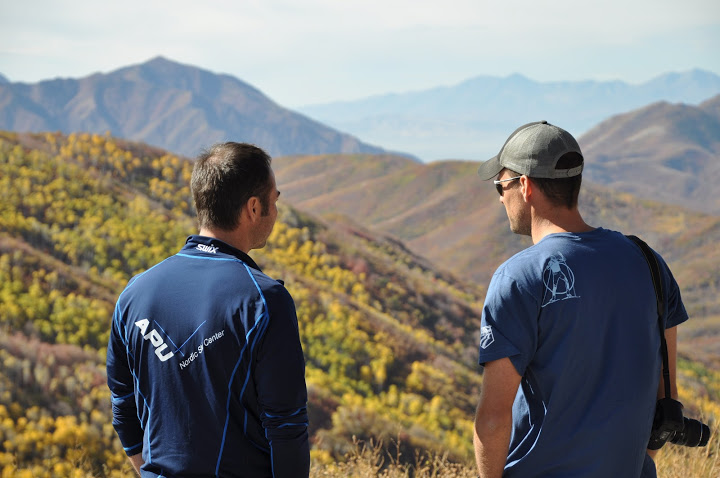
    Erik Flora APU coach(left) Matt Whitcomb USST coach (right) Photo credit: Robert Whitney
  • Best Season Ever: Distance

    Well, ok, not ever. ย Just over the past 20 seasons or so.

    There are all sorts of different ways we could measure this. ย First, some ground rules: I’m only going to look at actual World Cup races, no Olympics or World Championships. ย I’m also excluding Tour de Ski events because these are my rules, so I get to make them up. ย Seriously, though, I think Olympic and World Championship races should count differently (i.e. more), so later on I’ll redo this but in a weighted fashion.

    I’m not going to just single out a skier’s top five races, either. ย If you’re going be considered for a “best season ever” prize, we’re not going to ignore a handful bad races! ย Also, you must to have done at least 5 races for your season to count.

    I’m going to use three different measures: average FIS points, average finishing place and the proportion of victories. ย Generally, they all track each other nearly identically, so the point isn’t to compare/contrast between them. ย Rather, having all three gives us a fuller picture of each season.

    First let’s look at data for everyone:

    That’s everyone in my database over 19 seasons, every season with at least 5 starts. ย As you can see, average rank and average FIS points track each other pretty well. ย Interestingly, the people with the worst seasons are the ones with the fewest number of races, in general. ย This probably just reflects the fact that if you aren’t getting more than 5-6 WC starts in a season, chances are it’s because you actually aren’t terribly fast. ย There are exceptions, of course.

    Let’s focus in on the top ten seasons for men and women, as ranked by average FIS points (the ranking hardly changes at all if you use average finishing place).

    Name Nation Season Avg Rank Avg Points Win Pct Num of Races
    ELOFSSON Per SWE 2000-2001 2.333 2.581 0.667 9
    DAEHLIE Bjoern NOR 1998-1999 1.889 2.839 0.556 9
    SOMMERFELDT Rene GER 2003-2004 4.438 4.764 0.125 16
    DAEHLIE Bjoern NOR 1995-1996 1.929 4.943 0.429 14
    FREDRIKSSON Mathias SWE 2002-2003 4.077 5.05 0.308 13
    BAUER Lukas CZE 2002-2003 5.5 5.979 0.125 8
    ULVANG Vegard NOR 1991-1992 2.375 6.992 0.375 8
    DAEHLIE Bjoern NOR 1991-1992 3.75 7.085 0.5 8
    ANGERER Tobias GER 2006-2007 4.222 7.286 0.333 9
    ALSGAARD Thomas NOR 2001-2002 4.455 7.385 0.273 11
    Name Nation Season Avg Rank Avg Points Win Pct Num of Races
    SKARI MARTINSEN Bente NOR 2002-2003 1.75 0.862 0.833 12
    BJOERGEN Marit NOR 2004-2005 2 3.383 0.556 9
    VAELBE Elena RUS 1994-1995 2.636 3.399 0.727 11
    NEUMANNOVA Katerina CZE 2003-2004 3.143 4.5 0.571 7
    BJOERGEN Marit NOR 2010-2011 1.818 5.685 0.727 11
    BJOERGEN Marit NOR 2009-2010 2.111 6.24 0.444 9
    KOWALCZYK Justyna POL 2008-2009 3.917 6.833 0.333 12
    VAELBE Elena RUS 1992-1993 2.556 7.501 0.222 9
    LAZUTINA Larissa RUS 1997-1998 3.556 7.624 0.444 9
    BJOERGEN Marit NOR 2011-2012 1.929 7.651 0.5 14

    Not surprisingly, several names appear multiple times on each list. ย Bjoern Daehlie had a lot of dominant season, but man, I remember Per Elofsson in 2000-2001. ย Well, not personally. ย But I do remember that he was pretty unbeatable.

    When it comes to dominating performances, though, we all have to tip our hats to Bente Skari Martinsen and her 2002-2003 season, which is considerably better than the other top seasons among the women.

    One interesting aspect of these tables is how low the win percentage is. ย That’s just the proportion of races they won. ย There are a few high values, notably Bente Skari Martinsen, Elena Vaelbe (1994-1995), Elofsson (2000-2001), Neumannova (2003-2004) and Bjoergen (2004-2005). ย But many of these seasons (and remember, these are “best season ever” candidates) involve a skier winning less than half their races. ย This should highlight how difficult it is for skiers, even the very best skiers, to win on any given day.

    Finally, since I can’t leave you with boring tables (even if they are sortable), here’s a graph of some of the top seasons in both dimensions: rank and FIS points.

    The overplotting makes the names hard to read at times, but if you squint you can make a lot of them out.

    As for who actually wins, I’m going to skip picking a men’s and women’s winner and just say that Bente Skari Martinsen’s 2002-2003 season was pretty frickin’ incredible. ย She opened the season with an 8th (9.73 FIS points) in a 5km skate race and her second to last race was a 3rd (0.61 FIS points) in a 10km skate. ย But she won every other WC that year.


    Related posts:

    1. <Most Unimproved Men: Distance
    2. <Most Unimproved Women: Distance
    3. <Is It Panic Time For The Norwegian Men’s Distance Skiers?


  • Scenes from the Road: Ramsau am Dachstein Edition

    Ramsau am Dachstein in Pictures

    For the second year in a row, I’m spending the last weeks of October with Team Sjusjoen in the Austrian mountain town of Ramsau. It’s a tiny town about a half-hour outside Salzburg, Austria (think Mozart’s hometown), but awell-traveled location in the cross-country ski world. This is for several reasons. The rolling valley offers great trails for both relaxed skiing and tough efforts on their World Cup courses. Full-pension hotels are everywhere here, and the price is reasonable (40-50 euros a night), especially so for European. And perhaps the most important reason – there’s plentiful snow come wintertime. And, thanks to the Dachstein Glacier that sits up among the clouds in this picture, there’s skiing year round.

    The boys of Team Sjusjoen take a quick break near the end of an afternoon skate session on the glacier. After a pretty epic snowstorm – for October standards, anyways – the sun’s back out, and the track is in incredible shape. We share the trails with perhaps 400 other skiers on the busy days. Riding the gondola up the thousand meters to the glacier is to hear more languages in a confined space than I’ve ever heard. It’s almost like a UN conference of cross-country skiers. 

    Yeah, it’s worth the visit to Ramsau if you’ve ever thought of skiing Europe. The alpine skiing isn’t too bad either. Schladming, which sits ten kilometers in the valley floor below, will be home to the 2013 World Championships in Alpine skiing. I’m sure the town will be absolutely off the hook. Much more than anything, Austrians love alpine skiing. 

    This picture comes from a small hiking trail near our hotel, the Turlwandhutte, that sits right next to the gondola base. This makes getting the first ride to the glacier that leaves promptly at 7:50 a little easier.
    Well, I guess that’s all I have for you this time. I’m sure with a place like this, though, you’ll hear (and see) a little bit more from me in the near future. Until then, Viel SpaรŸ!
  • Packed

    This morning I went on a three hour run with my teammates Simi Hamilton, Andy Newell, and Tad Elliott as well as Alaska Pacific University skier Pete Kling and Stratton Mountain School’s Erik Packer. We took it easy and chatted the whole workout.

    This afternoon I had to pack everything, move out of and clean my room. I won’t be back in Park City until the spring.

    My awesome mom took the train out to Park City on Monday. She is going to drive my car home for me so I can fly straight back to Colorado after camp. I am so lucky that she is so generous. My car is quite full for her.

    Today was Lindsey Adam’s (the daughter of the family I live with here in Park City’s) birthday. We had a great sushi dinner and a small birthday party.

    Tomorrow morning I’m off to Canmore, Alberta for the second half of the US Ski Team camp.

  • US Ski Team Fundraiser

    This evening Mike Engel, a very generous US Ski Team supporter, hosted a fundraiser to give Nordic enthusiasts a chance to show their support for the US Cross Country Ski Team.

    My teammate Kikkan Randall brought her world cup sprint globe to the party and made an inspired plea for support. I was very impressed by her poise and professionalism. There were lots of photo ops for the supporters.

    On the workout side of things, we did a skate roller ski intensity session this morning at Soldier Hollow. The workout included 5 by 12 minutes at threshold (a pace you can sustain for at least an hour). Each interval included two all-out sprints to imitate the bonus sprints common in World Cup races. It was a good, hard workout. Here is video of the session:

    This afternoon I ran for an hour then did my core strength routine. Most of the team was in the gym doing strength.

  • Creating a Team – some ideas for working with 12-13 year olds

    Taking the Time to frame ‘Team’ with T1/2 athletes

    Kids are so ready to take an active part in sharing their ideas, in creating a team, in owning what its going to be about – when you give them the chance to contribute and put their ideas at the centre, they really run with it.   When building a team, there are lots of things to consider – helping kids to own their own experience, to buy in, to do something because its important to them – these are important roles of a coach of adolescent cross country skiers.

    Framing what ‘team’ means is a balance of many things in an individual sport like cross country skiing.  Focusing on social norms is important in creating a culture where kids strive to learn and to be their best. Creating some expectations around what coaches expect of kids is important, and giving kids a voice to express what they expect from coaches helps to create boundaries and helps to paint a picture in kids’ minds about what is important when they are at practice.

    I am the lead coach with the T1/2 group at Canmore Nordic Ski Club. We recently engaged in such a session – 20 minutes well spent where kids answered four questions to help them create some group norms about expectations of each other, of coaches, and of themselves.  These young athletes were asked to write individual responses on sticky notes and then stick them to the questions which were posted on the wall.  Here are the questions and the responses from the athletes:

    What is important to our T1/2 team?

    – strength and fitness and racing
    – have fun, be positive, no bragging about races, dont distract team mates when coach is talking
    – having fun, being nice to each other
    – being a good team mate
    – dont complain (too much)
    – work together
    – no bragging, be encouraging, dont put other people down, be nice, have fun, be awesome
    – have fun, get along, be helpful with each other
    – always have fun, be a good team mate
    – support each other
    – be kind to your friends, be a good sport, be supportive to others
    – make new friends, make new memories
    – have fun
    – work hard

    What part of your ‘game’ do you want to work on the most this season?

    – do more races
    – offset technique
    – skate skiing
    – 1 skate and offset
    – i want to work on my technique and race strategy, also learn some warm ups for races
    – my technique
    – work on endurance
    – I want to work on my technique
    – to help me get better at skate skiing and long distance
    – getting back into the skiing habit
    – my 1 skate technique
    – 1 skate
    – skate technique, double poling
    – technique in classic skiing
    – 1 skate and 2 skate

    What do you expect of coaches?

    – be super ultra fun and nice, coach really well, tell us what our mistakes are (if we have any)
    – to encourage us and give us good strategies
    – tell me how to improve my technique, be nice, be encouraging, always smile
    – to give us tips
    – lots of feedback, good comments
    – making skiing fun
    – tell us how to improve our technique
    – to teach us well
    – give us good tips for technique
    – to be helpful, encouraging, but not pressuring to do things they are uncomfortable with
    – to listen to us, help us, and be encouraging, be AWESOME!
    – dont have too much core, more games with core involved
    – to help us to have good tactics
    – making skiing fun!

    What should coaches expect from you (athletes)?

    – be cooperative
    – focus, fun, fastness, try our best, be a good sport
    – to work hard and focus and to pay attention and to have fun
    – listening and participating
    – good sportsmanship, work hard, courage
    – try our best
    – to have a smile
    – listening and participating
    – not talk while coaches are talking, pay attention, focus on drills, SMILE
    – be a good sport
    – to listen
    – 100% effort
    – to always listen

    What is interesting about taking the time for this sort of exercise, is the level of engagement.  Doing this sort of thing, gives a chance for athletes to voice their hopes and in doing so helps to create a culture where their hopes can be realized.

    The challenge with doing this sort of activity is being ok with not being out on the trail doing physical training or technical training.  As a coach, I really want the kids I work with to be fit and to ski technically well.  But more importantly, I want the adolescent athletes in the group of kids I work with to develop a love of the lifestyle of being an athlete, to enjoy the time they spend at ski practice, and to really own their experience.

    The next steps – well at some point in the next while, it will be important to reinforce the ideas that these young people have shared with each other.  The important work of engaging adolescent athletes in seeing themselves as part of a team, of seeing themselves as athletes who strive to be their best, of these young skiers saying to themselves ‘I really love this stuff’ is I think the goal of all coaches of 12-13 year olds. And the role of coaches creating expectations is vitally important to the building of a positive culture of excellence appropriate to a group of 12-13 year olds.

    All of these ideas aren’t new or novel or even leading edge – but they are a good thing to do – building a solid foundation for kids, a positive space, and ownership of their own experience.  Ultimately, when they are out on the trail ski racing they are on their own – they need to be motivated to doing the work themselves.

  • Some Training Thoughts.

    Dynamic, Fast and FUN.

  • Frozen Thunder!

    Today I did my first intensity session on snow since the spring. It was a 4 x 6 minute zone 3 classic workout with some sprints at the end. It felt so good to do something fast on snow! The snow is so much more forgiving then rollerskiing on pavement (see video at end of post!).
    Frozen Thunder has been open for skiing for a few days now, and people have been coming from all over North America to make use of the early season skiing. The warm weather and rain in Canmore hasn’t been ideal for the integrity of the loop, but the cold temperatures later this week look promising.    
    Life in Canmore has been pretty good over the last few weeks. Training has been consistent, with good feedback coming from my body and race efforts. With the opening of Frozen Thunder has also come the realization that the racing season is fast approaching. Over the next few weeks we have some big events in town that will give everyone an idea of where their shape is, heading into November. This coming Saturday we have the annual Spray Drag running race put on by the AWCA team. The race is a 7.5km uphill grunt that requires an extended stay in the pain cave. Devon Kershaw and Ivan Babikov will be racing again this year, along with the AWCA team, so there is no shortage of competition. The following weekend we have the Frozen Thunder Invitational Sprint Race put on by the National Ski Team. Rumor has it that the US Ski Team will be coming up for the race, along with many other Canadians from across the country. It should be one of the most competitive sprint races in Canada this year, (second of course to the December World Cups!).
    Below are some video’s from this mornings classic workout.

  • Skate Cruise

     After a tough day yesterday (specific strength in the morning, bounding intervals and strength in the pm) today was a great day for a skate cruise.

     We split into 3 groups and worked on technique combined with a distance ski.

     Nice day eh? Kate leads Mollie, Tess and Brooke.

     The 11th and 12th grade girls worked on some transitions, balance and “going big”.

     Gotta love the new pavement!

     The boys started with a bunch of no-pole skiing, then took in the scenery.

     Scott.

     ‘Kenzie and KO.

    Alex.
    Everyone enjoyed the ski and the beautiful day, goal was to work on technique, build endurance AND feel good for tomorrow.

  • Video & Obstacle Relay Photos

    Last week I took some video for a few skiers at different practices so they can take a look at themselves on film.  Each clip is fairly long and there’s no fancy Matt Boobar editing, so probably not as entertaining as other videos you see on the blog. ๐Ÿ™‚  We’ll try and get more footage of other athletes skiing this week so they can check out their technique.   
    Last Friday we had our annual all school obstacle course relay as part of Parents Weekend.  Check out all the photos from the event, plus all the photos from the double pole test on Friday morning here
  • Podium Development โ€“ Sprinting

    As promised from last time, here we have the detailed development plots for sprinting. First the men:

    And the women:

    As before, these are big, so click on them for the full versions. Also, remember that if you don’t see a line indicating one of the events, that’s because two or more events happened at (roughly) the same age.

    Related posts:

    1. <FIS Points Development Guide
    2. <Is Sprinting A Young Person’s Game?
    3. <Yet Another Athlete Development Marker


  • US Ski Team Speed

    This morning the US Ski Team did a classic roller ski speed session (10 to 15 seconds as fast as possible) down at Soldier Hollow (the roller ski track at the 2002 Olympic venue.) There were three stations of speeds, two flatter (double pole technique) and one steep up (striding or running on skis.) The US Ski Team sprinters (Andy Newell and Simi Hamilton) are some of the fastest guys in the world. It’s great for me to go head to head against them but I get crushed. We did 9 speeds, took a 10 minute break then did 9 more. I switched to faster roller skis after the set break. Here’s video from the session (I’m in all black):

  • The Singletrack Shootdown and the Value of Volunteers

    20121013-214739.jpg

    The scene at the “Singletrack Shootdown” Photo: Judy Geer

    A week ago, we hosted a biathlon race at the Craftsbury Outdoor Center as part of our Oktoberfest celebrations. The event included a beginners’s pre-race shooting safety clinic and featured separate races for beginners and for experienced biathletes. Additionally, participants could chose to either compete running or mountain biking. The races consisted of 5 laps on woodsy single-track trails and had 4 shooting stages. Beginners shot prone (laying down) for all stages at the bigger standing-sized targets while experienced biathletes shot from both the prone and standing positions at the standard target sizes.

    Craftsbury junior coach, Jeremy Nellis, and myself were the primary race organizers. Neither of us has a lot of biathlon race organizing experience. We didn’t know exactly what to expect. During the week leading up to the race, we fixed up the targets, marked out the course, and recruited a handful of volunteers to help out. Brand new events at the Outdoor Center rarely have a huge turnout the first year and most biathlon events in the United States have low participation. I had no idea how many people would show up, but I guessed there wouldn’t be many. The stack of 50 waviers and registration forms that I printed out looked wishfully large.

    Imagine our surprise when 65 people lined up at the registration table on race morning!

    20121013-212059.jpg

    The registration table, run by Carlie Geer, starts to get busy. Photo: Judy Geer

    It was very exciting to have such a huge turnout for the event and it was also a little stressful. We had over 50 people in the day’s largest race (beginners’) and our range has only 10 targets. Things were going to be tight. Biathlon races require a huge number of volunteers compared to a normal ski race. On the shooting range you need people scoring the targets, backup scorers, target resetters, and timers (in case all shooting points are full and a time credit needs to be given). For a beginners’s race you need even more people for reloading magazines, assisting shooters when needed and most importantly making sure everything is operating safely.

    Luckily the crowd was flexible and the volunteers and staff were up to the challenge. We had several volunteers signed up ahead of time, but many parents and spectators also stepped up on race day to help. After quick lessons about how to load magazines or record shooting scores, they went to work. In addition, many of the “expert” competitors who would be racing later in the morning jumped in to help out on their own initiative. They taught beginners during the shooting clinic and delayed their own race warm-up to assist on the range during the beginners’ race. We ran into several unanticipated problems during the day (ran out of safety pins for race numbers, had to move back start times, the bike course was too difficult, etc) but the event ran surprising smoothly and the atmosphere was relaxed. As impressive as it was to have so many racers, I was even more blown away by how helpful and understanding the crowd was. Our volunteers and staff for the day numbered almost 30. Many thanks to everyone for coming, competitors and volunteers alike!

    I hope everybody had a great time. We learned a lot from this experience and plan to have more Craftsbury biathlon events in the coming year, so stay tuned.

    20121013-211206.jpg

    Dick Dreissigacker instructs a group volunteers how to be score keepers on the range. Photo: Judy Geer

    20121013-213110.jpg

    The first round of participants receive safety instruction at the beginnersโ€™ clinic. Photo: Jamie Chapman

    20121013-213228.jpg

    The beginners’ clinic featured one-on-one instruction, talking each participant through all the steps of the shooting process. Photo: Jamie Chapman

    20121013-214108.jpg

    Craftsbury junior skier Matthew Lawlor practices before the race. He is one of several young skiers in the Craftsbury Nordic Ski Club that have been attending weekly shooting practices with Jeremy. Matthew went on to win the beginners’s running division, his first biathlon race. Photo: Jamie Chapman

    20121013-213358.jpg

    Giving final instructions to racers at the starting line of the beginners race. Photo: Hannah Dreissigacker

    20121013-211427.jpg

    Sheldon Miller and Andrea Carpentier are experts at smoothly running things from behind the scenes. Normally they can be found in the back office of the Outdoor Center but on race days, you will probably spot them directing timing near the finish line. Photo: Judy Geer

    20121013-211847.jpg

    Lynn Jennings and Lauren Gillott keeping track of penalty loops. Photo: Judy Geer

    20121013-212308.jpg

    The firing line. Photo: Jamie Chapman

    20121013-212540.jpg

    Competitors in the beginners’ race being supervised by experienced biathlon coaches and athletes. Photo: Judy Geer

    20121013-213551.jpg

    Shooters on the range during the expert race. Photo: Judy Geer

    20121013-213750.jpg

    Mountain bike racers leaving the range and heading back onto the bike course. Photo: Judy Geer

    20121013-213920.jpg

    The GRP rowers showed up en masse to race and help out. Phil Henson puts on a goofy face during a trip around the penalty loop. Photo: Judy Geer

    20121013-214235.jpg

    The most exciting battle of the day was between siblings Jack and Callie Young, Craftsbury youth skiers. After matching each other’s performances on the range, the race came down to the final sprint, in which Callie barely edged Jack. Their competitive spirit matches any I have seen at any level. Photo: Judy Geer

    20121013-214550.jpg

    Craftsbury youth and junior skiers hanging out and staying warm post race. Bonus points if you can identify the GRP ski racer face in the mix. Photo: Hannah Dressigacker

  • US Ski Team Baseball

    Most of the athletes at the US Ski Team camp had the day off of training today. I went down to Salt Lake this morning to hang out with some friends, Sarah MacCarthy and Tegan Troutner. This afternoon we organized a large game of baseball with 20+ US Ski Team athletes from all different sports. It was the best turnout and representation of sports we’ve ever had.

    Above is US Alpine Team member Sydney Staples at the plate.

    Above from right to left, mogul skier Sho Kashima, friendly alpine skier Wiley Maple, slopestyle skier Meg Olenick, alpine skier Katie Ryan, and ski jumper Anders Johnson.

    This evening I went to Sushi dinner with several members of the US Alpine Team. It was a fun day with a lot of incredible people.

  • October at Altitude!

    The countdown has truly begun…. in just a short 29 days I will be headed on another 30-hour travel to Europe to kick off the 2012-2013 ski season. With less than a month to go, nerves and excitement are starting to brew in my belly and the anticipation is high.  
    I find our sport to be qualitative to a fault.  It’s usually this time of year when I start to wonder, am I fit? Have I prepared well enough? What page of the results will I be on for the first race of the season?  Unlike running, biking, or baseball we have comparatively few ways to measure our progress or improvements.  We don’t measure wattage, we don’t keep stats, and skiing isn’t as simple as running a repeatable track workout. We can repeat intervals on roller skis but weather and temperature change the speed of the pavement up to 20%.  We can do a running test or a strength test but realistically, just because you can do more pull ups than 6 months ago doesn’t guarantee that you’re double pole is going to improve.  
    Physiological testing at the USSA headquarters in Park City, Utah is just one of the reasons why US Ski Team members make an annual trip here to train come October.  The weather is generally beautiful, we can use the facilities at the Center of Excellence & we can “test” with the sports science department. On top of all this, we can take advantage of the opportunity to live & train at altitude.  In fact, as I type this, I am sitting at our condo in Deer Valley @ almost 9,000 feet! For those unfamiliar with altitude training it is basically a natural way of increasing your red blood cells & hemoglobin – both of which are responsible for carrying & delivering oxygen throughout your body.  All said and done I will have been here for a full 18 days which should be enough time to spike my hemoglobin. I took a test upon landing and will take another one just before departure to track the change. 
    In addition to the hemoglobin tests I was scheduled to do a series of “max effort” tests on the ski treadmill to measure my Vo2max among other things.  Unfortunately, I’m suffering from a bit of an intercostal muscle pull and at this point, have been unable to test or use my left arm to it’s full capacity.  Some of you may remember seeing this from a post I wrote in May: 
    I was hoping to repeat this test (and see improvement!) but the priority is on fully healing my muscle so that I can do on-snow intervals in Alaska before departing for my first race in Munio, Finland!  One of the advantages of being near the COE is that we have in-house trainers & physical therapists.  I am seeing them daily and think that I should be 100% healed in no time! 
    Aside from using the COE and testing, my trip to Utah has given me a much-needed change of scenery, pace, and WEATHER.  While the weather at home in Alaska had been quite “challenging” the weather in Utah has been gorgeous. It’s motivating to get out the door and in fact, sometimes you have to keep an eye on your watch because it’s tempting to stay outside all day! 
    Last week I got to do something I’ve been wanting to do for a while now and that is climb Timpanogos, an 11,700 foot peak just an hours drive from Park City.  Lucky for me I got to climb it with a huge group of friends as it was part of my dear friend, Katie Ronsse’s pre-wedding activities! 
    The bride on the way to the summit! 

    Our entire crew – all with either AK or skiing connections! Left to right: Katie, Me, Paige, Corky, Justin, Mandy, Julia & Shannon 

    With my old training partner, Katie, at the summit!  (This is true Holly & Katie style – both with huge smiles and Katie doing the splits!) 

    Another thing I’ve been able to take advantage of here in Utah is the FOOD.  I love ethnic food, particularly Mexican food.  There is plenty to be had here – you can see by the site of this salsa bar…. last week I also went to a farmer’s market and just about died of happiness as there were fresh local fruits and veggies for REALLY affordable prices!

    Post-training tamales! 
    Skiing from Salt Lake City up Emigration.  We gained a couple thousand feet!
    My coaches – Erik w/APU & Matt with USST

    The boys train headed up the pass

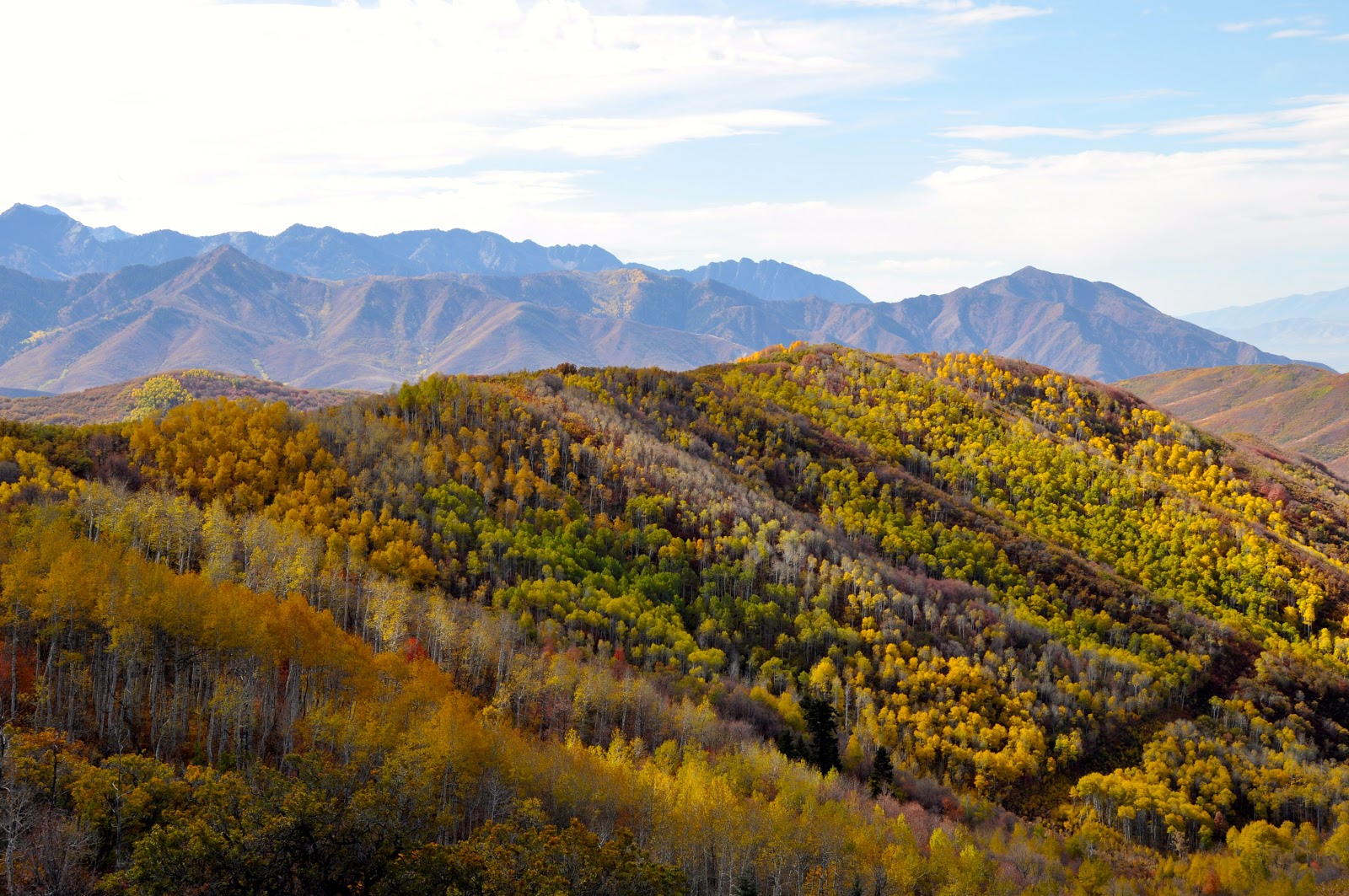
    Gorgeous Utah fall colors. 
    (Special thanks to my husband, Rob Whitney for taking some awesome pictures!) 

    Another huge highlight of the past week and a half was attending Katie and Justin’s wedding.  Rob was able to join me for the wedding and a small respite from the Alaskan rain.  He was “happy as a clam” biking 8 hours a day on the extensive Park City mountain bike trails!

    Katie with her father, Dennis – also the wedding officiant

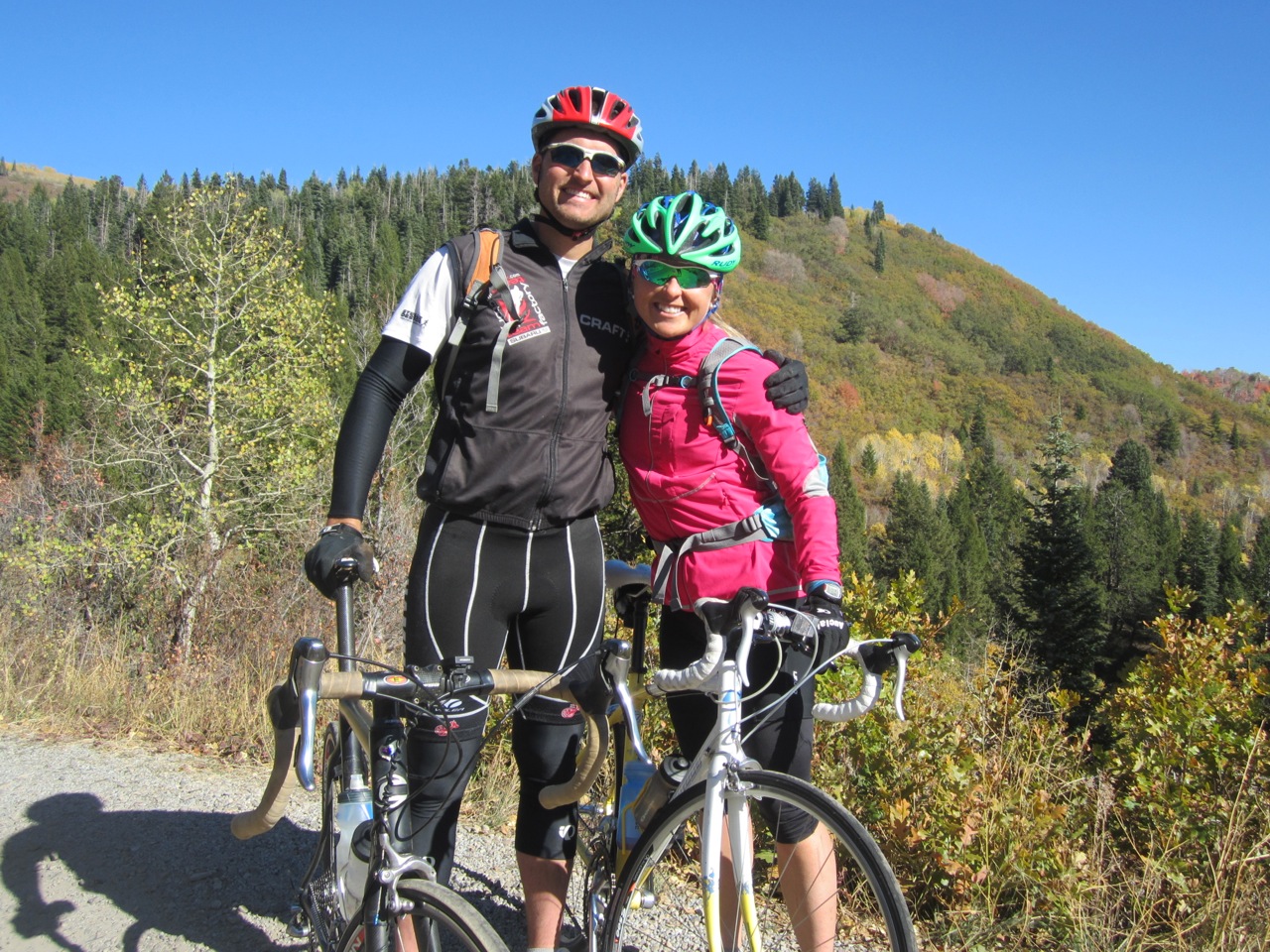
    The day after the wedding we were able to do one of the nicest road rides in Utah up highway 92 towards American Fork. The aspens were incredible and we had fun hanging out with Morgan and Chris! 

    Biking with my hubby! 
    Biking with Sadie! 

    I have another four days here in Utah and its action packed with training sessions, physical therapy appointments, meetings with our new team sports psychologist & travel agent, getting outfitted with gear for the new season & an National Nordic Foundation fundraising meet & greet. (More on that and the Drive for 25 later!) 
    In the meantime, for all you folks up in Alaska – we’re having a fun(d) run for Mary this upcoming Sunday!  I hope to see some of you there! Please help spread the word: 
    That’s it for now from Utah! Smiles & thanks for reading, 
    Holly ๐Ÿ™‚