Tag: Aaron Pike

  • Five Races in Four Days: U.S. Paralympics Sit Ski Nationals & IPC Continental Cup Recap

    Five Races in Four Days: U.S. Paralympics Sit Ski Nationals & IPC Continental Cup Recap

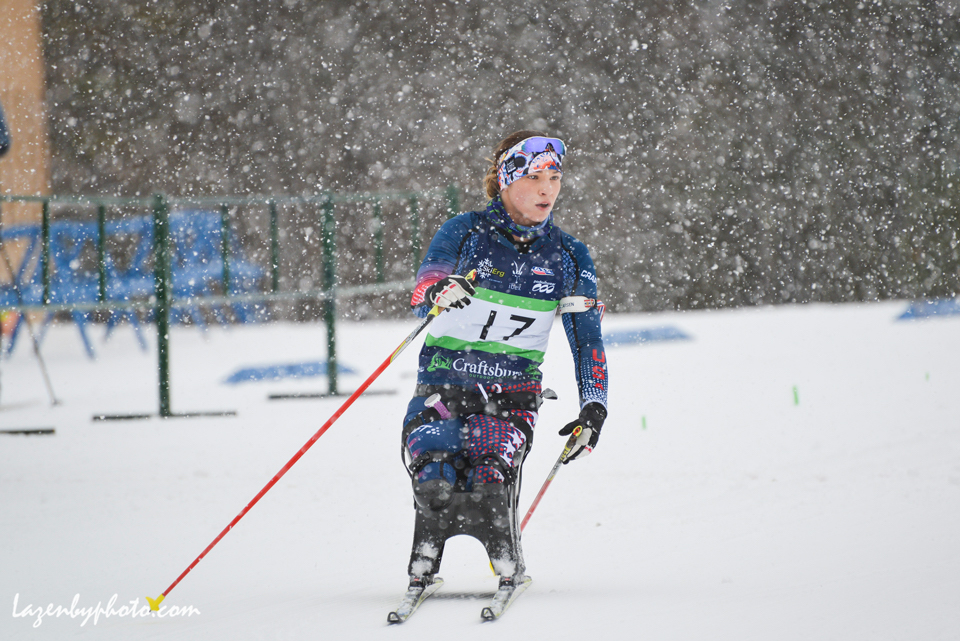
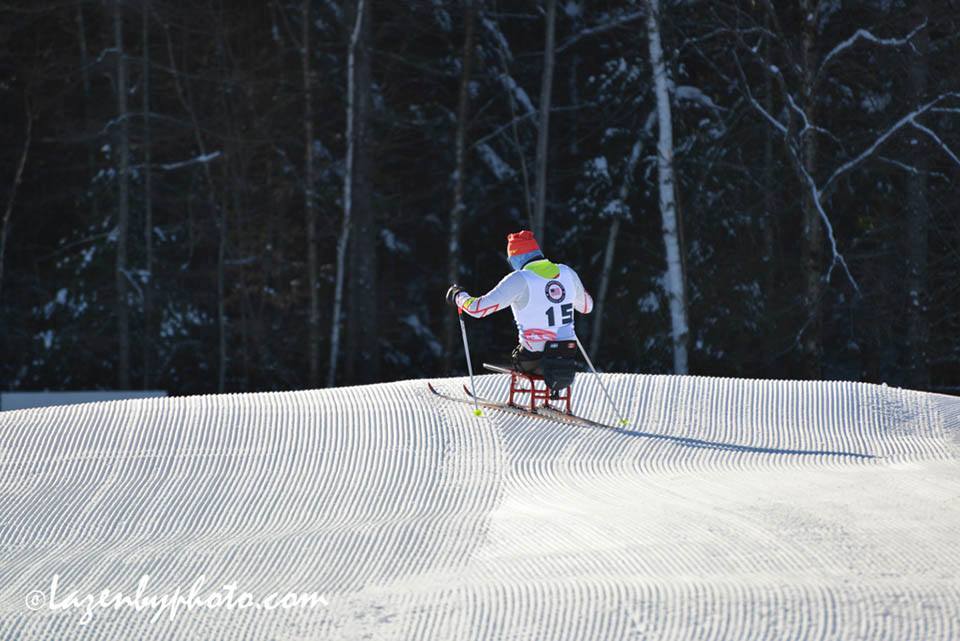
    Canadian para athlete Yves Bourque, of Quebec, a veteran of the 2014 Sochi Paralympics, skiing in Craftsbury, Vt., at 2016 U.S. Paralympics Sit Ski Nationals and IPC Continental Cup from Jan. 6-9. (Photo: John Lazenby/Lazenbyphoto.com)
    Canadian para athlete Yves Bourque, of Quebec, a veteran of the 2014 Sochi Paralympics, skiing in Craftsbury, Vt., at 2016 U.S. Paralympics Sit Ski Nationals and IPC Continental Cup from Jan. 6-9. (Photo: John Lazenby/Lazenbyphoto.com)

    The first week of January was a busy one. In random corners of the world, some of the top-ranked nordic skiers competed for various titles: at the Tour de Ski in Switzerland, Germany and Italy, at U.S. Cross Country Championships in Houghton, Mich., and at the U.S. Paralympics Sit Ski Nationals and International Paralympic Committee (IPC) Continental Cup in Craftsbury, Vt.

    In Craftsbury, about 30 miles south of the Canadian border in northern Vermont, five races were held in a span of four days, Jan. 6-9, after anticipated rain prompted organizers to move up the last two races to the scheduled off day.

    “Busy for sure, but the OC [organizing committee] did an amazing job and the athletes got a big bang for their time and investment in being there,” U.S. Paralympics Nordic High Performance Director John Farra wrote in an email.
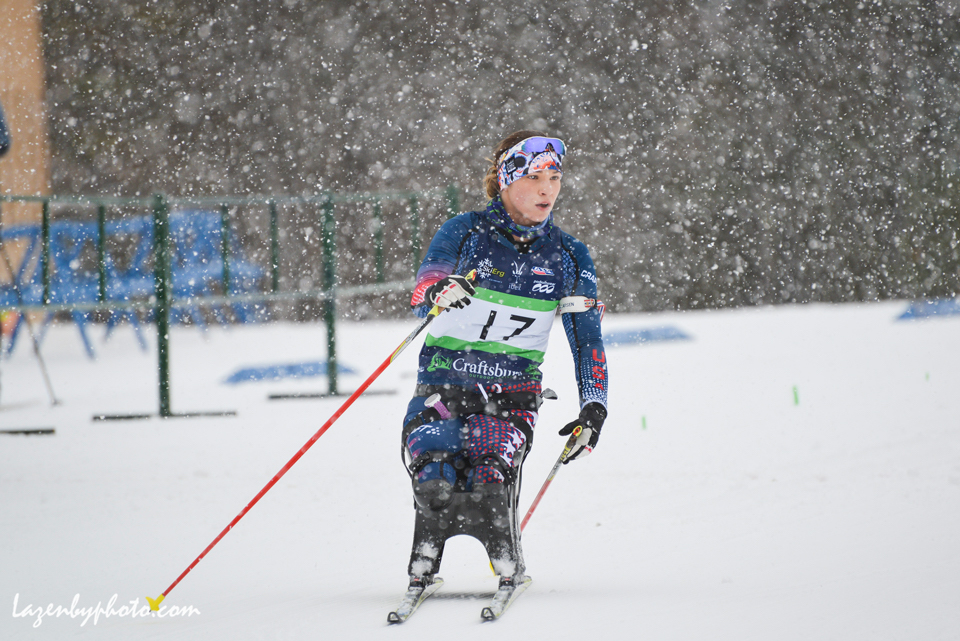
    Oksana Masters (U.S. Paralympics Nordic A-team) during a snowy day in Craftsbury, Vt., at the U.S. Paralympics Sit Ski Nationals and International Paralympic Committee (IPC) Continental Cup from Jan. 6-9. (Photo: John Lazenby/Lazenbyphoto.com)
    Oksana Masters (U.S. Paralympics Nordic A-team) during a snowy day in Craftsbury, Vt., at the U.S. Paralympics Sit Ski Nationals and IPC Continental Cup from Jan. 6-9. (Photo: John Lazenby/Lazenbyphoto.com)

    The Craftsbury Outdoor Center hosted 25 participants in three cross-country races followed by two biathlon races. U.S. Paralympics A-team members Andy Soule and Oksana Masters won the opening men’s 7.5-kilometer and women’s 5 k mid-distance sit ski races, respectively, and Masters went on to sweep the remaining races of nationals.

    Soule won four out of the five, placing second to longtime teammate Sean Halsted in the men’s 2.5 k short-distance sit ski on the second day of racing.

    That day entailed back-to-back races: the short-distance in the morning and a full sprint — complete with a qualifier and heats —following in the afternoon.

    “It was a busy day, but from a development perspective it was a great model,” Farra wrote.

    Interestingly, the 850-meter sprint was scored as a “mixed” event, ranking both genders on a single results sheet. Masters topped the coed field, winning with an adjusted time 11 seconds faster than Soule. Halsted was the second male and third overall.

    “This year for the first time we were able to take advantage of a new rule by IPC that allows us to combine men’s and women’s fields for the purposes of establishing a points base when the numbers of points-holding athletes in a single field would otherwise be too small,” Eileen Carey, head coach of U.S. Paralympics Nordic explained in an email.

    “There is a precedent for this in IPC in the relay, where women get an additional 18% off their compensation to equalize the field and combine everyone in one event.  As an example when Oksana is racing against women’s only fields, she has a 100% compensation, so her calculated result is the same as her real time,” Carey continued. “In this event, her calculated result was 82% of her real time. This made for a much more exciting event and a better competition for athletes. For our World Cup regulars and new skiers alike, it meant more practice going into technical sections in groups and having to ski more tactical races to qualify for finals.”

    Looking at the overall field, Farra and Carey noted they were impressed by some “brand new” athletes.

    “This was the first major competition for a majority of the field,” Carey explained. “As a group, they arrived impressively fit for skiing and improved throughout the week. It is exciting for us to have a bigger community of adaptive athletes in the same place each year.”
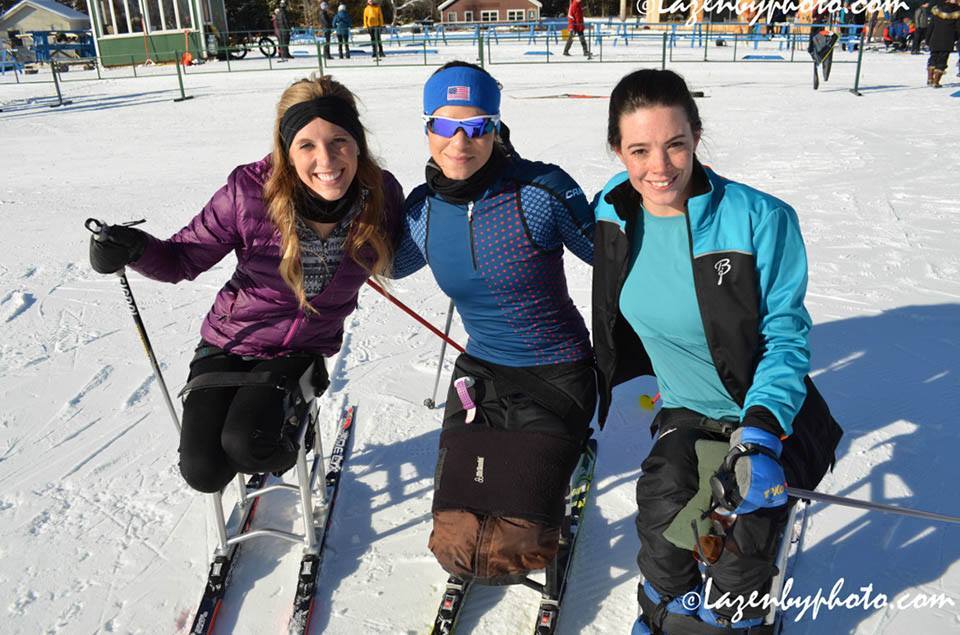
    U.S. para skiers (left to right) Brittany Fisher, Oksana Masters, and Joy Rondeau at 2016 U.S. Paralympics Sit Ski Nationals and IPC Continental Cup. (Photo: John Lazenby/Lazenbyphoto.com)
    U.S. para skiers (left to right) Brittany Fisher, Oksana Masters, and Joy Rondeau at 2016 U.S. Paralympics Sit Ski Nationals and IPC Continental Cup. (Photo: John Lazenby/Lazenbyphoto.com)

    In her first IPC Continental Cup and sit-ski nationals, Joy Rondeau, who trains with the National Center for the Disabled in Winter Park, Colo., placed second to Masters in all three cross-country events and the 6.5 k biathlon race.

    “We had participation in all 3 classes and both genders… which was really cool for us,” Farra wrote. “Great to have some new talent in standing and visual impaired classes especially.”

    “The development group as a whole came to the event more fit and more skilled than in the past so we think that means good things for the future of the sport,” Carey added.

    This season, sit skiers Halstead and Bryan Price are on the development team. Halstead reached the podium in all five races, Price landed on it three times, and B-team member Aaron Pike tallied two podiums in Craftsbury.
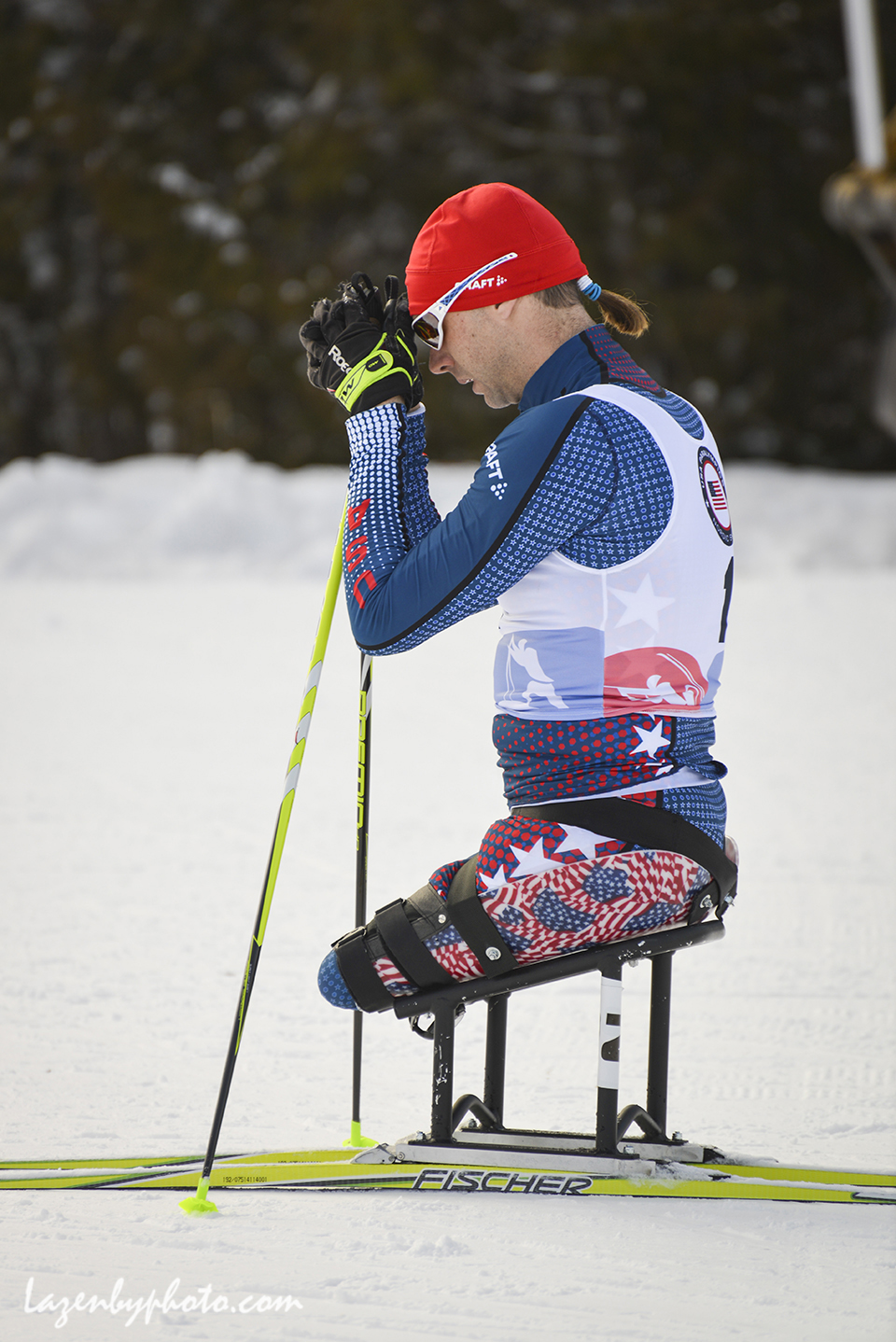
    Andy Soule (U.S. Paralympics A-team) at 2016 U.S. Paralympics Sit Ski Nationals and IPC Continental Cup. (Photo: John Lazenby/Lazenbyphoto.com)
    Andy Soule (U.S. Paralympics A-team) at 2016 U.S. Paralympics Sit Ski Nationals and IPC Continental Cup. (Photo: John Lazenby/Lazenbyphoto.com)

    “I was impressed with the group as a whole and am excited to see what is to come,” Carey wrote. “Our National Team athletes are skiing well and are on track for a good winter.”

    As for the conditions in Craftsbury, Carey described them as “great.”

    “The crew there is incredible with what they can do with small amounts of snow,” she wrote. “They worked hard making and moving snow and (once again!) made excellent courses for our skiers. I have learned to never underestimate what they are capable of, and they did not disappoint.  We are lucky to have such a dedicated organizer in Nordic sport and the fact that they pulled out all the stops for our field of 25 athletes was amazing. They put together World Cup quality competitions.”

    The national team is headed to Pyeongchang, South Korea, for the IPC Asian Cup Jan. 28-Feb. 1 and a chance to preview the 2018 Paralympics venue.

    “We will get eyes on Pyeong Chang for the first time this winter so we will learn specifics from that trip that we will apply to our training,” Carey wrote.

    Results:

    Jan. 6 mid-distance

    Jan. 7 short-distance | sprint

    Jan. 8 biathlon sprint

    Jan. 9 biathlon indvidual

    More photos: http://www.lazenbyphoto.com/craftsbury-paralympics-gallery-2016/

  • One Wild Ride: U.S. Paralympics Innovates Sit-Ski Treadmill Technique Training (Video)

    One Wild Ride: U.S. Paralympics Innovates Sit-Ski Treadmill Technique Training (Video)

    LAKE PLACID, N.Y. — In his eighth year skiing, retired Army veteran and double-leg amputee Andy Soule, of the U.S. Paralympics Nordic B-team, had been on a rollerski treadmill before — several times in fact: at the U.S. Ski Team headquarters in Park City, Utah, and at U.S. Biathlon’s base at the Olympic Training Center (OTC) in Lake Placid, N.Y., where he trained with fellow national-team members for a week earlier this month.

    Straight off a training camp at Sweden’s Torsby ski tunnel in early September, Soule, A-team member Oksana Masters and C-teamer Aaron Pike all put their wheels on the OTC treadmill last week on Sept. 16. And while Soule, 34, was comfortable testing his double-pole technique in front of two coaches (John Farra and Eileen Carey), two physiologists (Jason Kask and Australia’s Sacha Fulton), and a visiting biomechanic from the Chula Vista OTC in California, Masters — who was born with multiple physical defects — had never been on a treadmill before.

    “We’re starting from scratch,” Farra said to Masters, 25, as she watched herself rollerski on a video monitor at eye level in front of her. This was the first time the team had set up the treadmill with live-video capabilities, showing front and side views for the athlete to make tweaks or corrections on the fly.

    “This is all new,” he said, reminding her to not overthink it. “Work on your V2.”

    “What’s V2?” Masters asked as she playfully swung her poles behind her, alternating sides as if she was gliding to the left and right with each double pole.

    “You were just doing it,” Carey said.

    During each session, Soule, Masters and Pike all reached speeds around 10 miles per hour at about 10-percent incline. Each double poled for about 45 minutes, getting feedback from coaches, with Carey taking notes, Farra holding the safety rope, and both coaches asking how it felt.

    The idea was to give the athletes ownership of their own progress — not just on the treadmill, but throughout offseason training. Farra said he got the treadmill-with-real-time-video idea from U.S. Ski Team member Noah Hoffman, who keeps a detailed training blog, and the U.S. Biathlon team, which uses it for that purpose in Lake Placid. As far as he knows, no other Para Nordic team in the world is doing that.

    “Maybe one of our advantages is that we think that way,” Farra said. “I hope other Paralympic teams around the world aren’t thinking about all these little pieces and parts because we have a long ways to make up on Russia, who won most of the medals at the [Sochi] Paralympic Games. We’re not them, but I think we can run one of the most professional program in the world. That’s the goal: even if our results aren’t there yet, but if you do everything possible to run the single-best Paralympic program in the world, then that stuff will come, if you find the athletes and if they love it and if everything goes well.

    “Andy Soule’s won a medal, so you could kind of go, oh well, he’s already won a medal, so why mess with his technique?” he added. “Well, because he can make two-, three-percent difference just by locking that down …”

    Watch the video on YouTube here.

  • 2014 U.S. Paralympics Nordic Team Nominated

    2014 U.S. Paralympics Nordic Team Nominated

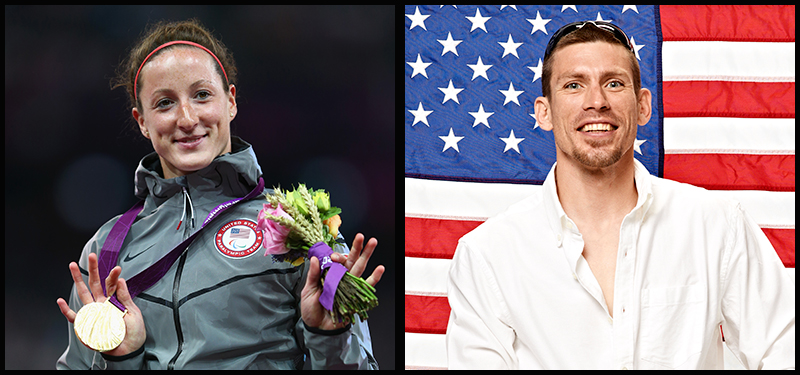
    Tatyana McFadden (l) and Jeremy Wagner are headed to the 2014 Paralympics in Sochi, Russia. (Photo: TeamUSA.org)
    Tatyana McFadden (l) and Jeremy Wagner are headed to the 2014 Paralympics from March 7-16 in Sochi, Russia. (Photo: TeamUSA.org)

    (Press release)

    COLORADO SPRINGS – U.S. Paralympics, a division of the United States Olympic Committee, announced Wednesday that 16 Nordic skiing athletes and two guides have been nominated to the 2014 U.S. Paralympic Team to compete in biathlon and cross-country skiing at the 2014 Paralympic Winter Games in Sochi, Russia, March 7-16. The nominations are subject to approval of the USOC.

    After sending six athletes to the Vancouver 2010 Paralympic Winter Games, Team USA’s Nordic roster will nearly triple in size with 12 men, four women and two guides for visually impaired athletes.

    “We are thrilled to bring such a large team of athletes and professional staff to Sochi,” said John Farra, high performance director for U.S. Paralympics Nordic skiing. “We have made a concerted effort to introduce more athletes to the sports of cross-country skiing and biathlon over the past two-and-a-half seasons, and this growth is a sign of our success in keeping many of them excited about our Nordic sports and working toward becoming internationally competitive.

    “In addition to building the numbers with new developing athletes, we have also focused many resources to help our top athletes get close to hitting the podium. Great focus was given towards equipment design for sit skiers, race ski selection and preparation in partnership with the U.S. Biathlon Association, and access to the best training camps and competitions around the world.”

    2014 U.S. Paralympic Nordic Team Nominees:
    (Subject to USOC approval)

    Women
    Monica Bascio (Evergreen, Colo.)

    Oksana Masters (Louisville, Ky.)
    Tatyana McFadden (Clarksville, Md.)
    Beth Requist (Winter Park, Colo.)

    Men

    Jake Adicoff (Sun Valley, Idaho)

    Omar Bermejo (Grand Rapids, Mich.)
    Kevin Burton (Boulder, Colo.)
    Lt. Cmdr. Dan Cnossen (Topeka, Kan.)
    Travis Dodson (Deming, N.M.)
    Sean Halsted (Spokane, Wash.)
    John Oman (Rice Lake, Wis.)
    Augusto Perez (East Syracuse, N.Y.)
    Aaron Pike (Park Rapids, Minn.)
    Bryan Price (Belton, Mo.)
    Andy Soule (San Antonio, Texas)
    Jeremy Wagner (Nanakuli, Hawaii)

    Guides

    David Chamberlain (Wilton, Maine)

    Reid Pletcher (Ketchum, Idaho)

    Three athletes return from the Vancouver 2010 Paralympic Winter Games, including Andy Soule (San Antonio, Texas) who won the first-ever U.S. medal in the Olympic or Paralympic Winter Games in the biathlon with his bronze in the men’s 2.4-kilometer race. Soule will be joined by his 2010 teammates Sean Halsted (Spokane, Wash.) and Monica Bascio (Evergreen, Colo.).

    Bascio boasts the most Winter Games experience, with Sochi marking her third Winter Games and fourth Games overall.  Having just recently retired from cycling, Bascio is one of three athletes who medaled at the London 2012 Paralympic Games. Other cross-over athletes include Tatyana McFadden (Clarksville, Md.) and Oksana Masters (Louisville, Ky.). McFadden is a 10-time Paralympic medalist in track and field, while Masters partnered with Rob Jones to become the first Americans to win a Paralympic rowing medal in the trunk and arms mixed double sculls event with their third place finish.

    More than half of the athletes nominated to the men’s team are military veterans: Omar Bermejo (Marines/Grand Rapids, Mich.), Kevin Burton (Navy/Boulder, Colo.), Travis Dodson (Marines/Deming, N.M.), Halsted (Air Force/Spokane, Wash.), Bryan Price (Army/ Belton, Mo.), Soule (Army) and Jeremy Wagner (Army Reserves/Nanakuli, Hawaii). Lieutenant Commander Dan Cnossen (Topeka, Kan.) is the only active duty member of the team as he currently serves with the United States Navy.

    Competition for Nordic skiing will take place March 8-16 with March 13 scheduled as an off-day. Nordic skiing includes both biathlon and cross-country skiing, both of which have three events contested at the Games, in addition to two cross-country relays.

    The majority of the U.S. Paralympic Nordic Skiing Team will compete in both sports. A list of events entered by each athlete will be available in February.

    The USOC and NBC Olympics have partnered to provide an unprecedented level of coverage to the Paralympic Winter Games. NBC and NBC Sports Network will combine to air 50 hours of television, starting on March 7 with the Opening Ceremony. It will be followed by daily coverage of all five Paralympic sports in the Sochi program, before the Games’ Closing Ceremony is broadcast on March 16. In addition to the unprecedented U.S. television coverage, the USOC and streaming sponsors BMW, BP, Citi, Liberty Mutual Insurance, Procter & Gamble and The Hartford will provide live online coverage at TeamUSA.org.

    U.S. Paralympic Team nominees for alpine skiing, biathlon, cross-country skiing, sled hockey, snowboarding and wheelchair curling will be finalized by the USOC no later than Feb. 21, the deadline to submit Sochi 2014 Paralympic Winter Games delegation rosters to the International Paralympic Committee. Selection procedures and dates can be found at TeamUSA.org/ParalympicGames/.