Tag: Brian McKeever

  • Canmore NorAm Roundup: Sandau and Beatty Win Two of Three

    Canmore NorAm Roundup: Sandau and Beatty Win Two of Three

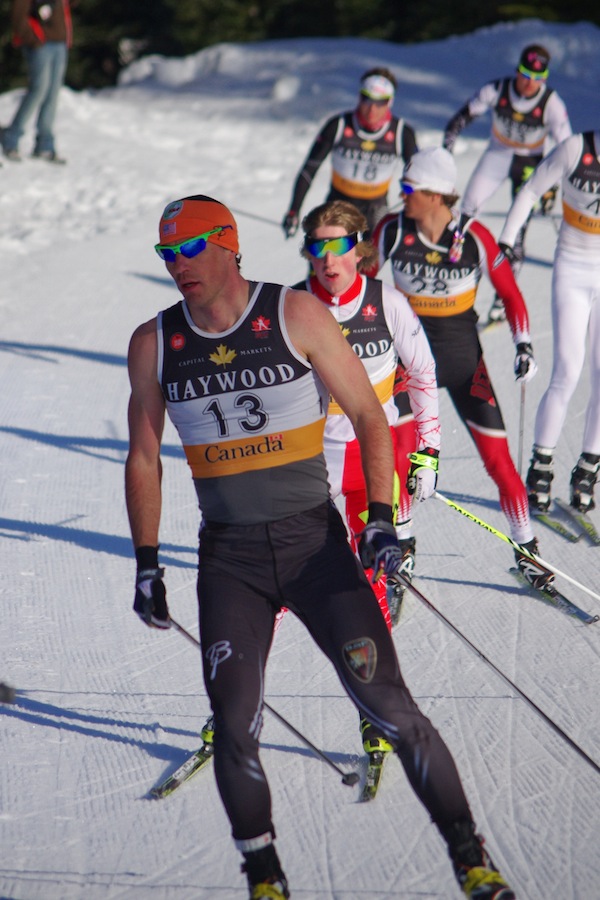
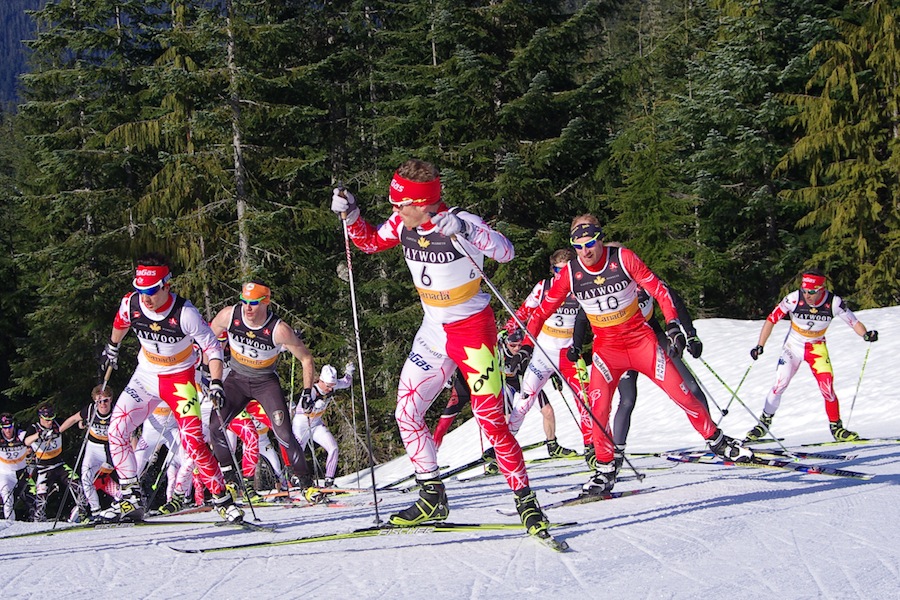
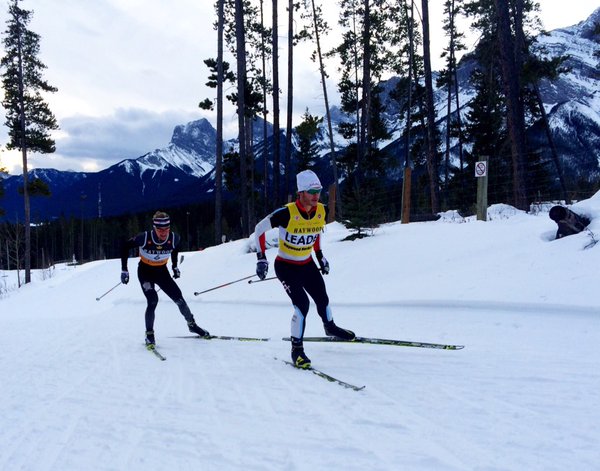
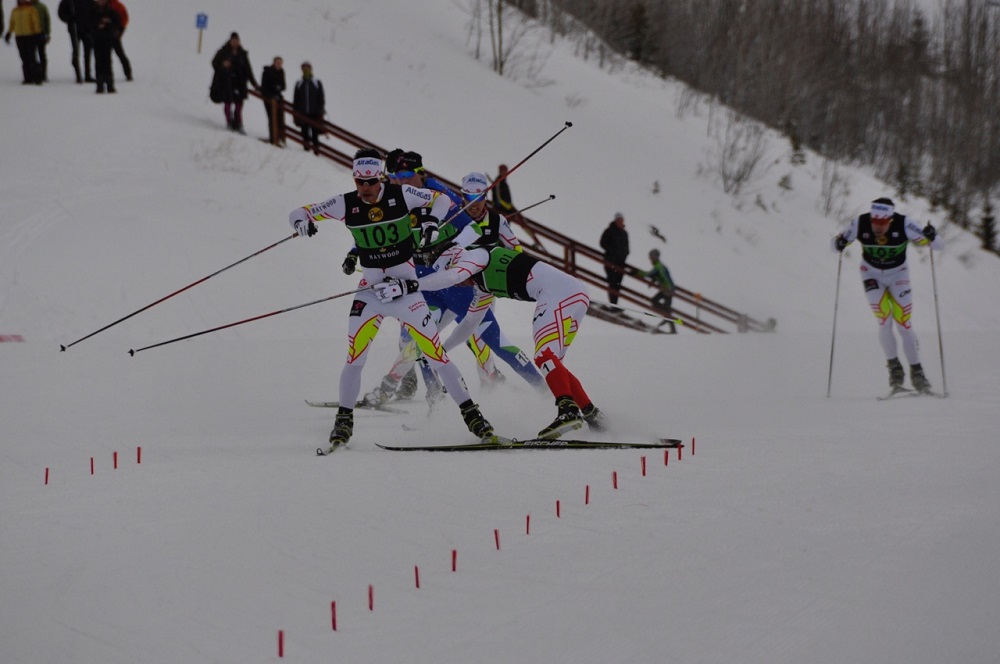
    Kevin Sandau in the NorAm leader's bib sets the pace from the front of the pack in the men's 16.5 k freestyle mass start on the second day of the NorAm opener in Canmore, Alberta. His Alberta World Cup Academy teammate, Knute Johnsgaard, chases him down. (Photo: Alberta World Cup Academy/Twitter)
    Kevin Sandau in the NorAm leader’s bib sets the pace from the front of the pack in the men’s 16.5 k freestyle mass start on the second day of the NorAm opener in Canmore, Alberta. His Alberta World Cup Academy teammate, Knute Johnsgaard, chases him down. (Photo: Alberta World Cup Academy/Twitter)

    You’ve seen it on the World Cup, and now it’s happening at the domestic level: double poling a classic distance race, as seen at Canada’s NorAm opener in Canmore, Alberta.

    The top men went without kick wax for the 10-kilometer classic interval start on Saturday, Dec. 5, double poling around a 2.5 k biathlon loop.

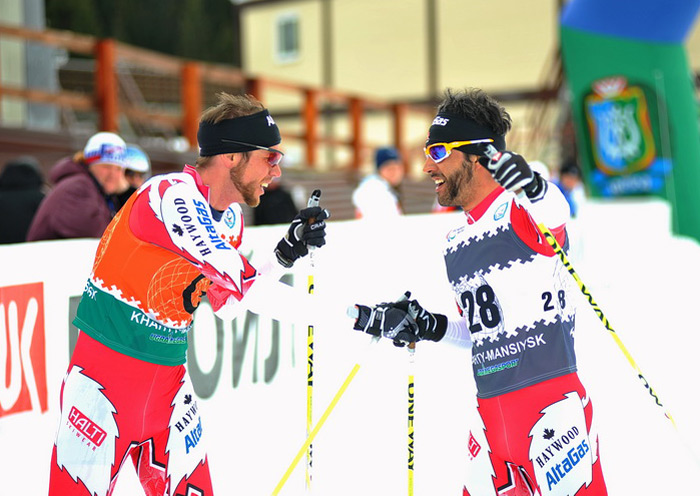
    Kevin Sandau of the Alberta World Cup Academy powered to the win in 24:42.9 minutes, edging his AWCA teammate Knute Johnsgaard (National U23+ Development Team) by 2.9 seconds. Ian Murray (Capital Region Training Group) skied the fastest last lap to edge Brian McKeever of Canada’s Para Nordic Ski Team by 3.5 seconds for third, 9.5 seconds back from Sandau.

    In an email, Sandau, 27, explained that double poling was essentially a no-brainer on the Canmore Nordic Centre’s biathlon trails — flatter than the usual race course with shorter climbs.

    “Off the start I knew I needed to be aggressive as it was going to be a fast race,” he wrote. “Just gunned it off the start and trusted my body could clear the lactate from my arms on the downhills. Felt pretty solid throughout so wasn’t a bad plan.”

    Johnsgaard explained he would have preferred striding over double pole, so considering that, he was happy with second place.

    “Of course I would have liked to be 3 seconds faster! I was being extra careful not to do any skate or step turns, perhaps too careful,” Johnsgaard wrote in an email. “I just tried to pace things right and find the fastest part of the track. I was outside the track almost the whole race.”

    For Murray, third stood as his NorAm career best.

    “At the age of 37 I guess you could say I am coming into my groove,” Murray wrote. “I was 22nd on the first lap which was a bit slower than I hoped to start.  Kevin Sandau passed me when I was on my second lap and that kicked me into gear. I have been focusing on ski marathon racing the last couple of years so I’m still figuring out the pacing for the 10 and 15km races.”

    McKeever explained that he tried to build into the race, but was missing a few gears. “[I] was overly cautious about not skating, and consequently was not aggressive enough,” he wrote in an email.

    In his first time double poling a distance race, Colin Abbott (Yukon Ski Team) in seventh (behind CNEPH’s Alex Dumas in sixth) observed that the pacing is different.

    “You don’t max out aerobically as easily so the concern for pacing is trying not to burn your arms too soon in the race,” Abbott wrote. “I went out maybe a bit faster than was ideal, and definitely slowed on the last lap but don’t think the end result would have changed much if I started slower.”
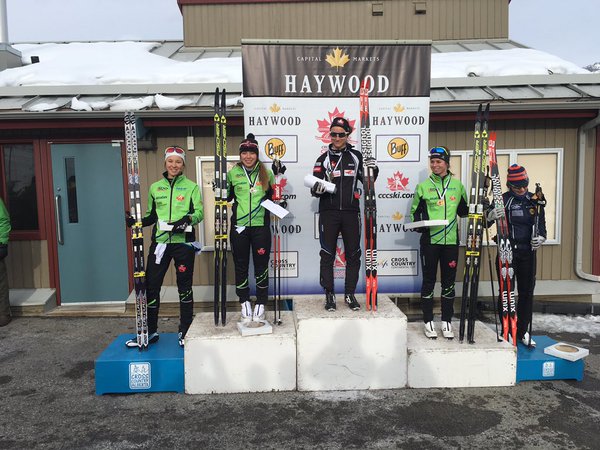
    NDC Thunder Bay athletes (in green) took second, third and fourth in the women's NorAm 5 k classic interval start, behind  Sophie Carrier-Laforte (c) of the Pierre Harvey National Training Centre in first. (Photo: NDC Thunder Bay/Twitter)
    NDC Thunder Bay athletes (in green) took second, third and fourth in the women’s NorAm 5 k classic interval start, behind Sophie Carrier-Laforte (c) of the Pierre Harvey National Training Centre in first. Katharine Stewart-Jones (second from l) placed second, Alannah Maclean (second from r) with third, and Jenn Jackson (l) was fourth. Rocky Mountain Racers’ Andrea Dupont (r) placed sixth. (Photo: NDC Thunder Bay/Twitter)

    In the women’s 5 k classic race, Sophie Carrier-Laforte of the Pierre Harvey National Training Centre (CNEPH) won the two-lap race in 14:31.5, followed by U23 Development Team member Katherine Stewart-Jones (NDC Thunder Bay), 10.3 seconds back.

    Thunder Bay had two on the podium with Alannah Maclean in third, 17.9 seconds behind Carrier-Laforte, and another athlete in fourth: Jenn Jackson (+30.8)

    “I was aiming for a podium this week but didn’t expect to get it today,” Stewart-Jones wrote in an email. “It’s a very short race so I planned on going out really hard and just try to hold on to the same pace. On the first lap, I focused on skiing efficiently and then just went as hard as I possibly could on the second [lap].”

    She added that her double-pole work this summer appears to have paid off.

    While Stewart-Jones’s first lap ranked fourth and second lap was second-fastest among the women, Carrier-Laforte skied the fastest last lap. Andrea Dupont (Rocky Mountain Racers) was fastest on Lap 1, but faded on Lap 2 to place fifth (+36.0). Maclean posted the second-fastest opening lap.

    Saturday’s 10/15 k classic results: Men | Women
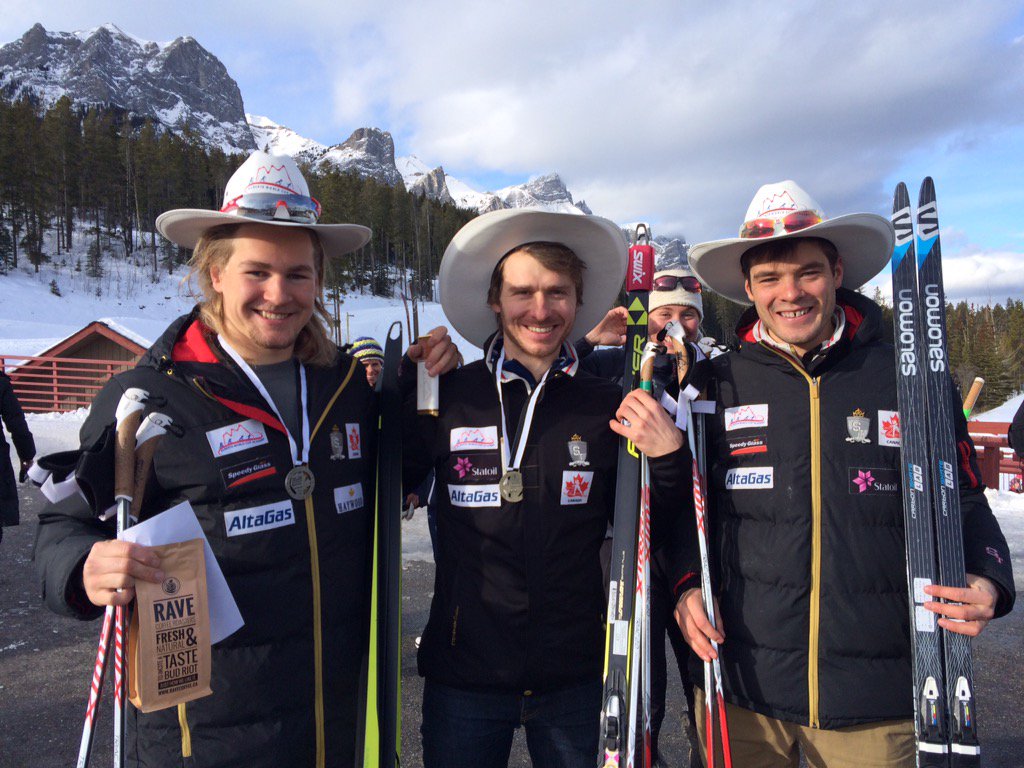
    Kevin Sandau (c) and his Alberta World Cup Academy teammates Knute Johnsgaard (l) and Patrick Stewart-Jones (r) placed first, second and fourth, respectively in the men's NorAm 16.5 k freestyle mass start on Dec. 6 in Canmore, Alberta. (Photo: Alberta World Cup Academy/Twitter)
    Kevin Sandau (c) and his Alberta World Cup Academy teammates Knute Johnsgaard (l) and Patrick Stewart-Jones (r) placed first, second and fourth, respectively in the men’s NorAm 16.5 k freestyle mass start on Dec. 6 in Canmore, Alberta. (Photo: Alberta World Cup Academy/Twitter)

    On Sunday, Dec. 6, Sandau repeated with a win in the second race of the season: the men’s 16.5 k freestyle mass start. The races were once again held on Canmore’s biathlon trails, this time on a 3.3 k loop.

    Sandau won it in 38:59.9, again ahead of Johnsgaard, who finished 36.6 seconds back in second. About a minute and 3 seconds behind Sandau, McKeever placed third, four-tenths of a second ahead of fourth-place finisher Patrick Stewart-Jones (AWCA).

    For Sandau, the race and the victory were even better than the day before.

    “The 15km skate played out a lot more to my strengths and really let me test out my fitness,” he wrote. “I knew before the start I just wanted to go full throttle right from the gun. It was a mass start, and there was a crazy westerly wind, so I knew this race was going to be easier to bunch up and make it harder to break away.”

    He strategized his pace changes for the bottom of the five-lap course, where there were two “decent climbs,” he explained. His fourth time around, he broke away from Johnsgaard and skied the rest of the race alone.

    “I knew once I could break away from anyone, I could really start to put some time in because they had to fight the wind just as much as I did at that point on,” Sandau wrote.

    Johnsgaard anticipated that Sandau would be the man to beat, “so the two of us started hard right out of the gate to try and lose the field as soon as possible,” Johnsgaard wrote.

    They broke away around 5 k, and while Sandau’s pace felt fast, Johnsgaard explained holding on until the last 3.3 k lap.

    “By that time I was hurting pretty bad and lost a lot of time on my last lap,” he wrote. “I thought everyone would catch back up to me but luckily we had opened up a big enough gap earlier on.”

    McKeever noted the superior shape of Sandau and Johnsgaard compared to him and the rest of the field. “It went as well as it could have,” McKeever wrote. “I played the tactics right and made the most of the day.”

    Dahria Beatty of the U23 Development Team and AWCA charged hard on the last lap of the women’s 10 k freestyle mass start to win by 8.8 seconds in in 27:07.5. Frédérique Vézina placed second and her CNEPH teammate Cendrine Browne (NST U23 Development Team) took the final podium step in third, 13.7 seconds behind Beatty. Another CNEPH skier Jaqueline Mourao, originally from Brazil, was 1.4 seconds off the podium in fourth. Mourao turns 40 later this month.

    “It’s always amazing to be able to win a race!” 21-year-old Beatty wrote in an email after her second senior NorAm victory. “I ended up leading most of the race. My original plan had been to sit back for the first lap in the pack and then if I felt strong push the long climb that was on both the second and third lap.”

    As she approached the climb on the second of three laps, she explained she tried to keep the pace high to “string out the pack.”

    “On the final lap on the same long climb I had a ski lengths gap coming off the downhill so I took advantage of that small gap and just skied as hard as I could without looking back,” Beatty wrote. “I didn’t let off at all until the final 500 meters when I finally checked to confirm the gap my coaches had been telling me I had.”

    Vézina wrote that, while she made a race plan and executed it well, mass starts are a toss up.

    “You can expect some things but at the end you can really make intelligent decisions once you are in the race,” Vézina wrote. “I’m happy with the way I managed my race.”

    Despite a broken pole at the beginning of the race and losing contact with the leaders, Browne was pleased to see where she stacked up at the start of the season.

    “You always ask yourself if you are in shape or not compared to the other skiers,” Browne wrote. “The tactics didn’t play out as planned … I was planning on leading with Dahria but it didn’t really work out because I had to make my way back to the front.”

    Sunday’s 10/16.5 k freestyle mass start results: Men | Women
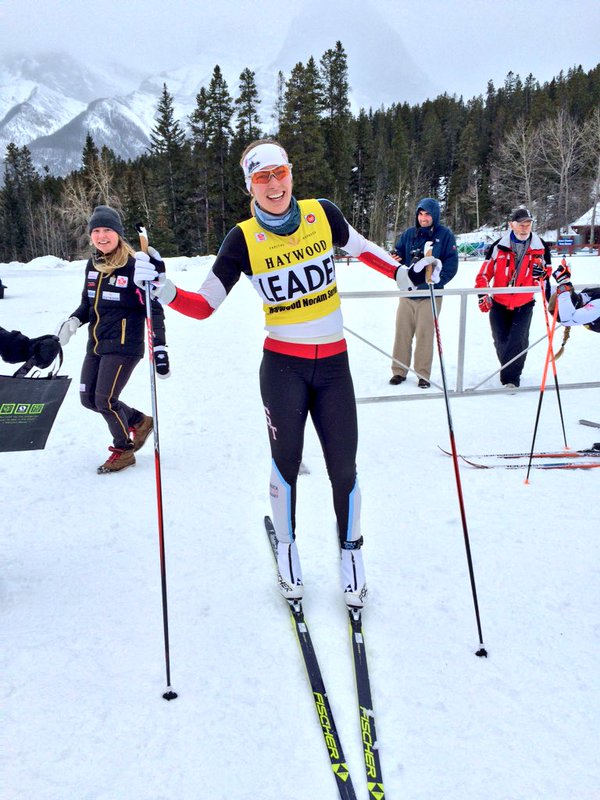
    Women's Canmore NorAm classic sprint winner Dahria Beatty (AWCA/NST U23 Development Team) after her A-final victory. (Photo: CCC/Twitter)
    Women’s Canmore NorAm classic sprint winner Dahria Beatty (AWCA/NST U23 Development Team) after her A-final victory. (Photo: CCC/Twitter)

    On Tuesday, the final day of NorAm racing in Canmore, Beatty went on to win the women’s 1.5 k classic sprint final by 2.51 seconds over Browne. Earlier in the day, Browne topped the qualifier in 4:36.2, and Beatty was 6.8 seconds off the pace to qualify in fifth.

    Browne and Beatty both won their quarterfinals before facing off in the semifinal, where Browne took first by 1.62 seconds over Beatty in second. In the final, Beatty explained that for the first time in a race, she screamed in elation as she crossed the finish. It was her first senior sprint victory.

    “Going into this race I wanted to ski in the top two in all heats to avoid being stuck at the back of an accordion-effect after the herringbone climb. In all my heats I was able to do that,” she wrote. “Everyone’s skis were icing after this climb so it was easy to lose time kicking it off at the top. For the final I asked my coach to put a less sticky wax on so I would ice less and I think that made a big difference. I was still able to make it up the hills but more importantly I was able to crest the hill super aggressively on both laps, thus carrying more speed into the downhill.”

    With two big climbs separated by two downhills, Beatty explained that it made sense to push hard each time up. That made pacing simple; she simply wanted to be in front.

    “When I came down the last hill in the lead I went into sprint mode and didn’t look back,” she wrote. “I had to look at the results afterwards to realize how far behind the others were.

    Another great thing about today was the rain waited until the women’s race was over, bonus.”
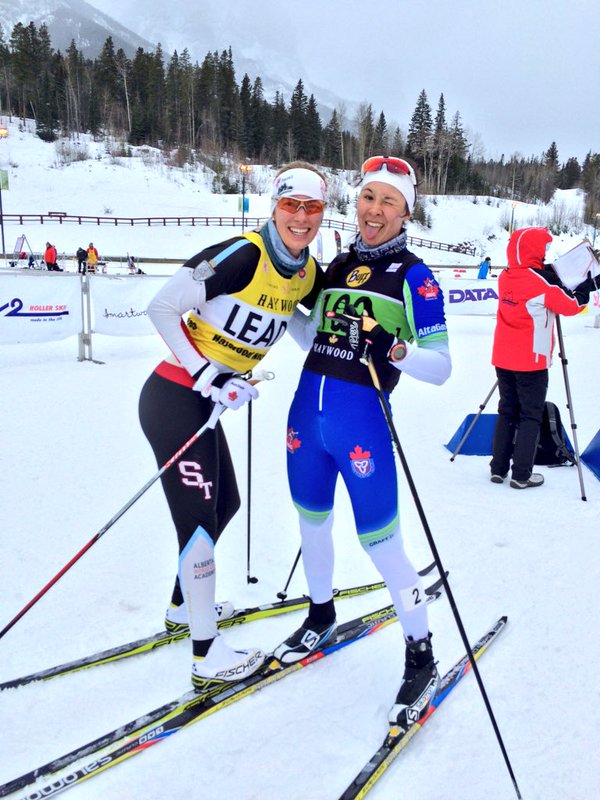
    Dahria Beatty (l) and Jenn Jackson after Tuesday's NorAm classic sprint in Canmore, Alberta. Beatty won the race for her second-straight victory of the weekend, and Jackson placed third behind Cendrine Browne (not shown). (Photo: CCC/Twitter)
    Dahria Beatty (l) and Jenn Jackson after Tuesday’s NorAm classic sprint in Canmore, Alberta. Beatty won the race for her second-straight victory of the weekend, and Jackson placed third behind Cendrine Browne (not shown). (Photo: CCC/Twitter)

    Browne was pleased to win a sprint qualifier for the first time in her career and did so by four seconds over Jenn Jackson. Later in the final, she edged Jackson by 0.25 seconds for second place. Jackson was third, ahead of Andrea Dupont in fourth, Vézina in fifth, and Marie Corriveau (CNEPH/National Junior Team) in sixth.

    For Browne, 22, it was her second podium in a senior sprint.

    “In the semi final, my plan was to climb the last hill faster then Dahria so I would have more speed than her in the downhill. I had the same plan in the A final but it didn’t work out as well,” she explained. “I had a pretty high level of energy today but I still tried to manage it in the quarter final and in the semi final. … My skis were great. I had great kick and my skis were fast, and that helped me a lot.”

    Bob Thompson (Thunder Bay NDC) made the top 30 to qualify for the heats in the 1.5 k men’s sprint, but was more than 17 seconds off the pace in 20th. Johnsgaard set the time to beat in the qualifier in 3:51.05.

    In the quarterfinals, Thompson placed second to Julien Locke (Black Jack), but came back to beat Locke in the semifinal by 0.15 seconds. Thompson went on to win the men’s final by 1.24 seconds over Patrick Stewart-Jones.
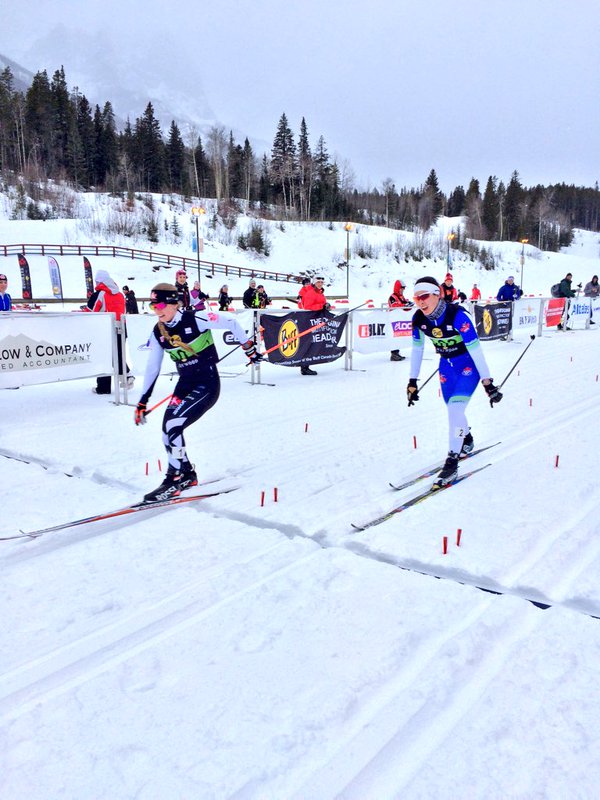
    Cendrine Browne (CNEPH) edges Jenn Jackson (NDC Thunder Bay) for second in the women's NorAm classic sprint final. (Photo: CCC/Twitter)
    Cendrine Browne (CNEPH) edges Jenn Jackson (NDC Thunder Bay) for second in the women’s NorAm classic sprint final. (Photo: CCC/Twitter)

    “Definitely great to finish the day and the weekend with a win, seems I’m becoming notorious for coming off a poor qualifier and then figuring things out in the heats,” Thompson wrote in an email.

    After the quarterfinal, he switched from grip skis to zeros/rub skis, he wrote, “and they made a huge difference.

    “I definitely let my skis do a bit of work so I tried to keep the first lap in control and just keep a solid position in second or third and then just make sure to stay close over the top into the downhill to get the draft,” he added. “Tough day to try and lead into the downhill and finish.”

    “Bob was really strong in the finish today and I have to accept that,” Stewart-Jones wrote. “The final was a little bizarre because the pace started out fast, but then on the top of the climb on the second lap it slowed right down because it was so narrow and no one could get by the leader. The pack bunched right up and from there on it was pretty much a 6 way drag race to the finish.”

    Andy Shields (NDC Thunder Bay) placed third, 1.35 behind Thompson. Sandau was fourth, Locke fifth and Johnsgaard sixth.

    “The classic sprint was a big turnaround from how I was skiing on the weekend,” Shields wrote. “Distance skiing so far this year has felt terrible. Luckily my sprinting pep is still strong. I went on wax for the quarter and it was unbelievably fast.”

    With wet snow and rain before his semifinal, Shields switched to zeros, “which had crazy grip but lacked a bit in glide,” he wrote. “The techs were able to tune my zeros for the final. … Happy with now having NorAm podiums in both skate and classic sprinting, as well as podiums in both skate and classic distance.”

    Tuesday’s classic sprint results: Overall | Qualifying

  • Hoffman Lone U.S. Ski Team Member to Train in New Zealand

    Hoffman Lone U.S. Ski Team Member to Train in New Zealand

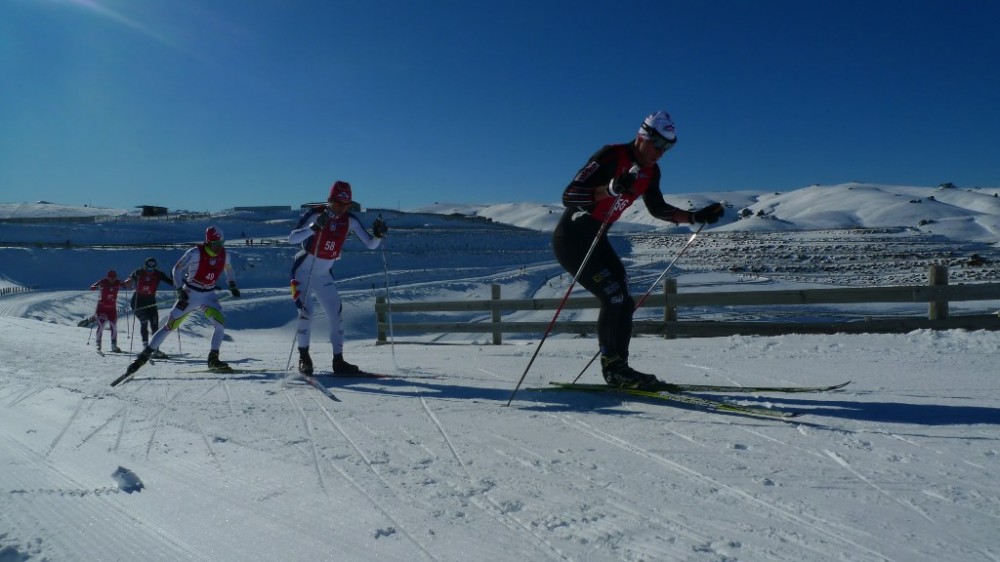
    Polish skier Maciej Kreczmer leads Noah Hoffman in the 2014 Merino Muster at the Snow Farm in New Zealand. Noah Hoffman spent roughly two weeks training at the Wanaka venue. (Photo: Noah Hoffman/NoahHoffman.Com)
    Poland’s Maciej Kreczmer (r) leads Noah Hoffman (c) in the 2014 Merino Muster at the Snow Farm in New Zealand. Hoffman spent roughly two weeks training at the Wanaka venue. (Photo: Noah Hoffman/NoahHoffman.com)

    Noah Hoffman isn’t one to take his training lightly. The way he sees it, a serious-and-dedicated plan will allow the the 25-year-old U.S. Ski Team (USST) member to achieve his lofty career goals, which include winning an Olympic gold medal and an FIS World Cup Distance Globe.

    Given his driven nature, Hoffman is willing to venture outside the standard USST plan in order to bolster his training and address what he’s identified as his weaknesses.

    This summer, that meant participating in a solo camp at New Zealand’s Snow Farm following the USST men’s camp in Alaska.

    From Aug. 9 t0 Aug. 25, Hoffman had 15 full days of on-snow training at the Snow Farm in Wanaka, New Zealand. Over the course of his camp, he trained more than 50 hours.

    For Hoffman, the decision to make the summer trip to New Zealand was easy. He’s been adding the trip to his training plan for the last three years and finds that the often-fast, hard snow is ideal for his technique work. This year, he said conditions were especially favorable.

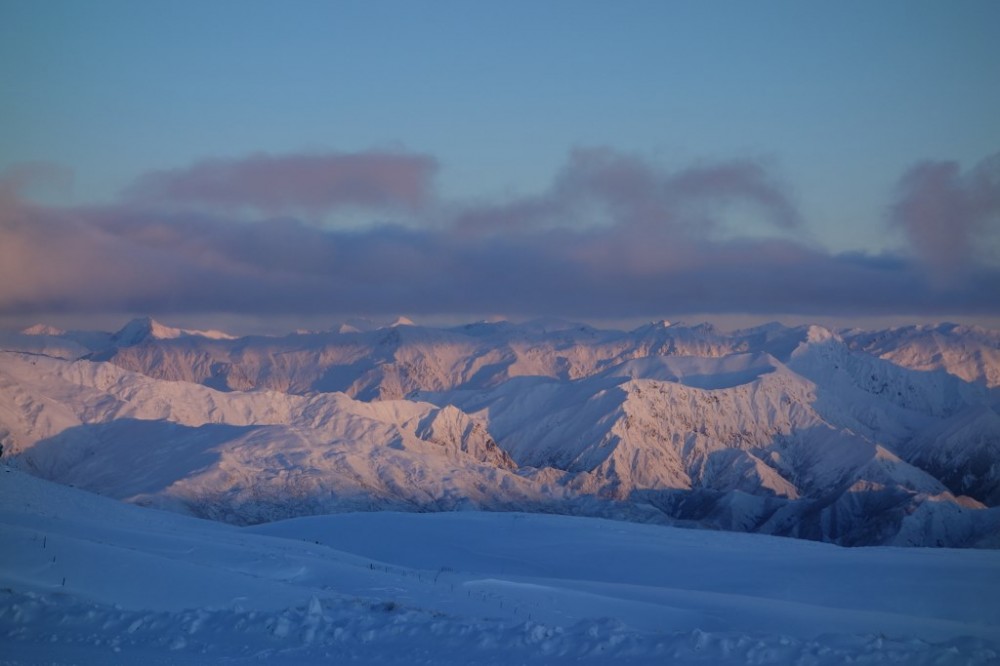
    The view from the Snow Farm in Wanaka, New Zealand. Accodring to Hoffman, the conditions were the best he's seen in five years at the venue. (Photo: Noah Hoffman/NoahHoffman.com)
    The view from the Snow Farm in Wanaka, New Zealand. Accodring to Hoffman, the conditions were the best he’s seen in five years at the venue. (Photo: Noah Hoffman/NoahHoffman.com)

    “I had the best snow conditions that I’ve seen in any of my five years going there,” he wrote in an email. “I was hard-wax skiing the entire time and had 14 days of beautiful weather.”

    Hoffman explained that his New Zealand trip served as an additional on-snow camp used to supplement the USST camp schedule. For the Colorado native, his continued on-snow training has helped him improve his technique.

    “I think the additional on-snow time has been essential to the technique improvements that I’ve made in the last two years and is critical to my technique goals for this summer and beyond,” he wrote.

    While Hoffman appreciates the value of North-American summer glacier camps, he found that New Zealand’s skiing better replicated winter World Cup conditions.

    “Training at the Snow Farm is significantly more valuable than on-snow time on a glacier in the Northern Hemisphere,” he wrote. “Glacier skiing is slow and soft. It is a different type of skiing than we see at most venues in the winter.”

    Often times during the race season, World Cup venues are hit with warm conditions and organizers salt the course to increase snow speed.

    Even though Hoffman was the sole USST member to travel to New Zealand this year, his coaches and teammates who remained stateside were extremely supportive.

    “They understand my goals and support the plan that my personal coaches and I believe is best for my training,” Hoffman explained.

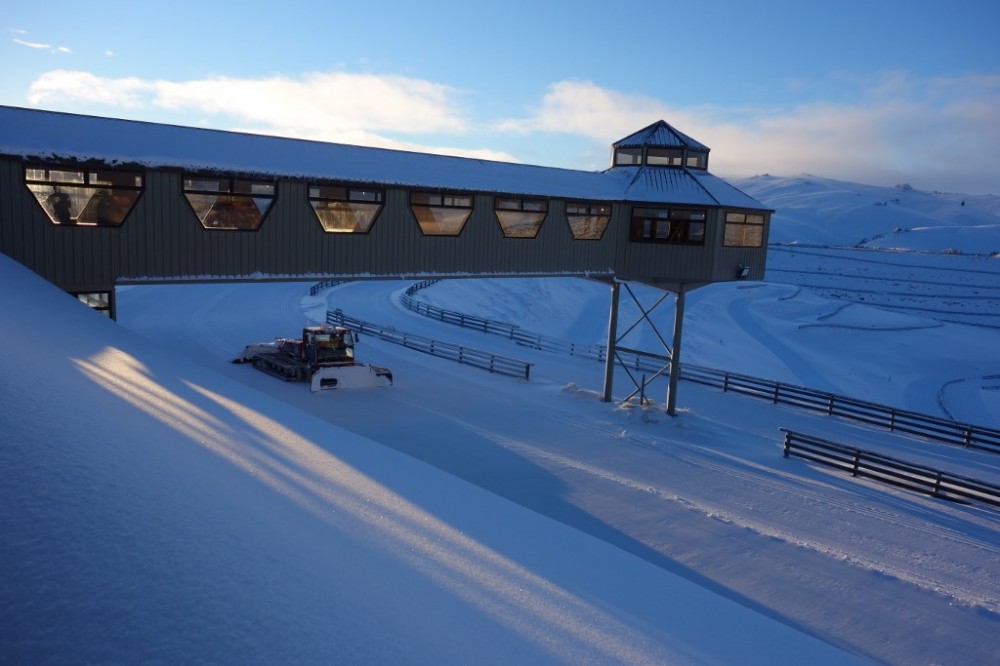
    The Snow Farm in Wanaka, New Zealand. (Photo: Noah Hoffman/NoahHoffman.com)
    The Snow Farm in Wanaka, New Zealand. (Photo: Noah Hoffman/NoahHoffman.com)

    While most of his training in New Zealand was spent alone, Hoffman was able to connect with Canada’s multiple-time Paralympic gold medalist Brian McKeever and one of his guides Graham Nishikawa for several training sessions. And when he wasn’t training, Hoffman spent meals with the Canadian Para-Nordic Team.

    “That social activity was critical for me to stay happy down there,” he wrote.

    Hoffman’s training also included the 2014 Merino Muster. The 42 k freestyle mass start took place on Aug. 16 and included several international competitors, such as Poland’s Justyna Kowalczyk.

    Hoffman placed second, 11 seconds behind Poland’s Maciej Kreczmer.

    While he would have liked to win the race, he wrote on his blog that he was happy with the outcome and that the race served as an excellent intensity workout.

    The goal is not to be good in August,” he wrote. 

    Hoffman also allotted time for some lighthearted charity work. With the help of his Canadian counterparts, he participated in the Amyotrophic Lateral Sclerosis (ALS) Ice Bucket Challenge, a social-media phenomenon intended to raise awareness and research funding for the illness, also known as Lou Gehrig’s disease.

    Hoffman returned to the U.S. on Aug. 25, where he will continue the remainder of his summer training. This year he will sit out the USST Lake Placid camp in New York (taking place Aug. 26-Sept. 7), as his trip to New Zealand served as its replacement.

    Reflecting on his summer, Hoffman said his training was “almost ideal,” citing his health, happiness, and technique improvement. Looking ahead, he feels prepared for the season ahead.

    “I believe I’m really well set up to transition to higher intensity and more race-type fitness as the fall progresses,” he wrote. “I’m very happy and excited with the way things have gone.”

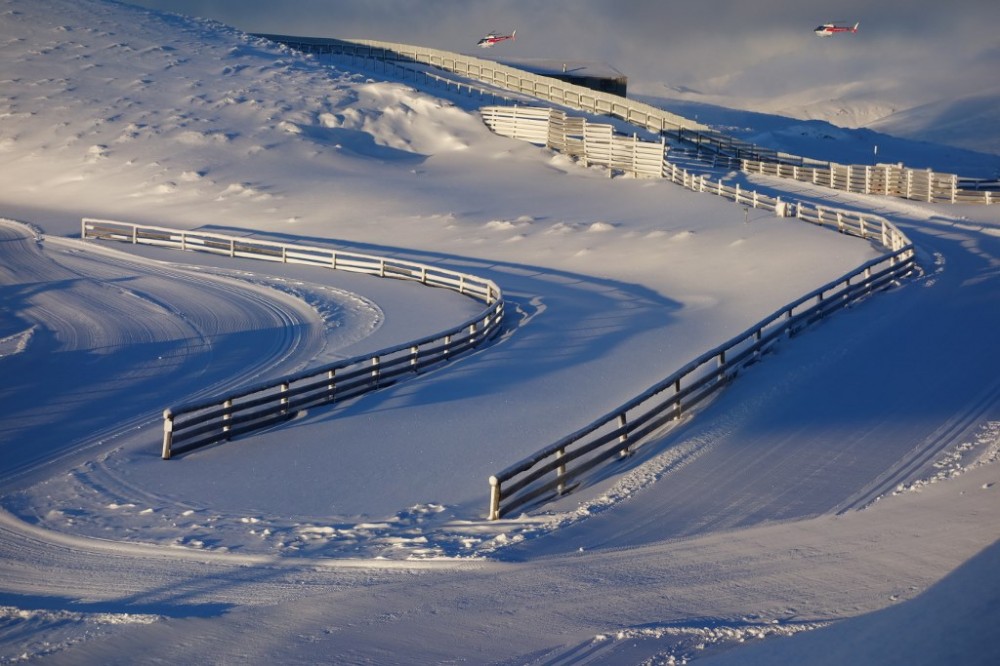
    The Snow Farm in Wanaka, New Zealand. (Photo: Noah Hoffman/Noahhoffman.com)
    The Snow Farm in Wanaka, New Zealand. (Photo: Noah Hoffman/Noahhoffman.com)


  • Double Gold for Canada on Last Day of Paralympics: Klebel Gets First Medal, McKeever Notches 10th Win

    Double Gold for Canada on Last Day of Paralympics: Klebel Gets First Medal, McKeever Notches 10th Win

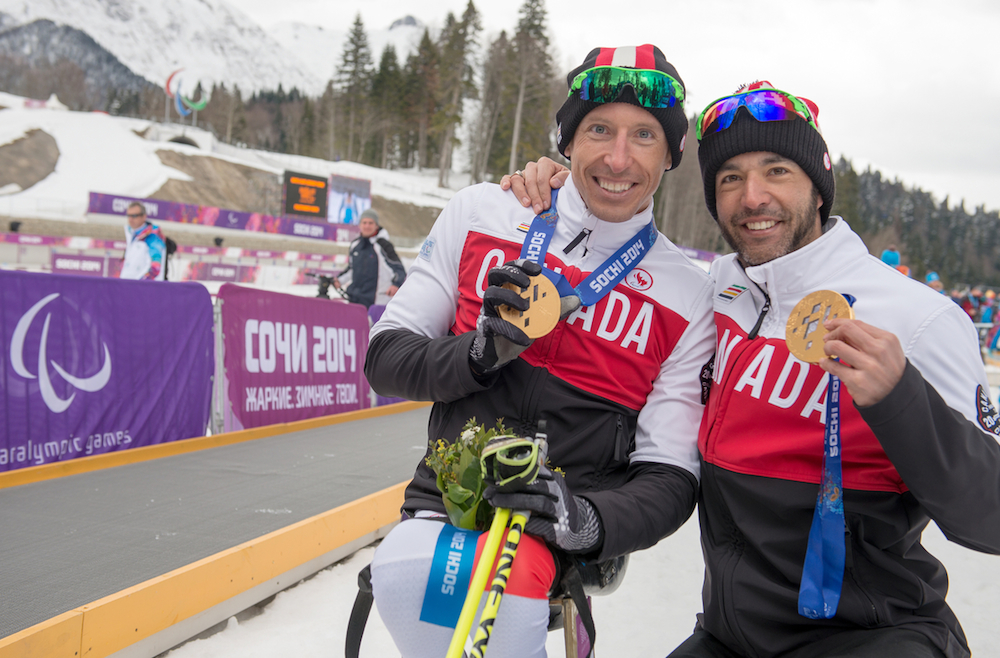
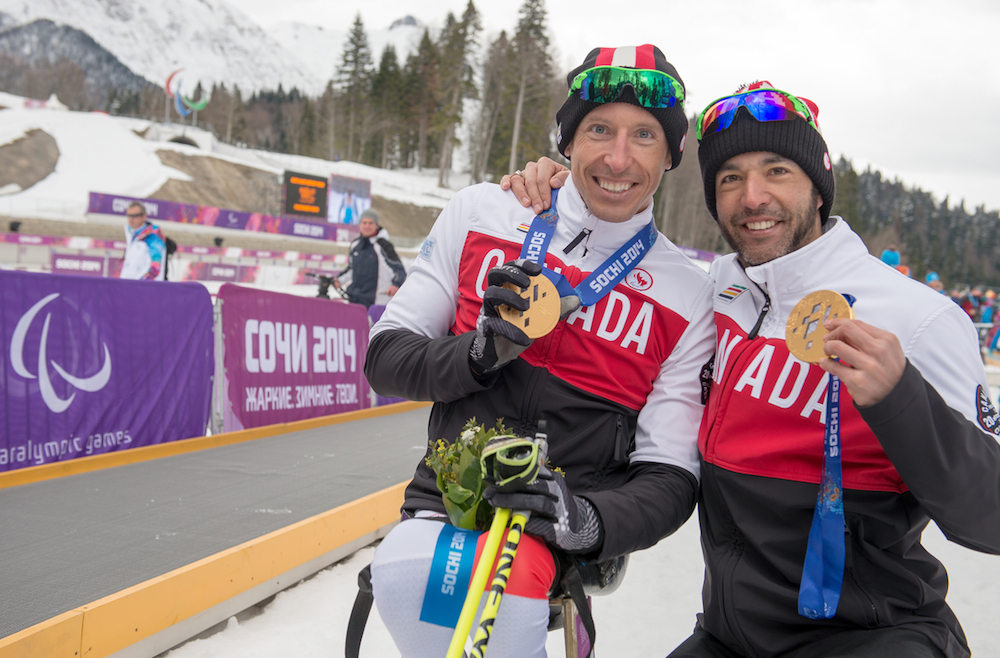
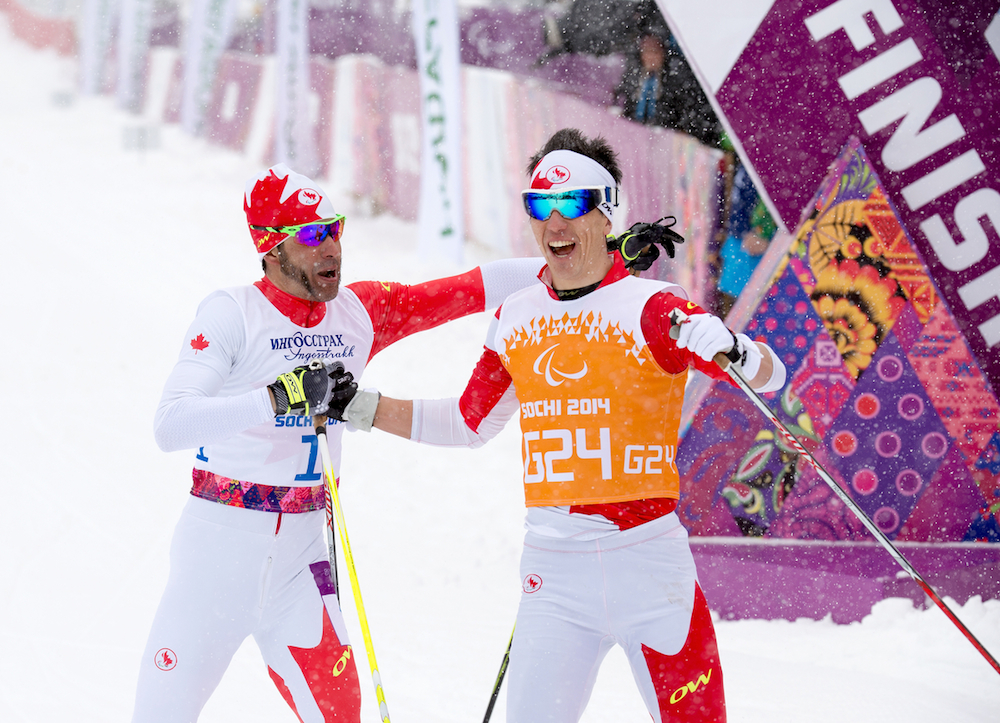
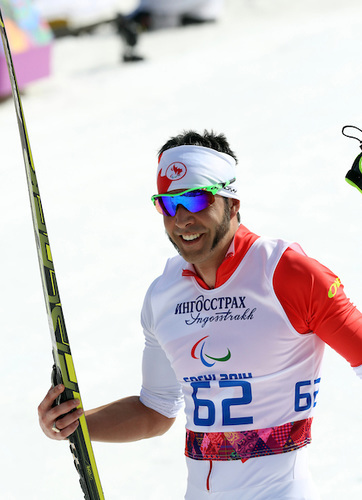
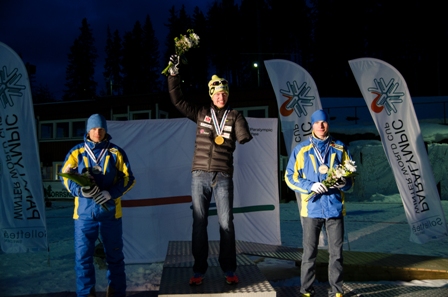
    Chris Klebl with his Men's 10km Sitting gold medal and Brian McKeever with his 15km free Visually Imaired gold medal at the 2014 Paralympic Winter Games in Sochi, Russia. (Photo: Matthew Murnaghan/Canadian Paralympic Committee)
    Chris Klebl (l) with his gold medal from the men’s 10 k sit ski and Brian McKeever (r) with his third gold of the week, which he won in Sunday’s 15 k visually impaired freestyle visually at the 2014 Paralympic Winter Games in Sochi, Russia. (Photo: Matthew Murnaghan/Canadian Paralympic Committee) 

    (CCC press release)

    SOCHI, Russia — Mission accomplished!

    Canada’s Para-Nordic Ski Team wrapped up the 2014 Paralympic Winter Games in thrilling fashion with a double-gold performance in cross-country skiing on Sunday.

    In two of the most challenging classifications, Chris Klebl, of Canmore, Alta., shocked the world to win the men’s 10-kilometre sit-ski race, while Brian McKeever won his third gold medal of the week in the visually impaired category.

    The 42-year-old Klebl put down the performance of the Games when it counted most to win Canada its final gold medal, and secure the country its goal of finishing in the top-three in the overall medal count. Klebl clocked a time of 30 minutes, 52.0 seconds (30:52.0).

    “It feels pretty good for sure,” said Klebl. “I have exceptional skis for wet, sloppy conditions and today we got exactly those conditions. It just feels good. We prepare for this over and over and over again to try and get things to line up, and today it did.”

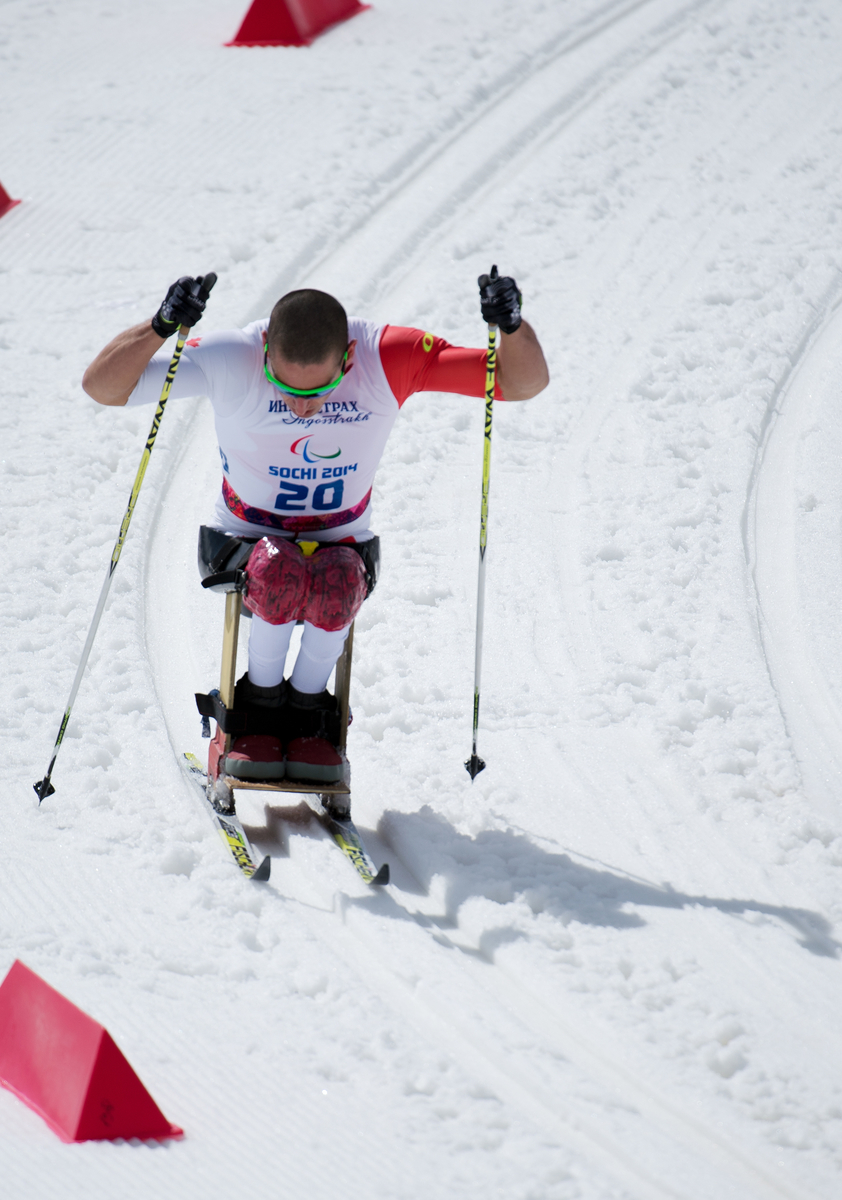
    Canada's Chris Klebl racing to gold in the last race of his third Paralympics on Sunday in the cross-country 10 k sit-ski  at the 2014 Paralympic Winter Games in Sochi, Russia.  (Photo: Matthew Murnaghan/Canadian Paralympic Committee)
    Canada’s Chris Klebl racing to gold in the last race of his third Paralympics on Sunday in the cross-country 10 k sit-ski at the 2014 Paralympic Winter Games in Sochi, Russia. (Photo: Matthew Murnaghan/Canadian Paralympic Committee)

    A three-time Paralympian, Klebl moved to Canmore, Alta. to join the Canucks from the United States following the 2010 Games. He first made history as a member of the Canadian Team in 2011 by winning the World Championships in the sit-ski distance race.

    Klebl, who grew up in Austria where he skied and snowboarded, became paralyzed from the waist down in 1995 in a snowboarding accident.

    Sunday’s victory was particularly important as Canada was in a fight for third spot in the overall Paralympic gold medal count with the Ukraines with the final sit-ski race remaining.

    Klebl held off the Ukraine’s Maksym Yarovyi, who finished second at 31:06.5. Russia’s Grigory Murygin skied to the bronze at 31:18.2.

    “It means a tonne to me to contribute to Canada’s medal count,” said Klebl. “Four years ago I made a major decision to move to Canada, and Cross Country Canada and the Own the Podium program have backed me since. I just wanted to pay them back.”

    While Klebl grabbed Canada’s final gold medal at the 2014 Games, it was Brian McKeever who secured the nation its first. On Sunday the legendary Paralympian was at it again.

    Battling race fatigue and strong headwinds, the 34-year-old McKeever utilized a two-guide strategy with Erik Carleton and Graham Nishikawa, for the second time this week to gut out an impressive come-from-behind victory. Team McKeever posted a time of 23 minutes, 18.1 seconds in the men’s 10-kilometre skate-ski visually impaired category.

    “That one was tough. It hurt,” said McKeever. “I woke up this morning and didn’t feel great. It was all on the guides again today. They did such a good job with the headwind. I was able to tuck in behind them and save a lot of energy. By the time we got to the last lap there was still a little gas left to get us by today.”

    Outside of sprint racing, it was the smallest margin of victory at a Paralympic Winter Games for McKeever, winning by just eight seconds.

    Russia’s Stanislav Chokhlaev skied to the silver at 23:25.1, while Thomas Clarion, of France, rounded out the podium in third with a time of 24:14.9.

    The Canadians leveraged a two-guide race strategy to pull McKeever to the top of the podium.

    The 36-year-old Carleton, of Canmore, Alta., led the way around the first 6.5-kilometres before coach Robin McKeever called in Graham Nishikawa, of Whitehorse, to pull him into the winner’s circle. McKeever was behind 12 seconds at the five-kilometre mark in the race.

    “Having guided for 10 years I know how incredibly hard it is to do this job in the wind,” said Robin McKeever, head coach, Canadian Para-Nordic Ski Team, who led his brother to 10 Paralympic podiums. “It is like a tow truck pulling a Ferrari out there in the wind.

    “For the guide, it is like doing a one-kilometre sprint race just to stay ahead of Brian. But the problem is you have to keep that pace for nine more kilometres. It is so difficult.”

    “Having guided for 10 years I know how incredibly hard it is to do this job in the wind. It is like a tow truck pulling a Ferrari out there in the wind.” — Robin McKeever, Canadian Para-Nordic Ski Team Head Coach and former guide for his brother, Brian McKeever

    Consummate team players, Carleton and Nishikawa shared the workload and trips to the podium this week to help McKeever accomplish his goal of a golden hat-trick.

    “It is so tough out there and I’m thankful Graham was here to help us out and get the job done,” said Carleton. “I went hard off the start and just tried to hang on.”

    “Brian is just such an incredible athlete so it is very difficult to stay ahead of him,” added Nishikawa. “This whole week has been such an awesome experience. I’ve been so impressed with everything, and of course I’d love to be back again.”

    The victories bring McKeever’s Paralympic gold medal count to 10, making him the only winter Paralympian to reach double digits. He has a total of 13 Paralympic medals.

    “The medals this week were very special,” said McKeever. “The way we did it was such a team effort. Both guides gave me a solid draft all week, which made a huge difference in the conditions. We orchestrated a great team effort and that makes it so special to me.”

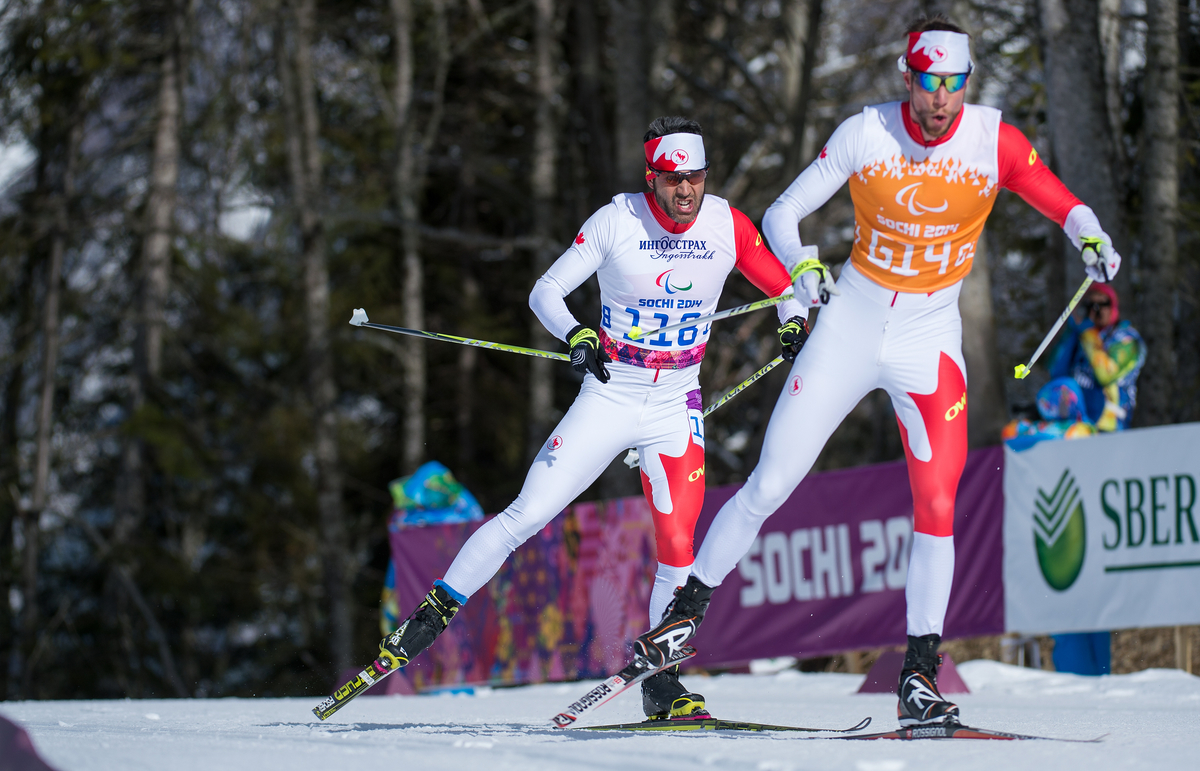
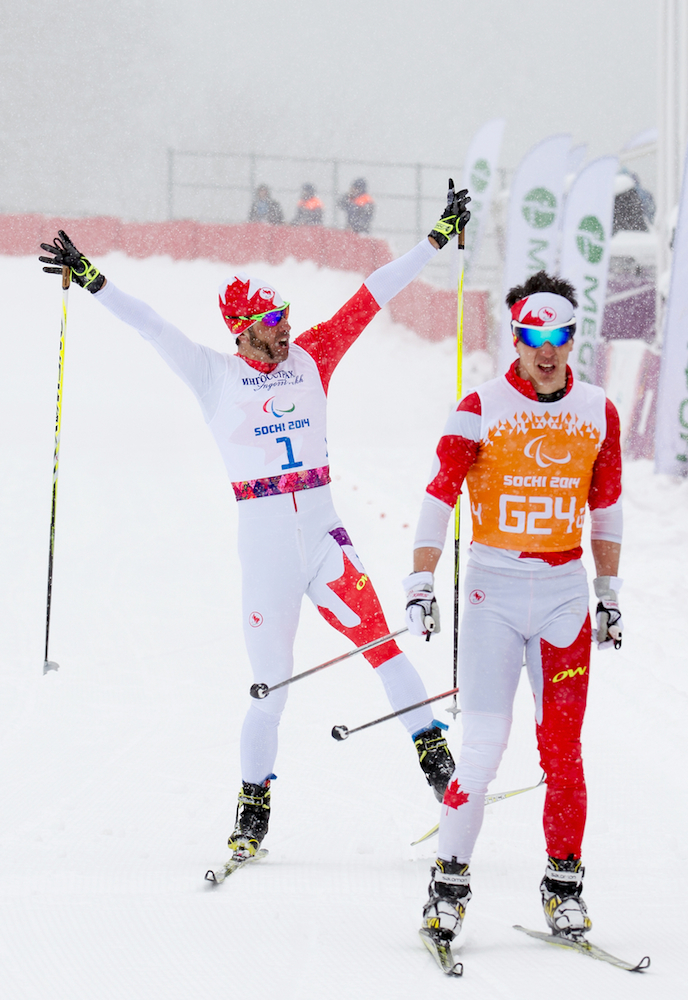
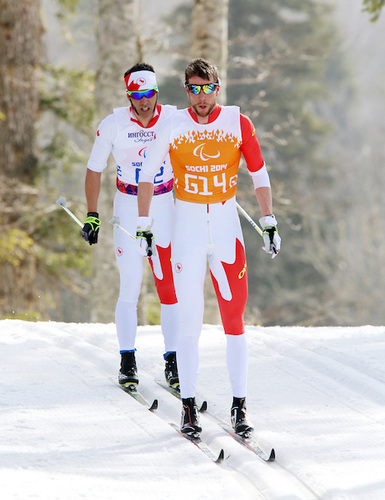
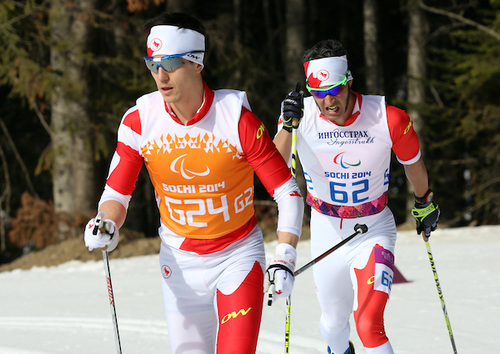
    Brian McKeever and his guide Erik Carleton race to McKeever's third gold of the week, and Carleton's second, in Sunday's cross-country 10 k visually impaired freestyle race on the last day of the 2014 Paralympic Winter Games in Sochi, Russia. (Photo: Matthew Murnaghan/Canadian Paralympic Committee)
    Brian McKeever and his guide Erik Carleton race to McKeever’s third gold of the week, and Carleton’s second, in Sunday’s cross-country 10 k visually impaired freestyle race on the last day of the 2014 Paralympic Winter Games in Sochi, Russia. (Photo: Matthew Murnaghan/Canadian Paralympic Committee)

    Other Canadian results on Sunday included: Mark Arendz (Hartsville, P.E.I.) in 11th at 25:16.4; and Louis Fortin (Fredericton, N.B) 36th at 32:58.8 in the men’s 10-kilometre standing race. Brittany Hudak, of Prince Albert, Sask., was 12th at 15:35.0, and Ottawa’s Caroline Bisson 16th at 16:55.2 in the women’s five-kilometre standing category.

    Robbi Weldon (Thuder Bay, Ont,) and her guide Phil Wood (Canmore, Alta.) were seventh at 15:32.5, while Ottawa’s Margarita Gourbonova and her guide of Regina’s Andrea Bundon were eighth at 15:42.2 in the women’s five-kilometre visually impaired race. Saskatoon’s Colette Bourgonje was 13th in women’s five-kilometre sit-skiing at 18:13.0. Yves Bourque, of Becancour, Que., was 24th at 39:11.5, and Quebec City’s Sebastien Fortier was 26th (40:03.4) in the men’s 10-kilometre sit-ski race.

    In addition to McKeever and Klebl’s four golds, Canada’s Para-Nordic squad will leave Sochi with six medals. Mark Arendz also won a silver and one bronze in biathlon racing.

    Results

  • Wasn’t Pretty, But McKeever/Nishikawa Nab Second Gold in Paralympic Sprint

    Wasn’t Pretty, But McKeever/Nishikawa Nab Second Gold in Paralympic Sprint

    Canada's Brian McKeever (l) and his guide Graham Nishikawa win the gold medal in the Men's 1 k visually impaired sprint final at the 2014 Paralympic Winter Games in Sochi, Russia. (Photo: Matthew Murnaghan/Canadian Paralympic Committee)
    Canada’s Brian McKeever (l) and his guide Graham Nishikawa win the gold medal in the Men’s 1 k visually impaired sprint final at the 2014 Paralympic Winter Games in Sochi, Russia. (Photo: Matthew Murnaghan/Canadian Paralympic Committee)

    (CCC press release)

    McKeever rebounds from crash in final to take down world’s best for ninth-career gold medal

    SOCHI, Russia —Brian McKeever is certainly capturing the world’s attention in Sochi, Russia. And it is not just because he skied to his ninth Paralympic gold medal on Wednesday in Sochi, Russia.

    McKeever and guide, Graham Nishikawa, ploughed through the field and more than 30 centimetres of fresh snow to win their second gold medal of the week in spectacular fashion in the visually impaired sprint races at the Paralympic Winter Games.

    Leading all qualifiers in the head-to-head heats with the top-12 athletes, the two Canadians handily advanced to the final where the 12-time Paralympic medallist faced the biggest adversity of his career.

    Stacked against two Russians, and a Swede in the final, the 30-year-old Nishikawa (Whitehorse) appeared to have led McKeever (Canmore, Alta.) through the cluttered pack of guides and athletes into clear trail until the unthinkable happened near the 200-metre mark.

    A Russian skier stepped on McKeever’s pole – sending the 34-year-old airborne and onto his backside – before bouncing back up and hunting the leaders, and his ninth career Paralympic gold medal down.

    “Wow, that was stressful,” sighed McKeever at the finish. “It wouldn’t be right for me to tell you what I said in my head, but once the cuss words were out, the only thing you can do is get back up and race.

    “I thought we were clear, but that is normal and it happens in sprinting when you are all fighting and tight. Everyone is going flat out. It is intense and everyone is at their limit. We are just fortunate it happened in the first 200 metres and not at the end so we had time to catch up.”

    “It wouldn’t be right for me to tell you what I said in my head, but once the cuss words were out, the only thing you can do is get back up and race.” — Brian McKeever, nine-time Paralympic gold medallist

    After taking a deep breath, Nishikawa took control, putting the throttle down and commandeering the Canucks back into contention in the action-packed one-kilometre sprint race.

    Canada's Brian McKeever (l) celebrates his ninth-career Paralympic gold, which he won Wednesday in the 1 k visually impaired sprint with guide Graham Nishikawa in Sochi, Russia. While Nishikawa helped him win his first gold of the week in the 20 k classic with guide Erik Carleton, this was Nishikawa's first Paralympic gold. (Photo: Matthew Murnaghan/Canadian Paralympic Committee)
    Canada’s Brian McKeever (l) celebrates his ninth-career Paralympic gold, which he won Wednesday in the 1 k visually impaired sprint with guide Graham Nishikawa in Sochi, Russia. While Nishikawa helped him win his first gold of the week in the 20 k classic with guide Erik Carleton, this was Nishikawa’s first Paralympic medal. (Photo: Matthew Murnaghan/Canadian Paralympic Committee)

    “When I saw him go down, I immediately panicked and just thought ‘OH NO! Not now,’ ” said Nishikawa. “It wasn’t until we got back up around the Russians and had the Swedes in sight that I felt a huge relief.”

    “What a set of wheels on Graham today. That was impressive,” said McKeever. “The snow was so heavy today. He basically towed me up that hill and got me around the Russian roadblock out there and gave us a chance. It is not how we planned things, but that was a pretty awesome day.”

    Sweden’s Zebastian Modin hung on for the silver medal, while Russia’s Oleg Ponomarev outraced his countryman for the bronze.

    Adding to the dramatics, it was the first time Nishikawa had guided his friend, and training partner, on his own in international competition. After racing together over the last decade in Canada, McKeever recruited Nishikawa into his training group this fall with the goal of bringing two guides to the Paralympics for the first time ever.

    Earlier this week, Nishikawa, who races able-bodied both domestically in Canada and on the World Cup circuit, shared guiding duties with Erik Carleton to lead McKeever to his first gold of the 2014 Games. Recognizing the stress the warm weather, and heavy snow conditions was putting on the guides for the long-distance races, the innovative Canadians leveraged both guides – switching at the midway point. With McKeever dropping into third place, Nishikawa stepped in to blaze a trail to the gold medal step of the podium.

    Carleton’s name was on the start list so he was the only one to receive a gold medal. But on Thursday, Nishikawa will get his due and receive a gold medal of his own.

    “It feels absolutely awesome,” beamed Nishikawa. “I said earlier this is a whole new world for me. I’m so impressed by everything. This whole experience has been amazing and I just wanted to do whatever I could to be here and help Brian. We have been friends for a long time so this is very special.”

    From sunny T-shirt weather, to pouring rain, to dumping heavy snow on Wednesday, Mother Nature is sending the world’s top Para-Nordic wax technicians into a daily frenzy at Laura Stadium.

    “This whole experience has been amazing and I just wanted to do whatever I could to be here and help Brian. We have been friends for a long time so this is very special.” — Graham Nishikawa

    “These conditions are definitely stressful on the wax techs,” said McKeever. “Every day they basically start from ground zero based on the conditions. We had amazing boards today and the guys deserve a lot of credit. We were so fast on the downhills which really got us back into the race today.”

    The victory brings McKeever’s career medal haul to 12 at the Paralympics, including his nine gold. If he can chalk up one more victory this week he will become the first Canadian Winter Paralympian with at least 10 gold medals, and third Paralympian in Canada overall to accomplish the feat.

    A handful of other Canadians also competed in the sprint races. Chris Klebl, of Canmore, Alta., qualified for the men’s sit-skiing heats, but did not advance to the final. Robbi Weldon, of Thunder Bay, Ont., along with her guide Phil Wood, of Canmore, Alta., also had their day come to an end in the semifinals of the women’s visually impaired category, while Paralympic rookie, Brittany Hudak of Prince Albert, Sask., could not advance past the women’s standing semifinals.

    Other Canadians that did not qualify for the heats included:  Ottawa’s Margarita Gorbournova and her Regina-based guide, Andrea Bundon, in the women’s visually impaired race.

    Louis Fortin (Fredericton, N.B) did not qualify in the men’s standing class, Saskatoon’s Colette Bourgonje also competed in women’s sit-skiing, while Quebec City’s Sebastien Fortier, and Yves Bourque (Becancour, Que.) also did not qualify for the men’s sit-skiing heats.

    Following a day off on Thursday, the final biathlon competition of the 2014 Paralympic Winter Games will take place at the Laura Nordic Stadium on Friday.

    Results

  • McKeever Wins Canada’s First Paralympic Gold, Eighth Total, with Both Carleton & Nishikawa

    McKeever Wins Canada’s First Paralympic Gold, Eighth Total, with Both Carleton & Nishikawa

    Brian McKeever locking up his eighth-career Paralympic gold and first of the Sochi Winter Games on Monday in the 20 k visually impaired classic race. (Photo Scott Grant/Canadian Paralympic Committee)
    Brian McKeever locking up his eighth-career Paralympic gold and first of the Sochi Winter Games on Monday in the 20 k visually impaired classic race. (Photo Scott Grant/Canadian Paralympic Committee)

    (CCC press release)

    Innovative Canucks use two guides, Carleton and Nishikawa, to lead McKeever to eighth Paralympic title

    SOCHI, Russia — Brian McKeever cracked Canada’s golden goose egg in the medal count at the Paralympic Winter Games in Sochi, Russia on Monday, and he did it with a unique twist.

    One of the most accomplished athletes in the history of Paralympic sport, the 34-year-old McKeever utilized both of his training partners and guides, Erik Carleton and Graham Nishikawa, in the 20-kilometre classic-ski race to slog through the summer-like warm and slow snow conditions and put one in the win column for Canada. The Canadian trio teamed up to clock a winning time of 52 minutes, 37.1 seconds.

    Canadian Brian Mckeever and guide Erik Carleton compete in the cross-country men's 20 k visually impaired classic race at the Sochi 2014 Paralympics in Sochi, Russia. Mckeever went on to win gold. (Photo Scott Grant/Canadian Paralympic Committee)
    Canadian Brian Mckeever and guide Erik Carleton compete in the cross-country men’s 20 k visually impaired classic race at the Sochi 2014 Paralympics in Sochi, Russia. Mckeever went on to win gold. (Photo Scott Grant/Canadian Paralympic Committee)

    “Today was a huge team effort having two guides out there sharing the work,” said McKeever, 34. “It was definitely needed because I couldn’t have done that on my own. They set the perfect pace with the snow being what it was. It is much faster skiing from behind in conditions like this, and unfortunately for the guides, they are forced to work pretty damn hard. It was all them today!”

    Russia’s Stanislav Chokhlaev skied to the silver medal at 53:43.3, while Sweden’s Zebastian Modin grabbed the bronze with a time of 56:34.9.

    Watching many of the world’s best Nordic nations struggle with the difficult warm weather and snow conditions at the Olympics and Paralympics in Sochi, the decision to leverage both of the guides that McKeever brought to these Paralympics – the first time he has done so in his legendary career – was made last night during a team meeting.

    “It was a convoluted plan and a risky plan that was needed to be done only because of the strength of the athlete,” said 40-year-old Robin McKeever, head coach of the Canada’s Para-Nordic Team who guided his brother to his previous 10 Paralympic medals. “Guiding in these conditions is brutal, and when you are leading a world class athlete like Brian it is very difficult to keep the pace he needs.

    “Brian controls the throttle. The risk bringing an athlete in mid-race is he can potentially go out to hard and blow himself up, or he goes to hard and wrecks Brian. Communication is absolutely critical all day between each of the athletes and coaches.

    “As the talent of the athletes continue to evolve at the Paralympics I think we are going to see more of this type of strategy because it is so hard to stay out in front of them, and for the guides to continue keeping the pace they need to win.”

    The strategy definitely seemed to pay off. With the original race plan to switch guides at the 12-kilometre mark, the Canadians were dropping further back into second place at the mid-way point of the race as the 36-year-old Erik Carleton was running out of gas.

    Graham Nishikawa pacing Brian McKeever to his eighth Paralympic gold on Monday in the 20 k visually impaired classic race in Sochi, Russia. McKeever used both Nishikawa and Erik Carleton as guides, switching halfway through the distance race. (Photo Scott Grant/Canadian Paralympic Committee)
    Graham Nishikawa pacing Brian McKeever to his eighth Paralympic gold on Monday in the 20 k visually impaired classic race in Sochi, Russia. McKeever used both Nishikawa and Erik Carleton as guides, switching halfway through the distance race. (Photo Scott Grant/Canadian Paralympic Committee)

    “I started steady and tried to build from there, but was getting tired setting the pace we were at so it was good we made the switch because I did all I could do today,” said Carleton. “It is tough to guide a guy as fast as Brian, but I’m happy we got it done today.”

    Childhood buddies, Carleton and McKeever teamed up following the 2010 Paralympics when Brian’s brother Robin packed in his racing career to focus on coaching Canada’s Para-Nordic squad. Recognizing the advantage of having additional arsenal in the wax room, the two Canmore, Alta. natives invited National Ski Team member, Graham Nishikawa, into their training group this fall with the goal of bringing both guides to the Paralympics.

    While Nishikawa continued to race able-bodied both domestically in Canada and on the World Cup circuit this year, he remained committed to McKeever at the Paralympics.

    “This is not only my first Paralympics, but my first time guiding Brian today so it is a whole new world for me,” said Nishikawa, who was on Canada’s World Championship team last year and raced last the World Cup in Lahti, Finland, last week. “I’m very excited to be here for Brian. It is a tough job to lead him out there. He is a world-class athlete, and we have to set a very fast pace to be out in front of him to deliver the performance.”

    Similar to a relief pitcher getting the call from the bullpen, the elder McKeever gave the Whitehorse native the nod to charge to the stadium at the midway point of the race and power Canada to gold.

    Canadian Brian Mckeever after winning the cross-country mens 20 k visually impaired classic race at the Sochi 2014 Paralympic Winter Games in Sochi, Russia. It was McKeever's first gold of the Games and eighth in his career. (Photo Scott Grant/Canadian Paralympic Committee)
    Canadian Brian Mckeever after winning the cross-country mens 20 k visually impaired classic race at the Sochi 2014 Paralympic Winter Games in Sochi, Russia. It was McKeever’s first gold of the Games and eighth in his career. (Photo Scott Grant/Canadian Paralympic Committee)

    “It really allowed me to keep the strength in the second half when the track started breaking down, getting wetter and slower. It allowed me to keep a good tempo. Like I said, this win is all on the guides today.”

    Two medals – three athletes – begs the question of which guide gets the hardware. It was Carleton’s name on the start list so he and McKeever will receive Canada’s first gold medals at a ceremony on Tuesday evening.

    “Having a medal doesn’t matter at all to me,” said Nishikawa. “I was just here for Brian and I’m so happy we got the job done. Nothing can beat that. It is all I could ask for.”

    The victory brings McKeever’s medal haul to 11 at the Paralympics, including eight gold.

    If he can chalk up two more victories in his other races this week, McKeever will become the first Canadian Winter Paralympian with at least 10 gold medals.

    “This one might be one of the most special,” said McKeever. “Just having both of these guys who have been very good friends of mine for a long time, sharing the work, it is pretty special.”

    Meanwhile, Brittany Hudak also made her Paralympic debut on Monday. Hudak, of Prince Albert, Sask., clocked-in at 59:10.6 to place 10th in the women’s 15-kilometre classic-ski standing race. Ottawa’s Margarita Gourbounova, and Regina-based guide, Andrea Bundon, were fourth in the women’s 15-kilometre visually impaired category.

    The biathlon middle distance races take centre stage at the Laura Nordic Stadium on Tuesday.

    Results

    Ottawa’s Margarita Gourbounova, and Regina-based guide, Andrea Bundon, were fourth in the women’s 15-kilometre visually impaired category.
    In her first Paralympics, Canada’s Margarita Gourbounova (r) and guide Andrea Bundon placed fourth in the women’s 15-kilometre visually impaired classic race on Monday at the Sochi Paralympics. Ottawa’s Margarita Gourbounova, and Regina-based guide, Andrea Bundon, were fourth in the women’s 15-kilometre visually impaired category at the 2014 Sochi Paralympics. (Photo Scott Grant/Canadian Paralympic Committee)
  • Canadian Paralympic Preview: McKeever, Bourgonje, Arendz Lead the Way to Sochi

    Canadian Paralympic Preview: McKeever, Bourgonje, Arendz Lead the Way to Sochi

    Brian McKeever (r) with guide Erik Carleton celebrating gold at the 2011 World Championships. (Photo: IPC)
    Brian McKeever (r) with guide Erik Carleton celebrating gold at the 2011 World Championships. (Photo: IPC)

    In Vancouver 2010, the Canadian Paralympic team placed third in the overall medal count with 19, behind Russia, which racked up 38, and Germany, with 24.

    Canada has set a goal of being in the top three again this year overall at the Winter Paralympic Games held March 7 to 16 in Sochi, Russia, according to an Own the Podium press release.

    Canada’s recently announced 14-athlete Paralympic nordic team has the horsepower and experience to do their part in bringing home medals.

    Sochi, RUSSIA - Mar 4 2014 -  Colette Bourgonje from Canada's Nordic team arrives prior to the 2014 Paralympics in Sochi, Russia.  (Photo: Matthew Murnaghan/Canadian Paralympic Committee)
    Colette Bourgonje from Canada’s Nordic team arrives prior to the 2014 Paralympics in Sochi, Russia. (Photo: Matthew Murnaghan/Canadian Paralympic Committee)

    The team will be led by 10-time Paralympic medallist Brian McKeever along with his guides Erik Carleton and Graham Nishikawa, and eight-time Paralympic medallist Colette Bourgonje. Her silver at the 2010 Games was Canada’s first medal at home.

    McKeever, who races in the visually impaired category, will be appearing in his fourth Paralympic Games including Salt Lake City 2002, Turin 2006 and Vancouver four years ago.

    The triple-gold medallist from 2010 tweeted on Tuesday: “Woke up with a virus yesterday. Timing couldn’t be much worse. Not the ideal prep for the #Paralympics. It’s been a bumpy #RoadToSochi.”

    In 2010, McKeever, 34, was named to both Canada’s Paralympic and Olympic teams. In the Olympics, he qualified to compete in the men’s 50-kilometre cross-country race; however, Canada’s coach decided to replace him with a skier who did well in earlier race at the Games.

    Bourgonje, 52, is one of Canada’s most recognized Paralympians, having participated in all six Paralympic Winter Games in addition to wheelchair racing at three Summer Paralympics. She is the reigning world champion in the sit-skiing distance race and she captured a silver and bronze medal at the 2010 Paralympics.

    In an interview with Canada.com, Bourgonje said, “My goals for Sochi are to be in the top five.”

    Biathlete Mark Arendz, 24, is a multiple International Paralympic Committee (IPC) World Cup medallist and is first overall in this season’s World Cup standings. He will be competing for his first Paralympic medals in the standing division in his second Winter Paralympics.

    Last season, Arendz won the overall IPC World Cup Biathlon title, and won a gold and two bronze medals at IPC World Championships, and won a gold, two silvers and four bronzes throughout the World Cup season.

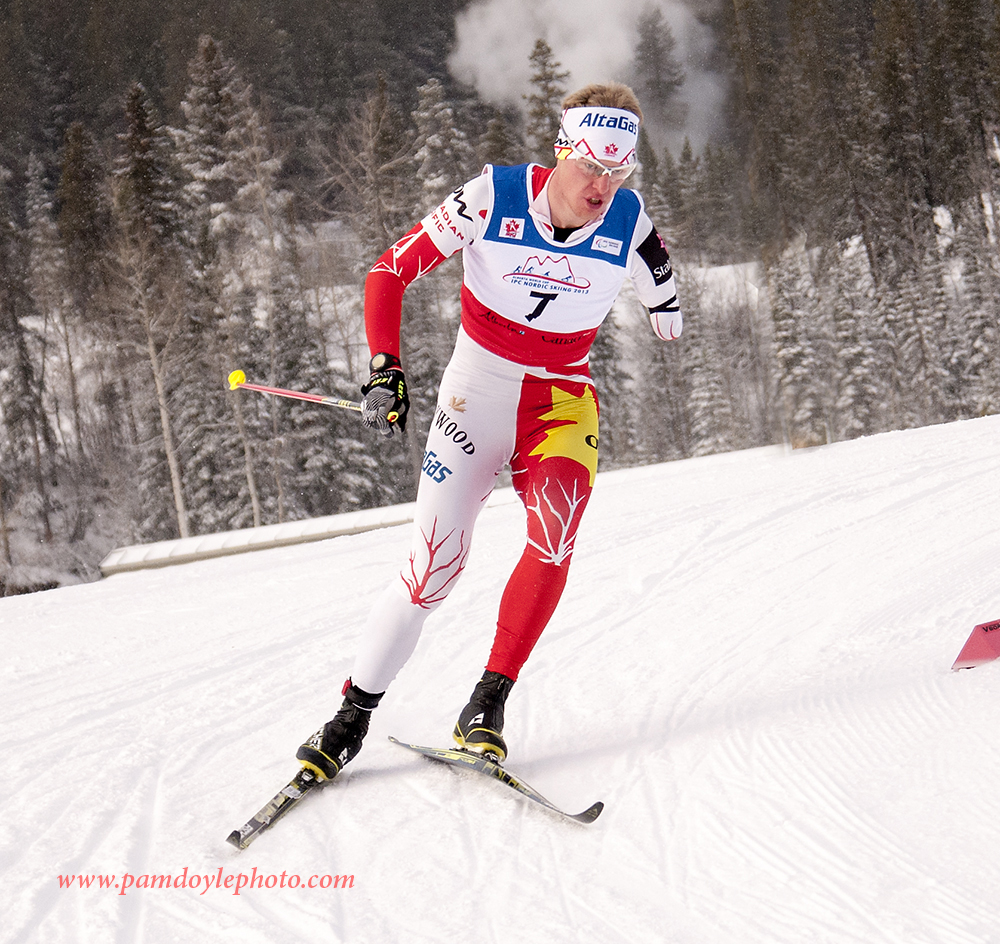
    Canadian World Cup Veteran Mark Arenz in the Standing Division Sprint at Canmore. (Photo Courtesy Pam Doyle)
    Canadian World Cup veteran Mark Arenz in the standing sprint at the IPC World Cup in December in Canmore, Alberta. (Photo: Pam Doyle)
  • How Webster, Ammar Earned Additional Spots on Canada’s Olympic Team

    How Webster, Ammar Earned Additional Spots on Canada’s Olympic Team

    Amanda Ammar (Team Ninja) leads Brittany Webster (Highland Trailblazers) in the 15 k skiathlon on Jan. 12 at 2014 Canadian Olympic Trials in Canmore, Alberta. (Photo: Angus Cockney)
    Amanda Ammar (Team Ninja) leads Brittany Webster (Mito Canada) in the 15 k skiathlon on Jan. 12 at 2014 Canadian Olympic Trials in Canmore, Alberta. (Photo: Angus Cockney)

    Editor’s Note: With the Olympic Games set to kick off in earnest with the Opening Ceremony on Friday night (Moscow Time Zone, 9 hours ahead of EST), the Canadian National Cross-Country Team is ready to go in the mountain village of Krasnaya Polyana, where it’s been training for the last few days. This article explains how their team grew by two just a few weeks before the Olympics, and shortly after the official nomination.

    ***

    On Jan. 14, Cross Country Canada (CCC) nominated 11 athletes to its 2014 Olympic squad: a roster that included seven prequalified World Cup skiers, plus an additional two men and two women.

    Over the next week, teams like the U.S. also announced their Olympic picks, with the U.S. nordic team opting to use 14 of its 17 allotted quota spots. Nations that chose not to fill their quotas for various reasons, limited support-staff accreditation being one of them, gave countries like Canada the option to bring more athletes.

    By Jan. 23, the CCC appeals process was in its final stages regarding the selection of its own team — a policy designed to ensure member athletes get fair treatment when it comes to decisions that “may include, but are not limited to, carding, contract matters, harassment, selection and discipline,” according to the document.

    Amanda Ammar (Team Ninja) racing to third in the Black Jack NorAm 10 k classic individual start on Dec. 15 in Rossland, B.C. (Photo: Shelley Peachell/Peachell Photography, http://peachellphotography.com/)
    Amanda Ammar (Team Ninja) racing to third in the Black Jack NorAm 10 k classic individual start on Dec. 15 in Rossland, B.C. (Photo: Shelley Peachell/Peachell Photography)

    Two former national-team members who narrowly missed the Olympic cut based on their  Canadian Points List (CPL) standings after Olympic Team Trials — Brittany Webster (Mito Canada) and Amanda Ammar (Team Ninja) — stepped forward.

    “If an athlete is not satisfied with the decision of a selection committee in any of our selections, they can appeal internally within Cross Country Canada,” CCC High Performance Director Thomas Holland explained on the phone. “They go to the president, he [sends it to] another panel to hear the appeal.”

    With the Olympics three weeks away and a panel typically having up to 21 days to hold a hearing, CCC rejected one of the appeals because of the short time frame, Holland explained. In that instance, athletes can go to Sport Dispute Resolution Centre of Canada (SDRCC) to have their appeal reconsidered.

    “That’s what Amanda Ammar did,” Holland said. “So then you basically have a hearing for both sides and there’s an arbitrator who decides the case.”

    Based on CCC’s published criteria, which stated it could take up to 12 athletes to the Olympics, Webster was the first one in the door after CCC accepted her appeal.

    “The criteria was a little ambiguous on one point, so she made a case internally to appeal,” Holland explained. “It was all friendly fire anyway. She brought that case forward for the ambiguity in the criteria, which was really looking at the second-place finish [at Olympic Trials].”

    Reviewing Olympic Trials

    The team’s selection process consisted of a prequalification stage at the World Cup level, followed by a series of NorAm races in early January in Canmore, Alberta, which doubled as trials. In addition to the seven World Cup athletes that prequalified, CCC planned to take four more athletes from the results of those trials: a male and female sprinter, and a male and female distance skier.

    For three out of the four disciplines, the decision was clear.

    Heidi Widmer of the Alberta World Cup Academy (AWCA) and National Senior Development Team (NST) won the second freestyle sprint after placing second in the first one to Chandra Crawford, of the World Cup Team and Team Ninja, who had prequalified.

    Jesse Cockney (AWCA/NST) placed second and first, respectively, in the two freestyle sprints, and Graeme Killick (AWCA/NST) finished second in the 10 k classic race by just 1.5 seconds and then dominated the skiathlon a few days later.

    As a result, Widmer, Cockney and Killick were all named to their first Olympic team two days after the trials, along with Emily Nishikawa (AWCA/NST), who won the women’s 10 k classic race by 54 seconds. She went on to place sixth in the 15 k skiathlon, more than 2 minutes behind Ammar as the winner.

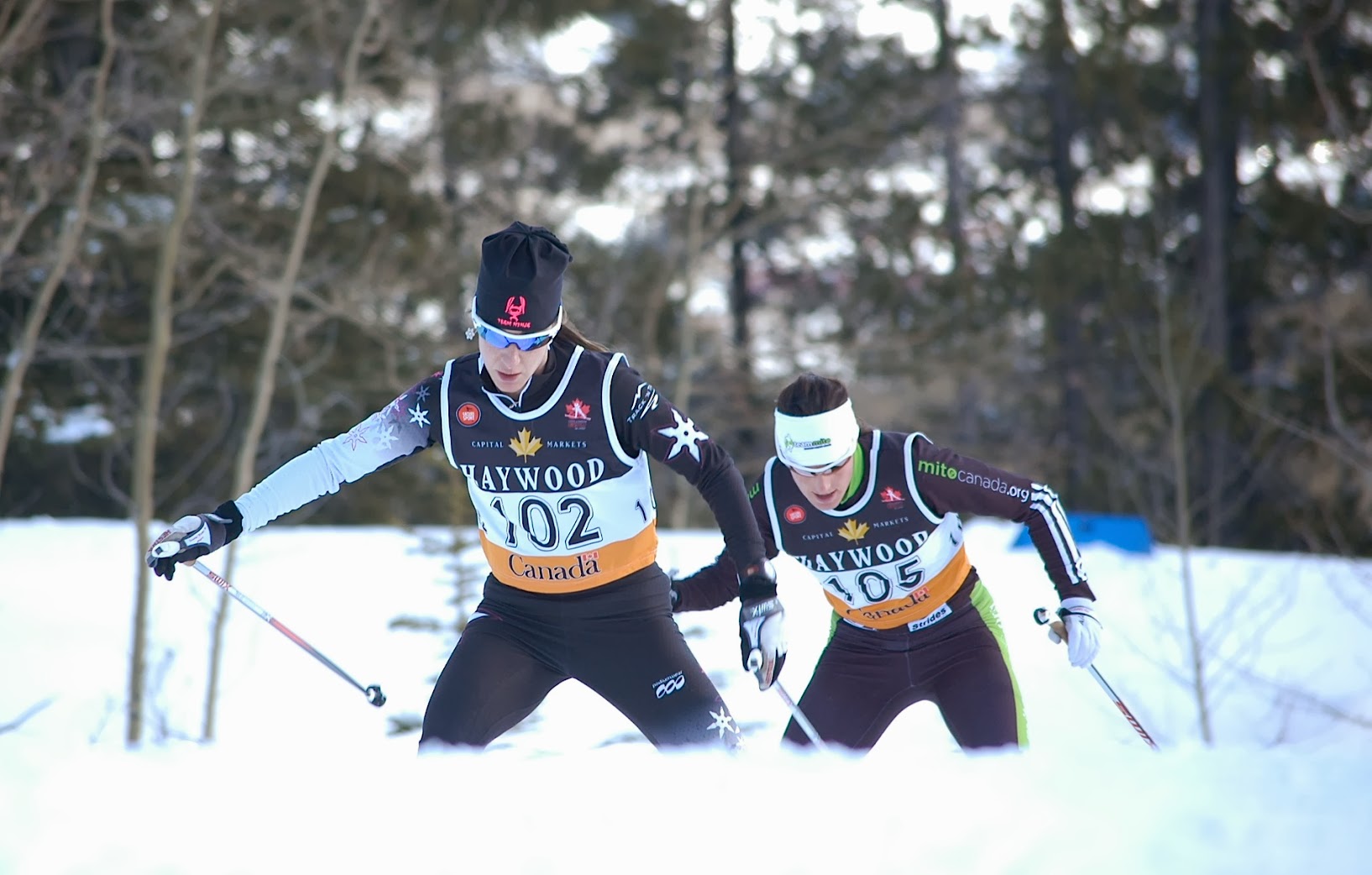
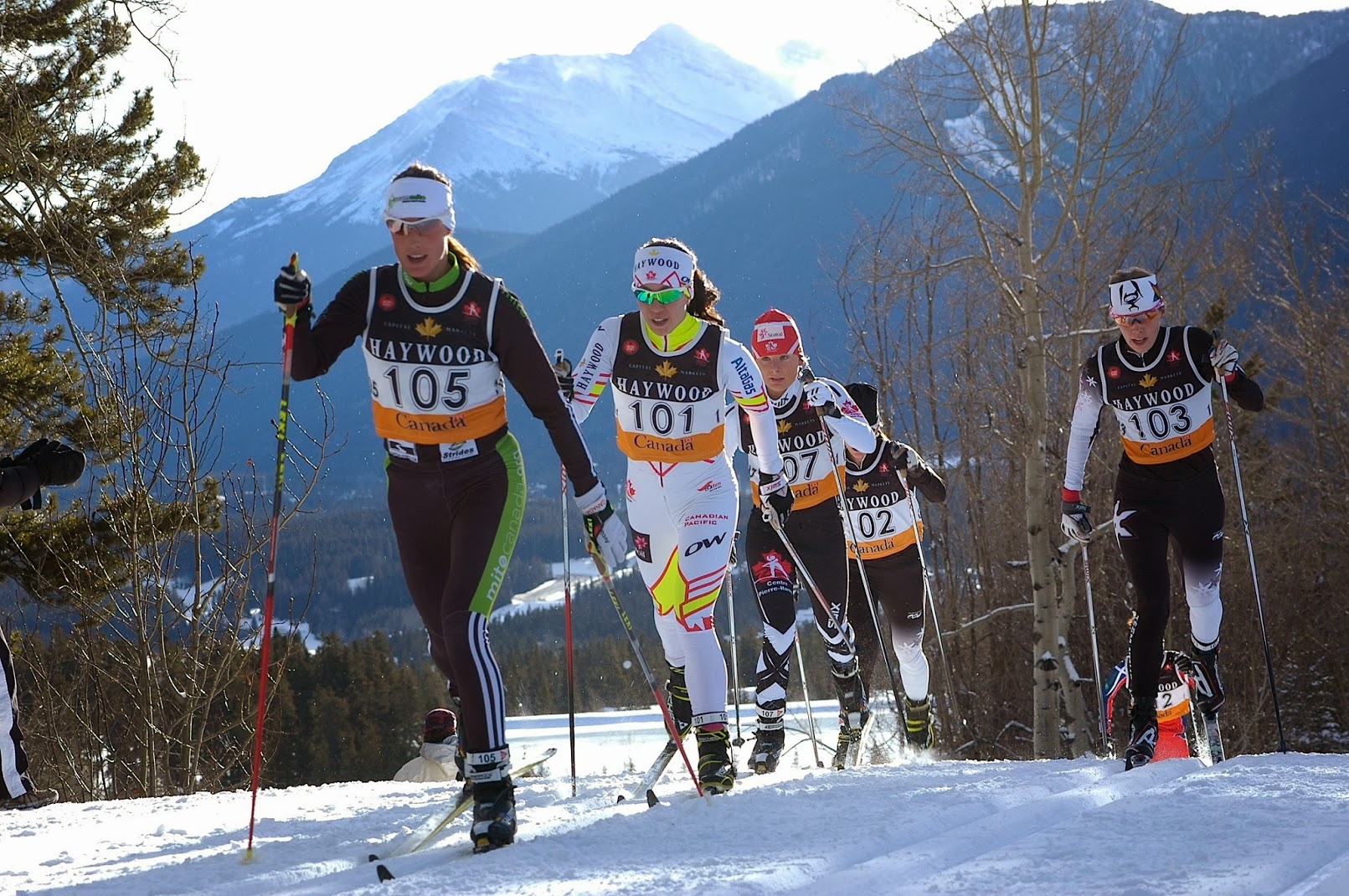
    Emily Nishikawa (101) follows Brittany Webster (105) in the women's 15 k skiathlon at Canadian Olympic Team Trials on Jan. 12 in Canmore, Alberta. Nishikawa placed sixth in the final race of the trials, securing her spot at the 2014 Sochi Olympics from Feb. 7-23. Webster took second after winner Amanda Ammar (102). (Photo: Angus Cockney)
    Brittany Webster (105) leads Emily Nishikawa (101) in the women’s 15 k skiathlon at Canadian Olympic Team Trials on Jan. 12 in Canmore, Alberta. Nishikawa placed sixth in the final race of the trials, securing her spot at the 2014 Olympics. Amanda Ammar (102) won, and Webster placed second. (Photo: Angus Cockney)

    Ammar had placed sixth in the 10 k classic, 1:50 behind Nishikawa. Webster placed second in both of those races.

    Going into the trials, the general consensus among athletes was that winning one of the races was necessary to have a chance at nomination. Nishikawa was named to the team based on her CPL points for the two races better than Ammar’s, topping her by a single point, according to Ammar’s Facebook page. CPL points are the Canadian equivalent of USSA/FIS points.

    After the Olympic team was announced, both Ammar and Webster filed appeals with CCC with separate arguments.

    Ammar stated that the CPL-based selection process was flawed and additionally, that Canada wouldn’t fill its distance starts at the Olympics with the athletes already nominated to the team, with four sprinters among five women. She argued that, had Nishikawa placed fifth in the skiathlon (versus sixth), the points for the skiathlon would have been better because of Nishikawa’s strong point profile, which would’ve boosted Ammar’s points. The CPL scoring system considers only the seed points of the top-five finishers in each race to determine the race points.

    Webster, on the other hand, could have been nominated to the team based on Olympic qualifying standards.  According to CCC’s Nomination Procedures for the 2014 Olympics, an athlete does not explicitly need to win one of the trials races to be selected. In fact, a key component of qualification is having the best points between two trials races.
    “If there are two race winners, the ranking list based on the athlete’s sum total of the designated distance races … will decide the top ranked athlete for the purpose of selection,” the document states.

    Through the end of the trials on Jan. 12, Webster’s points for those races were higher than those of both Nishikawa and Ammar. That, paired with additional Olympic quota spots granted to Canada on Jan. 24, supported Webster’s grounds for nomination.

    Holland said the whole process, including Ammar’s appeal to an outside governing entity, moved quickly — and involved other athletes, such as Para-Nordic Team veteran and 2010 Olympian Brian McKeever, who “started to appeal and for various reasons withdrew that appeal,” Holland explained.

    While McKeever could not be reached for comment, Holland said McKeever, who won the 15 k classic at trials, brought up his case after more athletes were being considered for additional quota spots.

    “He felt that he had a better ranking so why wouldn’t he be considered,” Holland said. “Once an outside appeal committee jumps in, the decision can get very messy because other athletes can come forward and say, ‘What about me?’ We made that case very clear. Anyways, we’re past it, we’ve got our team, and we’re happy to move forward.”

    The entire process started shortly after trials, and with team-naming deadlines looming for both the national and Sochi Olympic committees, Holland said the panel had to move quickly.

    “Sometimes you have to do this within hours,” he said. “That’s why it happened fast and that’s why we have an appeals process that allows for that. It moves pretty quick and these aren’t just hearsay, these are things where we have to put forward a case and put facts on the table.”

    Reacting, Moving Forward

    Once CCC acknowledged it could take up to 13 athletes to the Olympics, both Webster and Ammar received notice on Jan. 24 that they would be named to the team, according to Ammar.

    “I found out on Friday at 6 a.m.,” Ammar said. “So it was a very long, exciting day.”

    When she first discovered she didn’t make it, Ammar said, “Like a normal athlete, I just cried.”

    Frank Ammar cheering for his daughter Amanda Ammar (Team Ninja) on the final day of the Canadian Olympic Team Trials in Canmore, Alberta. A week and a half after the trials, Amanda was named to her second Olympic team. (Photo: Angus Cockney)
    Frank Ammar cheering for his daughter Amanda Ammar (Team Ninja) on the final day of the Canadian Olympic Team Trials in Canmore, Alberta. A week and a half after the trials, Amanda was named to her second Olympic team. (Photo: Angus Cockney)

    The one-point margin was what got her.

    “I mean if it was something huge, then I would have gotten over it, but luckily my dad doesn’t take really no for an answer, and he’s like, ‘Nope, nope, we’re fighting this, nope, we are fighting this,’ and he talked to my old coach, and they’re like, ‘Oh yeah, we more than have a case here, this shouldn’t be an issue.’ So we went forward, and there was a lot of people behind me and supporting me throughout this whole thing.”

    A 2006 Olympian, Ammar, who turned 28 on Thursday, stepped away from skiing for two seasons (from 2009-2011) and came back to it with the help of her boyfriend and coach, Chris Butler. She had been derailed by injuries and dealt with pains in her back and foot as recently as last fall. The NorAm leader at the end of last season, she had the opportunity to start this winter over in Europe. She declined, resolving to rehab her injuries and train more at home to peak for Olympic trials.

    “It feels deserving, it feels amazing, it feels exciting,” Ammar said of being named to her second Olympics. “I have never felt so strong in my whole career. Taking that time away and coming back and training the way I believed to be the best, and staying true to myself and doing my own things as an independent racer has never been more fun and more rewarding. When I hit those start lines at trials this year, I knew there was nothing more I could have done, and there was nothing more in my way.”

    Eight years ago, the Olympics came as a bit of a surprise.

    “I wanted to go to world juniors, and I wanted to be fit, and I ended up making the Olympics — sweet,” she said.

    This time around, she revived and reinvented herself.

    “I came back from so much,” she said. “I came back from an eating disorder, I came back from a back injury, I came back from food allergies, I came back from overtraining, I came back from sleep problems. It was so hard, and I put it out there — I made it real — I said, ‘I want to make Sochi,’ and I just went for it.”

    A member of the 2010 Olympic team, Webster, 26, has also returned to the sport. Four years ago at the Games in Vancouver, B.C., she was initially too sick to race and did not start as a result.

    “[The team] wanted to fly me back to Calgary so I could go back, and in their words, ‘Rest up for a day or two’ and then start training again, but not be around the Olympic environment,” Webster said. “They were going to fly me back for the team relay and the 30 k skate, and for me, it made a little more sense to stay in place and try to recover as best as I could.

    “I had a fever, a sinus infection, a sore throat, and I wasn’t really fit to fly, so I decided instead to stay with my parents at their condo, and that didn’t fly well,” she continued. “So that was basically the end of the story.”

    After taking some time off after the 2010 Olympic season, Webster renewed her zest for racing, making it to World Championships last year in Val di Fiemme, Italy, where sickness knocked her out for all but two of the competitions.

    “I think that if I’m healthy and fit and feeling the way I do now, I can definitely pull out a good race,” Webster said. “What that is on the World Cup or Olympic scene, I have no idea. I would love to think that it’s a top 30, but I really haven’t had a lot of experience stepping on the start line in a good mindset and … healthy in a championship like this, so that would be like the ideal circumstance. In order to get there, I just have to stay happy and healthy and really just enjoy the whole process.”

    Earlier this week, Webster and Ammar flew to Sochi to join their team in the mountain village of Krasnaya Polyana, where all the nordic events will be held. On Saturday, On Saturday, Webster, Ammar and Nishikawa will represent Canada in the women’s 15 k skiathlon, the first race of six women’s events at the 2014 Olympics.

    “I came back from so much … It was so hard, and I put it out there — I made it real — I said, ‘I want to make Sochi,’ and I just went for it.”  — Amanda Ammar

    Accreditation

    In terms of staffing, Canadian Head Coach Justin Wadsworth wrote in an email that they will  have three coaches, seven wax technicians, a team doctor, osteopath, two massage therapists, physiologist, and Holland as the team leader in Russia. Of the 16, all but four (the doctor, osteopath, physiologist, and one masseuse) are accredited, which grants access to the venue and certain restricted areas.

    Canada worked with Australia to bolster its accredited staff. According to Holland, the relationship between the two national teams started before the World Cup races in Sochi a year ago.

    “It is simply an arrangement where we [work] their skis in exchange for accreditation,” he wrote. “Works for both nations. Every Games we are short on accreds for techs.”


  • Crawford, Thompson, McKeever, and Nishikawa Score Big at Canadian Olympic Trials

    Crawford, Thompson, McKeever, and Nishikawa Score Big at Canadian Olympic Trials


    The finishing stretch of the men's freestyle sprint. (Photo: Kathy Wylie)
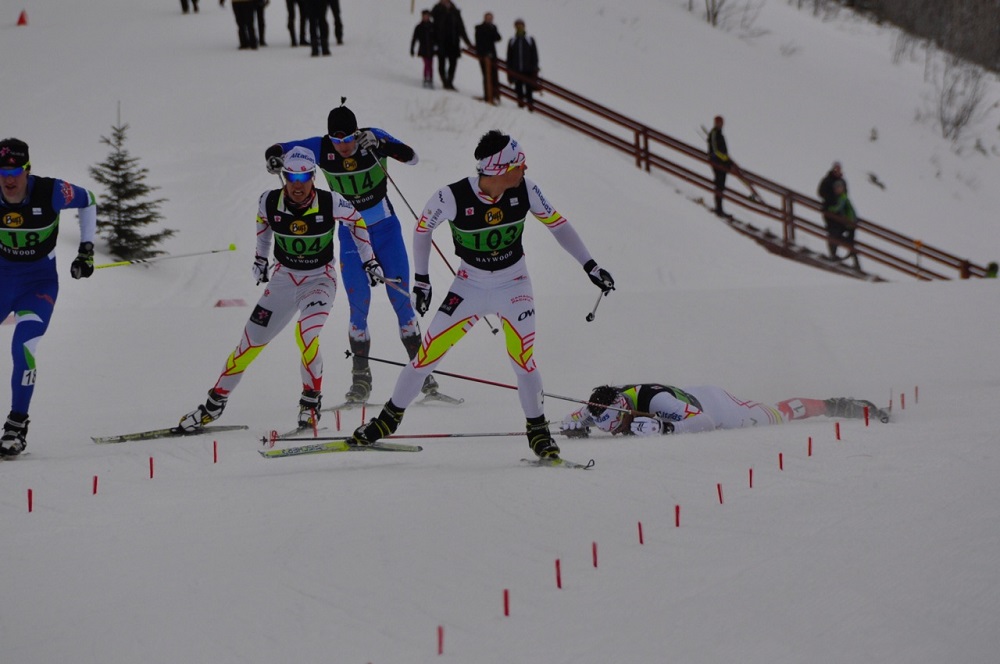
    The finishing stretch of the men’s freestyle sprint after Widmer’s fall. (l-r) Bob Thompson, Graham Nishikawa, Julien Locke, Jesse Cockney, Phil Widmer. (Photo: Kathy Wylie).

    Canada’s Olympic Trials kicked off on Wednesday at the Canmore Nordic Centre with the first of two freestyle sprint races. With perhaps only two spots per gender on the Olympic team up for grabs, there is little room for errors for racers wanting to qualify for the Olympics.

    Freestyle Sprint

    Chandra Crawford of Team Ninja and the Canadian National Team was dominant in the finishing stretch of the women’s final, taking the win with a 2.4 second gap on the rest of the field. Crawford is prequalified for the Olympic team, but has struggled with health issues over the past year. She told Cross Country Canada that,

    “To be able to put it all out there and charge your way to the finish line is what it is all about. It has been a huge effort this year for me to this point, and I’m excited with how today went. I just love racing and it is fun to win today.”

    Heidi Widmer and Emily Nishikawa embrace after the women's sprint final. (Photo: Kathy Wylie)
    Heidi Widmer and Emily Nishikawa embrace after the women’s sprint final. (Photo: Kathy Wylie).

    Finishing behind Crawford was Heidi Widmer of the Alberta World Cup Team (AWCA) and the Canadian National Team (NST). Widmer qualified in first, and looked strong in finishing. Canada is planning to choose one athlete solely off of sprint results, and one from distance results. Crawford’s prequalification puts Widmer in strong position going into the second round of freestyle sprinting on Saturday.

    Rounding things up for the women’s podium was biathlete Zina Kocher of Red Deer, Alberta. Kocher has already qualified for Sochi in biathlon, but is also trying to qualify for the cross-country team. Incredibly, she finished in third in an event that she has rarely, if ever, competed in. In an email, she wrote that,

    “For my first experience, my heats went great. I love hill climbing so this course is fantastic for me!

    My strategy was really just to completely enjoy the day, be challenged by a new experience and do intervals with fast skiers [and] friends! Every heat required a little bit different mindset before starting and thinking about what strategy was needed. I didn’t have any expectations since this was new for me so I just focused on givin’er!”

    Jesse Cockney and Phil Widmer collide in the finishing stretch of the men's sprint final. (Photo: Kathy Wylie).
    Jesse Cockney and Phil Widmer collide in the finishing stretch of the men’s sprint final. (Photo: Kathy Wylie).

    On the men’s side of things, the results were equally interesting. Up-and-comer Bob Thompson of Thunder Bay had a stellar day to take the win after qualifying in 18th place.
    According to Jesse Cockney (AWCA-NST), the heats were slow on the day, and coming down the finishing stretch all the racers were in a big pack. A tangle in the last 100 meters between Cockney and Phil Widmer (AWCA-NST) left the win up for grabs, and Thompson snagged it. Cockney held on for second, and Graham Nishikawa (NST) ended up in third.


    Classic 15/10 K

    Racing continued on Thursday with 15/10 k interval start classic racing for the men and women, respectively.

    Brian McKeever of the National Para-Nordic Ski Team eked out the win for the men, starting slowly and building into the four lap race.

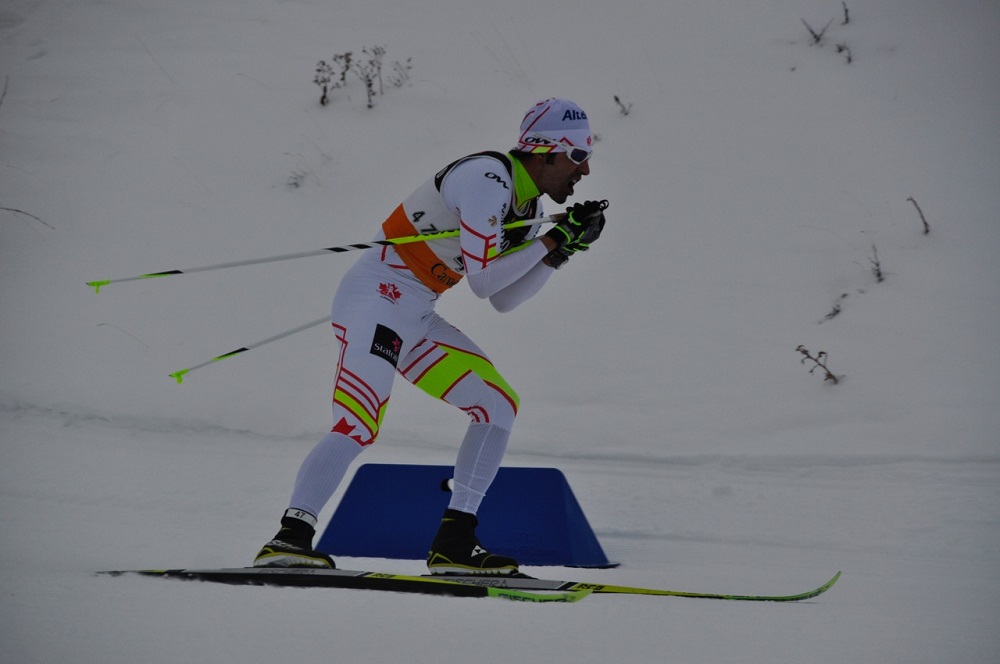
    Brian McKeever in Thursday's classic distance race. (Photo: Kathy Wylie).
    Brian McKeever in Thursday’s classic distance race. (Photo: Kathy Wylie).

    “I could see my splits throughout the race and knew what I had to do. My strategy going in was this is a four-lap race. It is not over after two,” McKeever told Cross Country Canada. “I wanted to get into a good rhythm and keep the pace throughout all four laps. I like to be the guy moving up as the race goes along rather than falling back. It feels very rewarding to know I was able to stick to the plan and it worked out. ”

    McKeever is legally blind and, in 2010, was a member of both the Paralympic and Olympic team for Canada in Vancouver. However, he did not get to start any races at the Olympic Games.

    Following closely behind McKeever were Graeme Killick (AWCA) and Kevin Sandau (AWCA-NST), 1.5 seconds and 18 seconds back, respectively. Both racers were strong early in the race and then faded a bit as McKeever made his surge. Sandau wrote in an email that,

    “Since only race winners are only considered in the final selection, everything is on the line for Sunday[‘s distance race]. But the top [five] from today were relatively tight so anything could happen in the skiathlon. For me, the longer the better so looking forward to Sunday!”

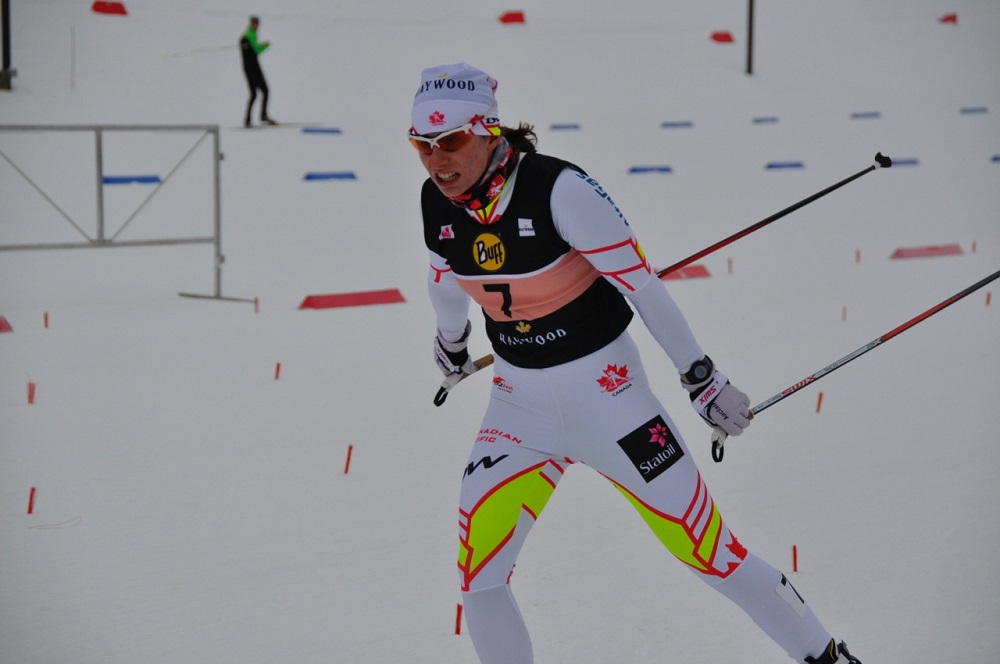
    Alysson Marshall, who finished fourth in the classic 10 k, in Wednesday's sprint race. (Photo: Kathy Wylie).
    Alysson Marshall, who finished fourth in the classic 10 k, in Wednesday’s sprint race. (Photo: Kathy Wylie).

    The women’s race, on the other hand, was not nearly as close. Emily Nishikawa (AWCA-NST) showed early on that she was in top form, dominating the race throughout to win by nearly a minute. Keeping her enthusiasm in check, she told Cross Country Canada that,

    “I have put in the work and now put it together for the races and that feels incredible,” said Nishikawa. “The wax was amazing and my skis were incredible today. I’m not going to celebrate just yet. I am going to recover and get ready for Sunday’s race.”

    Runner-up Brittany Webster (Mito Canada) was jubilant, however, after being hobbled last season by sickness and early this season by a training plan designed to produce better mid-to-late season results. Using a race strategy that focused on skiing her own race, Webster wrote that,

    “Whoo, I am not gonna lie it is nice to have that over with! Honestly, I am not even sure where the time went on that course. I remember every second of it and yet I remember nothing of it too. Is that even possible?” She added, “Emily skied fantastic. She started quite [far] back from me so I had no idea what my back splits were to her. All I focused on was keeping it together and standing up on my skis, and the finish result was the finish result.”

    Rounding out the podium for the women was Ninja Zoe Roy. After using the qualifier of Wednesday’s freestyle race as a warm-up for today’s race, Roy skied to a strong third place finish, 1:23 back from Nishikawa.

    The Canadian Olympic Trials, which also serve as selection races for U23 World Championships and World Junior Championships, will continue on Saturday with a second round of freestyle sprinting.

    Women’s Freestyle Sprint Results

    Men’s Freestyle Sprint Results

    Men’s Classic 10 k Results

    Women’s Classic 10 k Results

  • Weekend Roundup: High Expectations

    Weekend Roundup: High Expectations

    Kikkan Randall and Marit Bjørgen's photo finish (Photo: Fischer/Nordic Focus)
    Kikkan Randall and Marit Bjørgen’s photo finish in Sunday’s Sprint in Davos, Switzerland. Bjørgen won it by a hair. (Photo: Fischer/Nordic Focus)

    Extraordinary performances are becoming ordinary for the North American contingent this year as new stars emerge, historic results accumulate, and expectations continue to grow.

    FasterSkier was on site in Davos, Switzerland, where five USST members raced to the top 30 in Saturday’s distance races. Kikkan Randall placed 18th in the women’s 15 k, followed by Liz Stephen in 20th, Holly Brooks in 25th, and Jessie Diggins in 30th. Noah Hoffman was 25th in the men’s 30 k.

    Sunday’s Skate sprints brought even more excitement for the U.S. team with Randall skiing to a hard fought second place against powerhouse Marit Bjørgen. Sophie Caldwell, in a breakout performance, reached the World Cup semifinals and cracked the top ten with her ninth place finish. Diggins and Sadie Bjornsen, who both suffered falls, were 12th and 27th.

    On the men’s side Simi Hamilton and Andy Newel advanced to the quarterfinals and finished in 14th and 17th.

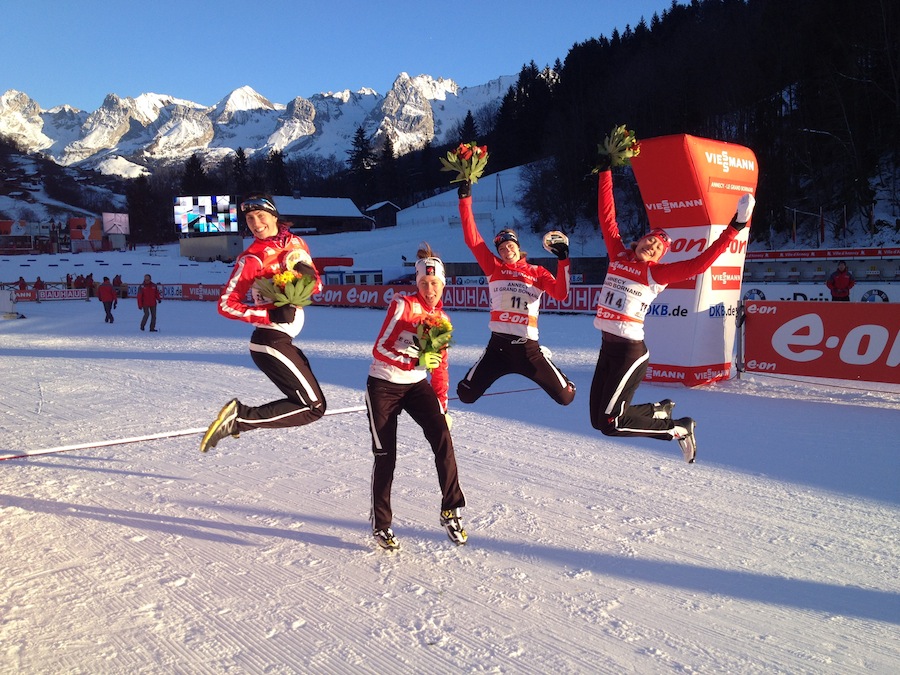
    The Canadian women jumping for joy after notching Biathlon Canada's best-ever finish in a relay. (Photo: Biathlon Canada/Matthias Ahrens)
    The Canadian women jumping for joy after notching Biathlon Canada’s best-ever relay result of fourth. (Photo: Biathlon Canada/Matthias Ahrens)

    North America shined in the IBU World Cup with the Canadian women’s relay team taking a historic fourth-place finish in the 4 x 6 k relay. The success continued throughout the weekend with four Canadian women qualifying for the pursuit, and Rosanna Crawford ultimately finishing 19th.
    On the men’s side Canadian Nathan Smith finished 16th in the 10 k sprint and was followed by Americans Tim Burke in 28th and Lowell Bailey in 35th.  In the 12.5 k pursuit Smith impressed again with an eighth-place finish. He was followed by Bailey and Burke in 15th and 16th.

    The action didn’t stop there with historic results from U.S. Nordic Combined. In Ramsau, Austria, Bryan Fletcher and Todd Lodwick skied the fastest combined time in the 2 x 7.5 k team sprint to place fourth, the best-ever result for the U.S. in the two-man event.

    In Sunday’s individual 10 k competition, Fletcher and Billy Demong cracked the top ten by placing seventh and ninth.

    With all the success happening across the pond it’s easy to forget that North America had some races of its own this weekend. Rossland, B.C. hosted the second set of NorAm races where Erik Bjornsen and Emily Nishikawa triumphed in the sprint, and Kate Fitzgerald and Kevin Sandau won Sunday’s 10 and 15 k.

    The IPC World Cup also took place in Canmore, Alberta, with several North American standouts. Canadian Brian McKeever won the 10 k on the opening day and churned out another winning performance in the 20 k classic race. American Oksana Masters placed third in the women’s sit-ski 5 k and fourth in the 0.75 k sprint.

    Norway’s Anders Gløersen celebrates his win as he crosses the finish line (Photo: Fischer/Nordic Focus)
    Norway’s Anders Gløersen celebrates his sprint win as he crosses the finish line in Davos. (Photo: Fischer/Nordic Focus)

    Cross-Country World Cup, Davos, Switzerland (Results)

    Saturday’s 15/30 k skate individual start: Women’s report | Men’s report | U.S. women’s report | Hoffman Happy with Performance

    Sunday’s 1.5 k skate sprint: Women’s report | Men’s report | Canadian report | One of USST’s ‘Best Days Ever’ | Randall’s Lesson for SochiUSSA CEO Shaw Spectates in Davos

    Nordic Combined World Cup, Ramsau, Austria (Results)

    Saturday’s 2 x 7.5 team sprint: Report

    Sunday’s NH/10 k: Recap

    IBU World Cup, Annecy, France (Results) 

    Thursday’s 4 x 6 k relay:  Women’s report

    Friday’s 4 x 7.5 k relay:  Men’s report

    Saturday’s 7.5/10 k sprint: Women’s report | Men’s report

    Sunday’s 10/12.5 k pursuit: Women’s report | Men’s report 

    Black Jack NorAm, Rossland, B.C. (Results)

    Saturday’s skate sprint: Report

    Sunday’s classic 10/15 k: Report

    IPC World Cup, Canmore, Alberta (Results)

  • Kowalczyk, Poltoranin Take First Two Muonio Races; Americans and Canadians Jump in the Mix

    Kowalczyk, Poltoranin Take First Two Muonio Races; Americans and Canadians Jump in the Mix

    Each November, it’s tradition for some of the world’s best nordic skiers to go where the sun don’t shine – or appears very little. The fact is that Muonio, Finland, above the Arctic Circle has snow this time of year when other parts of Europe are still waiting for the skiable stuff.

    Justyna Kowalczyk of Poland during one of last year's FIS races in Muonio, Finland. This weekend, Kowalczyk won two out of three Muonio competitions from Nov. 15-17.(Photo: Petri Ikävalko/Hevoskuuri.fi)
    Justyna Kowalczyk of Poland during one of last year’s FIS races in Muonio, Finland. This weekend, Kowalczyk won two out of three Muonio competitions from Nov. 15-17.(Photo: Petri Ikävalko/Hevoskuuri.fi)

    Starting Friday, the unofficial Finland Triple began in Muonio, with hundreds of skiers flocking to the northern region for their first International Ski Federation (FIS) races of the season.

    Poland’s cross-country celeb Justyna Kowalczyk jumpstarted her season with a sizable victory in the 1-kilometer classic sprint, topping Russian Evgenia Shapovalova by more than 7 seconds in the final, as well as Russia’s Julia Tikhonova in third and Natalia Matveeva in fourth. Finland’s Mona-Lisa Malvalehto placed fifth out of 146 female competitors.

    In the men’s 1.3 k classic sprint on Friday, Alexey Poltoranin of Kazakhstan beat Finland’s runner-up, Ari Luusua, by 3.23 seconds in the final, as well as third-place finisher Russian Anatoliy Volkov (+5.56). Ales Razym of the Czech Republic was fourth and Estonia’s Peeter Kummel placed fifth out of 255 men.

    Leading a small American contingent in Muonio, Dakota Blackhorse-von Jess (Bend Endurance Academy) placed 34th in the sprint qualifier. Welly Ramsey was the fastest from the Maine Winter Sports Center (MWSC), placing 113th, teammate Sam Tarling came in 209th, and post-grad Austin Huneck was 239th. Another MWSC post-grad, Emily Ramsey finished 128th in the women’s race.

    On Saturday, Kowalczyk and Poltoranin again topped their respective podiums – this time in the 5 and 10 k classic races. Kowalczyk defeated Russia’s Yulia Tchekaleva in second by 21.6 seconds, and Germany’s Nicole Fessel in third (+27.3). Finland’s Anne Kyllönen and Kertu Niskanen placed fourth and fifth, respectively, out of 199 women.

    Poltoranin edged Lukas Bauer of the Czech Republic by 6.8 seconds, and German Hannes Dotzler in third (+24.2). Razym finished fourth for the second-straight day, and Germany’s Tim Tscharnke placed fifth out of 331 finishers.

    Kris Freeman in Muonio last year. (Photo: Petri Ikävalko / Hevoskuuri.fi)
    Kris Freeman in Muonio last year. (Photo: Petri Ikävalko/Hevoskuuri.fi)

    Kris Freeman (MWSC) led the Americans in his first race of the season in 34th, 1 minute and 11 seconds behind Poltoranin, who won in 24:33.7. Tarling placed 109th, 2:09.8 back from the winner. Canadian Para-Nordic veterans Brian McKeever placed 160th and Erik Carleton was 242nd.

    Racing ended Sunday with the women’s 10 k and men’s 15 k individual skate. Russian Petr Sedov stole the spotlight from Finland’s Matti Heikkinen, who was leading until Sedov finished 7.8 seconds faster in 34:56.5. Two other Finns rounded out the top four with Tero Similae in third and Lari Lahtonen in fourth, and Franz Goering of Germany was fifth out of 188 men. Poltoranin did not race.

    Freeman finished 32nd, 1:15.1 after Sedov, McKeever was the top Canadian in 63rd, (+2:13), and Welly Ramsey was 116th (+3:24.7) Carleton placed 125th (+3:38), and Tarling was 126th (+3:39.5).

    Russian Irina Khazova won the women’s 10 k in 25:46.2, ahead of teammate Tchekaleva in second (+28.3), and Eva Vrabcova-Nyvltova of the Czech Republic in third (+49.5). Finland’s Gretel Niskanen placed fifth, and Russia’s Svetlana Nikolaeva was fifth out of 159 women. Kowalczyk fell to 24th, behind teammate Sylwia Jaskowiec in 21st. American Emily Ramsey placed 155th.

    ***

    Results: 

    Friday’s classic sprint: women | men

    Saturday’s 5 and 10 k classic: women | men | photos

  • The JP Grand Prix: The ‘World’s Best Ski Race,’ in July

    The JP Grand Prix: The ‘World’s Best Ski Race,’ in July

    A competitor on course at the JP Grand Prix, a ski race that took place in a backyard in Whitehorse, Yukon, last Friday. (Photo: Brian McKeever)
    A competitor on course at the JP Grand Prix, a ski race that took place in a backyard in Whitehorse, Yukon, last Friday. (Photo: Brian McKeever)

    If you noticed the slew of photos from a ski race in the Yukon last week, you weren’t dreaming. The second-annual JP Grand Prix, hosted in the backyard of Whitehorse skier John Perry and his family, was held on Friday complete with live music, a barbecue, TV crew and, yes, snow. And because it was scheduled to coincide with Canadian World Cup skier Graham Nishikawa’s wedding, there were quite a few world-class athletes who partook in the festivities. Welcome to the world’s coolest ski race.

    The course laid out for the JP Grand Prix. (Photo: Devon Kershaw)
    The course laid out for the JP Grand Prix. (Photo: Devon Kershaw)

    So, how is a ski race made possible in late July? With a lot of foresight. Perry and his father began stockpiling snow last winter to save up for the event. When it came time for the race, everyone at the party grabbed a shovel to build the course.

    “The man with the name in the title deserves all credit for organizing the race,” wrote Canmore’s Phil Widmer in an email. “John Perry and his Dad save snow through the winter under their deck, cover it with saw dust and wait for the right time to host the ‘JP Classic.’ They did an amazing job with forerunners, a bagpipe lead procession for all competitors, bibs, prizes, medals, beer, it had all the fixings of a great race. This year it made sense to have it while everyone’s in town for the wedding. Thanks John!”

    The making of the course. (Photo: Brian McKeever)
    The making of the course. (Photo: Brian McKeever)

    Widmer estimated that about 150 showed up for the event, and the Yukon Elite Squad’s website put the number of competitors at around 40, although ‘competitor’ is a loosely-applied term for race participants. The atmosphere was relaxed; Devon Kershaw raced in jeans and a flannel, as did Widmer and Nishikawa.

    “I don’t know that there are results,” Widmer said. “It was honestly more about having fun skiing in the middle of summer in downtown Whitehorse.”

    Knute Johnsgaard leaves the gate. (Photo: Yukon Elite Squad)
    Knute Johnsgaard leaves the gate. (Photo: Yukon Elite Squad)
    Phil Widmer on course. (Photo: Devon Kershaw)
    Phil Widmer on course. (Photo: Devon Kershaw)
    Kristin Størmer Steira on course. (Photo: Devon Kershaw)
    Kristin Størmer Steira. (Photo: Devon Kershaw)
    Devon Kershaw with Graham Nishikawa, who was married over the weekend. (Photo: Devon Kershaw)
    Devon Kershaw with Graham Nishikawa before the start. Nishikawa was married the weekend following the race. (Photo: Devon Kershaw)

    Results or no, somebody kept track of times and named podium finishers. Locals Janelle Greer and Knute Johnsgaard of the Yukon Elite Squad took top honors. Phil Widmer and Brent McMurtry took second and third, respectively, in the men’s category, and Perianne Jones and Kristin Størmer Steira claimed silver and bronze in the women’s race.

    The women's podium: 1. Janelle Greer (Yukon Elite Squad), 2. Perianne Jones (Canadian National Ski Team), 3. Kristin Størmer Steira (Norwegian National Team). Photo: Devon Kershaw.
    The women’s podium: 1. Janelle Greer (Yukon Elite Squad), 2. Perianne Jones (Canadian National Ski Team), 3. Kristin Størmer Steira (Norwegian National Team). Photo: Devon Kershaw.
    Men's race-winner Knute Johnsgaard (YES) pops a bottle of champagne on the podium. (Photo: Devon Kershaw.)
    Men’s race-winner Knute Johnsgaard (YES) pops a bottle of champagne on the podium. Phil Widmer and Brent McMurtry, not pictured, took second and third, respectively. (Photo: Devon Kershaw.)

    After the race, the real party began, complete with good food, drink and multiple bands.

    “The idea is amazing and they pulled it off really well. I think two to three different bands played through the night and the atmosphere was great,” Widmer said.

    Former Yukon Elite Squad skier Fabian Brook and his band Griswold played at the afterparty. (Photo: Brian McKeever.)
    Former Yukon Elite Squad skier Fabian Brook and his band Griswold played at the afterparty. (Photo: Brian McKeever.)

    In conclusion, Brian McKeever’s description of the JP Grand Prix as the “world’s best ski race” seems to be fairly accurate. If the number of video cameras that cropped up in pictures is any indication, we may be able to expect another video recap of it in the near future. In case you missed it last summer, here’s last year’s edit from David Greer.


  • At Long Last: Canadian Season Wrap (Video)

    At Long Last: Canadian Season Wrap (Video)

    Japan's Chisa Obayashi (second from r) leads after crashing early in Saturday's 30 k freestyle mass start at Canadian Nationals in Whistler, B.C. Eventual winner, Bettina Gruber of Switzerland (r), runner-up Zina Kocher (l) and Heidi Widmer (second from l) follow. (Photo: Martin Kaiser)
    Japan’s Chisa Obayashi (second from r) leads after crashing early in the 30 k freestyle mass start at 2013 Canadian Nationals in Whistler, B.C. Eventual winner, Bettina Gruber of Switzerland (r), runner-up Zina Kocher (l) and Heidi Widmer (second from l) follow. (Photo: Martin Kaiser)

    WHISTLER, B.C. — Wondering how your favorite Canadian skier is feeling about last season? We asked many of them at Canadian Ski Nationals in late March. Here is the final product of our efforts: a montage of interviews with some of the best (at least the ones at nationals) talking about their seasons and final races in Callaghan Valley.

    Like this? Check out our “Bits from Canmore” video from the Alberta World Cup in December.

  • Now a National Champ, McKeever Again Adaptive Skier of the Year; Bourgonje Top Female

    Now a National Champ, McKeever Again Adaptive Skier of the Year; Bourgonje Top Female

    Canadian Para-Nordic World Cup skiers Colette Bourgonje and Brian McKeever are FasterSkier's Adaptive Skiers of the Year. (Photos: James Netz/CCC & Gerry Furseth)
    Canadian Para-Nordic World Cup skiers Colette Bourgonje and Brian McKeever are FasterSkier’s Adaptive Skiers of the Year. (Photos: James Netz/CCC & Gerry Furseth)

    Brian McKeever is one of those guys that seem to keep getting better with time. At 33, Canada’s Para-Nordic World Cup visually impaired skier once again dominated the International Paralympic Committee (IPC) World Cup scene last season, winning every IPC cross-country event he participated in.

    With guide Erik Carleton, McKeever tallied two golds at 2013 World Championships in Solleftea, Sweden, and two more at World Cup Finals in Sochi, Russia.

    “I don’t think the guides get nearly as much recognition as they should,” McKeever told Cross Country Canada in February. “It is tough being the guide because you are out front and not skiing your own race. … When I need him to hold off he has to, and when I need him to increase the pace he needs to do that as well.”

    Brian McKeever (r) with guide Erik Carleton celebrating World Championship gold (Photo: IPC)
    McKeever (r) and guide Erik Carleton celebrate their 2011 World Championships gold. (Photo: IPC)

    Childhood friends from Calgary, the duo didn’t waste any time getting from their last World Cup Finals race in Sochi to Whistler, British Columbia. There, McKeever captured his first national title in the 10-kilometer freestyle on March 24, just four days after racing in Russia.

    “You never really know how you are going to feel after getting off the plane from Russia,” McKeever told FasterSkier after arriving two days earlier. “First national championship win in my career, I am really happy about that.”

    To start the season, both McKeever and Carleton individually qualified for the able-bodied World Cup races in Canmore, Alberta. They decided to skip the opening IPC World Cups to compete in Canmore, where McKeever notched a career-best 38th in the skiathlon in mid-December.

    In February, the 10-time Paralympic medalist double poled the entire Canadian Birkebeiner 55 k classic in Edmonton, Alberta, and won by nearly three minutes. Carleton, 35, placed second.

    McKeever took on the Vasaloppet 90 k classic in early March for the second-straight year, finishing 45th overall – a vast improvement from 83rd in 2012.

    Another 10-time Paralympic medalist, Canada’s veteran sit-skier Colette Bourgonje, 51, isn’t showing signs of slowing down before the 2014 Winter Games (which will be her seventh Paralympics). In January, she raced to silver and bronze at the IPC World Cup in Cable, Wis., and went on to place eighth at World Championships and sixth at World Cup Finals. Bourgonje landed fifth overall in the IPC World Cup.

    Honorable Mention:

    Canadian Para-Nordic World Cup member Mark Arendz (c) tops the podium for the first time at 2013 IPC Biathlon World Championships in Solleftea, Sweden. (Photo: CCC)
    Canadian Para-Nordic World Cup member Mark Arendz (c) tops the podium for the first time at 2013 IPC Biathlon World Championships in Solleftea, Sweden. (Photo: CCC)

    Further proving the depth of Canada’s Para-Nordic team, 22-year-old Mark Arendz won his first IPC Biathlon World Championships gold in February in the 7.5 k sprint. Also in Solleftea, Arendz claimed bronze in the 12.5 and 15 k distance races and finished eighth overall in the World Cup.

    After trying out sit skiing for the first time at U.S. Nationals in January, Tatyana McFadden went on to represent the U.S. at the IPC World Cup in Cable, where she finished right behind Bourgonje in two races in fourth and fifth, respectively. Her results were hardly a surprise; the 24-year-old University of Illinois student has 10 Paralympic medals in wheelchair racing and at least six marathon titles (including one in Boston and other in London this month). Despite a late start, she ranked 14th in the overall World Cup.


    medal-final-layer-2013

    Previous Winners:

    2011

    Brian McKeever (CAN)

    Jody Barber (CAN)

    2010

    Brian McKeever (CAN)

    Andy Soule (USA)

    Colette Bourgonje (CAN)


    See also:

    Nordic Combined Skier of the Year

    Breakthrough Skier of the Year

    Continental Skier of the Year

    Junior Skier of the Year

    Rookie of the Year

    Collegiate Skier of the Year

  • International Couple Top Canadian Nationals Mass Starts; McMurtry Ends Career with Gold (Updated)

    International Couple Top Canadian Nationals Mass Starts; McMurtry Ends Career with Gold (Updated)

    Former US Ski Team member Torin Koos (Bridger Ski Foundation/Rossignol) leading Saturday's 50 k freestyle mass start at 2013 Canadian Nationals in Whistler, B.C. Koos won the race by 0.4 seconds over Brent McMurtry (AWCA). (Photo: Martin Kaiser)
    Former U.S. Ski Team member Torin Koos (Bridger Ski Foundation/Rossignol) leading Saturday’s 50 k freestyle mass start at 2013 Canadian Nationals in Whistler, B.C. Koos won the race by 0.4 seconds over Brent McMurtry (AWCA). (Photo: Martin Kaiser)

    WHISTLER, B.C. – Canadian Cross Country Nationals ended the way it started at Whistler Olympic Park, with exciting racing and sunshine on a freestyle-technique day.

    In the men’s 50-kilometre race, American Torin Koos (Bridger Ski Foundation/Rossignol) attacked on the final hill and held on to edge Brent McMurtry of the Alberta World Cup Academy (AWCA) by just 0.4 seconds in 2 hours, 4:55.2 minutes. His girlfriend, Bettina Gruber of Switzerland, later won the women’s 30 k.

    Brent McMurtry of the Alberta World Cup Academy (AWCA) checks back during the men's 50 k freestyle mass start at 2013 Canadian Nationals on Saturday in Whistler, B.C. McMurtry went on to place second to American Torin Koos for his second Canadian title of the week. (Photo: Martin Kaiser)
    Brent McMurtry of the Alberta World Cup Academy (AWCA) checks back during the men’s 50 k freestyle mass start at 2013 Canadian Nationals on Saturday in Whistler, B.C. McMurtry went on to place second to American Torin Koos for his second Canadian title of the week. (Photo: Martin Kaiser)

    The men’s runner-up by a ski length, McMurtry, 26, ended his season and career as a National Senior Development Team athlete with one last Canadian title (he won the 15 k classic earlier in the week).

    His teammate, Kevin Sandau was third, 1.8 seconds behind Koos, and Brian McKeever of the Para-Nordic Ski Team took fourth and the Canadian bronze (+2.2).

    The race started at 9 a.m. Saturday at -2 degrees Celsius with the sun starting to rise over the mountains to warm the stadium. The first hour featured hard, crusty snow, with fertilizer making a few climbs hard enough to be difficult for skating.  The first lap was the blue 5 k (Olympic skating) loop, then the men settled in for six 7.5-k laps, featuring the first 4 k of the red loop (Olympic class) then the last 3.5 k of the blue.

    This was the fifth event and eighth day of cross-country nationals and tired bodies contributed to a relaxed pace on very fast snow (the opening 5 k, with a total climb of 170 meters, was completed by the leader at the time – McMurtry – in just over 11 minutes).  The next four 7.5-k laps were completed in about 19 minutes each, with slightly softening snow and increasing intensity resulting in an even pace.  An all-Academy pack with McMurtry, Michael Somppi and Chris Hamilton led much of the opening 35 k, while Graham Nishikawa (AWCA) and Koos skied relaxed in the group.

    On a slower-starting sixth lap, Somppi tried a push before Sandau made a real attack, but Koos ultimately closed on Sandau.

    “I was a little worried; that was the first time I thought maybe I’m not going to have it today,” Koos said. “Two k’s later I felt good again, and I was like, ‘Okay, all right, I know how to win this race.”

    Fifteen men were still together at the start of the final lap.

    “With 5k or one lap to go, I thought Torin was the guy to mark,” McMurtry said. “I was trying to stay on him, watch him.”

    Koos went to the front with about 1.5 k to go and “just slowed the pace to his speed,” Sandau said. “He was definitely one of the guys you didn’t want to bring to the finish line, but he had some good endurance today.”

    “I am a little disappointed,” McMurtry said of his second place. “I had the gas at the top of the hill, but I was behind Brian [McKeever] and I didn’t push to get on Koos. He opened up a bit of a gap. Coming into the stadium, I used some gas to catch up to him. In the final stretch, I just didn’t have the legs to get around him.“

    “I felt really strong and had perfect skis,” McMurtry said, “I enjoyed the final race of my career.”

    McMurtry’s first Nationals win, as a juvenile boy in 2001, was in the sprint where he was beaten by an American, so it was “a fitting way to end my career with a title but also getting beat by an American.”

    The men had similar views on the course conditions:

    Koos: “It was awesome!”

    Somppi: “Conditions were awesome.”

    McMurtry: “It was amazing. A perfect day for ski racing in March, or almost April. You can’t really ask for anything more. Sunny, super fast at the beginning, and still held up really well. A perfect way to go out, a super, super day.”

    In the junior men’s 30 k, starting just after the open men, national-junior team member Raphaël Couturier of the Pierre-Harvey National Training Centre (CNEPH) attacked with more than a kilometre remaining to take the gold by 8.3 seconds in 1:18.15.4. Matthew Vrielink of Rocky Mountain Racers (RMR) placed second, and Sebastien Dandurand (Callaghan Valley TC) outsprinted four others to take the bronze medal, 18.8 seconds after Couturier.

    Gruber Dominates Women’s 30 k

    Japan's Chisa Obayashi (second from r) leads a group after crashing early in Saturday's 30 k freestyle mass start at Canadian Nationals in Whistler, B.C. Eventual winner, Bettina Gruber of Switzerland (r), runner-up Zina Kocher (l) and Heidi Widmer (second from l) follow. (Photo: Martin Kaiser)
    Japan’s Chisa Obayashi (second from r) leads a group after crashing early in Saturday’s 30 k freestyle mass start at Canadian Nationals in Whistler, B.C. Eventual winner, Bettina Gruber of Switzerland (r), runner-up Zina Kocher (l) and Heidi Widmer (second from l) follow. (Photo: Martin Kaiser)

    The women’s freestyle mass start began just before noon with the temperatures already up to 9 degrees Celsius and sun on most of the course.  Organizers previously fertilized the entire stadium, plus the climbs and corners, to preserve the course and it held up well for the women, with a thin layer of slush over a frozen base for most of the blue 5 k course.

    The action started on the first climb out of the stadium with Japan’s Chisa Obayashi (Madshus/Black Jack) taking a hard fall, breaking her pole across both knees, and losing about 40 places.  Obayashi quickly rejoined the leaders, finishing the first lap in the top 10.

    Bettina Gruber of Switzerland's National Ski Team en route to her first victory at 2013 Canadian Nationals in Whistler, B.C. Gruber won the women's 30 k freestyle mass start by over 40 seconds. (Photo: Martin Kaiser)
    Bettina Gruber of Switzerland’s National Ski Team en route to her first victory at 2013 Canadian Nationals in Whistler, B.C. Gruber won the women’s 30 k freestyle mass start by over 40 seconds. (Photo: Martin Kaiser)

    The second lap quickly separated with a group of four who would ski most of the race together at the front.  Heidi Widmer (AWCA), Zina Kocher (Biathlon Canada), Bettina Gruber (Swiss National Team) and Obayashi slowly grew their lead through three laps.

    On the fourth lap, Obayashi dropped back, with the combination of a tired body from chasing back to the group on the first lap and swelling knees slowing her down.

    On the final lap, Kocher made a hard attack up the first hill out of the stadium and only Gruber followed.  By the staircase climb, Gruber was comfortable again.

    When Kocher faltered, Gruber was able to ski away for the victory in1:18:41.1, 40.2 seconds ahead of Kocher, the top Canadian, in second.  Widmer wasn’t able to close on Kocher, finishing another 19 seconds back in third.

    Resurgent Brittany Webster (Highlands Trailblazers) skied two fast final laps and outsprinted Obayashi for fourth place and the Canadian bronze.  Eliska Hajkova (University of Colorado-Boulder), who struggled with ski speed as the snow softened, took sixth.

    “Until about 15 k, it was four girls together, it was solid speed, a good pace,” Gruber said. “Then it went a little bit faster, and we dropped Chisa.”

    “We kept it pretty easy until that final lap and then we really tried to put on the moves,” Kocher said. “The first one I did and dropped Bettina a bit, but she caught me after the downhill and then she made a move on me on the second uphill in the woods and I could go for half of it, and then I was done.”

    Zina Kocher attacks during Saturday's 30 k freestyle mass start at Canadian Nationals. Kocher was the first Canadian and second overall behind Switzerland's Bettina Gruber.
    Zina Kocher (Biathlon Canada) attacks at the start of the last lap of Saturday’s 30 k freestyle mass start at Canadian Nationals. Kocher was the first Canadian and second overall behind Switzerland’s Bettina Gruber (second from l).

    “It was a lot of fun,” Widmer said. “I definitely exceeded my expectations as far as 30 k’s go. Really strong girls to ski with; Zina, Bettina, Chisa Obayashi and I skied the first four laps together and then on the fifth lap Chisa dropped off.

    “At the end, coming out of the stadium for the sixth lap, Zina and Bettina attacked and I didn’t have the gas to go with them,” she added.

    “That race was really fun,” Webster said, despite struggling with the pace from the start. “I was yoyo-ing off the back, got swallowed up by the girls behind and then kind of accelerated again.

    “I had the best skis ever, so that was definitely a bonus,” Webster added. “Foothills Nordic did my skis, and yeah, they were phenomenal.”

    “After start, I crashed, my pole is broken and I scratched my knees,” Obayashi said. “First lap, I used too much energy, so fourth, fifth, sixth laps, I lost energy.”

    Gruber said the conditions were “pretty good. I was surprised, I thought it would be slower and more sluggish, but the track held up pretty well.”

    In the junior women’s 20 k, Cendrine Browne (CNEPH) skied away from teammate Anne-Marie Comeau to take the gold by 3.7 seconds in 54:47.6.  Biathlete Julia Ransom (Canmore) finished third, 49 seconds after Browne.

    While the fertilizer gave the men an extremely fast course and the women a fairly fast course, the sheer volume of younger skiers and a high of 15 C created slushy skiing by the end of the day.

    At the end of a long week and a long season, the start list was shorter.  There were 79 open men, 45 junior men, 53 open women, 22 junior women, 73 juvenile boys, 82 junior boys, 59 junior girls, 74 juvenile girls, and 14 para-nordic skiers.

    More than 150 volunteers made this event possible.

    ***

    Full results and splits are at zone4.ca, with photo galleries coming at the event website.

    Results by race:

    Men’s 50 k

    Junior men’s 30 k

    Women’s 30 k

    Junior women’s 20 k

  • Widmer, McKeever Earn First Individual Titles at Canadian Nationals

    Widmer, McKeever Earn First Individual Titles at Canadian Nationals

    Heidi Widmer (AWCA) on a mission to capture her first individual national title at  2013 Canadian Nationals on Sunday in Whister, B.C. There, she was the top Canadian and third overall in the 5 k freestyle individual start.
    Heidi Widmer (AWCA) on a mission to capture her first individual national title at 2013 Canadian Nationals on Sunday in Whister, B.C. There, she was the top Canadian and third overall in the 5 k freestyle individual start.

    WHISTLER, B.C. – Heidi Widmer of the Alberta World Cup Academy (AWCA) didn’t win Sunday’s 5-kilometre freestyle individual start at Canadian Nationals outright, but she took home her first individual national championship at the age of 22.

    American Caitlin Gregg of Central Cross Country (CXC) made the trip to Canada and took the overall win in 12:02.9 on a fast-and-warm day at Whistler Olympic Park.  She was happy with her race and is feeling that this event will be good preparation for the U.S. SuperTour Finals in April.

    Caitlin Gregg (CXC) en route to the overall win in Sunday's 5 k freestyle individual start at Canadian Nationals in Whistler, B.C.
    Caitlin Gregg (CXC) en route to the overall win in Sunday’s 5 k freestyle individual start at Canadian Nationals in Whistler, B.C.

    University of Colorado-Boulder senior Eliska Hajkova took second place, 10.9 seconds behind Gregg. Along with some Colorado teammates, she decided to celebrate spring break in Canada this year. A Sochi hopeful, she wanted to test herself against an international field before returning home.

    Hajkova was excited by her race, particularly enjoying the fast snow and low elevation (900 metres compared to Boulder’s elevation of 1,650 m).

    “The [course] has hard uphills and tricky downhills, but it is so fun to race,” she said. “The trails here, oh my God, this is really a heaven for skiing.”

    The fastest Canadian, Widmer was third overall, 22.4 seconds behind Gregg.

    “It was definitely a lung burner, but I am very happy and ecstatic,” she a day after winning the team sprint with Marlis Kromm. “It is my first Canadian championship, so I am really happy with that.”

    “It was a really fast course today and good conditions, but different than we expected,” she added. “I wanted to finish stronger than I started. Five k is about pushing right from the beginning and trying to hold off that blow up as long as possible.”

    Nakkertok’s Alana Thomas was second Canadian and fourth overall (+32.7) and Alysson Marshall (AWCA) brought some upside to a rough season, collecting the bronze less than two seconds behind Thomas.

    “It was a pretty decent distance race for me,” Marshall said. “I am happy with how it turned out.”

    Asked what her season highlight was, she responded “Later this week!” A sprint specialist, she is looking forward to the classic sprints on Thursday and the classic interval start on Tuesday to provide that highlight.

    Julia Ransom (Biathlon Alberta) was the top Junior Woman in eighth (+48.9). She was not the top biathlete on the day, edged out by Canadian national-team biathlete Rosanna Crawford, also from Canmore.

    Fresh off Sochi, McKeever notches first Canadian title

    Brian McKeever (Canadian Para-Nordic Ski Team) after notching his first national title at Canadian Nationals on Sunday in Whistler, B.C. There, he won the 10 k freestyle individual start just days after flying back from IPC World Cup Finals in Sochi, Russia.
    Brian McKeever (Canadian Para-Nordic Ski Team) after notching his first national title at Canadian Nationals on Sunday in Whistler, B.C. There, he won the 10 k freestyle individual start just days after flying back from IPC World Cup Finals in Sochi, Russia.

    In the men’s 10 k freestyle individual start, Canadian Para-Nordic Ski Team member Brian McKeever collected his first national title in 21:18.1.

    A perennial winner in International Paralympic Committee (IPC) events with 10 Paralympic medals and an unbeaten streak on the World Cup this season, the 33-year-old visually-impaired skier started fast on Sunday. He posted one of the fastest splits up the opening climb and kept up the tempo.

    Graeme Killick (AWCA) started faster, but faded on the second lap to concede the silver medal to teammate Graham Nishikawa, who was 14 seconds behind on the first climb.

    “You never really know how you are going to feel after getting off the plane from Russia,” McKeever said after flying from IPC World Cup Finals in Sochi just 48 hours prior.

    “First national championship win in my career,” he said. “I am really happy about that.”

    About 10 seconds behind with three kilometers remaining, Nishikawa finished strong, 11.6 seconds behind McKeever.

    The 5 k ‘blue’ loop, best known as the second loop of the 2010 Olympic 50 k course, has a testing final kilometre, with the steep climb from ‘Way Out’ followed by a rolling section into the Hermodt’s hill before the drop into the stadium.  Many racers bled time on the apparently easy Hermodt’s on the second lap, Killick included. With 3 k remaining, Killick was close to McKeever.

    “I lost a lot of it probably coming to the stadium here,” Killick said.

    Coming off two golds at IPC World Cup Finals and two at IPC World Championships this season, Brian McKeever returned to Canada to claim his first national title on Sunday in the 10 k freestyle individual start in Whistler, B.C.
    Coming off two golds at IPC World Cup Finals and two at IPC World Championships this season, Brian McKeever returned to Canada to claim his first national title on Sunday in the 10 k freestyle individual start in Whistler, B.C.

    Hearing how McKeever one-skated the final climb, Killick laughed and said that wasn’t an option for him.  Killick held on for bronze, 23.0 seconds out of first.

    “It was super-fast conditions,” Nishikawa said. “Just go from the gun and a lot of pain. I usually start slow and hopefully pick it up. I am happy with my effort, it hurt a lot so that’s a good thing.”

    Nishikawa’s also coming off some intense racing at World Championships in Val di Fiemme, Italy, but said he’s recovering.

    “[Today] feels better than yesterday, so I am looking forward to Tuesday a lot,” he said.

    Killick was also upbeat, saying “it was good for a skate race.”  In a 10 k individual start, “you have to keep your speed up all the time, and I think I was almost there, but not quite.”

    Like the others, Killick enjoyed the conditions, describing them as “nice and fast, good speed. It held up better than when we were testing yesterday.”

    While the men’s podium was all-Canadian, the U.S. took fourth and sixth with Sylvan Ellefson (Ski & Snowboard Club Vail/Team HomeGrown) and Bryan Gregg (CXC), respectively.

    Marc-André Bédard (Biathlon Canada) led a good showing of biathletes, placing fifth overall and fourth Canadian (+30.4) to match his result at Canadian Nationals last year, where he was fourth in Quebec.

    Results: women | men

    2013 Canadian Nationals 10 k freestyle men's podium, with winner Brian McKeever (third from r), Graham Nishikawa in second (second from l), Graeme Killick in third (second from r), Sylvan Ellefson in fourth (second from l), Marc-Andre Bedard in fifth (r) and Brian Gregg in sixth (l).
    2013 Canadian Nationals 10 k freestyle men’s podium, with winner Brian McKeever (third from r), Graham Nishikawa in second (second from l), Graeme Killick in third (second from r), Sylvan Ellefson in fourth (second from l), Marc-Andre Bedard in fifth (r) and Brian Gregg in sixth (l).
    2013 Canadian Nationals 5 k freestyle women's podium
    The top-three Canadian women in Sunday’s 5 k freestyle individual start at Canadian Nationals in Whister, B.C., with Heidi Widmer (c) in first, Alana Thomas (l) in second and Alysson Marshall in third.


  • Nishikawa Siblings Sweep Skiathlon at NorAm World Trials

    Nishikawa Siblings Sweep Skiathlon at NorAm World Trials

    Graham Nishikawa, 29, leads some Alberta World Cup Academy teammates, including Jesse Cockney (207) and Kevin Sandau (202), in the skate leg of Thursday’s NorAm 30 k skiathlon in Thunder Bay, Ontario. Nishikawa won the race to earn a trip to 2013 World Championships (Photo: Martin Kaiser)

    For the second time this season, the Nishikawa siblings – Emily and her older brother Graham – pulled out NorAm victories on the same day at the NorAm World Junior/U23 Trials in Thunder Bay, Ontario. Emily won the women’s 15 k skiathlon by 9.1 seconds in 45:30.5.

    The first time the Nishikawas both topped the podium was at an interval start skate Dec. 9 at Sovereign Lake with a few top domestic racers away at a sprint World Cup in Quebec City. On Thursday, the skiathlon field was slightly stronger as those missing skiers were back to chase points toward a World Championships start opportunity in Val di Fiemme, Italy.  Combined with U23 Worlds and Junior Worlds start places going to the first finishers in those categories, this weekend has been highlighted on most domestic athletes’ calendars.

    The weather has not cooperated with very little snow falling in the last month.  Only a huge effort from Lappe Nordic and volunteers in the local ski community has allowed the race to proceed.  The course had to be shortened, which changed both the number of laps and the shape of the races. The senior women did three laps of 2.5 k classic and three laps of 2.6 k skate.  The junior women did two laps of each.

    Zoe Roy (5) leads Emily Nishikawa in the NorAm leader’s bib during the skate leg of the women’s NorAm 15 k skiathlon on Thursday in Thunder Bay, Ontario. Nishikawa won the race. (Photo: Martin Kaiser)

    While the skate loop remained challenging, the shortened 2.5 k classic loop took on a very different character. “The classic course had long downhill and double pole sections with just one climb near the end of the 2.5k loop,” women’s runner-up Alana Thomas (Nakkertok/XC Ottawa) wrote in an email. At least three of the favourites tried and failed to make a split on that small climb.

    The flatter classic loop resulted in an unusually large group of 13 women arriving at the transition together. Brittany Webster (Highlands Nordic), who was fourth, already struggling with the cold, got tangled “with another athlete who lost her ski box. Can’t blame her, I’ve done things like that before,” she wrote.

    Webster left the transition zone in seventh place, only 7 seconds behind the leading Thomas, but was not able to close the gap.  Thomas, one of those who had tried to split field in the classic loop, wasn’t waiting.

    “[I] tried to string it out again starting the skate portion and got a gap with Emily Nishikawa and Zoe [Roy],” Thomas said of the third-place finisher from Rocky Mountain Racers. “We skied together switching leads and eating up the big hills on the skate course. Emily gapped us a bit in the last k but it sure was an exciting day!”

    Race winner Emily Nishikawa of the Alberta World Cup Academy (AWCA) had a similar view of the racing. “I’m happy with today’s race, and I felt good,” she wrote. “The classic course was pretty easy with a lot of downhill and flat sections so the pack really stayed together, it was hard to break away in that part.  Then in the skate course, I was skiing with Zoe and Alana for the whole time until the last lap where I was able to get a bit of a gap and hold it until the finish.  I was confident I could win, and I’m really glad I was able to do that today.”

    Thomas was satisfied with her second place. “The race was really fun today and especially satisfying after a slow start to the season so far,” she wrote.

    Andrea Lee (NDC Thunder Bay) in seventh led the U23 athletes and qualified for the U23 Worlds. “I was really happy with the way I felt today,” she wrote. “After having a tough time in the races before Christmas, I finally felt like I had my energy back. I struggled a bit in the classic leg, but once I transitioned to skate, I felt much better.”

    Frédérique Vezina of the Pierre-Harvey Training Centre (CNEPH) dominated the Junior Women’s category to earn her JW berth and continue her strong run of results from December. Katherine Stewart-Jones (Nakkertok) and Cendrine Brown (CNEPH) came in together for second and third places after spending much of the race in a chase group with Dahria Beatty (Yukon Ski Team) and Maya MacIsaac-Jones (RMR). Anne-Marie Comeau (CNEPH), ranked second after her world cup successes, did not start.

    Some of the athletes struggled in the -13C conditions, like Webster, who explained she “felt good warming up today, but the cold really got to me out there, and even at the start of the race I could feel my body contracting slower and slower. By the end, of course , you don’t really notice it, but I didn’t ski or feel like I had much punch. Just cold limbs and frost bite on the toes!!”

    Other athletes didn’t mention the cold.  One thing almost every racer mentioned was the work of the volunteers. Thomas wrote, “I’ve got to mention how impressed I was with the course, T-Bay really loves skiing and volunteers spent hours and hours shoveling snow onto the race loops to make today possible – all worthwhile and much appreciated!”

    Men’s Race

    Graham Nishikawa (AWCA) continued what his sister started, winning the men’s 30 k skiathlon at Lappe Nordic by 3.7 seconds in 1:15:51.9.  As with the women’s race, all the top domestic racers were there to earn points towards a World Championships start, or U23 or Junior Worlds trips.

    The lack of snow in the last month forced the use of shortened courses, with even more laps for the men. Nishikawa wrote that “the course was 12 laps of 2.5km. The classic side was gentle and the skate side was challenging. The organizers did an amazing job getting the course together – there is very little snow here!”

    At the end of the 15 k classic, there was a pack of 23 skiers in the transition zone.  While it is typical for the men to ski in packs, this was larger than usual. Second-place finisher Kevin Sandau (AWCA) said the shortened classic course “was sort of good and bad – easier to ski easy and relaxed but at the same time there was too much congestion just cause it was harder to break into a smaller lead pack.”

    The ‘good’ for Sandau, who was “a bit nervous about the classic leg of the race as I haven’t been as strong in classic this season”, was ‘bad’ for some of the other racers who were stronger in classic. Skiathlons usually slightly favour the better skaters, this course was just a little more skewed that direction.

    Sandau was one of the skiers pushing the pace early in the skate leg. “I felt pretty good in the skate leg, and for the first couple laps tried to speed the pace up to thin it out a bit,” he wrote. “Near the 25km mark I knew it was going to come down to the final climb before the stadium for the win, as the four of us in the lead were skiing pretty strong.”

    Graeme Killick (AWCA), who was third, Michael Somppi (AWCA) in fourth, Brian McKeever (Para Nordic National Team) in fifth, and Jesse Cockney (AWCA) in sixth also spent time on the front pushing the pace.

    Racing on his home trails, Somppi slid back into “seventh or eighth place” after the exchange, he explained. “With the trails not being overly wide, it was difficult to pass and the yo-yo effect made it impossible to get into any sort of rhythm,” Somppi wrote. “I was able to move up to 4th as other skiers faded, unfortunately I didn’t have the energy left for a sprint to the finish line.”

    Nishikawa used his experience in the final. “I know the skate course well from previous years- and made my attack on the final climb,” he wrote. “Got a gap and maintained.”

    Sandau was happy with his second place: “On the very last climb, Nishikawa attacked and I couldn’t respond, but was able to just edge out Killick after getting in his draft before the finishing lanes.”

    Somppi’s lack of energy gave him the best view of the finish. “Graham Nishikawa played it well with a strong surge up the final big climb to secure the victory while Kevin and Graeme fought for silver,” he wrote. Personally, he was also fairly pleased. “[I] am happy to have finished with the leaders, however 4th place is always a tough place to finish.”

    Cockney, who was sixth just 2.5 seconds behind McKeever, felt good about his race and is “really looking forward to Saturdays sprint as today shows I have good shape for the weekend,” he wrote. “The last couple laps were just a bit too much for me but I’m happy with the improvement from past years results.”

    Andy Shields (NDC Thunder Bay) used his hometown advantage to finish seventh, good for first in U23 and a trip to U23 Worlds.

    “My goal was to win the U23 category today and that’s what I did so I’m very happy with how things played out,” Shields wrote. “Skis were superb, both ski selection and wax, so I didn’t have to work very hard in the classic leg – which went out slow anyway. I was able to stay with the lead pack for most of the classic but got into the exchange further back than I wanted to. I was able to catch back up to the lead pack in the first half of the skate and in the process ended up dropping all the U23’s.

    “It feels great to qualify for Worlds on the first day of trials. Now I can just concentrate on enjoying the rest of the races by skiing as fast as I can.”

    Raphael Couturier (CNEPH) won the Junior Men’s 20 k skiathlon ahead of Alexis Turgeon (CNEPH) and Ezekiel Williams (Nakkertok) to book his ticket to Junior Worlds.  Jack Carlyle (Soo Finnish), David Palmer (Black Jack) and Scott Hill (Team Hardwood) completed the group of six that skied the last 5 k together.

    Full results at zone4.ca

  • Canadian Para-Nordic Guide Carleton Prioritizes Alberta World Cup

    Canadian Para-Nordic Guide Carleton Prioritizes Alberta World Cup

    Erik Carleton (Canadian Para-Nordic Ski Team/Rocky Mountain Racers) on his way to a second-place finish in the 10 k classic individual start at Canadian Ski Nationals on March 19. The next day, he took seventh in the 15 k skate then flew to Finland with Brian McKeever to compete in the IPC World Cup Finals two days later.

    Entering his third straight season with the Canadian Para-Nordic World Cup Team, Erik Carleton has already made some big decisions this year. Among them, he had to choose whether to race the Alberta Cross Country World Cup in Canmore or go for gold at the International Paralympic Committee (IPC) World Cup opener in Vuokatti, Finland.

    It must be tough to be Carleton, a competitive-nordic racer who doubles as a Para-Nordic guide for Brian McKeever, arguably the best visually impaired skier in the world. While some Canadians are still stressing over their prospects of making the Canada World Cups (which starts with skate sprints in Québec Dec. 7-8, followed by a skate sprint and distance races in Canmore, Alberta, Dec. 13-16), Carleton was one of nine outside of the nation’s cross-country team that prequalified.

    With the option to race the 15 k classic mass start and 30 k skiathlon in Canmore, Carleton faced a bit of a dilemma. The IPC World Cup started just a few days before on Dec. 11 in Finland. Unlike the loaded cross-country calendar, Para-Nordic skiers have only one other World Cup (Jan. 20 in Cable, Wis.) before the World Championships started Feb. 21 in Sollefteå, Sweden.

    After a 10-day camp in Sante Fe, N.M., earlier this month, Carleton wrote in an email that he planned to compete in both the races he prequalified for in Canmore.

    “The IPC World Championships and the IPC World Cup in Sochi [March 14] will be the big priorities later in the season,” he wrote.

    Last year, he and McKeever, 33, swept the 2012 IPC World Cup Finals in Vuokatti just a few days after competing at Canadian cross-country nationals in Québec. At Mont Sainte-Anne, Québec, Carleton won an individual silver in the 10 k classic race and placed seventh in the 15 k freestyle before jetting with McKeever, his childhood friend, to Finland.

    There, they claimed three gold medals for a grand total of four last season.The only man that topped McKeever in 2011/2012 was Russian Stanislav Chokhlaev, who beat him to gold twice in World Cup skate races in Sjusjøen, Norway.

    This winter, Carleton and McKeever are aiming for continued success and IPC dominance at World Championships and Sochi in preparation for the 2014 Paralympics. But first, Carleton wants to start strong individually.

    “The main focus at the moment is to be in ‘best-ever’ shape for the December World Cups,” he wrote.

    To do so, he committed to the Para-Nordic Ski Team (PNST) training plan, following it more closely than in the past.

    “I have more confidence in the PNST program after my successes last season,” Carleton wrote. “My major goals are to enjoy what I do and to be smart at training and racing.”

    As for his training, Carleton explained that he’s “revamped” both his classic and skate techniques and already seen improvements in his efficiency. A few colds set him back this offseason, but he resumed strength training for the first time in eight years.

    “The idea was to build power without adding muscle, and to learn how to move properly to avoid injury,” he wrote.

    He’s done more rollerski intensity and less trail-running and mountain-bike racing. Rather than run on a treadmill, he and the team started using the new rollerski treadmill in the Bill Warren Training Centre in Canmore.

    “Overall my volume has decreased by about 10 percent, but the training load would likely amount to slightly more,” he wrote.

    This year, the team scheduled two trips to Sante Fe for altitude training up to 3,000 meters (10,000 feet) to get in prime shape for December. The did the first in September and the second Oct. 30-Nov. 8, which Carleton wrote was “a great camp with good weather” and apparently warmer than usual.

    ***

    Photos from the Canadian PNST camps in Sante Fe, provided by Carleton:

    For the IPC Nordic World Cup schedule, click here.

  • McKeever, Carleton Capture Gold at IPC World Cup

    A day after flying into Finland, Brian McKeever and Erik Carleton of Canada nabbed gold in the first race of the IPC World Cup finals in Vuokatti on Thursday, the 1.2 k visually impaired sprint.

    On Tuesday, McKeever and Carleton drove straight to the airport after competing in the 15 k freestyle event at the Canadian Ski Championships. Carleton placed second on Monday in the 10 k classic and eighth on Tuesday. McKeever was 15th on Monday.

    According to Cross Country Canada, the two childhood friends won three silver medals and a gold earlier this year.

    “I was a little jet lagged, but we had a good day today,” McKeever said in a press release. “I came here with a good game plan that we executed really well today. Erik skied very tactical. We decided to double-pole the final which paid off because it started dumping snow.”

    McKeever and Carleton qualified second for the head-to-head heats and proceeded to win their quarterfinal and semifinal.

    Thursday’s results

    Complete IPC World Cup results

  • McKeever, Barber Lead Canadian Sweep of FS Adaptive Skier of the Year

    McKeever, Barber Lead Canadian Sweep of FS Adaptive Skier of the Year

    FasterSkier Adaptive Skier of the Year

    Adaptive Skier of the Year (men):

    Brian McKeever (CAN) McKeever continued his dominance of the adaptive skiing circuit, collecting three cross-country golds at the IPC World Championships and a silver in biathlon.

    All this hardware came without longtime guide, brother Robin McKeever, who suffered an injury not long before the start of the Championships. Long-time friend, and Erik Carleton took over, and McKeever did not miss a beat.

    McKeever, who skis in the visually impaired category, did not race on the IPC World Cup this season, but as in the past, he contested a number of elite able-bodied events.

    The 2010 Olympian posted a seventh place finish in the Canadian National Championship 50k and placed third in the final stage of the February NorAm mni-tour.

    McKeever ended the season ranked a career-best 14th in the overall NorAm standings.

    Brian McKeever (r) with guide Erik Carleton (l) celebrating World Championship gold (Photo: IPC)

    Honorable Mention:

    Chris Klebl (CAN) Klebl switched allegiance in 2011, moving north and taking Canadian colors. The move obviously suited him as he left the IPC World Championships in Khanty-Mansyisk, Russia with a gold and silver in the 15km cross-country and the sprint respectively.

    Klebl, skiing in the sitting classification, contested all seven IPC World Cup events, and was ranked fourth in the world when the season came to an end.

    Mark Arendz (CAN) Arendz won three IPC World Cup biathlon races, and had two seconds and a third on his way to second in the overall standings – just four points down Nils-Erik Ulset (NOR).

    Arendz was shut out of the medals at the World Championships, but had two fourths and a sixth in three starts. He also raced cross-conutry World Cup events, scoring points in four races, including a

    Sean Halsted (USA) Halsted lacked the top results of his Canadian counterparts, but had an impressively consistent season, racing both cross-country and biathlon.

    Halsted scored points in six of seven World Cup biathlon races, ranking tenth overall. He was even better on the cross-country side, finishing in the points in every race – good enough for sixth in the World Cup standings.

    [poll id=”58″]

    Adaptive Skier of the Year (women):

    Jody Barber (CAN) Barber, like Halsted on the men’s side, was the ultimate renaissance woman on the trails in 2011.

    She placed fifth in the biathlon World Cup, finishing in the top six in six of seven events. In cross-country, she skied to a sixth in the overall, buoyed by two podium appearances.

    At the World Championships, Barber came close to a medal, finishing fourth twice and fifth twice in four starts.

    Barber, a teacher and mother of five, is in just her fourth season of competing in cross-country and biathlon.

    Jody Barber brings it home at the World Championships (Photo: IPC)

    Honorable Mention:

    Colette Bourgonje (CAN) Last year’s winner of this award, Bourgonje took a break from World Cup racing, but did make the trip to Khanty-Mansyisk for the World Championships.

    The journey was worth it as she won gold in the 10km sit-ski event, bettering the silver she won last year.

    [poll id=”59″]

    Previous Winners:

    2010
    Brian McKeever (CAN)
    Andy Soule (USA)
    Colette Bourgonje (CAN)

    FasterSkier Awards 2011:

    Rookie of the Year
    Breakthrough Skier of the Year
    Collegiate Skier of the Year
    Adaptive Skier of the Year
    Continental Skier of the Year
    Biathlete of the Year
    Nordic Combined Skier of the Year
    Performance of the Year (cross-country, biathlon, nordic combined)
    Cross-Country Skier of the Year

  • Paralympic World Championship Update

    The International Paralympic Committee (IPC) Biathlon and Cross-Country World Championships are currently underway in Khanty Mansisk, Russia. With four of eight race days completed, Russia has stood out as the dominant force, leading the overall medal count with 25. Ukraine is second with nine.

    The Canadian team has won four medals – though they are all of the gold variety. Veteran Brian McKeever has led the way with two of those wins, skiing in the visually impaired category with a new guide – Erik Carleton. McKeever’s longtime partner, brother Robin, is out with a torn ACL.

    The switch has not slowed Brian, and he won both the 10k skate and 20k classic races.

    Colette Bourgonje and Chris Klebl took gold in the 10/15km sit-ski event rounding out the Canadian medal performances thus far.

    For the US Sean Halstead has been busy, racing both biathlon and cross-country. He finished 10th in the 15km cross-country sit-ski and 14th in the 3k biathlon sprint, and 14th again in the 10km sit-ski He was joined in all three races by teammate Daniel Cnossen.

    Neither man qualified for the biathlon pursuit but will have the opportunity to race both the long distance biathlon and remaining xc events.

    On the women’s side, Kelly Underkofler finished seventh in the 5km skate for the US. Canadian Jody Barber took fourth in that race.

    Complete Results can be found here.

    Press releases from Cross-Country Canada

    Canada’s Brian McKeever Wins Gold with New Guide at IPC Cross Country Skiing World Championships

    Khanty Mansiysk, RUS—Canada’s Brian McKeever continued his dominance of the IPC World Championships despite having a new man in front guiding him to the top of the podium.

    The 31-year-old McKeever of Canmore, Alta., teamed up with childhood ski friendErik Carleton of Calgary, to win the gold medal in the men’s 10-kilometre visually impaired skate-ski race at the IPC World Championships on Sunday in Khanty Mansiyski, Russia. The Canadian duo, who grew up skiing and racing together in Alberta clocked a winning time of 24 minutes, 28.5 seconds.

    “We skied a good controlled race from start to finish,” said McKeever, who was competing in his first IPC competition since winning three gold medals at the 2010 Paralympic Winter Games. “Having not raced on the IPC circuit this year there was some stress and uncertainty coming into this competition. That is now gone, and we can focus on skiing hard and enjoying the rest of the events. Erik skied smoothly and we worked well together.

    With his brother Robin McKeever, who has guided him to 10 Paralympic medals including seven gold, forced to the sidelines with a torn ACL, the younger McKeever tapped on the shoulder of longtime buddy in 33-year-old Carleton to fill in and carry the torch at the IPC World Championships.

    “We had a good plan to ski controlled, and see where the competition was in relation to us,” said Carleton following his first race. “We stuck to the plan and it worked out.”

    Carleton and the younger McKeever were introduced to skiing at the same time when they signed up for a Jackrabbit ski program in Calgary. The two began racing together at the age of 13, and the friends became roommates when they moved to Canmore after eventually qualifying for the National Development Team.

    McKeever and Carleton were joined on the podium by Russia’s Nikolay Polukhin and Andrey Tokarev, who locked up the silver with a time of 25:14.3. Mikalai Shablouski, of Belarus, guided Vasili Shaptsiaboi to the bronze medal at 25:48.5.

    Canada had a stellar day in the middle distance cross-country ski races on Sunday with two athletes also finishing fourth and one in sixth.
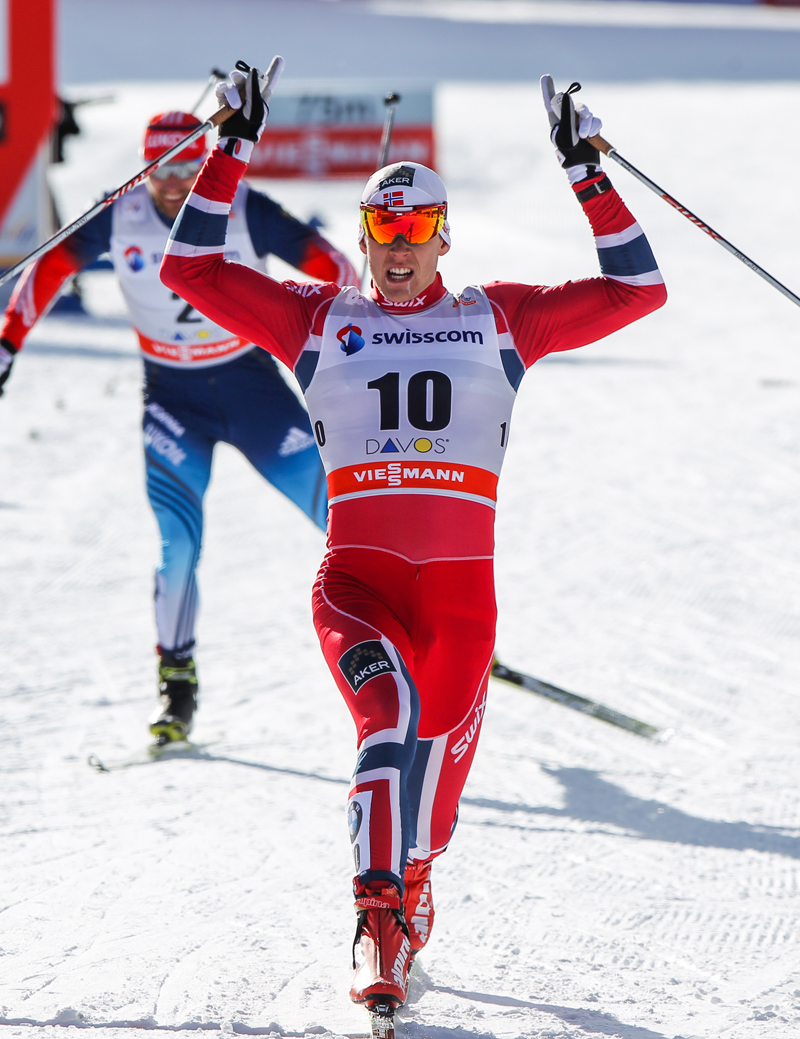
    Jody Barber, of Smithers, B.C., had an excellent race finishing just 16 seconds out of a podium spot in fourth place. The 2010 Paralympian clocked a time of 16:23.6 in the women’s five-kilometre skate-ski race in the women’s standing division. Poland’s Katarzyna Rogowiec won the category after posting a time of 14:54.3.
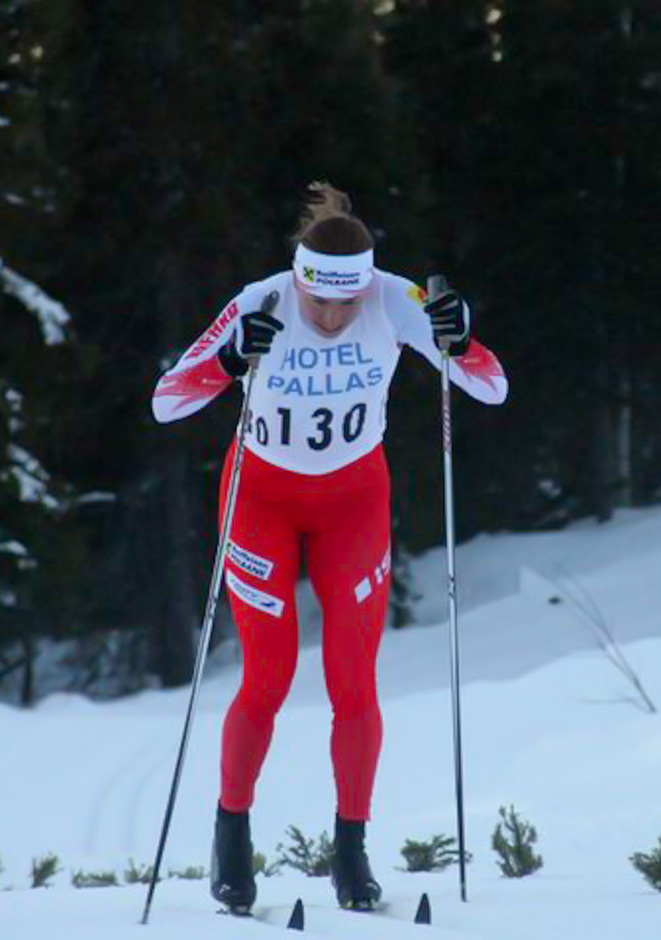
    Chris Klebl, of Canmore, Alta., also stormed into fourth spot. Klebl, who joined the Canadians from the American program this year, narrowly missed the podium in the men’s 10-kilometre sit-ski race. Klebl clocked-in at 24:57.0. The men’s sit-ski division was won by Russia’s Irek Zaripov with a time of 24:31.0.

    Six-time Paralympic medallist, Colette Bourgonje of Saskatoon, rounded out the Canadian charge. The six-time Paralympian finished sixth in her first race of the season after posting a time of 14:11.2 in an extremely tight women’s five-kilometre sit-ski race.

    Liudmila Vauchok, of Belarus, won the women’s sit-ski race with a time of 13:48.0.

    Canada’s Brian McKeever Wins Back-to-Back Gold at IPC Cross Country Skiing World Championships

    Khanty Mansiysk, RUS—Canada’s Brian McKeever remained perfect after battling through challenging conditions to win the men’s visually impaired distance race at the IPC Cross-Country Skiing World Championships in Khanty Mansiysk, Russia on Monday.

    With changing conditions challenging the best wax technicians, McKeever, of Canmore, Alta., and his new guide in childhood friend Erik Carleton, powered through the five centimetres of new snow and challenging winds to win the men’s 20-kilometre classic-ski race with a time of 53 minutes, 26.7 seconds.

    “That was a hard race today,” said the 31-year-old McKeever. “We were behind after the second lap, but I wasn’t too worried because I felt like I still had something left in the tank and our skis were running well.”

    McKeever and Carleton cranked up the tempo in the third of four laps where he bettered the Russian team by 30 seconds to take the lead, and never looked back. Russia’s Nikolay Polukhin and Andrey Tokarev won the silver for the second-straight day with a time of 54:10.0. Russia’s Alexei Toropov and Sergey Maksimov locked up third spot at 58:42.2.

    “The wax techs did a great job on the skis keeping us in the hunt for the medals today,” said McKeever. Erik skied really strong, keeping me out of the winds for aslong as possible which allowed me to have the energy for the final two laps.”

    Jody Barber, of Smithers, B.C., had another solid finish in the women’s standing 15-kilometre classic-ski race. Barber, who has won five World Cup medals throughout her career, clocked a time of 57:24.4. Oleksandra Kononova, of the Ukraine, won the women’s standing division after clocking-in at 50:43.1.

    Mark Arendz, of Springton, P.E.I., who finished second overall in the men’s standing biathlon IPC World Cup this year, finished 10th in the men’s 20-kilometre classic-ski standing race. The 21-year-old, who was fourth in the opening pursuit race at the IPC World Championships, clocked a time of 1:01:33.1.

    The men’s standing category was won by Russia’s Kirill Mikhaylov with a time of 53:53.0.

    Canadian Para-Nordic Sit Skiers Make History Winning Double Gold at IPC World Championships

    Khanty Mansiysk, RUS—For the first time in the history of Para-Nordic skiing, Canada swept the golden step of the podium in men’s and women’s sit-ski racing at the IPC World Championships with Colette Bourgonje and Chris Klebl capturing the title ofWorld Champion in Khanty Mansiysk, Russia on Tuesday.

    Saskatoon’s Bourgonje, who was a double silver medallist at the 2003 World Championships, captured her first world title after leading wire-to-wire in the women’s 10-kilometre sit-ski category with a time of 26 minutes, 56.0 seconds.

    Bourgonje is one of the most successful athletes in the Canadian Para-Nordic program. An eight-time Paralympian in both the summer and winter Games, Bourgonje has eight medals under her belt including two from the 2010 Paralympics where she won a bronze and silver medal. Bourgonje was also awarded the Whang Youn Dai Achievement Award at the Vancouver Paralymipcs – a prestigious award recognizing individuals who conquer adversities through the pursuit of excellence in sport.

    Bourgonje was joined on the podium by Liudmila Vauchok, of Belarus, who finished second with a time of 27:05.7, and Germany’s Andrea Eskau, who locked up the bronze medal after clocking-in at 27:49.6.

    The golden trail to the podium continued for Canada in the men’s 15-kilometre sit-ski event. Klebl, who moved to Canmore, Alta. to join the Canucks from the United States this year, also led wire-to-wire to capture his first international title. A two-time Paralympian, Klebl set the time to beat at 35:34.6.

    “To win at this level you need everything to come together with favourable courses, fast skis and great performances,” said Robin McKeever, coach, Canadian Para-Nordic Team. “Today, we had it all. It is one of the most successful days in the history of our program.”

    Klebl, who grew up in Austria where he skied and snowboarded became paralyzed from the waist down in 1995 in a snowboarding accident. Hestarted competing in cross-country skiing in 2005, and finished fourth overall on the World Cup in 2011 with one World Cup bronze medal.

    Klebl was joined on the podium by Russia’s Irek Zaripov who grabbed the silver with a time of 35:43.6 and Italy’s Enzo Masiello in the bronze-medal position at 36:15.7.

    Tuesday’s performances have added to a golden week for Canada’s para-nordic athletes. In addition to a handful of fourth-place finishes, Canada’s Para-Nordic squad have racked up four gold medals at the mid-way point of the 2011 IPC World Championships.