Tag: exercise

  • What Studying Twins Can Tell Us About Fostering Motivation for Exercise

    What Studying Twins Can Tell Us About Fostering Motivation for Exercise

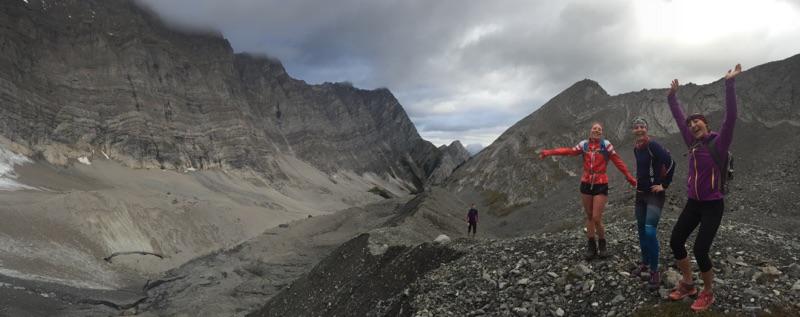
    Canadian biathlete Nadia Moser on a hike up to the Old Goat Glacier with teammates Emily Dickson, Darya Sepanj, Anna Haslach, and Megan Bankes. A recent study found that the enjoyment of physical activity is more heritable in women than men. (Photo: Emily Dickson)

    One of the biggest public health challenges worldwide is physical inactivity. As the World Health Organization reported in August, the number of obese children and teenagers has grown by ten times in the last 40 years, and in five more years there may be more obese children than underweight children in the world.

    As a result, there’s a lot of interest in how to motivate people to take part in physical activity. As we wrote about earlier this fall, that includes a study of American Birkebeiner participants which found that participating in group-based exercise provided an important extra bit of motivation even for people who were quite self-motivated to exercise or train.

    Another piece of the picture was examined in Finland. There, researchers had the opportunity to use a study of twins to disentangle the genetic and environmental contributions to people’s motivation to do physical activity in their “leisure time.”

    “In classical twin studies, we compare a resemblance within pairs of identical twins to the resemblance within pairs of fraternal twins,” Dr. Sari Aaltonen, the lead author on the study which was recently published in the Scandinavian Journal of Medicine & Science in Sports (but is behind a paywall), wrote in an email. “For instance, if identical twins are more similar than fraternal twins, then genes significantly influence that trait. If the correlations for fraternal twins are equal to those for identical twins, then shared environmental influences (e.g., childhood home environment, if the children were raised together) are indicated to have influence that trait.”

    Using this framework, Aaltonen and colleagues in Helsinki and Jyvaskyla, Finland, and in Amsterdam, the Netherlands, worked with 1,271 pairs of twins in their early and mid 30’s. They gave each twin a survey to assess how much each of eight different dimensions of motivation contributed to the reasons they exercise.

    In that part of the study, three of these dimensions turned out to be most highly rated by the twins as reasons why they exercise. One was physical fitness, the next psychological state, and the third enjoyment of sport.

    Then using genetic twin modeling, the researchers inferred how “heritable” each of these different types of motivation was. Heritability is an estimate of the proportion of variation in trait, in this case the source of motivation, which is controlled by genetic variation. In a perfectly heritable trait, 100% of the variation is controlled by genes inherited from the parents. In a completely non-heritable trait, genes have no influence and instead the environment or other factors control how the trait is expressed.

    “In general, we know that the most of human phenotypic traits are complex traits; both genetic and environmental factors influence them,” Aaltonen wrote. “Our heritability estimates of the motives for physical activity have ranged between 13% and 53%.”

    That’s a wide range. The paper gets into which sources of motivation are more heritable than others. For example, “others’ expectations”, “mastery” (improving one’s skills or abilities), “competition/ego”, and “physical fitness” were all highly influenced by environment. For these dimensions of motivation, around 80 percent of the variation in people’s assesment of their importance was driven by environment, rather than genetics.

    Even for the more heritable dimensions of motivation, environmental factors were still clearly important. In the most highly heritable source of motivation, “enjoyment”, with 33 percent of the variation in men and 53 percent of the variation in women being explained by genetics influences.

    “Enjoyment is a strong intrinsic motive, which means that a person is motivated to be physically active because she or he finds it pleasant, fun and/or satisfying,” Aaltonen wrote. “When people are intrinsically motivated, they follow their innate needs and interests. Therefore, it may not be surprising that ‘enjoyment’ was found to be the most heritable motive dimension in our study.”

    Similarly, in a study in the Netherlands, lack of enjoyment was found to be moderately heritable in men – that is to say, for those who really hated exercise, environment didn’t do much to affect that.

    “Previous animal studies (mainly in rodents) and human studies suggest that there may be a biological regulation in terms of the motives for physical activity,” Aaltonen added.

    The next most heritable source of motivation was “affiliation”, defined as “be with friends and/or do activity with others,” with 39 percent of the variation in men and 35 percent of the variation in women being explained by genetic influences.

    How can heritability be different between men and women – aren’t genes passed on in the same way? Aaltonen explained.

    “Generally, the heritability estimate is always time-, age-, population specific and, above all, it is an estimate of the genetic influences to individual differences on a population level, not an estimate pertaining to a single individual,” she wrote, explaining that all the variation can be partitioned into either genetic or environmental sources, so a high heritability estimate can simply mean that environmental influences exist, but that they are not so important in terms of determining the trait. “The high heritability estimate for enjoyment in women, for example, means that women’s enjoyment as a motive factor for leisure-time physical activity is less affected by environmental influences.”

    “Why environmental factors are less important for women’s, but more important for men’s enjoyment to exercise in Finnish adults in their mid-thirties?” she mused. “Right now, I don’t have an answer for that. Based on our quantitative genetic results, we are not even able to reveal what the specific genes or environmental factors are that cause the difference between men and women. In terms of clinical implications, physical activity-promoting measures that try to motivate people to exercise may be even more important for men than for women, because of the greater role of environmental influences in men.”

    That was just one of the insights that the researchers gained about how public health efforts could be targeted for success in motivating people for physical activity.

    For example, physical fitness and enjoyment were both highly-ranked sources of motivation, but the former was determined more by environmental factors – and thus may be easier to affect by intervention – while the other was fairly heritable, controlled by genetics rather than a person’s surroundings or interactions.

    “Several studies have suggested that extrinsic motives (for example, you want to be fitter than others, you exercise only because someone told you to do so, etc.) could be dominant during the early stages of exercise adoption, but that intrinsic motives (enjoyment and the satisfaction of exercise) would be more important for progression to and long-term maintenance of activity,” Aaltonen explained. “In other words, it may not be that difficult to get people to be motivated to exercise, but a challenge is to get them continue the activity habit. It helps if you enjoy it.”

    “Due to this, a key issue may be to find a physical activity habit that is the most enjoyable for you,” she continued. “Then, you may better be able to stick to your activity routines also when you have a lack of motivation.”
  • Going It Alone, with Help from Friends: Social Support and Exercise Behavior in Birkie Racers

    Going It Alone, with Help from Friends: Social Support and Exercise Behavior in Birkie Racers

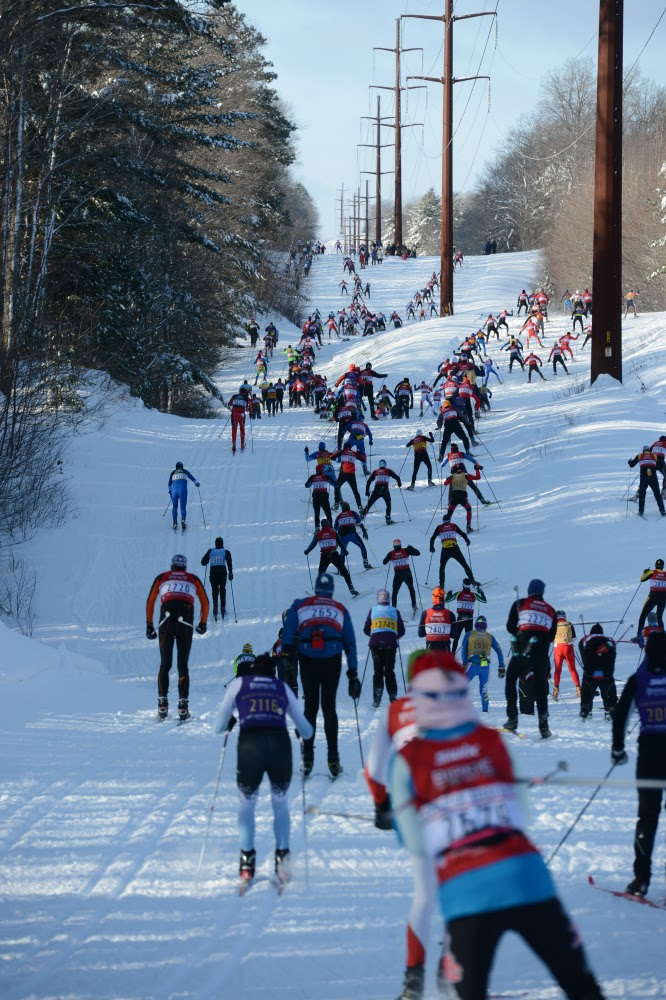
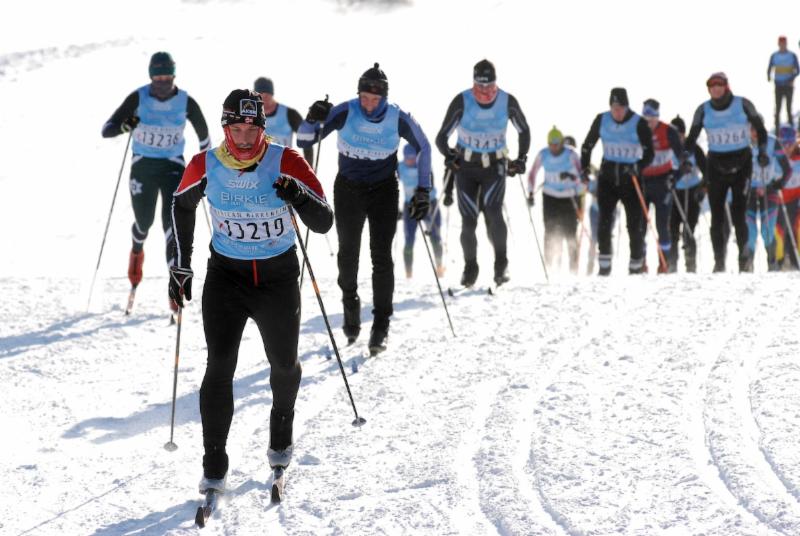
    Racers at the 2014 American Birkebeiner. (Photo: ABSF/Kelly Randolph)

    Part I of this interview discussed findings about general health and exercise habits of American Birkebeiner participants compared to the general public. You can catch up on that piece here.

    When the Birkie Health Study launched in 2014, the role of social support in forming and keeping healthy habits was a big a question for researchers – and their high-profile supporters.

    “Why people choose to get out in the first place, and what keeps them staying active, especially when we’re talking about the social aspect of it which is super huge for girls and women – I’m interested to look at the results and glean some things from it that we can apply to Fast and Female so that we can continue to make our programming more effective, and really work towards achieving our mission of keeping girls and women involved in sports for their whole lives,” World Champion skier Kikkan Randall said at the time.

    Researchers Paul Anderson and Ralph Bovard received survey responses from more than 5,000 people who had participated in the American Birkebeiner, a cross-country ski marathon held every year in Wisconsin.

    While the survey asked about exercise, general health status, and behavior, it also sought to understand why people exercised. Their results were published in BMJ Open last year (and can be read free of charge here).

    Among survey respondents – typically middle-aged, married men with a four-year education and a full-time job – nearly 80% had been introduced to skiing by family or friends, and 96% said that they were “highly motivated to exercise by signing up for races like the Birkie.”

    “I think that the masters athlete movement in America and worldwide has been a terrific incentive to many people,” Bovard wrote in an email. “It lets adults know that it is okay to move and revel in their bodily movement. It is okay to aspire to race and challenge one another in physical activity even if you’re 65 or 85 years old. We hosted the national masters swim meet and Minneapolis in early August… [One older] swimmer said: ‘I can still swim because I’m healthy. But I’m only healthy because I swim.’”

    What does “social support” mean, though?

    The survey asked a series of questions to find out how skiers interacted with other people regarding exercise.

    Maybe most obviously, that meant finding out whether skiers trained with other people. They did. For instance, 35% of respondents said that they most often exercised with other people, and 71% of respondents said that they trained with others at least once a week.

    But other behaviors are also considered social support, and some of them are so simple and basic that a skier might not realize they are doing it. An example is simply talking about exercise with a friend, family member, or co-worker. The survey asked whether family and friends talked about their own exercise, encouraged the respondent to exercise, or simply “discussed exercise with me.”

    That last was the most common social support interaction among all of the choices.

    “Among individuals who are training together or are interested in fitness, verbal processing of training challenges and successes builds connection, reinforces the value of physical activity, and provides a strong context for the positive meaning of an active life,” Anderson wrote in an email. “This is not surprising since language is one of the predominant forms of human connection in virtually all the important aspects of life.”

    Simply talking about a workout might seem trivial, but survey respondents with high “social support scores” were more likely to spend more time exercising, get more sleep, eat more fruits and vegetables, and suffer less from depression or low moods.

    That last relationship is complex, but important. While exercise can often relieve some symptoms of depression, non-exercise specific social support also can lead to better outcomes in depressed patients. So which caused the lower rates of depression in the Birkie skiers?

    “Physical activity is a well-known intervention for mood disorders and I think we observed an expected change in this metric,” Anderson wrote. “Our data doesn’t allow us to speculate about causal relationships, however… we would need to design a study to look at this question specifically if we wanted to answer this question definitively.”

    Besides simply talking about exercise, other forms of social support were also prevalent. Family and friends often offered to exercise with a survey respondent, scheduled activities around the respondent’s need to exercise, or planned to exercise on recreational outings.

    The authors speculated that this was a second mechanism to help survey respondents get over the motivational barriers to exercising. For adults with full-time jobs, time and energy aren’t always in abundance.

    This finding also highlighted an interesting complexity in the data: most survey participants trained primarily alone, and yet training with friends was also very important to them. For instance, only 22% said that they wouldn’t do the Birkie if their family or friends didn’t sign up as well. Yet 75% said that exercising with family or friends motivated them to sign up for races like the Birkie.

    “While these responses seem difficult to reconcile, it may be that on the one hand the predominance of solitary training coupled with the determination to sign up for races regardless of social support suggests a high level of self-efficacy,” the authors wrote in the paper. “On the other hand, the pattern of weekly exercise with others and the fact that skiers do sign up for races because of motivation derived from others suggests that any pre-existing self-efficacy may be reinforced by regular doses of exercise-specific social support.”

    In other words, even those who are highly self-motivated benefit from getting social support.

    “I think a big part of the argument of Paul’s research is that the social aspects of physical activity participation can be life changing,” Bovard wrote. “When I lived in Arizona I joined a master swim group. I did not know any of those people before I went there but they quickly became good friends… I think the essence of this is that people develop a shared, camaraderie that is life enhancing. I always say that I do not hang out with the people I work with, rather I hang out with the people I work out with.”

    Bovard, however, was already looking for a swim group to join: he had pre-existing motivation, and so it was probably relatively easy to fold into a community in a new place. Many skiers have likely experienced the same thing when they move to a new area and sign up for a race or join a training group.

    The question remains of whether such behavior can simply maintain exercise and training habits, or start them off. Can the same social support systems that keep Birkie skiers exercising be used to get a non-exercising member of the public to start being more active?

    “Exactly how this would work between a fitness-minded individual and one who isn’t currently active highlights the complexity of initiating a new behavior,” Anderson wrote in an email. “It would be interesting to study whether or not language (talking) was the strongest factor leading someone to initiate physical activity or if the was another form of social support that was more influential.”

    The survey results generated lots of new ideas and Anderson is looking forward to studying Birkie skiers in more detail. But even these first results give some hints at strategies to improve public health.

    “Those wanting to initiate, maintain or increase physical activity regimens should receive guidance that emphasises the importance of physical activities in groups, especially family of friend groups connected to larger fitness cultures that often surround community races or large national or international competitive events,” the study concluded.

    Interested in this study? Anderson wrote, “We are also very interested in learning what Birkie skiers wonder about and doing some studies that answer their questions too. They should feel free to email me at Paul.J.Anderson@HealthPartners.com with their ideas.”

  • Birkie Survey to Study Health, How Social Support and Interaction Keep Us Going

    Birkie Survey to Study Health, How Social Support and Interaction Keep Us Going

    Signing up for a big race (like the Birkie), attending a regular training group, or even having a once-a-week workout with a friend can provide huge motivation for people to stay active. Photo: American Birkebeiner Ski Foundation.
    Signing up for a big race (like the Birkie), attending a regular training group, or even having a once-a-week workout with a friend can provide huge motivation for people to stay active. Photo: American Birkebeiner Ski Foundation.

    Did you recently get an email in your inbox from Kikkan Randall?

    If so, you’re likely one of the 24,000 American Birkebeiner racers who have been asked about their health and exercise habits as part of a study by Mayo Clinic researcher Dr. Paul Anderson.

    “Primarily, the study came out of my own interest in helping people get active,” Anderson said in a phone interview this week. “I thought it would be really interesting to study Birkie skiers because citizen athletes represent what I consider to be a beacon of hope for the public health challenge of getting people to be more physically active. So I want to know more about exactly how they start and maintain their training for the race – especially related to their social support for exercise. I’m a Birkie skier myself and really love Nordic skiing, so I started there.”

    Anderson spent five years working in Alaska in an occupational and environmental health, and is now doing a fellowship at the Mayo Clinic in preventative medicine.

    “Instead of looking at people who are ill and trying to understand their disease, I’ve done research in the past that studies people who are well, or elite performers,” he explained.

    And Birkie skiers, he estimates, are just that. By studying their habits he hopes that he can learn something about what it would take to get more Americans off their sofas.

    According to Anderson, he approached American Birkebeiner Ski Foundation Executive Director Ben Popp about whether the organization would be interested in collaborating on a study, and Popp immediately agreed.

    Anderson was expecting perhaps to just offer a survey at the Birkie itself, but Popp offered to turn over contacts for every skier who has ever done a Birkie event. So far, after just one week, about 10% of the 24,000 individuals have already completed the survey.

    Randall already works to keep girls and women involved in sports and to overcome the high dropout rate from athletics, especially through Fast and Female.
    Randall already works to keep girls and women involved in sports and to overcome the high dropout rate from athletics, especially through Fast and Female.

    For Randall, the project is a perfect fit. A three-time FIS World Cup Sprint champ, she also heads the U.S. division of Fast and Female, which is on its way to being its own nonprofit. Getting people active, and keeping them involved in sports, is one of her pet projects.

    Reached by phone, Randall was every bit as excited about the Birkie study as she was in her e-mail to potential study participants.

    “He invited me to be a part of it thinking that we could get it a little bit more attention, and he thought it might be something I would be interested in – which I definitely am,” she said. “I’m curious about what drives people to be active and what positive effect it can have. I’m really excited to see what comes of the study.”

    How exactly will Anderson tackle those questions? He described diving deep into the literature of a field called social cognitive theory. As an example, he talked about someone who was quitting smoking: to do so, they need the support of people in their social network. To start exercising or to train for a big event, people are also boosted by support from friends and family. But how essential is this and how much support is needed? Anderson adapted the questions asked by social cognitive theory to skiing.

    “There are questions you can ask people about social support in a number of contexts,” Anderson said. “I put that together with my own story: somebody introduced me to Nordic skiing, somebody taught me what I needed to know and supported me a lot in getting active in this particular way during the winter time. I think that raised the question for me, how much and what kind of social support do citizen athletes need to both to get started and to maintain their participation in events like the Birkie.”

    For instance, the survey asks how often skiers meet up with a friend for training, or whether their friends or family congratulate them for exercising or racing.

    A second aspect of the survey has to do with general health habits. Anderson mirrored some of the questions on the Behavioral Risk Factor Surveillance System, an annual survey administered by the Centers for Disease Control all around the U.S. By doing so, he will be able to compare citizen athletes’ habits to those of the general public.

    “That’s in terms of exercise behaviors, how many fruits and vegetables they eat, smoking, alcohol use,” he explained. “One of the biggest challenges we have in public health is to show that it makes any difference whatsoever. I think [Birkie skiers are] a group of people who follow probably most of the – well, except drinking – who follow most of the public health recommendations that we would idealize. So to show that they have a completely different set of health behaviors than the general public, and that they demonstrate the value of promoting physical activity.”

    He also said that he will assess whether health habits or the level of social support differ by sex, marital status, or socioeconomic status.

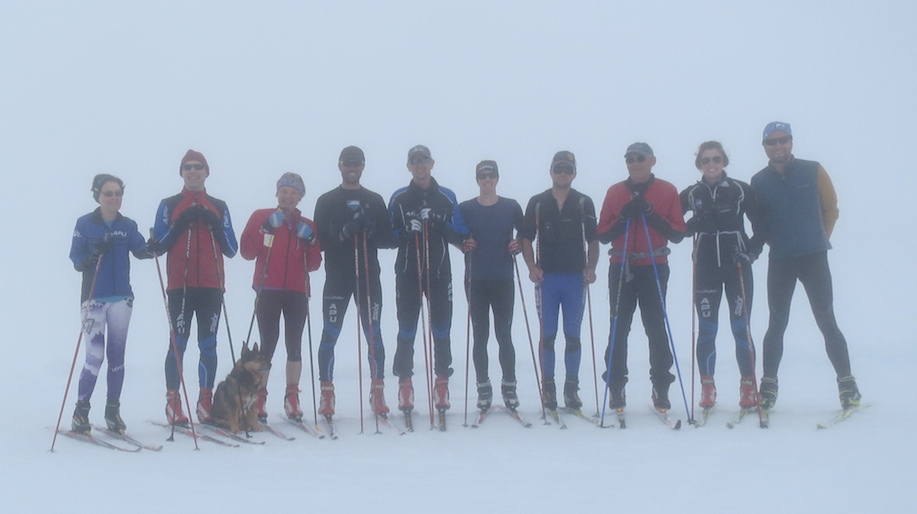
    A training group such as this one at the 2014 APUNSC Masters Camp might be key to keeping people active - or they might find other ways to get social support for their healthy habits. Photo: Shannon Gramse/Flickr.
    A training group such as this one at the 2014 APUNSC Masters Camp might be key to keeping people active – or they might find other ways to get social support for their healthy habits. Photo: Shannon Gramse/Flickr.

    For someone like Randall, who is interested in lifelong participation in sports in general but particularly for girls and women, this represents a particularly exciting development.

    “Why people choose to get out in the first place, and what keeps them staying active, especially when we’re talking about the social aspect of it which is super huge for girls and women – I’m super interested to look at the results and glean some things from it that we can apply to Fast and Female so that we can continue to make our programming more effective, and really work towards achieving our mission of keeping girls and women involved in sports for their whole lives,” she said.

    In a post-Olympic year, Randall is finding more and more chances to work on projects that tackle public health and exercise.

    “I wouldn’t say that there’s necessarily a whole lot more time, but to me, I have a hard time passing up cool opportunities like this to either learn more or hopefully help build programs to get people more healthy and active,” she explained. “So certainly there’s less interviews and a few less things to run around and do with the Olympics being over, but I still have managed to fill my plate with Fast and Female, this, and the Nordic Rocks program that CXC started to get more kids in the cities on skis.”

    For Anderson, there’s the possibility of more work on Birkie athletes in the future – for example long-term studies. In Sweden, researchers have been following a cohort of Vasaloppet skiers, finding for instance that lifelong skiers have an increased incidence of heart arrhythmia.

    A longitudinal study of social behavior might be in the future, but for now, Anderson is focusing on the task at hand.

    “What we set out to do was execute a  careful, fairly small, well done study to show the ease and value of studying citizen athletes,” he said. “We don’t want people to experience our health survey at the race and ask ‘why did they do that? It wasn’t very well done.’ So we do this study, we get good results, we say something concrete, and we learn something. Then hopefully we learn and interest in further studies can grow… There are so many potential questions out there, but we want to do this first, do it really well, and then we’ll ask some of these bigger questions more precisely in the future.”

    If people have participated in the Birkie and would like to take the survey but did not get a survey in the mail, please send an email to anderson.paul1@mayo.edu before the end of November and he’ll get you a survey. Results will be presented in a generalized format at the 2015 American Birkebeiner and also published in a variety of formats.

  • Kootenay Kramp 2012

    Yesterday three Blackjack skiers competed in the local high school running race, the Kootenay Kramp. The course, as described by LVR running coach Graema Marshall was “Gut busting and calf crushing hills, quad pounding paths, and mind testing tenacity!”. The senior course was aprox. 6.5km long with 300m elevation gain. The results can be viewed […]

  • Pro Workout: Goldsack Weighs In

    Pro Workout: Goldsack Weighs In

    Drew Goldsack may be a recent addition to the Alberta World Cup Academy but he’s not stranger to hard training. After 8 years on the Canadian National Team, Goldsack joined the Alberta World Cup Academy, a recently instated Canadian Training Centre and he’s enjoying every minute of it. Being on the AWCA has reunited him with former National Ski Team coach Mike Cavaliere and former teammate Chris Jeffries. “Working with The Alberta World Cup Academy this year has been a great change of pace for me and has brought a new source of energy and enthusiasm to my training for the coming season,” said Goldsack of his new team.

    Drew Goldsack racing in the 2010 Vancouver Olympic Games.

    As a sprinter, Goldsack enjoys a good hard session in the gym. “Strength is important for any skier, especially for sprinters,” said Goldsack. He likes them because he finds it easy to see improvements and a good way to test his absolute limits. He was introduced to power lifting by NST strength coach Matt Jordan and is currently working with his AWCA strength coach Rob Sofer, as well as head coach Mike Cavaliere. Right now, Goldsack and the AWCA are in a power phase of their strength sessions.

    The workout typically starts with a short run including some agility and balance work, followed by 15-20 minutes of dynamic stretching, light core strength and jumps/hops.

    When doing a hard session in the gym, Goldsack does a warm-up set of each exercise with 30% of the weight he’ll be lifting. He does 3 sets of 4-8 reps, lifting max weight. The focus is on the speed of movement for the concentric, or explosive contracting phase of the muscles and the transition between the concentric and eccentric, or decelerating motions.

    Goldsack’s program includes exercises such Olympic lifts, barbell snatches and barbell split snatches. “These exercises require a lot of technique to be effective and are a great leg, core and arm workout if done properly,” said Goldsack.

    These are followed up by squats, chin-ups, bench press, push ups and seated rowing.

    These workouts will develop speed and power. They link upper and lower body strength so explosive power can be delivered efficiently through the arms and legs. For skiing, this means better speed, more power on uphills and allows the skier the ability to accelerate quickly.

    Goldsack does these types of power sessions twice a week late in the summer and through the fall with adjustments depending on volume and intensity of his otherworkouts for the week. Each workout focuses on either upper or lower body, but usually both are used.

    He’ll be focusing on the skate sprint at the World Championships and trying to get back into regular starts on the World Cup.

    “I’m taking things year by year now but my main goal is to get back to a level of racing even higher than where I was at before my injury,” said Goldsack.