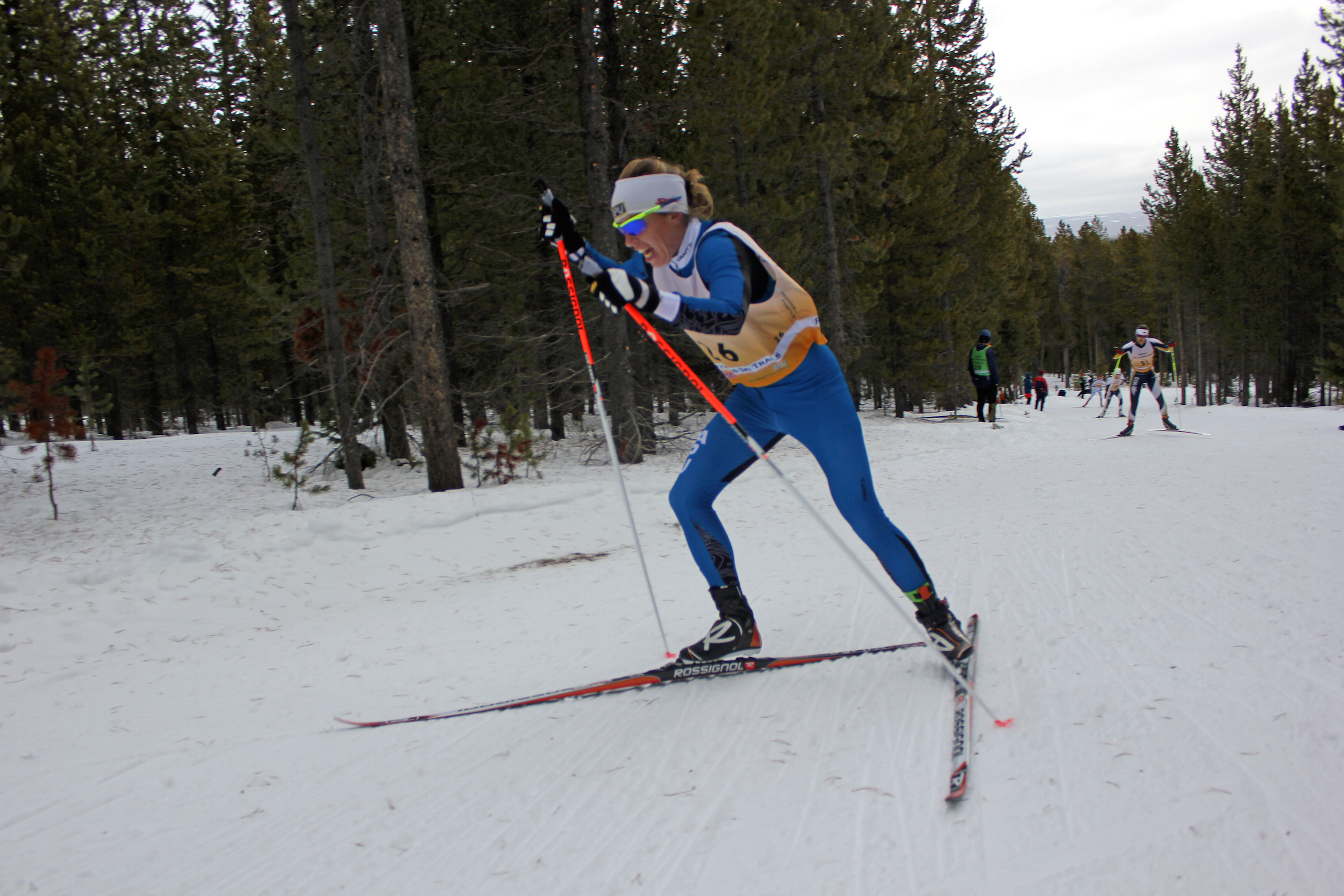
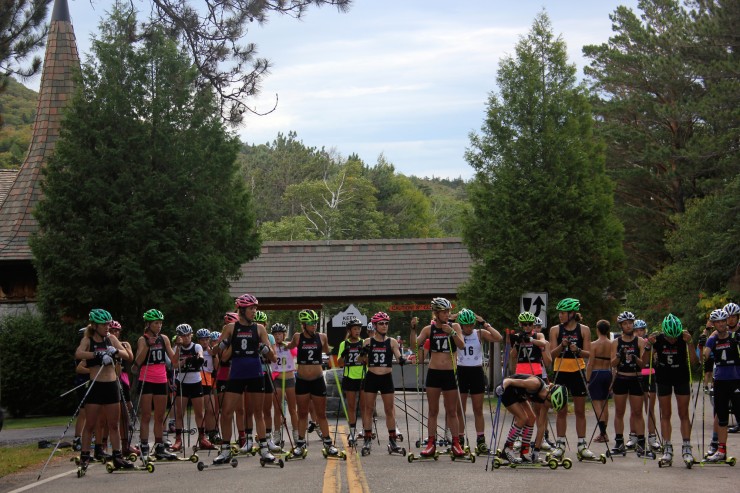
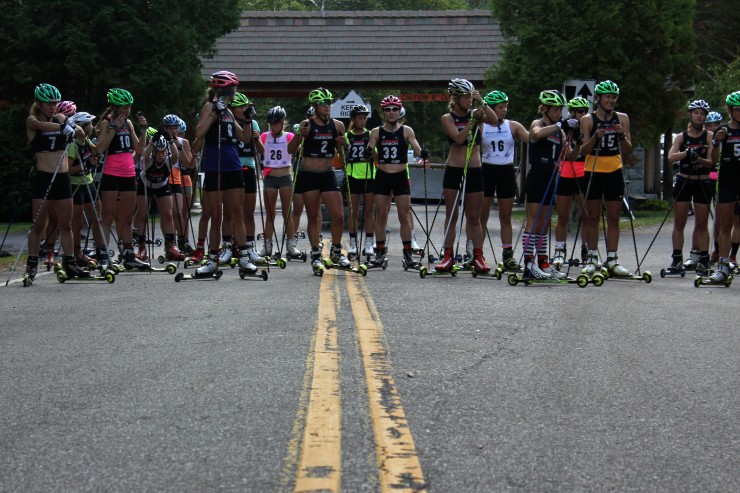
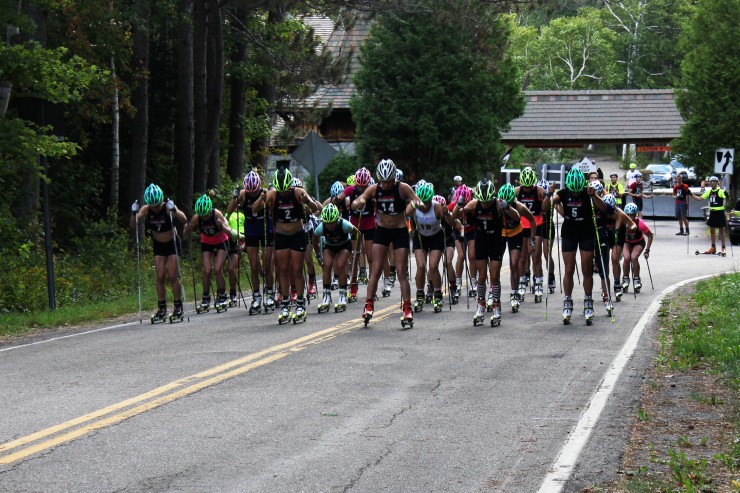
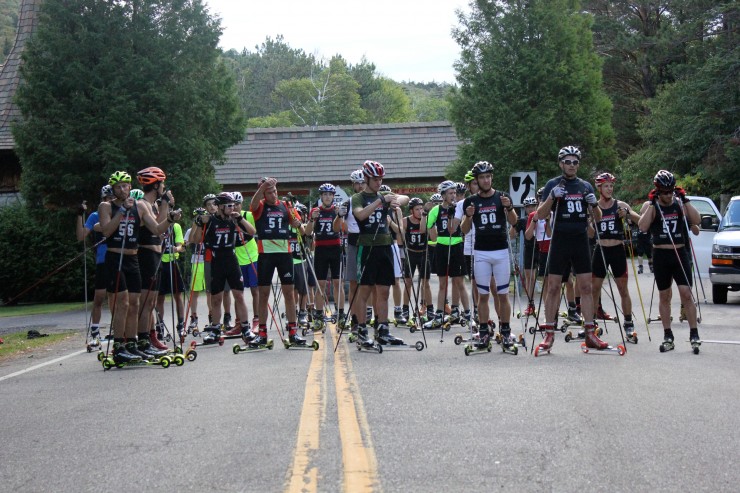
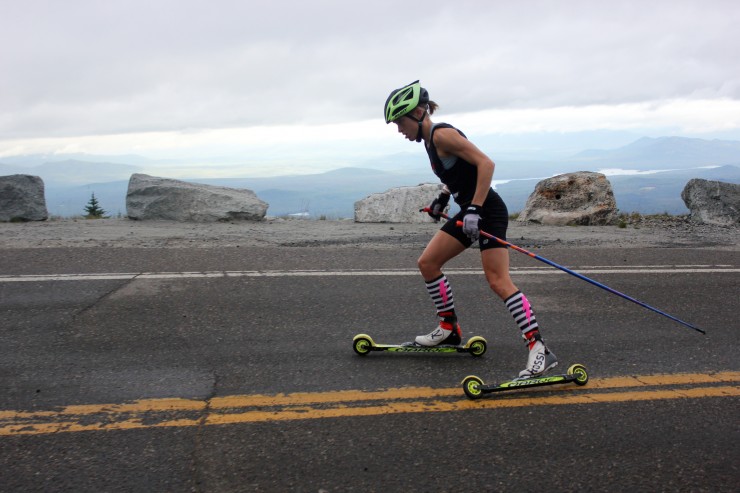
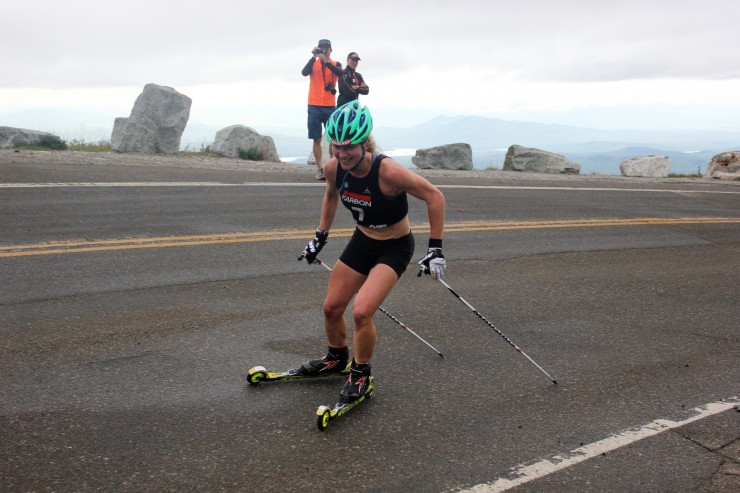
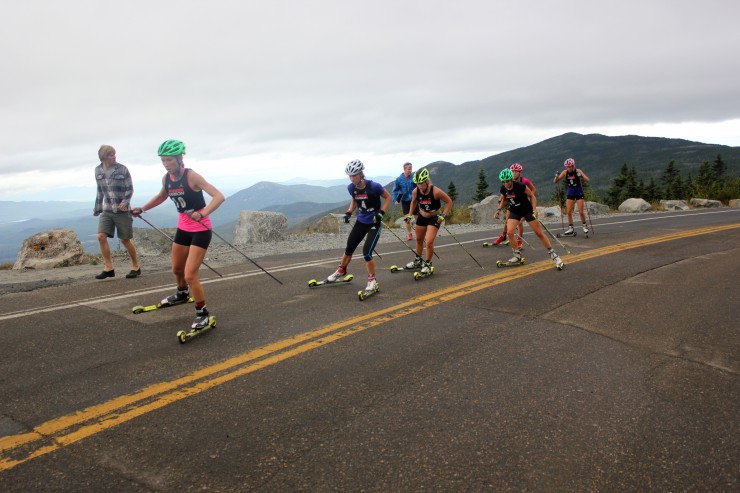
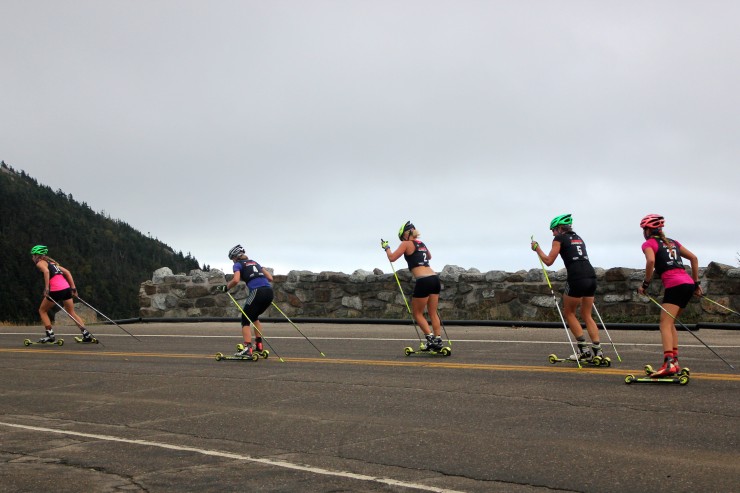
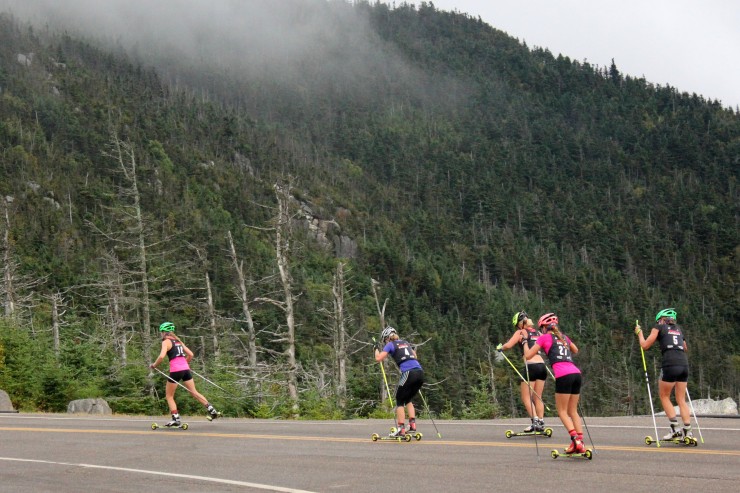
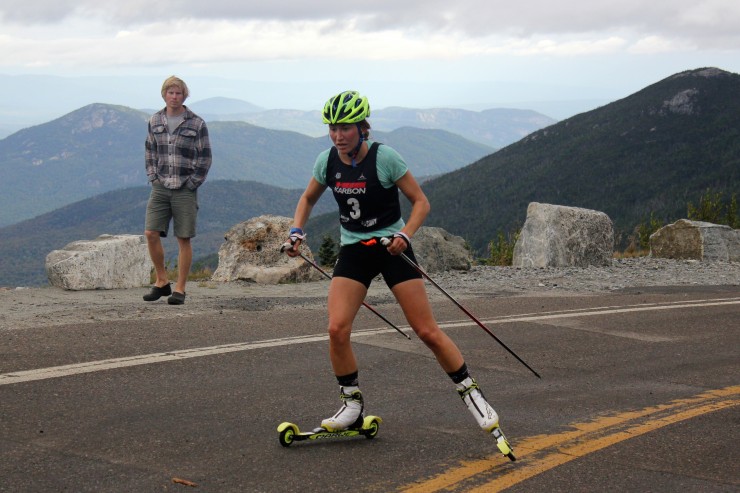
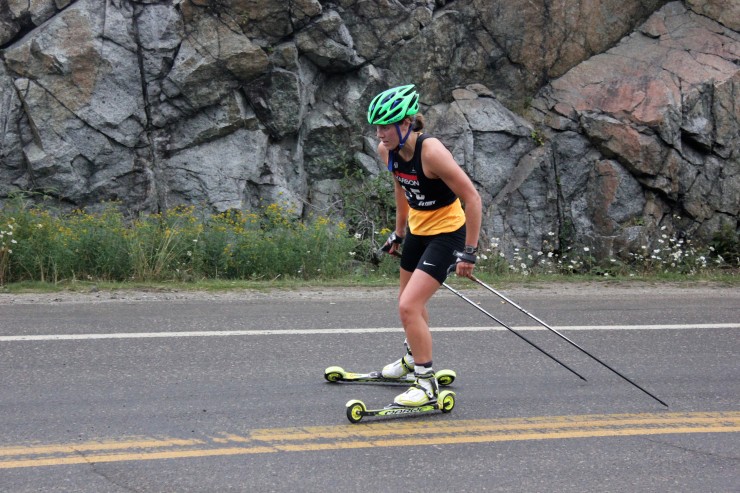
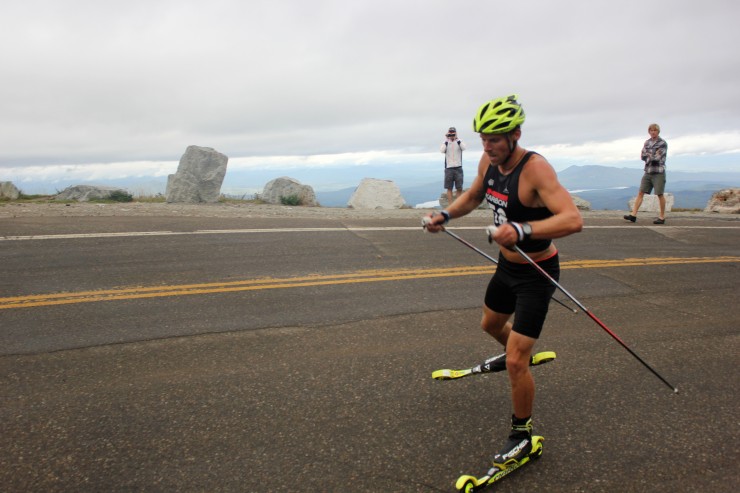
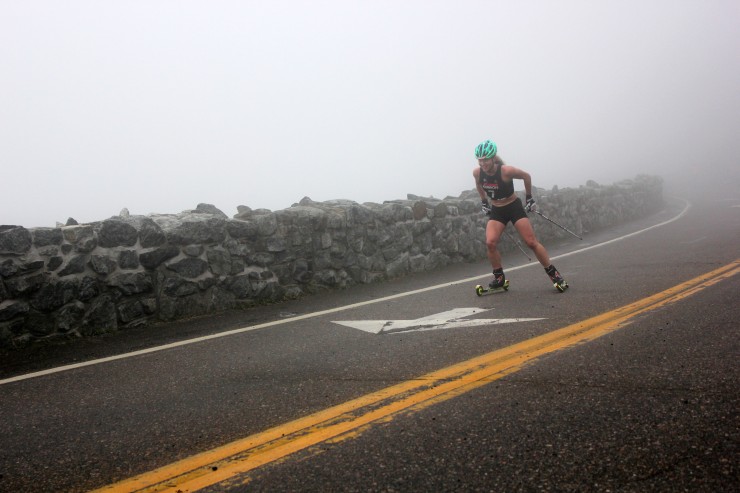
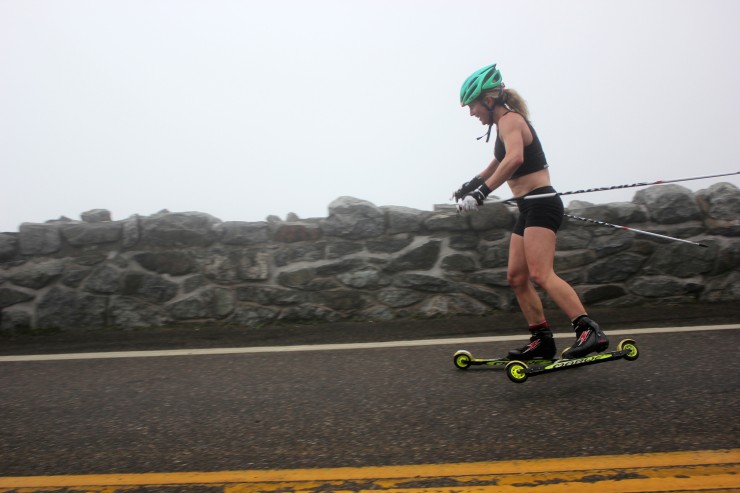
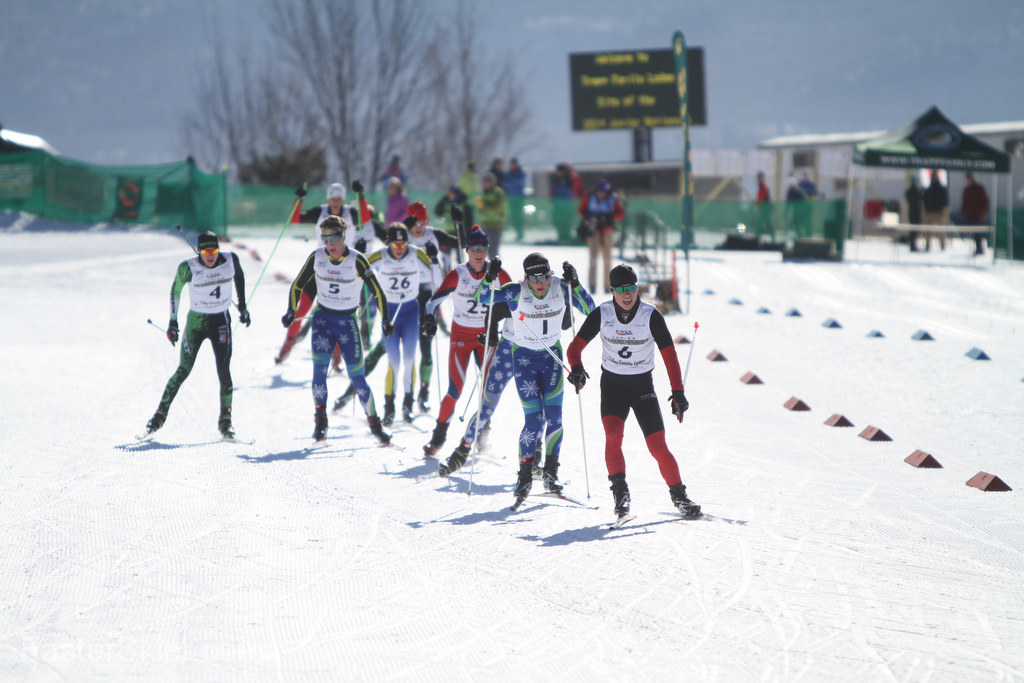
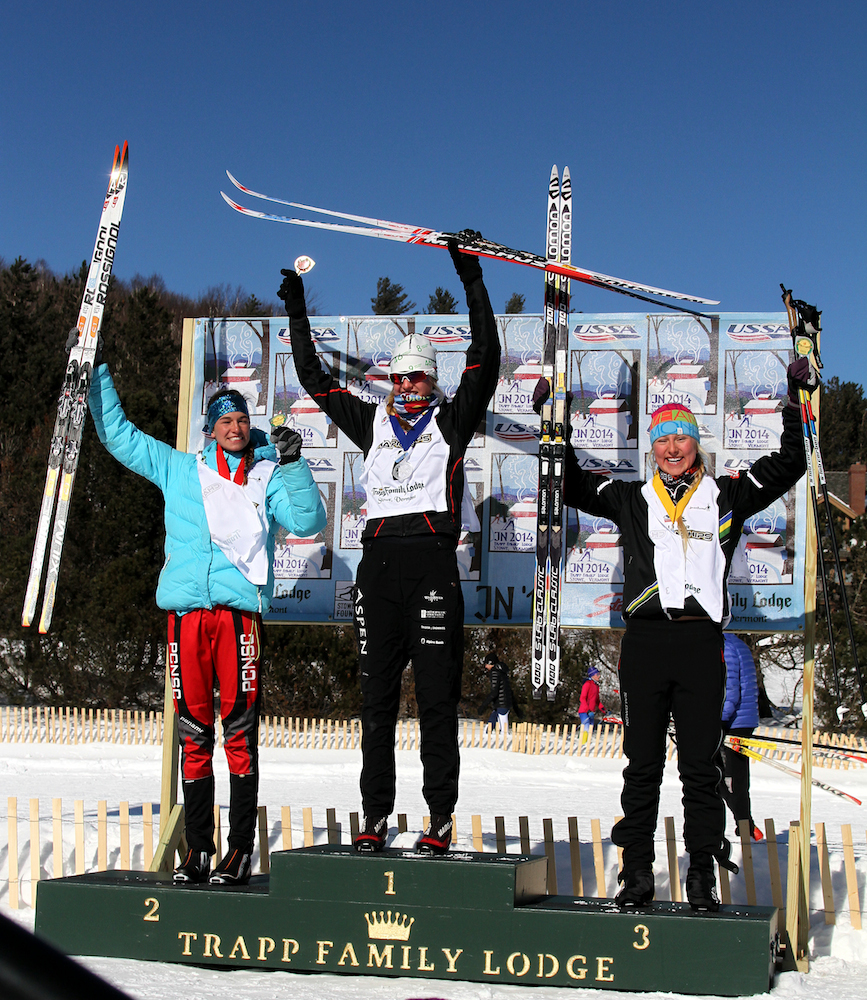
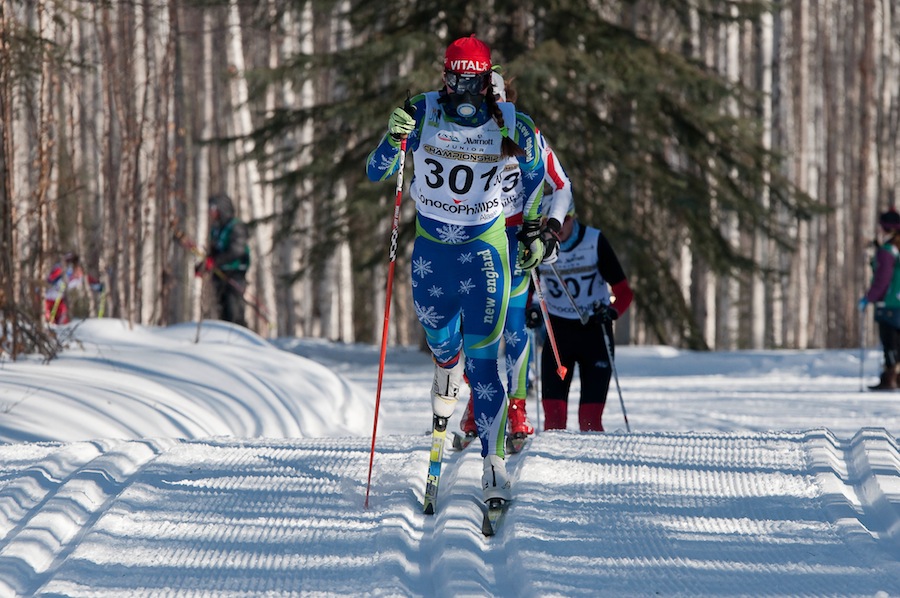
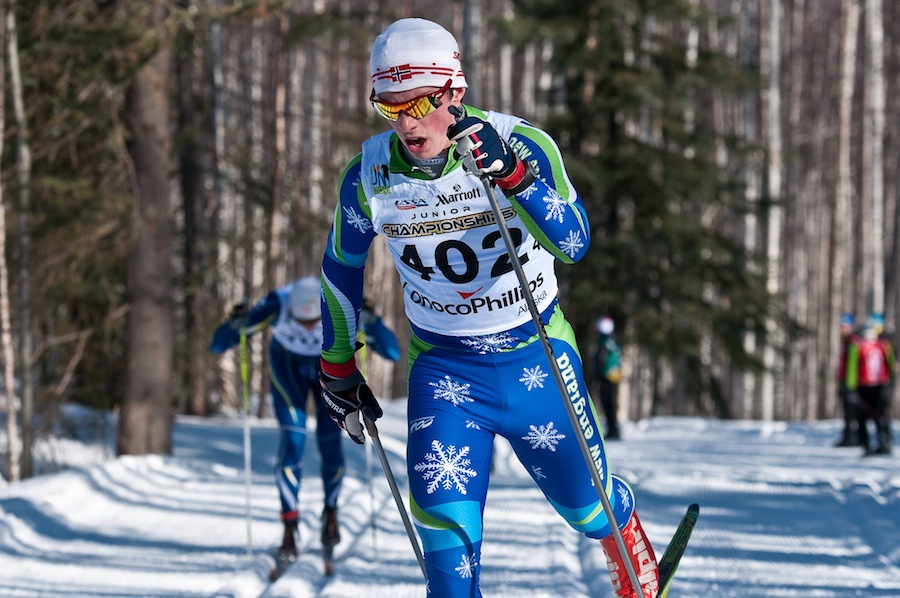
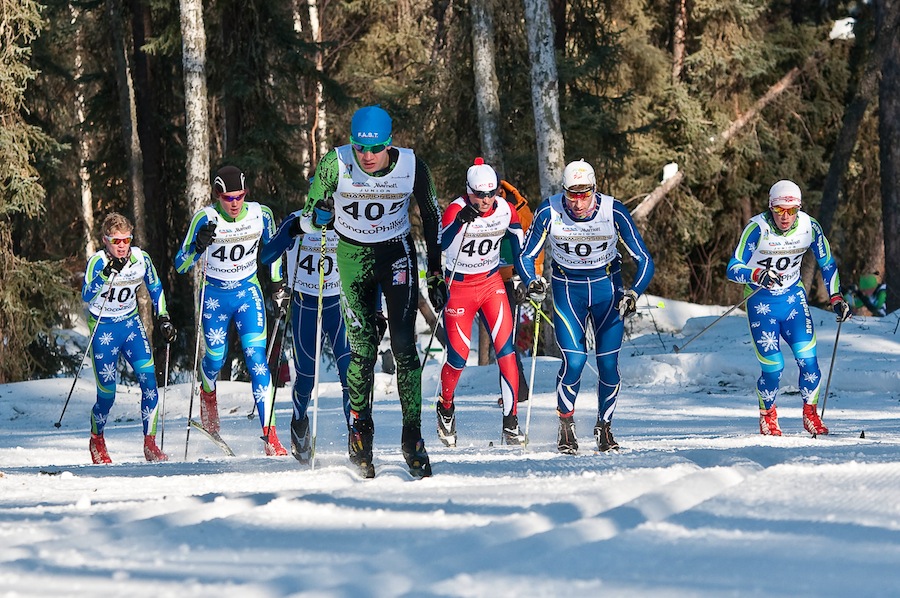
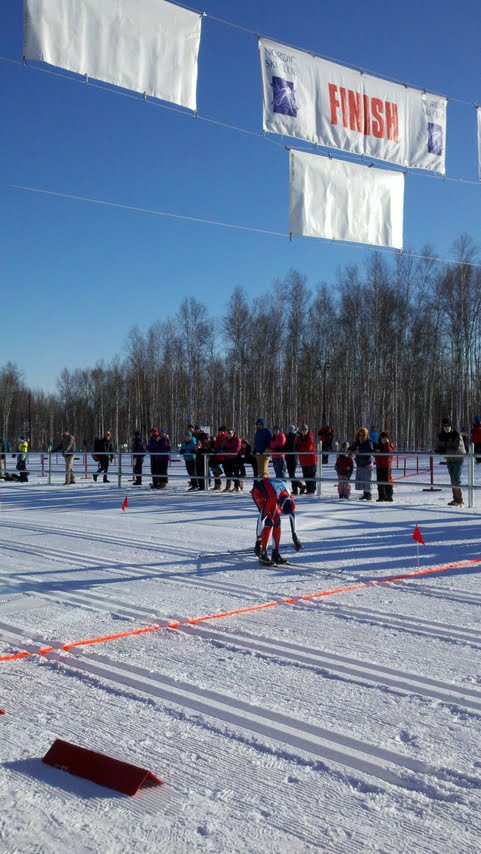
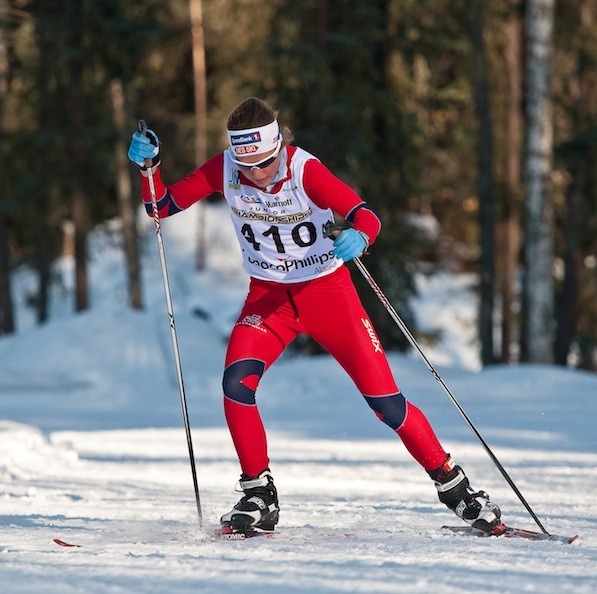
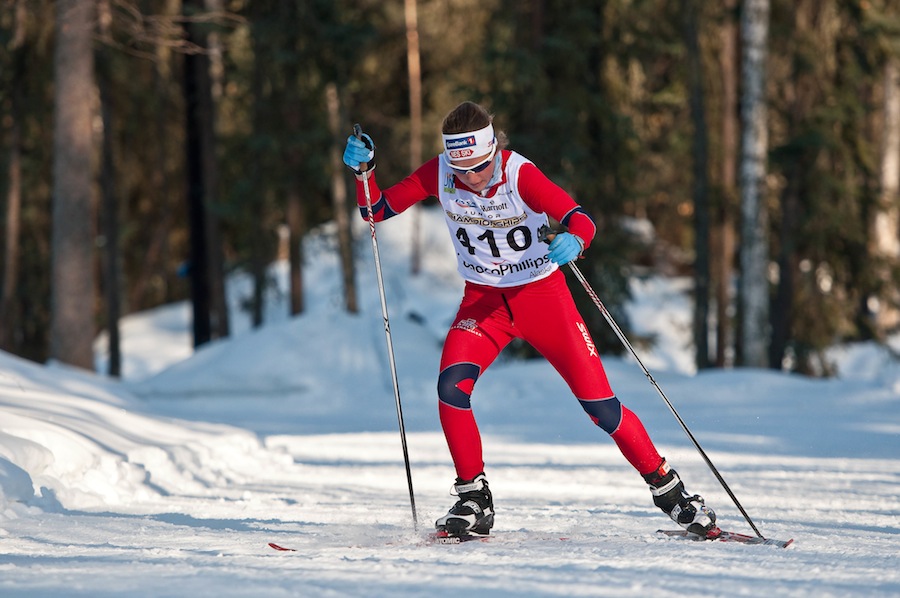
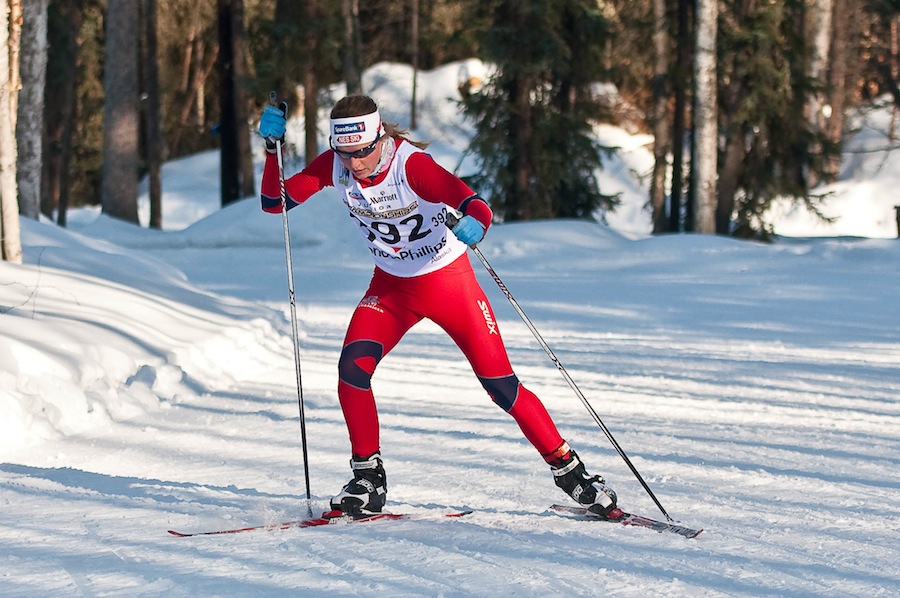
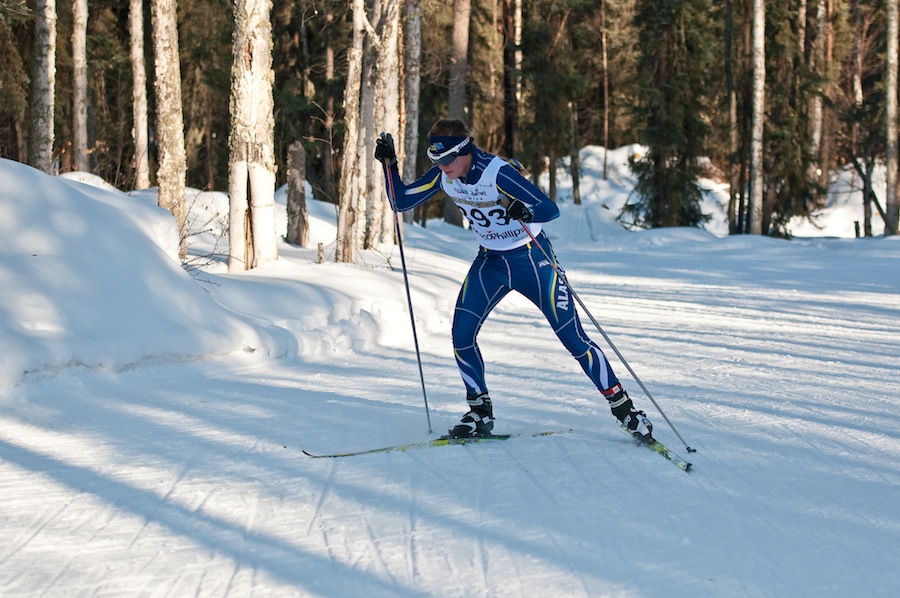
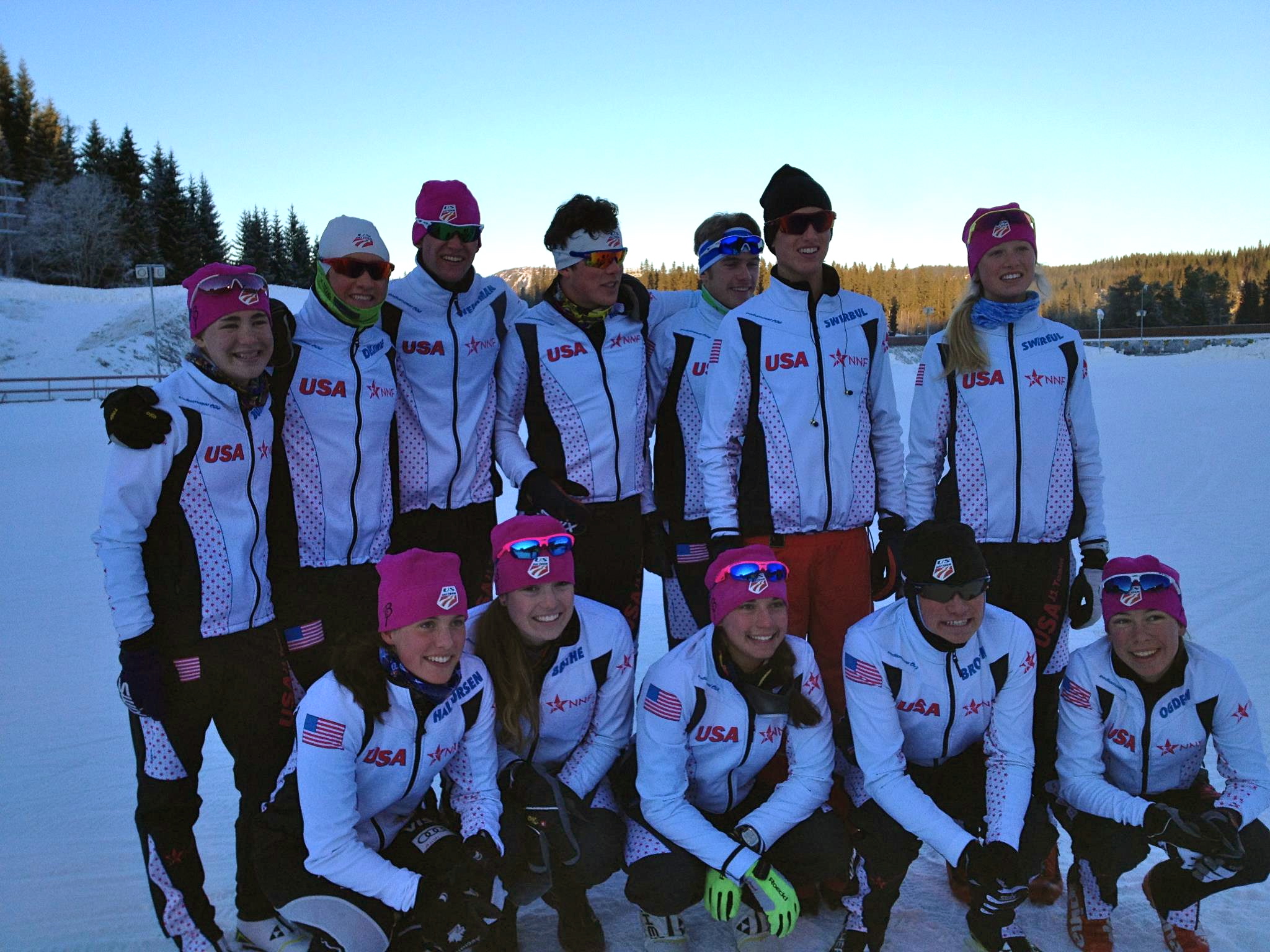
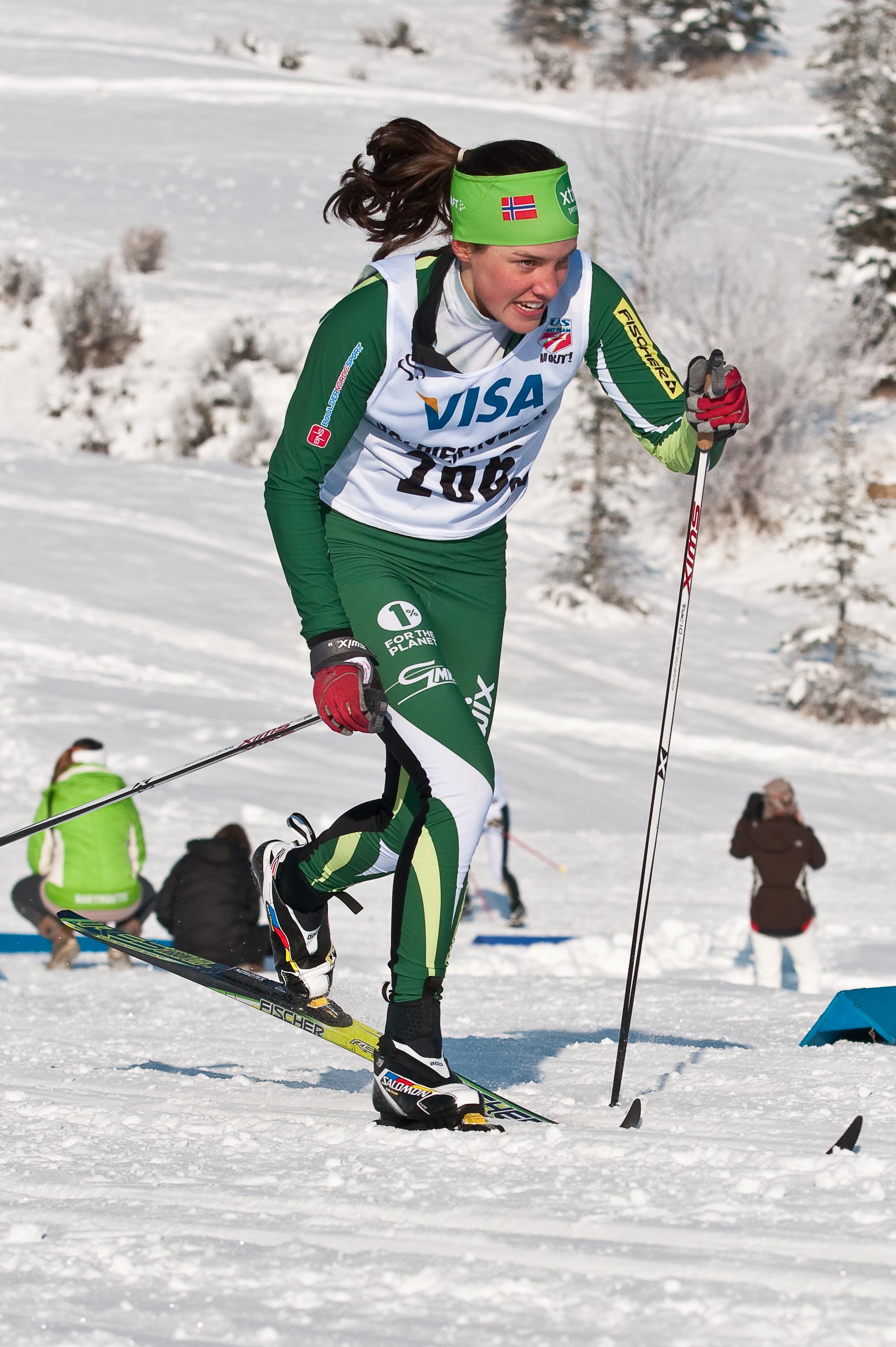
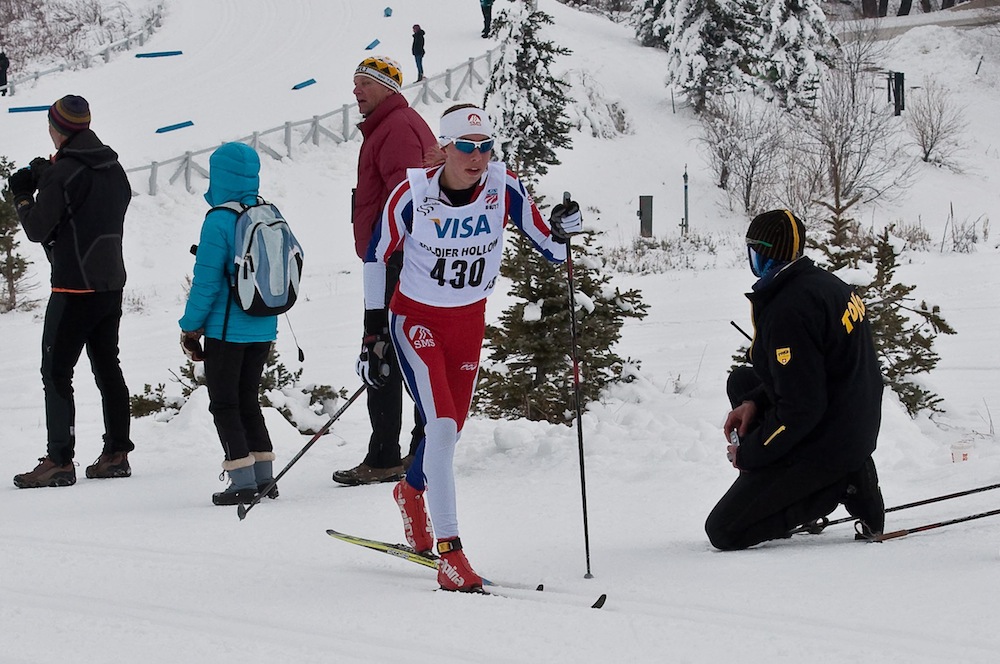
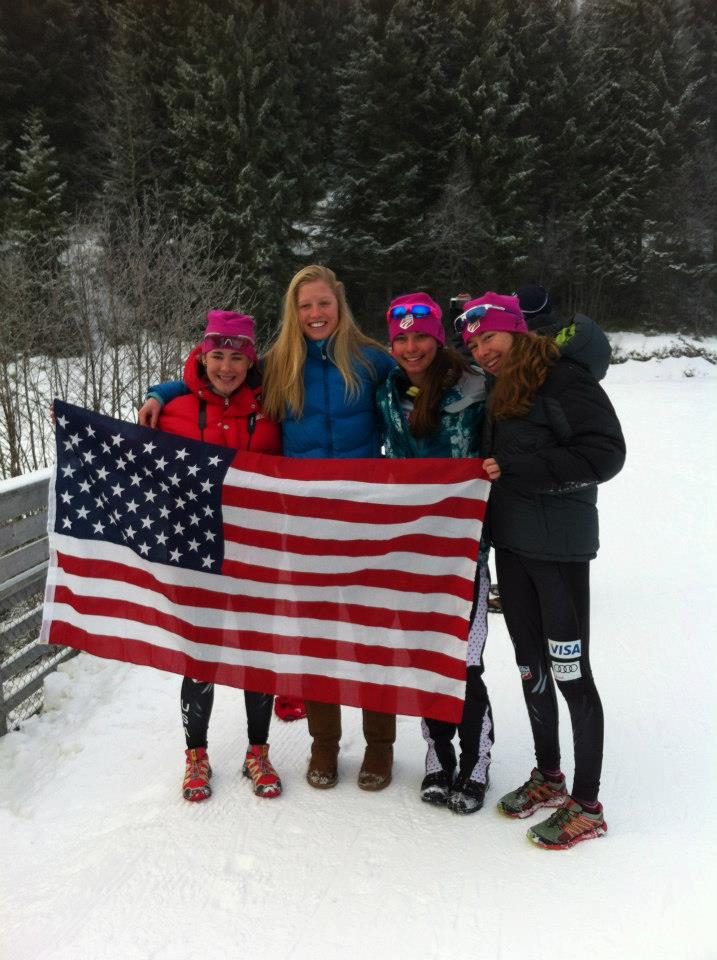
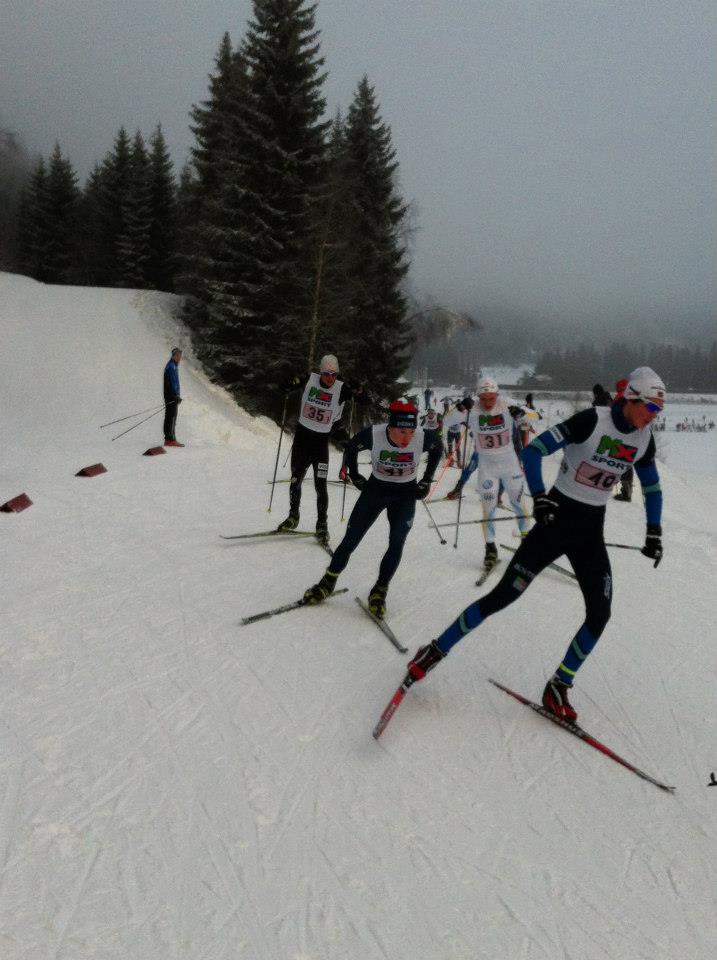
Rosie Brennan (APU) had the fastest time in the first of two laps and held on to win the women’s 10 k individual start freestyle in West Yellowstone, Mont.
Note: This article has been corrected to state that Katharine Ogden is a member of Stratton Mountain School (SMS), not the Stratton Mountain School T2 Team (SMST2).
WEST YELLOWSTONE, Mont. — Rosie Brennan surged into the lead with a strong first lap, then maintained her advantage over 17-year-old Katharine Ogden to win Saturday’s women’s individual-start 10 k freestyle in West Yellowstone, Mont., the weekend’s second SuperTour race.
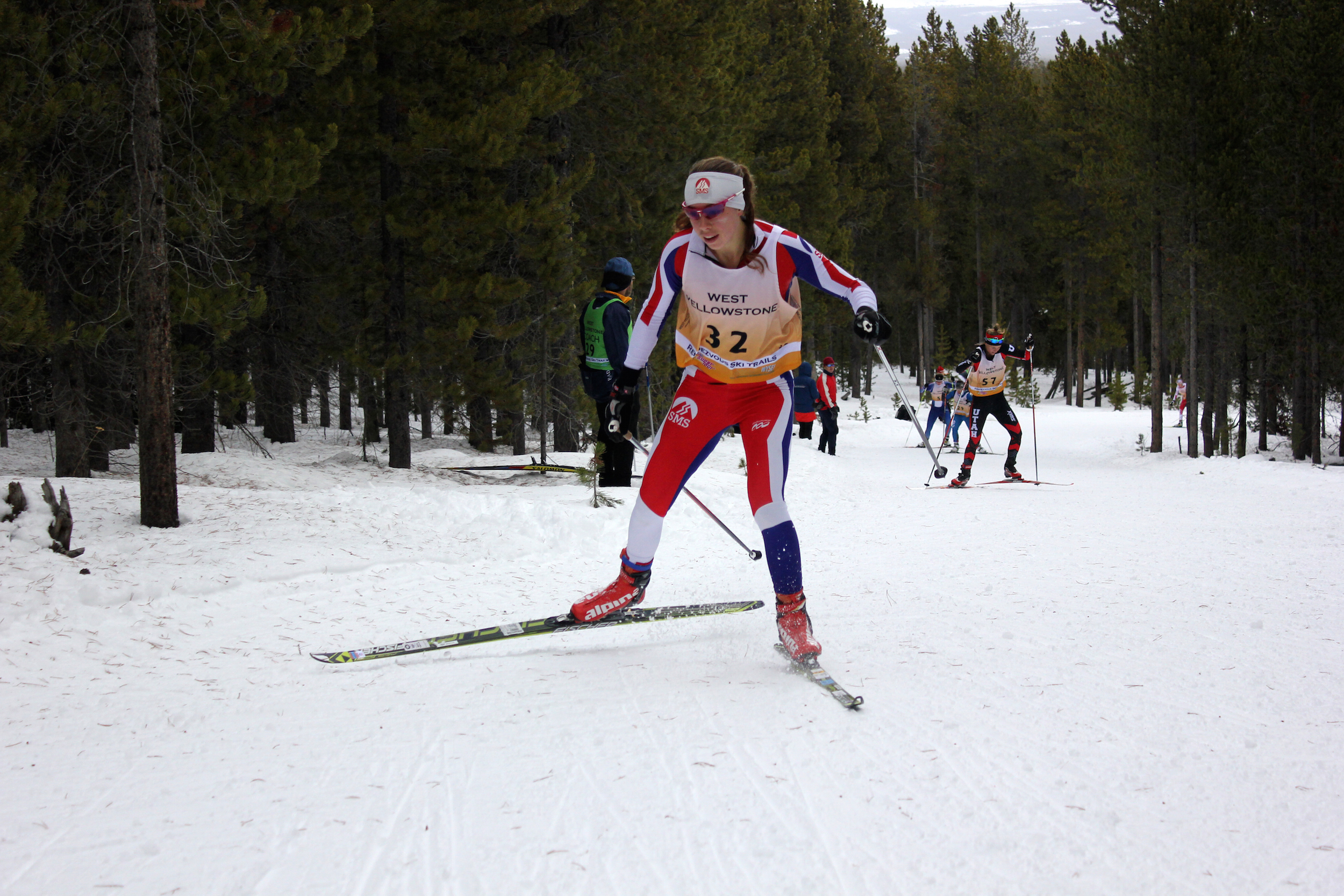
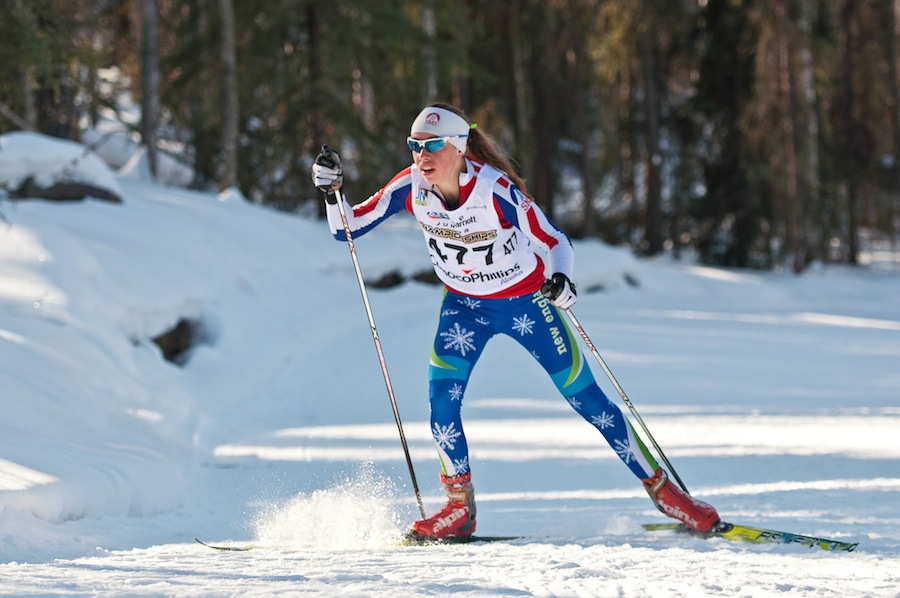
Brennan, of Alaska Pacific University (APU), had a 19-second lead over Ogden, of Stratton Mountain School (SMS), and teammate Chelsea Holmes after the first 5 k loop. While Ogden skied an impressive second lap – the fastest in the field – she was overcome by Brennan, as the 26-year-old won with a time of 26:59.9, while Ogden ended up 8.3 seconds behind.
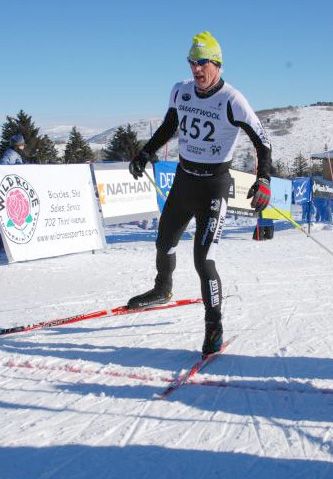
Katharine Ogden (SMS) posted the fastest second lap in the field en route to a second-place finish in the women’s 10 k individual start freestyle in West Yellowstone, Mont.
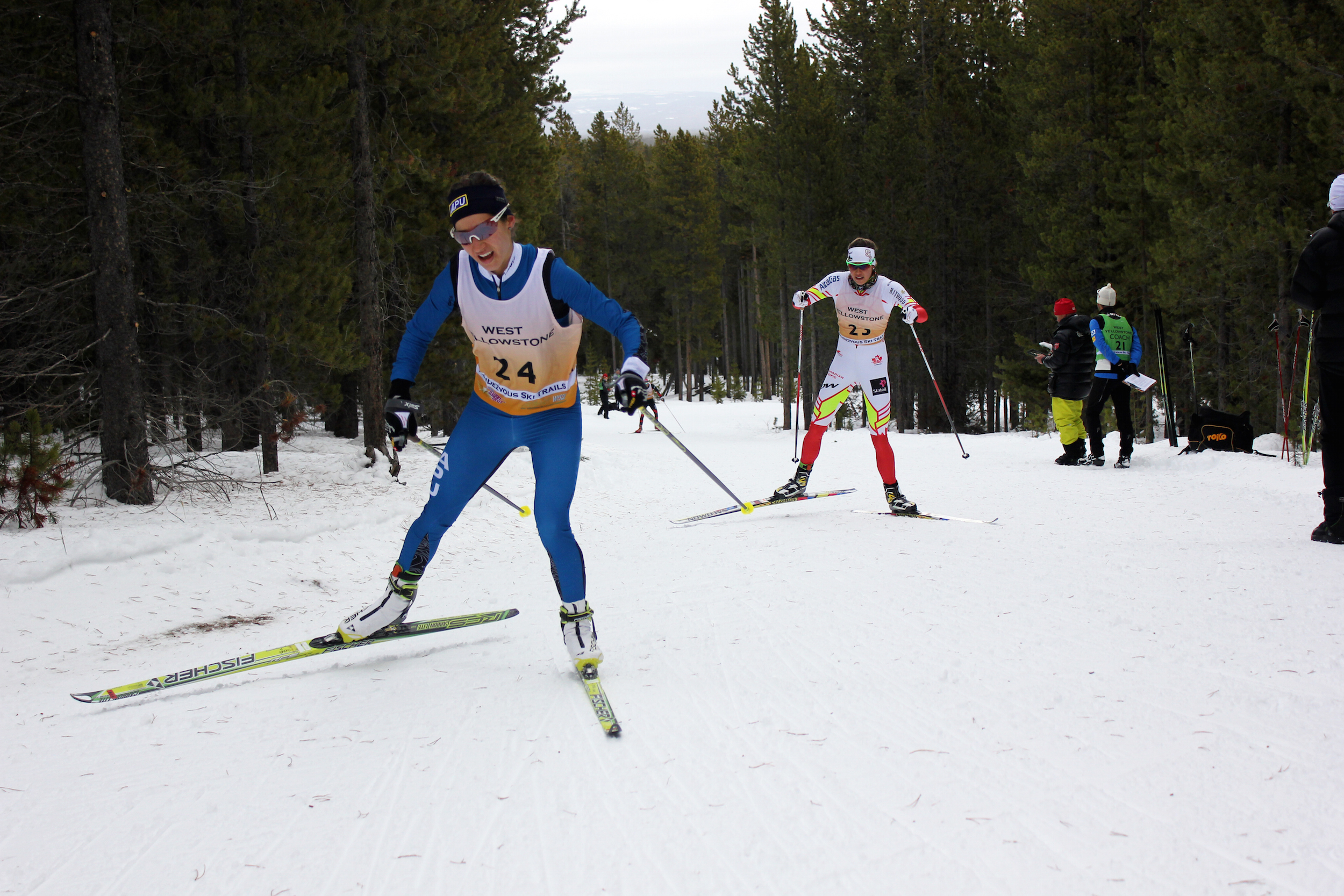
Holmes skied a strong race especially on the hills, but lost ground to the leaders on the second lap and finished 26.2 seconds behind. Caitlin Patterson of the Craftsbury Green Racing Project (CGRP) maintained her position after the first lap to finish in fourth (+42.6) while Sun Valley’s Mary Rose did the same to take fifth (+54.8).
Joanne Reid, a former University of Colorado star and NCAA Champion in the 15 k freestyle, took seventh (+1:01.0). However, the 10 k marked her first time racing on the national circuit since attending graduate school last year.
Though temperatures were above freezing, athletes encountered strong winds and blowing snow, adding challenge to a course that already offered no rest.
“Racing in West Yellowstone, it’s hard to actually feel good when you’re racing; it’s kind of brutal,” Brennan said. However, the Park City native said she was accustomed to the altitude – West Yellowstone is situated at 6,667 feet – and established a comfortable pace that she was able to maintain throughout the race. The result follows what she said was a “really good summer of training.”
Brennan explained that the race meant a lot to her, as her father passed away in August.
“Just to be able to put together a race is huge for me, so I’m just really psyched to be able to race,” she said.
APU Head Coach Erik Flora was thrilled with Brennan’s performance.
“Her training has been going really well, and you can see that she’s been ready to race, so today she skied strong. She’s made a lot of technical improvements over the year and she showed all those today,” Flora explained.
Though Ogden put together an impressive performance, she said that she did not have much of a strategy, saying she likes the hills and altitude and “was just thinking of not blowing up.”
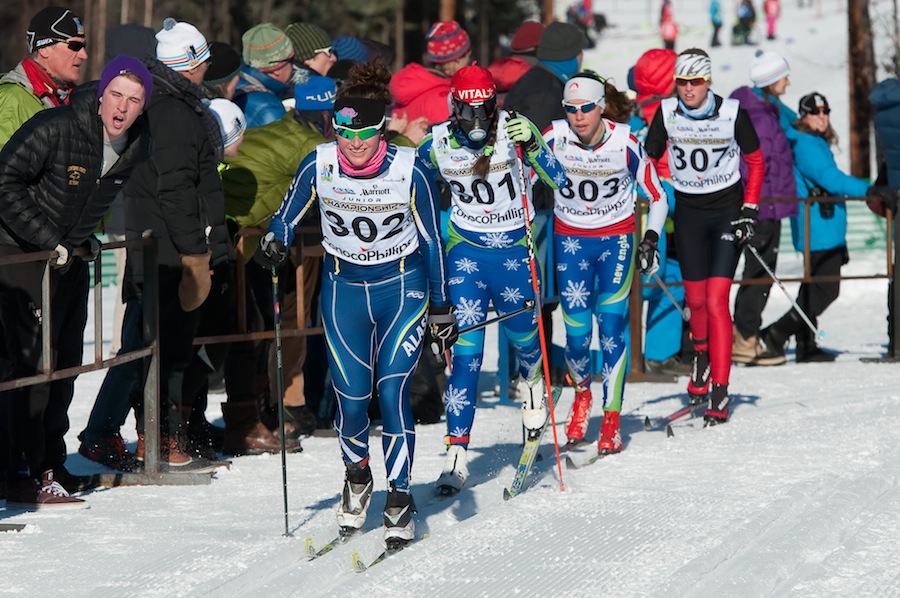
Chelsea Holmes (APU) is pursued by Heidi Widmer (AWCA-NST) in the women’s 10 k individual start freestyle in West Yellowstone, Mont. Holmes finished in third while Widmer would finish in ninth place.
“I started out and I was cold, which wasn’t good. But I warmed up pretty quickly and felt really good. I was mostly thinking about pushing off my legs because I usually don’t do that enough,” she said.
The 30-second interval start allowed her to catch up to and ski behind teammate Erika Flowers, of SMST2. “I like skiing with her. She has really good technique and it makes mine better,” Ogden said.
Ogden would eventually pass Flowers who ended up in 15th (+1:41.6).
Though just barely missing the podium, Patterson was satisfied with herself and her effort. She said she felt “bogged down” and was experiencing tired leg muscles right from the start, but maintained a strong V2 wherever she could and made up time on the numerous corners.
The wind was a noticeable factor in the race, Patterson said.
“I was certainly wishing I had someone to draft out there, but with the interval start race and the 30-second intervals we were all very well spaced out. I think I maybe passed one or two people, but I wasn’t able to tuck in behind anyone,” she explained. “It’s a bit of wind in your face, but you go with it.”
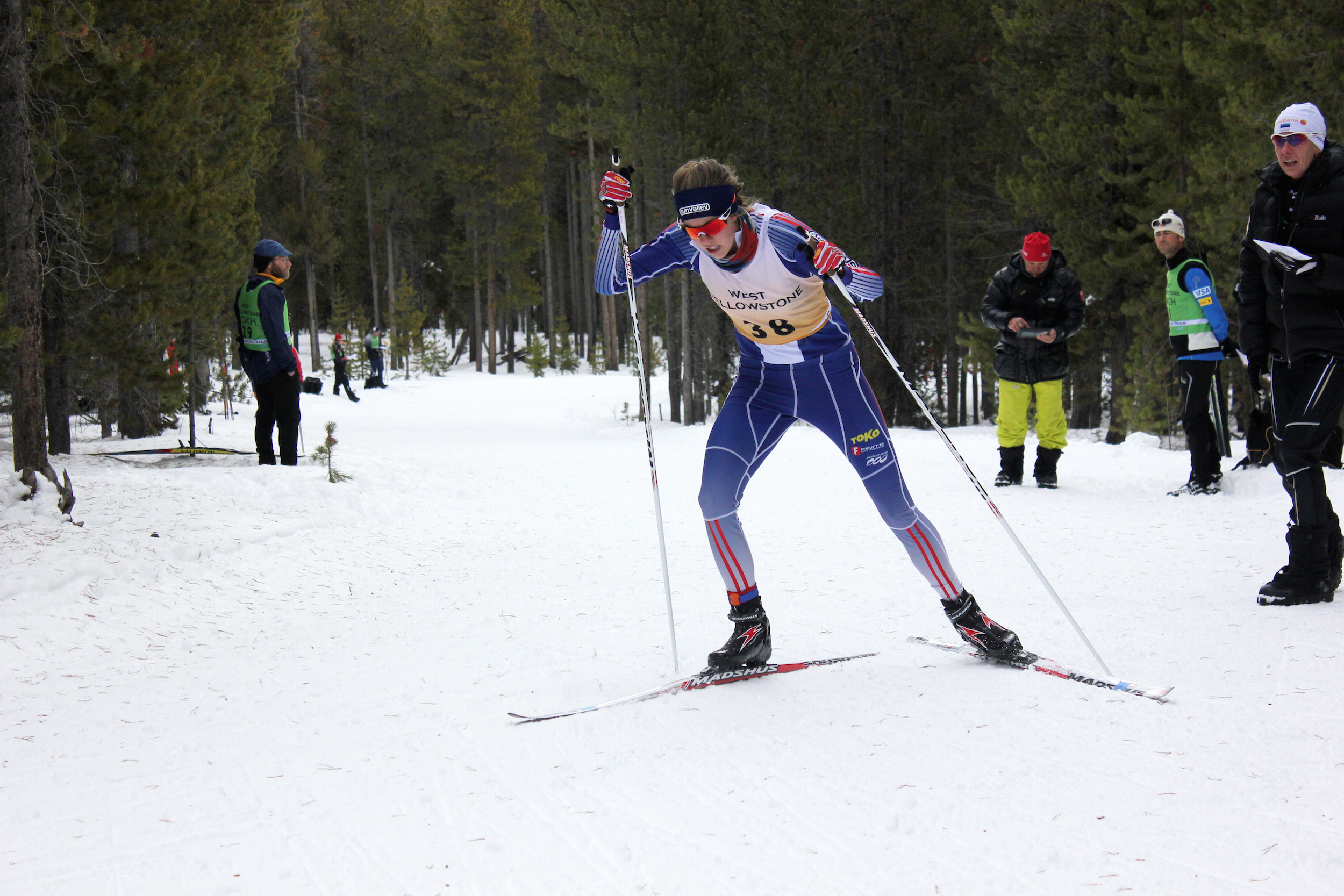
Mary Rose (Sun Valley SEF) conquered the hills and managed a fifth-place finish in the women’s 10 k individual start freestyle in West Yellowstone, Mont.
Rose attributed her fifth-place finish to the nature of the course, saying she is a climber and the course had plenty of hills she could use to her advantage. Though she went out “kind of easy” at the beginning of the race, she said she pushed herself through the hills and “kept charging.”
However, Rose did not attach too much significance to the result, saying she is taking it weekend by weekend.
Meanwhile, there was a worrisome scene on the course as APU’s Rosie Frankowski collapsed 7.5 kilometers into her race. Coach Flora was unsure of exactly what occurred — whether it was dehydration, the altitude or something else — saying she simply “blacked out” at the top of a climb.
Course officials and spectators immediately covered Frankowski with coats after she collapsed, and she was soon transported back to the warming hut at the starting line. Flora said once they got her warmed up, she was back on her feet and “feeling good.”
SuperTour racing continues next weekend at Bohart Ranch Cross Country Ski Center near Bozeman, Mont., with a classic sprint on Saturday and a classic mass start on Sunday.
Members of the Sun Valley Ski Education Foundation Gold Team with coach Colin Rodgers in Europe last season. (Photo: NNF)Five years ago, David Knoop was a self-described master blaster looking for a cause, and the National Cross Country Ski Education Foundation (NCCSEF) was going to be it.
His process of finding the NCCSEF didn’t happen overnight. In fact, the nonprofit had been more or less defunct since 2008, when founder Reid Lutter decided he was too busy to continue its mission of supporting junior development in U.S. nordic skiing.
After starting the NCCSEF, formerly based in St. Paul, Minn., 14 years earlier with Rick Kapala and evolving to the point where they could send American kids to Junior World Championships, Lutter simply had other focuses as a ski coach and owner of a custom-apparel company, Podiumwear.
Meanwhile, Knoop, who lives in Park City, Utah, and works as an insurance broker in Salt Lake City, was figuring out his own calling. In the spring of 2008, his 20-year-old son Matthew Knoop was killed by a hit-and-run driver while on a mission for The Church of Jesus Christ of Latter-day Saints in Brazil. The oldest of Knoop’s two children, Matthew was a Park City High School soccer standout who captained his team to a state championship in 2006, his senior year.
After his passing, Knoop started to research charitable causes to devote himself to.
“My son didn’t get paid to go on a volunteer mission — it was something he wanted to do because he made a difference,” Knoop said on the phone this week. “He taught me a lesson there and I just decided I could give back.”
Simi Hamilton on his way to winning the U23 World Championships skate-sprint qualifier by one second in 2010 in Hinterzarten, Germany. He went on to place 26th after his pole broke in the quarterfinal. This season, Hamilton, 27, is a member of the U.S. Ski Team A-team. (Photo: NNF)By way of the U.S. Ski Team, he found the NCCSEF. A regular donor to the team, Knoop eventually got a direct request from then-U.S. Ski Team (USST) director John Farra.
“Farra said, ‘I want you to take over the NCCSEF,’ ” Knoop recalled. “I was like, ‘I don’t even know what you’re talking about it.’ He was like, ‘I’ll help you with it for a couple of months.’ ”
Knoop remembered thinking about the potential of the sport and the ranging emotions people have when it comes to their perception of the USST or its national governing body, the U.S. Ski and Snowboard Association (USSA). Instead of admiring the problem, he decided it was time to take positive action.
According to Knoop, the National Nordic Foundation (NNF), which came to be in 2011 out of the same 501(c) because “just saying [NCCSEF] is a mouthful,” started with a basic structure — not exactly a business plan.
“[Farra] said, this is junior development, this is how junior development works, these are the projects that are sorely in need of funding,” Knoop said.
From there, the former soccer coach and longtime nordic enthusiast began to immerse himself in U.S. cross-country skiing from the club to national-team levels.
The 2011 NCCSEF calendar cover. (Photo: FasterSkier)Then, he got some help from Kapala. The head of the Sun Valley Ski Education Foundation (SVSEF) nordic program, Kapala knew of a generous donor in Sun Valley, Idaho, who would likely support a national cause as well, and he connected him with Knoop.
“The first year I did a bit of wandering in the wilderness by myself — John Farra gave me a lot of guidance in terms of projects he felt were important … Rick Kapala had a few people he introduced to me,” Knoop said. “They were kind to me. They could tell I really didn’t know what I was talking about, but I had an idea and there was probably half a dozen donors that wrote some good-sized checks and said, good luck with your experiment.”
Knoop was not a professional fundraiser; he was a volunteer with a demanding day job. Once donors realized that and understood that he had little to gain, he said they became easier to approach and usually more likely to open their wallets.
NNF’s Rise
In 2009, the NCCSEF came back to life with roughly $35,000 dollars in the bank. Five years later, Knoop as the director checked the balance from his Salt Lake office: the NNF had about $215,000 in reserves for cross-country skiing and about $43,000 for nordic combined. And that was more than three weeks before the Drive for 25 (D25) ended.
Annually the foundation raises more than half a million dollars in donations. With goals of raising $150,000 for cross-country and $50,000 for nordic combined in this year’s D25, the NNF was more than halfway there with 19 days to go. As of Friday, 75 percent of the target had been reached for cross-country and 14 percent for nordic combined.
While the discrepancy between the two sports might seem large, Knoop explained that it’s misleading: nordic combined parted ways with the NNF this summer, then returned to the organization three weeks before the D25 started Oct. 1.
When USSA defunded nordic combined in April, NNF board member and nordic-combined veteran Billy Demong devoted his offseason to fundraising to save his sport. One of his first moves was partnering with USA Ski Jumping.
NNF Board of Directors:
David Knoop (executive director)
Reid Lutter
Joey Caterinichio
Yuriy Gusev
Jennifer Barba
Steve Fuller
Kerry Lynch
Billy Demong
Contract employees:
James Southam (administrator)
Andrew Gardner (public relations)
According to Knoop, that led nordic combined — which was in search of top-to-bottom funding — to search for funding outside the NNF, which reserves financial support for national B-team athletes and those in the developing ranks below them and above Junior Nationals.
“My response to Billy [was], ‘You can leave the NNF, but we’re not kicking you out. There’s no hard feelings,’ ” he said, explaining that they kept their lines of communication and nordic-combined’s checking account within NNF open.
“We even funded a summer project for them with some remaining funds they had,” he added. “Kerry [Lynch] and Billy remained on our Board of Directors.”
Over the course of the summer, nordic combined generated most of the money it needed to get through the next season and put a renewed emphasis on development and future sustainability. As a result, Knoop said the program was probably stronger as a result.
“They’ve had a heck of a ride,” he said. “They got a fair amount done through [USA Ski Jumping] all summer long, then they kind of realized, we benefit from being part of the NNF. There’s no takeaway here — why wouldn’t we have three buckets of revenue?
“They came back to us three weeks before the Drive for 25 and you can see the result,” he added. “It’s not very scintillating, but they’ll be back.”
At the same time, the Drive is one of multiple nordic-combined fundraisers held each year. The then-NCCSEF added nordic combined to its support structure in the spring of 2011.
“Nordic combined historically has done really well,” Knoop said. “[As] Kerry Lynch said, ‘We might be small, but we’re mighty.’ ”
The Drive: what it is and how it started
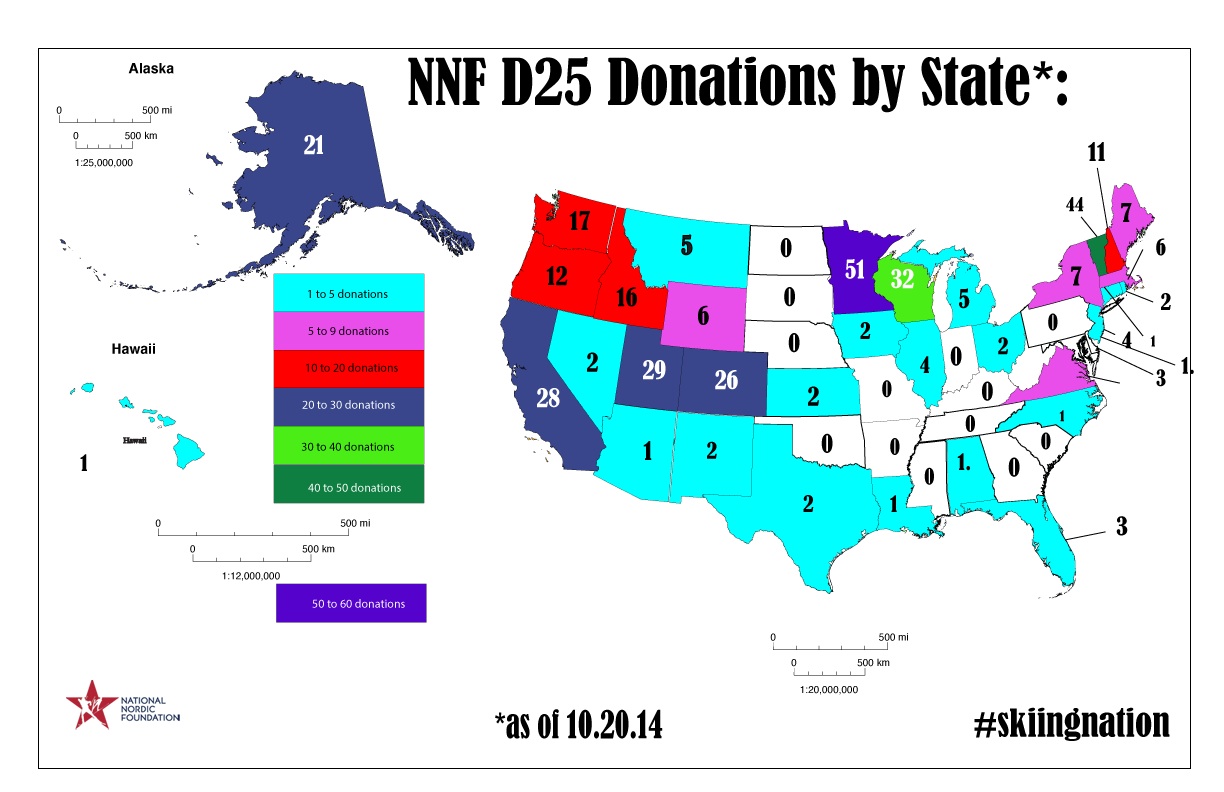
NNF’s D25-donation tally by state, with director David Knoop emphasizing the importance of the number of donors over the fundraising amount. “There’s a national appetite for this,” he says.
In its fourth year, the D25 is one of two annual fundraisers the NNF holds for cross-country. Alternatively, nordic combined prefers to spread its efforts, and typically solicits donations in different forms multiple times a year.
The idea to encourage an estimated 4,000 U.S. nordic enthusiasts to donate in the name of development came to life in 2011 with founders Peter Vordenberg and Matt Whitcomb, then both U.S. Ski Team coaches. They reasoned if thousands donated $25 on a single day — Nov. 15 — it could make a lasting impact on developing cross-country skiers.
“U.S. cross country skiing is in financial trouble,” a 2011 press release for the D25 stated. “While we have improved from a nation that seldom put a single skier in the top 15 on the World Cup to a nation with World Cup and World Championship podiums we are currently operating at a budget of less than a tenth of our toughest competitors. And more importantly our budget shortfalls are making it impossible for our younger developing athletes to afford the racing opportunities they require to compete among the best.”
There were two ways to get involved: simply donate $25 on Nov. 15, or even better, become an ambassador and persuade at least 10 others to donate $25 on the same day.
The premise was solid, but NNF’s mailbox nearly couldn’t handle it. Knoop said it was a good problem to have, “Sure enough, on November 15, it rained [money] on that day … We raised like $50,000, like, holy smokes,” and the buzz surrounding the Drive was what left a lasting impression.
But there were questions. Knoop said he received checks in the months following with letters asking if the NNF would still accept donations. Of course they would, he always responded. And while the Drive took different forms in the years to come — from lasting almost three months last year, to six weeks this year — the goal was the same: to get “hay in the barn” so NNF’s board could allocate funds for the fast-approaching winter.
“Sure enough, on November 15, it rained on that day … We raised like $50,000, like, holy smokes.” — David Knoop, NNF director on the inaugural Drive for 25 in 2011
Before the Drive, Knoop said he focused on larger donors, and Vordenberg and Whitcomb drew his attention to the importance of a grassroots presence. What he later found was the NNF could have the best of both worlds, with big-time donors offering to match the amounts raised by grassroots donors.
The NNF is currently promoting a matching challenge for U.S. Nordic Combined’s Drive for 25, effective until Nov. 12, 2014. (Photo: NNF press release)Nordic combined currently has a matching challenge on the table: if it reaches $20,000, it’ll receive $20,000 in matching grants. As of Oct. 24, it had raised just over $7,000.
NNF’s athlete ambassadors sometimes have their own matching proposals to help them reach individual fundraising goals.
Katharine Ogden of the Stratton Mountain School led this year’s ambassadors in donations after exceeding her goal of $3,000 with more than $4,300 as of Oct. 24. The second-highest fundraiser, Paddy Caldwell of the USST D-team raised nearly $2,000 of his $2,500 goal in that time.
Knoop said those athletes went above and beyond their expectations as ambassadors, but he encouraged anyone who has benefited or could benefit from the NNF’s support to fundraise on its behalf as well.
And that’s the part of the Drive that hasn’t changed over the last four years. According to Knoop, the bottom line is, ambassadors are still expected to get 10 friends to donate $25 before Nov. 12.
While fundraising isn’t glamorous, it’s necessary, Knoop said.
“It’s about as tedious as your parents asking you to mow the lawn,” he said. “In terms of the timing of it, we run it a bit longer because all these kids are going to school, they’re training and to tell them they’ve got to get something done in one or two weeks, it’s not going to happen. We need to give these kids some time to build momentum.”
Not all of NNF’s roughly 80 ambassadors are developing athletes. USST Head Coach Chris Grover has raised the third-most amount of donations as an individual and USST Assistant Coach Jason Cork is fifth on the list after Team Gregg.
Several members of the USST A-team, the elite tier that doesn’t receive money from the NNF, are also ambassadors. According to NNF’s public-relations director Andrew Gardner, everyone on the USST with the exception of Andy Newell received NNF funds as developing skiers — and Newell supports the NNF regardless.
“What we’re trying to do now, twenty years later is say, there’s a whole development need and there’s a space between Junior Nationals and the A-team on the U.S. Ski Team that’s a funding void. In terms of development, that’s what you need.” — Knoop
Understanding the NNF
Last year, the D25 exceeded its goal of $150,000 for cross-country and raised $170,000 with 1,071 donors. That’s great, Knoop said, but what confounds him is how many nordic skiers still don’t know what the NNF is.
“I race a lot in the Midwest; it is master-blaster central,” he said. “Just imagine, part of our tagline is: generations helping generations. I wear an NNF patch on my hat and yet as a master blaster going to a fairly large citizen race, I can stand there at the starting line and easily 90 percent of the athletes will have no clue what that NNF patch is. That’s the potential. Whether or not we ever reach a broader base, that is the question mark.”
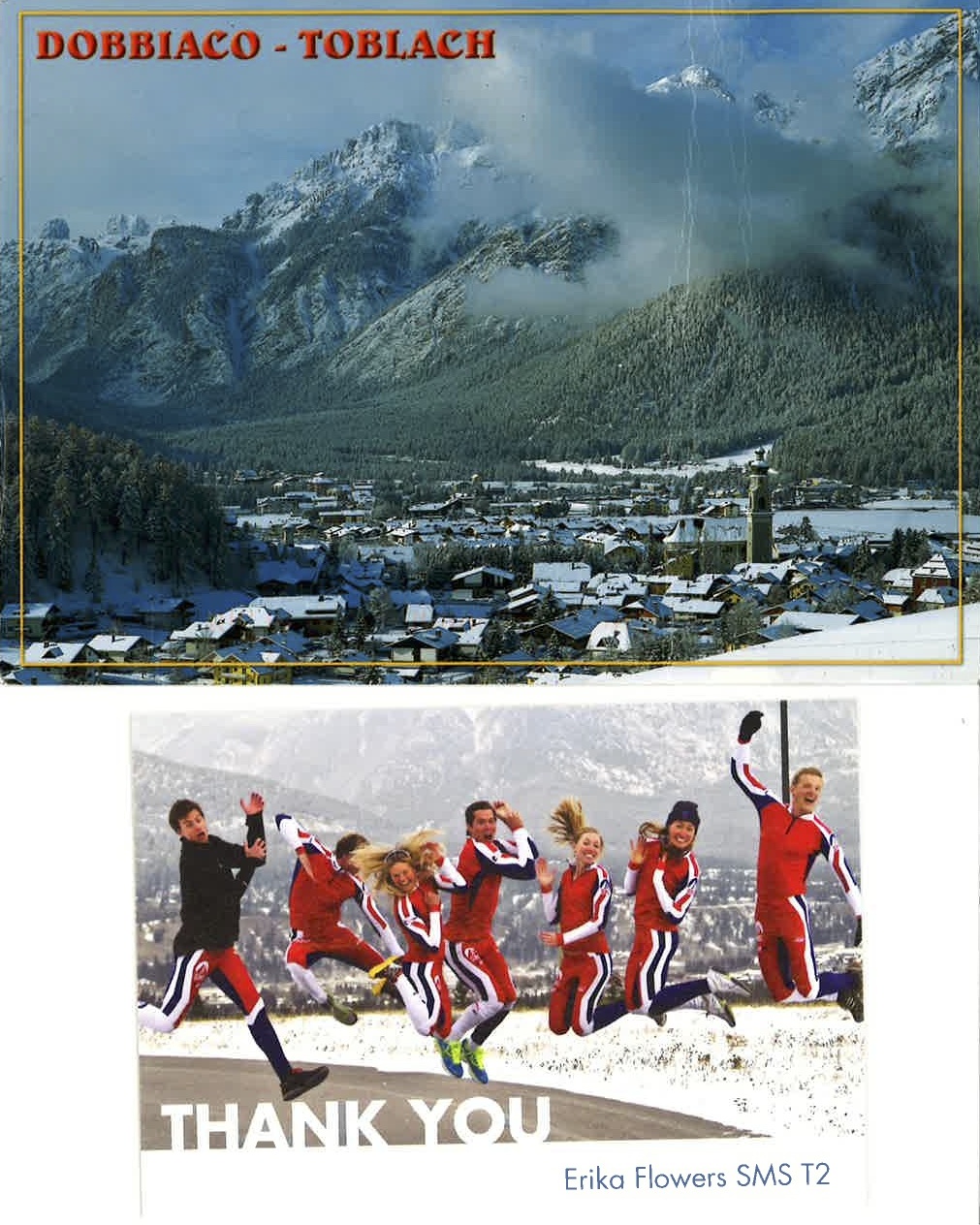
An example of thank-you postcards the NNF receives by the dozens each season. Above: from Italy. Below: from the SMST2 Team
In a perfect world, he’d set a goal of half a million dollars for the D25 and the NNF could still “blow through that money” if it was all raised. The U.S. is competing in an international realm with players like Norway and Germany with multi-million dollar budgets.
“I’m glad that we’re a half-million dollar organization,” he said, referring to the $516,000 NNF received in donations last year (up from $192,000 in 2012 and $352,000 in 2013). “I’d like to see us one day get to be a million-dollar organization, but as you can see we’re competing against countries that are far more robust. … We’ve been able to do far more with far little, and the reality is that it’s never enough.”
Last year, the NNF’s expenses amounted to about $120,500 in administrative-and-fundraising costs like website development and maintenance, and two contract salaries with Gardner and full-time administrator James Southam. On top of that, NNF spent some $313,000 on athletics in 2013/2014, specifically pillar projects — the initiatives it stands behind and works to support year after year — for a total profit of about $82,000.
Since the foundation’s inception, helping athletes afford U23 and Junior World Championships has been a priority. This season, the NNF stated on its website that it aims to spend $80,000 on that event (70 to 80 percent of its cost to U.S. athletes) and $348,000 total on athletics.
“I want to say that’s a three to four-thousand dollar expense per athlete,” Knoop said. “We typically tell the athlete the event will cost you $700 or $500 … plus your airfare. We want you over there and focused on racing and not have your parents stressed about money.”
After the D25 ends in Nov. 12, Knoop said his eight-member board will meet over conference calls to discuss how to spend the money — and how much they should use.
“Let’s say we hit $150,000 — it’s going to be a fun meeting for cross-country to say we have $350,000 in the bank, what do you want to spend?” he explained. “They all want to know, here’s how much we have, how much do we want to spend? Let’s be careful, let’s be conservative … how much should we save? As a rule of thumb, with $350,000, we typically spend half of it.”
NNF’s funding goals for 2015 amount to nearly $350,000, between projects like U23/junior worlds, paying for a development coach, assisting World Cup skiers, and supplementing the OPA, Scando and U18 trips in Europe. Besides the D25, the NNF relies on other fundraisers throughout the year, like the online auction held last winter that raised upwards of $150,000.
“Let’s just say for whatever reason the Drive for 25 falls flat, we’ve got those other fundraising mechanisms,” he said.
The NNF also gets direct donations from certain photographers like board member Steve Fuller, who sells his nordic photos on FlyingPointRoad.com and gives all proceeds to the foundation.
A thank-you postcard from Mattie Watts from New Brighton, Minn., now a freshman on the University of Vermont nordic team.Over time, Knoop has learned about the delicate balance of relying on loyal donors while searching for new support. For this reason, he writes handwritten thank-you notes to anyone that mails a check, and while online donations far outnumber those received by mail (and come with automatically generated thank-you’s), he tries to remember to thank online donors when he sees them in person.
When it comes to the timing of fundraisers, Knoop said it’s OK when others in the ski community are raising money simultaneously. The Stratton Mountain School T2 Team is currently promoting its own Matching Grant Challenge, where a private donor will match all team donations up to $25,000 before Nov. 15.
As a team, Stratton’s raised more than $7,000 for the NNF this year.
“If they’re donating to a club or some other cross-country initiative, there’s no need to cannibalize each other — that’s not going to further our sport,” Knoop said. “To the degree that people want to donate to the NNF and they see the value of what we’re doing, then I fully support that. If they want to support an initiative in another part of the country, then that’s great … and they should do it. We still win as a sport.”
The Greater Goal
In the years since its resurrection, Knoop said the NNF’s growth has been more gratifying than surprising.
“We’re not a huge nonprofit, but for our sport and the niche that we provide, I’d say we’re pretty successful,” he said.
“When you look at the entire potential of cross-county skiing, then I’m like, OK, I guess we’re never going to be like Norway where every citizen owns a pair of cross-country skis,” he later added. “But if we have a couple thousand people who get what cradle-to-grave skiing is all about, then we should have no problem getting our message across.”
That said, Knoop, in his late 50s, isn’t sure he’ll be onboard when the NNF reaches full steam.
“I’m going to get tired one of these days and I hope to hand the NNF baton off to someone who has the energy,” he said, noting his gratitude to Lutter for having the vision to start it.
With a cash fund to rely on for rainy days, Knoop said he dreams of finding enough money to start an endowment: a “big chunk of cash” that goes into an interest-bearing account and cannot be touched. Meanwhile, his example of a million-dollar endowment would generate $100,000 in additional cash each year — and he imagined what the NNF could spend that on.
At the same time, saving that much reserve money or finding a million- or half-million-dollar donor isn’t easy.
“I’ve never asked people for money in my life, and I’ve gotten more comfortable with it,” Knoop said. “I’m moderately comfortable getting people to write checks for $10,000 to $100,000 dollars so far…”
At the end of the day, there’s one thing that matters most to Knoop, and that’s whether the NNF is staying true to its mission statement: “to support athletic excellence in developing nordic athletes in the United States.”
Whenever there’s a question or debate amongst the board regarding what they should help pay for, he said that’s what they go back to.
Never Saw It Coming
In August, Knoop suffered a stroke that knocked him to the ground shortly after finishing a running-interval workout in Park City.
“Obviously that was quite a shock and it’ll probably take me a year to recover,” he said. “I had a brain aneurism. It had been there like a ticking time bomb … [that] dated back to youth football.”
National Nordic Foundation (NNF) Director Dave Knoop doing his thing as a self-described master blaster. (Photo: NationalNordicFoundation.org)
At the time, he was only about a mile from USSA’s Center of Excellence (COE), located next to a hospital. Knoop had been feeling strong and striding along some single-track trails when he finished his last interval, walked for a bit, then began an easy jog.
“I walked about a hundred or two-hundred meters and then just about as I started to run, I got really dizzy and I had no feeling and I dropped in the dust,” he recalled. “[I thought], ‘Oh, that’s great, you look like an idiot here.’ I knew something was wrong, but I had no comprehension it was a stroke.”
He tried to get back to his feet, but fell down without any feeling along the right side of his body. He later learned he had 50 percent paralysis.
Within minutes, a mountain biker discovered him and told Knoop to relax. He could talk, but with the right side of his face not working, it was difficult. As the biker tried to call for help, his cellphone was dying. Meanwhile, thunderstorms started to roll in.
“I’m like great, the fire station is only a mile away, the guy’s cell battery’s dying, it was just a calamity,” Knoop said.
It took the paramedics two hours to get to him.
“These firefighter guys were totally city and they had no idea that the trails existed,” Knoop said, adding that he still intended to thank them personally and provide them with some info on the trail system.
They loaded him onto a stretcher with a single wheel and pushed him a bumpy mile to their entry point, which was about 500 meters away from the hospital. Knoop couldn’t remember when, but at some point, they transferred him to an ambulance.
Once inside the hospital, he was informed he had about 45-minutes left in a three-hour window to reverse his paralysis with an anti-stroke medicine. While there was a 97 percent success rate, there was also a slight chance that the drug could lead to complete paralysis or death.
“The way they read the riot act to you, it’s like, big gulp,” Knoop said.
With his 24-year-old daughter at his side, they decided to take the chance. Within three minutes of being injected, Knoop could feel the medicine starting to work with tingling sensations in his right arm and leg.
Fewer than three months later, he was working out three to four times a week at “low Level 1” to avoid raising his heart rate. “I’m glad I can do this,” he said. “Walking I’m a little dizzy and yet I can go for a run on a trail and I feel fine. It’s weird how your brain gets affected.”
Sitting at his desk earlier this week, Knoop explained his short-term memory has been affected, his right arm and one of his fingers still tingle, and certain nerves in his arm and shoulder muscles feel like they’re firing at all times.
“I’ve had a number of CAT scans and MRI’s that show me pictures of parts of the brain that have been damaged,” he explained. “I’m not sure how it all works but your brain will remap itself in terms of just sending nerves and neurons around the dead parts, but it takes months if not over a year for that to [happen].”
Regardless, he feels lucky and compelled to carry a cell phone any time he works out alone.
“I didn’t take a cell phone with me — I prefer to workout away from people. I love to be in the wilderness all the time, mostly because I’m working in an office in downtown Salt Lake City,” he explained. “Now it’s like, I cant work out anymore without having my cell phone on me.”
And with responsibilities like NNF, he was grateful to have Southam and Gardner around. While the “three amigos” planned for this year’s D25 well before August, Knoop said they finalized its structure and implementation without him in the weeks after.
“James worked for a number of months on new fundraising mechanism [for nonprofits]: StayClassy,” he said. “Andrew worked on photography and getting the message out.”
“I think this year we’re much more organized,” he added. “If there was ever a time for somebody on the team to take a hit … I’m glad to see it doing well. The NNF or the Drive for 25 really shouldn’t be about any one person or a few key people, it should be about a whole community putting it together. As long as there’s the right framework, there should be the structure to make it happen.”
We are down to three months away from the next Eastern Cup, NENSA’s signature race series, and it is time to get prepped for all the excitement to come! In case any of you have been keeping up with the Farmer’s Almanac, this year is supposed to be a winter to remember, so lets get excited!
I personally am very excited for this winter, because we have a new venue, Rikert Nordic Center! For those of you who have not skied there before, I can assure you, it is a wonderful place to ski and a beautiful woodland area, perfect for this year’s Eastern Cup Opener. Rikert is equipped with snow-making guns, and will be properly prepared for the races byDecember 20th.
Keith Wilkerson from the Frost Mountain Nordic ski club, co-director of the races with Mike Hussey of Rikert Nordic Center are putting together an exciting weekend of races. Says Keith Wilkerson, ”We’ve partnered with the Better Middlebury Partnership, our local business development group, and the Addison County Chamber of Commerce, to engage the larger community in hosting this event. Middlebury Inn has agreed to be our host hotel and we’re fine tuning the details for a special Saturday evening reception for skiers and fans in town. We’re also really excited about having Eastern Cup racing on Rikert’s homologated course. Our goal is to put on a marquee event.” Looking forward to it, Keith!
After Rikert’s event, we have weekend number two, at Black Mountain in Rumford Maine! The first day of this weekend, January 17th, is also the Bates College Carnival which looks to be very promising, and according to Becky Woods, “Bates is thrilled to be hosting at Black Mountain and working with the Chisholm Ski Club. The planning is in full swing – it should be a great event. We are excited to have one race day that is a combined Carnival and Eastern Cup!” Thanks Becky, sounds like it’s going to be a great weekend!
The next in line will be race weekend number three, at the Craftsbury Outdoor Center, in Craftsbury Common, Vermont. This is going to be an exciting weekend because on February 6th-8th, Craftsbury is hosting a USSA SuperTour, the Dartmouth Carnival on February 6th and 7th, and the NENSA Eastern Cup on February 7th and 8th.
Everything will be super busy, and my advice to you would be to make sure your skis are labeled! Liz Guiney, from the Craftsbury Green Racing Project says that everyone at Craftsbury is “really excited about this event for a few reasons. The first is that the Outdoor Center will be hosting in our new Activity Center, which is spacious and directly on the nordic trails. The skiers will have plenty of room to change, spread out between races, and get warm next to the fireplace. The other exciting aspect of the race weekend is that it is a combination Eastern Cup, carnival, and a USSA SuperTour. This means that the best college racers, juniors, and professional skiers will all be competing together, which will raise the level for everyone involved. It’s going to be a great event and an awesome time to ski at Craftsbury!” Hope to see you all there!
The final weekend of the Eastern Cup series will be held in both Oak Hill, Hanover, New Hampshire, and the Holderness School, in Holderness New Hampshire. Day one, February 14th, will be held by the folks at Oak Hill, who say, “race committees have met several times and energy is running high! The excellent snow ‘in town’ through the latter half of last year’s xc season left all of us energized about getting outside on skis, and the Eastern Cup is a community-building way of celebrating Nordic skiing and racing.” Day two will be put on by the Holderness School, and it is also the Cheri Walsh Memorial Eastern Cup race. From the race organizers at Holderness: “As always, we hope to use the traditional Cheri Walsh course which we believe showcases fun agile classic skiing in it’s purest form. The best part about hosting the race is that it brings the best skiers in the region to our home club, and allows our ski community to come together and experience ski culture at it’s best. We always hope that a young Bill Koch skier will see the best Eastern Cup skiers and say to themselves, ‘I can do that’.”
Eastern Cups are open to skiers from all levels, and even draws some of the nation’s finest talent. Katharine Ogden, one of last year’s Gallagher Cup winners says “I am really excited for this new season of racing and can’t wait to race against a new batch of skiers for my fourth year in the Eastern Cup race circuit!”
Says Patrick O’Brien, also a winner of last year’s Gallagher Cup, “the Eastern Cup circuit is a valuable development tool for skiing in New England because it allows citizen, high school, and senior racers to come together and compete against each other. Skiing is normally a pretty small sport in the US so any time you can get those often separate groups to all compete on the same course you are going to increase participation and make for a higher level competition. A high school freshman can see where they stand agains a World Cup starter or USST member. The Eastern Cup circuit is also critical development path for our junior racers to practice higher level starts before heading to Junior Nationals come March. Having a unified race circuit throughout the winter is one of the reasons New England has historically been one of the strongest regions at Junior Nationals!”
We are excited to see you all out there, ready to race for the first weekend, December 20th and 21st!
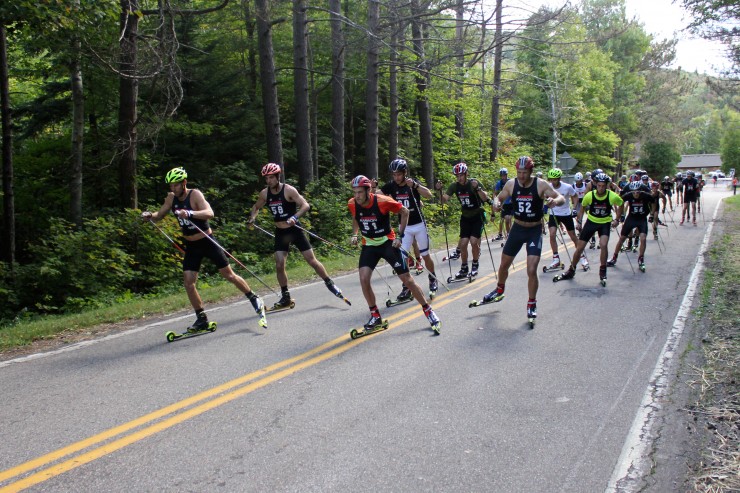
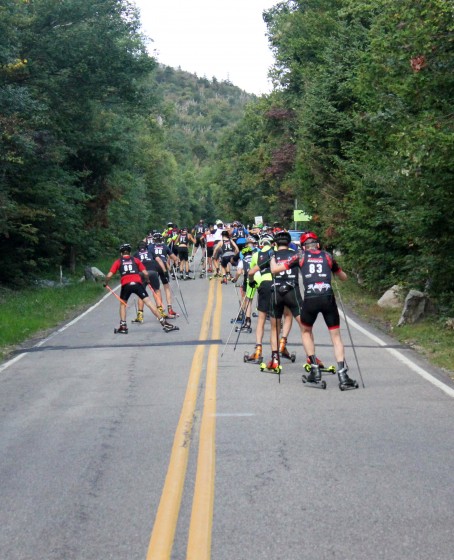
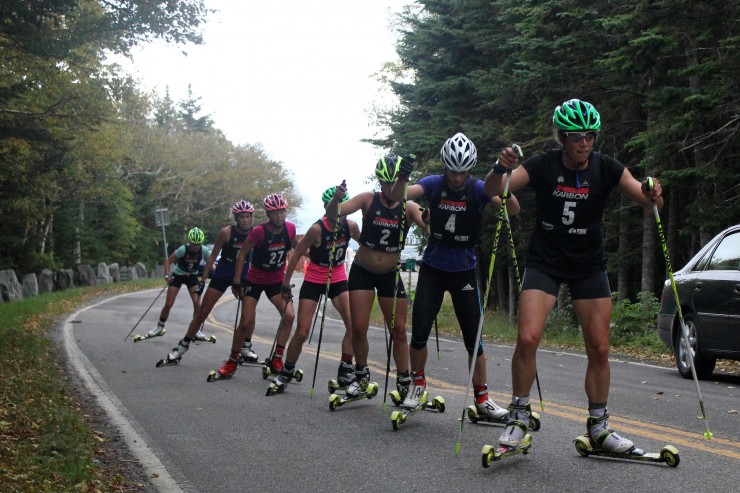
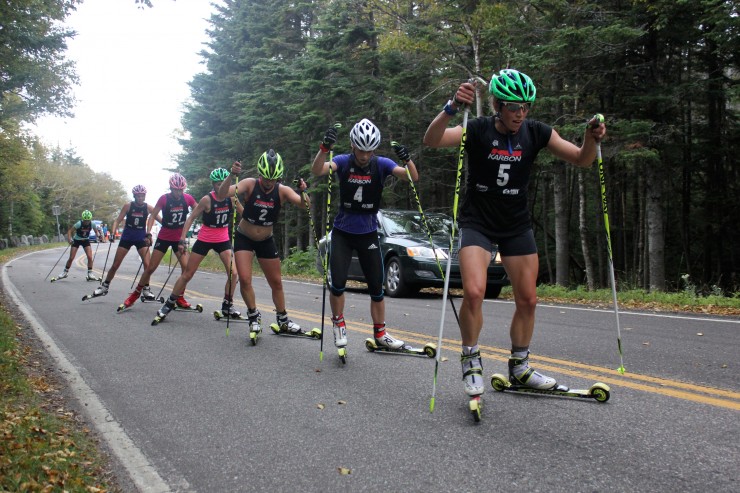
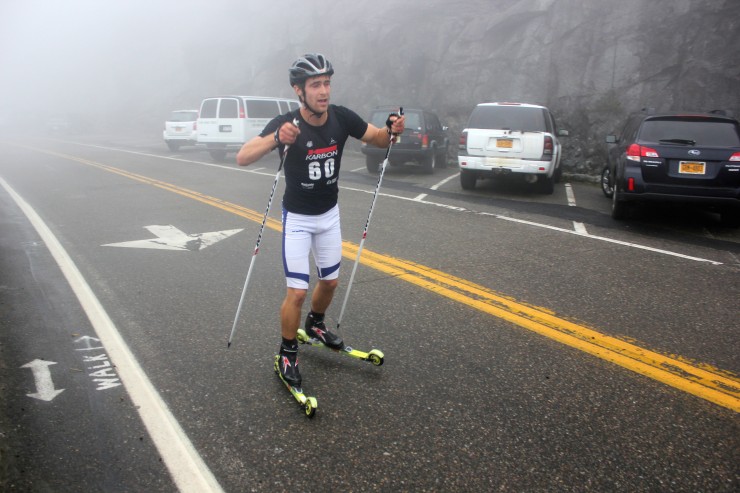
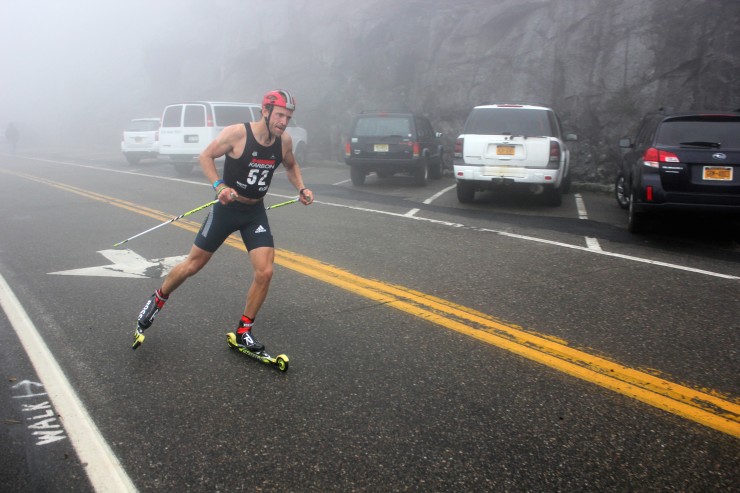
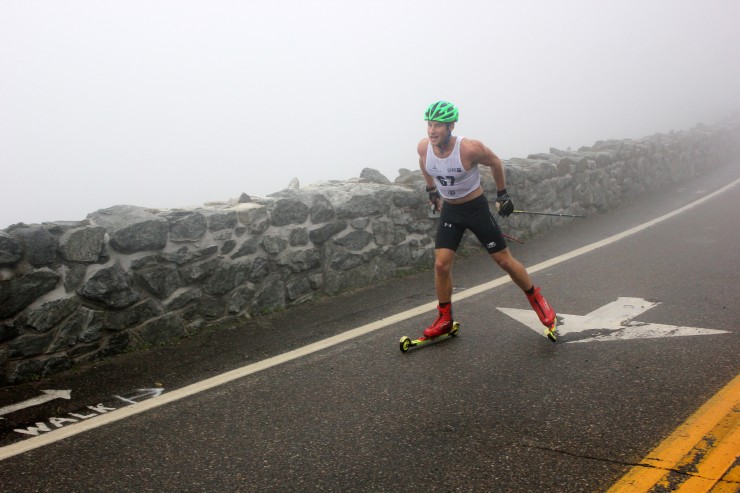
WILMINGTON, N.Y. — Saturday’s Climb to the Castle was a success for both organizers and participants. Despite strong winds, the weather held and skiers were able to ski a challenging 5-mile climb on roads that had been paved just the day before. Take a look at our photo gallery to see the race for yourself.
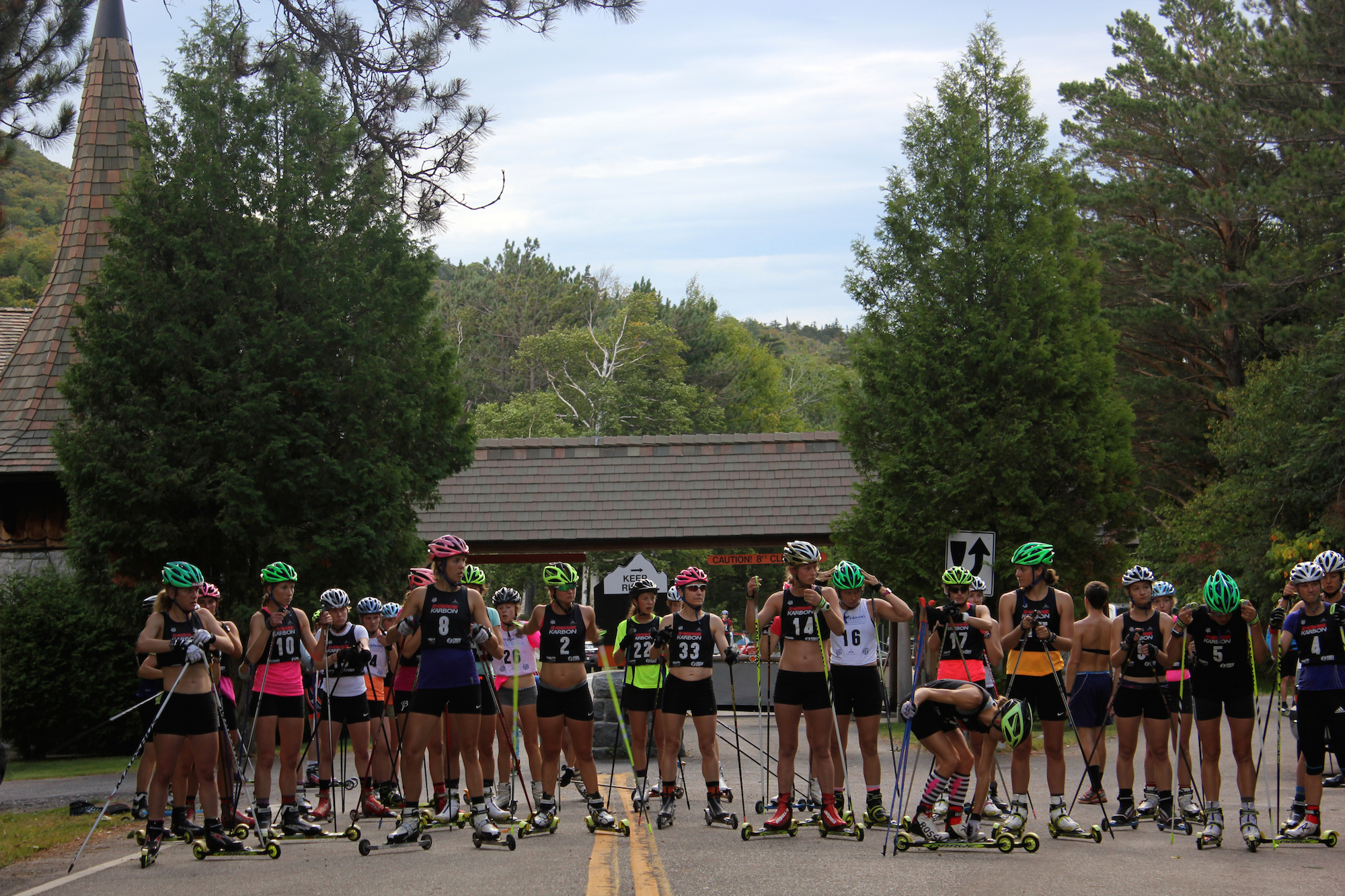
The women’s start of the 2014 Climb to the Castle.
The women’s start of the 2014 Climb to the Castle.
The women’s start of the 2014 Climb to the Castle.
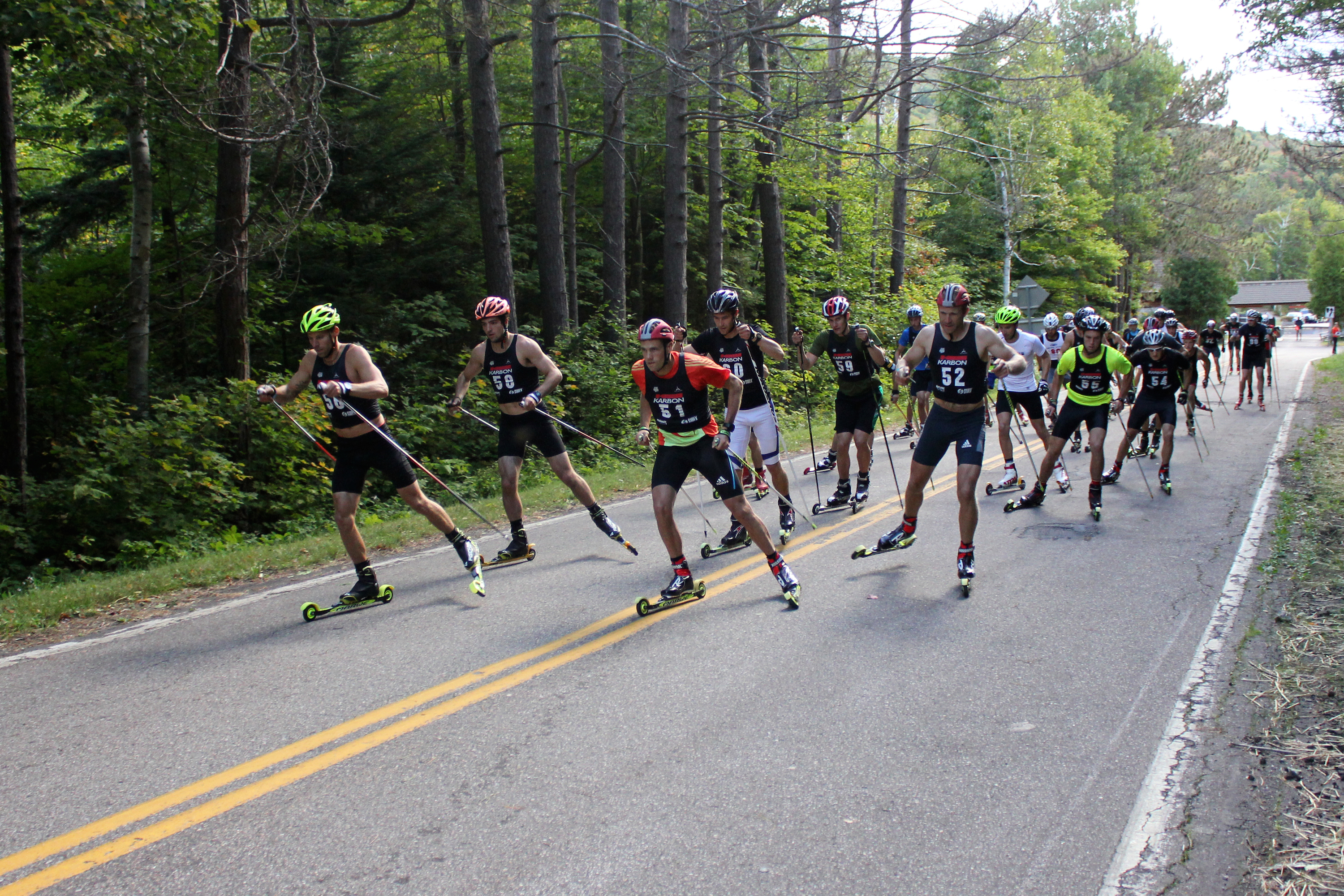
The men’s start of the 2014 Climb to the Castle.
The men’s start of the 2014 Climb to the Castle.
The men’s start of the 2014 Climb to the Castle.
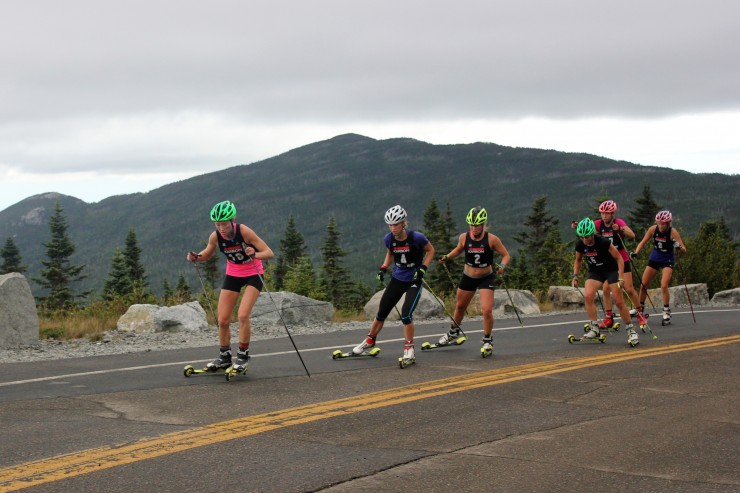
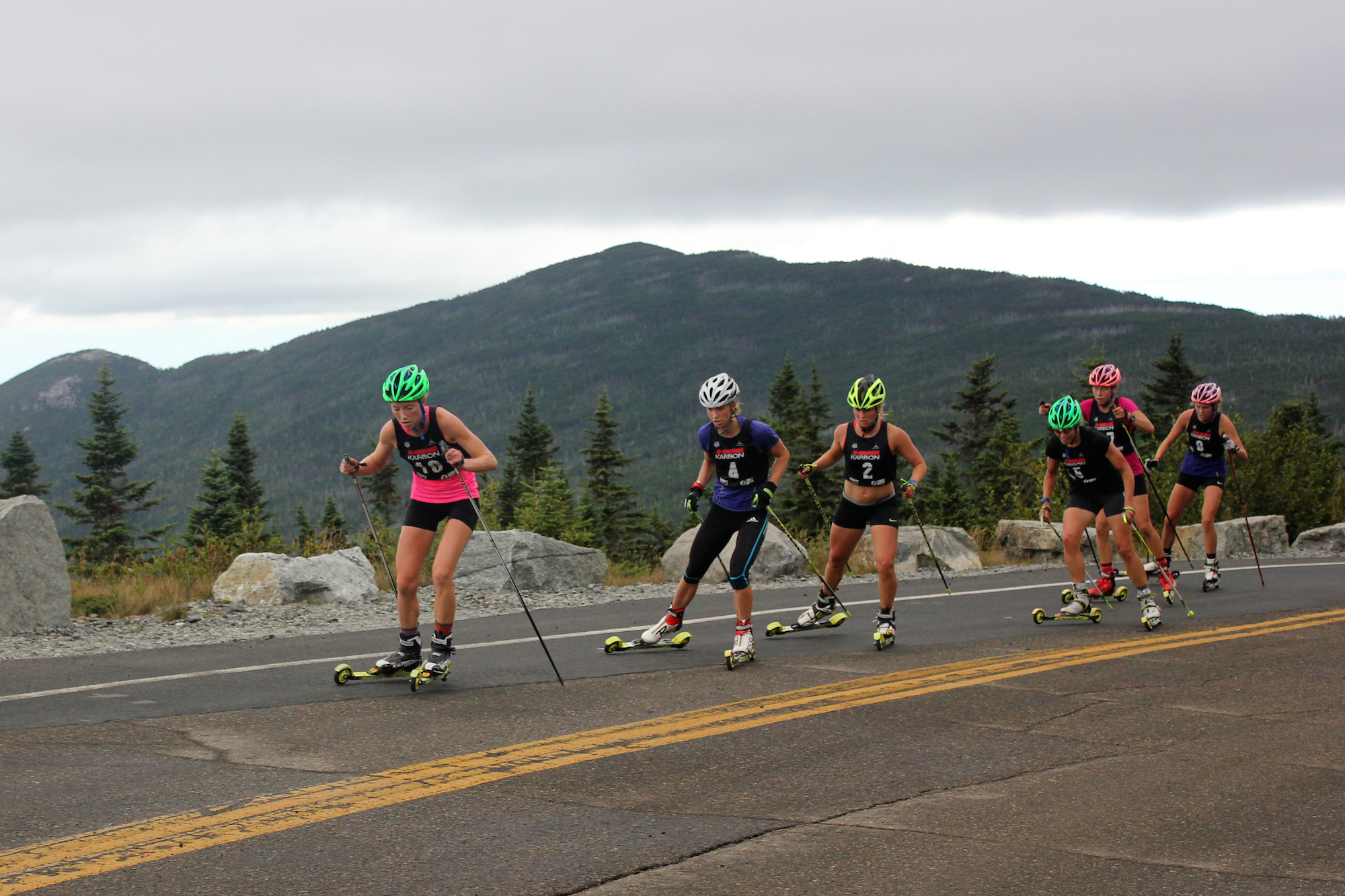
Susan Dunklee (USBA) leads a chase pack of Annelies Cook (USBA), Jessie Diggins (USST/SMST2), Erika Flowers (SMST2), Katharine Ogden (SMS), Mary Rose (SVSEF), and Sophie Caldwell (USST/SMST2).
Susan Dunklee (USBA) leads a chase pack of Annelies Cook (USBA), Jessie Diggins (USST/SMST2), Erika Flowers (SMST2), Katharine Ogden (SMS), Mary Rose (SVSEF), and Sophie Caldwell (USST/SMST2).
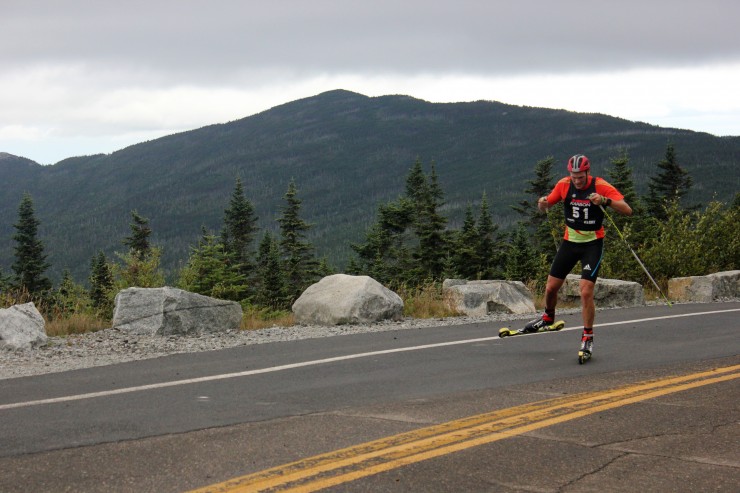
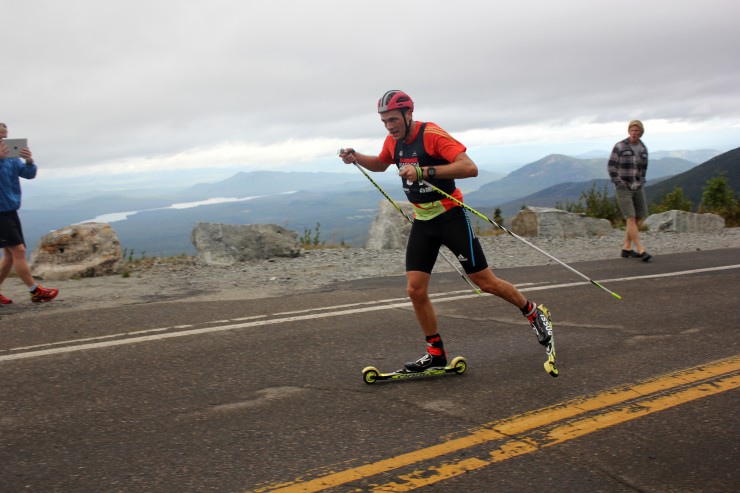
Liz Stephen (USST/Burke) sporting pink lightening bolts on her socks as she rockets her way to her fourth Climb to the Castle win in four years.
Liz Stephen (USST/Burke) sporting pink lightening bolts on her socks as she rockets her way to her fourth Climb to the Castle win in four years.
Liz Stephen (USST/Burke) rockets her way to her fourth Climb to the Castle win in four years.
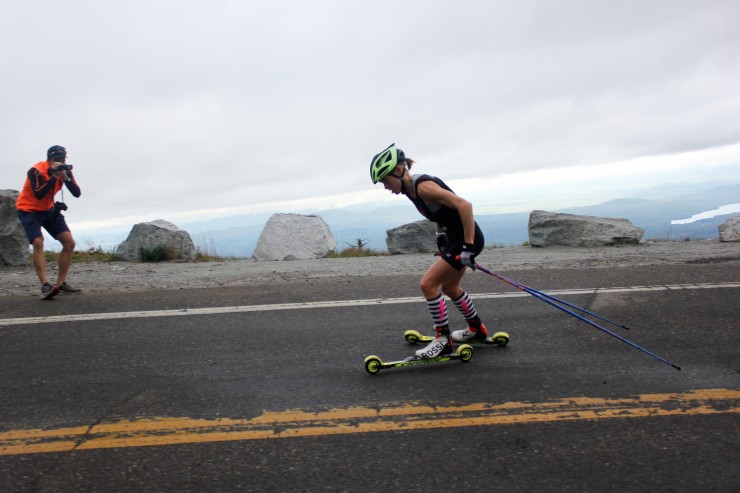
USST women’s coach Matt Whitcomb takes a picture as his athletes ski by in the 2014 Climb to the Castle.
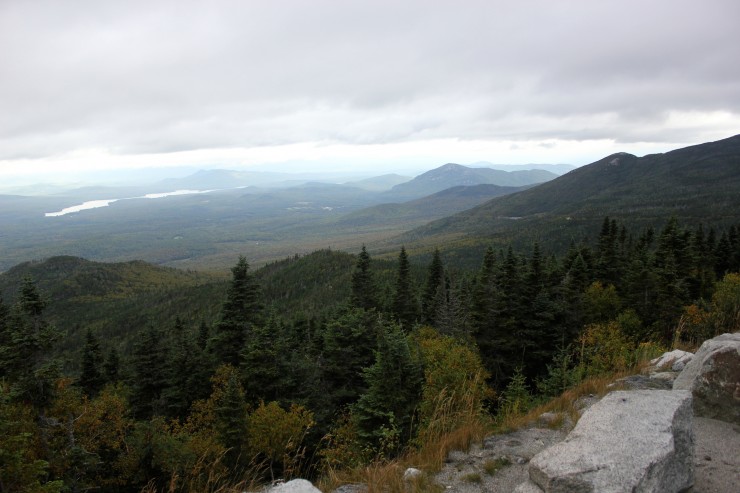
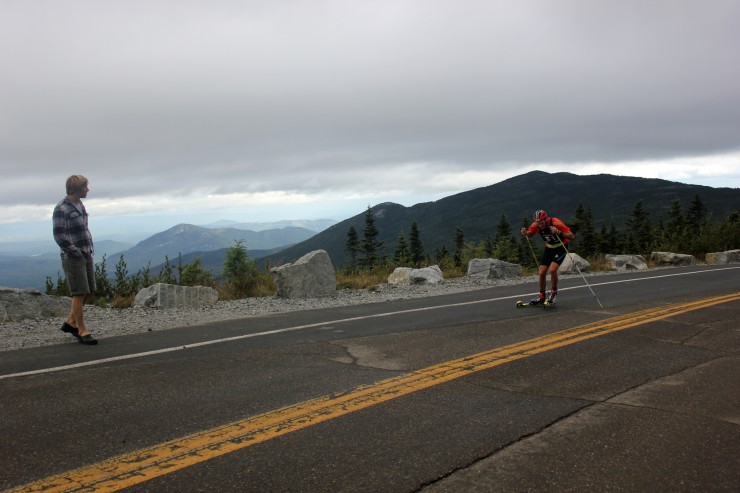
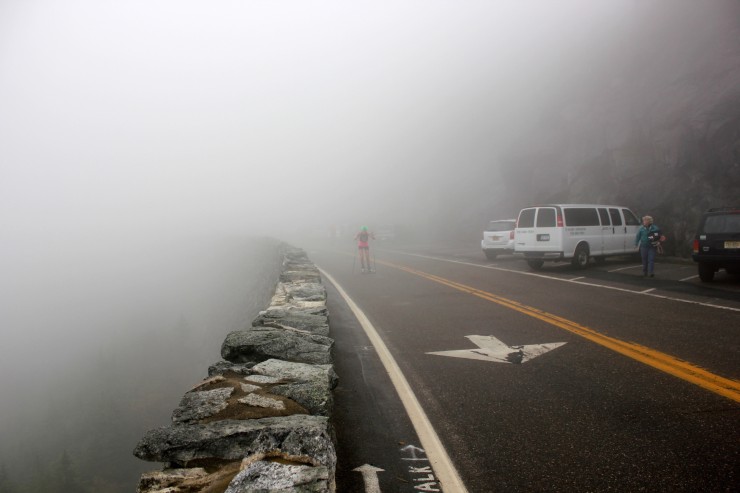
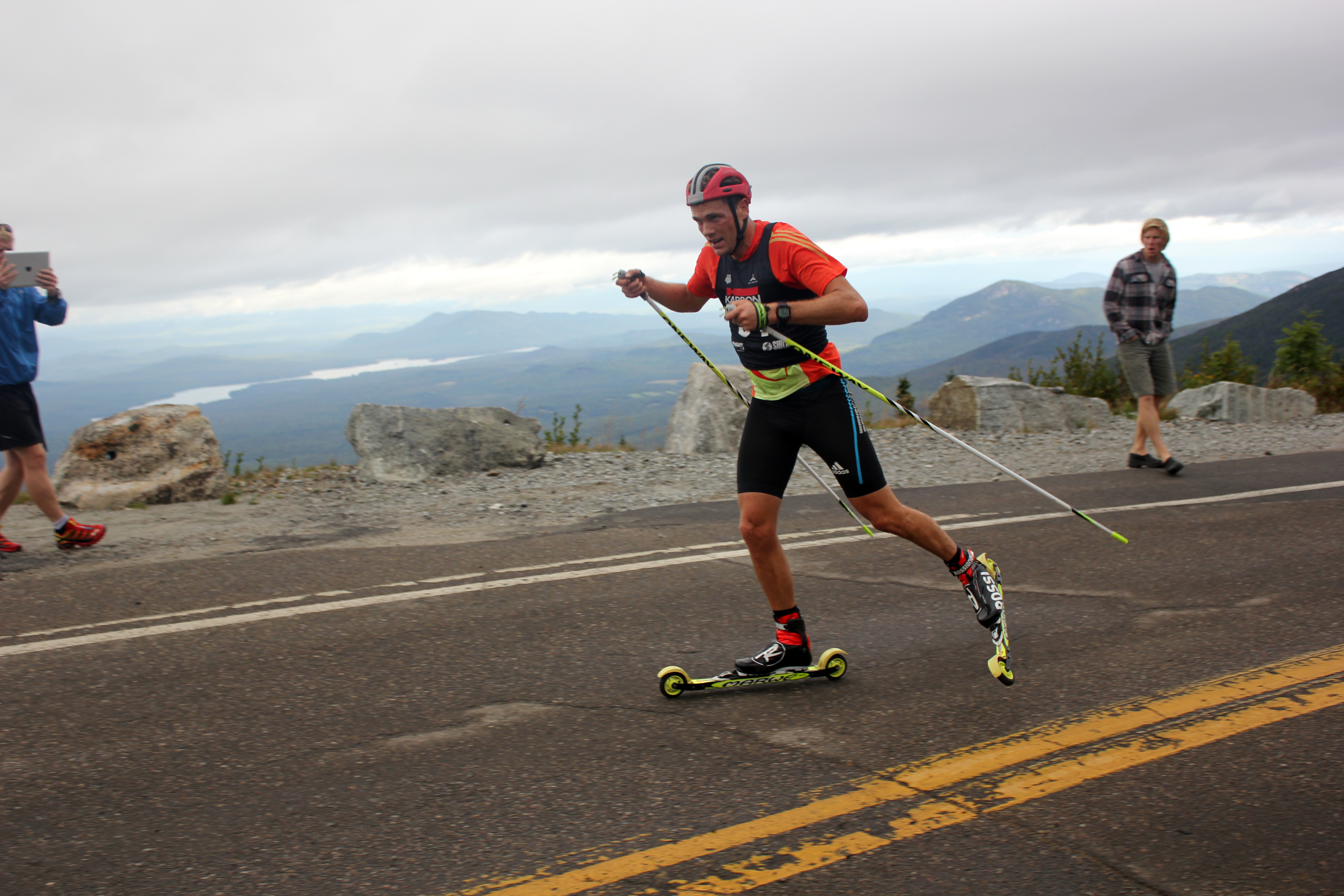
The view from roughly three miles up the Whiteface Memorial Highway.
Caitlin Gregg (Team Gregg) en route to second place.
Caitlin Gregg (Team Gregg) en route to second place.
Erika Flowers (SMST2) leads the chase pack. She is followed by Annelies Cook (USBA), Jessie Diggins (USST/SMST2), Susan Dunklee (USBA), Katharine Ogden (SMS), and Mary Rose (SVSEF).
Erika Flowers (SMST2) leads the chase pack. She is followed by Annelies Cook (USBA), Jessie Diggins (USST/SMST2), Susan Dunklee (USBA), Katharine Ogden (SMS), and Mary Rose (SVSEF).
Erika Flowers (SMST2) leads the chase pack. She is followed by Annelies Cook (USBA), Jessie Diggins (USST/SMST2), Susan Dunklee (USBA), Katharine Ogden (SMS), and Mary Rose (SVSEF).
Erika Flowers (SMST2) leads the chase pack. She is followed by Annelies Cook (USBA), Jessie Diggins (USST/SMST2), Susan Dunklee (USBA), Katharine Ogden (SMS), and Mary Rose (SVSEF).
Sophie Caldwell (USST/SMST2) on her way to a ninth place finish.
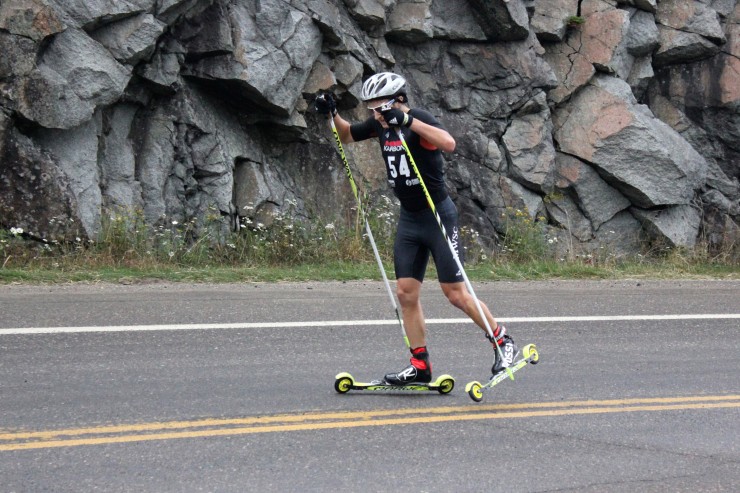
Tim Burke (USBA) competing in the 2014 Climb to the Castle. He went on to win the race by over 40 seconds.
Tim Burke (USBA) competing in the 2014 Climb to the Castle. He went on to win the race by over 40 seconds.
Tim Burke (USBA) competing in the 2014 Climb to the Castle. He went on to win the race by over 40 seconds.
Russell Currier (USBA/MWSC) skiing to a second place finish.
Annie Pokorny (SMST2) earned a tenth place finish.
Andy Newell (USST/SMST2) just past the three-and-a-half mile marker. He finished fourth in the five mile climb.
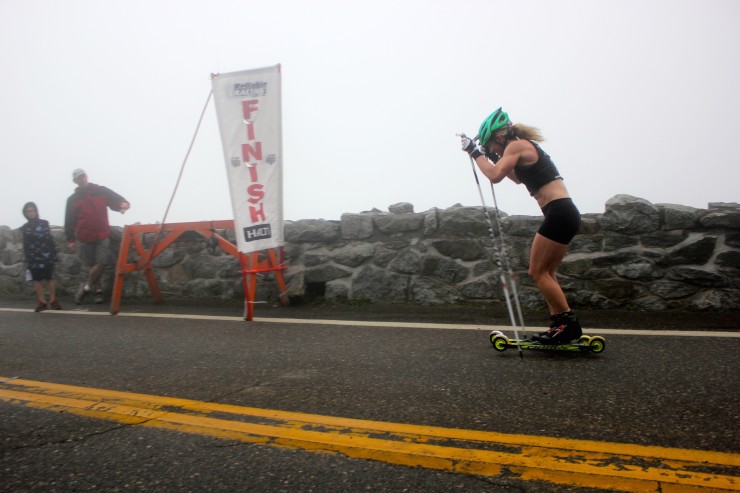
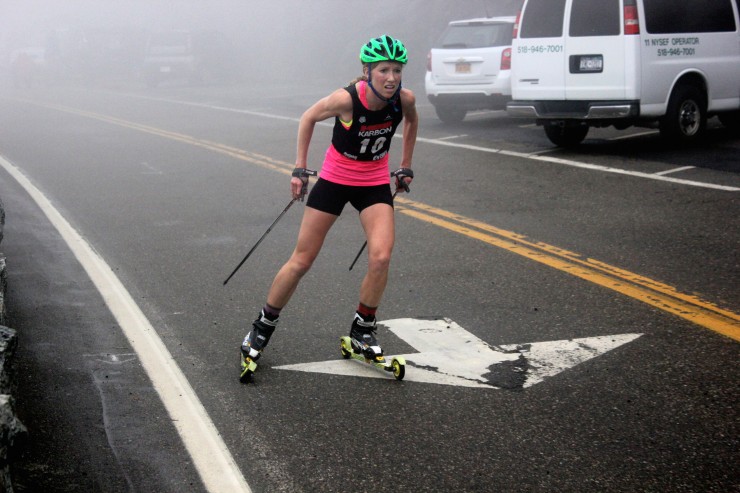
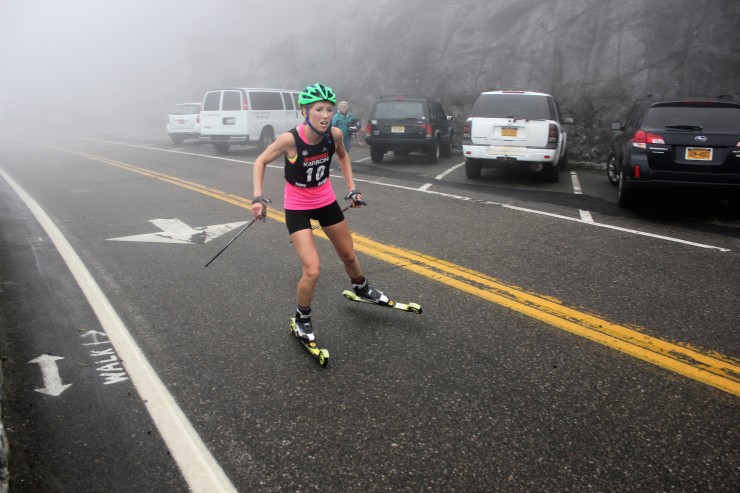
Caitlin Gregg (Team Gregg) approaches the misty finish. She crossed the line in second position.
Caitlin Gregg (Team Gregg) approaches the misty finish. She crossed the line in second position.
Caitlin Gregg (Team Gregg) approaches the misty finish. She crossed the line in second position.
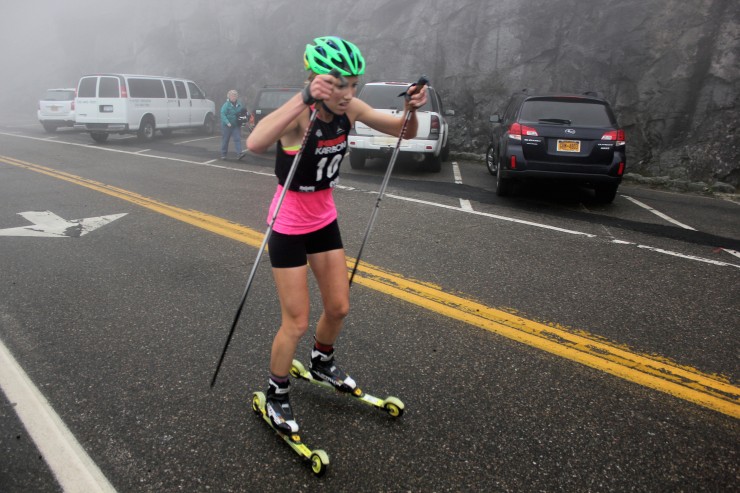
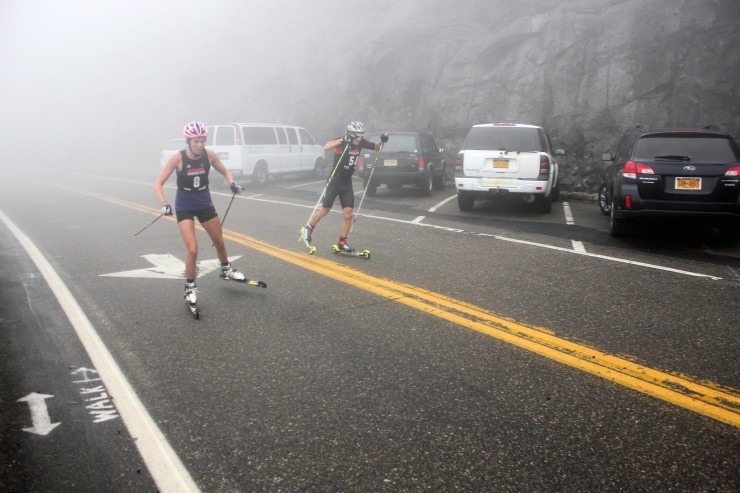
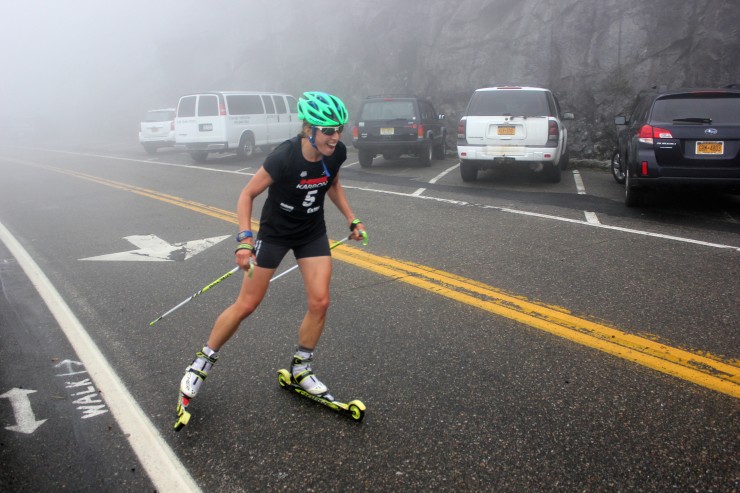
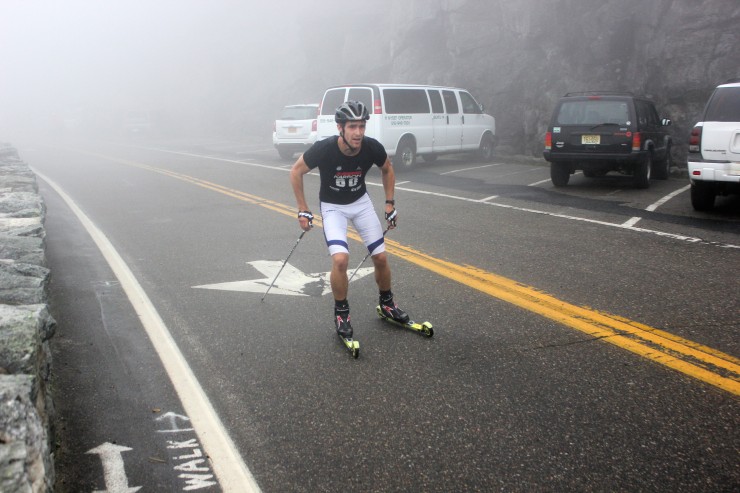
The finish was both misty and windy and the 2014 Climb to the Castle.
Erika Flowers (SMST2) finishes the 2014 Climb to the Castle in fourth place.
Erika Flowers (SMST2) finishes the 2014 Climb to the Castle in fourth place.
Erika Flowers (SMST2) finishes the 2014 Climb to the Castle in fourth place.
Mary Rose (SVSEF) and Russell Currier (USBA/MWSC) ski side by side into the finish.
Susan Dunklee (USBA) finishes in eighth position.
Welley Ramsey (MWSC) pushes to the finish to earn the last spot on the men’s podium.
Welley Ramsey (MWSC) pushes to the finish to earn the last spot on the men’s podium.
Lowell Bailey (USBA) crosses the line in fifth.
Ben Lustgarten (SVSEF) placed seventh.
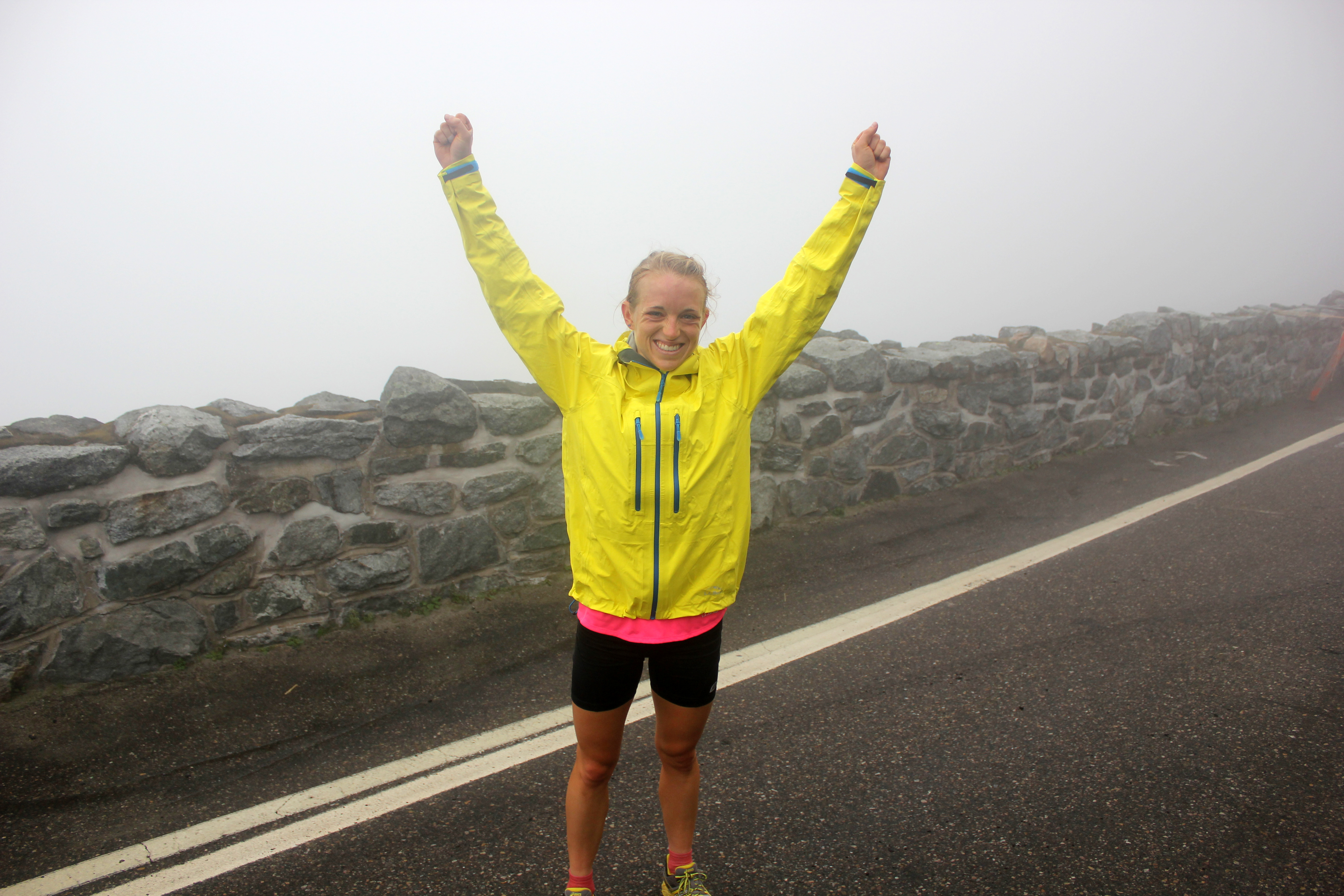
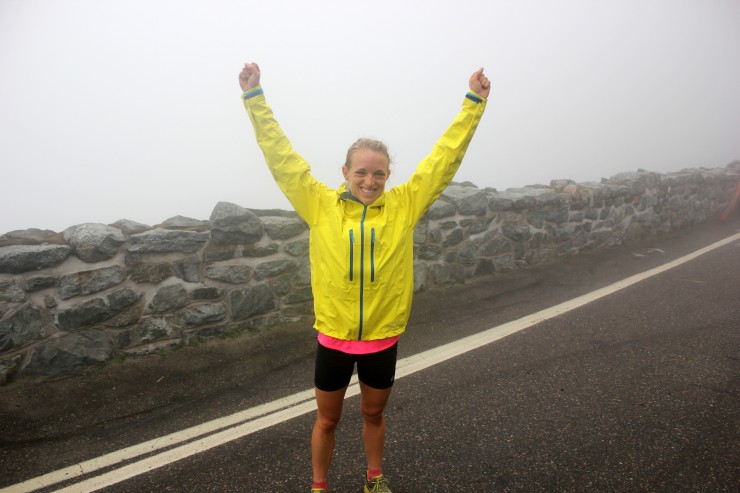
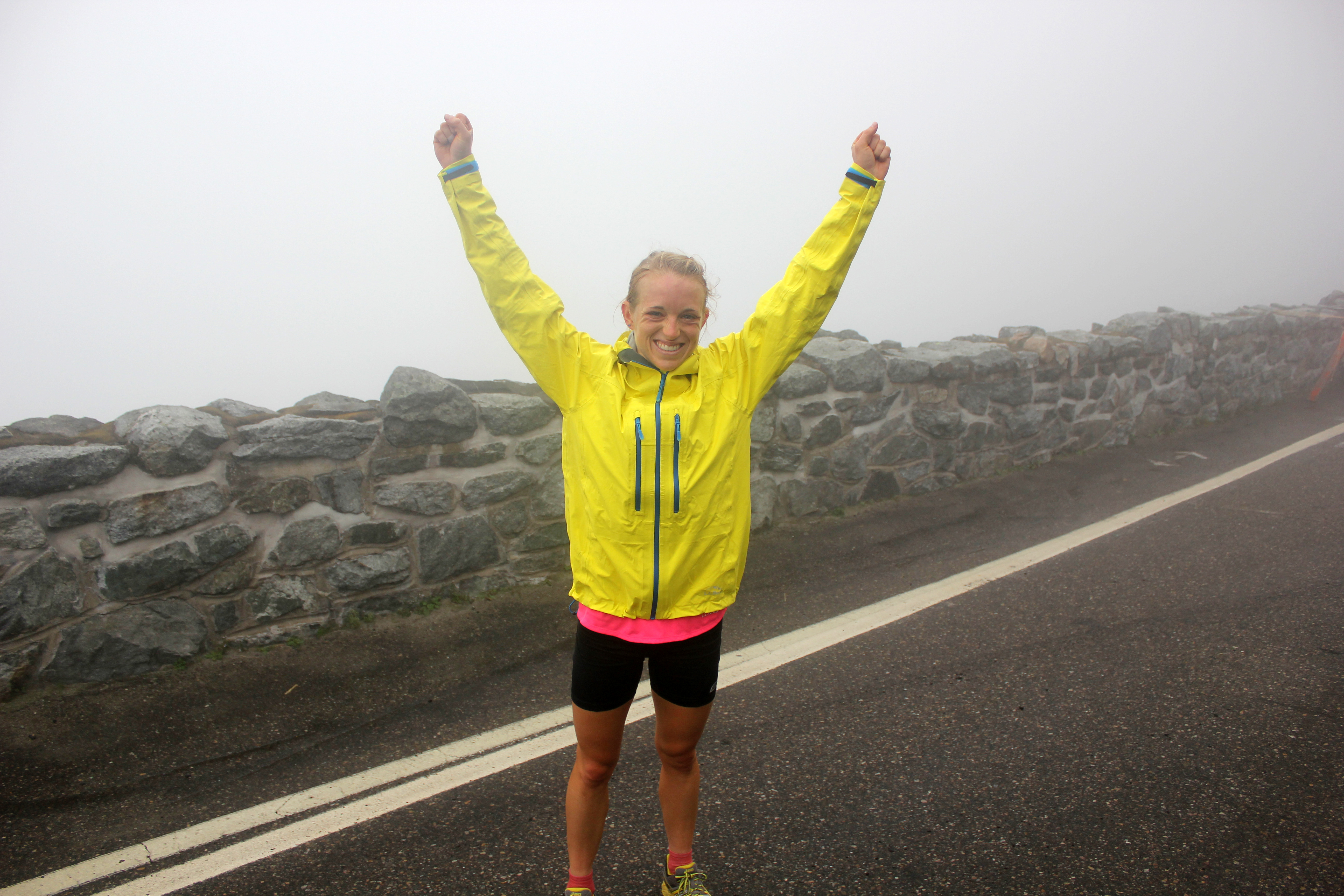
Liz Stephen celebrates her win in the finish area of the 2014 Climb to the Castle. Stephen clocked her fastest climb yet despite a strong headwind and exhaustion from the U.S. Ski Team Lake Placid Training Camp.
Liz Stephen celebrates her win in the finish area of the 2014 Climb to the Castle. Stephen clocked her fastest climb yet despite a strong headwind and exhaustion from the U.S. Ski Team Lake Placid Training Camp.
WILMINGTON, N.Y. — Liz Stephen (U.S. Ski Team) is a force to reckon with – even when she’s off her game.
From the beginning of Saturday’s 2014 Climb to the Castle, Stephen powered up the 5-mile course as if Therese Johuag was hot on her heels. Maintaining a steady pace as she rollerskied to the summit of Whiteface Mountain, Stephen secured her fourth win since 2011.
The 27-year-old has skied the challenging course faster each year since she began her winning streak. Her 2014 time of 41:50 was no exception, as Stephen finished 14 seconds faster than her previous record – a surprise given the strong headwind.
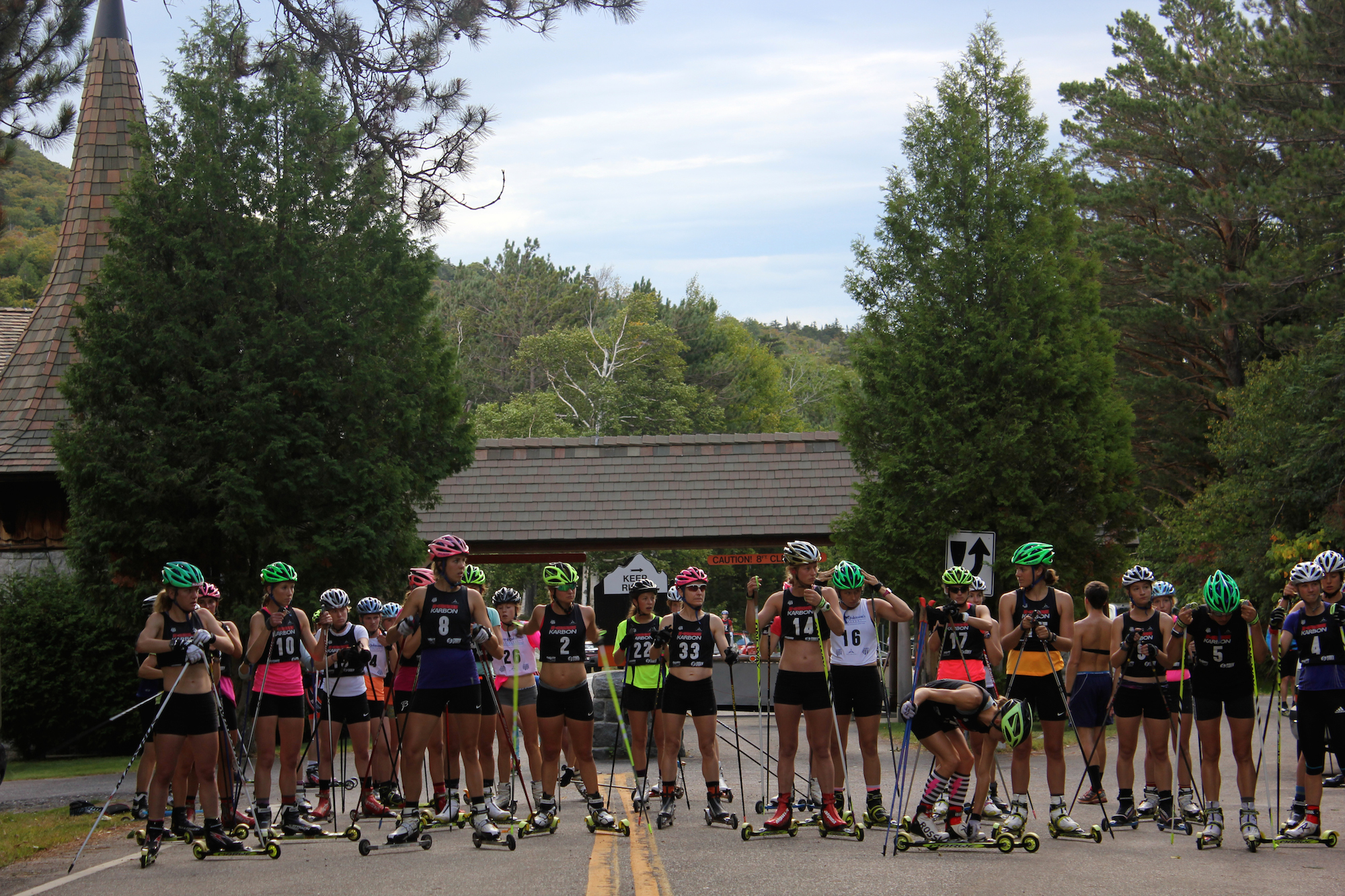
The women’s start of the 2014 Climb to the Castle.
Despite having her fastest finish in the Climb to the Castle, Stephen felt flat and uninspired throughout most of the race.
“I didn’t feel super sparky. Some days you wake up and you are super psyched to go a race and other days it’s a little more about making yourself get psyched,” Stephen said.
Stephen said that despite excitement for the climb she had trouble finding her race mentality. She pointed to an exhausting 2014 U.S. Ski Team Lake Placid Training Camp as a possible reason behind her inability to find her racing mindset.
“Today was hard for me and I’m a little disappointed how I was able to mentally push today,” she said.
Despite any disappointment, Stephen was thrilled to earn her fourth win and see her teammates give strong performances.
Caitlin Gregg (Team Gregg) placed second and spent the majority of the race alone with Stephen hammering ahead in the distance. She said the sight of Stephen was an inspiration, but was ultimately the most difficult part of the race for the Minneapolis native who finished with a time of 45:25.
Erika Flowers (SMST2) leads the chase pack. She is followed by Annelies Cook (USBA), Jessie Diggins (USST/SMST2), Susan Dunklee (USBA), Katharine Ogden (SMS), and Mary Rose (SVSEF).
“The hardest part was watching Liz V2 up ahead of me. I was thinking to myself ‘Man, my V1 is super comfortable right now,’” she said with a laugh. “It’s really fun to watch her and to see where that next stage is.”
The rest of the women’s field was more congested behind Stephen and Gregg. A chase-pack including Stratton skiers Katharine Ogden, Erika Flowers, and Jessie Diggins (USST) in addition to Susan Dunklee (USBA), Mary Rose (SVSEF), and Annelies Cook (USBA) skied together for most of the course. It wasn’t until the last mile-and-a-half that Flowers started to pull away and break the pack.
Ogden quickly followed and soon took the lead in order to do her fair share of wind-breaking. However, when the junior skier looked back she found that she had sped away from her fellow competitors.
Ogden was able to hold the distance and crossed the line with a time of 48:12, which was more than enough to earn her third place. Flowers eventually placed fourth.
Men’s Climb
Like Stephen, Tim Burke (USBA) had a history of winning the climb before his victory on Saturday. The 2013 World Championship silver medalist crossed the Saturday’s finish line in first with a time of 38:19.
Tim Burke (USBA) competing in the 2014 Climb to the Castle. He went on to win the race by over 40 seconds.
Due to the strong wind, Burke approached the race differently than he had in the past. Normally, he would have made a strong effort from the start but Burke decided that leading with such strong wind resistance would only exhaust him and allow others to draft.
“Today was definitely a little different than the other times I’ve done it in that there was a tough head wind today. It brought a lot of tactics into the race,” Burke said.
Burke eventually attempted to brave the wind and break away, but was followed by Welley Ramsey of the Maine Winter Sports Center (MWSC).
In what he would later call a “stupid” strategy, Ramsey spent much of his energy trying to catch Burke. By the time he reached the veteran biathlete, he was exhausted. Despite his fatigue he was able to finish with a time of 40:01 and finish in third place.
Russell Currier (USBA/MWSC) was also in pursuit of Burke for much of the rollerski race. While it was the 27-year-old’s first climb, he was able to maintain contact with the race winner for much of the race.
Currier said that he did his best to preserve his energy by staying out of the lead, but ultimately Burke played the “moral card” which prompted him take the lead for part of the race.
After several lead switches, Currier eventually lost contact with Burke but was able to maintain his second place position with a time of 39:02.
This year’s climb marked the end of U.S. Ski Team (USST) and U.S. Biathlon (USBA) training blocks held at the Olympic Training Center in Lake Placid. Members of both teams were required to participate in the race and were joined by other camp participants and various other locals ranging from college to master skiers.
Race organizers from the New York Ski Education Foundation (NYSEF) were initially worried that construction efforts would hinder the 2014 climb. Even though the top section of the road was paved only a day before Saturday’s race, the road had hardened enough to allow rollerski and car travel.
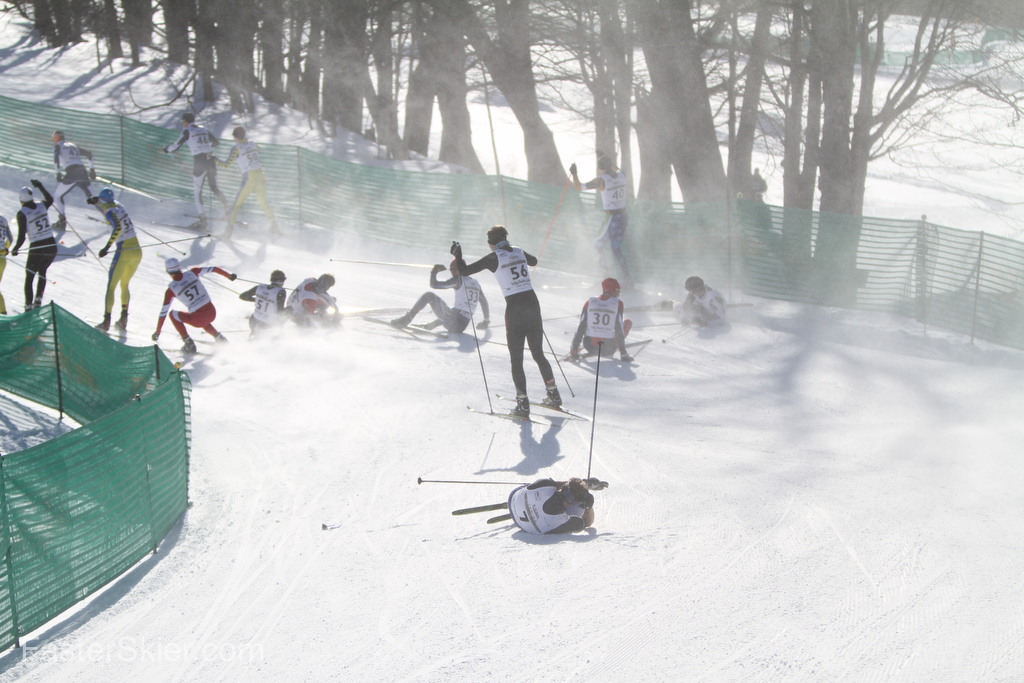
A massive pileup on the first corner shortly after the start of the U20 men’s 15 k freestyle mass start on Friday at 2014 Junior Nationals in Stowe, Vt. Far West’s Patrick McElravey, also of Middlebury College, in bib 7 needed medical attention.
STOWE, Vt. — The youngest child of the original von Trapp family, Johannes von Trapp was the man of the hour almost every hour for the start of six freestyle distance races on the last day of individual racing at 2014 Junior Nationals on Friday.
With a rifle in hand, Von Trapp, 75, fired the starting signal for each of the U16, U18 and U20 mass starts. After that, it was up to the racers to determine where they’d end up at the finish — save for a few early pileups in the U20 and U18 men’s races, where one racer did not finish.
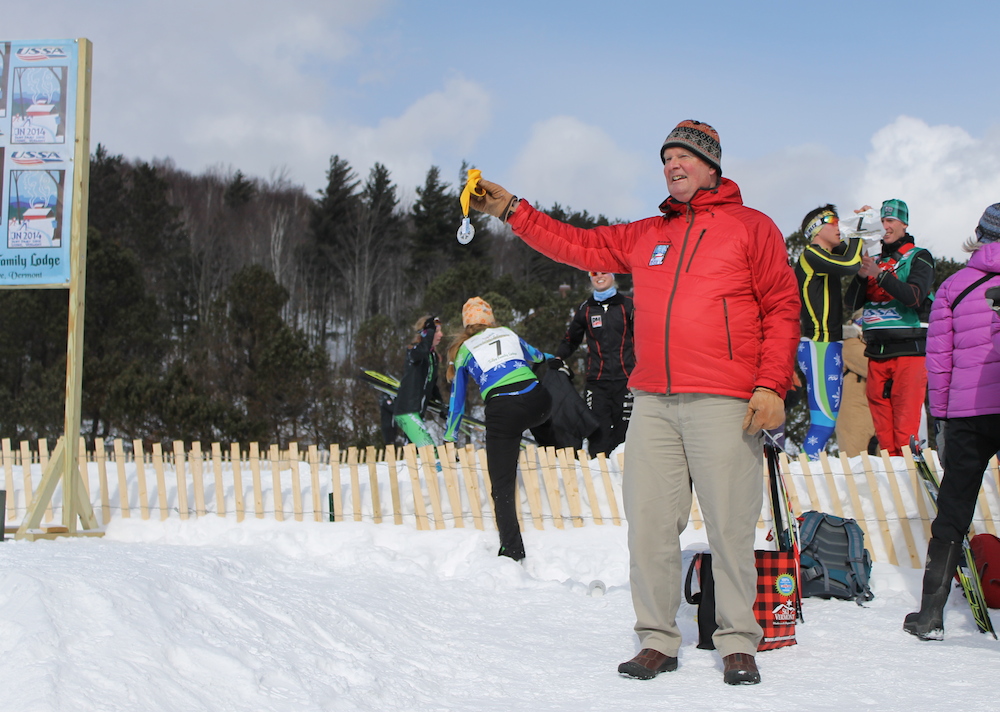
Johannes von Trapp of Trapp Family Lodge presenting medals at 2014 Junior Nationals earlier this week in Stowe, Vt.
The worst series of crashes came in the first race, the U20 men’s 15 k freestyle, which left Far West’s Patrick McElravey seeking medical attention. He was OK (and was listed to start on Saturday), but the incident prompted USSA Nordic Manager Joey Caterinichio to come up with the idea for a paced start.
For every race after the U20 women’s race, a Midwest coach led hundreds of competitors out of the start, down the troublesome 180-degree corner and back up out of the stadium, until passing a set of cones that gave skiers the go-ahead to go for it.
The method generally worked (except for the accordion effect that caused another crash in the U18 men’s race in nearly the same spot coming out of the corner), and by early afternoon, six national champions had been named.
Here’s a look at who made the top 10 and All-American status on Friday in the last of three individual races at Junior Nationals. Relays wrap up the championships on Saturday, starting at 9:30 a.m.
New England’s Fabian Stocek (1) follows Rocky Mountain’s Jack Hill (6) in the U20 men’s 15 k freestyle mass start at Trapp Family Lodge in Stowe, Vt. Stocek went on to win the Junior Nationals race by 7.5 seconds.
U20 Men’s 15 k
Fabian Stocek (Holderness School/New England)
Jack Schrupp (Gunstock Nordic/New England)
Thomas Bye (CXC/Midwest)
Cole Morgan (University of Vermont/New England)
Mathew Nichols (University of Wisconsin Green Bay/Midwest)
Shane Christian (Unleashed Coaching/Far West)
Jan Ketterson (Loppet Nordic Racing/Midwest)
Jack Hegman (UVM/New England)
Oscar Friedman (Dartmouth/Rocky Mountain)
Jackson Hill (University of Colorado/Rocky Mountain)
Fun Fact: A Czech Republic native, Stocek, 19, is a Dartmouth College freshman and has lived in the U.S. for the last four years. “[I’ve] made a lot of connections with friends all over New England so that’s been making a support for me,” he says. “My parents are still in the Czech Republic so I have a great way of connecting with people around New England. I like that a lot, traveling around, recognizing all the aspects that the aspects has to offer. … And continuing at Dartmouth, not a bad place to be for skiing.”
U20 Women’s 10 k
Maggie Williams (Sun Valley/Intermountain)
Marion Woods (Alaskas Winter Stars/Alaska)
Hannah Benson (Williams Outing Club/New England)
Kristen Bourne (Northern Michigan University/Midwest)
Hannah Stevens (Alaska Nordic Racing/Alaska)
Kelsey Phinney (New England)
Nora Gilbertson (St. Olaf College/Midwest)
Sonja Hedblom (LNR/Midwest)
Maria Hauer (Flyer Nordic/Midwest)
Cara Piske (Steamboat Springs WSC/Rocky Mountain)
Fun Fact: Originally from Ketchum, Idaho, Williams is a freshman at the University of Vermont and this is her first Junior Nationals victory. When she’s not racing: “I like to knit and make stained-glass artwork, kind of some grannie hobbies,” she says. “That’s something I’ve kind of been doing my whole life.”
U18 Men’s 10 k
Gavin McEwen (Cambridge Sports Union/New England)
Lars Hannah (Steamboat Springs/Rocky Mountain)
Ian Torchia (LNR/Midwest)
Thomas O’Harra (Alaska Pacific University/Alaska)
Karsten Hokanson (Wasatch Nordic/Intermountain)
Paolo Takagi-Atilano (Boulder Nordic/Rocky Mountain)
Zak Ketterson (LNR/Midwest)
Peter Holmes (Unleashed Coaching/Far West)
John Farr (APU/Alaska)
Zane Fields (Woodstock/New England)
Fun Fact: For 16-year-old McEwen, this is his first Junior Nationals win. “I don’t usually like to think about race [until] about 10 minutes beforehand,” he says. “I got up kind of late because it was a later start than we usually have, I finished my bowl of oatmeal, which is kind of unusual for me because usually I feel kind of sick. But I felt really good.”
Fun Facts: This is Ogden’s second win of the week and she did so in impressive fashion, breaking away around 4 k and winning by 20 seconds. “I was inspired by Caitlin Gregg’s performance at U.S. nationals so I decided to go for a similar method,” Ogden says. “Channeling my inner Caitlin Gregg for sure.”
Gregg won the 30 k mass start at U.S. nationals in January by more than a minute and 30 seconds.
Ogden explained she’s been knitting between races to channel the rest of her energy.
“I knit when I’m nervous before races,” she says. “I’ve knit almost an entire buff this week, a neckie, so I’m pretty proud.”
U16 Men’s 5 k
Hunter Wonders (APU/Alaska)
Leo Lukens (Mt. Bachelor/Pacific Northwest)
Russell Boswell (SMS/New England)
Max Polito (Jackson Hole/Intermountain)
Zach Williams (Sun Valley/Intermountain)
Peter Wolter (Sun Valley/Intermountain)
Jack Consenstein (APU/Alaska)
Forrest Hamilton (Mansfield/New England)
Daniel Streinz (Maine WSC/New England)
Benjamin Koenig (NSCF-Fairbanks-FXC/Alaska)
Fun Facts: In his first Junior Nationals, this is Wonder’s first time to Vermont. “My first time on the East Coast,” he says. “It felt super nice. Today was super relaxed and just pushing the tempo at the very end.”
The 15-year-old Anchorage native won by nearly six seconds. “My goal for the whole season was to make it to the Junior Nationals and once I did that I was going for any kind of medal,” he says. “I guess gold’s fine.”
Fun Fact: After capturing her first Junior National title in the 5 k classic earlier this week, Swirbul, 15, did it again in the skate mass start. “I have been dreaming of this moment to win a mass start since last Junior Nationals where I got third and it has never tasted sweeter to win a race,” she says. Also relatively sweet is her favorite food: sweet potatoes.
FasterSkier’s coverage is made possible through the generous support of Madshus.
STOWE, Vt. — It was a chilly one up at Trapp Family Lodge on Monday for the first set of races of this week’s U.S. Junior Nationals, but the sun was out and skiers moved even faster in the single-digit temperatures. As U18 men’s 20 k classic champion Peter Holmes said, it’s all about the layers. And lots of ’em.
The U16 women’s 5 k classic podium on Monday at 2014 Junior Nationals in Stowe, Vt., with winner Hailey Swirbul (c) of Aspen Valley SSC/Far West, runner-up Leah Lange (l) of Park City NSC/Intermountain, and Hannah Halvorsen (Sugar Bowl Academy/Far West) in third. (Photo: Mark Nadell/MacBeth Graphics)
Lydia Blanchet (Alaska Pacific University) leading New England’s Julia Kern (301) and Katharine Ogden and Rocky Mountain’s Hailey Swirbul in the J2 girls 5 k classic mass start on Saturday at 2013 Junior Nationals in Fairbanks, Alaska. (Photo: bertboyer.zenfolio.com. Proceeds go to NNF)
FAIRBANKS, Alaska – New England took three of the top six spots in the Junior 2 boys and girls 5-kilometer classic races at the 2013 Cross Country Junior Nationals on Saturday. Julia Kern and Katharine Ogden finished one and two, while Koby Gordon took the J2 boys title.
Kern said getting a podium finish with a friend is special.
“It’s even better when you get to share the victory with your teammate and friend. It just makes it like the cherry on top,” she said.
Kern, Ogden Finish 1-2 for New England
Julia Kern (Cambridge Sports Union) en route to a 2.7-second win over New England teammate Katharine Ogden in Saturday’s J2 girls 5 k classic mass start at 2013 Junior Nationals in Fairbanks, Alaska. (Photo: bertboyer.zenfolio.com. Proceeds go to NNF)
Just a little over two kilometers into the J2 girls race, favorites Kern, Ogden, and Lydia Blanchet, of Alaska, were leading a large pack of racers. After the climb up East Ramp about 2.5 kilometers into the race, the lead pack dropped to five skiers, with Hailey Swirbul, of Rocky Mountain, and Leah Lange, of Intermountain, making up the rest of the pack.
As the racers came out of White Bear with just over a kilometer to go, five skiers still battled it out with Kern leading, but Swirbul was challenging. Ogden had fallen back a bit and Blanchet and Lange had fallen back even further.
“I saw the fourth place girl from Alaska, and she started fading up on what we call whoop-ass hill,” said Swirbul. “I got around her and went for it. Super-painful, but it’s all worth it now.”
With less than a kilometer to go, the pack was starting to get spread out. Kern and Ogden led, followed by Swirbul, Blanchet, and Lange, each a couple of seconds behind the other.
Kern clearly held the lead climbing out of Warm-Up into the Stadium, but she was followed closely by Ogden and a little farther back by Swirbul.
Kern kept the lead and finished first in 16 minutes, 37.7 seconds.
“I knew I was doing well, but I wasn’t for sure until I was in the finish straightaway,” she said.
Ogden claimed second, just under three seconds behind.
“I’m not a very strong double-poler, especially compared to her. I’m a little bit scrawnier,” Ogden said. “I would have had to be in front earlier.”
Swirbul, whose brother won the J1 American men’s race, took third in 16:48.7.
“It’s a good day for both of us,” she said.
J2 Boys Start with Fast Pace, End with Close Finish
New England’s Koby Gordon (Stratton Mountain School) on his way to winning Saturday’s J2 boys 5 k classic mass start at the 2013 Junior Nationals in Fairbanks, Alaska. (Photo: bertboyer.zenfolio.com. Proceeds go to NNF)
With just five kilometers to race, the J2 boys started with a fast pace.
“The first hill the pace went out really fast. I was barely hanging on to the back of the lead group, but I knew I had to fight to stay with that lead group if I wanted to have a chance on the podium. That was really hard,” Gordon said.
Halfway through the course a lead pack of seven skiers, led by Zak Ketterson of Midwest, Jake Bassett of Alaska, and Max Donaldson of Alaska, kept up a steady pace.
The group also led at about kilometer 3, but by the climb out of White Bear at just over 3.5 kilometers into the race, the pack was down to four, Ketterson, Donaldson, Gordon and Bassett.
“That’s when the race starts to get really tough with a lot of big climbs and a lot of tough transitions that you have to keep skiing strong,” Gordon said.
Those four were close together as they headed down into the Warm-up Loop with less than a kilometer to go. The last climb out of Warm-Up was critical.
“It was pretty tight the whole race, so it was decided in the last 400 meters,” Donaldson said.
“Everyone was so dead and that’s such a hard hill. That was truly a test of manliness,” Ketterson said.
Gordon was able to pull out the win with a time of 14 minutes, 50.4 seconds, just over one second ahead of Ketterson.
“There was a ton of energy from all the fans coming into there. It was really empowering coming up that last hill,” Gordon said.
But Ketterson isn’t sad about taking second place.
“Based on my other races this week I was kind of down, so I wasn’t getting as high as I wanted to, but this is a great way to finish off the season. I’m really excited right now,” he said.
Donaldson was also happy with his race, finishing third almost 6 seconds back with a time of 14:56.2.
“I did what I could in that race. In the final 200 meters they had the sprinting left in them,” Donaldson said, adding that he doesn’t consider himself much of a sprinter. “I just did what I could to stay in third.”
Bassett fell to fifth, being outsprinted by a half-second by Bill Harmeyer who finished fourth in 15:12.4.
Zak Ketterson (Midwest/Loppet Nordic Racing) leads the J2 boys 5 k classic mass start on Saturday at 2013 Junior Nationals in Fairbanks, Alaska. (Photo: bertboyer.zenfolio.com. Proceeds go to NNF)
For more photos from 2013 Junior Nationals, visit bertboyer.zenfolio.com. Proceeds go to the National Nordic Foundation (NNF).
Katharine Ogden (Stratton Mountain School) racing to a J2 girls victory in Monday’s 5 k freestyle opener at the 2013 Junior Nationals in Fairbanks, Alaska. The first leg of New England’s relay, Ogden went on to win gold with her team on Tuesday. (Photo: bertboyer.zenfolio.com. All proceeds go to NNF)
FAIRBANKS, AK — Not even a navigational gaffe could derail the New England J2 girls in Tuesday’s 3X3k classic relay at the U.S. Cross Country Junior Nationals.
Katharine Ogden, the lead skier for New England, lost the substantial lead she’d gained on Rocky Mountain’s Hailey Swirbul after she accidentally skied into the finish lane instead of the lap lane — despite large signs that directed skiers — as she approached the end of the first leg. Ogden was thus forced to backtrack out of the finish lane and into the correct exchange lane.
Instead of having a lead of perhaps 10 seconds, New England’s second skier, Leah Brams, inherited a 6-second deficit to Rocky Mountain.
It wasn’t the first time Ogden made the error.
“For the last qualifier me and Julie (Kern) and Katharine all went the wrong way,” Brams said. “We were like ‘It’s never happening again.’”
But it happened again on another sunny day with temperatures in the teens at the Jim Whisenhant Trails at Birch Hill Recreation Area. The mistake added a little drama but wasn’t worth fretting about for New England.
“I wasn’t that worried,” Brams said. “I was a little nervous, but I ski better when I have someone to pace off.”
Brams proceeded to build a nearly insurmountable 26-second lead by outpacing RM’s Jordan Floyd. New England anchor Kern then coasted home to secure the national championship in 34 minutes, 1 second. The dominant victory was no surprise — Ogden, Kern and Brams swept the J2 podium in the 5K freestyle on Monday.
Intermountain’s J2 boys relay anchor Zach Williams finishing second in the 3×3.3 k, just 6.6 seconds behind Alaska’s Max Donaldson, who notched his second victory in two days. (Photo: facebook.com/pages/JN-2013-Fairbanks/153097771413595)
Alaska anchor Lydia Blanchett, with the fastest third leg, rallied to win her team the silver-medal in 34:46 while Rocky Mountain slipped to third in 35:11.
The boys J2 race also played out as expected, with Alaska’s Jake Bassett, Tristan Sayre and Max Donaldson leading from start to finish.
“Yesterday we all got top four so we knew we were the favorite (team),” Sayre said.
Bassett skied the scramble leg and tagged to Sayre with a 4.2-second lead over Intermountain’s Logan Diekmann.
Sayre then busted the race open with the fastest second-leg to increase the gap to 18 seconds.
“I was pretty frantic at the start … then I relaxed because that’s what everyone was telling me to do,” Sayre said.
Sayre, from Fairbanks, made up some of his ground on the seemingly interminable “Sidewinder” hill, the second of two major climbs on the 3.3-kilometer course.
Donaldson, Monday’s runaway winner, had the honor of clinching the gold medal on his hometown trails.
While Donaldson was able to ski without anyone threatening him, he would have welcomed more pressure.
“It would have been nice to ski behind someone and maybe pass them in the end,” Donaldson said.
Intermountain held on for second place in 30:30 while New England won bronze in 30:41.
Norway’s Tiril Weng (NTG Lillehammer) on her way to winning the opening race at 2013 Junior Nationals, the J1/OJ girls 5 k freestyle, on Monday in Fairbanks, Alaska. (Photo: bertboyer.zenfolio.com/f490643483. All proceeds go to NNF)
FAIRBANKS, Alaska — Alaska and New England each achieved a sweep in the opening girls races at the U.S. Cross Country Junior Nationals ski championships.
Double take: J1/OJ girls runner-up Lotta Weng of Norway during Monday’s 5 k freestyle at 2013 Junior Nationals in Fairbanks, Alaska. (Photo: bertboyer.zenfolio.com/f490643483)
Norway, despite owning the day’s most dominant performances, couldn’t quite get a sweep of its own on Monday.
While Norwegian twins Tiril and Lotta Weng blew away the competition in the 5-kilometer interval-start freestyle (with Tiril winning in 14:19.2, more than a minute ahead of the top American), their NTG Lillehammer teammate Lisa Kvamme was nipped by an American in the Junior 1 division. That prevented the Scandinavians from repeating the performance of their male teammates earlier in the day.
But in the Older Junior division, Alaskans Stephanie Kirk, Sarah Freistone and Hannah Boyer ruled the podium.
“All three of us have come back from our colleges,” said Kirk, a freshman at the University of Vermont. “It’s been fun reuniting with friends in the hotel and hanging out, but to be able to reunite on the podium, too, that was just pretty amazing.”
In J2, New England’s Katharine Ogden, Julia Kern and Leah Brams took the top three spots. Ogden, one of the final finishers, snatched victory from defending J2 champion Kern by 1.6 seconds in 15:35.7.
Spectators, athletes and coaches crowded around a large flat-screen monitor that provided near-instant results in the sunlit stadium.
Katharine Ogden (Stratton Mountain School) racing to a J2 girls victory in Monday’s 5 k freestyle opener at the 2013 Junior Nationals in Fairbanks, Alaska. (Photo: bertboyer.zenfolio.com/f490643483)
“One of my coaches told me,” Ogden said. “I was so excited because it was a sweep and amazing.”
But the most amazing performances were reserved for the Wengs, who easily bested skiers up to three years older. Tiril Weng was 17.9 seconds faster than sister Lotta’s mark and 1:01 speedier than Kirk, the OJ winner.
“The track was different from Norway,” Tiril Weng said. “The downhill was much more corners. (I had no problem) but it was scary.”
The Wengs are not related to current World Cup standout Heidi Weng but they also seem destined to make a future mark on the international stage.
“Lotta and Tiril are (among) the five best juniors in Norway and they are only 16 years old,” Team Norway head coach Per Ola Gasmann said.
Kirk, who had never before cracked the top 10 at Junior Nationals, was impressed.
“It’s cool that Norwegians could compete with us,” she said. “It kind of also humbles you a little bit knowing that there’s always going to be someone faster, but it also motivates us.”
Alayna Sonnesyn of Midwest (15:20.8) prevented a Norwegian sweep in J1 by skiing 4.5 seconds faster than Norway’s Kvamme.
Because Norwegians are ineligible for medals and team points, Annika Miller of Intermountain was second in J1 in the U.S. standings and Katrin Larusson of Far West placed third.
The younger J1 skiers showed their mettle by tallying six of the first seven spots in the combined J1/OJ results.
“That just shows the future has good potential with all those younguns,” Kirk said.
Stephanie Kirk (Alaska Winter Stars), the top OJ and third overall in Monday’s 5 k freestyle at 2013 Junior Nationals in Fairbanks, Alaska. (Photo: bertboyer.zenfolio.com/f490643483)
The American J1 Team wrapped up competition in Trondheim, Norway, on Sunday. Photo: Adam St. Pierre.
At the end of this week, twelve skiers under the age of eighteen return home to the U.S. from racing in Trondheim, Norway, against the fastest of their peers in the world. The American experience at the J1 Scando Cup is generally highlighted by a few decent results here and there. Last Friday through Sunday the girls’ team set a new standard, putting two individuals in the top 10, skiing to a second-place finish in the 3 x 3 k relay and giving a few European coaches a good scare.
Heidi Halvorsen (Green Mountain Valley School) and Katharine Ogden (Stratton Mountain School) headlined the team’s individual performances on Friday and Saturday to set the team up for success in the relay. The championships began on Friday with a classic sprint under the lights, in which Halvorsen posted the second-fastest qualifier, made it to the A-final and fnished fifth overall. For Halvorsen, the result was an important step towards gaining confidence internationally and putting a series of frustrating results from U.S. Nationals firmly in the past.
Halvorsen competing in the classic sprint qualfier at U.S. Nationals this January. Photo: Bert Boyer.
“Going into the races in Norway I was a little frustrated, and discouraged,” Halvorsen in an email. “I hoped that I would be able to improve on my results from last year, but at the same time I was also strongly doubting that happening. However, after qualifying second in the classic sprint the first night I gained a little confidence in the possibility that I could actually get some good results.
With a fifth in the classic sprint, twelfth in the 4 k freestyle and silver medal from the relay now under her belt, she’s feeling better about the rest of the season as the season transitions to February.
“Coming out of this week I’m happy that I was able to prove that I did in fact deserve to come to this trip,” Halvorsen said. “It’s a little bit of a much needed confidence booster, after Sr. Nats, to see that you really are in the running for the top spots, and that you can actually compete against the other countries’ best girls.”
GMVS coach Justin Beckwith says Halvorsen’s recent results have been a long time coming.
“She’s been showing a lot of promise on race days and in training, great things have been in the works for a while,” Beckwith said. “She had a great sprint at nationals and the distance races were a little interesting, so it’s neat to see it all come together for her.”
Halvorsen wasn’t the only one to have a great weekened in Trondheim. Stratton Mountain School J2 Katharine Ogden was sixth in the freestyle race, 30 seconds by the winning time from Tiril Weng (NOR). Ogden and Halvorsen teamed up with Julia Kern (Cambridge Sports Union) on the final day of racing to put together the best relay finish the U.S. has ever had on the trip.
Katharine Ogden (SMS) competing at U.S. Nationals. Photo: Bert Boyer.
“The highlight of my trip was definitely the relay,” Halvorsen said.
Kern scrambled for the Americans and tagged off to Ogden in fourth place in a small pack. Odgen maintained the position so that when Halvorsen got the tag to anchor, she could see the podium in front of her.
“At that point I knew that I had to bring us to at least third, so that we could all podium,” Halvorsen said.
With Norway’s first two teams and and a skier from Finland in front of her, Halvorsen picked off two places on the course’s major hill. She even started to gain on the Norwegian girl in the lead, but in the end there wasn’t enough trail left to make up the gap. She brought the U.S. home in second, 8.8 seconds behind Norway I and 8.1 seconds ahead of Norway II in third.
“It was a really fun race and we were really excited to make it up on the podium,” Halvorsen said.
Adam St. Pierre, one of the American coaches on the J1 trip, said that after Ogden’s and Halvorsen’s individual results from the first two days they had hoping for a podium, but second place was an added bonus.
Members of the girls J1 team with the American flag. Photo: Adam St. Pierre.
“We would have been psyched with a third, but a second in a pretty convincing fashion was awesome,” he said. “We had a Norwegian friend helping us this week, mostly translating and teaching us where to park, and he was talking with the Norwegian coaches and they were legitimately worried about our girls, which was kind of cool.”
Halvorsen says she’s already internalized the lessons from the international racing experience. This is not her first J1 Scando trip, but her results from this week have instilled a new kind of confidence in her skiing.
“I think the biggest thing I learned was just to ski well and try and be confident.,” she said. “Last year I had no expectations going into it, and I was intimidated by all the Scandinavians, who I thought all looked stronger and faster than me. Also Finland’s matching hats, polos, t-shirts, sweatshirts, warmups, puff coats, and snow pants seemed to add to the intimidation I already felt. But this year I knew that it’s the same as any other race, just with many more spectators speaking many more languages.
“We can compete with them. If you ski like you know how to ski in America, you can still do well in Europe.
According to St. Pierre, many athletes on the trip have already started to absorb the lessons of the international experience.
“I think it’s definitely an eye-opener for a lot of the kids,” he said. “These kids are used to being the top in the country. They win races; they get on the podiums… So a lot of the boys have been talking already, like, ‘What are we going to do, what are they doing that we’re not,’ you know, ‘What’s it going to take for us to compete with these guys.’ And I think for a lot of these guys that ends up being the big benefit of this trip.”
The twelve U.S. athletes on the trip stayed in Norway for a few days after the last race to train together on the Trondheim trails.
“The true measure of success will be whether these kids continue to train, continue to get better and eventually find themselves at an even higher level of competition,” St. Pierre said. “I think we’re already starting to see some positive effects from the J2 camp, from REG camps where these kids know each other. They’ve trained together before at a national level, pushing each other to get better. So hopefully they can go home and be pleased but not satisfied, and keep working hard.”
Cal Deline (bib 35) scrambling for the U.S. in the boys relay. Photo: Hailey Swirbul.
Girls Classic Sprint
5. Heidi Halvorsen (GMVS)
20. Hailey Swirbul (Aspen Valley SSC)
23. Nichole Bathe (Central Cross Country)
26. Julia Kern (CSU)
32. Katharine Ogden (SMS)
47. Gretchen Burkholder (Steamboat Springs WSC)
Boys Classic Sprint
13. Cully Brown (Ski & Snowboard Club Vail)
40. Evan Weinman (SSWSC)
43. Haakon Sigurslid (Durango Nordic)
54. Hamish McEwan (SMS)
59. Keegan Swirbul (Aspen Valy SSC)
61. Cal Deline (SSCV)
Girls 4 k Freestyle
6. Katharine Ogden 12:24
12. Heidi Halvorsen 12:33
23. Julia Kern 12:46
30. Gretchen Burkholder 13:05
33. Nichole Bathe 13:17
34. Hailey Swirbul 13:18
Boys 5 k freestyle
44. Keegan Swirbul 21:38
46. Cal Deline 21:38
48. Cully Brown 21:46
51. Evan Weinman 21:48
58. Hamish McEwan 22:12
59. Haakon Sigurslid 22:15
Girls 3 x 3 k relay
2. USA I (Julia Kern, Katharine Ogden, Heidi Halvorsen) 21:38
11. USA II (Nichole Bathe, Gretchen Burkholder, Hailey Swirbul) 22:48
Boys 3 x 5 k relay
8. USA I (Cal Deline, Keegan Swirbul, Cully Brown) 32:21
15. USA II (Evan Weinman, Hamish McEwan, Haakon Sigurslid) 32:59
Julia Kern of New England (left) edges Alaska's Lydia Blanchet in a photo finish for first in the J2 girls 3×3 k relay on Saturday at the 2012 Cross Country Junior Nationals at Soldier Hollow in Midway, Utah.
All 2012 Cross Country Junior Nationals coverage is brought to you through the generous support of The Memory Clinic, in Bennington, Vt., committed to caring for the mind since 1987. Currently conducting clinical research on the Alzheimer’s disease vaccine.
MIDWAY, Utah – For a few minutes on Saturday, it appeared to have happened again.
According to the live-timing board, Julia Kern of New England and Alaska’s Lydia Blanchet tied for the second straight race at the 2012 Cross Country Junior Nationals, this time with the help of their respective teams in the 3×3-kilometer freestyle relay.
It couldn’t be, and it wasn’t.
Julia Kern (right) of New England gets ahead of Alaska's anchor, Lydia Blanchet, during the J2 girls 3×3 k freestyle relay at the 2012 Junior Nationals in Soldier Hollow on Saturday.
Upon video review, race officials at Soldier Hollow determined that Kern had the edge in the finish-line lunge, giving New England (with Zoe Snow and Katharine Ogden) the J2 girls relay victory.
Blanchet and her teammates, Sarrissa Lammers and Taryn Hunt-Smith, were second by 0.2 seconds.
After tying Blanchet’s time in the 5 k classic individual start on Friday, Kern couldn’t believe they could be dead-even again.
“It’s kind of crazy that we had a photo finish again,” she said. “They gave us a really good challenge.”
After Ogden (Stratton Mountain School) passed off to Kern (Cambridge Sports Union) in second, Kern had the fastest anchor time in 6:41.1. Blanchet wasn’t far off, tagging off in first and skiing the second fastest split in 6:41.8.
Kern had to pass her for the victory and her third Junior Nationals title of the week. She essentially did so at the line.
“It was a really amazing finish,” Kern said.
Earlier in the race, she played it safe.
“I decided to go behind her,” Kern said. “[Blanchet] paced it slow, and I didn’t want her to pull away. At top of bridge she stopped; she didn’t want me to draft her.”
Lydia Blanchet (right) of Alaska tries to avoid New England racer Julia Kern, who fell after winning the photo finish in the J2 girls 3×3 k relay at the 2012 Junior Nationals on Saturday.
By the long downhill before the last climb, Kern was in front. Blanchet of Alaska Pacific University held on until the very end and the two sprinted alone to the line, where Kern collapsed after the finish and sent Blanchet swerving.
The Midwest’s team of Racquel Wohlk, Vivian Hett and Alayna Sonnesyn finished third, 31.4 seconds out of first.
“I planned on holding back the pace and killing it on Hermod’s [Hill],” Blanchet said of her race strategy. “She stayed with me the whole way. … I was gonna try to slingshot around her on the hill and that didn’t really work. I don’t know, my downhills weren’t that great today.”
Fourth at the first handoff, Hunt-Smith (APU) brought them to first. She planned to hold back on the first hill, but feeling good, decided to go for it and ended up behind the leader, Abbey Habermehl of Rocky Mountain.
“I had super-fast skis and passed her on a tuck,” Hunt-Smith said. “I went for it on Hermod’s and heard [Ogden] behind me. It was such a motivator.”
“Alaska pushed us so hard,” Ogden said, after trailing Hunt-Smith and Habermehl on the infamous climb. “I started out pretty much right in there with top four. I ended up being pretty far behind the leader until the downhill on bottom of Hermod’s, then I passed the two Rocky Mountain girls. The hill was probably my strong point.”
Snow, who jumped out to the second-place position for New England, said she was initially boxed out, but double poled her way to the front by the first hill.
“On the last hill, I really tried to kick it in, finish strong,” Snow said.
She came in 0.8 seconds behind the leader, Gretchen Burkholder of Steamboat Springs. Her Rocky Mountain team went on to place fifth after another Rocky Mountain squad in fourth.
2012 Junior Nationals J2 girls 3×3 k freestyle relay podium: 1. New England, 2. Alaska, 3. Midwest
Alaskan Boys Win Relay
Things were pretty hectic from the start of the J2 boys relay on Saturday. With 19 eager 14- and 15-year-olds vying for first, the field remained thick and tough to navigate.
A select few made it through.
Alaska's Thomas O'Harra (left) skis out of the exchange zone after receiving the tag from teammate Jacob Volz (second from left). Jack Elder of New England passes off to Koby Gordon in the J2 boys 3×3 k relay at Junior Nationals.
Sam Miller of the Bridger Ski Foundation gave a solid effort to put his Intermountain squad ahead at the first handoff, and Jack Elder (New England/Cumberland) skied a blistering second leg to bring his team to second.
At the end of the day, consistency mattered, and Alaska came out on top.
After Tanner Ramey (Alaska Winter Stars) initially put the team in third, Jacob Volz picked off racers to tag off in first. Friday’s 5 k classic winner, Thomas O’Harra held the lead and edged Intermountain’s Karsten Hokanson (Wasatch Nordic Ski Academy) for the win.
The Alaskans completed the course in 17:57.3, and Intermountain (Miller, Peter Neal and Hokanson) finished 2.5 seconds behind for second place. New England (Ben Hegman, Elder and Koby Gordon) placed third (+17.1).
“The tag-off was crazy; the second leg on our other team [Matthew Muffolato] broke a pole,” Ramey said. “I planned to draft off the leaders for most of it and try to take the lead at the end, which worked decently.”
After Ramey positioned his team in third, Volz (APU) picked off the two skiers in front of him, one from Intermountain and the other from Far West.
New England's second leg of the J2 boys relay, Jack Elder (Cumberland) leads Alaska's Jacob Volz (APU) around a downhill curve in the middle of their 3×3 k race at Junior Nationals on Saturday. Volz later passed Elder to tag off to his anchor in first.
“I just got in behind a few people up the hollow,” Volz said of the first climb. “Down at bottom of Hermod’s, I felt good so just took it up the hill and passed a bunch of people.”
With a bond between the three teammates that dates back to middle school, O’Harra (APU) said he was bursting with excitement in the exchange zone.
“I saw that Jacob was winning and that pumped me up,” O’Harra said. “I just went out there and kept nothing from myself, you know?”
Second heading up the final climb, his skis helped him on the descent.
“My coaches are really good waxers; they had awesome skis in general,” O’Harra said. “I was pretty confident I could win.”
The win was O’Harra’s second Junior Nationals victory in as many days. He had not topped the podium before Friday.