Tag: Mark Arendz

  • Weekend Roundup: ‘Way More is Possible’

    Weekend Roundup: ‘Way More is Possible’

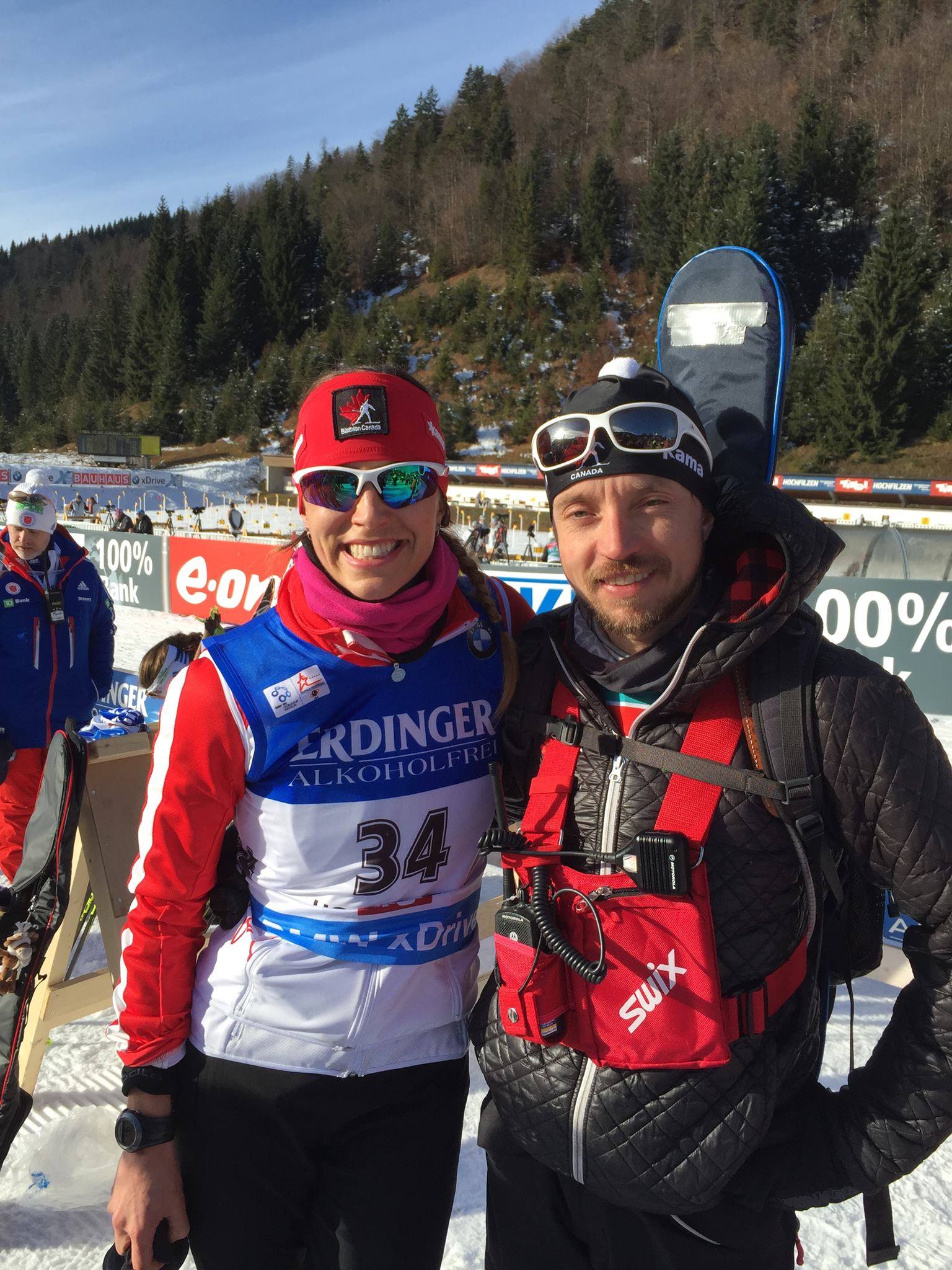
    Rosanna Crawford with coach Roddy Ward after placing a career-best fifth in the IBU World Cup 10 k pursuit on Sunday in Hochfilzen, Austria. “Such a fun race today, I moved from 34th to 5th for a new personal best with 19-for-20 shooting,” Crawford wrote on Facebook. (Photo: Chris Lindsay)
    Rosanna Crawford with coach Roddy Ward after placing a career-best fifth in the IBU World Cup 10 k pursuit on Sunday in Hochfilzen, Austria. “Such a fun race today, I moved from 34th to 5th for a new personal best with 19-for-20 shooting,” Crawford wrote on Facebook. (Photo: Chris Lindsay)

    While Roddy Ward, biathlon Canada national team coach, was referring to athlete Rosanna Crawford when he said, “Way more is possible,” it’s easily a sentiment that could be applied to the rest of the international nordic circuits after this past weekend of racing.

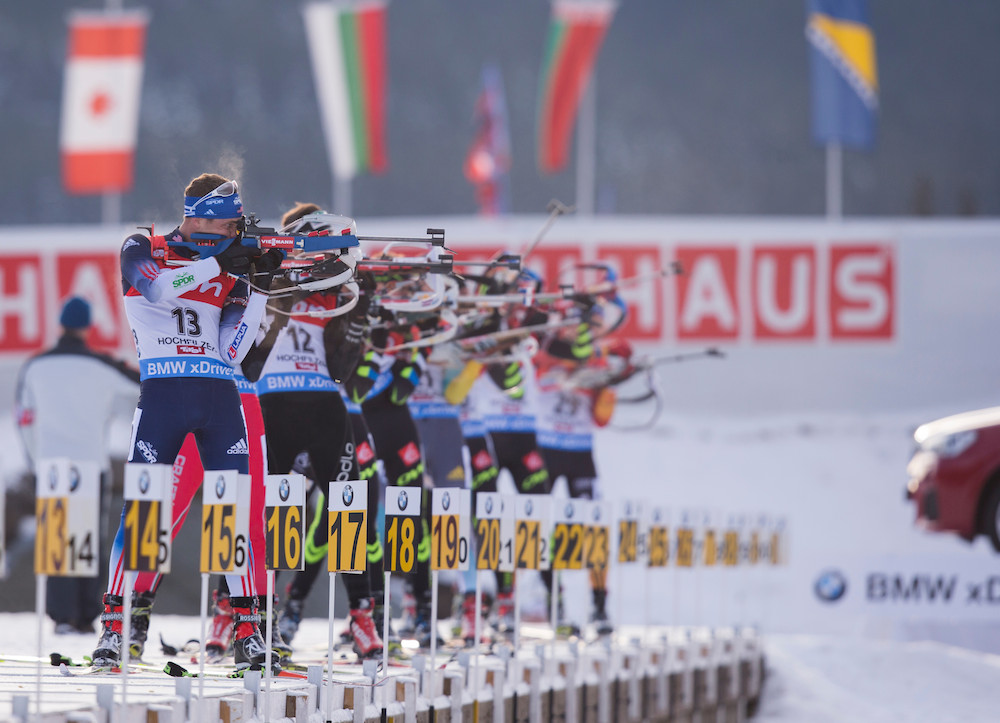
    The weekend’s racing began Friday with the IBU World Cup 7.5/10 k sprint in Hochfilzen, Austria, that saw Johannes Thingnes Bø of Norway and Kaisa Mäkäräinen of Finland claim victories in their respective races. American Tim Burke turned in the top North American finish after placing 13th, while teammate Susan Dunklee paced 29th for the women.
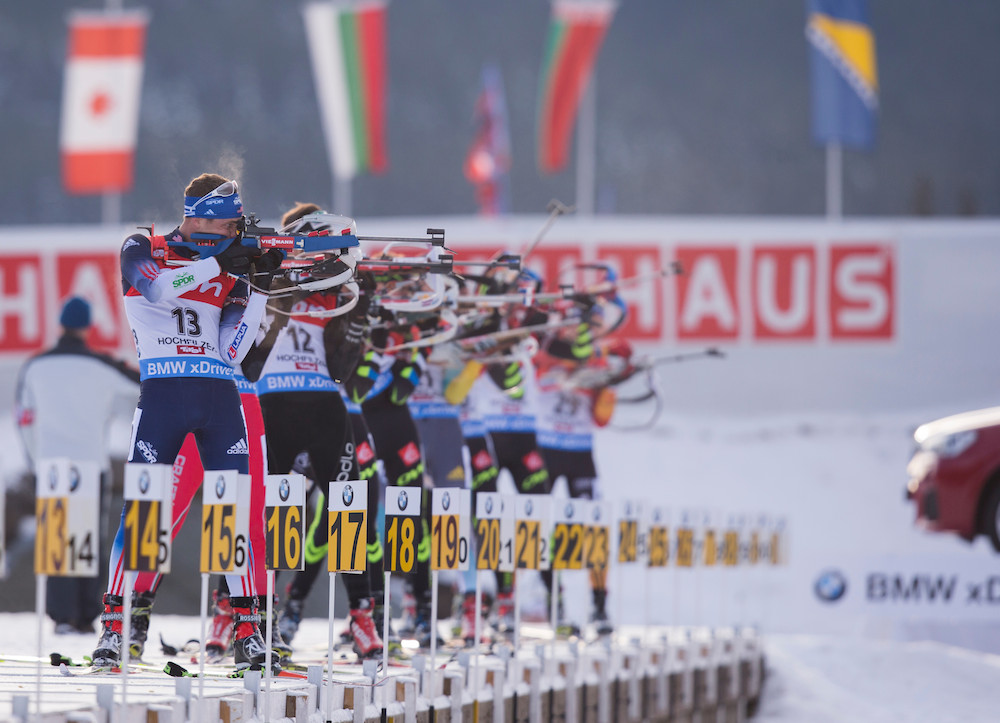
    Tim Burke on his way to 25th in the IBU World Cup 12.5 k pursuit on Sunday in Hochfilzen, Austria. (Photo: USBA/NordicFocus)
    Tim Burke on his way to 25th in the IBU World Cup 12.5 k pursuit on Sunday in Hochfilzen, Austria. (Photo: USBA/NordicFocus)

    The action continued in Hochfilzen on Saturday with the men’s 4 x 7.5 k and the women’s 4 x 6 k relays. Russia proved dominant in the men’s race, winning by roughly 20 seconds. Canada finished a team-best sixth place while the U.S. team was lapped after a combination a poor starting position and sub-par skis. In the women’s relay, Germany proved as strong as the Russian men, topping their field by over 20 seconds. The Canadian women were unable to match their male counterparts, however, and finished 11th.

    In the final day of IBU World Cup racing, one Canadian athlete demonstrated what exactly was possible. Crawford, who started the 10 k pursuit in 34th, wanted to improve her position, but when she crossed the line for a career-best fifth place it was apparent improving her position was just the beginning. On the men’s side, Burke was the top North American in 25th position.

    The weekend also brought FIS Cross Country World Cup action to Davos, Switzerland. Norwegians Therese Johaug and Maritn Johnsrud Sundby won Saturday’s 10/15 k classic interval starts. A trio of Americans made up of Liz Stephen, Jessie Diggins and Sadie Bjornsen went 20-21-22 in the 10 k to give the Americans three skiers in the top 30. Canadian Emily Nishikawa placed 29th for her best-ever World Cup finish. In the 15 k, Canadian Alex Harvey also found success, skiing to 17th, which he said was one of his best distance performances at altitude.

    In Sunday’s sprint, Ida Sargent returned to the spotlight after placing 16th, while teammates Kikkan Randall and Sophie Caldwell joined her in the top 30 after finishing in 20th and 22nd positions. On the men’s side, Canadian Lenny Valjas returned to form to place 13th while American Andy Newell placed 15th.
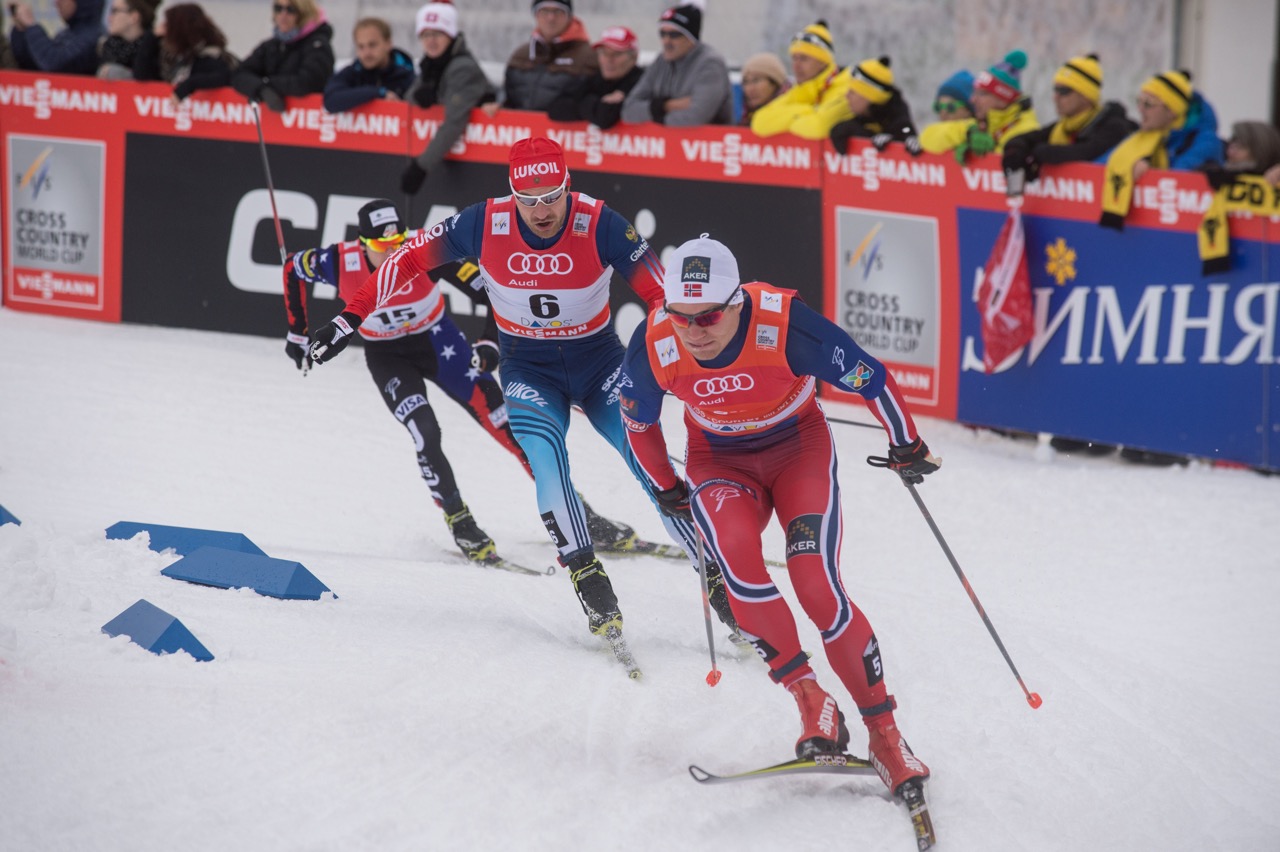
    Andy Newell (l) of the USST trails eventual 3rd place finisher Erik Brandsdal of Norway (r) and Alexey Petukhov of Russia (c) who eventually finished fourth in the 1.3 k freestyle sprint in Davos, Switzerland. (Photo: Fischer/Nordic Focus)
    Andy Newell (l) of the USST trails eventual 3rd place finisher Erik Brandsdal of Norway (r) and Alexey Petukhov of Russia (c) who eventually finished fourth in the 1.3 k freestyle sprint in Davos, Switzerland. (Photo: Fischer/NordicFocus)

    The real story of the day, however, was that Norway continued its winning streak with both its men and women sweeping Sunday’s races and earning 10 of 12 podium positions in Davos.

    Not just over the mountains from from Davos, Livigno, Italy hosted the La Sgambeda Marathon. While the women’s 42 k freestyle was dominated by Riitta-Liisa Roponen of Finland, American Holly Brooks was able to hold on for an impressive second place.

    Back across the home front, NorAm racing continued in Rossland, British Columbia despite warm conditions and a lack of snow. Both races were classic distance races with 7.5/11 k on Saturday and 11/15 k on Sunday, and Canadian Alysson Marshall and American Kris Freeman topped their respective fields each day.

    Last Thursday, the FIS Nordic Combined Continental Cup opened in Park City, Utah, where Taylor Fletcher posted the two best American performances in fifth and eighth place.

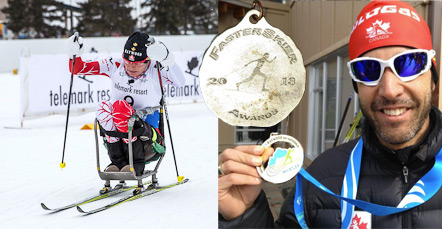
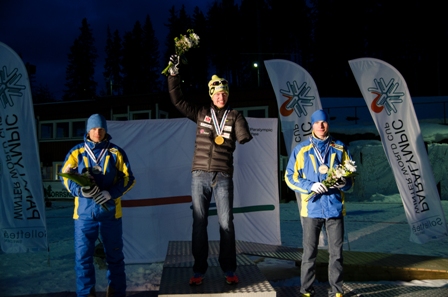
    The IPC World Cup also opened last Wednesday in Vuokatti, Finland, with Canadian Mark Arendz taking silver in his first race on Thursday: the 15 k standing biathlon. Two days later, his Canadian Para Nordic teammates Chris Klebl and Brittany Hudak both earned bronze in the 10 k sit-ski and 5 k standing, respectively. Also on Saturday, American Oksana Masters captured a career-best World Cup silver in the 5 k sit-ski, and Andy Soule just missed the podium in the 10 k sit-ski (behind Klebl) in fourth.

    On Sunday, Masters carried her momentum to win gold in the women’s sit-ski sprint, becoming the first American female Paralympic nordic skier to do so since the early 2000s. On Tuesday, she took her first-ever international biathlon silver in the biathlon sprint.

    La Sgambeda, Livigno, Italy 

    Friday’s women’s 42 k freestyle mass start report

    Saturday’s Pro Team Tempo prologue recap

    Sunday’s 35 k classic mass start recap

    IPC World Cup, Vuokatti, Finland

    Wednesday-Thursday recap | Mark Arendz opens with silver

    Saturday recap | Masters notches silver Klebl, Hudak power to bronze

    Sunday Masters wins sprint gold

    Tuesday Masters tallies biathlon silver

    IBU World Cup, Hochfilzen, Austria

    Friday’s 7. 5/10 k sprints: men’s report | women’s report

    Saturday’s 4 x 6 k and 4 x 7.5 k relays:  men’s report | women’s report

    Sunday’s 10/15 k pursuit: men’s report | women’s report

    FIS Cross Country World Cup, Davos, Switzerland

    Saturday’s 10/15 k classic interval start: men’s report | women’s report | U.S. report | Canadian report | men’s photo gallery | women’s photo gallery

    Sunday’s 1.3 k freestyle sprint: men’s report | women’s report | U.S. men’s report | U.S. Women’s report | Canadian report | notes and quotes

    NorAm Opener, Rossland, British Columbia

    Saturday’s 7.5/11 k classic report

    Sunday’s 11/15 k classic report

    Nordic Combined Continental Cup Opener, Park City, Utah
    Weekend recap + photo gallery

  • Put to Work in Nicaragua, Nine Canadians Got Dirty for Skiers 4 SchoolBOX

    Put to Work in Nicaragua, Nine Canadians Got Dirty for Skiers 4 SchoolBOX

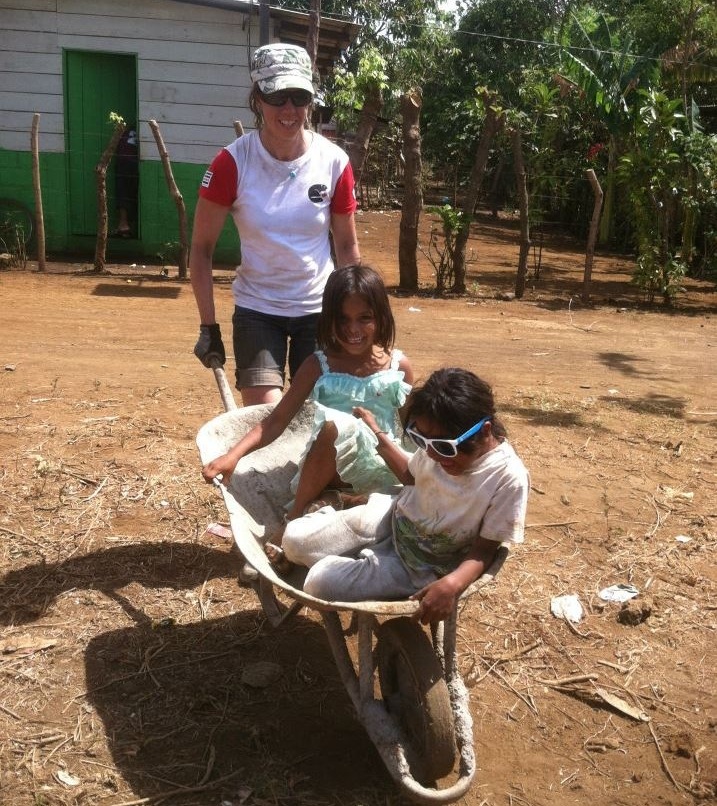
    Jones hard at work
    Perianne Jones hard at work. (All photos from SchoolBOX)

    Life as a competitive skier is a full-time job. Beyond eating, sleeping and training, skiers usually spend a solid chunk of time drumming up financial support to cover some, if not all, of their skiing-and-life expenses.

    Last year, nine Canadian cross-country skiers put their needs aside for the time being to fundraise for a charity completely unrelated to their sport. SchoolBOX is an Ontario-based nonprofit focused on building elementary schools in impoverished areas of Nicaragua.

    Headed by two-time Olympian Perianne Jones, the group of skiers known as “Skiers 4 SchoolBOX” raised money last year then travelled to Nicaragua this spring to dive into the construction.

    Getting started

    Jones’s connection to SchoolBOX started in her hometown of Almonte, Ontario. A longtime friend of one of the nonprofit’s founders, Jones — like others in her small town — was supportive of local causes. She had been one herself as an up-and-coming nordic skier shooting for the Olympics. She decided to pay it forward to a third-world support group, founded in 2006, aimed at making education possible for children.

    “There was a fundraising run before the Olympics in 2010 for me [in Almonte],” Jones reflected on the phone earlier this month. “I didn’t want the money to be only for me so I decided to split the money from that with SchoolBOX. I think that was where things started.”

    As part of their school-building program, SchoolBOX makes an effort to connect groups of North Americans to their projects, inviting people to take part in fundraising and volunteering on the ground in Nicaragua. Jones wanted to assemble a group of skiers.

    But the stars would not align for this larger-scale partnership between Jones and SchoolBOX until after the 2014 Sochi Olympics.

    “I always wanted to do more with them, but the timing never lined up until after the Games,” she said.

    She started planning her first trip to Nicaragua’s Masaya region last spring.

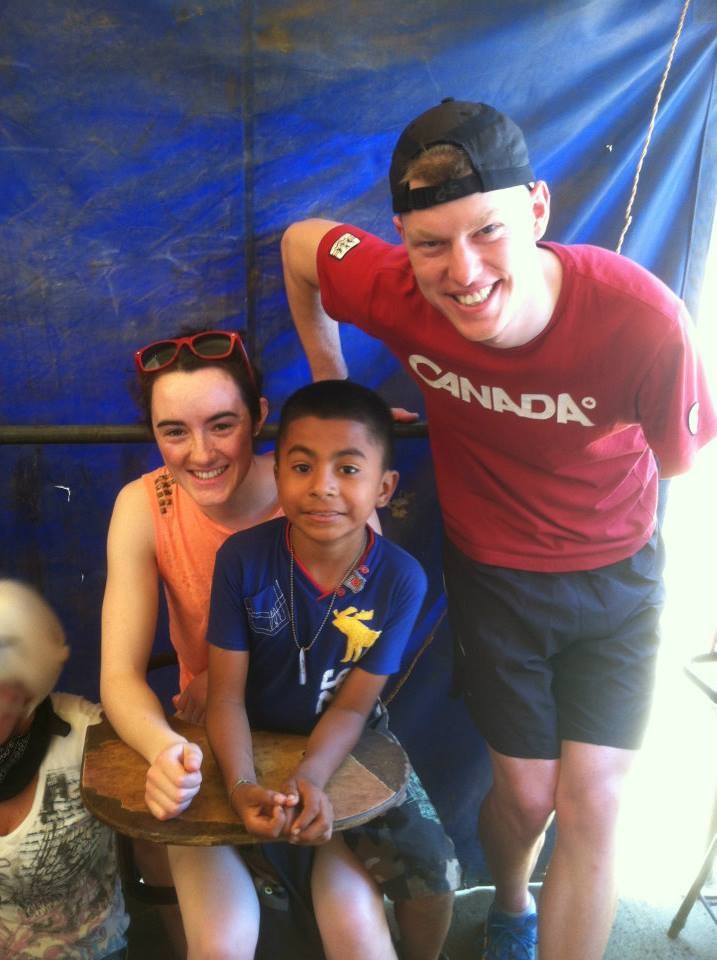
    Mark and Olivia
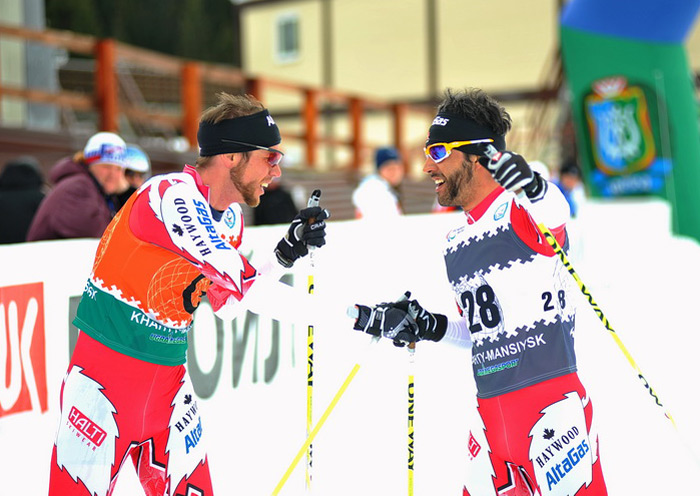
    Olivia Bouffard-Nesbitt and Mark Arendz hanging out with the locals. 

    The athletes

    One would imagine that it might be hard to sell the idea of volunteering manual labour in a foreign country, especially considering the fact that each volunteer is responsible for their transportation to and from that place.

    But according to at least two of the participating skiers, that was not the case — the decision to help out was spontaneous.

    “It actually just happened really quickly, kind of on a whim,” said Olivia Bouffard-Nesbitt of Rocky Mountain Racers. “I was over at Zoë [Roy’s place] doing, I dunno, something crafty, and she was like, ‘Hey, so I’m going to Nicaragua in April for Skiers 4 SchoolBOX and Peri wants us to commit today if you wanna come.’ I didn’t even hesitate.”

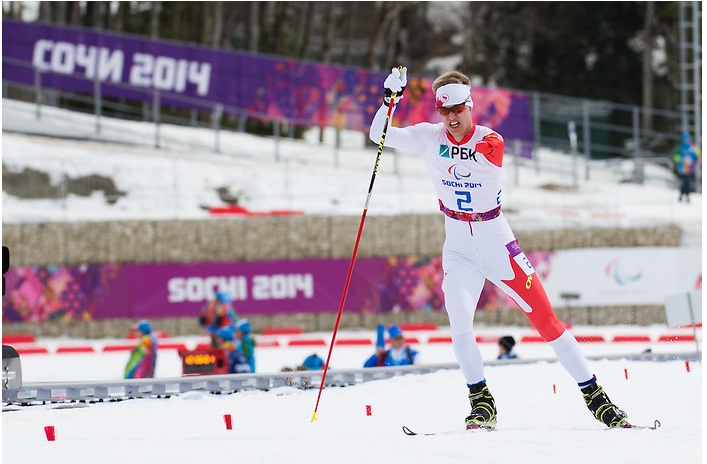
    Before earning silver and bronze at the 2014 Sochi Paralympics, Mark Arendz of Canada’s Para-Nordic Team was planning ahead last year for what he’d do after the Games and learned about Skiers 4 SchoolBOX on Facebook.

    “I chatted with Perianne Jones, and before our conversation was over I was in,” he said.

    In addition to Roy, Bouffard-Nesbitt and Arendz, Emily Nishikawa, Gerard Garnier, Stuart Harden, Ruth Tamas, and Jones’ husband, Joel Jaques, also signed up by April 2013.

    Then they started fundraising.

    Finding the funds

    Definitely the biggest thing was coming up with the money to make it happen,” Jones explained.

    Each person in the group had to raise about $1,000, and in an effort to do so, they planned a fundraiser for last fall in Canmore, around the time of Frozen Thunder. According to Bouffard-Nesbitt, the fundraiser didn’t go quite as planned.

    “We put a decent amount of effort into the event itself, but we didn’t do a very good job making sure people were gonna come,” she said. “We had a band, drinks, food and a really good silent auction. When you have a lot of Olympians in the group you get good silent-auction stuff. … After the event, it was pretty much up to each of us to go out and collect our shares of the money.”

    Volunteers had to pay for their own flights.

    “We were fundraising for the part where we were actually on the ground in Nicaragua,” Jones said. “Mostly the money was for the school project itself. They have a construction crew that they pay down there, so they make sure that they’re providing jobs for Nicaraguans and helping them out that way.”

    Training in Nicaragua

    The skiers were in Nicaragua this spring, from April 3 to April 10. Many of them stuck around a bit longer to explore the country.

    “After an Olympic cycle, I think everyone just wanted to shake things up and do something different,” Jones said.

    Because the trip happened at the start of the offseason, everybody was content to enjoy their time away from ski training. Beyond the grueling work of removing dirt from the ground, physical activity was kept to a minimum and consisted of activities such as Roy’s “Tarahumara runs,” according to Bouffard-Nesbitt, (like in Born to Run).

    “Basically they’re twelve-minute runs and it’s kind of like parkour I guess,” she said. “You just go and you do whatever you want and each person takes a turn leading. So you jump off benches and do summersaults and run around posts and do cartwheels and stuff.”

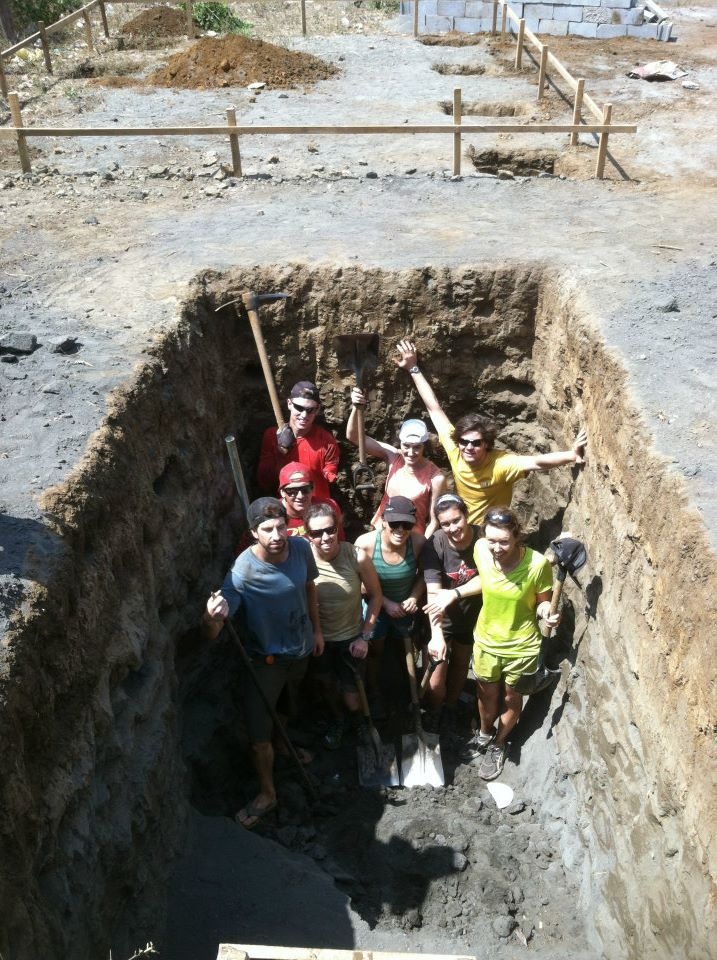
    Digging the hole
    The nine Canadian skiers dug a big hole for the school’s septic system.

    Building the school

    Upon arrival in Nicaragua, the first day of work started after a night’s sleep and a long drive, to the construction site, in the morning.

    “We were driving down this narrow, super-bumpy dirt road and we turn a corner and there’s this crowd of children standing there,” Bouffard-Nesbitt recalled. “They’re jumping up and down and they had our names printed out on paper that they were holding up.”

    After the warm welcome, it was time to get to work: in their week there, the skiers’ goal was to dig of a big hole for the school’s septic system.

    “The hole that we dug was 3-meters deep, 2-meters wide and 3-meters long. By the end we needed a ladder to get in and out of it,” Jones said. 

    “Mostly what we raised money for was for a sports field, but just so it happened, for the period of time we were there, what they needed done was digging this big hole. Some of the dirt from the hole went to the sports field eventually.”

    The students

    Throughout the week it became clear that the children who would be attending the school had a deep desire to be a part of building it.

    They were so invested in it,” Jones said. “Some of the older kids would come out and grab our shovels and get down in the hole and dig with us. They were really keen to help. When you don’t have a place to learn, you really want that kind of thing. I think for a lot of us, it’s a given.”

     “Some of the older kids would come out and grab our shovels and get down in the hole and dig with us. … When you don’t have a place to learn, you really want that kind of thing. I think for a lot of us, it’s a given.” — Perianne Jones, Skiers 4 SchoolBOX leader & two-time Canadian Olympic cross-country skier

    But it wasn’t all tough work around the construction site. Usually around midday, the hole-digging would wrap up and the skiers would spend time playing with the kids. 

    “One of my favourite memories has to be the soccer-baseball game we had the last day with everyone,” Arendz said. “The construction workers, volunteers, community members and kids — a great time playing but also watching everyone else enjoy themselves.”

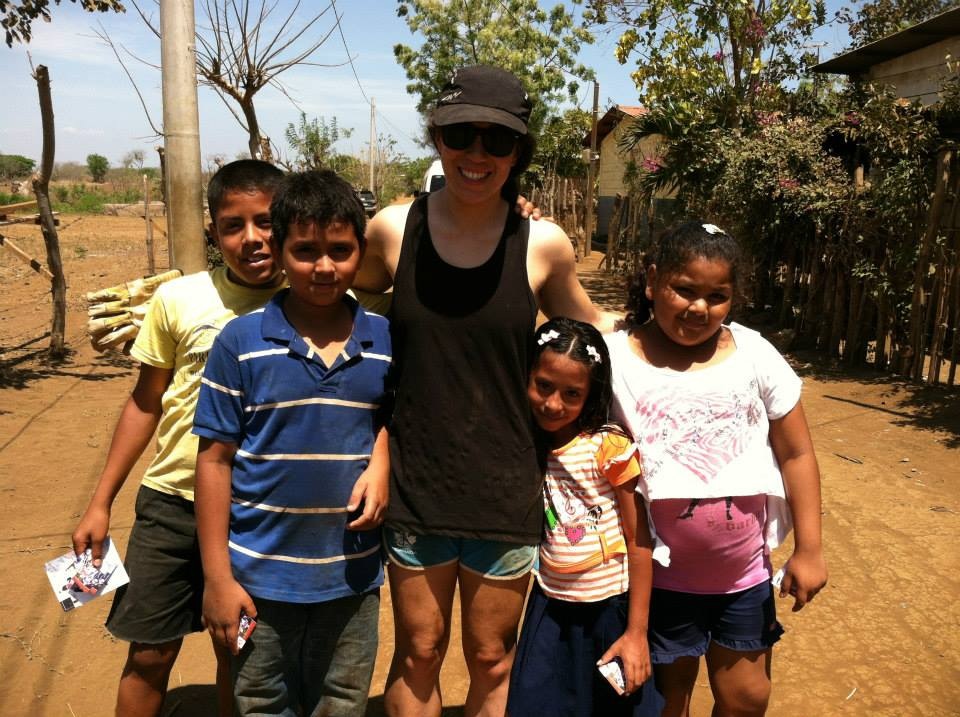
    Emily Nishikawa with some potential students.
    Emily Nishikawa with some potential students.

    More than just construction work

    We realized after a couple days at the work site that the people at SchoolBOX saw just as much value in having outsiders come and play with the kids, rather than just, like, digging a hole the entire time” Bouffard-Nesbitt explained.

    “It means a lot to the kids to see that people are coming all the way from Canada and that people care that much about their school,” she added. “In turn, it makes them care about their school. All the kids who attend do so by choice, so the more they’re invested in their school the better.”

    In Nicaragua these schools are more than just the average learning place. They act as a community centre through which other opportunities arise.

    “Once you have a school in a community it opens the doors for all kinds of other things you can have,” Jones said. “Once you have a school you can have a food program as well.”

    The future

    On April 10, the skiers departed — some back to Canada and others to explore other parts of Nicaragua. Their part of the project was finished but the work on the school would continue until the end of July, at which point, to the excitement of everyone involved, the school was completed.

    So will there be more Skiers 4 SchoolBOX projects in the future?

  • Double Gold for Canada on Last Day of Paralympics: Klebel Gets First Medal, McKeever Notches 10th Win

    Double Gold for Canada on Last Day of Paralympics: Klebel Gets First Medal, McKeever Notches 10th Win

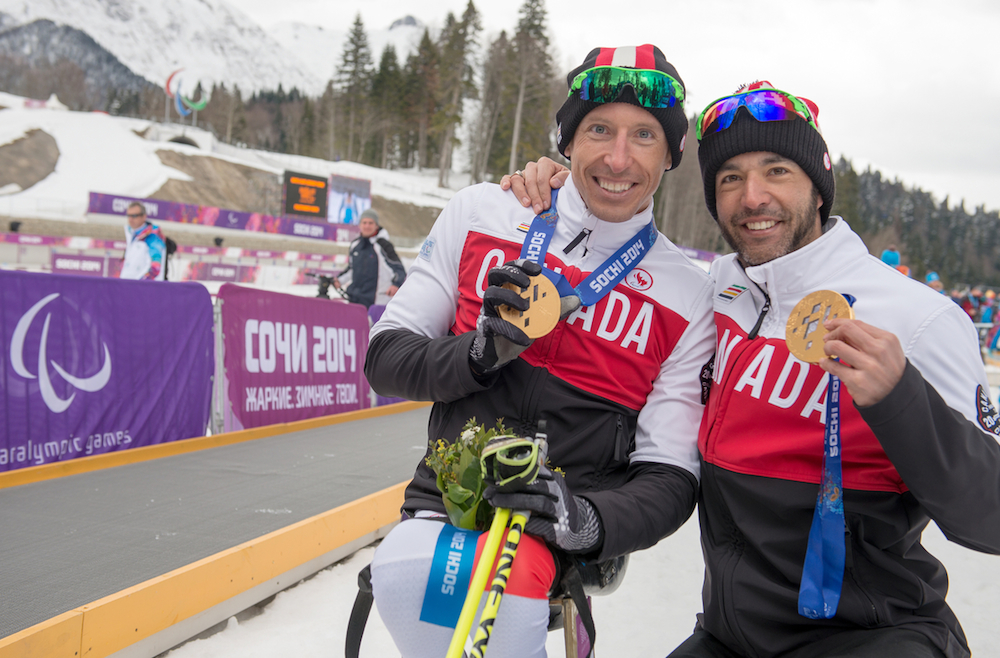
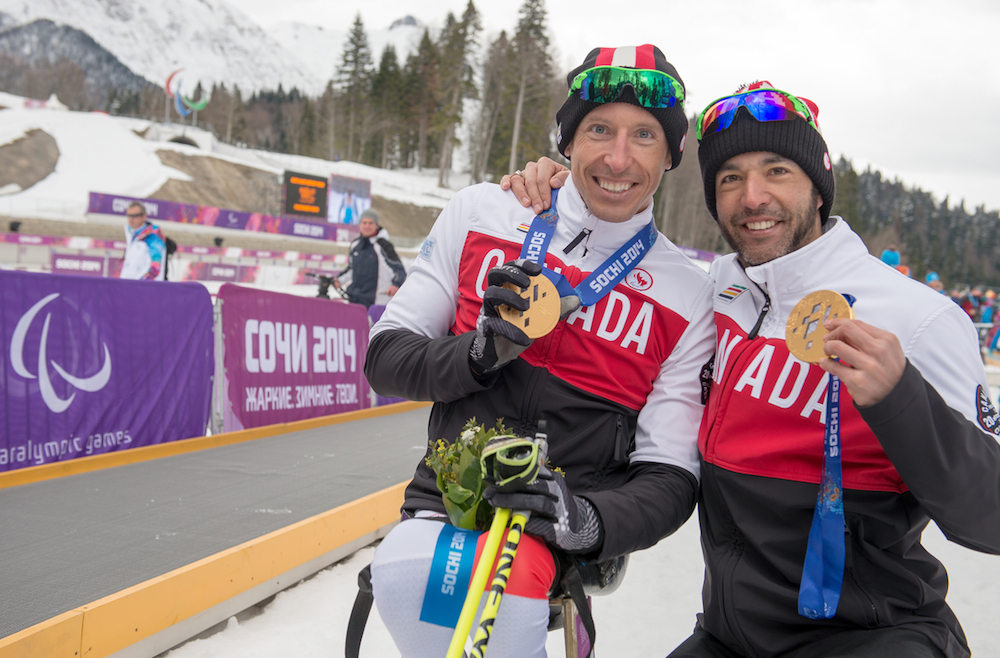
    Chris Klebl with his Men's 10km Sitting gold medal and Brian McKeever with his 15km free Visually Imaired gold medal at the 2014 Paralympic Winter Games in Sochi, Russia. (Photo: Matthew Murnaghan/Canadian Paralympic Committee)
    Chris Klebl (l) with his gold medal from the men’s 10 k sit ski and Brian McKeever (r) with his third gold of the week, which he won in Sunday’s 15 k visually impaired freestyle visually at the 2014 Paralympic Winter Games in Sochi, Russia. (Photo: Matthew Murnaghan/Canadian Paralympic Committee) 

    (CCC press release)

    SOCHI, Russia — Mission accomplished!

    Canada’s Para-Nordic Ski Team wrapped up the 2014 Paralympic Winter Games in thrilling fashion with a double-gold performance in cross-country skiing on Sunday.

    In two of the most challenging classifications, Chris Klebl, of Canmore, Alta., shocked the world to win the men’s 10-kilometre sit-ski race, while Brian McKeever won his third gold medal of the week in the visually impaired category.

    The 42-year-old Klebl put down the performance of the Games when it counted most to win Canada its final gold medal, and secure the country its goal of finishing in the top-three in the overall medal count. Klebl clocked a time of 30 minutes, 52.0 seconds (30:52.0).

    “It feels pretty good for sure,” said Klebl. “I have exceptional skis for wet, sloppy conditions and today we got exactly those conditions. It just feels good. We prepare for this over and over and over again to try and get things to line up, and today it did.”

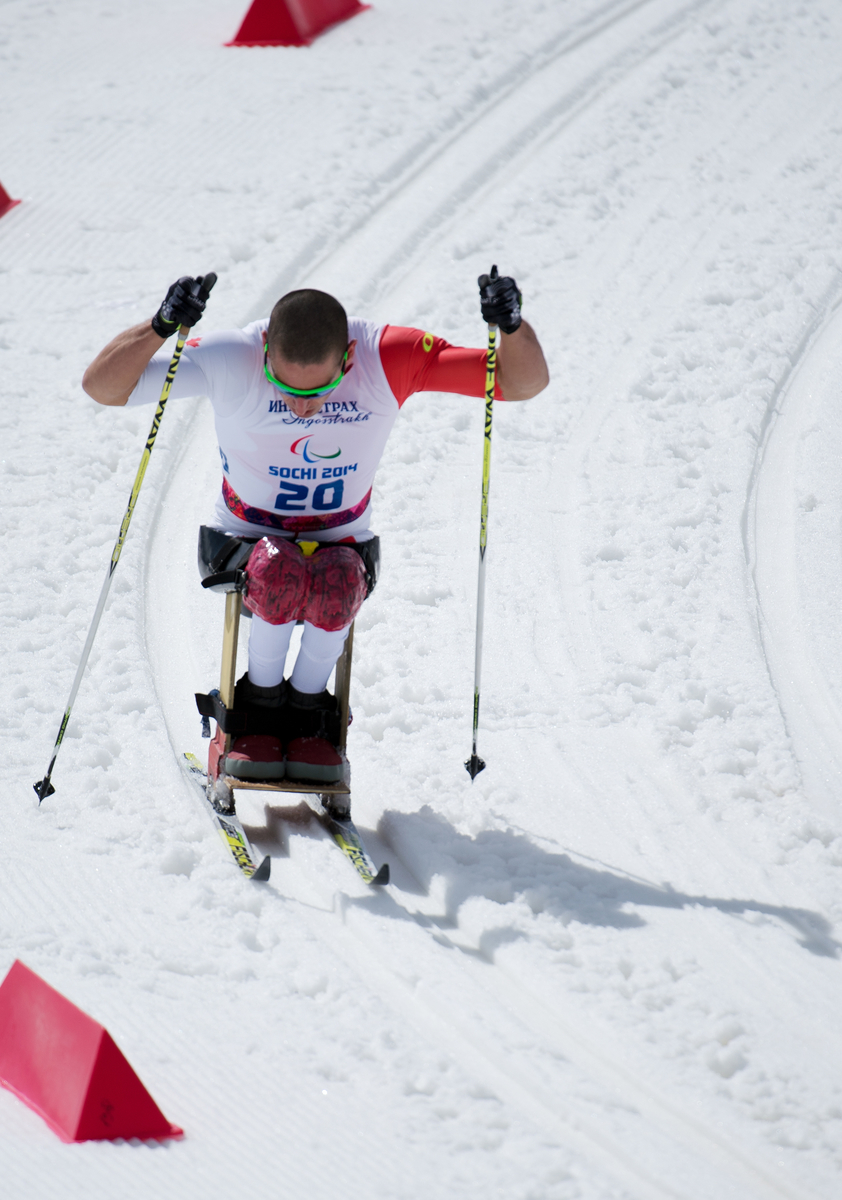
    Canada's Chris Klebl racing to gold in the last race of his third Paralympics on Sunday in the cross-country 10 k sit-ski  at the 2014 Paralympic Winter Games in Sochi, Russia.  (Photo: Matthew Murnaghan/Canadian Paralympic Committee)
    Canada’s Chris Klebl racing to gold in the last race of his third Paralympics on Sunday in the cross-country 10 k sit-ski at the 2014 Paralympic Winter Games in Sochi, Russia. (Photo: Matthew Murnaghan/Canadian Paralympic Committee)

    A three-time Paralympian, Klebl moved to Canmore, Alta. to join the Canucks from the United States following the 2010 Games. He first made history as a member of the Canadian Team in 2011 by winning the World Championships in the sit-ski distance race.

    Klebl, who grew up in Austria where he skied and snowboarded, became paralyzed from the waist down in 1995 in a snowboarding accident.

    Sunday’s victory was particularly important as Canada was in a fight for third spot in the overall Paralympic gold medal count with the Ukraines with the final sit-ski race remaining.

    Klebl held off the Ukraine’s Maksym Yarovyi, who finished second at 31:06.5. Russia’s Grigory Murygin skied to the bronze at 31:18.2.

    “It means a tonne to me to contribute to Canada’s medal count,” said Klebl. “Four years ago I made a major decision to move to Canada, and Cross Country Canada and the Own the Podium program have backed me since. I just wanted to pay them back.”

    While Klebl grabbed Canada’s final gold medal at the 2014 Games, it was Brian McKeever who secured the nation its first. On Sunday the legendary Paralympian was at it again.

    Battling race fatigue and strong headwinds, the 34-year-old McKeever utilized a two-guide strategy with Erik Carleton and Graham Nishikawa, for the second time this week to gut out an impressive come-from-behind victory. Team McKeever posted a time of 23 minutes, 18.1 seconds in the men’s 10-kilometre skate-ski visually impaired category.

    “That one was tough. It hurt,” said McKeever. “I woke up this morning and didn’t feel great. It was all on the guides again today. They did such a good job with the headwind. I was able to tuck in behind them and save a lot of energy. By the time we got to the last lap there was still a little gas left to get us by today.”

    Outside of sprint racing, it was the smallest margin of victory at a Paralympic Winter Games for McKeever, winning by just eight seconds.

    Russia’s Stanislav Chokhlaev skied to the silver at 23:25.1, while Thomas Clarion, of France, rounded out the podium in third with a time of 24:14.9.

    The Canadians leveraged a two-guide race strategy to pull McKeever to the top of the podium.

    The 36-year-old Carleton, of Canmore, Alta., led the way around the first 6.5-kilometres before coach Robin McKeever called in Graham Nishikawa, of Whitehorse, to pull him into the winner’s circle. McKeever was behind 12 seconds at the five-kilometre mark in the race.

    “Having guided for 10 years I know how incredibly hard it is to do this job in the wind,” said Robin McKeever, head coach, Canadian Para-Nordic Ski Team, who led his brother to 10 Paralympic podiums. “It is like a tow truck pulling a Ferrari out there in the wind.

    “For the guide, it is like doing a one-kilometre sprint race just to stay ahead of Brian. But the problem is you have to keep that pace for nine more kilometres. It is so difficult.”

    “Having guided for 10 years I know how incredibly hard it is to do this job in the wind. It is like a tow truck pulling a Ferrari out there in the wind.” — Robin McKeever, Canadian Para-Nordic Ski Team Head Coach and former guide for his brother, Brian McKeever

    Consummate team players, Carleton and Nishikawa shared the workload and trips to the podium this week to help McKeever accomplish his goal of a golden hat-trick.

    “It is so tough out there and I’m thankful Graham was here to help us out and get the job done,” said Carleton. “I went hard off the start and just tried to hang on.”

    “Brian is just such an incredible athlete so it is very difficult to stay ahead of him,” added Nishikawa. “This whole week has been such an awesome experience. I’ve been so impressed with everything, and of course I’d love to be back again.”

    The victories bring McKeever’s Paralympic gold medal count to 10, making him the only winter Paralympian to reach double digits. He has a total of 13 Paralympic medals.

    “The medals this week were very special,” said McKeever. “The way we did it was such a team effort. Both guides gave me a solid draft all week, which made a huge difference in the conditions. We orchestrated a great team effort and that makes it so special to me.”

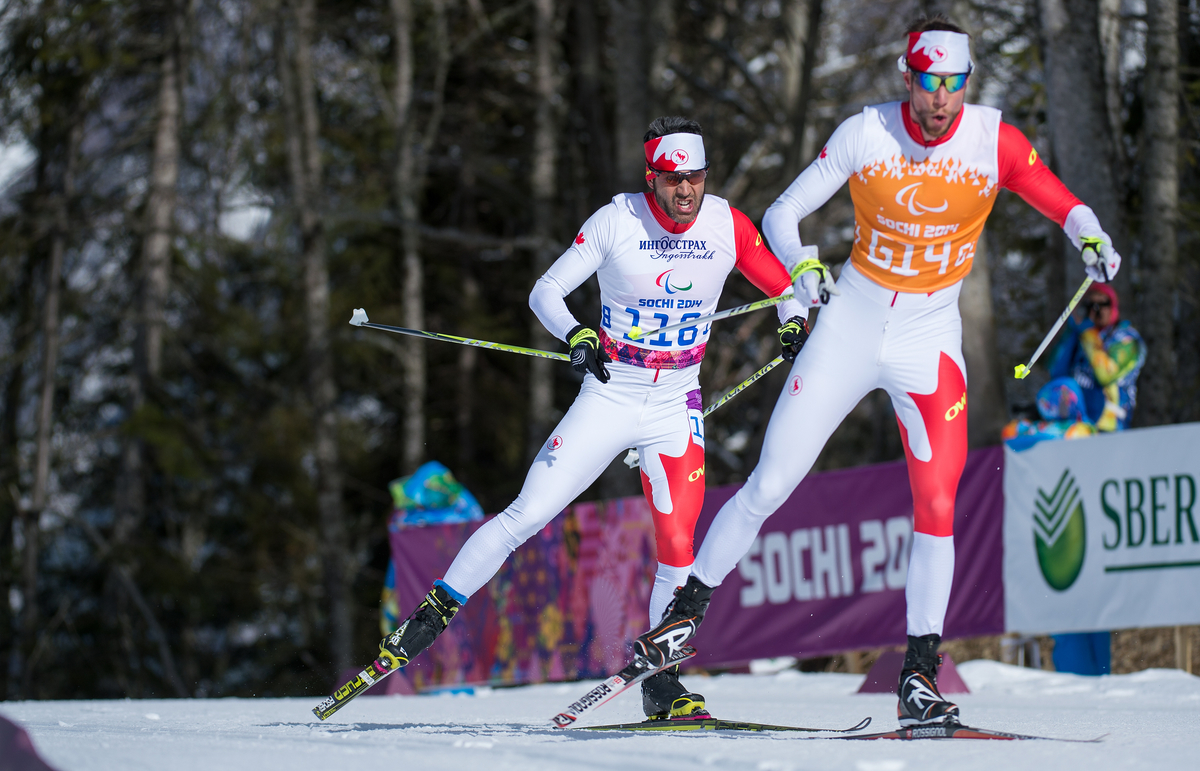
    Brian McKeever and his guide Erik Carleton race to McKeever's third gold of the week, and Carleton's second, in Sunday's cross-country 10 k visually impaired freestyle race on the last day of the 2014 Paralympic Winter Games in Sochi, Russia. (Photo: Matthew Murnaghan/Canadian Paralympic Committee)
    Brian McKeever and his guide Erik Carleton race to McKeever’s third gold of the week, and Carleton’s second, in Sunday’s cross-country 10 k visually impaired freestyle race on the last day of the 2014 Paralympic Winter Games in Sochi, Russia. (Photo: Matthew Murnaghan/Canadian Paralympic Committee)

    Other Canadian results on Sunday included: Mark Arendz (Hartsville, P.E.I.) in 11th at 25:16.4; and Louis Fortin (Fredericton, N.B) 36th at 32:58.8 in the men’s 10-kilometre standing race. Brittany Hudak, of Prince Albert, Sask., was 12th at 15:35.0, and Ottawa’s Caroline Bisson 16th at 16:55.2 in the women’s five-kilometre standing category.

    Robbi Weldon (Thuder Bay, Ont,) and her guide Phil Wood (Canmore, Alta.) were seventh at 15:32.5, while Ottawa’s Margarita Gourbonova and her guide of Regina’s Andrea Bundon were eighth at 15:42.2 in the women’s five-kilometre visually impaired race. Saskatoon’s Colette Bourgonje was 13th in women’s five-kilometre sit-skiing at 18:13.0. Yves Bourque, of Becancour, Que., was 24th at 39:11.5, and Quebec City’s Sebastien Fortier was 26th (40:03.4) in the men’s 10-kilometre sit-ski race.

    In addition to McKeever and Klebl’s four golds, Canada’s Para-Nordic squad will leave Sochi with six medals. Mark Arendz also won a silver and one bronze in biathlon racing.

    Results

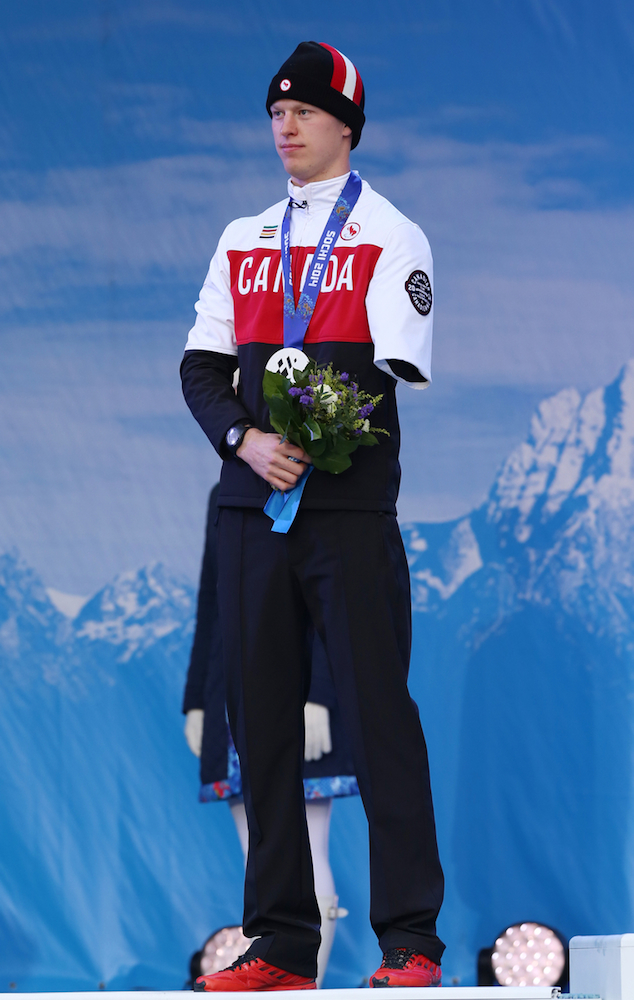
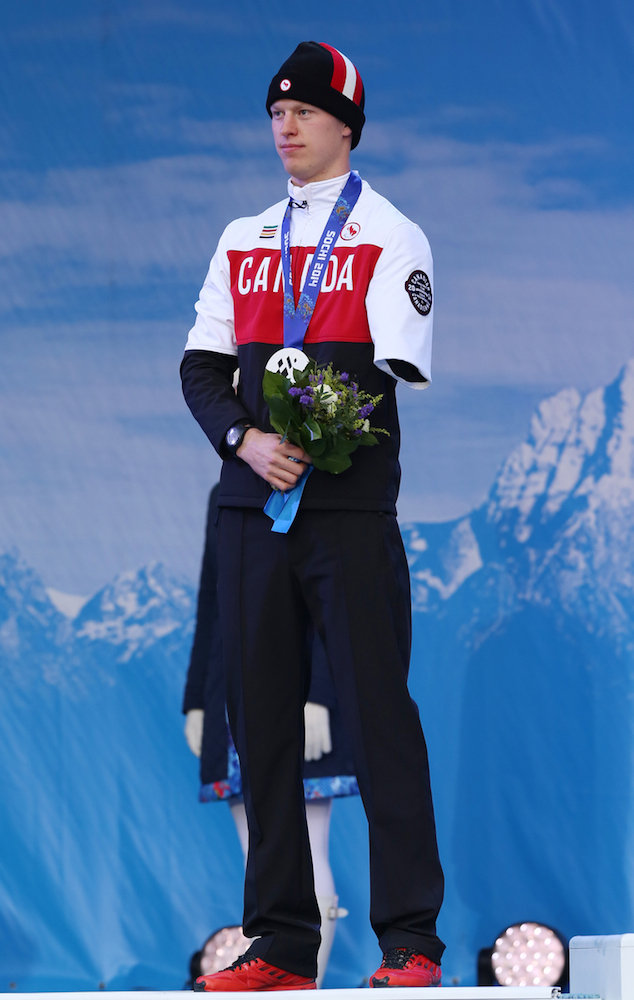
  • Silver, then Bronze: Arendz First Canadian to Take Two Biathlon Paralympic Medals

    Silver, then Bronze: Arendz First Canadian to Take Two Biathlon Paralympic Medals

    Canadian biathlete Mark Arendz on the medal stand earlier in the 2014 Paralympics after winning silver in the 7.5 k standing even. He went on to notch bronze in his next competition to become the most successful Canadian biathlete. (Photo Scott Grant/Canadian Paralympic Committee)
    Canadian biathlete Mark Arendz on the medal stand earlier in the 2014 Paralympics after winning silver in the 7.5 k standing even. He went on to notch bronze in his next competition, the 12.5 k race, to become the most successful Canadian biathlete. (Photo Scott Grant/Canadian Paralympic Committee)

    (CCC press release)

    SOCHI, Russia — Canada’s Mark Arendz battled through brutal race conditions to win the bronze medal in the men’s 12.5-kilometre standing category at the Paralympic Winter Games in Sochi, Russia on Tuesday.

    Arendz racing to silver on Saturday in the Paralympic biathlon 7.5 k sprint. (Photo: Matthew Murnaghan/Canadian Paralympic Committee)
    Arendz racing to silver on Saturday in the Paralympic biathlon 7.5 k sprint in Krasnaya Polyana, Russia. (Photo: Matthew Murnaghan/Canadian Paralympic Committee)

    With rain pelting down and dense fog socked into the Laura Nordic Stadium, the 24-year-old took advantage of the weather he grew up with in Hartsville, Prince Edward Island to grab his second medal of the week. Arendz clocked a time of 30:31.0.

    “To get a medal is awesome and that was the goal,” said Arendz. “There were mistakes out there both in shooting and on the course so it was not a perfect race, but anytime you are on the podium I have to be happy because this is strong field.”

    In a race that puts a premium on shooting, the soft-spoken Canuck rattled off 19 of 20 shots in his four rounds on the range. The miss in this third bout of shooting sent Arendz to do one 150-metre penalty loop.

    “The warm up was tough today, and it was hard to see the targets early [because of the fog],” said Arendz. “It was the same conditions for everyone. I wasn’t perfect in shooting so I know there are still mistakes that need to be cleaned up.”

    Arendz was in a dogfight for the gold with two of his closest rivals, Russia’s Azat Karachurin and Norway’s Nils-Erik Ulset. Karachurin also missed just one target en route to winning the gold medal with a time of 29:30.0 (0+0+0+1). Missing two shots in his final stop at the range, Ulset hammered his way around the course on the skinny skis to edge Arendz for the silver medal with a time of 30:24.6.

    “I felt a little tired today, and I just didn’t have quite the snap that I had on the first day,” added Arendz, who had a lightening quick final lap. “The conditions stayed hard so I was able to put down the power I had. Everything is there. I just need to put it all together.”

    Earlier this week, Arendz became the first Canadian ever to win a silver medal in biathlon at the Paralympic Winter Games. Brian McKeever, guided by his brother, Arendz’s coach Robin, were the only other Canadians to win a Para-Biathlon medal when they captured the bronze in 2006.

    “I still haven’t been perfect shooting, and I don’t want to leave Sochi until I do that.” — Arendz, Canada’s most successful Paralympic biathlete

    Canada's rain-soaked Caroline Bisson after placing 11th in the women's 10 k standing biathlon at the Sochi Paralympics. (Photo Scott Grant/Canadian Paralympic Committee)
    Canada’s rain-soaked Caroline Bisson after placing 11th in the women’s 10 k standing biathlon at the Sochi Paralympics. (Photo Scott Grant/Canadian Paralympic Committee)

    The two-medal week now makes Arendz the most successful Canadian biathlete at the Paralympics. Recognizing the bright future ahead of him, four years ago the wide-eyed Canadian walked into his first Paralympic Stadium in 2010. His goal was take in the Paralympic experience. This time around things are different.

    “This time it is strictly business,” said Arendz. “I have had four years of experience and feel that I am strong in all race distances. I want to be on the podium every time. It was not a perfect race today. I still haven’t been perfect shooting, and I don’t want to leave Sochi until I do that.”

    Earlier in the day, Ottawa’s Caroline Bisson suited up in the women’s 10-kilometre standing race. Bisson finished in 11th spot with a time of 39:53.9 (2+0+1+0). Russia’s Alena Kaufman missed just one shot while posting the golden time at 29:57.1 (1+0+0+0).

    The Para-Nordic events continue on Wednesday in Sochi with the men’s and women’s cross-country skiing sprint races. The final biathlon race will take place on Friday.

    Results

  • Arendz First Canadian to Win Biathlon Silver at Paralympics

    Arendz First Canadian to Win Biathlon Silver at Paralympics

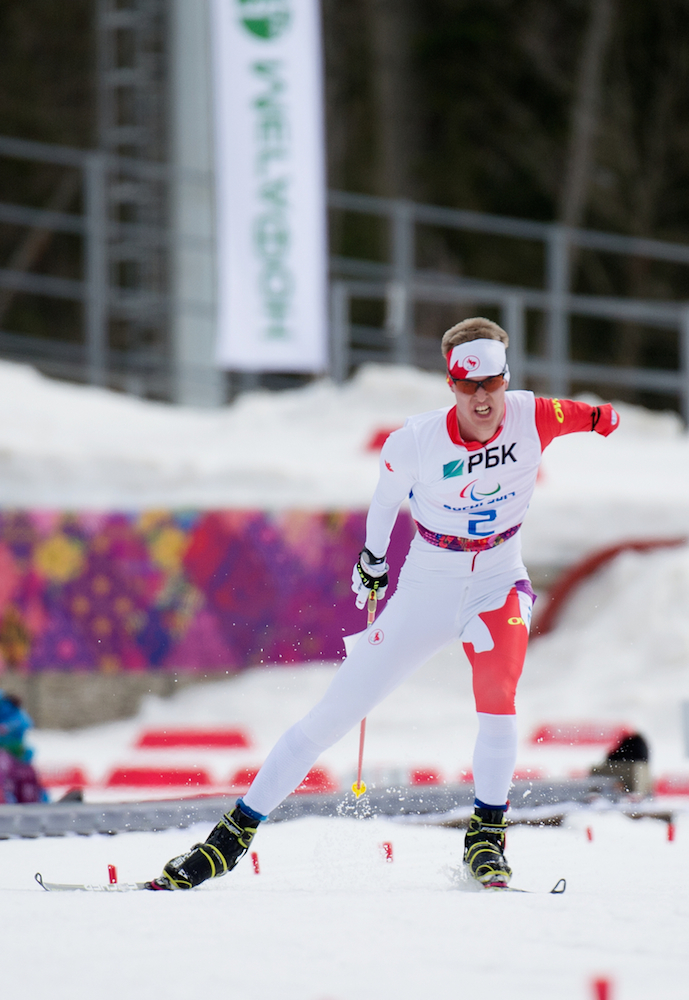
    Mark Arendz on his way to a historic first silver for Canada in biathlon at the Sochi Paralympics on Saturday. (Photo: Scott Grant/Canadian Paralympic Committee)
    Mark Arendz on his way to a historic first silver for Canada in biathlon at the Sochi Paralympics on Saturday. (Photo: Scott Grant/Canadian Paralympic Committee)

    (Cross Country Canada press release)

    SOCHI, Russia — Mark Arendz fired his name into the history books on Saturday as the first Canadian ever to win a silver medal in biathlon at the Paralympic Winter Games.

    Days removed from his 24th birthday, the Hartsville, P.E.I. resident came a hair short of winning the gold after clocking the second fastest time at 19:14.0 (1+0) in the men’s 7.5-kilometre standing biathlon competition.

    “It feels absolutely great and a big relief to get on the podium right away,” beamed Arendz in the finish corral. “I fought as hard as I could, and it was such a close race at the end.”

    Close indeed.

    The two-time Paralympian finished just .07 seconds behind the gold medallist from Russia, Vladislav Lekomtcev who clocked-in at 19:13.7 (0+1) after crashing at the finish line. Russia’s Azat Karachurin also missed one shot en route to winning the bronze medal with a time of 19:14.9.

    Arendz was in fourth place at the midway point of the race, but the hard-nosed Islander put the pedal down after shooting clean in his second stop at the range to charge his way onto the podium.

    “The plan today was to shoot clean and I was focused on following that, but I missed that one target just slightly,” said Arendz. “I thought I had it but a twitch of the finger and I just missed it. I wasn’t far off. I told myself to fight hard on that penalty loop to get over the penalty and finish strong.”

    After going perfect in his second round of shooting, Arendz hammered the pace in his third and final trip around the slushy 2.5-kilometre loop to secure his name in the history books.

    “It is so warm and not really winter like conditions so the course was really slowing down out there. The guys in the wax room did a great job on the skis. I will celebrate this one with them.”

    It has been a memorable run for the rising Canadian star since making his Paralympic debut on home snow in 2010. With a room full of medals, he has twice finished second overall on the IPC World Cup biathlon standings, and last year locked up his first overall Word Cup title in the men’s standing category to cap off a season that was highlighted by one gold and two bronze medals at the 2013 World Championships.

    Arendz’s coach, Robin McKeever, guided his brother and 10-time Paralympic medallist, Brian, to Canada’s only other Paralympic medal in biathlon. The brother tandem won a bronze medal in the visually impaired 7.5-kilometre sprint discipline at the 2006 Paralympics in Turin, Italy.

    Two Canadian women also hit the start line for the opening day of biathlon competitions at the 2014 Paralympic Winter Games. Ottawa’s Caroline Bisson placed 14th in the women’s six-kilometre standing category. Bisson went 2+1 on the range to post a time of 27:14.8.

    “I was so excited to race when I woke up this morning. I was thrilled to have the opportunity to get this first one out of the way,” said Bisson of her first-ever Paralympic race. “It was such a thrill to compete today. I pushed as hard as I could to the end. Overall I am satisfied with that.”

    Russia’s Alena Kaufman shot clean en route to posting a winning time of 18:27.2 in the women’s standing class.

    Margarita Gorbounova, also of Ottawa, and her guide, Andrea Bundon of Regina, teamed up to finish seventh in the women’s six-kilometre standing race. Gorbounova, who missed two shots in her first bout of shooting, stopped the clock at 26:17.8.

    Russia’s Mikhalina Lysova took advantage of a perfect day of shooting to go on and win the gold medal with a time of 20:03.2.

    Results

  • Canadian Paralympic Preview: McKeever, Bourgonje, Arendz Lead the Way to Sochi

    Canadian Paralympic Preview: McKeever, Bourgonje, Arendz Lead the Way to Sochi

    Brian McKeever (r) with guide Erik Carleton celebrating gold at the 2011 World Championships. (Photo: IPC)
    Brian McKeever (r) with guide Erik Carleton celebrating gold at the 2011 World Championships. (Photo: IPC)

    In Vancouver 2010, the Canadian Paralympic team placed third in the overall medal count with 19, behind Russia, which racked up 38, and Germany, with 24.

    Canada has set a goal of being in the top three again this year overall at the Winter Paralympic Games held March 7 to 16 in Sochi, Russia, according to an Own the Podium press release.

    Canada’s recently announced 14-athlete Paralympic nordic team has the horsepower and experience to do their part in bringing home medals.

    Sochi, RUSSIA - Mar 4 2014 -  Colette Bourgonje from Canada's Nordic team arrives prior to the 2014 Paralympics in Sochi, Russia.  (Photo: Matthew Murnaghan/Canadian Paralympic Committee)
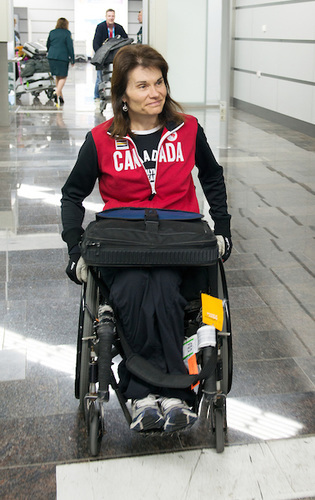
    Colette Bourgonje from Canada’s Nordic team arrives prior to the 2014 Paralympics in Sochi, Russia. (Photo: Matthew Murnaghan/Canadian Paralympic Committee)

    The team will be led by 10-time Paralympic medallist Brian McKeever along with his guides Erik Carleton and Graham Nishikawa, and eight-time Paralympic medallist Colette Bourgonje. Her silver at the 2010 Games was Canada’s first medal at home.

    McKeever, who races in the visually impaired category, will be appearing in his fourth Paralympic Games including Salt Lake City 2002, Turin 2006 and Vancouver four years ago.

    The triple-gold medallist from 2010 tweeted on Tuesday: “Woke up with a virus yesterday. Timing couldn’t be much worse. Not the ideal prep for the #Paralympics. It’s been a bumpy #RoadToSochi.”

    In 2010, McKeever, 34, was named to both Canada’s Paralympic and Olympic teams. In the Olympics, he qualified to compete in the men’s 50-kilometre cross-country race; however, Canada’s coach decided to replace him with a skier who did well in earlier race at the Games.

    Bourgonje, 52, is one of Canada’s most recognized Paralympians, having participated in all six Paralympic Winter Games in addition to wheelchair racing at three Summer Paralympics. She is the reigning world champion in the sit-skiing distance race and she captured a silver and bronze medal at the 2010 Paralympics.

    In an interview with Canada.com, Bourgonje said, “My goals for Sochi are to be in the top five.”

    Biathlete Mark Arendz, 24, is a multiple International Paralympic Committee (IPC) World Cup medallist and is first overall in this season’s World Cup standings. He will be competing for his first Paralympic medals in the standing division in his second Winter Paralympics.

    Last season, Arendz won the overall IPC World Cup Biathlon title, and won a gold and two bronze medals at IPC World Championships, and won a gold, two silvers and four bronzes throughout the World Cup season.

    Canadian World Cup Veteran Mark Arenz in the Standing Division Sprint at Canmore. (Photo Courtesy Pam Doyle)
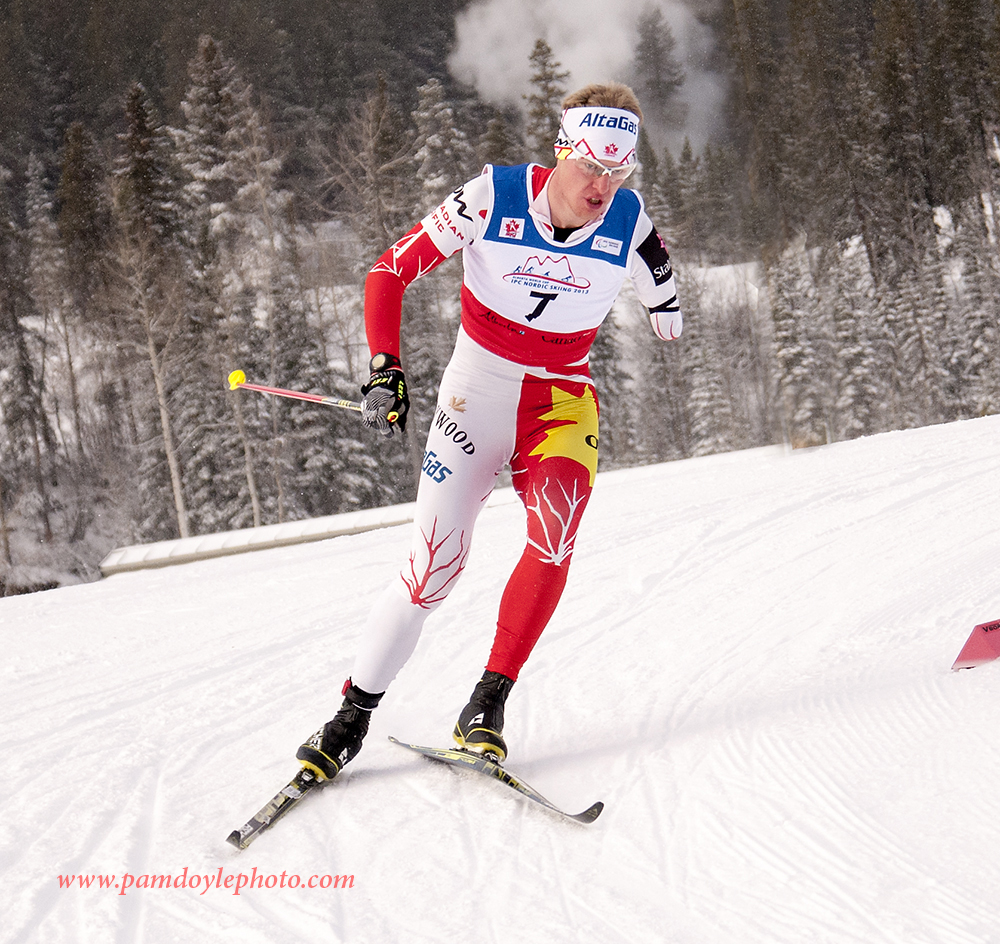
    Canadian World Cup veteran Mark Arenz in the standing sprint at the IPC World Cup in December in Canmore, Alberta. (Photo: Pam Doyle)
  • Now a National Champ, McKeever Again Adaptive Skier of the Year; Bourgonje Top Female

    Now a National Champ, McKeever Again Adaptive Skier of the Year; Bourgonje Top Female

    Canadian Para-Nordic World Cup skiers Colette Bourgonje and Brian McKeever are FasterSkier's Adaptive Skiers of the Year. (Photos: James Netz/CCC & Gerry Furseth)
    Canadian Para-Nordic World Cup skiers Colette Bourgonje and Brian McKeever are FasterSkier’s Adaptive Skiers of the Year. (Photos: James Netz/CCC & Gerry Furseth)

    Brian McKeever is one of those guys that seem to keep getting better with time. At 33, Canada’s Para-Nordic World Cup visually impaired skier once again dominated the International Paralympic Committee (IPC) World Cup scene last season, winning every IPC cross-country event he participated in.

    With guide Erik Carleton, McKeever tallied two golds at 2013 World Championships in Solleftea, Sweden, and two more at World Cup Finals in Sochi, Russia.

    “I don’t think the guides get nearly as much recognition as they should,” McKeever told Cross Country Canada in February. “It is tough being the guide because you are out front and not skiing your own race. … When I need him to hold off he has to, and when I need him to increase the pace he needs to do that as well.”

    Brian McKeever (r) with guide Erik Carleton celebrating World Championship gold (Photo: IPC)
    McKeever (r) and guide Erik Carleton celebrate their 2011 World Championships gold. (Photo: IPC)

    Childhood friends from Calgary, the duo didn’t waste any time getting from their last World Cup Finals race in Sochi to Whistler, British Columbia. There, McKeever captured his first national title in the 10-kilometer freestyle on March 24, just four days after racing in Russia.

    “You never really know how you are going to feel after getting off the plane from Russia,” McKeever told FasterSkier after arriving two days earlier. “First national championship win in my career, I am really happy about that.”

    To start the season, both McKeever and Carleton individually qualified for the able-bodied World Cup races in Canmore, Alberta. They decided to skip the opening IPC World Cups to compete in Canmore, where McKeever notched a career-best 38th in the skiathlon in mid-December.

    In February, the 10-time Paralympic medalist double poled the entire Canadian Birkebeiner 55 k classic in Edmonton, Alberta, and won by nearly three minutes. Carleton, 35, placed second.

    McKeever took on the Vasaloppet 90 k classic in early March for the second-straight year, finishing 45th overall – a vast improvement from 83rd in 2012.

    Another 10-time Paralympic medalist, Canada’s veteran sit-skier Colette Bourgonje, 51, isn’t showing signs of slowing down before the 2014 Winter Games (which will be her seventh Paralympics). In January, she raced to silver and bronze at the IPC World Cup in Cable, Wis., and went on to place eighth at World Championships and sixth at World Cup Finals. Bourgonje landed fifth overall in the IPC World Cup.

    Honorable Mention:

    Canadian Para-Nordic World Cup member Mark Arendz (c) tops the podium for the first time at 2013 IPC Biathlon World Championships in Solleftea, Sweden. (Photo: CCC)
    Canadian Para-Nordic World Cup member Mark Arendz (c) tops the podium for the first time at 2013 IPC Biathlon World Championships in Solleftea, Sweden. (Photo: CCC)

    Further proving the depth of Canada’s Para-Nordic team, 22-year-old Mark Arendz won his first IPC Biathlon World Championships gold in February in the 7.5 k sprint. Also in Solleftea, Arendz claimed bronze in the 12.5 and 15 k distance races and finished eighth overall in the World Cup.

    After trying out sit skiing for the first time at U.S. Nationals in January, Tatyana McFadden went on to represent the U.S. at the IPC World Cup in Cable, where she finished right behind Bourgonje in two races in fourth and fifth, respectively. Her results were hardly a surprise; the 24-year-old University of Illinois student has 10 Paralympic medals in wheelchair racing and at least six marathon titles (including one in Boston and other in London this month). Despite a late start, she ranked 14th in the overall World Cup.


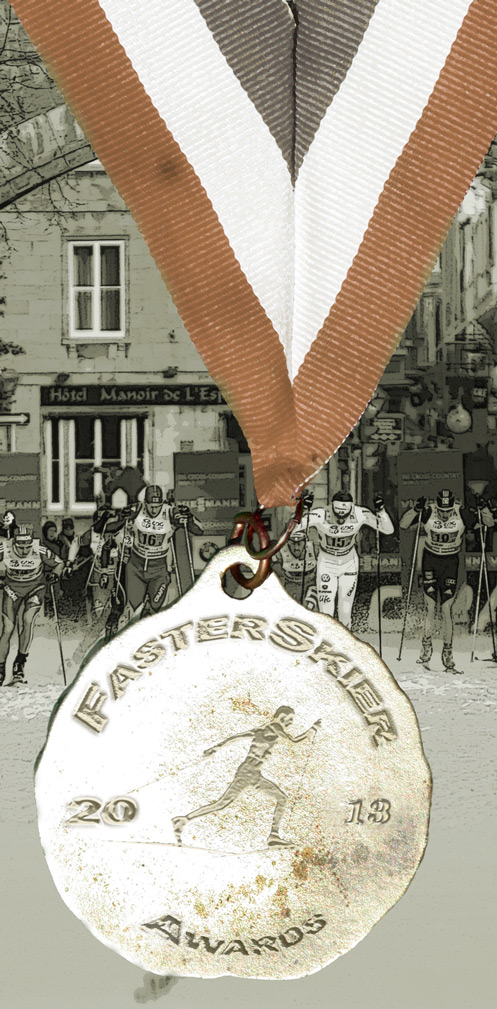
    medal-final-layer-2013

    Previous Winners:

    2011

    Brian McKeever (CAN)

    Jody Barber (CAN)

    2010

    Brian McKeever (CAN)

    Andy Soule (USA)

    Colette Bourgonje (CAN)


    See also:

    Nordic Combined Skier of the Year

    Breakthrough Skier of the Year

    Continental Skier of the Year

    Junior Skier of the Year

    Rookie of the Year

    Collegiate Skier of the Year

  • McKeever, Barber Lead Canadian Sweep of FS Adaptive Skier of the Year

    McKeever, Barber Lead Canadian Sweep of FS Adaptive Skier of the Year

    FasterSkier Adaptive Skier of the Year

    Adaptive Skier of the Year (men):

    Brian McKeever (CAN) McKeever continued his dominance of the adaptive skiing circuit, collecting three cross-country golds at the IPC World Championships and a silver in biathlon.

    All this hardware came without longtime guide, brother Robin McKeever, who suffered an injury not long before the start of the Championships. Long-time friend, and Erik Carleton took over, and McKeever did not miss a beat.

    McKeever, who skis in the visually impaired category, did not race on the IPC World Cup this season, but as in the past, he contested a number of elite able-bodied events.

    The 2010 Olympian posted a seventh place finish in the Canadian National Championship 50k and placed third in the final stage of the February NorAm mni-tour.

    McKeever ended the season ranked a career-best 14th in the overall NorAm standings.

    Brian McKeever (r) with guide Erik Carleton (l) celebrating World Championship gold (Photo: IPC)

    Honorable Mention:

    Chris Klebl (CAN) Klebl switched allegiance in 2011, moving north and taking Canadian colors. The move obviously suited him as he left the IPC World Championships in Khanty-Mansyisk, Russia with a gold and silver in the 15km cross-country and the sprint respectively.

    Klebl, skiing in the sitting classification, contested all seven IPC World Cup events, and was ranked fourth in the world when the season came to an end.

    Mark Arendz (CAN) Arendz won three IPC World Cup biathlon races, and had two seconds and a third on his way to second in the overall standings – just four points down Nils-Erik Ulset (NOR).

    Arendz was shut out of the medals at the World Championships, but had two fourths and a sixth in three starts. He also raced cross-conutry World Cup events, scoring points in four races, including a

    Sean Halsted (USA) Halsted lacked the top results of his Canadian counterparts, but had an impressively consistent season, racing both cross-country and biathlon.

    Halsted scored points in six of seven World Cup biathlon races, ranking tenth overall. He was even better on the cross-country side, finishing in the points in every race – good enough for sixth in the World Cup standings.

    [poll id=”58″]

    Adaptive Skier of the Year (women):

    Jody Barber (CAN) Barber, like Halsted on the men’s side, was the ultimate renaissance woman on the trails in 2011.

    She placed fifth in the biathlon World Cup, finishing in the top six in six of seven events. In cross-country, she skied to a sixth in the overall, buoyed by two podium appearances.

    At the World Championships, Barber came close to a medal, finishing fourth twice and fifth twice in four starts.

    Barber, a teacher and mother of five, is in just her fourth season of competing in cross-country and biathlon.

    Jody Barber brings it home at the World Championships (Photo: IPC)

    Honorable Mention:

    Colette Bourgonje (CAN) Last year’s winner of this award, Bourgonje took a break from World Cup racing, but did make the trip to Khanty-Mansyisk for the World Championships.

    The journey was worth it as she won gold in the 10km sit-ski event, bettering the silver she won last year.

    [poll id=”59″]

    Previous Winners:

    2010
    Brian McKeever (CAN)
    Andy Soule (USA)
    Colette Bourgonje (CAN)

    FasterSkier Awards 2011:

    Rookie of the Year
    Breakthrough Skier of the Year
    Collegiate Skier of the Year
    Adaptive Skier of the Year
    Continental Skier of the Year
    Biathlete of the Year
    Nordic Combined Skier of the Year
    Performance of the Year (cross-country, biathlon, nordic combined)
    Cross-Country Skier of the Year