On May 26, Maddie Phaneuf wrote a crisp and revealing blog post about her struggle with mental health issues after the 2018 Olympics. The blog post was titled Invisible Battles, and like many who suffer from a mental health crisis, her struggle was real but often difficult to discuss candidly. Phaneuf does a great service to the community by describing the symptoms she experienced and how she sought help from mental health professionals.
Phaneuf was eventually diagnosed with Post Traumatic Stress Disorder or PTSD as a result of falling ill with strep throat during the 2018 Games and being unable to race. The myopic pursuit of excellence and fulfilling the Olympic dream took an unexpected turn in PyeongChang that left her feeling like a fraud. She questioned her identity as an athlete as she contemplated leaving the sport. The let down of being named to the Olympic team then falling ill and not racing precipitated a downward spiral for the now twenty-four-year-old.
“When we learn about PTSD we usually tie it with war veterans, so it’s not common for people to associate PTSD with athletes,” Phaneuf wrote in her post.
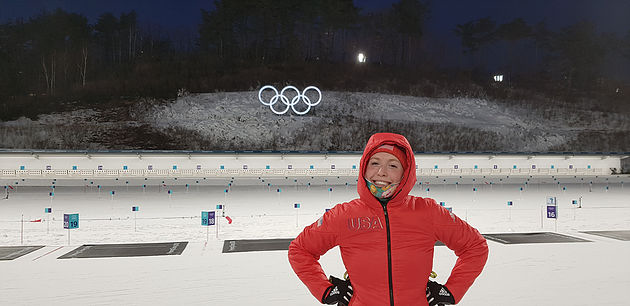
Maddie Phaneuf at the 2018 PyeongChang Olympics. Phaneuf used this image in her blog post and titled it “Before shit hit the fan…” (Photo: courtesy Maddie Phaneuf)
In this episode, we speak with Phaneuf who has relocated to Lake Placid, New York after a stint in Boulder, Colo. She has since rekindled balance in her life and is pursuing a spot on the US Biathlon team. She also reflects on the importance of seeking professional help. That’s also a recommendation FasterSkier promotes.
Here’s some advice from Phaneuf on finding balance and maintaining wellness that was included in her blog post:
If you’re interested in non-therapy ways I’ve found help me feel more balanced and generally happy, here’s that list. Again, I’m not a health professional, if you’re struggling – talk to a professional.”
Getting outside and exercising
Less screen time
Journaling my feelings
Mediating or practicing Savasana
Surrounding myself with people I love
Getting enough sleep, eating well, and staying hydrated
Kelsey Phinney brings to the sport of cross-country skiing a big-world view as she has rolled with challenges and fine-tuned her athletic performances.
First things first: Phinney has become a voice for Parkinson’s Disease advocacy and education. She produced this great podcast episode for the Davis Phinney Foundation titled The Neuroscience of Parkinson’s — it’s part of a broader series from Phinney called The Parkinson’s Podcast.
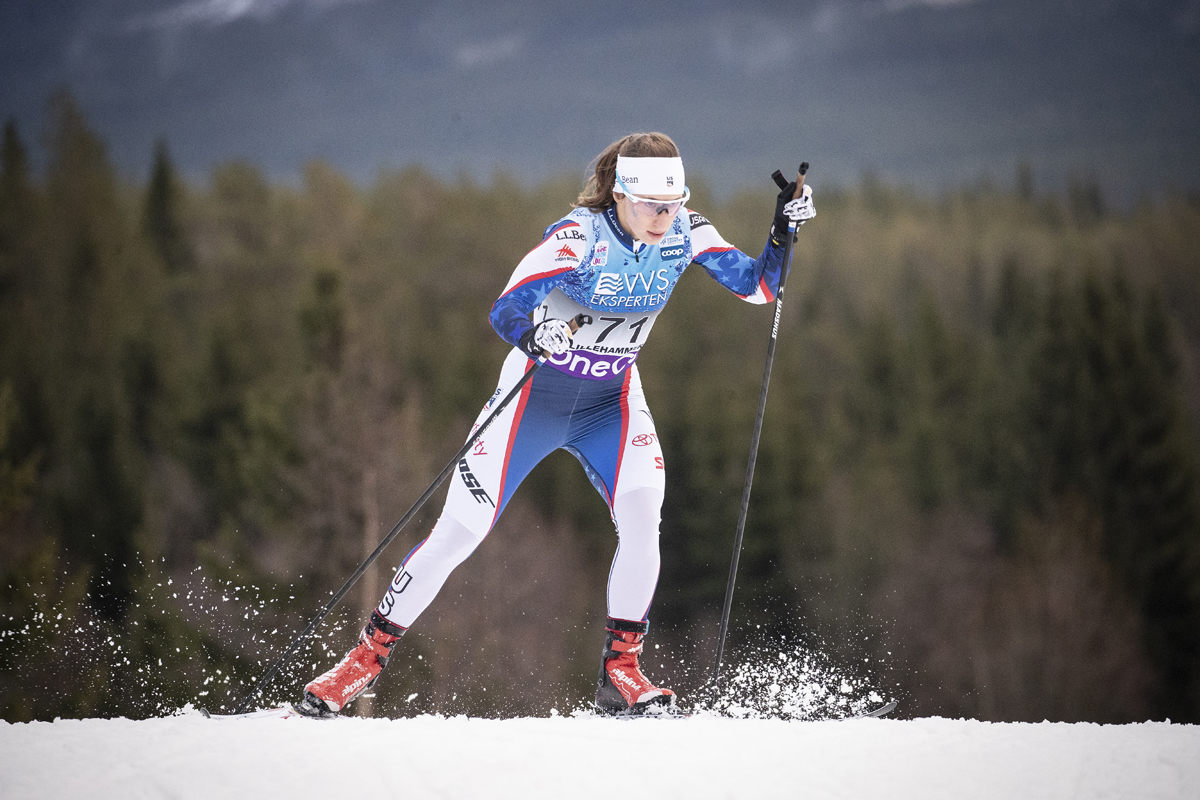
Kelsey Phinney earlier this season in Lillehammer, Norway’s World Cup skate sprint. (Photo: Fischer/Nordic Focus)
Phinney’s father, himself a former professional cyclist who was diagnosed with Young Onset Parkinson’s Disease in 2000, founded the Davis Phinney Foundation with his wife Connie Carpenter-Phinney.
So there is the high-quality high-impact work Kelsey Phinney has been engaged with. Then there’s the force she’s been on cross-country skis for many years. After graduating from Middlebury College, she spent two years with the SVSEF Gold Team. She then transferred to the SMS T2 group in the spring of 2018. She raced several World Cups this season with her best result a 19th in Lahti, Finland’s skate sprint. Phinney also placed third in the 2019 National Championship skate sprint in Craftsbury, Vermont.
“Everyday has been a new adventure,” were the words from the U.S. Ski Team’s (USST) Kevin Bolger as he summarized his first full-time season on the World Cup. At twenty-six-years-old, Bolger is a relatively new face on the team’s evolving crop of sprint skiers. He was re-nominated to the USST for a second consecutive year this past May.
Bolger’s ski path took him to Sun Valley for two seasons as a post-graduate skier. He matured physically and mentally to earn a roster spot on the University of Utah ski team and race in four NCAA skiing championships. Then he popped a classic sprint National Championship win in 2017. The following year he raced his first World Cup in Lahti, Finland — where he placed 11th overall.
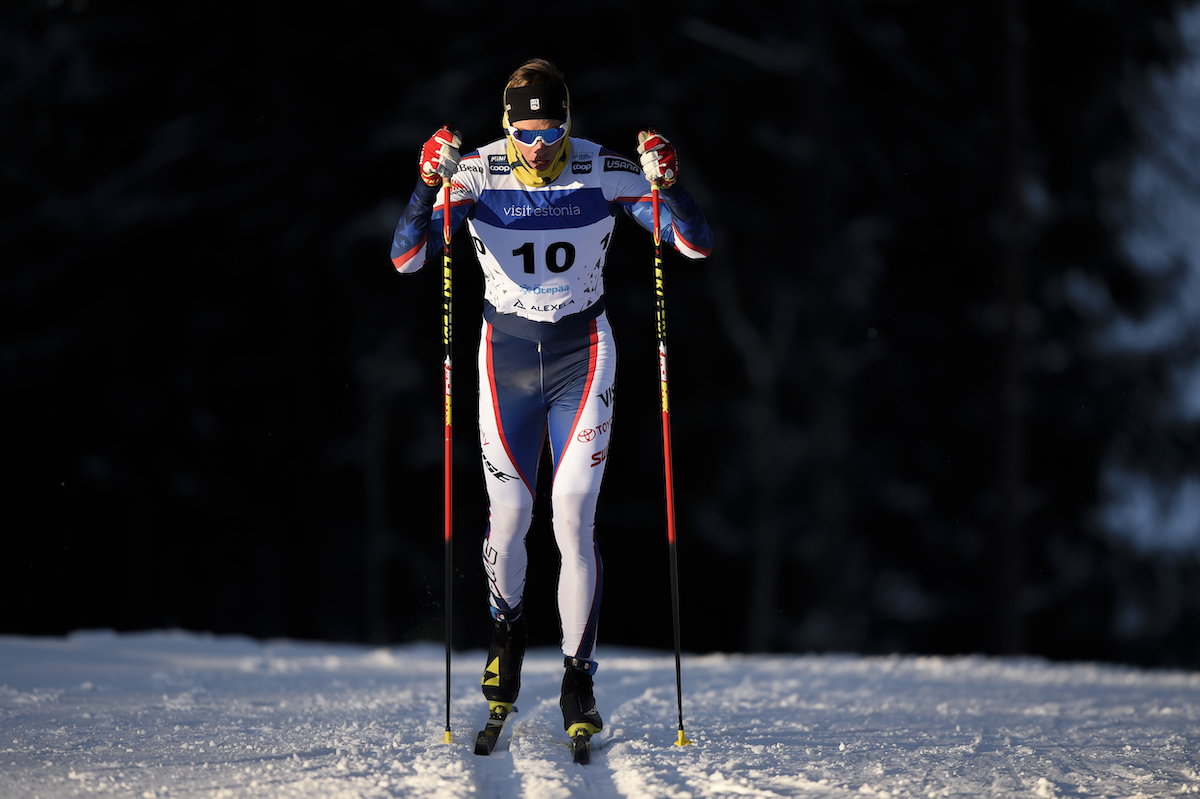
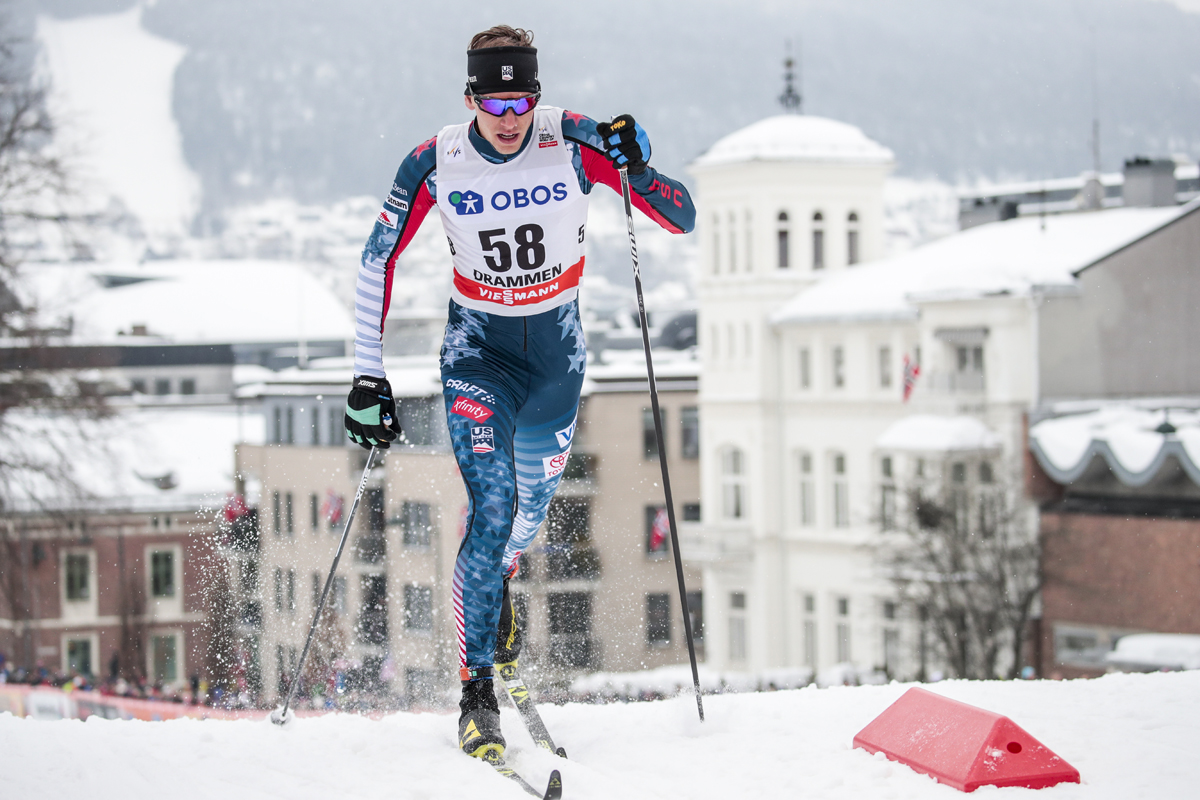
Kevin Bolger the 2018 men’s classic sprint qualifier in Drammen, Norway. (Photo: Fischer/Nordic Focus)
Like any good younger brother, Bolger traveled abroad to visit older sibling Conor. The elder brother was pursuing a PhD in Trondheim, Norway. As a developing collegiate skier, the future USST athlete spent summers training with some of the fastest skiers in Norway.
He is proudly Alaskan and has resisted the temptation over the years to migrate elsewhere. We are talking about twenty-nine-year-old Reese Hanneman who has in fact migrated from his hometown of Fairbanks to the more southern maritime climate of Anchorage, Alaska.
So the question has been, is Reese Hanneman retired? After many years on the SuperTour, winning five national titles, stints on the World Cup, and an Olympic team nomination last year, the answer to that question really is how you define retired. He’ll not be on the SuperTour — he did not contest any domestic races at that level this season — but you might find him racing in places like China.
If you follow Hanneman on Instagram, you’ll know his creative eye impresses. He is the founder of the creative PR agency the Ophira Group, and he is finishing his engineering degree. He still finds time to “train” but certainly, the hours are down.
We caught up with Reese Hanneman, the older of the two cross-country skiing Hanneman brothers, (Logan is 25) in mid-February after he had competed in the China Tour de Ski. (That race concluded in early January.)
In this episode, we speak with Estonian athlete Karel Tammjärv. If you are unfamiliar with the latest news, Tammjärve was arrested last week in Seefeld, Austria as part of an investigation into doping.
FasterSkier first contacted Tammjärv yesterday and in a quick turn of events, Tammjärv offered us an interview this morning. Although the interview was conducted on short notice, we had no pre-conditions when it came to the types of questions we could ask.
In this episode, we talk with Zuzana Rogers an Anchorage, Alaska based physical therapist who can often be found working with elite cross country skiers from APU and the U.S. Ski Team.
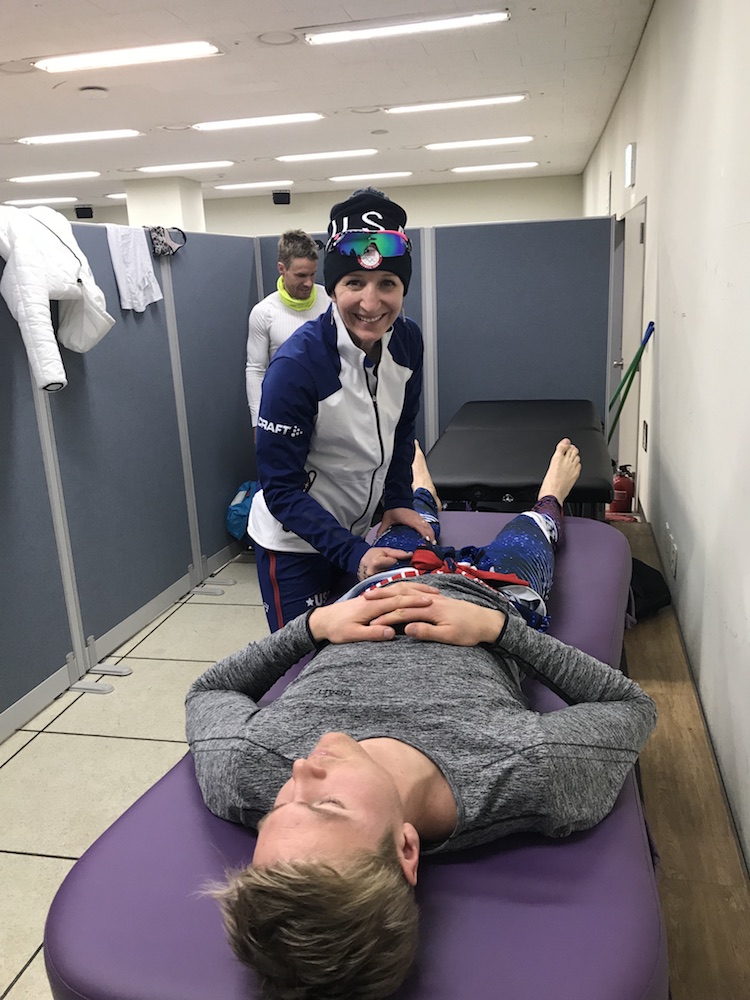
U.S. Ski Team physical therapist Zuzana Rogers with athlete Erik Bjornsen at the 2018 Winter Olympics in PyeongChang, South Korea. (Courtesy photo)
We spoke with Rogers on February 19th when she was finishing up a pre-World Championships high altitude camp with the distance skiers in Davos, Switzerland. She currently is assisting U.S. skiers in Seefeld, Austria at the 2019 World Championships.
We talk about how to maintain basic wellness on the road, and what type of non-9 to 5 role she has with the U.S. Team.
Putting yourself in another’s shoes – or ski-boots — is an age-old tenant. But it would be truly hard to imagine being twenty-one years old and thrust into the biathlon world spotlight. At least year’s Olympics in PyeongChang, Swedish biathlete Sabastian Samuelsson literally arrived on the scene in his canary yellow race suit — he won a silver in the pursuit and gold as a member of Sweden’s men’s relay team.
During his post-race press conferences, his condor was appreciated as was his down to earth vibe. The medals, the massive media attention, the desire for his limited time were all new pathways for a young person to navigate. In this Nordic Nation podcast, we spoke with Samuelsson on February 8 to learn about his life since PyeongChang.
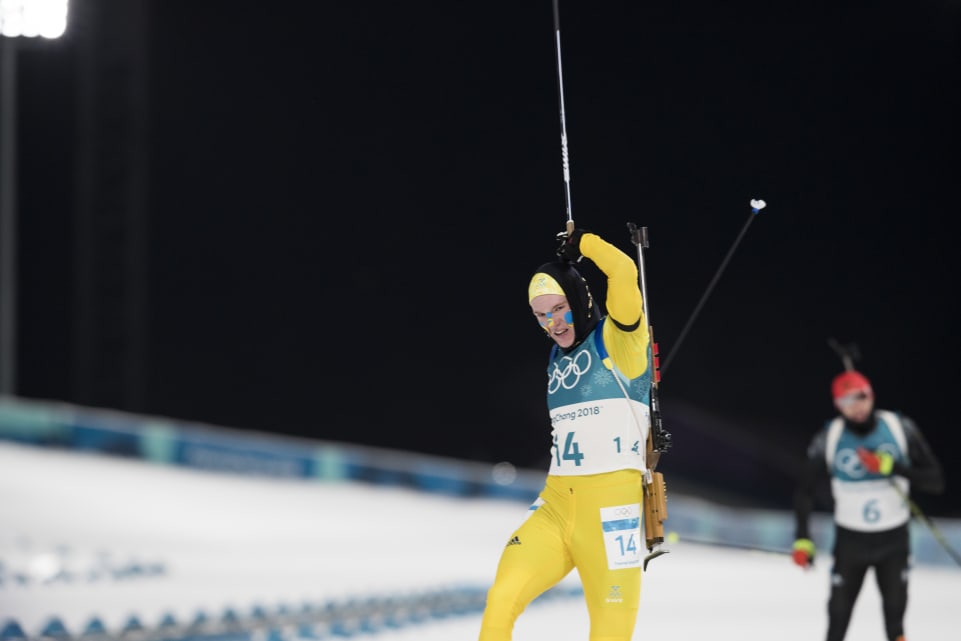
Sebastian Samuelsson of Sweden celebrating silver in the men’s 12.5 k pursuit at his first Olympics on Monday in PyeongChang, South Korea. It was also his first non-relay podium at the World Cup/World Championships level. (Photo: IBU/Biathlonworld)
Beyond being one of the most recognizable faces in Sweden, Samuelsson has become an outspoken critic of WADA’s Compliance Review Committee (CRC) and its Executive Committee (EX CO). This past January, after RUSADA missed the Dec. 31 deadline for handing over the Moscow Lab’s LIMS data and any underlying data, Samuelsson penned an open letter to the CRC’s head, Jonathan Taylor.
Long before the “Here comes Diggins” call by 47-year-old Chad Salmela at this season’s Olympics, he was already known throughout the ski world as an athlete and sports commentator. Let’s just say since the now famous call, Salmela’s announcing talents have become more well known. In what now may be considered his spare time, Salmela is a varsity cross country running coach and assistant track and field coach at The College of St. Scholastica in Duluth, Minn. For ten years he was the head coach of St. Scholastica’s nordic ski team. Salmela began the cross-country program before stepping down in 2016.
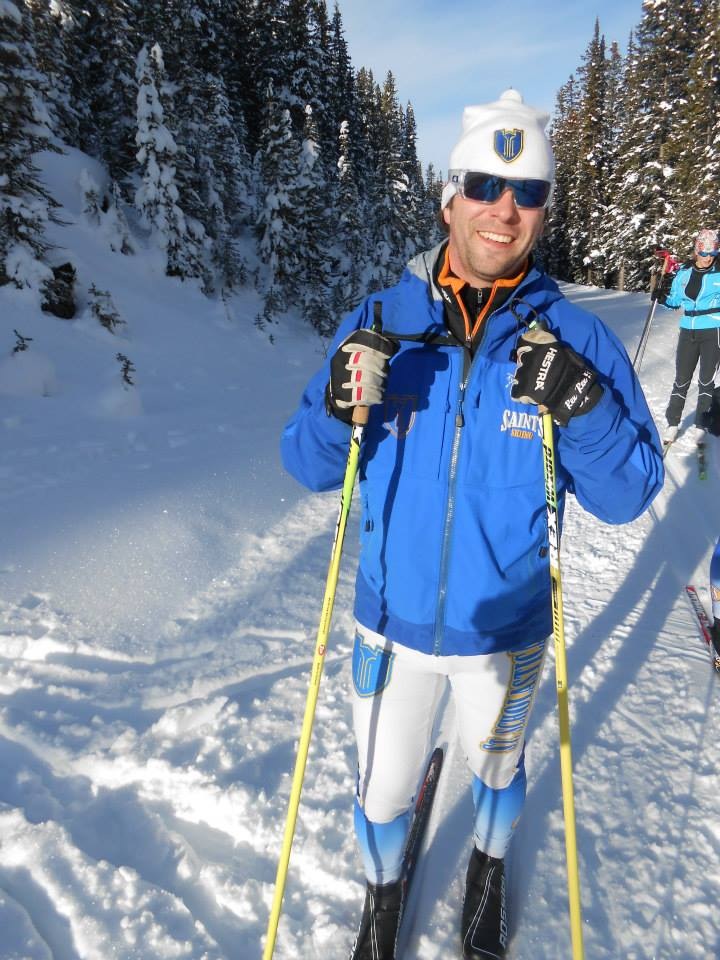
Back in his nordic coaching days is Chad Salmela. Now, at 47, he coaches running at The College of St. Scholastica and is the commentator for World Cup nordic skiing and IBU Biathlon at NBC Sports. (Photo: Courtesy Chad Salmela)
As an athlete, Salmela was a member of the U.S. Biathlon team from 1990-1998. He still skis and enjoys the sweet outdoor access Duluth affords.
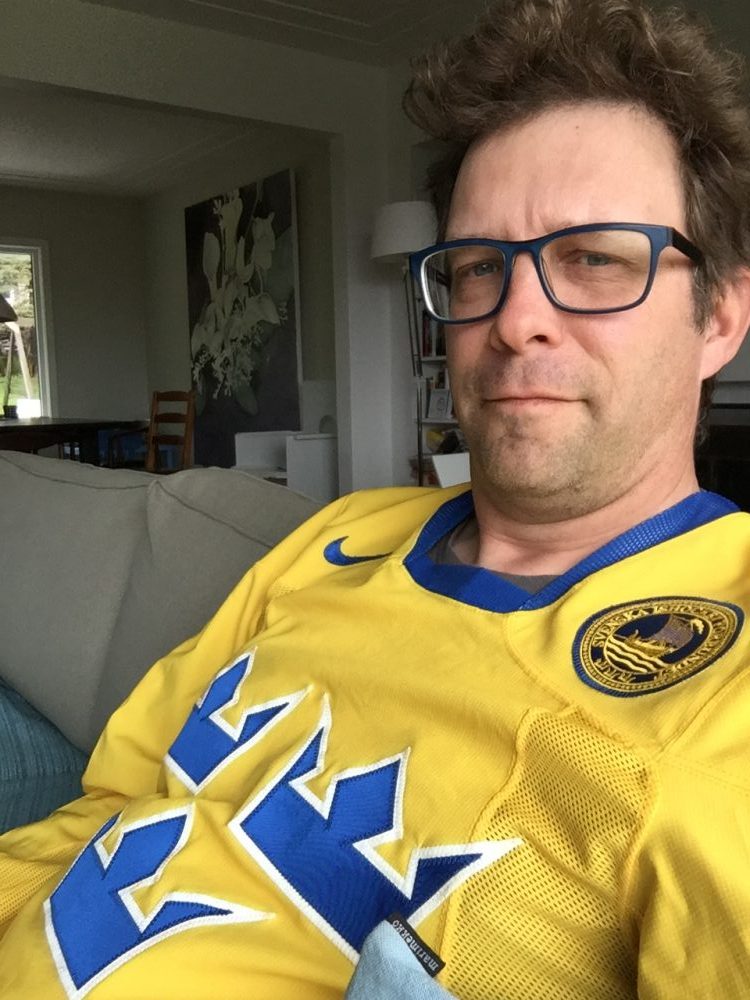
The selfie. Chad Salmela in his Sweden hockey jersey. He’d been rooting for Sweden while watching the IIHF worlds a few years back.
In this episode, we talk about the “Here comes Diggins” call, why he stepped away from coaching nordic skiing, and how he prepares for the grind of announcing World Cups. If you’d like to hear a solid interview of Salmela and his experience at the 2018 Winter Games by a great cast of mainstream sports writers and podcasters, you can check that out here.
And if you have no idea what we are referring to when we bring up the “Here comes Diggins” call, you should click here.
Back in January 2016, Tad Elliott emerged back onto the national championship scene with a win in the men’s 30-kilometer freestyle mass start at U.S. Nationals in Houghton, Mich. It had been some time since the skier originally from Durango, Colorado had felt unleashed from the grips of the energy-sapping Epstein-Barr virus.
Elliott went on to make the 2017 Nordic Ski World Championship team in Lahti, Finland. There, it was hard to miss his stunning effort firing up the first big climb out of the stadium as he skied the third leg of the U.S. men’s 4 x 10 k relay. Talk about lightness and upward momentum. In Lahti, he also notched a 27th in the men’s 50 k skate. He is a former member of the U.S. Ski Team and a three-time World Championship team member. (Let’s not forget this is a two-sport athlete. On two-wheels, Elliott crushed as an elite mountain biker. He won two U23 National Championship in mountain biking.)
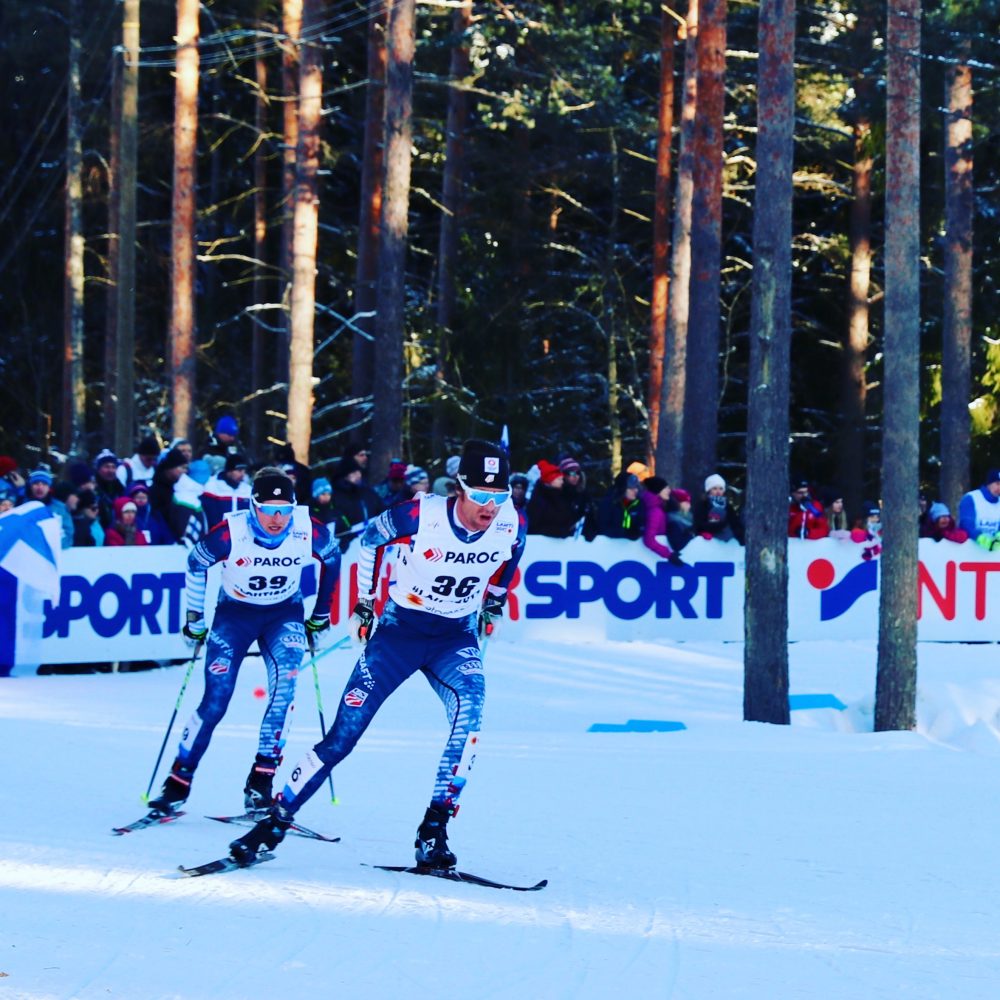
Tad Elliott (bib 36) and Kyle Bratrud (bib 39) during the men’s 30-kilometer skiathlon at the 2017 Lahti World Championships. (Photo: Matt Whitcomb)
Known as one of the finest skate skiers of his generation, Elliott’s upward trajectory unraveled in 2013 as he began struggling with symptoms of the Epstein-Barr virus. The winner of multiple national championships, Elliott began literally walking towards a life and a career premised on rest and recovery with the occasional aerobic stimulus to gradually bring him back into form.
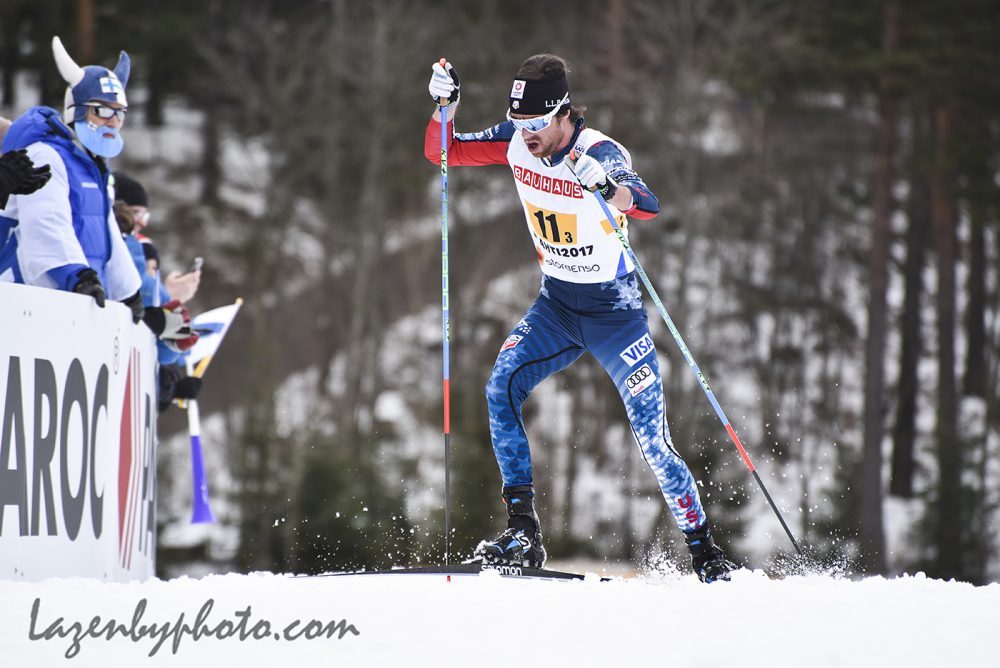
Tad Elliott racing the third leg of the U.S. men’s 4 x 10 k relay at the 2017 Nordic World Championships on Friday in Lahti, Finland. (Photo: John Lazenby/Lazenbyphoto.com)
In this episode of Nordic Nation, we tracked down the now thirty-year-old Elliott on October 9th, where he has begun undergraduate studies in sport physiology at the University of Northern Michigan. Elliott is also applying what he learned during his racing career as an assistant coach with the storied NMU program. He has also begun a side gig consulting athletes struggling with recovery and those wanting to develop sustainable training plans.
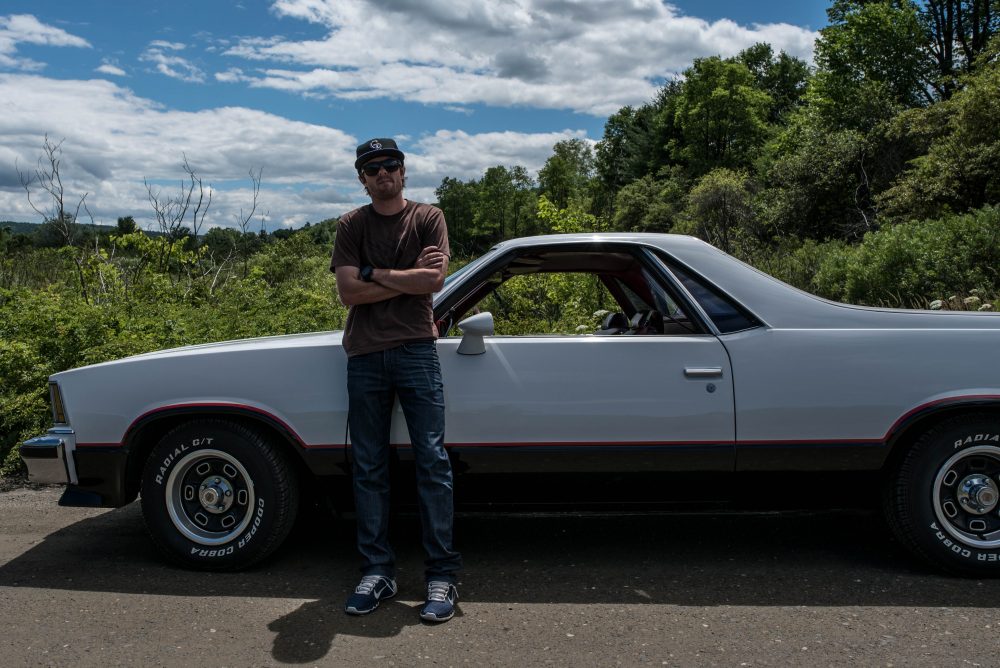
We have the go-ahead to post his email. You can reach out to him at tadelliott2@gmail.com if you’ve got questions as it relates to his experience with overtraining and the rebound. And he drives an El Camino that we are informed is stored indoors somewhere back east.
FasterSkier caught up with former, yes former U.S. Ski Team member Andy Newell on October, 8 in Park City, Utah. Newell was in Utah assisting with the latest NEG camp and training with his old cohort when time permitted. No longer a staple of the national team, the 34-year-old Newell has partially turned over a new leaf. He’s still training as a professional skier, but he’s also the owner of a cross-country skiing business called Nordic team Solutions.
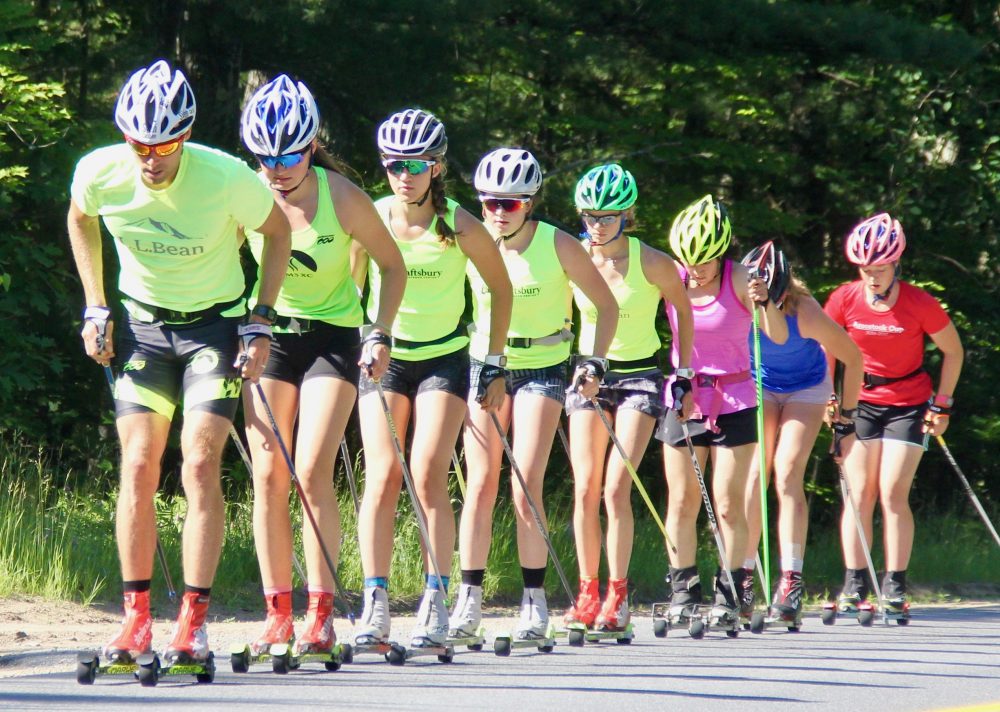
Andy Newell leads the double pole train at the Lake Placid REG camp as part of his coaching related startup -Nordic Team Solutions. (Photo: Bryan Fish)
Newell plans on racing several World Cups this season, and, if the gears are clicking, he hopes to qualify for the Seefeld, Austria World Championships. If that’s not enough for this athlete in transition, Newell intends to expand his nascent business.
Newell’s business model is part web-based platform and part ski-boots on the ground business specializing in technique, training, and nutrition. We’re sure we missed something. But Newell covers it all in the podcast as he explains the niche he’s trying to fill.
Andy Newell (left) putting his Nordic Team Solutions to good use. (Photo: Bryan Fish)
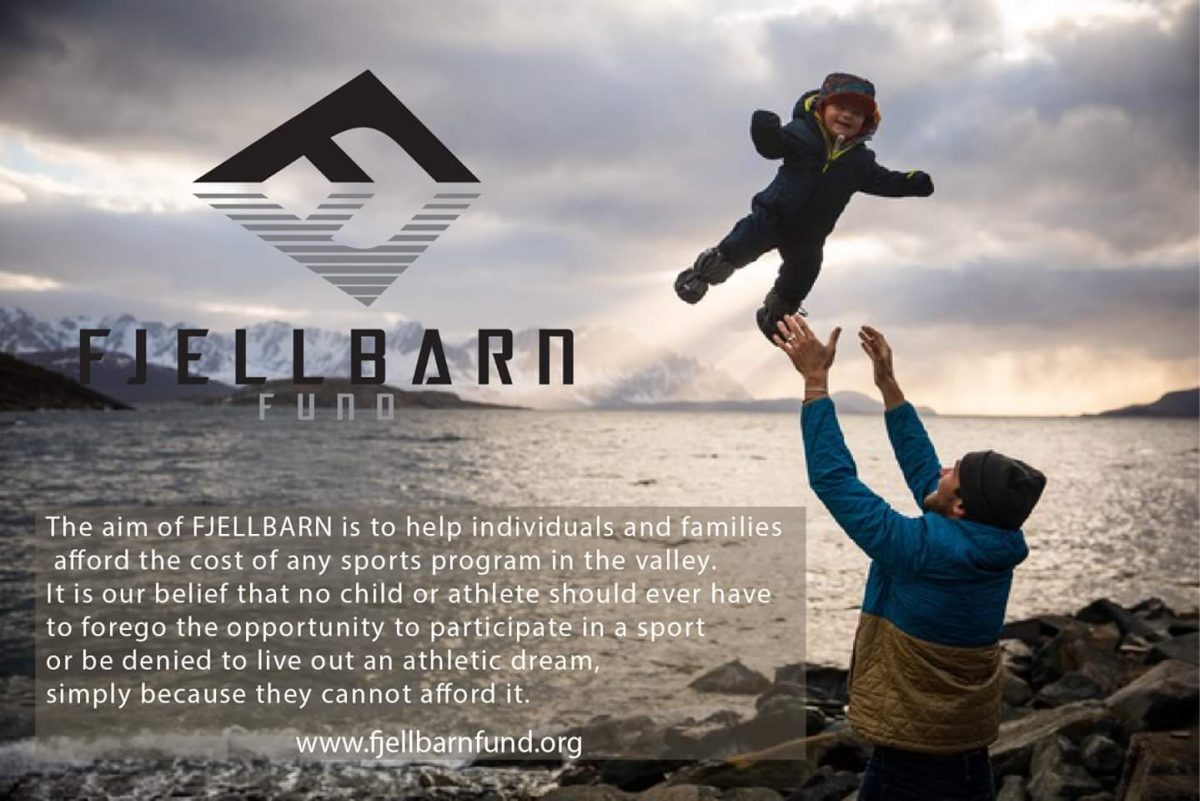
From 2011 to 2014, Sylvan Ellefson, based out of Edwards, Colorado, was on a roar. SuperTour wins, World Cup starts, and a 30-kilometer skate national championship in 2014. Now, at 31 years old, it seems the skier who began his ascent in the sport during high school would rather focus on being a husband, father, brother, and coach rather than draw attention to himself. Based as a business person in Colorado’s Vail Valley, Ellefson is giving back to the community that helped support his dreams. Along with his brother Kjell and friend John Cummins, the three have begun the Fjellbarn Fund. For those non-Norwegian speakers out there, Fjellbarn is Norwegian for “mountain child”.
Sylvan Ellefson giving his son Ryder some air time. (Photo: Kjell Ellefson)
The new nonprofit based near Vail is dedicated to helping athletes from families in need pursue their athletic dreams.
Sylvan Ellefson on the World Cup. (Photo: Reese Hanneman)
Our conversation with Ellefson was recorded on Sept. 10. Along with learning about the inspiration for his nonprofit work, we’ll get some insight into how Ellefson’s ski career informs his coaching with the Ski & Snowboard Club Vail.
In late August, U.S. Ski Team (USST) Head Coach Chris Grover broke his own news, releasing three new sets of criteria on behalf of U.S. Ski & Snowboard, the national governing body for cross-country skiing. The three separate documents discussed by Grover and linked in his blog disclosed the selection criteria for World Cup and World Cup Period 1 team selection, 2019 World Ski Championships (WSC) in Seefeld, Austria, and the 2019/2020 national team.
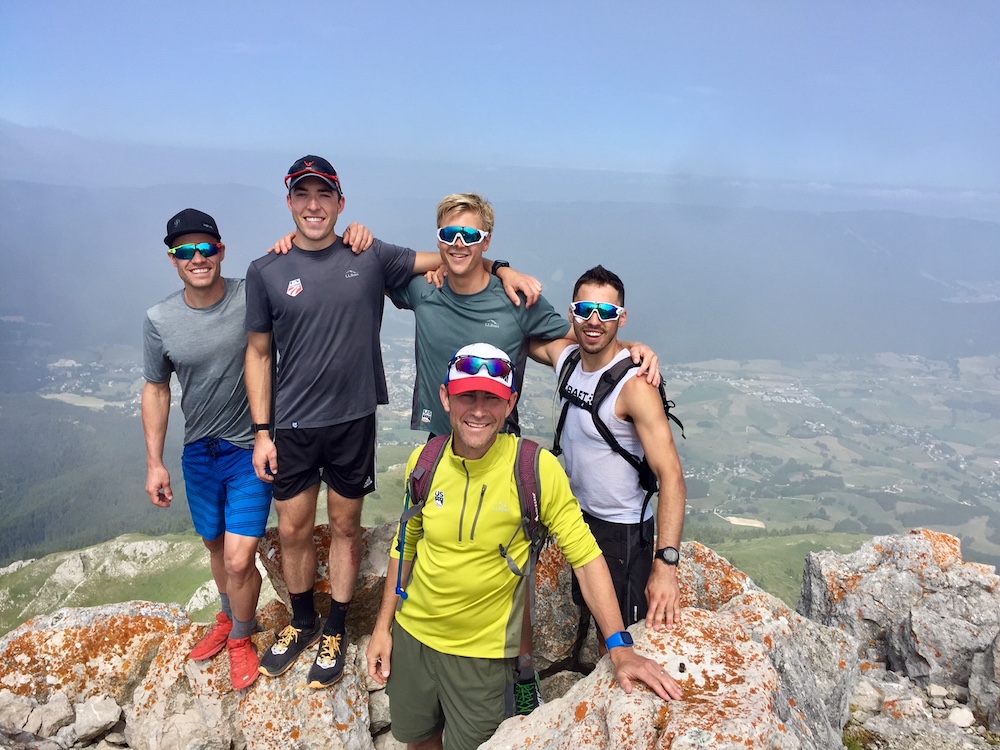
U.S. Ski Team Head Coach Chris Grover (front) with (from left to right) Simi Hamilton, Paddy Caldwell, Erik Bjornsen, and Ian Torchia on top of the Roc Cornafion above Villard-de-Lans, France, during a training camp this summer. (Photo: Chris Grover)
Grover and new USST development coach Gus Kaeding spoke with FasterSkier for its podcast on Sept. 11 to highlight some of the updated criteria and provide context for the modifications.
(A lightly edited conversation with Grover and Kaeding is available on the Nordic Nation podcast. Warning: you may want to time your listening for a 1.5-hour road trip or dish duty after a crowded dinner party. It’s a lengthy discussion.)
New U.S. Cross Country Development Coach Gus Kaeding. (Photo: Sarah Brunson/U.S. Ski & Snowboard)
World Cup Selection Criteria
Considering World Cup Period 1 starts, Grover stated in the following interview and in accordance with the selection criteria, the discretionary picks were made in consult with a larger working group. That group is comprised of four national-team staff coaches — Grover, Matt Whitcomb, Jason Cork, and Kaeding — as well as Dakota Blackhorse-von Jess (athlete rep), August Teague (chair of the cross-country coaches sub-committee), and eight senior club coaches: Chris Mallory (Sun Valley Gold Team), Erik Flora (Alaska Pacific University), Joe Haggenmiller (Central Cross Country), Pepa Miloucheva (Craftsbury Green Racing Project), Austin Caldwell (formerly of the Bridger Ski Foundation, now assisting the University of Colorado-Boulder Ski Team), Dragan Danevski (BSF), Pat O’Brien (Stratton Mountain School T2 Team), and Dan Weiland (Ski Club Vail).
According to Grover, this 14-person working group was tasked with helping develop WSC and World Cup selection criteria. Further, this group, which again includes the four USST staff coaches, remains responsible for nominating the discretionary picks for each World Cup period this season.
Once those World Cup Period 1 nominations were made, they were sent to a three-person discretionary selection review group with the authority to approve or disapprove those nominations.
The language in the World Cup selection criteria, as it refers to this smaller group, reads as follows: “All discretionary selections will be reviewed by a discretionary selection review group comprised of the U.S. Ski & Snowboard Nordic Program Manager, the U.S. Ski & Snowboard Chief of Sport, and the athlete representative from that sport who is a member of the U.S. Ski & Snowboard Board. If the U.S. Ski & Snowboard Board Athlete Representative is also a currently competing athlete then another athlete, who is not actively competing, will be selected by the Athletes’ Council to be the representative in this group.”
In a follow-up email, Grover clarified who serves on the discretionary selection review group. “This would normally be Bryan Fish, Luke Bodensteiner, and Rosie Brennan. Because Rosie is an active athlete, Dakota has replaced her,” Grover explained.
The other changes to World Cup selection that Grover cited in his original blog post are as follows and discussed in the podcast:
The standard by which men advance from one World Cup period to the next from top 30 to top 40 to reflect the greater depth in the men’s WC field.
Addition of SuperTour leaders as guaranteed starts to the Tour de Ski.
Addition of language to the past criteria for selecting a World Cup Finals team in Quebec City, including:
Top-30 individual performance at the Seefeld World Champs (the previous standard was top 25).
Created a best 11 of 14 SuperTour results selection to round out the World Cup Finals team, to encourage athletes to continue to race in Europe mid-season, rather than feeling the need to attend every SuperTour competition.
World Ski Championships Criteria
Come late February, the World Championships begin. In a personal blog published on FasterSkier, Grover noted the key changes to the current WSC selection criteria.
The World Cup remains the most direct path to meeting objective criteria for WSC team nomination.
Discretionary selection is divided into two phases: Phase 1 and Phase 2. The phases refer to the use of coaches’ discretion once objective criteria have been applied to WSC team selection.
As FasterSkier understands the criteria, Phase 1 will be used to discretion solidly performing World Cup skiers who have not met objective criteria. Phase 1 reads much like recent 2017 Lahti and 2015 Falun WSC discretionary criteria. The current language allows for some latitude when considering potential team discretionary picks. An indication of potential future championship medal performance, as well as any outstanding competition results from last season and the 2018/2019 season, are tools for coaches making discretionary picks.
However, the “attitude and commitment of athletes” language included in the past as a possible factor in discretionary selection was excluded from the latest iteration of WSC selection criteria.
The discretionary selections made by USST team coaches in Phase 1 will be reviewed by a three-person group including the U.S. Ski & Snowboard President and CEO Tiger Shaw, Bodensteiner, and the U.S. Ski & Snowboard board athlete rep as long as they are not actively competing. Another non-competing athlete will be chosen as a replacement if this conflict of interest arises. During the 2018 OWG selection, for example, former USST member Holly Brooks served as the athlete rep. Brooks was retired from competition when she served as part of the review committee.
For any remaining team spots, Phase 2 of discretionary selection “may” be used. This is where the selection of SuperTour skiers comes into play. Grover, in his blog, said the selection of domestic skiers from SuperTour could be perceived as the biggest change.
Phase 2 can but is not obligated to consider the 2019 Championship Selection List and the “next best athlete” in what the criteria define as a “pool” of athletes. The “pool” is separated into four discrete disciplines: women’s distance, women’s sprint, men’s distance, and men’s sprint.
The criteria also specify the “next best athlete” as “the highest ranked athlete on the ranking list in each of the four disciplines who was not nominated to the team.”
The 2019 Championship Selection List will be created using an athlete’s best two results in sprint and distance respectively with points accrued from SuperTour races and weighted U.S. National Championships races. (Sprint points for the Championship Selection List consider qualification place only.)
The athlete pools allow for the USST head coach to select an athlete from a refined list based on sex and discipline, rather than a single men’s or women’s list.
During the interview, Grover explained his rational behind Phase 2 Discretionary Selection and the use of pools.
“We obviously found ourselves last year in a situation going into the Olympics where we were feeling compelled, due to the language in the criteria, to look at selection as one list of athletes,” hesaid. “And to look at athletes who had more points in any discipline, whether they were a man or a woman, a distance skier or a sprinter, as the next best athlete to be nominated to the team. By moving the secondary or domestic selection from an objective domestic selection to a discretionary selection, it gives us coaches discretion to be able to select from the correct pool to fill an open start spot. So if we know that we need to fill a men’s 50 k skate spot, we can look to the men’s distance list and not to an overall combination of women’s and men’s distance and sprint lists. So this is kind of a creative way that we feel is going to solve the issue that we had last year. The USOC [U.S. Olympic Committee] has given us the thumbs up, to go ahead and pursue, and we are hoping that it selects more of the right athletes at the bottom of the selection.”
The process for selecting athletes in Phase 2 appears streamlined. Grover recommends an athlete from the “pools” and the three-person selection committee makes the selection. The criteria also specify that potential WSC team athletes chosen during Phase 2 should have attained a minimum World Rank (FIS points) of 120 in sprint or distance by the release of FIS points list 5 for this upcoming season.
In the past, athletes have contacted coaches to advocate for themselves. The updated WSC criteria provide guidelines by which athletes can contact Bodensteiner directly in writing as a means of self-advocacy. Those direct petitions are potentially considered by the selection committee.
For athletes with a grievance with WSC team selection, the criteria also provide contact information for the USOC Athlete Ombudsman Kacie Wallace. Athletes can contact the USOC for assistance when challenging their non-selection.
In this instance, when it comes to the WSC and team selection, the USOC has oversight since the WSC selection criteria involve “protected competitions”. Both World Cups and the WSC are protected competitions by definition.
From USOC Bylaws, Section 1.3(W) pg. 3: “protected competition” means: 1) any amateur athletic competition between any athlete or athletes officially designated by the appropriate NGB or PSO as representing the United States, either individually or as part of a team, and any athlete or athletes representing any foreign country where (i) the terms of such competition require that the entrants be teams or individuals representing their respective nations and (ii) the athlete or group of athletes representing the United States are organized and sponsored by the appropriate NGB or PSO in accordance with a defined selection or tryout procedure that is open to all and publicly announced in advance, except for domestic amateur athletic competition, which, by its terms, requires that entrants be expressly restricted to members of a specific class of amateur athletes such as those referred to in Section 220526(a) of the Act; and
2) any domestic amateur athletic competition or event organized and conducted by an NGB or PSO in its selection procedure and publicly announced in advance as a competition or event directly qualifying each successful competitor as an athlete representing the United States in a protected competition as defined in 1) above.
As FasterSkier understands, the USOC does not provide legal representation for athletes. However, the USOC does provide a lengthy list of arbitration decisions on its website as a resource for those who believe they have been wrongly denied membership on a team.
Another notable change is the clarification of language as it pertains to the selection of WSC sprinters. In the context of selection criteria, it is referred to as the “5-sprinter-max rule”. In other words, no more than five sprinters total per sex will be selected to the current WSC team. Five male sprinters. Five female sprinters. No more.
During the 2018 Olympic Winter Games (OWG) selection, the five-sprinter-max rule was challenged. Specifically, the language in the OWG selection criteria did not specify what happens when an athlete dually qualifies through objective criteria. For example, last year Jessie Diggins, Sadie Bjornsen, Kikkan Randall, and Sophie Caldwell all met objective OWG criteria in both distance and sprint. Would a dually qualified athlete’s inclusion on the team take up both a distance spot and one of five female sprint spots? Last winter, that question appeared unsettled.
The answer moving forward into the current 2019 WSC team selection period for the dually qualified athlete conundrum is a categorical yes. Dually qualified athletes do count towards a sprint spot.
Again, in the podcast, some of the other major changes are discussed in greater detail.
2019/2020 USST Selection Criteria:
Kaeding was brought on board to help better define criteria when it comes to USST nominations. One thing is clear, the new criteria spells out in detail the performance benchmarks both senior and junior skiers should meet to receive USST member status.
The new USST criteria include objective criteria for A, B, and D-team status based on an athlete’s year of birth (YOB) and the minimum World Rank an athlete should have at a specific age. This is referred to as age-weighted criteria. For example, if an athlete was born in 1995 and is 24 years old by January and their World Rank is 20th or better, they’ll be an auto-nomination to the A-team.
Kaeding discusses in the podcast the data-crunching basis for the reliance on World Rank and an athlete’s YOB when it comes to the objective criteria. In his blog post, Grover wrote the following regarding the use of World Rank:
“The USST staff has spent much of the past year examining data from major championship medalists over the past decade, and have found that world rank is often the best indicator of who is on the path towards a future medal.”
For A-team nomination, any athlete regardless of age who finishes in either the top-15 of the FIS World Cup Sprint and Red Group List and/or the top-15 in the FIS World Cup Distance and Red Group List is an A-teamer. The old A-team requirement involved a top-30 rank. Grover said in the podcast this change better reflects the World Cup’s Red Group that includes only the top-15 skiers in sprint and/or distance. Red Group athletes have World Cup food and lodging paid for by the International Ski Federation (FIS).
Additionally, any skier with a top-six result in a sprint or distance World Cup race punches the A-team ticket too.
B-team objective requirements are less stringent. World Rank and YOB benchmarks are detailed. Further, an athlete born in 1996 and scoring an individual top 10 at the 2019 U23 World Championships is an auto-nomination to the B-team.
D-team objective criteria have been both broadened and tightened. First and foremost, an athlete will have to be under 23 to remain a D-team athlete for 2019/2020.
U23 World Championships results qualifying an athlete for the D-team have expanded to include an individual top 10 at U23s for an athlete born in 1997 or 1998. And any athlete at World Juniors placing in the top 10 moves onto the D-team. The old requirement for D-team nomination based on U23 and World Juniors individual performance was a podium finish.
World Rank and YOB benchmarks are included in the D-team objective criteria.
Coaches’ discretionary selection to the B and D-teams remain a possibility. The language under the Discretionary Selection Policy section is similar to recent editions.
To contact Grover and Kaeding directly, they provided their email addresses:
He’s another skier who bleeds maple syrup. Raised in Putney, Vermont. Skied at the Statton Mountain School (SMS), Dartmouth, and post-collegiately with the Craftsbury Green Racing Project — take a breath — and yes, still in Vermont as the SMS T2 Team head coach is Pat O’Brien. Thirty years old this summer, O’Brien has been at the helm of one of the dominant elite level programs in the U.S. since 2014. As he begins his fifth year leading the program, he has had the unique opportunity of guiding emerging athletes, like new SMS T2 skier Alayna Sonnesyn, along with a newly minted Olympic gold medalist, Jessie Diggins.
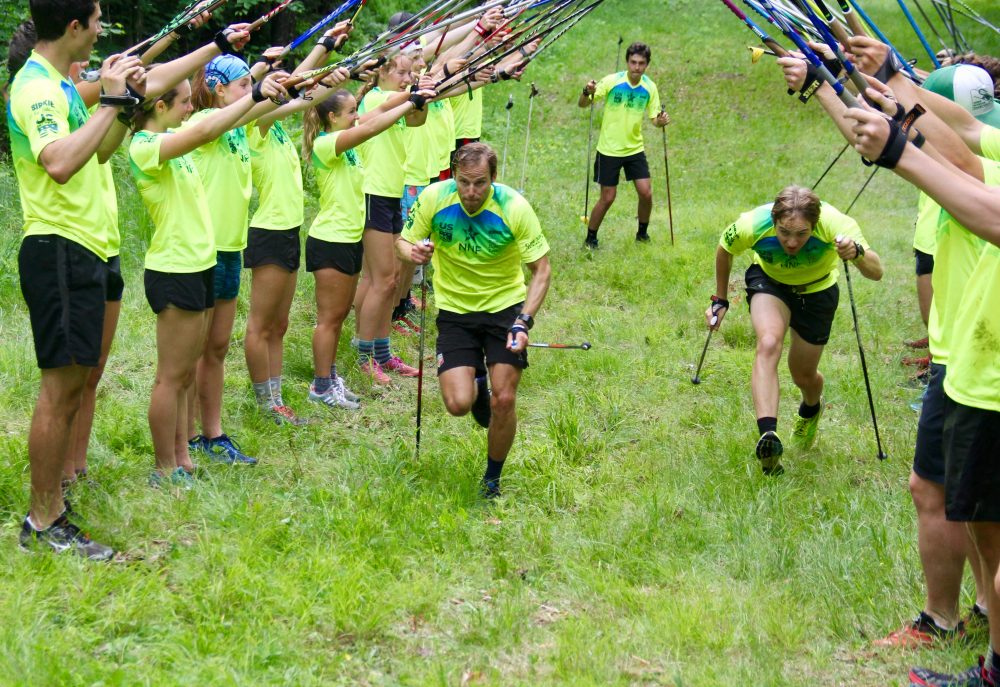
Aviators? Check. Hi-vis attire? Check. Five o’clock shadow from a gruelling dryland camp? Check. SMS T2 coach Patrick O’Brien on the last day of this year’s Lake Placid summer training camp. (Photo: Matt Whitcomb)
In this episode, we spoke with O’Brien on Aug. 15, shortly before his departure for an on-snow camp in New Zealand. He discussed how he entered the coaching game and how he navigates working with skiers who have found success on the World Cup to those just breaking into the world of SuperTours and post-collegiate skiing. Bonus info from the interview, O’Brien claims to have once beaten Simi Hamilton at something.
Patrick O’Brien at the 2018 SuperTour Finals in Craftsbury, Vermont. (Photo: Reese Brown/ U.S. Ski and Snowboard)
Here on Nordic Nation, we’re featuring back-to-back interviews with notable Norwegians. We previously connected with Marit Bjørgen and focused on the athlete side of the performance matrix. This time, we spoke with wunderkind sports physiologist, Øyvind Sandbakk. If you are new to his name, he is one of the key reasons Norway has remained ahead of the sport-performance curve in nordic sport.
Dr. Øyvind Sandbakk (Courtesy photo)
If there’s an interesting question to answer with regards to things like double-poling efficiency, Sandbakk or one his students is on it. Yes, Norway has strength in numbers when it comes to cross-country athletes, but they also have a Sandbakk and a cadre of graduate students who keep Norway a step ahead.
Sandbakk serves as managing director at the Centre for Elite Sports Research at the Norwegian University of Science and Technology (NTNU) in Trondheim. And as if he is not busy enough, he’s also head of research and development at the Norwegian Olympic Sports Centre (Olympiatoppen).
Sandbakk discusses how he became involved with research and how his research group has become one the premier nordic-sport think tanks.
Here’s a link for a comprehensive list of Sandbakk’s research.
The stats are simply mind-boggling. Essentially, Norway’s Marit Bjørgen has the mostest. The most decorated Winter Olympic medalist: 15 total medals, eight gold, four silver, and three bronze — over five Olympiads from 2002 to 2018. The most World Championships bling: 26 total medals, 18 gold, five silver, and three bronze. Bjørgen won 114 individual World Cups and podiumed 184 times on the World Cup.
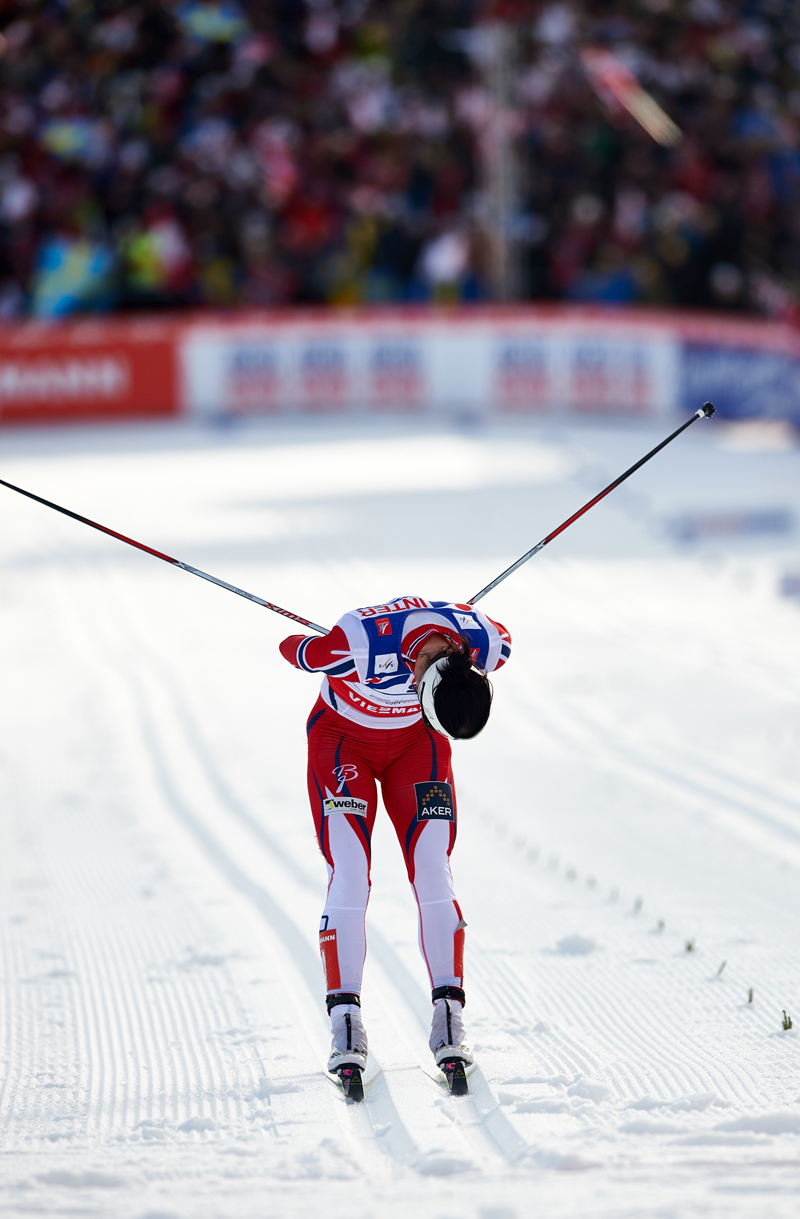
Take a bow. Marit Bjørgen of Norway winning the 30-kilometer classic mass start at 2015 World Championships in Falun, Sweden. (Photo: Nordic Focus/Fischer)
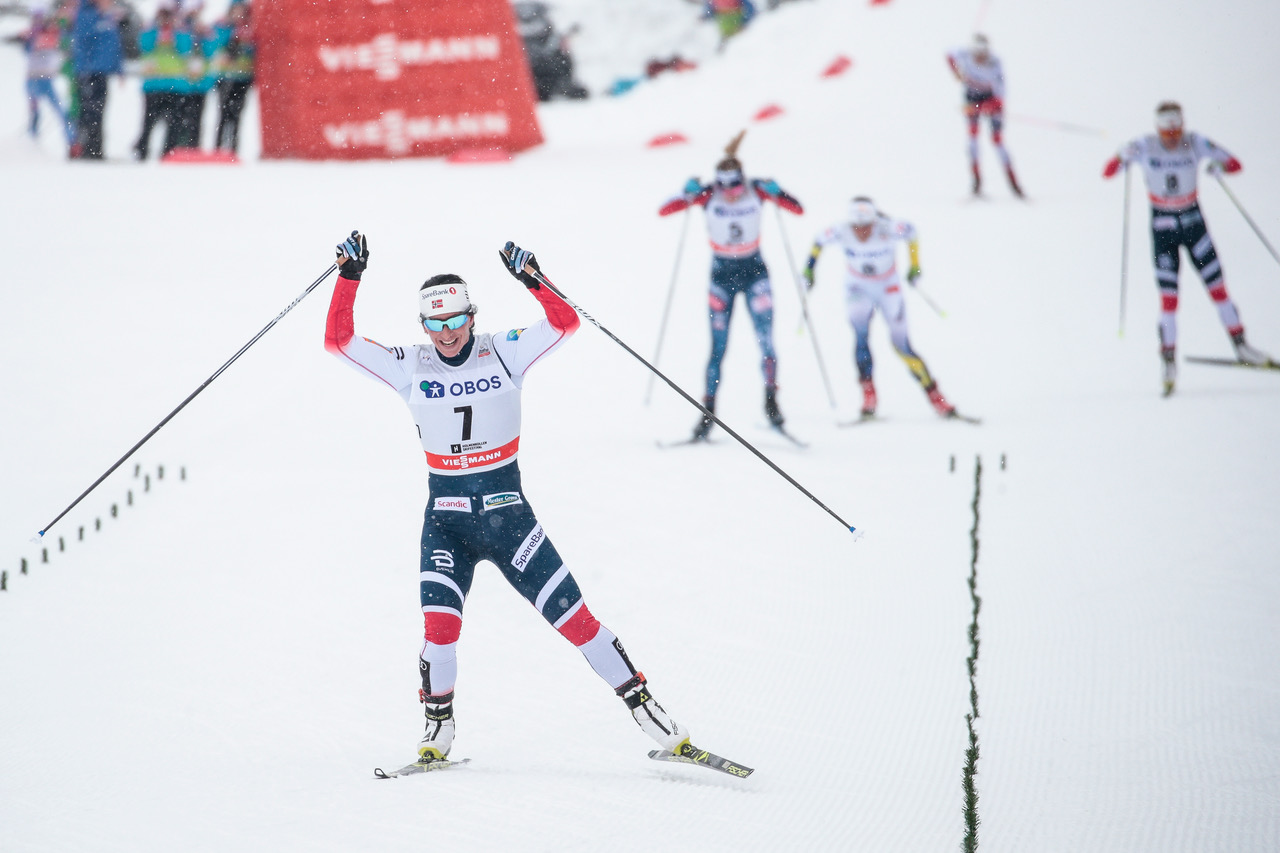
Norway’s Marit Bjørgen celebrates her seventh Holmenkollen 30 k victory in Oslo, Norway, ahead of American Jessie Diggins, Norway’s Ragnhild Haga (not shown) and Sweden’s Charlotte Kalla. (Photo: Fischer/NordicFocus)
This brings us to the point that this is the 50th episode of Nordic Nation. So, we wanted to go big. Really, no one is bigger than Bjørgen in the sport. In this ‘Take a Bow’ episode with Marit, we cover motherhood, training, racing, the media, and growing up in a small Norwegian club with three racers. The newly retired Bjørgen, 38, was interviewed last Tuesday, July 10.
BEND, Oregon — In this von Ballcap episode, we sit down with newly retired pro-skier Dakota Blackhorse-von Jess in his hometown of Bend. At 32, Dakota, or “Dak” as he’s most often called, had been on the scene for over a decade. In that time, Blackhorse-von Jess won the support of his peers and fans as a skier’s skier. The man is nothing but energy and intellect wound into a 5-foot-9-inch body that ultimately became a sprinting force.
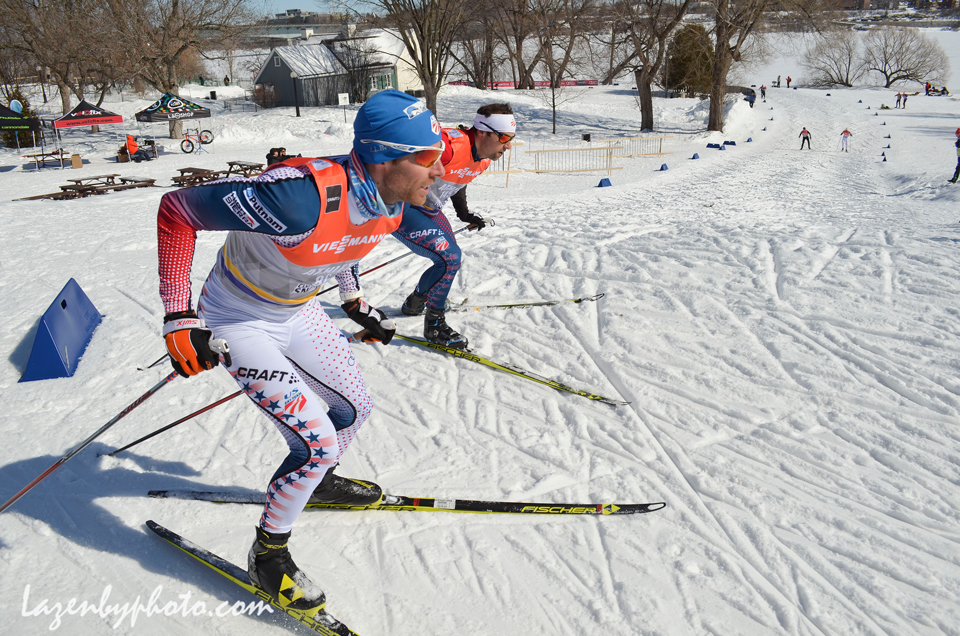
Andy Newell (near) and Dakota Blackhorse-von Jess during official training at the 2016 Ski Tour Canada in Gatineau, Quebec. (Photo: John Lazenby/Lazenbyphoto.com)
His story resonates because Blackhorse-von Jess’s story is the one you might want to tell the kids: stick to your goals, stay true to your values, and although you might achieve some of your dreams, some will be left unfulfilled. He raced at the 2015 World Championships in Falun, Sweden, he won skate-sprint national titles in 2013 and 2015, and a classic sprint title in 2015, too. Beyond the titles, he landed on the national sprint podium four times: placing second twice and third twice. However, an Olympic birth eluded him.
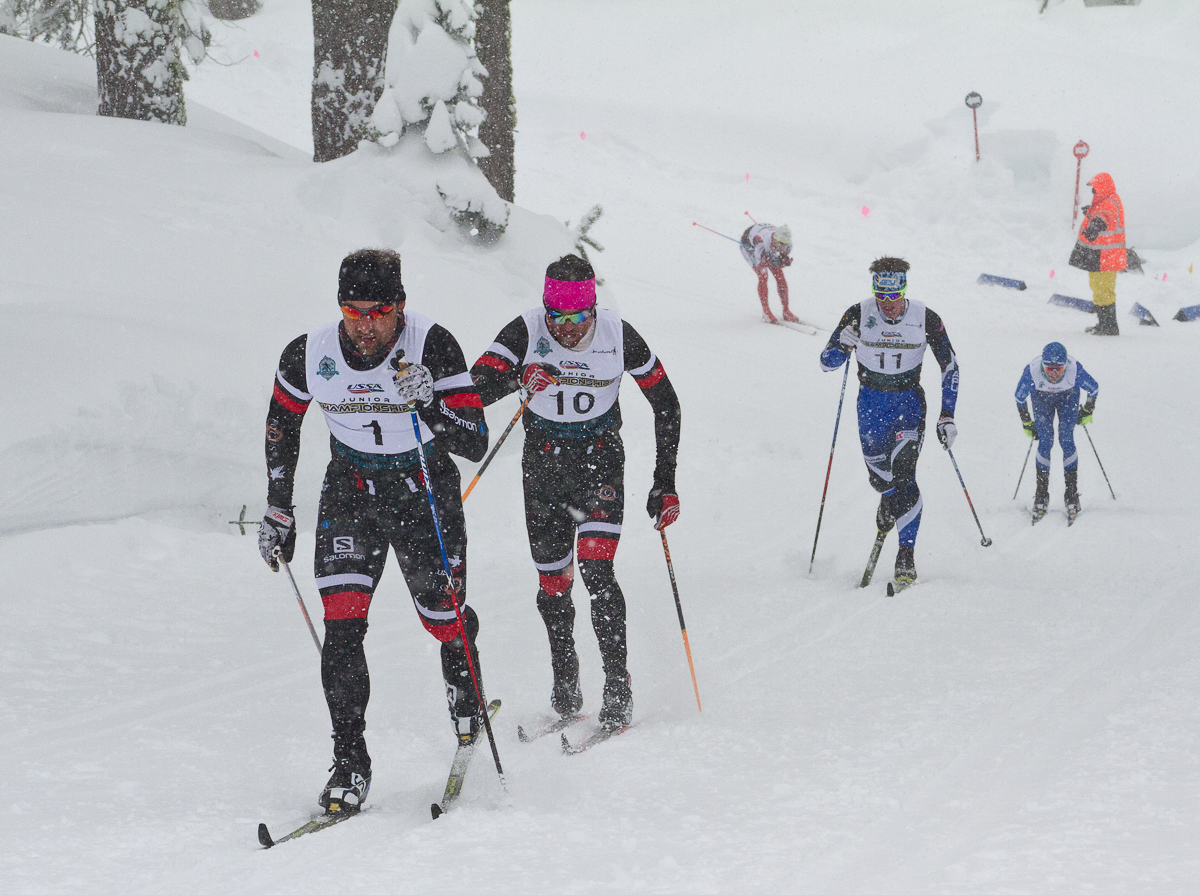
Dakota Blackhorse-von Jess in bib 1 (as the day’s top qualifier) leads Bend Endurance Academy teammate Akeo Maifeld-Carucci (10) in the classic sprint at the 2016 Auburn Ski Club SuperTour in Truckee, California.
We’re talking about a person who gave up a full ride to the University of Washington, that brought with it a postgraduate job/internship at the “JPL”, NASA’s Jet Propulsion Laboratory, in favor of the ski-racing chase. Never look back and work for what you earn. Blackhorse-von Jess took a gap year, landed at Dartmouth where he skied for four years, and the rest is sifted through in the podcast. Not all of it, of course, but we sift through a whole bunch.
Dakota Blackhorse-von Jess (30) off to a quick start in the quarterfinals at 2015 World Championships in Falun, Sweden.
Avid readers of FasterSkier know her as the voice of reason and evidence when it comes to reporting on all things doping in nordic sport. Chelsea Little, a force here at FasterSkier for eight years, is stepping down from her editor-at-large position. Based in Switzerland as she wraps up her Ph.D. in aquatic biology, Little took some time last week to talk about her tenure at FasterSkier and what her plans are for the future.
Chelsea Little and Jessie Diggins in the Davos media mixed zone in 2016.
Little’s coverage also included non-doping related pieces and race reports from both cross-country and biathlon. Asked about some of the work she is most proud of, Little referenced a story on the connection between birth control pills and athletic performance. Here’s a link to that piece.
Chelsea Little interviewing Susan Dunklee after her silver medal at the 2017 IBU World Championships. (Photo Max Cobb)
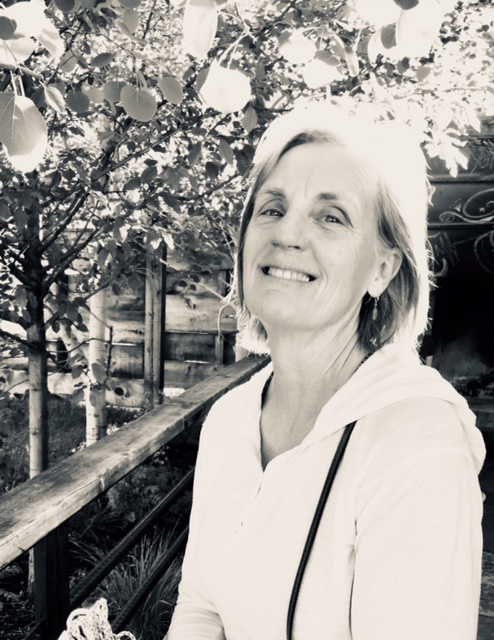
Now 65, Alison Owen-Bradley was once the American skier to chase to the top of the podium in North America and on the highest tier of international cross-country ski racing. Long before Kikkan Randall, Jessie Diggins, Sophie Caldwell, and Sadie Bjornsen attracted a wave of attention to high-performance skiing with regular World Cup podiums and ultimately an Olympic gold, Owen-Bradley made the U.S. women’s nordic team relevant when considering podium and medal potential. (You may also remember her as Alison Kiesel, as she was married to the late U.S. Ski Team coach Rob Kiesel at one time.)
Heading out in bib #1: Alison Owen-Bradley at the 1972 Winter Olympics in Sapporo, Japan. (Courtesy photo)
In this episode of Nordic Nation, in light of all the success of the U.S. Ski Team’s women’s side over the last eight years or so, and of course the icing on the cake with the Randall-Diggins PyeongChang gold, we wanted to take a step back and reflect on one of the original U.S. Ski Team’s building blocks: Owen-Bradley.
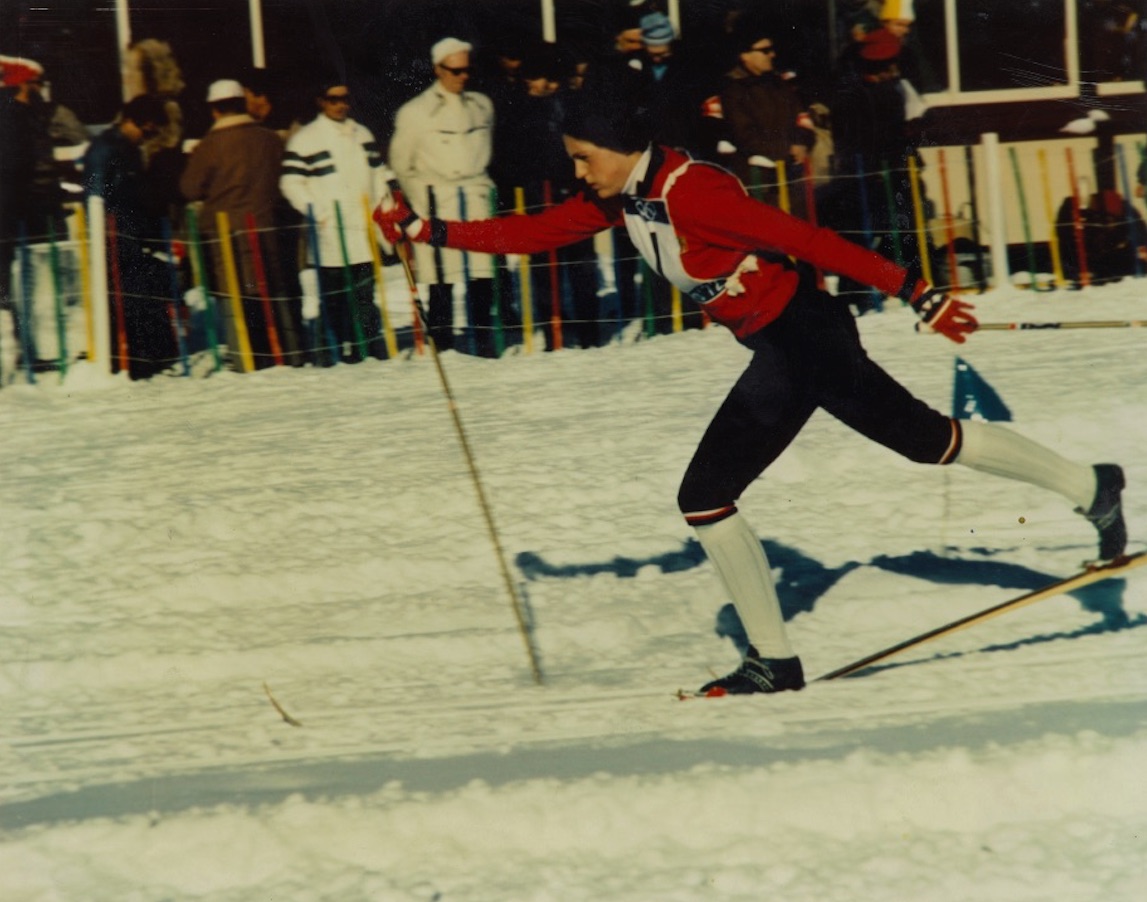
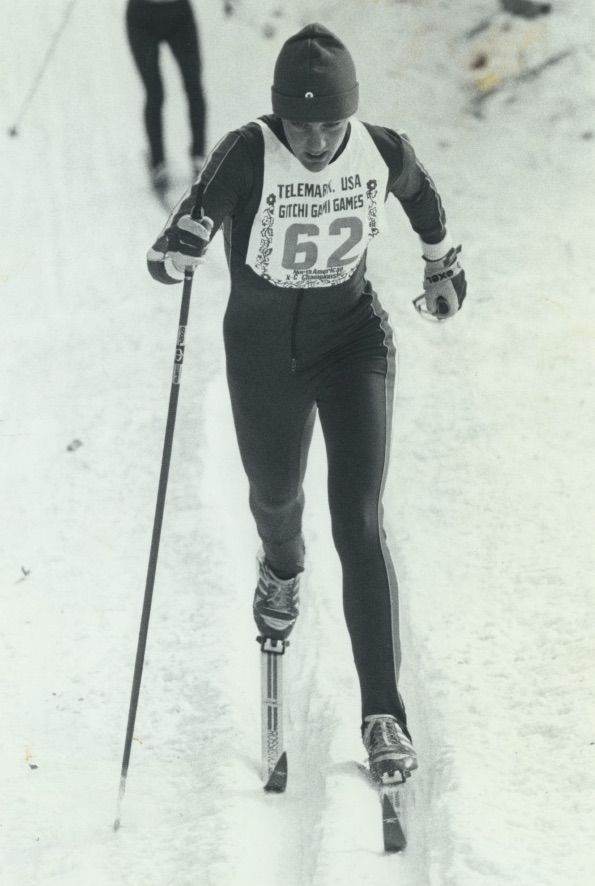
Alison Owen-Bradley racing to first in the inaugural women’s World Cup event in 1978 in Telemark, Wisconsin. (Courtesy photo)
For about an hour here on Nordic Nation, we’ll get the privilege of learning more about the early years of women’s cross-country ski racing in the U.S. and about one of the sport’s real pioneers.
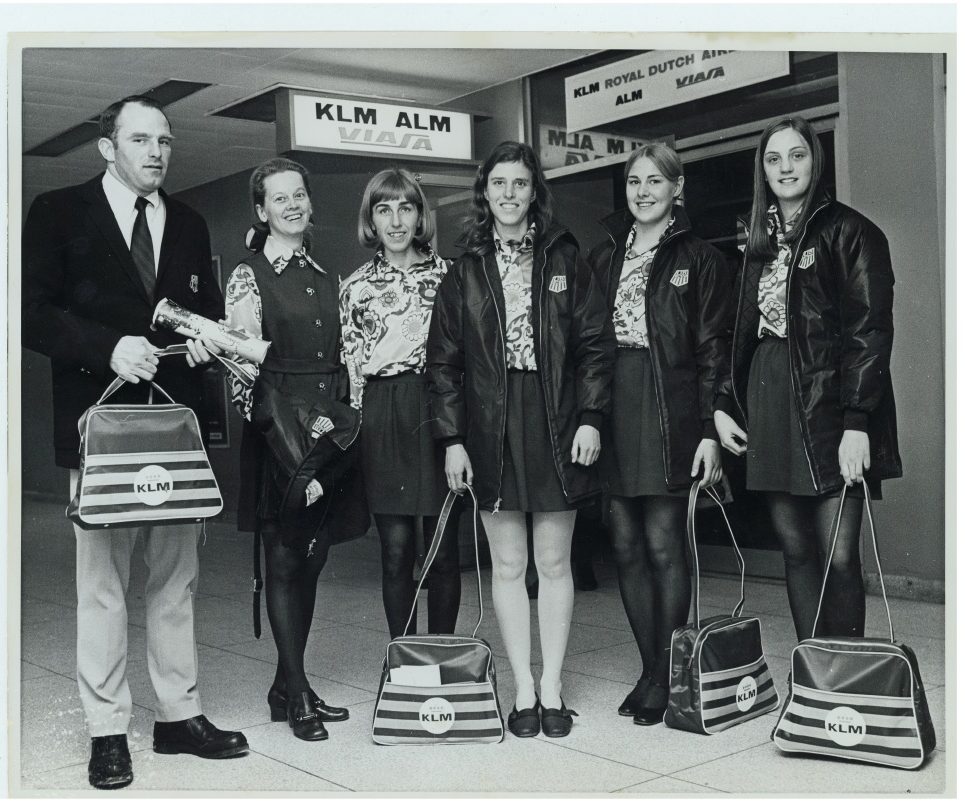
The first U.S. women’s World Championship cross-country team on the way to Czechoslovakia in 1970. From left to right: coach Marty Hall, Coach, chaperone Gloria Chadwick, Trina Hosmer, Martha Rockwell, Barbara Britch, and Alison Owen. The U.S. team took four skiers as the relay at that time was a three-person format. (Courtesy photo)
Jessie Diggins (U.S. SKi Team) after placing fourth in the women’s 10 k classic mass start at Stage 6 of the 2018 Tour de Ski (TdS) in Val di Fiemme, Italy. She went on to finish the Tour in third overall to become the first non-European woman to finish in the top three of the TdS. (Photo: Salomon/NordicFocus)
Reflecting on her ski season, here’s the no-nonsense: Diggins simply crushed it. Lots of firsts. The Tour de Ski podium. The gold with Randall in the Olympic team sprint. Her second overall on the World Cup and third in the distance standings. More than $110,000 dollars in World Cup prize earnings alone. And all that face-time and the front-row seat as she led much of the Holmenkollen 30 k skate this year. You’ve got to love that midwestern chutzpah on the Oslo holy ground.
We reached Diggins on April 26 while she was sitting in a Boston park enjoying some spring sunshine. In this interview, we run the gamut of topics from how she’s using her new post-Olympic gold platform to her thoughts on an outstanding World Cup season.
It’s the first of our “so long for now” episodes. In the code speak of sport, that means retirement. No North American nordic sport athlete has been as prolific blogging about their life as recently retired skier Noah Hoffman. He’s also been a willing participant on this podcast in the past, exploring the realities of making a go of it as an American on the World Cup. At 28, Hoffman enters a brave new world beyond cross-country skiing. In this episode, we discuss what’s next with Hoffman and of course, we dive into what he’s learned as a pro athlete.
American Noah Hoffman racing in the 15 k freestyle at the 2018 Olympics in PyeongChang, South Korea, where he finished 48th. (Photo: FlyingPointRoad)
We connected with Hoffman while he was in Cleveland on his first transcontinental road trip. For an athlete that has lived the life of training plans for as long as he can remember …. Hoffman’s future looks wide open. It should also be noted that the sport will have lost a kind and worthy personality. That is until Hoffman shows up some years from now and crushes some master’s race.
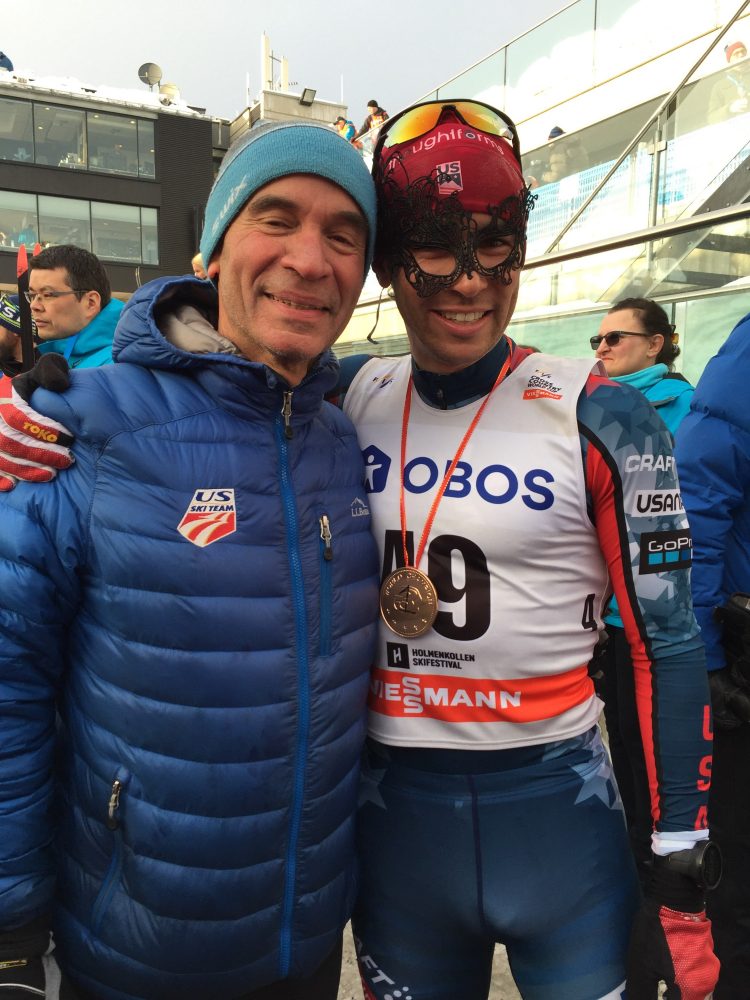
American Noah Hoffman with his dad after finishing the Holmenkollen 50 k freestyle mass start in Oslo, Norway, on March 10 for the final race of his pro skiing career. (Photo: Liz Stephen)