With almost $12 million pledged for a 12 different countries and the International Olympic Committee for a new fund for anti-doping research, the World Anti-Doping Agency (WADA) has released some of its priorities for what the fund will address.
Among the first action items are autologous blood transfusions: when an athlete removes some of their blood, stores it, and then re-infuses it before a competition to boost their oxygen-carrying capacity. Although Lance Armstrong is now famous for using an actual drug, erythropoietin, blood transfusions were also described in gory detail in Tyler Hamilton’s cycling exposé, The Secret Race.
Such transfusions are hard to detect because they do not involve any chemicals or drugs – only the athlete’s own blood. They are also dangerous, but because of their undetectability may be a major strategy in doping in endurance sports. WADA understandably wants to prioritize research in this area.
According to a press release, several of WADA’s other proposed focuses are extensions their current program. The first is an emphasis on the Athlete Biological Passport program, which tests athletes repeatedly to get baseline readings on different biological parameters; if a variable, for instance hemoglobin, then spikes in a later test, this may be evidence of doping. (For a great illustration of typical and atypical biological passports, see here.)
WADA also seeks research on the prevalence of doping in general and in specific sports. As has been previously discussed on this site, it is difficult to say exactly how much doping is happening because testing does not detect all doping offenses and athletes do not admit their activities.
And perhaps to help with this, part of the funds will go to developing lower-cost and less-invasive tests so that more athletes can be tested. One idea mentioned in the press release was to develop blood tests that can be based on a finger prick, like lactate testing in exercise science.
Finally, the funding will be directed to several scientifically sophisticated areas:
Genomics: the field of genomics upscales from genetics and instead of considering genes, considers whole genomes. Genomics could be used to, for instance, match a bag of blood found in an anti-doping sting to an athlete whose DNA profile is on record (WADA has not suggested this use, and did not describe how they wish to use genomics). Through genomics, researchers can also examine RNA, double- or single-stranded genetic material that comes in many functions. MicroRNAs, or miRNAs, for instance, have only around 22 nucleotides and regulate gene expression. Importantly, there are many different miRNA’s – and in 2013 a team published a (free, open-access) paper showing that some were much more prevalent after an autologous blood transfusion. This tool could be used to detect blood doping.
Proteomics: the field of proteomics considers not genes, but their products – proteins. The kinds and abundances of all proteins expressed in the body can tell scientists what kinds of genes are turned “on”, and this may provide clues to whether athletes are doing something to boost their oxygen-carrying capacity. For instance, some proteins expressed within red blood cells change their abundances over the lifespan of the cell, meaning that old cells – like those taken out of the body and stored in a refrigerator for six weeks – have a different signature than new ones.
Metabolomics: metabolites are the intermediate products when the body processes any kind of molecule. While many doping tests focus exclusively on the banned substance itself, metabolomics could go one step further by detecting some of these intermediate byproducts. For instance, clostebol, a testosterone derivative sometimes used for doping, has at least fourteen different metabolites as its structure shifts during these reactions. One of the metabolites can currently be detected for up to 25 days.
Detecting doping through hair samples: there is considerable scientific literature discussing the possibility of using hair samples to detect drug use, primarily anabolic steroids and testosterone in a doping context. This method is not appropriate for substances that are banned only in competition (but not in training), because time of use cannot be determined. On the contrary, however, it could be very useful for detecting the use of substances which quickly clear the body and may have a short time window for detection through blood or urine tests, but which (like steroids) improve performance for a much longer period of time.
Detecting doping through wastewater: a 2010 paper in Analytical and Bioanalytical Chemistry tested using mass spectroscopy to detect steroids, stimulants, and other drugs in sewage. Some doping drugs have very short half-lives in the human body, but that means that they are excreted in urine or other bodily waste. In the 2010 paper, a team worked at fitness centers in Aachen, Germany, and found traces of testosterone, ephedrine, and amphetamines in the sites’ wastewater. It will be interesting to see how WADA would use this in actual doping investigations.
The research will be performed in laboratories around the world, and scientific teams can apply for funding by laying out their proposed questions.
WADA will also devote a portion of the funding to research in the social sciences, with specific research focuses to be announced later.
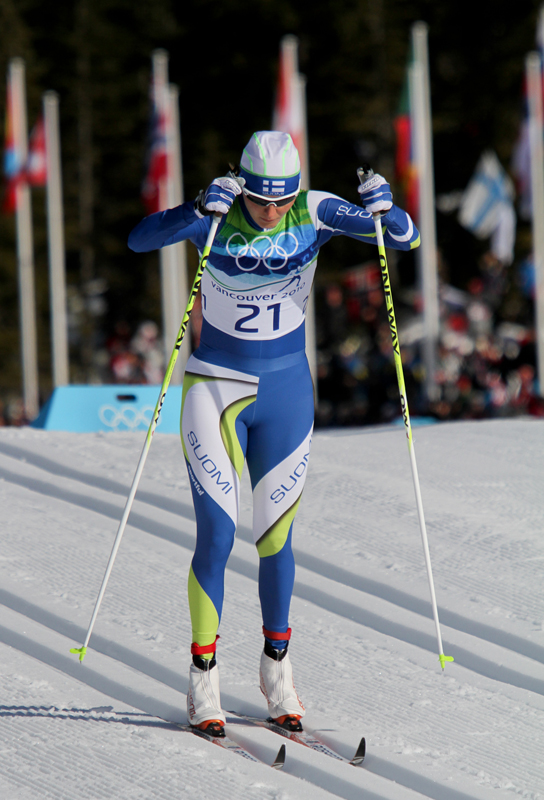
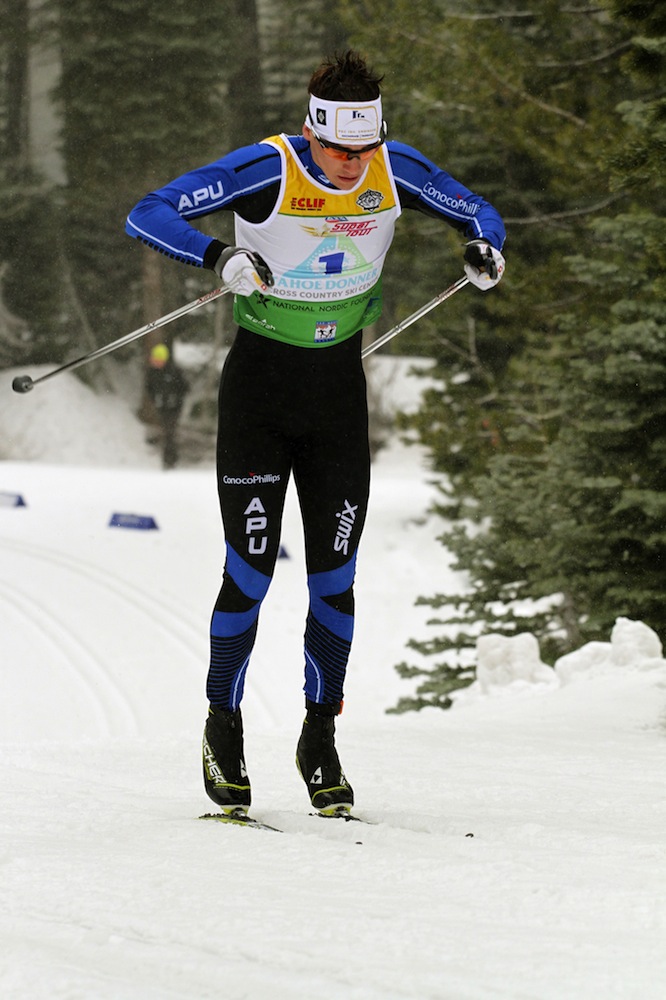
A recent report by Olivier de Hon, Harm Kuipers, and Maarten van Bottenburg gathers four different kinds of data in on elite sports and attempts to combine them into one single estimate of the prevalence of doping. One study they draw on is research by Dr. Jim Stray-Gundersen and his colleagues about the doping-marred 2001 World Ski Championships in Falun, Sweden. Stray-Gundersen found, based on analysis of blood parameters rather than analytical testing for banned substances, that doping was “prevalent and effective” in cross-country skiing. One of six Finnish athletes banned at those Championships, Virpi Kuitunen (pictured above) returned from her ban and went on to win five more World Championships gold medals, two Olympic bronze medals, two Tour de Skis, and an overall World Cup title.
“…An estimation of 14-39 percent of current adult elite athletes [have] intentionally used doping.”
This is the striking conclusion to the abstract – the summary paragraph that leads academic publications – of a scientific article published this month. If you’re anything like me, you might be surprised to see such a high value committed to print, yet also wearily resigned to the possibility that this might represent reality. Still, given the almost-complete absence of balanced estimates in the media, how did the authors arrive at these numbers? Is it hyperbolical, or should we consider it the best estimate available to us?
The article, published in the academic journal Sports Medicine, focuses on the uncertainty that exists concerning the prevalence of doping in elite sports. Whilst frequently a topic of heated discussion, both online and between friends in the bar, the question of how many athletes are doping is difficult for most of us to answer without relying on gut instincts. What makes this article particularly interesting is that the lead author, Olivier de Hon, works for the Dutch Anti-Doping Agency. It is clear that those working within anti-doping efforts share the frustrations that the prevalence of doping in sport is unknown (or, at least, unpublished and unavailable to the wider public).
Olivier de Hon, the lead author of the study, is the head of Scientific Policy for Doping Autoriteit, the national anti-doping organization of the Netherlands. (Photo: dopingautoriteit.nl)
To be clear, prevalence is a group-level measure. It does not concern individuals, but rather the proportion of competing athletes that are resorting to doping methods. The authors consider ‘elite’ athletes to be those competing in international competitions, as well as the highest national championship in each sport, and exclude ‘masters athletes’.
The article addresses the various sources of evidence that we might make use of if we wanted to estimate the prevalence of doping amongst today’s elite athletes. The authors describe four broad categories of evidence that we might use to gather information, discussing the pros and cons of each in turn. As discussed below, they prefer objective measurements to anecdotes or extrapolations based on the isolated admissions of athletes. They get their number by a technique generally referred to as “data triangulation”: using multiple sampling strategies, assessing their relative strengths, weaknesses, and biases, and combining all that information into an estimate of reality.
Inferences from performances
Outstanding sporting performances are often accompanied by suspicions of doping. However, if we take such a thought process to its logical conclusion, then all competitions become meaningless, since every winner is automatically convicted of doping and the sport itself loses the very values that first attracted fans. Of course, many fans do become tired of the doping allegations that persistently accompany some sports and choose to turn their back on certain sports.
The article acknowledges that some people have made “(semi)scientific” analyses of performances, based on sections of races. This will be particularly familiar to keen followers of the Tour de France, as debate surrounding such analyses erupt online every July as the peloton passes through the mountains, following ascents that have been used on many occasions over the years, allowing time comparisons to be made. De Hon and his coauthors caution that however much attention such analyses gather, no work of this type has been published in peer-reviewed journals, for which they would be subjected to the scrutiny of trained scientists prior to being accepted for print.
Nevertheless, there seems to be a general – if not absolute – agreement that performances in endurance sports have stalled or even fallen in recent years, following a peak in the 1990s and early 2000s. The same thing happened in 1989, when random drug tests were implemented; that phenomenon has since been subjected to rigorous statistical reviews.
However, the present-day stagnation in times and performances does not necessarily indicate a decline in the number of athletes indulging in doping; it may simply indicate that more stringent anti-doping efforts have reduced the amount of doping any individual is prepared to undertake. Furthermore, other sports have seen the rate of improvement increase, most obviously men’s sprinting, where the world record has tumbled dramatically over the last decade. This has led some sports scientists to speculate, based on their statistical analyses, that we may be witnessing the emergence of a novel and highly effective doping procedure.
Inferences from published personal accounts
Published accounts of personal experiences via press interviews or autobiographies give personal insights into the world of elite sport. Particularly in cycling, autobiographical accounts of doping have been published in recent years. These accounts help to paint a picture of potential doping use but the authors of the review caution that these are best considered as the equivalent of case reports in the medical literature – whilst interesting and potentially indicative of areas deserving particular attention, they are ultimately subjective accounts based on individual experience. The authors caution that humans tend to legitimise their own behaviours based on a perception that others are doing the same, even if there is no proof that this is so. Therefore, in terms of the key question we wish to address – how prevalent is doping in elite sport? – personal accounts are of little use, despite the extensive attention they gain from the media.
Laboratory-based analyses
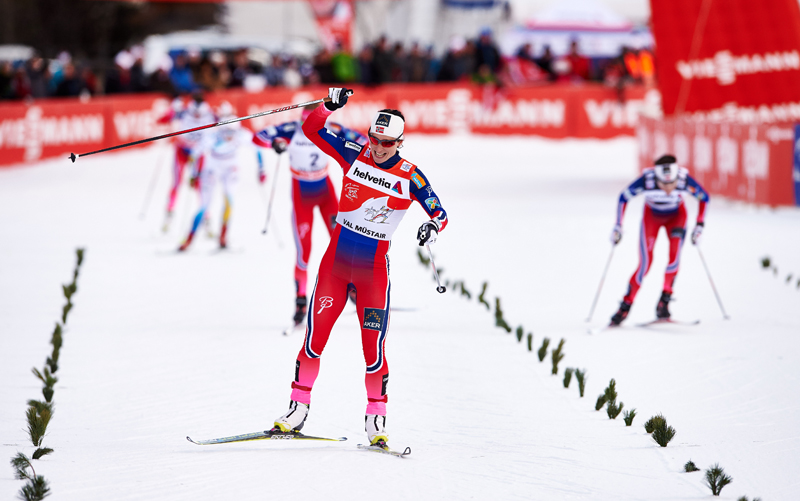
When WADA releases its annual number of potitive analytical findings, it does not weed out those where the positive test was deemed irrelevant due to an approved Therapeutic Use Exemption – for instance, anyone who had been cleared to use an inhaler to treat asthma, like Marit Bjoergen of Norway. (photo: Fischer/Nordic Focus)
You might think that the results of doping tests would be the best source of information on the prevalence of doping use. Indeed, since 2003 the World Anti-Doping Agency (WADA) has published an annual overview of adverse results, including data from all Olympic and Paralympic sports. Between 1987 and 2013, the percentage of what they call ‘findings’ (adverse or atypical analytical results) for doping tests has fluctuated between 0.96 percent and 2.45 percent, and since 2005 has generally been around 2 percent.
However, the authors explain a number of problems with relying on a count of adverse findings to estimate the prevalence of doping. Firstly, all prohibited substances have a time window within which they can be detected (for some this as short as a few hours). We know from confessions of convicted dopers that doping athletes are aware of this limitation, and this led to countermeasures amongst dopers, such as ‘microdosing’, in which prohibited substances are used in doses too small to generate a positive result in doping tests. (There are plenty of other reasons for the low number of positive tests, including a lack of consistent compliance with the WADA Code by anti-doping agencies around the world.)
A second issue is that the official data summarises all adverse findings reported by WADA-accredited laboratories, even when an athlete may have had a valid medical reason for using the substance (as proven by a Therapeutic Use Exemption, or TUE). Thus, as well as underestimating doping due to difficulties of chemical detections, the overviews of laboratory results simultaneously contain an “inherent overestimation” of intentional doping.
Overall, the direct use of laboratory results is unlikely to paint an accurate picture of the prevalence of doping in elite sport, say the authors, though they note that if the annual summaries offered more detail and were made more accessible then these issues could be reduced considerably.
However, test results can be used to estimate the prevalence of doping via a more indirect route, based on the effects that many doping methods have on certain biological parameters that, because of their wider importance for human health, are very well studied. Because prevalence examines patterns across a field of competitors, rather than individuals, analyses of blood/urine samples can be used to estimate a likely prevalence of doping, even when no individual sample offers conclusive proof of doping.
By way of explanation, imagine a scenario in a hall, where people are meeting for speed-dating. After some time watching the crowd, we have the feeling that the men are unusually tall. If – hypothetically – women are more likely to be attracted to tall men, then we might suspect that some of the men have artificially increased their height using concealed wedges inside their shoes. Eager to test our suspicions, we quickly rush to the exit door and, whilst we’re too embarrassed to explicitly ask each man to take off their shoes, we take a quick measurement of their height. Based on the height measurements alone, we cannot say whether an individual was unnaturally tall, because being 6’2″ tall is only a little less likely than being 6’1″ (if the wedges we added 1″). But using all the measurements together, we can compare the distribution of heights in our sample with that of the wider population and statistical tools allow us to estimate what proportion of men must be cheating.
Returning to the problem of doping in sport, anti-doping efforts generate data on each individual (haematocrit level, for example). Haematocrit level is the volume percentage of red blood cells in the blood, and is variable in the general human population, and thus athletes. Higher haematocrit levels represent a greater oxygen carrying capacity of the blood, so increasing this will improve aerobic output. However, this value is naturally fairly stable within individuals, despite marked differences between individuals. But blood doping methods allow athletes to boost their haematocrit values. Thus, if blood doping is occurring within a group of athletes, the distribution of haematocrit values will change, with an overabundance of high values and a scarcity of low values. As with the height example, if we know the expected distribution, we can estimate the proportion of individual athletes that are altering their blood values through doping, even if we cannot identify the particular individuals that are cheating.
Of particular interest to cross-country skiers will be a study of haematocrit values amongst participants at the famously doping-marred 2001 World Ski Championships. Of the tested skiers who finished in the top 50 of their events, 17 percent were found to have ‘highly abnormal’ blood profiles, and a further 19 percent were ‘abnormal’. Even more worrying, amongst athletes winning medals (i.e., placing in the top 3), 50 percent had blood profiles scored as ‘highly abnormal’, compared with only 3 percent amongst those placing between 41st and 50th. De Hon and his coathors suggest that such a direct relationship between performance and blood profiles is not to be expected, because a whole variety of factors will influence results within such a closely matched group of competitors. As a result, they conclude that in cross-country skiing blood doping reached a level where it was ‘performance determining’, rather than merely performance enhancing.
Still, the study of skiers was published more than a decade ago, and more recently blood manipulation is likely to be more subtle. In accordance with this, amongst elite cyclists, the proportion of ‘extreme’ blood profiles fell from 11 percent to 2 percent between 2001 and 2009. However, if we search for abnormal values, we will still miss athletes who naturally have a relatively low haematocrit value but who, through illegal methods, elevate their blood profile substantially but keeping it within the ‘normal’ range. Such athletes are, unfortunately, the very people who gain the greatest performance benefit from blood doping when a cap (e.g., 50 percent haematocrit) is in place. A major advantage of the method used in the study of skiers is that because it considers the values from all tested athletes, it can detect the absence of low values, even if doping athletes maintain their blood profile within the ‘normal’ range.
To date, this approach has only been used once, in a study of blood manipulations in elite athletes in track and field that examined more than 7000 blood samples from 2737 athletes over a ten-year timespan. It was estimated that 14 percent of athletes were blood doping, with nationality found to be a major influence on prevalence.
Other sports, including biathlon, possess the data to allow such analyses, and de Hon and his coauthors call for more studies, including work exploring the differences between countries, teams or performance levels. Given the availability of the data, if governing bodies are willing to make it available, and the clear public interest in the results of such analyses, it is difficult to explain why this has not already been done.
On the face of it, relying on athlete questionnaires to gain an estimate of the level of cheating seems rather far-fetched. And, indeed, the authors note that whilst questionnaires have repeatedly been used on North American high school athletes or European students to estimate the prevalence of doping (15 individual studies are cited), self-response questionnaires are of questionable value when addressing controversial or illicit topics, where those questioned may feel a pressure to give socially accepted answers.
This obviously presents a big problem if we wish to get information from the athletes themselves about doping. Here, the article introduces us to the Randomised Response Technique, a survey method that allows the truth to be provided anonymously, even in response to direct questioning. Each respondent first rolls dice (a random number generator or other process that randomly generates a finite set of outcomes can alternatively be used) and, depending on the outcome, is obliged to answer ‘yes’, ‘no’ or with the truth. Crucially, the researcher does not know the outcome of the dice roll, so cannot know whether the athlete is giving a forced answer or an honest answer. However, if we know the probability of each option, we can later calculate how many of the ‘yes’ and ‘no’ responses were forced and how many were honest. As with the analysis of overall patterns in biological measurements (e.g., haematocrit), individual athletes can’t be picked out as dopers but we do gain an estimate of the likely prevalence of doping, and the anonymity will hopefully give the athletes the confidence to be sincere. The method sounds strange, but it has been used with great success for over 35 years in social sciences.
To date, only one study has used the Randomised Response Technique to investigate doping amongst elite athletes. This study (available in full length here, open-access), published in 2007, asked contemporary German athletes in Olympic disciplines – including sports as varied as cycling, weightlifting, baseball, basketball, swimming and sailing – whether they had ever used banned substances or methods to enhance their performance. This study estimated 26-48 percent of respondents had used banned drugs or methods. Furthermore, when comparing athletes competing at national and international levels, those currently competing at international level were more likely to answer ‘yes’ when asked if they had ever used illegal doping methods.
Reaching conclusions
The article concludes by drawing together what little published evidence there is, and weighting it according to its objective reliability. The authors suggest that the best approach is likely to be a combination of questionnaires using the RRT and estimates based on physiological parameters, as both offer objective data. Unfortunately studies using either approach are extremely rare, and the authors call for more work to be conducted and made public. Forced to base their estimate on just two studies – a RRT questionnaire of German athletes and an analysis of blood profiles in track and field – the authors conclude that 14-39 percent of elite athletes are doping, a fairly staggering figure if one had based expectations on the failure rate of doping tests. But the authors are clear on this discrepancy: “current doping control test results show a distinct underestimation of true doping prevalence.”
Whilst governing bodies of sports may prefer to look away, sports fans with a critical eye will be all too aware of this issue: as sporting careers like Lance Armstrong’s demonstrate, it is possible for an athlete to be doping throughout their competitive career without failing a doping test. Intriguingly, a recent study analysed waste water from fitness centres and detected an array of steroids and stimulants, including testosterone, methyltestosterone and amphetamine, and de Hon and coauthors suggest that the application of such technology at major events, such as the Olympics, may in future provide a cheap and easy means of establishing whether doping is occurring amongst a group of athletes.
At present, then, even experts in the field cannot offer a precise value for the prevalence of doping in sport. The director general of WADA, David Howman, is quoted as stating that the true doping prevalence amongst elite athlete is likely “a double-digit figure“. So despite being arguably the best placed person in the world to proffer an opinion, Howman is able to offer only a very vague estimate – an indictment, perhaps, of the lack of openness on this topic. As the article’s final sentence states, “Tools to evaluate the prevalence of doping use in sports are readily available; they only need to be used more often.” So why are we only talking about it?
–Simon Evans is a British-Australian postdoctoral researcher at the Evolutionary Biology Center of Uppsala University in Sweden. An avid skier ever since arriving in Scandinavia, he is the owner of a five-hour Vasaloppet finishing time. His previous FasterSkier reportage, a first-person account of a trip to the Swedish early-season ski mecca of Bruksvallarna, can be found here.
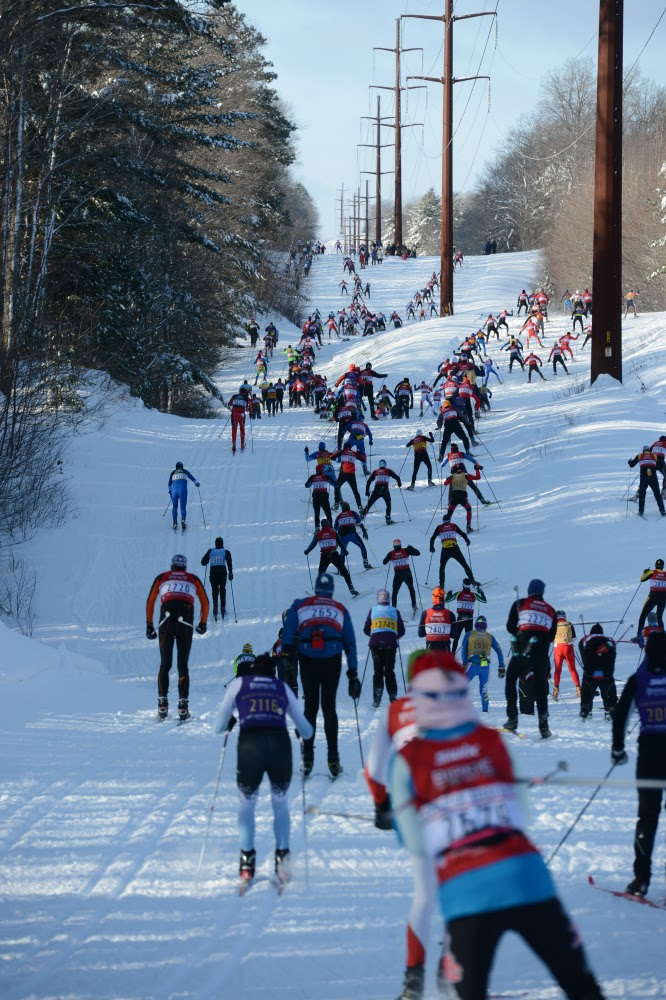
Signing up for a big race (like the Birkie), attending a regular training group, or even having a once-a-week workout with a friend can provide huge motivation for people to stay active. Photo: American Birkebeiner Ski Foundation.
Did you recently get an email in your inbox from Kikkan Randall?
If so, you’re likely one of the 24,000 American Birkebeiner racers who have been asked about their health and exercise habits as part of a study by Mayo Clinic researcher Dr. Paul Anderson.
“Primarily, the study came out of my own interest in helping people get active,” Anderson said in a phone interview this week. “I thought it would be really interesting to study Birkie skiers because citizen athletes represent what I consider to be a beacon of hope for the public health challenge of getting people to be more physically active. So I want to know more about exactly how they start and maintain their training for the race – especially related to their social support for exercise. I’m a Birkie skier myself and really love Nordic skiing, so I started there.”
Anderson spent five years working in Alaska in an occupational and environmental health, and is now doing a fellowship at the Mayo Clinic in preventative medicine.
“Instead of looking at people who are ill and trying to understand their disease, I’ve done research in the past that studies people who are well, or elite performers,” he explained.
And Birkie skiers, he estimates, are just that. By studying their habits he hopes that he can learn something about what it would take to get more Americans off their sofas.
According to Anderson, he approached American Birkebeiner Ski Foundation Executive Director Ben Popp about whether the organization would be interested in collaborating on a study, and Popp immediately agreed.
Anderson was expecting perhaps to just offer a survey at the Birkie itself, but Popp offered to turn over contacts for every skier who has ever done a Birkie event. So far, after just one week, about 10% of the 24,000 individuals have already completed the survey.
Randall already works to keep girls and women involved in sports and to overcome the high dropout rate from athletics, especially through Fast and Female.
For Randall, the project is a perfect fit. A three-time FIS World Cup Sprint champ, she also heads the U.S. division of Fast and Female, which is on its way to being its own nonprofit. Getting people active, and keeping them involved in sports, is one of her pet projects.
Reached by phone, Randall was every bit as excited about the Birkie study as she was in her e-mail to potential study participants.
“He invited me to be a part of it thinking that we could get it a little bit more attention, and he thought it might be something I would be interested in – which I definitely am,” she said. “I’m curious about what drives people to be active and what positive effect it can have. I’m really excited to see what comes of the study.”
How exactly will Anderson tackle those questions? He described diving deep into the literature of a field called social cognitive theory. As an example, he talked about someone who was quitting smoking: to do so, they need the support of people in their social network. To start exercising or to train for a big event, people are also boosted by support from friends and family. But how essential is this and how much support is needed? Anderson adapted the questions asked by social cognitive theory to skiing.
“There are questions you can ask people about social support in a number of contexts,” Anderson said. “I put that together with my own story: somebody introduced me to Nordic skiing, somebody taught me what I needed to know and supported me a lot in getting active in this particular way during the winter time. I think that raised the question for me, how much and what kind of social support do citizen athletes need to both to get started and to maintain their participation in events like the Birkie.”
For instance, the survey asks how often skiers meet up with a friend for training, or whether their friends or family congratulate them for exercising or racing.
A second aspect of the survey has to do with general health habits. Anderson mirrored some of the questions on the Behavioral Risk Factor Surveillance System, an annual survey administered by the Centers for Disease Control all around the U.S. By doing so, he will be able to compare citizen athletes’ habits to those of the general public.
“That’s in terms of exercise behaviors, how many fruits and vegetables they eat, smoking, alcohol use,” he explained. “One of the biggest challenges we have in public health is to show that it makes any difference whatsoever. I think [Birkie skiers are] a group of people who follow probably most of the – well, except drinking – who follow most of the public health recommendations that we would idealize. So to show that they have a completely different set of health behaviors than the general public, and that they demonstrate the value of promoting physical activity.”
He also said that he will assess whether health habits or the level of social support differ by sex, marital status, or socioeconomic status.
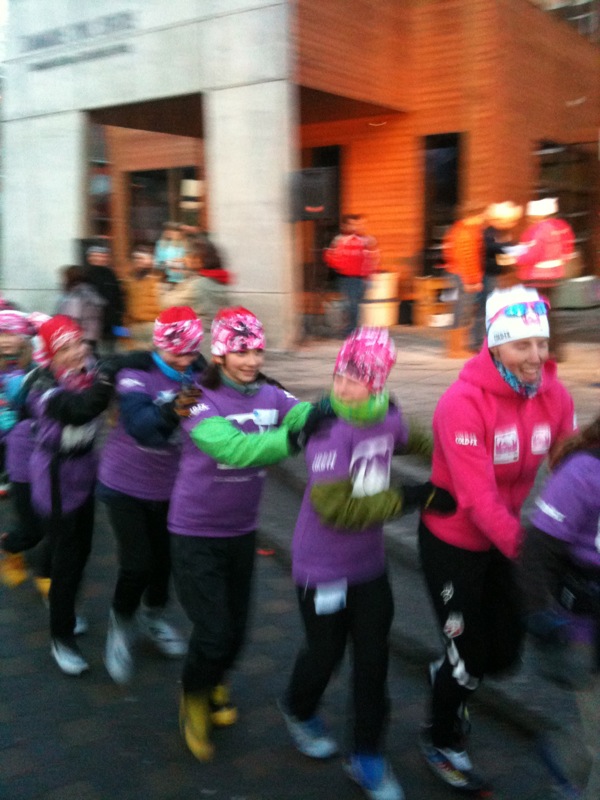
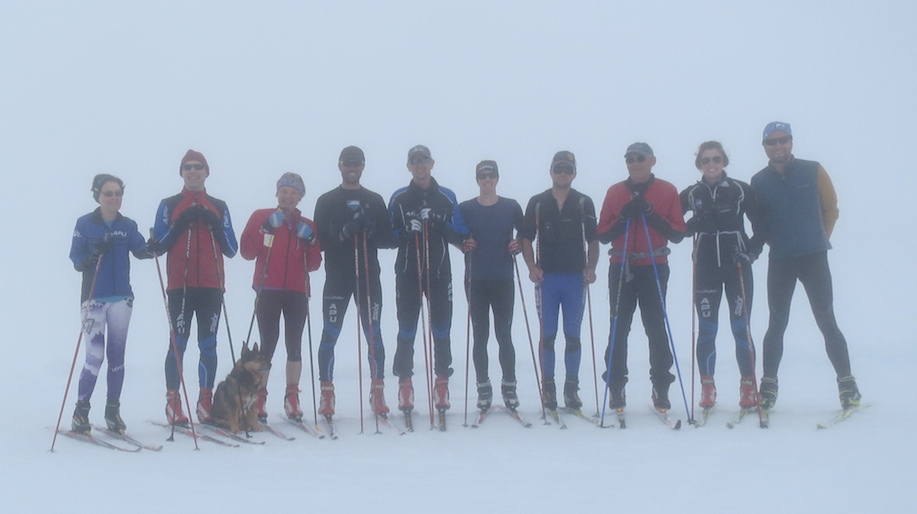
A training group such as this one at the 2014 APUNSC Masters Camp might be key to keeping people active – or they might find other ways to get social support for their healthy habits. Photo: Shannon Gramse/Flickr.
For someone like Randall, who is interested in lifelong participation in sports in general but particularly for girls and women, this represents a particularly exciting development.
“Why people choose to get out in the first place, and what keeps them staying active, especially when we’re talking about the social aspect of it which is super huge for girls and women – I’m super interested to look at the results and glean some things from it that we can apply to Fast and Female so that we can continue to make our programming more effective, and really work towards achieving our mission of keeping girls and women involved in sports for their whole lives,” she said.
In a post-Olympic year, Randall is finding more and more chances to work on projects that tackle public health and exercise.
“I wouldn’t say that there’s necessarily a whole lot more time, but to me, I have a hard time passing up cool opportunities like this to either learn more or hopefully help build programs to get people more healthy and active,” she explained. “So certainly there’s less interviews and a few less things to run around and do with the Olympics being over, but I still have managed to fill my plate with Fast and Female, this, and the Nordic Rocks program that CXC started to get more kids in the cities on skis.”
For Anderson, there’s the possibility of more work on Birkie athletes in the future – for example long-term studies. In Sweden, researchers have been following a cohort of Vasaloppet skiers, finding for instance that lifelong skiers have an increased incidence of heart arrhythmia.
A longitudinal study of social behavior might be in the future, but for now, Anderson is focusing on the task at hand.
“What we set out to do was execute a careful, fairly small, well done study to show the ease and value of studying citizen athletes,” he said. “We don’t want people to experience our health survey at the race and ask ‘why did they do that? It wasn’t very well done.’ So we do this study, we get good results, we say something concrete, and we learn something. Then hopefully we learn and interest in further studies can grow… There are so many potential questions out there, but we want to do this first, do it really well, and then we’ll ask some of these bigger questions more precisely in the future.”
If people have participated in the Birkie and would like to take the survey but did not get a survey in the mail, please send an email to anderson.paul1@mayo.edu before the end of November and he’ll get you a survey. Results will be presented in a generalized format at the 2015 American Birkebeiner and also published in a variety of formats.
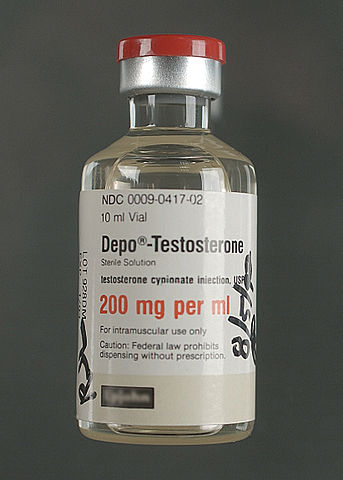
Oslo researchers Dr. Ingrid Egner, Dr. Jo Bruusgaard, Dr. Einar Efterstøl, and Dr. Kristian Gundersen found last year in mice that a 14-day dose of testosterone had notable effects on muscle cells long after they had stopped administering the drug.
How this works in humans isn’t a completely straightforward conclusion, but Dr. Gundersen said in a University of Oslo press release at the time that testosterone and other anabolic steroids could easily have effects for a decade or longer after drug use had ceased.
“The specific time aspect is of course challenging to extrapolate from mice with a lifespan of two years to humans who live for 80 years,” he said. “However, the cell nuclei in humans are known to be very stable. If the muscle memory mechanism in humans is similar to what we observe in mice we could be talking about several decades of advantageous effects.”
The specific mechanism for the long-lasting effects appears to be a proliferation of nuclei in muscle cells. There is yet to be a testosterone scandal in nordic sports, but this opens the door to the idea that other performance-enhancing substances which induce hypertrophy, or the enlargement of muscles, may have similarly long-lasting effects.
As explained in The Journal of Physiology, both testosterone propionate (administered by a pellet inserted under the skin) and overload exercise (simulated by shortening the muscle itself) caused an increase in the cross-sectional area of muscle fibers. The increase in muscle size were greater with testosterone than with overload training. Similarly, both treatments increased the number of myonuclei in muscle cells.
The difference between training and drug use emerged later. After giving the mice a 14-day dose of testosterone, the researchers then waited three months, during which both the drugged mice and the control group received no treatment. After that rest period, there were still 42% more mynuclei in the muscle cells of the drugged mice than in the control group. The cross-sectional area, meanwhile, was indistinguishable between the two groups.
So why do nuclei matter? Each nucleus has associated structures which can synthesize the proteins the cell needs. This could help with muscle repair after damage, for instance.
The study proved a long-standing scientific hypothesis: that there is some sort of “muscle memory” that allows muscles that have previously been trained to more easily regain mass if they are trained again later. No other researchers had ever found the mechanism for this, but it appears to be the myonuclei.
The researchers pointed out that this finding may have many beneficial applications – for instance, in helping reduce frailty in an aging population. If hard exercise and/or drug application can produce long-lasting effects, then we might develop public health strategies that could reduce injuries to octogenarians.
But the implications for sport are not as positive.
“Our data demonstrate that in least in mice, an episode of testosterone use may recruit a long lasting pool of excess myonuclei, and a persistent increased ability to regain muscle mass by resistance exercise in the absence of further steroid exposure,” the authors concluded. “Thus, the benefits of even episodic drug abuse might be long lasting, if not permanent, in athletes. Our data suggest that the World Anti-Doping Code calling for only 2 years of ineligibility after a conviction for steroid use (WADA, 2009) should be reconsidered.”
Furthermore, while the study only addressed testosterone, an anabolic steroid, the effect may be similar for other performance-enhancing substances currently banned by WADA.
Insulin-Like Growth Factor I (IGF-I) has long been banned in sport and recently came to the fore when it was mentioned in the records of a South Florida clinic providing performance-enhancing drugs to baseball players.
While there is yet to be any work done specifically examining whether IGF-I increases the number of myonuclei, it does contribute to the proliferation and differentiation of muscle cells – and many researchers (for example, here) have concluded that this by definition means increasing the myonuclei.
Furthermore, human growth hormone (HGH) increases the circulating levels of IGF-I, leading to the same effects. Thus doping with HGH or IGF-I could, potentially, also have very long-lasting effects.
One thing that might be comforting to nordic fans? Because erythropoietin (EPO) is not associated with muscle hypertrophy, there are unlikely to be long-lasting effects of previous EPO doping – at least through this mechanism. On the other hand, proof of the existence of a long-term cell memory mechanism suggests that other such mechanisms are not out of the realm of possibility.
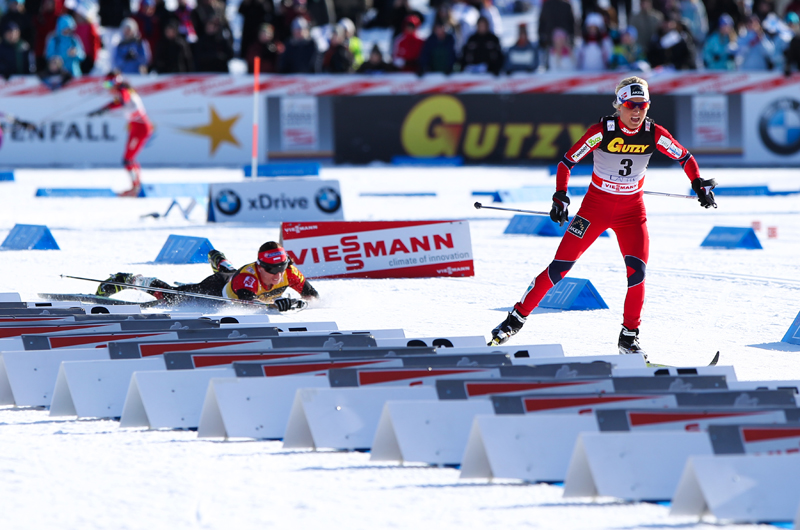
Don’t do this: Therese Johaug (NOR) and Justyna Kowalczyk (POL) come into the transition during the skiathlon in Lahti, Finland. Kowalczyk’s fall cost her valuable seconds. Photo: Fischer/Nordic Focus.
When you step out of your classic skis and into skate skis in a skiathlon, there’s a brief period where skiing feels very strange: the shorter skis, the lack of tracks, and the longer poles are all a distinct change from the previous style, as your body says, “what are you DOING?”
This is the subject of a recent study by researchers from University of Franche-Comté in France and Mid Sweden University. One of the researchers, Sarah Willis, is an American who previously skied for Gustavus Adolphus College.
“To our knowledge, no previous researchers had examined skiathlon performance and we were intrigued by this as well as investigating the impact of an initial period of classic skiing on subsequent skate skiing,” she explained in an e-mail. “Realizing the effect of one bout on another is similar to research performed in the sport of triathlon, we used some previous triathlon studies as a ‘guide’ for an initial skiathlon study.”
Classic skiing is generally recognized to involve greater oxygen uptake and greater muscle mass involvement than skate skiing. Thus when a racer transitions to skating halfway through a skiathlon, their body is coming out of a very different physiological stress than it would have been from a skate race of the same distance.
The team worked with eight national-level Swedish skiers, who were asked to participate in two 6 k time trials on a rollerski treadmill. In one, they classic skied for 3 k, then switched gear and skated for 3 k. In the other they skated two 3 k sections, stopping for a brief time in the middle to simulate an equipment change.
Interestingly, they found that the time for the second portion of the time trial was unaffected by the previous section’s technique.
“In my opinion, it is interesting that the performance times were similar,” Willis wrote. “However, it is understandable in some ways since we, as skiers and athletes, race at race pace and alter our effort based on what we can do while giving our best in each moment. Sometimes we make alterations or changes in our technique, breathing, pacing strategy, etc., while our effort and outcome may be the same as we give all we can. We are well-trained machines and our mental approach to pacing the effort has a lot to say about our performance outcome.”
However, just because the times were more or less the same did not mean that the team didn’t find some effects of the initial classic portion of their simulated skiathlon.
For instance, in the first three minutes after the transition in the classic-to-skate time trial, VO2 and minute ventilation had higher increases than during the skate-only time trial. The cadence of the skating strides were also faster in the initial section of the skate portion of the skiathlon time trial, than in the skate-only time trial.
(What is minute ventilation? “Minute ventilation is literally the volume of gas you breathe into your lungs (inhale) in one minute, so, basically, a parameter of how much air you can move into your lungs,” Willis wrote.)
Some part of this might be fatigue. But it also seems likely that the difference in technique makes it difficult for skiers to immediately find a good and efficient rhythm when they snap into skate skis.
“Skiers may notice that it takes about 3-5minutes to get into a good rhythm, including cardiovascular and respiration (ability to increase heart rate and rhythm with breathing), and their natural technique (biomechanics of skating) before they really feel they can perform ‘normally’ in skating,” Willis wrote.
And the physiological differences, too, she chalked up to technique.
“There are alterations in the muscle requirements and biomechanics of the new technique,” she explained. “A combination of alterations in oxygenation and extraction of the blood, or simply the consumption of oxygen is most likely involved in the explanation of some factors affecting the transition from a cardiopulmonary standpoint.”
One thing is clear: skiathlons present a novel physiological challenge that athletes never encountered before the invention of the two-discipline race format.
To make the transition and subsequent skating section easier, Willis had a few suggestions: lower the pace in the final minute of the classic section to facilitate a good transition, and adjust the pace and effort during the initial phase of the skate section.
But like everything else in sport, it also simply comes down to training.
“[You can do] specific training to increase ability to perform skate after classic, at race speed or during an endurance session with higher speed before and after the transition,” she wrote.
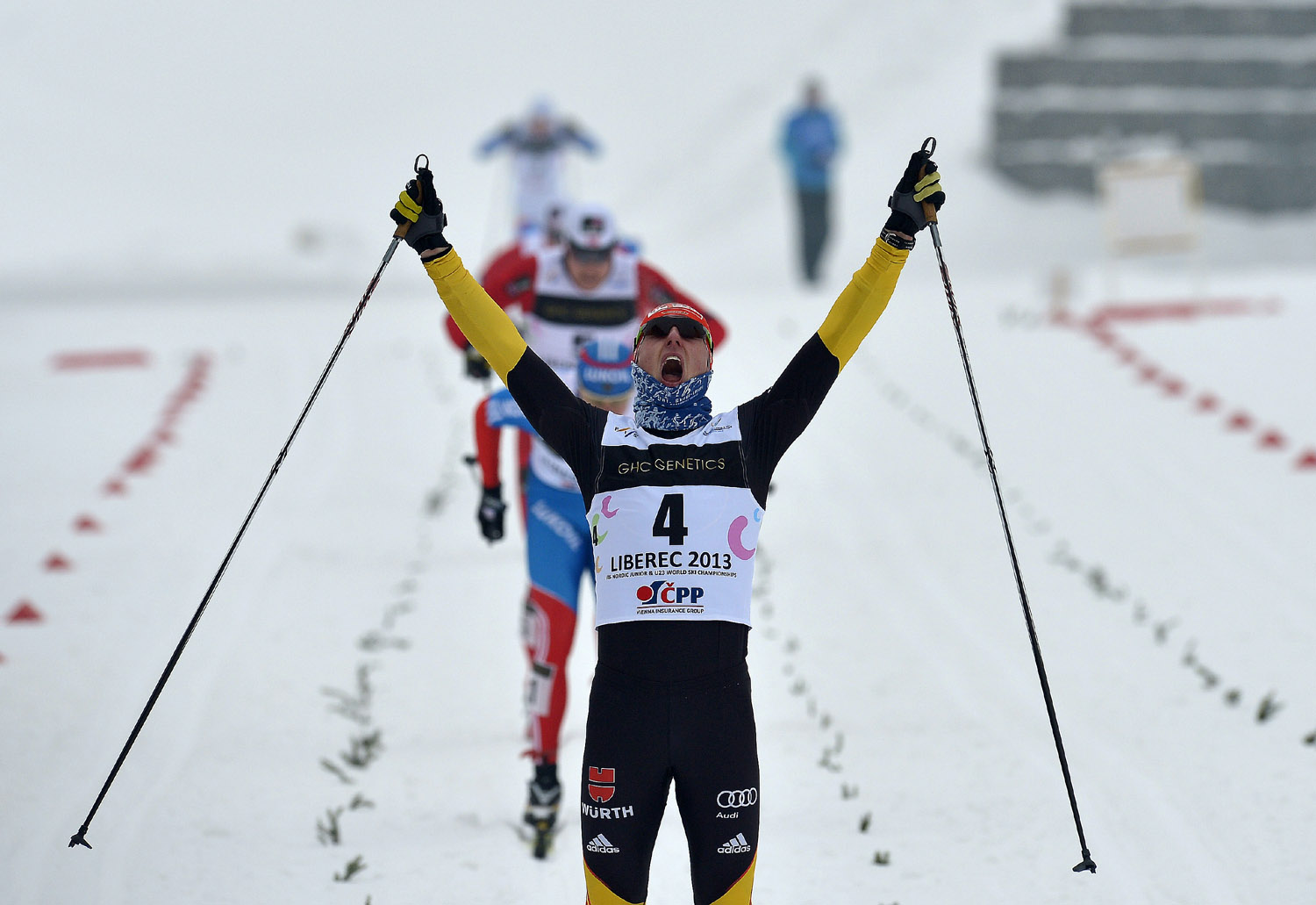
Born in November 1993, Lennart Metz of Germany was one of the oldest competitors at Junior World Championships in 2013. Did that help him win the classic sprint? Photo: Liberec2013.
From children’s racing through Masters World Championships, athletes are divided into age classes in order to ensure fair competition and to identify the best racers at different developmental stages. In fact, only at the senior elite level is birthday a non-factor in determining what race you can win.
The concept is called “relative age effect” (RAE) and describes how within a given a give age class, for example J2 ski racers in the United States, birthdates might have a skewed distribution. For instance, being born earlier in the year might confer an advantage because young athletes might have developed further or simply grown taller.
At junior national championships, a skier who is 15 years and 11 months old, for instance, might be significantly stronger and have more developed ski technique than one who is 14 years and 3 months old. He or she might also be more mentally mature and have a better handle on high-pressure competition situations.
Looking at age distributions at championship events, you can see hints of this pattern. Look at 2013 World Junior Championships in skiing, for example. In the men’s classic sprint, half of the final heat comprised athletes born in the last five months of 1993, at the edge of the age eligibility window. It might have been because they were bigger, stronger, or faster – or that they’d had better development opportunities because as very young skiers, they were identified as talent earlier.
(In other sports, there is a “reverse RAE” where being younger is advantageous.)
Michael Romann and Jörg Fuchslocher applied these questions specifically to young female athletes in primarily individual sports. Both are areas lacking substantial research: across all sports science, male athletes are much better-represented as study subjects, and furthermore there is plenty of money and resources to investigate high-profile team sports with robust development structures, such as soccer.
Those previous studies found that young male soccer players were more likely to drop out of sport if they had late birthdays making them relatively younger than the rest of their age class, for instance. But with significant physiological differences between men and women, differences in the ages at which male and female athletes hit puberty and mature, and even in technique and ideal body type for men and women in some sports, the same wouldn’t necessarily be true for girls.
For instance, look back at that World Junior Championships in 2013: in the women’s sprint final, the second- and fourth-place finishers, Victoria Carl of Germany and Natalia Nepryaeva of Germany, were born in 1995 – they weren’t even the oldest classes of juniors at that point.
Romann and Fuchslocher used data from 301,428 young women (age 10-20) participating in Switzerland’s recreational “Youth and Sport” programs, and looked at a subset of 1,177 young women involved in the National Talent Development Program in several sports to look for RAE’s.
Among the greater dataset of women in the recreational program, athletes had earlier birthdays than would be predicted by the overall Swiss distribution in alpine skiing, tennis, track and field, snowboarding, and fencing.
Results were different among the most dedicated young athletes, though. In the National Talent Development program, where athletes train at least 400 hours per year, there were more early birthday for alpine skiing and tennis, but more late birthdays for snowboarding, table tennis, and fencing.
The authors noted that this represented considerably more variation in the strength and direction of relative age effects at the elite youth level than has previously been found for male athletes. One reason, the authors suggested, might be that societal pressure contributes in different ways to girls’ decisions to participate or stay in sports.
For instance, media and culture push the idea that being feminine means having a specific body type – a thin and delicate one. That is at odds with the idea body type for many sports, where size and muscle are advantageous. They argue that girls who mature earlier might be more cognizant of these pressures, drop out of sports where physicality is important, and switch, for example, from tennis to table tennis, which is more technical and where having a traditionally “feminine” body type might be less of a disadvantage.
Likewise, the combination of RAE’s and reverse RAE’s might be because girls initially enroll in the most high-profile sports (in Switzerland, alpine skiing and tennis), but the younger, less physically strong participants might drop out when they realize they don’t have as good a chance of success. If they then switch to sports like snowboarding and fencing, this could explain why there are a higher prevalence of late birthdays in these second-tier sports.
At the recreational level, though, it seems clear that girls at the younger end of the yearly age distributions are less likely to enroll or stay involved in sports. This presents two problems. One is elite- and woman-specific. In countries like Switzerland where women’s national teams are often quite small compared to the full rosters of men’s teams (for example, the country didn’t send a female biathlete to the Olympics until 2010), as many young female athletes as possible should be encouraged to continue in sports.
But at a more general level, for both girls and the previously-studied young male athletes, dropping out of sports represents an obstacle for those pushing the health and social benefits of lifelong recreational sports. If having a late birthday means that you are less active and less likely to develop sports-based social bonds with friends, there are potential public health consequences.
Several unwieldy solutions have been suggested, such as making competitive or weight classes rather than age classes, as is done in judo; making age classes narrower, for instance with 6-month spans to minimize the age differences between competitors; or changing what time of year the cutoff dates fall at each season so that athletes will always have a relative age advantage at least once in their career.
Instead, the authors suggest, perhaps a solution can begin with the attitudes of youth sports coaches. If youth teams prioritize long-term development and potential rather than immediate performance, they might be more likely to select or invest in a smaller, younger athlete who nevertheless might excel in a few years’ time. After all, schemes like Switzerland’s National Talent Development Program by definition should be thinking long-term.
The concept and consequences of relative age effects should be taught in coaching education programs, they added.
Xenon gas isn’t usually thought of in a medical context, but its applications are growing, from use as an anesthetic to a neuroprotectant to a performance-enhancing drug. Photo by Jim Nelson, creative commons.
Xenon gas has been in the sports news since this winter, when it was revealed that Russian skiers had been breathing the gas to increase the oxygen-carrying capacity of their blood. It caused something of an uproar, but only a quiet one because people were confused: what exactly is going on here? Isn’t xenon a noble gas that has a purplish spectra? Regardless of whether it makes you faster, why would you breathe that? Should we be outraged?
Xenon has many properties which have been used in relation to medical fields for decades. It’s an anesthetic which will soon be introduced to broader use in Europe, in part because it is more potent and thus requires a lower proportion in the bloodstream in comparison to commonly-used N2O. It’s also a neuroprotectant, and clinical trials are being developed to determine whether breathing xenon gas when the body is oxygen-starved (or recovering from such a state) can help prevent brain damage.
In the doping context, breathing xenon leads to a series of steps which may increase athletic performance. First, the presence of xenon increases the production of a transcription factor (HIF1A) – a protein which binds to a specific region of our DNA. This transcription factor codes for a protein which is usually produced only in low-oxygen, hypoxic environments. This in turn boosts erythropoietin levels, so that the blood can carry more oxygen: an obvious benefit for endurance athletes.
Yet very little research has confirmed that this actually translates into athletic improvement. One of the only studies ever published on the topic of using xenon in a training regime is in Russian, and thus inaccessible to most of the rest of the world.
So despite the perplexed look on everyone’s faces when the Russian xenon-huffing scandal broke, most were quick to condemn the practice. In fact, some argued that it might already be breaking the World Anti-Doping Agency (WADA) code. Although xenon was not, at that point, expressly banned, the following sentence described prohibited methods. It’s banned to:
“Artificially enhancing the uptake, transport or delivery of oxygen, including, but not limited to, perfluorochemicals, efaproxiral (RSR13) and modified haemoglobin products (e.g. haemoglobin-based blood substitutes, microencapsulated haemoglobin products), excluding supplemental oxygen.”
Since breathing xenon does artificially enhance the uptake of oxygen, it seemed like a slam dunk. Former WADA president Dick Pound told the German news service WDR, which was doing an investigation into xenon as a performance-enhancing drug, that he was “in no doubt that it is doping.”
The team doctor for the Garmin-Sharp cycling team said that his team had considered using xenon, but decided not to because it was potentially dangerous and, they had concluded, definitely illegal. And cycling teams aren’t usually the most trustworthy people on doping issues.
But WADA was quiet until it added an amendment this spring expressly banning xenon (and argon, a neighbor on the periodic table) in no uncertain terms.
Now, scientists have been trying to develop a test to detect the use of xenon. Writing in Rapid Communications in Mass Spectroscopy, a team from Cologne and Düsseldorf, Germany, report on a new test that seems to be working.
The team used a combination of techniques including gas chromatography and mass spectroscopy, accounting for the specific mass of three different xenon isotopes, to detect xenon concentrations in the blood. In the first part of their trials, they fortified blood plasma with xenon to specific concentrations, and then tested whether their method could detect it.
With that success under their belt, they moved on to realistic human trials. Their subject was a woman who was undergoing anesthesia using xenon gas. The team collected blood samples during the anesthesia as well as 4, 8, and 24 hours afterwards, and then ran the samples through their test – sometimes after storing them for up to 36 hours. Even the samples collected 24 hours after the anesthesia had xenon detected by the team’s test.
The team writes that the application of the test for antidoping purposes is not necessarily a slam dunk. From reports, for instance, athletes might breathe xenon through a mask for just a few minutes, which is different from the amount of the gas which might be taken in during anesthesia – and potentially harder to detect. It’s also unclear whether samples taken further after breathing xenon would still show detectable signs of the gas.
But it’s a first step towards testing for the use of this newly-banned substance.
“… accredited laboratories are in need of adequate detection assays, and the pilot study presented in this communication demonstrated the suitability of conventional [athlete biological passport] doping control samples for detecting the anesthetic substance by commonly available GC/MS (or HRMS) instruments,” the authors conclude. “Further studies are required to allow the assessment of detection windows for xenon under different gas mixture and exposure time settings.”
In our monthly series highlighting research relating to skiing, we have twice covered the work of Dr. Blair Evans of Wilfred Laurier University in Waterloo, Ontario. First, we summarized his work on how group dynamics affects performance in individual sports; then we dedicated a whole story to his study on competitive suffering, when athletes fail to meet their goals mid-competition. The latter was extremely popular on the site, so we figured at this point we should probably just call Evans up and chat.
As it turns out, Evans (who just recently defended his PhD dissertation and acquired that “Doctor” in front of his name) was a college skier, and his experience has informed most of his research questions in sports psychology ever since.
“I grew up doing all team sports,” he laughed in an interview last week. “Then I went to university with the idea of getting on the basketball team. That didn’t work out my first year, so my second and third year I started training with the ski team. I actually had a lot of assumptions about what individual sports were like, and most of them were shattered when I joined the team.”
What’s Special About Skiing?
Evans’ PhD work revolved around the influence of teammates on athlete’s ability to perform in an individual sport. As summarized earlier, he found that having strong friendships and collective goals was extremely important to individual performance.
“If you’re on a team in an individual sport, having a collective goal always helps but it’s especially important when you have teammates who are competing directly against one another,” he explained. “If you’re in a sport like cross-country skiing where everyone is in the same race, if you don’t have that collective outcome then things can get really competitive.”
Aside from the specific questions he has researched, Evans believes that there are a few unique and remarkable things about cross country skiing from a psychological viewpoint. The group dynamics aspect was one thing that stood out early – it’s a sport where there is very great potential to develop strong bonds between teammates.
“One of the things involves the year-round training and the different types of training you have to do, which I think is really unique,” he explained. “And also the amount of travel that’s required. Those things might change the types of relationships that you might develop with your teammates.”
Doing drills on a basketball court, laps in a pool, or running stadiums is very different than level one aerobic training for a couple of hours outside.
“A lot of the training is often pretty enjoyable, and the training is in a setting that’s outdoors and quite [beautiful], so it might create the opportunity for a lot of really positive shared experiences between teammates,” he said. “If you have to go run up a mountain with them or go travel to the top of a glacier, you might be forced to make some friendships… If you’re training 15 hours a week, that’s probably 4 hours of really intense, and then 11 hours where you’re just coasting. You can just chat and make those relationships.”
Furthermore, because skiing requires a lot of different types of training – on snow, on rollerskis, running, biking, bounding, work in the weight room – it’s likely that an athlete will dislike or be weak in at least one of those areas.
“I’ve heard this from a lot of people, if you didn’t have your teammates it would be just terrible,” Evans said. “If you had to go for a 3-hour training run, if you don’t like running, you’d have a really terrible experience, but if you’re there with really close teammates, it can make it a really positive experience.”
Evans will soon move to Queens University in Kingston for a postdoctoral fellowship, focusing on youth sports. He might have the chance to look at some of these topics as they relate to young athletes, a prospect he’s excited about.
“I think that will give me a really good opportunity to look at these things in youth settings, maybe how your sport team might shape your development in sport,” he said. “There’s a lot of different stages that an athlete might go through in sport. They’ve showed some of the really negative outcomes of early specialization in certain situations. I’m really excited about that, for the chance to take some of this work and look at it with younger age groups.”
How To Do Science?
All these questions, plus many more, were raised when Evans began skiing. But when he moved first to a masters program and then into a PhD, he was tasked with the challenge of turning them into testable hypotheses that could be addressed in studies using human subjects (there are strict rules about consent, privacy, and ethics, and researchers must apply to a board for permission before conducting studies; the Canadian guidelines are here).
Plus, people are a little more unpredictable than, say, bacteria, mice, or plants, common study organisms for researchers in other fields.
“The one thing that I’ve started to learn is that you’re never going to have a perfect study when you’re working with human participants,” Evans laughed. “Do you want the study to be really perfect – they call it “internal validity”, which means that you can be confident that what you’re seeing is really what’s going on. But at the same time, if you take a study like that, they are almost always going to have less meaning for the average individual. There’s always a balance.”
Plus, Evans’ goal is to have his findings interpreted in a way that is useful to athletes and coaches – after all, the questions were generated in his own athletic life. But it takes a lot to move from a hypothesis to an applicable message.
“You have to make it a progression in order to have a big impact,” he said. “You have to start with these really stringent methods, and then slowly but surely advance to something where it’s more applied and can be directly picked up.”
The competitive suffering study, for example, was part of Evans’ masters work. Although he feels like it needs a lot of follow up, his masters ended and the work was dropped. In the group dynamics work, on the other hand, he had a four-year PhD to follow up on as many leads as possible, so he was able to look at the topic using several different kinds of studies, from broad to quite specific, and questionnaire-based to experimental.
Evans tries not to chase publicity by claiming an application for each result. Studies typically only address a specific question in a specific framework, or only measure a few variables. While that adds to the understanding of a concept as a whole, in general single studies can’t explain everything about how athletes act.
“I’m always cautious about providing really clear and specific conclusions if I haven’t tried it myself,” he explained. “If you look at the suffering paper, I could make some suggestions for athletes and coaches, but without having tested it first, I might be leading people down the wrong pathway. There’s so many questions to ask.”
And even when a study is done, challenges remain.
“The desire to do it always comes from an applied need,” he said. “But you have to balance that with the need for, when you’re developing concepts you have to be really specific and academically-minded. In my writing I try to do the best I can to make it palatable at least for the average Joe to read, but at the same time it’s a matter of trying to balance that. It’s a struggle.”
There’s a few more challenges in academia. First of all, grant funding might not be available for every interesting question – for instance, the government is more likely to fund research which has implications for the general public in terms of health and happiness, than research about elite athletes which impacts relatively few people.
And then there’s the issue of whether a study on one group of athletes can be applied to another.
“For instance, in the competitive suffering study, I had a very wide range of athletes in terms of their 5k times,” he said. “If you’re chasing that 15:30 5k time, you need to overcome emotions – you have a shorter time frame. Someone doing a 25 minute or 30 minute 5k, probably the most important thing is to come out having enjoyed the race. That was one of the struggles with that work. The huge range really changed the findings.”
About That Suffering…
The suffering study generated a lot of interest on this site, and Evans was able to fill us in a little more on how it translates out of large, scientific words into real English. First of all: yes, it was inspired by experience.
“Of course, with competitive suffering, I’ve had lots of experiences where you may have set your goals too high or maybe something goes wrong during a race, and you try to cope with that while still trying to compete,” he laughed.
And that was a big part of the reason why he found the issue compelling. From a completely logical point of view, if we are failing at our goals and are totally miserable, we should probably just quit. Academics told Evans that very thing.
“I think that’s the biggest question with competitive suffering,” Evans said. “I had a professor I discussed it with, and he said, ‘if you’re not making your goal, I would just drop out of that race.’ But there’s a lot of cases where you might not be making your goal, but it’s still important to perform as well as you possibly can. Even if you’re not getting that top-10, you’re not going to give up. The only way to perform in that situation is to try to maintain some sense of drive to attain some goal.”
As proud, stoic, endurance athletes though, we’re conditioned that it’s shameful to DNF, even if there’s not anything (for instance a team score) on the line. And so Evans reiterated the findings of his work.
“There’s different ways of dropping out,” he explained. “If you’re not meeting your ideal goal and you don’t have a secondary goal prepared beforehand, you have a couple of choices. You can completely drop out, or you can still stay in the race but let off on the gas pedal, or to try to reframe your goals or change the situation so that you’re still competing at the best of your abilities.”
And while some people thrive under adversity, re-setting those goals is probably the best way to cope for most people.
“Based on what we know about sport and endurance sport, people have different emotional states that they are going to perform best at,” Evans said. “Some people perform best if they are as negative as possible, but for the majority, a lot of us do need some sort of positive mindset and a goal to pursue. I think being able to cope well that kind of competitive suffering is pretty important.”
Competitive suffering: faced with skis that didn’t glide, Canada’s Alex Harvey stopped for a moment to gesture at coach Justin Wadsworth (not shown) in the 15 k classic at the 2014 Olympics in Sochi, Russia. Harvey later used an avoidance coping strategy, i.e. he dropped out.
You’re in a ski race. It’s midway through the season, and you’ve been racing better and better – your team is starting to rely on you. This, you think, could be your first top ten. But halfway through the 10 kilometers, your coaches start telling you something else. First your splits have you in 15th. Then in 20th. You try to fight for every spot, but you’re weighed down by a feeling… the feeling that you just aren’t achieving what you set out to do. It’s hard to care about whether you are 22nd or 23rd when you had been planning to fight for many more points than that. And the less you care, the further you slip back.
If you’ve ever had this experience, you’re not alone. It’s so common that scientists have a name for it: competitive suffering. That’s when an athlete feels a sense of failure and helplessness at not being able to achieve a pre-competition goal. It’s an example of a negative affective state, where a person experiences negative emotions and poor perception of themselves (examples of emotions you might feel in a negative affective state include anger, disgust, guilt, contempt, fear, and nerves).
And when you do experience this sense of impending disappointment, you do the same thing that everyone, everywhere, does in discouraging situations: you cope. In a psychological sense, this is defined as constantly re-appraising your environment and yourself and trying to solve the conflict.
As scientists note, athletes pretty often fall short of the lofty goals they set for themselves, so this is fertile territory for research. There’s plenty of studying to be done for anyone who enjoys watching suffering. So far, scientists have done enough work in endurance sports to identify a few main coping strategies.
A positive coping strategy is problem-focused coping, or trying to proactively change the situation. That could include setting a new goal, one that you still have the possibility to achieve. Or it could mean changing your pacing strategy or technique in order to attain a different outcome.
On the other hand, emotion-focused coping (the attempt to ignore negative emotions) and avoidance coping (giving up on the goal completely, and possibly dropping out of the race) usually lead to further stress and negative emotions.
Thinking back to that 10 k race, there’s plenty of time for endurance athletes to think about how they are failing. So recently, Blair Evans of the Wilfred Laurier University in Waterloo, Ontario, set out to investigate how many different strategies athletes use over the course of a frustrating race. He and his co-authors recently published their results in the European Journal of Sport Science.
The researchers used 26 endurance athletes with a wide range of ages and abilities and put them through 5 k running time trials. The runners were told to set a tough but realistic goal time for the trial, which took place on a track, and that they would be given splits on their progress towards attaining that goal time.
They knew that the researchers were studying coping strategies for suffering, but they didn’t know that actually, they were being set up for failure. 2 k into the race, the researchers began giving them negative feedback – that they were 5% over their goal splits – regardless of how the runners were actually doing.
The whole time trial was videotaped for each athlete, and the researchers reviewed the tape with the athlete immediately afterwards and asked them questions about their emotional state throughout the entire race. They then did a separate time-series analysis for each of the three types of coping strategy to see how their use changed over the course of the “competitive suffering task”.
The researchers found that initially, participants were disappointed that they weren’t meeting their splits and considered abandoning their goals. But as the time trial went on, they replaced these avoidance coping strategies with more productive problem-focused strategies. They tried harder to regulate their emotions – in fact, the worse they felt about potential failure, the harder they tried to improve the situation.
Overall, the researchers found that the athletes were fairly successful at banishing their negative outlook, perhaps in part by adjusting their goals to something that seemed more attainable. They note that handling both the emotional situation and the goal-related problem itself go hand in hand for successful coping. Without coping, they say, the unattainable goals can actually lead to worse and worse performance.
So chin up, everyone, even when the going gets tough.
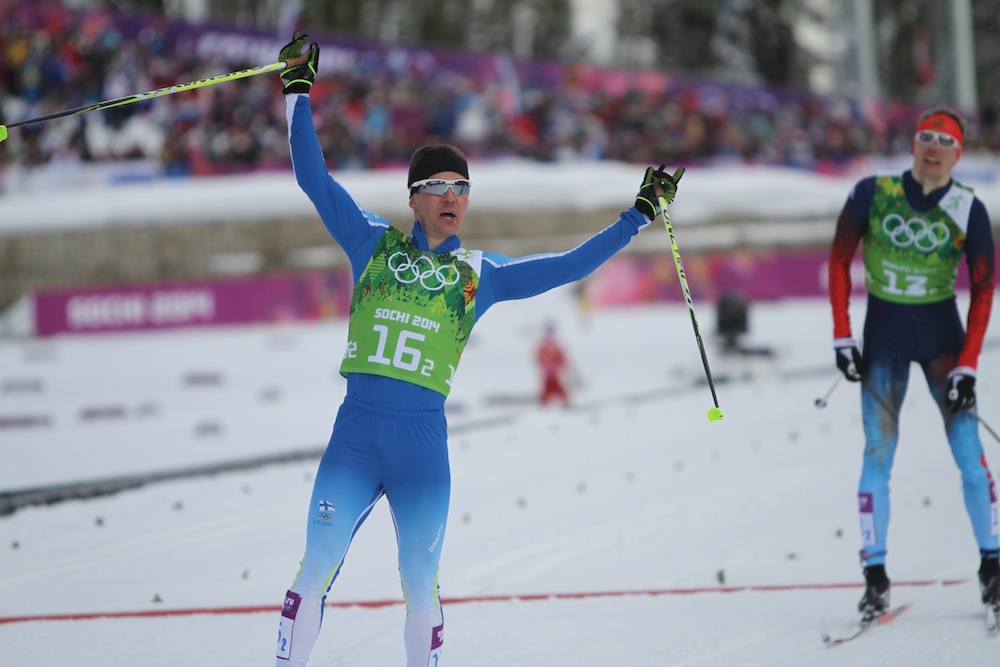
Finland’s Sami Jauhojärvi crosses the line ahead of Russia’s Nikita Kriukov to win a gold medal in the Sochi Olympic team sprint. A recent study looked at whether breathing pure oxygen from a mask between laps of a team sprint would help recovery.
Welcome back to This Month in Journals! After catching up with what happened in scientific and social research this winter, we’re back on track. Here is what was published in scientific journals in April.
* At the European Journal of Applied Physiology, a discussion is raging about whether acetominophen should be considered a performance-enhancing drug and places on the WADA Prohibited List.
Several studies in the past few years have found that acetominophen, also called paracetemol, can improve sprint performance and reduce the slowing-down that usually occurs over the course of a race or intervals/heats. It is the main ingredient in Tylenol and is widely available over-the-counter to treat pain, fevers, and colds, and other illnesses.
One such study was published in the journal this winter. A team from the University of Kent and the University of Bedfordshire found that giving active men a 1.3 g dose of acetominophen improved their power output during a series of sprints on stationary bicycles, and reduced the decline in power output from one sprint to the next.
Drs. Giusppe Lippi and Fabian Sanches-Gomar of the University of Parma and the University of Valencia, respectively, voiced concern in a letter to the editor: if this has been shown over and over, why is acetominophen not on the banned list? They pointed out that not only is the drug dangerous in high doses (safety is a common rationale for banning performance-enhancing drugs), but it is easily detectable in urine using a fast and cheap testing technique.
This prompted a response from the original authors, who first hurried to assure readers that though they test the effects of acetominophen on sports performance, they do not condone doping.
Next, they acknowledged that the drug certainly seems to be performance-enhancing. Their research over several years has shown that although it also has effects such as preventing core temperature from shooting up in a hot environment and improving nervous system activation, the main mode of performance enhancement is by reducing the sensation of pain.
The Kent/Bedfordshire team explained that acetominophen is safe at therapeutic doses, and that amateur athletes are widely acknowledged to use many other pain-masking drugs which are much more dangerous. Should those other drugs not be a bigger priority to regulate? Like another common compound which enhances performance – caffeine – acetominophen is possibly not banned because it is so widespread. Furthermore, there are many legitimate reasons to use the drug, so implementing a TUE requirement would likely be tedious.
“Consequently, more robust definitions for what constitutes doping, and clearer criteria for establishing a banned substance are warranted,” the authors concluded in their reply.
This debate is probably not over!
* Next, the debate over xenon gas brought up at the Sochi Olympics is not the only instance of skiers breathing something special to enhance performance. A team of researchers from Switzerland and Germany looked at the effects of the oxygen content of air breathed in between laps of a team sprint on recovery and performance. The results were published in Medicine and Science in Sports and Exercise.
Eight well-trained male skiers did team sprint simulations on a SkiErg, with race distance based on that at the Turin and Vancouver Olympics. The elevation, meanwhile, was simulated at 1800 m (the elevation of the Sochi Olympic venue) via an oxygen mask. Each skier did the team sprint twice. Once, in between laps they breathed air with an excess of oxygen. The other time, they breathed air with very low oxygen. The order of the trials was randomized and the athletes didn’t know which air they were breathing – except by how they felt, of course.
The researchers found that neither power output nor perceived exertion differed between the two trials. However, breathing the oxygen-enriched air did improve the oxygen saturation of the skiers’ hemoglobin. The skiers also didn’t accumulate as much lactate in their blood when they breathed the oxygen-enriched air during their recovery time between laps.
So why was there no performance response? Lead author Anna Hauser of the Swiss Federal Institute of Sport guessed that maybe the recovery time of just 3 minutes in between laps was not long enough for the body to respond to the benefit of extra oxygen.
Or, there might be another explanation. The team did find that there were athlete-specific responses: some skiers did improve when breathing the oxygen-rich air, while others didn’t. With a small sample size of only eight athletes, this likely confounded their ability to find statistically significant results. Individual variation in response to this technique deserves further research.
* Dr. Sandra Hunter of Marquette University took on the task of reviewing research on muscle fatigue in men and women. Writing in Acta Physiologica, she pointed out that it’s difficult to get a clear picture of how male and female athletes differ in terms of fatiguability because the vast majority of sports science research is performed on men.
Then, however, she went on to give an in-depth analysis of what we do know. Men are generally assumed to be stronger than women, but for some muscle groups, women are much less fatiguable. For instance, men are stronger at isometric (static) contractions of knee extensors or elblow flexors, but they also have a shorter time or number of repetitions to failure.
The same is true of repeated dynamic muscle contractions, such as lifting an object. Men also showed a greater relative reduction in the force they were applying, although not necessarily a bigger absolute reduction, because they started off as stronger in the first place.
With repeated dynamic muscle extensions however, such as lowering an object, women were actually more fatiguable than men. Muscle extensions lead to muscle damage and delayed-onset muscle soreness (DOMS), so some researchers hypothesize that the reduction in power output by women is because they have lower pain thresholds and are feeling the burn.
Forget strength – what about power? In sprint repetitions on a stationary bike, men usually experience bigger reductions in power output over a set of intervals than women do, and women recover more quickly between sets.
Hovering around all of these phenomena is the big question: do men tire more quickly because they have higher strength or power to start out with? In many of the studies where pairs of men and women are matched for their initial strength or power, the sex differences disappear. Nevertheless, scientists don’t feel like they have finished answering this question.
There are many other potential explanations, from sex hormones to the sympathetic nervous system. Women have higher lipid metabolism in their skeletal muscle than men do, but men have higher rates of glycolysis; is that it? When generating a force, women have greater vasodilation in their muscles, but men have higher mechanical compression; what about that?
Interestingly, when women are stressed or distracted, their reduced fatiguability goes away. If men and women are asked questions, told to do mental math, or given electric shocks during isometric work, the women’s performance declines at a much faster rate than the men’s. Basically, stress may affect men’s and women’s bodies differently through the sympathetic nervous system.
* Lastly, a quick one. Has your coach ever had you run a bunch of sprints, and then do a set up pushups? If so, they were a smart coach. A study in the European Journal of Applied Physiology compared strength training to combined strength and sprint training. Even though the group doing the combined protocol had half as many sessions a week compared to the strength-only group, the researchers found that both groups got stronger at the same rate – and that the combined training protocol produced improvements in VO2Max and time to exhaustion, whereas the strength protocol, unsurprisingly, did not.
Welcome back to This Month in Journals! After taking the winter off to focus on race reporting, we’re doing a series to catch up on the ski-related research that has been published in scientific and social science journals this winter.
* In the journal Sports Engineering, five researchers from Trondheim, Norway, reported having built an “instrumented rollerski.”
Come again?
The team built full bridge strain gauges into the shaft of the rollerskis so that they could measure force while a skier trained on a treadmill. A wireless sensor picked up the information and transmitted to a base station via a radio transmitter. They also used a motion-capture system to track the rollerski’s position in three-dimensional space.
That allowed them to be able to detect differences in technique between two skiers, or for instance between the same skier when he was skating with and without poles. The researchers hope that the system will allow better work on ski technique – but they wrote that a few adjustments still had to be made to the system.
* Meanwhile in Austria, researchers were focusing on boots.
“Ski boot quality is determined by mechanical properties and comfort,” Dr. Patrick Hofer and four coauthors wrote in their abstract in Applied Ergonomics. “Comfort is strongly affected by cold feet.”
Point taken. The group set out to determine the “microclimate” in ski boots: temperature, humidity, and how much water the boots absorbed. They asked five skiers to participate in their study, using two different brands of alpine ski boots. The men went into a climate chamber set at various temperatures and simulated skiing (rounds of squats, followed by rests so simulate riding on a chairlift); two of the men also did field tests.
The ski boots were outfitted with sensors to detect the temperature and humidity. After the simulation was done, the wetness of the boot liner was measured by weighing it on a scale and seeing how much water weight it had gained.
Alpine boots are completely different than cross-country ski boots, but some of the researchers’ conclusions are still quite valid for our community. Because there are no large muscles in the foot, feet are kept warm only by blood flow. That means that once boots (and feet) start to get cold, they just keep going. In every case, the temperature in the boots declined once the skiing began.
The men began saying that their feet were cold and hurt when their toes reached about 20ºC (68ºF), or when they were about 5ºC colder than the main part of the foot (toes and feet had different sensors). The coldest temperature any of the mens’ toes reached was 11ºC (52ºCF), at which point he said his toes were numb.
The researchers also found that ski boots got far wetter in the field than in the climate chamber (duh) and noted that although boots have good insulation, when they are exposed to snow and get wet, that insulation doesn’t work as well.
In order to keep feet from getting cold – important! – the researchers said that boots would probably have to be built with different materials and maybe even different designs.
* Other researchers were studying the health effects of sports. The American Medical Society for Sports Medicine published a position statement in the British Journal of Sports Medicine about overuse injuries and burnout in youth sports. Noting a culture pushing children towards excellence at younger and younger ages, the panel gave an overview of possible effects with the aim of helping doctors identify young athletes at risk.
Among the consequences of heavier training loads for young athletes, they discussed that:
overuse injuries are most likely to occur during the adolescent growth spurt
prior injury is the biggest risk factor for developing an overuse injury
growth cartilage may be particularly susceptible to repetitive stress
early “sport specialization” increases injury and burnout; participating in a diverse array of sports should be encouraged early in a child’s athletic “career”
scheduled rest periods are essential in maintaining a physically and mentally healthy relationship to sport
emphasis should be placed on skill development and correct technique, not just competition
pressure from family and peers is discouraged
the female athlete triad places girls at increased risk of injury
* While we’re on the subject of the female athlete triad…. Two other research groups addressed the phenomenon. Defined as a combination of disordered eating and irregular menstrual cycles, which eventually through hormonal effects can lead to decreased bone density, the triad, also sometimes referred to as relative energy deficiency syndrome, is assumed to be common in female athletes.
Not all three symptoms have to be present for a woman’s health to be affected. Even without disordered eating, for example, a female athlete can be taking in few enough calories to stress daily body function, at which point reproductive functioning is diminished. Regardless, reducing the energy deficiency – that is, making sure an athlete is taking in more calories than they are burning – can solve a lot of the problems.
The IOC put out a consensus statement pointing out that male athletes are also affected, although few studies have examined to what extent. In any case, the IOC listed the potential effects of relative energy deficiency: decreases in metabolic rate, menstrual function, bone health, immunity, protein synthesis, and cardiovascular health. Because of these risks, which can have long-term consequences, it is important to remedy the symptoms of the triad.
The group called for better clinical approaches to dealing with the syndrome, and suggested dividing athletes into three categories, each with different treatment plans in relation to when they should be allowed to return to sport.
Low-risk athlete should be encouraged to play their sport full-time, with an emphasis on healthy eating. Medium-risk athletes should be placed on a training plan and diet plan, and allowed to train if they follow these plans; they can be cleared for competition by their doctor. For high-risk athletes, competition should not be allowed, and only minimal training under supervision.
The statement was published in the British Journal of Sports Medicine, which also published a paper by a group of Scandinavian researchers who developed a questionnaire to determine whether athletes are affected by the triad. Consisting of 25 questions, validation showed that the survey was effective in identifying female athletes who showed signs of the triad. The researchers suggested that such a questionnaire (called LEAF-Q) be used for early detection of the triad so that female athletes could change their habits before the effects became more serious.
Snowmaking equipment at the Rikert Touring Center of Middlebury College. Snowmaking is becoming increasingly necessary to maintain winter ski areas, but should the ski industry also be developing other strategies?
Welcome back to This Month in Journals! After taking the winter off to focus on race reporting, we’re doing a series to catch up on the ski-related research that has been published in scientific and social science journals this winter.
The Intergovernmental Panel of Climate Change (IPCC) recently came out with a new report, even more alarming than its previous ones. Besides noting that extreme weather events would increase and certainly have a huge impact on people around the world, the panel cited the need for adaptation.
“Responding to climate-related risks involves making decisions and taking actions in the face of continuing uncertainty about the extent of climate change and the severity of impacts in a changing world, with potential limits to the effectiveness of incremental approaches,” the panel wrote in their technical summary. “… Adaptation planning and implementation at a range of scales are contingent on values, objectives, and risk perceptions. Some types of adaptation options, such as insurance or large-scale infrastructure projects, may differentially affect stakeholders.”
What does this mean for the ski world? A variety of research groups published papers this winter looking at perceptions of climate change in the ski industry, both from tourists and other stakeholders, and whether they think adaptation is important. Here’s what they found.
* Drs. Mia Landauer, Wolfgang Haider, and Ulrike Pröbstl-Haider published a comparison of climate change perceptions in Austrian and Finnish cross country skiers in the Journal of Travel Research in January.
The authors identified three potential ways for ski areas to adapt to climate change: using technology such as snowmaking, snow saving, and ski tunnels; diversifying into activities that don’t depend on snow; and promoting all-season tourism rather than winter tourism. Then they examined how Finnish and Austrian skiers’ preferences for these strategies were affected by their cultural background.
And there were major differences between these cultural backgrounds. For instance, in Finland, skiing was a form of transportation for hundreds of years, trails are groomed free of charge, and citizens expect to be able to use public and private land for recreation, as one of their basic rights. Most skiers learn in their childhood. In general, the culture has been characterized by more long-term than short-term thinking.
In Austria, cross-country skiing is much more of a tourist product, and trails these days are more likely to be groomed by private businesses or individuals who charge for trail access. Skiers are more likely to have learned as adults. The authors identified masculinity and “avoidance of uncertainty” as general cultural traits in the country.
The authors found that about half the skiers in each country mainly hit the trails to enjoy nature and get outside. But in Finland, almost twice as many of the others ski for the sporting and fitness aspects of the activity and don’t mind skiing alone, while more Austrians consider it a social activity. 85% of the Finns skied more than 30 days in a winter; most Austrians went out just six to ten days.
What did this mean for climate adaptation? The Finns, with their emphasis on skiing as sport, were more interested in using technical advances such as snowmaking and building ski tunnels. The Austrians, who were more interested in seeing nature with their friends, were uninterested in ski tunnels. However, the Finns expected these infrastructure improvements to be paid in the interest of the public good, although they were somewhat willing to pay for access ski tunnels if the snow was good. Since Austrians already pay trail user fees, they were willing to do so for further improvements.
In terms of diversification, Finns were more interested in seeing resorts offer other non-snow and year-round sport activities, either indoors or outdoors. Because the Austrians were not as interested in skiing as an athletic or fitness activity, they had less strong preferences for this type of adaptation. Instead, they were more interested in seeing cultural programs and nature experiences being offered in the place of on-snow skiing.
The authors write that their study emphasizes how climate change must be addressed differently in different settings.
Snowguns going strong at the Craftsbury Outdoor Center (Courtesy photo).
“Ignoring cultural differences would likely increase management problems, lead to conflicts, and also to a significant decrease in skiing participation,” they wrote in their conclusion. “[Our study] underlines the importance and necessity to consider social limits—such as culture—to adaptation to climate change.”
* Other work looked at the attitudes of not the skiers themselves, but those running the ski areas. Dr. Lisa Trawöger from the University of Innsbruck assessed the perception of tourism stakeholders in Austria about whether climate change was a threat to their winter tourism system.
In the journal Tourism Management, Dr. Trawöger began by reviewing previous work on stakeholder attitudes. She noted that ski resort operators in Switzerland have been cognizant of, and worried about, climate change since the early 2000’s: after all, they have seen its effects firsthand.
Attitudes of winter tourism businesspeople in the rest of Europe range from skeptical of climate change, to acknowledging its existence but worrying only about the bottom line. In many places, like northern Sweden, people weren’t sure whether climate change would affect tourism. In others, increased awareness of the problem had been noted in time spans as short as two years, perhaps because of low-snow winters in 2006 and 2007.
So, Dr. Trawöger turned to the Tyrol region of Austria. There, she found ski company CEO’s who had discussed climate change in their work but were highly skeptical of its effects, and who did not believe research which predicts that it will affect winter tourism their region.
“A few years ago they said we would have less snow,” a cable care company CEO told her. “We had a lot of snow and they told us it was an exception. We had five exceptions in a row. They also said it would get warmer and then we had a freezing cold winter. That doesn’t increase our confidence in studies. We can‘t estimate the long-term effects of climate change from the results we have received so far.”
Of 24 CEO’s interviewed, only five were actively planning for climate change impacts, and they all ran cable car companies, not tourism associations. 11 CEO’s believed climate change was real, but were waiting to see if it affected Tyrol; five were unsure about climate change but optimistic that it might not affect them; and three completely denied its effects.
Overall, Dr. Trawöger wrote, the Tyrolean ski industy does not believe that climate change is a threat and has not management or adaptation strategy for how to deal with it if it becomes one.
The Snow Farm was among the New Zealand ski areas investigated by Dr. Hopkins.
* Finally, Dr. Debbie Hopkins of the University of Otago undertook similar work in New Zealand. Writing in the Journal of Sustainable Tourism, she concluded that the winter tourism industry is turning to snowmaking as a cure-all for the low-snow blues, without regard for long-term environmental and social consequences.
Because the ski areas around Queenstown (including the Snow Farm, a cross-country ski destination for the U.S. and Canadian national teams and others) area all more than 15 and sometimes over 30 kilometers from the city, they are separated from other non-snow tourism draws and developing diversified strategies is challenging. For instance, there’s plenty of mountain biking in Queenstown itself, so using that as a draw for more remote areas has had limited success.
Unlike in Austria, most skiers were aware of climate change and took it seriously as a threat to skiing. Talking to ski industry workers, locals, and tourists, Dr. Hopkins found that all considered increased snowmaking to be the solution to the climate change problem: other studies have shown that snowmaking can increase the days of skiing available compared to the 1990’s, even as natural snow is predicted to decline in the next three decades. Ski areas are now opening about a month earlier than they used to.
With a warming climate, making snow early in the season could become much more difficult. Some managers also pointed out that snowmaking would become more costly under these circumstances and may not remain financially worthwhile for the ski areas.
And some community members worried about the amount of electricity and water used to make snow a month before natural snow arrived. A few went so far as to say that they would be uninterested in supporting an industry based entirely on manmade snow. Overall, the paper questions whether snowmaking is a viable long-term strategy for the ski areas to use to attract tourists.
“While snowmaking has many positive outputs for the ski industry, there are also perceptions of negative externalities which impact upon perceptions of sustainability and (mal)adaptation in the longer term,” Dr. Hopkins wrote.
Montana State University’s Movement Science Lab is looking for Nordic skiers to participate in a research project this fall and winter. We are looking for Masters-level cross country skiers who fit the following criteria:
40-69 years old, male or female.
Competitive cross-country skiers who plan on participating in the 2014 Boulder Mountain Tour.
Interested in being part of a ground-breaking study on this unique population of athletes.
The purpose of the project described below is to characterize the typical training patterns of Masters-aged skiers during the fall and winter. To accomplish this goal we simply want to record what your current training practices using two well-established measurement techniques: 1) Heart rate monitoring and 2) Training Log recording (see ‘Study Details’ below).
We will be in Ketchum, ID next Saturday, October 5th at Velocio Cafe!
Date: Saturday, October 5th
Times: 11AM to 6PM (drop-ins on the hour, every hour)
Location: Velocio Cafe: 601 Sun Valley Rd
We will be holding 7 drop-in informational sessions every hour on the hour (11AM, 12, 1, 2, 3, 4, and 5PM). Stop by and pick up your materials to participate in the MSU Masters ski study!
*If you are able to make it please RSVP with your name, age, gender, and time we will see you at Velocio. We will get you set up with both your training log and monitor at this time.
*If you are unable to attend but would like to participate in the study please email us at msuskistudy@gmail.com.
Is Nordic skiing your primary winter sport? Are you planning to participate in the 2014 Boulder Mountain Tour 32 km skate ski race? If so, you fit the criteria for our Masters ski study!
This project is being conducted to evaluate the seasonal training and racing practices of Masters-level cross country skiers in order to begin building the knowledge base necessary for improved coaching and training of this unique population. This research project involves wearing a telemetry-based heart rate monitor and maintaining an exercise training log over the course of two 14-day sessions (early-fall and mid-winter seasons) as well as during the 2014 Boulder Mountain Tour 32 km skate ski race (Sun Valley, ID). Since your own plans already include training for and participating in the 2014 Boulder Mountain Tour skate ski race, all that you are being asked to do is wear a heart rate monitor and fill out the accompanying exercise training log.
There is no cost to you (the participant) and participation in this research project is voluntary. If you agree to participate you will be asked to attend one the informational sessions at Velocio Cafe (see above) during which you will learn how to use your heart rate monitor and record exercise data in your training log. You will collect and record exercise data for 14 days during the early-fall training season. Upon completion of the initial collection period, you will immediately return your heart rate monitor system and training log to the Project Directors, Emily Ranta and Tara Vetrone, for initial data analysis.
The second data collection period will begin in early January as soon as you receive your heart monitor and training log. You will collect and record your training through the completion of the Boulder Mountain Tour on February 2nd, 2014. The project directors will be collecting the heart rate monitor systems immediately following the 32 km skate ski race. You will be asked to email your completed Excel-based training log to the Project Directors; handwritten training logs may be delivered in person or returned in standard mail.
Upon completion of the Boulder Mountain Tour, you will receive a PDF file via e-mail of your own recorded heart rate (as a graph) from all recorded exercise bouts over the course of both collection periods. In addition, we will randomly select four study participants to get reimbursed for their Boulder Mountain Tour entry fee (up to $100). Winners for this drawing will be notified shortly after the weekend of the Boulder Mountain Tour.
Questions?
Do not hesitate to email the project directors, Emily Ranta and Tara Vetrone, with any questions that may arise: msuskistudy@gmail.com.
Please forward this email to anyone you know who may be interested in participating. Thank you for your interest in Nordic ski research- we look forward to working with you throughout this study!
Several batches of skis nearing the end of the production line. How much energy does it take to make them? Photo: Boulder Nordic Sport.
For the first time, a group of researchers published a life cycle assessment for the production of skis. Published in the Journal of Industrial Ecology, Tobias Luthe, Thomas Kagi and Jan Reger examined how a pair of skis made by Grown, a Munich-based manufacturer specializing in ecologically-friendly freeride skis, compared to an average alpine ski.
“One pair of skis may not considerably affect the environment, but the world market in the season 2004-2005 of about 4 million pairs of Alpine skis and about 1.4 million pairs of Nordic skis sold, and about 3.2 million Alpine skis in the season 2009-2010 reveals the importance of sustainable ski design,” the authors wrote in their introduction.
The analysis performed was a “cradle-to-grave” assessment starting at where the raw materials come from, going through production and distribution and ultimately ending with when the skis were discarded.
While the assessment was performed for alpine skis, meaning that material like steel for the edges can be ignored, many aspects would be relevant for nordic skis as well, for instance the polyethylene bases, which must be granulated at a plant, and the wooden cores, which must be awn and kiln dried. All of the materials must be not only harvested but transported to and from production and then to sales and consumers. The authors also considered how much energy went into the fabrication process itself.
Some nordic skis, like Fischer’s Vasa series and their Superlight Crown and Wax skis, already use a basalt core, which was also examined in the life cycle analysis. This replaces heavily-manufactured fiberglass and/or carbon fiber.
In terms of greenhouse gas emissions, the entire process of producing freeride alpine skis released about 16.4 kg of CO2 per single Grown ski and 22.6 kg of CO2 per conventional ski. About a third of this came from the materials themselves and 60 percent from production.
(This 45.2 kg of CO2 compares to, after a quick web search, about 240 kg of emissions that go into the production of your average bicycle; flip flops weigh in at 9 kg while hiking boots are more like 90 kg. The light weight of a pair of skis is a big advantage.)
The Grown ski saved 30 percent of the energy of a conventional ski because the company selected environmentally-friendly materials, for instance having a cherry wood top-piece that was simply varnished instead of using a conventional plastic top sheet, which adds 7 percent to the materials footprint. The analysis showed that 60 percent of the energy form packaging could be saved just by using recycled cardboard for boxes.
Major savings could also be made at “end of life”: the authors suggested upcycling old skis.
“In an upcycling scenario the ski is put back to use as a valuable resource for structural parts in furniture,” they wrote. “Mattress supports in bed frames that require a high flex and stability can be constructed from old skis. The customer is offered an incentive to send back skis that are no longer in use, thus giving the ski a second life.”
In the nordic ski industry, some steps have been taken. Fischer has advertised since 2009 that all of its ski production is done with renewable energy, primarily biomass; the Atomic factory in Altenmarkt uses a wood-pellet heating system. In 2010 Madshus removed PVC from its entire boot product line, in an effort to be more sustainable. Rossignol has an environmentally-certified manufacturing plant for its bindings. The Salomon website is one of the few to list an environmental policy, but has no details on how it should be accomplished.
How much of a difference does this make? It’s unclear. The new paper also notes that a single trip driving to a ski area outstrips the entire carbon footprint of ski production and distribution. Getting to the mountains is the biggest environmental flaw in skiing. This is a bit easier for nordic enthusiasts: the luckiest can ski out the backdoor or in city parks. But getting to a truly beautiful natural setting for your ski requires some fuel in most situations.
In conclusion, the authors offered up two thoughts. The first is that despite the savings the Grown ski made in carbon footprint, skis can go farther. More ecologically-friendly glues could be found and potentially some materials could be used that are byproducts of other manufacturing processes.
Secondly, consumers may be willing to invest in skis that are more sustainable. A survey of Grown customers in the 2009-2010 season showed that the environmental footprint of their skis was the second-most important factor in purchasing decisions; price was all the way down in sixth place.
“The balancing process between environmental optimization, social acceptance, technical feasibility, and economic efficiency remains difficult to address,” they wrote. “… We see the general responsibility of the industry and the need to inform the customer accordingly about products in order to reduce complexity and provide transparent information on the impacts of a product and the way individual consumption affects the system.”
Of note: The authors also wrote that the European market for skis is roughly half what it was a decade ago.
Welcome back to This Month in Journals, where we read the latest exercise and sports science and pull out some research that might be of interest to skiers.
* Junior, college, and elite skiers often face test after test on a treadmill or double-poling machine, to measure physiological improvements and chase an increase in VO2Max, maximal oxygen uptake. But over the course of a training year, how much change can an athlete really expect to see?
Curious, a team of researchers from the Norwegian School of Sport Sciences in Oslo tracked 13 elite male skiers for a year and asked them to perform five different 1,000-meter tests on a rollerski treadmill. The skiers – some of whom had top-15 World Cup finishes that season – otherwise followed their normal training programs, but made sure to come by for tests during summer and fall training, once during the season, and once the following June as training was just starting up again in earnest.
Earlier hypotheses had suggested that VO2Max changes throughout the year, and the best skiers are the ones that can improve theirs the most by the time competition season rolls around, while the rest are stuck with the same capacity they had in summer training. But writing in the Journal of Strength and Conditioning Research, Thomas Losnegard and colleagues found that VO2Max did not change significantly over the course of a season.
The authors conclude, in agreement with research in cycling, that the time when VO2Max can best be developed is during puberty and the teen years, and after a certain volume of training is reached, the capacity has been reached and will no longer expand. “In high-level athletes, V̇O2Max may have reached their maximal genetic potential after many yearsof training and further increase may be difficult or even impossible, despite the increase in [High Intensity Training] during the season,” they write.
However, the results did not show a complete lack of physiological improvement. The actual times to complete the 1,000 meter test dropped, as did oxygen cost (the amount of energy used, roughly) and oxygen deficit (a measure of the anaerobic system). The takeaway? When looking at test results, athletes may be improving dramatically even if that seemingly-magic V̇O2Max number stays the same. Other parameters may be more useful in assessing athlete trajectories over the course of a season.
* Writing in the journal Sports Medicine, Nick Davis of Bangor University in Britain reviews a new performance-enhancing technique which he deems “neurodoping.” While no drugs are involved, Davis concludes that brain stimulation may lead to improvements in performance just as large as chemically-induced ones, and wonders if this can be regulated.
Currently, there are two main techniques for neurodoping. The first is transcranial magnetic stimulation (TMS), where magnetic pulses are sent towards the brain by a stimulating coil. Place the coil on the head and voila! The brain cells nearest to the center of the coil will fire.
The second technique is transcranial current simulation (tCS), where a current is passed from a negative electrode to a positive electrode, spreading an electric field across the entire brain surface. (Editor’s note: both of these things sound terrifying.)
In both cases, effects can last ten or thirty minutes or more after the stimulation ends, and subjects show better motor skills, response time, and take longer to fatigue during this time. Athletes could spend some their last few minutes before setting out of the start gate getting brain stimulation, and likely perform better. The techniques could also be used during training, as tCS has been shown to help subjects learn skills faster.
Davis is unsure whether all of this would apply to elite athletes, who of course are quite different than the average, untrained study participants used by most researchers. There has been no research into what “doses” of stimulation would be ideal in different athletic situations. Furthermore, there is no way to detect whether someone has undergone one of these stimulation techniques.
So should they be considered doping? Davis suggests that each sport consider whether the technique is in disagreement with its “ethos.”
“There is clearly an important exchange between people who wish to improve skills in sport and those who wish to rehabilitate motor function after brain injury or physical trauma,” he writes. “I would urge researchers to be more explicit about this dialogue.”
* But back to cross country skiers. The question of how to detect fatigue is a perplexing one for endurance athletes: if someone says they are tired, are they? How tired is too tired, depending on the period of training? Are they getting sick? Is this part of the plan and they must just push through?
Morning heart rate has been considered a useful indicator of health and fatigue for years. If it suddenly goes up, then something is going on – the athlete is likely sick or tired. But that doesn’t solve the problem of how to distinguish regular, planned fatigue from overtraining.
A large group of French scientists thought that a different aspect of the heart beat might be the answer: heart rate variability (HRV), or the amount of difference in timing between heartbeats over some period of time, say a minute or two. To examine their hunch, they enlisted 57 members of the French national teams in cross country, biathlon, and nordic combined, and followed them for four years, periodically performing HRV tests.
When they did so, they would also give the athletes a questionnaire to determine how tired they were. If they said “yes” to more than 20 of the 54 items, then they were deemed to be in a “fatigue” state. Each athlete was fatigued for at least a few of the tests, and comparisons were made between that and a normal state for each athlete.
Laurent Schmitt and the team reported in Plos One that not only were heart rates eight to ten beats higher both standing and lying down when athletes were fatigued, but HRV parameters were lower. There was large variation between and among athletes, suggesting multiple ways that the body is stressed and/or copes with exhaustion, but the authors still believed that HRV may be a useful way to detect fatigue. It is less invasive and time consuming than most biological methods, which rely on blood or urine tests to look at hormones or other chemicals in the body. However, they write that more research is necessary to determine whether HRV can help distinguish a high fatigue level from complete overtraining.
How can you get faster at double-poling? One key might be adjusting technique so that your arm muscles can recruit more oxygen.
Any skier knows that what we do is a full-body sport. After a race or a training session, your legs will be tired – but so will your arms, and maybe your back and your core, or many more specific and sometimes illogical muscle groups that got a workout.
But being a full-body sport doesn’t mean that all of these muscles are contributing equally. In fact, there are some cheaters: your arms. Earlier this year, a team from the University of Salzburg in Austria and Mid-Sweden University in Östersund, Sweden, set out to further investigate something suggested by previous research: that the arms just aren’t as efficient at extracting oxygen during exercise. Their results in double-poling strongly supported this existing pattern of research.
All of this is despite the fact that trained endurance athletes are known to be better at extracting oxygen from the blood to their muscles, which contributes to efficiency. The ability to send more blood coursing around the body with fresh oxygen helps, but the ability of muscles to extract that oxygen is also important. If there isn’t oxygen available, then muscles can’t use it – and in aerobic exercise, they need to use it. Oxygen is an essential input in the process that breaks down glucose into ATP, little energy-blocks for muscles to run on.
So what does it mean for skiers, who rely on both arms and legs to propel themselves themselves through the snow? Perhaps, a change in technique. After exploring some mechanisms for what was limiting oxygen extraction by the arms, the researchers found that the same characteristics of double-poling that were found in the fastest skiers also allowed arm muscles the best chance to overcome their limitations and gobble up more oxygen from the bloodstream.
Why Are Arms So Inefficient?
For some reason, the arms just aren’t as good at extracting oxygen as the legs are. It’s not a ski-specific problem, having been demonstrated in studies that assessed arm-specific and leg-specific exercises separately and as part of other full-body activities. And it’s a matter of debate whether or how much training even helps – some studies have found that upper body training increases oxygen extraction significantly, but others have found that it doesn’t make much of a difference.
For skiing, oxygen extraction by arm muscles depends to some extent on the technique. Take, for instance, a 2010 paper by the same authors: Glenn Björklund, Thomas Stöggl, and Hans-Christer Holmberg. They studied oxygen extraction in the arms and legs during diagonal striding, using nine elite-level male skiers and a rollerski treadmill. The team found that at both threshold and maximal effort, arms had lower oxygen extraction and higher lactate levels – but that after reducing the effort, lactate was cleared from arm muscles faster.
In diagonal striding – which we often consider to be a leg-heavy technique – the arms still generate over half the body’s propulsion. But the force generated by the legs is actually higher. As intensity and workload increases, the force from the arms stays mostly the same, while most of the gains in speed and power come from ramping up the force generated by the legs as we stomp our hardwax into the snow and drive our hips forward.
So in striding, it’s maybe not surprising that the arms don’t play as efficient a role. Even though they are important, the legs are what make a difference in speed. But what about double-poling? The 2013 study by these authors, published in the Scandinavian Journal of Medicine and Science in Sports, actually focused on this, and found some surprising results.
Even though the upper body generates practically all of a skier’s propulsion in double-poling, oxygen extraction is still lower than in the legs in this technique, and didn’t seem to change with exercise efficiency. Furthermore, oxygen extraction in the arms was, on average, lower during double-poling than in some previous studies on striding. And this was even using highly trained skiers.
Double-poling should be your arms’ time to shine, and it draws into question how important upper-body strength really is or how much long sessions of double-pole training might help.
How To Maximize Your Arms
Stöggl et al.’s most recent paper poses a possible mechanism for this drop in oxygen extraction by the arms in double poling.
First, they thought about the overall differences in oxygen extraction between arms and legs. Back in 2005, Holmberg and another team had come up with a few possibilities for causes. For instance, in the legs, there are more capillaries (small blood vessels) per size of muscle fiber. There also may be unevenness in the way that blood is distributed to different muscle groups or even to different parts of the same muscle.
More specifically to skiing, the group hypothesized that because the forces generated by the legs in striding (and skating) are greater and the time producing this power is shorter – think of a powerful push from your legs compared to the long swing of a poling cycle – the legs might have more fast-twitch muscles, which are known to be less efficient at producing ATP. As such, they need more oxygen and have adapted to extract more of it from the blood.
Next, they thought about the differences between striding and double-poling: specifically, why is oxygen extraction lower in double-poling? The force when the pole hits the snow is much higher in double-poling than in striding, and generates a lot more forward power. So the arms, which are built with more slow-twitch muscles, become less efficient. The authors proposed a mechanical hindrance to oxygen extraction: the speed of the cycles themselves limit oxygen distribution to the muscles.
This was supported by their data on oxygen extraction during recovery. If a skier was double-poling at maximal effort and then slowed down, the legs reduced their oxygen extraction and cleared the lactate that had accumulated. The arms did not. Apparently, just propelling the skier along, even at an easier pace, is enough to inhibit oxygen extraction by the arms.
This, along with the fact that more training did not necessarily mean better oxygen extraction, isn’t exactly great news for hardworking racers. But in the final portion of their study, the researchers did find something interesting. The key to maximizing oxygen extraction by the arms seemed to be allowing more recovery time during the poling swing cycle. In addition, skiers who deployed their peak force later in this cycle allowed their muscles more time to develop this application of force, and then to recover.
“Skiers who exerted large and well-timed pole forces together with even less muscle activity, while generating sufficient propulsion to allow longer recovery times with even less muscle activity, could extract more O2,” the authors wrote.
They also noticed that skiers who used their legs more in double-poling – keeping the body high and extending and flexing the hips, knees, and ankles – were able to extract more oxygen from both the upper and lower body.
What is more, this is exactly the style of double-poling that several previous projects assessing the mechanics and power generation of elite skiers found was used by the fastest athletes. In other words, the best technique maximizes oxygen extraction, although of course they couldn’t make the causal link that having higher oxygen extraction by the arms was the limiting aspect in speed or caused the improvements.
In short? Just training your upper body for strength or endurance may not really overcome some of the physiological constraints on getting those muscles to work well. But spending some long hours double-poling, as long as the focus is placed on good, efficient, and powerful technique, may enable physiological improvements, too.
Calbet, J.A.L., Holmberg, H.-C., Rosdahl, H., van Hall, G., Jensen-Urstad, M., and Saltin, B., 2005. Why do arms extract less oxygen than legs during exercise? American Journal of Physiology – Regulatory, Integrative, and Comparative Physiology 289:R1448-R1458.
USSA has posted the article “Biomechanical Analysis of Double Poling in Elite Cross-Country Skiers” by Hans-Christer Holmberg, Stefan Lindinger, Thomas Stoggl, Erich Eitzlmair, and Erich Muller. Holmberg is part of the Department of Physiology & Pharmacology, Karolinska Institute, Stockholm, Sweden and the Åstrand Laboratory, Stockholm University College of Physical Education and Sports, Stockholm, Sweden. The other authors work with Department of Sport Science and Kinesiology, University of Salzburg, Austria and the Christian Doppler Laboratory Salzburg,
Austria.
From the article abstract:
Purpose: To further the understanding of double poling (DP) through biomechanical analysis of upper and lower body movements during DP in cross-country (XC) skiing at racing speed. Methods: Eleven elite XC skiers performed DP at 85% of their maximal DP velocity (V85%) during roller skiing at 1° inclination on a treadmill. Pole and plantar ground reaction forces, joint angles (elbow, hip, knee, and ankle), cycle characteristics, and electromyography (EMG) of upper and lower body muscles were analyzed.