Tag: Switzerland

  • Guri Hetland Weighs Options After Leaving Swiss National Team: ‘I Have No Hurry’

    Guri Hetland Weighs Options After Leaving Swiss National Team: ‘I Have No Hurry’

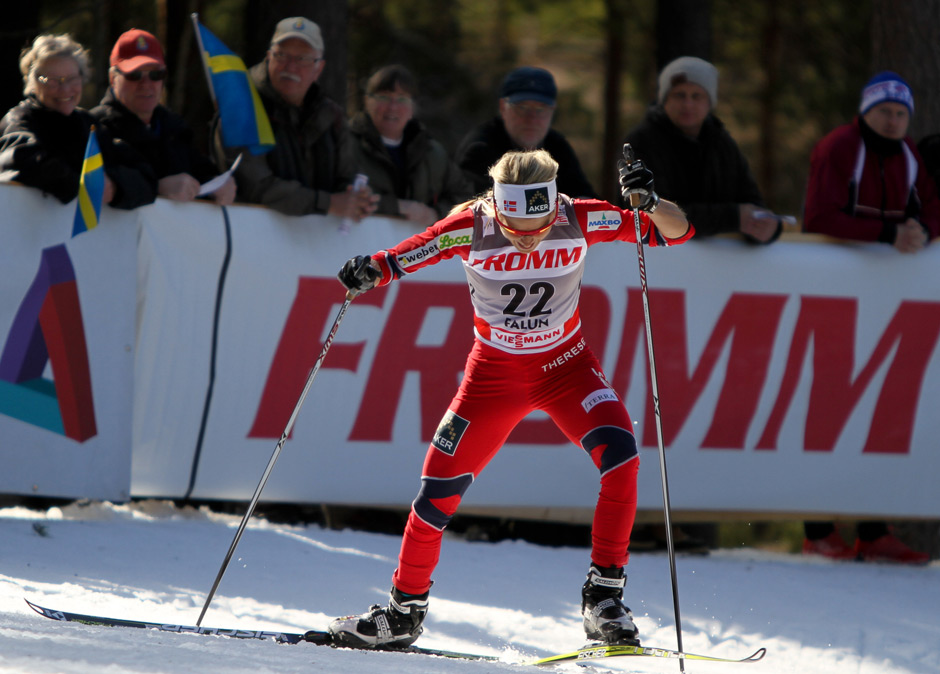
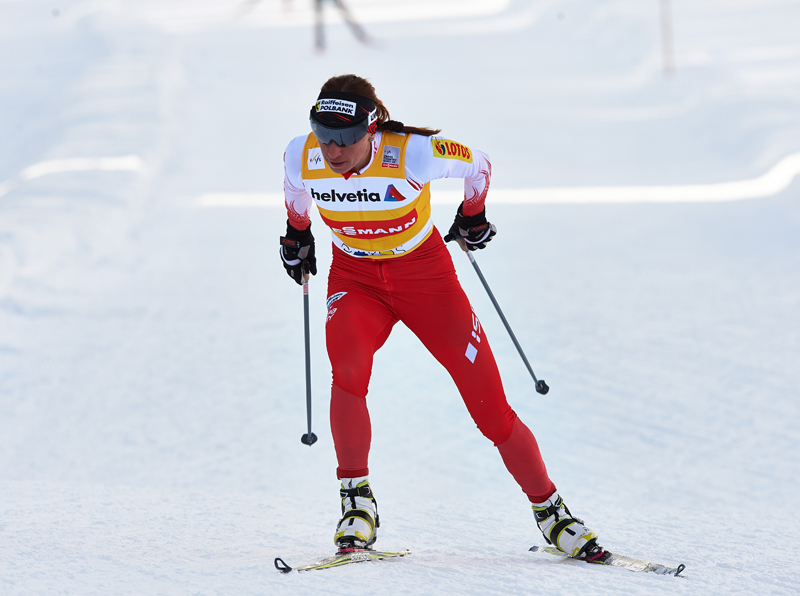
    Guri Hetland (l) at the 2012 Tour de Ski
    Guri Hetland (l) at the 2012 Tour de Ski.

    At the 2014 Sochi Olympics, Switzerland’s Dario Cologna won nearly half of the events he competed in, taking home two gold medals out of four individual races and a team sprint. In the classic team sprint, he combined with his younger brother Gianluca to place fifth out of 21 teams — not a bad showing for Switzerland.

    So it came as a bit of a surprise when the team’s head coach, Guri Hetland, parted ways with the Swiss-Ski association earlier this month after four years at the helm and Cologna’s personal coach.

    But differences in opinion arise, negotiations don’t always go as one might hope and change ultimately happens. Hetland, 39, perhaps knows that better than most.

    On the phone Monday from Meråker, Norway, a village where Hetland and her husband Tor Arne have a cottage about an hour east of Trondheim, Hetland told FasterSkier that she and her husband consider themselves global thinkers — up for anything and everything, wherever in the world that might take them (Switzerland’s sprint coach for the last four seasons, Tor Arne did not have his contract renewed earlier this spring. Soon after, he secured a job as World Cup coach of the Canadian National Team.)

    Hetland talked about what she’s been up to since her contract with Swiss national team ended, which was publicized in a Swiss-Ski press release on May 10. Her departure from the team was immediate, and not long after, Hetland headed from her home in Davos, Switzerland, to Norway to “talk to some people” and line up job opportunities for the future.

    Later this week, she’ll return to Davos, where she’ll reunite with her husband after his first training camp with the Canadian team in Banff and Canmore, Alberta.
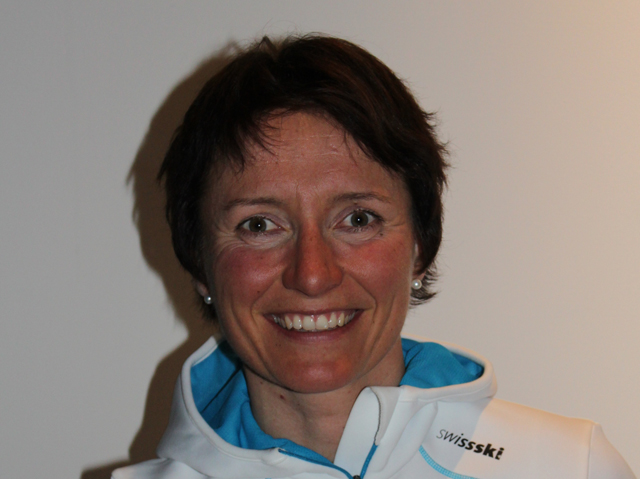
    Guri Hetland (Photo: Swiss-Ski.ch) http://www.swiss-ski.ch/nc/leistungssport/langlauf/news/news-details/archive/2014/may/article/vertrag-mit-guri-hetland-wird-nicht-verlaengert.html
    Guri Hetland (Photo: Swiss-Ski.ch)

    FS: What have you been up to?

    GH: I had some meetings [in Norway] and also I’m doing some management work for Marit Bjørgen this week. I’ve been doing that since 2005. I used to go to Norway to do that kind of work and now I combine working with her with some more days looking on future job opportunities for myself. I’m her manager so I’m doing her sponsorship strategy and negotiating her marketing contracting, her sponsoring contracts and also following up all of her sponsoring and marketing activities.


    FS: Do you manage any other athletes?

    GH: She’s the only one. [Since] I started working in Switzerland in 2010, that’s been a part of the deal that I’m allowed to do that work. It has nothing to do with sport and training — it’s the business part of Marit’s career. It hasn’t been a conflict between being responsible for the team in Switzerland and taking care of her business.


    FS: How have the last couple weeks been for you?

    GH: It was kind of different or kind of changing, suddenly changing. I had planned to work longer in Switzerland and I hoped and I thought that we could agree on the proposal and that I could get the same, more or less the same responsibility that I had before, but my bosses in the ski federation wanted some changes. They wanted to do a strategy change and a structure change, and they wanted me in another position than I had before. I figured out in this new position it would be hard for me and not motivating enough for me to work and do a good job. I saw my future is not the Swiss cross-country team and the consequence is quit and I’ll find challenges somewhere else. That’s the situation right now.

    “They wanted me in another position than I had before. I figured out in this new position it would be hard for me and not motivating enough for me to work and do a good job. I saw my future is not the Swiss cross-country team and the consequence is quit.” — Guri Hetland, Swiss national team head coach from Oct. 2010-May 2014


    FS: What was the dispute?

    GH: Until now or the last four years, I had a really big responsibility being the head coach. I’ve been taking care of the training philosophy and also the selection stuff and more or less everything on top level. In this new structure they wanted to separate the responsibility so they wanted another person to take care of the coaching or the training strategy and they wanted me more to take care of the administration and the organization and not that much about training. For me, it was not really satisfying. It was less responsibility and I felt it was too much of a manager job or organization job and less of a coaching job.


    FS: How did you feel about having so much responsibility before?

    GH: I was quite happy with the structure. Switzerland is a small cross-country team so it’s possible to be a coach and at the same time do some organizational stuff. I think that worked well for me and it made it also for me interesting to have the responsibility, not only the coaching but also more administration or lower-management things. For me, that was a good solution.


    FS: Did the Swiss coaching structure change at all while you were there? Did it change when you were hired?

    GH: No. It’s been quite the same for four years. I came in October [2010] because the former coach was fired and I came and I started to work in October, that’s not the perfect time to start with a new team so I used the winter to get to know the athletes and I could really start systematically working with them in the spring ’11. The structure has been the same all the time and it was also more or less the same before I came into the team.


    FS: What was your sense about the coming changes after this past Olympic season?

    GH: We started discussing in the middle of March and then they told me they wanted to do some changes and they want to have more Swiss people in leading positions. I thought that it would be possible to negotiate and to get more responsibility back and to find a good solution for both parts but they were not interested in moving it in my direction, so yeah, we discussed that for some weeks then I was told it was no chance to get the position I wanted to have. Then I realized the best thing would be to break up or to quit the corporation.

    For sure after an Olympic period it’s the time to do some thinking and maybe do some strategy or structural changes and I respect that the bosses wanted to do that … I wanted another solution, but I had to accept and respect that they had other thoughts and ideas than I had. It’s no hard feelings. For me, it was OK — I had to stay true to my philosophy and my wishes and if I have the feeling I’m not able to do a good job in this new position, then I’m not doing it. It’s better for the team and also for me. Then it was clear to me that will also be the solution.

     “I thought that it would be possible to negotiate and to get more responsibility back and to find a good solution for both parts but they were not interested in moving it in my direction … I had to stay true to my philosophy and my wishes and if I have the feeling I’m not able to do a good job in this new position, then I’m not doing it. It’s better for the team and also for me.”


    FS: What about the Swiss hiring Ivan Hudáč, a Slovakian coach, to coach the World Cup team and Dario Cologna’s training group?

    GH: He will the primary coach of that group or the training group, around the best athletes, but he will not be the head coach [of the Swiss national team]. A Swiss guy will be the head coach, but he will be coaching the U23 team, so yeah, it changed structurally. Ivan will be replacing Tor Arne [former sprint coach] and now they will search for a new coach to work together with him and the training group of Dario and the best guys [on the World Cup].


    FS: Why do you think Dario wanted a change?

    GH: I think it’s important to always develop and improve what you’re doing, also for Dario. These changes could have been done with building in some new resources and persons, still with me in lead, but it could also be done with changing the manpower totally. As I said, it was necessary to find a new coach to replace Tor Arne and they picked Ivan and that’s a really good choice. I know him as a really good guy and a good coach and I think he will be a good coach for the team and I think he will also give Dario some new input. At the same time, Dario is experienced as an athlete and he knows what to do, he knows what he has to do to develop further and stay on top. I’m not concerned about his development. I think it will be positive for him to get some new input and some new ideas.


    FS: Did you ever feel like your gender had anything to do with the team’s decisions?

    GH: No, I’ve never felt that. I always felt I’m getting respect for the work I’m doing and it’s not at all about the gender. I don’t look at gender as this special thing, you need some qualities and knowledge to be a coach and have such a position and those qualities, they are not male or female, it’s about who you are and how you’re working. I never had a feeling it’s different for me or harder for me because I’m a female.


    FS: Back to working with your husband, how did you two split the coaching responsibilities? Were you both working with Dario?

    GH: I was working with Dario. [Tor Arne and I] were coaching the World Cup team together and he was taking care of the sprinters and I was taking care of the distance athletes. I was coaching six men and he was coaching three men and a lady and also taking care of all the sprint issues around the entire team.


    FS: How was working with Tor Arne for the last four years?

    GH: It was working really good. It was a little bit challenging in the beginning to find our roles and to clear our positions and how to work and how to separate work and our private lives, but after some time it really worked good. The last two, three seasons have been really good and we have managed to separate the tasks between us and also separating job and private life.


    FS: What made him a good coach?

    GH: He’s really dedicated. He knows really well what it’s about to be a cross-country skier on that level. He experienced himself what it is. He is having a much knowledge and he is always developing himself. He is creative and he is always putting the athletes and the athlete’s needs in center. He’s hardworking … he puts high demand on the athletes, but also getting a lot of himself and always trying to develop. He has good ideas about training.


    FS: What was your reaction to him getting a job with the Canadian team?

    GH: My first reaction was: it sounds interesting! I know some of the guys and I know Justin and I know it’s a really good group of people. I think they’re also hard working in many ways and their work will fit good with Tor Arne’s philosophy and way of working. For him it’s a new challenge. They’re really good athletes and some athletes haven’t really brought out their potential the last year or the last years, and it’s for sure challenging to try to improve and together with Justin develop these athletes further. The Canadian team seems to be one of the most interesting teams to coach. Tor Arne also thinks it’s a positive and new challenge to work in a new country again and learn about a new country and how things are working in Canada.


    FS: Why do you think Canada is one of the most interesting teams?

    GH: It’s really good athletes. My impression is they are really hard working. They’re motivated, they want to do their best, and they put really much effort into what they’re doing and they have had some really good results, but not stable, good results, so I think the challenge is to do some smaller changes to make them improve or make them develop further and make them more stable and perform at the top level.


    FS: What are your thoughts on the Canadian system? 

    GH: I think you should talk to Tor Arne about that because he is having his first training camp with the Canadians now and he is on his first real trip with the team now. My impression of Canada and the team, I have it from World Cup and talking to Justin and the athletes, so I don’t know really much about them, but it seems to me to be a really interesting group and that’s also what Tor Arne has been saying.


    FS: Would you like to continue coaching or are you interested in other jobs?

    GH: I’m looking to other things as well. I have decided to use this upcoming month to figure out what I want to do or where I want to spend the main part of my job and time in the future, and I have no hurry. I’m speaking with some people trying to figure out what are the opportunities and first of all, what do I want to do. For sure, I will continue to work with Marit and that’s keeping me kind of busy, but that’s not a full-time job, that’s just something I’m doing on the side. So I think maybe in a month or even a little bit more then I know where to put my energy and my efforts in the next time.

    “I have decided to use this upcoming month to figure out what I want to do or where I want to spend the main part of my job and time in the future, and I have no hurry.”


    FS: Would you like to stay in Davos or are you open to moving?

    GH: I’m open. I really, really like in Davos and we’re living there and we have no other plans right now but both Tor Arne and I we are both kind of global thinking. We can stay everywhere and we can also stay sometime here and sometime there. The most important thing for me now is to find out what I want to do and then we will also find out if it’s practical, better to go on living in Davos or is it better to move somewhere else. Right now I have no other plans than staying in Davos. Pretty open.

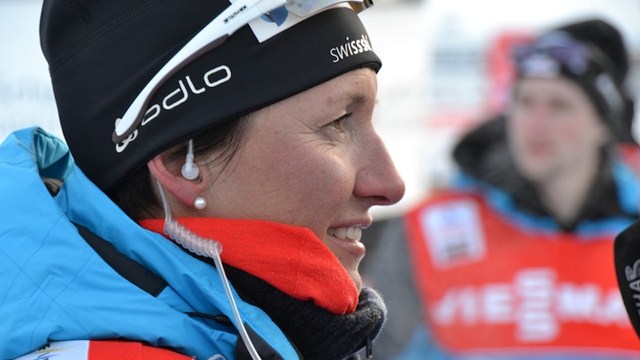
  • Swiss Head Coach Since 2010, Guri Hetland at Odds with Swiss-Ski, Contract Not Renewed

    Swiss Head Coach Since 2010, Guri Hetland at Odds with Swiss-Ski, Contract Not Renewed

    Former Swiss World Cup coach Guri Hetland (Photo: FIS)
    Former Swiss World Cup coach Guri Hetland (Photo: FIS-Ski.com)

    Last Wednesday, the news was that one Hetland — Tor Arne — would take his work overseas this summer to coach the Canadian World Cup Team during its training camps and back in Europe this winter.

    Three days later, his wife was the subject of a Swiss-Ski press release on May 10. The head coach of the Swiss national team for the last four years (and the only female World Cup head coach at the time), Guri Hetland’s contract was not renewed.

    The association explained the decision had to do with “structural adjustments” related to the next Olympic cycle. Tor Arne, Switzerland’s sprint coach from 2010 to 2014, also ended his role with the team in the spring when his contract was not renewed.

    According to the press release, recent negotiations with Guri, 39, led Swiss-Ski to determine their respective visions for the program’s direction were too far out of line, leading to the immediate non-extension of her contract, which was up in April.

    “I am sorry for the decision, but I respect the fact that Guri Hetland was not to be able to fully identify herself with the proposed role,” Swiss-Ski Sports Director Mark Wolf stated in the translated release. “I am extremely grateful for our cooperation and wish Guri Hetland all the best for the future.”

    Wolf told the Neue Zürcher Zeitung that the team was split over Hetland: one group wanted her to stay, the other group supported new ideas. Dario Cologna, whom Hetland helped coach to two individual golds at the 2014 Sochi Olympics (despite an injury that led him to miss the first half of the season), was of the second group. Earlier last week, Cologna, a three-time World Cup champion who took home two medals (gold and silver) from the 2013 World Championships, remained fully committed to Ivan Hudáč as the new “group” coach.

    Cologna, a 2010 Olympic gold medalist as well, reportedly thanked Hetland for her cooperation since the fall of 2010, but said he was committed to Hudáč, the former trainer of Slovenia’s Petra Majdic, for giving “our team for the next Olympic cycle new training pulses.”

    Guri Hetland (Photo: Swiss-Ski.ch) http://www.swiss-ski.ch/nc/leistungssport/langlauf/news/news-details/archive/2014/may/article/vertrag-mit-guri-hetland-wird-nicht-verlaengert.html
    Guri Hetland (Photo: Swiss-Ski.ch)

    “I had a good time with the Swiss Cross-Country team,” Hetland said in the Swiss press release. “I would be very happy to continue to work with the athletes. It is a big pity that we could not overcome different opinions regarding the new distribution of tasks.”

    Wolf wasn’t as delicate to news outlets, telling the Zeitung, “The negotiations with Guri Hetland have ended in disaster. We have not been able to integrate them into a new coaching staff.”

    Swiss-Ski reportedly proposed new coaching-staff responsibilities in March. The association suggested Hetland had evolved into more of a team manager than a head coach, and it wanted the latter. Hetland already saw herself as a head coach.

    “After the weeklong talks we had the impression that Guri Hetland had not been heart and soul behind the solution,” Wolf said. “In an elite sport, [we cannot] tolerate compromise.”

    On Sunday, the team started an endurance camp on the Italian island of Sardinia. While the training schedule was written by Hetland, Hudáč will be the one leading them through it.

    Swiss-Ski is now seeking a group manager to work alongside Hudáč, according to the press release. The hire is expected to be made within two weeks, the Zeitung reports. Former B-team coach Albert Manhart will likely become head coach, and although he won’t be present on the World Cup, he will be responsible for long-term planning and training plans.

    A “young foreigner” is expected to be hired as the additional coach, but talks remain loose with “several interested parties,” according to the Zeitung.

    “We know that our move to the outside world is difficult to convey,” Wolf said.

    He added that if Cologna wants to be an Olympic favorite in 2018, his workout regimen needed to change. Wolf described the phone-call negotiations with Hetland as fair and transparent, and Hetland as an “eloquent communicator,” but that it was stressful for both sides.

  • From Marcialonga Champ to Olympic Team Sprint, Boner Sets the Pace for Switzerland

    From Marcialonga Champ to Olympic Team Sprint, Boner Sets the Pace for Switzerland

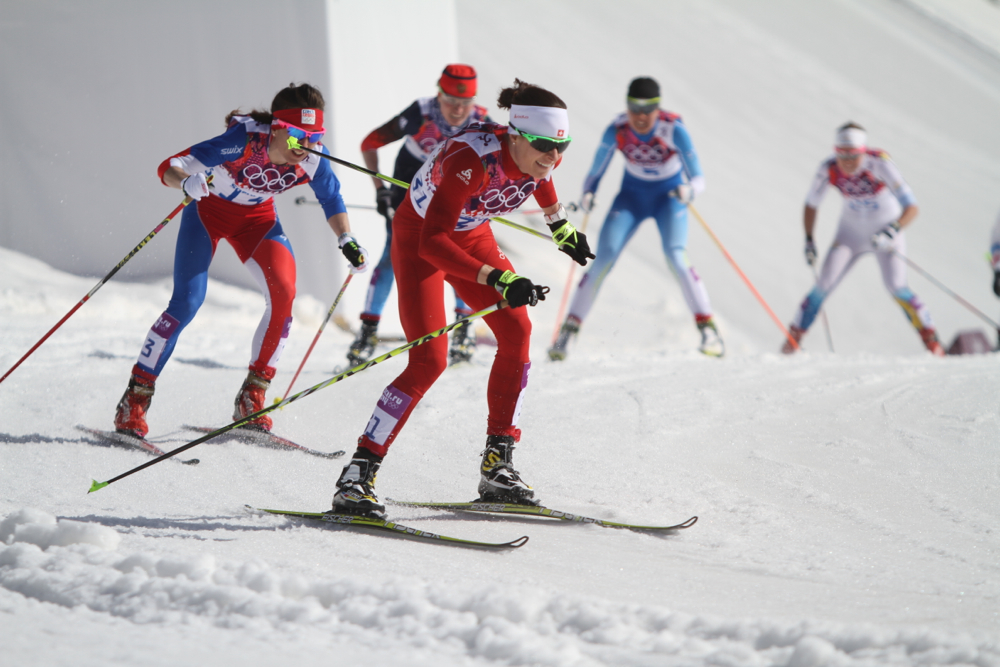
    Seraina Boner of Switzerand leading the chase pack into the stadium with 5 k left to go in today's Olympic 30 k competition.
    Seraina Boner of Switzerand leading the chase pack into the stadium with 5 k left to go in today’s Olympic 30 k competition.

    FasterSkier’s coverage is made possible through the generous support of Swix.

    KRASNAYA POLYANA, Russia – If you talked to Switzerland’s Seraina Boner a few months ago, she said that her main focus for this season of racing was the Vasaloppet, Sweden’s 90-kilometer sufferfest which is the last big-name marathon that Boner has yet to win.

    How things change. With just eight days to go until the Vasaloppet, she was 1,500 miles away in Russia, racing a 30 k in the Olympics.

    “This is maybe not the best preparation but we will see,” Boner said after placing ninth today, by far the best Olympic result of her career. “This is probably my last Olympics, though, and I can always do the Vasaloppet next year.”

    When your specialty is racing over such long distances – Boner is the best female marathon skier in the world – sometimes you get a little bit of perspective.

    An opportunity opened up for Boner when Switzerland was unable to fill its Olympic quota along the strict lines laid out by its Olympic Committee. Athletes need one top-15 or two top-25s on the World Cup to be allowed to represent Switzerland, and no female distance skiers had met that mark.

    Boner raced the 10 k freestyle in Davos in December, mostly because she lives there and wanted to compete in front of a home crowd. She finished an unimpressive 29th.

    In Szklarska Poreba, Poland, in January, Boner tried again and finished 11th in the 10 k classic in a weakened field that did not include the Norwegians, Finns or Swedes. It was enough to meet the requirement, but she was still almost two minutes behind the winner, Justyna Kowalczyk. There were doubts within Switzerland about how well their marathon star could do competing in normal-length races.

    Boner is not a member of the national team, instead racing on the Team Coop marathon team in Scandinavia. But Swiss coach Guri Hetland said that it was a “no brainer” to include Boner, who sometimes trains with her athletes, on their Olympic roster.

    “She is the best distance skier we have,” Hetland said. “We all know that the level in long-distance skiing is also really good and is improving.”

    And at the Olympics, things have been going better. Immediately after arriving, Boner got the call to replace Laurien Van Der Graaf in the team sprint. The format couldn’t be more different from the long distances Boner is used to covering, but she held her own. Not only did she and teammate Bettina Gruber – a bona fide sprinter – qualify for the final, but they finished seventh.

    “I was able to be skiing right in with them, with these girls who are the sprinters,” Boner said. “We still came in seventh place, which is really cool.”

    Switzerland had finished 17th and last in the team sprint four years ago in Vancouver, and had not entered a team in the event’s first appearance in Torino.

    But more than that, it was exciting because it gave Boner some confidence in her form heading into today’s 30 k, the race she had flown to Russia to compete in.

    “She showed in the team sprint that her shape is really good, and we all know that 30 k should be a better distance for her,” Hetland said.

    Still, Boner was not used to racing against the likes of Marit Bjørgen and Therese Johaug.

    “I wasn’t sure where I would be in this field,” Boner said. “I made a lot of different plans to maybe use. But it turned out that I was in that pack fighting for, I think, fourth place. So I found more motivation near the end because of this.”

    When Bjørgen, Johaug, and Kristin Størmer Steira broke away from the main field, Boner stuck tight in the chase pack and even led it for sections of the race. She ultimately couldn’t find the same finishing speed as some of her competitors, but still placed 9th, about halfway deep in the pack.

    It was the best result by a Swiss woman at the Olympics since 1998, when Brigitte Albrecht Loretan finished seventh in the 30 k skate in Nagano.

    Boner said that the course here, with its notoriously long and brutal climbs, might have contributed to her much-improved result.

    “I like long climbs, it is a little bit more like what the long distance races are like,” she said. “I like minutes, not 30 seconds here or there. So I guess this was good for me.”

    Hetland didn’t care too much about why it was a good race – she was just happy to see a Swiss suit up front, something that has been rare in women’s distance racing in the last few years.

    “I’m really impressed that she is making such a good race and result,” Hetland said. “It’s great for female skiing in Switzerland to see that it’s possible.”

    As for Boner? Now that the race is over, there’s other fish to fry, namely that pesky Vasaloppet.

    “I fly home and then straight to Sweden,” she laughed.

    Results

  • Gasparin Scores One for Switzerland with Historic Win

    Gasparin Scores One for Switzerland with Historic Win

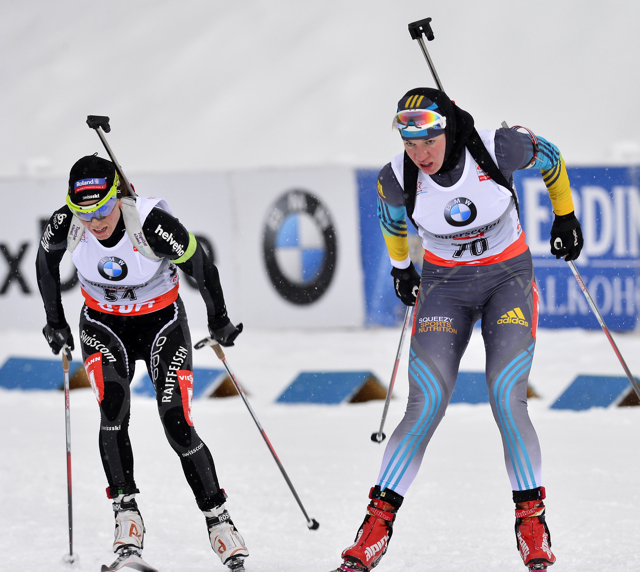
    Selina Gasparin of Switzerland (left) on the way to victory in Hochfilzen, Austria, today. Photo: Ross Burton/Biathlon News International.
    Selina Gasparin of Switzerland (left) on the way to victory in Hochfilzen, Austria, today. Photo: Ross Burton/Biathlon News International.

    HOCHFILZEN, Austria – Selina Gasparin has been close to the World Cup podium before – heartbreakingly close. At last season’s opener in Östersund, Sweden, the 29-year-old Swiss biathlete was just eight seconds out of third place in the 15 k individual.

    Today, she finally took the step, this time going all the way to the top. Gasparin won the 7.5 k sprint here by 1.2 seconds over Veronika Vitkova of the Czech Republic, and in the process became the very first Swiss biathlete to ever win a World Cup competition.

    “I had been thinking for so long about getting on the podium, but I was never thinking about the win,” Gasparin said.

    It took a huge effort for her to make it to the top. She had a strong start but then collected a penalty in standing, which knocked her back as she headed out on the final loop. At that point she was 13 seconds out of the lead, although since she was in bib 54 about half the field was still to come. Later racers would have even faster split times, and when all had finished the last shooting, Gasparin’s time was 22 seconds back, leaving her in fifth place.

    Yet she pushed and pushed over the final 2.5 k loop and made up all that time. When she crossed the finish line, Gasparin sensed a victory: she raised both fists in the air before crumpling, exhausted. But it was just a victory over that missed shot.

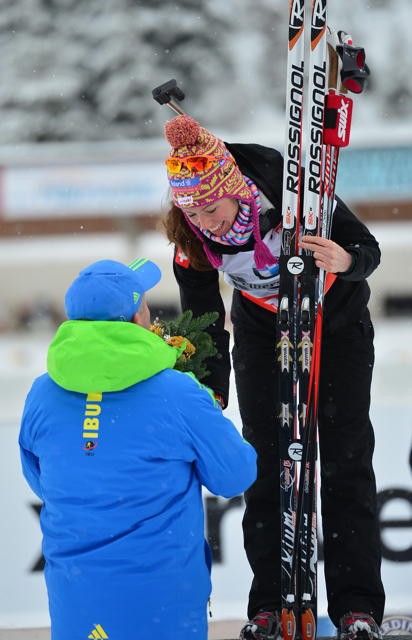
    Gasparin accepting flowers at the podium ceremony.
    Gasparin accepting flowers at the podium ceremony. Photo: Ross Burton/Biathlon News International.

    “I was just happy to have had a good race,” she said. “With so many starters still to finish, I did not think at all that I could stay in the lead.”

    But Gasparin has consistently skied fast over the last few seasons. She even competed for Switzerland in the 15 k freestyle at cross country skiing World Championships last season, placing 31st against the best skiers in the world. Today she had the seventh-fastest course time and the fourth-fastest final loop.

    Fresh snow slowed down the course today, which might be why Gasparin didn’t feel like she had been going fast enough to win.

    She later she said that it seemed “not possible” that she ended up with the win: “After all, I did have one mistake.” That’s how surprised Gasparin was to make history today.

    “I was missing the last shot, so then I thought, well, one more time it’s the standing shooting where I miss the last shot,” she said, referring to previous frustrating races. “I wasn’t really in a good position. I just skied the last loop as fast as I could. There were a lot of athletes coming behind me so I didn’t think about the podium or win at all.”

    Considering that the first Swiss biathlete didn’t even get a World Cup podium until December 2006 – that was Matthias Simmen – and a Swiss woman has never been on the podium, the win was especially huge for the team from a tiny country of eight million people.

    “In Switzerland we had not so many podiums before and no victories,” Gasparin said. “I thought that it would be cool if a woman had the first victory since the men had some second and third place finishes before. So it is cool that women and men have now both been on the podium. For me it is a big honor to be the first winner. I think it is a big day for Switzerland today.”

    The Swiss biathlon team hasn’t been able to capitalize much on the exploits of skier Dario Cologna, and remains a small squad, especially on the ladies’ side. There are just ten women listed in the national team roster, seven of which are on the “C” team. Three of those are juniors.

    But this summer the Swiss created a new women’s team, which Gasparin is very optimistic about. Some of the younger athletes have podiums in international competitions like World Junior Championships and European Championships, which Gasparin pointed out was much better than she had done at a similar point in her own career.

    “I think the hardest thing is for them to keep the motivation and keep doing the work,” she said of her country where women’s nordic sports are rarely celebrated. “But I will try to give them some of my knowledge and experience, and it’s also good for them to be able to train with me and see what kind of speed you have to have, to see how fast it is at this level on the World Cup.”

    Teammate Irene Cadurisch, competing in just her third World Cup race ever (she finished 69th), was ecstatic about Gasparin’s result.

    “It’s awesome!” she said. “It’s so exciting for her, because she’s trained a lot. And it’s really great for us, because we can train with her. Selina, she was great before, but I hope this will help us to have a win.”

    * * *

    It was a remarkable day across the board in Hochfilzen, in part because both of the other podium finishers also had career-best performances. Vitkova, whose win slipped away at the very last second, tied her second-place result from Oberhof, Germany last year. Irina Starykh, who only raced one weekend of World Cups last year, placed third, less than a second behind the Czech.

    “Basically I had never ever had good results in Hochfilzen, so this was a very good birthday present,” Vitkova said through a translator. On Monday she will turn 26.

    For her part, Starykh was identified by Russian coaches this fall as the athlete who had improved the most in the off season. In Östersund last week, she came out of the gate strong with a fifth-place finish.

    “I am very happy about my third place today. In Östersund there was a lack of just a few seconds, and so maybe it gave me a little more reason to push hard today,” she said through a translator. “The most important thing for me was my trust in my coaches and by my coaches, and also after I had an injury in June that it would be okay and I would be ready for the season.”

    Tora Berger of Norway, last year’s runaway World Cup champion, placed fourth, hampered by two penalties. She is yet to collect a win this season. Juliya Dhzyma of Ukraine finished fifth and Synnøve Solemdal of Norway rounded out the flower ceremony in sixth.

    Results


  • Interview: Hungry for More Gold, Cologna Chases Perfection in Leadup to 2014

    Interview: Hungry for More Gold, Cologna Chases Perfection in Leadup to 2014

    Dario Cologna skis towards winter and, he hopes, more Olympic gold.
    Dario Cologna skis towards winter and, he hopes, more Olympic gold.

    DAVOS, Switzerland – Dario Cologna is doubtful about the fresh snow coating the mountains.

    “It’s always nice when the first snow comes, but it’s too early to ski,” he tells me at the end of his workout, glancing up at the Mittaghorn and Piz Ducan. The ridges are blanketed not just in snow, for the first time this season, but also in clouds. The wind blows the snow from cliff to cliff and with the sun coming out, the trees begin to shake off their first batch of winter.

    “It’s nice to see it in the mountains, but I hope we have some nice days now,” Cologna decides. “Not too cold. For training I hope it will be warmer the next two months.”

    If it wasn’t already clear, now is the time for training. The new snow so picturesquely draped down to 2,400 meters (7,800 feet) is a reminder that winter is coming, and with it the race season. But Cologna already knows that. When it comes to skiing, there’s only one thing on his mind.

    He pauses before he says it, just like he pauses to formulate every response: clear, well-spoken, to the point. Nothing extraneous.

    “It’s just the Olympics next year,” he says. “It’s the big goal.”

    * * *

    And so the 27-year-old Swiss star, owner of an Olympic gold medal from Vancouver, a World Championships gold from Val di Fiemme, three overall World Cup titles, and three Tour de Ski victories to match, sets off on the first of two long threshold pieces starting outside the village of Frauenkirch and continuing up the Sertig valley.

    Swiss head coach Guri Hetland takes video of Dario Cologna during a threshold workout.
    Swiss head coach Guri Hetland takes video of Dario Cologna during a threshold workout.

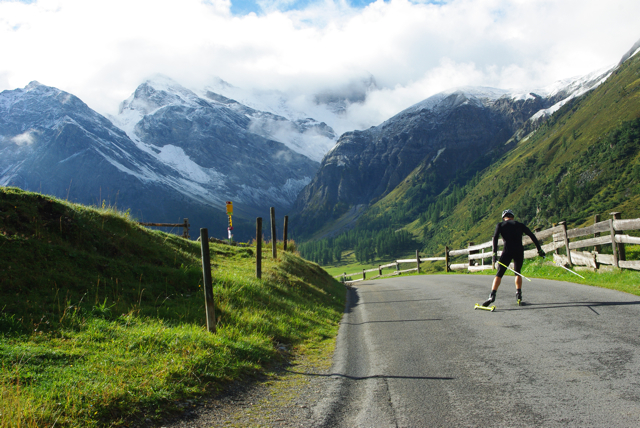
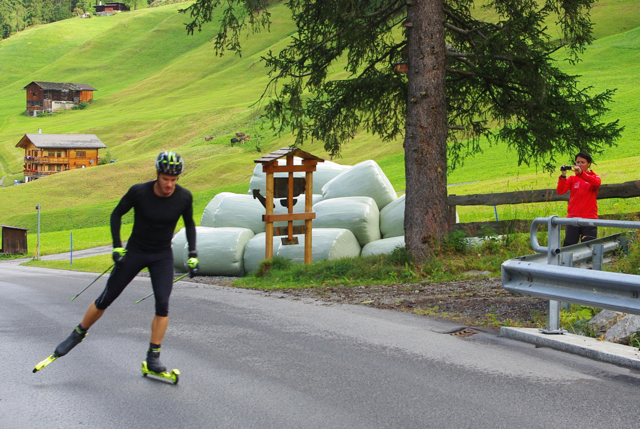
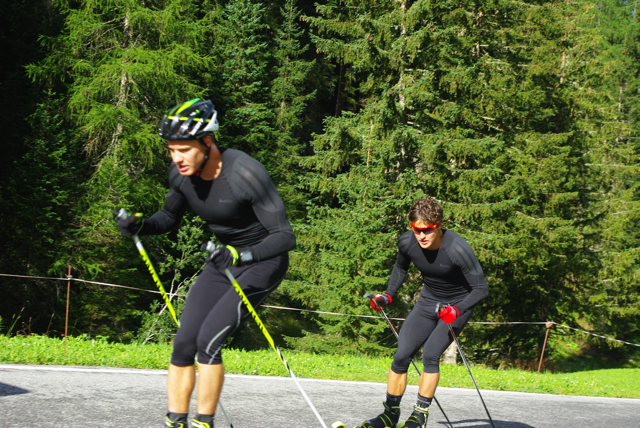
    I hop into the Swiss team van with Guri Hetland, Cologna’s coach and the head of the Swiss distance squad. We watch as for the first kilometer, teammate Roman Furger is pinned to the back of Cologna’s rollerskis. The younger skier matches Cologna: his technique, his cadence, his strides. Dressed all in black, the two are in near-perfect synchrony.

    “Roman is a promising guy,” Hetland tells me as we drive past them. “When he’s good he’s really good. But it’s not at all stable. He can do really good races and then he can be number 80. Not like him.”

    She points to Cologna. And indeed, the next time I see them, Furger is popped off the back and Cologna is powering ahead, a fluid machine, on his own.

    Hetland tells me that the training goes something like this: for short sprints, the entire Swiss squad works together. But the sprinters couldn’t keep up with the distance skiers on long days, or in a workout like this with so much time spent at threshold. So they train separately. And within the distance team, things often break apart with Cologna at the front.

    “Two of the guys can keep up really well in the training,” Hetland explains. “Curdin Perl, he’s his equal, in training at least. Also some of the other guys, in some sessions they keep up with him. But he’s for sure the best. Over time, it’s clear he’s the best. But it’s good for the others. Then they know what is the highest level, a world-class athlete.”

    By the time we reach Sertig Sand at the top of the valley, Cologna has put a significant chunk of time on Furger. And the men, together, have left a huge gap to Seraina Boner, probably the world’s best female marathon skier.

    The athletes hop in the van and Hetland drives them down the narrow, twisty road. They talk and joke in German, quietly; Hetland, the only female head coach on the World Cup, joins in. She calmly maneuvers the van past tourists, cyclists, and farm vehicles. Even though the road is only really a lane and a half wide, she rarely slows down as she squeezes past the obstacles. The clock is ticking.

    Back in Frauenkirch, the skiers start their next long interval. At the first checkpoint, Furger is a few seconds slower than the first time.

    At the second checkpoint, Cologna is faster.

    “He is starting to power now,” Hetland says, pulling out her video camera to record his technique up a moderate climb. She does this while still driving the van.

    Hetland almost certainly faces a lot of pressure in her job. She’s a female, foreign coach in a very traditional nation (Hetland is originally from Trondheim, Norway). She’s in charge of making sure the country’s best skier, ever, stays on top, and of developing a high-performance team in a tiny country with a limited number of skiers. And she has to make sure that none of these best ones, who have been entrusted to her, get hit by cars while rollerskiing on the narrow Swiss mountain roads.

    Through it all, Hetland is unflappable, poised, and polite. She speaks softly. When she smiles, like the time she tells me how amazing the mountains here are for backcountry powder skiing in the winter, her eyes begin to twinkle. She’s gracious. She knows what she’s doing and she’s confident that she’s right.

    Just like her top skier, who is sprinting towards the finish line of his second interval.

    * * *

    Is there more pressure on Cologna this year, with the Olympics and all?

    “Not really,” he shrugs as we wait for Boner to finish her last interval. “It’s always a little bit of pressure. Also last year with the World Championships, everybody in Switzerland said that it was the only thing that I don’t have. So it was a little bit of pressure last year. And of course for the Olympics it is a little bit bigger and more exciting. But I like that, and I’m just looking forward for the winter.”

    2012 was tough for Cologna in one important way: he lost the Tour de Ski to Alexander Legkov of Russia. Cologna has won a handful of Tours already, and has said that it’s his favorite event.

    Dario Cologna leads teammate Roman Furger in a workout.
    Dario Cologna leads teammate Roman Furger in a workout.

    But he didn’t have a bad year, either. He finally won that World Championships gold, in the 30 k pursuit – perfectly showing that he’s still the most versatile skier in the world, good at everything. Classic? Skate? Sprint? Marathons? Cologna finished third in the overall World Cup standings at the end of the season. Not his best year, but nothing to cry about either.

    As we wait for Boner to finish her interval, I ask Cologna what he’s working on this season. Thinking of, but not mentioning, that loss in the Tour de Ski, I wonder if there’s anything he picked up on over the course of the season that might give him an extra edge.

    “I try always to improve, but there’s no particular thing that I changed,” he replies. “I think it’s not the right time to change things. Maybe next year, but I had a good season last year. Still, you’re always trying to improve and get better, otherwise you make a step backwards.”

    Luckily, he has teammates like Furger to push him. He might be the best, but as Hetland said, that doesn’t mean he’s alone all the time.

    “We have a good training group,” Cologna says. “It’s also different in the summer. Some athletes are better in the summer and they can push me. One is good in running, another is good in double-poling, so I have a good group and they can push me in some ways. That’s not a problem.”

    He’s also lucky to benefit from the fact that Davos is a pretty nice place to take a vacation or a training camp. Not so rarely, other top skiers come through in the summer. Despite being in the fortress of the Alps, Cologna is not completely isolated from the rest of the skiing world. He mentions Emil Jönsson, the Swede who has captured two Sprint Cup titles, and Russians Legkov and Ilia Chernousov as men who can sometimes join him for a training session in Davos.

    “Unfortunately Emil was here for only a week or something this summer,” Cologna frowns. “So it had been mostly training with our team. But I like to train with the other athletes. It’s for sure good to have some athletes to push you.”

    It might seem like he’s already collected every honor in skiing, but from his viewpoint there’s still plenty on the horizon. For instance, when asked which events he is focusing on for the Olympics, Cologna replies, “many of them.”

    One Olympic gold is not enough. He’ll focus on all of the individual races. The relays, he’s not so sure. Although the Swiss won a World Cup relay in 2010, Cologna isn’t confident that they can do it again – although it would certainly be a boon to this country, where despite the snowy Alps cross country skiing is not so popular. Although Dario’s face is everywhere – there’s even a train engine on the Rhaetian Railway named after him – that hasn’t translated to a huge jump in the quality of Swiss skiing.

    “What counts are the medals, and I don’t know if we are good enough for that,” Cologna reasons. “So I will focus on the other races. But let’s see. There’s a relay in Lillehammer at the start of the season, and if everybody is in good shape then we can do a good relay. Still I think it’s a bit tough to be in the top five.”

    That’s not as much the case in the individual races.

    “The Olympics are always special,” Cologna says. “Also, I won in Vancouver, so it would be nice to do that again.”

    For the first time since we began talking, he had laughed.

    “I think I’m still hungry,” he continues. “I like to ski and I like to win races, so that’s no problem. I’m still motivated and that’s the most important thing.”

  • In Tiny Switzerland, an Emphasis on U23 Development: ‘It’s Our Only Chance’

    In Tiny Switzerland, an Emphasis on U23 Development: ‘It’s Our Only Chance’

    Dario Cologna is the figurehead of Swiss skiing, and has done much to improve its popularity - but how do you translate that to a faster national team five years from now? Photo: Fischer USA/NordicFocus.com.
    Dario Cologna is the figurehead of Swiss skiing, and has done much to improve its popularity – but how do you translate that to a faster national team five years from now? (Photo: Fischer USA/NordicFocus)

    DAVOS, Switzerland – Nestled deep in the Alps, surrounded by snow, home of Olympic gold medalist and three-time World Cup champion Dario Cologna, and within driving distance of some of the best racing in the world: you wouldn’t think of Switzerland as a nation that faces many challenges in the world of cross-country skiing.

    But if you ask Christian Flury, the coach of the Swiss U24 and development teams, his country faces some difficulties that might seem familiar to a North American audience. Flury spent a year coaching at Alberta World Cup Academy in Canmore, Canada, and says that “you can compare the two jobs.”

    At the root, perhaps the most basic similarity is this: Flury is taking young, talented skiers and trying to mold them into senior-level racers who will make the World Cup. What that means is to learn how to treat skiing as a job.

    “When we select them onto the team, we want a commitment that they will train professionally,” he said in an interview at his home in Davos. “You can work part-time up to July maybe, but then you have to be here. It’s up to you to invest two or three or four years and do it serious. Maybe after that you say, cross country skiing is great but I’m not becoming a World Cup skier. And that’s fair. But do it right.”

    The team ranges from first-year U23’s to older athletes who have a shot at qualifying for the Olympics. Most of the season is spent on the OPA Cup circuit, a highly competitive Continental Cup series in central Europe. Some of the older athletes earn World Cup starts here and there, but Flury says that the racing is good enough on the OPA Cup to provide excellent development opportunities. A podium on the OPA Cup might mean a top 30 on the World Cup.

    Like most development programs in North America, Flury can’t offer his athletes any money, just support. And also as in North America, he works with athletes with a range of different backgrounds. Switzerland may be small, but it has four official languages (German, French, Italian, and Romansh) and the 26 cantons function independently, almost analogous to states or provinces.

    Here in the canton of Graubunden, there are many options for developing skiers: a canton team with professional coaching, a sports school. But although all cantons have teams, most aren’t as organized as this region around Davos. Some might have a team here and there because parents are interested and decide to start a club for their kids.

    (This can have benefits, of course, including local pride: “Some athletes from really small spots, like from the French part, have really good fan groups from their community,” Flury said. This can help out in terms of funding.)

    And so at the junior level, most of the best young racers end up here in Davos. That’s good because the national team staff, like Flury, can see them, it’s a good training group, and the sports school allows the young athletes to train more hours.

    But it’s also a bad thing. If all of the country’s talent and coaching is concentrated in one area, then what happens everywhere else?

    Despite the Alps and Jura mountains, not everyone in Switzerland has easy access to skiing. Three quarters of the 7.91 million people live in the central plains, in cities like Bern, Lausanne, Geneva, and Zurich. Other regions have good skiing, but not as much infrastructure. With no consistent club system, it’s hard to keep and develop talent.

    “There are some areas that are nothing,” Flury said. “You see on the ranking list maybe they have one 16-year-old, but from there, nothing. Because if there are no kids in the system, then the pyramid, nothing comes out.”

    Once athletes sign on to the U24 team, they get a good deal in Davos. The training group is about 15 athletes this year, with two to three coaches. There are plenty of training camps; the team is currently in Oberhof, Germany, training in the ski tunnel. They also have the chance to train often with the senior national team, including Cologna. During the dryland season, Flury shares his calendar with senior team coaches Tor Arne and Guri Hetland and the two teams try to coordinate when possible.

    “That’s one of the things we really want to put the focus on,” Flury said. “To have the young ones to have the chance to train with [Cologna], or to see him and say, okay, what do I need to come to this level. Today there was a really young one who tried for half an hour to ski with him, and then boom, off the back. But that is fine. He can still sit in the same van on the drive home.”

    For instance, the younger skiers might see how much Cologna and fellow seniors Curdin Perl, Toni Livers, and Remo Fischer train. Or at what pace. And that might make it easier to accept the demands that the coaches place on them as they try to fast-track them towards senior success.

    “We have athletes coming form other provinces where they are in the junior national team but they don’t train that often, they do maybe 450 hours, and then we say, look, you should come pretty soon up to 700 or 800 hours as a U23,” Flury said. “We have a huge gap to close, and that’s tough. We don’t know if they can do it. You have to be a really big talent to close that, I think, because it’s a huge step.”

    This isn’t a system, though, that expects or accepts burnout. When asking athletes to commit to training professionally, often with a huge increase in hours in the first two years, they also offer an olive branch: they don’t need to see results in the first year. They will stick with their U23’s for the long haul.

    “We say, look, if you come to Davos then we will give you enough time to develop,” Flury explained. “Usually you have a tough first season as a senior, so it needs time… and it’s important to us to have them together as a group.”

    In 2013, talent and depth were actually another thing that the American and Swiss teams had in common. Each has a hugely successful star: Cologna for Switzerland, and Kikkan Randall for the U.S., who has burst towards championhood in the past few seasons. Behind each is a core group of strong skiers – but much of the national team’s publicity comes from these two figureheads.

    “At the moment, Dario is covering a lot,” Flury admitted. “You have to be honest. For sure you have athletes behind him that do good races, like Laurien Van Der Graaf and Bettina Gruber from the girls side. But then we have only three or four more girls, that’s it. On the guys’ side we have Perl, Remo Fischer, and the sprinters did really well [last year]… We have to try because right now Dario is doing the medals. Then we have some top-10 skiers, but a medal skier? Besides Dario? It’s pretty rare.”

    (The U.S. finished the World Cup season ranked sixth in the Nations Cup, and Switzerland eighth. These overall results were achieved in similar ways, relying on one stronger team with its star: the American women were fifth and the men eleventh, while the Swiss men were fourth and the women fifteenth.)

    Because the community isn’t big enough, or deep enough, to survive any lull in motivation or organization, each talented junior needs to be treated as a resource, and coached towards becoming a talented senior. The women’s team is a particular challenge: by the time skiers hit the junior level, there are about half as many boys as girls. The U24 team is mostly men. Flury and his bosses have tried to brainstorm ways to do a better job keeping girls in the sport, but “we don’t have a lot of ideas, to be honest,” he admitted.

    One way not to lose athletes, though, is to keep the cohort together.

    “The only chance, I think, is that we don’t have a lot, but we have this U23 group,” Flury said. “We have to bring them together, give them a chance, more than a year, and they have to train, a lot. We have to do the volume step by step for sure, but you have to bring the volume up, bring the intensity up. If they do that, then we have a chance that they are getting better. It’s the only secret.”


  • Pros of Tomorrow: Widmer Lives Her Dream in Switzerland

    Pros of Tomorrow: Widmer Lives Her Dream in Switzerland

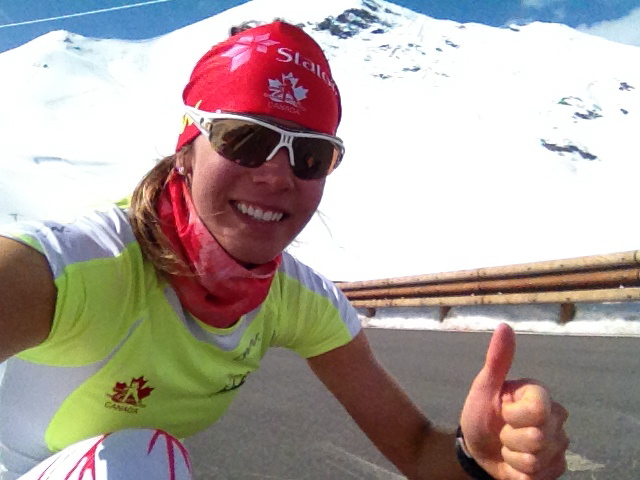
    A happy Heidi Widmer on a bluebird day at Stelvio Pass in Switzerland. She spent five days at a Swiss national-team training camp near the Italian border  in early June. (Courtesy photo)
    A happy Heidi Widmer on a bluebird day at Stelvio Pass in Switzerland. She spent five days there at a Swiss national-team training camp near the Italian border in early June. Widmer, 22, made the Canadian Senior Development Team in April. (Courtesy photo)

    Editor’s Note: This is a continuation of our recently relaunched ‘Pros of Tomorrow’ series, which highlights some of the most notable up-and-coming athletes around the world. See also: Cendrine Browne

    ***

    Fresh off her last races of the season at Canadian Nationals in Whistler, British Columbia, Heidi Widmer plunged into the backcountry in early April for some ski touring in Callaghan Valley.

    There, the 22-year-old Banff native knocked off the 1,275-metre (nearly 4,200-foot) Mt. Cayoosh and headed to a lodge in the Selkirk Mountains for more touring. Even with all the physical activity capping a long season, Widmer considered the trip relaxing amid beautiful scenery.

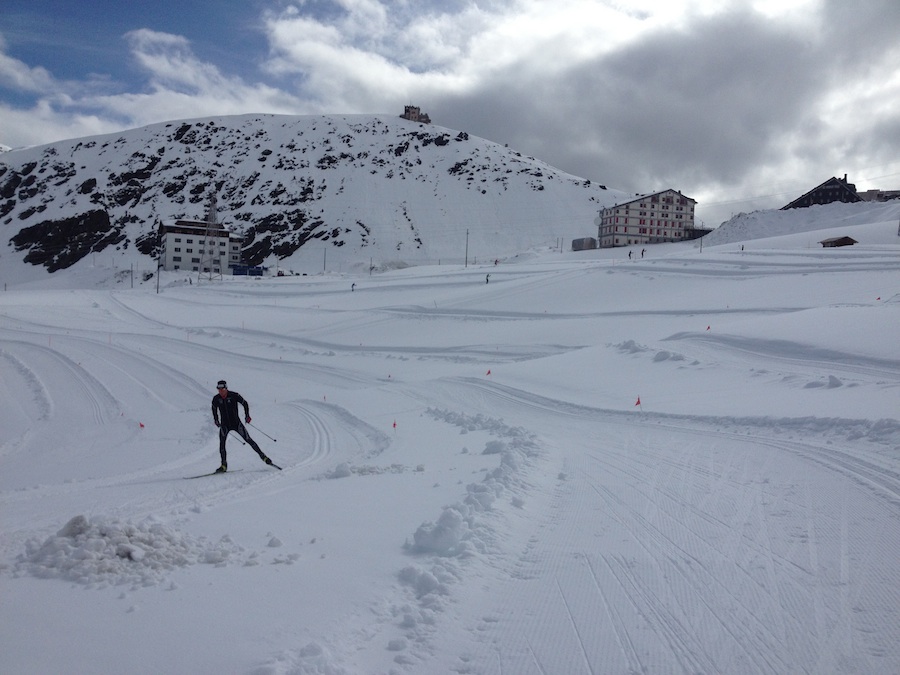
    The Stelvio Pass ski track and hotel Widmer stayed at 2,700 metres above sea level in Switzerland. (Courtesy photo)
    The Stelvio Pass ski track and hotel Widmer stayed at earlier this month 2,700 metres above sea level in Switzerland. (Courtesy photo)

    “It’s really a huge mental break,” she said on the phone Sunday from Switzerland, where she’s training with the Swiss national team. “It’s really a good chance for reflection because you’re out for hours on end, most of the time slogging around.”

    Now in Davos, Switzerland, Widmer also visited El Salvador (for surfing) and New Orleans (for a music festival) for a total of two weeks in late April. Then it was back to training, first with the Alberta World Cup Academy (AWCA) for five days in Canmore, Alberta, then for a weeklong camp in Vernon, B.C.

    Widmer spent another five days back in Canmore before flying to Switzerland on May 25, and she’ll be there until June 24.

    Doesn’t she get tired?

    “Surprisingly not,” Widmer said with a laugh. “I have to take my downtime when I can get it. I really enjoy traveling, but I maybe enjoy it too much. I really got after it in the spring.”

    With a list of trips lined up, Widmer was uncertain about Switzerland, arranged through former AWCA head coach Christian Flury, now in charge of the Swiss women’s team. She knew if she received the call up to Canada’s Senior Development Team, which she had been working for her entire junior career, her schedule would depend on the national team’s.

    Lucky for her, it all worked out.

    “I’ve been working toward getting on the national team for a couple years and the fact that it all fell together, it just kind of means that the work is just beginning,” Widmer said. “It’s gratifying knowing that I’m doing something in the right direction.”

    Heidi and Phil Widmer; siblings on top of the podium. Photo: Mike Cavaliere.
    Siblings Heidi and Phil Widmer sharing the podium at a NorAm in January. (Photo: Mike Cavaliere)

    She heard the good news soon after emerging from the backcountry during an April meeting with AWCA women’s coach Chris Jeffries. Her initial excitement came with some apprehension: did her brother Phil make it, too? Jeffries couldn’t say, so she waited to hear from her older brother, who was in the backcountry away from reliable cell service for another week.

    While making pizzas with friends one night, Widmer got a phone call from her mom, who was crying. Phil, 29, left a message about being renominated.

    “My mom was so happy,” Widmer recalled. “It’s really cool being able to accomplish something together. … I think that says a lot about persistence. He’s been for sure inspiring, to watch him take the setbacks in stride and keep working towards getting where he wants to go.

    “I don’t know where I would be if I didn’t have him to follow in the sport,” she added. “I remember when he qualified for Torino [Olympics in 2006]. I was at an influential age where you’re like, ‘My older brother can do this, so can I.’ ”

    Last season, Widmer tallied two podiums at nationals in the 5- and 30-kilometer freestyle races. At U23 World Championships in Liberec, Czech Republic, she placed 28th in a 10 k skate. There, she spoke with Flury about her dream of coming to Switzerland, where her father was born and she and her siblings have citizenship.

    Also in Liberec, Widmer saw online that The Gypsy Kings and Fleetwood Mac were playing in New Orleans. Taking a short detour to Louisiana on the flight back from El Salvador was a no-brainer, and so was going to Switzerland.

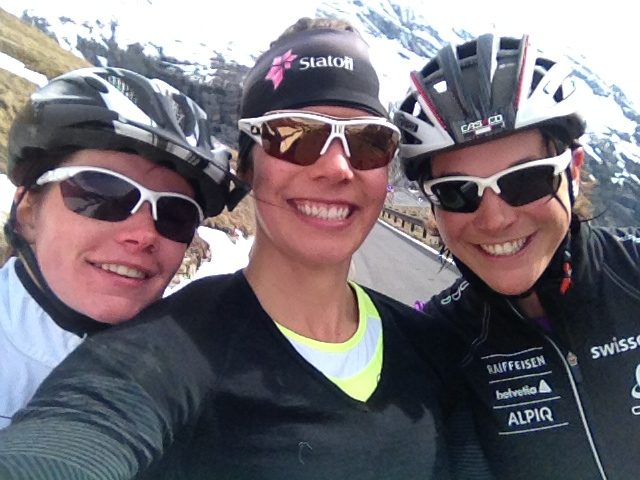
    Heidi Widmer (c) with Swiss skiers Nathalie von Siebenthal (l) and Christa Jäger after rollerski intensity on Stelvio Pass in Switzerland. (Courtesy photo)
    Heidi Widmer (c) with Swiss skiers Nathalie von Siebenthal (l) and Christa Jäger after rollerski intensity on Stelvio Pass in Switzerland. (Courtesy photo)

    Flury assured Widmer it was possible and spoke with Jeffries about her training plan.

    “Through email and conversations with him, I knew that he was really open to it and I felt extremely comfortable coming over to train with him,” Widmer said. “The rest of the team being so welcoming, I was optimistic it was going to work out, but they definitely exceeded my expectations.”
    After visiting her grandmother in Zurich, Widmer met up with the Swiss team at the national-sport centre headquarters in Magglingen, Switzerland. She spent the next week adjusting to the time difference and recovering while the national team did baseline testing.

    Widmer then spent few nights in Davos with Tatjana Stiffler, originally her Facebook friend, before heading to a training camp on Stelvio Pass at a glacier some 2,700 metres (8,850 feet) above sea level.

    “It’s been amazing,” Widmer said. “I always wanted to come over here and train but I didn’t really know what to expect. … Right away the team was super inclusive and everyone was really supportive of me being there, and I felt like part of the team instantly. It was pretty awesome.”

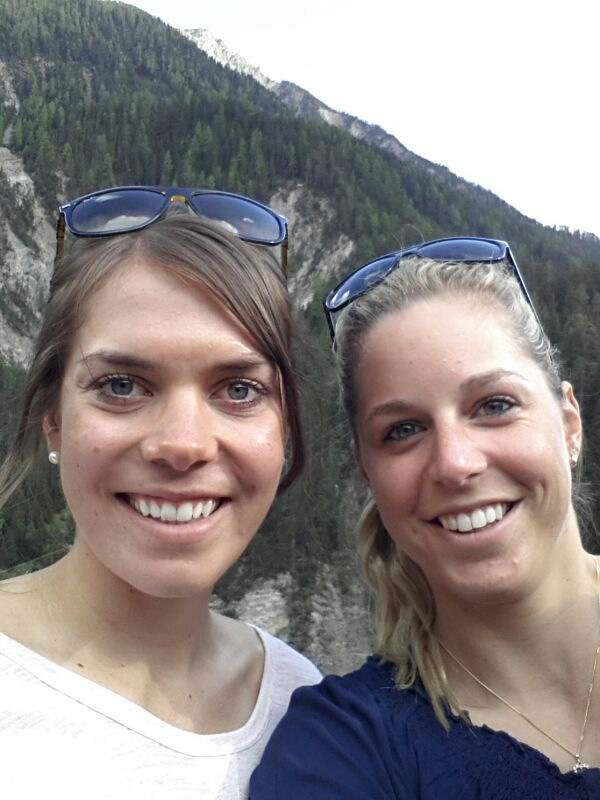
    Canadian Heidi Widmer (l) and Davos skier Tatjana Stiffler (Courtesy photo)
    Widmer (l) and Davos skier Tatjana Stiffler (Courtesy photo)

    She didn’t speak much Swiss-German, but was learning thanks to Stiffler. The dialect and vocabulary were much different than the High German she knew, but Widmer said she was having fun catching on and chatting with Swiss skiers when she could.

    “I always felt, ‘My name’s Heidi Widmer … and I’m not super connected with Switzerland,’ ” she said. “I know they had a strong team to train with and the environment seemed like it would be a good fit and a good experience. I’m always interested in learning how different teams are approaching ski racing so that was also a draw.”

    So what’s different about Switzerland, in terms of its national-team training methods and glacier? According to Widmer, not much on the philosophical front, except for a few technical points she’s been working on.

    “It’s been very similar to what we do in Canada,” she said. “You’re doing longer hours and more hours when you’re at altitude on the glacier and similar approach to the training speed and … not just going out and hammering at altitude.”

    As for the glacier itself: “I’m trying to think of another word besides pimped,” Widmer said with a laugh. “It was a lot more comfortable living than our [Haig] glacier camp, let’s put it that way.”

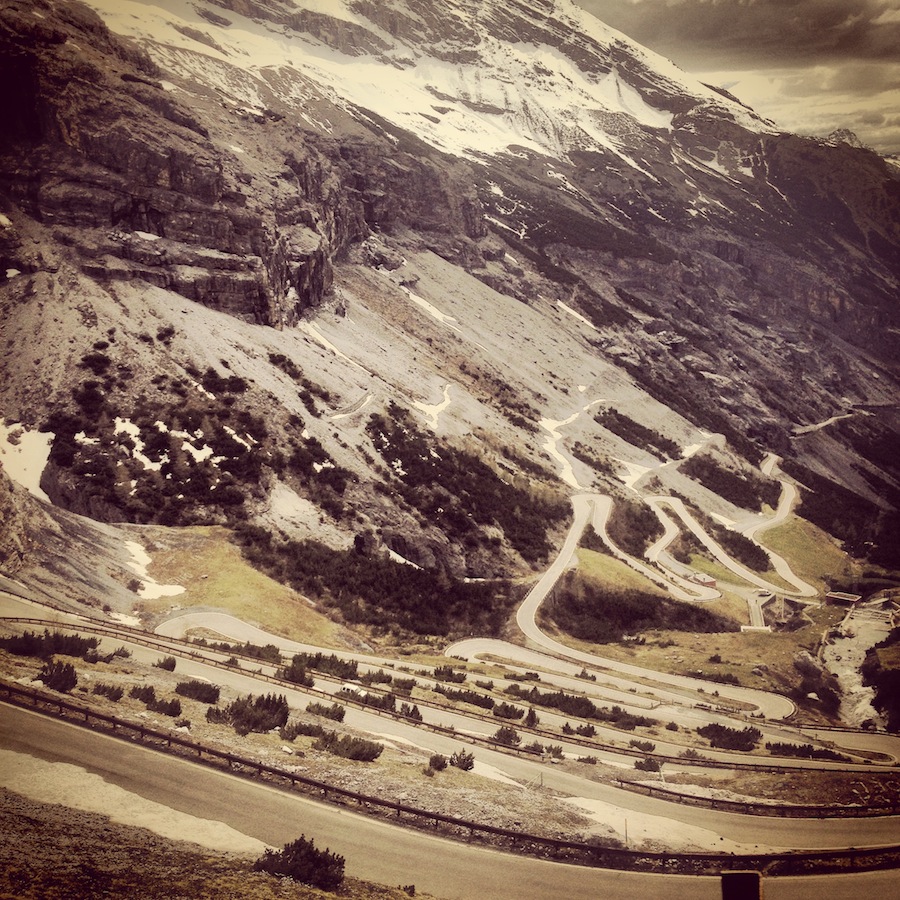
    The road up Stelvio Pass, the highest paved roadway in the Eastern Alps, with 42 hairpin turns and 14 percent grade in some parts, according to Heidi Widmer. "We did classic intensity up this road starting at 1900m," she said. (Courtesy photo)
    The road up Stelvio Pass, the highest paved mountain pass in the Eastern Alps, with 42 hairpin turns and 14 percent grade in some parts, according to Heidi Widmer. “We did classic intensity up this road starting at 1900m,” she said. (Courtesy photo)

    From the hotel, one can cross the road and immediately access the 4 k ski loop, which starts with a brief descent before winding back up to the top of the glacier.

    “Then you go back to your hotel and all the meals are cooked for you,” she said. “All the teams are there, and it’s a really cool atmosphere.”

    Widmer spent five days with the team on Stelvio before heading back to Davos last week. She’ll be dryland training there for the rest of her stay with Stiffler and a few U23s, like Nathalie von Siebenthal and Christa Jäger. World Cup skier Bettina Gruber, 28, is also in Davos, and the two planned to meet up for some intensity.

    Looking ahead, Widmer said she’s most focused on peaking for her last year of U23’s – and making the Olympics if possible. Number one on her list: the skate sprint at U23 World Championships in Val di Fiemme, Italy.

    “What I did last year is working; I don’t think I have to do anything drastic to change my training approach,” she said, adding that she’s boosted her strength training.

    Naturally a sprinter, Widmer didn’t rule out her potential in distance events, especially with a 10 k classic Olympic qualifier in January in Canmore.

    “My classic skiing in distance and sprinting has to step it up a notch so I’m putting my focus on that as well,” she added. “I haven’t had a breakout international performance yet so I’m really looking towards that.”

    ***

    Have an idea for a skier you’re itching to read more about? Email info@fasterskier.com with the subject line: Pros of Tomorrow.

  • Johaug Bests Kowalczyk in Final Test Before World Championships

    Johaug Bests Kowalczyk in Final Test Before World Championships

    Johaug doing what Johaugs do best—climbing.
    Therese Johaug (NOR) clinched her first individual World Cup win on Sunday in the 10 k freestyle.

    In the final tune-up race before the 2013 World Championships, Therese Johaug (NOR) notched her fourth World Cup victory on Sunday in the women’s individual start 10 k freestyle in Davos, Switzerland.

    The result confirmed her fitness in the final days before Val di Fiemme and served as an important morale boost for the Norwegian women’s team after the absence of their leading light, Marit Bjørgen (NOR), who elected to sit out today’s race.

    “She was plain and simply tired after the race yesterday,” said Gro Eide, a press contact for the Norwegian national team.

    “The decision for Bjørgen not to go was made 30 minutes before the start,” said Egil Kristiansen, a Norwegian trainer. “During the warm up she felt tired and said that she was in doubt whether she should go. If you’re in doubt, you should not go. That’s how we made the tough decision.”

    In the absence of Bjørgen it was left to others to take up the challenge against World Cup Overall leader Justyna Kowalczyk (POL). Johaug responded.

    She stormed to the first check point at 1.6 kilometers, besting teammate Kristin Størmer Steira by 8.7 seconds with Kowalczyk lurking just 0.2 seconds behind.

    Therese Johaug (NOR) crosses the finish with the win in the ladies' 10k freestyle in Davos, Switzerland.  Photo: Fischer/Nordic Focus.
    Therese Johaug (NOR) crosses the finish with the win in the ladies’ 10k freestyle in Davos, Switzerland. Photo: Fischer/Nordic Focus.

    For Johaug, her strategy was straightforward — start hard and hold it.

    “I opened really hard and managed to keep that tempo through the entire race,” Johaug told NRK.no.

    The diminutive Norwegian superstar essentially maintained the eight second margin she earned in the initial 1.6 kilometes. She finished the course in 26:16.7, 8.9 seconds ahead of Kowalczyk.

    Pacing in Davos was a tricky proposition. Situated at 5,120 feet above sea level, the altitude of the venue accentuates the difficulties of a deceptive course. Though it lacks the monster climbs that are a hallmark of a World Cup course profile, it is relentless and technically demanding. There’s always a danger of going out too hard and never recovering.

    Johaug wasn’t certain whether her aggressive start would backfire, saying, “I started hard and I was not sure if I did not ski too fast.”

    Oddly enough, the tiny Norwegian superstar credits her performance in part to her technical abilities.

    “I gained some time in the downhill sections,” she said.

    In the final analysis Johaug’s pacing strategy and preparations in Seiser Alm were enough not just for the win, but for praise from Kowalczyk, who is not usually one to shower compliments on her rivals.

    “She (Johaug) was fantastic,” Kowalczyk said to NRK.no. “Therese and Marit will be my two biggest challengers at World Championships.”

    Kowalcyzk’s second-place finish underscores her impressive recovery after a dismal showing two weeks ago in Sochi, Russia. After claiming a comfortable victory yesterday against Bjørgen, Justyna notched another impressive result in her weakest discipline — skating.

    “Before today’s competition I did not know if I would start in the 10 k free in Val di Fiemme, but after today I seem to not have other option,” Kowalcyzk told FIS. “I have skied one of my best competitions in free technique in my life.”

    Clearly, her world championship form has arrived.

    Justyna Kowalczyk (POL) working for second in Davos.  Photo: Fischer/Nordic Focus.
    Justyna Kowalczyk (POL) working for second in Davos. Photo: Fischer/Nordic Focus.

    Apart from the return of Kowalczyk’s imposing form, Steira’s impressive run was another notable outcome of the 10 k. The omission of Bjørgen left a gaping hole to be filled at the top and Steira rose to the challenge.

    Altitude pacing was central to Steira’s race, she said.

    “At such a high altitude it is easy to go out too hard so I wanted to start carefully and then speed up and keep the pace,” she told FIS.

    Steira couldn’t match her teammate’s vicious acceleration in the first 1.6km. She was 8.7 seconds behind Johaug at the first intermediate split but maintained a strong tempo and only conceded 4.5 seconds to Kowalczyk over the duration of 10 k.

    Taken together with her win two weeks ago in Sochi, Russia, Steira’s recent run of form gives her confidence for a podium position at world championships.

    “I am in good shape and I hope for a medal in Val di Fiemme,” she concludes. “It was a good confirmation, because I was nervous and excited before the start of today’s race after my prior training at altitude.”

    Given Steira’s performance, team Norway was the winner of the day, proving they can deliver top results with Bjørgen.

    “That was two solid runs by Johaug and Steira,” Egil Kristiansen reiterated. “It shows that we can win even if the assumed strongest of us [Bjørgen] doesn’t show.”

    Tucked in just 4.4 seconds behind Steira in 4th position was Emma Wiken of Sweden, whom bested her high profile teammate Charlotte Kalla by 1.6 seconds.

    Wiken, 23, is an relative newcomer to the World Cup circuit; today’s performance marks a personal best for her and a boon to team Sweden and they head to Val di Fiemme.

    With the conclusion to Sunday’s races in Davos the stage is set, and the final dress rehearsal before world championships is over.

    Results

    Justyna Kowalczyk (POL), Therese Johaug (NOR) and Kristin Stoermer Steira (NOR) top the women's podium after the 10k freestyle.  Photo: Fischer/Nordic Focus.
    Justyna Kowalczyk (POL), Therese Johaug (NOR) and Kristin Stoermer Steira (NOR) top the women’s podium after the 10k freestyle. Photo: Fischer/Nordic Focus.
  • First American to Win Ski Mountaineering Gold, Silitch Preps for Winter

    First American to Win Ski Mountaineering Gold, Silitch Preps for Winter

    US Ski Mountaineering member Nina Silitch on the podium after placing third in her age group at the CCC Ultra Trail du Mont Blanc on Aug. 31 in Chamonix, France. (Courtesy photo/ninasilitch.com)

    In late May, weeks after Nina Silitch finished her last race of the season, loads of her ski-mountaineering equipment still occupied more than half the space in her bedroom.

    Her husband, Michael, couldn’t understand why, after six months on the World Cup and international circuit, she wasn’t ready put it away.

    At 39, Silitch was coming off a career-best season in most respects – she became the first American to earn World Cup gold in ski mountaineering after winning a sprint, finished eighth overall in the World Cup and placed fifth in the Grand Course championship series, a two-year culmination of some of the toughest mountaineering races.

    In 2011, Silitch teamed up with Lyndsay Meyer and Valentine Fabre to place sixth in The Italian Trofeo Mezzalama, a high-altitude ski mountaineering competition in the region of Cervinia. The race was part of the two-year Grand Course race series. (Courtesy photo)

    In 2011/2012, she racked up nearly 30 starts, many of which included three- to four-day stage treks across technical, high-altitude terrain. Other distance races took an average of six to ten hours, and then there were team events.

    Silitch ended the season on a high note, placing seventh with two of her US Ski Mountaineering teammates – Sari Anderson and Lyndsay Meyer – at the Patrouille des Glaciers in Switzerland. Typically 53 kilometers long with 4,000 meters of climbing, the team race in early May was cut short around the halfway point because of dangerous winds and unstable snowpack. Silitch, Anderson and Meyer combined to finish strong, physically tying themselves together at times to avoid falling into glacier crevasses.

    Once that was over, one would think Silitch would want to move on, spend time with her 6- and 8-year-old sons, and enjoy spring at their home in Chamonix, France.

    Of course she wanted all that, but Silitch had one more ski-related task on her “to-do” list. The view from her home reminded her of it almost daily. No sooner had she finished racing in Switzerland that Silitch decided to ascend Mont Blanc, the highest mountain in the Alps and 11th tallest in the world (4,810.45 meters, or 15,782 feet, above sea level).

    The view of Mont Blanc from Silitch’s home in Chamonix, France. (Courtesy photo)

    About 500 meters short of the summit, high winds forced Silitch and her climbing companion to turn back. Two weeks later, the ski gear remained where she left it, sprawled across her bedroom.

    Since moving to Chamonix in 2006, Silitch had summited the mountain twice. Both times, she packed up and skied down its North Face, but this time she wanted to do it in a day. It took most people two or three. It didn’t take long before she enlisted a guide friend to join her on another attempt.

    “I wanted to do something, just to have a completion of something and put my season to end that way,” Silitch said during an online chat while visiting family in Maryland. “So that’s what I did this year, Mont Blanc from my house.”

    At precisely 2:20 a.m., Silitch turned on her headlamp and left home. She had about 12 hours before she needed to pick up her boys, Birken and Anders, from school.

    “Mont Blanc is big undertaking and … one that I by no means take lightly,” Silitch wrote on her blog.

    It involved a tricky ascent of 3,375 meters (12,385 feet) and an equally challenging descent. There was altitude sickness to be wary of along with unknown weather elements near the top.

    “The challenge of the Mont Blanc summit for me embraces much that one needs in journey of daily life whether you are a mom, dad, athlete, anyone finding their path,” Silitch wrote.  “Breathe, endurance, perseverance, confidence, fortitude, grace, energy, vision, attentiveness, awareness, caution, respect, experience, tenacity, commitment, presence.”

    Silitch remained focused for the duration, meeting her goal in fairly favorable conditions. After arriving at the top, she took a moment to admire the view, then locked her boot heels in place and started back down.

    “I returned home safe, after a successful summit day, with some tired legs, a little nauseated stomach from altitude, but very happy to pick up my boys at school at the end of the day,” she blogged. “Now, finally the overflow of ski gear in my bedroom can be put away. Operation summer mode!”

    Championing Her Sport

    For Silitch, that meant fewer offseason races and more time with family. A few days after arriving in Maryland for a month-long visit with her in-laws in July, she put her 6-year-old, Anders, in front of the computer during a Skype chat.

    Nina Silitch with her 8-year-old son, Birken, who helped pace her at the CCC Ultra Trail du Mont Blanc on Aug. 31 in Chamonix, France. (Courtesy photo)

    “Hi,” he said politely, then took off.

    “We were just out at the pool,” Silitch explained.

    After she and Michael moved to France 11 years ago, had their children while living in Switzerland then returned to Chamonix, they made a point to return to the states periodically. Both American citizens living abroad on visas, they had raised their sons to speak French as well as English.

    In Maryland, where they spent a few weeks before visiting Silitch’s parents in Carrabassett Valley, Maine (she’s originally from Shaftsbury, Vt.), the boys had signed up for swim team, tennis and triathlons.

    “They’re very active,” Silitch said. She wasn’t much different.

    During her 2012/2013 campaign, Silitch knocked off most every goal she set out for. On April 14 in Tromsø, Norway, she claimed gold at a SkiMo World Cup sprint, which combines kicking and gliding, kick turns, boot packing (carrying one’s skis) and often some skating. The race includes a qualification round and heats, and typically takes 3 ½ to 4 minutes to complete the course.

    Silitch (center) on the sprint podium after becoming the first American to win a ski mountaineering World Cup on April 14 in Tromsø, Norway. With Anna Figura of Poland in second and Emilie Gex-Fabry of Switzerland in third. (Photo by Alex Lugger)

    The final race of the World Cup season, it was only Silitch’s second sprint of the year (one other on the circuit was canceled, and Silitch did another at French nationals, where she finished second).

    It’s kind of been an event that I’ve fallen in love with,” she said. “It’s been a combination of my cross-country skiing background [at the Holderness School and Dartmouth College], but also just the event itself, combining all the aspects of ski mountaineering. You need to be very efficient in transitions … you can’t make a mistake. So it was really special that it came together.”

    Next year, there are three sprints in the International Ski Mountaineering Federation series, which consists of more than 20 races in France, Switzerland, Italy, Spain, Poland and Norway. Silitch was excited that, for the first time, points awarded at sprints will be equal to those earned in longer races. The shorter format was adopted to broaden the sport’s appeal, and with several races in downtown venues, it’s become more accessible to spectators.

    “They actually created the sprint to grow the sport more and hopefully someday it will become an Olympic sport,” Silitch said. “They’re trying to do more TV coverage next year so we’ll see.”

    When she’s not gutting for a win, Silitch is the president of the volunteer-driven Chamonix Ski Alpinisme Club. She founded the ski-mountaineering group three years ago, and has since seen its membership grow from about five to 70 members.

    Women’s ski mountaineering World Cup sprint semifinal on April 14 in Tromso, Norway. (Nina Silitch courtesy photo)

    “That’s something I’m really trying to do, help grow the sport and bring it more to women especially,” she said, “and also to the younger kids as well, the youth. In the U.S., I think that’s where we need to target, those kids that don’t necessarily find their way in alpine skiing or cross-country or even those cross-country skiers that want to try something a little different.”

    One can compete in ski mountaineering as early as 14, which is the age group Silitch would like to draw in. “That’ll be my next step after competing,” she said.

    For now, she’s mostly focused on the season ahead.

    “I think I’m just going to give it one more year of World Cup skiing,” Silitch said. “Hopefully from that I’ll move into other things with my experiences in the World Cup and apply that to whatever I do next.”

    Her husband, an internationally certified mountain guide, is interested in moving to Norway to teach. Silitch ran a female outdoors program at Aiglon College in Villars, Switzerland, while they lived there for four years, then committed to full-time racing when she made the US team in 2008.

    Finances, however, remain a stumbling point for most American competitors in the sport.

    “We don’t really have any funding. It’s up to everyone to get their own sponsorships and everything,” Silitch said. “All the European teams are nationally funded. They’ve got coaches and all their events are paid for and their travel expenses. For me, [it’s] from my heart and passion. … It’s definitely a big commitment, but we feel like it’s such a great experience for me and also for my family, that it’s really worth it even if it can be a little tight at times.”

    In December, she’ll turn 40, yet Silitch remains relatively new to ski mountaineering after trying it for the first time in 2005. It wasn’t until two years later at a night uphill race that she decided to pursue it more seriously.

    “It’s funny that I didn’t really fall into this until after my kids were born,” she said. “So that’s been a whole new experience for me, a whole new challenge. I think because it combines so many of the different things I love, the endurance, the kick and glide cross-country skiing, but also being in the mountains and the mountaineering aspect of it. I’m also a huge downhill skiing fan, and just being able to combine those things, it just kind of creates a sport that’s really fun and challenging.”

    Frame of Mind

    After a long season, which started in mid-December and wrapped up in early May, Silitch took about three weeks off to regenerate with some fun and loose training. She planned to slowly build into a ski-specific dryland routine while staying away from trail racing until the end of summer.

    Primarily concerned about past injuries, she worked with her coach, Adam St. Pierre, a cross-country ski coach with the Boulder Center for Sports and Medicine in Colorado. With his help, she developed the strength to compete in the one summer event she set her sights on: the CCC Ultra Trail Mont Blanc. One again, it was an objective viewed from her backyard.

    Nina Silitch during the first climb up to Bertone before the cold and wind set in at the CCC Ultra Trail du Mont Blanc on Aug. 31 in Chamonix, France. (Courtesy photo)

    In late August, she completed the 90-kilometer race (slightly altered from the original 100 k), finishing third in her age group and 15th among women.

    “My biggest goal of the summer is now behind me,” Silitch wrote on her blog. “1800 runners withstood rain, wind, snow, sleet, mud. Temperatures plummeted on the high cols and runners ran through passes with 10-20cm of snow. … It got to points on the course where it was merely about survival and being well prepared in the conditions with not only the right gear & clothing for but the right mental attitude.”

    That was where her other summer training came in. While in France this year, she’s been working with sports-performance and mental-training coaches, one of which mentored Rafael Nadal, formerly the top-ranked tennis player in the world.

    “It’s helped me tremendously,” she said of learning how to motivate herself through her sport’s toughest moments, no matter how fatigued or bad she feels.

    “Usually I have little mantras like, ‘Go mommy go,’ … or ‘fast and light,’ ” Silitch said. “If I ever have a negative thought come into my head I try to have two positives. Like, ‘Oh my legs feel so heavy,’ ‘No, your legs are really light,’ and ‘Think about your quickness or your cadence,’ and those things really help. I’m really interested in that and it’s a neat thing to apply to coaching, for sure.”

    For Silitch, instructing could her next step, especially as she and Michael plan their next move.

    “We’re not sure if we’ll eventually work our way back to the states,” she said. “We both really love teaching, so maybe we’ll explore.”

  • Furrer Starts Training with Summer Sprint Victory

    Furrer Starts Training with Summer Sprint Victory

    Switzerland’s Philip Furrer on his way to winning the FIS Summer Ski Sprint on June 20 in Yakeshi, Inner Mongolia, China. (Photo: NordicWays.com)

    Earlier this month, Philip Furrer wasn’t sure what his summer held. Sure, the Swiss cross-country ski racer knew he’d be training and spending three weeks with military recruits for Switzerland’s army requirement. At least he was a sports instructor for the mandatory period.

    Otherwise, work was winding down. Throughout spring, the 28-year-old from Andermatt, Switzerland, taught primary students in grades 1-6. When he wasn’t racing or traveling across the globe, Furrer, who started in four World Cups in 2010/2011, was also a gym teacher.

    Come June, he was ready to start training in earnest. Just over three weeks ago, he heard from the Swedish race organizers, Nordic Ways. They wanted to pay his way to the FIS Cross-Country Summer Ski Sprint in northern China on June 20. Furrer jumped at the opportunity, and two weeks later, he took two flights and a three-hour bus ride to the autonomous region of Yakeshi in Inner Mongolia.

    Last Wednesday, the Swiss teacher won the freestyle sprint ahead of nearly 40 others, including Chinese runner-up Sun Qinghai and Sweden’s Johan Eriksson in third. Furrer spent the rest of the week in Beijing, returning home three days ago, and he talked to FasterSkier on Wednesday about his experiences.

    Furrer (second from left) on the podium after winning the FIS Summer Ski Sprint June 20 in China on June 20, ahead of China’s Sun Qinghai in second and Sweden’s Johan Eriksson in third. (Photo: NordicWays.com)

    FasterSkier: How did you get to northern China, and where else did you travel?

    Philip Furrer: I traveled from Zürich to Beijing and from Beijing to Inner Mongolia to Yakeshi. We had the first day off, and then we had this sprint race last Wednesday. The day after we traveled to Beijing and there we had some days just for being tourists. It was a quite nice experience.

    FS: Had you been to China before? How was Yakeshi?

    PF: I had been to China before. I hadn’t been to Yakeshi. I had to been to this Summer Ski Sprint tour [in other places] a few times.

    Inner Mongolia was quite special. It wasn’t like I expected. … It was really nice, small hills and very green, forests, and they had reindeer, moose. It was more like Europe or Scandinavia than other places I’ve been [in China]. It was a very small place [and] the hotel was like a 20-minute drive to the racing arena. I think in wintertime they have an alpine place there.

    FS: How was the course and race organization?

    PF: They had the snow [stockpiled] from last winter and the track was around 400 meters up and then you had to come back, so about 1600 meters total, and you had to do two laps. It was really nice because there were around 20, 30 skiers from Europe and then those from China. They had plans to do this sprint for quite [a while], but then they weren’t sure if they could arrange it. Then, like, two weeks before the sprint they decided, yes, we can do it. They had to [invite] people quite fast. Usually you know a long time before, but it was two weeks before. I didn’t have anything else that was so important at the moment (laughs). I had worked as a teacher until one week before so I was free. I decided to go and it was a good decision.

    I went by myself, but they organized everything. Everything was paid and organized by a Swedish company called [Nordic Ways]. They are pioneers in Chinese cross-country skiing. They started the Chinese Vasaloppet and they have many different sport arrangements. In summer, they have a 30 k running race in Changchun just a week before the sprint race so some of the skiers were also there, but I couldn’t go because I was still working.

    FS: Why do you think the race came together so late?

    PF: It wasn’t because of the snow. I mean, with the government and everything, it has to be cleared and OK and they knew in quite a short time. But now, they’re already planning to do this kind of sprint in summer and I think they are trying to have at least two sprint races at different places in China. One will be in Yakeshi and one with be in another place where I haven’t been before. They are always looking for people from other countries so I’m sure if there are some good skiers from North America that would like to go, they could get there next year.

    Furrer celebrates a SuperTour skate sprint victory on Feb. 19 in Madison, Wis.

    FS: What did you think about the event itself?

    PF: It was a really good experience. Everything that is organized in China, they are always trying to show them from the best side. I think the sprint was shown [on television] for 30 million people. For us in Europe, it’s difficult to understand. It’s so many people because in Switzerland we have [population of] seven million or something.

    FS: Wow, that’s a lot of people watching cross-country skiing.

    PF: It was on CTV-5, one of the biggest Chinese television [networks]. When we were back in Beijing, they had written [about it in the] Hong Kong [newspaper], in China Daily, Shanghai Daily, everywhere. It was not a big thing, but a small thing about the sprint. That was quite fun when two days later we were back in Beijing and we saw in the lobby on the television, ‘Oh, look! There’s the sprint race.’ It was great. Of course, it was nice to see this different part of China. I mean Inner Mongolia isn’t the place you normally go as tourists.

    FS: How did you feel about your performance?

    PF: I was really surprised how well it went because my sprint has not been the best. I have not had such an easy time. My father is at home with cancer and … I’ve had quite a hard time focusing on skiing. That’s why I was really surprised with how well it went and how good the feeling was. Here at home when I’ve been training, the feeling hasn’t been that good.

    I was happy that the skiers that were second and third were quite good. Like [Sun Qinghai] has been at the Vancouver Olympics, [where he placed 21st in the classic sprint]. And [Johan Eriksson], who was third, was the Swedish champion this year in the sprint relay, and he has won different Swedish Cup races. It’s good to see that you can match with good people and the feeling was good that it was.

    FS: How’s you dad doing?

    PF: It looks better than it has been. Now I think this will work out, and I have a good feeling with him. But that’s life. I say skiing is really nice as long as everything goes well. In top sports, you feel immediately if something is going wrong or you have those kind of problems, you can’t be at your top. So I appreciate it even more when it works well. I think often people who are in the top sports forget about how lucky they are that they can do it. Most are healthy people and having a good life.

    FS: How did you get involved in teaching?

    PF: I was educated in Switzerland before I went to Norway to study sports science. It’s quite a good job to have if you’re a skier and in spring you have time for working. It’s fun to have something else also, and I think it’s very important to have something else than just the skiing. I mean, I have to make some money somehow and this teaching job is a really good thing.

    Usually I don’t work in wintertime. Mostly I try to work in spring. … Sometimes they call me and say, ‘Hey do you have time? If somebody [doesn’t] come to work, can you take two or three weeks?’ If I don’t have any training camps or races at the time I can say yes, but in wintertime it’s difficult.

    Furrer (l) in a head-to-head quarterfinal with his Finnish friend Jari Joutsen at the Birkie Sprints on Feb. 23 in Hayward, Wis. Joutsen won the heat, but lost to Tim Reynolds of Craftsbury in the semifinal.

    FS: What’s your schedule like this summer?

    PF: Now I will really focus on training. Autumn on, I will again spend my time in Norway [and] also study something on the side, but not 100 percent, so I can still focus on my skiing.

    I finished my work for now, but I have to go to army. In Switzerland, the way it works is every year you have to go three weeks as a refreshment of your military service. I’m a sports instructor in the military so it’s no problem for training. [At] the training camp, I have to do some lessons with the recruits. Otherwise I can focus on my training. From August on, I will be back in Norway and I will train mostly there.

    FS: Are you training with a specific club?

    PF: The club I ski for in Norway is Henning Skilag. I mostly train with this club; we have many training camps and quite good people so I have most to do with [them]. But when I’m in Europe and middle Europe, I start for my Swiss club, Gotthard Andermatt, because it’s the place where I come from. It’s the main club I ski for.

    FS: At the American Birkebeiner in February, you were the lone Swiss skier with a crew of Norwegians and Jari Joutsen of Finland. It seems like you have friends everywhere!

    PF: [In Yakeshi], I stayed with an Italian guy in the hotel room. It was nice because at those races, there are always people from different countries, and you get to know people quite well when you travel together. Like when we were in America, there were eight, nine skiers from Europe, and we had a really great time there also.

    This time [in China] it was, I’m not sure, but I guess around 30 Europeans. This is one part that’s always fun. You get in touch with different people and if you speak their language, it’s even easier. In Switzerland, we have to learn all those: French, Italian, English, German, and then I speak Swedish and Norwegian. My mother is from Finland, the Swedish-speaking part, so you get even to know people better when you speak their language.

    ***

    For more FIS Summer Ski Sprint photos, visit the race organizer’s website.

  • Tour de Ski Pares Down for 2014; Will Head to Switzerland

    Tour de Ski Pares Down for 2014; Will Head to Switzerland

    As athletes prepare to start this year’s Tour de Ski on Thursday, plans are taking shape for the next four editions of the race that would vary its length and location.

    According to FIS Cross-Country Race Director Jürg Capol, the Tour will almost certainly be making a stop in Switzerland next year, and for the three years afterwards.

    Jürg Capol at a press conference in Oberhof, Germany, on Wednesday, before the first stage of the 2012 Tour de Ski.

    The event will alternate between venues in Münstertal—the small valley that claims Swiss superstar Dario Cologna as a native—and Lenzerheide, which Capol says is best known as a center for biathlon.

    From its inception, the Tour de Ski was intended to make stops in three nations, but an initial foray into the Czech Republic didn’t pan out. Since last year, the Tour has been limited to stages in Germany and Italy.

    The Swiss, Capol said, have committed to hosting the Tour for the next four years. The change must be ratified by the FIS committee that handles scheduling for cross-country, but Capol said that discussions there shouldn’t be contentious.

    The committee will also take up a proposal that would limit the Tour to a mere six stages over eight days in its 2014 edition, to give athletes more of an incentive to participate in an Olympic year.

    Typically, a handful of top athletes have opted out or dropped out of the Tour during years with Olympics or World Championships, to avoid illness or fatigue that could detract from their performances in the season’s marquee event.

    In 2014, there’s the added problem that the Olympics start early, on February 7, reducing the amount of time that athletes have for recovery between the Tour and the Games.

    The idea to shorten the Tour has already been discussed in committee, Capol said, and while it still must be voted on, he said that approval would be a formality.

    As for Tours in non-Olympic years, he said that the format would likely remain the same: 10 races in eight days in years with a World Championships, and 11 races in nine days in years when there are no other championships.

  • Few Sweating Lack of Snow in Davos

    Few Sweating Lack of Snow in Davos

    Davos, Switzerland
    Perianne Jones of the Canadian national team skis a manmade course in Davos, Switzerland, on Tuesday. Photo courtesy of Chandra Crawford.

    The North Americans on the World Cup circuit had plenty to look forward to as they flew to Davos, Switzerland.

    After three straight days of races in Kuusamo, Finland, the cross-country skiers would have a chance to kick back, train and enjoy the sun.

    What many didn’t think about was the snow.

    Nov. 28, 2011 Davos
    The roadside view while driving to Davos on Monday. Photo courtesy of Ivan Babikov.

    The Canadians first set eyes on the green landscape before the Americans, as they drove from the airport to Davos on Monday.

    As they passed a grassy field, Babikov snapped a photo and tweeted: “Hard to believe, but that’s how Davos, SUI looks like today. #WaitWhereAreWeGonnaSki?”

    They soon discovered they’d be all right.

    Davos race organizers had anticipated that international skiers that would flock to the town nearly a mile above sea level to train almost two weeks before it hosted the World Cup. They stockpiled manmade snow accordingly, producing it in the Flüela Valley and transporting it in dump trucks to the stadium in Bünda.

    By Tuesday, the venue offered three loops: a nearly 2-k distance course with hilly terrain, a 750-m sprint course with one hill and a 1-k golf course loop, which was entirely flat.

    “The (2 k) manmade loop … was actually some of the best skiing I’ve experienced all season,” U.S. athlete Kikkan Randall wrote in an email. “It had terrain and nice tracks. … I think if we get colder nights, a lot more skiing could materialize really quickly!!”

    On Wednesday, the International Ski Federation announced that the Davos races Dec. 10-11 were a ‘go,’ but the length of the distance race remained uncertain.

    Switzerland, Nov. 29, 2011
    Race organizers in Davos, Switzerland, continue to lengthen their loops with manmade snow. Photo courtesy of Kikkan Randall.

    Originally scheduled to host a 30 k for the first time since 2000, Davos organizers may have to shorten the men’s freestyle race to 15 k. If that happens, the women’s 15 k skate race will become a 10 k. Freestyle sprints will take place Sunday, Dec. 11.

    The FIS will hold off on deciding about the distance races until likely the middle of next week.

    “For the distance race on Saturday, we (will) try to prepare the longest possible route,” Jacqueline Kühne of the Davos Ski Club head office wrote in an email.

    “Thanks to some cold nights, additional snow could be produced and the stadium and the sprint courses are covered already,” FIS Race Director Jürg Capol told FIS Ski. “Currently it is a bit warmer, but towards the beginning of next week, we expect a colder weather period again.”

    By warm, Perianne Jones of the Canadian national team explained that daytime temperatures in the valley hovered between 5 and 10 degrees Celsius, about 40-50 degrees Fahrenheit.

    “We are so happy to be here, and eat tasty food, and wear our sunglasses,” Jones wrote in an email. “Even the lack of snow can’t dampen our spirits!”

    While Jones and the Canadian sprinters train in Davos for this weekend’s races in Düsseldorf, Germany, the team’s distance skiers went to Livigno, Italy. About 1 ½ hours from Davos by car, Livigno offers higher altitude training at 3,439 m (11,283 feet) above sea level. Canadian head coach Justin Wadsworth wrote in an email that sending those athletes there had always been the plan.

    As for the sprinters, Wadsworth wrote they should be OK with some light training on Davos’ short loops before their first freestyle sprint of the season in Düsseldorf on Saturday.

    “Obviously it would be better if there were a few feet of snow, but we are still super happy to be here,” Jones wrote. “Perfect skiing, great snow, no rocks, no sawdust.”

    She explained that although a lack of natural snow presents challenges, race organizers in Davos had done “an amazing job.” Throughout the world, venues had stored snow from the previous year in case of warm conditions, piling it under sawdust and using it as needed.

    “It seems to just be the reality these days that this is something we have to deal with in our sport,” Jones wrote. “Relying on natural snow is just not an option. … Fortunately no races have been cancelled thus far, but we will have to wait and see what happens in central Europe in the next week or so.”

    Regardless, she wrote that both the Canadian and American teams were in good spirits, sharing the same Kulm Hotel in Davos. It was Jones’ favorite.

    “Life is good,” she wrote.

    Nov. 30, 2011
    The Canadian distance skiers are training at altitude in Livigno, Italy, about 1 1/2 hours from Davos. Photo courtesy of Ivan Babikov.

    “The sun and the coffee and good friends is making up for the lack of snow,” Randall wrote in a blog entry on Tuesday. “And we’ve still got 10 days until the World Cup happens here.”

    The Americans also divided their team, keeping the sprinters in Davos and occasionally sending the distance skiers about 1 ½ hours away to Pontresina, Switzerland. U.S. head coach Chris Grover explained they would take day trips to ski Pontresina’s flat 4-k course, which was at a slightly higher elevation at 1,805 m (5,922 feet).

    On Sunday, the distance skiers (Kris Freeman, Noah Hoffman, Tad Elliott and Liz Stephen) may compete in an FIS race (5- and 10-k freestyle) in Seefeld, Austria, about 2 ½ hours from Davos.

    Hoffman wrote they would probably spend Saturday night in Seefeld and return to Davos on Sunday afternoon. He pointed out that without any natural snow in Davos, the dryland training there was also good.

    “In the next two weeks, we will be taking several day trips to Pontresina … for a little more skiing on some longer training days,” Hoffman wrote in an email.

    Birthday Boy

    On Wednesday, USST member Andy Newell turned 28. His teammate on the women’s side, Randall tweeted: “Beautiful ski on the 4km manmade loop in Pontresina.  As bday boy @AndyNewellskier would say, ‘suns out guns out’!”

    He replied: “Catching rays and logging K’s!! My favorite.”

  • Switzerland Wants Tour de Ski Stages

    Successes of Swiss skiers in recent years have strongly increased the importance of Cross-Country skiing in Switzerland. Swiss-Ski wants to boost interest in Cross-Country skiing with high level World Cup competition.

    “The FIS Tour de Ski represents the most important event in the World Cup calendar. It is the best way, how Cross-Country skiing in Switzerland could strengthen its positions. Our goal is to welcome each year a FIS Tour de Ski stage in Switzerland in addition to the traditional World Cup in Davos,” explains Dierk Beisel, chief high performance sport with Swiss-Ski.

    Resorts Engadin, Engelberg, Lenzerheide and Val Müstair submitted to Swiss Ski their interest to host FIS Tour de Ski stages. Later on during discussions Engelberg withdrew its candidacy and the three remaining bidders presented their dossiers to Swiss-Ski. “The quality of every bid was at the highest level, candidates are very well prepared,” reveals Dierk Beisel. Each candidate has been analyzed in recent days and strengths and weaknesses have been weighed.

    Swiss-Ski has decided to propose to FIS Lenzerheide as a kick off stage organizer and Val Müstair as host of intermediate stages. The candidacy of Lenzerheide is particularly strong in organizing experiences, geographical location and environmental sustainability through the construction of the biathlon and Cross-Country center. Val Müstair’s advantage is proximity to the South Tirol and great enthusiasm of Cross-Country skiing fans thanks to success of local hero Dario Cologna. The FIS Tour de Ski stage offers the region a unique opportunity to present to a large audience.

    The two applications will be submitted in the next few days to FIS. Swiss-Ski is convinced that both Lenzerheide and Val Müstair stages would be optimal locations for the FIS Tour de Ski.

    FIS Cross-Country World Cup calendar shell be discussed and confirmed at the FIS Calendar Conference in Portoroz in the beginning of June. Before the FIS Cross-Country World Cup 2011/12 calendar is official the FIS council must approve it at its regular meeting.

    Source: FIS/Swiss-Ski