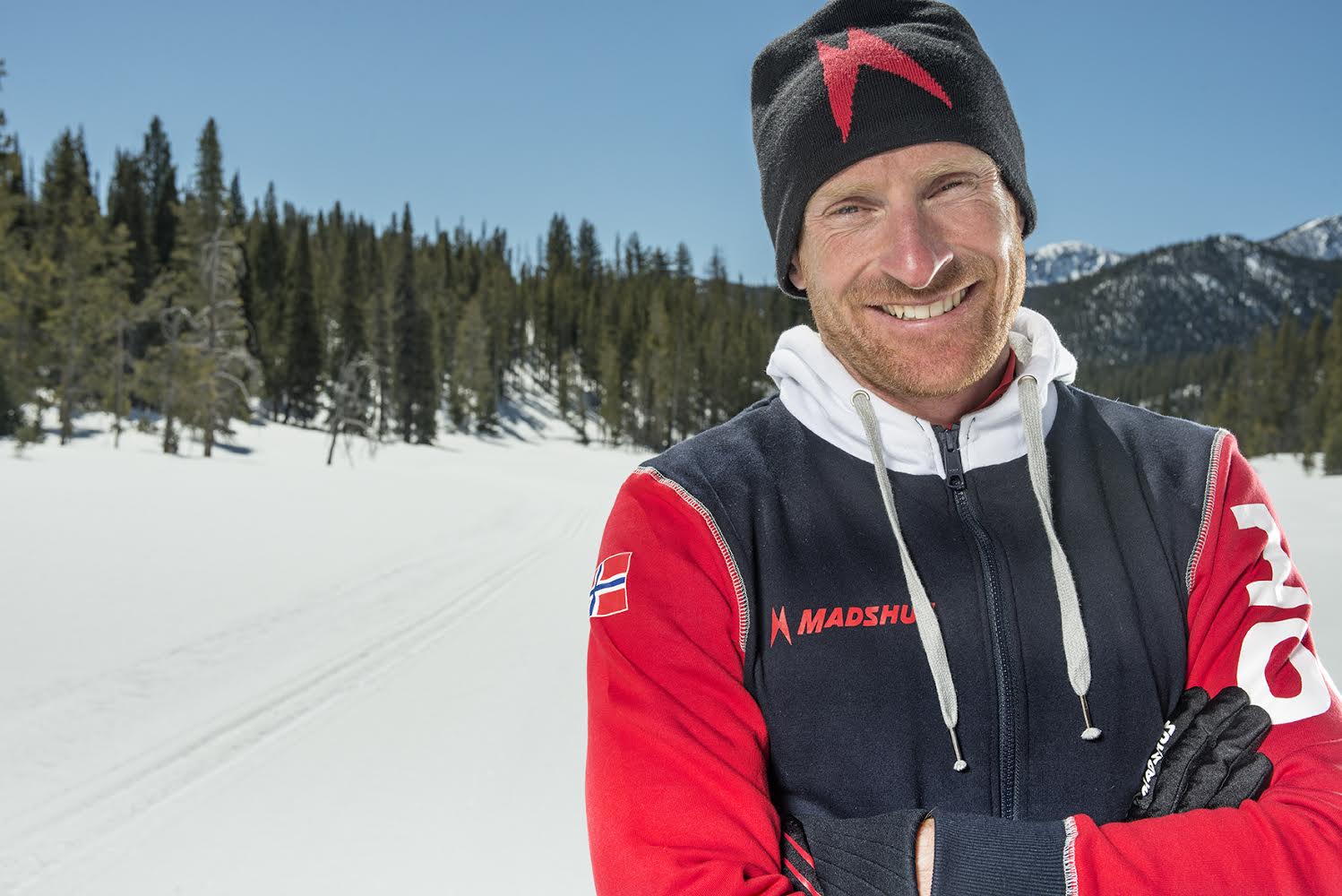
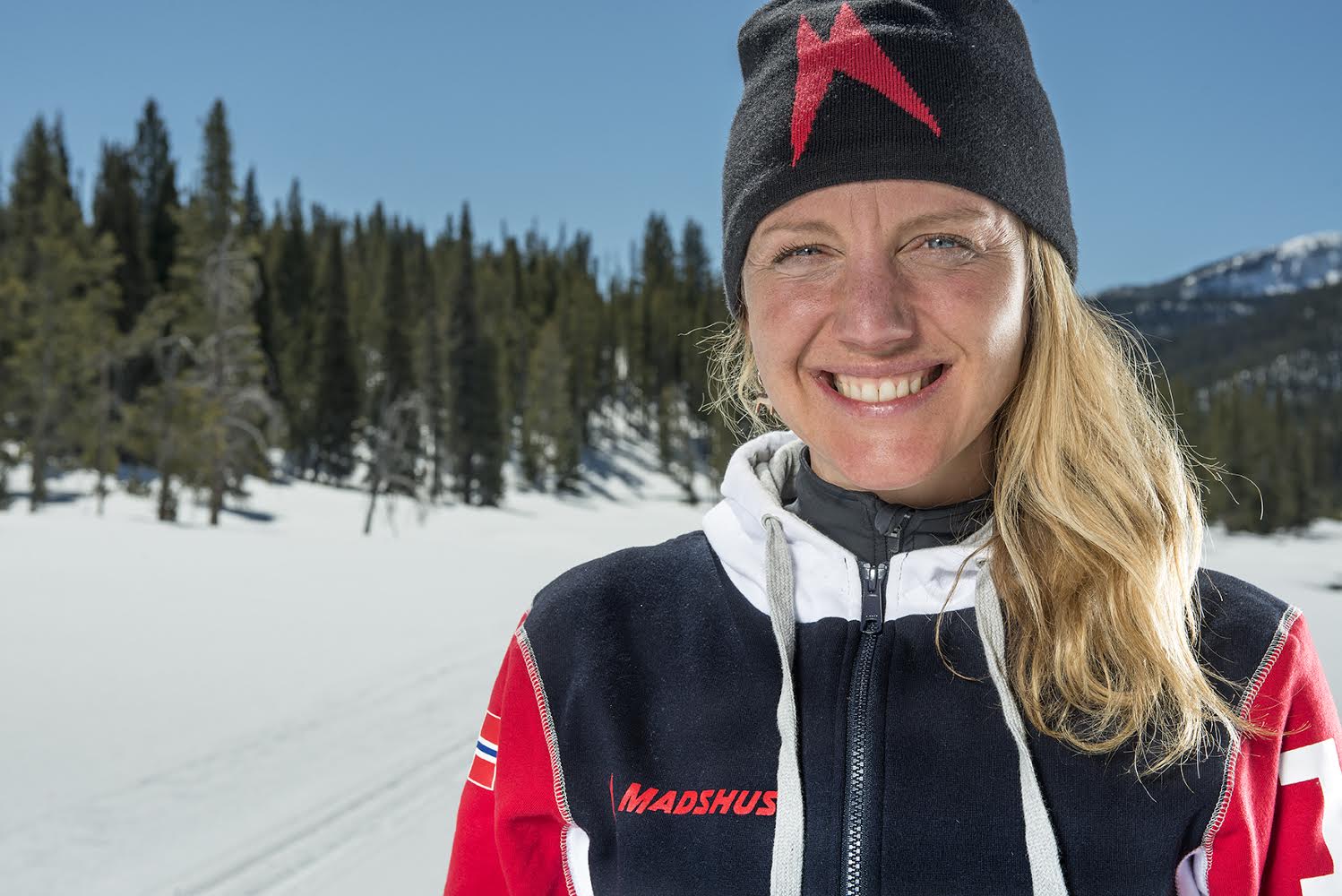
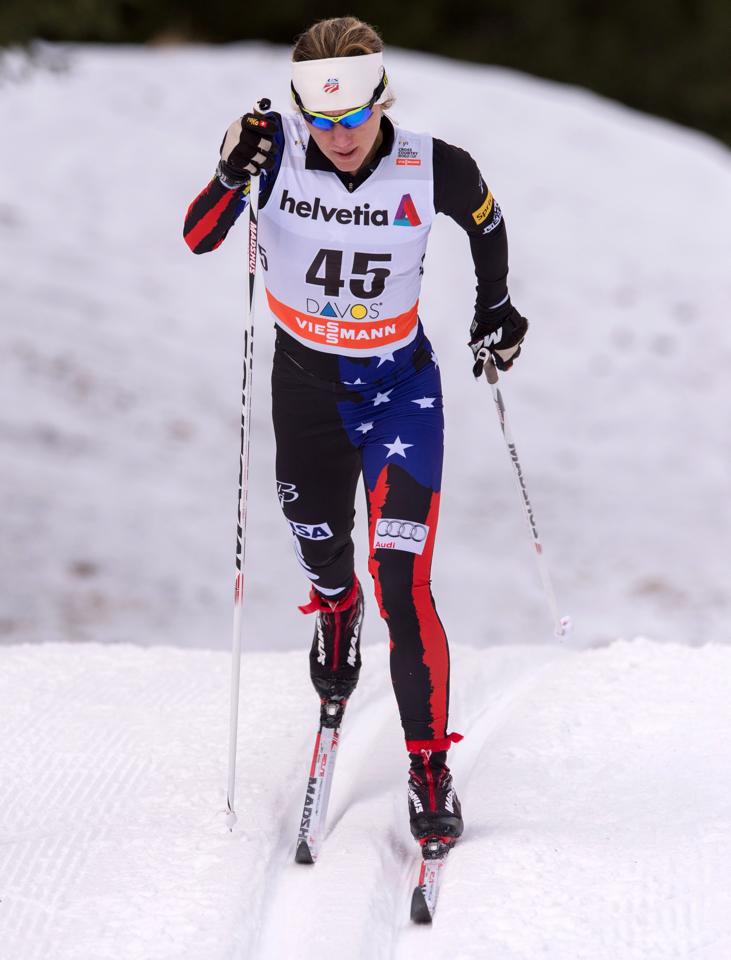
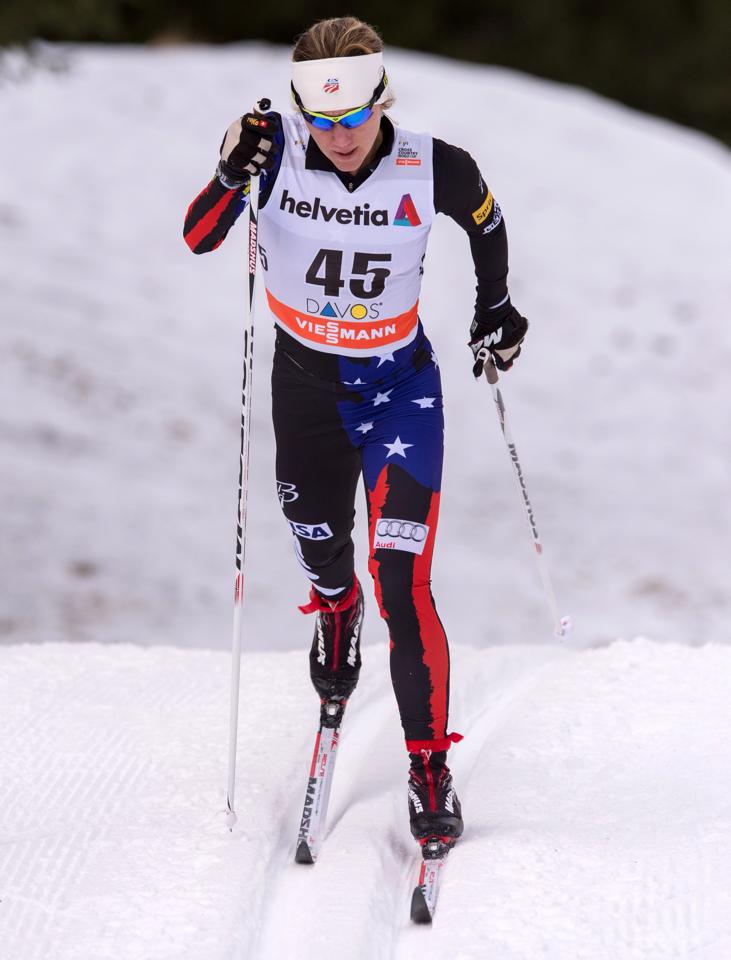
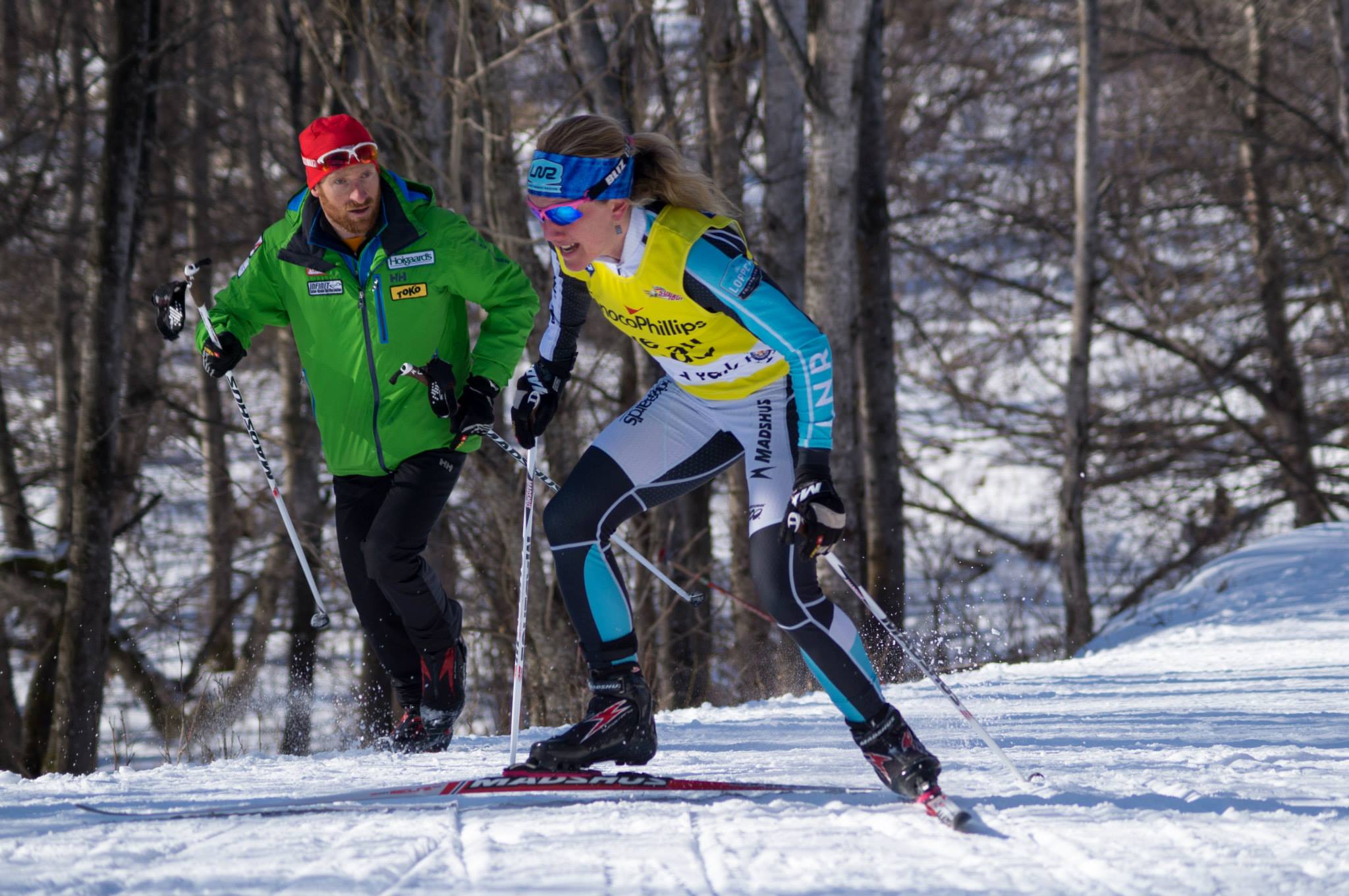
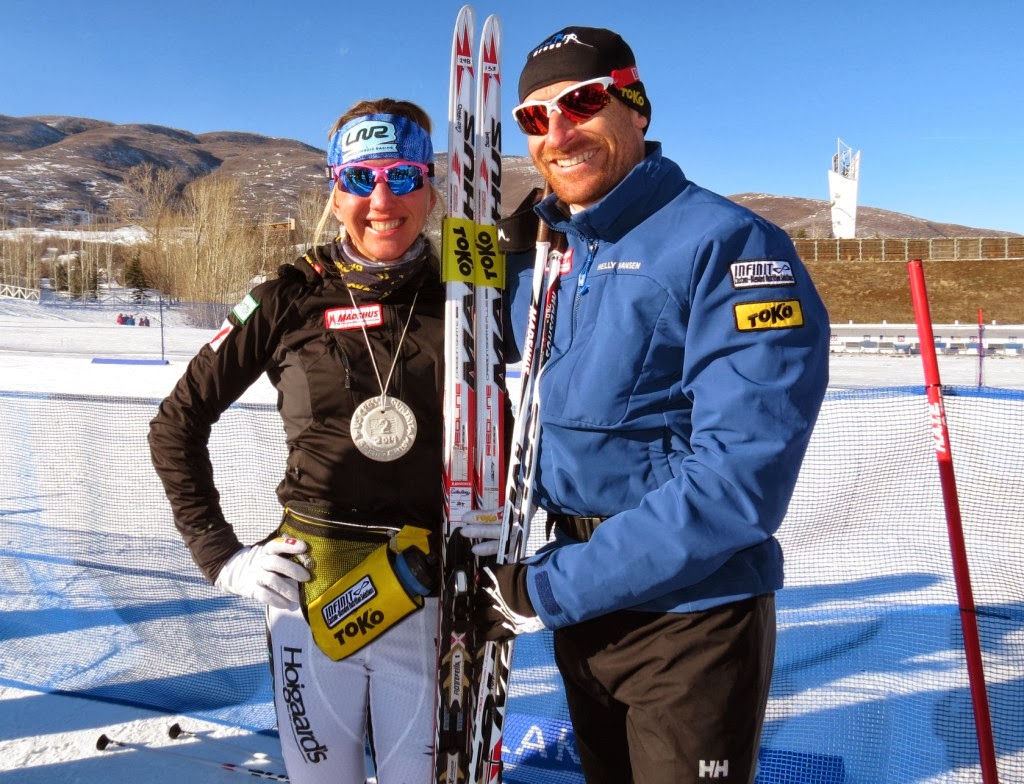
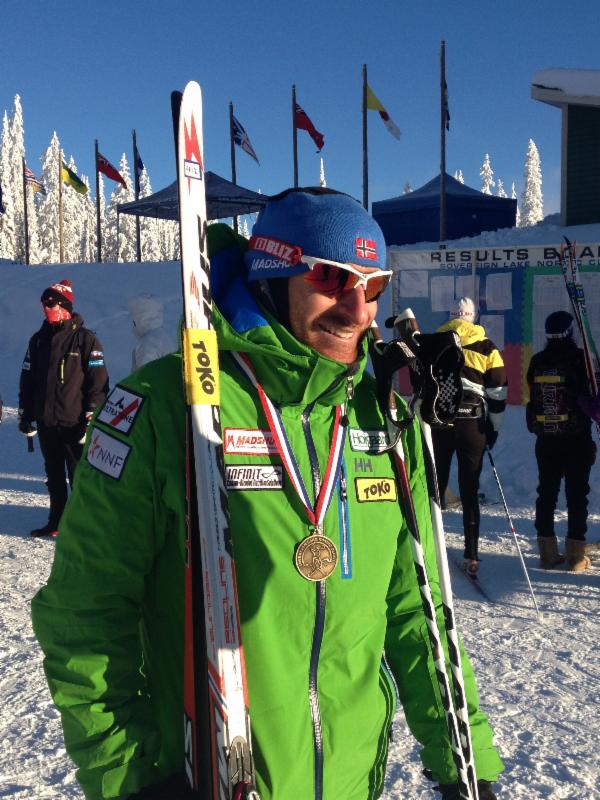
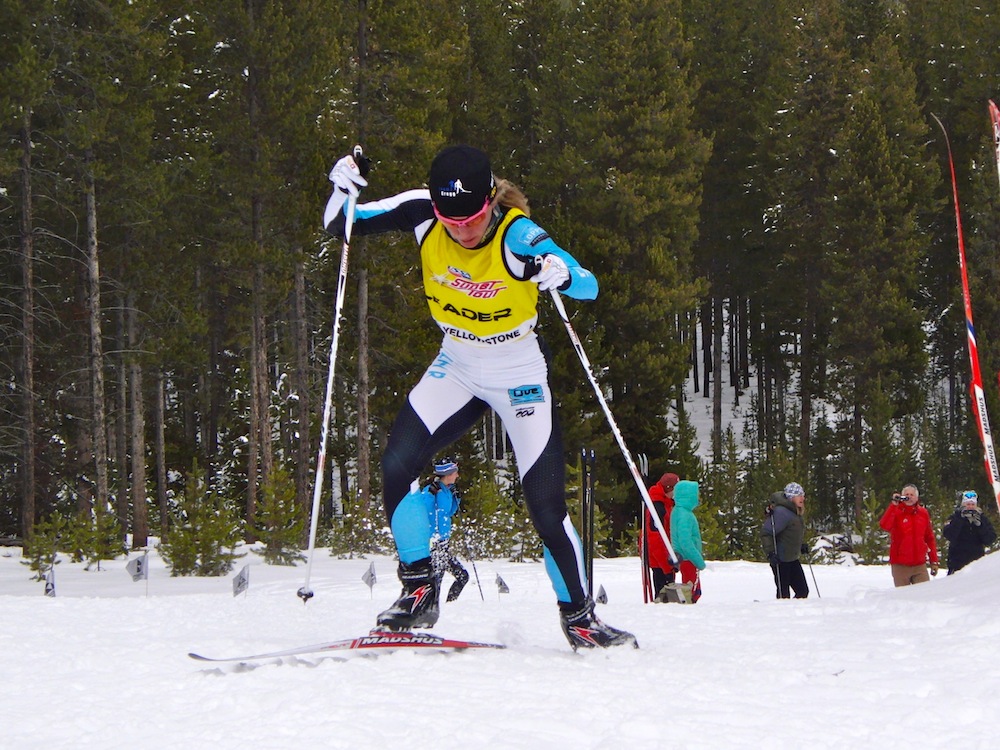
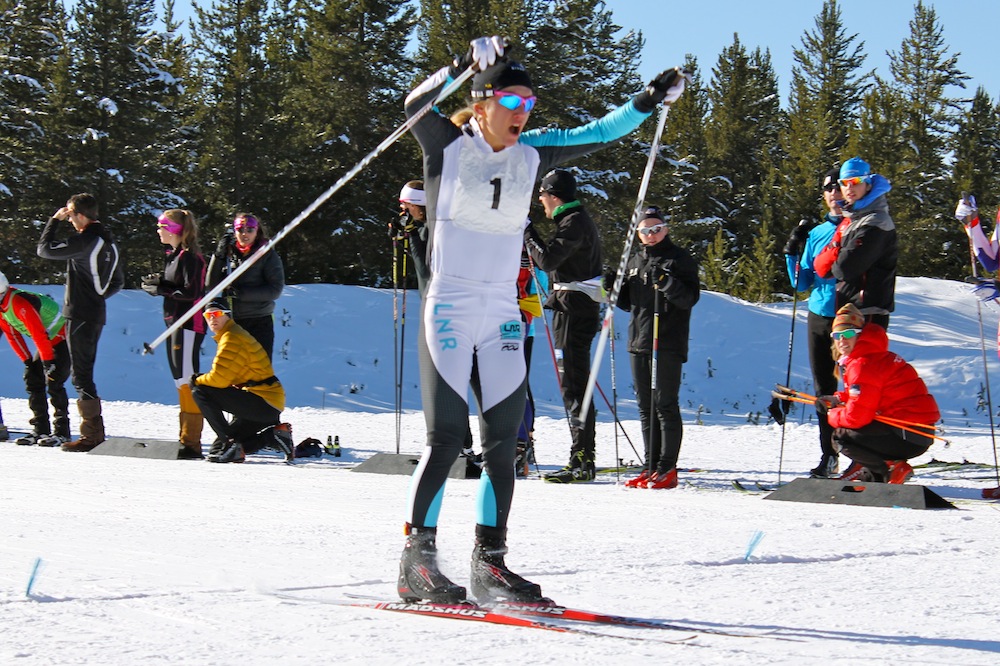
Brian Gregg of Team Gregg/Madshus is headed to Switzerland on Wednesday to prepare for the Davos World Cup 30 k freestyle on Dec. 12. On Monday, the U.S. Ski Team officially notified Gregg that he had been awarded the start. (Photo: Madshus)
On Wednesday, Brian Gregg is boarding a plane to his next race destination. No, he’s not jet setting from West Yellowstone, Mont., to Sun Valley, Idaho, in place of a 4 1/2 hour drive; the 31-year-old Sochi Olympian is bound for Europe.
Instead of racing the second set of SuperTours this weekend in Sun Valley, he’ll be prepping for the Dec. 12 World Cup in Davos, Switzerland: the 30-kilometer freestyle individual start.
Gregg, of Team Gregg/Madshus, confirmed his itinerary for the next two weeks in an email. On Monday, the U.S. Ski Team (USST) officially gave him the word that he had been granted the Davos 30 k start.
“The Davos Skate distance race has been a goal of mine for a long time and has been in the back of my mind all summer,” Gregg wrote two days after winning the first SuperTour distance race of the season, the 15 k freestyle in West Yellowstone. “I am grateful for the opportunity to race a European World Cup that I feel suits my strengths well. It is really cool to see that the US Ski Team is looking at the Super Tour and how to help bridge the gap to World Cup racing.”
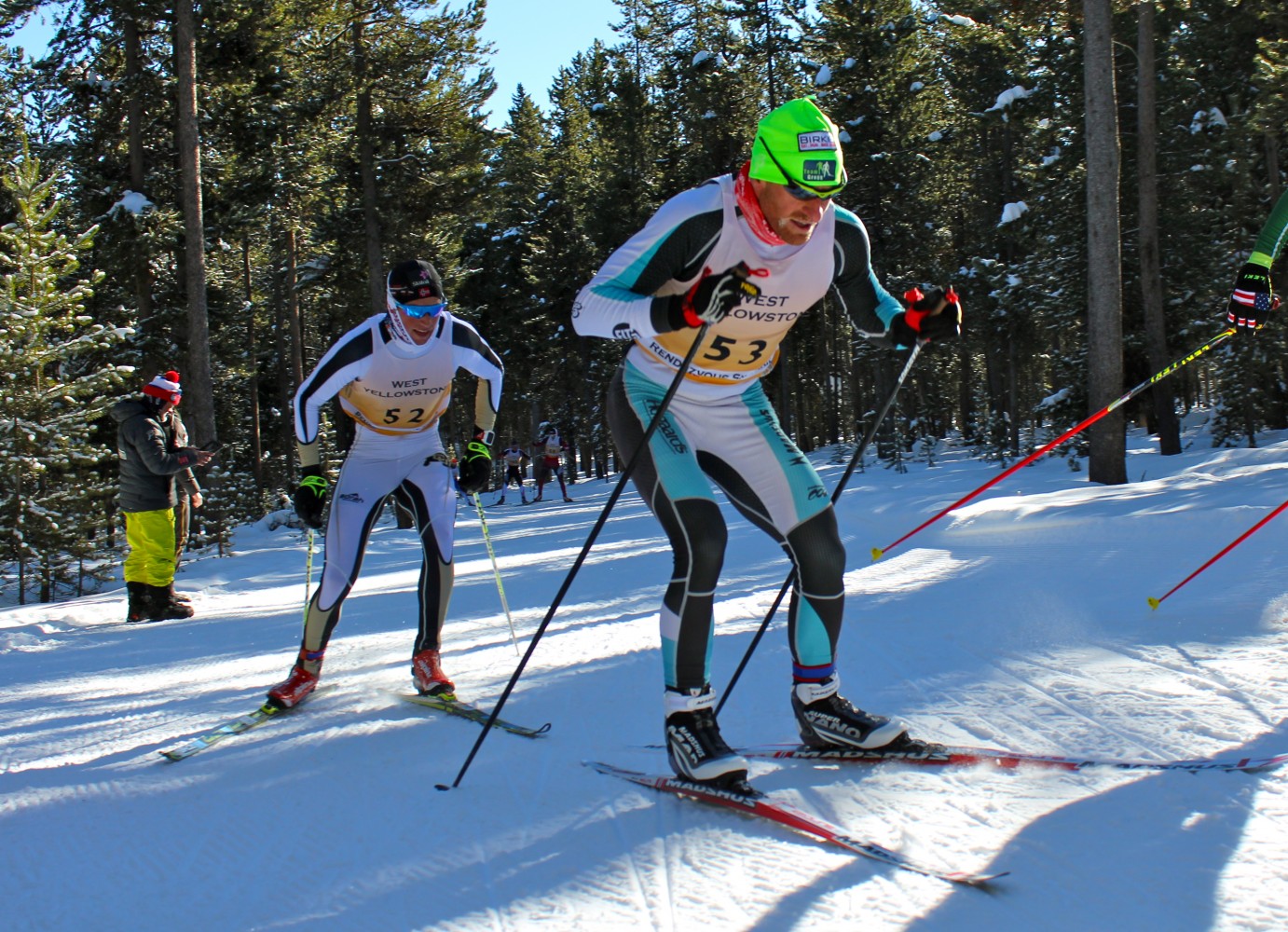
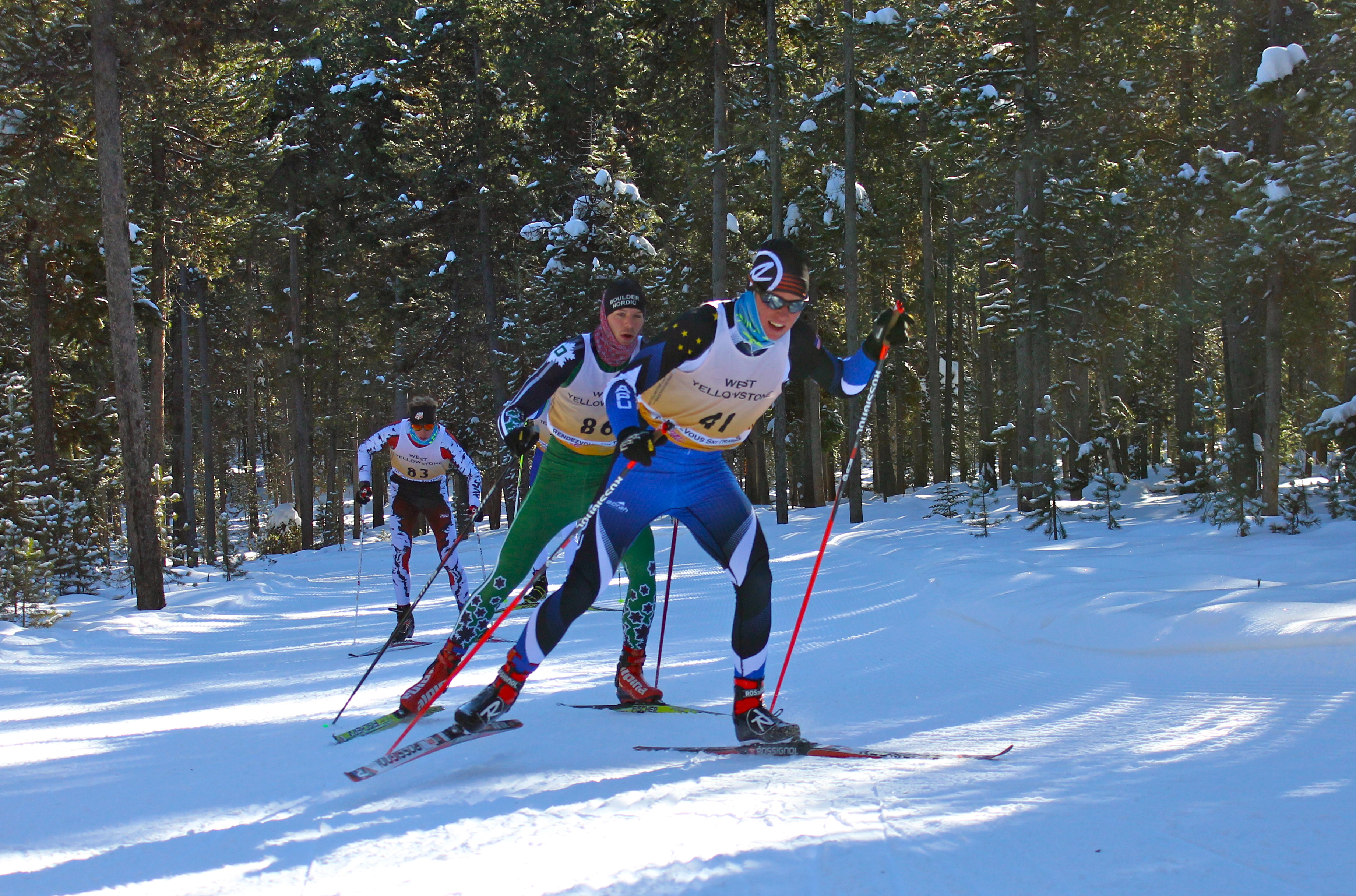
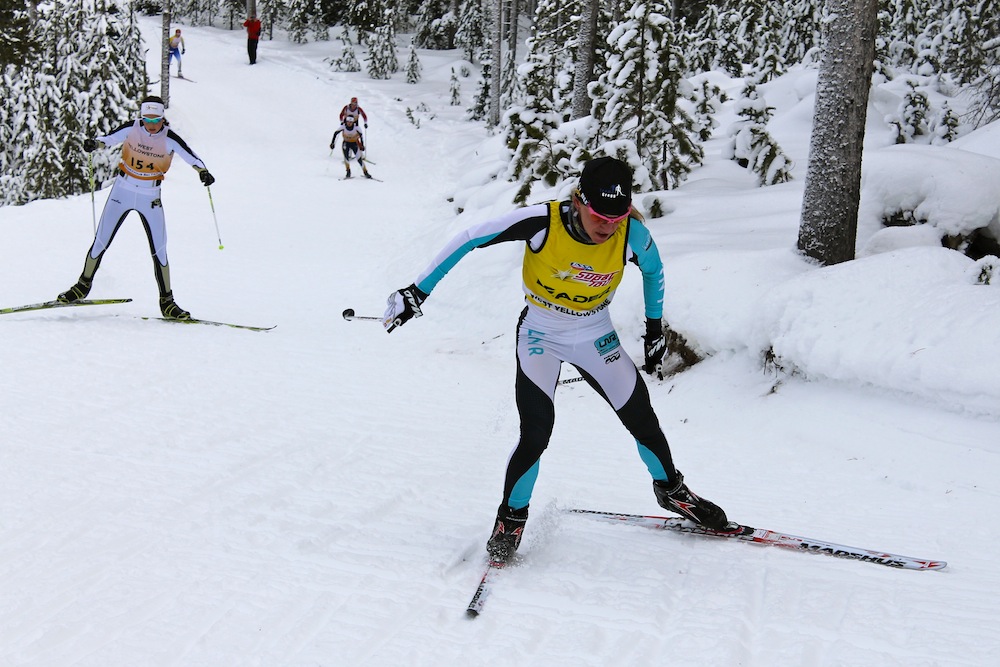
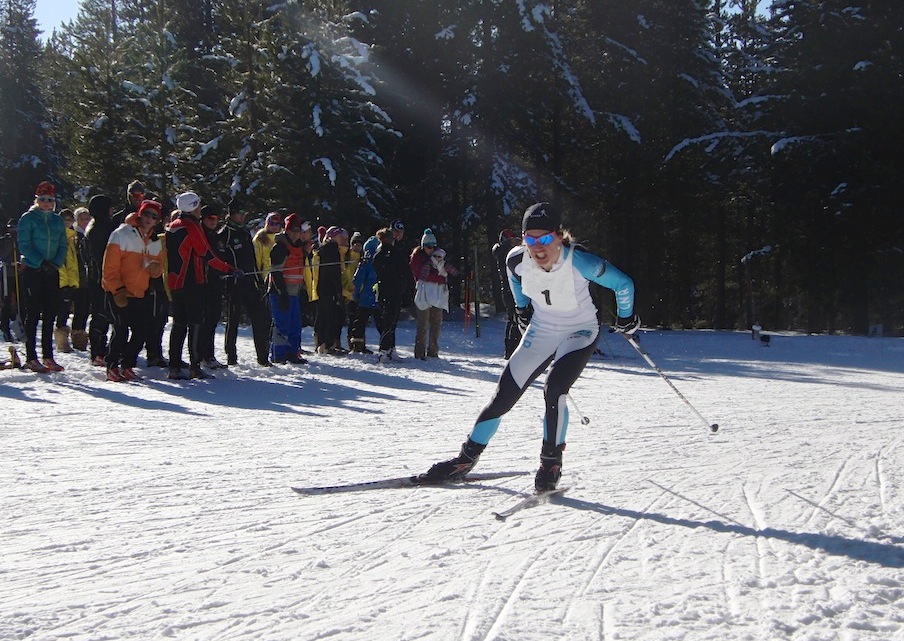
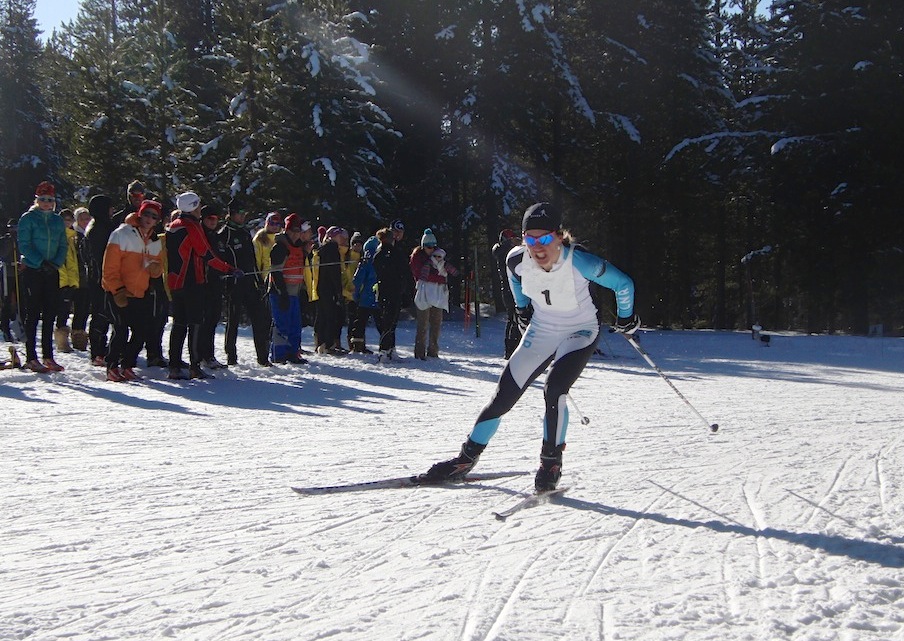
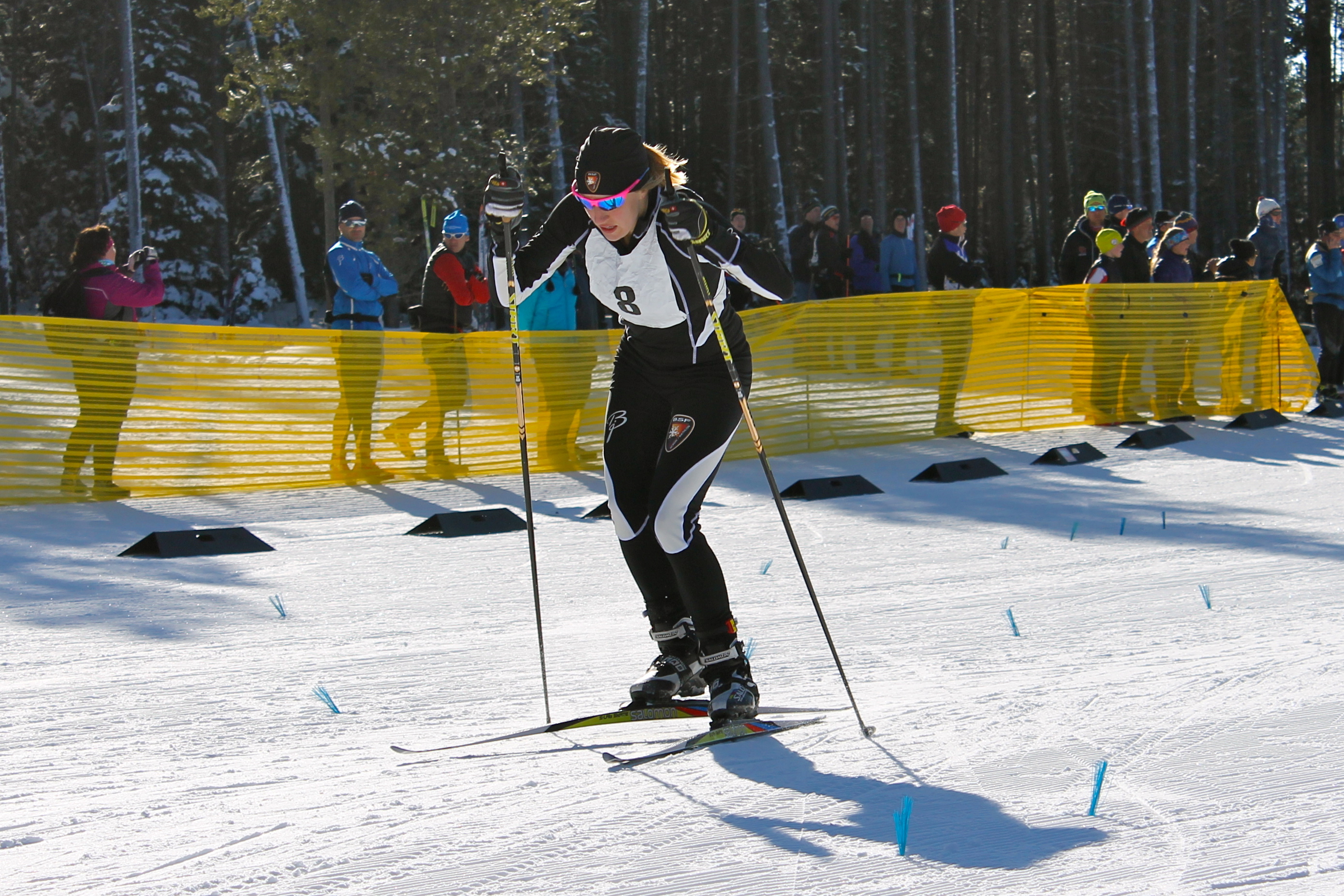
Brian Gregg (Team Gregg/Madshus) (r) leads University of Colorado’s Mads Strøm during the last lap of the men’s SuperTour 15 k freestyle on Saturday in West Yellowstone, Mont. Gregg went on to win it by 5.5 seconds over training partner and friend Matt Liebsch (not shown).
USST Head Coach Chris Grover explained that they had an open men’s start in the Davos 30 k and decided to offer it to Gregg since he won the only distance skate race on the SuperTour schedule this fall.
“This is a stand-alone start. We have not offered him any other starts in the future,” Grover wrote in an email.
The Period 1 SuperTour schedule includes two stops this year: West Yellowstone and Sun Valley. West Yellowstone held two skate races (a sprint and the 10/15 k), and next weekend’s races in Sun Valley are the same distances — but both are classic.
By skipping the Sun Valley races, Gregg is essentially out of the running for the overall SuperTour lead and the Period 2 World Cup starts in January that come with it. Instead, he’s focused on Davos first, then World Cup starts later in the season.
“Unfortunately, missing the Super Tours in Sun Valley would make staying in the Super Tour Lead real hard,” Gregg wrote. “I have decided to focus on the Davos World Cup instead…”
The World Cup starts awarded to the overall male and female SuperTour leader after Sun Valley involve two weekends: a sprint weekend in Planica, Slovenia, and a 10/15 k freestyle and relay in Nove Mesto, Czech Republic.
“I will be at US Nationals and will certainly have my sights set on Period 3 Super Tour World Cup starts and on the Period 4 Canadian Tour starts,” Gregg wrote.
“My goal in Davos is to score World Cup points,” he continued. “I finished 35th last year in the 50km Freestyle Holmenkollen World Cup and am looking to build on that performance.”
He was also excited to see his wife Caitlin Gregg, who is racing the World Cup circuit as a new member of the U.S. Ski Team, and help her prepare for the women’s 15 k skate race in Davos. Their personal coach, Tom Jorgensen, is currently in Europe with Caitlin and the USST, and will be the couple’s wax technician for the races in partnership with the USST, Gregg explained.
“Without racing [in Sun Valley] I am pretty sure I will fall out of the Super Tour top 4,” Gregg added. “I love to race, but I think arriving in Europe earlier gives me a better shot at reaching my goals in the Davos WC.”
He flies to Zurich on Wednesday and will race on his 10th day in Europe.
“Like any athlete, if Brian were to have an outstanding performance on World Cup in Davos, we would strongly consider him for future World Cups,” Grover explained. “Every World Cup start is technically discretionary, including starts for those athletes on the A-Team (i.e. Red Group athletes). Each NGB [National Governing Body] decides which athletes to race within their given quota at each event. We always race the athletes whom we feel have the strongest likelihood of producing a top result for the USA.”
Brian Gregg (Team Gregg/Madshus) (r) leads University of Colorado’s Mads Strøm during the last lap of the men’s SuperTour 15 k freestyle on Saturday in West Yellowstone, Mont. Gregg went on to win it by 5.5 seconds over training partner and friend Matt Liebsch (not shown).
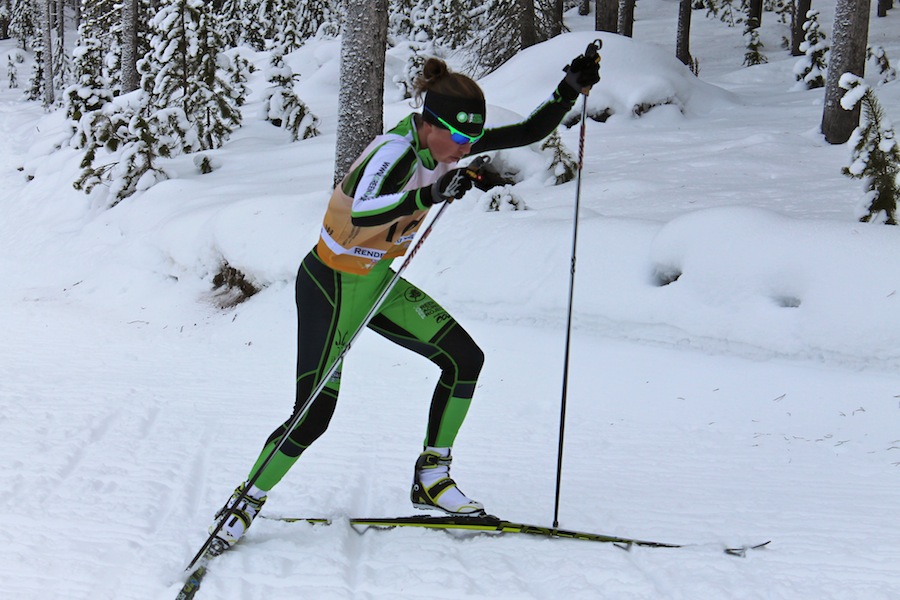
Mads Strøm (University of Colorado-Boulder) leads Brian Gregg (Team Gregg/Madshus) at one point of the men’s SuperTour 15 k freestyle on Saturday in West Yellowstone, Mont. The two switched leads throughout the race; Gregg won and Strøm finished fourth.
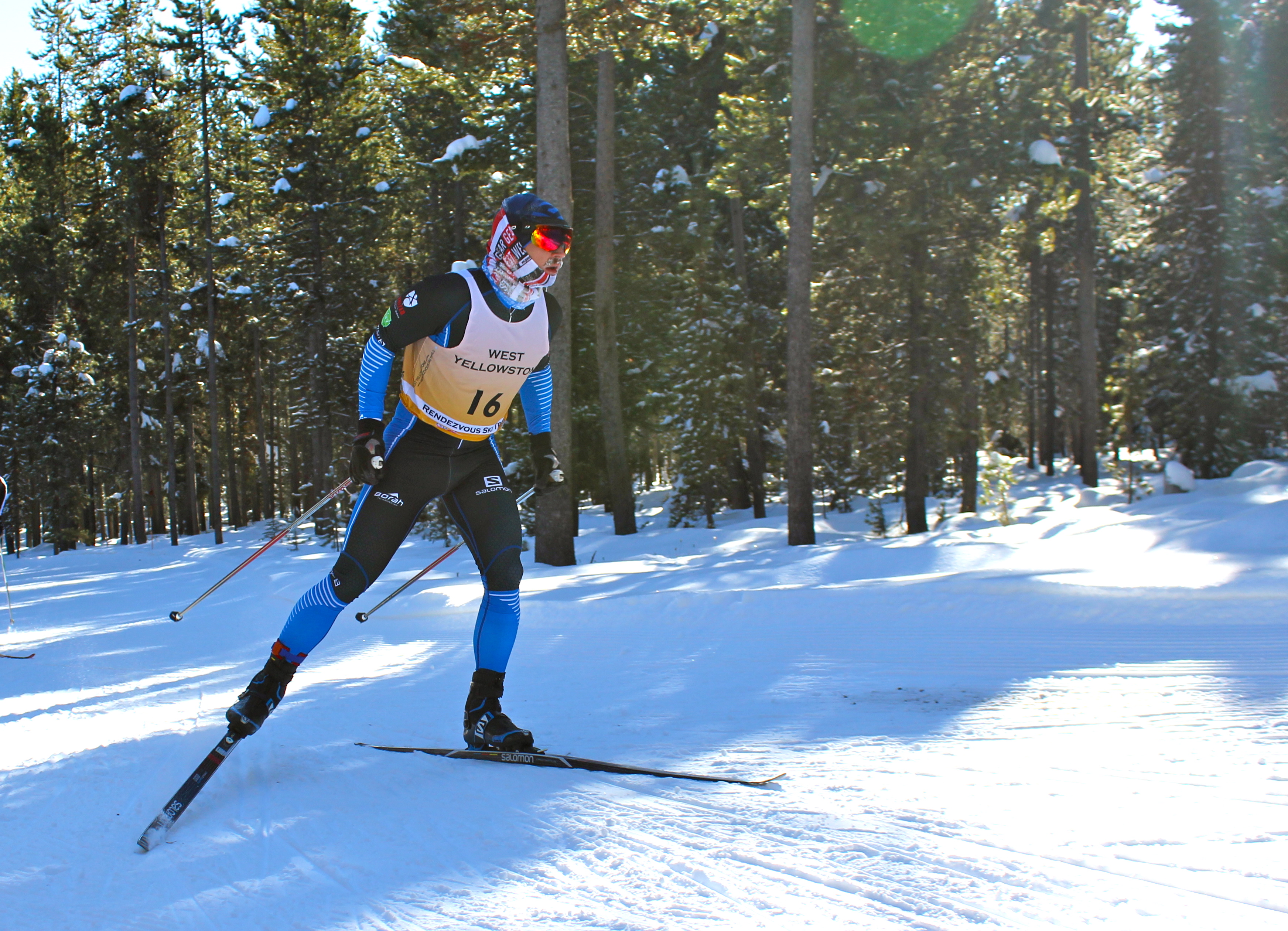
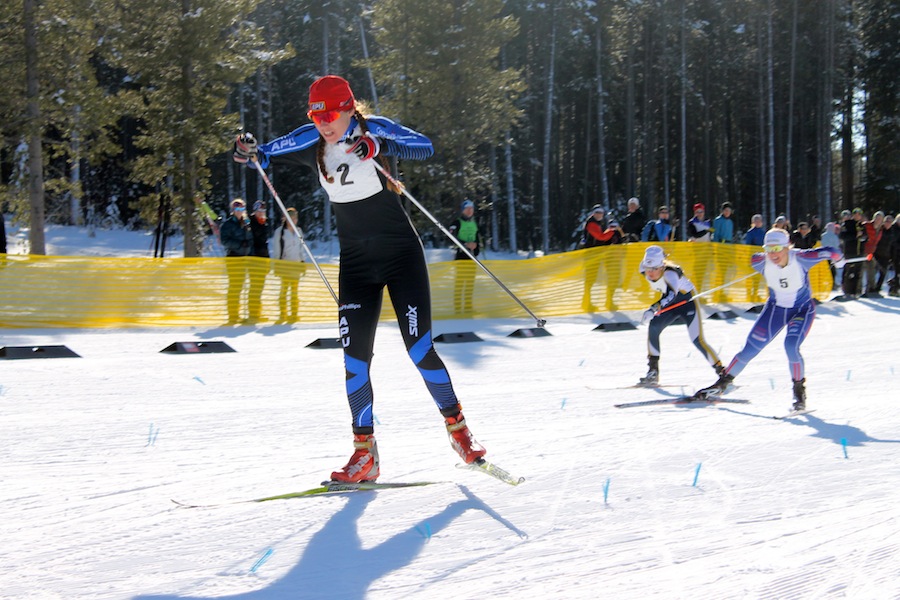
Canadian Kevin Sandau (r) racing to a fifth-place finish in the SuperTour 15 k skate on Saturday in West Yellowstone, Mont. Here he’s seen leading fellow Alberta World Cup Academy teammate and sixth-place finisher, Knute Johnsgaard an Tad Elliott of Ski & Snowboard Club Vail.
Lustgarten (SVSEF) captures seventh, 37.7 seconds back from race leader Gregg, during the men’s SuperTour 15 k freestyle on Saturday in West Yellowstone, Mont.
One final time up the coach’s climb for Rogan Brown (SVSEF) during the men’s SuperTour 15 k freestyle on Saturday in West Yellowstone, Mont. Brown went on to place eighth overall, 52.2 seconds back from race leader Gregg.
In reverse start order, Matt Gelso (SVSEF) (r), leads Eric Packer (APU) (center), and Nick Hendrickson (University of Utah) during lap two of the men’s SuperTour 15 k freestyle on Saturday in West Yellowstone, Mont. Gelso went on to finish ninth overall, 53.5 seconds back from the race winner Gregg.
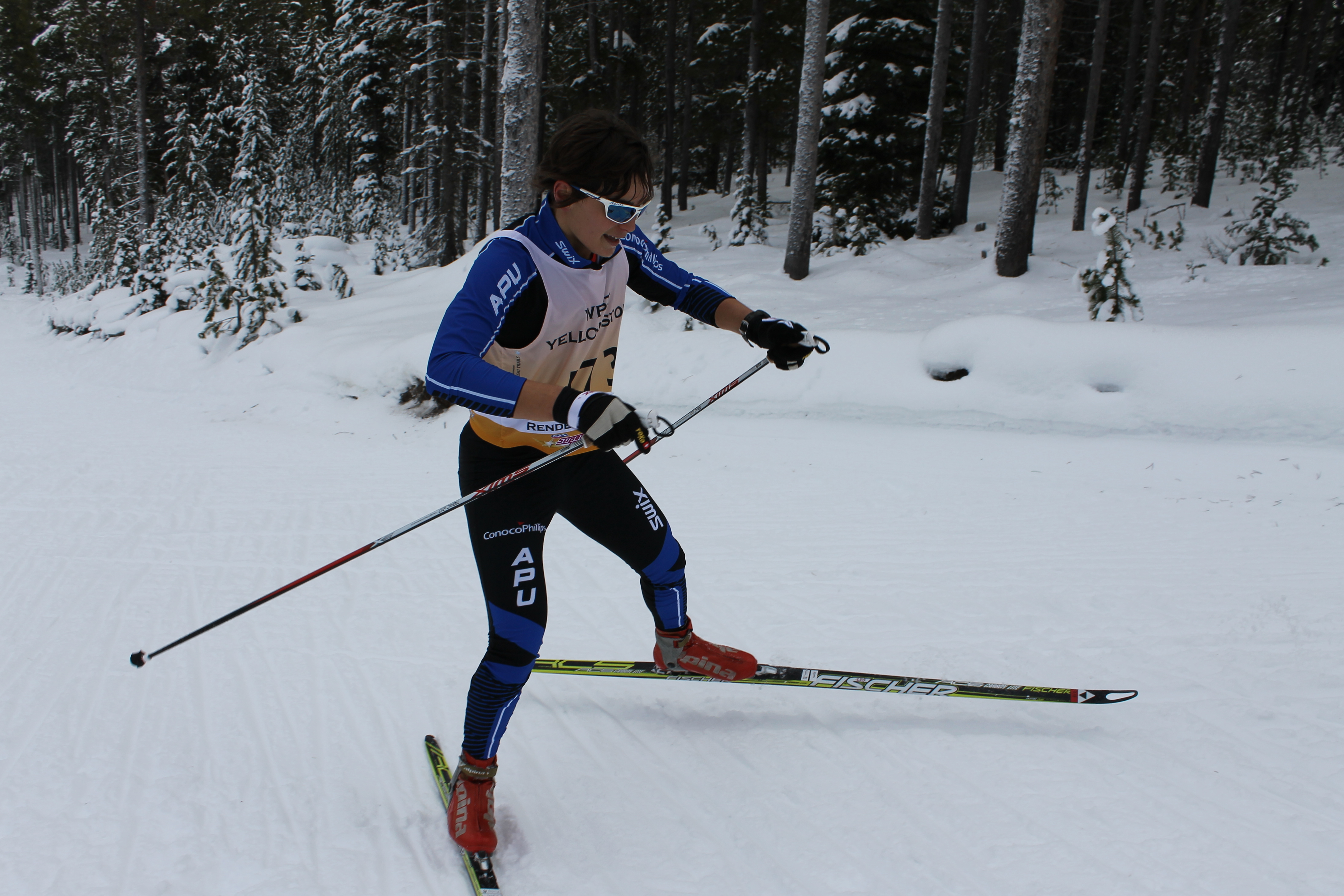
Lex Treinen (APU) chases a group during his second lap in the men’s SuperTour 15 k freestyle on Saturday in West Yellowstone, Mont. Treinen went on to place 10th overall, 1.04.1 back from race winner Gregg.
WEST YELLOWSTONE, Mont. — An athlete is often only as good as his or her training partner. Such was the case for the Hanneman brothers as seen in Friday’s SuperTour sprint and again on Saturday during the men’s SuperTour 15-kilometer freestyle individual start at the Rendezvous Ski Trails.
This time, however, the one-two podium pair belonged to good friends and Twin Cities training partners, Brian Gregg (Team Gregg/Madshus) and Matt Liebsch (Gear West/Salomon).
“Matt and I train a lot together back in the Twin Cities,” said Gregg, the 15 k winner by 5.5 seconds in 35:25.1. “We do a lot of intervals and time trials together.”
While the two share no blood relation, they do share a breadth of respect for each other.
“[I’m] super impressed with Matt because he also has a full-time job and three kids,” said 31-year-old Gregg.
“Maybe that’s something Caitlin and I need to start on,” he added. Gregg’s wife, Caitlin, was named to the U.S. Ski Team this year after taking bronze at 2015 World Championships in the 10 k freestyle.
Matt Liebsch (Gear West/Salomon) races to second during the SuperTour 15 k freestyle on Saturday in West Yellowstone, Mont.
Liebsch, 32, was equally excited for his buddy’s overall win.
“I’m hoping he can get SuperTour Leader so he can get [race] start rights over in Europe [and] go see his wife,” Liebsch said.
The overall U.S. male and female leaders at the end of two SuperTour weekends will earn a trip to Europe after U.S. nationals in January to start World Cups in Period 2. Gregg put himself in that position two years ago leading up to the 2014 Sochi Olympics.
For Gregg and Liebsch, their close training over the years translated into a close finish in Saturday’s distance race, despite starting more than 9 minutes apart. Liebsch started 16th; Gregg went out 53rd.
Gregg skied much of his race with the man who started 15 seconds ahead of him, Mads Strøm of the University of Colorado-Boulder. Strøm went on to place fourth, 14 seconds behind Gregg and 0.7 seconds back from Scott Patterson (Alaska Pacific University) in third.
“[My start was] definitely a lot faster than I’ve gone out in the past,” Gregg said. “In the past, I’ve probably been 15 seconds down to the leaders at the top of the coach’s climb. This year I was right even with [the leaders].”
Gregg believed his uncharacteristic charge out of the start gate was the right call.
“It was nice, because I’d make a big pull, then I’d get tired, then Mads would pull, then he’d get tired, and we sort of switched off leading a little bit,” he said.
While Strøm and Gregg jostled throughout the race, Patterson spent much of his race solo.
“The only time I really had a group was when people were behind me,” Patterson said.
“Oscar Friedman [of Dartmouth] skied with me for two laps,” he added. “It’s nice to have someone on your heels, but not quite as good as trading off the lead.”
Friedman went on to place 13th. During the race, Patterson heard he was in contention.
Scott Patterson of APU leads Dartmouth’s Oscar Friedman during the men’s 15 k skate SuperTour race in West Yellowstone, Mont.
“I was getting some splits early on that I was leading Matt Liebsch,” he said. “I was a little bit disappointed they got me in the end.”
This being the first time Patterson has ever raced in West Yellowstone, the 23-year-old Alaska native called it a solid start to his season.
“Last fall I had a fairly significant injury and that’s what kept me away from these races,” Patterson said. “But I knew a I had a good summer training and a good fall [this year] and I was definitely going in looking for a spot on the podium.”
Rounding out the men’s top five after Strøm in fourth (+14.0) was Canada’s Kevin Sandau of the Alberta World Cup Academy (AWCA) in fifth (+20.2). Sandau’s teammate Knute Johnsgaard was sixth (+34.5), and Sun Valley took the next three places with Ben Lustgarten in seventh (+37.7), Rogan Brown in eighth (+52.5) and Matt Gelso in ninth (+53.5). Lex Treinen (APU) was 10th (+1:04.1)
While Patterson plans to race next weekend’s SuperTour races in Sun Valley, Idaho, Liebsch and Gregg said they were undecided.
“I’m supposed to be working next weekend, so I don’t know we’ll see,” said Liebsch, who manages Gear West nordic sales and service. “I’m probably going to go home and train and go to nationals and do the distance races and just see how things go there.”
Gregg, on the other hand, will either plan to race the SuperTour weekend or take advantage of the altitude training in Sun Valley instead.
Regardless of what happens next weekend, Gregg and Liebsch were grateful for being able to train together and contribute to each other’s success.
“Brian drags me out of bed a lot of mornings to do intervals,” Liebsch said. “We’re literally the same speed in most workouts so, it’s cool to be right around him [in races].”
Seattle, WA (September 10, 2015) — Madshus, the world’s leading performance Nordic ski company, is pleased to announce that Olympians Brian and Caitlin Gregg (Team Gregg) have signed on to continue racing exclusively in Madshus skis, boots, and poles for another two seasons.
“Madshus has allowed Brian and I to make a huge step forward in our ski racing careers and we are excited about the next two years,” stated Caitlin. “It is the only ski, boot and pole company focused solely on cross country skiing and I believe we have the best research and development of any company. I have complete confidence in my equipment which allows me to focus on my training, preparation and execution.”
Since joining Team Madshus back in 2013, Caitlin has been steadily racking up an impressive list of results, highlighted by a bronze medal at the recent 2015 World Championships. In addition, Caitlin’s racing highlights also include five-time US National Champion, three-time American Birkebeiner winner, and 2010 Olympian.
(Photo: Ian Coble)
Brian Gregg has also built an impressive resume of accomplishments, having competed in Sochi as part of the US Olympic Team in 2014. His other racing highlights include a
podium finisher at the American Birkebeiner and multiple-time Super Tour Distance Champion.
“Caitlin and I are excited to be complete Madshus athletes,” stated Brian. ” Madshus’ attention to quality and detail is shown in all of their products and I’m always amazed how each year my new skis are even better than the previous year.”
(Photo: Ian Coble)
The Gregg’s continued partnership with Madshus is exemplary of the brand’s commitment to growth in the North American market. “We’re ecstatic to continue to work with Brian and Caitlin and have them represent the Madshus brand,” stated Chris McCullough, Madshus USA Brand Director. “Brian and Caitlin’s results speak for themselves; however, outside of competition, they are also outstanding ambassadors for the sport, whether through their non-profit work or willingness to motivate up-and- coming athletes to pursue excellence.”
The Greggs will join Madshus’ elite roster among other top athletes, including Biathlon World Cup legend Ole Einar Bjorndalen, Olympic gold medalist Emil Hegle Svendsen, and Olympic and three-time World Championships medalist Heidi Weng.
To learn more about Madshus and its team of athletes, please visit www.madshus.com.
About Madshus
The world’s oldest ski brand, Madshus’ Norwegian heritage dates back to 1906. From the original woodworking craftsmanship of its founder, to today’s state of the art production processes and materials, Madshus is the standard to which all other Nordic skis are held. Whether for World Cup level racing, fitness skiing, cruising, metal-edgetouring, or cross-country downhill, Madshus continues to apply that same keen craftsman’s eye to each ski, boot, and pole it produces. Over 100 years since it’s founding, Madshus’ storied commitment to the art and craft of ski making resonates today in the same consistent standard of excellence all performance Madshus skiers have come to expect. Madshus is a member of the K2 Sports family of world-leading winter sports and outdoor recreational brands.
For more information on Madshus news and products, visit madshus.com.
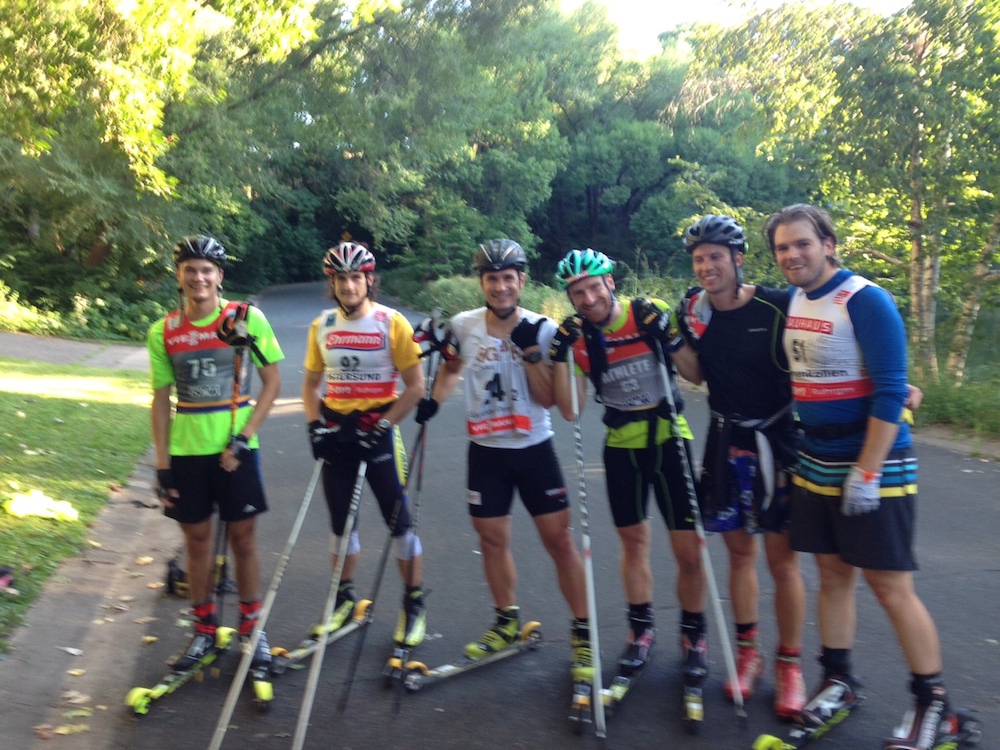
rian Gregg rollerskiing through Tyrol during a 15 k over-under intensity session. (Photo: Josh Dobert)
Brian and Caitlin Gregg have long been known for their superb climbing abilities. Anytime a course features a lot of uphills or there is a hill-climb event, the Gregg name is one to look out for. This is hardly surprising, considering the duo has been hammering out intervals on the biggest hills around Minneapolis, Minn., for years. However, the Team Gregg athletes recently realized they were losing more time in races on flats and transitions, and have adopted a new intensity workout that they do every couple of months to improve that aspect of their skiing.
The first thing they needed for this workout they adopted from a Scott Johnston track exercise was a good loop. It had to be around a kilometer long and also incorporate good, undulating terrain.
“In this loop we have two 180s as part of the loop, one is across a crack, the other is a manhole cover, and then its got some good turns, some technical skiing. So it’s really fun to work on our weaknesses there, and I feel like it’s made a really big improvement,” Brian Gregg said of their 1 k loop.
In order to prepare for the workout, Gregg and his wife, Caitlin, do a 10 k time trial on the loop. During the time trial, they focus on pacing and try to have consistent lap times. After the effort, the Greggs note their average lap time, an important factor for the over under intensity workout.
A few days later, Team Gregg will go back to the same loop with their race pace lap time in mind as well as a threshold pace lap time, which is calculated by adding an extra 10 percent onto the race pace lap time. These two times, which for this example we will say are 2:45 and three minutes, are the lap time goals for the workout.
Brian Gregg (middle in green helmet) with some fellow rollerskiers after their workout. (Photo: Josh Dobert)
During the over-under-intensity workout, the objective is to ski about 15 kilometers, alternating between threshold lap times (3:00) and race pace lap times (2:45). So for example, Brian Gregg will ski one lap aiming for a three minute lap time, and then on his next lap, he will aim for 2:45.
After that lap he will once again aim for three minutes, going at a threshold pace in order to recover from the race pace lap. The idea is to alternate between slightly over threshold effort and just about threshold effort to increase the body’s ability to recover while still skiing at a relatively high pace.
“The goal is to hit that 2:45 time. So essentially you have a time you are looking to hit, and your goal is to have the heart rate as low as possible during that [loop]. I think it’s really good because all of a sudden the focus isn’t on trying to get the heart rate up, it’s on, ‘How can I hit this time with as little energy as possible?’ ” Gregg explained.
So the workout is not only great for working on transition skiing and increasing the body’s ability to recover at threshold, but also for pacing and having a good feeling for how hard one can push the body without going over the edge.
The over under workout is great for any discipline, and also for larger groups. Team Gregg will invite others to participate in the workout with them, and it often works out that people’s lap times meet up. Somebody’s threshold pace might equal another’s race pace, so skiers get an opportunity to follow and learn from each other.
One thing to keep in mind, the 15 kilometers total is just a goal. If the laps are getting slower or recovering adequately on the threshold pace laps is no longer possible, cutting the intensity session short is the right thing to do. The main goal is to ski well throughout the workout, so pushing too hard can be counterproductive. Even Brian has had to cut the number of laps before.
“When you get to the point where you’re not recovering on your recovery lap, that’s sort of when the workout ends. And so it’s a little bit based on feel trying to find that point. You sort of are looking for the duration of the workout to be the taxation in that over-under situation,” Gregg explained.
For Gregg, this over-under-workout is one of many steps toward his greater goal of the year, to get onto the World Cup by being the Super Tour leader after Period I. “I’d like to see my wife a little bit, and the best way to do that is to get on the World Cup,” he said.
Pre-Workout:
– Find a nice 500 meter to 2 kilometer loop with varied terrain, corners, and transitions.
– Warm up and do a 10 kilometer time trial on the loop. Try to have as consistent of lap times as possible.
– After the time trial, use the average lap time as the race pace lap time for the workout and 10 percent more than the average lap time as the threshold lap time for the workout.
The Workout:
– Warm up for 20 to 30 minutes
– Begin with a threshold lap. Try and hit the exact threshold lap time with as little effort as possible.
– On the next lap, up the pace to try and hit the race pace lap time, also with as little effort as possible.
– Continue alternating between threshold laps and race pace laps for 14 total laps of the course or until the threshold lap pace is too fast to adequately recover or the lap times increase dramatically, whichever happens first.
– Warm down for 15 to 30 minutes to finish up the workout.
Caitlin Gregg (Team Gregg/Madshus) skiing to 56th place in the Davos World Cup 10 k classic on Dec. 13. (Photo: Toko)
Caitlin Gregg had big plans before arriving in Europe to race the World Cup circuit as the 2014 SuperTour leader. Aiming to qualify for the 2015 World Championships in Falun, Sweden, Gregg intended to ski for World Cup points. If she accumulated enough, a top-50 ranking would mean automatic qualification for World Championships.
After three World Cup weekends, that strategy appears to be out of reach for Gregg.
In the first few weekends of the 2014/2015 season, the 34-year-old Minneapolis native has been near the back of the World Cup pack. Choosing not to start in November’s opening World Cup races in Kuusamo, Finland, Gregg’s first World Cup competition was the mini tour in Lillehammer, Norway, where she placed 78th in the sprint. The following day, she was 62nd in the 5-kilometer freestyle. In the final 10 k pursuit, she skied the 70th -ranked time and finished 68th overall in the mini tour out of 74 women.
In the latest World Cup in Davos, Switzerland, Gregg improved on her previous results, skiing to 56th in the 10 k classic and 60th in the 1.3 k freestyle sprint. However, it wasn’t close to the top-30 she had been aiming for.
“I’d be lying if I said I wasn’t a little bit disappointed with the results,” Gregg said after the Davos 10 k. “I was gunning for a little bit higher, especially in that 5 k skate. I was looking to be in the points.”
Some of Gregg’s fellow U.S. competitors have started their seasons slower than they’d hoped as well, with several of them outside the points.
While not everyone has posted strong results, the difference between the U.S. Ski Team (USST) women and Gregg is that they have each cracked into the top-30 at least once.
According to Gregg, members of the USST also have more wiggle room at the beginning the season, while she doesn’t as a Continental Cup leader.
“Obviously the ideal thing would be to be on the ski team, because they have a little bit of leeway in terms of, OK, are they firing on all cylinders now or are they waiting for World Champs?” she said. “In my position, or really anyone on the SuperTour, we don’t really have that opportunity.”
She said she was in a similar situation last year, when she started the season on the SuperTour circuit in the U.S. She believed a fast start was necessary to earn a spot on the Olympic team.
Gregg delivered in late 2013, earning a podium in every nationally attended race she competed in before leaving for Europe in January for the Word Cup. However, she was not selected to the Olympic team.
“But it’s a tough position on either side,” she acknowledged.
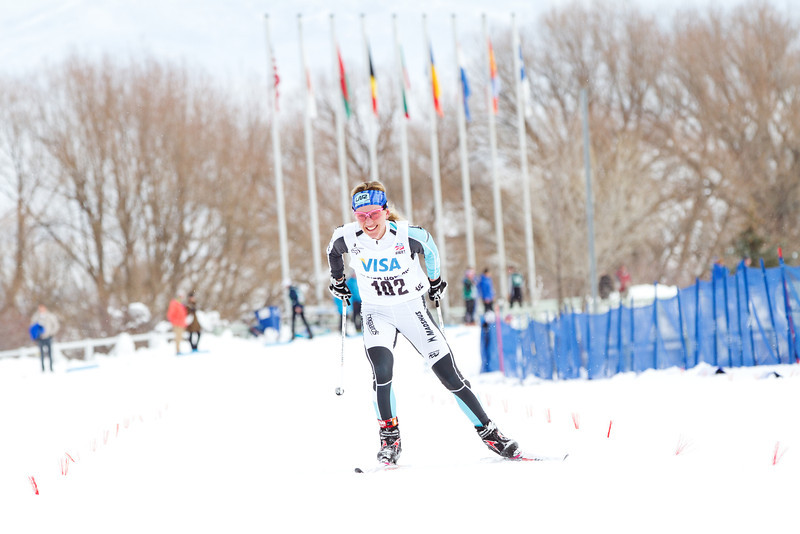
Caitlin Gregg (Team Gregg/Madshus) racing to a nearly four-minute victory in the 20 k freestyle mass start at the 2014 U.S. Cross Country Championships at Soldier Hollow in Midway, Utah. (Photo: U.S. Ski Team/Sarah Brunson)
Her current situation is reminiscent to that of Alaska Pacific University’s Rosie Brennan last season.
The 2012/2013 SuperTour leader, Brennan started her winter on the World Cup with the hope of earning a spot at the Olympics. However, her best result was a top 60. While she earned a national title and several podiums at the 2014 U.S. national, she did not make the Olympics.
Even with the fast track to pre-qualification rapidly escaping, both Gregg and her husband, Brian, are still gunning for World Championships — they’ll just have to be picked by discretion or USSA points.
“We’ve seen people turn around some maybe slower starts to the season. We’re still optimistic,” she said. “We put in some good training this year. We want to go as the husband-and-wife duo. We got blocked last year, so now we have to go again strong.”
Gregg believes her best chance for qualification is to perform well in the upcoming World Cup 10 k freestyle in Davos this weekend. Now that she’s already raced the course, Gregg believes that knowledge and experience will help her accomplish a strong result.
When she returns to the domestic circuit for the 2015 U.S. national in Houghton, Mich., Gregg will again look to make an impression in the 10 k freestyle.
“A good statement in the 10 k at nationals and hopefully [it will] really put that little thought in the back of their minds again to bring us. Again, it’s all based on USSA points, so really looking to chase those down and see what we can do there,” she said.
Despite the challenge of skiing at the international level, Gregg said that the trip to Europe has been worthwhile for a variety of reasons.
“I wouldn’t trade this – even if it means that I don’t make World Championships because I came over here. I just have learned so much,” she said.
“I wouldn’t trade this – even if it means that I don’t make World Championships because I came over here. I just have learned so much.” — Caitlin Gregg (Team Gregg/Madshus) on starting the 2014/2015 season on the World Cup
Gregg explained that after racing two weekends on the World Cup, she’s seen improvements in her skiing, especially in classic skiing.
Traditionally stronger in skating, Gregg’s 56th in last Saturday’s 10 k classic is her strongest result thus far on the 2014/2015 World Cup. She started amongst some of the strongest skiers on the circuit including Krista Parmakoski of Finland and Justyna Kowalczyk of Poland. She said that her race felt better than the earlier distance races of the season.
“I think last weekend I was like, ‘where did I give up all that time?’ Today was one of those days where you think, OK, that’s where it was,” she explained on Saturday. “I was happy when I got to the line with what I did out there, and I couldn’t have done anything else. My skis were dialed, I felt great, everything was great.”
As she enters the last World Cup weekend before returning stateside, Gregg said she’s excited to take advantage of the opportunities skiing on the World Cup has given her.
“[I’m] disappointed, but still really taking it in and learning so much. Psyched for the opportunity and knowing that it will make me a stronger skier down the road,” she said.
If she doesn’t make World Championships, you can expect to see Gregg competing her “other passion,” the American Birkebeiner on Feb. 21 in Hayward, Wis. “I don’t want to say [that’s] the second choice or anything like that, but that’s the plan,” she said.
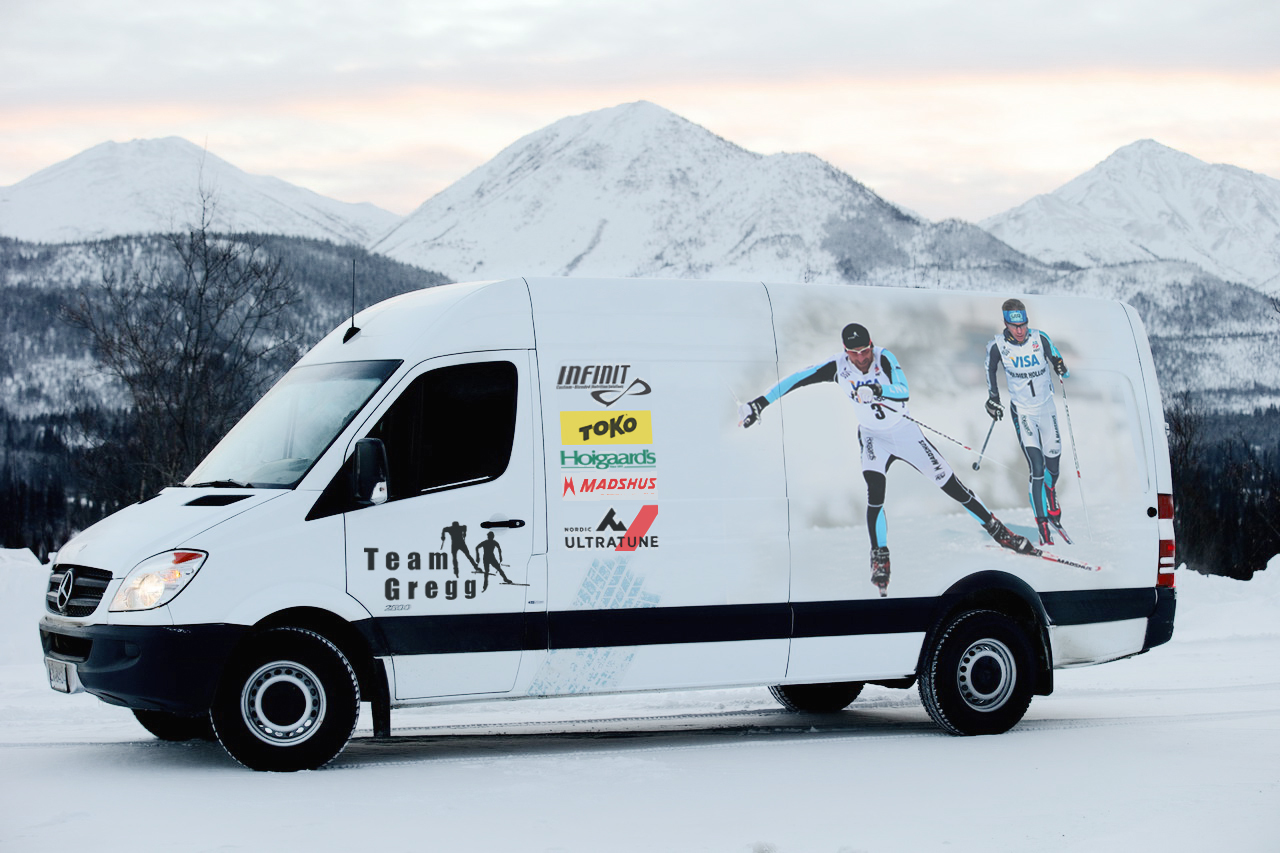
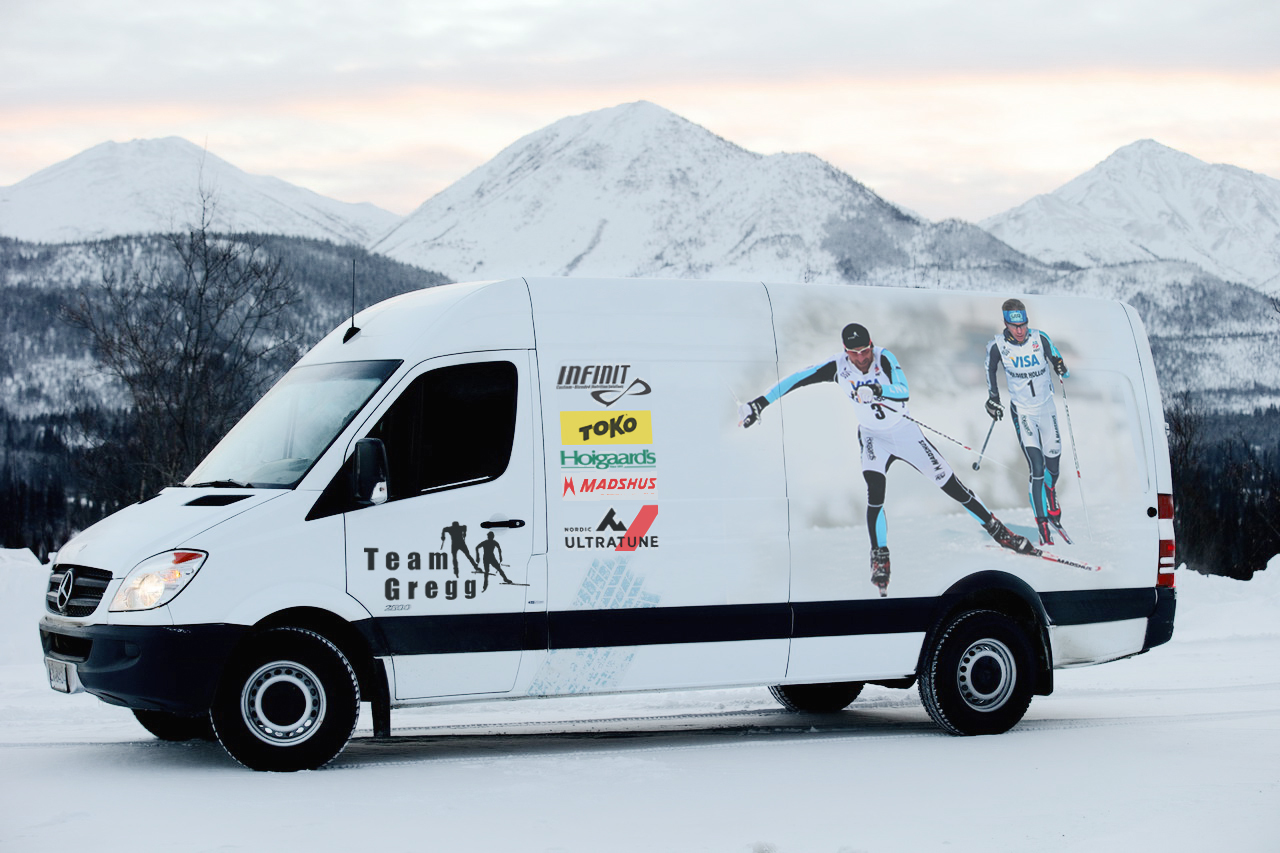
The Team Gregg wax van, one of which will go on the road with Brian on the SuperTour and another which is being made to accommodate Caitlin on the World Cup to start next season. (Courtesy photo)
The Gregg’s days of waxing in a bathroom sink of a crash pad they rented through Craigslist for U.S. nationals are over thanks to a reality TV show, which has finally taken notice of the plight of professional nordic skiers and the challenges they face to fund their careers.
“Pimp My Van” ate up Brian and Caitlin Gregg’s pitch to bring their dream of a wax truck to life, and the married couple are excited to prepare for the season ahead with a spacious van with all the bells and whistles they could dream of — in exchange for a little air time.
Here is the press release from Team Gregg:
Team Gregg Adds Wax Truck to SuperTour
We are excited to have the Team Gregg Wax Truck on the road this season. This opportunity is incredible and has been provided by the popular television show, “Pimp My Van.” Caitlin came across this program where they were looking for unique stories and we were fortunate enough to have our application selected.
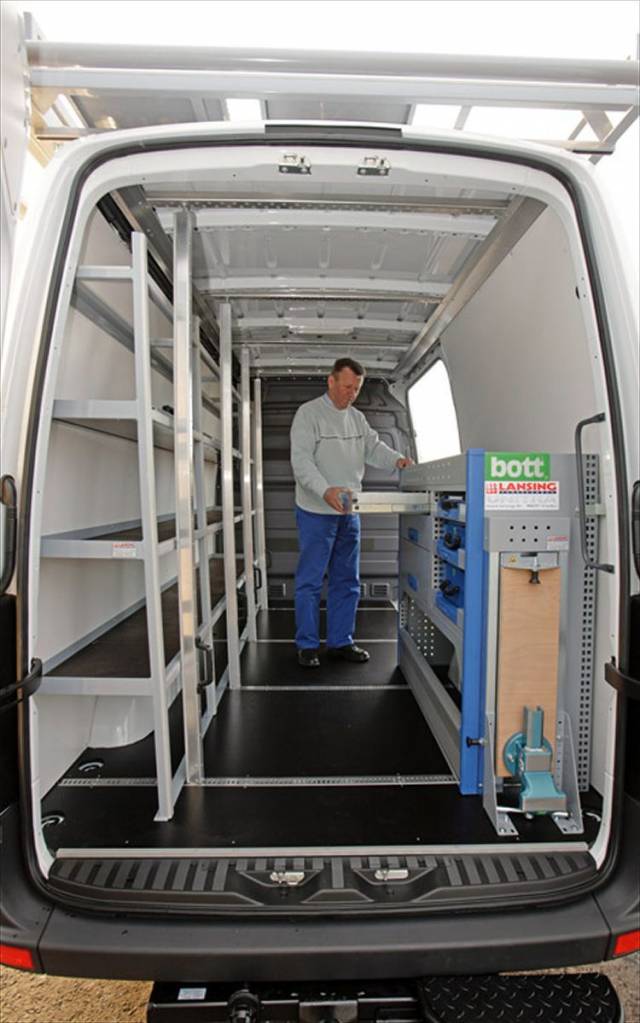
Inside the Team Gregg wax van (Courtesy photo)
There are two workstations in the back. Brian and Caitlin each have their own side and space. Brian’s side is designated for glide waxing and Caitlin’s side is designated for kick waxing. In addition to the necessary forms, benches and storage the van has several bells and whistles: a state-of-the-art, air-filtration system, localized heater, a built-in Toko Thermo bag allows for hot boxing of 4 pairs of skis at a time. The truck also includes a mini fridge, single-burner stove, espresso maker and a small dishwasher (sanitization is important for staying healthy). A satellite dish on the roof provides satellite internet to allow streaming of videos and turns the truck into a mobile office.
One of the more unique technologies incorporated into the truck is a series of cameras on the front, side and back of the van that feed into the three flat-screen televisions on board. These screens may be rotated so that, for example, an individual rollerskiing behind the van may instantly see on the screen on the back of the van what they look like. This technology has been used on rollerski treadmills, but is the first of its kind in a moving vehicle.
What better way to thank [New Mexico coaches] Fredrick and Pierre and others who have helped us with waxing all season long. We believe in taking good care of our wax techs. We give 10% of our race winnings to our techs, but this will really help us show them how much we appreciate and need their support.
The van will be an incredible asset for us as we train for the 2015 World Championships. The van has created a small marital feud in regards to who gets the van when competing in different races as Caitlin will be starting the season on the World Cup Circuit and Brian on the Super Tour.
This feud was solved when the television show heard about it. An identical vehicle is being built and will be delivered to the first World Cup.
Two television crews plan to travel with both Brian and Caitlin during the first few weeks of the season, and plan to air the episode in time for World Championships Feb. 18-March 1, 2015.
Caitlin Gregg (Team Gregg/Madshus) racing to a nearly four-minute victory in the 20 k freestyle mass start at U.S. Cross Country Championships on Jan. 8 at Soldier Hollow in Midway, Utah. (Photo: U.S. Ski Team/Sarah Brunson)
Editor’s Note: Part of a quote based on a conversation Caitlin Gregg had with the U.S. Ski Team, which originally ran in this article, has been omitted for the sake of clarity and objectiveness.
The power couple of U.S. ski racing, Caitlin and Brian Gregg are somewhere in Europe with a rental car as they await their next move, which will be decided when the U.S. Nordic Ski Team officially announces its 2014 Olympic team on Wednesday.
On Sunday, the husband and wife wrapped up the last of the World Cup races they earned as the early season U.S. SuperTour leaders — with Caitlin nearly qualifying in Saturday’s freestyle sprint then pulling out of Sunday’s 10-kilometer classic mass start in Szklarska Poręba, Poland. Brian was sick and did not race last weekend, but got one World Cup under his belt two weekends ago with a skate sprint in Nove Mesto, Czech Republic.
“We have had a blast and we are looking forward to a little R and R!” Caitlin wrote in an email on Sunday. “I think I hit the point where the adrenaline and excitement of the past few weeks faded and the fatigue and nerves from travel and anticipating the Olympic Team selection set in! It is always a bummer to pull out if a race but there are times when it hits you like a pile of bricks and I know I have a lot of (hopefully big) races down the road to prepare for still this season!”
Team Gregg celebrates Caitlin’s national title in the 20 k freestyle mass start at 2014 U.S. nationals in Midway, Utah. Earlier in the day, Brian placed second to Sylvan Ellefson (SSCV/Team HomeGrown) in the men’s 30 k freestyle mass start. (Photo: Caitlin Gregg/In the Arena)
For the better part of the last four years following her first Olympics in 2010, Caitlin has had one race on her mind: the 30-kilometer freestyle mass start at the 2014 Olympics in Sochi, Russia.
The aspiration goes back to her college days at Northern Michigan University, when her coach Sten Fjeldheim told her the 30 k skate would be her forte.
“A couple Birkies later, a couple more marathons under my belt, I can see that being pretty awesome,” said Gregg, a two-time winner of North America’s biggest ski marathon, the American Birkebeiner.
In 2010, Gregg notched 30th in the 10 k skate for the best-distance result but an American woman since Nancy Fiddler placed 27th in the 15 k classic at the 1992 Games in Albertville, France. Fiddler went on to notch 29th in the 30 k skate at the same Olympics.
Nearly 22 years later, the former national-team member (in 2007 and 2009) and one of the best distance skiers in the U.S. sat quietly in a corner of a small grocery store/eatery in Midway, Utah. Two days before one of her biggest races of the season at U.S. Cross Country Championships, she was fueling up after a morning workout at Soldier Hollow’s nordic trails.
Fresh off an interview with Cosmopolitan Magazine a week or two before, Gregg, 33, looked like a sporty glamour girl in her natural setting — minus the makeup and blowout. A Minneapolis resident and half of Team Gregg (Brian being the other half), she wore a sparkly Loppet Nordic headband and hadn’t yet changed out of her Loppet Nordic race suit. The white, black and blue spandex and accompanying gear was relatively new to the Greggs since they pioneered their own elite team with the support of Loppet Nordic Racing this season.
The following is from an interview with Gregg on Jan. 6, two days before she crushed her competition in the 20 k freestyle mass start, winning by an unprecedented margin at U.S nationals by nearly four minutes. A few hours later, she and Brian flew from Salt Lake City to Prague to prepare for their first World Cup races of the season in Nove Mesto three days later.
FasterSkier: How are you feeling about your distance-skate racing?
Caitlin Gregg: I’ve only done one skate distance race this year [before the U.S. nationals 20 k] that’s really counted for anything. It feels like I haven’t really had an opportunity to race, let alone where my true strengths lie, so I’m excited to see where I sit … on that spectrum of that next level of endurance combined with skating combined with altitude combined with big hills. I mean that’s kind of everything you’re looking for picking a team for that 30 k in Sochi.
Brian and I have obviously talked about this and said, ‘You know, it really hasn’t been many distance skate races [this] calendar year, 12 months.’ If you look back on it, there was a true distance skate race, there was one in Minneapolis and both Brian and I both won that but it didn’t count because it was part of the Tour [de Twin Cities]. And last year, the way they scored this is going off the calendar year, but not the FIS scoring year. Last year was the total cumulative time that went to the FIS points not just your time for the day, which they’re now doing on the World Cup this year. It’s sort of weird that the criteria picks from previous years with different rules governing how the points are [allocated]. So that race was a great race and it was a win of the day, but not really slated as a win, which is tough when it’s your strength and you don’t get opportunities. So really besides that race, the Birkie is the only true race over a distance that is anywhere near the 30 k. It’s actually on the long end, but it’s the only one we’ve done. We tried to get some distance skate races at SuperTour Finals, but it just wasn’t in the cards. So just one skate race on the schedule, besides this one, before the team selection.
So you know, it’s sort of like you’re up against some odds there. The hardest thing for sure, I mean I’m super psyched to be going to Europe, but the weirdest thing I’ve ever experienced is trying to make a team where you don’t really ever get to compare yourself to the team. People are being named and obviously they’re having great results, and you feel like, ‘Gosh that’s incredible. I haven’t even had a chance.’ I mean I’ve had a chance in other [races], but not in my so to speak, strengths, against the field that they can put in that event.
“The weirdest thing I’ve ever experienced is trying to make a team where you don’t really ever get to compare yourself to the team.” — Caitlin Gregg
FS: What’s it like knowing you have to be on the top of your game — and the results — in the U.S. to get to Europe?
CG: It’s one of the more unusually psychological aspects of racing. I’ve never really had to think about this in the sense that you’re sort of torn. I mean, It’s phenomenal; I’ve said this from the get go that those girls are skiing incredibly well and if I’m not skiing anywhere near that level then I don’t deserve to be on the team. There’s no question about that, it shouldn’t be, ‘Oh, I went before and so therefore I should go again.’ Those girls are on another level, but I will say it’s very unique where you feel like, ‘OK, it’s probably the fittest I’ve ever been, I’m skiing the fastest I’ve ever been, I wish I had some measure of where I sit in that other group. And you can’t because of that separation of they’re racing in Europe and you’re here.
“I’ve said this from the get go that those girls are skiing incredibly well and if I’m not skiing anywhere near that level then I don’t deserve to be on the team.”
I was told the best option was to be the SuperTour leader, to get over there to do these World Cups. That was Plan B. After West Yellowstone, I skied so well there, I was like, ‘Just checking, one more time, I know there’s a World Cup coming up in five days but just wondering how people are feeling on the team, what the opportunities are?’ (laughs)
This sort of fits in with Brian and I, our plan of the year, we’re just ready for anything, anything, any opportunity. … We’re just having a great time with great stories this year and we’re giving it our all. At some point that’s all I can control, just ski as fast as I can and you never want to be off the team, especially if you feel like you are skiing at your best and you’re in there, but at the same time it’s the most difficult decision to make in any sport, at any time, picking that team, it’s really tough.But I’m having a blast and doing it with Brian again, we’ve said this many, many times, it’s the coolest experience ever. It’s hilarious; we just sort of pack up our little house everywhere we go is like home. Compared to four years ago when I did this journey and so forth, it was really fun, it was really exciting and I knew people along the way, and there was a lot of congratulations but nothing compares to, even if you don’t make it, just the experiences that we’ve shared so far this year.
“We’re just having a great time with great stories this year and we’re giving it our all. At some point that’s all I can control, just ski as fast as I can.”
Someone was just asking me, ‘Are you happy?’ and I was like, ‘Oh my gosh, I can get second in a [U.S. nationals] sprint by a sliver, but yet the day was such a success because Brian won, our family was there, everything is just so positive right now for us in general.’ You sort of sense this, too, with the ski team and their kind of energies. You look back, we have great jobs [at the Jerry Gamble Boys and Girls Club in north Minneapolis] with the kids that we work with and our connections with the community in the Twin Cities area, and then our sponsors are psyched and we’re psyched with all of our equipment. Everything just has really good positive momentum. We’re sort of banking on this, anything is still possible.
Team Gregg supporters at U.S. Cross Country Championships earlier this month at Soldier Hollow in Midway, Utah. (Photo: Caitlin Gregg/In the Arena)
FS: You and Brian both got off to incredibly strong starts to take the SuperTour leader spots in two weekends of races. What was the secret?
CG: For sure, there’s some calculated decisions in the last three years that I’ve made between the Games that weren’t necessarily the same for Brian, but it seems like we kind of had the trajectory and everything kind of aligned to this year. For me, it was maybe taking a step back, doing more, like one summer right after the Olympics, I just had to work a ton, I had a lot of hours of work to do and a lot of debt to pay off so I just couldn’t commit to skiing like I had in the previous year. Another year I went back to school, just different things that I was doing in the offseason.
The intensity was there, but I couldn’t commit 100 percent. It’s hard to maintain that 100 percent, 100 percent, 100 percent so many years in a row and not feel a burnout or not feel an overreach, so psychologically and also in my own career as an athlete and development beyond being an athlete and what I wanted to do, going back to school for a semester or two and doing other things and taking on different roles in the community, purchasing a house, getting married [in 2011], all those other things were super important to me and I said, ‘I’m gonna take a step back, focus on racing domestically and making money and then really launch into this Olympic year with all I’ve got.’ With that came this benefit of, people always talk about gearing up for the Olympic year and how do you really come on hot? It’s planned, but sometimes it’s those things where unfortunately to make it to that Olympic year, to spend the money, to go to Eagle Glacier, or to make sure we can afford to save in Midway, or what we need to do, it’s going to take three years of kind of foresight and say this is what we got to get to line up.
“I said, ‘I’m gonna take a step back, focus on racing domestically and making money and then really launch into this Olympic year with all I’ve got.”
I think we’ve sort of nailed it in the sense that we were able to make money, we were able to represent our companies, we purposely didn’t reach out to the community in those years and have big fundraisers because we knew there’s only so many times you can do that and expect people to get behind you and rally for you. So we said we’ll kind of keep a low profile. We’re involved with the community, but we didn’t want any big to-dos. We’ve done this Fundly campaign this year which has gone beyond what we thought it even would [raising nearly $11,500 dollars], and we’ve gotten even more support from our sponsors and equipment than we ever thought we could. I think that was all a really cool, calculated approach that sort of fell into place. Really we’ve known for a long time that this year was going to be the big push, and we wanted to put everything 100 percent into it. We kind of sat back and we’re like yeah, we were able to do that and that’s awesome. We’ve stayed healthy and excited and kind of gunning for it and I think that’s made a big difference on the results sheet for sure.
FS: What kind of pressure do you feel then?
CG: Honestly, we have no pressure. I love pressure, I love getting down to it. I love circling the day on the calendar. I love being like, ‘Oh this is big, this is for all the marbles! This is the one!’ And Brian, he’s sort of like, ‘I kind of get into it,’ but anyway, we don’t feel the same sense of pressure. Nobody said to us, ‘You guys are gonna make it, you guys are gonna make it if you don’t screw up.’ It’s like, ‘If everything goes really well, you guys might have a chance of making it.’ That’s sort of been the other side of it. We’re sort of on the good side of the pressure where we can just take advantage of the opportunity rather than be like, man you just lost it for yourself. There’s two sides of that pressure spectrum and we’re on the good side. It’s maybe one of the only perks of not being on the U.S. Ski Team (laughs). In an Olympic year, you don’t have that same sort of performance pressure. Everything is sort of icing on the cake.
FS: Looking back your 2010 Olympic experience, what are your thoughts four years later?
Caitlin (formerly Compton) Gregg winning her first American Birkebeiner in 2011 as her then-fiance Brian Gregg greets her at the finish. (Photo: David Owen)
CH: Still to this day, one of the greatest things though is that anticipation of not knowing that you made it. Even in that year, for the most part people were like, especially in the beginning of the season, ‘Oh she is not gonna make it, she is skiing awful, it’s not happenin’, not getting results,’ and I was like, ‘Well, I don’t know, I’ll just keep going along here, keep believin’.’ And so when it happens — and I wouldn’t say it’s not expected, but it’s not a given — you think about it and you know there’s some athletes out there who have kind of been whispered to or said, ‘You know, you’re probably gonna make the team,’ or ‘Yeah, you’re on the team if you don’t screw up,’ or ‘Yeah you’re on the team, no question. We just have to wait to announce it.’ There’s nothing better in my opinion, if you think of some of coolest phone calls you can get, getting a phone call that’s like, ‘Hey, you made it, congrats.’
I remember when [former U.S. Ski Team Head Coach] Pete Vordenberg called me before 2010, man, I was just like, I mean that’s the coolest thing! You have no idea what he’s gonna say, he could be like, ‘Hey, way to go, you’re skiing well, not gonna happen.’ It could go either way, but getting that phone call, is by far it’s gonna stick in my mind for the rest of my life. That was the coolest thing, just not knowing and finding out that.
FS: Why did you decide to go for a second Olympics in 2014?
CG: For that year and where we were as a nation at that point, I was like, this is pretty awesome. I love skiing and I love everything about it. With the 30 k skate being where my focus has shifted, I’m excited about that event more than anything else. The relays, the team is doing great, everyone is doing so well and that’s really been what’s spurring me on to keep training and keep going for it this year, four years later … that idea that, man, that 30 k could be awesome. Sten, my coach, from college always said the 30 k skate would be my forte. A couple Birkies later, a couple more marathons under my belt, I can see that being pretty awesome.
Obviously seeing the women do so well, that’s a huge motivator and inspiring and you’re like, gosh it’s so great. I did go back and forth and say, especially when I was taking classes, maybe I should just move on or maybe it’s time. It’s always in the back of your mind, and I’m one of the oldest in on the race board, but we’re making it work in the sense that we were able to get married, buy a house, have great jobs that we feel like we’re getting a lot back from. We feel like we’re really growing in so many ways simultaneously that the ski-racing side of it, it really doesn’t feel like we’re sacrificing anything or trying to draw anything out.
I can’t think of a better life. Brian has said this and I will second this, if we had a million dollars — which we definitely don’t — if we had a million dollars, we would be doing the exact same thing. We’d be ski racing and we’d be working with kids. We’d be helping underprivileged kids, getting them excited. It doesn’t matter where they come from, but really enjoy inspiring and mentoring that next generation and I think that’s something we’ll be doing forever. And the whole skiing side of it — I was just talking to [University of Alaska-Fairbanks Head Coach] Scott Jerome about some of the things we’ve learned from working with the kids in the neighborhood where we live and what they go through and what their life is like. You stop and you think about our lives as skiers and we’re like, ‘Oh my gosh, what perspective that brings.’ You suddenly realize that a bad wax day is the least concern you ever have. I think that’s really been huge thing in the last four years for me, too, the things that you thought were such a big deal, and this all comes from maturity and just having more experiences in life, but man, I can’t tell you how many times Brian and I have left work in the last year and it could be dark, it could be 8 o’clock at night, we’re tired, it could be raining, we’re super hungry, and it’s like, ‘Man, those kids just ran all these laps for us and after hearing all those stories, we have no excuse not to get out and train right now. No excuse not to be so grateful and so ecstatic about everything we have going for us and what opportunities that lie ahead.’
“I can’t think of a better life. If we had a million dollars — which we definitely don’t — if we had a million dollars, we would be doing the exact same thing. We’d be ski racing and we’d be working with kids.”
FS: Can you explain more about your jobs in the Twin Cities?
Caitlin Gregg at her “other” job in the Twin Cities, where she works at the Boys & Girls Club in north Minneapolis with her husband, Brian. (Photo: Caitlin Gregg/In the Arena)
CG: We are so fortunate. We both work for an organization called In the Arena, there’s a couple athletes on the circuit — Sylvan Ellefson, Torin Koos, and numerous others that have been involved with this, Laura Valaas, Nicole De Yong — it’s been an incredible, incredible opportunity for us.
It’s something that we’ve been involved with now for five or six years. It’s really incredible because it’s a program that’s nationwide. It’s a nonprofit for all endurance sports but typically underfunded endurance sports, so mountain biking, rowing, triathlon, running, cross-country skiing, sports that are not funded as you would imagine compared to baseball, basketball, golf. The idea is that you’re taking athletes that are college graduates who are on the cusp or on track to qualify for either World Championships, World Cup or Olympic Games, and it takes those athletes and their community-service proposals. You as the athlete propose to the organization what type of community work you’re going to be involved in and what the scope of that work entails, in terms of who are you helping, what is the demographics of the area, what is your plan, what are you going to specifically do with those youths involved.
Through generous donations and grants that this organization receives, whether it’s companies, individuals — I know for a while one of my grants came from a Minneapolis-based company, General Mills, for a year — it’s really cool to see that their specific grant wanted to target health and wellness in north Minneapolis so it was a nice circle. They could support In the Arena, and In the Arena could support me, I could be a volunteer for these kids so that’s been really the backbone of our ability to continue ski racing.
We’re really proud of the fact that we can be self sufficient. Brian says that every year we can afford to keep ski racing in the sense that we aren’t losing money and we aren’t living off our parents, we’re not being a drain to anything, is really what it’s about for us. In the Arena has been that backbone for us to continue racing and secure our living expenses when we’re not racing during the season. It pays for, whether we’re renting at the time, now we own a house, that or utilities or any of those incidentals that we have. On the other side of it, it’s awesome because we get to work with these kids who come from all kinds of different backgrounds, who come from lives that I think would probably completely turn most of the individuals involved with cross-country skiing in the U.S.’s world. This is the real deal and this is pretty intense for these kids. And again, it gives us the opportunity to show them that just because they’re living in this particular world of what they know, that there are other opportunities out there.
Basically, what Brian and I have really focused on with our world in north Minneapolis, is we bought a house there for $10,000 dollars because that’s what we could afford and that’s what was available there. We live in the community where we work with these kids, so not only do we go to the Boys & Girls Club or Harrison Park, but they see us out training on their streets. That’s a huge connection that can’t be created from an artificial sense. Having them see us actually out physically training, walking our dog, mowing our lawn, we’re part of their community. I think that seeing that … in the sense that we are an active, energetic couple that are working together and working well, which they don’t often see, that idea of husband and wife still together, and that we are excited for them. A lot of their attention or feedback comes from negative reinforcement. If they act up, if they’re misbehaving, they instantly get what they’re looking for, which is people pay attention to them, people take notice. So we’re trying to turn that upside down and say this is what you really shine with and this is something that you’re good at. They’re all phenomenal athletes and we took on running this year and it blows my mind how good they are and suddenly they’re getting this positive reinforcement. It’s amazing what it does, everyone comes up to us and says, ‘Our kids are behaving better, they’re motivated, they’re healthier, they’re excited.’ It’s goal setting, it’s everything. It’s so amazing to have that be a part of our ski career.
FS: It is year round?
CG: It is year round. Brian and I used to go to different schools in the areas we were staying, we made big effort to do that throughout the season, and what we found is that we were getting really sick. We spent a lot of the fall 2012 in the Methow Valley so we were away from our project and we were away all winter, so we had to put in a big push over the spring and summer. It’s quite a bit of hours, actually. We propose how many hours we can work, and we’re working more than people would probably realize. We’re really grateful; it’s an awesome opportunity, but it is something that we have to be on top of. It’s not just every couple of weeks go in and say, ‘Hey, what’s up kids!’ and take a couple photos … We really have to do the consistent day-after-day connection with the kids and year after year, it sort of builds on itself. We have to explain to the kids when we leave, ‘This is where we’re going, we’ll be back, don’t worry you’ll see us again.’
It’s not full-full time, it’s not quite 40 hours a week but it’s quite a bit in the spring and summer that we really need to put in. We have to figure that out with our training schedule … if we’re doing a training camp somewhere. Last year we finished up the season in Truckee, Brian finished his last race, showered and we flew to northern Michigan, because I was inducted into my collegiate hall of fame there, and then we drove right back home and the next day we went to work.
FS: So no spring or summer vacations?
CG: We have not taken a vacation ever. I’ve gone and visited my family in New York City or California because obviously we don’t get to do that often either, but no true vacations. We’re kind of joking that France, we’re flying into Paris [before Prague], and we haven’t even taken a honeymoon yet. It’s kind of like our honeymoon.
FS: What are your plans for after this season?
CG: I know for a fact Brian wants to keep racing. I know he has no question in his mind, he’s having a great time, it’s sustainable, he feels like he’s progressing in so many ways and I’ve kind of gone back and forth. I’d love to keep racing. I think it would be awesome, and there’s obviously a whole slew of different races you can do. There’s all of these local citizens’ races and also marathon races in the U.S. that we think can really garner some more excitement and attention on a higher [level]. I mean the Birkie’s a big deal and all the other marathons are big deal, but even more so. And then there’s marathon races over in Europe, which we think would be just a blast. You get to travel the world racing in these long-distance, some of them are classic so I’d have to work on that, but skate races. That couldn’t be more fun. We totally want to have kids someday, and we joke all the time that we’re pretty creative, when it comes to living. We have a $10,000-dollar house and a free hut that we got off of a mountain in Washington … You can basically make anything work if you’re willing to bend your expectations, and have a good perspective of it. We’re staying at a Craigslist condo [in Midway] that’s kind of funky, but it’s super cheap and we’re like, ‘It’s perfect, it’s fine, it rocks.’ That’s kind of our outlook and so we’re willing to keep skiing in that realm.
“There’s marathon races over in Europe, which we think would be just a blast. You get to travel the world racing in these long-distance, some of them are classic so I’d have to work on that, but skate races.”
The more I work with these kids and I see sort of their passion and how excited they are, the more I realize that, gosh we really do know a lot about this sport and a lot about, especially Brian, the industry, training, racing, waxing, everything is just becoming more and more knowledge for us. The ideas of coaching at some point are definitely entering our minds. We’ve dabbled back and forth, we both have degrees in totally separate areas [Brian in business] but you kind of get to a point that’s like, this is pretty fun, and working with these kids and seeing that next generation get excited, this is more speaking now with the Loppet kids and other kids that we have in programs like CXC, that suddenly spurs this part of you. You’re kind of like, ‘I could get into this.’ I never would’ve thought that would be me. I remember in college saying, ‘Sten, I don’t want anything to do with coaching ever. I want to be done with my skiing and move on,’ and yeah, it totally changes after how many years I’ve been doing it. We’re definitely in skiing for a long time.
“I remember in college saying, ‘Sten, I don’t want anything to do with coaching ever. I want to be done with my skiing and move on,’ and yeah, it totally changes after how many years I’ve been doing it.”
FS:What about after your World Cup races — will you train with the U.S. Ski Team at its pre-Olympic camp in Seiser Alm, Italy?
CG: We were told to get a ticket home and if we need to make changes, we’ll just change that ticket. Basically we said, ‘If we make the team can we train and race? and they’re like, ‘Yeah. If you don’t, no’ (laughs). We understand from the perspective that their athletes are there and focusing and they want to not have extra bodies that they have to babysit in the pre-camp or Toblach.
That’s the one hard thing when you take years off you always get those phone calls that, ‘You’re on USADA [US Anti-Doping Agency], but seeing as how you’re not fast and not on the U.S. Ski Team, you don’t need to be on USADA anymore.’ … I don’t get all the invitations to the training camps and the girls training camp; they’ve invited me year’s past, but I couldn’t afford to go … so then you slowly don’t get invited to those camps anymore. Finally this year I didn’t get the Olympic registration form back in August. October came around and Brian’s like, ‘You’re skiing well, probably should register for those Olympics because if you don’t, you can’t go.’ It had to be in by the next day or something so I called up [U.S. Nordic Program Manager] Joey [Caterinichio] and I got that done. You have to be on your stuff. I got on USADA right then. Test me all you want.
The best part, too, is Brian’s family coming on the road with us. It’s hilarious. They’re pretty awesome in-laws. I lucked out. My husband’s sweet, my in-laws are even sweeter.
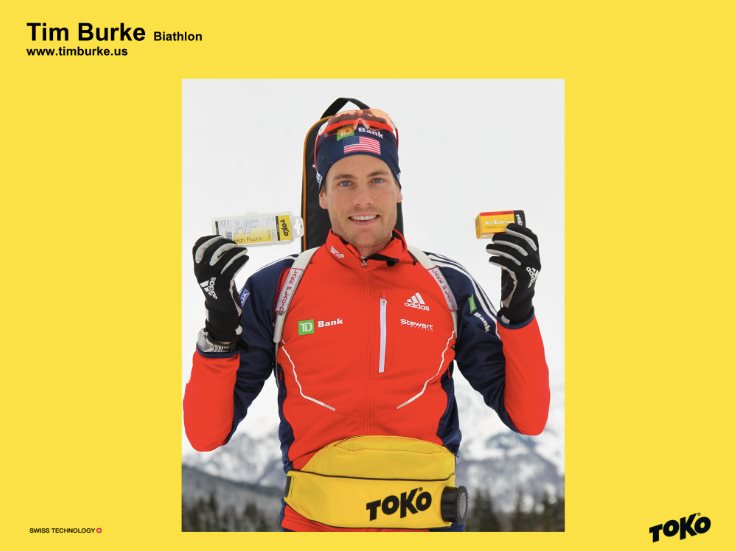
Toko athlete Tim Burke shot clean and finished 3rd in the Ostersund Biathlon World Cup 10k race
“We were once again on Tribloc HF Blue all day long. As you saw Sam qualified 3rd so his skis were good today. Red JS was in our mix as well .” – Scott Johnston, Coach (WY Sprint)
I started the skis with a layer of HF blue. Cold powders had been running fast all week so I put Jetstream blue powder on everyone’s qualification skis. In the qualification round, the blue flouro block tested the best and was a safe choice. Since the heats were almost 3 hours after the qualification started, I knew we’d have to do some rewaxing. I was confident in the range of our under layers and powder so I concentrated on topcoats. As the sun came out and made sections of the course “greasy,” Helix red spray began to run very fast. I used that for the rest of the day on every athlete’s skis, between every heat. (WY Sprint) With the overnight lows staying significantly warmer, I opted to use a mix of HF red and blue as the base wax. Mixing these waxes offers a very large range and is a “safe” bet for an under layer. Weary of applying powder at the venue because of the increasing wind, I gambled and guessed a mix of Jetstream red and blue powder would also be good. Upon arriving at the venue, I was confident I made the right call. It’s worth noting, there was storm cloud looming with a chance of snow. I knew that if snow came, the Jetsream would run very well. After the previous day’s success, I was quick to test the Helix sprays again. Both red and blue were good, so like everything else that day, I mixed the two. I put them on very close to the start of each race because I was unsure of how the Helix would react to new snow. Luckily, the new snow never came. We had very good skis throughout the day. (WY Distance)
Testing during the week showed a graphite under layer to improve ski speed. Thus, I started with a layer of the hardest graphite I could find. After that, a layer of HF blue with the x-cold powder mixed right in. This made for a very hard base and probably would have been good enough to race on. However, I felt that the blue Jetstream powder did help ever so slightly. I ran out of test skis but, I would have liked to have tested the Jetstream blue mixed in the x-cold powder.
I did not worry about any topcoats or structure for these races instead, choosing to focus on nailing the kick.
During the week, finding a wax that kicked was not hard. However, keeping that wax on the skis was a different story. Applying the green binder during the race morning was near impossible. When putting it onto a cold ski (which all of them were when waxing outside at -18F degrees), it was very difficult to make the wax adhere to the ski. After 2 km of skiing, the wax AND the binder had ripped off. The problem was not the wax rather, my application methods and setup. To solve this, I added in 6 drops per ski of very cold/hard klister into the binder. I heated it together with a heat gun and cork.
This method can often add speed and durability but, sacrifice kick. I knew kick was not going to be a problem. I started with 5 layers of the x-cold green kick. I then tested the blue, which I would have expected to add more kick. Oddly enough, it was faster but had significantly less kick. I suspect it was so cold that it caused the softer blue wax to freeze and become ineffective.
Because it was a mass start classic where I value kick over ski speed, I added two more layers of x-cold green. All skiers reported excellent kick with very minimal wear. An added bonus was that our skis also seemed to be gliding as well as anyone’s. That’s a great bonus when focusing on kick! (Bozeman) – Gus Kaeding, Head Coach
Team Gregg
(Congratulations to both Brian and Caitlin Gregg for qualifying for the US contingent for World Cup period 2)
West Yellowstone:
Went with a base of Toko LF Blue followed by Toko HF Blue Then we raced on another powder covered with a block. On the distance day we added structure with the Toko Red structure tool.
Silver Star (Saturday):
Temperatures were super cold and we continued to test powders and blocks. We found that LF Blue and X-cold powder ran the fastest.
Bozeman (Sunday):
We went with a race wax of Toko HF Blue. Montana State University assisted with kick wax and we found the fastest combination to be Toko Blue mixed with a fluorinated kicker. – Brian Gregg.
In Bozeman, extremely cold temperatures made for slow skiing. The job of the wax techs was to harden the bases of skis to keep the sharp wax crystals from slowing the skis down. For this we found Toko X-Cold powder to be the best. Unfortunately Saturday’s race was cancelled due to cold weather, but we mixed Toko X-Cold with our base layer for Sunday’s race. Conditions Sunday were again frigid, hovering around -4f, but the race went off and we were extremely impressed with the X-cold powder. – Andrew Morehouse, Assistant Coach
LF Blue with Xcold powder was the base. We tested HF Blue with cold powder as well but the LF/Xcold powder mix ran faster in the cold conditions. No flouros or top coats were running for us so we went straight on the Xcold powder/LF Blue.
For kick the green base was bomber, but a little slow on its own so we just ironed one layer in and covered it with Toko Blue. This gave great kick, but was still a hair slow so we topped it with the X-Cold grip and skis were ripping. As you saw Chelsea and Miles were pretty solid! (Bozeman) – Colin Rodgers, Head Coach
I went with an LF Blue with Cold Powder for both the Sprint Qualifier and the distance 15k skate. It was pretty good, but not lights out. The HF or any powders did not test or run that well. In the quarters we used red powder and the top end speed was very good adding that as the temps warmed. We roto corked and hand rubbed in a couple of layers. In the semi’s and the final I added a red liquid and the skis were lights out!! that helix was just hand corked in after it dryed. Dmitriy’s skis were exceptional with that add as the sun continued to warm the snow. (West Yellowstone)
In Bozeman I went with straight LF blue as a race base. For kick my binder was green base applied in two layers. I iron and cork in the first, and then add a few dots of green klister that I wipe so that the base looks just wet. Once that drys, I add one more layer of green base hand corked in. The cover kick was about 6″-8″ of mint layed in three thin layers centered under the binding bar. This worked excellent as the guys had excellent skis the whole way. If they came back for a touch up, I mixed a little blue in with the mint, but not much.
Two things were deceiving about the Bozeman snow. Though the snow was new, the base was thin and very abrasive and though the air temp was very cold, the snow was 8-10 degrees warmer. (Bozeman) – Bill Pierce, Coach
Sadie Bjornsen (APU/USST) on her way to seventh place in Satuday’s 5 k classic. (Photo: Fischer / Nordic Focus)
The official beginning to the 2014 racing season didn’t disappoint with tons of exciting nordic action taking place across the globe. The World Cup kicked off in all three nordic disciplines, including the highly anticipated Super Tour races in West Yellowstone, Mont., which FasterSkier covered on-site.
World Cup racing began on Friday with the classic sprint as the first leg of the Ruka Triple mini-tour in Kuusamo, Finland. Kikkan Randall (APU/USST) come out firing with a second-place finish, her best in a World Cup classic sprint. Justyna Kowalczyk won it, looking as strong as ever. Sadie Bjornsen (APU/USST) dominated in the qualifier in third and finished the day in 26th, and teammate Ida Sargent finished 16th. On the men’s side, Eirik Brandsdal of Norway overcame Anton Gafarov and Teodor Peterson to win the first World Cup race of the season. Andy Newell was the lone North American to qualify and finished the day in 24th.
Bjornsen demonstrated that Friday’s result was not a fluke by finishing seventh in the 5 k classic on Saturday, followed by Randall in 15th. Kowalczyk won the race with the Norwegian duo of Marit Bjørgen and Therese Johaug in hot pursuit. Lukas Bauer won the 10 k classic, followed closely by Eldar Rønning. Canadian Ivan Babikov and Noah Hoffman (USST/SSCV/Team HomeGrown) were the only two North American men to crack the top 30, finishing 21st and 28th respectively.
On the final day of action in Kuusamo, Bjørgen captured her fourth-straight Ruka Triple title, besting Swede Charlotte Kalla and teammate Johaug by nearly 20 seconds in the 10 k pursuit. For the U.S., Randall, Jessie Diggins (SMST2/USST), and Liz Stephens (Burke/USST) respectively recorded the seventh, eighth and ninth fastest times of the day, with Randall finishing fifth overall. Hoffman made major waves and skied the fastest time in the men’s 15 k, rising from 38th to ninth in the mini tour. Norway’s Martin Sundby won the Ruka Triple, just 12 seconds ahead of Hoffman.
The U.S. SuperTour opened in West Yellowstone and Team Gregg dominated. The Midwest couple, Caitlin and Brian Gregg conquered the field with Caitlin winning both Friday’s skate sprint and Saturday’s 10 k skate (by over a minute and 20 seconds) and Brian taking second overall in the 15 k skate (to Norwegian Mads Strøm, a University of Colorado freshman).
The International Biathlon Union (IBU) World Cup opened on Thursday in Östersund, Sweden, with a 20 k individual, which France’s Martin Fourcade won. Canadian Jean-Philippe Le Guellec finished an impressive fourth and teammate Nathan Smith placed 16th. More impressive results followed, with American Tim Burke notching third in Saturday’s 10 k sprint behind winner Fourcade. Teammate Lowell Bailey finished 14th, and Susan Dunklee was 16th in the women’s 7.5 k sprint on Friday. Sunday’s pursuit races were canceled due to inclement weather.
In nordic-combined action in Kuusamo, American Taylor Fletcher posted the fastest time in his anchor leg to give the U.S. seventh in the 4 x 5 k team event.
FIS Cross-Country World Cup, Kuusamo, Finland (results)
Caitlin Gregg (Madshus/Team Gregg) on her way to winning Saturday’s West Yellowstone SuperTour 10 k freestyle individual start by 1:21.4 minutes in 25:45.6. It was her second win of the weekend in as many races, and she did it after her husband, Brian, placed second in the men’s 15 k skate.
WEST YELLOWSTONE, Mont. – Watching her husband round the 5-kilometer race course at the Rendezvous Ski Trails three times on Saturday, Caitlin Gregg (Madshus/Team Gregg) had a sense it was going to be another good day.
Less than 24 hours after winning the qualifier and every heat of the women’s 1.3 k freestyle sprint – including the final – on Friday, Gregg was witnessing her hubby Brian make a run for SuperTour podium as well. He ended up second in the men’s 15 k freestyle individual start, 14.1 seconds behind Mads Strøm, a Norwegian freshman at the University of Colorado (CU).
Congratulating Brian afterward, Gregg maintained her focus for her 10 k freestyle race, and Brian didn’t waste time getting out on the course to cheer her on. She had played it cool all morning, not letting Friday’s victory take hold of her – or the cold symptoms she was fighting when she woke up Saturday.
“I pretty much used that mind over matter thing: I just said, let’s go with it,” Gregg said. “I was walking around this morning and I was super chill and super calm because I didn’t want to use up any extra energy before the race. … I told Brian, basically, ‘I want to kick my own butt today.’ ”
The second A-seed in a field of 83 women, Gregg knew her best gauge during the race would be her own intuition; back splits wouldn’t be available. So she pushed – hard on the first lap and even harder on the second at nearly 7,000 feet above sea level.
Having faith in her summer altitude training in places like Utah, Canada and Truckee, Calif., and results in unofficial races, such as the Frozen Thunder distance time trial on Nov. 1 in Canmore, Alberta (which she won), Gregg didn’t worry about red-lining or taking herself out of contention.
That all-or-nothing attitude resulted in her second straight victory in as many SuperTour races this season. Gregg won the 10 k by more than a minute and 20 seconds in 25:45.6.
After arriving in West Yellowstone about a week and a half before the races, Gregg said she mostly trained alone to practice the feeling of skiing hard in strategic parts of the course.
“I was able to work on some pacing tactics and different aspects of the terrain to know where to find the seconds,” she said. “I think that was a huge advantage … because when I did see the start list, I knew that it would be more of a time trial.”
Caitlin Patterson (Craftsbury Green Racing Project) races to second in Saturday’s 10 k freestyle individual start on the final day of the West Yellowstone SuperTour.
By the time she ascended the most significant climb on Saturday, Tele Hill, it was clear to coaches timing their own athletes that Gregg was way ahead of anyone else. Caitlin Patterson of the Craftsbury Green Racing Project (CGRP), who ultimately placed second, said Gregg was 25 seconds ahead of her around two kilometers in, when Patterson was in third.
“That was a little bit of a shock but I tried not to let it bother me too much,” Patterson said. “It’s good to hear splits, but to some extent you have to just keep trucking along, especially at altitude when weird things can happen.”
Bonking is a very plausible reality for most skiers in a distance race at high elevations – less oxygen makes it difficult to dig deeper and easy to slow down. And with choppy conditions on the uphills on a damp day in the mid-30s, the hardest parts of the course were even tougher.
But bonking wasn’t part of Gregg’s plan. She didn’t really consider it, and by her second and final time up Tele Hill, she was well over a minute ahead of anyone else.
“I’ve been joking with some people that this year is one of those years to just go big and see what happens, and to put it all out there,” Gregg said. “If I don’t do that, I’ll never know. I figure if I do and it doesn’t happen at least I gave it my all.”
Caitlin Gregg (Madshus/Team Gregg) gets ahead of the pack the second time up Tele Hill at the Rendezvous Ski Trails in West Yellowstone, Mont.
By it, Gregg means qualifying for the 2014 Olympics in Sochi, Russia, which would be her second Olympics since the 2010 Vancouver Games. She could do so by continuing to lead the SuperTour circuit through next weekend’s races: a classic 10 k and classic sprint in Bozeman, Mont. On Friday, Gregg said she was grateful the SuperTour opened in West Yellowstone with skate races to boost her confidence.
The male and female SuperTour leaders will earn World Cup starts in Europe in January, giving them an opportunity to show their capable of solid international results as well. From there, a U.S. Olympic team will be named.
For Team Gregg, Saturday’s results were a step in the right direction toward that goal; Brian was the top American in the 15 k.
“It’s incredible,” Gregg said. “It’s so fun when this stuff happens.”
All the preparation she and Brian did, especially through last winter with Methow Olympic Development Coach Scott Johnston, paid off. Since forming Team Gregg for this season, Caitlin said she’s been writing her own training plan.
“We are super grateful for the training [we did with him],” Gregg said of Johnston. “He has some really innovative ways for training and I think that’s been really helpful for Brian and I. … I’d say he one of the best technique coaches I’ve ever, ever worked with.”
In second place, Patterson was a little discouraged by finishing 1:21.4 minutes behind Gregg.
“I never like being beaten by so much, but Caitlin Gregg must’ve been really flying today, and I can see that she’s in really great shape,” Patterson said.
Kate Fitzgerald (APU) holds her own in third while ascending Tele Hill for the second time on Saturday. She went on to place third in the West Yellowstone SuperTour 10 k freestyle individual start.
After turning up her tempo after the first couple kilometers, Patterson heard she was in second for most of the race. She stayed there, finishing 24.4 seconds ahead of Kate Fitzgerald (Alaska Pacific University) in third.
For Patterson, the key was skiing conservatively to start, but making sure she wasn’t holding back too much. “I did a pretty good job pacing, not bonking at all,” she said.
“Podium was my goal [so] I’m happy with it, definitely,” she added. “I would’ve liked to have been closer to the lead, but there’s nothing I can do about that now except ski faster next race.”
Third most of the race, Fitzgerald kept her position with an 11-second margin over Sylvia Nordskar (University of Denver) in fourth. She had a sense it was going well, feeling “big and powerful” and remembering to stay in control.
“It was just steady work the whole time, just keeping it steady and not freaking out at any one certain part,” Fitzgerald said. “You couldn’t really kill the uphills. There’s not enough time to recover if you tap out.”
“I’m pretty stoked to have a podium,” she added. “It’s a big year and everyone is really excited about the Olympics. I think it’s pretty sweet.”
Following in fifth, Erika Flowers of the Stratton Mountain School T2 Team (SMST2) finished 2:02.6 back from Gregg. Independent skier Cambria McDermott was sixth, Eliska Hajkova (CU) placed seventh, Annie Pokorny (SMST2) was eighth, Jessica Yeaton (Montana State University) took ninth, and Mary Rose (Sun Valley Ski Education Foundation) was 10th.
Team Gregg: Caitlin and Brian (second from r) with their longest-running sponsor, Toko rep Ian Harvey (r), and a Midwest fan in West Yellowstone, Mont.
Caitiln Gregg (Madshus/Team Gregg) rounding the final corner into the stadium at the Rendezvous Ski Trails to win Friday’s 1.3 k skate sprint, the first SuperTour race of the 2013/2014 season, in West Yellowstone, Mont.
WEST YELLOWSTONE, Mont. – The highlight of Caitlin Gregg’s day was seeing all her Midwest fans, her Loppet Nordic Racing buddies, at the finish of each heat on Friday during the first SuperTour race of the season.
That gave her reason to celebrate and smile every time she won, which the 33-year-old Gregg did all morning and early afternoon at the Rendezvous Ski Trails. After posting the fastest women’s qualifying time of 2:55.52 in the 1.3-kilometer freestyle sprint, Gregg went on to ski away from her competitors in each round thereafter.
Pushing all the way across the line for the fourth time of the day – seconds ahead of Jennie Bender (Bridger Ski Foundation), who placed second, and Becca Rorabaugh (Alaska Pacific University), who finished third in the final – Gregg threw her hands in the air. Couldn’t have gone any better, she thought.
Caitlin Gregg (Madshus/Team Gregg) celebrates a big opening win at the West Yellowstone SuperTour 1.3 k skate sprint.
“This is probably one of the biggest races for me,” said Gregg, of Madshus Racing and more recently Team Gregg.
“We’ve got my family, my husband’s family here, all of the other people on the circuit that we’ve worked with. Just to have that energy here right now actually means some of the most to me. I think I had six or seven Loppet Nordic Racing kids … at the finish line [of every heat]; that’s the best feeling ever. You just realize that’s what it’s about. It’s ski racing, and it’s just fun to share with everyone.”
In her first official race of the 2013/2014 season, Gregg won the qualifier by 2.18 seconds over Becca Rorabaugh. She went on to dominate her quarterfinal, beating runner-up Sylvia Nordskar (University of Denver) by 3.5 seconds.
Gregg then commanded her semifinal in 2:48.3, six-tenths of a second faster than runner-up Caitlin Patterson (Craftsbury Green Racing Project). Patterson went on to place fifth in the final, ahead of Andrea Lee (University of New Mexico) in sixth and behind Erika Flowers (Stratton Mountain School T2 Team) in fourth.
For Gregg, it was a great start – one that puts her on the path to World Cup starts in January if she continues to rule the SuperTour series, which next stops in Bozeman, Mont., Dec. 7-8.
“I’m very grateful that we’re starting out with skate races,” she said of her preferred discipline. Saturday’s SuperTour 10 and 15 k distance races in West Yellowstone are freestyle as well.
“It’s always nice to feel that’s in your favor and you’re starting off on a good foot,” she added.
With the University of New Mexico waxing for Gregg and her husband Brian this weekend, she quickly credited the team’s coaches and staff.
“They just nailed the waxing so, for me, it became very easy,” she said. “[In the heats, I] kind of hung and tried to stay out of trouble, and then it was pretty obvious after that first little bit of the downhill my skis were just awesome so I just decided to go for it.”
Rorabaugh, who won her quarterfinal and was second to Bender in a photo-finish semifinal, recalled when Gregg took off in the final: not too far in, right after the last downhill.
After descending from the flat stretch out of the stadium, the five other women tried to keep up with Gregg on the low-lying backstretch, still nearly 7,000 feet above sea level. It was curvy and technical. “Lots of jostling for position,” Bender explained.
“I knew that Caitlin was probably just gonna go for it and I still wasn’t ready to go with her, which was silly,” said Rorabaugh, who was jockeying for third when Gregg accelerated across the flat.
Earlier, Rorabaugh tried to control her heats and ski conservatively, knowing she could make the final if she played her cards right.
“The danger is sometimes you check out a little bit rather than being in full-on go mode the entire day,” she said. “I think it made it harder for me when Caitlin decided to take off.”
Jennie Bender (BSF) racing to a quarterfinal win in Friday’s West Yellowstone SuperTour 1.3 k skate sprint. She went on to place second in the final to Caitlin Gregg (Madshus/Team Gregg).
Meanwhile, Bender was trying to come back from an early slipup just outside the stadium, in which she dropped to sixth.
“I got in a bad spot and everyone passed me and I was like, ‘Uh oh,’ ” Bender recalled. “But there were good places to tuck in behind people and then swing around them. … I tried to plan it so that coming up that last hill, I would be in a decent spot.”
As Bender picked people off, Gregg held her gap up the final climb and skied out of reach by the time she entered the stadium. Bender followed, and Rorabaugh tried to challenge her for second, but Bender had the better line.
Uncontested through the finishing stretch, Gregg had strung out the entire group, yet she pushed entirely through the finish.
“Honestly, I’m a nervous wreck,” Gregg said of lining up against talented sprinters like Bender and Rorabaugh. “I think that’s the best thing to be because if you get too complacent you forget to go for it. I was telling the little kids that: never assume anything until the race is over. You’ve got to work every inch of the way.”
After qualifying in eighth, Bender owned her quarterfinal with a 1.5-second win over Anika Miller (Montana State University), the third-fastest qualifier. Troubled by a back injury throughout the summer and even a few days ago, Bender was pleased to be pain free on Friday and able to give her all through the heats. She had made a point to do as much precautionary work as possible (stretching, ibuprofin and ice) while training in West Yellowstone.
“I felt like it’s the one thing that’s been throwing off my balance, but it felt good today,” she said. “So I was happy about that.”
In her first race with the Bozeman-based BSF, the former CXC skier said its been a good transition.
“I do miss my Midwest crew for sure, but the Bozeman people have been amazing,” Bender said. “Both parties have been really supportive and understanding … I’m hoping for a healthy year because I feel like I have more to give.”
Becca Rorabaugh of Alaska Pacific University (l) chases Jennie Bender of the Bridger Ski Foundation (not shown) down the final stretch of Friday’s SuperTour 1.3 k skate sprint semifinal in West Yellowstone, Mont. A similar chase ensued in the final, where Bender took second after Caitlin Gregg, and Rorabaugh was third.
While Rorabaugh said she made some tactical errors and got a little tired in Friday’s final, she was excited about her first SuperTour podium in two years.
“I know that this is a big year and in order to go anywhere from a domestic-racing standpoint, you have to make a pretty big impression,” Rorabaugh said.
From a World Championships biathlete to a 2010 Olympian and SuperTour favorite, Gregg has seen her share of podiums. But this could have 2014 Olympic implications if she makes it to Europe and meets U.S. Olympic-qualifying criteria on the World Cup.
But Gregg didn’t get ahead of herself. On Friday, she soaked up the support of her Midwest crew, including friends, family and fellow Loppet Nordic Racers. After recently launching Team Gregg with Loppet Nordic, the Greggs were already watching one dream unfold.
“With our travel and our schedule and where we’re based out of [Minneapolis], we kind of see it as an opportunity,” she said of the decision to part ways with Methow Olympic Development, which she and Brian joined earlier this season, to form their own elite team.
“It’s going to be a little bit of a challenge we’re piecing together some wax support and so forth, but people have been super willing to help out,” she said. “The opportunity to race in your true home club – we see these kids day in and day out. I can’t think of anything better to have some older elite athletes racing in the same suits.”
The funny thing is, those juniors think she’s wearing their suit. “The kids came up to me and said, ‘Hey! You’re in our Fast Kids uniform!’ ” Gregg said. “We’ve always had [this] in the back of our head and never knew how it would work out and it all came together this year.”
WEST YELLOWSTONE, Mont. — Some of the most competitive skiers in the U.S. SuperTour circuit give thanks and express appreciation for friends and family before, during and after their Thanksgiving Day ski sessions. The first SuperTour of the season starts Friday with the 1.3-kilometer skate sprint at the Rendezvous Ski Trails in West Yellowstone. On Saturday, hundreds of skiers will take part in the 10/15 k distance skate races.
“Super thankful for my family, friends, and my wife Sarah (we haven’t been able to spend a Thanksgiving together yet),” said Sylvan Ellefson of Ski & Snowboard Club Vail/Team HomeGrown (whose video interview was inadvertently lost).
“Thankful for blue skis, fast ski tracks, and great November mustaches!” Ellefson added. “I’m really excited to get this ski season going and I know everyone else is pretty antsy as well!”
Elite skiers offering a free clinic for participants donating to the National Nordic Foundation
MINNEAPOLIS, Minn. — Brian and Caitlin Gregg, renown Nordic skiers and 2014 Sochi Olympic hopefuls, announced today an event planned for this weekend in support of the National Nordic Foundation, cross country skiing’s grassroots funding organization.
“We’re hoping for a flash mob of skiers this weekend,” explained Caitlin Gregg of the effort. With support from their sponsors, the Greggs will be offering up a ski clinic as well as products, stickers, coupons and more to entice would-be racers to attend their 90 minute outreach session. The clinic will focus on technique and training to improve for the coming race season.
“We’re thrilled to have the Greggs lend a hand in the effort to support Nordic racing,” explained Dave Knoop, Executive Director for the National Nordic Foundation, “The Drive for 25 is our biggest push, our most grassroots effort and this is a perfect example of the community supporting itself.”
The Team Gregg / NNF event will take place this coming Saturday, September 28th at the Theodore Wirth Beach Parking Lot (3375 Glenwood Ave, Minneapolis, MN 55411) from 4:00PM until 5:30PM. Participants should bring bounding or classic poles, rain gear and 2 to 3lb rocks for resistance training.
The National Nordic Foundation Drive for 25 fundraiser continues through November 15. To support the D25, log onto: www.grouprev.com/nnfdrivexc
About Team Gregg: Brian and Caitlin Gregg are newlywed athletes pursuing the 2014 Olympics in Sochi, Russia in Cross Country Skiing. Follow their journey at www.xcskilife.com.
About the National Nordic Foundation: The NNF is a not for profit foundation that serves to provide funding to the Nordic ski racing community. For more information log onto: www.nationalnordicfoundation.org