SEATTLE, Wash. – The La Nina winter forecast is widely welcomed by skiers of all stripes in the northwest, as the weather pattern generally dumps generous amounts of snow on the region. Last season featured an El Nino weather pattern, with the drab conditions that typically produces: less precipitation, unusually warm conditions with rain at elevations that generally are on the snow side of the freezing mark, and overall a shorter ski season.
Mark Waechter's grinding machine. Photo: Inge Scheve
Mark Waechter of Nordic Ultratune in Winthrop, Wash., tries to make sure skiers don’t base their choice of grinds for this season based on what they saw last season.
“People want to grind based on what they saw last season, which was warm and wet and not much snow, and that’s not necessarily the right plan. You should grind for what you expect, and this year, we should expect more normal conditions,” Waechter said.
But regardless of season, you need to cover all your bases – literally speaking.
“You can’t just have five different cold grinds and nothing for warm. I try to suggest reasonable choices,” he explained.
Typically, the conditions in the central Northwest will be cold, dry snow that doesn’t see a lot of transformation until things warm up in February, Waechter said.
For the beginning of the season, he finds that fine dry-snow grinds are faster. Then for the last half of the season, he suggests a warmer grind that handles more transformed snow.
“If people have two pairs of skate skis, I’d suggest a S2 grind that’s cold and dry, and a D5 for warmer, wetter new snow and snow that has been transformed,” he said, adding that both of these have broad ranges and will work in a wide variety of temperatures.
Experience is Key
Zach Caldwell at Boulder Nordic Sports is more cautious about using the long-term weather forecast to guide his grinding choices.
Caldwell was a part of the U.S. wax team during the 2010 Olympics in Whistler, where snow conditions are notoriously tricky. He spent two years prior to the Games analyzing the snow in Callahan Valley, and can only conclude that it’s a moving target.
“It’s tempting to want to look ahead. Given the conditions at the Olympics we saw everything of weather, but overall it was warmer,” Caldwell pointed out.
“I’ve never seen anyone be able to predict a whole season. I’d say the best bet is to trust the past more than the future. You know what the prevailing conditions are in your area, and that is not going to change dramatically, but maybe the center of the bell curve might skew a little in one direction compared to an average season,” Caldwell said.
Caldwell explained that the bigger climatic changes take longer to develop than from one season to the other.
“The snow that falls out of the sky isn’t going to be very different from what you normally see,” he said, noting that all of the regions have their characteristics, which in the big picture are going to remain the same.
“The northwest is always the most volatile and also with the skiable venues so close to the snow/rain threshold, these differences play a bigger role. In the Upper Midwest, the weather patterns are formed by arctic airstreams and whether they are one or two degrees colder or warmer than normal just means you’ll freeze seven fingers instead of eight,” Caldwell explained.
Focus on Skis
So if La Nina doesn’t affect the choice of grinds and flexes that much, what does matter?
“Having good skis is the number one most important part. Then you want a broad-range structure that can handle changing weather conditions. You don’t want to pigeon-hole yourself into a very narrow range,” said Caldwell, noting that a good pair of both wet and dry skis is more important than a specific grind.
That said, Caldwell explained that in North America, the plus-models of the skis and finer grinds seem to work best. “That’s probably because we have less aggressive snow crystals here than in many places in Europe and especially Scandinavia,” he concluded.
A longer season is a benefit for developing skiers. Photo: Inge Scheve
Weather is a Gift for Skiers
However, there is no doubt that a typical La Nina weather pattern is a bonus for Northwest skiers. Brenna Warburton, a coach with the Bend Endurance Academy in Bend, Ore., pointed out that La Nina is a Christmas present that comes early and stays late.
That is particularly beneficial for new skiers.
“We’ll probably be able to ski earlier, which is great, especially for the younger kids and skiers at the development level,” she said.
“They get more time on snow, and at the development level, the more time on snow the better. That time would be replaced by dryland training, which is also great, but snow time is better,” Warburton explained, adding that they will also be able to ski longer at lower elevations.
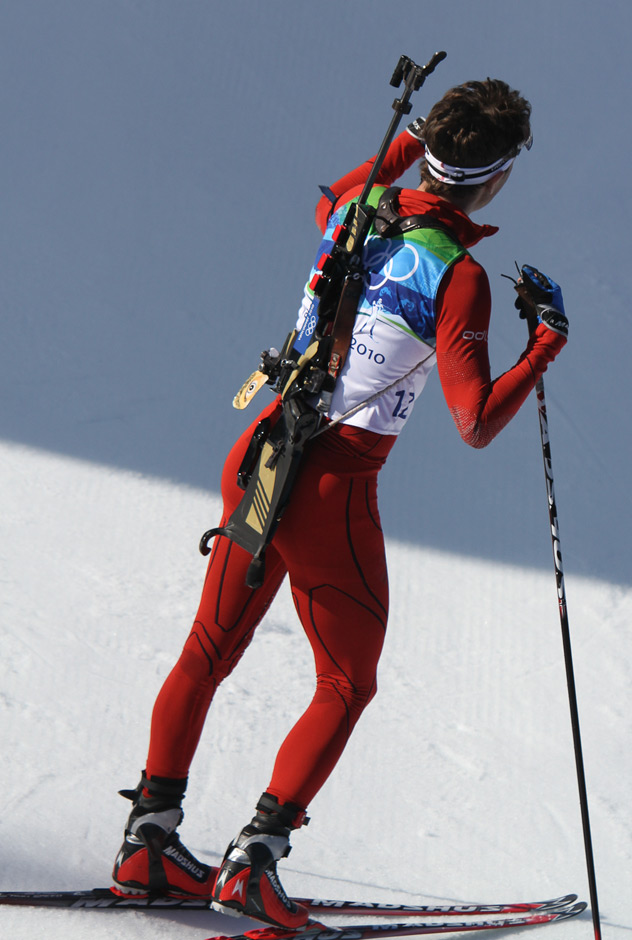
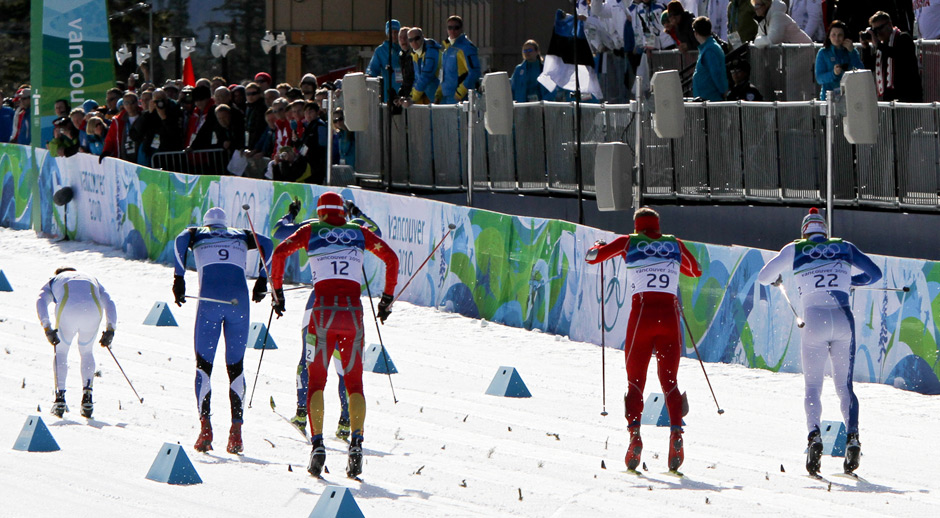
Women competing in the individual sprint at Whistler Olympic Park during the 2010 Olympic Games.
This article is the third in a series looking at the use of cross-country ski venues left behind by the Winter Olympics. The first two were on Utah’s Soldier Hollow and New York’s Lake Placid.
After a Winter Olympics where nordic skiing took center stage, Whistler Olympic Park (WOP), 77 miles north of Vancouver, British Columbia, faces the future with optimism, but with plans that are still murky.
Cleaning up the detritus of the 2010 Games, including grandstands, transformers, cameras and approximately 150 kilometers of fiber optic cable, WOP is preparing for life after the Olympics. Cushioned with government funding, WOP is developing plans to transform itself into a major tourist destination and training center.
Like Lake Placid’s Mount Van Hoevenberg, WOP is part of an umbrella organization that manages other legacy venues from the 2010 Winter Olympics. But unlike Mount Van Hoevenberg, or Utah’s Soldier Hollow, WOP is a beneficiary of a trust fund that will help pay operating expenses for the near- or medium-term future.
As the venue for cross-country, nordic combined, biathlon and ski jumping at the 2010 Winter Olympics, WOP hosted fully one-third of all the events at the Games. Last February, billions of TV viewers tuned in to watch top athletes ski at one of the world’s first “green” cross-country venues.
Situated to minimize disturbance of old-growth forest and wetlands, WOP shoehorned 14 kilometers of cross-country and biathlon trails, three technical buildings and an 11,000-square-foot ski lodge into a single square kilometer. Three technical buildings went up 400 meters apart. The lodge is built to LEED Silver Certification for green buildings. The square kilometer is a thirty percent smaller footprint than originally designed.
Forty kilometers of additional trails link to the 14 kilometers of race trails used for the Games, with six kilometers lighted for night skiing. In addition, WOP’s trail system connects with neighboring Callaghan Country’s 40 kilometers of trails, making for a nearly 100-kilometer network available to skiers.
A Legacy in Mind
More athletes racing at the Olympics in Whistler.
On June 1, 2010, Whistler 2010 Sport Legacies (WSL), a not-for-profit organization, took over management of WOP from the Vancouver Organizing Committee (VANOC). WSL also operates the Whistler Sliding Centre, which hosted luge, bobsled and skeleton, as well as the Whistler Athlete Centre, which offers housing and strength and conditioning facilities to developing athletes training in the Whistler area.
“Legacy programming was going on since the day VANOC started,” said Georgia Manhard, a member of Cross Country British Columbia’s board of directors. She said that VANOC was already planning for the post-Olympic future even as it developed its bid for the 2010 Games.
The Whistler venues are funded in part by the 2010 Games Operating Trust (GOT), a second non-profit that was founded shortly after Vancouver won the right to host the 2010 Olympics. The Canadian federal government and the B.C. provincial government each contributed $55 million Canadian to the trust as seed money, which in turn disbursed funding to the venues in 2007, 2008 and 2009.
But WSL isn’t the trust’s only beneficiary. According to Chairman James Bruce, GOT also supports the Olympic speed skating oval in Richmond: 80 percent of the trust’s principal is split evenly between supporting WSL and the speed skating arena. Money from the remaining 20 percent is held aside as a contingency fund.
Each year, Bruce said, GOT distributes up to five percent of the average three-year balance of the fund to its two beneficiaries. Like the larger economy, the trust lost money in the stock market in calendar year 2008, but it realized an approximately 14 percent return on investments in 2009. Bruce said that it was reasonable to expect a positive return on the trust’s investments over the long term.
Anticipating Growth
Keith Bennett, WSL’s president and CEO, said that it’s “difficult to say right now” what proportion of the nordic center’s operating budget will come from ticket sales, and what proportion will come from GOT funding. Buthis goal is to generate 50 percent of WOP’s revenue from ticket sales, equipment rentals, and food service.
According to Bennett, WOP had approximately 40,000 visitors in the winter of 2008-2009, the year preceding the Games. That figure, though, included elite athletes who arrived to participate in pre-Olympic events in all the disciplines: cross-country, biathlon, jumping and nordic combined. For the coming winter, Bennett is planning on 25,000 visitors, with a goal of 50,000 by 2014; he said the organization would target “new Canadians” and youth.
Bennett’s numbers contrast markedly with post-Olympic tourism numbers projected in the planning stages for the Olympics. In an article published on the
Athletes training on rollerskis at Whistler Olympic Park in 2009. Photo courtesy of TeamToday.org.
website XCOttawa.com in 2004, Tom McCarthy noted that the pre-Games master plan called for 60,000 visitors to WOP within three years of the Olympics, growing to 75,000 by 2015.
Bennett acknowledged the discrepancy, but stressed that he wanted to develop 50,000 “paying skier visits,” at $20 per person, each winter. He distinguished between paid visits and visits by “carded athletes”: Canadian national team, junior national team and development team athletes aren’t charged for trail passes. With virtually no publicity, Bennett added, WOP has already attracted 5,000 to 6,000 visitors this summer.
By comparison, according to information obtained by FasterSkier,approximately 40,000 skiers visited Sovereign Lake last winter, another cross-country area in British Columbia. In the eastern U.S., according to the New York Olympic Regional Development Authority’s just-released annual report, Lake Placid’s Mount van Hoevenberg attracted 30,000 skiers in 2009-2010. According to the document, that was an all-time record for attendance.
Reaching Out
As part of its effort to increase visits to the Callaghan Valley, WSL has three areas of focus: attracting aspiring elite athletes, recruiting new people to the sport of cross-country skiing, and reaching out to area clubs.
“We see [the clubs] as a really important part of delivering nordic skiing to the community,” said John Heilig, WOP’s manager of nordic sport.
WSL is negotiating with the province of British Columbia to modify the terms of its lease, in order to build cabins for some of the clubs—especially those that come from outside Whistler.
Based at Cypress Bowl, on the outskirts of Vancouver, Hollyburn Jackrabbit Ski Club runs youth programs for everyone from five-year-old beginners through aspiring junior racers. While Cypress is close to most members, club president Dirk Rohde said that anyone involved in Hollyburn’s race program skis at Callaghan Valley. “It’s a couple-hour drive, but the training is worth it,” he said.
Hollyburn organizes one or two races each season at Callaghan Valley. “They have facilities and equipment to run an event properly,” Rohde said. Callaghan’s venue is especially suited to bigger races, Rohde added—those at the regional level or above. He noting, in contrast, that Cypress Bowl used a makeshift stadium—often a tent or an awning would suffice as the technical building.
WOP only charges a nominal fee for clubs to host events, and the venue also retained a number of wax trailers from the Olympics that it makes available. However, club members do not receive discounts on trail passes.
A Magnet for Development
Based in Whistler, the Callaghan Valley Training Centre (CVTC) is one of Canada’s national athlete development programs. In the scheme of Cross Country Canada (the country’s governing body for cross-country skiing), CVTC’s mission is to prepare local and regional juniors for national-level competition.
Canadians George Grey and Alex Harvey celebrate their 3rd place finish in the team sprint in the 2009 pre-Olympic World Cup in Whistler.
Chris Manhard, CVTC’s head coach, said that WSL “have been exceptional” in their support of his organization. The training center’s seven skiers lodge in the Whistler Athlete Center for a nominal fee. And whenever possible, Manhard said, WSL hires athletes for part-time positions, to help them defray training expenses.
WOP is also continuing an outreach program that focuses on school groups from local areas. A supplier provided WOP with rental equipment—skis, poles and boots—with the proviso that the gear would be used in such an initiative.
“We’re trying to engage all the local communities,” Heilig said. He specified the Sea-to-Sky corridor as a target, which encompasses the towns of Pemberton, Squamish and Whistler, but Heilig also said that groups have come from as far away as Vancouver.
WOP charges a nominal fee to offset the costs: $12 Canadian covers equipment rental, a lesson and a trail pass. In the winter of 2008-2009, the program saw 62 percent growth over the previous winter, with 1,762 kids participating. (Figures weren’t available for the ’09-’10 season.)
In addition to their own outreach effort, WOP is also signed on with the Canadian Ski Council’s (CSC’s) SnowPass program. After registering through the CSC website, any child in grades four and five is eligible for three free trail passes at WOP.
Each program is a piece of the puzzle. As Bennett acknowledged, WOP “will have to develop skier visits that don’t exist right now. Part of our job is to cultivate that.”
New Zealand's Ben Koons after the suffering started in the 30k pursuit
Aside from a few small clusters in New England and New Zealand, millions of people glued to TV screens around the world were all asking the same question at the beginning of Saturday’s 30k pursuit: “Who is that guy?”
That guy was Ben Koons, a former Dartmouth College skier and Maine resident competing for the Kiwis at the Games. Not even one kilometer from the start, Koons had slid into the track in the lead, ahead of such favorites as Norway’s Petter Northug and Switzerland’s Dario Cologna. The story of his race is undoubtedly one of the strangest—and the most painful—of the first week of the Olympics.
Koons’s pursuit came on the heels of a week-long suspension for high hemoglobin levels, which had derailed plans for his first two events, the 15 k freestyle and the classic sprint. He admitted to being “pretty fired up” to finally get racing.
As an Olympic rookie competing amidst a field of seasoned pros, Koons started at the far back, in bib 62 of 64. He was on the right in the last row, which put him on the outside for the first turn, an uphill lefthander.
When a crash up ahead took out Sweden’s Anders Soedergren and Kazakhstan’s Sergey Cherepanov, Koons and a few others hopped out of the track and continued cruising up the climb. With nobody making any space for him to hop back in, Koons just put his head down and kept on skiing up the side of the trail until he found some room—which just so happened to be at the front of the race.
While Koons may have been a little amped up at the start, he has been skiing for long enough to know that he didn’t belong in the front of an Olympic field in a 30k.
“This was basically not the game plan—it just kind of happened,” he said. “Most of it was just…being super-excited, tons of adrenaline, and going out of the gate flying.”
The pace, Koons said, was surprisingly manageable.
“I was like, ‘man, these guys are doggin’ it,’” he said.
But that didn’t last long: with his high bib number and New Zealand suit, Koons’ position was a sign for the top men that it was time to turn up the heat.
The pace increased, and after flying up the first few hills, Koons quickly realized that his grip on the lead was tenuous. Skiing with the likes of Lukas Bauer, Cologna, and Northug had taken its toll, and the wheels came off.
“About the two k mark, I’m like ‘oh no—I’m in trouble. This is bad news,’” he said. “I’ve never hit the wall so hard, so early in a race.”
In the space of a kilometer, Koons went from the head of the pack to “survival mode”— far off the back, flooded with lactate, and struggling just to stay on his feet.
“I suffered pretty bad,” he said. “Most of the rest of the race, my hands were numb.”
Koons also wasn’t aided by the illness floating around the New Zealand team at the Athletes’ Village. For the latter part of the pursuit, Koons was vomiting, which “certainly didn’t help.”
The misery finally ended near the halfway point, when he was pulled from the race as the leaders threatened to lap him.
On top of the hemoglobin suspension, it has been a tough start to the Games for Koons.
“At the Olympics you hope to have the best race of your season [or] life, not one of the worst,” he wrote in a follow-up e-mail. “On a good day, I could hope to stay with the back end of the pack, with a mediocre day I’d get my a– beat, and on a bad day like [Saturday], I’m s— off the back.”
He still has one more chance, though, in the 50 k classic on the final day of the Games. You probably won’t see him at the front again.
“I think I’ve learned my lesson, and I kind of paid the price,” he said. “I don’t think I’ll lead the 50 k out.”
Ole Einar Bjoerndalen waiting for Sergey Novikov (BLR) to finish his last loop
Anyone watching knew that it was going to be close.
When Sergey Novikov (BLR) left the range after his final round of shooting in the 20k individual start, he led Norwegians Emil Hegle Svendsen and Ole Einar Bjoerndalen by seven and 26 seconds, respectively. But Novikov’s lead was due to good shooting, not fast skiing, and the question was whether he could hold on.
For the two Norwegians, who had already finished racing, the nine minutes and eleven seconds Novikov took to ski his last loop must have felt like an eternity. As the Belarusian came back into the stadium, it was clear that Svendsen would win. But the battle between Bjoerndalen and Novikov would come down to the wire.
Sergey Novikov (BLR) leaving the range during the 20k individual
Novikov finally crossed in 48 minutes, 32 seconds, and zero tenths—the exact same time as Bjoerndalen’s. The race for silver was a tie—the first time in the sport’s Olympic history that had ever happened.
“It’s amazing that they can be so close. I think this is good for biathlon,” said Mikael Lofgren, the Norwegian biathlon coach, adding that the result today speaks to the depth and competitiveness of the men’s field.
Svendsen shot clean in the first three stages, and combined with some blistering skiing, the race appeared to be his to win. Novikov didn’t miss a shot all day, but his skiing speed wasn’t even close to either of the Norwegians.
But in the final shooting stage, Svendsen couldn’t quite seal things, and missed a single shot, setting up some suspense after his finish as he waited for first Bjoerndalen and then Novikov to come to the line.
Bjoerndalen was actually ahead of Svendsen after the latter’s penalty in the last stage, but then Bjoerndalen had a miss of his own.
He left the range seventeen seconds behind Svendsen, and given Bjoerndalen’s superior skiing speed, it looked like the pair could finish in a dead
Emil Hegle Svendsen (NOR) on his way to the finish
heat.
Bjoerndalen took a glance at the scoreboard on the way out of the stadium, and he said afterwards that he knew just how far behind he was.
“We have four kilometers on the last lap, and I was a little bit afraid to start too fast,” he said. “Maybe I waited a little bit too long—if I could have started a little bit earlier, maybe I could have taken three or four seconds more. But ten seconds [the gap that remained at the finish] was too much.”
Novikov didn’t succumb to the pressure on his last round of shooting, both entering and leaving as the leader after hitting all five targets. As he went
out on course for his final loop, he enjoyed an eight second advantage over Svendsen and 25 seconds over Bjoerndalen. But Novikov’s fitness isn’t close to that of the Norwegians, and he said that he got over-excited and went out a little too hard up on the first climb.
“Indeed, the energy was depleted,” he said through a translator.
He wasn’t fast enough to beat Svendsen, but the effort was exactly enough to match Bjoerndalen, although Novikov didn’t appear to lunge for the line—which could have made the difference.
He and Bjoerndalen shared the second step of the podium during the flower ceremony. Both will receive silvers.
Lanny Barnes (USA) exhausted after her performance.
Lanny Barnes is known as a good shot. But coming into the Olympics, she said she had never shot perfectly in a race with four shooting stages over her entire ten-year international career.
That ended today, as the Colorado native went 20 for 20 to propel herself to a 23rd place in the women’s 15k individual start race—the best Olympic result from an American woman since Joan Smith was 14th in Lillehammar in 1994.
“It was amazing to do it here in the Olympics,” Barnes said, referring to her shooting.
After a disappointing 78th place in the sprint, Barnes said her only goal coming into the race was to hit all 20 targets, and to ski as hard as she could. That was exactly what she accomplished today.
Barnes approaching the finish behind a Norwegian.
The only thing that may have hindered her was the bib she was wearing. As the 66th starter on a rapidly warming course, Barnes might have gone a little bit faster if she’d had an earlier start.
Sara Studebaker, on the other hand, didn’t have that problem. She was the very first starter this morning in of a field of 87, and headed out onto an empty course.
“It was a little nerve-racking,” she said. “I had to calm myself down.”
By the time Studebaker skied into the range for her first shooting stage, though, the nerves were clearly gone, as she was calm enough to be able to hit all of her targets. She also hit the next five, before a lone penalty on her third stage knocked her a minute back. But she still finished 34th–a stellar result for someone who raced her first World Cup just last spring.
And Studebaker wasn’t complaining about 95 percent shooting—especially not after some struggles in Antholz, Italy, in the last World Cup before the Olympics. There, she shot just 16 of 20 and seven of ten in a pair of competitions.
Today, though, the shooting was dialed, and Studebaker was also aided by firm course conditions for her four loops, as well as a bit of a boost from skiing with Tora Berger (NOR), the eventual winner. Berger started 30 seconds behind Studebaker, catching her at the end of the pair’s first lap.
“She’s just got an engine, and in a way that’s really motivating—to see where I need to get to,” she said. “In four years, one miss—podium. That’s the goal, so we’ll see.”
Simi Hamilton battling Emil Joensson (SWE) in the quarterfinals.
For some people, being stuck in a quarterfinal heat at the Olympics with Emil Joensson (SWE) would be intimidating. Not for Simi Hamilton.
“Those days are over,” he said afterwards.
The young American sprinter provided a tantalizing glimpse of the future in the sprint yesterday, striding strongly and confidently in the lead of his quarterfinal up the course’s final climb—ahead of Joensson and other World Cup veterans like Kalle Lassila (FIN) and Peeter Kummel (EST)—before being out-double poled in the home stretch.
And he wasn’t thrilled about it—in fact, at the finish, he looked crestfallen not to be moving on. He put on a satisfied air with reporters afterwards, but you could tell that the guy was hungry for more.
“I…felt like I was skiing both climbs as good, if not better, than what is the best sprinter in the world right now, so I was super-psyched about that,” said Hamilton. “It just came down to the double pole, and you know, it’s something that I’m definitely still working on.”
“In the next four years, I’ll always remember that double pole finish as important, and keep getting stronger,” he said.
On the homestretch – that pesky double pole…
Hamilton was racing on a pair of Kris Freeman’s boards—the latter has a “pretty darn good crop of skis—he was nice enough to let me go on a pair of his.”
In Monday’s skate race, he was also sporting some new boots—his sponsor, Alpina, set him up with a new pair after he was spotted racing with duct tape on his old ones at U.S. Nationals.
Hamilton said he didn’t know if he’d be racing in the team sprint next week, but that he’ll be ready if called on. Regardless, he said that he has relished the opportunity granted to him after a last-minute selection to the 2010 Olympic team—and he is not going to settle for the quarterfinals next time.
“I think I’ve earned the spot to be here, and I think everyone in the U.S. community knows that by now,” he said. “It’s an awesome experience, just keep getting these races under my belt. Hopefully win a medal in Sochi in four years, and maybe ski really well at World Championships in Oslo…hit the World Cup circuit with a little momentum. A long and hopefully prosperous ski career ahead.”
In the quarterfinal, around the final corner.Qualification
Bjoergen, Kowalczyk and Majdic celebrate across the line.
If those pesky NBC producers were still searching for that perfect feel-good story, they sure got it today.
After a horrifying crash in her warm-up for the women’s classic sprint at the Vancouver Olympics, Slovenia’s Petra Majdic was in so much pain that she could barely breath. But somehow, she still found the strength and courage to stay with the best skiers in the world, winning a bronze medal behind Norway’s Marit Bjoergen and Poland’s Justyna Kowalczyk.
“For her, it was gold,” Bjoergen said.
Majdic had made today’s sprint her focus for these Games, after some disappointing results in Torino in 2006. She sat out Monday’s 10k skate, in which she had an outside shot for another medal, in order to be better prepared.
When she slid off course this morning and fell three meters down a ledge, breaking a ski and both of her poles, it initially appeared that Majdic’s Olympics would be over.
She missed her start time as she was being treated, screaming to be taken outside so that she could race.
When she finally got there, officials granted Majdic a position at the back of the pack, and she somehow fought her way to 19th place in the qualifier, helped along by sympathetic fans and coaches.
“It was the first time that all coaches from all nations were cheering for me,” she said.
After a visit to the hospital for an ultrasound (no breaks, but a “serious punch on the muscle”), and some serious painkillers, Majdic then had to ski through two heats into the finals, sneaking in as a lucky loser after fourth place in her semifinal.
She trailed Bjoergen and Kowalczyk in the medal round, making a dogged effort to latch on to them as the trio entered the stadium. Despite her strong double-pole, though, Majdic couldn’t maintain contact—though she had just enough left to hold off Sweden’s Anna Olsson.
Kowalczyk checks on Majdic who is attended by coaches at the finish.
After the finish, Majdic fell to the ground and remained there, limp and motionless, as she was tended to by medics and her coaches. She had to be carried away, and was still in visible pain during the post-race press conference. She said that she probably wouldn’t be able to compete in the team sprint on Monday.
“She’s crazy,” said Katja Vesnar, Majdic’s teammate. “She really showed how much this means to her. I think if that accident hadn’t happened to her, she could win easily—she was so strong today.”
Despite Vesnar’s hyperbole, though, it was clear that even a full-strength Majdic would have had her hands full with Bjoergen.
The Norwegian was untouchable, easily winning her first two heats before a showdown in the finals with that wiry Pole, Justyna Kowalczyk.
Kowalczyk won last week’s sprint in Canmore by a mile, and also was unchallenged in the earlier rounds.
She and Bjoergen matched each other stride for stride on the final uphill, with Kowalczyk emerging in the lead going over the top. But on the ensuing downhill corner on the way into the stadium, Bjoergen caught the cautious Kowalczyk with an aggressive pass on the inside, taking a lead that she never relinquished. It was Norway’s first gold medal in the Olympics since 2002, which should relieve the pressure from a harried coaching and waxing staff after a tough opener Monday.
The final, early in the race.
With some added pressure on her shoulders after just one of her teammates qualified for the heats in the men’s race, Kikkan Randall (USA) outperformed her own expectations with an eighth place finish—one spot better than her result in the skate sprint in Torino, and the best in American women’s Olympic history.
Randall steps out in her quarterfinal to overtake Finn Pirjo Muranen, a move that would earn her a berth in the semis.
Her quarterfinal had her matched up with a tough bunch, including Bjoergen, Norway’s Astrid Jacobsen, and Slovenia’s Vesna Fabjan. After a slow start, Randall was able to make up ground with some strong double-poling in the stadium, finishing third and advancing as a lucky loser based on a fast time in her heat. Starting in the first quarterfinal of the afternoon, Randall may have been helped by rapidly-warming temperatures, which seemed to slow down the skiing as the day wore on.
In the semis, the Alaskan again had to face off with Bjoergen and Jacobsen, as well as Italian Magda Genuin. Bjoergen took off from the gun, and Randall was left behind after being slow out of the gate, which she said she struggled with.
“It was fast from the get-go—I need to work on my starts a little bit,” she said.
Randall looked like she was heading for last place in her heat, but then pulled it together for the final climb, passing Virpi Kuitunen and Natalia Korosteleva by the finish and even closing in on Jacobsen.
There was a chance for Randall to move on as a lucky loser with her fourth place in that semi, but the next one was faster.
Randall said afterwards that her goal for the day was a top-12, and she seemed pleased to better that.
“All season I’ve been feeling like there’s one gear missing, and it showed up at just the right time,” she said. “What a fun day out there.”
WHISTLER, BC (Sept. 14) – The U.S. Cross Country Ski Team wrapped up camp this week at its 2010 Olympic venue in Whistler and, according to Cross Country Coach Matt Whitcomb, everything is falling right in line with where the Team wants to be.
“This was our fifth time up here in the past two and a half years and everything is feeling right on time. Nothing is rushed, nobody is panicked. The Team is collected and confident, the training is hard and we wrapped up our preparation in Whistler on a high note,” Whitcomb said. “We’ve gotten a lot of work done up here with these camps and the whole team knows it.”
Whitcomb also added that the crew at the Olympic park in Whistler was key to the success of the Team’s camp.
“It’s been great training all week at the venue, and the folks at Whistler Olympic Park have been very accommodating to our group,” Whitcomb said. “And their roller ski track and trail system are excellent.”
According to rising star Liz Stephen (East Montpelier, VT), the Team’s athletes have come to know Whistler like the back of their hands.
“As a team we are all super knowledgeable and feel very comfortable with the Olympic venue,” Stephen said. “We have had a number of training camps here since the Olympics and it has become our second or maybe even first home!”
Whitcomb reported that, as far as fitness goes, the team is in top form.
“Everyone has been looking much improved in their training. Technique is strong and fitness is beginning to ramp up to higher levels,” Whitcomb said.
The team had a chance to test that fitness out as, in addition to their individual training, the athletes were able to race head to head.
“We have had one classic sprint race in which Andy Newell [Shaftsbury, VT] beat Torin Koos [Leavenworth, WA] by a scratch. Erik Bjornsen, a National Elite Group (NEG) athlete out of the Methow Olympic Development (MOD) team in Washington was on their tails in the last two heats which was great to see,” Whitcomb said. “Kikkan Randall [Anchorage, AK] dominated the women’s field, with Erik’s sister, Sadie, finishing second.”
For Whitcomb, having National Elite Group athletes able to attend the camp was very beneficial to the future of the cross country program.
“The group consists of our best 10 junior athletes in the country, and it’s been inspiring to watch them try to chase down the best in the U.S.,” Whitcomb said. “As a coach, you can step back from the path just a bit and see a big piece of our development pipeline working together. It’s incredible.”
With the camp wrapped up, athletes have returned to their dry land training in the lead up to another camp in Lake Placid in October.
“I am feeling really good about the way the camp has gone. From my perspective, the Team is training and getting along better than we ever have before. As always, every training session has a focus and as this is one of our first true intensity camps of the year,” Stephen said. “Hammering out hard sessions with your teammates is really beneficial and motivating, not to mention super fun. I feel very confident with the progress I have made over the training period so far.”
The US Ski Team recently completed their last training camp at the 2010 Olympic Venue before the Games. They were joined by the National Elite Group and the Sun Valley Ski Education Foundation. A few highlights below. For photos and commentary:
Head-to-head intervals. Torin Koos setting the pace. (Photo: TeamToday)Lindsay Williams (Photo: TeamToday)Some have all the right answers. Some work to find the best answer together. Who do you think will win? (Photo: TeamToday)Olympic venue 2010 the day before it closes until Feb 4. We call it home. (Photo: TeamToday)
Lindsey Dehlin is already a veteran of two Olympic Games, having been selected to the U.S. teams in 2002 and 2006. In 2008, Dehlin won her first national championship, in the team sprint with Lindsay Williams. Last year, Dehlin took third place in the sprint at the U.S. National Championships in Anchorage, and eighth in the five k skate.
Dehlin racing at the World Cup in Whistler last winter. Photo courtesy of Lindsey Dehlin.
FasterSkier: You went to Northern Michigan University for four years, and now you’re back training with them-is that right?
Lindsey Dehlin: Actually, not quite. I haven’t graduated yet, but I skied for them and I went to school there for like six years. I have been training under Sten Fjeldheim this last summer. He’s been writing my plan, so they’ll pretty much be my club and team for this winter.
FS: How many hours are you training?
LD: For the year, I’ll be between about 650 to 675, about.
FS: Tell me a little bit about Sten Fjeldheim.
LD: He’s been doing it for a lot of years, writing plans and figuring out what works and what doesn’t. One thing that’s been a bit diff than the U.S. Ski Team (USST), is that I haven’t been doing as many level four intensities early in the summer. I’m just starting to get into them in the last few weeks, which is good, I think, because you don’t want to peak too soon.
A lot of his focus is on distance skiing, and skiing with good tech in distance sessions. He’s really big on doing specific strength, single-sticking and double poling and all that.
He’s also really big into make sure you’re training in the right zones-if I go out for a distance ski it should be in level one, and intervals should be in level three.
The USST wrote my plan for the last couple of years, and when I was in school, Sten was writing my plan. So I’m actually doing a lot of the workouts I was doing when I was in school. It’s kind of going back to what I know, and what has worked for me in the past.
FS: Until I went to college I’d never really heard about the U.P. (Upper Peninsula of Michigan), but everyone I’ve met from there makes it sound pretty awesome-what’s it like up there?
LD: I pretty much live on Lake Superior. Until my brother went to school here, I’d never really heard about the U.P. either. It’s just a great place to train-this summer has actually been very cool, which has been good for training, but not really for going to the beach. It’s a five minute run from my house to get right on single track trails. I can rollerski from my house, or drive 10 minutes and get to a totally different loop. There are lots of options out here.
FS: Looking at your Web site (redgroupracing.com), it seems like you have a pretty good handle on the business and sponsorship side of things. Is that the case, or are you having trouble with the economy?
LD: I can’t really take full credit for that-my husband Dan is really good at a lot of the business side of things, and doing the web site. He designed the whole thing and has been super good getting that running. My only responsibility is updating it.
As sponsors go, this is the third year I’ve had Ames Construction. It’s a construction company based out of the twin cities in Minnesota, and one of the owners is my great uncle. He is really big into any kind of sports-they did some construction work for the 2002 Olympics in Salt Lake, and he’s really big into helping athletes succeed. He’s sponsored a couple other people from the Twin Cities. He’s been really helpful and the company’s been great, supporting everything I do and basically paying my way to races and camps and funding all that I do.
Dehlin racing at the Super Tour in West Yellowstone
FS: Your husband, Dan-he’s an ultramarathoner?
LD: Yeah, he runs ultramarathons. He actually just had knee surgery about seven weeks ago. He was supposed to go out and do Leadville at the end of this month, but he injured his knee earlier this spring so he won’t be doing that. Earlier this spring, before he was injured he won a 100k marathon-he’s getting into it really big.
FS: Do you guys get out to train together very often?
LD: Within the last week it’s been okay, he’s been classic rollerskiing a couple of times. When he’s not injured, we train together quite a bit because he’s actually a cross country skier a little bit, enough to be able to join me on rollerski workouts, and I can do distance runs with him, which is great.
FS: It looks like you’re targeting the Olympics for this year, right?
LD: That’s the plan for this winter. I’ll be doing the SuperTour schedule, and then U.S. Nationals, and then hopefully from there going up to whistler. That’s the ultimate goal for this season.
FS: Can you tell me about the first couple of times you got to go?
LD: In 2002 it was really cool, because I was 17, a senior in high school, pretty young, and when my coach at the time, Kevin Brockman, told me I might have a shot I was like “yeah, okay.” And then when I made the team I was like, ‘he was actually right.’ It was super cool being at the opening ceremonies-it’s totally different than watching it on TV. It was just an amazing experience. Unfortunately, I didn’t get to race there-I was an alternate, so I was able to watch, which was still pretty cool, but it made me want to race even more. And then when I made it to Torino in 2006 it was still just as cool. I remember when I got the call, I was driving back to Marquette from Minnesota with my mom. I got the call in my car and I was really sick-I had just gotten a cold-but I was just so excited to hear that, and it was really cool because Lindsay Williams made the team with me, and we had trained together all fall and all winter. It was super cool to have so many people from the Northern [Michigan University] program make the team.
Lining up for the first race, I was so nervous and so excited that I probably had a smile on my face for the first two k of the race. It was an amazing experience just getting to race, and I got home after that, and I’m like, ‘I think I can train for another four years down the road.’ That’s pretty much been my focus-I know it was amazing the last two times, so I want to do it again.
FS: Do you think you’ll be able to be a bit more relaxed this time around?
LD: I’d like to say that I would be, but it’s just so exciting being there. I think with anything, the more experience you get, the more times you go, you get more comfortable doing it. Hopeful this next time around I’ll be a little bit more relaxed-I’ve raced against all those women before-and try to be able to focus a little bit more on doing the racing part of it. I’d hope I’d be a little bit more confident. It will also help, too, that I’ve been to the Olympic courses in Whistler. I’ve raced there three or four times, I’ve been there in the summer, and I think that’s definite plus for this time around.
FS: Can you give me a little perspective on not being named to the USST this year? I read on your Web site that you were just in Utah and went for a ski with some USST coaches.
LD: It was a little disappointing not being named to the team, because they’re all great coaches and great athletes, but it wasn’t really a shock. I kind of knew it was coming. I was kind of angry for a little bit, but after a while I kind of just saw it as just another speed bump, and I knew Sten would be behind me.
I was in Utah just a couple of weeks ago and I was able to get a couple of workouts in with Pete Vordenberg and Pat Casey-that was good, and it was good to see them, and they’re totally behind me as well. I’m always welcome at training camps. They’re still willing to help me out, it’s just that it didn’t work out for me to travel with them and be on the team.
FS: Does that motivate you at all?
LD: It does a little bit. I guess I don’t have anything to prove-it just motivates me and actually is a little less pressure as well, because towards the end of the season last year I was feeling kind of tired and a little bit burnt out, and if I had a bad race it was like, ‘oh, I hope I’m still on the team.’ Now that I don’t have pressure of trying to race my way to stay on the team, I’ll be able to race for myself and be able to enjoy it a little bit. I’ll be the one kicking my butt if I have a bad race. So I think it’s just a little less pressure.
Tim Burke is a member of the U.S. Biathlon A Team, and has already qualified for the 2010 Olympics based on his results from last year. In 2008-2009, he finished 25th overall in the World Cup standings, with two top-ten finishes: eighth in the pursuit in Khanty-Mansijsk, Russia, and ninth in the sprint in Trondheim, Norway. He competed in the Olympics in Torino in 2006, placing 37th in the sprint.
Burke on his way to his 8th place in Khanty-Mansijsk.
FasterSkier: You’re currently at a training camp in Lake Placid with the biathlon team. It seems like you have a pretty close, competitive group between you, Lowell Bailey, Jeremy Teela, and Jay Hakkinen.
Tim Burke: We’ve had a three-week camp going on, and we’re half way through the first week. We’ve got the six guys on the national team and the six guys on the development team, as well. When we’re in camp like this, we do pretty much every session together as a team.
We have an awesome group of guys right now. I’ve never had a group of guys to train with like this—we’re a really competitive group, and it makes the training sessions a lot of fun. I think everyone gets a lot out of it.
FS: Is it hard not to get too competitive when you’re heading out with all of those guys?
TB: I would say that would be the only issue—when you head out for a level three interval session, it can easily escalate into max intervals. Everyone here’s pretty professional, though, and we all know the goals of each workout…I’ll admit that there are a few more sign sprints than are on the schedule.
FS: You wrote on your blog that you pre-qualified for the Olympics based on your results from last season—does that make your training approach easier for this year, not having to worry about skiing fast at the trials as well as at the Games?
TB: It was a goal of mine to pre-qualify last year. Now we’re going forward with the same plan that we’ve had all along. Training wise, things are pretty similar. I’ve been working with my coach Per Nilsson—this is my fourth year with him. This year it’s a combination of the best things from the previous three seasons. We’re really confident we have a good plan—we have a ton of information over the past three years from what works for me. Everything’s going forward in a really good direction.
Burke racing in the sprint in Antholz, Italy (Photo: US Biathlon)
FS: You’re based out of Lake Placid, right? Tell us a little more about the training there.
TB: I’m based out of Lake Placed, and it’s a great place to train out of. We have the Olympic Training Center here—that offers a lot of things. With the cafeteria, I don’t have to do any cooking for myself. We’ve got a great weight room here, and I do quite a lot of intensity in the treadmill room. We have a camera on the front and a camera on the side, so we can do a lot of video work in there.
We also have a 1.5 kilometer rollerski loop with a four-point range right in town, at the ski jumps. It was all redone last week. We also have, in my opinion, the best road biking and rollerskiing on the roads, as well as trail running. Lake Placid to me really offers this whole package, and I can do a lot of that training right out my front door.
We also have a full time coaching staff here. I’m working with James Upham pretty much every day, and I’ve got someone there to do technique work, lactate, all that stuff.
FS: Do you ever get out with the cross country or nordic combined guys when they’re in town?
TB: Definitely. Bill Demong’s from here as well, and he comes back not as much as we would like, but every time he’s home we try to get a session in.
We have a really good group of guys training here full-time. I guess there’s five or six of us here, and we train together pretty every day. Lowell [Bailey], Zach Hall, Bill Bowler—those are the guys that are here every day, and then also being in Lake Placid other athletes are coming through here pretty often, whether it’s cross country or nordic combined.
FS: How much are you working on your shooting this time of year? You wrote on your blog that you were working with a U.S. Shooting Team coach this sprint?
TB: Shooting’s a really big priority for me this year. If I want to improve my results, the easiest place for me to improve is in my shooting. My shooting isn’t good enough to be where I want to be. I’m throwing everything at it this year. I worked with one of the U.S. shooting coaches in Colorado Springs—it’s really cool to go out there and see how they work. I got a lot of ideas from them.
Two years ago we had a shooting coach that left to go coach the Norwegian team. This year we hired Armin Auchentaller, who was the Italian men’s team head coach. I’ve been working with him now since the springtime, and it has been absolutely fantastic. He has come in and really restructured going about my shooting training.
FS: How so?
TB: One of my biggest problems in the past few years was that I was giving away a lot of time in the shooting range. When I’m fighting to get on the podium with someone like [Ole Einar] Bjorndalen, I can’t give away 10 or 15 seconds in just range time. So Armin has just helped me a lot with that, working through different drills and breaking the process down into really small steps, and working on a couple of those a day. Already I’ve seen my range times come down an average of 5 seconds per stage. If you look at a four-stage race I’m going to save an average of 20 seconds per race, which, if you look at a pursuit race, can be 10 places, 15 places.
FS: Psychologically, that must be a huge boost.
TB: Psychologically it’s really motivating, and it’s always great to have a different focus from time to time. [Armin] really kind of restructured things for me. It’s given me a greater focus and motivation for the shooting training aspect of our sport. I think lots of times in the past, I looked at myself as a skier who also shot, and he’s helped change that around for me. I’m really motivated to do everything possible to improve my shooting, because that’s what’s going to need to happen if I’m going to reach my goals.
Burke on course for the U.S. relay team in Oberhof, Germany (Photo: US Biathlon)
FS: Biathlon is one of the most popular spectator sports in Europe, while it doesn’t get a whole lot of attention in the U.S. Is it a bummer to come home and not get any recognition for what you’re doing, or is it nice to be able to fly under the radar?
TB: I think it’s a little bit of both. It’s nice to come home and be training and have that quiet—I don’t have to worry about those other things. I know my European competitors have incredibly busy schedules with sponsor obligations, speaking, and other things. I don’t really have as much of that.
At the same time it would be nice to have more recognition on the home front, although I do have a lot of home support here in Lake Placid as well.
FS: One of our bloggers sparked some speculation earlier this year when he proposed a 15k skate race between you, Kris Freeman, and Billy Demong. Do you think you could take those guys?
TB: It would be a really fun race. It’s something that I’m not going to speculate on. I think both Kris and I still haven’t achieved what we both want to achieve in our own sports. Until I get where I want to be in my own sport, which is consistently able to reach the podium, I’m not going to spend too much time thinking about stuff like that.
FS: Would you ever consider doing a race like that, though?
TB: I’m very interested into doing more cross country races in the future. I think it would be a good test to see where I’m at, and I’m always up for a new challenge. I see myself in the next four years giving it a go, and trying a few more cross country races as well.
The training season is well underway, and North America’s best cross-country skiers are already well into their preparations for next winter. Over the course of the summer, FasterSkier will feature a weekly interview with elite American and Canadian athletes, following their training as they ready for the upcoming Olympic year.
We first talked with James Southam, who races with the Alaska Pacific University Elite Team and placed 33rd in the 30k pursuit at the 2009 World Championships in Liberec. We caught Southam just before he headed off for a glacier trip, while his daughter was taking a nap.
Southam on his way to victory in the Stowe Supertour, 2009. Photo, Kris Dobie.
FS: 2008-2009 seems like it was a pretty good year for you. How does that impact your preparations for the upcoming year—are you sticking to the same plan?
JS: Two years ago I tried something that didn’t work. Last year I tried something different, and it worked out a lot better. It was my second year working with Eric [Flora—APU coach], and the first year we tried some of my own ideas, and it didn’t work out so well.
Last year I stuck in and followed his plan and it worked out super well. This year it’s just sort of refining that. The big thing is a good working relationship between my coach and I, and I think we have a pretty good understanding of how to when things are going well and things are going poorly. I’ve been training for a long time, and it just feels like I’m finally figuring out what I need to do.
FS: You’re up in Anchorage training with Alaska Pacific University. Is it tough sometimes missing out on some of the U.S. Ski Team Camps, and banging heads with those guys?
JS: It would be nice to be able to get together for camps, but being up here it’s a bit of a haul. I’ve got a baby girl now, so I’ve got to pick my trips. And we’ve got a glacier camp up here.
It would be nice to be able to have a little more contact with [the USST] guys—but at the same time we’re got some pretty sick guys on the [APU] team. Some of the guys are fantastic runners, way better than I am, so I have them to chase on those hard days. I’ve also got some interval hills and things like that, which are a pretty good gauge of where I’m at. I don’t feel like I’m missing out necessarily, but seeing the pictures from Bend, it did look like it would have been a sweet trip.
FS: Are you training any differently because it’s an Olympic year? Less volume? How does your training compare to last year?
JS: It’s pretty similar to last year—I think the biggest difference was just in this first part. Last year I came out of a pretty bad end to the season, and I spent a lot of time in the mountains doing some big days on backcountry skis just to get me back in shape. Then we hit the ground running pretty hard with a lot of intensity early on.
This year the season ended on a much better note, with much better fitness, and I felt like I needed a bigger break. This first part of the year has been spent building my base back up. For the rest of the season it will be pretty similar to last year. Some minor adjustments, but nothing big. Last year’s formula worked pretty well—I’m just trying to be a bit better with the recovery and the rest.
I think the confidence I got last year, finally skiing with those top guys at World Championships—I’d never skied with the pack for more than 10 kilometers of a mass start race, and I was there for 25 kilometers of the 30 kilometer [pursuit race]. I can do that now, and it’s like looking at that next jump up.
James Southam racing in the Men's Pursuit, 2009 Whistler World Cup.
FS: Do you have any favorite workouts you could tell us about? Any super-hard ones?
JS: Up here we’ve got some great ones. There’s Otter Valley Hill—we do some 1k repeats on that, on rollerskis, and that’s one of my favorite workouts. When I was doing intensity blocks I was down there three times a week on that one hill, and I never got tired of it. It’s 3k long, pretty steady six to eight percent grade. It starts out straight across the highway from the ocean, and you get up to the top and you look back down and there it is. That’s probably one of my favorites. I also just love the hard bounding intervals in the rain in the fall.
FS: Your daughter was born earlier this year—does having a family make things more difficult for your training?
JS: There’s a lot less pure down time—it definitely changes things for sure. My wife is super-supportive of my skiing, and between her and my parents, who take Hazel for three days a week, we’ve put together a schedule that works. The days can be a little more crazy, but as long as I can get the quality rest and get the training in, we’re making it work. Traveling is different, too, this year. It’s definitely harder to leave for a period of time, but I think you also get on the road and you’re there for a reason. You’re not just on a trip—you’re on a business trip.
[Having a daughter] has added a little bit more focus, and just created a little more sense of urgency. When I’m out there I’ve got two years left of ski racing, and that’s not a whole lot of time. Whatever the workout is, I’ve got to take full advantage of the time that I have to train, and as a result I think the quality of the workouts has improved, just because I don’t have all day to just do stuff. I’ve got to get it done when I have the opportunity.
FS: You mentioned you’ve got two more years of skiing—so you’re going to go through the Olympics, and then do one more year?
JS: I’m going to go through the 2011 season. With the World Championships in Oslo—really, as a ski racer, I don’t think it can get a whole lot better than that for a race environment.
FS: Last question. In the UVM SuperTour, you broke your pole in an isolated part of the course, and offered my teammate $100 for his pole [Editor’s note: he later dropped out of the race, and was kicking himself for passing up $100]. I’m turning the tables: How much would someone have to offer you to give up a pole in a race?
JS: In that particular race—you figure it’s 800 bucks for a win, so it would have taken more than 800 dollars to take my pole from me. That said, luck and nature took one away from me instead…
If I were racing in college, though, and someone offered me a hundred bucks for a pole, I’d think pretty hard about it…