Tag: workout

  • The Nationally Shared Workout: A Look at the U.S. Pace Project

    The Nationally Shared Workout: A Look at the U.S. Pace Project

    Last year, in an effort to create a standardized workout that could be easily replicated and repeated, national team coaches presented the concept of the “U.S. Pace Project.” The concept is straightforward: a shift away from time-based intervals to distance-based, centered around repeated laps of a 5-kilometer course.

    This familiar distance is key. In a call in July, Matt Whitcomb, U.S. Ski Team Head Coach, and one of the creators of the project explained that: “5k is essentially the building block of just about every race we ever do. It’s a very tangible distance that everybody knows right from childhood.” 
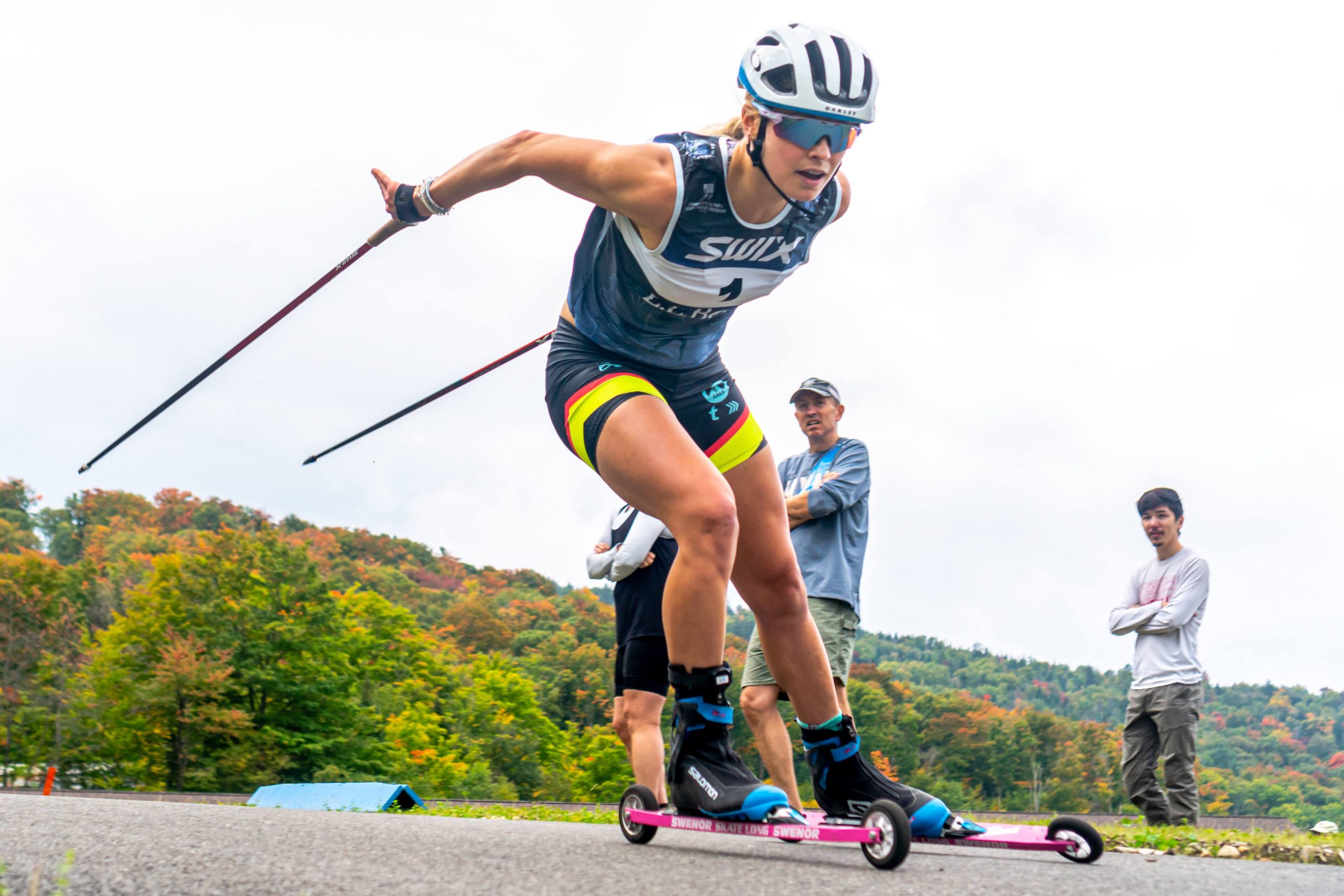
    Jessie Diggins races the Keys to the Castle Rollerski Race in Lake Placid. (Photo: Matt Whitcomb)

    Whitcomb continued that while the session itself is not revolutionary, it has provided a shared pathway for clubs to explore pacing during intensity sessions. Usually athletes will complete three rounds of the same 5k course, and repeat the workout intermittently throughout the training season to track overall progress or fine-tune pacing strategy. Given the ease of implementation, clubs of all levels nationwide can adopt the concept.

    “Clubs are encouraged to find a 5 kilometer stretch of rolling road, something that can replicate race terrain as best and as safely as they can,” Whitcomb explained. “If it’s on a rollerski track, that’s even better.” 

    As the training year progresses, so does the nature of the Pace Project. “This is a workout that is meant to build in intensity throughout the year, but also in creativity,” Whitcomb stated. 

    Creativity, in this context, is an ongoing experiment with pacing, fueling, technique, and effort, followed by a discussion of individual outcomes amongst the group. Essentially, the U.S. Pace Project  is a personal study for athletes to find their own fastest and most efficient approach to racing. 
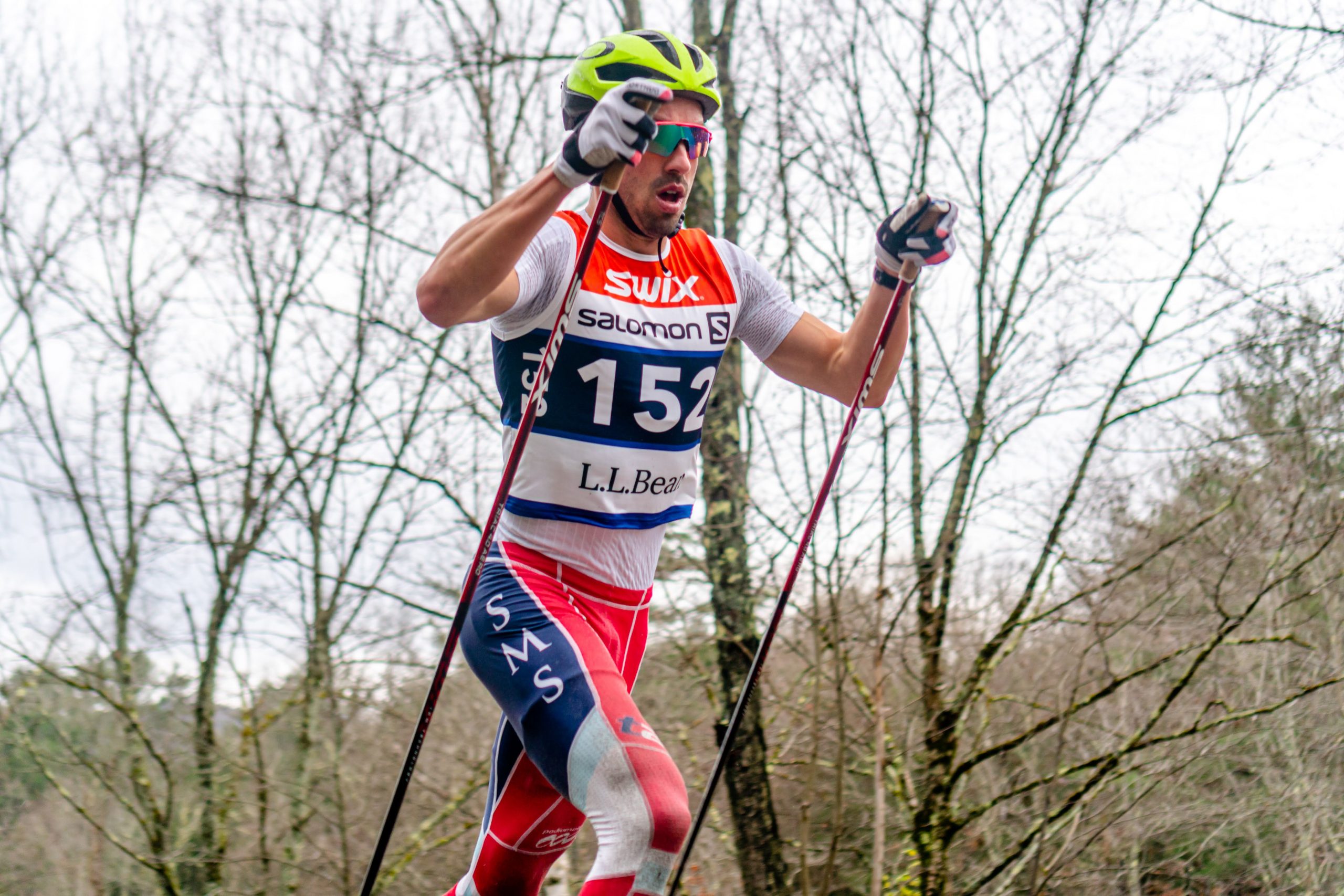
    Ian Torchia races NENSA’s Trapp Invitational Rollerski race in November, 2021. (Photo: George Forbes/SMS)

    Another motive behind the project, according to Whitcomb, is to promote the sharing of insights between athletes and coaches nation-wide as they incorporate and discuss the takeaways from the Pace Project format. He explained that time-based intervals offer less concrete information to learn from, as there is more room for variation in training venue and conditions.

    “[The sport] is challenged with regards to metrics,” Whitcomb said. “So this is meant to catalyze more objective feedback and learning.” 

    As many national team members train in Stratton, VT in the summer, SMS T2 head coach Pat O’Brien provided a look into his experience facilitating the workout with his athletes and his current takeaways.  

    “If you give the athletes a set distance workout, they are going to learn how to manage their energy over that distance,” O’Brien said, citing supporting research by Norwegian based Sports Science Professor Steven Seiler

    “The whole point,” O’Brien continued, “is in a training type environment, go out and play around with different [approaches]. It might not all work. It might fail. But it’s better to learn those lessons in a training environment than in a race.” 

    Ben Ogden (bib 13) races the Keys to the Castle Rollerski Race in Lake Placid. (Photo: Matt Whitcomb)

    While a nationally shared workout is new, the project itself grew out of conversations with previous American athletes who incorporated similar workouts as a fitness benchmark. 

    “I think the most notable one is Kris Freeman,” O’Brien explained. “He was truly one of the best in the world at the 15k distance. He would do a repeated workout of 3x5k, and he knew if he could sustain three repeats on [a particular] 5k stretch of road, he was in good shape.”

    O’Brien said that inspiration had also come from one of his mentors, Sverre Caldwell, former Nordic Director at SMS. 

    “Back in the early 2000s, the Stratton program had a string of successes with high schoolers going on to these great sprint results when sprinting had just started coming out,” he said. “What was interesting talking to [Caldwell] was they didn’t go out seeking to pace sprints. He wanted to make his athletes stronger and tougher, so he devised a double pole test.”

    The test involved double poling up a specific hill, which happened to take high schoolers like Andy Newell about three minutes. “It was not intentional, but they got good at figuring out how to go up that hill as best they could for about three minutes, which happened to be about how long a sprint was. They didn’t go out with the intention of being great sprinters, but if you give the athletes a set distance workout, they are going to learn how to manage their energy over [that distance].” 

    These ideas have fused into the Pace Project. Still in its infancy, it remains an elastic concept meant to help American skiing in a number of ways. Part nationally shared workout, part personal experimentation project, part data gathering opportunity, there are many objectives at play. 

    “The pacing project is an idea where if we subject ourselves to all these different stimuli, we can be more flexible,” O’Brien said. “The point is, we’re always going between environments, and we’re always trying to get athletes better at finding what their red line is, so to speak.”
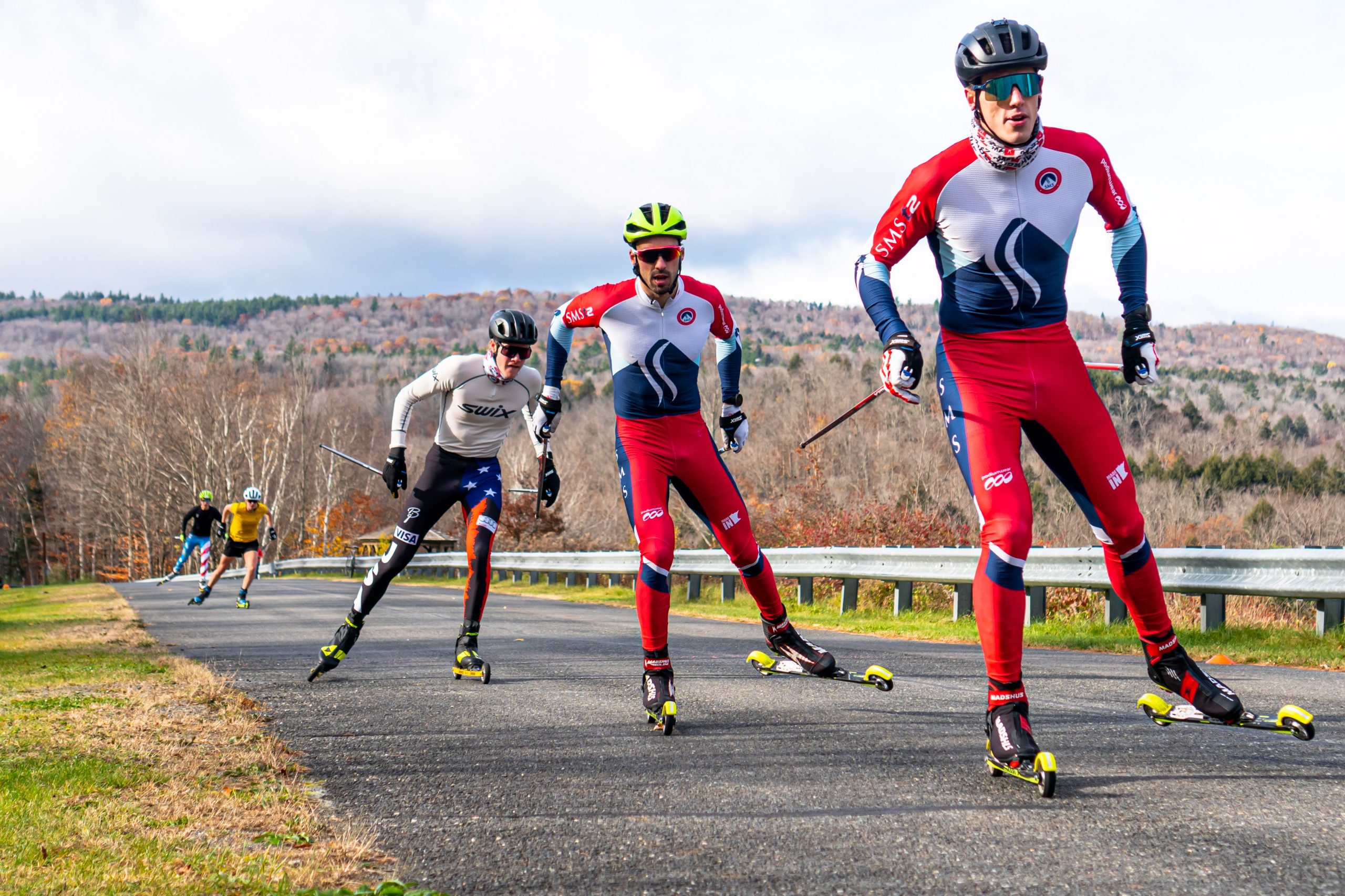
    Bill Harmeyer and Ian Torchia lead the charge during a fall training session. (Photo: George Forbes/SMS)

    O’Brien explained that coaches had been seeking a way to reap the benefits of racing without the physiological toll they require. 

    “How can we construct workouts that challenge you in a similar way to what you experience in a race without the same cost?” he asked rhetorically.

    The Pace Project seems to be filling this gap, by offering athletes a chance to experiment with novel pacing strategies outside of a race environment. 

    “I don’t care if someone goes into it too hard and blows up,” said O’Brien. “We’re not looking for an objective time, It’s about how athletes pace themselves.”

    O’Brien stressed that the key to the pace project lies in athletes figuring out what works best for them, both in what technique they use on specific sections of the course, and for overall pacing. 

    “Every athlete has a style,” he said, “a way they want to move. [It’s] not ‘you should do this because it works for you.’ I think that’s how we unlock our athletes’ best potential.” 

    The Pace Project has received favorable reviews from athletes and coaches beyond the SMS T2 team. The SVSEF Gold team in Sun Valley, Idaho use their 1.2k rollerski trail for pace sessions according to Head Coach Chris Mallory. 

    “This workout basically brings a little more focus to threshold workouts,” wrote Mallory in an email. “Athletes can play around with different pacing strategies, whether it’s starting more conservatively, using different techniques, or skiing different parts of terrain harder or easier to see what works best for them… It’s nice to have something that’s repeatable, where you can measure progress.” 

    Strava users who follow some of the top domestic skiers may have seen some of them completing these workouts, like this example of Gus Schumacher’s October iteration. Schumacher explained in an email the role the workout has played in his summer training this season: 

    “[The Pace Project] is a cool format because it allows for a lot of different strategies, similar to racing. Usually in the earlier summer we’ll use it as a way to get L3 while lapping a track with similar features to a race course. Later however, like at our camp in Park City, it was fun to use it as almost a race simulation.”
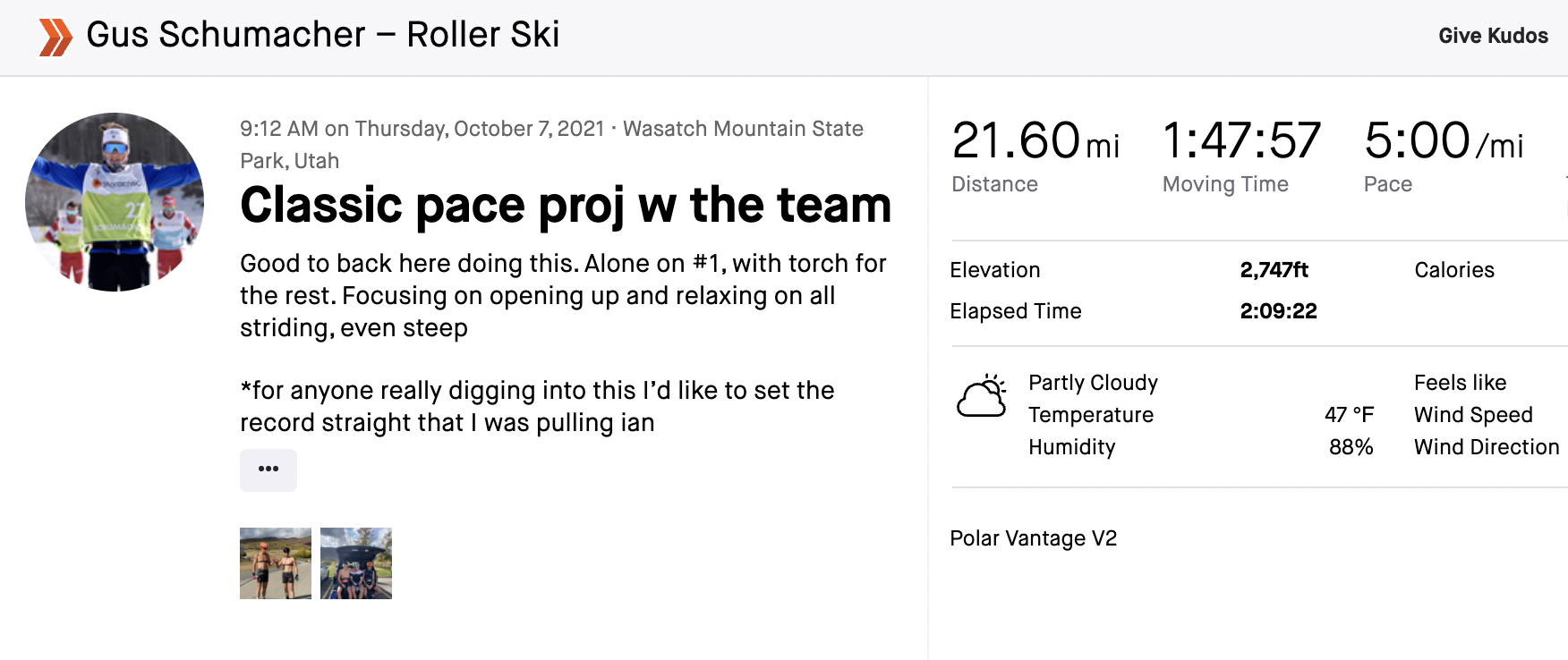
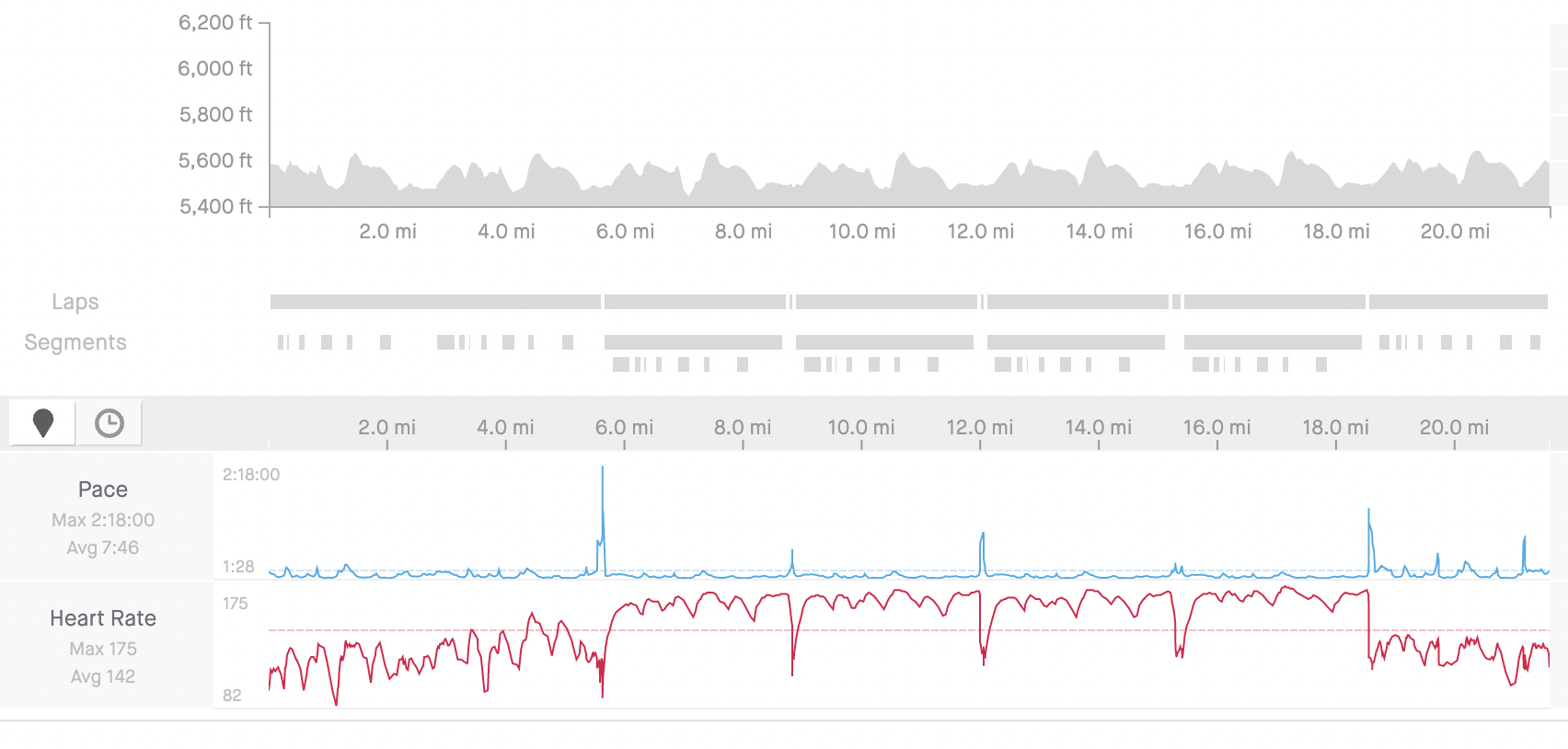
    Gus Schumacher completes a 4 x 5k pace project session during a fall training camp in Soldier Hollow. (Photo: Strava)

    Schumacher described one of his sessions in October: “I started the first 2 minutes hard like I would in a mass start,” he wrote. “After that I eased back to a sustainable pace, then in the last one I finished hard. This made it feel a lot like a race without the same cost (because of 3 minute rest between each interval). Breaking it up into segments also allows us to change our strategy more from lap to lap, which can help with testing new pacing strategies, especially at altitude.”

    Reflecting on the outcomes for coaches, Whitcomb said that he was pleased with how the Pace Project sessions had increased the conversations between athletes. 

    “What we’ve observed is that there’s more interesting discussion before and after these sessions, than there is for just your standard threshold interval workouts.” 

    Over the summer, Whitcomb stopped by Stratton during a SMS T2 pace session and remarked on the depth, variety, and value of the subsequent conversations.

    “Of the ten athletes that were there that day, there were ten different approaches to this workout, because Bill Harmeyer is setting his sights on one specific goal on that day, and Jessie Diggins on perhaps another goal, and everybody’s learning and discussing and crowdsourcing ideas effectively.” 
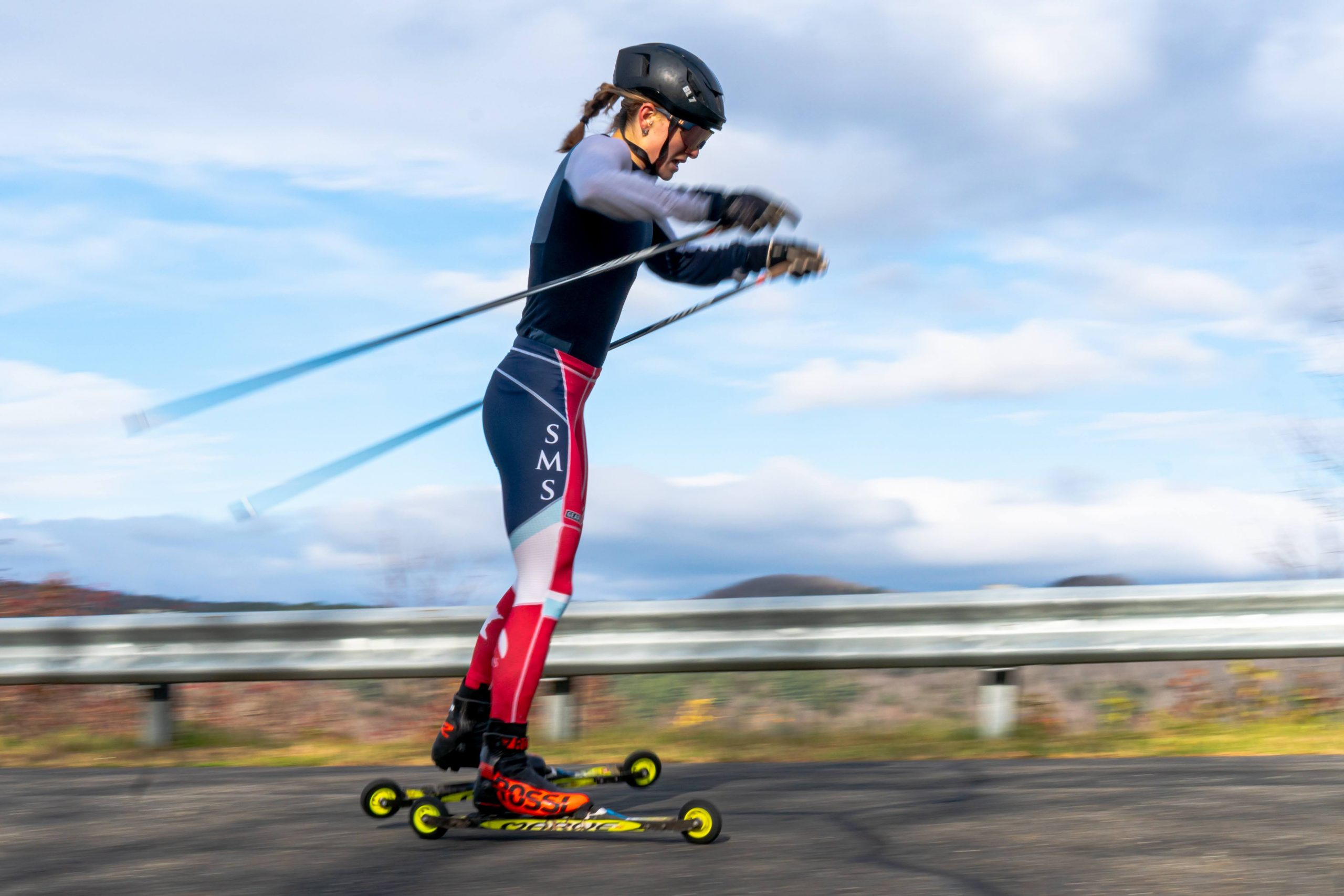
    Alayna Sonnesyn pushes the pace in a fall training session. (Photo: George Forbes/SMS)

    While the value of the project lies in its idiosyncratic freedom, the aim is competitiveness. 

    “Hopefully,” Sun Valley’s Mallory suggested, “it helps our nation to continue to make progress in distance racing.”
  • Wednesday Workout: Alpine Touring & Backcountry Skiing with NCAA Champs DU

    Wednesday Workout: Alpine Touring & Backcountry Skiing with NCAA Champs DU

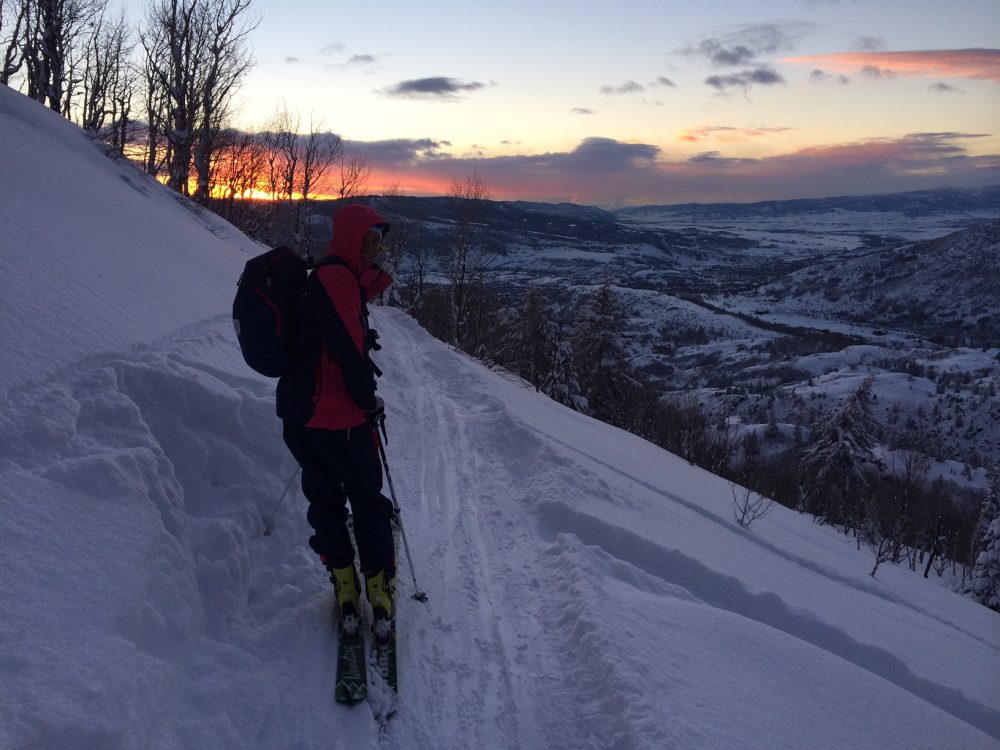
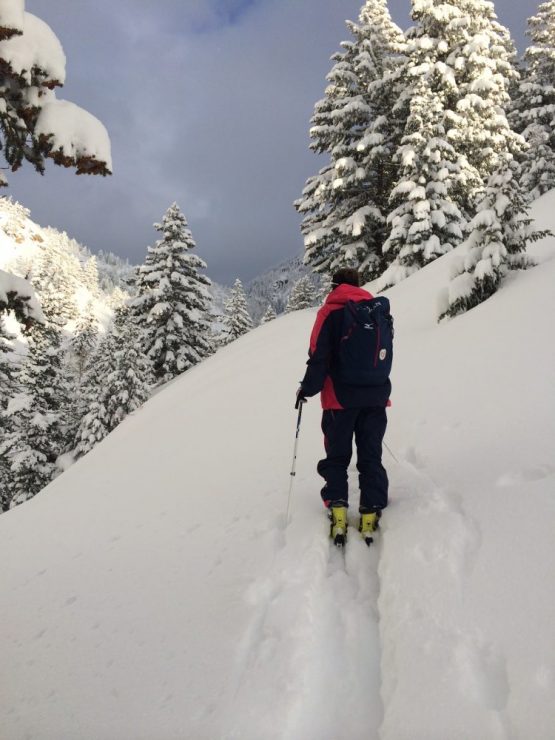
    University of Denver (DU) Head Nordic Coach Dave Stewart during a backcountry ski on Berthoud Pass in the Colorado Rockies in 2015. (Courtesy photo)
    University of Denver (DU) Head Nordic Coach Dave Stewart during a backcountry ski on Berthoud Pass in the Colorado Rockies in 2015. (Courtesy photo)

    Looking for a workout that’s been known to produce both NCAA Championship skiers AND a national title? After winning the overall at 2016 NCAA Skiing Championships in March in Steamboat Springs, Colo., the University of Denver (DU) shares a workout that — perhaps to no surprise — combines an alpine skier’s agility and strength along with the cardio fitness and adventure-loving attitude often exhibited among nordic athletes.

    ***

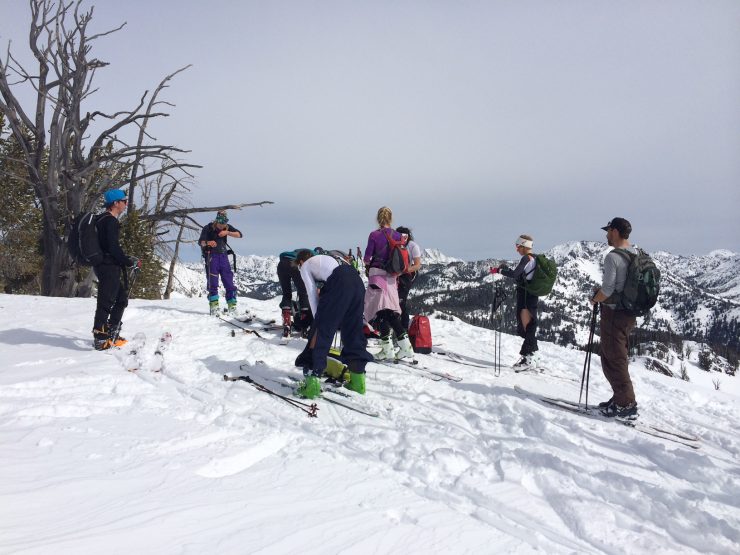
    Who says backcountry skiing and alpine touring are only workouts for the post-season springtime? For a little more than three years, the University of Denver nordic ski team has taken full advantage of the Rocky Mountain Range’s summits, not only as a way to work off the post-season blues, but as a means of in-season training as well.

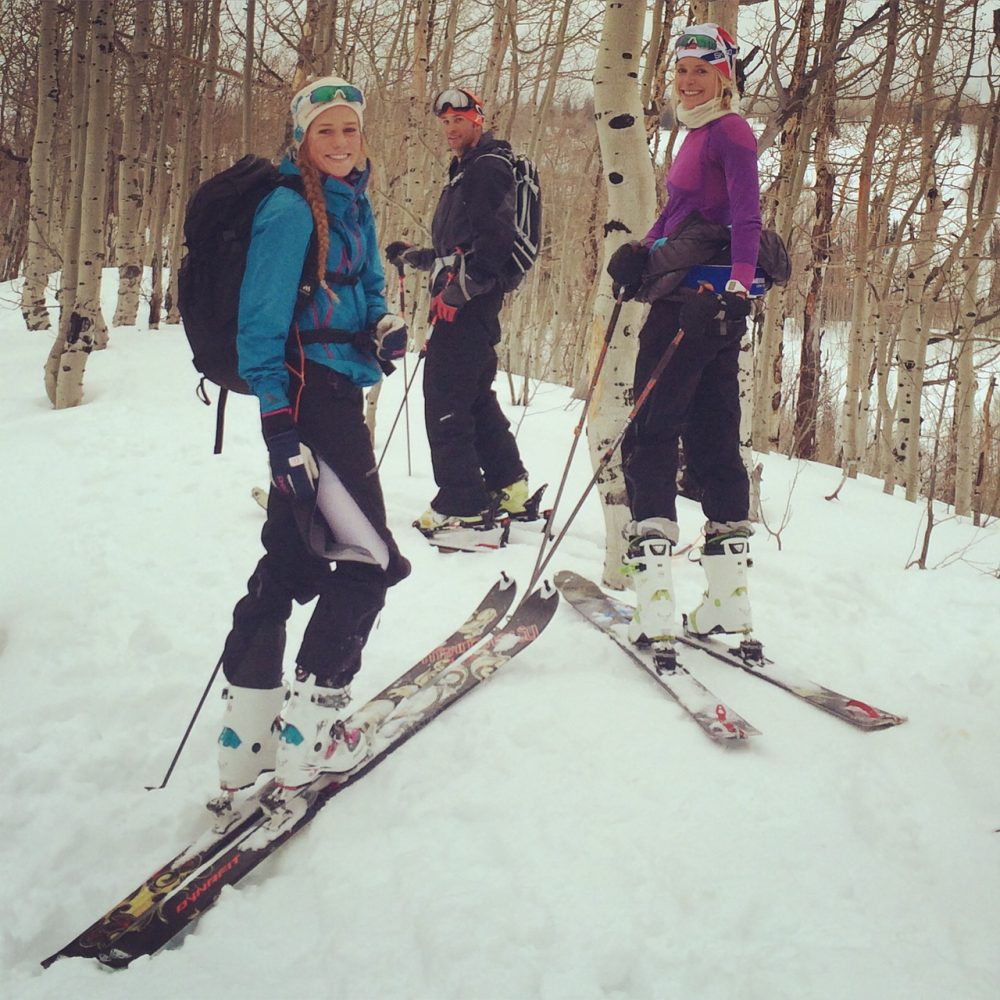
    Denver University nordic skies Maja Solbakken, Josh Smullin, Sylvia Nordskar during a back-country ski on the Buffalo Pass in 2015 (Courtesy photo)
    University of Denver nordic skiers Maja Solbakken and Sylvia Nordskar with Steamboat Springs Winter Sports Club coach Josh Smullin (c) during a backcountry ski on Buffalo Pass in 2015. (Courtesy photo)

    DU Head Nordic Coach Dave Stewart (who helped lead the Pioneers to two individual NCAA titles as well as the overall team title last season) indicated that when packing for training camps, or even ski races, slipping a set of skins into duffel bags and an extra set of touring skis is a must.

    “A few years ago, some of our skiers got really fired up about alpine touring and backcountry skiing,” Stewart wrote in an email. “So we started to bring equipment with us to training camps and race trips as well as getting in some more skinning close to Denver when at home.”

    Taking the opportunity in between race weekends, or even training sessions, to venture up and off-trail on alpine skis also prevents from getting bogged down with the regular routine of training, according to Stewart.

    “Getting out on the backcountry equipment, off the trails and in the mountains is a mini-adventure and a break from the routine,” Stewart wrote. “It’s also outstanding training and adds some more variation, something we are always looking for.”

    The tours combine strength during descents with a low intensity cardio during the climbs. As Stewart pointed out, what makes backcountry skiing a beneficial workout for cross-country skiers is the way it brings together exploration and exercise.

    “We always have a few people on the team who love spending time adventuring in the mountains, so backcountry is a way for us to combine this with race training,” Stewart wrote. “It’s good for the body and mind.”

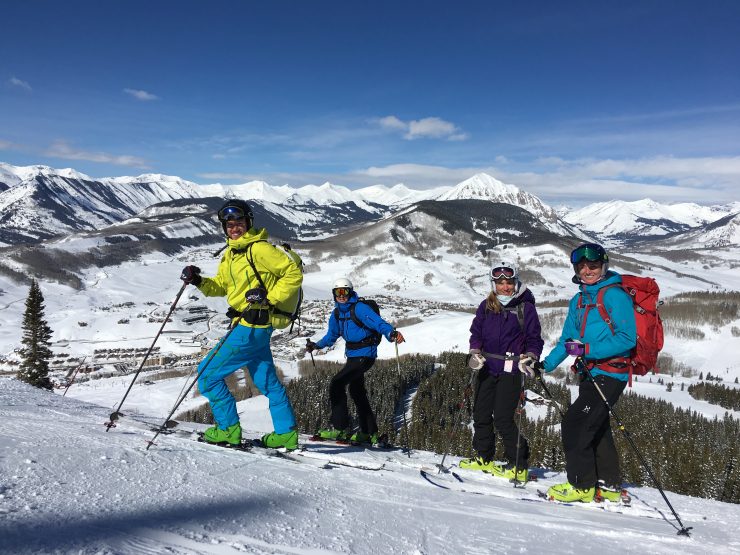
    Denver University nordic skier Trygve Markset during a back-country ski at Fish Creek, Steamboat Springs in 2014. (Courtesy photo)
    University of Denver nordic skier Trygve Markset during a backcountry ski at Fish Creek, Steamboat Springs, Colo., in 2014. (Courtesy photo)

    The Workout

    Purpose: Low-intensity workout that doubles as a break from the occasional routineness of in-season training

    Step 1: Pick a time

    • DU Head Coach Dave Stewart suggests melding alpine touring/backcountry skis into midweek training camps or even as a post-race day recovery workout.
    • “Find a good time for a tour, either the day after a race, on an afternoon midway through a training camp or on a sunny spring morning,” Stewart notes.

    Step 2: Get a Guide

    • Gathering information from someone knowledgeable about the safety of conditions is a priority for DU athletes looking to complete the workout.

    Step 3: Skin and Ski Up

    Stick your skins on and begin the uphill trek. Stewart suggests “see[ing] what you find over the next few hours,” as you work the ascent.

    Step 4: Ski Down

    After a few hours of uphill, dig into the descent.

  • Wednesday Workout: Finding Balance with Team Soldier Hollow

    Wednesday Workout: Finding Balance with Team Soldier Hollow

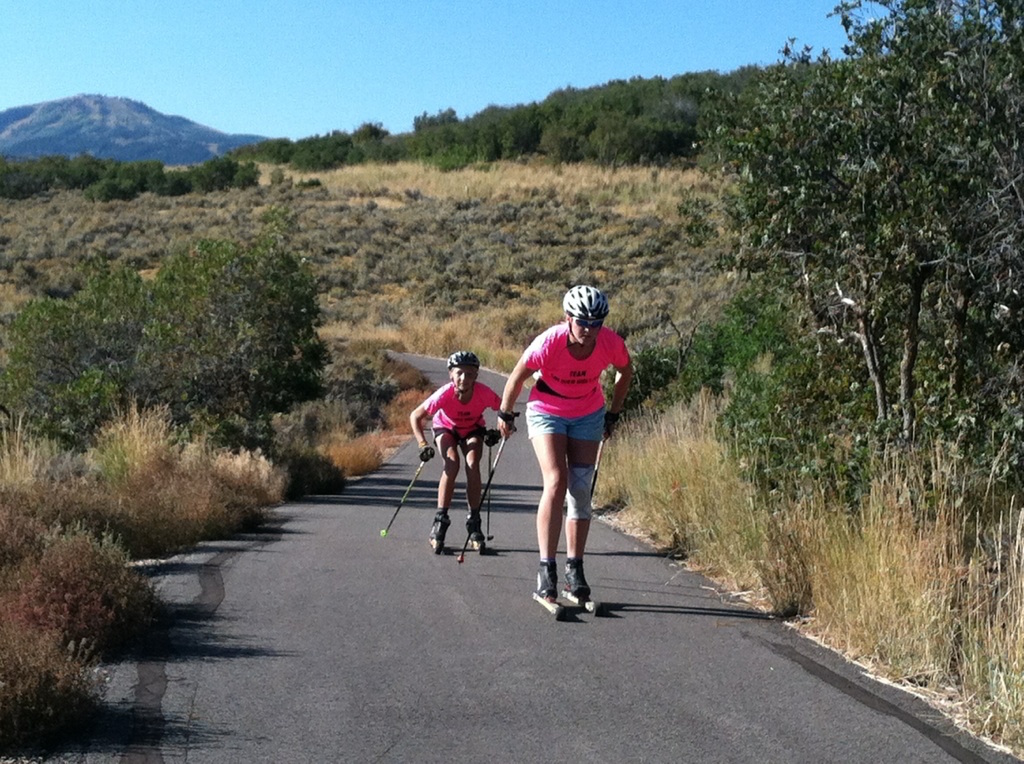
    Team Soldier Hollow athletes Ingrid Norton and Pearl Harvey. during a rollerski workout near Heber and Park City, Utah.  (Photo: Morgan Smyth)
    Team Soldier Hollow athletes Ingrid Norton and Pearl Harvey. during a rollerski workout near Heber and Park City, Utah. (Photo: Morgan Smyth)

    This week’s workout comes from Team Soldier Hollow coach Morgan Smyth, a former World Cup racer and Alaska Pacific University skier, and caters to cross-training needs. Team Soldier Hollow trains out of Midway, Utah.

    ***

    Many high school skiers are multi-sport athletes. This can be a challenge for athletes who have spent most of the summer ski training and working on their upper-body and ski-specific muscles. How do you participate in fall sports and not lose all those big summer gains?!

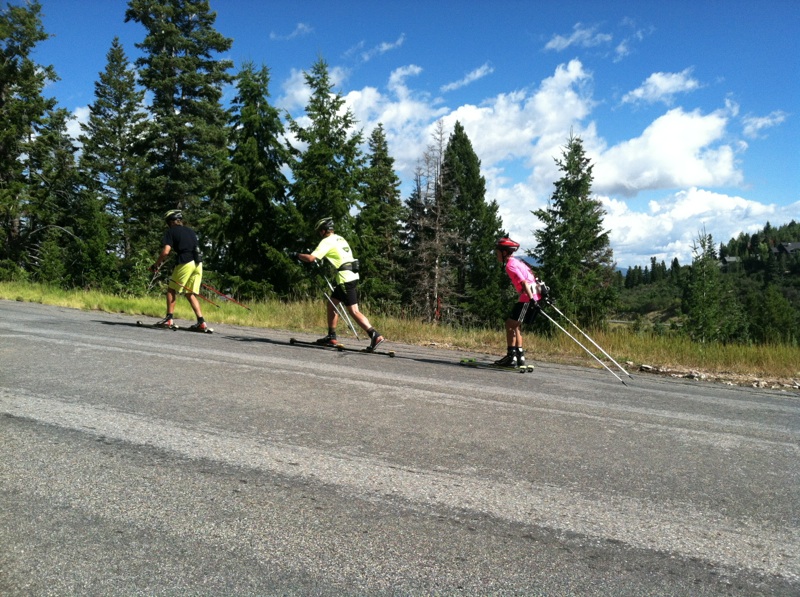
    Team Soldier Hollow athletes Xander Burkemo, Spencer Brosnahan and Mason Heimburger during a rollerski workout near Heber and Park City, Utah.  (Photo: Morgan Smyth)
    Team Soldier Hollow’s Xander Burkemo, Spencer Brosnahan and Mason Heimburger during a rollerski workout near Heber and Park City, Utah. (Photo: Morgan Smyth)

    Note: Most of the Team Soldier Hollow athletes run cross-country, but this is a great ski workout to balance with most fall sports.

    Since it is race season for cross-country running, most of the speed and interval workouts are done with the running team. We then add two easy rollerski workouts that focus on technique and maintaining ski specific strength.

    One of our key workouts is a combo classic rollerski and a mini general-strength session in the gym.

    Rollerski Workout:

    • Easy 20 min double pole warm up
    • 3 x 3 minute easy single pole
    • Technique drills

    Rollerski Total: 45-60 min

    The rollerski workout ends at the gym.

    For the general strength portion, the goal is to maintain the general upper-body strength gained during the spring and summer. The running team does a plyos workout once a week so we don’t do much lower-body strength. However, depending on your sport, some could be added especially to prevent muscle imbalances.

    Strength Workout:

    • Dynamic stretching – 10m each.
    • Butt Kicks
    • High Knees
    • Side Lunges
    • Front Lunge
    • Alligator Crawl
    • Inch Worm

    Strength:

    • Pull Ups 2×10
    • Balance Clock Touch (this is a balance drill that can be done on the ground or an inflatable disc or other unstable surface)
    • Push Ups 2×20
    • Classic Arm/Leg Swing (this is a technique/balance drill that can be done on the ground or an inflatable disc or other unstable surface)
    • Back Ups 2×12
    • Dips 2×12
    • Hanging Leg Raise Up to Bar 2×5

    Total time: 90 minutes

  • The College Workout: Negative Splits with UVM

    The College Workout: Negative Splits with UVM

    Former UVM skier Amy Glen, who won an NCAA title in the 15 k classic race in 2012 in Bozeman, Mont.

    There are few things in skiing more important than knowing physical limits of one’s own body. Just ask Patrick Weaver, head coach of the 2012 NCAA Champions at the University of Vermont.

    “More often than not, we find when we get to a race people don’t know how to listen to their body and go out at the right pace,” he said. “The common mistake is they go out too hard and then the second lap comes around and they fall apart.”

    To address this pitfall, Weaver started his athletes on negative split interval workouts three years ago. The format is exactly what it sounds like: complete a set course a bunch of times and go faster with each passing interval.

    “The whole focus is to start more controlled and still go out at a good pace, but get faster every lap,” Weaver said.

    His skiers will do between five and six intervals, at six to eight minutes each. The first will start at Level 3 and and the final lap will be at Level 4. The discipline can vary: classic, skate or running with poles, the same principle applies.

    Weaver picks rolling terrain for these workouts; on rollerskis, UVM frequently trains on the paved loops at the Ethan Allan Biathlon Club in Jericho, Vt., where “the  uphills and downhills are steep enough, and it’s pretty rolling terrain.”

    Ever since he began holding negative split workouts at UVM, Weaver says his athletes’ pacing in individual-start races has improved noticeably.

    “It seems to have gotten everyone good at listening to their bodies, and it’s reflected in our races,” he said. “Quite often we’re not the fastest in the first lap, but we are in the second lap.”

    The proof is also in the final results. In addition to winning NCAAs, UVM topped the team scores at the EISA regional championship and in three out of five regular-season carnivals in 2012. The gains have also been tangible in training. When Weaver first began conducting the workout, “less than half our team could do negative splits,” he said. “Now it’s rare that not everybody is able to do it. Some people think, ‘Oh you could cheat and go super slow,’ but we don’t really see that. We still see people going out at a good speed.”

    Weaver will do the negative split workout four to five times throughout the fall when his athletes are on campus. Once they’re familiar with it, he’ll also send it home for them to do on their own throughout the summer. “When we do paced workouts, we try to do negative splits,” Weaver said.

    The greatest benefit to forcing oneself to ski or run negative splits in practice, Weaver says, is that the athlete learns how to be more controlled in the race setting.

    “It takes more confidence to go out conservatively than it does to go out hard. A lot of people when they go into a race will go out as hard as they can go,” Weaver said. “It’s still good to go out fast, but this gives you the confidence that maybe when it seems like you’re not pushing it hard, you’re going just as fast.”

    The gains from negative split workouts are applicable even in mass starts races, when the pace at the front of the pack is at the mercy of the other leaders.

    “It helps teach you to listen to your body and where it’s at,” Weaver said. “At the end, what are your limits?”