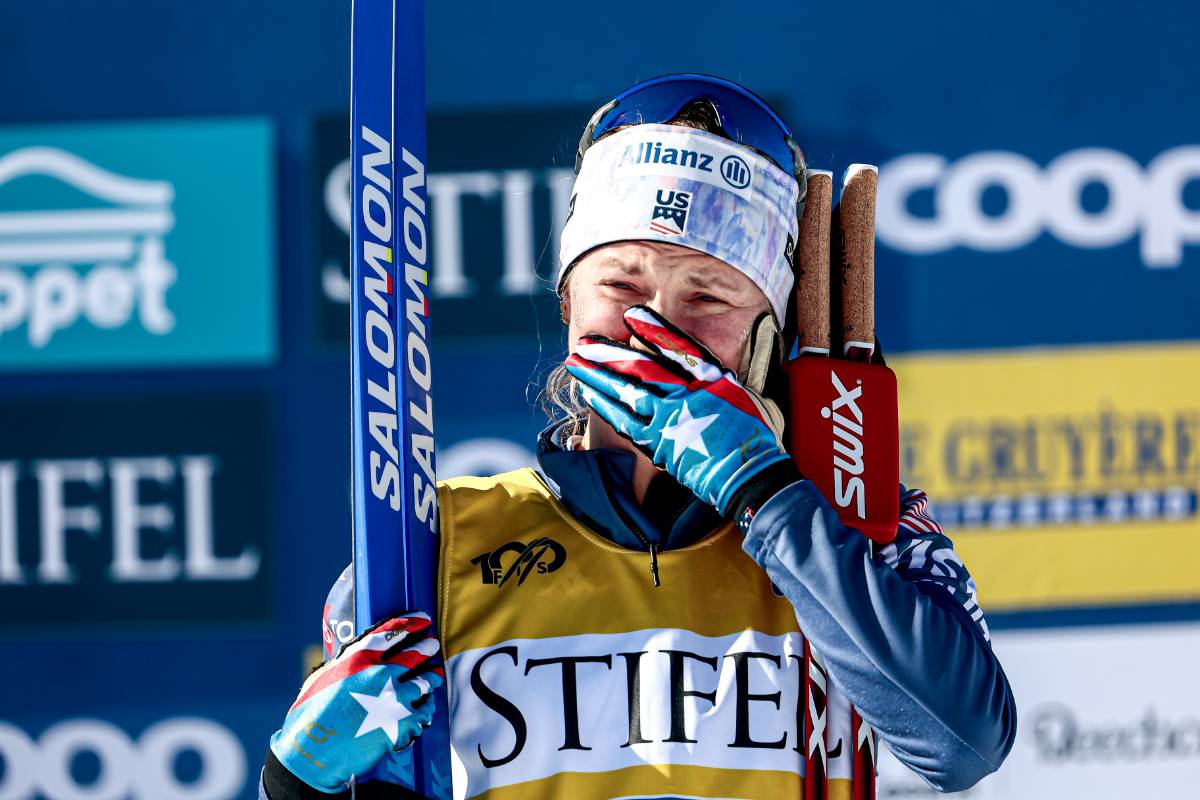
If you watched, you already know what happened. If you didn’t, we won’t spoil it for you, other than to say: You should watch.
Ben Ogden won a medal today. A bunch of Scandinavians did too. We break it down. Reach us at devon[at]fasterskier.com and nat[at]fasterskier.com.
It’s really expensive to be here in Italy. If you can, support the show and FasterSkier’s ongoing coverage with a voluntary membership. We’re also offering a special bonus to our members during the Olympics: an insider’s WhatsApp group featuring notes on Nat’s experiences in Italy, the food he’s eating, links to international coverage of cross-country skiing and more. Send nat[at]northernjournal[dot]com a confirmation of your voluntary membership and the number he should use for WhatsApp and we’ll get you signed up. You can also Venmo him directly at @nat-herz if a membership isn’t for you. We’re suggesting a minimum of $10, but we also won’t turn anyone away who wants to join because of an inability to pay.
Help Support Our Olympic Coverage!
FasterSkier will have our own Nat Herz on the ground at the Olympics, which, to be honest, is a very big financial lift for us. If you value the thoughtful work and access FasterSkier provides at championships like this one, please consider becoming a Voluntary Subscriber. Your support directly fuels the work we do to cover the people, places, and moments that make our sport special.
Jessie Diggins, left, racing at the Olympics in Italy on Saturday. (Davide Barbieri/NordicFocus)
Two years ago, U.S. cross-country skiing star Jessie Diggins was battling a relapse of an eating disorder — an episode that she publicly acknowledged at the time.
What she didn’t share until now, though, was how close it came to derailing a year in which she won cross-country skiing’s season title and celebrated the return of the top-level World Cup circuit to the U.S., in her home city of Minneapolis.
In the middle of that winter, Diggins was still struggling enough that she went in for a scan in Norway to assess her body composition. The results, according to her longtime coach Jason Cork, were “shocking,” with too many red flags — so many that U.S. Ski Team staff was prepared to stop her from racing.
The previously undisclosed mid-season ordeal is featured in a new documentary about Diggins, “Threshold,” which will premiere nationally at the end of the Olympics.
The film doesn’t cover the specifics of what the body scan revealed, other than that important indicators were off.
It depicts Diggins’ subsequent improvement, with support from family members who traveled to Europe to be with her during a scheduled Christmas break from racing.
But the documentary also underscores how persistently the eating disorder continued to plague Diggins after it emerged in her teens — through revealing conversations between her, her coaches and the filmmakers taped in hotel rooms as she traveled across Europe for races.
Jessie Diggins runs through a tunnel in a scene from the movie. (Brinkema Brothers Productions)
The U.S. Ski Team announced the film’s debut in a press release last week.
Diggins is a longtime advocate for destigmatizing eating disorders through public discussion, and she’s written about her fight with bulimia in her autobiography, “Brave Enough.” She said at a news conference in Italy just before the start of the Olympics that she decided making the movie would be worth the cost to her privacy.
“I’m willing to put my story on the line to help change this,” she said. “I hope that it inspires people to have really critical conversations that can end up actually saving lives. And I hope that it inspires coaches to learn more about these serious illnesses and have resources handy to help the athletes that are under their care.”
The documentary’s release on the Peacock streaming service will be the culmination of three years of work by a pair of young cross-country ski racers-turned-filmmakers, brothers Torsten and Lars Brinkema, who, like Diggins, grew up in Minnesota.
TV and movie star Patrick Dempsey, a Diggins fan and an avid skier, is an executive producer.
“Close to the edge”
Torsten and Lars Brinkema were 24 and 20 years old, respectively, when they first showed up at a U.S. Ski Team spring training camp in Oregon in 2023, Torsten said in a phone interview.
They’d come to film at the invitation of U.S. star Ben Ogden, whom Torsten had raced against on the university circuit when Ogden was competing for the University of Vermont and Torsten was at Colby College.
Unlike other videographers who had done work with the team in the past, the brothers could actually keep up on skis and knew how to stay out of the way — making for an easy camaraderie with the athletes, Torsten said.
“I think we just weren’t very intimidating,” he said. “We were just these guys that were hanging out in the sun with our cameras.”
Lars and Torsten Brinkema (Brinkema Brothers Productions)
On a ski with Diggins near the end of the camp, Torsten said, they talked through possibilities for further filming, particularly around Diggins’ upcoming home World Cup race.
“I think she also felt a level of trust pretty soon with us because we’re from Minnesota,” Torsten said. “On both sides, a light bulb kind of went off, thinking: If there’s any season to follow, it’s got to be this one.”
Thus began an odyssey that took the Brinkema brothers around the world with Diggins and the team, through a training camp in New Zealand and races in northern Scandinavia, Canada and Minneapolis.
They considered other ideas for the structure of the project, including a Netflix-style docuseries on the team; a broader focus on the whole international World Cup circuit; and a narrative strand documenting Ogden grappling with the death of his father from cancer.
In the end, though, fitting together an Ogden and Diggins narrative was too much for one movie, Torsten said.
“We ended up picking Jessie’s and really going all the way with it,” he said.
While Diggins had spoken publicly about her relapse before the start of the 2023-2024 season shown in the film, the documentary reveals how she continued to struggle not just in the summer and fall but through the winter — even as she was racking up podium finishes.
One coach, in the film, describes how Diggins had previously warned him about her ability to hide when she’s not doing well — and how he couldn’t trust what she was telling him at the time.
“She got very close to the edge,” Chris Grover, the U.S. cross-country program director, said in an interview. “It was incredibly stressful.”
In the film, another coach said the U.S. staff warned Diggins she was not going to continue to ski.
“A hard message was delivered from a lot of people that really care about her,” Grover said in the interview.
But Diggins, he said, “got the message.” She spent the holiday recovering with her family and “did what she had to do to get back to a healthy space,” Grover said.
After positive results from bloodwork and a bone scan, Diggins returned to racing after the winter break, won the Tour de Ski stage race and then went on to stand on the podium in one of the World Cup races in Minneapolis.
Jessie Diggins stands on the World Cup podium in front of her home crowd in Minneapolis. (Nordic Focus)
The filmmakers ended up with more than 15 interviews with Diggins, all of which were at least two hours — and 400 hours of footage total, Torsten said.
Dempsey, the actor, joined the project after Diggins, knowing he was a fan of hers, sent him a message on Instagram on the Brinkema brothers’ behalf. They didn’t expect a response, Torsten said, but “he got back to her two minutes later and said, ‘Send the brothers to Maine!’”
“We showed up at his house and asked him to be a producer to help us navigate the film world,” Torsten said.
To pay for the work of transforming the raw material and race footage into a fully produced documentary, the brothers raised tax-deductible contributions in partnership with a Minnesota nonprofit that supports local filmmaking. Key financial support also came from one of Diggins’ main sponsors, an eating disorder treatment clinic called the Emily Program.
Diggins had approval power over the final version of the film, which Torsten described as “part of the trust” during the filmmaking process. She watched four different versions over a period of six or so months, mainly giving small notes about things like voiceovers, Torsten said.
Beyond streaming on Peacock, he said, a theatrical release is also planned, with hopes of debuting at this year’s end-of-season World Cup races in Lake Placid, New York. There’s also hope that the movie could play in markets in Europe, where Diggins has a sizeable fan base.
“It’s been three years of our life, and we could not be more proud that our debut feature film is about this sport that we grew up doing and this person that we’ve looked up to our whole life,” Brinkema said. “We’re stoked.”
Men’s racing is underway at the Olympics, and there were some surprised on Sunday. Norwegian legend Pål Goldberg joins us to break down a day that included some strong and some less-than-strong performances from his country’s squad.
Devon is still out of commission, but you can reach us at devon[at]fasterskier.com and nat[at]fasterskier.com. We’ll be back Tuesday.
It’s really expensive to be here in Italy. If you can, support the show and FasterSkier’s ongoing coverage with a voluntary membership. We’re also offering a special bonus to our members during the Olympics: an insider’s WhatsApp group featuring notes on Nat’s experiences in Italy, the food he’s eating, links to international coverage of cross-country skiing and more. Send nat[at]northernjournal[dot]com a confirmation of your voluntary membership and the number he should use for WhatsApp and we’ll get you signed up. You can also Venmo him directly at @nat-herz if a membership isn’t for you. We’re suggesting a minimum of $10, but we also won’t turn anyone away who wants to join because of an inability to pay.
Help Support Our Olympic Coverage!
FasterSkier will have our own Nat Herz on the ground at the Olympics, which, to be honest, is a very big financial lift for us. If you value the thoughtful work and access FasterSkier provides at championships like this one, please consider becoming a Voluntary Subscriber. Your support directly fuels the work we do to cover the people, places, and moments that make our sport special.
The race was ON from the gun: We recap the women’s 20-kilometer pursuit, which was a rough go for Jessie Diggins and a tight fight between the Scandinavian heavyweights.
Alaskan Holly Brooks, the retired Olympic World Cup racer, joins us after watching the race in person. We hope to get proof of life from Devon soon.
In the mean time, reach us at devon[at]fasterskier.com and nat[at]fasterskier.com. We’ll be back tomorrow.
Help Support Our Olympic Coverage!
FasterSkier will have our own Nat Herz on the ground at the Olympics, which, to be honest, is a very big financial lift for us. If you value the thoughtful work and access FasterSkier provides at championships like this one, please consider becoming a Voluntary Subscriber. Your support directly fuels the work we do to cover the people, places, and moments that make our sport special.
This article was made possible through the generous support of our voluntary subscribers who have helped put our Nat Herz on the ground at the Olympics. If you value coverage like this, please support FasterSkier with a voluntary subscription.
Maddie Hooker of Australia races in Saturday’s skiathlon at the Olympics in Tesero, Italy. (Davide Barbieri/NordicFocus)
TESERO, ITALY — There’s having your Olympic debut. Then there’s having your Olympic debut in an event that you’ve literally never raced in before.
That was the story Saturday for Maddie Hooker, a 21-year-old Australian for whom Saturday’s Olympic skiathlon race was the first time she’d ever competed in the event.
Hooker is not a skiing novice: She competes on the U.S. East Coast collegiate circuit for Colby College in Maine. But the skiathlon — which combines cross-country’s two techniques, with a swap of skis and poles in the middle of the race while the clock is still running — is rarely contested outside of international championships, given its logistical complexity and requirements of multiple sets of gear.
“What other sport would you actually turn up for the Olympics not actually having done the event?” Jake Hooker, Maddie’s father, said in an interview at the cross-country skiing venue just before his daughter hit the trails. But, he added: “Why not start at the Olympics?”
Maddie Hooker made it three-fourths of the way through the 20-kilometer race before she was lapped and pulled by the organizers — but she was still buoyant afterwards.
She said the experience of being thrown into the deep end is “the beauty of being Australian” — a country that doesn’t exactly have a storied cultural tradition of cross-country skiing.
Nonetheless, the nation has periodically produced competitive athletes on skiing’s international circuit, and even some who have grown up in urban areas: Rosie Fordham, who grew up in Sydney and now attends the University of Alaska Fairbanks, placed 13th in a top-level World Cup race earlier this year.
Hooker, who’s from Melbourne, learned to ski on trips to the United States, attended a skiing-focused high school in Vermont called Stratton Mountain School, and now goes to Colby College in Maine.
Maddie Hooker competes in a race on the U.S. East Coast. (Daryn Slover)
She said she was not expecting to qualify for the Olympics this year but had strong early-season results and ended up rounding out Australia’s women’s team as the fourth member.
For the skiathlon, her biggest challenge might have been procuring a pair of event-specific boots — a sort of hybrid of the more supportive boots with an ankle cuff used for cross-country’s skating technique, and the lower profile version used for classical striding. They’re scarce, and the family’s contact at Fischer Sports, Hooker’s ski company, didn’t have any, said Jake Hooker.
Maddie Hooker’s parents Jake Hooker and Antoinette Walshe helped her find a pair of the rare boots used by cross-country skiers in skiathlon events. (Nathaniel Herz/FasterSkier)
After “hours on the internet trying to find a pair of boots,” he said, “eventually we found a pair.”
Then, in the days before the race, Hooker spent time practicing the ski exchange — the part of the event where athletes make a pit stop as the clock runs to exchange their classic skis and classic poles for skating equipment.
“I find getting the pole straps off the hardest. But I kind of picked it up, just followed my teammates,” she said.
The event itself, she said, was fun. While some athletes are stronger in one technique over the other, Hooker said she doesn’t have a preference.
“I think it kind of suits me quite well doing both,” she said. “And at the end of the classic I was definitely very happy to change over to skate.”
She’ll race three more events, Hooker said, before the Olympics are over.
Help Support Our Olympic Coverage!
FasterSkier has our own Nat Herz on the ground at the Olympics, which is a significant financial lift for us. If you value the thoughtful work and access FasterSkier provides at championships like this one, please consider becoming a Voluntary Subscriber. Your support directly fuels our work to cover the people, places, and moments that make our sport special.
Maddie Hooker (AUS) and Nadezhda Stepashkina (KAZ), (l-r) during the freestyle leg of the Olympic Women’s 20 k Skiathlon Tesero (ITA). (Photo: Vanzetta/NordicFocus)
Andrew Kastning is one of a small crew of Americans who work as commentators on late-night broadcasts of European cross-country ski races. He works from laptops and a television in his home in Anchorage, Alaska, and says he draws energy from a jumpsuit donated by a local U.S. Ski Team member.
PREDAZZO, ITALY — By day, Andrew Kastning’s life sounds conventional: He’s a father of three, with a desk job in Alaska doing permitting work for a federal agency.
During the winter? It’s another story.
On periodic Friday and Saturday mornings, you’ll find Kastning awake at 1 a.m., 2 a.m. or 3 a.m., standing in his living room in a sports jumpsuit, wearing a headset and delivering a monologue while watching his television.
Welcome to the strange world of being a North American television announcer of Olympic-level cross-country skiing.
With nearly all of the sport’s premier races taking place at European venues, those following cross-country from stateside have to pull overnight shifts to catch the events on an internet livestream.
Kastning, who’s paid by the International Ski Federation to call an English-language broadcast, has outfitted his wife with earplugs and a face mask that plays white noise so she can sleep through his calls. But he still woke his family up with some particularly enthusiastic play-by-play two weeks ago, when a fellow Alaskan, Gus Schumacher, cracked the podium in two World Cup races in Switzerland.
“My oldest daughter said she dreams sometimes and hears me calling the race, like: ‘Jessie Diggins!’” said Kastning, referring to the U.S. Olympic medal-winning skier.
Other regular cross-country broadcasters include Chad Salmela, a former competitive biathlete and veteran analyst from Minnesota, along with Kikkan Randall, the retired Olympic gold medal winning cross-country skier, who lives in Anchorage.
Both Randall and Salmela also pull the weekend wee-hours shifts as regular hosts of the English language livestream. And the pair will be featured this month as commentators on NBC’s national Olympics broadcast — though rather than being on site in Italy, they’ll be working out of an office complex in Connecticut.
The NBC Olympic cross-country broadcast team of Chad Salmela, right, Kikkan Randall and Steve Schlanger prepared for the first event at an office complex in Connecticut. (Courtesy photo)
Still, the setup will be an improvement over the 2022 COVID Olympics, when the broadcasters were at the same complex but sealed into individual booths connected by plexiglass windows — so they wouldn’t be sharing the same air.
It’s also the first time cross-country skiing will have Olympic commentary from announcers who are working consistently together in the leadup to the Games, with a U.S. Ski Team donor helping to boost Salmela’s and Randall’s pay in recent years to keep them on the livestream for non-Olympic World Cup races.
Cross-country athletes, coaches and boosters say regular television coverage of the sport could ultimately help make the U.S. more competitive with traditional ski powerhouses like Norway and Sweden.
“An underappreciated role of the TV product is how it builds kids’ dreams of being future champions,” Randall said in an interview. “This can actually be an important piece of developing our pipeline for the future.”
Randall’s own experience shows how much more accessible cross-country skiing has become for American spectators in recent years. A digital platform, Ski and Snowboard Live, now allows consumers to pay to stream international races while they’re happening or on tape delay.
When Randall, 43, was in high school, she said, “I remember sending in a check via mail to the National Ski Education Foundation to get VHS tapes of the World Cups of the year before.”
Kikkan Randall competing during her World Cup career in Estonia. (Fischer/Nordic Focus)
“Outside the Olympics, that was the only way to see World Cup level skiing,” she said. It was “pretty much completely inaccessible,” she added.
Randall has now fully embraced her role translating cross-country skiing’s sometimes-complicated race formats to a mass audience.
“I was curious: Am I going to know what to say? It’s one thing to have lived it, and it’s another to be able to talk about it,” she said. “But it’s come to me more naturally than I thought it would, and I really enjoy it. I get, kind of, a thrill from it — and it makes me happy to still feel that connection to the sport.”
With two kids and a full-time job leading Anchorage’s ski association on top of the commentary gig, Randall said she has to weigh opportunities carefully. It’s helped that the ski team donor, a strategic consultant named Liz Arky, offered to bump up the pay rate for the core broadcast team of Randall and Salmela — who now earn more than the few hundred dollars a night Kastning gets when he fills in.
“They can hook you, because they’re such good storytellers, and they’re so immersed in it, and they’re so passionate about it — and I just feel like that’s infectious,” Arky said in an interview. “It’s incumbent on us to grow our community and grow the audience.”
Salmela, meanwhile, pulls double duty as a commentator for both biathlon and cross-country races that are nearly all in Europe. The repeated early morning wakeups are a grind, and Salmela said his doctor has questioned whether it’s worth the cost.
“It’s a hard existence for a guy who’s 54 and dealing with Parkinson’s,” Salmela said. “It’s a tough call, because I recognize that it’s important for the sport.”
Salmela’s looking forward to the Olympic broadcasts on NBC, though, as they offer the commentators substantially more support than they get for the World Cups during the rest of the season: statistics researchers, a producer, a sound assistant. Salmela also said he’s enjoyed the partnership with Randall, who he called a “natural analyst.”
Chad Salmela interviews cross-country skier David Norris at the American Birkebeiner in 2023. (American Birkebeiner Ski Foundation)
“Her content is superb,” he said. “Because she’s smart, and she’s been one of the best at the sport — so, her perspective is well-spoken and legitimate.”
Kastning’s job can be tougher: He’s a solo practitioner for all his broadcasts, with no other analysts to banter with or riff on his takes.
He spends lunch breaks in the days before the races looking for storylines and fiddling with an Excel statistics spreadsheet. He’ll try to nap a bit in advance, then wakes up, closes his sleeping kids’ bedroom doors and heads into the living room for a sound check that takes place an hour before the start.
The toughest nights are when he’s calling two separate races, one for men and one for women: There’s generally an hour, sometimes two, between them.
“It’s really tempting to take a nap in between, because we’re talking like 2 to 3 a.m.-ish,” he said.
Kastning draws energy, he said, from his jumpsuit, which was donated by Alaska Olympic cross-country skier JC Schoonmaker.
After the soundcheck, Kastning said, “I’m kind of waiting until 10 minutes out — the countdown begins.”
“And then I’m off and running,” he said.
Help Support Our Olympic Coverage!
FasterSkier has our own Nat Herz on the ground at the Olympics, which is a significant financial lift for us. If you value the thoughtful work and access FasterSkier provides at championships like this one, please consider becoming a Voluntary Subscriber. Your support directly fuels our work to cover the people, places, and moments that make our sport special.
The bad news? Devon is indisposed and isn’t here for the Olympic preview podcast. As a consolation: We have a great guest in Philip Gadd, a sports reporter with the Swedish tabloid Expressen.
Philip takes us through his new podcast about Frida Karlsson and Ebba Andersson’s rivalry, the feast and famine of Sweden’s women’s and men’s teams, and other Olympic predictions. You can read about his dystopian experience in an isolation hotel at the last Olympics here. (Spoiler alert: He eventually got out.)
Reach us at nat[at]fasterskier.com and devon[at]fasterskier.com. We’ll be back after tomorrow’s race.
Help Support Our Olympic Coverage!
FasterSkier will have our own Nat Herz on the ground at the Olympics, which, to be honest, is a very big financial lift for us. If you value the thoughtful work and access FasterSkier provides at championships like this one, please consider becoming a Voluntary Subscriber. Your support directly fuels the work we do to cover the people, places, and moments that make our sport special.
The Olympics are facing criticism from athletes and climate activists over sponsorship by ENI, Italy’s state-controlled oil company. (Nathaniel Herz/FasterSkier)
PREDAZZO, ITALY — Two months before the Winter Olympics were set to kick off in Italy, the torch relay, carried by runners from Greece to the Olympic venue, made an unusual stop: the headquarters of Italian oil giant ENI, where an executive from one of the company’s lower-carbon subsidiaries acted as a torch bearer.
The event tied in with what’s become, in recent days, a controversial endorsement deal — one that made ENI a “premium partner” of the Olympics at a time when athletes and fans are increasingly calling on winter sports organizers to renounce fossil fuel sponsorship.
The company is also hosting the “ENI Winter Village” in Milan during the Olympics. Visitors can test out a snowboard simulator, have a virtual snowball fight and try an urban cross-country ski trail made with “innovative polymers” produced by ENI’s chemical company that “makes skiing possible in the city.”
Nikolai Schirmer, a Norwegian extreme skier and YouTuber who’s helping lead a campaign called Ski Fossil Free, said it makes no sense for athletes and events dependent on snow to be advertising for the businesses whose products, through the greenhouse gases emitted by their combustion, pose an existential threat to winter sports and future Olympics, said
“Winter sports, right now, are like a string quartet on the Titanic, playing as the ship is sinking,” Schirmer said. “Not only that, they’re advertising for icebergs while they’re doing it.”
Nikolai Schirmer is a Norwegian extreme skier known for his human-powered ascents. He also has a law degree and once spent a winter living in Alaska. (Nathaniel Herz/FasterSkier)
Schirmer, 35, spoke in an interview Wednesday outside the main media center in Milan, just after he’d delivered a stack of more than 20,000 petition signatures to Olympics officials.
His campaign — endorsed by Olympians like Alaskan cross-country skier Gus Schumacher and Greenlandic biathlete Ukaleq Slettemark — is making what Schirmer describes as a very modest ask: that the Olympics and the umbrella organization that coordinates global ski competitions, the International Ski Federation, examine the ethics of winter sports taking money from fossil fuel companies and draft a report.
A separate letter calling for the Games to reject future fossil fuel sponsorships, with current and former Olympian signatories, is set to be released in the coming week, said the Swedish cross-country skier who coordinated it, Björn Sandström. And Greenpeace, the international environmental advocacy group, has debuted its own protest video showing animated Olympic skiers, skaters and bobsledders being washed away by a flood of crude oil.
In past years, climate campaigners have disrupted top-level cross-country ski races in Europe. And in 2025, they threatened a demonstration at the World Championships in Norway over sponsorship by state oil company Equinor — though they ultimately stood down after a group of top athletes agreed to press ski race organizers for more stringent sponsorship guidelines.
International Olympic Committee officials, asked at a Wednesday news conference about Schirmer’s initiative, praised athletes for speaking up, with President Kirsty Coventry saying they “have a platform to speak up, and to say, ‘Hey, these are the things that we want to see you do better.’”
“We’re always going to try to be better, and ask our stakeholders to be better,” said Coventry, a former Olympic swimmer. “But that also takes time.”
Committee officials also pointed to sustainability efforts for this winter’s Games: renewable electricity at venues, a fleet of cars that includes 21% electric vehicles, and more than 20,000 pieces of recycled furniture from the last Summer Olympics.
But Christophe Dubi, the Olympics executive director, did not respond directly to the petition’s request.
“We have to recognize one thing: Climate is a challenge for all of us,” Dubi said. “As sport, as well, we’re not immune to those climate challenges, and we have to hear voices.”
Officials from state-controlled ENI did not respond to requests for comment. The company told Reuters in a statement that it shares “the importance of addressing climate change” and will continue investing in renewables to hit its net‑zero emissions target by 2050.
At the Games in Italy, numerous athletes have arrived with stories about witnessing the loss of winter and snow.
U.S. downhill star Lindsey Vonn, at a separate news conference this week, said she’s seen, firsthand, “what global warming has done.”
“I’ve been skiing on glaciers since I was nine years old,” said Vonn, 41. “And most of the glaciers that I used to ski on are pretty much gone.”
Another U.S. athlete who has engaged in climate advocacy for several years, 25-year-old Gus Schumacher, lived through some mostly snowless winters growing up in Alaska; he’s also endorsed Schirmer’s campaign.
U.S. cross-country skier Gus Schumacher. (Federico Modica/Nordic Focus)
“We want to be able to ski, and want to be able to ski on natural snow, because that’s the best way to do it,” Schumacher said in an interview. “And I don’t want to support companies that are adding fuel to that not being a possibility.”
Fossil fuel companies like ENI are using their association with events like the Olympics to help burnish their image and diminish public pressure to more quickly transition away from fossil fuels, argued Schirmer.
ENI is using its Olympics sponsorship to advertise sustainability and renewable energy focused business lines. But its oil production has grown in recent years — and is set to keep growing through 2030. The company’s biofuels and renewables companies still bring in less than one-tenth of the earnings as its oil and gas holdings — though its chief executive last year told the Financial Times that profits from the green energy businesses should be equal to those from hydrocarbons by 2035, and exceed them by 2040.
“The Olympics are willingly greenwashing ENI — an energy still heavily invested in fossil fuels,” Schirmer said. “And it doesn’t look like that’s going to change any time soon. So, in my mind, it looks like the Olympics, and organized skiing and snowboarding, are promoting their own demise.”
Help Support Our Olympic Coverage!
FasterSkier has our own Nat Herz on the ground at the Olympics, which is a significant financial lift for us. If you value the thoughtful work and access FasterSkier provides at championships like this one, please consider becoming a Voluntary Subscriber. Your support directly fuels our work to cover the people, places, and moments that make our sport special.
U.S. Olympic men’s cross-country ski team member Ben Ogden, second from left, speaks at a news conference Thursday, Feb. 5 at the competition venue in Tesero, Italy. From left, Ogden’s teammates are Zak Ketterson, JC Schoonmaker and Zanden McMullen. (Nathaniel Herz for FasterSkier)
PREDAZZO, ITALY — The Olympics have traditionally been known as a kind of sports melting pot, where competitors from different backgrounds and countries could share meals and trade pins at tight-knight athletes’ villages.
For winter sports, though, those social traditions ground to a halt at the COVID Olympics in China in 2022. And four years later, it turns out they may not be coming back, at least entirely.
At this year’s Games in Italy, to avoid the risk of illness, multiple cross-country ski teams are skipping the athletes’ village and staying at private hotels — with participants even restricting contact with their own family members and loved ones who have come to watch.
U.S. superstar Jessie Diggins, who’s retiring after this season, said at a news conference Thursday that her husband will be traveling to Italy to spectate — presenting what would otherwise be a precious chance for Diggins, who spends her winters thousands of miles from home racing in Europe, to spend time with him.
Canoodling is not in the cards, though.
The couple can spend unmasked time outdoors together, she said. But inside, “we are still going to be wearing masks,” she added.
“He wants to protect my health too,” Diggins said. “We’ve been waiting for 10 years to have the rest of our lives together all the time and not worrying about sickness. We can wait.”
Masked members of the U.S. women’s Olympic cross-country ski team pose for a photo Thursday, Feb. 5 after a news conference at their competition venue in Tesero, Italy. From left , Jessie Diggins, Hailey Swirbul, Sammy Smith, Julia Kern, Novie McCabe and Rosie Brennan. (Nathaniel Herz for FasterSkier)
The U.S. cross-country team is living outside the Olympic village in an off-site hotel during the entirety of the Games — a substantial financial investment intended to protect “health and wellness” and to keep tabs on who comes in and out of their living space, Kristen Bourne, one of the American coaches, said in a statement.
“Our top priority is making sure our athletes and staff stay healthy for the entirety of the Games,” Bourne said. “It’s also great to have all of our team together in one place.”
Some athletes have famously pushed through illness to deliver transcendent performances in other sports — like Michael Jordan’s legendary “flu game” in the NBA championships in 1997, when he scored 38 points after a miserable night of vomiting and diarrhea that he later blamed on tainted pizza.
Diggins even won a silver medal in a long-distance race at the 2022 Games after what she said was her own case of food poisoning.
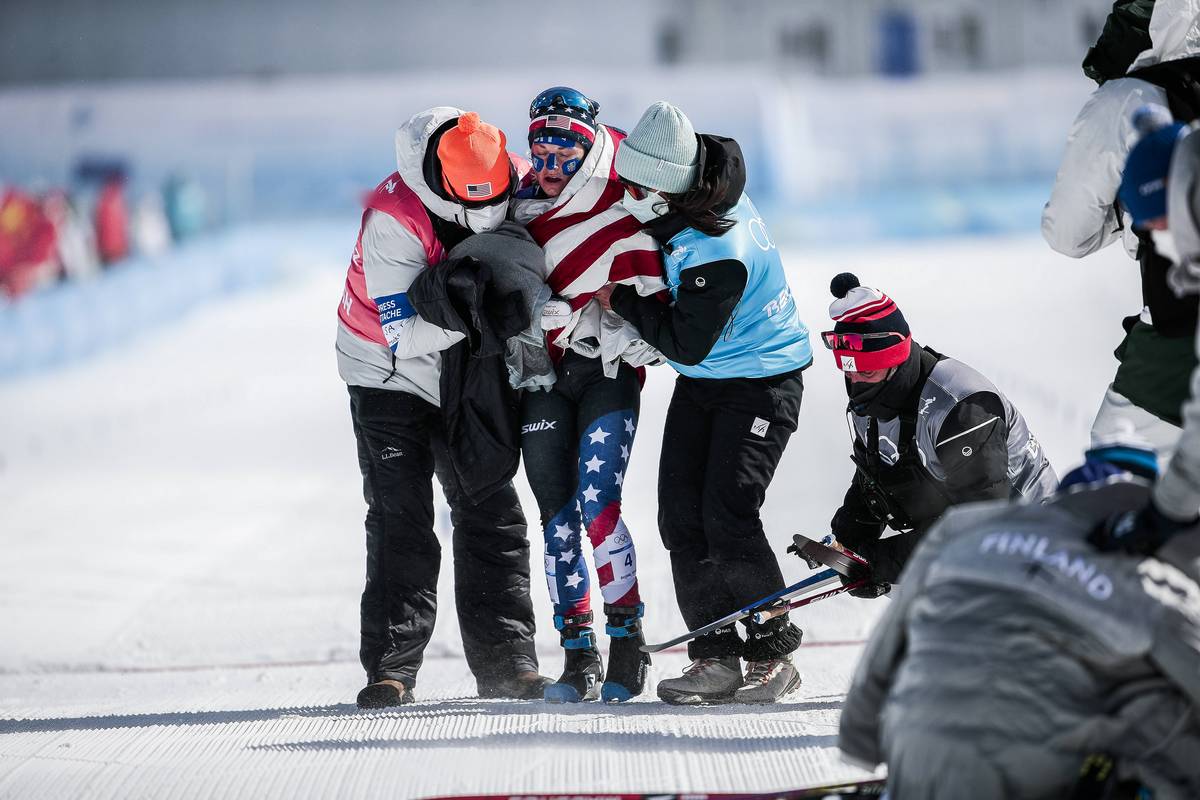
After collapsing at the finish line, Diggins is helped off the course following the Olympic 30 k skate, where she pushed through food poisoning to earn a silver medal. (Photo: NordicFocus)
But cross-country skiers are especially vigilant about respiratory viruses like COVID or the flu because of their sport’s dependence on their lungs. Infection could derail an athlete’s hopes for the full Olympics.
“You definitely get impacted more,” said Kendall Kramer, an American team member from Alaska. “Your body has to be definitely 110% to do the sport on any given day.”
The U.S. team, Kramer said in a phone interview Wednesday, has collectively agreed to form, in effect, an Olympic bubble among themselves.
“Worst-case scenario is someone’s a little more loosey goosey because they don’t have as much on the line. And then they would get some hard-hitters sick,” she said.
U.S. coaches Kristen Bourne and Matt Whitcomb wore masks at Thursday’s news conference. (Nathaniel Herz for FasterSkier)
That means athletes will miss out on some of the traditional social aspects of the Games, she acknowledged. But it’s also creating a tighter and more private living experience for the team, Ben Ogden, one of the U.S. men, said at a news conference.
“We’re pretty locked down trying not to get sick,” he said. “But that’s okay — because we have six, seven of our best friends inside the bubble.”
At least one other cross-country ski team is on a similar program. The Swedish tabloid Expressen reported that one of the team’s stars, Ebba Andersson, arrived Tuesday in Italy and will isolate from her teammate and boyfriend, Gustaf Berglund, for the first 48 hours after her arrival.
That’s the most likely window for her to start experiencing viral symptoms if she was exposed during travel, the team’s doctor told Expressen.
Ebba Andersson (SWE) skiing in Val di Fiemme, Italy, during the Individual Sprint of the Tour de Ski on the Olympic course. (Photo: Modica/NordicFocus)
“We have closed our hotel. We don’t want outsiders in, and we don’t want infections to come in,” the doctor, Rickard Noberius, told the newspaper. “So, it’s just us and the family who run the hotel — and they have been given strict restrictions as well.”
The risks of inadequate precautions have become painfully apparent for other athletes in Milan — specifically, the Finnish women’s hockey team. The squad has been hit by an outbreak of norovirus that’s either infected or forced the isolation of 13 players, said Lassi Kuisma, a reporter with Iltalehti, a Finnish newspaper, who’s covering the story from Milan.
Just eight players and two goalies were able to practice Thursday and the team had to postpone its first game, against Canada. Players are currently facing harsh scrutiny in the Finnish press because of a video filmed Sunday that they posted on Instagram of team members singing a Backstreet Boys song at karaoke at a restaurant outside the Olympic village.
“Nobody knows where the virus came from, of course,” Kuisma said in a phone interview. “But the team is putting itself under the microscope because they did a thing like that right before the tournament.”
A columnist at Kuisma’s newspaper contrasted the hockey players’ conduct with that of Finnish cross-country ski star Iivo Niskanen, who’s known for taking strict precautions about his health. Her headline, in a rough translation, said that the women’s hockey team “really screwed up — Iivo Niskanen would never do the same.”
As for the American skiers, it’s not just Diggins who will forgo time with a spouse during the Olympics.
Athlete Zak Ketterson said his time with his wife, who’s traveling to the Games from Minnesota, will also likely amount to outdoor hangs, or possibly with masks indoors.
While it can be difficult for everyone on a personal level to limit time with loved ones, Ketterson, like Diggins, said the restrictions totally make sense given how much athletes and the U.S. team have invested in preparing for the Olympics and booking their hotel.
“The Olympics are just a few weeks every four years,” he said. “So we can lock in a little bit.”
Help Support Our Olympic Coverage!
FasterSkier has our own Nat Herz on the ground at the Olympics, which is a significant financial lift for us. If you value the thoughtful work and access FasterSkier provides at championships like this one, please consider becoming a Voluntary Subscriber. Your support directly fuels our work to cover the people, places, and moments that make our sport special.
Feature stories like this one take time, access, and care to produce. If you value thoughtful storytelling and independent ski journalism, please consider becoming a Voluntary Subscriber. Your support directly fuels the work we do to cover the people, places, and moments that make our sport special.
Feature stories like this one take time, access, and care to produce. If you value thoughtful storytelling and independent ski journalism, please consider becoming a Voluntary Subscriber. Your support directly fuels the work we do to cover the people, places, and moments that make our sport special.
Deep into this winter’s Walkabout de Northern Italy, we’re wearing a little thin, but Devon rallies just before midnight to recap stages three and four. We’ll have a wrap-up after the final climb.
You can reach us at devon[at]fasterskier.com and nat[at]fasterskier.com. We appreciate all the feedback we’ve been getting — happy new year!
Love episodes like this? Help keep them coming.
Feature stories like this one take time, access, and care to produce. If you value thoughtful storytelling and independent ski journalism, please consider becoming a Voluntary Subscriber. Your support directly fuels the work we do to cover the people, places, and moments that make our sport special.
Devon and Nat bring you more podcast content from stages one and two of the Tour de Ski, which is proving to be a further headache for those responsible for selecting Norway’s Olympic team. We’ll be back after the next two stages. Thanks for your support.
Keep the questions and feedback coming; also, we’ve gotten surprisingly little hate mail this year…just saying. Reach us at devon[at]fasterskier.com and nat[at]fasterskier.com.
Love Stories Like This? Help Keep Them Coming.
Feature stories like this one take time, access, and care to produce. If you value thoughtful storytelling and independent ski journalism, please consider becoming a Voluntary Subscriber. Your support directly fuels the work we do to cover the people, places, and moments that make our sport special.
It’s time for the Tour de Ski, which really is just a northern Italy promenade this year — no races in Switzerland or Germany. Nonetheless, we’re excited for some fun storylines and to follow along with you this year. Here’s a quick preview.
Questions? Comments? Hit us up at devon[at]fasterskier.com and nat[at]fasterskier.com. For those of you who have become voluntary FasterSkier supporters, we’re really grateful.
Love Stories Like This? Help Keep Them Coming.
Feature stories like this one take time, access, and care to produce. If you value thoughtful storytelling and independent ski journalism, please consider becoming a Voluntary Subscriber. Your support directly fuels the work we do to cover the people, places, and moments that make our sport special.
Rosie Fordham grew up in Sydney and has taken perhaps one of the most unconventional routes to a professional cross-country skiing career. She takes us on a tour of her epic Alaska training sessions and her sans-plumbing Fairbanks cabin.
Devon is still off for Christmas, but he’ll back back soon for a Tour de Ski preview. Reach us with feedback, ideas and hate mail at devon[at]fasterskier.com and nat[at]fasterskier.com. Thanks for listening, and for your support.
After growing up in the Twin Cities, Zak Ketterson embarked on an experiment this past year, moving to Oslo and training with a Norwegian team. The decision paid off with a top-10 on the World Cup. With Devon focused on family during the Christmas season, Nat caught up with Zak to hear about training, racing and how he covers his financial obligations as a non-U.S. Ski Team athlete.
Speaking of financial obligations: We’re really trying to pump up our fundraising with just over one month before Nat heads to the Olympics — an event we’re really looking forward to but one that also comes with significant expense. You can become a voluntary member at here. If you’re already a member, thank you.
We’ll be back soon. Reach us at devon[at]fasterskier.com and nat[at]fasterskier.com. Thanks for listening.
Climate activist and author Bill McKibben joins the show this week to recap some surprising results in Davos, including standout performances from a pair of Vermonters.
We’re hoping to land some interviews before the Tour de Ski kicks off, and we’ll be back with more recaps once racing resumes. Reach us at devon[at]fasterskier.com and nat[at]fasterskier.com.
We’re back to recap three days of racing in Trondheim and for Devon to eat some of his words from last weekend’s podcast.
We’ll have more after the World Cup swings to Switzerland this weekend. Reach us at devon[at]fasterskier.com and nat[at]fasterskier.com, and if you’re interested in supporting the podcast, visit fasterskier.com/support and email matthew[at]fasterskier.com with inquiries about ads or sponsorship.
Love Stories Like This? Help Keep Them Coming.
Feature stories like this one take time, access, and care to produce. If you value thoughtful storytelling and independent ski journalism, please consider becoming a Voluntary Subscriber. Your support directly fuels the work we do to cover the people, places, and moments that make our sport special.
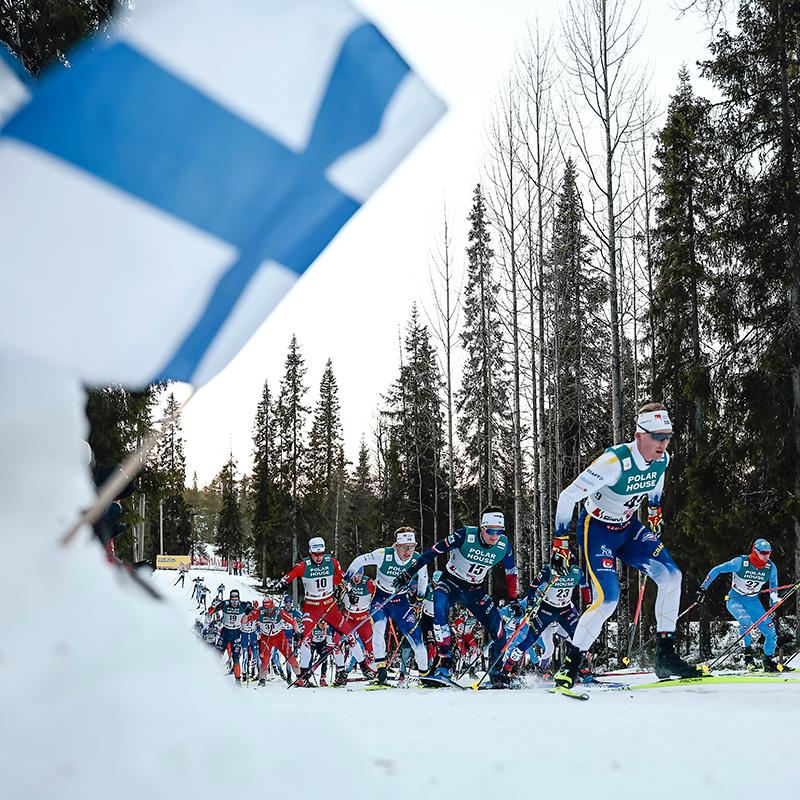
It’s on — the 2026 Olympic season, that is. Devon and Nat break down six season-opening races from northern Finland, including a thriller in Sunday’s men’s race.
Contact us with fan mail, hate mail and everything in between: devon[at]fasterskier.com and nat[at]fasterskier.com. We’re looking for title and other sponsors for our Olympic coverage; email matthew[at]fasterskier.com with inquiries.
For some, the season opening races in Sweden and Norway, especially, are tuneups. For others, they’re effectively athletes’ ‘one shot’ to qualify for the World Cup races that also operate as qualifiers for Olympic teams.
Devon and Nat are back with recaps from Beitostolen and Gallivare, plus notes on early season conditions and Devon’s lonely but filling med student dinner in Oslo. Reach us at devon[at]fasterskier.com and nat[at]fasterskier.com. We’re also looking for presenting sponsors for the season and for our on-site coverage of the Olympics — if you’re interested in exploring that, please contact matthew[at]fasterskier.com.
Love Stories Like This? Help Keep Them Coming.
Feature interviews like this one take time, access, and care to produce. If you value thoughtful storytelling and independent ski journalism, please consider becoming a Voluntary Subscriber. Your support directly fuels the work we do to cover the people, places, and moments that make our sport special.