Category: XCFeeds
-
Eagle Glacier in photos
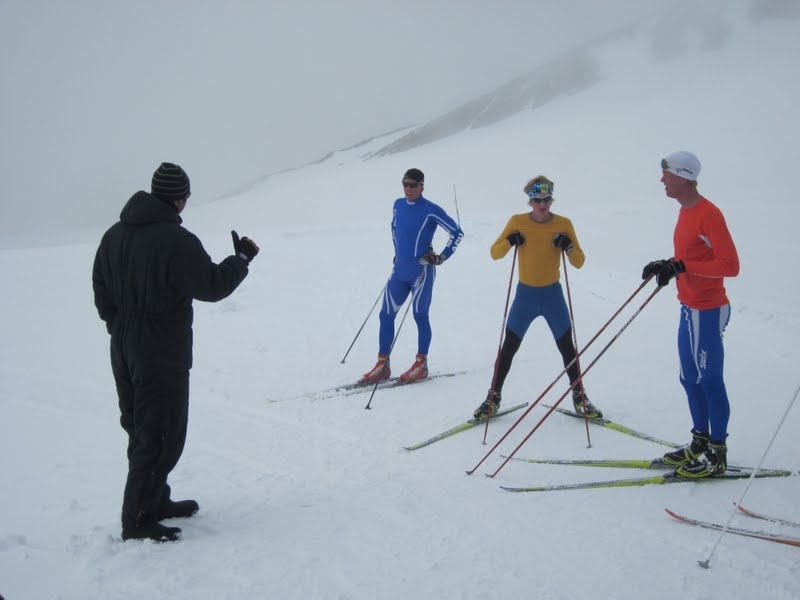
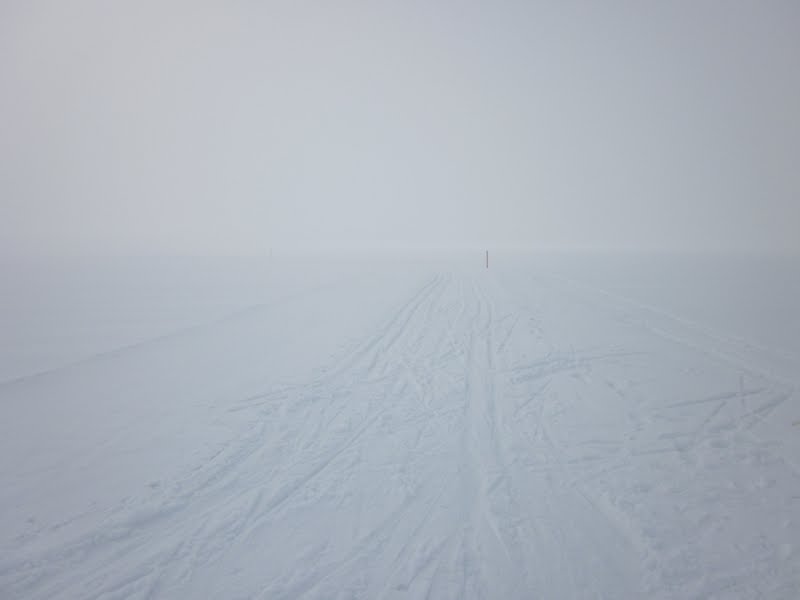
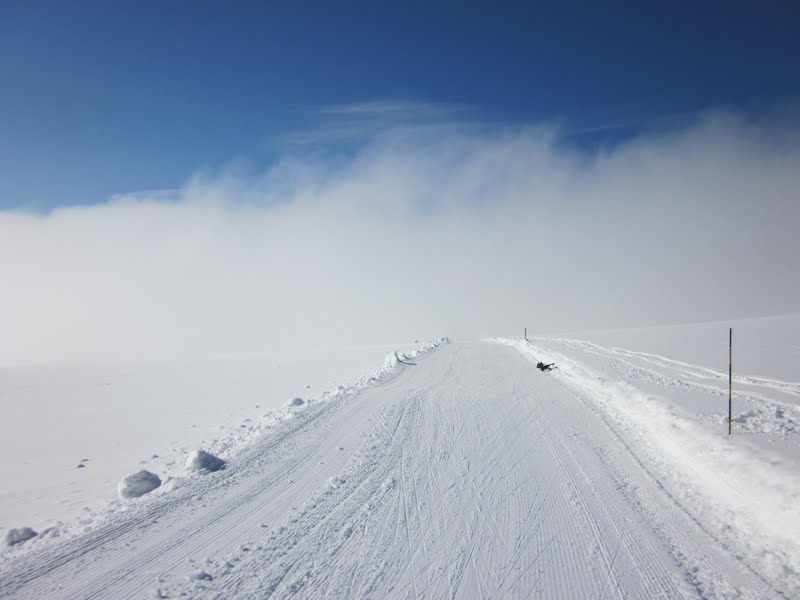
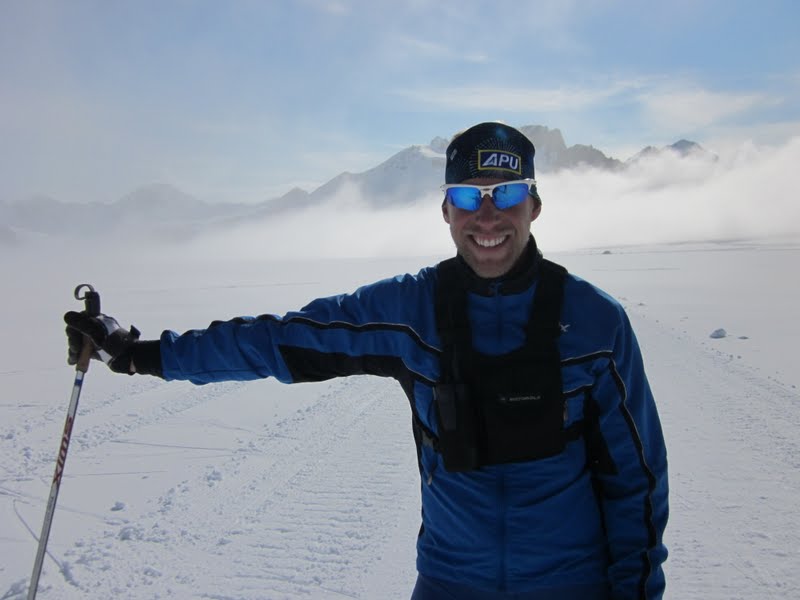
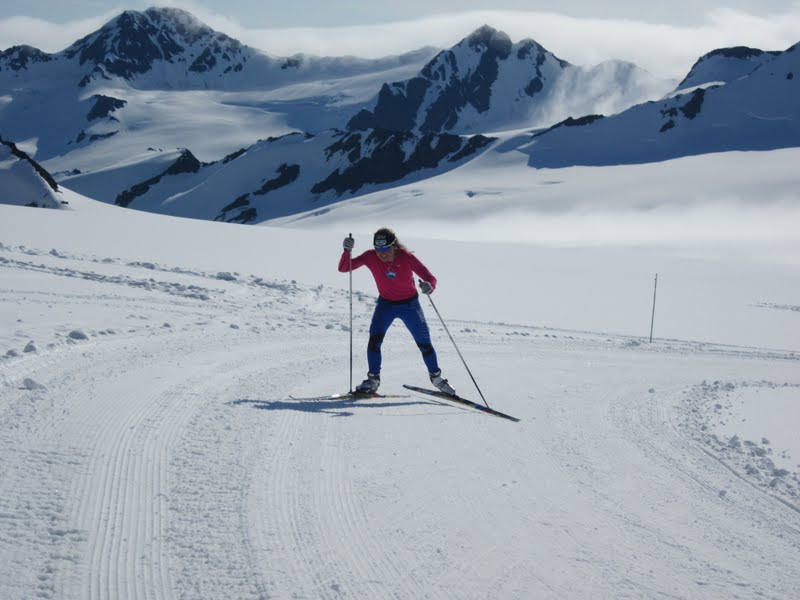
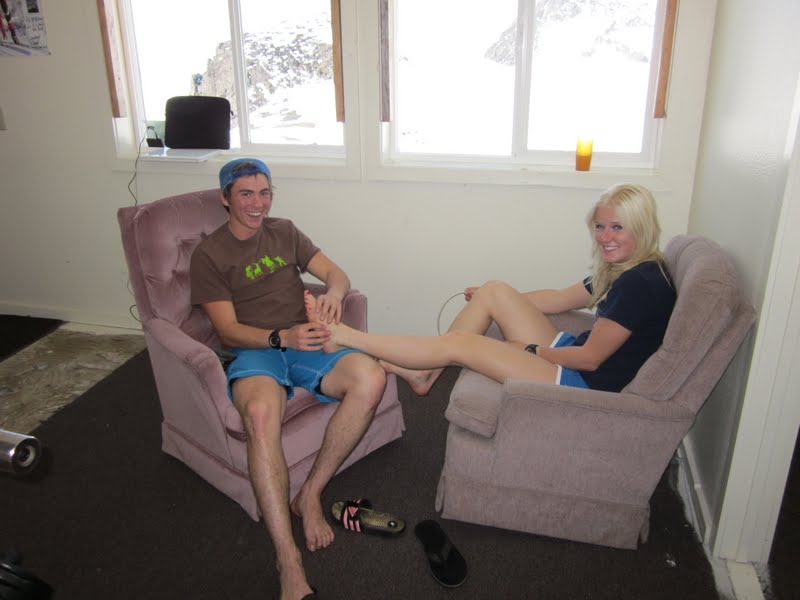
Our team recently finished an on-snow camp at the Thomas Training Center on Eagle Glacier outside of Girdwood, AK. Here are a couple of pictures and a quick review of the week:Lift off in the helicopter….Keith Essex of Alpine Air is one of the best pilots around. He gets us to the glacier quickly but more importantly, SAFELY. I highly recommend Alpine for anyone visiting AK who is looking for a cool sight-seeing opportunity…..Lifting up above the clouds…..Home sweet homeTouch down on EagleUnloading and waving goodbye to KeithErik’s excited to be on the glacier for the first trip of the summer!Technique advice from an “AK style onesie”APU Girls: Holly, Fitz, Tax, Sadie, GA, WreckaMost of the pictures are the glorious days but the majority of our sessions looked exactly like THIS. Glamorous huh?Then these are the days we live for…. and enjoy even moreBecca and Fitz putting in their timeSkiing into a glacier cloudMe 🙂Casey Fagerquist – our ski tech/glacier manager/all around good guyOur ever-enthusiastic leader, Erik FloraOur old teammate and new glacier assistant, Mikey Matteson!The staff 🙂Me putting in the Ks!One of the beautiful snow features on the glacier….. a really big hole you DON’T want to ski into.OMG. Is that a FOOT massage?Planks and core work up on the glacierA shameless plug for Swix – the best wax/ski pole brand!Fitz squatting it up!Reese!One of our new teammates, Erik BjornsenAlpine flowers found at the beginning of the hike downSlightly picturesqueLiterally sliding back into reality and life off the glacier.Until next time!Thanks for reading,Holly 🙂 -
This one’s for you, Chris
New Housemates
I have fully unpacked and moved into Elinor’s house with the rest of the GRP. Lately I’ve felt myself in a constant state of packing and unpacking as I repeatedly shuttle my belongings between Craftsbury, Hanover, home, Europe, and elsewhere. It has been over two years since I have stayed in one place for more than 2 or 3 months without packing up the car and moving to a new room. So I’m very excited to settle into life at Craftsbury! I’ll still be traveling a lot but it will be nice to finally have a more permanent home base!
I’m also excited to for our new housemates and teammates who have recently moved to Craftsbury. It’s great to have Clare Egan, Maria Stuber, and Bryan Cook joining our team. New team members refresh the energy of the whole group and training with Clare and Maria this week has been awesome!
And speaking of new housemates, my first morning in Craftsbury I woke up to a loud and constant chirping. I opened my shade and there was a robin’s nest with four baby robins sitting on the windowsill just opposite the pane of glass. I’ve since spent a lot of time watching and photographing my robin family. Robins are a monogamous species and both the mother and father robin take care of the young. The mother mostly protects the nest while the father brings home the worms. At first the parents would get very upset, frantically and loudly chirp, and fly in erratic circles whenever I was in my room. They have since become much more comfortable with my presence so I’ve been able to do a lot of observing (ahhh the life of a professional skier) and have witnessed the dad regurgitating a worm into a chick’s mouth as well as many of sibling squabbles. Clare did some research and learned that chicks stay in the nest for 13-15 days after hatching. We missed the hatching so we cannot predict exactly when this event will happen, but judging by how quickly the birds are growing, and the time that has already passed, it is likely that we will see some fledglings soon!


Here Comes the Sun!
Today was awesome because we had two different training groups:
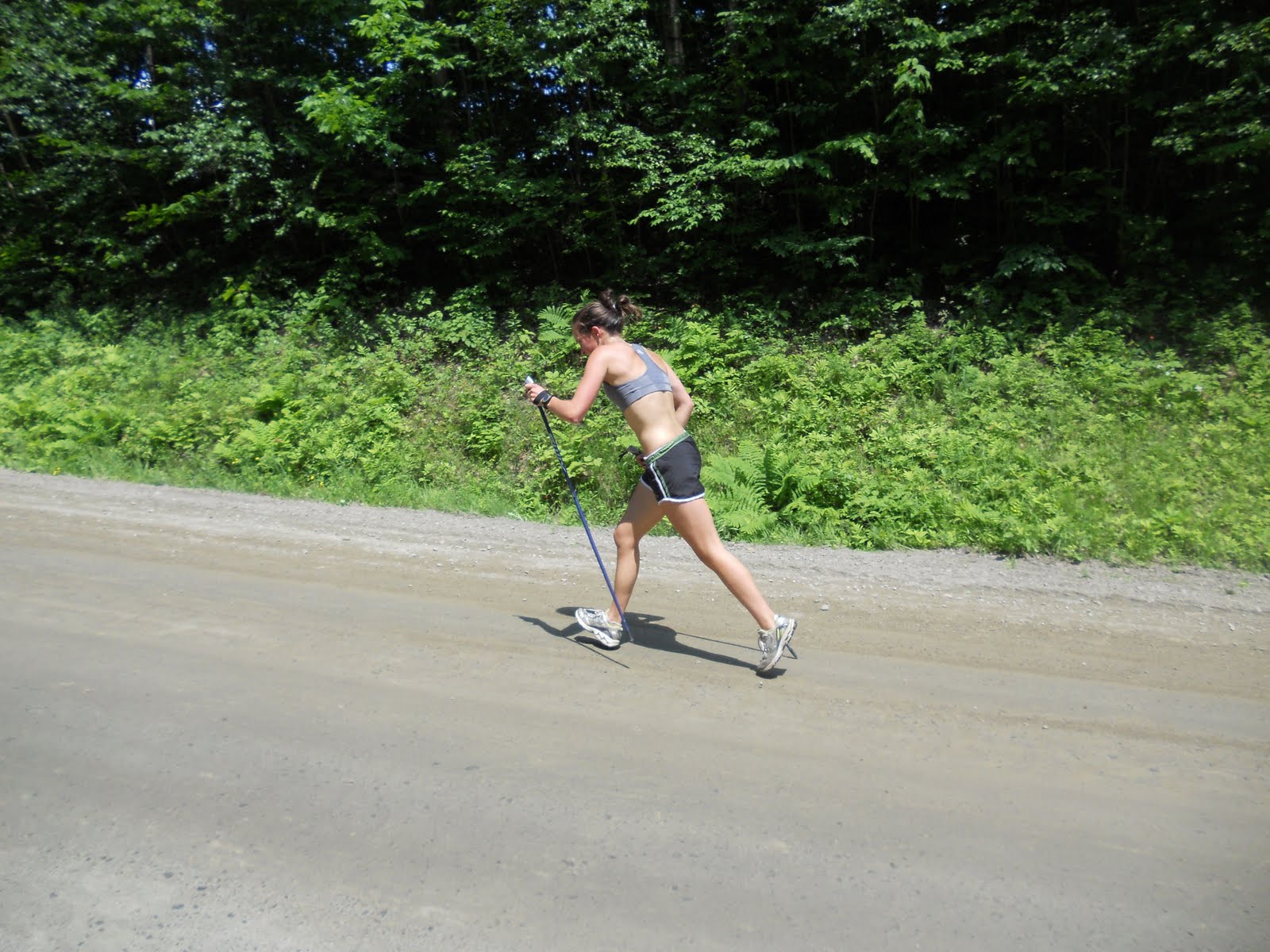
Early Risers were treated to cooler temps and the afternoon duo had some heat (but probably better tan lines tomorrow).The flavor of the day was 4×4 minutes hill bounding. We started the session by watching a super cool (I think so!) Russian Video of their current National Team doing a similar workout. We placed emphasis on their athletic position, strong hip drive and “floating” rather than “tempo.”
After that we jog through the woods on a soft trail, through two streams, over the mossy side of a field (why can’t we run on the tundra more often!!??) to the Number Nine Hill. They then ski walked the hill one time with emphasis on dynamic hips and pushing with the arms. While they were doing that I set up a quick agility sequence in the sand — you can check it out below — that we ran through 5 times trying to be light and quiet (the kids held a pole level at chest level to show twisting or bobbing). The sequence is also supposed to wake up the muscles and recruit some fast twitch muscles.
The goal with the intervals was to strive for strong technique and maintain pacing throughout the workout — a workout that will tax your capacity no matter how you slice it. The third and fourth interval usually end hunched over your poles and Heidi described a “blinding” sensation. You recover walking and then joggin back to the base of the hill, repeat, half-way there, oh boy 3’s gonna hurt, and it does, one left! Give it your all on the last minute and you get icy cold water!Morning session: Sinclair, Grald, Hans Halvorsen, Fitzgerald, Beckwith and RafterAfternoon session: Heidi Halvorsen, Danny Kuzio
The writing in the sand. 
We’ve been tracking a lot of our workouts with a GPS watch. Really cool tool: today the intervals were 4 minutes long and the kids did feet of elevation gain in miles. 
Just like the Russians we train along nice grassy cow pastures! 
With killer views of Sugarbush and the Green Mountain Ridge. 
Danny Kuzio working hard in his first session with gmvs this summer! 
Heidi reaching up the hill near the end of the last interval. 
Sweeeet! 
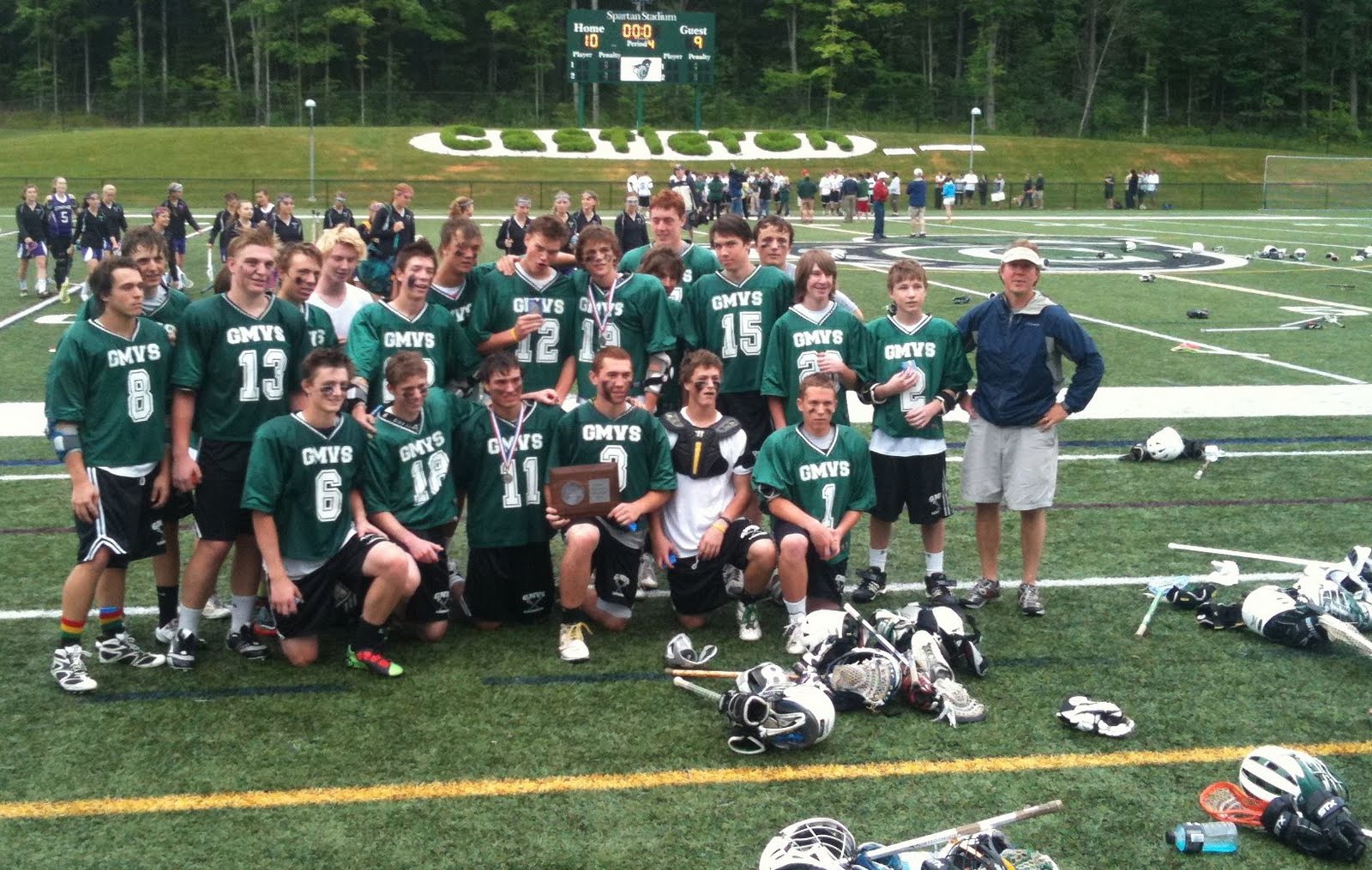
Hans Halvorsen led the Gumby Lacrosse Team to the State Championship Game! Here is the semi-final with Burr and Burton at home. 
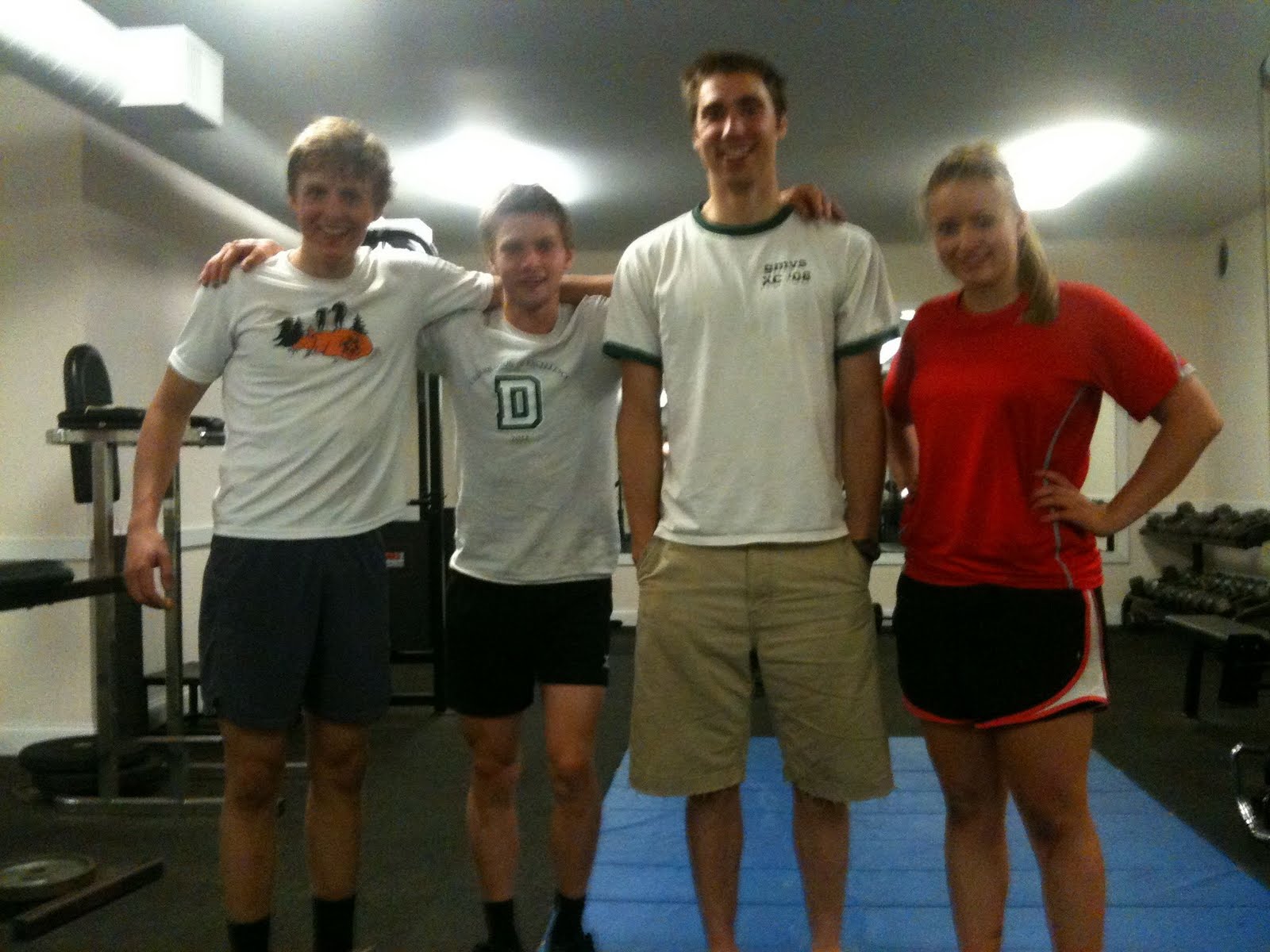
Group shot after Strength. 
Focus. It will happen if you visualize it. 
Hans and GMVS Team after their well fought 9-10 loss to Rice at Castleton. Rest Day
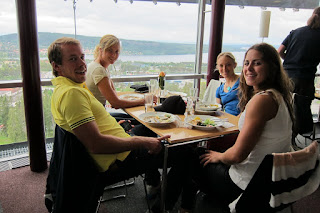
Kikkan, Anna and I had a rest day today, so, like our last rest day, we slept in until we couldn’t anymore, which happened to be 10 am, again! So awesome! We had a leisurely breakfast which ended just as Emil was coming home from his morning session of paddling. A couple hours later we met Sara Lindborg for lunch at the top of a water storage tank. It was a really nice restaurant and we enjoyed the view after an arduous climb up many flights of stairs!Emil, Sara, me and Anna enjoying a nice lunch.
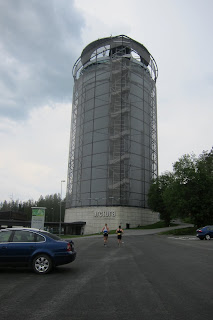
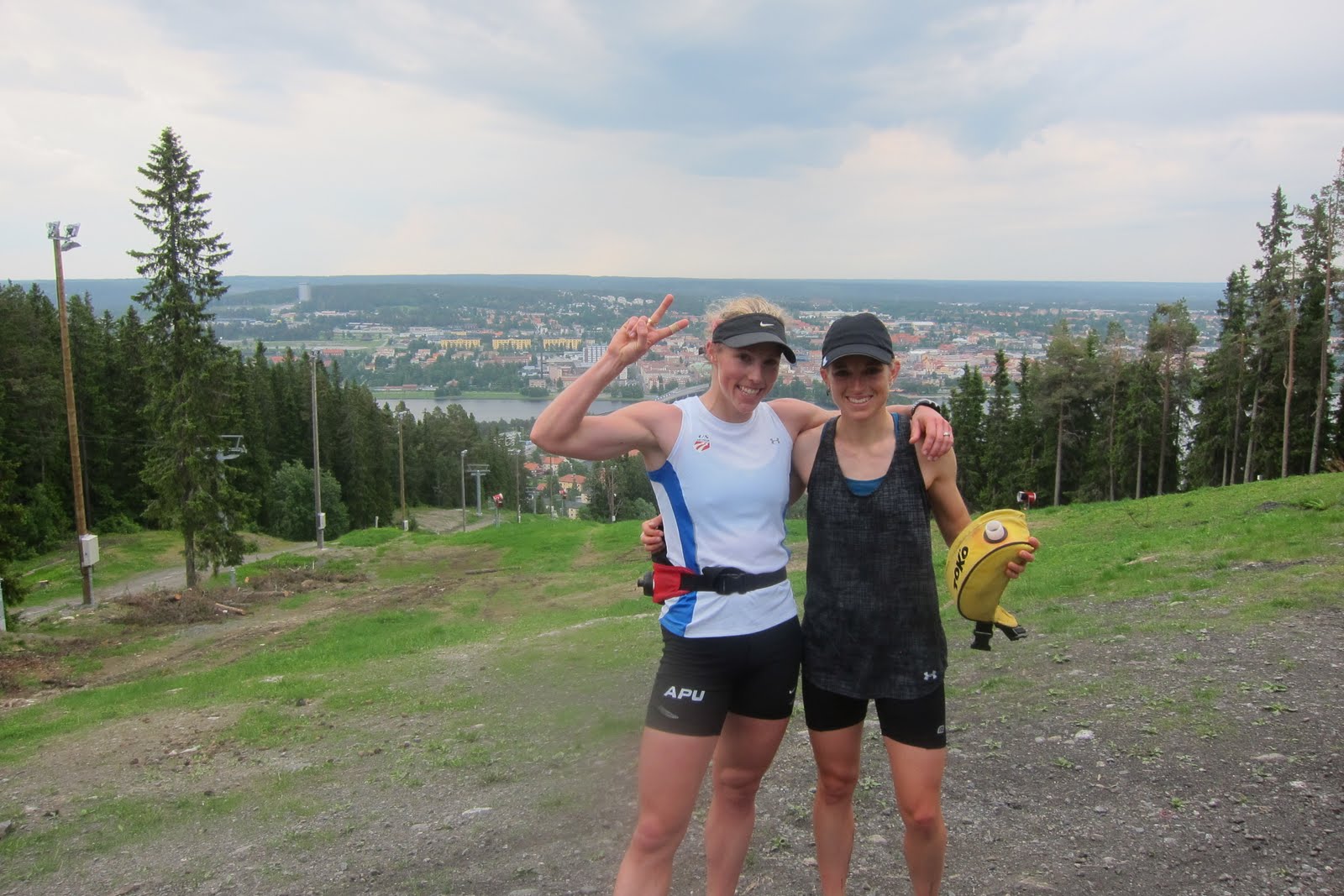
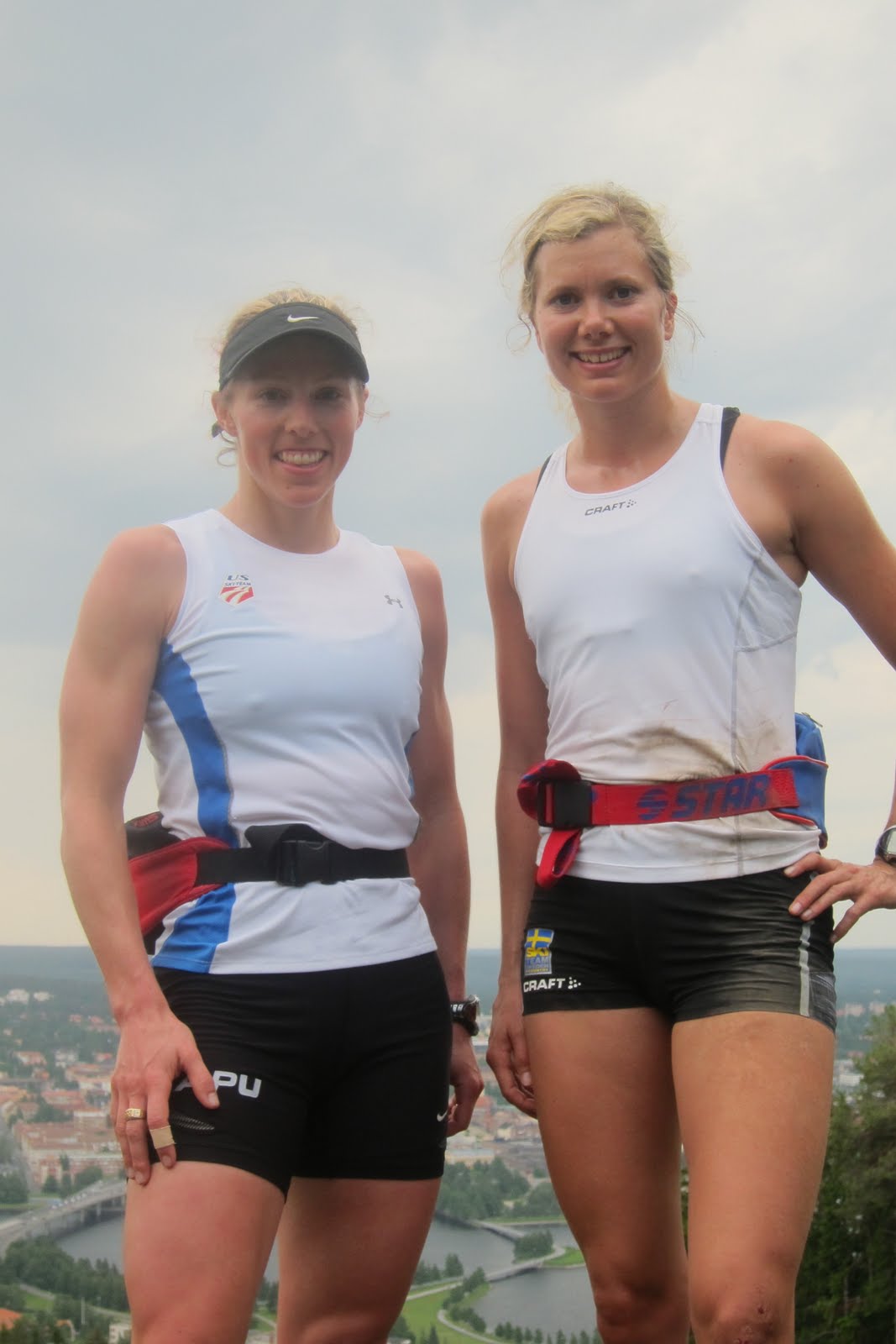
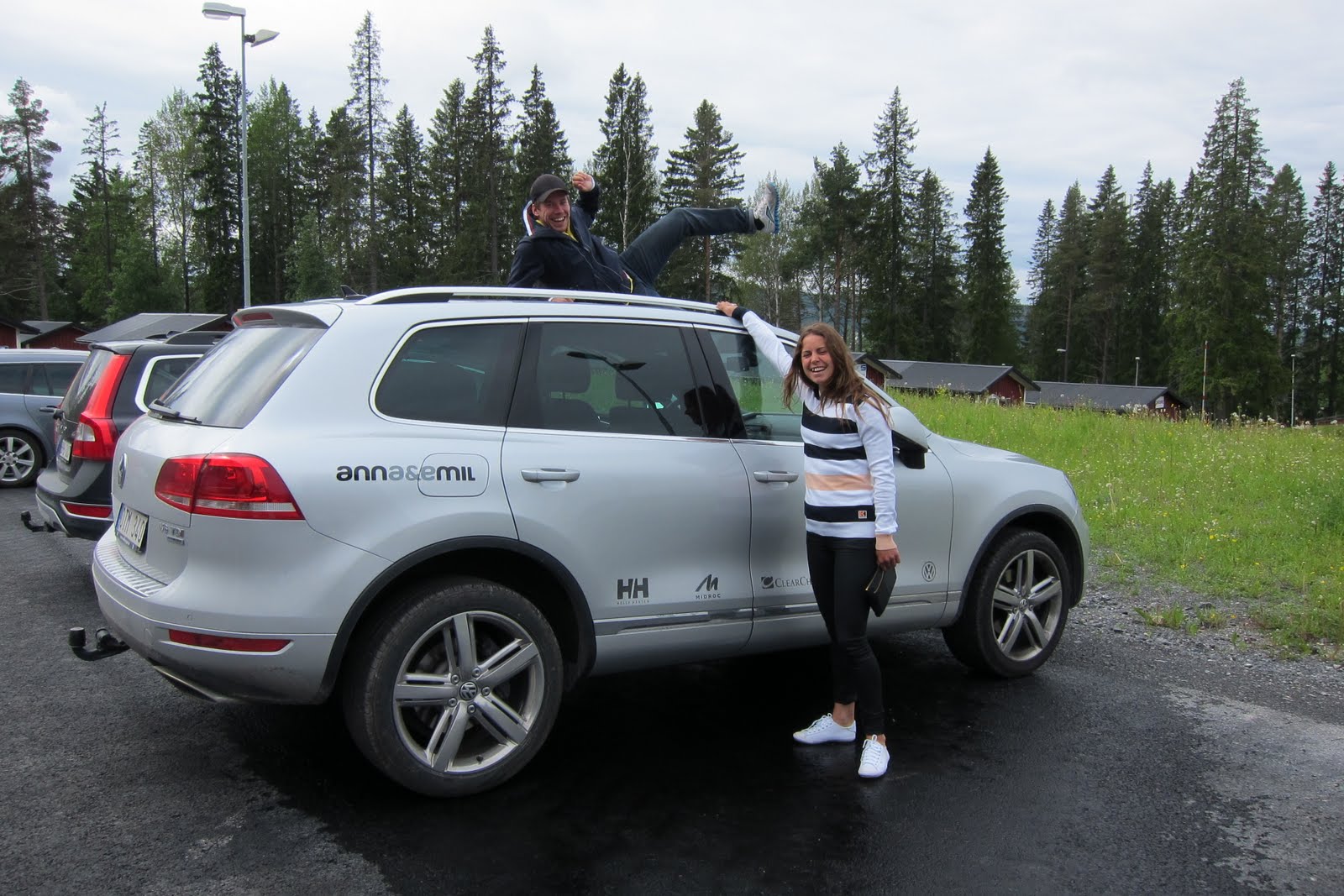
The hot water storage tank on top of which is the restaurant we ate at.Kikkan and I at the top of a small mountain on an island just across the water from Ostersund. Sara took us on a long run the first morning we arrived which started at the ski tracks and rolled through the forest and then along the lake back home.Kikkan and SaraAnna and Emil posing by/on their car.Lunch in the sun!!We will head to Torsby with the Women’s team tomorrow after a training session here in the morning. It will be hard to leave life with Emil and Anna, as we have had many good laughs, meals, training sessions and just overall a great time with our hosts. Emil has said a couple of times that he is taking us to the airport for an unexpected flight out, but we are still here so he must have been joking! More from Torsby and the ski tunnel!!Rest Day
Kikkan, Anna and I had a rest day today, so, like our last rest day, we slept in until we couldn’t anymore, which happened to be 10 am, again! So awesome! We had a leisurely breakfast which ended just as Emil was coming home from his morning session of paddling. A couple hours later we met Sara Lindborg for lunch at the top of a water storage tank. It was a really nice restaurant and we enjoyed the view after an arduous climb up many flights of stairs!Emil, Sara, me and Anna enjoying a nice lunch.
The hot water storage tank on top of which is the restaurant we ate at.Kikkan and I at the top of a small mountain on an island just across the water from Ostersund. Sara took us on a long run the first morning we arrived which started at the ski tracks and rolled through the forest and then along the lake back home.Kikkan and SaraAnna and Emil posing by/on their car.Lunch in the sun!!We will head to Torsby with the Women’s team tomorrow after a training session here in the morning. It will be hard to leave life with Emil and Anna, as we have had many good laughs, meals, training sessions and just overall a great time with our hosts. Emil has said a couple of times that he is taking us to the airport for an unexpected flight out, but we are still here so he must have been joking! More from Torsby and the ski tunnel!!Rest Day
Kikkan, Anna and I had a rest day today, so, like our last rest day, we slept in until we couldn’t anymore, which happened to be 10 am, again! So awesome! We had a leisurely breakfast which ended just as Emil was coming home from his morning session of paddling. A couple hours later we met Sara Lindborg for lunch at the top of a water storage tank. It was a really nice restaurant and we enjoyed the view after an arduous climb up many flights of stairs!Emil, Sara, me and Anna enjoying a nice lunch.
The hot water storage tank on top of which is the restaurant we ate at.Kikkan and I at the top of a small mountain on an island just across the water from Ostersund. Sara took us on a long run the first morning we arrived which started at the ski tracks and rolled through the forest and then along the lake back home.Kikkan and SaraAnna and Emil posing by/on their car.Lunch in the sun!!We will head to Torsby with the Women’s team tomorrow after a training session here in the morning. It will be hard to leave life with Emil and Anna, as we have had many good laughs, meals, training sessions and just overall a great time with our hosts. Emil has said a couple of times that he is taking us to the airport for an unexpected flight out, but we are still here so he must have been joking! More from Torsby and the ski tunnel!!Rest Day
Kikkan, Anna and I had a rest day today, so, like our last rest day, we slept in until we couldn’t anymore, which happened to be 10 am, again! So awesome! We had a leisurely breakfast which ended just as Emil was coming home from his morning session of paddling. A couple hours later we met Sara Lindborg for lunch at the top of a water storage tank. It was a really nice restaurant and we enjoyed the view after an arduous climb up many flights of stairs!Emil, Sara, me and Anna enjoying a nice lunch.
The hot water storage tank on top of which is the restaurant we ate at.Kikkan and I at the top of a small mountain on an island just across the water from Ostersund. Sara took us on a long run the first morning we arrived which started at the ski tracks and rolled through the forest and then along the lake back home.Kikkan and SaraAnna and Emil posing by/on their car.Lunch in the sun!!We will head to Torsby with the Women’s team tomorrow after a training session here in the morning. It will be hard to leave life with Emil and Anna, as we have had many good laughs, meals, training sessions and just overall a great time with our hosts. Emil has said a couple of times that he is taking us to the airport for an unexpected flight out, but we are still here so he must have been joking! More from Torsby and the ski tunnel!!Skate Intervals in the Rain
As a whitewater kayaker it is hard to imagine that I would be one to complain about rain–but this has been an insanely wet beginning to summer. Rainfall totals for the last few days at my house are close to three inches. So it was no major surprise to be looking out at raindrops during pre-training coffee this morning. Layer up, pull out the vinyl raincoat and get to it!
This week we are doing lower volume with two quality sessions of Level 4 intervals. Today we did skate intervals on German Flats (great varied, but uphill terrain) and Thursday we will visit the infamous Number Nine Hill for our first bounding session. The goal of the intervals, is to maintain, or even increase the pace during the workout. We had a good little group of skiers: Dylan Grald gmvs/UVM, David Sinclair gmvs/Dartmouth and two recent high school graduates, MK Cirelli (Rutland/gmvs PG ’12) and Holly Bushman (Burke).
I think most skiers would agree with me that rollerski intervals on a cool day with a little dampness (ie. spray from the fenders) actually is an ideal condition for going hard. It’s kinda like running out of the woods in failing light–it has a little air of bad-assness. Which is good for skiing fast!
As always, if you’re in the area feel free to join us. Our next group session is Thursday at 1pm. Meet at GMVS for bounding! A few pics and we’ll ski ya later.

Dylan in pursuit. 
Uphill V2 is fun. 
Working those poles! 
Good dynamic knee position. 

David’s funny face. 
And a smiling face. Summer Camp: Westminster College Style
While school’s just getting out for the kids in the classroom, I’m halfway through the summer semester, working on getting a little learning on these next few months and a little closer to earning my master’s degree. And one of the summer endeavors – Intro to Teaching Writing – well, it might as well be an extension of the ITA spring days. The class has some reading and theory about the various modes of teaching writing. And you know there’s some real lively class debates about the merits of social constructionism versus current-traditionalism as the ideal primary mode of teaching writing. But the real coup de grace of the class comes in our actual teaching. For three days, select students from three inner-city junior high school in Salt Lake City will be getting the real college experience – from dorms to dining hall to classroom instruction. Except, instead of having tenured professors giving the lecturers, it will be me and my classmates. Here’s my first little piece I wrote for the class on how I hoped to use my In The Arena experience to effectively connect and teach junior highers who were previously labeled academically unable. Read on, if interested.
###
Skiers and Dreamers, to acquire excellence, must start young. There is, from my experience, no other way. What does this have to do with schooling and writing and teaching, you say? Read on, and in my rambling writing might become less grey.
For two summers of my youth, I did the Westminster MPC summer school gig. Then, I left Zion and headed back West. During this time, I kept the day job. Instead of summer school, though, I picked up a little something on the side – coaching junior high cross-country and track.
Before I jumped into coaching, I read up. I felt a duty to be an asset, not a thorn in these youngster’s development. I remembered my own early days of athletics, running into teammates overcome with fear of failing in competition, hiding out under the bathroom bleachers. I felt with my inexperience in coaching, reaching these kids, making them see competition as something in the words of the late great Steve Prefontaine – the opportunity “to make something beautiful when we run” instead of being near paralyzed by the fear of failure. I knew before I ever set foot on the track as a coach this was my greatest challenge, this would be my Moby Dick. Instead of reading books on training physiology, it was more psychology centered.
In coaching the seventh and eighth graders I wanted to build self-efficacy. I wanted to build within them the belief that they will be able to better handle whatever the future throws at them. My reasons for doing this were selfish. If I could connect with thirteen and fourteen year olds and get them to change their perception of their ability I would be reconstructing within myself these same beliefs.
The coach Jumbo Elliott liked to tell his troops at Villanova to “keep running until you can smell the roses.” That is, to get to a point of conditioning and callusing that strenuous physical exercise becomes more than sidestiches, soreness and six a.m. morning runs. When I read Hemingway write about writing, the man had to keep writing until he found his muse. He had a devotion to his craft. He had to head to the cafés and write, and write daily. Somedays he’d write 2,500 words, all for naught. But he still had to write them. The daily experience would finally awaken an explosion of interest and the writer would capture this with pen hitting paper. These are lines we’ve read then carry with us always. For me, one of these passages came from Norman McLean’s last lines of A River Runs Through It.
Eventually all things merge together and a river runs through it. The river was cut by the world’s great flood and runs over rocks from the basement of time. On some of the rocks are timeless raindrops, under the rocks are words and some of the words are theirs. I am haunted by these waters.
I felt the most important responsibility a coach has is building the team and environment the team inhabits. From here the athlete can chase peak experiences in the competition arena or come out for sport to be part of a social club that happens to exercise. A coach, in my opinion, cannot build another’s desire or toughness or resolve. But the coach can aid the athlete in cultivating these skills and help the channel it. When Bill Bowerman said, “Tigers are tigers” I believe he was expressing a similar sentiment.
So how do I help build the Cascade exercise-as-a-way-of-life movement? By tweaking what I see as the prevailing, and antiquated, American definition of success and failure in sports. Most people interpret winning as a standard for success. Instead, imagine if success – and its ancillary doppelganger, failure – became a psychological state, not an objective one. Success and failure no longer need express themselves merely in win-loss outcomes. Rather, performance becomes a series of process goals leading to personal accomplishment. No longer is anything less than winning a threat, a threat that increases a young athlete’s fear of failure.
“An avoidance of failure is a self- perpetuating process that serves to exacerbate the tendency to avoid failure, leading to more mistakes and failures,” is how a peer-reviewed article titled “Why Young Athletes Fear Failure: Consequences of Failure” puts it. To me, this says those who fear failure the most are also the most likely to experience it the most. And that’s not ideal. I feel writing is the same way, only instead of expressing oneself kinetically, it’s through words.
The normal reaction to threats, real or imagined, is fear. I wanted the young Cascade Mountain Lions to be part of a team burdened by simplistic definitions of success or of failure. I told myself, then the team, we will hold ourselves to a higher, more enlightened standard. The budding athletes will not toe the line in an emotional state defined by words like apprehensive or scared. With writing, it’s the same way. We all need the latitude to express ourselves and build up within us the capacity to not be confronted with a stimulus and see it endangering our values and goals. Instead, to help the three schools we have the opportunity to meet with and work with later this month, and help them get just that little bit closer to bask in the expressive beauty of writing.
Summer Camp: Westminster College Style
While school’s just getting out for the kids in the classroom, I’m halfway through the summer semester, working on getting a little learning on these next few months and a little closer to earning my master’s degree. And one of the summer endeavors – Intro to Teaching Writing – well, it might as well be an extension of the ITA spring days. The class has some reading and theory about the various modes of teaching writing. And you know there’s some real lively class debates about the merits of social constructionism versus current-traditionalism as the ideal primary mode of teaching writing. But the real coup de grace of the class comes in our actual teaching. For three days, select students from three inner-city junior high school in Salt Lake City will be getting the real college experience – from dorms to dining hall to classroom instruction. Except, instead of having tenured professors giving the lecturers, it will be me and my classmates. Here’s my first little piece I wrote for the class on how I hoped to use my In The Arena experience to effectively connect and teach junior highers who were previously labeled academically unable. Read on, if interested.
###
Skiers and Dreamers, to acquire excellence, must start young. There is, from my experience, no other way. What does this have to do with schooling and writing and teaching, you say? Read on, and in my rambling writing might become less grey.
For two summers of my youth, I did the Westminster MPC summer school gig. Then, I left Zion and headed back West. During this time, I kept the day job. Instead of summer school, though, I picked up a little something on the side – coaching junior high cross-country and track.
Before I jumped into coaching, I read up. I felt a duty to be an asset, not a thorn in these youngster’s development. I remembered my own early days of athletics, running into teammates overcome with fear of failing in competition, hiding out under the bathroom bleachers. I felt with my inexperience in coaching, reaching these kids, making them see competition as something in the words of the late great Steve Prefontaine – the opportunity “to make something beautiful when we run” instead of being near paralyzed by the fear of failure. I knew before I ever set foot on the track as a coach this was my greatest challenge, this would be my Moby Dick. Instead of reading books on training physiology, it was more psychology centered.
In coaching the seventh and eighth graders I wanted to build self-efficacy. I wanted to build within them the belief that they will be able to better handle whatever the future throws at them. My reasons for doing this were selfish. If I could connect with thirteen and fourteen year olds and get them to change their perception of their ability I would be reconstructing within myself these same beliefs.
The coach Jumbo Elliott liked to tell his troops at Villanova to “keep running until you can smell the roses.” That is, to get to a point of conditioning and callusing that strenuous physical exercise becomes more than sidestiches, soreness and six a.m. morning runs. When I read Hemingway write about writing, the man had to keep writing until he found his muse. He had a devotion to his craft. He had to head to the cafés and write, and write daily. Somedays he’d write 2,500 words, all for naught. But he still had to write them. The daily experience would finally awaken an explosion of interest and the writer would capture this with pen hitting paper. These are lines we’ve read then carry with us always. For me, one of these passages came from Norman McLean’s last lines of A River Runs Through It.
Eventually all things merge together and a river runs through it. The river was cut by the world’s great flood and runs over rocks from the basement of time. On some of the rocks are timeless raindrops, under the rocks are words and some of the words are theirs. I am haunted by these waters.
I felt the most important responsibility a coach has is building the team and environment the team inhabits. From here the athlete can chase peak experiences in the competition arena or come out for sport to be part of a social club that happens to exercise. A coach, in my opinion, cannot build another’s desire or toughness or resolve. But the coach can aid the athlete in cultivating these skills and help the channel it. When Bill Bowerman said, “Tigers are tigers” I believe he was expressing a similar sentiment.
So how do I help build the Cascade exercise-as-a-way-of-life movement? By tweaking what I see as the prevailing, and antiquated, American definition of success and failure in sports. Most people interpret winning as a standard for success. Instead, imagine if success – and its ancillary doppelganger, failure – became a psychological state, not an objective one. Success and failure no longer need express themselves merely in win-loss outcomes. Rather, performance becomes a series of process goals leading to personal accomplishment. No longer is anything less than winning a threat, a threat that increases a young athlete’s fear of failure.
“An avoidance of failure is a self- perpetuating process that serves to exacerbate the tendency to avoid failure, leading to more mistakes and failures,” is how a peer-reviewed article titled “Why Young Athletes Fear Failure: Consequences of Failure” puts it. To me, this says those who fear failure the most are also the most likely to experience it the most. And that’s not ideal. I feel writing is the same way, only instead of expressing oneself kinetically, it’s through words.
The normal reaction to threats, real or imagined, is fear. I wanted the young Cascade Mountain Lions to be part of a team burdened by simplistic definitions of success or of failure. I told myself, then the team, we will hold ourselves to a higher, more enlightened standard. The budding athletes will not toe the line in an emotional state defined by words like apprehensive or scared. With writing, it’s the same way. We all need the latitude to express ourselves and build up within us the capacity to not be confronted with a stimulus and see it endangering our values and goals. Instead, to help the three schools we have the opportunity to meet with and work with later this month, and help them get just that little bit closer to bask in the expressive beauty of writing.
Summer Camp: Westminster College Style
While school’s just getting out for the kids in the classroom, I’m halfway through the summer semester, working on getting a little learning on these next few months and a little closer to earning my master’s degree. And one of the summer endeavors – Intro to Teaching Writing – well, it might as well be an extension of the ITA spring days. The class has some reading and theory about the various modes of teaching writing. And you know there’s some real lively class debates about the merits of social constructionism versus current-traditionalism as the ideal primary mode of teaching writing. But the real coup de grace of the class comes in our actual teaching. For three days, select students from three inner-city junior high school in Salt Lake City will be getting the real college experience – from dorms to dining hall to classroom instruction. Except, instead of having tenured professors giving the lecturers, it will be me and my classmates. Here’s my first little piece I wrote for the class on how I hoped to use my In The Arena experience to effectively connect and teach junior highers who were previously labeled academically unable. Read on, if interested.
###
Skiers and Dreamers, to acquire excellence, must start young. There is, from my experience, no other way. What does this have to do with schooling and writing and teaching, you say? Read on, and in my rambling writing might become less grey.
For two summers of my youth, I did the Westminster MPC summer school gig. Then, I left Zion and headed back West. During this time, I kept the day job. Instead of summer school, though, I picked up a little something on the side – coaching junior high cross-country and track.
Before I jumped into coaching, I read up. I felt a duty to be an asset, not a thorn in these youngster’s development. I remembered my own early days of athletics, running into teammates overcome with fear of failing in competition, hiding out under the bathroom bleachers. I felt with my inexperience in coaching, reaching these kids, making them see competition as something in the words of the late great Steve Prefontaine – the opportunity “to make something beautiful when we run” instead of being near paralyzed by the fear of failure. I knew before I ever set foot on the track as a coach this was my greatest challenge, this would be my Moby Dick. Instead of reading books on training physiology, it was more psychology centered.
In coaching the seventh and eighth graders I wanted to build self-efficacy. I wanted to build within them the belief that they will be able to better handle whatever the future throws at them. My reasons for doing this were selfish. If I could connect with thirteen and fourteen year olds and get them to change their perception of their ability I would be reconstructing within myself these same beliefs.
The coach Jumbo Elliott liked to tell his troops at Villanova to “keep running until you can smell the roses.” That is, to get to a point of conditioning and callusing that strenuous physical exercise becomes more than sidestiches, soreness and six a.m. morning runs. When I read Hemingway write about writing, the man had to keep writing until he found his muse. He had a devotion to his craft. He had to head to the cafés and write, and write daily. Somedays he’d write 2,500 words, all for naught. But he still had to write them. The daily experience would finally awaken an explosion of interest and the writer would capture this with pen hitting paper. These are lines we’ve read then carry with us always. For me, one of these passages came from Norman McLean’s last lines of A River Runs Through It.
Eventually all things merge together and a river runs through it. The river was cut by the world’s great flood and runs over rocks from the basement of time. On some of the rocks are timeless raindrops, under the rocks are words and some of the words are theirs. I am haunted by these waters.
I felt the most important responsibility a coach has is building the team and environment the team inhabits. From here the athlete can chase peak experiences in the competition arena or come out for sport to be part of a social club that happens to exercise. A coach, in my opinion, cannot build another’s desire or toughness or resolve. But the coach can aid the athlete in cultivating these skills and help the channel it. When Bill Bowerman said, “Tigers are tigers” I believe he was expressing a similar sentiment.
So how do I help build the Cascade exercise-as-a-way-of-life movement? By tweaking what I see as the prevailing, and antiquated, American definition of success and failure in sports. Most people interpret winning as a standard for success. Instead, imagine if success – and its ancillary doppelganger, failure – became a psychological state, not an objective one. Success and failure no longer need express themselves merely in win-loss outcomes. Rather, performance becomes a series of process goals leading to personal accomplishment. No longer is anything less than winning a threat, a threat that increases a young athlete’s fear of failure.
“An avoidance of failure is a self- perpetuating process that serves to exacerbate the tendency to avoid failure, leading to more mistakes and failures,” is how a peer-reviewed article titled “Why Young Athletes Fear Failure: Consequences of Failure” puts it. To me, this says those who fear failure the most are also the most likely to experience it the most. And that’s not ideal. I feel writing is the same way, only instead of expressing oneself kinetically, it’s through words.
The normal reaction to threats, real or imagined, is fear. I wanted the young Cascade Mountain Lions to be part of a team burdened by simplistic definitions of success or of failure. I told myself, then the team, we will hold ourselves to a higher, more enlightened standard. The budding athletes will not toe the line in an emotional state defined by words like apprehensive or scared. With writing, it’s the same way. We all need the latitude to express ourselves and build up within us the capacity to not be confronted with a stimulus and see it endangering our values and goals. Instead, to help the three schools we have the opportunity to meet with and work with later this month, and help them get just that little bit closer to bask in the expressive beauty of writing.
First Team Camp of the Year!! Steamboat Springs
The first camp of the year has come to an end. It was a good feeling to get the whole team together as well as some of the young junior that are starting to push some of the national team.
Our first camp was a lot of distance training, jumping and one very very hard time trial. We took our first jumps of the year in steamboat on the k68, and most of our sessions were in cross country suits. When jumping in cross country suits, you do not have any feeling in the air and not much in the in-run as well. My brother stated it well, “every mistake is multiplied, so you really need to be on top of your game to go far.” For me it was important to work on my position coming into the curve and to focus on the push generated in the move. I felt like I made some nice progress and look forward to continuing my progress on the k90 in Park City.Also we had a time trial that was very hard. I was happy with my performance, which is nice since that means my training is going very well! I set a new personal best as well, which is one of the fastest times on the skis we were on!
Now our team is back in Park City, starting the biggest week of training for the year. We will also start jumping on the larger hills this week as we prepare for summer competitions.
Also this weekend is the High Unitas Classic. Its a three race event, that is in Evanston, Wyoming. First race is a 80 mile road race, then a very fast time trial, the lastly a very technical crit, around the city streets. I hope to come away from this with my upgrade to category 3 for racing.
Stay tuned for more updates!!!
Taylor