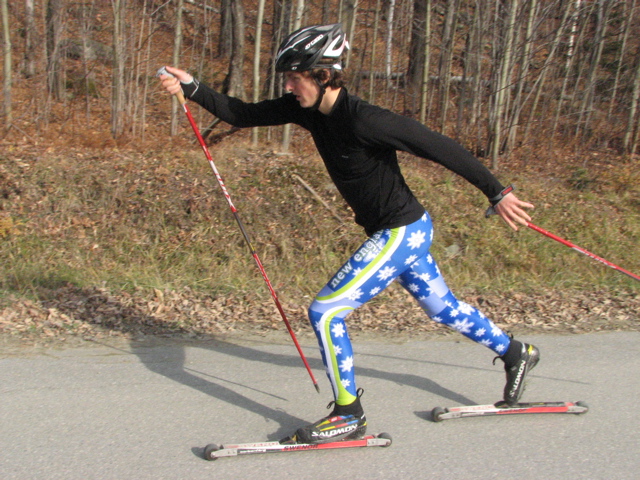
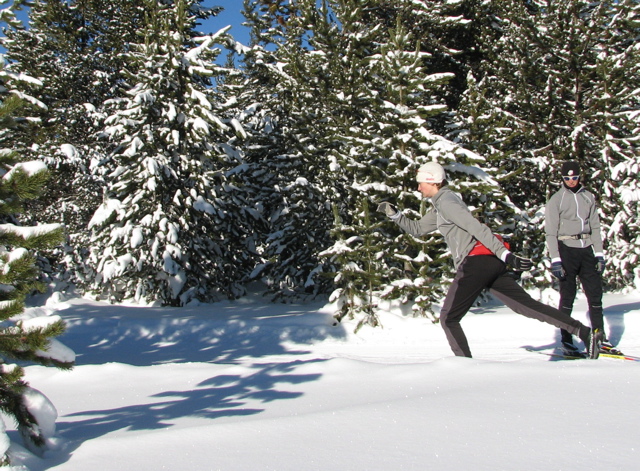
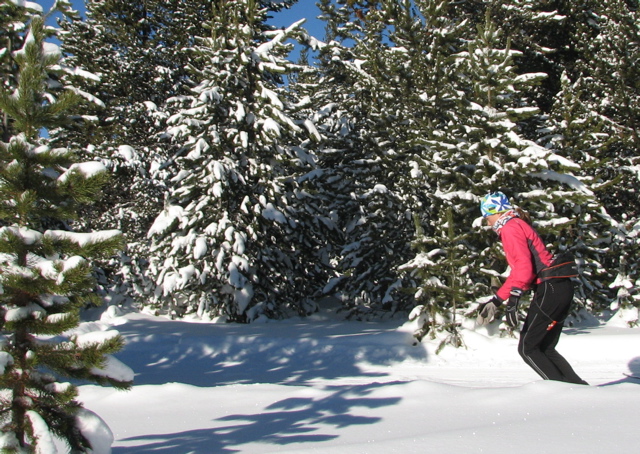
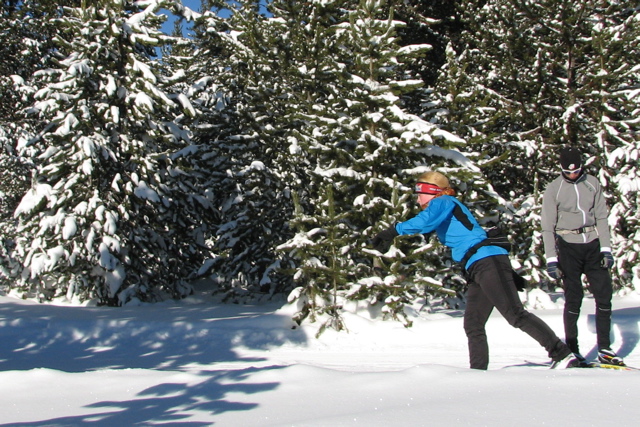
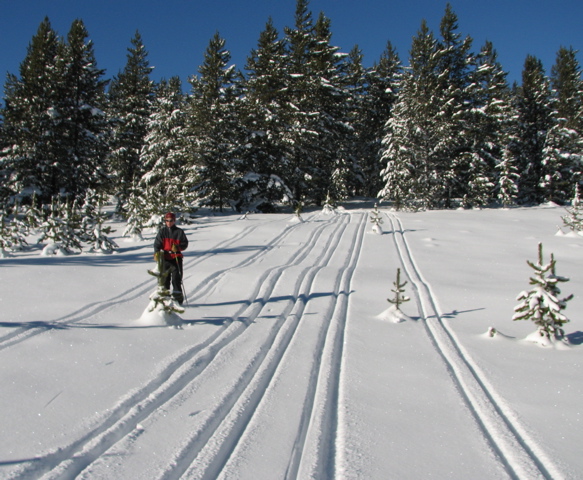
a onblur=”try {parent.deselectBloggerImageGracefully();} catch(e) {}” href=”http://2.bp.blogspot.com/_H2SCM3lmKm8/TPWUGqbkQpI/AAAAAAAAFZ4/LgWLi5Xef3Y/s1600/IMG_9860.JPG”img style=”display:block; margin:0px auto 10px; text-align:center;cursor:pointer; cursor:hand;width: 400px; height: 194px;” src=”http://2.bp.blogspot.com/_H2SCM3lmKm8/TPWUGqbkQpI/AAAAAAAAFZ4/LgWLi5Xef3Y/s400/IMG_9860.JPG” border=”0″ alt=””id=”BLOGGER_PHOTO_ID_5545501358366671506″ //aThe skiing is great on the mountain, but it is hard to get in easy distance so today we did some sprint relays. The competition was tight and the kids got in a good tough workout!br /Enjoy the pictures.br /a onblur=”try {parent.deselectBloggerImageGracefully();} catch(e) {}” href=”http://2.bp.blogspot.com/_H2SCM3lmKm8/TPWT3CrmybI/AAAAAAAAFZw/3Tjn8s6o0z0/s1600/IMG_9865.JPG”img style=”display:block; margin:0px auto 10px; text-align:center;cursor:pointer; cursor:hand;width: 400px; height: 300px;” src=”http://2.bp.blogspot.com/_H2SCM3lmKm8/TPWT3CrmybI/AAAAAAAAFZw/3Tjn8s6o0z0/s400/IMG_9865.JPG” border=”0″ alt=””id=”BLOGGER_PHOTO_ID_5545501089998490034″ //abr /a onblur=”try {parent.deselectBloggerImageGracefully();} catch(e) {}” href=”http://4.bp.blogspot.com/_H2SCM3lmKm8/TPWTlDVU5NI/AAAAAAAAFZo/TJqWWA7U6a8/s1600/IMG_9868.JPG”img style=”display:block; margin:0px auto 10px; text-align:center;cursor:pointer; cursor:hand;width: 400px; height: 300px;” src=”http://4.bp.blogspot.com/_H2SCM3lmKm8/TPWTlDVU5NI/AAAAAAAAFZo/TJqWWA7U6a8/s400/IMG_9868.JPG” border=”0″ alt=””id=”BLOGGER_PHOTO_ID_5545500780935832786″ //abr /a onblur=”try {parent.deselectBloggerImageGracefully();} catch(e) {}” href=”http://4.bp.blogspot.com/_H2SCM3lmKm8/TPWTS60tbaI/AAAAAAAAFZg/RHfxdvDw2hw/s1600/IMG_9869.JPG”img style=”display:block; margin:0px auto 10px; text-align:center;cursor:pointer; cursor:hand;width: 400px; height: 350px;” src=”http://4.bp.blogspot.com/_H2SCM3lmKm8/TPWTS60tbaI/AAAAAAAAFZg/RHfxdvDw2hw/s400/IMG_9869.JPG” border=”0″ alt=””id=”BLOGGER_PHOTO_ID_5545500469413899682″ //abr /a onblur=”try {parent.deselectBloggerImageGracefully();} catch(e) {}” href=”http://4.bp.blogspot.com/_H2SCM3lmKm8/TPWTG_WFXAI/AAAAAAAAFZY/3tE1BAtG8hk/s1600/IMG_9870.JPG”img style=”display:block; margin:0px auto 10px; text-align:center;cursor:pointer; cursor:hand;width: 400px; height: 300px;” src=”http://4.bp.blogspot.com/_H2SCM3lmKm8/TPWTG_WFXAI/AAAAAAAAFZY/3tE1BAtG8hk/s400/IMG_9870.JPG” border=”0″ alt=””id=”BLOGGER_PHOTO_ID_5545500264469191682″ //abr /a onblur=”try {parent.deselectBloggerImageGracefully();} catch(e) {}” href=”http://1.bp.blogspot.com/_H2SCM3lmKm8/TPWS2FLp-CI/AAAAAAAAFZQ/t3kVr_wLx8I/s1600/IMG_9872.JPG”img style=”display:block; margin:0px auto 10px; text-align:center;cursor:pointer; cursor:hand;width: 400px; height: 300px;” src=”http://1.bp.blogspot.com/_H2SCM3lmKm8/TPWS2FLp-CI/AAAAAAAAFZQ/t3kVr_wLx8I/s400/IMG_9872.JPG” border=”0″ alt=””id=”BLOGGER_PHOTO_ID_5545499973978290210″ //abr /a onblur=”try {parent.deselectBloggerImageGracefully();} catch(e) {}” href=”http://1.bp.blogspot.com/_H2SCM3lmKm8/TPWSW-HKhNI/AAAAAAAAFZI/jJDtPrcMElA/s1600/IMG_9886.JPG”img style=”display:block; margin:0px auto 10px; text-align:center;cursor:pointer; cursor:hand;width: 400px; height: 390px;” src=”http://1.bp.blogspot.com/_H2SCM3lmKm8/TPWSW-HKhNI/AAAAAAAAFZI/jJDtPrcMElA/s400/IMG_9886.JPG” border=”0″ alt=””id=”BLOGGER_PHOTO_ID_5545499439504458962″ //abr /a onblur=”try {parent.deselectBloggerImageGracefully();} catch(e) {}” href=”http://3.bp.blogspot.com/_H2SCM3lmKm8/TPWSIThOBqI/AAAAAAAAFZA/QYf1c8zvQ3A/s1600/IMG_9888.JPG”img style=”display:block; margin:0px auto 10px; text-align:center;cursor:pointer; cursor:hand;width: 400px; height: 300px;” src=”http://3.bp.blogspot.com/_H2SCM3lmKm8/TPWSIThOBqI/AAAAAAAAFZA/QYf1c8zvQ3A/s400/IMG_9888.JPG” border=”0″ alt=””id=”BLOGGER_PHOTO_ID_5545499187552847522″ //abr /a onblur=”try {parent.deselectBloggerImageGracefully();} catch(e) {}” href=”http://3.bp.blogspot.com/_H2SCM3lmKm8/TPWR2ZU-KoI/AAAAAAAAFY4/YP4Z3tEbmAs/s1600/IMG_9890.JPG”img style=”display:block; margin:0px auto 10px; text-align:center;cursor:pointer; cursor:hand;width: 400px; height: 300px;” src=”http://3.bp.blogspot.com/_H2SCM3lmKm8/TPWR2ZU-KoI/AAAAAAAAFY4/YP4Z3tEbmAs/s400/IMG_9890.JPG” border=”0″ alt=””id=”BLOGGER_PHOTO_ID_5545498879874443906″ //abr /a onblur=”try {parent.deselectBloggerImageGracefully();} catch(e) {}” href=”http://1.bp.blogspot.com/_H2SCM3lmKm8/TPWRh8gy4hI/AAAAAAAAFYw/7x72HsmtW2A/s1600/IMG_9895.JPG”img style=”display:block; margin:0px auto 10px; text-align:center;cursor:pointer; cursor:hand;width: 400px; height: 300px;” src=”http://1.bp.blogspot.com/_H2SCM3lmKm8/TPWRh8gy4hI/AAAAAAAAFYw/7x72HsmtW2A/s400/IMG_9895.JPG” border=”0″ alt=””id=”BLOGGER_PHOTO_ID_5545498528542024210″ //abr /a onblur=”try {parent.deselectBloggerImageGracefully();} catch(e) {}” href=”http://1.bp.blogspot.com/_H2SCM3lmKm8/TPWRRdWAOEI/AAAAAAAAFYo/6DoEqbW5vZQ/s1600/IMG_9899.JPG”img style=”display:block; margin:0px auto 10px; text-align:center;cursor:pointer; cursor:hand;width: 400px; height: 180px;” src=”http://1.bp.blogspot.com/_H2SCM3lmKm8/TPWRRdWAOEI/AAAAAAAAFYo/6DoEqbW5vZQ/s400/IMG_9899.JPG” border=”0″ alt=””id=”BLOGGER_PHOTO_ID_5545498245297354818″ //abr /a onblur=”try {parent.deselectBloggerImageGracefully();} catch(e) {}” href=”http://4.bp.blogspot.com/_H2SCM3lmKm8/TPWRH_QtrfI/AAAAAAAAFYg/6LQdiXj-QN8/s1600/IMG_9913.JPG”img style=”display:block; margin:0px auto 10px; text-align:center;cursor:pointer; cursor:hand;width: 400px; height: 382px;” src=”http://4.bp.blogspot.com/_H2SCM3lmKm8/TPWRH_QtrfI/AAAAAAAAFYg/6LQdiXj-QN8/s400/IMG_9913.JPG” border=”0″ alt=””id=”BLOGGER_PHOTO_ID_5545498082603281906″ //adiv class=”blogger-post-footer”img width=’1′ height=’1′ src=’https://blogger.googleusercontent.com/tracker/4680416899705879324-3267000900006884427?l=smsxc.blogspot.com’ alt=” //div
Category: XCFeeds
-
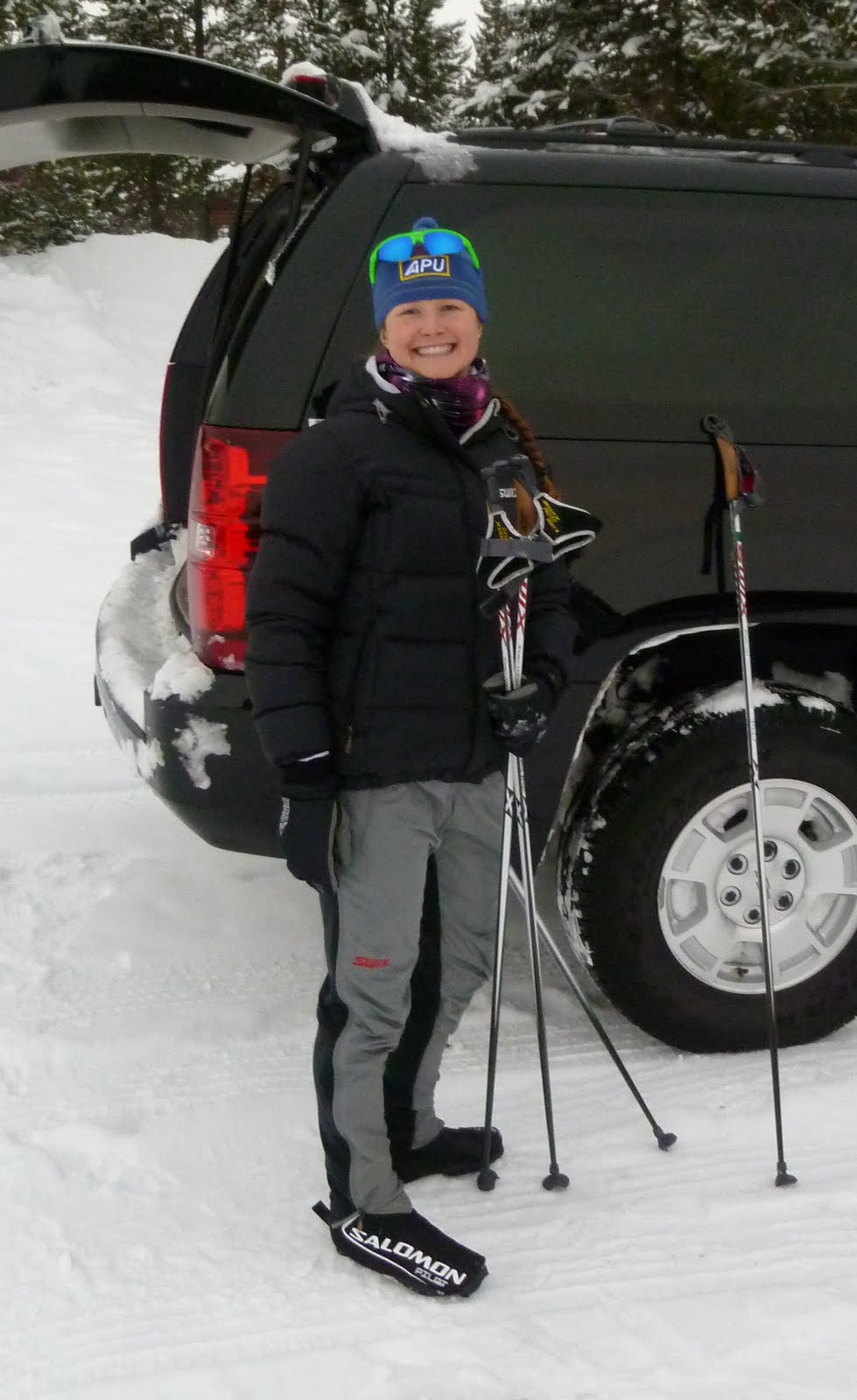
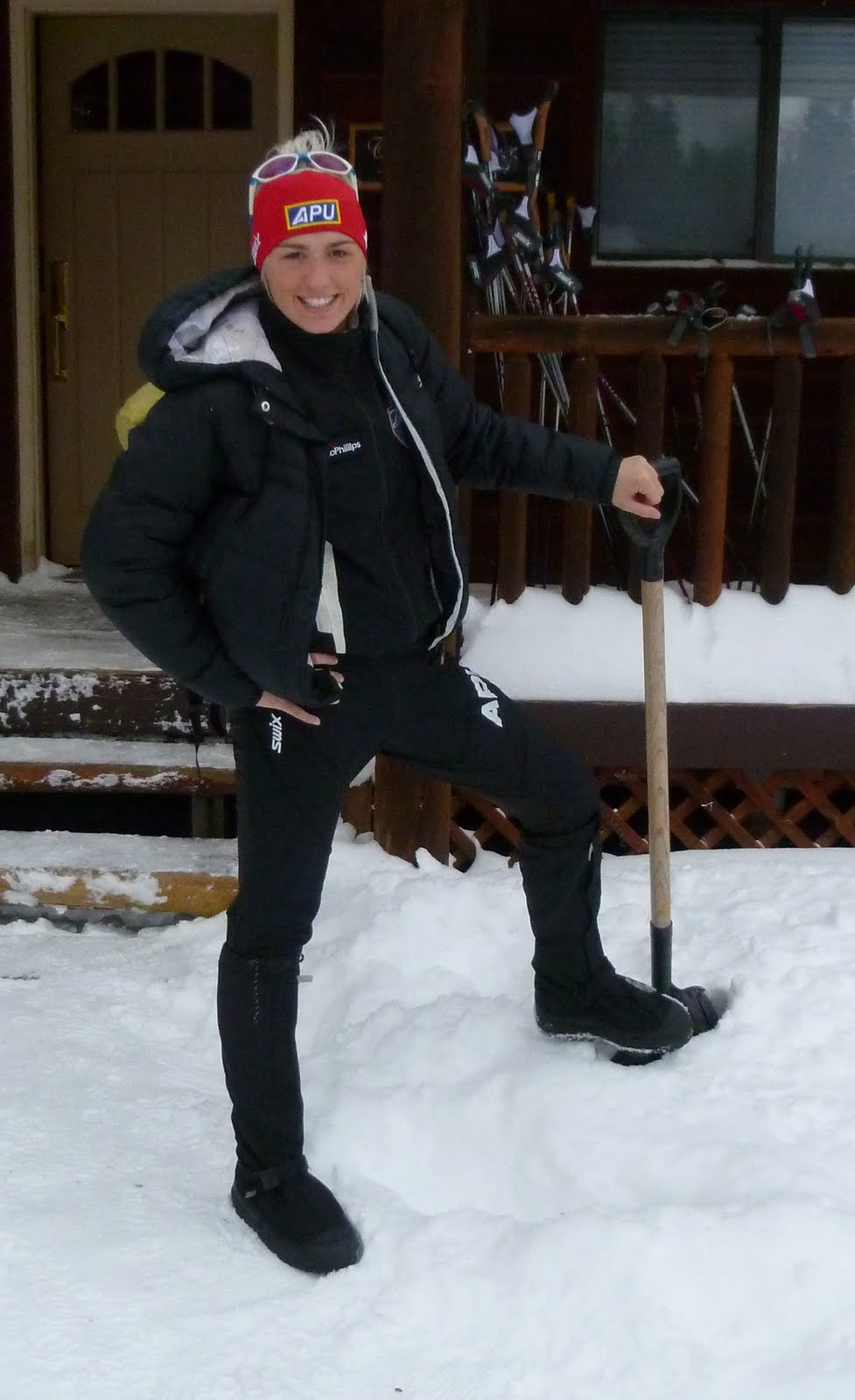
APU Pre-Race Attitude
A little morning pre-race peek into APU- Mannix
 Smythski
 Fitz
Fitz H Brooks
 GA
GA Ronski
 -
US Biathlon Preview: Men
My previews for the US biathlon teams will be briefer, which reflects the fact that I know less about the US biathlon team, and biathlon in general. Feel free to correct me in the comments if I get anything horribly wrong. For example, I’m going to take a very simplistic approach to who’s actually on the US team by just looking at the skiers I have data on. The team selections seem pretty fluid to me through and between seasons.
Let’s start with the men. I’m going to begin with the men who did World Cup or Olympic races last season:
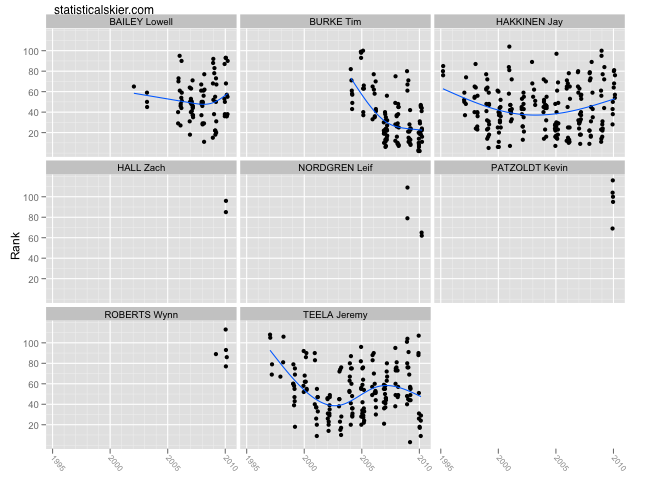
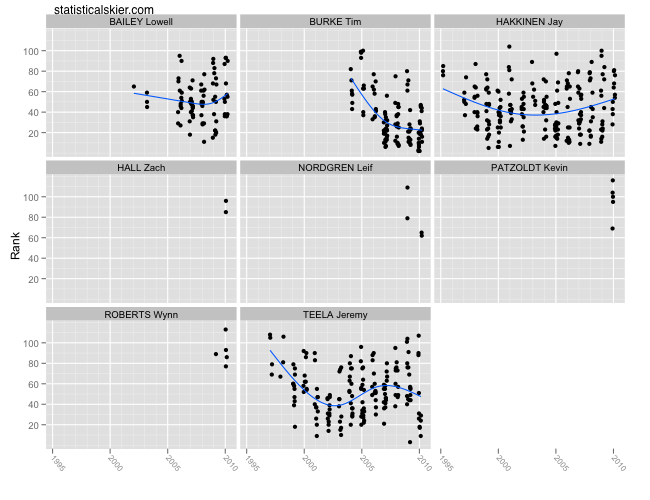
First, we should note that biathlon is much more volatile that cross country skiing thanks to the shooting element. So it’s not necessarily surprising to see people bouncing around from 15th one week to 80th the next. (I’ve plotted rank here rather than percent back.)
I’ve plotted only results from World Cups, Olympics and World Biathlon Championships here, and obviously only four guys have enough data to merit trend lines. Tim Burke’s dramatic improvement in recent years is evident, although it’s a bit hard to pick out his stellar season last year in these data. Lowell Bailey had a bit of an off season last year after breaking into the top twenty on occasion in recent years. Jay Hakkinen also had an off year, after being a very consistent presence in the top twenty for many years. Jeremy Teela is an interesting case. He had been steadily struggling more and more for quite a few seasons and rather dramatically turned things around last year. We’ll revisit that in a moment.
A handful of younger skiers cut their teeth at World Cups or the Olympics as well, although none of them really showed anything at the same level as Burke, Teela, Hakkinen or Bailey.
Let’s take a look at some shooting statistics:
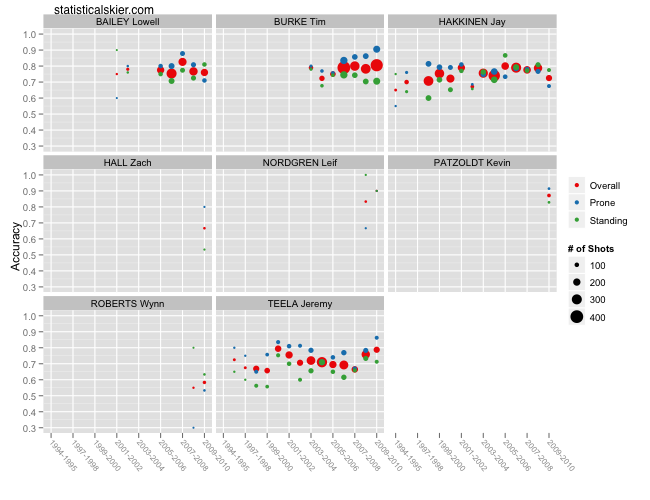
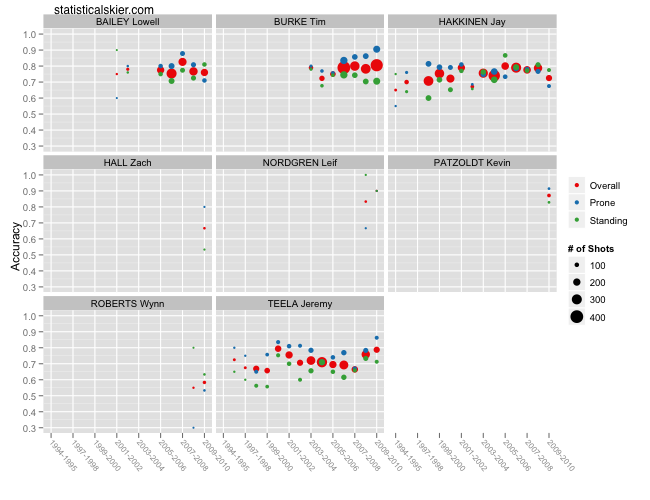 This graph should be fairly self explanatory. If some dots are hard to see, or apparently missing, it’s because of overplotting. Once again, if you’re unfamiliar with biathlon, keep in mind how crucial shooting accuracy can be, so small changes here can easily translate into minutes in a ski race.
Here we find the answer to Teela’s sudden resurgence last year. His shooting had been steadily declining for basically eight years and then he rebounded dramatically, improving his overall shooting accuracy by more than 10 percentage points in two seasons. Let me emphasize that that is a huge improvement; the difference between shooting 65% and nearly 80% could easily translate into averaging 2-3 fewer misses per race. This could mean anywhere from 45 seconds to several minutes, depending on the race.
On the other hand, Hakkinen, who had an off year last year, saw his shooting slip a bit after being a very consistent shot for many seasons.
Let’s look at how these guy’s shooting stacked up compared to other WC skiers last year:
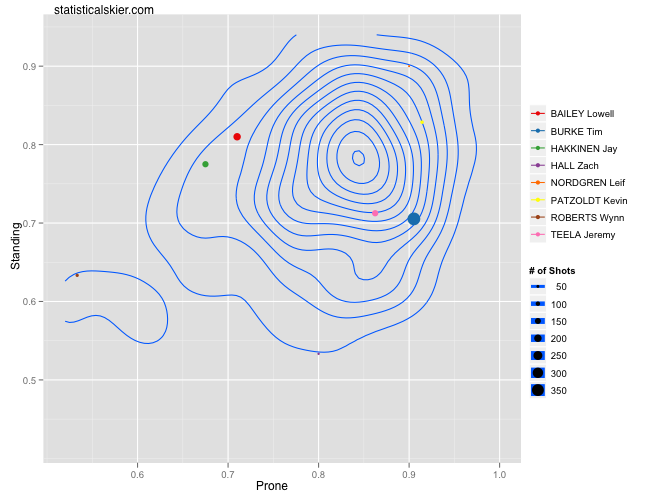
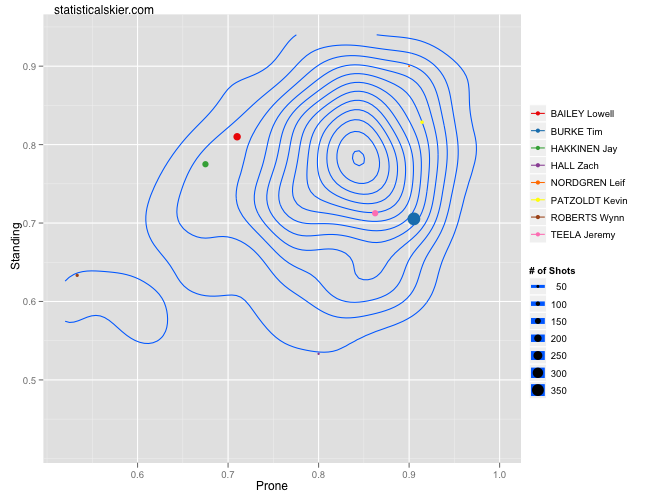 The contour plot represents male WC skiers with at least 50 shots last season; it’s better to be as far up near the right corner as possible. Then I plotted these eight guy’s shooting stats separately. Some of the dots are a bit hard to see, since their size if proportional to their respective sample sizes. If you squint a bit, you’ll find them all.
Leif Nordgren and Kevin Patzold didn’t race much, but when they did they shot very well. On the opposite side of the spectrum, Wynn Roberts and Zach Hall (an old teammate of mine) also didn’t race much but didn’t fare so well in the range. Each of the remaining four are sort of dancing around that upper right corner where everyone wants to be. Lowell Bailey and Jay Hakkinen were about average standing, but struggled some shooting prone. Conversely, Tim Burke and Jeremy Teela were about average or slightly above shooting prone, but struggled somewhat standing.
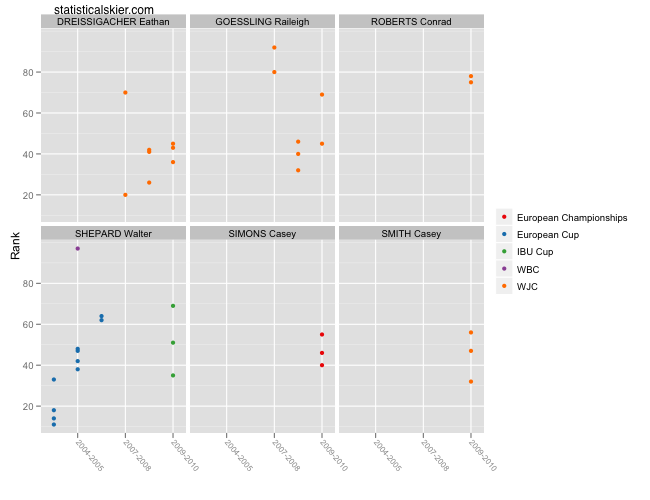
There are ton of other biathletes out there trying to break into the World Cup scene, of course, and I won’t pretend to understand who’s going to get a chance to ski which major races. My understanding is that biathlon decides these things with try-out races more than cross country does (at least, in the US). But in any case, here’s a look at the guys who didn’t happen to ski World Cup’s last season that I still have data on:
 I struggled with how exactly to plot these guy’s results. Biathlon doesn’t have an equivalent to FIS points in cross country skiing, so although I could have used percent back, that wouldn’t take into account the strength of the field. I settled on just using rank, and then coloring the points by the type of race, so you have to make your own judgement about which 10th place results are more meaningful than others. Another way to say this is that the only points that are strictly comparable are those of the same color.
I’m even less comfortable making predictions about biathlon, but here it goes: Burke will have another excellent season, but not one that’s a big improvement. He might sneak onto the podium but only if everything breaks his way. Teela will continue to ride his shooting renaissance to some consistently good (but not spectacular) results, putting him in the top thirty, but probably not often much higher. I certainly hope that Hakkinen and Bailey will rebound this year, but your guess is as good as mine, really. As for the younger guys, I’m not sure we’ve seen anyone who’s really going to be competitive with the big four of Burke, Teela, Hakkinen and Bailey.
Related posts:
- <Athlete Profile: Tim Burke
- <Biathlon Shooting Accuracy
- <Biathlon and Cross Country Volatility Trends
-
US Biathlon Preview: Men
My previews for the US biathlon teams will be briefer, which reflects the fact that I know less about the US biathlon team, and biathlon in general. Feel free to correct me in the comments if I get anything horribly wrong. For example, I’m going to take a very simplistic approach to who’s actually on the US team by just looking at the skiers I have data on. The team selections seem pretty fluid to me through and between seasons.
Let’s start with the men. I’m going to begin with the men who did World Cup or Olympic races last season:
First, we should note that biathlon is much more volatile that cross country skiing thanks to the shooting element. So it’s not necessarily surprising to see people bouncing around from 15th one week to 80th the next. (I’ve plotted rank here rather than percent back.)
I’ve plotted only results from World Cups, Olympics and World Biathlon Championships here, and obviously only four guys have enough data to merit trend lines. Tim Burke’s dramatic improvement in recent years is evident, although it’s a bit hard to pick out his stellar season last year in these data. Lowell Bailey had a bit of an off season last year after breaking into the top twenty on occasion in recent years. Jay Hakkinen also had an off year, after being a very consistent presence in the top twenty for many years. Jeremy Teela is an interesting case. He had been steadily struggling more and more for quite a few seasons and rather dramatically turned things around last year. We’ll revisit that in a moment.
A handful of younger skiers cut their teeth at World Cups or the Olympics as well, although none of them really showed anything at the same level as Burke, Teela, Hakkinen or Bailey.
Let’s take a look at some shooting statistics:
This graph should be fairly self explanatory. If some dots are hard to see, or apparently missing, it’s because of overplotting. Once again, if you’re unfamiliar with biathlon, keep in mind how crucial shooting accuracy can be, so small changes here can easily translate into minutes in a ski race.Here we find the answer to Teela’s sudden resurgence last year. His shooting had been steadily declining for basically eight years and then he rebounded dramatically, improving his overall shooting accuracy by more than 10 percentage points in two seasons. Let me emphasize that that is a huge improvement; the difference between shooting 65% and nearly 80% could easily translate into averaging 2-3 fewer misses per race. This could mean anywhere from 45 seconds to several minutes, depending on the race.
On the other hand, Hakkinen, who had an off year last year, saw his shooting slip a bit after being a very consistent shot for many seasons.
Let’s look at how these guy’s shooting stacked up compared to other WC skiers last year:
The contour plot represents male WC skiers with at least 50 shots last season; it’s better to be as far up near the right corner as possible. Then I plotted these eight guy’s shooting stats separately. Some of the dots are a bit hard to see, since their size if proportional to their respective sample sizes. If you squint a bit, you’ll find them all.Leif Nordgren and Kevin Patzold didn’t race much, but when they did they shot very well. On the opposite side of the spectrum, Wynn Roberts and Zach Hall (an old teammate of mine) also didn’t race much but didn’t fare so well in the range. Each of the remaining four are sort of dancing around that upper right corner where everyone wants to be. Lowell Bailey and Jay Hakkinen were about average standing, but struggled some shooting prone. Conversely, Tim Burke and Jeremy Teela were about average or slightly above shooting prone, but struggled somewhat standing.
There are ton of other biathletes out there trying to break into the World Cup scene, of course, and I won’t pretend to understand who’s going to get a chance to ski which major races. My understanding is that biathlon decides these things with try-out races more than cross country does (at least, in the US). But in any case, here’s a look at the guys who didn’t happen to ski World Cup’s last season that I still have data on:
I struggled with how exactly to plot these guy’s results. Biathlon doesn’t have an equivalent to FIS points in cross country skiing, so although I could have used percent back, that wouldn’t take into account the strength of the field. I settled on just using rank, and then coloring the points by the type of race, so you have to make your own judgement about which 10th place results are more meaningful than others. Another way to say this is that the only points that are strictly comparable are those of the same color.I’m even less comfortable making predictions about biathlon, but here it goes: Burke will have another excellent season, but not one that’s a big improvement. He might sneak onto the podium but only if everything breaks his way. Teela will continue to ride his shooting renaissance to some consistently good (but not spectacular) results, putting him in the top thirty, but probably not often much higher. I certainly hope that Hakkinen and Bailey will rebound this year, but your guess is as good as mine, really. As for the younger guys, I’m not sure we’ve seen anyone who’s really going to be competitive with the big four of Burke, Teela, Hakkinen and Bailey.
Related posts:
- <Athlete Profile: Tim Burke
- <Biathlon Shooting Accuracy
- <Biathlon and Cross Country Volatility Trends
-
SMS Nordic Strength
divThe SMS Nordic team is always trying to decide what workouts we want to do. There are so many great ones to choose from but we can’t pick them all and come up with a program that makes sense. There are some key components to any Nordic training program, what are the most important?, which should have priority? where should the focus be? Does anyone really know? Strength is a good one to look at. During the past few seasons we have tried and seen many different strength routines that have included some weights, Olympic lifts, balance, flexibility, speed, coordination, body weight, general moves, specific moves etc. This year, like most we went back to the drawing board, collaborated ideas and information and came up with a new one. Check it out……. /divdivbr //divdivbr //divdivbr //divdivbr //divobject width=”320″ height=”266″ class=”BLOG_video_class” id=”BLOG_video-3848bbc563979e74″ classid=”clsid:D27CDB6E-AE6D-11cf-96B8-444553540000″ codebase=”http://download.macromedia.com/pub/shockwave/cabs/flash/swflash.cab#version=6,0,40,0″param name=”movie” value=”http://www.youtube.com/get_player”param name=”bgcolor” value=”#FFFFFF”param name=”allowfullscreen” value=”true”param name=”flashvars” value=”flvurl=http%3A%2F%2Fv12.nonxt2.googlevideo.com%2Fvideoplayback%3Fid%3D3848bbc563979e74%26itag%3D5%26app%3Dblogger%26ip%3D0.0.0.0%26ipbits%3D0%26expire%3D1296557768%26sparams%3Did%252Citag%252Cip%252Cipbits%252Cexpire%26signature%3D1ECC2C1CFE853AF82E2FD7382A7345FB884E11AF.1E8B57E724430EDE526E89C4FD19B9CC9D584133%26key%3Dck1amp;iurl=http%3A%2F%2Fvideo.google.com%2FThumbnailServer2%3Fapp%3Dblogger%26contentid%3D3848bbc563979e74%26offsetms%3D5000%26itag%3Dw160%26sigh%3DwEkiIQnWl6uJKifvWV9mva31E1samp;autoplay=0amp;ps=blogger”embed src=”http://www.youtube.com/get_player” type=”application/x-shockwave-flash”width=”320″ height=”266″ bgcolor=”#FFFFFF”flashvars=”flvurl=http%3A%2F%2Fv12.nonxt2.googlevideo.com%2Fvideoplayback%3Fid%3D3848bbc563979e74%26itag%3D5%26app%3Dblogger%26ip%3D0.0.0.0%26ipbits%3D0%26expire%3D1296557768%26sparams%3Did%252Citag%252Cip%252Cipbits%252Cexpire%26signature%3D1ECC2C1CFE853AF82E2FD7382A7345FB884E11AF.1E8B57E724430EDE526E89C4FD19B9CC9D584133%26key%3Dck1iurl=http%3A%2F%2Fvideo.google.com%2FThumbnailServer2%3Fapp%3Dblogger%26contentid%3D3848bbc563979e74%26offsetms%3D5000%26itag%3Dw160%26sigh%3DwEkiIQnWl6uJKifvWV9mva31E1sautoplay=0ps=blogger”allowFullScreen=”true” //objectdiv class=”blogger-post-footer”img width=’1′ height=’1′ src=’https://blogger.googleusercontent.com/tracker/4680416899705879324-5549902140678035673?l=smsxc.blogspot.com’ alt=” //div
-
Week 1 Images – After 7 days, bluebird.
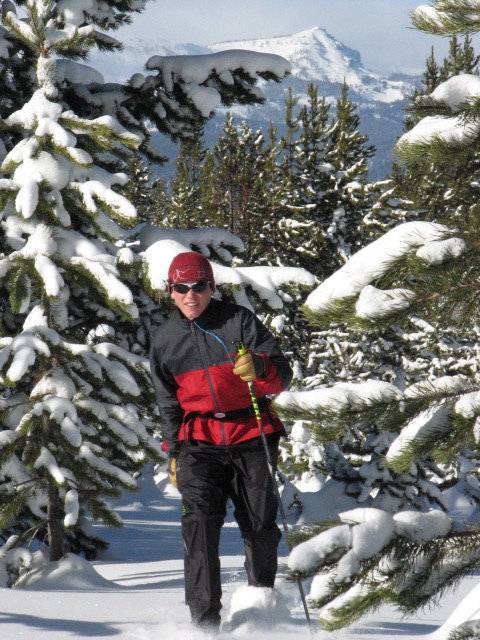
“Best week of skiing in my life. Best classic ski ever.” Brennan Degen. West Money Shot. 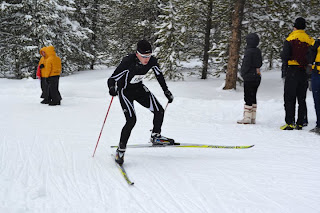
Ryley Walker starting the 2011 season. Supertour 15km. 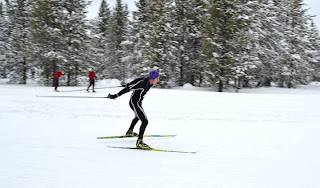
Jackson Rich. 15km. 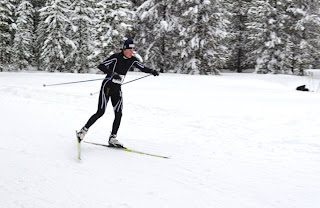
Hans Halvorsen. 15km. 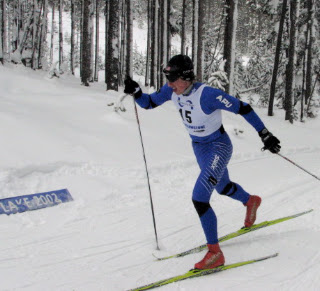
Peter Kling. Classic Sprint. 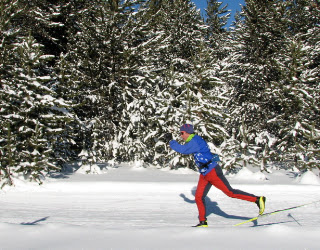
Technique work in the sun. 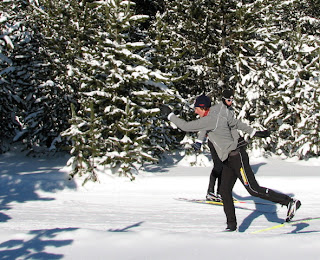
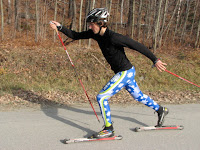
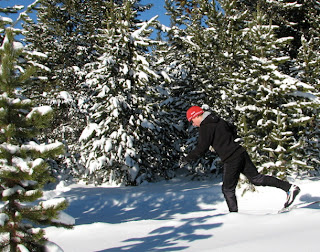
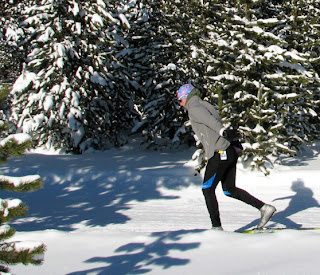
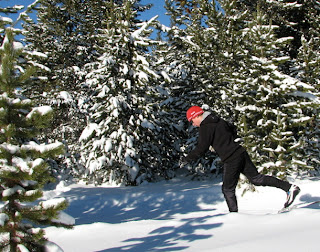
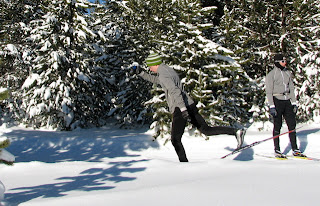

Noah Eckstein. 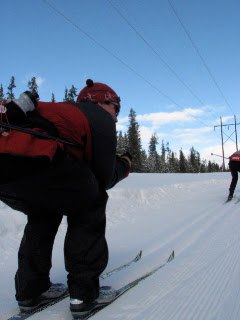
Tucking Windy Ridge. 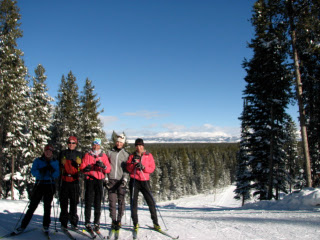
Big Sky Country. 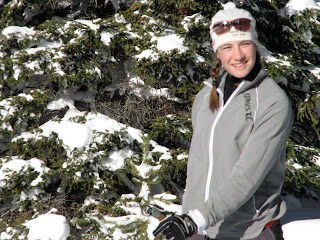
Elena Luethi. Enjoying the views. 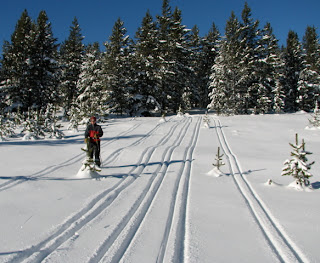
Figure 11. 
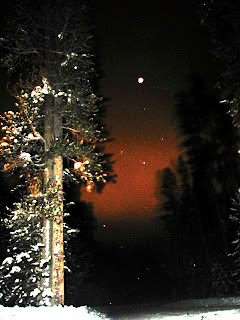
Storm Clearing. 
Headlights from November Ski Walking. -
The Ring
Caitlin and I have been receiving a lot of emails and phone calls of congratulations. Thank you for all the well wishes, we are very excited. A lot of people have been asking about the ring.
Matt Firth, a local artist from the Methow Valley custom made the ring. We are not big on material possessions but we both enjoy art and supporting local artists.

Initial Sketches


My brother touring Matt's shop and inspecting the ring. Thanks Matt for a wonderful one-of-a-kind piece of art.

Tower Peak

Oharu
Someday we would like to climb Kilamanjaro (Oharu). Tickets to Nairobi are quite expensive so it might be a 10 or 20 year anniversary trip. Needless to say we are looking forward to climbing many mountains together.

The Gregg Family is growing. (Tara we missed you and Simon in West)
-
Turkey Trotting

Me and Jess getting psyched on the start line. Not sure why everyone is wearing pink…
I’m psyched to be back in Vermont and skiing on snow (although that might not last long), but I had a really wonderful Thanksgiving with my family, and I miss them, too. I traveled to Irvington, Virginia to see my aunt, uncle, cousins, and grandparents. I hadn’t seen my dad’s family in a couple of years and my grandmother isn’t getting any younger, so it was good that I went. Also, I love my cousins, they are completely awesome.
But anyway. The day before Thanksgiving we were taking the dog for a walk and ran into one of the neighbors. “Are you doing the Turkey Trot?” she asked.
“What Turkey Trot?” we replied.
“Oh, the whole town does the Turkey Trot every year. There’s 400 people, which is practically everyone who lives here!”
Without missing a beat, my parents and uncle asked, “How do you sign up? I’m sure Jess and Chelsea want to do it!”
Wait a minute. I wasn’t at all sure I wanted to do another race. After all, I had just completed five races in ten days over in Finland and I wasn’t feeling my most spritely. Also, Jess was taking a nap, so we certainly didn’t have her approval. Nonetheless, my family hurried off to the town office to sign up me, my cousin, and my dad.
Jess has always hated running, but this year she discovered that if you run with a friend, it’s actually kind of fun. It was her first race ever, and she was super nervous. Luckily, it was only two miles, and I promised her she’d be okay. We’d run together the day before and on a training run, she pretty much tired me out.
Well, the next morning, off we went. The course was a one-mile out and back, pretty much completely flat. The field was not particularly competitive, I’d say, and I won the women’s race. Jess won her age division and so did my dad, which was kind of hilarious. My aunt was so so so excited and proud of us. They have just moved to Irvington and don’t know many people, so she kept saying, “People are going to be wondering who those Littles are! Now they’ll know us!”
Anyway, it was pretty fun, and much less serious than my racing experiences in Finland. A good confidence-booster – I was completely surprised to be able to run at all! Now, back to the stuff that matters…. skiing!

Bringing home the hardware. I repped the GRP but of course nobody knew what it was or really cared.

Me, Jess, and Emily. Bestest cousins ever!
-
Skiing the Notch
We may not have much snow in Vermont right now but that doesn’t mean that we don’t have access to great skiing! Early this morning we loaded up the van and headed to Stowe to ski the Notch road which is now closed for winter. The freezing rain that hit the area on Friday helped create a solid base over the asphalt and with just a few inches of snow and skillful grooming by Dick Dreissigacker we were able ski for several hours without even scratching our skis!

Roller-skiing on Saturday

And skiing on Monday??
It was really cool to see how many people were out on the Notch road today skiing or walking their dogs on a beautiful day. With the sun shining and hardly a cloud in the sky it felt more like Spring conditions than late November! Unfortunately it looks like warm temps and rain in the forecast will bring an abrupt end to what little skiing we have in Northern VT for a little while. Already today the ice base was beginning to melt in sections where the darker asphalt was exposed to the sun. Tomorrow we might be racing to finish our ski before sections of the trail melt away completely!

Great skiing on only a few inches of snow

It doesn't get any nicer than this!
-
When horrible things happen to skiers / The power to overcome
The world can be unfair, and people can do terrible things to each other. Sadly, cross country skiers are not immune from this pain. When a woman can’t take her children out cross country skiing in a local park without being robbed at gunpoint and then sexually assulted in front of her kids (article
-
Big Day on Windy Ridge
I couldn’t be happier right now. The racing season has begun and I have started it off with one of my best classic races of my life. Things have only gone up from there. On Sunday I went out for a nice over distance ski and my first ski of the year on Windy Ridge. My favorite trail in West Yellowstone.

Will you ….?
Normally Caitlin and I ‘trailhead’ together and I think she was really starting to wonder why I was skiing with her.

She said 'Yes!'

It took some coordinating, but the timining of the proposal was perfect. A few minutes after I asked, Chad and Alieta arrived, then my Mom and Dad skied up. It was wonderful to have my family so close.

Announcing the 'Big News' to my CXC family
-
Kuusamo WC Recap: North Americans
As always, there’s lots of stuff I could focus on, but we can’t have everything. As is usually the case, the weekend was a bit of a mixed bag for the North Americans. Kris Freeman continued to look quite strong despite some bad luck with his poles. Alex Harvey and Devon Kershaw had much stronger weekends this time around. Kikkan Randall had more solid distance races, although her sprint race wasn’t stellar. And so on.
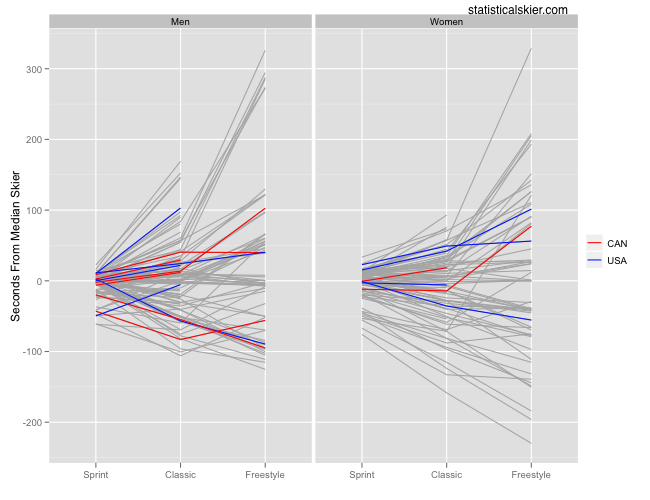
Let’s start out with the same style graph I used in my earlier post, only this time highlighting the North Americans:

While I haven’t labeled the athletes individually, it should be pretty clear who’s who. Harvey clearly was having a great weekend but couldn’t hold on in the skate race yesterday. Kershaw and Freeman did well despite pretty pedestrian sprint races. As for Randall, if she had had an ok (for her) sprint race, that could easily have bought her 20 seconds, and with a great sprint race (if we kept the distance results the same, which isn’t really realistic) she could have contested for a place in the top five.
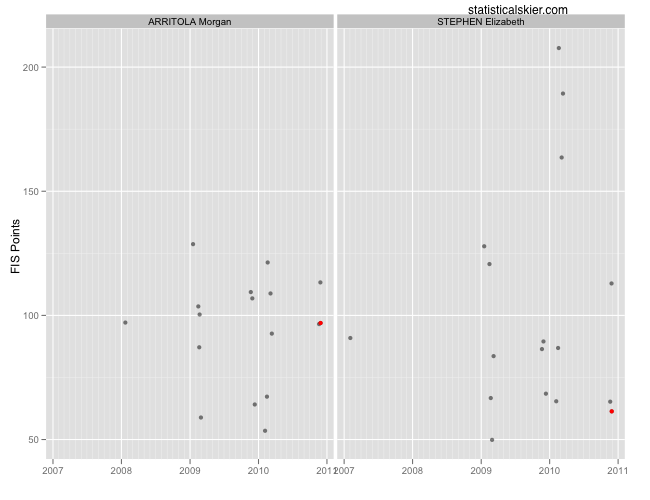
I need to comment a bit more on Stephen and Arritola, since I disagree somewhat with the characterization of their freestyle races in this FasterSkier recap. As a commenter on that article correctly points out, much of the gains in overall place they made were the result of other skiers DNF/DNS-ing (at least half, or a bit more). I’m sure this will spark some measure of debate, but I have to agree with the original commenter.
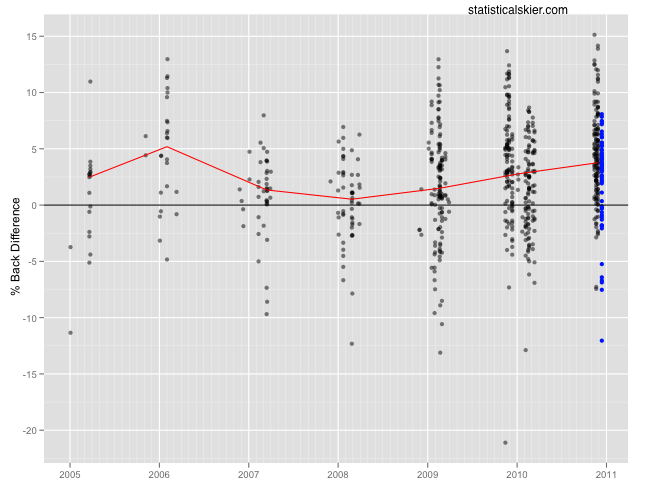
Let’s start with the graph above. We’re plotting seconds from the median skier after each stage, so in the case of Arritola, she lost time yesterday on the median woman, not just the leaders. Stephen held about even relative to the median woman. If we isolate just their skate performances yesterday in terms of FIS points compared to their other WC starts we get the following:
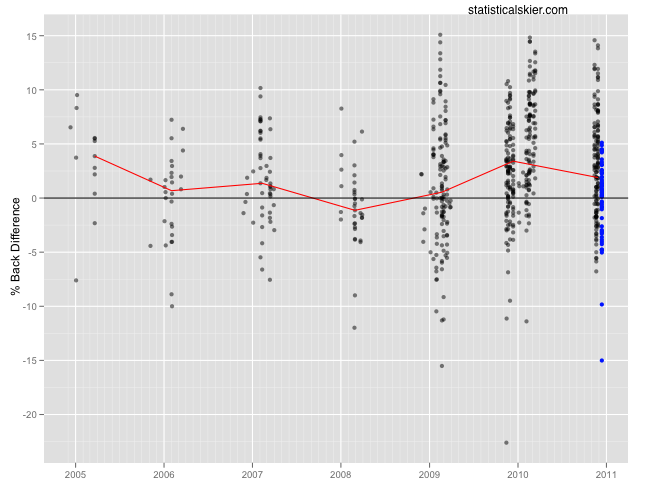
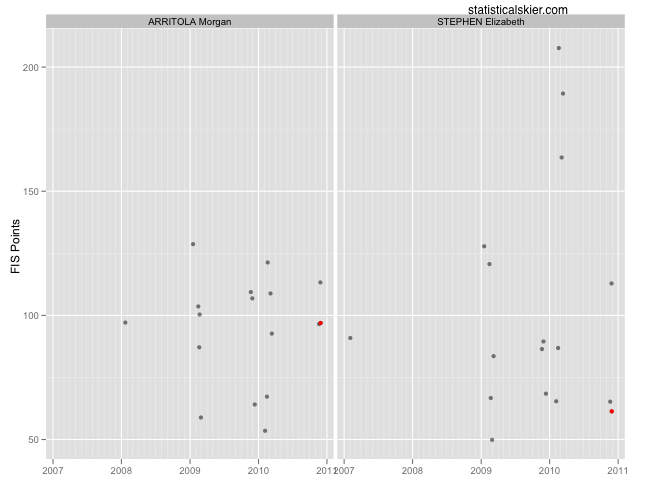 Of course, now we’re comparing them only to the winner on Sunday’s stage (Therese Johaug). Even then, it looks like Stephen had a decent race while Arritola had a pretty bad one. For an even closer look at the data, we can focus in on just the head-to-head matchups for each woman versus their competitors from Sunday and look at the difference in their respective percent back. First, Liz Stephen:
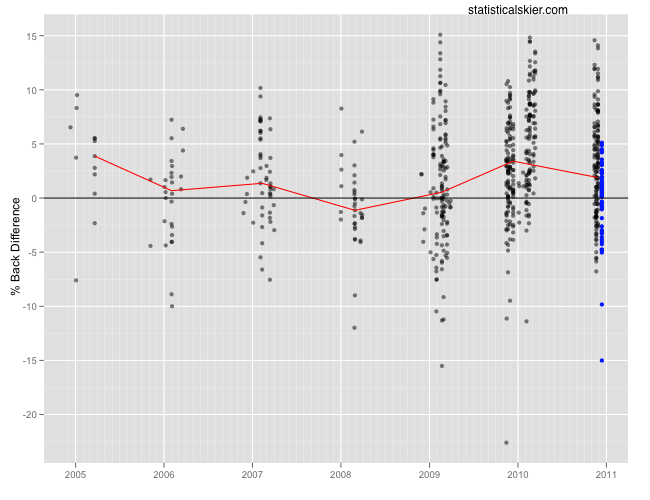 Keep in mind that unlike some of the other versions of this graph that I’ve made, this includes pursuits and mass starts, since yesterday’s race wasn’t an interval start race. Also, I nudged the dots for yesterday’s skate race over a bit (the blue) so they are more visible. As always, the red line indicates the median for all races in a particular season.
Once again, this looks like an ok race for Stephen, but nothing spectacular, though perhaps a modest improvement on her other races this season. As for Arritola:
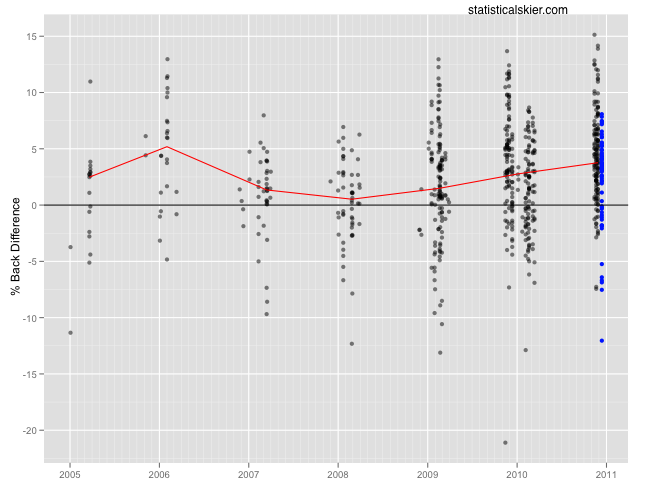 This looks less good overall (above zero is bad, below zero is good), but again, not substantially different from Arritola’s races so far this season.
As always, I don’t mean to pick on these ladies. I just think it’s important to be clear about when people have raced well or not.
Related posts:
- <USST Preview: Liz Stephen & Morgan Arritola
- <Assessing The Weekend’s Racing
- <Gällivare Recap: North Americans
-
West Yellowstone Racing
We just finished our first series of racing in West Yellowstone, Montana this past week. APU threw down an amazing team performance as well as many amazing individual races. There wasn’t a single race that APU didn’t have a team member standing on the podium. It has been so fun to race as part of this group throughout the week!As far as my week of racing went I came away very happy with the first series of racing. I got my first SuperTour podium in the Sprint races on the first day of racing. It was an interesting set up, as we had two prelims separated by only an hour. With temperatures down in the single digits, and little rest- it made for a very tough day. Regardless, it was fun to throw down and get the first couple of races under my belt. APU has had a few time trials already back home this month, and with so many competitive girls on the team, for once I wasn’t stepping into these races with cold feet.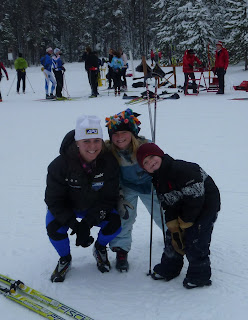 My little cousins after the race- great little cheerers!Friday and Saturday’s distance skate and classic races had their high’s and low’s. I was pleased with the consistency over the week. One of the highlights was Saturday’s classic race when APU took top five americans in the woman’s race. It has been so nice to ski with a team with such depth- and then show up at the races and feel like any one of the girls on the team can pop an exceptional race and be standing on the top. A great example of this was Friday’s distance skate race when Kate Fitzgerald won, finishing a second in front of Holly Brooks. Congrats to Fitz!
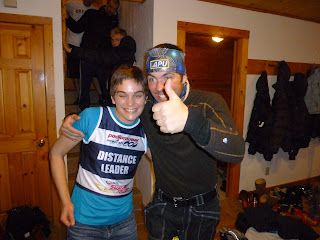 Fitz as the Distance Leader and excited coach Flora
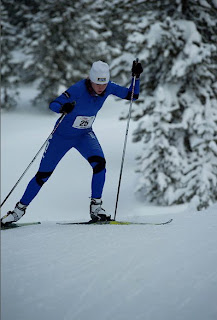 Thanks to the coaches and wax tech’s for all the work over the week. It is incredible, on this team the tech’s know all 18 skiers fleets of skis and manage to pick the best ski for every skier. THANKS
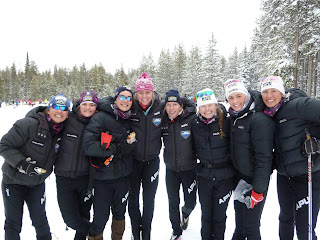 Team after Racing- Cheering on the boysWe are now off to Silver Star, Canada for a week of training before we hit another serious of races next week.Results from the week are posted here:http://summittiming.com/races/race_results.php
 -
December Stone Grinding Schedule
James Southam has well prepared skis.
Photo: Ian Harvey / TokoYou’ve been training to get the most from your skiing, so make sure your skis aren’t a limiter.
Prepare all of your skis to run their best with a fresh stone grind and hotbox service. At Nordic Ultratune, a stone grinding batch starts every Thursday and those skis are ready for shipping on the following Monday — just 4 days later. Return shipping is FedEx Express Saver, which is 3rd day delivery. So, skis that are shipped out on Monday will arrive back to you on Thursday.Here’s the upcoming service schedule at Nordic Ultratune. Use these dates to make sure you get your skis ready before your most important events.- Skis in by Dec 4th will ship out on Dec 8th and arrive back to you by Dec 11th.
- Skis in by Dec 11th will ship out on Dec 15th and arrive by the 18th.
- Skis in by Dec 18th will ship out on Dec 22nd and arrive by the 26th (the 25th is a holiday).
- Skis in by Dec 26th will ship out on Dec 29th and arrive by Jan 3rd.
You can see that there are still a few service batches scheduled before Christmas and the post-holiday races (including Sr Nationals!). There is still time to get a fast grind on your skis before your biggest events! But don’t delay… …fast boards are a joy to ski on, and they’re a real advantage. -
Kuusamo WC Recap
This recap of this past weekend’s WC races will be a little different than before. Rather than focus on individual performances, I’d like to look at the races as a group. Stage race formats are relatively new to the cross country world, and these short stage races are even newer. Since they are roughly modeled off of cycling style stage races, I thought it might be interesting to graph them accordingly.
Over the summer, I had some fun making bumps charts for the Tour de France and the Vuelta a España. What do we get if we make the same plots for XC stage races?
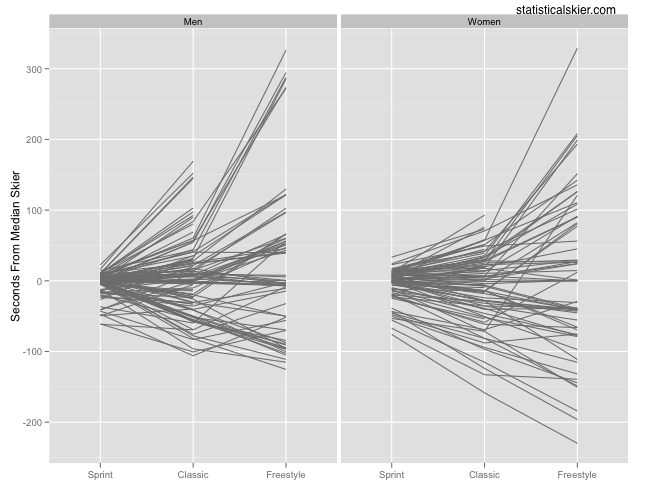
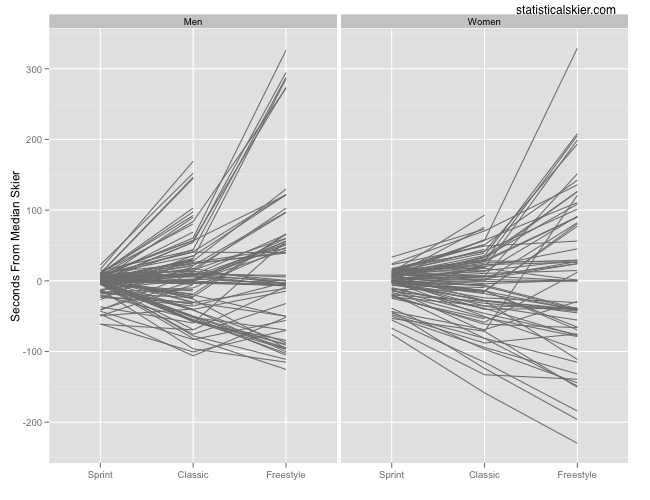 Each line represents a single skier. I calculated the cumulative times for each skier after each stage (including the time bonuses for the sprint race) and then plotted each skier’s difference from the median after the end of each stage. In a cycling race, the median time would roughly represent the ‘peloton’. Lines that dip downward mean that athlete gained time; lines the shoot up are athletes losing time. Lines that end before the last stage are skiers who abandoned.
We can easily spot Marit Bjoergen dominating everyone in the women’s race. The men’s field saw a lot more shuffling, it seems. The peculiar effects of pursuit style starts are apparent as well. Despite the final stage meriting it’s own WC and FIS points you can see many skiers who were well off the back at the start of the freestyle stage losing even more gobs of time. When you’re off the back in a ‘mass start’ type race, people have a tendency to just let up a bit and stop racing, I imagine. Some of these folks may have just had a rough day, of course.
You can also see some distinct clumping in the men’s race. You had a fairly large train of leaders, with a few individuals separating themselves by the end of the freestyle race and then two groups further back with a handful of skiers left in “no man’s land” between the first and second groups.
For the women, the front of the field ended up fairly spread out, but towards the middle you start to see some small groups of skiers together.
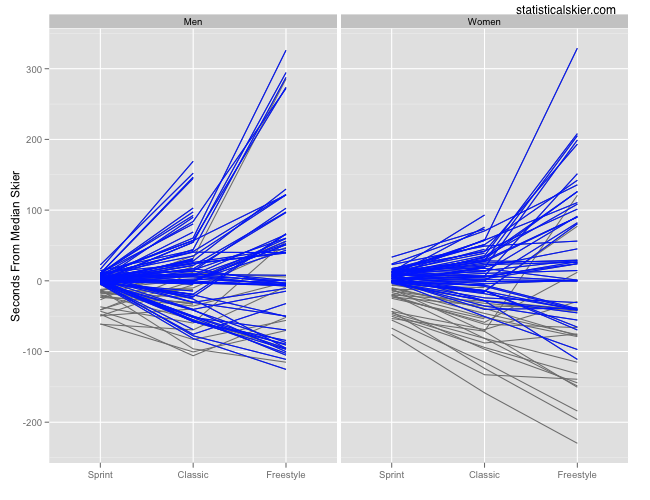
One of my main interests in making these plots was to investigate the relative importance of each stage to the overall results. I have suspected for some time that performing well in the sprint races isn’t quite as crucial as doing well in the distance races. It’s hard to see in the version above, but let’s try highlighting the skiers who didn’t qualify for the elimination rounds in the sprint:
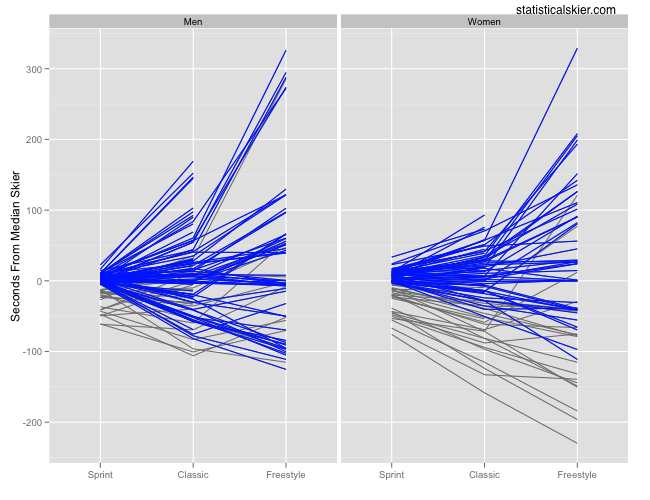 Quite a difference between the men and women, no? The lesson here could either be that the women’s field just isn’t as deep as the men’s field, or that the time bonuses for the sprint race need to be different for men and women, or both.
The top thirty for the women remained largely unchanged after the sprint with only a few women sneaking up a few places. The men saw a huge group of skiers charging up from well below 30th after the sprint to dominate the leader board.
I wonder if four stages would be a better length, adding in a second sprint race between the two distance events. That would be a pretty brutal four days for the athletes, I imagine. If you put a rest day in the middle the event starts getting too long for a weekend. Additionally, I don’t think the time bonuses applied to the sprint races are lining up with how we think about sprint races. It seems to me that your qualification time is only relevant insofar as whether it puts you in the top 30. I think it might be interesting to scrap the qualification times for the top 30 and then reassign times to these skiers, working down from the 31st qualification time based on how they did in the heats. So, using the same time bonuses, 30th place would receive the qualification round time of the 31st skier minus one second, and so on. Of course, you could fiddle with the time bonus amounts to achieve whatever sort of advantage you’d like.
If I have time I might put together a short post on some individual skiers who did well or poorly in Kuusamo, but I’ve got quite a few posts on tap for this week, so we’ll have to play it by ear. If you have any particular skiers you’d like to see graphs for let me know in the comments (or via email) and I’ll try to oblige.
Related posts:
- <A New Sprint Points Method
- <Comparing Variability In Men’s & Women’s Sprinting
- <Assessing The Weekend’s Races: Sprint
-
Onward to Sverige.

Boys Team. Thumbs Up.
While the rest of the GRP took off early Monday morning last week, I managed to grab an extra hour or so of sleep before embarking on a marathon of bus rides to Aare, Sweden. In fact, my teammates made it back to Craftsbury on Monday before I made it to my friend’s house in Sweden.
16 hours on a bus actually turned out to be not as bad as it might have been. I caught the last bit of Sherlock Holmes, found the wireless connection for the 42 minutes my battery lasts, and managed to take a few hot laps from the upper deck to the lower deck to ward off the kankles I tend to get on long trips- long legs do have their drawbacks.
I arrived in Östersund late Monday night after a taxi and 6 different buses to meet the Swedish version of my real mother. She gave me a ride the last hour into Aare, a small ski town where I spent 9 months after I graduated from high school 5 long years ago. I spent a lot of time with Karin (mom) and her family while I lived here, and while I had seen her and her husband at my college graduation, I hadn’t seen their three little kids in 5 years. They’re much bigger now- but that hasn’t stopped them from hanging off any vacant part of my body when I move around the house. It’s quite lovely to be back here to catch up with old friends and family alike.
I’ve also managed to train quite a bit aside from lugging small children around. It’s been snowing every day since I arrived, and mediocre tracks have improved to mid-winter perfection. It’s been great to be able to keep this streak of on-snow days rolling, as the forecast in Vermont calls for rain, rain and a little more rain. This coming weekend I’ll make the hour long trek across the border to Meraaker, Norway for a weekend of Norway Cup racing. A 30km individual skate and 10km individual classic are on the schedule and I’m looking forward to both- they’ve got some really tough courses over there that suit me well and it will be fun to get some more high level FIS racing in before heading back stateside.
All in all it’s been a great tour in Finland and now Sweden, and soon to be Norway. Here’s some pics from the Finland days and Aare.
-

Snowy Åre at sundown.

Don't mess with Big Dilly.
 Pepa chases Reindeer.
 -
-
The Circus
The week of the West Yellowstone camp is always one of the craziest of the ski season and this year was no exception. From skiing on roller skis into the Park our first day, to postponing the sprints because there was so much snow that the timer could not get over the pass, it was an eventful Thanksgiving Camp.
Here are some photos of the highlights. . .
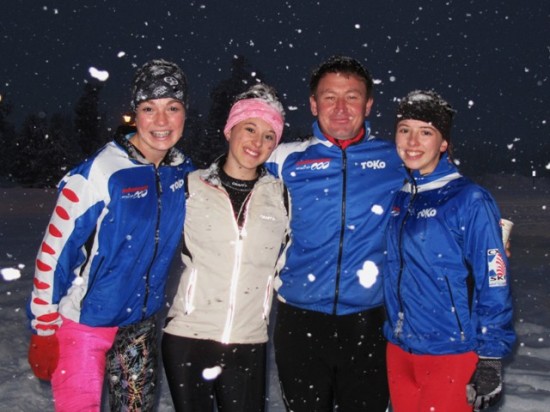
Igor and the CXC Junior team brought the snow. . .and lots of it!
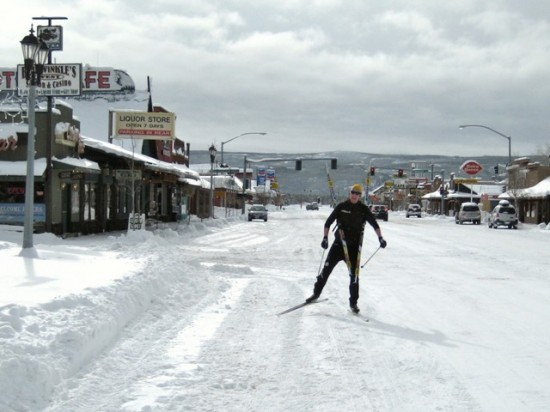
So much snow you could ski on the roads!
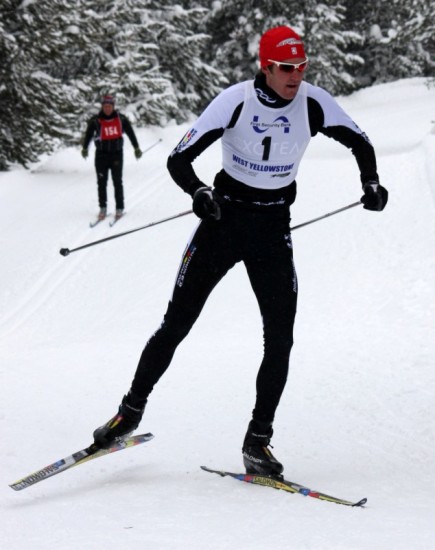
Photo: Ian Harvey – Toko
Kicking off the North American racing season with bib number one. Oh yeah.
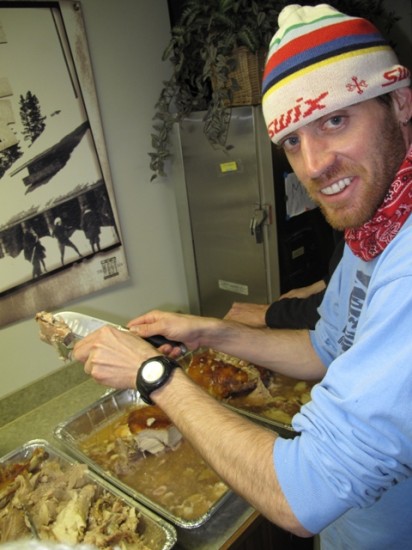
Justin Easter single handedly made our Thanksgiving dinner and, of course, carved the turkey. Andy, our Austrian Caterer, cooked up most of our food for the week with a distinctly Bavarian flavor: brats, sauerkraut, schnitzel, and even Warsteiner on tap. A big thanks to Andy and Justin for their hard work keeping us well fed all week.
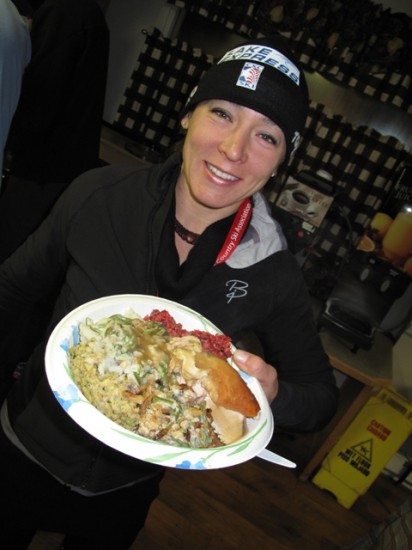
Aga, one of the CXC Masters Team members, skied with us all week. When we weren’t on the trails, the elite team athletes enjoyed the company of our many masters team members over some of Andy and Justin’s satisfying meals.
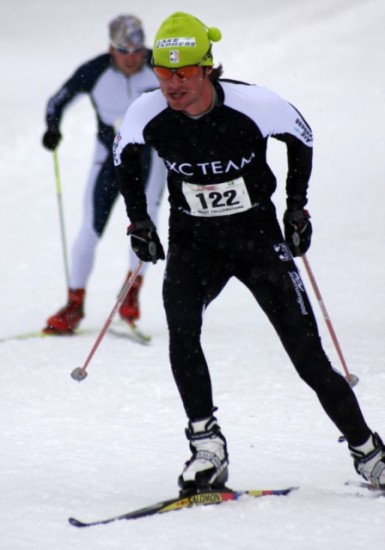
Photo: Ian Harvey – Toko
Tad Elliott took the first win of the season for CXC in the 15km Skate. Nice work Tad!
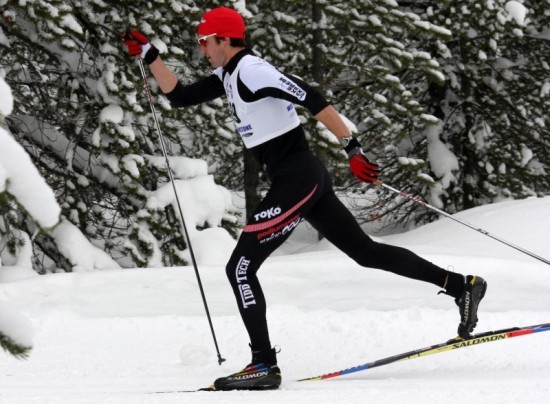
Photo: Ian Harvey – Toko
Thanks to our coaches, Jason Cork and Gus Kaeding, for getting us some fast skis and to Ian Harvey and Toko for some fast wax and race shots. Major props to Gus who tackled a spectator crossing the trail in front of me, narrowly preventing a serious collision. Guess it pays to have a coach that can bench 225lbs! That was probably the most entertaining thing I witnessed all weekend.
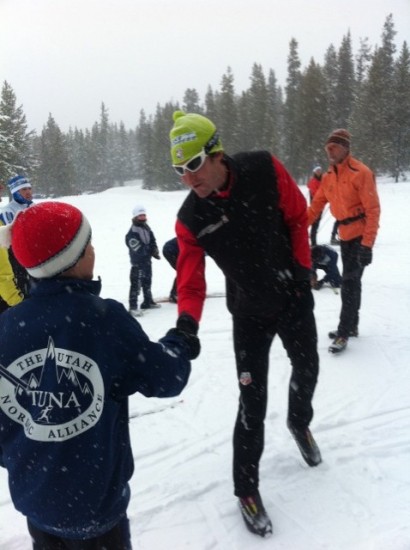
Photo: Mike Brown – Sisu Skiers
Finally, thanks to Ben Popp, Mike Nightengale, and Mike Brown with Sisu Skiers for inspiring, organizing, and sponsoring the Kuzzy Kids Clinic at West Yellowstone.
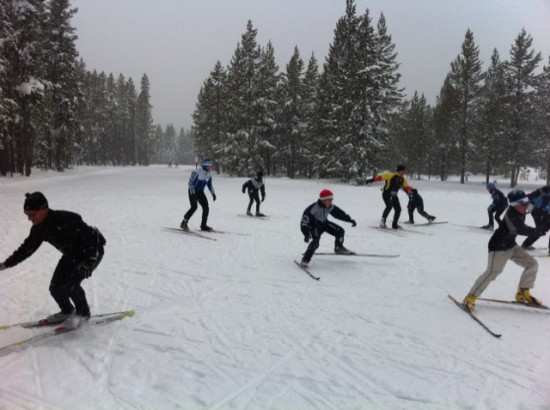
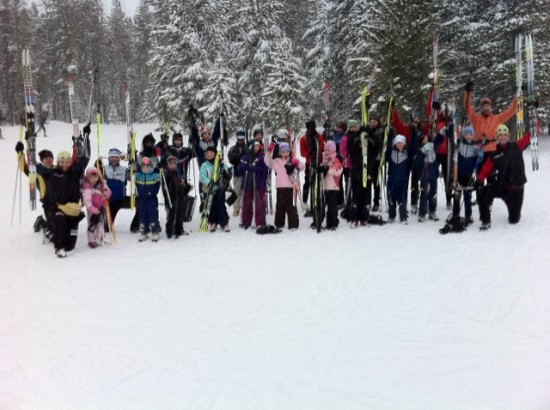
We had close to 30 kids from Minnesota, Wisconsin, Montana, Wyoming, Great Britain, and Utah participate in the clinic.
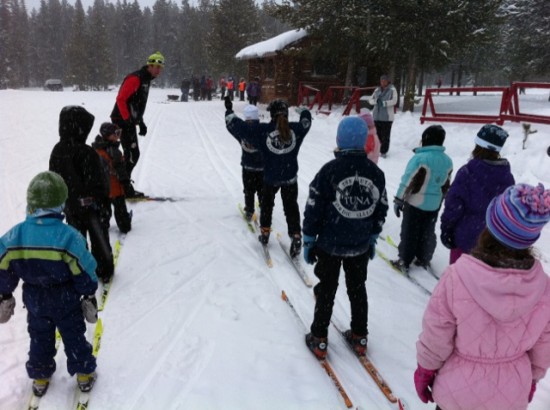
In reality, it was the kids from The Utah Nordic Alliance (TUNA), who led the clinic. They demonstrated how to pull flawless 360’s, effortlessly skate backwards, and have a lot of fun on skis. Major props to their coaches for pulling together such an active group of skiers. Keeping up with their tradition of supporting local skiers and events, Salomon pitched in some cool boot bags for all the kids.
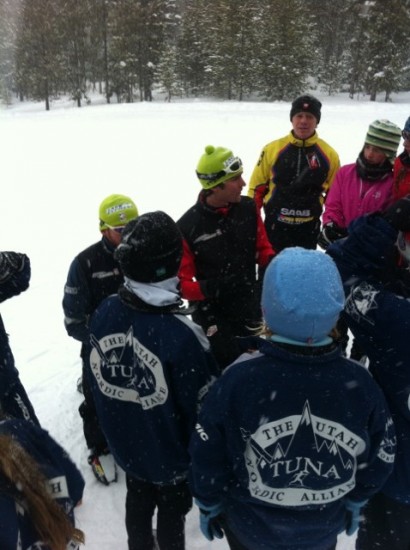
A big thanks to my teammate Brian Gregg for his help, too! He spends a ton of time working with kids this age at the Boys & Girls Club in Hayward through his In The Arena project. His help was invaluable making the afternoon a big success. For now, I’m looking forward to a week of kicking back in West Yellowstone and the opportunity to enjoy all this new snow!
-
Leaving West
West is done. I finished off the three days of racing with another 7th place finish. No matter what my fitness I always seem to be in the middle part of the top 10… In Saturdays 10k I went for the opposite tactics from Friday when I went out too hard and blew up. The plan was to ski conservatively for the first 3k and then pick up the pace. I did just that and almost got caught by Lars who started 30 seconds behind me but once I picked it up I skied a pretty solid last 7k but I think I started a little too slow and had a hard time getting going as fast as I needed too ending up only 6 seconds out of 2nd and 25 out of the win.
Another breakthrough day for an APU’er as Bart Dengel had his first podium in a distance race with a 2nd place. He’s been a great training partner the past few years and to see his results match his training is good to see. Atta boy!
Tomorrow morning we head off too Silver Star, BC for a training break before racing again in two weeks. One of my favorite places to ski and I can’t wait to get there.


Photos by Ian Harvey