Category: XCFeeds
A collection of live feeds from cross-country ski blogs around the web.
-
Vermont State Meet
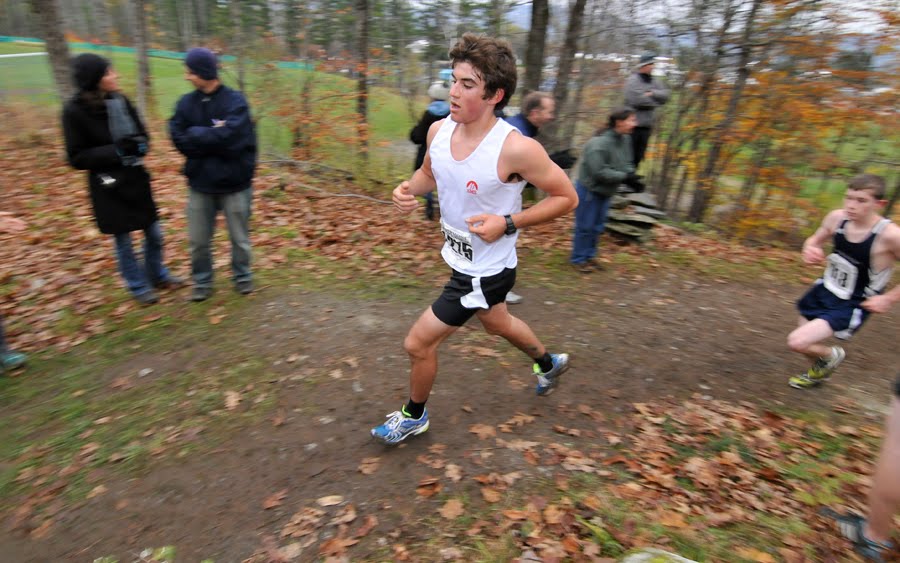
 Sophie, Austin, David Sinclair, Annie Hart, Izzy and Issy.We had a great day up in Thetford at the Vermont State Meet. Our crew of 8 runners all set season PRs on the Thetford course (beating their time from the muddy Woods Trail Run earlier this fall) and the boys team finished 12th out of 34 teams (our 3 girls aren’t a big enough to count for a team score). Calvin, Paddy, and Issy all placed in the top 25 for the combined results (Div I, II, & III) which qualifies them for a trip to the New England Championships. We had lots of parents, cousins, and friends out on the course cheering on the runners on a chilly day, where fortunately any rain or snow held off until later in the evening. Thanks to the Dartmouth crew, above with Issy, for coming up the road to cheer us on! A big thank you to the Kerin and Caldwell families for hosting the girls and boys in Lyme, NH last night. We really appreciate it! Below are some wonderful photos from Herve Pelletier of today’s race – enjoy!Results:
Div I Place O’all Place Runner States Woods Trail Run 13 17 Issy 21:21 22:58 47 75 Kate 23:20 25:29 64 129 Tess 25:00 26:06 4 5 Calvin 17:20 18:00 16 24 Paddy 18:20 19:05 50 78 Gino 19:14 20:41 57 95 Tyler 19:39 20:54 66 111 Hamish 19:54 21:40  Issy ran a smooth race and finished in 13th place for Div I girls and the 17th overall girl on the day.
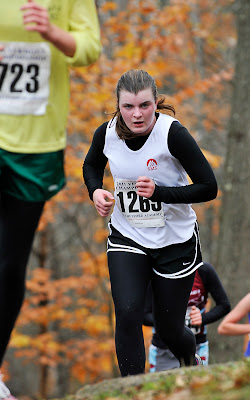 Kate knocked off over two minutes from her time at the Woods Trail Run and had a great race to place in the top 50.
 Tess ran a strong race and moved up towards the end to take a minute off her course PR.
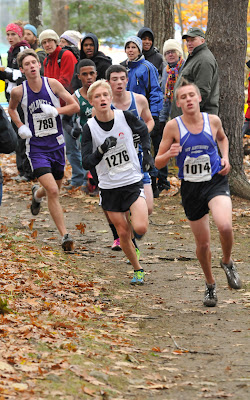 Calvin had the race of the day and crossed the line in fourth in the Div I race.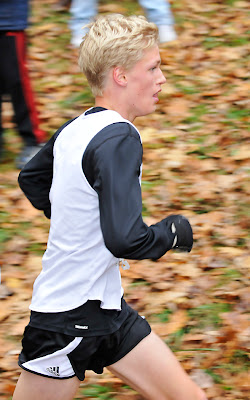
 Paddy raced to a top 25 finish (16th in Division I) and finished in 18:20.
 Gino finished the XC season with a great race – 50th place and a minute and a half improvement.
 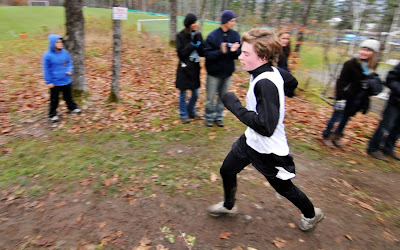 Tyler did his trademark move 2-3K into the race and ran through the pack to finish in 19:39.
  Hamish and Tyler running together at the start of the race. Hamish finished up his XC season with an almost two minute improvement on his time from earlier in the season.Jewelry help. : )
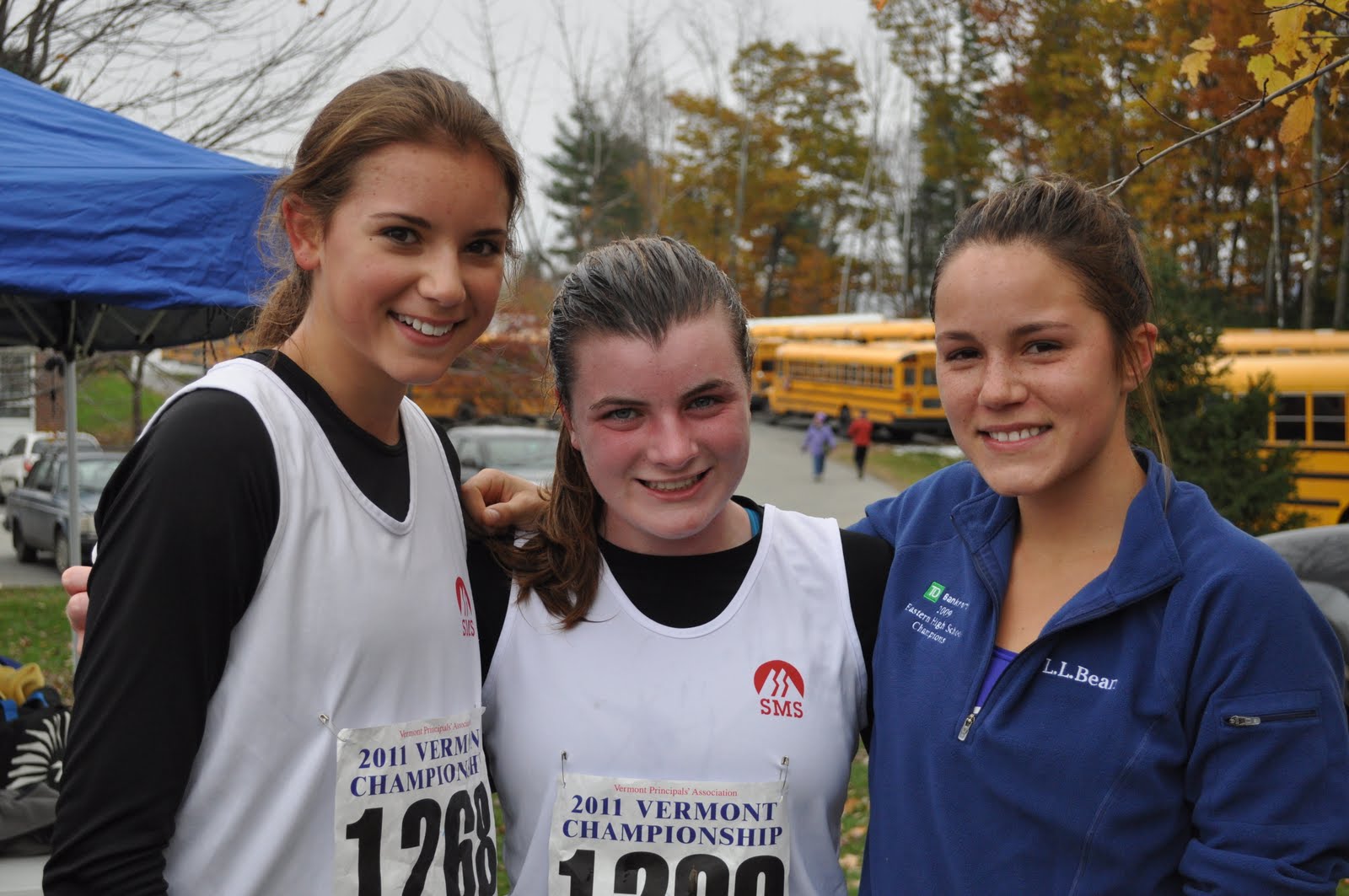
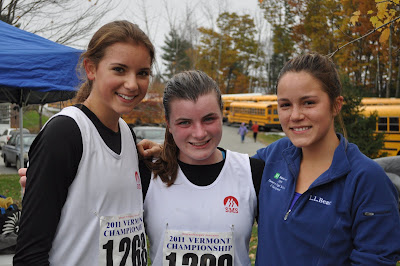 Tess, Kate, & Issy after the race – all smiles. : )
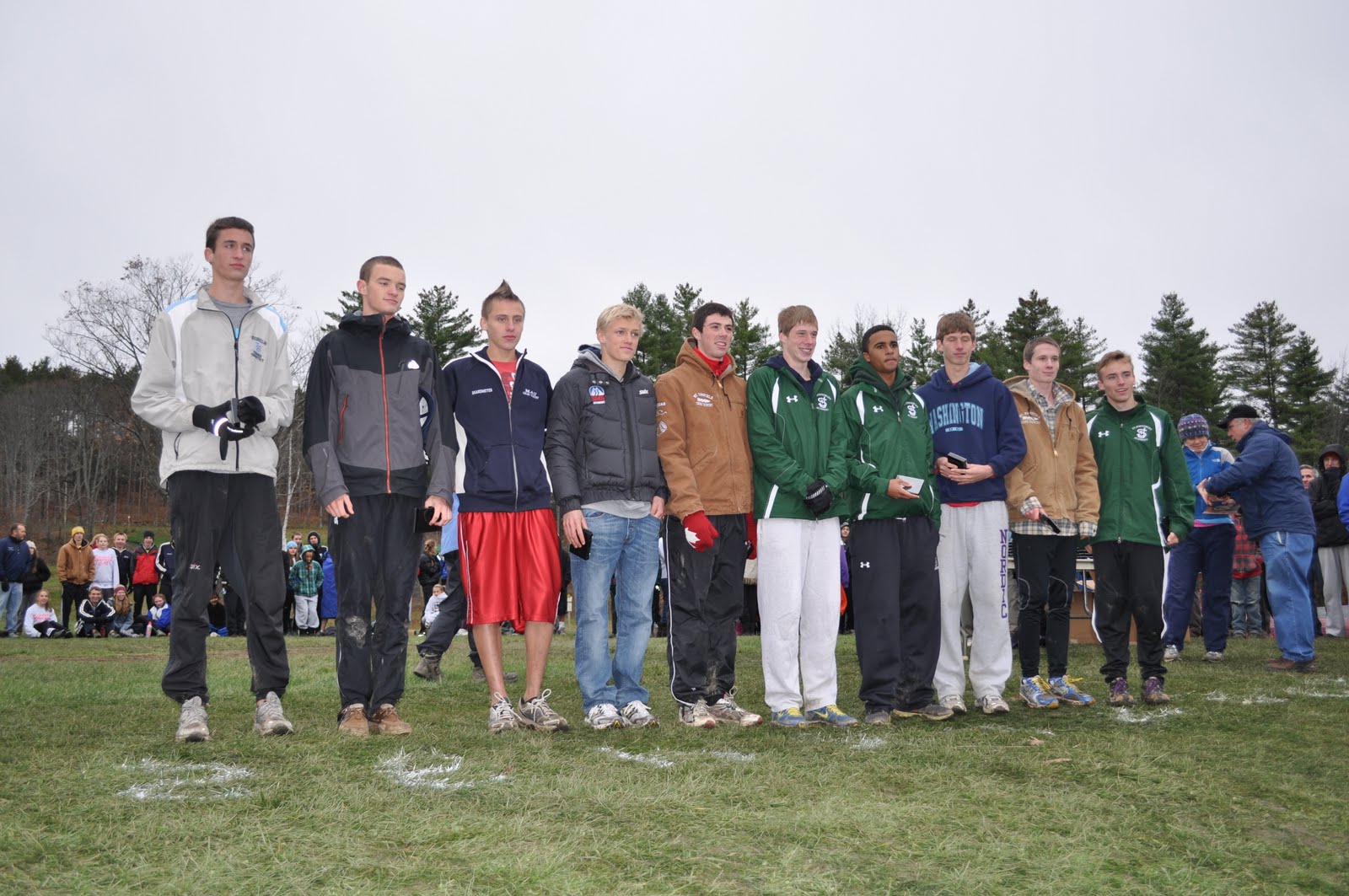
 Issy (far right) and the top 25 girls in Vermont!
 Calvin receives his official handshake for his fourth place finish.
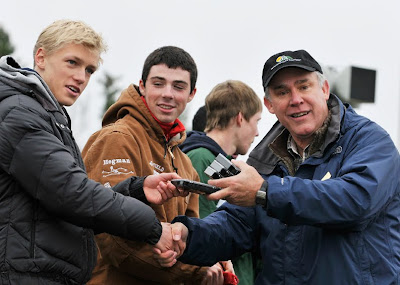 Burke/MMU skier Jack Hegman (center) had a great race and finished a few seconds behind Calvin.
 Top 10 in Division I.
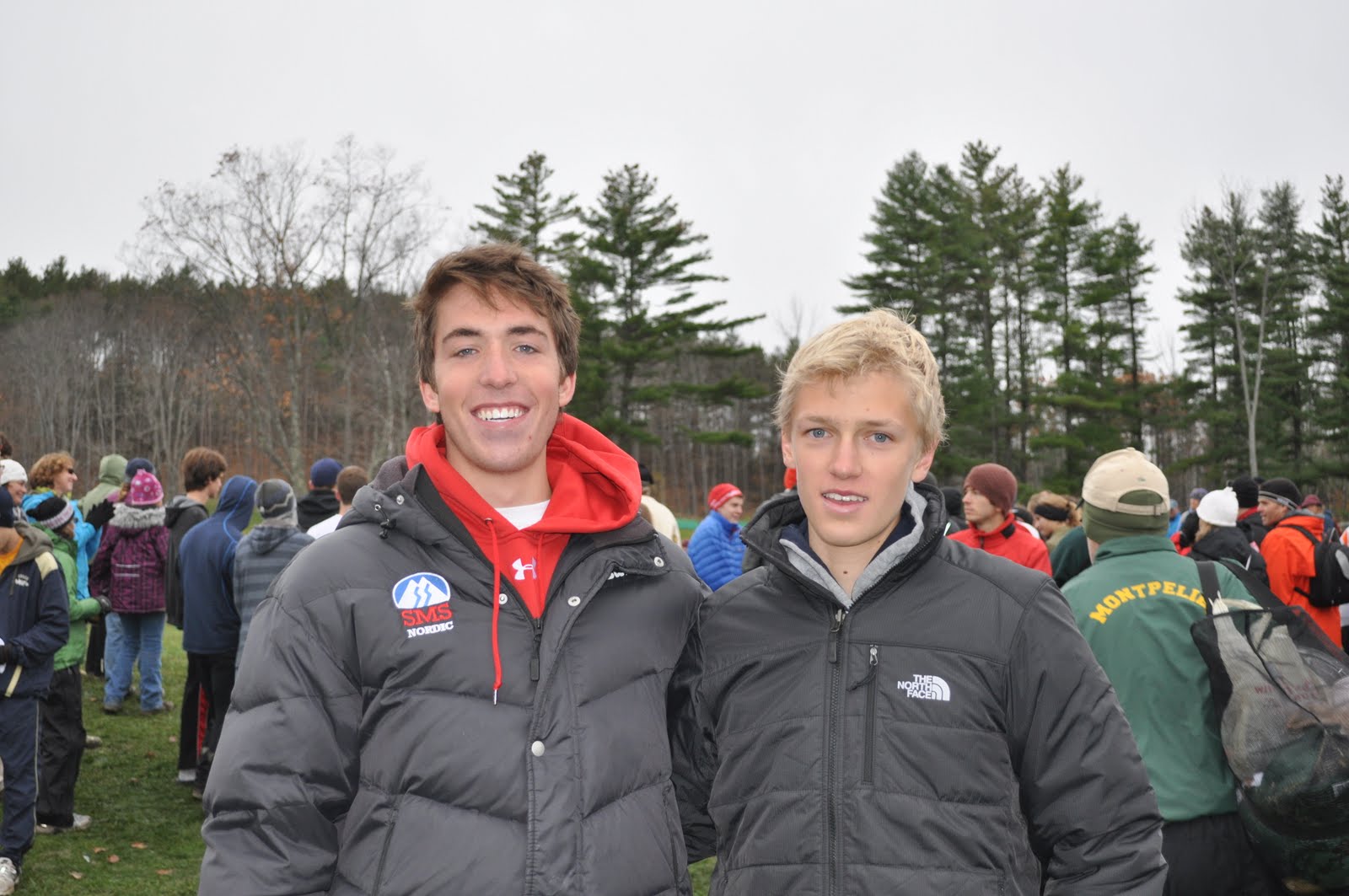
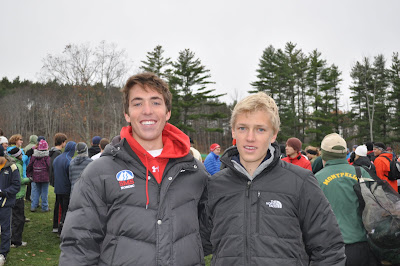 Top 25 finishers Paddy & Calvin – congrats guys!
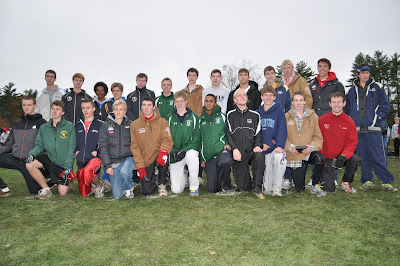 Top 25 boys in Vermont (Calvin in front, fourth from left, and Paddy standing, second from right).
 -
Vermont State Meet
Sophie, Austin, David Sinclair, Annie Hart, Izzy and Issy.We had a great day up in Thetford at the Vermont State Meet. Our crew of 8 runners all set season PRs on the Thetford course (beating their time from the muddy Woods Trail Run earlier this fall) and the boys team finished 12th out of 34 teams (our 3 girls aren’t a big enough to count for a team score). Calvin, Paddy, and Issy all placed in the top 25 for the combined results (Div I, II, & III) which qualifies them for a trip to the New England Championships. We had lots of parents, cousins, and friends out on the course cheering on the runners on a chilly day, where fortunately any rain or snow held off until later in the evening. Thanks to the Dartmouth crew, above with Issy, for coming up the road to cheer us on! A big thank you to the Kerin and Caldwell families for hosting the girls and boys in Lyme, NH last night. We really appreciate it! Below are some wonderful photos from Herve Pelletier of today’s race – enjoy!Results:Div I Place O’all Place Runner States Woods Trail Run 13 17 Issy 21:21 22:58 47 75 Kate 23:20 25:29 64 129 Tess 25:00 26:06 4 5 Calvin 17:20 18:00 16 24 Paddy 18:20 19:05 50 78 Gino 19:14 20:41 57 95 Tyler 19:39 20:54 66 111 Hamish 19:54 21:40 Issy ran a smooth race and finished in 13th place for Div I girls and the 17th overall girl on the day.Kate knocked off over two minutes from her time at the Woods Trail Run and had a great race to place in the top 50.Tess ran a strong race and moved up towards the end to take a minute off her course PR.Calvin had the race of the day and crossed the line in fourth in the Div I race.Paddy raced to a top 25 finish (16th in Division I) and finished in 18:20.Gino finished the XC season with a great race – 50th place and a minute and a half improvement. Tyler did his trademark move 2-3K into the race and ran through the pack to finish in 19:39. Hamish and Tyler running together at the start of the race. Hamish finished up his XC season with an almost two minute improvement on his time from earlier in the season.Jewelry help. : )Tess, Kate, & Issy after the race – all smiles. : )Issy (far right) and the top 25 girls in Vermont!Calvin receives his official handshake for his fourth place finish.Burke/MMU skier Jack Hegman (center) had a great race and finished a few seconds behind Calvin.Top 10 in Division I.Top 25 finishers Paddy & Calvin – congrats guys!Top 25 boys in Vermont (Calvin in front, fourth from left, and Paddy standing, second from right). -
Reindeer sightings!
Last year in Mounio the warmest wax we used was in the blue range so this year’s packing list lacked many of the warmer waxes and the unseasonably warm weather here has quickly drained our small supply. The ski shop in town is also not accustomed to stocking a lot of warm waxes at this time of the year and have been sold out all week. Today Pepa, Clare, Hannah, and I drove to Levi, the nearest alpine ski area, approximately 60km to the south, in search of klister. We were somewhat unsuccessful in this regard but were able to find Finnish souvenirs, a great coffee shop, and lots of reindeer!

Not long into the drive we saw the first few reindeer and immediately pulled over.

We got out of the car and Pepa eagerly chased after the reindeer hoping to get close enough for a good picture.

But we were a little too aggressive and scared them away

If only we had a bit more extra room in our luggage for the trip home…

More reindeer on the way home


We were those tourists that stop in the middle of the road and take animal pictures

Pepa really wanted a picture with one of reindeer but my photography skills aren't great. You can kind of see a reindeer butt in the trees behind her.

-
Reindeer sightings!
Last year in Mounio the warmest wax we used was in the blue range so this year’s packing list lacked many of the warmer waxes and the unseasonably warm weather here has quickly drained our small supply. The ski shop in town is also not accustomed to stocking a lot of warm waxes at this time of the year and have been sold out all week. Today Pepa, Clare, Hannah, and I drove to Levi, the nearest alpine ski area, approximately 60km to the south, in search of klister. We were somewhat unsuccessful in this regard but were able to find Finnish souvenirs, a great coffee shop, and lots of reindeer!
Not long into the drive we saw the first few reindeer and immediately pulled over.
We got out of the car and Pepa eagerly chased after the reindeer hoping to get close enough for a good picture.
But we were a little too aggressive and scared them away
If only we had a bit more extra room in our luggage for the trip home…
More reindeer on the way home
We were those tourists that stop in the middle of the road and take animal pictures
Pepa really wanted a picture with one of reindeer but my photography skills aren't great. You can kind of see a reindeer butt in the trees behind her.
-
Strides in the Snow!
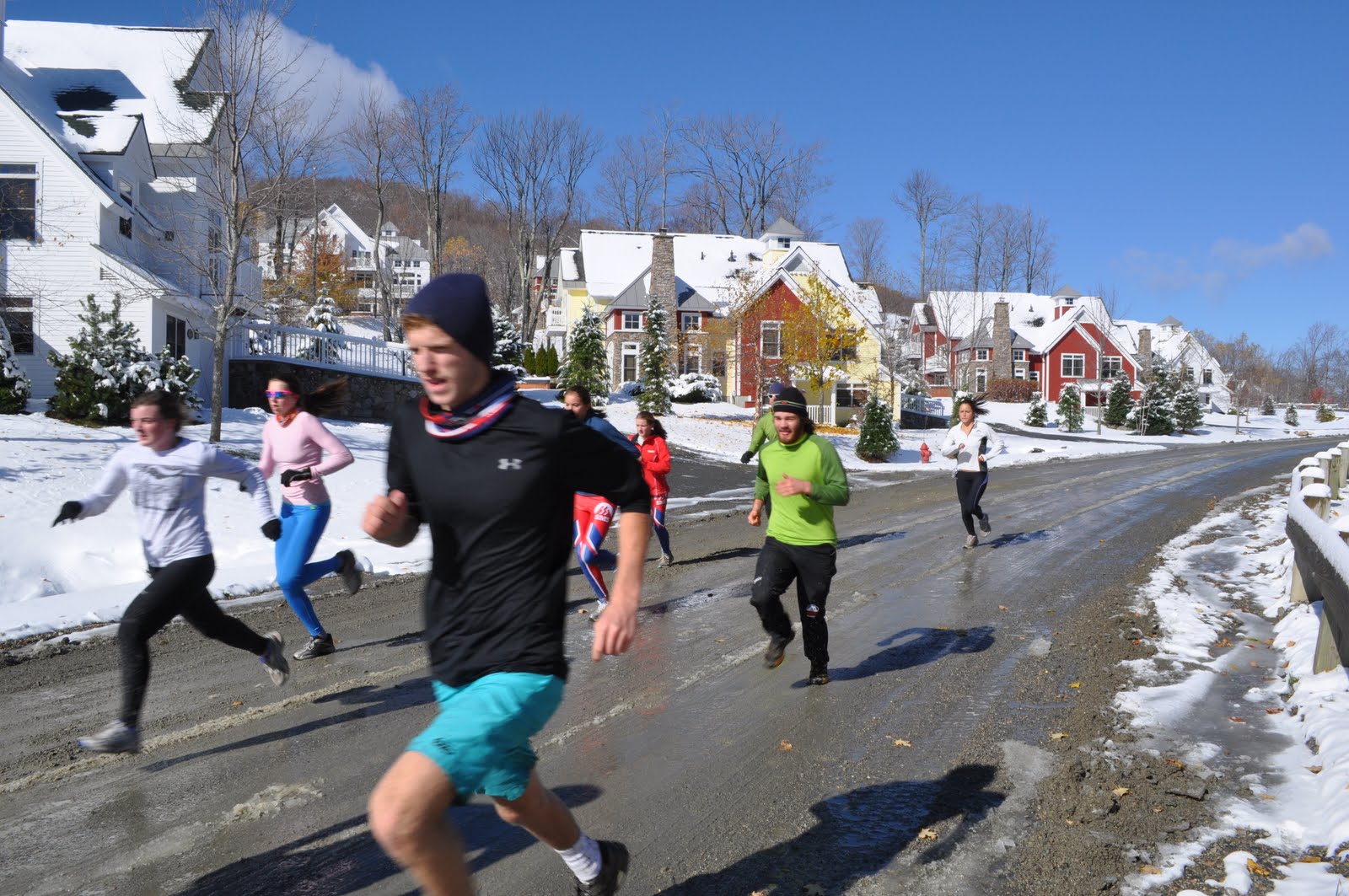
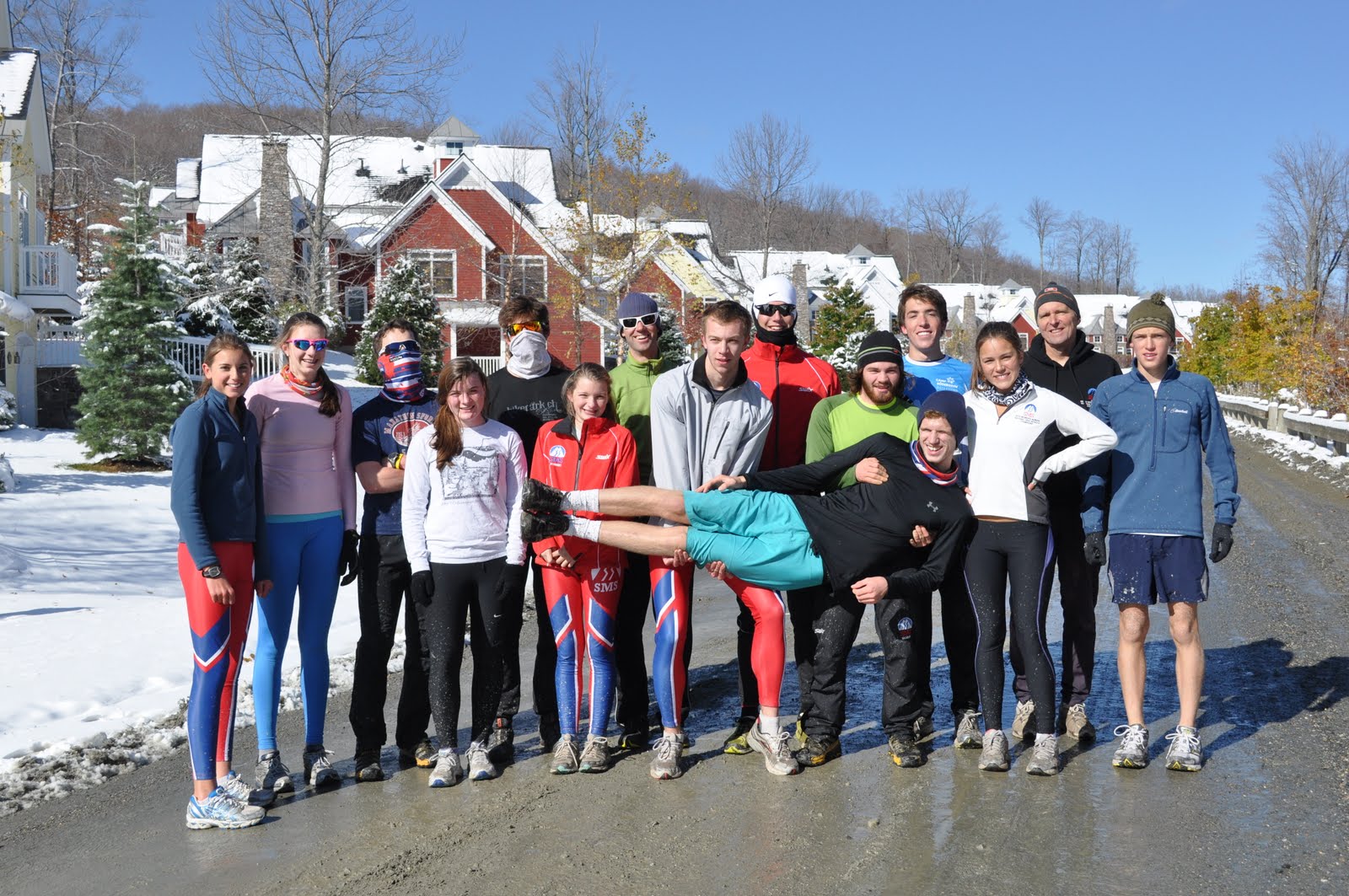
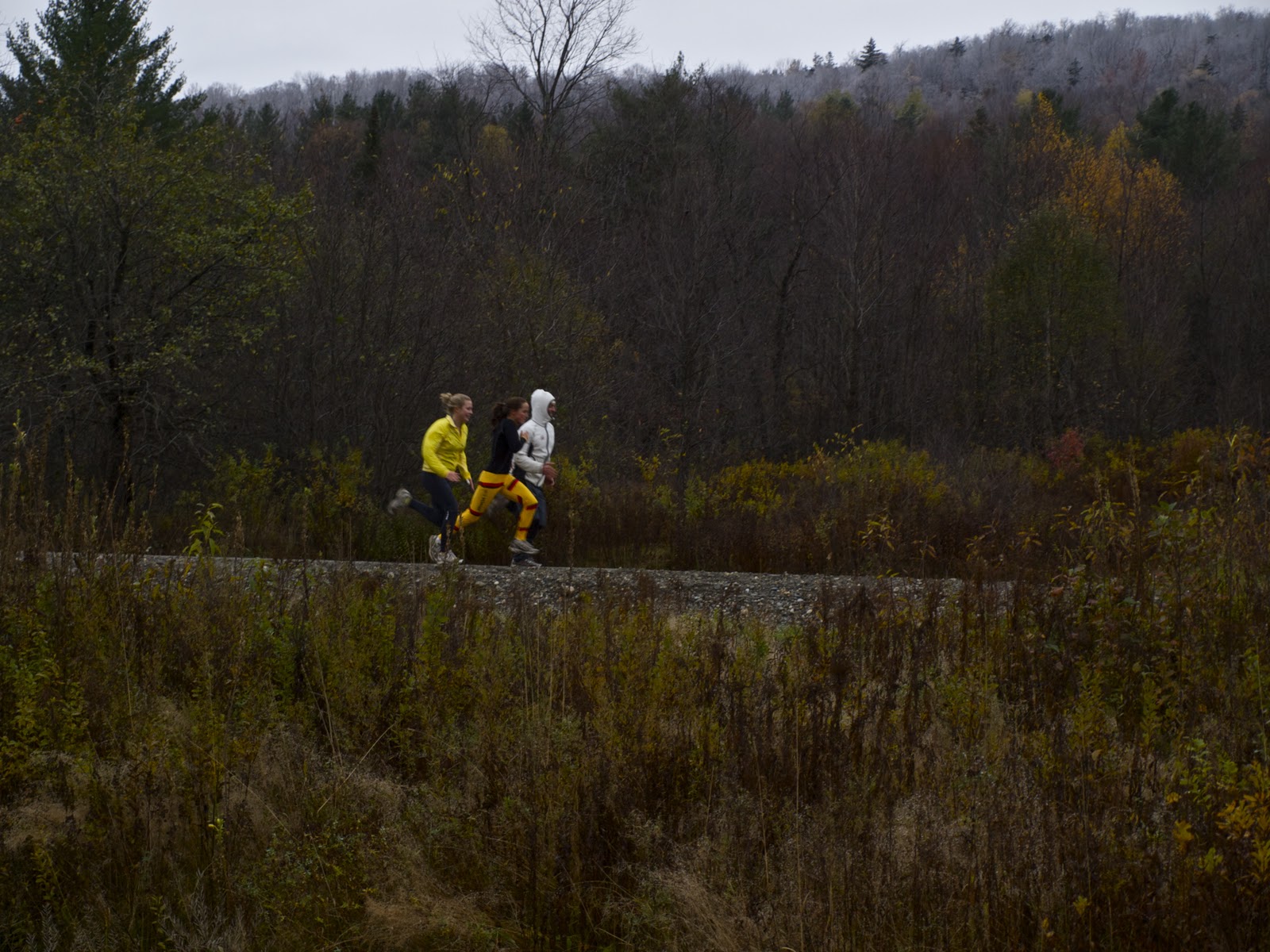
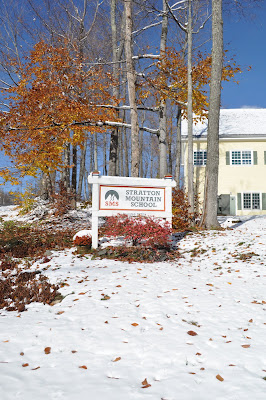 It feels like a spring skiing day with warm temps, sunny skies, and slushy snow! Our cross country running state meet is tomorrow and the running crew will head up north with Sverre & Liz and stay overnight in Lyme, NH (thank you to the Caldwell and Kerin families for hosting!) before the race. The state meet takes place across the state line in Thetford, VT tomorrow. Girls race at 11:45am, boys race at 1:45pm. Everyone else on the team will stay on campus and do a workout this afternoon and an OD tomorrow morning with Matt. For our morning session, we went for a short run and did some pickups on a dirt road near campus. It’s starting to feel like winter! More pictures here.Spin bike warriors Anika and Mollie spent the morning doing a short ride and some core in the gym. They’re both being smart and responsible about keeping their legs/feet healthy!Below are some pictures from last night’s Halloween dance. The snow (3-5″) and bad driving kept most of the day students away, but we still had a good turnout from our team. Sorry, no pictures of the camera shy boys, but they were dancing up a storm!
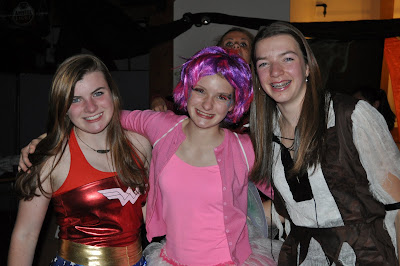 Kate, Mackenzie, & Brooke.Mollie & Anika.Tess & some of the alpine girls.
 -
Strides in the Snow!
It feels like a spring skiing day with warm temps, sunny skies, and slushy snow! Our cross country running state meet is tomorrow and the running crew will head up north with Sverre & Liz and stay overnight in Lyme, NH (thank you to the Caldwell and Kerin families for hosting!) before the race. The state meet takes place across the state line in Thetford, VT tomorrow. Girls race at 11:45am, boys race at 1:45pm. Everyone else on the team will stay on campus and do a workout this afternoon and an OD tomorrow morning with Matt. For our morning session, we went for a short run and did some pickups on a dirt road near campus. It’s starting to feel like winter! More pictures here.Spin bike warriors Anika and Mollie spent the morning doing a short ride and some core in the gym. They’re both being smart and responsible about keeping their legs/feet healthy!Below are some pictures from last night’s Halloween dance. The snow (3-5″) and bad driving kept most of the day students away, but we still had a good turnout from our team. Sorry, no pictures of the camera shy boys, but they were dancing up a storm!Kate, Mackenzie, & Brooke.Mollie & Anika.Tess & some of the alpine girls. -
Sprint Qualification Pacing Analysis
I’ll be the first to admit that sprinting doesn’t get as much love here at Statistical Skier. To be honest, that’s probably my subconscious at work, as I have a stronger connection to distance events I suppose. But it’s not terribly fair, so here is some World Cup sprint qualification analysis for all you sprint lovers out there.
The first step to success in sprinting is qualifying for the elimination rounds.<1 So I thought it might be fun to look at what sorts of efforts it takes to qualify in a World Cup sprint race (and any trends or patterns that might arise).
We’re going to do this using two measures: percent back and pace (seconds/km). Using pace means we’re implicitly assuming that the courses are measured accurately, which probably has not always been the case. Just for starters, the skier’s times are measured to the tenth of a second, but the length of the courses is typically only reported to the nearest 100m. And it takes a bit more than a few tenths of a second to ski 100m. Also, we should keep in mind that there can be pretty extreme variations in course design and weather/snow conditions. So keeping all that in mind, let’s dive in…
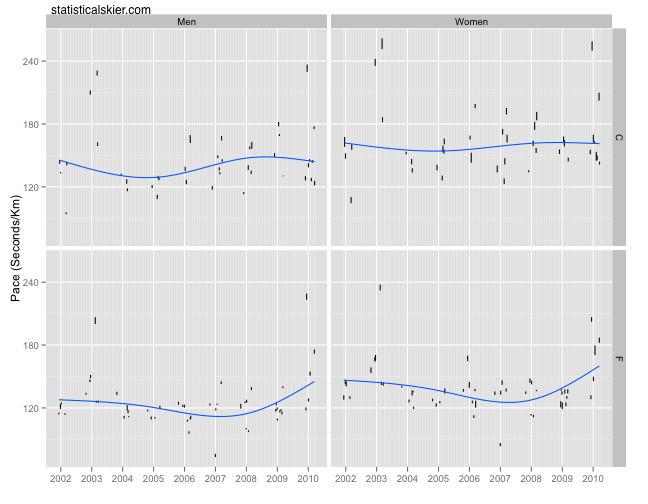
First off, let’s grab the top ten qualifiers (i.e. the top ten in the qualification round) and look at what sorts of speeds they manage:
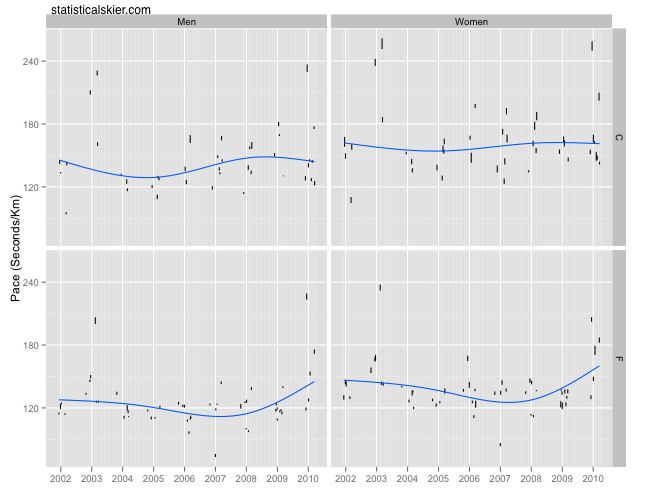 Rather than plot each value as a separate dot, I’ve plotted the values for each individual race as a vertical bar. This gives us some sense of how variable the efforts of the top ten qualifiers can be. Usually they are quite close (very short bar) but occasionally they’re more spread out (longer bars).
There are a couple of things to note about these data. For the most part, the average pace seems fairly consistent over time. The obvious exception are the freestyle, or skating, sprints last season. Personally, I think the sudden uptick of the trend lines in the freestyle panels is mostly due to there being relatively few freestyle sprints last season, a few of which happened to be quite slow just by chance combined with the fact that trend lines are often a bit more sensitive to data near the end points (despite my best efforts).
So I’d say the men are averaging around 2:00 minutes/km in freestyle sprints, maybe 2:20 min/km in classic sprints while the women are averaging ~2:20 min/km in freestyle sprints and ~2:35 min/km in classic sprints. But as you can see, there’s quite a bit of variation race to race. To my eye, it seems like there may be more variability in the classic sprints than the skating.
Another thing to note is that for some reason, the 2002-2003 season saw several slow sprint races across the board. My best guess in this case is that there were some races in unusual weather/snow conditions that season, which is why it seemed to happen to both the men and the women.
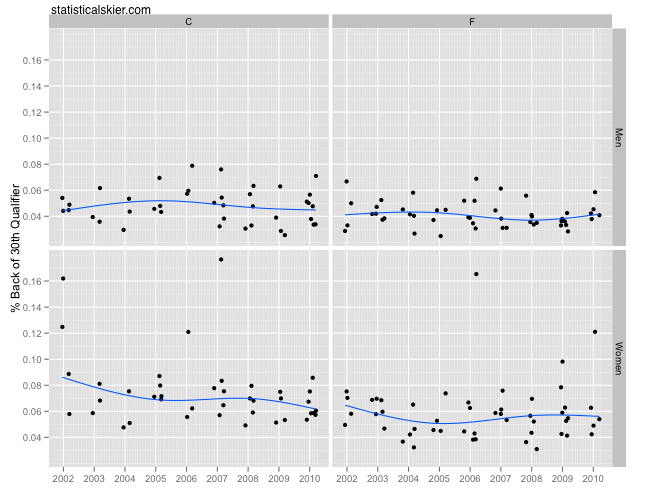
Since the top thirty move on to the elimination rounds, let’s take a look at the data on the 30th skier in the qualification round, which serves as our cutoff for moving on.
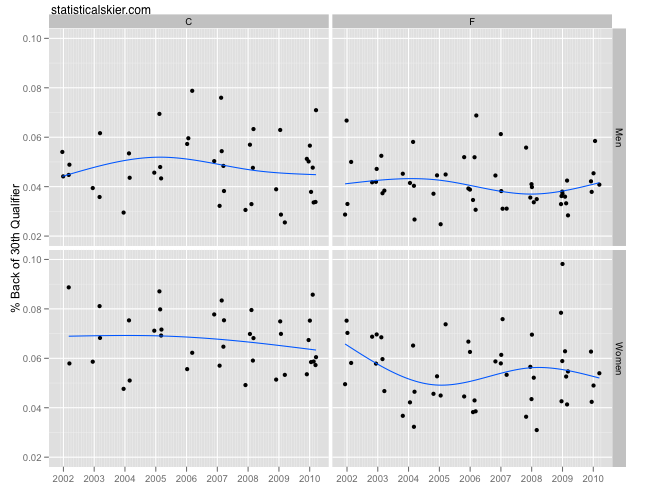
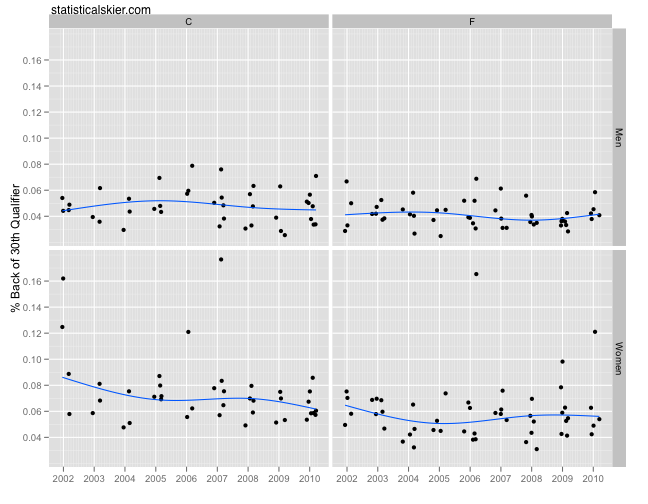 Again, these values seem pretty stable over time, with perhaps a slight decline in the women’s classic sprints (but again we have unusual data at the endpoints messing with things). As with all data, we need to comment on the unusual stuff. In this case, there are six women’s races where the 30th place qualifier was considerably further behind the 1st qualifier than would seem typical. Generally, this means that, for whatever reason, the field was somewhat weak that day. Let’s see if omitting these six points changes the way the data look:
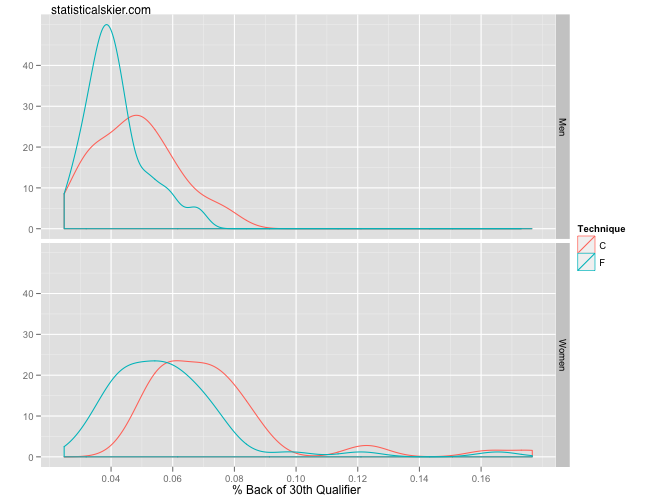
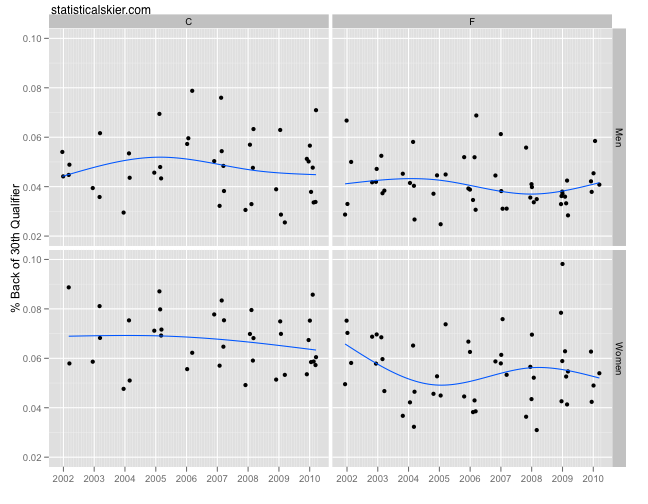 This suggests that the 30th place qualifier is typically around 5% back in a men’s classic sprint and ~4% back in a men’s freestyle race, while the values for the women are ~7% and ~5.5% respectively.
Honestly, I’m puzzled at the difference between classic and freestyle sprints here. Using percent back ought to account for the generally higher rate of speed in skating. On its face, this would suggest that there is a slightly bigger gap between the best and 30th best classic sprinter than between the best and 30th best freestyle sprinter on the World Cup, for both men and women. Here’s a look at the same data that gives a clearer picture of the difference I’m talking about:
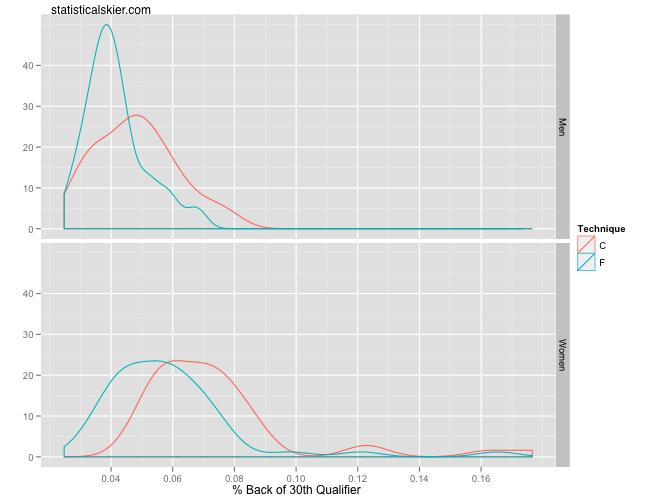 And yes, I double checked by calculating a quick confidence interval for the differences. And while the difference between the two pairs of distributions is small, it is statistically significant.<2
In any case, I’m not sure why this would be. Feel free to speculate…
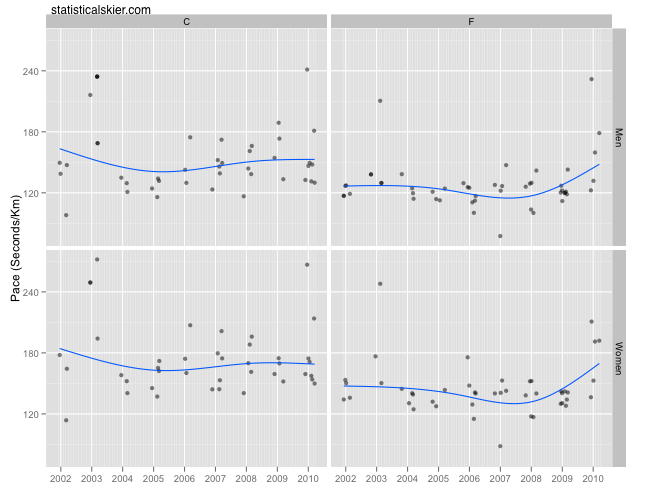
Let’s wrap this up with a look at how fast the 30th place qualifiers are going in an absolute sense, rather than in percent back:
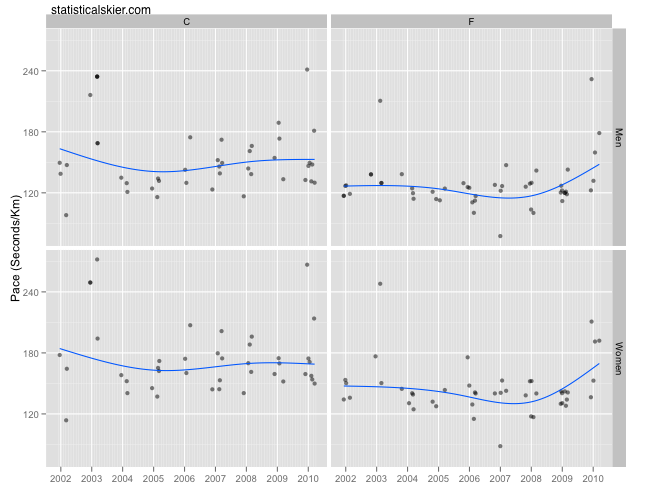 Unsurprisingly, this mirrors the analogous plots for the top ten qualifiers above, just a tad slower.
So if you can, find a really challenging sprint course and ski it as hard as you can. How close to these sorts of paces can you get?
- Everyone skis the course one at a time, i.e. the qualification round, and then the top 30 move on to elimination heats of 6 at a time or so. <↩
- And no, I didn’t use a t-test, since I’m dubious of the normality condition and certainly the equal variances condition for the men. As always, bootstrapping to the rescue. <↩
Related posts:
- <Andrew Newell: Qualification vs Heats Part Deux
- <Top 10 Qualification vs. Making The Final
- <TdS Classic Sprint: North Americans
-
Sprint Qualification Pacing Analysis
I’ll be the first to admit that sprinting doesn’t get as much love here at Statistical Skier. To be honest, that’s probably my subconscious at work, as I have a stronger connection to distance events I suppose. But it’s not terribly fair, so here is some World Cup sprint qualification analysis for all you sprint lovers out there.
The first step to success in sprinting is qualifying for the elimination rounds.<1 So I thought it might be fun to look at what sorts of efforts it takes to qualify in a World Cup sprint race (and any trends or patterns that might arise).
We’re going to do this using two measures: percent back and pace (seconds/km). Using pace means we’re implicitly assuming that the courses are measured accurately, which probably has not always been the case. Just for starters, the skier’s times are measured to the tenth of a second, but the length of the courses is typically only reported to the nearest 100m. And it takes a bit more than a few tenths of a second to ski 100m. Also, we should keep in mind that there can be pretty extreme variations in course design and weather/snow conditions. So keeping all that in mind, let’s dive in…
First off, let’s grab the top ten qualifiers (i.e. the top ten in the qualification round) and look at what sorts of speeds they manage:
Rather than plot each value as a separate dot, I’ve plotted the values for each individual race as a vertical bar. This gives us some sense of how variable the efforts of the top ten qualifiers can be. Usually they are quite close (very short bar) but occasionally they’re more spread out (longer bars).There are a couple of things to note about these data. For the most part, the average pace seems fairly consistent over time. The obvious exception are the freestyle, or skating, sprints last season. Personally, I think the sudden uptick of the trend lines in the freestyle panels is mostly due to there being relatively few freestyle sprints last season, a few of which happened to be quite slow just by chance combined with the fact that trend lines are often a bit more sensitive to data near the end points (despite my best efforts).
So I’d say the men are averaging around 2:00 minutes/km in freestyle sprints, maybe 2:20 min/km in classic sprints while the women are averaging ~2:20 min/km in freestyle sprints and ~2:35 min/km in classic sprints. But as you can see, there’s quite a bit of variation race to race. To my eye, it seems like there may be more variability in the classic sprints than the skating.
Another thing to note is that for some reason, the 2002-2003 season saw several slow sprint races across the board. My best guess in this case is that there were some races in unusual weather/snow conditions that season, which is why it seemed to happen to both the men and the women.
Since the top thirty move on to the elimination rounds, let’s take a look at the data on the 30th skier in the qualification round, which serves as our cutoff for moving on.
Again, these values seem pretty stable over time, with perhaps a slight decline in the women’s classic sprints (but again we have unusual data at the endpoints messing with things). As with all data, we need to comment on the unusual stuff. In this case, there are six women’s races where the 30th place qualifier was considerably further behind the 1st qualifier than would seem typical. Generally, this means that, for whatever reason, the field was somewhat weak that day. Let’s see if omitting these six points changes the way the data look:This suggests that the 30th place qualifier is typically around 5% back in a men’s classic sprint and ~4% back in a men’s freestyle race, while the values for the women are ~7% and ~5.5% respectively.Honestly, I’m puzzled at the difference between classic and freestyle sprints here. Using percent back ought to account for the generally higher rate of speed in skating. On its face, this would suggest that there is a slightly bigger gap between the best and 30th best classic sprinter than between the best and 30th best freestyle sprinter on the World Cup, for both men and women. Here’s a look at the same data that gives a clearer picture of the difference I’m talking about:
And yes, I double checked by calculating a quick confidence interval for the differences. And while the difference between the two pairs of distributions is small, it is statistically significant.<2In any case, I’m not sure why this would be. Feel free to speculate…
Let’s wrap this up with a look at how fast the 30th place qualifiers are going in an absolute sense, rather than in percent back:
Unsurprisingly, this mirrors the analogous plots for the top ten qualifiers above, just a tad slower.So if you can, find a really challenging sprint course and ski it as hard as you can. How close to these sorts of paces can you get?
- Everyone skis the course one at a time, i.e. the qualification round, and then the top 30 move on to elimination heats of 6 at a time or so. <↩
- And no, I didn’t use a t-test, since I’m dubious of the normality condition and certainly the equal variances condition for the men. As always, bootstrapping to the rescue. <↩
Related posts:
- <Andrew Newell: Qualification vs Heats Part Deux
- <Top 10 Qualification vs. Making The Final
- <TdS Classic Sprint: North Americans
-
Sprint Qualification Pacing Analysis
I’ll be the first to admit that sprinting doesn’t get as much love here at Statistical Skier. To be honest, that’s probably my subconscious at work, as I have a stronger connection to distance events I suppose. But it’s not terribly fair, so here is some World Cup sprint qualification analysis for all you sprint lovers out there.
The first step to success in sprinting is qualifying for the elimination rounds.<1 So I thought it might be fun to look at what sorts of efforts it takes to qualify in a World Cup sprint race (and any trends or patterns that might arise).
We’re going to do this using two measures: percent back and pace (seconds/km). Using pace means we’re implicitly assuming that the courses are measured accurately, which probably has not always been the case. Just for starters, the skier’s times are measured to the tenth of a second, but the length of the courses is typically only reported to the nearest 100m. And it takes a bit more than a few tenths of a second to ski 100m. Also, we should keep in mind that there can be pretty extreme variations in course design and weather/snow conditions. So keeping all that in mind, let’s dive in…
First off, let’s grab the top ten qualifiers (i.e. the top ten in the qualification round) and look at what sorts of speeds they manage:
Rather than plot each value as a separate dot, I’ve plotted the values for each individual race as a vertical bar. This gives us some sense of how variable the efforts of the top ten qualifiers can be. Usually they are quite close (very short bar) but occasionally they’re more spread out (longer bars).There are a couple of things to note about these data. For the most part, the average pace seems fairly consistent over time. The obvious exception are the freestyle, or skating, sprints last season. Personally, I think the sudden uptick of the trend lines in the freestyle panels is mostly due to there being relatively few freestyle sprints last season, a few of which happened to be quite slow just by chance combined with the fact that trend lines are often a bit more sensitive to data near the end points (despite my best efforts).
So I’d say the men are averaging around 2:00 minutes/km in freestyle sprints, maybe 2:20 min/km in classic sprints while the women are averaging ~2:20 min/km in freestyle sprints and ~2:35 min/km in classic sprints. But as you can see, there’s quite a bit of variation race to race. To my eye, it seems like there may be more variability in the classic sprints than the skating.
Another thing to note is that for some reason, the 2002-2003 season saw several slow sprint races across the board. My best guess in this case is that there were some races in unusual weather/snow conditions that season, which is why it seemed to happen to both the men and the women.
Since the top thirty move on to the elimination rounds, let’s take a look at the data on the 30th skier in the qualification round, which serves as our cutoff for moving on.
Again, these values seem pretty stable over time, with perhaps a slight decline in the women’s classic sprints (but again we have unusual data at the endpoints messing with things). As with all data, we need to comment on the unusual stuff. In this case, there are six women’s races where the 30th place qualifier was considerably further behind the 1st qualifier than would seem typical. Generally, this means that, for whatever reason, the field was somewhat weak that day. Let’s see if omitting these six points changes the way the data look:This suggests that the 30th place qualifier is typically around 5% back in a men’s classic sprint and ~4% back in a men’s freestyle race, while the values for the women are ~7% and ~5.5% respectively.Honestly, I’m puzzled at the difference between classic and freestyle sprints here. Using percent back ought to account for the generally higher rate of speed in skating. On its face, this would suggest that there is a slightly bigger gap between the best and 30th best classic sprinter than between the best and 30th best freestyle sprinter on the World Cup, for both men and women. Here’s a look at the same data that gives a clearer picture of the difference I’m talking about:
And yes, I double checked by calculating a quick confidence interval for the differences. And while the difference between the two pairs of distributions is small, it is statistically significant.<2In any case, I’m not sure why this would be. Feel free to speculate…
Let’s wrap this up with a look at how fast the 30th place qualifiers are going in an absolute sense, rather than in percent back:
Unsurprisingly, this mirrors the analogous plots for the top ten qualifiers above, just a tad slower.So if you can, find a really challenging sprint course and ski it as hard as you can. How close to these sorts of paces can you get?
- Everyone skis the course one at a time, i.e. the qualification round, and then the top 30 move on to elimination heats of 6 at a time or so. <↩
- And no, I didn’t use a t-test, since I’m dubious of the normality condition and certainly the equal variances condition for the men. As always, bootstrapping to the rescue. <↩
Related posts:
- <Andrew Newell: Qualification vs Heats Part Deux
- <Top 10 Qualification vs. Making The Final
- <TdS Classic Sprint: North Americans
-
Back on Snow in Muonio
We arrived in Finland on Tuesday at the Rovaniemi airport, where the temperature was +5 Celsius, the sky gray, and the earth brown. During the drive north to Muonio, our home for the next 3 weeks, the thermometer dropped a few degrees and at one point along the road we saw what looked like a little bit of dirty old crusty snow. But for the most part it looked a lot like Vermont in November–except more reindeer grazing along the side of the road, and the woods look different–mossier and more like taiga, with lots of Scots pine and Norway spruce. There was a light mist hitting the windshield. When we arrived, we settled into the same little cabins we had last year, complete with their awesome little clothes-drying closet and compact European design.
Luckily for us, the people at Olos seem to have the art of snow-storing pretty well figured out, and theres a nice 3 km loop of skiing on snow that was kept from last year and then spread around the trail. Its a pretty weird feeling to be skiing on this little ribbon of white through the mossy enchanted-looking lapland forest. Last year there was just enough natural snow even when we first got here, that I never realized how the whole forest floor is covered in moss and little shrubs and things. Beside that, the loop is the same as last year–good terrain, lots of fast skiers. The Swedish biathlon team showed up yesterday, as well as the Russian women’s biathlon team, and combined with lots of skiers from Russia, Estonia, and Finland, I feel like I’m constantly getting passed as I ski. I have to keep reminding myself to ski my own pace and not go too fast. All the people make the small loop more exciting and interesting–the human landscape is always changing, even if the natural one isn’t.

Along with the snow-storage, there's also lots of snowmaking pipes around the loop–it looks like Craftsbury! So far I think they've only had one night cold enough to make snow.

A 4:30 sunset–there's lots of daylight right now, but it'll get darker fast.

Clare skiing on the ribbon of white.
-
Testing Week at GMVS: and first snowfall in VT!
The fall is flying by, and it’s Testing Week again already. In fact, the week has gone by so fast that Testing Week is almost over. As Coach Beckwith likes to say, “where’d that day go?”We’ve been getting our money’s worth, that’s for sure. After the play set was packed away for another year, we got out on the classic boards for the October edition of our Plunkton uphill DP test.
 The light was pretty dramatic, with a mix of bright sun and dark clouds making everyone look good out there.
 Warming up is critical for such a short test, so we did some start progressions working on explosiveness but also emphasizing fluid motions.
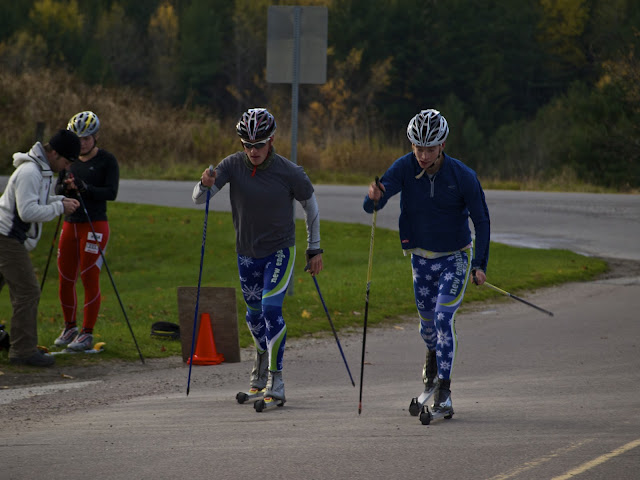 Dev and Ryley duke it out.

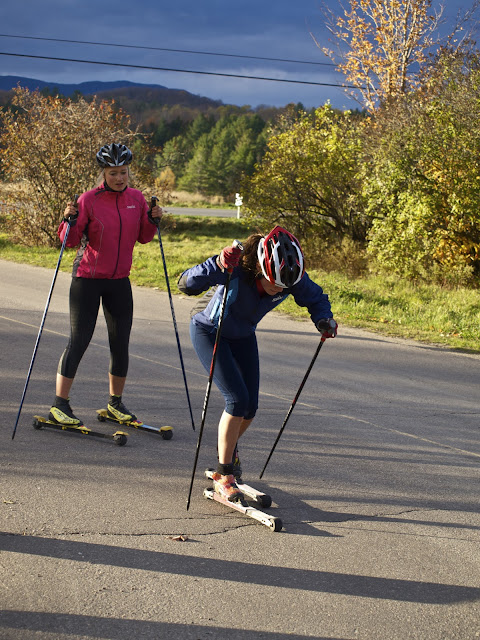

 Once the test started we didn’t get any pictures but it was a great effort by everyone involved. After the initial max effort we cruised back down and immediately skied the course again using double-pole kick instead of straight double pole.Yesterday Dev once again led the boys’ soccer team to victory, this time in the first round of the play-offs. The rest of us chugged through a 3000 meter test on the Harwood track, then got out amidst the snowflakes for a fun workout this morning.
 Dev figured it was too early for snow and insisted that the white stuff all around us must be pollen.
 Coach Beckwith builds some fast twitch with MK and Heidi.

 Snow in the trees… must be getting on towards winter in VT!
 -
Testing Week at GMVS: and first snowfall in VT!
The fall is flying by, and it’s Testing Week again already. In fact, the week has gone by so fast that Testing Week is almost over. As Coach Beckwith likes to say, “where’d that day go?”We’ve been getting our money’s worth, that’s for sure. After the play set was packed away for another year, we got out on the classic boards for the October edition of our Plunkton uphill DP test.The light was pretty dramatic, with a mix of bright sun and dark clouds making everyone look good out there.Warming up is critical for such a short test, so we did some start progressions working on explosiveness but also emphasizing fluid motions.Dev and Ryley duke it out.Once the test started we didn’t get any pictures but it was a great effort by everyone involved. After the initial max effort we cruised back down and immediately skied the course again using double-pole kick instead of straight double pole.Yesterday Dev once again led the boys’ soccer team to victory, this time in the first round of the play-offs. The rest of us chugged through a 3000 meter test on the Harwood track, then got out amidst the snowflakes for a fun workout this morning.Dev figured it was too early for snow and insisted that the white stuff all around us must be pollen.Coach Beckwith builds some fast twitch with MK and Heidi.Snow in the trees… must be getting on towards winter in VT! -
Testing Week at GMVS: and first snowfall in VT!
The fall is flying by, and it’s Testing Week again already. In fact, the week has gone by so fast that Testing Week is almost over. As Coach Beckwith likes to say, “where’d that day go?”We’ve been getting our money’s worth, that’s for sure. After the play set was packed away for another year, we got out on the classic boards for the October edition of our Plunkton uphill DP test.The light was pretty dramatic, with a mix of bright sun and dark clouds making everyone look good out there.Warming up is critical for such a short test, so we did some start progressions working on explosiveness but also emphasizing fluid motions.Dev and Ryley duke it out.Once the test started we didn’t get any pictures but it was a great effort by everyone involved. After the initial max effort we cruised back down and immediately skied the course again using double-pole kick instead of straight double pole.Yesterday Dev once again led the boys’ soccer team to victory, this time in the first round of the play-offs. The rest of us chugged through a 3000 meter test on the Harwood track, then got out amidst the snowflakes for a fun workout this morning.Dev figured it was too early for snow and insisted that the white stuff all around us must be pollen.Coach Beckwith builds some fast twitch with MK and Heidi.Snow in the trees… must be getting on towards winter in VT! -
Wasatch Mountain High
The end of the Utah camp ended on a high note for me. First of all, I’m going to Sweden! The Utah rollerski races, along with the Jericho races back in August, served as qualifiers for the first international races of the year. I saved my best race for the last qualifier and hit 90% of my targets. I was named to the team with 5 other US women. Once we get on snow in Sweden during late November, we’ll be divided into different groups- a World Cup team and an IBU Cup team (IBU Cup is the race circuit just below the World Cup). Either way, I’ll be racing in various places in Europe until Christmas.
Our last day of training in Utah was another reason I flew back east with a smile. We (US biathlon team) got to hike Mt. Timpanogos- one of my (many) favorite mountains. Timpanogos’s snow covered peak looms teasingly over Solider Hollow. The first few times I went to the Heber Valley, I would gaze longingly at it’s ridgelines but I didn’t get the chance to climb it. It often has too much snow in October. Last year, we finally had the chance to hike part of it, but we had an easy workout on our training plan, and our coaches only let us go to the first saddle. I can’t say I successfully summited this year either, but Laura Spector and I made a valiant effort to run further up. We were within sight of the final ridge climb and then decided to turn around so that our teammates (who turned around at the first saddle again) wouldn’t have to wait for hours in the parking lot. The elusiveness of that summit is intensifying my desire to get there. So next year… Still, it was a spectacular day in the mountains, the type of day that fuels your soul and makes you feel psyched to be alive.

The lower slopes ablaze with color

Ah, the life of a mountain goat. They live in the best places on Earth.

Snow fields at higher elevations

YEEESSS!!!!
Another reason we had to turn around early is that we had been invited by the US Speedskating team to have dinner with a bunch of the long track athletes and then watch a World Cup (short track) in Salt Lake. Our coaches have been talking together a lot lately, so perhaps in the future, we’ll have some training collaboration between our sports. The World Cup was fascinating to watch. I hadn’t realized how short the short track loop actually is and how nearly impossible it is to pass your competitors. No wonder there are a lot of crashes.

The biathlete cheering contingent

The art of cornering
I flew back to Vermont early the next morning and got to see my Craftsbury GRP teammates for a few hours before they departed for a month of skiing in Finland. The team house at Elinor’s is very quiet: Emily Dreissigacker (who is training for sculling races) and I are the only ones here right now. I love the seasonal rhythms of life at Craftsbury. With the colder weather and shorter days we are shifting into winter mode. In between training sessions, I’m working on winterizing the house: pulling out all the screens, installing insulating plastic over the windows, cleaning up the flower beds and skirting the old foundation. It doesn’t seem like there are enough hours in the day to get everything done.
As the race season approaches, I would like to invite the Facebook savvy blog readers to “like” my athlete fan page “Susan Dunklee” on Facebook. (This is something that US Biathlon recommended that we create, and it is separate from my personal private Facebook page.) It’s relatively new and I already have 23 fans- hurray! Basically it is an easy and centralized way for me to keep in touch with all of you and you can post stuff to the wall too. This page will be the most comprehensive and updated resource for tracking my race season and travels. I’ll try to post pictures, blog entries, links to results, and other various things. I’m not sure how much the Craftsbury fan crowd uses Facebook, but if this is something you think the Green Team should do too, please let us know.
-
FIRST SNOW!
 We’re experiencing a little snow storm up on the mountain, so instead of our planned rollerski we headed inside for a video session where we watched some footage from our sprint practice two weeks ago (coming to the SMS video vault soon) and then followed up by watching videos from the USST Fall Camp in Park City and several others. The coaches spent the morning over in Putney at Caldwell Sport, handing off 50 pairs of skis to Zach and Amy for grinding. We arrived back on campus just in time to catch lunch & the pumpkin carving contest. : )
 Miyu, Mrs. Taylor & Anika with their Marilyn pumpkin.
 Paddy’s group and their pumpkin (a work in progress).
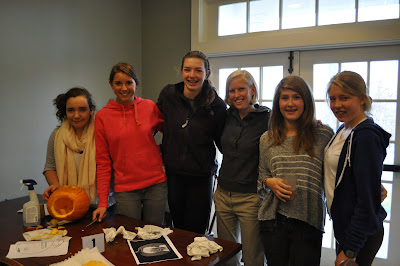 Mrs. Boobar and her advisees, including Tess, Brooke, & Mollie.
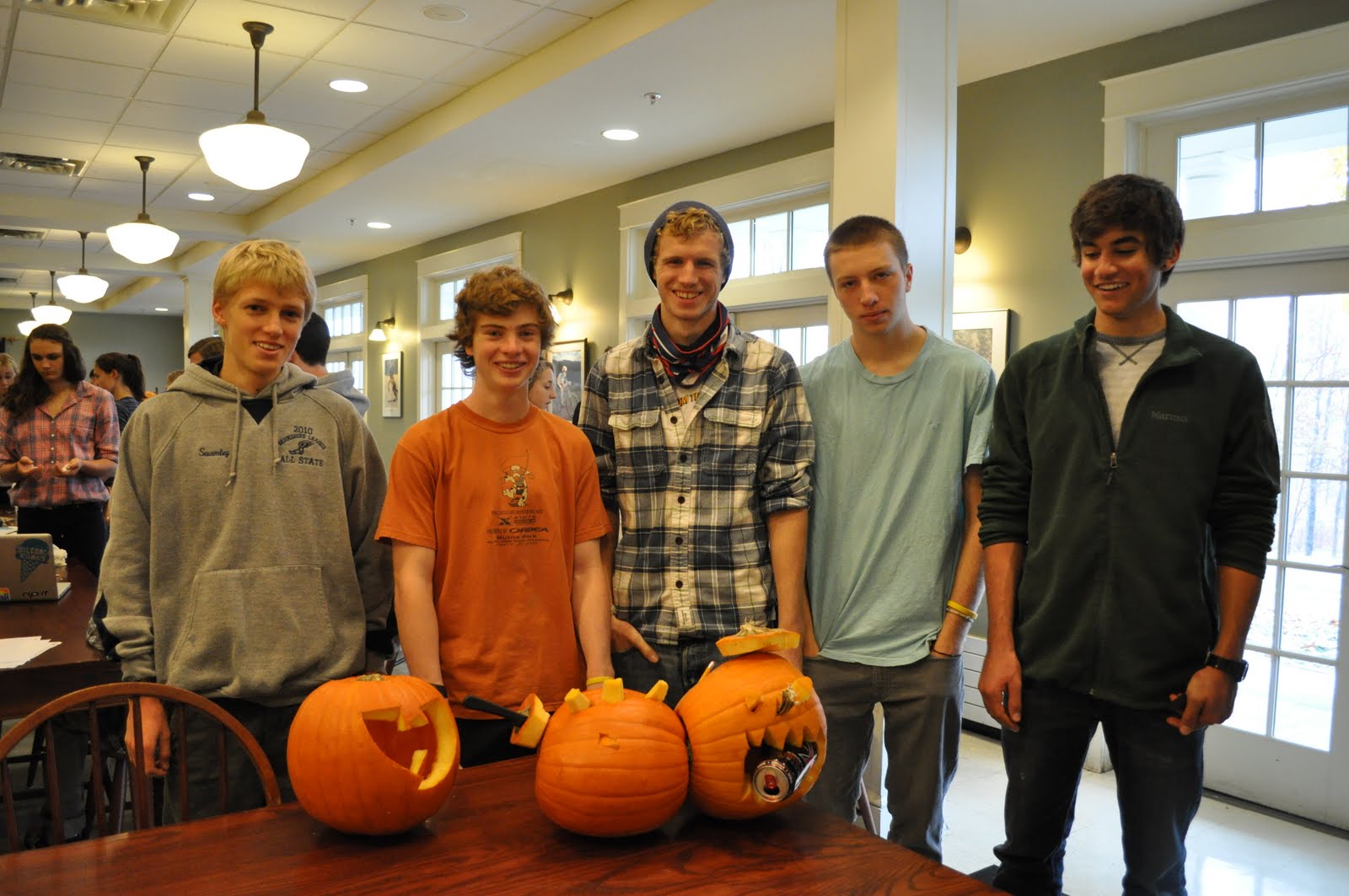
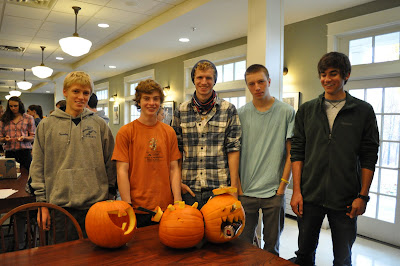 Calvin, Tyler, Mac, Corky, & Gino with their creation.
 -
FIRST SNOW!
We’re experiencing a little snow storm up on the mountain, so instead of our planned rollerski we headed inside for a video session where we watched some footage from our sprint practice two weeks ago (coming to the SMS video vault soon) and then followed up by watching videos from the USST Fall Camp in Park City and several others. The coaches spent the morning over in Putney at Caldwell Sport, handing off 50 pairs of skis to Zach and Amy for grinding. We arrived back on campus just in time to catch lunch & the pumpkin carving contest. : )Miyu, Mrs. Taylor & Anika with their Marilyn pumpkin.Paddy’s group and their pumpkin (a work in progress).Mrs. Boobar and her advisees, including Tess, Brooke, & Mollie.Calvin, Tyler, Mac, Corky, & Gino with their creation.