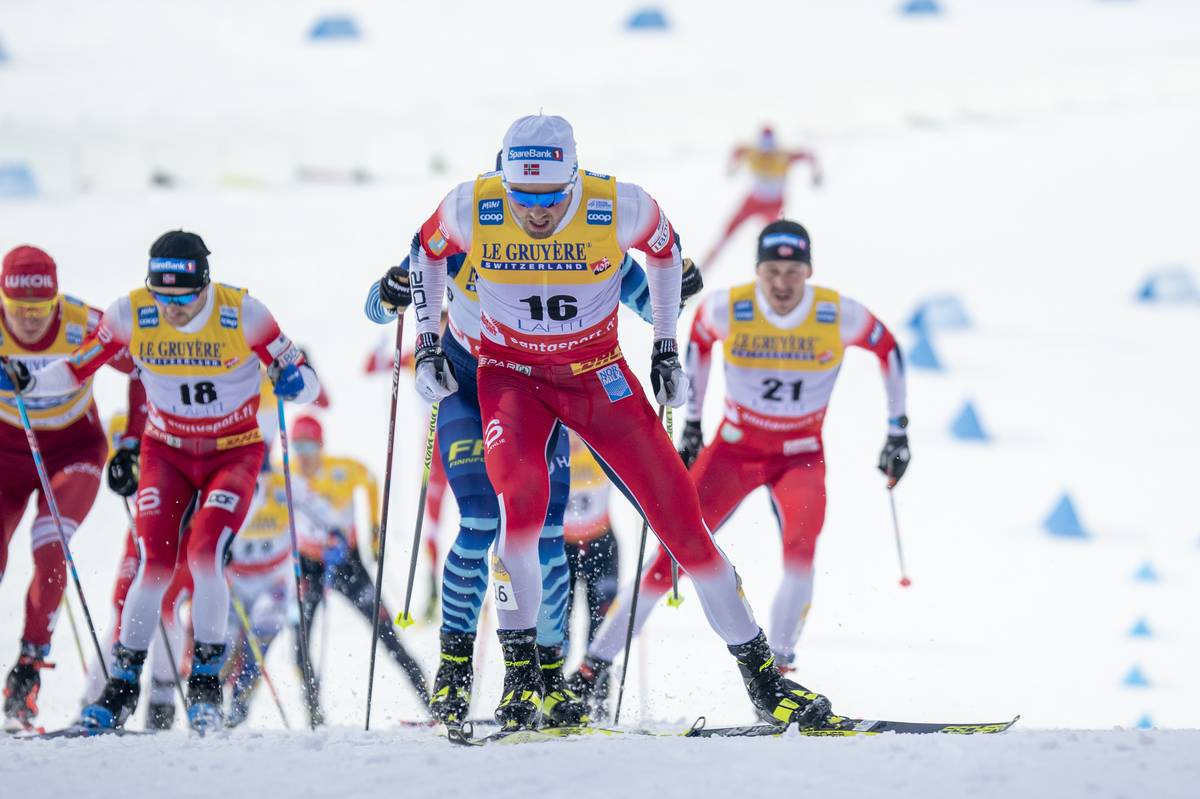
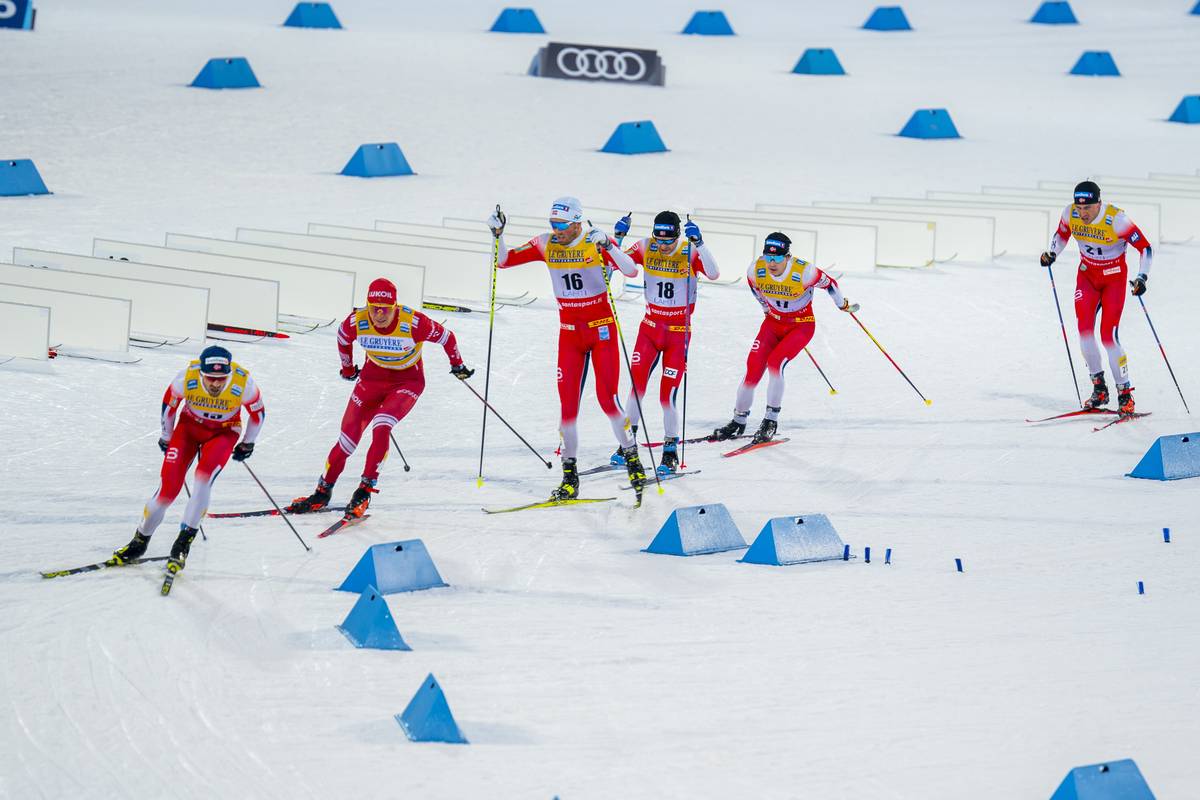
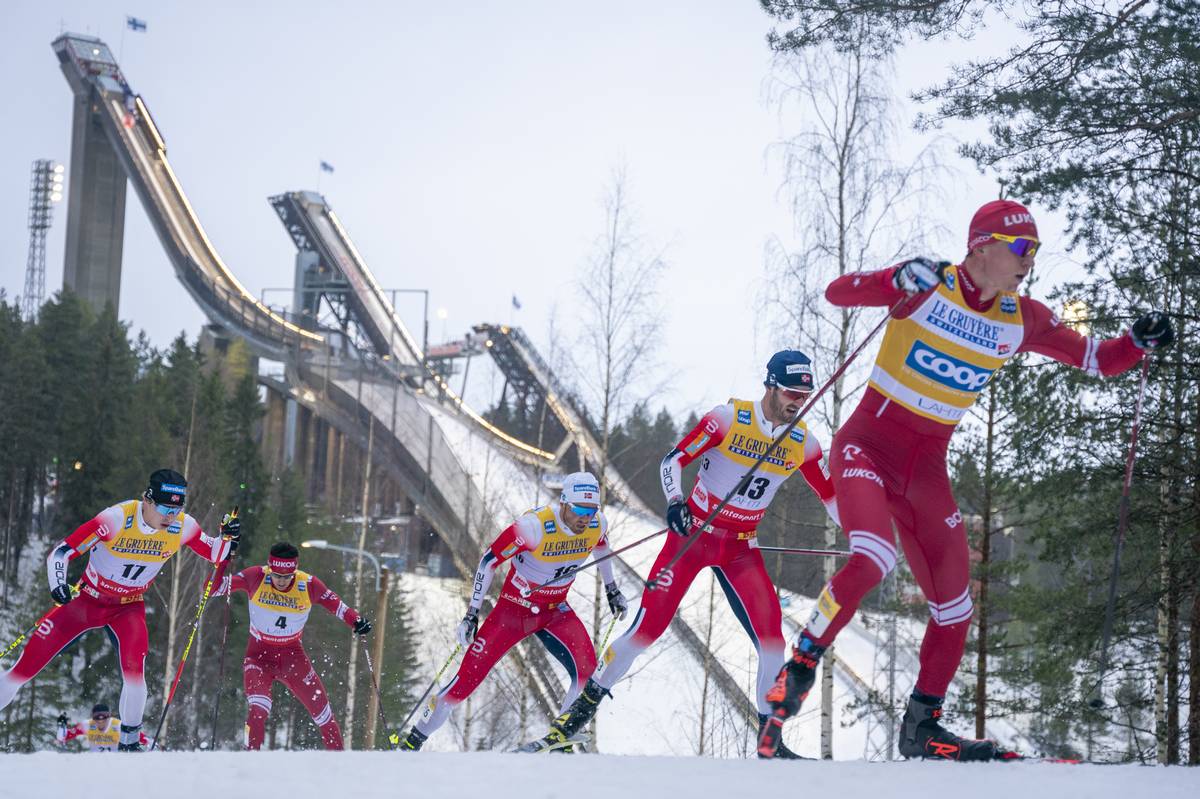
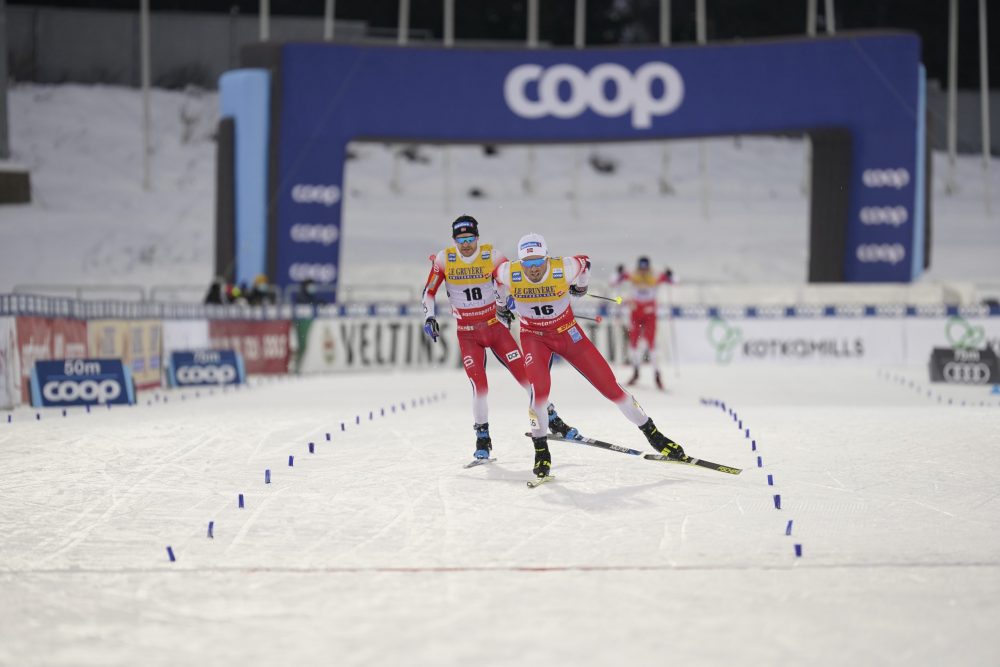
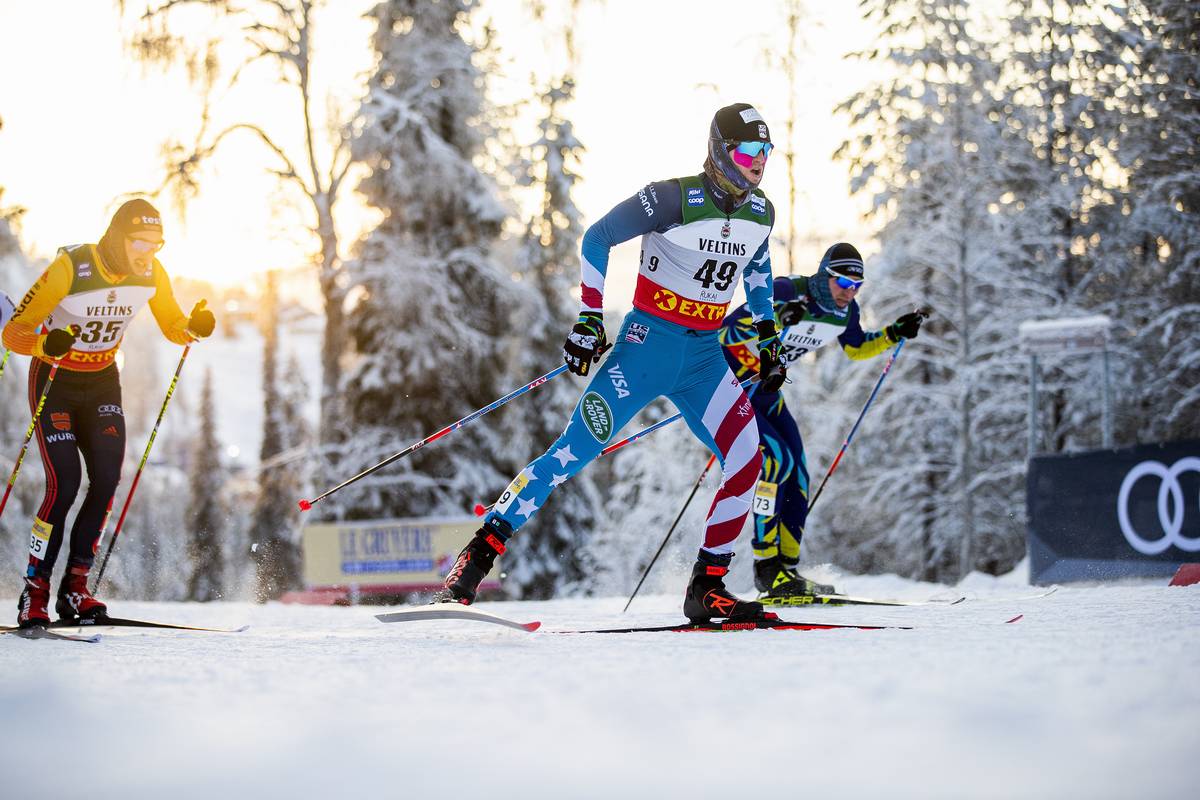
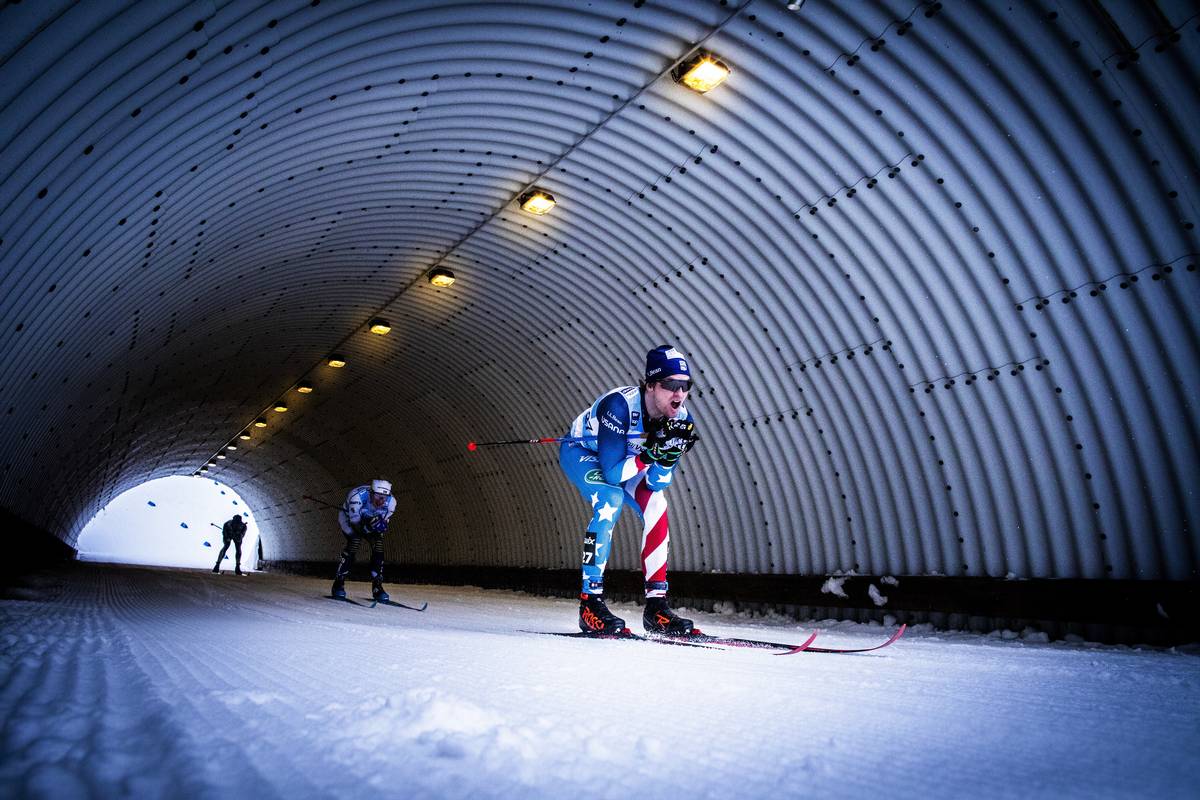
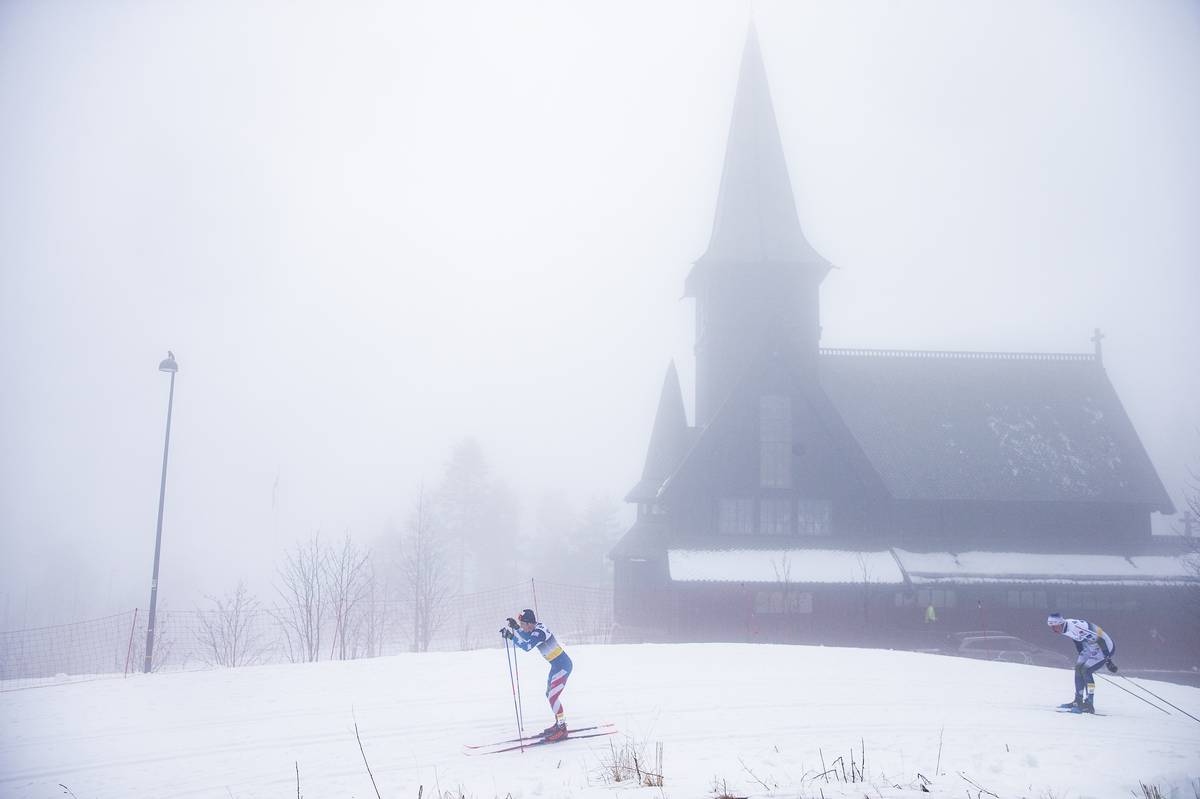
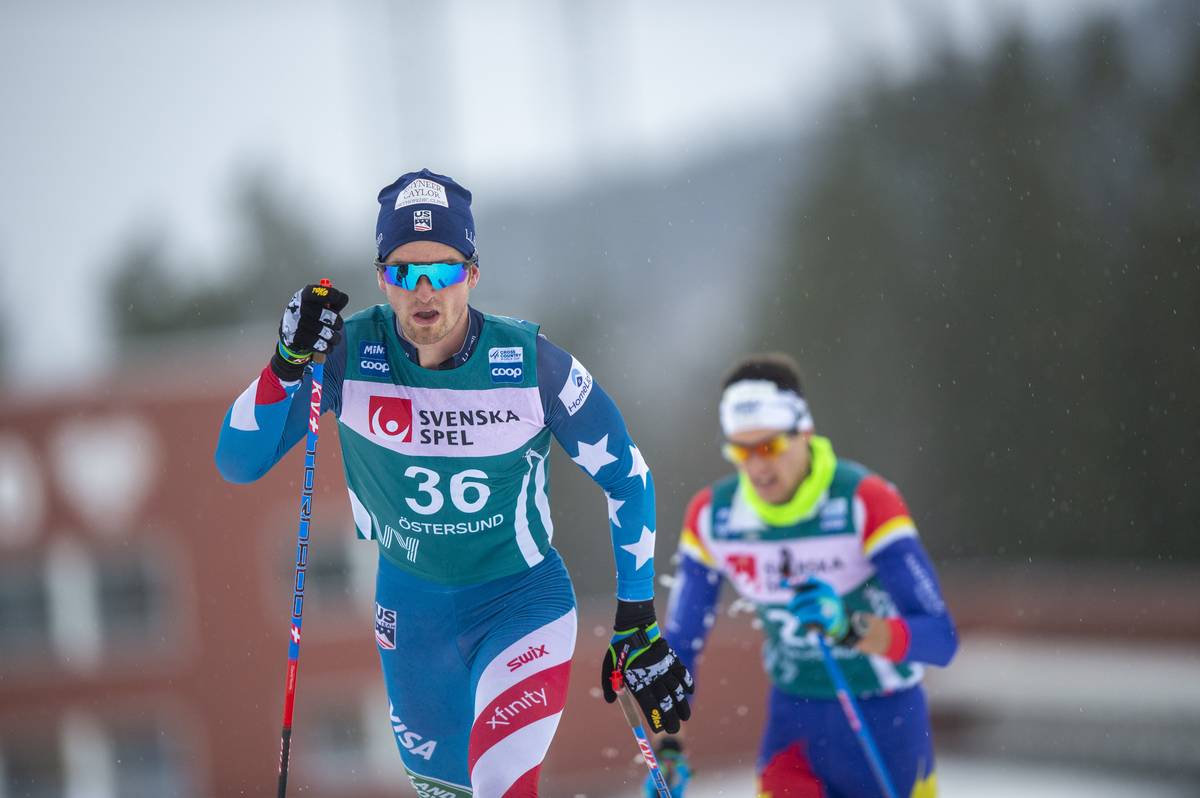
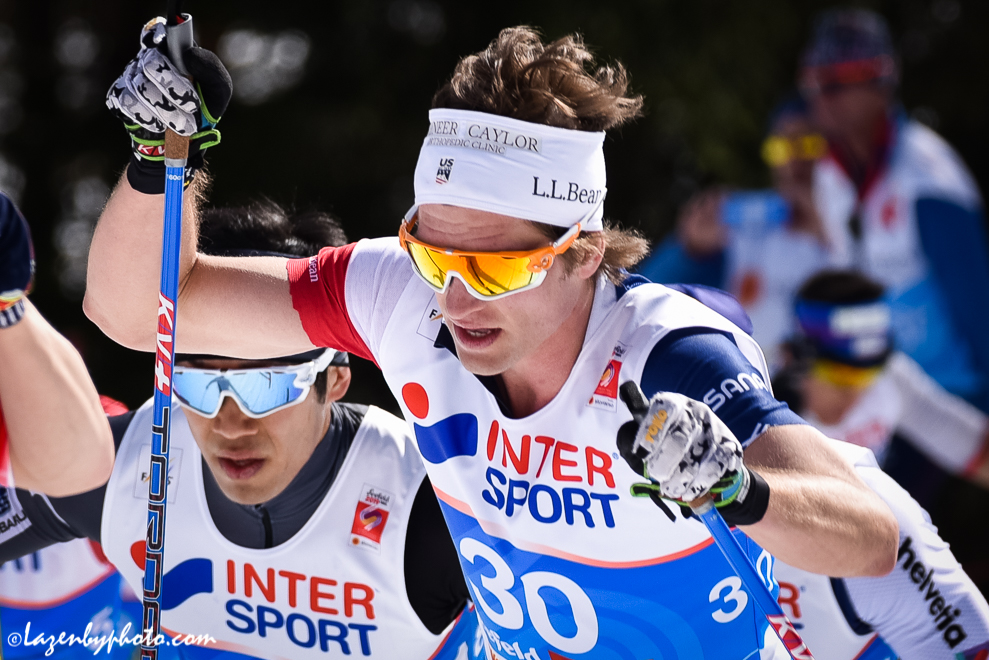
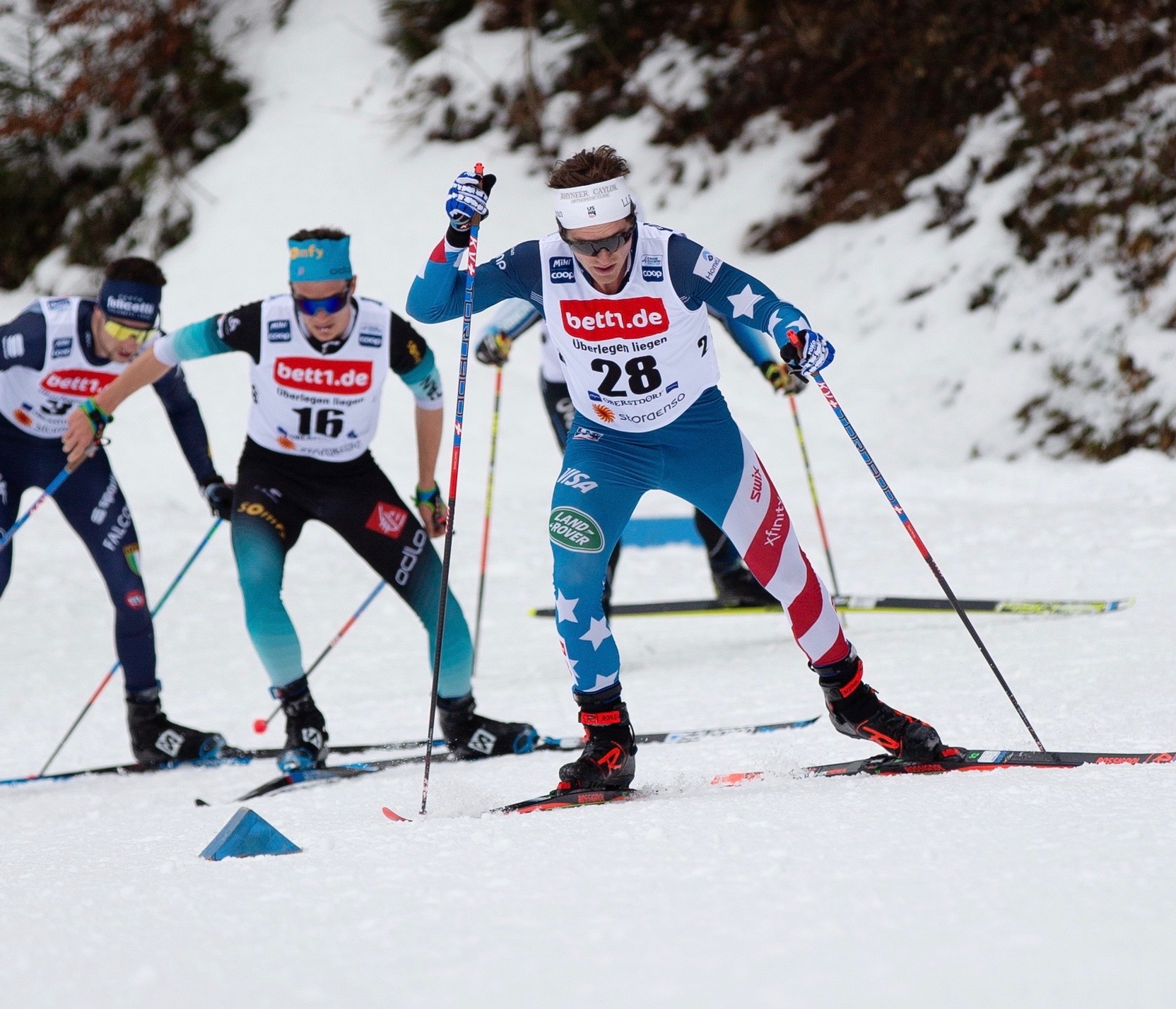
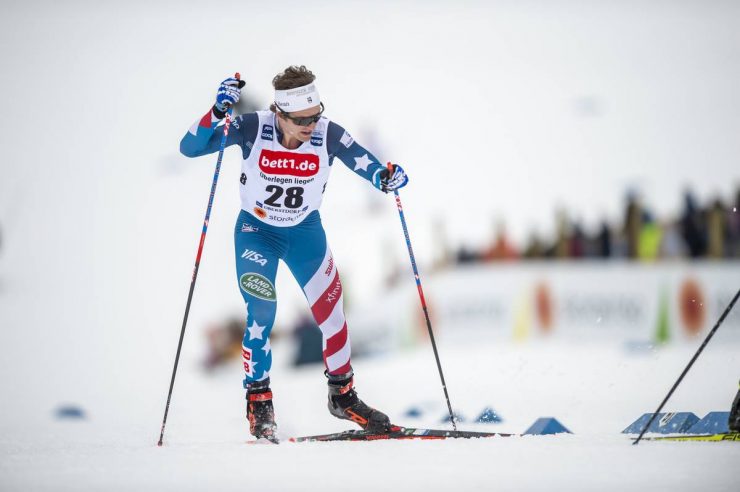
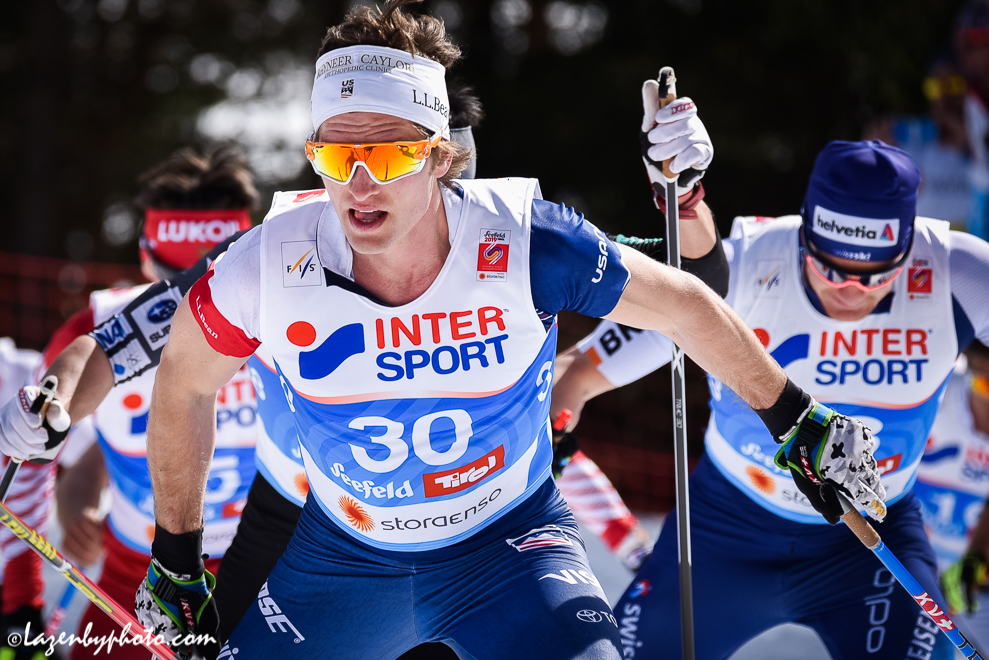
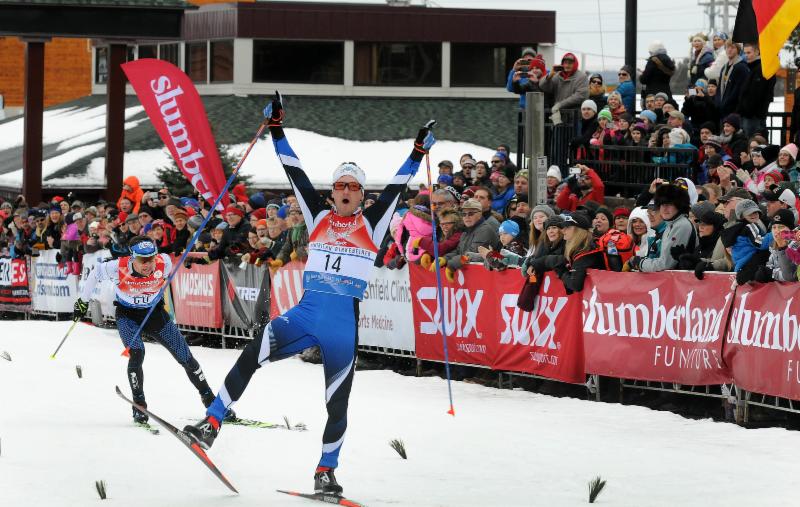
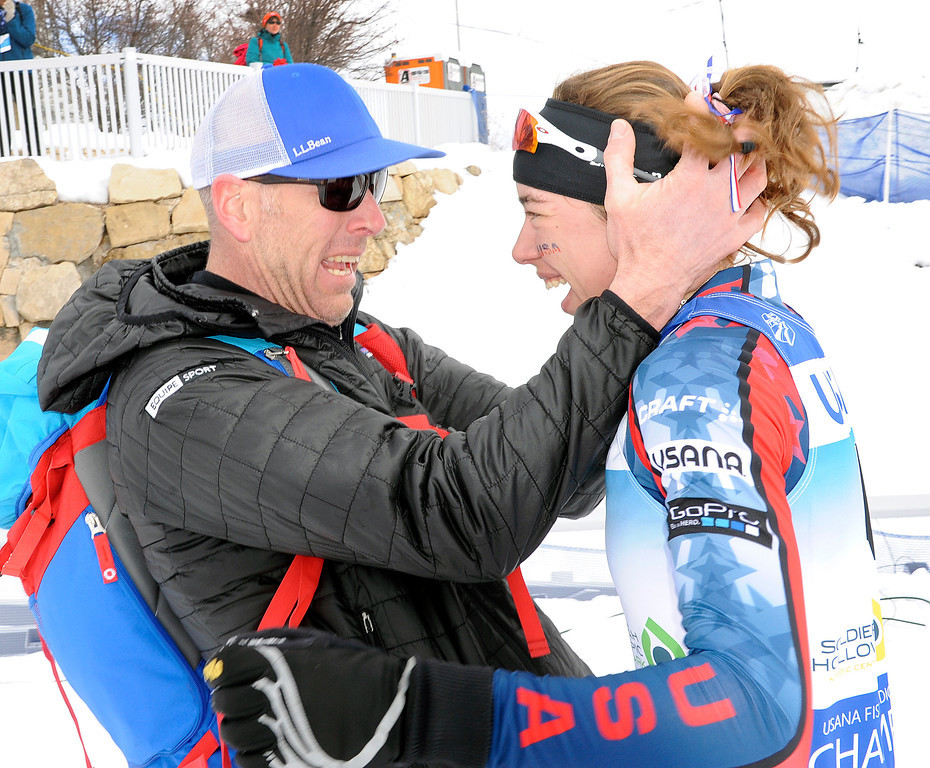
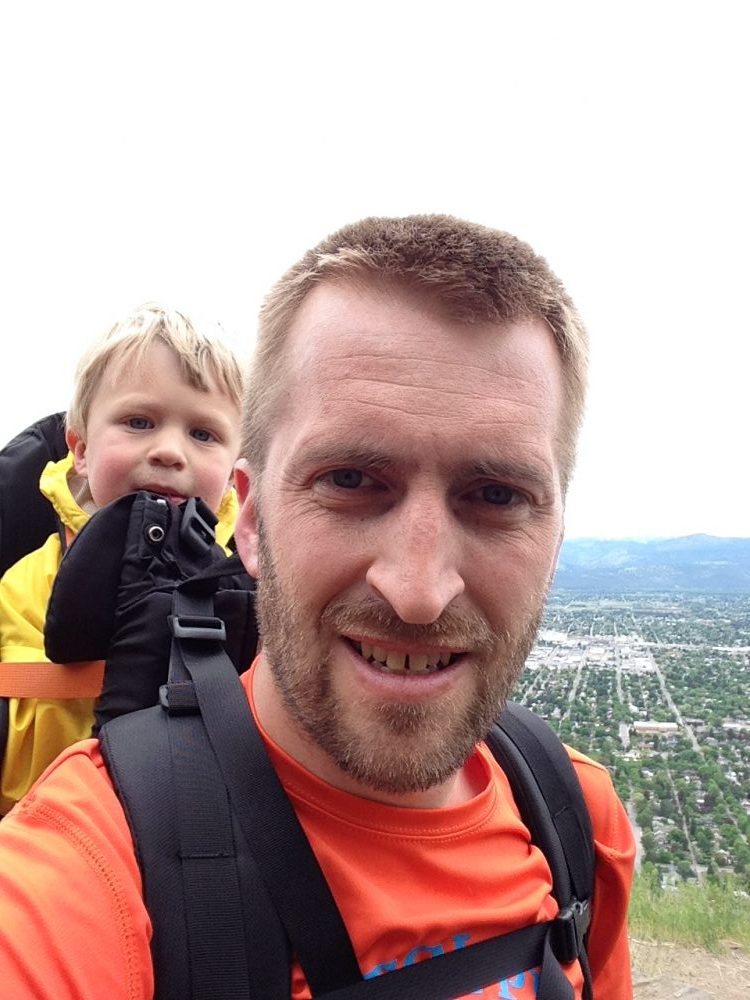
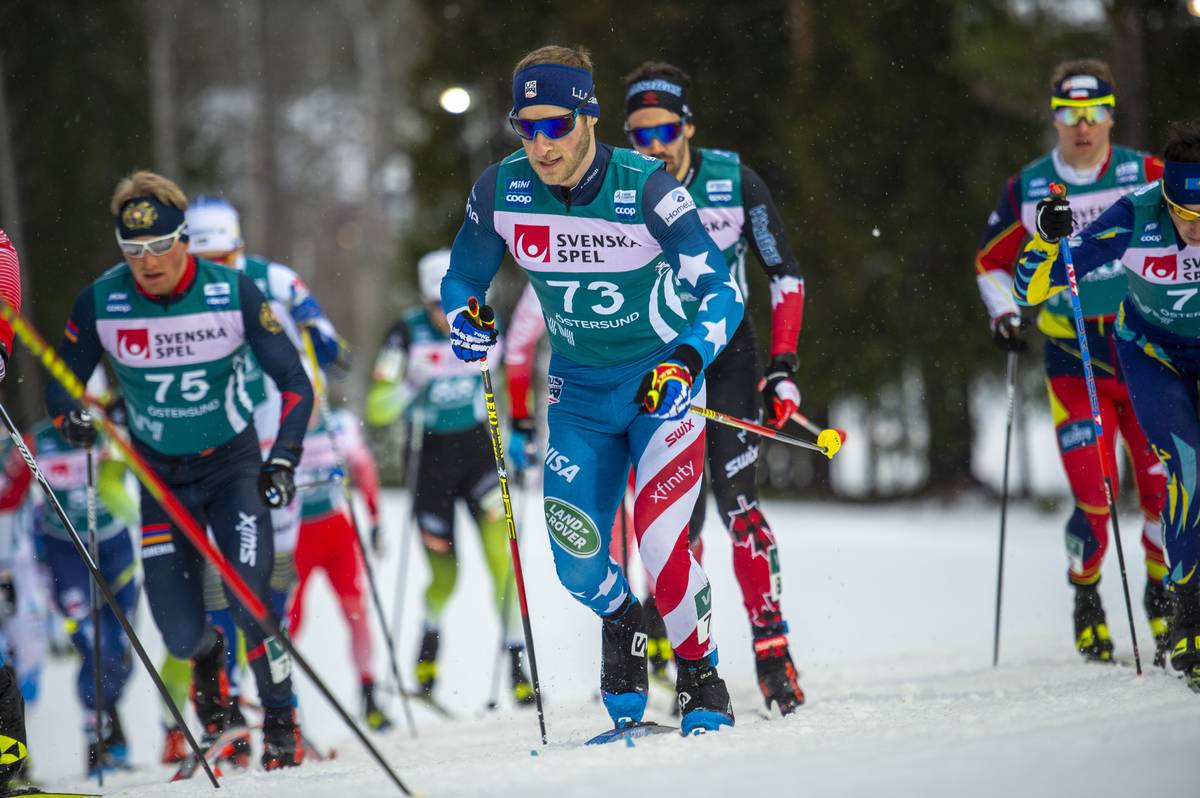
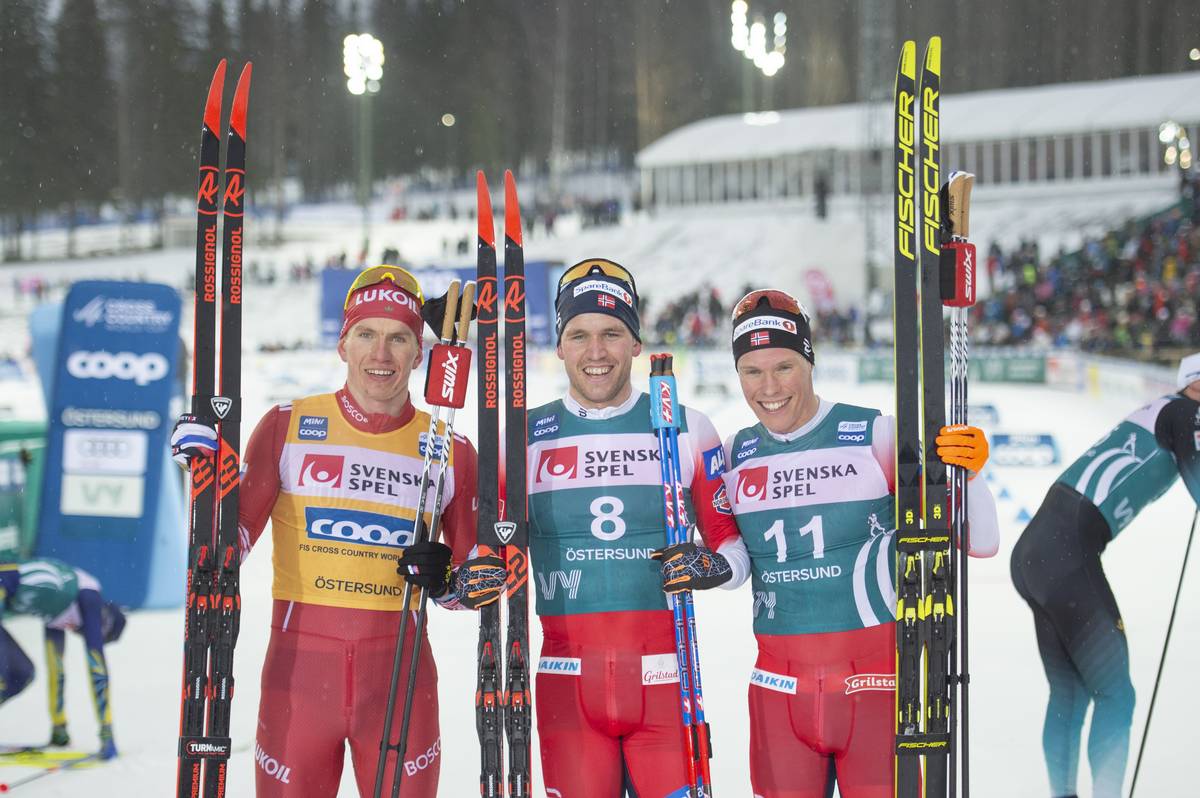
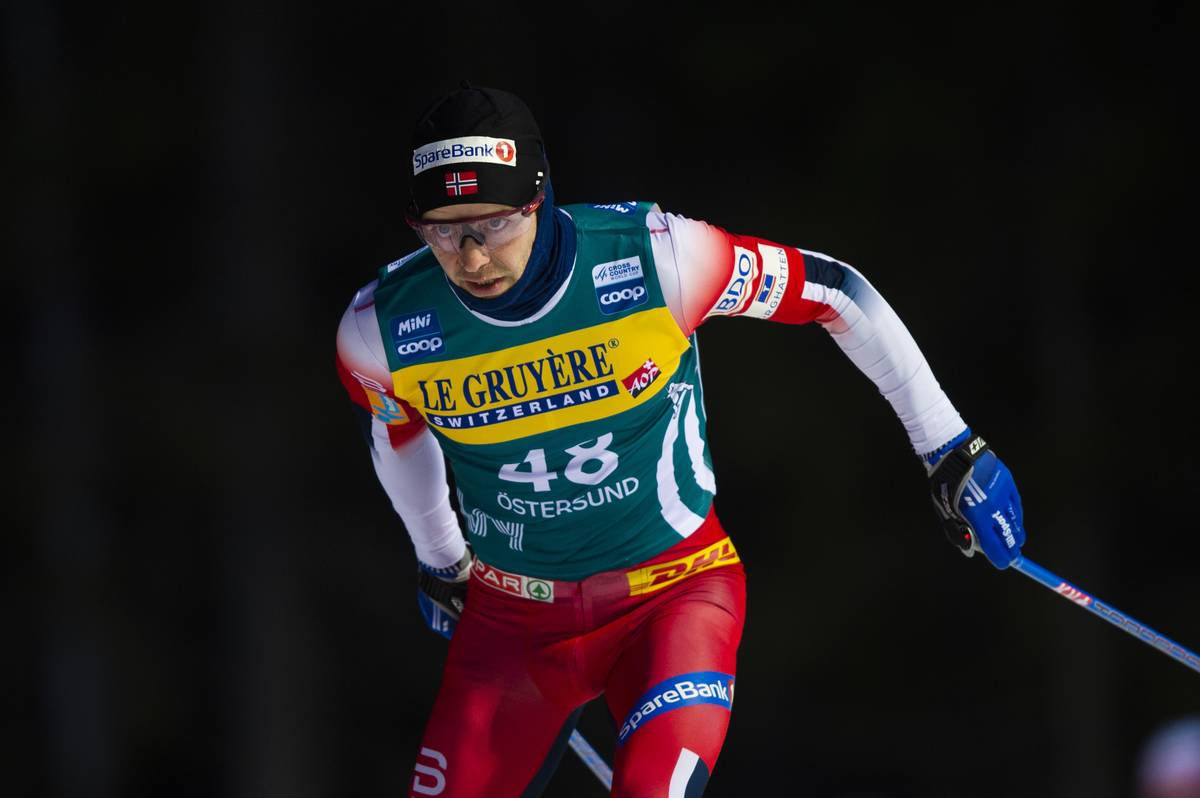
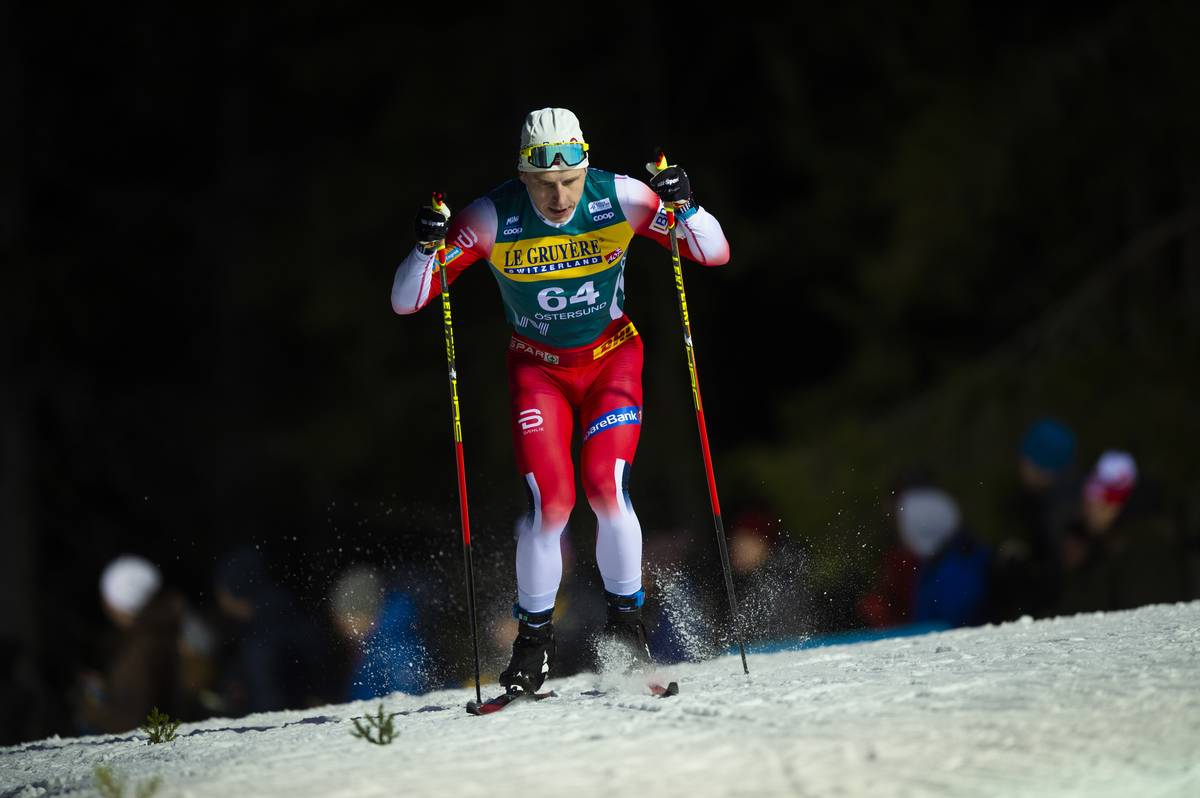
For most serious ski racers, the training calendar begins anew somewhere around the first of May. As such, the weeks between the final World Cup races (or Spring Series in a typical year) and the beginning of May is regarded as “off-season”.
The primary goal is not necessarily to remain sedentary, rather to fill up your cup. To enjoy the activities that a full training and racing load might prohibit, to (safely) spend time with the friends and family after months away, and to savor the simple pleasures an unstructured life offers.
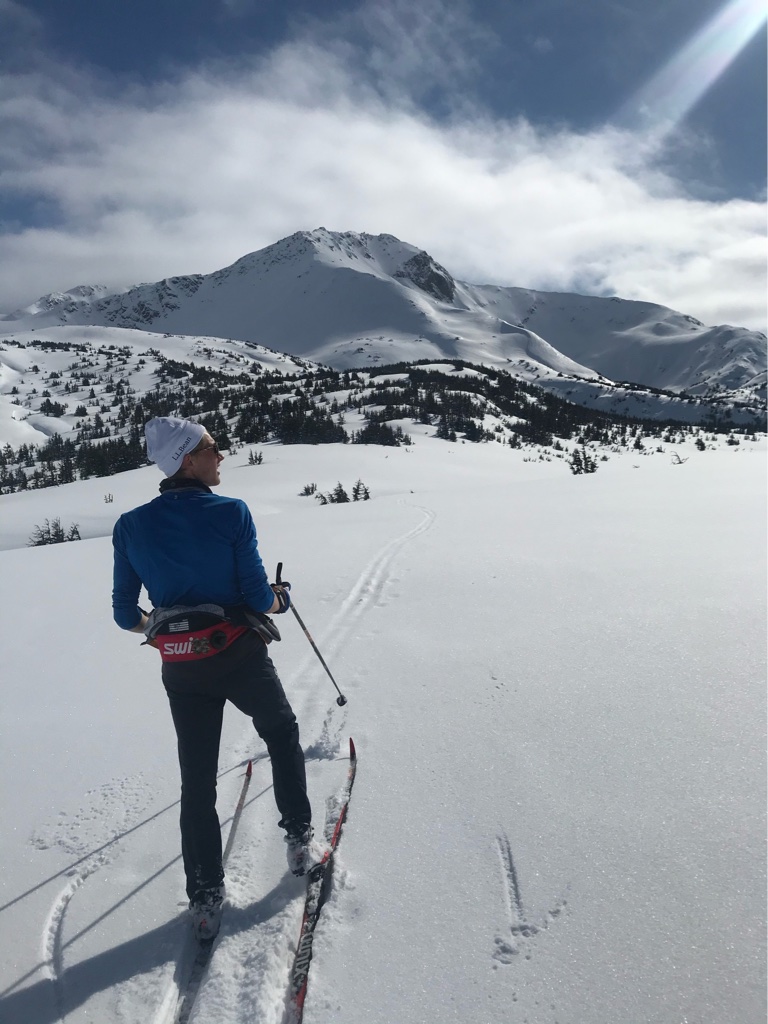
The author enjoys fast tracks in Crested Butte in March, before the thaw.
Given the energy and capacity required for elite level cross country skiing, as you might expect, they grow no moss. Rather than scenes of vegging out watching Netflix, social media has shown epic backcountry skis, mountain bike rides, crust cruises, late season racing, and logging big kilometers on skinny skis.
To take a closer look, FasterSkier posed the following question to an assortment of other World Cup racers.
Q: How do you fill up your cup and recharge all the batteries physically, mentally, etc., so you’re ready come May to dive back in?
A quick glance at Instagram shows Jessie Diggins diving directly into home renovations with her fiancé in their apartment in the Boston area, followed shortly thereafter by trail running in an undisclosed tropical looking destination. When sent the email for this article, an automatic reply indicated she would not be checking email during her vacation. Enough said, and very well deserved.
Here’s a look into the remainder of the squad. ** Warning: Jaw-dropping photos that leave you jonesing for big days on fat skis or in the saddle below.**
Hailey Swirbul:
“Oof, what a loaded question for me here! I felt super drained at the end of this season—mentally, emotionally, physically. I have been on a good-old-fashioned soul search a bit this season and into the spring where I am trying to find the right ratio of skiing to normal life that works for me. Because the winter pendulum swings fully to the “ski” side, my April pendulum has swung completely to the “normal life” side, which means packing in a year’s worth of what I would be doing if I wasn’t a Nordic skier into one month! I love the off season because it’s the one time of year where I’m not restricted in my activities. For example, if I want to go backcountry skiing or fish-scale ski tromping through the woods for 8 hours, great! If I want to build a jump in the backyard and learn how to do a 360 on skis, great! If I need to stay at home all day and catch up on the school work I’ve been putting off because of all those other fun things, also great. I don’t have to feel guilty if I don’t follow a strict training plan during this month, and that is something I really cherish.”
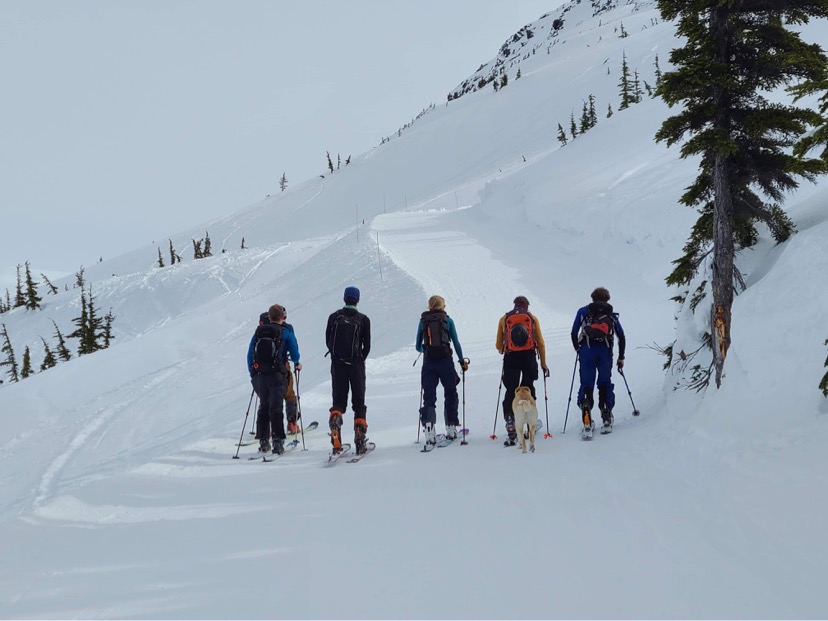
To recharge mentally and physically, Hailey Swirbul enjoys skinning and skiing with friends near Girdwood, AK. (Courtesy photo)
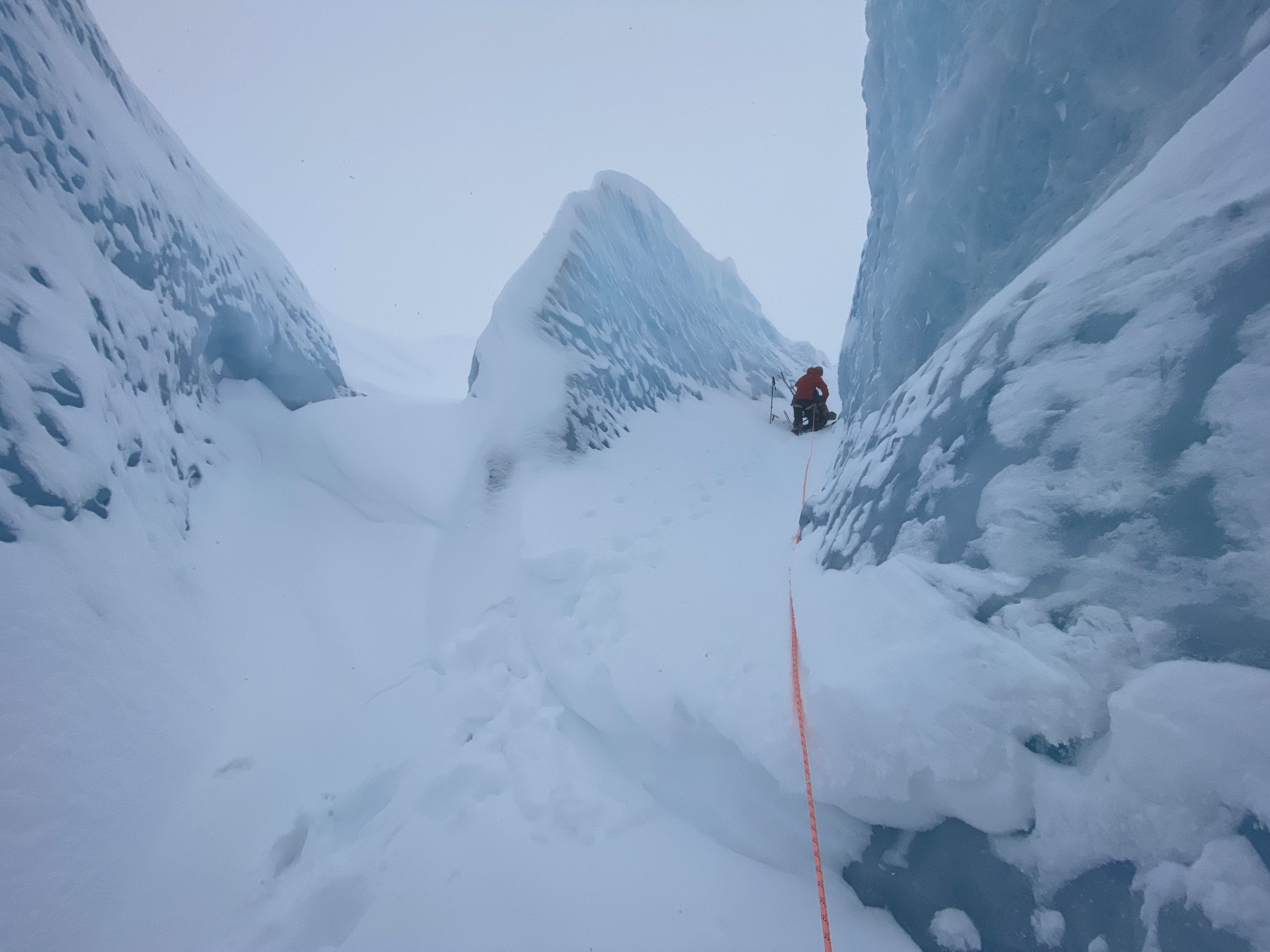
“I have been getting outside as much as I can, mostly on fat skis! I have Nordic skied 3 times (not including fish scale adventures), and one of those times was a FIS race on April 10th. It was actually pretty fun to put on a bib in a low pressure setting like that and be in the AK community with my teammates. My favorite adventure of the year so far was a 4 day hut trip glacier traverse called the Eklutna Traverse with my two friends and teammates, Hunter Wonders and Chip Schoff. I can certainly see how a mountaineering lifestyle could be quite addicting! After our recent FIS race weekend, I am actually more recharged than I could have hoped for! It was a great way to end the race season with a race that was FUN, instead of that horrendous 30k at Engadin for me! Yikes! I know I will be ready to add structure again when the season comes around, but that’s only because I have completely gotten rid of it during this off season. I’ve learned a lot about myself this year that I hope to carry with me.”
Hailey Swirbul’s mental reset included an epic multi-day backcountry adventure, the Elkutna Traverse, which included navigating spectacularly blue glacial ice. Teammate Hunter Wonders is seen taking the lead here. (Courtesy photo)
Scott Patterson: “We have had quite a cold and snowy spring up here in Alaska so I have been doing a lot of skiing both nordic and backcountry. The last few weeks I have really enjoyed the flexibility of going skiing wherever and whenever I want. Sometimes that involves full day excursions in the mountains and others it is more restrained to a lap or two around the groomed trail systems. We even had two FIS races this last weekend out at Kincaid in mid-winter conditions.
“Outside of skiing, I already enjoy the return to cooking my own food and having flexibility with meals. I have also plugged back into my work (engineering) since I have been back to keep my middays occupied. My spring recharge is less lack of activity then more modification, but I will also be dialling things back for the next two weeks to make sure I have good energy and enthusiasm going forward. Now is one of the few times of year where I can sit back and enjoy not being out in nasty weather.”
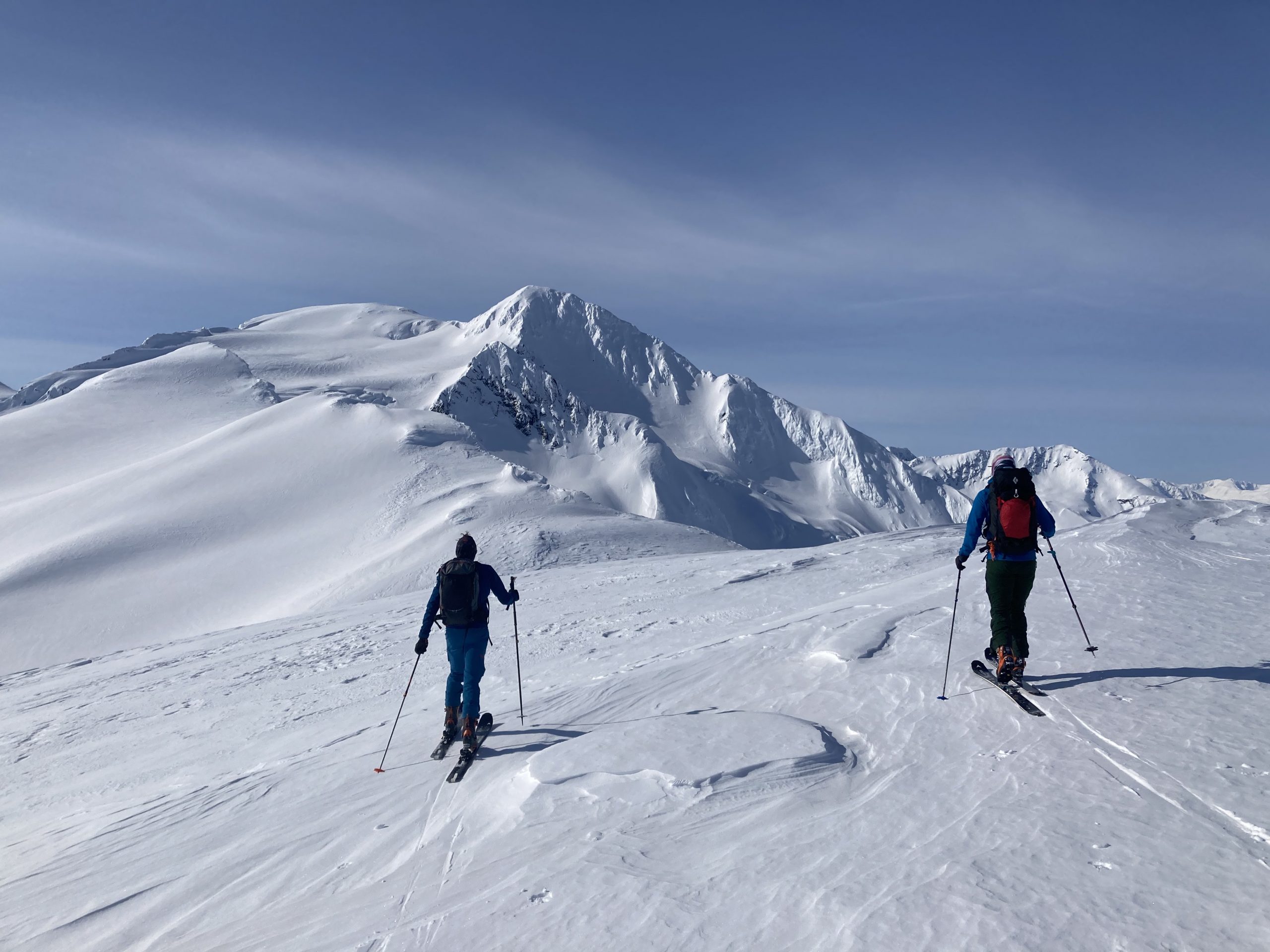
In addition to plugging back into his engineering job, Scott Patterson has been squeezing epic backcountry tours into his off-season reset. (Courtesy photo)Wider boards, heavier boots, and beautiful turns. Scott Patterson enjoys the Alaska backcountry during the off-season. (Courtesy photo)
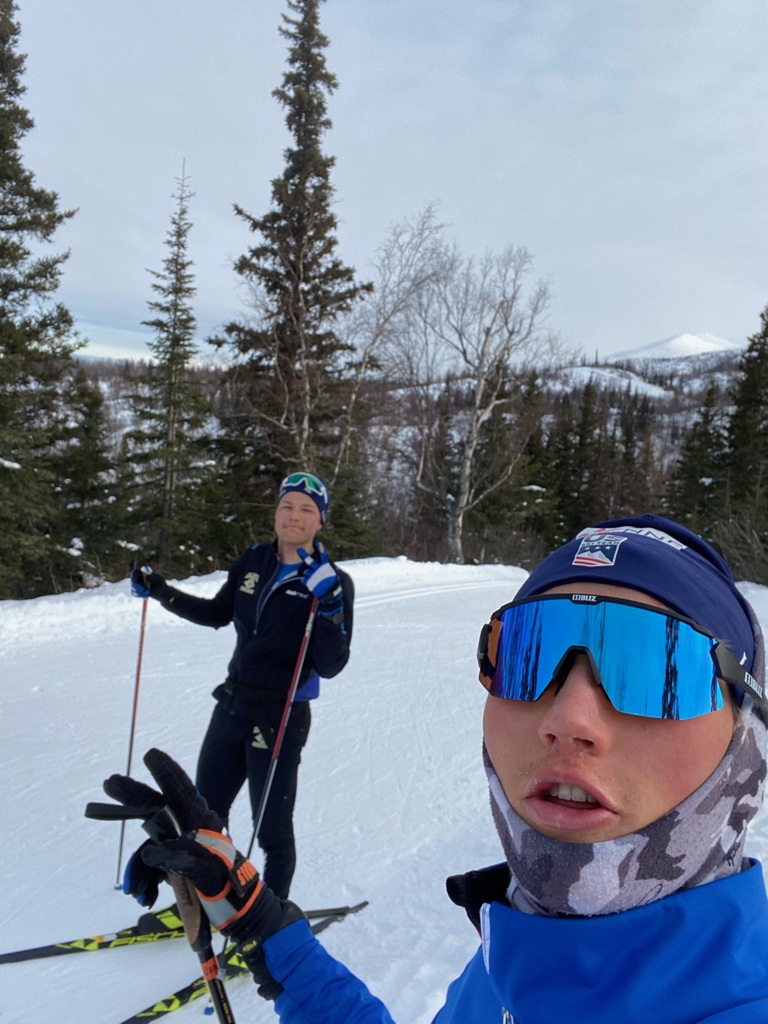
Hannah Halvorsen: “I’ve been using the off season to enjoy being outside with friends and teammates in a less structured way. Most of the year our training is focused on executing specific workouts so in the spring I love going for a nordic ski, backcountry ski, or a hike with no agenda other than to enjoy the outdoors and time with people I care about.”
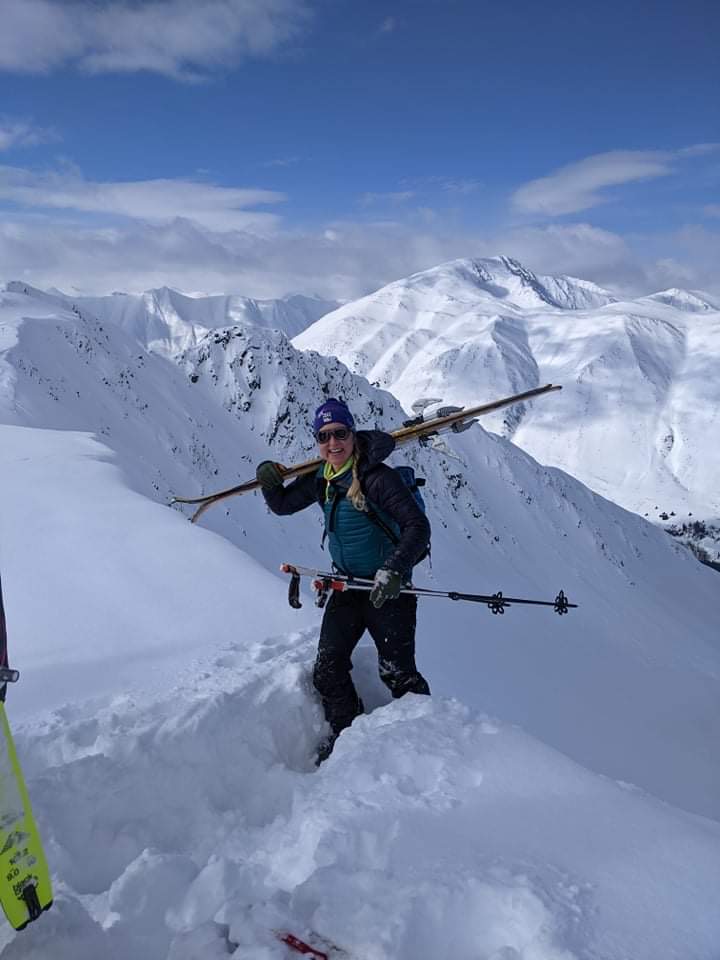
Hannah Halvorsen enjoys a ski with her mom, Julie. (Courtesy photo)Hannah Halvorsen gains an enviable ridge line on a backcountry powder tour. (Courtesy photo)
David Norris:
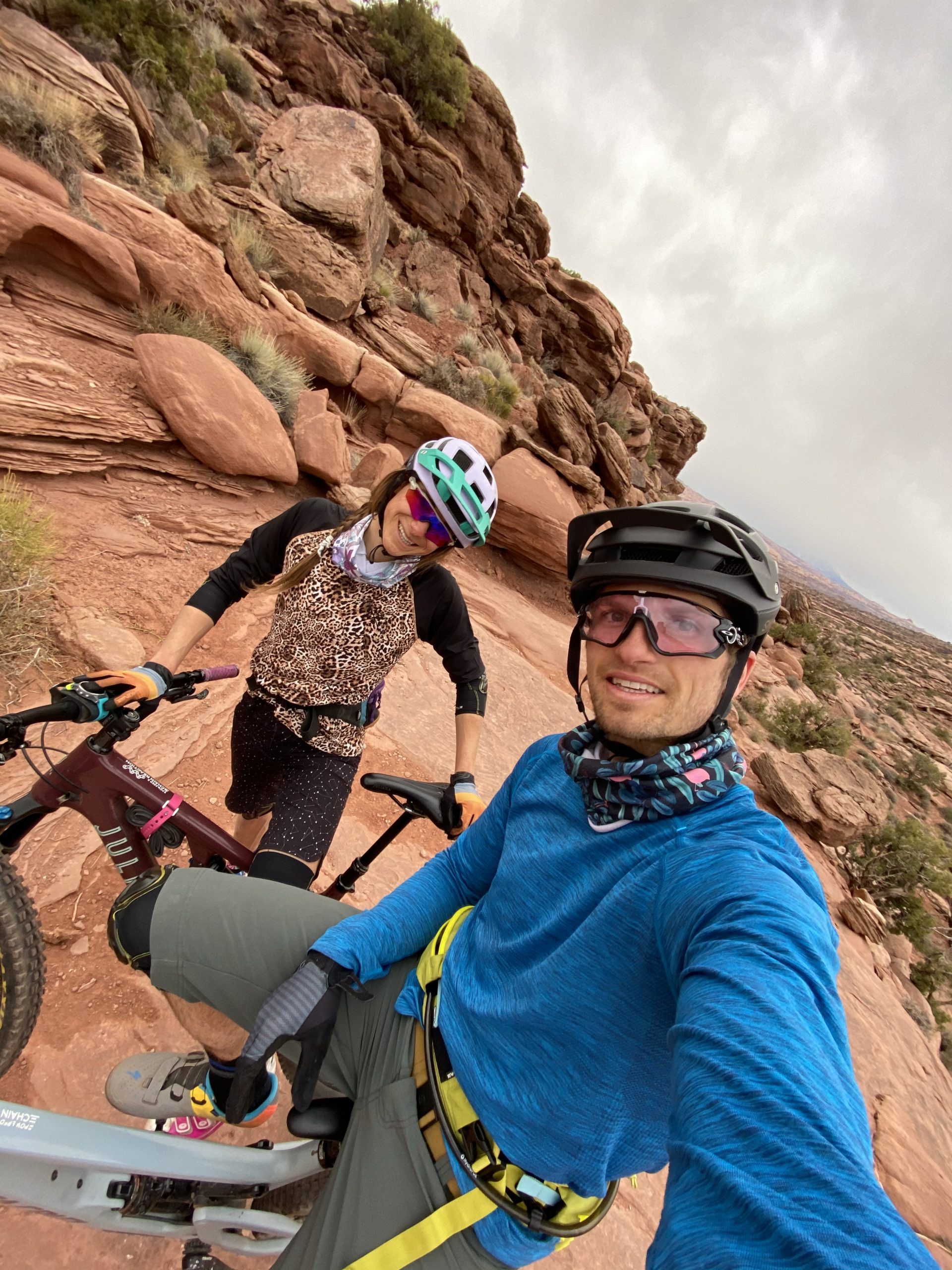
“April is always a bit crazy for me. I try to take advantage of the final weeks of groomed trails while also fitting in all the fun activities that aren’t possible while on the road. Right after the season I got three great weeks of mountain biking and touring in New Mexico with Jessica before returning to Anchorage to catch up on work, get vaccinated, and ski a ton until the snow melts.”
David Norris headed to the Southwest for some desert riding with his girlfriend, Jessica Yeaton. (Courtesy photo)David Norris trades skinny skis for an AT setup to embrace the unstructured spring season. (Courtesy photo)
Julia Kern:
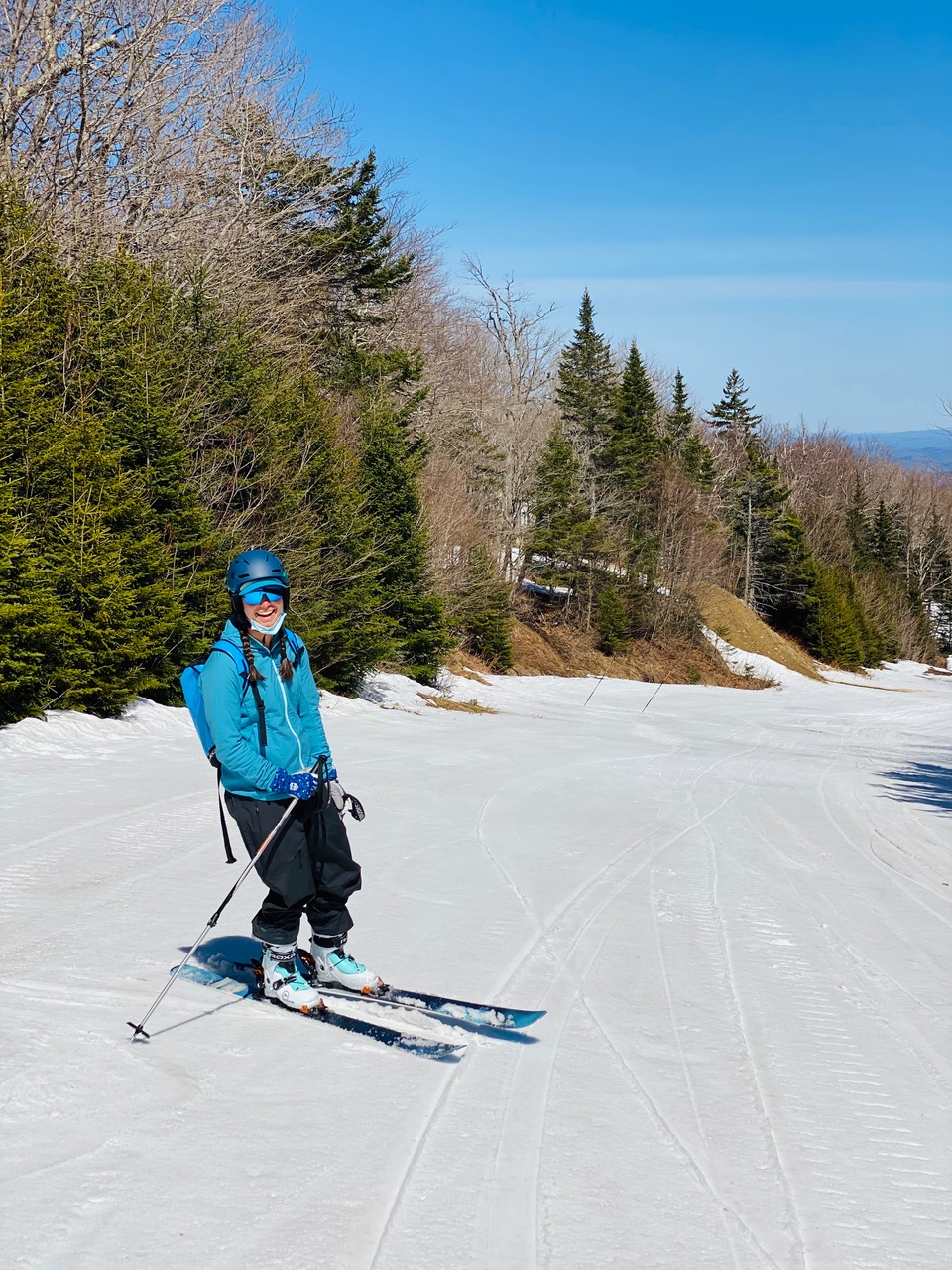
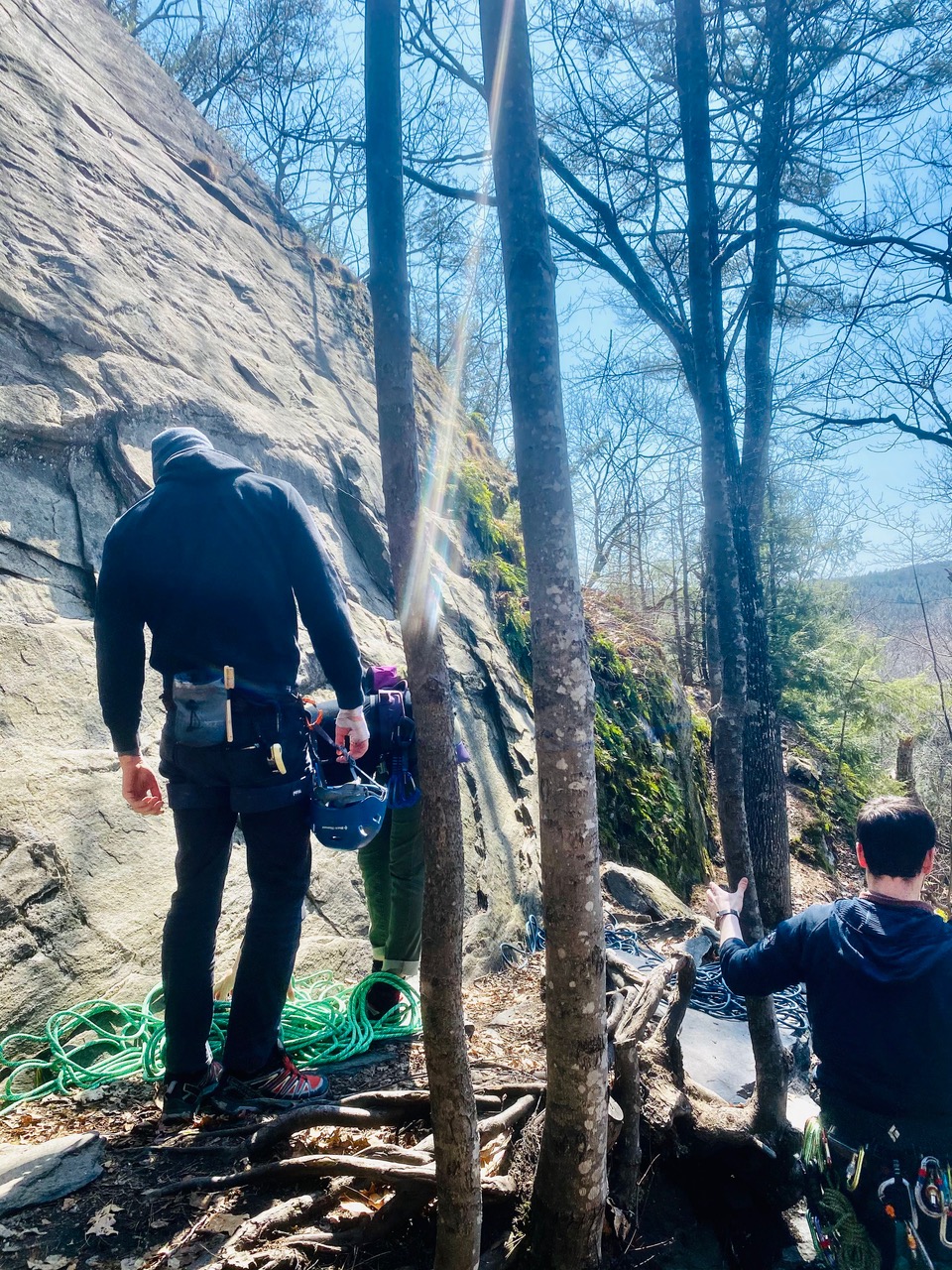
“The springtime is my adventure and social season. I recharge in the spring by getting outside on non-cross country ski adventures with friends, such as climbing, backcountry skiing and downhill skiing. It is important for me mentally to connect with friends outside of skiing and do activities I don’t always have time and flexibility for in the training season. I think it is really important for me to get outside and do things only when I feel like, and lay low and do other things such as classes, design work or photography on the days I don’t feel like exercising. The spring is the time for unstructured activities where I can play outside when it is fun, but also make sure to take a step back and not see anything as ‘training’ but for a way to socialize with friends.”
Julia Kern takes advantage of late season snow in the Northeast during the off-season. (Courtesy photo)Fitting in the activities that often don’t fit within the normal training grind, Julia Kern gets in some spring rock climbing sessions with friends. (Courtesy photo)
Gus Schumacher: “I’ve been doing a lot of nordic skiing still, actually, because the snow in Anchorage is still so good. It fits into the ‘spring recharge’ goal by being very unstructured skiing, basically just doing whatever I want, whenever I want to do it. We had some races last weekend that were fun to do a little prep for, and I did a 200k ski on Wednesday, so I haven’t shut it down in any sense. Just doing what makes me feel happy and have fun. I’ve also been doing other things like backcountry skiing and some hockey, but more nordic than anything. Once the snow gets a little worse, I’ll chill out more and take some time, but for now it’s been fun to just keep the ball rolling!”
Gus Schumacher takes his skinny skis off piste in the spring to complete the Arctic to Indian traverse. (Courtesy photo)Not hanging it up just yet, Gus Schumacher and JC Schoonmaker take advantage of the excellent late season conditions in Anchorage. (Courtesy photo)
Alayna Sonnesyn:
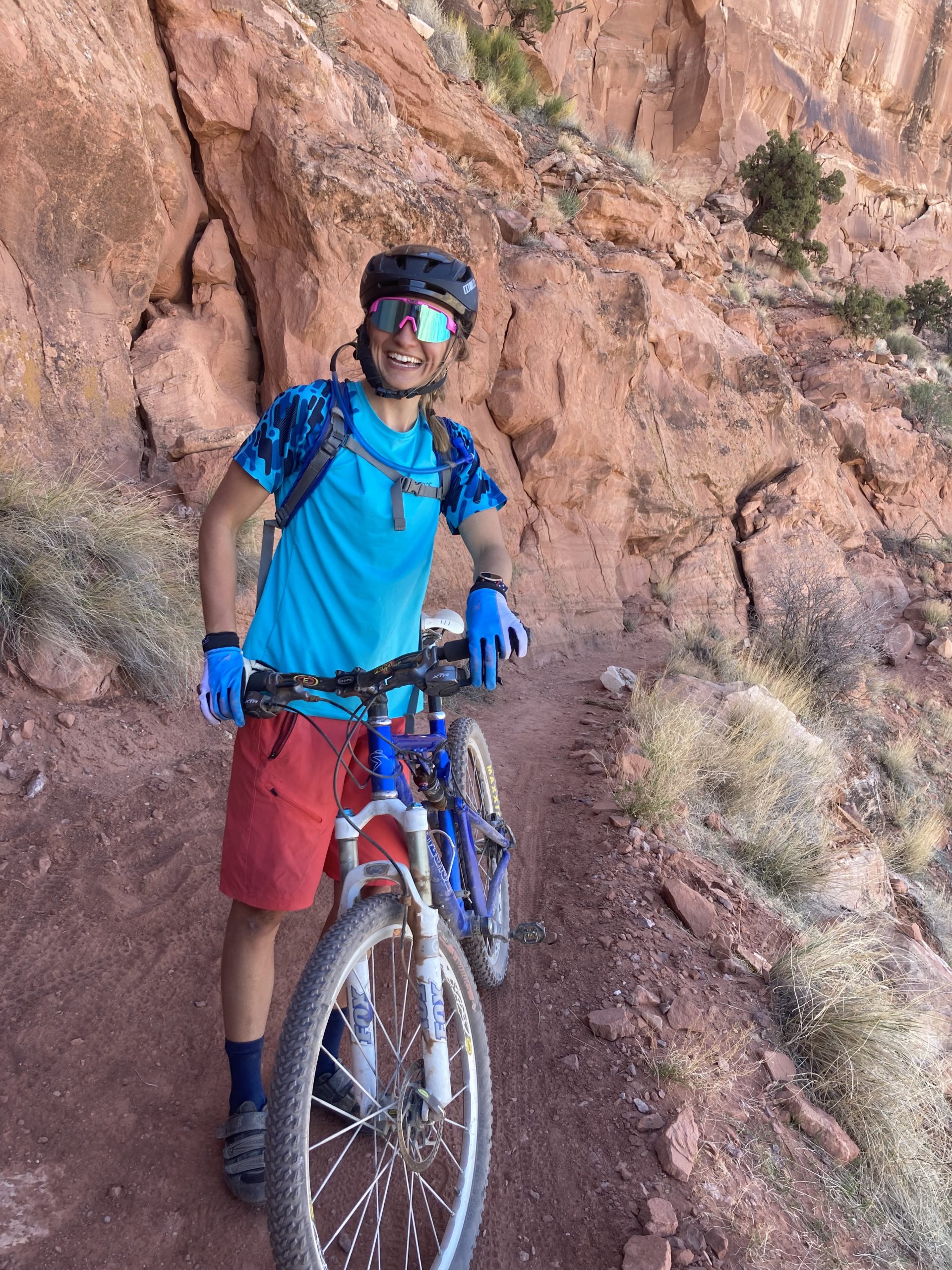
“This past season was one of the toughest seasons mentally I’ve gone through. By mid-season, I was already feeling burnt out and in need of a break. That being said, this spring I’ve been bouncing around out west, living out of my car and visiting friends and family. I would say it’s the first time I’ve really been able to appreciate springtime in the west and have been loving the sunshine and mountains. I recently invested in a backcountry ski setup and have absolutely loved getting outside to skin up a resort, adventure through the woods, and explore some new terrain. I also had my first experience going to Moab for some fun mountain biking, hiking, and spring skiing. All of these activities are refueling my ski tank and making me fall back in love with cross country skiing. Can’t wait to get the next season started!”
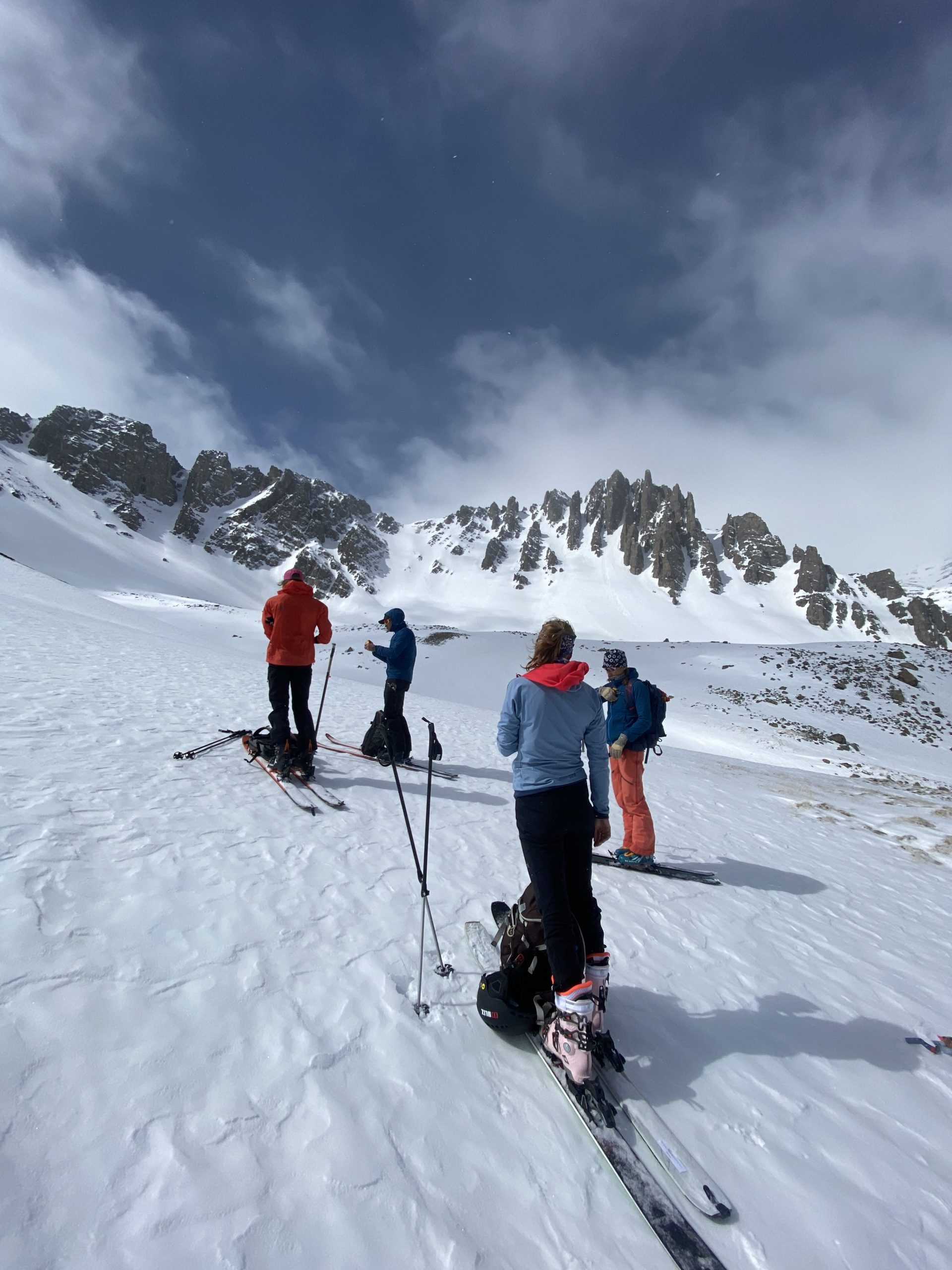
Alayna Sonnesyn took a vacation out west for some mountain biking in Moab with friends. (Courtesy photo)Out for a backcountry ski in Colorado with former UVM teammate Lina Sutro, as well as Simi Hamilton and Sophie Caldwell Hamilton. (Courtesy photo)
This World Championship coverage is made possible through the generous support of Marty and Kathy Hall and their A Hall Mark of Excellence Award. To learn more about A Hall Mark of Excellence Award or to learn how you can support FasterSkier’s coverage please contact info@fasterskier.com.
Here we are in the back half of the 2021 World Championships in Oberstdorf, Germany. As athletes strive for their peak fitness, storylines from the World Cup season, pandemic, and historic World Championship results intertwine to set the stage for the 15-kilometer interval start classic.
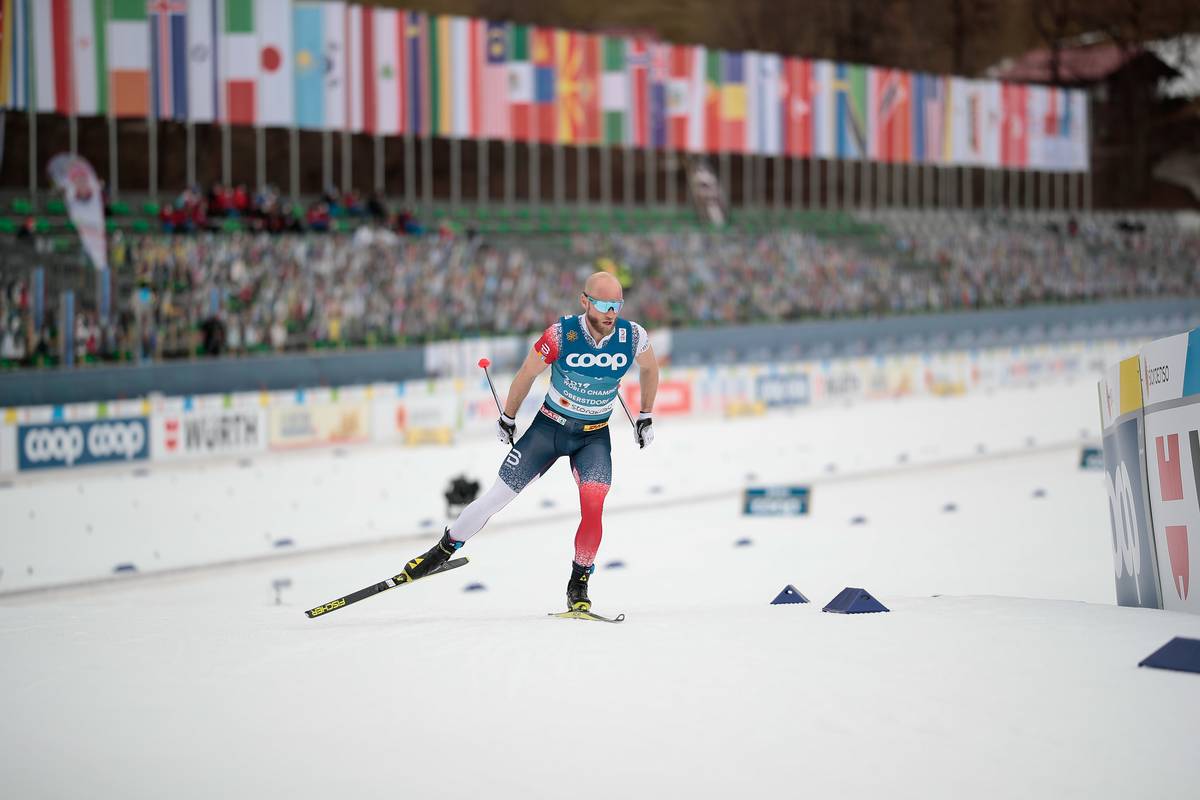
Sundby who had not raced a World Cup this season, had an auto start as the reigning 15 k champion – made the best of his opportunity. (Photo: NordicFocus)
Out of the woodwork and starting in bib 19 was Norway’s Martin Johnsrud Sunby, who earned an automatic start based on his long sought after victory in the 15 k classic during the 2019 World Championships in Seefeld, Austria, his first career individual win at a World Championship or Olympic Games. Because his start was based on this result, he added to the four additional Norwegians on the start list, rather than taking a spot away.
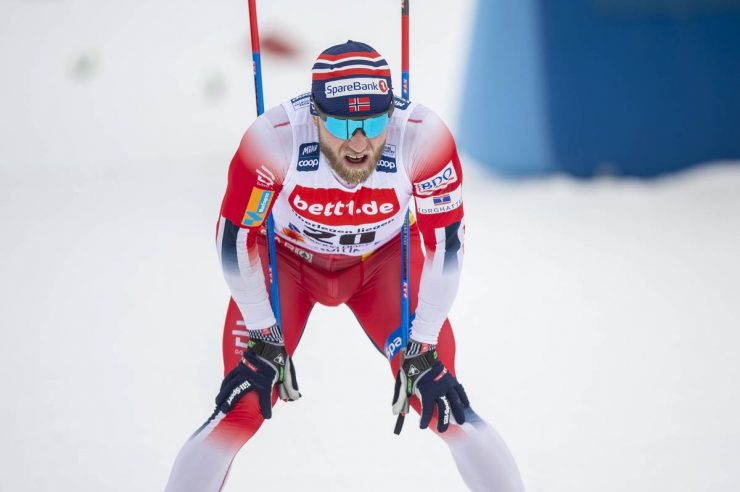
The 36-year-old Sundby has a storied history on the Norwegian National team, but has not raced on the World Cup since the 2020 50 k classic at the Holmenkollen, where he finished 12th. He had two top-5 World Cup results last season, two in skiathlon and one in the 15 k classic, but this season he has only cracked the top-10 once while racing domestically and is listed as DNF or DNS for each of the three 15 k skate opportunities he was presented. Dark horse?
Picked as a favorite for the 15k, the beast that is Bolshunov came up slightly short of the medals on Wednesday when he placed fourth overall. (Photo: NordicFocus)
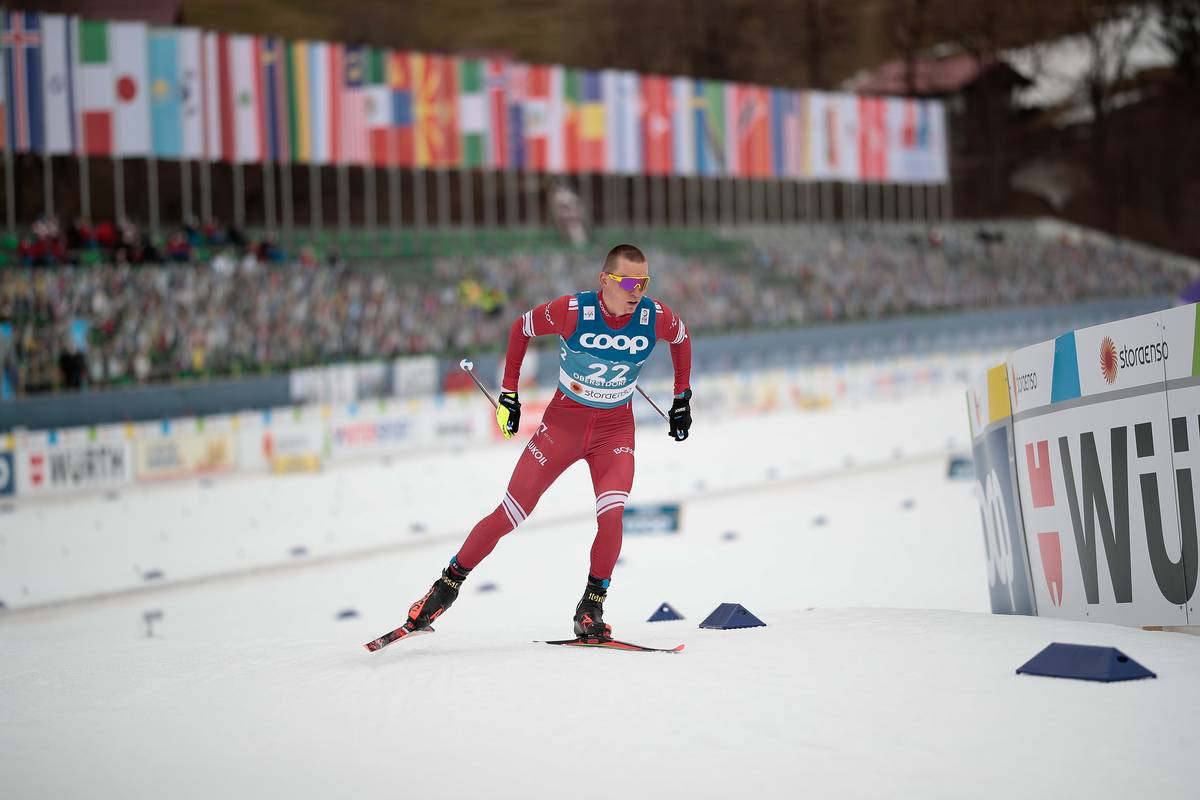
Perhaps the more obvious storyline, who may resonate with Sundby’s slew of not-quite-gold individual World Championship results, is whether the Russian Ski Federation’s Alexander Bolshunov could repeat his win in Saturday’s 30-kilometer skiathlon, where he collected his career first gold medal to hang above his collection of four silver medals. Positioned well above the field in the overall and distance World Cup standings, all eyes were on Bolshunov in bib 22 as he time trialed through the woods on the tracks in Oberstdorf.
In an individual start where athletes are seen passing checkpoints at a variety of times, it can be difficult to assess the performances without a look to the splits at checkpoints. That said, Bolshunov exhuded confidence and strength as he pushed over the top of each climb, worked every corner, and rhythmically grinded through the woods, his bright yellow and purple glasses a contrast to his typical stoicism. By 1.8 k, he had 4 seconds over the rest of the field.
But the story was not pre-written for us. Roughly 80% of the field started behind Bolshunov, and the string of Norwegian’s were looking equally strong.
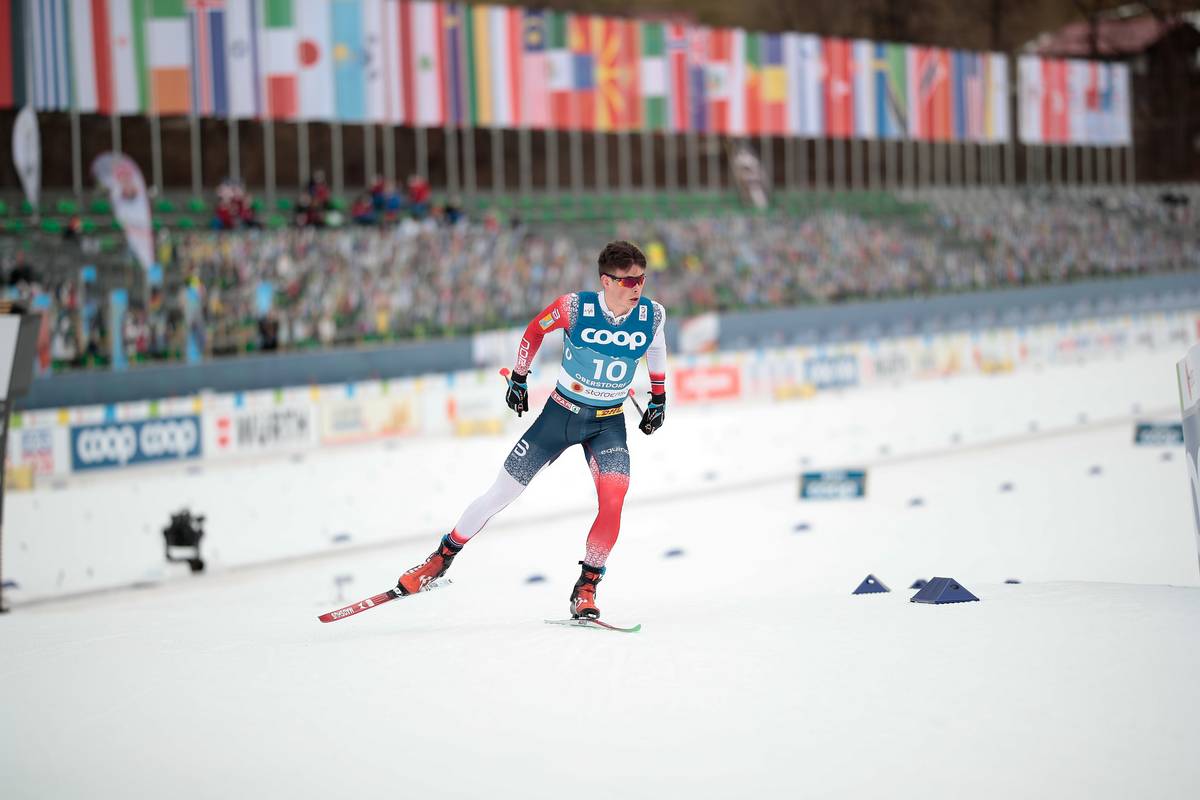
The 22-year-old Harald Østberg Amundsen of Norway – with only three World Cup starts, shines with a third place in the 15 k skate at World Championships. (Photo: NordicFocus)
Perhaps a new-to-us name, Harald Østberg Amundsen of Norway was one of Bolshunov’s biggest threats. I’ll fill you in — it looks as if we’ll want to get to know him.
The 22-year-old has several noteworthy results in the 15 k skate event: 2nd in 15k skate at the Norwegian National Championship in 2020, followed by a 3rd place result in 2021 behind Sjur Røthe and Simen Hegstad Krüger. Amundsen also has a 1st, 3rd and 4th in the event in domestic FIS races this season while Norway was sitting out the World Cup due to concerns for COVID-19 management and athlete safety in the opening weekend of events in Ruka.
A U23 World Champion in the 30 k skate, Amundsen has just three World Cup starts, one this season in the 15 k skate in Falun where he landed in 8th, overshadowed in our coverage by the three Norwegian men ahead of him and a career best result and first top-10 for Gus Schumacher, who finished 9th.
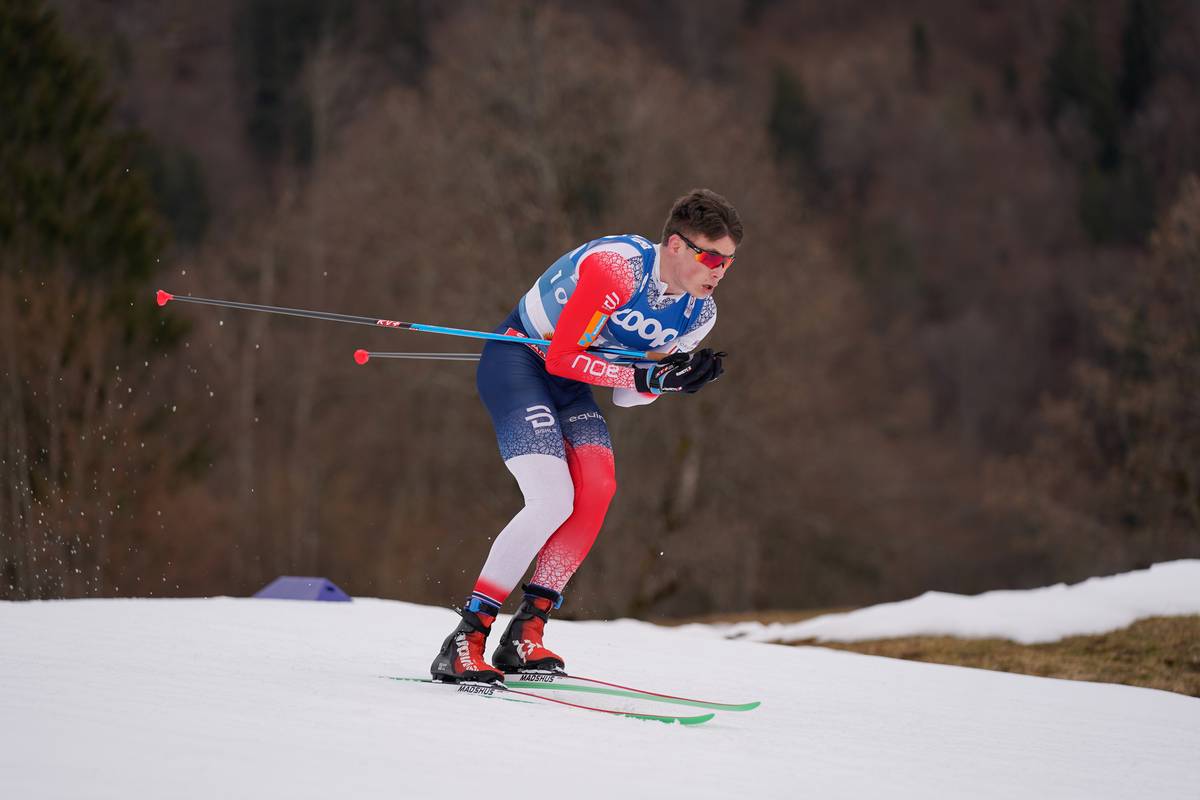
Harald Østberg Amundsen skis his way onto the podium in his first senior World Championships. (Photo: NordicFocus)
Starting in bib-10, Amundsen set the bar for his more experienced teammates, and the rest of the field for that matter. As splits rolled in, he was just over 5 seconds back on Bolshunov at the 5 k, seven seconds at the 10 k, and then the plot began to twist.
Perhaps the Russian began to fade or perhaps the Norwegians had an untapped gear, but by 12.9 k, Amundsen was over 18 seconds ahead of Bolshunov.
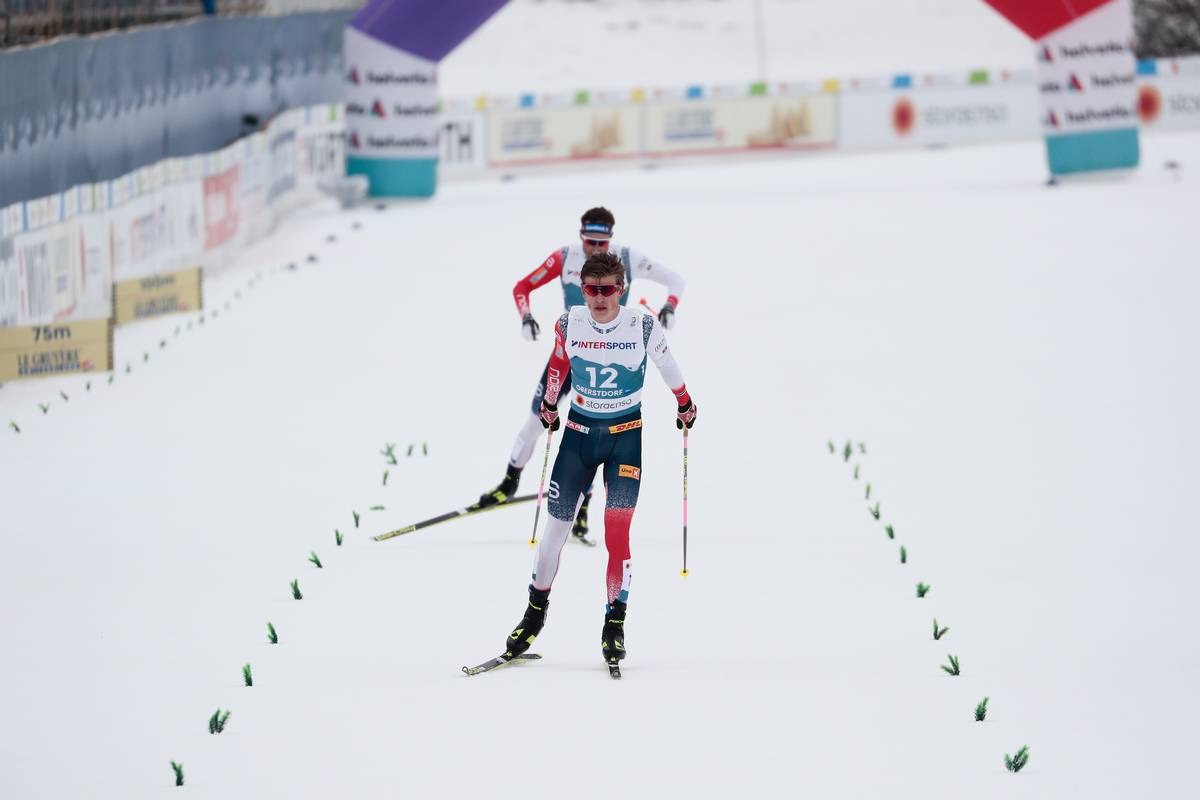
Within the last kilometer, cameras followed Amundsen as he rocketed down a hill into a hairpin curve that spit skiers back into a final steep climb. At the apex of the curve, his skis sunk into the degrading corn snow, sending him into the back seat and costing him his balance. Amundsen shot out of the corner into the fencing, however, with no broken equipment — and unfortunately, no momentum — he rebounded to head to the finish, where his time flashed green on the leaderboard, more than 27 seconds ahead of the field.
Amundsen had plenty of time to soak in this moment, as his time was not challenged until his teammates starting much deeper in the field entered their last 5k of the race.
Hans Christer Holund beats the clock in the 15 k skate. (Photo: NordicFocus)
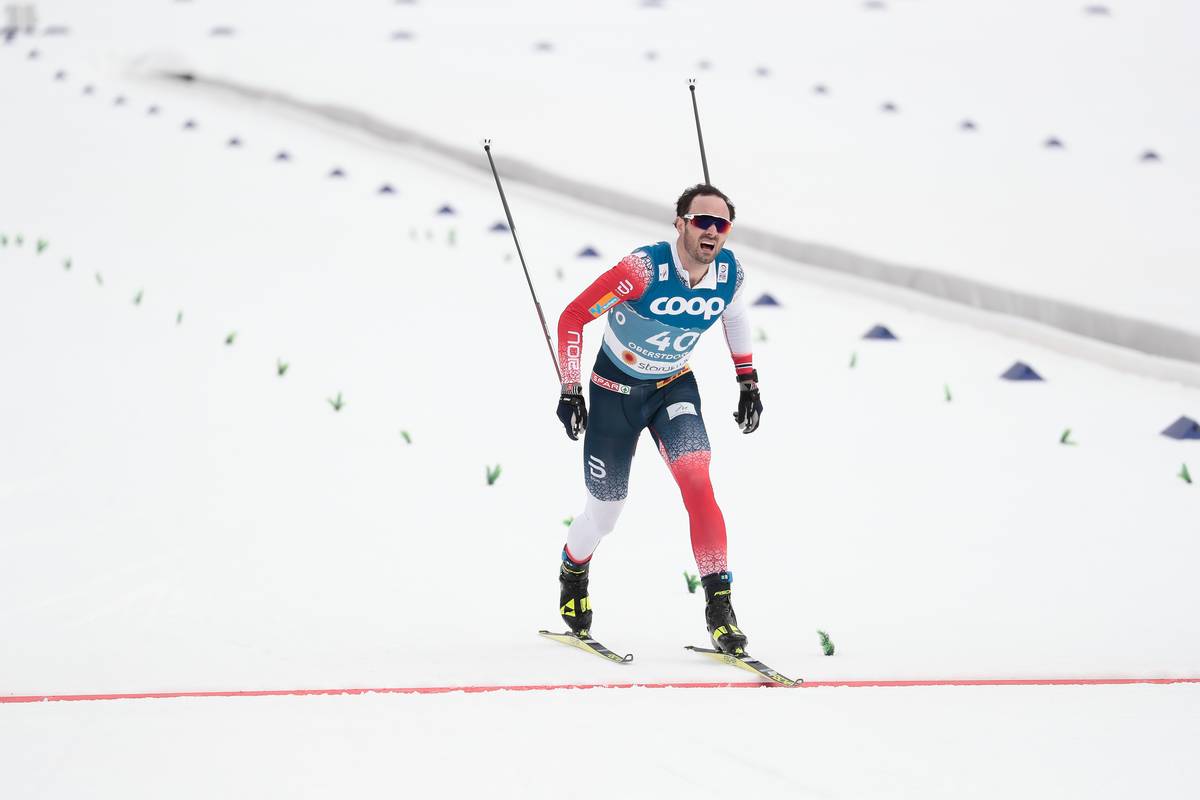
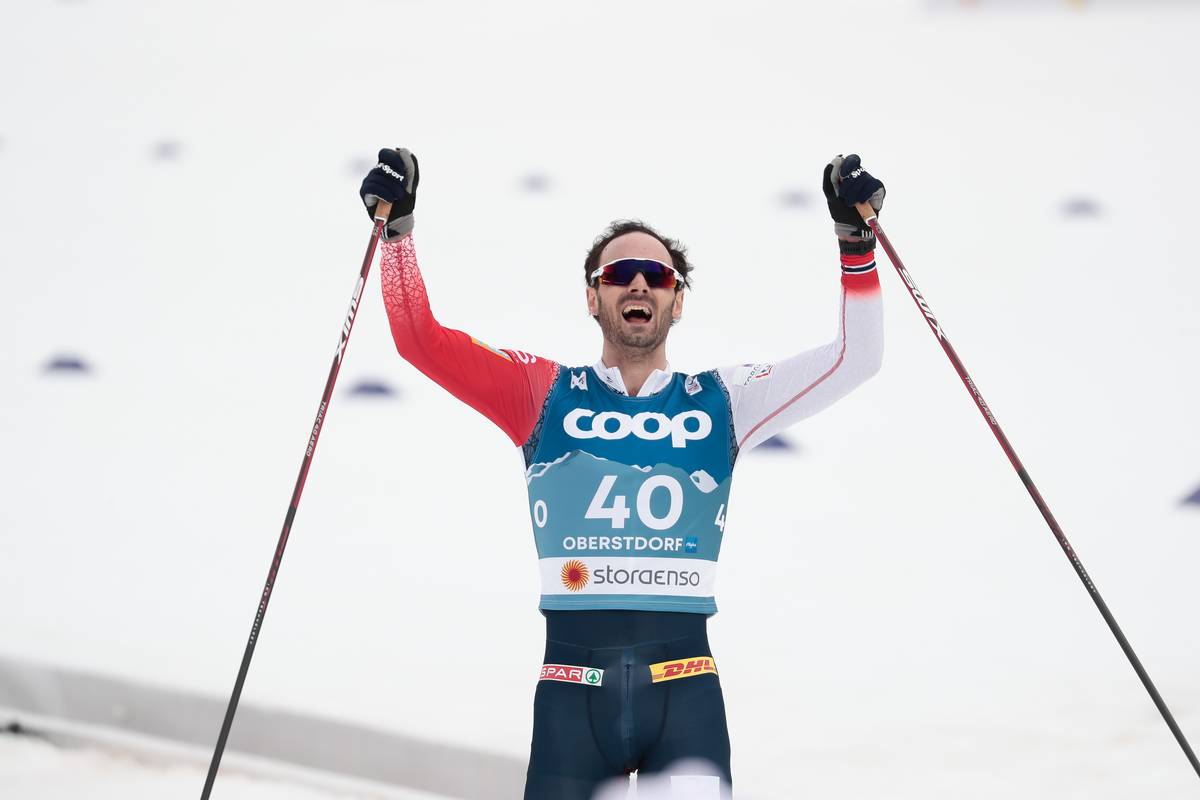
Progressively working his way up was Norway’s Hans Christer Holund in bib 40, who took bronze in the skiathlon on Saturday. He set the fastest split at the 6.6 k mark by 1.6 seconds, incrementally building his lead until it was 9.1 seconds at 10 k, 15.9 seconds at 12.9 k, and ending with a bang, 20.2 at the finish. He stopped the clock with a time of 33:48.7.
Hans Christer Holund smashes the 15 k skate in Oberstdorf, Germany, winning by a margin of more than 20 seconds. (Photo: NordicFocus)Hans Christer Holund celebrates a gold medal performance in the 15 k skate. (Photo: NordicFocus)
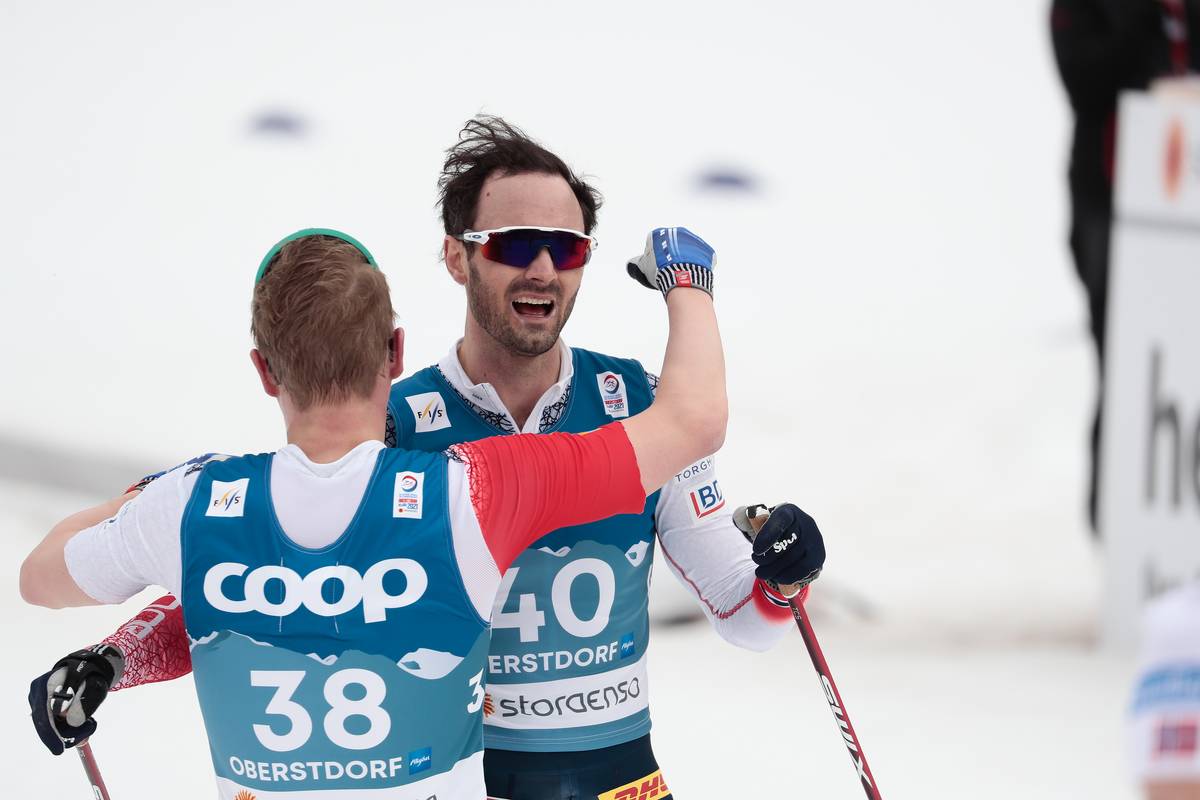
Looping around his teammates in a surge of emotion and adrenaline, Holund was ecstatic at the finish. A second gold medal to keep his 2019 50 k freestyle gold medal company.
“It’s amazing, I don’t know what to say,” Holund told FIS breathlessly after the race. “I am as shocked now as I was in Seefeld two years ago. I had a really good day — this track is super tough, and it’s tough conditions. I knew I was going to have a good race as long as I was staying calm in the first round and tried to push harder later in the race.”
On course, Norway’s Simen Hegstad Krüger raced to second overall in the 15 k Wednesday. (Photo: NordicFocus)Simen Hegstad Krüger and Hans Christer Holund celebrate a job well done in the 15 k skate. (Photo: NordicFocus)
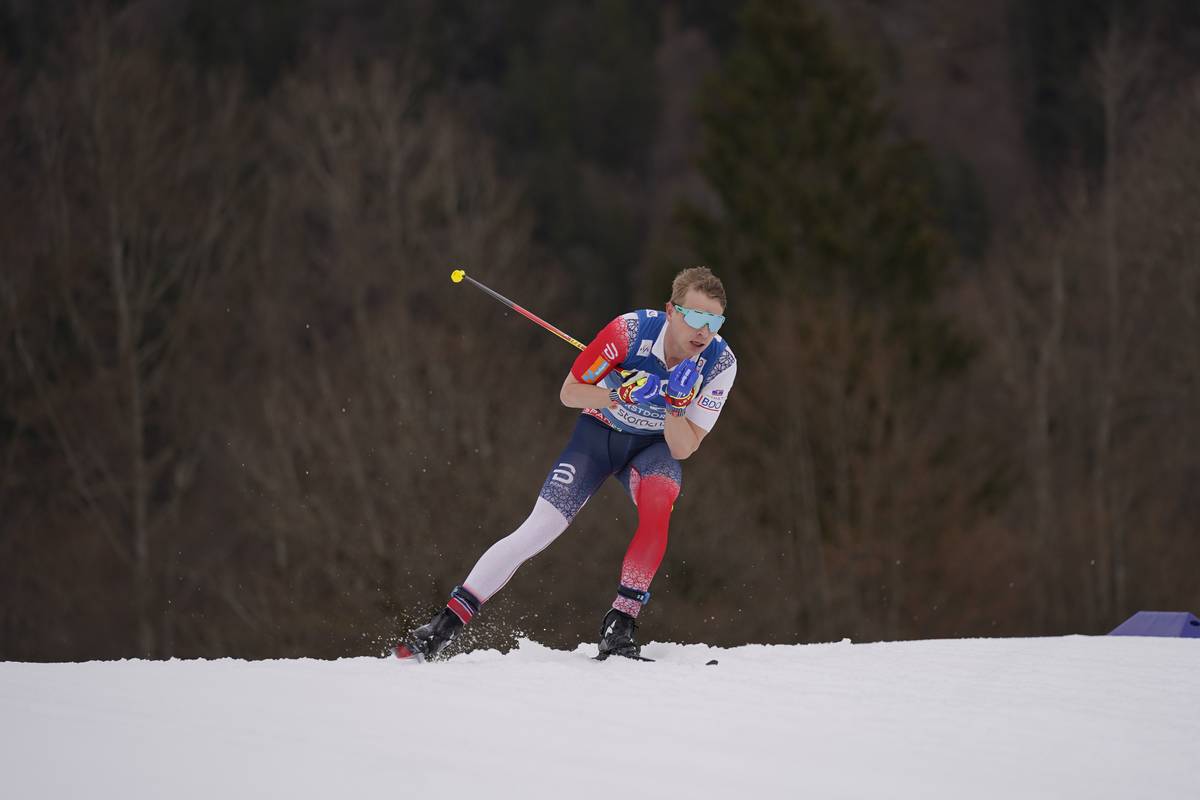
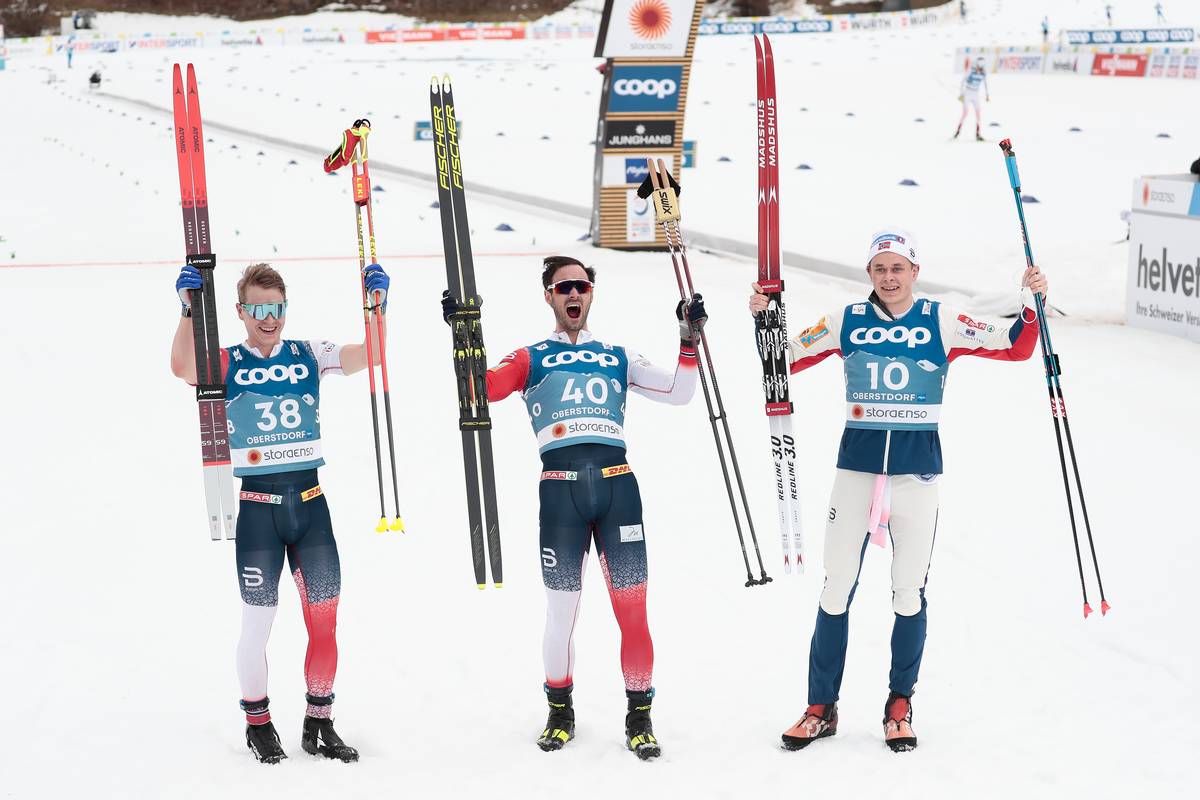
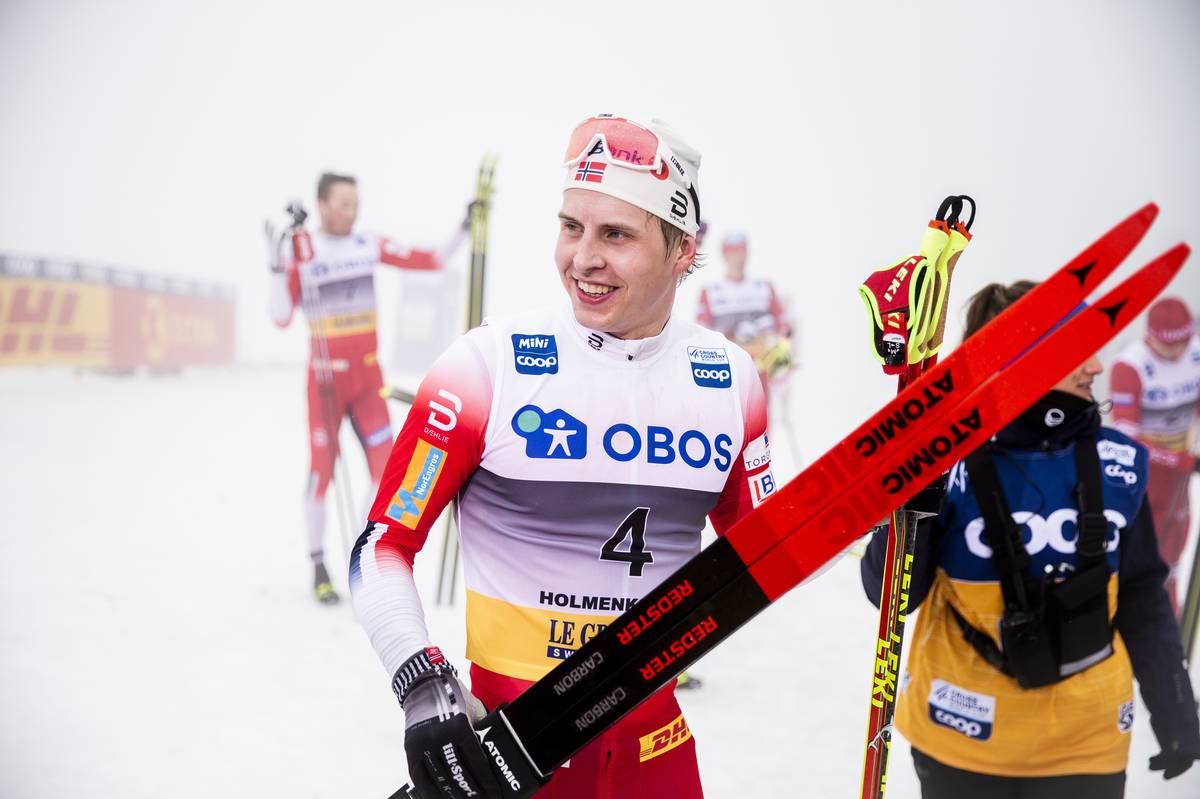
Also climbing his way up the time standings was Krüger, who sat in 11th at the 5 k and 6th at the halfway point. He overtook Amundsen by the 10 k mark and continued to surge, though he could not make any headway on Holund. He finished solidly in second place for a silver medal (+20.2), with Amundsen holding on for bronze (+35.6).
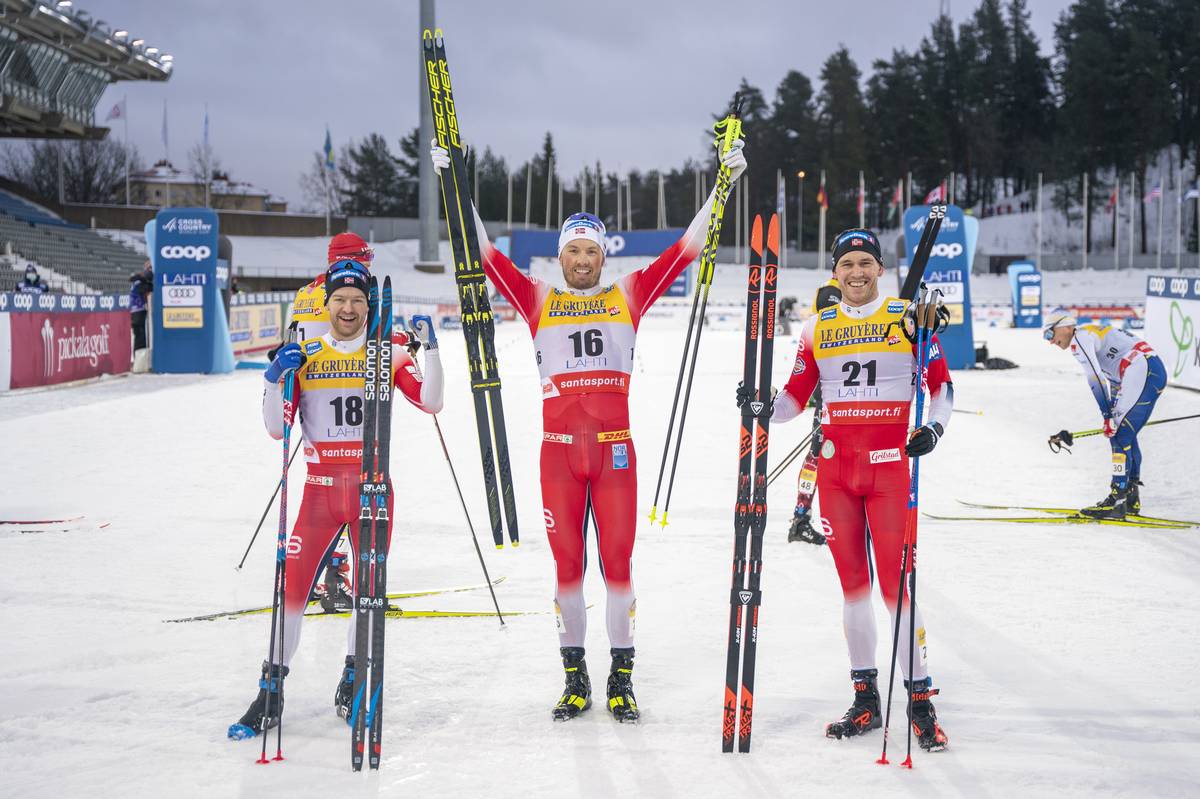
The men’s podium of the 15 k skate: Hans Christer Holund takes gold ahead of Simen Hegstad Krüger and Harald Østberg Amundsen. (Photo: NordicFocus)
Bolshunov took fourth (+43.7) with his teammate Artem Maltsev 5th (+50.7), interrupting the string of five Norwegians in the top 7. That’s right: Røthe in 6th (+55.3) and our dark horse, Sundby, in 7th (+55.9).
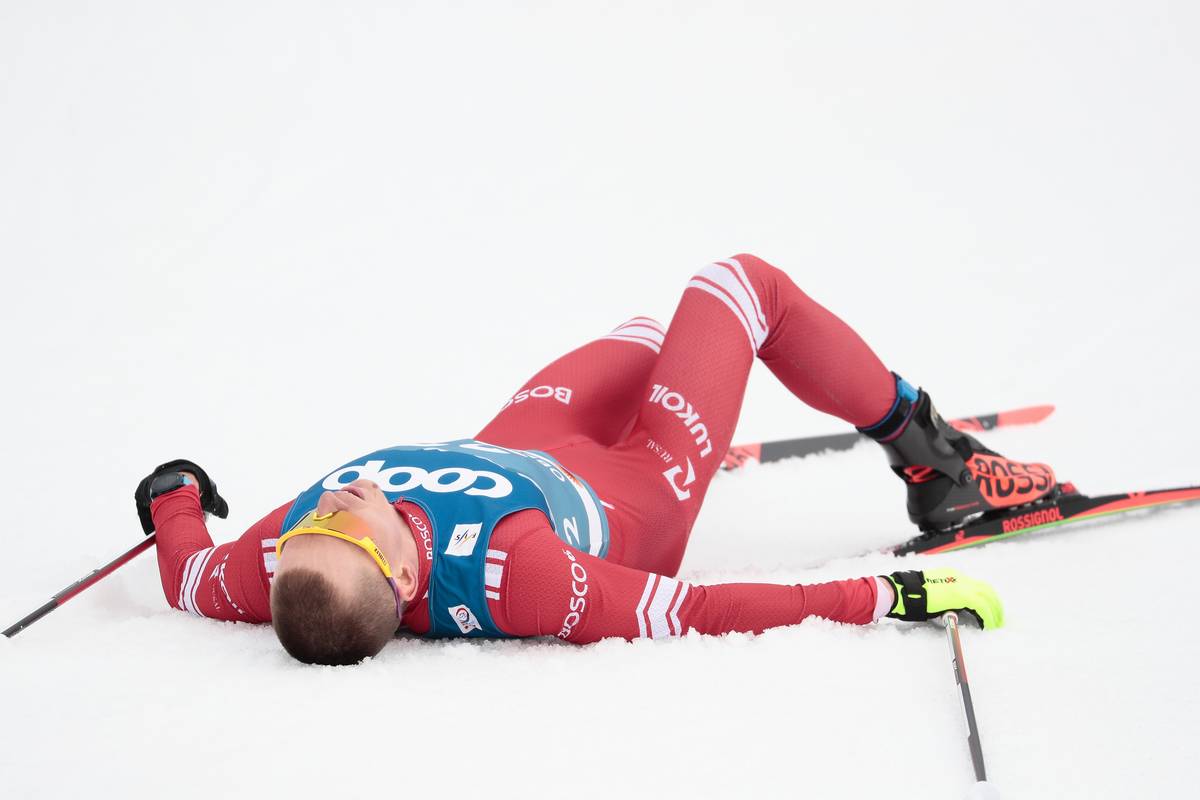
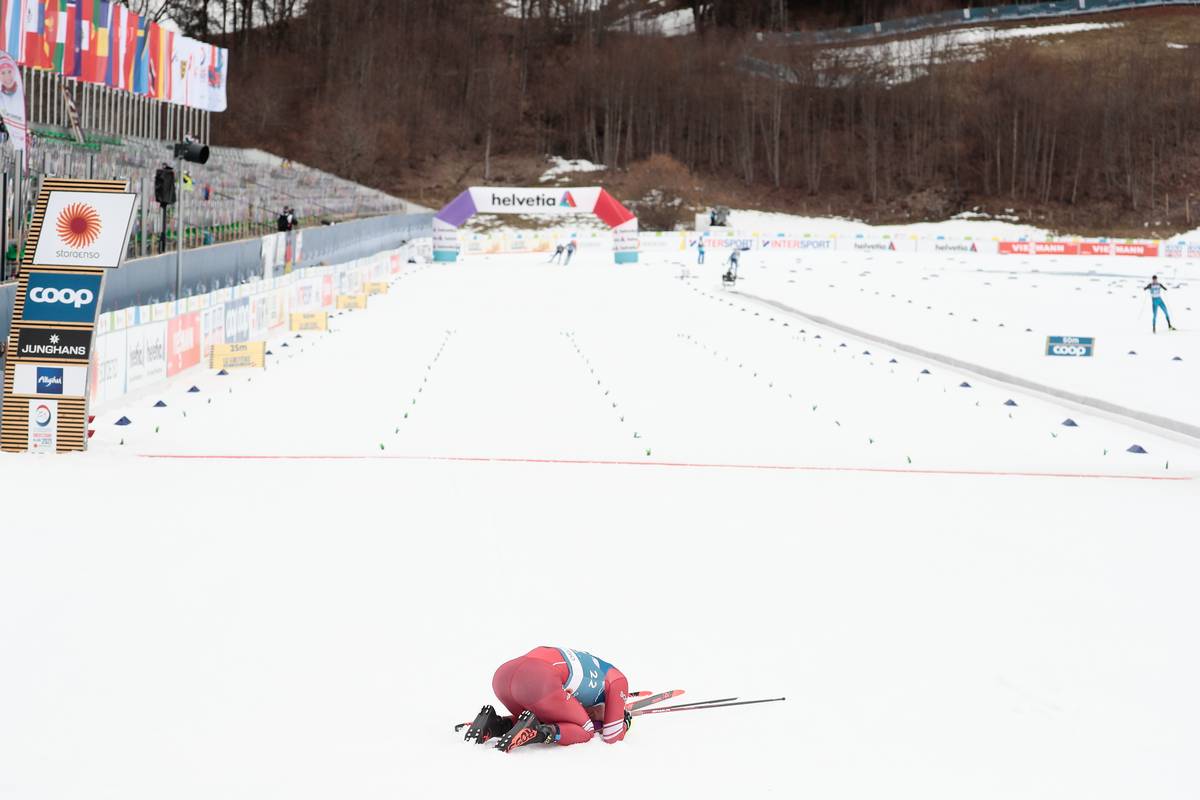
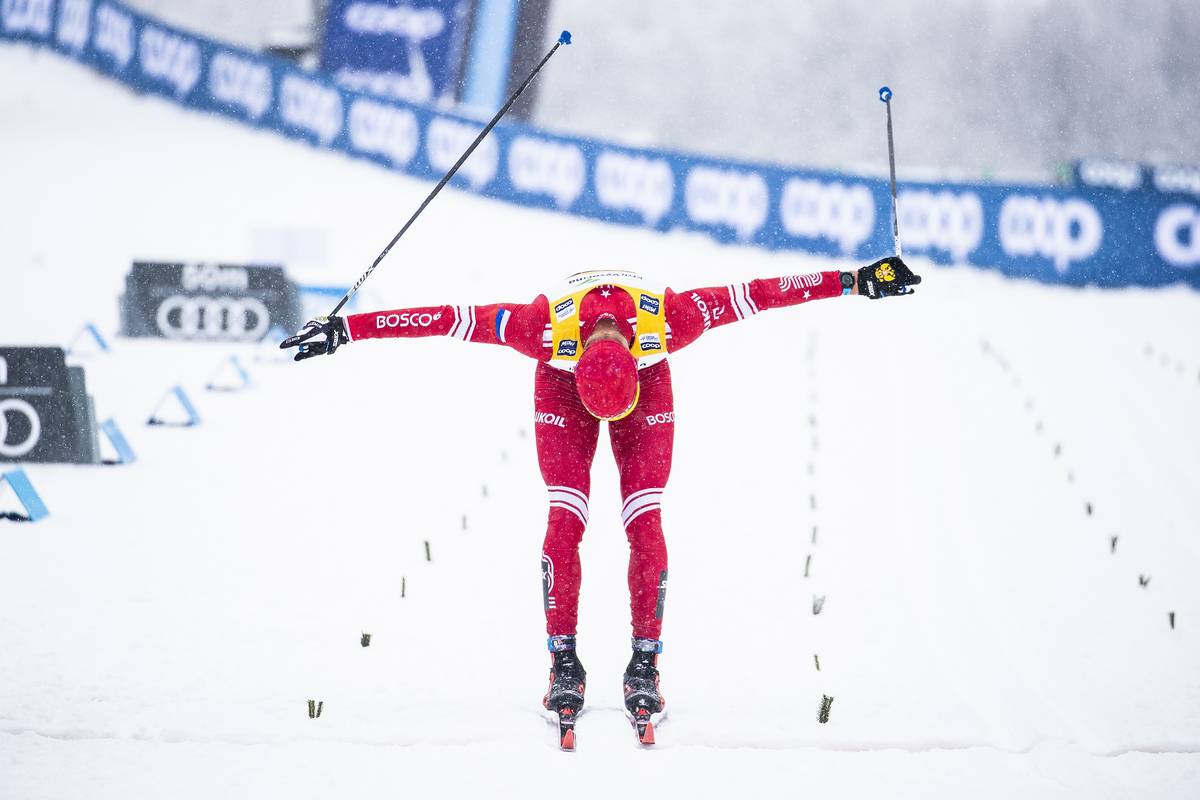
Alexander Bolshunov collapses at the finish of the 15 k skate in Oberstdorf. (Photo: NordicFocus)Disappointment on display as Bolshunov takes fourth in the 15 k skate. (Photo: NordicFocus)
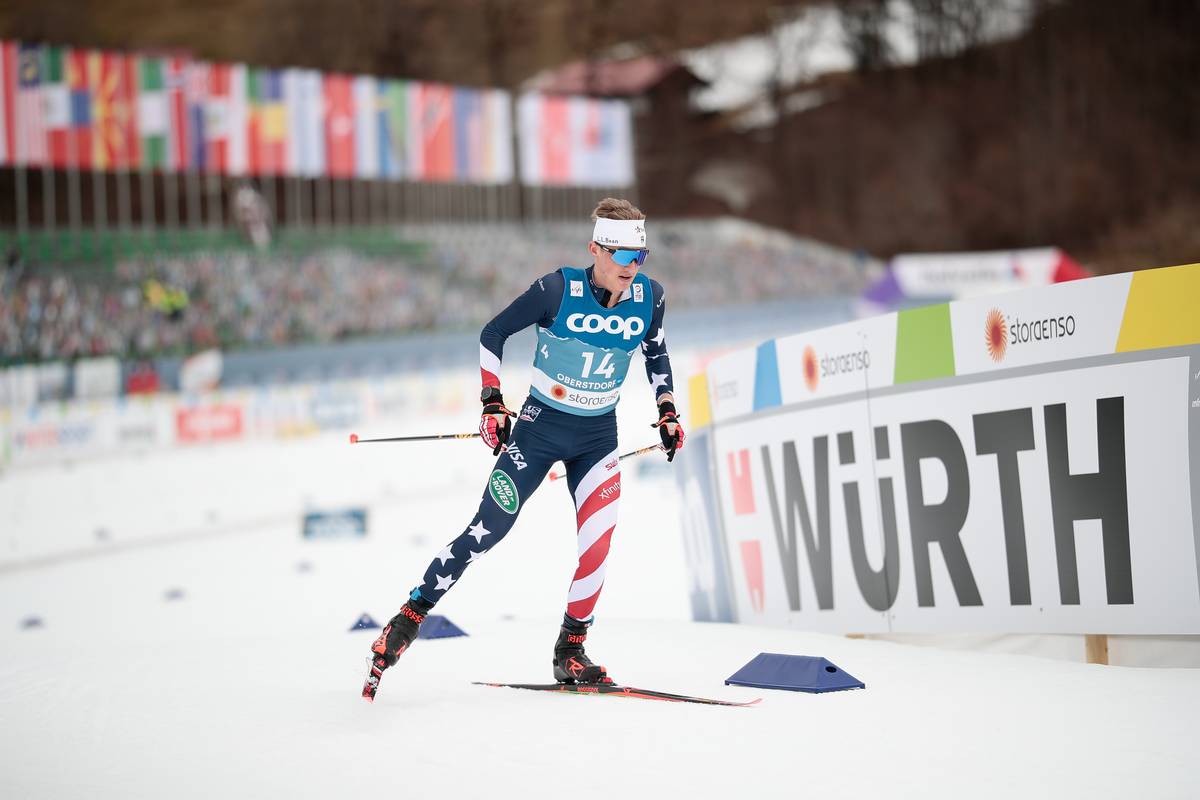
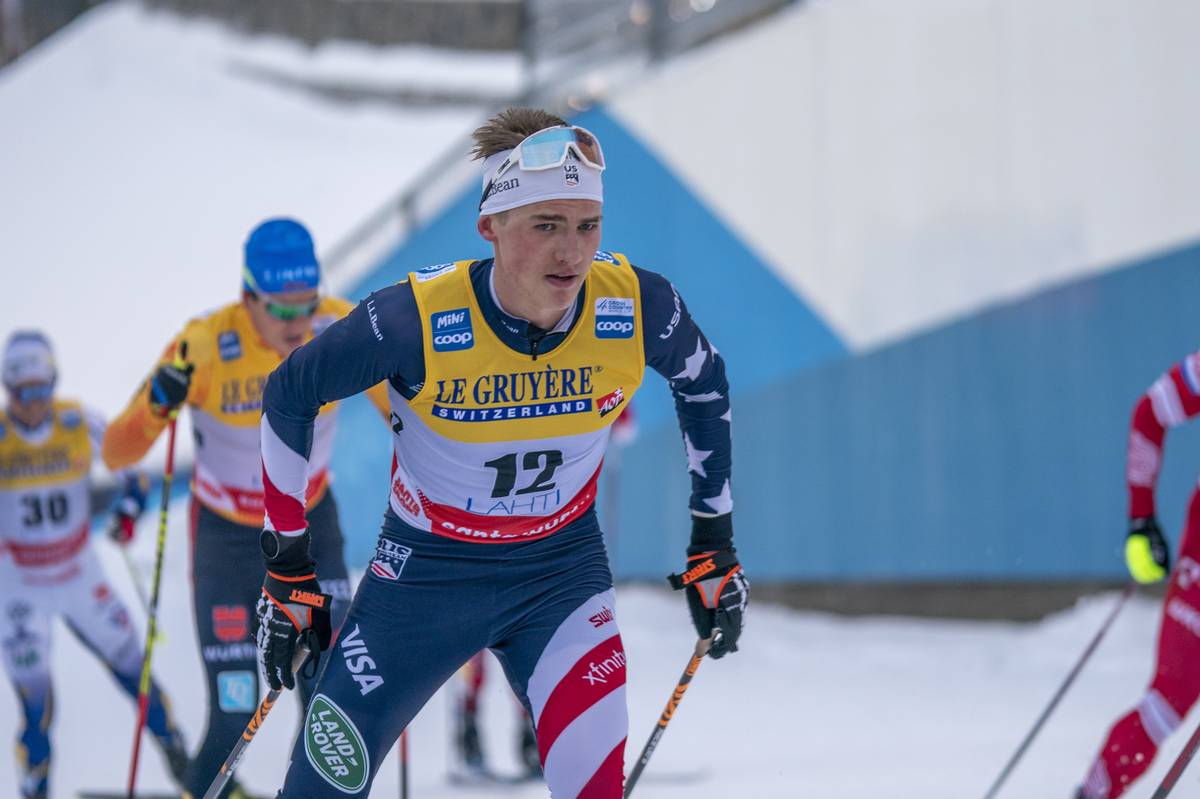
Perhaps with the weight of a U23 World Championship gold medal in an individual start distance event — the 10 k classic — Gus Schumacher started in bib 14 to kick things off for the Americans. It was clear that it would not be Schumacher’s day as he hovered well outside the top-30, finishing 51st (+4:02.3).
Gus Schumacher, in his first individual championship event, skied to 45th. (Photo: NordicFocus)
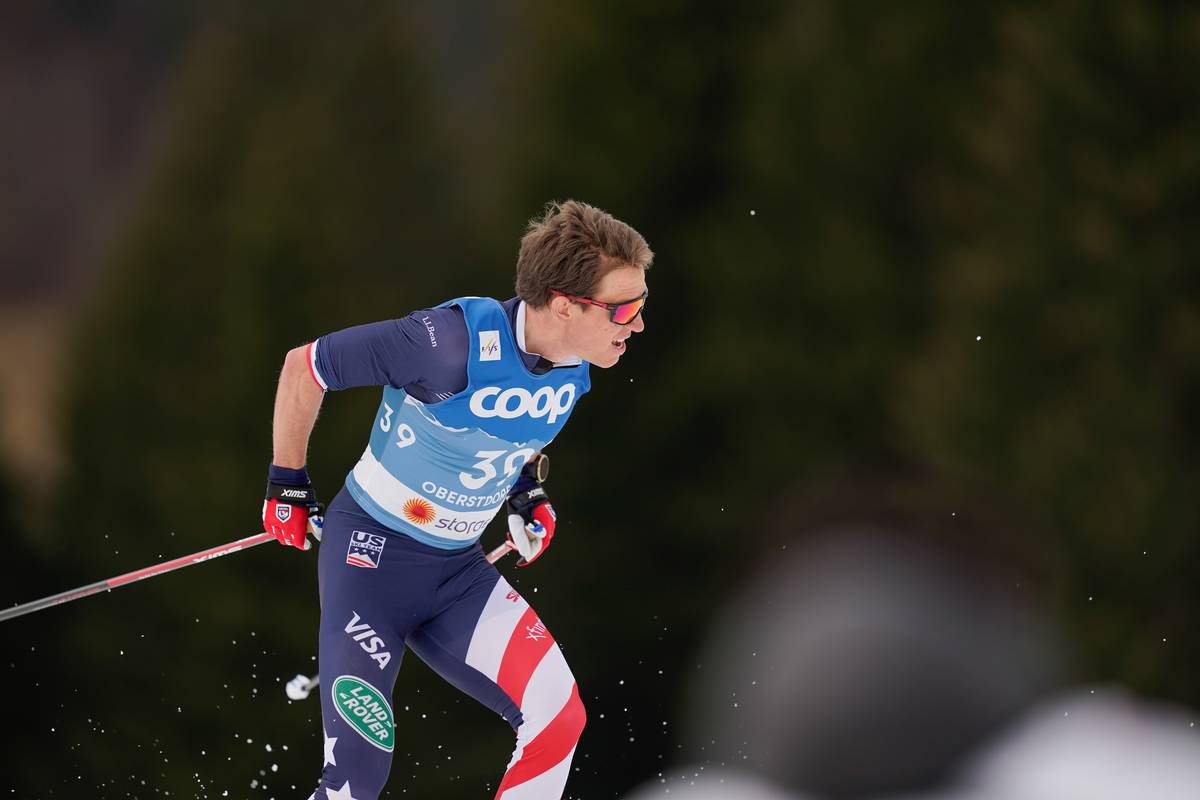
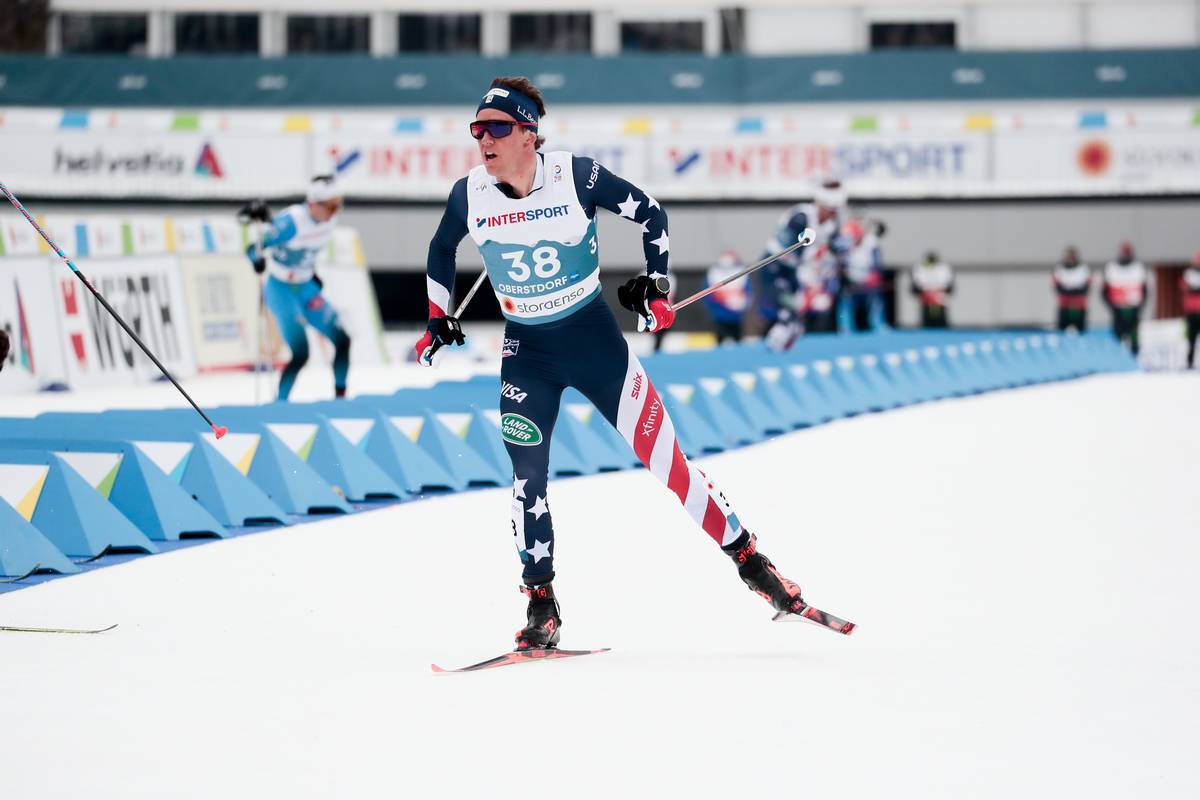
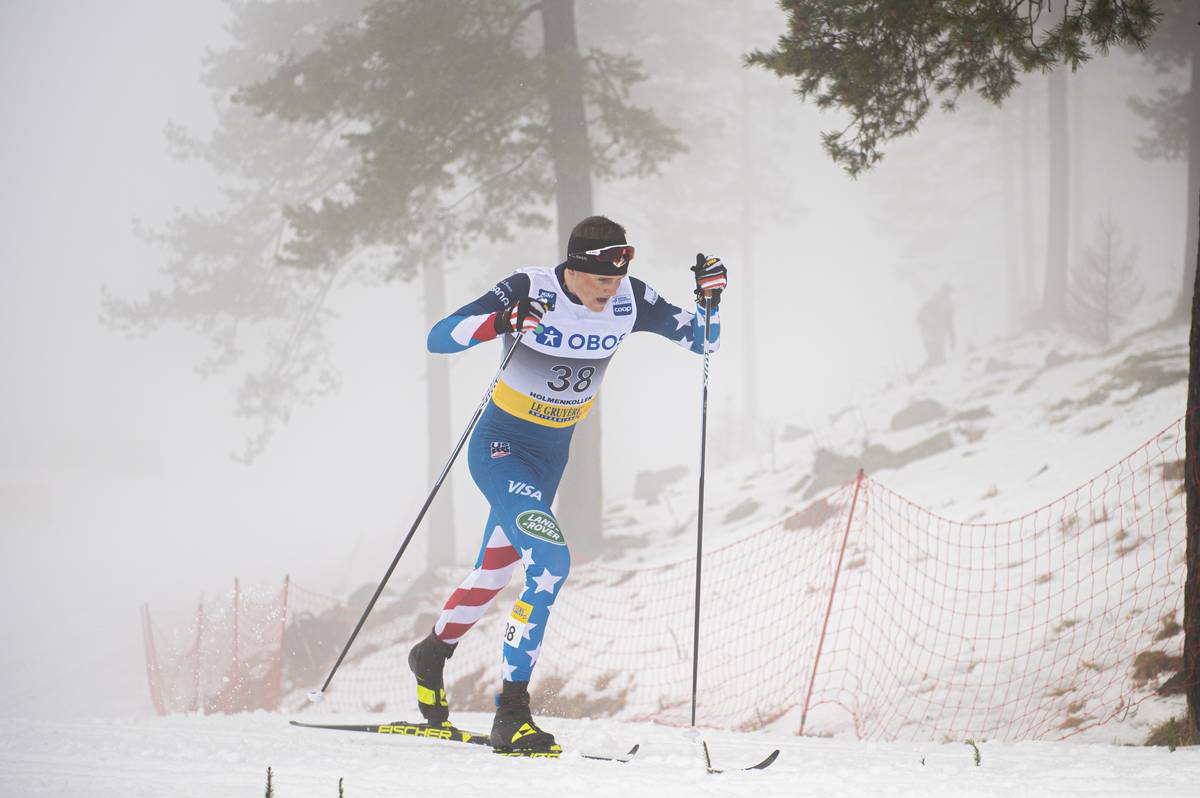
Coming off of top-20 finishes in skiathlon and wearing higher bib numbers were Scott Patterson and David Norris. After 15 k, Patterson held the top spot for Americans in 27th (+2:22.0), with Norris a few spots behind in 34th (+2:47.6).
“It was a tough race,” said Patterson in a post-race interview. “I think I started out pretty strong, skiing where I wanted to be. But the conditions started to deteriorate on laps two and three. I definitely suffered because of that and bled a lot of time. The winner started thirty seconds behind me and just blew by me. It definitely was not quite what I wanted but I think there are still some good signs for later in this week.”
Though official start lists have not been released, both Patterson and Norris will race the 50 k classic on March 7th.
Scott Patterson races to 27th in the 15 k skate in Oberstdorf, Germany. (Photo: NordicFocus)
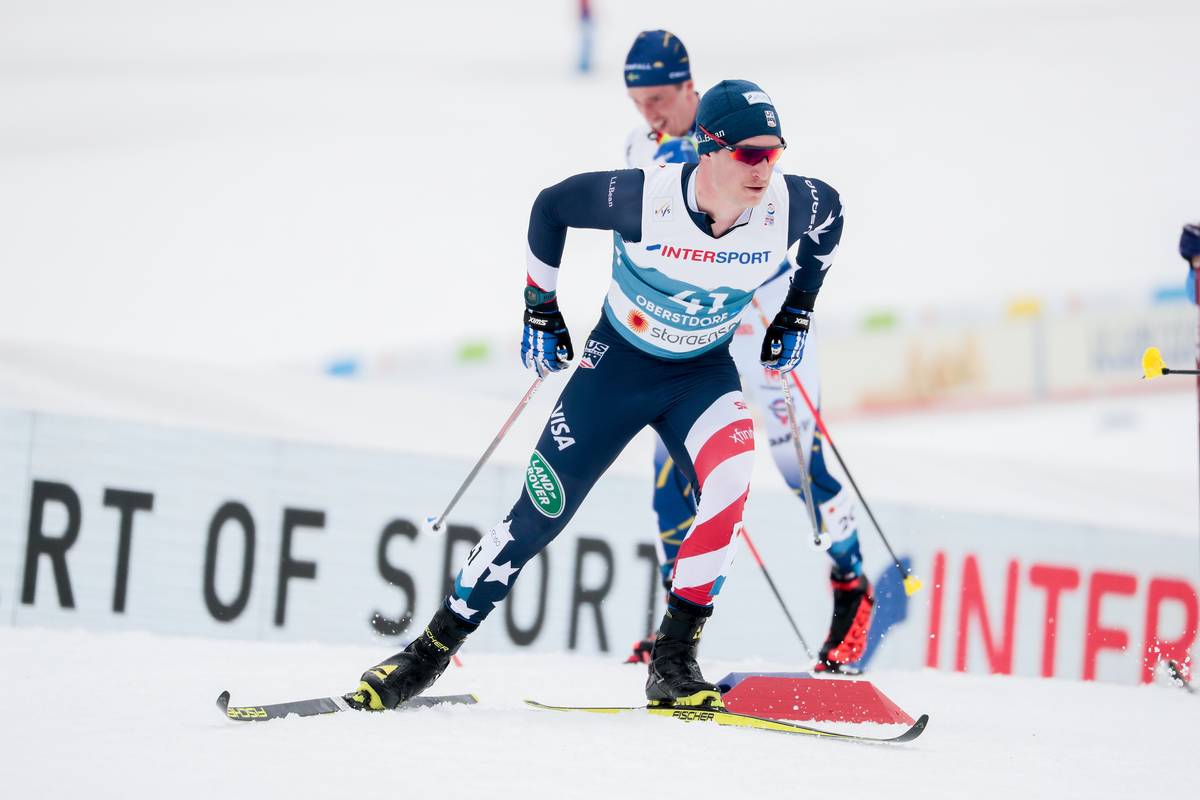
“I had higher expectations, but I know given the circumstances and that it is a tough day I felt like I fought through it and did my best,” said Norris of his race. “I cannot complain. My skis were good. All the support was there, I just did not feel my sharpest.”
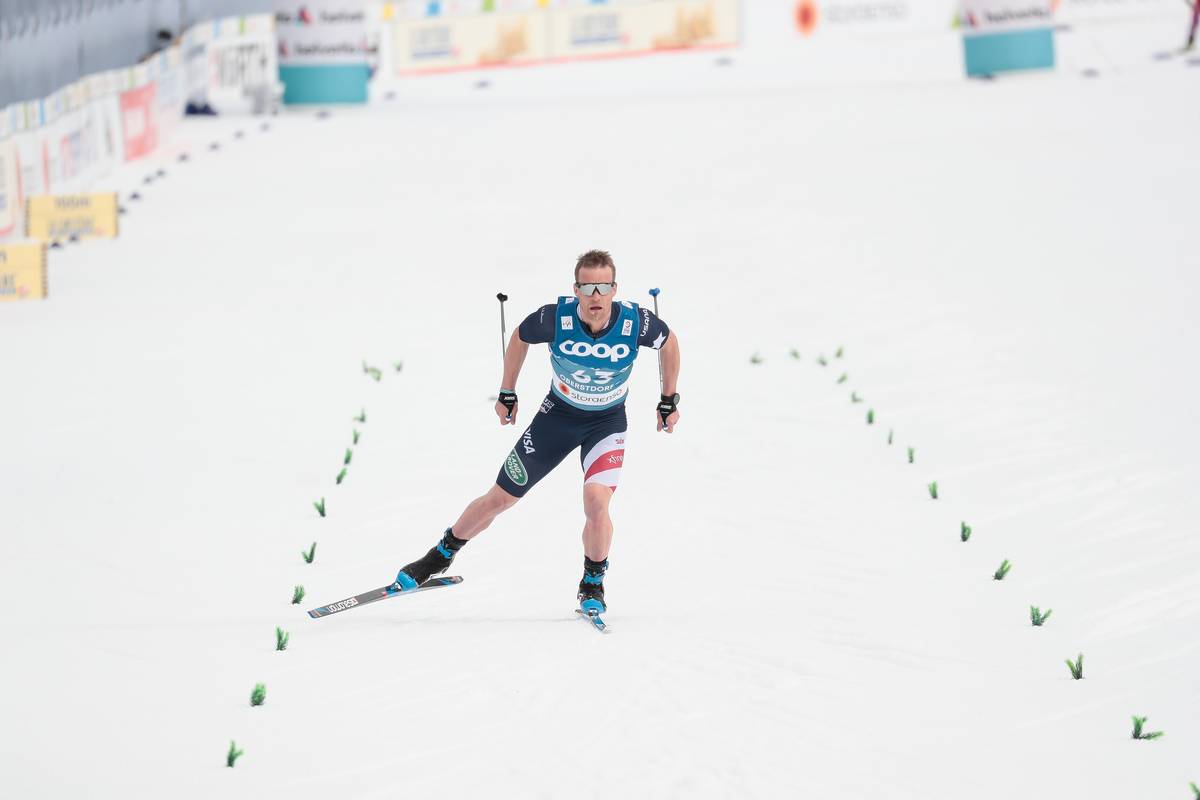
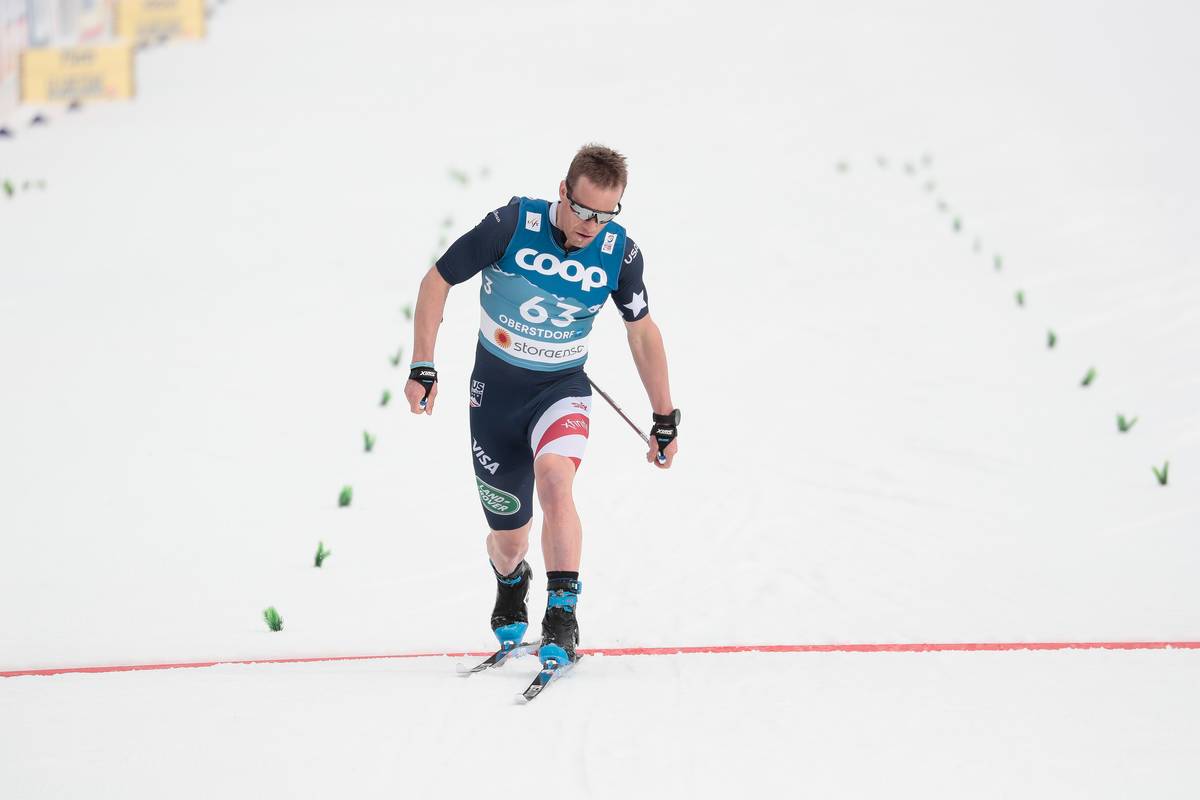
A name we associate more with sprinting, Simi Hamilton finished just 0.1 second outside the top-30 in 31st (+2:34.2). After ending his team sprint with Schumacher in the semifinals, Hamilton spoke with optimism after his race.
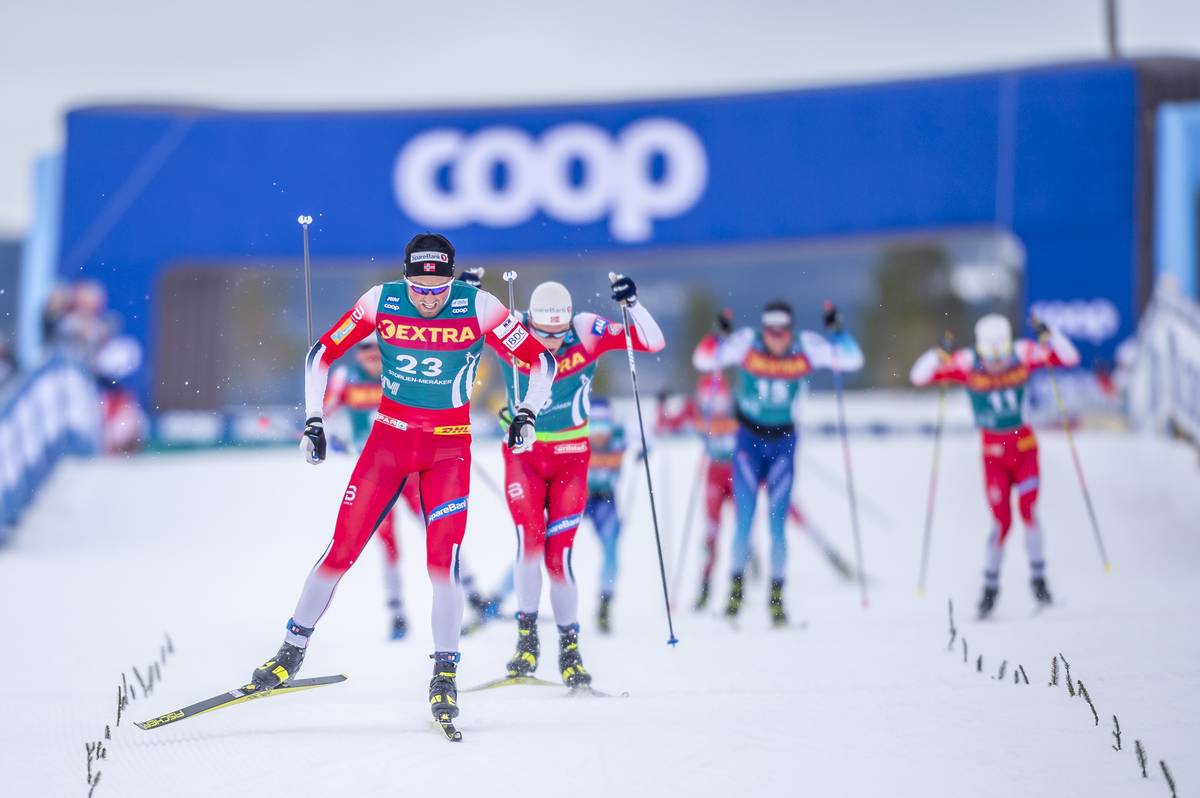
Down the final straight for Simi Hamilton in the 15 k skate. (Photo: NordicFocus)
“I never really know what to expect in an individual start,” said Hamilton after the race. “I’m a good mass start skier because I think that requires a little more sprint tactics and you always have someone to ski with. These individual start races are tough for me, mentally and physically. Just not having trained for races like this, they’re tough, but I know that I’m fit right now. With the focus on the team sprint, fitness is a big thing for that kind of race, so just being distance fit kind of comes with that territory.”
Simi Hamilton, for the U.S., toes in for 31st in the 15 k skate. (Photo: NordicFocus)
Hamilton discussed the changing conditions as skiers lapped the course. Tracks became softer and wetter, though hardpack conditions on the flats held up well. The biggest climb became soft and slow, even more taxing than it otherwise might have been. He shared that they could only check out the downhill that took out Amundsen once before the race began, but the tacky corner with a fresh groom was nothing like the conditions in the back half of the race. “You have to expect the unexpected,” he stated with a laugh.
Hamilton complemented the techs for their job producing fast skis and finished with a positive outlook on his day.
“It was nice to get an effort in like that,” Hamilton said. “It kind of validates a lot of the work you’ve been putting in for other races, so it was fun.”
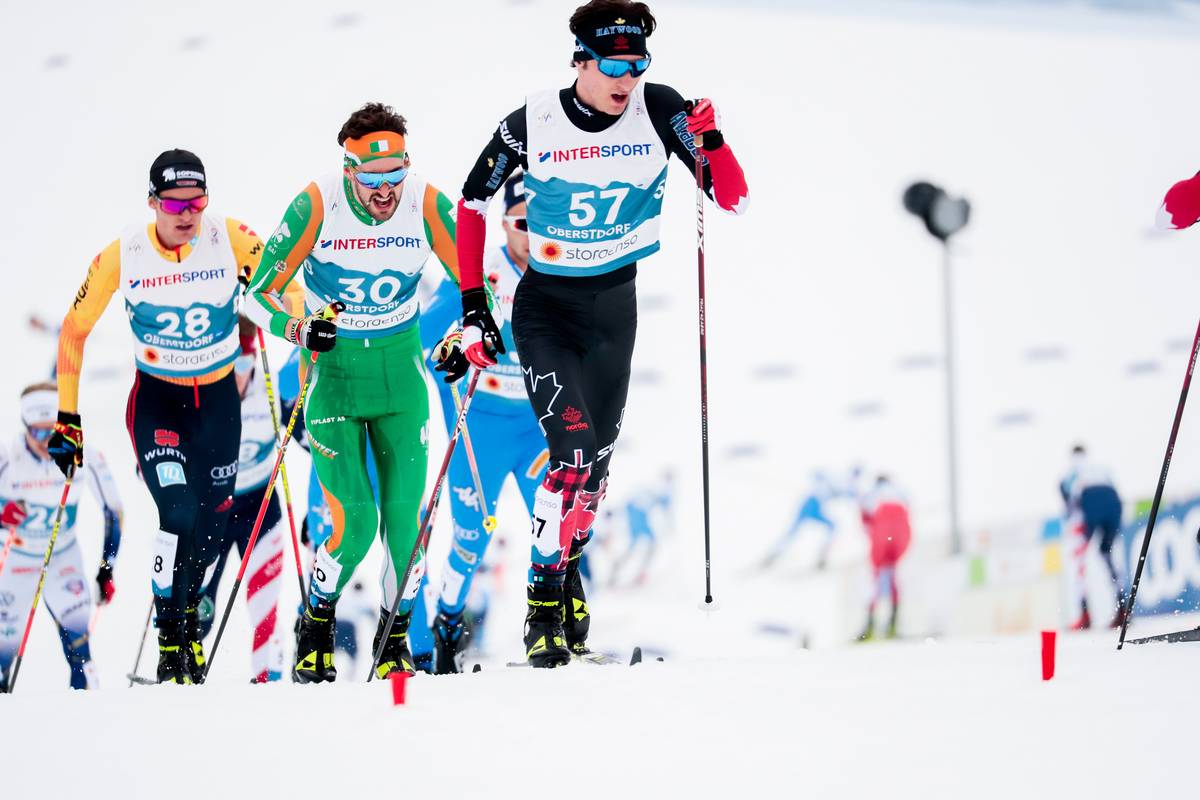
Canada’s Russell Kennedy rounds the fateful corner on the tracks in Oberstdorf. (Photo: NordicFocus)
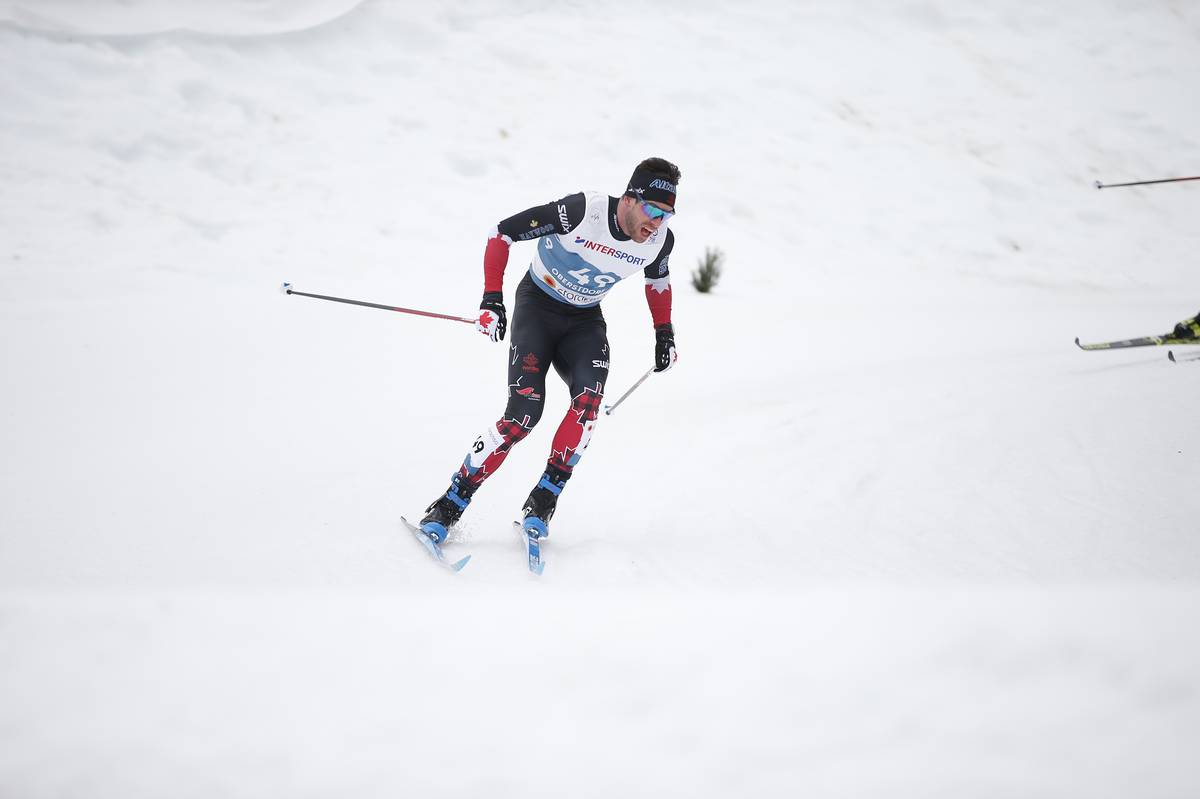
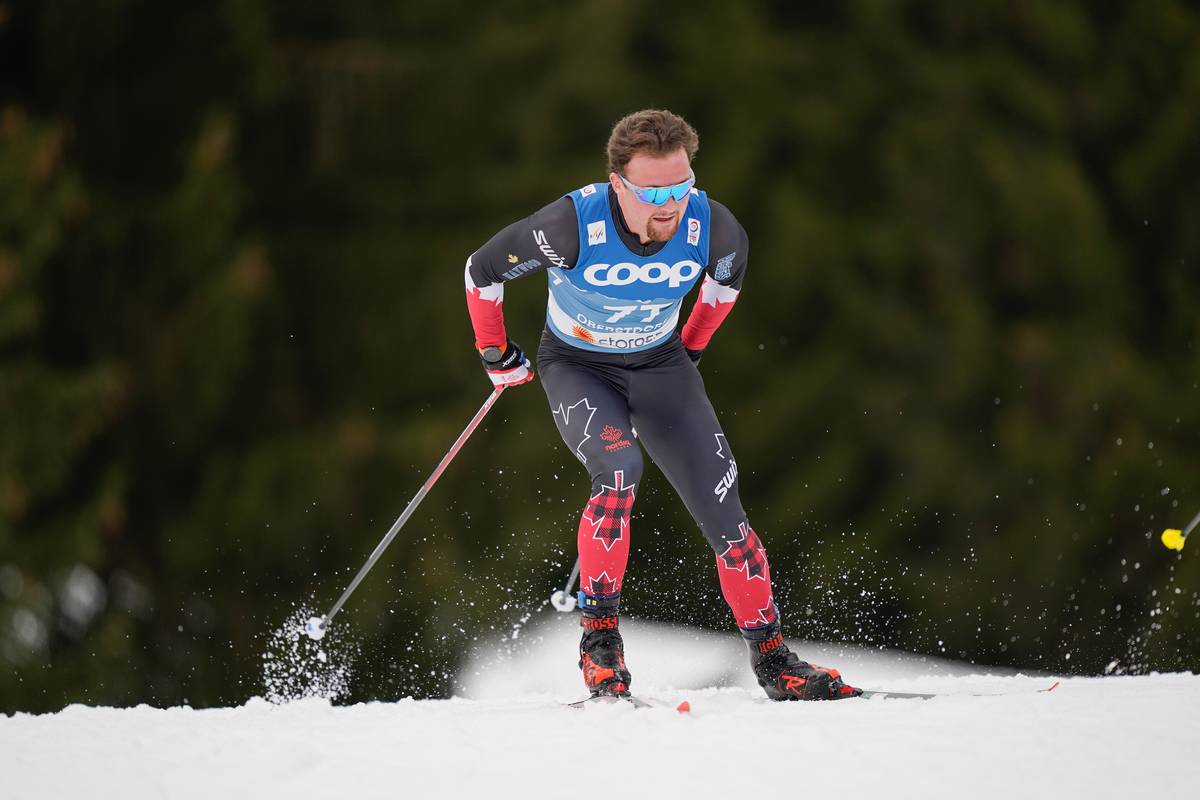
Racing for Canada, Russell Kennedy cracked the top-30 (+2:34.1).
Next up for Canada was Phillipe Boucher in 50th (+4:00.2), with Remi Droulet close behind in 52nd (+4:02.7), and Graham Ritchie rounding out the Canadian field in 67th (+5:15.3).
Graham Ritchie of Canada skis to 67th in the 15 k skate. (Photo: NordicFocus)
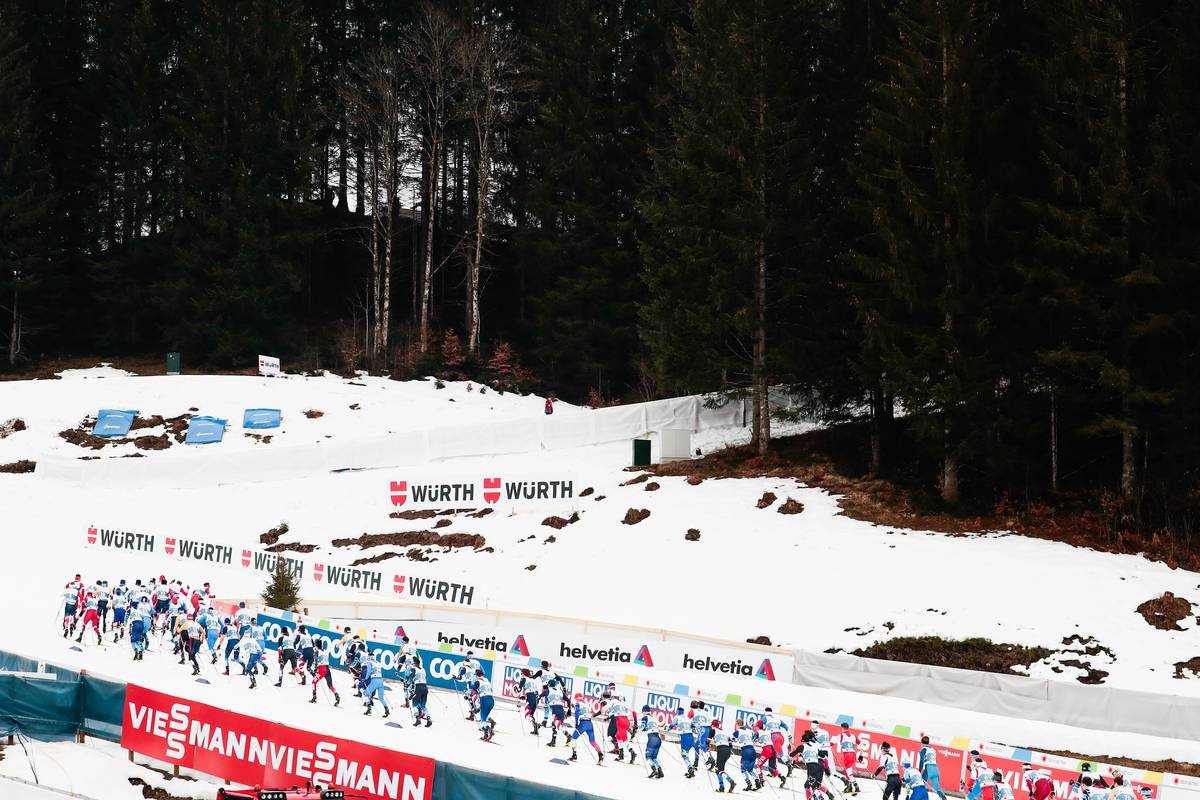
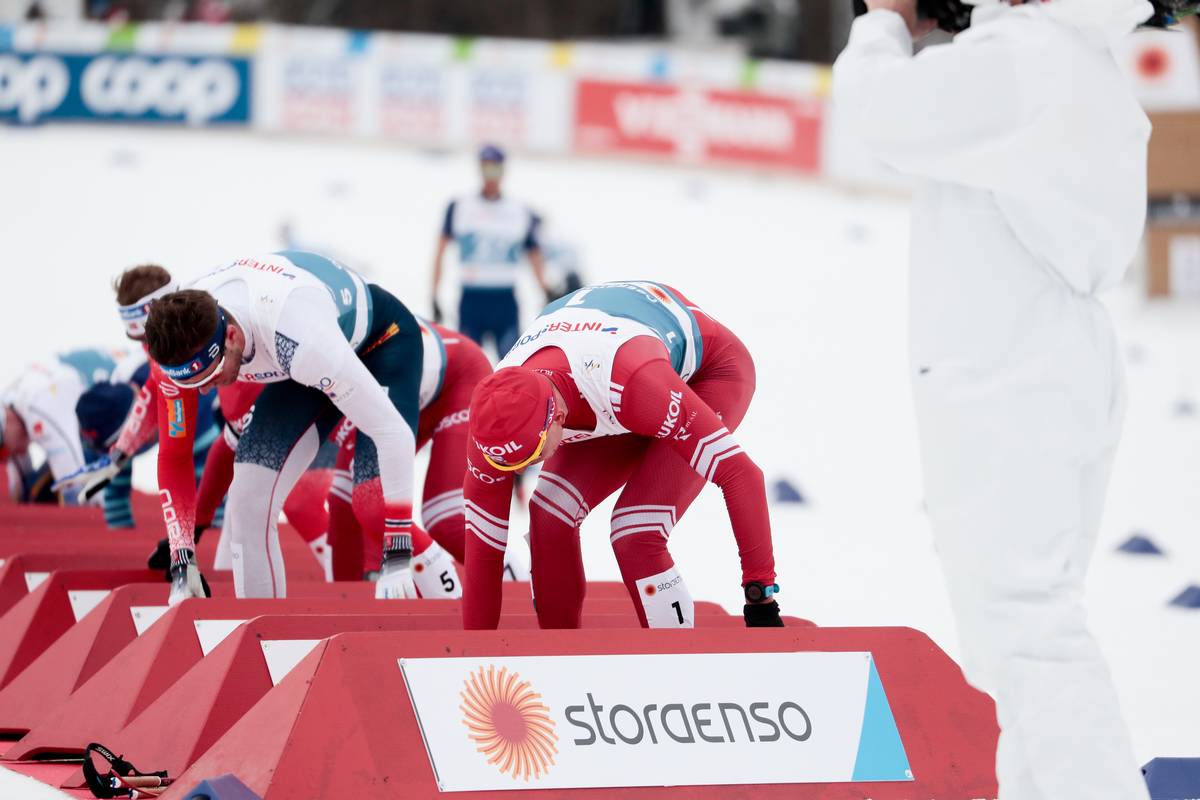
The field of all skiathlon athletes leaves the stadium in Oberstdorf, Germany. (Photo: NordicFocus)
This World Championship coverage is made possible through the generous support of Marty and Kathy Hall and their A Hall Mark of Excellence Award. To learn more about A Hall Mark of Excellence Award or to learn how you can support FasterSkier’s coverage please contact info@fasterskier.com.
With swaths of bare ground peeking through the melting snow, skis rattling through tracks and swooshing across the lanes, and short-sleeved race tops, World Championship racing continued in a warm Oberstdorf, Germany for the men’s 15k/15k skiathlon. Swirling through the stadium after each 3.75 kilometer lap, four in classic then another four in skate.
For some historical context, Norway’s Sjur Røthe won the event in 2019 during the World Championships in Seefeld, Austria by a margin of just 0.1 seconds over Russia’s Alexander Bolshunov, with Martin Johnsrud Sundby crossing the line just 0.6 seconds later. Because of this victory, Norway was able to enter five men in today’s skiathlon, compared to four representing other countries.
Two years prior at the World Championships in Lahti, Finland, Russia’s Sergey Ustiugov took the win ahead of Norwegian’s Sundby, who had fallen 500 meters from the finish, and Finn Hågen Krogh. The message – the 30 k championship skiathlon comes down to the wire.
With Bolshunov clearly on form this season and a pack of hungry Norwegians in pursuit, today’s mass start event looked again to be a Russia versus Norway dog fight.
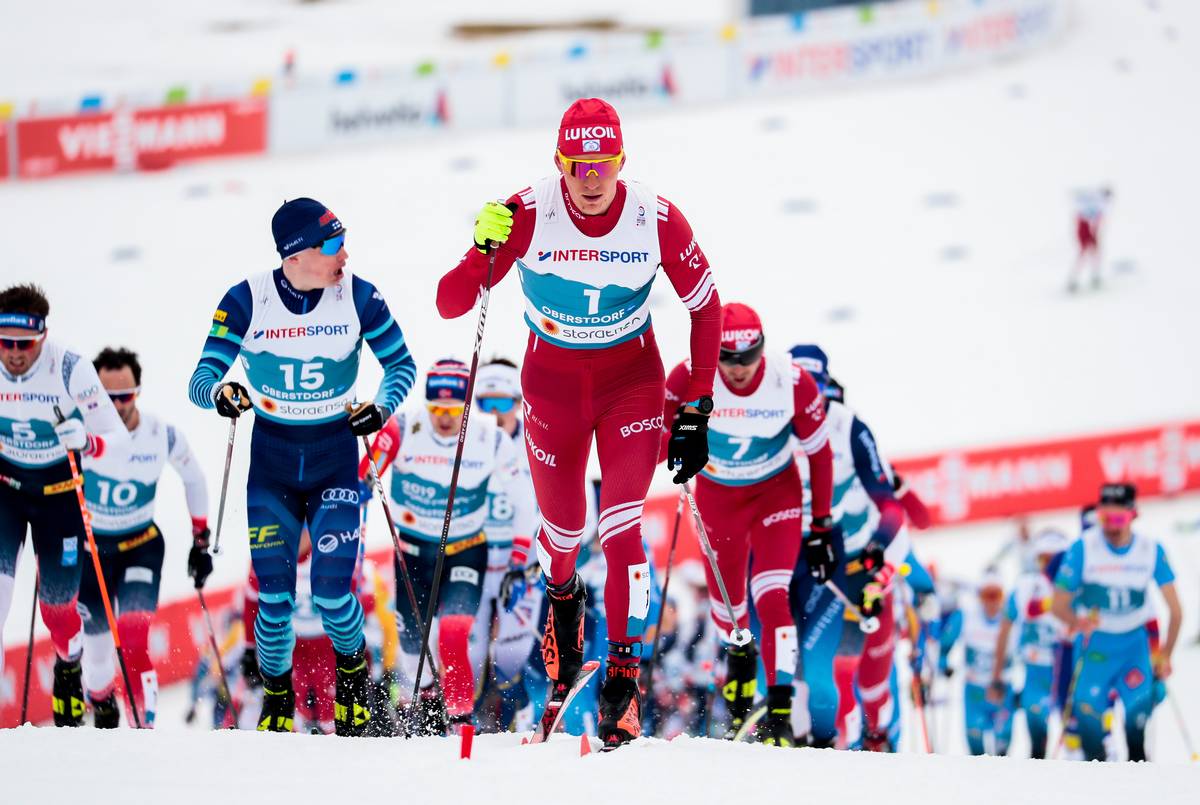
Alexander Bolshuov leads the men’s field during the classic leg of the World Championship 15k/15k skiathlon in Oberstdorf, Germany. (Photo: NordicFocus)
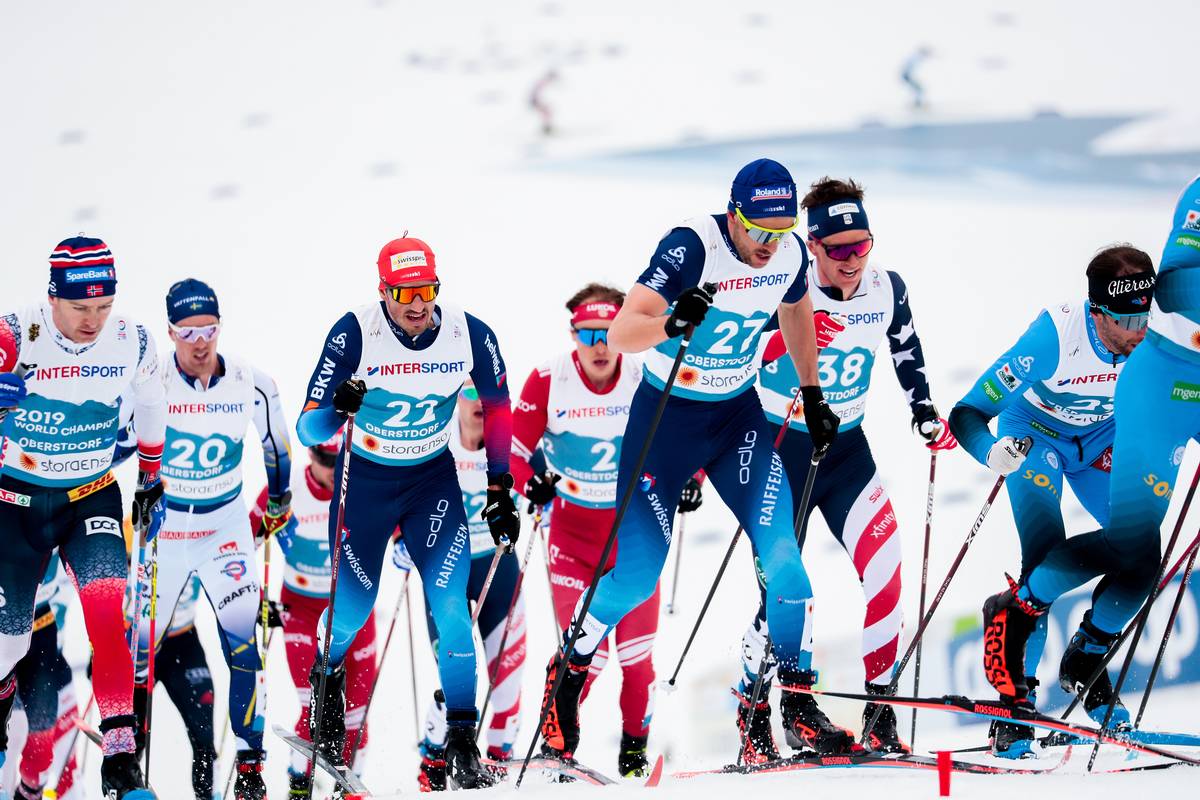
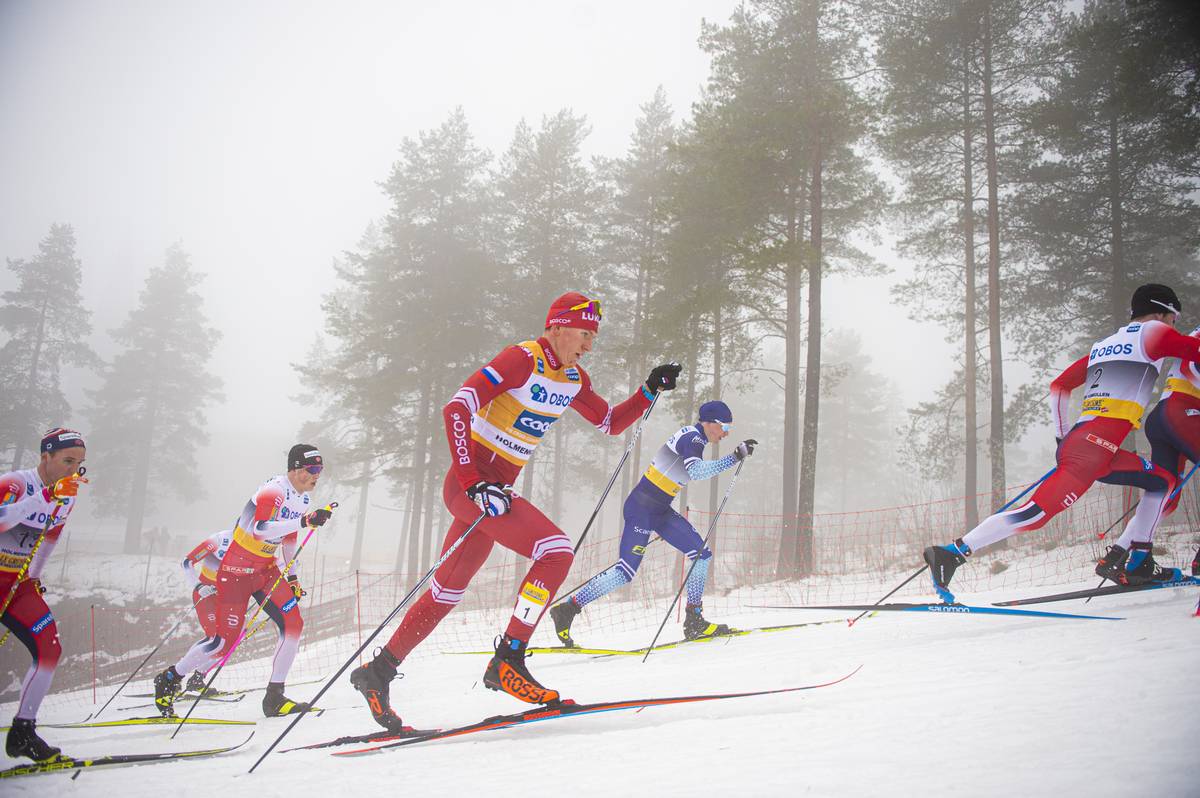
As a large lead group of men slowly whittled down in the classic leg, Bolshunov held a steady position at or near the front alongside Finland’s Iivo Niskanen, who was 4th in 2019, and a slew of strong Norwegian racers that included Røthe, Hans Christer Holund, Emil Iversen, Johannes Høsflot Klæbo, and 2018 skiathlon Olympic champion, Simen Hegstad Krüger. These men entered and left the exchange together, with a steady stream of chasers not far behind.
Alexander Bolshunov (RUS) leads Iivo Niskanen (FIN) and Emil Iversen (NOR) during the classic leg of the World Championship 15k/15k skiathlon in Oberstdorf, Germany. (Photo: NordicFocus)
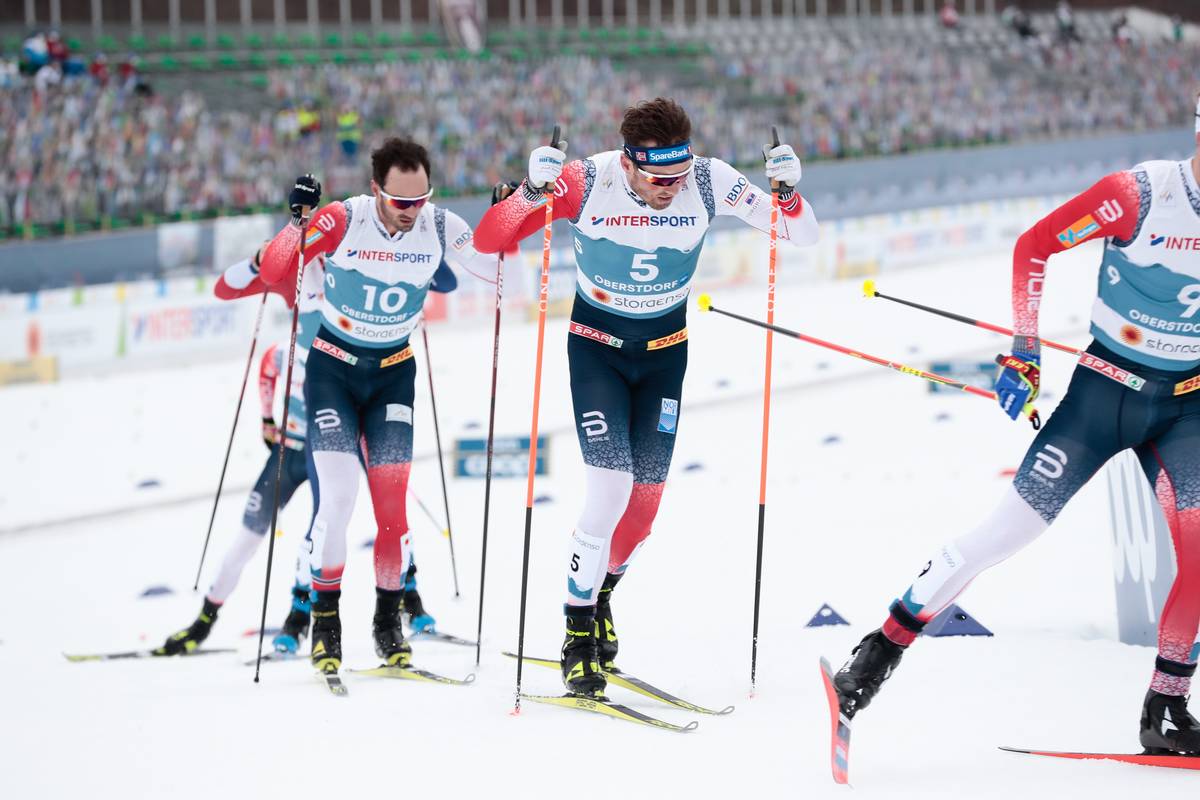
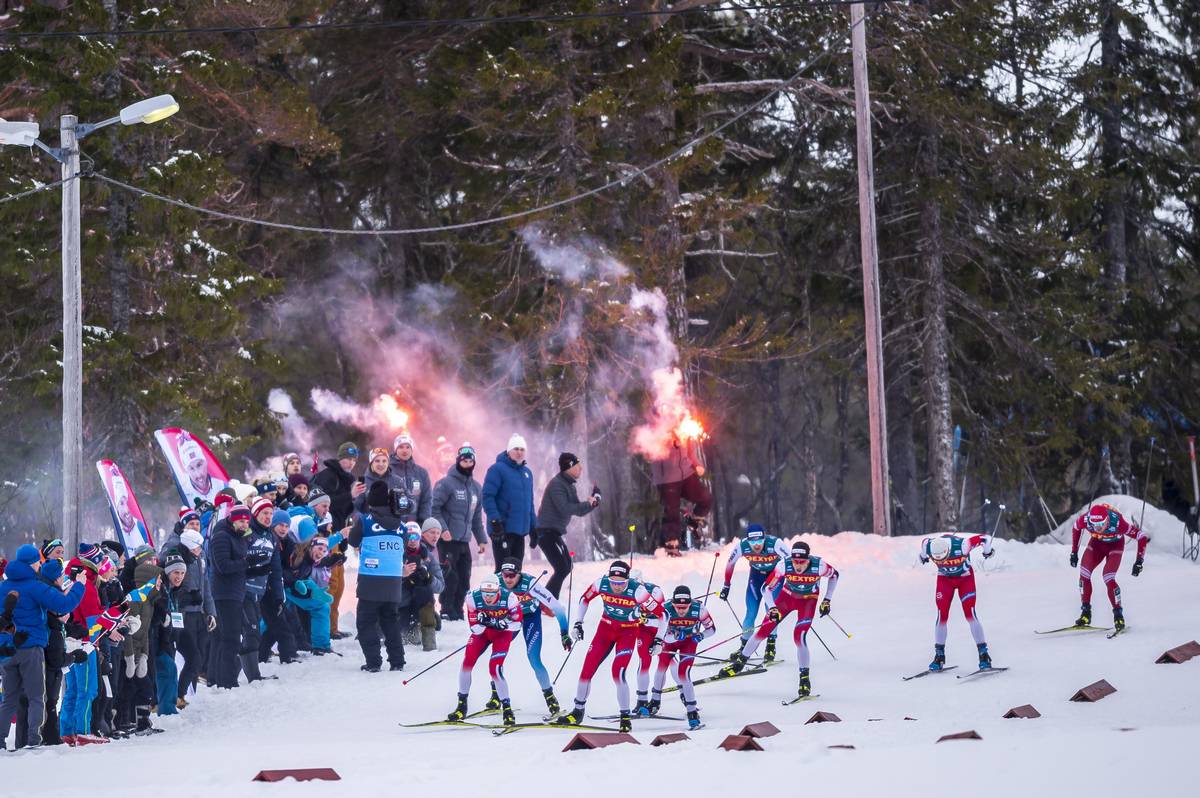
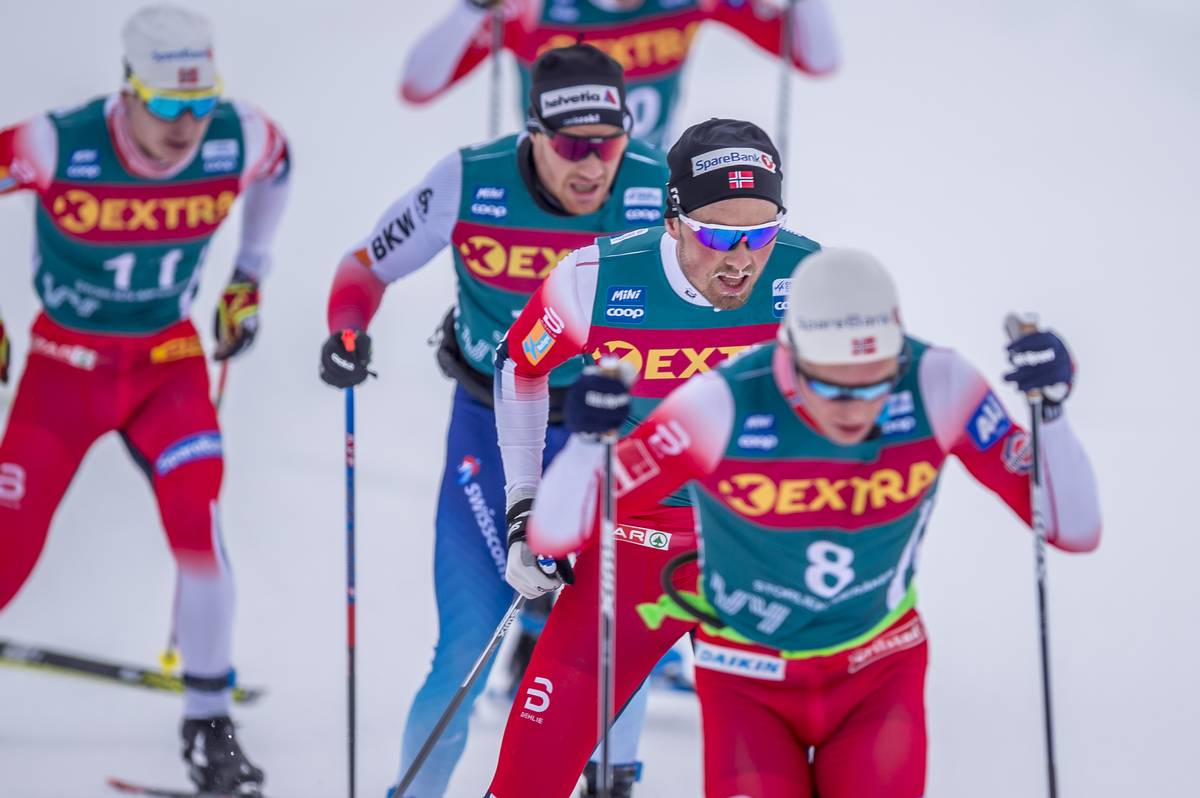
A train of Norwegians near the front of the pack during the 15k/15k skiathlon in Oberstdorf, Germany. (Photo: NordicFocus)
Bolshunov and company swapping skis. (Photo: NordicFocus)
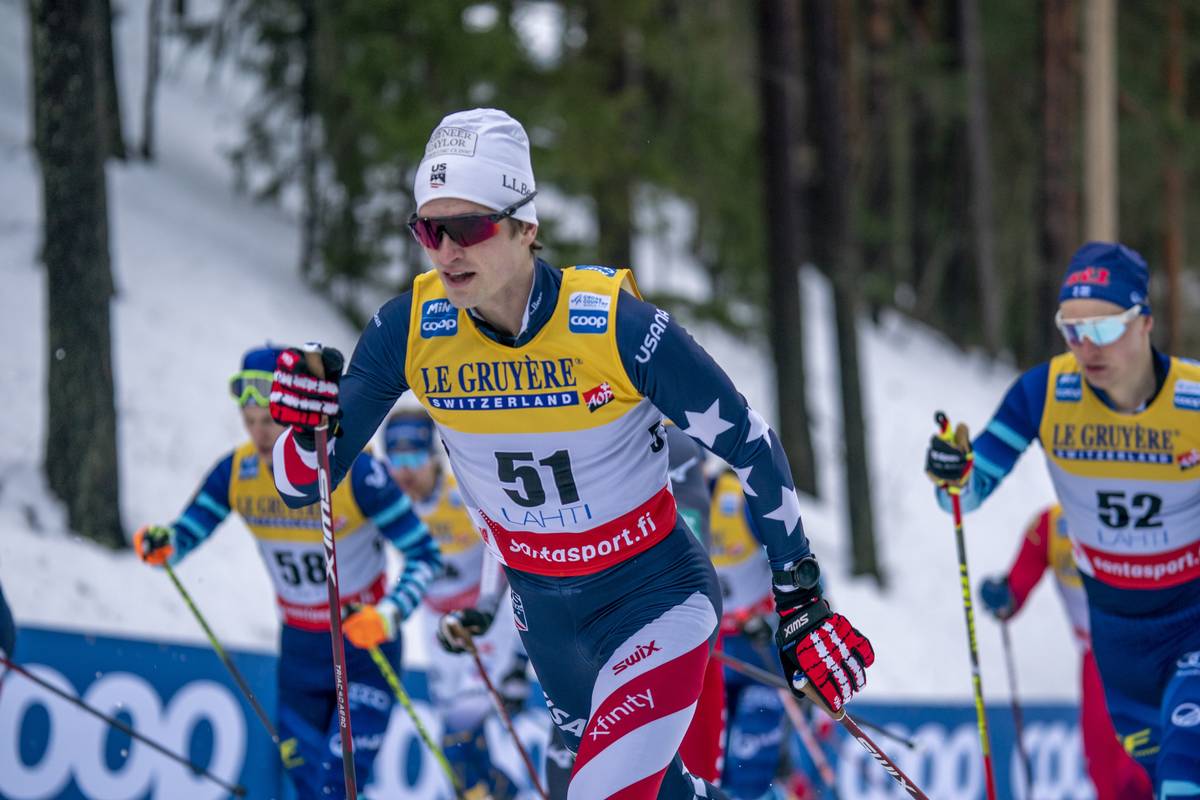
In the chase pack at the exchange and sitting in 11th place at the 16 k checkpoint was Scott Patterson. The American started in bib 38, well inside the inner workings of the accordion of racers that stretched and compressed over the first few laps. Nonetheless, Patterson steadily worked his way up through the field, looking to build on his 18th place finish in the event at the 2018 Olympics and 30th place finish the subsequent year in Lahti. With 11 k to go, Patterson was tucked in with Russia’s Ivan Yakimushkin and Alexey Chervotkin, roughly 21 seconds behind the leaders and reeling in Niskanen and Jens Burman of Sweden.
Scott Patterson (bib 38) skis his way up through the men’s field during the World Championship 15k/15k skiathlon in Oberstdorf, Germany. (Photo: NordicFocus)
Back at the front, it was still Bolshunov versus five Norwegians with Great Brittain’s Andrew Musgrave interjecting the pattern, though fitting within the red-blue-white color scheme.
With 6 k to go the pack whittled further. It was Røthe, Bolshunov, Holund, then Krüger, with Iversen and Klæbo chasing with pained faces a few seconds behind. Musgrave had fallen off the pace, and the chasers led by Patterson in 8th position were over 1:20 back.
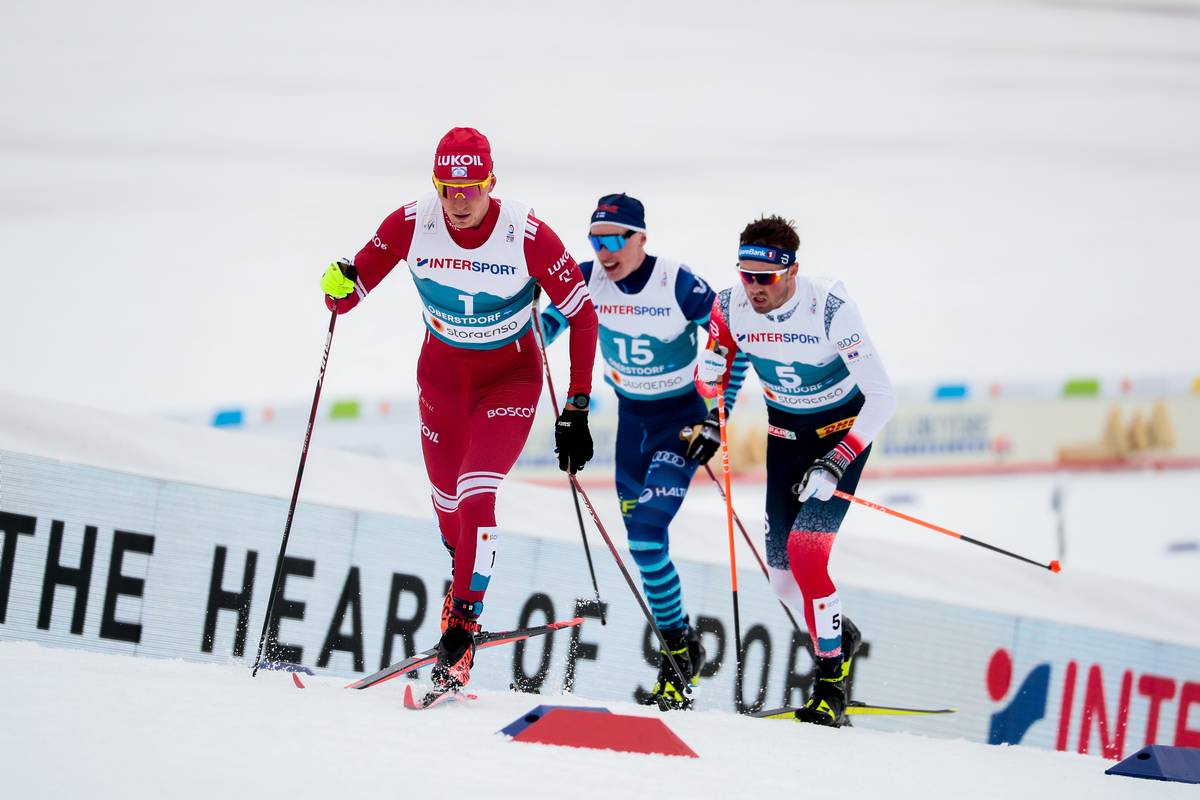
The eventual winner, Bolshunov, setting the tempo on the skate leg. (Photo: NordicFocus)
Johannes Høsflot Klæbo (NOR) marks Andrew Musgrave (GBR) in the final laps of the World Championship 15k/15k skiathlon in Oberstdorf, Germany. (Photo: NordicFocus)
There was no question that Bolshunov looked strong and confident at the front; the spring in his V2 and full-body power in his V1 were enviable after 26 k’s of racing. But he had bobbled on a descent the previous lap as the men stepped as if on hot coals around a corner, a reminder that anything could happen in the final lap. The Norwegians were matching his every move, albeit from a few meters behind.
With 2 k remaining, Holund took to the front, pulling Bolshunov who finally showed signs of fatigue, with Krüger on his tails. Hop-skating up a rolling climb and building his small gap, Holund continued to hammer, but the threesome rejoined on the downhill.
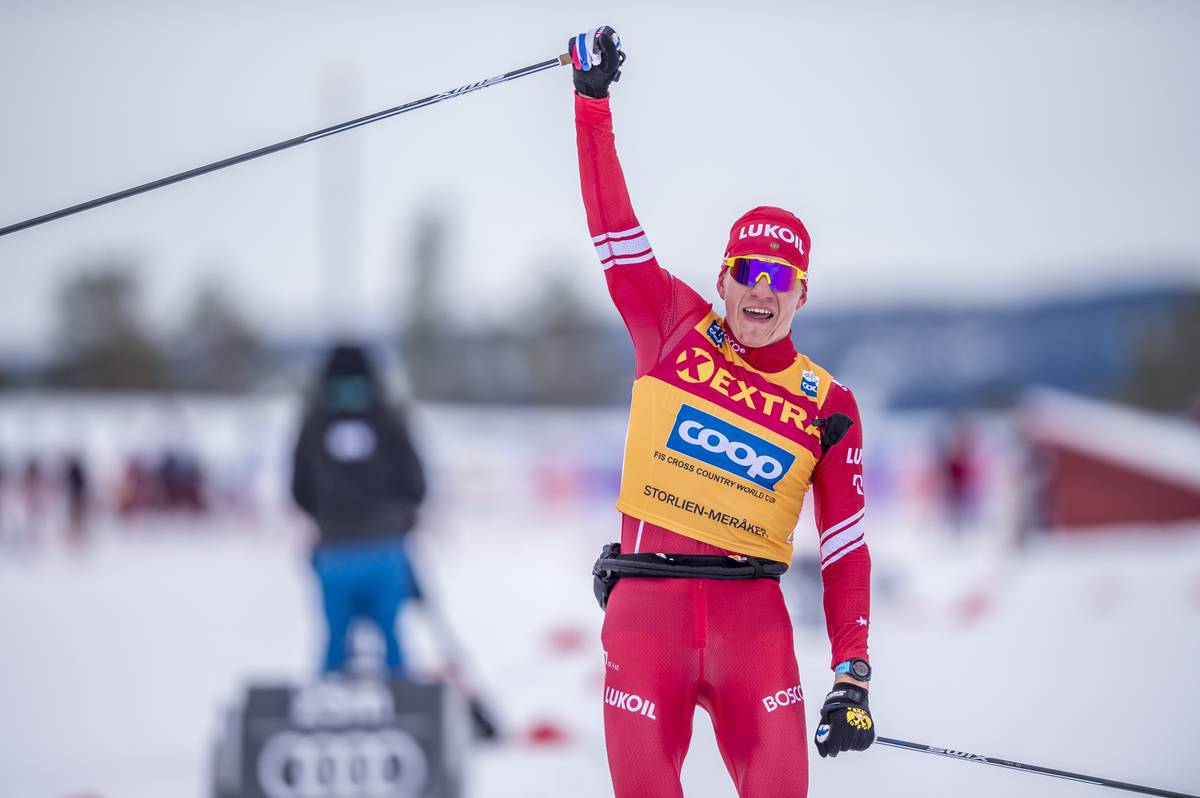
Attacking the final roller with a seemingly superhuman tempo, stepping around a hairpin, and dropping into a tuck, Bolshunov took back the lead and tore away at the front. He created enough of a gap over Holund and Krüger that he could look over his shoulder, raise his arms, and take in the victory as he crossed the finish line in a time of 1:11:33.9.
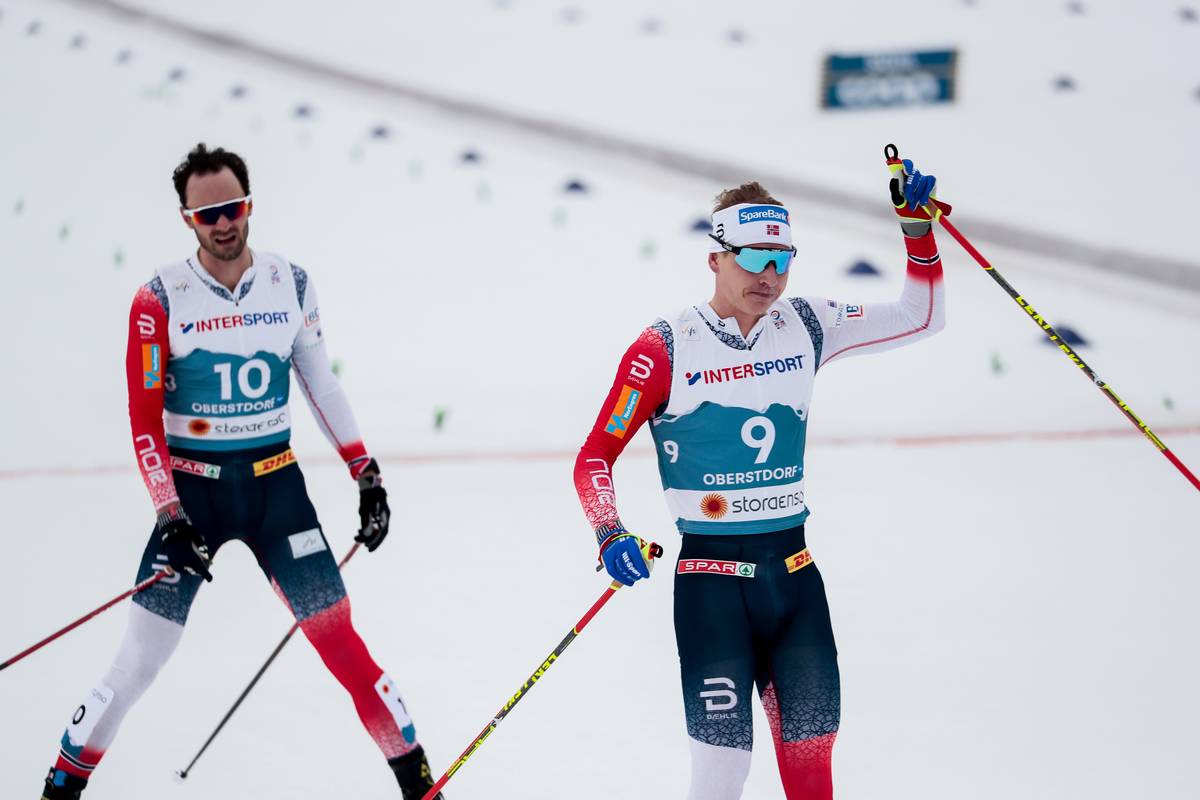
Alexander Bolshunov raises his arms in celebration as he crosses the line for the win in the World Championship 15k/15k skiathlon in Oberstdorf, Germany. (Photo: NordicFocus)Alexander Bolshunov for the win with Simen Hegstad Krüger and Hans Christer Holund behind. (Photo: NordicFocus)Simen Hegstad Krüger (bib 9) and Hans Christer Holund of Norway finish second and third, respectively, in the World Championship 15k/15k skiathlon in Oberstdorf, Germany. (Photo: NordicFocus)
Krüger took the silver medal (+1.1) with Holund just behind for bronze (+1.7).
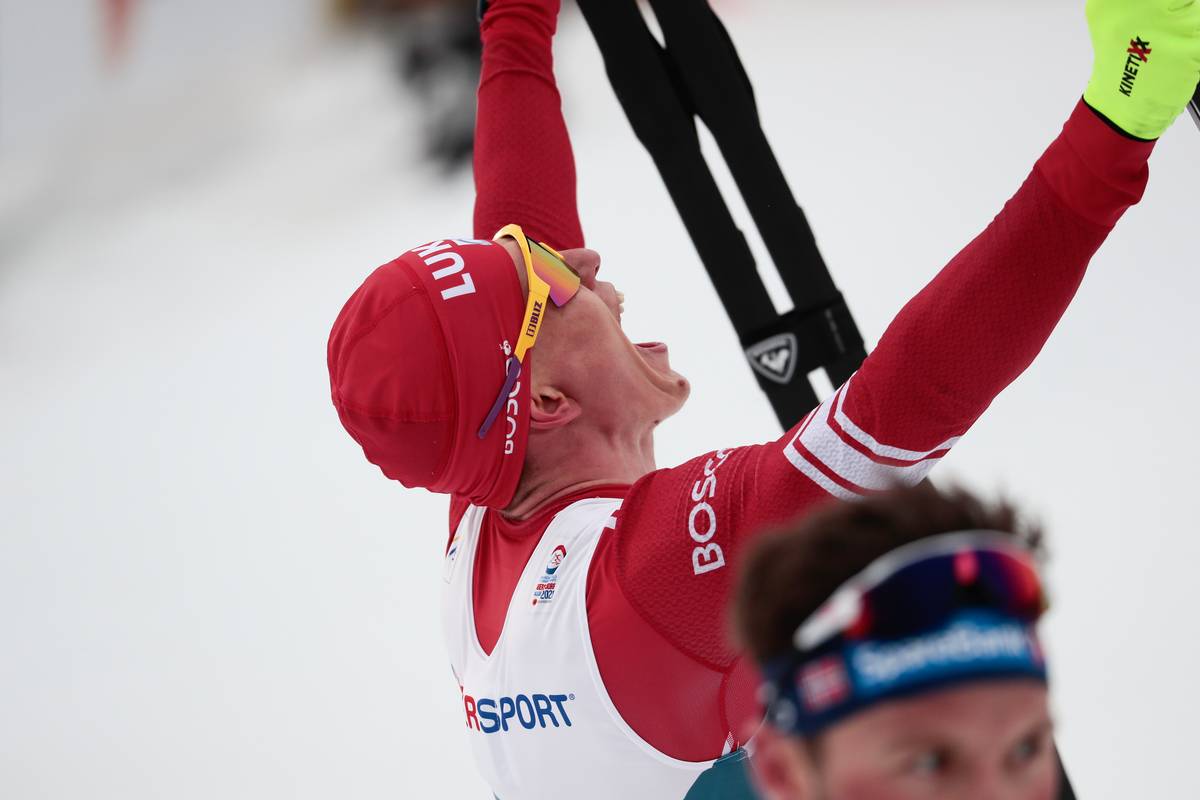
Alexander Bolshunov roars in celebration of victory at the World Championship 15k/15k skiathlon in Oberstdorf, Germany. (Photo: NordicFocus)
Today marks Bolshunov’s first individual World Championship gold medal. He holds two individual silver metals, one in the aforementioned skiathlon and another in the 50 k freestyle in 2019. He also helped the Russian team to second place in the 4×10 k relay and team sprint.
“I felt fine in the first half, then on the last uphill, I was repeating ‘I have to win today. I have to win today,’” Bolshunov told FIS through a translator in a post-race interview. “On the final descent, I could understand that this is the day that I finally achieved this task.”
Silver and bronze: Simen Hegstad Krüger (L) and Hans Christer Holund (R) of Norway finish second and third, respectively, in the World Championship 15k/15k skiathlon in Oberstdorf, Germany. (Photo: NordicFocus)The men’s podium of the World Championship 15k/15k skiathlon in Oberstdorf, Germany. Alexander Bolshunov (RUS) took the win ahead of Simen Hegstad Krüger (NOR) and Hans Christer Holund (NOR). (Photo: NordicFocus)
After a gap, Klæbo was next across the line in 4th (+21.5) followed by Iversen in 5th (+22.1) and Røthe 6th (+47.3).
Johannes Høsflot Klæbo and Emil Iversen ski to 4th and 5th in the World Championship 15k/15k skiathlon in Oberstdorf, Germany. (Photo: NordicFocus)
For the Americans, the excitement continued as Scott Patterson made his way with the chase pack toward the finish. He sat in 9th with 2k to go, but his group was nine men deep. As they made their way into the stadium and sprinted toward the line, Patterson was unable to hold this position, ending his day in a nearly indistinguishable photo finish with Niskanen. It was decided Niskanen edged him out for 13th, leaving Patterson 14th (+2:03.3), less than three seconds behind Yakimushkin who led this chase group.
“It was great, we had awesome skis today, classic felt pretty good,” Patterson said after the race. “The last lap the front guys definitely turned it up a bit and started spreading things out. But, kind in the transition I was able to put a pretty good switchover and get on some more guys… It is the first race of World Champs, I have not raced in a month. I felt good, so looking forward to some more racing. I think without a pack, I think 15 k skate next, I think it could be even better, I felt strong out there. Really excited for this week coming up.”
Scott Patterson skis to 14th in the World Championship 15k/15k skiathlon in Oberstdorf, Germany. (Photo: NordicFocus)
Commenting on the course conditions, Patterson continued, “It was definitely different than yesterday out there on the course; it was skiing really well. It was pretty consistent all the way around, the corners weren’t nearly as deep as we have had the last couple days. Honestly, this cloudy weather and a little rain over night made it really nice skiing. Consistent fair racing for everyone, I think. And we had awesome skis…the best thing.”
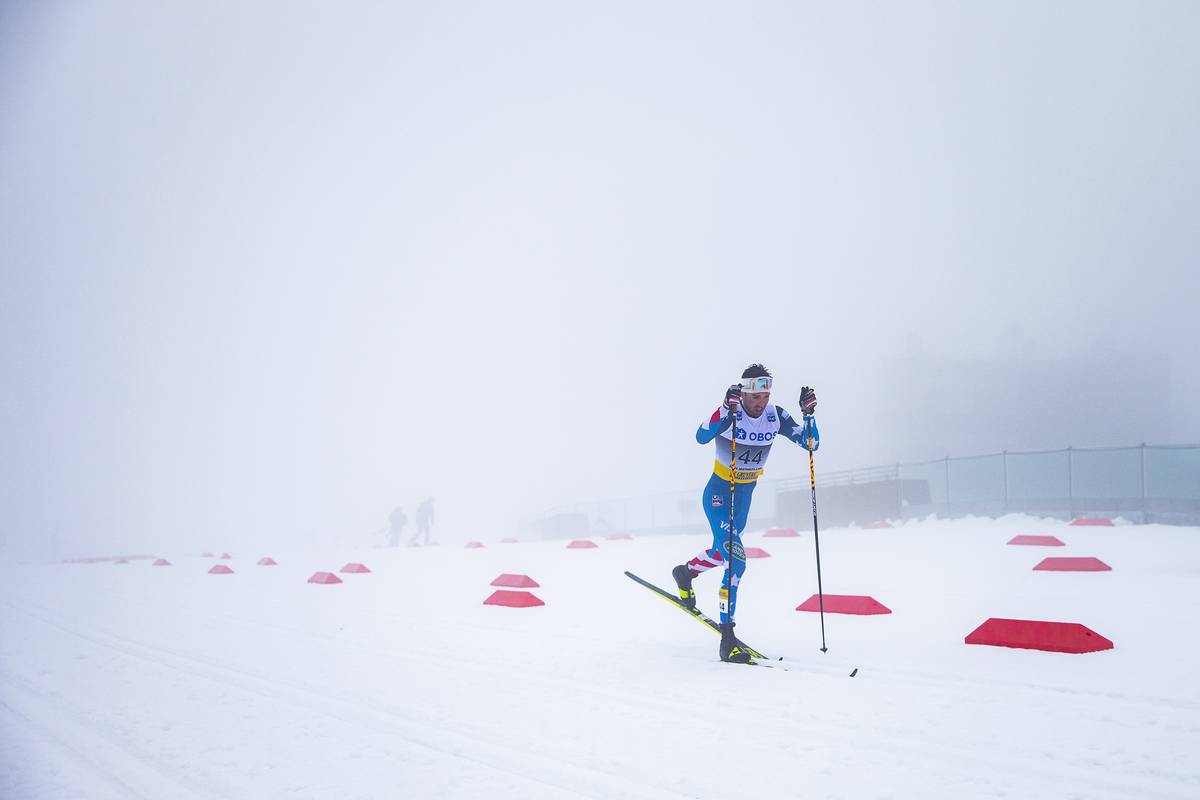
Behind this group but steadily holding his ground inside the top-20, David Norris finished 17th (+2:19.8). This is Norris’s best individual finish on the world stage since he took 16th in a 15 k freestyle in Falun, Sweden in March, 2019. Leading the American men, he took 20th in the 2019 World Championships in the 50k freestyle, finishing 24th in the 50k classic a week later at the Holmenkollen in Oslo, Norway.
David Norris cracks the top-20 with a 17th place finish in the World Championship 15k/15k skiathlon in Oberstdorf, Germany. (Photo: NordicFocus)
“It was good,” Norris put his race simply. “The classic was pretty mellow until it wasn’t with about 3 k to go before the exchange. That was the first time I really flooded and started to suffer. But then, I got through the exchange and then worked up in the skate with groups of seemed like groups of three and four. We kind of worked our way up until we caught a good chase pack.
“By the first 3 k of the skate I was really kind of still suffering the final effort in the classic,” Norris continued. “Then all of a sudden, my legs got under me and I felt pretty free — it is the best I have felt all season skating. And that was awesome.”
David Norris bumps fists with Imanol Rojo of Spain after the World Championship 15k/15k skiathlon in Oberstdorf, Germany. (Photo: NordicFocus)
At the 20k mark, Norris was roughly 30 seconds back on Patterson’s group, but made up 10 seconds over the last two laps.
“I worked my up until I was in the group with Scott and then it was kind of funny, because I mean, I was a little bit suffering on the climbs and dangling, and Scott was at the front kind of pushing, but I felt really good in the rolling terrain and flats, so I’d usually make up any ground I lost and I held kind of strong in that position, but I wasn’t really in it for the fight at the front of that group.”
Hunter Wonders skis to 31st in the World Championship 15k/15k skiathlon in Oberstdorf, Germany. (Photo: NordicFocus)
Fellow Alaskan Hunter Wonders was the next American, just outside the top-30 in 31st (+4:25.7). 21-year-old Ben Ogden rounded out the American starters in 45th (+6:27.4).
Antoine Cyr races to 27th in the World Championship 15k/15k skiathlon in Oberstdorf, Germany. (Photo: NordicFocus)
Racing for Canada, Antoine Cyr skied his way into the top-30 finishing 27th (+4:01.9). A minute back, Remi Droulet took 39th (+5:02.4), with Phillipe Boucher finishing 51st (+7:46.1).
Canada’s Remi Droulet skis to 39th in the World Championship 15k/15k skiathlon in Oberstdorf, Germany. (Photo: NordicFocus)
58 men finished the race with an additional 11 starters ending their day early after being lapped by the leaders. Racing continues on Sunday with the team sprint.
Emil Iversen sets the pace at the front of the pack on his way to victory in the 15l/15k skiathlon in Lahti, Finland. (Photo: NordicFocus)
Working off the premise that history repeats itself, there were only so many ways this grueling 30 k skiathlon in Lathi, Finland could end. The plot, this weekend, thickened with the return of Norway to the field and all eyes on Russia’s Alexander Bolshunov post-two week break from a historic and runaway win at the Tour de Ski. Would Bolshunov hold the snap and power for 30 k with a horde of Norwegian men hungry to prove themselves after a World Cup hiatus? Would Norway crush – fresh from high-level domestic racing but muscles absent the load of eight stages at the Tour?
On the surface, Norway benefitted from their absence while Russia, still the bear of the men’s field, looked more withered (but still formidable) after a long hibernation than anything else.
After 15 k of classic, Finland’s Iivo Niskanen led the top group of 30, who were separated by roughly twenty seconds.
Not so much lurking behind the Finn as just biding their time was Norway’s powerhouse men’s squad, which had many cards to play. Near the front for Norway were 2018 Olympic skiathlon champion Simen Hegstad Krüger, Hans Christer Holund, Sjur Røthe, Emil Iversen, and Pål Golberg. The only Russians in the top-10 at that point were Bolshunov and Evgeniy Belov.
Emil Iversen, tailed by Russia’s Alexander Bolshunov, leads a train of red on the way to a Norwegian podium sweep in the 30k skiathlon in Lahti, Finland. (Photo: NordicFocus)
Absent the load of eight Tour stages, and perhaps eager to demonstrate their supremacy, Norway ruled the skate portion of the race. At 20 k, Iversen, Holund, Røthe were driving upfront in a pack of nine skiers — five Norwegians, two Russians, a lone Swede in Jens Burman, and the Finn, Niskanen.
The lead pack ebbed and flowed during the next 5 k. What you need to know is this: six skiers popped off to animate the closing kilometers on this storied drizzle-slicked Lahti course. As we mentioned before, this was Norway’s race.
At roughly 1:06:30 into the race, Krüger drove led followed by Røthe, Holund, Bolshunov, and Iversen — all within a few meters of one another with Golberg a second off the pace but holding on.
Lahti possesses many locations where the topography makes for spicy racing. There’s Lahti corner, a sweeping downhill into the stadium which has, in the past, taken out many would-be heroes. But before that descent, there’s a curvy section leading into a notorious kicker — a place to make a move in the closing moments of the race.
Leading into the punchy ascent, Bolshunov and Holund slid into the netting and crashed. The others streamed into the climb with no momentum lost. Iversen sent it, and with a hippity hop-skate passed Røthe, Golberg and Krüger. Bolshunov, after righting himself, faded slightly off the back while Holund straggled up with a broken pole.
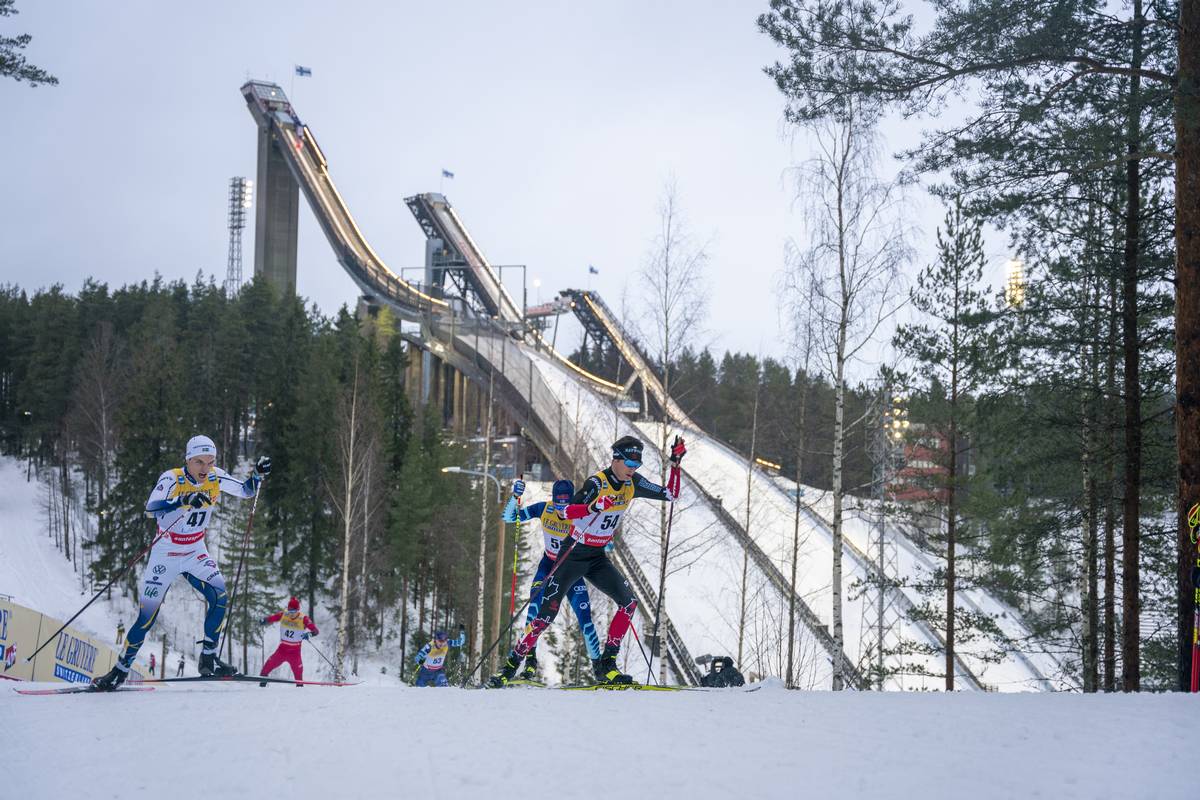
With a ski jump backdrop, Russia’s Alexander Bolshunov leads the charge during the 30k skiathlon in Lahti, Finland. (Photo: NordicFocus)
Norway’s Emil Iversen edges out teammate Sjur Røthe for the 30-kilometer skiathlon victory in Lahti, Finland. (Photo: NordicFocus)
An all-Norway podium for the 15k/15k skiathlon in Lahti, Finland. Emil Iversen took the win ahead of Sjur Røthe in second and Pål Golberg third. (Photo: NordicFocus)
Adding to his string of top-20 finishes in the Tour de Ski, Gus Schumacher was the top finisher for the US in 18th (+1:31.1), finishing a pack led by Great Britain’s Andrew Musgrave in 15th (+1:29.8).
Stringing together top-20 results, Gus Schumacher finishes 18th in the 30k skiathlon in Lahti, Finland. (Photo: NordicFocus)
“It was definitely pretty nice to be in the classic and feel like I was relaxed and knowing that they weren’t necessarily pinning it, but there were still people falling off the back so I knew there was some gusto to that pace,” said Schumacher of his pacing in the classic portion with a full field of Norwegian skiers in the mix.
Schumacher was 8.1 seconds off the lead, in a mass of skiers stringing out as he skied through the 15 k mark and beginning the skate. “I was lucky to start in bib 12 so I did not have to fight through the pack. My goal was to hold that position and did not experience a ton of accordion running into the back of people after downhills and I did pretty well with that and then it started to split up more, so it was pretty easy, relatively easy to stay relaxed in that pack.”
Stacking up strong results in the event, Scott Patterson finishes 21st in the 15k/15k skiathlon in Lahti, Finland. (Photo: NordicFocus)
“I feel like I have really kind of struggled with classic this year, I haven’t really found a groove, I think that was kind of the case today,” Patterson said in a post-race call. “it felt really chaotic, and a lot of work there racing the classic 15 k.” Patterson came through 15 k, the race mid-point in 29th, 18.8 seconds off the lead.
“I was feeling good and relaxed on the skate,” he added. “I am satisfied [with the result], I always want more, always want another breakthrough to make the next step or like get into the top-10 or something like that. But I am pretty happy with today. I think there are a lot more good opportunities to try and build some momentum here.”
Patterson, at times, moved into the top-20 during the skate, coming through in 16th at 20 k.
“The travel to Finland went well and I’ve adjusted to the time change okay – a few hours around 2 am where I roll around. Post-Covid the hard efforts have been a challenge, but every hard workout is making it better. This was my second race of the season and I’m pleased with the improvement even from my first race in Anchorage two weeks ago.”
David Norris on course for a strong showing in the 15k/15k skiathlon in Lahti, Finland. (Photo: NordicFocus)
“The toughest part of today’s race was just getting into the mix and responding to the early pace changes. At this point I just need to race as much as possible- I expect that I’ll have a good response to these hard efforts over the next two weeks.
“I’d say today was a success. Ten weeks or so my goal was to get back to race form by the end of the year. Today proved to me that I am not far from that and that my base from summer is still with me. I’m honestly relieved that I had glimpses of my usual shape during today’s race. Today was a great step towards reaching my season goals, which are in Oberstdorf.”
Adam Martin was the next from the American squad in 45th (+5:27.9), finishing alongside Hunter Wonders in 46th (+5:27.9). Today was Wonders’ first appearance on the World Cup. Ian Torchia was lapped by the leaders on his eighth lap, forcing him to withdraw from the event at the 20-kilometer mark.
Racing for Canada, Russell Kennedy was the top finisher in 29th (+2:40.8). Teammate Antoine Cyr finished 37th (+3:50.1), Phillipe Boucher 47th (+5:34.2), and Remi Drolet 49th (+6:30.1).
In his first World Cup race of the season, Canada’s Remi Drolet skis to 49th in the 30k skiathlon in Lahti, Finland. (Photo: NordicFocus)
This interview series is made possible on FasterSkier through the generous support of Marty and Kathy Hall and their A Hall Mark of Excellence Award. To learn more about A Hall Mark of Excellence Award or to learn how you can support FasterSkier’s coverage please contact info@fasterskier.com.
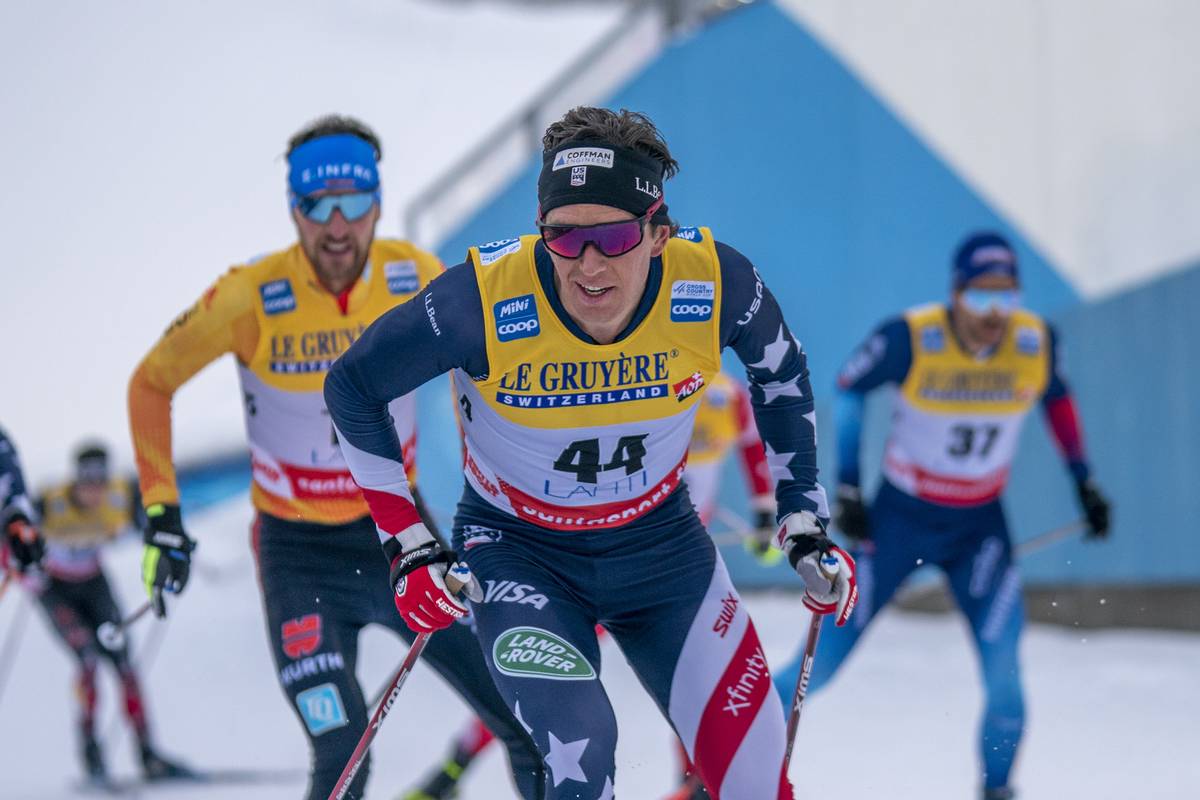
David Norris has 10 top 30 World Cup, World Championship, and Olympic individual finishes. He is also the 2016 American Birkebeiner Champion. He has been one of our top 2 distance men for the past 4 years anyway.
David got Covid-19 in November. This interview is to see how David is recovering, what protocol he followed, to hear any recommendations he might have, and to check in with him before the Lahti, Finland World Cups which will be held this weekend.
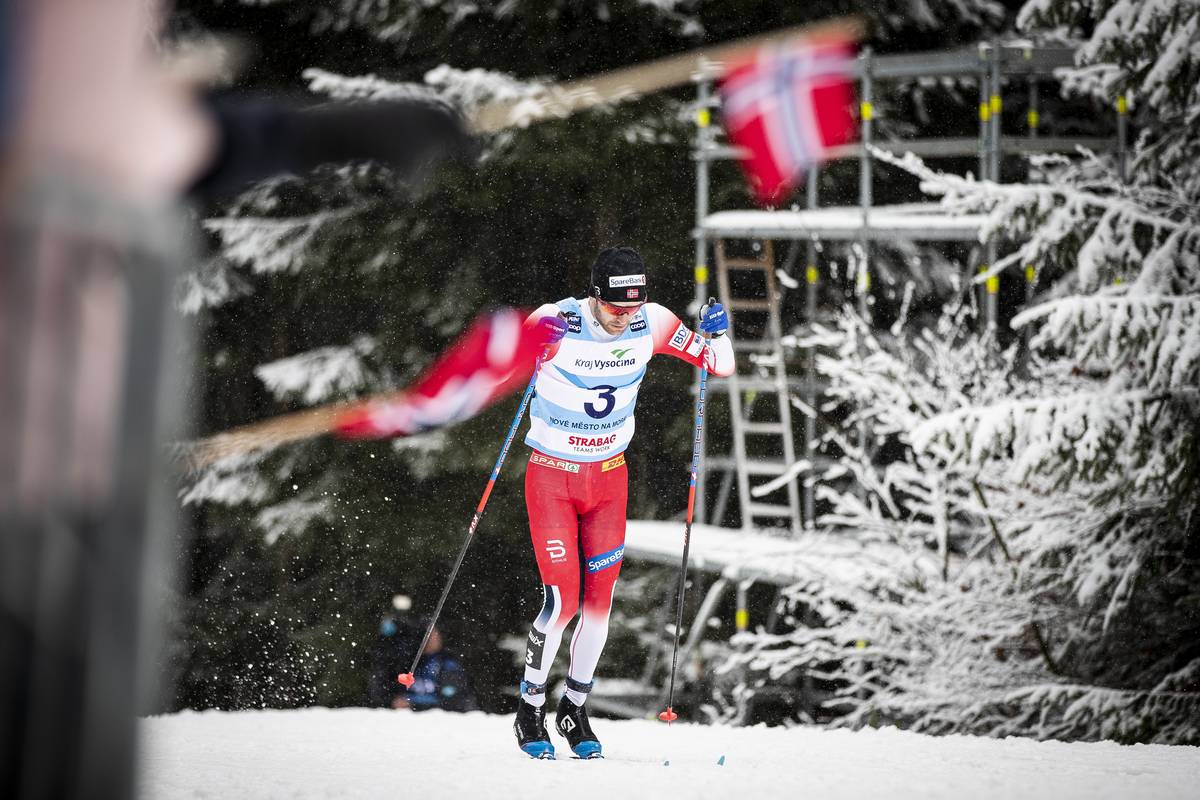
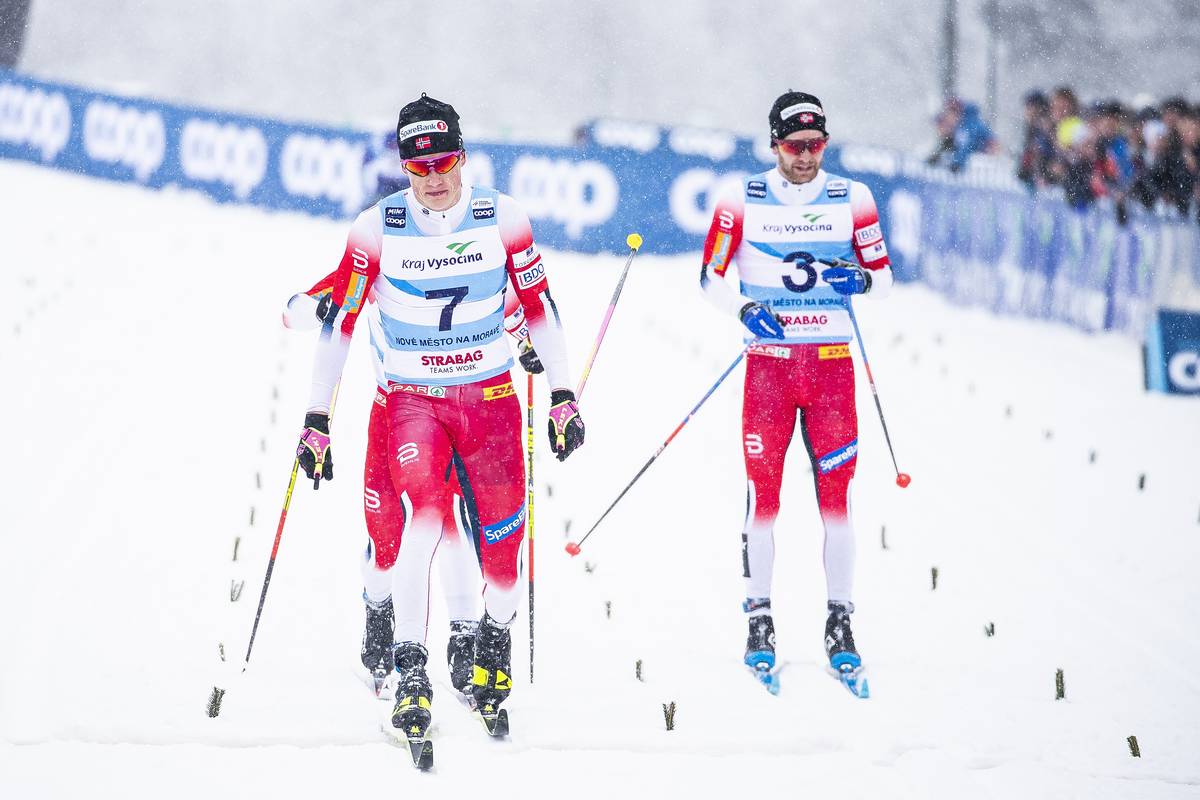
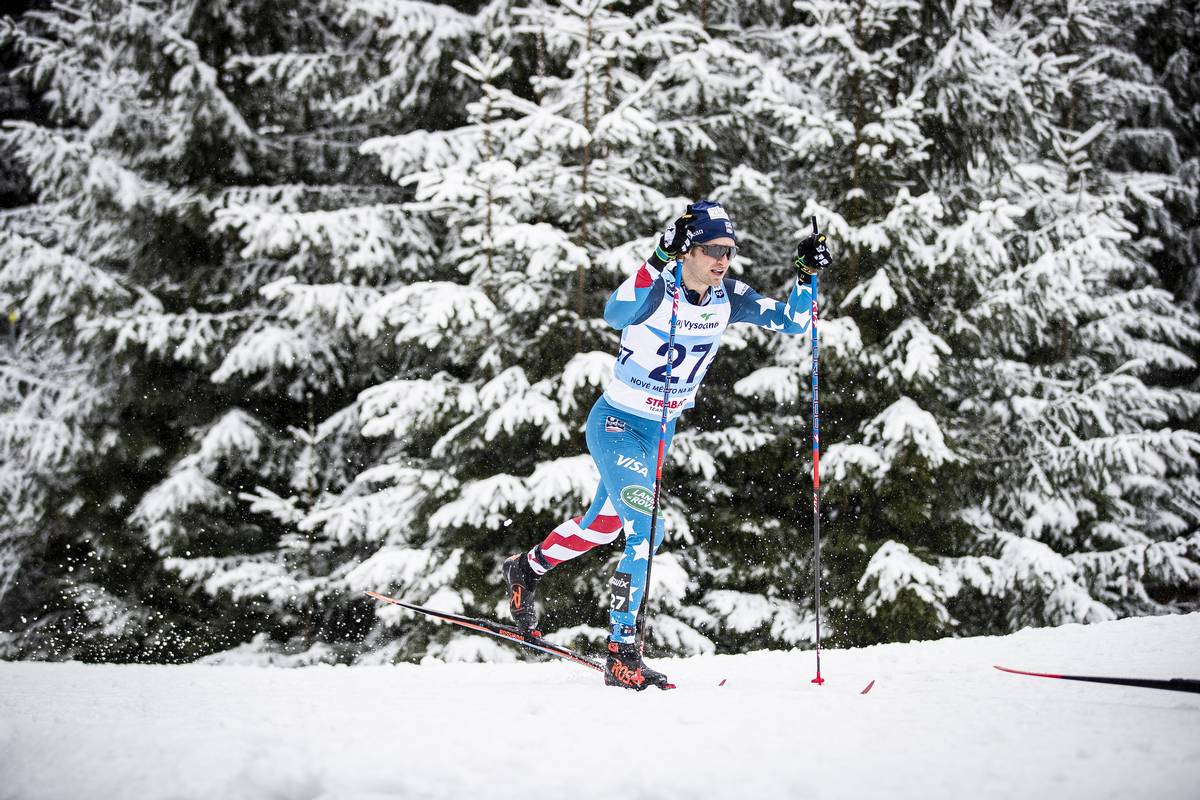
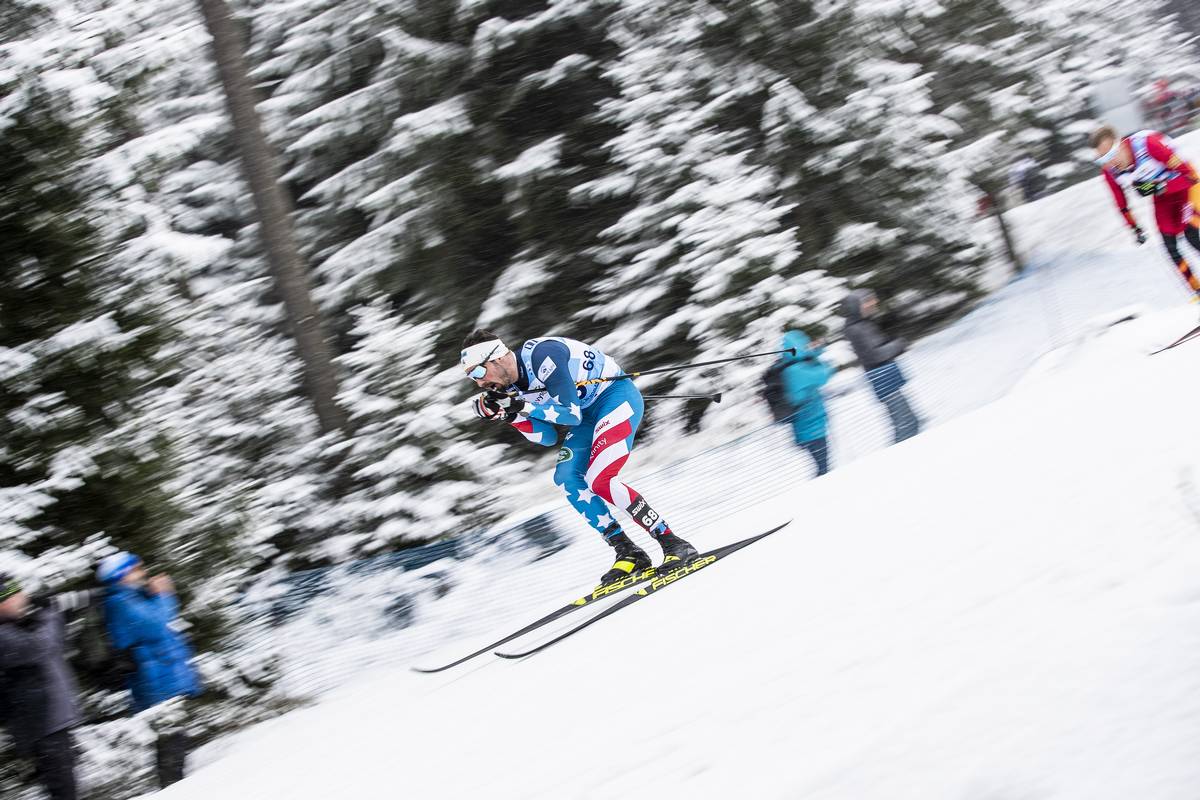
David Norris during last season’s 15 k skate in Nové Město. Norris placed 27th. (Photo: NordicFocus)
This is part two of a two-part story about U.S. skier David Norris who was recently diagnosed with Covid-19. Part one explores how Norris experienced the illness, whereas part two will look into some of the medical literature around athletes and COVID and how Norris plans to build fitness post-illness. You can find part one here.
We’re going to start where it counts when considering endurance sports: the heart. This elegant and complex organ, colloquially known as the “ticker”, pumps the blood and motors the movement of oxygenated blood throughout the circulatory system and fosters a return trip for deoxygenated blood to the lungs. And then a repeat – for approximately 100,000 beats per day. Round and round it goes.
Covid-19 still ravages. It would be curt to place the moral equivalency of a return to sport to a return to normalcy for those without resources or at high risk due to comorbidities. The wellness aspects of sport are well-documented. Nearly a year into the pandemic, the consensus on a proper return to sport for athletes infected with Covid-19 has become, if not crystal clear, certainly less opaque.
Beyond reduced lung capacity for those with compromised lungs post-Covid, a primary concern for athletes contracting Covid-19, or reason enough for avoiding it altogether, has been the prospect of heart abnormalities, primary among them myocarditis. Myocarditis, or inflammation of the heart, is linked to viral infections. Medical journals have documented sudden death syndrome in some athletes with the condition. Not all who contract Covid-19 develop myocarditis and not all who exhibit heart inflammation suddenly die when exercising. Although rare, it is worth monitoring in athletes and non-athletes alike.
As the pandemic began to roar, the buzz in the sports community focused on this potential cardiovascular Covid-19 side-effect. In late September, The New York Times Magazine published a piece citing two studies indicating myocarditis might be linked to positive Covid-19 athletes. The studies did not categorically prove if A then B. It was more like if A then in some cases it might be B. Matter of fact, if you valued even low-intensity pursuits, and especially those providing wellness through access to nature, your attention may have been grabbed.
The same was true for David Norris, a prominent U.S. skier to test positive for Covid. Norris had been offered both Period I World Cup starts and a Tour de Ski start but declined them due to his diagnosis in mid-November 2020.
His return to sport (RTS) involved electrocardiograms, tests for troponin levels (elevated levels are an indication of myocarditis), and a markedly conservative approach to exercise.
Norris took two weeks rest after his symptoms subsided. According to Norris, his loss of smell was not considered in the catalog of symptoms when deciding on his return to training. When he finally took to skis again, easy was his mantra. “If the terrain is flat I might be V1-ing across, and on a hill that I normally just ski right up, I might do the coach’s skate,” Norris told FasterSkier in an early December interview. “But it wasn’t like I was straining to ski easily. I did that for a whole week, just one session per day for roughly 45 minutes to an hour.” That single session involved running or skiing.
For his second week of training, he skied an hour per day. His third week doubled the hours: an hour ski in the morning and an hour ski in the afternoon. This plan, a prescription of only easy distance, continued through roughly December 21.
“Christmas week I did my first intervals,” emailed Norris. “Tuesday I did 3×10 level 2-3 then Friday I repeated 3×10, but in true level 3. I have been really careful to keep to my prescribed zones. Generally, unless I am approaching an important race or coming off illness I am not strict with my zones as I tend to just listen to how my body is feeling.”
The week beginning December 28, Norris began to tone his upper threshold.
“I plan to do two intervals sessions that build from level 3 into some level 4,” explained Norris. “If all goes well I hope to do quite a hard session next week and possibly a time trial by the end of next week. My goal is to return to the World Cup following the Tour de Ski and earn a spot on the World Championship team. I was in great shape this fall and now I’ve been forced to rest and build back. Obviously, this isn’t the way anyone would want their season to go, but I believe good results and progression as an athlete is still possible for me this winter.”
Norris, with the advice of several physicians, believes he has a path forward back to the upper echelons of the sport.
Charlotte Kalla (SWE, bib 13), Sadie Maubet Bjornsen, and Jonna Sundling (SWE) lead the chase group during Stage 5 of the 2019/2020 Tour de Ski. (Photo: NordicFocus)
Sweden’s Charlotte Kalla (33) was the highest-profile international cross-country athlete to test positive just before the start of the World Cup season in November. In a translated article from the Swedish daily, Espressen, the national team doctor said, “We have a potentially very serious infection. We know that this virus has a tendency to settle on the heart. And that is precisely the aspect we are most worried about when it comes to cross-country skiing, because it is one of the sports that places the highest demands on the heart. There we have to be extra careful with how we handle the return to training.”
Four years ago, Kalla suffered from atrial fibrillation before the race season and was sidelined for rest and testing. The former World Championship and Olympic medalist was not short-listed for Sweden’s Tour de Ski team. According to some media reports, she has resumed training and participated in internal Swedish National Team competitions. Kalla had originally opted to not race the 2021 Tour de Ski but had recently expressed interest in the event after missing Period I racing. She ultimately was not named to start the race. The FIS database lists Kalla as the winner of two FIS races in Sweden on Jan 8 and 10, respectively.
Sergey Ustiugov takes control in Stage 3 of the 2019/2020 Tour de Ski in Toblach, Italy. (Photo: NordicFocus)
Russia’s Sergey Ustiugov, a former World Champion and still young at 28 years old announced on Instagram he had contracted Covid in October while training in Italy. According to a translation, Ustiugov suffered. He attempted to restart training in November and decided that was a mistake. “I tried to start training in November, slowly getting involved, but all my attempts were, unfortunately, in vain, my body refused to adequately perceive the proposed load and each time I fell into a hole,” the translated posted stated.
On December 27, the Russian posted an image on Instagram in which he donned a bib and was at the start line.
Across the board, it appears that the return to sport after testing positive, whether it be the consideration of heart issues, possible clots, or fatigue associated with long-haul Covid-19, should be tempered. Caution reigns supreme. Rare, if it all, are calls for an immediate return to vigorous or even mild exercise for those symptomatic for Covid.
The British Journal for Sports Medicine recommends a six-stage protocol lasting approximately 18 days before what it calls a “return to competition”. The BJSM calls the progression a GRTP, or graduated return to play protocol. The graduated return is perhaps best described as a sliding scale for each individual and their baseline metrics like respiratory function, for example, but also their comorbidities. The more at risk an athlete, the more conservative the graduated return to play.
But also factoring into the decision and time frame to return is the nature of the sport. “Less aerobically intense sports like golf may progress quicker,” claims the BJSM. “Experience suggests that some athletes take over 3 weeks to recover.”
GRTP protocol from the BJSM.
Practitioners of cardiovascularly taxing sports like cross-country ski racing know the endeavor falls into the more aerobically stressful side of the intensity curve. Using Norris as a sample size of one, he displayed no signs of myocarditis. His troponin levels were within the range of normal, and he never experienced issues breathing. Norris waited approximately 14 days before he broached even remotely intense levels of exertion.
Each one of us is unique. And it goes without saying that what works for Norris may not work for others. General guidelines for a return to sport are exactly that, general. Some are ready sooner, others not for a longer duration, beyond what might normally be expected.
Again, using a healthy heart as the benchmark for returning to sport, The American College for Cardiology (ACC) advises different protocols for different age groups. And then again, within those age cohorts, it differentiates its return to play advice between those asymptomatic and symptomatic individuals. Then again, a return to sport might look different between those exhibiting mild symptoms compared to those with acute manifestations of Covid-19.
Presuming an athlete has been cleared of myocarditis or any other underlying heart conditions, the ACC states, “when considering the question of return-to-play, we believe there are three variables to consider: (1) How recent was the COVID-19 infection? (2) How severe was the infection? (3) What is the physical activity or sport being considered?”
Lastly, heart conditions in endurance athletes manifested long before Covid-19. The attention paid to athletes and heart conditions is not new. As recently as 2017, FasterSkier reviewed cyclists Lennard Zinn’s book, The Haywire Heart, which examined his terrifying experience with heart arrhythmias. Zinn, a well-known cyclist, had existed for the ride – many long and grueling rides over years. Causation is a tough thing to prove. We’ll leave that for others to debate. But the evidence is there that Zinn’s massive and high-exertion miles over decades may have altered his heart’s electric pathways.
“Further, abnormalities that have emerged as markers of COVID-19 cardiac injury may overlap with normal physiology and the established attributes of the athlete’s heart.18 For example, bouts of exercise in individuals in good health often lead to a transient elevation in troponin level and short-term imaging findings suggestive of cardiac fatigue, including myocardial inflammation and tissue edema.19,20 Similarly, benign consequences of longer-term exercise training, including mild reductions in left ventricular ejection fraction21 and nonischemic myocardial fibrosis, may further complicate the diagnosis of cardiac injury secondary to COVID-19.22″
If like Norris, you are cleared to ramp up your exertion levels and possibly eye World Cup starts, or a major goal like chasing down a 50 k race at a more pedestrian speed, both of which are worthy goals, your return to sport should be monitored, sensible, and grounded in being around for the long-term.
With Arctic sun as a backdrop, David Norris of the U.S. remains stacked during the 2019 15 k skate pursuit in Ruka, Finland. (Photo: NordicFocus)
David Norris skiing in last season’s Tour de Ski. (Photo: Nordic Focus)
This is part one of a two-part story about U.S. skier David Norris who was recently diagnosed with Covid-19. Part-one explores how Norris experienced the illness, whereas part-two will look into some of the medical literature around athletes and COVID and how Norris plans to build fitness post-illness.
There’s been drama this season on the World Cup. The opening act was the superb racing in Ruka – it was exactly the fist-bump we needed. The closing act from Finland, a knee-buckle winnowing of the World Cup field as Norway, Finland, and Sweden pulled back from racing World Cups.
For the U.S. Ski Team, Ruka served, as is typical with the now podium-pedigree women’s team, as a warm-up for some and an exclamation point for others. Rosie Brennan skied to fifth overall in the series and popped a third-best time of day in the final skate pursuit. For the men, Gus Schumacher and JC Schoonmaker arrived sprint-ready with Schumacher proving at 20, he’s capable of moving into the top-30 in any discipline. And Scott Patterson, rebounding after a down year in 2020, raced to a 23rd fastest time of day in the 15 k skate pursuit.
Norris will be absent from the World Cup through at least December and most of January. He informed FasterSkier that he was confirmed positive for Covid-19 on November 13. Mask-wearing, social distancing, and handwashing were all part of his Covid-19 avoidance strategy.
Norris’s subtle symptoms began on November 7 with a low-grade stuffy nose.
“I had an interval scheduled for that day when I sensed something was up,” said Norris. “ I was up in Fairbanks training. It was subtle enough that each of those days I was stuffy, I contemplated doing intervals and I was like, ‘maybe I’m a little bit on edge.”
With his experience training through a virus and cratering, Norris now embraces caution. He pushed the intervals back a few days.
“This wasn’t even a COVID consideration,” he added. “Having a stuffy nose, I did not even think about COVID, I just thought I was training a lot. At the time I was simply living with my parents and going to Birch Hill to train and going back to the house. I just really didn’t think I had any exposures.”
On the morning of the 9th, Norris lost his sense of smell, something we know now is a hallmark symptom of a Covid infection.
“I woke up and ground coffee and didn’t smell it at all,” Norris said. “I’d heard from a friend of mine who contracted COVID that his red flag was that he could not smell his scented Chap-Stick as he applied it. Then I started running around sniffing everything in the kitchen. And so at that point, I knew I needed to go get tested. In my parent’s house, I began continually wearing a mask and keeping my distance from them.”
Norris ceased skiing mid-week on the 11th out of precaution. The confirmed positive came two days later, on Friday Novenber 13.
During those few days Norris continued skiing, he said those were the times he felt best. He skied easily, by sensation, during which he felt more himself. When not skiing, he endured headaches, mild fogginess, and occasional nausea.
He soon heard back from several doctors and academics affiliated with the APU program and was advised to cease all exercise. “They pretty much suggested that I should have stopped exercising the second I lost my sense of smell,” said Norris about the medical advice he received. “Once I received the positive I stopped exercising completely. My energy was OK. I think it was a good call. I felt better.”
According to medical literature, Covid-19 symptoms run the full gamut. Depending on the person and their underlying conditions, some experience no symptoms, while others suffer quick onset pneumonia and other devastating diagnoses. Norris was lucky.
“I never had an actual fever when I checked and I was able to sleep 10 or 11 hours and then still take a nap in the middle of the day and I wasn’t training at all,” he said. “And mostly I just had a bad headache for about a week straight. So, for me, I wasn’t concerned about prolonged risk or damage because it wasn’t the most severe cold, by far, that I have experienced compared to previous illnesses.”
David Norris racing at the Holmenkollen 50 k last season. (Photo: NordicFocus)
***
What follows is an interview with Norris on December 3.
FasterSkier: After your positive, what did your doctors recommend in terms of rest and exercise?
David Norris: They said I had mild to moderate symptoms. And so there was a recommendation for zero exercise until 10 days from the last symptoms. It’s hard to identify what my last symptom was because I guess I’m feeling good, but then periodically throughout the day, my chest might hurt. Then I think, is that a symptom or am I just this kind of sore from the lingering virus?
So with my stuffy nose, I think I gave it 12 days before I started exercising again just to give it the extra wiggle room and it seemed like there was no rush to do anything. I could do more harm than good by getting back to training. And the training – the recommendation was to just do 45 minutes of L1, very easy, nothing remotely hard.
FasterSkier: L1 recovering from COVID, does that look like you’re simply walking up any hill?
DN: Yeah, I guess in terms of skiing everything is pushed or dialed back. So if the terrain is flat I might be V1-ing across, and on a hill that I normally just ski right up, I might do the coach’s skate. But it wasn’t like I was straining to ski easily. I did that for a whole week, just one session per day for roughly 45 minutes to an hour. Right now, the second week, I do a morning session for an hour. In the afternoon I’ll ski 45 minutes to an hour. Easy again.
FasterSkier: Let’s circle back to the chest pain, since Myocarditis, or inflammation of the heart, can be one symptom of the virus. That condition is also associated with shortness of breath, chest pain, a decreased ability to exercise. I’m sure you have read about it. So is that something you are mindful of?
DN: I received feedback from different doctors and academics in the APU program. Some were very pro-testing and scans while others said that process usually just leads to more tests. I ended up getting an EKG and then did some blood labs that are specific to cardiac damage. The cardiologists told me that the echocardiogram was fine. The biggest risk of dying post-COVID, evidently, is sudden death in an athlete. The specialist said something about not being able to detect that in an echo. But, one of the results or complications from myocarditis would be sudden death.
They also explained if I was at risk I would have a reduced EF, which stands for ejection fraction. The cardiologist said that he told me he’s never heard of an athletic person with sudden death. And then they checked my troponin levels, and they said that would normally be high if you have myocarditis.
(According to the Mayo Clinic, ejection fraction refers to “the percentage of blood that’s pumped out of a filled ventricle with each heartbeat.” Troponin is a protein found in heart muscle cells. Troponin usually is not found in the blood. When the heart muscle is damaged, Troponin is released and diffuses into the bloodstream where it can be detected.)
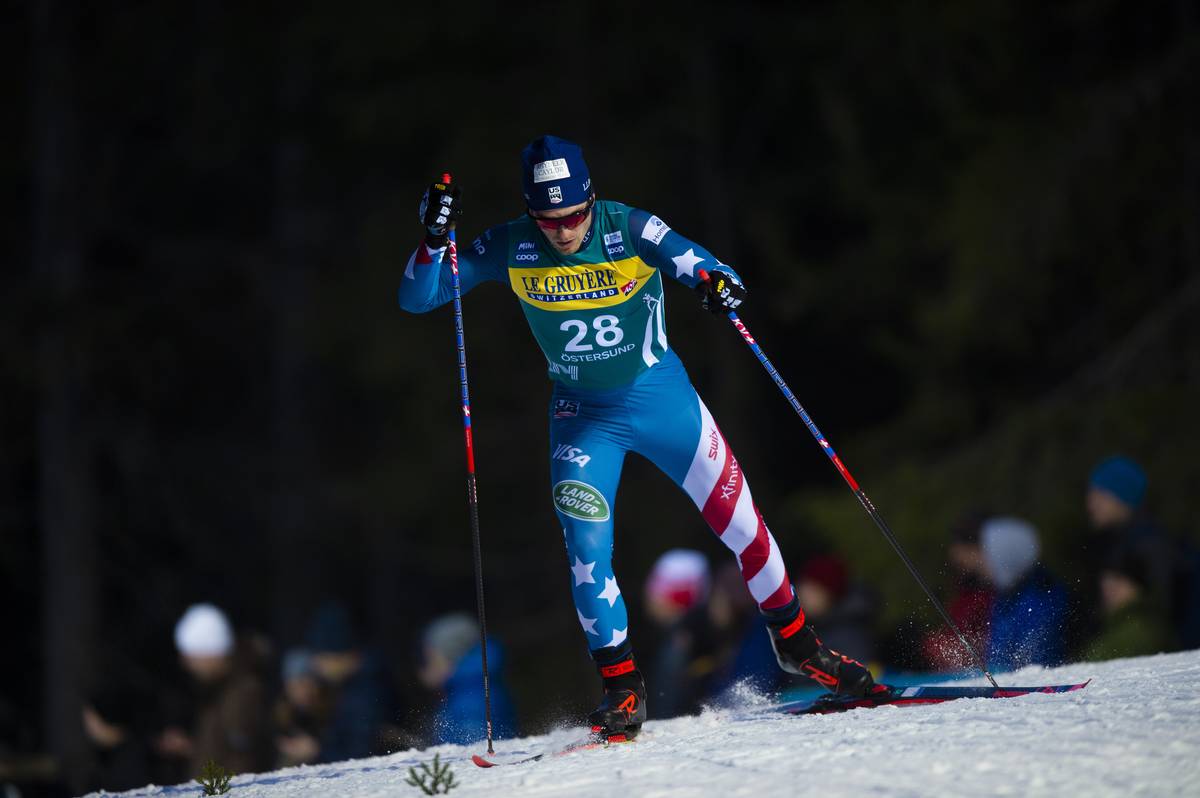
David Norris racing in the 2020 World Cup in Östersund, Sweden. (Photo: NordicFocus)
FasterSkier: It sounds like you are meeting all the benchmarks to be tentatively cleared?
DN: Yeah. And, any of the big red flag type concerns, none of my scans or pictures showed those. Without finding those red flags, we decided to just make a very controlled and conservative return to exercise. By doing a very gradual build-up, the thought is if there is something more to catch it, you’ll discover it during that gradual build-up versus just jumping back into intervals and time trials.
FasterSkier: How are your lungs or is that of concern to you? Maybe you have not had symptoms linked to lung function?
DN: I never had a cough. And I, I would say, I never felt anything like shortness of breath. And honestly, I haven’t secretly done three minutes hard to test myself. I haven’t done any formal tests to see what my lung volume is, so I don’t have any gauge, other than just when I have skied easy, nothing seems wrong.
FasterSkier: I’m sure you have been asked a million times – do you know how you might have contracted the virus?
DN: I don’t know of anyone COVID positive who I have been in contact with. It is possible I got it while traveling though. I flew from Anchorage to Fairbanks, and before I flew to Fairbanks I had a negative COVID test. But anytime I’ve been in public I’ve been careful with not touching stuff and keeping my distance from people.
FasterSkier: OK, some personal history that might relate to how conservative you say you are taking your recovery. Your senior year of college, in 2014, you trained through a lingering virus and were pretty much fried for about a year. If this is accurate, how are you informed by that experience?
DN: That’s pretty much accurate. I guess as a motivated athlete I could tend to ignore those chronic symptomatic things like a week or two of a stuffy nose or a sore throat. I would go for an entire month before I just said I need to bag it and get recovered. So my senior year of college, I ended up taking from about November 1 through February 1 off, and then by Spring Series, I raced to fourth place in the 15 k skate. And up to that point, that was my best 15 k skate result at the national level.
Having gone through that experience, it is nice to have that, because I know it gives me confidence that I can be patient and not stress about losing fitness. I just need to take care of my body and health and when everything seems to turn around, it doesn’t take that long to get back to race shape after so many years of training. I know that three months of low volume training doesn’t set you back that much.
FasterSkier: For a lot of people, not exercising can be a real stressor. And to take significant time to re-balance and heal is a non-starter for some, there’s the constant fear that you are de-tuning and will never be “fast” again. You know everyone has an athletics success window. But I can see how what you experienced in college can be valuable. That all said, I know you were given starts for at least Period I. What might the World Cup look like for you moving forward? But maybe I am getting ahead too much.
DN: I still have big goals for myself for individual World Cup performances and World Championships this season. That was the season goal, World Champs, but also to put me in a position to be on track for making the Olympics next year.
I mean getting good results would be great. That’s always great. But now my mind has shifted to just thinking about getting healthy, and building fitness this season, whether or not I race.
Erik Flora’s tentative plan, assuming I don’t have any negative side effects to training, has me building up to Christmas. After Christmas, I can build in high intensity and time trials. And if the World Cup selection committee decides to give me starts after the Tour de Ski, I would go to Lahti and Falun and hopefully, I would be selected for World Championships.
That being said, having contracted COVID and seeing that racing isn’t everything, it is just hard to know. Even by the end of January, maybe the right decision is to just stay home and try not to catch COVID for a second time.
I’m going to prepare and train to aim for those World Cups and World Championships. But then I’ll have to assess, assuming I get those opportunities and decide what is the best move.
David Norris of the U.S. during the 15 k skate, Stage 1 of the Ski Tour 2020. (Photo: NordicFocus)
FasterSkier: How were you feeling before all this? You are coming off a very solid year internationally.
DN: I felt good. I was confident. I had adjusted my training to try to come into Ruka a little hotter than in normal years with the plan to just come home for Christmas, and you know get through Period I with all the COVID stress and then come home and reassess.
I felt better than other falls, thinking that I wanted to be set for the first distance race in Ruka. I felt really good in early November, doing intervals and just all the training was really good. Through early October I intentionally trained through quite a bit of fatigue as I was carrying a lot of load. Fitness-wise, I was just coming around in early November where I was starting to get fresh and feel sharp. That was part of why I had the confidence to not do intervals on those days that I just had a stuffy nose because things were moving in the right direction. I know it’s not going to hurt me to do one less interval set in this 10-day block.
FasterSkier: What do you say to younger athletes who may get sick themselves? It sounds like you have a lot of patience but you also had an adverse experience when you were a senior in college.
DN: My junior coach in Fairbanks, he always said have the confidence to take a day off. I think that’s true. But at the same time, if you know that you’re training super hard when you’re healthy and you’re consistent with your training, as the fall approaches and you’re in the racing season, and knowing that I trained my ass off in the summer, all that gives me the confidence to take a day off and not stress about a small interval session.
My advice is that if you work hard when you’re healthy and when you’re supposed to train hard, then you should be confident that when you are sick, know you have the base to take a day off. When you feel like you might be catching a cold or even when you’re coming back from a cold and you feel ready to do an interval set, maybe, wait one extra day, and then do the interval set.
That was always the advice from the assistant coach, this Norwegian guy — he said in Norway when you showed up to practice and you told your coach you’re ready to do intervals after an illness, the coach would say, “Ok, you’ll do it in two days.”
FasterSkier: What type of medical follow-up might you do?
DN: I think I’ll do some more blood labs again, towards the end of December. Other than that, unless I get adverse effects from the increased training, I don’t think I would do extra scans.
David Norris racing in the 2020 World Cup in Östersund, Sweden. (Photo: NordicFocus)
The razor-thin margin for national team selection in the U.S. played out again this season with David Norris (29) not discretioned onto the U.S. team – the sporting actuaries stated he lacked future medal potential.
On both sides of the aisle, making the team or not, the platitudes didn’t cushion the blow for a skier who has doggedly pursued endurance speed for over a decade. Norris earned his first national championship podium with a third place in 2011’s 15 k classic. With seven senior national podiums to his credit, Norris is the sort of grind it out athlete who finds no need for social media boasting or self-affirming flattery from “likes”.
David Norris racing in Nové Czech Republic. (Photo: NordicFocus)
For skiers like Norris on the nationa team bubble, and aging themselves into tougher and tougher objective criteria to earn full funding as a USST member, Norris had some important decisions to make. He could have taken the odds of playing the FIS point game and returned for the 2020 Senior Nationals. That path would have likely presented fewer barriers to earn the points necessary for a USST nomination. Abroad, he would need to consistently earn top-30s on the World Cup.
Norris committed to the Tour de Ski foregoing the ticket to Houghton for Senior Nationals. His choice premised on gaining international success and raising the standard of U.S. men’s skiing
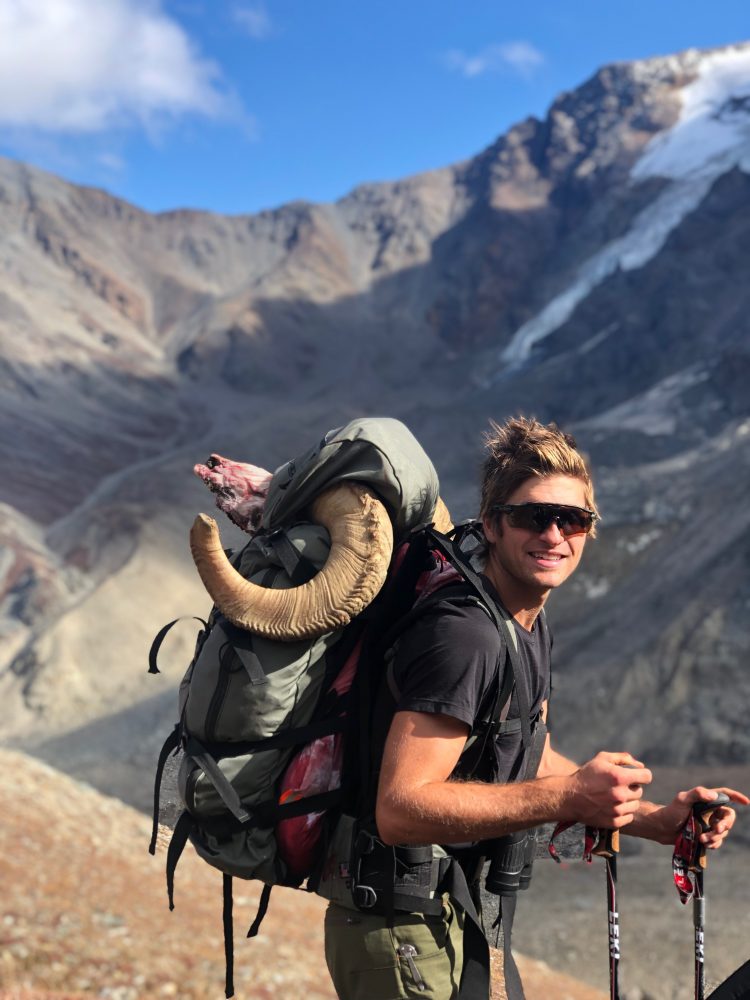
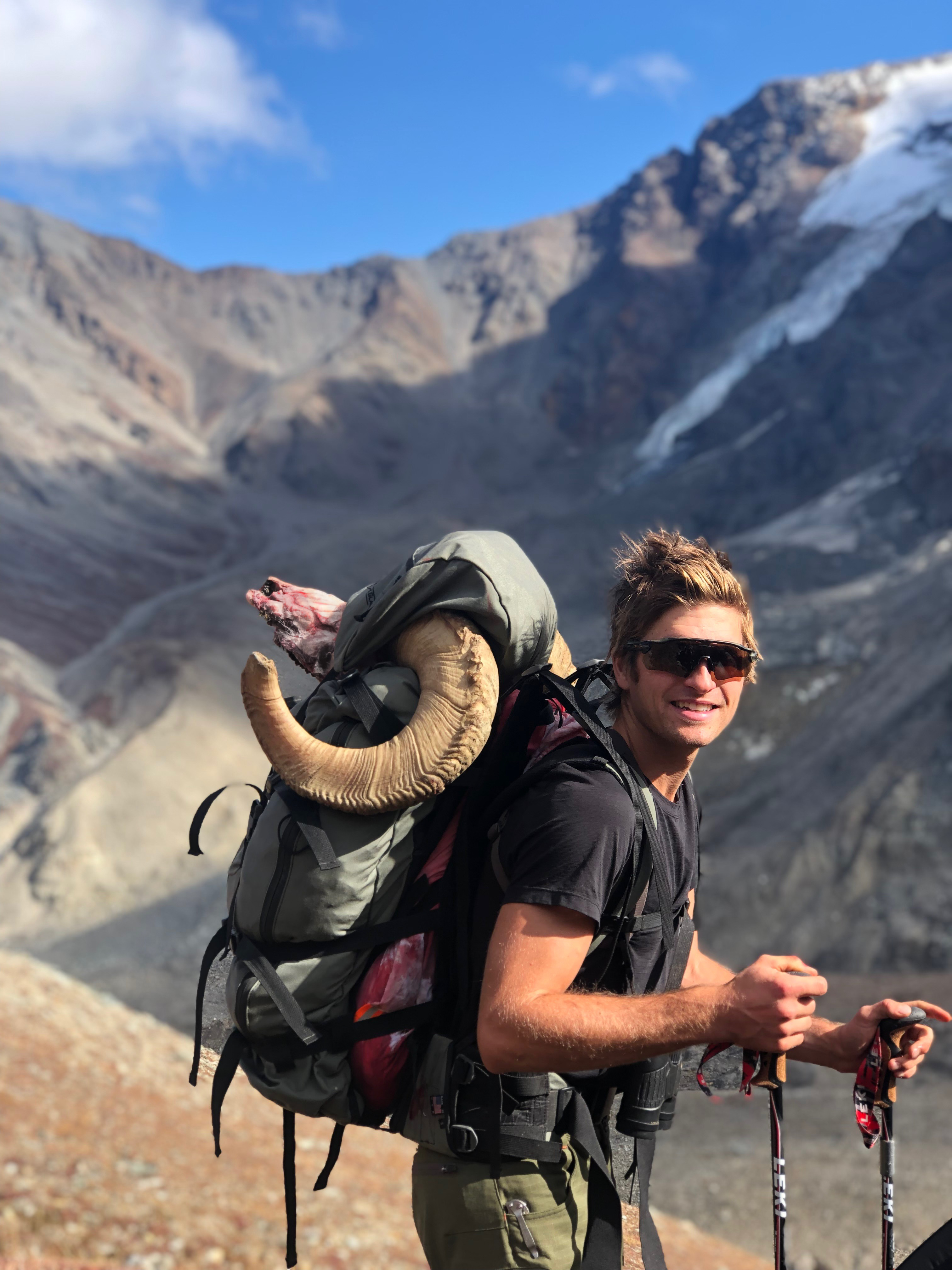
David Norris on a sucessful sheep hunt during a 2019 trip to the Eastern Alaska Range. (Photo: Courtesy David Norris)
Having grown up in Fairbanks, Alaska, and rooted in epic cross-country hunts on foot or skis, Norris understands his unsettled place in the broader ecosystem of making ends meet. On the skiing front, he saw three elite peers in Ben Lustgarten, Kyle Bratrud, and Erik Bjornsen retire this year. All were under 30 and all had won national championships during their careers. All felt they had tapped out on their potential for improving and landing on the side of medal potential.
When speaking on the phone this April, Norris equated his depth of disappointment in not being named to the national team with a missed opportunity to take a Dall sheep on a hunt a few years back. For Norris hunting is a full-immersion endeavor.
He had pursued a sheep and was closing in on a clean shot. From a distance he was unable to discern if the sheep was legal for the take: a legal ram must be aged properly with horn shape, the most common method used for aging during a hunt. Norris hesitated. There was no trigger pull.
“I was just inexperienced enough that I was so cautious of not shooting an illegal ram,” said Norris. “I knew that would ruin my trip more than coming home empty-handed. But once I got home and between the photos I had taken and talking to people and seeing some horns in my hands, the sheep I was looking at and had stalked was clearly legal. It crushed my soul.”
Norris knows soul crushing as much as top-of-the-podium elation. Back in 2018, he missed out on qualifying for the Olympics by mere seconds in a closely packed sprint finish in the men’s 30 k at nationals.
As the pandemic took hold this spring, Norris spent mid-March through the end of May in Bozeman, Montana with his partner Jessica Yeaton. He has since returned to Anchorage for organized training with his APU team. Norris has reset and set goals of competing on the World Cup next year, qualifying for the 2022 Olympics, and notching a top-15 in Beijing.
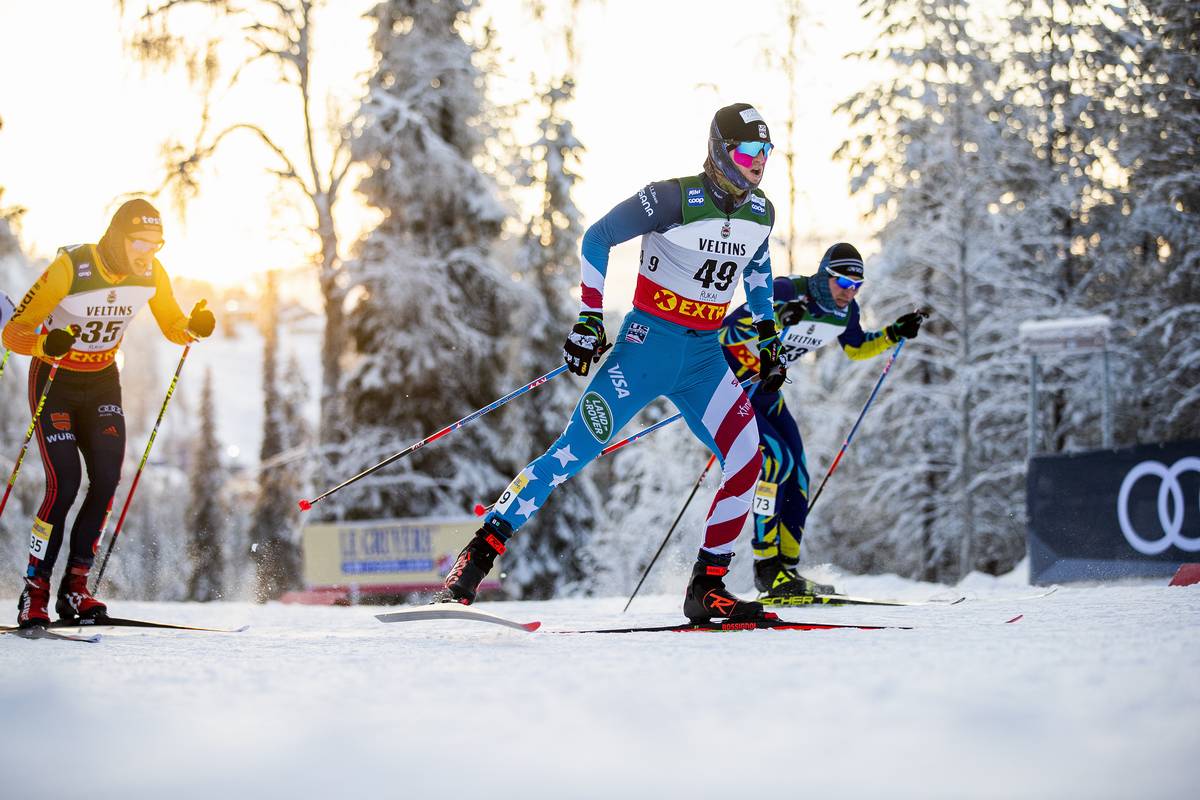
David Norris racing in Ruka Finland. (Photo: NordicFocus)
Those goals remain a reality as the skier made steady-state improvements on the World Cup this season. Norris credits his APU mates with his progress since joining the team six years ago.
“On our APU team it is not really discouraging to get beat on by each other because you know everyone is actually really legit,” Norris said. “Most guys on the team have podiumed at SuperTour. Luke Jager was beating up on people at World Juniors and the same when Gus Schumacher joins us. We all know Bjornsen’s results and Scott Patterson’s 11th place at the Olympic 50 k.
“With APU, to my benefit, I can go a month without dominating a single workout because on a given day Luke will throw down on the double pole workout and Scott can bound up a hill ridiculously fast and everybody has their own strengths. And particularly when their strength lines up with my weakness it challenges me and pushes me. I am super grateful to those guys and their abilities.”
Part of Norris’s job is finding success beyond the SuperTour. In discussing his full season on the World Cup, Norris said this season was more conducive to training and racing fast while living abroad.
“I think where people struggle and where I struggled in the past is just the mental side of it between being happy and getting along with everybody and feeling like you have purpose everyday – that kind of struggle,” Norris said.
Norris is a professional accountant. He found purpose this year using his non-racing skills. While traveling on the World Cup, he was able to work remotely for his online accounting clients. The daily routine of accounting work filled a void between twice a day workouts and long stints in hotels. According to Norris, his business, Front Range Financial LLC, gave him more structure.
Norris said he has plenty of work during the race season to cap his billable hours to 40 per month, and still afford himself time to train and recover. He recently completed his MBA to complement his accounting acumen. However, he’s reluctant to tap into his inner entrepreneur and grow the business. His priority is finding balance with an emphasis on meeting his racing goals.
The fact remains, Norris would have been relieved with a national team nomination and the more stress free situation of not having to raise 25 to 30 thousands dollars to sustain his World Cup racing as a non-funded athlete. That’s when his accounting and results sheet come in handy. With spreadsheets, a phone contact list, and an easygoing manner, Norris will work the phone and pound the Anchorage pavement keeping the dream alive.
David Norris of the U.S. placed 20th overall in the the men’s 50 k skate at the 2019 World Championships. (Photo: John Lazenby/lazenbyphoto.com)
This series comes to FasterSkier from the Alaska Pacific University Nordic Ski Club
A Day in the Life: APUNSC is checking in with Elite Team members of the course of the next few months to get a glimpse into what life looks like for elite athletes as training starts up again during a global pandemic.
Today we check in with David Norris (29), a 2019 World Championship team member who has been competing on the World Cup for the last two season. David hails from Fairbanks, AK and has now been a member of the APUNSC elite team for six years. He has a degree in accounting from Montana State University and completed a Masters of Business Administration from Alaska Pacific University just last week!!!
Where are you right now? What have the restriction been? Are they now changing?
I’m currently in Bozeman. The restrictions here seem pretty standard: wear a mask and social distance; most shops besides grocery stores are closed. Bozeman has been reopening over the past two weeks with dine-in options and non-essential shops returning to business. The trails were always open so I mostly noticed these restrictions when shopping or wishing I could carpool with friends.
How did your season end? Were there any race cancellations that affected your season?
After Holmenkollen I went to Bozeman to meet up with Jessica [Yeaton], visit her parents, and recover before the Canmore World Cups. Basically the same day the World Cups and the rest of the season were cancelled Jessica’s classes switched to online, so we decided to just stay where we were to reduce travel and see what would come of this pandemic.
What is a highlight of the ski season you did have?
Oberstdorf 30km skiathlon and Falun 15km skate mass-start were both major performance highlights for me. More than the result on paper I was encouraged by my ability in these two races to move into the top 15 when the lead pack started to split up. In the end I didn’t finish where I believed I should or could have, but spending time in the top 15 and learning what that takes was inspiring and made me excited for next season.
David Norris skis to 28th in the 30 k skiathlon in Oberstdorf. (Photo: U.S. Ski & Snowboard)
How have you planned around the unexpected end to the season? Did you do anything to “finish” out the season or jump into summer training early?
I got pretty sick at Holmenkollen and was being a good ski racer trying to recover until I heard all the races where cancelled. Then with no races to get healthy for I started rallying the training; I tried to ski a bunch with Jessica and adventure in the mountains. After about two weeks of that I was completely wrecked and had to slow down. Maybe as a result of not having a traditional ending to the season I haven’t really had a traditional start to the new season either.
What activities are you doing to keep yourself busy outside of training?
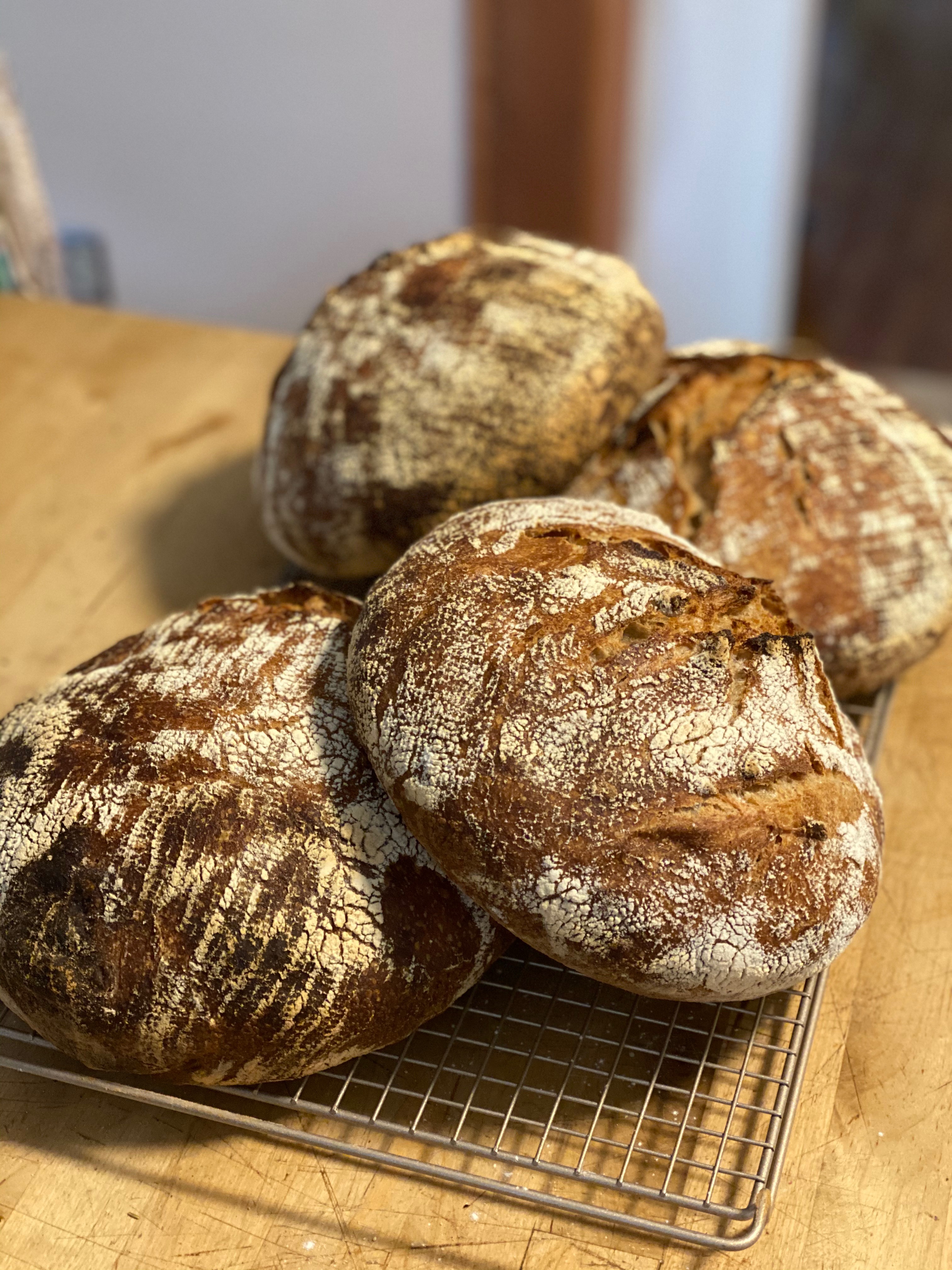
April was definitely slow… I hardly had any hours at work and I hadn’t started spring classes yet. April consisted of reading a couple books, carving a butter knife from a dead chunk of apple tree in the yard, and baking lots of bread. In May I took my final MBA class and had work hours pick back up- so lately I’m staying more happily occupied.
The baking goods. (Photo: David Norris)
What did your workout look like today?
This morning I did about an hour and a half jog. I had plans for some strides and plyos, but the ole’ calf was bugging me. This afternoon I rode my mountain bike for about 2.5 hours.
Do you have any indoor/at home workouts you are doing?
I’ve been doing some floor core with Jessica and once a week I try to tie some straps to a tree to do TRX type stuff. I am weak right now for sure, but with the time not in the gym I’ve probably done far more cardio.
Without knowing what the future has in store, has it been challenging to keep up motivation to train? Where are you getting that motivation? What motivates you to keep training?
I like to exercise quite a lot, I think I have held high motivation to stay fit right now by doing only the workouts that sound fun. Jessica and I have been following the weather, and often when the weather is at its worst we just crank out some intervals or hammer for a while and call it good. When the weather is good, we spend hours out in the sunshine mountain biking or backcountry skiing. Its actually been a really refreshing approach; however, in June, I’ll follow a lot more structure.
How are you keeping in touch with friends/family/teammates?
Text and Facetime are my go-to for most friends and family.
What has been your biggest challenge in relation to Covid-19 and how are you tackling it?
I like to make plans with goals and pursue them. Since March I’ve canceled a lot of summer plans and have held off from creating new ones. I think I am being forced to learn that patience is not the same as laziness.
What are your plans from here? What things do you have in store for a summer that will include many restrictions?
I am headed to Anchorage in early June to start back into training with the APU boys. I bet with several of my favorite summer races canceled I might time trial the routes. I’m hoping the restrictions don’t make bouncing back to ABQ to visit Jessica too challenging. Other than that my life should be simple- train, work remotely, study, fish, and avoid making too many plans.
Do you have any helpful advice in dealing with the changing times?
Be patient and exercise every day.
Enjoying the mountains around Bozeman. (Photo: David Norris)
David Norris of the U.S. during Stage 1 of the Ski Tour 2020. (Photo: NordicFocus)
This article has been updated to clarify the relationship between the junior races now known as FIS Nordic Junior World Ski Championships and its precursor, the World Junior Nordic Championships and the European Junior Nordic Championships.
There are, to briefly traffic in the obvious, 60 seconds in a minute. Sixty seconds in a minute; 60 minutes in an hour; 3,600 seconds in an hour. Skiers measure their lives in these increments; we track total yearly training hours, obsess over minutes spent in L3 vs. L4, dutifully record splits from an interval workout down to the second.
David Norris spent roughly 1,000 hours last season in training or racing, or 3,600,000 seconds total. Katharine Ogden may have spent “only” 700 hours, or 2,520,000 seconds, engaged in training or racing. Combined, that’s over six million seconds. This is the story of 12.3 of those seconds, and of their outsize influence on selection to the U.S. national ski team, or USST, fourteen months later.
* * *
Falun, Sweden, March 2019. David Norris, a Fairbanks native who moved to Anchorage after college graduation to ski for Alaska Pacific University, was on a roll. He had had strong results in two recent 50-kilometer races, skiing to 20th at World Championships in Seefeld and 24th at the iconic Holmenkollen within a week. As the World Cup tour moved on to Sweden, Norris looked to continue his torrid streak in the 15-kilometer interval-start freestyle race held on March 17.
David Norris of the U.S. placed 20th overall in the the men’s 50 k skate at the 2019 World Championships. (Photo: John Lazenby/lazenbyphoto.com)
Interval start races on the World Cup are generally reverse seeded, with the fastest skiers starting last. In Falun, Norris had bib no. 16 in a field of 69, reflecting relatively high seeding and low expectations – this is not where you put a predicted top-30 finisher. (Indeed, the two athletes immediately ahead of him, bibs 14 and 15, finished well outside the points in 37th and 47th.) Norweigan broadcaster NRK didn’t even show his start, instead cutting away to show a pre-recorded broadcast with Martin Sundby over the span of a half-dozen early starters, including Norris.
But once the race started, Norris showed he belonged. Through three laps of the 5-kilometer course at Falun, he hovered between 11th and 16th. He beat Klæbo. He beat Spitsov. He beat Manificat. When he crossed the finish line, with the sharp end of the field still on course, he was briefly on the virtual podium in second overall. Once all starters had crossed the line he would end the day with a final result of 16th, a notable result for American men’s distance skiing at any point in the past three decades.
Afterwards, Norris told this website, “I am super happy with my result – I feel like I have recovered well from back-to-back 50ks, and my skis were good. Today was the type of result I have been believing I should be able to do on a good day, so I am psyched to have made that happen.” Jason Albert’s contemporary race story for FasterSkier observed, “During a year when the U.S. Ski Team has offered numerous international starts to a host of non-USST members, Norris and his trifecta of results in the points promotes the notion that on the right day and even the right World Cup string of races, elite U.S. skiers can step up.”
Norris’s time for 15 kilometers was 34:33.9. His life would be different now if he had finished in 34:22.9, 11 seconds faster.
* * *
Ten days before Norris’s fateful ski, Katharine Ogden toed the line for the women’s 5 k skate race at 2019 NCAA Championships. She was racing at the Trapp Family Lodge in Stowe, Vermont, two hours from where she grew up in Landgrove and just down the road from where she had attended school at Stratton Mountain. Ogden had to be considered among the pre-race favorites – in seven individual NCAA races so far that season she had seven podiums, including three victories and three second places – and her seeding reflected it. She had bib no. 36 in a field of 40; that is, she was seeded as the fifth-best racer in the field.
https://www.instagram.com/p/BurVLtMH_C3/
A 5-kilometer ski race will take a skilled athlete well under 15 minutes, even on a homologated course. Depending upon the course profile and how much chance for recovery there is, the race can be roughly akin to the world’s longest, most difficult L4 interval. An athlete has to go nearly as fast as sprint pace, for roughly four times as long, without completely blowing up and losing valuable seconds against a tight field.
On this day, and even over “just” five kilometers, Ogden metered out her effort better than nearly anyone else in the field. At the two-kilometer mark, she was in ninth. By the halfway mark, she was down to 11th, not only off the podium but also out of All-America status. But she came on strong over the final 2.5 kilometers, moving up seven places in as many minutes. Coming down the finishing straight she drew even with her Dartmouth teammate Lydia Blanchet, who had started 30 seconds before her in bib no. 35, then moved alongside to out-lunge Blanchet at the finish.
Ogden finished just off the podium in fourth, even after, according to one contemporary observer, falling at one point on the course. Her time for 5 kilometers was 13:34.5. Fourteen months later, she would miss objective selection to the 2020/2021 USST B-Team by a fraction of a FIS point. If she had gone just 1.3 seconds faster in this race, 13:33.2 instead of 13:34.5, she would have made the team.
* * *
A year later, Ogden made the team anyway, following the application of discretionary selection by U.S. Ski Team leadership. At the end of this season, she had 49.45 points on the final women’s FIS Distance List, good for 81st in the world. The athlete one spot ahead of her in 80th had 0.25 fewer points, or 49.20. A female athlete born in 1997, like Ogden, needed a year-end distance ranking of 80th or better to merit selection to the USST B-Team via objective criteria. Ogden was very close, but 81st is not 80th.
Norris, meanwhile, ended up with 22.95 points on the same final men’s FIS Distance List released this March, good for 43rd in the world. (22.95 points would have left him ranked 18th on the women’s list; as previously discussed, the men’s field is tighter than the women’s at every level of the distance rankings.) The athlete three spots ahead of him in 40th had 0.88 fewer points, or 22.07. A male athlete born in 1991 or earlier, like Norris, needed a year-end distance ranking of 40th or better to merit selection to the USST B-Team via objective criteria. He was very close, but 43rd is not 40th.
* * *
The criteria for objective selection to the national team, which this year key on an athlete’s FIS points-based world ranking and are adjusted for age and (in some cases) gender, are of recent vintage.
In announcing the new criteria at the start of the 2019/2020 season, then-USST Head Coach Chris Grover wrote, “these criteria create many objective pathways to a USST nomination and identify a clear path for athletes, coaches, and parents to understand exactly what is necessary to be nominated to the USST. … I’m confident that these new criteria will help us do a better job of identifying those athletes with the potential to medal while creating better transparency around the U.S. Ski Team nomination process.”
David Norris winning the 2016 American Birkebeiner (photo Paul Walsh)
The potential use of discretionary selection alongside objective criteria for selection remains substantively unchanged from previous years. Grover highlighted the use of discretionary selection in an email to FasterSkier earlier this month when asked about the reasoning behind adding Ogden to the team via discretion.
(FasterSkier’s late-April podcast with Matt Whitcomb, which explored Norris’s situation at some length, took place before the official team announcement had been made by U.S. Ski & Snowboard in early May. FasterSkier knew at the time that Norris was not on the team, due to this Instagram post from APU, but did not know that Ogden was on the team, and so did not ask about her selection when it spoke with Whitcomb.)
Grover wrote to FasterSkier, in full (the original email highlighted the penultimate bullet point under discretionary criteria, as has been done here):
Attached is the criterion and below is the specific part of the criterion’s discretionary selection policy we utilized when nominating Katharine to the USST:
Discretionary Selection Policy:
U.S. Ski and Snowboard may select additional athletes to the team, or may select athletes to the B-team who have met D-team criteria, using coaches’ discretion based upon factors other than the objective criteria. If the coaching staff fills any spot(s) on the team with discretionary selections, then the staff may consider any factors including (but not limited to) the following:
Completion of individual markers, as set forth by the U.S. Ski Team coaching staff and as approved by the U.S. Ski and Snowboard Head Cross Country Coach, which point toward the achievement of competition results consistent with U.S. Ski Team program goals.
Attitude and commitment of athletes to take part in the complete camp and competition program.
Illness or injury during the selection period.
Indicia of medal potential in future Olympic and World Championship competitions, which would be materially enhanced by selection to team.
Other unanticipated failure of objective criteria to select an athlete likely to achieve competition results consistent with the U.S. Ski and Snowboard program goals.
As you know, Katharine is one of three athletes in USA World Junior history to achieve an individual medal, so she clearly meets the above criteria.
The reference is to Ogden’s bronze medal in the women’s 10-kilometer skiathlon at 2017 World Juniors in Soldier Hollow. The other American athletes with individual World Juniors medals are Hailey Swirbul, in 2018, and Gus Schumacher, in 2020. That said, American skier Bill Koch won an individual medal in the 1970s version of what are now colloquially known as “World Juniors” at the 1974 European Junior Nordic Championships.†
Whitcomb also spoke to the relationship between junior medals and senior success in the recent podcast. Whitcomb observed, “There’s a big difference between being a top-10 skier or a medalist at World Juniors and converting that to top tens and medals on the World Cup. And it’s not a gimme.” He suggested, however, that this is “the benchmark that seems to be required to have World Cup success or Olympic or World Championship success,” based on internal national-team data going back over the past 10 or 15 years.
American Katharine Ogden (SMS/USST) and her dad John celebrate her bronze medal in the women’s 10 k skiathlon on Friday at 2017 Junior World Championships at Soldier Hollow in Midway, Utah. (Photo: U.S. Ski Team/Tom Kelly)
He added, “With that you have exceptions like Holly Brooks who never went to World Juniors and is a World Cup … podium skier. So you’re not out of luck if you didn’t get into the top 10 or top 12 or on the podium at World Juniors.”
Americans who have previously medaled at Olympic or World Championship competitions without achieving an individual medal at World Juniors include Kikkan Randall, Jessie Diggins, Caitlin Gregg, and Sadie Maubet Bjornsen. Bill Koch is the only American skier who has achieved both an individual juniors global championships medal and an Olympic or World Championship medal.†
Gregg is the only American who has medaled at a global championship while not a member of the U.S. Ski Team.
Athletes with no individual World Juniors medal currently on the U.S. Ski Team include Maubet Bjornsen, Rosie Brennan, Sophie Caldwell, Diggins, Julia Kern, Simi Hamilton, Kevin Bolger, Scott Patterson, Logan Hanneman, Hannah Halvorsen, Novie McCabe, Kendall Kramer, Sydney Palmer-Leger, Sophia Laukli, Johnny Hagenbuch, Luke Jager, Noel Keeffe, Ben Ogden, JC Schoonmaker, and Hunter Wonders.
* * *
David Norris, like the 20 athletes listed above, also has no individual medal from World Juniors. He finished 29th and 43rd at the 2010 World Junior Ski Championships in Hinterzarten, Germany, where he also skied on a relay team with Sam Tarling, Scott Patterson, and Erik Bjornsen. These races were some time ago; Norris is now 29. (He was born in December 1990. Had he been born thirteen months later, in 1992, he would have made this year’s team.)
One recent chart from Joran Elias at Statistical Skier appeared to show that roughly 75% of male skiers who achieve a top-10 result in a high-level distance race do so by the age of roughly 26 (closer to age 28 for women). Another series of charts appears to show that both Norris and Ogden fall within the upper end of the historical age-based performance range for achieving “top international results,” defined by Elias as at least three top-10 finishes in high-level distance races. (Larger versions of the charts are available on Twitter here.)
Joran Elias is the Statistical Skier. He’s shown here with his son Ciaran, several years ago. (Courtesy photo)
The USST’s decision not to add Norris to the national team via the exercise of discretion was discussed at length in the final segment of FasterSkier’s recent podcast conversation with Whitcomb. Briefly put, Whitcomb pointed to the criteria’s emphasis on global championships medal potential, and argued that Norris is not currently on track to achieve such results:
“We have to be able to argue that David is on track to be a medalist at World Champs or at the Olympics. And we can’t argue that. We can argue that he is on track to continue to improve, he’s on track to get into the top-15 next year – but that, at [age] 29 or 30, doesn’t merit a B- or an A-Team spot, which now involves $25,000 of funding, roughly, if you are running the World Cup full season, and all the camps. As much as I want him there and on those teams, we can’t argue it. And so – David’s an incredible role model, as the fastest distance skier that we had this last season, and hopefully he’s our fastest distance skier this next year and continues to improve.”
Whitcomb added, “And so what’s the message for juniors that are disheartened by that? I think the message is that it’s not easy to make the B-Team. It’s going to take exceptional commitment from a pretty young age.”
At least one junior was disheartened by this message. “It’s really sad and makes me question the integrity of the selection process,” a top American junior skier told FasterSkier of Norris being left off the team. (The athlete was granted anonymity to discuss a sensitive matter.)
Whitcomb added, in reference to the season just concluded where Norris raced on the World Cup all year, “David was a pleasure to have on the World Cup all season. And once an athlete’s on the World Cup, you’re basically on the national team. This is not the U.S. Ski Team once we hit the road, it’s U.S. skiing. And I think David would agree that we’ve, as a nation, gotten better at being inclusive of people inside and outside of the team.”
Other athletes who have made periodic World Cup starts in Europe may not agree. (Multiple athletes who were approached for this story declined to officially comment, even anonymously.) For those commenting on background, a common theme in these athletes’ experience is reduced access to quality skis or wax tech support for non-national-team athletes (even after paying for a wax tech out of pocket), which is no small thing when racing at a level where ski preparation can make such a large difference. These same athletes, again speaking on background, have generally suggested that ski team leadership acted more in response to logistical constraints than in an outright bad faith attempt to hinder their performance.
Matt Whitcomb. (Photo: Twitter)
As a specific example, some ski manufacturers’ contracts specify that an athlete cannot receive a certain level of support without being a member of the national team, so racing in Europe independently, even alongside USST members and otherwise being included as a part of the team in a general sense, can compromise an athlete’s access to support for skis and service. Some athletes also talk about a more general, unwelcoming sensation of feeling like an outsider, even when traveling and racing immediately alongside named members of the national team.
Said one American skier who has raced European World Cups not as a member of the national team, “When you show up to a World Cup as a domestic athlete, you are a guest. Although not marketed as so, it shouldn’t be a surprise. You’re given the uniform, housed with the team, hopefully assigned a wax tech (but best to bring your own), and they have your credit card for billing. As a ‘bubble athlete,’ the pressure is immensely high, and you have a brief opportunity to prove you belong there. When you’re on the World Cup as a part of the team, there is also a lot of stress to perform, however you’re allowed a season to experience mistakes, try tactics, and build your confidence in that scene. History has shown that the USST favors granting discretion to younger athletes, leaving older athletes to fight for spots as outsiders.”
The athlete quoted immediately above competed on the World Cup in a season when Grover was the head coach and Whitcomb was the women’s team coach. Whitcomb now holds the position of head coach, effective as of last month.
Whitcomb said, in reference to the advantages of being an official member of the team, “Opportunities and doors are not closed. But the bummer is that the funding was missed; that’s one of the big things. Plus just being a part of the team; it instills confidence when you know the people that you’re on the road with are your teammates. But we try and do our best to have those that aren’t actually on the team to feel like they’re a part of it as well, and that will be a goal of mine.”
* * *
11 seconds out of 3,600,000. 1.3 seconds out of 2,520,000. Fractions of fractions of a percent – that’s 0.00031 percent of Norris’s total training year, and 0.000052 percent of Ogden’s. For two athletes seeking to fund European racing and wondering what the next race season holds for them, that fraction of a FIS point – even assuming no value to team status or team dynamics or better ski support or increased sponsorship opportunities or improved access to World Cup starts – was worth at least $25,000. Every second counts, indeed.
***
A note on methodology, and an attempt to show my work:
An athlete’s sprint or (in this case) distance points are typically determined by taking the average of his or her five best points results in that discipline over the past 12 months. The 2019/2020 year-end FIS Points lists actually go back farther than that, to early March 2019, presumably because of the large number of FIS races cancelled from early March 2020 onwards. (Elias, at Statistical Skier, logged roughly 1,000 unique ski races in each of the 2017/2018 and 2018/2019 seasons, but only 681 ski races for the 2019/2020 season.)
Among races held in that time, Ogden’s five best results are from March 6, 2019 (53.97 points); March 8, 2019 (49.28 points); Dec. 7, 2019 (44.25 points); Dec. 15, 2019 (54.10 points); and Jan. 26, 2020 (45.63 points). This is a total of 247.23 points, or an average of 49.446, which is rounded to 49.45 in the world rankings list. Ogden won the races held on March 8, December 7, and January 26, so, short of finding more fast people to enter and beat, there is nothing she could have done to improve her points in those races. That leaves the races of March 6 and December 15. Of those two, the December race was a mass-start race held over 10 k, with a winning time of roughly 27 minutes; the March race was an interval-start 5 k, with a winning time of roughly 13 1/2 minutes. I chose the shorter, interval-start race to illuminate the narrowness of the margin keeping Ogden from the team; you could re-run the math using the mass-start race instead, and come up with a slightly larger margin. (Also relevant, and acknowledging the need to tell a story rather than just set forth some math problems, I could find more information about the March race, because it was an NCAA race and Dartmouth Skiing wrote about it on its website in some detail.)
For Norris, meanwhile, his five best results are from March 3, 2019 (17.52 points); March 9 (20.54 points); March 17 (30.14 points); March 30 (24.87 points); and April 2 (21.66 points). This is a total of 114.73 points, or an average of 22.946, which is rounded to 22.95 in the world rankings list. Norris won none of these races, so in theory you could re-run the math for him on the assumption that he did just slightly better in all five of them, instead of 11 seconds better in one of them. I chose the March 17 interval-start race because it was the highest single value of those five results, and made it clear how performance in a single race most directly impacts the final FIS points number. As with Ogden, I similarly chose a shorter, interval-start race to highlight the narrowness of the margin keeping Norris from the team; you could re-run the math with some or all of the mass-start races, and come up with a slightly larger margin for one race, or, smaller margins for multiple races.
***
† Chris Grover’s emailed statement, that only three American skiers have won an individual medal in “USA World Junior history,” is literally true, but only because the races now generally known as “World Juniors,” which currently have the official name of “FIS Nordic Junior World Ski Championships,” have only been consistently known as “World Juniors” since 1977. A global championship for junior cross-country athletes began in 1968, and was held annually. As Nordic Canada magazine noted in the late 1970s (PDF page 4), this race series began as “The World Junior Nordic Championships (as they are called in odd years, or the European Junior Nordic Championships in even years).”
Koch won a bronze medal in an individual race at the 1974 European Junior Nordic Championships, then broadly known as “EJCs,” according to contemporary athletes. The two sentences in the body of this article marked with a dagger (†) have been added to this article since it was initially published to reflect the fact that Koch won a junior global championships medal in addition to medals at the Olympics and the “normal” FIS Nordic World Ski Championships. Had Koch won this medal in either of the odd years of 1973 or 1975, it appears that he would have instead medaled at “World Junior Nordic Championships.”
Ned Dowling working on Sadie Maubet Bjornsen. (Photo: Ned Dowling collection)
“Get whatever you want. I’m buying.”
“It’s ok. I’ve got a card with me.”
“No. You’re over here working for us. The least I could do is buy you a coffee and a bun.”
Conversation over. Jessie Diggins bought my cinnamon bun and cappuccino. The same Jessie Diggins who won Gold at the last winter Olympics and is a regular on World Cup podiums just refused to let me buy my own snack at the café stop while skiing in Sjusjøen, Norway. If I didn’t already feel accepted, I did then.
The email from U.S. Ski and Snowboard had arrived two months earlier. The Physical Therapist who was scheduled to work with the U.S. Cross Country Ski Team during races in March was unable to travel. Would I be able to cover for her? My jaw dropped. My pulse quickened. I’d just been asked to travel with the U.S. Ski Team to Norway—the Mecca, the Motherland.
I didn’t sleep a wink that night.
This was not my first gig as a PT working with elite athletes. I’d had a stint as a part-time soigneur with a U.S. based, pro cycling team. In French, soigneur means “helper.” In every other language, it means “worst job in sports.” The hours are long, the tasks are menial, and the actual “physio” role is often limited to recovery massages (aka Rubs). I found myself exhausted, unappreciated, and wondering why I’d left my “easy” PT job in the clinic to work twice as long for half the pay. Like most experiences that become teachable moments and help us grow in life, my time as a soigneur was the sort of arduous misery that, once survived, opened doors to better things. While grateful, I was still more than a little burned.
The burned feeling was felt even more by my wife. I’m pretty sure she could still smell the smoke when I asked her how she felt about a redo in Norway for two weeks. During my time with the cycling team, while I was off babysitting professional athletes, she was single-momming it with our toddler son. And she was not happy about it. Proving how wonderful she really is, my permission slip to Norway was signed. The other signature required was from my boss at work. That proved to be easier than imagined as my manager in the PT clinic at the University of Utah’s Orthopaedic Center gave me her full support. Permission granted, passport renewed, and official team logo wear issued, I was ready for Norway.
But I still wasn’t sure if this was going to be heaven or hell.
I was used to communication from the cycling team management being brief, procrastinated, and severely limited to an “as needed” basis. Don’t call me, I’ll call you … maybe, sometimes a couple of days before you deploy. So I was quite surprised when I started getting timely and detailed emails from the ski team coaches, which included sentences like “Looking forward to working with you Ned!” and “Thanks again for joining us.” Maybe these folks are going to be different. Maybe they know how to feed themselves and do their own laundry. Maybe I won’t be working 14 hours a day with my face coated in a mixture of sweat, sports drink powder, and massage lotion. Maybe I’ll be appreciated.
After 21 hours of travel and 21 minutes of sleep, my train pulled into Lillehammer, site of the 1994 Winter Olympics. I had arrived! And I was greeted trackside by Matt Whitcomb and Jason Cork, two of the ski seam coaches. I did not have to send a text and wait for a ride. I did not have to catch a bus to some hotel I couldn’t pronounce. I was riding shotgun while Jason was wedged in the back of the van, imprisoned by duffel bags and pole cases. Severely jet-lagged, I tried to make sense of my surreal surroundings as Matt briefed me while we ascended the winding road to the cross-country heaven that is Sjusjøen.
The plan for the next two weeks looked something like this: The first week was to be a “training camp” for four of the top skiers. Then we would head to Drammen for the famous city sprint. After that would be the even more famous World Cups at Holmenkollen—the Super Bowl of cross country ski racing, typically attracting over 50,000 fans.
As all plans are subject to change, so did this one. Multiple times. But one thing stayed consistent—everyone’s positive attitude.
That first week turned out to be more about recovery than training. The athletes in Sjusjøen were coming off of Ski Tour 2020, a new addition to the World Cup calendar with six races in nine days and no shortage of travel in between. Exhausted was an understatement. I felt like a jet-lagged zombie, but I met the cast of Night of the Living Dead when Simi Hamilton, Sadie Maubet Bjornsen, Jessie Diggins, and David Norris arrived at the cabin. We were surrounded by a few hundred kilometers of perfectly groomed ski tracks literally right outside of our door and not a single one of them wanted to ski. At least for a day. While I did my best to resuscitate their muscles and joints with daily manual therapy treatments, they slowly returned to the land of the living.
Jessie Diggins, Ned Dowling, and Matt Whtcomb skiing in Sjusjoe, Norway. (Photo: Ned Dowling Colleciton)
Susjoen can be a maze. (Photo: Ned Dowling Collection)
The silver lining for me was they all skied slowly enough that I could keep up. The days began to take on structure for me: wake up at a normal time (versus the jet-lagged pattern of undersleeping one night then oversleeping the next), eat, ski, eat, treat athletes, eat, sleep. Their days resembled mine except for being on the other side of the treatment table. Remarkably to me, the athletes and coaches took turns grocery shopping, cooking meals, and doing dishes. Everyone even did their own laundry! I was so used to working in the world of cyclists where “self-sufficient” wasn’t even in their dictionary. (We used to have a duffel bag labeled “DA” that was taken to the start of every bike race. It was full of extra jerseys, bib-shorts, and socks for the inevitable rider who forgot something. “DA” stood for Dumb Ass.) But these skiers were elite athletes, winners of medals, the best in America, and yet they could take care of themselves.
Despite the fatigue, a respiratory infection that was eventually passed to all of the athletes, a couple of days with sideways blowing snow, barley flour (“that’s all the grocery had!”) that left the baked goods flat as matzo, and the increasing presence of coronavirus in the news, the team just seemed to roll with the punches, make lemonade, and keep on keepin’ on.
Just before we left Sjusjøen for Drammen, it was announced that, due to a lack of snow, the race would be moved to Konnerud. The race in Drammen is one of the coolest venues on the calendar with skiers sprinting up and down the main street through the old city center and around the Bragernes Church. Instead, it was moved to a small ski venue that had not hosted a World Cup caliber race since 2011. That 2011 race, it turns out, was the first World Cup start for both Jessie and Sadie. Now, veterans of the race circuit, they were excited for the venue change out of nostalgia, and the media loved the silver lining story.
With the next day came the news that the weekend of races in Holmenkollen, the biggest party in Norway, would be closed to spectators due to fears over the spread of the coronavirus. While utterly disappointing, this made sense on two levels. For one, most of the 50,000 fans arrive packed like sardines in the trains from Oslo. Secondly, as pointed out by one of the health ministers, drunk people tend to make poor hygiene decisions. And the fans lining the Holmenkollen course are known to party.
The next round of bad news came when Sadie, one of the top skiers and a front pack contender, did not start due to the bug that had made its way around the Sjusjøen cabin. (David would end up dropping from his race from the same cold). Saturday morning at the often raucous Holmenkollen began with an eerie quiet in the ski stadium and a little less chaos in the wax truck since only three women were starting the 30 k classic.
The race, at least on the front end, turned out to be one of the more exciting in recent years with the strongly favored Norwegian, Therese Johaug, getting caught and passed in the last kilometer by a young Swede, Frida Karlsson.
Becca Rorabaugh during her 30 k classic effort in Oslo. (Photo: NordicFocus)
Kaitlynn Miller racing the 30 k classic in Oslo. (Photo: NordicFocus)
There was more bad news on the back end of the race as the American women struggled to keep pace — like your local marathon hero trying to toe the line with Eliud Kipchoge. They fought hard for a grueling 90 minutes and finished at the bottom of the standings in what would turn out to be the last race of the season. But there was a remarkably bright spot in that foggy, ghost town of a ski stadium as I watched Kaitlynn Miller wait for Becca Rorabaugh. Exhausted and disappointed, they hugged and walked together past the podium presentation that was already starting. Seeing that display of kindness and friendship, my mood was immediately uplifted. I was proud to walk with these women, heads held high, past vacant looks from the media and other skiers. The results don’t always matter as much as the comradery of the team.
On Sunday, the men raced 50 k. At least those who finished. It was cold, wet, foggy, windy, and – we’ll mention again — cold and wet. For over two hours the men slogged around an increasingly slow and sloppy track. David abandoned due to illness and anticipation of upcoming races that would eventually be canceled (had he known that he was in his last race of the season, he would have surely soldiered on). Ian Torchia dropped out after throwing up his breakfast and every ounce of liquid he tried to take in at the feed zones. Ben Lustgarten and Adam Martin persevered and crossed the finish line; both later suggested it was one of the more miserable races of their lives.
Ben Lustgarten (front) during the Oslo 50 k classic. (Photo: NordicFocus)
At the team meeting that night, there might have been feelings of disappointment but no one showed it. As Matt spoke to the team, he emphasized that he was proud, not embarrassed, by the performances that weekend. There is no shame in showing up and trying your best, even if your best leaves you at the bottom of the results sheet. There’s much more to it than the results sheet. Gratitude and appreciation were reiterated with not a mention of anger or blame.
A rising tide lifts all boats is an idiom often used to describe a setting where one person’s success or positive attitude inspires others to push the limits of their own performance. Sadly there were no podium celebrations during my two-week stint, but that did not deter me from doing whatever I could to help, whether fetching coffee for wax techs (an errand that used to irritate the hell out of me when I was a soigneur) or tactfully (I hope) ushering Jessie away from admiring fans when she was needed elsewhere.
And I was especially motivated to put my energy into the well-being of the athletes, simple as my role was: to methodically push on a joint here and a muscle there in hopes of giving the athletes the physical and psychological confidence to charge into battle with their skinny skis, carbon fiber poles, and Lycra armor. I’d like to think that I channeled my years of Physical Therapy practice and experience into their muscles, joints, and fascia to make them more resilient in the fight, whether that was 2 ½ minutes at full gas in a sprint or 2 ½ hours in the 50 k pain cave. My simple role was to help them perform at their best.
What I know I accomplished during these two weeks in Norway was an education in the meaning of team spirit. They cheered each other’s victories and consoled each other in defeat. They cooked each other meals and volunteered to do the dishes. They said thank you after every PT session. I would call my time with the U.S. Cross Country Ski Team a once in a lifetime experience, except that I want to go back next year.
En mass: early in the Oslo 50 k classic. (Photo: NordicFocus)
Oslo in late winter – it’s be hit or miss. Fog. Bluebird. A maritime climate, with plentiful moisture in the air, a slight drop in temps can morph the Holmenkollen ski complex into a ping-pong-ball-world. Athletes were mere shadows striding into and out of view on a foggy- drizzly day at the Holmenkollen. As spectators were limited to trail side spots as the main stadium was closed due to the Covid-19 virus, for some concerned, it was a slog for the 50-kilometer classic to close out the European portion of the World Cup. (That’s right- it’s ocean hopping time for the entourage post-race as the World Cup moves to North America.)
Sunday church along the Holmenkollen course: Iivo Niskanen (FIN), Alexander Bolshunov (RUS), Johannes Høsflot Klæbo (NOR), (l-r). (Photo: NordicFocus)
Let’s cut to the chase. The main action over 50 k involved main pack attrition. The sharp end pack remained robust with skiers through 18 k, as skiers passed through the main stadium as Sjur Røthe of Norway came through first. That much didn’t matter beyond a minor foot note in the day’s narrative, as a handful of Norwegian’s took pace leading chores throughout the race.
On a day that many would have preferred to practice their own personal art of hygge, the main pack remained 20 deep at 30 K. The top-20, which contained all the key skiers, was separated by a scant 5.6 seconds. A group that big surely provided its own sense of Norwegian coziness despite the high heart rates. Of those 20 athletes, four were Russian, two Swedes, one Finn, one Swiss — the rest Norwegians. Charging through was overall World Cup leader Alexander Bolshunov. There was Emil Iversen, Pål Golberg, Martin Johnsrud Sundby, Simen Hegstad Krüger, Didrik Tønseth, Hans Christer Holund, and Johannes Høsflot Klæbo. Bundled in there was Dario Cologna of Switzerland, and Iivo Niskanen of Finland, who was lucky enough to have fans and there chanting “Iivo-Iivo”.
Start of the race: Roughly 50 k to go. (Photo: NordicFocus)
Men’s 50 k classic mass start: Fog and Oslo style. (Photo: NordicFocus)
With so many skiers clustered together, and the tactics less explosive than simply see who could hang on, the camera shots at each turn of the race through the main stadium turned to the spare classics skis racers had the option of swapping into. The lure of fresh kick or speed, seemed like tempting race candy. Halfway through, at roughly 25 k, it appeared that Golberg was one of a few of the main contenders opting for a fresh pair. The rest skied through the ski exchange zone, at least content for another lap with their boards.
Lapping through at 30 k, scores of skiers opted for fresh kick and glide. Post-ski-exchange, the front pack soon coalesced into two orderly lines, like marching soldiers, as they crested a hill roughly an hour twenty into the race.
No matter any skiers herculean efforts to pop off the front, this was a simply a group affair. Any potential burst of speed, or pulse for bonus points, was absorbed. Ski speed or kick, seemingly equalized among the scrum. The question simply was this: which human engine would last the longest? Forty kilometers in, and the front group had winnowed 13 skiers separated by about seven seconds. Bolshunov led, followed by Røthe and Cologna.
Pål Golberg (NOR), Sjur Røthe (NOR), Iivo Niskanen (FIN), and Johannes Høsflot Klæbo(NOR), (l-r). (Photo: NordicFocus)
Then it was two — barely. Just after the two hour mark, Krüger spiced up the pace. Striding and double poling in earnest, at 47.7 k. Krüger was only shadowed by Bolshunov, as the Norwegian’s late in the race move stuck. Røthe, Cologna, and Holund fell off in third, fourth, and fifth, respectively, to just over 11 seconds back.
Two stallions double poling into an eerily silent stadium. That was probably not such a bad thing (although fans present are always better), as one can imagine the fans falling silent had they been there in droves. Russia’s Bolshunov out sprinted Krüger to win in 2:08:05.3, 0.9 seconds better than the second place Norwegian.
“I knew that Bolshunov is strong on the final 100m so I tried to get rid of him before that,” Krüger told FIS. “I felt really good today so I knew that I could really push myself before that. But he is strong and it’s hard to get rid of him. I almost made it but I am really happy to be on the podium. It’s an amazing feeling.”
Yellow bib and the Oslo 50 k win: Alexander Bolshunov and Simen Hegstad Krüger, down to the wire. (Photo: NordicFocus)
An irrepressible Bolshuov. (Photo: NordicFocus)
“Me, the team and the skis were all working together perfectly today and I am very happy to win here,” Bolshunov said after the race. “Because compared to Trondheim, where I had no possibility to do something with my skis, it was more important for me to win here today.”
That Trondheim race mentioned by Bolshunov was the final stage of the SkiTour 2020 in which he lost the overall due to poor skis.
For Bolshunov, this made for back-to-back 50 k classic wins in Oslo. Last season he won in a final sprint that saw Russia sweep the podium. And for Krüger, this was a career best in a 50 k race. He was seventh in last season Oslo 50 k. Lastly, when it comes to classic skiing, this has been a breakout year for Krüger – he is an athlete we had often considered a skate specialist.
“In the last lap I heard that I can fight for the podium and this is where I got some more energy,” Iversen said to FIS. “So I am really happy to stay 50km all in because I am not known as the best athlete in our team so it is nice for me to show the coaches and all that I can stand a hard and long 50km. I am really proud of that.”
Emil Iversen skiing to third overall in the 2020 Oslo 50 k classic. (Photo: NordicFocus)
The Oslo 50 k classic podium: Simen Hegstad Krüger (NOR) second, Alexander Bolshunov (RUS) first, and Emil Iversen (NOR) third, (l-r). (Photo: NordicFocus)
This was a tough day for the Americans, who started four athletes. Ben Lustgarten (CGRP) finished in 47th (+13:20.1), and Adam Martin (CGRP) 50th (+15:10.1). David Norris and Ian Torchia did not finish as they pulled due to illness.
“It was one of the toughest races I’ve been in,” Martin emailed. “I made a blunder by selecting zeroes and paid for it in the first lap. I used my one ski exchange as soon as I could at 6k with 44k to go. I spent a large majority of the race skiing by myself in windy conditions with no racers in sight. I am thankful for the spectators that cheered me on many k’s.
Adam Martin during the Olso 50 k. (Photo: NordicFocus)
Lustgarten reiterated the day’s difficultly.
“The race today was absolutely brutal,” Lustgarten explained in an email. “The conditions were not as tricky as we thought because it was just rain and super saturated wet tracks, instead of the new snow they called for in the morning. Still the tracks were glazed wet and breaking down, and also got really slow after a lap or so because of the fluoros fading from the skis. I had amazing skis for my first pair.
“I was able to stick with the lead pack for about 1.5 laps (we did 8 laps of 6.2km). I felt really good, my skis were amazing, fast and great kick. I started to fade a bit on the steep climbs and lost contact with the main front pack. Basically after that I skied alone or around a few other skiers for the rest of the race. The wind was tough being alone, and just forcing myself to ski well and try to keep my pace up. I swapped skis after 4 laps and unfortunately had a bit less kick on my second pair, in addition to fatigue and glazed tracks I found myself herring boning most of the steep climbs, but they were nice and fast for a few laps. My triceps started cramping about 20km earlier than most 50s, with about 30km to go. That was uncomfortable and not a great sign. My second half of the race was more about holding on and trying to finish the race instead of racing as hard as I could. I find at Holmenkollen it takes everything I have to just try and ski ok and finish the race because of how hard the course is. I was proud to finish today in such challenging conditions, even though my fitness didn’t feel amazing. Overall I was really happy with the skis and our wax techs deserve a shout out for that!”
Ben Lustgarten (front) fog bound and Oslo 50 k determined. (Photo: NordicFocus)
“This was a very tough weekend for our team, but I’ll say this first: We’ll be back next year to swing again,” U.S. World Cup Coach Matt Whotcomb explained. “Whether we are coaches or athletes, the process of figuring out this race is why we do this job. It’s just so difficult here, and we love it. We’ve been near the top and the bottom on the same weekend, and in each of those cases, the result is always over-shadowed by the experience with the crowd. This is a major-league sporting event in these woods, with crowds in the tens of thousands, strapping speakers to trees, screeching trumpets, blazing fires, and cheering for everyone. In fact, they cheer extra-loud for athletes who aren’t having a good race. In terms of uncracking the Holmenkollen, the courses, conditions, and 30/50k race formats are so difficult that anything but near-perfect skis, fitness, and health will put an athlete way off the mark. We just didn’t pull any triple cherries this weekend. We were also hit by a cold that caused us to scratch Sadie on the morning of her race, and it lead to David pulling out after three laps. I had the chance to talk to David in the feed zone as things were starting to go sideways, and I told him to pull out. He said, “But that’s not what I do.” It’s not my style either, frankly, but it would’ve been a season-ender for him to finish the race ill. There was no other way; he was pale green. Just behind David on the course, Ian was puking (on his birthday), so he had to drop out, too. So, like I said, it was a tough weekend. And while I support David and Ian in their need to drop out of today’s race, I’m also very proud of Ben and Adam for finishing this beast.”
Yellow bibbed as the overall leader of the World Cup, out first on Sunday’s 30 k classic pursuit in Trondheim, and Norway’s Pål Golberg starting 34 seconds back: this was the situation Russia’s Alexander Bolshunov found himself in as he pulsed from the start. Thrown into this mix of tension was a helter-skelter mish-mash of weather. On and off again snow, blustery winds, and temps hovering right near that wax tech’s no man’s land of 0 °C.
We are not used to seeing Bolshunov falter. He has been a beast this season having won the Tour de Ski and hammering away from the field solo during this tour’s Stage 4 34 k mass start skate. Those are simply two highlights. But there he was, perhaps humbled by less than stellar skis on Sunday; the big Russian bear faltered.
Alexander Bolshunov of Russia — the hunted on Stage 6. (Photo: NordicFocus)
This was Golberg’s day. By 2.2 k he had nearly halved the gap to Bolshunov. Two k later, Golberg was on the Russian’s ski tails, with Bolshunov’s metaphorical tail beginning to droop between his legs. A Russian down — Golberg on his own solo quest for the win.
For the next 26 k, Golberg’s job was no longer to fend off Bolshunov, but to keep a motivated crew of Norwegian’s from gapping up. We’ll get to that piece of the story in a bit. Golberg won with a polite bow to the crowd in 1:23:51.6. This was the twenty-nine-year-old Golberg’s second win of the season. He won a classic sprint in Falun, Sweden earlier this month. His effort, and lovely skis on a day that saw several skiers stop and scrape ice off their kick zones, earned him the Ski Tour overall win.
“It’s surreal and something I did not expect before the Ski Tour and before the season,” Golberg told FIS after the race. “The crowd started to congratulate me on the third round so I had to stay focussed until the finish.”
Head down and driving for the win: Pål Golberg of Norway. (Photo: NordicFocus)
Pål Golberg on his solo winning effort. (Photo: NordicFocus)
Back to the chase – which was really a Norwegian hunt for that Russian bear. We’re going to begin with the hunters: Martin Løwstrøm Nyenget, Simen Hegstad Krüger, Johannes Høsflot Klæbo, Hans Christer Holund, Emil Iversen, and Sjur Røthe. (Imagine having that crew team trialing behind.) Maybe grotesque in their spoils, but certainly dogged in their pursuit, this all Norwegian chase was symbolic of a country’s ability to foster otherworldly endurance talent, and keep them fresh enough to crush the field in a six-stage tour. It was literally a train of Norwegian skiers who had likely been shadowing one another at the elite level since their late teens.
They slowly reeled Bolshunov in. At 13.9 k, the Russian kept a 14-second buffer between he and the Norwegians. Ultimately, this was no catch and release scenario. Bolshunow was swallowed near the 16 k mark. Another three k later, all but Røthe kept pace, the others gapped Bolshunov by nine seconds.
The Norwegians forged ahead, while Bolshunov, digetsing the inevitable, tried to minimize losses. Krüger, known for his skating, took strong pulls in the closing kilometers. He crossed the line in second (+28.9). Holund placed third (+30.1), Iversen fourth (+32.3), Nyenget fifth (+32.9), and Klæbo sixth (+34.2).
The Norwegian train during Stage 6 of the Ski Tour 2020. Hans Christer Holund (bib 8), Emil Iversen (bib 10). (Photo: NordicFocus)
Sjur Røthe leading out: State 6 Ski Tour 2020. (Photo: NordicFocus)
Simen Hegstad Krüger (front) down the finish straight to take second overall. (Photo: NordicFocus)
Bolshunov settled for seventh place (+1:41.0), ceding roughly 1:10 to that lead Norwegian group, as he lost grip on the Ski Tour overall. His demeanor across the line matter of fact: he unlocked his bindings as he glided across the line, stepped out his skis, then proceeded through the finish area without acknowledging the all-Norwegian scrum in the finish pen.
As for time of day efforts, the fastest time goes to Iversen in 1:21:25.9. Finland’s Iivo Niskanen notched the second-fastest time 10.9 seconds back. Niskanen placed eighth on the stage (+1:48.2). For his troubles, Bolshunov skied the 23rd fastest time, 4:06.7 off of Iversen’s best of day mark.
The look of missing out: Alexander Bolshunov after finishing Stage 6 of the Is Tour 2020. (Photo: NordicFocus)
David Norris led the day for the U.S. ending the day and the Ski Tour ranked 34th (+11:30.7). Ben Lustgarten placed 54th (+19:29.5). The remaining U.S. skiers who began the tour, dropped from competition after Stage 6. They include Logan Hanneman and Kevin Bolger who both have mild colds. Simi Hamilton dropped after Stage 4 with a mild illness as well.
Canada’s Russell Kennedy placed 39th (+12:50.5), Evan Palmer-Charrette 43rd (+14:33.2), Alexis Dumas 55th (+20:12.5), and Ricardo Izquierdo-Bernier 56th.
This concludes the epicness from Norway, as the Ski Tour closes out. Racing begins again in Lahti, Finland next Saturday.
With the course re-routed from the original 38-kilometer mass start skate to essentially an out and back into Meråker, Norway’s ski stadium, the day belonged to Russia’s Alexander Bolshunov who appears, at this point in the season, to be unstoppable in the distance events.
In the end, it was all Alexander Bolshunov: peerless. (Photo: NordicFocus)
In a post-race interview, Devon Kershaw noted that men paced it World-Cup comfortable for much of the first portion of the race. In other words, the effort up-front, although speedy for most, was not a break apart the 79 starters into small groups of similarly paced pockets of effort.
Fast forward to the 14 k mark, and 32 men came through the time check within 1.8 seconds. At that point, Jens Burman of Sweden was driving that train.
Through the race mid-point, the pack faced a steady headwind. Tactically, it made sense for any would-be endurance escape artist to wait until the turn home on the mostly out and back course, when a tailwind could aid their efforts, to make a move.
Pack skiing Norway style. (Photo: NordicFocus)
Sjur Røthe of Norway took big pulls leading as did his teammate Finn Hågen Krogh. Later in the race, Emil Iversen too sensed some podium opportunity. We could expand the list. But that would perhaps overshadow Bolshunov.
A select group began to pick up the pace as skiers sped towards the 20 k time bonus. This included Røthe, Krogh, Bolshunov, Iversen, and Johannes Høsflot Klæbo who came through the check-in 17th. (This was not the Norwegian national champs, although nine Norwegians, at that point, jammed the front 17 spots.)
Martin Løwstrøm Nyenget (bib 8) leads Emil Iversen and Dario Cologna during the Stage 4, 34 k mass start skate. (Photo: NordicFocus)
Emil Iversen comes in for third place on Stage 4 of the Ski Tour 2020. (Photo: NordicFocus)
Post-20 k time bonus, Bolshunov wound up, uncoiled, and made a decisive move. He set off solo, accelerating ahead of the pack of star names, and was able to gap the chase by 51.7 seconds at the finish for a solo effort win in 1:19:34.9.
Solo: Alexander Bolshunov way way off the front. (Photo: NordicFocus)
Klæbo placed second (+51.7), and hometown skier Iversen third (+51.8). Places fourth through 11th were separated by roughly nine seconds.
Bolshunov leads the Ski Tour 2020 with a total time of 2:26:16 hours after four stages. Golberg is second (+1:05), and Røthe third (+1:06).
Emil Iversen (bib 3) and Johannes Høsflot Klæbo share a stoke-moment after the race. (Photo: NordicFocus)
David Norris was the top North American in 26th (+3:08.7). Ben Lustgarten placed 51st (+5:30), Kevin Bolger 69th (+8:06.7), Simi Hamilton 74th (+9:28.1), and Logan Hannmen 76th (+9:39.3).
Canada’s Evan Palmer-Charrette skied to 37th (+3:46.0), Russell Kennedy 39th (+3:59.9), Alexis Dumas 67th (+7:32.3), and Ricardo Izquierdo-Bernier 77th (+13:03.6).
Racing continues Saturday in Trondheim with a 1.5 k classic sprint, the sixth stage of the Ski Tour 2020.
The men’s Stage 4 podium: Johannes Høsflot Klæbo (NOR) second, Alexander Bolshunov (RUS) first, and Emil Iversen (NOR) third, (l-r). (Photo: NordicFocus)
Let’s explain. The format was basic, a freestyle sprint. Otherwise, that’s where sprints as we know it ended. The 0.66-kilometer course shot off from the start up a gradual V2-able climb. It then rounded a left-hander where athletes descended what looked like a salted banked turn found in a X-Games terrain park. Down to the course’s bottom zoomed the skiers. Then things turned skyward. The course ascended a mini-Alpe Cermis lasting around one-minute for the men, to the finish atop the climb. The climb was the defining characteristic of the terrain: athletes suffered up a downhill ski slope gaining roughly 60 meters in altitude before the finish line. Calling the final ascent punchy would be an understatement. Grinding. Grueling. Leg-cement-inducing is more appropriate.
The Åre sprint hill climb in profile. (Photo: Screenshot FIS Broadcast)
Perhaps a sprint sideshow? That could be argued. But hosting an event at the base of the Swedish National Alpine hill with amenities for fans, of which there were plenty, and bountiful options for climbing terrain, we’ll let others debate the merits of hosting a climb-fest sprint.
Johannes Høsflot Klæbo of Norway in Åre, Sweden on his way to winning Stage 3 of the Ski Tour 2020. (Photo: NordicFocus)
But some things haven’t changed: Johannes Høsflot Klæbo qualified in first covering the course in 1:49.64. That’s right, a quick and snappy 0.66 k, despite the big vert. Klæbo continues to deal with broken fingers and a thus far lackluster Ski Tour 2020. He placed 31st in Stage 1 and 25th in Stage 2. He came into Stage 3 ranked 25th overall in the Ski Tour, 2:05 behind the leader, Norway’s Stage 2 winner, Pål Golberg.
For his part, Golberg laid down the second-fastest time in qualification, 2.58 seconds back. Alexander Bolshunov of Russia, by all measures the pre-Ski Tour favorite, qualified in 23rd (+8.59).
Pål Golberg of Norway and Italy’s Federico Pellegrino into the finish. (Photo: NordicFocus)
In the second semifinal, rounding the corner on the first and notably mild climb, Italy’s Federico Pellegrino took the inside line over the top. In bib 11, Norway’s Simen Hegstad Krüger came through in second, followed closely by Bolshunov who had advanced as a lucky loser.
Krüger took an aggressive line and cut off the advancing Russian. As this transpired, Krüger tumbled as their skis crossed. Bolshunov continued with Krüger going between his legs. Bolshunov now sat in fifth as he crested the hill. Krüger snapped a pole and grabbed a spare just prior to the descent. (He eventually received a yellow card for his cut-off move.)
Golberg won the semi, with Pellegrino in second. Bolshunov never recovered and placed fourth, 1.92 seconds behind Golberg. Bolshunov finished the day in eighth after being eliminated.
Although 8th on the day, Russia’s Alexander Bolshunov sits second overall in the Ski Tour 2020 after three stages. (Photo: NordicFocus)
Outside of the peculiar course, a stumble here and there, Klæbo and his astounding pull away acceleration in the final was the story. He advanced by winning the first quarterfinal and the first semi. He won that semi by only 0.52 seconds over France’s Jay Renaud. What became evident was that Klæbo was holding back and had not dialed his tactics.
In the final that featured Klæbo, Pellegrino, Renaud, Golberg, Lucas Chanavat of France, and Norway’s Erik Valnes the charade was over.
Chanavat led into the final climb with Pellegrino off to his right, a meter back, with Klæbo shadowing on the other side. Then Pellegrino upped the pace and pulled ahead with Klæbo settling into his draft. Chanavat took charge of the climbing lane to the left. For a moment, Klæbo must have been inhaling extra oxygen, as he fell slightly back.
But as the trio passed under the red sponsor arch, Klæbo shot off. For every single V1 cycle Pellegrino completed, Klæbo threw in two hop-skates. As he rounded to the left atop the climb, Klæbo looked back on a 20-meter gap. “Mamma mia” they must have been saying in Italy.
Italy’s Pellegrino: totally spent. He placed second overall in the Stage 3 Ski Tour 2020 sprint. (Photo: NordicFocus)
Klæbo won the final in 2:02.63. Pellegrino was second (+2.39), and Renaud third (+3.70). Golberg was fourth (+14.46), Chanavat fifth (+26:39), and Valnes sixth (+1:05.62).
Time to chill at the finish: Johannes Høsflot Klæbo of Norway. (Photo: NordicFocus)
“It was a real suffer-fest,” Klæbo told FIS after the race. “It was a lot of fun. At the end I was just trying to push all out. I turned my head on the last climb and it was a huge gap. … It was good to get the confidence again and fight for the podium. … At the end, I was just trying to push all out. I turned my head on the last climb and it was a huge gap. In the end, it was really fun.”
For the U.S. Simi Hamilton was the lone North American who advanced into the heats qualifying in 17th (+7.12). Hamilton skied to third (+2.27) in the second quarterfinal which was won by Russia’s Denis Spitsov in 2:04.14. The Aspen, Colorado native placed 14th in the final standings. (Below we have included an extended post-race interview with Hamilton. In the interview Hamilton discussed his injuries, and his return to racing World Cup sprints.)
The U.S. Ski Team’s Simi Hamilton in Åre, Sweden. (Photo: NordicFocus)
Post-race interview with Simi Hamilton
In his return to World Cup sprinting, Simi Hamilton skis to 14th overall on Stage 3. (Photo: NordicFocus)
Logan Hanneman placed 45th on the stage, Kevin Bolger 60th, David Norris 65th, and Ben Lustgarten 81st.
Post-race interview with U.S. World Cup Coach Matt Whitcomb
For Canada, Russell Kennedy finished in 73rd, Evan Palmer-Charrette 75th, Alexis Dumas 76th, and Ricardo Izquierdo-Bernier 78th.
Picking up where we left off in Östersund, Sweden: a pursuit start 15-kilometer classic. Unlike the women’s field where Therese Johaug “administered a beatdown”, creating a large time gap for herself, the margins for the men were much smaller.
This year’s Tour de Ski winner Alexander Bolshunov of Russia, whose winning streak was interrupted, would start with a 22 second time deficit in fifth. Tenth place Ivan Yakimushkin (RUS) was 33 seconds back and Jens Burman (SWE) in 20th just inside a minute.
Alexander Bolshunov during Stage 2’s 15 k classic pursuit of the Ski Tour 2020. (Photo: NordicFocus)
With four 3.75 k laps to cover, the deficits were manageable. Perhaps the only Tour victory hopeful who was kept up about the work that needed to be done was Johannes Høsflot Klæbo, who would start 1:23 behind the leader after finishing 31st the day before.
The caveat would be to stay upright while navigating the icy winding bends of the primarily man made track. With grey skies and above-freezing conditions, it was fast and dicey, made evident by numerous crashes.
During one particularly noteworthy four-person pileup, Kamil Bury of Poland was taken out by Italy’s Maicol Rastelli as the two navigated a treacherous right hand turn at the bottom of a steep descent. Though neither had full control, Rastelli slid off the left side of the course, taking Bury along with him. Bury lost a ski and became tangled in the netting.
Just before impact… (Photo: Screenshot NBC/FIS Broadcast)
As Rastelli stood up and worked to right his skis, which were pointing in opposing directions, a third skier, Lin Bao of China, essentially slide tackled Rastelli, sending him in a complete backflip back down to the snow.
A fourth skier, Tadevos Poghosyan of Armenia, also lost control and slid into the pile. Bao and Poghosyan were able to stand up relatively quickly and continue on their way, but cameras cut away before the resolution of whether Bury found his ski and Rastelli was able to recover from his forced aerials.
Holy carnage… back to the race.
At the end of the first lap, it was as if the men were gifted ready-made groups. Røthe and Krüger matched stride for stride and double pole for double pole, while the remainder of the top five plus a handful of additional Norwegians, namely Pål Golberg, Hans Christer Holund, and Martin Løwstrøm Nyenget, chased from roughly six seconds back.
In bib 11, Martin Løwstrøm Nyenget (NOR) works his way towards the sharp end of the men’s 15 k classic pursuit. (Photo: NordicFocus)
It looked as though Røthe and Krüger might run away from the field, but it was not so easy. By 4.4 k, the gap was closed and an eight-man train chugged along the tracks. As Yakimushkin had fallen off the pace, it became seven Norwegians and Bolshunov.
Over the final two laps, the front pack whittled down from eight to five, where it remained with one k to go. Holund, Golberg, Røthe, Bolshunov, and Nyenget. The Russian in the yellow bib was primed to make a move.
Bending, rolling, and swooping, they headed for the stadium. Up the final punchy climb, Golberg and Bolshunov were side by side, and Golberg started to slip. He recovered and powered out of the climb, running with Klæbo-like dominance over the crest of the hill and into a tuck to lead into the stadium.
Bolshunov had fast skis and caught a draft before whipping into second place as the men entered the final straight. The Russian was right behind Golberg and absolutely charging. But there was not enough real estate. He changed lanes to challenge the Norwegian and looked as though he would overtake him, but the final meters evaporated and Golberg threw his foot for a clear win.
A lane switch wasn’t enough for Alexander Bolshunov as Pål Golberg of Norway takes the win. (Photo: NordicFocus)
Pål Golberg about to toe – during the 15 k classic pursuit, Stage 2 of th Ski Tour 2020 in Östersund, Sweden. (Photo: NordicFocus)
Golberg crossed the line in 34:50.8, with Bolshunov 0.3 seconds behind. Nyenget took third (+2.1) in a tight finish with Røthe (+2.5). Holund dropped off in the final sprint to round out the top five (+7.3).
Pål Golberg wins at the line over Alexander Bolshunov during the 15 k classic pursuit, Stage 2 of th Ski Tour 2020 in Östersund, Sweden. (Photo: NordicFocus)
“Perfect klister conditions,” Golberg told FIS at the finish. “I managed to get the ski pair from last weekend, so I had good skis this weekend as well. It was a really, really good day.”
The interviewer noted that conditions were much different than the previous day.
“It was hard in the middle,” Golberg explained. “It was a bit drier, so a bit difficult with klister in the downhill. But the tracks were perfect, so I’m really happy.”
Not the start of the FIS Ski Tour 2020 desired by Johannes Høsflot Klæbo. (Photo: NordicFocus)
Speaking of Klæbo, the Norwegian skied his way into 25th, but ceded an additional 52 seconds in the overall standings by finishing 2:15 back on the leaders.
FIS sent out a news brief shortly after the race with information regarding Klæbo’s injured finger. Here is the statement in full:
“Johannes Høsflot Klæbo (NOR) has to undergo an emergency check up for his broken finger. The check up has to take place with his doctor in Trondheim (NOR). As the rules of the FIS Ski Tour 2020 state no other transportation of athletes than by train, the jury gave permission to Johannes to travel by car to Trondheim and back to Åre for this special case. After the consultation, the jury will receive a report of the treating medical team in Trondheim.”
Leading again for the U.S., David Norris skis to 34th. (Photo: NordicFocus)
Stride and glide, Simi Hamilton climbs in Östersund, Sweden. (Photo: NordicFocus)
The American men hovered near their positions in Stage 1 at the end of the pursuit. Still grinding, David Norris finished 34th (+3:05.0), followed by Simi Hamilton in 43rd (+3:47.8).
Ben Lustgarten was the next American in 68th (+6:01.4), followed by Kevin Bolger in 70th (+6:12.7), and Logan Hanneman in 85th (+10:00.2).
Ben Lustgarten in the mix during the classic pursuit in Östersund, Sweden. (Photo: NordicFocus)
Racing for Canada, Russell Kennedy was again the top skier in 58th (+4:47.3). Next up was Alexis Dumas in 61st (+4:51.9), and Evan Palmer-Charette in 66th (+5:33.7).
Tomorrow is a rest day on the Ski Tour 2020, Stage 3, a skate sprint, will be held on Tuesday.
The men’s Stage 2 Ski Tour 2020 15 k classic pursuit podium: Alexander Bolshunov (RUS) second, Pål Golberg (NOR) first, and Martin Løwstrøm Nyenget (NOR) third, (l-r). (Photo: NordicFocus)
The pacing master of Stage 1 of the Ski Tour 2020: Sjur Røthe. (Photo: NordicFocus)
The six-stage Ski Tour 2020, which runs from Sweden to Norway over the next week, began Saturday in Östersund, Sweden with the men’s 15-kilometer individual start skate. The race began with twilight immersing Östersund with the sky eventually morphing into black as the seeded group of skiers looped around on what FIS called a 4.71 k course. This much can be concluded after a single day of what will be a hotly contested tour: the Norwegians fired on Stage 1 as they captured the top four spots in the field of 90 skiers.
The other take away beyond the Norwegian team’s blistering skis – Sjur Røthe paced himself a masterful 15 k of skiing as he won the event in 30:41.5 minutes.
However, not all looked shiny for the Norwegian as he went on to win his first World Cup of the season. At the 5 k time check, Røthe came through in 19th place, 19.5 seconds behind Hans Christer Holund, also of Norway. At 7.6 k, the halfway mark for the race, Røthe had moved up to 10th overall but remained 20.3 seconds off the fastest split set by yet another Norwegian, Simen Hegstad Krüger.
Then the tides turned, and Røthe began chiseling away at the time deficit. As he lapped through at 10 k, he sat in fourth, 15.4 seconds behind the virtual leader, Krüger. The chisel became a jackhammer; at 12.6 k Røthe was within six seconds of Krüger.
Simen Hegstad Krüger hammering during the 15 k skate, Stage 1 of the Ski Tour 2020. (Photo: NordicFocus)
The pacing proved perfect only when Krüger crossed the line: Krüger was a later starter than Røthe: Røthe began in bib 48, Krüger in bib 64. Røthe could, however, pace himself off the splits of Norway’s Finn Hågen Krogh who began in bib 16. Of the early starters, Krogh set the fastest marks at 5 k, 10 k, and the finish, respectively.
Finn Hågen Krogh (bib 16) an early starter during Stage 1 of the Ski Tour 2020, but fast through his 15 skate effort for third overall. (Photo: NoridcFocus)
Røthe’s first-place time (30:41.5) was 1.7 seconds faster than Krüger’s who took second on the day. Krogh was third overall (+16.6), and the veritable senior citizen of the Norwegian team, Martin Johnsrud Sundby, placed fourth (+17.3).
Saturday’s victory was Røthe first win of the season – however, it was his sixth individual podium which includes a second-place time of day podium in Ruka’s 15 k skate pursuit back in December. Last week, he was second in Falun’s 15 k mass start skate.
“It was a great day for me and the Norwegian team,” Røthe told FIS after the race. “I think we need to give a big hug to the guys in the wax cabin today. They made brilliant skis for us today, and for sure I have done my preparations well, I am really satisfied with today. I am looking forward to [the Ski Tour], it has been one of my main goals this season so for sure I am prepared, but I need to go home and get a good rest because it is not many hours before we do the classic race here in Östersund as well.”
For those playing the long-term odds in the Ski Tour 2020, after one stage down, Russia’s overall World Cup leader, and 2019-2020 Tour de Ski winner, Alexander Bolshunov, placed fifth (+22.2).
Russia’s Alexander Bolshunov, the overall World Cup leader here during Stage 1 of the Ski Tour 2020. He placed 5th on the day. (Photo: NordicFocus)
Along with capturing first through fourth places, Norway also claimed sixth (Hans Christer Holund), and eighth (Pål Golberg) place in the top-10. Norwegian Johannes Høsflot Klæbo was out of the points in 31st (+1:22.8). The Norwegian star returned after missing last weekend’s racing in Falun with a broken finger. Along with Bolshunov’s fifth place, Russia took ninth (Denis Spitsov) and 10th (Ivan Yakimushkin). The national team outlier in the top-10 was France’s Adrien Backscheider in seventh.
David Norris (APU), of the U.S., was the best-placed North American in 36th (+1:27.7). U.S. teammate Simi Hamilton (USST) placed 46th (+1:54.5). He returned to the World Cup racing after sitting out last weekend’s racing due to lingering neck pain. Kevin Bolger (USST) skied to 71st (+3:11.1), Ben Lustgarten (CGRP) 73rd (+3:12.2), and Logan Hanneman (APU) 86th (+4:35.6).
David Norris of the U.S. during the 15 k skate, Stage 1 of the Ski Tour 2020. (Photo: NordicFocus)
Post-race comments from U.S. World Cup Coach Matt Whitcomb
For Canada, Russell Kennedy skied to 52nd (+2:02.5), Evan Palmer-Charrette 60th (+2:31.9), Alexis Dumas 64th (+2:39.4), and Ricardo Izquierdo-Bernier 80th (+4:10.7).
Russell Kennedy of Canada, during Stage 1 of the Ski Tour 2020. (Photo: NordicFocus)
Racing continues in Östersund tomorrow with a 15 k classic pursuit for the men and a 10 k classic pursuit for the women.
Hans Christer Holund of Norway leading down the ribbon of white. A low snow year in Falun, Sweden. (Photo: NordicFocus)
Around and around they go. Due to lack of snow in Falun, Sweden, the men again wheeled their way around a manmade ribbon of snow, skating six icy 2.5-kilometer laps. Reduced from 30 to the 15 k distance and without the long, steep climb for which the course is usually known, how athletes would fare was yet to be determined.
The 2.5-kilometer track of Falun in a low snow year. (Photo: Screenshot FIS Broadcast)
Along the way, two sets of 15 bonus points were available for the top ten skiers to sprint past the 6.7 and 11.7 checkpoints. It was at the first checkpoint that things began to spread out.
Overall World Cup and distance points leader, Alexander Bolshunov of Russia, dropped into a tuck on the downhill, accelerating past the Norwegians Hans Christer Holund, Simen Hegstad Krüger, Finn Hågen Krogh, and Sjur Røthe who had taken turns in the lead. Behind Bolshunov in blue Lycra sat the newly minted skate contender Iivo Niskanen of Finland. Known historically as a classic specialist, Niskanen has shown marked improvements in his skate results this season, including a second place finish in the freestyle distance event in Nové Město.
Alexander Bolshunov (center) primes himself to charge for the sprint bonus, surging past Iivo Niskanen (bib 2) and Hans Christer Holund (bib 6). (Photo: NordicFocus)
Like a slinky, the pack caught back up to Bolshunov, who relaxed and allowed the Norwegians to get to work again at the front. In a tuck or free skating, the group headed down the longest descent of the course, halfway through the lap. As the course bent to the left, the leader, Røthe, began to step turn, pushing off his right ski and leaning into the curve. As his ski left the ground, it pushed the tips of Bolshunov’s skis together, sending him to the snow (and almost to the grass) between a set of v boards. The Russian hopped back up, quickly regaining lost ground on the lead pack.
At the 10 k mark, only 8 seconds separated the top ten. But after the second bonus sprint, where Bolshunov again slingshot around the Norwegian leaders out of the downhill to grab the full 15 points, the field began to spread out.
A sea of red: the top six Norwegian and Russian athletes head into the final lap of the 15 k freestyle in Falun. (Photo: NordicFocus)
Bolshunov pushed the front of the pack, trying to break free of Røthe, Holund, and Krüger. His Russian teammates Ivan Yakimushkin and Andrey Melnichenko maintaining contact from a few seconds behind.
In the final lap, Bolshunov tried to break free, but Røthe matched his every move. Holund and Krüger fell off the pace and were overtaken by the chasing Russians. Rounding a downhill turn inside the final kilometer, Krüger caught a ski in the loose granular snow and was sent to the ground, no longer in the hunt for the third step of the podium.
Rocketing out of the downhill with less than 500 meters to go, Røthe soared past Bolshunov in a tuck to take the lead over the final roller before the stadium.
Down to the final meters, Alexander Bolshunov (right) and Sjur Røthe sprint for home in the 15 k skate in Falun. (Photo: NordicFocus)
It came down to the final sprint, and Røthe was outmatched. Bolshunov snuck back around, powering his skis down the track. He created enough of a gap that his victory was certain, and he threw his arms up in the air to celebrate. It was the Russian’s fourth consecutive distance win, and sixth of the season.
With arms raised, Alexander Bolshunov takes the win in Falun with Sjur Røthe in a close second. (Photo: NordicFocus)
Sjur Røthe collapses after a hard fought battle for second place in Falun. (Photo: NordicFocus)
Yakimushkin was next across the line for third (+9.7), followed by Melnichenko in fourth (+10.5) and Holund in fifth (+11.0). The twenty-three-year-old Yakimushkin was 2nd in the event in Toblach, Italy during Tour de Ski and also 2nd at Russian National champs in April 2019.
With today’s result, Bolshunov looks untouchable at the top of the distance standings with 924 points. Røthe sits in second with 596. Bolshunov also leads the overall by over 400 points ahead of the injured boxer, Johannes Høsflot Klæbo.
Alexander Bolshunov (RUS) and Sjur Røthe (NOR) exchange congratulations after an exciting finish in Falun. (Photo: NordicFocus)
“It was a really hard race because the Norwegian team made good tactics,” Bolshunov told FIS through a translator at the finish. “They always sent someone in front to run the race, so I have to always close some gaps on them and make the most of the bonuses to take maximum points there. Then to make the harder pace on the last lap and to make a good fight with Sjur Røthe at the finish lane.”
The men’s distance podium in Falun. From left to right, Sjur Røthe (NOR), Alexander Bolshunov (RUS), and Ivan Yakimushkin (RUS). (Photo: NordicFocus)
For much of the race, Norris hovered inside the top-20, looking to match or improve upon his career best result of 16th, which was achieved in a 15 k skate in Falun last March.
David Norris tucks in behind Sergey Ustiugov (RUS) heading down the ribbon of snow in Falun. (Photo: NordicFocus)
In a post-race interview, shares that he did not originally plan to compete in Falun, sitting out the 30k instead to focus on the upcoming FIS Ski Tour 2020. He also reflects on his race, how mass starts affect the energy moderation strategy he has been honing, and his outlook heading into the distance-focused tour.
Post-race interview with David Norris
Benjamin Lustgarten (CGRP) was next for the U.S. in 60th (+3:21.0) followed by Ian Torchia (SMST2) in 65th (+3:37.7), and Kevin Bolger (USST) in 68th (+3:59.1).
Post-race interview with U.S. World Cup Coach Matt Whitcomb
Ian Torchia climbs with the pack in Falun. (Photo: NordicFocus)
Evan Palmer-Charette was the top Canadian athlete in 52nd (+2:45.8), followed by Alexis Dumas in 64th (+3:33.3), Bob Thompson 67th (+3:45.5), and Ricardo Izquierdo-Bernier 74th (+5:36.7).
The men’s podium in Oberstdorf, Germany. Alexander Bolshunov (RUS) took the win in the 30 k skiathlon ahead of Norway’s Simen Hegstad Krüger and Sjur Røthe. (Photo: NordicFocus)
And the World Cup beat goes on. Nearly 70 men lined up in Oberstdorf, Germany for a 15/15-kilometer skiathlon, battling across techniques in front of a Bavarian Alp backdrop. The venue will be the home of the 2021 FIS Nordic World Ski Championships.
The 3.75 k course in Oberstdorf featured a variety of terrain, with the Burgstall hill climb bringing athletes to the high point of the course. To increase the pulse in the long race, four rounds of 15 World Cup bonus points were available at the 6.2, 9.9, 21.2, and 24.9 kilometer checkpoints in addition to those awarded to the top 30 athletes at the finish.
Russia’s Alexander Bolshunov looked to repeat his skiathlon victory in Lillehammer, preserving his position at the top of the distance standings and becoming the third athlete to win multiple skiathlon events in a season. Norway’s Martin Johnsrud Sundby did this in 2015/16 and Germany’s Tobias Angerer did so in 2005/06. Piggy backing on his back-to-back wins in Nové Město, a skiathlon win for Bolshunov would mark a third consecutive win.
And they’re off! Skiers take to the course in Oberstdorf for the 30 k skiathlon. Johannes Høsflot Klæbo (bib 3) dropped from the race during the classic leg. (Photo: NordicFocus)
Iivo Niskanen (center, bib 2) sets out to lead the classic leg of the 30 k skiathlon in Oberstdorf. (Photo: NordicFocus)
However, it was not the Russian that took the reins off the line. It was the Finns. In particular, Iivo Niskanen who has historically proven his capacity in distance classic events and more recently demonstrated his ability to skate with the best in the world. Niskanen led at nearly every checkpoint over the first 10 k, taking the maximum points at both 6.2 and 9.9 k.
Then things began to change. Bolshunov led at the exchange with a train of Norwegians on his heels. Sjur Røthe, Simen Hegstad Krüger, Hans Christer Holund, and Sundby, who had all taken a conservative approach to the classic leg, were now within 3.5 seconds of the Russian. Fading quickly from his position at the front, Niskanen sat nearly 30 seconds back in 9th.
A Norwegian power train in the 30 k skiathlon in Oberstdorf. (Photo: NordicFocus)
Up the hill and around the bend, Hans Christer Holund (NOR) leads Martin Johnsrud Sundby (NOR) and Andrey Larkov (RUS) during the 30 k skiathlon in Oberstdorf. (Photo: NordicFocus)
And so it was through the next wave of bonus points at 21.2 k. Røthe took the full 15, with Krüger, Bolshunov, Holund, Andrey Larkov (RUS), and Sundby close behind.
Rebounding from his large deficit, Niskanen had slashed his gap in half and was continuing to catch the lead pack. He rocketed his way back to the front by the 24.9 k checkpoint, collecting another 15 bonus points before being swallowed once more by the group.
Rebounding from a deficit, Iivo Niskanen closes the gap to the lead group in the 30 k skiathlon in Oberstdorf. (Photo: NordicFocus)
With just over a kilometer to go, the top seven men were separated by less than four seconds. The pack included the four Norwegians, two Russians, and Switzerland’s veteran Dario Cologna.
Taking the lead on a downhill and holding it on the final climb over a bridge just before the stadium, Bolshunov made his move. With Røthe and Krüger in hot pursuit, the 23-year-old Tour de Ski Champion powered down the final stretch to stop the clock at 1:13:40.6. Krüger took the next podium spot (+0.9), followed by Røthe in third (+1.2).
Alexander Bolshunov sprints for the win in the 15/15-kilometer skiathlon in Oberstdorf, Germany. (Photo: NordicFocus)
Bolshunov strikes again in the 2020 15/15-kilometer skiathlon in Oberstdorf, Germany. (Photo: NordicFocus)
“I’m very happy to win today on the course in Oberstdorf which will be used next year in the World Championship,” Bolshunov told FIS at the press conference through a translator. “The course became much more difficult and more interesting to compete on. For sure, we will see how it will be next year.”
When asked how he worked with the group that emerged at the front, Bolshunov responded, “It was [my] own race.”
“Cat and mouse.” Sjur Røthe (bib 4) chases Alexander Bolshunov’s yellow bib during the 30 k skiathlon in Oberstdorf. (Photo: NordicFocus)
“He really played a little [with us],” Røthe told NRK about Bolshunov’s tactics. “There were four mice against a cat out there.”
Just off the podium, Sundby took home the wooden medal with 4th place (+2.5). It is the 35-year-old’s best result of the season, though he has been unable to do much racing due to a back injury. In fact, Sundby’s last result came in early December in the skiathlon in Lillehammer, where he took 5th. Sundby has won three skiathlon events in his lengthy career, and holds the rare statistic of earning a spot on the podium in 12 seasons, the third-most of any World Cup athlete.
Martin Johnsrud Sundby (NOR) takes 4th in the 30 k skiathlon in Oberstdorf. (Photo: NordicFocus)
Johannes Høsflot Klæbo and Emil Iversen left us scratching our heads. After a poor start to the classic leg, both athletes dropped out. Klæbo’s DNF dropped him from third to fifth in the distance standings, though he remains in second place in the overall, trailing Bolshunov by 299 points.
“I do not know,” Klæbo told NRK, according to a translation. “It’s been a long time since I felt as bad as today. It was really just the whole day and nothing that felt particularly good. If I can’t fight for the top 30, then there is no point going around here.”
Iversen gave NRK a similar explanation.
David Norris skis to 28th in the 30 k skiathlon in Oberstdorf. (Photo: NordicFocus)
The sole American finisher David Norris landed inside the points in 28th (+2:01.0). The Fairbanks native hovered around this top-30 position throughout the race, reaching a peak placement of 20th place at the 9.9 k checkpoint.
“My plan going into the race was to use the classic leg to put myself into good position for the skate,” wrote Norris in an email. “You never know how your body will feel 15 or 20 km’s later so you have to risk it a little. I was happy with my classic skiing and I had moved up into a group on the last lap of the classic which was roughly positions 15 – 22. Unfortunately, over the top of a hill my klister iced up and I fell. That moved me back a few groups to about position 32. Overall my skis were very good, but the snow was variable and the tracks were breaking down.
“In the skate leg I intentionally kept a little in reserve during the first 10km trying to ensure I’d have some energy in the last 5km. I slowly worked up through some guys and felt really strong throughout the skate.”
Norris expressed that the techs did a great job selecting skis and choosing wax given the variable conditions in Oberstdorf. He added that he feels good about the performance and his sensations on course, though he has not felt this way leading up to the event.
“I feel fit. It has been odd that in training I don’t feel very good – tired and kind of flat, but I’m feeling pretty strong the past couple of races. In the skate leg I intentionally kept a little in reserve during the first 10km trying to ensure I’d have some energy in the last 5km. I slowly worked up through some guys and felt really strong throughout the skate.”
Ian Torchia on course during the 30 k skiathlon in Oberstdorf. (Photo: NordicFocus)
Ian Torchia also began the race but did not finish. He was one of seven men to drop from the race. An additional three were lapped and therefore pulled from the competition.
“I felt very bad out there today,” emailed Torchia. “I started flooding very early on while moving backwards in the pack. Very confusing as I felt better this week compared to Nové Město leading into the race. Hopefully a week in Seefeld and some consultation with my coach will put me on the right track.”
In a post-race call, Matt Whitcomb expressed pride in Norris’s grit and dedication to the process of becoming a World Cup contender. He also provided insight into both today’s event, including how Norris’s crash affected his position in reach of the top-20 and Torchia’s DNF.
Whitcomb also explained that Erik Bjornsen, who did not compete today, may return to the World Cup in Lahti after the FIS SkiTour 2020. In the meantime, Bjornsen has his eyes set on domestic distance classics, including the Boulder Mountain Tour and the American Birkie.
Post-race interview with Matt Whitcomb.
Recovering from a inopportune crash, David Norris fought to the point of wobbly legs in the last classic lap of the 30 k skiathlon in Obsertdorf. (Photo: NordicFocus)
Take a bow: Alexander Bolshunov (RUS) also takes the 15 k classic pursuit win in Nové Město. (Photo: NordicFocus)
More snow. More fans. On Sunday in Nové Město, Czech Republic, day two of a pursuit weekend unfolded amidst trees draped in snow and a 5 k course with portions lined with fans. With snow falling, the men raced a 15-kilometer classic pursuit.
Rewind to yesterday’s first portion of the pursuit format, a 15 k interval start skate, which established the time-back start positions for Sunday. Russia’s Alexander Bolshunov won that race by a margin of 24 seconds over Finland’s Iivo Niskanen and 40 seconds over Norway’s Sjur Røthe.
In a race where the chasers could coalesce into working groups hunting down time on Bolshunov, and on a day when the body might not feel perfect, or the skis begin to slip late in the race, one could posit several scenarios where Bolshunov was reeled in.
Iivo Niskanen of Finland striding during the 15 k classic pursuit in Nové Město. (Photo: NordicFocus)
Whatever imaginations the chasers had of keeping Bolshunov in sight, let alone close enough for the catch, were illusions. Bolshunov proved on Sunday that his fitness is out of reach for the moment. He won the pursuit by adding time to his initial 24 second lead over Niskanen. The finish time stopped for the Russian at 37:01.3 minutes.
Tunnel vision: Alexander Bolshunov during the Nové Město 15 k classic pursuit. (Photo: NordicFocus)
Alexander Bolshunov solos for the Nové Město 15 k classic pursuit win. (Photo: NordicFocus)
“It was a good race but also very hard because the full distance was very long,” Bolshunov told FIS after the race through a translator. “Fortunately, for the full distance, everything was under control. Lots of coaches told about the gaps and I was able to keep these gaps and make the best at the finish.”
The tension for the win never developed. However, the positioning behind Bolshunov for the remaining podium spots was spicey. Back in seventh and eighth place were a tandem that became the principal animators on Sunday. Johannes Høsflot Klæbo in bib 7 and Simen Hegstad Krüger in bib 8, began 1:12 and 1:13 back, respectively.
Norway’s Johannes Høsflot Klæbo and Simen Hegstad Krüger on the hunt. (Photo: NordicFocus)
Early into the race, the duo began making time. At 3.6 k, they had closed the gap to first to almost a minute back. This was less a threat to Bolshunov, and more a signpost to those sandwiched between the leader and their chase; Klæbo and Krüger were hunting.
Lapping through at 5 k, they had moved into fourth and fifth and 20 seconds behind Røthe. Stride by stride eventually the time was swallowed as were Røthe and Niskanen. Klæbo, Krüger, Røthe, and Niskanen came through the 10 k check together. Five strong, this group had no real threats from skiers gapping up from behind. They could settle into a hard driving pace as they covered the final 5 k lap. (Bolshunov, maintaining his solo off the front, had a 46 second lead on this group at 10 k.)
Sjur Røthe of Norway. Shown here during the 15 k classic pursuit, a race he placed fourth in. (Photo: NordicFocus(
At moments, the Norwegians looked as if timed by a metronome; their limbs synched as they moved efficiently uphill. Niskanen, the lone outlier, remains a formidable 15 k classic skier. Yet, at the 11.1 k time check, the Norwegians pulled through striding in the tracks, while Niskanen ran outside, keeping tempo, but perhaps working just that much harder to keep time.
Krüger is known as a skate specialist who, on this day, illustrated he could find his classic skiing groove. He drove the pace, leading the line of striders, through the hill at 13.6 k. Again, Niskanen ran up the side. The Finn was able to catch a draft on the next downhill, but trending into the next uphill, he popped off the Norwegian train.
With a sprint finish playing out, Klæbo took second place (+46.7), Krüger third (+47.2), and Røthe fourth (+47.7).
Norway’s Johannes Høsflot Klæbo (bib 7) slots into second in Nové Město’s 15 k classic pursuit. Sjur Røthe (bib 3) was fourth. Behind Klæbo in the photo, Simen Hegstad Krüger placed third. (Photo: NordicFocus)
David Norris (APU) slid into 30th (+3:43.8) for the day. Norris began in bib 27 and skied much of the race with a group of five other skiers. With a fall near the finish, Norris was able to right himself and retain a top-30 in the pursuit. Norris raced the 31st fastest time of day.
David Norris, shown here skiing to a 30th place in the 15 k classic pursuit in Nové Město. (Photo: NordicFocus)
“This weekend went well overall,” Norris emailed. “After the Tour, I was unsure how I would feel. Fortunately, I had good energy and was able to dig deep all weekend. Today I finished a little disappointed because I felt comfortable skiing with a group that had established, but at some point splintered and I found myself in the chase pack. These moments are the toughest for me. But, I’m improving. There were also plenty of other points throughout the race that I can find encouragement from.
“The skis were great in these tough conditions. I’m very fortunate to have the awesome ski service on days like today. Big thanks to the USST wax techs and coaches.”
Ian Torchia (SMST2), began in the wave start of skiers, wearing bib 68. He moved up to 64th (+8:57.5) by the finish.
Ian Torchia zipping along during the men’s 15 k classic pursuit. (Photo: NordicFocus)
Post-race comments from USST Head Coach Chris Grover
The fastest time of the day went to Krüger in 36:35.5, with Klæbo 0.5 seconds off that pace. Bolshunov posted the third fastest time of day, 25.8 seconds back.
Racing continues next weekend in Oberstdorf, Germany with a skiathlon and a classic sprint.