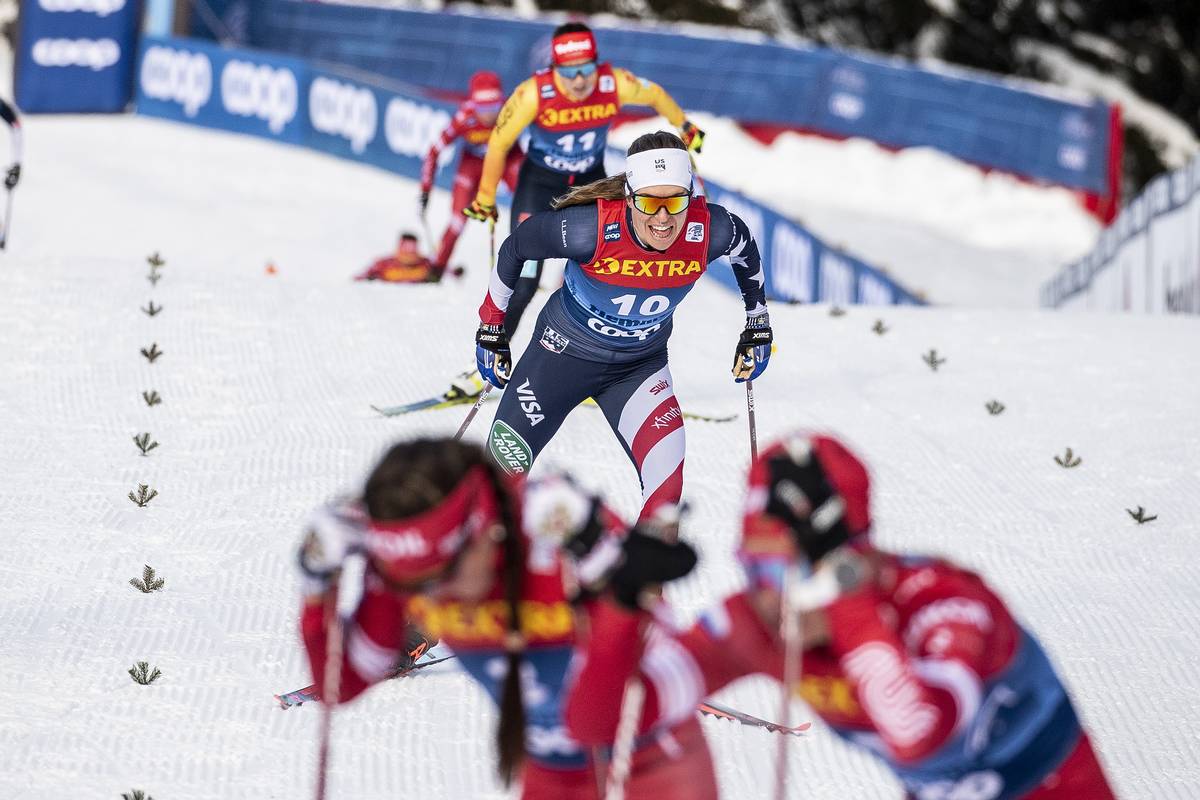
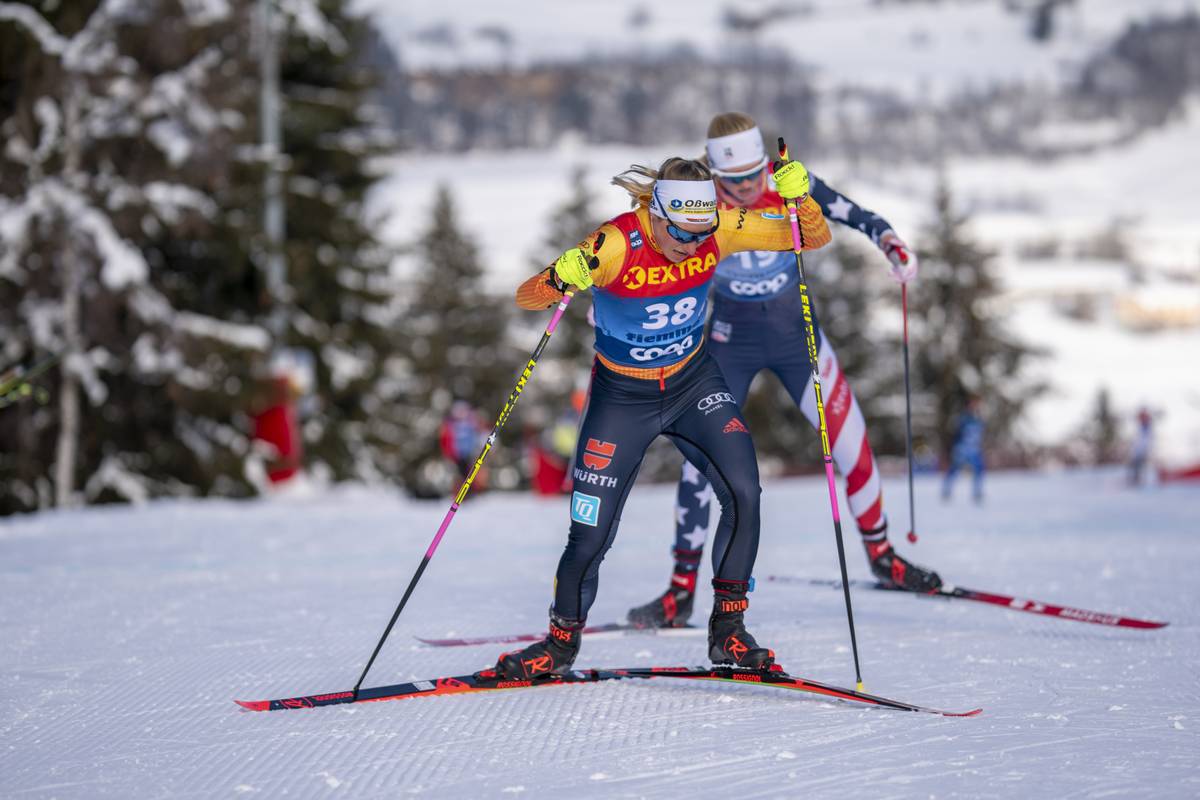
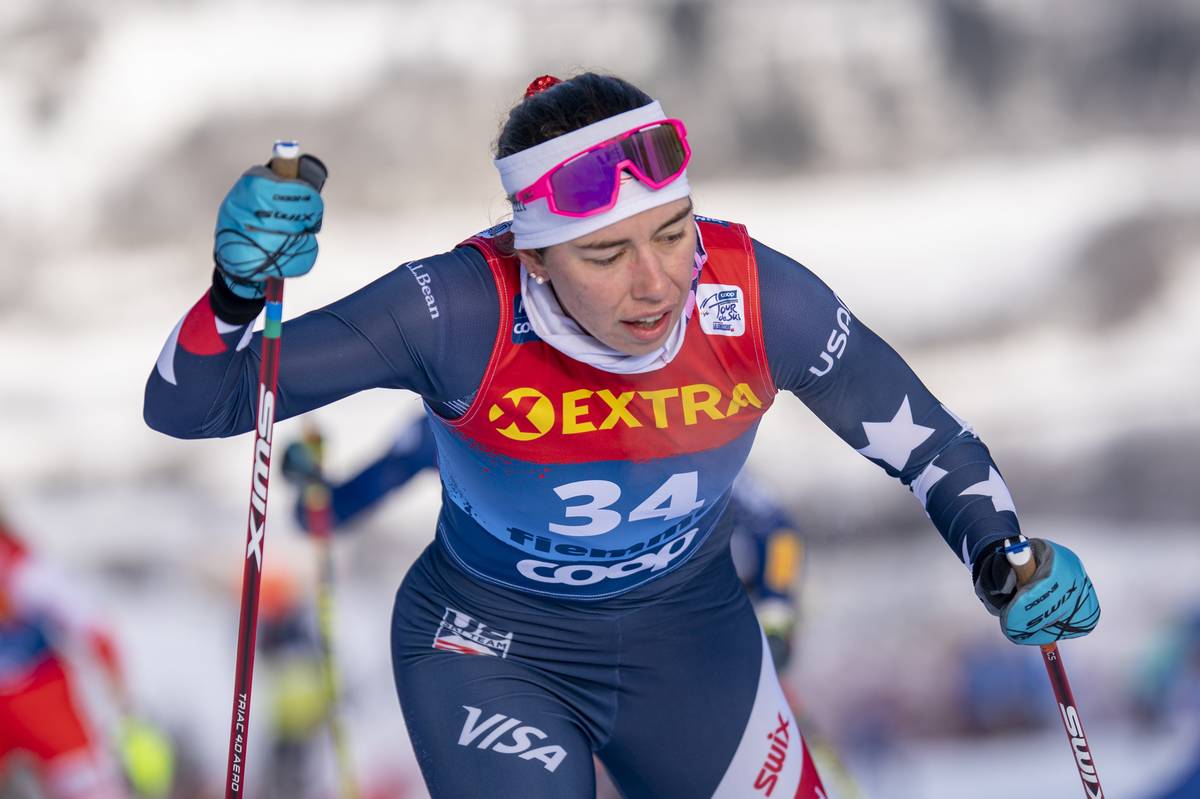
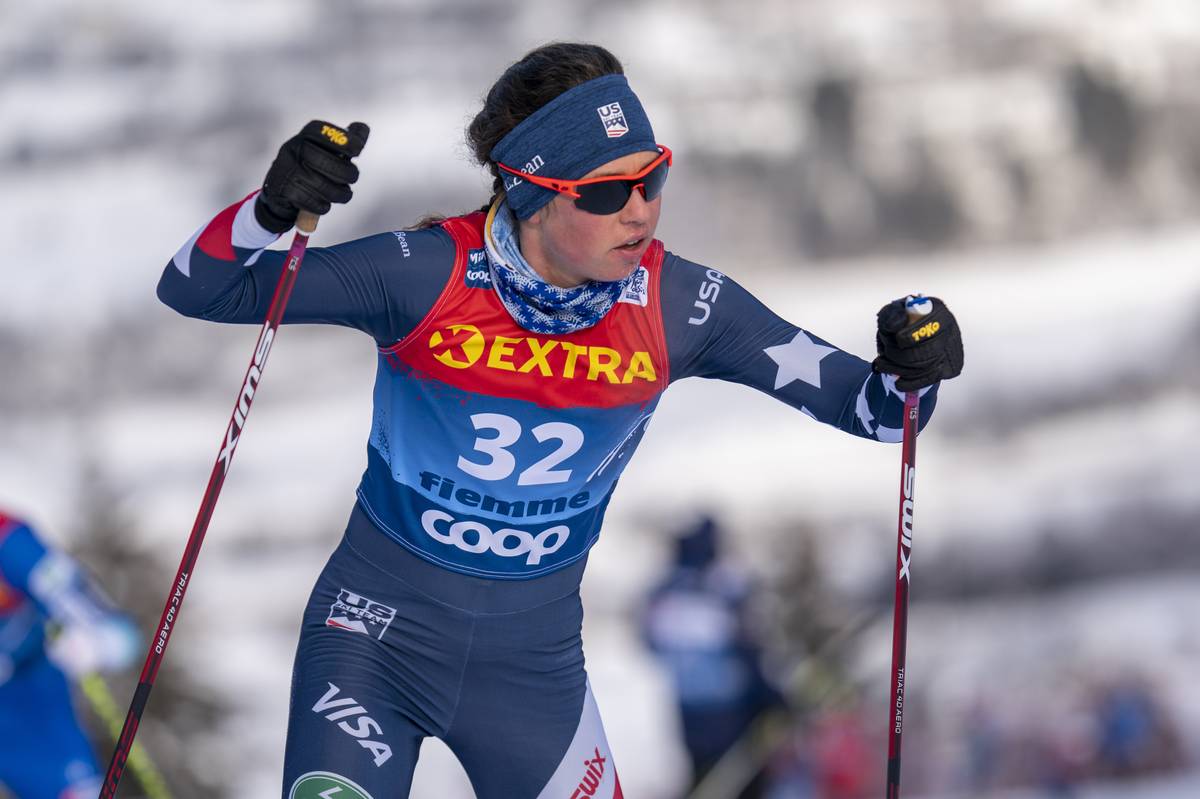
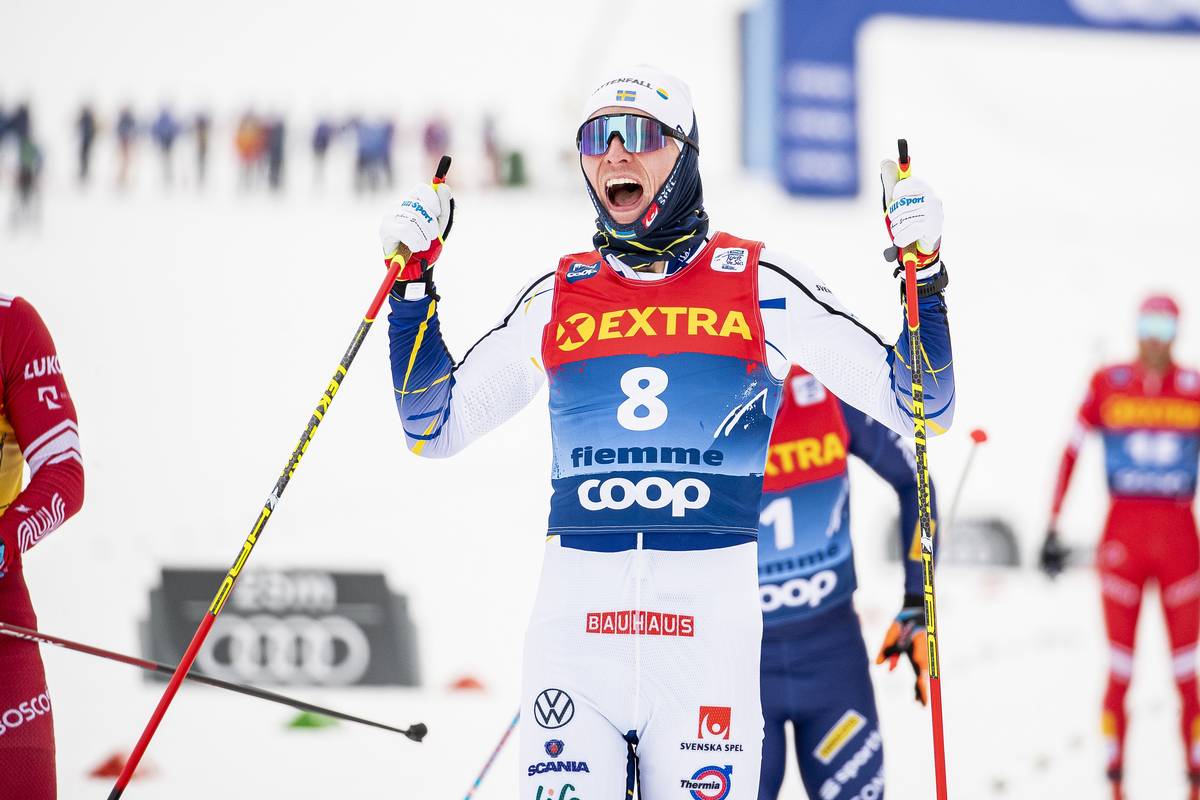
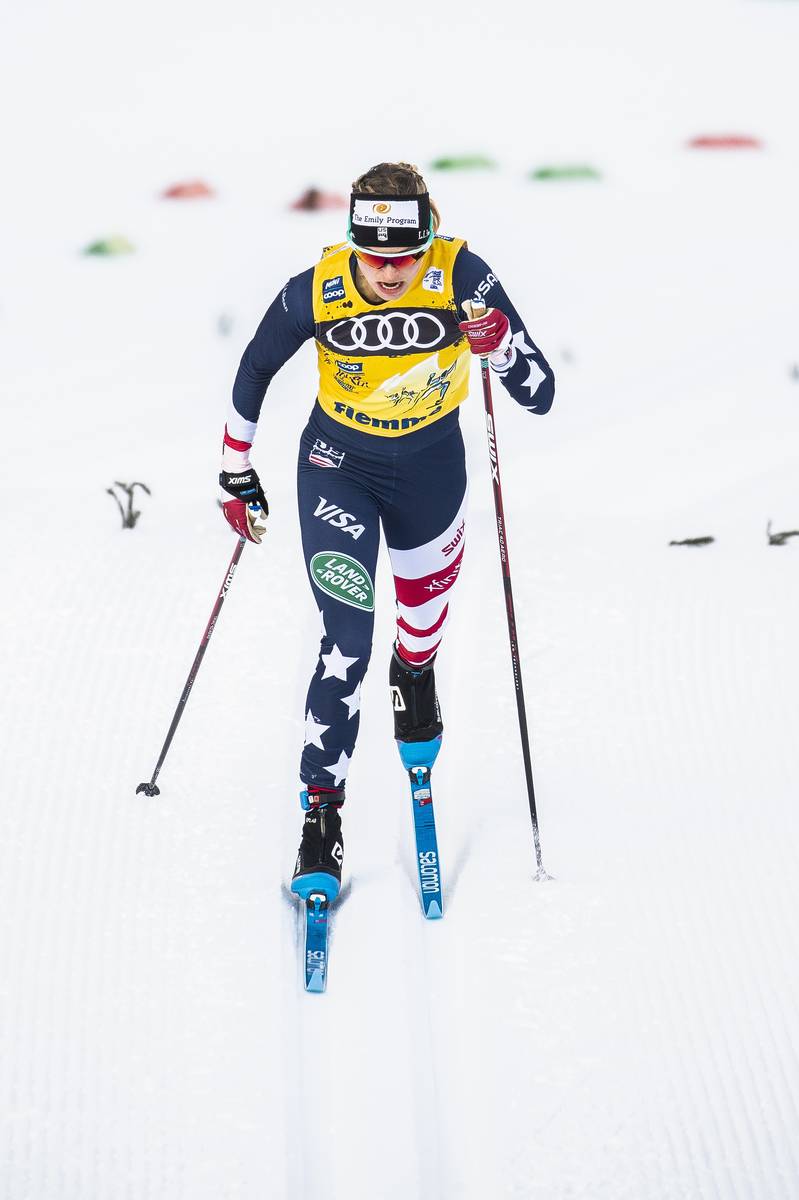
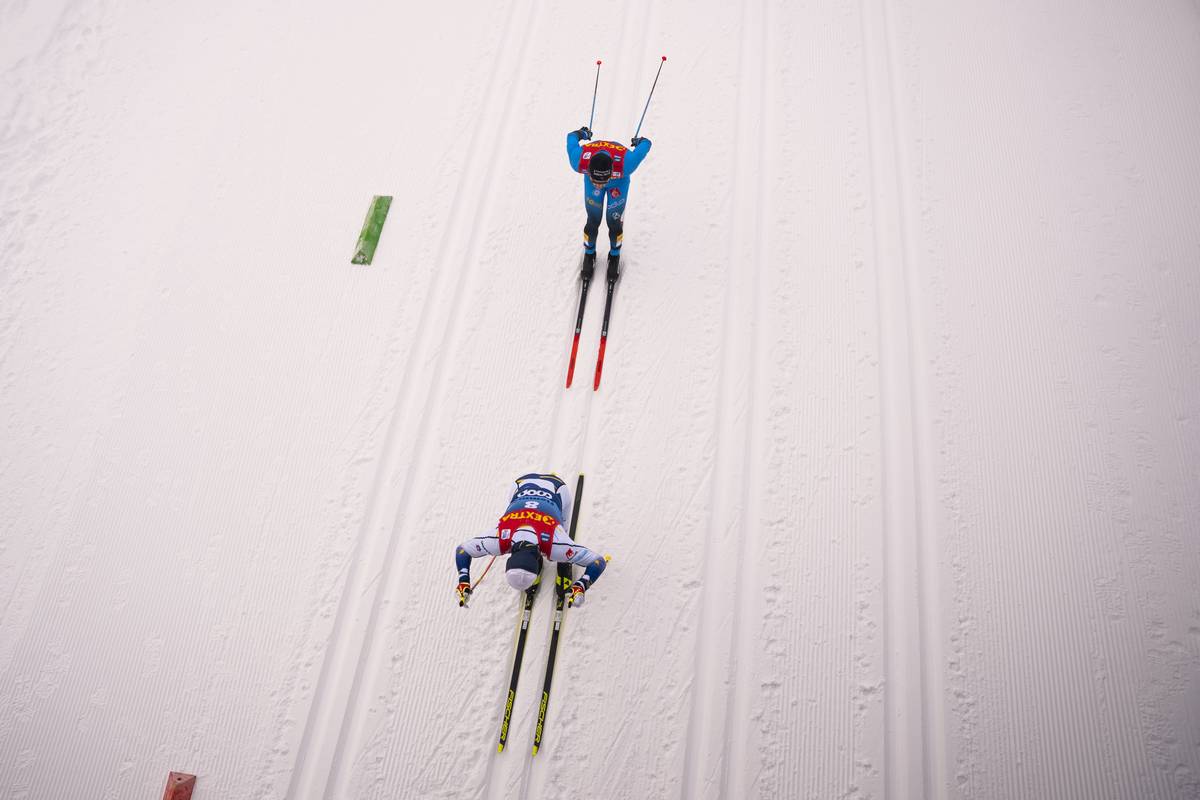
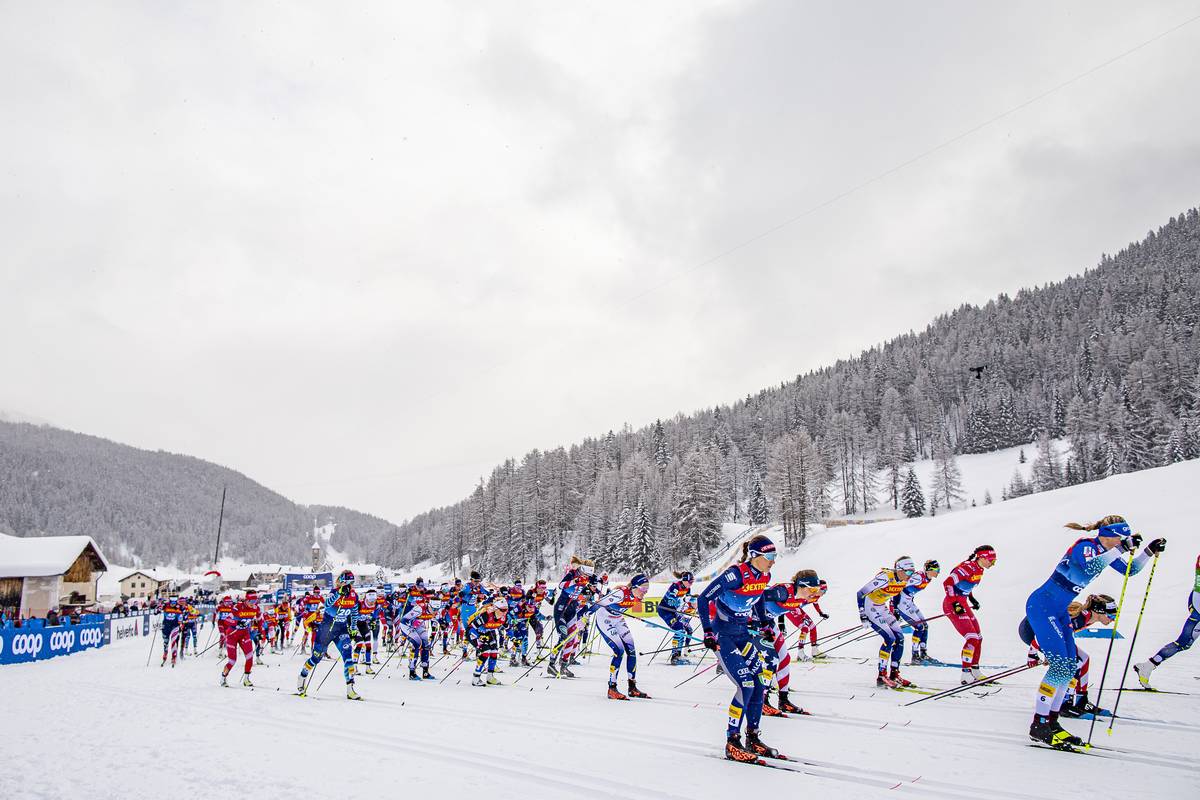
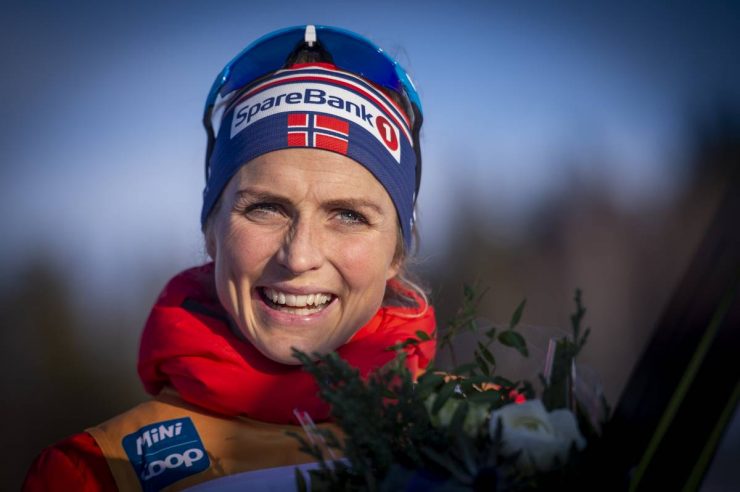
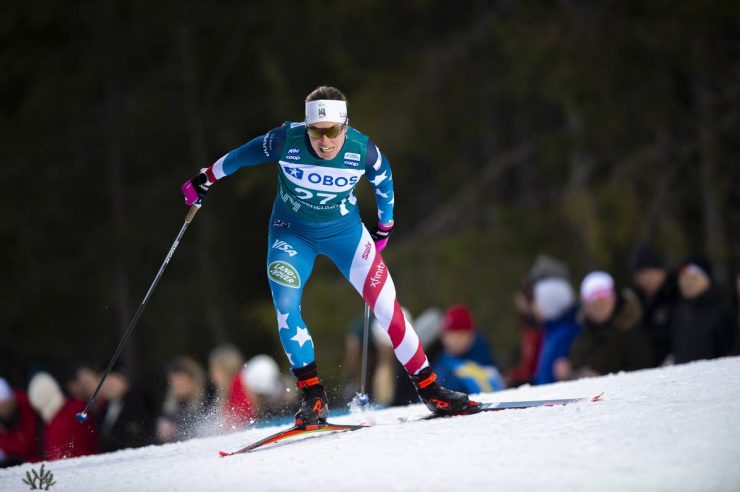
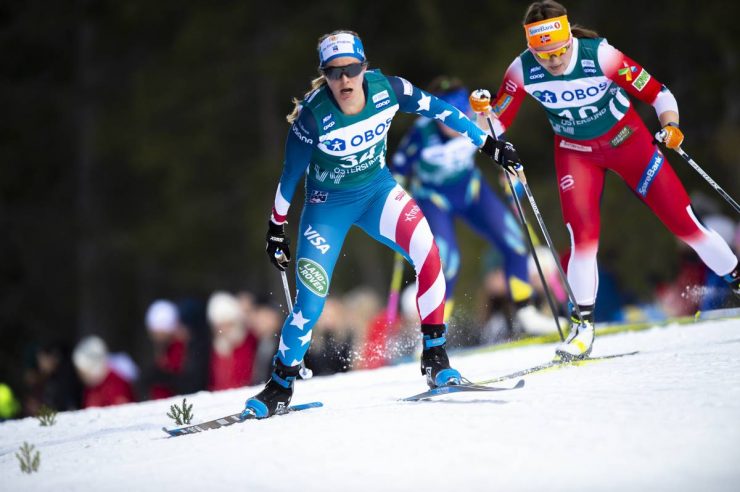
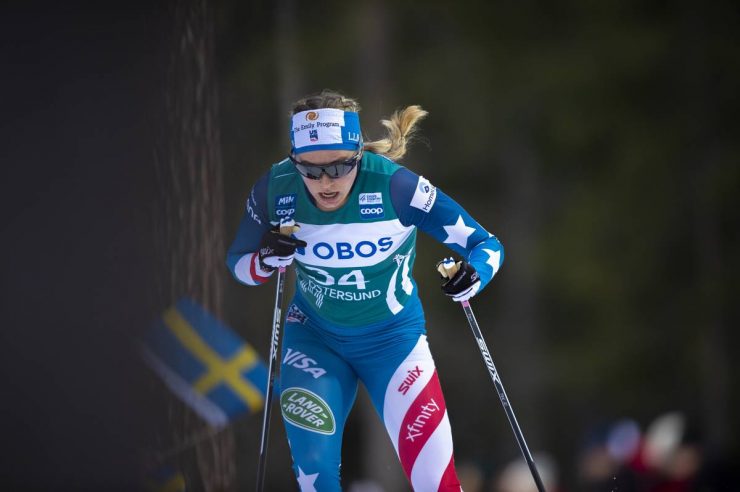
The pod is back to recap a good old-fashioned individual start throwdown, with special guest Kristin Størmer Steira.
We break down Therese Johaug of Norway’s nail-biting win over Finland’s Kerttu Niskanen and another nail-biting race for third between Finland’s Krista Pärmäkoski and Russia’s Natalia Nepryaeva. And we discuss questions about the U.S. team selection for the upcoming women’s relay, and the pressure cooker environment of the championships.
We’ll be back after tomorrow’s men’s 15 k.
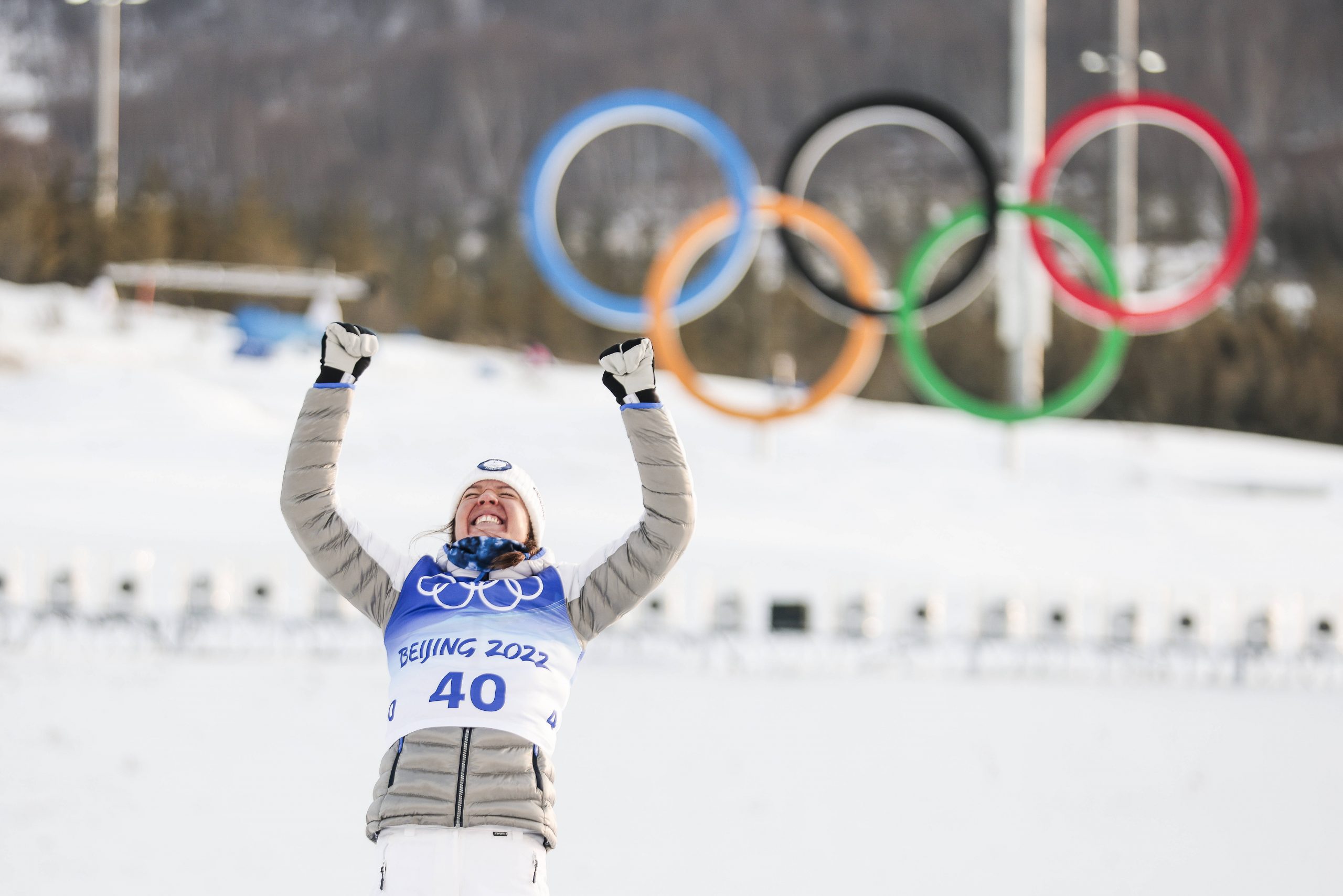
Kerttu Niskanen (FIN) celebrating her first individual Olympic medal. (photo: NordicFocus)
Here’s Nat and Devon breaking down (and celebrating) an historic day for the U.S. A bronze medal for Jessie Diggins stands as the highlight – she’s the first American woman to win an individual medal – but there were several other steps taken forward by the men and women wearing stars and stripes.
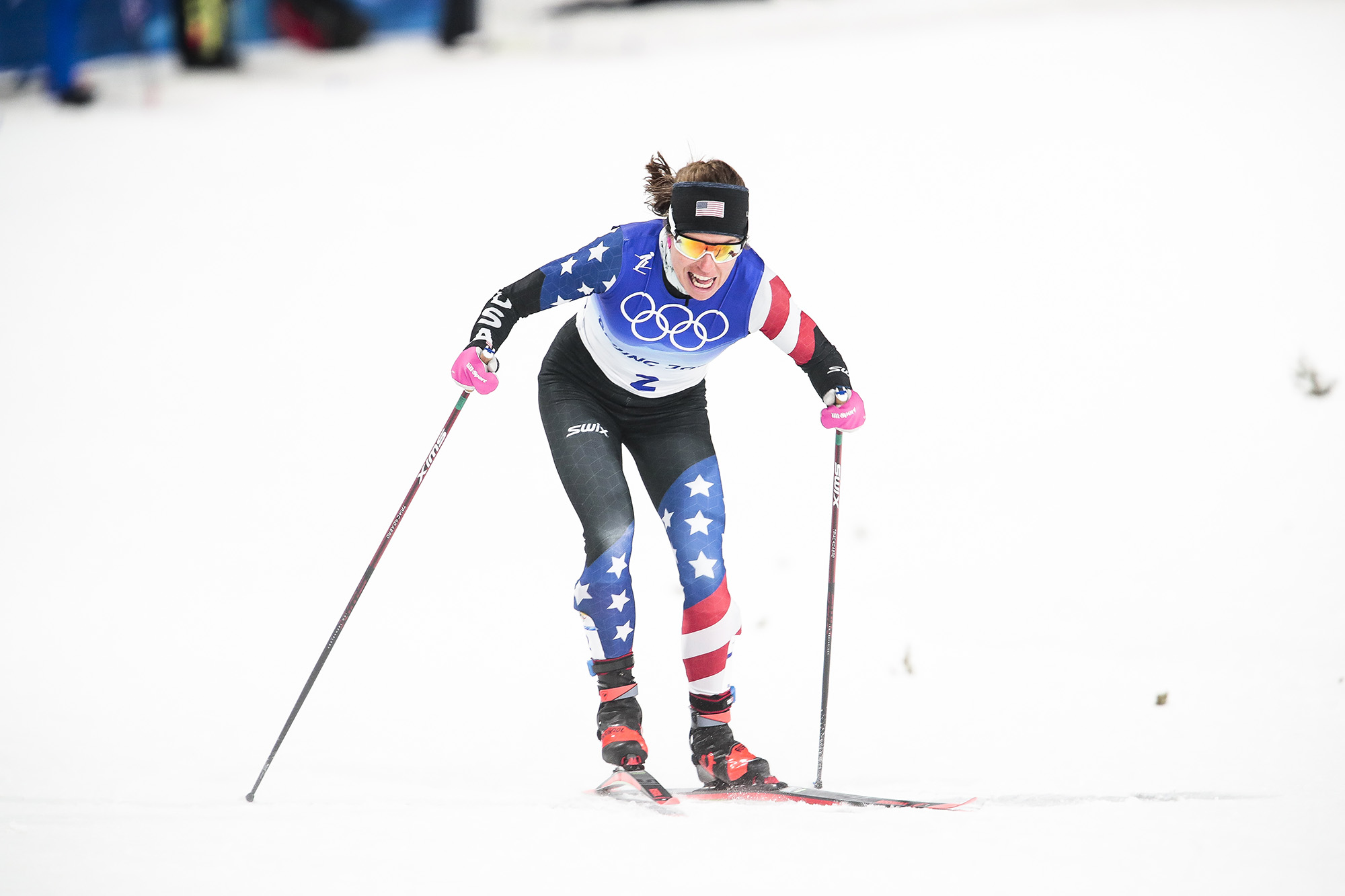
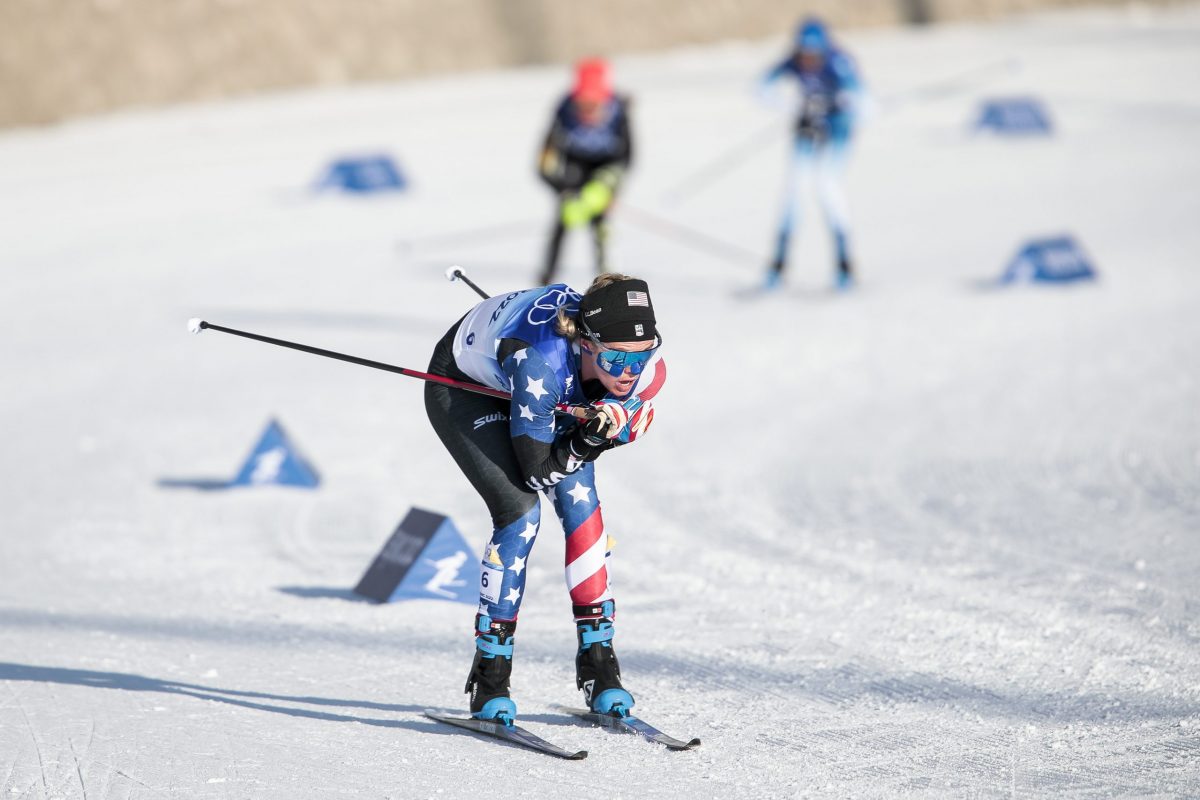
In particular, Rosie Brennan popped the second fast time in qualification. Overcoming a bad pole plant-induced fall in her quarterfinal, she powered through to take second (to the eventual winner), building momentum each round to finish 4th, just meters behind Diggins .
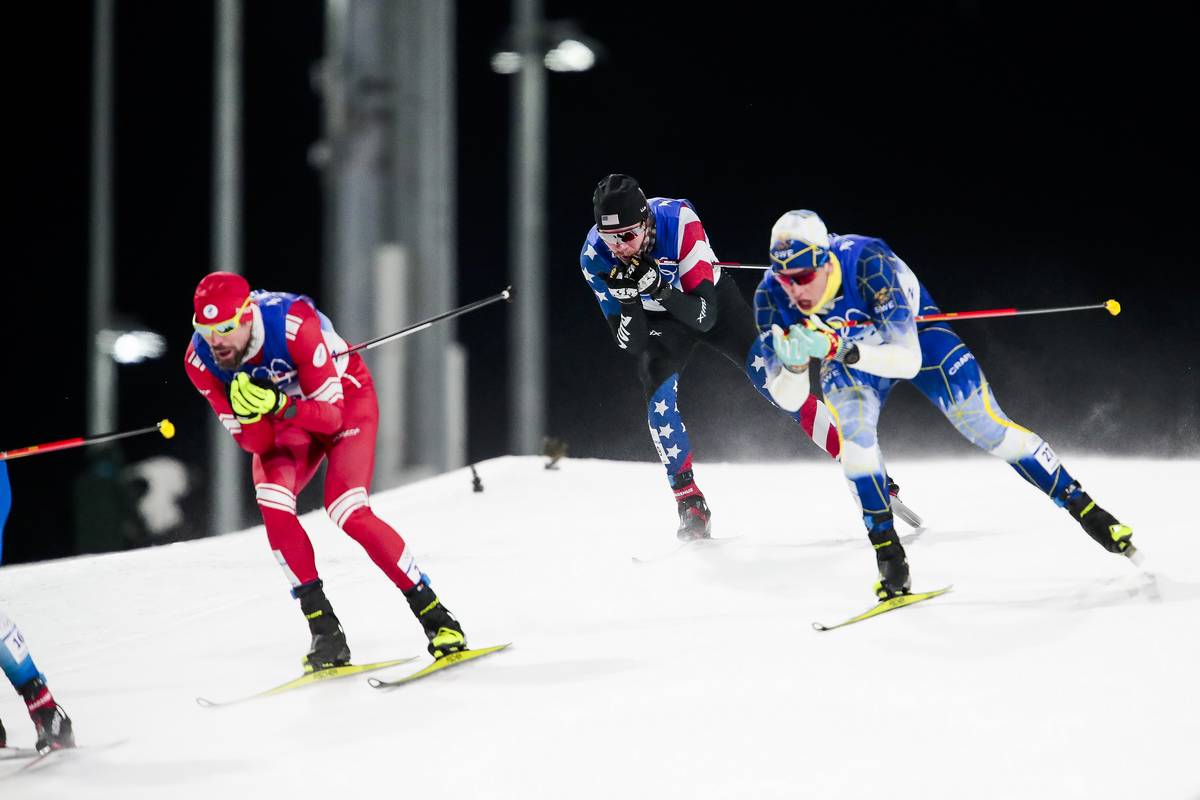
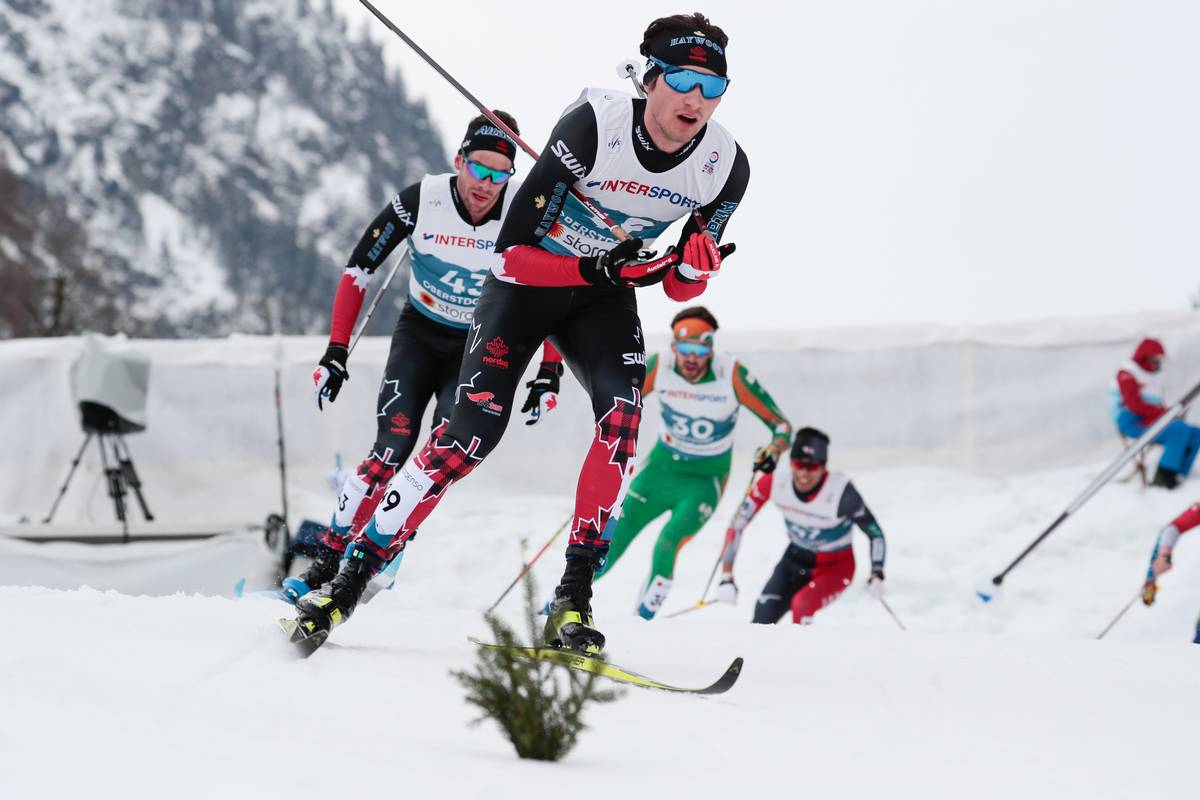
Ben Ogden races the quarterfinal of the men’s freestyle sprint during the 2022 Beijing Olympic Winter Games. (Photo: NordicFocus)
And you’ve got all four American men – also a record – in the Top-30, and Ben Ogden skiing into the semis to finish one second behind Pellegrino and Klæbo, landing in 12th as the top American men’s sprint finish in history.
So much more. Thanks for listening.
After stumbling out of the start, Rosie Brennan (USA) charges back to the front of her quarterfinal heat. (Photo: NordicFocus)
Kicking off the 2022 Beijing Olympic Games with a look into the women’s skiathlon. Co-host Nat Herz was on site during the race, braving the wind and cold to collect deeper insights into the scene, while Kershaw gives his hot take as a very-well-informed armchair quarterback. Note that Kershaw picked two of the top-three athletes correctly in his pre-Olympic podium picks: unsurprisingly, the favorite, Therese Johaug took gold, while Natalia Nepryaeva (ROC) earned silver instead of the bronze Kersh predicted. (Find full compiled picks and current standings for the Devon Kershaw vs. Alex Harvey Olympic podium predictions showdown here.)
Stay tuned for regular updates and race breakdowns over the course of the Games! Thanks for listening.
Jessie Diggins throws down an impressive performance in the skating half of the women’s 15k skiathlon, the opening event of the 2022 Beijing Winter Olympic Games. (Photo: NordicFocus)
This episode of the Devon Kershaw Show breaks down the lead-up to the Olympics with special guest star Alex Harvey, the Canadian World Championships gold medalist. Harv and Kersh make their podium predictions for the six Olympic events; we discuss the nightmare scenario with COVID cases inside Norway’s national team; and Nat checks in from his quarantine in Los Angeles in advance of his flight to Asia.
We’ll be back periodically during the Olympics — send questions and comments to devon@fasterskier.com and nat@fasterskier.com. And you can follow Nat’s journey to Beijing here on FasterSkier, or on Twitter and Instagram at @nat_herz.
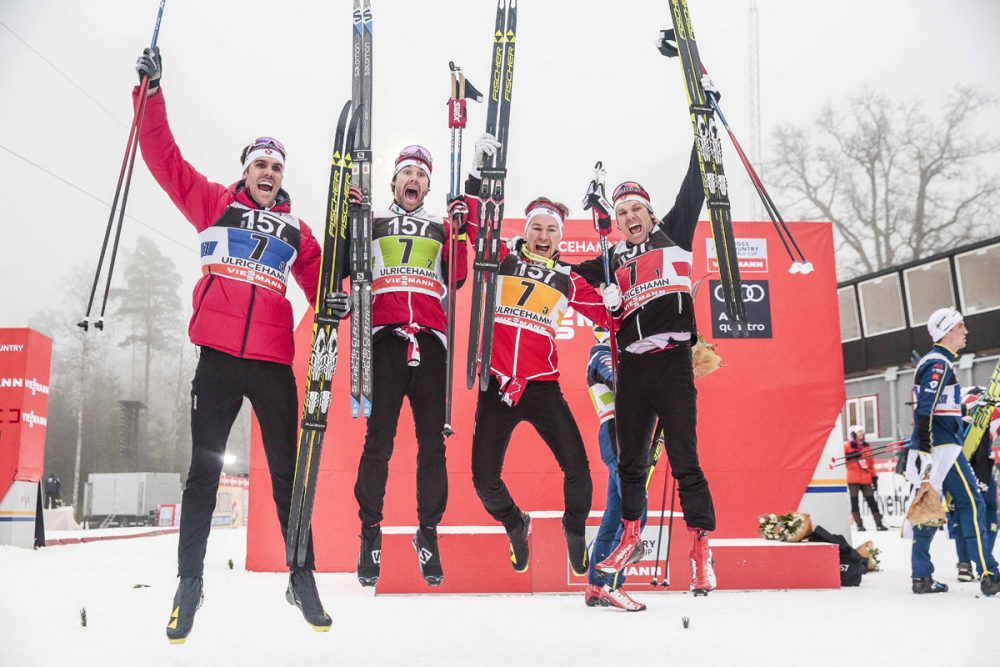
Left to right: Canada’s Len Valjas, Alex Harvey, Knute Johnsgaard, and Devon Kershaw after their historic third place finish in the 2017 men’s 4 x 7.5-kilometer team relay in Ulricehamn, Sweden. (Photo: Fischer/Nordic Focus)
We’re finally here with a long-promised mailbag episode for you this week. Devon takes us through questions from more than a dozen listeners; we cover World Cup competition formats, tactics, training, broadcasting and a bunch of other random fun stuff. We’ll be back soon with coverage of Olympic team selection and hopefully some more intel on the Olympic venue in Beijing.
Send us questions and feedback to devon@fasterskier.com and nat@fasterskier.com.
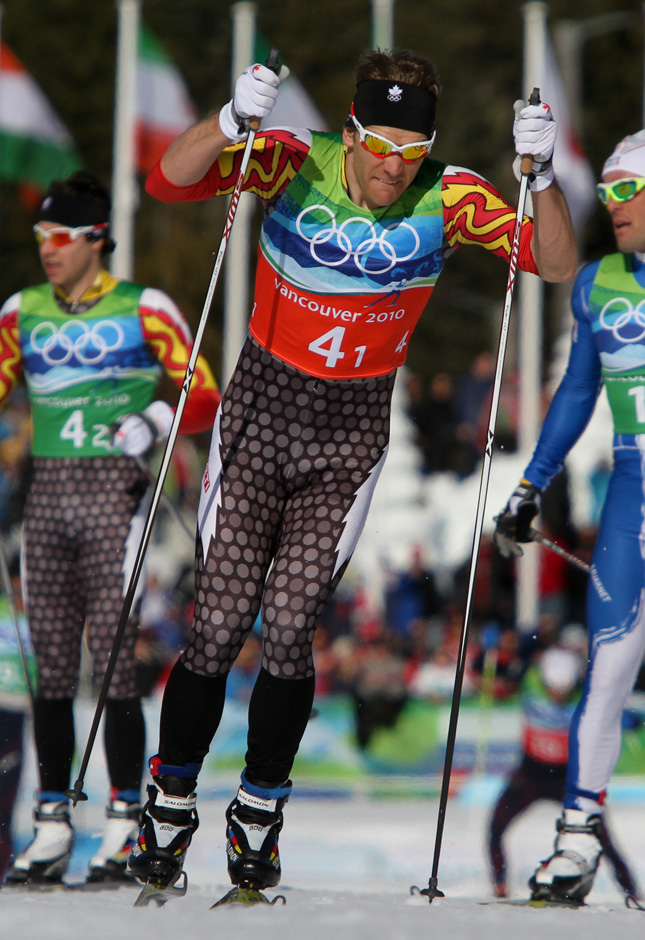
Devon Kershaw racing in the 2010 Olympics in Vancouver.
We’ve got extra-special Alaska-based guest Kikkan Randall joining us for this episode to recap the 2021/22 Tour de Ski. We break down a rough finish for a head cold-afflicted Jessie Diggins, some sensational skiing by Johannes Høsflot Klæbo, and some lingering questions about Olympic preparation.
Kikkan Randall finishing the Tour de Ski’s final climb on Sunday. (Photo: FasterSkier archives)Jessie Diggins embodies the soul crushing, full body burning cumulative fatigue of the Tour de Ski following the final hill climb up the Alpe Cermis. (Photo: NordicFocus)
Welcome back to the Devon Kershaw Show. This week we have an under-the-weather Rachel Perkins, filling in for Nat Herz, to breakdown the first two stages of the Tour de Ski in Lenzerheide, Switzerland. From winter storm conditions for the 10/15k classic that contrasted a clear and fast opening freestyle sprint, there was plenty to note in these first two stages. We discuss translating top results in qualification into advancing into the semifinals and finals, Diggins and Kern’s power that earned the Americans 1st and 4th in the sprint, and Finnish mastery of rub skis leading to Niskanen sibling dominance in Stage 2.
Have a question you want answered? Send them to Devon at devon@fasterskier.com and to Nat at nat@fasterskier.com.
We’ll be back in a few days after the next two stages of the Tour de Ski, a 10/15k mass start skate and classic sprint, in Oberstdorf, Germany. Thanks for listening.
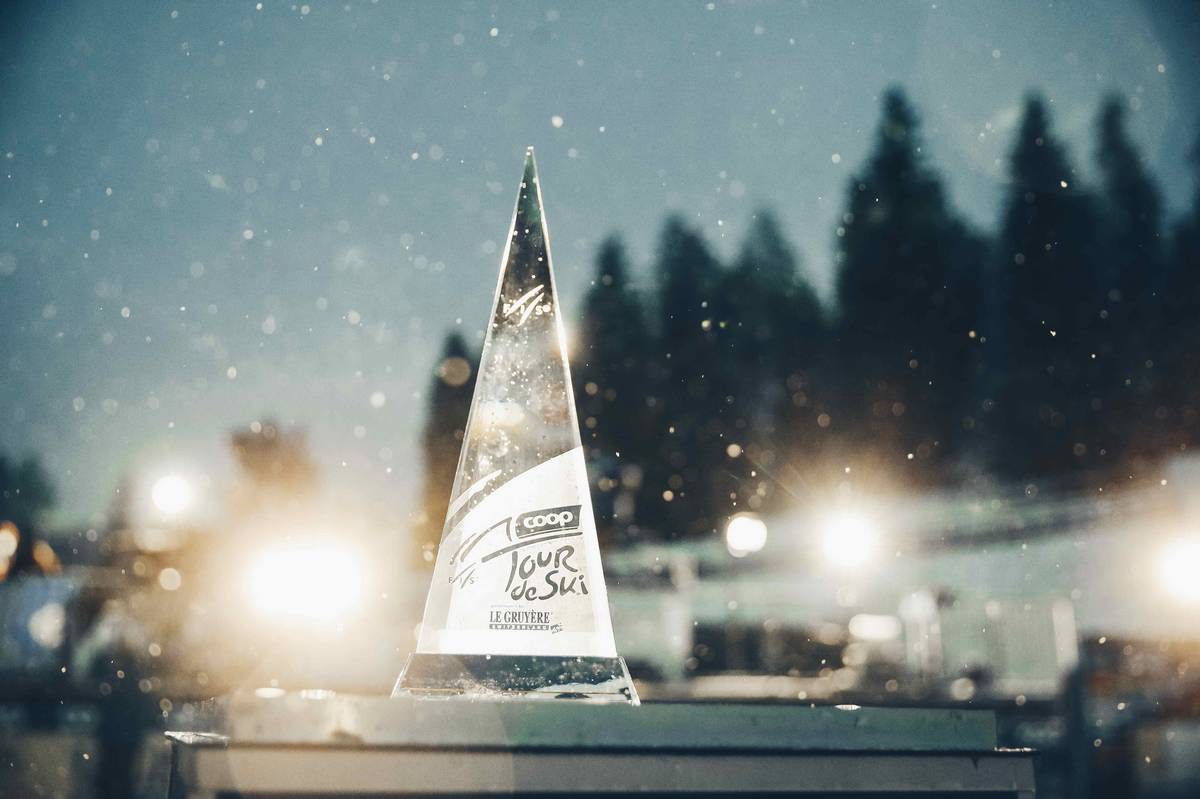
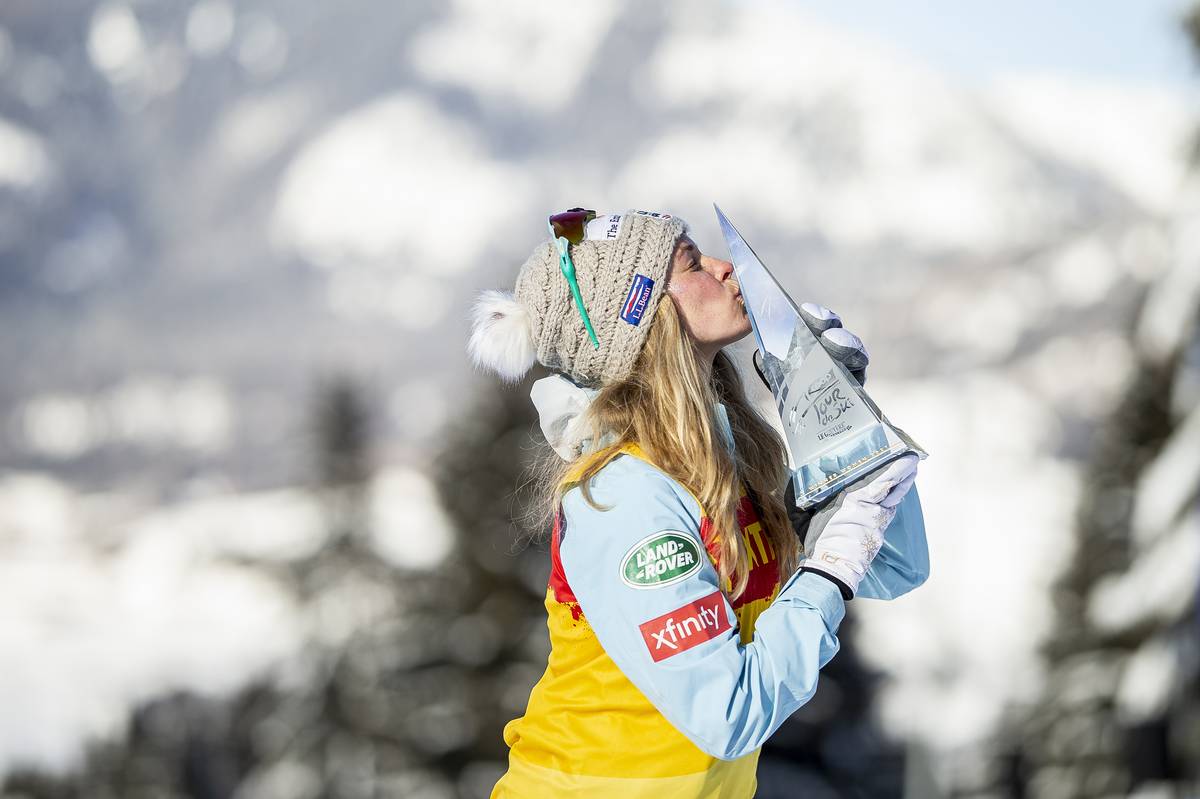
In addition to plenty of cheese, the 2021/22 Tour de Ski winners will take home this coveted trophy. (Photo: NordicFocus)
It was another hot weekend of racing in Lillehammer, with another epic Johaug–Karlsson duel, some legit results from American racers, and some breakout performances from some new names. Today, Devon Kershaw and Nat Herz break it down, with the added bonus of Kershaw’s firsthand experience of waxing for the Canadian team on-scene.
Come for the race breakdowns, stay for the monologues about TV production and the cross-country ski boot supply chain.
Send your questions to Devon at devon@fasterskier.com and to Nat at nat@fasterskier.com. Catch you next week.
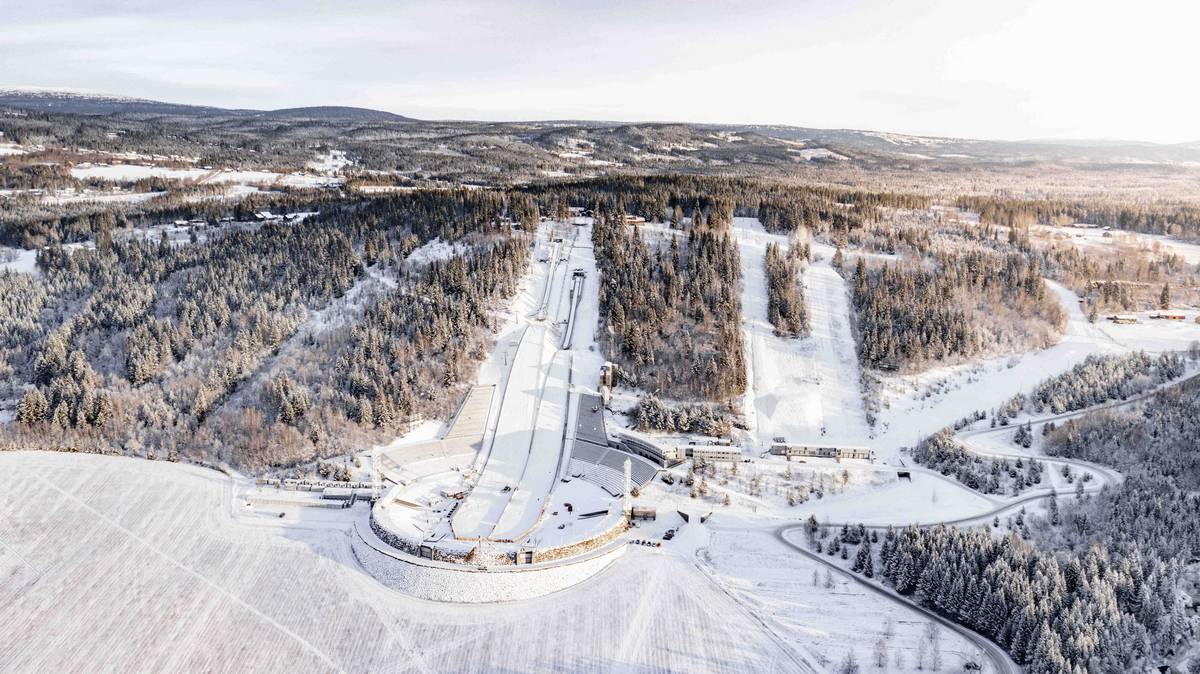
An aerial view of the Lillehammer venue with low-snow conditions covered by fresh flakes. (Photo: NordicFocus)
The Devon Kershaw is back from summer hibernation!
This week, Devon takes a break from medical school to break down the first big tune-up races of the season in Muonio, Finland. Joining him are the show’s new co-host, former FasterSkier reporter Nat Herz, along with Canadian athlete Russell Kennedy, who popped a huge result in one of the races in Finland.
Russell catches us up on the European circuit; we also discuss Charlotte Kalla’s recently awarded honorary doctorate degree, disgraced former Estonian racer Andrus Veerpalu’s son’s presence in Finland, and impressive results by 43-year-old Finnish skier Riita-Liisa Roponen.
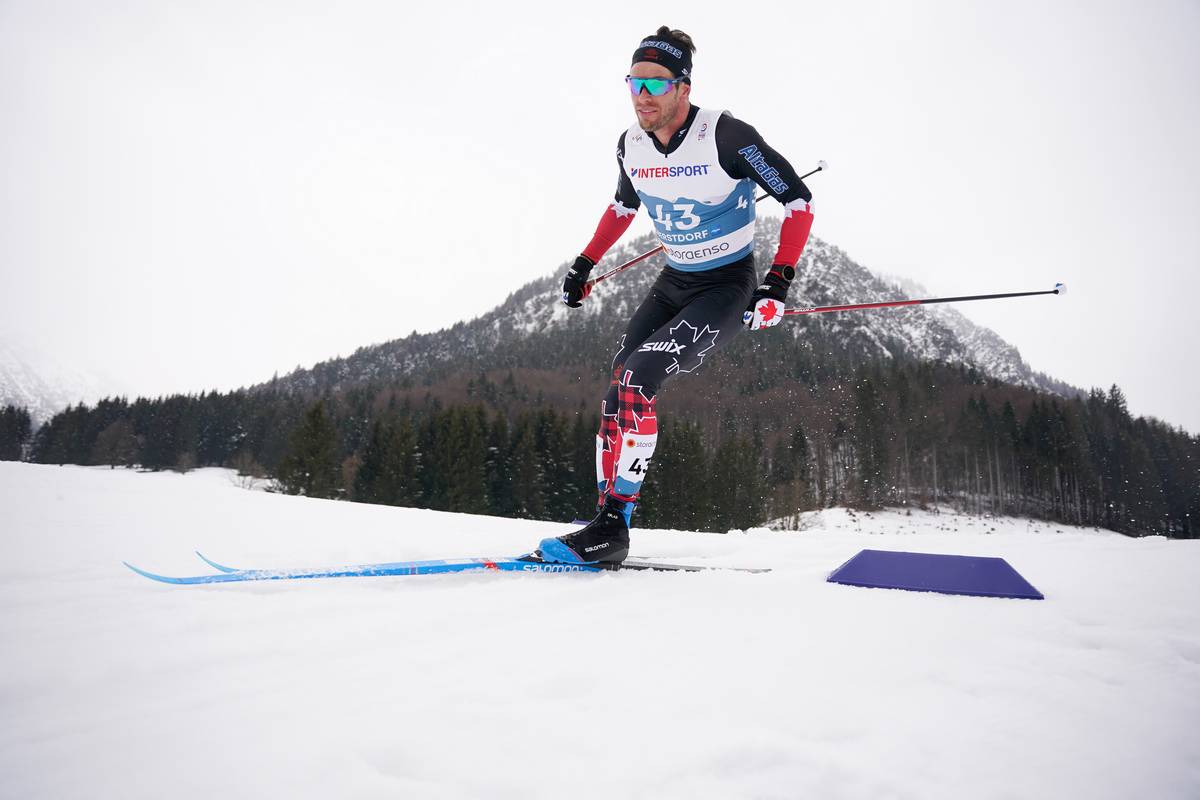
Russell Kennedy on course during the 2021 FIS World Ski Championships in Oberstdorf, Germany. (Photo: NordicFocus)
There was a time when the Canadian National Cross-Country Ski Team was the North American team to watch. As skiers like Kikkan Randall and Jessie Diggins found their footing, Becky Scott, Chandra Crawford, and Sara Renner were medaling at the Olympics. Alex Harvey and Kershaw won team sprint gold at the 2011 World Championships. And Harvey continued to romp – winning the 2017 World Championship gold in the 50k. Along the way, like many programs, Canada has enjoyed roster and coaching continuity. Conversely, the program has also suffered high rates of coaching turnover and insufficient funding.
As Canada looks for a new National Team Coach, in this episode Kershaw explores his relationship with the national team. He explains that some years it was plug and play. Other years, it was about finding normalcy with a new coach, a new set of norms, and a positive direction to remain motivated.
In this episode, we chat about the weekend’s racing from World Juniors and U23s. This is part two of our coverage of Worlds for the younger folks. This episode covers the relays and mass start classic races that concluded Sunday in Vuokatti, Finland.
On the show is longtime Kershaw friend Noah Hoffman, who it turns out, beyond his cross-country skiing endurance exploits, is an investment partner with Kershaw. We hear about the weekend’s racing, their experiences at Junior/U23 Worlds, and the fundamental strategic vision guiding their stock picks.
Junior Worlds 15 k mass start classic from Vuokatti, Finland. (Photo: Vuokattisport/@vuokattisport)
Thanks for listening and as this winter moves into mid-February, we hope all are well.
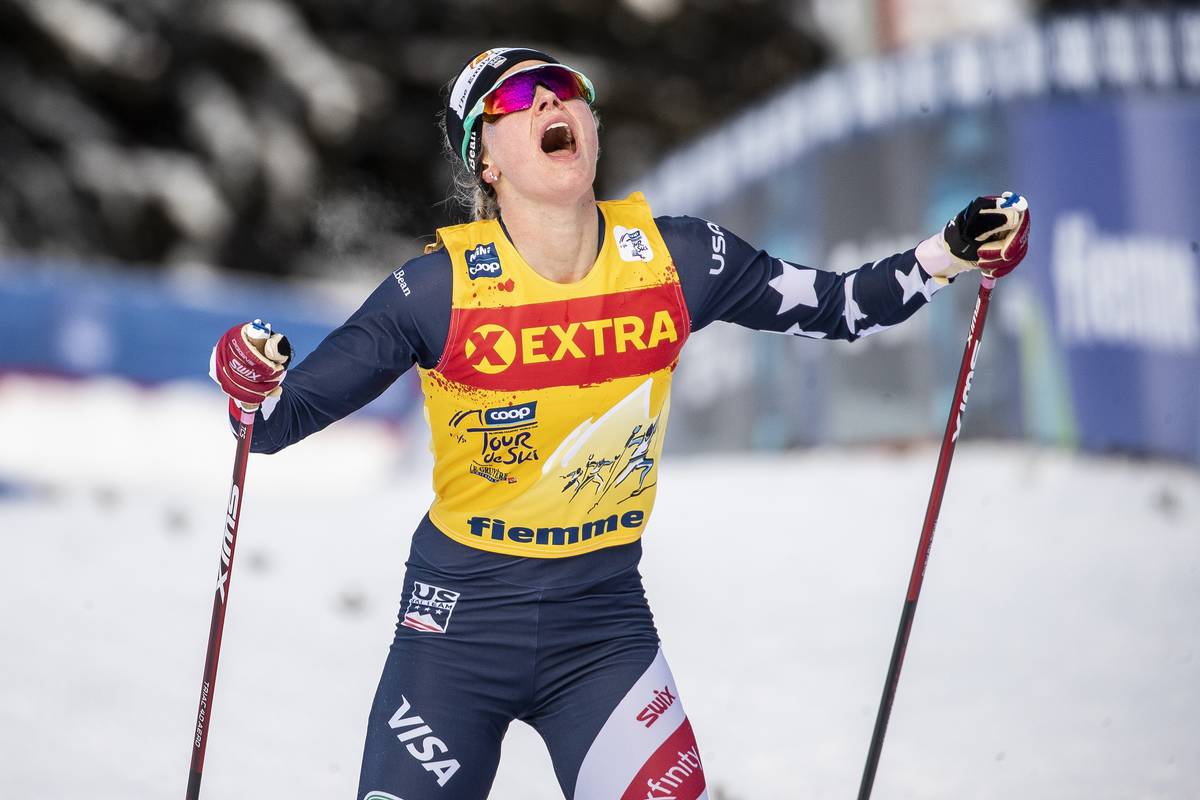
Raw emotion as Jessie Diggins becomes the first North American to win the overall Tour de Ski. (Photo: NordicFocus)
This World Cup coverage is made possible through the generous support of Marty and Kathy Hall and their A Hall Mark of Excellence Award. To learn more about A Hall Mark of Excellence Award or to learn how you can support FasterSkier’s coverage please contact info@fasterskier.com.
Though Devon Kershaw might fairly say “It’s not really cross country skiing,” as a viewer, the grueling climb up the Alpe Cermis is the crown jewel of the Tour de Ski. Sure, it is both impressive and visually appealing to watch beautiful technique and tactical racing, but there is nothing quite like watching racers toil through the lactic burn of grinding their way 400 meters up a ski area, at times with over 40% grade. Wheels come off, gaps close quickly, anything can happen.
Here’s how today shook out.
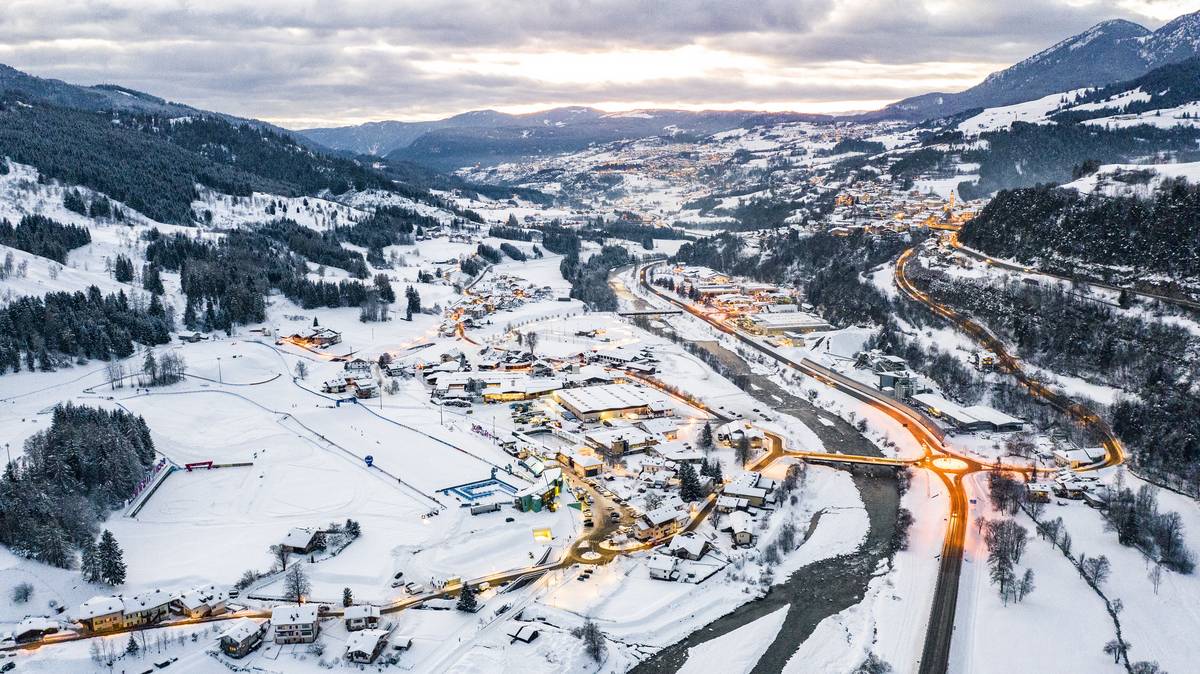
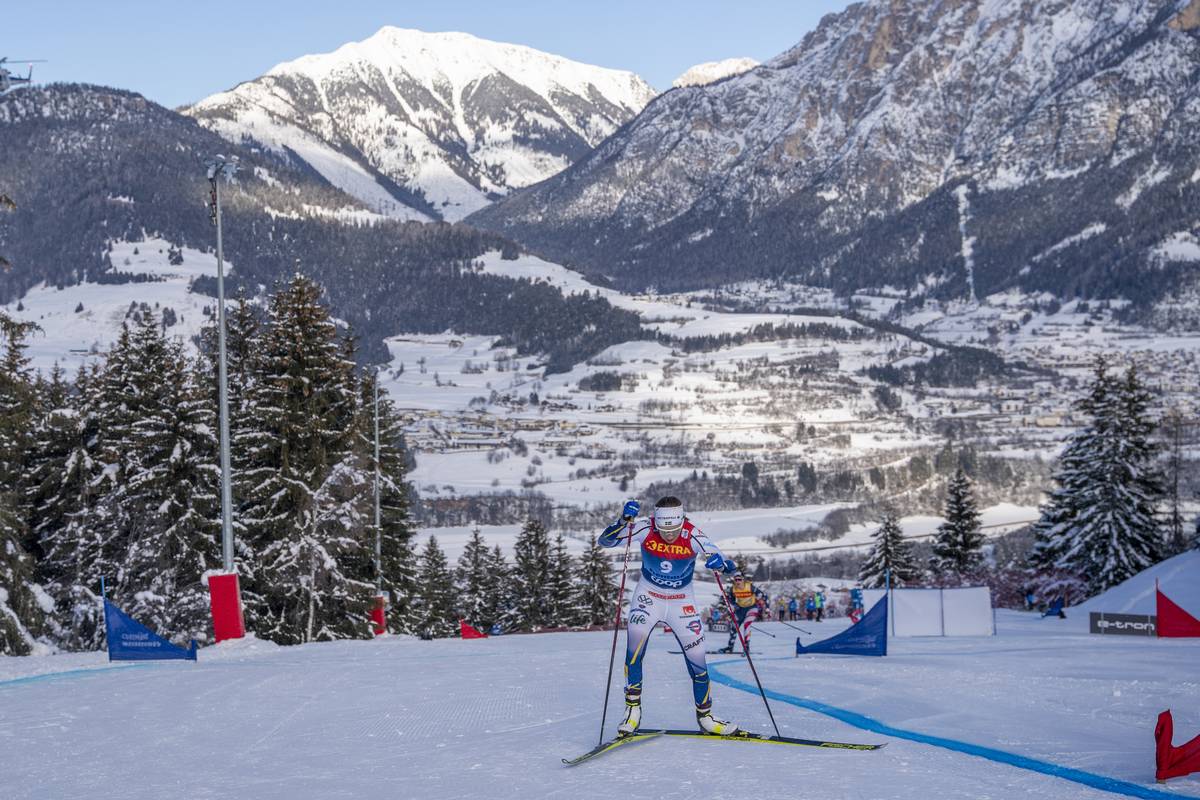
After nearly 50 kilometers of racing over seven stages, skiers take to the tracks one last time in Val di Fiemme, first for a lap of the sprint course, then soaring along the river banks along the narrow winding track of the Marcialonga, Italy’s WorldLoppet series classic. And, as camera angles altered from shots of the Swedes that set pace down the valley, controlling the narrative from the front while still conserving energy for the climb over the final 2k, to breathtaking aerial views of the frosted valley, it is clear why Marcialonga organizers refer to Val di Fiemme as a “Italian cradle of cross-country skiing”.
An aerial view of the storied venue in Val di Fiemme, Italy. (Photo: NordicFocus)
After a thrilling set of four podium finishes, including back-to-back distance wins in Toblach, all eyes were on Jessie Diggins. She entered the final stage wearing the yellow bib with a lead of 55 seconds in the overall standings. Given the beastly nature of the climb, this time margin certainly did not indicate that Diggins had her first Tour de Ski win in the bag.
To add to the energy, two sprint opportunities for bonus points were available at the 2.5 and 6.6 k checkpoints, this alternate leaderboard adding interest and incentive for sprinters to remain in the Tour.
Linn Svahn on the Alpe Cermis- she helped pace Andersson early in the stage and won three stages in this edition of the Tour. (Photo: NordicFocus)
Point leader and winner of both sprint stages, Sweden’s Linn Svahn charged off the front of the pack at the 2.5 k mark, collecting 15 bonus points with her teammate Ebba Andersson hot on her tails. The two quickly allowed the pack to close the nearly 4-second gap, but Andersson remained at the front, pulling away to create a gap of over 10 seconds at the 6.6 k mark, which she kept as the grade inclined.
Perhaps trying to lure Diggins to push too hard too soon, perhaps she had her eye on the TdS podium, or perhaps just looking to be the queen of the hill and win her first World Cup, it was clear that Andersson wanted to dictate the pace from the front in the back half of the mass start event.
Sweden’s Ebba Andersson takes the stage win, and placed third overall in the Tour. (Photo: NirdicFocus)
Andersson was the epitome of steady as she worked her way up the climb. She could V2 when the grade was humane, and smoothly transitioned between her V1 and the “coach’s skate” required to keep skis gliding on the steepest pitches.
While the Swede remained composed, Diggins displayed the grit and perseverance for which she is beloved as a racer. Though Andersson was more than two minutes back in cumulative time heading into the final stage and the remainder of the field behind her, Diggins left nothing to chance, giving her all as she pushed every meter. Holding her ground, the American kept her time back on the leader even and tight, hovering around nine seconds throughout the climb.
Like everyone, even Diggins rides the struggle bus up the Alpe Cermis. Diggins, however, motored to a Tour de Ski overall win on Sunday. (Photo: NordicFocus)Jessie Diggins racing to second on the stage and first overall in the Tour de Ski atop the Alpe Cermis. (Photo: NordicFocus)
With less than a kilometer to go, head coach Matt Whitcomb cheered from a switchback as Diggins passed, his excited shouts leaving him nearly as breathless as the athletes. Pine boughs tucked into the snow to create the final lanes as Andersson and Diggins headed toward the inflated arch that offered relief from the pain in their bodies.
Ebba Andersson (SWE) chugging along in front for the Stage 8 win. (Photo: NordicFocus)
With the end in sight, Andersson with a poker face V2’ed through the finish while a slack-jawed Diggins held together in V1 to cross the final meters and collapse over the finish line.
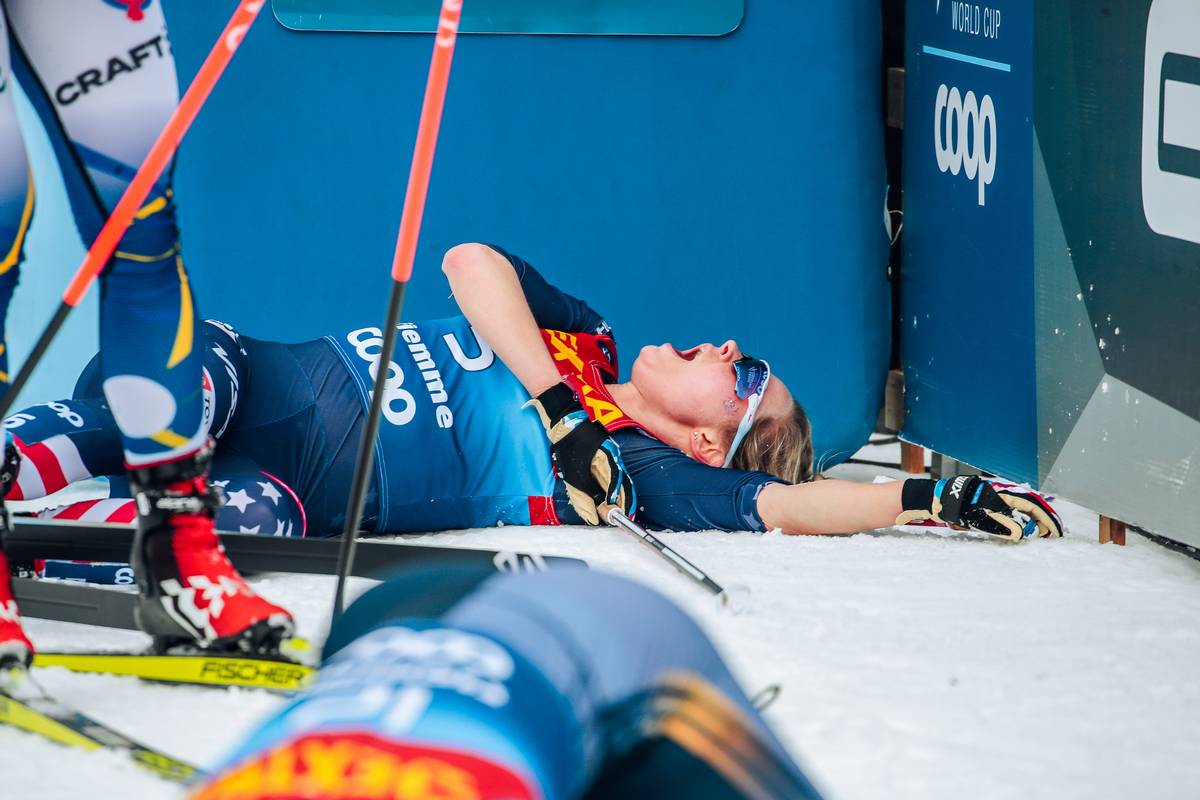
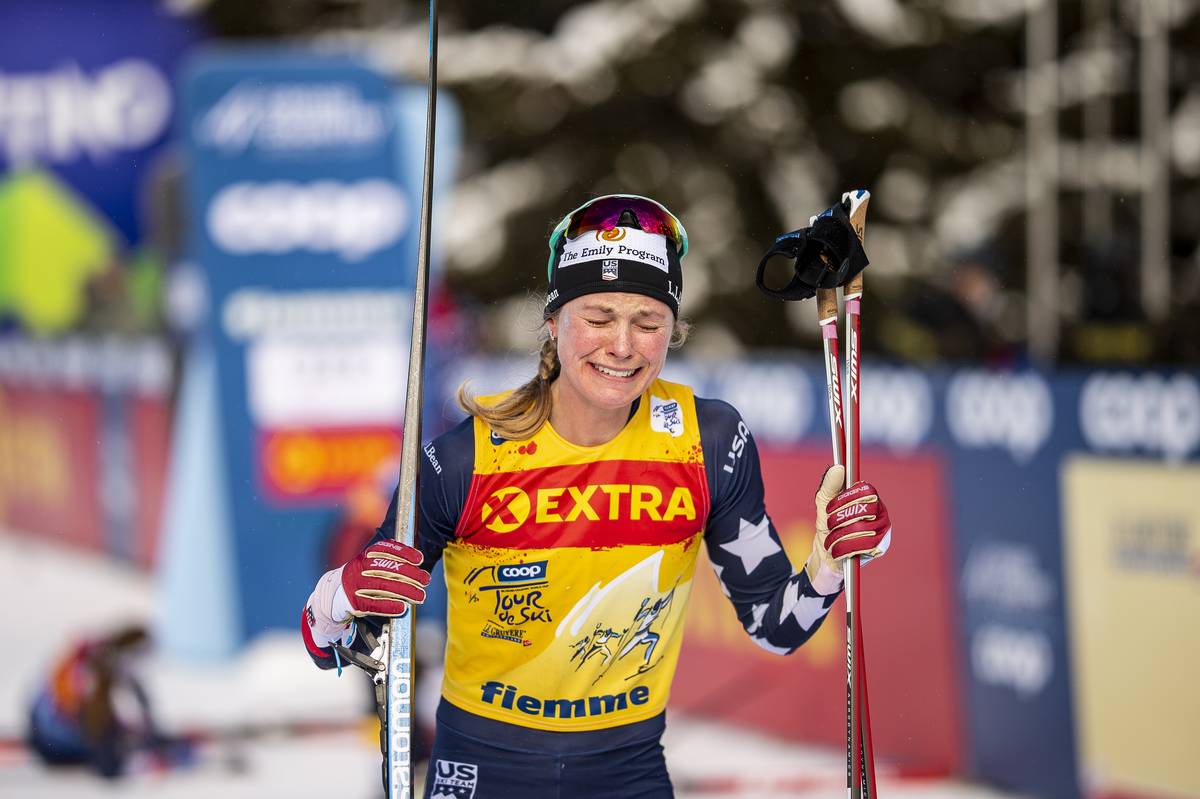
Finally, the Tour de Ski victory was hers and she could simply lie in the snow, chest rising and falling with her labored gasps for air. More than a win, this achievement makes Diggins the first American — in fact, the first non-European — man or woman winner in the 15-year history of the Tour. She also sits atop the leaderboard for Overall World Cup standings.
Victory and relief, Jessie Diggins completes the climb up the Alpe Cermis to win the overall 2021 Tour de Ski. (Photo: NordicFocus)Exhausted, Jessie Diggins crosses the line second in the stage to hold onto her lead in the overall Tour de Ski. (Photo: NordicFocus)
“This was a lifelong goal,” Diggins told FIS after her race. “We had an amazing team atmosphere this whole time, and amazing support and help, and so many cheers from around the world — it really gave me wings up the hill today.”
The interviewer asked what this result meant in light of a World Championship season, as completing the arduous Tour in such a year could be seen as a risk. If an athlete cannot recover properly in the subsequent six weeks, their potential on the championship stage could be compromised. Diggins’ answer looked through a wide-angle lens.
“It means so much. I think it’s so cool for our country to show that it’s possible. And now I’m looking forward to resting.”
Jessie Diggins wins the overall 2021 Tour de Ski and sits at the top of the overall World Cup standings. (Photo: NordicFocus)On the top step of the podium, Jessie Diggins is the 2021 Tour de Ski winner. (Photo: NordicFocus)Jessie Diggins becomes the first North American skier to win the Tour de Ski in its 15 year history. (Photo: NordicFocus)
Behind the two leaders, France’s Delphine Claudel crossed the line in 3rd (+32.6). Evidencing the “anything can happen on the Alpe Cermis” sentiment, Claudel sat in 19th in the overall standings leading into the final stage and had never before earned a World Cup podium, though she was 7th in the 10 k skate in Stage 4. The 24-year-old overtook Russia’s Yulia Stupak in the final kilometer, closing a 12 second gap and creating a nearly 8 second one of her own.
Stupak held on for 4th place (+40.0), followed after a gap by teammate Tatiana Sorina (+1:04.3) rounding out the top five.
Yulia Stupak of Russia here on the Alpe Cermis, placed second overall in the Tour. She won two stages, and podiumed in four others. (Photo: NordicFocus)
With this result, Stupak held her ground in second place for the overall TdS standings, finishing 1:24.8 behind Diggins in cumulative time. Andersson’s outstanding climb was a springboard, advancing her from 6th to 3rd (+2:00.8). Recall that Andersson did not make the heats in Stage 1 of the Tour and finished 12th and 18th, respectively, in the second and third stages. Landing on the podium four times in the final five stages fueled her steady rise through the ranks.
Today’s queen of the Alpe Cermis, Sweden’s Ebba Anderson set the fastest time in the final stage of the 2021 Tour de Ski. (Photo: NordicFocus)A good day for Sweden, Ebba Andersson wins Stage 8 of the Tour de Ski to finish 3rd overall, while Linn Svahn takes home the victory in the point standings. (Photo: NordicFocus)
Adding reason for Swedish team celebration, Svahn was the winner in the point totals, with Diggins in second and Slovenia’s Anamarija Lampic in third.
Rosie Brennan, here in the Alpe Cermis, animated this Tour and finishes a career best 6th overall. (Photo: NordicFocus)
Closing out a career best finish in the Tour de Ski, Rosie Brennan was the 7th woman up the hill (+1:17.8) to finish 6th in the overall standings. Brennan’s previous best finishes in the TdS overall were 15th last season and 24th the season prior.
“I love the final climb because of its simplicity and the feeling of accomplishment of reaching the top,” wrote Brennan in an email after the race. “I knew there was an opportunity to make up some places today so I set out with intention. Unfortunately, I stuck a tip in the powder on the side of the trail on the Marcialonga portion leading into the climb and took another digger. Luckily, I didn’t lose much time, but was then at the back of the pack and knew that if I was going to make the most of the climb, I needed to be ready for the breaks as soon as we hit the bottom. I worked really hard to make up the places that I could and then really went for it when we reached the climb to try to get into the leading group. It was my only option at the time, but definitely took a little more energy than I had hoped. I had a moment of weakness when I hit the first steep pitch and lost the ride I needed to take. I was able to recollect myself and hold strong, but frustratingly missed top 5 by a mere 4 seconds. 6th place is absolutely a career best and I am proud of my effort of fighting back after the disaster that was stage 6, but I always want more of myself and those 4 seconds certainly sting a bit.”
The end in sight, Rosie Brennan finishes 7th in the hill climb and 6th in the overall Tour de Ski. (Photo: NordicFocus)
“It was inspiring to watch Jessie put so much fight in every day and that certainly inspires me to find more,” Brennan continued. “I couldn’t think of a better person to take the yellow bib off my back. I am also really excited to hold onto the red [World Cup distance leader] bib! The Tour de Ski is always a new experience and always requires a lot of fight. I am thankful to have been able to race the event this year and am really looking forward to some recovery!”
Antonia Fraebel (GER) and Hailey Swirbul (USA) behind, during Stage 8. (Photo: NordicFocus)
Hailey Swirbul skied the 15th fastest time today, bumping her up to 18th in the overall Tour standings. The 22-year-old is in good company with this result, considering the only other American women to finish in the top-20 of the Tour de Ski are Jessie Diggins, Kikkan Randall, Rosie Brennan, Sadie Maubet Bjornsen, and Liz Stephen.
Hailey Swirbul, another American high point, placed 15th on the day and 18th overall. (Photo: NordicFocus)
Katharine Ogden finished 24th (+2:34.5) up the climb for 23rd overall in the Tour, while Caitlin Patterson rounded out the Americans in the top-30 finishing 27th (+2:42.9) in Stage 8. Patterson was 34th in the overall TdS standings.
Katharine Ogden V1-grinding on the Stage 8 final climb. (Photo: NordicFocus)Caitlin Patterson climbs to 27th in the final stage of the 2021 Tour de Ski. (Photo: NordicFocus)
Finally, Julia Kern skied to 37th today (+3:41.3) to end the Tour in 38th.
– Gavin Kentch contributed
This story will be updated with additional comments from athletes when available.
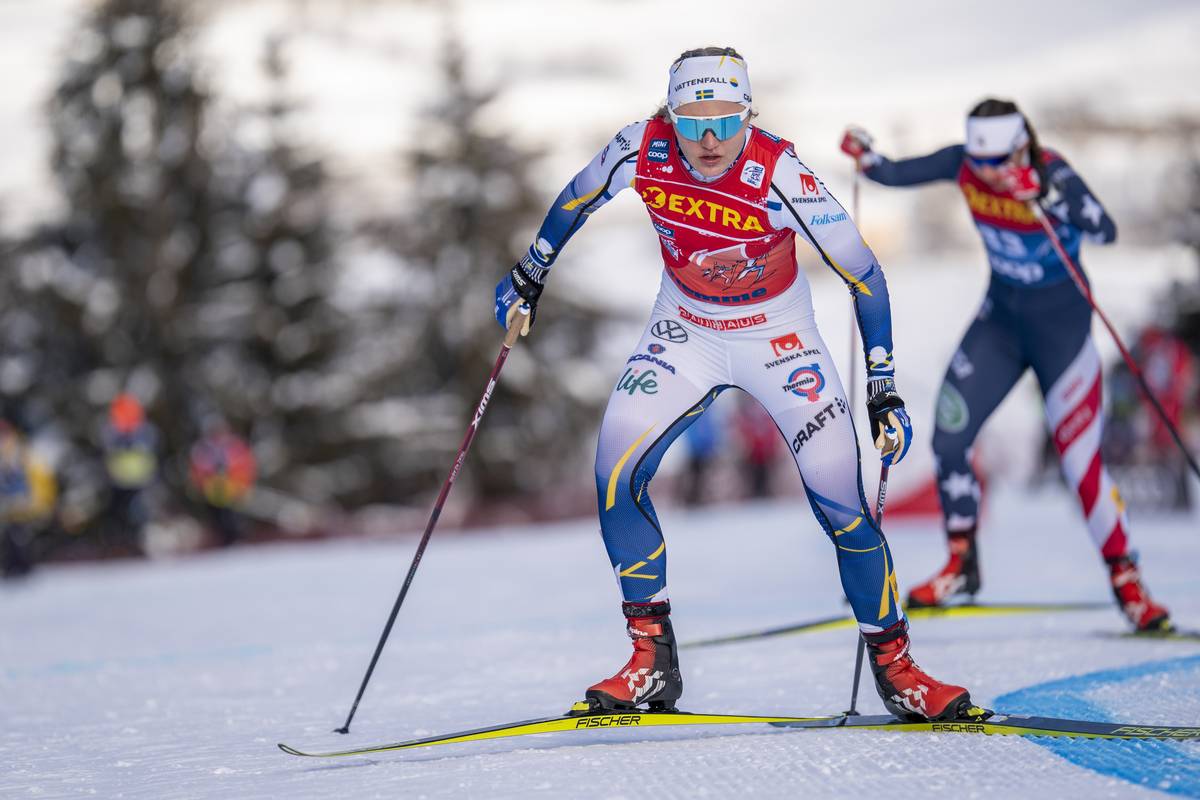
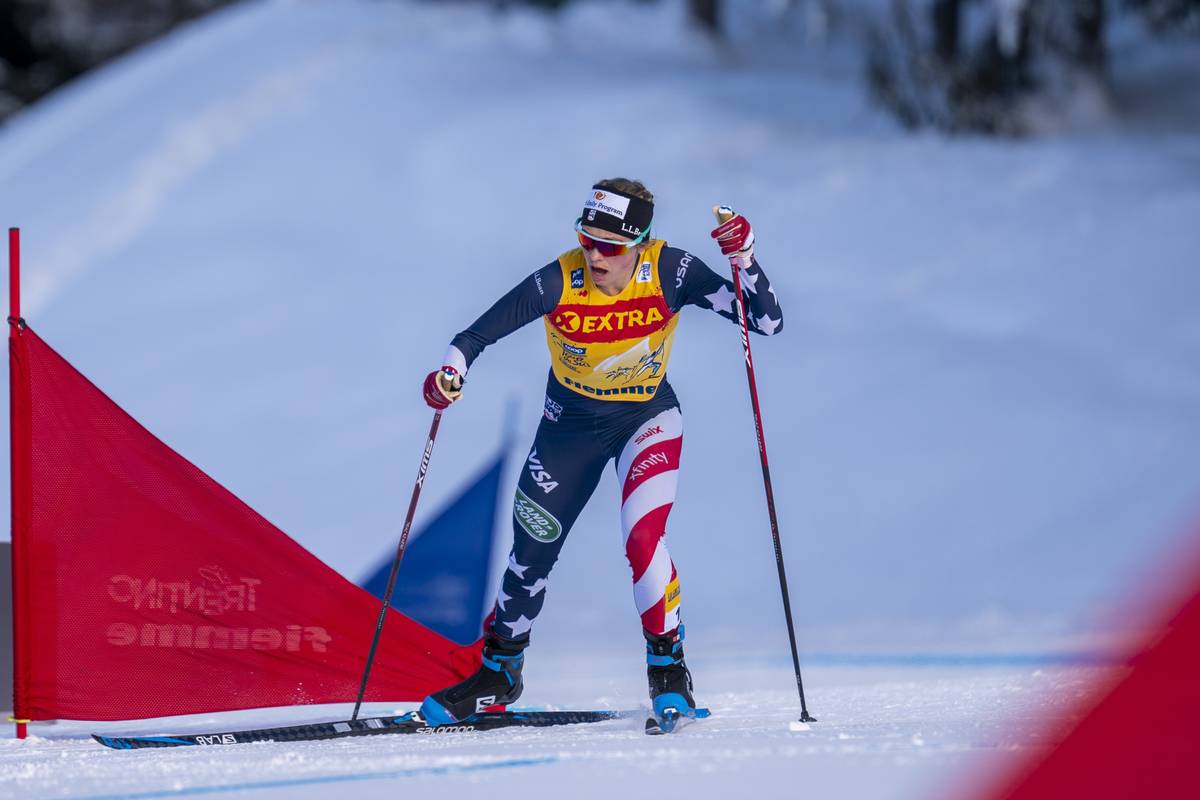
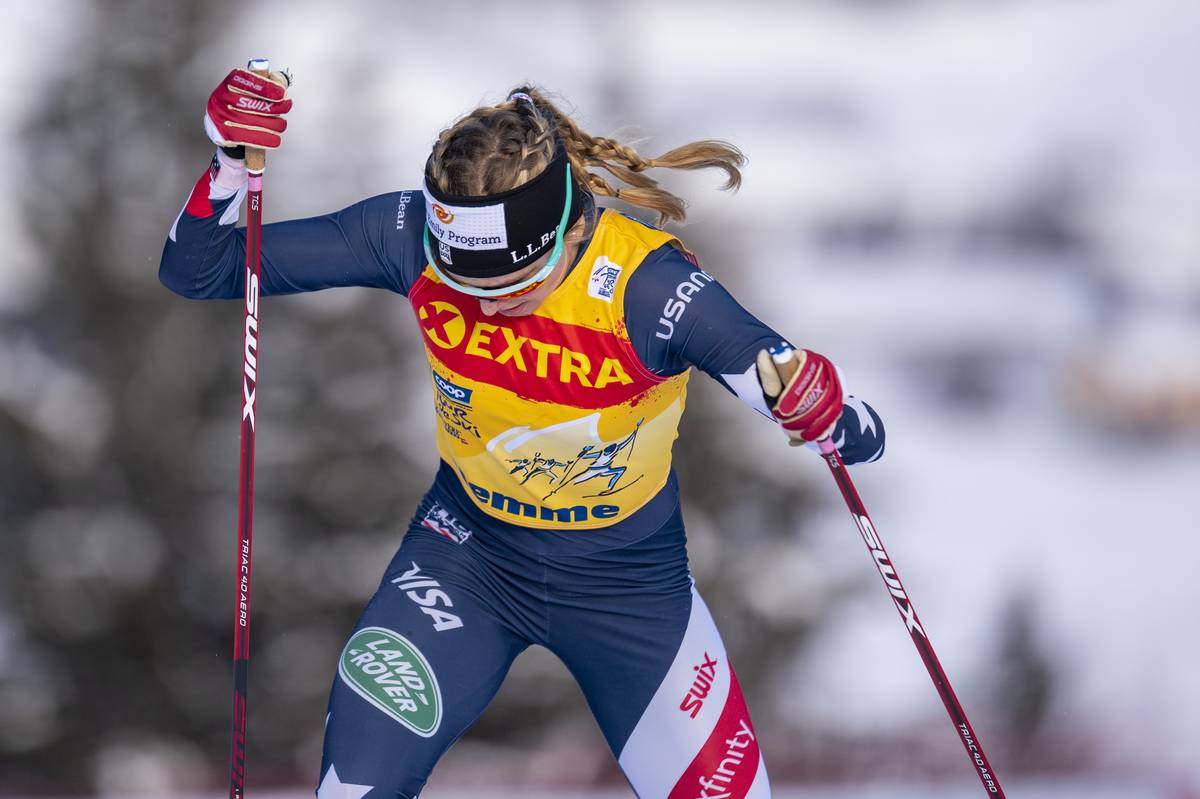
The Tour de Ski’s Stage 7 cliff notes: Diggins remains the overall Tour de Ski leader after being eliminated in today’s semi-finals of the classic sprint. The news day on the micro-level belongs to Sweden with a sweep of the women’s podium and Oskar Svensson, yes a Swede, won on the men’s side. More macro: Diggins wears the yellow bib heading into Sunday’s final stage, the Alpe Cermis hill climb. Bolshunov has literally shut the door on the competition.
Diggins looking to lock-in for Stage 8 and the overall win. (Photo: NordicFocus)Many raised hands, Linn Svahn (SWE) takes gold ahead of teammates Maja Dahlqvist and Emma Ribom. (Photo: Nordic Focus)Oskar Svensson (SWE) in the lead and ending a long-time top-podium-step drought for the Swedish men on the World Cup. (Photo: NordicFocus)
A big note upfront, in this episode we review a video when Devon was relegated for obstruction during a World Cup sprint. So, if you have a phone or other device handy, here’s the link to the video. That’s Devon on the outside…coming in hot.
Take a look, because we’ll get into this pretty deep in the episode. And …. we’ll chat the racing of the day, Stage 2 of the 2021 Tour de ski – all mass start classic racing.
(We also chat about this Putin t-shirt worn by famed Russian skier and national team manager Yelena Vyalb within the context of how the team will discuss Chervotkin’s obstruction and subsequent DQ.)
The Race on the men’s side shook out with a big Bolshunov win, while the women had a surprise winner of sorts with Swede Linn Svahn, known for her sprinting, won the day. Two American women in Jessie Diggins and Rosie Brennan remain in the hunt for the overall.
We talk about children and car seats, obstruction on the sprint course, and where it goes from here with six stages to go.
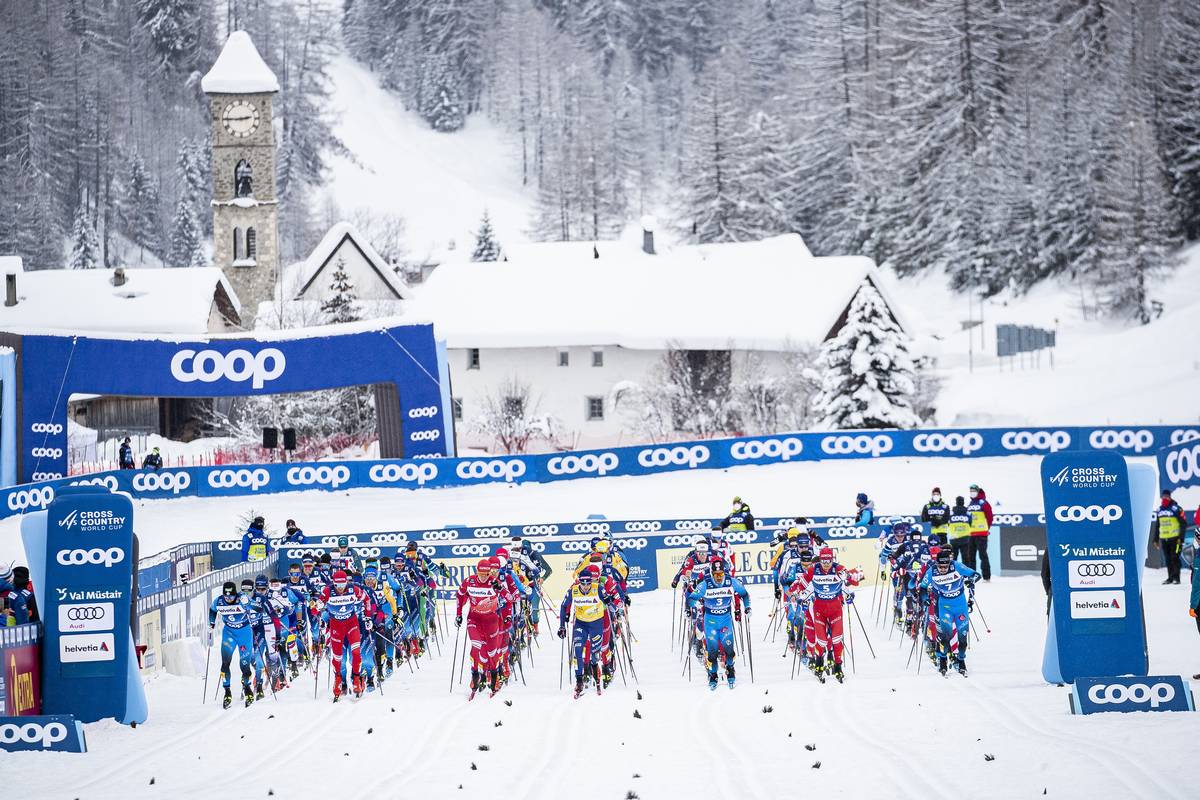
The start of the men’s 15 k mass start classic in Val Müstair, Switzerland. (Photo: NordicFocus)
The start of the women’s 10 k classic. (Photo: NordicFocus)
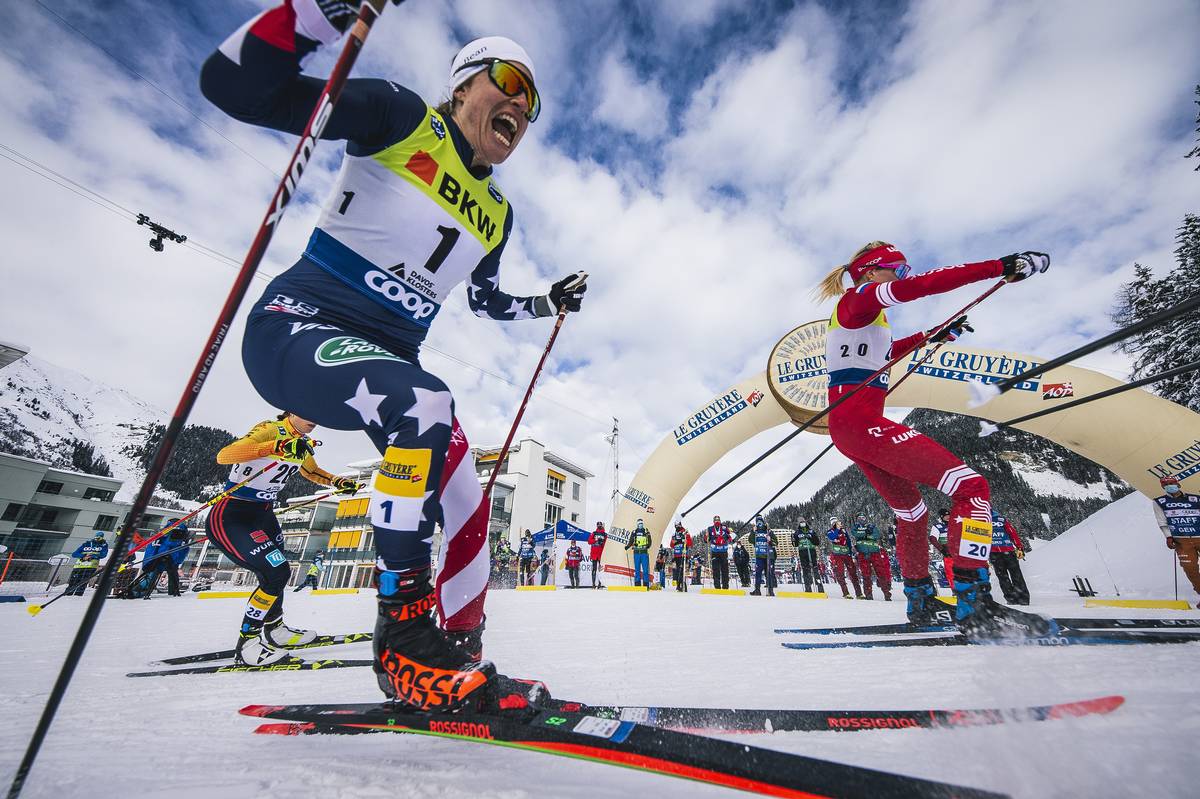
Davos is many things and brings to mind fine high-mountain living, deep mountain valleys, and an old-school vibe stop on the World Cup. The weekend began with a zippy skate sprint that at least for the moment brought a familiar feel to sprinting when Italy’s Federico Pellegrino took the win. However, on the women’s side, a persistent and tenacious athlete, Rosie Brennan, took her first career World Cup win. She can sprint. But had we placed a wager on a first win coming in sprint or distance, we would have gone for distance eight out of time times.
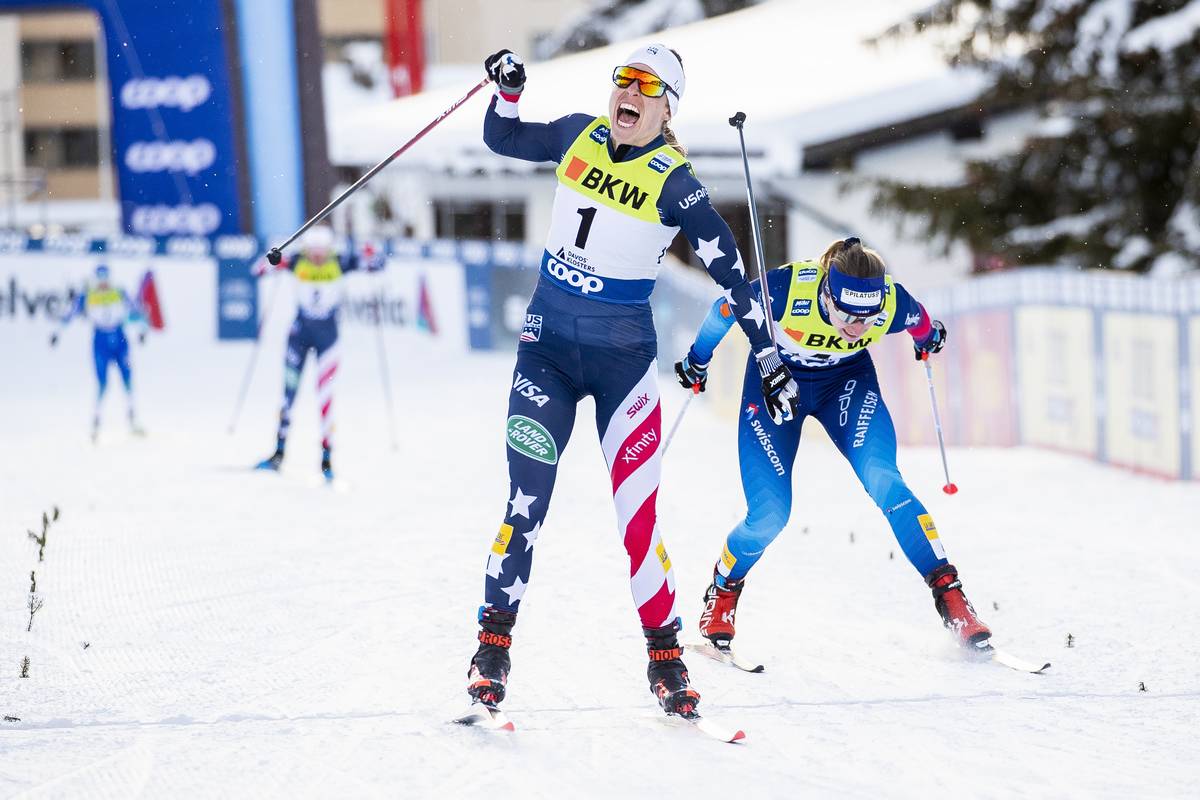
Yet on Saturday, there was Brennan, streaming ahead on the final straight with enough composure and a time gap to celebrate across the finish line. Pure joy. And fun to watch. The following day, in cross-country skiing’s race of truth, Brennan smashed ahead on the decidedly old-school Davos 5 k loop and won the race with half a minute to spare. A clean-sweep-weekend for Brennan earns her the overall lead in the World Cup after five races and the honor of wearing the yellow bib.
Rosie Brennan celebrates her victory and first World Cup podium after the freestyle sprint in Davos, Switzerland. Photo: NordicFocus
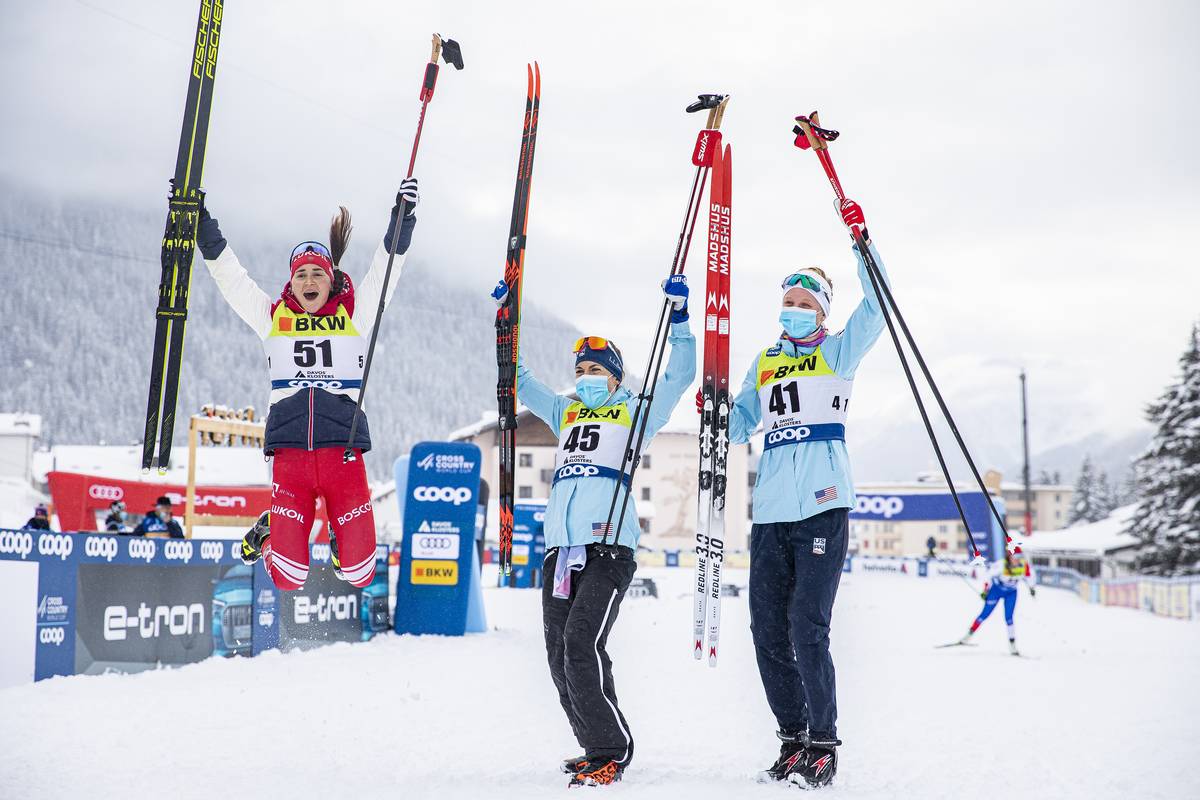
Sure we talk most things that transpired in Davos: some misses for the U.S. men, a solid performance by Scott Patterson in the 15 k skate, a slew of American men stoutly qualifying in the sprint, (think JC Schoonmaker and Kevin Bolger), and Hailey Swirbul’s most excellent third place in the women’s 10 k.
The race series moves on to Dresden, Germany next week, where the city is under strict lockdown orders due to Covid-19. It’s definitely onward for the World Cup, we hope it’s upward.
Not two weeks ago, despite the pandemic, it appeared the FIS World Cup had dodged the proverbial positive-test bullet. The Ruka, Finland round of the World Cup went down with fantastic racing, and, as far as we know at the time of dropping this episode, no positive Covid-19 cases among the athletes in Ruka.
The cracks began to appear shortly after the racing in Finland concluded. Several of Norway’s star skiers independently withdrew from World Cup racing through December – they were the first to go. Then three major World Cup players, Norway, Sweden, and Finland collectively opted out. As we reported on the FasterSkier website, these teams felt the safety protocols and fidelity to those Covid-19 prevention measures in Ruka were insufficient.
We all know that race day is race day – you compete against those who wear the bibs. That said, we also know a World Cup race without Norway, Sweden, and Finland is like the Bulls without Jordan, a slalom race without Shiffrin, grooming with no classic tracks set.
Devon breaks it down and provides his thoughts on where this all goes from here.
Thanks for listening and here’s the disclaimer, this episode contains some un-beeped potty words.
This episode of The Devon Kershaw Show is supported by Boulder Nordic Sport. We appreciate their ongoing partnership as we cover the World Cup.
So much to break down. Ruka, Finland presented a challenge on several fronts. The women and men contested a classic sprint, a 10 k / 15 k interval start classic, and a 10 k / 15 k skate pursuit over a three day period. A great way to exhaust some of the fastest skiers and a great way to entice us back into the verbal throws on the podcast discussing who is on form, and who maybe missed the kick.
The racing in Finland transpired as the globe wrestles with a pandemic. As it should be, we discuss all the racing – the Norwegians, the Swedes, the U.S. team, the Russians – and how the pandemic has impacted the scene.
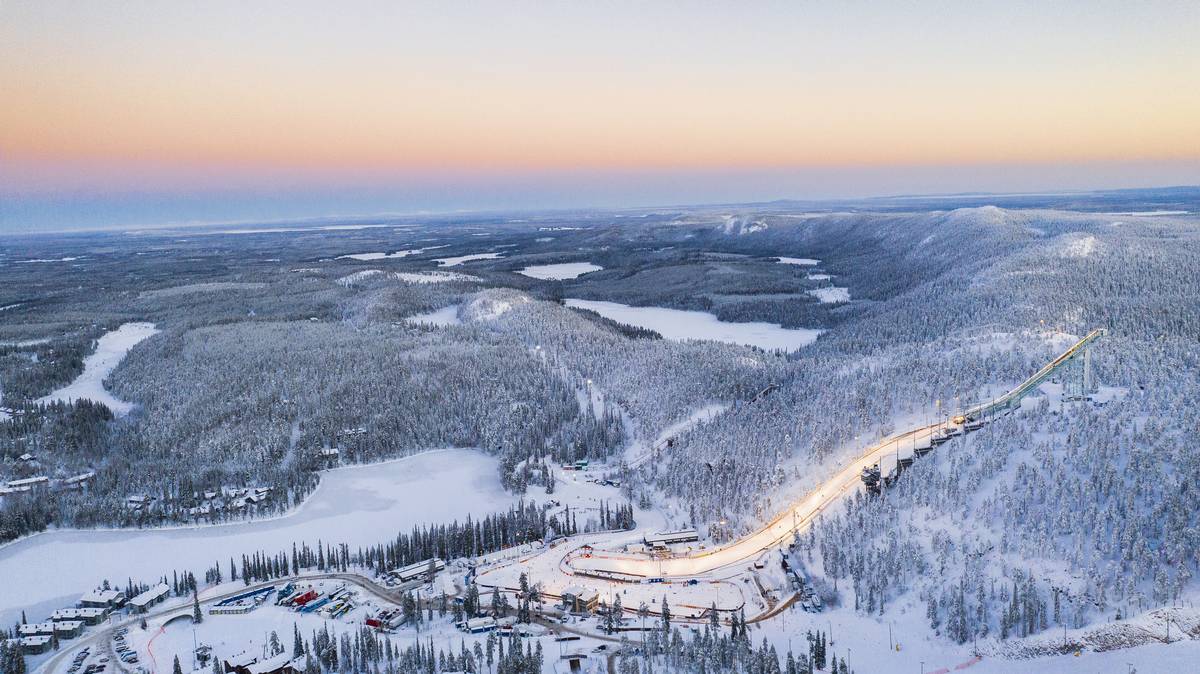
The Ruka, Finland racing/jumping complex. (Photo: NordicFocus)
Take an hour of your day, allow yourself to unwind and let Devon be your World Cup escape. This is sixty minutes jam packed with classic, skate, sprint and distance bliss.
Thanks for listening and if you have any questions please send them to jason@fasterskier.com and devon@fasterskier.com.
March 31st is the last day we posted a new episode. Depending on where you stand in the COVID time machine, that might as well be a light year. Or a nano-second.
From Oslo, Norway Devon chats about the time that was and the time that will be as we lurch into fall and then winter. In other words, it’s about time we rebooted this project.
On the list of topics discussed, staying put when the air quality is grim, a brief discussion of doping, altitude training, and the prospects for a World Cup season.
Thanks for catching up with the podcast and as always, if you have questions for Devon, you can send them to devon@fasterskier.com or jason@fasterskier.com.
Canceled. The North American leg of the World Cup became a blip as the weight of a pandemic became too much to bear for organizers. Minneapolis canceled. Canmore canceled. And….finally…Québec canceled. We discuss what was a crazy week when, accordingly, the globe shut down pro and amateur sport.
We spoke with Kershaw when he was six days into a 14-day quarantine. Kershaw had been in Germany for World Juniors and upon his return to Norway, was part of a general quarantine for individuals who had traveled abroad since Feb. 27.
Kershaw spoke to us from a snowed-in cabin in Sjusjøen, Norway. But it’s not exactly paradise. True fact, Kershaw was running low on food: Johaug to the rescue. And as for velvet corduroy skiing (while keeping social-distance) in the Lillehammer area, grooming has been suspended.
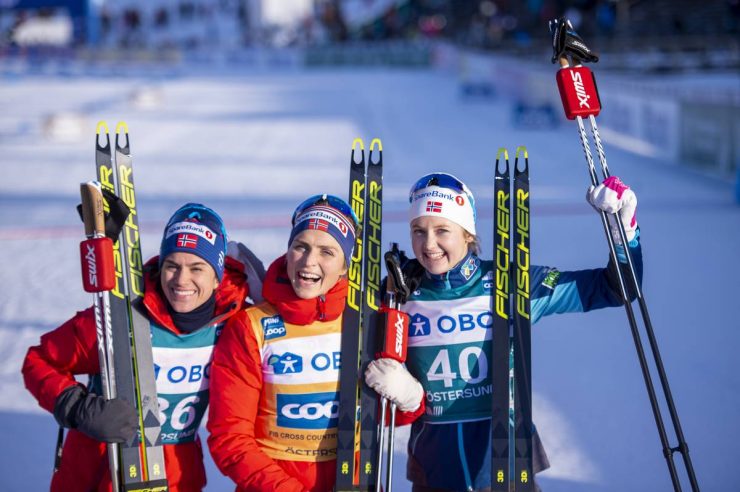
An all-Norwegian podium in Östersund, Sweden. Therese Johaug won the day ahead of Heidi Weng and Ingvold Flugstad Østberg. (Photo: NordicFocus)
Here we go again. A new Scandinavian Ski Tour takes the spot of a World Championship or Olympic Games during this off-cycle year. Six stages working east from Östersund, Sweden to Trondheim, Norway, beginning with today’s 10-kilometer individual start freestyle event.
Under clear skies, light fading and shadows lengthening as the sunset looms just a few hours away, the women time trialed through the tall conifers to set the tone of the overall tour standings. Crowds arrived in droves to line the course and fill the stadium, a cacophony of cheers creating the soundtrack to the stage.
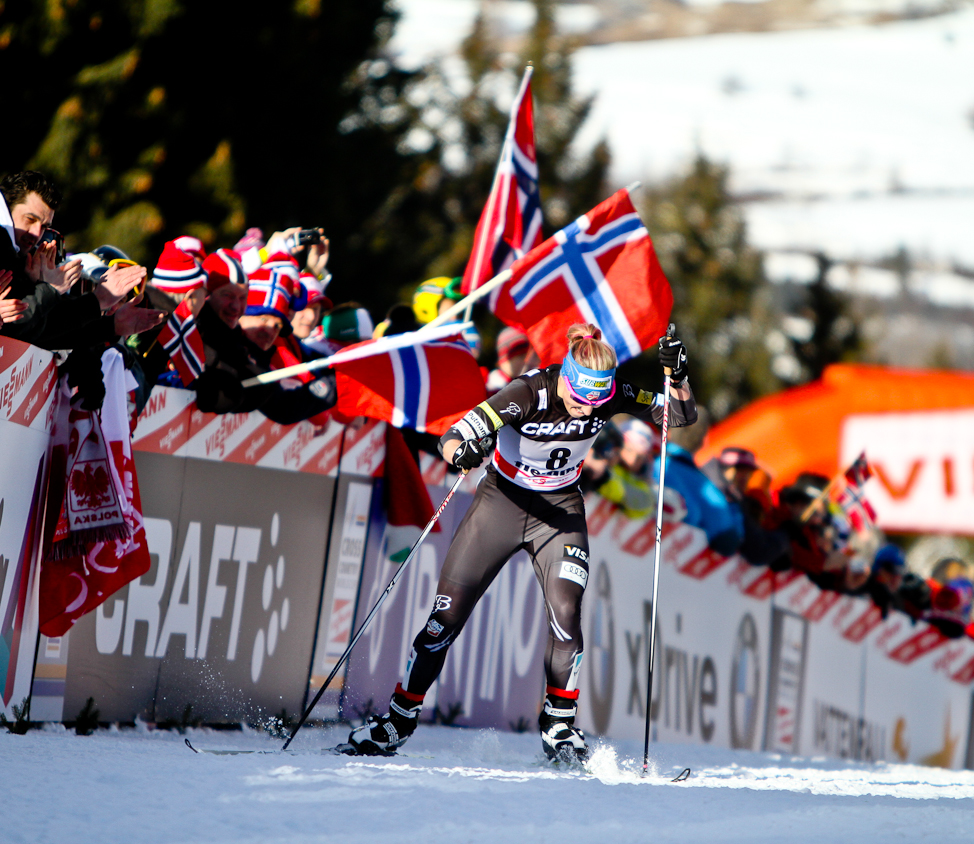
Today’s format suits the Tour favorite, Therese Johaug, who has expressed that mass start events do not suit her as well. This season, Johaug won the Tour de Ski and has taken the top spot in each of the last ten individual start distance skate events.
Her story today essentially wrote itself. In Devon Kershaw’s words: “Gun to tape annihilate.”
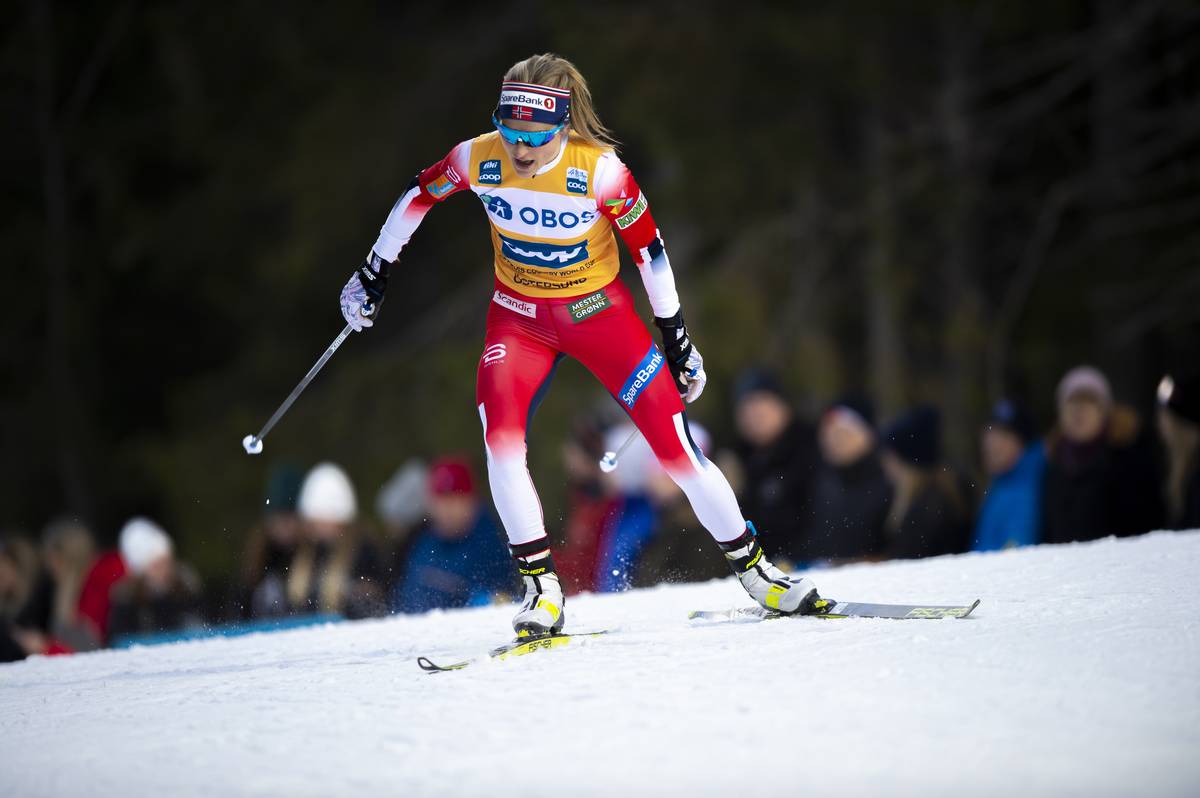
Therese Johaug (NOR) dominates the first stage of the FIS Ski Tour 2020. (Photo: NordicFocus)
Johaug hammered out of the start gate and did not slow down until she crossed the line, her grimacing face making clear the unmatchable power and tempo she was forcing herself to maintain. Stopping the clock at 21:49.7 and raising her arms briefly in the air before collapsing over her poles, Johaug sealed the deal on best in show.
Her time gap on her competitors increased in an almost alarmingly linear fashion throughout the stage. 12.8 seconds at 2.6 k increased to 20 at the halfway mark, growing to 45.6 seconds at the finish.
Victorious in Östersund, Therese Johaug has a strong start to the FIS Ski Tour 2020. (Photo: NordicFocus)
“Oh yes, I could never get a better start than this,” a glowing Johaug told FIS at the finish. “I feel that it was my best skating distance in my career, so I am really happy with the skis and with the shape. It was an amazing race today… It’s good to start the Tour and I’m looking forward to the next races.”
Here’s what else went down.
Racing in bib 27 amongst the first wave of 30 skiers, Rosie Brennan set the bar high for the seeded group of top-ranked skiers who followed in bibs 32 – 60, posting some of the fastest time through each checkpoint. Although she faded into the results as the seeded group came through, it was still a noteworthy performance, placing her 9th for the day (+1:25.7) and second American.
Rosie Brennan sets the bar, racing to 9th in the first stage of the FIS Ski Tour 2020. (Photo: NordicFocus)
Of other skiers in her group, Brennan was only challenged by Norway’s Ragnhild Haga and Sweden’s Frida Karlsson, who was recently cleared to return to World Cup competition. Karlsson sat out the majority of the season after failing to meet team health standards for body composition and bone density.
Karlsson took the pace out hot, clearly gunning for the win, or at least for the bonus points available at the 2.6k checkpoint. She had the second fastest overall time there, then she attacked the steady climb with high tempo. But she was unable to hold the effort, fading back into the ranks as the race went on. She ended her day in 19th (+1:46.0).
After a fast start, Frida Karlsson falls to 19th in the 10 k skate. (Photo: NordicFocus)
Among the first starters of the seeded group in bib 36, Heidi Weng (NOR) went hunting. From 4.2 k onward, she knocked down the previous best time, setting a new and short-lived time to beat, as Johaug chased from two bibs behind. Weng, the 2017 and 2018 Tour de Ski winner who is currently ranked third in the overall World Cup standings hung on to take the second podium spot.
Next over the line was Ingvild Flugstad Østberg in third (+47.3), who hovered a few seconds behind Weng at each checkpoint. The trio sealed the deal on an all-Norwegian podium.
Ebba Andersson of Sweden interrupted the string of Norwegians in fourth (+53.1), followed by Haga (+1:04.3) and Astrid Urenholdt Jacobsen (+1:05.0).
Leading the Tour for North America, Jessie Diggins skied to 8th (+1:18.1). Diggins currently sits 5th in both the distance and overall World Cup standings.
Jessie Diggins skates to 8th in the first stage of the FIS Ski Tour 2020. (Photo: NordicFocus)
In a post-race call, Diggins described the track in Östersund as a “thinking course”, full of swooping turns that kept athletes focused and on their toes. Diggins explained that she has been experiencing an abnormal amount of fatigue over the last few weeks, but felt some encouraging sensations in today’s event and has a plan in place to optimize her recovery between stages so she can keep going hard.
She also shares insight about some of Tour’s sustainability initiatives to decrease the environmental impact of such an event, and weighs in on the energy generated from a large American team.
Post-race interview with Jessie Diggins.
Jessie Diggins leads the way for Team USA after the first stage of the FIS Ski Tour 2020. (Photo: NordicFocus)
Just behind Diggins, Brennan was the next American. It was the APU/USST athlete’s third top-10 result of the season. Her last two were also earned in stage events; she was 9th in the 10 k skate during the third stage of the Tour de Ski in Toblach, Italy and 6th in the 10 k classic in Ruka. She also skied the 7th fastest time of day up the Alpe Cermis in the final TdS stage.
“It was a good opening day of the Ski Tour 2020 for me,” Brennan wrote in an email to several news outlets. “After a frustrating weekend last week, I was ready to try to turn things around. The course here is hard and has lots of climbing so I felt it suited my strengths. It was fast conditions but there was also little rest so it was a tricky pacing game. I didn’t perfectly pace it and lost a little in the closing kilometers but I had much improved race feelings so I am very satisfied and hope I can continue this way throughout the tour.”
Sophie Caldwell on course in Östersund, Sweden. (Photo: NordicFocus)
Back on the World Cup, Rosie Frankowski races the first stage of the FIS Ski Tour 2020. (Photo: NordicFocus)
Sadie Maubet Bjornen was the next American in 22nd (+1:51.4), followed by her APU teammate Hailey Swirbul in 36th (+2:09.3). Caitlin Patterson was next for the U.S. in 40th (+2:19.1), Alayna Sonnesyn 43rd (+2:27.3), Julia Kern 50th (+2:38.0), Sophie Caldwell 51st (+2:39.3), Katherine Ogden 53rd (+2:48.0), and Rosie Frankowski 56th (+2:50.0).
In a post-race call, Matt Whitcomb sheds light on how the team is approaching the Tour in comparison to the Tour de Ski or a ski tour at the end of the season. Whitcomb explains that a major focus leading into the week was recovery and mental preparation.
“We didn’t focus to much on performance — that’s never a great way to go. We work on the process and getting people psyched by giving them the confidence to know that they’re recovered. Whether or not they’re sharp on the first day or two, they should be sharp by the end. Whether that ends up happening or not, we’ll see. But believing in it is the key.”
Whitcomb explains further how he gages how tired or recovered his athletes are and provides further insight into the women’s performance. Lastly, Whitcomb comments on Swirbul’s noteworthy rise in the ranks this year, attributing it to her fun but focused mental approach and the effect of the strong APU women’s training group.
Post-race interview with Matt Whitcomb.
On the Canadian side, Emily Nishikawa was the top finisher just outside the FIS points in 32nd (+2:05.0). She started one bib ahead of Sweden’s Charlotte Kalla, who she marked and followed to the finish once caught.
Emily Nishikawa leads the Canadian team in 32nd in Östersund, Sweden. (Photo: NordicFocus)
Next up was Cendrine Browne in 35th (+2:09.0), followed by Katherine Stewart-Jones in 46th (+2:29.8).
The tour is young. Racing continues tomorrow with a 10 k pursuit start classic on the tracks in Östersund.