Laura Spector (USA) leads Jenny Jonsson (SWE). Photo: nordicfocus.com courtesy of USBA.
While there’s a full schedule of World Cup racing scheduled in Antholz, Italy this weekend, Friday’s sprint might very well have been the last individual race the U.S. women had a chance to contest in Europe before World Championships.
With a relay on Saturday and a mass start, capped at thirty athletes, on Sunday, and then the entire World Cup circuit picking up and heading to the U.S. for a few weeks in February, the sprint in some ways represented the end of two months of European racing.
And the U.S. delivered. Laura Spector again led the team, finishing 23rd and snagging the last bib in the mass start. Haley Johnson finished a season-best 37th, and Sara Studebaker tied for 56th.
The results once again seemed to prove that the women, long overshadowed by the men’s team, deserve some attention themselves.
Spector shot clean and her time split after the second shooting stage had her in 13th place. However, she slowed on the final loop, ending up 23rd – 0.3 seconds behind overall World Cup leader Kaisa Makarainen of Finland. Antholz’s 5,000 feet of elevation meant that some favorites didn’t perform up to expectations.
But Spector adjusted accordingly.
“I imagine most everyone felt tired by the end of this one,” she said in an e-mail. “Racing at altitude in the dry air is definitely a different feeling and requires that you expect to feel a little lung burn going into the race. I tried to slow down my tempo on this course because there is more gradual climbing, but because of fast conditions it was important to get all the glide you could on the flatter sections.
“I really didn’t think too much about shooting before the race or set any kind of expectations for myself,” she continued. “I’ve been dryfiring [shooting without bullets from short range, usually inside] a little more than in the past few weeks and I think it has helped to make the shooting more efficient and natural for me.
“I am definitely starting to feel tired as we approach the end of a three week block of racing.”
Studebaker agreed: the two have been in Europe since mid-November, and “being tired comes with the territory.”
“The sprint was an okay race for me,” Studebaker told FasterSkier. “I felt okay skiing, but it’s tough here because of the altitude. Prone was great, but I had some trouble in standing. I ejected a round and had to hand load, and I think just came in too hard. The range approach here is difficult and I don’t think I was quite ready to shoot when I came in for standing which made me a little shaky.”
Johnson missed one target in each shooting stage, errors which kept her out of the top twenty, given that her ski time was actually faster than Spector’s. However, compared to last weekend’s pursuit, where she missed seven shots, it was a huge improvement.
When asked what had changed about her shooting, Johnson said “nothing.”
“I have remained focused on the same elements of my shooting,” she said in an e-mail. “Improving hitting percentage isn’t necessarily about changing your shooting process; it’s sometimes more about just trusting it more and going for it.”
Like Spector, Johnson said that she had adjusted her strategy due to the altitude and the uphill approach to the range.
“I really like racing in Antholz… the altitude, uphill range approach and wind are good reminders to stay focused in the range. It’s a fast course- it’s only a matter of minutes before you quickly return to the range, so adjustments and adaptations need to be made quickly. Because of the higher altitude you need to account for heavier breathing by taking a few extra breathes in your shooting process. I take three breathes before settling on the first target instead of two, for example.
“I am feeling pretty good on skis and am really looking forward to the upcoming US World Cups,” she concluded.
Speaking of good on skis: Tora Berger of Norway picked up her third win in a row, crushing the field by almost 30 seconds in a 20-minute race. Berger shot clean, but so did plenty of other women.
Berger said that the key to her success in Antholz was living at a lower elevation.
“I have good races here, so I like the place,” she told IBU News. “I generally do not have any problems with the altitude, as long as I stay down low and race up here. When I lived up high, I did not have good races here.”
Anastasiya Kuzmina of Slovakia finished second with one penalty. Kuzmina, who is originally from Russia, was actually the less-successful member of her family this weekend: brother Anton Shipulin, racing for Russia, won the men’s sprint on Thursday.
Along with Berger’s win and her brother Lars Berger’s third-place finish in the men’s sprint, it made it a good weekend to be siblings on the World Cup circuit.
Tora Berger seemed thrilled for her brother, and the two seem close.
“I am happy that my brother was on the podium again, because some years he does not do so well,” she told IBU News.
Kuzmina, meanwhile, was more detached.
“I did not watch his race,” she said of Shipulin’s victory. “I only turned on the television, when the results were final. . . I am very happy for him, but I focused on my race today. . . He set the bar very high for me today with his victory.”
The new stadium in Ruhpolding, Germany, has a great view of the shooting range.
When the small town of Ruhpolding, Germany, bid to host biathlon’s 2012 World Championships, they knew they had their work cut out for them.
“Preparations for the World Champs 2012 start now,” said Mayor Claus Pichler in August 2008 when Ruhpolding won the bid. “I got plenty of feedback from the delegates at the IBU Congress.”
And they have been busy ever since, completely renovating and reconfiguring the area’s stadium as well as giving the trails a facelift. All of the work was unveiled last weekend when Ruhpolding hosted the fifth weekend of IBU World Cup racing.
Swedish head coach Wolfgang Pichler – a Ruhpolding native and Claus’s brother – was proud of the changes which had been made.
“I think the stadium here is the best in the world,” he told IBU News this weekend. “Our goal was to make big progress; if you look at everything, the tracks and buildings . . . you will see that this is a step forward for our sport.”
If so many upgrades were needed, why was Ruhpolding chosen at all? Mayor Pichler had a few ideas. He hypothesized that the selection committee knew that the town of just over 6,000 would pull out all the stops to host an amazing event.
“Ruhpolding and biathlon are more or less the same,” Pichler told IBU news last week. “We have done so much to develop this sport. It is not an exaggeration to say that Ruhpolding is the cradle of modern biathlon and the sport is deep in my heart. I would like our home town to remain that cradle for the future; we will contribute our part so that biathlon remains the winter sport number one all over the world.”
With the caveat that a number of women complained about the difficulty of one of the downhills – Helena Ekholm of Sweden even said that she “really hated” it – most of the athletes seemed to like the new courses. Here’s a roundup of reactions from the World Cup field, beginning with North America’s best biathletes and finishing with international stars.
Jeremy Teela (USA)
“The new venue is very nice – there are lots upgrades for the spectators,” the three-time Olympian told FasterSkier. “The range moved a little left and back it seems. The courses have become a little harder, with some down hills that are more technical, which takes away from the recovery you’d normally get. I would highly recommend coming to watch next years World Champs; the atmosphere in Germany for biathlon is like no other.”
Laura Spector (USA)
“I am a fan of this course because climbing tends to be one of my strengths and there are a number of long, steep hills,” America’s top female biathlete said in an e-mail. “The downhills are tricky and I’ve skied them many times over the course of the week to get more comfortable, but it also depends on the weather and snow conditions. I think it’s a great choice of venue because so many biathlon fans attend the races here.”
Tim Burke (USA)
“Competing here in Ruhpolding is definitely very exciting with all of the fans,” last year’s early-season World Cup overall leader told FasterSkier. “They had 89,000 total fans for the week, which creates an incredible atmosphere. Unfortunately, the course here at Ruhpolding is by far my least favorite course on the World Cup. You almost never have to work for more than 30 seconds before you get a break. It is basically jump skating up a steep hill then resting over and over again. I will definitely have to make some changes to my training if I want to compete for a top spot next year at World Championships.”
Scott Perras (CAN)
“The new course is pretty good; actually I like it a lot,” Perras said in an e-mail. “It still has the difficulty of the old course, but with better flow so it is all around more enjoyable. The uphills are still covered with fans but they are not as close as in previous years; it seems they widened the trails and with many of the trails being two-way, it’s not as intimate as before, when you would grind up steep climbs and you could feel the breath of the fans.
“The most disappointing thing about Ruhpolding is that the weather is never consistent and rarely fair for the entire field. Even though they sell over 100,000 tickets a weekend I would rather see solid winter conditions and less fans. That being said, the organizing committee really is on the ball with salting the course and everything turned out well [this weekend].”
Magdalena Neuner (GER)
“It took us a few days to get acquainted with the new courses,” the two-time Olympic gold medalist told IBU News. “We were pretty critical in the beginning about the very hard downhill. But it depends a lot on the conditions with the weather. I am basically pretty happy that the most dangerous parts will not be that difficult next year for the World Championships. Nevertheless I think the stadium is very nice for both the athletes and fans.”
Emil Hegle Svendsen (NOR)
“It is an amazing stadium,” the Olympic gold medalist and current second-place man in the overall standings said in a press conference. “I think it is for sure one of the best. Most important for the athletes the tracks are good and wide . . . they have built something amazing and I am really looking forward to the World Championships here next year. I think it is going to be something very special.”
Andrea Henkel (GER)
“[The downhills] were for me a little bit too tough,” the 2007 overall World Cup winner said in a video blog from Ruhpolding. “I made it very safe from loop to loop and on each loop got more afraid… the new stadium is very well-planned, I think. They have a huge gym with lots of bikes for warming up and cooling down, which was good yesterday [when it was pouring rain]. The track is fine, everything is very hard, which is good for me on the uphills but it is maybe a little too hard on the downhills. Maybe they will change it before the World Championships next year.”
Tora Berger of Norway led Sunday’s 10 k World Cup pursuit in Ruhpolding, Germany, from start to finish, winning easily despite missing a shot in the final standing stage.
Her victory gave the family three wins in as many days: brother Lars won the men’s 10 k sprint on Friday, and Tora eked out a 1.1 second victory in the women’s 7.5 k sprint on Saturday.
Early in the race it appeared that Andrea Henkel of Germany, who wore bib 2, would give Berger a run for her money. The pair skied together for two loops and both cleaned the prone stages. However, Henkel missed a shot in the first standing stage, giving Berger a sizeable lead.
“[Berger] is especially good in duel shooting,” said Norwegian biathlon analyst and seven-time World Champion Liv Grete Poiree on NRK news. “When she is going to shoot, it’s like she shuts everything out.”
Henkel: the overall title is in sight.
The pressure was too much for Henkel, who missed one more shot in the second standing stage but still secured second place easily. It was her third second-place finish of the weekend, and she is now ranked third in the overall World Cup standings.
Overall World Cup leader Kaisa Makarainen of Finland used clean standing shooting and aggressive skiing on the final loop to pass Sweden’s Anna Carin Zidek and finish third.
The American women were led by Laura Spector, who finished 41st. Spector, starting with bib 36, had moved up to 31st position after the first shooting stage, but fell back as the race progressed.
“I had some good shooting through the first three stages and was able to move up little by little,” she told FasterSkier. “I don’t think I was skiing as well as I normally do because I had trouble in some places making up time on the tracks. I missed two shots in the last stage and that’s what really put me out of the points (top 40).”
Sara Studebaker finished fifteen seconds behind in 43rd; both women had three penalties overall.
Haley Johnson, in just her third World Cup of the season, had a tough shooting day. She missed seven shots, the most of anyone in the field, but had the 37th-fastest ski time, better than either Spector or Studebaker. Her legs allowed her to finish 50th despite a disastrous day on the range.
“I don’t take any race for granted and even though today I didn’t shoot well, I skied well and held on the best I could,” Johnson said in an e-mail. “I only made one pursuit last year, so to do it right off the bat, I was more than happy to be on the startline today. It feels right to be back on the World Cup.”
Canadians Zina Kocher and Rosanna Crawford finished 52nd and 58th.
For Crawford, whose sister is skier and Olympic gold medalist Chandra Crawford, it was the first time she had finished a World Cup pursuit. Crawford qualified for the pursuit in Kontiolahti, Finland last season, but was lapped and pulled from the race.
“Pursuits are always fun and I am happy to have one under my belt finally, but I left some room for improvement on the shooting side,” Crawford told FasterSkier. “Ruhpolding has been my good luck charm: I competed in my first World Youth and Junior Championships there, my first World Cup, and now I completed my first World Cup pursuit.”
The Canadians will forgo next week’s World Cup races in Antholz-Anterselva, Italy, and instead return to North America to prepare for the February World Cups in Fort Kent and Presque Isle, Maine.
“We fly home tomorrow, and I am really excited to get some Canmore sunshine!” Crawford said.
The Americans will continue their European tour, and racing in Italy begins on Thursday.
Spector, last season. Photo courtesy of U.S. Biathlon Association.
After going six years without qualifying a woman for a World Cup mass start, U.S. biathlon finally had its day in the spotlight in Oberhof, Germany on Sunday.
“During warmup, I think people were surprised to see an American out there,” said Laura Spector, the first American woman since Rachel Steer to compete in a mass start. “But I saw a few American flags on the side of the course, and it was really motivating to have that kind of support.”
The mass start is the most prestigious competition on the World Cup circuit, and there are only a few each season. Because athletes shoot simultaneously, field size is limited to the number of spots at the range. Out of 30 possible starting positions, 25 are pre-selected based on World Cup rankings, while five are chosen based on the results of the previous sprint.
In Saturday’s sprint, Spector finished a career-best 19th. It earned her one of those five spots, and a unique opportunity – only one North American woman currently competing has mass start experience. Zina Kocher of Canada has raced in eleven World Cup mass starts, including four last year.
But Spector had none of that to draw on, only the excitement of toeing the line with the best 29 biathletes in the world.
“The mass start was an incredible experience,” she told FasterSkier in an e-mail. “It was such a rush to race in front of the biggest crowd on the circuit, in a group with the best biathletes in the world, that I didn’t even notice I was tired until the final loop, even though I was hammering around the course on every prior loop.”
Spector cleaned the first two shooting stages, which were prone, and was sitting in 16th place, just outside the top half of the field.
But standing proved to be more of a challenge. She missed two shots in each of the last two stages, and quickly slipped to 25th, where she stayed for the rest of the race, finishing just over four minutes behind Helena Ekholm of Sweden, the winner on the day.
“I felt really comfortable during the prone stages but simply lacked enough confidence in standing to shoot quickly like I do in training,” Spector said. “Having the opportunity to shoot alongside the best biathletes also opened my eyes to how efficient they are, and just where I am losing time on the range, since that seems to be my weakest point.”
Overall, her performance represented a big step for the U.S. women, who have recently been overshadowed by their male counterparts. This year, the U.S. Biathlon Association (USBA) has placed more of a focus on the women, and it seems to be paying off.
“USBA has come a long way in terms of funding and staff and it’s satisfying to be able to provide them with the results they deserve in return for the support they give us,” Spector said.
At the front of the field, there was plenty of excitement. Ekholm, Andrea Henkel of Germany, and Svetlana Sleptsova of Russia entered the final loop separated by less than three second.
But in the end, it was Ekholm whose tactics proved superior.
“I tried to stay back, shoot well, and then attack,” Ekholm told IBU News. “Andrea and Svetlana were skiing well in the final loop, and I just stayed behind them. When we came up the final hill before the finishing straight, I felt that I had more power, attacked at that point, and it worked out.”
Henkel didn’t seem too upset about losing out on the victory, telling IBU News that she was happy with two podium finishes this weekend.
“I had two penalties today and still was second,” she said. “I know now that I can make a few mistakes and still be on the podium. Maybe it is my age showing, but I am not stressed and very relaxed right now.
“I know that I am not a great sprinter, so I tried to get away in the last loop. I wanted to save the podium. I did not see it coming that Helena would pass me, but I was not surprised.”
Laura Spector racing to 19th place in the World Cup sprint in Oberhof. Photo: nordicfocus.com courtesy of USBA.
Note: FasterSkier originally reported that Laura Spector was the first U.S. woman to compete in a mass start race. She is not; but she is the first since Rachel Steer, who started in three World Cup mass starts and one at World Championships between 2003 and 2005.
With a 19th-place finish – her best ever in a World Cup – Laura Spector has earned something coveted by many a U.S. woman before, but seldom attained.
Thanks to a stellar sprint race in Oberhof, Germany on Saturday, Spector was handed a position in Sunday’s mass start. 25 athletes are pre-selected based on the overall World Cup rankings and the rankings within each discipline, while five start slots are divied up based on the previous sprint. Spector was one of those five lucky athletes.
But Spector’s finish wasn’t the only good result from the sprint. Sara Studebaker finished 40th with two penalties, and scored World Cup points. While it wasn’t her best race ever, she was pleased.
“Two misses in standing wasn’t great, but I felt really good skiing and was extremely happy to score points with two penalties,” Studebaker said in an e-mail. “That’s a big step in the right direction.
“I was trying a new front aperture because it had been so foggy here the past few days. It didn’t end up working well for me in standing, but it was a good thing for me to try and to learn from.”
Spector’s performance, though, was clearly the high point for the U.S.
“I think I went into today’s race like I would approach an intensity workout, in order to avoid becoming nervous or feel under any pressure,” Spector told FasterSkier. “The staff set a high standard for today – make the mass start – but I didn’t think about that during my race, I just thought about putting forth my best effort and staying relaxed on the range.”
Early in the race, Spector appeared to be on track for an even better finish. She cleaned the prone shooting stage, but then missed one shot in standing, a setback of around twenty seconds.
Spector said that she returned to the second period of World Cup racing rejuvenated after a productive break.
“I was eager to race after three weeks of no racing and I think this helped me to ski fast as well… I’d say there was a definite advantage in staying over here during the break. I was able to continue training without any interruption from travel and without having to deal with the jetlag. I had two weeks of high quality training and also enjoyed my time in Italy, and I think it’s really important to be able to refresh the mind after a long month of racing.”
Ann Kristin Flatland of Norway won the sprint, collecting the first World Cup victory of her career. Spector was one minute and 50 seconds behind her.
Sara Studebaker (left, USA) and Tora Berger (right, NOR) racing at the Vancouver Olympics. Berger won the World Cup race in Pokljuka, Slovenia today, and Studebaker had a personal-best 21st-place finish.
For most of Thursday’s 15 k individual race in Poklujuka, Slovenia, it looked like Kaisa Makarainen of Finland was firmly in control and would ski – rather easily – to her third World Cup win of the season.
In the last shooting stage, Makarainen missed one target, but thanks to her superior skiing, she still had a jump on the field. When she crossed the finish line, she led the race by an astonishing margin of nearly two minutes.
But Makarainen was bib 21, and Tora Berger of Norway, starting six places behind her, had other plans. It took every ounce of energy she had, and clean shooting, but Berger put her head down and skied. With 700 meters to go, she was still 2.1 seconds behind Makarainen. After an impressive finishing sprint, Berger came out on top – by just 1.8 seconds.
“Kaisa was going really fast,” she told IBU News. “I knew that I would have to do a very good last loop in order to catch her.”
After a disastrous race for the Norwegian men, Berger said that she felt she had “saved the day” with her first win of the season.
Makarainen, who won two races in Ostersund, Sweden, was disappointed with her finish. She told IBU News that she felt she could have won if the trails hadn’t been so crowded.
“I am a bit sad, because I lost some time on the final uphill,” she said. “There were many other skiers on the tracks and I could not pass, but had to stay behind them and that slowed me down some.”
Marie Laure Brunet of France finished third, and will wear the red bib as the leader of the individual race format in Rupholding, Germany, in January.
Sara Studebaker of the United States had a personal-best finish for the second weekend in a row, this time finishing 21st with only one penalty.
“The race was really good, and of course I’m psyched about the result,” she told FasterSkier in an interview. “It was not quite as tough wind conditions for the women, but it really depended on when you came into the range, since there was definitely some gusting.”
So far, Studebaker’s top-30 results have all come from clean or nearly clean shooting, and even with her excellent finish today, she only had the 52nd-fastest ski time. But she said that she felt her skiing was improving.
“The skiing felt really good today, especially compared to the last individual! Getting to ski in the top group near lots of the best women on the World Cup was very exciting. It was a good chance for me to see the level and motivating to see where I can get with a little more work.”
The other U.S. starters didn’t match Studebaker’s performance. Laura Spector finished 60th and missed three shots in her final shooting stage.
For the first time this season, there was a third American woman in the race. Based on her excellent IBU Cup results last weekend, Tracy Barnes got the nod to start today. Barnes, now competing independently, had been a member of the U.S. national team for many years, and had a pair of 25th-place World Cup finishes here in Pokljuka six years ago.
Today, the Slovenian track was not so kind to her. In a USBA press release, she said that she hit a rock on one of the downhills and fell, wrecking the base of her ski. Traditionally a strong shooter, Barnes also missed three shots – it just wasn’t her best day, and she ended up 64th.
Still, having Barnes racing was at least a psychological victory for the women’s team.
“It was great having a third woman on our team!” Studebaker said. “Laura and I are psyched to have had Tracy around for the individual and to have Annelies coming for the sprint race. It will be beneficial to our Nations Cup standings as well as giving more women a chance to race the top level. It’s very exciting to see how much progress we as a team have made this season already.”
Megan Imrie led the Canadian team with a 43rd-place finish, followed by Zina Kocher in 84th. Rosanna Crawford did not start.
The World Cup continues in Pokljuka on Saturday with sprint races.
That’s how many starts it took for the 27-year-old Finnish biathlete to win her first World Cup race, which she did Friday on a freezing course in Ostersund, Sweden.
Using clean shooting, and skiing that was as hot as the weather was cold—temperatures on the trails were as low as negative 19.2 Celsius, .8 degrees above the legal limit—Makarainen won the women’s 7.5 k sprint, 19 seconds ahead of 20-year-old German upstart Miriam Goessner. Darya Domracheva (BLR) edged Tina Bachmann (GER) by a second and a half for third place.
Megan Imrie (CAN) led the North American contingent on a tough day, taking three penalties and finishing 69th. For the second straight race, Laura Spector was the top finisher for the U.S. squad—she was 80th, also with three penalties.
Before Friday, Makarainen had made the World Cup podium five times, but never managed to climb to the top step.
New U.S. women’s biathlon coach Janne Kahkonen worked with Makarainen in his previous job as the head of the Finnish squad. He said that when he started with that team four years ago, Makarainen “was already close to the top, and basically had all the pieces of the puzzle, but just could not put them all together on the same day.”
Makarainen had strong seasons in 2008 and 2009, finishing 13th and 14th, respectively, in the overall World Cup, but last year, she took a dip to 22nd. She only cracked the podium once, after doing so four times in the two preceding years, and she faltered at the Vancouver Olympics, failing to finish higher than 45th.
She clearly is no slouch on course: in Wednesday’s individual race, Makarainen had the fastest ski time. But four penalties knocked her down to 11th place, nearly two and a half minutes out of the lead. On Friday, though, she made no mistakes.
“Today, she had the skis, the ski speed and the shooting, all together to make it a good biathlon race,” Kahkonen wrote in an e-mail.
Makarainen’s accuracy was indeed flawless, but in the sprint, with just two trips to the range, it was not enough for her simply to shoot clean. Thirteen others did, including the winner of Wednesday’s race, Sweden’s Anna Carin Zidek.
But while her aim could be matched, Makarainen was nearly untouchable out on the trails. She had the fastest ski time on two out of three 2.5-kilometer loops, and by the finish, nobody besides Goessner was close to matching her—third-placed Domracheva was more than 45 seconds back.
Goessner, whose nickname is “Speedy Gonzales,” is the latest addition to a deep German women’s team. She spent most of last season racing cross-country, winning a silver medal at the Vancouver Olympics as part of her country’s relay squad.
Despite collecting a smattering of top-10 finishes, she elected to return to the biathlon circuit this year, with the retirement of stars Simone Hauswald, Martina Beck, and Kati Wilhelm making room on the German team. It only took two competitions for Goessner’s decision to pay off.
She shot clean on Friday, which she said was the first time she had done so, and she also had the fastest ski time—two seconds quicker than Makarainen. While her accuracy came at a cost—Goessner’s deliberate shooting was 20 ticks slower than Makarainen’s on their first trip to the range—it was clear that she was content with second place, her first-ever podium.
“I wanted to show everyone that I’m a good shooter, and…today succeeded,” she was quoted as saying by Der Spiegel. “It was bitterly cold, but on the track I have not even noticed.”
The biathlon World Cup opened in parasite-infested Ostersund, Sweden on Wednesday, with the country’s own Anna Carin Zidek riding clean shooting through four stages to a nine-second win over France’s Marie Laure Brunet in the 15 k individual competition. Hometown favorite Helena Ekholm finished third.
Further down the results sheet, but not too much further, Laura Spector led the U.S. with a 25th-place finish. It was the best race of her career, and the best U.S. World Cup finish since Haley Johnson’s 21st-place effort in Pokljuka, Slovenia, in December of 2009.
Zidek told IBU News that she hadn’t expected to win the race.
“I did not have much in the way of expectations today,” she said. “My shape has not felt the best, nor has my shooting been very good. So I went into the race to do what I could – do my best. My shooting felt incredibly good today, though.”
And indeed it was; Zidek was one of only three women in the entire 95-racer field to shoot clean.
Brunet, who missed one shot in the first prone stage and one shot in the last standing stage, had the fastest ski time on the day. In an individual race, one minute is added to a competitor’s time for each missed shot – much longer than it takes to ski a penalty loop in other race formats. It was this penalty system that kept Brunet out of the win.
However, she wasn’t entirely disappointed, telling IBU News that she was “very, very happy to finish second.”
Spector was similarly pleased with her efforts. It was largely her shooting that got her into the top 30. Her ski time was only the 65th-fastest on the day, but she only missed one shot out of twenty. Only six of the women above her in the results shot as well or better.
“It was not only my best race when it comes to shooting, it also was my best race ever,” she told the U.S. Biathlon Association in a press release. “So, of course I feel great about that.”
Spector’s result is perhaps all the more impressive because she is currently enrolled at Dartmouth College and will be taking her final exams for the term later this week in Ostersund.
Previously, Spector’s best results were a pair of 58th-place finishes at World Championships in Pyeong Chang, Korea in 2009.
And for the U.S. women, there have only been a handful of top-thirty results since before the last Olympic cycle began. Johnson had one top-30 World Cup finish in early 2009, and one at the World Championships in Korea. Lanny Barnes finished 23rd at the Vancouver Olympics and 15th in a World Cup in Oestersund in 2006, and Sarah Konrad finished 30th at a World Cup in Oslo, Norway, in 2006.
In short, Spector’s performance in Sweden on Wednesday was something that the U.S. women have, in the past, only had the chance to enjoy once or twice a year, if at all. The last banner year was 2004, when Rachel Steer had four top-20 performances and Tracy Barnes was top-30 in a pair of World Cups in Slovenia.
The other U.S. woman in the race was Sara Studebaker, the only woman to have pre-qualified for the first period of World Cups. She suffered from an infection of the parasite cryptosporidium last weekend, as did many biathletes and residents of Oestersund, which affected her performance today. Studebaker finished 72nd, with three missed shots and the 78th-fastest ski time.
“Today I woke up feeling much better, but still pretty tired,” she told FasterSkier in an e-mail. “During the race, my stomach was a little upset, but the main issue was my energy level. I was definitely running on empty the last couple laps. The worst is definitely over, and I’ve been feeling better each day since Monday, so I’m optimistic about [Friday’s] sprint.”
“My race today was good, given my feeling,” Studebaker continued. “I am glad I started; it feels good to have one race out of the way. I am happy with my shooting, though I wish I would have shot a little better in my last stage [where she missed two shots]! My misses were close though, and I know my shooting is solid right now, so that’s a great confidence builder going into the season. I am very positive about my skiing right now, also. I feel like I’m in good shape, and when I’m able to give 100 percent, I know I will be able to have some good results.”
Zina Kocher led the Canadians with a 49th-place finish. For Kocher, who finished just outside of the top 30 in the overall World Cup last year, it wasn’t the best start to the season. She was followed by Rosanna Crawford in 69th and Megan Imrie in 83rd. Imrie struggled on the range, missing six shots.
The men’s World Cup season kicks off Thursday, and racing continues in Oestersund through Sunday.
The women's field in a prone stage during the mass-start race in Canmore, Alberta on Friday. Photo: Seth Hubbard.
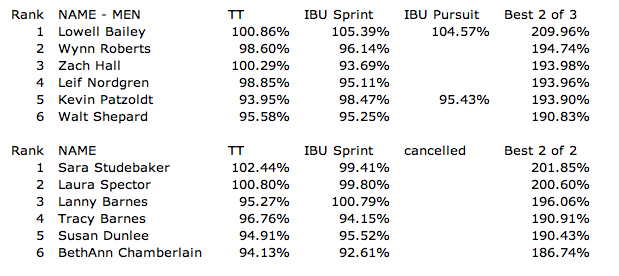
Independent U.S. biathlete Tracy Barnes and Jean-Phillipe Leguiellec, a member of the Canadian national team, won mass start races in Canmore, Alberta on Friday. It was the end of a three-race series put on by the U.S. Biathlon Association (USBA) to select American athletes to send to World Cup and IBU Cup trips.
In the women’s race, Barnes had the cleanest shooting on the day, missing only two targets in four stages, which translated to an 18-second win over Anneliese Cook, a former member of the USBA development team. Cook missed one shot in each stage. Tracy’s sister Lanny Barnes finished third with three misses, 49 seconds behind Cook.
Yolaine Oddou of Canada finished fourth, narrowly edging out USBA’s Haley Johnson by only five seconds. Laura Spector, the winner of the first two races, finished sixth. Both Johnson and Spector were hampered by poor shooting, missing nine and seven shots, respectively. Oddon made up for slower skiing by missing only three shots. The most disappointed athlete at the end of the day was almost certainly USBA’s Susan Dunklee, who missed eleven targets, including all five in the last stage. She finished eleventh.
In the men’s race, Leguellec, who finished 6th in the sprint at the Vancouver Olympics, took the win by nineteen seconds over USBA’s Russell Currier. Marc-Andre Bedard, who won Thursday’s race, finished third. Lowell Bailey of USBA was fourth, and Bill Bowler, an American competing independently, was fifth; each of the top five athletes had five misses on the day and were separated only by their skiing. They were followed by USBA’s Zach Hall, who finished sixth with three misses.
After the race, USBA named the athletes who had been selected for the World Cup and IBU Cup trips. Selection was based on percent back, and each athlete’s best two performances were used.
Spector was the lone woman selected for the World Cup, where she will join Sara Studebaker, who was prequalified. With victory in the first two races, Spector was a clear winner at the trials, and the decision wasn’t a difficult one.
For the men, Currier and Bailey were picked to join Tim Burke, Jeremy Teela, and Leif Nordgren on the World Cup. Currier led the points standings, but Bailey was a discretionary pick. The USBA wrote, “The [International Competition Committee] in selecting Lowell Bailey noted that he had very strong results over the summer/fall and had been sick before the trials so was not at his best for the races. They also noted that he has played a very important role in World Cup Relays and that his experience there will be helpful to the team.”
The USBA also picked four athletes to send to early-season IBU Cup races in Europe, the level of competition just below the World Cup. In the past, an early-season IBU Cup trip has not been funded, and this was a decision made for athlete development. Tracy Barnes and Cook will be sent on the IBU Cup trip for women, and Bowler and Hall will represent the men.
The World Cup season begins in Ostersund, Sweden, December 1st.
The men's field early in the race. Photo: Seth Hubbard.The women's field early in the race. Photo: Seth Hubbard.
After winning the second sprint race of the U.S. Biathlon Association (USBA) selection trials in Canmore, Alberta, on Thursday, Laura Spector seems like almost a lock to join teammate Sara Studebaker, who was pre-qualified, for the first period of World Cups this winter.
Meanwhile, Canada made it two-for-two as Marc-Andre Bedard won the men’s race. The Canadian athletes are not competing for spots on the World Cup, as their selection trials were held earlier this fall on rollerskis, but they filled out the field in the selection races and added a bit of pressure for the Americans. One American man will also be selected for the World Cups, joining Tim Burke, Jeremy Teela, and Leif Nordgren.
As was also the case in Tuesday’s sprint, conditions in Canmore were challenging. A bit more snow fell, so more trails were available for racing, but there still wasn’t enough cover to groom the penalty loop; so once again, penalties were assigned as 23 seconds per missed shot for women and 22 seconds for men. In addition, wind was a factor on the shooting range, and it showed: the women, who had shot well on Tuesday, were more erratic on Thursday.
Spector competing at the Vancouver Olympics.
Spector had the second-fastest ski time of the day behind U.S. teammate Haley Johnson. However, she missed two shots in the prone stage, compared to Johnson’s two in prone and three in standing, which left her alone atop the results. Johnson’s performance on the range dropped her to a disappointing sixth place.
Second place went to Tracy Barnes, who is skiing independently after being cut from the U.S. national team this spring. Her ski time was competitive, but it was her shooting that led her to success: her one miss was the lowest total of the day, even while it still left her twenty seconds behind Spector. Anneliese Cook, also competing independently after being cut from USBA’s development team, took third place.
Aside from Spector, the national team athletes didn’t fare particularly well against their former teammates: Lanny Barnes finished fourth, with one more miss than her sister, followed by Susan Dunklee with three misses and Johnson with five. Maine Winter Sports Center athletes Bethanne Chamberlain and Katrina Howe finished seventh and eighth.
In the biathlon system, selection is based on “percent back”, which is calculated with a formula that takes into account the time of each athlete and compares it to the average time of the top three racers.The best two results from each athlete are used, and as a result, Spector’s two wins all but automatically qualify her, unless another athlete wins by a huge margin in the last race.
Marc-Andre Bedard competing in Fort Kent, Maine, last year.
In the men’s race, Bedard, like Spector, had the second-best ski time, after Russell Currier of the U.S. team, who had the fastest time for the second straight race. However, Bedard’s one missed shot tied him for the best shooting on the day, and allowed him to take the victory.
Bil Bowler, who was cut along with the rest of the U.S. development team this year, was the only American who could match Bedard’s shooting. He had the third-fastest ski time of the day, and finished second overall, followed by Currier, who missed four shots in the prone stage. As the second American in Tuesday’s race, Currier’s consistency could pay off and earn him a coveted World Cup spot.
Scott Gow of Canada finished fourth, followed by Lowell Bailey and Zach Hall of the U.S. national team.
Trials conclude on Friday with a mass start race. In all likelihood, Spector will be the one to join Studebaker in Europe. On the men’s side, things are more exciting, as almost anyone who has a good race could seize the opportunity to join three athletes who are already training in Sweden.
With only a 1.2 k race loop and no penalty loop, the United States Biathlon Association (USBA) faced some major challenges in Canmore, Alberta, on the first day of senior trials racing on Tuesday.
The stakes were high: top finishers from the race series will be able to join Sara Studebaker, Tim Burke, Jeremy Teela, and Leif Nordgren at early-season World Cups in Europe. But the race organizers got creative and and ultimately pulled off a successful – if unorthodox – sprint race, assigning 23 seconds per
Laura Spector
missed shot for women and 22 for men, based on the time it typically takes athletes to ski a penalty loop.
At the end of the day, athletes had to wait to see their results, since the order of finish didn’t take hits and misses into account. After the shooting scores were tallied and time penalties applied, Laura Spector had bested the women’s field by 36 seconds, with Canadian Scott Perras taking a 37-second victory over the rest of the men.
Spector had one of the fastest ski times of the day – her finish in 22:39 tied her with teammate Haley Johnson, and trailed only Canada’s Meagan Imrie. But it was Spector’s clean shooting that scored her the win over fellow USBA B-team member Susan Dunklee, who missed one shot in the standing stage. With two misses, Imrie finished third, and was the first Canadian.
The Canadian team was joining their American counterparts for a friendly competition, but there’s nothing on the line for the Canucks: their trials were held on rollerskis earlier this fall. So for Imrie, the victory over teammates Melanie Schultz and Zina Kocher, who finished eight and ninth, was only symbolic.
But for the Americans, every place and every second counted. After the podium was complete, Anneliese Cook finished fourth – the first non-national team member in the rankings. She was followed by Lanny Barnes and Haley Johnson, both members of the B-team, and then Tracy Barnes, who is also competing on her own. The women generally shot well, with Spector and both Barnes sisters shooting clean, and only Johnson struggling on the range; she missed one prone shot and two standing.
In the men’s race, Perras also used clean shooting to help him to a victory. He had the third-fastest ski time, behind the U.S. national team duo of Russell Currier and Lowell Bailey. But both Americans missed three targets, and finished second and third, respectively.
Patrick Cote of Canada shot clean and finished fourth. He was followed by Bill Bowler, an independent American biathlete, and Zach Hall, who is on the USBA’s B-team.
Racing was originally scheduled to continue on Wednesday, but USBA decided to hold off and postpone the next competition until Thursday, in hopes of Canmore receiving more snow.
(Note: FasterSkier initially made an error and reported that Lanny Barnes was not re-named to the National Team. Since then, we have corrected the article – it was in fact her sister, Tracy, who was not re-named. FasterSkier apologizes for the error.)
Last year was a historic season for U.S. biathlon. In late December, Tim Burke captured the yellow World Cup leader bib, and continued to wear it through part of January; it was the first time an American had ever led the World Cup standings. Then, in Vancouver, Lanny Barnes posted the best Olympic results for an American woman since 1994, finishing 23rd in the 15 k individual.
Burke is back, and with his teammates he is ready to attack the World Cup circuit. The men had a European training camp this summer and are positioned for one of their best seasons in years.
The women, though, are another story. While none of the talent has left the sport, Lanny Barnes’ sister Tracy was not re-named to the national team, and is instead fending for herself. And while the men will take a full relay team’s-worth of athletes to the World Cup, the U.S. Biathlon Association (USBA) has decided to take only two women to most of the World Cups – even though they were given three starting slots in each race. The flip side of this decision is that they will fund two athletes to compete in the IBU cups, which USBA views as a better opportunity for athlete development. The women’s team is as fast as ever, but with fewer World Cup starts, it will be tougher for them to create the strong results that the USBA says it must see to justify sending a full team.
But for both men and women, there are many opportunities for success this season. Read on to learn about the athletes you might be seeing in the news this winter.
Men
Walt Shepard and Kevin Patzoldt retired from the sport, but other than that the men’s team is much the same as it was last year. With several Olympic veterans on the squad as well as a couple of young guns, the men’s team has all the bases covered. Tim Burke, Jeremy Teela, and Leif Nordgren are pre-qualified for the first period of World Cups, while the rest of the team will contest the final spots at this week’s trials in Canmore, Alberta.
Bailey.
Lowell Bailey
Bailey grew up outside of Lake Placid, New York, and was one of the few biathletes to pursue a collegiate skiing career before turning pro. He led the University of Vermont Catamounts on the eastern carnival circuit before returning to biathlon and competing in the Torino and Vancouver Olympics. His best Olympic result came back in Torino, where he was 27th in the individual race, and he’s had several top-20 finishes on the World Cup in the last several years. Bailey is also a talented musician – go hear him play and sing if you have the chance.
Burke.
Tim Burke
Burke, of Paul Smiths, New York, is the biggest name in U.S. biathlon right now. With a couple of podium finishes on the World Cup last season, his performance led Americans to set some pretty high expectations for the Olympics: would Burke take home a medal? However, at the Olympics, he didn’t have his best races, partly due to the tough conditions in the opening individual race, which favored early starters. His top finish was 18th in the mass start. This year, Burke will be attacking the World Cup with renewed vigor – and as Olympic gold medalist Bjorn Ferry of Sweden told FasterSkier, now that Burke knows what he’s capable of, he could be very dangerous indeed.
Russell Currier
Currier is one of the younger members of the team, but he still has a lot of experience, having competed in 2 World Championships. Training out of the Maine Winter Sports Center last year, Currier showed the ability to jump in ski races, even classic ones, and hold his own against strong competition. This year, though, he was re-named to the U.S. team, and Currier won’t be doing much ski racing. Fitness is his strong suit, so his success largely depends on having a good day on the range.
Jay Hakkinen
Before Burke, Hakkinen was the “next big thing” in American biathlon. In Torino, he was the leadoff skier for the U.S. relay, and tagged off in first place; the relay ultimately finished 9th. More recently, he competed in Vancouver – his fourth Olympics – with a top finish of 54th place in the sprint. Hakkinen is clearly one of the elder statesmen of the team, but that doesn’t mean that he doesn’t have a few more great finishes in him.
Hall.
Zach Hall
Hall, originally from Nikiski, Alaska, only picked up biathlon three years ago, after graduating from Dartmouth College. All things considered, Hall has made impressive strides since then, and he is training with a very competitive U.S. team. He’s clearly learning from the best, and last year he got his first World Cup start, finishing 85th in an individual race in Antholz, Italy. Hall has been improving every year, so look for him to make big jumps this season.
Nordgren.
Leif Nordgren
FasterSkier ran a Pros of Tomorrow piece on Nordgren, so read that to learn everything you need to know about the 21-year-old prodigy. But here’s the short story: Nordgren captured a bronze medal at the 2008 World Junior Championships, and last year he got his first World Cup starts, finishing in the mid-60’s in a pair of individual races. His goals for the season are getting more experience on the World Cup, qualifying to race the pursuits, and maybe even scoring some World Cup points.
Roberts.
Wynn Roberts
A four-time World Junior Championships competitor, Roberts, like Nordgren, is originally from Minnesota – the heartland of U.S. biathlon, if you will. And like Nordgren, he’s relatively young. Still, he got a start at the Vancouver Olympics last year, finishing 86th in the individual race.
Teela.
Jeremy Teela
At 34 years of age, Teela is the other elder statesmen of the team. He has competed in three Olympics and a staggering 13 World Championship events, and has four top-10 finishes in World Cup competition. Last season, he had the top U.S. result in Vancouver, finishing ninth in the sprint. Teela has consistently been one of the best in the U.S., and this year should be no different.
Women
The biggest surprise on the women’s team is that neither Lanny nor Tracy Barnes, twin sisters, were initially named to the team. Lanny, however, was added partway through the summer, and Tracy is attending trials in Canmore this week to try to sneak her way back onto the World Cup, or at least the IBU Cup circuit, which is biathlon’s equivalent of the Continental Cup. Other than that, the U.S. team is more or less the same as last year, minus the development squad, which got cut for both men and women – but since the women’s squad is smaller, had a greater overall impact on the women’s team size. Sara Studebaker is the only woman who pre-qualified for the early-season World Cups.
Lanny Barnes.
Lanny Barnes
Lanny is perhaps the most experienced member of the women’s team. Besides her record-setting performance in Vancouver, which allowed her to squeak back onto the team, she also raced in the Torino Olympics in 2006, where she finished 64th in the individual race. Her 15th-place finish in a World Cup in 2006 is one of the best in recent history for a U.S. woman. Originally from Durango, Colorado, the Barnes twins are the best shooters on the U.S. team, and some of the fastest shooters on the World Cup in general. The younger members of the women’s team benefit from Lanny’s presence, but she’s not just a teacher – she can kick butt and win races, too.
Dunklee.
Susan Dunklee
Dunklee came to biathlon late, after skiing for Dartmouth College and helping them to the 2007 NCAA Championship. In the last two years, though, she’s had some impressive results, and her shooting has come a long way; in March, she earned her first North American championship. Dunklee barely missed the cut for the Olympics last year, and this season she’s even more determined to get World Cup starts. She’s also trying a new arrangement where she lives and trains with the Craftsbury Green Racing Project in Craftsbury Common, Vermont, while still attending the team camps – so stay tuned to see if that will make the difference in her results.
Johnson.
Haley Johnson
Johnson, of Lake Placid, took a break from biathlon to ski race for Bates College before returning to the sport several years ago. Last season, she finished 21st in a World Cup in Slovenia, and the year before, her top finish was 23rd. Johnson, a 2010 Olympian who at 28 is the oldest member of the team, could be the one to lead the American women to top-20 finishes on the World Cup, but first she has to qualify to race them – so check results from the trials races in Canmore this week.
Spector.
Laura Spector
Spector is the youngest member of the women’s team, but that doesn’t mean she’s inexperienced. She was named to the Olympic squad last year, and she has started in two different World Championships as well. This year, Spector focused intensely on her skiing, and it paid off – she’s clearly one of the fastest women in the U.S., and even skied to a victory at the Climb to the Castle rollerski race this fall by besting several U.S. Ski Team athletes. Spector is attending Dartmouth College for part of each year, making her achievements all the more impressive.
Studebaker.
Sara Studebaker
Studebaker dabbled in biathlon as a junior before taking time off to attend Dartmouth College where, like Dunklee, she contributed to the 2007 NCAA championship effort – and was named All-American in the process. Since her return, Studebaker has been on a tear, finishing 34th in the individual race at the Vancouver Olympics and starting a dozen World Cups. As the only pre-qualified athlete for this year’s first period of World Cups, she has the luxury of not competing at trials and instead focusing fully on preparing to race fast on the international stage.
For the nordic world, the highest profile issue on the agenda at the International Olympic Committee’s (IOC’s) recent executive board meeting in late October was the inclusion of women’s ski jumping in the 2014 Sochi Olympics. But besides other events like the figure skating team event and a luge relay (FasterSkier isn’t sure how that works, but we want to see a hand-tag halfway down the luge track…), the IOC board also looked “favorably” towards the inclusion of a mixed relay in the biathlon schedule.
The final decision won’t be made until after this year’s World Championships in Khanty Mansiysk, but biathletes are generally excited about the ruling. American veteran Lanny Barnes said that “it would be awesome if they incorporated the mixed relay into the Olympics. It’s a fun race!”
The addition of a two-man, two-woman relay was suggested by the International Biathlon Union (IBU) and analyzed by the IOC according to criteria that evaluate the potential for increasing gender equity, youth appeal, and “universality.”
According to Lowell Bailey, a U.S. Biathlon Team veteran, the mixed relay would add excitement to the Games, as well as giving some smaller nations a chance for glory.
“The mixed relay is an interesting race, because there can be even more unexpected lead changes up to the very end,” he said. “When you mix the male and female talent from one nation, you often end up with a much different result than if just one of the teams was racing in a traditional relay format.
“A good example of this was when Sweden won the mixed relay at 2007 World Championships in Antholz, Italy. Neither the men nor the women have won a relay on their own, yet when they took the top two men and women out of their team, they took the gold,” he said.
Olympian Laura Spector was also enthusiastic – and she also pointed out that a mixed relay created opportunities for men’s and women’s teams, which often train separately, to work together.
“[There’s] some amount of strategy involved in choosing the teams, because countries often try to save their top athletes for the normal relay,” she said. “But it is a very competitive event, regardless.”
As Spector said, depending on where the mixed relay was situated in the schedule, many superstars might bow out to save themselves for the five other races already on the schedule. But that was pretty much the only negative aspect cited by the athletes interviewed by FasterSkier.
U.S. Biathlon Head Coach Per Nilsson was also enthusiastic about the event’s inclusion.
“For the U.S. team, it would be a chance to create a pretty strong team for the future,” he said. “I think it’s another chance, especially for the ‘medium’-good teams, to find two good athletes of each gender. That has been the case in the mixed relays in the past – that outside the big nations (Germany, Russia, Norway, France, etc.), you have had more nations that can be fighting for the podium.”
Bailey agreed, going even farther with his prediction of potential American results. “I think the mixed relay format does present an interesting opportunity for the United States, as a ‘smaller’ biathlon nation, to sneak into one of the podium spots,” he said.
Nilsson, for one, would go a step farther, in a bid to increase fan appeal.
“I would like to see that the mixed format, in the future, goes more towards a cross-country team sprint format – for example, six legs of 1.5 kilometers, with shooting and shorter penalty loops,” he said. “That would be interesting for the spectators – a format that is a little different.”
What will happen in April? The IOC board has empowered the IOC President to make the final decision, so it’s all up to Jacques Rogge now.
Laura Spector all by herself toward the top of Whiteface Mountain
Chalk one up for the biathletes.
Just over halfway through Friday’s Climb to the Castle race on Whiteface Mountain, U.S. National Biathlon Team member Laura Spector went to the front of a five-strong women’s pack and left behind four of the country’s best cross-country skiers.
Churning her way through fierce gusts of wind—which staff at the summit estimated at 60 miles per hour—the diminutive Spector crossed the line with a big gap on U.S. Ski Team members Morgan Arritola and Liz Stephen, notching a mark for biathletes around the country.
“This was for them,” Spector said. “We’ve been training really hard.”
Spector was nowhere to be seen at the beginning of the race, which ran five miles up the Whiteface Veteran’s Memorial Highway to the stone castle at the top.
Conditions for the event have ranged from decent to abysmal over the past three years—the 2009 edition went off in a cold, steady rain.
This morning’s race began with far more agreeable weather—cool and crisp at the bottom, with a light breeze.
Arritola leading the pack early on.
Arritola led out of the start at a restrained pace, but after a couple of miles, the lead group was down to five: Spector, Stephen, Arritola, Jessie Diggins (CXC), and Ida Sargent (Dartmouth/Craftsbury Green Team).
As the women moved from the sheltered portion of the road onto the mountain’s upper flanks, the wind intensified from a breeze to a full-blown gale, alternating between a brutal headwind and a powerful tailwind as the athletes made their way around the highway’s switchbacks.
Spector had been biding her time since the start, content to feel out the course and let others do the work—especially since it was the first time she’d competed in the race.
“It was a pretty conservative pace, but I didn’t know what to expect, so I just wanted to sit in for a while—see who was going to make a move,” she said.
Around the three-mile mark, Spector said she decided to take a turn at the front.
“I…ended up making a gap, and I just decided to go for it,” she said.
Topping out at 4’9”, Spector said that her technique is more suited to climbing—and it showed. She fought her way through a stiff headwind on the course’s upper portions, and shook off a broken pole tip close to the finish line. At the top, Spector had roughly a minute’s advantage over Arritola.
“Spector went by, and blew us away,” Stephen said.
While the top three women were all on Marwe rollerskis, Arritola said that she did notice a difference between her equipment and Spector’s.
“She was on some faster skis, I think,” she said. “She was V2-ing pretty easily, and I was V1ing hard, so—it’s always hard in a race like this to tell.”
Arritola crossed the line with a fifteen-second edge over Stephen, and Diggins and Sargent rounded out the top five.
Spector, 22, competed at the 2010 Olympics in Vancouver, her best finish a 65th in the women’s 15 k individual.
She’s enrolled at Dartmouth College for the fall, but after racing in the national team trials in Canmore later this fall, she’ll leave school and compete full-time through the winter.
Susan Dunklee (left) and Tracy Barnes-Colliander sprint for the line
Seven penalties would normally be enough to take a biathlete out of a race. Not Susan Dunklee.
In the North American Biathlon Championships 12.5 k mass start, Dunklee overcame some sketchy shooting to win a sprint finish with Tracy Barnes-Colliander, who was deprived of her third straight victory.
It was the first North American championship for Dunklee, and it looked impossible after she missed six of her first ten shots—three penalties in each of the first two rounds.
“It throws yourself—you get pretty much last place or pretty much close to it when you do something like that on the first stage,” she said. “You’ve really got to have the attitude that you’re hunting people down, and that can be a lot of fun.”
Surprisingly, the only woman that Dunklee wasn’t hunting after her first three misses was Barnes-Colliander herself.
Tracy Barnes-Colliander leading at the tail end of the first lap
Barnes-Colliander is normally a very accurate shooter, and Sunday was no different. In her first round, she still put all her bullets in a tight cluster—it just happened to be low, to the right, and off the target.
After getting a correction from her coach, she proceeded to reel off 15 hits in a row. But the damage was done: Instead of leading the race, Barnes-Colliander was now struggling to get back into it.
She and Dunklee both cleaned their third round of shooting, and that, combined with some key misses by leaders Claude Godbout and Annelies Cook, gave them an opening.
On the loop before the final stage, Dunklee got a gap on the rest of the field. She was first into the range, but that was no guarantee—especially the way she’d been shooting this week. She missed eight of ten in Thursday’s sprint, and twelve of twenty in Saturday’s pursuit.
“My last two races, I’ve missed more than I have all season,” she said. “Ridiculous, poor shooting.”
Saturday, though, she performed when it counted, missing just one shot in that final stage. But that still left Dunklee with a twenty-second gap to Barnes-Colliander, who cleaned.
Dunklee’s coach let her know just how much time she had to make up, and she said she knew it would be tough.
Susan Dunklee leading Tracy Barnes-Colliander out of the range
She closed quickly, though, and on one of the short, steep hills just before the stadium, she finally reeled Barnes-Colliander in, taking the lead with a few hundred meters to go.
Barnes-Colliander said that she had been trying to save some energy in order to stay in front of Dunklee in case she got caught, because the descent into the finish doesn’t leave much time for passing.
“But she put a little time on me on [the] last hill,” Barnes-Colliander said. “After that, I kind of saved a little bit for the sprint, but it’s tough having this downhill [finish].”
Dunklee led down the hill onto the finish straight, and in a frantic sprint, she just managed to hold off Barnes-Colliander, by 0.2 seconds. Cook trailed in for third, just over a minute back, with six penalties.
The two American Olympians in the race, Haley Johnson and Laura Spector, finished fifth and eighth respectively, hampered by their shooting. Each had nine misses.
Wynn Roberts (left) headlines the competitors at North American Biathlon Championships in Fort Kent, Maine
You can always count on snow in northern Maine. Throw in skis and guns, and you’ve got a recipe for a pretty good week.
Three days of racing kick off this morning at the North American Biathlon Championships in the biathlon-crazed town of Fort Kent, Maine. The fields are small, but competitive at the top, with four biathletes racing fresh off the 2010 Olympic Games: Americans Haley Johnson, Laura Spector, and Wynn Roberts, and Canada’s Marc-Andre Bedard.
The dark horse is Caitlin Compton, an American who competed at the World Biathlon Championships in 2008, but switched back to cross country raced for the U.S. team in Vancouver. She arrived yesterday fresh from the cross country World Cup in Norway, drummed up a rifle, and decided to race at the last second.
There’s nothing on the line but bragging rights, but that was enough to draw 128 elite, master, and youth biathletes out of the woodwork. And the event will be a dress rehearsal for the World Cup that will be held here next year.
Things get going today with the sprint, which is 10 kilometers for the men and 7.5 for the women, both with two rounds of shooting: prone, then standing.
Results from the sprint are doubly important, because athletes then start Saturday’s 12.5/10k pursuit with a handicap based on their times from Thursday. Win the sprint, and you’re the first one out on course for the pursuit, with a head start equal to your margin of victory over the second place finisher. Sunday’s 15/12.5k mass start will be the last race of the championships, and for that competition, everyone starts with a clean slate.
In addition to the Olympians, the fields feature strong contingents from the host club, Maine Winter Sports Center, including hometown hero Russell Currier (he’s not technically from Fort Kent, but nearby Stockholm is close enough to win him some loyalty). Other threats to podium on the men’s side are Casey Simons, Zach Hall, Walt Shepard, and Bill Bowler.
For the women, aside from Spector, Johnson, and Compton, the challengers are BethAnn Chamberlain, Susan Dunklee, Annelies Cook, Katrina Howe, and 2009 World Junior Championships silver medalist Grace Boutot.
With the country’s top men and women racing in Europe on the World Cup circuit, the racing should be tight. We’ll have complete coverage of the events—check back later today for results and a report from the sprint.
Athletes and coaches in the range on Thursday morning before the sprint.
salThe crowd at the women's 7.5k sprint at the 2010 Olympic Games.
Breaking two bones in your hand a month before the Olympic Games doesn’t sound like good preparation. But it sure didn’t hurt Anastasia Kuzmina.
Shaking off an early miss, as well as the injury she suffered in early January, the Russian-turned-Slovakian won her country’s first Olympic medal in biathlon—and its first-ever gold in the Winter Games—on Saturday in the women’s 7.5k sprint.
The announcers characterized Kuzmina’s win as a surprise, but her win comes after a silver medal in last year’s World Championships, affirming her ability to compete at the highest level after giving birth to her first child in 2007.
An early starter—bib 19 of 88—she faced a long wait after finishing to see if she’d won. But instead of standing around in the steady drizzle that fell all afternoon, Kuzmina said that she went inside to change, preferring to minimize the suspense. When she emerged, she found that she was the winner by a second and a half over Germany’s Magdalena Neuner. Marie Dorin (FRA) took the bronze.
Germany's Magdalena Neuner, en route to second place
Ivor Lehotan, the Vice President for Information of the International Biathlon Union—and a Slovakian—said that Kuzmina moved to the country two years ago to be with her husband and coach, Daniel Kuzmin.
While Slovakia had been knocking on the door with a number of fourth- and fifth-place finishes at various championships, Lehotan said that it took someone with Kuzmina’s combination of Slovakian calm, and Russian strength and passion—an ideal mix for biathlon—to take the program to the next level.
She missed her first shot of the day, in the prone stage, but then went on to hit the next four in that round, and all five in the standing. Kuzmina and Neuner, with one penalty each, were the only athletes in the top-nine who were able to overcome even a single miss—everyone else shot clean.
With the rain, and with temperatures above freezing, race officials applied fertilizer to the course to firm it up—making “a huge difference from yesterday,” according to American Laura Spector, who finished 77th.
“It was really nice actually—it wasn’t deep or slushy or anything,” she said. “It was actually quite fast.”
Saturday’s race was the first-ever Olympic experience for the whole American team, with the exception of Lanny Barnes, and none of the women were able to crack the top half of the field. Sara Studebaker was the closest, in 45th—just one spot away. Barnes was another place behind Spector, in 78th, while Haley Johnson was 80th.
Spector, Studebaker, and Barnes each had only one miss—a poised performance from the first two, given that they had never competed on such a big stage.
“I was really nervous this morning,” Spector said. “I just had to tell myself I know how to prepare for a race…and I think that really helped calm me down.
German fans in the stands
The stands were packed with boisterous fans in the stands near the range, with hundreds standing shoulder to shoulder on a small hill that sat just off to one side. Different countries had their own fan sections, each decked out in national colors and waving flags. But very few fans ventured beyond
the stadium, making for some quiet race trails and an odd contrast, Spector said.
The American team raced in some sharp new spandex—American flag-themed, with stars and stripes on the shoulders. Studebaker said that they were an improvement on the old, solid blue suits.
Haley Johnson sporting the new American uniform
“You can actually tell who we are, which is great,” she said. “The dark blue suits—they tend to get blended in with everybody else.”
The Canadians women had an off day, led by Megan Tandy, who shot clean to finish in 46th. Zina Kocher, who regularly had been in the top-20 this season, missed three shots and finished 65th, while Rosanna Crawford and Megan Imrie were 72nd and 76th, respectively.
Lowell Bailey, USBA athlete and Vancouver captain for Team GreenLaces
“GreenLaces is a movement. It is an opportunity for elite athletes to promote environmental stewardship and conservation through their own behavior. . . . If you care about the environment and want to make a difference without having to compromise your training, this is one small way to do something positive with your athletic success.”
– Lowell Bailey, Captain of Team GreenLaces: Vancouver 2010
Natalie Spilger, GreenLaces founder
Natalie Spilger is a professional soccer player for the Chicago Red Stars. A graduate from Stanford University where she captained the women’s soccer team, she received her BS in Civil and Environmental Engineering and a Masters in Construction Engineering and Management. After working for awhile as an Energy Engineer for EMCOR Energy Services, she had a realization.
“After countless hours of counting lightbulbs and “greening” a building’s operations and lighting systems, I decided this was not the way I wanted to improve our planet,” said Spilger, “I wanted to green people, not buildings.” So in March of 2008 GreenLaces was launched.
Green Laces
GreenLaces is a movement which hopes to bring athletes together for a common cause – preserving the environment. It provides a simple process:
1. Make a promise to the planet, which is published on their website.
2. Receive and wear the Green Laces (100%-post-consumer-recycled) to show support of the movement, as a reminder of your own personal promise, and to help spread the word.
U.S. Biathlete Lowell Bailey is one of two captains for Team GreenLaces Vancouver 2010, the other captain being Brian Martin of the U.S. Luge Team. In his role as captain, Bailey’s job is to recruit as many of his peers as possible.
“I was approached by my friend Lyndsay Holley who knew Natalie Spilger, the GreenLaces founder,” explains Bailey, on how he got involved with the organization, “Lyndsay knew that I had an Environmental Studies degree and that I was interested in Environmental advocacy. GreenLaces was a perfect fit as it presented a realistic way to promote Environmental awareness while maintaining my full-time commitment to biathlon and the Vancouver Games.”
Team GreenLaces: a group of Olympic athletes who have made the commitment to use their status and publicity to further the movement.
Just several months after GreenLaces was started in 2008, Team GreenLaces at the Beijing Olympics had 50 athletes from 7 countries on their roster, enough to garner a fair share of media attention. For the upcoming Vancouver Olympics the organization has the goal of enlisting over 100 athletes from over 5 different countries.
As an added incentive for spreading the word, GreenLaces will reward the athlete who is most successful at recruiting other athletes to the cause by offsetting their carbon footprint to and from the Vancouver games.
Bailey describes his personal involvement and the simplicity of the program as follows:
“The first step is to commit to a personal environmental promise – something as simple as turning the lights off when you leave a room or re-using grocery bags. I chose to set my thermostats lower and turn off appliances like TV’s, Stereo’s, and Laptops when not in use. The second step is to promote the GreenLaces movement through wearing green laces in competition shoes. I know, I know – not realistic for ski sports! For those sports without visible laces, athletes can choose to wear the GreenLaces logo on their uniform or carry and use a GreenLaces metal water bottle.”
The affect of the movement is described on the GreenLaces website as “Athlete ICE”.
Inspire Personal Action
Connect and Unite
Educate Through Athletics
Haley Johnson
One of the athletes Bailey recruited for Team was USBA teammate Haley Johnson.
“I am definitely interested in bringing environmental awareness and responsibility more to the forefront of sports, whether it is within biathlon, in Lake Placid or at the Olympic Games,” Johnson said, of her desire to get involved with the movement.
Johnson can speak directly to the way her commitment to join GreenLaces “inspired personal action”.
“For myself, I knew I was interested, but I needed a bit of a nudge from those around me to act. The main goal of Green Laces is to inspire individuals to take personal action to improve the environment, very much in the same vain of being the change you want to see in the world,” said Johnson, “My promise to the environment is to help a local elementary class in Lake Placid learn about recycling, climate change and doing their part. It will be a challenge, but I am excited to help out.”
USBA teammates Laura Spector, Lanny Barnes, and Traci Barnes are also on board.
Laura Spector speaks to the “Connect and Unite” effect by saying, “It’s a cause that links athletes over something that is critical to our sport and our future. As role models, we need to alert people around us with a symbol that stands out and gets people talking.”
Spector also speaks to the “Educate through Athletics” piece of the movement.
“Sometimes it’s hard for an individual to make a difference, but when you have solidarity, you can make a real impact. As Olympic athletes we are already role models whose sports are dependent upon environmental conditions, so I think people are more likely to listen to what we have to say.”
Haley Johnson's Green Laces
Johnson encourages other athletes to get involved not only because of the inspiring effect it has had on her own commitment to help the planet, but also because the Vancouver Organizing Committee has made some a real effort to reduce the Games’carbon footprint.
“They’ve shown it’s possible to create a socially and environmentally responsible Games,” said Johnson,“I think Vancouver has done an excellent job at setting a new standard for environmental and social sustainability and I am honored to be a part of it.”
In Vancouver, Team GreenLaces will be working with organizations who have already partnered with the city on the environment-friendly front, such as Clean Air Champions and Project Blue Sky.
Do you have to be an athlete to take part? No, but the organization wants to target athletes for a number of reasons. First of all, athletes can be anybody: young or old, rich or poor, any nationality or race. Also, athletes are icons: both at the community level and at the elite level athletes have the power to inspire, set an example, and advertise their causes. By getting involved with GreenLaces, Spilger hopes that athletes will start thinking more about advertising for the planet than they do their own personal sponsorships. Lastly, athletes need a healthy planet: air quality, water quality, nutrition of food, and weather are all very important to athletes and are all directly impacted by the health of the planet.
On their website, GreenLaces has a “Get Involved” page devoted to “Greening your Game”. The page is still a work in progress, but soon will have tips for everyone from kids to adults, from college to pro-athletes, who want tips on how to participate in their sport while being more conscious of the planet. They also have a link for those who would like to start their own club or chapter, a link for athletes who would like to sponsor a youth, and also a link where you can request a high-profile athlete as a speaker.
Go Green. Laces.
Founder Natalie Spilger and the birth of GreenLaces
While still a player on the Chicago Red Stars soccer team, Natalie Spilger is also the current CEO of GreenLaces. Her motivation for getting personally involved in environmental issues did not happen until after college, when she was traveling overseas. She was horrified to see the kind of environmental damage that had been done in the poorer areas of the world, due to the overuse of plastics and pacacking, and simultaneous underuse of recycling and waste management.
“I went to Morocco and saw fields of what looked like crows, only to find out that it was black plastic bags blowing around with the wind after becoming stuck in the arid shrubs. And it was not just seeing the trash that was sad, it was the smell of it as well. In the outskirts of Marrakesh, there is no trash collection service, so the people will BURN it. The smell was awful. I continued to be exposed to environmental issues after traveling to Guatemala and witnessing their massive landfills.”
But Spilger was fortunate enough in her travels to also see that when a group of people believe in a common cause, things can be done to stop the damage to the environment.
“Luckily, some of my more recent travels have exposed me to hopeful solutions,” said Spilger, “In Uppsala, Sweden there is a process that burns all of the trash, cleans the airborne chemicals released and generates both heat and electricity for the local community. It was truly amazing to see.”
Spilger further explains her reason for founding GreenLaces:
“At the 2007 Green Building Expo in Chicago, I had two important moments. First, I started to realize how many people I could reach and inspire through a social construct that I was very familiar with: athletics. Secondly, I had a moment where I felt so proud to be an environmental steward, that I wanted to outwardly express this to the world. At that time, there was no symbolic way to do so. GreenLaces was born out of that combination.”
GreenLaces Promises
Laura Spector, GreenLaces promise #971: "I promise to buy food items with less packaging so as to produce less waste."
Spector exemplifies one of the goals of the GreenLaces movement when she says, “Now that I’ve made my promise and read those of other athletes, I am more aware of adhering to not only mine but others as well.”
Examples of Promises found on the GreenLaces website:
#1003Nikki Garcia San Francisco, Ca
GreenLaces Promise #1003
“I promise to always use a re-useable grocery bag. If I don’t bring one with me, I’m carrying my stuff home in hand. ”
#957Johann Lau San Francisco, Ca
GreenLaces Promise #957
“I promise to bring my own coffee mug into the office so I don’t have to use paper cups anymore.”
#325New Zealand Football Ferns
GreenLaces Promise #325
“New Zealand Football Ferns- National Women’s Team Promises to the Planet: 1. to recycle our drink bottles on tour and when possible use reusable drink bottles in New Zealand for all practices and games. 2. to turn off all electricity when not in our hotel rooms on tour. 3. to carpool to training and games when possible. 4. to limit water use for showers and brushing teeth. 5. to clean up all strapping tape and electrical tape off the pitches. 6. to use the profile of the national women’s team to get others to pledge their PROMISE TO THE PLANET”
#781Juan Jose Altamirano
GreenLaces Promise #781
“I, Juanjo Altamirano, promise to stop using non rechargable batteries.”
#639John Miller
GreenLaces Promise #639
“I, John Miller, promise to never again buy bottled water again unless it is an absolute emergency. I will only bring water to soccer training in a reusable container and I will promote the same behavior of every player I coach.”
#339goghatesprotesters
GreenLaces Promise #339
“I promise to eat meat only once a week.”
#34Lora Jacobsen
GreenLaces Promise #34
“I, Lora Jacobsen, promise to get rid of all of my products with harmful chemicals and replace them with green ones.”
#321Chris Bartle
GreenLaces Promise #321
“I promise to help green all the homes my company sells.”
#260Frida Ostberg
GreenLaces Promise #260
“I, Frida, promise to eat more organic and local food.”
NEW GLOUCESTER, Maine – The International Competition Committee of the U.S. Biathlon Association conducted a final review of results from the IBU Cup races in Altenberg, Germany this morning. As a result, the U.S Biathlon Association will forward the following list of athletes to the United States Olympic Committee.
Men’s Olympic Team Nominations:
1) Tim Burke, Paul Smith’s, NY- prequalification from 2008-2009 season (2 top 15 results at WC)
2) Jay Hakkinen, Kasilof, AK- prequalification from 2008-2009 season (2 top 15 results at WC)
3) Jeremy Teela, Park City, UT – qualification from Dec 2009 WC (1 top 30 at WC)
4) Lowell Bailey, Lake Placid, NY – overall points winner, Altenberg
5) Wynn Roberts, Battle Lake, MN – discretionary selection. Roberts was 2nd overall (behind Bailey) based on the Percent Back Points from the Altenberg races and lead the Trials races held in Minnesota in December.
The Women’ selection was more complex because of the cancellation of today’s Women’s Pursuit at Altenberg. Contingency “C” from the Olympic Team Selection Procedures was required and is stated below:
Contingencies: In the event one or more of the competitions in a series are cancelled the following will apply as appropriate to the situation:
a. If four races are held the best three of four will be scored.
b. If three races are held, the best two of three races will be scored.
c. If less than three races are held; the top American in each race, not already nominated to the respective team, will be nominated to the IBU Cup team or the Olympic team, respectively, and the ICC in accordance with the USBA Principles of Discretion (see Section II.B.), will determine the remaining nominations.
Contingency “c” requires winners of the two races (Time Trial and IBU Cup Sprint) to be nominated to the team, with the remaining athlete named by discretionary selection of the ICC.
Women’s Olympic Team Nominations:
1) Haley Johnson, Lake Placid, NY- qualification from Dec 2009 WC (1 top 30 result)
2) Sara Studebaker, Boise, ID- winner Time Trial, Altenberg, Germany
4) Laura Spector, Lennox, MA- discretionary selection, Altenberg, Germany. Laura was ranked 2nd based on the Altenberg Percent Back points list.
Below is the Altenberg Percent Back points list:
The International Competition Committee would like to congratulate the nominees for the Olympic Team and wish them luck at the upcoming World Cup races in Rupholding, Germany and Antholz, Italy. Also, best wishes for the IBU Cup team athletes who will move on to racing at the IBU Cup in Nove Mesto, Czech, where the U-26 Team Selection process will continue.
The second phase of U.S. Biathlon Team Selection Races took place today in Altenberg at the IBU Cup Sprint events. The U.S. biathletes competing in Altenburg are vying for two open spots on the U.S. Olympic Team for men’s biathlon and three spots on the women’s team.
Like their teammates in Oberhof, the U.S. athletes had to deal with similar weather challenges. Lowell Bailey (Lake Placid, NY) put his game together at the shooting range with just one miss overall. Good enough for a ninth place in the overall result list with Toni Lang (GER) winning the race. Kevin Patzoldt (Grand Rapids., MN) also qualified for tomorrow’s Pursuit with a 58th place after two misses.
Seven U.S. women qualified for the last team selection race tomorrow. Lanny Barnes (Durango, CO) showed the best performance with a 21st place after just one miss, Laura Spector (Lenox, MA) followed just a few seconds behind in 23rd, and Sara Studebaker (Boise, ID) scored another Top 30 ranking finishing 26th in today’s race.
IBU Cup Racing continues with the mens and women’s Pursuit on Sunday, Jan. 10 at 4am and 7am (EST), respectively. The U.S. biathletes will keep their two best scores and the top man and the top two women will be nominated to the 2010 U.S. Olympic Team and the final athletes for each team will be nominated by the staff. The U.S. Olympic Committee and U.S. Biathlon will officially announce the team on Monday, January 11, 2010.
Live race data from the Altenberg is available here.
US Biathlon Team Selection Race Results – Day Two:
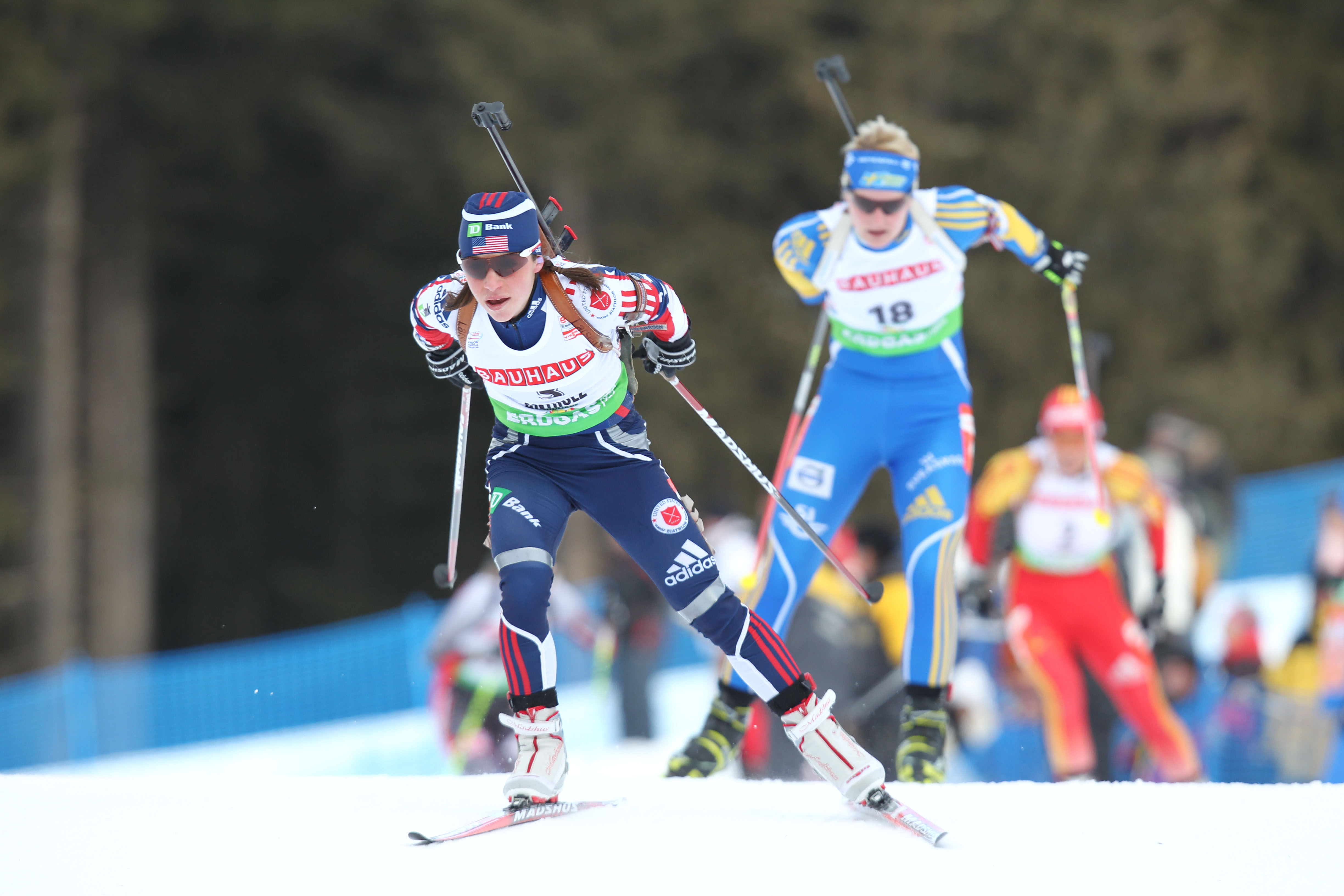


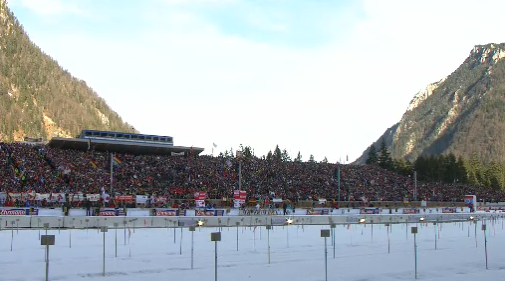


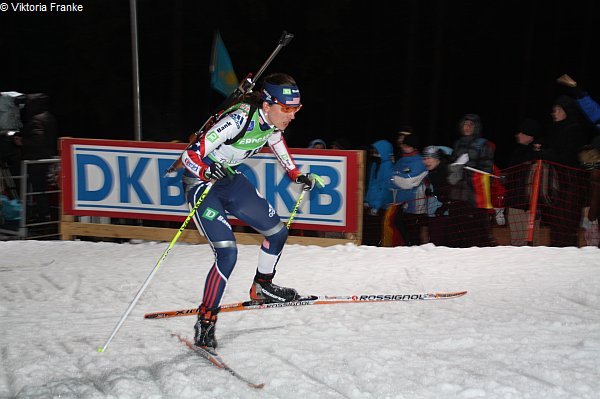


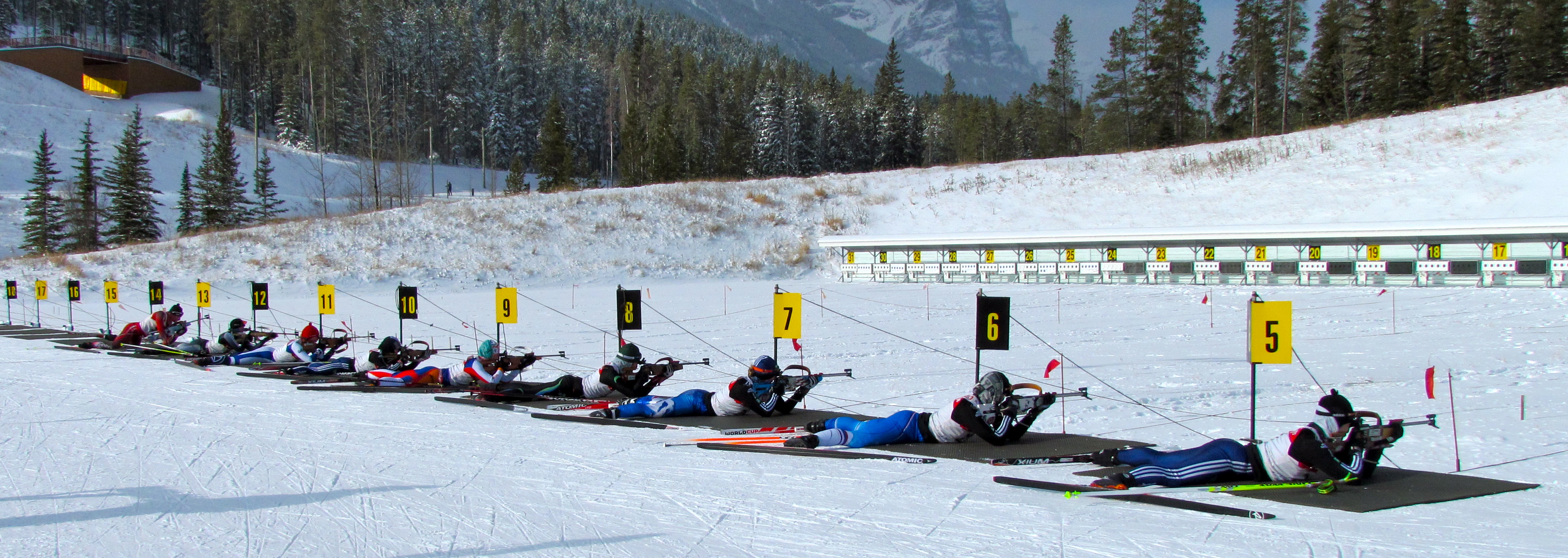


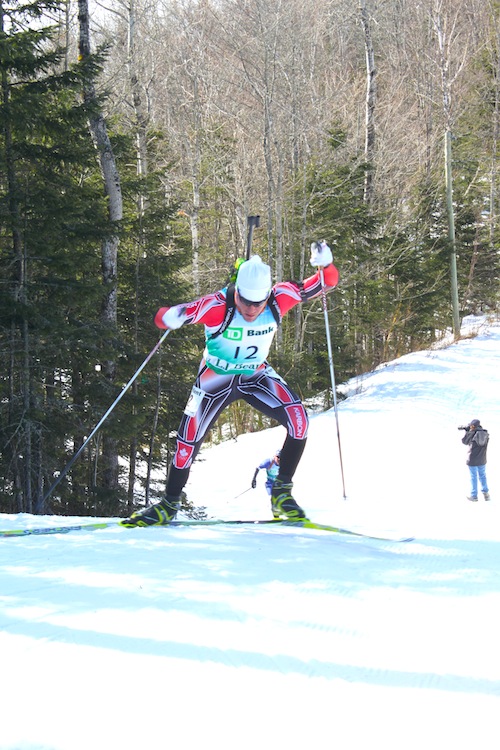




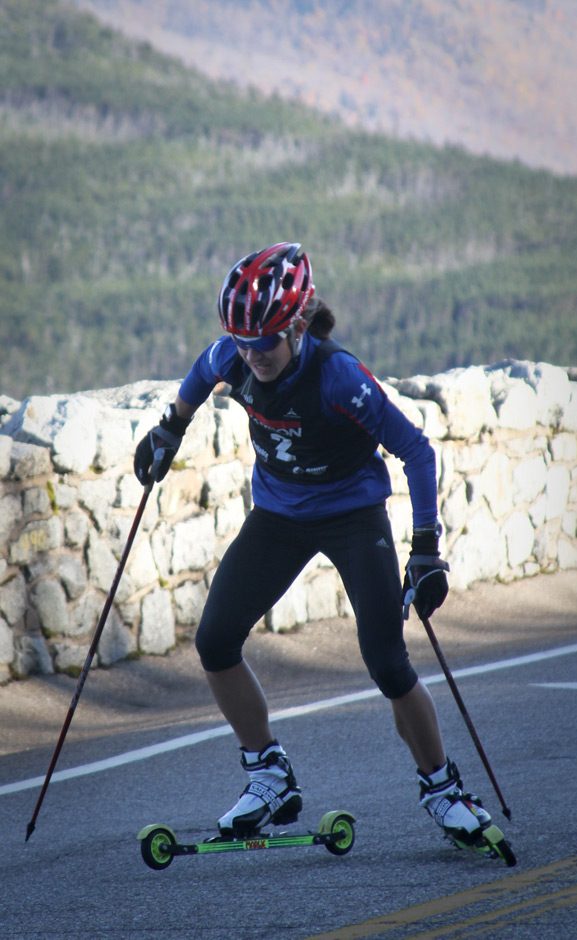


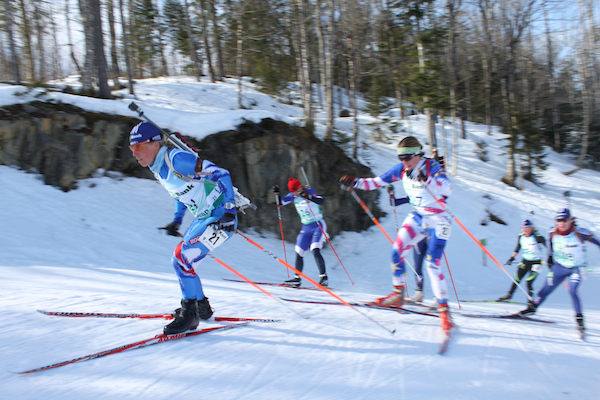


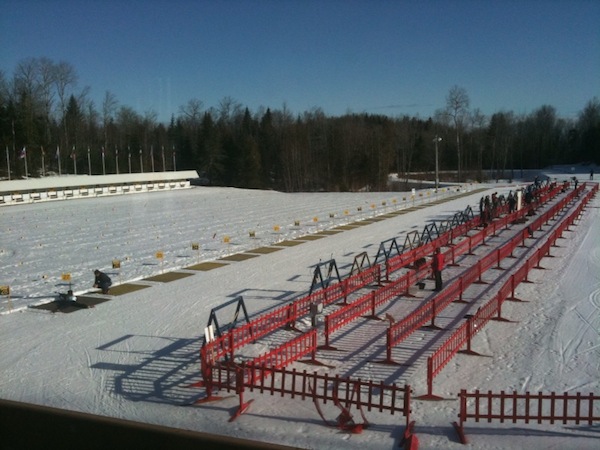


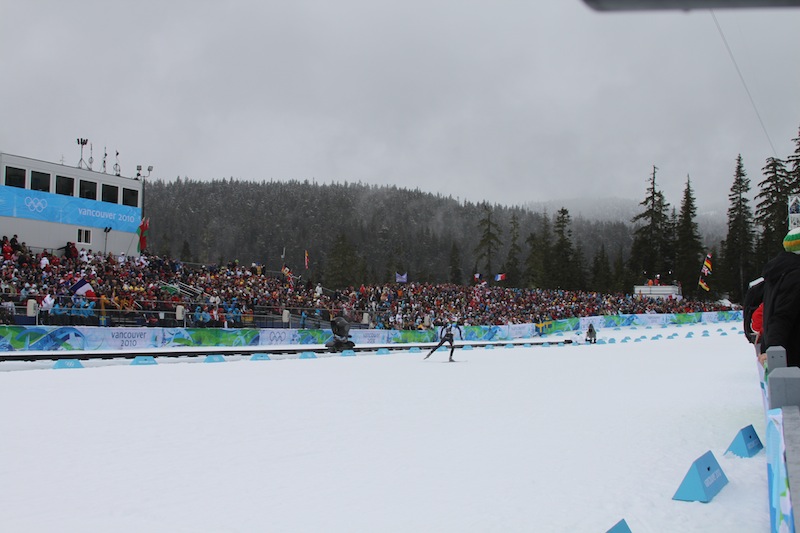
 sal
sal