Category: Feature

  • One Fine Day

    One Fine Day

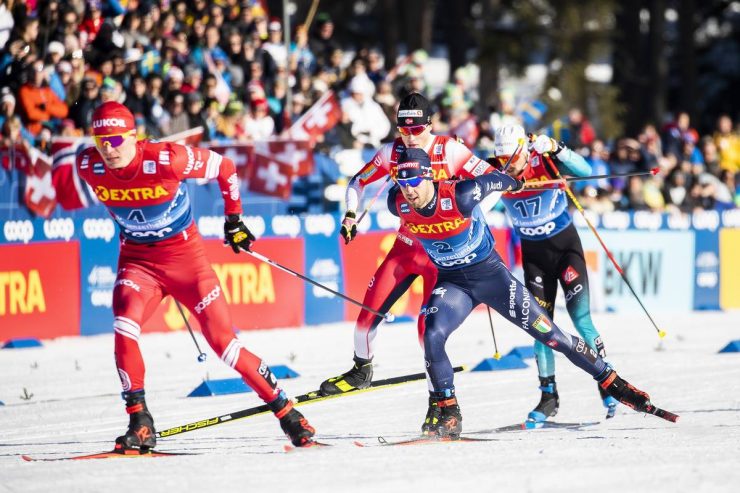
    The Olympic Winter Games of Milano/Cortina are just ten months away. Athletes will give their all for the chance to triumph on one fine day. (Photo: FasterSkier)

    The old season just ended. Let the new season begin . . .

    Ten months from now, the Olympic Winter Games are scheduled to begin in Milano-Cortina, Italy. Ten months is practically enough time to build a ski team from scratch: to cure lingering illnesses, to heal nagging injuries, to initiate new training strategies, to fix any technique foibles, even to learn new secrets for waxing and ski prep. If only Norway and Sweden would stand still long enough to give the rest of us a chance to catch up!

    On one fine day, not too long from now, an Olympic medal will be draped around the neck of some blissfully-tearful ski-hero. Who will it be? And how will they get there? Athletes fortunate enough to collect an Olympic medal will be those who have prepared specifically for that particular event, on that one fine day. They won’t be the athletes who hope to be the very best on every other day. That’s the dilemma of World Cup competitions and Olympic competitions being contested within the same season. It’s nearly impossible to win it all. While Team USA has been learning how to keep skiers (like Jessie Diggins) going for an entire season, Norway and Sweden seem to be concentrating on how best to prepare their top athletes for peak performances on important days. For Norway, it’s a process that began back in the 1990’s as they prepared for the Olympic Winter games hosted by Lillehammer in 1994. It was a systematic, technological, and scientific effort, a program taking place cooperatively across all sports. Norway really wanted to capture gold medals in front of the home crowd. And, boy, did they ever . . . winning the most medals of any nation (26), including near-sweeps of the men’s endurance events (cross country, nordic combined, and speedskating, though Norwegian athletes found themselves outside the medals in biathlon). Though doubters remain, those Norwegian victories were considered “clean,” even in an era when victories by Russian athletes (who won most of the events that Norway did not) were looked upon with considerable suspicion. One way or another, Norway learned how to win, and how to prepare singularly gifted athletes for great performances at crucial moments. It’s a practice they still follow, a culture they still possess. Neighboring rival, Sweden, has followed close behind.

    Norway’s Marit Bjørgen dominated World Cup skiing in an era when every skier raced virtually every race. She also managed to collect more Winter Olympic medals than any other athlete in history. (Photo: FasterSkier archive)

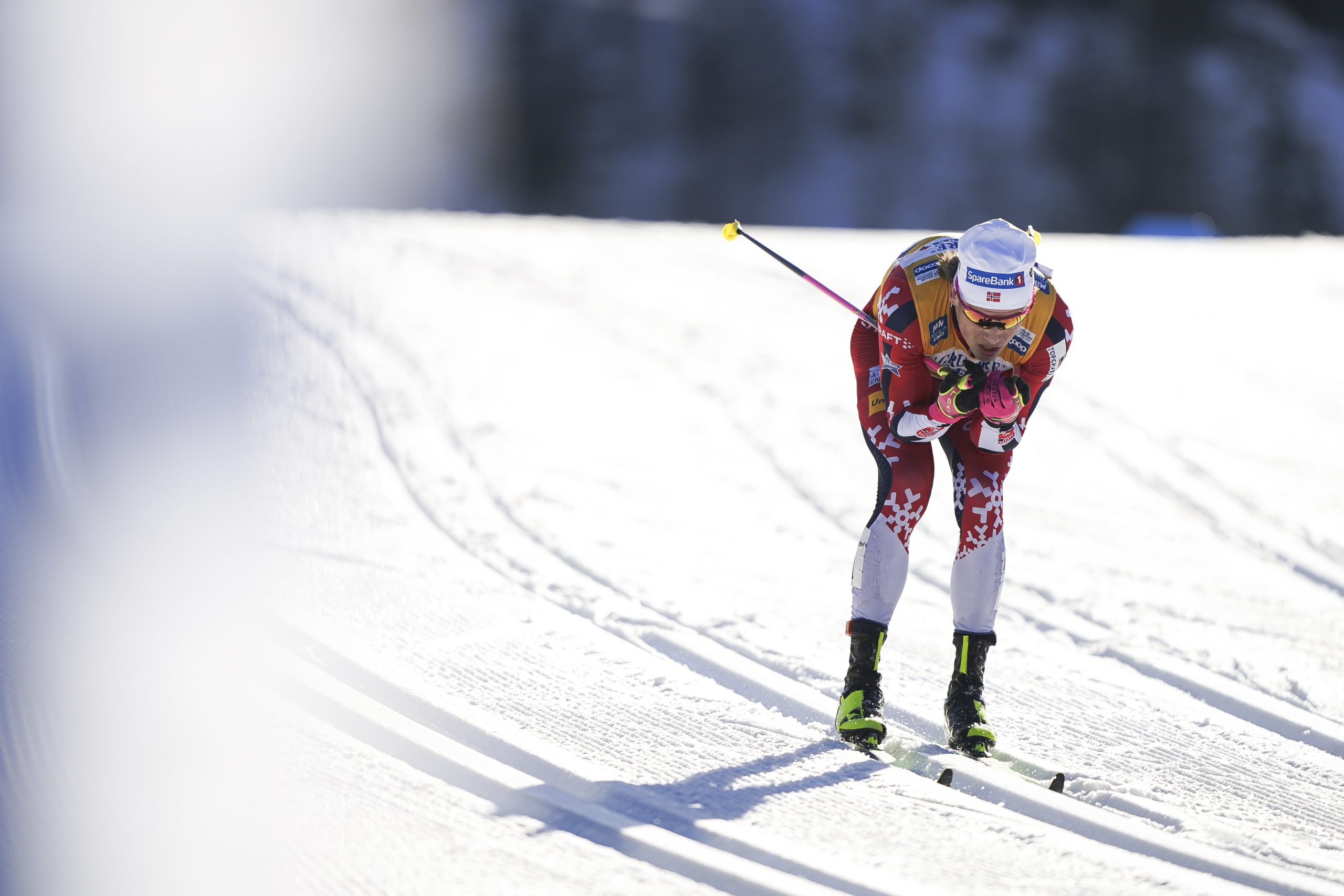
    The race for any World Cup Crystal Globe is an endurance test, a balancing act, a complex mathematical equation. Back when World Cups were dominated by the likes of Martin Jonsrud Sundby and Marit Bjoergen, it seemed like almost every skier would race almost every event . . . making the season-long World Cup competition one that truly identified the “best skier” in any given year. But that was also an era when no one really dominated specific events. Then came Therese Johaug, and every Distance event was Johaug winning by a mile. Then came Johannes Hoesflot Klaebo, and every other World Cup Sprint competitor was racing for second place, at best. Then came the Covid-affected seasons (we may still be in those seasons) when anyone who was sick was expected to stay home. Then came the all-important Trondheim World Championships where many Norwegian and Swedish skiers were so focused on winning World Championship titles that they all but abandoned the World Cup, using it as little more than a training tool, picking and choosing which events to enter, and more often choosing to stay home to train. The “one fine day” strategy requires a different sort of focus, one certain to be repeated next season when the world turns its attention to the Olympic Winter Games and the medals awarded there.
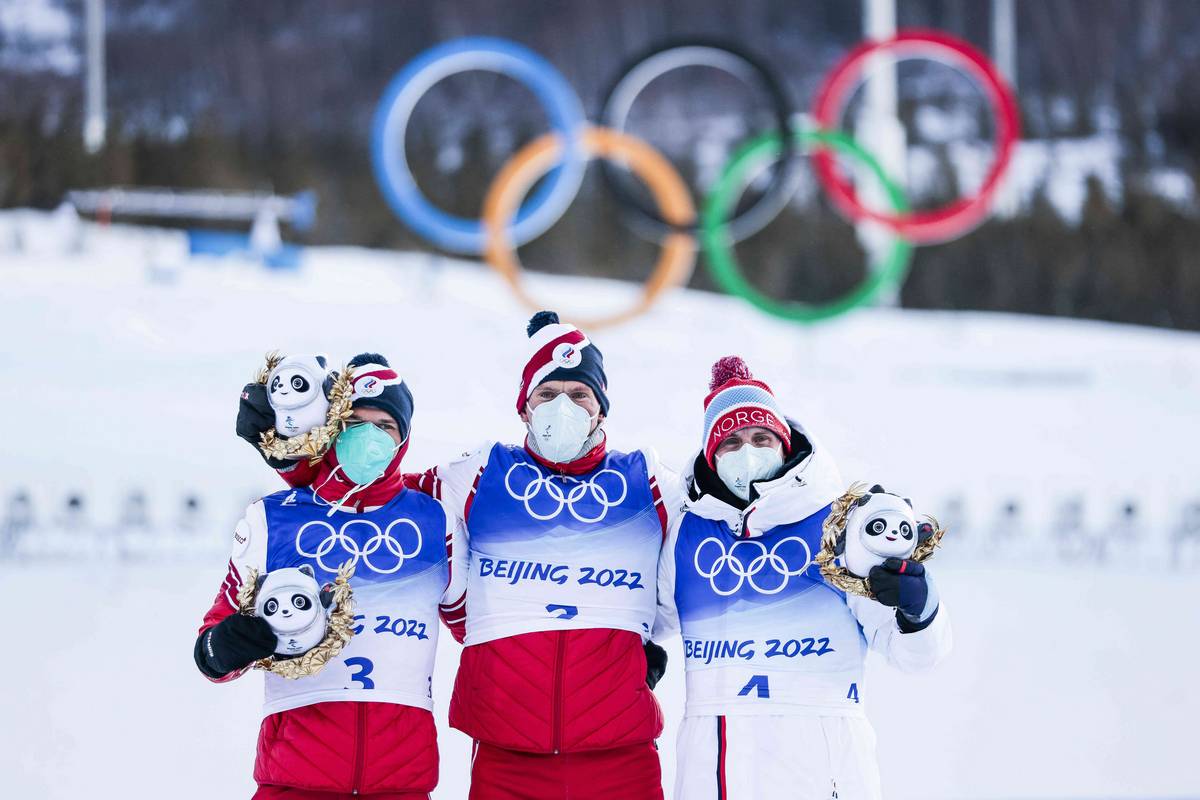
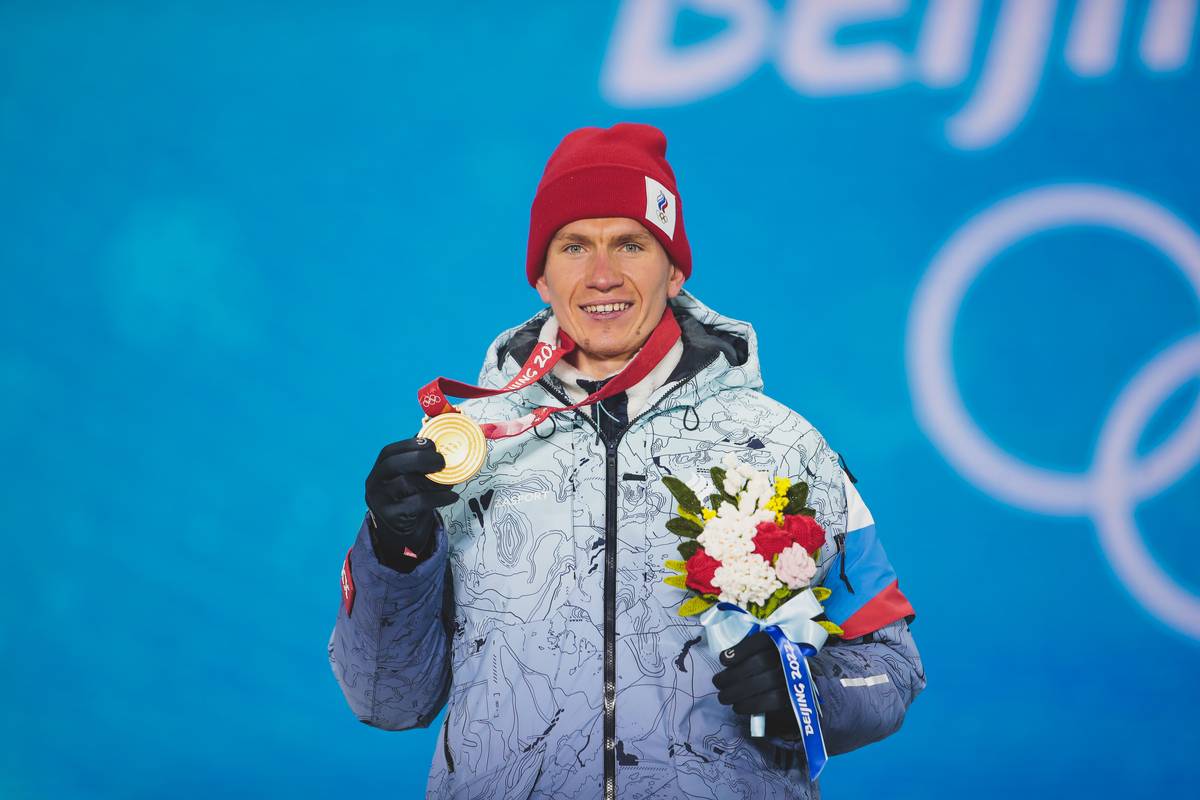
    The podium of the Men’s 28 k freestyle in Beijing 2022: Alexander Bolshunov (ROC) took the win ahead of Ivan Yakimushkin (ROC) and Simen Hegstad Krüger (NOR). (Photo: NordicFocus)
    The Russia Question

    And then there’s the elephant in the room—what about Russia? If those athletes are allowed back in the mix, then the competitive deck gets completely reshuffled. FIS and IOC are both actively reconsidering their policies that exclude Russian and Belarusian athletes from Olympic and World Cup competition while their nations remain engaged in the invasion of Ukraine. It remains possible that some of those athletes will be allowed to return to Olympic competition in Cortina as individuals (representing no nation) or as members of a “Unified Team” comprised of Russian/Belarusian athletes, but competing under no flag and standing on Olympic podiums to the playing of the Olympic hymn rather than their national anthems. But which athletes would be allowed to return? IOC has made it clear it won’t be an open door for everyone. Evidently, any who are in the military and/or who voice support for Putin’s war will not be allowed to compete. The top two Russian prospects—Alexander Bolshunov and Natalya Neprayeva—have been visible and vocal supporters of Putin’s belligerent policies. Maybe if they recant, we’ll see them at the starting line in Cortina. Someone should check to see if they have their fingers crossed.

    Ironically, this same “Unified Team” or “Russian Olympic Committee Team” solution was offered to Russian athletes in the aftermath of the state-sponsored doping debacle staged by Russia at the Sochi Olympics. In Olympic Games that followed, Russian athletes were allowed to compete, but only if they were “clean.” Frankly, if we knew which athletes were truly clean, the list of entrants might look decidedly different regardless of which nation those athletes come from. But that’s a topic for a different article . . .

    Illness, injury, fatigue all play large roles in the dynamic of any World Cup season. Athletes who race to stay sharp risk getting sick, injured, or burned out. Athletes who rest to stay fresh (safe at home where they’ll avoid getting sick) risk becoming athletically flat. Training can never provide the same stresses and athletic rewards as racing, so athletes can be expected to line up for World cup races—maybe just not all of them. 2026 will be an Olympic season; will anyone bother to contest the Tour de Ski? Will anyone care about the Crystal Globes? Will fans nervously follow the mounting accumulation of World Cup points? Or will those World Cup races merely serve as a training ground for the more important races to take place on Olympic race courses?

    The FIS 2025-2026 World Cup schedule has not yet been published. All we really know is that the Olympic schedule has been confirmed. This summer, FasterSkier will cover probable situations and likely contenders in all twelve of the scheduled Olympic cross country events. The Olympic cross country skiing schedule will look like this:

    Olympic Winter Games, Milano-Cortina 2026

    Saturday February 7—Women’s 10km + 10km Skiathlon

    Sunday February 8—Men’s 10km + 10km Skiathlon

    Tuesday February 10—Men’s and Women’s Sprint Classic

    Thursday February 12—Women’s 10km Freestyle

    Friday February 13—Men’s 10km Freestyle

    Saturday February 14—Women’s 4 x 7.5km Relay

    Sunday February 15—Men’s 4 x 7.5km Relay

    Wednesday February 18—Men’s and Women’s Team Sprint Freestyle

    Saturday February 21—Men’s 50km Mass Start Classic

    Sunday February 22—Women’s 50km Mass Start Classic

    Olympic contenders will be training for one fine day—when sun will shine and tracks will glisten, when the race will unfold and their fitness will take them to the front, when finish lines will be crossed and arms will be raised in celebration, when medals will be awarded and anthems will be played, when flags will wave and tears will flow. Just ten months from now, on one fine day.

  • Time to Make the Donuts

    Time to Make the Donuts

    Crust snow, corn snow, spring snow: it won’t be around much longer. (Photo: FasterSkier)

    Here on the other side of winter—snow not yet fully melted, grass not yet fully green—I’ve spent the week sleeping in. It’s been kind of awesome: lolling happily under a fluffy comforter, flipping the pillow to the cool side again and again, dozing luxuriantly, secure in the knowledge that I’m not missing a race, not late on a deadline, not overlooking details that might make a story better or more informative. These spring mornings are for sleeping in. It’s a luxury I won’t possess much longer, but for now, I have time to blissfully ignore time. The FIS World Cup season is over . . .

    People used to watch TV. It was what we did in the days before streaming and scrolling and scrolling and streaming. Now, we all watch what we want, when we want, and on whichever device we want. It’s convenient, and gratifying, and individually satisfying . . . but it also means that society no longer shares certain moments, certain memories, certain touchstones. Fred the Baker knows what I mean . . . he was the Dunkin’ Donuts  TV pitchman who once trudged bleary-eyed across 1980’s commercial interruptions droning “Time to make the donuts.” Up waaaay too early, nearly sleep-walking toward his responsibility to make a thing that the world would soon be waiting for, Fred the Baker coined a phrase that’s still in use, even though many of us are too young to remember its origins.

    Fred the Baker . . . time to make the donuts.

    For FasterSkier, winter’s early weekend mornings have been all about “Time to Make the Donuts.” European ski racing takes place during normal morning hours (for the most part) in Sweden, in Norway, in Finland, in Italy, in Switzerland. But a normal morning in Lillehammer is the middle of the night here in Montana (where this writer resides). My alarm goes off at 1am, or 2 am, or 3am; I shuffle toward the coffee maker mumbling “Time to Make the Donuts.” Don’t get me wrong, I love donuts . . . but I don’t always love being that somebody who wakes up in the middle of the night in order to make them.

    While FasterSkier reporters are on-location at truly major events like World Championships and Olympic Winter Games, we don’t claim to offer boots-on-the-ground reporting at World Cup events. The week-after-week World Cup circus just moves too far, too fast, and too often for our small team of reporters to follow along in person . . . but the stories still need to be told. We think of ourselves as providing pertinent information for those ski fans who are not up with us in the middle of the night, for those who don’t have the time to watch an entire three hour Sprint race broadcasting live from the streets of Talinn, Estonia, or the extended-play, on-screen, blow-by-blow of a 50 k Mass Start race from Holmenkollen. We also provide background and context for what viewers might be seeing when they tune in to stream race replays. It’s a journalistic service provided by a staff of reporters who are avid ski fans, themselves. That team of writers, editors, publishers, and contributors work under bylines that may be familiar to FasterSkier readers: Matt Voisin, Ken Roth, Kennedy Lange, Luke Dykjowski, Clare Egan, Keely Levins, John Teaford. We watch every race, so we understand the context and the progress of the entire race season. If a skier is missing, we’re likely to know why. If a skier is on the rise, we’re likely to have some background information on why their strategy may be working. We’re ski fans: we watch the races, and report on what we see. It’s a satisfying way to spend the winter, and we get to make the donuts.

    There’s a system we follow in order to understand the racing we’ve seen, and to construct a story that explains it best:

    The Day Before

    Check the FIS points standings. See where the ongoing competition is close, see who’s protecting a lead, see who’s hoping to eat into one. The dynamic of the year-long race to the Crystal Globes will drive much of the action we see. Without that information, we might make improper assumptions about who is fit, who is cagey, who is ambitious.

    The Evening Before

    Check the FIS start list for the next day’s event. Find out who’s in and who’s out. Then try to figure out (by researching Norwegian, Swedish, and Finnish ski media for stories on athlete situations and conditions that North American media would not normally pursue) why significant players have been omitted, and attempt to imagine how those absences and roster dynamics may affect the outcome of today’s racing.

    Race Morning

    FasterSkier taps into World Cup racing via live broadcast. Usually, that live-edited footage is transmitted via skiandsnowboardlive.com channeling European-provided live-feed to North American-based hosts (sometimes Chad Salmela and Kikkan Randall, at other times Andrew Kastning) who offer live commentary during the events. North American broadcasters have no control over the images delivered to our screens, and must be nimble in responding to whatever scenes, situations, athletes, or actions arrive via the airwaves. It’s quite a balancing act, one made even more difficult by changes and challenges inherent in a system that receives its media from the other side of the world. Start times may be fluid; the printed schedule can be wrong; broadcast schedules can be incorrect.

    Write It Up

    FasterSkier’s writers draft their stories in real time, typing furiously while the broadcast unfolds. By the time the race concludes, the article should be almost written. Hopefully, something interesting and memorable has happened. Hopefully, what happened coincides with the premise we developed before racing even began. Some adding and editing, some re-arranging and improving, the creation of an enticing headline, and we move on to lay out and illustration.

    Photos

    These we get (mostly) from a media library that hires on-site photographers at Word Cup events. They post images to their website very quickly after the conclusion of events (it’s kind of amazing), and we scroll rapidly through, searching for images that match the action we’ve seen and reported. Select a photo, download, reformat, resize, position within the story, center the image, enlarge the image, erase the photographer’s caption and replace with one of our own. We know our audience is primarily North American, so we hope for images of skiers on the teams our readers root for. But we also have an obligation to report the racing, so the majority of the photos and headlines are devoted to the brightest stars in the Scandinavian ski-heavens.

    Quotes

    When it’s a big race (World Championships and/or Olympics) our FasterSkier reporters will be in the media pen just past the finish line, able to pepper skiers and coaches with questions about the day’s racing. On most World Cup weekends, we contact skiers directly, submitting questions for them to answer—sometimes in writing, sometimes as audio files, sometimes in person. The skiers we contact are typically quite generous with their time and their comments, but if they manage to slip past the media phalanx then we’re unlikely to receive comments from them in time for publication. After Sunday races, the whole circus is hurriedly packing up, dashing to airports, catching flights to the next destination. It can be tough to get good quotes and comments on Sundays . . .

    Publish

    It’s always a nervous moment to click the “Publish” button, knowing we should hurry to spread the word while also being nervous that every comma is in place, every name spelled correctly, every nationality attributed properly, every placing reported accurately. Readers get in touch with us all the time to point out our errors, mistakes, shortcomings. Luckily, it’s possible to go back to make changes even after an article has been published. We do it all the time . . .

    Timing

    Racing is over, and the morning coffee is kicking in. I usually hope to have a story composed, illustrated, communicated, and published within an hour after the race has concluded. That way, any early-rising ski fans will have a way to check the headlines to see what happened during the North American night. Delays in publication can come from unexpected sources. Usually, the source I’m waiting longest for is the International Ski Federation (FIS), itself. They’re agonizingly slow about updating their results page, and any FasterSklier article would be incomplete without those results for readers to reference. Once those results are available (finally!), placed in the article, and properly hyperlinked for magical transport back to the FIS results page, then things are pretty much ready. I’ll drop a line to FasterSkier’s Publisher letting him know that the story is published, that the morning’s work is done, that the donuts are made.

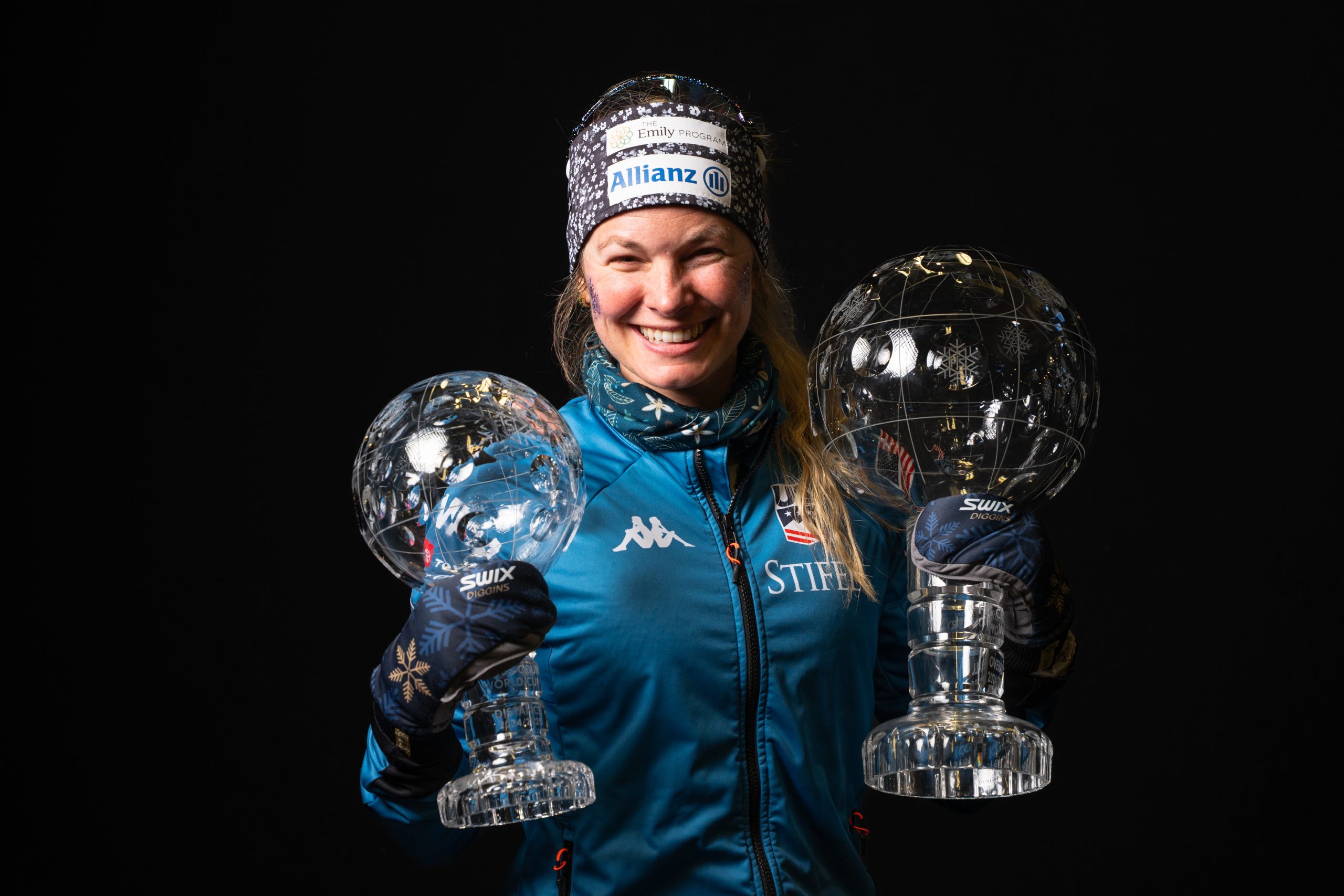
    Jessie Diggins (USA) with her favorite carry-on luggage. It’s not really spring until Jessie’s crystal arrives home safe. (Photo: Modica/NordicFocus)

    Early, early, early in the morning . . . that’s when racing happens for the staff at FasterSkier. We do our work in the dark while the rest of the North American ski world sleeps. And next year’s 2025-2026 season will involve the work and contributions of even more voices and eyes, even more keyboards coffee cups. For now, it’s April; the staff at FasterSkier finally sleeps in. But even in the sunny warmth of this new spring, the effects of a long race season still linger. Alarms no longer jangle in the middle of the night; still, we may find ourselves awake in the dark, worried that we’ve overslept, panicked that we might’ve missed a race-start. April is an unsettling shoulder-season of disorienting late-night moments when we’re forced to remind ourselves that Jessie is already at home with her Crystal Globes safely poised on the mantle. Johannes no longer needs to worry over whether he will thrill or disappoint his hometown fans. Skiing venues are closed up for the season as the last of a long winter’s snows melts slowly into the grass of the trails. The urgency of the race season has ended. The donuts have all been made. Finally, Jessie gets to sleep in . . . and so does FasterSkier.

  • World Cup Portraits

    World Cup Portraits

    World Cup crystal, emblematic of a season’s worth of excellence. (Photo: NordicFocus)

    The FIS Cross Country World Cup season is long and exhausting, and the performers in the World Cup circus are always at risk of illness, injury, overtraining, fatigue. They travel in planes, they live in hotel rooms, they eat in restaurants: all the worst ways to preserve health and wellness. And the world continues to be inundated with lingering pandemic viruses that take advantage of our now-maskless society. It’s no wonder so many of them get sick. That creates a situation certain to affect any season-long championship race, including the arduous slog that is the FIS Cross Country World Cup season that ends with the awarding of Crystal Globes.

    Winning a World Cup Crystal Globe is always about who shows up, and who fails to show up . . . always. And that sort of regular athletic attendance is not a thing that can be predicted before the season begins. Every skier imagines being able to attend most races; the season’s training program is basically reliant on that sort of consistency (few skiers would be confident enough to enter important races with “training” being their only preparation). Missing races can totally screw up an athlete’s training plan; the time spent in recovery from illness can have devastating effects, as well. Taking time off to rest is a risk. Taking time off for sickness can be a disaster. But remaining committed to entering every single World Cup event (especially an event as exhausting as the points-rich Tour de Ski) is a sure way to get sick, to get tired, to get injured. The winner of any World Cup Crystal Globe is the one who makes it the farthest while still managing to ski fast and consistent. It’s an extraordinarily difficult thing to do . . . throw a World Championship (hosted in Norway) into the mix, and sit back and watch the circus melt down. In the end, the relief and jubilation on the faces of every skier who won a Crystal Globe is an indication that they realize their seasons could’ve turn out very differently.

    Jasmi Joensuu (FIN) earned the Sprint globe through consistency rather than pyrotechnics. (Photo: Thibaut/NordicFocus)
    Women’s Sprint

    Jasmi Joensuu (FIN) was consistently one of the fastest Sprint qualifiers during the World Cup season, but she stood on a Sprint podium only once during that entire campaign. Had Sweden’s top sprinters not been sick, injured, or otherwise absent so often during the season, there’s virtually no way that Joensuu would have taken home a Crystal Globe. She’s perhaps the luckiest World Cup winner ever, though there’s no taking away from her the ability to show up and sprint fairly well at every single event. No one else did that, so Joensuu keeps the Cup.

    Men’s Sprint

    Johannes Hoesflot Klaebo (NOR) won every sprint event he entered this season. It seemed like he won the Sprint Globe with ease, but consider that he had still not secured the Crystal Globe until the very last weekend of Sprint competitions. Had Klaebo failed to qualify in that last event (normal human beings are at risk of such a disaster befalling them), and had Erik Valnes won the final event, Klaebo would’ve gone home empty handed. It’s hard to believe things turned out that close.

    Simen Hegstad Krueger (NOR), winner of the Distance Crystal Globe. (Photo: Thibaut/NordicFocus)
    Men’s Distance

    Simen Hegstad Krueger is a fantastic distance competitor. World Champion, Olympic Champion, Norwegian National Champion: he’s done all kinds of things that not even Klaebo has accomplished (at least, not prior to Klaebo’s unprecedented run of wins at the 2025 World Championships). In 2025, Krueger was able to piece together enough great performances in Distance races—especially in those races from which Klaebo and his teammate, Harald Oestberg Amundsen, were absent—to amass an insurmountable collection of World Cup points. Klaebo could’ve challenged him, Amundsen could’ve beaten him, but only if Klaebo and Amundsen were willing to risk exhausting themselves while preparing for the World Championships. Klaebo’s math seemed to suggest to him that he couldn’t win it all. Something had to give: that something was his pursuit of the Distance globe. Amundsen knew he couldn’t win it all (both the Overall World Cup and a World Championship title). In order for him to grab something memorable in 2025, he’d gamble on going all-in for the World Championships (a plan that ultimately didn’t work out). What Klaebo and Amundsen chose to leave on the table was scooped up by a more-than-capable Krueger.

    Women’s Distance

    Therese Johaug went home to train, Frida Karlsson went home injured and sick. Jessie Diggins somehow managed to race through injury in protecting a lead that few expected her to have. She secured this Distance Crystal Globe, but at what cost? Certainly, she underperformed at the World Championships (an event that rewards those who prepare for big performances on specific days). Diggins has shown that she can grind out a long season. But she’s also shown that she and her team have not developed the ability to be individually huge on huge individual days. We’ll see if Team USA figures out how to put Diggins in contention next year, one in which the broader American public cares only about Olympic success.

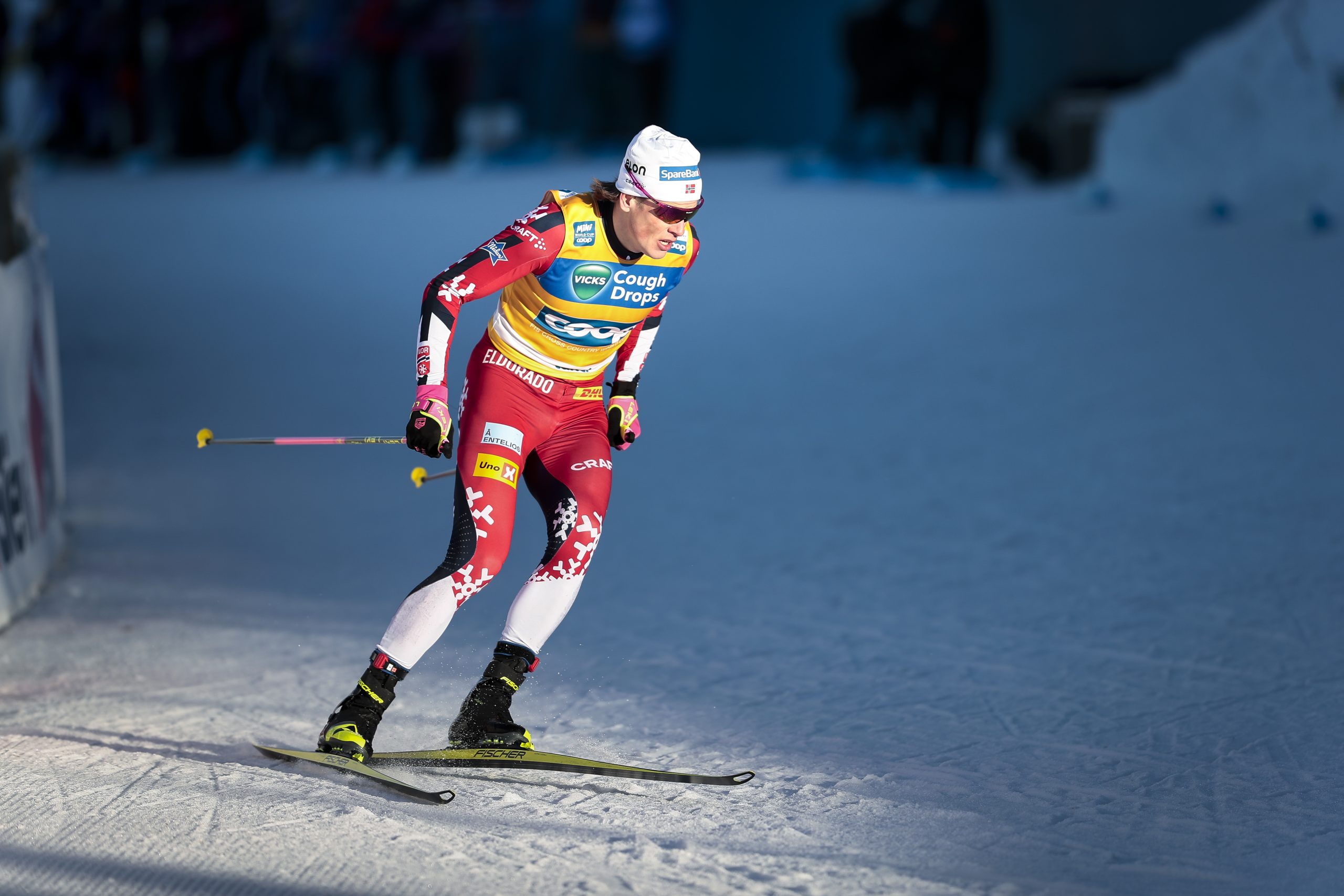
    Johannes Hoesflot Klaebo (NOR) claimed Sprint and Overall globes. If he’d attempted to also chase the third cup (Distance) it may have upended all his other plans. (Photo: Thibaut/NordicFocus)
    Men’s Overall

    It’s funny: Klaebo actually wrapped up the Overall World Cup title before he secured the Sprint title. That doesn’t even seem possible, but that’s what happened. Of course, Klaebo may have benefitted from the revolving door of Norwegian entrants during the season; many of his domestic rivals elected to go home to rest while Klaebo was chasing podiums. In the end, Klaebo ran the table, and no one else’s preparations or strategies really mattered at all. The best skier of all time skied like the best skier of all time. Still, the skier who has most consistently flummoxed the best skier of all time is training and racing in exile over behind the Russian border. Alexander Bolshunov may well find himself back in the World Cup and Olympic mix next season. If FIS and the IOC make decisions allowing that (they’re considering it right now), then the seat at the top of the ski world could find itself hotly contested.

    Jessie Diggins’ (USA) consistency and grit earned her both the Overall and Distance Crystal Globes. (Photo: Thibaut/NordicFocus)
    Women’s Overall

    When we add up the best overall performances in Women’s World Cup cross country skiing, those definitely belonged to Jessie Diggins. She earned podium positions in every discipline, she raced her heart out at every venue, and she somehow managed to overcome an injury that could’ve derailed her entire season (and maybe seasons to come). She’s a truly remarkable athlete . . . but also a remarkably lucky one, as her three World Cup Overall Crystal Globes will attest. She was not the best skier in the world in any of those seasons, but she was the one who was willing to do things the way that FIS intended: show up every week, race hard every week, stand on a podium every week. That’s what FIS wants: headlines, ad revenue, and broadcast ratings. Jessie Diggins is the skier who makes those things happen. The Johaug’s and Andersson’s and Karlsson’s of the world are willing to let her have those victories in return for what seem to be considered bigger prizes: World Championship and Olympic gold. Next season, there’s an Olympic Winter Games on the calendar. It’s likely to be the last Olympics for most of those contenders. How will they prepare for it? How will they respond to the challenges they’ll face along the way? And, during an Olympic season, will any of them care about World Cup results at all?

  • An Overdue Reckoning

    An Overdue Reckoning

    By: Hannah Smith

    In February, Senator Chuck Grassley (R-IA) launched an investigation into SafeSport’s hiring practices following the arrest of a former SafeSport investigator charged with sexual crimes. While I’m disturbed, given the criticism SafeSport has received since it opened in 2017, I’m not entirely surprised, and I hope that this may signal a long-overdue reckoning not only for the organization, but our athletic community.

    Back in 2017, Senator Grassley proposed the “Protecting Young Victims from Sexual Abuse and Safe Sport Authorization Act” to form SafeSport, and it was supposed to be the ultimate safeguard against abusive behavior in elite and youth U.S. Olympic sports. Athletes were told that SafeSport was charged with the mission to ensure that sport-specific governing bodies, such as USA Gymnastics, could no longer turn a blind eye to coaches and trainers who abused their power, such as Larry Nassar. Since it was founded, SafeSport has struggled to fulfill this critical mandate, often yielding questionable outcomes for the athletes it was meant to protect.

    Following several stories in the Washington Post,  USA Today, and OC Register, the failures of SafeSport gained more public attention in 2023, when 103 affiliates from the National Women’s Soccer League (NWSL) penned an open letter to Congress demanding reform in three key areas. The first being the Center’s arbitrary administrative closures, wherein cases are dismissed without resolution or consequences (64.8% of cases in 2022). The second being the Center’s exclusive jurisdiction over all abuse cases, which prevented well-governed overseeing bodies, such as the NSWL, from having any jurisdiction in light of said administrative closures. And the third being the flawed process that allows Respondents (those identified as being responsible for actions worthy of investigation) to challenge decisions in arbitration even after an investigation concludes.

    The U.S. Center for SafeSport was created by an act of Congress to protect athletes in all Olympic and Paralympic sports. Since its founding, SafeSport’s decisions and actions have regularly been questionable and controversial.

    In response to mounting pressure, SafeSport made some changes in 2024, including appointing a staff member to train employees on trauma-sensitive practices, and a revision of the arbitration proceedings, which now do not allow any witness testimonies, including from the Respondent, themselves. Previously, Respondents had been allowed to bring in new “character witnesses” during arbitration, even if those “witnesses” were unfamiliar with the case. This was irrelevant, and also trauma-insensitive to Claimants (those identified as being targeted/victimized by the actions of Respondents). The 2024 SafeSport Code also expanded the definition of what an “Administrative Closure” could signal from the 2023 Code.

    And while the reforms were important, even the co-chairs of the Congressionally-formed commission which oversaw these revisions admitted: “More needs to be done.” Two anecdotes since these changes were made highlight their insufficiency: a NWSL coach who had been sanctioned to a lifetime ban has since been removed from SafeSport’s database, and a US Bobsledding chiropractor was, in the words of his attorney, “cleared” [by SafeSport] even after reports of abuse were made by an athlete and other clients from the chiropractor’s private practice. In her studies of the NSWL and SafeSport, former Deputy Attorney General, Sally Q. Yates, found that when coaches and trainers with abusive tendencies keep their jobs, the cost is often on athletes’ careers.

    Like all national governing bodies operating under the auspices of the US Olympic and Paralympic Committee, US Ski and Snowboard is a member organization of SafeSport, and operates in accordance with its guidelines.

    Many have said, and I too initially thought, that the main issue with SafeSport is a lack of funding. This is logical—in the words of Sports Illustrated reporter Michael Rosenberg in August of 2024, “An organization with a $20 million budget and 130 employees is not equipped to handle the 9,000 reports it receives per year.” But if Congress wanted to spend more on SafeSport, they already could. In 2023, Congress allocated only $2.5 million to the organization’s budget—a mere half of the $5 million it was approved to contribute. In comparison, the government provides more than half of the U.S. Anti-Doping Agency’s $28.5 million budget. Furthermore, money isn’t the only metric of Congress’s attention: since the beginning of 2023, the “Protection of Women and Girls in Amateur and Olympic Sports Act” (banning trans women from competing in women’s sports), has appeared on the House floor ten calendar days, while in this same time the “Safer Sports for Athletes Act” (reforming SafeSport’s code) appeared once.

    The main issue is that Congress, and our athletics culture at large, is placing insufficient value on the safety and well-being of athletes—especially female athletes, women being twice as likely to experience sexual harassment and assault. Consider that 93% of athletes experience harassment or unwanted contact, yet many are too afraid to report it. Of the perpetrators of sexual violence, 91.4% are male. Within SafeSport’s practices and policies, there is still an  inadequate system of victim support and damaging confidentiality policies that undermine victim’s ability to report abuse. For SafeSport to fulfill its mission to “End Abuse,” a lot more needs to change. Congress should direct its attention to the real, ongoing harm caused by a system that allows predators to operate as investigators, and to a culture that allows this abuse to persist unchallenged.

    Senator Grassley’s motion to investigate SafeSport’s hiring practices is an extremely small step, and one that might be viewed with skepticism given Grassley’s history on issues regarding investigations of alleged abuse. But, it turns attention to many other reforms that SafeSport needs. As an athletic community, we need to bring as much attention to this issue as we possibly can. I advocate writing to Congressmen, but with the expectation that they will only do just so much. The greater, and likely more impactful, actions we can take are in how we treat one another day to day and the standards for participation that we hold within our own organizations.


    Hannah Smith is an independent writer contributing to FasterSkier. The opinions in this Op Ed are her own, and do not necessarily reflect the opinions of FasterSkier and its staff.

    The author, Hannah Smith.


  • The Fastest Person in the World on Cross-Country skis. It’s Not Who You Think

    The Fastest Person in the World on Cross-Country skis. It’s Not Who You Think

    Who is the fastest person in the world on cross-country skis? Seems like a straightforward question, but the answer will unquestionably surprise you. An attempt to answer this seemingly easy question might quickly veer straight to the usual suspects. Johannes Hoesflot Klaebo would certainly rise to the top of the list—a Sprinter undefeated for an entire season seems like a good guess. But you would be very wrong. Bjorn Daehlie in his prime would be another good shot in the dark—but it is very far off the mark. Jessie Diggins is well known for her downhill skiing prowess, but even she couldn’t keep up with the world’s fastest person.

    Dr. Sten Fincholm. The fastest cross-country skier in the world. (Photo: Compliments European Organization for Nuclear Research)

    The correct answer to this question is both surprising and complicated, and to find the solution you have to stray very far from the world cup, and far from any FIS (International Ski Federation) sanctioned event. To find the world’s fastest cross-country skier you have to dive deep into the world of science and meet a fascinating man by the name of Dr. Sten Fincholm.

    For a couple of days every year Dr. Fincholm is the fastest person on cross-country skis. More precisely for about 90 seconds a year there’s no one in the world that’s as fast as Fincholm, and the competition isn’t even close.

    So why haven’t you ever heard of him? Well, it’s a story that involves luck, serendipity, curiosity, and like most important things in life, timing.

    Schematic map of LHC (Large Hadron Collider) footprint. (Photo: Compliments European Organization for Nuclear Research)

    Fincholm is quite well known in his field—which isn’t cross-country skiing— it’s particle physics. His research has been published dozens of times, and he has postulated groundbreaking theories in quantum physics, and quantum field theory. “When I go to conferences, I never have to pay for my own drinks, someone else always wants to buy,” a laughing Fincholm told me. Fincholm works at the Large Hadron Collider (LHC) near Geneva, Switzerland. The LHC is the world’s largest particle accelerator and is the product of the collaboration of 24 member states. Groundbreaking research happens at the LHC every day. It’s now the center for research into particle physics after the United States bowed out of the game when it yanked funding for the Super Conducting Super Collider which had been scheduled to be built in Texas. After Congress cancelled funding in 1993, Switzerland became the heart of subatomic particle research, and it has remained there ever since. And but for that footnote in research funding, none of this strange tale ever would have happened.

    Massachusetts Institute of Technology. Sten Fincholm’s alma mater.

    Fincholm grew up in Norway. I met him in the early 1990s when I was in school in Boston, and he was studying at MIT. Fincholm was working on his PhD and was on a mission to be involved in the opening of the Texas Super Collider. But when Congress pulled the plug, he returned to Europe to pursue post-doctoral work at the Max Planck Institute. It was during his time at Max Planck that the connection with the LHC was developed, and Fincholm eventually received a posting there as a fellow. He now occupies the position of Senior Particle Investigator and Program Coordinator. We rekindled our friendship when we met up on a trip to Switzerland.

    Sten is one of those guys who it is impossible not to like. He has a wry wit and is deeply curious about anything anyone else is doing. He always wants to hear what’s going on with you first. If he wasn’t such a nice guy, you would immediately hate him because he is one of those people who has been graced with so much talent that it’s hard to believe. He’s a polymath in the truest sense of the word.

    At this point the reader might rightfully ask “what does any of this have to do with Nordic skiing or racing at any level?” Well, that’s where luck, coincidence, and timing, all—well —collide, and this is where Fincholm comes in.

    Before pursuing his PhD from MIT, Fincholm was chasing another interest. He was one of the top 75 ranked cross-country skiers in Norway. “One year I finished 32nd in the Norwegian championships in the 20k. I also finished 39th one year in the 50k. My overall ranking in Norway rose at one point to 68th.” Fincholm comes from an athletic family. “I have a great Uncle who anglicized his last name and took a shot at playing major league baseball in America, but it wasn’t for him. Professional sports wasn’t his cup of tea, but nonetheless, I’m told he was an incredible pitcher.”

    When you ski next to Fincholm you feel like you’re skiing in slow motion, and that he’s hardly working. He has the elegance and grace of a dancer, and the power of a weightlifter. He’s a great skier, better than almost everyone in the world his age, but in Norway, that’s not good enough. “What most people don’t realize is that in Norway being the 68th ranked skier means you can beat almost anyone in the world,” Fincholm explained. “But it’s kind of on par with being the 100th best quarterback in American football. The few guys at the very top are the only ones really making a living at it, the rest are just really good football players without anywhere to go.”

    Fincholm saw the handwriting on the wall and that’s when he decided to abandon professional skiing and journey to MIT. But it was when fate intervened, and he received his job at the LHC that the merging of two wonderful and completely unrelated worlds happened—quantum mechanics and cross-country skiing— and but for the chance cancellation of an American research program in Texas, none of this would have been possible.

    Fincholm explained that when he started as a fellow at the LHC, the worst jobs around the collider would often fall to him. “Whenever we needed someone to do grunt work my name was on the top of the list. Checking voltage regulators on the magnets for the fifth time, that was me.” But often he had to do physical labor as well.

    The guts of the Large Hadron Collider. Nothing magnetic is allowed around this. (Photo: Compliments Dr. Sten Fincholm)

    “LHC is basically a big donut in the ground. We accelerate particles around in a circle about 27 kilometers in diameter to nearly the speed of light. We use superconducting magnets to accelerate these particles, and we use a tremendous amount of energy; our usage is measured in the hundreds of gigawatts. Whenever you’re using that much energy unusual things can and often do occur.”

    The tunnel at the Large Hadron Collider where sub-atomic particles nearly reach the speed of light. (Photo: Chris Mitchell)

    One of the things that occurs is that periodically, the thousands of magnets used at LHC require unusual maintenance. Vast amounts of energy are shot through these magnets. And because they are not perfectly efficient, there is some debris created. After each firing of the magnets small amounts of detritus are created inside the magnet’s shielding. “It’s only micrograms, but eventually it has to be cleaned and that’s one of the grunt jobs I had to do. You have to physically scrape the debris off the magnet housing, and it has to be done periodically for each of the over 9,500 magnets. The total amount collected is small. Over the course of a year, it wouldn’t fill a shoebox. We use a special scraping tool made out of carbon fiber and titanium to avoid damaging the housing or the magnets, and of course we can only use material which is not magnetic; that would be bad. Once the material is cleaned off it kind of resembles something like graphite powder mixed with water. We are quite familiar with this material, it’s produced in every collider in the world, we just happen to produce the most because we are the biggest. It’s totally harmless, it’s mostly a combination of nitrogen that’s been bonded to manganese and about 20 other trace elements contained in the atmosphere and cooling mechanisms which the magnetic fields react with. But it’s the prolonged exposure to an intense repeated magnetic field that’s the secret sauce, and that’s the part we don’t completely understand.” As Fincholm described, the stray magnetic field holds all of the elements together in a kind of subatomic magnetic slurry. After the material is scraped from the magnets it begins to revert back into its constituent parts. “It takes about 12 hours for the material to completely break down, and the initial decay begins very quickly.”

    “Even as I was promoted through the program, I still worked cleaning the magnets, and do so to this day. I think it helps to keep me in touch with the day to day operations” It was during this process that Fincholm had a eureka moment.

    A 50X microscopic image of SPECS (Semi-perturbed excited conglomerates) taken after the LHC’s maintenance regimen and seconds before they begin to decay. (Photo: Compliments Dr. Sten Fincholm)

    He was cleaning off the housing scraper with a hose and noticed that the water would puddle on the scraper and wouldn’t react with the substance at all. “It became obvious that it was extremely hydrophobic.” That’s when the light bulb went on. “Ever since the fluoro ban everyone’s been looking for something to replace it with, but nothing really is as good. I even spent some time playing around with solutions, but that’s more of a chemistry thing than particle physics. But as soon as I saw the reaction of water with the spatula, I immediately had the idea of putting it on skis to see what would happen.” But there was a problem. Because the substance, known as SPECS (semi-perturbed excited conglomerates) breaks down so quickly it was hard to test. But Fincholm was in the right place at the right time. LHC’s experiment scheduling and cleaning generally took place early December and late March. Perfect time for snow falls in Switzerland. So, one day Fincholm took some of the substance and smeared it on the bottom of skis. “I knew I had very little time to work with. I had all my gear ready to go and was running through LHC in my ski boots with my skis in hand, everyone looking at me like I was crazy. I had asked the maintenance staff if they could use the plowed snow from the parking lot to build me a little ski track. They were very enthusiastic and set up about a half kilometer loop which was totally flat. I jumped on the snow, took a couple of skate pushes and immediately landed flat on my back. The speed was so intense that I wasn’t ready for it and fell backwards!”

    Public display cross-section of Large Hadron Collider segment. (Photo: Courtesy European Organization for Nuclear Research)

    After his initial shock, Fincholm completed the half kilometer loop in about 35 seconds. “I couldn’t believe it— it was shocking how fast it was.” Unfortunately, the thrill only lasted for a short time. “After about .2 k, the decay process really accelerated and I could quickly feel the skis returning to normal speed, and by the end of the loop I was again only mortal. It was kind of like that book Flowers for Algernon [in addition to his scientific achievements, advanced degrees, and sports prowess, Fincholm also picked up a bachelor’s in English literature, one of those many talents you could easily hate him for]. It’s the story of a mentally challenged young man who is given a drug that makes him one of the smartest people in the world. The problem was that the drug began to wear off, but the man was now smart enough to realize what was happening and was also smart enough to know that there was no fixing it. It was kind of like that. After the initial near light speed experience, I was quickly returning to normal, and I knew there was nothing to be done. I was once again just a pretty fast guy on skis. But, for almost a minute I was by far the fastest person in the world on skis. I did some calculations and determined that if the substance could last over 10k, my time would be about 12 minutes for a skate race.”

    If the collider in Texas had been built as originally proposed, Fincholm would have been in the dusty arid Texas countryside instead of snowy Switzerland and the ski application connection never would have happened. It’s pretty much the definition of serendipity.

    But getting the SPECS to last is the problem to make skiing on the material feasible for the masses. “I know it can be solved; I’ve done the math and I’ve proven to myself that it can work, but it would take lots of money. It’s kind of like creating fusion energy. It’s mathematically doable but it is going to take billions of dollars to make it happen. I’m guessing SPECS could be turned into a usable product for $50-$60 million. I have the theoretical underpinnings all worked out, but who’s going to invest that much money into ski wax? It may be more practical for downhill skiing applications since the run times are relatively short. But the terminal speed would be frighteningly fast, and it would require reconfiguration of every competition downhill course in the world. It’s scary to think how fast you could get going on downhill skis. The other problem is that there are only a couple of dozen of people in the world who completely understand the particle physics involved, and to the best of my knowledge none of them are skiers, so it’s unlikely that they would want to devote their time searching for a solution.”

    Science happening at the Large Hadron Collider. (Photo: Simon Waldherr)

    The answer to who is willing to develop the product is probably nobody, but Fincholm isn’t deterred. “There might prove to be some non-ski related use for SPECS where industry will want to spend the money to find a way to stabilize the product, or applications in aerospace or defense departments.” Fincholm has reached out to the United States Department of Defense’s DARPA (Defense Advanced Research Projects Agency) but can’t talk about those conversations. Though he did volunteer that he went to MIT with a DARPA scientist who is leading their research into quantum computers so he thinks that contact will help move research on the project along.

    “So, until a large corporation or wealthy nation steps in, just me and a couple of guys at LHC will be the only ones using it. When you’re in this line of work you have to be patient and willing to accept many failures before success. After all it took decades of trying until the first quantum particle was detected. I’m sure eventually there will be commercial use for SPECS and with it will come the fastest skis the world has ever seen. It will be an incredible day for the skiing world, and every record will fall the next day. But it will be a very sad day for me, because when everyone is skiing on SPECS I will once again be just another very good skier.”

    Until that day comes, Dr. Sten Fincholm will continue to be the fastest man on skis; for about 90 seconds a year!

    Sten taking a lap around the LHC’s grounds.
    This article was originally published on April 1, 2025


  • Season Finale: Diggins and Hagenbuch Crowned National Champions in 40 k Classic

    Season Finale: Diggins and Hagenbuch Crowned National Champions in 40 k Classic

    This article was made possible through the generous support of our voluntary subscribers.  If you would like to see more articles like this one, please support FasterSkier with a voluntary subscription.

    USA’s Jessie Diggins (seen here competing in Falun Sweden earlier this season) concluded her long season with a victory in the 40 k Classic Mass Start at Mt. Van Hoevenberg. (Photo: Authamayou/NordicFocus)

    The World Cup season ended a week ago in Lahti, Finland where Jessie Diggins raced to a courageous ninth place in securing (by the narrowest of margins) the Distance World Cup Crystal Globe (to go along with her Overall Crystal Globe secured a week prior). Lahti’s 50 k Classic Mass Start definitely felt like the end of a long season, but for Diggins—and for men’s Lahti 50 k eighth place finisher, Gus Schumacher—it certainly was not. More racing remained as the stars of Team USA headed back to Lake Placid to race alongside their countrymen in SWIX SuperTour and Spring Nationals events.

    Spring racing can be brutal: everyone’s gunning to knock off the top stars, many of whom are running on fumes at the end of a seemingly endless season of travel and competition. But racing at home is one of the responsibilities that many of those stars continue to take seriously. It can be an arduous responsibility—even the stars of Team Norway went home to participate in spring championships where World Cup Champions, Johannes Hoesflot Klaebo and Simen Hegstad Krueger, found themselves fourth and sixth, respectively, in their National Championship 10 k. One thing appears obvious: cross-country ski racing is always hard, no matter who you race against.

    And so skiers found themselves at one last starting line in Lake Placid: one last ski marathon, one last high-speed tour of the countryside, one last opportunity to race cross country toward glory.

    2025 NCAA Champion, John Steel Hagenbuch (Dartmouth) demonstrated his Classic skiing prowess once again in winning the 40 k Mass Start at Mt. Van Hoevenberg. (Photo: Tobias Albrigtsen)
    Men’s 40 k Classic Mass Start

    By the 10 kilometer mark, the Men’s 40 k had become a three-man affair featuring the Classic skiing prowess of Remi Drolet (SMS T2), John Steel Hagenbuch (Dartmouth), and Schumacher (APU). That trio created a rapidly expanding gap of 15 seconds over a group of chasers that included Brian Bushey (UU), Reid Goble (BSF), Michael Earnhart (APU), and Finn Sweet (UVM). A little more than a kilometer later, that gap would expand to 25 seconds, then to 52 seconds by 15 kilometers. The race was going up the trail, and the leaders showed no inclination to wait around for anyone else.

    Lots can happen during long races, and it’s not impossible to make up places or to get across gaps that had been created earlier. But it’s a supremely difficult to accomplish any such late-race jumps when skiing alone. Nonetheless, Xavier McKeever (CAN) succeeded in bridging the gap to the chase group, joining up with them by 18.75 kilometers. Still, by the 20 kilometer mark, the chasers trailed 1:27 behind Schumacher, Drolet, and Hagenbuch.

    Gus Schumacher (APU) led much of the Men’s 40 k Classic, only to find himself outmaneuvered by a cagey John Steel Hagenbuch (Dartmouth). (Photo: Modica/NordicFocus)

    Race splits suggested that Schumacher did most of the leading in the front group, matched consistently by Drolet, and followed by Hagenbuch. With 15 kilometers to race, the dilemma in the lead group belonged to Drolet—he was the least explosive sprinter, statistically not as likely to win in a sprint as were his breakaway companions. If Drolet hoped to win this season-ending marathon, he’d need to make a move soon. Perhaps Drolet made just such a move out on the course—one that Schumacher and Hagenbuch countered. Or Perhaps Schumacher had turned up the pace to prevent any such strategies from happening. Regardless, it was Schumacher and Hagenbuch who created a gap, detaching Drolet by 27.5 kilometers, though by 31.25 kilometers, Drolet clawed his way back to the leaders where Schumacher continued pushing the pace. But it was a final surge from Hagenbuch that would nip Schumacher at the line by less than a second. The win belonged to the Dartmouth skier while Drolet faded to third.

    Men’s National Championship 40 k Classic RESULTS

    Jessie Diggins (USA) has raced a long and fruitful season in 2024-2025. In front of her fans one last time in the National Championship Classic 40 k, she was not to be denied. (Photo: Authamayou/NordicFocus)
    Women’s 40 k Classic Mass Start

    Teammates Jessie Diggins (SMS T2) and Julia Kern (SMS T2) have spent so much time together over the years. From travel and training to start lines and podiums, these two long-time friends have skied thousands of kilometers together. Why not 40 more?

    By five kilometers, the Women’s 40 k Classic had formed itself into a race among a lead group of five: Diggins (SMS T2), Julia Kern (SMS T2), Erica Laven (UU), Selma Nevin (UU), and Margie Freed (Craftsbury). But, soon after, Diggins and Kern began to pull away, at which point the remaining field began splitting into groups of twos and threes. The pace had gotten too hot at the front; the race reached an early point where few skiers were likely to enjoy the prospect of skiing the remaining 30+ kilometers alone. Strategically, it seemed smartest to group up, to conserve energy, to at least ski with company for the distance that remained. Even so, Laven continued to ski on alone, suspended in the unenviable no-man’s-land between second place and fourth place. Laven wasn’t likely to catch Diggins and Kern, but it also appeared that she wasn’t willing to slow her pace just for the chance to have some company. Laven skied on alone, her position on the podium nearly 30 lonely kilometers away.

    Julia Kern (SMS T2) has often proven herself to be a skilled distance racer. In Lake Placid, she skied shoulder to shoulder with her friend, teammate, and rival, Jessie Diggins (SMS T2). (Photo: Thibaut/NordicFocus)

    By the halfway point, Diggins and Kern enjoyed a two minute advantage over Laven, with the rest of the field another minute+ behind and strung out all across the 518 area code. Racing 40 kilometers is a daunting challenge, and many of these skiers had never raced so far before. Surviving and thriving across so great a distance are skills that must be learned with experience. Today was delivering that sort of experience for many.

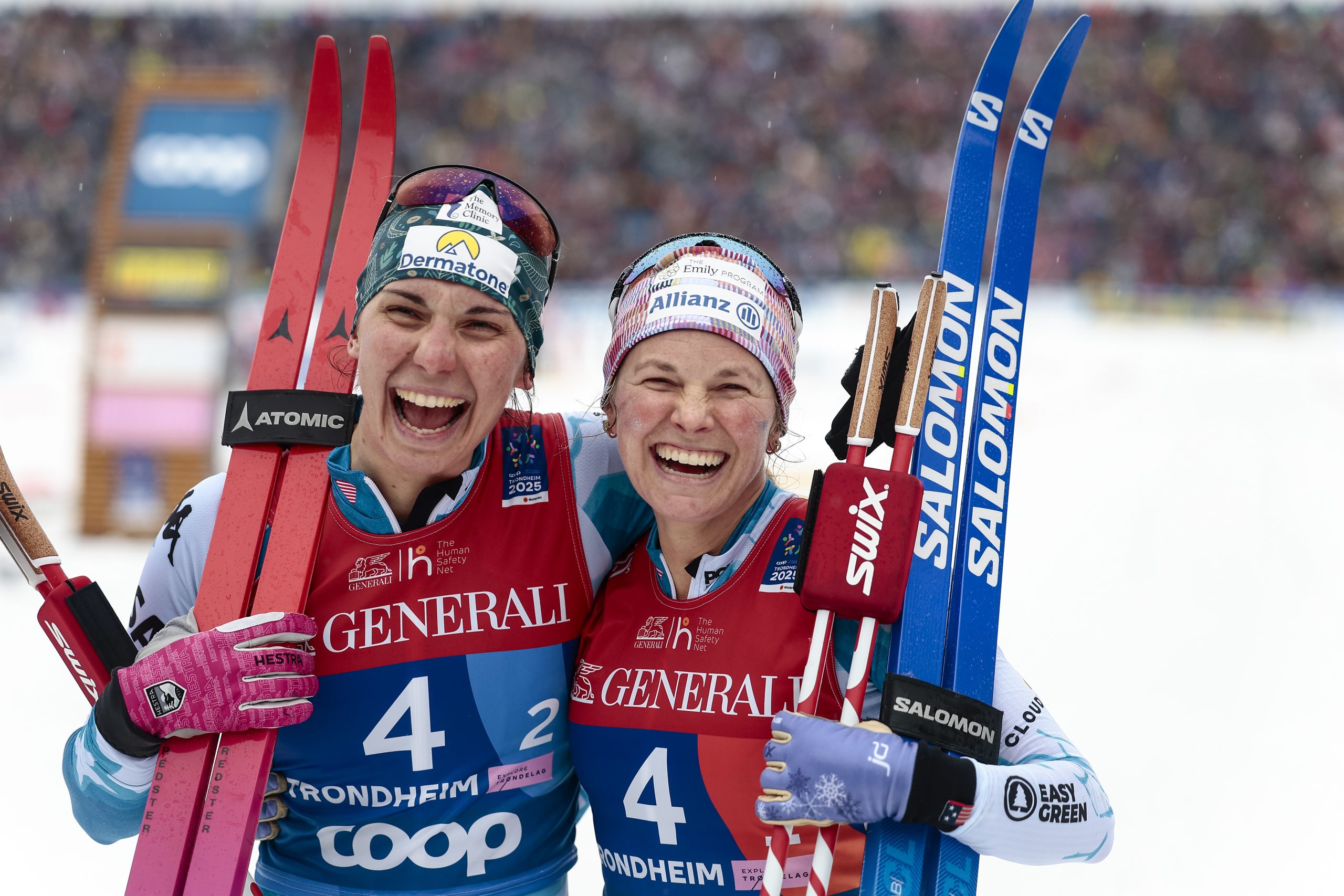
    Teammates in training, rivals in racing, friends at the finish line. Jessie Diggins (SMS T2) and Julia Kern (SMS T2) share a moment after the Team Relay at the 2025 World Championships in Trondheim, Norway. (Photo: Modica/NordicFocus)

    In the end, Diggins and Kern would deliver the first- and second-fastest splits at nearly every check point of the final 15 kilometers. It would’ve been great to hear their conversation on the race course: did they reminisce about seasons past and races remembered? Or were they making plans for training dates and racing duels in the future? Ultimately, they sorted things out over the final kilometers of this 40 k Mass Start, with Diggins turning on the jets at around 37 kilometers to solo in for a 14 second win in this latest round of their friendly rivalry. Laven would complete her solo mission to claim a hard-earned third.

    For Diggins and Kern, there will be many more kilometers still to ski together, but that will be after another spring, after another autumn, when cross country ski racing returns next season.

    Women’s National Championship 40 k Classic RESULTS

    Until next year. (Photo: Modica/NordicFocus)


  • SMS T2 Captures National Championship Mixed Relay

    SMS T2 Captures National Championship Mixed Relay

    This article was made possible through the generous support of our voluntary subscribers.  If you would like to see more articles like this one, please support FasterSkier with a voluntary subscription.

    Canada’s Remi Drolet (seen here competing in the World Cup Classic Mass Start in Lahti, Finland) was one of a number of skiers with World Cup experience who added international flair to the National Championship Mixed Relay at Mt. Van Hoevenberg. (Photo: Thibaut/NordicFocus)

    On Saturday in Lake Placid, NY, mixed relay teams competed for a unique National Championship, for rivalry-fueled bragging rights, and for the possibility of earning National Nordic Foundation (NNF) distinction and prize money for their teams. It was an international party thrown at the end of a long and challenging season . . . a party that all participants seemed heartily to enjoy.

    Julia Kern (USA) took the handoff from Remi drolet (CAN), and never looked back. (Photo: Thibaut/NordicFocus)

    The top 15 teams all came through the first checkpoint within eight seconds of each other, but that was as close as the racing would get; SMS T2 pulled out to an early lead that it would never relinquish. Live timing systems revealed that the race had broken open by the middle of the second leg, with SMS T2 building a lead of 15 seconds ahead of second place, 30 seconds ahead of third. SMS T2 enjoyed a considerable lead over the rest of the field when the exchange took place at the halfway point as the winning team—Remi Drolet, Julia Kern, Ben Ogden, Jessie Diggins—cruised to victory, arriving at the finish 1:17 ahead of its nearest rival, University of Utah.

    Ben Ogden (USA) offered lucky fans a chance to ski with him after the conclusion of the Team Relay . . . but first, he had five kilometers of racing to deliver. (Photo: Modica/NordicFocus)

    The 4 x 5 km Team Relay represents a unique National Championship race; a result that determines podium positions for the National Championship Team Relay, even though numerous participants may be from counties other than the USA. SMS T2’s Remi Drolet is Canadian. Similarly, the runner up team—University of Utah—had three foreign skiers on its roster: Erica Laven, Selma Nevin, and Joe Davies. And the third place team—Alberta World Cup Academy—is comprised entirely of Canadian athletes. This makes for a National Championship race that’s a decidedly international affair.

    In the race for the NNF Cup (sponsored by the National Nordic Foundation), SMS T2’s team may have won the day, but it was the University of Utah that earned the Cup with points earned by their athletes’ combined finishes claiming the season-long championship.

    Events at Mt. Van Hoevenberg conclude on Sunday with the 40 k Classic Mass Start that marks the end of the domestic ski season. Racing begins at 8am Eastern Time with live timing being provided by Bullitt Timing.

    National Championship Mixed Relay RESULTS

    NNF Cup TEAM STANDINGS

    USA’s World Cup Champion, Jessie Diggins (seen here competing in the recent World Championship in Trondheim, Norway) could be forgiven for taking it easy in this inconsequential relay event at the end of a long, arduous season. But taking it easy is just not Diggins’ way. (Photo: Modica/NordicFocus)
  • Kern and Ogden Top Spring National Sprints

    Kern and Ogden Top Spring National Sprints

    This article was made possible through the generous support of our voluntary subscribers.  If you would like to see more articles like this one, please support FasterSkier with a voluntary subscription.

    Seen here after their medal-winning performance in the World Championship Team Sprint in Trondheim, Julia Kern (USA) and Jessie Diggins (USA) would finish 1-2 in the SuperTour Sprint at Mt. Van Hoevenberg. (Photo:  Modica/NordicFocus)

    Sprint day at the Spring National Championships at Mt. Van Hoevenberg is the day when the best and the brightest showed up. Less than a week since collecting her World Cup Distance and Overall Crystal Globes, Jessie Digins (USA) arrived to lay down the day’s fastest qualifying time, followed closely by Julia Kern (USA), herself fresh off a podium performance in a World Cup Sprint in Talinn, Estonia. Those perennial World Cup contenders were followed by Erica Laven (UU) and Erin Bianco (BSF).

    Ben Ogden (SMS/T2) qualified first by a comfortable six second margin ahead of Gus Schumacher (APU), Zachary Jayne (UU), and Jack Young (Craftsbury).

    Murphy Kimball and Erin Bianco entered Lake Placed’s SuperTour weekend as the skiers who have most consistently qualified fastest, with those SuperTour Sprint points standings being significant in US Ski Team selections for Period 1 of next year. Kimball proved the significance of his lead in those season-long standings by qualifying 8th, just ahead of SuperTour rivals Michael Earnhart (APU) in 9th and Adam Witkowski (SMS/T2) in 13th. In qualifying fourth today in Lake Placid, Bianco reaffirmed her status as leader in the SuperTour Sprint qualifying standings.

    Julia Kern (USA) used the speed she built and refined during a long World Cup and World Championship season to dominate the Women’s Sprint at the 2025 SuperTour Finale in Lake Placid. (Photo: Modica/NordicFocus)
    Spring Nationals Women’s Sprint

    Diggins cruised into the Sprint Final having won quarterfinals and semifinals by comfortable margins. Never the most elegant sprinter, Diggins’ technique still manages to do everything right down where the ski meets the snow: excellent power, efficient glide, righteous speed. Those qualities led her into a Final that included Kern, Laven, Bianco, Kate Oldham, and Mariel Merlii Pulles. But in the Final the tables were turned by Kern—the most recent American on a Sprint podium—whose speed continues to be delivered at World Cup levels. The podium was rounded out by Diggins in second and Laven third.

    Women’s Sprint RESULTS

    Women’s Sprint QUALIFYING

    Ben Ogden (USA) is one of the most consistent qualifiers on the World Cup circuit. That sort of reliable speed allowed him to dominate the Men’s SuperTour Freestyle Sprint at Mt. Van Hoevenberg. (Photo Vanzetta/NordicFocus)
    Spring Nationals Men’s Sprint

    The Men’s Sprint Final delivered a skilled group of sprinters determined to find a way to deal with Ogden’s world-class speed. Kimball and Young secured places in the Final along with Gus Schumacher (APU), Xavier McKeever (CAN), and Kristoffer Alm Karsrud (NMU). The Final would stretch out into a speed test (as Mt. Van Hoevenberg Sprints often do) with Ogden one second ahead of Schumacher, one second ahead of McKeever, one second ahead of Young.

    Men’s Sprint RESULTS

    Men’s Sprint QUALIFYING

    University of Utah’s Erica Laven (seen here during the NCAA Championship Women’s 20 k Freestyle) raced to a strong third place in the Women’s Sprint Final in Lake Placid. (Photo: Tobias Albrigtsen)

    Racing continues on Saturday in Lake Placid with the 4 x 5 km Mixed Relay, beginning at 10am Eastern Time.


  • Anderson and Hagenbuch Seize SuperTour 10 k

    Anderson and Hagenbuch Seize SuperTour 10 k

    This article was made possible through the generous support of our voluntary subscribers.  If you would like to see more articles like this one, please support FasterSkier with a voluntary subscription.

    Team Birkie’s  Lucinda Anderson (seen here competing in the 2025 World Cup 20 k in Engadin, Switzerland) skied strongly from start to finish to dominate the 10 k Freestyle on Day 1 of the SWIX SuperTour Finals.  (Photo:  Authamayou/NordicFocus)

    Lake Placid’s opening event of the SWIX Supertour Finals—the 10 k Freestyle Individual Start—was dominated by skiers with racing experience from this season’s FIS World Cup. The very biggest stars were yet to toe the starting line, but contenders like Lucinda Anderson (Birkie/US Biathlon) and John Steel Hagenbuch (Dartmouth) skied brilliantly to take the wins on Day 1.

    Hagenbuch and Erica Laven (UU) maintain their holds on overall SuperTour leads at the conclusion of the first day’s racing in Lake Placid.

    Super Tour POINTS/STANDINGS

    Women’s 10 k Freestyle

    Anderson, Lilliane Gagnon (CAN), Mariel Merlii Pulles (Birkie), Nina Schamberger (UU), and Kate Oldham (MSU) opened quickly, though it was Anderson who stormed to a 22 second advantage over Gagnon at the five kilometer mark, followed by Oldham at 29 seconds. Later starter, Laven, inserted herself into the contest, posting a midway time between Anderson and Gagnon. In the end, Anderson would hang on to her advantage ahead of Laven in second, and Gagnon third.

    SWIX Supertour Women’s 10 k Freestyle RESULTS

    John Steel Hagenbuch (Dartmouth), en route to his first NCAA Championship in 2024. He would dominate the 10 k Freestyle in Lake Placid on Day 1 of the SWIX SuperTour. (Photo: Tobias Albrigsten / Untraceable Global)
    Men’s 10 k Freestyle

    Joe Davies (CAN) and Sasha Masson (CAN) came through the first check point in a virtual tie with SuperTour leader, John Steel Hagenbuch (Dartmouth). Then Hagenbuch began to pour it on, significantly gapping his rivals by the 2.5 kilometer checkpoint, and establishing a 12 second lead over Masson by the halfway point. Hagenbuch was on a tear, and his lead would extend to nearly 30 seconds at 6.25 kilometers as Masson began to fade. Hagenbuch would flash to the finish line 37 seconds ahead of Davies and a late-charging Graham Houtsma (BSF).

    SWIX Supertour Men’s 10 k Freestyle RESULTS

    SWIX SuperTour events continue on Friday with a Freestyle Sprint. For a complete schedule of SuperTour events, go to FasterSkier. Follow all SuperTour events via live timing on Bullitt Timing.

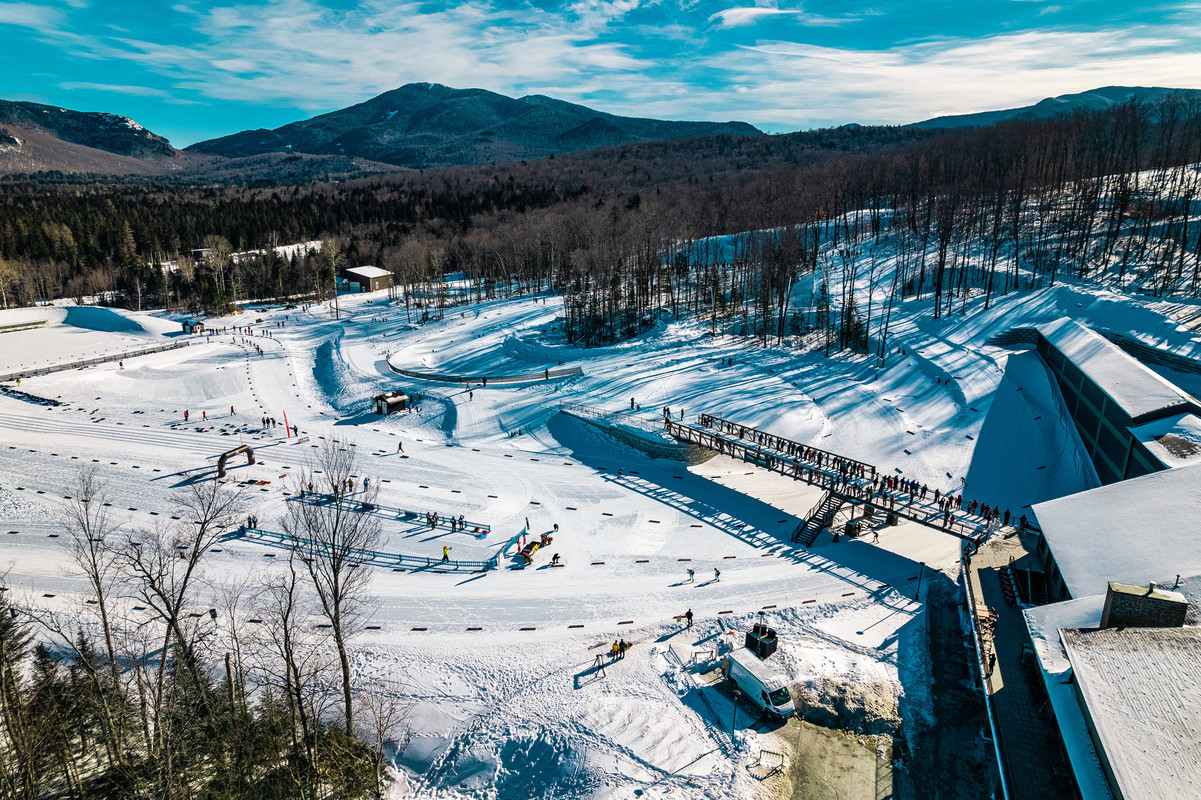
    Mt. Van Hoevenberg ski trails, Lake Placid, NY, site of the SWIX SuperTour Finals March 26-30, 2025. (Photo: Olympic Regional Development Authority)
  • SWIX Supertour, March 26-30

    SWIX Supertour, March 26-30

    This article was made possible through the generous support of our voluntary subscribers.  If you would like to see more articles like this one, please support FasterSkier with a voluntary subscription.

    Mt. Van Hoevenberg trails, Lake Placid, NY during the 2024 World University Games. (Photo: Olympic Regional Development Authority)

    SWIX SuperTour Finals arrive this week at Mt. Van Hoevenberg—storied cross-country venue of the 1980 Olympics in Lake Plaid, NY—to offer North American skiers the very best in spring competition. NCAA Championships concluded only a few weeks ago, and the best and brightest from collegiate skiing will be in Lake Placid. Nordiq Canada Ski Nationals concluded only last week, and many of those contenders have traveled south for even more continental-class racing. Junior Nationals concluded only a few weeks ago in Soldier Hollow, and America’s most ambitious up-and-comers will be in Lake Placid to measure their progress against that of their heroes. Many US Team members recently returned from World Cup competitions will be on hand, rubbing shoulders with their American counterparts. Bragging rights are at stake, and Spring Nationals titles, and the sort of attention that may secure World Cup starts for lucky skiers next season.

    Live Timing

    It’s possible to follow all events via live timing provided by Bullitt Timing. 

    SWIX SuperTour schedule

    (all times EASTERN):

    Wednesday, March 26, 2025:
    9:00 am | Women 10 km Individual Start Freestyle – SuperTour
    10:30 am | Men 10 km Individual Start Freestyle – SuperTour

    Friday, March 28, 2025:
    2:00 pm | Women & Men 1.3 km Individual Sprint Qualification Freestyle
    3:15 pm | Junior Women & Men Sprint Finals
    3:55 pm | Women & Men National Championship Sprint Final

    Saturday, March 29, 2025:
    10:00 am | National Championship Mixed Relay 4 x 5 km – Classic & Free

    Sunday, March 30, 2025:
    8:00 am | Men National Championship 40 km Mass Start Classic & Junior Men 15 km
    10:30 am | Women National Championship 40 km Mass Start Classic & Junior Women 15 km

  • The Devon Kershaw Show: Carrots and yellow cards and biathlete trash talking

    The Devon Kershaw Show: Carrots and yellow cards and biathlete trash talking

    Sorry, we’re late. We know. But we haven’t forgotten about you. Devon and Nat are back to wrap up the 2025 season and recap Oslo, Tallinn and Lahti.

    We do really think we’ll be back for a couple of postseason episodes. Sorry we haven’t answered many of your questions but we’ve got a list and plan to tackle ’em soon. Thanks so much for following along this season — more soon. Reach us at devon@fasterskier.com and nat@fasterskier.com in the mean time.

    23.03.2025, Lahti, Finland (FIN):
    Therese Johaug (NOR) – FIS world cup cross-country, mass, Lahti (FIN). www.nordicfocus.com. © Modica/NordicFocus. Every downloaded picture is fee-liable.
  • Congratulations Jessie Diggins & the US Ski Team

    Congratulations Jessie Diggins & the US Ski Team

    Jessie Diggins’ victory in securing her third FIS Overall Crystal Globe marks a historic milestone, not only for her career but also for the representation of North American athletes in cross-country skiing, a sport traditionally dominated by European nations. Her achievements signify a shift in the landscape, challenging preconceived notions about the sport and setting a precedent for future generations of skiers.

    Jessie Diggins celebrates with the FIS Overall and Distance Crystal Globes after the final World Cup races of the 2025 season in Lahti, Finland. (Photo: NordicFocus)

    Historically, cross-country skiing has been overwhelmingly dominated by athletes from Scandinavia and other European countries. Nations such as Norway, Sweden, and Finland have long been powerhouses, producing champions who have shaped the sport’s history and culture. The European influence is evident not only in the number of medals won but also in the deeply rooted traditions and support systems that have developed over decades. In this context, Diggins’ accomplishments represent a turning point, showcasing the potential for athletes from different regions—particularly North America—to excel on the world stage.

    Diggins’ rise to prominence began years ago, but it became mainstream with her medal win at the 2018 Winter Olympics in Pyeongchang. Along with teammate Kikkan Randall in the two-person Sprint Relay, she became one of the first American women to win an Olympic gold medal in cross-country skiing. This victory resonated throughout the United States, igniting interest in the sport and inspiring younger athletes, particularly girls, to pursue cross-country skiing. Her continued success, culminating in her third FIS Overall Crystal Globe, is a testament to her relentless work ethic, determination, and the entire team of coaches, techs, and family surrounding her, which have not only contributed to her victories but have also transformed perceptions about who can succeed in this field.

    Jessie Diggins during the final World Cup race of the season, a 50k Classic Mass Start in Lahti, Finland. (Photo: NordicFocus)

    Moreover, Diggins’ wins symbolize the importance of diversity in sports. Her success reflects not only her talent but also challenges the narrative that athletes from specific backgrounds dominate certain sports. By breaking through the barriers established in this European-centric sport, she has opened doors for North American skiers, demonstrating that excellence can be both global and diverse. Her influence extends beyond medals and awards; it encompasses advocacy for equal opportunities, inclusivity, and representation in sports.

    The impact of Diggins’ achievement is far more significant than the trophy she will fly back to America with. Ultimately, it will be measured by its potential to inspire systemic change within cross-country skiing. As she continues to excel, the sport may see increased investment in training programs and resources for aspiring athletes outside of Europe. This accomplishment could encourage a new generation of skiers from North America and further diversify the competitive field, enriching the sport as a whole. Only time will tell the greater impact, but at this moment, the entire North American cross-country ski community should celebrate this enormous accomplishment!

    The FasterSkier staff would like to congratulate Jessie, her family, and the entire US Ski Team on winning the FIS Overall and Distance Crystal Globes. As always, it has been a privilege to cover you this season.

    Jessie Diggins on her way to winning both the FIS Overall and Distance Crystal Globes in Lahti, Finland this weekend. (Photo: NordicFocus)
  • Johaug Skis Alone to 50 k Win, Diggins Secures Distance Globe

    Johaug Skis Alone to 50 k Win, Diggins Secures Distance Globe

    This coverage is made possible through the generous support of Marty and Kathy Hall and A Hall Mark of Excellence Award. To learn more about A Hall Mark of Excellence Award, or to learn how you can support FasterSkier’s coverage, please contact info@fasterskier.com.

    Jessie Diggins (USA) fought through a challenging World Cup 50 k in Lahti, Finland with the grit and determination that epitomizes her career, allowing her to secure the Distance Crystal Globe (to go with the Overall Crystal Globe that she secured earlier in the week). (Photo: Modica/NordicFocus)

    Therese Johaug (NOR) was going to retire two weeks ago, but things didn’t work out as planned. She had intended to go out after the 50 k at World Championships—to be honest, Johaug intended to go out after winning the 50 k at World Championships—but horrendous conditions on that day in Trondheim may have robbed her of that chance. She managed to finish an uncharacteristic third, but that’s not the sort of victory lap Johaug imagined marking the end of her legendary career. She needed another 50 k to set the stage for her retirement. Today’s race is why Therese Johaug changed her mind.

    Therese Johaug (NOR) spent a career off the front, skiing alone to most of her victories. Her victory in the 50 k Classic Mass Start in Lahti showed once again why she is considered one of the greatest skiers of all time. (Photo:  Thibaut/NordicFocus)
    Women’s 50 k Classic Mass Start

    Few entrants in the women’s 50 k field had also competed in yesterday’s Team Sprint event. That meant that most of the skiers who lined up at the starting line of today’s 50 k were pretty fresh (well, as fresh as could be expected here at the far end of a full World Cup and World Championship season). Whatever energy each skier still possessed they would dearly need.

    Fifty kilometers is a long, long way, and Johaug’s strategy was likely to render it a suffer fest. In years past, Therese Johaug would simply ski off the front of any Distance event, and race the entire distance alone; a courageous and absolutely domineering way to race. If Johaug had a plan for today, that was probably it.

    Lahti offered a 7.15 kilometer loop that skiers would navigate seven times. Less than five minutes into the first lap, Johaug moved to the front along with Ebba Andersson (SWE), Astrid Oeyre Slind (NOR), and Nora Saness (NOR). Predictably, Johaug’s group began to establish a bit of a lead over the main field. Jessie Diggins (USA) worked to minimize the gap, finding herself in an early chase group with Teresa Stadlober (AUT), Kertuu Niskanen (FIN), Victoria Carl (GER), Katherina Hennig (GER), and Nadja Kaelin (SUI). Diggins’ coaches started doing the math: what would she need to do in order to maintain her grasp on the distance Crystal Globe?

    Over the course of 50 kilometers, the field would contest six bonus points sprints, with the first coming at 12.9 kilometers. The Distance leaader points gap between Diggins and Slind was close enough (95 points) that those bonus points could allow Slind a chance to overtake Diggins in the chase for the Crystal Globe. The pattern was set early on: Slind would cross the bonus points line second (behind Johaug) to collect 12 bonus points while Diggins would cross tenth to claim a single point. Diggins’ lead was dwindling, but there were many bonus sprints—and many more kilometers of racing—still to go.

    At the end of the second lap (at 14.3 kilometers), Johaug was away. She double poled off the front, leaving Slind as the sole chaser well ahead of a group that now included Andersson, Niskanen, Hennig, Carl, Kaelin, Saness, Stadlober, with Diggins beginning to dangle off the back. Diggins would change her skis at the end of Lap 3, a decision which she would later credit with her ability to charge forward late in the race.

    Quietly, Diggins went to work, hoping to reel in Kaelin and maybe even Saness or Carl. Diggins had already secured the Overall Crystal Globe earlier in the week, but Slind’s performance in this 50 k saw the Norwegian threatening Diggins in the race for the Distance Crystal Globe. Ultimately, Diggins dug deep, passing Kaelin late in the race to secure ninth place. That placing allowed Diggins to maintain her hold on the Distance World Cup by a mere two points.

    Therese Johaug (NOR) crosses the line for her first victory in an international 50 k race. It may not be her last. (Photo: Modica/NordicFocus)

    At the front, Johaug left no doubt who was the supreme distance skier of the day, of the era, perhaps of all time. She secured her victory more than a minute ahead of Slind, a performance that may begin to reduce the sting of Johaug’s disappointment at the slushy World Championships in Trondheim. If Johaug wanted redemption, then that she achieved here in Lahti. If she wanted to go out on top—to retire after a significant victory—then this was her chance. But the scope and breadth of Johaug’s magnificent career is such that she may have lost interest in lesser prizes. World Cup wins, Tour de Ski triumphs, even World Cup overall championships: Johaug has had enough of those to assure the immortality of her career statistics. At this point in her career, Johaug is likely to prioritize only the glory that shines from individual accomplishments: World championships and Olympic gold medals. After today’s performance, Johaug could be forgiven for looking forward to another such opportunity for individual glory that lies less than a year away in the Olympic 50 k in Italy. She might be able to dominate that race just as she dominated today’s. But there would be many long days of training still to deliver between now and then. And that imagined victory would only be arrived at over the best efforts of Slind, Andersson, Frida Karlsson (SWE), and whatever other dark horses arise (as they so often do) in consequential Olympic races.

    Today’s race is why Therese Johaug changed her mind. Now, she has more decisions to make, with consequences and opportunities that may be played out through one final, glorious Olympic season.

    Women’s World Cup 50 k RESULTS

    Celebration at the end of a long race—and the end of a long season—for Astrid Oeyre Slind (NOR), Therese Johaug (NOR), and Ebba Andersson (SWE). (Photo: Modica/NordicFocus)
  • Klaebo Wraps Historic Season—Krueger Secures Distance Cup

    Klaebo Wraps Historic Season—Krueger Secures Distance Cup

    This coverage is made possible through the generous support of Marty and Kathy Hall and A Hall Mark of Excellence Award. To learn more about A Hall Mark of Excellence Award, or to learn how you can support FasterSkier’s coverage, please contact info@fasterskier.com.

    No questions remain about the abilities and skills of Johannes Hoesflot Klaebo (NOR). In the world of cross-country skiing, he stands alone. (Photo: Thibaut/NordicFocus)

    A few weeks ago, Norwegian commentator (and Ski Hall of Famer) Petter Northug criticized his countrymen for failing to attack Johannes Hoesflot Klaebo (NOR) more aggressively in a mass start distance race. Northug is likely to lob those same criticisms at the contenders in today’s field after a fast-paced but decidedly undramatic 50 k Classic Mass Start. With only a few kilometers remaining, finally Andreas Fjorden Ree (NOR) went to the front, hoping to detach Klaebo and give himself a chance at the podium—or the win. But if the attack doesn’t sink Klaebo, then everyone else is pretty much sunk. Two kilometers to go, and Klaebo was back on the front. Krueger attempted to attack on the final uphill, but what Klaebo really seemed to want is someone to lead at this point so that he can slingshot around them on the final downhill. Thanks for your assistance, Mr. Krueger . . .

    Klaebo coasted to the win ahead of Martin Loewstroem Nyenget (NOR) and Krueger whose placing would be more than sufficient to earn him the Distance Crystal Globe.

    Everybody wanted to win this one . . . the World Cup 50 k is an event that’s staged only rarely (usually at Holmenkollen and in the World Cup finale) and winning a major international race of this distance is all about bragging rights. It’s a race that is on the schedule at every Olympics and World Championships, but not very many other times. And this particular 50 k is in Classic technique. Everybody wanted to win this one.

    Johannes Hoesflot Klaebo (NOR) remained near the front through the entire 50 kilometer distance in the FIS World Cup season finale in Lahti, Finland. (Photo: Thibaut/NordicFocus)
    Men’s 50 k Classic

    While Johannes Hoesflot Klaebo wrapped up the Sprint and Overall Crystal Globes last week, the Distance Globe was still to be decided when today’s race began. Krueger led by more than 100 points, but he was not the only contender today in Lahti. Paal Golberg (the 2023 World Champion at 50 k) announced his retirement prior to the race; he was likely to be inspired by his own legacy. Iivo Niskanen is a Classic technique specialist; he was likely to be driven forward by the urgings of the eager Finnish crowd. William Poromaa (SWE) was a medalist at the recent World Championshp 50 k; he would be keenly interested in upgrading.

    Paal Golberg (NOR) announced his retirement just prior to the beginning of today’s 50 k Classic race. His ninth place finish was a fine way to conclude a distinguished career. (Photo: Thibaut/NordicFocus)

    One way or another, the men’s race was unlikely to unfold in a manner similar to the earlier women’s race (in which Therese Johaug simply skied away from everyone). No single male racer was sufficiently stronger than the rest to simply ski away, and one of the primary contenders—Klaebo—was more of a sprinter. It would be up to him to keep the pace moderate. It would be up to everyone else to drop him (just ask Petter Northug).

    Klaebo and Poromaa set the pace in the first lap, with all other contenders staying within striking distance. A 15-man front group began to form, one that also included Gus Schumacher (USA) Olivier Leveille (CAN), and Niskanen. Leveille found himself gapped by 15 kilometers, but Schumacher and Niskanen continued to occupy positions in a lead group that had been whittled down to eight.

    At the end of Lap 3, Ree stumbled on the last turn before the stadium, creating a split in the lead group. Klaebo and Nyenget drifted off the front, followed by Poromaa and Krueger. Schumacher and Friederich Moch (GER) struggled to regain contact.  Niskanen stopped to change skis, leaving him off the back and all alone. He’d hope that his new, faster skis would enable him to catch up.

    Schumacher dropped off the pace at the mid-point of the race where he was caught by the newly replenished skis of Niskanen. Many of the contenders in the seven-man lead group would soon be stopping for fresh skis. When they did, Niskanen would likely hit the gas in an attempt to gap them all.

    At the end of Lap 4, all the leaders stopped for new skis . . . all except Niskanen, that is. He skied on alone, determined to gap the group while he could. Poromaa led the chaseers out of the exchange, but they’d all ceded 10 seconds to Niskanen. Moments later, Schumacher stopped for new skis, as well, hoping that the change would allow him to re-establish contact with the leaders.

    As the race entered the final kilometers, it was all Norway. (Photo: Thibaut/NordicFocus)

    Niskanen made the chasers pursue him for a bit, but ultimately chose to sit up to conserve his energy. Seven leaders back together again with 20 kilometers still to race, but in the closing kilometers it was Norway—Nyenget, Jrueger, Ree, and Klaebo—who moved to the front. Everybody must’ve been tired, because everyone knew they needed to shed Klaebo, but no one moved to attack. When Klaebo went to the front just before the final downhill hairpin turn, the race was pretty much over. His fast skis gave him extra meters on the final slope, and he coasted across the finish line with room to spare. Behind him came Nyenget and Krueger who would finish his season with a well-earned Distance Crystal Globe.

    “I think I will need some time this spring to process what really happened during  this season” said Klaebo. “But it’s a perfect way to finish up here with a 50 k as well.”

    Only a few weeks ago, questions continued to swirl regarding Klaebo’s struggles to win major international Distance races. After the World Championship 10 k, after the World Championship Skiathlon, after the World Championship 50 k, and after today’s marathon conclusion to the World Cup season, it seems like those questions can finally stop swirling.

    “Celebrate,” said Klaebo in post-race interviews. “That’s gonna be my plan!”

    World Cup 50 k RESULTS

    Johannes Hoesflot Klaebo (NOR), Simen Hegstad Krueger (NOR), Martin Loewstroem Nyenget (NOR), and Andreas Fjorden Ree (NOR) carried Norway’s colors all the way to the finish line of the 50 k Classic in Lahti, Finland. (Photo: Thibaut/NordicFocus)
  • Germany and Norway Solve Lahti Team Sprints

    Germany and Norway Solve Lahti Team Sprints

    This coverage is made possible through the generous support of Marty and Kathy Hall and A Hall Mark of Excellence Award. To learn more about A Hall Mark of Excellence Award, or to learn how you can support FasterSkier’s coverage, please contact info@fasterskier.com.

    Lahti, Finland turned out in the thousands for the FIS World Cup. A raucous crowd cheered on the Team Relays, led in Leg 1 by Gina Del Rio (AND), Federica Cassol (ITA), Laura Gimmler (GER), Melissa Gal (FRA), Coletta Rydzek (GER), Elena Rise Johnsen (NOR), Nadine Faehndrich (SUI), Julie Myhre (NOR), Anja Weber (SUI), Maja Dahlqvist (SWE), Johanna Hagstroem (SWE), Moa Lundgren (SWE). (Photo: Modica/NordicFocus)

    Just how do these athletes keep doing this? There have been 32 World Cup races so far this winter—plus an exhausting week of World Championships—and we ski fans get in the habit of watching them race their hearts out week after week. To call these skiers “endurance athletes” is an extraordinary understatement.

    Still, it seems like a bit of an over-commitment that FIS would schedule a Team Sprint for Saturday in Lahti. Team Sprints are an exhausting and athletically costly event that still manages to hang around as a bit of an afterthought. The winners do not receive World Cup points for their efforts (maybe there’s some prize money, but not much), yet they still line up to race with competitive flair, even on a day before a fair number of them will face the season’s final 50 kilometer marathon. These athletes must truly love to ski . . .

    Johanna Hagstroem (SWE), Maja Dahlqvist (SWE), Coletta Rydzek (GER), Laura Gimmler (GER), Anja Weber (SUI), Nadine Faehndrich (SUI) celebrate in the Finnish sunshine after the Team Sprint in Lahti. (Photo: Modica/NordicFocus)
    Women’s Team Sprint

    One thing can be said of the Women’s field in this season’s World Cup: they are absolutely unafraid to go. Sweden’s teams set the early pace in Saturday’s Team Relay, followed by Finland, Switzerland, and Norway. The field stayed together through the Leg 1 in a frenzied production of speed. That’s the way these Women’s fields seem to race the World Cup—flat out. It’s hard to believe they can keep up this level of effort through the entire World Cup season. Frankly, their levels of effort—and their degrees of courage—are simply amazing.

    In the penultimate leg, Finland’s Jasmin Kahara emerged at the front of the group. hoping to give a lead to newly crowned World Cup Sprint winner, Jasmi Joensuu. Joensuu has shown that she has some of the greatest speed of any competitor in the World Cup field, but she definitely races best at the front. If Joensuu could take the final handoff with a lead, she would be very difficult to catch. But Kahara was overtaken at the critical hairpin turn on the final climb by Sweden’s Hagstroem who managed to separate herself from the Swiss and the Italians just before the final exchange.

    Coletta Rydzek and Laura Gimmler claimed the second German World Cup victory in as many days, adding another gold to Rydzek’s win in Friday’s Freestyle Sprint. (Photo: Modica/NordicFocus)

    The final leg looked much like a World Cup Sprint final—though one closely contested by fifteen teams—as two-time Team Sprint World Champion, Maja Dahlqvist (SWE), led Switzerland’s Nadine Faehndrich. The field had not been shattered, and the leading duo were followed closely by Joensuu, Kristine Stavaas Skistad (NOR), and Coletta Rydzek (GER) whose fast skis led down the final slope in what would be a repeat of her win in yesterday’s Freestyle Sprint. Rydzek was followed closely at the line by Dahlqvist and a photo finish for third narrowly decided for Faehndrich of Switzerland.

    That’s the way these World Cup women race . . . wire to wire, fully ablaze, even after an endlessly long and exhausting season. Absolutely incredible.

    Women’s Team Sprint RESULTS

    Maja Dahlqvist (SWE) and Johanna Hagstroem (SWE) celebrate the conclusion of a long World Cup season with their silver medal in Saturday’s Team Sprint in Lahti, Finland. (Photo: Modica/NordicFocus)
    Men’s Team Sprint

    Switzerland’s Janik Riebli led the field through much of Leg 1, followed closely by USA’s Ben Ogden. The first exchange was a bit rough, but the contenders filtered through to the front where Johannes Hoesflot Klaebo (NOR) set the pace on Leg 2. He was definitely the skier to mark, so the pace settled into one in which everyone could keep their eye on the famous Norwegian.

    Even Northug (NOR) often found himself mid-pack during the Lahti Team Sprint, but he delivered Johannes Klaebo (NOR) an advantageous position at the beginning of the anchor leg. That’s all it took . . . (Photo: Modica/NordicFocus)

    Klaebo’s partner, Even Northug, doesn’t generate the same level of respect and awe as Klaebo, so the field drove forward to absorb Norway while they could. But Northug would have known that he had only to keep Norway in contention, to give Klaebo a position in the final lap in which he could see the front.

    Through another pair of laps, and it was once again Northug being absorbed by Riebli and Ogden. The penultimate leg had the potential to become burly as many teams jockeyed for position. With so many athletes and skis and poles in play, that’s when World Cup ski racing can transition into bumper cars. Ogden found himself on the wrong end of that, tangling with other skiers and going down. But the fracas allowed USA II’s Kevin Bolger to get away with Finland I and Norway’s Northug as they entered the stadium for the final exchange.

    By the time the field hit the critical hairpin, Klaebo was gone, accelerating up the final hill and diving down into the stadium. The best sprinter on the fastest skis—no one was catching Klaebo as he coasted across the line for the win. The rest of the field sorted itself out behind him as Switzerland I’s Valerio Grond claimed second ahead of France I’s Jules Chappaz who outsprinted JC Schoonmaker (USA) for third.

    “It was like chaos out there!” laughed Northug. “But it was fun to go. (The first leg) was like seven seconds between the fifteen best teams in the race, so we knew it was going to be very tight!”

    “At the end, I had some power left,” said Klaebo. “So it was really fun . . . we will celebrate tomorrow, that’s for sure.”

    Celebrate, indeed. Like the rest of those who raced today and will race again tomorrow, Klaebo continues to show that the racers of the 2025 World Cup are definitely not afraid to race. They obviously love to ski, and we do so love watching them do it.

    Men’s Team Sprint RESULTS

    Janik Riebli (SUI), Valerio Grond (SUI), Even Northug (NOR), Johannes Hoesflot Klaebo (NOR), Richard Jouve (FRA), Jules Chappaz (FRA) on the podium of Lahti’s World Cup Team Sprint. (Photo: Modica/NordicFocus)
  • Klaebo Undefeated in 2024-2025 Sprints

    Klaebo Undefeated in 2024-2025 Sprints

    This coverage is made possible through the generous support of Marty and Kathy Hall and A Hall Mark of Excellence Award. To learn more about A Hall Mark of Excellence Award, or to learn how you can support FasterSkier’s coverage, please contact info@fasterskier.com.

    With his win in Lahti’s World Cup Sprint Finale, Johannes Hoesflot Klaebo (NOR) remained undefeated in World Cup Sprint competition in 2024-2025. (Photo: Modica/NordicFocus)

    Johannes Hoesflot Klaebo (NOR) had business to attend to, and a Crystal Globe to claim. He couldn’t afford to waste time worrying about races to come. He had today’s race to deal with . . . not that there was really very much need for worrying.

    Harald Oestberg Amundsen (NOR) had different priorities, and a different schedule to follow. Oestberg decided to skip this race . . . even though he’s been a solid contender in all recent World Cup Sprints. His absence may be the story of the weekend. He was signed up, on the starting list, on site for warmup on the afternoon of the race . . . but he decided to give it a pass. Prior to today’s races, the ever-informed Norwegian ski-media had nothing to say about Amundsen’s decision to drop out; presumably a decision made rather late in the process rather than a pre-race strategy. Amundsen may be feeling a bit tired (who could blame him?), he may be feeling a bit sick (skiers are always at risk of picking up whatever’s going around) . . . or he may be cleverly sand-bagging, hoping that another exhausting round of Sprint qualifiers, heats, and finals (coming hot on the heels of Talinn’s Sprint just two days ago) will finally take the sting out of Klaebo before Sunday’s 50 k World Cup finale. Winning any 50 k always provides prodigious bragging rights. Who could blame Amundsen for grabbing any possible advantage leading up to the contesting of the season’s final gem? With 200 points being available in Sunday’s 50 k, Amundsen would still have a chance of snatching the World Cup Distance title from his teammate, Simen Hegstad Krueger. Maybe best to sit out today’s Sprint competition . . .

    Ultimately, Klaebo would claim his 58th World Cup Sprint victory—his 16th in a row—ahead of Jules Chappaz (FRA). The win also gave Klaebo the win in the season-long World Cup Sprint competition, for which he was awarded the Sprint Crystal Globe.

    “My goal for today was to secure the Sprint Globe,” said Klaebo in post-race interviews. “So that was nice.”

    An hour after the conclusion of the race, FIS had still not announced third place; questions continued to swirl (and juries continued to deliberate) as to who would be awarded the final place on the podium: Valerio Grond (SUI) or Federico Pellegrino (ITA). Their tangle in the homestretch—resulting in Grond’s dramatic belly flop and headlong slide across the finish line—looked like it might result in a Pellegrino disqualification. In the end, the jury decided that the contact between the two had been inadvertent; Pellegrino was allowed to keep his position on the podium.

    Ben Ogden (USA) maintained his consistent prologue strategies, qualifying 15th. “I really keep (the qualifier) as an all out effort,” said Ogden. “But I certainly have less emphasis on it than previous years. It’s important not to get complacent, but I often don’t feel as though the true race starts until the quarter final these days.”

    Gus Schumacher (USA) was one of four Americans who advanced out of qualifying. Schumacher would ski well all the way through the semifinals, finishing 12th on the day. (Photo: Modica/NordicFocus)

    Ogden would be eliminated in his quarterfinal, but his teammates would race deep into the semifinals and beyond. Ogden’s American teammates crowded the final qualifying placings with Gus Schumacher 26th, Jack Young 27th, JC Schoonmaker 29th, and Kevin Bolger 30th. Schoonmaker would ride savvy tactics all the way to the Sprint Final, where he would finish sixth.

    Canadians would not advance beyond qualifying with Xavier McKeever 37th, Pierre Grall-Johnson 40th, Sasha Masson 62nd,  Thomas Stephen 63rd, and Graham Ritchie 68th.

    Men’s Freestyle Sprint

    Despite having won every Sprint event he’s entered this year—and appearing virtually unbeatable—Klaebo entered the World Cup Final Freestyle Sprint with a lead of only 75 points over his countryman, Erik Valnes, and 111 points over Sweden’s Edvin Anger. Frankly, anything could happen on a day when the award for wining was 200 points (double that of any regular-season World Cup race).

    Schumacher, Young, and Schoonmaker filled the America-rich first quarterfinal. But it was Klaebo whose sprinting was likely to draw the attention of the crowd. Lucas Chanavat drove to the front as he so often does, with Klaebo dropping back into a tactical position. Klaebo is supremely confident in his tactics, in his ability to get through a crowd, and the otherworldly glide of his skis . . . but he had volunteered to ski behind a comparatively inexperienced group of young Americans. Getting through this crowd could be tricky. It was Schumacher who determined the strategy, making the Sprint into an endurance test as he drove to the front on the first significant hill. Klaebo easily maneuvered past the rest and went straight to Schumacher’s tails. The sprinters—Chanavat, Young, and Schoonmaker—quickly found themselves in a bit of trouble, though Chanavat managed to force his way back to the front. He led down the final slope to the finish, followed by Klaebo who took the faster outside line for the win. Behind him, Schoonmaker and Schumacher fought it out with Chanavat, with both Americans edging out the Frenchman.

    Ogden went to the front of the third quarterfinal ahead of Erik Valnes (NOR) and Noee Neff (SUI). Jules Chappaz (FRA) drove to the front to keep the pace high, while Ogden chose a fast line around the hairpin turn on the final climb. Ogden was overtaken on the final downhill by the faster skis of Valnes who would surge forward to the quarterfinal win. Ogden would finish fourth in the heat, ending his day in ???

    Schoonmaker and Schumacher would find themselves outmaneuvered in the semifinal behind Klaebo, Valerio Grond (NOR) and Valnes. Schoonmaker managed to sneak through for fourth in the heat, ultimately advancing to the final as a lucky loser.

    JC Schoonmaker (USA) shadowed Johannes Hoesflot Klaebo (NOR) in the Sprint Final, but found himself pinched in the final hairpin turn. He would finish the day in sixth. (Photo: Modica/NordicFocus)
    Men’s Sprint Final

    Klaebo is less likely to fiddle around with from-the-back tactics in a Sprint final; he kept himself near the front in the opening meters, letting his rivals sort out positioning behind him. Schoonmaker tucked in quickly behind Klaebo to put himself in contention just ahdad of Valnes. Klaebo led up the final hill, only to find himself edged out by the inside line of Grond. But Grond’s skis are no match for Klaebo’s especially when the Norwegian is allowed to take his favorite outside line into the finish. Chappaz followed Klaebo’s line to grab second while Pellegrino secured yet another podium finish ahead of the headlong dive of Grond. Schoonmaker’s early pace would cost him, as he found himself outmaneuvered at the consequential hairpin, ultimately fading to sixth.

    Men’s Freestyle Sprint RESULTS

    Men’s Freestyle Sprint QUALIFYING

  • Coletta Rydzek Blazes Women’s Sprint in Lahti

    Coletta Rydzek Blazes Women’s Sprint in Lahti

    This coverage is made possible through the generous support of Marty and Kathy Hall and A Hall Mark of Excellence Award. To learn more about A Hall Mark of Excellence Award, or to learn how you can support FasterSkier’s coverage, please contact info@fasterskier.com.

    Coletta Rydzek (GER) used the day’s best tactics—and the field’s fastest skis—to claim her first World Cup Sprint victory in Lahti, Finland. (Photo: Modica/NordicFocus)

    Back in 2021-2022, Slovenia’s Annamarija Lampic won the Sprint World Cup while having stepped onto a World Cup Sprint podium only three times that season (2 x third, 1 x second). No victories on the season, but Lampic claimed the Crystal Globe. It was a career-defining achievement, but one that continues to be listed with a bit of an asterisk denoting a season without a World Cup win. We’ve become so accustomed to World Cup champions dominating their events that we can find ourselves with jaded views of someone who claims a championship without appearing consistently at the top of the podium. That’s the situation in which Jasmi Joensuu (FIN) finds herself.

    We cant blame Joensuu for racing the way he does—full speed, full gas, at the front, making everyone else pay dearly if they want to beat her. Joensuu doesn’t often win her heats—and she is yet to claim a World Cup Sprint victory—but she is amazingly consistent in being able to advance to semifinals and finals, so often, in fact, that Joensuu claimed the World Cup Sprint Crystal Globe a few days ago in Talinn, Estonia even in advance of this double-points Sprint finale in Lahti. On the men’s side of World Cup competitions, Johannes Hoesflot Klaebo (NOR) is a truly dominant sprinter, but not even he had claimed the season’s top Sprint prize so quickly.

    Still without a World Cup win on the season—and with only one podium performance—Jasmi Joensuu (FIN) rode a wave of consistent tactics all the way to the World Cup Sprint Crystal Globe. (Photo: Modica/NordicFocus)

    Whatever Joensuu is doing, it’s definitely working. It’s just that we find ourselves wishing she’d do it differently. But the Sprint course in front of her her home crowd in Lahti was not the place to experiment. Ultimately, Joensuu would not get her victory in Lahti, either, as the win was earned by the fast skis an exemplary tactics of Germany’s Coletta Rydzek. Rydzek was joined on the podium by a disappointed Kristine Stavaas Skistad, and the always-fast Nadine Faehndrich (SUI).

    Coletta Rydzek (GER) was joined on Lahti’s Sprint podium by Kristine Stavaas Skistad (NOR), and Nadine Faehndrich (SUI). (Photo: Modica/NordicFocus)
    Women’s Freestyle Sprint

    Conditions had been described as “variable” in Lahti, with the possibility that the steep course could become icy as the sun went down. Kern and Smith found themselves eliminated in the third quarterfinal, where Victoria Carl (GER) and Maja Dahlqvist (SWE) maneuvered easily into qualifying positions in a slower, more tactical heat.

    Diggins headlined the fifth quarterfinal, but was eliminated behind Johanna Hagstroem (SWE) and Coletta Rydzek (GER).

    In the Sprint semifinal, finally Joensuu eased up. Skistad had gone out fast, presumably hoping to control the race and clog the front against the always-go tactics of Joensuu. but this time it Joensuu did not take the bait. Both stood straight up at the top of a mid-course hill, waiting for someone else to set the pace. It looked like a whole new Jasmi Joensuu . . . though in the end, it seemed evident that the reason Joensuu doesn’t attempt to ski tactically is because that’s just not the way she’s likely to excel. Others showed greater abilities to accelerate, and Joensuu even stumbled briefly in the homestretch. She would finish the heat out of contention in fourth, well behind Skistad and Mathilde Myhrvold (NOR). Joensuu would finish her season without a Sprint win, but she would go home with the Sprint Crystal Globe held gingerly and dearly in her grasp.

    Coletta Rydzek (GER) exults as she crosses the finish line for her first World Cup victory in Lahti, Finland. (Photo: Modica/NordicFocus)
    Women’s Sprint Final

    Skistad remained consistent in her tactics, driving quickly to the front and standing up at the top of the first hill. The field wandered along fo a while at a medium pace with Skistad still controlling the front. Skistad led lackadaisically around the hairpin turn midway up the final uphill, then she hit the gas, accelerating away from the the field with the finishing downhill in sight. But it was the fast skis and tactical brilliance of Rydzek that blazed down the finishing straightaway for the win. Skistad was forced to settle for second ahead of Faehndrich in third.

    “Unbelievable, really,” said Rydzek. “It’s hard to describe. I didn’t think I ever can achieve this!”

    Women’s Freestyle Sprint RESULTS

    Women’s Freestyle Sprint QUALIFYING

  • Kern Takes Podium in Tallinn City Sprint. Joensuu Locks up Sprint Lead

    Kern Takes Podium in Tallinn City Sprint. Joensuu Locks up Sprint Lead

    This coverage is made possible through the generous support of Marty and Kathy Hall and A Hall Mark of Excellence Award. To learn more about A Hall Mark of Excellence Award, or to learn how you can support FasterSkier’s coverage, please contact info@fasterskier.com.

    Julia Kern (USA) took her first individual podium since 2019. (Photo: NordicFocus)

    Today’s nighttime mid-week Freestyle city Sprint in Tallinn, Estonia is an unique event. It’s one day of individual Sprint racing coming at the tail end of the season leading into the final weekend of racing in Lahti, Finland. The race also requires all skiers to use the same ski wax.

    In the women’s event— with the chase for the Overall crystal globe already mathematically secured by Jessie Diggins and a 50 kilometer World Cup finale looming this coming weekend— there wasn’t much incentive for the American star to race today. Her teammate Rosie Brennan would also be taking the day off. But it wasn’t just Diggins and Brennan who would be missing from the lineup. World Sprint Champion Jonna Sundling (SWE) is ill and not racing. Her teammate Linn Svahn, who has had an almost unbearable string of bad luck, is also still on the sidelines suffering from concussion symptoms. That meant that Kristine Stavaas Skistad (NOR), along with Sprint crystal globe leader Jasmi Joensuu (FIN) and Nadine Faehndrich (SUI) would be catapulted into the pre-race favorites position. With Joensuu entering the day leading the Sprint cup by 148 points over Sundling, and 157 points over Faehndrich—with only one individual Sprint race remaining after today— she was in prime position to cement her chances for the Sprint crystal globe.

    It has been an odd journey for the Finnish skier who could receive the Sprint crystal globe and yet hasn’t won a World Cup Individual Sprint race this season and has only been on the Sprint podium once. A victory today would help to erase that asterisk from her championship.

    With Diggins not racing, Julia Kern (USA) immediately moved into the favorite position for team USA.

    The script was set perfectly by the qualifying results when Faehndrich finished first besting Joensuu, who qualified second, by almost two seconds. Kern also had a strong qualifier finishing sixth. But at the end of the day it was Faehndrich who triumphed taking the victory with Maja Dahlqvist (SWE) finishing second, and Kern taking a dramatic third for her first individual podium since 2019.

    It was a satisfying day for Kern. “It feels really good, especially after over 5 years since my first individual podium,” said Kern. “I never stopped believing, and I felt like coaches and teammates close to me as well, and it feels good that how I imagined I can ski finally all came together today. I feel like I’ve had a lot of injuries and obstacles along the way that have often disrupted my training, so even in a year where I still experienced major training disruptions, it means that it’s still possible with enough patience and persistence!”

    Kern also acknowledged the efforts of the wax technicians. “The staff did an amazing job in ski testing and strategy today, especially with the limited course access and neutral waxing rules. They were cheering so loud around the course that I no option but boost into another gear and I feel so grateful for their unwavering belief over the years, and especially this season where I was reminded to be patient, and that likely my form will catch up and come around at the end of the season!”

    It was definitely a race of redemption for Kern who struggled early in the season after a summer of nagging injuries. “A podium possibility is something I have been chasing the past 5 years ever since my first podium. I never stopped believing that I had it in me, but there were definitely times when it felt far out of reach, like in Period 1 this season. Things with sprinting were really not clicking early season, which wasn’t so surprising given my injury ridden fall. But I knew my fitness was there with strong distance races, so I worked really hard with the coaches and strength coach in the lead up to World Champs to get my sprinting gears back. The belief has always been there deep down, but I feel like my body has not been able to get there. I’m pleasantly surprised how quickly I was able to build back my sprint gears in the last month, making it feel that much sweeter!”

    Joensuu finished sixth and was still in the awkward position of being on the cusp of winning the Sprint crystal globe, having never won a Sprint and only having found the podium once. But that’s the lesson of a long World Cup season; persistence and durability often win out over intermittent victories and podiums.

    Nadine Faehndrich (SUI) took the Sprint victory, but she can’t overcome Joensuu’s crystal globe lead. (Photo: NordicFocus)
    Women’s Freestyle Sprint-Quarterfinals

    In heat number one, Kern had the difficult task of facing off against Skistad, and Moa Ilar (SWE), the winner of the most recent world cup Sprint. But very quickly, the entire heat was turned upside down when three athletes fell in an early turn, including Ilar. That paved the way for Kern to advance with little difficulty. Kern quickly jumped to the front to take the lead, which she held until the finish line, with Skistad content to sit far back in second place conserving energy.

    All eyes were on Jasmi Joensuu (FIN) to see if she could maintain her Sprint lead and whether she could win a Sprint race. (Photo: NordicFocus)

    Emma Ribom (SWE) and Mathilde Myhrvold (NOR) took the second heat with the narrow course proving to be the most dominating factor.

    Heat four included the two fastest qualifiers with Faehndrich and Joensuu facing each other. Joensuu blasted out from the start immediately, but Faehndrich was able to take the lead up the steep final hill with Joensuu drifting back to third having been displaced from automatic advancement by Katerina Janatova (CZE). Joensuu would have to wait until the next heat was completed to see if she could advance as a lucky loser. If she didn’t, her lead for the Sprint cup would dwindle substantially.

    Sammy Smith (USA) qualified for the heats, but couldn’t advance out of the quarterfinals. (Photo: NordicFocus)

    In the final heat the only other American to make the heats, Sammy Smith, would try to advance to the semi-finals, but she couldn’t keep up with the pace set by Johanna Hagstroem (SWE) who won the heat. But more importantly to the Sprint cup standings, Joensuu’s time from the prior heat held up for her to advance as a lucky loser which let her avoid what would have been a disastrous outcome had she not advanced out of the quarterfinals.

    Women’s Freestyle Sprints-Semifinals
    Kristine Stavaas Skistad (NOR) found herself in the unusual position of being shut out of the finals. (Photo: NordicFocus)

    Kern was in the first semifinal and would again face Skistad as well as Ribom, Maja Dahlqvist (SWE), and Myhrvold. Skistad didn’t waste any time going to the front with Dahlqvist right behind her. Kern was pinched to the outside early but was able to pick her way toward the front as Dahlqvist shot into the lead. Kern and Skistad came to the line together with Dahlqvist ahead of them taking the victory. In an incredibly tense photo-finish Kern nipped Skistad at the line to finish second. It was now Skistad who was in the unusual position of having to wait on a lucky loser position with Kern automatically advancing to the finals.

    Kern had to adjust her strategy during the race. “My strategy was to be as far front as possible and push the pace. Unfortunately I did not have a great start and my backup strategy was to move up and find a window as I lapped through and that is what I did. I knew I was feeling really strong in the second lap all day, so if I could be in the right position, I had confidence I could go.”

    The second semifinal was packed with top contenders with Joensuu, Faehndrich, Janatova, Hagstroem, and Coletta Rydzek (GER) facing each other. Joensuu and Faehndrich again went to the front early with Faehndrich setting the pace. Faehndrich was able to put a small gap on the field early, but the group quickly closed in on her with Joensuu doggedly in pursuit. Faehndrich pushed hard up the final hill and was able to re-establish her lead over Joensuu who began to fade. Gina Del Rio (AND) took advantage of Joensuu’s slowdown and finished second. But miraculously once again Joensuu was able to advance as a lucky loser. Joensuu’s good fortune was Skistad’s bad luck as she would not be able to advance as a lucky loser and for the first time in a long time, she wouldn’t reach the finals.

    Maja Dahlqvist (SWE) had a strong showing finishing second. (Photo: NordicFocus)
    Women’s Freestyle Sprint-Finals

    In the finals Kern would match up with Faehndrich, Dahlqvist, Del Rio, Joensuu, and Rydzek. Joensuu had been living a charmed existence all day having advanced twice through the heats using the lucky loser position. Having reached the finals ensured that she would maintain a healthy lead going into the final Sprint this weekend. But there was still a podium to contend for today. Following the previous heat’s form, Faehndrich shot to the front at the start with Del Rio gamely following closely. Faehndrich continued to charge as the field went up the final steep hill with Dahlqvist behind her and Kern in third. Faehndrich put in a big gap on the field to take the win with Dahlqvist finishing second, Kern finished third to take her second ever individual world cup podium, her first since she finished third in Planica in 2019. Joensuu finished sixth but it was mission accomplished for the Finnish skier who miraculously managed to maintain an insurmountable Sprint cup lead by advancing twice as a lucky loser.

    For Kern it was a landmark day finding an individual podium after a very long absence, and for Joensuu it was a combination of luck, persistence, and speed which locked up her grasp of the Sprint crystal globe. Joensuu will go into the final weekend of racing with an insurmountable 129 point lead in the Sprint competition with only one race left to be contested.

    Maja Dahlqvist (SWE), Nadine Faehndrich (SUI), Julia Kern (USA), (l-r) (Photo: NordicFocus)

    Women’s Freestyle Sprint, Tallinn, Estonia: Results

  • Bumpier Than Usual, but Klaebo Prevails in Talinn

    Bumpier Than Usual, but Klaebo Prevails in Talinn

    This coverage is made possible through the generous support of Marty and Kathy Hall and A Hall Mark of Excellence Award. To learn more about A Hall Mark of Excellence Award, or to learn how you can support FasterSkier’s coverage, please contact info@fasterskier.com.

    When it comes to World Cup Sprinting, Johannes Hoesflot Klaebo (NOR) continues to show that he possesses more than one way to win. (Photo: Modica/NordicFocus)

    As the FIS World Cup makes a popular stop in Talinn, Estonia, a bit of a geography review might be in order . . . Talinn is the capital of Estonia, situated directly south across the Gulf of Finland from Helsinki. Like the rest of the Baltic region, Estonia endures long, dark winters . . . seasons that have inspired a bright tradition of cross country skiing. In the Soviet era, Estonia was not an independent republic; many Estonian skiing stars ended up being compelled to represent the Soviet Union. It was not until the early 2000’s that Estonian skiers—like the great Kristina Smigun and Andreas Veerpalu—began claiming medals on World Championship and Olympic stages.

    Now a member of NATO, Estonia is something of a thorn in the side of neighboring Russia with whom it shares a tense 300 kilometer border. The parliamentary government of Estonia has continued to support the government and people of Ukraine, while openly opposing Russian aggressions. Estonia doesn’t occupy an easy neighborhood. Things could get rough around here. Consider, for instance, the far less consequential—but still volatile—nature of World Cup Freestyle Sprints: this is the kind of close-quarters event in which bumps and falls can decide things. There’s been talk of late of Johannes Hoesflot Klaebo (NOR) being vulnerable, as though this may be the time to take advantage of his post-World Championships fatigue. But if third place in the most recent World Cup 10 k Freestyle is their supposed indication of “vulnerable,” then Klaebo’s rivals may be barking up the wrong tree. If anything, he’s probably stronger today than at most points in his career. And it’s unlikely that any of his speed—or any of his tactical acumen—is lacking. When considering today’s Klaebo, the best way to beat him is probably to knock him down. You may get disqualified (you should get disqualified), but for the first Sprint in a long time, someone other than Klaebo would win.

    And who would be most likely to interfere with Klaebo’s ongoing victory lap? Qiang Wang (CHN)? James Clugnet (GBR)? Edvin Anger (SWE)? Those are skiers who’ve been known to be a bit erratic in Sprint heats, to clog up the lanes, to make unexpected moves in the pack. But at least two of those skiers will have their hands full just maneuvering through qualifying. If Alexander Bolshunov (RUS) and his teammates were here, we might see a different story. The Russians were never afraid of skiing close, of rubbing shoulders, of mixing it up. In the absence of those bad boys, Klaebo has effectively skied inside a protective bubble. Lucas Chanavat (FRA), Federico Pellegrino (ITA), Richard Jouve (FRA), Erik Valnes (NOR), Even Northug (NOR): all of them habitually give him space, all of them defer to him tactically. No pushing, no shoving, no pole snapping, no ski stepping. Granted, Klaebo has an uncanny ability to ski in close quarters, and to escape unscathed. But in the few times in his career that he’s been bumped and jostled, he has shown that he really doesn’t like it. Well, Klaebo’s rivals are unlikely to perform flying tackles in today’s Sprint heats, so over the course of the next week, Klaebo is probably going to wrap up the Sprint Crystal Globe . . . but it doesn’t mean nobody is going to put a body on the guy. If there were ever a time to practice next year’s tactics, today might be that day.

    No Canadian skiers advanced beyond qualifying in Talinn, where Sasha Masson finished 44th, Pierre Grall-Johnson 47th,  Graham Ritchie 63rd.

    Among Americans, Ben Ogden qualified 8th, Gus Schumacher 11th, and Jack Young 26th. Behind them in qualifying were JC Schoonmaker 42nd, and Kevin Bolger 51st. In the end, Ogden would finish 7th, Schumacher 16th, Young 19th.

    “Love the city sprint. It’s fun!” said Young in pre-race interviews. When asked about his strategy for the heats, he was typically direct. “Get out front, and try to hold it!”

    American, Ben Ogden (8) continues to be a reliable Sprint contender, but making it to a Men’s Sprint Final is a tall order, indeed. Ogden would finish the day in seventh. (Photo:  Modica/NordicFocus)
    Talinn Freestyle Sprint

    Tonight’s World Cup Freestyle Sprint was conducted on a strip of man-made white weaving through the unseasonable green of Talinn’s parklike, mid-city setting—two laps of a boomerang shaped course that offered only one significant (but short) hill. It’s a course designed for blazing speed, with advantages being earned by those who can navigate the tight final corner in tonight’s soft snow.

    The practice in Talinn (both in 2023, and today as well) remains that all skiers and teams agree to utilize identical wax and ski preparation, all to be applied under the supervision of FIS. If some nations have enjoyed certain advantages on other World Cup days, today was intended to be the equalizer. As it turned out,  this wax parity may have narrowed Klaebo’s margin of victory in qualifying (he led by less than half a second), but it didn’t seem to make a bit of difference in the overall results. The fastest skiers remained the fastest (though it’s broadly acknowledged that many of those skiers maintain certain performance advantages inherent in the manufacturer’s skis made available to them). Regardless, Klaebo has won the last three times a World Cup Sprint has been contested in Talinn: 2017, 2019, and 2023. Today, he was joined in Quarterfinal 1 by Chanavat and Northug, both of them seemingly relying on Klaebo to produce a fairly fast heat that would keep the pretenders at bay. Klaebo had only to choose an inside line on the final corner to secure the heat victory, followed across the line by Chanavat.

    Pellegrino and Amundsen advanced out of Quarterfinal 2; Young never got his chance to lead, but he would surge late in the second lap to finish fourth in his quarterfinal. Young would wait to see if his time would hold up as a lucky loser, but would later be supplanted by faster finishers.

    Schumacher followed the pace of Valnes and Renaud Jay (FRA) in the third quarterfinal. Schumacher would finish fourth, but would not claim a lucky loser spot.

    Ogden followed the pace of Ansgar Evensen (NOR) in his quarterfinal, and defended his position behind a blazing pass orchestrated by Jules Chappaz (FRA). Ogden would earn an automatic qualifying spot in the semifinal ahead of Evensen and Noe Naeff (SUI).

    Anger and Remi Bourdin (FRA) advanced out of the last quarterfinal.

    Men’s Sprint Semifinal

    The first semifinal was stacked: Klaebo, Chanavat, Pellegrino, Valnes, Amundsen. Klaebo knew that Semifinal 1 was no time to fiddle around. He got quickly to the front, and clogged the track with Chanavat who was followed by Valnes and Pellegrino, effectively preventing the faster pace that might’ve been preferred by Amundsen. Klaebo set himself up behind Chanavat on the final downhill, executing a perfet slingshot pass into the final corner (followed by a very sneaky and explosive move from Pellegrino). Chanavat bobbled on the final turn, and ultimately flopped backwards in the finishing straightaway. Valnes and Amundsen advanced as lucky losers.

    Unfortunately for Ogden, there just isn’t much space available in World Cup Sprint Finals. Talinn’s Sprint Qualifying was led by Sprint notables such as Klaebo, Chanavat, Pellegrino, Valnes, Amundsen, and Anger (with Switzerland’s Janik Riebli thrown in for good measure). Ogden’s eighth place qualifying effort is a terrific result, but for Ogden to do better than eighth, either someone ahead of him needed to falter, or Ogden, himself, needed to upset the status quo apple cart. He’s given it a try in the past . . .

    Ogden found himself in the less-stacked semifinal where Anger led out strongly, followed by Ogden and Chappaz. Anger opened the door for Ogden on the uphill, but the American wouldn’t take the bait, leaving Anger dangling uncomfortably at the front (where he did not want to be). Down the final hill, Chappaz executed a pass on Ogden who was late to twist the throttle on the final lefthand turn. Anger would hold on to finish first, followed by Chappaz who weaved brilliantly down the homestretch to leave Ogden with yet another almost-Final. Ogden’s third place time was not fast enough to advance to the final as a lucky loser.

    Harald Oestberg Amundsen (NOR), Johannes Hoesflot Klaebo (NOR), Jules Chappaz (FRA),  and Federico Pellegrino (ITA) drive to the Freestyle Sprint finish line in Talinn, Estonia. Klaebo would claim the 103rd victory of his historic World Cup career. (Photo: Modica/NordicFocus)
    Sprint Final

    Nobody had bumped Klaebo yet. No on had pushed him, no one had stepped on him, no one had even been anywhere near him . . . and Klaebo had definitely shown that he knew the fastest line around this Talinn City Sprint course. In the Final, Chappaz went straight to the front position (the crowd must be getting accustomed to having a Frenchman in front); Klaebo went with him—course blocked, pace managed. Pellegrino, Amundsen, and Valnes would be forced to work from the back, again. Anger followed close behind Klaebo, perhaps contemplating the flying tackle. Instead, he drove up the outside and put himself into the lead. On the next sweeping turn, anger pushed Klaebo wide, but the Norwegian deftly avoided the lateral sweep of the Swede’s skis, holding his position and (somehow) never managing to lose any speed.

    The second time up the hill Klaebo found himself trapped behind Anger as Chappaz drove up the inside. The crowd was about to see what Klaebo would do to extricate himself from a crowded mess. At the top of the hill, Anger moved inside to match Chappaz. . . but that left a sliver of space for Klaebo on the outside. He used that line to set up a pass on the final downhill, but the outside line was tighter than he thought; Klaebo was forced to stand up a bit. He’d need to rely on his closing speed to catch Chappaz from a disadvantageous outside. That’s when the stars have often aligned for Klaebo in th past . . . in Talinn, they did so yet again. Is Chappaz the nicest guy on the World Cup circuit? Or did he feel the need to close down the lines of other skiers racing up the inside? Either way, he opened the door for Klaebo, who came charging through for the win. Chappaz only faltered the slightest bit, but ultimately found himself in a silver medal tie with a hard-charging Amundsen.

    There had been some jostling and some elbow-rubbing, but all entirely within the rules. And Klaebo had shown that he’s perfectly capable of winning this way, too.

    “It is always tight here,” said Klaebo. “I feel like it’s a difficult track, but it’s also a lot of fun . . . We all want to do more of these city sprints; hopefully, in the future, we’ll continue to do this.”

    Men’s Sprint RESULTS

    Men’s Sprint QUALIFYING

  • The Russia Question: Federations and Athletes Divided on Russian Return

    The Russia Question: Federations and Athletes Divided on Russian Return

    Alexander Bolshunov of Russia celebrates a dominant victory in the Olympic skiathlon in 2022. (Photo: NordicFocus)

    TRONDHEIM, NORWAY — On the eve of the first race at the Nordic World Ski Championships, an anonymous source told Swedish national broadcaster SVT that the International Olympic Committee (IOC) has urged both the International Ski Federation (FIS) and the International Biathlon Union (IBU) to allow Russian and Belarussian athletes to return to international competition in time for the 2026 Olympic Games in Italy.

    IBU President Olle Dahlin confirmed to SVT that the IOC is encouraging winter sport federations to adopt the same “Individual Neutral Athlete” (AIN) regime used at the Paris Olympics in 2024, which saw 15 Russian and 17 Belarussian athletes take part. 

    Dahlin, however, stated the IBU is not currently considering a Russian or Belarussian return to racing.

    Meanwhile, FIS president Johan Eliasch—who is running to become the new IOC President in a vote later this month—is hopeful that athletes from Russia and Belarus will be back on the start line at the next Winter Olympics. 

    Both FIS and the IBU have instituted a ban on all Russian and Belarussian athletes and staff from international competition since March of 2022. This decision followed a stand-off between the Norwegian Ski Association—who refused to welcome Russian athletes to their events—and FIS, who initially insisted on Russian participation but changed course after the IOC recommended a ban. 

    The IOC did not make anyone available for an interview, but shared a written statement with FasterSkier which called on international sports federations and event organizers to adopt the Individual Neutral Athlete protocol in time for the 2026 Milano Cortina Olympics. 

    FIS President Johan Eliasch spoke before the start of the World Ski Championships in Slovenia in 2023. (Nathaniel Herz/FasterSkier)

    In a telephone interview with FasterSkier, Eliasch said that the blanket ban on Russian athletes is unfair: “The athletes can’t choose where they were born,” the FIS president said, adding that he would like to see the Individual Neutral Athlete program carried forward to next year’s Games. 

    Eliasch emphasized that, in order to be invited to the Olympics as an AIN, “Athletes have to fulfill very clear criteria, and there is a process for vetting.” These criteria, based on recommendations from the IOC’s Ethics Board, exclude Russian and Belarussian athletes who are contracted by their nation’s military and security forces, as well as those athletes who actively support the Russian invasion of Ukraine.

    “It’s worked well,” said the president about the independent evaluation process, “So I fully support this program.”

    Secretary general of the Ski Federation of Ukraine Julia Syparenko says that the AIN scheme has been less effective than Eliasch suggests: “There have been numerous cases where these so-called neutral athletes failed to meet the established requirements,” Syparenko said via email.

    A 2024 investigation by Global Right Compliance found that two thirds of Russian athletes who had been invited by the IOC to participate at the Paris Olympics had in fact shown support for the invasion of Ukraine, often by “liking” pro-war posts on social media. 

    Syparenko was unable to provide exact numbers, but said that many former athletes from the Ski Federation of Ukraine currently serve in the military, and that some have been killed in the fighting. The British Government estimates that up until the Paris 2024 Olympics, 487 Ukrainian athletes had been killed in the war, and that roughly 4,000 Ukrainian athletes continue to serve in the war effort. Similar statistics are not available for Russian athletes. 

    Syparenko said that Russian attacks have destroyed homes and displaced athletes, coaches, and officials, and competitions can only be held in the west of the country — and only so long as there are bomb shelters in place. Previous reporting from FasterSkier has detailed the risks that Ukrainian athletes have had to face to pursue their sport, and the losses they’ve endured during the war. 

    Viktoriia Olekh, a Ukrainian Olympic cross-country skier, posed for a photo at the World Ski Championships in Slovenia in 2023.(Federico Modica)

    According to Syparenko, the Individual Neutral Athlete scheme used at the Olympic Games was an inadequate response to the realities of the invasion: “In such questions as war one cannot be neutral,” she said. “Either you don’t support the war and you say it, or otherwise you support the war, saying nothing against it.”

    When asked for comment, Nordiq Canada’s acting CEO Megan Begley reiterated the federation’s stated position from 2022, which reads: “Nordiq Canada and its national team athletes fully support the decision by FIS to immediately suspend Russian and Belarusian athletes and officials from participating in FIS-sanctioned competitions.”

    U.S. Ski and Snowboard did not respond to an interview request. 

    Russian powerhouse Alexander Bolshunov had been the main challenger to Norwegian Johannes Høsflot Klæbo until Russia was excluded from all FIS competitions in March 2022, following Russia’s full-scale invasion of Ukraine.

    Bolshunov told the Russian website sports.ru in 2023 that he had no intention of returning to international racing following FIS’s ban. “Honestly,” he said, “I’m not interested in how these dirty competitions go.”

    “I think it’s better to compete where we are expected,” Bolshunov said. “First you are disappointed, but now in Russia there are excellent competitions, broadcasts are organized, and you forget about it.”

    Alexander Bolshunov won five medals at the Beijing Olympics in 2022. (Nordic Focus)

    But the nine-time Olympic medallist has since had a change of heart.

    Last Friday, Bolshunov told the Russian outlet Match TV: “If there are no Olympics, why train and run? For all-Russian competitions? No, thank you.”

    Bolshunov is a captain in the National Guard of Russia and has appeared on stage at public rallies in support of the Russian invasion.

    Though he declined to comment on the situation of any particular athlete before they had undergone the vetting process, Eliasch confirmed that an athlete who had been contracted by a Russian national security agency or had participated in state propaganda “would not qualify under the AIN scheme.”

    British skier James Clugnet — who is serving as an athlete representative to FIS —  understands that his peers are divided on the subject of Russia’s return: “Over 50% of the athletes voted that they didn’t want the Russians to come back,” he said. “And 48% said that they were happy for the Russians to come back with conditions.”

    Italian athlete Federico Pellegrino — who, in 2021 joined a Russian Ski Team training group led by coach Markus Cramer — is fed up with questions about the fate of his former training partners: “Again and again, always always. I say the same since four years.” 

    “In my opinion, sport must unite people, not divide, as it’s many times said in the North,” said the Italian sprint star. “I hope that the institution will do their job without the push from different things that are not right for the good of sport and, hopefully, for the end of the war.”

    Alexander Bolshunov, left, and Federico Pellegrino, center. (Photo: NordicFocus)

    Canadian Katherine Stewart-Jones says that it is important for athletes to stay engaged in the debate surrounding the Russian situation: “We’re the ones that are living the consequences of the decision. So I think it is a fair question to ask.”

    As for whether the Russians should be allowed back to FIS and IOC competitions — under a neutral flag or otherwise — Stewart-Jones is concerned that inviting Russian athletes back to racing at this stage would compromise the ethical principles of the Olympic Charter, which are supposed to ensure respectful and meaningful competition. “Sport should be promoting peace and fair play and all those things,” she said, “And I just feel that what Russia is doing right now doesn’t go with the values of sport and the values of the Olympics in general.”

    Canada’s Katherine Stewart-Jones after a race at the 2025 World Championships in Norway. (Nordic Focus)

    The Canadian skier is wary of what motivates those who advocate for a Russian return: “I think that sport should bring people together,” Stewart-Jones said, “And people sometimes use that as an excuse to have them back.” 

    Stewart-Jones says that the sport’s international governing body may be motivated to welcome Russian athletes back into the sporting fold out of a desire to draw audiences back to ski racing, rather than in response to a substantive change in the war. 
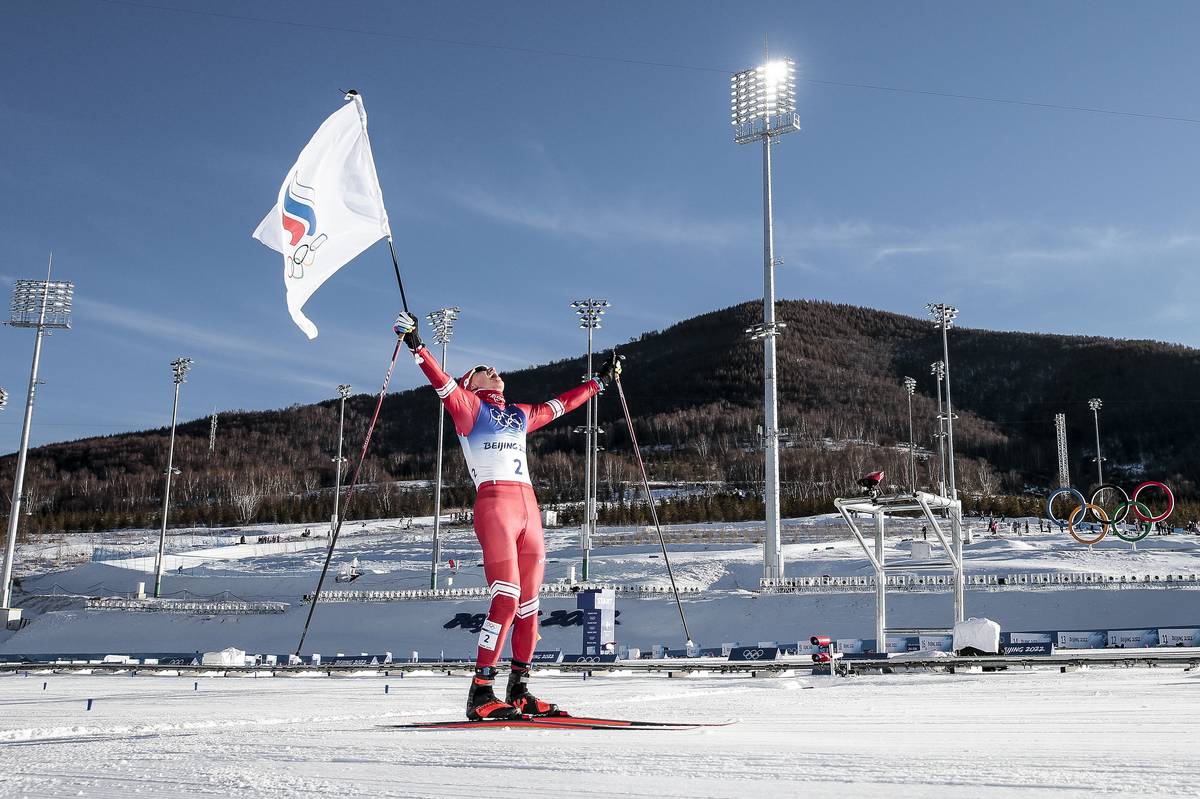
    “We know that cross-country skiing is in trouble,” said Stewart-Jones. 

    She remarks that FIS and the IOC have a financial incentive to allow the Russian competitors to return: “That’s where a lot of the viewership is from, and we’ve been losing a lot of viewership.” 

    FIS World Cup television ratings have almost halved in the Russian team’s absence. From an international viewership of 1.28 billion in 2021 prior to the full-scale invasion of Ukraine, audiences have since shrivelled to 690 million viewers worldwide. 

    Reporting from the BBC estimates that at least 70,000 Ukrainian soldiers, and between 160,000 and 235,000 Russian-aligned fighters have been killed in combat since the full-scale invasion began in February 2022. 

    James Clugnet racing at this year’s World Championships. (Nordic Focus)

    Clugnet shares some of Stewart-Jones’ moral concerns, and says that the Federation may have already backed itself into a corner: “If FIS returns the Russians, I think it kind of loses credibility — because why did they ban the Russians in the first place if they’re going to put them back in when there’s been no change in the war?”

    While the present bans and the IOC’s Individual Neutral Athlete program each pose their own moral dilemmas, Clugnet says that skiing’s governing body should soften its stance toward the Russian athletes: “I think FIS should follow the IOC guidelines,” said the Brit, “Because I think the sport is actually better with the Russians.”

    Whether or not athletes from Russia and Belarus will — or should — be invited to compete for medals at next year’s Olympics is still in question, and as the geopolitical winds seem to shift as wildly as the Trondheim weather, we may not have an answer any time soon.