Category: XCFeeds
-
Using the CXC Fitting Mat to Check Cross-Country Ski Fit
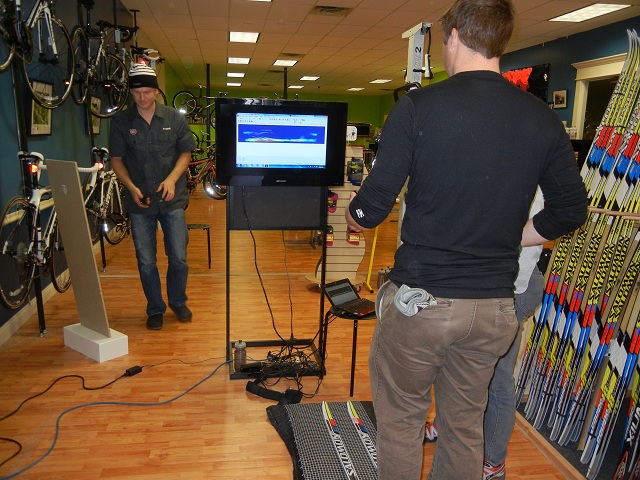
First off, I’ve shipped out the order for our ski suits and Mt. Borah has told me they’ll be shipping the final product on December 16th which should give us our suits in plenty of time for the snow (and, more importantly, the early races).In the meantime, I’ve finally found a second of peace to sift through my old photos and videos and start posting some of the things that happened on our Super Fit weekend at CyclovaXC. For example, in the above image, we have a skier checking out how a couple of Salomon racing skis flex on the CXC Fitting mat. That fitting mat was a pretty impressive piece of technology (you can see the flex pattern on the screen).Cross-country skiing is one of those kind of minimalists sports, but don’t be fooled, there is a HUGE amount of technology that goes into modern skis, boots, bindings and poles. Don’t get me wrong, skiing is still one of the best sports for escaping the technological world and getting reconnected with the true reality of being a living being. It’s just that the technology of skiing is kind of hidden in the background to magnify your experience. The better your skis go through the snow and twist and adapt to the trail, the less you have to think about them.Which gives you the chance to think about more important things, or absolutely nothing at all! -
Using the CXC Fitting Mat to Check Cross-Country Ski Fit
First off, I’ve shipped out the order for our ski suits and Mt. Borah has told me they’ll be shipping the final product on December 16th which should give us our suits in plenty of time for the snow (and, more importantly, the early races).
In the meantime, I’ve finally found a second of peace to sift through my old photos and videos and start posting some of the things that happened on our -
Using the CXC Fitting Mat to Check Cross-Country Ski Fit
First off, I’ve shipped out the order for our ski suits and Mt. Borah has told me they’ll be shipping the final product on December 16th which should give us our suits in plenty of time for the snow (and, more importantly, the early races).
In the meantime, I’ve finally found a second of peace to sift through my old photos and videos and start posting some of the things that happened on our -
Вечеря с българите!
For those of you who can’t read Cyrillic and don’t know Bulgarian, that means “dinner with the Bulgarians” (well, according to Google Translate, anyway).
We’d been looking forward to dinner with the Bulgarian ski team ever since they had extended the invitation to us last week via Pepa. And I think it exceeded all of our expectations. The Bulgarians know how to travel in style–they brought a cook and a masseuse with them from Bulgaria, as well as boxes of potatoes, carrots, onions, huge cans of Bulgarian olives, jars of smoked peppers, and traditional Bulgarian cheeses. We attempted to explain to them that we wanted to eat together with them even if there weren’t enough seats at the table, but when we arrived they had already eaten and we were shown to the table for a delicious 4-course meal. As they joked and chatted in Bulgarian about how the cook was showing off for us, we were fed cucumber, tomato, and olive salad with a yummy soft cheese that was a little like feta, plus smokey salami and more cheese. Our glasses were filled with Bulgarian red wine and Rakia–a traditional distilled grape drink. Next came a white bean soup with bread, and some sort of Peprika-tasting spice sprinkled on top. The main course was “kebab”, rice with delicious tender slow-cooked pork and mushrooms. For dessert there was an eggy dessert bread with honey on top, as well as some ice cream that we had brought from the store in an attempt to contribute something.
We ate until we were stuffed, and they kept asking us if we wanted more! After dinner, we traded slideshows of pictures from Vermont and Bulgaria, and we assured them that Bulgaria looked awesome and we would definitely come visit sometime soon.
We tried to show our gratitude by saying “blagodarya” (thank you) lots of times. It was a great night out from our little cabins, and a lot of fun, as well as a cultural experience!
We said "nazdrave!" (cheers!) a lot
yum!
Bulgarian soft cheese, dessert bread, spices, and Rakia.
"Coke white"–this is what they call the variety of homemade Rakia that is sold in used Coke bottles.
A Bulgarian-American goofy picture!
Antoniya, Clare, and I. Antoniya spoke some English and it was really fun to talk to her.
-
Вечеря с българите!
For those of you who can’t read Cyrillic and don’t know Bulgarian, that means “dinner with the Bulgarians” (well, according to Google Translate, anyway).
We’d been looking forward to dinner with the Bulgarian ski team ever since they had extended the invitation to us last week via Pepa. And I think it exceeded all of our expectations. The Bulgarians know how to travel in style–they brought a cook and a masseuse with them from Bulgaria, as well as boxes of potatoes, carrots, onions, huge cans of Bulgarian olives, jars of smoked peppers, and traditional Bulgarian cheeses. We attempted to explain to them that we wanted to eat together with them even if there weren’t enough seats at the table, but when we arrived they had already eaten and we were shown to the table for a delicious 4-course meal. As they joked and chatted in Bulgarian about how the cook was showing off for us, we were fed cucumber, tomato, and olive salad with a yummy soft cheese that was a little like feta, plus smokey salami and more cheese. Our glasses were filled with Bulgarian red wine and Rakia–a traditional distilled grape drink. Next came a white bean soup with bread, and some sort of Peprika-tasting spice sprinkled on top. The main course was “kebab”, rice with delicious tender slow-cooked pork and mushrooms. For dessert there was an eggy dessert bread with honey on top, as well as some ice cream that we had brought from the store in an attempt to contribute something.
We ate until we were stuffed, and they kept asking us if we wanted more! After dinner, we traded slideshows of pictures from Vermont and Bulgaria, and we assured them that Bulgaria looked awesome and we would definitely come visit sometime soon.
We tried to show our gratitude by saying “blagodarya” (thank you) lots of times. It was a great night out from our little cabins, and a lot of fun, as well as a cultural experience!
We said "nazdrave!" (cheers!) a lot
yum!
Bulgarian soft cheese, dessert bread, spices, and Rakia.
"Coke white"–this is what they call the variety of homemade Rakia that is sold in used Coke bottles.
A Bulgarian-American goofy picture!
Antoniya, Clare, and I. Antoniya spoke some English and it was really fun to talk to her.
-
Вечеря с българите!
For those of you who can’t read Cyrillic and don’t know Bulgarian, that means “dinner with the Bulgarians” (well, according to Google Translate, anyway).
We’d been looking forward to dinner with the Bulgarian ski team ever since they had extended the invitation to us last week via Pepa. And I think it exceeded all of our expectations. The Bulgarians know how to travel in style–they brought a cook and a masseuse with them from Bulgaria, as well as boxes of potatoes, carrots, onions, huge cans of Bulgarian olives, jars of smoked peppers, and traditional Bulgarian cheeses. We attempted to explain to them that we wanted to eat together with them even if there weren’t enough seats at the table, but when we arrived they had already eaten and we were shown to the table for a delicious 4-course meal. As they joked and chatted in Bulgarian about how the cook was showing off for us, we were fed cucumber, tomato, and olive salad with a yummy soft cheese that was a little like feta, plus smokey salami and more cheese. Our glasses were filled with Bulgarian red wine and Rakia–a traditional distilled grape drink. Next came a white bean soup with bread, and some sort of Peprika-tasting spice sprinkled on top. The main course was “kebab”, rice with delicious tender slow-cooked pork and mushrooms. For dessert there was an eggy dessert bread with honey on top, as well as some ice cream that we had brought from the store in an attempt to contribute something.
We ate until we were stuffed, and they kept asking us if we wanted more! After dinner, we traded slideshows of pictures from Vermont and Bulgaria, and we assured them that Bulgaria looked awesome and we would definitely come visit sometime soon.
We tried to show our gratitude by saying “blagodarya” (thank you) lots of times. It was a great night out from our little cabins, and a lot of fun, as well as a cultural experience!
We said "nazdrave!" (cheers!) a lot
yum!
Bulgarian soft cheese, dessert bread, spices, and Rakia.
"Coke white"–this is what they call the variety of homemade Rakia that is sold in used Coke bottles.
A Bulgarian-American goofy picture!
Antoniya, Clare, and I. Antoniya spoke some English and it was really fun to talk to her.
-
Вечеря с българите!
For those of you who can’t read Cyrillic and don’t know Bulgarian, that means “dinner with the Bulgarians” (well, according to Google Translate, anyway).
We’d been looking forward to dinner with the Bulgarian ski team ever since they had extended the invitation to us last week via Pepa. And I think it exceeded all of our expectations. The Bulgarians know how to travel in style–they brought a cook and a masseuse with them from Bulgaria, as well as boxes of potatoes, carrots, onions, huge cans of Bulgarian olives, jars of smoked peppers, and traditional Bulgarian cheeses. We attempted to explain to them that we wanted to eat together with them even if there weren’t enough seats at the table, but when we arrived they had already eaten and we were shown to the table for a delicious 4-course meal. As they joked and chatted in Bulgarian about how the cook was showing off for us, we were fed cucumber, tomato, and olive salad with a yummy soft cheese that was a little like feta, plus smokey salami and more cheese. Our glasses were filled with Bulgarian red wine and Rakia–a traditional distilled grape drink. Next came a white bean soup with bread, and some sort of Peprika-tasting spice sprinkled on top. The main course was “kebab”, rice with delicious tender slow-cooked pork and mushrooms. For dessert there was an eggy dessert bread with honey on top, as well as some ice cream that we had brought from the store in an attempt to contribute something.
We ate until we were stuffed, and they kept asking us if we wanted more! After dinner, we traded slideshows of pictures from Vermont and Bulgaria, and we assured them that Bulgaria looked awesome and we would definitely come visit sometime soon.
We tried to show our gratitude by saying “blagodarya” (thank you) lots of times. It was a great night out from our little cabins, and a lot of fun, as well as a cultural experience!
We said "nazdrave!" (cheers!) a lot
yum!
Bulgarian soft cheese, dessert bread, spices, and Rakia.
"Coke white"–this is what they call the variety of homemade Rakia that is sold in used Coke bottles.
A Bulgarian-American goofy picture!
Antoniya, Clare, and I. Antoniya spoke some English and it was really fun to talk to her.
-
Silver Star Pre-Season Camp: Day 1
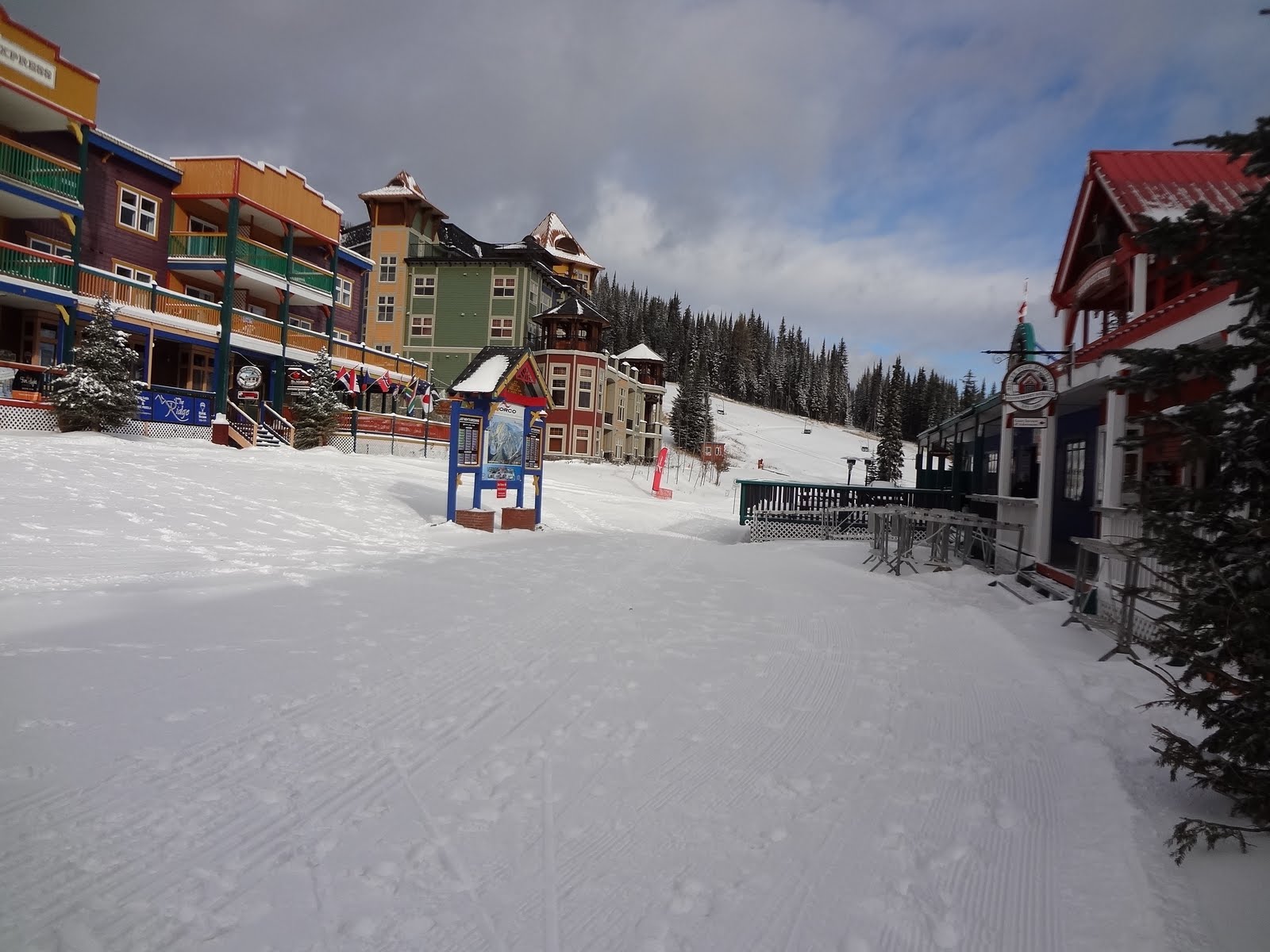
I arrived in Silver Star around 7pm last night and pulled into the Pinnacle Suites, my home for the week. Because the mountain isn’t really open yet and there are very few travelers here, I got a SWEET deal on an 8-person condo here: $50/night. If anyone has any last minute desire to get up and ski, let me know – there’s plenty of room.
Woke up this morning to a fresh layer of 2″ of snow on my truck. I took the opportunity to test out some new skate skis this morning, a few of which are particularly suited to soft conditions.
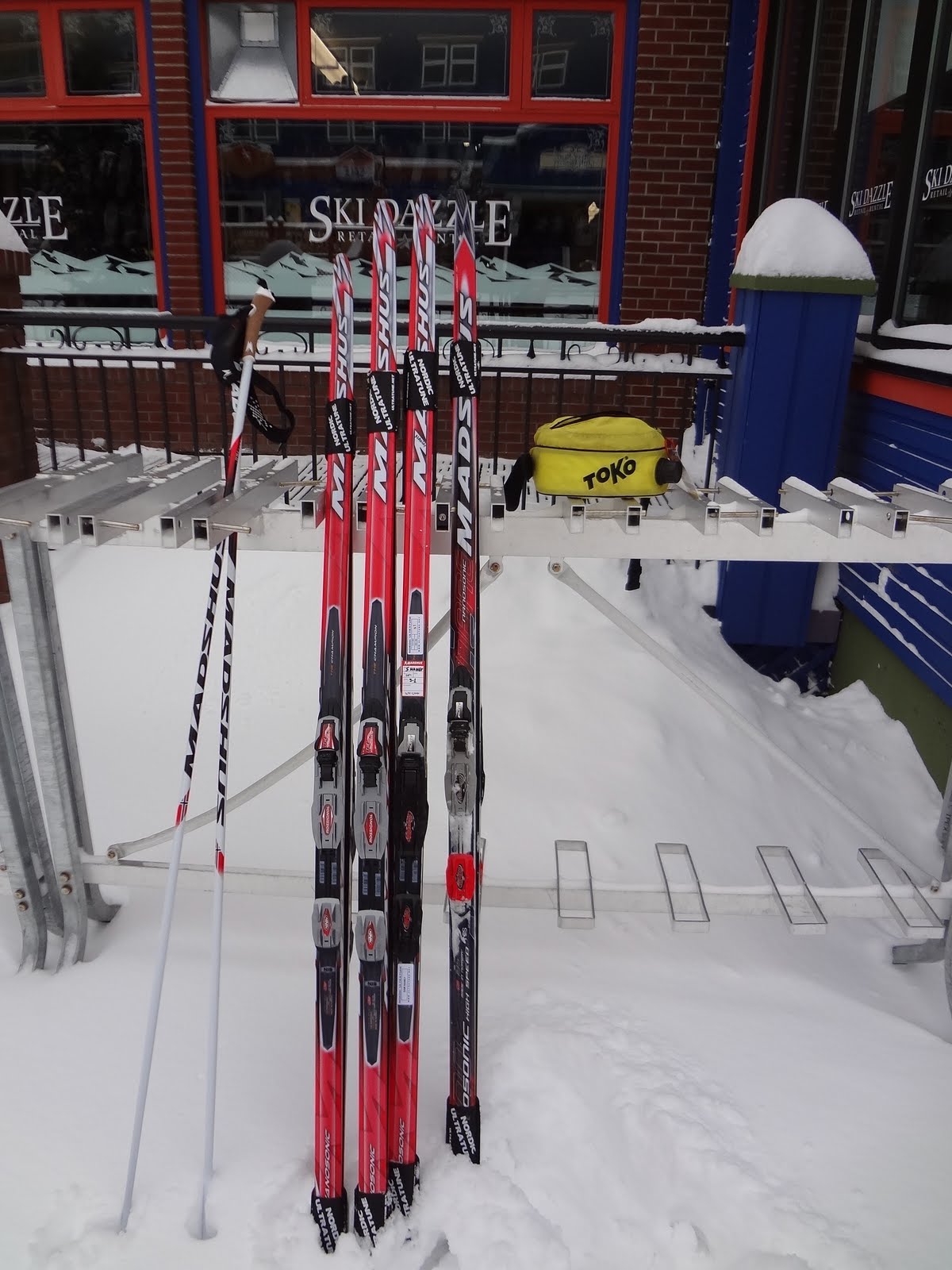
The skis were GREAT – one pair, in particular. Mark at Nordic Ultratune had already ground that particular pair with an S1 grind, a good bet for new snow conditions such as these. With a solid two hours of testing already in the bag I’ve got strong confidence in my skate skis for the upcoming races in West.Not many people on the tracks here right now and passes are discounted for the next few days: $11/day. As luck would have it I ran into MOD sponsor and intrepid adventurer David Bonn out on the trails – he’s been here since last Friday snagging the early snow. It’s nice to have more than one MOD jacket adorning these tracks!
Time to rest for a few hours and do some Chemistry homework. Workout number two out of three coming up in t-minus three hours. More later…
-
Silver Star Pre-Season Camp: Day 1
I arrived in Silver Star around 7pm last night and pulled into the Pinnacle Suites, my home for the week. Because the mountain isn’t really open yet and there are very few travelers here, I got a SWEET deal on an 8-person condo here: $50/night. If anyone has any last minute desire to get up and ski, let me know – there’s plenty of room.
Woke up this morning to a fresh layer of 2″ of snow on my truck. I took the opportunity to test out some new skate skis this morning, a few of which are particularly suited to soft conditions.
The skis were GREAT – one pair, in particular. Mark at Nordic Ultratune had already ground that particular pair with an S1 grind, a good bet for new snow conditions such as these. With a solid two hours of testing already in the bag I’ve got strong confidence in my skate skis for the upcoming races in West.Not many people on the tracks here right now and passes are discounted for the next few days: $11/day. As luck would have it I ran into MOD sponsor and intrepid adventurer David Bonn out on the trails – he’s been here since last Friday snagging the early snow. It’s nice to have more than one MOD jacket adorning these tracks!
Time to rest for a few hours and do some Chemistry homework. Workout number two out of three coming up in t-minus three hours. More later…
-
Silver Star Pre-Season Camp: Day 1
I arrived in Silver Star around 7pm last night and pulled into the Pinnacle Suites, my home for the week. Because the mountain isn’t really open yet and there are very few travelers here, I got a SWEET deal on an 8-person condo here: $50/night. If anyone has any last minute desire to get up and ski, let me know – there’s plenty of room.
Woke up this morning to a fresh layer of 2″ of snow on my truck. I took the opportunity to test out some new skate skis this morning, a few of which are particularly suited to soft conditions.
The skis were GREAT – one pair, in particular. Mark at Nordic Ultratune had already ground that particular pair with an S1 grind, a good bet for new snow conditions such as these. With a solid two hours of testing already in the bag I’ve got strong confidence in my skate skis for the upcoming races in West.Not many people on the tracks here right now and passes are discounted for the next few days: $11/day. As luck would have it I ran into MOD sponsor and intrepid adventurer David Bonn out on the trails – he’s been here since last Friday snagging the early snow. It’s nice to have more than one MOD jacket adorning these tracks!
Time to rest for a few hours and do some Chemistry homework. Workout number two out of three coming up in t-minus three hours. More later…
-
Nationals Week: 5/10/15K Skate TT
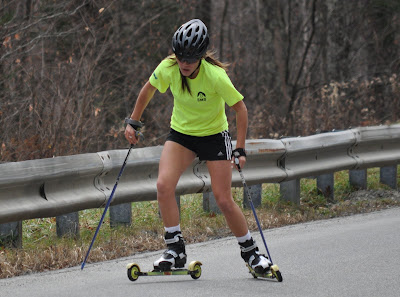
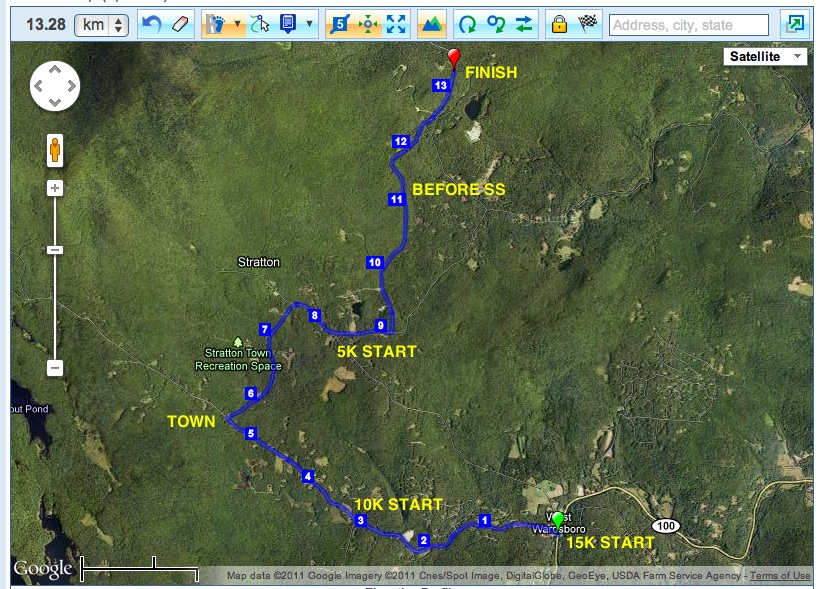
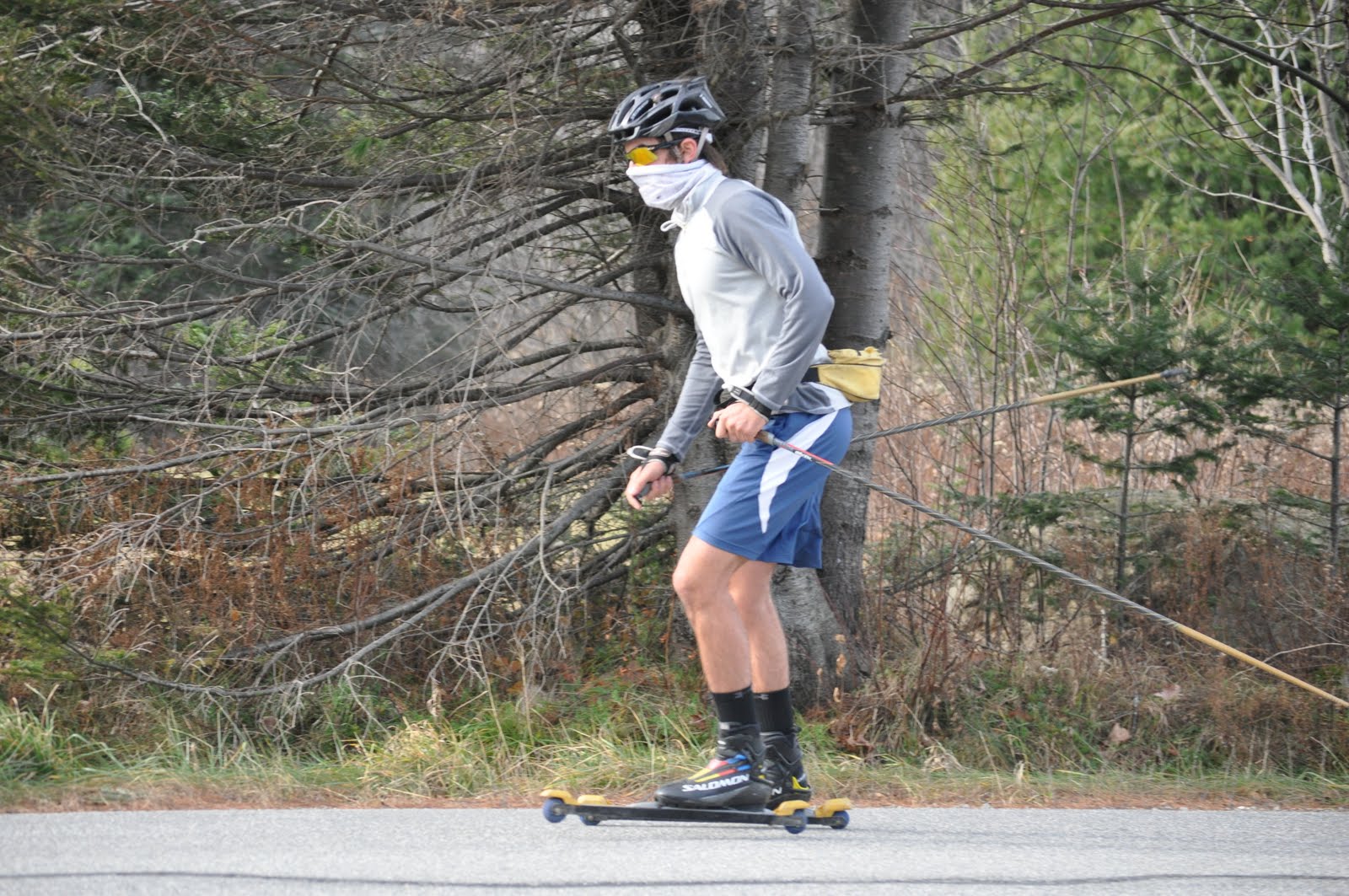
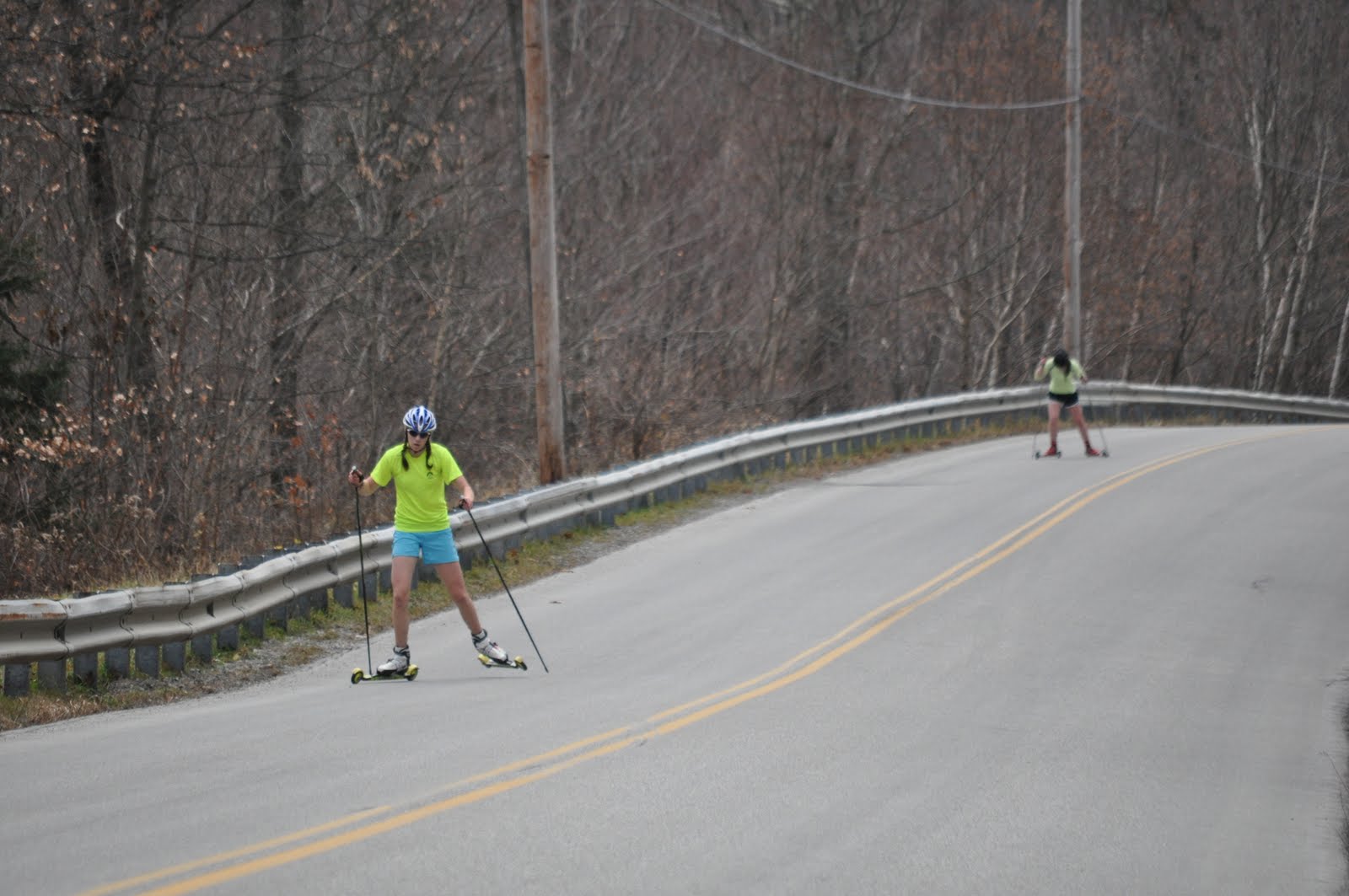
Today we did our second of three races for Nationals Week – a 5/10/15k skate race. The boys started at the 15k start, the girls at the 10k start and Tess (our lone 5k racer) started at the 10k start and raced to the 5k start. All courses, except today’s 5k, finish at the top of “stair-stepper” – a brutal final climb. The 15k course for the boys is technically a 13.25k, but since it’s point to point with a net elevation gain, it skis more like a 15k.We do a couple time checks throughout the course and it’s interesting to see what you can learn from looking at split times. Where do you gain or lose time? How was your pacing? Fast start? Fast finish? When looking at the results, the time in (parentheses) indicates the racer’s split time from the previous time check.Gino and Issy led the team today with the fastest boy’s and girl’s times and many others had strong races. Everyone was solidly in the pain cave by the end of stair-stepper. Results are below – as always, remember that not all rollerskis are created equal. Great skiing by everyone! -
Nationals Week: 5/10/15K Skate TT
Today we did our second of three races for Nationals Week – a 5/10/15k skate race. The boys started at the 15k start, the girls at the 10k start and Tess (our lone 5k racer) started at the 10k start and raced to the 5k start. All courses, except today’s 5k, finish at the top of “stair-stepper” – a brutal final climb. The 15k course for the boys is technically a 13.25k, but since it’s point to point with a net elevation gain, it skis more like a 15k.We do a couple time checks throughout the course and it’s interesting to see what you can learn from looking at split times. Where do you gain or lose time? How was your pacing? Fast start? Fast finish? When looking at the results, the time in (parentheses) indicates the racer’s split time from the previous time check.Gino and Issy led the team today with the fastest boy’s and girl’s times and many others had strong races. Everyone was solidly in the pain cave by the end of stair-stepper. Results are below – as always, remember that not all rollerskis are created equal. Great skiing by everyone! -
Nationals Week: 5/10/15K Skate TT
Today we did our second of three races for Nationals Week – a 5/10/15k skate race. The boys started at the 15k start, the girls at the 10k start and Tess (our lone 5k racer) started at the 10k start and raced to the 5k start. All courses, except today’s 5k, finish at the top of “stair-stepper” – a brutal final climb. The 15k course for the boys is technically a 13.25k, but since it’s point to point with a net elevation gain, it skis more like a 15k.We do a couple time checks throughout the course and it’s interesting to see what you can learn from looking at split times. Where do you gain or lose time? How was your pacing? Fast start? Fast finish? When looking at the results, the time in (parentheses) indicates the racer’s split time from the previous time check.Gino and Issy led the team today with the fastest boy’s and girl’s times and many others had strong races. Everyone was solidly in the pain cave by the end of stair-stepper. Results are below – as always, remember that not all rollerskis are created equal. Great skiing by everyone! -
Kershaw’s Volatility
A regular reader asked me over the weekend to comment on Devon Kershaw’s less than stellar opening race of the season. Specifically, he asked:
Kershaw seems like he’s one of the most volatile skiers on the WC circuit. Is this true?
The question of how consistent (or not) various skiers are comes up fairly regularly. I think I’ve done posts on a similar topic looking at Kris Freeman. I confess that I’ve become a bit jaded on this question, since I have generally come to believe that all skiers are less consistent than people tend to think. I think we all have a general tendency to overestimate how consistent ski racers are.
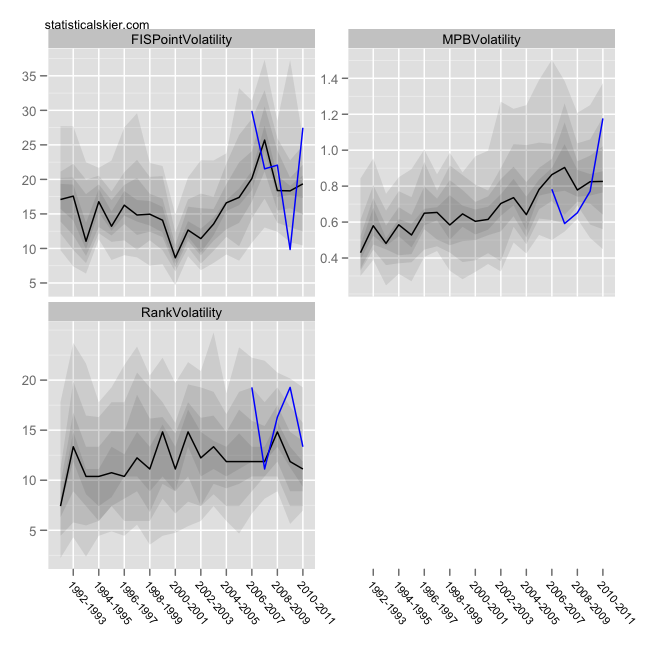
It’s still an interesting question, though. I’m going to side-step it slightly and address a related concept, variability. So the following plot shows how variable Kershaw’s results have been for each season, relative to the men’s WC field. I’ve filtered this down so as to only use skiers with a reasonable number of starts per season.
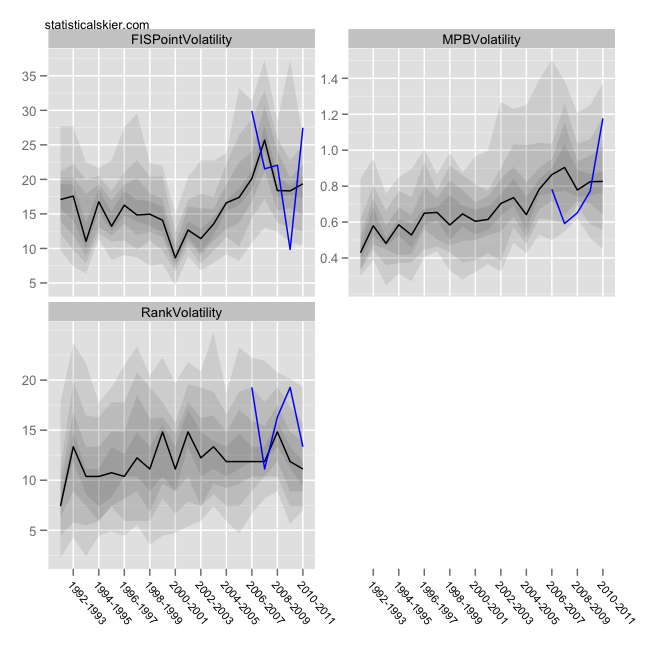
There are three panels, one for each potential performance measure. The y axis measures how variable a skier’s results were over the course of that season. The Rank panel isn’t very useful, since that performance measure is too dependent on the size of the field. So instead let’s just focus on FIS points and MPB (percent behind the median skier). The blue corresponds to Kershaw while the black line shows the ‘typical’ level of variability for the men’s WC field, with the shaded areas giving a sense of the distribution across skiers.Both FIS points and MPB seem to suggest that last season was an unpredictable one for Kershaw. Recall that both he and Harvey tired noticeably toward the end of the season, which accounts for much of the variability. Before then, though, both measures generally suggest a skier who’s results are as variable, or less, than average.
Of course, variability isn’t necessarily the same as volatility. But now we’re delving into murkier territory. What exactly are volatile results? Consider three skiers with the following sequences of FIS points:
- 1.01, 5.23, 1.01
- 20.11, 25.64, 19.44
- 10.12, 52.33, 11.22
Which of those sequences is more ‘volatile’? Maybe we’d argue for (3), but proportionally it’s about the same as (1). Is a change of 5 FIS points the same whether you’re starting at the top of the pack or from the middle? Is doubling your FIS points an equivalent change regardless of whether you’re starting at the top or near the middle?I don’t have any easy answers for this, but it’s something to think about. I’ll ponder some more specific tools for measuring volatility and get back to you…
Related posts:
- <Variability In World Cup Ski Racers
- <Week In Review: Friday Oct 8th
- <Biathlon and Cross Country Volatility Trends
-
Kershaw’s Volatility
A regular reader asked me over the weekend to comment on Devon Kershaw’s less than stellar opening race of the season. Specifically, he asked:
Kershaw seems like he’s one of the most volatile skiers on the WC circuit. Is this true?
The question of how consistent (or not) various skiers are comes up fairly regularly. I think I’ve done posts on a similar topic looking at Kris Freeman. I confess that I’ve become a bit jaded on this question, since I have generally come to believe that all skiers are less consistent than people tend to think. I think we all have a general tendency to overestimate how consistent ski racers are.
It’s still an interesting question, though. I’m going to side-step it slightly and address a related concept, variability. So the following plot shows how variable Kershaw’s results have been for each season, relative to the men’s WC field. I’ve filtered this down so as to only use skiers with a reasonable number of starts per season.
There are three panels, one for each potential performance measure. The y axis measures how variable a skier’s results were over the course of that season. The Rank panel isn’t very useful, since that performance measure is too dependent on the size of the field. So instead let’s just focus on FIS points and MPB (percent behind the median skier). The blue corresponds to Kershaw while the black line shows the ‘typical’ level of variability for the men’s WC field, with the shaded areas giving a sense of the distribution across skiers.Both FIS points and MPB seem to suggest that last season was an unpredictable one for Kershaw. Recall that both he and Harvey tired noticeably toward the end of the season, which accounts for much of the variability. Before then, though, both measures generally suggest a skier who’s results are as variable, or less, than average.
Of course, variability isn’t necessarily the same as volatility. But now we’re delving into murkier territory. What exactly are volatile results? Consider three skiers with the following sequences of FIS points:
- 1.01, 5.23, 1.01
- 20.11, 25.64, 19.44
- 10.12, 52.33, 11.22
Which of those sequences is more ‘volatile’? Maybe we’d argue for (3), but proportionally it’s about the same as (1). Is a change of 5 FIS points the same whether you’re starting at the top of the pack or from the middle? Is doubling your FIS points an equivalent change regardless of whether you’re starting at the top or near the middle?I don’t have any easy answers for this, but it’s something to think about. I’ll ponder some more specific tools for measuring volatility and get back to you…
Related posts:
- <Variability In World Cup Ski Racers
- <Week In Review: Friday Oct 8th
- <Biathlon and Cross Country Volatility Trends
-
Kershaw’s Volatility
A regular reader asked me over the weekend to comment on Devon Kershaw’s less than stellar opening race of the season. Specifically, he asked:
Kershaw seems like he’s one of the most volatile skiers on the WC circuit. Is this true?
The question of how consistent (or not) various skiers are comes up fairly regularly. I think I’ve done posts on a similar topic looking at Kris Freeman. I confess that I’ve become a bit jaded on this question, since I have generally come to believe that all skiers are less consistent than people tend to think. I think we all have a general tendency to overestimate how consistent ski racers are.
It’s still an interesting question, though. I’m going to side-step it slightly and address a related concept, variability. So the following plot shows how variable Kershaw’s results have been for each season, relative to the men’s WC field. I’ve filtered this down so as to only use skiers with a reasonable number of starts per season.
There are three panels, one for each potential performance measure. The y axis measures how variable a skier’s results were over the course of that season. The Rank panel isn’t very useful, since that performance measure is too dependent on the size of the field. So instead let’s just focus on FIS points and MPB (percent behind the median skier). The blue corresponds to Kershaw while the black line shows the ‘typical’ level of variability for the men’s WC field, with the shaded areas giving a sense of the distribution across skiers.Both FIS points and MPB seem to suggest that last season was an unpredictable one for Kershaw. Recall that both he and Harvey tired noticeably toward the end of the season, which accounts for much of the variability. Before then, though, both measures generally suggest a skier who’s results are as variable, or less, than average.
Of course, variability isn’t necessarily the same as volatility. But now we’re delving into murkier territory. What exactly are volatile results? Consider three skiers with the following sequences of FIS points:
- 1.01, 5.23, 1.01
- 20.11, 25.64, 19.44
- 10.12, 52.33, 11.22
Which of those sequences is more ‘volatile’? Maybe we’d argue for (3), but proportionally it’s about the same as (1). Is a change of 5 FIS points the same whether you’re starting at the top of the pack or from the middle? Is doubling your FIS points an equivalent change regardless of whether you’re starting at the top or near the middle?I don’t have any easy answers for this, but it’s something to think about. I’ll ponder some more specific tools for measuring volatility and get back to you…
Related posts:
- <Variability In World Cup Ski Racers
- <Week In Review: Friday Oct 8th
- <Biathlon and Cross Country Volatility Trends
-
Kershaw’s Volatility
A regular reader asked me over the weekend to comment on Devon Kershaw’s less than stellar opening race of the season. Specifically, he asked:
Kershaw seems like he’s one of the most volatile skiers on the WC circuit. Is this true?
The question of how consistent (or not) various skiers are comes up fairly regularly. I think I’ve done posts on a similar topic looking at Kris Freeman. I confess that I’ve become a bit jaded on this question, since I have generally come to believe that all skiers are less consistent than people tend to think. I think we all have a general tendency to overestimate how consistent ski racers are.
It’s still an interesting question, though. I’m going to side-step it slightly and address a related concept, variability. So the following plot shows how variable Kershaw’s results have been for each season, relative to the men’s WC field. I’ve filtered this down so as to only use skiers with a reasonable number of starts per season.
There are three panels, one for each potential performance measure. The y axis measures how variable a skier’s results were over the course of that season. The Rank panel isn’t very useful, since that performance measure is too dependent on the size of the field. So instead let’s just focus on FIS points and MPB (percent behind the median skier). The blue corresponds to Kershaw while the black line shows the ‘typical’ level of variability for the men’s WC field, with the shaded areas giving a sense of the distribution across skiers.Both FIS points and MPB seem to suggest that last season was an unpredictable one for Kershaw. Recall that both he and Harvey tired noticeably toward the end of the season, which accounts for much of the variability. Before then, though, both measures generally suggest a skier who’s results are as variable, or less, than average.
Of course, variability isn’t necessarily the same as volatility. But now we’re delving into murkier territory. What exactly are volatile results? Consider three skiers with the following sequences of FIS points:
- 1.01, 5.23, 1.01
- 20.11, 25.64, 19.44
- 10.12, 52.33, 11.22
Which of those sequences is more ‘volatile’? Maybe we’d argue for (3), but proportionally it’s about the same as (1). Is a change of 5 FIS points the same whether you’re starting at the top of the pack or from the middle? Is doubling your FIS points an equivalent change regardless of whether you’re starting at the top or near the middle?I don’t have any easy answers for this, but it’s something to think about. I’ll ponder some more specific tools for measuring volatility and get back to you…
Related posts:
- <Variability In World Cup Ski Racers
- <Week In Review: Friday Oct 8th
- <Biathlon and Cross Country Volatility Trends
-
Kershaw’s Volatility
A regular reader asked me over the weekend to comment on Devon Kershaw’s less than stellar opening race of the season. Specifically, he asked:
Kershaw seems like he’s one of the most volatile skiers on the WC circuit. Is this true?
The question of how consistent (or not) various skiers are comes up fairly regularly. I think I’ve done posts on a similar topic looking at Kris Freeman. I confess that I’ve become a bit jaded on this question, since I have generally come to believe that all skiers are less consistent than people tend to think. I think we all have a general tendency to overestimate how consistent ski racers are.
It’s still an interesting question, though. I’m going to side-step it slightly and address a related concept, variability. So the following plot shows how variable Kershaw’s results have been for each season, relative to the men’s WC field. I’ve filtered this down so as to only use skiers with a reasonable number of starts per season.
There are three panels, one for each potential performance measure. The y axis measures how variable a skier’s results were over the course of that season. The Rank panel isn’t very useful, since that performance measure is too dependent on the size of the field. So instead let’s just focus on FIS points and MPB (percent behind the median skier). The blue corresponds to Kershaw while the black line shows the ‘typical’ level of variability for the men’s WC field, with the shaded areas giving a sense of the distribution across skiers.Both FIS points and MPB seem to suggest that last season was an unpredictable one for Kershaw. Recall that both he and Harvey tired noticeably toward the end of the season, which accounts for much of the variability. Before then, though, both measures generally suggest a skier who’s results are as variable, or less, than average.
Of course, variability isn’t necessarily the same as volatility. But now we’re delving into murkier territory. What exactly are volatile results? Consider three skiers with the following sequences of FIS points:
- 1.01, 5.23, 1.01
- 20.11, 25.64, 19.44
- 10.12, 52.33, 11.22
Which of those sequences is more ‘volatile’? Maybe we’d argue for (3), but proportionally it’s about the same as (1). Is a change of 5 FIS points the same whether you’re starting at the top of the pack or from the middle? Is doubling your FIS points an equivalent change regardless of whether you’re starting at the top or near the middle?I don’t have any easy answers for this, but it’s something to think about. I’ll ponder some more specific tools for measuring volatility and get back to you…
Related posts:
- <Variability In World Cup Ski Racers
- <Week In Review: Friday Oct 8th
- <Biathlon and Cross Country Volatility Trends