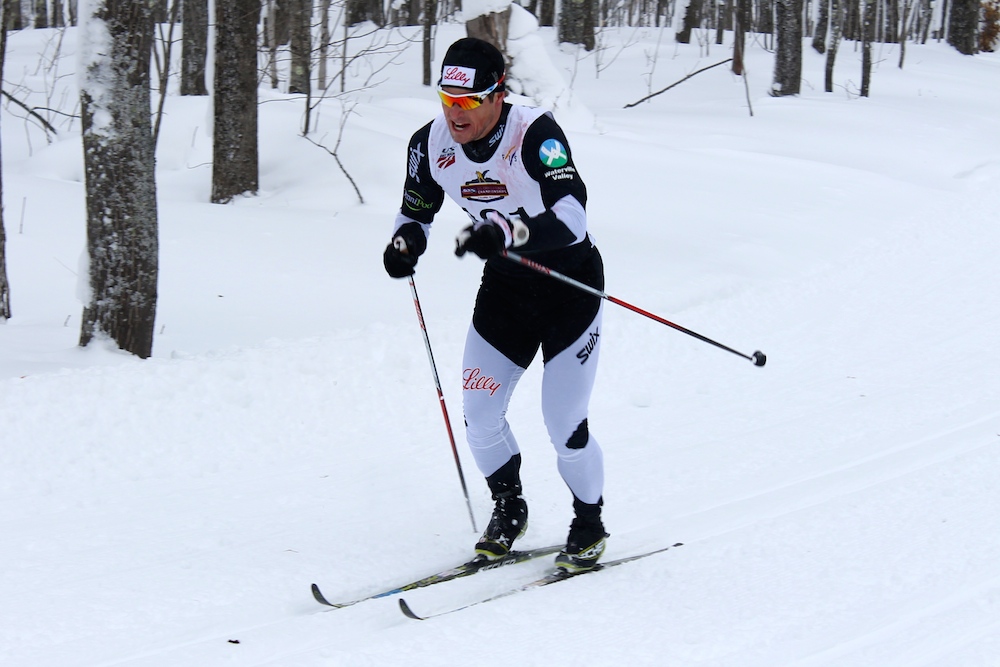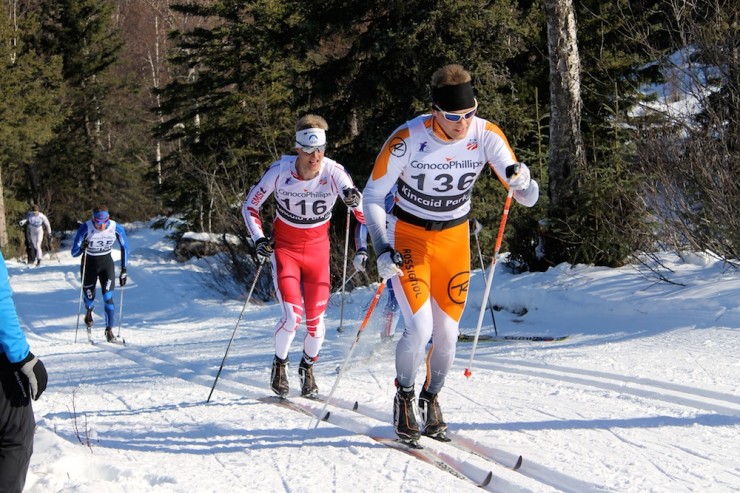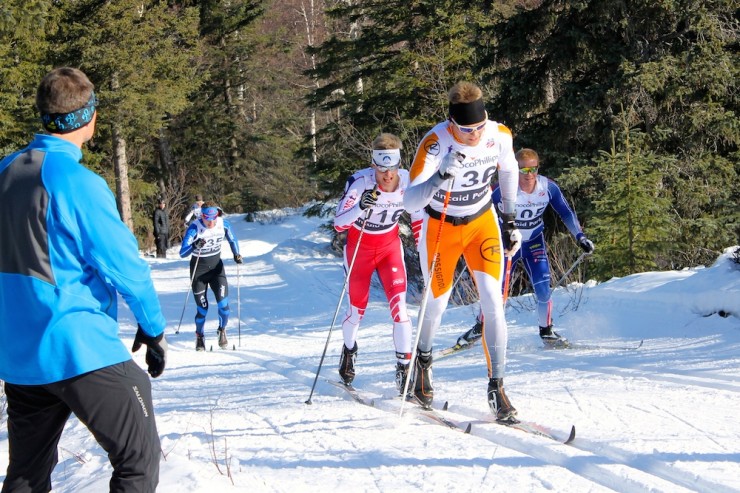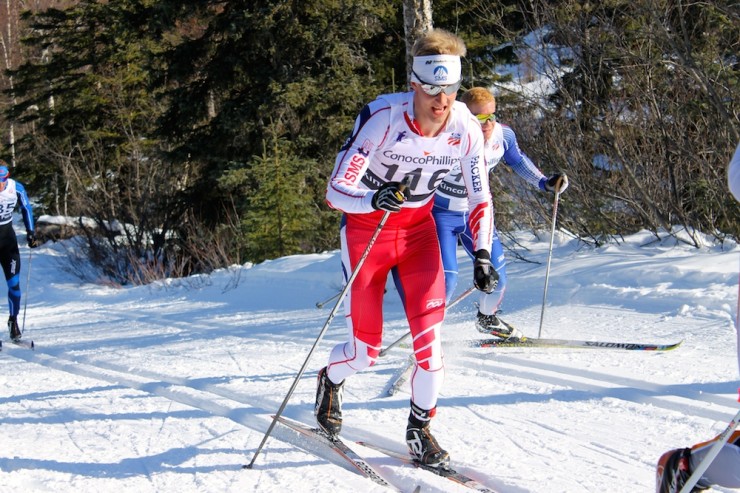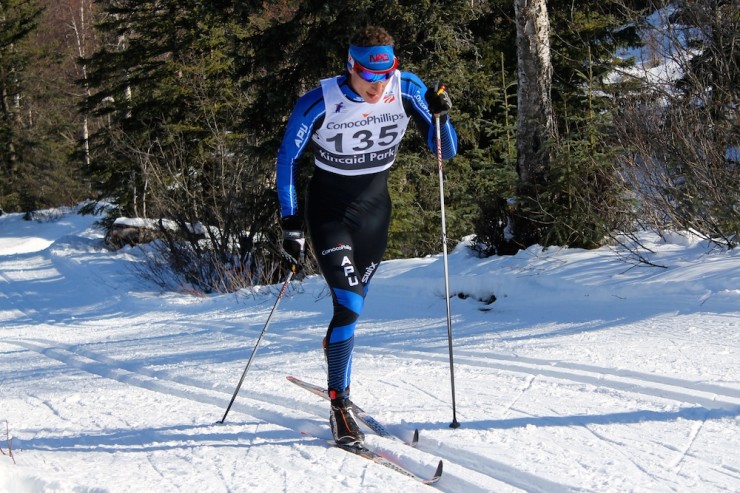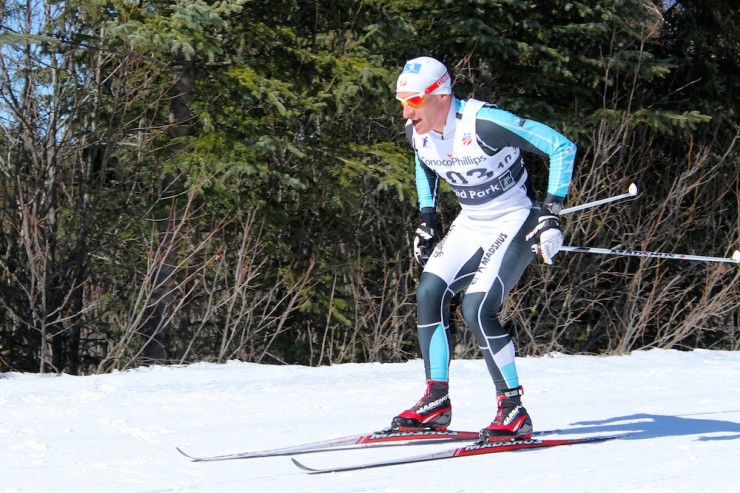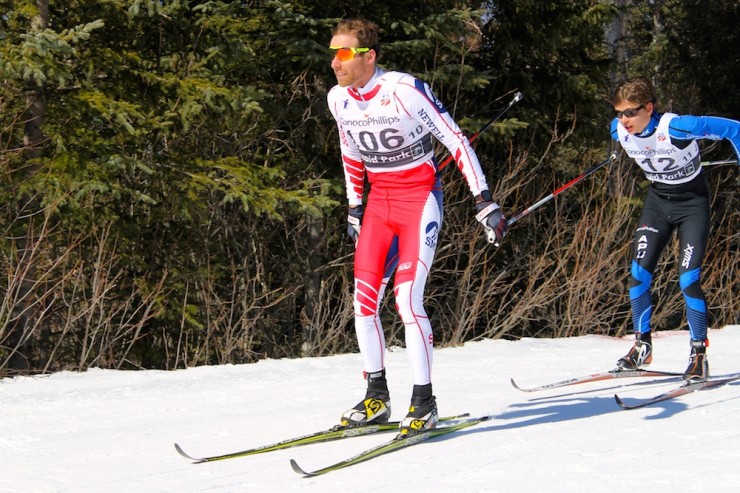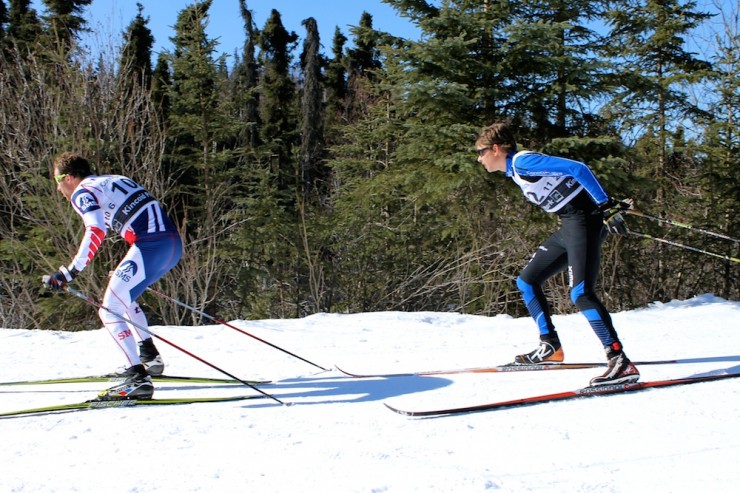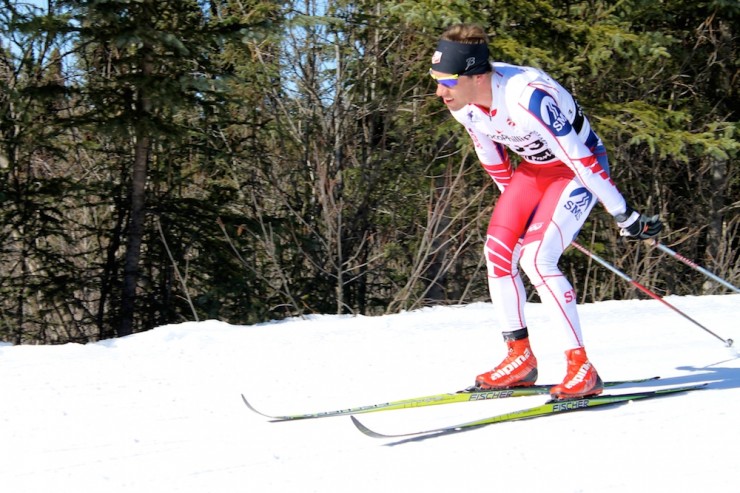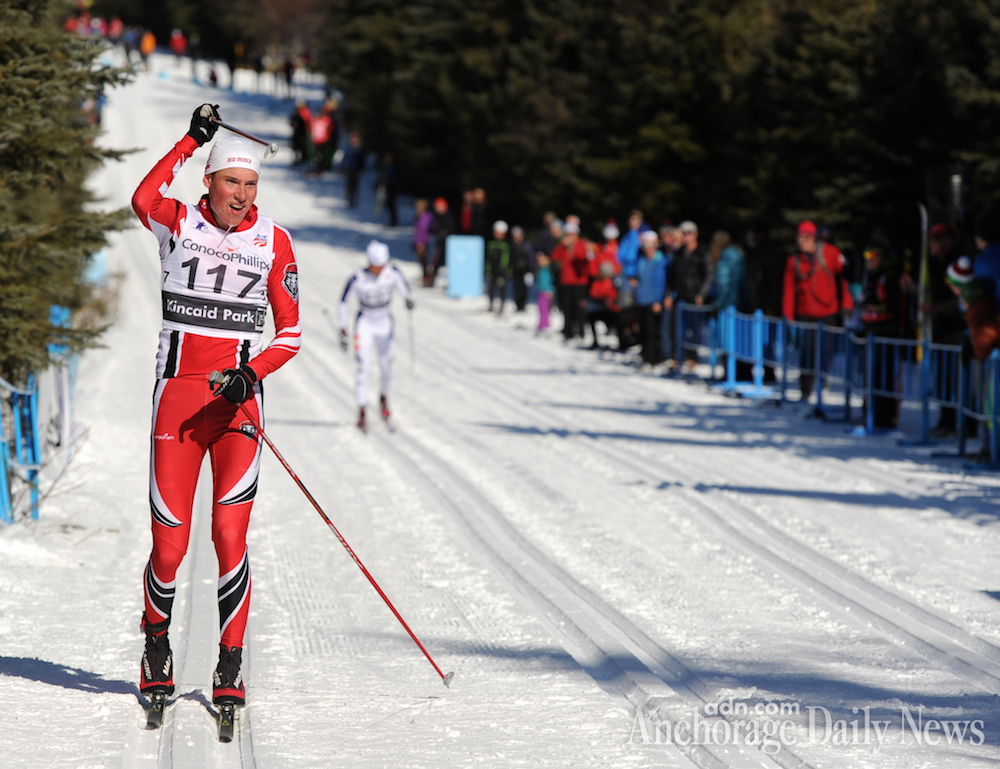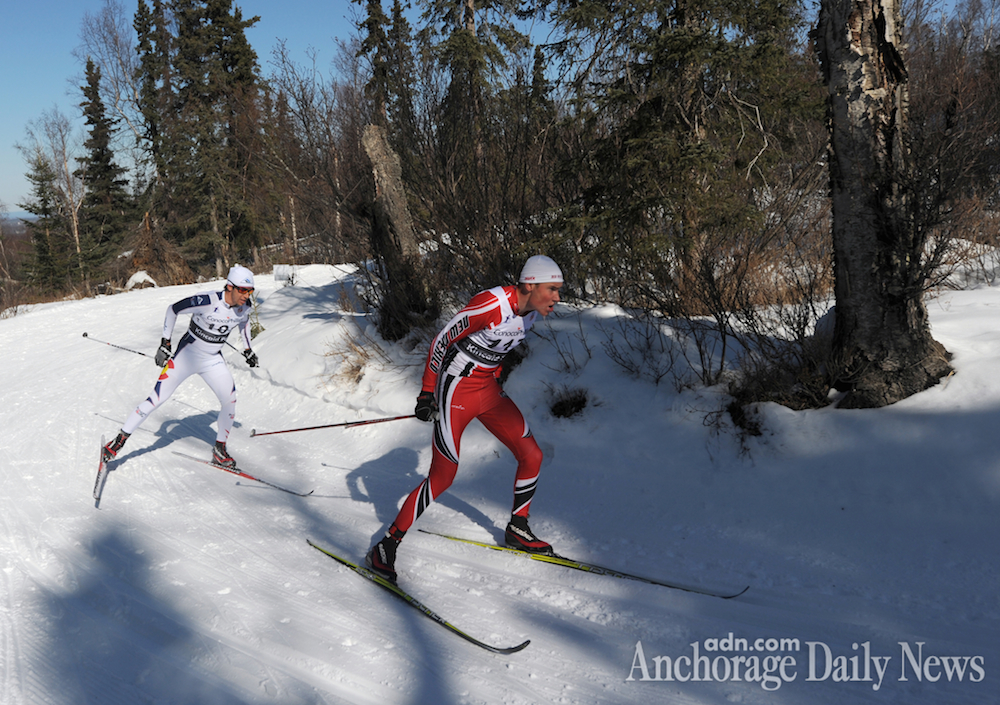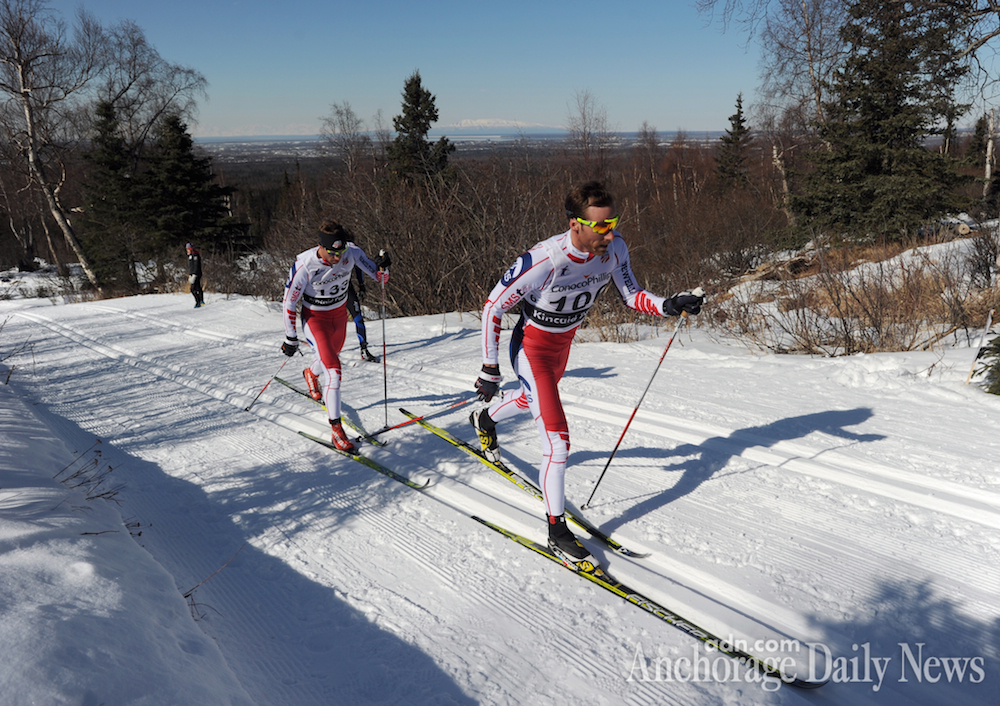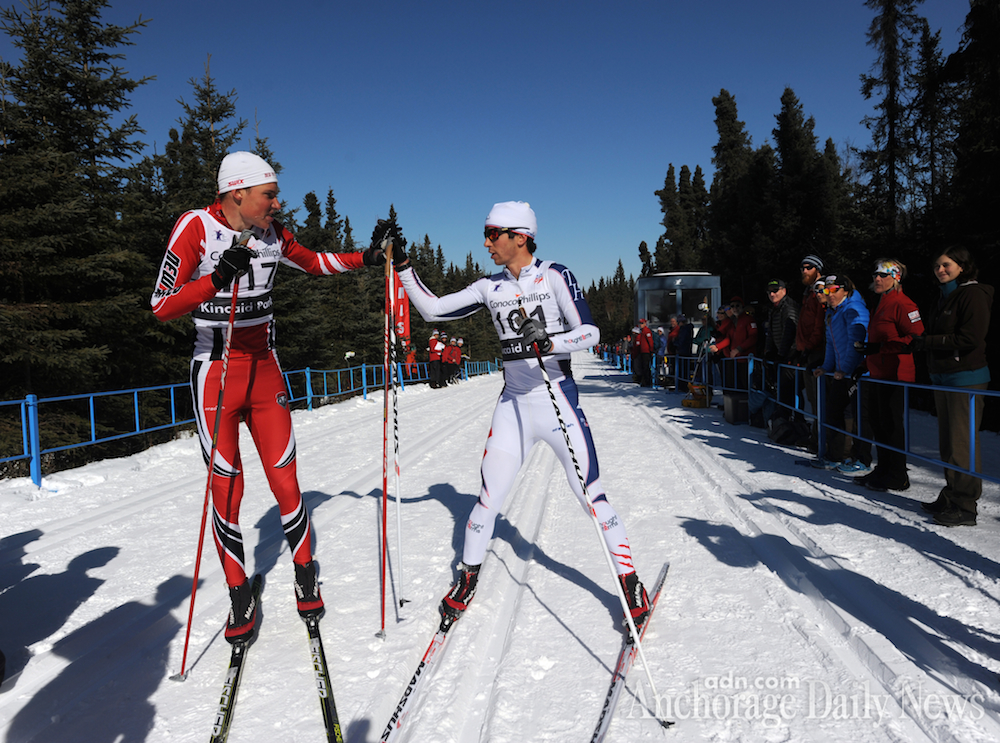
Tag: David Norris

  • Saturday Rundown: Ruka, West Yellowstone & (Not) Beitostølen (Updated x4)

    Saturday Rundown: Ruka, West Yellowstone & (Not) Beitostølen (Updated x4)

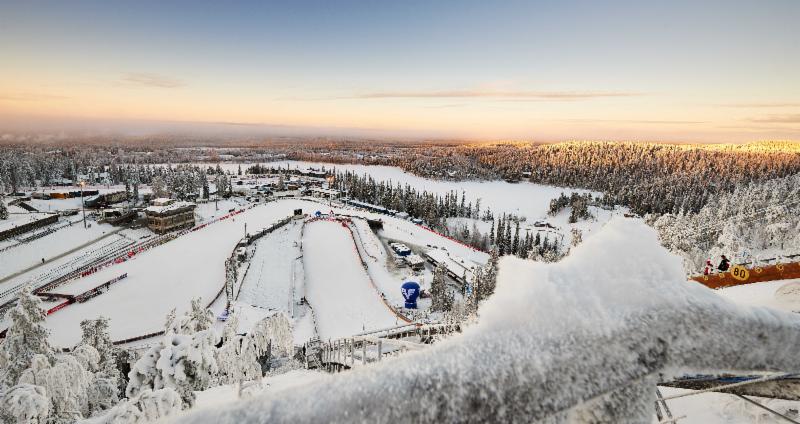
    The Ruka stadium from above in Kuusamo, Finland. (Photo: Toko)
    The Ruka stadium from above in Kuusamo, Finland. (Photo: Toko)

    Welcome to The Rundown, your quick primer of need-to-know information about the day’s racing. We’ll be updating this digest as the day goes on with additional results, photos and quotes. The Rundown is NOT a race report; stay tuned for complete race reports later today with interviews from the day’s top racers.

    ***

    West Yellowstone FIS Races: 5/10 k classic 
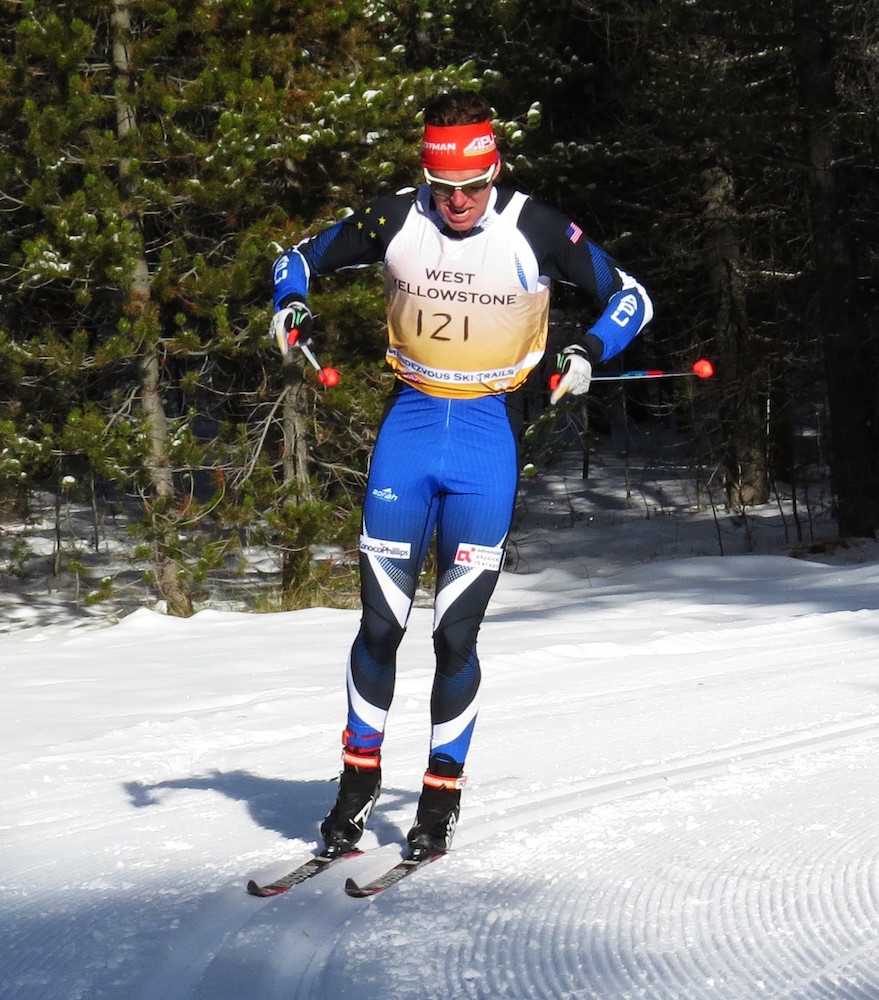
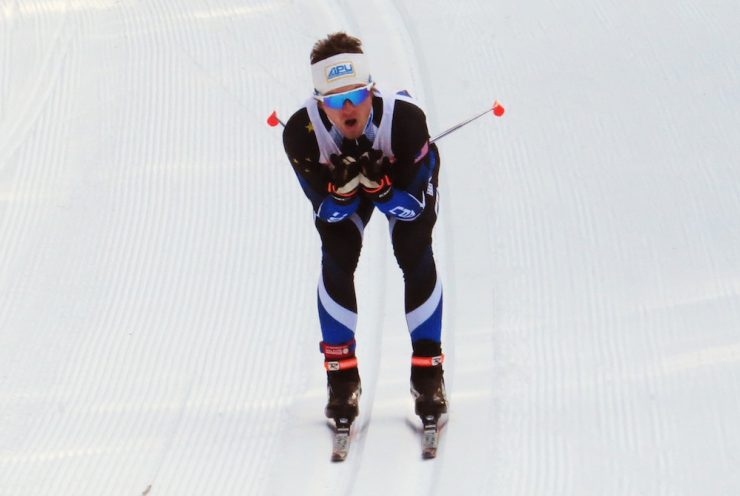
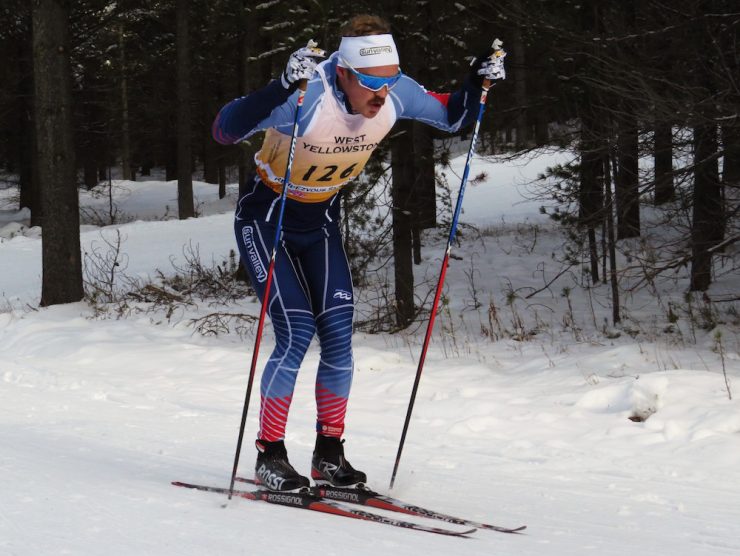
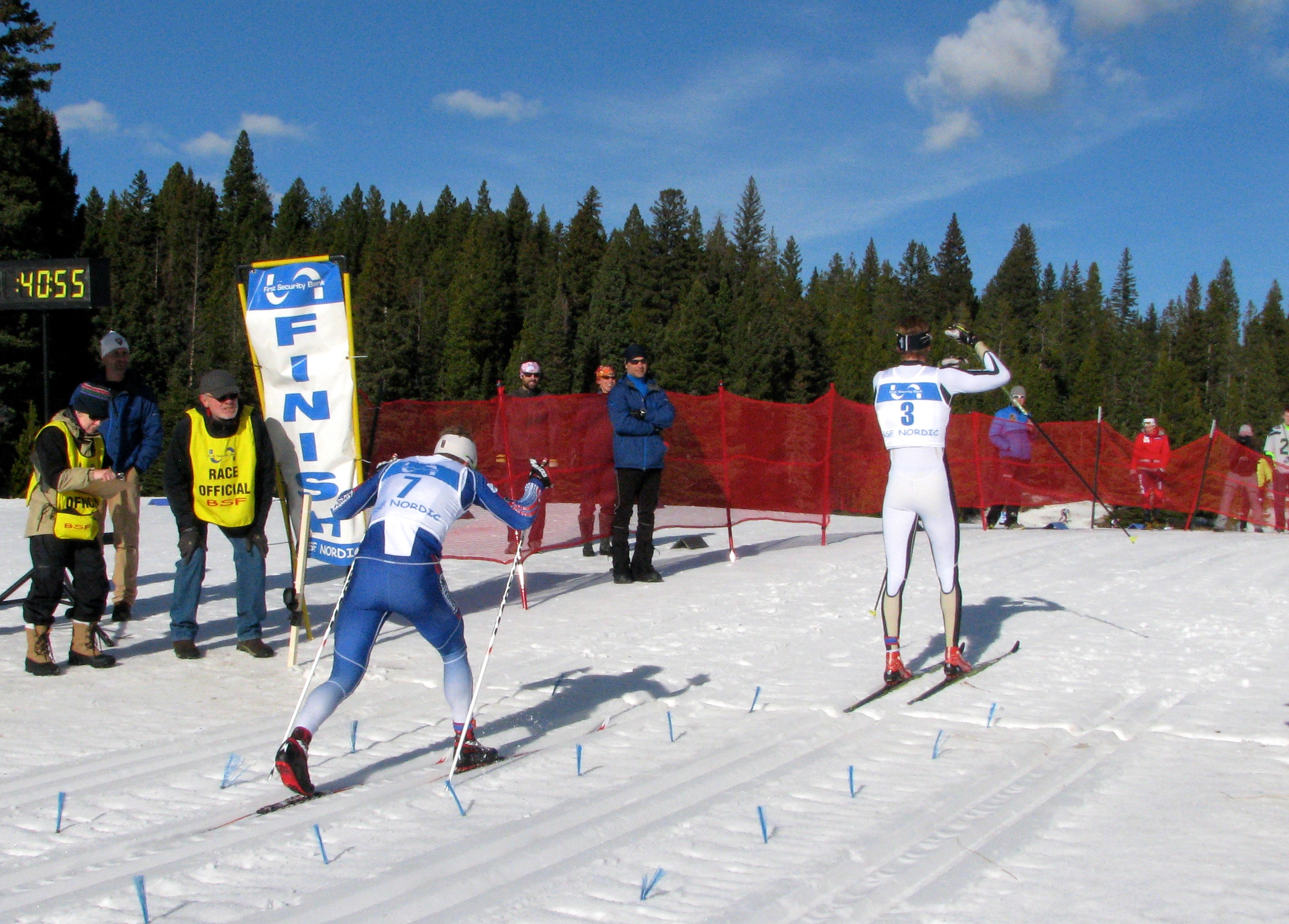
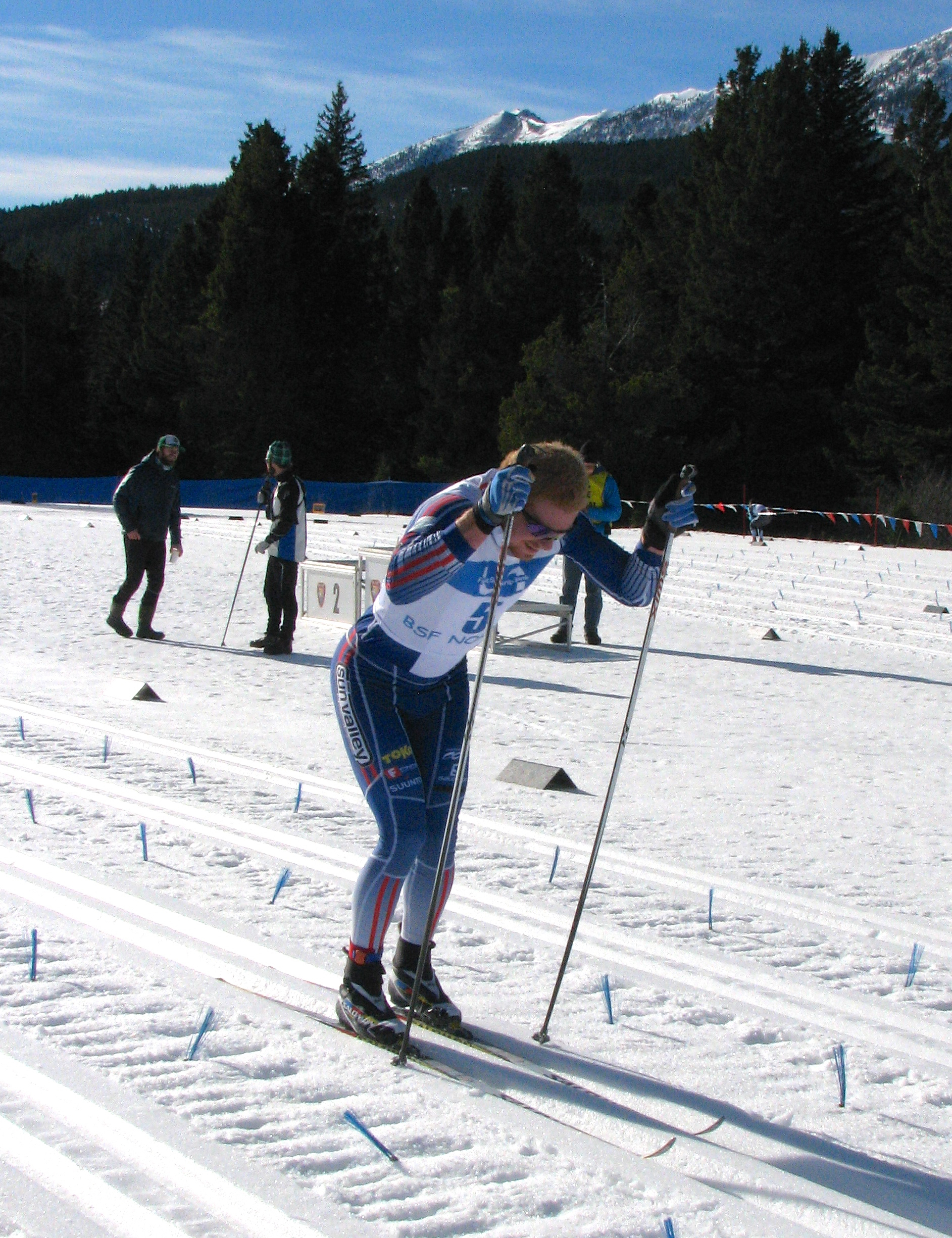
    Scott Patterson (APU) double poling to the win in the men's 10 k classic FIS race on Saturday in West Yellowstone, Mont. (Photo: Ian Harvey/Toko)
    Scott Patterson (APU) double poling to the win in the men’s 10 k classic FIS race on Saturday in West Yellowstone, Mont. (Photo: Ian Harvey/Toko)

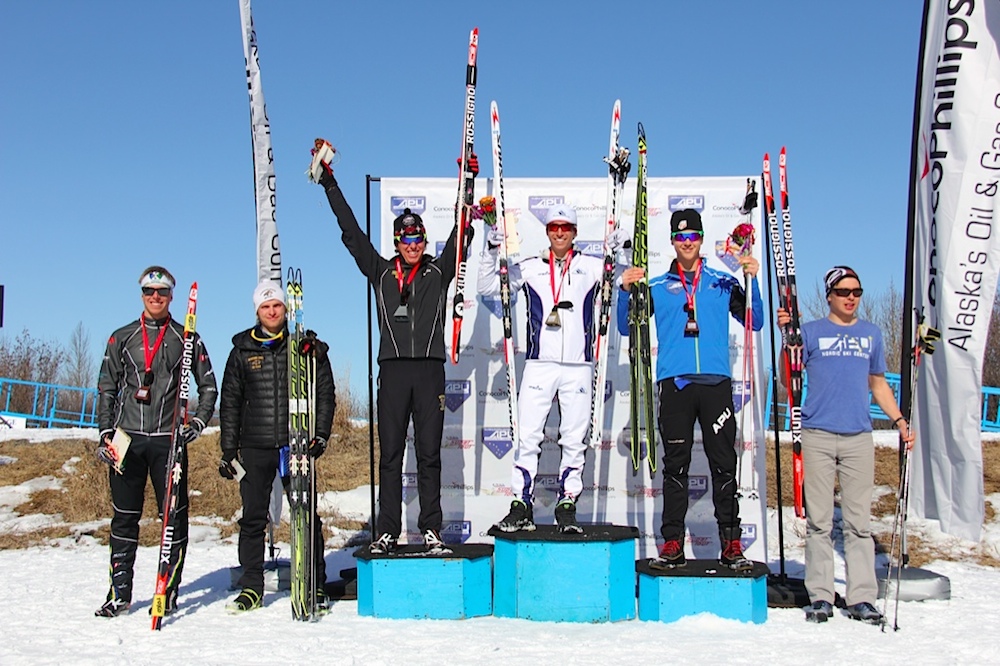
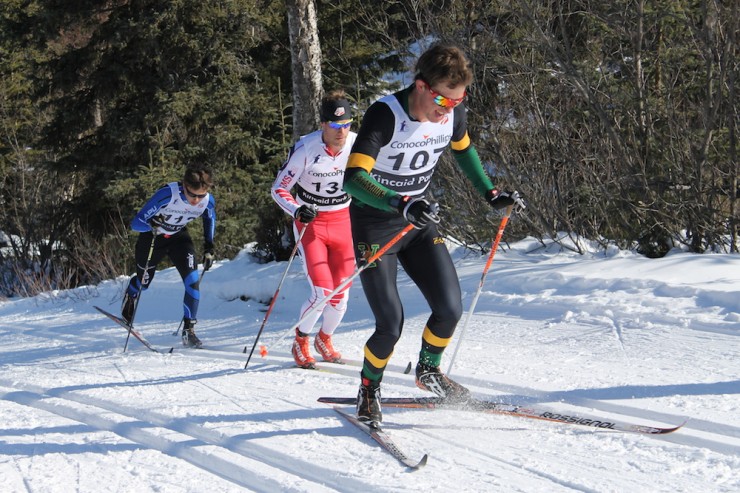
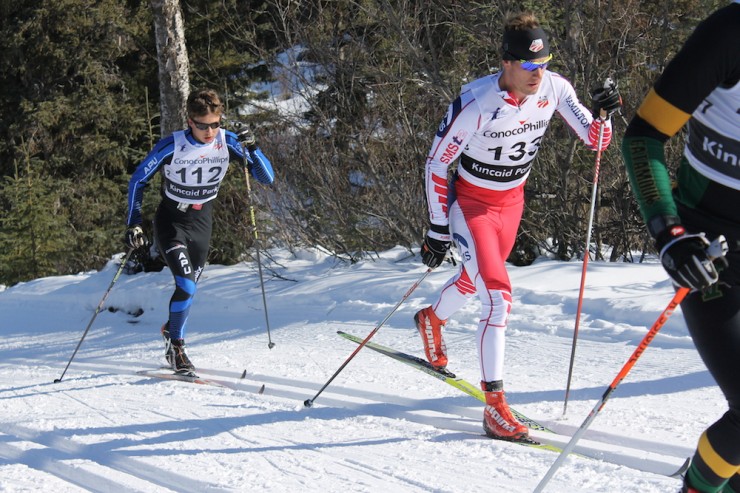
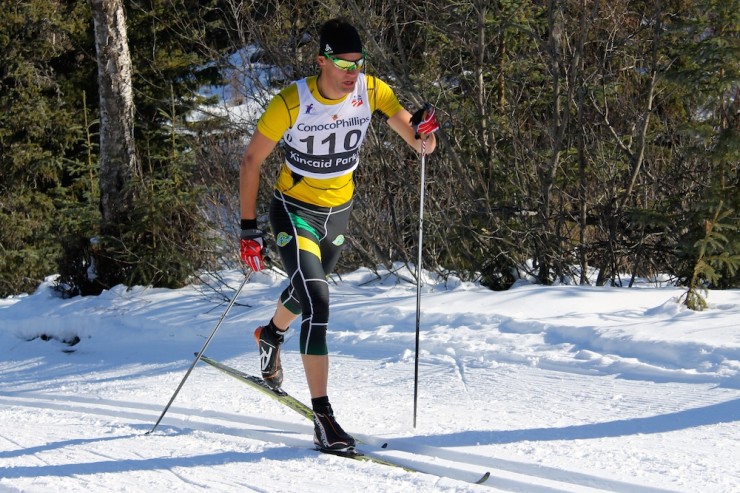
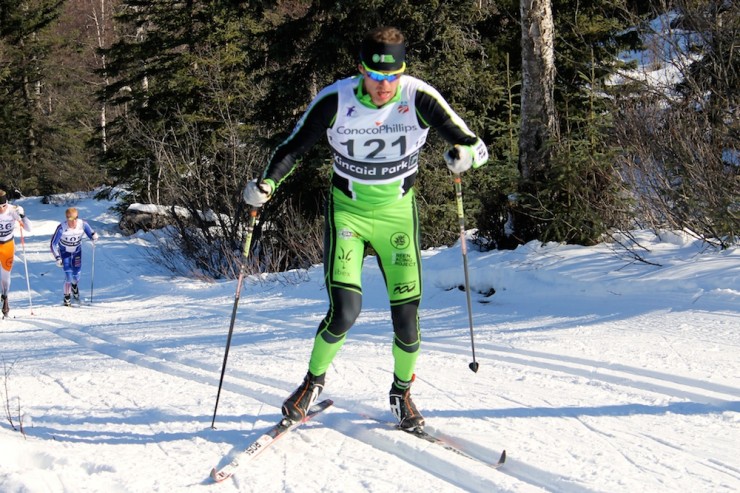
    Scott Patterson of Alaska Pacific University (APU) continued his winning streak on Saturday, topping the 10-kilometer classic FIS race at the Rendezvous Ski Trails in West Yellowstone, Mont. (In the two FIS races he’s competed in — the other being a 7.5 k freestyle last weekend in Fairbanks, Alaska — Patterson is undefeated.) He won Saturday’s classic race in 22:12.2 minutes, more than 20 seconds ahead of runner-up Matt Gelso, of the Sun Valley Ski Education Foundation (SVSEF), who placed second (+20.8). Ben Lustgarten, of the Craftsbury Green Racing Project (CGRP), improved on his fifth-place finish in Friday’s 10 k freestyle, reaching the podium in third (+23.4).

    David Norris (APU) placed fourth (+30.0), Kevin Bolger (University of Utah) was fifth (+33.1), and Ben Saxton, of the Stratton Mountain School (SMS) T2 Team, was sixth (+38.9). Petter Reistad, of the University of Colorado-Boulder (CU), finished seventh (+45.7), Daniel Streinz (Mountain Endurance Sports) took eighth (+49.9), Friday’s winner Paddy Caldwell, of SMS, Dartmouth College and the U.S. Ski Team (USST), was ninth (+56.0), and Martin Mikkelsen (Utah) placed 10th (+1:00.8) out of 70 male finishers.

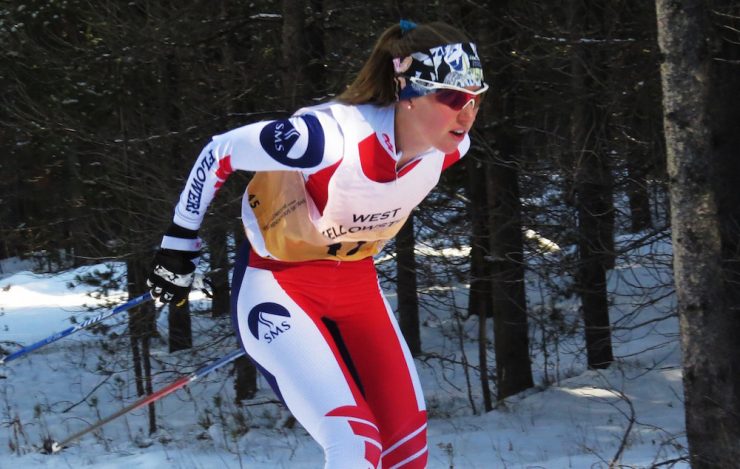
    In the women’s 5 k classic, Craftsbury’s Liz Guiney took the win in 13:06, edging Utah freshman Merete Myrseth by just 0.3 seconds. Friday’s 5 k freestyle winner, Katharine Ogden (SMS/USST) reached the podium again in third (+11.1), Jesse Knori (CU) was fourth (+13.5), and Erika Flowers (SMST2) fifth (+18.2) on her 27th birthday.

    Kaitlynn Miller (CGRP) took sixth (+21.8), Christina Rolandsen (CU) was seventh (+21.9), Petra Hyncicova (CU) eighth (+24.1), Guro Jordheim (Utah) ninth (+28.9), and Jennie Bender, of the Bridger Ski Foundation, 10th (+31.2), out of 74 female finishers.

    While this weekend’s FIS races are over, West Yellowstone will host again next weekend, as Bozeman SuperTour organizers announced Friday afternoon that it was moving its races to West, its southern neighbor, because of a lack of snow. Next weekend’s SuperTour races will be the first of the season, featuring the originally planned freestyle sprints on Saturday, Dec. 3, and 10/15 classic races on Sunday, Dec. 4.

    Results

    ***

    FIS Cross-Country World Cup in Ruka: Classic sprint:

    Women’s report | Men’s report | Kikkan Randall interview
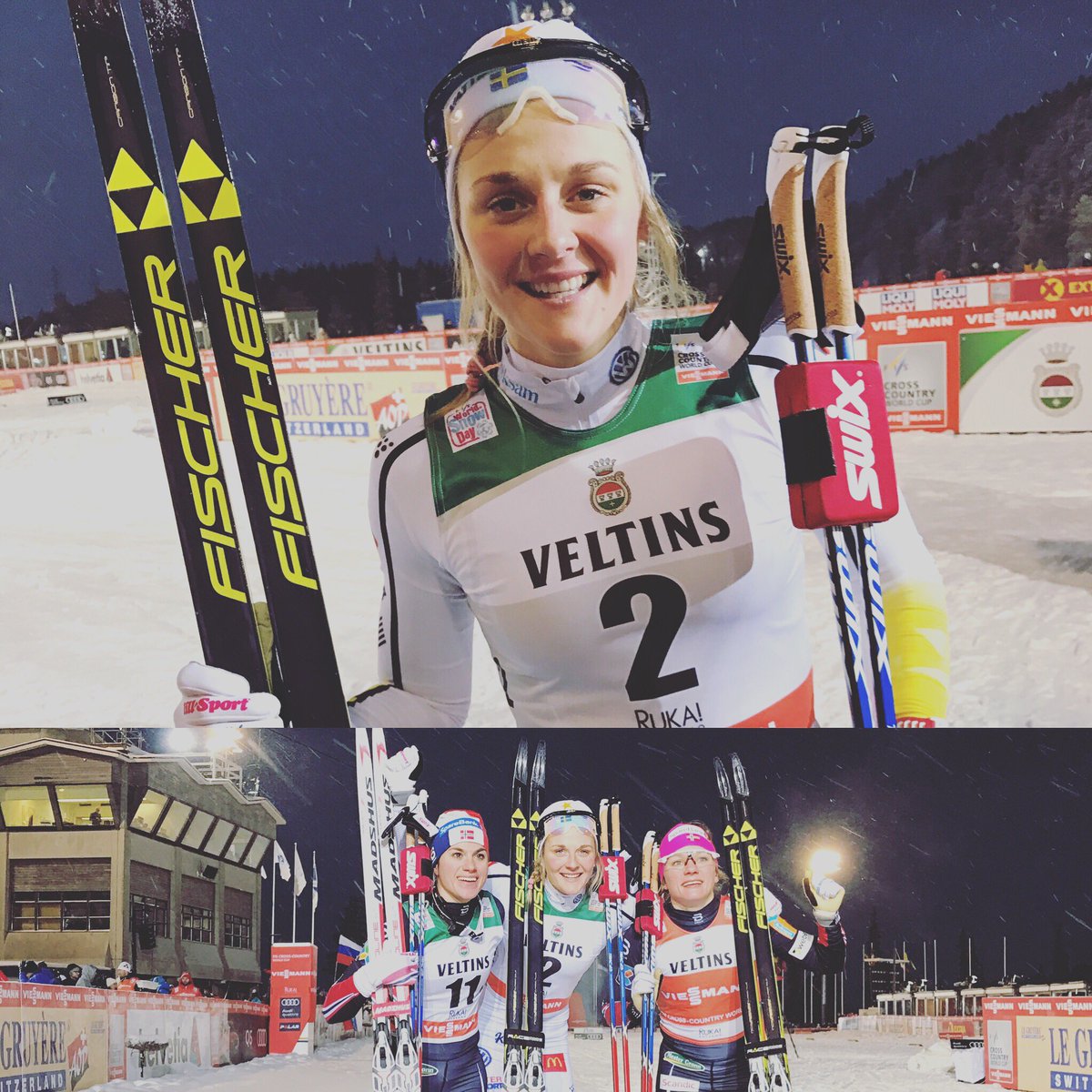
    Sweden's Stina Nilsson (top and bottom center) won her first World Cup classic sprint on Saturday in the first race of the 2016/2017 World Cup season. Norway's Maiken Caspersen Falla (bottom right) placed second and Heidi Weng (bottom left) was third. (Photo: FIS Cross Country Twitter)
    Sweden’s Stina Nilsson (top and bottom center) won her first World Cup classic sprint on Saturday in the first race of the 2016/2017 World Cup season. Norway’s Maiken Caspersen Falla (bottom right) placed second and Heidi Weng (bottom left) was third. (Photo: FIS Cross Country Twitter)

    Sweden’s Stina Nilsson and Norway’s Pål Golberg emerged as the big winners on Saturday in the first race of the 2016/2017 FIS Cross-Country World Cup season, winning the women’s and men’s 1.4-kilometer classic sprint finals, respectively, in Kuusamo, Finland.

    After qualifying second, Nilsson won both her quarterfinal and semifinal before dethroning Norway’s Maiken Caspersen Falla in the final. Falla had not lost a World Cup classic sprint since February 2015 (two seasons ago in Östersund, Sweden). Falla won her quarterfinal and placed third in her semifinal, advancing to the final as a lucky loser with Finland’s Krista Parmakoski. There, Nilsson held off Falla by 0.17 seconds and won the final in 3:21.61. Heidi Weng was the second Norwegian on the podium in third (+0.69), finishing ahead of two Russians, Natalia Matveeva (4th, +3.18) and Yulia Belorukova (6th, +8.94) and Parmakoski (5th, +5.12).

    “This is also my first victory in classic so I’m very, very happy,” Nilsson told FIS in an on-air, post-race interview.
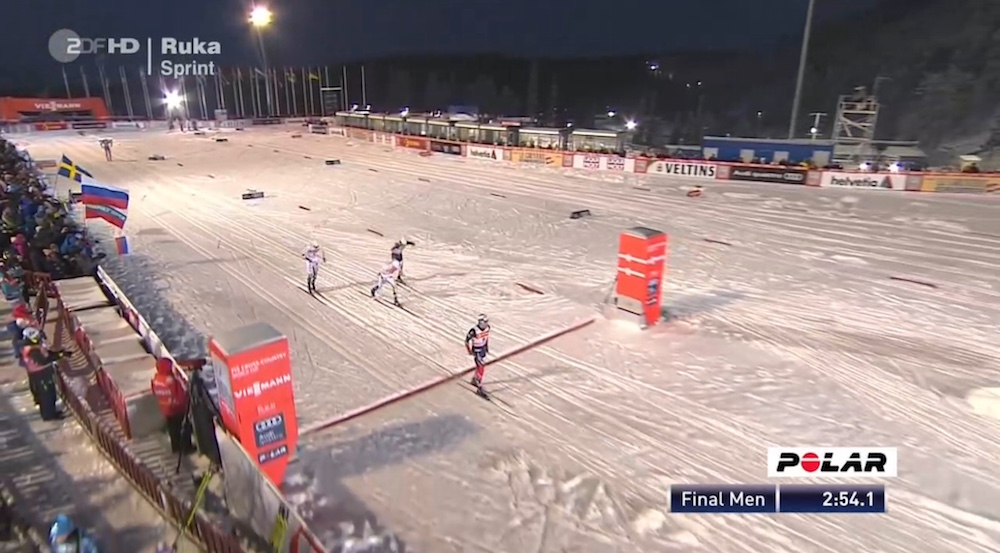
    Norway's Pål Golberg crossing the finish line a few ski lengths ahead of his competition in the men's classic sprint final on Saturday at the World Cup opener in Kuusamo, Finland. Sweden's Calle Halfvarsson placed second, and Norway's Johannes Klæbo edged Sweden's Teodor Peterson for the final podium spot in third. (Photo: NRK screenshot)
    Norway’s Pål Golberg (r) crossing the finish line a few ski lengths ahead of his competition in the men’s classic sprint final on Saturday at the World Cup opener in Kuusamo, Finland. Sweden’s Calle Halfvarsson placed second, and Norway’s Johannes Klæbo edged Sweden’s Teodor Peterson (l) for the final podium spot in third. (Photo: NRK screenshot)

    In the men’s final, Golberg surged past his competitors on Ruka’s infamous final climb and held off Sweden’s Calle Halfvarsson by 0.75 seconds for the win. Golberg found out on Wednesday of this week that he had been tapped for the sprint, after fellow Norwegian Petter Northug opted out of this weekend.

    “I knew my shape was good, but the skiers from the national team are good skiers so that’s why I wasn’t supposed to be here but Petter got sick so that’s why I’m here,” Golberg told FIS in a post-race interview. “In the quarterfinals, I had a pretty bad climb [on the final hill]. I lost a few spots so I decided to stay more in the back in the semifinals and that worked out.”
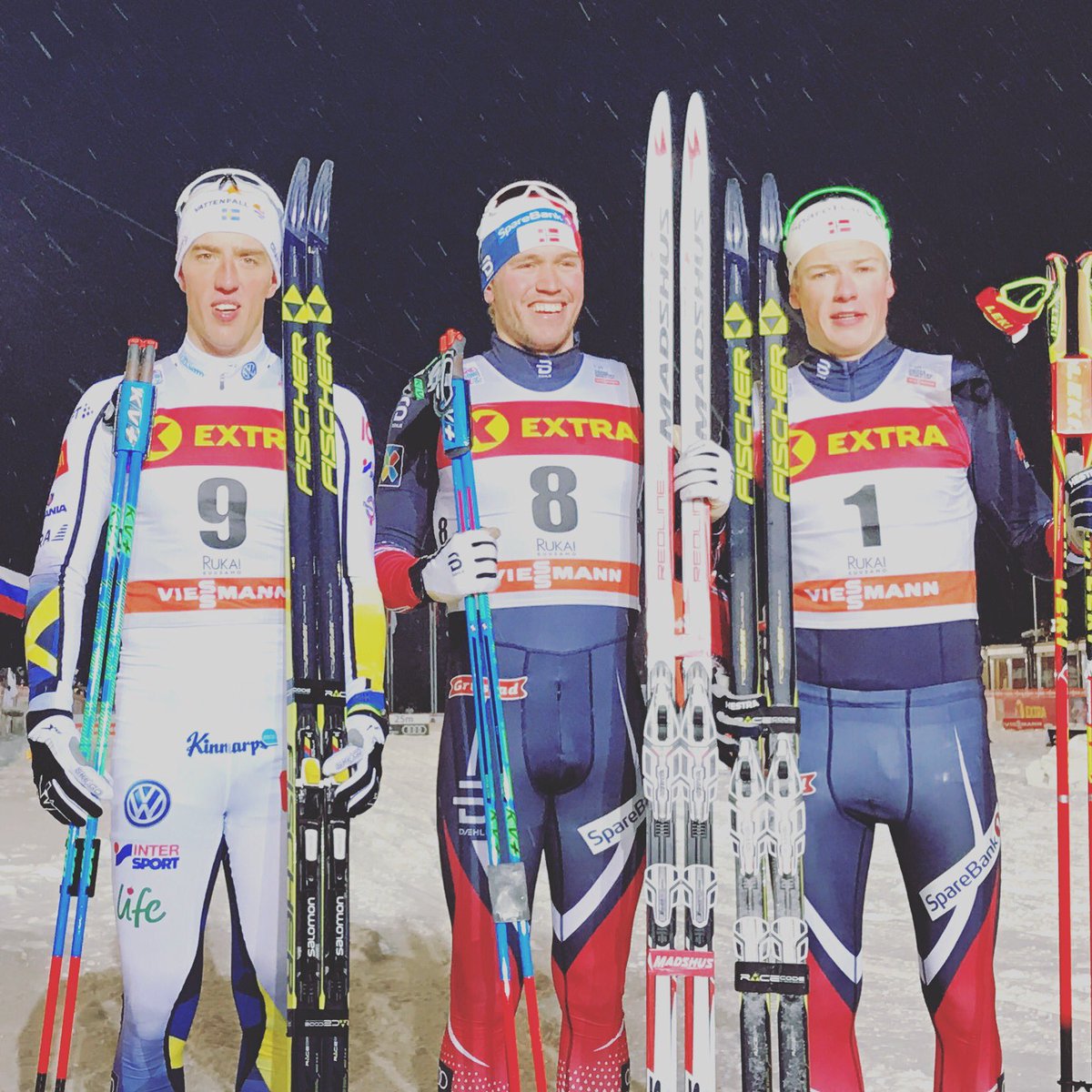
    The men's classic sprint podium in the first World Cup race of the season on Saturday in Kuusamo, Finland: Norway's Pål Golberg (c) placed first, Sweden's Calle Halfvarsson (l) was second, and Norway's 20-year-old Johannes Klaebo (r) was third. (Photo: FIS Cross Country Twitter)
    The men’s classic sprint podium in the first World Cup race of the season on Saturday in Kuusamo, Finland: Norway’s Pål Golberg (c) placed first, Sweden’s Calle Halfvarsson (l) was second, and Norway’s 20-year-old Johannes Klaebo (r) was third. (Photo: FIS Cross Country Twitter)

    After placing fourth in his quarterfinal, Golberg advanced as a lucky loser. In the semifinals, he placed second to ensure his spot in the final. He won the final in 2:54.12, Halfvarsson was second (+0.75) and Norway’s 20-year-old Johannes Klæbo captured his first World Cup podium in his second-ever World Cup in third (+0.87). Sweden’s Teodor Peterson narrowly missed the podium in fourth (+1.06), Russia’s Alexander Panzhinskiy was fifth (+8.22), and Norway’s Finn Hågen Krogh finished more than a minute later in sixth (+1:12.58).

    In her comeback season after having a baby last December, Norway’s Marit Bjørgen placed 10th after finishing fifth in her semifinal (she qualified in 10th and was second in her quarterfinal). Another top Norwegian, Ingvild Flugstad Østberg placed seventh on the day after placing third in the Bjørgen’s semifinal.

    The top American, Sadie Bjornsen posted the seventh-fastest qualifying time then finished the day in 17th overall. She placed fourth in her quarterfinal. Also for the U.S. Ski Team, Sophie Caldwell placed 20th (after qualifying in 30th then placing fourth in her quarterfinal), Ida Sargent was 23rd (qualified 23rd and was fifth in her quarterfinal), and Jessie Diggins 26th (13th in the qualifier, sixth in her quarterfinal).

    The lone North American man in the heats, Alex Harvey of Canada placed 25th overall after qualifying in 28th then placing fifth in his quarterfinal. The two men directly ahead of him in his quarterfinal, Russia’s Anton Gafarov and Golberg, placed third and fourth respectively, and advanced to the semifinals as lucky losers.

    In the morning’s sprint qualifier, Parmakoski and Klæbo posted the top times.

    Parmakoski notched a 1.14-second qualifying win, ahead of three Swedish sprinters. Nilsson and Ida Ingemarsdotter finished second and third, +1.14 and +2.40 respectively. Their teammate Hanna Falk qualified in fourth (+3.70) ahead of Justyna Kowalczyk of Poland (+3.93). Østberg was the top Norwegian, qualifying in sixth (+4.05).

    Sadie Bjornsen led the U.S. team by qualifying in seventh (+4.41). Three teammates joined her in the quarterfinals: Diggins (13th, +6.27), Sargent (23rd, +10.28), and Caldwell (30th, +11.84).

    A fifth U.S. Ski Team (USST) member, Rosie Brennan missed the heats in 44th (+15.28), and in her return to the World Cup after a year of maternity leave, Kikkan Randall (USST) finished 52nd, tied with Craftsbury’s Caitlin Patterson (+19.75). For Canada, U25 Team skiers Dahria Beatty raced to 50th (+18.80), followed by Cendrine Browne in 62nd (+26.05).

    Klæbo eked out a narrower victory in the qualifier, edging Russia’s Panzhinsky by just 0.81 seconds. Marko Kilp of Estonia qualified third, +2.01, followed by two Finns: Ari Luusua (+2.18) and Anssi Pentsinen (+2.22). Peterson of Sweden rounded out the top six (+2.31).

    The lone North American qualifier was Harvey in 28th (+6.94). His Canadian teammates were left out of the heats: Len Valjas 54th (+11.28), Devon Kershaw 63rd (+12.28), Knute Johnsgaard 69th (+13.46), Bob Thompson 80th (+17.64), Jesse Cockney 83rd (+19.52), and Andy Shields 91st (+25.07).

    Simi Hamilton did not start for the U.S., and according to U.S. coach Matt Whitcomb, he is fighting a small cold. Andy Newell led the team in 40th (+7.74), shortly followed by Erik Bjornsen in 42nd (+7.81). SuperTour leader Eric Packer of Alaska Pacific University finished 78th (+17.30).

    The World Cup continues Sunday with the 10/15 k classic individual starts in Ruka.

    Qualifier results: men | women

    Final results: men | women

    ***

    FIS Nordic Combined World Cup in Ruka: Individual Large Hill/10 k

    In the first Nordic Combined World Cup competition of the season, also in Kuusamo, Akito Watabe of Japan won the jumping round with a total of 145 points. Johannes Rydzek of Germany jumped into second. After jumping Bryan Fletcher was sitting in 32nd place for the U.S. and Ben Berend in 38th. The Americans started the cross-country race 3:54 and 4:08 behind Watabe.

    In the 10 k Gundersen start, Fletcher improved to 23rd and Berend did not start. Fletcher finished 4:06.5 behind the winner of the day, Rydzek, who won in 27:31.7. Germany took the top two spots on the podium with Eric Frenzel in second (+34.1). Frenzel skied the fastest course time in 26:52.8, moving up six spots after ranking eighth in the jump.

    Norway’s Jørgen Graabak placed third (+45.6) and Watabe ultimately finished seventh (+1:23.5). The World Cup continues Sunday in Kuusamo with another large hill/10 k individual competition.

    Final results

    ***

    IBU Cup Beitostølen: 7.5/10 k sprint

    The IBU Cup in Beitostølen, Norway, has been canceled for the day due to strong winds. The men’s and women’s sprints are rescheduled for Sunday.
  • Patterson, Yeaton, UAF Take Victories at Alaska Nordic Cup

    Patterson, Yeaton, UAF Take Victories at Alaska Nordic Cup

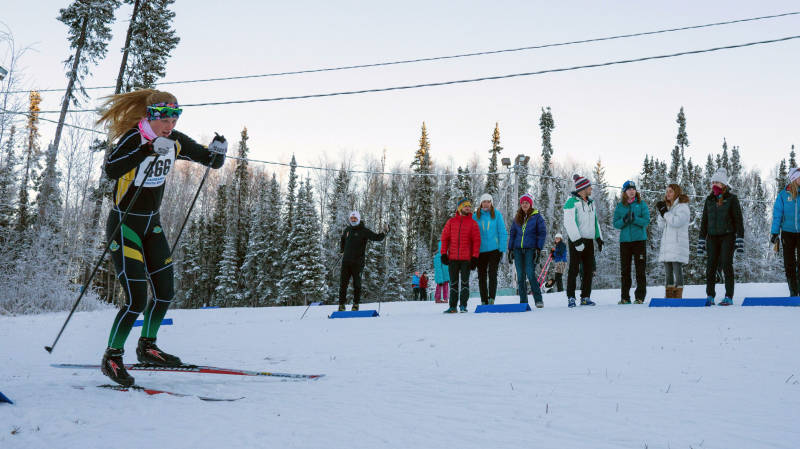
    University of Alaska Anchorage freshman Hailey Swirbul skis through the stadium at Birch Hill Ski Area in Fairbanks, Alaska, in the Alaska Nordic Cup on Nov. 19, 2016. (Photo: Zachary Hall/UAA Athletics)
    University of Alaska Anchorage freshman Hailey Swirbul races through the stadium at Birch Hill Ski Area in Fairbanks, Alaska, in the Alaska Nordic Cup on Nov 19. (Photo: Zachary Hall/UAA Athletics)

    FAIRBANKS, Alaska – Scott Patterson is on a roll. The Alaska Pacific University (APU) skier has now won all of the ski races he entered this year – and over half the ski races held in this country in the 2016/2017 winter to date – after picking up wins on both days of racing in the Alaska Nordic Cup at Birch Hill Ski Area in Fairbanks, Alaska, this past weekend, Nov. 19-20.

    APU’s Jessica Yeaton was also a double winner on the weekend. And in the collegiate ranks, the University of Alaska Fairbanks (UAF) maintained its hold on the Alaska Nordic Cup against the University of Alaska Anchorage (UAA).

    Skiers from both universities competed with a new lease on athletic life, after learning earlier this month that the ski programs would not be cut at either UAA or UAF.

    The Alaska Nordic Cup is an early season, relatively low-key (but nonetheless International Ski Federation (FIS) sanctioned) competition between Alaska’s only two NCAA nordic programs. Prior to this season, in which UAF switched its conference affiliation from the Central Collegiate Ski Association to the Rocky Mountain Intercollegiate Ski Association (RMISA), it marked the only time outside U.S. nationals that Alaska’s college skiers might compete head to head until, potentially, NCAA Skiing Championships in March.

    The Nordic Cup is held each year in November, alternating between the Fairbanks and Anchorage areas. 2016 marked the 13th annual Nordic Cup competition. The UAF Nanooks enjoy a healthy historical advantage over their southern rivals, the UAA Seawolves, entering the weekend with an 8-3-1 all-time record (eight wins, three losses, and one tie) in the first 12 years of the dual meet. Scoring is typically based on an individual race on Saturday plus a relay on Sunday. Lowest combined time wins.
    But despite a strong team showing from UAF that carried the Nanooks to victory, and some standout individual performances from UAA, it was APU that owned the top steps of the podium throughout the weekend.

    (Photo: John Lazenby/Lazenbyphoto.com)
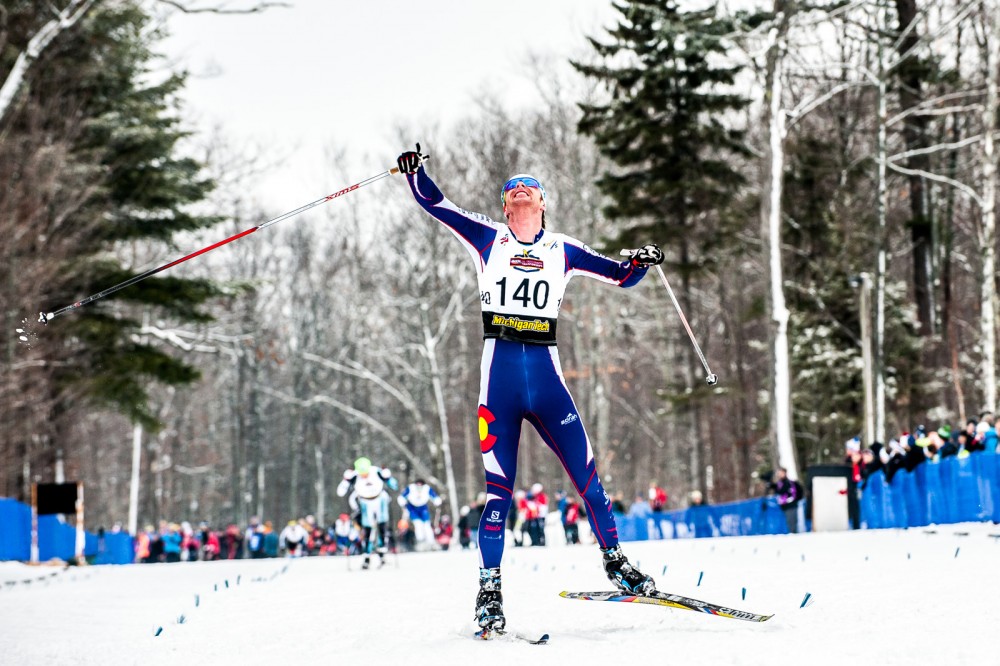
    APU’s Becca Rorabaugh (l) and Jessica Yeaton (r) at U.S. SuperTour Spring Series in March 2016. (Photo: John Lazenby/Lazenbyphoto.com)

    In the women’s race, Jessica Yeaton, an Australian national-team member who competes for Australia internationally but lives in Anchorage and trains with APU, finished Saturday’s 6 kilometer freestyle interval start in 16:52.1, skiing smoothly in relatively cold and slow conditions. APU’s other entrant, Fairbanks native Becca Rorabaugh, finished second, 34.1 seconds back. Third went to Hailey Swirbul, 1:27 back, in the UAA freshman’s college racing debut. UAF skiers swept the next four spots, led by senior Nichole Bathe, the day’s final starter, in fourth.

    Yeaton appreciated the early season racing opportunity. “It was awesome to race up here on good snow,” she wrote to FasterSkier. Yeaton added, “The conditions were thin but still provided a really good opportunity for a race effort. We are lucky to have these early races to help prepare for the Supertour in a couple weeks – the [Nordic Ski Club of Fairbanks] did a great job making them happen despite the lack of snow!”

    Swirbul, a Colorado native, echoed Yeaton’s praise for the venue and host club: “Thanks to Fairbanks for using their limited snow and delivering excellent (all things considered) courses and conditions for us to open our season this past weekend,” she wrote in a Sunday email to FasterSkier.

    Swirbul added, reflecting on the sensation of putting on a race bib once more: “As usual, it’s an interesting feeling to return to an on-snow race scene after long summer months without one… nerves, waxing, morning jogs and stretching, race strategy, etc. I sure enjoyed being back at it this weekend! I was satisfied with my and my team’s skiing this weekend, considering it is only November, and think we have great things ahead of us. We are all revving our engines preparing for a long winter ahead, ready to establish a new name for our team with many young skiers, and meanwhile prove to the president of our university that we are more than worthy of being part of a long lasting ski team at UAA! I am very excited for what the season has to bring for UAA.”

    Bathe, originally from Madison, Wis., was likewise pleased by the strong first-day showing of the UAF team. “I thought today went well especially for our whole women’s team,” she wrote in an email on Saturday. “To have four women right in there is always awesome and makes us excited for the season! It’s nice to see all the summer training pay off and start getting back into race mode again.”

    On the men’s side, the top-seeded Patterson took advantage of his position as the final starter to ski to the victory over several of his APU teammates, including David Norris in second.

    “Snow instead of ice made coming to Fairbanks [from Anchorage] for races an easy decision,” Patterson wrote. “Although I hadn’t raced here since high school, I have always enjoyed the Birch Hill trails. During the race, I had to remember how to race a little after getting some early splits that I was even with David and knowing his fitness through the summer and fall. Overall it was a great chance to chase out some early season rust and get ready for important races.”

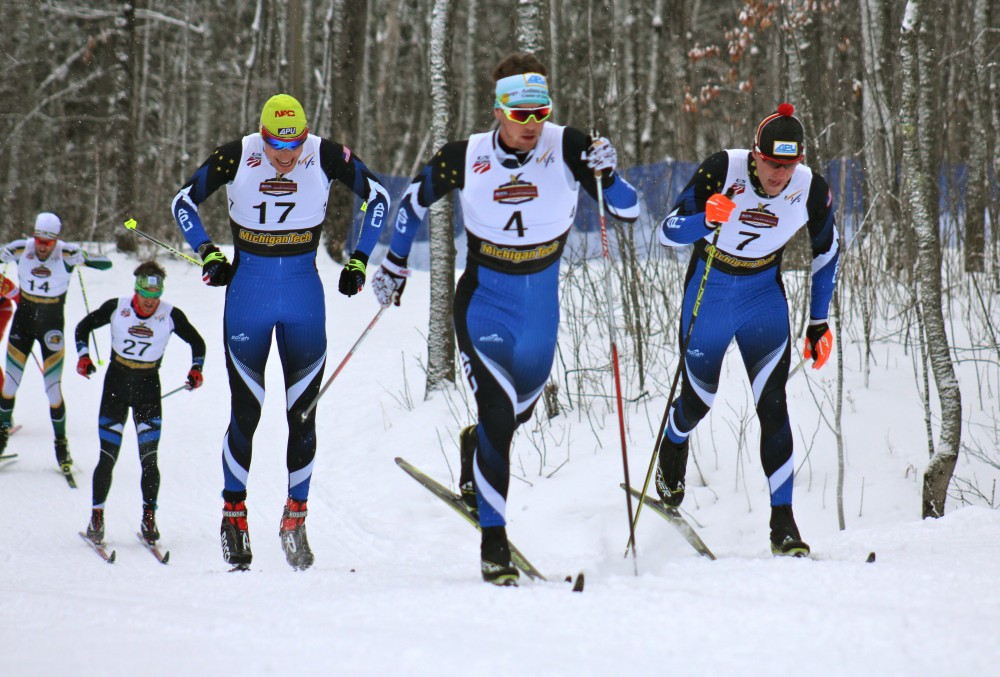
    APU teammates and brothers Logan Hanneman (7) and Reese Hanneman (4) lead teammate Tyler Kornfield (17), Welly Ramsey (Mountain Endurance Sports) and Fredrik Schwencke of Northern Michigan University (far left) during their quarterfinal of the men's 1.5 k classic sprint on Saturday at U.S. nationals in Houghton, Mich.
    APU teammates and brothers Logan Hanneman (7) and Reese Hanneman (4) lead teammate Tyler Kornfield (17) during their quarterfinal of the men’s 1.5 k classic sprint at 2016 U.S. nationals in Houghton, Mich.

    Patterson completed the 8.25 k skate race in 19:36.3. Norris finished 16.7 seconds behind him. Tyler Kornfield rounded out the APU podium, finishing 1:03 back of Patterson.

    Patterson and Kornfield grew up in Anchorage. Norris is a Fairbanks native. Their good-natured geographic rivalry stretches back a decade or more, to when they were all competing in Alaska high school skiing. (“We hated the Anchorage guys,” Fairbanks skier Reese Hanneman told the Alaska Dispatch News “with more amusement than venom” in a summer profile. “We were like the rednecks from Fairbanks, out skiing in the woods, going up against the city boys.”)

    APU skiers took the top five spots on the day, with Anchorage skier Thomas O’Harra in fourth and Fairbanks local Logan Hanneman in fifth.

    The top college skier was UAF junior Max Donaldson, another Fairbanks product, in sixth, 1:37 back of Patterson. The top UAA skier was sophomore Toomas Kollo, from Estonia, 2:35 back in ninth.

    At the end of the first day of racing, the combined times of the top three UAA women put them just 23.5 seconds behind the top three UAF skiers. On the men’s side, UAF created a larger gap of 2:14.2 over UAA’s combined times, giving UAF an advantage of roughly 2:38 heading into Sunday’s relays.

    Sunday saw more of the same: APU took the easy win, Swirbul shined for UAA, and UAF used its depth and balanced performances to take the overall victory.

    APU entered only one team in the relay, but it included the top two finishers from each of Saturday’s individual races. Unsurprisingly, the team of Patterson, Rorabaugh, Norris, and Yeaton posted the fastest time in all four legs of the 4 x 4 k skate relay, finishing in 46:57.4.

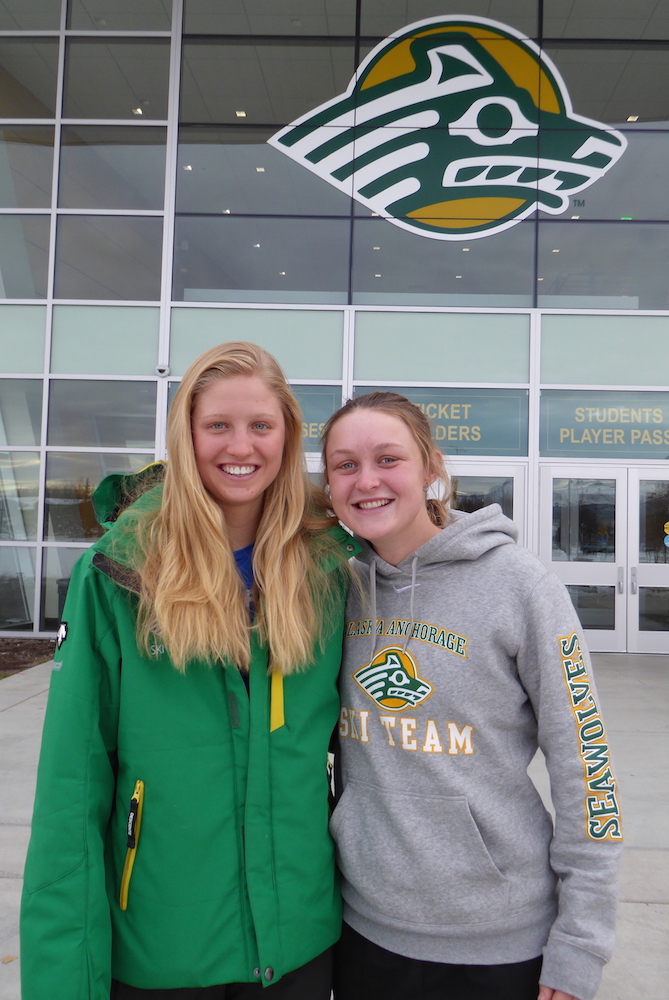
    University of Alaska Anchorage Seawolves skiers Hailey Swirbul (l) and Casey Wright (r), photographed on the UAA campus in Anchorage, Alaska, in October 2016. (Photo: Gavin Kentch)
    UAA skiers Hailey Swirbul (l) and Casey Wright (r), on the UAA campus in October 2016. (Photo: Gavin Kentch)

    The top college team was Nanooks A (Donaldson, Sarissa Lammers, Michael Fehrenbach, and Bathe), finishing just over three minutes behind APU in 50:10.1. Donaldson and Fehrenbach posted the fastest male collegiate times of the day in their legs. Seawolves ‘A’ (Kollo, Swirbul, Marcus Deuling, and Casey Wright) was less than eight seconds behind the Nanooks in 50:18. Swirbul was again the fastest collegiate woman on the day, while Wright similarly recorded the day’s fastest anchor leg.

    Nanooks ‘B’ was next, followed by Seawolves ‘B’. Ultimately, the time gaps from day one grew, and UAF finished with a 4:08 cumulative advantage over UAA, taking home its ninth Nordic Cup overall and second in a row.

    UAF nordic coach Nick Crawford said in a Sunday press release, “The Seawolves had a good day today and it was very exciting to watch the race unfold. The margin between our two teams was much smaller today, so it made it that every skier had to race hard which isn’t always the case in relays. The victory was for sure a team effort today with both the men and the women putting together good races. We really enjoy the collaboration we have with our Anchorage rivals.”

    UAF skier Anna Darnell expressed similar sentiments, telling the Fairbanks Daily News-Miner, in light of the recent political rollercoaster of threatened cuts to both schools’ ski programs, “We feel a lot closer to the UAA team after this.”

    Meanwhile, at the top of the results sheet, Patterson’s brace of victories on the weekend, combined with his easy victory at the Race to the Outhouse #1 outside Palmer, Alaska, earlier this month, meant that the APU skier has now won every single race he has entered this winter, as well as 60 percent of all the ski races held in this country this year. (The Mat-Su Ski Club held a pair of 5 k skate and classic races at Hatcher Pass on Nov. 19 and 20.)

    “I’ll have to get a time turner for the coming weekends,” Patterson wrote in an email as he reflected on his current track record, “so I can continue to win every single race in the U.S.”

    This particular race was slightly more competitive than the Race to the Outhouse. FasterSkier unofficially calculates the USSA race penalty (a measure of the strength of the field) for Saturday’s men’s race as an impressive 29.03, well below the USSA minimum penalty of 35 for a College Event or Regional Scored Event. (The penalty for the women’s race was unofficially a higher, but still respectable, 60.52.)

    Reflecting the cosmopolitan nature of NCAA skiing, competitors in the 45-racer FIS/USSA field hailed from at least eight foreign countries, including Canada, Norway, Germany, Australia, Sweden, the Czech Republic, Italy, and Estonia. They were joined by roughly 200 more skiers in the day’s other races, ranging from kindergartners in snowsuits who skied a 500 meter course without poles to the 60- and 70-year-old age brackets in the community 4 k race.

    The strong community support, and college athletes who had finished their race but stayed to cheer on their teammates, combined to make the atmosphere as electric as can be found for American cross-country skiing. Dozens of spectators lined a late-race climb back up to the stadium, where racers were met by an even larger, frenzied crowd cheering them on.

    The University of Alaska Fairbanks ski team poses with the trophy for the Alaska Nordic Cup at Birch Hill Ski Area in Fairbanks, Alaska, on Nov. 20, 2016. (Photo: Nick Crawford/UAF Athletics)
    The University of Alaska Fairbanks ski team poses with the trophy for the Alaska Nordic Cup at Birch Hill Ski Area in Fairbanks, Alaska, on Nov. 20, 2016. (Photo: Nick Crawford/UAF Athletics)

    Conditions were, as the athletes acknowledged, undeniably snow rather than ice (as on the Anchorage trails these days), but unfortunately not that much of it. Fairbanks has seen approximately five inches of total snowfall so far this winter. The impeccably maintained trails at Birch Hill meant that racers found a base of roughly two inches of compacted snow, with some leaves and sporadic dirt showing through, but no rocks. Most skiers in the FIS race competed on their prior-generation race skis.

    Although the official high for the day at the Fairbanks airport was a barely FIS-legal 1° F (-17 degrees Celsius), temperatures at the relatively elevated Birch Hill were comparably temperate, hovering around 10° F (-12 C) throughout the afternoon.

    At least in the sunlit stadium. Racing at Birch Hill on clear and cool winter days can be an oddly hellish experience. Not because it is unenjoyable – far from it; the trails are a delight to ski, and the snowy birch forest is sublimely beautiful – but because it evokes the sensation of voyaging into the underworld and back again. The stadium is in the sun, and elevated, and relatively warm; many trails drop down leaving the stadium, sending the skier into the realm of dark and cold. And so one goes from light to dark, sun to shade, warmth to cold, and back again with each new trail, the stadium become a modern-day Cumae (entrance to the underworld in classical mythology) and the skier Heracles or Odysseus, re-enacting the journey between worlds.

    RMISA college racing resumes early next year with the Utah Invitational at Soldier Hollow on Jan. 7.

    Results: Day 1 | Day 2

  • FS Podcast: APU’s David Norris Ready for the Next Step

    FS Podcast: APU’s David Norris Ready for the Next Step

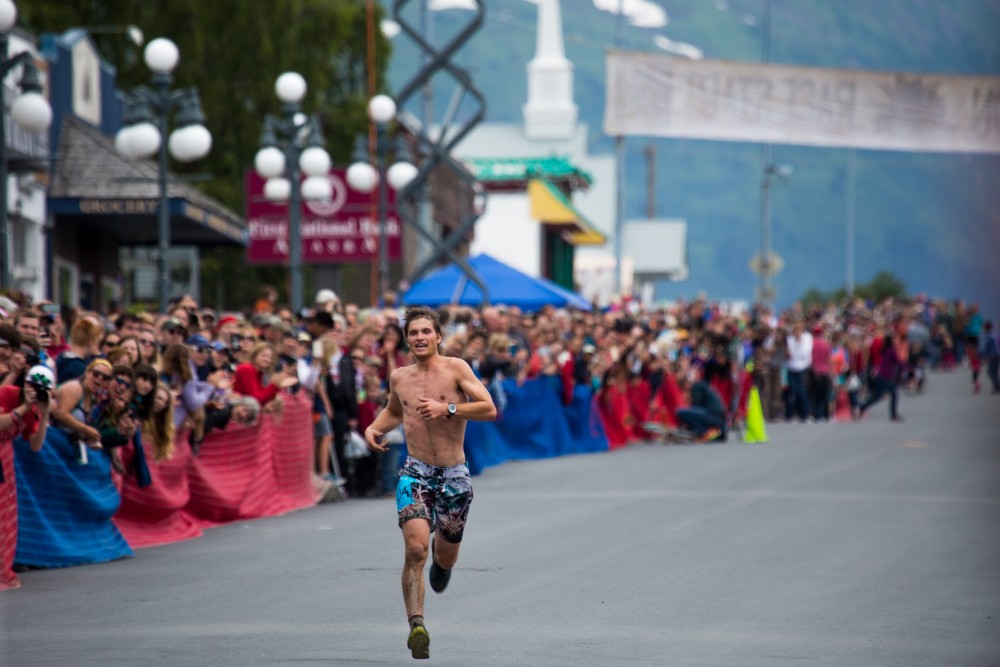
    David Norris winning his first Mt. Marathon Race in Seward, Alaska July 4th.,  2016. (Photo: MMR by Cale Green)
    David Norris winning this year’s Mt. Marathon Race on July 4 in Seward, Alaska. (Photo: MMR by Cale Green)

    For skiers aspiring to World Cup starts, a World Championship or Olympic birth, the International Ski Federation’s (FIS) website can be either a glimmer of hope or something to smudge out dreams. The FIS site allows for a query of any single athlete: there you can analyze the full historical record of a skier’s FIS race results. It’s essentially an elite skier’s domestic and international rankings laid bare.

    This last year of domestic racing proved it may be time for 25-year-old Alaska Pacific University (APU) skier David Norris to break into the international racing scene. A quick analysis of his recent results on the FIS site reveals a skier steadily becoming one of America’s top-tier skiers.

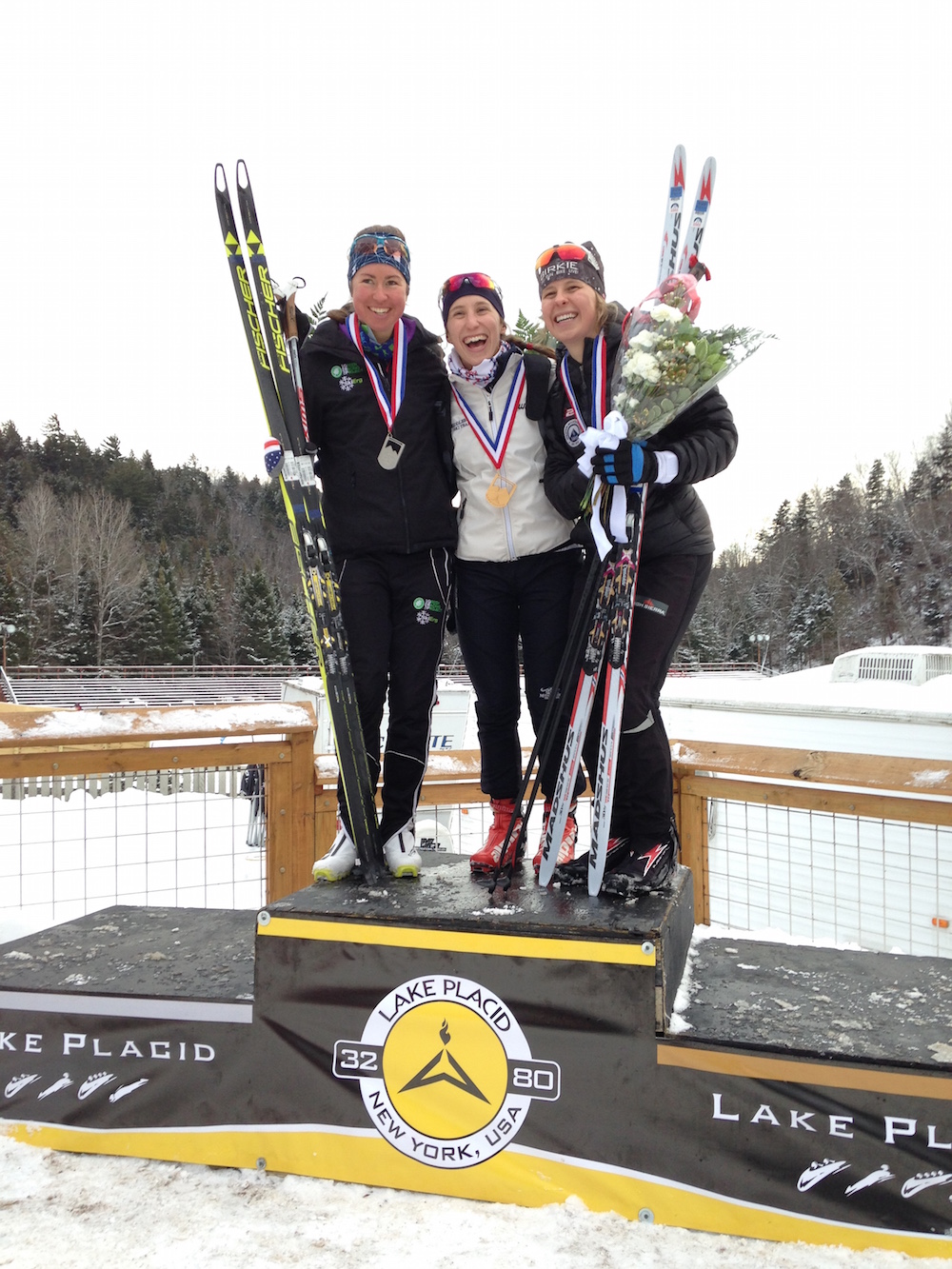
    In January of this year, Norris won his first Super Tour in Lake Placid, N.Y., a freestyle sprint. The next day, he came up huge again, winning the 10 k classic. Three weeks later, Norris capped off the cold months of winter with an American Birkebeiner win.

    Despite the uptick in positive results, Norris’s late-season push did not qualify him for U.S. start rights at the Ski Tour Canada. His strong finish to the season, he also placed third in the 50 k classic at U.S. Distance Nationals, makes him a skier to watch this winter. He’s also a mountain runner to watch — Norris won his first-ever Mt. Marathon Race, a storied uphill and downhill running/scrambling race in Seward, Alaska.

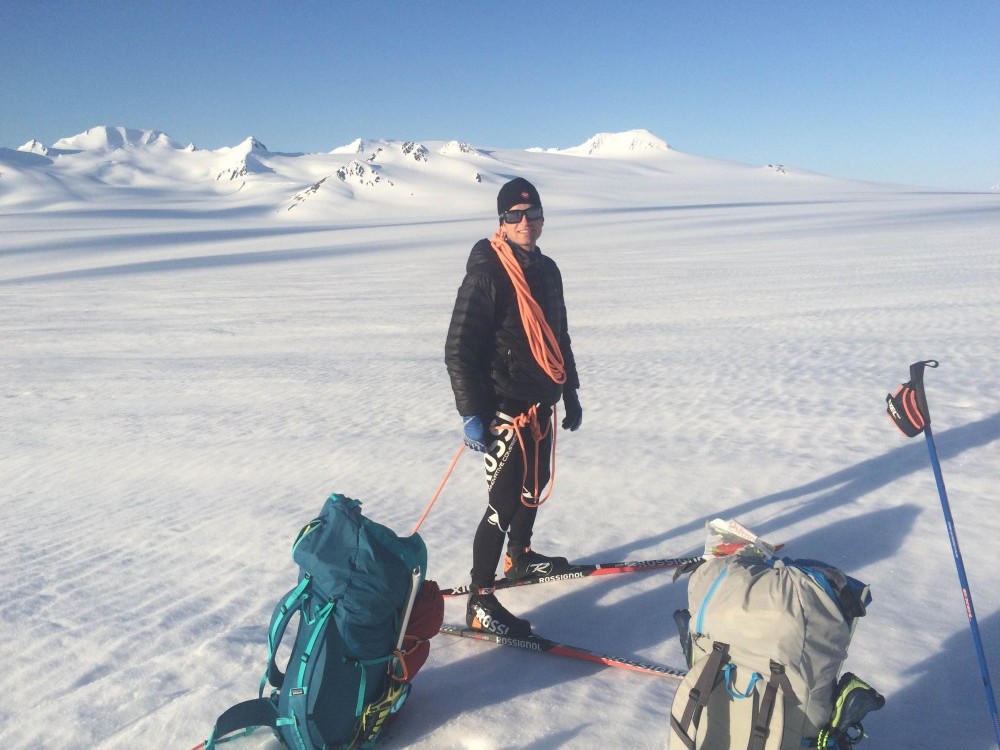
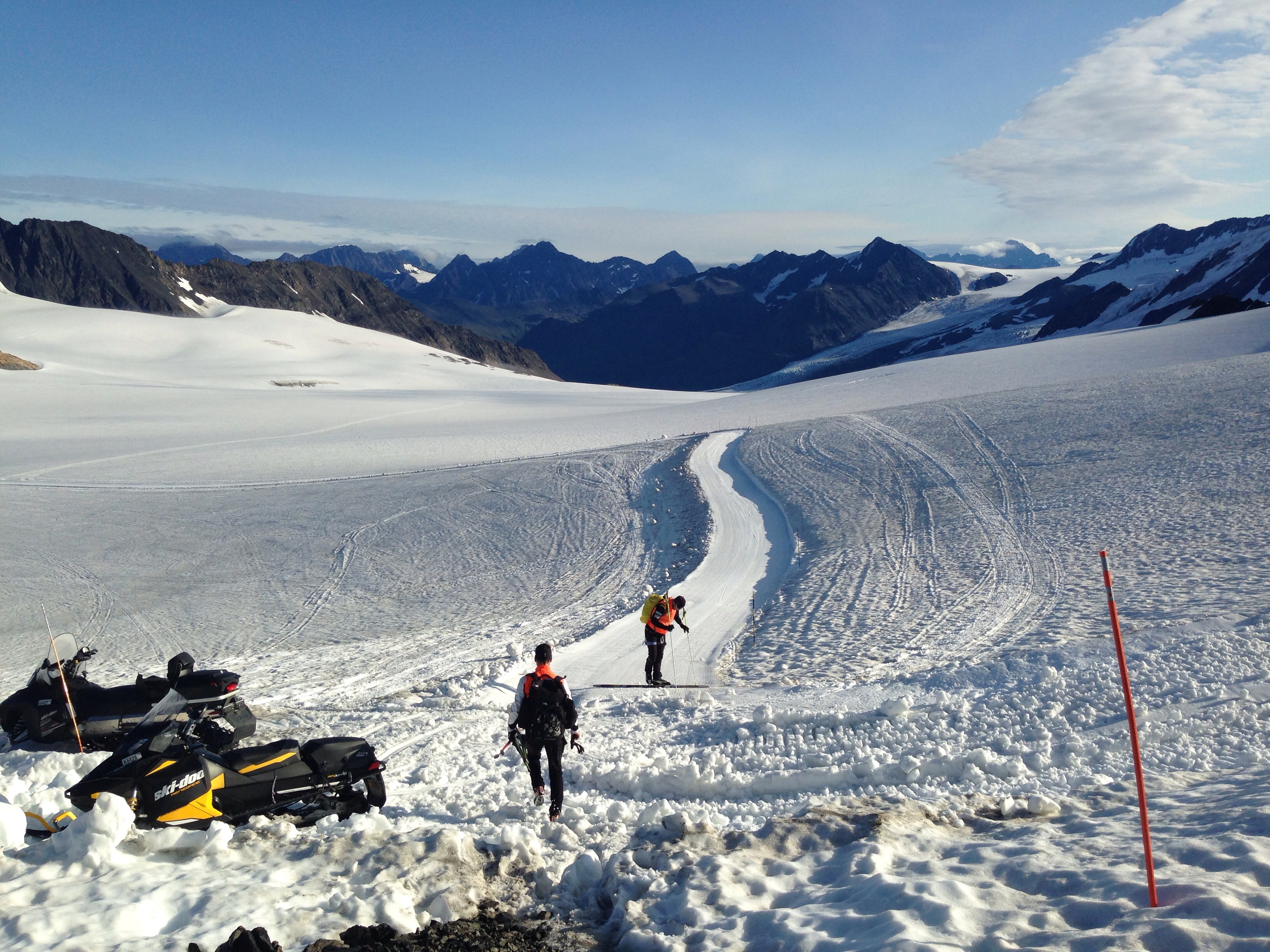
    David Norris on an Alaskan style backcountry skate ski. (Photo: Scott Patterson)
    David Norris on an Alaskan-style backcountry skate ski on the Harding Icefield. (Photo: Scott Patterson)

    FasterSkier interviewed Norris for its latest podcast episode. Norris describes his efforts to heal from a debilitating virus which prevented him from training seriously during the 2013/2014 season and his uncanny ability to pretty much just show up and crush the Mt. Marathon course in record time. He did so even after last year’s Mt. Marathon men’s winner, international trail-running and ski-mo star Kilian Jornet, set a new benchmark.

    “I did go camp in Seward for a weekend a few weeks before the race. I went to the top only once, but I did a few laps of the lower section, where there’s more, I think there’s more danger, and more importance on knowing the specific route you want to take. So I practiced that a few times,” Norris said of his less than hyper-detailed study of the Mt. Marathon course.

    What is clear is that Norris is a quick study, calculated risk taker and able to harness his serious lung power when it’s on the line.

    For the full podcast interview click the play arrow below.

  • Mt. Marathon Rookie, Norris Blasts Course Record

    Mt. Marathon Rookie, Norris Blasts Course Record

    Fairbanks resident David Norris, who skis for Alaska Pacific University (APU), won Monday’s Mount Marathon Race outside Seward, Alaska, in record time.  The 5-kilometer race — which takes racers from the shores of Resurrection Bay up 3,022 feet to the summit of Mt. Marathon and back down again, on slopes as steep as 60 degrees — was first held in 1915 and is among the country’s oldest footraces. A crowd estimated at 30,000 people crams into Seward (pop. 2,500) each July 4 to watch a race that has been described as the “Olympics of Alaska.”

    The former men’s course record was 41:48, set last year by Killian Jornet, a man widely acknowledged as the world’s best mountain runner.

    On Monday, at the 89th edition of the race, Norris took 22 seconds off that time. Running alone for most of the race, Norris was first to the halfway mark of the ascent, first to the turnaround at Race Point (elevation 3,022′), and first across the finish line (elevation approximately 20′, depending on how high the tide is).  He finished in 41:26.

    Jornet tweeted his congratulations to Norris within minutes of the race’s conclusion.  His Twitter feed made it apparent that he had been watching the live feed of the race.

    Three-time champion Eric Strabel, a former APU skier and current APU coach, was third in 44:19.  Scott Patterson, Norris’s teammate on the APU Elite Team, finished fourth in 44:43 after reaching the turnaround point in second.

    In the days leading up to the race, Norris and his teammate Patterson, both race rookies at Mt. Marathon, were marked by the local mountain running community as strong climbers but unproven downhill runners. There was also a suspicion that they might hold back slightly on the descent, in deference to their professional ski careers and out of a desire to avoid injury.

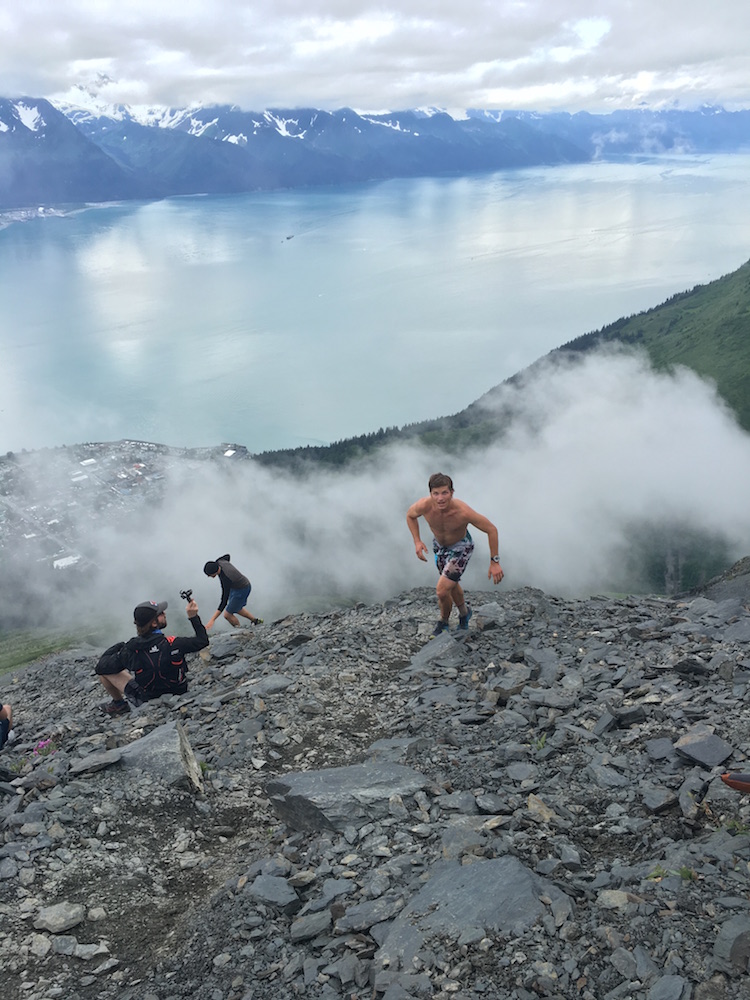
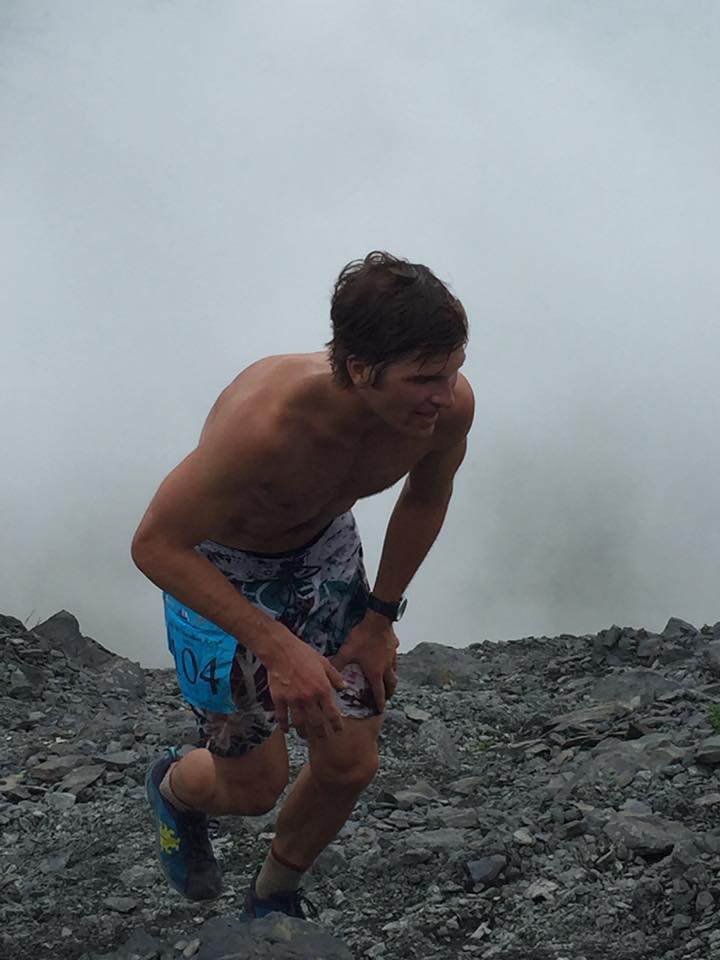
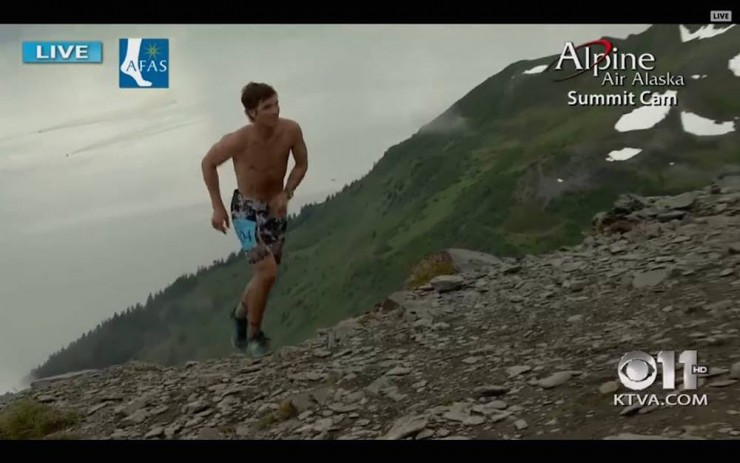
    APU's David Norris ascends Mt. Marathon en route to a course-record time, above Seward, Alaska, on Monday. (Photo: Rob Whitney)
    APU’s David Norris ascends Mt. Marathon en route to a course-record time, above Seward, Alaska, on Monday. (Photo: Rob Whitney)

    Speaking on live television soon after the finish, Norris acknowledged that this was his race strategy.

    “I had enough of a lead that I knew I could take it easy [on the descent] and not hurt myself,” Norris said in his interview with Anchorage’s KTVA Channel 11.

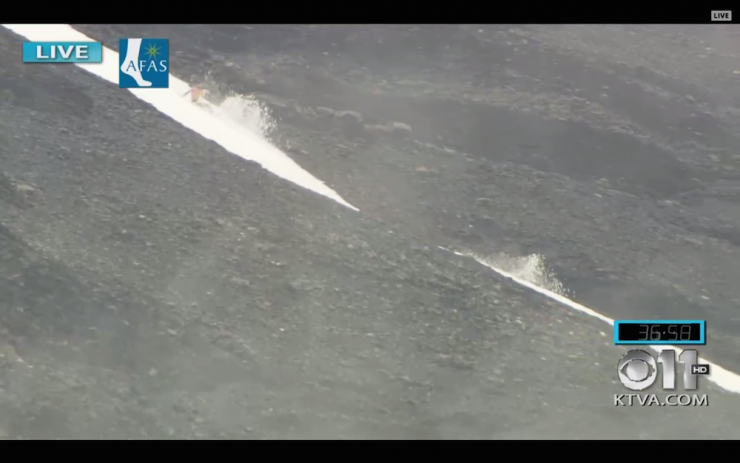
    Describing his descent, in which he lost 3,000 vertical feet in roughly 10 1/2 minutes, Norris recounted sliding down a snowfield for roughly 250 meters near the top: “The snow was totally out of control, the scree was fine,” he said.

    Norris admitted that he had not come in expecting to break the record.  “I thought that my down would be so slow,” he said, “that even if I had a good up, it wouldn’t even matter.”

    But as things turned out, Norris said, “I felt awesome.”

    So was there anything that marred his performance on a day in which Norris set a course record in a century-old footrace?  “I crashed into the willows right in front of the crowd at the bottom,” Norris recalled.  “Other than that it was a perfect race.”

    Other nordic skiers in top ten in the men’s race included former University of Alaska Fairbanks (UAF) skier Kenneth Brewer in ninth. Sixth-place finisher Lyon Kopsack, a current member of the UAF cross-country running team, has also competed in local ski races.

    Women’s race

    Christy Marvin, a stay-at-home mother of three from Palmer, Alaska, won the women’s race in similarly dominant fashion. Competing in the prime-time afternoon spot for the first time – the men’s and women’s races began alternating their positions this year, after decades’ worth of the men getting the most prestigious last race of the day – Marvin ran away from pre-race favorite Yngvlid Kaspersen, a Salomon-sponsored professional mountain runner who flew over from Norway just for the race, early on and never looked back.

    Much like Norris before her, Marvin was first to reach halfway on the uphill, first to the turnaround point, and first to the finish. She collected her second Mt. Marathon victory, and first since 2013, in a personal record time of 51:02. Kaspersen finished over two minutes back in 53:22, followed by Denali Strabel in 53:40, giving Eric and Denali a pair of third-place finishes on the day.

    Notable skiers in the top 10 included Anchorage’s Ann Spencer (daughter of former Olympian and long-time Mt. Marathon course record holder Bill Spencer), who currently skis for Middlebury, in fifth and Seward native and former FasterSkier reporter Aubrey Smith in seventh.

    Junior race

    Nordic skiers dominated the podium in the first race of the day, the junior race that goes roughly halfway up the mountain before turning around and returning to downtown Seward. Luke Jager, an APU junior skier from Anchorage who won the U16 10 k skate race at this year’s Junior Nationals, won the boys’ race for the second year in a row, this time in 27:29. He was followed by fellow APU junior skier and Anchorage resident Hamish Wolfe in 28:01. Anchorage’s Trent Fritzel, who skis with Alaska Winter Stars, was third in 28:49.

    Both genders race together in the junior race; in 2014, Allie Ostrander beat the boys to finish first overall.  This year, Molly Gellert was first in the girls’ race in 31:55, good for 10th overall. Gellert, of Anchorage, skis with Alaska Winter Stars and has podium finishes at both Junior Nationals and Alaska’s Besh Cup to her name. Second place went to Riana Boonstra of Ninilchik, last year’s junior girls’ champion, in 33:11.  (Riana Boonstra’s father, former Olympic skier Todd Boonstra, is a four-time champion of the men’s race.)  Local Ruby Lindquist, who runs and skis for Seward High School, was third in 34:02.

    Results

  • Wednesday Workout: Mountain Running with David Norris

    Wednesday Workout: Mountain Running with David Norris

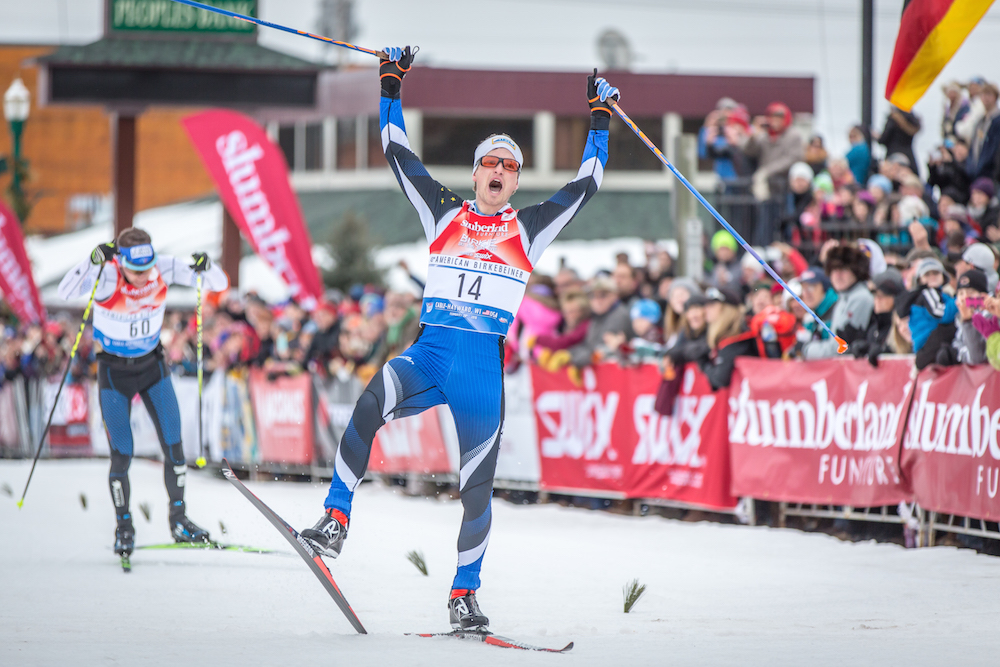
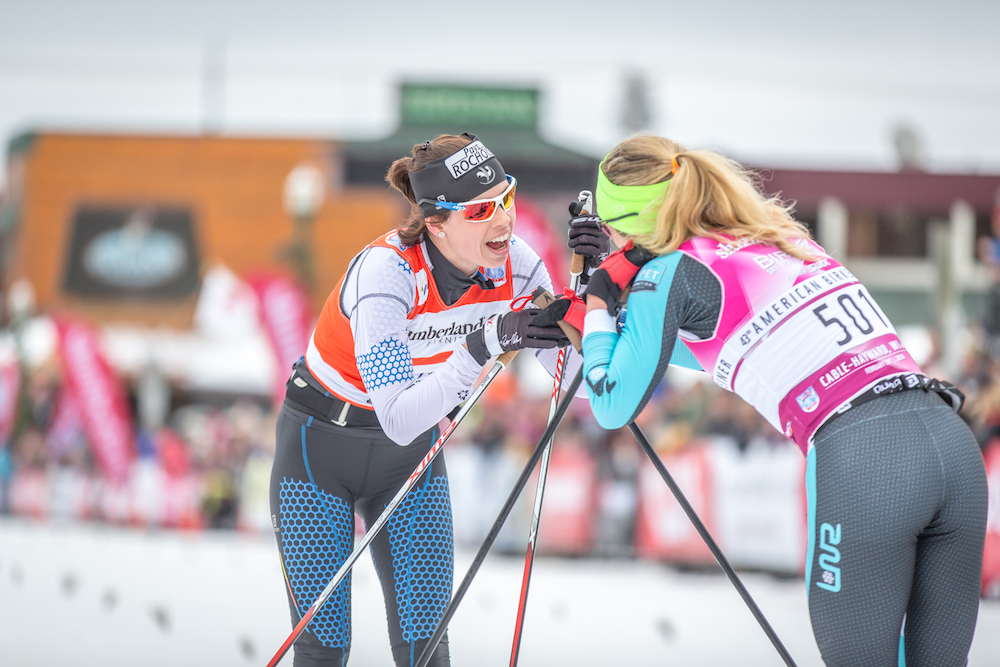
    Eventual winner David Norris (l) and his APU teammate and second-place finisher Scott Patterson (r) race in the Bird Ridge Hill Climb overlooking Turnagain Arm outside Anchorage, Alaska, in June 2016. (Photo: David Norris)David Norris is having a moment.  The 25-year-old native of Fairbanks, Alaska, won his first-ever SuperTour race in Lake Placid in January. The next day, he won his second SuperTour race. In February he won the prestigious American Birkebeiner, taking home more than $10,000 dollars and leaving behind an iconic shot of him exulting as he crossed the finish line. In March, after missing out on qualifying for the Ski Tour Canada, he stayed in Alaska to train and won the Tour of Anchorage, then finished third in a slushy 50-kilometer classic mass start at U.S. Distance Nationals in Vermont.

    David Norris earlier this month above Eagle Glacier outside Anchorage, Alaska. (Courtesy photo)For all of these accomplishments, Norris, who skis for Alaska Pacific University (APU), was named the FasterSkier Breakthrough Skiers of the Year among American men. As Norris wrote at the time, “I always want more from myself when any season comes to an end. I don’t think my results have put me in a different position than last year but I’m going into the summer with excitement knowing that some really great results are possible for me.”

    That was in April. Norris’s words seem prescient now. Since then, he placed second in the year’s first big mountain run in southcentral Alaska, finishing behind only APU teammate Scott Patterson on a course in the Chugach foothills outside Anchorage that gained a healthy 4,300 vertical feet over 8.5 kilometers (5.3 miles).  And earlier this month he traded places with Patterson, edging out his APU teammate for first in the Bird Ridge hill climb mountain run, a race that gains 3,500 vertical feet in less than three miles.

    Oh, and Norris also set a new course record at Bird Ridge. The race has been held annually since 1989, and has long been a favorite fitness test for Alaskan skiers.  Norris’s 37:04.70 from earlier this month beat everyone on a long line of past champions at Bird Ridge that includes Olympians Holly Brooks, Todd Boonstra, and Bill Spencer, plus former World Cup skiers Nicole DeYong, Trond Flagstad, Brent Knight, Frode Lillefjell, Toby Schwörer, and Rob Whitney.

    So what’s Norris’s secret to mountain running success? As Norris modestly notes, “In the last few summers my uphill running has improved tremendously. I am not alone in this as many of my [APU] teammates both on the men’s and women’s side are constantly earning new personal best times. As a result, they regularly share the podium with me in local mountain races.”

    Norris also admits, “I don’t specialize or focus on my mountain running performances, but as you can imagine the training for ski racing is great for mountain running results.”

    Despite Norris’s announced lack of focus in this area, his results suggest that he knows something about running uphill fast, then translating this to ski speed.

    In his own words, here are some of Norris’s top tips for going uphill fast, be it in racing or training:

    – Train really hard for ski racing! “Since the major goal is skiing well next winter my training recommendation is to train a lot for skiing and the uphill running will take care of itself. I do believe the longer sustained threshold bounding workouts and distance running sessions in the mountains are especially good preparation for both winter and summer racing.”

    – Switching techniques. “For many of the Alaskan mountain races there are steep sections where most racers switch to hiking. Hiking is fine and maybe even better on certain pitches, but forcing yourself back into a running stride as soon as the terrain allows is crucial. It is in some of the gear/tempo changes that I have either been dropped on a bad day or realized an advantage on my competitors. The hiking usually feels more comfortable, but it may not be the fastest.”

    – Pacing. “I have discovered through epic explosions that in uphill running I can hardly move up the mountain once I max out or push too hard too early. The pacing for me seems similar to ski racing, but more important because there is no recovery time in an uphill course, in contrast to a rolling ski course. The ideal pace for me is to go out hard, then settle into something that I know is manageable before trying to pick up the pace during the last five or ten minutes of the race. Sometimes I don’t get to choose the pace and I am forced into hanging with my competitors with an early pace that is faster than I believe I can handle. In that case another important aspect to pacing is just running relaxed and keeping your arms loose through the first three quarters of the race.”

    As Norris graciously concludes: “I hope some of these tips help you in your next time trial or race. The major tip that I have seen work for myself is to just train a ton for skiing! Make a lot of your training going up big hills – that is, both in easy distance and during intervals. Don’t just hit the flats because you’re supposed to be doing easy distance; take to the hills and just monitor your pace to keep it where you want it.”

    David Norris of Alaska Pacific University celebrates his first victory in the American Birkebeiner 52 k freestyle race in February in Hayward, Wis. (Photo: James Netz/American Birkebeiner Ski Foundation)

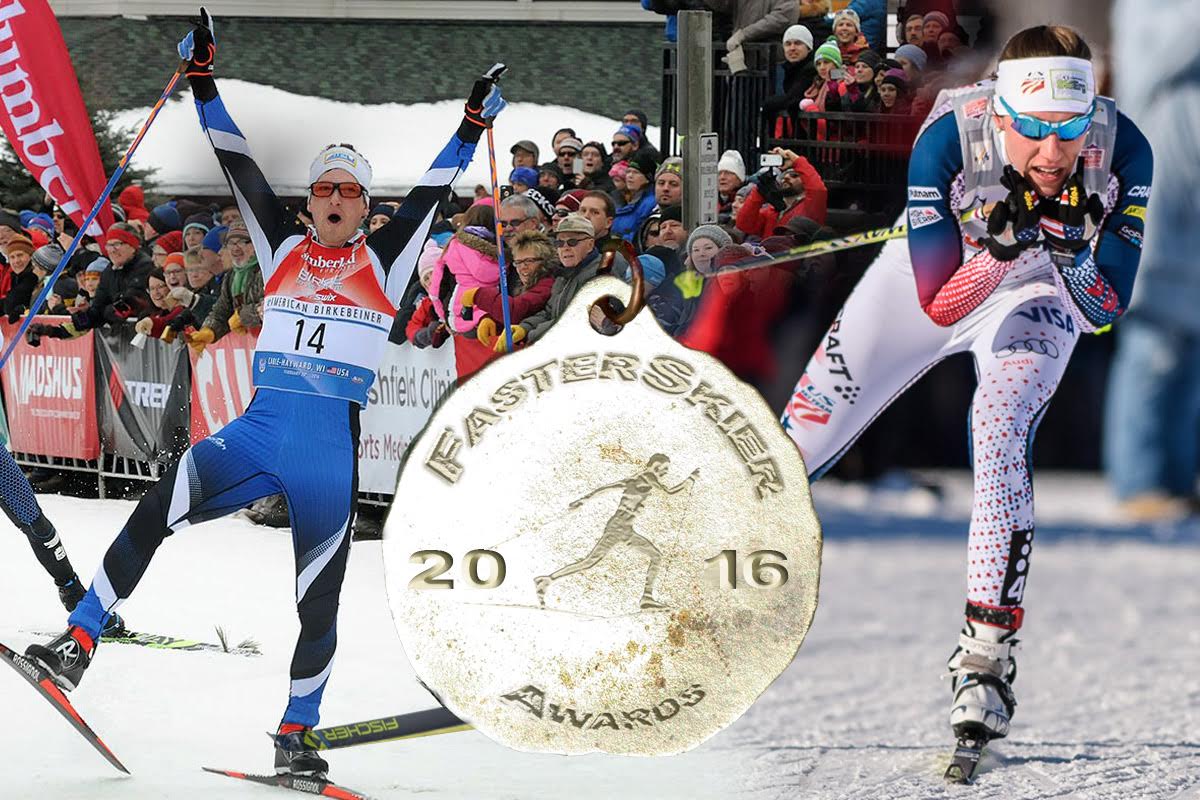
  • FasterSkier’s U.S. Breakthrough Skiers of 2016: Kaitlynn Miller and David Norris

    FasterSkier’s U.S. Breakthrough Skiers of 2016: Kaitlynn Miller and David Norris

    David Norris (l) and Kaitlynn Miller (r) are FasterSkier's Breakthrough Skiers of the Year for the U.S. (Photos: Tom Kelly/USSA and Flying Point Road)
    David Norris (l) and Kaitlynn Miller (r) are FasterSkier’s Breakthrough Skiers of the Year for the U.S. (Photos: Tom Kelly/USSA and Flying Point Road)

    The 2015/2016 awards continue this week, chosen by the FasterSkier staff based on performances from last season. While not scientific, these points of recognition are intended to reflect a broader sense of the season in review.

    Previous categories: Biathletes of the Year | Collegiate Skiers | JuniorsNordic CombinedPara-Nordic

    ***

    American Breakthrough Skiers (Canadian award winners will follow)

    Kaitlynn Miller, Craftsbury Green Racing Project

    If Craftsbury’s Kaitlynn Miller had been told at the beginning of last season that she’d be spending some her last few races on the World Cup at the Ski Tour Canada (STC), she might not have believed them.

    By the end of the 2016 season, Miller had pushed any doubt aside. The 24-year-old Elmore, Vt., native not only qualified for the STC in March, but also left 2016 U.S. nationals in January in Houghton, Mich., with a string of personal bests.

    Prior to this year, she had never reached the podium at nationals. In her second season as a CGRP athlete, Miller podiumed twice in Houghton — first in the women’s 10 k classic individual start and again in the classic sprint — the latter of which she won for her first national title. She finished the week within the top 10 in every race. Last season, her best result at U.S. nationals was 13th in last year’s 20 k classic mass start.

    “To come away from Nationals with two podium finishes, including a national championship, was incredibly exciting, a bit overwhelming, and definitely unexpected,” Miller wrote on her blog after nationals.

    Kaitlynn Miller (USA) on her way to 39th place.  Ski Tour Canada. Women’s 10.5 k classic mass start, Montreal.  (photo: flyingpointroad.com/NNF)
    Kaitlynn Miller (front) on her way to 39th in the Ski Tour Canada women’s 10.5 k classic mass start, the second stage of the Tour, in Montreal, Quebec. She went on to place 41st overall in her first World Cup Tour. (Photo: Flyingpointroad.com/NNF)

    Along with breakthrough performances in Houghton, Miller raced to her best-ever SuperTour result earlier last season in Sun Valley, Idaho, finishing second in a classic sprint in December.

    She also finished sixth in the Sun Valley 10 k classic and second in another 10 k classic SuperTour race in Lake Placid N.Y., fifth in the 30 k classic at U.S. Distance Nationals in Craftsbury, Vt., and 41st in her first World Cup multi-stage tour.

    “I’ve never raced a World Cup before, or even an international race for that matter (unless you count North American Midget Championships),” Miller blogged after the initial stages of the STC. “With each race I finish I have more confidence in myself and I’m very grateful to have this amazing opportunity to compete against the fastest women in the world.”

    David Norris, Alaska Pacific University

    Even after back-to-back victories in two SuperTour races this season, it was the third time at the top of the podium that left David Norris of Alaska Pacific University (APU) without words.

    For 25-year-old Norris, of Fairbanks, Alaska, some wins can only be summed up with a whoop.  

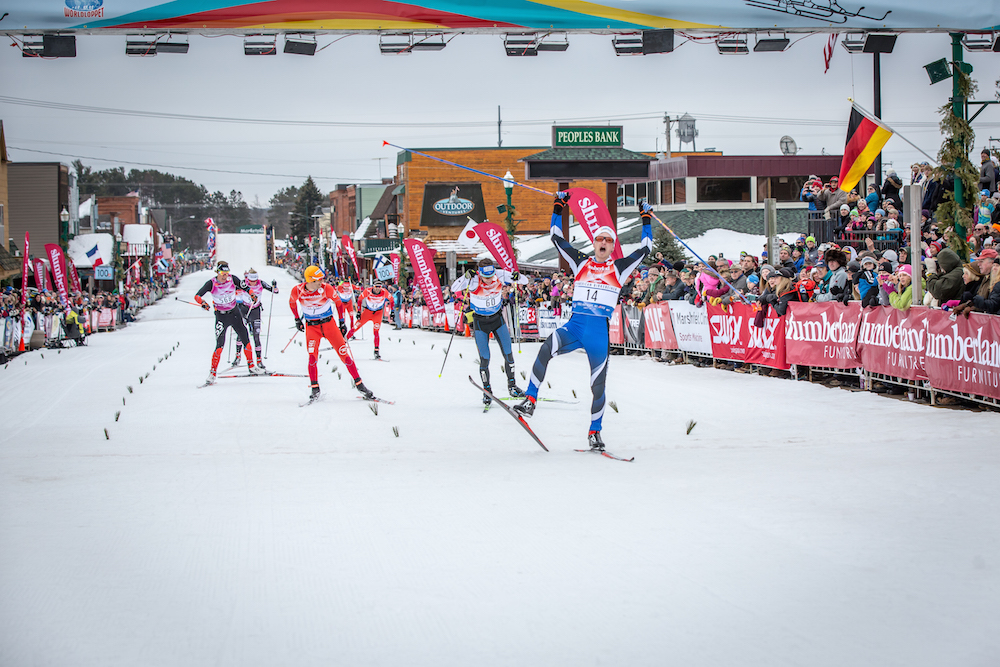
    That included his victory in this year’s American Birkebeiner in Hayward, Wis., in his first-ever Birkie. Norris’ breakthrough result also made him the first American male to win the Birkie since Tad Elliott did so in 2012.

    “Crossing the line Saturday was the first time in my life where I threw up my hands and screamed in excitement!” Norris wrote on his blog after winning the 51 k Birkie skate race. “Taking the win, having the confidence to lead the last 800 meters of the race, and to pull it all off was an incredible feeling.”

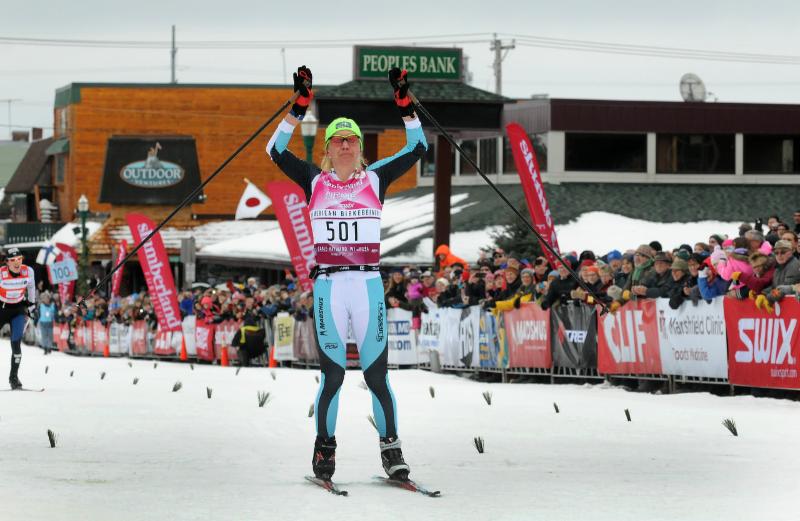
    David Norris (APU) celebrates his victory at the 2016 American Birkebeiner, holding off France's Ivan Perrillat Boiteux, Benoit Chauvet and Adrien Mougel in second, third and fourth, respectively. (Photo: James Netz/American Birkebeiner Ski Foundation©2016)
    David Norris (APU) celebrates his victory at the 2016 American Birkebeiner, holding off France’s Ivan Perrillat Boiteux, Benoit Chauvet and Adrien Mougel in second, third and fourth, respectively. (Photo: James Netz/American Birkebeiner Ski Foundation©2016)

    Leading the last 800 meters of the race for Norris included holding off France’s Ivan Perrillat Boiteux, of team Houte-Savoie, Frenchman Benoit Chauvet, Frenchman Adrien Mougel, Switzerland’s Candide Pralong (all of GEL intérim Rossignol), France’s Mathias Wibault, and the 2014 Birkie champion from Italy, Sergio Bonaldi (Team Salomon Italia).

    Norris had a number of other season firsts beyond his Birkie win. He also won his first ever SuperTour races at the Lake Placid SuperTour, topping the men’s freestyle sprint and posting the fastest time in the 10 k classic individual start. He finished on the U.S. Distance Nationals podium for the first time in two years by placing third in the men’s 50 k classic mass start in Craftsbury, Vt.

    “The highlights to my season would have to be my American Birkie win and picking up my first Super Tour wins ever,” Norris wrote in an email after the 50 k, his last race of the season.

    “I always want more from myself when any season comes to to an end,” he added. “I don’t think my results have put me in a different position that last year but I’m going into the summer with excitement knowing that some really great results are possible for me.”

    Honorable Mentions

    Tad Elliott, Ski & Snowboard Club Vail

    Although Tad Elliott of Ski Club Vail is not a new name to the top of U.S. distance results, this past season saw a re-breakthrough for the 27 year old from Durango, Colo.

    A former U.S. Ski Team member, Elliott returned to the U.S. nationals podium, winning the men’s 30 k freestyle mass start for his fourth-career national title.

    Photo: Tad Elliott of Ski and Snowboard Club Vail crosses the line in first for the men's 30 k freestyle mass start on Thursday at U.S. nationals in Houghton, Mich. (Photo: Christopher Schmidt)
    Tad Elliott of Ski and Snowboard Club Vail crosses the line in first for the men’s 30 k freestyle mass start on Thursday at U.S. nationals in Houghton, Mich. (Photo: Christopher Schmidt)

    “In the months leading up to the race, I could only dream of the podium,” Elliott said in an interview after his 30 k win. “Hell, I didn’t know if I was going to be healthy enough to even start, but as you know, once the gun goes off, it really is anyone’s race.”

    Elliott also raced to second place in the Craftsbury SuperTour 10 k classic in February, as well as a second place in the men’s 50 k classic mass start at U.S. Distance Nationals in Craftsbury in March. Before that, he qualified for the STC World Cup races in March, finishing the tour in 51st overall.

    “This season was a step in the right direction,” Elliott wrote in an email after his last race of the season. “To come off Ski Tour Canada, and a long week in Craftsbury and to ski like this after all the health issues the last two years shows that I am in a really good place. I am excited for the future.”

    Annie Hart, Stratton Mountain School T2 Team

    Hart is another skier that’s been a regular contender in recent years, but a few personal bests at U.S. nationals — second in both the women’s freestyle sprint and classic sprint, fifth in the 20 k freestyle mass start, and eighth in the 10 k classic — make the 23-year-old SMS T2 Team skier our pick for female honorable mention.

    American Anne Hart leads the start of the women's10 k freestyle at Stage 7 of the Ski Tour Canada in Canmore, Alberta. (Photo: Fischer/NordicFocus)
    American Annie Hart leads the start of the women’s 10 k freestyle at Stage 7 of the Ski Tour Canada in Canmore, Alberta. She placed 39th and would later finish the Tour in 43rd overall. (Photo: Fischer/NordicFocus)

    She won her first SuperTour race in February, posting the fastest time in the in the women’s 5 k freestyle in Craftsbury. She also placed third in the Lake Placid SuperTour freestyle sprint and competed in her first World Cup races at STC (finishing the tour in 43rd overall).

    After starting in bib 1 for the first time in the 10 k freestyle individual start in Canmore, Alberta, Hart raced to 39th in Stage 7. She previously placed 36th in the Stage 5 classic sprint, narrowly missing her first World Cup points.

    “With eight races in twelve days on the most elite and competitive cross country ski stage in the world, I was most certainly in for a lot of surprises,” Hart blogged after the STC. “I didn’t know what race day would bring, I didn’t know how the travel would go, and I really had no expectation results-wise. But [my strength coach Max Lipset’s] words reminded me that I could also be the surprise — it didn’t have to be other things surprising me, I could be surprising myself.

  • U.S. Distance Nationals 50 k Brings Some to the Brink; Bjornsen Wins Battle for First

    U.S. Distance Nationals 50 k Brings Some to the Brink; Bjornsen Wins Battle for First

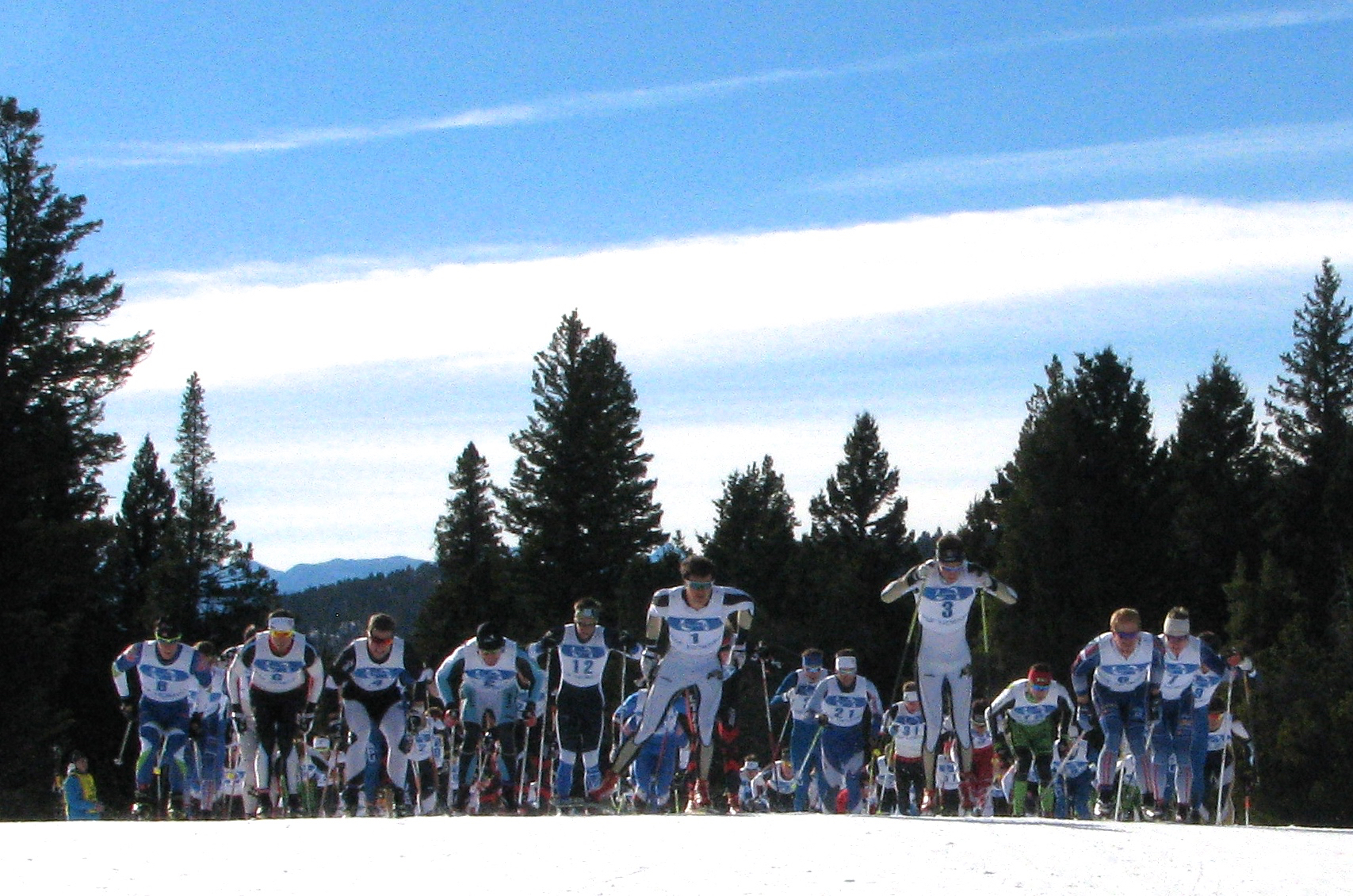
    The start of the men's 50 k at 2016 U.S. Distance Nationals on Saturday in Craftsbury, Vt. (Photo: John Lazenby/Lazenbyphoto.com)
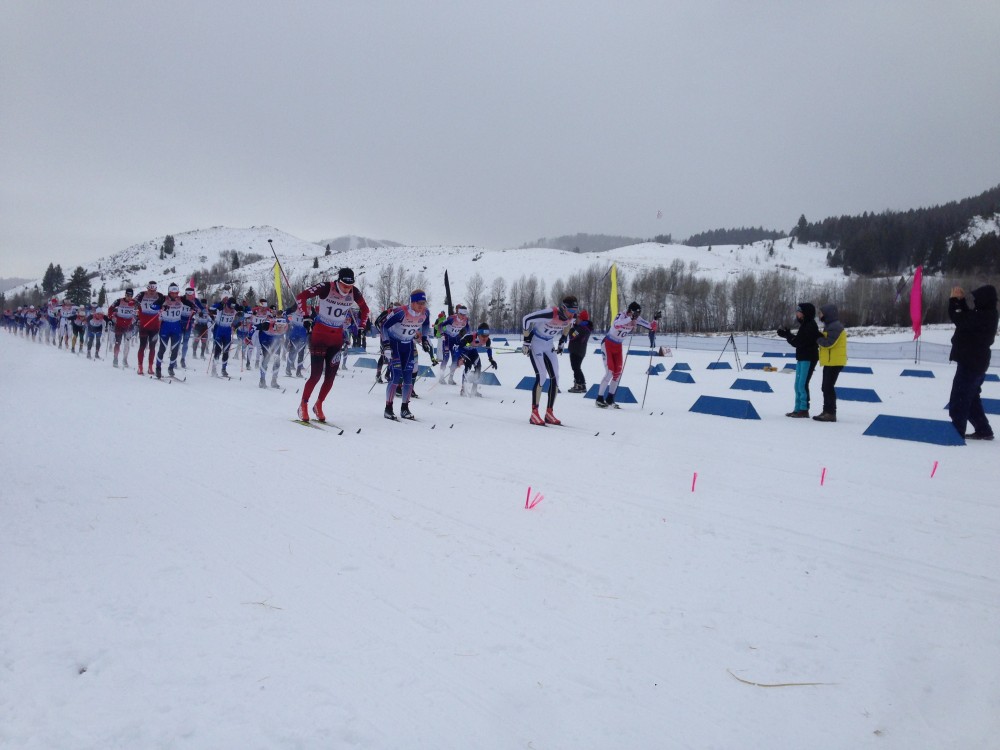
    The start of the men’s 50 k classic mass start at 2016 U.S. Distance Nationals on Saturday in Craftsbury, Vt. (Photo: John Lazenby/Lazenbyphoto.com)

    Capping off the U.S. nordic season in the spring with a 50-kilometer race is bound to bring some racers to peel off the layers under their race bibs, and many to the brink of their most basic needs.

    “I was dreaming about hamburgers before we even made it halfway,” Alaska Pacific University’s (APU) Eric Packer wrote in an email. “It was just like the warmest of days we see training on the glacier — slow, sloppy, and soft.  In those conditions you just have to keep the legs moving and work every bit of the way.”

    While Packer led the band of men’s racers for the first lap of this year’s U.S. Distance Nationals 50 k classic mass start on Saturday in Craftsbury, Vt., it was his APU teammate, Erik Bjornsen, who evetually took the overall win.

    Bjornsen, who grew up in Washington state’s Methow Valley, secured his second win of the week after completing the men’s 15-lap 3.5 k course in a time of 2:43:56.7.  However, while Bjornsen was the first racer to cross the finish line, he was rarely leading throughout the 50 k race.

    David Norris of Alaska Pacific University leads Kris Freeman of Team Freebird during the men's 50 k at 2016 U.S. Distance Nationals on Saturday in Craftsbury, Vt. (Photo: John Lazenby/Lazenbyphoto.com)
    David Norris (4) of APU leads Kris Freeman (8) of Team Freebird during the men’s 50 k classic mass start at 2016 U.S. Distance Nationals on Saturday in Craftsbury, Vt. (Photo: John Lazenby/Lazenbyphoto.com)

    Setting the pace up front instead was Bjornsen’s APU teammate Scott Patterson and Noah Hoffman and Tad Elliott, both of Ski & Snowboard Club Vail (SSCV).

    “The 50k turned into a race of attrition,” Elliott wrote in an email. “There was Noah, Erik, and I and we were all skiing off the front at some point in the final 3 laps We were all unsure who would win and we were all skiing alone. It was brutally hard.”

    With two $125-dollar primes waiting at lap 3 and lap 10 for the first skier, the men’s front pack stayed close together for the first 10 k, with Hoffman eventually claiming the first cash prize as his own.

    One-fifth of the race behind them, Patterson regained the lead until the next prime. Bjornsen sat in third, Elliott fourth and APU’s David Norris, who eventually placed third overall, in seventh.

    “Maybe around lap seven Hoff pushed the pace and I tried to follow it along with BJ, but I didn’t have the strength to latch on,” Norris wrote in an email. “From that point on I kind of skied an individual race.”

    Heading into lap six, it was Hoffman who hounded the pace with Packer holding on to try and make a break from the rest of the field on the course’s major incline. But by the course’s flat section, Bjornsen had surged his way back to the front two, pulling Elliott with him. 

    “Coming up the big climb on lap 6, Noah went to the front and upped the pace,” Packer wrote. “I covered the move and we built maybe a 10 second gap on the chase group.  I started to suffer, and Bjornsen was able to close the gap across the flats.  The whole group came back together on the seventh lap, and Tad and Noah attacked again on the climb.  The group split there for good.”
    Left to right: Noah Hoffman of Ski and Snowboard Club Vail, Tad Elliott also of Ski and Snowboard Club Vail, and Erik Bjornsen of Alaska Pacific University during the men's 50 k at 2016 U.S. Distance Nationals on Saturday in Craftsbury, Vt. (Photo: John Lazenby/Lazenbyphoto.com)
    Left to right: Noah Hoffman of Ski and Snowboard Club Vail, Tad Elliott also of Ski and Snowboard Club Vail, and Erik Bjornsen of Alaska Pacific University during the men’s 50 k at 2016 U.S. Distance Nationals on Saturday in Craftsbury, Vt. (Photo: John Lazenby/Lazenbyphoto.com)

    Packer and Patterson wound up racing together for the remainder of the race, with Patterson pacing.

    “From the 7th lap to the finish, the race was about survival,” Packer wrote. “Scott and I skied together, and Scott deserves a ton of credit because he led 90% of it.  He is such a strong pace setter.”

    Norris skied a few seconds ahead of Kris Freeman (Team Freebird) for a stretch before breaking away and racing on his own.

    “From that point on I kind of skied an individual race,” Norris wrote. “Skiing alone I found a good rhthym and was able move into third starting my final lap.”

    Hoffman pushed the front pack for the next 15 k until he started seeing spots.

    “I felt great until 4 laps to go when I blew up harder than I’ve ever blown up before,” Hoffman wrote in an email. “I got shaky and my vision got blurry. It was all I could do to get around the course. I probably used too much energy early in the race going for the cash preems and trying to set a hard pace.”

    Losing steam, Hoffman dropped back to second during lap 12 and Elliott pulled up to first, Bjornsen yo-yoed from a minute back from the lead to within its sights.

    “When Hoff went for the preem, he created a big enough gap that he was out of sight and I think at one point he probably had a minute on me,” Bjornsen said during a phone interview on Sunday. “A lot of times when you see gaps form like that, you don’t see the front group come back. But … with three laps to go, I just got a boost of energy and in my mind could see that there was an opportunity to take it.”
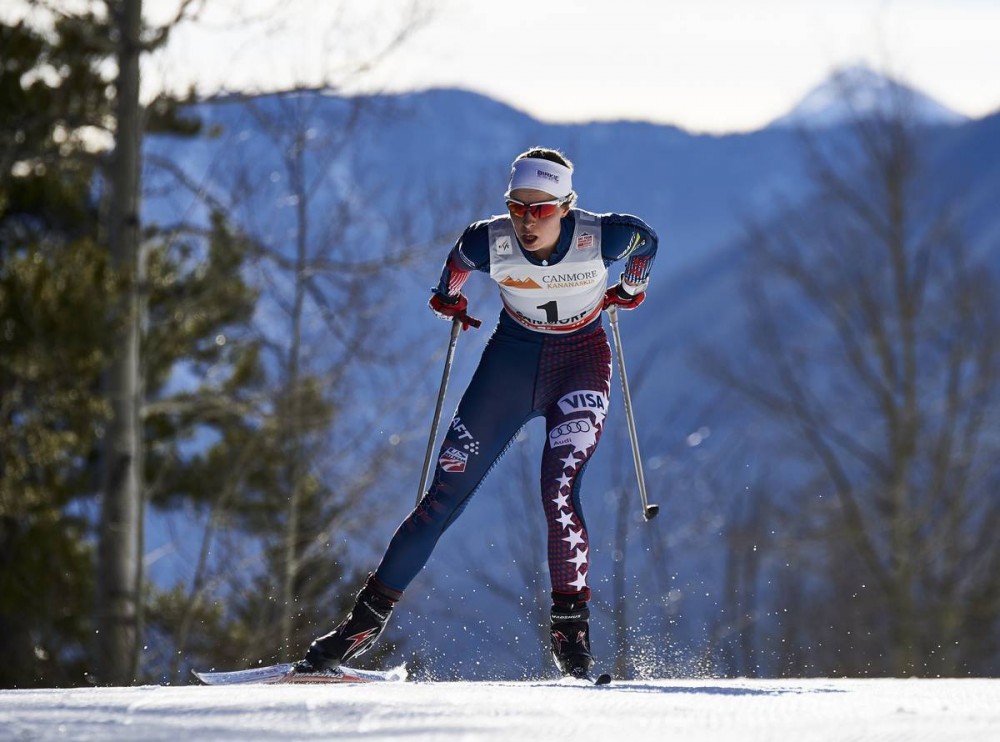
    Tad Elliott of Ski and Snowboard Club Vail (l) receives a feed ahead of Noah Hoffman Ski and Snowboard Club Vail during the men's 50 k at 2016 U.S. Distance Nationals on Saturday in Craftsbury, Vt. (Photo: John Lazenby/Lazenbyphoto.com)
    Tad Elliott of Ski and Snowboard Club Vail (front) receives a feed ahead of SSCV teammate Noah Hoffman during the men’s 50 k classic mass start at 2016 U.S. Distance Nationals on Saturday in Craftsbury, Vt. (Photo: John Lazenby/Lazenbyphoto.com)

    Elliott expanded his lead and by the end of the next two laps he was 12 seconds up on Bjornsen in second.

    However, with 44 k done and just 6 k more to go, Bjornsen began to bring on the burn. He caught Elliott and before the second-to-last lap, he had 32 seconds on him. By the time Bjornsen crossed the finish line, had bettered his 30-second lead by over a minute.

    Elliott finished second, 1:39.3 minutes off of Bjornsen’s race time and Norris in third, 3:35.9 minutes back from Bjornsen.

    “The 50k went amazing it was the best classic result I have ever had and maybe the best race I have ever had,” Elliott wrote. “My skis were incredible, Evan Elliott, Zach Caldwell, Josh Smullin, Austin Caldwell, and Brayton Osgood worked so hard for us. Evan my twin my was wax guy specifically. Skis really helped me in the race.”

    About 24 seconds off the podium, Freeman finished fourth (+5:33.4), Packer followed in fifth (+5:59.3), Patterson sixth (+6:05.0), and Hoffman seventh (+7:50.6).

    Spring Series Sums Up Season

    With the culminating Spring Series event, some of Saturday’s racers are saying goodbye to the 2015/2016 season with a slight sigh, both of relief and excitement, for the end of one season and the ones yet to come.

    “Saturday’s race shows that things are really going well for me,” Elliott wrote in an email. “To come off Ski Tour Canada, and a long week in Craftsbury and to ski like this after all the health issues the last two years shows that I am in a really good place. I am excited for the future.”

    Elliott added that much of his season’s success would not have been possible without the continuing support from the ski community.

    Second place finisher, Tad Elliott of Ski and Snowboard Club Vail (l) receives a hug from first place finisher, Erik Bjornsen of Alaska Pacific University after the  men's 50 k at 2016 U.S. Distance Nationals on Saturday in Craftsbury, Vt. (Photo: John Lazenby/Lazenbyphoto.com)
    Saturday’s runner-up Tad Elliott of Ski and Snowboard Club Vail (r) received a hug from winner Erik Bjornsen (APU) after the men’s 50 k classic mass start at 2016 U.S. Distance Nationals in Craftsbury, Vt. (Photo: John Lazenby/Lazenbyphoto.com)

    “This season was a step in the right direction,” he wrote. “I never thought that is would go so well. I am amazed. So much thanks to Vail, [coach] Zach Cadwell, Salomon, Oakley, Swix. They all stayed by me and helped me come back . I lived with Zach all winter in his house with his family. Without the Caldwells this season wouldn’t have gone the way it has.”

    Just how will Saturday’s second place finisher prepare for next season? Working the green with good friends.

    “Next is Golfing with some of my best friends in South Carolina,” Elliott wrote. “As for skiing, the only goal is to stay healthy and positive to training results will fall into place.”

    Norris echoed Elliott’s enthusiasm for not just Saturday’s race, but the season as a whole.

    “I’m glad I could climb back onto the US National podium again after two years not being able to find it,” Norris wrote.

    Norris, who said he spent his 2014 race year recovering from an illness, also sees his races from this season, including his win in the American Birkebeiner and back-to-back SuperTour victories in Lake Placid, N.Y., as sign for more performances to come.

    “The highlights to my season would have to be my American Birkie win and picking up my first Super Tour wins ever,” Norris wrote. “I advanced to my first SuperTour sprint A final this winter and then won the race — that was a seaon highlight! Today will be remembered as a highlight but more because of how painful it was to get to the finish line.”

    Norris, like many nordic skiers, savors the season as an indicator for more.

    “I always want more from myself when any season comes to to an end,” he added. “I don’t think my results have put me in a different position that last year but I’m going into the summer with excitement knowing that some really great results are possible for me.”

    And Bjornsen?

    “I’m actually headed to France,” Bjornsen said, who will race one more 50 k next Sunday.
    As far as his last race on U.S. soil, Bjornsen is ready to soak up the win. “It’s been a while since I’ve had a national title,” he added. “So that was pretty cool at the end.”

    Results

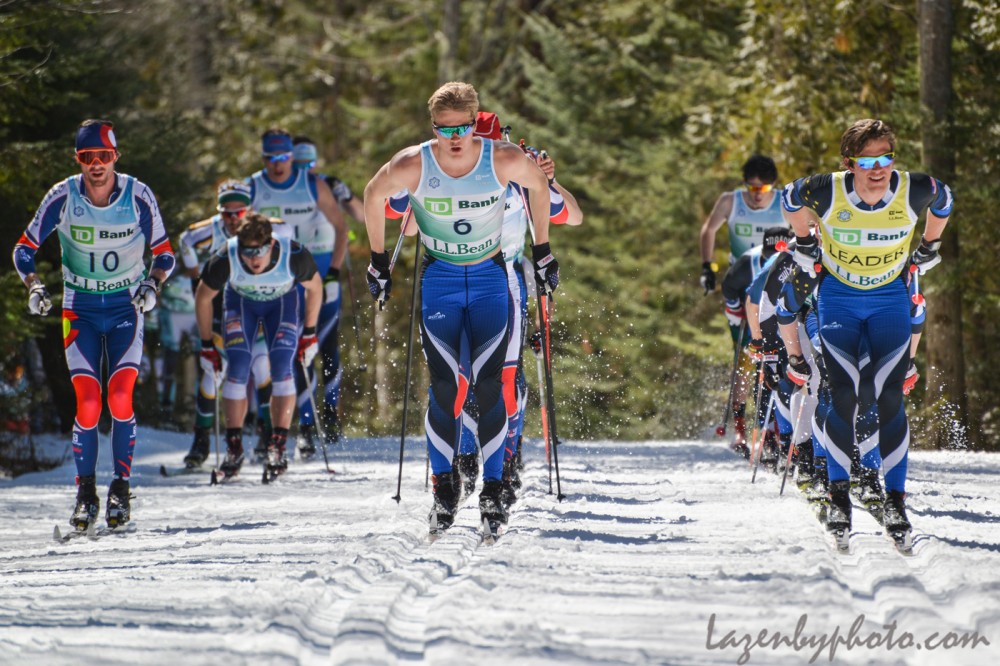
    Race winner Erik Bjornsen (center) of Alaska Pacific University with secon place finisher Tad Elliott of Ski and Snowboard Club Vail (l) and third place finisher Daivd Norris of Alaska Pacific University after the men's 50 k at 2016 U.S. Distance Nationals on Saturday in Craftsbury, Vt. (Photo: John Lazenby/Lazenbyphoto.com)
    Race winner Erik Bjornsen (center) of Alaska Pacific University with second-place finisher Tad Elliott of Ski and Snowboard Club Vail (l) and third place finisher Daivd Norris of Alaska Pacific University after the men’s 50 k classic mass start at 2016 U.S. Distance Nationals on Saturday in Craftsbury, Vt. (Photo: John Lazenby/Lazenbyphoto.com)
  • Norris Wins 10-Lap Anchorage Tour; Brooks Tallies Third Title

    Norris Wins 10-Lap Anchorage Tour; Brooks Tallies Third Title

    APU teammates Lauren Fritz (l) and Holly Brooks racing for the win at the 2016 Anchorage Tour in Kincaid Park on March 6. Brooks won and Fritz placed second. (Photo: Rob Whitney)
    APU teammates Lauren Fritz (l) and Holly Brooks racing for the win at the 2016 Anchorage Tour in Kincaid Park on March 6. Brooks won and Fritz placed second. (Photo: Rob Whitney)

    ANCHORAGE, ALASKA – A first-time racer and a former champion returning after a long absence skied to convincing victories in the Anchorage Tour Festival 30-kilometer race, née Tour of Anchorage 50 k, at Kincaid Park on Sunday. David Norris, last seen coming out of a group sprint to win the American Birkebeiner two weeks ago, and Holly Brooks, previously seen in two Olympic games but not at this race since 2009, each won by roughly three minutes on a sunny morning at Kincaid.
    The Tour of Anchorage is traditionally a 50-kilometer, point-to-point race, ranging from the Chugach foothills on the east side of town to Kincaid Park at the west edge of the Anchorage metropolitan area.  In between, racers traverse ski trails, city greenbelts, and bike trails until they reach the Coastal Trail multiuse trail, at which point they cover 15 k along the shores of the Pacific Ocean before ascending a hill to finish at Kincaid.  It is truly a tour through the heart of Anchorage.

    This year’s race, like every other race held under the auspices of the Nordic Ski Association of Anchorage (NSAA) in this snow-sparse winter, occurred exclusively on the snowmaking loop centered on the Kincaid Stadium.  This year’s Tour presented 10 laps around a 3 k course, making for a 30 k freestyle race.  It was more a Tour of the Snowmaking Loop than a Tour of Anchorage.  Conditions on the course were very good at the outset, with recent fresh snow mixed into a solid base of manmade snow, though the steepest uphills and downhills broke down into sugar snow over glare ice by midway through the race.

    David Norris (APU) racing to his first Anchorage Tour win at Kincaid Park on March 6. (Photo: Rob Whitney)
    David Norris (APU) racing to his first Anchorage Tour win at Kincaid Park on March 6. (Photo: Rob Whitney)

    Norris, who skis for Alaska Pacific University (APU) and who won the men’s race by nearly three minutes in 1:14:51.0, seemed undeterred in his first time racing the Tour of Anchorage.  In an email, he wrote, “This would have been my first year to do the actual Tour. … Due to the low snow year I was glad to have the Tour Festival 30km race on the manmade loop. I am glad the NSAA hosted the event even though we couldn’t do the formal course.”

    The men’s podium was all APU blue.  Jack Novak was second in 1:17:32.9.  Andre Lovett followed roughly a minute later in 1:18:27.9.

    Norris skied most of the race by himself, after breaking away from Novak late in the first lap.  Norris wrote of his race strategy, “I went out hard from the start to practice that kind of effort. Jack stayed with me for almost the entire first lap before settling in.”

    Norris had no other immediate competitors for the remaining nine laps and 27 k.

    But with a field of 148 skiers on a 3 k loop (60 racers for the 30 kilometer race and 88 for the contemporaneously held 15 kilometer race), Norris had plenty of company out there.  As Norris graciously wrote, “I thought I skied steady and was able to re-accelerate through corners or after congestion due to all the different levels of racers on a short 3km loop.  I really apologize if I ever startled anyone while making a pass.  I tried to be really careful not to be a jerk while making passes today.”

    “I tried to be really careful not to be a jerk while making passes today.” — David Norris, after winning 2016 Anchorage Tour 30 k

    While Sunday was the first time in this race for Norris, a Fairbanks native, the 2016 Tour marked a homecoming of sorts for Anchorage’s Holly Brooks.  Brooks won the flagship 50 k Tour in both 2008 and 2009, at a time in her ski career when she was an APU coach first and a competitive skier second.  Better results, a spot on the U.S. Ski Team, and nomination to the 2010 and 2014 U.S. Olympic teams famously followed.  Brooks then spent last winter traveling the world, competing in the FIS Marathon Cup/Worldloppet series on three continents.  She is now pursuing a degree, buying a house, and likely training somewhat less.  But she is still winning ski races.

    Brooks, who remains affiliated with APU, finished first among the women in 1:24:46.1.  Her main competition came from fellow APU skier Lauren Fritz, who finished slightly less than three minutes back in 1:27:39.0.  Citizen racer Sally Hokanson was third in 1:40:21.4.

    While Norris went out hard from the start and gapped Novak early, Brooks and Fritz skied together for a majority of the morning.  Brooks started to pull away about three quarters of the way through the race, she recounted in an in-person interview.  

    “It might have been on lap 7 of 10.  It was on [the downhill on] the backside [of the course], because my skis were running pretty well,” she said. “I noticed I had a little bit of a gap.  I just put a few extra strides in and a good tuck and a big push, and opened up a little bit of a gap.”

    Holly Brooks (l) and Lauren Fritz, both APU, after placing first and second, respectively, at the Anchorage Tour in Kincaid Park on March 6. (Photo: Rob Whitney)
    Holly Brooks (l) and Lauren Fritz, both APU, after placing first and second, respectively, at the Anchorage Tour in Kincaid Park on March 6. (Photo: Rob Whitney)

    Brooks kept her lead to the finish, aided by her own observations and splits from others.  

    “There’s a little out and back, where you can kind of get an idea if someone’s there or not, so I saw her there the first time after I’d made the move,” Brooks said.  “And then I got a couple of back splits after that that I had a little bit of a gap.”

    Brooks appreciated the chance to be back racing on home soil, after many winters spent skiing anywhere but in Alaska.  

    “It’s nice to be home,” she said.  “I had my husband out here giving me feeds, so that’s always fun, and a lot of local people out there on the course too.  There was a lot of traffic out there today, the 30 k and the 15 k on the same loop, and some of the downhills were a little sketchy with the traffic, but it was manageable.”

    A Kincaid lap race may not be particularly exciting, but it was certainly a change of pace from Brooks’ schedule last spring.  When asked where she had been one year ago this month, the peripatetic Brooks had to think for a while before answering.  

    “Last year I wasn’t home for another five weeks,” she finally said.  “Let’s see… I was at the Engadin this weekend last year I think.  And then after that I think there was the Norwegian Birkie. And then, I can’t remember if there was something between that and going to Siberia.  So, a much different year.”

    While Norris was racing the Tour for the first time, the rest of the day’s podium finishers were no strangers to this race.  Among the men, second-place finisher Novak won the race in 2015 (when it held as a criterium with a 50-minute time limit), and was third in 2014.  On the women’s side, second-place Fritz was also second in 2014.  And third-place Hokanson was second in the 2015 criterium, and (as Sally Johnson) won the 25 k classic race in 2008.

    So what are the winners’ plans for the rest of the season?

    “I will be training in Fairbanks until I leave for Spring Series in Vermont, which will conclude my season,” Norris wrote. “My season has progressed and I think I have made a good step forward. My goal at the beginning of the season was to earn a spot on the Canadian Tour World Cups, but with just average races in December and November I wasn’t able to secure a position.”

    Meanwhile, Brooks had upcoming spring marathon racing goals, including either the Kachemak Bay Nordic Ski Marathon in Homer or the Sonot Kkaazoot in Fairbanks. But as of early Sunday afternoon, standing in the Kincaid parking lot, the March sun finally taking the chill off what had been a brisk morning, she had more immediate plans.  “Oh, and I’m anxious for that sauna to get nice and hot,” she observed, gesturing toward a portable sauna that had been towed into the parking lot next to the beer garden.  “And the barrel hot tub.”

    Overall results

  • Toko: Ski For Women and Birkie


    Toko logo

    Introducing the Alaska Ski for Women, a fundraiser to help stop the cycle of domestic abuse against women and children and also a really fun outing! Toko has supported this important event for the past 17 years.

    Alaska ski for women

    Alaska Ski for Women – an important event

    The colorful Alaska Ski for Women (ASFW) is North America’s largest women-only cross-country ski event. This is a great event where women of all ages and abilities come out to Nordic ski approximately 2.4 miles (4K), many in colorful costumes, while raising funds for local non-profit organizations that help stop the cycle of domestic abuse against women and children. This is not only a fun event, it’s also a fundraising event! Through the generous donations of ASFW participants, and the hard work of the all volunteer committee, the race has been able to make an impact in the community by contributing over $1,000,000 to groups that actively work to improve

    women’s lives. A special focus is ending the cycle of violence against women and their families and to help women in crisis find positive solutions to a healthier life.

    Alaska ski for women

    Held every year since 1997 the Anchorage event originally had nothing to do with the Super Bowl and started as a way to get more women out skiing together. That it was set on the same day as the football game was a coincidence -it was the only Sunday left with no race scheduled when the initial reservations were made. Since then, organizers kept the race on the day of the Super Bowl because it offered a great reason for women to have fun and raise money on a winter day when people are in a celebratory mood already.

    Alaska ski for women

    The primary purpose of this event is to get women out and take away their excuses. It certainly is a nice date and the event gets done in time to watch the Super Bowl. Race Director, Tamra Kornfield said 500 women signed up for the event this year, a slight drop from last year’s numbers but the goal is to get more women interested in the sport as well as supporting a good cause. While it’s not yet known exactly how much money was raised this year, Kornfeld said last year the group raised about $50,000 in donations. Teams dressed in costumes including a Chinese dragon, hot air balloons, a lion, a gorilla, devil’s club and public school busses. A team dressed as “Google Maps” claimed victory in the costume contest. Olympic cross country skier Kikkan Randall was one of the costume contest judges. Randall said that the trail was well-maintained with manmade snow despite the lack of natural snow. Were it not for the snow making equipment at Kincaid Park the last two season, the Ski for Women might well have been a walk as it was in 2005 when there was no snow on the ground.

    Alaska ski for women

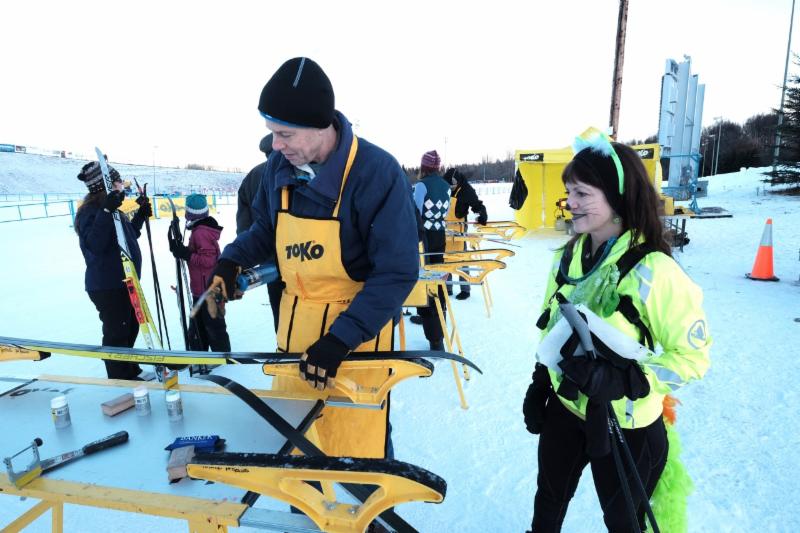
    I have been a wax volunteer for the ASFW since the inaugural event in 1996. Initially a group of volunteers took over the Kincaid Park wax bunker and provided skate and kick wax services. TOKO started providing wax for the event in 1999 when I first came on board as a member of the TOKO Tech Team. The bunker was being renovated in 2001 for the World Special Olympics held in Anchorage and was unavailable for use for the Ski for Women. That year, myself and Mark Strabel set up our tables and tents in the stadium near the start and provided kick wax service to participants. Being near the start and seeing the costumes and the joy of the participants gave good reason to continue with kick wax service outside in the stadium. Glide wax service is also provided through rub-ons and paste. The following year TOKO became the proud and exclusive wax product sponsor of the Ski for Women and has been ever since.

    Alaska ski for women

    In the 20 years I have been associated with this event there have been many volunteers who have stood outside and waxed skis. Some come for a year and others keep coming back. Each volunteer gets a TOKO hat and an apron. It is understood that regardless of the weather preceding the event or the forecast the day before, the morning of the ASFW will be cold and windy. These past few years I have been fortunate that a reliable core of volunteers has been available to wax. Chet Fehrmann, Ira Edwards, Eric Schwalber, Jay Holton and Matt Claman.

    Alaska ski for women

    Alaska ski for women

    Alaska ski for women

    Toko is proud to support the Alaska Ski for Women and will continue to support it. Thank you to the organizers and the other supporters who make it possible.

    – Patrick McGownd, Toko Tech Team Member since 1999

    John Bauer

    Bauer Wins the Pepsi Challenge

    Hayward’s 3 time olympian John Bauer won last weekend’s Pepsi Challenge race. Here’s what he ended up waxing with:

    I went with Toko HF Black then HF Red/ Yellow 50:50. I thought there was pretty good structure in the skis already so I did not re-rill. I did the red and yellow Structurite tool before adding JetStream Red and I put on a coat of the Red Helix. Perhaps I should have had more structure in…but there really wasn’t much one could do with the new snow that wasn’t much tilled when the sun hit it.

    I think it was a good effort. I skied relaxed and in the pack until I led out after 3k. Skied the Silver with a few pushes over the hills and then was alone at the 11k point on in. There were a few lurchy spots on the downhills and the skis were noisy on the sun-drenched hills.
    Congratulations to John on his overall win despite being 47 years old!

    momentum northwest

    Wax Report from JNQ Spokane, WA

    We had our last JNQ event last weekend in Spokane, and I took 10 athletes to compete in the mass start classic and individual start skate events.

    Conditions were slated to be challenging: with warm temperatures and no recent snow it was transformed but somewhat sloppy. The classic race had a possibility of new snow which I was hoping to avoid! Given the high moisture and rapidly rising temps during the day we went with LF Yellow and LF black mixed for both days as a glide base layer. Then I tested JS Red and JS Yellow blocks and found some mixed results: the JS Red ran well in the more frozen snow, but even without the temperatures rising, as the tracks (classic) or platform (skate) got more skied and transformed further the Yellow came into play. I opted for yellow on both days given where our athletes were starting in the order, and also used the yellow structurite. Next I want to play around with some linear 1mm rill to accompany the structure sometimes, as I think that would help further channel the transformed snow’s moisture down the ski – thoughts?

    For kick in Saturday’s race, I first tested a green drywax vs. klister binder. Both skied comparably fast but out of fear of wear (lots of snowplowing, sharp corners) I went with the klister figuring it would increase tenacity. I covered the green binder first with Red, and tested that against a Red/Yellow mix. The Red was solid for most of the day’s races; it held well for kick and glide without getting slick as the tracks further glazed. However the later starters were the U14 classes and I wasn’t confident they’d be able to make it work (a few had issues in their warmup). I also wanted to keep the speed of the Red, so I just dabbed in some yellow. This small amount did the trick to add a bit more kick under the foot without sacrificing glide.

    – Sam Naney, Head Coach Momentum Northwest

    David norris birkie
    David Norris winning the American Birkebeiner (photo Paul Walsh)
    caitlin gregg birkie
    Caitlin Gregg wining the American Birkebeiner for a record 4th time! (Photo USSA)

    CXC Team logo

    American Birkebeiner
    CXC Wax Report

    The American Birkebeiner is truly the “Super Bowl of Skiing” and the 2016 American Birkebeiner Ski Foundation (ABSF) schedule of events did not disappoint the 12,000 skiers who flocked to Hayward, Wisconsin to enjoy the festivities and trails of the North Country. The crazy weather was a different story; it caused a bit of stress for skiers, coaches, and wax technicians, including the Central Cross Country Skiing (CXC) wax team of Karmen Whitham, Marty Donegan, and Bruce Manske.

    The glide wax was the easy part of Birkie waxing. We cleaned the ski bases with Toko LF Blue (-30 to -10 C); although the LF Blue is a hard wax, it aids in harden the base of a ski, and makes them run faster in transformed snow conditions; and, fluorine tribloc acts as a bonding agent for Top Finish products. Next, we applied a two layer of a 1:1 mixture of Toko HF Hot Wax Black and Toko HF Hot Wax Yellow (-6 to 0 C). The Black is very similar to the temperature Toko HF Hot Wax Red (-12 to -4 C), except the Black contains DLC additive for maximum dirt repellency. The Birkie groomers did an awesome job of preparing the course, but due to the thin snow cover and rainy weather, the course had a fair mount of dirty snow. Therefore, it was important to apply a double layer of wax. Toko HF Hot Wax Yellow has selected because of the high-fluorine content and its very durable, which aids in repelling water and dirt, and makes for fast skis.

    The CXC wax team top coated each ski with JetStream Bloc 2.0 Yellow. The JetStream was cranyoned on across each ski and then melted with a fiberlene-covered iron. A very thin second coat of JetStream was then crayoned on the skis. This layer we rubbed into the ski with a dedicated cork; followed by lightly brushing with a soft nylon brush and polishing with a Toko Thermopad. The JetStream improved the speed and glide of the skis due to its high abrasion-resistant design.

    The kick wax was challenging for most coaches and wax technicians due to the weather conditions, which included precipitation throughout the day, along with a glazing track, thousands of skiers, and the marathon distance factor. The CXC waxing crew, lead by Karmen Whitman, decided to use a combination of Toko Klisters. Nordic Base Klister Green was applied to the skis as a foundation layer; this was followed by a 1:1 mixture of Nordic Klister Yellow, designed for moist snow, and Nordic Klister Red, which has a wide range and is designed for transformed snow; Red is often used as a universal application.

    We tested covering the Klister with several different hard waxes, including Toko X-Cold; the hard wax cover had limited success, and we decided to primarily remain with the Toko Yellow and Red Klister combination. In a few cases, we added an additional layer of the Yellow/Red for additional kick, along with extended the Klister zones. Another test, with limited success, included adding a layer of a universal Silver Klister. Yes, the freeze and thaw conditions of the trail, and the changing conditions between coarse and transformed moist to wet fine grained snow created a variety of challenges.

    At the end of the day, The CXC Marathon Team, the CXC Masters Team, and the CXC coaching staff were very pleased with the performance of Toko wax and the results at the 2016 American Birkebeiner:
    Alice Flanders led the CXC women’s team in 10th in the 52k freestyle Birkie and Hillary Patzer finished 44nd. In the 55k classic Birkie, Nicolette Reker led the CXC women with a 20th place finish. Abbie Drach won the women’s Korterloppet in a time of 1:06:25.3. Duncan Douglas led the CXC men’s team finishing 31st in the 52k freestyle Birkie (as a 50year old!), with Cory Ellertson following close behind in 37th, while Chris Pappathopoulos finished 42nd. In the 55k classic, Nick Power just missed the top of the podium finishing second overall, with Andy Brown following close behind in fourth.

    Bruce Manske
    Central Cross Country Ski Association
    CXC Development Coach

    Sugar Bowl Ski Team & Academy

    Birkie Wax Report

    This year I was the only one of the Sugar Bowl to do the Birkie. Here are a couple strategies I used to have competitive skis while waxing for myself. The first thing I did was to apply my LF Moly layer at home before flying. This meant one less layer of waxing to do on Friday night. One great thing about the Birkie is the huge amount of testing and recommendations made public for the race. On Friday, I focused on getting a nice easy ski, with some pickups, to get ready for the race as well as eating a lot of food. After reading through the wax reports Friday afternoon, I wax my two wettest pairs of skis with Toko HF Yellow and Toko Jetstream Yellow Powder 2.0. I also applied a fairly aggressive structure pattern. The morning of the race I tested the two pairs of skis I waxed the night before. Once I picked the faster one I sprayed it down with Yellow Helix 2.0 and was ready to go. Toko makes wax recommendations for a ton of races you can find here. If you are traveling without a wax tech, there is a lot to be said for using wax recommendations, keeping the number of race morning wax decisions reasonable, and making sure you are physiologically ready to go.

    – Spencer Eusden, Sugar Bowl Elite Team

    47 Year Old John Bauer finishing 30th (and winning age group of course) in the American Birkebeiner

    John Bauer Birkie
    John skied on Toko LF Black then followed by Toko HF Black which he then covered with JetStream Yellow block (ironed with fiberlene), and finally covered with HelX 2.0 Yellow. John also pressed in a Toko linear structure followed by the Toko Red and Blue Structurite bits. Congratulations John! (Photo: Chris Young)

    Race report from Vuokatti, Finland Masters World Championships  

    Almost 1000 athletes representing 24 countries have recently concluded their competitions. Team USA concluded their “Global Warming in Finland” experience returning with 16 medals for the United States. 10 of those medals were won on Toko HF Yellow topped with Jet Stream Yellow!

    Day 1 of the competition was held on 80% manmade moist snow on a course averaging 20cm in depth with temps hovering at -9C for the classic event. Toko Red dry wax kicking on HF Blue / Jet Stream Blue worked very well for all, producing a Gold Medal for Trina Hosmer and a Silver for Bob Gray. Top 10 finishes were also recorded on Toko HF Blue for Carolyn Tiernan, Inge Scheve, Kent Murdoch, David Ford, and Louise Wholey who substituted Jet Stream Red and most likely other Toko solutions that have not yet been confirmed.

    Temperatures rose for the remaining events, becoming Zeros and klister type conditions for the remaining 6 races. All but the final Freestyle events were conducted with rain/snow falling at -1C to +3C just before and often during the races. Structure and massive fluoros became the weapons. The tracks were so thin, grey and brown on day 3, most classic skiers elected to go on Zeros for the 10K. Trina Hosmer was golden, Bob Gray was Silver and Abett Icks was Bronze on Toko HF Yellow/ Jet Stream Yellow. Most Toko skiers used the Red Structurite tool even though there was a fear of dirt because tracks and changing lanes were so sucky.

    The 4X5K relays had the benefit of some additional wet snow improving the dirt element somewhat. Many USA athletes had their highest placing of the week. One team in 5th, 3 teams in 4th, and a bronze for Katie Meyer, Donna Difolco, Carolyn Tiernan and Trina Hosmer. Toko HF Yellow/ Jet Stream Yellow were on the final 2 legs for certain for that team.

    The final distance races became easier calls on wax and ski selection. The classic event was all won on klister with the prior 4-day’s selection of all yellow combinations for glide. The skate event finally cooled down to -2C allowing the HF Red/Yellow covered with Jet Stream Red to make the podium. Two confirmed uses with a substitution of AX 134 with the Toko HF choice of the day produced great high-end speed of noteworthiness. Kent Murdoch and I were able to be in the top 3 at 500 Meters in all races that we used AX134. I came out of the worst start lanes in all 3 races to a top 5 position at the base of the first climb, thereby avoiding the cluster.

    Best finishes of the week were recorded with a 5th for Inge Scheve, 6th for Kent Murdoch, Bronze for Katie Meyer, Silver for Milan Baic, 5th for Donna Difolco, 5th for Nancy Bauer, 8th for David Ford, 4th for Carolyn Tiernan, Gold for Trina Hosmer, 5th for Abett Icks, Silver for Bob Gray and a Bronze for Carol Devoe. A confirmed 9 of those skiers had a Toko HF and Jet Stream layer. Great week for Toko gliding! Substantial testing produced solid waxing recommendations throughout the week.

    – Dave Ford, Toko Tech Team

    Noah Hoffman battling it out at the Lahti World Cup last weekend   Noah hoffman lahti

    noah hoffman lahti

    Team Gregg - logo

    Report from Owl Creek Chase

    Variable conditions for this years Owl Creek Chase 21k Classic. Sunny daily highs in the mid 40s and lows in the teens made for transformed snow but tilling brought fresh snow back for sections of the course. I prepped for glide with Toko HF Blue/HF Red mix at 1:1. I powdered with JetStream Red 2.0, with a sprinkling of Yellow 2.0 on the tails. I used a Toko Green base kick wax and Blue klister binder ironed in. I covered with a mix of Toko green base and another brand’s blue (under the foot). Skis were super fast, although I could have used a bit more klister for additional kick on the steep climbs and south facing slopes.
    – Brian Gregg

  • A Tale of Two Races: Gregg and Norris Emerge as 2016 Birkie Champs

    A Tale of Two Races: Gregg and Norris Emerge as 2016 Birkie Champs

    Caitlin Gregg (Team Gregg/U.S. Ski Team) soaks up her record-setting fourth win at the 2016 American Birkebeiner in Hayward, Wis. (Photo: James Netz/American Birkebeiner Ski Foundation©2016)
    Caitlin Gregg (Team Gregg/U.S. Ski Team) soaks up her record-setting fourth win at the 2016 American Birkebeiner in Hayward, Wis. (Photo: James Netz/American Birkebeiner Ski Foundation©2016)

    Caitlin Gregg said she had a hard time falling asleep Friday night, the eve of the 43rd annual American Birkebeiner. Understandable: she was going for a record-breaking fourth win in the 52-kilometer Birkie freestyle race, but moreover, she was going to have to do it in potential rain, slush or even ice, depending on how temperatures and precipitation shook out.

    Race organizers didn’t groom the Birkie trail from Cable to Hayward, Wis., until Friday night.

    “I was so impressed with the grooming. They did an amazing job,” she said in an interview with USSA’s Tom Kelly the next day, shortly after winning her fourth Birkie title to become the winningest skier in American Birkebeiner history. “It was the perfect mix of hard-packed with just a little bit of just soft snow on top, so that gave you a little purchase where you needed it. It would maybe change a little bit and become firmer in some areas or a little softer in others, but considering what they were delivered it was phenomenal.”

    The 2016 Birkie on a gray, windy morning with temperatures in the upper 30’s was a tale of two races. It always is, with the elite women starting 20 minutes before the elite men, but on Saturday, Gregg and France’s Aurélie Dabudyk — the Worldloppet Cup leader — dropped the field around 42 k and Gregg held off Dabudyk by five seconds across the line. Just behind them, the men’s race remained tight over the slushy Lake Hayward and into the final stretches of Main Street, with David Norris of Alaska Pacific University winning by 1 second and fewer than 7 seconds separating the top five.

    It was the first time two Americans had topped the podium in the elite men’s and women’s skate races since Holly Brooks and Tad Elliott won the Birkie in 2012.

    “I did the Birkie this year for the first time because it fit my calendar really well and it is one of those American races you have to do!” Norris, a Fairbanks native, explained in a post-race email. “I knew their were a lot of experienced Euros and top Americans in the field today so I knew winning would be tough, but that was still the goal at the starting line.”

    David Norris of Alaska Pacific University celebrates his first victory in his first time at the American Birkebeiner 52 k freestyle race on Saturday in Hayward, Wis. (Photo: James Netz/American Birkebeiner Ski Foundation©2016)
    David Norris of Alaska Pacific University celebrates his first victory in his first time at the American Birkebeiner 52 k freestyle race on Saturday in Hayward, Wis. (Photo: James Netz/American Birkebeiner Ski Foundation©2016)

    Of the top seven men, Norris was the only American. He outlasted France’s Ivan Perrillat Boiteux, of team Houte-Savoie, by a second at the line, winning in 2:05:35.4, and another Frenchman Benoit Chauvet (GEL intérim Rossignol) by 1.3 seconds.

    “Winning the Birkie is like no other win,” Norris wrote. “The spectators are so supportive and the other Americans in the race were so happy for me even though their own races didn’t go as planned. Maybe the happiest moment of the day was seeing how happy my result made my friends and supporters.”

    “I was very excited to win again,” Gregg wrote in an email Saturday night. “Every Birkie Victory has been a huge part of the financial equation for Brian and I in our racing careers.”

    (Her husband and Team Gregg teammate, Brian Gregg, was the fourth American man and 13th overall, 1:01.9 minutes behind Norris. For the win, Caitlin received $7,500 dollars for winning plus $2,500 for being the top American, as did Norris, for $10,000 apiece.)

    “I am so grateful to the thousands of friends and family who were cheering me on, the endless work of the organizers and volunteers, the fantastic skis by Caldwell Sport and their wax techs and the incredible support of our Team Gregg’s sponsors,” Gregg wrote. “I said it before but this race seems to be the most important of my entire career year after year (Including the Olympics and the World Championships) because I can share the experience with so many important people in my life. Skiing with 10,000 of your friends on the same trail on the same day is pretty tough to beat!”

    ‘I had a lot more to give’

    According to Gregg, the pace of the women’s race started “very slow” by her standards, and “the foreign ladies did a lot of work out there today with 5 or 6 of us taking turns in the lead,” she wrote.

    Gregg shared the workload with the likes of Dabudyk and her Houte-Savoie teammate, Italy’s Elisa Brocard and another Italian, Antonella Confortola (Forestale), who finished second to Brooks in last year’s Birkie. New to the Birkie, Klara Moravcova of the Czech Republic and Switzerland’s Rahel Imoberdorf came into the race ranked third and fourth in the overall Worldloppet standings, behind Dabudyk and Brocard.

    Caitlin Gregg after winning her fourth Birkie, making her the winningest racer in American Birkebeiner history on Saturday in Hayward, Wis. (Photo: James Netz/American Birkebeiner Ski Foundation©2016)
    Caitlin Gregg after winning her fourth Birkie, making her the winningest racer in American Birkebeiner history on Saturday in Hayward, Wis. (Photo: James Netz/American Birkebeiner Ski Foundation©2016)

    While word spread among spectators that Gregg may have broken a pole early in the race, Gregg dispelled it.

    “The broken pole was actually a rumor,” she wrote. “I never broke a pole out there (thankfully). All of my equipment was perfect…”

    About 38 k into the skate race, at a checkpoint called Mosquito Brook, Gregg decided it was time to turn it up a notch.

    “I looked at my heart rate monitor periodically throughout the race and saw that I was sitting around 150-160 bpm which is level 2 for me. I have been doing a lot of harder training lately and knew I had a lot more to give,” she explained. “After spending the first 40K trying to ski as easy as possible (besides a few attacks) I decided to put the hammer down just after Mosquito Brook. There wasn’t a definitive plan at the start of the race because every race is different in terms of conditions and competitors but I could tell the other ladies were tiring on the uphills so I went for it on the longest one I knew.”

    When she looked back around 42 k, she could see Dabudyk was the only one who had stayed with her.

    “She pulled up behind me but I could tell she was spent,” Gregg wrote. “I hammered again and she was able to hang with me but wasn’t looking very comfortable.”

    Gregg led most of the way from Mosquito Brook to the finish — about 14 kilometers — explaining that she tried to pull over at times to led Dabudyk take some of the workload up front. But her pace wasn’t cutting it for Gregg, who recalled that it was too slow and she was concerned the chase pack would catch back up to them.

    Italy's Antonella Confortola (508) and American Rosie Frankowski (504), a Minneapolis native who trains with Alaska Pacific University in Anchorage, racing with the pack out of the start of the elite women's wave at the 2016 American Birkebeiner. Frankowski went on to place ninth. (Photo: James Netz/American Birkebeiner Ski Foundation©2016)
    Italy’s Antonella Confortola (508, in green) and American Rosie Frankowski (504, in blue), a Minneapolis native who trains with Alaska Pacific University in Anchorage, racing with the pack out of the start of the elite women’s wave at the 2016 American Birkebeiner. Confortola went on to place sixth and Frankowski finished ninth. (Photo: James Netz/American Birkebeiner Ski Foundation©2016)

    In the final kilometers of the race, across Lake Hayward, Gregg planned her finish.

    “All I was focusing on was not tripping up and falling,” she wrote. “There was a headwind so I couldn’t pull away there but I could tell I was feeling a lot fresher than Aurelie. I wanted to be first over the bridge to have a clear shot into the finish lanes and it worked.”

    Still leading Dabudyk into the final straightaway on the snow-covered Main Street, Gregg stayed ahead. Dabudyk moved to the left about halfway down the stretch to size up a move, but she didn’t have it. Gregg won in 2:22:44.5 by 5.1 seconds over Dabudyk.

    “I felt great in the final 400 meters and was able to get the gap I needed,” Gregg wrote.

    “My finish was very, very hard because Caitlin was very high speed…” Dabudyk said through a translator at the press conference. “Trying to pass at the finish, Caitlin was too fast.”

    With the silver, Dabudyk retained her lead in the FIS Worldloppet Cup.

    “For sure, the Worldloppet Cup is my big goal of the season,” Dabudyk said.

    Erika Flowers of the SMST2 Team (r) racing to third in the 2016 American Birkebeiner in Hayward, Wis., ahead of Italy's Elisa Brocard (l) and Klára Moravcová of the Czech Republic in fourth and fifth, respectively. (Photo: Worldloppet)
    Erika Flowers of the SMST2 Team (r) racing to third in the 2016 American Birkebeiner in Hayward, Wis., ahead of Italy’s Elisa Brocard (l) and Klára Moravcová of the Czech Republic in fourth and fifth, respectively. (Photo: Worldloppet)

    Nearly two minutes later, Erika Flowers of the Stratton Mountain School (SMS) T2 Team held off Brocard and Moravcova by 1.4 and 3.1 seconds, respectively, for third place, 1:51.1 behind Gregg.

    “I felt really good coming into the last 5km of the race and skiing onto the lake with Elisa, Clara and Antonella,” Flowers wrote in an email. “I knew I needed to push over the bridge and I felt confident in my finishing speed. I came over the bridge in 5th and knew I could catch at least one person but I was thrilled to ski into 3rd!”

    In her first Birkie, Flowers, of Bozeman, Mont., explained she “had no idea what to expect …especially since I had never raced against many of the European skiers in the elite field,” she wrote. “However I have been feeling stronger every week this winter and I love skate distance racing so I figured that on a good day, I had a shot at the podium.”

    The last time she did a marathon was seven years ago at the 50 k freestyle Rangeley Lakes Loppet in Maine. She explained that was more of a tour than a race, and she couldn’t remember how she did.

    “Besides that, the longest race I have ever done is the 30km at Spring Series each year. I was sick in Sun Valley and didn’t race last year but I finished 9th in the classic 30km in Anchorage two years ago,” Flowers explained.

    Caitlin Gregg (Team Gregg/U.S. Ski Team) celebrating her unprecedented fourth Birkie win on Saturday at the 2016 American Birkebeiner in Hayward, Wis. (Photo: James Netz/American Birkebeiner Ski Foundation©2016)
    Caitlin Gregg (Team Gregg/U.S. Ski Team) celebrating her unprecedented fourth Birkie win on Saturday at the 2016 American Birkebeiner in Hayward, Wis. (Photo: James Netz/American Birkebeiner Ski Foundation©2016)

    She’ll wrap up her season with OPA Cup races in Europe in a few weeks.

    “I really wanted to be racing the Canadian World Cups this year but an unfortunately timed elbow break in the fall challenged both my race shape and confidence in the early season,” she wrote. “I would have loved to be getting these kind of results a few months ago but I am proud of the work I have done since then and excited to keep on the up and up! I am also psyched to watch all of the Americans racing in Canada! I think we could see some awesome results from both World Cup veterans and newbies and can’t wait to cheer!!!”

    A U.S. Ski Team member, Gregg earned a discretionary spot at the season-ending World Cups at the Ski Tour Canada from March 1-12.

    “Both Brian and I are headed to Canada in a week to compete in the World Cups and we are very excited!” she wrote. “I will spend everyday this week working with the local Loppet Nordic Racing juniors helping them prepare for the Junior Nationals back here at Telemark. After Canada, Brian and I will go to Vermont and spend some time in the Mad River Valley (where I learned to XC Ski) visiting with the local community, skiing with local schools and Bill Koch kids and training with GMVS. Then it’s off to Craftsbury for Super Tour Finals.”

    About 10 seconds behind Flowers, Confortola placed sixth (2:00.7 minutes after Gregg). Imoberdorf was seventh (+2:55.8), Switzerland’s Nicole Donzallaz finished eighth (+2:56.8), Minneapolis native Rosie Frankowski of APU placed ninth (+3:09.5), and CXC’s Alice Flanders took 10th (+5:55.1).

    Notably, FasterSkier’s Kaitlyn Patterson, of Traverse City, Mich., placed 18th in the elite women’s field.

    ‘Nobody wanted to lead’

    For Norris, it was as simple as resolving to catch a rogue racer with about 7 k to go. Chauvet, a regular podium contender at the Birkie, had surged off the front, leaving about 20 men in the lead pack chasing behind him.

    “I decided to go for him,” Norris wrote. “When I caught him he shut down the effort immediately and I had to decide whether or not to take the reins. We ended up slowing up the pace coming into the lake and it became a pack of seven guys. I think six Frenchmen and myself.”

    There, racers met soft and slushy conditions for the first time on an otherwise fast course.

    “We had to double pole through a small ankle deep section of water, but overall the groomers made the course fast and firm for us!” Norris noted. “We slowed up coming into the lake and throughout the majority of the lake crossing. There was the typical headwind on the lake that I had heard about. It seemed nobody wanted to lead on the lake.”

    David Norris (APU) celebrates his victory at the 2016 American Birkebeiner, holding off France's Ivan Perrillat Boiteux, Benoit Chauvet and Adrien Mougel in second, third and fourth, respectively. (Photo: James Netz/American Birkebeiner Ski Foundation©2016)
    David Norris (APU) celebrates his victory at the 2016 American Birkebeiner, holding off France’s Ivan Perrillat Boiteux, Benoit Chauvet and Adrien Mougel in second, third and fourth, respectively. (Photo: James Netz/American Birkebeiner Ski Foundation©2016)

    But he wanted to be in the lead coming off of it. With experience from the elite sprints two days earlier, Norris knew the 400-meter stretch up and over the International Ski Bridge and down into Main Street to the finish was a short one — not much ground was going to be made up there.

    “I pushed it coming off the lake and tried to come off the bridge as fast as possible,” he wrote. “Main Street was the loudest thing I have ever heard and I honestly had no idea If skiers where coming up on me cause I couldn’t hear a thing. I got the dream legs sensation where the pain goes numb and I was just going max effort until I hit the line. I don’t think I celebrated until I was on the line and knew I couldn’t lose it!”

    Not only did Norris beat Perrillat Boiteux in second and Chauvet in third, he also outlasted a third Frenchman Adrien Mougel (GEL intérim Rossignol) in fourth (+4.7), Switzerland’s Candide Pralong (GEL intérim Rossignol) in fifth (+6.6), France’s Mathias Wibault in sixth (+8.7), and Italy’s 2014 Birkie champion Sergio Bonaldi (Team Salomon Italia) in seventh (+12.9).

    The second American, Kris Freeman (Team Freebird) placed eighth (+33.7). Ivan Babikov of the Canadian World Cup Team was ninth (+349), and one of the initial challengers, Tad Elliott (Ski & Snowboard Club Vail) placed 10th (+38.9).

    “Tad made the first real move with 15 or 10km to go and that was the first real push,” Norris recalled. “I think that made people second-guess themselves for the first time. During this effort I realized I was feeling strong and had skid the early portion of the course well and had saved energy for the finish.”

    “Chauvet is really experienced and a really nice guy,” Norris added of the Frenchman who changed the race for good. “He did some early work to make our pack just a leading group of maybe 20 guys.”

    Asked if the move was too early, Chauvet responded at the press conference, “I’m not sure it was too early. I think I was in very good shape in climbs, but the last 7 kilometers it’s difficult when you are alone when there is a group behind you because people try to catch you.

    “I thought I was able to win today and I’m a bit disappointed, but I’m rather happy to make the podium,” he added. “And I will try to win again last year.”

    With his second-place finish, Perrillat Boiteux moved into first in the Worldloppet Cup.

    “I’m very happy to get the red bib,” he said at the press conference through a translator (Chauvet). “The goal this season is to win the FIS Worldloppet Cup, but the race in two weeks [the Bieg Piastow] is classic and classic is not my main technique so I will try to do the best there and try to keep the red bib to the last race.”

    Asked if Norris would continue on the Worldloppet circuit after earning 100 points as the winner (putting him 10th in the overall standings) he replied, “No.” Next year? Probably not, he said with a laugh.

    Three races remain in the Worldloppet Cup series, including the Bieg Piastow in Poland, Engadin Skimarathon in Switzerland, and UgraSki marathon in Russia.

    Norris planned to end his season with the Tour of Anchorage and Spring Series in Vermont.

    “I had a slower start to the season with frustrating results at Nationals, which made qualifying for [the Ski Tour] Canada tough,” he wrote. “At the moment my plans are to return to Anchorage and attend the Tour of Anchorage ski race. The final set of races for me in four weeks will be spring series. I feel like my fitness is improving the longer the season goes so I am hoping to stay healthy and try to finish out the season with a strong result in the 15km and 50km in Vermont.”

    Classic Birkie

    In the 55 k classic Birkie, Welly Ramsey (Maine Winter Sports Center) won the men’s race in 2:48:59.9, and former Michigan Tech skier, 23-year-old Deedra Irwin of Wisconsin claimed the women’s title in 3:11:58.8. Both won the elite sprints on Thursday and went on to win the classic marathon by more than 12 minutes.

    Ramsey, 25, skied to the Birkie classic title by 12:07.2 minutes over Nick Power of CXC. Third went to Canada’s Murray Carter (+12:09.2).

    “I just wanted to be on the front and stay out of the fray, but then I turned around and no one else was there so I had a nice 50 k ski by myself,” Ramsey told FasterSkier afterwards. “This is my first Birkie. It feels pretty good. You can call it beginner’s luck.”

    Meanwhile in the women’s race, Irwin won by 12:46.7 over Isabel Caldwell (U.S. Ski Team standout Sophie Caldwell’s younger sister) of Peru, Vt. Another 10 minutes back, Josie Nelson of Medicine Lake, Minn., placed third (+22:49.4).

    Results

    Worldloppet rankings: women | men

    — Gabby Naranja and Jeremy Blazar contributed reporting

    France’s Aurélie Dabudyk (l) and Caitlin Gregg at the finish. Gregg beat her by 5.1 seconds for the 2016 American Birkebeiner title. (Photo: James Netz/American Birkebeiner Ski Foundation©2016)
    France’s Aurélie Dabudyk (l) and Caitlin Gregg at the finish. Gregg beat her by 5.1 seconds for the 2016 American Birkebeiner title. (Photo: James Netz/American Birkebeiner Ski Foundation©2016)
  • Norris Makes It a Double; Phinney and Patterson Take Wins at Lake Placid SuperTour

    Norris Makes It a Double; Phinney and Patterson Take Wins at Lake Placid SuperTour

    SuperTour action resumed this past weekend at the Lake Placid SuperTour/Eastern Cup and the podiums were shared by this season’s regulars as well as some new faces.

    The 1.4-kilometer freestyle sprints were held Saturday in Lake Placid, N.Y., at the Olympic Ski Jumping Complex rather than the cross-country trails at Mount Van Hoevenberg, where they were originally scheduled, due to low snow. Sunday’s classic mass start was changed to an interval start as it was held on a 2.5 k lap with more than 200 skiers. The jump site, the home training venue for US Biathlon’s national team members during the offseason, made for a hilly race course with great snow conditions.

    Day 1: Skate Sprint

    The freestyle sprints belonged to the dark horses as Middlebury senior Kelsey Phinney and David Norris of Alaska Pacific University (APU) both captured the first SuperTour victories of their careers.

    In contrast to the long finishing grind to the finish of the sprint at U.S. nationals in Houghton, Mich., the previous stop on the domestic circuit earlier in January, the Lake Placid course had a relatively short home stretch. A fast descent with a sharp turn led into the finish, making positioning on the downhill crucial as there was a significant advantage to drafting.

    Phinney Beats the Pros

    The women’s final included several names who have been regulars on domestic podiums all season including Caitlin Patterson (Craftsbury Green Racing Project), Anne Hart (Stratton Mountain School T2 Team), Chelsea Holmes (APU), Becca Rorabaugh (APU), Jessica Yeaton (APU), and Phinney, the lone collegiate athlete. In contrast to the heats, where the leaders could often create enough of a gap on the hill to be clear of the field after the descent, the final was a game of tactics.

    Jessica Yeaton (APU) leads up the hill during the SuperTour women's freestyle sprint final on Saturday, Jan. 30, at the Olympic Ski Jumping Complex in Lake Placid, N.Y.  (Photo: Alex Howe)
    Jessica Yeaton (APU) leads up the hill during the SuperTour women’s freestyle sprint final on Saturday, Jan. 30, at the Olympic Ski Jumping Complex in Lake Placid, N.Y. (Photo: Alex Howe)

    Although the pace in the final started out relaxed, Yeaton was the first to push the pace on the climbing section and Patterson, Hart and Holmes were shuffled to the back. Concerned that the pack would separate, Holmes made a move on the final climb and crested the top of the final hill in the lead.

    Phinney slipped behind Holmes, allowing her to take advantage of the draft down the final hill and slingshot into the lead on the home stretch. Patterson followed Phinney through the inside line into second and was able to hold off the field but unable to overtake her for the win.

    “My main focus in the final was to be in second or third going into the last downhill and to get the inside track around the final corner coming until the finishing straight,” Phinney, 21, wrote in an email. “I took the lead around the final corner and I felt confident in my ability to hold that lead to the line.”

    In securing her first SuperTour win (and podium), Phinney held off Patterson by 0.45 seconds in the final straightaway. A hard-charging Hart fell short of catching the pair and placed third (+1.7). Yeaton followed just off the podium in fourth (+2.14).

    Middlebury senior Kelsey Phinney (c) takes her first SuperTour win at the Lake Placid freestyle sprint on Jan. 30, followed by Craftsbury's Caitlin Patterson (l) in second and Stratton's Anne Hart (r) in third. (Photo: Heidi and Bob Underwood)
    Middlebury senior Kelsey Phinney (c) takes her first SuperTour win at the Lake Placid freestyle sprint on Jan. 30, followed by Craftsbury’s Caitlin Patterson (l) in second and Stratton’s Anne Hart (r) in third. (Photo: Heidi and Bob Underwood)

    For Phinney, the win was redemption after a rough freestyle sprint at nationals, where she finished 31st — missing qualifying for the heats by one place.

    “I had placed some high expectations on the skate sprint and ended up having a tough day — just narrowly missing the heats after feeling pretty off in the qualifier,” Phinney reflected.

    However, a couple of weekends of collegiate racing brought confidence and racing form, and Phinney put it to good use.

    “I skied across the line into the arms of my teammate Annie Pokorny, who was waiting for us in the finishing area. That was such an amazing feeling!” she wrote.

    Although Patterson had hoped to drive the pace up the hill, a bad start left her boxed in. Patterson stayed calm and patient and her opportunity arose on the final descent.

    “I would have liked to have gotten off to a faster start and been in more control of the heat, but throughout the final I had both bad luck and good luck in positioning, and overall it turned out pretty well at the end,” Patterson wrote in an email.

    Hart also had to recover from suboptimal positioning and was forced to the far outside on the final turn.

    “I had a great last 100 meters with some nice maneuvering, but didn’t give myself the chance to battle for first — ran out of real estate at the end!” Hart wrote.

    Although Holmes was able to use the downhill to her advantage to win her semifinal, she found herself at a disadvantage in the final leading down the last hill.  The pack took advantage of her draft to set up the final sprint, and Holmes ended up fifth (+2.96).

    “I felt like I was able to dig deeper than I have in awhile, which was really great. Moving through the heats it was definitely pretty hard but more than anything it was an important reminder to how tactics play a role in sprinting,” Holmes wrote.

    Norris Nabs a Win

    David Norris (l) lunges at the line to beat APU teammate Eric Packer (r) in the men's freestyle sprint at the SuperTour in Lake Placid, N.Y. (Photo: Heidi and Bob Underwood)
    David Norris (l) lunges at the line to beat APU teammate Eric Packer (r) in the men’s freestyle sprint at the SuperTour in Lake Placid, N.Y. (Photo: Heidi and Bob Underwood)

    In the men’s freestyle sprint, Norris cruised through the heats, winning both his quarterfinal and semifinal before topping the final in 3:18.9 minutes, 2.16 seconds ahead of APU teammate Eric Packer. Less than a second later, Akeo Maifeld-Carucci of the Bridger Ski Foundation took third (+3.0).

    A third APU skier in the final, Tyler Kornfield fell on the downhill and had to settle for sixth. Brian Gregg (Team Gregg) took fourth (+5.17) followed by Canadian Alexis Turgeon (Skinouk) in fifth (+5.57).

    The men’s heats again reflected the importance of the descent into the finish in the overall placings.

    “I focused on skiing relaxed to the top of the course, which put me in last place at the top of the hill every heat. From the top I was able to use the draft to pass guys and work my way to the front for the final corner into the last 50 meters or so,” the 25-year-old Norris explained in an email. “By the time the final 100m sprint happened the speed was so high that it was tough to make or lose much ground to the competitors. I led into the finish every heat of the day and was able to hold it each time — thankfully!”

    Packer also hoped to pull off the same strategy, but lost time when he narrowly avoided Kornfield, who had crashed hard in front of him on the descent.

    “After that I no-pole skated as hard as I could to catch back on to the group,” Packer wrote in an email. “I really pushed hard over the top of the hill, and passed the group on the outside with 200m to go.  At the same time, Dave passed the group on the inside, and he was first around the corner into the final stretch.  I was closing on him in the finish lanes, but he beat me to the line.”

    “David has an amazing no-pole skate, and that was just what you needed today,” Packer added. “I’m super happy to see David performing where he should, and he skied the race perfectly.”

    For Maifeld-Carucci, a Harvard graduate in his first professional season, the day was a learning experience that he was able to immediately put into action.

    “I just went into every round trying to focus on how I could ski better than the qualifier or the previous round,” he wrote in an email. “I learned a lot skiing in such strong competition all day. I tried to use some of that knowledge right away in the next heat but will keep thinking about it and finding takeaways for my next sprint race which will be at U23s.”
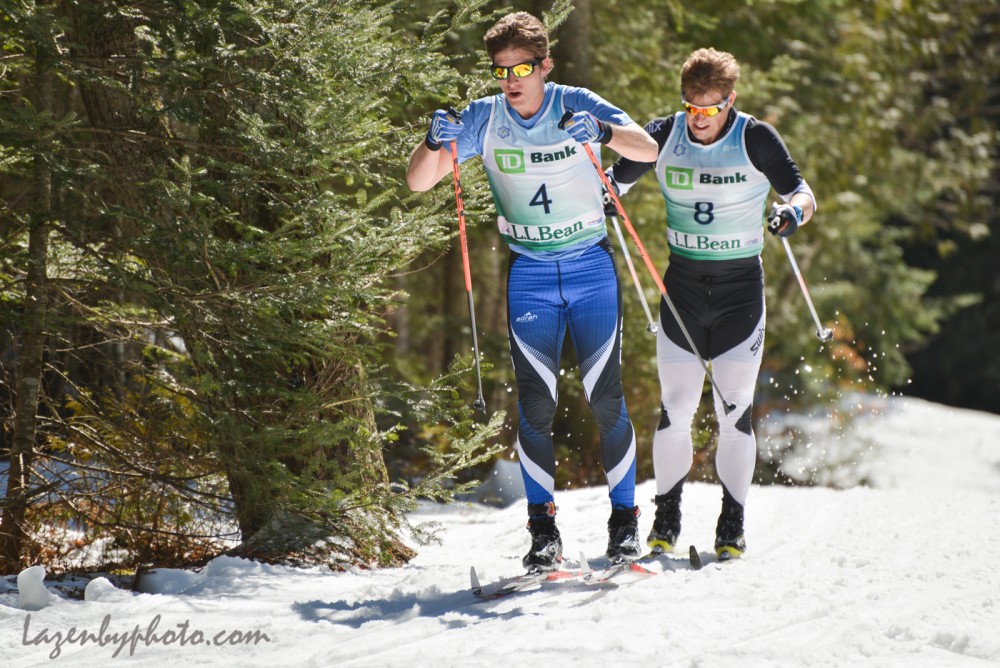
    Despite placing fourth in his semifinal, Maifeld-Carucci earned a shot at his first SuperTour sprint final, advancing as a lucky loser along with Gregg.

    Maifeld-Carucci just missed qualifying in two U.S. nationals sprints at the last two years, placing 31st in the 2015 freestyle sprint and 2016 classic sprint. However, he made it to the heats in the freestyle sprint at nationals this year, placing 15th overall.

    “It was fun to see the depth of the field and see that even the lower qualifiers can be competitive in the finals,” he wrote. “It is also a nice reminder to see that even if you are fourth in your heat every fraction of a second matters and pushing hard to the line can be enough to get you through. Overall it was a very fun and exciting day.”

    Day 2: 10 k Classic Individual Starts

    The men's 10 k classic podium at the Lake Placid SuperTour on Sunday, with David Norris (APU) on top for the second-straight day, Kris Freeman (l) in second followed by Lex Treinen (r). (Photo: Heidi and Bob Underwood)
    The men’s 10 k classic podium at the Lake Placid SuperTour on Sunday, with David Norris (APU) on top for the second-straight day, Kris Freeman (l) in second followed by Lex Treinen (r). (Photo: Heidi and Bob Underwood)

    Sunday’s classic individual start consisted of four laps of a 2.5 k course for a total of 10 k for both the men’s and women’s races. The course consisted of several of the jump hills strung together in the beginning, followed by the descent winding back into the stadium.

    With temperatures in the low 40s, the course conditions were variable, but most certainly requiring klister. With the challenging climbs of the jump area, going without kick wax was a disadvantage.

    Norris Repeats

    A day after winning his first SuperTour race in the freestyle sprint, Norris charged to the classic-distance race victory in 28:26, 45 seconds ahead of Kris Freeman (Team Freebird). The second APU skier on the podium, Lex Treinen placed third (+0.58).

    The multiple-lap course made for interesting dynamics with many skiers on the course at a time.

    “It was fun conditions because skis slowed after the first lap so some of the second seed skiers had the chance to draft off of the leaders, and we had the opportunity to ski with them,” Treinen wrote in an email.

    Treinen posted the fastest split after the first lap, but by the second lap, Norris had a 14-second lead that he only increased over the final two laps.

    “I burned up the nerves on the first lap and had the fastest split going into the first lap, something I have probably never ever done,” Treinen wrote.

    David Norris (APU) giving his all across the line to win the 10 k classic individual start at the Lake Placid SuperTour on Sunday. (Photo: Heidi and Bob Underwood)
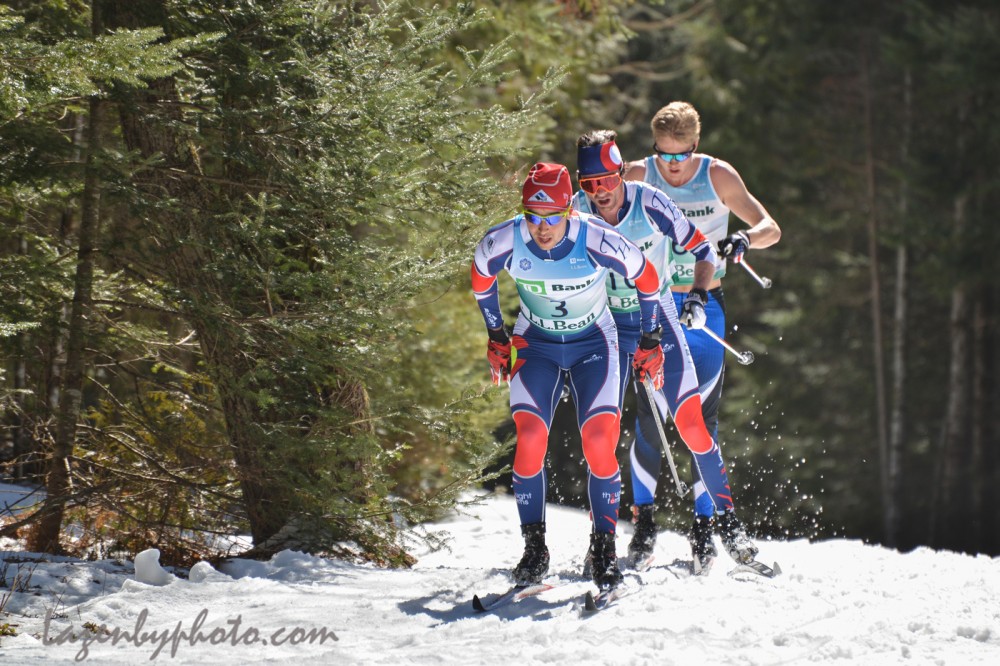
    David Norris (APU) giving his all across the line to win the 10 k classic individual start at the Lake Placid SuperTour on Sunday. (Photo: Heidi and Bob Underwood)
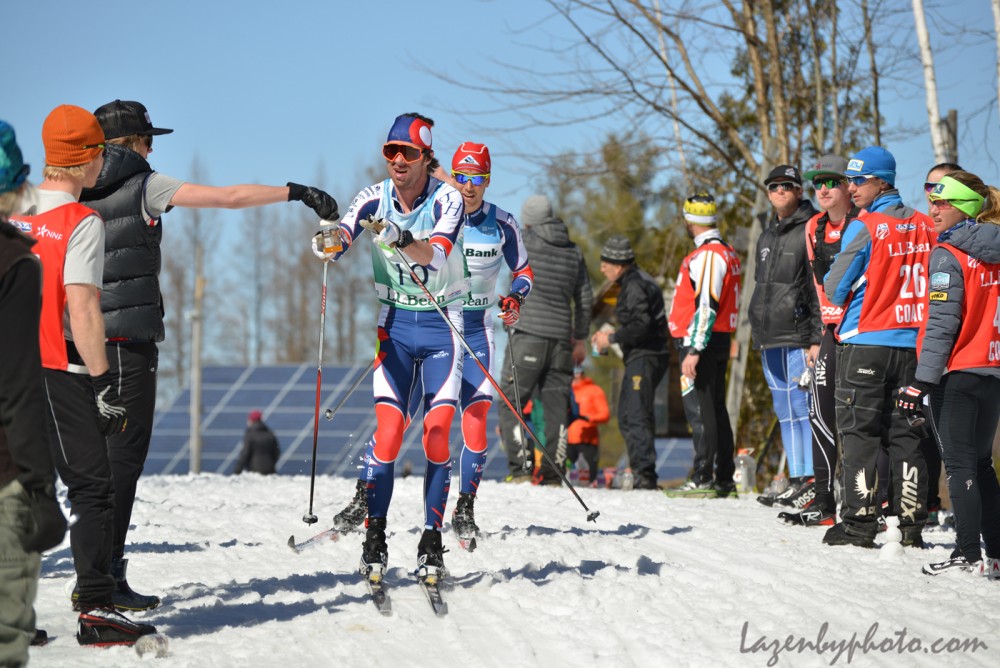
    Freeman explained in an email that he’s been feeling healthy for about three weeks.
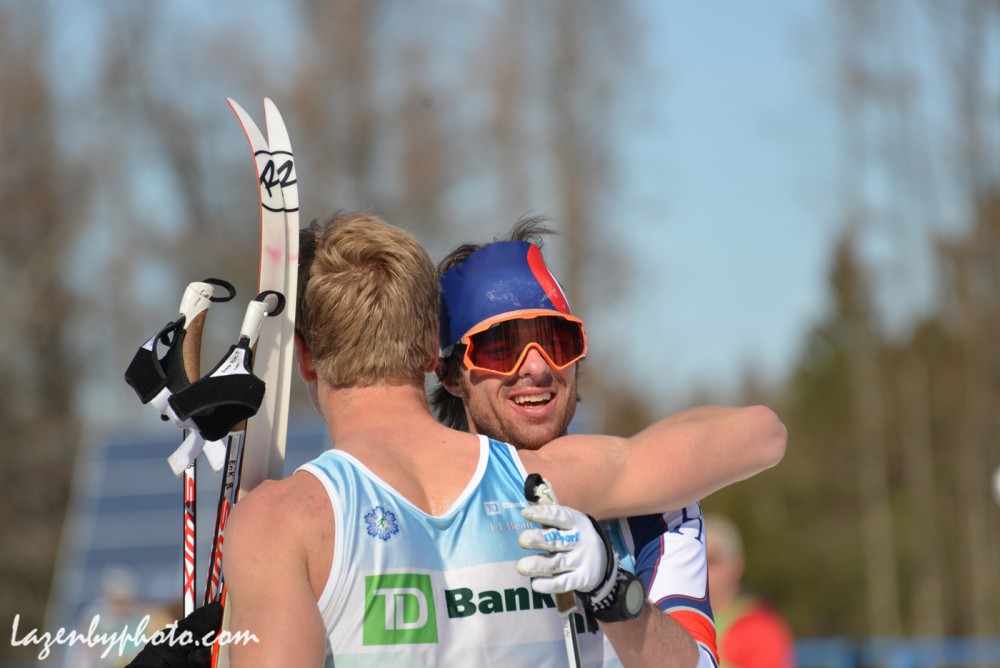
    “My overall energy felt much better than at any other time this season,” he explained.

    His game plan for the 10 k wasn’t anything out of the ordinary: “Go out at a sustainable pace and try to speed up in the last lap,” Freeman wrote. “I think a mass start would have been very interesting and more fun but changing the race to a time trial was the right call give the width of the trail.”

    After having never before won a SuperTour, Norris picked up back-to-back victories in Lake Placid.

    “After Nationals I had a good chunk of time in Anchorage, which allowed me to get some quality rest and some really good mid-season training in,” Norris explained.

    “I went pretty thin on the wax knowing that the course had a lot of double pole and tucking time each lap,” he added. “I’ve been trying to teach myself to race on faster classic skis with less kick and that has caused me to suffer in the last few kilometers of a few races, but today I was able to maintain my technique and keep finding kick.”

    Similar to Norris, Treinen is seeing the results of consistent training and racing.

    “I felt good going into Houghton, but I also didn’t have that much racing under my belt for the season, and I tend to start out the seasons slow and build throughout,” Treinen wrote. “It was fun to get some true East Coast klister skiing after having all of first races in cold, hard conditions.”

    Freeman noted, “I had very accessible kick and pretty good glide.”

    Same Ol’, Same Ol’

    The women’s race was the epitome of consistency as the podium was identical to the same at nationals this year: the 10 k classic in Houghton.

    Patterson, 26, continued to assert her dominance of the distance races (after winning both distance races at nationals) by winning by a full minute on Sunday in 31:45.

    Her Craftsbury teammate, Kaitlynn Miller placed second (+1:00) and Holmes finished third (+1:19).

    “Although it also was a somewhat variable and difficult day for snow conditions, so it was important to keep the technique together and stay smooth,” Patterson wrote. “I know I did a good job today of skiing through terrain changes and transitions, and I suspect that’s where I may have gained some time over competitors.”

    Miller also attributed her success to good skis and adapting to the conditions.

    “The conditions varied a fair amount over the 2.5k loop with flagpole hill becoming a bit slushy while other parts of the course remained slightly glazed,” she described. “I started right as Annie Hart was lapping through so she definitely helped push me along. Also, I was the last starter in the A-seed so was able to get some informative splits from my coaches out on course.”

    Hart finished just off the podium in fourth (+1:29).

    This weekend was Holmes’ first races in the U.S. after returning from Europe where she competed at the World Cup in Planica, Slovenia, and Nove Mesto, Czech Republic. Holmes placed 37th in the Nove Mesto 10 k freestyle in her international World Cup debut.

    “I wish I had had more time on the World Cup as I really felt like I learned a lot in both the race experiences I had,” Holmes wrote. “Maybe it wasn’t ideal to do the back and forth so quickly like that — I was sick when I went over but other than that I’ve managed to stay healthy.”

    This weekend marks the end of SuperTour Period 2. Period 3 will begin next weekend, Feb 5-6, at Trapp Family Lodge in Stowe, Vt.

    Complete results

  • Patterson Drops Pack for Sun Valley 15 k Win; Strøm Outlasts Packer for 2nd

    Patterson Drops Pack for Sun Valley 15 k Win; Strøm Outlasts Packer for 2nd

    Mads Strøm (center, in white) leads Niklas Persson (left), Matt Gelso (second from left, in blue), Paddy Caldwell (right), and the rest of the mens field out of the start in the 15 k classic at the Sun Valley Super Tour.
    Mads Strøm of the University of Colorado-Boulder (front, center, in white) leads Niklas Persson (left), Matt Gelso (second from left, in blue), Paddy Caldwell (far right), and the rest of the men’s field out of the start in the 15 k classic at the Sun Valley SuperTour on Sunday.
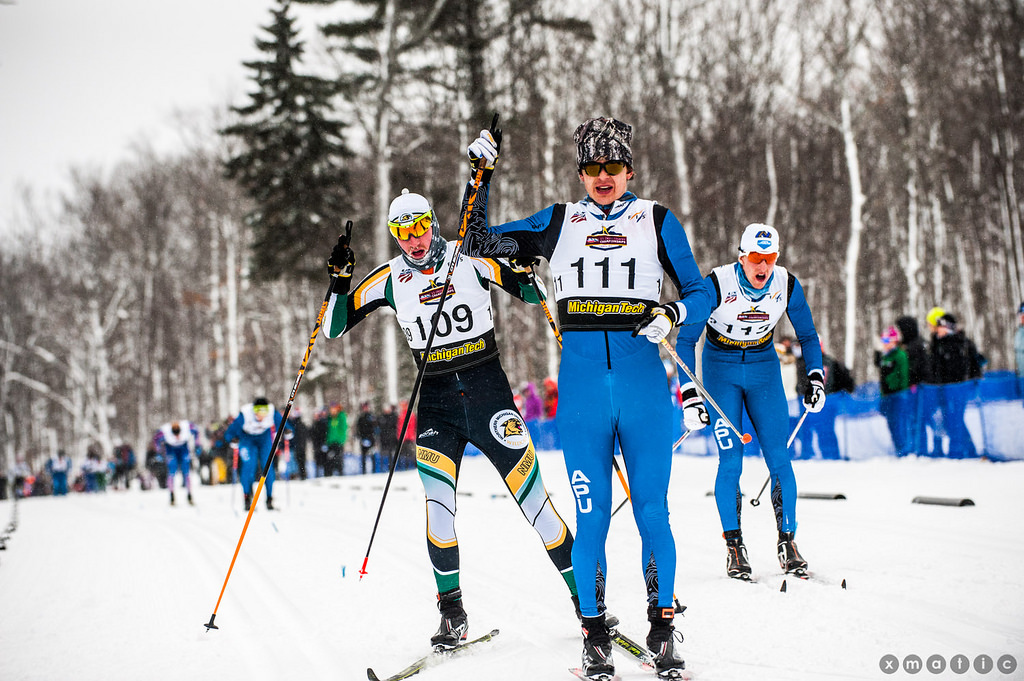
    SUN VALLEY, Idaho — Alaska Pacific University (APU) skiers Scott Patterson and Eric Packer know a thing or two about persevering through pain. Both have dealt with recent frightening incidents, Patterson with a pulmonary embolism last fall and Packer when he took a rocky tumble this past June. Despite their misfortune, neither let the mishaps hold them back. On Sunday, the duo proved how far they have come since, finishing first and third, respectively, in the Sun Valley SuperTour 15 kilometer classic mass start.

    The men started at 11 a.m. under cloudy skies and light snow flurries. From the beginning, it was clear that the APU athletes were looking to make a statement; the blue-and-black uniforms were ubiquitous in the lead pack. The Sun Valley spectators enjoyed their presence as well, rooting them on as they rounded the course.

    Eventual second-place finisher Mads Strøm, however, was excited to try to spoil the APU party. Early on in the six-lap race, he established himself as a threat, skiing comfortably towards the front of the pack. The University of Colorado-Boulder skier then used the strong APU presence around him as extra motivation to ski fast.

    Left to right: Mads Strøm (University of Colorado Boulder) is trailed closely by Eric Packer (APU), David Norris (APU), Scott Patterson (APU) and Lex Treinen (APU) during the men's SuperTour 15 k classic mass start on Sunday in Sun Valley, Idaho.
    Mads Strøm (University of Colorado-Boulder) leads APU skiers (from l to r) Eric Packer, David Norris, Scott Patterson, and Lex Treinen during the men’s SuperTour 15 k classic mass start on Sunday in Sun Valley, Idaho.

    “Going around [the course], everyone just cheering for APU. I was out there all alone,” Strøm said in a post-race interview. “I was like, I’ve got to beat some of these guys. I have to. For everybody else, I have to beat some of them at least.”

    After two laps where the leaders stuck together, only three seconds separated the top 17, the group broke apart. APU’s David Norris made an aggressive move up Coaches’ Climb on the third lap, and only a handful of racers were able to respond.

    “Norris made a bit of a surge up the biggest hill and I kind of got stuck behind a couple people and pushed over the top,” Patterson explained. “That kind of jump started me into gear.”

    Shortly thereafter on the third lap, the 23-year-old Anchorage native took the lead and didn’t relinquish it, keeping his distance ahead of any potential challengers all the way through the finish. Patterson crossed the line in 40:35.9, over 30 seconds ahead of the runner up.

    Though Norris made the early move to break the pack apart, he was unable to hold the pace, falling back on the fifth lap while a battle for second place developed between Strøm and Packer.

    In the last kilometer before the finish, the two were still neck and neck, battling for position on the final climb. Packer led Strøm over the top, but a mistake on the downhill caused him to lose some momentum and created an opportunity for Strøm.

    Scott Patterson (APU) striding to a decisive lead during the the men's SuperTour 15 k classic mass start on Sunday in Sun Valley, Idaho.
    Scott Patterson (APU) striding to a decisive lead during the the men’s SuperTour 15 k classic mass start on Sunday in Sun Valley, Idaho.

    “It was the last kilometer of a race at altitude, so I knew we were both hurting and that’s a thing to keep in mind; everybody else is hurting as bad as you are,” Packer explained of the Lake Creek venue, some 6,000 feet above sea level. “So I tried to put in a big attack over the top and then almost crashed on the downhill, and when I bobbled Mads came by and he took me at the line.”

    Strøm also was feeling confident heading into the finish. Combining good skis, a desire to disrupt an APU one-two finish and some strong skiing, he was able to claim the second podium spot, 31.6 seconds behind Patterson and 2.3 seconds ahead of Packer.

    “I knew I had fast skis going down and I know I’m a fast finisher after 15 k, I was like, I can’t let them go one-two,” said Strøm, originally from Oslo, Norway. “I have to mix it up a bit at least. But it was fun. [Packer] really tried hard and I just got some confidence in the last hill that, yeah, I should get this.”

    While he was pleased with his race, Strøm said it’s just a step towards his larger focus for the season, NCAA championships, which the University of Colorado will host March 9-12 in Steamboat Springs, Colo.

    “Obviously I wanted to win. I haven’t gotten quite there yet because I have been training almost 100 hours every month since May,” Strøm explained. “I’ve planned that in one month from now I’m going to be in better shape and my plan is to win both races at NCAA’s.”

    Eric Packer (left) and Mads Strøm (right) fight for 2nd place on the last hill of their final lap.
    Eric Packer (left) and Mads Strøm (right) fight for second place on the last hill of their final lap.

    For Patterson and Packer, who also grew up in Anchorage, the APU skiers were excited with their races and happy to have given it their all in Sun Valley. Overcoming their misfortunes only made the moment more special.

    “Every day that we get to race is just an awesome opportunity to go out and have fun,” Packer reflected. “After having a really close call and having a big fall in the mountains, everything, you look at it with a new perspective. I just feel so lucky to be out here really.”

    “I mean, watching him fall in the mountains was definitely an eye opening thing,” Patterson recalled. “We were lucky there and it’s sweet to have Eric here [on the podium]. And then, this is my first year racing this first circuit so, I mean, I’m happy to be here too, happy to not have a ski sticking out of my leg.”

    One spot from the podium in fourth was another APU skier, Lex Treinen, who finished 26.8 seconds after third and 1:00.7 behind Patterson. About a second later, Kyle Bratrud of Central Cross Country (CXC) placed fifth (+1:01.9).

    After two weekends of racing, the SuperTour takes nearly a month break before resuming with U.S. Nationals on Jan. 3 in Houghton, Mich.

    Results | Results with splits

  • Gregg Skates to Third, Brooks Fifth in Switzerland’s Engadin (with Videos)

    Gregg Skates to Third, Brooks Fifth in Switzerland’s Engadin (with Videos)

    American Caitlin Gregg (Team Gregg/Madshus) placed third at the 2015 Engadin Skimarathon on Sunday. (Photo: Inge Scheve)
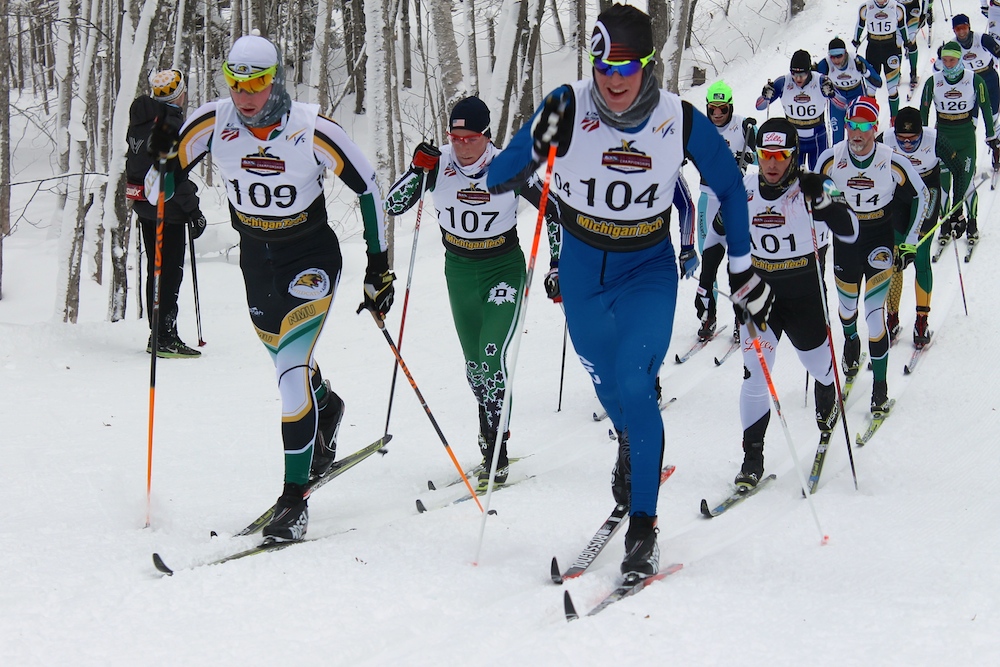
    American Caitlin Gregg (Team Gregg/Madshus) placed third at the 2015 Engadin on Sunday, a 42 k freestyle marathon from Maloja to S-chanf, Switzerland. (Photo: Inge Scheve)

    S-CHANF, Switzerland — Coming off a bronze medal at Nordic World Championships, American Caitlin Gregg (Team Gregg/Madshus) finished third in Sunday’s Engadin Skimarathon 42-kilometer freestyle from Maloja to S-chanf, Switzerland, just 7.6 seconds out from the win, which France’s Anouk Faivre Picon seized in 1:39:35.3.

    Russia’s Ilia Chernousov won the men’s race by one-tenth of a second over France’s Robin Duvillard in 1:34:50.

    Picon won the sprint finish, 0.8 seconds ahead last year’s Engadin champion Riita-Liisa Roponen of Finland. Gregg placed third and France’s Aurelie Dabudyk was 1:41.7 back in fourth. Two-time U.S. Olympian Holly Brooks (Team Santander) finished fifth (+1:53.3).

    “My skis were awesome,” Gregg told FasterSkier after the race. “I felt so good in the race, and I’m so ready for the World Cups in Oslo next week.”

    Gregg, who finished the Engadin Skimarathon for the first time, was surprised about the level of competition.

    “The race was super aggressive from the start. The men come in on you all over, and it makes the whole thing really crazy,” she said, adding that it was difficult to keep track of where her opponents stood.

    “I got to the hills by St Moritz, and I saw an opening, so I made a jump there and just kept hammering to get by as many guys as I could,” she explained.

    Ropenen got a gap on Gregg, who also didn’t notice that Picon had passed her.

    “The girls got cut off all the time, and during the sprint to the finish, about fifty guys swarmed around us,” Gregg said.

    Caitlin Gregg (third from l) on the podium in third at the 2015 Engadin 42 k freestyle marathon in S-chanf, Switzerland. Two Americans made the flower ceremony, with Holly Brooks in fifth (second from right). France's Anouk Faivre Picon won the women's race, and Finland's Riita-Liisa Roponen was third. (Photo: Fast Big Dog)
    Caitlin Gregg (third from l) on the podium in third at the 2015 Engadin 42 k freestyle marathon in S-chanf, Switzerland. Two Americans made the flower ceremony, with Holly Brooks in fifth (second from right). France’s Anouk Faivre Picon won the women’s race, and Finland’s Riita-Liisa Roponen was third. (Photo: Fast Big Dog)

    “It’s brutal out there for the women,” Brooks said, adding that she hopes the organizers will consider establishing a separate women’s wave to make the competition more fair.

    The remains of the brutal battles were evident to the waves following the elite: the race course was littered with broken poles, baskets and equipment debris from start to finish.

    The pile grew throughout the morning as more marathon racers descended on the track. In total, more than 13,300 skiers participated in the 47th Engadin Skimarathon, making the Swiss race the third-largest Engadin event on record.

    Chernousov, who now lives near the Engadin finish in S-chanf with his wife Selina Gasparin of the Swiss biathlon team, secured a home victory in the men’s race. He won the photo finish over Duvillard by 0.1 seconds, while Switzerland’s Roman Furger was third 0.9 seconds back. Another Swiss skier Jason Rueesch, was just 0.2 seconds off the podium in fourth.

    Brian Gregg (Team Gregg/Madshus) was the top American man in 24th, 26 seconds behind the winner. David Norris of Alaska Pacific University (APU) placed 32nd (+40.2), Sun Valley’s Miles Havlick was 35th (+51.5) and APU’s Tyler Kornfield finished 61st (+6:21.2).

    In the women’s race, Canada’s Karen Messenger placed 29th (+24:34.2).

    The battle of the FIS Marathon Cup

    With fifth place in the Engadin Skimarathon, Brooks is back in the FIS Marathon Cup leader bib with one race remaining.

    “I accomplished one goal today, and that was to take back the red bib, but I’m not so happy with my race,” Brooks said. “I’m not in top shape, and I definitely feel that I haven’t raced much at altitude. Once we hit the hills at St Moritz, it was so hard to follow.”

    With fifth place in the Engadin, Brooks has 455 points in the overall FIS Marathon Cup and is now just 4 points ahead of Tatiana Mannima of Estonia with only one race to go in the race series. Mannima placed 11th on Sunday, 6:15.4 behind the winner. She is 47 points ahead of Dabudyk, who’s currently third overall. The final event is the 50 k freestyle Ugra Marathon on April 11 in Khanty-Mansiysk, Russia.

    “It all comes down to that race in Russia now, and it’s over a month until we race,” Brooks said, adding that she was next headed to Norway for the Norwegian Birkebeiner and potentially some other races to stay focused until the Ugra.

    Petr Novak, who was 29th on Sunday, is still leading the overall 2015 FIS Marathon Cup. With 404 points for the season, Novak has a comfortable gap on Benoit Cahuvet of France in second place with 347 points and Sergio Bonaldi of Italy in third place with 229 points.

    Results: Women | Men

  • Freeman Strikes Late in Men’s 30 k Mass Start, Holds On for National Title

    Freeman Strikes Late in Men’s 30 k Mass Start, Holds On for National Title

    Kris Freeman (Freebird) clinches his 17th national title in the men's 30 k classic mass start, ahead of APU's Lex Treinen (left, behind), NMU's Kyle Bratrud (behind Treinen) and APU's Eric Packer (behind Freeman at right), at U.S. Cross Country Championships on Thursday in Houghton, Mich. (Photo: Christopher Schmidt)
    Kris Freeman (Freebird) clinches his 17th national title in the men’s 30 k classic mass start on Thursday, ahead of APU’s Lex Treinen (left, behind), NMU’s Kyle Bratrud (behind Treinen) and APU’s Eric Packer (directly behind Freeman at right), at U.S. Cross Country Championships in Houghton, Mich. (Photo: Christopher Schmidt)

    HOUGHTON, Mich. — With 11 men together at the start of the last 10-kilometer lap in Thursday’s 30 k classic mass start at U.S. Cross Country Championships, Kris Freeman knew he had to make something happen.

    If he continued to ski in the pack and wait to see how the places shook out in the 100-meter finishing straight, the second-ranked U.S. distance skier (after U.S. Ski Team member Noah Hoffman) didn’t like his chances in a last-ditch sprint.

    “I knew that somewhere in the last five k I had to go, and I had to go hard,” said Freeman, 34, who skis independently as Freebird, after the third of four national races at the Michigan Tech Trails.

    The men directly around him with eight kilometers to go — including two Sun Valley Ski Education Foundation (SVSEF) Gold Team members (Matt Gelso and Miles Havlick), three Alaska Pacific University (APU) skiers (Lex Treinen, Scott Patterson and Eric Packer) and three Northern Michigan University (NMU) athletes (Fredrik Schwencke, Kyle Bratrud and Adam Martin), as well as Dartmouth’s Paddy Caldwell (also of the Stratton Mountain School T2 Team and U.S. Ski Team D-team) — generally anticipated Freeman’s move as well.

    But all of them realized that leading was significantly harder in the cold-and-slow conditions with temperatures around 3 degrees throughout the day. Freeman tried it out, pushing the pace a couple times early in the first lap “just to experiment and see if I could hurt the field,” he said. “I just couldn’t.”

    Kris Freeman (near) and Dartmouth's Paddy Caldwell (l) skiing near the front of the pack around 2 k into the men's 30 k classic mass start on Thursday at U.S. nationals in Houghton, Mich.
    Kris Freeman (near), Dartmouth’s Paddy Caldwell (l), and NMU’s Fredrik Schwencke (behind Freeman) near the front of the pack around 2 k into the men’s 30 k classic mass start on Thursday at U.S. nationals in Houghton, Mich.

    The four-time Olympian decided to hang back and attack somewhere on the second half of the last lap.

    “I think I went with two-and-a-half k to go,” Freeman said. “And I knew I had a really good attack for two k, then my last 500 meters was pathetic.”

    But it was enough for the win. On the second-to-last climb, Freeman successfully gapped Gelso, Patterson and the four others in the chase pack (Norris, Treinen, Packer and APU’s fifth man Reese Hanneman, respectively), and he frequently checked over his shoulder to make sure they weren’t reining him in.

    “I had to double pole one long downhill that’s usually recovery so that they wouldn’t get back on me,” Freeman said of the final descent before the last climb toward the finish.

    Treinen took advantage of an unfortunate misstep and crash from his teammate, Patterson, who  had been skiing with Gelso in second with a kilometer to go.

    “I was kind of moving tracks and stumbled a little bit,” Patterson said of the final downhill. “I was wobbly out on one ski, trying to correct, but it just wasn’t enough — spun around, totally my fault, didn’t hit anyone else, they all moved around me, and it was a quick little fall, but still not something you want right at the end.”

    Four of his teammates — Treinen, Norris, Packer and Hanneman — navigated around him, as did Bratrud. Gelso stayed out of trouble but lost steam up the final ascent.

    Kris Freeman pushing hard for first with 200 meters to go in the men's 30 k classic mass start at U.S. nationals in Houghton, Mich.
    Kris Freeman pushing hard for first with 200 meters to go in the men’s 30 k classic mass start at U.S. nationals in Houghton, Mich.

    While Freeman forged ahead up the gradual hill, again looking back to see who was closest to him, his pain emitted through his facial expressions as he strode toward the finish.

    Behind him, Treinen, on his 25th birthday, worked his way from fourth to third behind Bratrud and ahead of Gelso and Norris.

    “Kyle Bratrud came up from behind and he looked like he was charging pretty hard so I tried to stay behind him for as long as I could, and on the last uphill, just gave it everything,” Treinen said. “I tried to break him — it just barely worked.”

    Treinen edged the 21-year-old NMU senior, who won Sunday’s 15 k freestyle to start nationals, by 0.4 seconds to claim second for his first national podium. He finished 3.7 seconds behind Freeman, who won his 17th national title in 1:31:14.8.

    “They were yo-yoing [behind me] and I was totally loaded coming up into the finish,” Freeman recalled. “If someone had sprinted by me, there would’ve been no response. There was nothing I could do.”

    APU's Lex Treinen (111) celebrates his second-place finish and first national podium after the 30 k classic mass start at U.S. nationals in Houghton, Mich. (Photo: Christopher Schmidt)
    APU’s Lex Treinen (111) celebrates his second-place finish and first national podium after the 30 k classic mass start at U.S. nationals in Houghton, Mich. NMU’s Kyle Bratrud (109) placed third, and APU’s Eric Packer (r) secured fourth. (Photo: Christopher Schmidt)

    “Lex and I were gaining on [Freeman] at the end so who knows how it would’ve played out if there was another k to go,” Bratrud recalled.“I found myself leading a decent amount and then when Kris took off and kind of split the field up, I was able to at least pick up most of the pieces.”

    On Sunday, Freeman placed second to Bratrud in the individual skate race.

    “Even though the skate race didn’t go quite like I wanted, the sensations I had were great,” he reflected. “Today except for the last 500 meters, I felt like I was in total control and I just feel totally different then I did last year. This should absolutely cement my place on the World Championship team and that’s been my goal all year.

    “SuperTour points are nice, but I want to go prove I’m one of the best in the world at World Champs,” Freeman added.

    The U.S. World Championships team will be tentatively announced on Jan. 26, according to the team-selection criteria. The first criteria is based on World Cup results in the selection period (from Nov. 29, 2014 to Jan. 18, 2015); the second is coaches’ discretion, and the third, should it come down to it, is based on the best-ranked athletes in the 4th edition of the USSA Sprint and Distance Points List, which will be released Jan. 23.

    Heading into nationals, Freeman ranked second in the 3rd USSA distance points list (including races before Jan. 2), nearly six points ahead of Gelso in third.

    That made him one of Freeman’s biggest perceived threats on Thursday.

    “Gelso looked really comfortable on his skis; he was having good kick everywhere and he’s right behind me on the points list and he’s having a great season,” Freeman said. “Kyle also obviously just had a great race so those two I kept looking at.”

    Kyle Bratrud (NMU) and Scott Patterson (APU) leading the U.S. nationals men's 30 k mass start around 2 k on Thursday in Houghton, Mich.
    Kyle Bratrud (NMU) and Scott Patterson (APU) leading the U.S. nationals men’s 30 k mass start around 2 k on Thursday in Houghton, Mich.

    Bratrud explained he came into the race more relaxed than he had anticipated after winning his first national title (and with it, his first national top 20) earlier in the week.

    “All summer I had been targeting this 30 k and into the fall, I started realizing that maybe the 15 k would be a better shot for me,” he said. “Winning that I felt like I had a pretty successful week even if I was dead last in this race. I was just out there having fin. It’s fun to do well.”

    Freeman felt similarly. After digging himself into a self-described hole last season, Freeman was enjoying racing again.

    “I backed off my training a little bit; I’m more relaxed. I’m accepting that I’m 34, I can’t train a thousand hours anymore and expect to recover the same why I did,” he said. “And ski racing’s fun.”

    While Freeman was gunning for 2015 World Championships next month in Falun, Sweden, Bratrud put himself in prime position to be nominated to the U23 World Championships team his previous win at nationals. Another podium on Thursday prequalified him for NCAA Championships as well, as nationals double as a Central Collegiate Ski Association (CCSA) and NCAA Central Region qualifier for NCAA’s.

    “It was a weight off my shoulder to win the skate race and pretty much guarantee U23’s so now I can go home and train for a bit and head over to Kazakhstan,” Bratrud said. “I’m prequalified for NCAA’s so I can come back and get another little block in and then hopefully race some of those fast [University of Colorado] Boulder Norwegian guys.”

    NMU Claims College Cup

    Four NMU skiers landed in the top 13 with Bratrud in third, Schwencke in 11th (who skied near the front of the pack and led the long climb up after the race’s halfway point, then raced in the top 11 with eight kilometers to go), Martin in 12th and Erik Soderman in 13th.

    “The Northern Michigan guys put in some strong attacks on the second lap, and I think they widdled the field down [by the last lap],” Freeman said. “I tried working with Freddy [Schwencke] right before the end of the second lap, but we got caught and I just said, just tuck it in here until it’s time.”

    With the highest-collective  performance over three days at nationals, NMU won the 2015 College Cup.

    “All my success comes from training with those guys every day and Freddy’s a very good classic skier so I was confident skiing next to him,” said Bratrud, who led through the 10 and 20 k lap checkpoints. “When he put the hammer down pretty hard when we came through the second time, just to be able to ski confidently with your teammate and be at the front of the race is a pretty good feeling and that gave me a good feeling going forward.”

    APU Takes 5 of Top 8

    This past summer, APU’s seven-person men’s team (with U.S. Ski Team member Erik Bjornsen, Reese Hanneman, Tyler Kornfield, Norris, Packer, Patterson, and Treinen) initiated a “#five2falun” slogan.

    Sun Valley's Matt Gelso  (l) and Miles Havlick (r) lead the 11-man pack (with a fleet of APU and NMU skiers) around 22 k in the 30 k classic mass start at U.S. nationals in Houghton, Mich.
    Sun Valley’s Matt Gelso (102) and Miles Havlick (106) lead the 11-man pack (with a fleet of APU and NMU skiers) around 22 k in the 30 k classic mass start at U.S. nationals in Houghton, Mich.

    “It started as a joke; it’s all in good humor,” Hanneman explained at the time. “There was another elite team in the U.S. who, they last couple years, they had a campaign: six to Sochi. We thought, we can do our own little thing. Five because it starts with and ‘F’ because seven doesn’t really sound as good.

    “Now we’re kind of using it as motivation for ourselves,” he added. “If [we] did actually send five to Falun from one team that would be absolutely insane. The men have traditionally been so spread out in the U.S. that we’re kind of excited about having a group of us that changes the landscape.”

    On Thursday, after months of waiting for a breakout-team performance, the APU men got it.

    Treinen led them in second, Packer rose from seventh to fourth (+4.9) over the last kilometer, and Norris finished 11.2 seconds after Freeman in fifth, 1.9 seconds ahead of Hanneman in sixth. Hanneman came back from 13th and 18 seconds behind the leaders at 20 k, to eighth with 1 k to go.

    Gelso finished seventh (+14), and Patterson, who’s back after a pulmonary embolism kept him from racing from late October until mid-December, recovered from his fall on Thursday to edge Havlick and Caldwell by less than a second for eighth (+24.3). Havlick placed ninth (+25), and Caldwell was 10th (+25.1).

    “I had a pretty good sprint so if I hadn’t had that fall who knows what would’ve happened,” Patterson said. “I would’ve been right there challenging for it, maybe not Freeman but the next guys.”

    Treinen called his second-place finish “pretty special, especially because it’s my birthday. It was kind of in the back of my mind, not gonna lie — I was thinking about that.”

    His previous national best was fifth in the 50 k classic mass start at U.S. Distance Nationals last spring.

    “I feel like we were just waiting for him to have a good day and that was today,” APU Head Coach Erik Flora said. “He looked great, he looked energetic, he looked under good control and you could see so many times just like a smile on his face so it was really cool.”

    Flora added that he was proud of the entire team, with five men in the top eight.

    “To have all those boys in there fighting and challenging each other is just awesome,” he said. “I think that the training for those guys is working and their commitment to being skiers all that good stuff.”

    “I’m just happy to have my teammates do so well as well,” Treinen said. “It’s the best team I’ve ever been on and I think we’re just starting to show what we’re made of.”

    Packer rose from seventh to fourth with 200 meters to go, proving to himself that he was back on form after the flu took him out of commission the week before the 15 k.

    “I couldn’t be happier with feeling good today,” the first-year APU member and Anchorage native said. “… I grew up skiing with all of the guys. We all started training together actually in middle school. It’s kind of cool to have five of those same guys that you started with at 12 or 13, five in the top eight today.”

    Norris led at times during the race, including around 22 k with Gelso, and said he was disappointed to slip from fourth at the bottom of the last climb to fifth (when Packer passed him in the final stretch).

    “It’s hard when you get passed in the last hundred meters … but it was my teammate and he’s a good finisher,” Norris said. “And I’m feeling better every race we do throughout the season.”

    Moreover, he was excited for his team.

    “We had the feeling that we were going to have some great results as a team and we hadn’t really shown that yet this year,” he said. “We all had great skis. Everyone’s skiing stronger so it’s cool to see Lex have a good sprint finish when he’s notoriously a distance guy and Packer have a good 30 k when he’s been good at sprints. Everybody’s improving their weaknesses.”

    Notes: 

    Jørgen Grav (University of Vermont) was an early frontrunner in the men's 30 k classic mass start at U.S. nationals in Houghton, Mich. (Photo: Christopher Schmidt)
    Jørgen Grav (University of Vermont) was an early frontrunner in the men’s 30 k classic mass start at U.S. nationals in Houghton, Mich. (Photo: Christopher Schmidt)
    • Jørgen Grav (University of Vermont), who placed 24th, skied in the top five for much of the first lap, just ahead of Freeman, amid a large pack of about 30 separated by 15 seconds at 10 k.
    • Brian Gregg (Team Gregg/Madshus) finished 21st after skiing in the top 7 through 10 k, then slipping into the mid-20s on the second lap.
    • Tad Elliott (Ski & Snowboard Club Vail Elite Team) finished 36th in his first race at nationals after spending the earlier part of the week recovering from a flu/cold at home in Durango, Colo.
    • Ben Lustgarten (SVSEF) sat out the mass start as he’s been suffering from vertigo this week, which led him to miss Tuesday’s classic sprint as well.

    — Lander Karath contributed reporting

    Results

  • Strøm Surges Past Havlick to Win Bozeman SuperTour 15 k Classic

    Strøm Surges Past Havlick to Win Bozeman SuperTour 15 k Classic

    With temperatures above 40 degrees, the men take off in their SuperTour 15 k classic mass start at Bohart Ranch near Bozeman, Mont.
    With temperatures above 40 degrees Fahrenheit, the men take off in Sunday’s SuperTour 15 k classic mass start at Bohart Ranch near Bozeman, Mont.

    BOZEMAN, Mont. — In yet another thrilling men’s SuperTour finish, Mads Strøm of the University of Colorado outsprinted Miles Havlick of the Sun Valley Ski Education Foundation (SVSEF) Gold Team on Sunday to win the men’s 15-kilometer classic mass start at Bohart Ranch.

    Strøm finished fast and icy three-lap course in 40:55.3, holding off Havlick by 0.7 seconds. Havlick’s teammate Matt Gelso racked up another SuperTour podium in third (+9.9), after placing third in Saturday’s classic sprint. Brian Gregg (Team Gregg/Madshus) finished 27.4 seconds back in fourth.

    Kris Freeman (Team Freebird), who was fourth in Saturday’s sprint, finished another 10 seconds back in fifth. Strøm’s CU teammate, Rune Ødegård, placed sixth (+48.4) after starting the final 5 k lap in second.

    Havlick jumped out to an early lead and held it for most of the race, entering the last lap 8 seconds ahead of the chase group of Ødegård, Freeman, Gregg and Gelso. Strøm was 15 seconds behind.

    Mads Strøm (CU) celebrates after winning the men's SuperTour 15 k classic mass start near Bozeman, Mont., while Miles Havlick (SVSEF) finishes 0.7 seconds behind.
    Mads Strøm (CU) celebrates after winning the men’s SuperTour 15 k classic mass start near Bozeman, Mont., while Miles Havlick (SVSEF) finishes 0.7 seconds behind.

    “I noticed my skis were running pretty well, better than other guys in the pack, so I just decided to pick up the pace and see what would happen,” Havlick said of the first 10 k.

    However, Havlick felt the gap closing throughout the last 5 k, and was caught by Strøm as they entered the stadium.

    “I was hoping I could get him at the finish, because I know I have a pretty good finishing speed,” Havlick said. “But this time he got me.”

    Strøm said that while he was “struggling” through the first two laps, his double poling was strong and he felt his confidence grow throughout the race. By the final lap, he was warmed up and ready to make his move.

    “With four kilometers left I got the killer instinct and just tried to win. I double poled as much as I could – that’s one of my strongest strides,” the 23-year-old Strøm said.

    As Gelso and Havlick began to pull away down the final stretch, Strøm hung with them, double poling past Gelso and catching Havlick on the final hill. He then passed Havlick in the stadium and held him off in a furious sprint to the finish.

    After a disappointing result in Saturday’s sprint — when Gelso and Havlick beat him in the quarterfinals — Strøm was “really satisfied” with the result. “I feel great,” he said.

    Gelso skied a strong final lap, separating himself from Gregg, Freeman and Ødegård while trying to catch his teammate.

    Matt Gelso (SVSEF) double poles through the stadium on his way to his second third-place finish of the weekend in the men's SuperTour 15 k classic mass start near Bozeman, Mont.
    Matt Gelso (SVSEF) double poles through the stadium on his way to his second third-place finish of the weekend in the men’s SuperTour 15 k classic mass start near Bozeman, Mont.

    “I was feeling pretty good, my skis were really fast, and I threw down hard to try to catch Miles,” Gelso explained. “But I did it such that I would gap the people I was with, so that I wouldn’t drag everybody up to my teammate. I made a conscious effort to go hard.”

    However, Gelso did bring Strøm along with him.

    “He’s good at conserving, sitting in and then going hard when it’s important,” Gelso explained.

    After racing through slushy snow on Saturday, Gelso enjoyed the firmer conditions, saying the course was much faster than during the sprint. However, he noted that the racers had to be incredibly careful on some sections and corners, especially where the previously wet snow had been groomed.

    In those places, “the corduroy got melted in so it was like smooth ice, and that was a little bit scary,” he said. “You can’t hold a plastic edge in that.”

    Meanwhile, the course was kinder to Havlick than it was on Saturday — “I definitely wanted to stay on my feet today,” he said. Havlick fell during his sprint semifinal of the sprint and missed advancing to the final.

    Havlick was excited about what he called “the first really good result for the season.”

    “It’s a confidence builder,” said the former NCAA champion in the 20 k. “I know my form is coming around.”

    The next SuperTour races take place Jan. 4-10 at U.S. nationals in Houghton, Mich.


    Men’s 15 k classic top 10 | full results

    1. Mads Strøm (CU) 40:55.3

    2. Miles Havlick (SVSEF) +0.7

    3. Matt Gelso (SVSEF) +9.9

    4. Brian Gregg (Team Gregg/Madshus) +27.4

    5. Kris Freeman (Team Freebird) +37.0

    6. Rune Ødegård (CU) +48.4

    7. David Norris (APU) +1:02.1

    8. Eric Packer (APU) +1:14.2

    9. Benjamin Lustgarten (SVSEF) +1:20.4

    10. Alexander Treinen (APU) +1:41.4


  • U.S. SuperTour Preview: Anyone’s for the Taking

    U.S. SuperTour Preview: Anyone’s for the Taking

    The men's 15 k freestyle individual start podium at SuperTour Finals in Anchorage, with winner Noah Hoffman (c), runner-up Scott Patterson (third from l) and Erik Bjornsen (second from r) in third.(Photo: Rob Whitney)
    The men’s 15 k freestyle individual start podium at the 2014 SuperTour Finals in Anchorage, with (from l-r) Patrick Johnson (6th), David Norris (4th), Scott Patterson (2nd), winner Noah Hoffman, Erik Bjornsen (3rd), and Lex Treinen (5th). (Photo: Rob Whitney)

    Note: This article has been corrected to describe the race women’s SuperTour leader Caitlin Gregg is shooting for at World Championships: the 10 k skate.

    WEST YELLOWSTONE, Mont. — National racing begins Friday as the SuperTour kicks off in West Yellowstone, Mont., and the excitement on the Rendezvous trails couldn’t be higher. The best skiers from around the country have been training for at least a week in the little Montana town as they prepare to compete for American dominance and possible positions on World Cup and World Championship teams.

    With several departures from the racing scene including, Olympian Torin Koos (BSF), Rose Kemp (SVSEF), and Kate Fitzgerald (APU), and a multitude of up-and-coming racers on the cusp of success, the 2015 SuperTour will be anyone’s game.

    When the USST selected four men (Erik Bjorsen, Brian Gregg, Koos and Kris Freeman) and no women from outside the regular World Cup team, it left many skiers hungry to show that they could perform well on the international level.

    This year they’ll have another shot with the 2014 Nordic World Championships in Falun, Sweden.

    While the U.S. is allotted 12 spots for each gender in Falun, USST head coach Chris Grover explained that he and his staff would select eight skiers per gender at most.

    World Championship team selection will be based on several criteria. Those skiers ranked in the top 50 in the World Cup sprint or distance standings as of January 18 will be named to the team. After that coaches’ discretion kicks in. If coaches feel that the World Championship team could benefit from additional skiers after their discretionary picks, they will then begin selections from the USSA points list.

    The selection is identical to last year’s Olympic process, with the exception of the USSA points. When making selections for the Olympics, coaches picked three non-USST skiers from the FIS points list to fill in the gaps.

    According to USST Head Coach Chris Grover, the reason for the switch to USSA points is to emphasize domestic racing so that potential candidates for the championships will be racing against each other, rather than chasing FIS points across the globe like many did last season.

    Due to the emphasis on USSA points this season, the SuperTour will be where non-World Cup team athletes will have the chance to prove they have what it takes.

    The Veterans

    Brian Gregg (USA).  Photo: flyingpointroad.com / NNF.
    Brian Gregg (Team Gregg) will be a top competitor in 2015. Photo: flyingpointroad.com.

    On the men’s side, 2014 overall SuperTour champion Reese Hanneman (APU) will be competing in the first period World Cup races and will return to the national circuit in Houghton, Mich. for the 2015 U.S. Cross Country Championships. While the benefits of early-season World Cup racing are considered mixed, Hanneman can expect his chances of racing in Falun to increase if he demonstrates that he can keep up with the Europeans and his fellow American teammates.

    With Hanneman out of the picture in West Yellowstone and Bozeman, the men’s SuperTour favorites are the remaining two non-USST members to attend the 2014 Olympics – Brian Gregg and Kris Freeman.

    Freeman, a 34-year-old former USST member, will be racing in West Yellowstone for the first time in nine years. Freeman, who lost his position on the USST in 2013, was one of three non-USST members to qualify for the 2014 Olympics. Despite high hopes of his best olympics yet, he struggled in Sochi. This season he is looking to turn around his skiing and earn a spot on the World Championship team. As one of most experienced skiers on the SuperTour circuit he will have an advantage over much of the competition.

    Gregg, like Freeman, will also enter the 2015 SuperTour with a multitude of experience. The 2013/2014 season saw Gregg on the SuperTour podium several times, most notably with his two second place finishes in the 2013 West Yellowstone 15 k freestyle and in the 2014 U.S. Nationals 30 k freestyle. At the Olympics, he constantly finished in the 40s and 50s.

    As he starts the season, Gregg acknowledged that the first races of the season would be challenging.

    “Kris is in really good shape so I think there are going to be some very competitive races. I’m excited,” Gregg said from West Yellowstone Tuesday.

    Joining Freeman and Gregg as veterans of the SuperTour are Matt Gelso of the Sun Valley Gold Team and Dakota Blackhorse-von Jess of the Bend Endurance Academy. Gelso will be looking to build on past results while Blackhorse-von Jess will pursue success in sprinting, especially since U.S. sprint champion Torin Koos retired from competition.

    After disappointment in the freestyle sprint at the 2014 U.S. Cross Country Championships and a failure to qualify for the 2014 Olympics, Blackhorse von-Jess said that nothing has changed in his career trajectory.

    “I’m re-energized after the disappointment of the Olympics with the reaffirmation that I still want this and believe I have what it takes… My career/goal trajectory hasn’t changed in the least: I’m focused on racing my best in the biggest international competitions and just need to make sure I do what is necessary to make those trips and come to the starting line in Falun prepared to light it up,” he wrote in an email.

    Matt Liebsch of Team XC United will also be returning to racing after missing out on Olympic qualification. However, Liebsch, who works near full time for Gear West, has lightened his training load as is looking to “maximize fun and earning potential ” rather than qualify for international events.

    “I’m not going to be chasing FIS points around the world or country necessarily. If they fall in my lap because I’m racing well, that’s great, but I’m not going to be stressing about it… It’s not really a change for me. I’m still going to try to race as fast as I can only I won’t be training as much,” he said in a phone interview.

    Ryan Scott, living and training independently in Boulder, Colo., will also return to competition, but, like Liebsch, has cut back his training as a result of work.

    For the women, one name has particularly dominated the domestic circuit for years – Caitlin Gregg.

    Gregg, like Hanneman, will start her season on the World Cup after earning the women’s overall title at the SuperTour finals in Anchorage last season. Gregg said earlier this fall that she is as motivated as ever and has her sights set on a particular race: the 2015 World Championships 10 k skate. To get to Sweden, however, she’ll need to demonstrate that she’s on par with USST and dominate when she returns for the U.S. championships in January. In the meantime, she’s excited for the 5 k next weekend in Lillehammer and aims to earn a start in that race.

    With the absence of Gregg, the West Yellowstone and Bozeman SuperTours are anyone’s for the taking.

    Rosie Brennan (APU) leading her semifinal in the 2014 U.S. Cross Country Championships. (Photo: http://bertboyer.zenfolio.com) All proceeds from photo sales will be directly donated to NNF.
    Rosie Brennan (APU) leading her semifinal in the 2014 U.S. Cross Country Championships. (Photo: http://bertboyer.zenfolio.com).

    Always a strong skier, APU’s Rosie Brennan will once again attempt to demonstrate her mettle as she makes a bid for World Championships. Last year Brennan started her season on the World Cup and returned to the U.S. exhausted, but earned a national title at U.S. Nationals in addition to several podiums. This year she will enter the season with fresh energy despite a turbulent fall after loosing her father in August.

    Joining Brennan at the top of the SuperTour expectations are APU teammates Chelsea Holmes and Becca Rorabaugh.

    Holmes demonstrated her strength throughout the 2013/2014 season with a win in the 10 k classic mass start in Bozeman, a second to Gregg in the 20 k at the 2014 U.S. Nationals, and several other strong performance throughout the entire SuperTour season.

    Rorabaugh won the 10 k interval start classic at the 2014 U.S. Cross Country Championships for her first national title, and is looking to have even more time upon the podium as she continues through the season.

    Last year Bridger Ski Foundation’s Jennie Bender repeated a national title in the freestyle sprint. While she’s dealt with illness and injury for the past two years, Bender told FasterSkier that her summer training this year was her best to date, and that she is looking to find success domestically and qualify for World Championships.

    The Wild Cards

    Miles Havlick (Sun Valley Ski Education Foundation) tucking down the high point of the course on the fifth of six laps at U.S. nationals in the 30 k freestyle mass start at Soldier Hollow. While the veterans of the 2015 SuperTour are names we’ve seen at the top of the result sheets for years, there are several skiers who have an excellent opportunity to shake up the status quo and make a name for themselves on the domestic circuit.

    Sun Valley Ski Education Foundation’s Miles Havlick didn’t have the season he wanted in 2014, but has come back with a vengeance in 2015. While he has yet to face his competitors on-snow, Havlick has won a slew of time trials including the USST1o k freestyle rollerski time trial in Park City, Utah against the country’s best. He also broke a 25-year-old record in the Baldy Hill Climb this year.

    According to Havlick, he has the all the ingredients for a breakout season. Now it’s only a matter of time.

    “I think on any given day – when I am mentally competent, carrying confidence from previous races, focused, and my wax is good – I can be the best skier out there. The college skiing is when I was really able to prove that to myself. Last year was kind of tough because I felt like I was spinning my wheels by the end, but I think I’ve made some adjustments this year that can fix that,” he said in a phone interview in October.

    Havlick also has gained the attention of Grover and the USST.

    Erika Flowers racing to the fastest women's time in the inaugural Tim Burke Uphill Run Test at Whiteface Mountain.
    Erika Flowers racing to the fastest women’s time in the inaugural Tim Burke Uphill Run Test at Whiteface Mountain this fall.

    “I’m excited to see how Miles Havlick is going to ski. He’s had a great fall. He won our US ski team time trial that we did in Soldier Hollow. He set a new course record on the Baldy Hill climb that stood for 26 years or something. There’s some new emerging faces to keep an eye on,” he said.

    For the women, a possible 2015 wild card is a less well known. However, despite her lack of national attention Stratton Mountain School T2’s Erika Flowers has all the makings of an up and coming skier.

    Flowers has always been a strong and consistent skier with the majority of her SuperTour results landing in the top-ten. However, when she traveled to Europe in the spring of 2014 she demonstrated her potential, wining a 10 k mass start in Silvapalana, Switzerland. Several weeks later she placed 14th in the Alpen Cup mini-tour. She finished the tour as the second American behind Holmes and had the fifth-fastest time in the final 10 k pursuit.

    While Flowers has struggled with sprinting in the past, she demonstrated that she could stick with the best of them at the 2014 Frozen Thunder races in Canmore, Alberta ending the day in 7th.

    The following day she finished 7th in the 7.2 k freestyle at Frozen Thunder. She was the 3rd American, and placed ahead of several notable Olympians including Jessie Diggins.

    The Rest 

    In addition to Havlick, there are several other men who could make the domestic season anyone’s game.

    Recent college graduates Ben Lustgarten of SVSEF, David Norris of APU, and David Sinclair of Green Mountain Valley School will be looking to take their success from NCAA racing to the SuperTour.

    Scott Patterson (APU) is another notable graduate who had success on the SuperTour both at the 2014 Nationals and 2014 SuperTour finals. According to his family, Patterson will not be starting his season in West Yellowstone due to a skiing accident that occurred Oct. 31st in which he was impaled by a broken ski in his upper leg. While the leg wound healed, Patterson developed a pulmonary embolism (blood clots in his lungs) which has limited his exercise to walking. However, according to his family, Patterson is optimistic that he will return to racing at U.S. Nationals.

    Ben Saxton (SMST2) and Paddy Caldwell (SMST2/Dartmouth) will be the sole USST members starting the season in West Yellowstone. Saxton who was second in the freestyle sprint at U.S. Nationals last year, is aiming perform well in Friday’s sprint. Caldwell, who has yet to decide whether or not he will ski for Dartmouth this year is a strong distance skier and will be vying for top results amongst the country’s best.

    “They need to prove themselves and make those teams just like any other athlete that is on the domestic scene. Obviously those guys are younger guys and they’re still focused on the U23 World Champs,” Grover said of the two USST D-Team athletes.

    Welley Ramsey (MWSC), Tad Elliott (SSCV), and a slew of other men from APU and Craftsbury will also look to challenge the national favorites as the season gets underway.

    On the women’s side recent graduates Anne Hart (SMST2), Rosie Frankowski (APU), and Anja Gruber (Far West Elite) are new to full-time racing on the national circuit after having successful college careers. While the adjustment from college skiing to professional racing is often difficult, these women will still be a strong force to contend with.

    Annie Pokorny (SMST2), Caitlin Patterson (CGRP), Liz Guiney (CGRP), and Mary Rose (SVSEF) are shaping up to be strong competitors in the 2014/2015 season after a productive summer and fall trainings with their respective teams.

    [See the Super Tour schedule here]

  • U.S. Ski Team ‘Man Camp’ a Success on Eagle Glacier (Video and Photo Gallery)

    U.S. Ski Team ‘Man Camp’ a Success on Eagle Glacier (Video and Photo Gallery)

    Alaska's Eagle Glacier served as the location for second week of the 2014 'Man Camp.' The camp was a joint effort by the U.S. Ski Team and Alaska Pacific University to create a high volume, intense period of training both on-snow and off. (Photo: Andy Newell)
    Alaska’s Eagle Glacier served as the location for second week of the 2014 ‘Man Camp.’ The camp was a joint effort by the U.S. Ski Team and Alaska Pacific University to create a high volume, intense period of training both on-snow and off. (Photo: Andy Newell)

    Much has been said of the tight-knit dynamic of the U.S. Ski Team. Whether it’s the closeness of its members or the fun-filled atmosphere created by athletes and coaches, the Americans are often seen as the perfect example of a well functioning team.

    The full list of attendees at the joint U.S. Ski Team and APU 2014 'Man Camp' held in Alaska this July. (Photo: Noah Hoffman)
    The full list of attendees at the joint U.S. Ski Team and APU 2014 ‘Man Camp’ held in Alaska this July. (Photo: Noah Hoffman)

    However, this recognition is more-often-than-not attributed to the women’s side of the team. Maybe it’s due to the small number of males on the actual U.S. Ski Team or their contained demeanors, but the U.S. men do not have the same reputation as their female counterparts.

    The recent camp on Alaska’s Eagle Glacier underscores how wrong appearances can be.

    The joint U.S. Ski Team and Alaska Pacific University on-snow camp was held on the glacier from July 21 to July 26 and included the five U.S. Ski Team Athletes: Noah Hoffman, Andy Newell, Simi Hamilton, Erik Bjornsen, and Ben Saxton. APU skiers Reese Hanneman, David Norris, Lex Treinen, Tyler Kornfied, Eric Packer, and Scott Patterson were also in attendance along with APU training partners Tucker McCrerey, Kyle Bratrud and Brian Gregg.

    The group of fourteen skiers, who make up some of the best athletes in the U.S., used their talents to not only improve each other’s skiing but also to create a more cohesive environment for male cross country skiers in America.

    “It’s not too often that we can get all the best male skiers in the country together for two weeks of training sessions so it was pretty unique and we took advantage of it by skiing a log of big hours but also pushing each other,” wrote Newell in an email to FasterSkier.

    He continued, saying it’s hard not to grow close when you are living with 18 guys under one small roof.

    Hanneman agreed, writing, “This camp was pretty unique in that it put the best American male skiers all together on snow together during the heart of the training year. That never happens.”

    By all accounts the camp went very smoothly and athletes were able to get in roughly 25 to 27 hours of training in during the six days they spent on the glacier.

    The week on Eagle Glacier marked the second week of the joint USST/APU men’s camp in Alaska. Previously the men had been training in Anchorage while the women were on the glacier.

    According to U.S. Ski Team Head Coach Chris Grover, on-snow camp was intended to be one of the year’s biggest training weeks for many athletes in attendance. In addition to the large volume of training, Grover said there were two other goals to the camp from his perspective.

    The first was maintaining on-snow technique, which is often easy to lose during several months of rollerskiing.

    “This is a critical camp in terms of adjusting technique mid-summer,” Grover wrote in an email. “We won’t be back on snow for a few months now so this was an important camp for touching base with good skiing,”

    Hoffman felt the camp helped him do just that. The on-snow training allowed him to shift technique changes he made on rollerskis this spring and summer to his actual skiing.

    The second goal of the camp was to hold several workouts in which the men could push each other to their limits. One such workout was a sprint simulation on a course modeled after the 2015 World Championship course in Falun, Sweden.

    For Hamilton the soft, warm conditions helped him work on weaknesses he experienced in last year’s World Cup season. In addition, he felt the group training aided him in his tactical skiing, whether it was for sprinting or distance.

    “We did a lot of group workouts – both distance skis and interval sessions – and to re-familiarize yourself with skiing fast in big, tight packs is always a great thing to do in the summer,” Hamilton wrote. “Whether it’s a sprint heat or mass start distance race on the World Cup, being comfortable with skiing in a tight pack of guys is a really important thing.”

    Overall the camp was a huge success for both the U.S. Ski Team and APU skiers. However, there was a small mishap that ended the camp early for one APU athlete.

    During one of the group sprint workouts, Hanneman tripped and suffered a concussion after slamming his head into the snow. The 2014 classic sprint national champion left the camp to ensure there hadn’t been any further damage, and while he was cleared to return to training Hanneman opted to not return to the glacier.

    See Hanneman’s fall in his Instagram post documenting the accident (story continues below):

    http://instagram.com/p/rAAl-uFf80/?modal=true

    While the camp was an opportunity to increase fitness and improve technique, it also served as a time for few laughs.

    According to several of the camp’s attendees, the comedic highlight of the camp was finding a vintage VHS tape filmed primarily by Kikkan Randall at the 2001 World Junior Championships in Poland.

    Ben Saxton (l) and Andy Newell (r) pose on the Eagle Glacier. (Photo: Andy Newell)
    Ben Saxton (l) and Andy Newell (r) pose on the Eagle Glacier. (Photo: Andy Newell)

    “It was absolutely hilarious to witness what was regarded as ‘cool’ back then,” said Hamilton. “And of course seeing what people like Kikkan, Andy, Eric Strabel, and Colin Rodgers looked like 13 years ago gave us some pretty big laughs.”

    Apparently Randall also had a weakness for the Norwegian men’s team at the time.

    “We cracked up at Kikkan and her female teammates commenting on the looks of all the male athletes passing by in the race. Kikkan really liked the Norwegians,” Hofmann added.

    The camp is now over and its attendees have left feeling both tired and accomplished. Not only did they make several big steps forward to achieving their personal goals, they also demonstrated that the American men can be just as cohesive as the women; which can only mean good things for the future of the U.S. Ski Team.

    “Between my APU team-mates and the US Ski Team guys, I believe this is the group that, for the most part, is going to represent the US in international competition for the next few years,” said Hanneman.

    Check out video footage of the camp from Newell and a photo gallery of the camp from Newell and Hamilton below.


    Newell’s Eagle Glacier camp video, Alaska XC with Andy Newell:

  • Spring Series Photos: U.S. Distance Nationals 50 k Classic

    Spring Series Photos: U.S. Distance Nationals 50 k Classic

    ANCHORAGE, Alaska — A look back at the men’s 50-kilometer classic mass start at U.S. Distance Nationals last Friday, March 28, with the focus on the frontrunners of the five-lap race.

    Read the story here.

    Results

  • Mysterious Man in Red, New Mexico’s Nikander Out-Double Poles Hoffman in 50 k

    Mysterious Man in Red, New Mexico’s Nikander Out-Double Poles Hoffman in 50 k

    Finland's Aku Nikander (University of New Mexico) celebrates his win in the 50 k classic mass start at U.S. Distance Nationals on Friday in Anchorage, Alaska. He beat Noah Hoffman (SSCV/Team HomeGrown/USST) by 9 seconds after the two skied together for essentially the entire race. (Photo: Erik Hill/Anchorage Daily News)
    Finland’s Aku Nikander (University of New Mexico) celebrates his win in the 50 k classic mass start at U.S. Distance Nationals on Friday in Anchorage, Alaska. He beat Noah Hoffman (SSCV/Team HomeGrown/USST) by 9 seconds after the two skied together for essentially the entire race. (Photo: Erik Hill/Anchorage Daily News)

    ANCHORAGE, Alaska — Aku Nikander was somewhat a mystery in the men’s 50-kilometer classic mass start on Friday in the last race of the season at U.S. Distance Nationals.

    As far as Noah Hoffman of the U.S. Ski Team (USST), Ski & Snowboard Club Vail and Team HomeGrown was concerned, he was the guy that stood between him and a shot at his second-individual victory of 2014 Spring Series.

    For Nikander, a Finnish student in his first year at the University of New Mexico, a win is a win, no matter what country you’re racing in, and it’s what he wanted.

    It wasn’t until the second of five 10-k loops on the challenging Spencer Loop at Hillside trails that Nikander, a 24-year-old sophomore, emerged as a noticeable contender. Erik Bjornsen, of Alaska Pacific University (APU) and the USST, led through the 10 k checkpoint. Nikander was 2.4 seconds back in 12th, and one lap later, he was up to third, less than two seconds behind leader Reese Hanneman (APU) and Hoffman.

    Finnish skier Aku Nikander (r) of the University of New Mexico leads Noah Hoffman of the U.S. Ski Team around a corner on the Spencer Loop during the final lap of the men's 50 k classic race at the U.S. Distance Nationals at Hillside in Anchorage, Alaska. (Photo: Erik Hill/Anchorage Daily News)
    Finnish skier Aku Nikander (r) of the University of New Mexico leads Noah Hoffman of the U.S. Ski Team around a corner on the Spencer Loop during the final lap of the men’s 50 k classic race at the U.S. Distance Nationals at Hillside in Anchorage, Alaska. (Photo: Erik Hill/Anchorage Daily News)

    With a 16-second gap to fourth place, Nikander began to ramp up the pace, while Hanneman and Hoffman wondered who exactly he was.

    “There’s always those wildcard Europeans at these last races of the year,” Hanneman said with a laugh. “Clearly going into lap three it was just us three and it sounded like we had a pretty decent gap, so I knew, he wouldn’t have been up there if he wasn’t a good skier with good skis and feeling good. I don’t know anything about him, but obviously he’s in contention for the win.”

    Earlier this season, Nikander won a college race in Utah in a 30 k skate.

    “After that I was struggling,” Nikander said. “I was a little bit overtrained because we had been training in the 3,000 meters so I was so tired the whole season practically. I didn’t do so well in NCAA’s so I was really looking forward to this race.”

    On March 6 and 8, he placed ninth in the 10 k classic at NCAA Championships and was 23rd in the 20 k freestyle mass start. Two seasons ago, Nikander finished ninth in the 50 k classic at Finnish Championships, and narrowly missed the podium in two U23 Finnish Championships races in 2012 and 2013.

    He applied to Utah, but then New Mexico head coach Fredrik Landstedt contacted him.

    “I knew a couple Finnish alpiners so I decided to go there,” Nikander said. “It’s a little bit deeper than Finland so I wanted to experience something else. It has worked this season pretty well.”

    This week marked his first time in Alaska; first time at U.S. Spring Series.

    Meanwhile, heading into lap three, Micheal Fehrenbach of the University of Alaska-Fairbanks led the chase with David Norris (Montana State University/APU), Andy Newell of the Stratton Mountain School (SMS) T2 Team and USST, and Brian Gregg (Team Gregg/Madshus).

    One lap earlier, Gregg had raced to the top of the high point of the course, known as Wall Street, to nab the first of two $100-dollar primes at 16 k, but he said the effort cost him. Bjornsen had followed him closely in second, going out hard early in an effort to break up the pack, and Hoffman crested the top with them with a slight gap to Hanneman, Newell and Fehrenbach.

    A former University of Alaska-Anchorage skier, Gregg, 29, recalled doing bounding intervals at the top of Wall Street.

    “Most of our training we did on the Spencer Loop,” he explained. “We’d do three loops, maybe one time we did four, so I’ve never done five so that was pretty hard.”

    On Friday, he saw his college coach Trond Flagstad at the top of the same climb.

    “I got a little fired up, I went for that first prime,” Gregg said. “I was a little tired when the other guys sort of separated so I wasn’t able to quite hang with those guys.”

    By 26 k, Nikander was first to the top for the second $100 bonus. Hoffman was once again right there with him, and Hanneman a few seconds behind by the summit. Norris led the chase with Fehrenbach, Gregg, and University of Vermont (UVM) senior Scott Patterson, while Newell skied slightly behind in eighth.

    “After two laps, I was pretty comfortable,” Nikander said. “We took off with Hoffman and Hanneman. After the uphill sprint we got a gap and I had such good skis.”

    Hoffman was glad it broke up by the halfway point.

    “I didn’t really know anything about Aku, I didn’t even know his name,” he said. “He’s a good skier.”

    Teammates on the U.S. Ski Team and Stratton Mountain School T2 Team, Andy Newell leads Simi Hamilton on one of several hills on the Spencer Loop in the 50 k classic at U.S. Distance Nationals in Anchorage, Alaska. (Photo: Erik Hill/Anchorage Daily News)
    Teammates on the U.S. Ski Team and Stratton Mountain School T2 Team, Andy Newell leads Simi Hamilton on one of several hills on the Spencer Loop in the 50 k classic at U.S. Distance Nationals in Anchorage, Alaska. (Photo: Erik Hill/Anchorage Daily News)

    By the time the leaders reached 30 k, Hoffman led Nikander by 0.5 seconds, and Hanneman was nearly 28 seconds behind in third. He still had nearly a minute separating him from fourth, however, with Patterson leading Fehrenbach, Gregg and Norris. Newell was another 28 seconds behind in eighth, followed by teammate Simi Hamilton (SMST2/USST) and Lex Treinen (APU), respectively.

    The order of the front three stayed the same through the fourth ascent of Wall Street, with Hoffman and Nikander skiing to the top together and Hannemen trailing by about 40 seconds. Gregg led the chase, with Fehrenbach and Norris, and Hamilton was at the front of the second group with Newell and Treinen over the top.

    With one 10 k lap to go, Nikander and Hoffman skied through flatter section of the course as a unit, 48 seconds ahead of Hanneman. The two began to study each other more carefully.

    “I just double poled faster than him,” Nikander said. “I was actually leading a lot in the last lap. I had maybe better kick and better glide.”

    Neither of Nikander nor Hoffman re-waxed in a race that didn’t allow ski changes.

    “I don’t like my chances coming into the final stretch, but part of me was just glad to be with him,” Hoffman said. “I did try a little bit over the final hills, but I just didn’t have a chance getting away from him.”

    Nikander took charge the last time up Wall Street and gapped Hoffman before he caught back up on the backside of the course. With an efficient double pole, Nikander was able to stay ahead, entering the finishing straight almost even with Hoffman.

    There, he unleashed the double pole he had been banking on, passing Hoffman in the last 150 meters. Hoffman strided into the gradual-uphill finish in second, accepting the race for what it was and the effort he’d put toward it.

    “When I saw that Noah can’t keep up in the flat part, in the double-poling part in the last loop I just waited for the final straight and sprint and it was enough for the day,” Nikander said.

    “He was better than me double poling all day,” Hoffman said. “I was struggling and it’s a been long season and he was impressive and I’m glad to be done. … Rarely does the best guy not win in a 50 k. I think execution, which I struggle with day in and day out to really perform the way I want to perform, is easier in a longer race for me.

    “It doesn’t define my season,” he added. “I’m excited to take a break and excited to look to improve for next year.”

    Nikander was excited, although unsure what it would mean to those back home.

    “I don’t know how much they are looking at the results from here. We’ll see,” he said. “I think it can help a little bit for [team selection] and next summer’s training camps. I hope so.”

    Winner Aku Nikander of the University of New Mexico (l) and runner-up and first American Noah Hoffman of the U.S. Ski Team congratulate each other after finishing the men's 50 k classic race at U.S. Distance Nationals on Friday. (Photo: Erik Hill/Anchorage Daily News)
    Runner-up and first American Noah Hoffman (r) of the U.S. Ski Team congratulates overall winner Aku Nikander (University of New Mexico) after the men’s 50 k classic race at U.S. Distance Nationals on Friday. (Photo: Erik Hill/Anchorage Daily News)

    The first American, Hoffman finished 9 seconds after Nikander, who won the roughly 51.5 k race in 2:23.08.3. Hanneman locked up third, 1:01.6 behind Nikander. It was his second podium in three individual races this week, and third including a win in the mixed relay.

    “My last two laps, I tried to ski that climb sort of relaxed, just my own pace and not worry how I thought someone else would be skiing it and then try to ski pretty hard on the rest of this stuff,” Hanneman explained.

    “You kind of come into the last week and for the most part have no idea how it’s gonna go. I knew I felt good at the World Cup last week … and I ended up feeling decently good,” the overall men’s SuperTour leader said. It’s been really fun to do well here at home. “It’s hard to beat doing well at home. That was a great way, a little reward at the end of the season.”

    Gregg, who’s wife Caitlin finished the season as the female SuperTour leader, finished more than 3 1/2 minutes later, uncontested in fourth.

    “Last lap, that’s where I tried to make a move to separate from our little pack,” he said after making his move over the top over Wall Street. “I looked back at the corner. I saw Newell, Simi must’ve been there, too — those guys had just caught us and I was like, it’s time to go. I love that downhill we used to do downhill time trials down that from the very top to the bottom. … Those workouts that we did eight, nine years ago really played into this race course.”

    One of the APU skiers that train in Anchorage year-round, Treinen came into the stadium with Newell, then stepped around him at the beginning of the finishing lanes with about 200 meters to go. He out-double poled the Olympic sprinter by 3.1 seconds to finish fifth. Newell placed sixth and Hamilton finished another 11 seconds back in seventh. Norris placed eighth — 13.4 seconds behind Hamilton and 14 seconds ahead of Patterson in ninth, and Fehrenbach was another 27 seconds back in 10th.

    Eleventh place went to Eric Packer (SMST2), who finished more than two minutes later and 8:03.2 behind the winner. Bjornsen placed 36th.

    Results

  • Business First, But Fun Throughout: APU Dominates Inaugural Mixed Relay at Distance Nationals

    Business First, But Fun Throughout: APU Dominates Inaugural Mixed Relay at Distance Nationals

    APU's first team congratulates anchor Kikkan Randall after she solidified their national title in the 4 x 5 k mixed relay on Tuesday. It was Randall's third-straight win in as many races this week in Anchorage, Alaska. (Photo: Bill Roth/Anchorage Daily News)
    APU’s Reese Hanneman (l) and Sadie Bjornsen (r) congratulate their team’s anchor Kikkan Randall after she solidified their national title in the 4 x 5 k mixed relay on Tuesday. It was Randall’s third-straight win in as many races this week in Anchorage, Alaska. (Photo: Bill Roth/Anchorage Daily News)

    ANCHORAGE, Alaska — No matter how many times you looked at the start list on Tuesday, watching Reese Hanneman tag Sadie Bjornsen, and Bjornsen tag her brother, Erik, and Erik tag Kikkan Randall, it was sort of surprising.

    Unusual, really, as it was the first time a mixed-gender relay had been put into motion on the U.S. Ski and Snowboard Association (USSA) level. According to Randall, it was like a test event — athletes proposed the 4 x 5-kilometer mixed relay with two males and two females teaming up for two classic and two skate legs to the International Ski Federation (FIS) last year. FIS agreed to try it after individual nations give it a whirl at home first.

    Start of the 4 x 5 k mixed relay, the first of its kind in U.S. cross-country skiing, at U.S. Distance Nationals on Tuesday in Anchorage, Alaska. Up front (from l to r): Reese Hanneman (APU), Brian Gregg (Fastest of the Fast Twitch) and Andy Newell (SMST2). (Photo: Bill Roth/Anchorage Daily News)
    Start of the 4 x 5 k mixed relay, the first of its kind in U.S. cross-country skiing, at U.S. Distance Nationals on Tuesday in Anchorage, Alaska. Up front (from l to r): Reese Hanneman (APU), Brian Gregg (Fastest of the Fast Twitch) and Andy Newell (SMST2). (Photo: Bill Roth/Anchorage Daily News)

    So that was the basis of USSA’s decision to hold the first event of its kind in the U.S. at the annual Spring Series and Distance Nationals at the end of the 2013/2014 season.

    On Tuesday, the race that teams like Alaska Pacific University (APU) had kiddingly called a focus all season became a reality.

    Each official team was made up of two men and two women from the same USSA-affiliated club. A man skied the first classic leg, two laps that amounted to about 6.6 k, then tagged off to a female teammate for the second classic leg on the same course.

    Men were the first out on the 2.6 k freestyle course, two laps of which were about 5.2 k, then tagged to the final female anchor for another 5.2 k of skating.

    Twenty-six teams took part, 18 of which were official (all from the same team), and two of those were junior squads from APU.

    The hometown squad, APU entered eight teams into the relay — a testament to the program’s depth at home before the race even started. The Stratton Mountain School (SMS), Craftsbury Green Racing Project (CGRP), Sun Valley Ski Education Foundation (SVSEF) each had two teams. Six official college teams raced (Vermont, New Mexico, Northern Michigan, APU, and two from Alaska-Anchorage).

    Reese Hanneman of Alaska Pacific University's (APU) first team tags Sadie Bjornsen (APU/USST) in the lead at the U.S. Distance Nationals 4 x 5 k mixed relay on Tuesday in Anchorage, Alaska. (Photo: Bill Roth/Anchorage Daily News)
    Reese Hanneman of Alaska Pacific University’s (APU) first team tags Sadie Bjornsen (APU/USST) in the lead at the U.S. Distance Nationals 4 x 5 k mixed relay on Tuesday in Anchorage, Alaska. (Photo: Bill Roth/Anchorage Daily News)

    With a national title at stake, the senior race was the marquee event of the evening, with a start time of 5 p.m. under brightly illuminated skies on another bluebird day in Anchorage. The question of who was strongest on Tuesday was quickly put to rest when Hanneman of APU’s first team gapped the field early and took a 20-second lead halfway through the first classic leg.

    “I came into the bottom of the big hill and just felt good and I kind of accelerated by everybody,” Hanneman said. “It was not planned, but I just decided to go with it at that point. Once you make a move you kind of have to commit.”

    The last time Hannemen, 24, raced a relay was Junior Nationals — five years ago, he estimated. On Tuesday, he held on to tag Sadie Bjornsen, one of his three teammates, all of which are on the U.S. Ski Team, in first by 12.3 seconds.

    “I definitely was looking back, and about 4 k into the race, a couple k to go, I was definitely dying pretty hard,” he said. “But I could hear people cheering for Lex [Treinen]. I knew he was the next guy behind me so I knew we at least had a two-pronged attack going on.”

    Treinen of APU’s second team passed Stratton’s Andy Newell, who initially led the chase behind Hanneman, on the second loop. Treinen, 24, sent Rosie Brennan off in second, 3.8 seconds ahead of the University of New Mexico (UNM), which Mats Resaland put third, and 16 seconds ahead of Stratton, with Newell tagging to Sophie Caldwell.

    Caldwell went on to pick off two places early to rise to second by the end of her first classic lap, but said she paid the price the second time around Kincaid’s up-and-down classic loop.

    Stratton's Simi Hamilton (l) and APU's David Norris head out of the exchange on the first of two skate legs in Tuesday's 4 x 5 k mixed relay at U.S. Distance Nationals. (Photo: Chris Hodel)
    Stratton’s Simi Hamilton (3) and APU’s David Norris (4) head out of the exchange on the first of two skate legs in Tuesday’s 4 x 5 k mixed relay at U.S. Distance Nationals. (Photo: Chris Hodel)

    “When I started there were a couple people I could see so I just tried to catch them and then got a little tired, but I think it went well,” she said. “There were very different conditions in different parts, but we had good skis.”

    From there, Sadie Bjornsen extended APU’s lead to 50 seconds, tagging off to her younger brother. Brennan put APU 2 in second, half a second ahead of Stratton’s first team. U.S. Ski Team member Liz Stephen lifted her unofficial team, Fastest of the Fast Twitch (FOTFT), with Brian Gregg, Noah Hoffman (also of the USST) and Caitlin Gregg, from sixth to fourth, 2.2 seconds behind third by the exchange.

    As a side note, Brian Gregg (Team Gregg/Madshus) scrambled for the team in Superman underwear outside his Loppet Nordic race suit (Hoffman did as well). Brian’s wife, Caitlin, also of Team Gregg/Madshus, anchored the team wearing a bikini outside her uniform.

    By the time Erik Bjornsen finished his two-lap skate leg, he was 28.7 seconds ahead of anyone else, and Hamilton lifted Stratton to second. David Norris kept APU 2 close in third, another 6.7 seconds back.

    “It’s a good atmosphere — it’s laid back but still serious,” Hamilton said after the race, with red hearts painted on his face. While the men sported their softer side, Stratton women wore painted mustaches.

    Stratton teammates greet and assist Jessie Diggins (SMST2/USST), who anchored them to second place in Tuesday's 4 x 5 k mixed relay at U.S. Distance Nationals in Anchorage, Alaska. (Photo: Bill Roth/Anchorage Daily News)
    Stratton teammates greet and assist Jessie Diggins (SMST2/USST), who anchored them to second place in Tuesday’s 4 x 5 k mixed relay at U.S. Distance Nationals in Anchorage, Alaska. (Photo: Bill Roth/Anchorage Daily News)

    Her first time around a fast skate loop, Randall widened APU’s gap to 46 seconds. Stratton’s Jessie Diggins followed, and APU 2’s Holly Brooks lapped through another eight seconds back in third.

    As spectators, volunteers and teammates from the previous three legs waited at the finish, it was pretty clear who the first-ever national mixed-team title and $750 dollars ($187.50 apiece) of prize money was going to.

    Randall crossed the line uncontested in 55:51.5 minutes, 45.6 seconds ahead of Diggins, who locked up second for Stratton. Brooks anchored APU 2 to third, 32 seconds behind Stratton.

    “Coming into today we knew it was gonna be tough competition,” Randall said. “We knew Stratton would have a good team, our other APU team, Craftsbury, the mixed team with Liz and the Greggs and Noah, so it was kind of fun to have the nerves come into the club relay.”

    Fortunately for Randall, she didn’t have to stress too much.

    “I just thought it was fun to try to at least hold the gap or make time,” she said. “We have so many fans out here. I’ve had so many people say it’s fun to watch us race this week so I figured why not race with what’s in the tank today? I had fun catching a couple young [junior and university] boys out there, and giving them a challenge.”

    Holly Brooks (APU/USST) anchoring APU's second team to third at the U.S. Distance Nationals 4 x 5 k mixed relay at Kincaid Park on Tuesday. (Photo: Bill Roth/Anchorage Daily News)
    Holly Brooks (APU/USST) anchoring APU’s second team to third at the U.S. Distance Nationals 4 x 5 k mixed relay at Kincaid Park on Tuesday. (Photo: Bill Roth/Anchorage Daily News)

    After Eric Packer brought Stratton’s second team from seventh to fifth, anchor Erika Flowers passed Caitlin Gregg on the second lap to finish fourth, 51.5 seconds back from third and 13.9 ahead of FOTFT in fifth.

    Sun Valley’s first team placed sixth, CGRP 1 was seventh, APU 3 was eighth, University of Vermont ninth, and Sun Valley’s unofficial team 10th.

    So will we see this format again? Chances are, you can count on it.

    “I always think it’s fun to mix it up a little and do something we don’t see on the World Cup, but I’d also love to see this on the World Cup,” Caldwell said. “To have a club event, I think we can all find an extra gear for the team which is fun.”

    “We discussed the mixed relay in the FIS meetings last spring because … a lot of the athletes supported adding that to the calendar, testing it out,” said Randall, a FIS Cross Country athlete representative.

    “What a great idea,” she said. “The clubs have been getting so much stronger over the last 10 years, but the depth is still building. So to have two men and two women, that makes sure it can be a very competitive race. I think it’s fun … certainly makes it interesting, hopefully this proved to be a good example so they’ll consider experimenting with it on the World Cup.”

    The 4 x 5 k mixed relay at U.S. Distance Nationals, with winners APU 1 (c), the Stratton Mountain School T2 Team in second (l), and APU 2 in third. (Photo: Chris Hodel)
    The 4 x 5 k mixed relay at U.S. Distance Nationals, with winners APU 1 (c), the Stratton Mountain School T2 Team in second (l), and APU 2 in third. (Photo: Chris Hodel)

    APU head coach Erik Flora explained the relay was a motivator for his team throughout the season.

    “When we did intervals back in June, we’d tell the athletes, ‘Technically this is the trials for the relays,’ ” Flora said. “We kept that joke going all year long so by the time we got to this point we had so many jokes about it was probably pretty simple.”

    He said they selected the teams mostly based on recent results, with two individual races (the 10/15 k freestyle and classic sprint) earlier this week.

    “Reese is in really good shape right now … and Erik always has a pretty good finishing kick,” Flora said. “Then you have Sadie who’s a really strong distance racer right now, so you put her in the middle, and then Kikkan for the finishing speed as well.”

    He added that it was “a great surprise” to see Hanneman with such a significant lead after the first lap, and even more exciting when he and Treinen tagged off first and second. The fact that they more or less held it through three more legs capped off another successful day for APU.

    “Coming through an Olympic cycle, we’ve been working for the last eight years toward the last Olympics and so now to turn the page and then have the depth of our team expanding so quick, it gets me fired up for the next four years,” Flora said.

    “This is probably the highlight of the year so far,” Hanneman said.

    “This is a really fun accomplishment for us,” Randall said. “The women’s team has certainly been strong for several year, but the men’s team is really coming on strong, so to put together a complete team today … I think everybody is gonna be super proud about this.

    “The techs have been working really hard for us all week; there’s a lot of skiers to manage,” she added. “It’s really cool for our whole community-based program to see this. Our juniors are out here hopefully going, ‘Man I want to be on the APU A-team someday for the club relay!’ ”

    Results

    The Stratton Mountain School T2 Team's post-race pow wow, celebrating a second-place finish in the 4 x 5 k mixed relay at U.S. Distance Nationals. (Photo: Rob Whitney)
    The Stratton Mountain School T2 Team’s post-race pow wow, celebrating a second-place finish in the 4 x 5 k mixed relay at U.S. Distance Nationals. (Photo: Rob Whitney)