All 2012 FIS World Cup Finals coverage is brought to you through the generous support of Fischer Sports USA, proud sponsors of Kikkan Randall, 2012 overall Sprint Cup Champion.
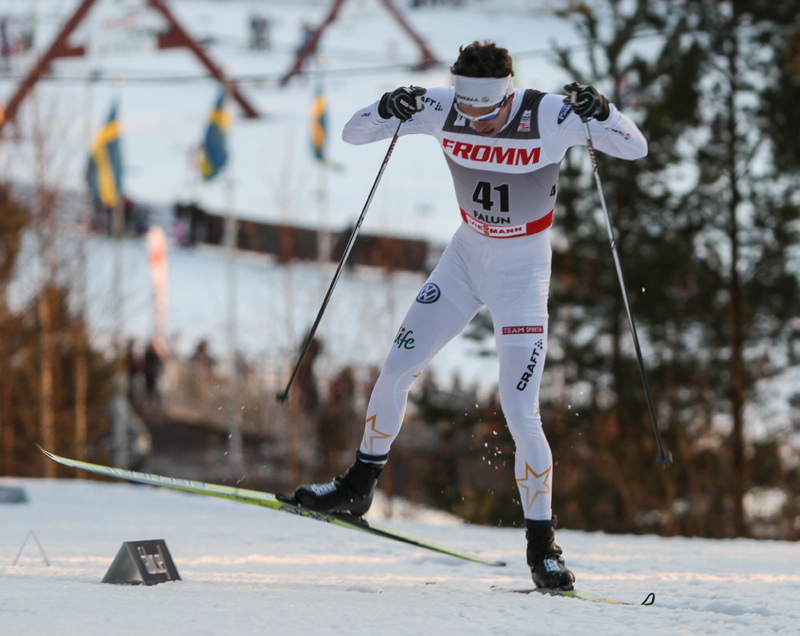
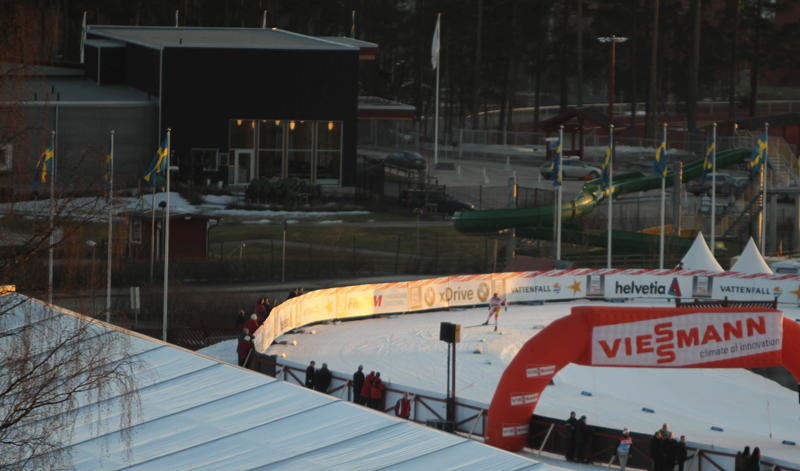
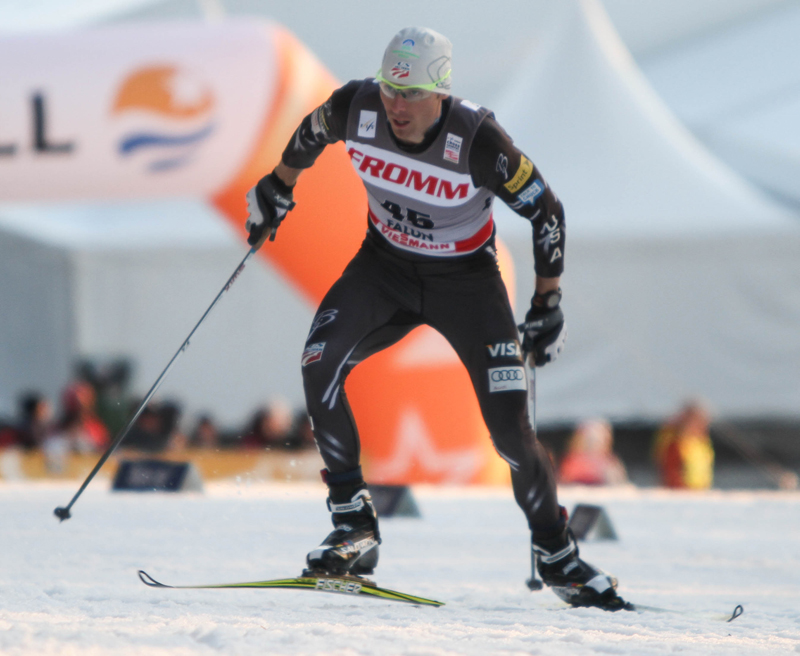
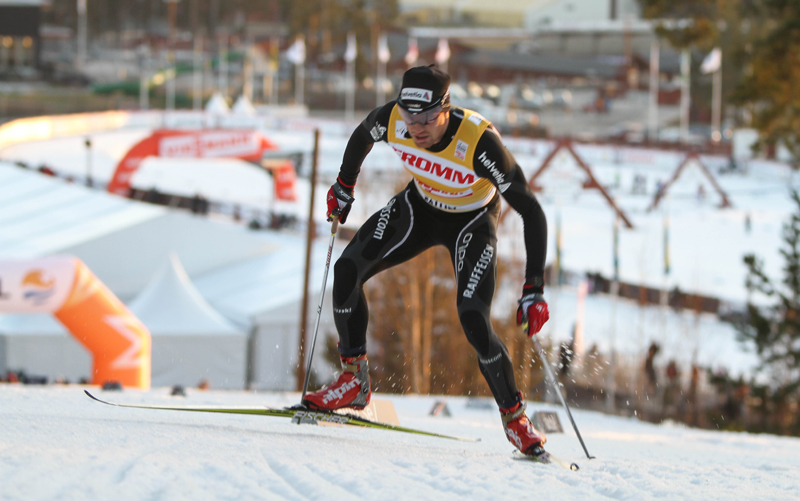
FALUN, Sweden – As the Swedish sun fell so did some racers as the men took to the 3.3km prologue course at the World Cup Finals. In the end it was a close fought battle with only two-tenths of a second separating first and second place.
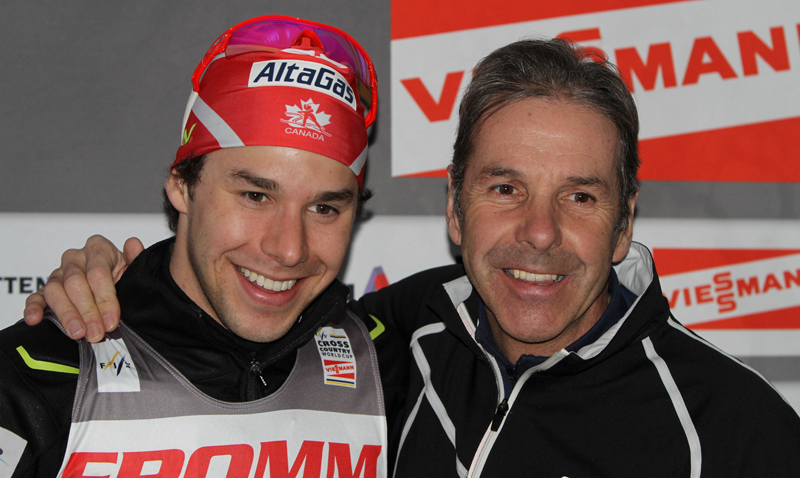
Alex and Pierre Harvey
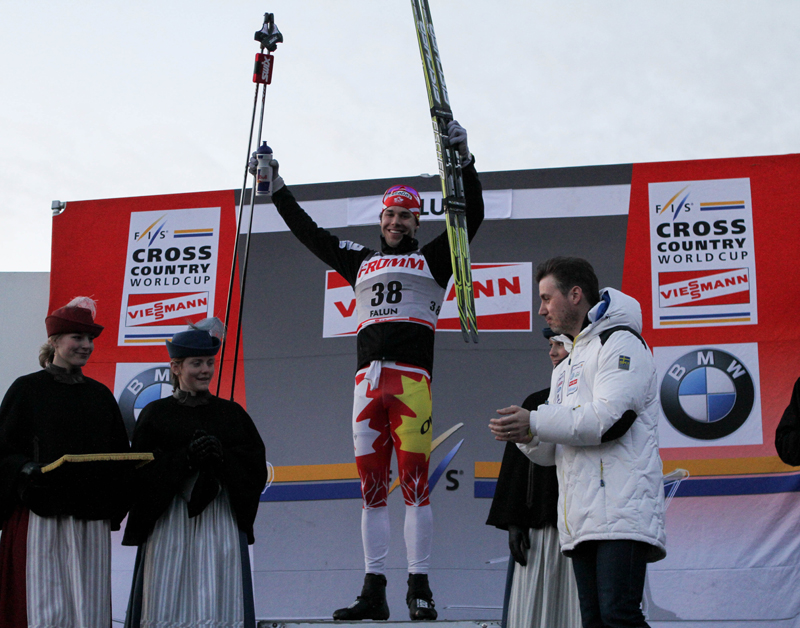
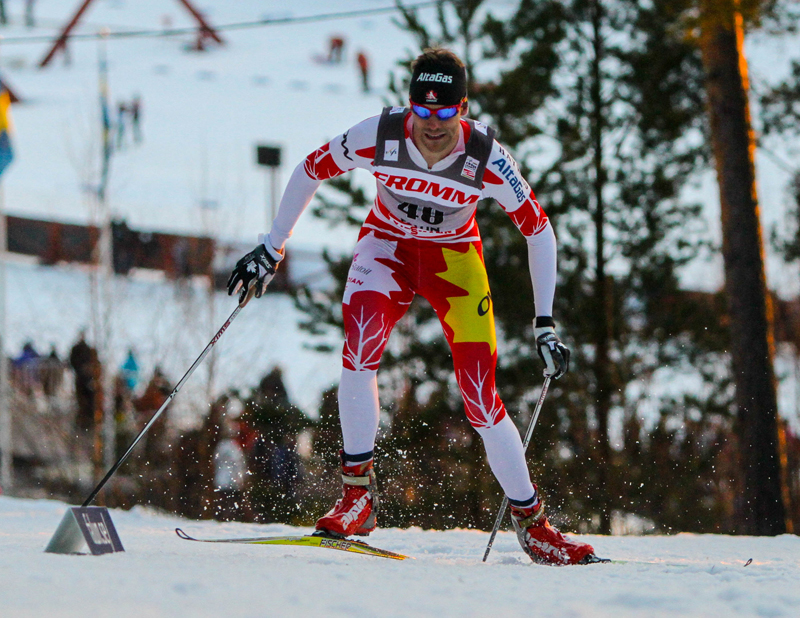
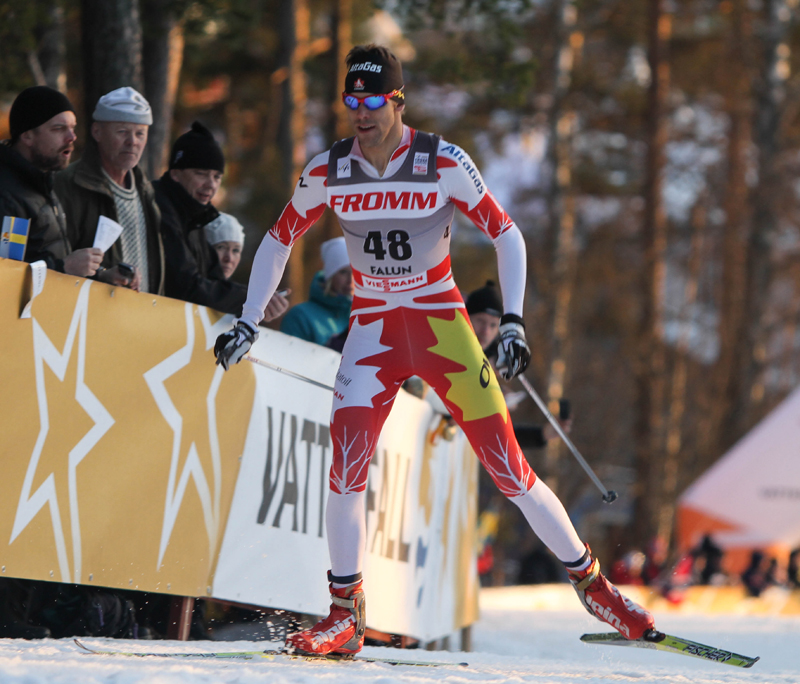
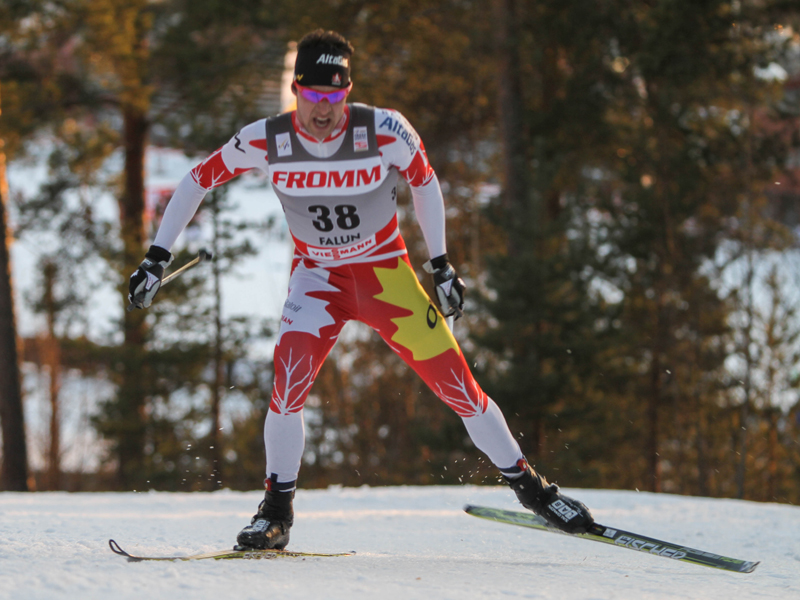
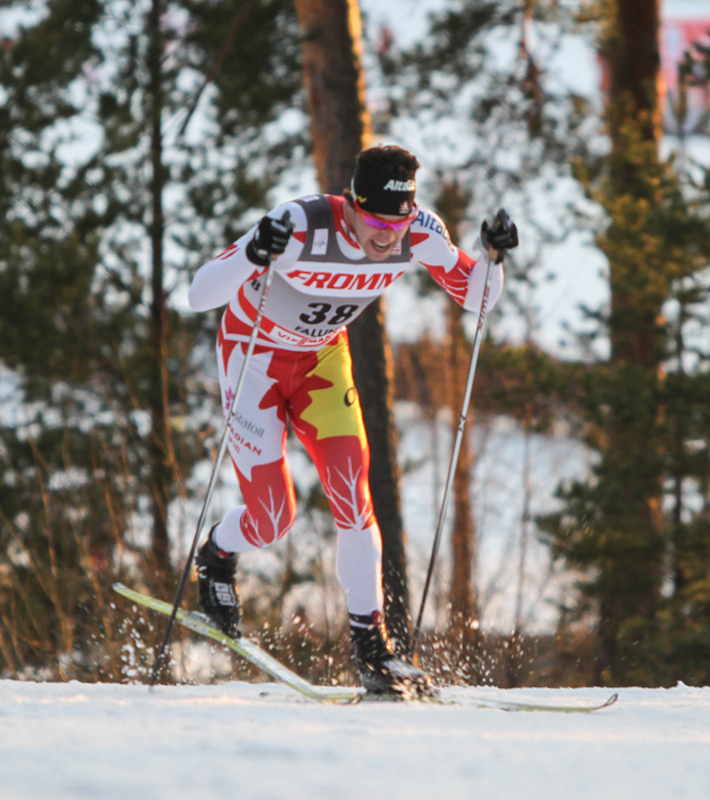
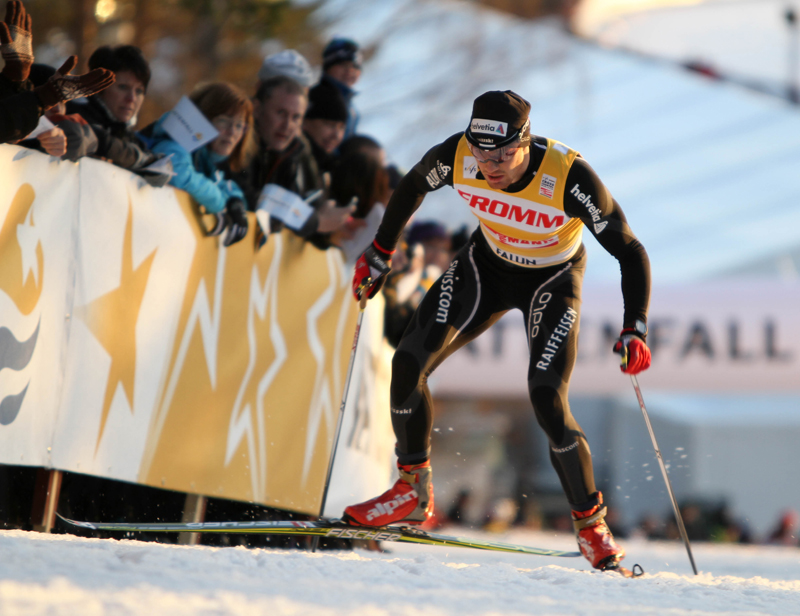
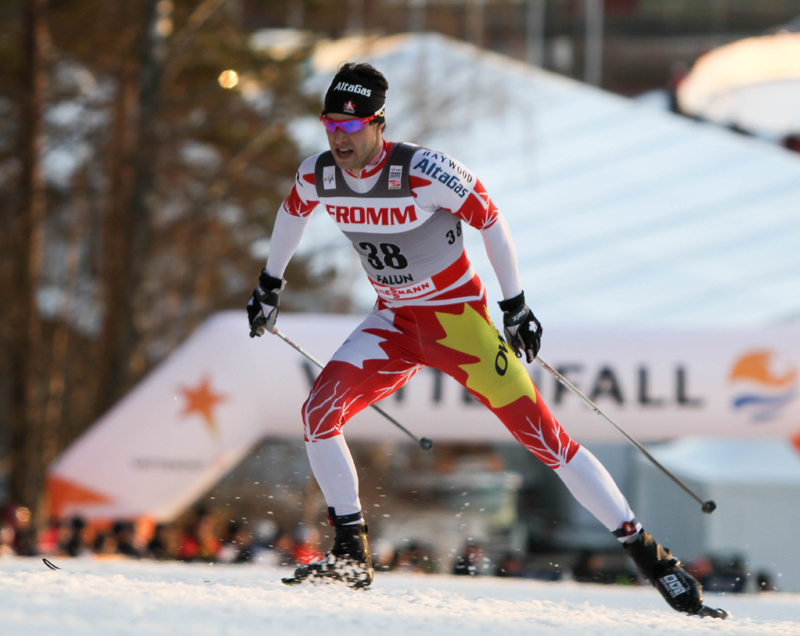
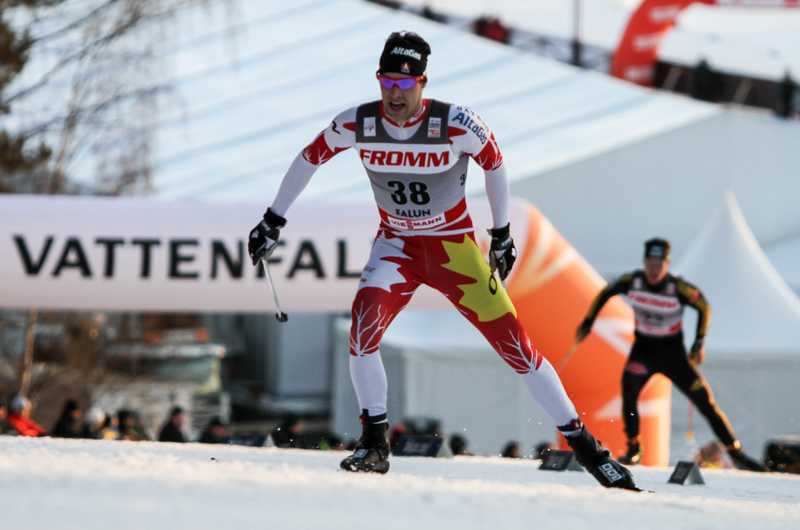
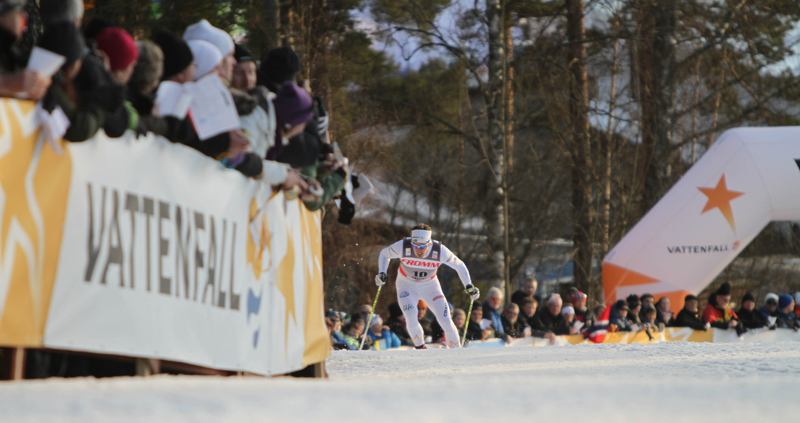
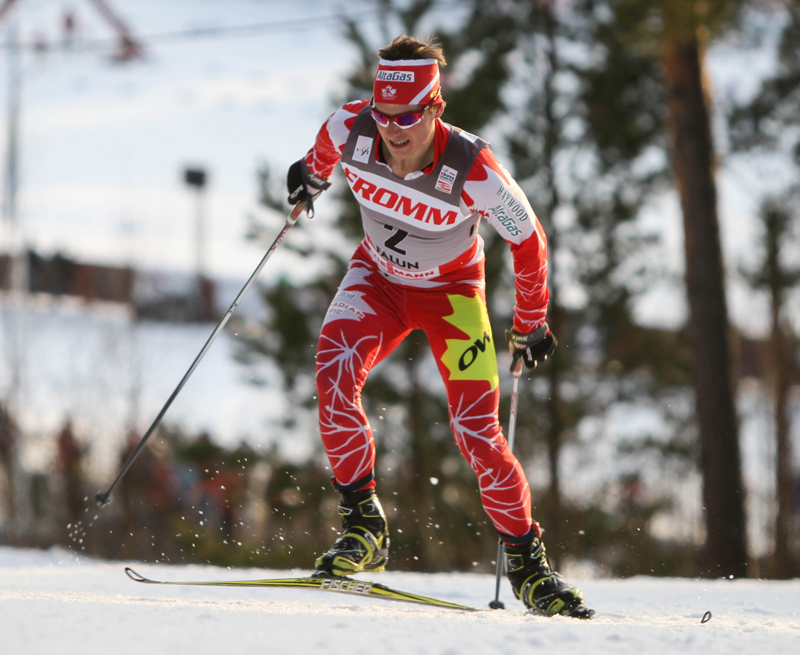
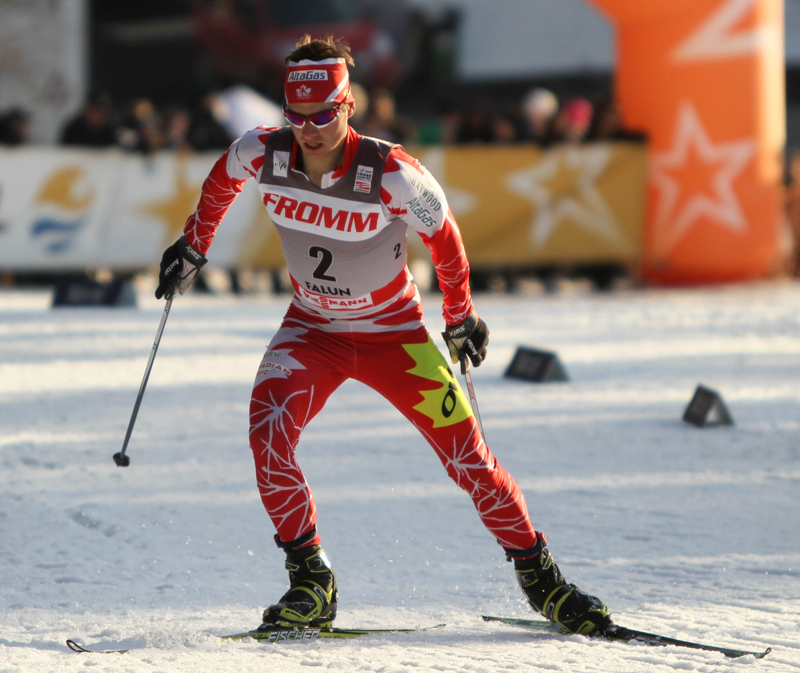
Alex Harvey (CAN) World Cup Finals, Falun, Sweden, Men’s prologue, 2012
Alex Harvey (CAN)
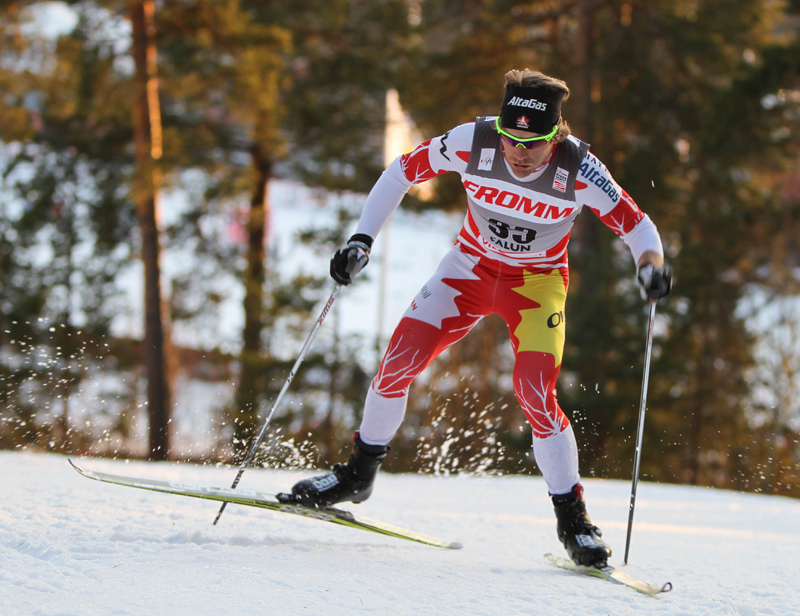
Alex Harvey (CAN)
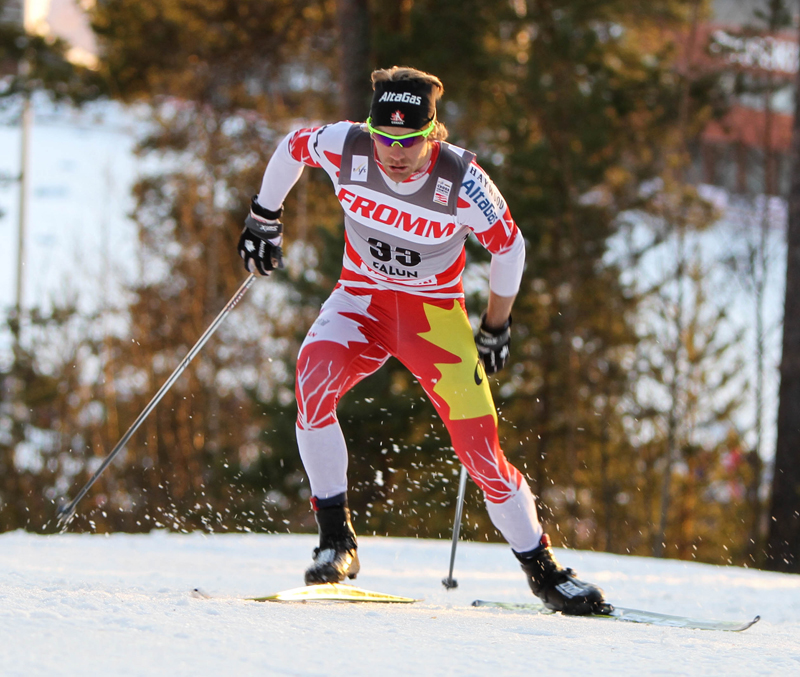
Alex Harvey (CAN)
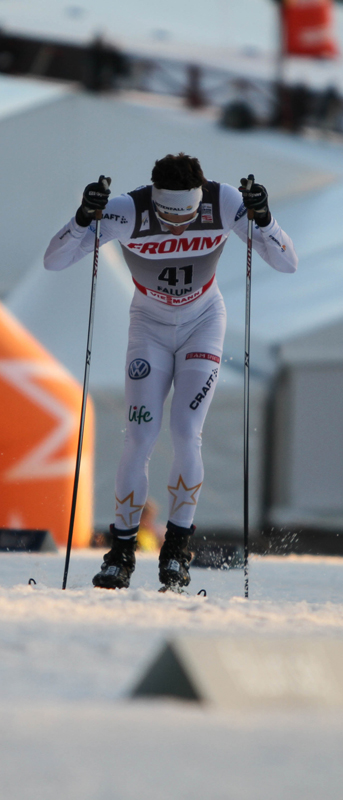
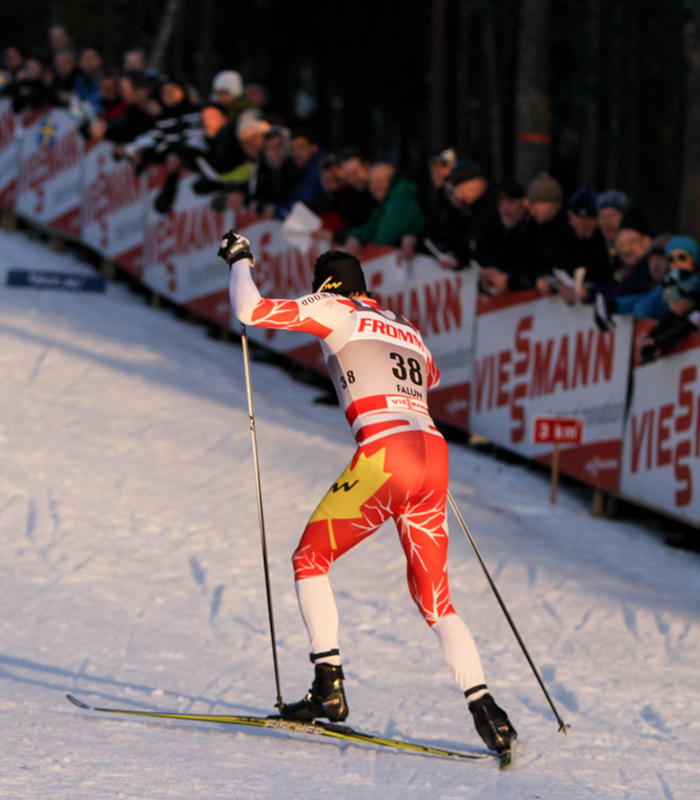
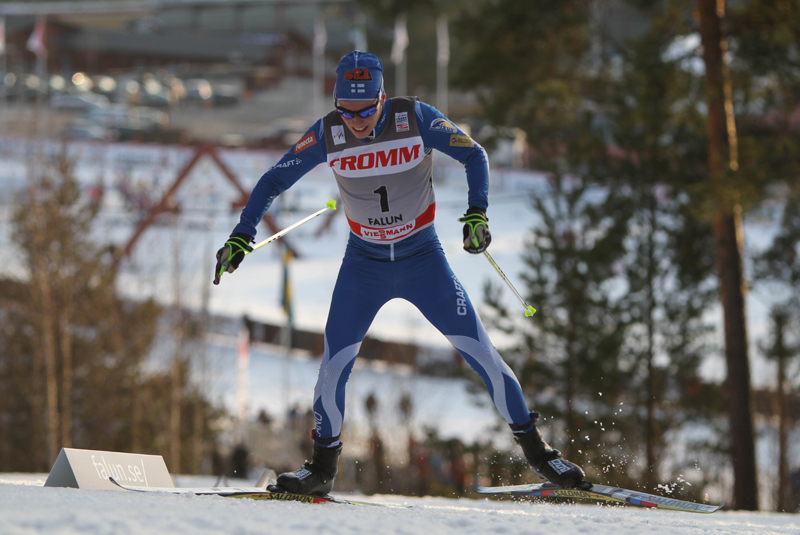
Lenny Valjas (CAN)
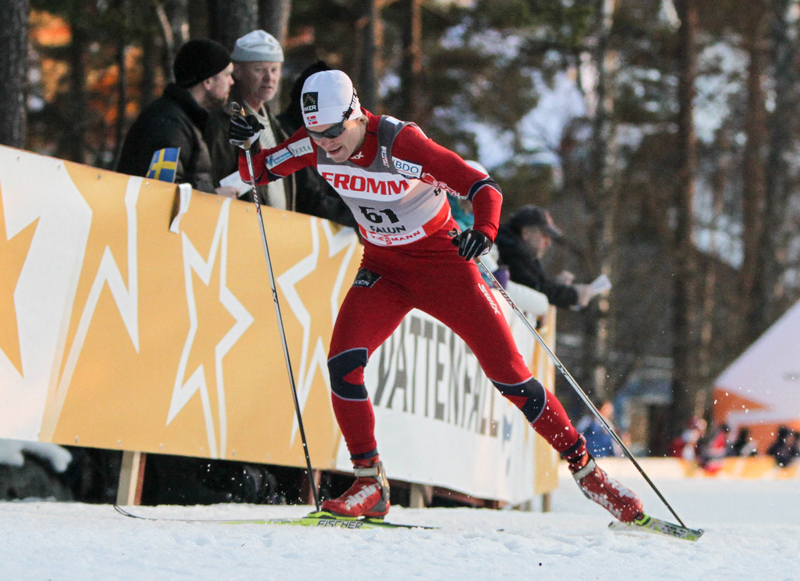
Eirik Brandsdal (NOR)
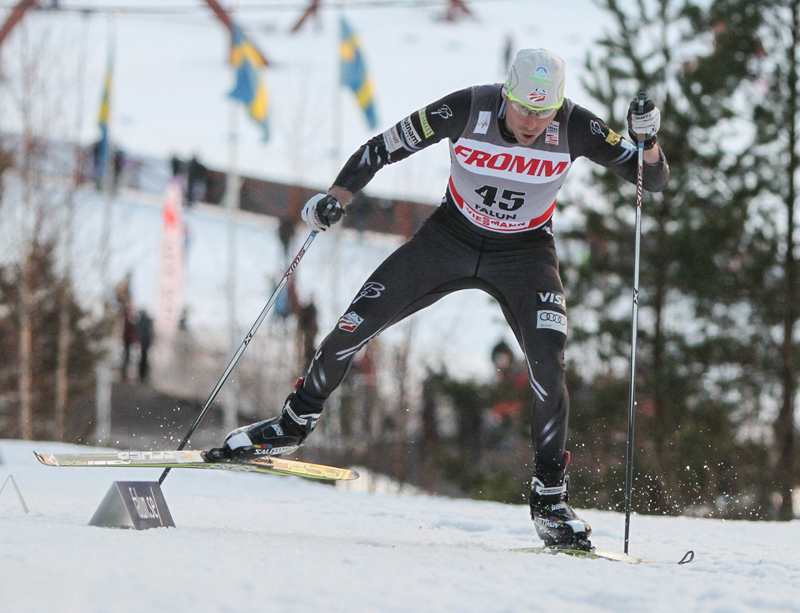
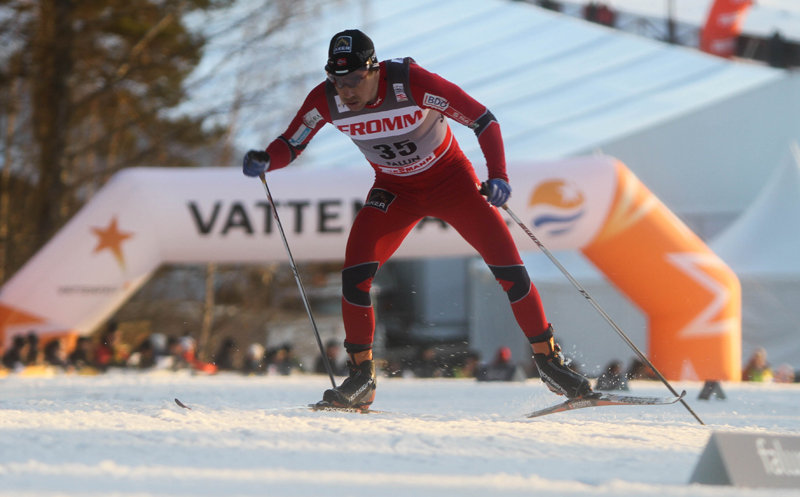
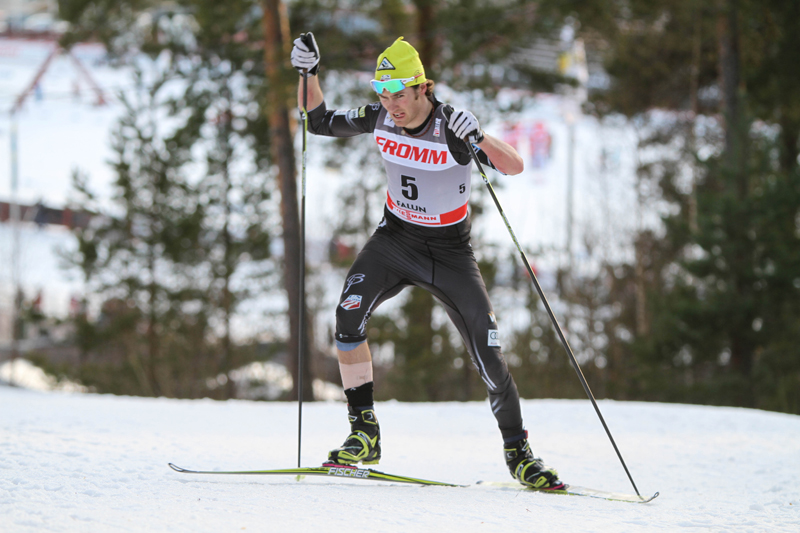
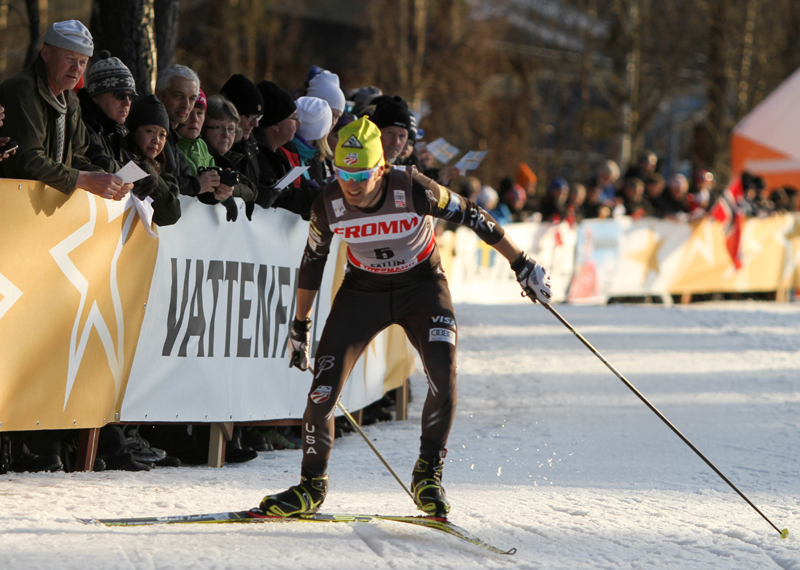
Andy Newell (USA)
Lenny Valjas (CAN)
Marcus Hellner (SWE)
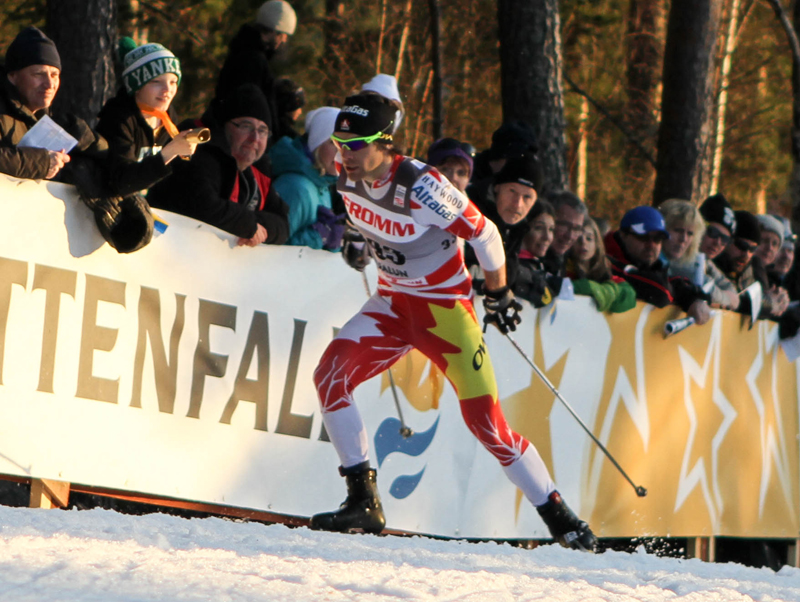
Alex Harvey (CAN) rounds the final corner in the stadium.
Andy Newell (USA)
Dario Cologna (SUI)
Alex Harvey (CAN)
Alex Harvey (CAN)
Marcus Hellner (SWE)
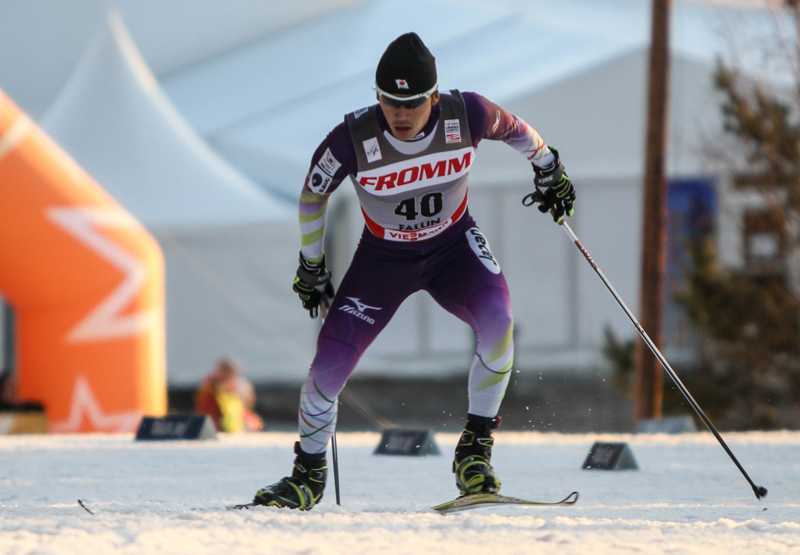
Hiroyuki Miyazawa (JPN)
Dario Cologna (SUI)
Devon Kershaw (CAN)
Devon Kershaw (CAN)
Alex Harvey (CAN)
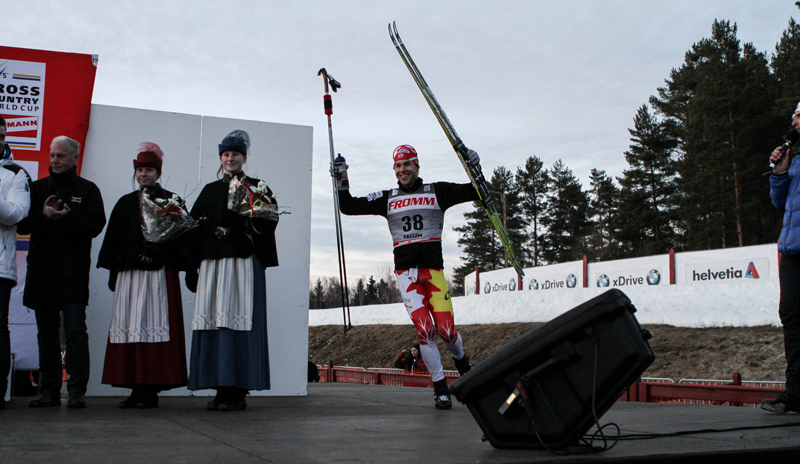
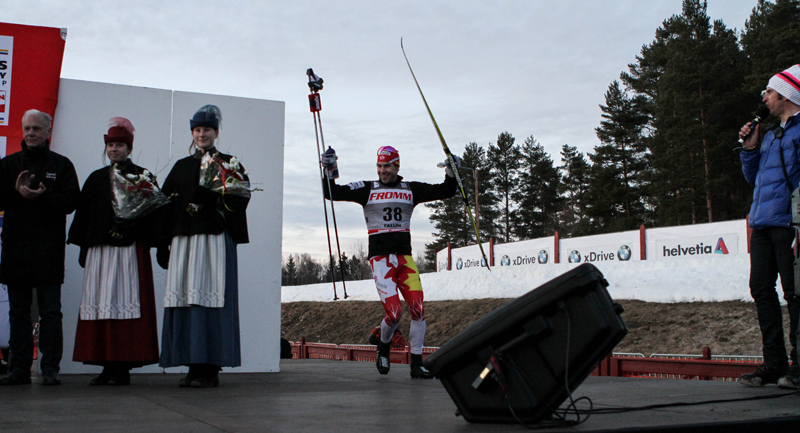
Canadian Alex Harvey on his way to winning the 3.3 k freestyle prologue at the World Cup Finals in Falun, Sweden, on March 16. Harvey is gearing up for another season with some spring training at home in Quebec.
Alex Harvey (CAN)
Eldar Roenning (NOR)
Alex Harvey (CAN)
Manificat in the prologue at World Cup Finals.
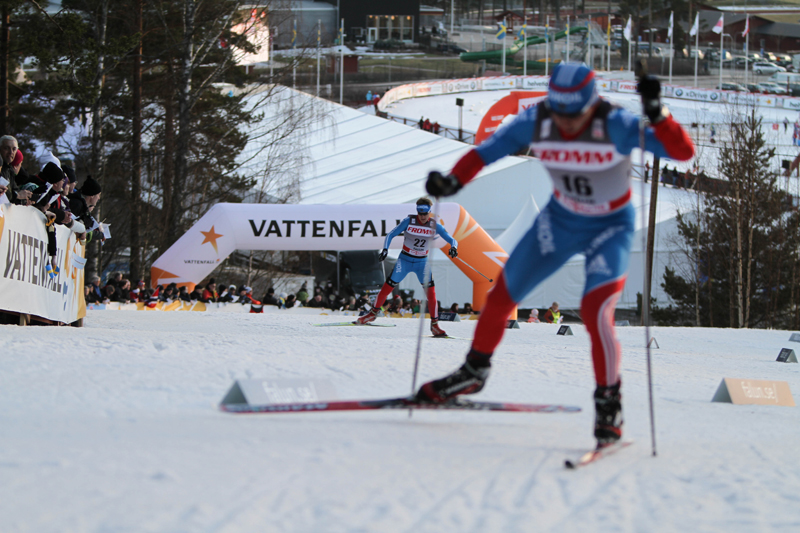
Raul Shakirzianov (RUS, #16) and Dmitriy Japarov (RUS, #22)
Jean Marc Gaillard (FRA)
Tobias Angerer (GER)
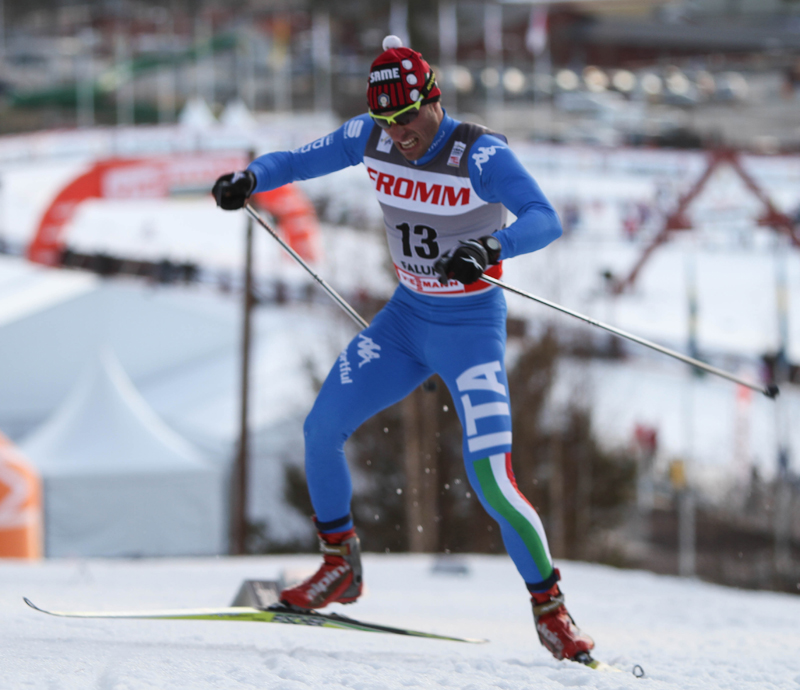
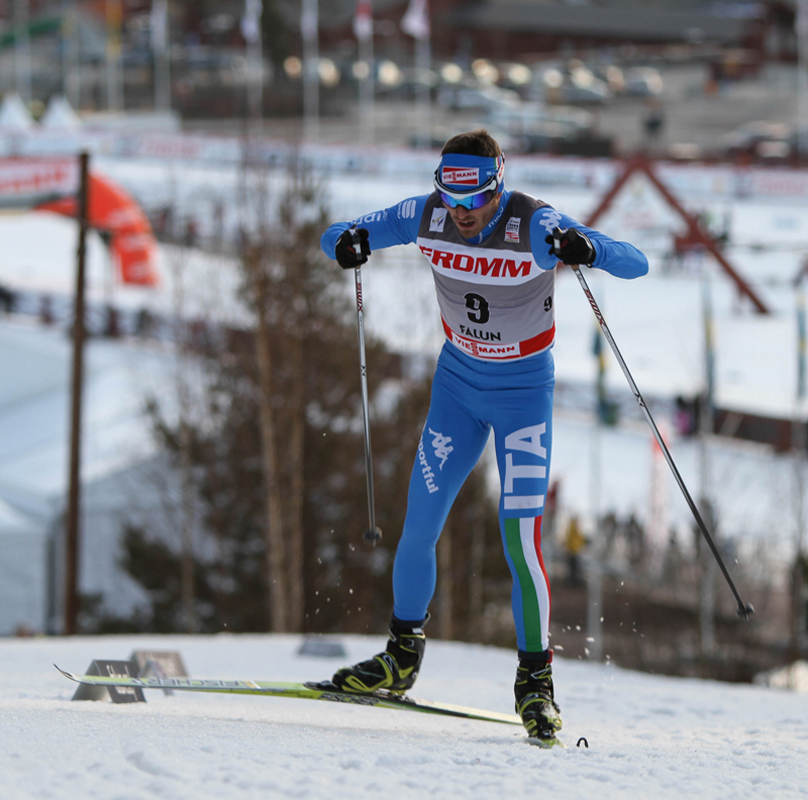
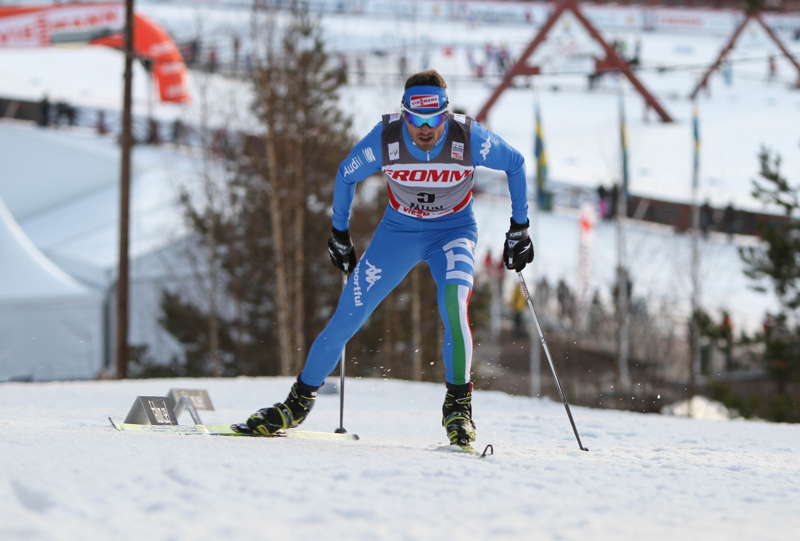
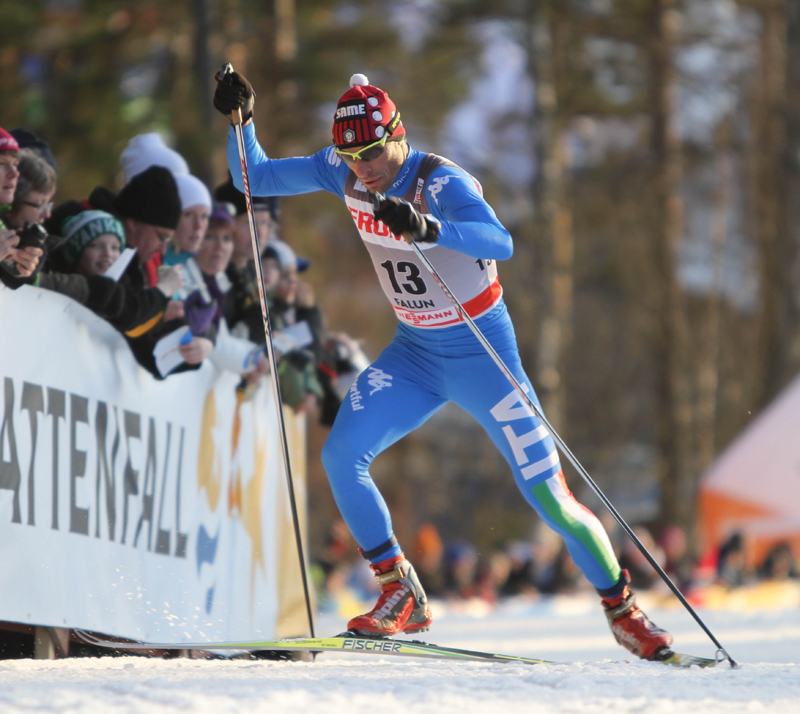
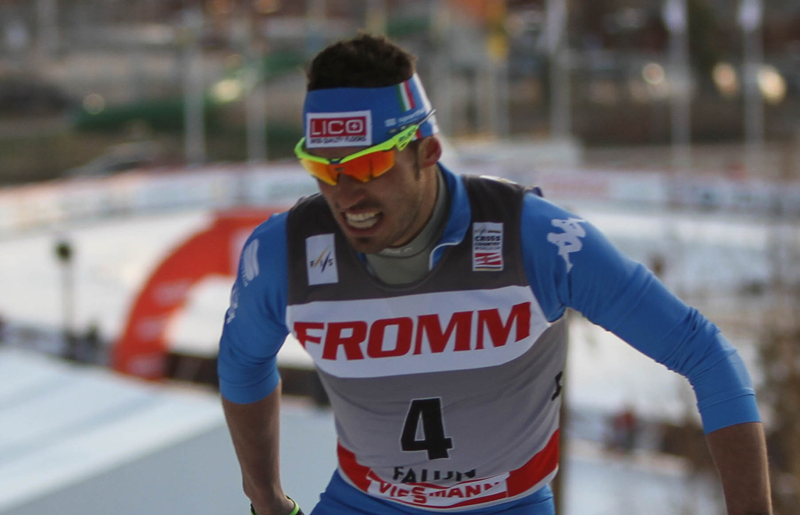
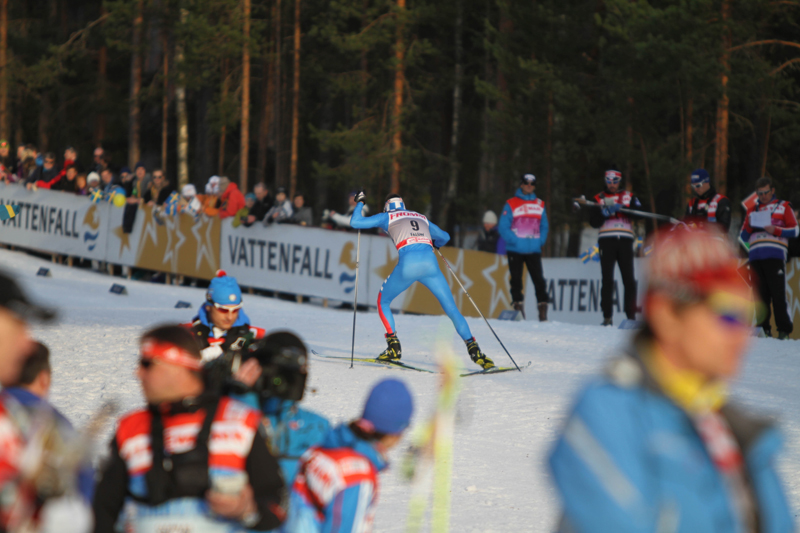
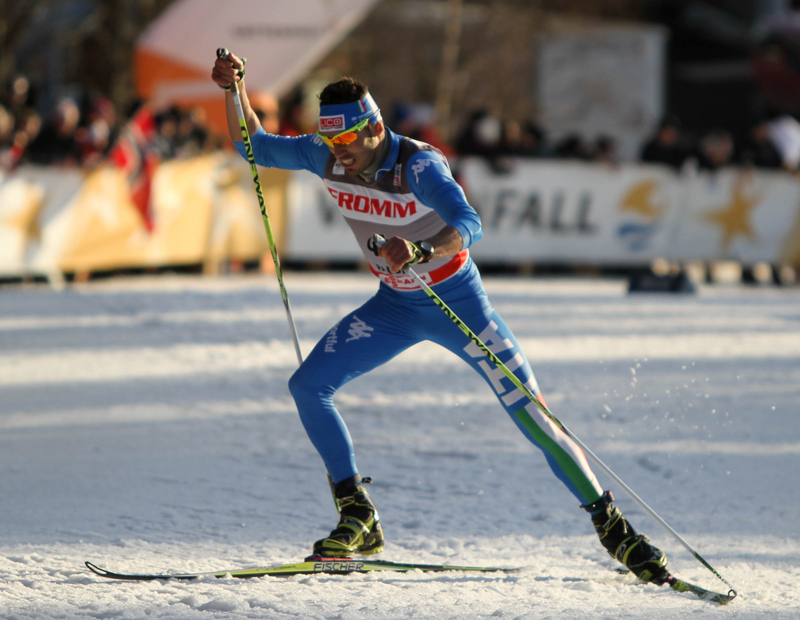
Giorgio Di Centa (ITA)
Sylvan Ellefson (USA)
Roland Clara (ITA)
Roland Clara (ITA)
Giorgio Di Centa (ITA)
Thomas Moriggl (USA)
Calle Halfvarsson (SWE)
Roland Clara (ITA)
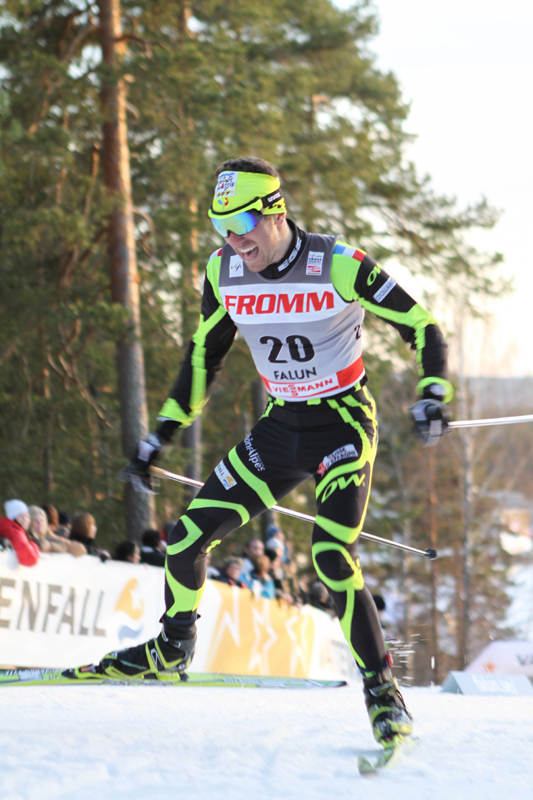
Kevin Sandau (CAN) World Cup Finals, Falun, Sweden, Men’s prologue, 2012
All 2012 FIS World Cup Finals coverage is brought to you through the generous support of Fischer Sports USA, proud sponsors of Kikkan Randall, 2012 overall Sprint Cup Champion.
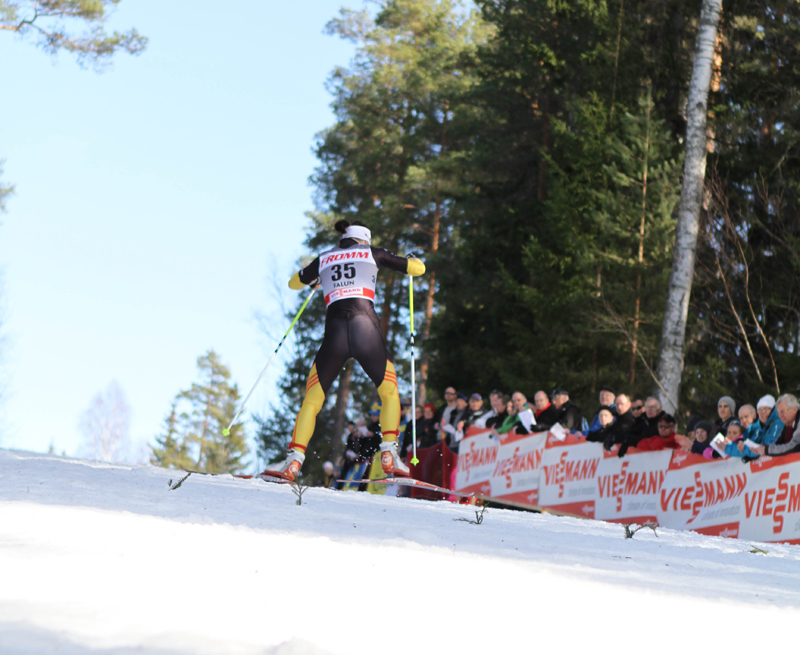
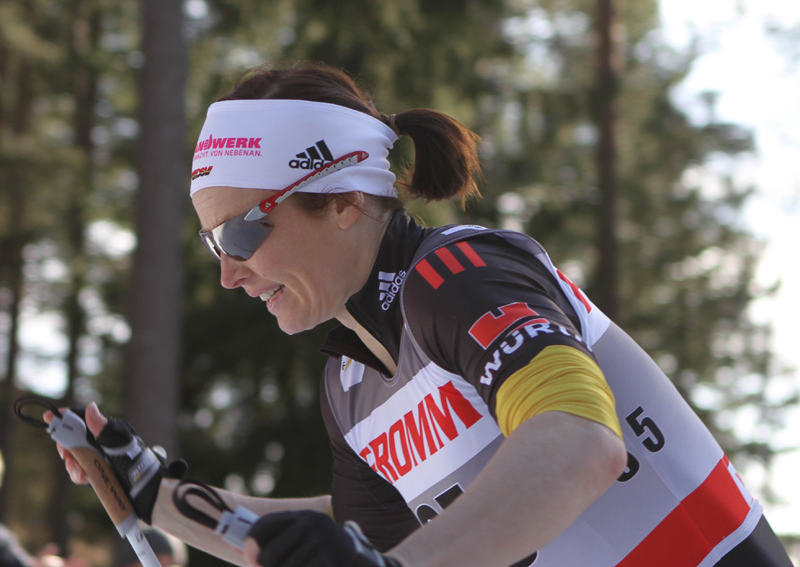
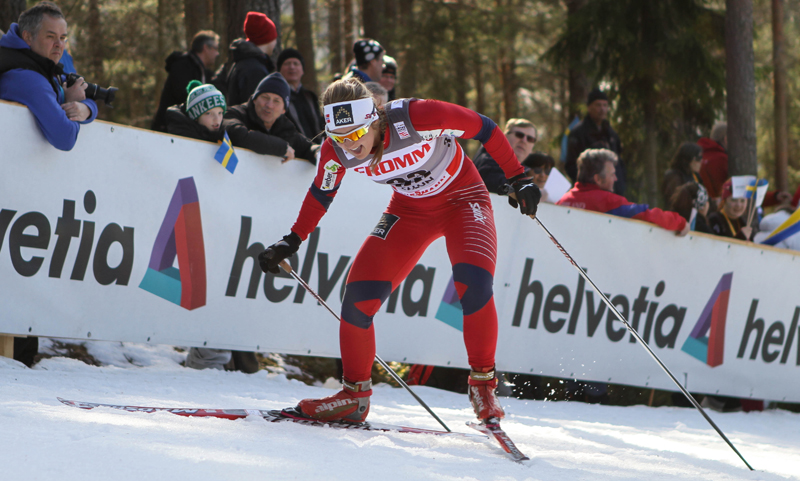
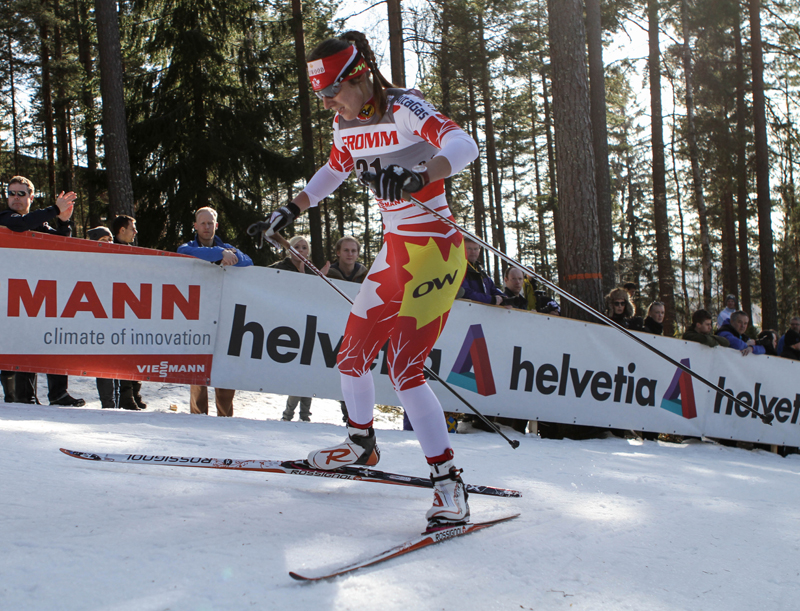
FALUN, Sweden – With bright skies overhead, warm air around and salted snow underfoot the ladies World Cup Final continued with the 2.5km freestyle prologue up and then down the infamous Mördarbacken.
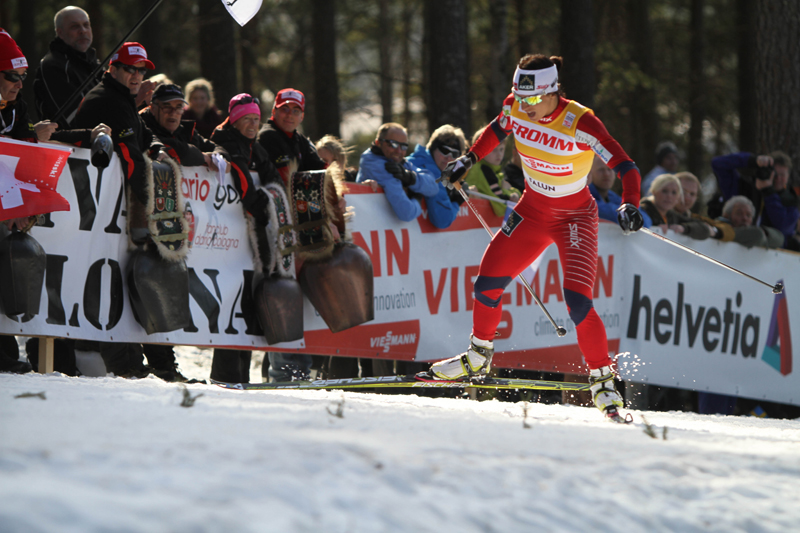
Marit Bjoergen (NOR)
Marit Bjoergen (NOR)
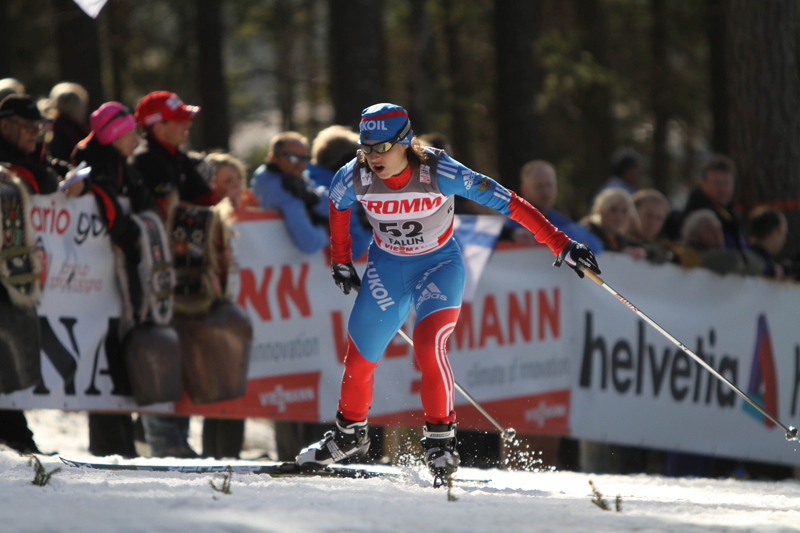
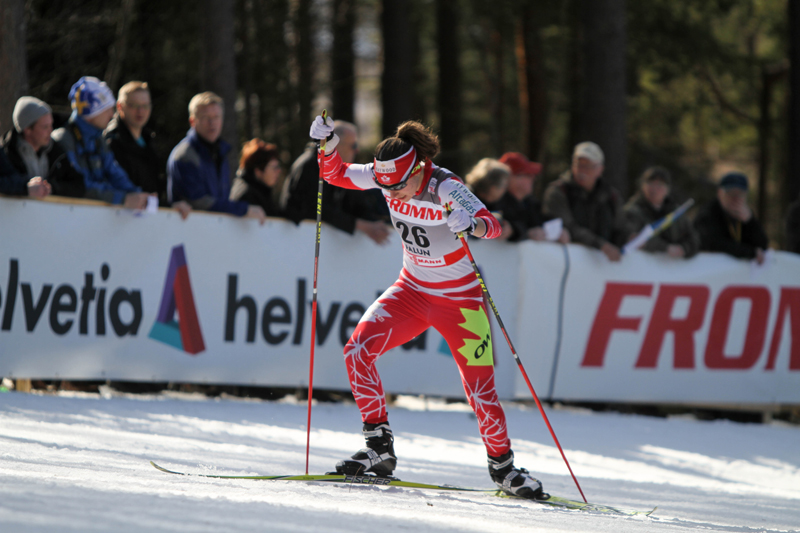
Russia’s Julia Ivanova racing at 2012 World Cup Finals in Falun, Sweden.
Caspersen Maiken Falla (NOR)
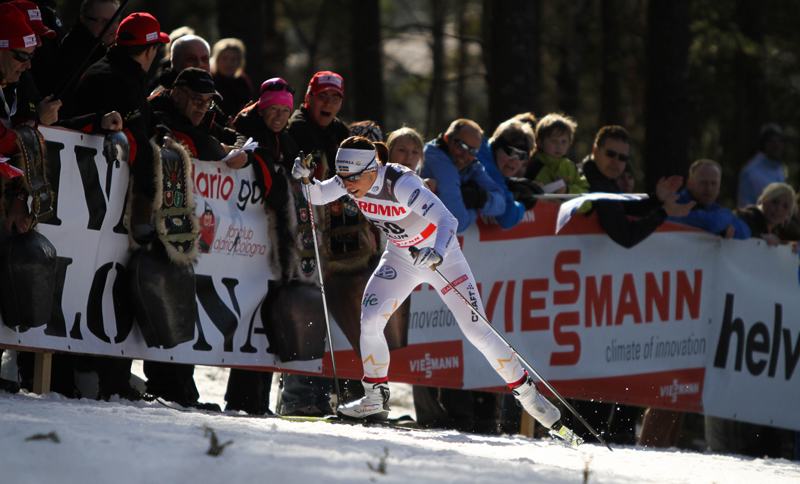
Charlotte Kalla (SWE)
Charlotte Kalla (SWE)
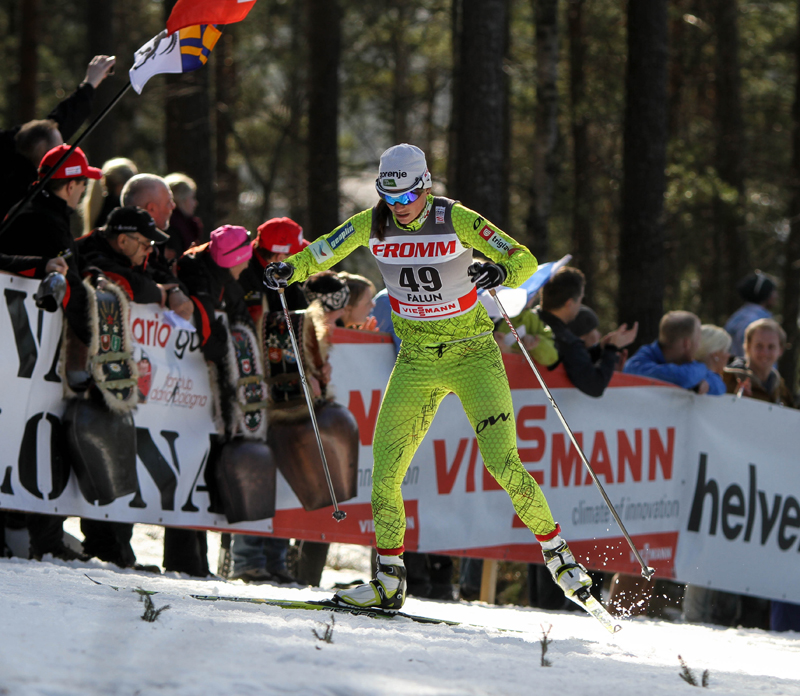
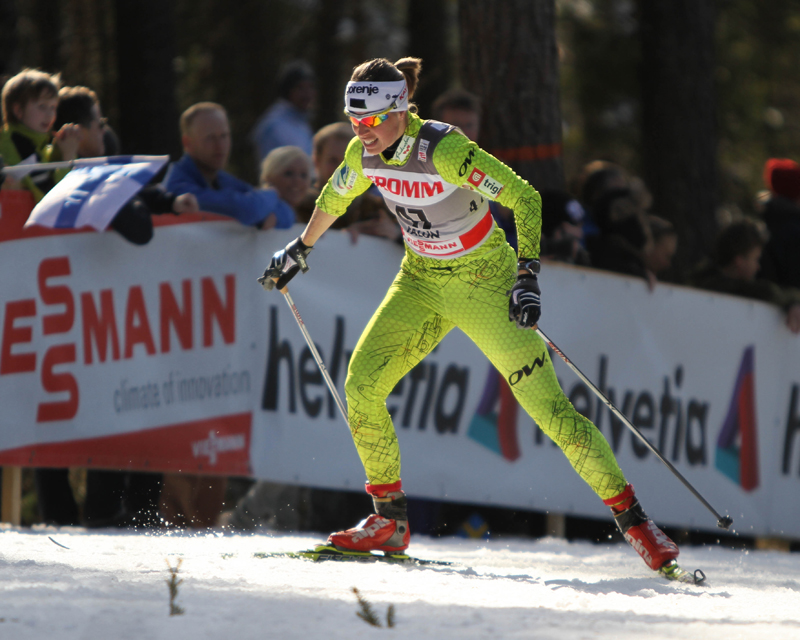
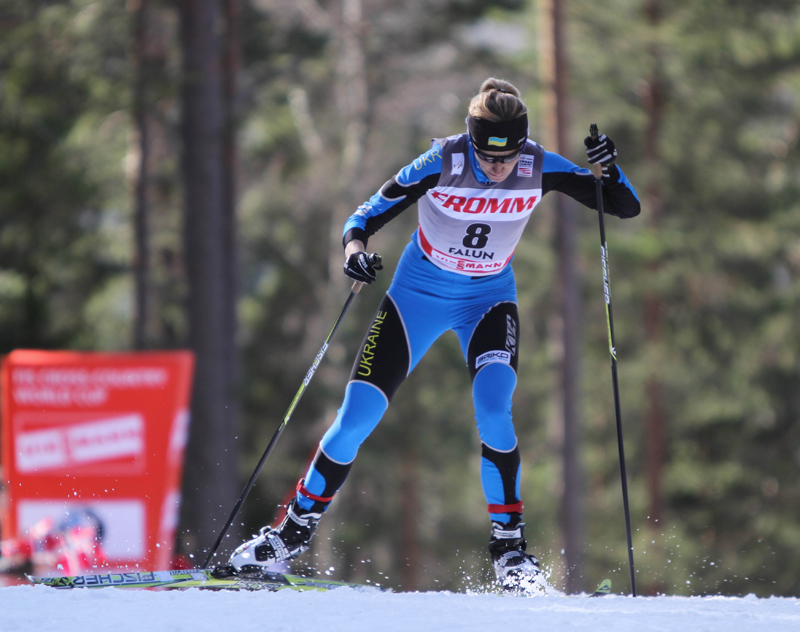
Katja Visnar (SLO)
Vesna Vabjan (SLO)
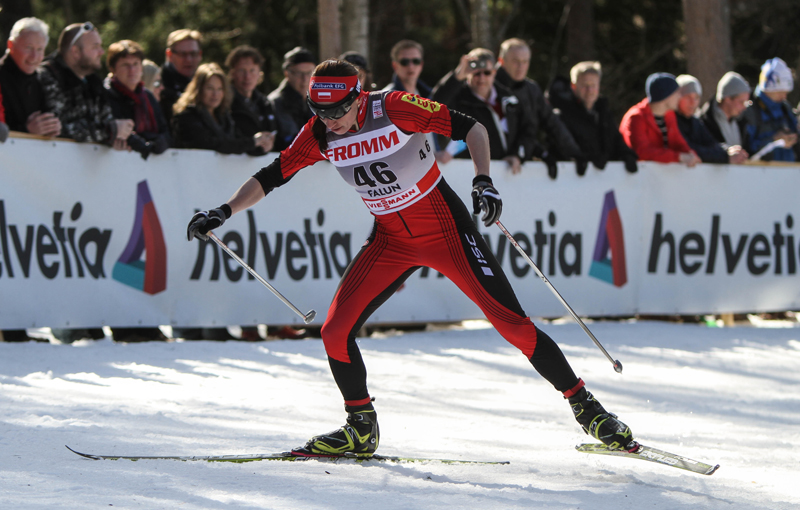
Justyna Kowalczyk (POL)
Justyna Kowalczyk (POL)
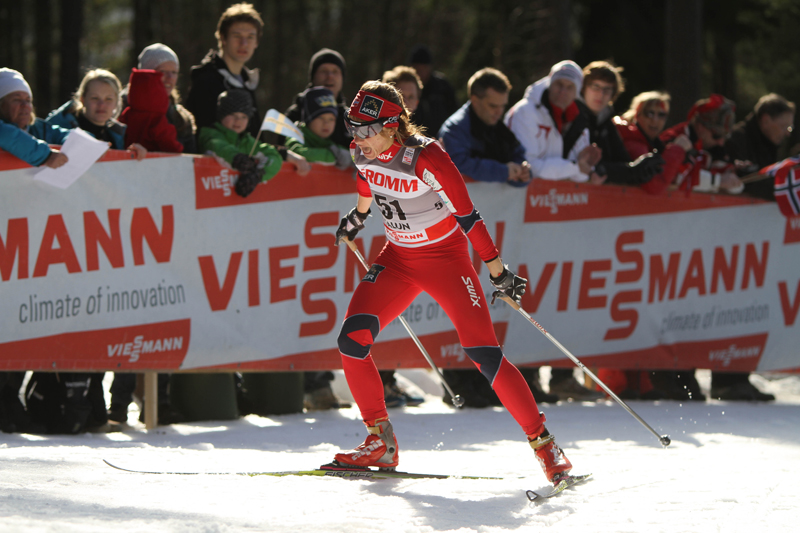
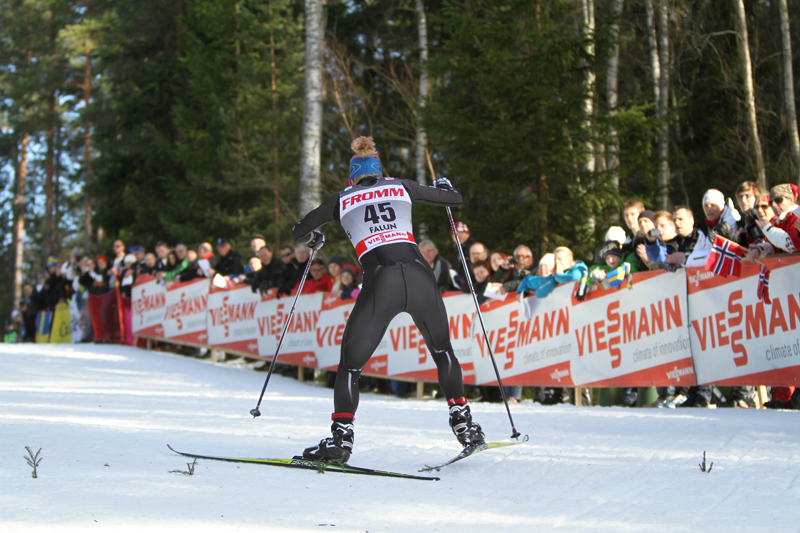
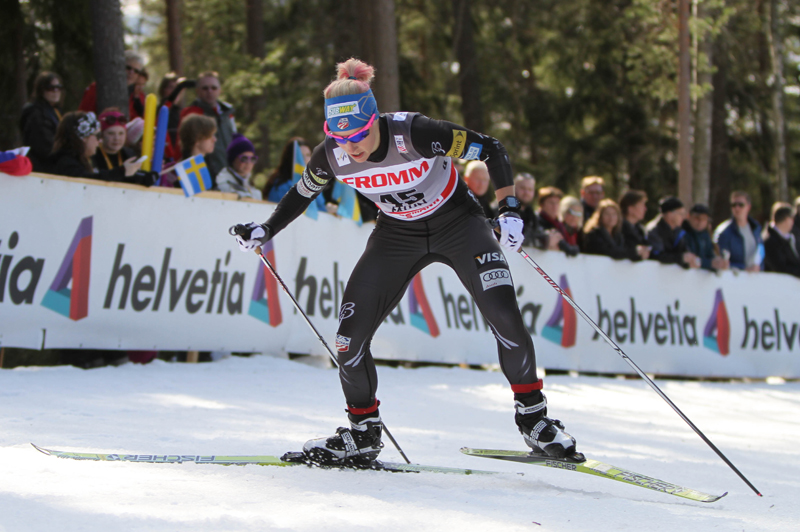
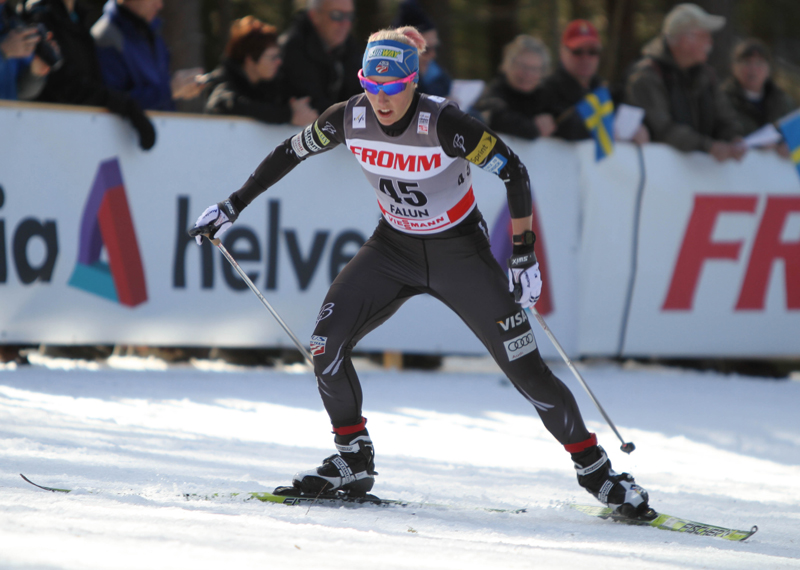
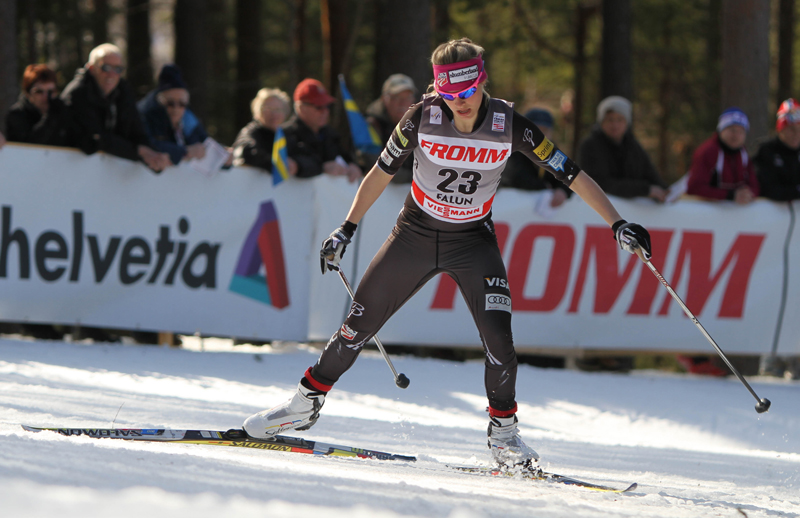
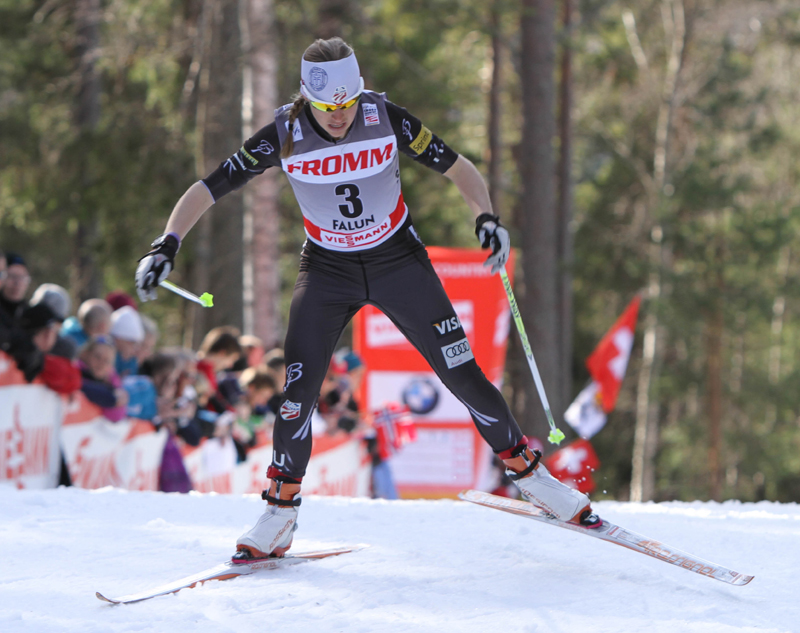
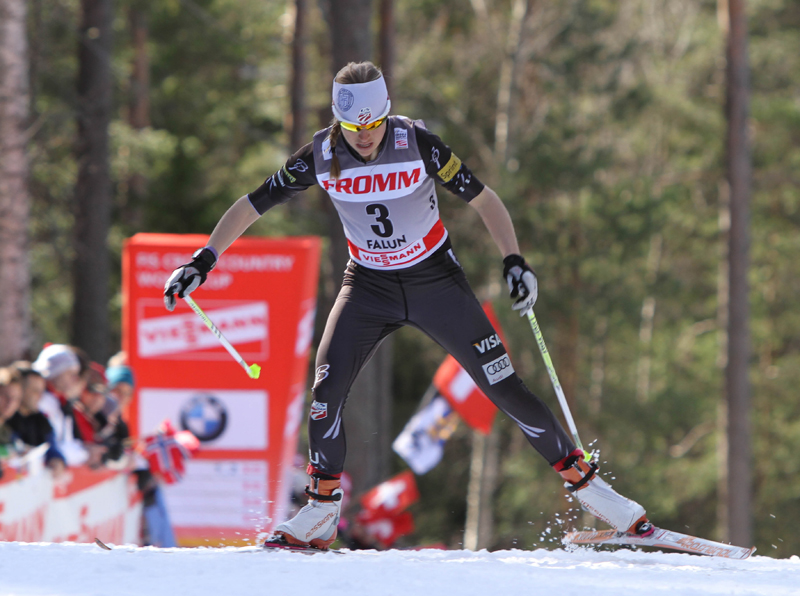
Kikkan Randall (USA)
Kikkan Randall will lead the 2012-13 U.S. Ski Team after meeting the objective criteria for nomination.
Kikkan Randall (USA)
Ida Ingemarsdotter (SWE)
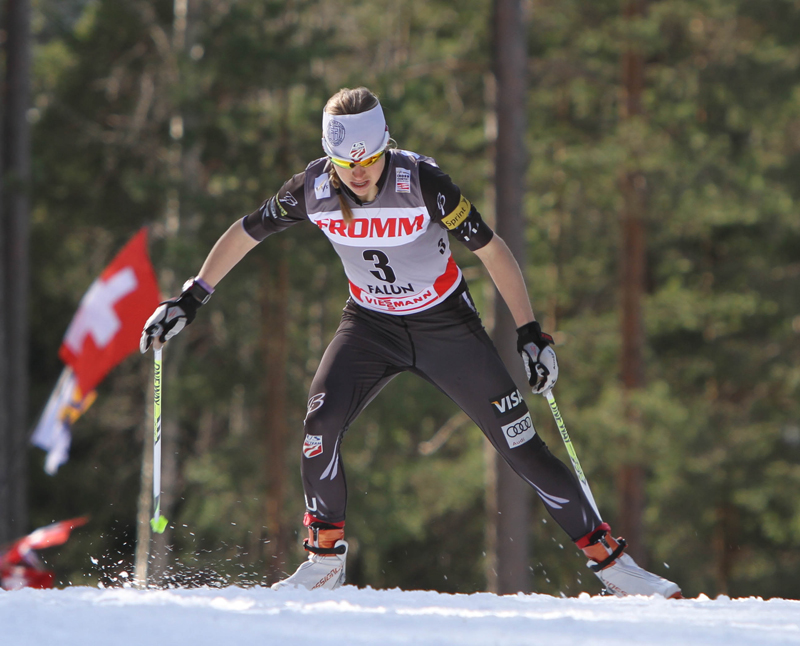
Chandra Crawford (CAN)
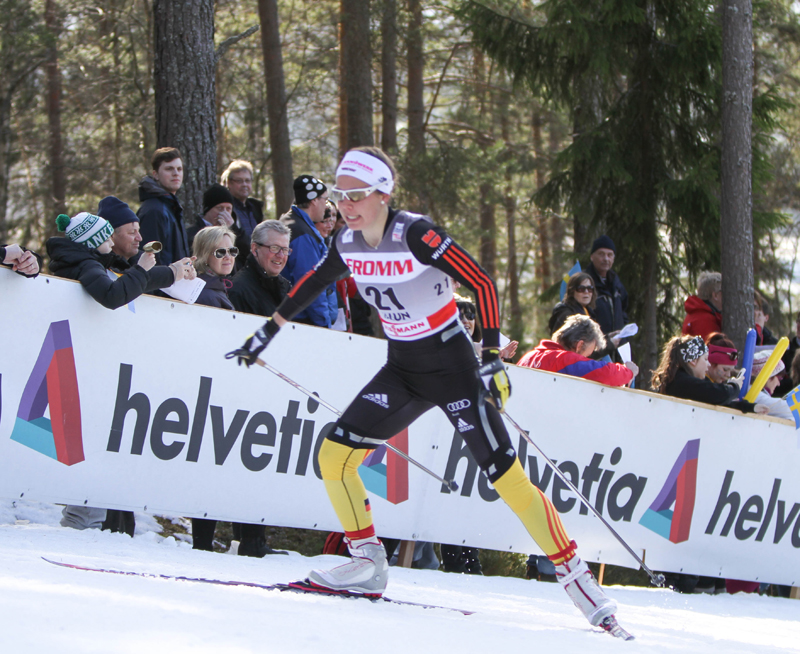
Nicole Fessel (GER)
Katrin Zeller (GER)
Katrin Zeller (GER)
Krista Lahteenmaki (FIN)
Cologna’s Swiss fan club cheer on the women.
Ingvild Flugstad Oestberg (NOR)
Dasha Gaiazova (CAN)
Dasha Gaiazova (CAN)
Alysson Marshall (CAN)
Alysson Marshall (CAN)
Marthe Kristoffersen (NOR)
Diggins
Jessie Diggins (USA)
Therese Johaug (NOR) crests the Mördarbacken.
Therese Johaug (NOR)
Therese Johaug (NOR)
Therese Johaug (NOR)
Hanna Kolb (GER)
Masako Ishida (JPN) competing in the 2.5 k freestyle prologue at last year’s World Cup Finals in Falun, Sweden.
All 2012 FIS World Cup Finals coverage is brought to you through the generous support of Fischer Sports USA, proud sponsors of Kikkan Randall, 2012 overall Sprint Cup Champion.
FALUN, Sweden – Spring has come early to central Sweden, and while Falun is nowhere near the sea, it will be a salty day on the courses.
With temperatures never falling below +2C overnight, the snow was wet and soft early this morning at the Lugnet Riksskidstadion.
According to Race Jury member Marco Lustrek of Slovenia, this made the decision to salt an easy one.
“As soon as we saw the track [this morning], we made the decision,” Lustrek told FasterSkier.
According to Lustrek the Jury was prepared with three options—salt before both races, salt after the women’s race, or not salt at all.
With three-and-a-half hours between the start of the women’s and men’s freestyle prologue, there would have been time to make adjustments in between.
At this point that will not be necessary as course workers will begin spreading salt at 11:30.
The goal, Lustrek said, is to create as good a course as possible—one that is fair to all competitors.
He noted that speed was not a factor, but soft conditions usually are a disadvantage to later starters in individual start races, and the Jury also wants the skiing to begood—solid pole plants, and less of a slog on the steep climbs.
The Jury will evaluate the course the morning before each race and will decide an appropriate course of action at that point.
Norwegian grip waxer Rory Petersen believes that the course will be salted on both Saturday and Sunday as well, and is preparing accordingly.
As salt firms up the track, harder klister is required, so Petersen was hard at work applying colder klister to test skis for the morning.
Glide, on the other hand, is not impacted much by the salt according to another member of the Norwegian wax staff, Espen Toellefsen.
Toellefsen said that he did not expect to modify glide wax based on the salt and that the harder, faster track meant there would be less difference in glide.
The salting has necessitated a change in the schedule for the day.
The training/warm-up loop, and a portion of the 5k course was scheduled to open at 9:00, but that was altered to 10:30.
Athletes were originally were to have access to today’s race course at 11:30, but with salting at that time, the track will no open at 12:00, an hour and a half before the women’s start.
Women will race 2.2 kilometers and men 3.3.
Both races start the same way, heading out of the stadium and immediately to the famed Mördarbacken, the massive climb at that base of the Falun ski jumps.
The hill starts at a reasonable grade, though long, before pitching into a wall at the top.
Adding to the challenge is the gradual incline over the top into an extended flat.
There will be no collapsing over the top to rest immediately.
After a fast descent there is a short, yet steep climb and then the drop down to the stadium
At that point, the men split off and ski the bottom portion of the Mördarbacken a second time, cutting off and dropping back toward the finish before the worst of the “killer hill.”
The finish loops around the stadium into a final 200 meters featuring a sustained gradual climb to the finish.
Some of the sprint specialists have withdrawn from the competition, including Russians Nikolay Morilov and Alxei Petukhov.
Fan-favorite Emil Joennson (SWE) is also out after aggravating a groin injury in the Stockholm sprint.
Racers will start in reverse order of the current overall World Cup Final mini-tour standings, which almost identically mirror the results of the Royal Palace Sprint.
One exception is Lenny Valjas (CAN) who placed third in Stockholm.
Valjas qualified back in 30th, and the gap up to Ola Vigen Hattestad was so big that even though Valjas defeated the Norwegian in the final, Hattestad sits in third and Valjas fourth overall.
In mini-tour sprints, bonus seconds are subtracted off the qualification times of the athletes and on a day where times are spread out, standings can be impacted.
Ultimately this has no meaningful impact on the mini-tour as the differences are so small.
While Marit Bjørgen (NOR) has been slowly pulling away in the overall World Cup standings, there is still an outside possibility for a comeback by Justyna Kowalczyk (POL).
There are a number of other tighter battles just a bit further back in the rankings on both the men’s and women’s lists.
American Kikkan Randall is just 17 points ahead of Charlotte Kalla (SWE) in fourth.
“The overall standing is a big priority,” Randall said in a teleconference with media on Thursday. “Just three races left and we’ve been going back and forth all season so I’m really excited to battle it all the way out to the end.”
Off the course it is spring here in Falun.
Leaving the Riksskidstadion.
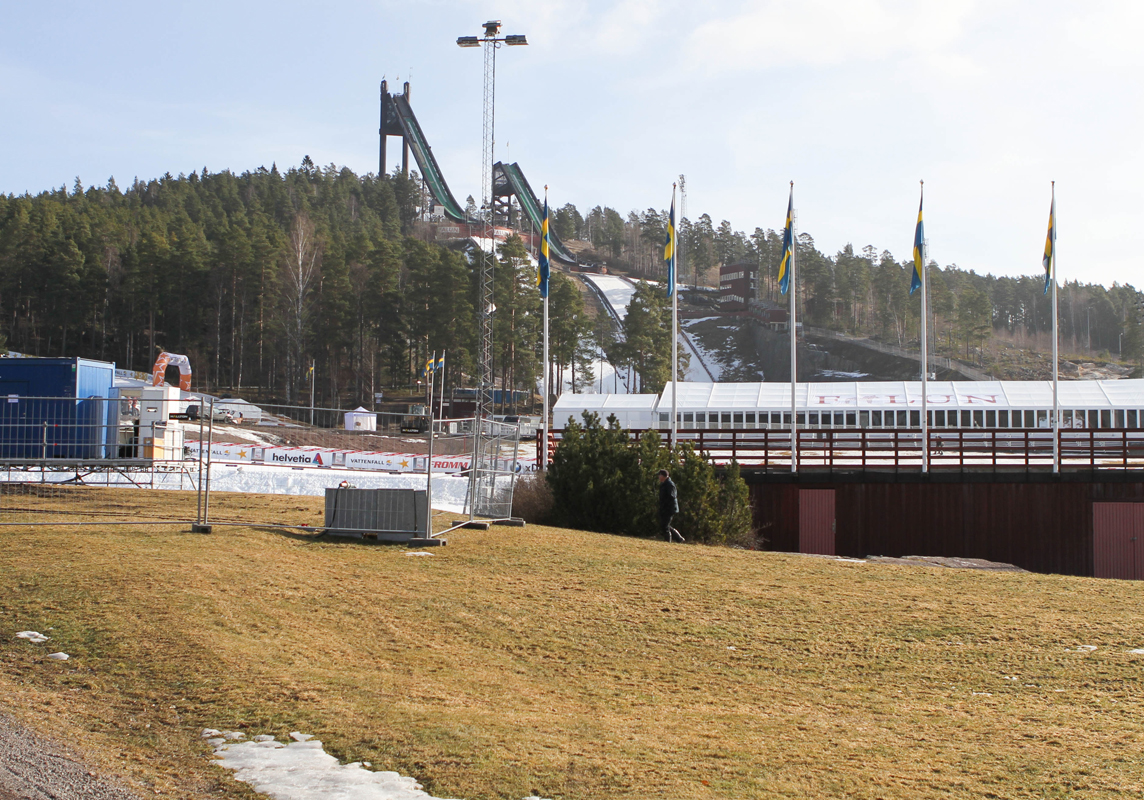
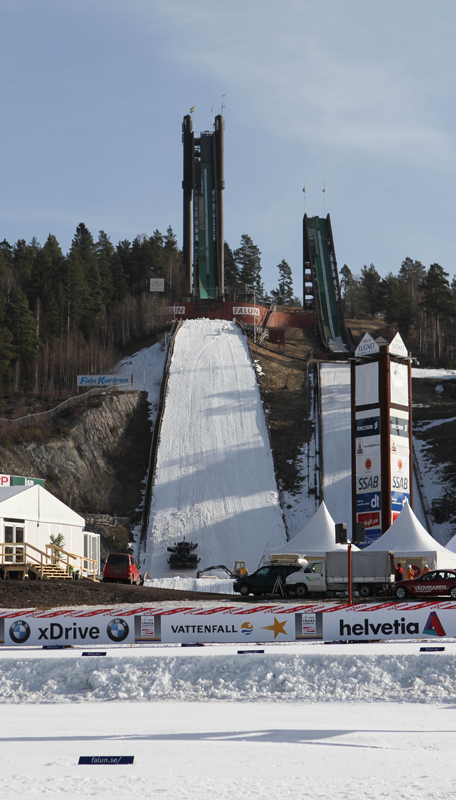
The Lugnet jumps.
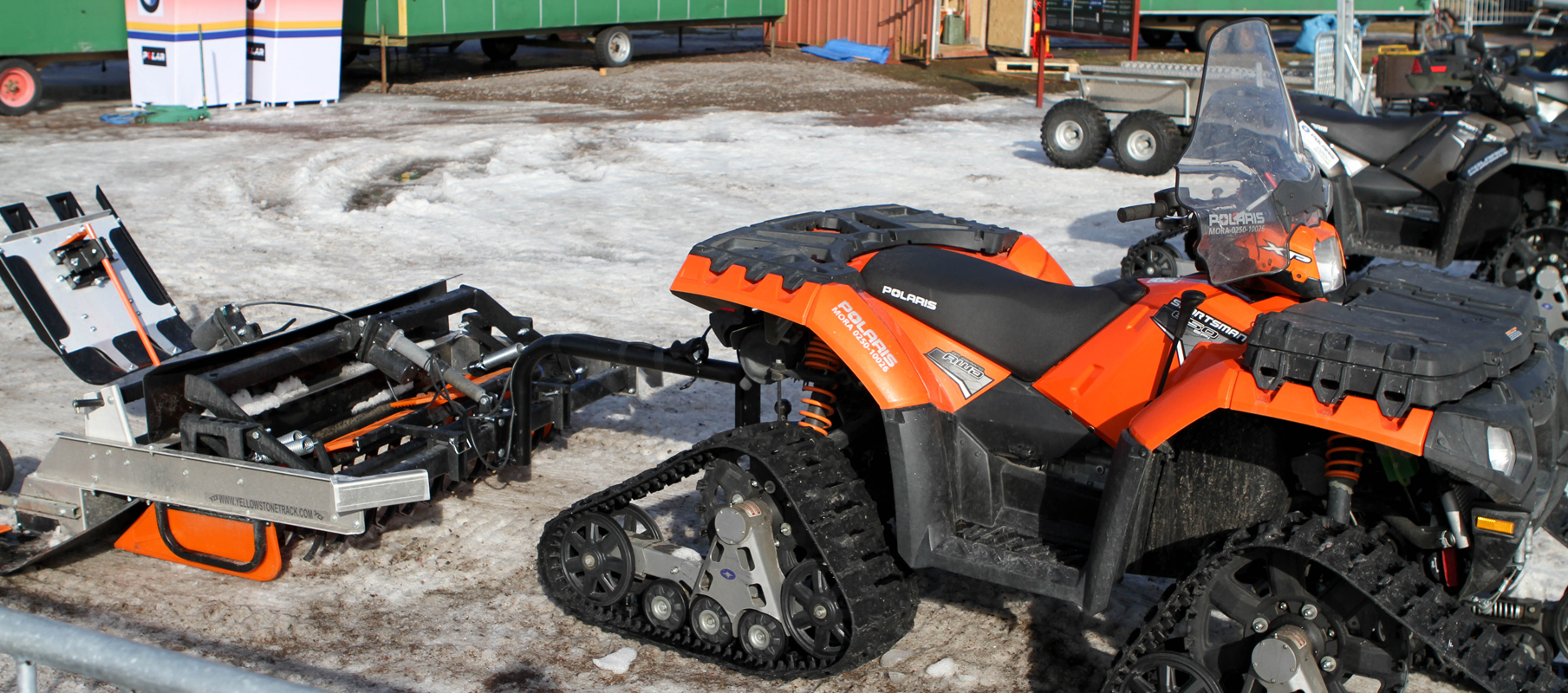
IMG_8977
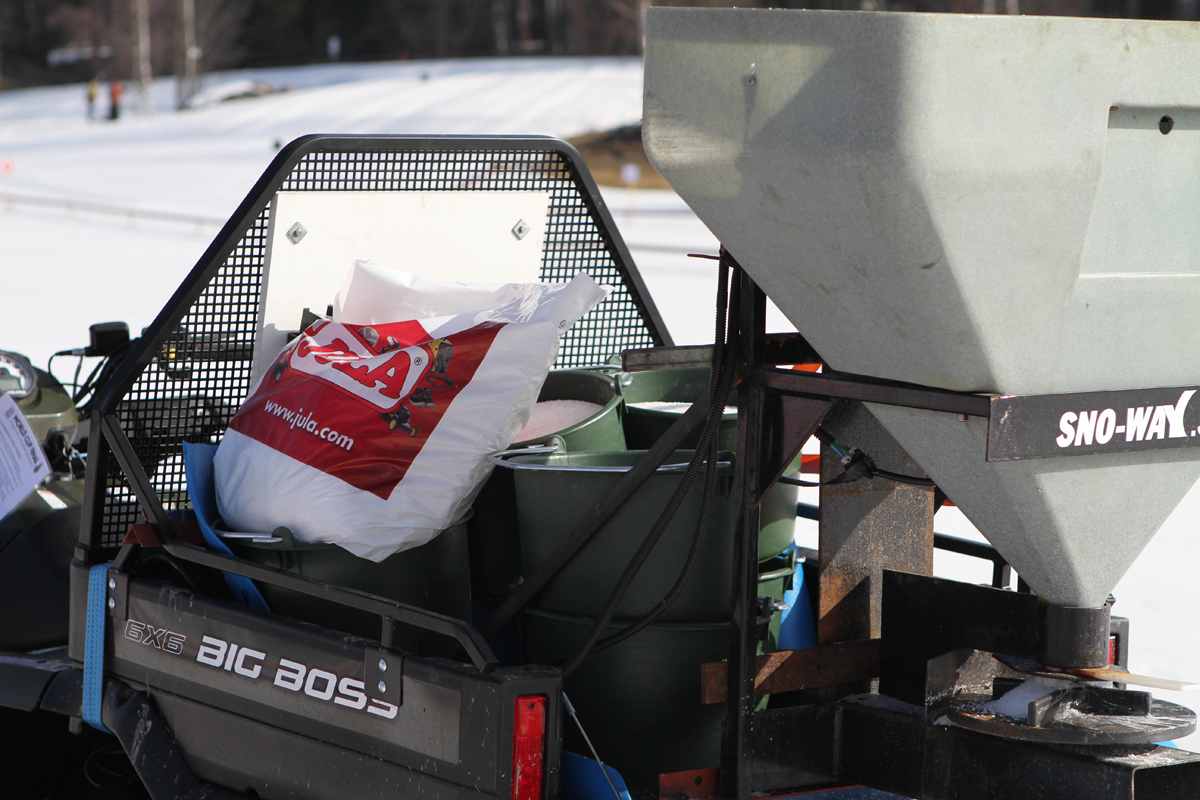
They must have gone through quite a few of these bags.
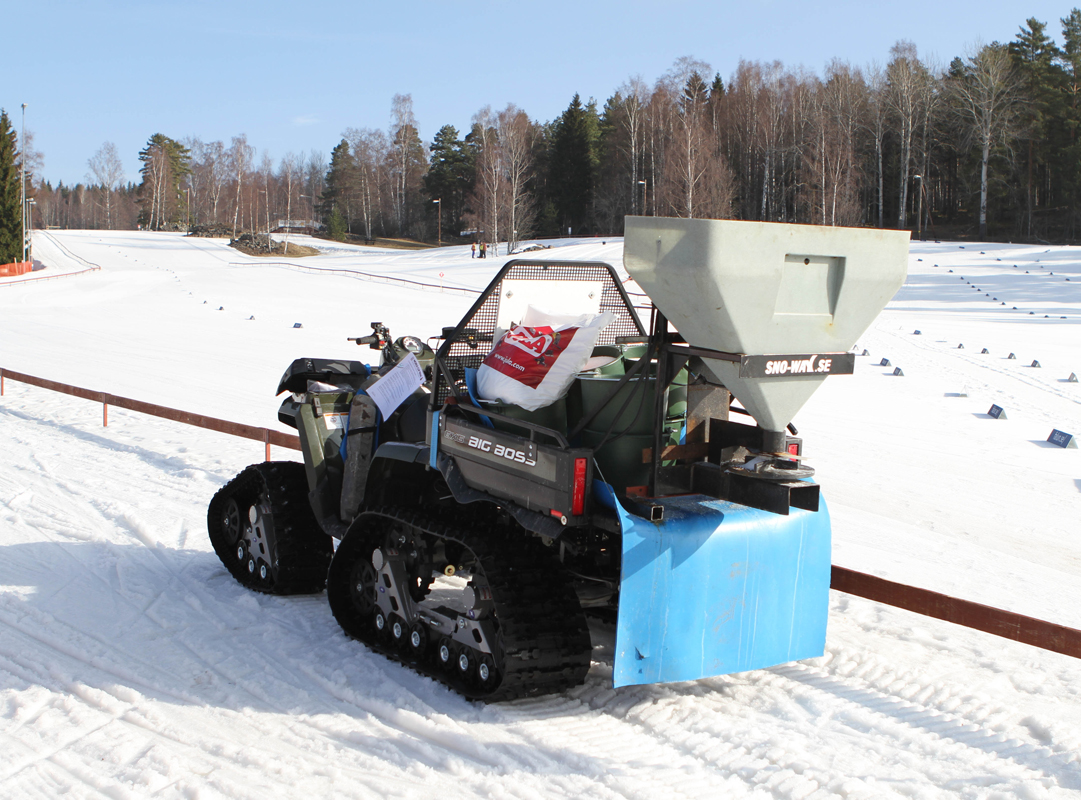
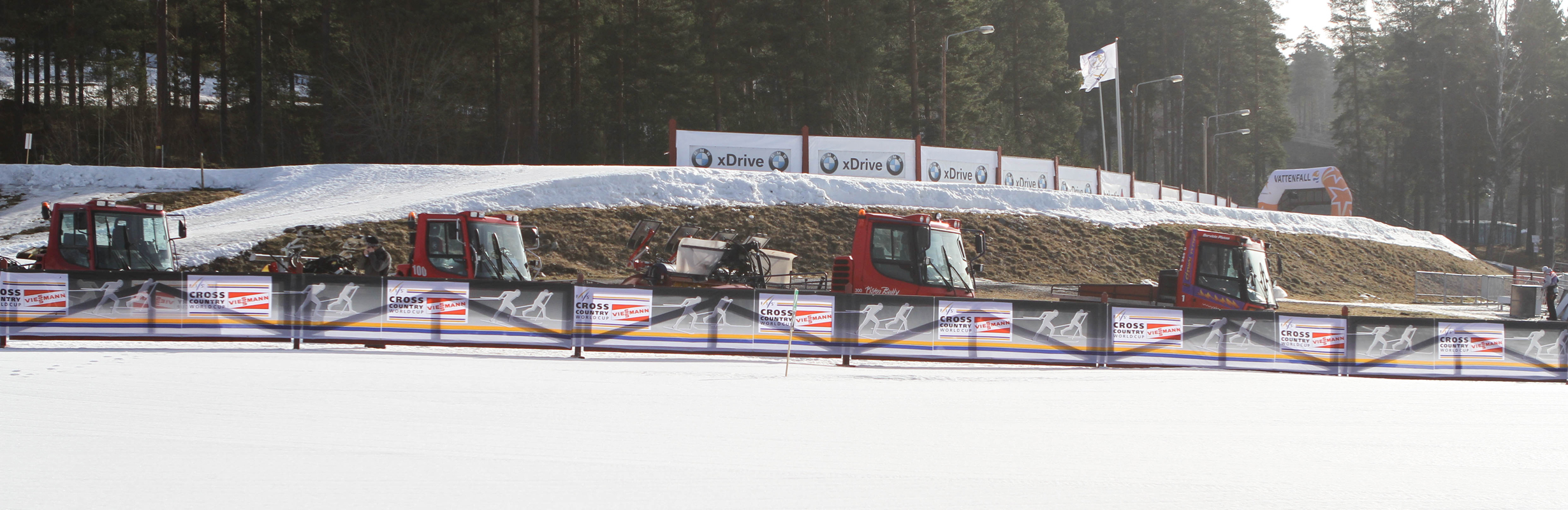
The salt machine.
Heading towards the Mördarbacken.
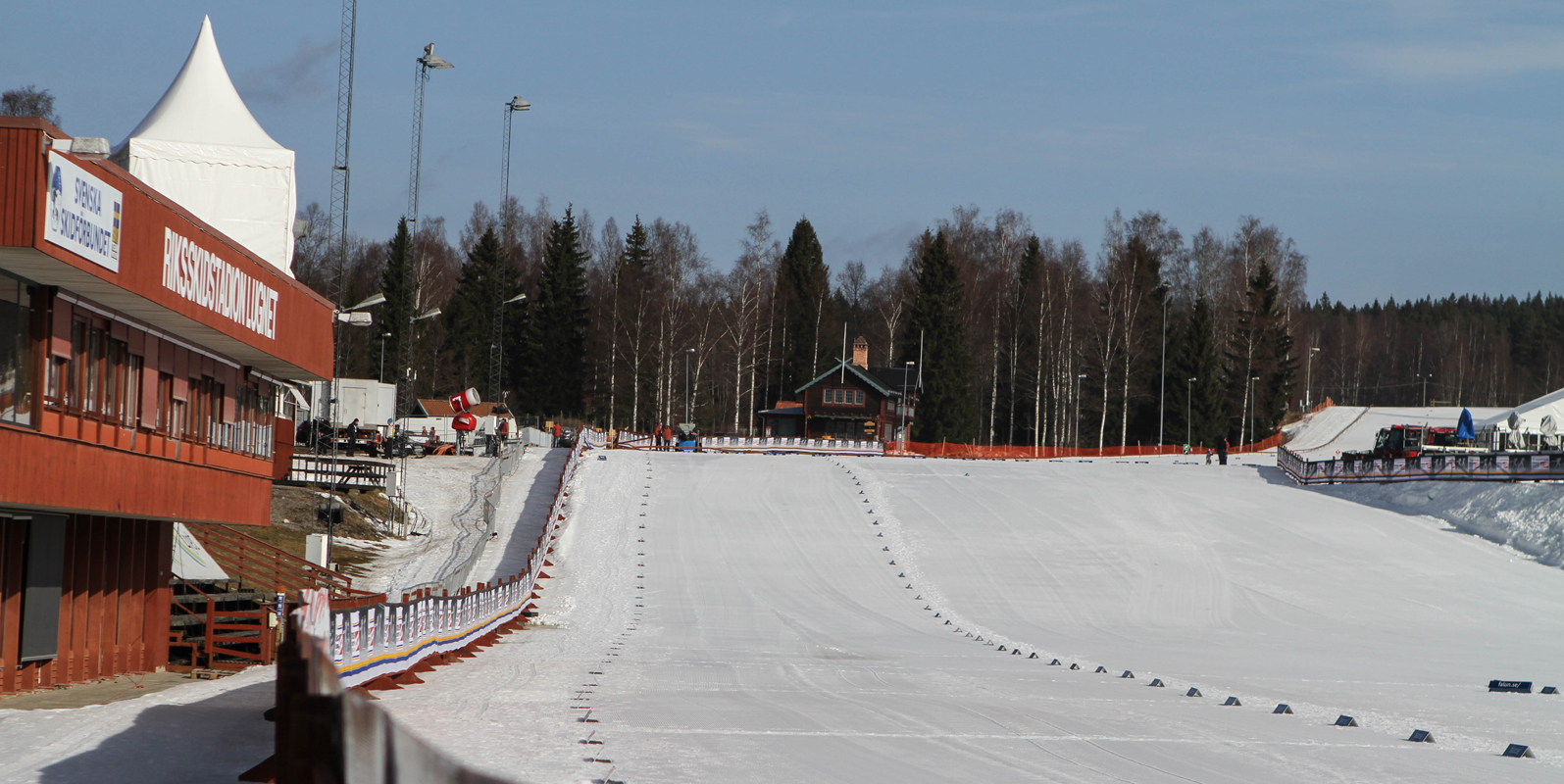
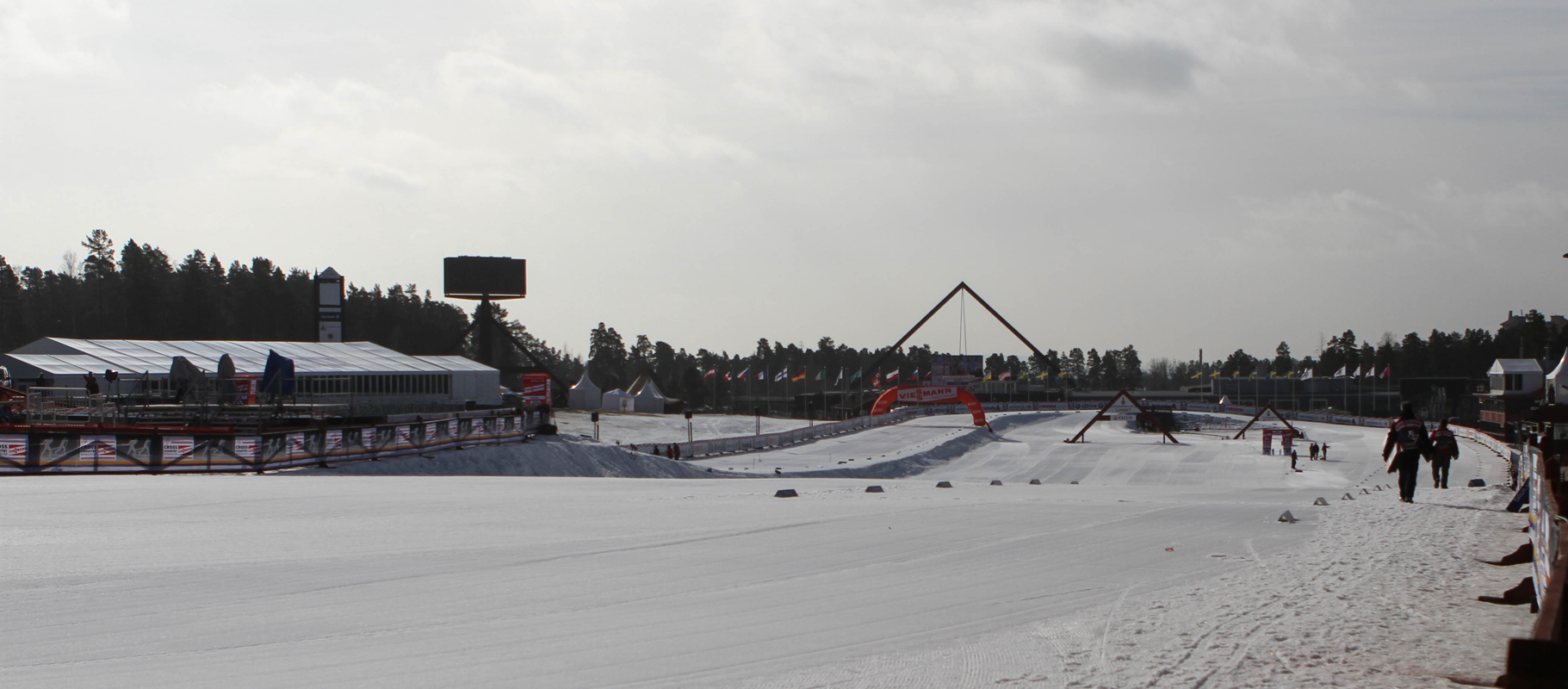
Riksskidstadion
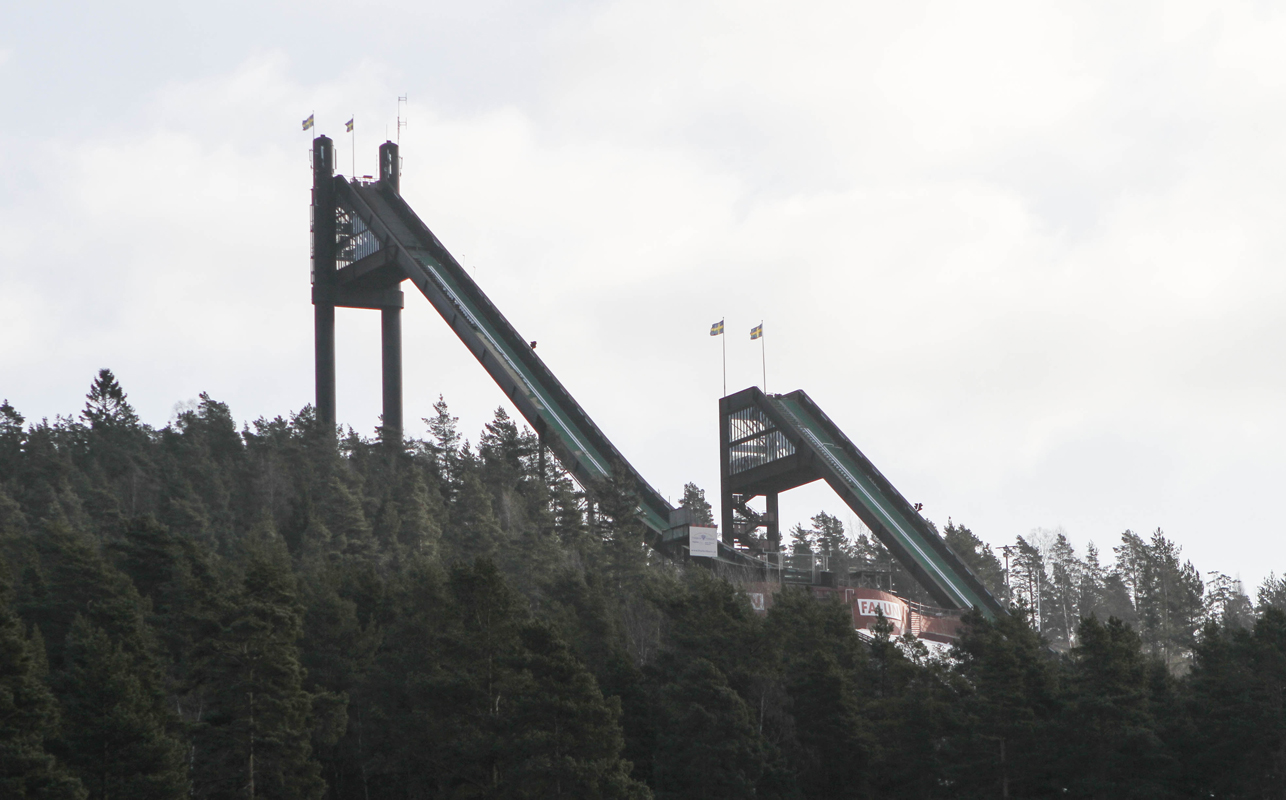
Lugnet ski jumps
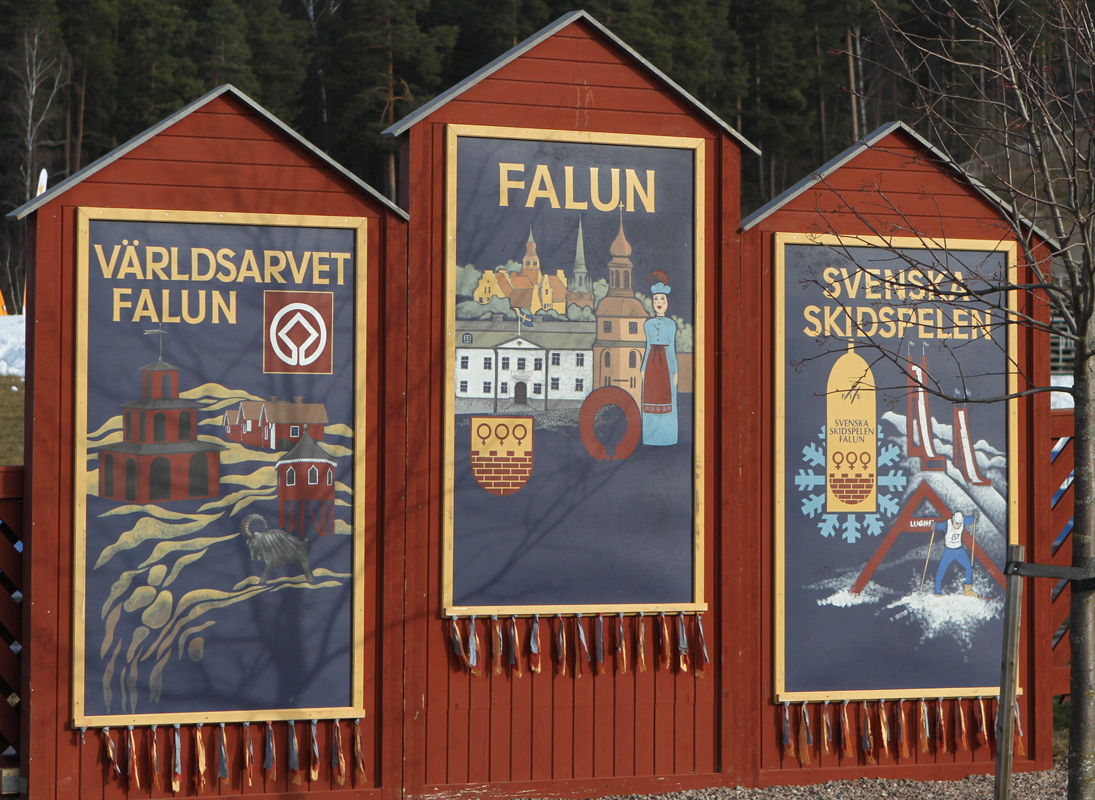
The code of arms.
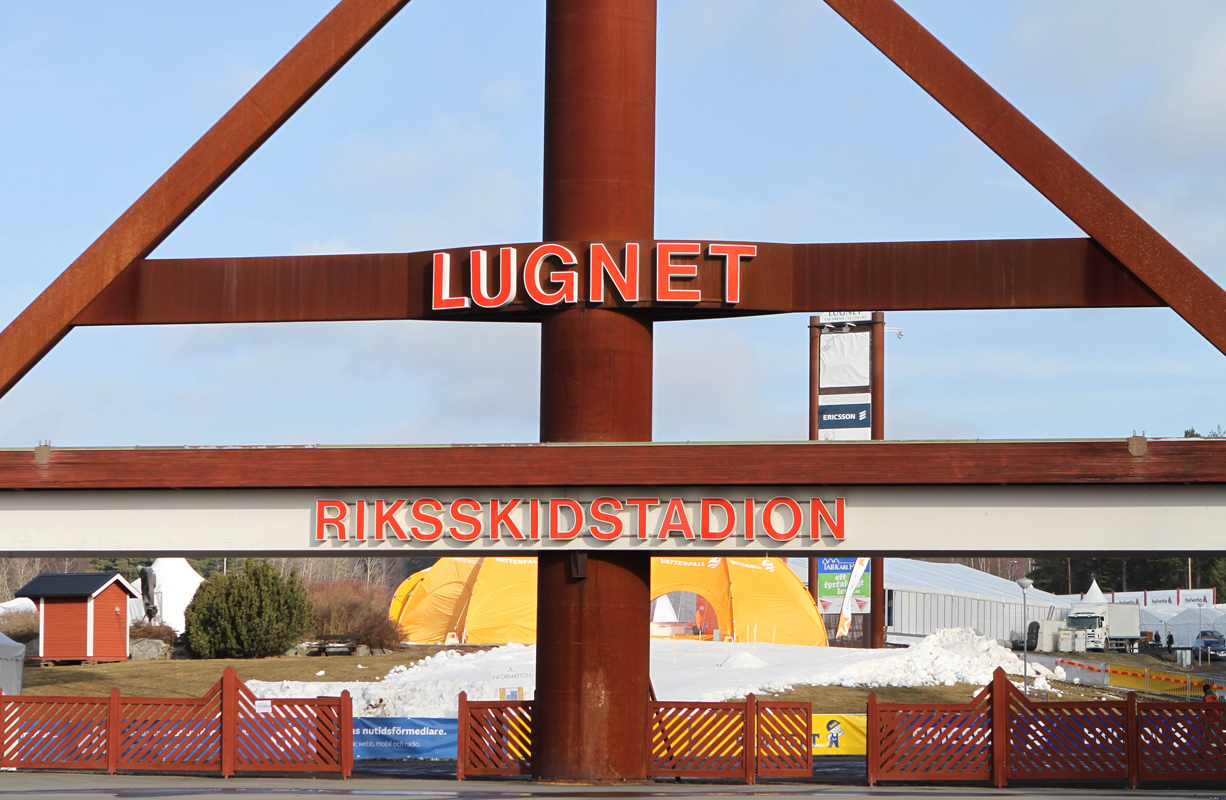
The entrance to Lugnet sports complex’s Riksskidstadion.
Petter Northug's winning margin in this year's World Cup Finals in Falun was far larger than this one, at the 2011 World Ski Championships in Oslo.
The tour format adopted over the past few years by the International Ski Federation (FIS) has been credited with injecting some excitement and suspense into cross-country skiing—the idea being that lumping different lengths and styles of races into one big event can lead to prolonged, back-and-forth battles and compelling storylines.
But this season’s World Cup Final, a four-day mini-tour in Sweden? A total snoozefest. In the last stage, a handicap start that sent skiers out one-by-one, based on their cumulative time from the previous three races, the leaders could have skied the race with one pole and still won comfortably: Marit Bjoergen began the day with a full 1:14 over her nearest challenger, while Petter Northug got a minute and 28 seconds.
“They were in too good shape,” joked Jürg Capol, the cross-country race director for FIS.
With the Falun races failing to raise the pulses of even the most ardent ski fans, Capol is mulling a change to the mini-tour format that he said could create some more excitement: switching the order of the last two competitions. Instead of concluding the mini-tour with a handicap start, it could end with a mass-start race, which would force those lagging in the standings to try to break up the pack.
“When you are a little bit behind, you have to attack, of course,” he said. “You know how much you have to catch up…you cannot wait until the very end.”
The handicap start would be moved to the second-to-last day. And since that race does not include the bonus seconds that are currently awarded at intermediate sprints (and at the finish) in the pursuit, Capol’s thinking is that the time gaps in the overall race would be smaller heading into the final stage.
Then, on that last day, the mass-start pursuit, the bonus seconds would be eliminated, to keep the race from becoming too “artificial.” Since the skiers would be closer in the standings, Capol said, the bonuses wouldn’t be necessary.
“You have guys [that] are not too far away—they will ski offensively,” he said.
Like Petter Northug, Marit Bjoergen won this year's World Cup Final in Sweden by a huge margin.
Capol said he still needs some time to ponder the idea, and to discuss it with others. Thus far, he said, he’s spoken to only a few people about it, including Vegard Ulvang, the Norwegian chair of the FIS cross-country committee. Capol added that he still wasn’t entirely sure whether to chalk up the large gaps in this year’s World Cup Final to the specific abilities of Bjoergen and Northug, or to the format.
“I wanted to think about [whether] it’s more related to one athlete,” he said.
Last year, with the World Cup Finals in the same format, Northug and Bjoergen both led coming into the final day, but the gaps to their chasers were a little smaller—Northug’s was 40 seconds, and Bjoergen’s 50 seconds. They both held on to win easily.
Other stage races have been more exciting, though—namely, this year’s World Cup opener in Finland. While Bjoergen cruised to another win on the women’s side, the outcome of the men’s event was uncertain until the closing kilometers of the final stage, when Alexander Legkov made a sensational attack to beat out Dario Cologna.
The opener, however, is a shorter race, with three stages to the World Cup Final’s four. (Capol said that he was not considering any big changes to the opener, aside from mixing up the techniques.)
If a change were to be made for Falun, it would have to be approved by the cross-country committee, which meets in June in Portoroz, Slovenia. If the group signs off on it, the schedule could be modified as early as next year.
Given Bjoergen’s strength and versatility relative to the rest of the women’s field, it’s tough to envision any configuration of formats that could stop her from waltzing to a decisive win.
On the men’s side, though, it’s a little different—Northug was in fine form at the end of the season, but he’s not unstoppable in every discipline, as Bjoergen can be.
Still, though, based on the results of past men’s mass start races, which so often end in pack or group sprint finishes, it seems implausible that a field could be shattered enough, in a pursuit, for athletes to close down significant time gaps.
If there’s one place that it could happen, though, it’s in Falun, where the distance trails ascend the precipitous Mordarbacken, Swedish for “murder hill.” In this year’s pursuit, Northug got away from the rest of the men’s field with Giorgio di Centa; the two finished some 10 seconds up on Daniel Rickardsson, with a larger group another 10 seconds behind.
“The course is hard enough in the [pursuit], and the snow is generally slow enough, that it will break up,” said Kris Freeman, an American cross-country skier.
However, Freeman added that he thinks FIS is “splitting hairs.”
“I think that any time you do a mini-tour, there’s a possibility that someone is just going to get way, way out front and be uncatchable,” he said. “I don’t see it being any more or less exciting, changing it up.”
In the past, FIS has taken pains to make its race formats more straightforward and digestible; the appeal of the handicap start on the last day of a stage race is that the first athlete across the line is also the winner of the whole tour—which Freeman said he thinks makes the most sense.
With a mass-start as the final stage, the victor in that day’s race could just as easily be a skier who’s ends up in the middle of the pack in the overall rankings.
Confusing? Perhaps. But it does happen nearly every year on the Champs Elysees, in Paris. The final stage of the Tour de France is almost always captured by a sprinter, with the yellow jersey comfortably tucked in behind.
Sprint Changes—Or Not
In the heats of the classic sprint in Stockholm, the first stage of the World Cup Final, nearly all of the men’s field double-poled the course on skate skis.
While Emil Jönsson (SWE) stuck with klister (literally), and ultimately won the race, the Stockholm sprint marked the second time this season that skate gear has been a factor on courses that were ostensibly designed for classic skis. The first time was in Estonia in January, where Eirik Brandsdal (NOR) took first place without kick wax.
The course in Estonia, Capol said, could see some changes—perhaps by adding more height to its big climb, or by running it in reverse. But in Stockholm, he said, substantially modifying the course would be impossible, since it loops around the Royal Palace on a specific route.
This season, he added, athletes’ choices at that event were primarily dictated by conditions, rather than the terrain; in last year’s edition, only a few athletes tried skate skis.
“It’s not the course of itself—it’s probably more how the snow is,” he said. “The course is how it is, because we can’t do anything more.”
This year’s annual International Ski Federation (FIS) Congress included the selection for the 2015 Nordic World Championships. Held in Turkey, the finalists included Sweden, Finland, Poland and Germany. Sweden was smart. They brought along some of their top athletes to be part of the presentation to bring Worlds to Falun. Nothing like hearing it straight from an athlete’s mouth. It definitely worked, because Sweden beat their key rivals to become the hosts for 2015. Key in that presentation was Olympic medallist Anna Haag. She took a short break from her training to talk with Atomic’s Rick Halling about the World Championships, and what it means for the event to come to Sweden.
Sweden's Anna Haag (L), at a World Cup race with teammate Charlotte Kalla.Rick Halling: Congratulations on winning the bid for the 2015 World Championships. I watched your presentation for Sweden, and I watched Justyna Kowalczyk’s presentation for Poland. It was obvious that the athletes who went to Turkey were not there simply because their federations told them to come. It was quite clear that the athletes truly cared about being the hosts for the World Championships. Why was it so important for you to bring the World
Championships to Sweden?
Anna Haag: I was born in the area, so for me it’s a dream come true, having a new world championship in my home region. I remember the last one, 1993, and I think that my interest in cross-country skiing grew just because of that. So, for many reasons, I really want to ski and have a championship in Sweden and in Dalarna (the region).
RH: Aren’t there also some major drawbacks with Worlds taking place in your own country? You have to admit that there is far more pressure on the home athletes than on the visiting teams. Swedish journalists can be pretty tough on Swedish athletes–don’t you think they will be even tougher when the event is at home?
AH: I’m pretty sure they’ll be tough, but that is also one of the things that makes it even more special and charming. If you can handle the pressure and take a medal at a championship in your home country, you’ve really made something special and a really, really fantastic memory for the rest of your life.
RH: Can you describe your role in representing Sweden at the FIS conference? Do you think you made much of a difference?
AH: I don’t know. But I think that we (me, Emil Joensson and Charlotte Kalla) helped a bit. We are young, and every one of us will ski (hopefully) in Falun, so everything that we said was true. We really wanted the championship to go to Sweden! And we did get it!
Cultural opportunities abound near Falun, host of the 2015 World Championships.RH: You convinced the FIS representatives to hold the World Championships in Sweden. Now, persuade American masters that it will make for a great vacation to fly to Sweden and attend Worlds in 2015.
AH: Oh, that’s a hard one. But to see a ski competition “for real” is something really special. And in Falun 2015, there will be a lot of things to do besides just sport. Falun has a lot of culture and a great surrounding area, with a lot to do and see. I think it will be a great experience!
RH: One thing that prevents Americans from attending events like the World Championships is that they are concerned there will be no place for them to ski when they are there. There may be no trails for spectators or there will only be a very short loop open to the public. Will the Worlds in Falun be like that? Or, will average folk find plenty of nice and convenient trails to ski on between watching races?
AH: If it is a great winter, like the last one, there will be a lot of tracks and cozy trails around in the village and neighborhood.
RH: I have not seen a schedule yet, and I don’t know if there is one. But how many days between when the World Championships end and when the Vasaloppet takes place? Will that be a realistic option? Can tourists attend Worlds in Falun, stay in Sweden for a few more days and then be a part of the Vasaloppet?
AH: The management from the Vasaloppet said in Turkey that if Falun got the championships, they would have to move the date of the Vasaloppet for the very first time in history. Ever since the earliest days of this race, it has been held the first Sunday in March. If it is not rescheduled, the 50 K and the Vasaloppet will be on the same day. So let’s hope that the Americans can both watch the World Championships and ski in the Vasaloppet.
RH: Final question. Let’s say a visiting family goes for a nice ski in the morning, watches the races that afternoon, and then they are very hungry and want a traditional Swedish dinner that night. What do you recommend they order at one of Falun’s better restaurants?
AH: They should order elk and potato–grilled elk, or steaked elk. That’s my favorite!
Dario Cologna (SUI) celebrating a victory earlier this year
The distance of the first race of the World Cup finals may have been unfamiliar, but the pair of names atop the results sheet on Friday were anything but.
Though rarely raced on the World Cup, the 3.3/2.5k prologue was just right for Poland’s Justyna Kowalczyk and Switzerland’s Dario Cologna, as each skied to a convincing victory in the first of three races held in Falun, Sweden.
Men
Cologna finished five seconds ahead of Mats Larsson (SWE) and Maxim Vylegzhanin (RUS), and the key to his win was the pacing.
The defining feature of the course was its brutal climb, known as the Mordarbacken (which translates to “murder hill”)—some 500 meters long and cresting just after the one kilometer mark.
On it, Cologna said that he stayed in control, saving enough to “push hard on the downhill and the last part of the race.”
“I think that was the key to win today,” he said.
By no means was Cologna dogging it, though: At the checkpoint at the top of the climb, he was sixth, just three seconds out of the lead.
But 3.3 kilometers is a tricky distance, and some skiers held too much back going up the Mordarbacken.
Devon Kershaw (CAN) struggled with pacing today
Canadian Devon Kershaw tweeted after his race that he started “WAY TOO SLOW,” and the splits confirmed that. He was already 17 seconds out at the time check just one kilometer in, which left him 47th in the field of 53. He moved up to 29th by the finish, but clearly wouldn’t have minded if the race had been twice as long.
Petter Northug, who has already wrapped up the World Cup overall, was fourth, ten seconds behind Cologna. He told Norwegian newspapers before the race that he was worried about his arms after double poling all three of his heats in the sprint in Stockholm on Wednesday, but the result from today still leaves Northug in the hunt. After the prologue, he is positioned second in the finals standings, seven seconds behind Larsson.
Andy Newell led the way for the American men in 48th, 45 seconds behind Cologna and just a half second behind the Norwegian sprinter Ola Vigen Hattestad. Alex Harvey (CAN), Ivan Babikov (CAN), and Brian Gregg (USA), the three other North American competitors, were 21st, 46th, and 53rd, respectively.
The top three in Friday’s race were awarded bonus seconds in the overall World Cup finals standings: Cologna got 15, Larsson ten, and Vylegzhanin five.
Tomorrow, racers will start the 20 k pursuit based on those standings, which means that Larsson will go first, seven seconds ahead of Northug. Emil Joensson (SWE) and Cologna follow, 20 and 26 seconds behind, respectively, while all but two skiers in the rest of the field are within two minutes. Harvey is the closest North American in 27th, 1:21 back.
Larsson, a sprinter, will have a hard time to hold off Northug, Cologna, and the rest of the pack. Most likely, it will be Northug stretching things out from the gun, with Cologna and Marcus Hellner (SWE) the only strong distance skiers within striking distance.
With those latter two fighting it out for the third position of the World Cup overall, tomorrow’s race is especially important, and the competition between the two could reduce their incentive to keep Northug under wraps.
Women
The Mordarbacken was all but built to Kowalczyk’s specifications, as her lithe and wiry is suited to steep climbs. Indeed, she said that she had made the prologue her goal for the finals.
Strong in both sprinting and in longer races, Kowalczyk said that 2.5 kilometers is her best distance. On Friday, she showed why, putting on a clinic to win over Marit Bjoergen (NOR) and Charlotte Kalla (SWE).
Bjoergen was the only woman to stay within ten seconds of Kowalczyk, and Olga Savialova (RUS), in fourth, was way back, nearly thirty seconds behind.
Justyna Kowalczyk (POL) racing at the Olympics.
Over eight minutes, that’s a staggering margin. To put it in perspective, if the race had been a 30 k, the proportional gap to fourth place would have been more than five minutes.
With the 15 bonus seconds she earns for the win, Kowalczyk will begin tomorrow’s 10 k pursuit with a 16 second advantage over Bjoergen, and nearly 40 over Sweden’s Anna Olsson.
Bjoergen and Kowalczyk have dominated the distance races over the last month, and the other women in the pursuit will be hard pressed to keep the pair close. Kalla has the best chance of catching the two, but even she starts thirty seconds behind Bjoergen and 47 after Kowalczyk, so it looks to be another Norway-Poland duel for the win.
Kikkan Randall (USA) was the top North American finisher in the women’s race, finishing 36th, 1:08 back, and Canada’s Dasha Gaiazova was 45th. With her 15th place in the sprint in Stockholm, Randall will be starting 30th in the pursuit, just over two minutes behind Kowalczyk.
It was the 30th edition of the Cross-Country Masters World Cup for ladies and men, age groups 1-12, this is age 30 and above, in Falun, Sweden last week. Again, the competition for senior Cross-Country skiers from around the globe, took place in a well known ski resort. Each participant was allowed to compete in three individual competitions depending on the age category over 5, 10, 15, 30 and 45 km in the classical and / or free technique. Additionally, for each nation and age category there is a relay over 4 x 5 km. Among the organizers of well-known wintersport resorts, it has long been discussed that the Masters World Cup pays off not only for the organizers, but also for the competition venue itself. In addition to the close to 1000 participants from 25 skiing nations, coaches and supporting staff, staying an average of 10-12 days, must be added when drawing the balance.
Falun with its famous Lugnet-Cross-Country stadium and the varied, selective and not always easy slopes, offers ideal conditions for young and old. Although extremely cold temperatures during the first two days of MWC led to start delays, the active members, the FIS Technical Delegate Marita Schleich, and the Bureau members of the World Masters Association (WMA) praised the organization of the event.
The high level of performance of the best competitors was impressive and the outcome of the race was often decided only in the last meters of the race. It is well known that competitors have mass starts within their age categories. In certain age groups, it was not easy to finish in the top of the field due to the large number of participants as for example in the men’s category 6 (54-59-year-olds) and 7 (60-64-year-old).
The most successful nation that won the most medals was Russia, followed by Norway, Italy, Sweden, Finland, Germany and the US. Host Sweden had the most participants with 200 athletes, ahead of Russia with 180 active cross-country skiers.
The 30th Masters World Cup in Falun ended with a banquet that was appreciated by all participants.
In 2011, the Masters will meet again in the first week of March in Sovereign Lake, British Columbia/Kanada (www.mwc2011.com) and in 2012 in Oberwiesenthal, Germany (www.mwc2012.com).