Andrew Kastning is one of a small crew of Americans who work as commentators on late-night broadcasts of European cross-country ski races. He works from laptops and a television in his home in Anchorage, Alaska, and says he draws energy from a jumpsuit donated by a local U.S. Ski Team member.
PREDAZZO, ITALY — By day, Andrew Kastning’s life sounds conventional: He’s a father of three, with a desk job in Alaska doing permitting work for a federal agency.
During the winter? It’s another story.
On periodic Friday and Saturday mornings, you’ll find Kastning awake at 1 a.m., 2 a.m. or 3 a.m., standing in his living room in a sports jumpsuit, wearing a headset and delivering a monologue while watching his television.
Welcome to the strange world of being a North American television announcer of Olympic-level cross-country skiing.
With nearly all of the sport’s premier races taking place at European venues, those following cross-country from stateside have to pull overnight shifts to catch the events on an internet livestream.
Kastning, who’s paid by the International Ski Federation to call an English-language broadcast, has outfitted his wife with earplugs and a face mask that plays white noise so she can sleep through his calls. But he still woke his family up with some particularly enthusiastic play-by-play two weeks ago, when a fellow Alaskan, Gus Schumacher, cracked the podium in two World Cup races in Switzerland.
“My oldest daughter said she dreams sometimes and hears me calling the race, like: ‘Jessie Diggins!’” said Kastning, referring to the U.S. Olympic medal-winning skier.
Other regular cross-country broadcasters include Chad Salmela, a former competitive biathlete and veteran analyst from Minnesota, along with Kikkan Randall, the retired Olympic gold medal winning cross-country skier, who lives in Anchorage.
Both Randall and Salmela also pull the weekend wee-hours shifts as regular hosts of the English language livestream. And the pair will be featured this month as commentators on NBC’s national Olympics broadcast — though rather than being on site in Italy, they’ll be working out of an office complex in Connecticut.
The NBC Olympic cross-country broadcast team of Chad Salmela, right, Kikkan Randall and Steve Schlanger prepared for the first event at an office complex in Connecticut. (Courtesy photo)
Still, the setup will be an improvement over the 2022 COVID Olympics, when the broadcasters were at the same complex but sealed into individual booths connected by plexiglass windows — so they wouldn’t be sharing the same air.
It’s also the first time cross-country skiing will have Olympic commentary from announcers who are working consistently together in the leadup to the Games, with a U.S. Ski Team donor helping to boost Salmela’s and Randall’s pay in recent years to keep them on the livestream for non-Olympic World Cup races.
Cross-country athletes, coaches and boosters say regular television coverage of the sport could ultimately help make the U.S. more competitive with traditional ski powerhouses like Norway and Sweden.
“An underappreciated role of the TV product is how it builds kids’ dreams of being future champions,” Randall said in an interview. “This can actually be an important piece of developing our pipeline for the future.”
Randall’s own experience shows how much more accessible cross-country skiing has become for American spectators in recent years. A digital platform, Ski and Snowboard Live, now allows consumers to pay to stream international races while they’re happening or on tape delay.
When Randall, 43, was in high school, she said, “I remember sending in a check via mail to the National Ski Education Foundation to get VHS tapes of the World Cups of the year before.”
Kikkan Randall competing during her World Cup career in Estonia. (Fischer/Nordic Focus)
“Outside the Olympics, that was the only way to see World Cup level skiing,” she said. It was “pretty much completely inaccessible,” she added.
Randall has now fully embraced her role translating cross-country skiing’s sometimes-complicated race formats to a mass audience.
“I was curious: Am I going to know what to say? It’s one thing to have lived it, and it’s another to be able to talk about it,” she said. “But it’s come to me more naturally than I thought it would, and I really enjoy it. I get, kind of, a thrill from it — and it makes me happy to still feel that connection to the sport.”
With two kids and a full-time job leading Anchorage’s ski association on top of the commentary gig, Randall said she has to weigh opportunities carefully. It’s helped that the ski team donor, a strategic consultant named Liz Arky, offered to bump up the pay rate for the core broadcast team of Randall and Salmela — who now earn more than the few hundred dollars a night Kastning gets when he fills in.
“They can hook you, because they’re such good storytellers, and they’re so immersed in it, and they’re so passionate about it — and I just feel like that’s infectious,” Arky said in an interview. “It’s incumbent on us to grow our community and grow the audience.”
Salmela, meanwhile, pulls double duty as a commentator for both biathlon and cross-country races that are nearly all in Europe. The repeated early morning wakeups are a grind, and Salmela said his doctor has questioned whether it’s worth the cost.
“It’s a hard existence for a guy who’s 54 and dealing with Parkinson’s,” Salmela said. “It’s a tough call, because I recognize that it’s important for the sport.”
Salmela’s looking forward to the Olympic broadcasts on NBC, though, as they offer the commentators substantially more support than they get for the World Cups during the rest of the season: statistics researchers, a producer, a sound assistant. Salmela also said he’s enjoyed the partnership with Randall, who he called a “natural analyst.”
Chad Salmela interviews cross-country skier David Norris at the American Birkebeiner in 2023. (American Birkebeiner Ski Foundation)
“Her content is superb,” he said. “Because she’s smart, and she’s been one of the best at the sport — so, her perspective is well-spoken and legitimate.”
Kastning’s job can be tougher: He’s a solo practitioner for all his broadcasts, with no other analysts to banter with or riff on his takes.
He spends lunch breaks in the days before the races looking for storylines and fiddling with an Excel statistics spreadsheet. He’ll try to nap a bit in advance, then wakes up, closes his sleeping kids’ bedroom doors and heads into the living room for a sound check that takes place an hour before the start.
The toughest nights are when he’s calling two separate races, one for men and one for women: There’s generally an hour, sometimes two, between them.
“It’s really tempting to take a nap in between, because we’re talking like 2 to 3 a.m.-ish,” he said.
Kastning draws energy, he said, from his jumpsuit, which was donated by Alaska Olympic cross-country skier JC Schoonmaker.
After the soundcheck, Kastning said, “I’m kind of waiting until 10 minutes out — the countdown begins.”
“And then I’m off and running,” he said.
Help Support Our Olympic Coverage!
FasterSkier has our own Nat Herz on the ground at the Olympics, which is a significant financial lift for us. If you value the thoughtful work and access FasterSkier provides at championships like this one, please consider becoming a Voluntary Subscriber. Your support directly fuels our work to cover the people, places, and moments that make our sport special.
The bad news? Devon is indisposed and isn’t here for the Olympic preview podcast. As a consolation: We have a great guest in Philip Gadd, a sports reporter with the Swedish tabloid Expressen.
Philip takes us through his new podcast about Frida Karlsson and Ebba Andersson’s rivalry, the feast and famine of Sweden’s women’s and men’s teams, and other Olympic predictions. You can read about his dystopian experience in an isolation hotel at the last Olympics here. (Spoiler alert: He eventually got out.)
Reach us at nat[at]fasterskier.com and devon[at]fasterskier.com. We’ll be back after tomorrow’s race.
Help Support Our Olympic Coverage!
FasterSkier will have our own Nat Herz on the ground at the Olympics, which, to be honest, is a very big financial lift for us. If you value the thoughtful work and access FasterSkier provides at championships like this one, please consider becoming a Voluntary Subscriber. Your support directly fuels the work we do to cover the people, places, and moments that make our sport special.
The Olympics are facing criticism from athletes and climate activists over sponsorship by ENI, Italy’s state-controlled oil company. (Nathaniel Herz/FasterSkier)
PREDAZZO, ITALY — Two months before the Winter Olympics were set to kick off in Italy, the torch relay, carried by runners from Greece to the Olympic venue, made an unusual stop: the headquarters of Italian oil giant ENI, where an executive from one of the company’s lower-carbon subsidiaries acted as a torch bearer.
The event tied in with what’s become, in recent days, a controversial endorsement deal — one that made ENI a “premium partner” of the Olympics at a time when athletes and fans are increasingly calling on winter sports organizers to renounce fossil fuel sponsorship.
The company is also hosting the “ENI Winter Village” in Milan during the Olympics. Visitors can test out a snowboard simulator, have a virtual snowball fight and try an urban cross-country ski trail made with “innovative polymers” produced by ENI’s chemical company that “makes skiing possible in the city.”
Nikolai Schirmer, a Norwegian extreme skier and YouTuber who’s helping lead a campaign called Ski Fossil Free, said it makes no sense for athletes and events dependent on snow to be advertising for the businesses whose products, through the greenhouse gases emitted by their combustion, pose an existential threat to winter sports and future Olympics, said
“Winter sports, right now, are like a string quartet on the Titanic, playing as the ship is sinking,” Schirmer said. “Not only that, they’re advertising for icebergs while they’re doing it.”
Nikolai Schirmer is a Norwegian extreme skier known for his human-powered ascents. He also has a law degree and once spent a winter living in Alaska. (Nathaniel Herz/FasterSkier)
Schirmer, 35, spoke in an interview Wednesday outside the main media center in Milan, just after he’d delivered a stack of more than 20,000 petition signatures to Olympics officials.
His campaign — endorsed by Olympians like Alaskan cross-country skier Gus Schumacher and Greenlandic biathlete Ukaleq Slettemark — is making what Schirmer describes as a very modest ask: that the Olympics and the umbrella organization that coordinates global ski competitions, the International Ski Federation, examine the ethics of winter sports taking money from fossil fuel companies and draft a report.
A separate letter calling for the Games to reject future fossil fuel sponsorships, with current and former Olympian signatories, is set to be released in the coming week, said the Swedish cross-country skier who coordinated it, Björn Sandström. And Greenpeace, the international environmental advocacy group, has debuted its own protest video showing animated Olympic skiers, skaters and bobsledders being washed away by a flood of crude oil.
In past years, climate campaigners have disrupted top-level cross-country ski races in Europe. And in 2025, they threatened a demonstration at the World Championships in Norway over sponsorship by state oil company Equinor — though they ultimately stood down after a group of top athletes agreed to press ski race organizers for more stringent sponsorship guidelines.
International Olympic Committee officials, asked at a Wednesday news conference about Schirmer’s initiative, praised athletes for speaking up, with President Kirsty Coventry saying they “have a platform to speak up, and to say, ‘Hey, these are the things that we want to see you do better.’”
“We’re always going to try to be better, and ask our stakeholders to be better,” said Coventry, a former Olympic swimmer. “But that also takes time.”
Committee officials also pointed to sustainability efforts for this winter’s Games: renewable electricity at venues, a fleet of cars that includes 21% electric vehicles, and more than 20,000 pieces of recycled furniture from the last Summer Olympics.
But Christophe Dubi, the Olympics executive director, did not respond directly to the petition’s request.
“We have to recognize one thing: Climate is a challenge for all of us,” Dubi said. “As sport, as well, we’re not immune to those climate challenges, and we have to hear voices.”
Officials from state-controlled ENI did not respond to requests for comment. The company told Reuters in a statement that it shares “the importance of addressing climate change” and will continue investing in renewables to hit its net‑zero emissions target by 2050.
At the Games in Italy, numerous athletes have arrived with stories about witnessing the loss of winter and snow.
U.S. downhill star Lindsey Vonn, at a separate news conference this week, said she’s seen, firsthand, “what global warming has done.”
“I’ve been skiing on glaciers since I was nine years old,” said Vonn, 41. “And most of the glaciers that I used to ski on are pretty much gone.”
Another U.S. athlete who has engaged in climate advocacy for several years, 25-year-old Gus Schumacher, lived through some mostly snowless winters growing up in Alaska; he’s also endorsed Schirmer’s campaign.
U.S. cross-country skier Gus Schumacher. (Federico Modica/Nordic Focus)
“We want to be able to ski, and want to be able to ski on natural snow, because that’s the best way to do it,” Schumacher said in an interview. “And I don’t want to support companies that are adding fuel to that not being a possibility.”
Fossil fuel companies like ENI are using their association with events like the Olympics to help burnish their image and diminish public pressure to more quickly transition away from fossil fuels, argued Schirmer.
ENI is using its Olympics sponsorship to advertise sustainability and renewable energy focused business lines. But its oil production has grown in recent years — and is set to keep growing through 2030. The company’s biofuels and renewables companies still bring in less than one-tenth of the earnings as its oil and gas holdings — though its chief executive last year told the Financial Times that profits from the green energy businesses should be equal to those from hydrocarbons by 2035, and exceed them by 2040.
“The Olympics are willingly greenwashing ENI — an energy still heavily invested in fossil fuels,” Schirmer said. “And it doesn’t look like that’s going to change any time soon. So, in my mind, it looks like the Olympics, and organized skiing and snowboarding, are promoting their own demise.”
Help Support Our Olympic Coverage!
FasterSkier has our own Nat Herz on the ground at the Olympics, which is a significant financial lift for us. If you value the thoughtful work and access FasterSkier provides at championships like this one, please consider becoming a Voluntary Subscriber. Your support directly fuels our work to cover the people, places, and moments that make our sport special.
Zak Ketterson (USA) during the 10 k Classic in Toblach, Italy, as part of the 2026 Tour de Ski. (Photo: Vanzetta/NordicFocus)
On Monday, a clear winter morning in northern Italy, Zak Ketterson skied intervals while his teammates enjoyed a point-to-point on an idyllic pre-Olympic winter day. The sun was out. The snow was good. He was working.
“I did some hard intervals,” he said later. “So it was still nice and sunny and everything, but not as enjoyable.”
That small distinction — between the workout that feels good and the workout that gets you ready — has followed Ketterson for most of his career. He has never been the prodigy. He has never been the junior who arrived early, polished, and inevitable. His path to the Olympic start line has been indirect, uneven, and occasionally fragile. It has also been intentional in ways that only make sense in hindsight.
At 27, Ketterson is preparing to race at his first Olympic Winter Games, starting with the Skiathlon on Sunday, the culmination of a season that has quietly redefined his place in American men’s cross-country skiing. He has been competitive across formats, consistent across weekends, and calm in moments that once rattled him. But none of that came from doing things the “right” way — at least not the way modern development systems tend to define it.
Ketterson arrived here by starting late, resisting structure, leaning into racing before training, and trusting that if he kept showing up long enough, the pieces might eventually fall into place.
They have. Just not quickly.
Ketterson’s favorite sports as a child were football and baseball. (Photo: Courtesy Photo)
A Winter Without a Script
Ketterson grew up in Minnesota, where winter is not an inconvenience so much as a condition. The days shorten. The lakes freeze. School calendars and community life bend around the cold. You don’t opt out of winter there; you adapt to it.
In many households, adaptation means skiing. For Ketterson’s, it meant something else first.
“For me, I was always really into football and baseball,” he said. “That was my fall sport and my spring sport.”
Those sports gave his year shape. Football stretched into late autumn. Baseball pulled him toward summer. They came with teammates, structure, and a clear sense of belonging. Winter, by contrast, arrived as a blank space.
Basketball — his favorite sport to this day — lived somewhere between play and possibility. He loved it but never formally committed to it. Organized winter athletics never quite settled into his life. Not yet.
Before skiing was ever part of his life, Ketterson dreamed of being a pro athlete. (Photo: Courtesy Photo)
Cross-country skiing entered almost accidentally, carried in by family rather than ambition.
“My brother, for whatever reason, was more into cross-country running, track, and cross-country skiing,” Ketterson said. “He kind of convinced me, like, yo, you don’t have anything going on in the winter, you should just try this.”
It wasn’t a calling. It was a solution.
He was thirteen — late by elite skiing standards, but early enough to slip into the margins of the system. In Minnesota, seventh graders could train and travel with high school teams. Ketterson joined at the JV level, young and mostly anonymous.
The draw wasn’t the work. It was the race.
“I really liked racing, especially mass starts and sort of the competitive head-to-head aspect of it,” he said.
Training, on the other hand, felt like an obstacle.
“I absolutely hated that,” he said. “When it came to going into the woods and just doing a two-hour ski or something, I hated it.”
Sometimes, hatred turned into avoidance.
“There were a lot of practices where I would hide in the woods,” he said. “My friends and I would just pretend that we trained, but we were actually just building snow forts.”
If this were a conventional development story, it might end there. Plenty do. A late start, uneven buy-in, resistance to structure — those are often warning signs.
But Ketterson kept finding himself back on start lines.
Early days on skis for Zak Ketterson. (Photo: Courtesy Photo)
Racing as the Through Line
What sustained him through those early years was not discipline, but opportunity. Each step forward offered another race, another environment where effort produced immediate feedback.
Junior Nationals. Then World Juniors. Eventually, college.
“The thing that kept me in the sport initially was just the racing,” he said.
That instinct — to measure himself against others rather than against a stopwatch or a training plan — would define much of his early relationship with the sport.
By the time he reached Northern Michigan University, skiing stopped being seasonal. It became daily. The margin for avoidance narrowed.
“I started to develop more of a relationship with the training aspect of it,” he said. “Especially in college, I began to really enjoy the process of trying to improve and optimize things.”
Sleep. Nutrition. Recovery. The quiet details, that barely registered when skiing was something you fit around football and baseball, suddenly mattered.
The shift wasn’t romantic. It was practical.
That change carried him into a professional career after graduation — not as a finished skier, but as someone finally willing to do the work consistently.
A young Zak Ketterson (Midwest/Loppet Nordic Racing) leads the U16 Boys 5 k Classic Mass Start at the 2013 Junior Nationals in Fairbanks, Alaska. (Photo: bertboyer.zenfolio.com. Proceeds go to NNF)
Northern Michigan, Daily Work
Northern Michigan University didn’t transform Ketterson overnight. It narrowed the margins.
Skiing there demanded repetition. Cold mornings. Tired legs. Routine. Improvement stopped being incidental.
The biggest shift came junior year, when he began dating his now wife, Julie Ensrud, and skiing stopped being something he did mostly alone.
“When I started dating her my junior year in college,” Ketterson said, “that really coincided with when I started doing a lot better in skiing.”
Julie grew up in Norway, in a system that treated sport as something you lived inside rather than something you added on. She attended a specialized Norwegian sports high school. She trained at volume. She understood structure.
“She was kind of living semi-professionally from the age of 16,” Ketterson said.
She noticed the basics first.
“I started going to bed a lot earlier,” he said. “I would always just be on my phone until 11 or 11:30.”
Food followed.
“Not only eating healthier,” he said, “but eating more of the right things. More carbs. The timing of what you eat with training.”
By living together senior year, Ketterson’s bad habits became visible.
“She’s probably the hardest worker and most efficient person I’ve ever met,” he said. “She gets an email and does it immediately.”
Ketterson noticed the contrast.
“I used to be super disorganized,” he said. “I used to lose stuff and leave things everywhere.”
Being around someone who treated time deliberately changed how he approached his own days.
“She comes to basically every interval session I do,” he said. “Takes video. Takes lactates. Gives technique tips.”
What could have felt like a sacrifice became shared life.
“If I were single and just kind of doing this grind alone,” he said, “it would feel like a much bigger sacrifice.”
Ketterson (NMU) racing at the CCSA opener in Houghton, Michigan during his college days at Northern Michigan University. (Courtesy photo)
Learning How to Stay Anyway
Leaving college did not feel like an arrival. It felt like exposure.
Professional skiing offered fewer guarantees. Results came without permanence. Progress was harder to measure.
“This is maybe my fifth year as a professional,” Ketterson said. “I feel like I’ve just been sort of taking small steps each year.”
From the outside, those steps were hard to see. He qualified. He scored points. Then momentum faded.
“I’ve had glimpses here and there of being quite good on the World Cup,” he said. “But it was so inconsistent and few and far between.”
One year, sprint qualification came easily while distance slipped. Another season, the opposite.
“I would qualify every sprint but struggle in distance,” he said. “Or I wouldn’t qualify in sprints, but I’d get a lot of top-30s in distance.”
The belief stayed intact.
“I believed I had that all-around potential,” he said.
Belief, however, doesn’t quiet doubt when seasons stack without resolution.
Ketterson’s wife, Julie Ensrud, assists him with lactate testing during a treadmill session. (Photo: Zak Ketterson)
Choosing a Place That Could Hold the Work
For American skiers, Europe is often something you pass through. For Ketterson, Norway eventually became something else.
Julie’s family lived outside Oslo, close to training venues and the airport. There was also a cabin — quiet, familiar.
“It works out super well,” Ketterson said. “I can just get these three- or four-day stints at the cabin and unpack my bag and feel really at home.”
Most American skiers live out of their bags.
“There are a lot of Americans who just live out of their bag and are constantly in hotels,” he said.
In Norway, life slowed just enough for training to accumulate rather than reset.
“They’re super into skiing,” Ketterson said of Julie’s family. “Her brother skied competitively growing up.”
Her father, especially, was absorbed by the details.
“He’s so into ski waxing and the nitty-gritty stuff,” Ketterson said.
The support wasn’t motivational. It was stabilizing.
“They’ve sort of adopted me,” he said. “Like, how can we support him?”
Norway wasn’t the breakthrough. It was the ground beneath it.
USA I takes the win in a rare World Cup 4 x 5 k mixed relay in 2022. From left to right, Scott Patterson, Rosie Brennan, Zak Ketterson, and Jessie Diggins. (Photo: NordicFocus)
Nothing Fancy, Just Better
With stability in place, the training changed.
“I started working with a coach in Oslo,” Ketterson said.
The relationship was loose.
“He created the framework,” Ketterson said. “But I was still writing probably 90 percent of my training.”
The biggest change was subtraction.
“I used to do strength twice a week, sometimes even three times a week,” he said. “Now it was basically once every ten days.”
The logic was blunt.
“If you want to get better at double pulling,” he said, “you just need to double pull more.”
He replaced strength with ski-specific work. Fitness became the priority.
His training rhythm flattened.
“My training became much more consistent,” he said. “Every week was pretty similar.”
No dramatic rest weeks. No spikes. Stress accumulated steadily.
He returned to the same hills. The same treadmill sessions.
“If something feels way worse than the last six times,” he said, “then you know you need rest.”
Zak Ketterson logs some roller-ski hours in Minneapolis with Team Birkie. (Photo: Instagram @zaketterson)
Toppidrettsveka
Late in August, Ketterson lined up at Toppidrettsveka, Norway’s popular roller-ski stage race.
“I was expecting to be absolute middle of the pack,” he said.
Instead, he stayed with the leaders.
“From the first race — a mass start 50k — I was fighting for the win,” he said.
Three years earlier, he had been dropped halfway.
“That was one of those moments where it’s like, wow,” he said. “This is a really big difference from anything I’ve felt before.”
Across stages, the pattern held.
“That gave me a lot of confidence,” he said. “Like, okay — what we’re doing is really working.”
Still, he waited.
The Ultimatum
By autumn, the feeling hadn’t faded.
“I told Julie that this had been by far my best off-season ever,” Ketterson said.
Then came honesty.
“I told her that if I’m not good this year,” he said, “or if I don’t make a really big jump, then I kind of want to retire.”
It wasn’t dramatic. It was diagnostic.
“If this doesn’t work,” he said, “then I don’t know anything about training.”
Zak Ketterson (USA) and Friedrich Moch (GER) (l-r) lapping through the stadium during the Men’s 20 k Mass Start Freestyle in Ruka, Finland, at the beginning of the 2025/2026 season. (Photo: Modica/NordicFocus)
Ruka
Ketterson finished 14th in the World Cup opener in Ruka.
“I was crying in the finish,” he said.
Not from disappointment.
“It was such an emotional rush,” he said. “All the work that I’d put in, and that my wife had supported — it finally got some validation.”
For the first time since college, the feeling matched the effort.
The season didn’t spike. It held.
“For the first time,” he said, “regardless of whether it’s a sprint or a distance race, I feel like I can compete that day.”
Zak Ketterson (USA) racing on the Olympic Sprint Course in Val di Fiemme, Italy, during the 2026 Tour de Ski last month. (Photo: Vanzetta/NordicFocus)
Arrival Without a Finish Line
Ketterson will start his first Olympic race just days from now — older than most of his teammates, newer to the stage, and unusually calm.
“I’m just treating it like any other race,” he said.
There is no demand for the outcome. Only execution.
“What would haunt me,” he said, “is doing something that was within my power not to do.”
So he will race. He will pace. He will pay attention.
The long way in has given him that luxury.
Help Support Our Olympic Coverage!
FasterSkier has our own Nat Herz on the ground at the Olympics, which is a significant financial lift for us. If you value the thoughtful work and access FasterSkier provides at championships like this one, please consider becoming a Voluntary Subscriber. Your support directly fuels our work to cover the people, places, and moments that make our sport special.
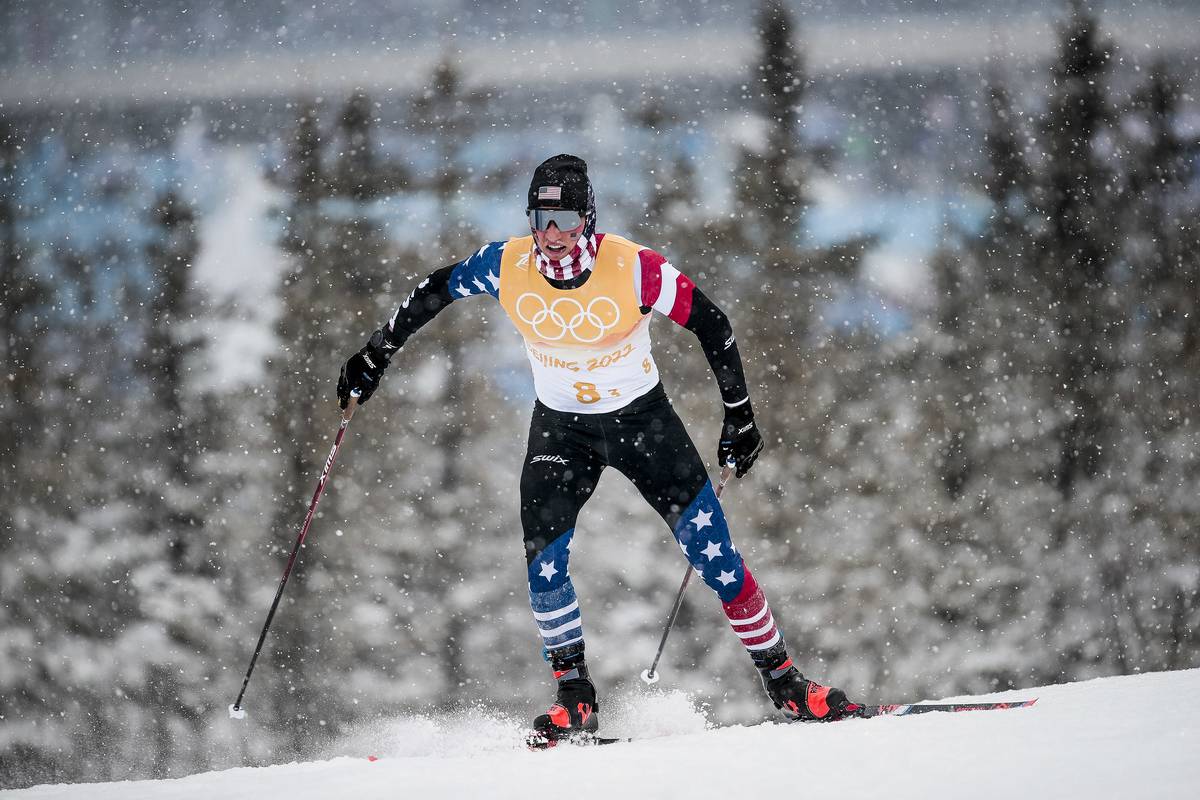
U.S. Olympic men’s cross-country ski team member Ben Ogden, second from left, speaks at a news conference Thursday, Feb. 5 at the competition venue in Tesero, Italy. From left, Ogden’s teammates are Zak Ketterson, JC Schoonmaker and Zanden McMullen. (Nathaniel Herz for FasterSkier)
PREDAZZO, ITALY — The Olympics have traditionally been known as a kind of sports melting pot, where competitors from different backgrounds and countries could share meals and trade pins at tight-knight athletes’ villages.
For winter sports, though, those social traditions ground to a halt at the COVID Olympics in China in 2022. And four years later, it turns out they may not be coming back, at least entirely.
At this year’s Games in Italy, to avoid the risk of illness, multiple cross-country ski teams are skipping the athletes’ village and staying at private hotels — with participants even restricting contact with their own family members and loved ones who have come to watch.
U.S. superstar Jessie Diggins, who’s retiring after this season, said at a news conference Thursday that her husband will be traveling to Italy to spectate — presenting what would otherwise be a precious chance for Diggins, who spends her winters thousands of miles from home racing in Europe, to spend time with him.
Canoodling is not in the cards, though.
The couple can spend unmasked time outdoors together, she said. But inside, “we are still going to be wearing masks,” she added.
“He wants to protect my health too,” Diggins said. “We’ve been waiting for 10 years to have the rest of our lives together all the time and not worrying about sickness. We can wait.”
Masked members of the U.S. women’s Olympic cross-country ski team pose for a photo Thursday, Feb. 5 after a news conference at their competition venue in Tesero, Italy. From left , Jessie Diggins, Hailey Swirbul, Sammy Smith, Julia Kern, Novie McCabe and Rosie Brennan. (Nathaniel Herz for FasterSkier)
The U.S. cross-country team is living outside the Olympic village in an off-site hotel during the entirety of the Games — a substantial financial investment intended to protect “health and wellness” and to keep tabs on who comes in and out of their living space, Kristen Bourne, one of the American coaches, said in a statement.
“Our top priority is making sure our athletes and staff stay healthy for the entirety of the Games,” Bourne said. “It’s also great to have all of our team together in one place.”
Some athletes have famously pushed through illness to deliver transcendent performances in other sports — like Michael Jordan’s legendary “flu game” in the NBA championships in 1997, when he scored 38 points after a miserable night of vomiting and diarrhea that he later blamed on tainted pizza.
Diggins even won a silver medal in a long-distance race at the 2022 Games after what she said was her own case of food poisoning.
After collapsing at the finish line, Diggins is helped off the course following the Olympic 30 k skate, where she pushed through food poisoning to earn a silver medal. (Photo: NordicFocus)
But cross-country skiers are especially vigilant about respiratory viruses like COVID or the flu because of their sport’s dependence on their lungs. Infection could derail an athlete’s hopes for the full Olympics.
“You definitely get impacted more,” said Kendall Kramer, an American team member from Alaska. “Your body has to be definitely 110% to do the sport on any given day.”
The U.S. team, Kramer said in a phone interview Wednesday, has collectively agreed to form, in effect, an Olympic bubble among themselves.
“Worst-case scenario is someone’s a little more loosey goosey because they don’t have as much on the line. And then they would get some hard-hitters sick,” she said.
U.S. coaches Kristen Bourne and Matt Whitcomb wore masks at Thursday’s news conference. (Nathaniel Herz for FasterSkier)
That means athletes will miss out on some of the traditional social aspects of the Games, she acknowledged. But it’s also creating a tighter and more private living experience for the team, Ben Ogden, one of the U.S. men, said at a news conference.
“We’re pretty locked down trying not to get sick,” he said. “But that’s okay — because we have six, seven of our best friends inside the bubble.”
At least one other cross-country ski team is on a similar program. The Swedish tabloid Expressen reported that one of the team’s stars, Ebba Andersson, arrived Tuesday in Italy and will isolate from her teammate and boyfriend, Gustaf Berglund, for the first 48 hours after her arrival.
That’s the most likely window for her to start experiencing viral symptoms if she was exposed during travel, the team’s doctor told Expressen.
Ebba Andersson (SWE) skiing in Val di Fiemme, Italy, during the Individual Sprint of the Tour de Ski on the Olympic course. (Photo: Modica/NordicFocus)
“We have closed our hotel. We don’t want outsiders in, and we don’t want infections to come in,” the doctor, Rickard Noberius, told the newspaper. “So, it’s just us and the family who run the hotel — and they have been given strict restrictions as well.”
The risks of inadequate precautions have become painfully apparent for other athletes in Milan — specifically, the Finnish women’s hockey team. The squad has been hit by an outbreak of norovirus that’s either infected or forced the isolation of 13 players, said Lassi Kuisma, a reporter with Iltalehti, a Finnish newspaper, who’s covering the story from Milan.
Just eight players and two goalies were able to practice Thursday and the team had to postpone its first game, against Canada. Players are currently facing harsh scrutiny in the Finnish press because of a video filmed Sunday that they posted on Instagram of team members singing a Backstreet Boys song at karaoke at a restaurant outside the Olympic village.
“Nobody knows where the virus came from, of course,” Kuisma said in a phone interview. “But the team is putting itself under the microscope because they did a thing like that right before the tournament.”
A columnist at Kuisma’s newspaper contrasted the hockey players’ conduct with that of Finnish cross-country ski star Iivo Niskanen, who’s known for taking strict precautions about his health. Her headline, in a rough translation, said that the women’s hockey team “really screwed up — Iivo Niskanen would never do the same.”
As for the American skiers, it’s not just Diggins who will forgo time with a spouse during the Olympics.
Athlete Zak Ketterson said his time with his wife, who’s traveling to the Games from Minnesota, will also likely amount to outdoor hangs, or possibly with masks indoors.
While it can be difficult for everyone on a personal level to limit time with loved ones, Ketterson, like Diggins, said the restrictions totally make sense given how much athletes and the U.S. team have invested in preparing for the Olympics and booking their hotel.
“The Olympics are just a few weeks every four years,” he said. “So we can lock in a little bit.”
Help Support Our Olympic Coverage!
FasterSkier has our own Nat Herz on the ground at the Olympics, which is a significant financial lift for us. If you value the thoughtful work and access FasterSkier provides at championships like this one, please consider becoming a Voluntary Subscriber. Your support directly fuels our work to cover the people, places, and moments that make our sport special.
Jack Young and Bernie Nelson testing in Toblach for this year’s Tour de Ski – they have a lot of fun. (Photo: Courtesy Photo)
At some point before every race, there is a moment when the conversation ends.
The skis are ready. All the questions have been answered. The athlete has described, more than once, how the ski felt through the camber, how it released, and how it held when needed. Their part is done. Then, they leave the wax truck.
“There’s sort of like a Venn diagram of what the athlete controls and what the tech controls,” Bernie Nelson said. “And once the athlete leaves the room, that part is on us.”
There is nothing dramatic about the exit. No speeches or big gestures. Jack Young doesn’t hand over responsibility; he simply sets it aside. But the change is instant. The skis, once a shared object, now become a problem to solve, a risk to manage, and a promise to keep.
“They’ve done their part,” Nelson said. “They’ve told us what they need. And then they kind of have to let go.”
Letting go is one of the least visible but most important exchanges in cross-country ski racing. Athletes are judged by what happens after the race starts, but long before that, control has already shifted. The responsibility for speed, traction, and how the ski handles changing surfaces moves to someone else.
Nelson takes a selfie during the podium ceremony in Davos, Switzerland, from this year’s Tour de Ski when both Jack Young and Ben Ogden finished in the top six. (Photo: Bernie Nelson)
For Nelson, that responsibility comes from familiarity, not theory. She works closely with Young, and their partnership is built on a shared language developed through repeated experience, not just formulas or measurements.
“It’s a lot about feel,” she said. “Like, I know what Jack is looking for because we’ve spent so many hours testing together.”
Here, testing isn’t about collecting data points. It’s about building a shared vocabulary. Over many training sessions and race weekends, Young has described what he feels underfoot—how the ski responds to pressure, how it releases as speed builds, and how it acts when conditions change. Nelson listens, tests, and learns these sensations until they become her own reference.
“At this point,” she said, “I can get on a ski, and I know if it’s right or not for him.”
This knowledge can’t be easily passed on or turned into a checklist. It comes from shared experience—hours spent skiing the same loops, talking about small differences, and learning what matters. Nelson isn’t trying to copy Young’s race; she wants to understand his expectations well enough to meet them when he’s not there.
That is especially true in classic racing, where the margin between enough and too much is thin.
“With classic, especially,” she said, “it’s about that balance. You want enough kick so it’s there when you need it, but you don’t want it to feel draggy.”
The goal is not perfection, but confidence. When Young steps onto the start line, he needs to believe that the skis under him will do what they are supposed to do. That belief begins hours earlier, in the wax truck, where decisions are made quietly and are completely owned by someone else.
It all started in the driveway for Bernie Nelson. As Nelson says, she has been playing outside in the snow ever since: Just part of growing up in Tahoe. (Photo: Courtesy Photo)
Nobody Owns the Speed Alone
It might seem like the hand-off is a solitary moment—one technician, one set of skis, one athlete’s result. But Nelson quickly rejects that idea.
“I think of it like a chain,” she said. “You know, you can replace any link in the chain, and it still works, as long as everything’s connected.”
The metaphor is important because it shows how responsibility can be shared without becoming fragile. Nelson may be Young’s main contact, but she doesn’t work alone. Every decision she makes is shaped by a system that spreads out knowledge, work, and accountability.
“Someone else can wax Jack’s skis,” she said, “and that’s totally fine, because we’re all communicating the same thing.”
This is one of the quiet changes in modern service work. The old image of a single tech guarding secrets and working alone late at night has been replaced by a more collaborative and, surprisingly, more resilient approach. In the U.S. Cross-Country Ski Team’s service operation, having backup isn’t wasteful—it’s a form of insurance.
The chain is made up of people with different specialties and overlapping skills. Some focus on glide, others on kick. Some handle structure decisions, while others work on wax application and testing. Information moves constantly between them—about snow, about feel, and about what worked earlier in the day and what didn’t.
What holds it together is communication. Not just the volume of it, but its consistency.
When the athlete leaves the room, the system doesn’t get smaller—it grows. Decisions that might seem individual from the outside are actually the result of many conversations layered together.
Some of the US Service Team, including Jason Cork, Chris Hecker, Bernie Nelson, Tim Baucom, Eli Brown, and Paul Choudoir (l-r) in Ruka, Finland, this year. (Photo: Courtesy Photo)
Ten People, One Direction
The rhythm of that system becomes most visible at the end of the day.
“At the end of every day, we all sit down and talk about what worked and what didn’t,” Nelson said.
It happens whether the races went well or not. The format doesn’t change. The expectation doesn’t either.
“The meeting looks the same whether it was a great day or a terrible day,” she said.
There are no major celebrations on good days and no blame on bad ones. Each technician shares what they saw, what they tried, and what they would change. The goal isn’t to assign blame, but to build a clearer picture of the conditions and the choices that followed.
“It’s never about pointing fingers,” Nelson said. “It’s about figuring out what we can do better.”
Being curious instead of defensive is what helps the chain work under pressure. Speed in cross-country skiing depends on many factors, most beyond anyone’s control. What the service team can control is how they respond: how they share information, admit mistakes, and carry lessons forward.
The meetings turn the day’s work into preparation for the next. They also reinforce trust—not just between techs, but between the system and the people who depend on it.
Because tomorrow, another athlete will leave the wax truck. Another set of skis will change hands. And the chain will tighten again, ready to carry the weight.
The US Service Team in Engadin, Switzerland, last year on the porch of their wax truck, Yolanda. (Photo: Courtesy Photo)
Question the Skis, Not the People
Pressure has a way of revealing culture.
In a service room, pressure can show up as defensiveness, silence, or people sticking to their roles. But it can also appear as humor, rituals, and a shared understanding that mistakes will happen, but negative reactions are a choice.
Over time, the U.S. team has built its own mechanisms for navigating that pressure. They are small, almost absurd on their face, but they carry real weight.
“We have this thing called the Try Hard Trophy,” Bernie Nelson said. “And it’s basically for whoever just put everything they had into the day.”
The trophy, one of many, isn’t for perfect decisions or the fastest skis. It’s for effort—for staying engaged when conditions are tough, when answers aren’t clear, and when the work is demanding. In a job where results depend on many things no one can control, effort is the only steady measure.
There are other objects, too.
“If someone messes up,” Nelson said, “there’s an ‘I’m Sorry’ mouse. You own it, you apologize, and then we move on.”
The ritual is deliberate. The mistake isn’t ignored or softened. It’s acknowledged publicly, quickly, and without spectacle. The apology clears the air so the work can continue. There is no dragging of guilt into the next race.
“We say brothers and sisters fight,” Nelson added, “but you still have to come back together.”
These rituals aren’t just about morale. They’re about making things work. In a system where speed relies on teamwork, unresolved tension isn’t just personal—it’s a risk to performance. The culture is there to keep the chain strong when pressure rises.
And pressure always spikes.
Bernie Nelson in Lillehammer, Norway, in 2025. Course bibs are a finite resource, but FIS provides two red bibs, which can only be used by women. The US Cross-Country Ski Team takes full advantage of them, and the team even shared and coordinated the women’s bibs for this race, with more than 2 female staff on site (AWESOME). The Team bib is purple under the radio harness. (Photo: Gretchen Powers)
When the Skis Aren’t Fast Enough
Not every race goes well. Sometimes the skis aren’t competitive. Sometimes the margin is so small that you question everything.
What happens next matters more than what went wrong.
“We question the speed,” Nelson said. “We don’t question the effort or the intent.”
That difference is key to how the service team gets through a long season, especially during the Olympics. Speed can be questioned. Decisions can be reviewed. Processes can be improved. But questioning intent damages trust, and once trust is lost, the hand-off becomes fragile.
After a difficult race, the work looks much the same as it does after a good one. The team sits down. They talk through what they saw. They compare notes. They stay curious.
“You still have to be curious,” Nelson said, “even when it didn’t go well.”
Curiosity keeps the system open. It lets technicians adjust without becoming defensive or making enemies. It also means that when responsibility is shared and the chain works, failure is handled together, not blamed on one person.
For the athlete, that matters. The race may already be over, but the relationship isn’t. Trust has to survive the bad days if it’s going to mean anything on the good ones.
Nelson with her partner, Dakota Blackhorse-von Jess, in Falun, Sweden, in 2015 for World Champs. Dakota was racing in the sprint for Team USA. Qualified in 30th and was trending on Twitter/X in Sweden because of his last name. (Photo: Courtesy Photo)
This Isn’t CPR
Nelson hasn’t always worked in ski service. For a while, she left the sport and became a nurse. This decision was partly influenced by losing her mother and wanting to understand pressure in a new way.
“I worked as a nurse for a while,” she said, “and it really changed how I think about pressure.”
The comparison isn’t rhetorical. Nursing recalibrated what urgency looks like, what stakes feel like, and what consequences truly mean.
“At the end of the day,” Nelson said, “this isn’t CPR. It’s ski racing.”
The line isn’t meant to dismiss the sport. It’s a reminder to stay grounded. Cross-country skiing at the Olympic level is intense, career-changing, and deeply important to those involved. But it’s not a medical emergency. No one’s life depends on picking the perfect ski flex or structure.
That perspective doesn’t lessen commitment; it makes it sharper. Without panic, Nelson can stay focused when conditions change and quick decisions are needed. Calm is an advantage, not a sign of not caring.
Leanne Bentley, the team’s Press Officer, reinforces that calibration.
“Leanne always says, ‘It’s just ski racing,’” Nelson said. “And that really sticks with me.”
The phrase circulates not as a joke, but as a reminder: urgency without clarity helps no one.
Dakota and Bernie in Falun for the World Cup in 2025. Exactly 10 years after the previous photo. (Photo: Courtesy Photo)
No Home Runs in February
The Olympics compress everything.
“They’re career-changing for athletes,” Nelson said. “There’s no getting around that.”
Four years of preparation come down to just a few races. Weather windows get smaller. Snow conditions change by the hour. In that environment, it’s tempting to look for something extraordinary—a new structure, a wax combination, or a last-minute change that makes everything certain.
The service team resists that impulse deliberately.
“You don’t want to be trying something totally new on race day,” Nelson said.
At the Olympic level, restraint is a strategy. Big changes bring risk, and risk adds up fast when conditions are already unstable. The goal isn’t perfection, but to be consistently competitive.
“We’re not looking for home runs,” Nelson said. “We’re looking to be competitive.”
That approach comes from experience, including in Italy, where the team has usually felt confident in its preparation. But confidence isn’t the same as complacency. Every race still needs attention, testing, and communication. Past success doesn’t replace current effort.
The chain is strongest at times like these. Decisions are double-checked. Ideas are discussed. No one person carries all the weight, even when the responsibility feels heavier than ever.
Dakota, Bernie, Bernie’s late mom, Noelle. Noelle was a longtime coach for Stanford Field Hockey and played goalie for the US Field Hockey Team. Bernie credits many of her life (and coaching) lessons to her mom. The Nelsons were a big sports family – always outside playing games. (Photo: Courtesy Photo)
Tomorrow, It Happens Again
After the race, the skis come back. They are cleaned, evaluated, and re-prepped. Notes are taken. Meetings happen. The process resets.
“The process doesn’t really change,” Nelson said. “You just do it again the next day.”
Trust isn’t earned once and saved. It’s built again and again through consistency and follow-through.
“That trust gets rebuilt every single race,” she said.
Tomorrow, another athlete will sit in the service room. Another conversation about feel will take place. Another set of skis will be chosen. And at some point, quietly, control will change hands again.
“You show up,” Nelson said. “You do the work, and you hope you gave them what they needed.”
The athlete will leave the truck. The chain will hold. And the work—unseen, essential, and rarely recognized—will go on.
Help Support Our Olympic Coverage!
FasterSkier has our own Nat Herz on the ground at the Olympics, which, to be honest, is a very big financial lift for us. If you value the thoughtful work and access FasterSkier provides at championships like this one, please consider becoming a Voluntary Subscriber. Your support directly fuels the work we do to cover the people, places, and moments that make our sport special.
Eli Brown gave Nelson this shirt. Feel the Burn. Frequent in the rotation. “It’s an honor to share a bench with Eli Brown, he’s full of stories,” Nelson says. “We have a blast together. His feet still hit the floor with the same level of enthusiasm every day.” (Photo: Courtesy Photo)Service Truck snack haul – Oslo, Norway, edition. Nelson says, “This is a weekly event, we ski a lot!” (Photo: Courtesy Photo)
Waxing Julia Kern’s skis in Toblach New Years 2026. (Photo: Courtesy Photo)
On race mornings, when the athletes are still quiet, and the stadium hasn’t yet decided what kind of day it wants to be, Eli Brown is already working through choices that won’t appear anywhere in the results sheet.
Brown is a technician for the U.S. Cross-Country Ski Team, a job title that undersells the reality of what he does. He manages ski fleets that can swell to dozens of pairs for each athlete, interprets snow that changes by the hour, balances structure, flex, base material, and wax, and does it all while standing between an athlete’s confidence and the unforgiving arithmetic of international racing. He describes the role with a metaphor that is so perfect and precise.
“It’s kind of like being a golf caddy,” Brown said. “You’re advising. You’re coaching. You’re listening. There’s some sports psychology in there. And at the end of the day, it’s teamwork.”
The difference, of course, is speed. Brown’s athletes are making decisions at speeds that at times surpass fifty kilometers an hour, on snow that doesn’t care how good yesterday felt. His job is to make sure they don’t have to think about their skis at all.
This week, as the U.S. team arrives in Val di Fiemme for the 2026 Olympic Games, Brown is heading into his third Olympics as a full-time national team technician. He works primarily with Julia Kern and Ben Ogden, two athletes who could hardly be more different in how they move through the sport — or through their skis.
What ties them together is Brown’s ability to translate snow into something usable and pressure into something manageable.
The Mora (Minnesota) Vasaloppet in 1983. (Photo: Courtesy Photo)
Before the Truck
Brown didn’t arrive in the U.S. Ski Team wax truck by accident, or through a single decisive turn. He arrived there by staying in the sport long enough to see it from nearly every angle.
He grew up outside Minneapolis, where skiing was part of the landscape rather than a specialization. From there, he headed north to Northern Michigan University, spending time embedded in one of the country’s most storied distance programs. He raced, trained, and lived the rhythms of high-level skiing there, even if the academic endpoint never quite aligned. The years mattered anyway.
After Northern, Brown continued racing at a high level, lining up on the SuperTour with the Maine Winter Sports Center. Those seasons placed him squarely inside the domestic pipeline, moving between venues, teams, and support systems that most fans never see. It was an education in how competitive skiing actually functions in the United States — who does what, who makes decisions, and how outcomes are shaped long before race day.
Coaching followed. Brown took over as head coach at the University of Utah, a role that asked him to shift from personal performance to collective responsibility. Coaching meant planning seasons, managing personalities, and learning how to communicate under pressure — skills that would later prove just as valuable off the racecourse as on it. It was also in Utah that he completed his degree, closing a chapter that had remained open since his time at Northern.
His transition into technician work came gradually. After the 2014 Sochi Olympics, Brown began volunteering with the U.S. Ski Team as a tech, contributing where he could and learning how the national program operated from the inside. There was no formal on-ramp. He showed up, worked, and earned trust in the most durable way possible.
Later that year, he became a full-time member of the U.S. Ski Team staff. He has remained in that role since, now heading into his third Olympic Games as a technician.
That long, nonlinear path matters because it produced range. Brown understands athletes because he has been one. He understands coaches because he has been one. And he understands the demands of elite racing because he has lived alongside them for decades, in roles that rarely attract attention.
By the time he steps into the wax truck now, Brown isn’t just a specialist. He’s a translator — carrying experience forward from each stage of his career and applying it quietly, in service of athletes who don’t have time to wonder how their skis came to be ready.
Trailside support back in the 90’s. (Photo: Courtesy Photo)
The Job Is Not the Ski
Brown came up in an era when elite racers still did most of their own ski work. He’s part of what he calls “the last generation of full-time racers who maintained their own equipment,” a background that shapes how he approaches the modern technician’s role.
Today, that role is far more layered than waxing alone. A tech has to understand how structure reduces suction in wet snow, how flex interacts with kick wax in classic skiing and changes contact on skate skiing, how base materials respond to temperature and moisture, and how all of that feels under an athlete who has preferences, moves differently, and skis faster than the tech ever will.
“It’s complicated,” Brown said, describing how structure, grinds, and brands interact. “How it interacts with different brands and different grinds. Now we have to make sure that it interacts with our new grinds as we develop them, especially for race days in the games coming up.”
The complexity has only increased in recent years. Product cycles are shorter. Wax formulations change constantly. “If you ask me what waxes we use,” Brown said, “it’s a combination of letters and numbers. From Swix or whoever. It’s always changing.”
That instability has pushed the job away from recipes and toward judgment. Brown doesn’t describe himself as a scientist. He calls himself an artist.
“I rely heavily on feel,” he said, contrasting his approach with colleagues who lean more on data. “There’s subjective testing, and that’s still really important.”
The goal is simple, even if the path there isn’t: remove friction, remove doubt, and give the athlete skis they can trust without thinking.
Julia Kern, Eli Brown, and Ben Ogden at the Planica World Championship. (Photo: Courtesy Photo)
One Pair of Skis, Two Skiers
Brown’s ability to individualize that trust is most obvious in the contrast between the two athletes he supports.
“They’re such different athletes,” he said of Kern and Ogden. “And the way they ski, I think, is also different in the way that their ski brands are also different. So it’s hard to say there’s much crossover or similarity there.”
Kern (Atomic) and Ogden (Madshus) race on different brands, which means separate quivers, separate development conversations, and separate ways of defining what “good” feels like. Over time, those preferences shape the skis themselves.
“The quiver of skis develops kind of along with what the athlete wants,” Brown said. “Whether by effort or by chance.”
For Brown, that means his own body becomes a tool — a reference point for athletes whose sensations he can’t fully replicate. In classic skiing, especially, the feedback loop is intimate and physical.
“With Julia,” Brown said, “if I can feel the wax, then it’s good. And with Ben, I need to jump on those things and make them work. I need a hammer almost to keep up with him when he’s skiing easy.”
Kern wants skis that give her clear feedback. Ogden wants skis that disappear under him.
“She calls it the Eli Factor,” Brown said. “I ski in her skis a lot, and it’s like, yeah, she’ll like it if it feels a touch slow. And I question if it’s fast enough, then it’s perfect for her.”
That calibration — knowing when “slow” is actually right — is the kind of knowledge that doesn’t show up in spreadsheets. It lives in repetition, in trust, and in the willingness to be wrong and adjust.
Eli modeling the new Kappa kit inside the wax truck. (Photo: Courtesy Photo)
Inside Yolanda
The work happens inside a semi-truck the team calls Yolanda, a mobile workshop and nerve center that houses eight technicians during World Cup weekends and championships.
“When you walk into Yolanda,” Brown said, “on the left, there’s Jason. He’s like the door security.”
Jason Cork oversees Jesse Diggins’ skis and manages data. Across from him sits Chris Heckler, the team’s glide specialist, responsible for Gus Schumacher’s skis and for pushing development at the cutting edge. In the back corner is Oleg Ragilo, “a quiet boss from Estonia,” the head of kick wax and the truck’s mechanic. Tim Baucom, recently returned from retirement, handles hand structure. Bernie Nelson works with Jack Young and specializes in high-speed testing and emotional steadiness. Bjorn Heimdal and Per Erik Bjørnstad, both from northern Norway, bring decades of experience across glide and kick.
“And then at table three,” Brown said, “it’s Bernie and me.”
Everyone can wear any hat if needed, but the structure matters. Decisions are made by conversation, testing, and sometimes by vote. Kick wax choices are made by committee — “two out of three or three out of three votes advance skis” — a system designed to protect athletes from any single person’s blind spot.
There’s humor inside the pressure. The team maintains a set of traveling trophies, passed around to mark gratitude, effort, or apology. It’s a way of acknowledging that success and failure are shared.
“You’re on a roller coaster together,” Brown said. “The emotional roller coaster part.”
Team Kern: Eli Brown, Julia Kern, and Kristen Bourne in Toblach. (Photo: Courtesy Photo)
Relearning Speed
The current era of ski preparation is defined by change. Products come and go. Environmental and health concerns have reshaped what’s allowed. Even trusted solutions can’t be trusted for long.
“We’re on the cutting edge,” Brown said, “and it’s constantly changing.”
That volatility has made high-speed testing more important than ever, especially in skate races where structure and glide decisions can hinge on how skis behave at race pace on the actual course. Hand structure tools, brand-specific grinds, and new base materials all interact in ways that don’t fully reveal themselves on paper.
Brown sees his role as filtering that uncertainty before it reaches the athlete.
“I don’t want them thinking about it,” he said. “I want them to just ski.”
The Olympics compress all of that work. The venue in Val di Fiemme is familiar, but transformed by Olympic infrastructure. Warm weather looms as a wildcard. The margin for error narrows.
Looking back on the Tour de Ski, Brown is candid about what he’d change. “I wish I’d given Julia slightly more kick,” he said. “Ben slightly less kick.”
That kind of reflection isn’t self-flagellation. It’s the process.
Eli and fiancé Colleen above snowy Predazzo days before the Olympics start. (Photo: Courtesy Photo)
The Emotional Work
If the technical demands are invisible, the emotional ones are even more so. A tech absorbs disappointment, so an athlete doesn’t have to. He steadies confidence when results wobble. He celebrates quietly when things click.
Brown talks about success in broader terms than medals.
“Gold is the goal,” he said. “But it’s also maintaining team relationships and health through an intense period.”
That perspective extends beyond race results to the ecosystem around the sport. Brown worries about industry instability, about layoffs and shrinking budgets, about whether the work he and others do will continue to be supported.
“We’re all one big community trying to do something special,” he said. “It’s my little cog in the machine.”
Inside Yolanda, that belief takes practical form. Shared meals. Shared jokes. Shared responsibility when something goes wrong. The trophies circulate. The work continues.
Skiing the 2025 Birkie with his dad, Elton Brown. (Photo: Courtesy Photo)
What Happens When It Works
When it works, there’s no single moment that announces it. No flag. No statistic. Just an athlete skiing freely, unencumbered by doubt.
Brown watches from the side of the course or from inside the truck, reading body language, listening for feedback, and filing away information for the next decision. The skis disappear. The job is done.
That’s the paradox of being a golf caddy or maybe more accurately a ski caddy: success means becoming invisible.
For Eli Brown, that invisibility is the point.
Help Support Our Olympic Coverage!
FasterSkier will have our own Nat Herz on the ground at the Olympics, which, to be honest, is a very big financial lift for us. If you value the thoughtful work and access FasterSkier provides at championships like this one, please consider becoming a Voluntary Subscriber. Your support directly fuels the work we do to cover the people, places, and moments that make our sport special.
Hunter Wonders (USA) racing the Skiathlon at the 2023 World Championships in Planica, Slovenia. (Photo: Modica/NordicFocus)
When U.S. Ski & Snowboard released its roster for the 2026 Olympic Winter Games, Hunter Wonders’ name appeared without emphasis. No asterisk. No parenthetical explanation. Just another line in a list that had already absorbed months of speculation, anxiety, and arithmetic.
To most readers, the name represented a straightforward outcome: an athlete peaking at the right moment, a season resolved by results. But the roster line masked a career that did not move in a single direction. Wonders’ path bent, paused, and restarted. At one point, it appeared to end entirely.
Understanding how he arrived at the Olympics requires starting far from the Games themselves — in a place where progress is quiet, repetition matters more than recognition, and development happens long before it is visible.
Hunter canoe racing with his dad in Michigan. (Photo: Courtesy Photo)
Alaska, Not Michigan
Hunter Wonders is sometimes misidentified as a Midwestern skier. His parents are from Michigan — his father from Grayling, his mother from Traverse City — and the family returned there most summers to visit grandparents. Wonders spent long stretches canoe racing in Michigan and maintaining close ties to extended family.
But Alaska is home.
“My parents were originally from Michigan… And yeah, they moved to Alaska. It was supposed to be like a two-year thing for my dad’s work,” Wonders said. “And he just knew, like, nope, we’re not going back. I’m staying here.”
That decision happened decades before Wonders had any agency of his own. By the time he was born, Alaska was already permanent.
“I’m definitely from Alaska and have lived there my whole life,” he said.
In American cross-country skiing, place is not just a backdrop. It is infrastructure. Alaska exists at the edge of the domestic system — geographically distant from centralized camps, expensive to travel from, and easy to overlook. Athletes there develop without constant reference points, often without external validation.
For Wonders, that isolation became formative.
Hunter Wonders, Hailey Swirbul, and Chip Schoff (former APU skier and wax tech) on a multi-day hut trip. (Photo: Courtesy Photo)
Alaska, Off the Circuit
In Alaska, training is often solitary. Progress is built through lifestyle and repetition rather than comparison, and improvement is measured internally long before it is confirmed externally.
The winters matter. So does the darkness. Training extends into hours when daylight is no longer guaranteed, when motivation cannot depend on atmosphere or audience. You go out because it’s how you choose to live and enjoy your life.
That rhythm shaped Wonders’ relationship to skiing early. He did not grow up racing for recognition. He learned to train for alignment — the quiet sense that body, terrain, and effort were moving together. Alaska not only accelerated his trajectory. It birthed it.
Hunter Wonders (APU/Alaska) takes the lead in the U16 Boys Mass Start Freestyle race at the US Junior National Championship in Stowe, Vermont in 2014. (Photo: Voisin/FasterSkier)
A Childhood of Rotation
Wonders grew up chasing his older siblings — twin brother and sister, five years ahead — through a constantly shifting landscape of sports. Alpine skiing. Motocross. Soccer. Ski jumping. Biathlon. Mountain biking.
“Anytime I started getting into a sport, my family shifted away from that one,” he said.
The pattern was not neglect, but necessity. Supporting multiple competitive sports for multiple children eventually became unsustainable.
“My parents were like, all right, we can’t do all this stuff. We gotta limit it. And they chose to Nordic ski. And so naturally, I was kind of dragged into that scene.”
Nordic skiing, at least initially, was not a calling. It was what remained once the family consolidated its energy.
Wonders’ first encounter with skis reflects that informality.
“It was my dad playing with me on my back deck in 2001. And I’m not really skiing that much, but that was kind of my first encounter with it.”
There was no mythology attached to that moment. No sense of destiny. Skiing entered his life as play, then habit, then gradually — almost without announcement — as a central structure.
Hunter Wonders (APU/Alaska) winning the U16 Boys Mass Start Freestyle race at the 2014 US Junior National Championship in Stowe, Vermont. (Photo: Voisin/FasterSkier)
Stowe, Vermont
The first moment when that structure revealed competitive meaning came far from Alaska.
Wonders qualified for Junior Nationals in Stowe, Vermont, in 2014. He did so narrowly, selected as the fifth or sixth skier on Team Alaska.
“I barely made Team Alaska. But it was a big goal for me as a U16,” he said.
What followed surprised nearly everyone, including Wonders himself.
“And just out of nowhere, I ended up getting a second place in the individual start race and first place in the mass start. And that was just like, whoa, where did that come from?”
The results did not instantly rewrite his trajectory. But they altered his internal calculus.
“I think it kind of clicked for me that, okay, I can do this. I can be competitive.”
The significance of that realization was not the result itself, but permission. Permission to imagine a longer horizon.
The U.S. men’s silver-medal relay at the 2018 Junior World Championships in Goms, Switzerland, with (from left to right) Luke Jager, Hunter Wonders, Gus Schumacher, and Ben Ogden. (Photo: Julia Kern)
The Long Middle Begins
What followed was not a rapid ascent, but a prolonged middle years defined by steady development, incremental gains, and results that suggested promise without announcing arrival.
On the World Cup, Wonders often raced from the margins. Finishes in the 50s and 60s gave way slowly to finishes in the 30s. The progress was real, but it did not demand attention.
In American men’s skiing, where depth is both strength and complication, that middle can be unforgiving. Selection is rarely guaranteed. Criteria shift. Opportunity compresses.
Wonders responded the way he had learned to respond in Alaska: by focusing inward. Training remained central.
“For me, training has always been kind of the fun part… The training and living that lifestyle is really, really big to me.”
That orientation would become essential later — when the question was no longer how to improve, but whether improvement was still worth pursuing.
Hunter Wonders races at Government Peak Recreation Area, Palmer, Alaska, Nov. 14, 2021, in the season-opening Race to the Outhouse #1. (photo: Eric Strabel for APUNSC)
APU and Staying Put
Alaska Pacific University provided continuity during those years. It was neither a junior factory nor a national-team satellite. Its athletes often arrived through unconventional paths and stayed longer than expected.
For Wonders, APU offered stability without stagnation. Coaching relationships endured. Autonomy was preserved. Expectations were internal before they were external.
Progress was allowed to be slow.
That patience would later prove critical — because when Wonders eventually left the sport, and then considered returning, there was no system to rebuild, no trust to reestablish. The ground remained where he had left it.
Hunter Wonders (USA) on his way to 16th place in the 10 k Classic in Beitostolen, Norway in 2022. (Photo: NordicFocus)
Proof, Finally
The breakthrough season arrived quietly, without spectacle or announcement.
During the 2022–23 World Cup season, Wonders recorded the strongest international results of his career: a 16th-place finish in Beitostølen, Norway an 11th-place finish in Oberstdorf, Germany and a 23rd-place finish at Holmenkollen. The trajectory was unmistakable, even if it did not demand attention.
“For me, that was a big jump from spending my time in the 50s, 60s,” he said.
The significance of those results was not external. They did not alter his standing overnight or change how the sport viewed him. Their impact was internal.
“It felt good. To prove to myself that I could ski with some of the best out there.”
For years, that belief had existed as conviction rather than certainty. Now it had evidence. The question of whether he belonged — the one that had quietly governed training blocks, selections, and seasons — no longer needed answering.
What remained was not ambition, but choice.
Hunter Wonders (USA) on his way to 23rd place in the Holmenkollen 50 k Freestyle in Oslo, Norway in 2023. (Photo: Modica/NordicFocus)
Leaving Without Collapse
Retirement in endurance sport is often framed as inevitable. Bodies fail. Results decline. Motivation erodes. The decision arrives trailing visible causes.
Hunter Wonders’ retirement did not follow that pattern.
When he stepped away from World Cup racing in the spring of 2023, his career was not unraveling. It was consolidating. The season behind him had not forced his hand; it had freed it.
“My planned last World Cup… it was right after a really good season for me,” he said.
The timing mattered. He was not leaving with questions unanswered. He was leaving with a sense of completion.
For a long time, Wonders had believed he could compete at that level. Now he knew it. And that knowledge altered the logic of staying.
With the central doubt resolved, the future opened in unexpected ways. Instead of sharpening ambition, success created space to consider what life beyond skiing might look like, and whether the cost of continuing still made sense.
“I thought I was content. I thought I was, you know… ready to move on.”
The decision was not driven by exhaustion or dissatisfaction. It was driven by certainty — and by the rare freedom that certainty can bring.
Crust ski in the spring time (Wonders’ all time favorite form of skiing). (Photo: Courtesy Photo)
What It Means to Leave While Improving
Leaving while things are going well carries a specific psychological weight. There is no obvious decline to explain the decision. No external force to blame. The athlete leaves not because the door is closing, but because it remains open.
Improvement, once experienced, does not fade quietly. The body remembers what alignment feels like — when training, racing, and confidence converge. Walking away at that moment does not resolve ambition; it suspends it.
Wonders framed his retirement as closure. But closure in elite sport is rarely permanent. The unanswered questions tend to return first, often in subtler forms.
In his case, the unresolved question was not whether he could ski at the highest level. That had been answered. The question was whether he wanted to continue building a life that revolved so completely around it.
From Seasons to Paychecks
After stepping away, Wonders entered a different rhythm entirely.
“That whole following summer, I worked construction, learned a lot of new skills. That’s when I got my pilot’s license.”
The change was not symbolic. It was practical. Construction offered tangible progress — work that produced visible results and predictable compensation.
“Even when skiing was going well, I just wanted to get out of it and work a normal job, get the normal paycheck, things like that.”
The appeal of normalcy was not rooted in dissatisfaction with skiing. It was rooted in adulthood. After years of living season to season, the idea of stability carried weight.
At the same time, Wonders had recently completed his degree at Alaska Pacific University.
“I graduated with a bachelor’s in business administration,” he said.
What followed was a transition many elite athletes experience but rarely articulate.
“I found a really hard transition when I graduated from being a student athlete to just an athlete. I felt like I wasn’t progressing elsewhere in life. And that was pretty hard for me.”
Without coursework, semesters, or academic milestones, skiing existed in isolation. Progress on snow no longer corresponded to progress in life. The imbalance unsettled him.
The Second Discipline
Aviation entered that gap not as a hobby, but as a parallel discipline.
“I have my pilot’s license now, and I’ve been working on my instrument rating,” Wonders said.
He described the training with precision.
“Being able to fly only using what’s on the dashboard of the plane. Basically, no looking outside the plane.”
Instrument flight is unforgiving. It demands trust in systems over instinct, procedure over perception. For Wonders, it offered a structure that mirrored elite sport without duplicating it.
“It’s been giving me something to work on outside of skiing, which has been really nice.”
More importantly, it offered psychological margin.
“It’s a very important thing for me, I think, to not feel trapped.”
The word matters. Trapped implies more than fatigue or burnout. It implies a loss of agency — the sense that leaving would erase identity rather than expand it.
Aviation gave Wonders a way to be committed to skiing without being consumed by it.
A Life That Almost Fit
For a time, the other life worked.
Construction days were long and direct. Progress was visible. Paychecks arrived on schedule. Flight training offered complexity, mastery, and forward motion.
The pace was different. The stakes were different. The feedback was immediate.
Skiing receded into the background — not as a regret, but as a completed chapter.
Yet even in that distance, the sport did not disappear entirely. It remained embedded in routine, in memory, in the body’s sense of what effort felt like.
Wonders did not describe missing racing. He described missing the calendar.
In November of 2022 Hunter Wonders (USA) was on his way to 30th place at the opening World Cup weekend in Ruka, Finland, but a year later he was home in Alaska. (Photo: NordicFocus)
November
“When everyone started peacing out to go race, I was like, man, what am I doing?”
November arrived the way it always does in elite skiing — as a turning point. Training blocks gave way to travel. Preparation became exposure.
For athletes still inside the system, November is movement. For those who have stepped away, it is absence.
The routines disappear first. Then the shared language. Eventually, the calendar itself feels unfamiliar.
Wonders’ realization was not emotional. It was logistical.
“I can always be installing insulation in some random house someday, but I can’t be skiing forever.”
November clarified something Wonders had not fully confronted while working construction or studying flight manuals: skiing was not just a job he had left. It was a window with an expiration date.
The question was no longer whether another life was possible. That had been answered. The question was whether he was prepared to let the skiing life close while it remained viable.
APU Head Coach Erik Flora, Chip Schoff, and Oscar Flora after getting the PistenBully running on Eagle Glacier last spring. (Photo: Courtesy Photo)
The Conversation That Changed the Direction
Wonders began talking again with his APU coach, Erik Flora. The conversations were not urgent.
“He was very enthusiastic about my getting back into skiing. And so that just made that step a little easier.”
There was no pressure to return immediately. No demand for proof. The space remained open.
What followed was not an impulsive comeback, but a deliberate reconstruction.
Fishing trip on the Gulkana river this last September with close friends. (Photo: Courtesy Photo)
A Three-Year Calendar
Rather than simply resuming his previous life, Wonders built a framework designed to prevent the same tension from reemerging.
“I just planned out this three-year calendar kind of to right now,” he said.
The calendar was not about training volume or race targets.
“I blocked off weeks that I was like, okay, these chunks of time, I’m not going to be thinking about ski racing.”
Those blocks were non-negotiable.
Moose hunting with his father and brother. Fishing weekends on the Kenai Peninsula. Commitments that anchored him to a life beyond snow.
“There are certain things I was willing to give up and certain things I wasn’t.”
The decision to return was conditional. Skiing would be central again, but not all-consuming.
Moose hunting camp with his dad and brother in interior Alaska. (Photo: Courtesy Photo)
The Return, Without Announcement
When Hunter Wonders returned to full-time racing, there was no formal reintroduction. No narrative reset. No expectation that the sport should receive him differently than it had before.
He did not return as a project. He returned as a person who had already tested the alternative.
The first season back was uneven by his own account — fitness arriving in pieces, rhythm coming and going — but the framework held. The calendar he had built remained intact. The boundaries were not abandoned under pressure.
“Coming back from retirement wasn’t the easiest. Not… not the most productive thing,” he said.
The difference this time was not performance. It was posture. He no longer treated each result as a referendum on identity. He had already stepped outside the system once and learned what waited there.
That knowledge altered how he handled uncertainty.
Hunter Wonders (USA) during the 10 k Freestyle in Les Rousses, France of January of 2025. (Photo: Authamayou/NordicFocus)
Progress Without Urgency
As the return season unfolded, improvement came incrementally — the way it always had for Wonders. There was no single race that announced transformation. Instead, there was accumulation: training blocks completed, races absorbed, effort normalized.
The quiet confidence that had once been provisional now appeared settled. Racing no longer felt like a test of belonging. It felt like execution.
That distinction matters in Olympic years, when urgency can distort judgment. Athletes often feel pressure to force form, to manufacture moments that prove readiness. Wonders did not describe that impulse. He described a narrowing focus.
“I really tried to narrow the focus. And limit some distractions in the last year. I just wanted to go all in.”
The phrase carried none of its earlier desperation. “All in” now meant presence rather than sacrifice — committing fully to skiing while refusing to let it consume everything else.
Hunter Wonders (#369 – APU) on his way to winning the opening race, a 10 k Individual Start Classic, at the US National Championships in Lake Placid, New York, at the beginning of January. (Photo: Nancie Battaglia)
The Olympic Winter, Reframed
Olympic selection seasons tend to magnify everything. Results are scrutinized more closely. Criteria are parsed more aggressively. Small margins carry exaggerated meaning.
For athletes who have never stepped outside the system, that pressure can feel total. For Wonders, it did not.
He had already lived the other version of his life — the one with construction hours, flight manuals, and normal paychecks. He knew that version was viable. He also knew it was incomplete.
That knowledge changed how the Olympic Winter Games landed.
The selection process did not define him. It tested him.
Hunter Wonders (USA) racing the 10 k Classic in Oberhof, Germany on the final weekend of racing that was considered for making the US Olympic Team. (Photo: Authamayou/NordicFocus)
Selection as Consequence
When the Olympic team was named, Wonders’ response did not resemble arrival. It resembled recognition.
“My parents are coming over. I’m very excited about that,” he said.
Their presence mattered more than the announcement itself.
“Regardless of whether I made the Olympics or not, they were going to be supportive and proud.”
That certainty allowed the moment to settle without drama.
Still, the meaning was clear.
“To me, making the Olympics is kind of like paying them back… like, I finally made it.”
The phrasing was not triumphant. It was relational. The Olympics were not framed as destiny fulfilled, but as acknowledgment earned — proof that the years of logistics, travel, and patience had resolved into something concrete.
Hunter Wonders (USA) during the 20 k Classic Mass Start in Goms, Switzerland, the weekend after he had been named to the US Olympic Team. (Photo: Authamayou/NordicFocus)
After the Goal
The days after selection often reveal more than the selection itself. For many athletes, the achievement creates a vacuum. The central question disappears, replaced by a quieter one: Now what?
Wonders articulated that shift immediately.
“Now it’s hard. I’ve been kind of thinking about now, what are my goals going forward?”
Qualification had resolved the season’s largest uncertainty. It also removed the shelter of pursuit.
“I don’t want to look like a bum at the Olympics… that’s not why I came here.”
The bluntness mattered. Making the team had never been the end of the story. It was a threshold — one that demanded a different kind of clarity.
Wonders taking his friend, who’s also a pilot, on a flight while he visits Alaska. (Photo: Courtesy Photo)
Flying by Instruments
The metaphor that runs quietly through Wonders’ story — though he never names it as such — is aviation.
“Being able to fly only using what’s on the dashboard of the plane,” he said, describing his instrument rating.
Instrument flight requires a specific discipline. When visibility disappears, instinct becomes unreliable. The pilot must trust systems rather than sensation, training rather than impulse.
That discipline mirrors the way Wonders has navigated his return. He has learned not to chase feelings — not to react to noise — but to trust the structures he has built.
In an Olympic year defined by margins, criteria, and scrutiny, that trust is rare.
When these two embrace each other next, they will have gone from this first ski on the back deck all the way to the Olympics. (Photo: Courtesy Photo)
A Different Kind of Olympic Story
Hunter Wonders will arrive at the Olympic Games as a first-time Olympian. He will not arrive as someone who chased the Olympics at all costs.
He has already lived the alternative. He knows what it means to step away, to build another life, to find meaning beyond the sport. That knowledge changes how the Olympics function in his story.
The arc matters because it resists simplification. It does not fit neatly into the narratives elite sport prefers — prodigy, burnout, comeback. It occupies a quieter space: adulthood.
Wonders did not return because he had nothing else. He returned because he chose skiing again — deliberately, with boundaries intact, with the instruments checked and trusted.
In endurance sport, where careers are often defined by urgency and fear of loss, that choice may be the rarest qualification of all.
Help Support Our Olympic Coverage!
FasterSkier will have our own Nat Herz on the ground at the Olympics, which, to be honest, is a very big financial lift for us. If you value the thoughtful work and access FasterSkier provides at championships like this one, please consider becoming a Voluntary Subscriber. Your support directly fuels the work we do to cover the people, places, and moments that make our sport special.
If Hunter Wonders (#302) earns an Olympic start this February, hopefully, it will be a little less chaotic than the start of the US Junior National Championship in Stowe, Vermont, in 2014. (Photo: Voisin/FasterSkier)
Paul Choudoir with his wife Julia Curry. (Photo: Courtesy Photo)
A Portfolio, Not a Resume
Paul Choudoir did not set out to work at the Olympic Games. He did not study engineering. He did not grow up in a wax room, nor did he apprentice under a legendary grinder with a machine humming in the background. He went to school for communications. Advertising, specifically. He built a portfolio. He expected a desk.
“I was a communications major,” Choudoir said. “Yeah, in advertising.”
In 2018, his life looked orderly in the way young professionals’ lives often do just before they don’t. He was finishing school, assembling work samples, and preparing to enter an industry with defined pathways and predictable ladders. He interviewed at an ad agency. They liked him.
“The next day, they offered me the job,” he said.
The day after that, something else happened.
“And I told them that I took a job with the snowboard team,” Choudoir said. “And I couldn’t be more grateful that I turned that down.”
That second offer was seasonal. It was physical. It came with no guarantee of permanence. It was also the beginning of a career that would, eight years later, place Choudoir at the center of the U.S. Cross-Country Ski Team’s Olympic preparation, responsible for the grinding program that shapes the skis American athletes will consider racing on when the Winter Games begin this Saturday.
It is not a path that makes immediate sense on paper. Which, in many ways, is the point.
Growing Up on Skis, Not Destined for Them
Choudoir grew up in central Wisconsin, five minutes from his local ski trails. Skiing was present from the start, not as destiny but as texture—something you did because it was there.
“I’ve been skiing all my life,” he said. “As soon as you could walk, you played on skis.”
He raced. He trained. He went to college and skied there too, though he is careful not to mythologize that part of the story.
“Not exactly an illustrious college career,” he said. “But I wouldn’t be where I am today if I hadn’t done that.”
The tone matters. Choudoir does not frame himself as a near-miss Olympian or an athlete who found a second life in service. He is precise about what his racing was and wasn’t. Skiing gave him familiarity with snow, equipment, and race culture. It did not hand him a blueprint.
What it did give him—though he didn’t know it at the time—was an eye.
US Snowboard Cross Team started using cross-country skis and techs to help determine what to do to their snowboards for races. Choudoir was one of those techs at the last Olympics. (Photo: Courtesy Photo)
Learning to See the Ski
“I fell in love with the service side of the sport,” Choudoir said.
That love did not arrive fully formed. It developed slowly, through observation, repetition, and mentorship. One name comes up again and again when Choudoir talks about learning to grind: David Chamberlain.
“David taught me to grind,” he said. “I’ve been grinding since… about ten years now.”
Grinding, at its simplest, is the process of cutting microscopic patterns into the base of a ski using a stone grinder. Those patterns—called structure—help manage how water behaves between the ski and the snow. Too much suction and the ski sticks. Too little contact and it chatters. In dry snow, structure can be minimal. In wet snow, it can be decisive.
But Choudoir resists explaining grinding as a purely technical exercise. What matters, he suggests, is not just the machine but how you look at the ski coming off it.
“When running a grinding machine,” he said, “I think you need both. You need right-brain and left-brain people.”
There are databases. There are measurements. There are RA values, stone parameters, and logs that stretch back years. And then there is feel.
“You need the people who have the database of what we waxed with here three years ago,” he said. “And you need the gut-instinct people.”
Choudoir’s background in visual communication—learning how images convey meaning, how patterns read, how subtle differences change perception—became an asset. Grinding is, in many ways, about pattern recognition. Noticing when something looks right. Or wrong.
The First Call to Europe
The moment when Choudoir’s interest hardened into commitment came not in a classroom or a wax room, but through a phone call.
“Someone had to bail from the OPA Cup trip,” he said. “And [Bryan] Fish was asking around.”
Chamberlain’s name came up. So did Choudoir’s.
“David immediately asked me,” he said.
The trip was three weeks long. It was his first sustained exposure to European racing, to the rhythm of international service work, to the stakes that live just behind the results sheet.
“I went on that trip for three weeks,” Choudoir said. “And that kind of solidified what I wanted to do.”
Service at that level is relentless. Skis arrive. Conditions change. Decisions must be made quickly and defended quietly. There is no time to romanticize the work. But for Choudoir, it clarified something fundamental: this was where his skills mattered.
Constructing the Arrow While Shooting It
“This grinding development project is kind of my baby,” Choudoir said.
He is referring to the U.S. team’s effort to build a modern, resilient grinding program—one capable of producing skis that perform across a wide range of snow conditions, with limited resources and little margin for error.
“We’re kind of constructing the arrow while we’re shooting it,” he said.
The phrase captures both the ambition and the constraint. Unlike larger federations, the U.S. does not have the luxury of endless testing or redundancy. Time, money, and personnel are finite. That reality shapes every decision.
The goal is not perfection. It is coverage.
There have been moments of early confirmation along the way. Certain grinds have worked immediately, validating months of off-season testing and reinforcing the idea that the overall approach is sound. But Choudoir is quick to note that genuine development rarely happens when the calendar is full. Race weekends compress decision-making into survival mode: skis need to be ready, not experimental. Time disappears, weather intrudes, and the consequences of being wrong grow heavier. Building new structure in those moments is less about innovation than restraint—knowing when to trust what already exists, and when to leave the next step for another week.
“You’re trying to limit catastrophe,” Choudoir said. “You’re trying to make sure you’re never hand-structuring a ski and making it slower.”
The program relies on building a menu of grinds—each tested, logged, and understood well enough that when race day arrives, choices can be made with confidence rather than desperation. It is a philosophy rooted in risk management as much as speed.
Choudoir with US Snowboard athletes and techs at the last Olympics in Beijing, China. (Photo: Courtesy Photo)
The Detour That Mattered: Snowboard Cross
Before Choudoir arrived in cross-country, he spent six seasons with the U.S. Snowboard Cross Team.
“Not exactly the trajectory I thought,” he said. “But I was with them for six seasons.”
Snowboard Cross is chaotic by design. Courses change. Weather shifts. Equipment choices are compressed into narrow windows. The service environment is intense.
“I went to Beijing with that crew,” Choudoir said. “Had a blast.”
He is not being flippant. Beijing mattered. It was his first Olympics, his first exposure to that particular compression of pressure and permanence. Mistakes echo. Success is fleeting. Everything is amplified.
“Very different environment,” he said, “but still kind of doing the same thing.”
What transferred was not discipline-specific knowledge but temperament. The ability to make decisions under stress. To stay calm when the margins disappear.
Pressure Without a Bib
“I still wake up on race day with that nervous stomach,” Choudoir said.
It is an admission that disrupts the usual hierarchy of anxiety. Athletes are expected to feel it. Techs are supposed to be invisible. But Choudoir does not pretend otherwise.
“We’re being demanded to perform,” he said.
Service technicians do not get a lane. They do not get a split time. Their work is judged indirectly, through glide, through kick, through moments when an athlete looks down mid-race and knows something is wrong—or right.
“If we’re the first ones to freak out,” Choudoir said, “that trickles down.”
Pressure in the wax room is quiet. It hums rather than roars. It lives in choices made hours before a start, when weather models disagree, and snow crystals are in flux.
No Assholes in the Wax Room
“Nobody wants to work with an asshole,” Choudoir said.
It is a blunt statement, and an accurate one. Service teams operate on trust. Ego corrodes that trust quickly.
“We have to be calm,” he said. “If we’re calm, the athletes are calm.”
Calm does not mean passive. It means deliberate. It means creating an environment where athletes feel supported rather than scrutinized. Music plays. Routines settle. Decisions are explained clearly and without drama.
Choudoir describes a culture where competence is expected, and humility is enforced—not through policy, but through proximity.
Collaboration, Not Espionage
There is a persistent myth that ski service at the highest level is governed entirely by secrecy. Locked rooms. Guarded notebooks. Stolen glances.
The reality, Choudoir suggests, is more complicated.
“People help each other more than fans realize,” he said.
There are boundaries, of course. Proprietary information remains protected. But when a machine breaks, when conditions confound everyone equally, assistance flows.
“Nobody wants to see anyone fail because of equipment,” he said.
It is a quiet fraternity, built on shared exposure to the same uncontrollable variables.
Saturday
“At some point, the decisions are made,” Choudoir said. “After that, it’s just execution.”
As the Olympic races begin this coming Saturday, the grinding lists are locked. The skis are prepared. The patterns have been chosen based on months of testing and years of accumulated knowledge.
What remains is the weather. And trust.
Choudoir will be there, awake early, stomach tight, listening to the machines and watching the snow. His name will not appear on the results sheet. But his work will.
And that, for him, will be enough.
Help Support Our Olympic Coverage!
FasterSkier will have our own Nat Herz on the ground at the Olympics, which, to be honest, is a very big financial lift for us. If you value the thoughtful work and access FasterSkier provides at championships like this one, please consider becoming a Voluntary Subscriber. Your support directly fuels the work we do to cover the people, places, and moments that make our sport special.
By the time Lauren Jortberg made the U.S. Olympic Cross-Country Ski Team, the achievement arrived not as a burst of disbelief or relief, but as something quieter and stranger: a moment that required processing.
“It is a lot to take in,” she said, speaking from Seefeld, Austria in the middle of a pre-Olympic training block. “It’s been a big goal. But it’s one of those big goals that I’ve tried not to think about too much and just really focus on being my best self.”
The phrasing matters. Jortberg did not describe the Olympics as a finish line or a culmination. She spoke about it as something she had to learn how to hold — something earned, yes, but also something that could overwhelm if mishandled. “Now,” she said, “I’m trying to put aside the completion of the goal and really focus on performing. And performing really well.”
That distinction — between achievement and performance, between arrival and presence — has come to define her career. It is also the reason her story resists easy telling. Jortberg was not a prodigy. She was not a junior star. She did not dominate early or move cleanly through the system. She took the long way around.
The Long Way Around
Jortberg grew up in Boulder, Colorado, a town dense with endurance athletes and outdoor ambition. “I’m super fortunate to have been born and raised in Boulder,” she said. “It has one of the highest percentages of Olympians for cycling and running.”
Her parents were athletic — her mother was a professional runner, her father competed in multiple sports — and movement was woven into daily life. There was mountain biking, trail running, hiking, time spent at a family place in Winter Park. But skiing, she noted, was not central to Boulder’s identity. “If you’re familiar with Boulder, it’s not really a winter place. We had to work hard to get to snow.”
Her earliest athletic identity was split. She loved soccer deeply and still wonders what might have happened had she stayed with it. “I do kind of wonder what I could have done if I had pursued soccer,” she said. Her father spent hours training with her, and she took pride in improvement more than outcome.
The turn toward skiing came, in part, through her older sister — six years ahead, a steady presence, someone to chase. When her sister tore her ACL playing soccer and pivoted fully to skiing, Jortberg followed. “I really looked up to my sister,” she said. “She went to U18 Scandinavian Cup, Junior Nationals, skied at the University of Denver. Seeing her do all these cool things with skiing really felt like, well, I can do that.”
But progression was slow. In high school, Jortberg struggled. She did not make Junior Nationals her first year — a moment she still remembers clearly. “I was devastated,” she said. “It was one of the first big adversities in my career.”
She never cracked the top ten at Junior Nationals until she was a U20. “I had a lot of 11th places,” she said. “I could never crack that top ten.”
It is difficult, in hindsight, to overstate how thoroughly unremarkable her junior results were by Olympic standards. This is not revisionism; it is the point. There was no obvious through-line, no early validation to cling to.
After high school, she took a gap year at Stratton Mountain School. It did not go smoothly. She fractured her arm in a parking lot crash. The season was disrupted. Progress stalled again.
What she had, instead, was a willingness to stay.
Dartmouth and the Work of Becoming
At Dartmouth, something shifted. Not overnight, and not magically — but structurally.
“I think it was a big surprise starting at Dartmouth,” Jortberg said, “the level I was at and the level the team was at.” She majored in environmental science and found herself inside a women’s program that emphasized individual growth within collective intensity.
Under coach Cami Thompson Graves, the team culture was demanding but non-coercive. “She’s really amazing at coaching athletes to really know what is good for them,” Jortberg said. “She’s incredibly good at getting athletes to become very independent with an amazing team culture.”
The women’s team was deep, competitive, and internally driven. “We were going one through five, or one to four, five, eight, ten,” she said. “It was insane.” NCAA spots were scarce; no one could coast.
Crucially, Dartmouth supported international racing alongside collegiate commitments. Jortberg went to World Juniors, U23s, OPA Cups — sometimes twice in a season. “Having that support was super helpful,” she said. “Not just to perform in a green suit, but to perform later on.”
For the first time, development felt cumulative.
The women’s final of the 2021 Keys to the Castle rollerski sprint in Lake Placid, NY. From left to right, Lauren Jortberg (BSF Pro), Julia Kern (SMS T2/USST), Jessie Diggins (SMS T2/USST), Alayna Sonnesyn (SMS T2). (Photo: Reese Brown RDB Marketing)
The Bubble Years
Post-collegiately, Jortberg entered what many American skiers know intimately: the bubble.
She moved through programs, spent time with Bridger Ski Foundation Pro and later SMS T2, and began working with coach Perry Thomas. She earned World Cup starts, lost them, re-earned them. Progress was intermittent. Confidence, fragile.
“It was a lot of back and forth,” Thomas said. “Getting starts and not getting starts. Proving herself again in the U.S. and then getting those World Cup starts again.”
Thomas had recruited Jortberg as one of his first athletes when he began coaching at the professional level. Their early years together were not seamless. “Our first year together, there was a lot of figuring things out,” he said. “There were ups and downs.”
What mattered was not immediate success but shared patience. “We were both willing to make it work,” Thomas said. “And work through difficulty together.”
During this period, Jortberg made a deliberate choice that would shape the rest of her career: she doubled down.
Lauren Jortberg (USA) training in Tignes, France, last June. (Photo: Authamayou/NordicFocus)
Choosing One Thing
Sprinting had always been her strength — particularly skate sprinting. Classic sprinting lagged behind. Rather than attempting to become broadly better at everything, Jortberg and Thomas made a narrower decision.
“Let’s spend one day a week, every week, for an entire summer and fall, working on classic skiing,” Thomas said. “Double pole. Thirty to sixty minutes. Just consistently.”
It was not glamorous work. It was not optimized for social media or immediate payoff. But Jortberg committed fully. “She was like, ‘Hell yeah, let’s do this,’” Thomas said.
Even when they were no longer formally affiliated with the same team, she continued the work remotely. “She continued that work on her own,” he said. “From afar.”
At the same time, something else was happening — something less visible.
Lauren Jortberg (USA) during the qualification of the World Cup Individual Skate Sprint in Oberhof, Germany, two weeks ago. (Photo: Authamayou/NordicFocus)
The Mental Turn
Jortberg began working seriously with a sports psychologist. She and Thomas independently immersed themselves in books, podcasts, and writing about mental performance. They traded recommendations. They talked openly about processing failure.
“I don’t care how pretty your technique is,” Thomas said. “If you don’t have control over the on-off switch in your brain, you’re not going to get to the line fastest.”
What Thomas noticed later, during Period 1 Super Tour in Alaska, was a change. “That was a different Lauren than even a year ago,” he said. “In such a good way.”
Jortberg describes it less as a breakthrough than a reframing. “Everyone is going to have setbacks,” she said. “It’s about how you respond. Chipping away little by little. Not letting setbacks impact how you see yourself.”
She learned to loosen her grip on outcomes. “Often when we think things have to happen a certain way,” she said, “that’s when they don’t.”
Lauren Jortberg with boyfriend Antoine Cyr (CAN). (Photo: Courtesy Photo)
Two Places at Once
In the fall, Jortberg moved to the Mount Sainte-Anne area of Quebec. The decision was partly personal — she is dating Canadian skier Antoine Cyr — but also practical.
She began training at the Pierre Harvey Training Centre, known for its demanding terrain and extensive roller-ski infrastructure. “The terrain is really hard,” she said. “I think it’s been awesome for intensity. Especially my classic skiing.”
Her coaching arrangement became hybrid: remote communication with Thomas, daily training in Quebec. “We text pretty much every day,” Thomas said. “Or we’re on the phone.”
Jortberg chose not to maintain two residences. “That’s just not something that financially would be feasible,” she said. More importantly, she valued stability. “I really prioritize my personal life. That’s what allows me to perform at the highest level.”
It is an unromantic truth of elite skiing: stability is performance.
Alaska and Leadership
When Jortberg declined early World Cup starts to focus on Super Tour and U.S. Nationals, she rejoined Coach Thomas and the rest of the Mansfield Nordic Pro team in Alaska. What stood out was not just her skiing.
“I was so impressed with her as a leader,” Thomas said. “We used her a ton in team meetings. Tactics. Pacing. Course preview.”
After Alaska, the decision to formally add her back to the team was unanimous. “It was an easy decision,” Thomas said. “She just wanted to be part of the team and demonstrated awesome leadership.”
Kendall Kramer, Samantha Smith, Lauren Jortberg, and Julia Kern (l-r) will join Jessie Diggins, Rosie Brennan, Novie McCabe, and Hailey Swirbul to represent the United States in Val di Fiemme, Italy, from Feb. 6–22, 2026. (Photo: Authamayou/NordicFocus)
Not Jaded
Jortberg will arrive at her first Olympics as one of three women on the U.S. team making their Olympic debut. She sees that as an asset.
“I want to bring non-jaded energy,” she said. “Just that first-time excitement.”
She wants to be present — not consumed by outcome. “I want to look back and be grateful that I was even there,” she said. “And really appreciate the experience.”
It is not a rejection of ambition. It is a different relationship to it.
Forward
Jortberg plans to continue racing. She hopes for 2030, in the French Alps — a place she loves, a skate sprint on a stage that suits her. She is considering an online master’s program in sustainability and renewable energy, thinking carefully about how to prepare for the life that will follow skiing without rushing herself toward it. For the first time in her career, she feels no urgency to escape the present.
“I feel the most stable I’ve ever felt in my career,” she said. “And it’s showing.”
Stability, for Jortberg, has never been accidental. It is something she built deliberately, after years of motion without certainty — years of chasing snow from a town where Olympians ran past her on bike paths and reservoir loops, where excellence was ambient and ordinary at the same time. In Boulder, she grew up watching greatness move casually through public space, learning early that world-class athletes were not mythical figures but people who showed up every day and kept going.
She was not the fastest junior in that environment. She was not the one with the early results or the easy narrative. She lingered on the edges, finished just outside the frame, learned patience in a place that celebrated inevitability. And still, she stayed.
Lauren Jortberg (USA) anchors the relay for the United States in Toblach, Italy, in 2023. (Photo: Modica/NordicFocus)
Now she is an Olympian — not because she followed the shortest line between promise and performance, but because she learned how to endure the long arcs in between. She learned when to narrow her focus, when to loosen her grip, when to trust work that did not announce itself right away. She learned how to live inside uncertainty without mistaking it for failure.
There is something quietly astonishing about that return: a young woman who grew up surrounded by Olympians, never quite believing she was one of them, becoming one anyway — not by force or speed, but by accumulation. By choosing stability when chaos was easier. By learning how to stay.
For an athlete who never arrived early, this moment is not a surprise step so much as a natural one. The long way around, it turns out, still leads somewhere.
Help Support Our Olympic Coverage!
FasterSkier will have our own Nat Herz on the ground at the Olympics, which, to be honest, is a very big financial lift for us. If you value the thoughtful work and access FasterSkier provides at championships like this one, please consider becoming a Voluntary Subscriber. Your support directly fuels the work we do to cover the people, places, and moments that make our sport special.
Training by the numbers: heart rate, exertion levels, weekly/yearly hours, and lactate monitoring are all part of the system that guides the training of Stifel US Ski Team Sprinter, Jack Young. (Photo: Courtesy Photo)
In my coaching and consulting work, I get a lot of questions about using heart rate variability (HRV) to guide training. This is a follow-up to a previous article, where I want to move from theory to practice and show how HRV has been one of the most valuable tools I’ve used to assess recovery and adaptation in endurance athletes.
There is no shortage of research documenting the value of HRV in endurance training. That’s well established. What matters to me is how it works in coaching practice. In my experience, HRV is especially useful for helping athletes avoid the most damaging downsides of poorly implemented training. Most of the big performance issues I have seen over the years could have been avoided with the use of HRV.
Over the years, I’ve collected long-term HRV data on many athletes, some spanning close to ten years. The example I’m using here covers nearly four years and serves as an excellent illustration of how HRV reflects training implementation, adaptation, and the consequences of training changes over time. This athlete was 50 years old at the start of the data set, but I’ve seen the same pattern in juniors, elites, and masters’ athletes alike. The trend is the same; only the absolute HRV values differ.
Most of the athletes I’ve worked with over the past 15–20 years arrived with either inconsistent training or worse, chronic over-training. In this example, training lacked consistency and relied too heavily on endurance work performed at intensities that were simply too high. To be clear, many of the long-term problems I’ve seen, performance stagnation, recurring illness, persistent fatigue, would have been obvious much earlier had HRV been used properly.
The chart below shows an overview of the data, collected using a Firstbeat sensor and analyzed through the Firstbeat Sports platform. With improved training structure and better implementation, this athlete’s RMSSD baseline steadily increased:
2022: ~45 ms
2023: ~55 ms
2024: ~65 ms
2025: ~75 ms
For anyone familiar with HRV, these are substantial improvements. From a health and wellness perspective, they’re meaningful. From a performance perspective, they’re even more telling. Population data suggests that an RMSSD of around 75 ms is very good for someone in this age group. Performance metrics tracked alongside this, ski erg tests and six-minute roller ski tests, showed parallel and consistent improvements over the same period.
Some people will point to what looks like large day-to-day variation in the data. Yes, the coefficient of variation can appear wide at first glance. In athletes with low or suppressed HRV, I often see variability in the 20–30% range. As fitness and autonomic stability improve, that typically narrows to the 10–20% range. So, while the spread may look dramatic, it’s often exactly what we expect. Larger variability usually reflects poor training implementation or an athlete drifting toward an overtrained state.
I’ve seen this same pattern repeatedly in underperforming and overtrained athletes, at both junior and elite levels. HRV is often much lower than expected. When training and recovery are corrected, athletes frequently feel better before their HRV confirms they are ready to resume normal training. This is a critical point. Returning too early, before HRV plateaus, is a common mistake. When training is reintroduced with proper control, HRV not only stabilizes but often continues to rise beyond previous levels.
Population-level HRV data can provide useful context. There will always be individual differences, but these ranges help determine whether an athlete is operating in a reasonable zone for their age. In practice, well-trained endurance athletes often sit above the “high” end of population norms. I’ve coached athletes in their 20s with RMSSD values consistently in the 110–120 ms range. The same 50-year-old athlete referenced here now sits closer to 75–80 ms.
Normal Resting RMSSD Ranges by Age
(Morning, seated or standing, ECG-based measurement)
Age
Low / Suppressed
Typical / Normal
High / Very Good
<20
<50 ms
60–90 ms
>90 ms
20–29
<40 ms
50–80 ms
>80 ms
30–39
<35 ms
45–75 ms
>75 ms
40–49
<30 ms
40–65 ms
>65 ms
50–59
<25 ms
35–60 ms
>60 ms
60–69
<20 ms
30–50 ms
>50 ms
70+
<15 ms
25–45 ms
>45 ms
To make HRV actionable, the data must be analyzed correctly. I typically use a seven-day acute average of RMSSD and establish a normal range using a standard deviation of ±0.5 over a two- to three-month period. When training is well implemented, we expect to see a gradual upward drift in HRV. Eventually, HRV will reach a physiological ceiling, and further increases won’t occur unless the athlete is recovering from illness, injury, or prior overtraining.
In a healthy training state, the acute HRV average should remain within that normal range. If it drops below, the first step is always context: life stress, sleep, travel, illness, or recent training load. Sometimes it’s a conversation. Other times, it’s an immediate adjustment to the plan.
Daily fluctuations are normal. Hard sessions or unusually long workouts often cause short-term drops in HRV, and that’s not a problem provided values don’t fall well below baseline. What matters is the seven-day trend and whether that trend begins drifting downward.
Chronic suppression tells us several things:
the autonomic nervous system is not recovering
training stress exceeds adaptive capacity
intensity distribution is likely wrong, even if volume looks reasonable
This is where HRV is most powerful. It catches problems early, before performance falls apart. Large single-day drops can also flag oncoming illness or signal the need to review the previous few days of training.
HRV often exposes poor intensity distribution long before performance declines. Athletes can hold things together for surprisingly long periods while autonomic stress accumulates underneath. HRV shows that the effects early, particularly in athletes doing too much work in the higher intensity zones.
This is especially relevant for junior and masters’ athletes, where recovery margins are smaller and the consequences of mistakes are greater.
I will not increase training load, weekly or monthly unless the acute HRV is at baseline or higher (the midpoint of the error bars). This is one of the most common issues I see when consulting with athletes and coaches: loads are increased according to the plan, not according to how the athlete is recovering and adapting.
JC Schoonmaker and Luke Jager training in Anchorage, Alaska. (Photo: Brinkema Brothers)
Both experience and research are clear here. Increasing load or adding high-intensity work when HRV is suppressed does not lead to adaptation. I’ve worked with athletes whose acute RMSSD dropped 20–30 ms below normal for weeks or months, with the expectation that a short taper would fix it. At that point, the system is deeply suppressed. It often takes weeks or months for the nervous system to normalize and for performance to follow.
RMSSD is a valid marker of systemic stress. When HRV is low, the body is not positioned to recover from or adapt to training especially high-intensity work and racing. The daily process to collect and review this data takes less than 15 minutes.
The protocol is simple. The athlete wakes up, uses the bathroom if needed, then puts on a chest strap and sensor. In a seated or standing position, they remain still for a minute to allow heart rate to stabilize, then complete a three-minute test. I discourage optical sensors for HRV; they do not provide true ECG-based data. Sitting or standing introduces a mild orthostatic stress, which reduces variability and improves readiness assessment. We used supine testing for years and found far greater noise.
Use reliable software, Firstbeat, Kubios, or one of Marco Altini’s phone-based applications to analyze the data. I export everything to Excel to dig deeper into respiration, coefficient of variation, and resting heart rate.
If the goal is to prepare athletes optimally, manage recovery, and understand when they are truly positioned to perform, HRV is not optional. It’s inexpensive, easy to use, and one of the most valuable data streams we can collect.
HRV doesn’t make training smarter.
It is exposed when we aren’t smart already.
Help Support Our Olympic Coverage!
FasterSkier will have our own Nat Herz on the ground at the Olympics, which, to be honest, is a very big financial lift for us. If you value the thoughtful work and access FasterSkier provides at championships like this one, please consider becoming a Voluntary Subscriber. Your support directly fuels the work we do to cover the people, places, and moments that make our sport special.
This coverage is made possible through the generous support of Marty and Kathy Hall and A Hall Mark of Excellence A Hall Mark of Excellence Award. To learn more about A Hall Mark of Excellence Award, or to learn how you can support FasterSkier’s coverage, please contact info@fasterskier.com.
Emma Ribom (SWE), Moa Ilar (SWE), Kerttu Niskanen (FIN), Karoline Simpson-Larsen (NOR), (l-r) lead early in the women’s 20 K Classic Mass Start in Goms, Switzerland. (Photo: Authamayou/NordicFocus)
The sky above the Goms Nordic Centre on Sunday morning had the washed-out look of winter at altitude — pale and reflective. Snow had fallen overnight — not enough to transform the valley, but enough to affect ski behavior. The tracks were glazed in some places and soft in others, offering a surface that challenged kick, balance, and restraint.
This was the third and final race of the last World Cup weekend before the Olympic Games. The final challenge came in the form of a 20-kilometer Classic Mass Start — a distance long enough to punish impatience, short enough to reward precision. In many ways, it felt like a rehearsal, a partial preview of the Olympic 50 k to come, even as two of the discipline’s defining figures — Sweden’s Ebba Andersson and Frida Karlsson — were notably absent.
Fifty-six women started. Not all of them finished. None of them were anonymous by the time the race ended.
Jessie Diggins (USA) and Astrid Oeyre Slind (NOR), (l-r) got away early in the first lap before being brought back by the chase pack around 6.5 K. (Photo: Authamayou/NordicFocus)
An Early Question — and a Fast Answer
From the opening kilometers, the field confirmed what the course profile had suggested: this would be a race shaped less by outright speed than by rhythm and positioning. Short climbs arrived in quick succession, descents offered only brief relief, and the peloton stretched and compressed like an accordion with every change in gradient.
The first clear question of the day was posed early.
On the opening lap, Norway’s Astrid Øyre Slind moved decisively off the front. Jessie Diggins, wearing bib one and leading both the overall and distance World Cup standings, responded immediately. For a moment, the two skied clear — a clean, purposeful break that suggested collaboration rather than desperation.
The gap grew briefly, then stalled. By roughly 6.5 kilometers, the chase pack — patient, organized, and unwilling to let the race fracture too soon — closed the door. The break dissolved without drama, but not without meaning. The message was clear: separation would be earned later, not gifted early.
Through the first full lap and into the second, the splits told a consistent story. No one was allowed to escape. The front group remained compact, with the top ten separated by only a few seconds at successive checkpoints. Every surge was answered. Every acceleration absorbed.
Karoline Simpson-Larsen (NOR), Dariya Nepryaeva (AIN), Katharina Hennig Dotzler (GER), Johanna Matintalo (FIN), and Kerttu Niskanen (FIN), (l-r) work to bring back Diggins and Slind. (Photo: Authamayou/NordicFocus)
The Long Middle: Where Races Are Actually Won
What followed was the part of mass-start racing that rarely makes highlight reels but defines outcomes: the long middle.
The snow conditions amplified this dynamic. The fresh layer over a firmer base rewarded good kick but punished over-striding. Downhills carried enough draft that working alone was inefficient. On climbs, being out of position meant burning matches simply to stay attached.
Julia Kern spent much of this phase skiing in between packs — strong enough to feel underutilized, cautious enough to avoid overreaching.
Julia Kern (USA) and Tiril Udnes Weng (NOR), (l-r) trying to maintain contact. (Photo: Authamayou/NordicFocus)
“Today’s race was definitely a really hilly one, and not that fast, given the new snow,” Kern said afterward. “The tracks were a bit glazed, but also powder. The techs did a really good job giving us great kick, and I really needed that for how much climbing there was.”
She described a race defined by indecision forced by circumstance rather than confidence.
“I skied a lot of the race kind of stuck in between two packs,” she said. “In the second lap, I wasn’t sure if I should really go with the pack and risk it. I didn’t want to blow up, especially at semi-altitude. It was just hard to say with such a long, slow race.”
When a small bridge attempt formed later in the race, Kern hesitated — not from fear, but from realism.
“It was one of those days where I was feeling stronger than the pack I was skiing in, but not quite sure I could keep up with the pack in front,” she said. “They started to slow down, so it was a little bit of yo-yoing.”
For Kern, the result — 16th — came with clarity rather than frustration. The margins were small, the lessons specific, and the work ahead clearly defined.
Hailey Swirbul (USA) coming up the final climb with teammate Kendall Kramer (USA) slightly behind. (Photo: Authamayou/NordicFocus)
Moving Forward from the Back
If Kern’s race unfolded in the gray area between groups, Novie McCabe and Hailey Swirbul experienced the race from its deepest end.
McCabe started with bib 57. Swirbul with 58. Both expected chaos early — and neither panicked when it arrived.
“I kind of expected the accordion,” McCabe said. “I talked to my tech before the race, and he thought it would be a good idea to stay calm early. When it strung out, that’s when I should try to move up.”
That patience paid dividends. As the field gradually fractured, McCabe began to advance — not in dramatic surges, but in deliberate steps.
“I tried to push up to whoever was ahead, then tuck in and rest,” she said. “Eventually, I got into a good group with Catherine Stewart-Jones and some others. At that point, it was about hanging on a little more.”
The effort came at a cost. McCabe admitted she was suffering late, but also recognized the value of the experience.
“It was nice to have such a good classic skier to ski behind and try to relax in there,” she said.
Swirbul’s approach mirrored that composure, shaped by perspective earned through time away from the sport.
“The start of the race actually didn’t feel stressful to me,” she said. “There’s not much you can do to move up until it breaks up a little bit, so I took that as an opportunity to relax and work into the race.”
She broke the race into manageable pieces.
“I like trying to pick people off in a mass start,” she said. “It helps to focus on closing one gap at a time.”
Swirbul finished 24th, McCabe 22nd — both having moved forward through nearly the entire field.
Samantha Smith (USA), Hailey Swirbul (USA), and Rosie Brennan (USA), (l-r) early on in the women’s 20 K Classic Mass Start in Goms, Switzerland. (Photo: Authamayou/NordicFocus)
Rosie Brennan: The Value of a Steady Day
For Rosie Brennan, Goms was not a race defined by sharp inflection points or dramatic movement through the field. Instead, it was a professional, workmanlike effort — the kind that rarely demands attention but often proves essential when teams begin to think about Olympic lineups, relays, and durability.
Brennan skied much of the race just outside the most active chase groups, navigating the same glazed tracks and punchy climbs that tested everyone else. On a course that punished inefficiency, her race was marked by steadiness rather than volatility. She did not chase moves that would cost more than they offered, nor did she allow the race’s elastic rhythm to pull her into repeated accelerations that would compound fatigue.
In a season where results are scrutinized as much for how they are achieved as where they land, Brennan’s day in Goms served as a reminder of her role within the U.S. program: a veteran presence capable of managing long classic efforts even when conditions and dynamics do not invite heroics.
These are the kinds of races that rarely make headlines — and yet, as part of Olympic preparation, they often matter most.
Kendall Kramer (USA) comes to the line with a top 30. (Photo: Authamayou/NordicFocus)
Kendall Kramer: Learning in Plain Sight
Kendall Kramer’s race unfolded quietly, but not inconsequentially. Still early in her World Cup career and newly named to her first Olympic team, Kramer approached the 20 K Classic as both an examination and an education.
She remained engaged with the race as it evolved, skiing within her limits while absorbing the tactical realities of a mass start at altitude: when the field compresses, when it stretches, and how much energy it costs simply to stay connected on repeated climbs. In a race where early overcommitment was punished and late positioning proved decisive, Kramer’s task was not to force relevance, but to understand it.
Her finish inside the top 30 (27th) reflected a growing familiarity with World Cup distance racing — not yet a statement, but a step. For an athlete still building the physical and tactical base required for races of this length, Goms offered clarity about where the work remains, and confidence that she belongs in the conversation.
Samantha Smith (USA) nears the end of the 20 K in Goms, Switzerland. (Photo: Authamayou/NordicFocus)
Samantha Smith: Building the Long View
For Samantha Smith, the 20 K Classic represented another piece in a longer developmental arc — one that continues to unfold quietly but deliberately.
Smith skied the full distance with control, settling into the rhythm of the race rather than fighting it. In a field that included Olympic medalists, Crystal Globe contenders, and seasoned distance specialists, her goal was not to dictate the race but to measure herself against it. The result reflected that intention: steady pacing, minimal volatility, and a complete performance on a demanding course.
At this stage of her career, races like Goms are less about immediate return and more about accumulation — learning how long classic efforts feel when contested at World Cup intensity, how fatigue presents itself late, and how small tactical decisions compound over 20 kilometers.
Those lessons are not always visible on a results sheet. But they are foundational — and necessary — for what comes next.
Alison Mackie (CAN) continued her strong season as the U23 leader. (Photo: Authamayou/NordicFocus)
The Canadian Women: Depth That Shapes the Race
While the podium fight ultimately played out among familiar names, the Canadian women were far from passive participants in the race’s structure.
Alison Mackie, wearing the under-23 leader’s green bib, skied assertively within the main chase group for much of the race. Starting deeper in the field, she navigated the accordion effect with composure, staying attached as the pace fluctuated and the snow conditions demanded constant adjustment. Her performance reinforced why she has emerged as one of the most promising young distance skiers in the World Cup field.
Katherine Stewart-Jones, meanwhile, played a quieter but equally influential role. Her presence in the chase packs — particularly later in the race — provided both pace and stability. For athletes moving forward from the back, including Novie McCabe and Hailey Swirbul, Stewart-Jones’ classic proficiency offered a valuable reference point, a wheel worth following when the race began to exact its toll.
Together, the Canadian performances underscored a broader truth about modern World Cup distance racing: influence is not limited to podium contenders. Nations with depth — even without a skier contesting the final sprint — shape how races unfold, how packs form, and how energy is spent.
Astrid Oeyre Slind (NOR), Johanna Matintalo (FIN), and Jessie Diggins (USA), (l-r) charge for the podium. (Photo: Authamayou/NordicFocus)
The Final Selection
By the final lap, the race had distilled itself down to a familiar truth: six women remained, and no one else was coming back.
Diggins had conserved. Øyre Slind remained vigilant. Finland’s Johanna Matintalo had been quiet — almost invisible — in the way that often precedes a decisive move.
Diggins knew exactly what she had left, and just as importantly, what she didn’t.
“I knew I was going to need to ride the draft as much as possible and save my energy,” she said. “It’s been a really big training week for me, so I knew I kind of had one shot.”
Her plan was precise.
“I was going to need to launch that move as late as possible, probably on the hill,” she said. “I had amazing kick. Double-poling isn’t quite my strength right now.”
On the final major climb, Diggins moved. So did Øyre Slind. But Matintalo matched them — and crested first.
From there, the race tipped irrevocably. Matintalo exited the climb with speed, controlled the final straight, and claimed her first World Cup victory. Diggins finished second, securing her 77th individual World Cup podium. Øyre Slind followed in third.
Johanna Matintalo (FIN) claims the victory, with Jessie Diggins (USA) second, and Astrid Oeyre Slind (NOR) third. (Photo: Authamayou/NordicFocus)
What It Means Going Forward
This was the final race before the Olympic Games. Diggins left Goms having extended her lead in both the overall and distance World Cup standings. More importantly, she leaves having confirmed — again — that her classic skiing is no longer something she manages, but something she trusts.
“I try not to overthink it,” Diggins said of the looming 50 k. “All you can do is the best you can in the moment with the tools you have that day.”
That sentiment echoed through the U.S. team’s performances — from podium contention to patient rebuilding.
The race in Goms did not offer easy answers. But it did offer honest ones.
Jessie Diggins (USA), Johanna Matintalo (FIN), and Astrid Oeyre Slind (NOR), (l-r) share the 20 K Classic Mass Start podium in Goms, Switzerland. (Photo: Authamayou/NordicFocus)
A Quiet Confidence
By the time the fog settled back into the valley and the stadium emptied, the course had revealed itself fully. It had rewarded patience. It had punished haste. And it had reminded everyone watching — and skiing — that distance racing rarely announces itself loudly.
The Olympic 50 k will be longer. The stakes will be higher. The margins may be smaller still.
But the questions asked in Goms were the right ones — and the answers, for those willing to listen, were already there.
Goms World Cup Women’s 20 k Classic Mass Start RESULTS
FasterSkier will have our own Nat Herz on the ground at the Olympics. If you value the thoughtful work FasterSkier provides at championships like this one, please consider becoming a Voluntary Subscriber.
This coverage is made possible through the generous support of Marty and Kathy Hall and A Hall Mark of Excellence Award. To learn more about A Hall Mark of Excellence Award, or to learn how you can support FasterSkier’s coverage, please contact info@fasterskier.com.
In the absence of any other aggressive pacemakers, Johannes Hoesflot Klaebo (NOR) was left to set the pace in Goms’ 20 k Classic Mass start. (Photo: Authamayou/NordicFocus)
Klaebo wins . . . we saw that coming.
Let’s face it: cross-country ski racing can be kinda boring. Races are long (even the short ones), speeds are really not that high, even the fastest accelerations occur in slow motion when compared to many other sports. There’s a bit of a draft that can protect opportunistic sprinters, but not really all that much. And even the most hotly contested World Cup races are typically dominated by a synchronized clot of red Norwegian suits striding up the trail in near-perfect unison, beautiful to witness, but kind of dull in its predictability. Watching cross-country ski racing isn’t for every sports fan, especially when predicting the winners is becoming such an un-challenging task.
But I’m not bored: I’m fascinated. And I find myself even more fascinated with each passing week. Here’s what fascinates me: how can a skier just continue getting stronger and stronger? Wouldn’t that be awesome for all the rest of us to experience? Knowing that we could just keep getting better and better? Coaches, counselors, motivational speakers all tell us that it’s possible: keep working harder and you’ll just keep getting stronger. But the performances of athletes at all levels show us that this rosy prediction just isn’t true. There’s a limit, a breaking point, a glass ceiling. Plenty of athletes work hard, and all the skiers in these World Cup races are fully committed and supremely talented. Yet even the very best athletes plateau, even the strongest racers stumble. And the margins at the tippy-top of athletic performance become amazingly thin, showing that almost any world-class contender can win on any given day. Ironically, FIS World Cup rankings from second place through last place are regularly re-shuffled: Gus Schumacher was second yesterday, today he’s 22nd. But the guy in first place is often the same guy. Johannes Hoesflot Klaebo wins more than half of the World Cup races he enters—that’s just crazy. Klaebo won again today, and he did it in an offhanded fashion that makes it appear he has only himself to compete against. I’m fascinated . . .
Johannes Hoesflot Klaebo (NOR) waits for the second and third place finishers at the end of the 20 k Classic Mass Start in Goms, Switzerland. (Photo: Authamayou/NordicFocus)
Goms, Switzerland offered these final World Cup events prior to the arrival of these same athletes at Olympic venues in two weeks. Spectators are fully aware that the race we watch this week may not be the same as the race conducted a few weeks from now. Dominance in January can translate into further dominance in February, but there are plenty of miles to cover between now and then. Germ-filled airline flights and nights of fitful sleep, breakfasts and lunches and dinners to orchestrate, supplements and strategies to employ, training to undertake, reset and recovery to seek. And somewhere deep inside an athlete’s body, the systems are churning . . . getting ready for a day when speed and endurance are needed, when courage and fortitude may lead to victory and glory, or to humiliation and defeat. Goms offered as accurate an approximation of those Olympic races as it’s practical to stage: Olympic races staged in Val di Fiemme will include a Team Sprint (like Friday’s Team Sprint), and a Classic Sprint (like yesterday’s Classic Sprint). But today’s 20 k Classic Mass Start may not offer a precise predictor of the Olympic 50 k Classic Mass Start. Fifty kilometers is really really far . . . and plenty can happen in those 50 kilometers. The 20 k is more straightforward, and offers less space for multiple attacks to occur. It’s possible that a 20 k field will wait for a single significant move. That’s the way things played out in Goms, today.
John Steel Hagenbuch (USA), Zak Ketterson (USA) moved steadily through the field during the FIS World Cup 20 k Mass Start in Goms, Switzerland. (Photo: Authamayou/NordicFocus)
North American men performed well in today’s 20 k, especially considering the stress and accumulated fatigue of such a long and arduous World Cup weekend: Zak Ketterson was 18th, Xavier McKeever 19th, Schumacher 22nd, Antoine Cyr 34th, Hunter Wonders 36th, Zanden McMullen 38th, Remi Drolet 40th, Max Hollman 41st, Thomas Stephen 45th, Zach Jayne 52nd, John Steel Hagenbuch 55th, Luke Jager 59th. Many of those skiers began today’s race with start positions waaaay back in the field, spending 20 kilometers dodging pole tips and ski tips on their journey forward. Theirs was a decidedly different race from the calm, controlled, unmolested effort afforded the leaders. But everyone who’s ever started at the front got there by battling their way from the rear. The North Americans are battling . . .
“There is a lot of scrambling in a field like that, especially when you are starting in a further-back bib,” said Ketterson. “The key is to just stay relaxed during the first two laps, because all those little moves have to be repaid with interest later in the race. It’s just about being smart with your energy.”
“(Today’s race) was part of the progression,” said Schumacher. “This is sort of my overload; now I’ll recover, absorb it, and hopefully be fitter going forward. Travel day tomorrow headed to Livigno, and incorporating recovery by just chilling out, basically enjoying the Alps. Bunch of snow just fell kind of all over, which is cool.”
Norwegian race suits dominated the front of the 20 k Mass Start, with a brief appearance by a lone skier in blue, France’s Mathis DeLoge. The Olympic 50 k in Val di Fiemme may prove different. (Photo: Authamayou/NordicFocus)
While it may not always be evident on the surface, there’s drama in every meter of a Mass Start race—emergencies averted, difficulties overcome, disasters dodged, over-crowding endured, loneliness faced. Racers usually want to avoid as much drama as possible, and the racers least likely to encounter difficulty are those who start in the front row. Four Norwegians made up the front row—Klaebo, Amundsen, Mattis Stenshagen, and Andreas Fjorden Ree. They’d lead the field out onto the first of four loops, monitoring the early pace set by pre-race favorite, Klaebo.
Lap 1 appeared to be a freebie. It’s understood that the pace would get high, but for every kilometer that Klaebo controls the pace at the front, it will be all that much more difficult to dislodge him later in the race. Klaebo is a fast skier, but his strategy is typically not one that attempts to shed other skiers. He’ll control the pace at the front, waiting for someone else to take control. If no one does, then Klaebo will likely win the sprint at the end. If another skier does attempt to assert themselves, then Klaebo will ride their tails and likely win the sprint at the end. Anyone who wants to beat Klaebo needs to drop Klaebo, and they need to do so well before the finishing straightaway approaches.
The other skiers likely to test Klaebo’s long-form endurance—including Klaebo’s own Norwegian teammates—were decidedly passive in Goms. And Iivo Niskanen—the skier most likely to test the strength of the field two weeks from now Val di Fiemme—was absent from the Goms start list. Through five kilometers, the leaders continued to be relaxed. Klaebo, Harald Oestberg Amundsen, Andreas Fjorden Ree, Emil Iversen (NOR), Mathis Deloge (FRA) and Savelii Korostelev (AIN) who had started far back in bib 33. Schumacher came through the five kilometer mark in 12th place, only two seconds behind the leaders.
Off the front, and receding into the distance: Johannes Hoesflot Klaebo (NOR), Emil Iversen (NOR), Harald Oestberg Amundsen (NOR) made Goms’ 20 k Classic Mass Start into a three-man race. (Photo: Authamayou/NordicFocus)
Through 7.5 kilometers, Norway continued to enjoy the presence of eight skiers in the top 12, a level of numeric-dominance that Norway will not enjoy when the 50 k is run in Val di Fiemme (where Team Norway will be limited to four starters). The Norwegians were accompanied only by the persistent French, Korostelev, and Estonia’s surprising star, Alvar Elev. A small spit occurred in the field at 9.2 kilometers where bonus points were offered and Klaebo led a mini-break ahead of Iversen and Amundsen. What had looked like a pedestrian pace was revealed to have been a pace at which the vast majority of the skiers had been just barely holding on. Klaebo tapped the accelerator, and the field strung out helplessly behind him. Norway took the points for the first eight positions, but only Iversen and Amundsen were able to hold their positions at the front with Klaebo.
Korostelev led the chase of the three leading Norwegians, and the rest of Team Norway appeared perfectly willing to let him do so. Valnes latched on to Korostelev’s tails,and the other remaining Norwegians lined up behind Valnes. If this were a bike race, viewers could assume that team tactics were being employed—Norwegians lining up to defend Klaebo’s lead, and forcing other nations to chase. But today made it look like the field simply stretched out in a ranking of available strength and endurance. Anyone who could’ve gone faster would certainly have gone faster.
Though not exactly in dramatic fashion, the race continued to unfold at the front. Classic skiing creates a unique drafting dilemma: in order to be as close as possible to the skier in front, the following skiers are compelled to match the striding and/or double-poling tempo of the leader. It makes cross-country skiing uniquely picturesque, but it removes any advantage that a skier might seek by choosing a different tempo. Remember Therese Johaug? Her supernaturally-high tempo always appeared awkward and uncomfortable whenever she skied in the company of other racers. Fortunately for Johaug, she spent very little time in the company of other racers during her racing career. Today in Goms, the three dominant Norwegians set a steady pace ina predictable tempo. Iversen and Klaebo are in-season and off-season training patners: it makes sense that they’d adopt a similar tempo. Amundsen was the outlier of the three, but he followed their tempo in lockstep. Here’s the thing—if no skier seeks to take an individual advantage, then we can safely assume the at the advantage goes to Klaebo.
Korostelev continued to lead the chase group, but trailed by an ever-widening margin. With one lap remaining, the gap had stretched to nearly 40 seconds. With four kilometers to go, Klaebo was seen tightening his pole straps. Another bike race analogy: when a rider reaches down to tighten the straps on their shoes, they’re preparing for the sprint. For Klaebo to have done so—so quietly and so matter-of-factly—must have caused the hearts of his rivals to sink. He’s not hanging on, he’s preparing to pounce.
Klaebo would’ve been likely to outsprint both Iversen and Amundsen at the finish line . . . and while that may be the plan he intends to follow in Val Di Fiemme in a couple of weeks, it’s not the only winning strategy he possesses. Today in Goms, Klaebo showed that he can win in the most understated—though thrilling—way. He simply skied away. One little uphill (one of those from yesterday’s Sprint course) and he trotted lightly up it, exposing the truth that Iversen and Amundsen may have been close to their performance limits all along. Amundsen chose an inside line on the hill, but stalled on the steeper slope he ascended. Iversen sought better kick on an outside line beyond the groomed tracks, but continued to slip just a bit. And Klaebo just cruised off the front in a nonchalant manner that went all but unnoticed. None of the course-lining spectators even cheered. The decisive moment of a World Cup Mass Start Distance race, and almost no one even saw it happening. Well, Iversen and Amundsen might’ve noticed . . . both came nearly to an exhausted standstill at the top of the hill. Klaebo would get away to a gap of 40 seconds, ultimately coasting easily across the finish line followed by Iversen and Amundsen. Klaebo has shown in the past that he is a master of preparing for major championships. He appears ready, again.
There have been plenty of easy-looking wins in Klaebo’s illustrious career, but few of those 107 individual wins ever looked easier than this. And, for additional perspective, this “easy” win came in a 20 kilometer Classic Mass Start race ahead of the world’s finest Distance skiers. Team France found itself overmatched—no pesky Frenchmen tweaking the race pace today. Team Norway found that it really has only one contender for gold—the rest of them can fight it out for silver and bronze. Korostelev found that the dominance he’d enjoyed in the last few seasons behind Russia’s curtain did not translate into similar dominance on the World Cup (but who knows what he’ll look like in the Olympics). And Iivo Niskanen—watching the race on TV from his sofa in Finland—would’ve seen that Klaebo is ready for any surge that the courageous Finn may choose to throw down in Val di Fiemme. It won’t be the same race as today in Goms, but Klaebo’s performance today makes it difficult to image how different the final outcome may be. Good luck, Iivo. Good luck Savelii. Team Norway is strong, and their man, Klaebo, is off the charts.
There was one exciting moment: watching the eight-man chase group sprint to the line, where Stenshagen outsprinted Korostelev for seventh place. Korostelev tested himself against Team Norway, and found himself overmatched. Team Norway had faced another Russian challenger, and had stuffed him into the back seat. There’s a bitter rivalry there, one likely to be played out again when the Olympics get underway at the Nordic venues of Val di Fiemme in February. There won’t be quite so many Norwegians for Korostelev to deal with, but he might find that at least a few of those Norwegians—likely Amundsen, Iversen, and Klaebo—will be up the track, dividing the medals amongst themselves in the final kilometers.
FasterSkier will have our own Nat Herz on the ground at the Olympics, which, to be honest, is a very big financial lift for us. If you value the thoughtful work and access FasterSkier provides at championships like this one, please consider becoming a Voluntary Subscriber. Your support directly fuels the work we do to cover the people, places, and moments that make our sport special.
So many red suits . . . Emil Iversen (NOR), Johannes Hoesflot Klaebo (NOR), Harald Oestberg Amundsen (NOR) continue Norwegian dominance in World Cup Distance racing in Goms, Switzerland. (Photo: Authamayou/NordicFocus)
This coverage is made possible through the generous support of Marty and Kathy Hall and A Hall Mark of Excellence Award. To learn more about A Hall Mark of Excellence Award, or to learn how you can support FasterSkier’s coverage, please contact info@fasterskier.com.
Gus Schumacher (USA) celebrates his second place finish in the World Cup Classic Sprint in Goms, Switzerland. It was his second World Cup podium finish in as many days. (Photo: Authamayou/NordicFocus)
Maybe the Americans really are that good . . .
With the Olympic Games just around the corner, American men (lots of them!) are surging toward the front of the World Cup field. And while the last few World Cup weekends have been events that were only sparsely attended by the sports brightest stars, today’s Classic Sprint in Goms Switzerland was a fully stacked field with most of the primary contenders present. Many of them would be hoping that this event would be a dress rehearsal for the Classic Sprint that will be raced during the Olympics in Val di Fiemme.
Over the last few weeks, it’s been kinda cool to see what racing would look like in the absence of Johannes Hoesflot Klaebo . . . but now it’s time to turn from things as they have been, and return to things as they should be. Klaebo is back, and it’s an amazing time to watch ski racing: perhaps the greatest ever to do this sport is currently racing and skiing among us. Who knows? Maybe this will be his final season. If he were to succeed during the Olympic Winter Games of Milano-Cortina in the same way he succeeded at last year’s World Championships in Trondheim (six races, six wins, Nordic skiing immortality), there would virtually be nothing left for him to win. This skier has taken us to a rare place in sport history: Babe Ruth is alive and swinging, Muhammad Ali dances across the ring, and we get to watch history played out on live-streamed broadcasts. Let’s enjoy it—and marvel at it—while we can.
Gus Schumacher (USA) claimed his second podium in as many days with a brilliant second-place finish behind,Johannes Hoesflot Klaebo (NOR) and ahead of Edvin Anger (SWE). (Photo: Authamayou/NordicFocus)
While Klaebo is back on tour—and coasted to yet another World Cup Classic Sprint victory—it felt more like an American coming out party and less like yet another Klaebo coronation. Gus Schumacher led the way with a brilliant and confident second place, ahead of a bull-headed Edvin Anger (SWE) who continues to think that Klaebo can be beaten with brute force and raw power. Klaebo proved Anger wrong yet again . . . but it was Schumacher who stole the show.
“These courses are really hard, like that hill is about a minute long,” said Schumacher. “And yeah, being an all around athlete—like having some distance ability—it really helps me out there.”
And Schumacher was not the only American to deliver standout performance in Goms. Five American men qualified in the top 17: Ben Ogden 6th, Zak Ketterson 9th, Schumacher 12th, Schoonmaker 13th, Zach Jayne 17th. Jack Young did not produce the Classic sprinting result he may have hoped for. He finished qualifying 39th, just over a second outside the advancing standard. Kevin Bolger also would’ve found himself disappointed this morning in Goms, completing his qualifying round in 61st.
“The qualifier was a great opportunity to improve on my disappointing results last weekend,” said Jayne. “I created an ambitious race plan and with the great wax support, I delivered. Given that—and given the tough course—I don’t find the (qualifying) result too surprising, but it is a nice treat.”
JC Schoonmaker (USA) was one of a host of American men delivering great performances in Goms. In the Classic Sprint, Schoonmaker would qualify 12th, and finish 10th overall. (Photo: Authamayou/NordicFocus)
Americans Crowd the Heats
The beginning of the Sprint heats made it look like Klaebo was involved in a different sort of drama . . . after the strong qualifying effort of Individual Neutral Athlete, Savelii Korostelev. With the Olympics approaching—and Korostelev improving his performances each week (especially in Classic events)—Klaebo may have felt it prudent to give the young Russian a better look so that he didn’t find himself surprised in Milano-Cortina. Facing Korostelev in Quarterfinal 1, Klaebo drifted craftily to the rear for a clearer view of the young Russian. There Klaebo stayed through the first uphill, and the second where Lauri Vuorinen lost momentum, blocking Klaebo’s progress and wedging him behind Korostelev. But all it took was one extra push from Klaebo over the top to send him flying down the other side—past Vuorinen, past Korostelev, past Valnes, and across the finish line for the heat win. Valnes held on for second in. front of a fast-closing Korostelev.
Ogden followed Edvin Anger through the second quarterfinal, holding on for second ahead of a fast-charging Hovard Moseby (NOR) who would also secure a lucky loser spot.
Zachary Jayne and JC Schoonmaker entered Quarterfinal 3 alongside Even Northug (NOR) and Oskar Opstad Vike (NOR). Jayne went straight to the front, determined to use his evident qualifying speed to insure a fast heat. Jayne’s enthusiasm would be quickly curbed by the thin air of high elevation and the slow snow that resulted from overnight accumulations. Jayne would fade to the rear of the field (ultimately finishing 27th on the day) while Schoonmaker surged forward in pursuit of Theo Schley (FRA). Schoonmaker would hold his advantage, even easing up a bit before the line ahead of Anton Grahn (SWE), Vike, and Northug.
“The heats were just on another level,” said Jayne. “The heat selection was particularly stressful and something I have never experienced before. I chose heat 3 because, statistically, it has the most lucky losers. My position at the front just happened organically and I paid the price for a fast start. Happy to race the way I did, but unsatisfied with the outcome, more to learn and more to reach for. Great day for the Americans and I am truly honored to be a part of it, no matter how small my contribution.”
After his all-out chase onto yesterday’s Team Sprint podium, it would be understandable if Schumacher appeared sluggish in Quarterfinal 4. But that’s not the way Schumacher races. He seems to have an ability to recover quickly, and to ride waves of seasonal momentum. He popped to the front at the top of the final climb (ahead of an inexplicable stall from Joni Maki), and surged down the other side where he would hold his advantage across the finish line
Ketterson found himself at the front of what initially appeared to be a tactical heat. He employed an earlier diagonal stride on the first uphill than the rest of his heat, remaining light and quick. If there’s a smart way to ski at the front of a slow heat, Kettterson was demonstrating it. He scampered up the final hill as the field crowded around him, then veered, regretably, into the tracks on the shorter righthand side, slamming the door (as it turns out, a bit over-zealouslys) on Sweden’s Georg Ersson who was lucky to escape with poles and skis intact. Ersson would overcome Ketterson in the finishing straightaway, advancing to the semifinal. Ketterson would find himself disqualified in what would otherwise have been a personal best Classic Sprint performance.
“Completely my fault!” said Ketterson. “He was in my blind spot and it was a split second decision that obviously ended up being a big blunder. I should have just stayed in my own track and taken the position behind him on the final downhill.”
“The classic sprint at the Olympics has been my primary goal for the entire season, said Ketterson. “I hope I have shown enough ability to earn a start, but from this point on it’s not within my control so I will just do my best to focus one day at a time.”
As they say in NASCAR, rubbing is racing . . . and American men were solidly in the mix in every heat of Goms’ Classic Sprint, including the first semifinal where Erik Valnes NOR) hit the deck as JC Schoonmaker (USA) headed for the hinterlands. (Photo: Authamayou/NordicFocus)
Classic Sprint Semifinals
Three American men—Ogden, Schoonmaker, Schumacher—advanced to the Sprint semifinals. Three guaranteed finishes in the top 12: that’s a sign of a seriously strong team. But while it’s great to qualify for a Sprint semifinal, the names on the roster when you get there can be pretty daunting. Semifinal 1: Klaebo, Anger, Schoonmaker, Valnes, Ogden, Northug. That’s a seriously stacked heat. In that semifinal, Klaebo’s start was far more assertive than his quarterfinal, and it produced the result of luring Anger out into an early lead. On-air commentator, Andrew Kastening, got it totally right: “You’d think as time would go on, that Edvin Anger would learn to let Klaebo lead,” said Kastening. Evidently, Anger is not the quickest learner . . .
Ogden and Schoonmaker maneuvered through the pack, their kick wax seeming sufficient on the ascent of the first hill, but their glide on the downhill seeming less than stellar. Anger continued to lead over the top of the second hill. On the subsequent downhill, Klaebo glided into a too-small gap on the inside of Anger, who held his line and allowed Klaebo to ease through without issue (well done, Edvin). The move allowed Klaebo into the lead, but it sent ripples through the skiers behind the leading duo. Valnes found his ski tips tangling with Schoonmaker’s tails . . . Valnes ended up flopping spectacularly onto his backside while Schoonmaker was launched through the V-boards and into the soft snow of the infield. Schoonmaker somehow managed to avoid complete disaster, stayed on his feet, and managed to find his way back on course. Ogden wove through the carnage to finish third, where he’d wait to see if he would advance to the final as a lucky loser. Schoonmaker would finish fifth behind Northug. Valnes would limp home in sixth.
The second semifinal was relatively less star-studded, though still featured Sprint standouts such as Vike, Ersson, Joni Maki (FIN) Simone Mocellini (ITA), Anton Grahn (SWE), and Schumacher. Mocellini would make most of the pace in the heat, cresting the final hill with a slim lead over Schumacher. Schumacher would ride fast skis down the final slope, and step deftly inside of Mocellini as they entered the final double pole sections. Schumacher would hold on to cross the finish line first, and advance to the Sprint Final where he would join Ogden.
Johannes Hoesflot Klaebo (NOR) pushed an unwitting Edvin Anger (SWE) into the lead in both the semifinal and final. (Photo: Authamayou/NordicFocus)
Classic Sprint Final
Two Americans advanced to the Classic Sprint Final—that’s a seriously legit statistic—where they’d be joined by Anger, Mocellini, Northug, and the omnipresent Klaebo. Ogden had already looked fatigued in the semifinal (after a high-intensity podium finish in yesterday’s Team Sprint, who can blame him?), but Schumacher continued to look fresh and fast.
“I was definitely pretty tired from the Team Sprint yesterday,” said Ogden. “Gus and I were pretty fired up; hard to fall asleep (so) I was feeling yeseterday, today1 And with the training block I’ve been doing the last few weeks, I think that was on full display in the final. But I’m still stoked with how today went, for sure. The plan was not to be the best version of myself this weekend—maybe like second best version—so I’m feeling pretty good about how that went down!”
“I think I still capitalized,” continued Ogden. “And got away with a really really solid day. Good stuff . . . awesome for the team, awesome for everybody!”
Anger never seems to learn. Maybe one day he’ll become as dominant as his ski tactics currently imply he thinks he is . . . but in Goms’ Classic Sprint Final he was just another guy playing right into Klaebo’s hands. Schumacher is a quick study, though; he’s learned where he nees to be, and he slotted in right behind Klaebo who skied the very same race as in the semifinals: let Anger lead across the flats, step into an open lane to keep from getting bunched on the first uphill, while continuing to force Anger to keep his nose in the wind. Poor kid . . . he imagines himself in a rivalry with Klaebo, who seems only to consider Anger as a convenient stepping stone to ever more Sprint victories.
That’s when Klaebo switched it up—flowing past Anger on a downhill, powering up the final climb, high-tempo diagonal stride from bottom to top, effectively deciding the race with 400 meters still to go. Schumacher rocketed past Anger as the rest of the field locked up behind the stultified Swede. Schumacher showed his tremendous form and fitness, remaining quick and snappy to the end, powering across the line just behind a relaxed and coasting Klaebo. Schumacher—and Team USA’—would earn a second World Cup podium in as many days. It’s bizarre to watch a Sprint Final become a death march, but such was the level of exhaustion that the Goms Sprint course had loaded into the arms and legs of these racers. Anger survived across the finish line in third. Ogden faded to sixth. Even so, two Americans in a Classic Sprint Final . . . there haven’t been many days that Team USA would celebrate more than this one.
Schumacher summarized his progress,and his prospects: “The way it’s set up, these races actually probably will give me a bit of a boost, fitness wise, which is cool to think about.”
Klaebo continues to lead in all World Cup categories this season: Sprint, Distance, and Overall. His level of dominance is unprecedented as the field approaches the Olympic Winter Games.
FasterSkier will have our own Nat Herz on the ground at the Olympics, which, to be honest, is a very big financial lift for us. If you value the thoughtful work and access FasterSkier provides at championships like this one, please consider becoming a Voluntary Subscriber. Your support directly fuels the work we do to cover the people, places, and moments that make our sport special.
This coverage is made possible through the generous support of Marty and Kathy Hall and A Hall Mark of Excellence A Hall Mark of Excellence Award. To learn more about A Hall Mark of Excellence Award, or to learn how you can support FasterSkier’s coverage, please contact info@fasterskier.com.
Maja Dahlqvist (SWE) and Laura Gimmler (GER), (l-r) with Jessie Diggins (USA) just behind during the Classic Sprint heats in Goms, Switzerland. (Photo: Authamayou/NordicFocus)
By the time the women clicked into their classic skis in the upper Rhône Valley on Saturday morning, the sprint course in Goms had already made its argument. This would not be a day for pure glide, or pure kick. It would be a day for the awkward in-between—the calculus of wax, confidence, and courage. The kind of skiing that rewards athletes who keep their heads when the track changes mid-lap, when the fastest line is also the most exposed. Here, “relaxed” and “hard” have to mean the same thing.
The official report called the surface “hard packed.” Air was just above freezing (0.4°C). Snow was far colder (-8.0°C). This split-temperature setup can turn one polished corner into a skating rink, and one kick zone into a question you must answer at speed.
With Milano Cortina looming—the last World Cup weekend before Olympic racing in Val di Fiemme—every answer carried extra weight. Sweden, in particular, arrived with a familiar burden: racing to win and also to clarify which few women might fill the nation’s four Olympic start spots in the classic sprint. The day’s story was not just about who won. It was about the ones who looked ready to be chosen.
At the center of it all was Linn Svahn—back on top of a World Cup sprint after what she described, in a post-race on-air interview with FIS, as a challenging year.
“So nice to be back and compete again,” Svahn said. “It’s been like a roller coaster year… It’s one of my favorite courses of the whole World Cup. But it was tough.”
She looked more than “back.” She looked inevitable.
Lauren Jortberg (USA) during qualification. (Photo: Authamayou/NordicFocus)
Qualification: fast snow, sharp edges, and a fraction too much ice
Svahn set the tone immediately, winning the qualification in 3:46.07, with Switzerland’s Nadine Fähndrich second (+1.84) and Finland’s Jasmi Joensuu third (+4.35).
For the Americans, the qualification round was both encouraging and cruel, as sprint prologues often are: three into the top 30, one out by a place.
Jessie Diggins qualified 6th in 3:54.81 (+8.74).
Julia Kern qualified 15th in 3:58.58 (+12.51).
Samantha Smith qualified 26th in 4:00.71 (+14.64).
Lauren Jortberg—was so close—finishing 31st, 4:01.74 (+15.67), one spot out of the heats.
Jortberg’s own description of the qualification captured the emotional violence of that single place. Her plan, she said, was to ski “as relaxed and smoothly as I can,” then push the fast pieces—downhills and turns—hard. She believed she executed that plan almost everywhere.
Except, crucially, at the top of the major climb.
“It was way icier… than when we were warming up on it, and I wasn’t anticipating that at all,” Jortberg said. “I lost a ton of time. I nearly fell because I slipped so much—so that’s really brutal, especially being 31st.”
Her immediate feeling, she admitted, was a strange split: “both devastation and almost like tears of joy,” because of how much she had struggled in classic sprinting in the past—and because, on this day, she could finally feel the gap closing. “There’s more to come,” she said. “I’m really excited to keep working on my classic skiing and showing that I’m a threat in both classic and skate.”
On paper, it reads like a line item: 31st, not qualified. In the body, it feels like something very positive is brewing from many years of hard work.
Julia Kern (USA) and Samantha Smith (USA), (l-r) during the Classic Sprint quarterfinals in Goms, Switzerland. (Photo: Authamayou/NordicFocus)
The heats: Sweden’s depth, Switzerland’s home-course fire, and the shape of the final
The women’s sprint in Goms unfolded in the standard format: five quarterfinal heats of six, two automatic qualifiers from each, plus two “lucky losers” on time; then two semifinals with the same rule; then a final of six.
What made Saturday distinct was how quickly the day shifted from “times” to “tactics.” Goms is not a flat drag race. It’s a course that asks athletes to make decisions—when to risk the inside line, when to conserve, when to surge. Kern noted afterward that those decisions are hard to replicate outside racing.
“For me, nothing beats the effort of racing head-to-head to practice digging really deep,” Kern said. “Those surges and tactics are hard to emulate in training.”
That mattered because Kern arrived at this World Cup period still chasing a particular feeling—what she has described as race sharpness—after time back home training.
On Saturday, she said, she finally felt it.
“Today I felt sharper than I have in any sprint so far this season,” Kern said. Even in a moment when she was sixth over the top of the first climb, she believed she could re-enter the race: “I knew I could charge the second climb and that I wasn’t out of it.”
Kern also described the way she is trying to reprogram the smallest pieces of sprint execution—especially the opening of the qualifier, where she has struggled.
“One of my goals was to start faster in the qualifier… and I did today,” she said. In the heats, the goals shifted: “continue to believe and never count myself out,” keep technique cues in mind, “send the downhill,” and practice cornering. And the most important sign, to her, was the feeling on the second climb: “I felt my second hill surge… and that’s encouraging for the last bit of training before the games.”
Kern ultimately exited in the quarterfinals, finishing 15th overall on the day. But the quote that lingered was not about the placing—it was about learning to believe, again and again, in the middle of the heat, when the race tries to convince you you’re done.
Smith also advanced out of qualification and into the quarters—another solid marker in a season where her trajectory has been trending upward. She finished 23rd overall.
Her takeaway was precise and practical, the kind of detail you can only identify when you’re close enough to feel time leak out of the run.
“Looking ahead, the next few weeks, I’m really going to prioritize transition moments because I felt like I lost a lot of time there on the course,” Smith said. “But I know it’s something I can practice and sharpen with some intentionality.”
She also pointed to tactics: “I think there’s a lot I can improve tactically, and definitely walking away from today’s race with some stuff to focus on for the next few weeks.”
Her plan between now and the Games is a familiar championship build: “I’m going to use the next two weeks as an opportunity to build volume before sharpening with some faster and higher-intensity workouts,” she said, adding that she’ll keep her preparation similar to what has worked for her before major championships.
Maja Dahlqvist (SWE), Jessie Diggins (USA), Nicole Monsorno (ITA), and Magdalena Scherz (AUT), (l-r) stride up one of the two long climbs on the sprint course in Goms, Switzerland. (Photo: Authamayou/NordicFocus)
For Diggins, the day held a different kind of meaning. She arrived in Goms wearing the World Cup leader’s yellow bib, but approached the classic sprint less as a referendum on form and more as a laboratory — a chance to learn, adapt, and sharpen instincts under pressure.
In the quarterfinals, Diggins said her skis felt “a little bit slick,” prompting an adjustment before the semifinals as conditions continued to glaze over. “We added more for the semi, which I was super, super happy about,” she said, noting how quickly the track changed as the day wore on. “I was really impressed with the team’s ability to shift mid-round when it turns out, like, oh, it’s getting a little more glazy.”
Rather than fight the conditions, Diggins leaned into them. She said she made a conscious decision to seek out firmer, faster snow and to corner aggressively, skiing where the surface had stayed icy instead of getting churned into powder. “Downhills are my strength, so I was like, I’m going to play my strengths here,” she said. “I was really psyched about that — and also really impressed with my ski speed. I’m really, really grateful to our team.”
Diggins qualified sixth, advanced through the rounds, and finished 7th overall, exiting in the semifinals. In a day defined by razor edges, she looked close. The difference between “final” and “semis” felt less like fitness, and more like the thousand small interactions between ski feel, kick security, and how aggressively you can take space in traffic.
Diggins framed the race as part of a broader Olympic preparation, even with the acknowledgement that racing under training load makes the experience different than what awaits in Val di Fiemme. “I was really just seeing this as great practice for the Olympics,” she said. “You can still learn so much — learn where your strengths are, what you think you need, how you might want to pace.”
She described the day as “a learning mission,” an expedition of sorts to gather information she can use over the final weeks before the Games. While the classic sprint is not her primary Olympic focus, Diggins said that doesn’t change how she approaches it. “If I’m going to do it, I want to really go for it and give it the best that I can.”
Technically, Diggins said the Goms sprint offered a valuable reminder of what she is still actively refining in classic skiing. On a long sprint course with slow, natural snow early in the day, her focus was on what she called “relaxed power.”
“I was thinking a lot about not skiing frantically,” Diggins said, describing cues she used throughout the race — staying tall on the steep sections instead of folding forward at the waist, leading with her hands when fatigue set in, and prioritizing efficiency over force. “Lots of little cues,” she said, all aimed at skiing as economically as possible when the course demanded patience as much as aggression. I
Maja Dahlqvist (SWE), Johanna Matintalo (FIN), Laura Gimmler (GER), Linn Svahn (SWE), and Nadine Faehndrich (SUI), (l-r) come down the home stretch. (Photo: Authamayou/NordicFocus)
The final: Svahn returns, and the podium reshapes itself
By the time the final arrived, the field had taken on an instructive shape: three Swedes (Svahn, Dahlqvist, Emma Ribom), a Swiss home favorite (Fähndrich), a German (Laura Gimmler), and a Finn (Johanna Matintalo).
If Sweden came to Goms needing clarity, this was the clearest possible argument: depth, multiplied.
Svahn won the final in 3:46.07. Behind her, Gimmler took second at +10.54, with Fähndrich third at +12.38 (listed as +1.84 behind Gimmler in the results display). Dahlqvist finished fourth, Matintalo fifth, and Ribom sixth.
For Svahn, the victory read like both a return and a resolution. In that FIS on-air interview, she framed the months since then as having reshaped her perspective.
“I think [the nerves are] quite all right,” she said of the Olympic approach. “It feels like the last year has given me a lot of challenges. So [it] feels like I’m just happy to be back racing.”
The subtext—the thing everyone in sprint skiing understands without saying—is that “happy” is not the same as “soft.” Sometimes it’s the opposite. Sometimes it’s what happens when fear gets replaced by appetite.
Jessie Diggins (USA) battled her way to 7th place in Goms, Switzerland. (Photo: Authamayou/NordicFocus)
What the Americans take from Goms
For the U.S., Saturday offered a compact set of truths:
Diggins is still Diggins—top-six in qualification, semifinal caliber in classic sprinting, and moving through the day with the poise of someone who is not guessing anymore.
Kern’s sharpness is arriving at the right time, and she can feel it—not as a vague confidence, but as the ability to surge when the race says you can’t.
Smith is identifying controllable time, the kind that can realistically be found in the last weeks before a championship: transitions, tactical decisions, and intentional sharpening.
Jortberg is at the door, close enough that a single icy misread becomes the whole story—and also close enough that “devastation” can coexist with proof of progress.
That last point may be the most emotionally resonant, because sprinting is brutally literal: it doesn’t care how well you’ve been training, or how much you’ve improved, or what you deserve. It cares what happened on the one lap, on the one climb, when the track turned slicker than it was ten minutes earlier.
Still, if you listened carefully to Jortberg, you could hear the deeper shift: the sense that classic sprinting is no longer a weakness she is managing, but a skill she is building. “There’s more to come,” she said—and she didn’t sound like she was trying to convince herself.
It was a close battle to the line of the finals between Maja Dahlqvist (SWE), Laura Gimmler (GER), Linn Svahn (SWE), and Nadine Faehndrich (SUI) (l-r). (Photo: Authamayou/NordicFocus)
A last World Cup weekend, and the feeling of the calendar tightening
The phrase “before the Olympics” can make everything sound ceremonial. In reality, it makes everything feel compressed. It turns a ski change into an existential decision. It turns a quarterfinal exit into either a warning or a reassurance, depending on your mood, your coaches, and your confidence in the training you still need to do.
In Goms, the course didn’t let anyone hide from that compression. It asked for kick and glide, yes—but also for willingness: willingness to trust your skis when the track changes, willingness to believe you’re not out of it when you crest a climb in sixth, willingness to keep choosing speed through corners, through transitions, through the parts of the course where time disappears quietly.
Svahn won because she looked like someone who had already made peace with the hard months—and decided to race anyway. Diggins moved through the day like someone who understands exactly what she needs and what she doesn’t. Kern sounded like an athlete who could finally feel the race returning to her body. Smith sounded like an athlete who knows where the seconds are. Jortberg sounded like an athlete who knows how thin the line is between “in” and “out”—and how much it matters that she’s standing on it at all.
Diggins also spoke with pride about the broader U.S. team atmosphere in Goms, describing the rounds as collaborative as much as competitive. She said she and Julia Kern spent time discussing tactics and strategies between heats, and she pointed to Samantha Smith’s growing confidence as a highlight of the weekend.
“Seeing Sammy gain confidence and get into the rounds with a really great strike rate has been so cool for me to see,” Diggins said. “I’m just incredibly proud.” She added that the momentum extended across the team, noting breakthroughs on the men’s side as well — moments she described as “really beautiful to see.”
The Olympics, when they arrive, will not care about any of this context. They will simply happen. But if Goms offered any preview, it was this: the women who will matter most in Val di Fiemme are the ones who can treat uncertainty not as a threat, but as part of the job.
And on a hard-packed, split-temperature day in Switzerland—on a course Svahn calls her favorite, on a climb that turned to ice without warning—you could see who is learning to do exactly that.
Goms World Cup Women’s Freestyle Team Sprint RESULTS
Help Support Our Olympic Coverage!
FasterSkier will have our own Nat Herz on the ground at the Olympics, which is a very big financial lift. If you value the thoughtful work FasterSkier provides at championships like this one, please consider becoming a Voluntary Subscriber.
Laura Gimmler (GER), Linn Svahn (SWE), and Nadine Faehndrich (SUI), (l-r) share the Classic Sprint podium in Goms, Switzerland. (Photo: Authamayou/NordicFocus)
This coverage is made possible through the generous support of Marty and Kathy Hall and A Hall Mark of Excellence Award. To learn more about A Hall Mark of Excellence Award, or to learn how you can support FasterSkier’s coverage, please contact info@fasterskier.com.
It was a good day at the office, a stunning office, for Ben Ogden (USA) in Goms, Switzerland. (Photo: Authamayou/NordicFocus)
For the skiing stars of Norway, World Cup victories are commonplace—almost expected. For the skiers of most other nations, any World Cup podium appearance is a career-defining event. That said, some of the most interesting World Cup racing takes place on those days when the strength of the field is re-shuffled, when a few notables stay home, when a few teams re-arrange their rosters. Those are days when World Cup podiums will still be filled, and a greater number of teams know they can rise to that occasion. Still, it’s not a straightforward task, and many teams find themselves stumbling over the challenge rather than rising to the top. Today was a day that the USA saw this opportunity, and rise they did . . .
Norway may have won today’s Team Sprint (though with Harald Oestbeg Amundsen and Einar Hedegart are a team that’s unlikely to contend for this same win when the Olympics begin in Val di Fiemme), and Italy may have flown second across the finish on the wings of Federico Pellegrino (a performance he would hope to repeat in front of his countrymen in the Olympics), but it was the third-place effort of Team USA’s Ben Ogden and Gus Schumacher that really drew attention. The circumstances of the day offered them an opportunity to ascend to a World podium; they grabbed that opportunity with both hands. It’s great to see American men on World Cup podiums, even greater to see them earn that position with such fortitude and skill.
“Today was a pretty full field,” said Ogden. “But there was no Klaebo today. There definitely will be Klaebo in Val di Fiemme. I’m sure that some teams will put up different athletes on their Team Sprint than they did today, but it’s really one of those things that’s not worth dwelling on until the time comes to actually seethe start list, to go out and get it done.”
The day started with Gus Schumacher (USA) having a great qualification for the Team Sprint in Goms, Switzerland. (Photo: Authamayou/NordicFocus)
The Alpine municipality of Goms, Switzerland (population 1,160) was the venue for a staging of an event that will take place in the Olympic Games in Val di Fiemme—the Freestyle Team Sprint—but today’s race was not exactly a dress rehearsal for that Olympic race. Specifically, the cast of characters is likely to change in the Olympics even as the strategy employed by today’s winner, Team Norway, is likely to remain the same. They’ll set the pace, they’ll stay at the front (and out of trouble). They’ll accelerate in the penultimate leg. They’ll hope to give Johannes Hoesflot Klaebo a lead at the beginning of the anchor leg. They’ll rely on Klaebo to remain unbeatable in any Freestyle Sprint where he enters the finishing straightaway with a lead. We really do expect this Olympic event to follow that script. Even so, many questions remain. Who will team with Johannes Hoesflot Klaebo in what is likely to be the gold medal favorite team? And who will the USA field as its Team Relay pair? Will Schumacher team with Ogden? Or will coaches choose another combination of abilities? Will Pellegrino and Elia Barp continue to be factors in the finishing straightaway? And which other teams will arrive with hopes of a medal: Finland? Switzerland? Sweden?
“If history is any indicator, then Norway leading and everyone else following will likely (repeat as a strategy) at the Olympics,” said Ogden. “Val di Fiemme is definitely a harder course, so I anticipate it being something like that. Championship Team Sprints are definitely intense; it’ll have some similarities to today, and probably many differences.”
Individual qualifying saw USA 1—comprised of likely Olympic teammates Ben Ogden and Gus Schumacher—as the third fastest qualifier. They would be joined in the 15-team Final by USA 2’s JC Schoonmaker and Zanden McMullen (who would finish 11th on the day).
Home-team, Switzerland 1, was the top qualifier thanks to the efforts of seasoned Sprint competitors Janik Riebli and Valerio Grond (though packing a Team Sprint team with a pair of true sprinters is usually not considered to be the best way to excel in this event—Switzerland 1 would top all qualifiers, but would finish sixth on the day). Switzerland’s fast qualifying standard was followed by Norway 1’s Harald Oestberg Amundsen and Einar Hedegart, both of whom were recently named to the Norwegian Olympic team, but neither of whom are likely to appear in this event in Milano-Cortina. Fourth fastest qualifier was Italy 1’s Elia Baro and Federico Pellegrino who are likely to team up when the Olympic Team Sprint takes place in their homeland.
Ben Ogden (USA) also had an excellent qualification for the Team Sprint – together with Schumacher, they posted the third-fastest time. (Photo: Authamayou/NordicFocus)
A Plan to Follow—Easier Said than Done
For some teams, Goms’ Team Sprint was an Olympic dress-rehearsal, for other teams, a consolation prize. Norway 1 had the potential to take a World Cup win, but they will certainly NOT be the Olympic duo that Norway fields in this event (that spot being reserved for Johannes Hoesflot Klaebo and (presumably) his gold medal partner from Beijing, Erik Valnes). Norway 2 was comprised of Ansgar Evensen and Even Northug, two of the world’s best sprinters who, nonetheless, found themselves overlooked when Norway selected its team of Olympians. While the skiers of Norway 2 may have hoped to prove that they belonged on the Olympic Team, their efforts fizzled in Goms. Norway 2 would place 15th, last among starters in the Team Sprint final.
Norway 1, on the other hand, performed as expected. Amundsen led out Leg 1, keeping the pace high and keeping himself out of trouble. He was followed by Riebli, Barp, and Ogden. Ogden tangled skis briefly with Barp as they entered the exchange, but both skiers shook it off masterfully. Norway 1 continued to lead.
Norway kept the pressure on to keep things stringed out. (Photo: Authamayou/NordicFocus)
Ogden tagged Schumacher to begin Leg 2. Schumacher seems a logical choice to team with Ogden in the Olympic Team Sprint, a pairing suggested by the tactic of pairing a sprinter with a seasoned, fast-skiing all-rounder who can navigate in a tight pack and not get dropped. American Olympian, Jack Young, is a world-class freestyle sprinter, but even though it’s called the “Team Sprint,” there’s no use in fielding a team of two pure sprinters. The only sprint that matters is the one to the finish line at the end of the final leg. Before then, each teammate’s job is simply to steer clear of trouble, to hang on to the pace, and to not get dropped. More than perhaps any of his US Olympic teammates, Schumacher fits that bill.
“The first leg was pretty chill,” said Schumacher. “I found myself a little far back after our tag, but made a good move on the fast corner.”
“The second leg was pretty fast,” Schumacher continued. “But we still had a group, so it wasn’t too bad. We held the gap to Norway, which is good. Norway was definitely trying to string everyone out. They were really impressive, but we’re not far off. And I think. if the right person was in a good position, they probably could have held that. With Norway, that’s something to think about for the future.”
Schumacher knows his role, and in Goms’ Team Sprint he skied it brilliantly. Through Leg 2, he remained in contact, preserving energy as Norway 1’s Hedegart set the pace at the front followed by Switzerland’s Grond and Sweden’s Edvin Anger. Leg 3 began with no changes in leaders, and with Ogden remaining solidly in contact with the top five. Amundsen continued to set the pace for Norway followed by Riebli and Barp.
Einar Hedegart (NOR) clearly was racing with something to prove to the Norwegian team coaches about his place in the Olympic Team Sprint with Johannes Hosflot Klaebo. (Photo: Authamayou/NordicFocus)
Leg 4 saw Hedegart stringing out the pace while Schumacher continued to mark the skiers at the front. The field began to string out, with Schumacher keeping USA 1 in contention.
Leg 5 is where the field expects Norway to make a move; Amundsen did not disappoint, storming off the front even before the field had left the flat terrain around the exchange zone. By the time he reached the course’s first uphill, Amundsen enjoyed a lead of 30 meters. Rather than chase him in vain, the chase group—led by Barp—sat up a bit to preserve energy. Norway had earned a gap as Amundsen tagged Hedegart to begin the anchor leg. The rest of the field would fight for second and third.
The way the Americans set up today’s relay team—with the sprinter, Ogden, leading off and the all-rounder, Schumacher, finishing—showed that Team USA may realize that the Olympic version of this event will NOT come down to a finishing line sprint, but to a final-leg high-speed dash that sheds sprinters and leaves all-rounders leading the way to medals. This may be the scene in a few weeks—Schumacher dueling Pellegrino in the final leg. If so, then today was a bit of a dress rehearsal after all. On the first of the final leg’s two uphills, Schumacher tried desperately to cross the gap to Amundsen. It was a bold ploy, but one that a fast distance skier needed to try in order to shake Pellegrino. Pellegrino shadowed Schumacher, but seemed to struggle in doing so. Over the second uphill, and Pellegrino struggled again under Schumacher’s re-application of pressure . . . but in order to beat a sprinter you need to drop a sprinter.
Gus Schumacher (USA) kept the pressure on, leading the chase group behind Norway. (Photo: Authamayou/NordicFocus)
Ahead of them, Hedegart show-boated playfully at the finish line, taking off his poles and sheathing them like a sword after a successful duel. Pellegrino undid Schumacher in the finishing straightaway—a cagey veteran having played his hand with seasoned mastery. Schumacher shrugged across the finish line in third, having done all he could to lengthen the sprint in an attempt to take the sting out of Pellegrino’s sprint.
“Pellegrino is a super strong sprinter,” said Schumacher.” Today, he basically made me pull through. I didn’t want to mess around with a big bunch sprint, and I’m glad I didn’t. I’m fine with him beating me in the end. But, yeah, we’ll see how it plays out in Val di Fiemme. I think I can beat him if I can get a good draft. We’ll see; you need drop him before the finish line. I guess you just have to go faster! But he’s also a great distance skier, so that’s a tough one.”
“Having Gus in the second leg felt good for me,” said Ogden. “He’s really good at positioning, and super strong and fit, and he’s going to have legs at the end when it matters . . . Today was just to try something and learn from it. I think that we thought it was a natural thing to try. We went with it today, and it worked out well.”
After all the strategizing, all the jockeying, all the surging, all the positioning, it’s a skier like Pellegrino—a world-class sprinter who can also contend in distance races—who is the ideal finisher for a Team Sprint. Approaching the Olympic Team Sprint in his home country—and hoping for a gold medal in front of his countrymen—Pellegrino still has one major obstacle to overcome: Klaebo is the one skier who has proven to be even faster, even more durable than Pellegrino. If the Italian wants to claim gold on home turf, he’ll need to beat the best of all time in order to do it . . . but that will be the same for any skier who hopes to claim gold in any event when the Olympic races are run in Val di Fiemme.
Gus Schumacher (USA) and Ben Ogden (USA), (l-r) proved they are true contenders for a medal in the Team Sprint at the Olympics. (Photo: Authamayou/NordicFocus)
While the cast may be different when this event is staged at the Olympics of Milano-Cortina, the script is likely to be strikingly similar. If so, then Team USA will be there hoping. To recreate the tactics, the speed, the strength, and the brilliance that took them to a third place finish today in Goms. Ironically, today’s Norwegian winners are not likely to be offered the chance to pursue Olympic gold in this same event. When asked whether he thought this dominant performance ahead of numerous teams likely to contend in this event in Val di Fiemme could cause Team Norway to reconsider their starters in the Olympic Team Sprint, Hedegart was playful, yet again.
“Message sent,” grinned Hedegart. “I hope the message is received.”
Chance of Hedegart becoming the face of Team Norway in season’s to come? Quite high, it appears. Chance of Hedegart replacing Valnes (as Klaebo’s teammate) in Norway’s Olympic Team Sprint? Far less likely . . . but much could happen between the World Cup finish line in Goms and the Olympic starting line in Val di Fiemme.
Goms World Cup Men’s Freestyle Team Sprint QUALIFYING
Goms World Cup Men’s Freestyle Team Sprint RESULTS
Help Support Our Olympic Coverage!
FasterSkier will have our own Nat Herz on the ground at the Olympics, which, to be honest, is a very big financial lift for us. If you value the thoughtful work and access FasterSkier provides at championships like this one, please consider becoming a Voluntary Subscriber. Your support directly fuels the work we do to cover the people, places, and moments that make our sport special.
Federico Pellegrino (ITA), Elia Barp (ITA), Harald Oestberg Amundsen (NOR), Einar Hedegart (NOR), Gus Schumacher (USA), Ben Ogden (USA), (l-r) share the Team Sprint podium in Goms, Switzerland. (Photo: Authamayou/NordicFocus)
This coverage is made possible through the generous support of Marty and Kathy Hall and A Hall Mark of Excellence Award. To learn more about A Hall Mark of Excellence Award, or to learn how you can support FasterSkier’s coverage, please contact info@fasterskier.com.
Leg one gets started in the Women’s Team Sprint in Goms, Switzerland. (Photo: Authamayou/NordicFocus)
There are World Cup races that arrive like answers, and others that arrive like mirrors. The women’s freestyle Team Sprint in Goms belonged firmly to the second category — not because the results were unclear, but because nearly everyone on the start line arrived with something else already decided.
This was the last World Cup before the Winter Olympics in Milano–Cortina, and teams have been finalized. In Switzerland, the focus shifted from selection to tactical rehearsal, testing legs, patience, and restraint before Olympic stakes.
That context hung over the Team Sprint from the opening qualification prologue to the final exchange. For some, the day was about execution. For others, survival. And for the U.S. women, it was an afternoon shaped as much by what wasn’t raced as what was.
Jessie Diggins, focused on the Overall World Cup and conserving energy for February, sat out. Sweden, which has recently dominated sprinting, also left its top women on the bench. Their absences reshaped opportunity and increased ambiguity in a race where errors are costly.
Julia Kern (USA) during qualification. (Photo: Authamayou/NordicFocus)
A Course That Punishes Early Optimism
Goms’ team sprint course was unforgiving. The moderate altitude, demanding climbs, and relentless rhythm tested the athletes in each of the individually timed qualification prologues. The top-16 teams advanced, then raced six alternating laps marked by tag zones, tempo shifts, and mounting fatigue.
“It was definitely a rude awakening,” said Julia Kern, who returned to racing after a short training block at home in Vermont. “I think a lot of people felt that way — the qualifier was brutal, especially with such a long climb at semi-altitude.”
Kern’s reset after the Tour de Ski was intentional. “The first week I focused on recovery, and the second week I finally got in a training week for the first time this season,” she said. “The snow conditions were awesome, which made it even better. But my body isn’t fully sharp yet, which is to be expected after some training and traveling back over to Europe.”
That combination — fitness returning, sharpness still arriving — defined much of the U.S. women’s day.
Kendall Kramer (USA) during the team sprint qualification in Goms, Switzerland. (Photo: Authamayou/NordicFocus)
Two U.S. Teams, Two Very Different Races
The United States entered two teams into the final.
Team One paired Kern with Sammy Smith, a first-time Olympian whose rise this season has been defined by composure as much as speed. Team Two brought together Lauren Jortberg and Kendall Kramer, both newly named to their first Olympic team — and both still absorbing what that meant.
For Jortberg, the Olympic nomination landed at the end of a season built on restraint.
“I made a really conscious decision this year not to focus too hard on Olympic qualification itself,” Jortberg said. “I didn’t really think the Olympics were on the cards for me. I made a lot of big changes — a new ski brand, a team change, moving to a new country — so I just focused on the process.”
That process had worked. She arrived in Goms feeling strong.
“Today, I was really happy with the sprint qualifier — probably my best World Cup qualifier so far,” she said. “Time-wise, it was strong, and I knew going into the race that I was feeling good physically.”
Then, just minutes later, it unraveled.
Lauren Jortberg (USA) gets aero in Goms, Switzerland. (Photo: Authamayou/NordicFocus)
The Moment Team Sprints Turn Cruel
On Jortberg’s opening leg of the final, the pack compressed into one of the course’s tighter corners. The decision window was measured in fractions of a second.
“Coming into a corner, I got tangled up with another skier,” Jortberg explained. “In that split second, it was either ski into their gear or crash. That’s just part of team sprint racing — it’s really tight skiing.”
She went down. The gap opened immediately.
For Kendall Kramer, suddenly tasked with damage control, the calculation shifted from ambition to probability.
“I knew things happen in team sprints all the time — broken equipment, falls, tangles, people bonking,” Kramer said. “So I didn’t get discouraged or feel like we were completely out of it. You never know how a race can change.”
But races do not always cooperate.
“Not many crashes happened today,” Kramer said. “I think for both of us, being able to draft and roll with the group pace would have helped a lot.”
Jortberg knew the consequences instantly. “It creates a huge gap, and that’s really hard in a team event because it affects your teammate,” she said. “It makes it even sadder when you know you’ve put them in that position.”
Both athletes made the same strategic choice: do not burn the weekend to save a result that no longer exists.
“It didn’t make sense to burn all our matches trying to close such a big gap,” Jortberg said. “We both have more important races coming up.”
For Kramer, the day still mattered.
“Just qualifying and getting to experience my first World Cup sprint day was really cool,” she said. “I learned a lot from it.”
Julia Kern (USA) tags Samantha Smith (USA) during the Team Sprint in Goms, Switzerland. (Photo: Authamayou/NordicFocus)
Team One: Learning While It’s Still Allowed
Up front, Kern and Smith stayed clear of trouble, navigating a race whose pace was notably more controlled than many recent team sprints.
“The pace was more controlled, so it’s hard to say exactly how that will play out in the future,” Kern said. “But it was good practice finding places to relax — and also learning that you need to be near the front to avoid tangles. I had two close calls on the first lap where I lost positions, which wasn’t ideal.”
Smith, meanwhile, looked comfortable doing exactly what Olympic team sprints demand: staying patient until patience becomes aggression.
Samantha Smith (USA) the Team Sprint qualification in Goms, Switzerland. (Photo: Authamayou/NordicFocus)
“Team sprints are my favorite event,” Smith said. “The format is so unique and challenging. It rewards consistency and composure balanced with speed and execution.”
This was her first time racing consistently at the front in a World Cup team sprint.
“I loved trying to match other racers’ moves, learning how the pacing changes lap to lap, and figuring out the best time to attack,” she said. “Every race is a learning opportunity, and I definitely took a lot away from today.”
The most important lesson, she said, was restraint.
“In a format like the team sprint, it’s so important to stay relaxed and patient,” Smith said. “You have to save enough so you can really push on that final lap.”
Julie Bjervig Drivenes (NOR), Coletta Rydzek (GER), Tiril Udnes Weng (NOR), (l-r) all come to the finish in Goms, Switzerland. (Photo: Authamayou/NordicFocus)
Germany Executes, Cleanly and Calmly
While much of the field experimented, Germany arrived with a plan — and executed it.
Speaking to the FIS broadcast after the race, Laura Gimmler explained the approach.
“It was a pretty hard race here,” Gimmler said. “The plan was to slow a little bit in the first loop, save energy, and then build up from round to round so I could work for Coletta and let her save energy for her strengths.”
Her teammate echoed the sentiment, crediting positioning and trust.
“I knew I had a strong Laura who could make positions,” she said. “We worked for it.”
The strategy paid off. Germany stayed composed as others faded, and when the final lap arrived, they were exactly where they needed to be.
“It’s always nice to be on top of the podium,” one of the pair said via the FIS broadcast. “Confidence before the Olympics? We’ll see — but winning always helps.”
Laura Gimmler (GER) and Coletta Rydzek (GER), (l-r) celebrate the Team Sprint victory in Goms, Switzerland. (Photo: Authamayou/NordicFocus)
Olympic Reality, Briefly Revealed
It would be easy to dismiss Goms as an incomplete picture. Sweden’s absence loomed large. Diggins’ absence larger still. The Olympic team sprint in Val di Fiemme will not be controlled. It will not be forgiving. And it will not wait for mistakes to resolve themselves.
But that is precisely why this race mattered.
“This course is very hilly, just like Val di Fiemme,” Kern said. “It was good practice to feel how the load accumulates through the rounds.”
For Smith, the day confirmed belief as much as readiness.
“It’s been a dream of mine to ski in the Olympics for as long as I can remember,” she said. “Now it’s real — and this weekend is about building momentum.”
For Kramer, the meaning is still arriving.
“It’s been really special to feel the pride from my hometown,” she said. “I don’t think it’s fully sunk in yet.”
And for Jortberg, the crash did not undo the season that carried her here.
“I’m happy to feel like I’m getting back into the groove,” she said. “Reminding myself that I can compete with the best.”
Team USA with Kendall Kramer (USA), Samantha Smith (USA), Lauren Jortberg (USA), Julia Kern (USA), (l-r) at the finish of the Team Sprint in Goms, Switzerland. (Photo: Authamayou/NordicFocus)
What Goms Did Answer
Team sprints are rarely remembered for who sat out. They are remembered for who navigated chaos best — and who learned quickly enough to let the rest go.
In Goms, the U.S. women did not leave with a podium. They left with something arguably more valuable at this stage: clarity. About tactics. About limits. About how quickly Olympic margins appear.
There will be no controlled pacing in Val di Fiemme. No absent favorites. No allowance for first-lap tangles.
But there will be familiarity — with fatigue, with pressure, and with each other.
In the final World Cup weekend before the Olympics, that may have been the most important result of all.
Goms World Cup Women’s Freestyle Team Sprint QUALIFYING
Goms World Cup Women’s Freestyle Team Sprint RESULTS
Help Support Our Olympic Coverage!
FasterSkier will have our own Nat Herz on the ground at the Olympics, which, to be honest, is a very big financial lift for us. If you value the thoughtful work and access FasterSkier provides at championships like this one, please consider becoming a Voluntary Subscriber. Your support directly fuels the work we do to cover the people, places, and moments that make our sport special.
U.S. Ski & Snowboard has announced its Olympic cross-country ski team for the 2026 Milano Cortina Olympic Winter Games, naming eight women and eight men to represent the United States in Val di Fiemme, Italy, from Feb. 6–22, 2026.
While the women were allocated eight Olympic starting positions outright, the men’s team was originally allotted seven. That number increased to eight after another nation declined to use one of its quota spots, allowing the United States to fill the vacancy and send a full men’s roster.
The announcement is part of a broader U.S. Ski & Snowboard nomination of 97 athletes across all disciplines. The athletes will be formally named to Team USA on Jan. 26.
Gus Schumacher races the third leg of the men’s 4 x 10 k relay during the 2022 Olympics. (Photo: NordicFocus)
Veteran Core, First-Time Olympians
The women’s team is led by Jessie Diggins, who will compete in her fourth and final Olympic Games as the most decorated American cross-country skier in history. She is joined by returning Olympians Rosie Brennan, Julia Kern, Novie McCabe, and Hailey Swirbul, alongside first-time Olympians Lauren Jortberg, Kendall Kramer, and Samantha “Sammy” Smith.
On the men’s side, Olympic veterans Ben Ogden, JC Schoonmaker, and Gus Schumacher return after competing in Beijing in 2022. They are joined by first-time Olympians John Steel Hagenbuch, Zak Ketterson, Zanden McMullen, Hunter Wonders, and Jack Young.
Grover: “We’ll Be Medal Threats”
Chris Grover, Program Director of the Stifel U.S. Cross Country Ski Team, emphasized the team’s late-season momentum and growing confidence heading into the Games.
“Our season started slowly, but we’ve built some important momentum in the last few weeks,” Grover said. “We have some athletes who are at the pinnacle of their craft, winning World Cups and showing everyone what is possible for USA cross country. We’ll be medal threats in some key Olympic events.”
Grover also highlighted the size and scope of the U.S. support operation, calling it the largest and most experienced staff the program has ever brought to an Olympic Games, with major advances in ski service and equipment preparation.
Olympic cross-country skiing will take place in Val di Fiemme, a long-established championship venue that last hosted Olympic events in 2006 and is a frequent stop on the World Cup circuit.
Rosie Brennan leaves the exchange zone halfway through the women’s 15k skiathlon, the opening race of the 2022 Winter Olympics. (Nat Herz/FasterSkier-ADN)
2026 U.S. Olympic Cross-Country Ski Team
Women
Rosie Brennan (Anchorage, AK)
Jessie Diggins (Afton, MN)
Lauren Jortberg (Boulder, CO)
Kendall Kramer (Fairbanks, AK)
Julia Kern (Waltham, MA)
Novie McCabe (Winthrop, WA)
Samantha “Sammy” Smith (Boise, ID)
Hailey Swirbul (El Jebel, CO)
Men
John Steel Hagenbuch (Ketchum, ID)
Zak Ketterson (Minneapolis, MN)
Zanden McMullen (Anchorage, AK)
Ben Ogden (Burlington, VT)
JC Schoonmaker (Lake Tahoe, CA)
Gus Schumacher (Anchorage, AK)
Hunter Wonders (Anchorage, AK)
Jack Young (Jay, VT)
Ben Ogden races his first distance event of the 2022 Olympics, the 15 k individual start classic. (Photo: NordicFocus)
Thursday, February 12
• Women’s 10 km Free – 13:00
Friday, February 13
• Men’s 10 km Free – 11:45
Saturday, February 14
• Women’s 4 × 7.5 km Relay – 12:00
Sunday, February 15
• Men’s 4 × 7.5 km Relay – 12:00
Wednesday, February 18
• Team Sprint Free (Women & Men) – Qualification & Finals – from 09:45 / 11:45
Saturday, February 21
• Men’s 50 km Mass Start Classic – 11:00
Sunday, February 22
• Women’s 50 km Mass Start Classic – 10:00
Help Support Our Olympic Coverage!
FasterSkier will have our own Nat Herz on the ground at the Olympics, which, to be honest, is a very big financial lift for us. If you value the thoughtful work and access FasterSkier provides at championships like this one, please consider becoming a Voluntary Subscriber. Your support directly fuels the work we do to cover the people, places, and moments that make our sport special.
Feature stories like this one take time, access, and care to produce. If you value thoughtful storytelling and independent ski journalism, please consider becoming a Voluntary Subscriber. Your support directly fuels the work we do to cover the people, places, and moments that make our sport special.
Norway’s greatest competitive advantage in cross-country skiing has always been depth. In an Olympic selection season, that depth becomes a headache. When the federation gathered to finalize its 2026 team, the conversation was not about who belonged at the Games — those results and calculus had been logged. It was about which version of the team could survive illness, underperformance, and the cruel compression of Olympic schedules. For several skiers who have already proven themselves capable of standing on a World Cup podium — and perhaps even an Olympic one — the answer would be no. Not because they weren’t good enough. But because someone else fit the puzzle a fraction more cleanly.
Johannes Hoesflot Klaebo (NOR) leads a train of Norwegian men in Lahti (FIN) last March. (Photo: Thibaut/NordicFocus)
Eight Men, Eight Women — Complete
The Norwegian cross-country Olympic squad now includes eight men and eight women, a balance that reflects the depth of talent and strategic breadth of Norway’s cross-country program.
With these 16 names confirmed, Norway’s roster boasts a mix of seasoned champions and hungry young stars — from Klæbo’s Olympic pedigree to Vike’s breakthrough sprint talent.
Harald Oestberg Amundsen (NOR), Mattis Stenshagen (NOR), Johannes Hoesflot Klaebo (NOR), Emil Iversen (NOR), Jan Thomas Jenssen (NOR), Erik Valnes (NOR), and Martin Loewstroem Nyenget (NOR), (l-r) come up the final climb during the Skiathlon in Trondheim (NOR) in December. (Photo: Modica/NordicFocus)
The Final Pieces of a Puzzle: Iversen and Vike
For weeks, the most hotly debated part of Norway’s Olympic selection revolved around the last two men’s spots.
Emil Iversen, the veteran 34-year-old World Cup stalwart and World Champion team sprinter, secured one of the final berths — a decision that stirred both emotion and controversy. Iversen missed out on earlier national team standing but made a compelling case this season with solid World Cup performances, including in Tour de Ski events that carried significant weight in the selection criteria.
On the younger side, Oskar Opstad Vike earned the final spot. The 22-year-old sprinter’s rise — riding strong sprint results, including a World Cup top ten — gave the selectors a promising specialist to bolster Norway’s Olympic squad.
The decision to include one established distance racer (Iversen) and one sprint threat (Vike) over alternative combinations was no accident. It reflects not only this season’s results but also the complexity of Olympic event programming — multiple distance races, relays, and sprint competitions demand versatility and redundancy.
Emil Iversen (NOR) during the Skiathlon in Trondheim (NOR) earlier this season. (Photo: Modica/NordicFocus)
What Was on the Line
Norway’s selection strategy rested on ranked criteria that put top priority on World Cup results this season, followed by last season’s performances and past championship achievements. This emphasis on objective metrics aims to ensure that the athletes selected are not just popular choices, but the ones statistically most expected to deliver in Val di Fiemme.
It’s no surprise that Johannes Høsflot Klæbo leads the team — the multiple World Cup overall and sprint title holder is already one of the greatest of all time, and his results this season keep him in clear contention for medals across disciplines.
Meanwhile, Mattis Stenshagen has been one of the season’s breakout distance performers, boasting both World Cup podiums and a strong Tour de Ski showing that solidified his place on the team.
Erik Valnes (NOR), Johannes Hoesflot Klaebo (NOR), and Oskar Opstad Vike (NOR), (l-r) share the podium in Falun (SWE) in last season. (Photo: Modica/NordicFocus)
Notable Near-Misses and Debates
Not everyone who hoped for an Olympic ticket got one.
One of the most talked-about stories this season was Lars Heggen, the 20-year-old sprint phenom who has burst onto the scene with impressive results, including a World Cup sprint victory this past weekend. Many voices in ski media argued passionately for his inclusion, citing his explosive form and tactical range. But in the end, selectors opted for experience and proven Olympic relevance — a choice that sparked debate across Norway and beyond.
Another compelling case was Andreas Fjorden Ree, whose World Cup performances and near-victory finishes led many to forecast him as a certain medal contender. His exclusion — by mere fractions in selectors’ evaluations — was described as “brutal” by some commentators, underscoring just how competitive this national squad truly is.
Kristine Stavaas Skistad (NOR) leads Maja Dahlqvist (SWE) down the homestretch of the opening stage of the Tour de Ski in Toblach (ITA) in December. (Photo: Modica/NordicFocus)
Women’s Squad: Balance of Experience and Youth
While the men’s selection drama took center stage, the women’s squad also reflects a dynamic mix of talent:
Veterans like Heidi Weng bring Olympic experience and tactical acumen.
Sprinters and all-rounders like Kristine Stavås Skistad and Karoline Simpson-Larsen add valuable firepower.
Milla Grosberghaugen Andreassen and Ingrid Bergene Aabrekk represent the up-and-coming generation making their impression through World Cup and Norwegian Championship results.
Selectors reportedly evaluated performances not just from the World Cup and Tour de Ski, but also through the Norwegian National Championships — especially when managing variables like injury and form.
Heidi Weng (NOR) during the final climb of the Tour de Ski in Val di Fiemme (ITA) earlier this month. (Photo: Vanzetta/NordicFocus)
Looking Ahead — Milan-Cortina 2026
The Winter Olympics kick off on February 6, 2026, and cross-country skiing begins early with the women’s skiathlon on February 7. In Val di Fiemme — a venue steeped in Nordic history — Norway will arrive with one of the deepest teams in the field.
For a nation where cross-country skiing is practically a national pastime, these selections carry huge anticipation. Every name on this roster is now poised to chase Olympic gold, silver, or bronze — but behind them are stories of near-misses, fierce competition, and strategic choice-making that defined this winter’s most compelling selection drama.
Let the Games begin.
Love Stories Like This? Help Keep Them Coming.
Feature stories like this one take time, access, and care to produce. If you value thoughtful storytelling and independent ski journalism, please consider becoming a Voluntary Subscriber. Your support directly fuels the work we do to cover the people, places, and moments that make our sport special.






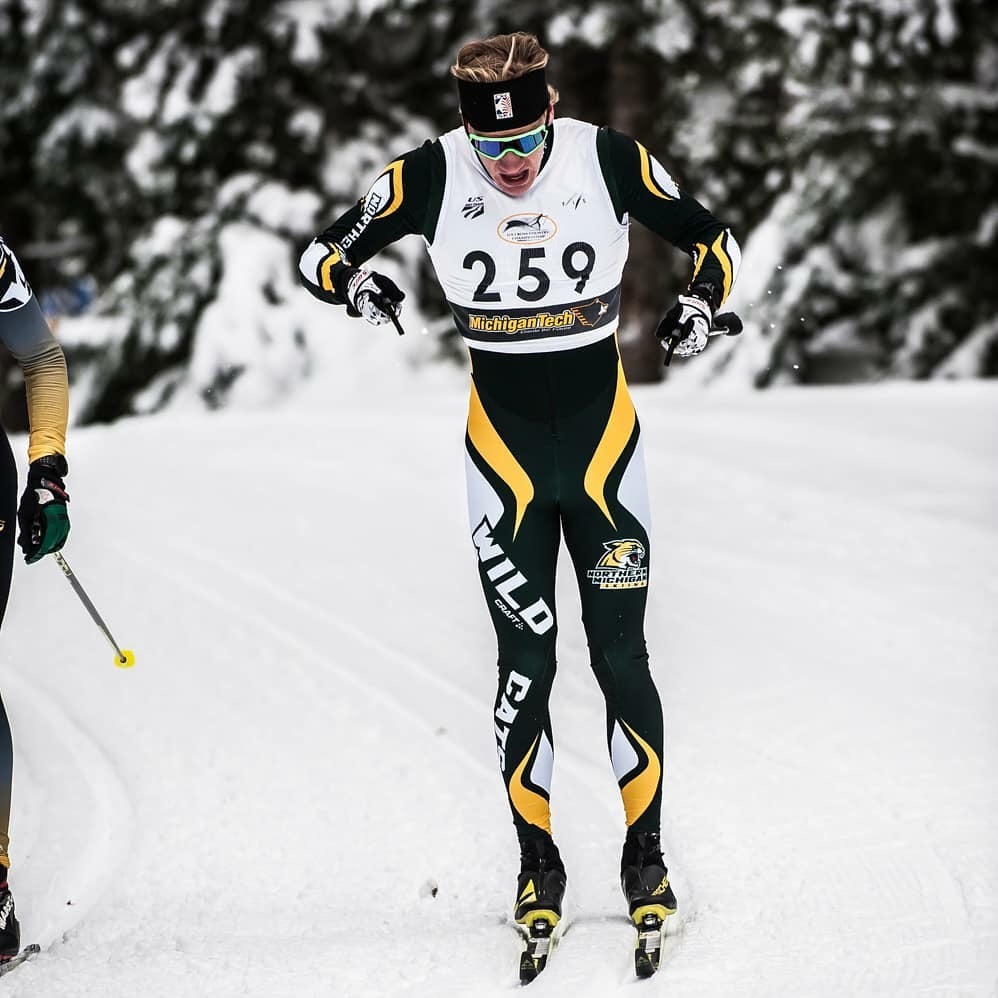
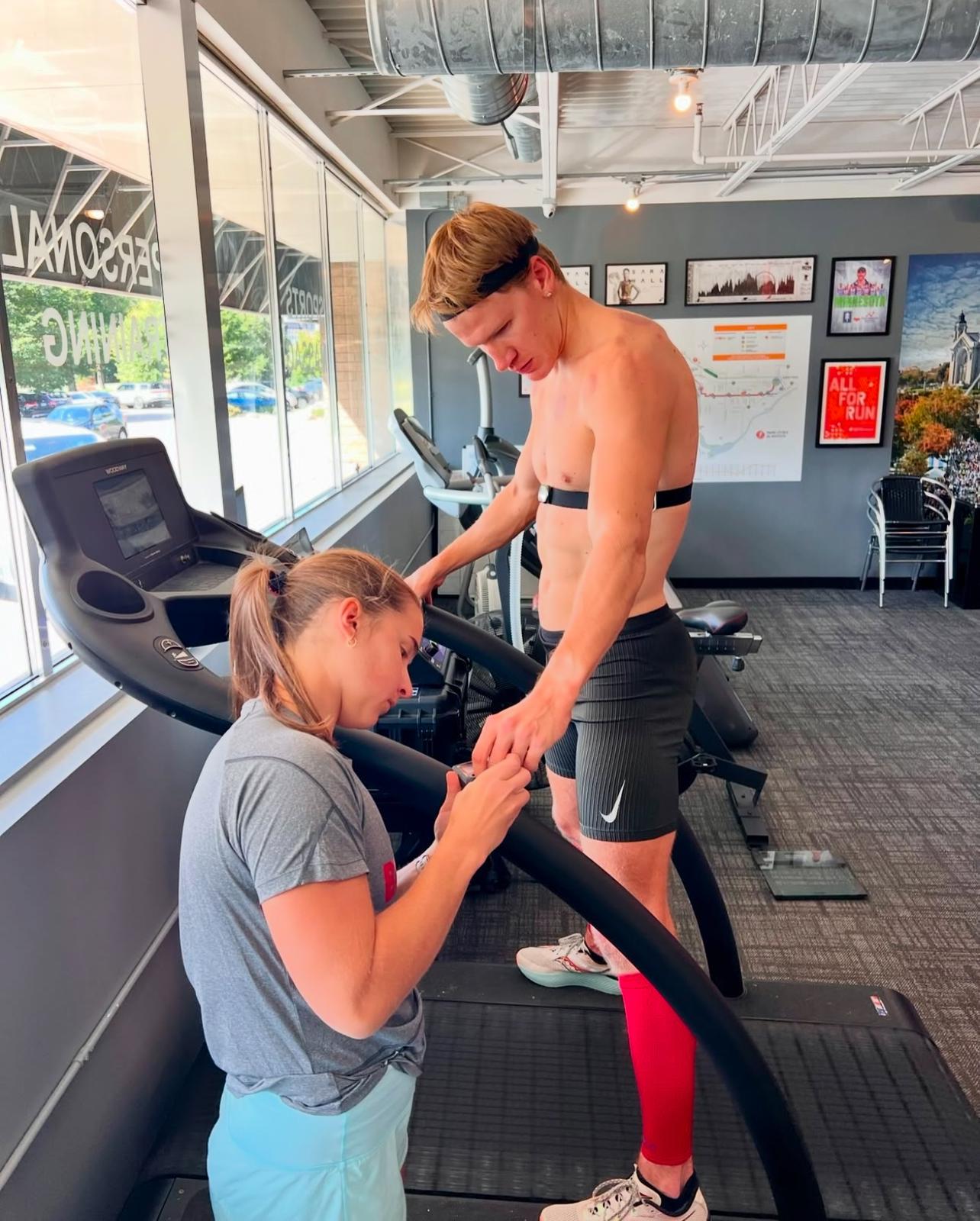
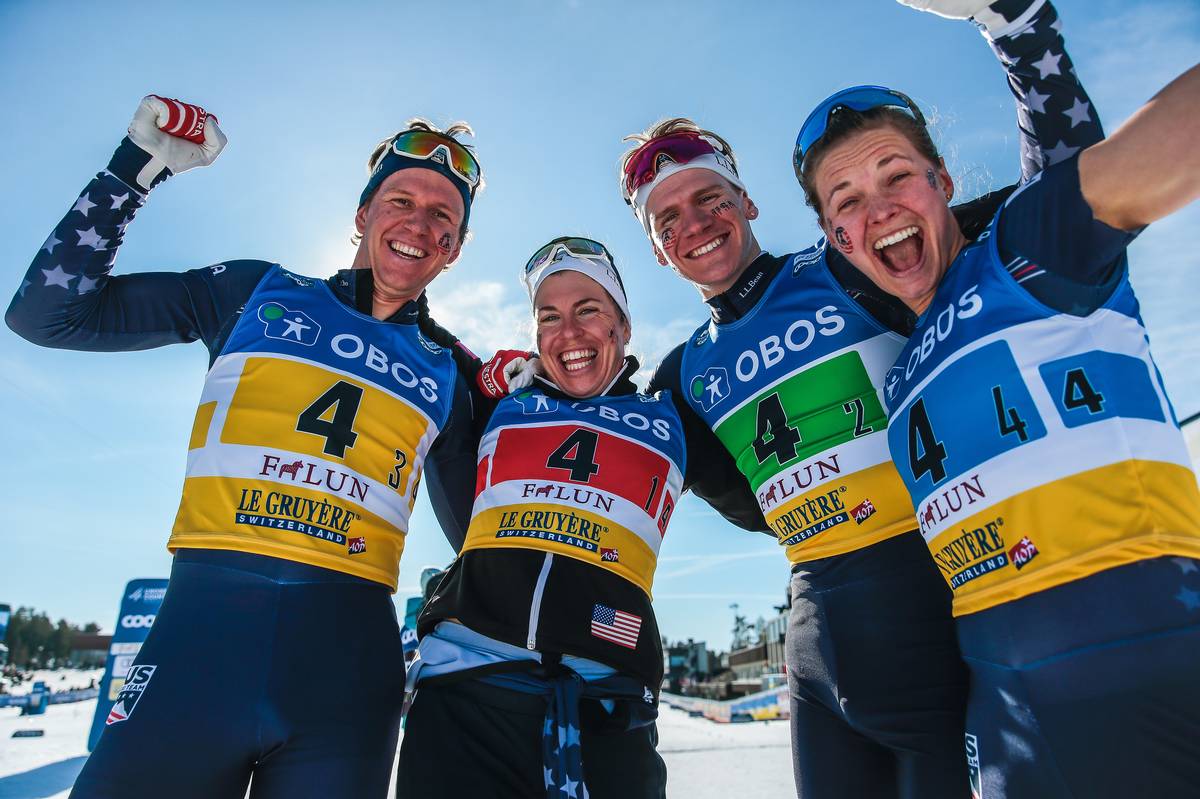





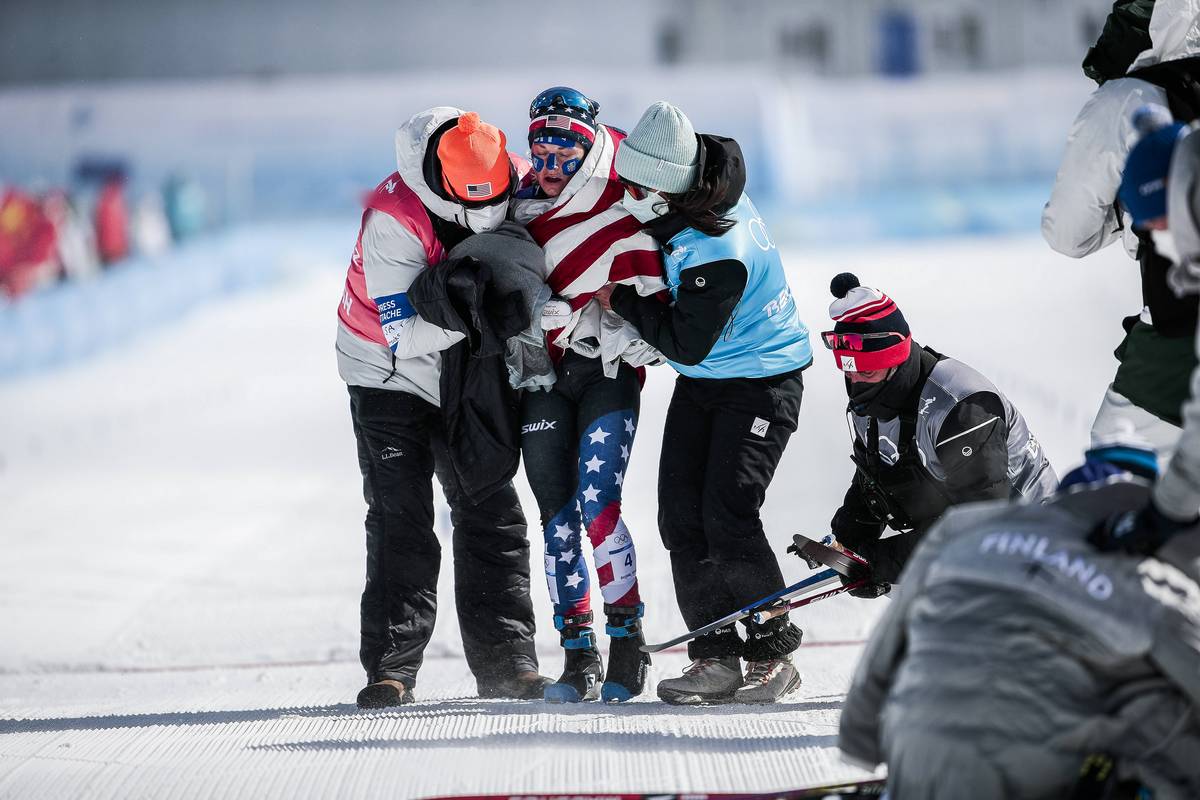


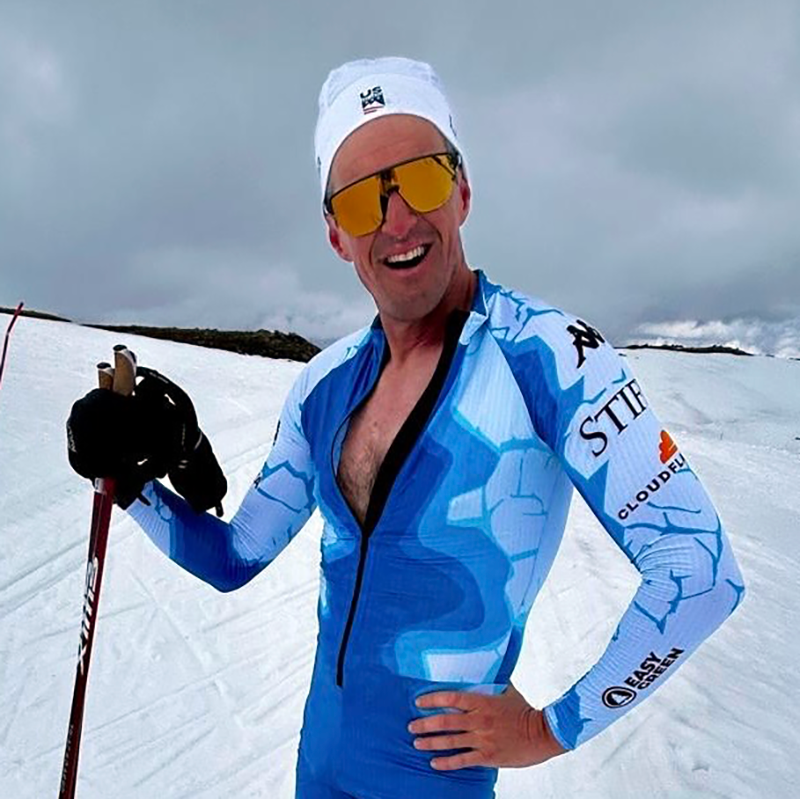


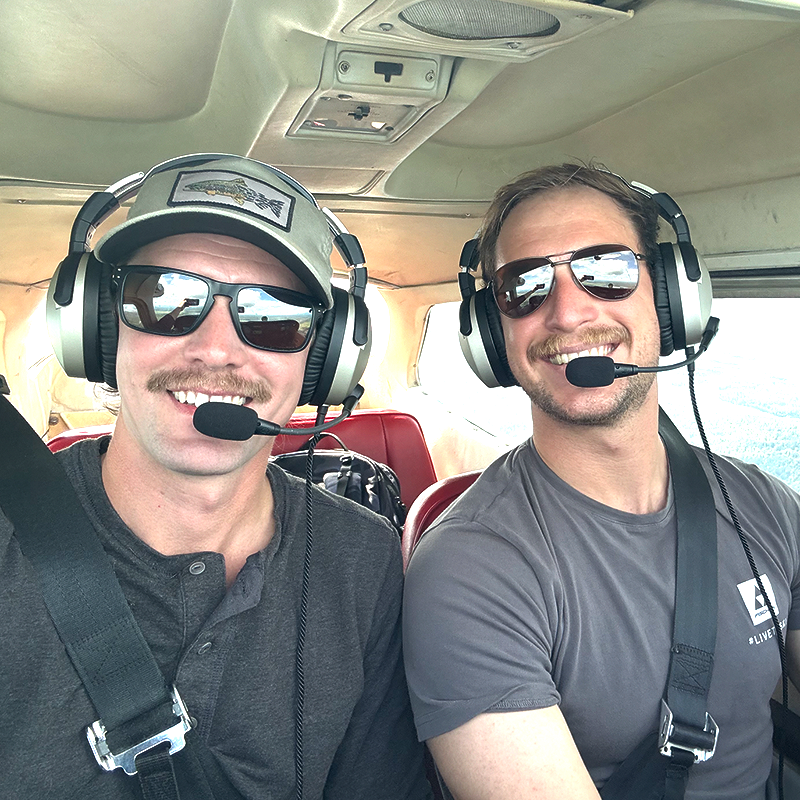


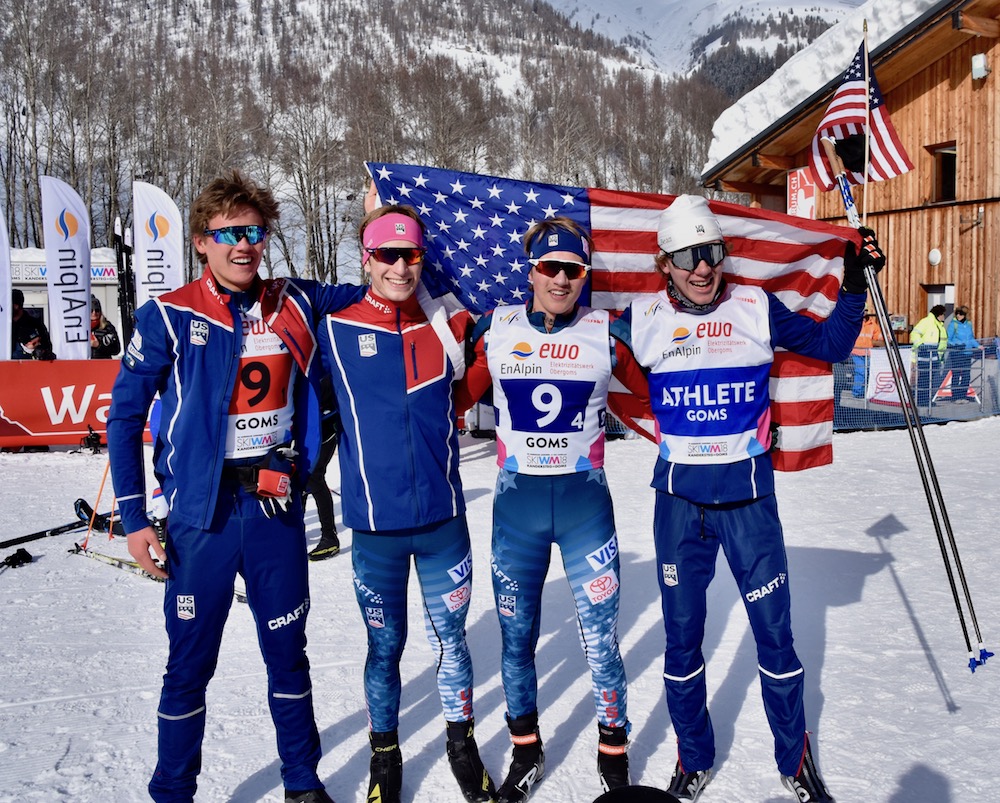
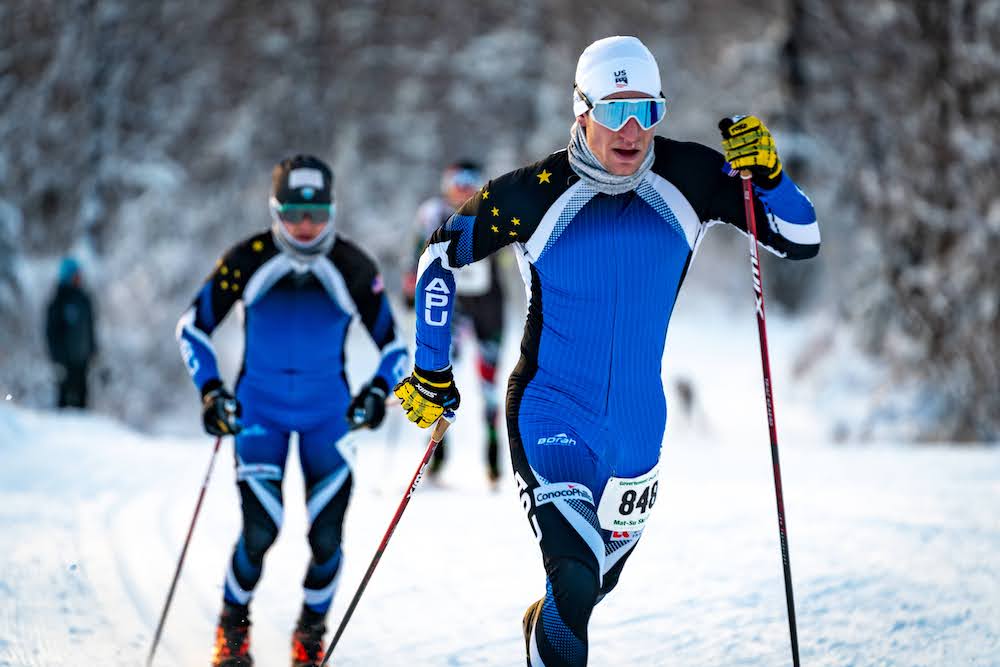


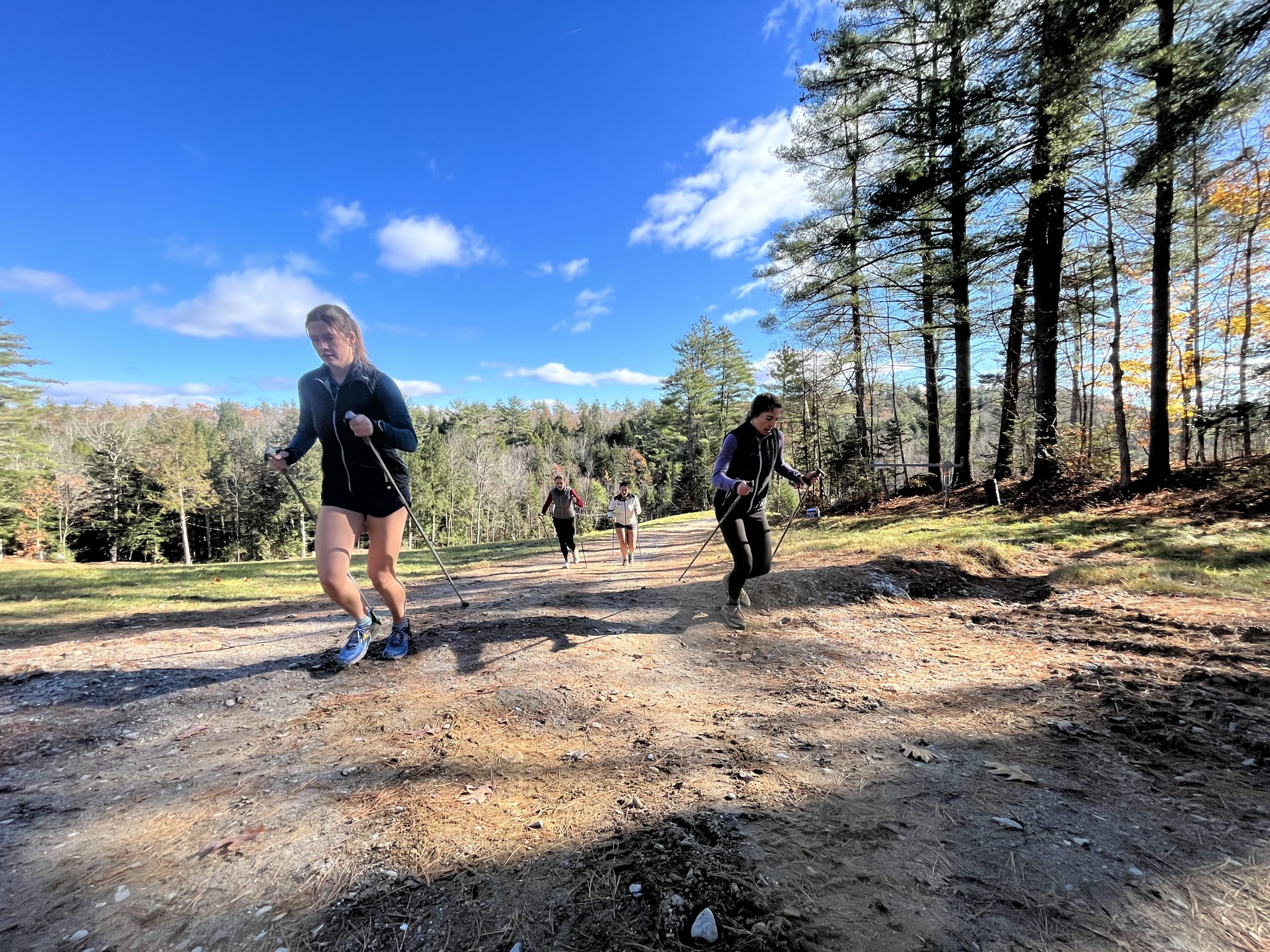

 This coverage is made possible through the generous support of Marty and Kathy Hall and A Hall Mark of Excellence A Hall Mark of Excellence Award. To learn more about A Hall Mark of Excellence Award, or to learn how you can support FasterSkier’s coverage, please contact