Category: Camps

Reports from local, regional, national and international camps used to prepare for Nordic ski racing.
  • U.S. Thanksgiving Camp Guide: Where The (Skiable) White Stuff Is

    U.S. Thanksgiving Camp Guide: Where The (Skiable) White Stuff Is

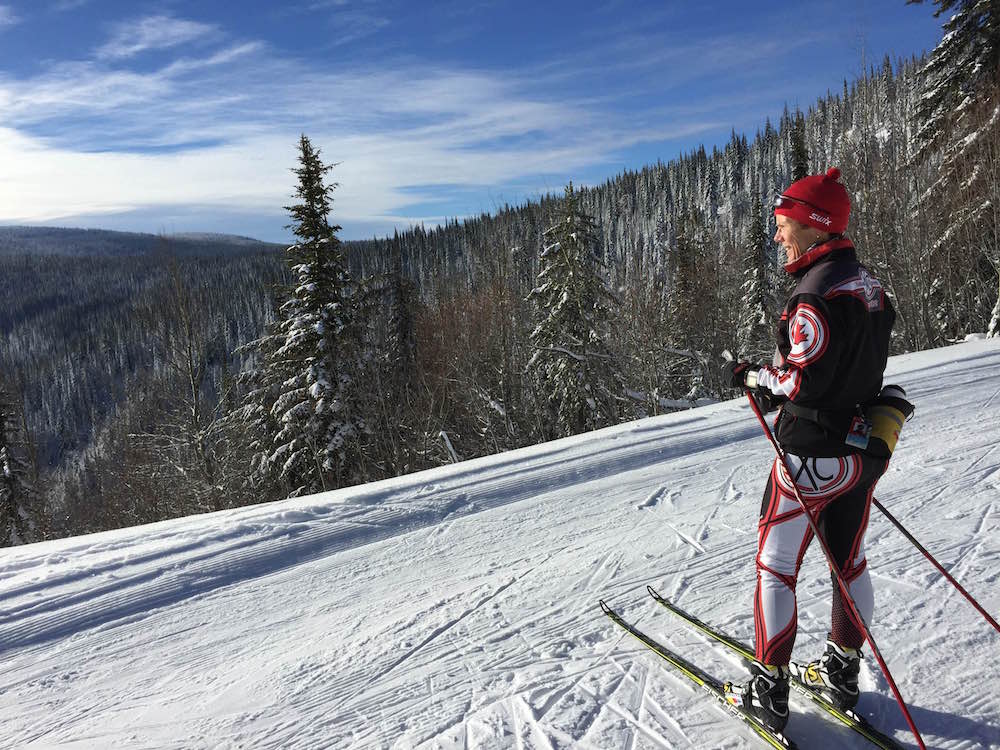
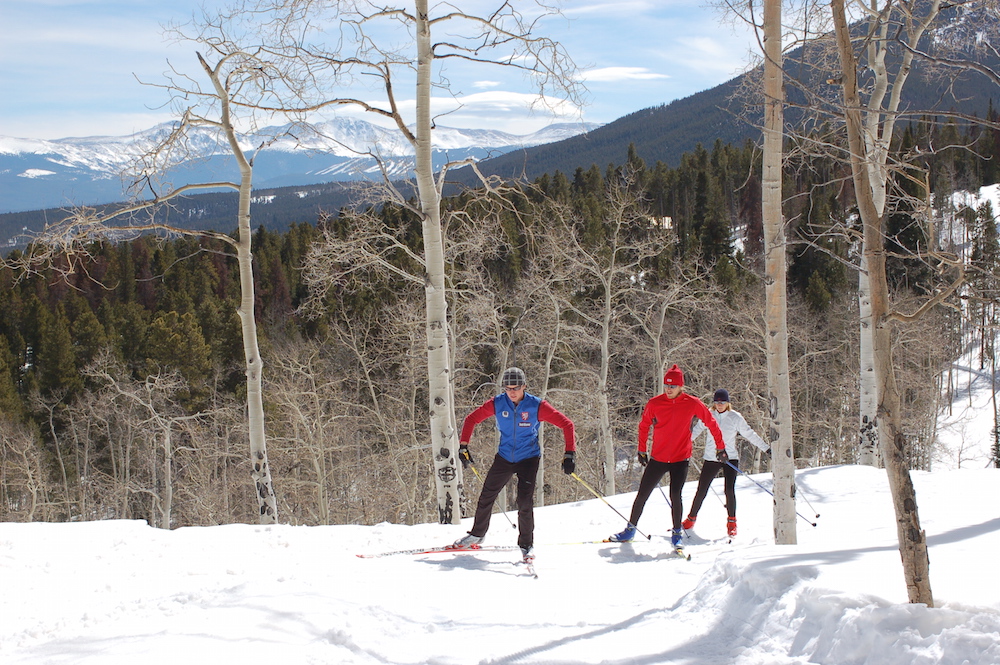
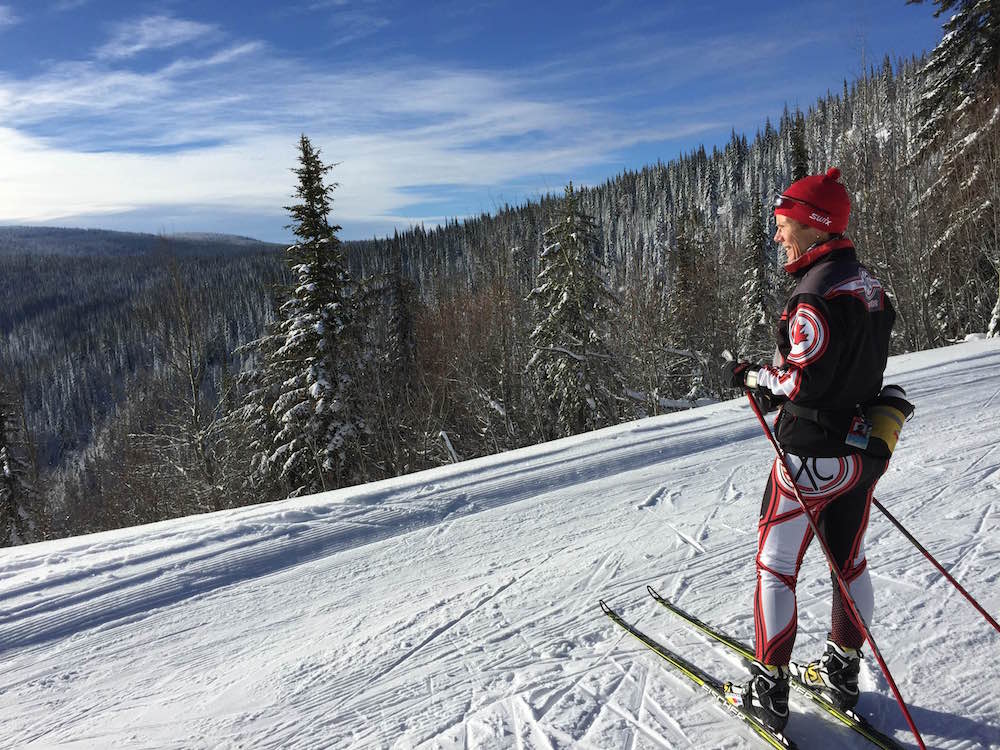
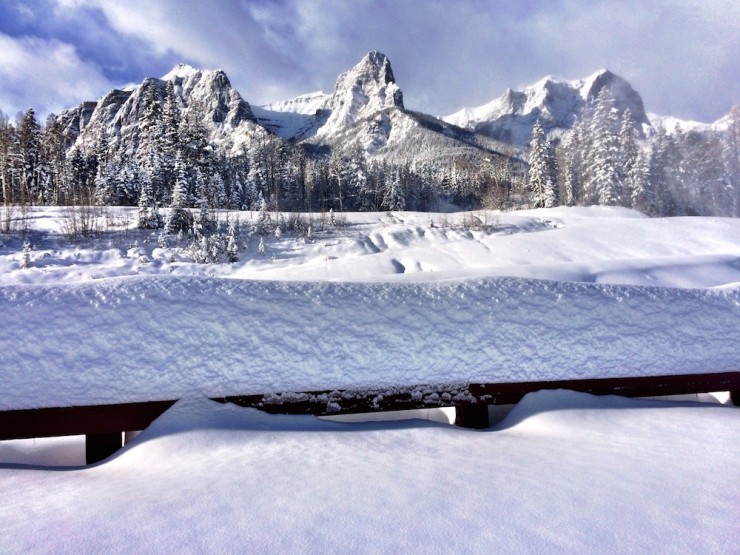
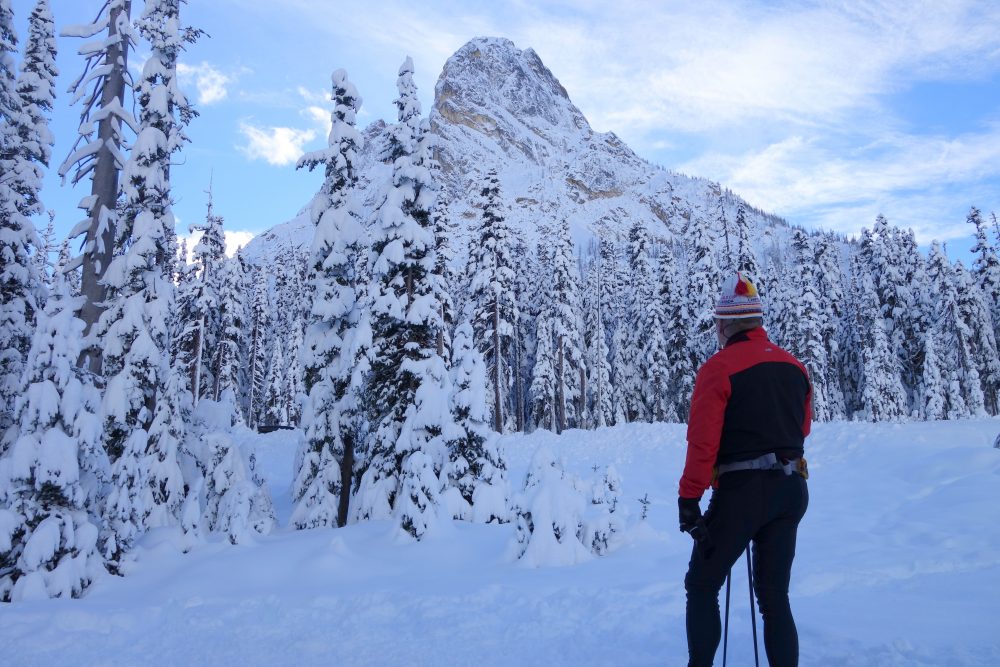
    Skiing under Liberty Bell, Washington Pass, Nov., 2016. (Courtesy photo)
    Skiing under Liberty Bell on Washington Pass in November, 2016. (Methow Trails courtesy photo)

    Natural snow is where it’s at, unless there’s none to be found. In high-elevation places like West Yellowstone, Mont., (roughly 6,600 feet above sea level) and Crested Butte (nearly 9,000 feet), November skiing is almost always a given — which is why those venues have hosted Thanksgiving-week ski camps for 16 to 30+ years. And they are again this year, while looking to the skies and weather forecasts in hope of more snow — much more.

    While there are only two well-known Thanksgiving camps currently being held in the U.S., there are dozens of other places around the country you can likely go skiing. We did our best to present some of the most dependable options, so at the very least you can plan a future trip on snow this time next year. No offense to the in-laws, but wouldn’t you rather be skiing on Thanksgiving? Stay tuned for our Canadian early skiing edition, and feel free to share your favorite November ski spot in the comments section below.

    ***

    What: Yellowstone Ski Festival

    Where: West Yellowstone, Montana
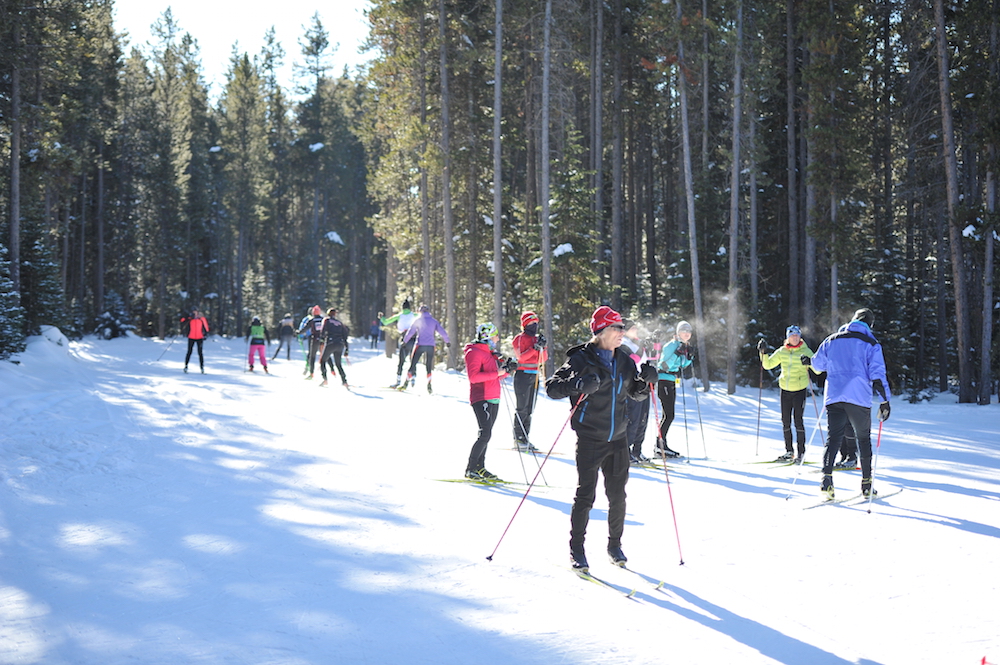
    A rendezvous point at the Rendezvous Ski Trails in West Yellowstone, Mont., during last year's Yellowstone Ski Festival. (Photo: YSF)
    A rendezvous point at the Rendezvous Ski Trails as seen last year in West Yellowstone, Mont., during the 2015 Yellowstone Ski Festival. (Photo: 2015 courtesy photo)

    Website: http://www.skirunbikemt.com/yellowstone-ski-festival.html

    When: Tuesday, Nov. 22 – Saturday, Nov. 26, 2016

    How many years running: Over 30 years. “It started with Drew Barney, Torbjorn Karlsen and Dick Hunt back in the 1980s as a Fall Camp, offering clinics for coaches and citizen racers looking to improve their technique,” West Yellowstone Ski Education Foundation Program Director Moira Dow explained. “Over the years, the camp grew into one of the top training camps available to the cross-country ski community.”
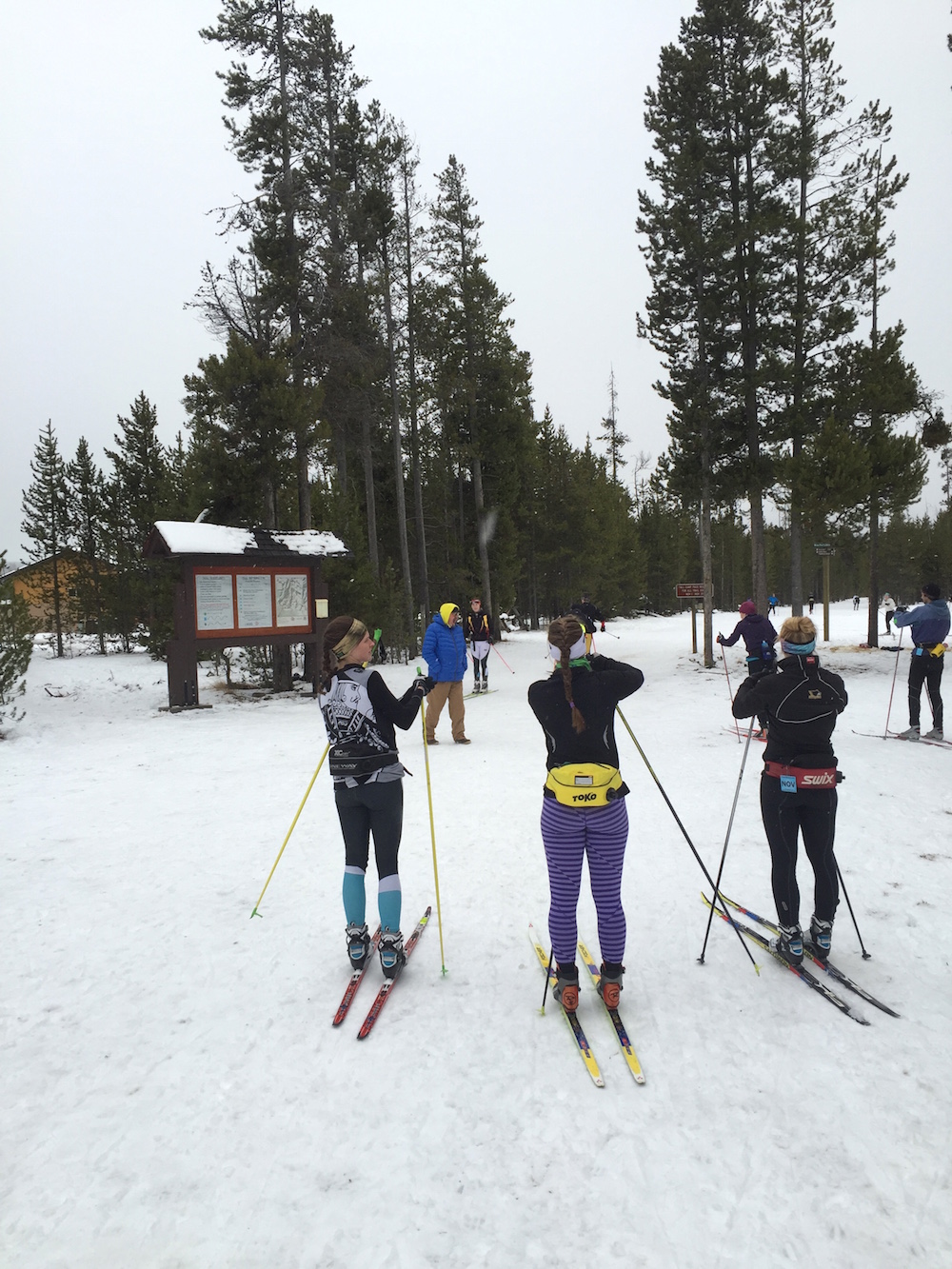
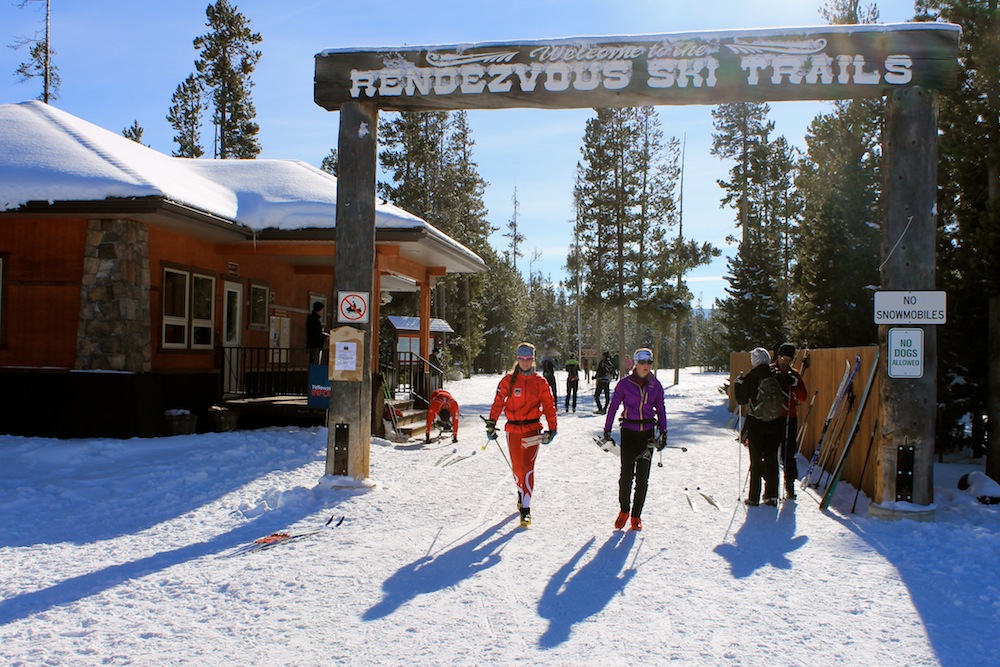
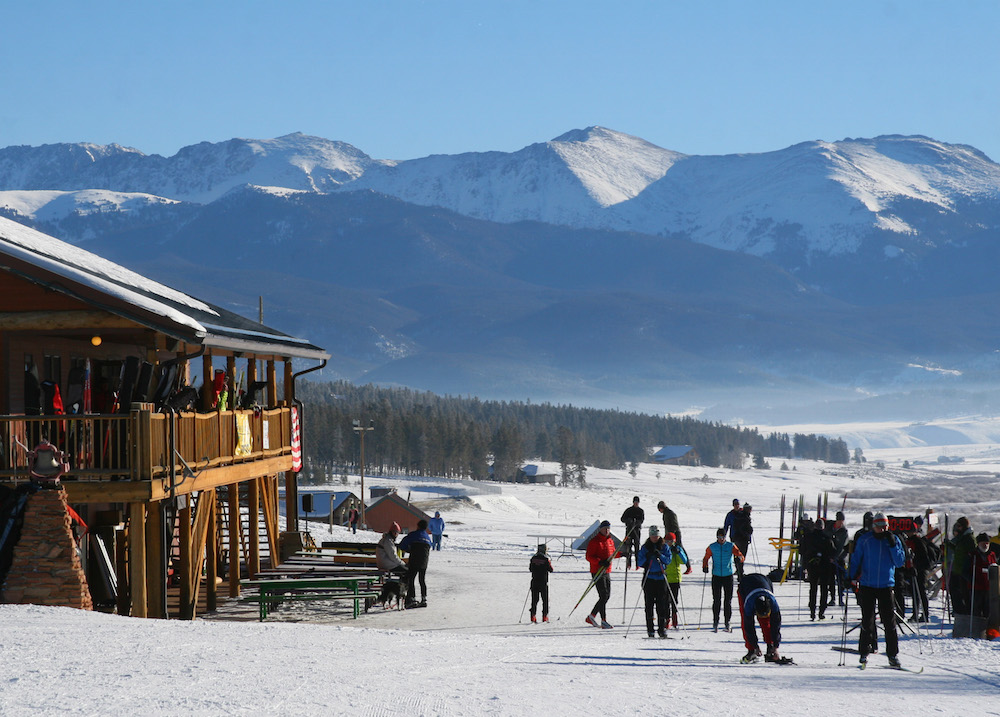
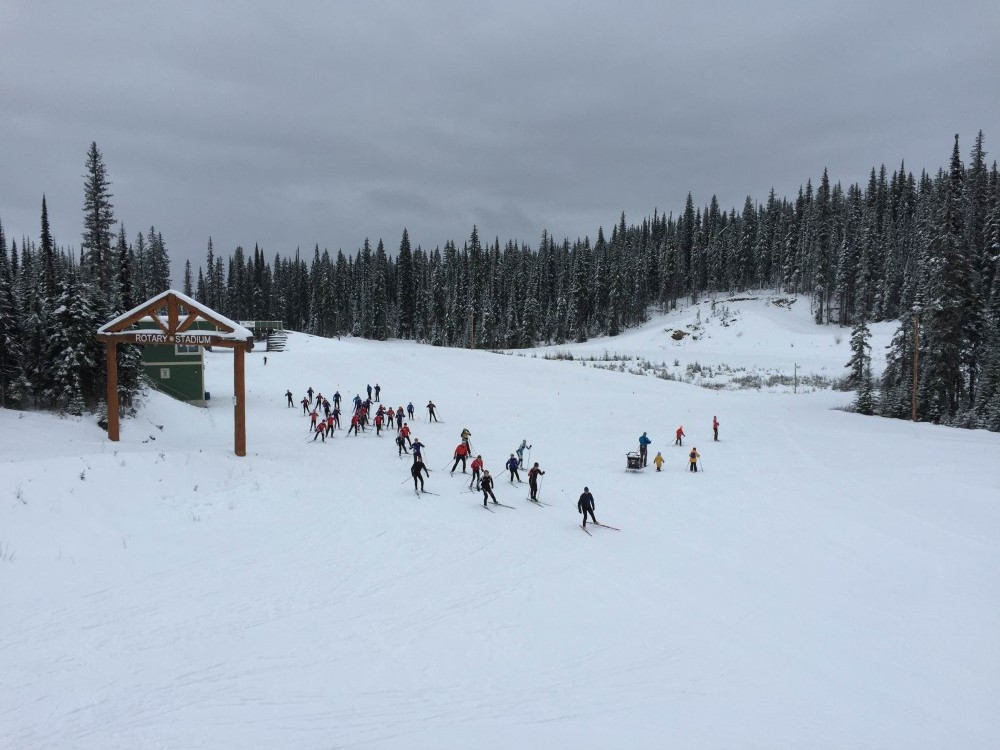
    Skiers at the trailhead of the Rendezvous Ski Trails in West Yellowstone, Mont., on Monday, Nov. 21. (Photo: FBD)
    Skiers at the trailhead of the Rendezvous Ski Trails in West Yellowstone, Mont., on Monday, Nov. 21, 2016. (Photo: FBD)

    Target audience: Open to the public and all levels of skiers.

    Anticipated participation: Around 2,500. “We think it might be a little bit lower this year because of the late snow and the lack of the SuperTour,” Dow noted. “Last year we had a lot. We had really really early snow last year. Around 3,500 in years past.”

    Advance reservation required? Yes for clinics and races. Online registration only. “The competitive events and the clinics all require you to be pre-registered, but all the evening events are open to the public,” Dow said.

    Trail pass rates: $55 for the month of November for adults. $26 for kids, which is 10 and under. Day passes are $12 and $6

    Grooming report: Approx. 20-25 k groomed as of Monday, Nov. 21.
    More details | Webcam

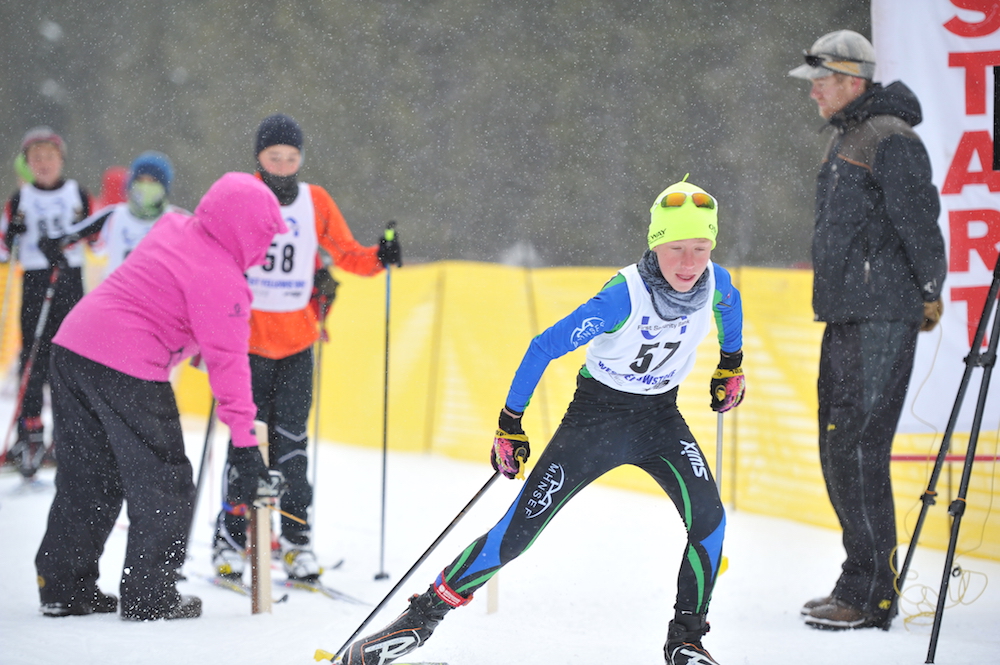
    A young skier darts out of the start at the Yellowstone Ski Festival last year in West Yellowstone, Mont. (Photo: YSF)
    A young skier darts out of the start at last year’s Yellowstone Ski Festival in West Yellowstone, Mont. (Photo: 2015 courtesy photo)

    What makes this camp unique?

    “Good, early, reliable snow,” Dow said.

    “Also it’s a place where skiers from all across the country, juniors to seniors to masters, come together,” she added. “… And as a junior, that’s pretty unique to get to be able to do that. And also to see all the equipment from vendors and see wax clinics. To have all of the elements in one spot is one of the most unique things about this camp.

    “We’re a tiny town out in the middle of nowhere,” she continued. “Our ability to put on such a big event, is, in my opinion, probably one of the most unique aspects of our camp. We are almost entirely volunteer run. The fact that the people who run the festival have little to no experience cross-country skiing, but put on these races, is just flabbergasting to me. It’s pretty incredible.”

    Special events: See website for complete lineup of clinics and more, including:

    • Presentation:  Wildlife photographer Tom Murphy
    • Yellowstone Historic Center presents The Ski Hero Soldiers of Yellowstone
    • Whiskers, Whiskey, and Waxing featuring whiskey tasting samples from Willie’s Distillery of Ennis, MT
    • Branch Beer Bash:  Micro and craft beer tasting
    • Presentation:  Kaatsu Training by Doug Barnard
    • Winter Wildlands Alliance Backcountry Film Festival
    • Women, Wine, and Waxing
    • Keynote speaker Ruff Patterson
    • Yellowstone Ski Festival Social

    — Gabby Naranja

    ***

    What: Crested Butte Nordic Thanksgiving Camp

    Where: Crested Butte, Colorado
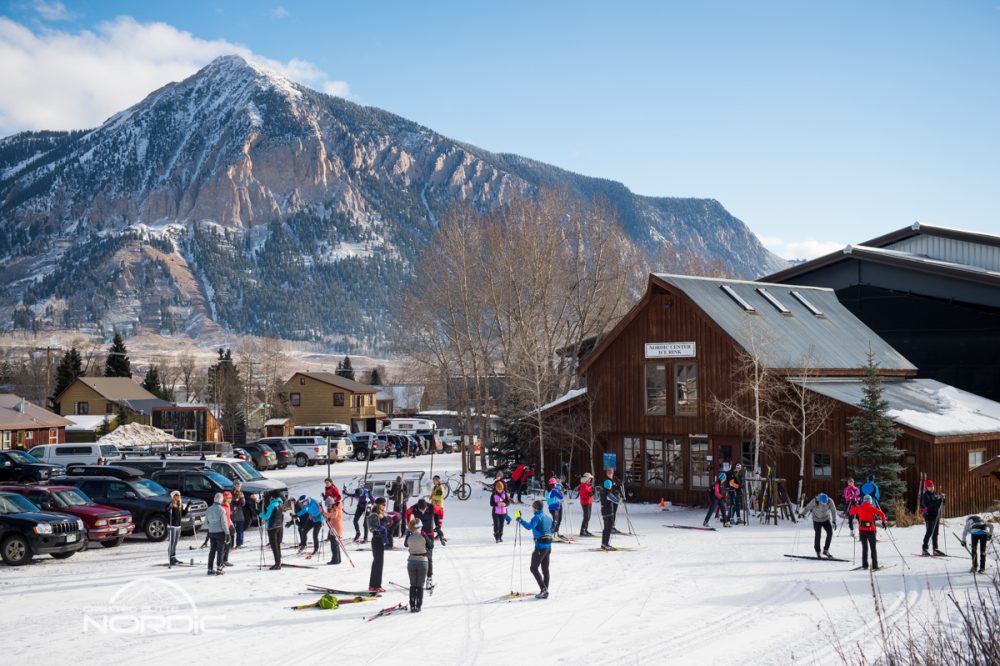
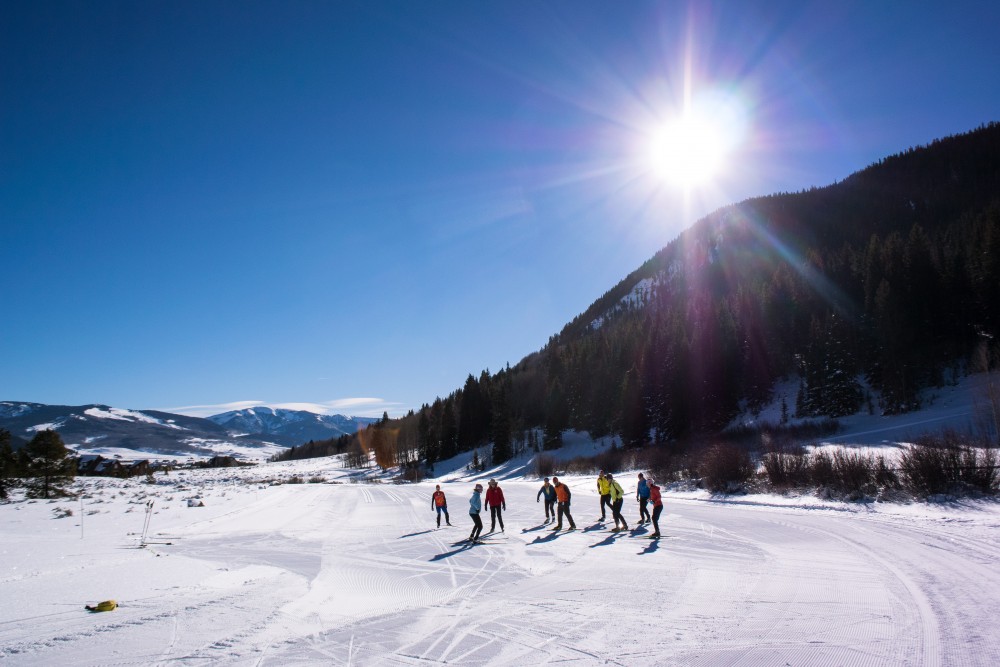
    Crested Butte Nordic Center: Pretty much right downtown. (Courtesy photo)
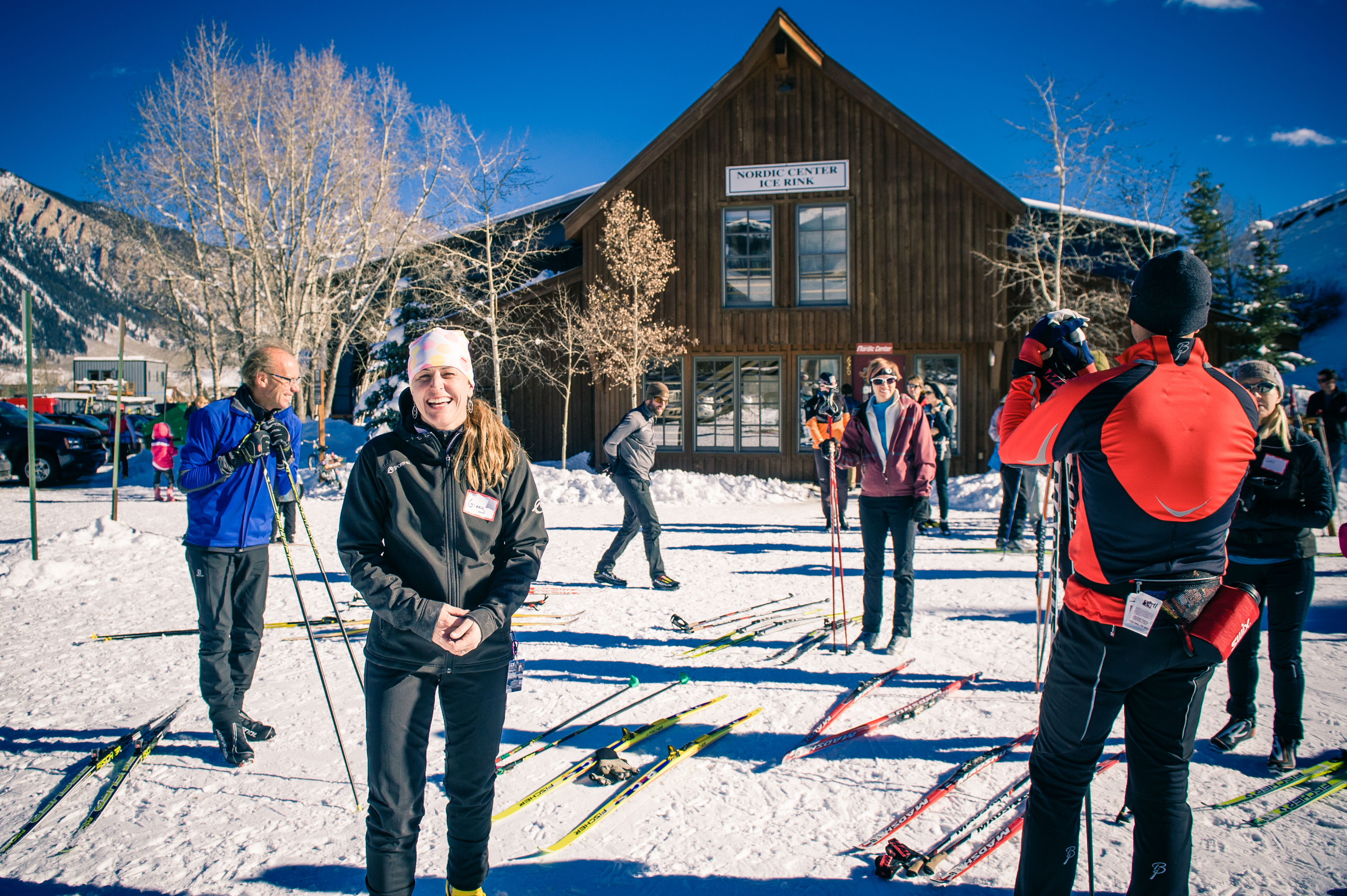
    The downtown-based Crested Butte Nordic Center. (2015 courtesy photo)

    Website: https://cbnordic.org/thanksgivingnordicskicamp/

    When: Wednesday, Nov. 23, to Sunday, Nov. 27, 2016

    How many years running: 16 as an official, organized camp: “In case of a low-snow year, like our current situation, we have a low-snow venue called Lily Lake and that’s up on Kebler Pass which is six miles West of town,” said Drew Holbrook, marketing director for Crested Butte Nordic.
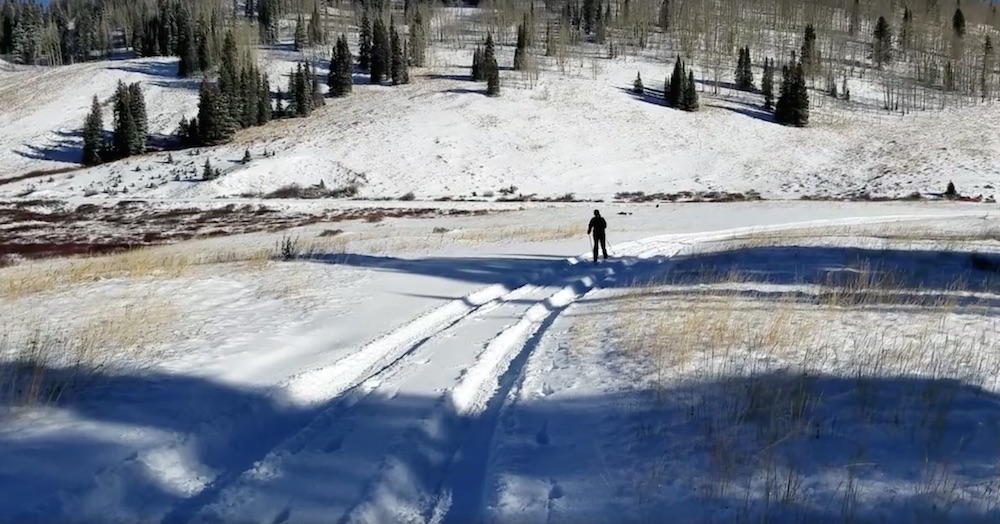
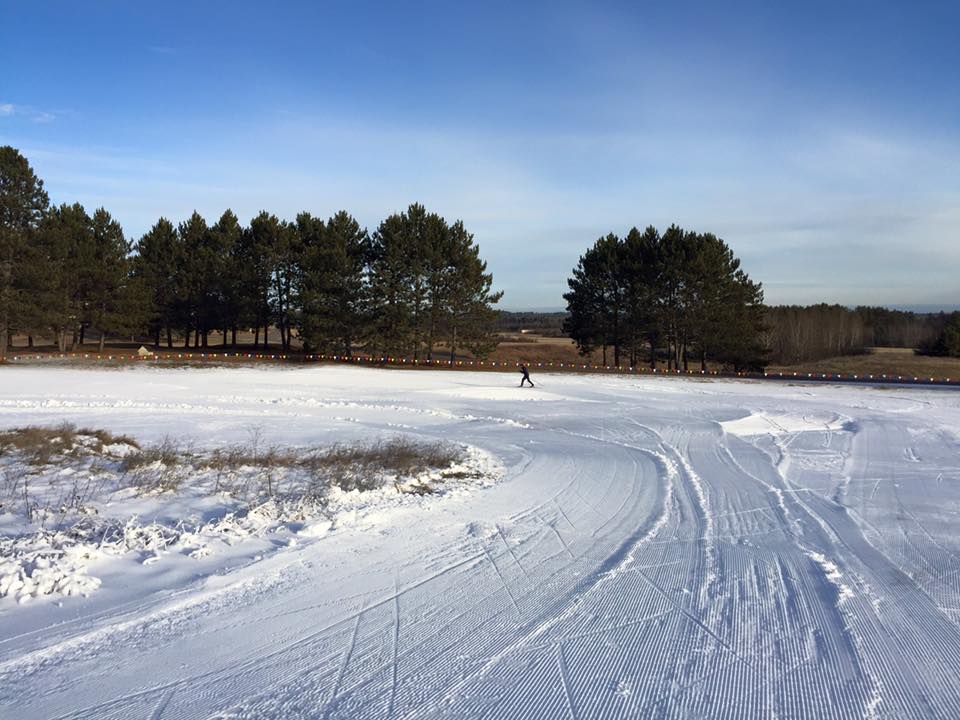
    Skiing at Lily Lake in Crested Butte, Colo., on Nov. 18, 2016. (Photo: CB Nordic/Facebook video)
    Skiing at Lily Lake in Crested Butte, Colo., on Nov. 18, 2016. (Photo: CB Nordic/Facebook video)

    The road up to Kebler Pass is maintained by the county. Individuals or groups can drive up to the pass, but carpooling is encouraged when the low-snow option is in play.

    “We have vans to shuttle people up to try and minimize traffic and congestion — it’s kind of like a similar situation in terms of people (but not as and because not quite as many people) as driving up on the South Plateau outside West Yellowstone, so we shuttle people up there. For the people taking clinics we shuttle them all up in vans.”

    The Lily Lake area receives 600 inches of annual snowfall and no trail pass is required. As of Nov. 18, Lily Lake had received nearly six inches of snow.

    The Nordic Center located in town is also prepared for low snow, according to Holbrook. “Just in the last three years we have had the trail right next to the Nordic Center in town, called Ruthie’s Run, homologated re-engineered. So it’s seeded with grass, it is mowed and basically we can groom that with literally six inches of snow or so. It’s kind of interesting because it snows a lot more up on Kebler Pass at Lily Lake, it might snow two feet up there and only six inches in town, but it’s easier to actually groom on Ruthie’s down in town if we get the snow. Lily Lake is on Forest Service property, so we have to wait until there is a foot of snow before we are allowed to groom up there.”
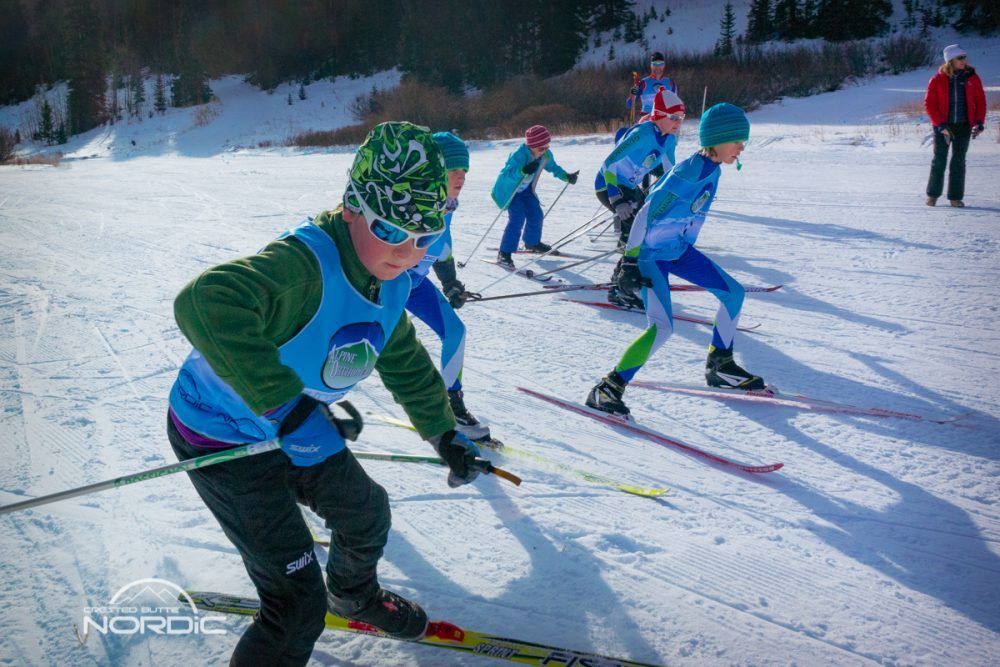
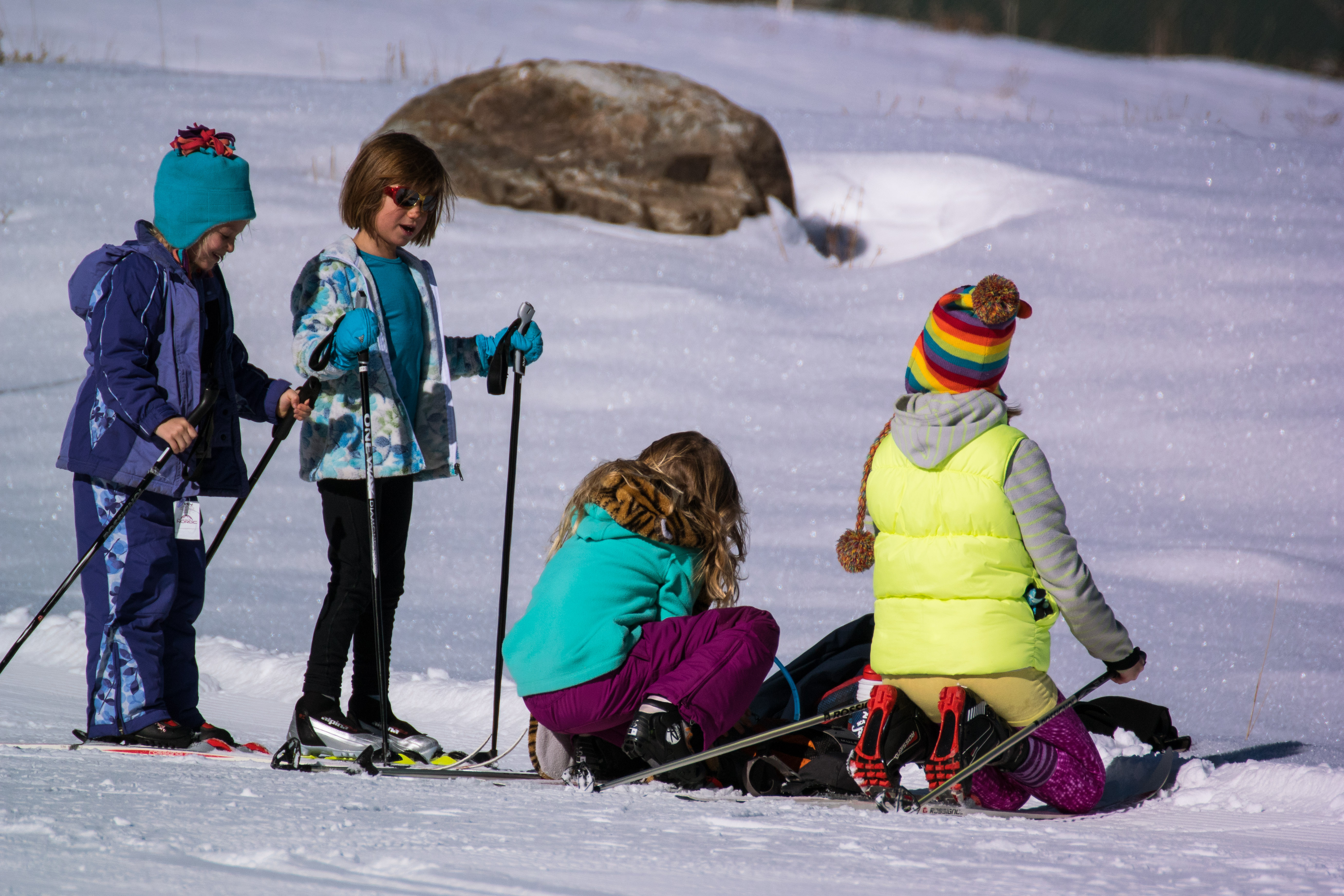
    Crested Butte Thanksgiving Camp - Not just for Big people. (Courtesy photo)
    Crested Butte Thanksgiving Camp: not just for big people. (2015 courtesy photo)

    Target audience: All ages and abilities. New skiers are encouraged to come try the sport out.

    Anticipated participation: Holbrook expects 60 participants for the clinics offered. A round-robin classic “refresher” will be held Thursday, Nov. 25, with full-day clinics on the 26th and 27th.

    Advance reservation required? Strongly encouraged. “For the clinics it is best to sign up ahead of time,” Holbrook said. “We never get too many people signing up until it starts snowing, but they do fill up. You might get lucky the morning of and come into the Nordic Center and sign up and get a spot, no guarantees.”

    Trail pass rates: $20/day, skiers 17 & younger ski free. $150 for a 10-punch transferable pass.

    Grooming report: Lily Lake is receiving snow. The low-snow option looks more than promising.

    What makes this camp unique? “One thing that makes it unique, Lily Lakes is a great locals’ place to ski,” Holbrook said. “It’s pristine and scenic. And of course, its great skiing from the Nordic Center in town, too. There is plenty of room on the trails for everybody, you are not getting swarmed by people and not being able to do your workout. It’s easy to get in a good ski.”

    Special events: 

    • Ski Free Day: Wednesday, Nov. 23 at the Crested Butte Nordic Center
    • Crested Butte Mountain Resort “Donation Day”. Donate some money, you decide the amount, and ski with a little help from gravity at the downhill area. All proceeds support the Crested Butte Snowsports Foundation
    • Round-robin refresher clinic: Thursday, Nov. 24
    • U16 Junior Training Camp: Nov. 25-27
    • Alley Loop Race Series (Race #1) 5 k & 10 k skate
    • Winter Kick-Off Party (Saturday night): Fundraiser for Crested Butte Nordic, tickets $25/adult,$15/children. (Author’s note: Crested Butte throws fun parties.)

    — Jason Albert

    ***

    NOT CAMPS, PER SE, BUT YOU’RE PROBABLY WONDERING ABOUT:

    ALASKA

    Fairbanks

    Birch Hill Ski Area, in Fairbanks, is probably the most reliable spot in North America for groomed early-season skiing. This is the venue that once held a FIS race on Nov. 2. Temperatures are reliably cold, and any snow that falls tends to stay. The Nordic Ski Club of Fairbanks grooms approximately 35 k of trails at Birch Hill. The trails are meticulously maintained in summer, if not manicured, and are justly renowned for their ability to provide good skiing after mere inches of snowfall.
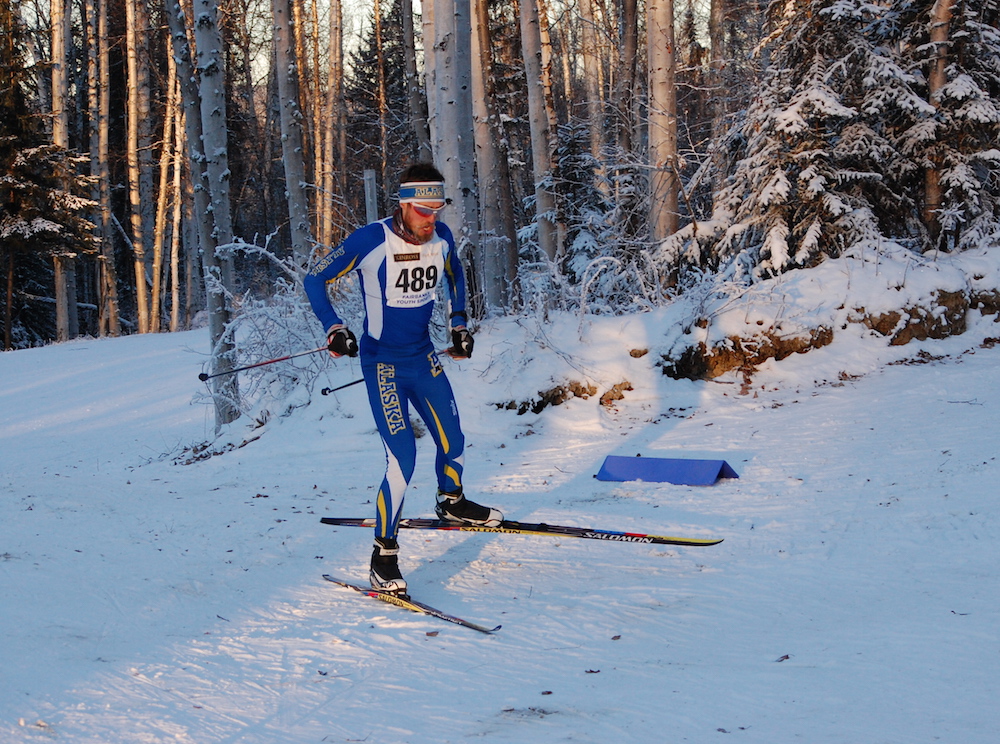
    University of Alaska Fairbanks skier Alex Eckert skis in the Alaska Nordic Cup in Fairbanks, Alaska, on Nov. 19, 2016. (Photo: Max Kaufman)
    University of Alaska Fairbanks skier Alex Eckert racing in the Alaska Nordic Cup FIS races in Fairbanks, Alaska, on Nov. 19, 2016. (Photo: Max Kaufman)

    Birch Hill again held FIS races on the recent weekend of Nov. 19-20. It had snowed approximately 5″ total in Fairbanks this winter by that point. Weekend racers – and there were hundreds of them, from kindergarteners without poles to the APU Elite Team – skied on trails that had been packed and dragged to create a base of approximately 2″. There were admittedly some leaves and dirt showing through in places – but, crucially, it was leaves, not rocks. Most skiers in the FIS/USSA class of the weekend’s races competed on their prior-generation, few-years-old race skis.

    Locals consistently described the conditions, which led half the APU Elite men’s team to make the trek north from Fairbanks for the weekend, as among the worst mid-November conditions in living memory.

    Anchorage and nearby

    Under normal conditions, as measured by a 30-year average, Anchorage around Thanksgiving is a nordic nirvana. There are at least 40 kilometers of groomed trails at Kincaid Park, on the west edge of town, and another 16 k at Hillside, on the east edge of town. (16 k are lit at Kincaid, and 8 k are lit at Hillside.) The two ski areas are connected by a network of dozens of kilometers of additional trails (also groomed, or at least snowmachine dragged), ranging from moose-dense forest to urban greenbelt, including the Coastal Trail, which runs along the shores of the Pacific Ocean for most of its 15 k. You can ski from Hillside up into the Chugach Front Range, and from the frontcountry into true backcountry. Around 20 miles out of town to the north, Beach Lake has another 20 k of groomed trails (nine of them lit). 40 miles to the south, Girdwood boasts a growing trail network of around 10 k total, including a competition-level 5 k loop. All trails are open 24/7, and there is no trail fee for any of them.
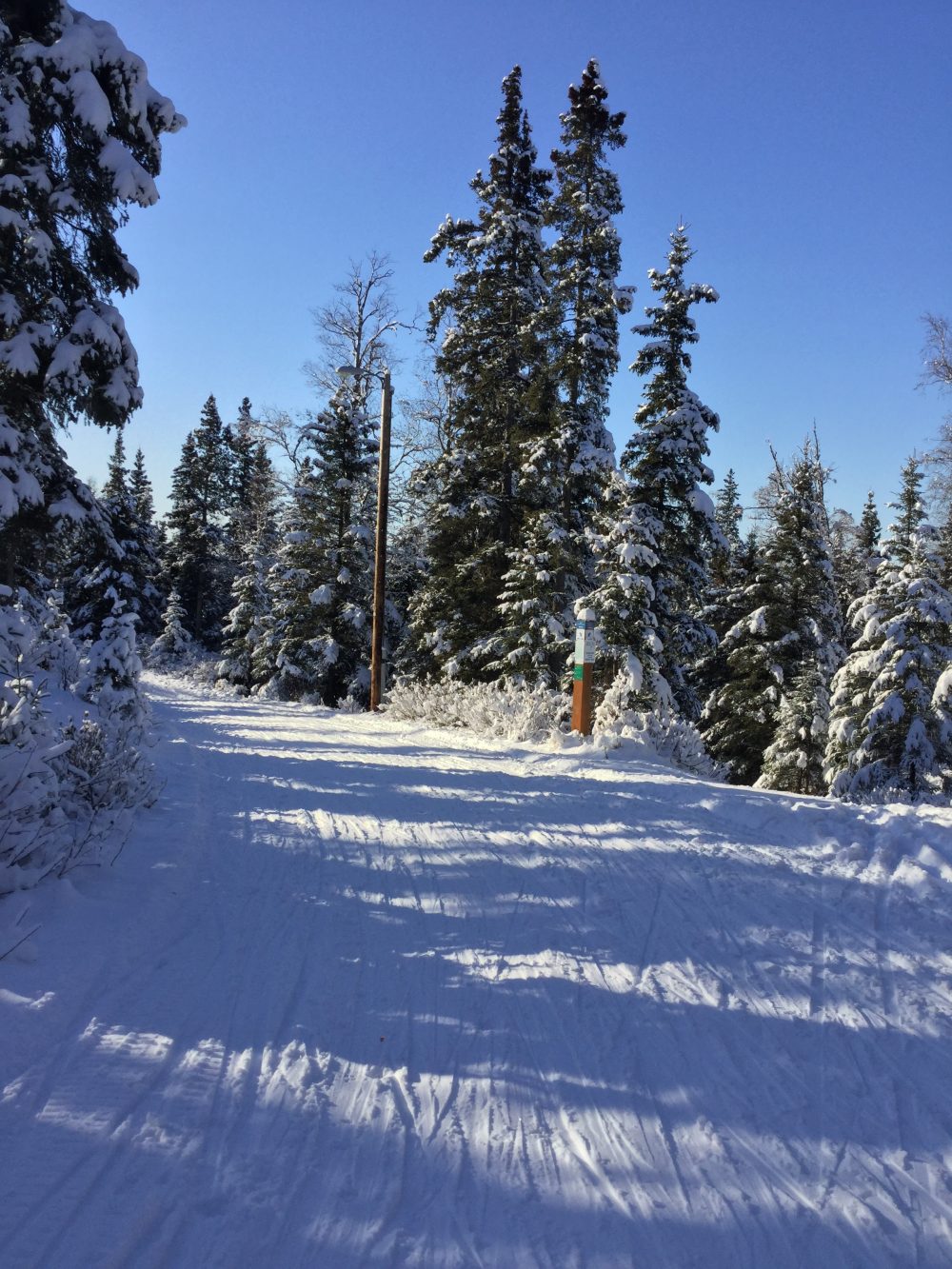
    Hillside ski trails in Anchorage, Alaska, on Oct. 22, 2016, before the rains came. (Current conditions are far worse.) (Photo: Gavin Kentch)
    Hillside ski trails in Anchorage, Alaska, on Oct. 22, 2016, before the rains came. (Current conditions are far worse.) (Photo: Gavin Kentch)

    Judging from the last three winters, however, Anchorage sadly simply cannot be recommended as a viable option for Thanksgiving snow in these days of climate change. While all three winters saw the first snowfall in October or early November, and some period of good skiing immediately thereafter, all three gave way to wind and rain by Thanksgiving week. As of the weekend of Nov. 19-20, 2016, Anchorage has no natural snow on the ground at Kincaid, a 1-2″ base of bulletproof sheet ice at Hillside, and skritchy skiing on a local golf course. On the bright side, the trail running is amazing (bring your Icebugs), and the nordic skating is world class.

    Kincaid has limited snowmaking capabilities, which are capable of covering a loop of as much as 3-4 k centered around the main stadium area. (This is where over 95 percent of Anchorage ski races have occurred over the last two winters.) The Nordic Skiing Association of Anchorage (NSAA) turned the snowguns on briefly on Nov. 16, then again on Nov. 18. Recent cold temperatures have allowed them to operate continuously since. NSAA stated on Sunday morning that there were no trails open for skiing yet, but that they were “getting closer” to opening the first loop and had reached the stage where the PistenBully was starting to move snow around. A loop of approximately 2 k was opened amidst single-digit temperatures on Thanksgiving morning, Nov. 24.

    In a recent email to FasterSkier, NSAA Program Manager Tamra Kornfield addressed the possibility of, for example, guaranteeing skiable snow by Thanksgiving in exchange for attracting skiers and generating user fees. Kornfield wrote, “The theory of trail fees has been discussed for many years, but currently our ski trails are on Municipal Park land, and we cannot charge to access these parks. However, I can say that the snowmaking system was designed to extend the ski season, not create it from scratch, so I do foresee doing more to fundraise for this great expense that has now saved the last two ski seasons.”

    Mat-Su Valley
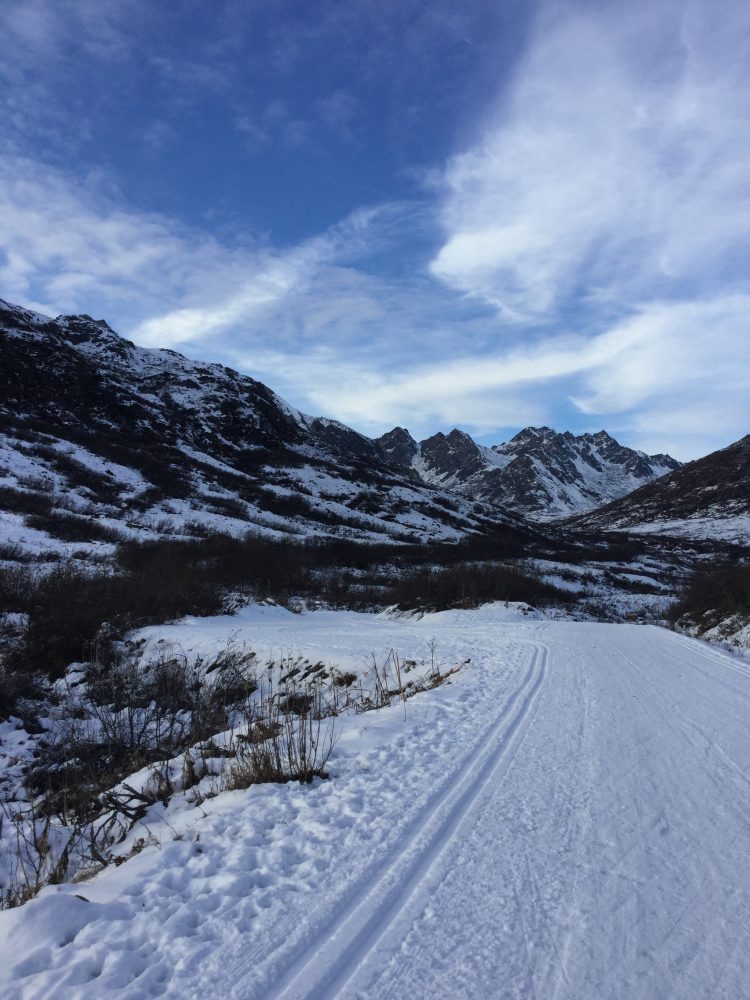
    Archangel Road above Palmer, Alaska, on Nov. 4, 2016 (current conditions are better than this). (Photo: Gavin Kentch)
    Archangel Road above Palmer, Alaska, on Nov. 4, 2016 (current conditions are better than this). (Photo: Gavin Kentch)

    The Matanuska–Susitna Valley, approximately one hour outside of Anchorage on a major highway (call it up to 90 minutes to the ski areas discussed here), has been described on this website as having “the season of winter that starts in the fall and ends in the spring.” That’s pretty fair.

    The Mat-Su Ski Club, including the redoubtable Ed Strabel and sometime FasterSkier contributor Jeff Kase, typically groom 7 k of Bill Spencer-designed trails at Government Peak Recreation Area (to be expanded as soon as next summer), 7.5 k (one-way) on Archangel Road, and 5 to 10 k at Hatcher Pass. Archangel Road hosted one of the last North American ski races of 2015/2016 and one of the first of 2016/2017. Hatcher Pass is a truly special place, as the groomed trails wend their way past the historic buildings of an old gold mine nestled in a bowl in the Talkeetna Mountains. “Imagine skiing through an Old West ghost town turned collectible Christmas village,” local Master and English professor Shannon Gramse once wrote in these pages.
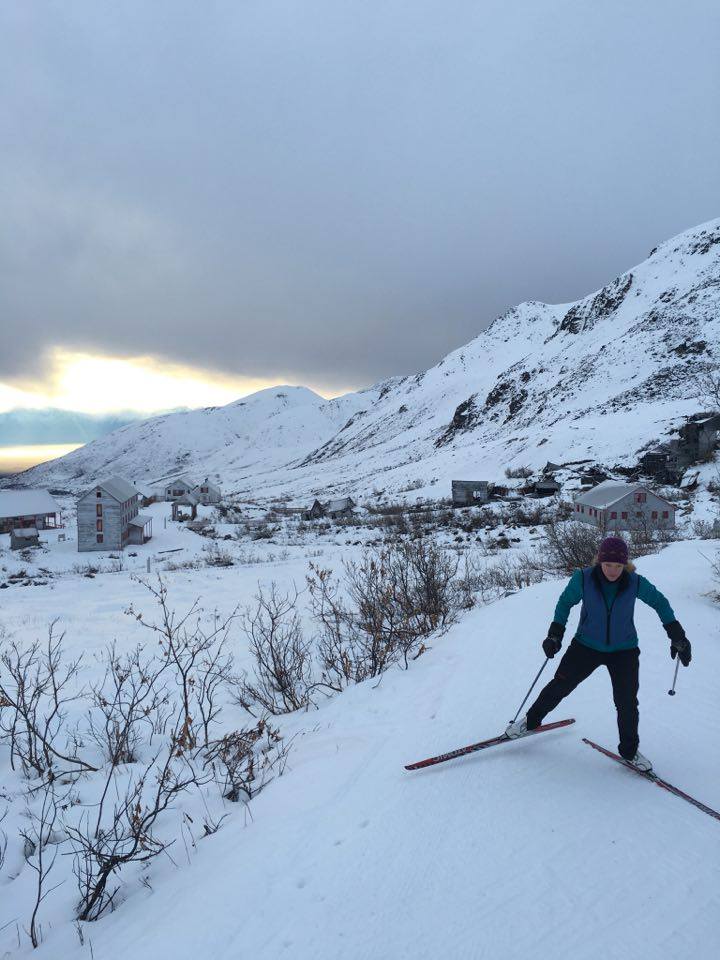
    Skiing at Hatcher Pass, above Palmer, Alaska, on Nov. 20, 2016. (Photo: Nat Herz)
    Skiing at Hatcher Pass, above Palmer, Alaska, on Nov. 20, 2016. (Photo: Nat Herz)

    As of Nov. 19, Government Peak (a one-hour drive one-way from central Anchorage), which is at a lower elevation than the other two areas, did not have enough snow to ski on. Archangel Road (75-minute drive) had a base of approximately 4-5″, but it is bulletproof hardpack that should provide a reliable base until spring. The Mat-Su Ski Club has been grooming there several times a week, and the skiing is good to superb. The Mat-Su Ski Club also groomed Hatcher Pass (90-minute drive) over the weekend.

    Trail fees and current conditions

    All trails described in this article are open 24/7. None of the trails charges a trail fee or requires a pass. Alaska skiers tend to make voluntary yearly donations in lieu of a trail pass. Donations are gratefully accepted by the Nordic Skiing Association of AnchorageMat-Su Ski Club, and Nordic Ski Club of Fairbanks.

    Here are trail maps for the AnchorageMat-Su, and Fairbanks trails.

    For the best information on current trail conditions, including formal grooming reports when available: Anchorage (official NSAA and user-generated), Mat-Su, and Fairbanks.

    — Gavin Kentch

    WASHINGTON

    Then there are the possible Northwest options for early season skiing, including the well-known:
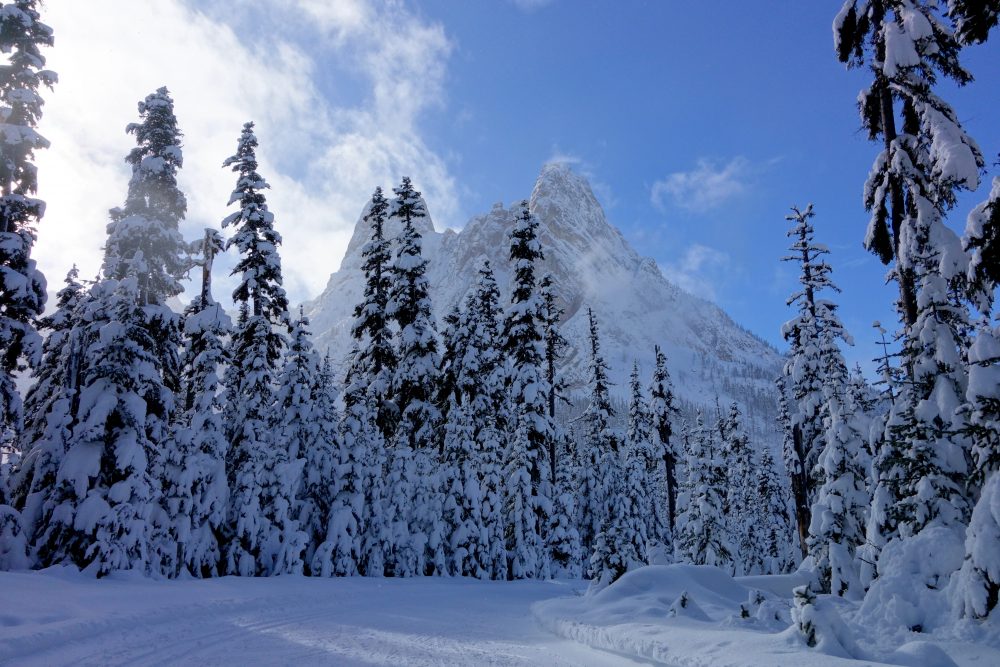
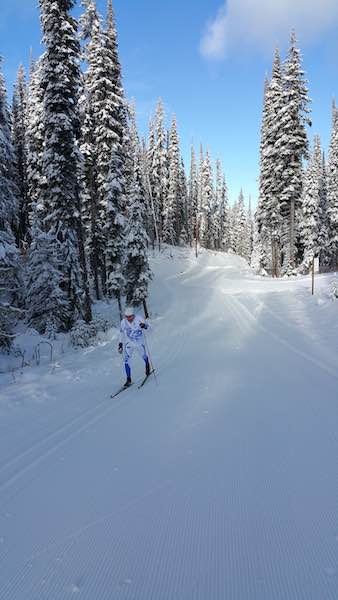
    Bluebird on Washington Pass, Nov., 2016. (Courtesy photo)
    Bluebird day on Washington Pass in November 2016. (Methow Trails courtesy photo)

    Methow Valley

    “I giggle about the current skiing up at Washington Pass which is a the top of the North Cascades Highway,” said Kristen Smith, marketing director for Methow Trails based in Winthrop, Washington. “What they have groomed is almost exactly one mile or a 1.6-kilometer loop. It goes out to the Washington Pass overlook, which is stunningly gorgeous. I mean the whole ski is the most beautiful, their probably can’t be a place anywhere in the world that has more beautiful scenery than this, on this little loop.”

    Smith explained the loop is being groomed for skate and classic. “It’s a handful of super-dedicated locals who do the grooming completely on their own and you don’t pay to ski there,” Smith said.

    But here’s the important beta: call or check online before you head to the Methow or think you might ski at the top of Washington Pass. The Washington Department of Transportation is closing the pass temporarily due to possible hazardous weather and avalanche conditions as of Monday, Nov. 21.
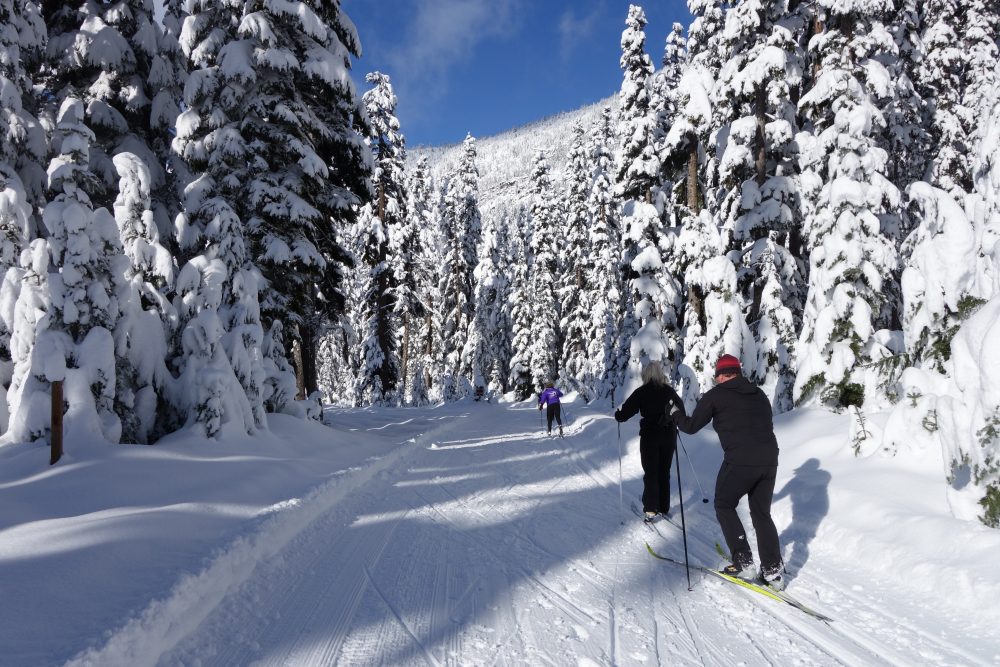
    Skiing at Washington Pass, Nov., 2016. (Courtesy photo)
    Skiing at Washington Pass, Nov., 2016. (Courtesy photo)

    “It will not mean a loss of skiing,” Smith explained in the event the pass is closed for the season. “If the gate is closed farther down on the road to Washington Pass, they will start to groom different areas that we can still access. So to get the snowfall that is expected, they will start to groom just start to groom a bit lower, but bigger loops than what we have up there at Washington Pass. If we are really lucky we will get a big snowfall here on the valley floor and then Mehto Trails who I work for, we will start grooming our system. And we are all set and ready to go the moment we get six inches of snow we will start grooming our trails here.

    Where: Washington Pass/Methow Valley, Washington

    Website: www.methowtrails.orgwww.wsdot.wa.gov/traffic/passes/northcascades

    Elevation: 5477 ft / 1669 m

    (As of Monday, Nov. 21)

    Temperature/weather: Not Available

    Conditions: Pass is closed. SR 20, the North Cascades Highway, is closed from milepost 134 to milepost 171 due to impending weather and potential increasing avalanche hazard.

    Restrictions Eastbound: Pass Closed

    Restrictions Westbound: Pass Closed

    — Jason Albert

    EAST-COAST SNOW? 

    While they’re often among the last to get on natural snow, let’s throw eastern skiers a bone. Wintry conditions exist in New England and northeastern New York. While we can’t list them all (and are obviously unable to cover all the open nordic centers across the country), here are a couple weather-dependent options in this region’s “North Country”.
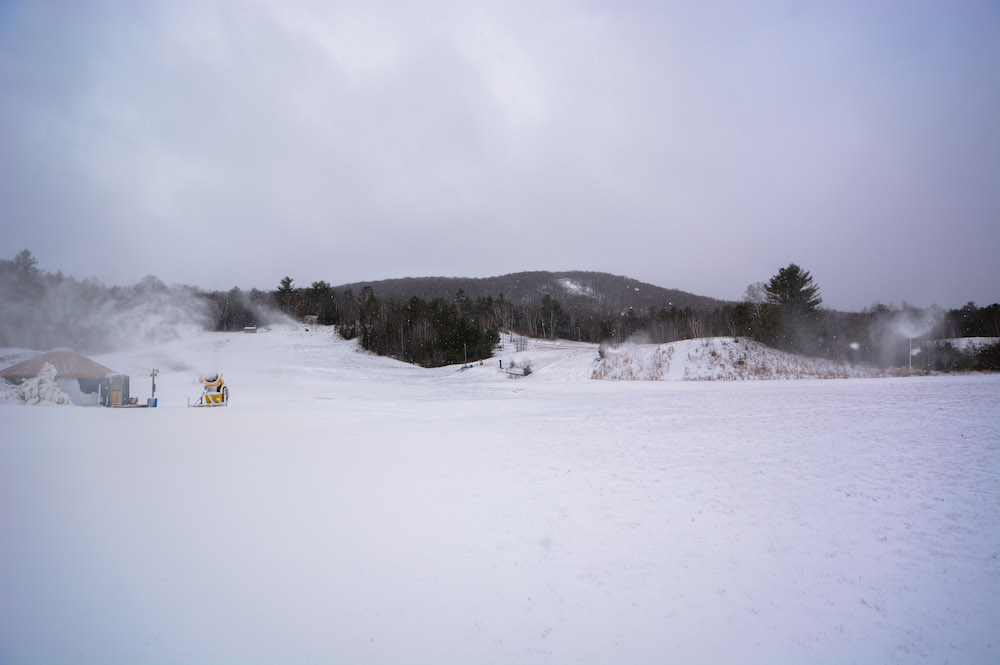
    Snow guns roar at Gore Mountain's Ski Bowl in North Creek, N.Y., on Monday morning, Nov. 21, 2016. (Photo: Mike Pratt)
    Snow guns a’blazing at Gore Mountain’s Ski Bowl in North Creek, N.Y., on Monday morning, Nov. 21, 2016. (Photo: Mike Pratt)

    Gore Mountain Ski Bowl

    According to general manager Mike Pratt, Gore Mountain in North Creek, N.Y., expects to open its newly homologated ski bowl on Friday, Nov. 25. Gore’s new 4.24-kilometer trail network includes 3.19 k of trails with snowmaking.

    “We should have quite a bit of terrain for an opening weekend,” Pratt wrote in an email, adding that they’re hoping for trails A, B, C, and G, which would amount to a total of 2.3 k. “The open stadium could accommodate more lanes if needed, but next week’s weather will ultimately determine how much terrain is available.”

    This Friday through Sunday at the Ski Bowl, the Hudson United Race Team (HURT) is holding a three-day ski camp for its junior members.  Skiers of all ages not associated with the club can buy a day pass and ski on the trails as well.

    “We set up this camp as a way to highlight what Gore has been doing,” HURT coach David Kvam explained.

    Craftsbury

    Then there’s the Craftsbury Outdoor Center, the Northeast Kingdom’s iconic ski center. Although the ski trails were dry as of Nov. 18, the forecast has potential. According to Craftsbury’s Marketing Director Sheldon Miller, the National Weather Service issued a winter storm warning for six to eight inches of snow by the end of Monday. Asked about snowmaking, Miller replied, “We’re looking for cold and dry for snowmaking, but there’s definitely some potential this week. We do need 28 [Fahrenheit] at a minimum, but colder is always better.”

    With overnight temperatures forecast for low to mid 20s Sunday through Thursday, the weather looks inclined to support snowmaking.

    Craftsbury has Masters’ Camps planned for Dec. 1-4 and and 8-11. More info: http://www.craftsbury.com/skiing/ski-camps-and-group-sales/masters-camps/

    Prospect Mountain

    Elsewhere, Prospect Mountain in southern Vermont received snow. According to their conditions page, they’re closed, but Zach Caldwell posted this photo montage on Sunday:

    Great first ski of the season at Prospect Mountain in Woodford, VT. Lots of smiles all around.

    A photo posted by @caldwell_sport on Nov 20, 2016 at 1:50pm PST

    According to Prospect Mountain Nordic’s Facebook page, Prospect opened Monday after receiving 26 inches of snow, the most in Vermont and Northeastern New York.

    As of Tuesday, Prospect reported more than 28 inches of packed powder. Current conditions

    Mt. Van Ho
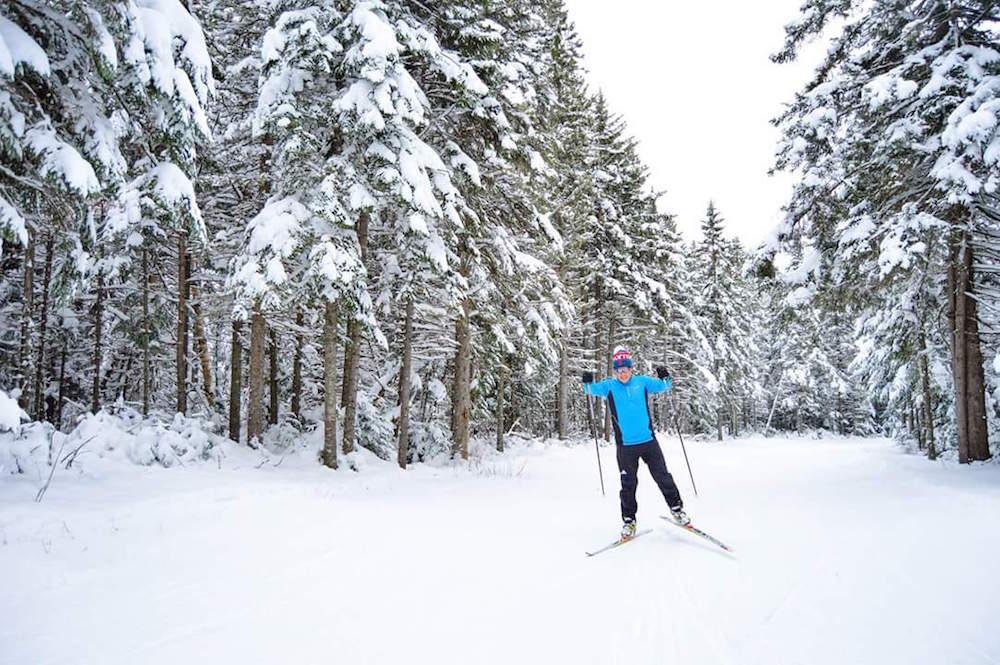
    A skier skates on freshly groomed powder at Mt Van Hoevenberg last Sunday, Nov. 20, in Lake Placid, N.Y. (Courtesy photo)
    A skier skates on fresh powder at Mt Van Hoevenberg last Sunday, Nov. 20, in Lake Placid, N.Y. (Courtesy photo)

    In Lake Placid, N.Y., Mt. Van Hoevenberg reported “beautiful packed powder” and 30 kilometers of skiing open on a 7-inch base. Current conditions
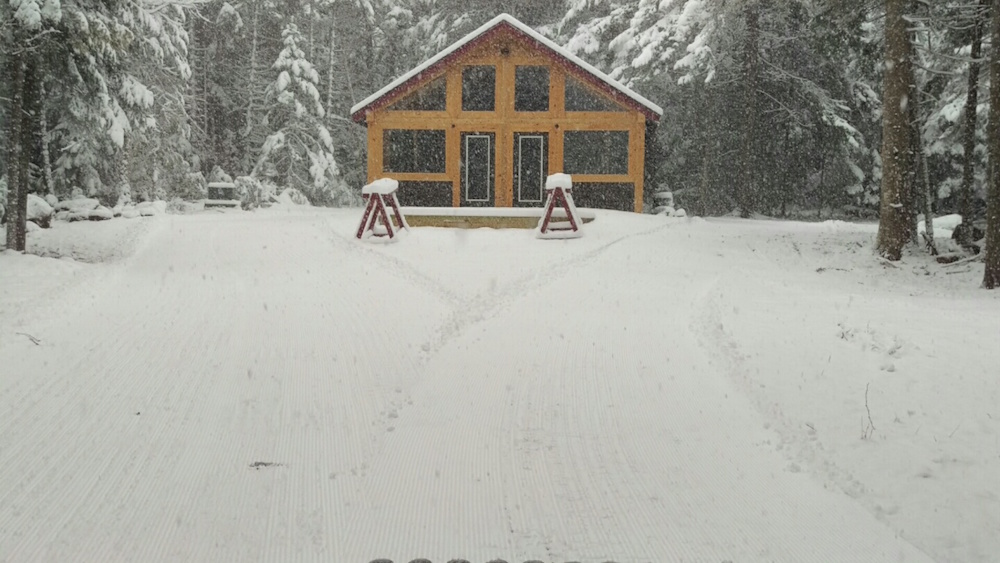
    Josie's Cabin, Mt. Van Hoevenberg's ski-to destination, will be open for Thanksgiving. (Courtesy photo)
    Josie’s Cabin, Mt. Van Hoevenberg’s ski-to destination, will be open for Thanksgiving. (Courtesy photo)

    “The Olympic Cross Country ski trails of Mt Van Hoevenberg have been graced with just under two feet of snow in the last few days,” nordic program manager Kris Cheney-Seymour wrote in an email. “We have a little over 30k of trails groomed very good skiing.  Classic tracks are set on varied terrain.”

    The lodge is open with rentals and a snack bar for Thanksgiving, along with Josie’s Cabin, a “ski-to destination.” and a ski-to destination

    “Upgrades over the last two summers on the famous Ladies 5k have allowed for the earliest opening of this trail in our history,” Seymour continued. “Our 5k homologated loop will be the primary course for the upcoming 2017 Junior National Championships hosted here this March.”

    — Peter Minde & Alex Kochon

    ***

    WE WANT PHOTOS! Share your Thanksgiving week ski photos with us by emailing info@fasterskier.com (please note when and where they were taken). We’ll post our favorites to Instagram, and if you’d like to share a firsthand trail report from your favorite spot or nordic center, do so in the comments below!

  • Craftsbury Splits Camp Between Slovenian Ski Tunnel and Dachstein Glacier

    Craftsbury Splits Camp Between Slovenian Ski Tunnel and Dachstein Glacier

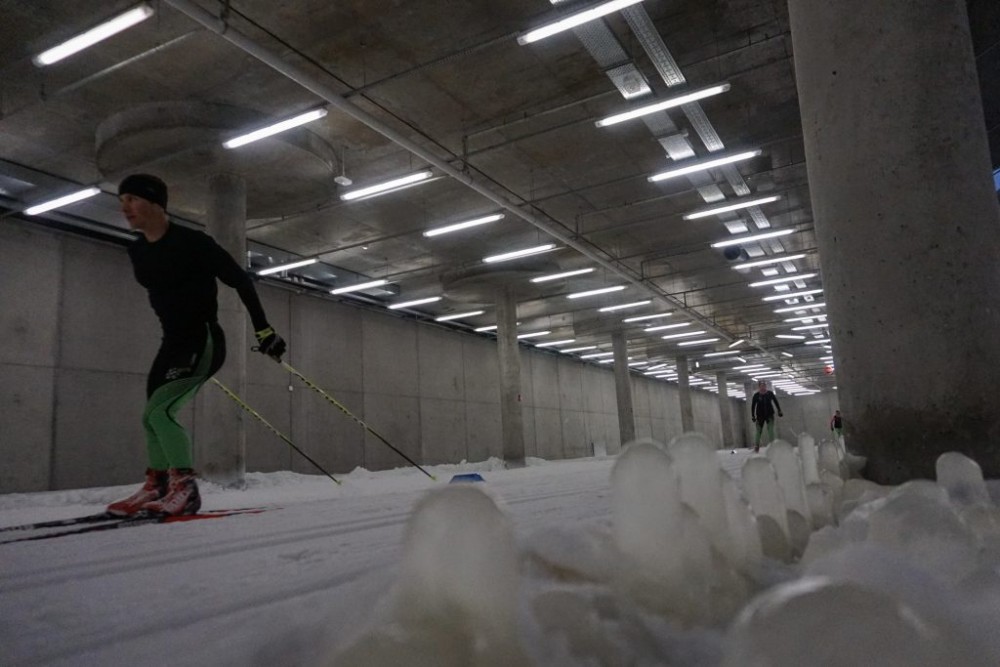
    Craftsbury Green Racing Project’s Ben Lustgarten enjoys skiing in the ski tunnel in Planica, Slovenia this September during a week long training camp. (Photo: Caitlin Patterson/ Caitlin Patterson CGRP blog)
    Craftsbury Green Racing Project’s Ben Lustgarten (l) training in the ski tunnel in Planica, Slovenia, earlier this month. (Photo: Caitlin Patterson/ CGRP blog)

    Pay 9 Euros a day, get a 950-meter loop in return. If snow were to take on a monetary value, that’s how much the Planica Nordic Centre charges for a day pass in its snow tunnel, new to the city’s Olympic Sports Center since the spring. But to others, the opportunity to ski on snow at the tail end of summer is priceless, even if it is under the fluorescent lights and within the concrete walls of a three-level parking garage.

    Among those “others” are the Craftsbury Green Racing Project (CGRP) elite cross-country skiers and biathletes, who spent Sept. 12 to Sept. 20 in Planica, Slovenia, training in the city’s ski tunnel. As a few explained, getting on snow at this time of year outweighs the occasional lassitude that comes from skiing two-plus hours on a less-than-1-kilometer loop.

    “No matter what condition it is nordic skiers love their first time on snow of the season,” Ben Lustgarten, new to the CGRP cross-country team, wrote in an email. “We were able to do speeds, short level 4 intervals, some threshold, accelerations, and sprint simulation workouts. There was fair amount of terrain to do varying technique work and video analysis for the small amount of space.”

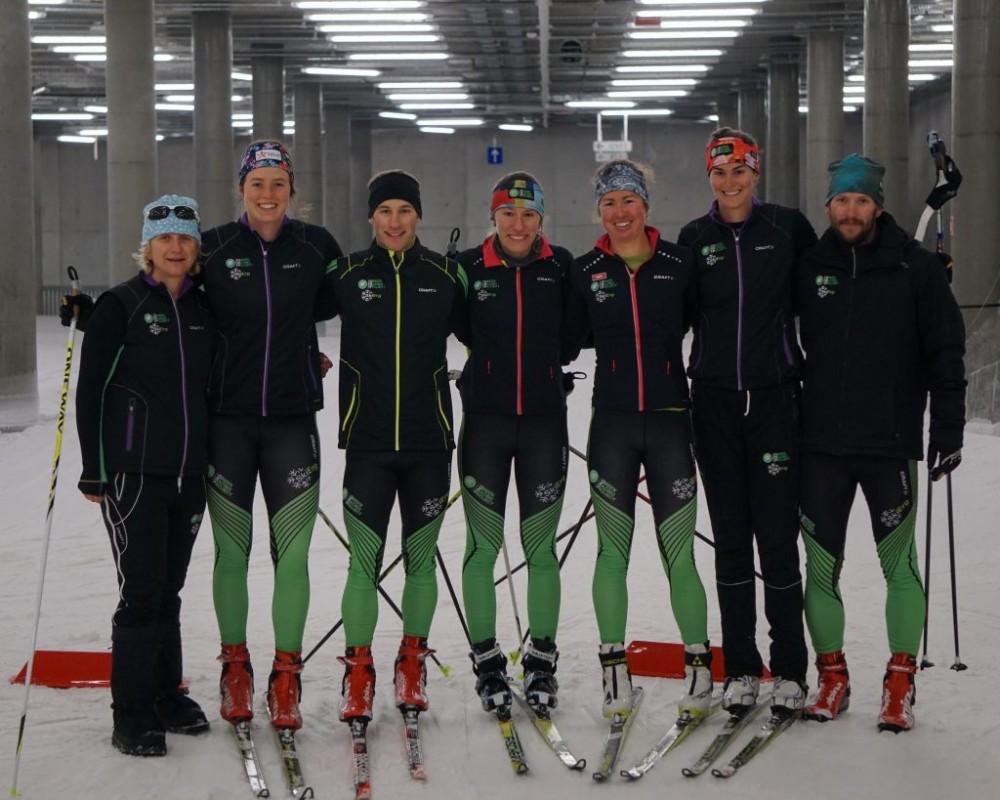
    Left to right: Craftsbury GRP head coach Pepa Miloucheva along with athletes Heather Mooney, Ben Lustgarten, Kaitlynn Miller, Caitlin Patterson, Liz Guiney, and assistant coach Nick Brown in the ski tunnel in Planica, Slovenia, during a training camp this month. (Photo: Caitlin Patterson/CGRP blog)
    Left to right: Craftsbury GRP head coach Pepa Miloucheva along with athletes Heather Mooney, Ben Lustgarten, Kaitlynn Miller, Caitlin Patterson, Liz Guiney, and assistant coach Nick Brown in the ski tunnel in Planica, Slovenia, during a training camp this month. (Photo: Caitlin Patterson/CGRP blog)

    Along with Lustgarten, who joined Craftsbury this year after spending the last two seasons with the Sun Valley Ski Education Foundation (SVSEF) Gold Team, nearly a dozen CGRP skiers made the trip, including Caitlin Patterson, Kaitlynn Miller, Liz Guiney, Heather Mooney, and Mary O’Connell, and biathletes Alex Howe, Ethan Dreissigacker, Mike Gibson, Emily Dreissigacker, and Hallie Grossman.

    “The intensity and technique really helped to keep the tunnel from getting too boring, as there was always something to think about or work on, or at the very least a coach on hand videoing for later technique review,” Patterson wrote in an email. “It gave us an opportunity to practice being adaptable to snow conditions and terrain (ie corners); even if those particular features in the tunnel would be rarely seen on a race course, they were valuable in their extremes. I feel more prepared than ever to handle a course with tons of 90 and 180 degree corners, even though that’s unlikely to happen often.”

    The athletes, along with Craftsbury’s head coach Pepa Miloucheva and assistant coaches and wax technicians Nick Brown and Sam Doherty, completed a weeklong training camp in Planica, taking full advantage of the three-level snow tunnel. The following week, the group headed to Schladming, Austria, for eight days of volume training on the Dachstein glacier, more than 9,800 feet above sea level. In Planica, nearly 7,500 feet lower, much of the team’s first week focused sharpening agility, coordination and speed.

    “The tunnel is a perfect environment for working on both technique and speed, with enough transitions and tight turns to keep the skiing interesting,” Grossman wrote in an email.

    “I feel more prepared than ever to handle a course with tons of 90 and 180 degree corners, even though that’s unlikely to happen often.” — Caitlin Patterson (CGRP) after training in the Slovenian ski tunnel

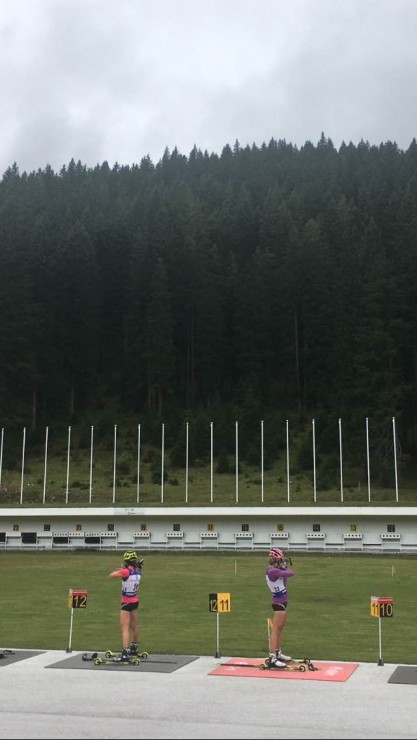
    Grossman, who recently switched from cross-country to biathlon, explained that the biathletes’ intensity training slightly deviated from their original plan when they learned that Slovenian Summer Biathlon Nationals were being held in Pokljuka, Slovenia, about an hour away from Planica.

    “The camp took a little turn when we found out about the rollerski races in Pokljuka, so what was going to be a primarily on-snow camp turned into a combination of skiing and rollerskiing,” Grossman wrote. “This allowed us to still focus on technique and shorter speed in the tunnel, while also getting the opportunity to race.”

    The biathletes had originally planned to use the Pokljuka range for a few shooting sessions, but quickly decided to jump into the races when they discovered the competitions were taking place at the same location. Grossman competed in both races that weekend — the women’s 7.5 k sprint and 10 k mass start — as did her teammate Emily Dreissigacker.

    “We actually didn’t even know Slovenian Nationals were happening until we tried to sign up to use the range and they told us we couldn’t because there were races,” Dreissigacker wrote.

    Dreissigacker, who married Howe, her teammate, last month and spent a few weeks before the camp on a honeymoon with him in Italy, explained that the competitions elicited an opportunity to reconnect with racing, even within a small field.

    “There wasn’t a ton of competition in the senior women’s category, four of us to be exact, but one of the Slovenians was Teja Gregorin who won bronze in the pursuit in Sochi, so it was pretty cool to be able to race against her,” Dreissigacker wrote. “For me it was also a good way to re-focus after the craziness of the wedding.”

    “We actually didn’t even know Slovenian Nationals were happening until we tried to sign up to use the range and they told us we couldn’t because there were races.” — Emily Dreissigacker (CGRP) on racing at Slovenian Summer Biathlon Nationals

    Dreissigacker finished third in the women’s 7.5 k race, with two standing misses, and Grossman placed fourth. In the mass start the next day, Dreissigacker once again reached the podium in third and Grossman repeated in fourth.

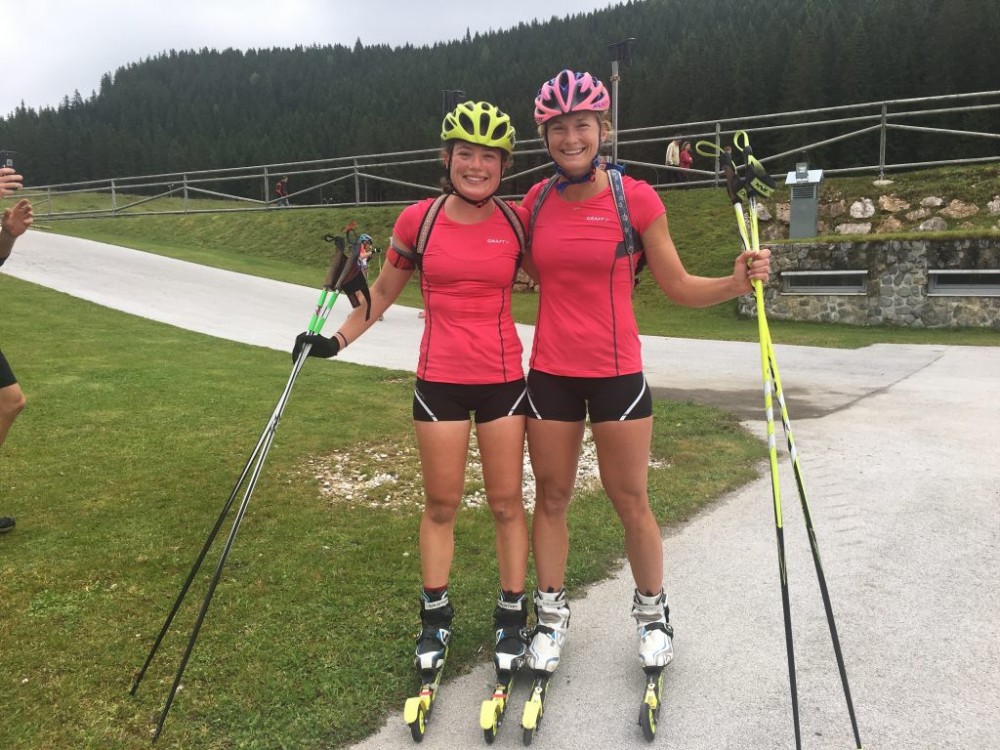
    CGRP biathletes Hallie Grossman (l) and Emily Dreissigacker after the women’s 14 k mass start at Slovenian Summer Biathlon Nationals in Pokljuka, Slovenia, on Sept. 18. (Photo: Ethan Dreissigacker)
    CGRP biathletes Hallie Grossman (l) and Emily Dreissigacker after the women’s 14 k mass start at Slovenian Summer Biathlon Nationals in Pokljuka, Slovenia, on Sept. 18. (Photo: Ethan Dreissigacker)

    The men’s races included a 10 k sprint and 14 k mass start. In the sprint, Howe placed seventh, Ethan Dreissigacker was ninth and Gibson 13th. The next day, Ethan rocketed to third, Howe finished 10th and Gibson 14th.

    “It was really fun to be able to jump into the Slovenian races!” Ethan wrote in an email. “While it did change up the plan a bit that first week, it think it was for the better, and I’m really glad we were able to compete. Biathlon races in the US are pretty few and far between, and many of them are also ‘trials’ of some kind. It’s super valuable to get in competitive racing experience outside of those trials races to get used to the pressure of competition without feeling like your season is on the line.”

    Along with the CGRP athletes, the men’s field included the Slovenian national biathlon team and some non-national team skiers, as well as a few Bulgarian national-team members.

    “The competition at these races was really pretty similar to that of the US rollerski nationals we had in August,” Ethan explained. “The big name in the men’s field was Jakov Fak who has an Olympic bronze, and a bunch of World Cup victories. Fak has is a very relaxed and efficient skier and it was awesome to get to ski behind him for a bit in the races.”

    After Slovenian nationals, the Craftsbury crew ventured to Austria for a week of altitude training. The team planned to train through Wednesday and fly back to Vermont on Thursday this week.

    “Both places are only 2 hrs apart, so was very convenient for a week long speed block in the tunnel and a week and a half volume block on the glacier all on snow,” Miloucheva wrote in an email. She explained that “some speed work followed by some good distance hrs on snow,” were the primary goals of the camp.

    While it wasn’t the first time the CGRP spent a few weeks of fall training on snow, this year was the first split camp featuring the Slovenian snow tunnel.

    “This is the third year in a row that the GRP has come over to Austria for an altitude camp on the Dachstein Glacier,” Ethan explained. “This year I was really excited about the split the camp between two locations, with two different focuses, and I think that has really helped make the most of the trip. Both locations have had some awesome resources for training, and beautiful scenery.”

  • Climb to the Castle Archive: Top Results from the Last 10 Years

    Climb to the Castle Archive: Top Results from the Last 10 Years

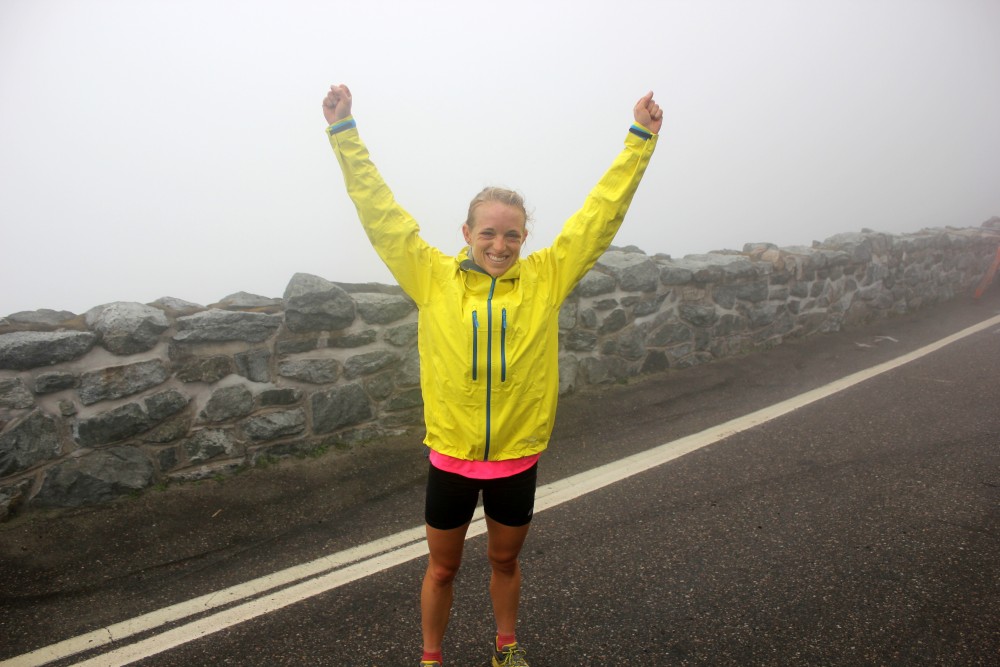
    Liz Stephen celebrates her win and new course record at the 2014 Climb to the Castle. Stephen clocked her fastest time and fifth win at Whiteface Mountain despite a strong headwind and exhaustion at the end of the U.S. Ski Team's training camp in Lake Placid, N.Y.
    Liz Stephen celebrating her win and new course record at the 2014 Climb to the Castle. Stephen has the most women’s wins in 10 years of the Climb, winning five of those races, and also holds the women’s course record.

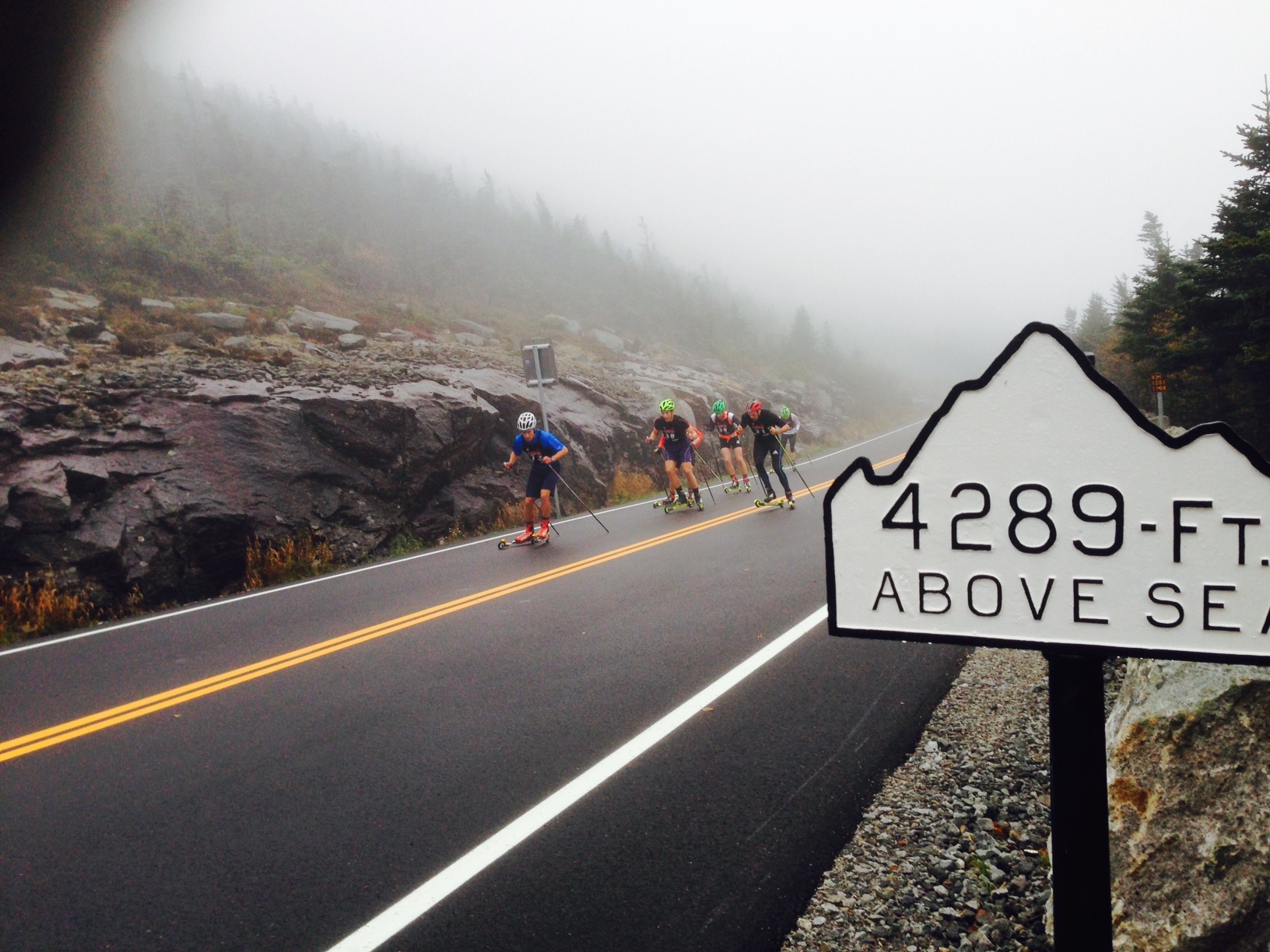
    For the last decade, the Climb to the Castle has been a fall staple in northeastern New York. It’s been a circled on the calendars of the U.S. Ski Team and US Biathlon national team almost every year since its inception and attracts 75 to 100 no-joke skiers to Wilmington (near Lake Placid, N.Y.) each year.

    Following the 10th annual rollerski race up Whiteface Mountain’s toll road, a five-mile grind with an average 8 percent grade, we thought it would be worth looking at course records and some of the climb’s legendary winners.

    ***

    Most wins: Liz Stephen (5), Duncan Douglas (3)

    Course records: Duncan Douglas (34:56.6) 2007, Liz Stephen (41:50) 2014

    ***

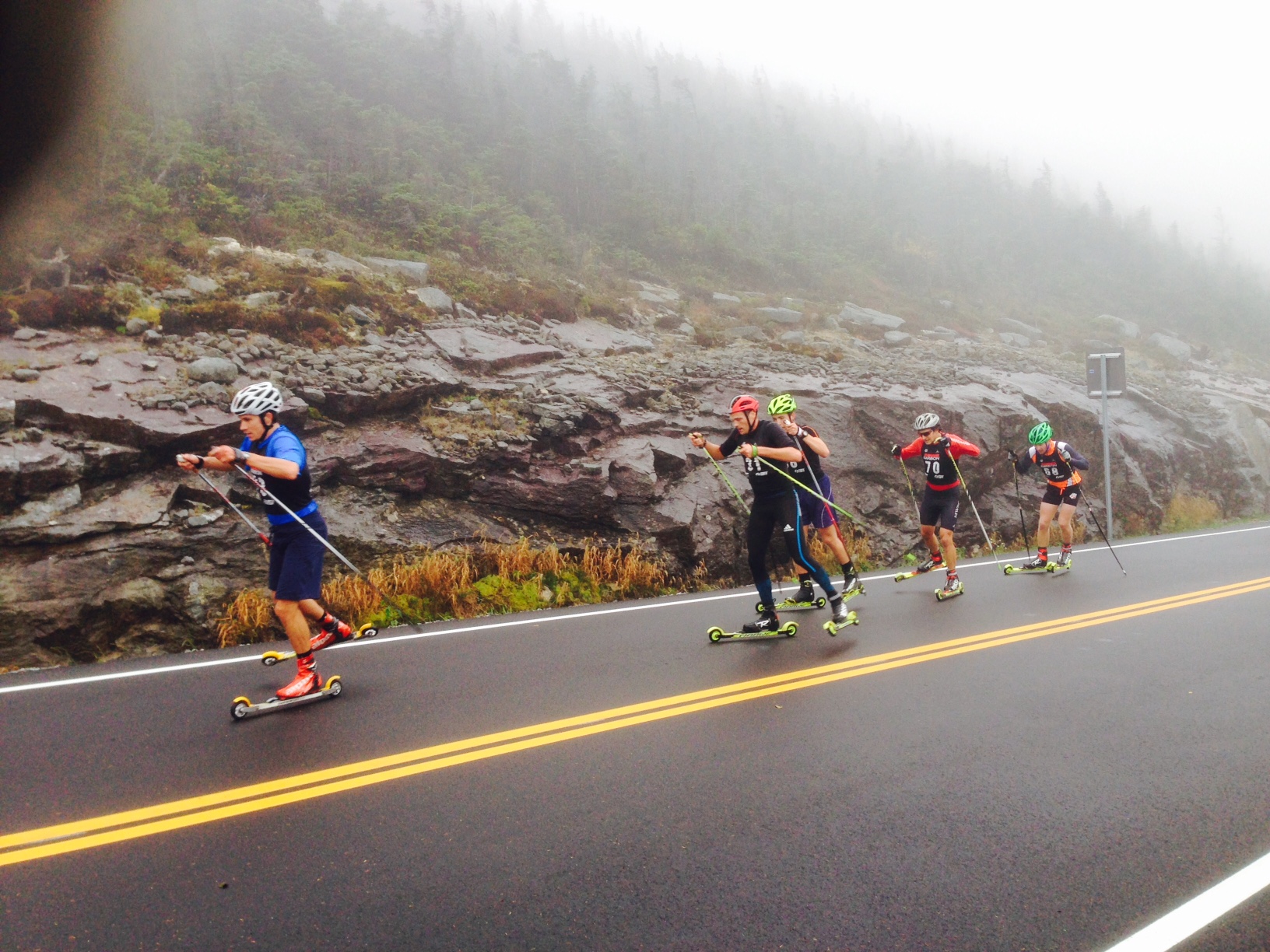
    Paddy Caldwell (black shirt, yellow helmet) of the U.S. Ski Team D-team and SMST2 Team chases Rogan Brown (l) around mile four of five in  Sunday’s Climb to the Castle up Whiteface Mountain in Wilmington, N.Y. Caldwell won the race, followed by biathletes Russell Currier and Tim Burke in second and third, respectively. Brown (SVSEF) placed fourth and Kyle Bratrud (CXC) was fifth. (Photo: Tim Cowan)
    Paddy Caldwell (black shirt, yellow helmet) of the U.S. Ski Team D-team and SMST2 Team chases Rogan Brown (l) around mile four at the 2015 Climb to the Castle. Caldwell won the race, followed by biathletes Russell Currier and Tim Burke in second and third, respectively. Brown (SVSEF) placed fourth and Kyle Bratrud (CXC) was fifth. (Photo: Tim Cowan)

    2007:

    Date: Oct. 13

    Notes: sunny/cold; 25 degrees F

    Men’s top 3:

    1. Duncan Douglas (34:56.6)
    2. Kris Freeman (37:09.1)
    3. Noah Hoffman (38:38.9)

    Women’s top 3:

    1. Liz Stephen (47:22.9)
    2. Morgan Arritola (47:48.8)
    3. Dorcas Wonsavage (49:12.7)

    Complete results


    2008:

    Date: Oct. 6

    Notes: *Shortened course; athletes did not reach summit because of snow.

    Men:

    1. Duncan Douglas (32:26.44*)
    2. Kris Freeman (34:22.90*)
    3. Noah Hoffman (36:56.87*)

    Women:

    1. Caitlin Compton (45:19.91*)
    2. Morgan Arritola (45:27.89*)
    3. Liz Stephen (45:52.83*)

    Results: Men | Women

    Video


    2009: 

    Date: Oct. 7

    Men:

    1. Taylor Fletcher (39:11.54)
    2. Nick Hendrickson (39:25.40)
    3. Kris Freeman (39:49.97)

    Women:

    1. Morgan Arritola (50:54.85)
    2. Liz Stephen (51:09.57)
    3. Ida Sargent (51:23.85)

    Results: Men | Women

    Report | Video


    2010: 

    Date: Oct. 8

    Notes: Clear weather

    Men:

    1. Kris Freeman (38:37)
    2. Noah Hoffman (39:16)
    3. Ben Sim (40:32)

    Women:

    1. Laura Spector (46:58)
    2. Morgan Arritola (48:02)
    3. Liz Stephen (48:43)

    Results: Men | Women

    Women’s report | Men’s video


    2011:

    Date: Sept. 17

    Men:

    1. Kris Freeman (36:18)
    2. Tim Burke (36:29)
    3. Noah Hoffman (37:03)

    Women:

    1. Liz Stephen (44:50)
    2. Ida Sargent (46:14)
    3. Tara Geraghty-Moats (47:43)

    Results: Men | Women

    Womens’ report | Men’s report | Video | Photos


    2012: 

    Date: Sept. 15

    Men:

    1. Tad Elliott (39:28)
    2. Pat O’Brien (39:38)
    3. Julian Dorais (39:46)

    Women:

    1. Liz Stephen (43:33)
    2. Jessie Diggins (48:38)
    3. Ida Sargent (48:55)

    Results: Men | Women

    Women’s report | Men’s report | Notes & Quotes


    2013:

    Date: Sept. 15

    Men:

    1. Tim Burke (37:13)
    2. Simi Hamilton (39:59)
    3. Karl Nygren (40:04)

    Women:

    1. Liz Stephen (42:04)
    2. Caitlin Gregg (45:21)
    3. Ida Sargent (47:19)

    Results: Men | Women

    Report


    2014:

    Date: Sept. 6

    Men:

    1. Tim Burke (38:19)
    2. Russell Currier (39:02)
    3. Welly Ramsey (40:01)

    Women:

    1. Liz Stephen (41:50)
    2. Caitlin Gregg (45:25)
    3. Katharine Ogden (48:12)

    Results: Men | Women

    Report


    2015: 

    Date: Sept. 20

    Men:

    1. Patrick Caldwell (37:05.2)
    2. Russell Currier (37:10.2)
    3. Tim Burke (37:16.7)

    Women:

    1. Mary Rose (45:15.1)
    2. Annelies Cook (45:47.1)
    3. Hannah Dreissigacker (47:21.0)

    Results: Men | Women

    Report


    2016:

    Date: Sept. 18

    Men:

    1. Duncan Douglas (37:15.6)
    2. Russell Currier (37:23.9)
    3. Paul Schommer (40:18.2)

    Women:

    1. Hannah Rieders (55:03.1)
    2. Anna Lehmann (55:18.8)
    3. Madeline Rieders (56:26.4)

    Results: Men | Women

    Report

  • The Canadians at Altitude: Livigno to the Stelvio and Back

    The Canadians at Altitude: Livigno to the Stelvio and Back

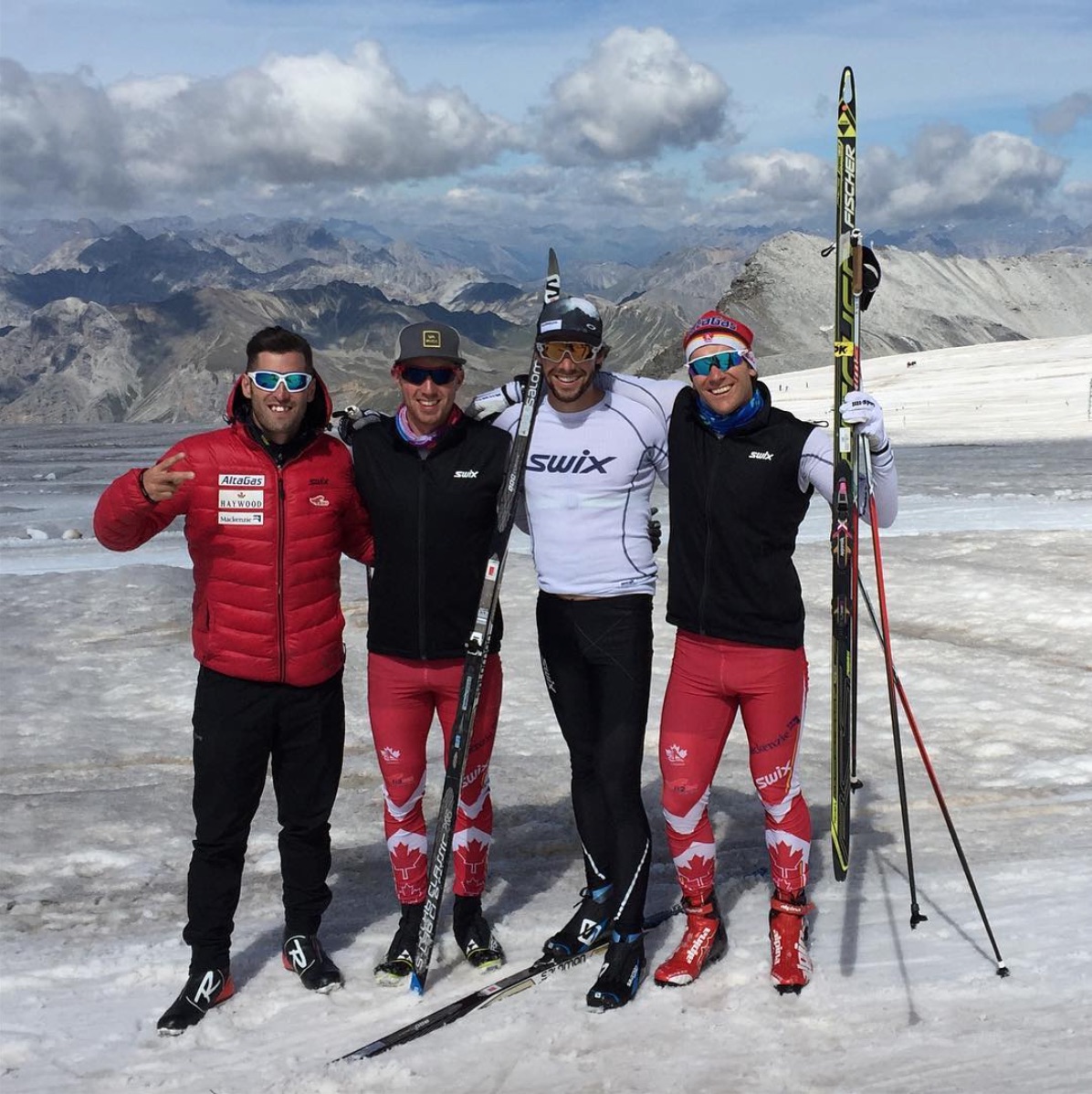
    Part of the Canadian crew at Stelvio Pass in northern Italy, with Devon Kershaw (r), Alex Harvey (second from r), Graeme Killick (second from l) and wax technician, Nic. "Beauty first ski on the Stelvio with #squad Thanks to our new Italian-stallion tech Nic for joining and showing us how's it's done up here! #3400m," Kershaw captioned the photo on Instagram. (Photo: Devon Kershaw/Instagram)
    Part of the Canadian crew at Stelvio Pass in northern Italy, with Devon Kershaw (r), Alex Harvey (second from r), Graeme Killick (second from l) and wax technician, Nic Bonetti, earlier this month. “Beauty first ski on the Stelvio with #squad,” Kershaw captioned the photo. “Thanks to our new Italian-stallion tech Nic for joining and showing us how’s it’s done up here! #3400m.” (Photo: Devon Kershaw/Instagram)
    It’s up and it’s down with the Canadian men’s World Cup Team. 

    Four of its athletes are wrapping up an altitude training camp based out of Livigno, Italy. In separate emails, team veterans Alex Harvey and Devon Kershaw elaborated on the details of the camp. They were accompanied by teammates Lenny Valjas and Graeme Killick, and Louis Bouchard and Ivan Babikov split coaching duties.

    The camp, perched in the Italian Alps and a ridge away from Switzerland, allows the team to stress the body in an oxygen-depleted environment. Livigno sits at roughly 6,000 feet above sea level.

    The team spent a full week in Livigno rollerskiing, running and working on strength — the trifecta of dryland training. Then it was into thin air. From Sept. 1-5, the team spent five days and four nights living at 2,760 meters (9,000 feet) on the Stelvio Pass. They shuttled another 600 meters up to ski on snow while dipping down to the valley lowlands on some afternoons for dryland workouts. The three week camp began on August 24th and ends September 15th.

    Kershaw explained that this type of camp has had positive benefits for him historically. “I think altitude camps have been a big reason for my success in the winter seasons over my career,” Kershaw wrote. “The stimulus you get – the load that your body is under while at higher elevations – is just better than what you can get at home (either in Canmore at 1400m or at sea level now in Oslo). To change the stimulus – put your body in different environments that stress your systems a little differently than you do at home, allows you to adapt to those changes and get (hopefully) better!”

    Systematically stressing the body with oxygen scarcity, followed by ample recovery in a relatively thick oxygen-rich soup, is a vital part of the Canadians’ build up to the World Cup season.

    “I think one random altitude camp wouldn’t do much for preparation but we really try to align 2-3 camps before the season, then 2-3 again with shorter exposure during the season,” Harvey clarified about their altitude-camp methodology. “So after this camp, I will have 3 weeks at home [in Quebec] at sea level, then 3 weeks living at 2400m and training in Park City, then 3 more weeks at home before I go for 10 more days in Davos living at 1600. In the Winter, we will spend Christmas in Davos and spent some time in Livigno too before World Champs, that way we get some links between each altitude exposure and really get to use the benefits of the altitude for a lot of the season.”

    Mid-September is an opportune time to gauge fitness. According to Kershaw, his teammates are in impressive form.

    “To be honest, I think that Graeme and Lenny have made a BIG step up in this off season,” Kershaw wrote. “They are like different people. Their shape seems all-time best at this time of the year, so I am really excited to see them race this winter. Alex is always at a very, very high level over the last years – so no surprises there as he is strong and it’s been nice to have Ivan here for a couple days now – he flew over for the week we are with the Norwegian team to learn and ask questions with their crew – as he is a new coach. Louis [Bouchard] has been the leader here for the camp and has done an excellent job.”

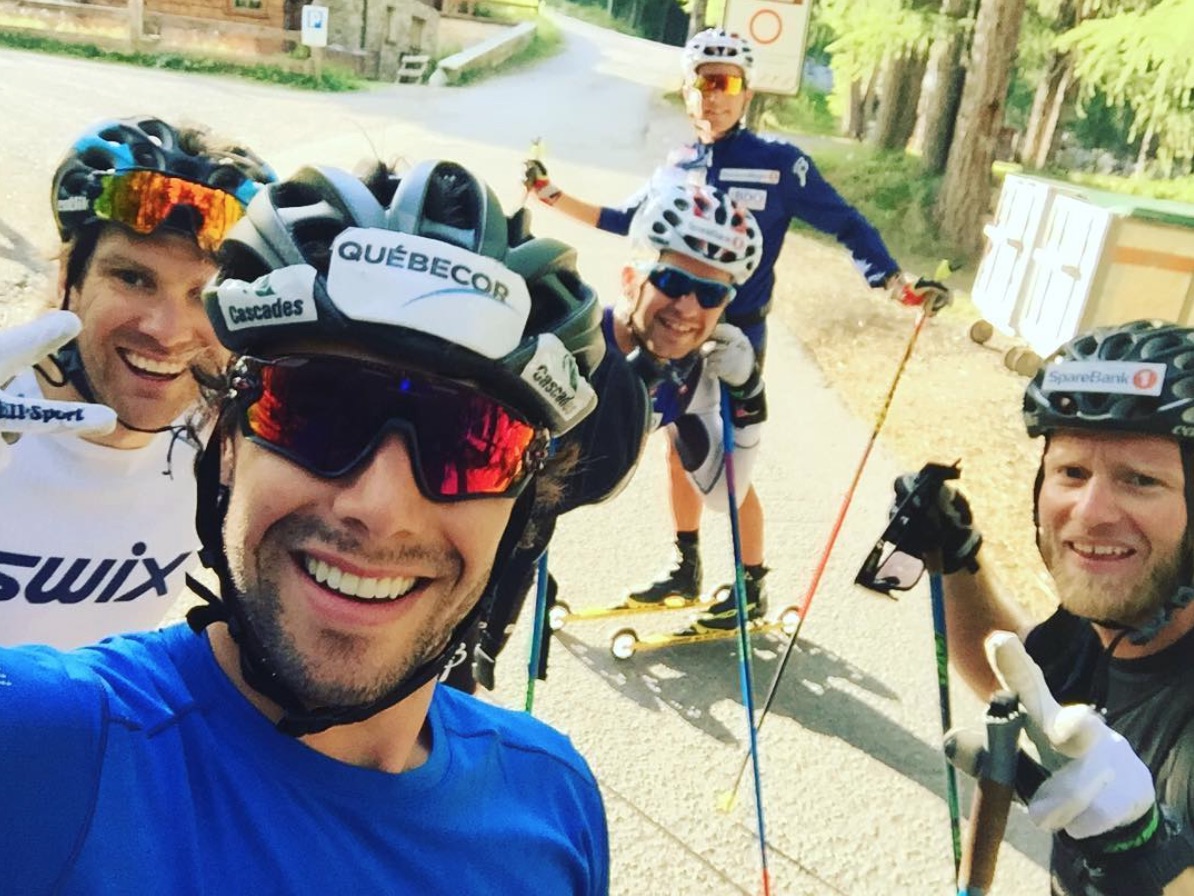
    Alex Harvey (front) takes a selfie during a rollerski workout in Livigno, Italy, with Canadian teammate Devon Kershaw (l) and some members of the Norwegian national team, including Martin Johnsrud Sundby (r). "Intervals in AM, skate ski in PM with this crew. / Intervalles ce matin et ski en PM avec ce groupe!" Harvey captioned the photo. (Photo: Alex Harvey/Instagram)
    Alex Harvey (front) takes a selfie during a rollerski workout in Livigno, Italy, with Canadian teammate Devon Kershaw (l) and some members of the Norwegian national team, including Martin Johnsrud Sundby (r). “Intervals in AM, skate ski in PM with this crew. / Intervalles ce matin et ski en PM avec ce groupe!” Harvey captioned the photo. (Photo: Alex Harvey/Instagram)

    For Harvey, this is his first full uninterrupted season of training since his iliac artery surgery in April 2015.

    “It feels good right now,” Harvey wrote of his fitness coming into the Italy camp. “I’ve been able to start May with normal training, so intervals, strength and distance, which is a bit different than last year where I was only allowed distance training to keep the blood pressure low in the iliac artery.

    “I definitely feel stronger in the gym and on the skis,” he added. “This camp is also a good way to compare ourselves with the best in world (ie. the Norwegians). Last Winter we talked about having a camp with them and it worked out perfectly, it’s a good way to monitor where you are in your training especially in a sport like ours where you don’t have lap times like on a track or wattage numbers like on a bike.”

    As Harvey alluded to in his email, access to international training partners outside the Canadian Team was one reason for the trip. Most notable of the international teams is Norway and its star Martin Johnsrud Sundby. While approaching the end of his two-month competition ban for improper asthma medication use, Sundby trained with the Canadians.

    “We are doing some sessions with the World Cup boss – Sundby – and as expected he is unbelievably strong,” Kershaw wrote. “In level one training there’s not much difference really – we all train the same speed give-or-take (although some sessions he is using a 12lb weight vest), but it’s in the intensity that the level smacks us in the face. We did a level 3 double poling session a couple days ago and he was on another planet dropping everyone else like they were kids. So – not to worry – he looks poised to be dominant again this winter, haha. What we can learn from him is of course his professionalism and also his technique is near flawless – so to be exposed to that and learn has been really cool.”

    According to Harvey, Sundby has been a source for training ideas as well as a fitness barometer.

    “Martin is actually a pretty chill guy and super easy to talk to,” he wrote. “I’ve been asking him a bunch of questions about his training since 2014 and he’s always open to help out others figure out a better way to train. Of course, not many people can handle the total load he does but it’s nice to be able to pick his brain and get a bit more knowledge. The other big advantage of being able to train with Martin is that you know that if you can follow him on a hard workout, you’re probably in good shape! So that’s nice for confidence!”

    Maintaining confidence is like walking a tightrope during the run-up to and during the four-month-long World Cup season. Kershaw noted that younger skiers should understand that altitude training, like the Canadian camp in Italy, should not be emulated without guidance.

    “Altitude training is great and can be a real benefit – but only if you know what you are doing and are looking for that last little bit,” Kershaw cautioned. “If you are minutes and minutes behind don’t expect altitude training to turn you into Sundby overnight. It takes good planning and support to train at higher elevations and making sure you are monitoring your energy well is also paramount. Many a skier’s seasons over the years has been destroyed by going crazy training like a beast at altitude – so for those younger skiers reading this and wanting to try something new – just remember to plan, monitor, and execute smartly/well to get the most out of this type of thing. Also – the science shows that there are some athletes that are just plain ‘non-responders’ to altitude too – so you never really know if it’s right for you!”

    “Many a skier’s seasons over the years has been destroyed by going crazy training like a beast at altitude – so for those younger skiers reading this and wanting to try something new – just remember to plan, monitor, and execute smartly/well to get the most out of this type of thing.” — Devon Kershaw, Canadian World Cup Team

    As for Harvey, he had this lighthearted parting note as he and his Canadian team prepare for their next international camp in October in Park City, Utah, alongside the U.S. Team:

    “It’s just really fun for us to get to train with the Norwegian boys and get to know a bit more about our sport! (We’re also excited to get to train with the Yankees soon, Hoff, EBJ, we’re coming!)”

    Harvey will be in Park City from October 6th-25th. Kershaw arrives on October 10th and stays until the 26th.


  • Throwback Workout: Pace-Development Intervals with the NAWTA (Remember That?)

    Throwback Workout: Pace-Development Intervals with the NAWTA (Remember That?)

    Astrid Jacobsen (NOR), Liz Stephen, Bettina Gruber (SUI), Jessie Diggins, Holly Brooks and Ida Sargent during threshold intervals in Anchorage, Alaska, on Tuesday. (Photo: Matt Whitcomb)
    Norway’s Astrid Jacobsen (r) leads Liz Stephen (U.S. Ski Team), Switzerland Bettina Gruber, and U.S. Ski Team members Jessie Diggins, Holly Brooks and Ida Sargent during threshold intervals at the 2013 North American Women’s Training Alliance (NAWTA) camp in Anchorage, Alaska. (Photo: Matt Whitcomb)

    For this week’s workout, we bring you one of the best threshold workouts U.S. Ski Team Women’s Coach Matt Whitcomb said he’s ever seen — back in 2013. That’s not to say this workout is outdated, and the kind of training environment nearly a dozen top-level athletes created at the 2013 North American Women’s Training Alliance (NAWTA) camp in Anchorage, Alaska, was one other teams and clubs can try to emulate. All it takes is a quality all-around effort and well-thought-out terrain choices. Read original article here.

    ***

    [circa July 2013]

    The third-annual North American Women’s Training Alliance (NAWTA) camp began this week in Anchorage, Alaska, and on Tuesday morning they completed a threshold workout that ended with a lot of high-fives in the van and left U.S. Ski Team women’s coach Matt Whitcomb pretty happy.

    “Today’s threshold workout was the best threshold workout I’ve seen out of this group of women since I’ve been working with the team,” he said on the phone, as the group began their afternoon strength session.

    Kikkan Randall, Jessie Diggins, Liz Stephen & Co., are joined at this camp by Alaska Pacific University skiers, National Training Group athletes, and decorated Norwegian Astrid Jacobsen, Switzerland’s Bettina Gruber and Canada’s Chandra Crawford. The workout is one that Whitcomb and APU head coach Erik Flora have repeated over the last few years in order to work specifically on high-speed skiing in the middle of a threshold session.

    The keys to accomplishing this goal are two-fold: the choice of terrain, and the presence of a group to ski with. It was his team’s skilled pack skiing that Whitcomb thinks set Tuesday’s session apart from the rest, but the rolling hills are a critical ingredient to the goal of the entire workout.

    “It’s not so much emphasizing going harder, it just emphasizes patterning your muscles, neurally, to fire faster,” Whitcomb explains. “I think a lot of times, certainly my tendency as been to prescribe intervals that are a bit too slow. We might be nailing the percentage of your max heart rate and the proper lactate right on the money, but the pace is just too slow — you’re going uphill, uphill, uphill, and a lot of times when we find hard terrain we go hit intervals there.”

    To encourage speed variation while staying within threshold, the workout should be done on a stretch of pavement that includes gradual uphills, flats and gradual downhills, which “systematically [builds] some pace development intervals into your session,” Whitcomb says.

    “It doesn’t need to be incredibly hard — today was roughly threshold and above during bursts of speed — but it was about the terrain that helped push the pace for us.”

    The Workout:

    • 20-30 minute warm up*
    • 4-6 x 7-10 minute L3 intervals (3 minutes rest) on fast terrain that incorporates gradual uphills, flats and gradual downhills. Most interval sessions use hard and grinding terrain, great for building capacity but not so great for higher pace development. The key to this workout is in the choice of terrain.
    • 20-30 minute cool down*

    *Do a warm up and cool down that allows you to focus on the intervals. “Sometimes a mistake can be made where people are going after volume in addition to high intensity on interval days,” Whitcomb says.

    Don’t do try to multi-task for this workout. “Warm up only the minimum that your body requires,” he continued. “You want to make sure your muscles are ready to go, and build into the intervals if you have to — you don’t want to pull any muscles or get injured — but a 45 minute warm up is too long, as is a 45 minute cool down. Keep them concise and focus more on the on-time.”

    Frequency: 

    Every two to three weeks in the summer, with increasing frequency to every 10 days as fall approaches. “A workout like this is in addition to L4 intervals, time trials, speeds, ODs,” Whitcomb said. “It’s just another small component, another ingredient to throw in the bag and mix it up.”

    Variations:

    • Shorter recovery time as the season goes on, or longer recovery when at altitude — “just to make sure the on-time is what’s being emphasized,” Whitcomb says.
    • Pre-determined sprint preems that accomplishes a similar break from straight threshold, forcing athletes to go from threshold, into race pace, then back into threshold when they cross certain preem markers in the interval.

    On Tuesday, the women did this session on a stretch of bike path in Anchorage’s Kincaid Park. They chose a section of rolling terrain that was about 7-10 minutes long going either way. The group started their first interval in one direction, which took about nine minutes, took their three-minute recovery, and then skied back the other way to the start, which took about seven minutes.

    The 2013 North American Women's Training Alliance group after a well-executed workout in Anchorage, Alaska. (L to R) Kate Fitzgerald, Kikkan Randall, Liz Stephen, Astrid Jacobsen (NOR), Ida Sargent, Holly Brooks, Bettina Gruber (SUI), Jessie Diggins, Emily Hannah, Anika Miller. (Photo: Matt Whitcomb)
    The 2013 North American Women’s Training Alliance group after a well-executed workout in Anchorage, Alaska. (L to R) Kate Fitzgerald, Kikkan Randall, Liz Stephen, Astrid Jacobsen (NOR), Ida Sargent, Holly Brooks, Bettina Gruber (SUI), Jessie Diggins, Emily Hannah, Annika Miller. (Photo: Matt Whitcomb)

    From a coaching perspective, this workout shows Whitcomb things that don’t surface in regular threshold intervals.

    “I think when we started doing this it taught us that the speed didn’t really change as much as we thought it would when the terrain asked for higher speed,” he said. “You try and go faster and your muscles simply didn’t want to move faster. It wasn’t a matter of being at your max heart rate, people were well within threshold, but they just didn’t want to fire those muscles faster. But the body fortunately adapts pretty quickly to a group session like this and you see pretty notable progress in your speed in just a few weeks.”

    So what made Whitcomb call Tuesday’s workout, in particular, the best threshold session he’s ever seen from his team?

    In addition to their raw speed — “they were really flying” — Whitcomb noticed they skied better together within the pack than they have before.

    “Everyone spent some time leading, some time sandwiched cycling in the spin wash in the middle of the pack, and it was really unlike this group perhaps in the past — you know, you establish a pecking order and somebody’s out there hammering off the front all day, maybe somebody switches out if they get tired, somebody is flying off the back all day because they’re struggling,” he said.

    “And today instead it was much more this series of incessant attacks at the front where you’d recover a little bit, spend some time in threshold in the pack, and then you’d work your way to the front and use your good feelings and your recovered state to push the pack and pull everybody along at a faster rate. It looked more like watching a cycling race today, to be honest, and that’s kind of a new thing particularly in girls skiing, I think. The mass starts [sometimes] just getting strung out from 100 m into the race, and I think we’re moving in the direction of more pack skiing. And as we can improve our skills within the pack were going to be better suited for those days when the women’s pack does stay together.”

    — Audrey Mangan

  • Wednesday Workout: Diggins Dives into Norwegian Camp, Leaves with Big Takeaways

    Wednesday Workout: Diggins Dives into Norwegian Camp, Leaves with Big Takeaways

    The women's Norwegian national team and Diggins (second from right) during a classic rollerski workout late last month in Norway. (Photo: Roar Hjelmeset)
    The Norwegian national women’s team and U.S. Ski Team member Jessie Diggins (second from right) during a classic rollerski workout late last month in Norway. (Photo: Roar Hjelmeset)

    Update: This article formerly read that the Norwegian national team training camp took place in Farstad, Norway. The camp was actually held in Svarstad Vestfold, Norway and the article has been updated accordingly. 

    Booking a plane ticket for a 10-hour overnight flight seldomly stirs airline passengers to jump for joy. Yet when current U.S. Ski Team member Jessie Diggins clicked the ‘buy’ button for a red-eye flight to Oslo, Norway, departing June 18, she couldn’t contain her excitement. The Afton, Minn., native had spent plenty of time lunging to the line competing against Norway’s fastest nordic women, but the opportunity to work out with them as a training partner and short-term teammate was altogether new.

    Diggins’s Norwegian Ski Federation (NSF) camp invite stemmed from a conversation she had with Norway’s women’s coach at the time, Egil Kristiansen. Following the final races of the Ski Tour Canada this past March in Canmore, Alberta, Diggins, 24, approached Kristiansen and asked about the possibility of joining one of their camps. Despite his initial response, she remained determined in convincing him the value of international shared training experiences.

    Left to right: Norwegian Ragnhild Haga, American Jessie Diggins, and Norwegian Maiken Caspersen-Falla at the top of a mountain hike during one of the Norwegian National Team camps in late June. (Photo: Courtesy Photo)
    Norway’s Ragnhild Haga (l) and Maiken Caspersen Falla (r) with U.S. Ski Team member Jessie Diggins at the top of a mountain hike during one of the Norwegian team’s camps in late June. (Photo: Jessie Diggins)

    “I said, ‘Hey, you know I’m always looking for ways to make summer training exciting, new and adventurous, and if you have a spot open at any of your camps, I would really love to come,’ ” Diggins recalled on the phone Monday, back at her training base in Vermont.

    “The coach laughed, and then I was like, ‘No, I promise I’ll have a great attitude.’ And we started talking and he was like, ‘You know, we we’re actually thinking we might start inviting a new athlete to camps,’ ” she explained. “Previously the [Norwegian team] never really did that.

    Three months later, Diggins found herself opening a forwarded email from the new Norwegian women’s coach Roar Hjelmeset with a list of available national-team camps for her to attend.

    “They sent [U.S. women’s coach] Matt [Whitcomb] the official [invite] … and I booked my ticket the next day,” Diggins said. “I flew to Oslo on the night of the 18th … and I stayed with Astrid [Uhrenholdt Jacobsen] then I drove with her and Roar to the camp.”

    Diggins kicked off her weeklong adventure with a rollerski in Drammen, Norway, the site of her first World Cup race before the Oslo World Championships in 2011.

    “It was really funny that my first World Cup race happened to be this place where I was [now] coming to do intervals with the Norwegian girls,” Diggins said.

    After that, athletes piled into the vans and made the remaining 45-minute drive up to Svarstad Vestfold, Norway, where the rest of the camp took place. During the next six days, Diggins immersed herself in the team’s workouts, discovered the difference between the Norwegian women’s training plans and those of the U.S. women, and baked banana bread with the team.

    “If you’re a guest at a camp, you go there willing to work,” Diggins said. “At least I can do that. I’m willing to work, I’m ready to be there, I’m ready to just be jumping. Whatever they do, I’ll do, too. And that was really fun; that was the best part … I just tried to be as much a part of the team as possible.”

    Team ‘Norge’ Sample Workout: Distance rollerski, ending with pickups

    Length: 2 hours

    End with: Set of 5 x 10-second pickups, done about three-fourths of the way through the workout. Start head-to-head for the pickups.

    Diggins’s Top-Three Takeaways from Training with Norway:

    1. Training is Training.The biggest thing I found out right off the bat was that there really ARE no training secrets. In all the big ways, we train exactly the same as the Norwegians, which was really awesome (and reassuring) to find out,” Diggins wrote in a blog post. “The training plan for the camp was almost identical to one we would have at our training camps – a mix of long slow distance training, L3 and L4 intervals, strength and speed training.”

    2. Don’t Be Afraid to Take Charge. According to Diggins, the Norwegian women hold eight camps throughout their training season, with two weeks “on their own” in-between. Post-training camp, the Norwegian women evaluate their own needs and write their own training plans for those two weeks in between camps. “The Norwegian girls, they are their own main coach in between camps,” Diggins said, “which I think is really cool because at the end of the day, you are the one in your body. You’re the only one who knows, oh, my legs are really tired, I shouldn’t do bounding I should just double pole or something. So I think it’s really cool that they take charge that way.”

    3. Tally Your Worth as a Teammate. “The skill and ability to be a great teammate is often under-valued but can make the biggest difference in how you look back on your career and feel about your work as an athlete,” Diggins wrote on her blog.

  • French Biathlete Anaïs Bescond Takes Summer Training to Canada

    French Biathlete Anaïs Bescond Takes Summer Training to Canada

    Left to Right: Canada's Julia Ransom, Sarah Beaudry, Emma Lunder, France's Anais Bescond, and Canadian Rosanna Crawford  during their first bike session of "Wine Camp" in Kelowna, British Columbia this June. (Courtesy photo)
    Four Canadians Julia Ransom (l), Sarah Beaudry (second from l), Emma Lunder (c), and Rosanna Crawford (r) with France’s Anais Bescond (second from r) during their first bike session of “Wine Camp” in Kelowna, British Columbia this June. (Photo: Rosanna Crawford)

    Along with peeling off the layers, summertime ski training often entails guest-star appearances. Many college athletes depart school and return to club programs, clubs may combine training sessions or camps, and even internationally, skiers from different countries coordinate their training schedules. Given the choice, 2016 two-time World Championships silver medalist Anaïs Bescond of France didn’t need to think twice about her crossover team: Canada.

    Anais Bescond of France racing to fifth in the women's 12.5 k mass start at 2016 IBU World Championships in Oslo, Norway. (Photo: JoJo Baldus)
    France’s Anais Bescond racing to fifth in the women’s 12.5 k mass start at 2016 IBU World Championships in Oslo, Norway. (Photo: JoJo Baldus)

    After discussing the possibility of banding with the Biathlon Canada’s women’s team with Canadian head coach Matthias Ahrens and her friend Rosanna Crawford, Bescond bought a plane ticket to Kelowna, British Columbia, and arrived on June 14.

    “It was just an easy decision,” Bescond, 29, said during a phone interview. “Because when I am coming in February for the World Cup I find Canmore and Canada people really nice … So, I asked to Matthias and Rosanna if it’s possible to plan to coming during the summer to train a little with the team and it was OK, so good for me.”

    Bescond spent the past two weeks training with the Canadian team, taking part in their “Wine Camp” during her first week in Kelowna. With two more weeks of training left alongside her adopted Canadian teammates, Bescond can expect to also partake in the Biathlon Canada’s “Test-ival” — what Crawford described as “the festival of [training] tests” — the crew’s current undertaking this week in Canmore, Alberta.

    “With Anais being from France, where they make delicious wine and Kelowna makes delicious wine, it just felt appropriate,” Crawford explained on the phone, referring to the Kelowna training camp name (she said the women also had to compete with the Canadian men’s camp names: “Beast Camp” and “Man Camp”). “We weren’t consuming as much wine as one might think, but we did have a couple glasses.”

    Left to right: Canadian Sarah Beaudry, Anais Bescond of France with Canada's Julia Ransom, Emma Lunder, and Rosanna Crawford during a rollerski in Kelowna, British Columbia. (Courtesy photo)
    Rosanna Crawford leads her Canadian teammates Emma Lunder (second from r) and Julia Ransom, along with France’s Anais Bescond (l) during a rollerski in Kelowna, British Columbia. (Photo: Rosanna Crawford)

    This summer, Bescond is one of a several international training partners in Canada. A few members of the Swiss men’s biathlon team, including Benjamin Weger, Serafin Wiestner, and his brother Till Wiestner, are also presently rollerskiing, running and biking in Canmore.

    After Wine Camp, the Test-ival and a final week with the Canadian women’s team, Bescond will leave Canada on July 18 and fly to Norway. There, she will train with the Norwegian women’s biathlon team.

    “I think what is really interesting for me is to share our different experience about training,” Bescond said. “Spend[ing] time with different people, it’s really instructive I think. With kind people, it’s always nice.”

    “We weren’t consuming as much wine as one might think, but we did have a couple glasses.” — Rosanna Crawford, Canadian biathlete, on her team’s ‘Wine Camp’ earlier this month

    Crawford, 28, also pointed out that international camaraderie is just as important as international competition. Their training sessions together afforded the two not only a chance for more tête-à-têtes, but also the opportunity to push each other.

    “I speak French and we usually stay at a couple of the same hotels throughout the winter, so we’ll have a couple meals together,” Crawford said. “But this is definitely the most time we’ve spent together and we’ve gotten to know each other’s personal lives a little bit more. … The Canadian’s women team has been growing with Julia [Ransom], Emma [Lunder], Sarah [Beaudry] and myself, so having Anaïs train with us creates a nice opportunity to grow as a team and learn from her.”

    “There’s so much more to sport than just exercising,” she added. “You spend so much time with these people, it’s important to get along with them.”

  • US Biathlon Seeks Newbies for Third-Annual Talent ID Camp

    US Biathlon Seeks Newbies for Third-Annual Talent ID Camp

    USBA_logo_blue_ltrs

    (Press release)

    US Biathlon Talent Identification Camp

    Olympic Training Center

    Lake Placid, New York

    Dates:

    Arrival: June 19th – camp starts on Monday June 20th at 8:00 AM

    Departure: June 23rd – camp ends June 23rd at 11:00 AM

    Camp Activities:

    US Biathlon is looking for talented endurance athletes who are interested in becoming world-class competitors.  The talent identification camp will help us evaluate your stage in this journey.

    antabuse

    • Physical tests, e.g. uphill run, 30 meter test
    • Strength tests and flexibility screening
    • Roller ski technique training with World Cup athletes Lowell Bailey, Susan Dunklee, Tim Burke, and Olympic Champion Andrea Henkel Burke
    • Shooting drills and precision test
    • Question and answer sessions with World Cup athletes Lowell Bailey, Susan Dunklee, Tim Burke, and Olympic Champion Andrea Henkel Burke
    • Final running Biathlon competition running at the Olympic Biathlon venue Mt van Hoevenberg

    Needed material:

    • Gear for indoor and outdoor sport
    • Gym shoes
    • Running shoes
    • Roller skis, ski boots, poles
    • Writing material

    Applications: please fill out this application form and email it to US Biathlon Chief of Sport Bernd Eisenbichler by May 5th: b_eisenbichler@yahoo.de

    Invitations: will go out latest by May 15th

    Travel: Applicants are responsible for their own travel.  Those arriving by air should plan to arrive in Albany, NY.

    Housing & Meals: The camp will take place at the Olympic Training Center in Lake Placid, NY.  Meals and lodging will be provided there free of charge.

    Application form

  • Thanksgiving Camp Guide: Where To Go in the U.S. and Canada

    Thanksgiving Camp Guide: Where To Go in the U.S. and Canada

    Sun stretches over the hills during a cross-country lesson at Crested Butte in Colorado. The nordic center there is hosting its annual Crested Butte Nordic Thanksgiving Camp from Thursday to Sunday. (Photo: Xavier Fane)
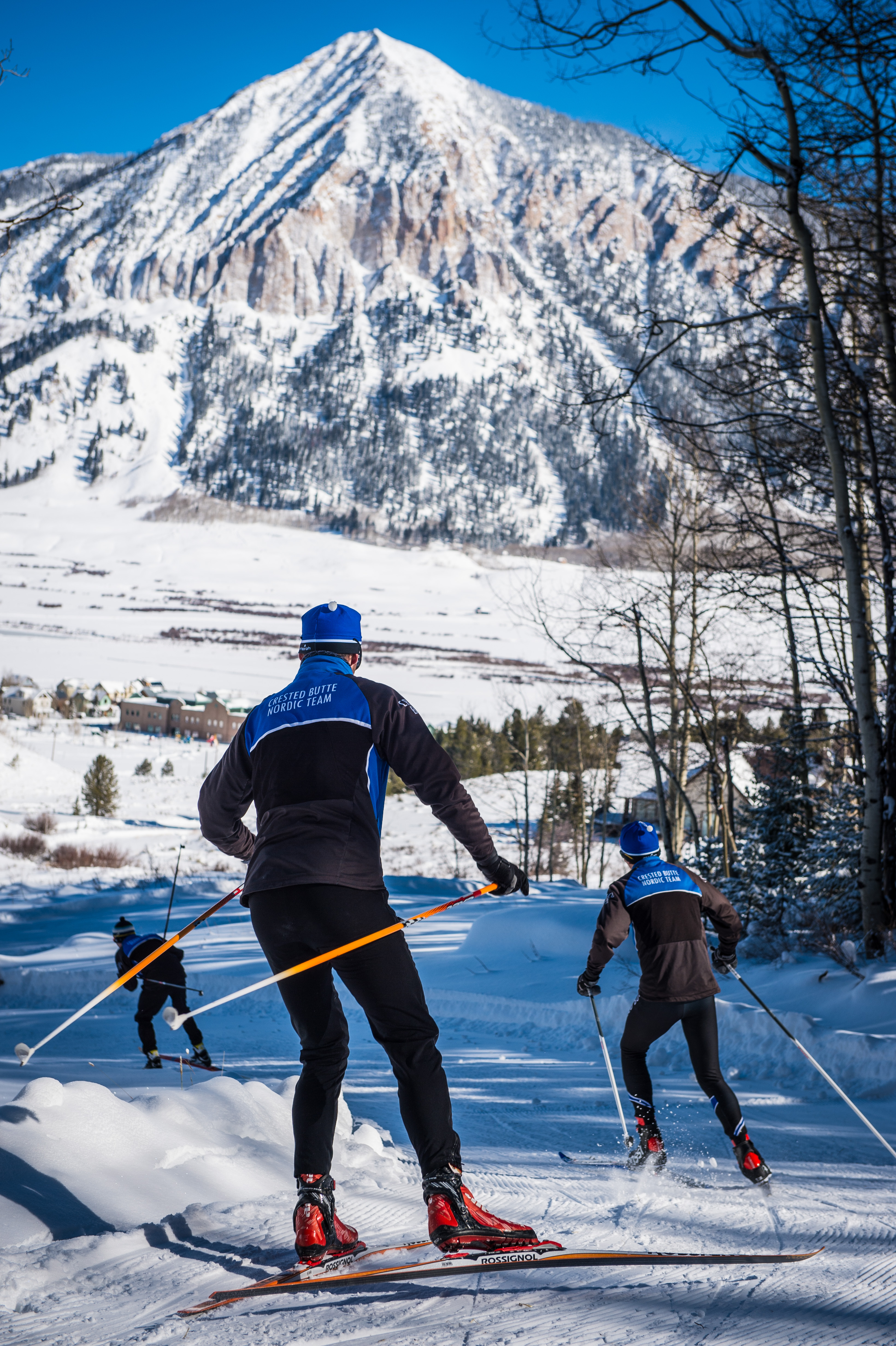
    Sun stretches over the hills during a cross-country lesson at Crested Butte in Colorado. The nordic center there is hosting its annual Crested Butte Nordic Thanksgiving Camp from Thursday to Sunday. (Photo: Xavier Fane)

    We’ve been hearing about West Yellowstone since, well, the U.S. Ski Team officially started its annual Fall Camp there in 1978. But surely, Montana’s southern tip can’t be the only place to get on snow this time of year…

    That’s why we provided a guide to Thanksgiving on-snow camp venues in the U.S. and Canada (we realize this week isn’t Thanksgiving in Canada, but we’re sticking to areas that offer skiing around this week in late November for all intents and purposes). If we’re missing an early season camp, we apologize — it’s a big continent — but let us know so we can feature that camp in next year’s guide.

    ***

    What: Yellowstone Ski Festival

    Where: West Yellowstone, Montana

    Hundreds of skiers took to the Rendezvous Ski Trails on Tuesday in West Yellowstone, Mont.
    Each year, the Rendezvous Ski Trails see hundreds of skiers each day during the Yellowstone Ski Festival on Thanksgiving week in West Yellowstone, Mont.

    Website: http://www.skirunbikemt.com/yellowstone-ski-festival.html

    When: Tuesday, Nov. 24, to Saturday, Nov. 28, 2015

    How many years running? 20+

    Target audience: Masters and beginners (clinics available for both), as well as elite racers

    Athletes get ready for a day of skiing during a morning run in West Yellowstone, Mont., at this year's 2015 Yellowstone Ski Festival. (Photo: Gabby Naranja)
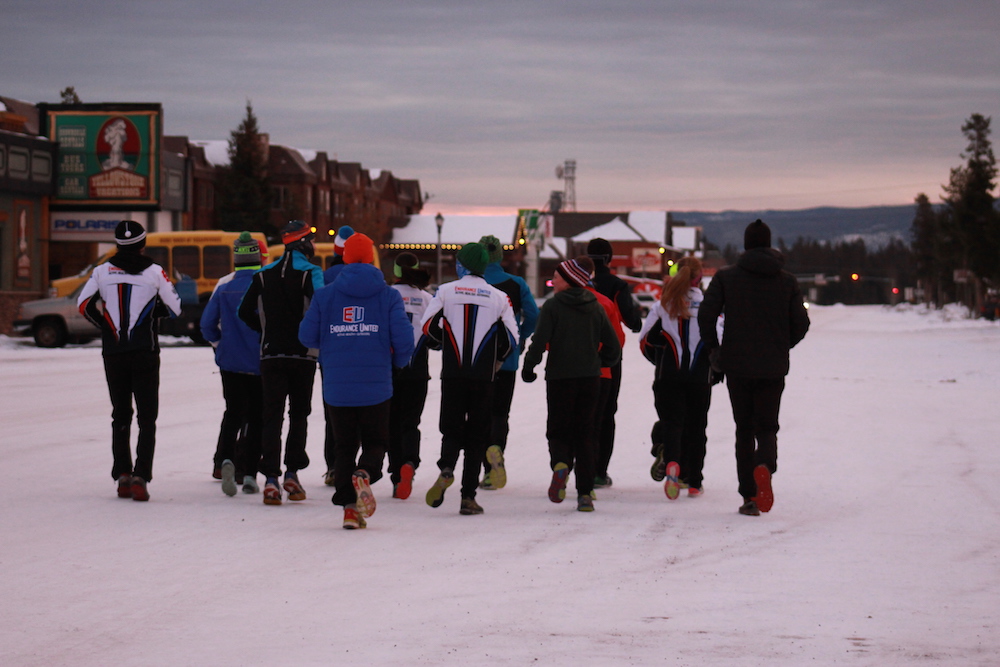
    Endurance United team members get ready for a day of skiing during a morning run in West Yellowstone, Mont., at this year’s 2015 Yellowstone Ski Festival. (Photo: Gabby Naranja)

    Anticipated participation: An estimated 4,000-5,000 skiers throughout the week. “It varies from year to year depending on the snow conditions and the snow level,” West Yellowstone Ski Education Foundation Program Director Moira Dow explained. “Because we’ve gotten snow early this year and good snow, we have been able to get the word out. Like right now the trails are packed. We will probably have a lot of people coming for longer periods of time.”

    Advance reservation required? Racers must preregister. Trails are open to public; trail pass required.

    Trail pass rates: $12/day, $55/month, kids 10 & under 1/2 price

    Grooming report: Essentially everything is open. “It’s full-coverage skiing on good skis with full tracks,” Dow said. More details | Webcam

    Green Mountain Valley School nordic skiers meet up during a ski on the Rendezvous Ski Trails this week in West Yellowstone, Mont. (Photo: Gabby Naranja)
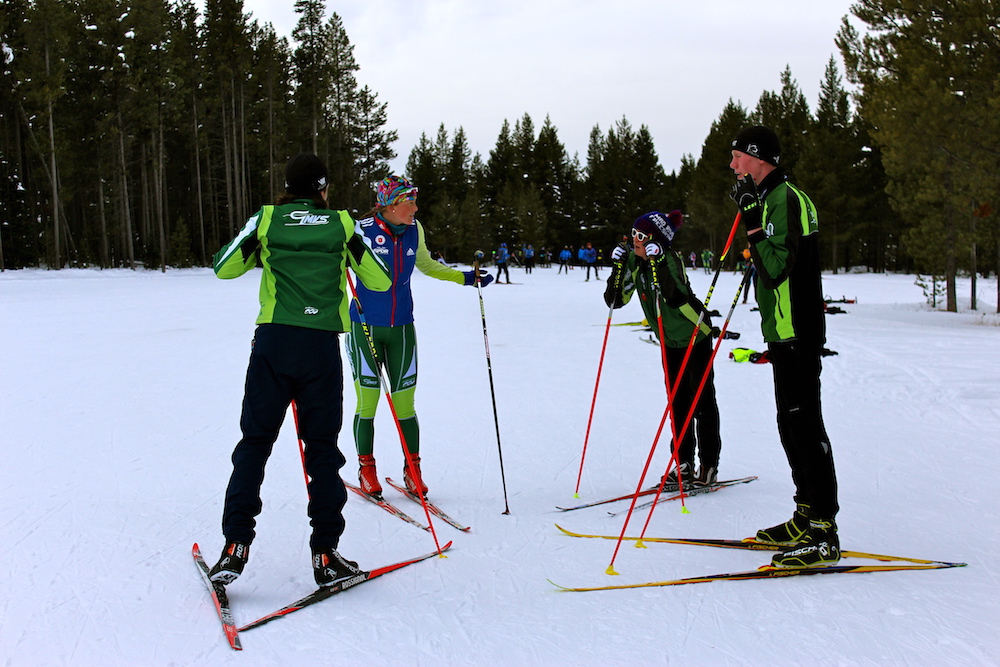
    Green Mountain Valley School nordic skiers meet up during a ski on the Rendezvous Ski Trails this week in West Yellowstone, Mont. (Photo: Gabby Naranja)

    What makes this camp unique? “The number of trails and the quality of snow that we have. We’re one of the few places in the country that does have consistent, early, good snow. In addition to that, we have a lot of industry participation. And we have great evening programs for people. We have not just skiing, we have the full package for everybody and anyone, from the beginner skier who wants to get out on the snow for the first time, to the SuperTour elite athlete who can train at high altitude, and good snow in the early part of the season.”

    Special events: 

    • U.S. Ski Team Development Coach Bryan Fish and the former vice president of Fischer Skis U.S. nordic division, Peter Ashley, will be featured speakers
    • Freebies: “Everything at the indoor expo at night is free. Anybody who has a trail pass can get into the outdoor demo area for free. In addition, on Wednesday and Friday night we have ‘après-ski’… [with] complimentary adult beverages and junior beverages, sledding, some music, and fun stuff like that. Just a little bit more of a party atmosphere after the sun goes down and before the expo opens.”

    ***

    What: Crested Butte Nordic Thanksgiving Camp

    Where: Crested Butte, Colorado

    The Thanksgiving Camp is a fundraiser for Crested Butte Nordic; a non-profit dedicated to getting people on the local trails. (Photo Xavier Fane)
    The Crested Butte Nordic Thanksgiving Camp, now in its 14th year, is a fundraiser for Crested Butte Nordic, a nonprofit dedicated to getting people on the local trails. (Photo: Xavier Fane)

    Website: http://cbnordic.org/thanksgivingnordicskicamp/

    When: Thursday, Nov. 26, to Sunday, Nov. 29, 2015

    Skiing at Crested Butte Nordic in Colorado. (Photo: Xavier Fane)
    Skiing at Crested Butte Nordic in Colorado. (Photo: Xavier Fane)

    How many years running? 14 as an official organized camp: “Crested Butte has really good and reliable early season snow so the Nordic Center decided we should try to get folks to come here and get some instruction from our great instructors,” said Drew Holbrook, marketing director for Crested Butte Nordic and the Grand Traverse ski race. “We also have a wonderful venue for early season nordic skiing and we’ve been fortunate enough to have been on-snow every year.”

    Target audience: All ages and abilities, “from never-evers to master blasters looking to improve their technique,” Holbrook said. “If parents are skiing along with children, kids ski free. All kids 17 and younger get free passes and rentals. And, actually,  all season long we do that —  people 17 and younger ski free. At the Thanksgiving Camp we also do free kids clinics. So if a parent is taking a clinic, then they can have their kids taken care of all day.

    Anticipated participation: Several hundred skiers on the trails throughout the long weekend. For clinics, projecting 75-80 participants.

    Advance reservation required? Pre-registration recommended for clinics. Nordic Center trail passes available any time. Skiing at Lily Lake, a 10 k early season trail system four miles up Kebler Pass Road, is free.

    Trail pass rates: $18/day, skiers 17 & younger ski free. $130 for a 10-punch transferable pass.

    Grooming report: With about a foot of snow at the venue in town, “it’s looking like in-town skiing for the camp,” Holbrook said. As of Tuesday, Ruthie’s Run (5-kilometer loop at the nordic center and up on the bench) and Lily Lake (six miles west of town up on the pass) were groomed. “We’ll have over 10 kilometers of high quality skiing available,” Holbrook added. More details

    Here's a deal: Kids 17 and under enjoy free rentals, passes, and clinics. (Photo Xavier Fane)
    Here’s a deal: Kids 17 and under enjoy free rentals, passes and clinics at the Crested Butte Nordic Thanksgiving Camp. (Photo: Xavier Fane)

    What makes this camp unique? “As a non-profit, our mission is to get people out on the trails skiing. We are not making a ton of money off it,” Holbrook said.

    “We just want people to come here and use our trails and make it affordable. A lot of people come back year after year and work with the same instructor. They get to know each other and get to know the other people that come into camp. So it’s definitely got this small feel to it, it’s kind of personalized.”


    Special events: 

    • For the first time, a race (on Sunday): 5/10 k freestyle + kids’ race with new homologated course on Ruthie’s Run. “It’s engineered, seeded, and mowed,” Holbrook said. “Due to the engineering, we are able to groom the race course with a lot less snow than we used to need. That enables us to count on having this race and count on have a good race venue close to town.”
    • Winter Kick-Off Party (Saturday night): Fundraiser for Crested Butte Nordic, tickets $30/adult,$10/children.
    • Wax clinic, nutritional talk and Nov. 25 is opening day at Crested Butte Mountain Resort, with free skiing all day.

    ***

    What: CXC Thanksgiving Nordic Festival

    Where: Telemark Trails in Cable, Wisconsin

    After three nights of blowing snow,  CXC Thanksgiving Nordic Festival organizers were ready to groom the Telemark trails in Cable, Wis., on Nov. 22. (Photo: Facebook)
    After three nights of blowing snow, CXC Thanksgiving Nordic Festival organizers were ready to groom the Telemark Trails in Cable, Wis., on Nov. 22. (Photo: Facebook)

    Website: https://www.facebook.com/events/446146035558219/

    When: Wednesday, Nov. 25, to Sunday, Nov. 29, 2015

    How many years running? First year. “Our goal for the festival is to show the template to other communities, what it takes to make snow … to provide a business and operations template to other places around the Midwest so they can do these festivals in late November and then have a reliable loop for the winter,” CXC Executive and Athletic Director Yuriy Gusev explained.

    A 1 k loop was made and groomed for the first-annual CXC Thanksgiving Nordic Festival in Cable, Wis. (Photo: Facebook)
    A 1 k loop was made and groomed for the first-annual CXC Thanksgiving Nordic Festival in Cable, Wis. (Photo: Facebook)

    Target audience: All skiers; open to the public

    Anticipated participation: Based on the camp’s Facebook page, at least 75 plan on attending, and Gusev estimated that paired with a local turnout would amount to 200-300 skiers. “We don’t want to make it a big deal … just to show the community this is an opportunity to ski,” he said.

    Advance reservation required? Yes, for clinics (instructed by Gusev on Friday, Saturday and Sunday).Trails open to public.

    Trail pass rates: $50 season passes, good for the festival and the whole winter. Trail passes can be purchased at www.cxcskiing.org/skipass, Telemark condominium office and Cable Area Chamber of Commerce Office.

    Grooming report: Skiing on a 1 k loop at Telemark started on Sunday: “Usually there’s no natural snow this time of year, so our plan was to make snow,” Gusev said. “It just didn’t get cold like it normally does.” Once temperatures finally cooled late last week, the snowmaking crew was able to work on blowing and laying out a 1-kilometer manmade loop, some of which will be used for the 2016 Junior Nationals sprint course. More details

    What makes this camp unique? “Anytime you have early snow, you stand out. I think it can be a key component to have this … to provide a reliable base for the rest of the winter, especially for youth programs where the snow is critical and also for entry-level participants. We’ve seen already with the couple snowmaking areas in the Twin Cities how much impact these have on the ski industry and local ski shops. They’ve been able to actually do relatively well in snowless winters.”

    Special events: Fischer Demo

    ***

    What: Snow Mountain Ranch Nordic Ski Camp

    Where: Granby, Colorado

    A November day at Snow Mountain Ranch, which opened for skiing earlier this month and remains open with 50 k groomed with a set track. (Courtesy photo)
    A November day at Snow Mountain Ranch, which opened for skiing earlier this month and remains open with 50 k groomed with a set track. (Courtesy photo)

    Website: http://snowmountainranch.org/event/nordic-ski-camp/

    When: Friday, Nov. 20, to Tuesday, Nov. 24

    How many years running? First time in recent years

    Target audience: Beginner skiers to seasoned racers

    Advance reservation required? Yes.

    November skiing at Snow Mountain Ranch in Granby, Colo. For the first time this year, a five-day camp was held for masters. (Courtesy photo)
    November skiing at Snow Mountain Ranch in Granby, Colo. For the first time this year, a five-day camp was held for masters. It ended on Tuesday. (Courtesy photo)

    Participation: Capped at 24. “Smaller is better from both a coaching and athlete viewpoint,” Snow Mountain Ranch’s Nordic Center Director Bill Pierce explained. In its first year with little marketing, the five-day camp attracted four athletes.

    “It was really small, but it was great,” Pierce said. “It’s so early that people don’t expect there to be snow [when] it’s 60 degrees in Boulder. … We just want to put another option out there; a lot of skiers want to be on snow in early November and Denver is really easy to get to.”

    Trail pass rates: $350 for the camp, includes all coaching sessions and day passes

    Grooming report: 50 kilometers groomed and track-set. Snow Mountain Ranch started grooming Nov. 4 and opened for skiing on the 14th. According to Pierce, they have anywhere from a 4-5 inch base to 10 inches in some places. It was snowing there on Thanksgiving, with four inches of snow expected to fall today. More info | Webcam

    What makes this camp unique? “This is the earliest masters camp in North America on-snow as a pre-Thanksgiving camp,” Pierce explained.

    The idea was to run a masters camp similar to an elite or junior camp, with two-a-day sessions combining workouts and technique — all at 9,000 feet above sea level. The focus was on transitioning from dryland training to snow skiing, with an emphasis on technique and slow volume at high altitude.

    With a small but mighty coaching staff (two of which are USSA certified), Pierce said the ability to work with athletes helps them set, understand and achieve skiing goals.

    “We all speak the same language,” he said of the coaches. “You can go to a lot of places, and a lot of places you feel like you’re getting a lesson. There’s a difference between a lesson and coaching.”

    “[This camp is] just another opportunity in the country to go skiing all day,” he added.

    Special events:

    ***

    What: Sovereign Lake XC SuperCamp

    Where: Vernon, British Columbia

    A Sovereign Lake Nordic Centre board member checks out the trails on Nov. 21. (Photo: Gerry Furseth)
    A Sovereign Lake Nordic Centre board member checks out the trails on Nov. 21. (Photo: Gerry Furseth)


    Website: http://xcsupercamp.com

    When: 2 1/2-day weekend and 5-day midweek camps (schedule): 

    A gaggle of skiers at a junior camp head out on the trails at the Sovereign Lake Nordic Centre on Nov. 14 in Vernon, British Columbia. Each winter, Sovereign Lake hosts a series of weekend and weekday camps, called SuperCamp. (Photo: Gerry Furseth)
    A gaggle of skiers at a junior camp head out on the trails at the Sovereign Lake Nordic Centre on Nov. 14 in Vernon, British Columbia. Roughly 800 skiers took to the trails that day. Each winter, Sovereign Lake hosts a series of weekend and weekday camps, called SuperCamp. (Photo: Gerry Furseth)
    • Camp #1: Nov. 20-22
    • Camp #2: Nov. 23-27
    • Camp #3: Nov. 27-29 (with Pro-camp option)
    • Camp #4: Nov. 30-Dec. 4
    • Camp #5: Dec. 4-6
    • Camp #6: Jan. 15-17
    • Camp #7: Feb. 19-21

    How many years running? 26 (The SuperCamp program started in 1989)

    Target audience: All ages and skill levels from beginner to elite racer.

    Advance reservation required? Yes.

    Anticipated participation: Typically around 225 to 250 participants, hoping for 260 this year.
    “In its heyday in the early ’90s [SuperCamp attracted] upwards of 400,” Sovereign Lake Nordic Center General Manager Troy Hudson explained. “We want to get back to those numbers by offering some great new initiatives like focussed Masters Pro camps for racers and more options such as the biathlon camps which are proving to be very popular.”

    Trail pass rates: Dual area trail passes included in camp fee, ranges from $339 to $925 Canadian dollars per person (depending on length of camp, and half or full days). Pricing

    VR40 blue-wax skiing on Nov. 16 at the Sovereign Lake Nordic Centre in Vernon, B.C. (Photo: Gerry Furseth)
    VR40 blue-wax skiing on Nov. 16 at the Sovereign Lake Nordic Centre in Vernon, B.C. (Photo: Ryan Olson)

    Grooming report: Sovereign Lake has 40 kilometers groomed and Silver Star has an additional 40 k open. More details (and webcam)

    What makes this camp unique? “I’m often asked, what is Supercamp?” SuperCamp coordinator Shane Landreville wrote in an e-newsletter. “That’s a great question and because Supercamp offers so much more than a traditional ski lesson, it’s a difficult concept to explain and it’s difficult for people to wrap their heads around it. Quite simply, Supercamp is a Nordic experience.”

    SuperCamp attracts top-level coaches, as many come from across Canada to get early snow before they start their season at home. Each camp includes lectures and lessons on waxing, how to build a training plan, and sports nutrition, as well as access to the national altitude training centre gym, and best of all, 105 kilometers of trails between Sovereign Lake and Silver Star — many of which are used for World Cup, NorAm, and World Master events.

    With half- and full-day options, the camp is at an altitude of 1,600 metres (5,250 feet). Many of the accommodation options are on the nordic trails. You can ski or walk to restaurants and bars in the evening.

    Biathlon camps are either five days long or a single afternoon, and a new Pro camp is more racing focused.

    The Silver Star alpine area opened earlier this week, as did the separate Fat Bike trail system.

    Special events:

    • Keynote speakers, a sports nutrition lecture, and wax clinics
    • Stretching classes, body pre-activation sessions, and for 5-day campers, two 30-minute massages. “Skiing for a solid 2 days or 5 days is tough, it really is, so taking care of your bodies is important,” Landreville wrote. “For our 5 day camps, you can also take part in the excursion to the spa and pools at Sparkling Hill Resort.”

    ***

    Also: Canada’s Early Season XC Venues

    What: Frozen Thunder

    Where: Canmore, Alberta

    When: Oct. 23-Nov. 14, 2015

    Website: http://www.albertaparks.ca/canmore-nordic-centre/activities-events/events/frozen-thunder-opening-day.aspx | http://www.canmorenordiccentre.ca

    How many years running: 6

    Open to: Public use after noon on weekdays and all day on weekends

    How much snow: 900 meters expanded to 1.1 k of manmade trails initially; now complete cover/about 32 kilometers groomed. More info

    Good to know: Each year, this venue hosts the first XC skiing and racing in Canada, with a sprint race, time trial and biathlon national-team trials this year.

    ***

    What: Boreal Glide (Glisse Boréale)

    Where: Forêt Montmorency, owned by the Université Laval, in Saint-Ferréol-les-Neiges, Quebec

    Website: http://www.foretmontmorency.ca/en/activities/winter-activities/cross-country-skiing/

    How much snow: Boreal Glide, a 2.5 k manmade loop, is open for both freestyle and classic. Course map | Weather

    Good to know: 

    • According to according to Julie Moffet, the regional operations coordinator at Forêt Montmorency, la Forêt is the only place in North America with cross-country skiing as early as Oct. 30 all the way to Easter in April.
    • No races or special events are scheduled, simply skiing and snowshoeing for all.
    • To reserve a room on the trails (with two single beds and a shared bathroom), with access to a cafeteria, two lounges with a fireplace, game room, auditorium, and wax room, visit http://www.foretmontmorency.ca/en/lodging/
  • The West Wednesday Workout: L3/L4 Skate Intensity (with Video)

    The West Wednesday Workout: L3/L4 Skate Intensity (with Video)

    For this week’s Wednesday Workout, FasterSkier contributor Hailey Swirbul of the Aspen Valley Ski Club in Aspen, Colo., takes us though a workout she and her team recently did on the snow-covered Rendezvous Ski Trails at the annual season-opening ski festival in West Yellowstone, Mont. (Trouble viewing video? Click here.)

    ***

    The Aspen Valley Ski Club during a hard L3/L4 skate intensity workout in West Yellowstone, Mont. (Photo: Hailey Swirbul)
    The Aspen Valley Ski Club during a hard L3/L4 skate intensity workout in West Yellowstone, Mont. (Photo: Hailey Swirbul)

    Every year in West Yellowstone, Mont., thousands of nordic skiers of all abilities flock to the trails for a weeklong training and racing opportunity over Thanksgiving week.

    Aspen Valley Ski Club (AVSC) is one team of many here to take advantage of the pristine snow conditions and unbelieveable nordic skiing community during the week.

    This festival provides a perfect location for AVSC’s athletes to move fast, work hard and prep for upcoming races this week and this season.

    What better way to spend a morning than with a Level 3/ Level 4 combination skate-intensity workout?

    AVSC’s West Wednesday Workout

    Warmup: Recruit teammates and friends for this tough workout, and skate ski easy for 25 minutes. Pick a flat section of trail to do three build-up speeds, lasting about 10 seconds. Start slowly and work up to a full sprint.

    Level 3: After warmup speeds, begin your first 8-minute Level 3 or threshold interval, about 85 percent of max, on gradual rolling terrain to focus on V2 and transitions. Take 2 minutes off after that interval and begin a second 8-minute effort.

    Level 4: Now it’s go time. On similar terrain, ski three 4-minute L4 intervals with equal recovery between. On crowded trails like West Yellowstone’s, practice efficient passing!

    Cool down: Now that the hard work is over, ski easy for 20 to 30 more minutes. A cool down is a great time to practice maintaining technique with tired muscles or mass start Chinese downhills, and is also a perfect opportunity to catch up with fellow skiers from across the country if you are lucky enough to be surrounded by thousands of them at the Yellowstone Ski Festival!

    See you on the trails!
    – AVSC

  • Stage Craze Hits Soldier Hollow: USST Caps Camp with Mini Tour

    Stage Craze Hits Soldier Hollow: USST Caps Camp with Mini Tour

    The 2015/2016 U.S. Nordic Ski and Nordic Combined teams during a team photo shoot in their new uniforms on Monday, Oct. 19, in Park City, Utah. (Photo: USSA)
    The 2015/2016 U.S. Nordic Ski and Nordic Combined teams during a team photo shoot in their new uniforms on Monday, Oct. 19, in Park City, Utah. (Photo: U.S. Ski Team)

    Over the last two weeks, the U.S. Ski Team and many of the nation’s top skiers have been hitting the hardtop and trails around Park City, Utah, intent on getting in quality training sessions at altitude before heading off to on-snow camps. The area’s consistent fall weather and training opportunities, including the rollerski loop at Soldier Hollow, make this camp an annual team staple.

    Many of the country’s most competitive nordic skiers outside the U.S. Ski Team (USST) are also in Park City, drawn there by the opportunity to train with the team before it heads to Europe for the start of the World Cup in late November.

    USST Head Coach Chris Grover estimated there were slightly more than 30 athletes at the camp, with all 16 national-team members, plus skiers from the National Training Group, Alaska Pacific University (APU), the Sun Valley Ski Education Foundation (SVSEF) Gold Team, Stratton Mountain School (SMS) T2 Team, and the Craftsbury Green Racing Project. On the phone earlier this week, Grover expressed excitement about a, “nice mix of some younger guys and some veterans, and top club athletes and the national team.”

    U.S. Cross Country Ski Team roller ski training on the Olympic trails at Soldier Hollow, Utah. (U.S. Ski Team - Tom Kelly)
    The U.S. Ski Team trains on the Olympic trails during its annual fall camp at Soldier Hollow in Midway, Utah. (Photo: U.S. Ski Team/Tom Kelly)

    Although this is a national-team camp, guest athletes are invited to attend the high-intensity workouts as well as the long, over-distance sessions when the venue safely allows them to do so, Grover explained.

    During the first week of camp the focus has been on threshold, some testing and speed workouts, and something called “The Double Pole Project.” Grover described this as a pre-workout video session meant to aid in transferring the athletes’ work in the weight room to lower abdominal engagement in their double-pole technique. Stemming from a plan shared at the World Cup coaches’ seminar in Trondheim, Norway, in late August, the team integrated this into their camp with hopes of seeing this strength technique come through this winter.

    After the initial week of mellow, acclimatization-based workouts and technique focus, the second week of training included more intensity. On Tuesday, Grover highlighted that morning’s 6 x 4-minute ski bounding session as one that got both athletes and coaches excited. Whether it was the sun beaming down or the lower elevation training site in Salt Lake City, the first full-group, high-intensity workout of the camp went off without a hitch, he said. It also provided a preview of the intensity coming at the end of camp: a three-day rollerski mini tour starting on Sunday.

    U.S Ski Team members Andy Newell and Ben Saxton training on the Olympic trails at Soldier Hollow in Midway, Utah. (Photo: U.S. Ski Team/Tom Kelly)
    U.S Ski Team members Andy Newell and Ben Saxton training in mid-October on the Olympic trails at Soldier Hollow in Midway, Utah. (Photo: U.S. Ski Team/Tom Kelly)

    In the past, the USST ended its Park City camps with rollerski time trials. This season, without a World Championships or Olympics, and with over half the the World Cup races being tour-stage events (19 to be exact), Grover and his staff decided to shift from race simulations to stage events.

    “We’ve definitely put an emphasis on practicing not only how to manage energy from day to day, but how to recover optimally from each session,” Grover said.

    The team saw some success at Norway’s Toppidrettsveka mini tour this summer, with Liz Stephen and Noah Hoffman placing third in the hill climb, but also encountered bad luck with broken poles and several crashes in the last stage of that tour, Grover said. These are the types of mishaps he’s hoping the tour simulations will minimize in races this winter.

    The mini tour will start this Sunday, Oct. 25 with a freestyle sprint, followed by a shorter classic mass start on Monday, and ending with a longer freestyle pursuit on Tuesday.

    The national team also unveiled its new uniforms this week. L.L. Bean and Craft signed as the team’s clothing sponsors this spring and revealed the new suits and warmups with the team on Monday in Park City. Grover explained the shift to L.L. Bean and Craft as one that’s been “excellent” because it provides a “…uniform that is totally unique to the USA.” He also believes the team will benefit from the wide range of pieces available through these larger companies.

    Coach Matt Whitcomb works with Jessie Diggins at at U.S. Cross Country Ski Team roller ski training on the Olympic trails at Soldier Hollow, Utah. (U.S. Ski Team - Tom Kelly)
    U.S. women’s coach Matt Whitcomb works with Jessie Diggins during rollerski training at the U.S. Ski Team’s annual fall camp at Soldier Hollow in Midway, Utah. (Photo: U.S. Ski Team/Tom Kelly)

    The first World Cup is a little more than a month away in Kuusamo, Finland, and aside from D-team rookie Julia Kern rebounding from a slight back injury, the team is healthy, Grover said. Erik Bjornsen has resumed training at full capacity after surgery on his hand and a knee injury earlier this summer.

    Team veteran Kikkan Randall recently announced her pregnancy and will be missing this season as a result. Grover was fully supportive, acknowledging her pregnancy as one of Randall’s long-term goals. The timing also worked nicely without a World Championships or Olympics this season. While Randall has been training with the team in Park City, she has scaled back her intensity and shifted toward over-distance and technique training, Grover explained.

    Without a major championship on the World Cup calendar this season and a North American tour — the Ski Tour Canada — in its place, domestic competition for the additional start spots is something many U.S. and Canadian athletes are looking forward to. Per the “national quota” regulations of the World Cup, the U.S. will be able to start five additional men and five additional women for the entire Ski Tour Canada, for a total of up to 24 racers.

    While Grover said the upcoming mini tour in Park City would not decide those spots, he explained the coaches were using this week’s training sessions to note the fitness of non-national team athletes. However, on-snow results will ultimately determine who receives those Canadian World Cup starts. More on the 2015/2016 World Cup Team selection criteria here.

    After wrapping up the mini tour on Tuesday, the USST will leave Utah on Wednesday. Several clubs will head directly to Canmore, Alberta, for an on-snow camp at Frozen Thunder, while others, like APU and its USST members, will head back to Alaska in hopes of getting on snow as well.

    The USST will reconvene Nov. 13 to fly to Gällivare, Sweden, where they’ll hold a camp and compete in a couple FIS races before traveling to Kuusamo for the World Cup openers.

    ***

    About the Author: New to the FasterSkier team, Jeremy has been involved in many facets of the ski community since he began ditching middle school to go skiing. When not daydreaming of the Birkie, he finds time to explore the fishing and trail-running opportunities of his new home, Seattle, Wash. 
  • Big Volume, Intensity and Agility: RMR Covers the Bases at Park City Camp

    Big Volume, Intensity and Agility: RMR Covers the Bases at Park City Camp

    The Rocky Mountain Racers pose for a team photo during their two-week training camp earlier this month at Soldier Hollow in Midway, Utah. (Courtesy of Maya MacIsaac-Jones)
    The Rocky Mountain Racers pose for a team photo during their two-week training camp earlier this month at Soldier Hollow in Midway, Utah. (All photos: Maya MacIsaac-Jones/Rocky Mountain Racers)

    Editor’s Note: The following training-camp recap was written by Maya MacIsaac-Jones, an athlete on the Rocky Mountain Racers ski team in Canmore, Alberta. She and her teammates recently returned from their annual two-week camp in Park City, Utah. To submit your own camp writeup, please email info@fasterskier.com with the subject line: “Camp Recap.”

    ***

    From Sept. 27 to Oct. 11, Canada’s Rocky Mountain Racers headed to Park City, Utah, for their annual fall training camp. The team, which is made up of twenty biathletes and cross-country skiers from across the country, took advantage of the region’s high altitude while putting in big volume hours and intensity.

    Coaches John Jaques and Luke McGurk led RMR athletes during two grueling weeks of training with 3-5 hour volume days up Mirror Lake Pass, Wolf Pass, Emigration Pass, and Big Cottonwood Pass. For intensity sessions, the team went to Soldier Hollow, where the former Olympic venue’s paved rollerski track and biathlon range provided an opportunity for the biathletes and the cross-country skiers to train together.

    For many RMR athletes, this was their first time coming to Park City.

    Group training at Soldier Hollow. (Photo: Maya MacIsaac-Jones/Rocky Mountain Racers)
    Group training at Soldier Hollow.

    “Skiing at Soldier Hollow was one of my favourite parts of the trip,” said Donny Boake, 15-year old RMR skier from Yellowknife, Northwest Territories. “The rollerski track there has steep climbs and technical descents, so it was a great place to practice attacking the climbs and taking the descents aggressively.”

    For returning athlete Ember Large, the camp provided a great opportunity to connect and work as a team.

    “It was great to have the entire team together for two weeks, both for intensity and long easy days,” she explained. “Having everyone there made for a really fun atmosphere, and we were able to learn a lot from each other.”

    This year, the team added something new to their training camp: agility practice. Armed with empty parking lots, sharp corners, and sidewalk curbs for the athletes to jump off of, RMR coaches prepared obstacle courses for the athletes to help improve their confidence on rollerskis. The sessions focused on honing the athletes’ ability to ski in a pack, corner, navigate obstacles, jump, and rollerski.

    RMR's Emma Camicioli, Thomas Stushnoff and Evan Girard attacking the curbs during agility. (Photo: Maya MacIsaac-Jones/Rocky Mountain Racers)
    RMR’s Emma Camicioli, Thomas Stushnoff and Evan Girard attacking the curbs during agility.

    According to Coach McGurk, the agility sessions allowed athletes to “become more comfortable on their skis and give them the confidence to make decisions quickly when faced with a difficult situation.”

    “The camp at Soldier Hollow is always an excellent starting point for the year as it offers a wide variety of terrain that we can use to test our athletes as well as most of our athletes will be in attendance,” he added.

    The camp finished off with a sprint time trial at Soldier Hollow, where RMR athletes were joined by Wasatch Nordic Ski Academy for the day. Athletes completed a qualifier, three heats, and another qualifier to finish off the day. Heats were organized according to qualifying time, with similar speed athletes placed in the same heats to make for optimal competitiveness.

    RMR’s youngest cross-country skier, Anna MacIsaac-Jones, was happy to tackle a challenging course in the sprint.

    “It was a great experience to be able to race with some other girls that we don’t get to see in Canada,” she said. “It was a tough course with lots of hard uphills and downhills that really helped improve my skiing.”

    Now done their last camp of the season, RMR athletes have headed back to Canada for some final training on Canmore’s Frozen Thunder before the season kicks off at the end of November.

    RMR and Wasatch Nordic girls after their sprint simulation at Soldier Hollow in Midway, Utah.  (Photo: Maya MacIsaac-Jones/Rocky Mountain Racers)
    RMR and Wasatch Nordic girls after their sprint simulation at Soldier Hollow in Midway, Utah.
  • Cook, Egan and Doherty Bound for Utah, Possibly World Cup

    Cook, Egan and Doherty Bound for Utah, Possibly World Cup

    Annelies Cook (USBA A-team) en route to the first of back-to-back sprint victories last weekend in Jericho, Vt. As a result of her performances at the USBA trials, Cook was one of two women selected to the team's upcoming training camp in Utah. (Photo: Erika Bailey)
    Annelies Cook (USBA A-team) en route to the first of back-to-back sprint victories last weekend in Jericho, Vt. As a result of her performances at the USBA trials, Cook was one of two women selected to the team’s upcoming training camp in Utah. (Photo: Erika Bailey)

    Note: This article has been corrected to reflect the fact that Annelies Cook was sick in the opening sprint of the 2015 USBA trials and did not start.

    Annelies Cook wasn’t feeling the heat the first time around in Jericho, Vt., at the first set of US Biathlon Association (USBA) trials in August. She was sick and didn’t compete in the opening sprint, but came back to place third in the mass start the next day.

    “I was coming off a small cold [during] the first trials and also didn’t feel great with the heat that we had at the time,” the USBA A-team member explained in an email on Monday.

    Last weekend was different. Again in Jericho, Cook, 31, won back-to-back sprints at the second set of trials, which determine who goes to the USBA Utah training camp near Park City from Oct. 18-Nov. 1, and from there, who is selected for the early season International Biathlon Union (IBU) World Cups 1, 2 & 3.

    “These trials races were a lot more positive feeling,” she wrote after winning last Saturday’s sprint by 12.5 seconds over teammate Clare Egan and Sunday’s sprint by 1:26.8 over Maddie Phaneuf of the USBA X-team. Cook hit 70 percent of her targets on Saturday and 80 percent on Sunday.

    “The shooting isn’t good enough for a World Cup standard,” Cook wrote. “You really have to hit a minimum of 80% to do even okay now. It’s just so competitive.”

    According to women’s coach Jonne Kähkönen, conditions made for a fair playing field, with light winds and crisp, clear fall weather.

    “The level of shooting was average, both for the qualified athletes and the non-qualified,” he wrote in an email.

    The 2015 USBA men's trials winner Sean Doherty (A-team) placed second in both sprints last weekend in Jericho, Vt. (Photo: Erika Bailey)
    The 2015 USBA men’s trials winner Sean Doherty (A-team) placed second in both sprints last weekend in Jericho, Vt. (Photo: Erika Bailey)

    Leif Nordgren, of the USBA A-team, who prequalified for the World Cup with a top 20 on the international circuit last season, won the men’s sprint with 70-percent shooting, finishing 16.3 seconds ahead of 20-year-old teammate Sean Doherty. One of several men in the mix for the lone remaining World Cup spot available on the men’s side, Doherty also missed three targets on Saturday, but finished 5 seconds ahead of team veteran Lowell Bailey, who had two misses. (Bailey is also prequalified for the World Cup.)

    “As always, some showed better shape of the day than the others, e.g. Sean and Clare (the first sprint on Saturday),” Kähkönen explained. “Overall, I can see that the tough block of training has taken its toll and the performance is not yet at the level we want to see at the World Cups, but I am also confident that through a good periodization and working on the shooting execution especially during this next block of training we will get to where we want to be.”

    Based on last weekend’s results and the previous August trials, the USBA coaches invited Cook (the women’s overall trials winner), Egan (the second woman) and Doherty (men’s trials winner) to join them in Utah. The team has two World Cup openings for the women and one for the men.

    “My biggest focus for these trials was to keep on doing the work that we have been doing,” Cook explained. “The pressure I feel is mostly internal, wanting to prove to myself that I am more fit than the previous year and better able to handle the shooting pressure.”

    She has focused on more intensity this year — hard intensity — balanced with distance training to avoid peaking in September, Cook wrote.

    “I think that I was slow to start on the World Cup last year and that is really hard to catch up. It’s hard to get fast while you are trying to race too,” she wrote. “So our approach is to get there a little bit sooner this year.”

    She felt some fatigue on Saturday and “had to fight really hard to ski fast,” she explained.

    Cook finished just ahead of Egan, who missed two targets to place second on Saturday, and Phaneuf placed third, 37.2 seconds back with two penalties as well. The two prequalified World-Cup women on the A-team, Susan Dunklee was fourth and Hannah Dreissigacker finished fifth. Mikaela Paluszek of the Maine Winter Sports Center (MWSC) was sixth, Emily Dreissigacker (Craftsbury) seventh, Chloe Levins (National Development Group) eighth, and Lisa Ratschiller (LRB) ninth to round out the senior women’s field.

    “I saw these races as an opportunity to compete well under pressure,” Egan, 27, wrote in an email. “On skis, a good performance comes from extraordinary effort, but on the shooting range a good performance comes from repeating your normal process in a totally average manner. Switching between those mindsets is one of the great challenges in biathlon, and being under pressure adds to that challenge.”

    On Sunday, Cook explained she felt notably better and ended up winning by nearly 1 1/2 minutes. Phaneuf missed three to place second, Egan was third with four misses, Hannah Dreissigacker placed fourth, Emily Dreissigacker fifth, Ratschiller sixth, Paluszek seventh, and Jordyn Leighton (Chelsea) eighth. Levins and Dunklee did not start.

    “Shooting … seems to always be tricky in Jericho,” Cook wrote. “I think it probably has a lot to do with the approach because it is just this long gradual uphill that is hard to bring your [heart rate] to a good place that feels in control for shooting. I didn’t do a good job on the first day for sure, but that gave me something work on the second day. I am working on being mindful in the shooting range.”

    Clare Egan (USBA A-team) prepares to shoot during the second set of USBA  trials in Jericho this past weekend. (Photo: Erika Bailey)
    Clare Egan (USBA A-team) prepares to shoot during the second set of USBA trials in Jericho this past weekend. (Photo: Erika Bailey)

    Egan was satisfied with Saturday after meeting her goal of 80-percent shooting, but not so much with Sunday after two prone and two standing misses.

    “Over the course of the weekend, only two people shot 90% and nobody shot clean (men or women), which is definitely below average for this field of competitors,” she wrote. “It could be because of the pressure scenario, but I also think that the Jericho range has its own set of difficulties including the uphill approach and wind.”

    In the Saturday’s men’s race, Russell Currier (MWSC) placed fourth, Wynn Roberts (National Guard) was fifth, Max Durtschi (X-team) sixth, Jakob Ellingson (Loppet Nordic Racing/Mt. Itasca Biathlon) seventh, Craftsbury’s Alexander Howe and Casey Smith eighth and ninth, respectively, and Brendan Cyr (MWSC) 10th.

    On Sunday, Bailey won the second sprint by 15.3 seconds with a single penalty. Doherty was second again, this time with two misses, and Nordgren was third with two misses as well.

    Ellingson placed fourth, Durtschi was fifth, Currier sixth, Roberts seventh, Smith eighth, Patrick Johnson (X-team) ninth, and Howe 10th.

    According to USBA Chief of Sport Bernd Eisenbichler, who also observed the athletes in Jericho, the A-team controlled the field during the trials, but non-national team standouts Ellingson and Currier made a case for themselves. Currier placed second in the trials and Ellingson was third, and both earned an invite to the team’s November camp in Lake Placid, N.Y. The didn’t make the Utah cut “as the distance to [the] A-team is still too big,” Eisenbichler wrote.

    “[We are] very happy with Max Durtschi’s improvement and development in a short time doing Biathlon — he is on the right track,” he added.

    Kähkönen noted Cook’s overall consistency last weekend “and the fact that she did nothing spectacular,” as good indicators for her potential this season.

    “Clare had a good sprint on Saturday especially, [we’re] happy to see the progression and the clean prone stage in a race which has been a bit of a challenge this summer,” he added. “Maddie also has taken a good step towards the senior women, which I’m happy to see as we definitely need to have all of these women in top of their game during the winter — also to have competition on who gets to race the relay.”

    In Utah, the focus will be high-quality biathlon training and an emphasis on race execution, especially from a mental standpoint.

    “The camp in Utah is a tough one and if the performance of an athlete is not at the level where they can handle the altitude it can be a push back in their performance,” Kähkönen explained. “So looking at the bigger picture and seeing the progression over a longer period of time [throughout the trials period], this is the way to go.

    “For the athletes that did not make the cut at this time, we are offering a camp and coaching support here in Lake Placid with [development coach] Jean [Paquet], so all of the potential athletes are getting a good block of training leading up to the start of the season and we have our coaching staff eyes on them,” he added.

    “We still have 7 weeks ’til the World Cup starts and I am very confident, that this is on the right track,” Eisenbichler added.

    ***

    Photos (courtesy of Erika Bailey)

    Results:

    Saturday: women’s sprint | men’s sprint

    Sunday: women’s sprint | men’s sprint 

  • Lake Placid Camp in Photos: Packing It All In

    Lake Placid Camp in Photos: Packing It All In

    Annie Hart leads Annie Pokorny, Mary Rose, Jessie Diggins, Deedra Irwin, Katharine Ogden, Kelsey Phinney, Hannah Halvorsen, Sophie Caldwell, and Hailey Swirbul during a rollerski session near Lake Placid, N.Y.  (Photo: Bryan Fish)
    Annie Hart leads Annie Pokorny, Mary Rose, Jessie Diggins, Deedra Irwin, Katharine Ogden, Kelsey Phinney, Hannah Halvorsen, Sophie Caldwell, and Hailey Swirbul during a rollerski session near Lake Placid, N.Y. (Photo: Bryan Fish/USSA)

    Of the 12 workouts in six days at last week’s U.S. Ski Team (USST) dryland camp in Lake Placid, N.Y., two tested VO2 max, two were speed-specific, including a classic-sprint simulation, and three were strength sessions with a smattering of recovery runs. Also that week, the team incorporated Level 3 threshold and three distance sessions, with the National Elite Group (NEG) and National Training Group (NTG) joining several of its workouts.

    At the end of it all, several team members shared their highlights from camp:


    – Katharine Ogden (USST D-team/Stratton Mountain School T2 Team):

    Favorite training moment: “Doing skate speeds on the Lake Placid rollerski track, for sure. It was so awesome to practice high-speed transitions and get some sweet, smooth, car-free speed practice.”

    Favorite moment outside of training: “Getting some sweet henna tattoos from Hailey and Jenna (two of the junior girls at camp).”

    On training with the best: “It never ceases to amaze me training with the USST girls. Getting the opportunity to copy their technique and have them there to motivate us during harder sessions is beyond awesome. One thing that I learned talking to some Norwegian junior skiers is that they have never even met most of their national team girls. This really put in perspective for me how lucky we are to be able to train with them.”

    On making strides: “I’ve learned so much this camp. I’ve been working a lot on bounding technique and it was pretty sweet to have some breakthroughs doing bounding. I’ve also learned a lot about sprint tactics from having the opportunity to do a sprint time trial alongside the USST girls.”


    – Sophie Caldwell (USST A-team/SMST2 Team):

    Favorite workout: “My favorite workout of the camp was probably the run we did on the final day. We ran up Algonquin and then to Avalanche Lake. I love running in the Adirondacks and was happy we got to get out and do some adventuring at the camp. It was the perfect way to wrap up and watch the fall colors begin to change.”

    On what makes the camp unique: “This camp was both the shortest camp and the most focused on intensity that I have done this summer. I thought it was a really fun format and enjoyed jamming so much into one week.”

    On a larger training group: “I think having a larger, younger group is both motivating and inspiring. I remember when I was the same age the NTG girls are now and how excited I would get for camps. I got to room with Julia, who is also my SMS teammate, but I loved talking to her about everything and reflecting on what it was like when I was her age. They all bring a lot of new energy and are also fast and can challenge us in many of the workouts.”

    – Andy Newell (USST A-team/SMST2 Team):

    Highlight: “To be able to hammer out some high-intensity intervals and be pushed by some new faces I don’t get to train with very often.”

    On a tight schedule: “This camp was slightly different than our normal Lake Placid camp because it was shorter and more intense, our coaches packed in a lot of quality training into 6 days including one day with double intervals. I think our camp schedule has been thought out really well this year and personally, my fitness is feeling better than ever.”

    On working out with young guns: “Having a younger contingent at this camp was awesome. For someone who has spent the majority of the last several years racing on the world cup there are a lot of young faces in the National Training Group or even top level US skiers that I’m just meeting for the first time. This LP camp was a cool way to connect with the up and coming talent and train together and push each other, I’m really impressed with both the younger guys and girls that are training with the NTG these days.”

    – Simi Hamilton (USST A-team/SMST2 Team):

    Favorite moment: “Watching the bobsledders train for their World Cup team selection… those dudes can push some serious weight.

    “Our Placid camp was great this year. Only being there a week, our focus was on quality over quantity. Of course we got in some great runs (today we did the Algonquin to Avalanche Lake loop), but we were hitting the pavement hard with 5 intensity sessions and 2 speed sessions throughout the week.”

    On training with the NTG: “It was so awesome having the NTG group around. We were getting pushed in every single workout by those guys and girls, and it’s always an awesome feeling to turn around during a hard interval session and see a 16 year old hot on your heels. I’m so psyched about where our future is headed as a top XC nation.”

  • New to the Climb to Castle Winners’ Circle: Caldwell and Rose Top Whiteface Race

    New to the Climb to Castle Winners’ Circle: Caldwell and Rose Top Whiteface Race

    Paddy Caldwell of the U.S. Ski Team D-team and SMST2 Team won Sunday's Climb to the Castle up Whiteface Mountain in Wilmington, N.Y. Here, around mile four of five, he's seen leading the pack, which includes biathletes Russell Currier and Tim Burke, and Rogan Brown (SVSEF) and Kyle Bratrud (CXC). (Photo: Tim Cowan)
    Paddy Caldwell (black shirt, yellow helmet) of the U.S. Ski Team D-team and SMST2 Team chases Rogan Brown (l) around mile four of five in  Sunday’s Climb to the Castle up Whiteface Mountain in Wilmington, N.Y. Caldwell won the race, followed by biathletes Russell Currier and Tim Burke in second and third, respectively. Brown (SVSEF) placed fourth and Kyle Bratrud (CXC) was fifth. (Photo: Tim Cowan)

    Note: Two photo captions have been corrected to reflect the leader of the men’s race around mile four in the 2015 Climb to the Castle. Rogan Brown of Sun Valley led the pack at the time.

    For years, U.S. Nordic Ski Team athletes and their coaches trucked themselves up to the start of the Whiteface Veterans Memorial Highway, clicked into their rollerskis and allowed an ample amount of time for warming up before ascending New York’s fifth highest peak.

    Before it became an official race nine years ago, it was a workout: a five-mile grind to the summit of Whiteface Mountain, 4,867 feet above sea level in Wilmington, N.Y.

    Now, for many top-level skiers, especially those based on the East Coast, the annual Climb to the Castle an offseason staple. And if you win, you get a T-shirt and a medal for your efforts.

    Mary Rose (SVSEF) leads US Biathlon's Annelies Cook up the Whiteface Mountain toll road during the annual Climb to the Castle. Rose won and Cook finished second, 32 seconds later. (Photo: Tim Cowan)
    Mary Rose (SVSEF) leads US Biathlon’s Annelies Cook up the Whiteface Mountain toll road during the annual Climb to the Castle. Rose won and Cook finished second, 32 seconds later. (Photo: Tim Cowan)

    “Climb to the Castle was a blast this year!” wrote women’s winner Mary Rose of Idaho’s Sun Valley Ski Education Foundation (SVSEF) Gold Team. “My goal going into this race was to have good energy the whole time, focus on technique and hopefully put together a good effort.”

    She reached the top on Sunday in 45:15.1 and topped her competition — the closest of which was US Biathlon’s Annelies Cook — by 32.6 seconds.

    “It was a fun, tough effort,” men’s winner Patrick Caldwell of the U.S. Ski Team D-team and Stratton Mountain School (SMS) T2 Team said in an interview after the finish.

    The 21-year-old Caldwell outlasted biathletes Russell Currier and Tim Burke by 5 and 11.5 seconds, respectively. Caldwell won in 37:05.2, Currier was second and Burke was third.

    “Right from the start, we stayed pretty much together against a decent headwind,” Burke said after the finish. “I think a lot of us were fatigued at the end of a big camp, so I didn’t really want to push like crazy.”

    The US Biathlon and U.S. Nordic teams spent at least the last week training in Lake Placid, N.Y., with biathletes like Burke logging five race efforts in nine days preceding the Climb.

    “I decided today instead of going for time, I wanted to go for the win,” said Burke, a defending multiple-time Climb to the Castle (C2C) champion. “So I decided to sit in and push that last half mile.”

    Paddy Caldwell of the U.S. Ski Team D-team won today's Climb to the Castle up Whiteface. Here he's seen around mile 4 leading the pack, which includes veteran biathlete Tim Burke (who placed 3rd). (Photo: Tim Cowan)
    Rogan Brown (l) of Sun Valley leads Tim Burke (second from l) and Paddy Caldwell (third from l) and Russell Currier and Kyle Bratrud around mile four in Sunday’s Climb to the Castle up Whiteface Mountain in Wilmington, N.Y. (Photo: Tim Cowan)

    He said he “did a lot of pulling and got some help towards the end.” Rogan Brown (SVSEF) led around mile four, and Burke explained that five men battled in the lead pack for the last two miles.

    “I broke my pole in the last couple hundred meters, that kind of took me out of it,” he explained.

    Caldwell took the blame what he called an “unfortunate incident” in the final 200 meters. “I broke Tim Burke’s pole,” he said. He did so when Burke made his final attack toward the finish.

    “Aside from that, it was a good, solid race,” Caldwell said.

    “It’s a good way to end it,” Burke said after 10 days of hard training.

    Currier, who placed second, called it an “entertaining race” with five men contending throughout.

    “For a rare change I was able to be on the better side of tactics and consistently stay in the back of the pack,” Currier wrote in an email. “On the other hand, the final 100 meters came up a lot earlier than I expected and didn’t give much time to react. The pace picked up and Tim Burke lost a pole tip. The next thing I knew there was an opening for the lead. I’m not much of a sprinter and didn’t do much to challenge Patrick, but was I was still pleased to break out of the back of the pack just in time for the podium.”

    A former US Biathlon (USBA) B-team member, Currier, who trains with the Maine Winter Sports Center, was not renamed to the team this spring and is working towards making the cut via a series of trials ending in October.

    “The status for the National team is still very unclear,” he wrote. “… All I can do is make the best of every training session and go for better results. The second round of trials is coming up in October. A couple of good enough results there should help my cause for the coming race season.”

    Brown placed fourth in the men’s race, 4.3 seconds from the podium and 15.8 seconds after Caldwell. Brown edged Kyle Bratrud of Central Cross Country (CXC) by 0.3 seconds, and behind them, another CXC skier Duncan Douglas placed sixth.

    USBA’s Sean Doherty and Lowell Bailey finished seventh and eighth, respectively, Miles Havlick (SVSEF) was ninth and developing biathlete Max Durtschi finished 10th of 61 men.

    The start of the women's race at the 2015 Climb to the Castle up Whiteface Mountain in Wilmington, N.Y. (Photo: Peter Minde)
    The start of the women’s race at the 2015 Climb to the Castle up Whiteface Mountain in Wilmington, N.Y. (Photo: Peter Minde)

    In the women’s race, Rose and Cook pushed each other to the top. Rose recalled it being just the two of them shortly after the start. A perennial contender, USBA’s Susan Dunklee had some pole issues at the very beginning, Rose explained in an email.

    “I knew I needed to break away about 1/2 mile to the finish because I can’t beat [Cook] in a sprint,” Rose wrote. “I fought pretty hard through the ‘wind tunnel’ and I think that is where I broke away.”

    Overnight rain left the toll road wet, and wind dried out its lower sections. From about the halfway point to the finish, skiers pushed through mist on wet pavement and faced a steady wind blowing 10 to 20 miles per hour throughout the race. After starting in temperatures around 47 degrees Fahrenheit, they met temperatures in the mid-30’s at the top.

    “It sounds weird to say it aloud, but I actually had fun doing the climb to the castle,” Cook wrote in an email. “Mary and I skied together the entire time and switched leads back and forth. I usually get bored doing the climb and lose focus and switching back and forth with her kept me in the game mentally.

    “She got me at the last turn right before the finish when I suddenly flooded with lactic acid and had no chance,” she added. “But I don’t really think of myself as a climber and so it was fun to be the two people leading the race. That doesn’t happen too often! Of course, the usual suspects were not there and that obviously made it difference.”

    With the exception of Paddy Caldwell, the U.S. Ski Team (USST) skipped the Climb this year for the first time in years.

    “As hard as it is to miss it because it is a fantastic event, it just didn’t play well athletically for the needs of the group,” USST Head Coach Chris Grover said on the phone last week. “We wanted to do more sprint-specific training and short intensity as opposed to giving up a whole workout or two to do the Climb to the Castle.”

    The USST camp was also only a week long, compared to the two weeks the team usually spends in Lake Placid this time of year. On the other hand, the largely Lake-Placid-based US Biathlon team did either time trials or Level 5 (race-pace) workouts for last 10 days.

    “I had my personal best by quite a lot and I felt strong skiing,” Cook said of the Climb. “It felt good to end a really tough ten days on a good note. … I think we are all pretty glad to be done.”

    The Climb marked the end of a two-week training block for Rose and her Sun Valley teammates, who were in Stratton, Vt., with the SMST2 team for the first week.

    “We had some super hard intensity sessions over the past two weeks and all were very productive,” Rose wrote.

    USBA’s Hannah Dreissigacker, who placed third, 2:05.9 after Rose, explained in an email that the women’s race broke up quickly.

    “Mary and Annelies started off a little faster than I really wanted to be going, and I tried to hold on for a bit but then gave up pretty quickly and lost contact,” Dreissigacker wrote. “My goal in the Climb to the Castle is always to not start too fast and then blow up. Then I skied with Susan for a mile or so and then slowly inched ahead of her a bit. Eventually we skied into a cloud and I lost sight of Annelies and Mary and just skied the whole second half by myself.”

    She finished 1:10.9 ahead of Dunklee, who placed fourth, while wearing a figure-skating tutu she wore the first time she did the race.

    “The lacy elbows really allowed for added breathability and the rhinestones gave me some extra motivation on those long hard stretches when I was all alone,” Dreissigacker wrote.

    Another biathlete, Clare Egan finished fifth, Paige Schember (SVSEF) was sixth, Erin Perryman (St. Lawrence University) was seventh, Jackie Garso of the local New York Ski Education Foundation (NYSEF) was eighth, St. Michael’s assistant coach Silke Hynes was ninth, and Stratton U16 skier Anna Lehmann was 10th of 25 women.

    Results: Men | Women

  • USST Turns Up the Intensity in Placid, Skipping Sunday’s Climb to Castle

    USST Turns Up the Intensity in Placid, Skipping Sunday’s Climb to Castle

    The women at the USST camp in Lake Placid push each other during some double pole. (photo: Reese Brown)
    The women at the USST camp in Lake Placid, N.Y.,  push each other during some double pole intervals on the rollerski track earlier this week. (Photo: Reese Brown)

    The fall season means many things to the cross-country skiing community. It means the temperatures decrease, the training intensity ramps up, and excitement for winter begins stirring in the soul.

    For well over a decade now, fall for the U.S. Ski Team (USST) has also meant a training camp in Lake Placid, N.Y. Although the team has had camps in New Zealand and Norway not long ago, it still manages to squeeze in a one-week intensity camp before heading to another dryland camp in October in Park City, Utah.

    The national team coaches were already in Lake Placid after hosting the National Coaches’ Education Symposium last weekend, and with half of the USST athletes training with the Stratton Mountain School T2 Team (SMST2) fewer than three hours away, it made sense to have a quick camp at the Olympic Training Center in Lake Placid.

    “We wanted to give them the chance to come to a different venue, get on the rollerski track, and kind of have a check in with them to make sure things are going well technically and recovery wise and everything else,” said USST head coach Chris Grover in a phone interview.

    But the eight national team athletes from the SMST2 Program, Jessie Diggins, Sophie Caldwell, Katherine Ogden, Julia Kern, Andy Newell, Simi Hamilton, Ben Saxton, and Patrick Caldwell, account for a small fraction of the nearly 30 athletes at the camp. Joining the USST is the rest of the SMST2 team, the Sun Valley Gold Team, the National Elite Group (NEG), and the National Training Group (NTG).

    The NEG is made up of the best junior athletes from each region (East, Central, West, Alaska) while the NTG consists of the best U24 and U20 athletes in the United States, based on domestic and international results from last season. The SMST2 domestic team and the Sun Valley Gold Team are made up of elite American skiers not on the national team.

    “The athletes in those clubs are the athletes that are just below the national-team level and aspiring to the national team level,” Grover said. “They are the ones that are knocking on the door and pushing everyone along. It’s really fantastic to have them all here.”

    For all of the non-USST athletes, the camp represents not only an opportunity to train at the Olympic Training Center (OTC), but also the chance to live along side some of the national-team members and see how they train, refuel, and recover. They also receive some technique and training feedback from the national team coaches.

    Andy Newell rollerskis in the colder weather at the USST camp in Lake Placid. (photo: Reese Brown)
    Andy Newell rollerskis through the colder weather. (photo: Reese Brown)

    Because the camp is one week long this year, the group is trying to fit in as much training as possible to get the most out of the venue and one another. On top of a good number of hours, the plan is to have five intensity sessions throughout the week.

    “Obviously if were having a longer camp, 10-day, 12-day, 14-day camp, we have to build in a little more recovery and here we’re just jamming through it and training all seven days. People are taking a break afterwards,” Grover explained.

    In order to fit everything in, the USST is skipping what usually is the highlight event of its camp, the Climb to the Castle rollerski race up Whiteface Mountain in Wilmington. The race goes five miles up the Whiteface Memorial Highway to a castle at the summit and has an average incline of 8 percent. However, this year, the USST coaches felt the race didn’t quite align with the goals of the camp.

    “The Climb to the Castle, as hard as it is to miss it because it is a fantastic event, it just didn’t play well athletically for the needs of the group,” Grover explained. “We wanted to do more sprint specific training and short intensity as opposed to giving up a whole workout or two to do the Climb to the Castle.”

    Also contributing to the decision is the fact that many of the national-team members on the SMST2 team are more sprint-oriented, so the potential benefits of an uphill time trial are not as pronounced for those athletes.

    Meanwhile, many US Biathlon team members will be racing the Climb.

    “Obviously it is unfortunate especially for the organizers that the [U.S. cross-country] ski team is not doing it this year,” US Biathlon women’s coach Jonne Kähkönen wrote in an email. “For us and our athletes; it is one hard session at the end of the test week and in the middle of a tough block of fall training and the goal is always to go all in for these types of sessions — so in terms of that it doesn’t really change anything. We would have liked to have the tough competition there, but understand that it didn’t fit in their plans this time.”
    “As for us; we will have all the athletes that are in 100% health in the race,” Kähkönen added.

    In terms of the differences between this week’s camp and the U.S Ski Team’s two-week camp in Norway, the Lake Placid camp has about three times as many athletes in attendance and the domestic venue really makes for a different approach. In Norway, the group was exploring a new area, but in Lake Placid, the group is back to an old standby.

    “This is obviously a very familiar place to us,” Grover said. “We know all the roads here and all the trails here and that sort of thing. So it’s really easy for us to plan where we are going.”

    So while they had a good time training on new roads and paths in Norway, the group is taking advantage of the more familiar territory in Lake Placid, at least for a week. Next week, the athletes will head home to recover. But for the USST members, the time at home will be short. They have less than a month until their next camp begins in Park City on Oct. 12.

  • U.S. Ski Team Preps for Toppidrettsveka, Races Start Thursday

    U.S. Ski Team Preps for Toppidrettsveka, Races Start Thursday

    Andy Newell previewing the uphill running course for this week's Toppidrettsveka race series. (Photo: Andy Newell)
    Andy Newell previewing the uphill running course for this week’s Toppidrettsveka race series. (Courtesy photo)

    On Aug. 9, eight U.S. Ski Team (USST) members traveled to Aure, Norway, for the second team camp of the summer. After a successful volume-and-technique-focused, on-snow camp in New Zealand in July, much of the team has switched gears for a dryland camp in Norway, where the emphasis is on the Toppidrettsveka, a three-day race series that a world-class field in attendance.

    The event begins Thursday and features four races in three days. It starts off in Aure with an on-foot hill climb in the morning and a classic rollerski sprint in the afternoon. On Friday, the races continue in Orkdal, with a 15-kilometer skiathlon for both the men and the women, and on Saturday the series wraps up with a 15 k classic pursuit in Trondheim. While the Toppidrettsveka is the highlight of camp, it isn’t the only focus for the USST athletes who will have been in Norway for eight days when the races begin.

    Andy Newell, Simi Hamilton, Noah Hoffman, Jessie Diggins, Caitlin Gregg, and Sophie Caldwell, as well as coaches Chris Grover, Jason Cork and Matt Whitcomb met up with Kikkan Randall and Liz Stephen in Aure to begin the camp about a week ago. Randall and Stephen had already been in Scandinavia for a few days, taking advantage of an invite to a Swedish national team camp in Vålådalen, Sweden.

    “That camp was an intensive few days so I’ve spent most of my time here so far absorbing that load and resting up for the races this week,” Randall wrote in an email. “While we’re still carrying a training load through these races, I’ve been focusing on coming into this series with good energy so I can lay down some hard race efforts.”

    The first couple days in Aure brought rain, which has been typical in the region so far this summer. On the second day there was a hailstorm so severe that the team had to take a 45-minute break to let the storm pass. However, since then, multiple athletes and head coach Grover commented on how fantastic the weather has been, helping to make the rollerskiing — which the area is well known for — even more pristine. The pavement is smooth and the roads, with minimal traffic, roll along the fjords making for great terrain in a beautiful environment. It is a good thing too, since the group has mostly rollerskied in order to take advantage of the area.

    A couple of kids excited about meeting some USST members. (Photo: Andy Newell)
    A couple of kids excited about meeting some USST members in Norway. (Photo: Andy Newell)

    Another plus of rollerskiing in Aure: the locals generally respect athletes on the road. Grover and most of the USST members there mentioned that cars leave plenty of space and prioritize the safety of rollerskiers. Many drivers wave at the athletes, and some even take pictures. This is indicative of the skiing culture that persists throughout Norway, something the athletes are excited to get involved in again.

    “I’m excited to race, but I’m also looking forward to experiencing the Norwegian cross country skiing culture,” Caldwell wrote in an email. “I think there will be a lot of fans out for the races and it always feels good to come to a place where our sport is so highly thought of.”

    The positive culture that exists around nordic skiing in Norway is also something that helps to get some athletes fired up for the season. While elite cross-country skiers in this country often struggle for national recognition, their Norwegian counterparts are celebrities.

    “Cross Country skiing is a real, legit job and way of life here, and there is something about the feeling of professionally in it that inspires me and makes it more fun to pursue my goals,” Stephen wrote.

    Other national ski teams have been drawn to Norway for the culture and high-profile rollerski races as well, which the U.S. team has taken advantage of. The men did some training with the French men’s national team, and the women skied with some Italians in the area for Toppidrettsveka. For many of the USST athletes, having competitors from other nations also means getting together with friends from the World Cup and meeting new ones who might be there next year.

    One night the French men played cards with the Americans, though they did not have much success; Diggins bested them all in a competitive game of spoons.

    “Cross Country skiing is a real, legit job and way of life here, and there is something about the feeling of professionally in it that inspires me and makes it more fun to pursue my goals.” — Liz Stephen, U.S. Ski Team member

    The strong international showing also means there will be some tough competition for the races, something the U.S. team is looking forward to as a measure of their mid-summer fitness against a World Cup field. That being said, there’s not a ton of pressure.

    “It will be great to put a bib on again,” Hamilton wrote. “But I don’t think anyone is looking at these races more than just the simple fact that they are great opportunities for some quality efforts and reminding your body and mind what if feels like to get on the start line and put your body through the [wringer].”

    Kikkan Randall showing off her haul during an off day. (Photo: Kikkan Randall)
    Kikkan Randall showing off her haul during an off day. (Courtesy photo)

    As for race preparation, the team isn’t too worried about peaking. While the Toppidrettsveka is highly competitive, the races take place in August and are on rollerskis, so training effectively remains paramount. The important races are still months away.

    Regardless, the USST athletes scheduled in a couple easy days before the races to ensure good health and energy. Up until those two days, however, they had been training hard all week. According to Newell, this is normal.

    “None of the athletes will be trying to taper or anything for these races,” he wrote. “For everyone it’s all about training this year and improving.”

    Skiers like Randall, Hamilton and Newell are looking to ski with the pack while others like Caldwell, Stephen and Diggins are simply looking forward to getting four hard efforts in. That being said, the athletes all seem to share a common goal of getting some practice and rollerski-racing experience, something there is not much of in the U.S..

    According to Grover, the USST will also be looking to gauge where their classic skiing is at. One of the team’s goals this year is to improve their classic performances, and the Toppidrettsveka is an ideal event to measure that progress, as all three rollerski races have a classic component. After the series, each athlete should come away with insight on how they can continue to improve throughout the fall, which is one of the reasons they’re racing there.

    “It would be awesome to have some good races, but I think more importantly we will come away from this camp knowing where there is room for improvement and having an idea of what each one of us needs to focus on in these months leading up to the season,” Caldwell noted.

    Andy Newell cools off with a backflip into a fjord. (Photo: Andy Newell)
    Andy Newell cools off with a backflip into a fjord. (Courtesy photo)

    Of course, it wouldn’t be a USST camp if the group were not having a bit of fun as well. On an off day, the team went on a fishing trip that was arranged by the Toppidrettsveka organizers. Many of the athletes managed to wrangle in a catch and were then even given the opportunity to gut the fish.

    Another fun highlight for Newell and Diggins in particular has been cooling off in the fjords.

    “One of my favorite moments was when we jumped off the bridge into the fjords!” Diggins wrote. “I was pretty pumped on that. I realize that has nothing to do with the training, but sometimes you just gotta live a little!”

  • Videos from the U.S. International Junior Camp in Norway

    Videos from the U.S. International Junior Camp in Norway

    Americans with the International Junior Camp in Oslo, Norway, trying with Norwegian ski team members at the Statoil Headquarters in Holmenkollen. (Photo: Bryan Fish)
    American and Norwegian juniors the International Junior Camp in Oslo, Norway, mix it up during a muddy rollerski at the Statoil Headquarters in Holmenkollen. (Photo: Bryan Fish)

    There’s a new junior camp in town — specifically in Norway — for a select group of American cross-country prospects, and Hailey Swirbul of the Aspen Valley Ski and Snowboard Club has been documenting the first few days of action.

    In June, the National Nordic Foundation (NNF) announced it was funding new initiative, to send top U18 and U20 athletes from the International Ranking List to the the International Junior Camp, where they would be amongst 135 others from 15 different nations. Swirbul, 17, was one of five U.S. women invited and nine athletes in total. The NNF covered more than 60 percent of the cost of the weeklong camp for each of its athletes.

    While these teenagers are living it up in Norway from Aug. 6-14, Swirbul produced the following videos:

    Pre-camp in Torsby, Sweden

    https://www.youtube.com/watch?v=YCac5_QJj9o

    Day 1, Oslo, Norway

    https://www.youtube.com/watch?v=6MUBu-yKUCA

    Day 2, Oslo

  • More Than 40 Skiers ‘Align’ at First Camp of Its Kind in Canmore

    More Than 40 Skiers ‘Align’ at First Camp of Its Kind in Canmore

    The entire Alignment camp group shot in Canmore, Alberta  (Photo: CCC/Noel Rogers)
    The entire Alignment camp group, with members of the Alberta World Cup Academy, Thunder Bay and Pierre-Harvey national training centres, in Canmore, Alberta (Photo: CCC/Noel Rogers)

    The idea was simple: take your best athletes, put them in the same training space as your younger, developing skiers, and hope their talent rubs off. A group of coaches discussed that concept last fall at the Canadian National Team’s annual camp in Park City, Utah. But rather than talk about it, Justin Wadsworth, Louis Bouchard, Chris Jeffries, and Timo Puiras created a plan to make it happen.

    The first Alignment camp, held June 19 to July 3 in Canmore, Alberta, included about 40 skiers, mostly from Canada’s three national-training centres: Pierre-Harvey, Thunder Bay and the Alberta World Cup Academy, as well as some clubs. Coaches, strength training and physiologists came along, too.

    “It was an open camp…,” Wadsworth explained in a phone interview. “We had a big group of not only athletes, but of coaches and support staff around to make sure we’ll all doing the best thing we can for the athletes.”

    The national team head coach, Wadsworth credited the collective brainpower of the coaches at the Park City camp for the alignment idea, which was meant to unite the nation’s top talent for two weeks.

    “To get all the athletes together in one place and really push each other is really helpful,” he said. “I think that’s part of why the Norwegians are so good; they have so many athletes that are going for so few spots [on the national team] and the competition in training is so high. I’ve seen it firsthand, being part of their camps, and it’s a healthy thing. It brings out everybody’s ‘A’ game.”

    FasterSkier asked Wadsworth more about the domestic camp, and how it went in its first year.

    Athletes at the first-ever Canadian Alignment camp, from late June to early July, meet during a rollerski workout at the Canmore Nordic Centre in Canmore, Alberta. (Photo: Eric de Nys)
    Athletes at the first-ever Canadian Alignment camp, from late June to early July, meet during a rollerski workout at the Canmore Nordic Centre in Canmore, Alberta. (Photo: Eric de Nys)

    FasterSkier: What was the goal of the alignment camp, and how successful was it?

    Justin Wadsworth: It was really important, with that many people, to make sure that we were organized and executing the workouts well, so that’s where we really had a lot more preparation to really lay out each workout and the timing of it, how we were going to run it, and making sure we had enough eyes on all the groups. We had an anaerobic interval session out here and had almost 50 athletes so we had to be really on top of making sure that everyone had a good quality workout, but we also want our best athletes to make sure they’re not getting lost in the shuffle. I don’t think there was a single workout that we walked away from thinking, “Oh, that was just a sh*t-show.” It was all very well run and that was [because of] a lot of input from all the coaches working ahead of time. Overall, I think everyone came out of the camp feeling really good and having guys like [World Cup athletes] Alex [Harvey], Devon [Kershaw], Ivan [Babikov], and Len [Valjas] … they took the time to talk about their experiences before the workouts and give a little preamble. Other athletes could hear how the older athletes were going to execute [the workout]. That was really successful.


    FS: Why was Canmore picked as the camp venue?

    JW: For one, money. We have a lot of our resources here and the NST [national ski team] and the Alberta World Cup Academy are based here, and Canmore is a great place because we have a lot of housing available. Funding was a big part of it, getting everybody somewhere else [like New Zealand], we just don’t have the money for it right now. Our budget’s been cut half a million in two years, so we have to be really careful with our resources. The other reason we chose Canmore, we wanted to do testing for a lot of the out-of-town athletes. We basically had two or three days on the [rollerski] treadmill where athletes got tested from the different training centres. … Plus Canmore is a great place to train. Another part was the altitude; we did want to have some brief altitude exposure so we spent a couple days at Highwood Pass [the highest paved pass in Canada at 2,200 meters/7,240 feet] and a day at Sunshine Meadows [2.300 meters/roughly 7,500 feet].


    FS: Where is the national team headed next for camp? How has the budget this year affected your training destinations? 

    Note: Three members of the Senior NST — Alex Harvey, Devon Kershaw and Jess Cockney — are currently training at altitude in Livigno, Italy. A women’s camp is taking place in Quebec, starting Aug. 9, with Emily Nishikawa (NST), Dahria Beatty (NST/Alberta World Cup Academy) and members of the Thunder Bay and Pierre-Harvey training centres.

    JW: The only person funded for [the Livigno camp] is Alex. The cost of it is fairly prohibitive so only Devon, and Jess Cockney are joining Alex there, and they’re paying their own way. … We’re able to provide a little bit of funding for the national-team women to go [to Quebec] but basically we don’t have the money for a New Zealand camp this summer. We just have to get through and everyone has to keep training while on their own, or if they’re going to these camps, they’re paying for it. The next camp after that will be a camp that is funded and everyone will be going to — it’s our only real camp outside Canmore this year — and that’s in Park City. That’s an [eighteen-day] altitude camp in September and October. I’d love to have brought the team to New Zealand or to race in Norway, like the U.S. is doing, but we just don’t have the money.


    FS: How have the staffing changes at Cross Country Canada affected the team? 

    JW: The changes that have happened, which were basically losing Tor-Arne [Hetland], hasn’t changed much as Tor-Arne just came in for camps last year. I’m still here, Louis is still in Quebec and is leading the training camp in Livigno, and I’ll be going to the women’s camp in Quebec, and then we’ll both be in Park City. In the winter, we’re just going to flip flop in sections … Having one less staff is just [because of] less money [in] the budget. Maybe it isn’t the most ideal situation, but we just have to look at the positives of it and make it happen, and get the results this year.


    FS: How has the announcement of the 2016 Tour of Canada affected the team?

    JW: I think it has made a big impact on the athletes. It’s definitely the biggest goal of the year, to get as many podiums as we can there and also get a lot of good results from the younger athletes. You know, we always talk about how going to Europe is hard for people because of the time changes and here we have races that are going to be in our backyard so there are no excuses. We really need to perform as a team there at all the different levels. It’s exciting, and I can’t wait for it to happen. It’s going to be a pretty fun eleven days.

  • Casting a Wider Net: ‘International Biathlon Team’ Shares Shooting Tactics in Sirdal

    Casting a Wider Net: ‘International Biathlon Team’ Shares Shooting Tactics in Sirdal

    The "International Biathlon Team" camp in Sirdal, Norway, with (front left to right) Fanny Well Strand Horn, Tiril Eckhoff, Elise Ringen, and Rosanna Crawford, and (back left to right) Brendan Green, Megan Heinicke, Sinnoeve Solemdal, Ekatarina Yurlova, Kaisa Mäkäräinen, Susan Dunklee, Marte Olsbu, and Nathan Smith. (Photo: Matthias Ahrens)
    The “International Biathlon Team” camp in front of the 30-point range at the sports school in Sirdal, Norway, with (front left to right) Norway’s Fanny Welle-Strand Horn, Tiril Eckhoff, and Elise Ringen, and Canada’s Rosanna Crawford, and (back left to right) Canada’s Brendan Green and Megan Heinicke, Norway’s Sinnøve Solemdal, Russia’s Ekatarina Yurlova, Finland’s Kaisa Mäkäräinen, American Susan Dunklee, Norway’s Marte Olsbu, and Canada’s Nathan Smith. (Photo: Matthias Ahrens)

    It all started two years ago when Biathlon Canada’s head coach Matthias Ahrens struck up a conversation with highland-cow farmer Frode Oftedal at the World Cup in Oslo, Norway. There, Oftedal, also a biathlon enthusiast, invited the Canadians to come to Sirdal, Norway, for a training camp with the French team. The French biathletes had been returning to the sports school there to train since 2002 — because of Oftedal.

    For Canada, the possibility became reality this spring when Ahrens asked Norwegian biathlon coach Arne Idland whether his A-team athletes (Rosanna Crawford, Megan Heinicke, Brendan Green, and Nathan Smith) could participate in the Blink rollerski festival in August. They could, and would, but before that, why not arrange a shooting camp with Norwegian personal shooting coach Joar Himle? Last year, the Canadians held a camp with Himle’s expertise at home in Canmore, Alberta. This time, they’d continue learning from him in Norway.

    Three non-Canadians — Russia’s 2015 world champion Ekaterina “Katja” Yurlova, Finland’s Kaisa Mäkäräinen and American Susan Dunklee — caught wind of the camp and asked Himle if they could join, Ahrens explained in an email.

    Of course they could, and the self-proclaimed International Biathlon Team was born. In the last few months before the nine-day camp in late July, Ahrens contacted the participants from various nations — including Norway and France — to coordinate workouts.

    “At the end of the year World Cup party in Khanty-Mansiysk, I met Joar Himle,” Dunklee explained in an email. “He mentioned that he might put together an international women’s shooting training camp this summer around the Blink Festival. I was immediately interested.”

    The International Biathlon Team enjoys some leisure time during a volleyball match at the sports school in Sirdal, Norway. (Photo: Matthias Ahrens)
    The “International Biathlon Team” enjoys some leisure time during a volleyball match at the sports school in Sirdal, Norway. (Photo: Matthias Ahrens)

    Tonstad, the site of the Sirdal sports school where the athletes would stay and train, was just a short drive from Sandnes, where Blink is held annually. For Dunklee and other Blink participants, such as Crawford, Heinicke, Green, and Smith, that made it an easy choice for a training venue before Blink.

    “Shooting has traditionally been my weaker link as a biathlete and my major focus for this training season,” Dunklee explained. “I spent the spring brainstorming how to speed up my shooting times with the US coaches and sports psychologist and we have taken satisfying steps already.  We decided it might also be beneficial for me to cast the net a little wider too. Joar’s camp worked very well with the timing of the Blink Festival, which I was already planning to race, and our team’s Europe camp. I heard that some top World Cup athletes were planning to attend.  It sounded like an opportunity worth trying out.”

    Meanwhile in late July, the rest of the US Biathlon A-team, except Lowell Bailey, who got married July 11, attended a training camp in Östersund, Sweden.

    “This part of the camp we are focusing on specific biathlon training,” U.S. women’s coach Jonne Kähkönen explained in an email. “There’s a really good roller loop at the stadium and a full range that typically has varying winds — no change this time, so good wind practice. We have already had a couple of sessions with some Swedish athletes joining in to mix it up and provide additional challenge on the head to head stuff at the range.”

    They planned to stay there until Aug. 3, when Dunklee, Bailey and Leif Nordgren would rejoin the team after Blink for a week at the ski tunnel in Torsby, Sweden.

    “Next week in Torsby the biggest focus is on the skiing and technique work,” Kähkönen said of the second part of their European camp.

    The Sirdal training camp crew (from left to right): Biathlon Canada Head Coach Matthias Ahrens, Brendan Green, Nathan Smith, Katja Yurlova, Kaisa Makarainen, Susan Dunklee, Rosanna Crawford, and Norwegian personal shooting coach Joar Himle. (Photo: Matthias Ahrens)
    The Sirdal training camp crew (from left to right): Biathlon Canada Head Coach Matthias Ahrens, Brendan Green, Nathan Smith, Katja Yurlova, Kaisa Makarainen, Susan Dunklee, Rosanna Crawford, and Norwegian personal shooting coach Joar Himle. (Photo: Matthias Ahrens)

    In Sirdal, Canada brought its A-team, including Crawford and Heinicke, to work out with Yurlova, Mäkäräinen and Dunklee. Smith and Green coordinated sessions with some of the French men.

    “We’ve been having discussions together as a group about different aspects of the shooting process,” Dunklee wrote. “Joar believes in the value of athletes taking ownership of their own training and in the value of learning from other people’s approaches.  We have also benefited from sharing the range here with the French and Norwegian women’s teams and collaborating on a few workouts.”

    “It’s been great getting to chat with other athletes at meals and see what they’ve been up to during the summer,” Crawford wrote in an email.

    She explained that all of the morning workouts included everyone —“Kaisa, Katja, Susan, Megan and the boys,” while afternoon training was a bit more individualized. They worked on shooting twice a day with Himle, including some shooting drills with the French team one day and the Norwegian women another afternoon.

    “We also got to go for a great classic ski with some of the Norwegian women,” Crawford wrote. “It’s a pretty impressive group of people with 3 of them having WCH medals!”

    On Wednesday, the group parted ways, with several athletes heading to Sandnes for the Blink races from Thursday to Saturday. Afterward, the Canadian A-team will venture to Oslo for three days to train on the 2016 IBU World Championships course. Then Ahrens and Smith will return to Canmore, and Crawford and Green will venture to Östersund for a few more days of training.

    “Our B-team is in Canmore and will go up to the Haig glacier next week before they leave for [the North American Summer Championships in] Jericho [Vermont] and the races there,” Ahrens explained. “Otherwise we are mainly training in Canmore until we go for a 2 week camp in Park City in the last week of September, first week of October.”