Category: Camps

Reports from local, regional, national and international camps used to prepare for Nordic ski racing.
  • USST Revamps Camp Schedule with Visit to Norway; Juniors to Attend International Camp

    USST Revamps Camp Schedule with Visit to Norway; Juniors to Attend International Camp

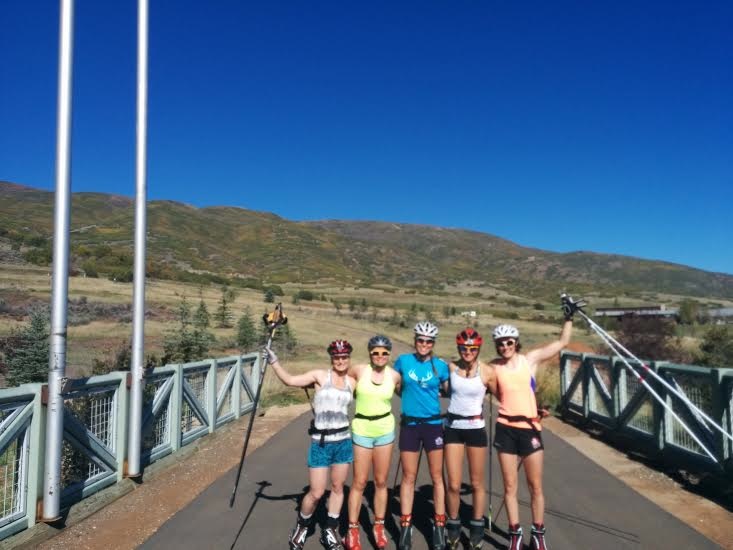
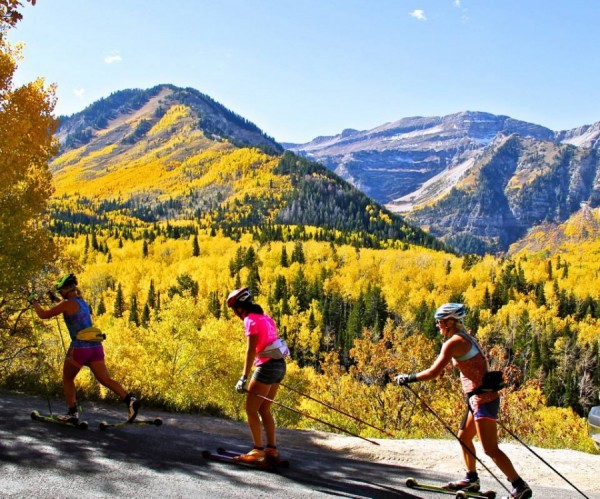
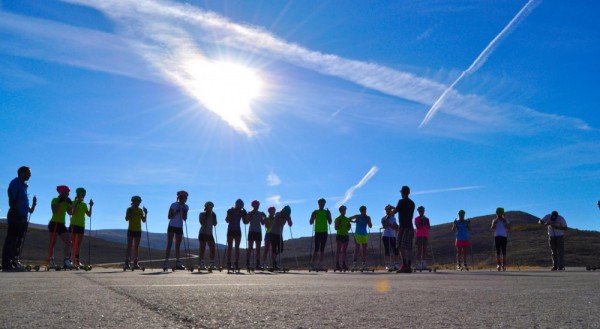
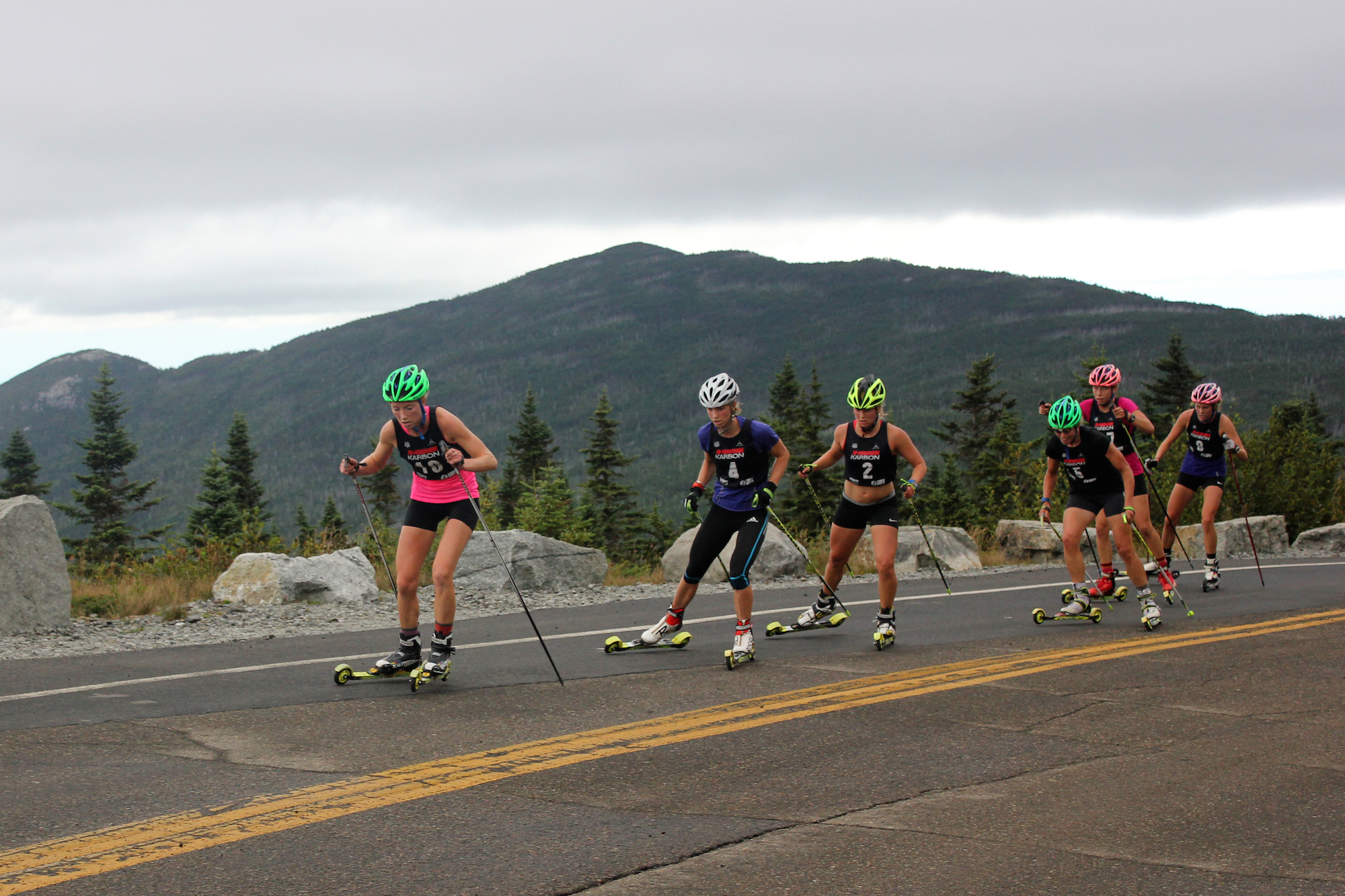
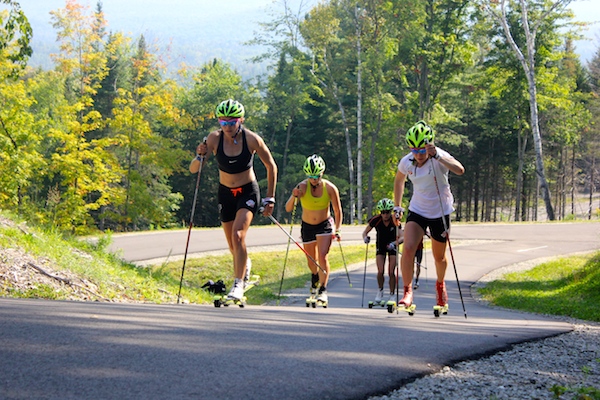
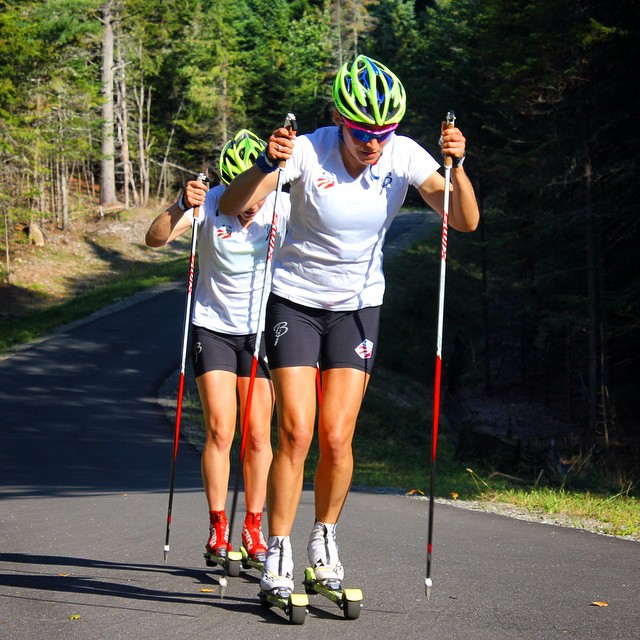
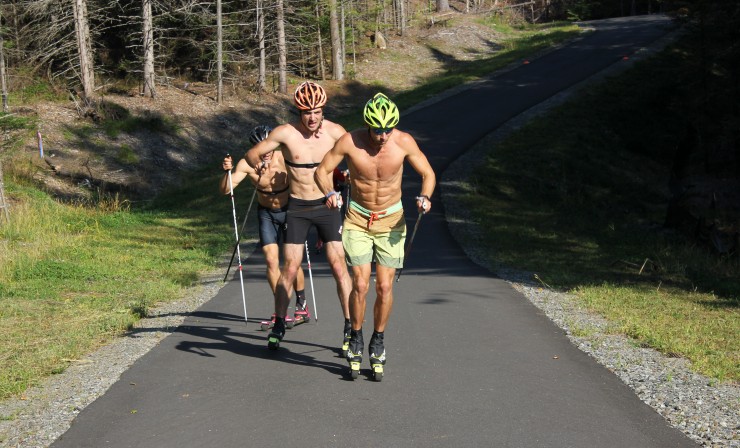
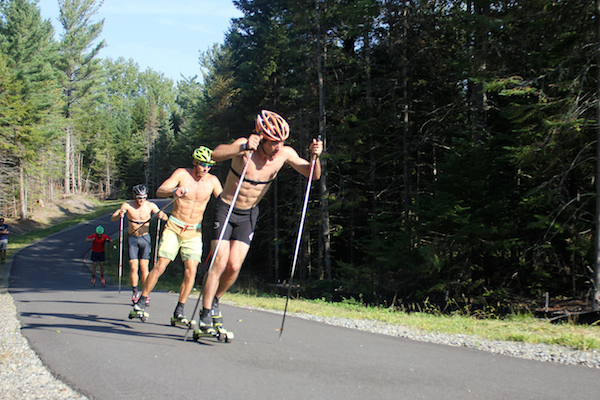
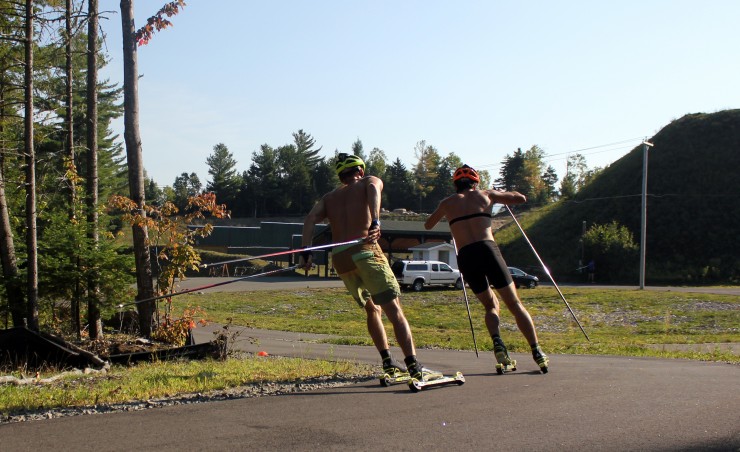
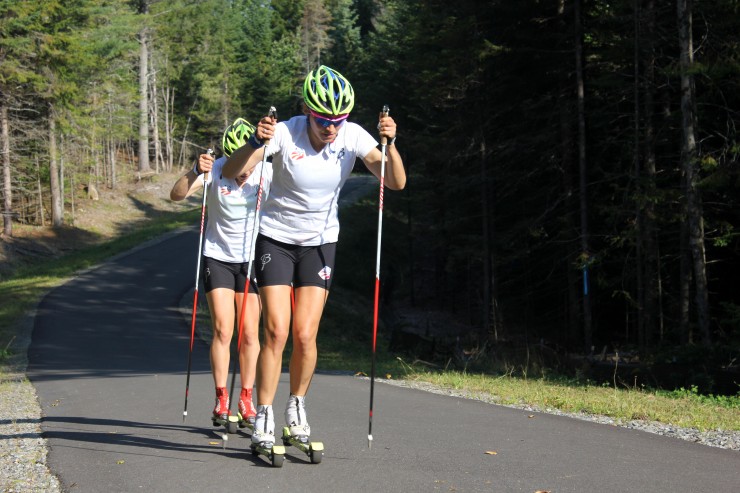
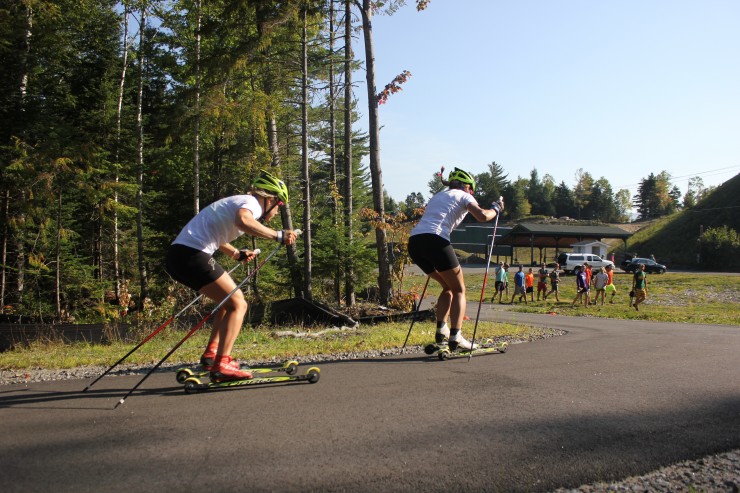
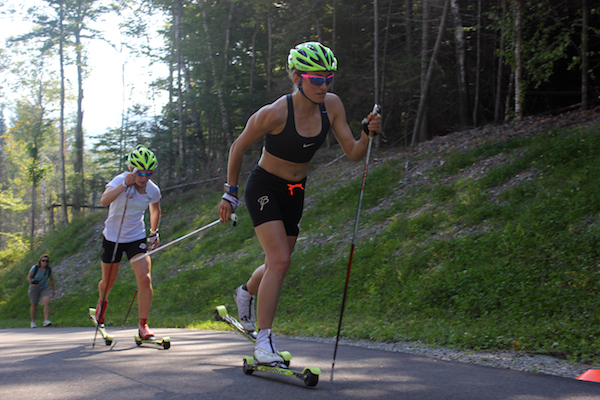
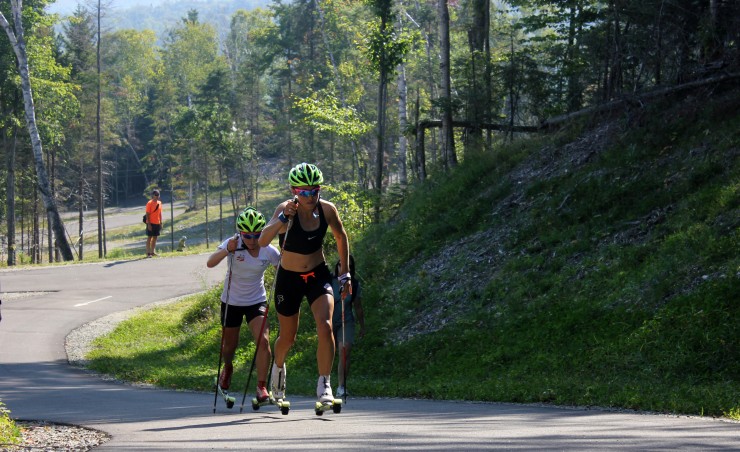
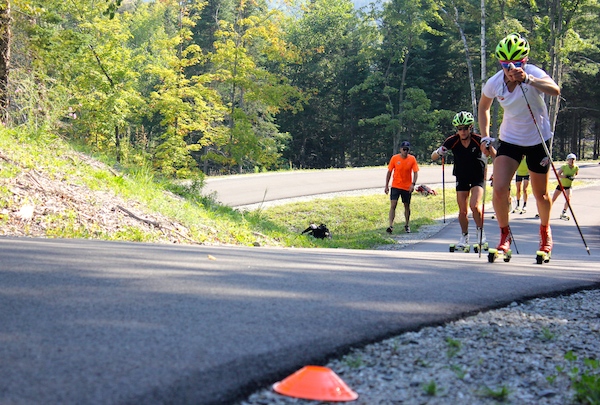
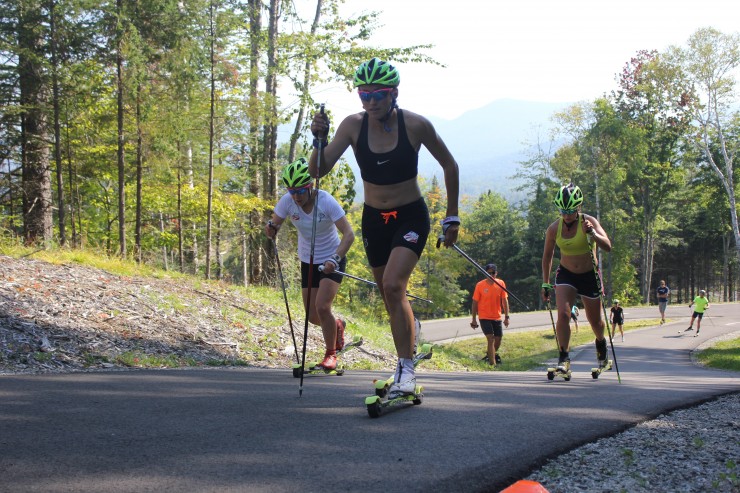
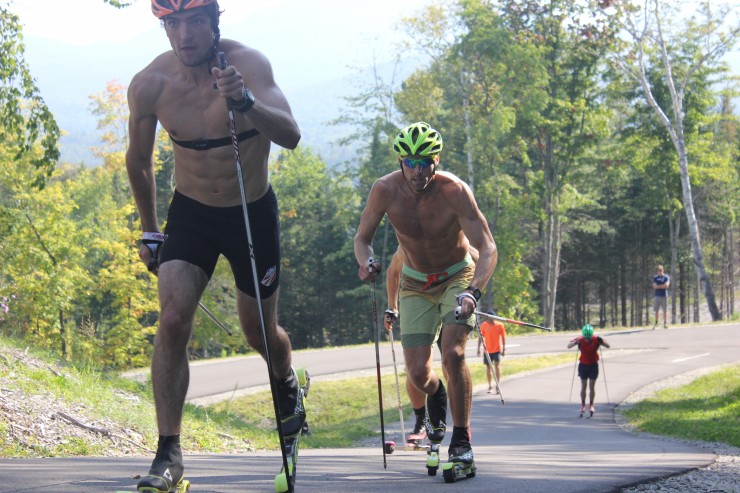
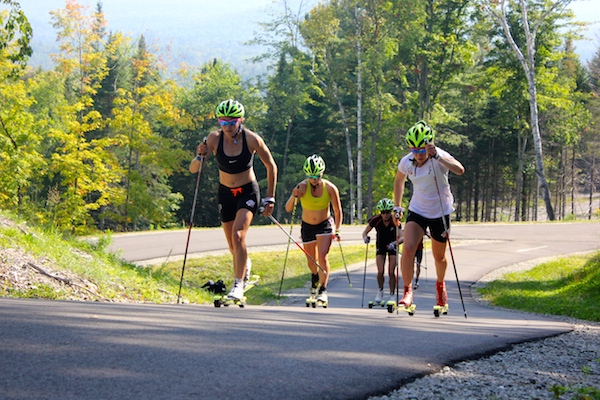
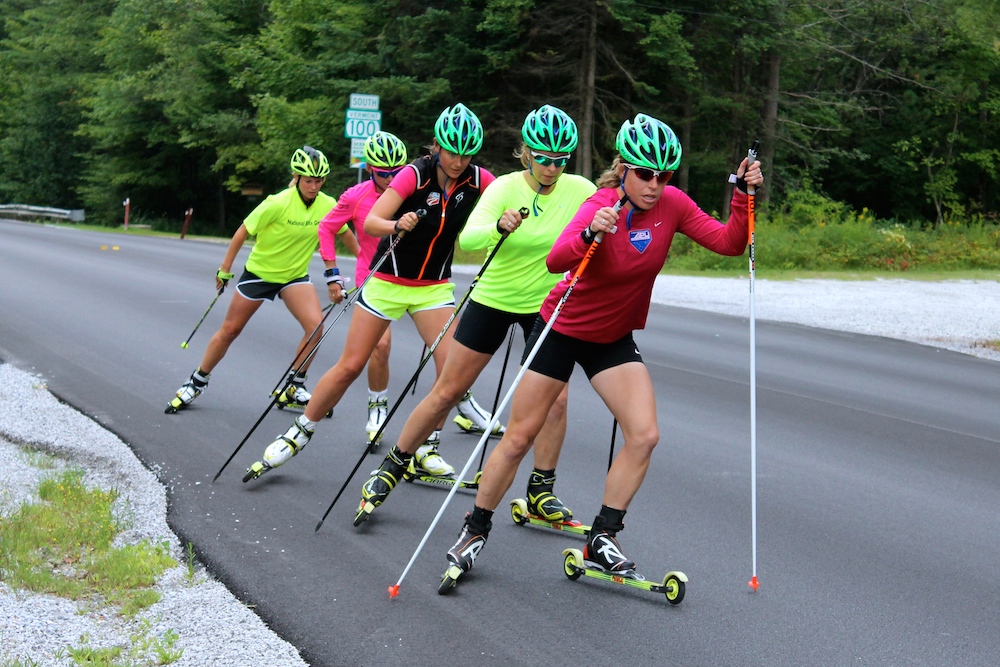
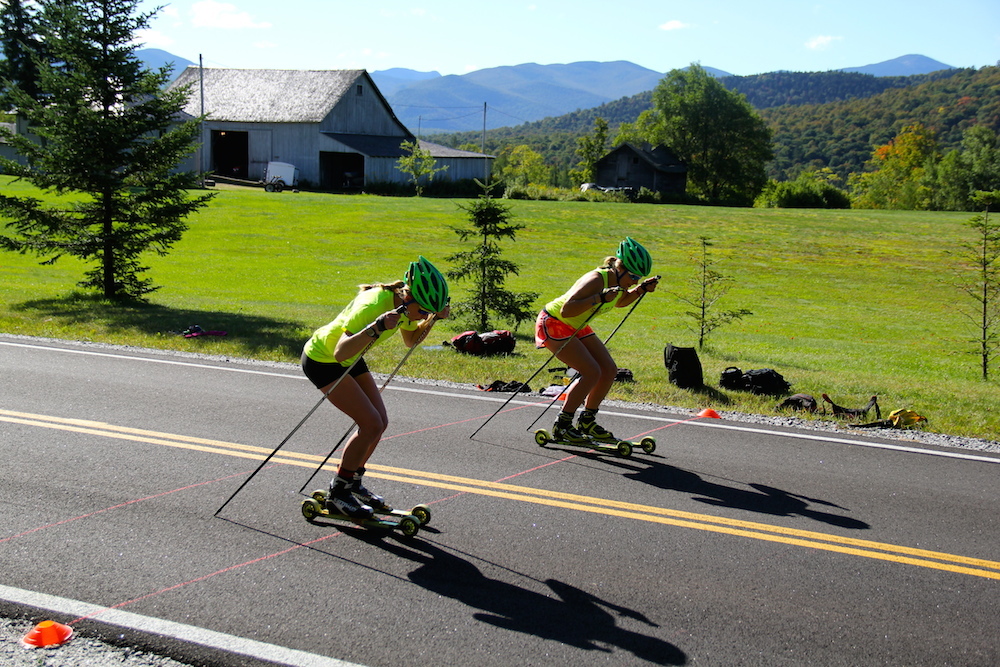
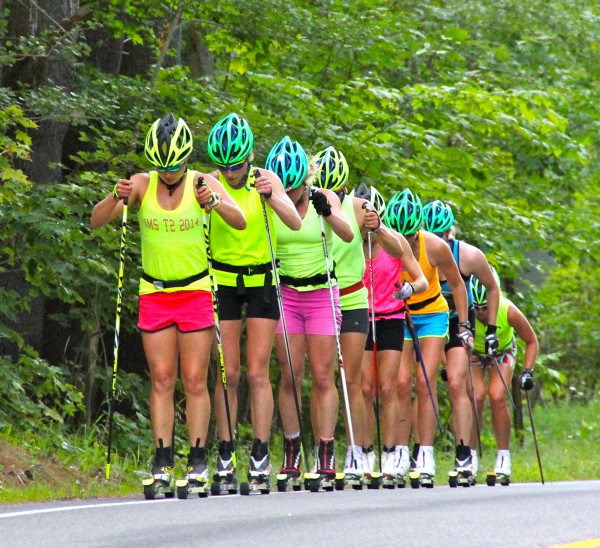
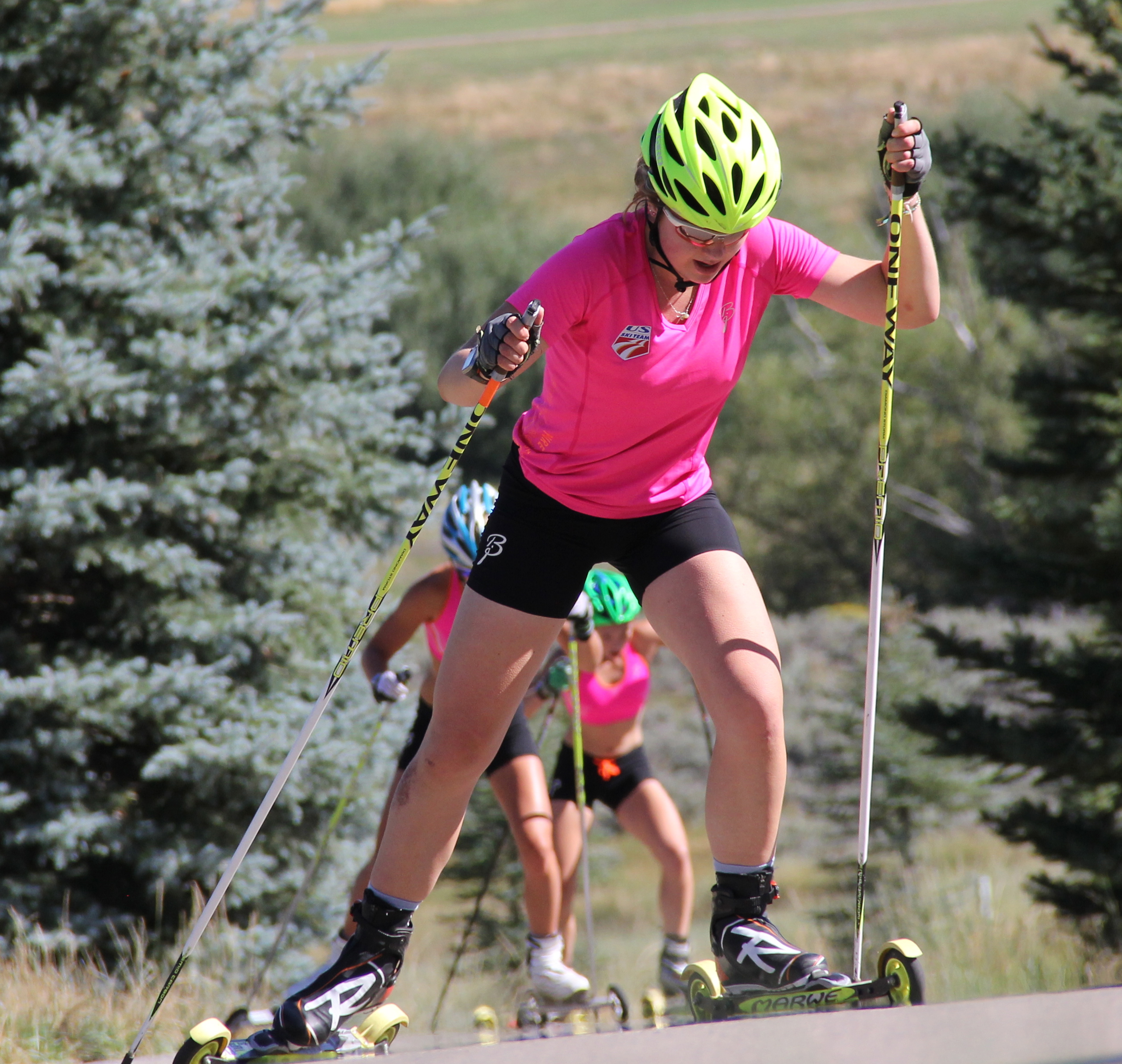
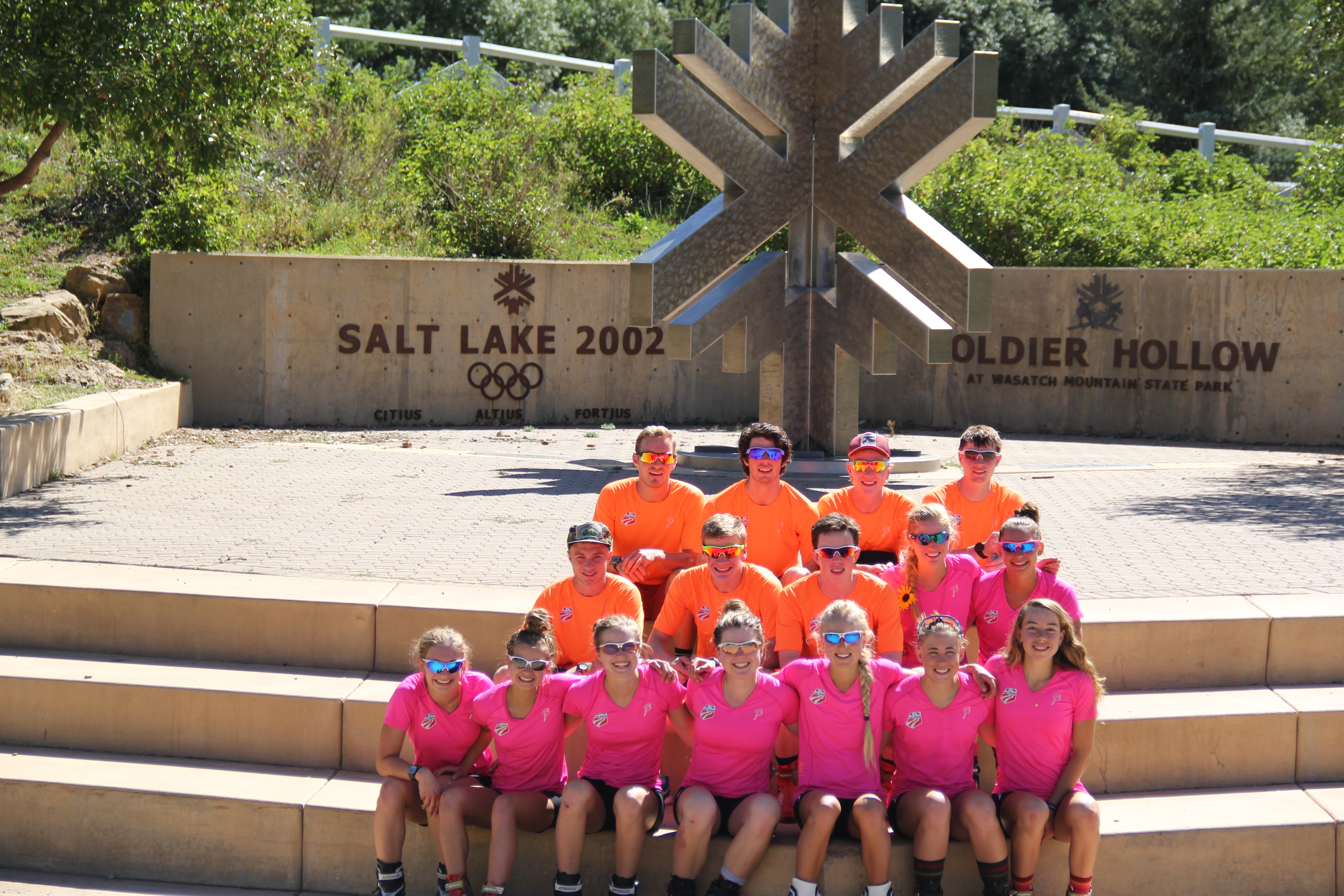
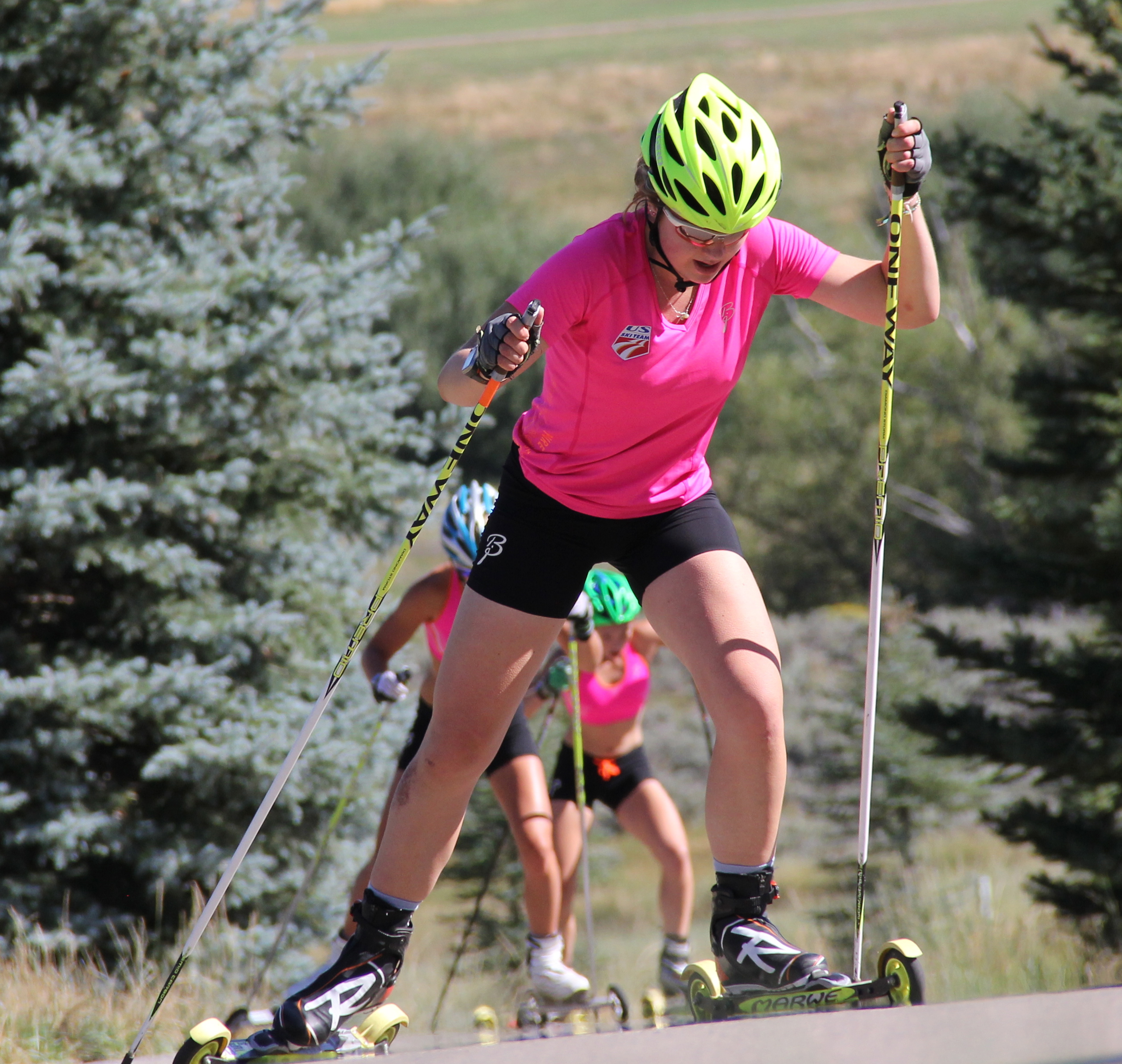
    The USST women rollerski at Soldier Hollow in Midway, Utah as part of the 2015 U.S. Cross Country Ski Team Spring Camp (Photo: USSA/Sarah Brunson)
    The USST women rollerski at Soldier Hollow in Midway, Utah as part of the 2015 U.S. Cross Country Ski Team Spring Camp (Photo: USSA/Sarah Brunson)

    Fresh off their first training camp in Park City, Utah, the U.S. Ski Team is taking a new approach to summer camps in the 2015 season. Due to a need for more on-snow training, increased funding from outside sources, and the fact that the upcoming racing season does not feature a major championships, the Americans are trying out a new camp schedule that includes a lot of travel. Increasing their the number of training camps from four to five, the team’s most notable travels will include trips to New Zealand and Norway.

    Return to New Zealand

    The USST is no stranger to New Zealand training camps. With the exception of 2014 the team has taken part in some form of organized camp at the Snow Farm in Wanaka for many years. For several years prior to 2014, the American trip to New Zealand was solely a men’s camp, while the women’s camp was held at Eagle Glacier in Alaska. For the first time in 2014, both the men’s and women’s on-snow camps were at Eagle Glacier, with Noah Hoffman being the lone USST member to travel to the Southern Hemisphere.

    Upcoming USST Camp Schedule:

    • New Zealand: July 7 – 24
    • Junior Camp in Norway: August 2 – 15
    • Norway: August 9 – 24
    • Lake Placid: September 13 – 20
    • Park City: October 12 – 28  

    While the 2014 Eagle Glacier camp was lauded as a success, the team had limited time at the venue and was forced to log many hours of skiing each day to make the camp worthwhile. Although New Zealand has challenges of its own, namely the many hours of travel it takes to get there, it allows for more on-snow time over the course of two weeks. Because the team missed its typical spring skiing in Bend, Ore. this year, coaches decided their skiers needed more midsummer snow time than usual.

    “We really felt like that it was critical for us to get a little bit longer on-snow opportunity than we had in the past few years for a lot of these guys simply because we missed Bend and the on-snow time we would have logged at Mt. Bachelor,” USST Head Coach Chris Grover said of the choice to return to the Southern Hemisphere.  “We chose to go to New Zealand instead to get a little more skiing over a longer period of time, which is more viable down there.”

    Both the A- and B-teams will travel to New Zealand July 7 and remain until the 24. The Alaskan members of the team (Kikkan Randall, Rosie Brennan, Sadie Bjornsen, and Erik Bjornsen) will not partake in the camp will take advantage of skiing on Eagle Glacier two to three times throughout the summer.

    Measuring Up in Norway

    The biggest change to the USST summer schedule is the addition of a two-week camp in Norway taking place in mid-August. According to Grover, the camp is something coaches and athletes have talked about for many years. With no championship races in 2016, the USST decided to explore the benefits of a camp in Europe.

    The team will have an acclimatization period in Aure for eight to nine days where they hope to train with several local skiers or other European national teams. According to Grover, the USST reached out the Norwegian National Team but due to schedule conflicts the two teams will have no official training sessions together. The U.S. skiers will attempt to train with several individuals on the National Team who live in the area, however.

    After the acclimatization period, the USST will participate in the annual Toppidrettsveka rollerski races that take place between Aure, Kynken, and Trondheim from August 20 to 22. The set of three races, which are often attended by the best Norwegians including Marit Bjørgen, Therese Johaug, and Petter Northug, were a major motivation for the Americans to have a training camp in Europe. According to Grover, they will allow the attendees to measure up against the competition at a crucial time in the training season. Furthermore, all three days of racing will feature classic rollerskiing – a technique the U.S. is looking to improve upon in 2015/2016.

    “We have a pretty big goal with a lot of the athletes to improve classic technique in particular, especially on the women’s side,” Grover said. “This is an opportunity for us to go and measure our classic technique against the best skiers in the world so people can measure where their double pole is right now, where there striding is, etcetera.”
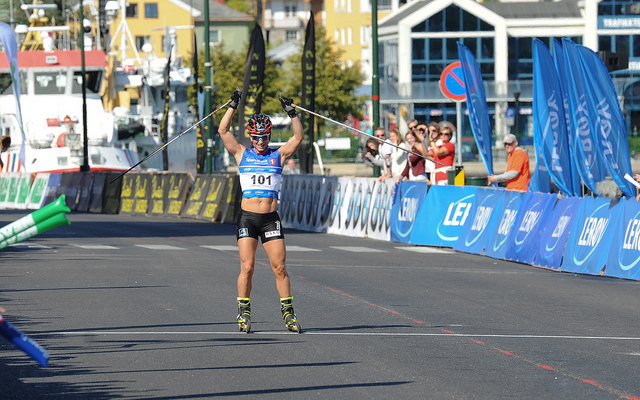
    Marit Bjørgen celebrates her win int he 2013 edition of Toppidrettsveka (Toppidrettsveka.no)
    Marit Bjørgen celebrates her win int he 2013 edition of Toppidrettsveka (Photo: Toppidrettsveka.no)

    2015 Toppidrettsveka (website):

    • August 20 – Aure: Uphill running race and classic sprint
    • August 21 – Knyken: 15 k skiathlon
    • August 22 – Trondheim: 15 k classic pursuit

    Given the American successes in recent years, organizers were eager to have the team compete in the series of races. According to Grover, the trip was made financially viable due to organizers providing lodging, food, and transportation for at least part of the camp.

    The final list of participants for the camp is still being confirmed, but several athletes are excited at the prospect of training and racing in Norway. Kikkan Randall, three-time sprint World Cup winner, said she believes the camp is an excellent opportunity for the team.

    “Getting in and being able to do some intervals and some racing with World Cup level field really helps me fine tune things and get a good picture of where I’m at,” Randall said. “It increases motivation after a long summer of prep… I think it will be a perfect fit because it’s in August and it will give us a couple months before we go into the race season.”

    The remaining USST camps will take place in Lake Placid and Park City. The mid-September camp in Lake Placid will be reduced from two weeks to one week, while the Park City camp will remain at its usual placement in the middle two weeks of October. Both camps will be open to athletes receiving invitations based on National Training or Elite Group status, or other qualifications.
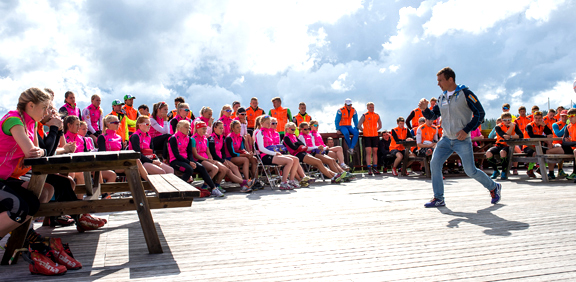
    Eldar Rønning speaks to juniors at the 2014 edition of the International Junior Camp. (Photo: Olav Mellingsaeter/FIS)
    Eldar Rønning speaks to juniors at the 2014 edition of the International Junior Camp. (Photo: Olav Mellingsaeter/FIS)

    International Junior Camp in Norway

    A- and B-teamers are the only Americans headed to Norway this summer, as a squad of juniors will attend the 2015 International Junior Camp in Norway from August 6 to 14. The camp, which is organized by the Norwegian Ski Federation, will start in Oslo and eventually move to Sjusjøen. The U.S. juniors will arrive prior to the start of the camp to acclimatize and participate in tunnel skiing in Torsby, Sweden starting August 2.

    With 120 spots available, the Norwegian Ski Federation invited nations to bring a maximum of 10 athletes and two coaches to the roughly week-long camp. Last year 90 athletes from Germany, Canada, Latvia, Estonia, Slovakia, Iceland, Czech Republic, Slovenia and Norway were in attendance. The 2015 event will mark the first time that American juniors have been selected by the national team to participate in an international training camp of this caliber and size.

    The camp will include a high volume of running, rollerskiing, and strength in addition to an uphill running race in Olso and a rollerski sprint race in Sjusjøen.

    According to trip-leader and USST Development Coach Bryan Fish the camp will serve several purposes, including the sharing of training philosophies and developments skills. “Most important, is the opportunity to for hands-on learning through physical training with one another,” Fish wrote in an email.

    Through a detailed selection process (see below) the USST selected 10 athletes for the event. Nine accepted the nomination and include Katharine Ogden, Julia Kern, Hannah Halvorsen, Hailey Swirbul, Alayna Sonnesyn, Zak Ketterson, Max Donaldson, Lars Hannah, and Karsten Hokanson.

    Prioritized International Junior Camp Selection Criteria:

    • One top 20 women’s / one top 30 men’s result at the 2015 Junior World Ski Championships
    • One top 15 women’s / one top 20 men’s result at an overall Scandinavian Cup or OPA Cup that has been scored to the USSA National Ranking List (NRL)
    • One top 10 women’s / one top 15 men’s result in the Junior division at a Scandinavian Cup or OPA Cup that has been scored to the USSA National Ranking List (NRL)
    • One top 10 women’s / one top 15 men’s result at the Under-18 Nation’s Cup competition (formerly known as J1 Scando Cup Trip)
    • Qualify for Junior World Ski Championships
    • Highest ranking on the USSA overall National Ranking List (athletes born on or between 1996, 1997 or 1998)

    International Junior Camp Athletes Accepting Nomination:

    Women:

    • Katharine Ogden
    • Julia Kern
    • Hannah Halvorsen
    • Hailey Swirbul
    • Alayna Sonnesyn

    Men:

    • Zak Ketterson
    • Max Donaldson
    • Lars Hannah
    • Karsten Hokanson

    The USST is attending its first International Junior Camp in 2015 because of unique circumstances that allowed for participation. According to Fish, one of the biggest reasons is funding. The National Nordic Foundation (NNF) will aid in the cost of the trip, so that athletes’ and coaches’ expenses are minimal.

    A second reason is the increased desire to continue development for young U.S. athletes. Fish wrote that the U.S. will continue to support its domestic programs for up-and-coming athletes, but that more international exposure will aid in future development.

    “It is cliché but true that cross country skiers are made in the summer, however there is no better way to learn what and how the best juniors from around the world are training than to join them in a place where the vast majority of the world’s best juniors are at,” he wrote.

    “I believe every camp has information each athlete can take home,” Fish continued. “I hope we all come into this camp with open-minds, respective to new ideas. The goal is for each and every one of us to come home with at least a few ideas or strategy (big or small) that can augment and improve personal training and performance.”

  • Masters Minds: The Other Thanksgiving Camp in Crested Butte

    Masters Minds: The Other Thanksgiving Camp in Crested Butte

    Are you a masters skier who loves your club? Submit camp or training recaps or announcements to info@fasterskier.com with the subject line: “Masters Minds”. Articles can be first-person accounts, like below, or written from an observatory standpoint with thoughts from others. Not a master? That’s OK, too! Email your camp recaps and photos with the subject line: “Camp Recap”.

    ***

    While seemingly the rest of the North American nordic-ski community converges on West Yellowstone during the week of Thanksgiving, several other places also offer great opportunities for early-season nordic camps and skiing.  One of the most unheralded nordic ski communities that can almost guarantee great XC skiing with top-level camp clinics and other fun nordic-related activities is Crested Butte, Colorado.

    Although the Crested Butte Nordic Council was founded only as recently as 1987, the history of skiing in the area goes back as far back as anyone can dig up in recorded history.  The pioneers of the area pretty much had to adapt to skiing just to get around at all, due to the incredible amounts of snow that the area receives every year.

    The tradition of nordic skiing, Rocky Mountain style, runs rich throughout the Gunnison Valley and the West Elk Range of Colorado. The local museums and taverns have all sorts of historical photos, written accounts, and memorabilia that illustrate how the culture was born, imported by European settlers, and thrived as a means of survival and recreation.  Any visitor to the area interested in the history of skiing should take some time to learn more about the rich traditions and colorful characters that laid the foundation for what is now one of the most unique and genuine nordic towns in America.

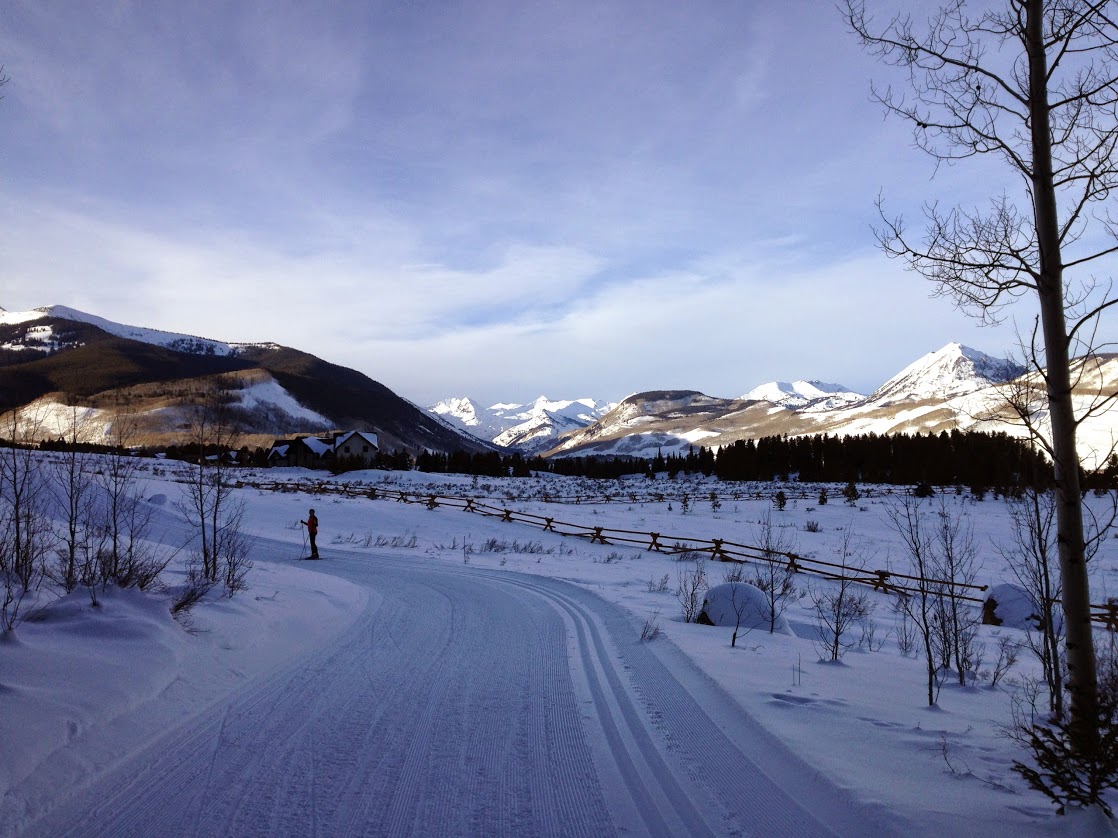
    Ruthie’s Run: Crested Butte Nordic’s FIS-homologated 5k course right on the edge of town (Photo: Clay Moseley)
    Ruthie’s Run: Crested Butte Nordic’s FIS-homologated 5 k course right on the edge of town.

    More recently, the Crested Butte Nordic Council has held the torch in keeping all things nordic alive and well in the valley.  The real credit should go to the very dedicated people of Crested Butte and the nordic center staff, led by its director, Keith Bauer — a Midwesterner transplant that knows a thing or two about running a nordic center.

    But, the most obvious asset is the network of trails that all start right on the edges of town within short walking distance, including from the nordic center, which serves as the epicenter of nordic activities. It also includes the regulation ice rink, a pretty serious (and fun for all ages) sledding hill, and the most incredibly beautiful and challenging International Ski Federation (FIS)-homologated 5-kilometer race course, in addition to the other connecting ski trails on the breathtaking, open-space lands that abound around the village.

    The grooming is also something to rave about. CB Nordic has continually sought to improve the quality of its grooming, with new and improved equipment, more groomers, a more robust schedule and more interaction with staff and skiers.  Another aspect is that they have actual nordic skiers doing the grooming, and know what a finished product should be. There has been a lot of energy and effort put into this area of the operation, and it really shows.

    Despite the already-great conditions for a Thanksgiving camp, I witnessed the grooming team going out and shoveling every little area that wasn’t just right in terms of grooming depth.  I don’t know that I’ve seen that very often, except right before big events.

    Since 2002, the Nordic Council has played host to the annual Crested Butte Thanksgiving camp. While not as well-known, nor as vast in scope as the camp at West Yellowstone, the CB camp is nevertheless an extremely good alternative. For one, the snow is almost always in abundance for November.

    While not as well-known, nor as vast in scope as the camp at West Yellowstone, the CB camp is nevertheless an extremely good alternative. For one, the snow is almost always in abundance for November. 

    If it isn’t up to par in town, there is a pretty amazing alternative just a little ways up the old Kebler Pass road (used in the USA Pro Cycling Challenge) at a place called “Lily Lake” that is more than an adequate alternative, with some fun and interesting trails.  It’s up a little higher in elevation, and tucked in a hidden high plateau among towering peaks that receive those beautiful Rocky Mountain early season dumps of snow, quite often providing skiing as early as mid-September, and most certainly by October.

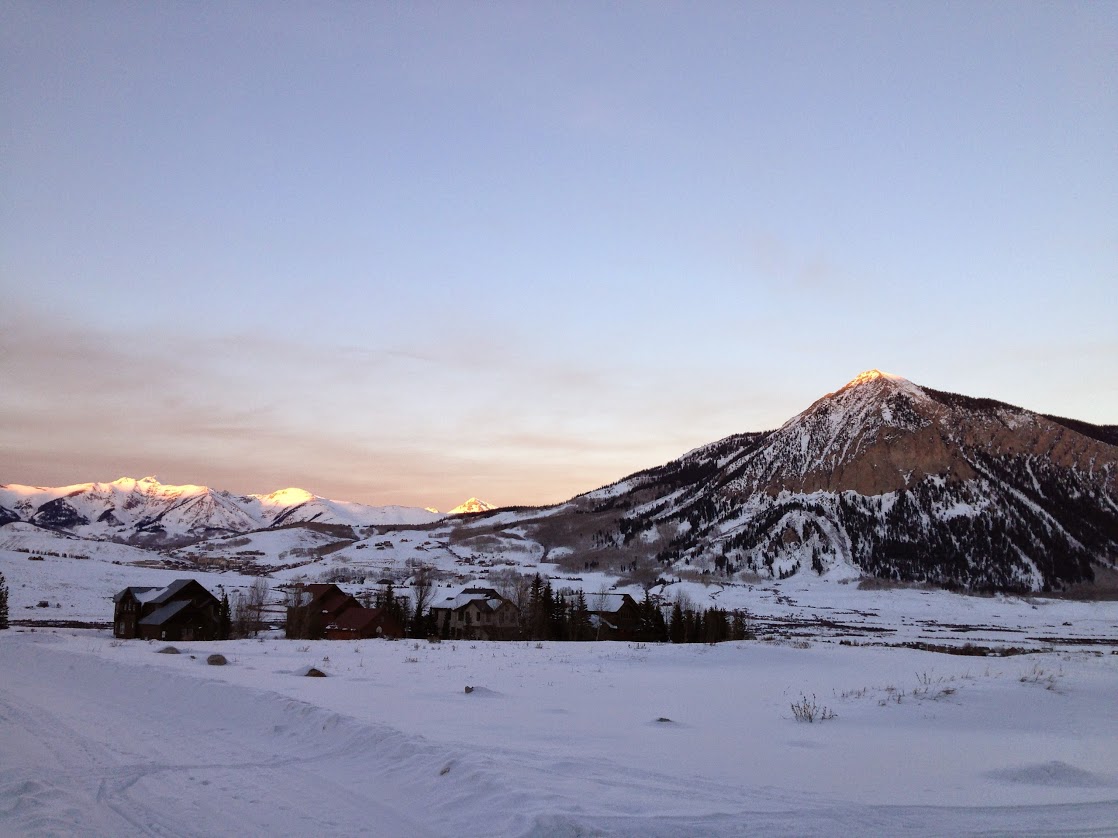
    Sunset over the West Elk Range, and Mt. Crested Butte (Photo: Clay Moseley)
    Sunset over the West Elk Range and Mt. Crested Butte


    But, usually there is good snow down in the valley for some great early season skiing, and this year was no exception.  Conditions were simply fabulous with a good base and abundant sunshine.  Nighttime temperatures plummet in this high-mountain valley, so the snow remained cold and mostly untransformed, despite the comfortable afternoon conditions.  Most days saw glide and kick wax in the “blue” ranges, with only a little violet mixed in for sunny spots.

    The camp itself has evolved over the years, but what has been a mainstay from the beginning is the high level of instruction in the various technique clinics.   The instructors that the CB Nordic Center gets for these clinics are the real heroes, donating their time and expertise to the center for a charitable cause.  Where else can you get local Olympians to teach clinics?  And PSIA and master’s instructors with deserved celebrity status?  Crested Butte has it all.  The most notable instructors I’ve had over the past few years include Ingrid Butts, Rebecca Dussault, Ross Matlock, Murray Banks, Jeff Banks, and Steve Hindman.

    Responses to the level of instruction has always been at the top, and many of us have made personal friendships over the years with the various instructors.  They’ve made the sport fun in terms of a life-long learning adventure, and I have most certainly improved thanks to them.

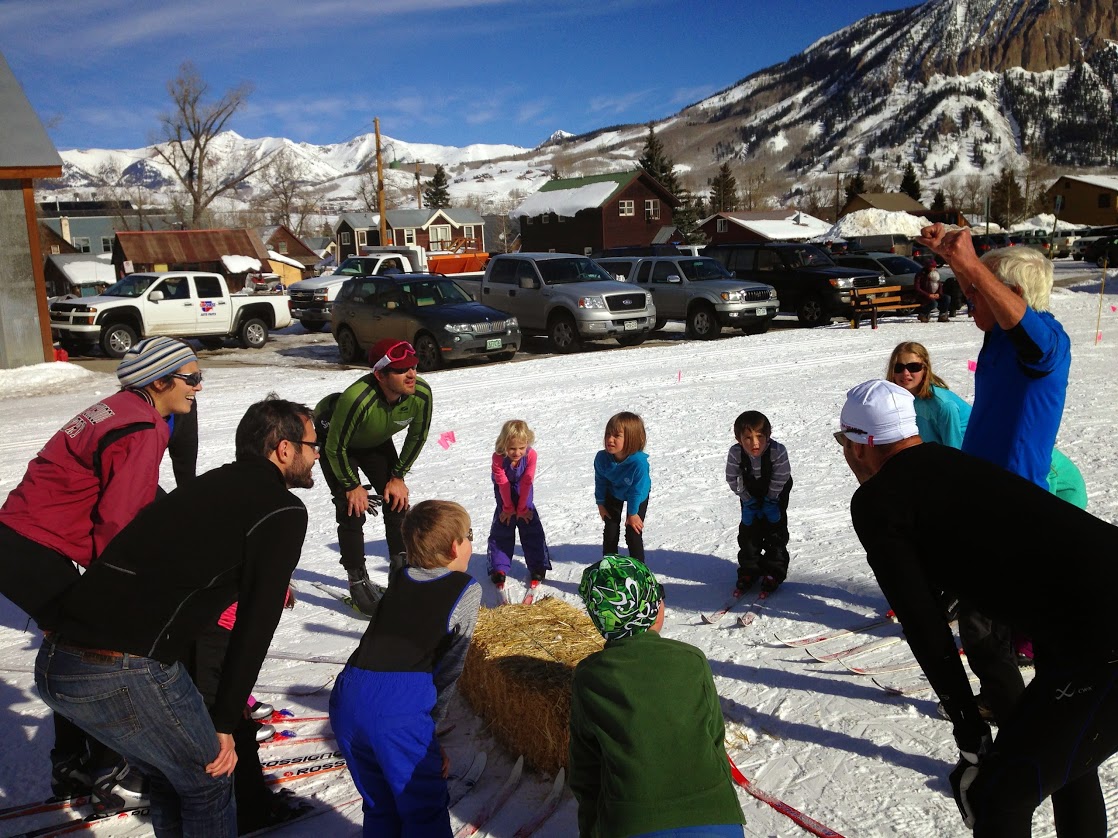
    Murray Banks teaching and entertaining kids of all ages at the Crested Butte Thanksgiving Camp late last month in Colorado. (Photo: Clay Moseley)
    Murray Banks teaching and entertaining kids of all ages at the Crested Butte Thanksgiving Camp late last month in Colorado. (Photo: Clay Moseley)


    The Crested Butte Camp instructors have always been high-quality people who are passionate about sharing their love and knowledge of cross-country skiing, whether it be for junior to master’s level racing, or just for weekend warriors looking to find a little more efficiency and enjoyment in their workouts.  The clinics are not merely stand-around and listen clinics either, they’re fast paced and require a lot of energy input from everyone, which makes them more fun than other clinics I’ve participated in.

    Camp clinics that are offered range from “novice” level (not first-timers), to fully advanced and racing-specific classes.  Schedules include both techniques at all levels from Thursday (Thanksgiving Day) through Saturday, with some bonus activity on Sunday, like a fun group ski.

    In years previous when Western State in Gunnison still had a Division-1 ski team, Sunday was reserved for an intramural scrimmage race of collegiate racers, local former racers, masters like myself, and everyone in between.  It was always fun to break out the fancy wax and good skis and see if we could employ what we’d learned over the previous days’ clinics.  But with the ski program at Western State being dropped, interest in a Sunday race sort of dropped as well because everyone is usually quite exhausted after all the high-energy clinics.

    As many times as I’ve attended the CB Thanksgiving camp clinics, one would think it would get repetitious, but with cross-country skiing being such a life-long learning activity and all, even the well-seasoned instructors seem to have learning revelations during their time skiing and coaching.  I’m always impressed that something new, or a new angle on an age-old challenge, can be added to the wealth of information the CB camp instructors always present.

    “As many times as I’ve attended the CB Thanksgiving camp clinics, one would think it would get repetitious, but … even the well-seasoned instructors seem to have learning revelations during their time skiing and coaching.”

    Additionally, they’ve always spent a lot of time and energy collecting very detailed video analysis of each and every clinic participant in a variety of techniques and terrain.  There have been times that Ingrid Butts needed to be done to get to something else, but got so into her instruction, that it got well past dark by the time she was done with us.  I’ve also held Murray Banks and Ross Matlock hostage a couple of times to help work out some issues that arose during the clinics, and they were not just being polite, but really enthusiastic about spending the extra time to go over not only my, but others’ cases as well.  The individual attention is probably what is best about this Thanksgiving camp.

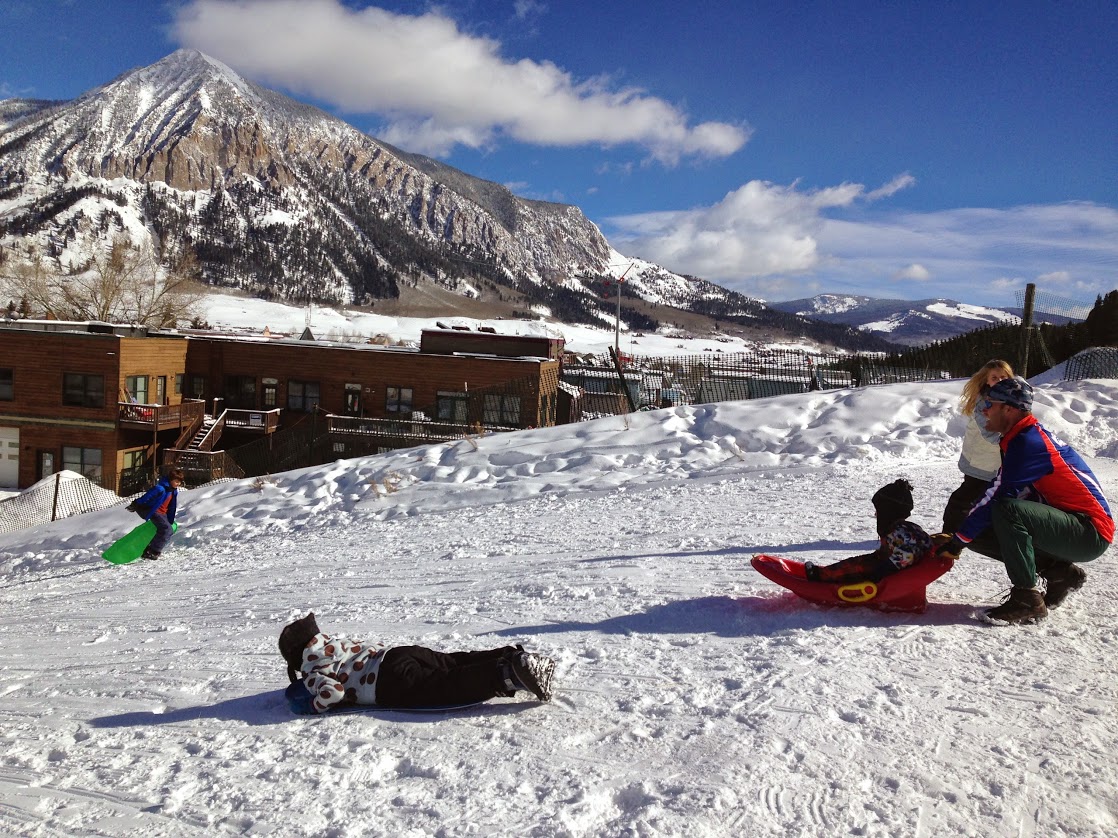
    Serious sledding at the Crested Butte Nordic Center (Photo: Clay Moseley)
    Serious sledding at the Crested Butte Nordic Center (Photo: Clay Moseley)

    This year, my local ski club, the Southwest Nordic Ski Club of Northern New Mexico, sort of ad-hoc partnered with the Crested Butte Nordic Council to add in a kids’ fun clinic for an entire morning of games, obstacles, relays and short races.  It was a lot of fun for the kids and parents alike.

    Murray Banks, who is recovering from surgery to repair an injury sustained during a backcountry ski adventure last May, stepped up and led us parents to help him with all the many kids who joined in the morning clinic.  The kids really got into it and learned a lot without ever getting bored or having to sit and listen for more than just a few seconds.  It was so much fun and if you ever get an opportunity to take a class from Murray Banks, take it.  He’s so entertaining, on top of being a very good teacher.  The kids just love him (as do the adults!).  He may be an old-school Vermonter, but he really breathes a lot of life into everything he does, especially cross-country skiing.

    Finally, the Crested Butte Thanksgiving Camp also serves as a fundraiser for the CB Nordic Council.  They host a couple of other apres-ski activities, like an evening film festival with interesting ski-related Indie films, and a very fun dinner party with a silent auction and often an impromptu dance party.  It’s always been a fun week of Nordic celebration that welcomes everyone.

    Other notable Crested Butte information:

    • Crested Butte is also home to one of the most famous alpine areas and always has some good deals this time of the year.
    • Great restaurants (of all kinds) and coffee shops abound, and all are open and welcoming to visitors.
    • Lodging deals are also easy to find, since it’s still considered “low season.”
    • The Crested Butte Nordic website is:  www.cbnordic.org
    • More camp photos: CB Nordic Facebook
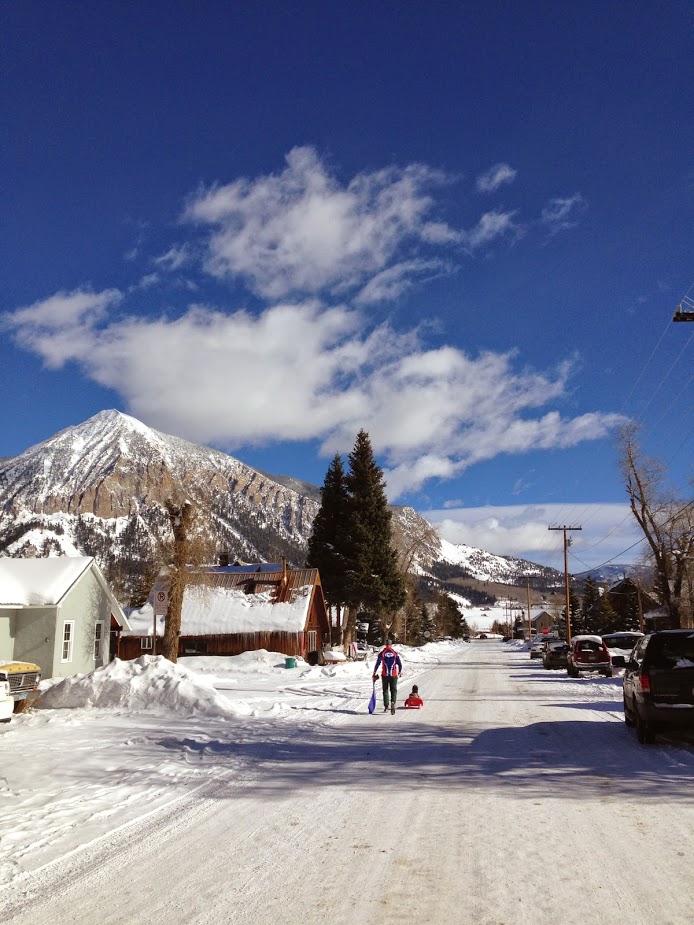
    It’s easy for kids to get around Crested Butte! (Photo: Clay Moseley)
    It’s easy for kids to get around Crested Butte!
    About the Author: Originally a bike racer, Clay Moseley picked up nordic skiing in college (thanks to his Norwegian roommate, also on the University of New Mexico ski team). As president of the Southwest Nordic Ski Club, based in Los Alamos, N.M., for the last 12 years, he’s worked to develop relationships with several of the southern/central Colorado Nordic organizations (plus New Mexico organizations) for increasing involvement in nordic skiing at all levels.  These organizations include Crested Butte Nordic Council, Pagosa Springs Nordic Club, San Juan Nordic Club, Chama Outdoor Club, Enchanted Forest Cross Country Ski Area, and the Sandia Nordic Club (Albuquerque). When he’s not out skiing with his family, Clay dabbles in masters racing.
  • Rocky Mountain Racers Inspired and Challenged at Soldier Hollow

    Rocky Mountain Racers Inspired and Challenged at Soldier Hollow

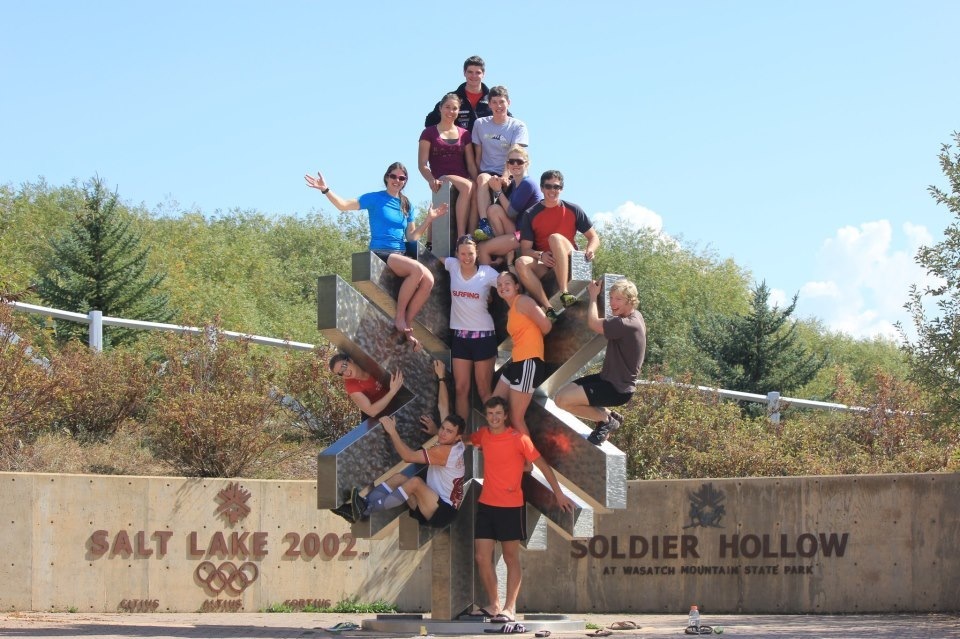
    The Rocky Mountain Racers crew after a training session in Soldier Hollow in 2012. (Courtesy photo)
    The Rocky Mountain Racers crew after a training session in Soldier Hollow in 2012. (Courtesy photo)

    Maya MacIsaac-Jones, 19, of the Canadian National Junior Team and Rocky Mountain Racers (RMR) in Canmore, Alberta, submitted the following article about her RMR’s recent dryland camp in Park City, Utah, to info@fasterskier.com. Born and raised in Athabasca, Alberta, MacIsaac Jones lives in Canmore and is a student at Athabasca University. 

    ***

    From Sept. 27 to Oct. 11, one of Canada’s high-performance racing teams, Rocky Mountain Racers (RMR), headed down to Park City, Utah, for their two-week long high altitude training camp.

    RMR is comprised of just over 20 high-performance athletes in both cross-country and biathlon from all across Canada. Led by coaches John Jaques and Luke McGurk, the team’s athletes focused on both high volume and high intensity during their camp.

    RMR girls after a time trial at Soldier Hollow last month (from left to right): Andrea Dupont, Emma Camicioli, Maya MacIsaac-Jones, Ember Large, and Olivia Bouffard-Nesbitt. (Photo: Ember Large)
    RMR girls after a time trial at Soldier Hollow last month (from left to right): Andrea Dupont, Emma Camicioli, Maya MacIsaac-Jones, Ember Large, and Olivia Bouffard-Nesbitt. (Photo: Ember Large)

    Long 4-5 hour workouts were completed on the various mountain passes surrounding Park City and Salt Lake City while intensity sessions, time trials and shooting practices were reserved for the excellent facilities available at Soldier Hollow in Midway.

    Because of RMR’s cross-country/biathlon mix, Soldier Hollow was the perfect place for training sessions to occur; coaches were able to coordinate shooting practices for the biathletes with simultaneous rollerskiing sessions for the cross-country side of the team.

    Utilizing Soldier Hollow’s biathlon range, extensive set of rollerski tracks and advantageously close proximity to Park City, RMR held several intensity sessions and time trials at the former Olympic site. The hilly climbs the facility offered also gave the athletes an opportunity to have a dryland time trial with a course very similar to what they will face during the ski season.

    “It’s inspiring to train in the exact spot that I saw my Olympic heroes win medals at during the 2002 Olympics,” RMR athlete Andrew Brisbin stated. “[Soldier Hollow] is the most difficult and technical rollerski track that I’ve been on, meaning it most closely resembles a World-Cup caliber ski course through its lung and leg busting climbs and quick descents.”

    Stuart Harden, RMR athlete and one of Canada’s top junior biathletes, also enjoyed training at the former Olympic site: “Soldier Hollow was a great asset to have at our Park City training camp. For biathletes, having a range and full rollerski loop close by made the trip feasible. As far as rollerski tracks go, Soldier Hollow is considerably challenging. Some steep, sustained climbs coupled with the altitude can really make you hurt, and can definitely make training there worthwhile.”

    When not focusing on intensity sessions or shooting practices, the team explored the many other mountain roads available for rollerskiing in the area, including Mirror Lake pass, Wolfe pass, and Guardsman Pass. They concluded their camp with a 4-5 hour altitude run at 9000 feet on the trails above Park City.

    With their last camp of the season complete, RMR athletes are now in their final stages of preparing for the racing season and the upcoming [SuperTour and] NorAm races at West Yellowstone, Bozeman, Rossland, and Whistler.

    For any athletes or coaches interested in exploring Soldier Hollow as a future training possibility, please use the following contact information:

    Richard Hodges

    richard.hodges@soldierhollow.com

    801-558-5804

    — Maya MacIsaac-Jones, 

    RMR cross-country skier

    @_MayaMJ

  • Masters Minds: Early Season in Southcentral Alaska

    Masters Minds: Early Season in Southcentral Alaska

    Most years, skiers of all ages find their snow legs again at Independence Mine. Here five-year-old Scout Gramse edges M1 racer Dylan Watts (October 2013) (Photo:  Shannon Gramse/APU)
    Most years, skiers of all ages find their snow legs again at Independence Mine State Historical Park in Alaska. Here, 5-year-old Scout Gramse edges M1 racer Dylan Watts in Oct. 2013. (Photo: Shannon Gramse/APUNC)

    Masters from around the world, we want to hear from you! FasterSkier is seeking dedicated masters contributors from various clubs and regions, including any and all skiers who aren’t quite pro or collegiate skiers anymore (or ever — as we know how many catch the bug later in life!) Whatever your level of skiing, if you can write, please do! 

    Submit camp or training recaps or announcements to info@fasterskier.com with the subject line “Masters Minds”. Articles can be informal, first-person accounts or written from an observatory standpoint with thoughts from others, like below.

    ***

    Part of the joy and the pain and, ultimately, the poetry of a lifetime of skiing is how the sport focuses one’s attention on natural processes that are both cyclical and unpredictable. This year Southcentral Alaska caught its first real snow on Oct. 20, and early season skiing has been great, but not in the usual ways or places.

    First grooming honors go to the Nordic Ski Association of Anchorage, who, thanks to extensive summer trail work and an innovative approach with a light homemade drag pulled by an ATV, miraculously transformed a scant four inches into fine skiing at the Hillside Park in Anchorage. A few more inches fell higher up, in Chugach State Park, where early-season skiers along Powerline Pass witnessed a pair of grizzly bears fighting over a dead bull moose.

    Skiing has also been good south of Anchorage in the resort town of Girdwood, where a beautiful and challenging new 5 k system winds among stately hemlocks in a spectacular mountain valley. Completely absent from the scene, however, has been Southcentral Alaska’s traditional go-to early season hotspot, Hatcher Pass, which has missed the region’s minimal early snow thus far. Nonetheless, as if by habit, masters’ minds and talk have turned frequently of late to this special place.

    Completely absent from the scene, however, has been Southcentral Alaska’s traditional go-to early season hotspot, Hatcher Pass, which has missed the region’s minimal early snow thus far.  

    There must be many spectacular snow bowls high in Alaska’s Talkeetna Mountains, where remnant Pacific storm systems (usually!) roll like slow breakers into jagged peaks and arctic chill, but only one such wonderland, Hatcher Pass, is accessible via a plowed road, and it is a goldmine. And an actual gold mine.

    It's not Hatcher Pass, but he'll take it. Shannon Gramse begins a new ski season in Chugach State Park on October 21, 2014. Skiers shared this valley with a pair of brown bears feasting on a bull moose. (Courtesy photo)
    It’s not Hatcher Pass, but he’ll take it. Shannon Gramse begins a new ski season in Chugach State Park on October 21, 2014. Skiers shared this valley with a pair of brown bears feasting on a bull moose.


    The surrounding mountains are born of the Castle Mountain Fault, a major geological fracture the access road crosses, much lower, as it begins to climb through the canyon of the Little Susitna River, but the road itself owes its existence to Robert Hatcher’s discovery of gold in the area in 1906 and the subsequent development of Independence Mine, in its heyday a vibrant industrial complex served by miles of tunnels and over 200 employees, some of whom took advantage of the area’s excellent skiing, both for fun and transportation.

    Independence Mine closed in 1951 but the skiing continued, with skiers often staying in the abandoned buildings. In the late 1960s Hap Wurlitzer opened the incomparable Hatcher Pass Lodge about one kilometer below the mine complex, and the onetime mine manger’s house, built in 1936 for the Stoll family, also served for a time in the 1970s as a skiers’ inn.

    In 1974 the mine was placed on National Register of Historical Places, and since 1980 the buildings and surrounding 270 acres comprise Independence Mine State Historical Park. Grand plans for enormous ski resorts at Hatcher Pass have never materialized, thankfully. Today, thanks to incredible grooming by the Mat-Su Ski Club, skiing is hotter than ever. Early-season skiing at Independence Mine is easily among the best in America and a beloved southcentral Alaskan fall ritual.

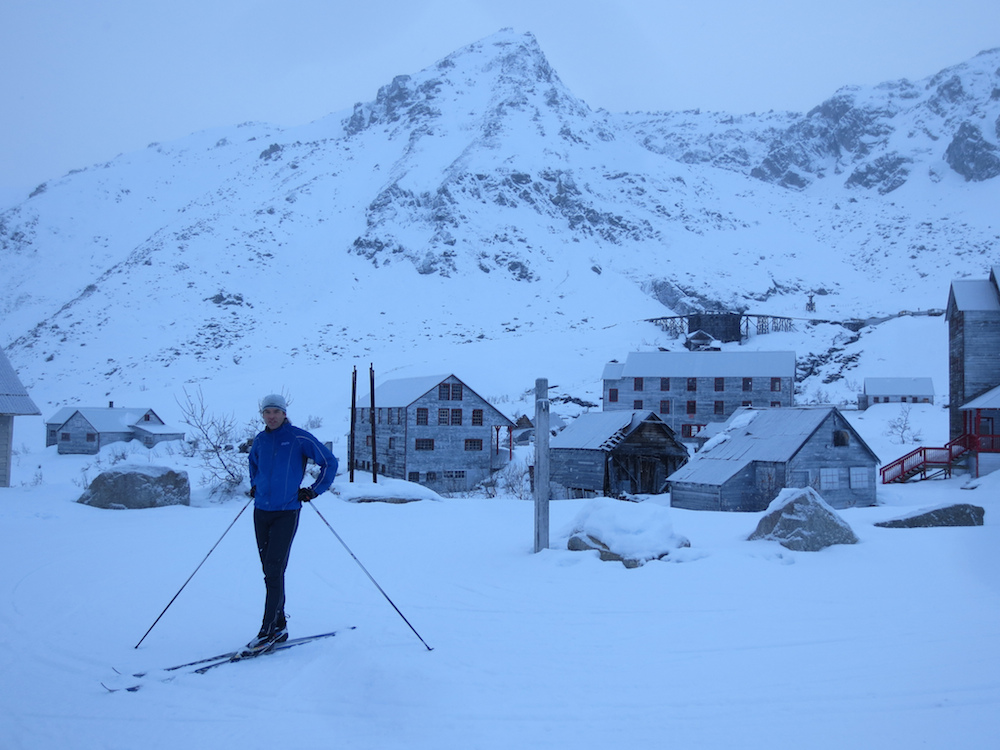
    The 800-foot climb from Hatcher Pass Lodge at the end of the road up to the historic mine seems an important part of that ritual for many Alaskan masters and a good gauge of fall fitness, if a bit of a rough welcome back to snow. At the mine, three interconnected loops totaling several kilometers, zero meters of which are horizontal, weave amid clapboard buildings, the mess hall, offices and machine shops, dormitories, all painted silver with red trim, some three stories tall, many with covered porches, and fascinating ruins, including crumbling mine car trestles, waterways, and enormous generators.  Imagine skiing through an Old West ghost town turned collectible Christmas village.

    Imagine skiing through an Old West ghost town turned collectible Christmas village.

    Skiing at Independence Mine is typically excellent season-long, but it’s busiest in the fall, as many area skiers take the opportunity for an early start on challenging terrain.

    A typical early-season skiing scene: APUNSC Master Travis Rector pauses while skiing Independence Mine in October 2013.
    A typical early-season skiing scene: APUNSC Master Travis Rector pauses while skiing Independence Mine in October 2013.


    Longtime Alaska Pacific University Nordic Center (APUNC) Masters coach Dylan Watts advises, “You can normally add three to four weeks to your ski session if you’re willing to make the drive. This makes it ideal for getting a feel for the snow and skis again. Plus the kilometer-long uphill right at the start really gives a boost to your fitness. After a few weekends skiing up and down you can feel an improvement both in confidence and ability on the skis as well as improved strength and stamina.  The area also offers a variety of consistent grades both on straights and turns all within a compact area, making it ideal for working on different techniques and skills.  It really is an ideal place if you’re looking to build form and fitness on cross-country skis.”

    Mike Truskowski, M5 racer, middle-school teacher and coach, adds: “To make things even more interesting, there is no place to hide from your friends, so everyone can see how you’re doing.  Just when you think that you’re skiing a good loop, watch out behind you: That person calling ‘Hup ’ could be an Olympic skier, a national champion, or just your buddy who worked harder than you this last summer.”

    That buddy might be M4 racer and Anchorage optometrist Jim Falconer who also enjoys the challenge and the area’s special beauty: “A ski at Independence Mine in October usually marks the beginning of the ski season for me.  After the season’s first significant snow in the mountains, it’s an almost spiritual experience to go up there and ski in that environment — it feels like another world.  And since it’s mostly up and down without much in the way of flat terrain, skiing there is a real test of the fitness you are carrying into the ski season from your summer training.”

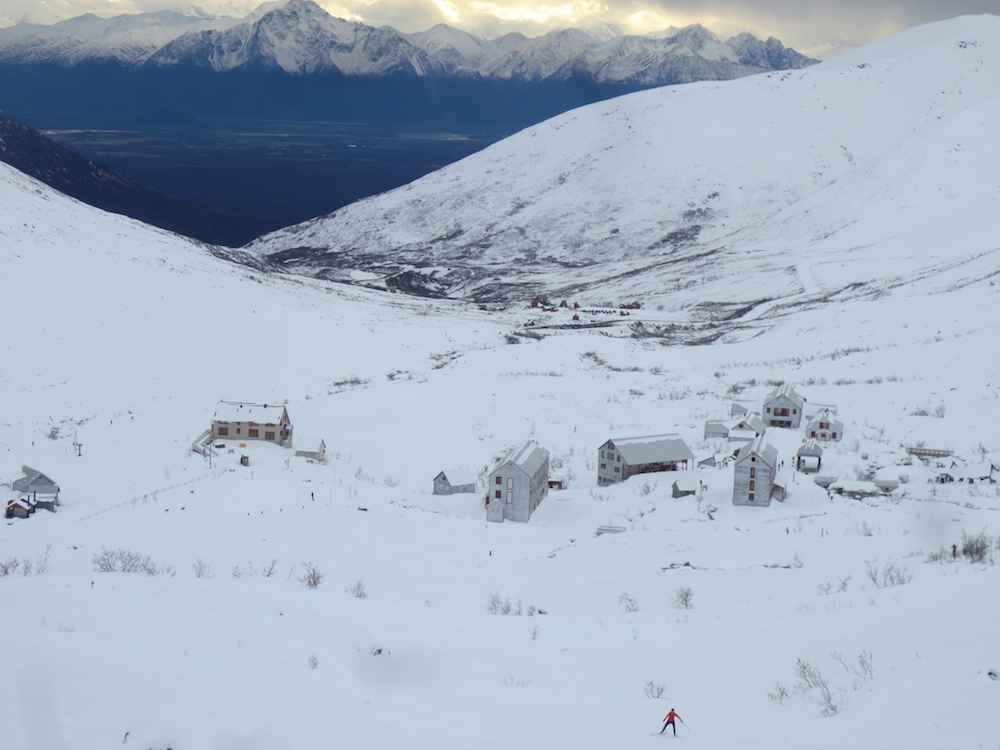
    Independence Mine as seen from the top of the groomed trail system in November 2013.
    Independence Mine as seen from the top of the groomed trail system in November 2013.

    According to Mat-Su Ski Club President Ed Strabel, over the past nine years, grooming at Independence mine has begun on a mean date of Oct. 13. Strabel, father of Mount Marathon champion Eric Strabel, and his ski club colleagues are passionate about spinning frequent heavy snowfalls into set tracks and corduroy.

    “Our dedicated all volunteer, unpaid groomers do most of the grooming at night to give the snow time to setup before the skiers arrive,” Strabel says. “While our tracked ATV’s are vastly superior to a snowmachines for grooming, big snowfalls (over 12 inches) are a challenge and the trail will be a bit punchy because we can’t get the pounds per square inch of a PistenBully.  Wind can also be a big headache because we don’t have a six-way blade to take out drifts.  Last year we had a 30″ snowfall followed by high winds.  The whole area was almost featureless.”

    But such devotion isn’t  completely altruistic: “All our groomers are skiers, too, and we want to ski also,” he adds, “The toughest part our volunteer groomers have to cope with, other than getting a groomer unstuck, is resisting the urge to grab our skis and go skiing on our handy work immediately after we finish grooming.”

    While it’s true that the light can be flat, the weather awful, the kick waxing weird, skiing at Independence Mine is always an exceptional experience. On a clear day, the views and surrounding  mountains are mind-bendingly beautiful. The old mine is interesting in any weather. Maybe best of all, those first few weekends back on skis up there are in many ways a reunion, or re-formation, of our community, from masters to kids to Olympians, and everyone is smiling.

    While it’s true that the light can be flat, the weather awful, the kick waxing weird, skiing at Independence Mine is always an exceptional experience.

    When asked via email what he thinks about when he thinks about skiing Independence Mine, Coach Watts’ answer is perhaps evocative enough and instructive enough to quote in full and call it good:

    “For me I really like the uniqueness of skiing at a historic hard rock mine. Skiing around the old buildings, it is hard not to let the mind reflect on the history of the mine, the miles of tunnels dug with great labor chasing gold. Kick, glide, kick, glide.  The process that put that gold in place. Keep the arms pumping. On to the history and future of resource development in Alaska. Dance off the feet as you herring bone the steep hill. Then on to the beauty of the peaks all around. Watch the plowed-up snow in the corner. The ubiquitous of petroleum products on every person out skiing: clothing, skis, wax, boots.  Tuck lower.  Watching people ski up as I fly down the hill. They look fit.  How nice to see the whole family out skiing. Must be the first day on skis for them.  Kick up some spray at the bottom to show off a little. Back to kick, glide, kick, glide.  It is pretty easy to have three hours of hard skiing fly by and let the mind mediate, wonder, and marvel at the world and life on it.”

    ***

    About the Author: Shannon Gramse is a longtime member of APU Nordic Ski Center’s Masters Program. When he’s not skiing, he’s thinking about skiing while being a father and a husband and a professor at the University of Alaska Anchorage.

  • Sargent, Newell Climb to Top in Frozen Thunder Classic Sprint (with Photo Gallery)

    Sargent, Newell Climb to Top in Frozen Thunder Classic Sprint (with Photo Gallery)

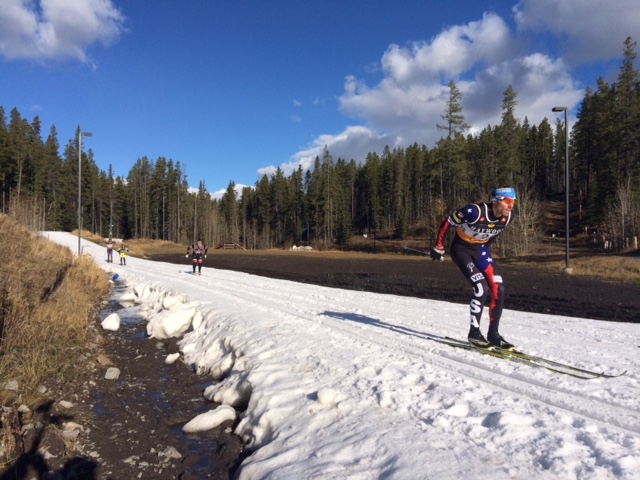
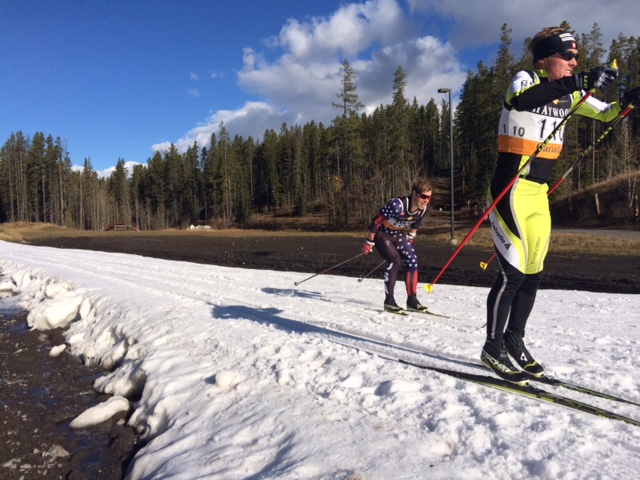
    Andy Newell racing to his second Frozen Thunder classic sprint victory in three years on Friday at the Canmore Nordic Centre in Canmore, Alberta. Runner-up Dakota Blackhorse-von Jess won last year. (Photo: Pavlina Sudrich)
    Andy Newell (r), of the U.S. Ski Team and Stratton Mountain School (SMS) T2 Team, racing to his second Frozen Thunder classic sprint victory in three years on Friday at the Canmore Nordic Centre in Canmore, Alberta. Runner-up Dakota Blackhorse-von Jess (in second) won last year. Matthias Inniger of Switzerland was third overall and Kris Freeman (Team Freebird) was fourth. (Photo: Pavlina Sudrich)

    There are a couple things one can count on at the Canmore Nordic Centre, including solid tracks and quality snow, even in October. At the first unofficial sprint of the North American season on Friday morning, more than 120 racers found both for the Frozen Thunder classic sprint, and organizers added what could be a new tradition to the mix: a zero-elimination format.

    Sounds chaotic? It worked, according to American Dakota Blackhorse-von Jess of the Bend Endurance Academy in Oregon.

    “It was a great format — worked out far better than I could possibly have imagined,” he wrote in an email after the race. “Gets everyone the chance to race with like-speed people and … experience the stress of a full sprint day. Great opportunity for all that ran like clockwork. … Fantastic event.”

    Blackhorse-von Jess and another American Ida Sargent (U.S. Ski Team/Craftsbury Green Racing Project) posted the top men’s and women’s qualifying times, respectively, beating out their competition on the 1.6-kilometer course by more than 2 seconds apiece.

    Frozen Thunder organizers opted for what they called the “knock-in sprints,” or King’s Court format, ranking all 122 racers — men and women combined — by qualifying times and seeding them in four-person heats for the first of three rounds.

    The top two in each heat of round 1 moved up; the last two moved down a heat. The format repeated for round 2 to put the most competitive skiers at the top of round 3, allowing all participants to race all three rounds.

    Matthias Inniger of Switzerland bringing it home for third overall and Kris Freeman (Team Freebird) on his way to fourth in the Frozen Thunder classic sprint on Friday. (Photo: Pavlina Sudrich)
    Matthias Inniger of Switzerland bringing it home for third overall and Kris Freeman (Team Freebird) on his way to fourth in the Frozen Thunder classic sprint on Friday. (Photo: Pavlina Sudrich)

    Blackhorse-von Jess won his first two heats, topping U.S. Ski Team and SMST2 Team member Andy Newell in round 2, but Newell had the edge in the final round 3 for the overall win. Blackhorse-von Jess placed second, Switzerland’s Mathias Inniger took third, and Kris Freeman (Team Freebird) was fourth.

    “It kind of felt like each heat was a final since nobody wants to move down a bracket so we had to push each hard each round,” Newell wrote in an email. “There were a lot of fast skiers here but we North Americans are all pretty good buddies so it was definitely a friendly fight out there. We’ve all trained with each other a bit this off season and want everyone to kick ass over season.”

    In terms of tactics, he added that it depended on how fast your skis were.

    “We all agreed to use kick wax this year to make it an even playing field and only waxed with low flour [sic] wax,” Newell wrote. “For me the tactic was to push hard on the uphills to try to break it up a bit. We were all on klister and the snow was sugary but still great racing conditions.”

    The course was two laps, for a total of two uphills.

    “One is a decent climb and the other is a pretty short one,” Newell explained. “The reason we have double poled here in the past is because it’s kind of a downhill finish which can be faster in the skate skis. But I think it worked out well this year with everyone on klister.”

    According to Blackhorse-von Jess, the heats were an opportunity to get back into the swing of racing.

    “With the fastest (and the best skiers in North America) all there, you have to push every time. And starting in the fastest quarter and moving on into the fastest semi means do-or-die for making the final, so there’s no sandbagging all day,” he wrote. “I don’t know why I was so fast qualifying, really. [My coach] Ben [Husaby] helped me make some major changes to my classic technique this year, which has made obvious improvements off the snow so it’s not surprising it’s helped on the snow. But who knows. It’s a training day for everyone and while I’m encouraged by the day, I don’t think anyone can read overmuch into the crystal ball based on today.”

    Canadian World Cup Team member Devon Kershaw led the Canadians as the top man in the second-fastest final round, beating out Jess Cockney, of the Alberta World Cup Academy (AWCA), Lenny Valjas (Canadian World Cup Team), and American Ben Saxton (SMST2).

    “Not the best day ever for me, but not the worst,” Kershaw wrote on Instagram. “Thanks to all that made it possible (CCC, volunteers, all the racers & staff).”

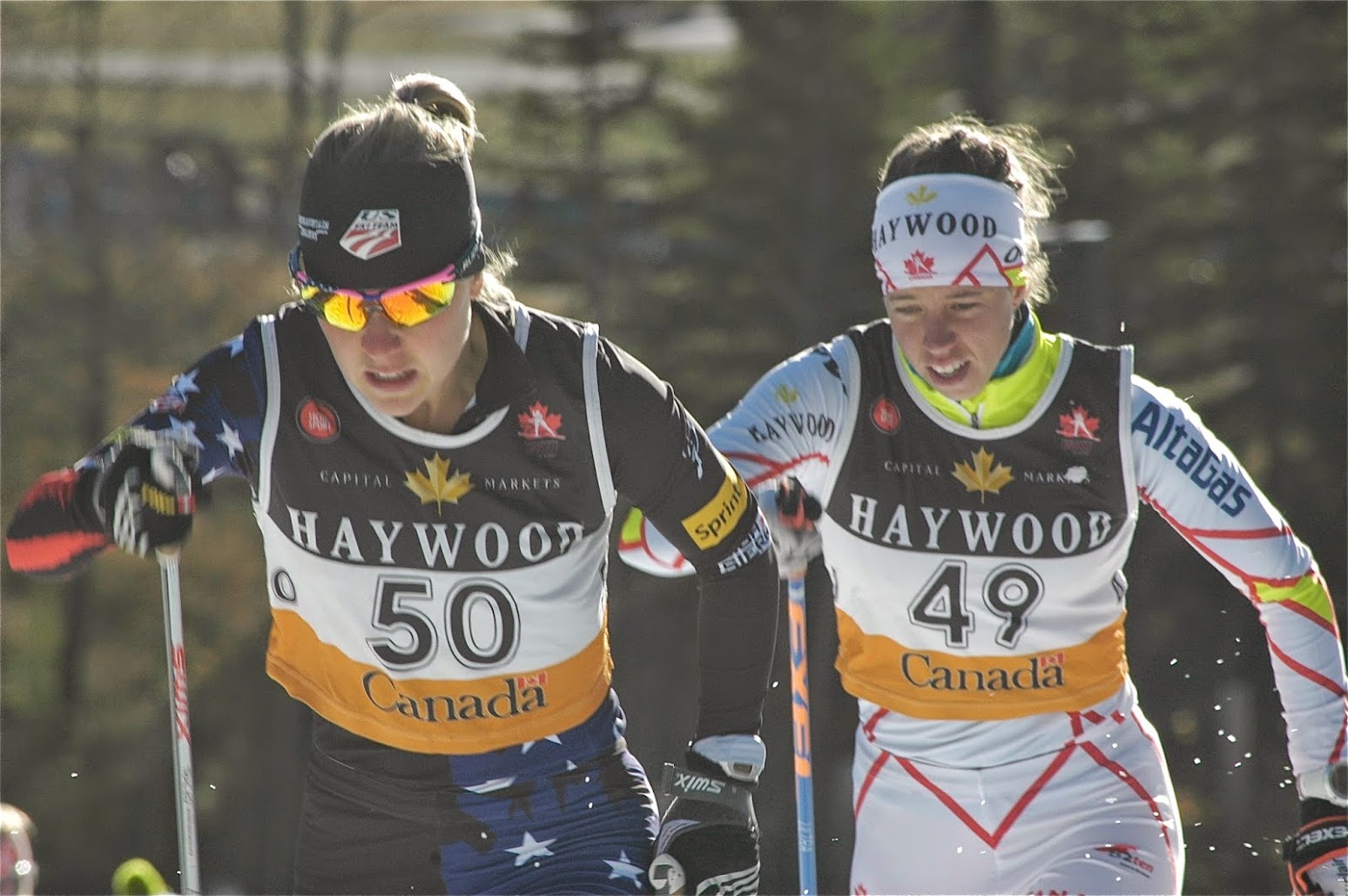
    Ida Sargent (U.S. Ski Team/CGRP) leads Perianne Jones (Canadian NST) in round 2. The two went on to place first and second among women in the Frozen Thunder classic sprint on Friday. (Photo: Angus Cockney)
    Ida Sargent (U.S. Ski Team/CGRP) leads Perianne Jones (Canadian NST) in round 2. The two went on to place first and second among women in the Frozen Thunder classic sprint on Friday. (Photo: Angus Cockney)

    Sargent raced three junior men in round 1, finishing third behind Reed Godfrey of the Alberta Ski Team (AST) and Caelan McLean (Yukon Ski Team). She then met two junior men and Canadian National Team member Perianne Jones in round 2.

    There, she placed second behind Samuel Greer (NDC Thunder Bay), whom she outlasted in the first round, and Jones took third. Sargent advanced to the last round with Godfrey, Geer and another junior man, Tate Macdonald (AST), and beat them all for a resounding overall victory.

    “The format was definitely funky but they did a great job pulling it off and I thought it ran really smoothly,” Sargent wrote in an email. “At first I thought it was a weird idea but then it ended up being fun and I had to go as hard as I could every single round rather than being able to ski a little conservatively through the early rounds. On the World Cup, every heat is 100% so this was great training.”

    Her goal was to push as hard as possible each round, and with a downhill double-pole finish (in which she got passed at least once in previous rounds), she made a point to go even harder over the tops of each hill to get a sizable lead before the finish.

    “I’m happy to be feeling good right now,” she wrote. “I don’t consider this part of the season yet and I’m just psyched to have had a fun and hard effort on snow.”

    Jones was third in the second-fastest, coed round 3, after McLean and Thomas Manktelow (AST), respectively.

    “I’ve never done rounds like that before, but it was really fun, and good for us to go hard every round,” Jones wrote in an email. “North American sprinting (especially for the women, and especially in Canada) has turned into a bit of a cake walk in the first couple rounds before putting the hammer down in the final — which is the worst thing for development because once you get to the World Cup there’s no lolly-gagging.”

    Dahria Beatty (AWCA) placed third among the women, finishing ahead of fourth-place woman Heidi Widmer (AWCA/Canadian NST) in the final round. 

    Angus Foster (Big Thunder Nordic) was the top junior man in 21st overall, followed by Pearce Hanna (Rocky Mountain Racers) and David Askwith (Georgian Bay).

    Maya MacIssac-Jones (RMR) was the top junior woman, followed by Katherine Stewart-Jones (Nakkertok) and Katie Weaver (Hollyburn).

    “I’d say best Frozen Thunder Race ever,” Jones concluded. “It was sunny and warm, and CCC and Zone 4 (Dan Roycroft) somehow managed to make the day go incredibly smoothly running 96 heats — 1 every 30 seconds. I have to admit I was skeptical about the format, but the race ran like a well-oiled machine, and was a ton of fun.”

    “Snow was incredible, as always,” Blackhorse-von Jess wrote. “They do an amazing job there and it got a lot more traffic this year with all the racers and it held up awesome.”

    Distance racers will have a chance to strut their stuff at Frozen Thunder on Monday at the 10/15 k freestyle individual start at 9 a.m. Mountain time.   

    Results: Qualifying | Heats

    Check out dozens of photos from the first unofficial race of the season, the Frozen Thunder classic sprint, in Canmore, Alberta, courtesy of Angus Cockney, Jess Cockney’s father.

  • As USST Park City Camp Ends, Excitement for Racing Season Builds

    As USST Park City Camp Ends, Excitement for Racing Season Builds

    Jessie Diggins (USST/SMST2) leads a train of skiers through the fall foliage and stunning views at the American Fork in Utah. (Photo: USSA)
    Jessie Diggins (USST/SMST2) leads a train of skiers through the fall foliage and stunning views at the American Fork Canyon Road in Utah. (Photo: USSA)

    The U.S. Ski Team concluded its annual altitude camp in Park City, Utah last week, leaving attendees a little more excited and prepared for the upcoming season. A final gathering before the national team travels to Europe in November, the camp provided opportunity for U.S. athletes to train at altitude and soak up some final rays of sun before winter takes hold.

    The annual October camp has always been popular due to its consistent, dry weather and high-altitude training opportunities. In 2013 the camp saw its largest attendance with 50 skiers converging in Utah with the hopes of earning a spot on the Olympic team.

    Despite the absence of the Olympics, the camp’s popularity has continued into 2014. According to U.S. Ski Team head coach Chris Grover, approximately 40 skiers were at the 2014 camp, which concluded Sunday Oct. 19.

    Unlike September’s USST training camp in Lake Placid, N.Y. the Alaskan members of the national team, including Kikkan Randall, Sadie Bjornsen, and Erik Bjornsen, were present in Park City.

    They were joined by fellow national team members Andy Newell, Simi Hamilton, Ben Saxton, Paddy Caldwell, Noah Hoffman, Liz Stephen, Ida Sargent, Sophie Caldwell, and Jessie Diggins.

    Miles Havlick (SVSEF) leads Simi Hamilton (USST/SMST2) and Paddy Caldwell (USST/SMST2)  in bounding intervals. (Photo: USSA)
    Miles Havlick (SVSEF) leads Simi Hamilton (USST/SMST2) and Paddy Caldwell (USST/SMST2) in bounding intervals in Utah. (Photo: USSA)

    A variety of other skiers from Alaska Pacific University, Bridger Ski Foundation, Stratton Mountain School T2, and Sun Valley Ski Education Foundation Gold Team, among others, joined the array of activities that traversed the mountains surrounding Park City.

    Athletes participated in workouts that ranged from a rollerski up the American Fork Canyon that featured over 3,000 ft. of elevation gain, to speed work on Soldier Hollow’s familiar trails. During a long run, the team even came across some fresh snow above 8,000 ft.

    For Miles Havlick (SVSEF) the training in Park City was valuable because of new perspectives he gained from the USST coaches and their ability to “broaden your horizons.” Furthermore, Havlick said that training with the USST men was beneficial to his technique and fitness.

    “There’s no one better than to do a speed workout with than Newell, Simi, and Bjornsen,” he said in a phone interview.

    On Thursday Oct. 16 the USST held a 10 k time-trial for both the men and women at Soldier Hollow that saw Randall and Miles Havlick top the women’s and men’s fields. While the results have little significance due to variation in each skier’s training and rollerski speeds, the USST coaches monitor both heart-rate and lactate to analyze the effects of the training load, effort, course type, and altitude on each skier.  

    The Park City camp is unique in the fact that athletes live at roughly 8,000 ft. in Upper Deer Valley to increase hemoglobin levels and prepare for high altitude races. According to Diggins the annual camp helps her prepare for some of her favorite competitions, including the high-altitude stages of the Tour de Ski.

    “I am still learning how to ride the line between going hard and blowing up at altitude, since once you flood your legs you can’t recover as fast as you can at sea level,” Diggins explained. “So doing a lot of long L3 and longer L4 intervals at SoHo (Soldier Hollow) is really helpful for my race prep.”

    Sadie Bjornsen said that while it is always difficult to acclimatize to altitude, she has developed several techniques to aid the adjustment.

    “I know that for at least 4 days I am going to feel like a slog. I also know that I need to force myself to train easier than ever those first few days in order to adjust well without getting too tired for the rest of the week,” she wrote in an email.

    The USST and NEG skiers gather for speeds at Soldier Hollow in Midway, Utah. (Photo: USSA)
    The USST and NEG skiers gather for speeds at Soldier Hollow in Midway, Utah. (Photo: USSA)

    With the roughly 40 athletes in attendance the allocation of time and resources is difficult to balance between national team and club team members. However, Grover said that the USST coaches have a functional system in place.

    Grover explained that the primary goal at any USST camp is to prepare the national team for World Cup and World Championship success. Its secondary goal is to offer training opportunities to developing athletes who are just below the national team level.

    “Both goals are important to us as coaches,” Grover wrote in an email.

    As in past camps, the U.S. Ski team had several “closed” workouts in addition to trainings that included the entire training group. Grover explained that the division was important for both the national team and club athletes, but acknowledged that regardless of the structure of the workouts there would always be some imperfection.

    “Our intent when dividing some of our sessions is to provide value to both groups, but I guarantee it will never feel perfect for each individual,” Grover said.

    Despite the success of the camp, the USST did not leave Park City without injury. Sophie Caldwell fractured her left elbow Oct. 7 after tripping on a low-hanging cable in a Park City Mountain Resort parking lot. After performing surgery hours after the injury, doctors estimated that Caldwell’s recovery to be roughly six weeks.

    According to Grover, Caldwell is in great spirits and finding creative and productive ways to train despite her injury.

    “She has been incredibly mentally tough through this process, and it is clear that she has the heart and the resolve of a champion,” Grover said of the 24-year-old.

    At the conclusion of the Park City Camp, the USST traveled to Canmore, Alberta for a week of on-snow training and racing at Frozen Thunder. The team will remain in Canada until Oct. 28 when skiers enter their final block of training before traveling to Europe. 

  • Gallery: USST/NEG Park City Altitude Camp

    Gallery: USST/NEG Park City Altitude Camp

    Top nordic skiers from around the country converged on Park City, Utah in early October for the U.S. Ski Team (USST) and National Elite Group (NEG) altitude camps. While the NEG camp concluded Oct. 12, the USST is continuing to train in Utah until Frozen Thunder, a series of on-snow competitions in Canmore, Alberta that will take place later this month. Reports from Park City have been highly positive with the exception of few incidents including another broken elbow for the USST’s Sophie Caldwell and a sliced finger for SMST2’s Annie Hart. Check out USSA’s photos from the activity in Utah, below.

  • One Wild Ride: U.S. Paralympics Innovates Sit-Ski Treadmill Technique Training (Video)

    One Wild Ride: U.S. Paralympics Innovates Sit-Ski Treadmill Technique Training (Video)

    LAKE PLACID, N.Y. — In his eighth year skiing, retired Army veteran and double-leg amputee Andy Soule, of the U.S. Paralympics Nordic B-team, had been on a rollerski treadmill before — several times in fact: at the U.S. Ski Team headquarters in Park City, Utah, and at U.S. Biathlon’s base at the Olympic Training Center (OTC) in Lake Placid, N.Y., where he trained with fellow national-team members for a week earlier this month.

    Straight off a training camp at Sweden’s Torsby ski tunnel in early September, Soule, A-team member Oksana Masters and C-teamer Aaron Pike all put their wheels on the OTC treadmill last week on Sept. 16. And while Soule, 34, was comfortable testing his double-pole technique in front of two coaches (John Farra and Eileen Carey), two physiologists (Jason Kask and Australia’s Sacha Fulton), and a visiting biomechanic from the Chula Vista OTC in California, Masters — who was born with multiple physical defects — had never been on a treadmill before.

    “We’re starting from scratch,” Farra said to Masters, 25, as she watched herself rollerski on a video monitor at eye level in front of her. This was the first time the team had set up the treadmill with live-video capabilities, showing front and side views for the athlete to make tweaks or corrections on the fly.

    “This is all new,” he said, reminding her to not overthink it. “Work on your V2.”

    “What’s V2?” Masters asked as she playfully swung her poles behind her, alternating sides as if she was gliding to the left and right with each double pole.

    “You were just doing it,” Carey said.

    During each session, Soule, Masters and Pike all reached speeds around 10 miles per hour at about 10-percent incline. Each double poled for about 45 minutes, getting feedback from coaches, with Carey taking notes, Farra holding the safety rope, and both coaches asking how it felt.

    The idea was to give the athletes ownership of their own progress — not just on the treadmill, but throughout offseason training. Farra said he got the treadmill-with-real-time-video idea from U.S. Ski Team member Noah Hoffman, who keeps a detailed training blog, and the U.S. Biathlon team, which uses it for that purpose in Lake Placid. As far as he knows, no other Para Nordic team in the world is doing that.

    “Maybe one of our advantages is that we think that way,” Farra said. “I hope other Paralympic teams around the world aren’t thinking about all these little pieces and parts because we have a long ways to make up on Russia, who won most of the medals at the [Sochi] Paralympic Games. We’re not them, but I think we can run one of the most professional program in the world. That’s the goal: even if our results aren’t there yet, but if you do everything possible to run the single-best Paralympic program in the world, then that stuff will come, if you find the athletes and if they love it and if everything goes well.

    “Andy Soule’s won a medal, so you could kind of go, oh well, he’s already won a medal, so why mess with his technique?” he added. “Well, because he can make two-, three-percent difference just by locking that down …”

    Watch the video on YouTube here.

  • GRP Finds Stellar Conditions at On-Snow Camp in Austria

    GRP Finds Stellar Conditions at On-Snow Camp in Austria

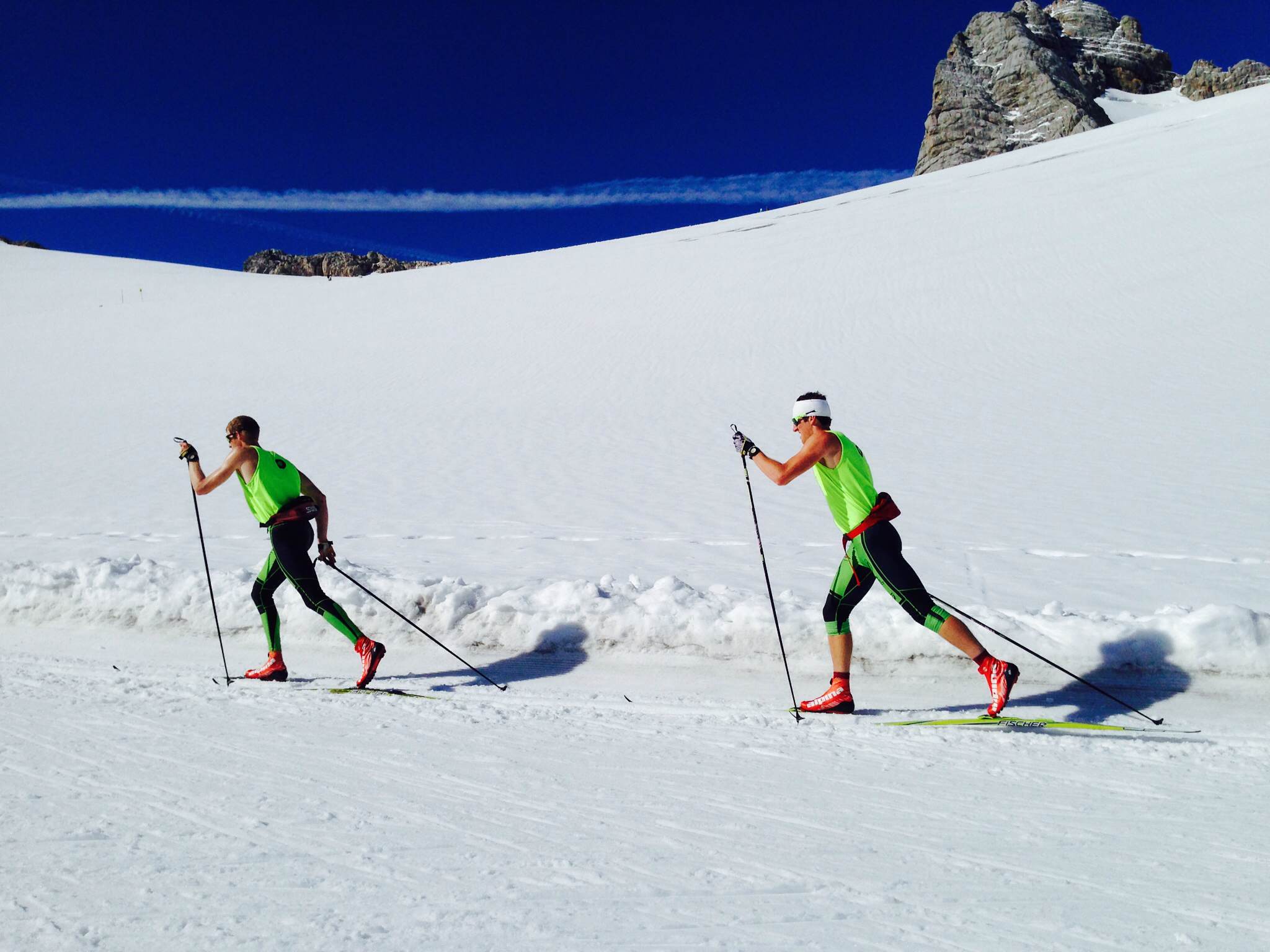
    Craftsbury Green Racing Project skiers traverse the Dachstien Glacier in Rasmau, Austria as part of the teams on-snow camp in September 2014.
    Craftsbury Green Racing Project skiers traverse the Dachstien Glacier in Rasmau, Austria as part of the teams on-snow camp in September 2014.

    Anne Kyllönen is an exemplary skier. The Finnish athlete’s technique – both flawless and efficient – has served as an example for the USST and other American club teams over the 2014 summer to help visualize improvements.

    But why watch a video when the real thing can be right in front of you?

    Such was the case for Ida Sargent, who had the opportunity to mimic the 2014 Olympic medalist’s technique in-person during the Craftsbury Green Racing Project’s (GRP) training camp in Ramsau, Austria.

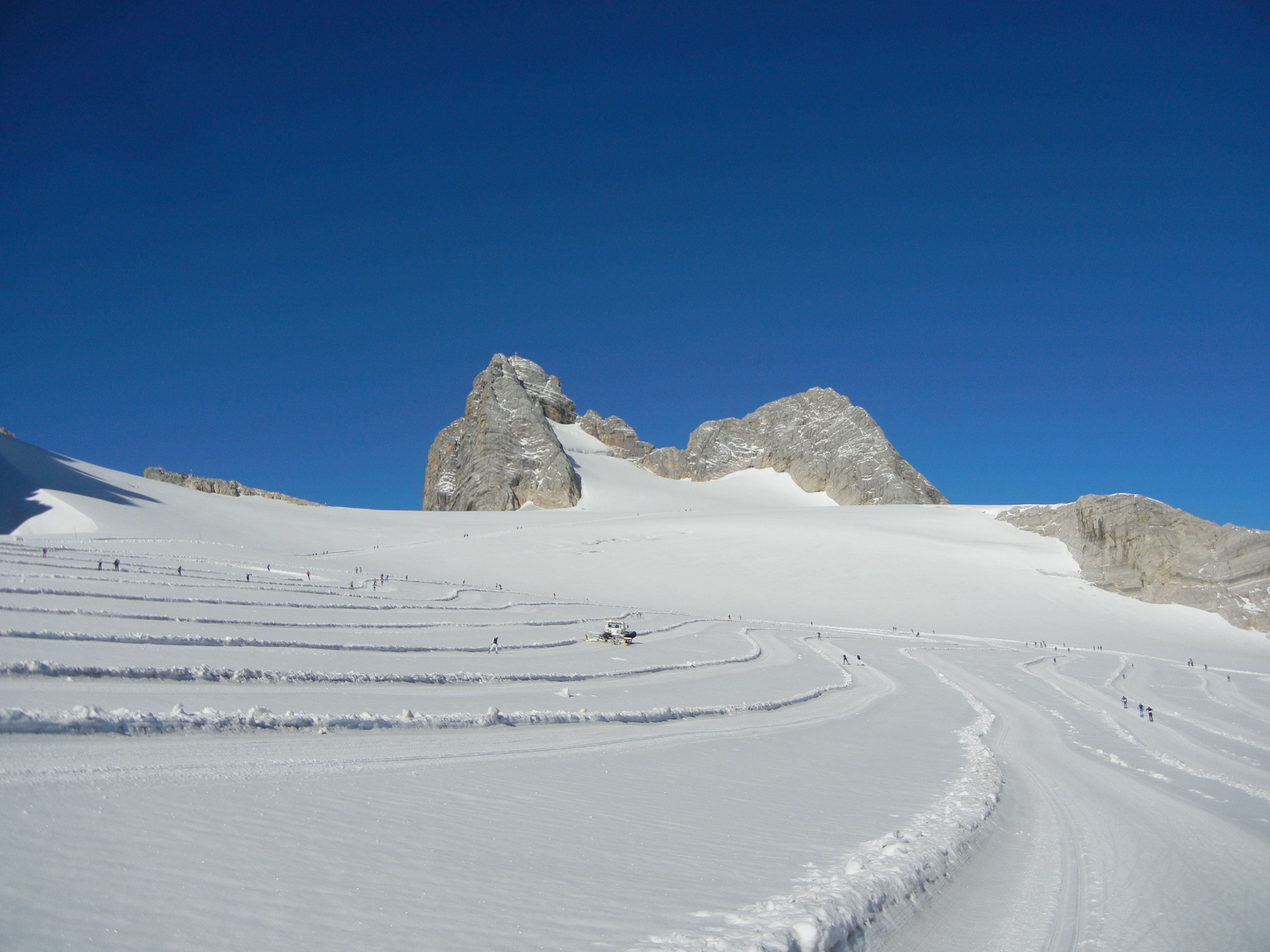
    Pristine September skiing on the Dachstein Glacier in Ramsau, Austria. (Photo: GRP Blog)
    Pristine September skiing on the Dachstein Glacier in Ramsau, Austria. (Photo: GRP Blog)

    This is the first year that GRP has made the summer trip to Austria, and so far the team’s skiers have given the experience rave reviews. While traveling across the globe to find on-snow training opportunities has become a rarity in U.S. skiing in recent years (Noah Hoffman was the sole USST member to make the trip to New Zealand this year), Austria might be closer than it seems.

    According to GRP athlete Liz Guiney, it is just as demanding to travel to Europe from the East Coast as it would be to go to Haig or Eagle Glaciers, which are located in Canada and Alaska.

    “Once we made it to Munich, it was an easy three hour drive to Ramsau, and we were all set,” Guiney wrote in an email. “Logistically speaking, it makes more sense for our team to come here, because anyone is welcome to use the Dachstein (Glacier) and you don’t have to take a helicopter up there.”

    The team arrived in Austria Sept. 8 and will remain until the Sept. 27. The squad of GRP athletes in attendance includes Gordon Vermeer, Pete Hegman, Alex Schulz, Andrew Dougherty, Ethan Dreissigacker, Jake Barton, Mike Gibson, Caitlin Patterson, Kaitlynn Miller, Guniey, USST member Sargent and the coaching staff of Pepa Miloucheva and Nick Brown..

    The Dachstein Glacier, which boasts an elevation of 2,800 m, or just under 9,200 ft., is one of several European glaciers that is groomed for off-season skiing. Each year skiers from around the world take advantage of the 9 k of groomed summer trails.

    According to Sargent, the glacier’s conditions have been better than expected with hard and fast tracks. Even though the team endured some rain and fog during the camp’s first week, she said the sunny days have been spectacular.

    “The skiing conditions have been really good… The past couple days have been those magical days when you have to pinch yourself to see if it is actually real,” she wrote in an email. “It is sunny and warm but the tracks were staying very firm and fast.  I didn’t even know that was possible.”

    https://www.youtube.com/watch?v=EfwXde3TC0s

    While the afternoons can be too warm for skiing, the team often runs on one of the many trails that take them straight from the door of their house in the Austrian Alps. The lower elevation running also helps diversify their training.

    According to Sargent, the main purpose of the Rasmau camp is to implement technique changes made during the summer to on snow skiing. With the Austrain camp, Canmore’s Frozen Thunder, and the start of the World Cup season in November she hopes to eliminate as much off-snow training as possible.

    GRP coach Miloucheva explained that partaking in on-snow training for an extended period of time in the summer and fall can aid her athletes in avoiding the technique mistakes of the previous season. 

    “Back in U.S. we normally have only a few days to a week on snow before we start racing and this isn’t enough, so normally everyone goes straight to same mistakes they did last winter,” she wrote in an email.  

    Guiney explained that the Rasmau camp helps skiers like herself have a seamless start to the season because it allows for a low-pressure transition from rollerskis to snow.

    “That real snow feeling is very hard to replicate, and making technique changes in, say, West Yellowstone, when you also have to prepare to race a few days later, can be challenging,” she said. “This way we can make and implement changes, and it will make the transition to snow in November that much easier.”

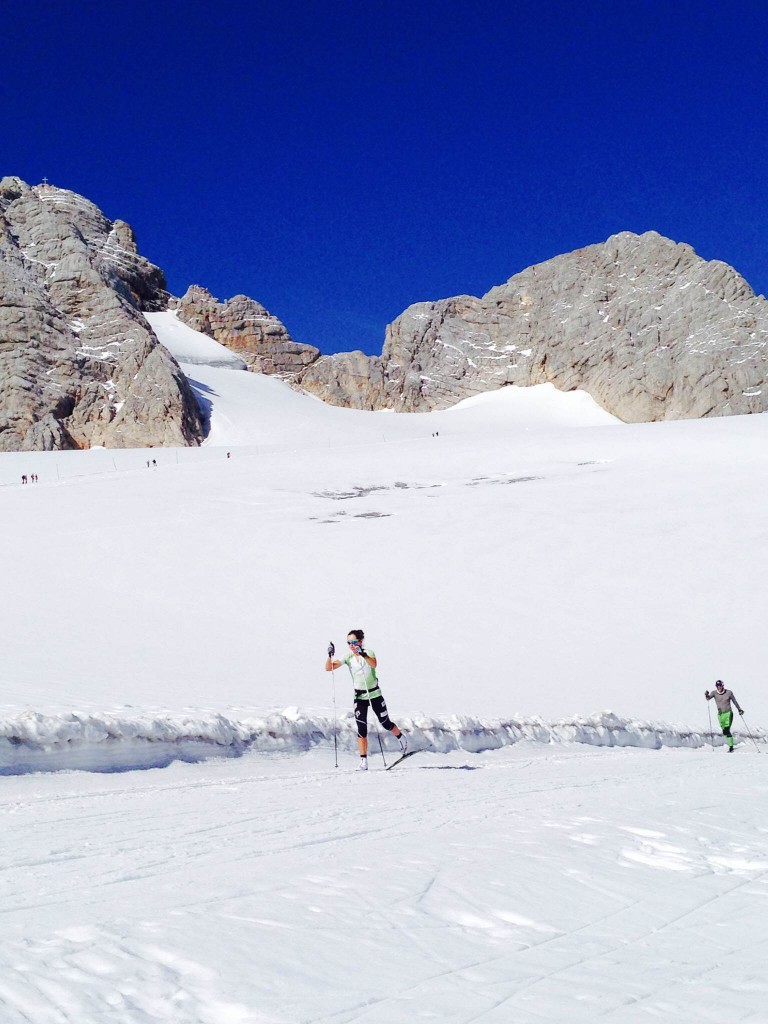
    Caitlin Patterson (GRP) takes advantage of the sunshine to ski the firm and fast conditions of the Dachstien Glacier in Ramsau, Austria as part of the GRP's on-snow training camp. (Photo: GRP Blog)
    Caitlin Patterson (GRP) takes advantage of the sunshine to ski the firm and fast conditions of the Dachstien Glacier in Ramsau, Austria as part of the GRP’s on-snow training camp. (Photo: GRP Blog)

    GRP isn’t the only team hoping to take advantage of early fall skiing. The Swedish, Finnish, Russian, Estonian, and Japanese national teams have been training alongside the American team – an experience that has proven to be extremely valuable for some of GRP’s athletes.

    “It’s really inspirational to share a training venue with the best skiers in the world; technique lessons are just a matter of looking around you or hopping in behind someone and hoping they don’t mind,” explained Guiney, who said that she spent time skiing behind both Swedish star Charlotte Kalla and Kyllönen.

    Guiney said that one of the highlights of the camp was witnessing GRP skier Andrew Dougherty jump in behind Olympic champion Giorgio Di Centa of Italy.

    “Andrew is always wearing hats with pom-poms – it’s kind of his ‘look.’ We always joke that he looks just like Di Centa, and seeing them ski together was priceless,” she said.

    Despite the many skiers on the glacier’s trails, Sargent said that space wasn’t an issue. The 26-year-old, who has been regularly skiing with several Swedish and Finnish skiers over the course of the camp, said that it has been great to catch up with friends from the World Cup.

    GRP continues its Rasmau training camp until Sept. 27, when it returns to the U.S. for the rest of the fall training season.

  • USST Wraps Up Successful Lake Placid Camp

    USST Wraps Up Successful Lake Placid Camp

    USST Lake Placid Camp Speeds Friday Sept. 5, 2014
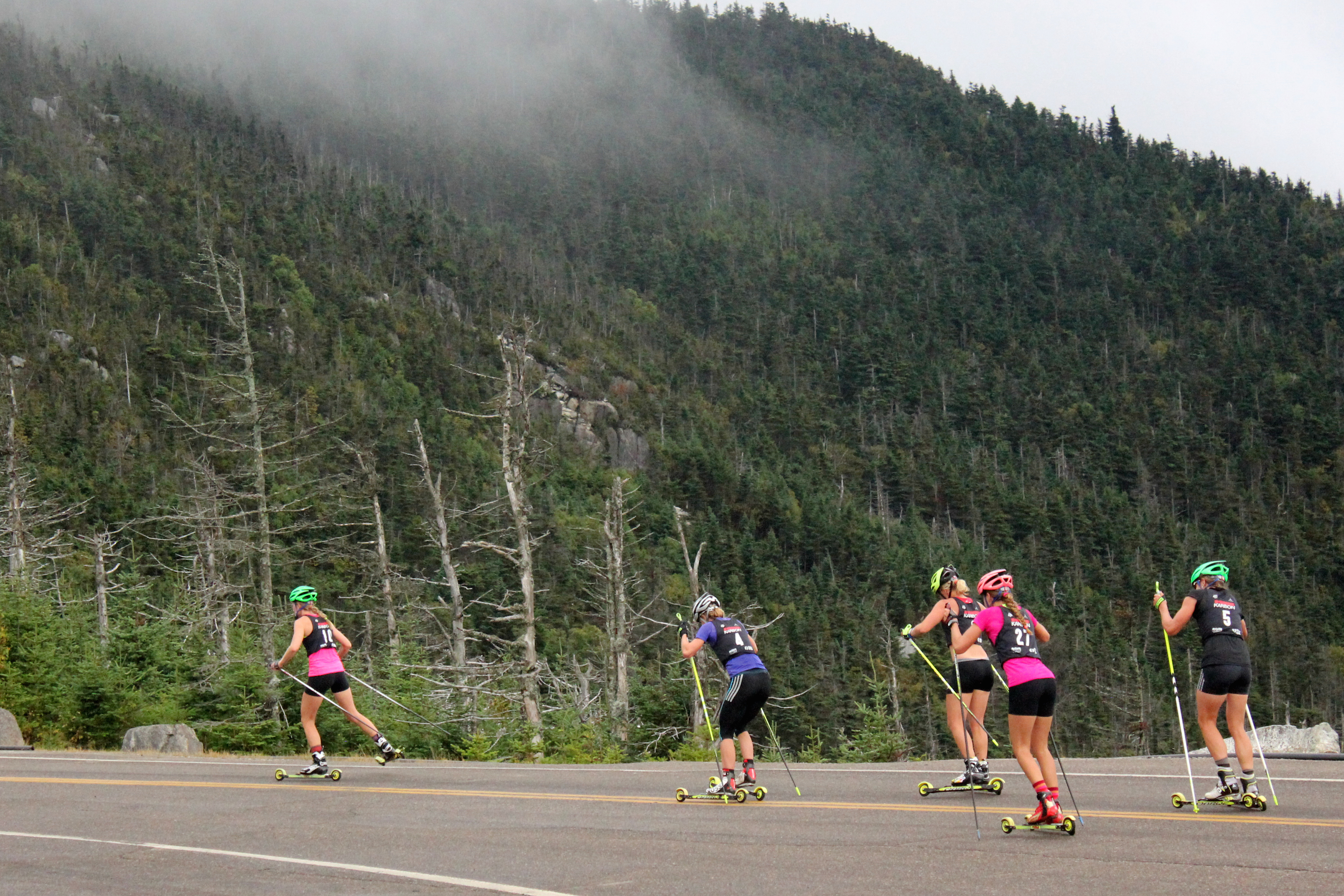
    Sophie Caldwell, Ida Sargent, Jessie Diggins, and Liz Stephen stride up a hill at the Olympic Jumping Complex as part of a classic speed workout at the USST Lake Placid Training Camp.

    LAKE PLACID, N.Y. – There’s no doubt that the U.S. Ski Team (USST) has grown in results and popularity in recent years. While the team has been advancing the stars and stripes abroad, the sport has gained traction on the home front.

    While no single factor can claim credit to the humble rise of nordic skiing in America, some often-unseen pieces of the puzzle are the USST camps held throughout the offseason.

    As the first week of September came to a close, the USST concluded its annual training camp in Lake Placid, N.Y. The camp, which started Aug. 25, had a large emphasis on intensity and included a classic-rollerski sprint simulation, various speed workouts, and the challenging Climb to the Castle rollerski race up nearby Whiteface Mountain.

    While many western skiers were missing from the lineup, USST athletes Jessie Diggins, Ida Sargent, Liz Stephen, Sophie Caldwell, Ben Saxton, Paddy Caldwell, Andy Newell, and Simi Hamilton were in attendance for the majority of the camp.

    For Paddy Caldwell, this was the first time that the Dartmouth sophomore had trained with a near-full team since he was named to the USST this spring.

    “It’s nice to have a focused group together and a cohesive connection,” Caldwell said. “In particular this camp has been nice to get to know the guys.”

    Erika Flowers (SMST2) leads the chase pack. She is followed by Annelies Cook (USBA), Jessie Diggins (USST/SMST2), Susan Dunklee (USBA), Katharine Ogden (SMS), and Mary Rose (SVSEF).
    Erika Flowers (SMST2) leads the chase pack. She is followed by Annelies Cook (USBA), Jessie Diggins (USST/SMST2), Susan Dunklee (USBA), Katharine Ogden (SMS), and Mary Rose (SVSEF).

    Caldwell, who took classes and trained at Dartmouth for most of the summer, was injured in late July with a torn disk or muscle in his mid-to-lower back. The 20 year old said that while he wasn’t doing any high-impact activities such as intervals, he felt that the camp was helping him get back into his normal training routine.

    He predicted he would be fully recovered by the time the USST travelled to Park City, Utah, for its fall altitude camp in October.

    In addition to the USST, a trove of athletes from the Stratton Mountain School (SMS), Craftsbury Green Racing Project (CGRP), Sun Valley Ski Education Foundation (SVSEF), and various other clubs across the country made the trip for the two-week event.

    One such athlete was Caitlin Gregg of Team Gregg who, after claiming the overall SuperTour title last March, is gearing up to start on the World Cup this fall.

    “The level of training has been really high for every session,” Gregg said. “The weather’s been awesome which has been a super plus here in the East. It can get kind of rainy but we’ve had some sunny days.”

    USST Lake Placid Camp Speeds Friday Sept. 5, 2014
    Caitlin Gregg (Team Gregg) takes a break to talk with spectators from the Green Mountain Valley School.

    The Lake Placid camp created a daily routine for its participants. Before each session skiers would gather to watch World Cup footage to stimulate the athletes’ minds before hitting the pavement. In many cases, they would watch Norway’s Marit Bjørgen double pole or Petter Northug start.

    Once a rollerski workout was over, athletes received video clips of themselves from the workout to allow for reflection and thoughts on future improvement.

    While technique advice from the coaching staff was a key part of the camp, the goal was to create an environment where athletes could conquer their technique difficulties on their own.

    “Some camps we spend a lot of time talking about technique, but I think it’s really important to build the infrastructure and let them figure it out on their own at some camps,” U.S. Ski Team Women’s Coach Matt Whitcomb said. “We provide them the tools to figure out their technique projects. “

    Many times that means relying on fellow athletes for technique improvements.

    It’s something that Whitcomb has seen advance in recent years and he believes it’s a positive development for his athletes and the sport.

    “Different people recognize each other’s strengths and they know that they themselves are used as a demonstration,” he said. “Everyone has their strengths that they are expected to share.”

    Whitcomb likes to remove himself as the source of all coaching, and believes that a healthy level of self-coaching can often lead to greater development.

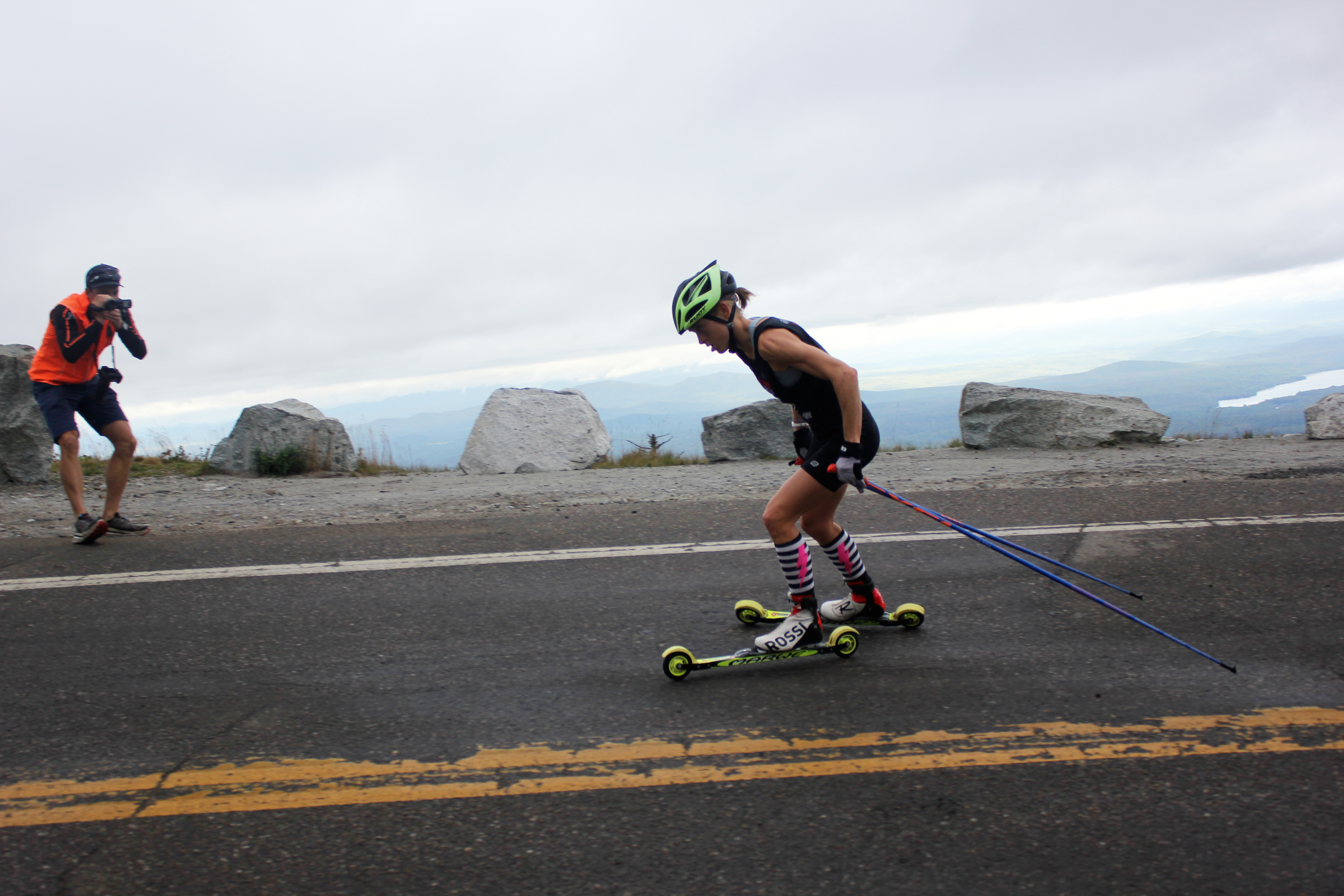
    Liz Stephen (USST/Burke) sporting pink lightening bolts on her socks as she rockets her way to her fourth Climb to the Castle win in four years.
    Liz Stephen (USST/Burke) sporting pink lightening bolts on her socks as she rockets her way to her fourth Climb to the Castle win in four years.

    “When too much coaching happens – and that can be too much technique coaching or too much psychological coaching – the athletes learns to really depend on the coach and it becomes a crutch. They stop learning on their own,“ he said.

    While the camp was focused on intensity, it also provided a means to improve tactical skiing in a group setting.

    According to Whitcomb, it’s often easy for athletes to focus on building capacity, speed and a strong mindset, which are all incredibly important. However, in focusing on the big-picture improvements, athletes can miss what Whitcomb calls the “low-hanging fruit.”

    With skiers like Kikkan Randall, Hamilton and Newell — considered some of the best technical skiers in the world — Whitcomb believes the U.S. has the unique opportunity to increase its technical ability.

    “They are assets on our team that we can use in workouts to set the bar as well as refining their own skills,” he said. “Learning to ski these transitions doesn’t take more energy. It actually takes less energy to take a better line. We’re trying to move away from having the fastest hill climbers and the most powerful skiers to the most well-rounded skiers.”

    When asked how the USST coaches balance the addition of other elite team athletes in the camp, Whitcomb said that it’s been something the team as been working on for several years.

    In past camps, Whitcomb said that there were too many participants and many of the workouts would lose their value.

    “We’ve always been about the partnerships and we’ve known that that’s the way to take a fractured ski culture in the U.S. and bring it together,” he said. “But what has snuck away from us at a camp here and there was that we were almost being too open. The most competitive workouts in the nation were too open and thus the target was too big.”

    Whitcomb said this year’s Lake Placid camp had a stable balance where the national team and additional elite skiers were able to create an environment where everyone was able to bring something to the table.

    Now that the sea-level camp is over, athletes will travel back to their respective clubs and partake in a much-needed rest period. As the intensity from the late summer begins to set in, they will continue to build volume until the USST gathers again in Park City, Utah, on Oct. 4. There, they will participate in a three-week altitude camp that takes them from the U.S. Ski & Snowboard Association’s Center of Excellence (COE) to Frozen Thunder in Canmore, Alberta.

    FasterSkier’s On-Site Coverage of the 2014 USST Lake Placid Training Camp

    Friday’s Speed Workout | Photos

    Climb to the Castle Recap | Photos

  • Gallery: USST Speed Work in Lake Placid

    Gallery: USST Speed Work in Lake Placid

    LAKE PLACID, N.Y. — FasterSkier arrived in New York Friday to catch the tail end of the 2014 U.S. Ski Team Lake Placid Training Camp. The camp’s attendees have endured a tiring two weeks of intensity, but spirits were high and smiles were abound as the team sped around the paved trails of the Olympic Jumping Complex for their morning workout. Check out photos from Friday’s traing below. The camp continues Saturday with the annual Climb to the Castle rollerski race that ascends Whiteface Mountain. While the status of this year’s climb was uncertain due to road construction, organizers confirmed Friday that the race would be held even if it had to be shortened.

  • NDC Thunder Bay Returns to Birkie Land for Hayward Camp

    NDC Thunder Bay Returns to Birkie Land for Hayward Camp

    Editor’s Note: The following training-camp recap was written by Jenn Jackson, a member of NDC Thunder Bay and Canada’s Junior National Team. Last month, her training centre, located in Thunder Bay, Ontario, returned to one of its favorite places south of the border: Wisconsin. To submit your own camp writeup, please email info@fasterskier.com with the subject line: “Camp Recap.”

    ***

    As summer slowly begins to turn to fall, the National Development Centre of Thunder Bay made its way south for its final dryland camp of the year.

    From Aug. 16 to 27, athletes of NDC Thunder Bay could be found rolling along the roads near Hayward, Wis. The team has hosted camps in the area before; taking advantage of the quiet, well paved roads, and extensive trail systems, which play host to the American Birkebeiner in late February.

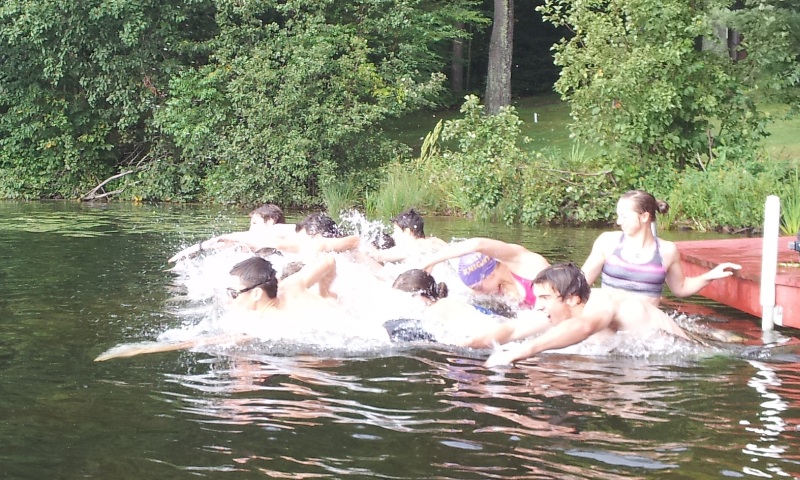
    The start of NDC's swim-run-ski triathlon in Hayward, Wis., which according to Coach Puiras “is a bit of a tradition at the Hayward camp." (Photo: NDC Thunder Bay)
    The start of NDC’s swim-run-ski triathlon time trial in Hayward, Wis., which according to coach Timo Puiras “is a bit of a tradition at the Hayward camp.” (Photo: NDC Thunder Bay)

    “There was a nice variety of terrain so we could concentrate on exactly the technique and training aspect we were focusing on for any particular training session,” NDC Head Coach Timo Puiras wrote in an email. “Living on the lake at Crest Hill resort meant we could access a wide variety of training venues right from our front door making recovery and rejuvenation post workout ideal.”

    Puiras explained that, for most of the team, the focus of the camp was high quality roller ski volume, but that some of the more senior athletes had “ … a more intensity driven camp.”

    See the video here.

    During the 12-day camp, the group completed three intensity sessions, all involving rollerskiing – a marked change from the NDC’s typical summer intensities, which are done almost exclusively running or ski striding.

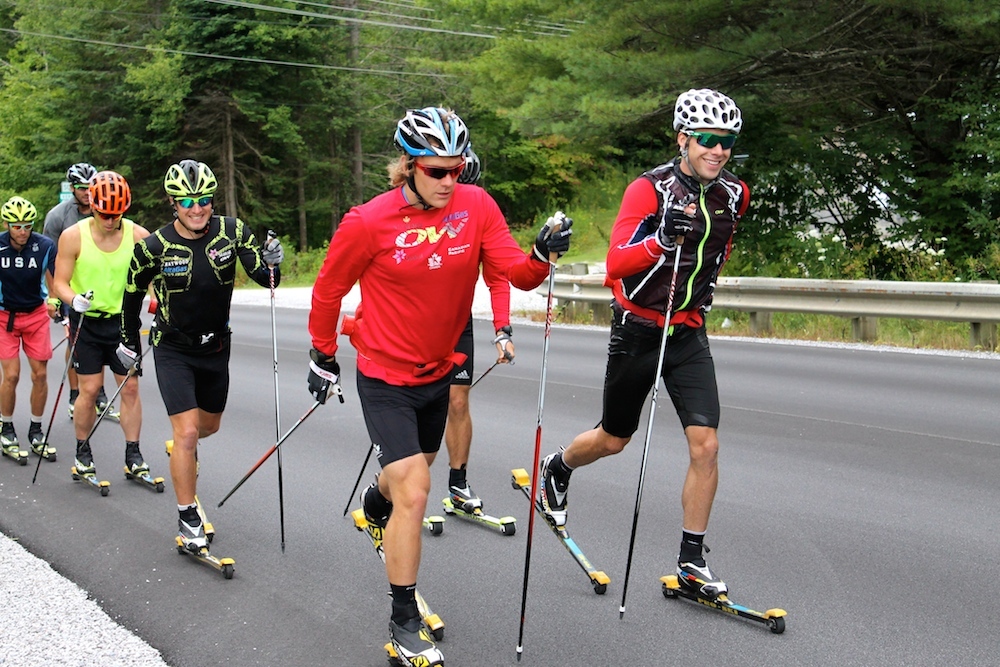
    One of these workouts was a rollerski-sprint paceline, which the team adopted from Canadian World Cup Team coach Tor-Arne Hetland after a collaborative camp earlier this summer in Bend, Ore.

    “We do the paceline to practice good form and speed,” NDC athlete Andy Shields explained. “With the drafting component we get to use very fast movements without it being too fatiguing. When we get to the head of the train, the sprit at the front simulates a sprint to the finish line.”

    To ensure everyone was competitive within the paceline, assistant coach Victor Wiltmann inventoried and reassigned rollerskis to athletes according to who was strongest in the sprints and who needed a little extra speed.

    For new athletes Julian Smith and Sam Greer, this was their first training camp with the team and was a very positive experience.

    “It was incredible,” Smith wrote. “You are isolated, you spend a lot of time with your teammates and you get to learn a lot about all of them.”

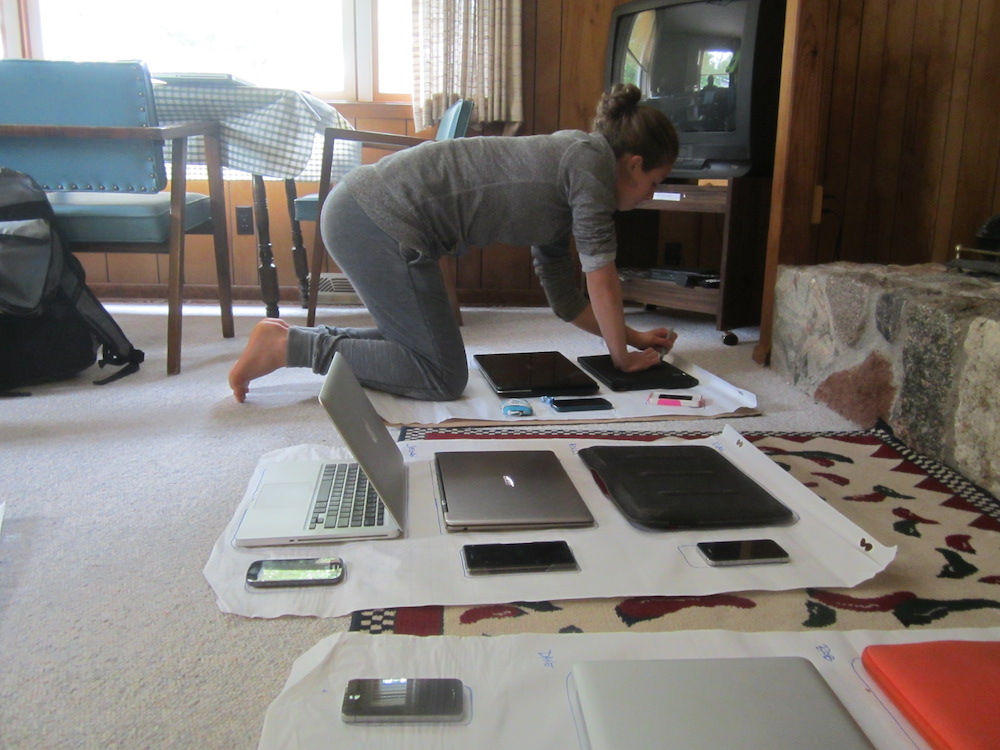
    Depositing technology for the blackout, which coach Timo Puiras explained was meant "to encourage team building and to prohibit screen time in the afternoon." (Photo: NDC Thunder Bay)
    Depositing technology for the blackout, which coach Timo Puiras explained was meant “to encourage team building and to prohibit screen time in the afternoon.” (Photo: NDC Thunder Bay)

    This isolation was not only geographical, but technological as well.

    “The technology blackout was a bit of an experiment,” Puiras wrote. “I had two main goals for the technology blackout: to encourage team building and to prohibit screen time in the afternoon, most importantly just before sleep. I was curious to see if preventing screen time in the afternoon would have any effect on recovery and sleep. Obviously this was a highly unscientific, subjective observation, but no one on the camp got sick and everyone’s mood stayed notably positive.”

    Without their electronics, the athletes enjoyed the lakeside facilities, “… spending quality time together, swimming in the lake, playing guitar, and slacklining” Smith wrote. In the evenings, some athletes would do supplementary sprint workouts, dashing from the sauna down to the docks and into the lake.

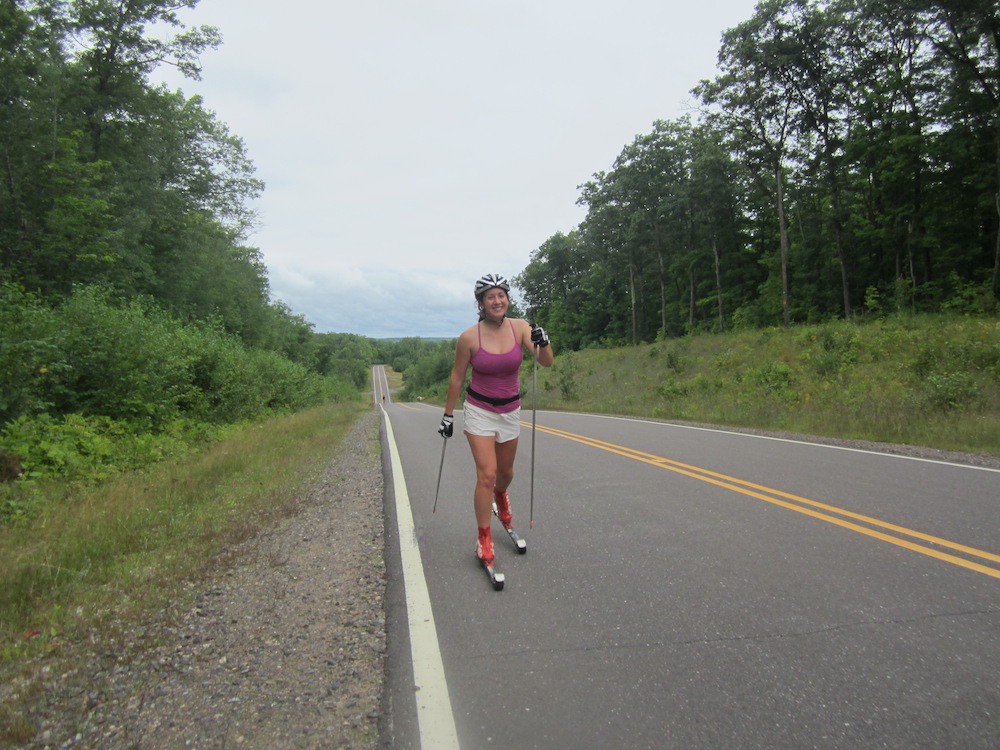
    Midway through the camp, the athletes hit their longest single-session day with a four-hour classic rollerski. Rather than staying to the familiar roads near the Crest Hill, the coaches mapped out a 65-kilometre loop which wound its way up and around Cable – where the team would use CXC’s team gym for strength, then back to the resort.

    Guest athlete, Holly Brown during four-hour classic roller ski workout (Photo: NDC Thunder Bay)
    Guest athlete, Holly Brown during four-hour classic roller ski workout (Photo: NDC Thunder Bay)

    On the workout, Puiras commented: “I am fairly certain that this is the first time in my career that after 4 hours of roller skiing every single athlete was still positive and could have easily kept on going for more.”

    That positivity wavered slightly for some as the final intensity workout of the camp approached: the swim-run-ski triathlon time trial, which according to Puiras “is a bit of a tradition at the Hayward camp,” and challenged some of the land-loving athletes with a 230-metre lake swim.

    In an effort to have men and women finish close to the same time, the men’s run and roller ski courses were slightly longer (4.7 k and 12.8 k) than the women’s (3.5 k and 9.0 k). As the athletes finished the TT, it was the women who seemed to have the edge on the shorter course. For results, click here.

    The team has now returned to the north side of the border so the student-athletes can prepare for the start of the academic semester at Lakehead University and Confederation College.

    With more than half of the training season behind them, “Everything is on track and looking positive for the fall training season,” Puiras wrote.

    The team will train locally in Thunder Bay until mid-October when they head west to Canmore for Frozen Thunder. In the meantime, they have a testing week scheduled, as well as the Pancake Run.

    ***

    The National Development Centre of Thunder Bay is one of three high performance training centres in Canada. Last year the team had athletes qualify for both Junior and Under 23 World Championships, and won numerous medals at Canadian Nationals. They are currently running a campaign to compensate for severe funding cuts to their program, to learn more visit: TeamUpNDC.com and follow @NDCTBay on Twitter.


    Trouble viewing video above? Click here.

  • Canadians Head South to Stratton for New Camp, Combine with SMST2 (with Photo Gallery)

    Canadians Head South to Stratton for New Camp, Combine with SMST2 (with Photo Gallery)

    Canadians Alex Harvey (r), Devon Kershaw (front left) lead six others, including Ivan Babikov (third from l), Kris Freeman (second from l) and Andy Newell (l), during a combi over-distance rollerski near Stratton, Vt.
    Canadians Alex Harvey (r), Devon Kershaw (front left) lead six others, including Ivan Babikov (third from l), Kris Freeman (second from l) and Andy Newell (l), during a combo over-distance rollerski on Aug. 15 near Stratton, Vt.

    STRATTON, Vt. — When Tor-Arne Hetland thought of the U.S., his mind went to places he had been before, like New York City and Park City, Utah.

    Stratton — a small town in southern Vermont with roughly 200 year-round residents (not including the private ski school near the height of the land) — was a surprise, but Hetland figured if Andy Newell grew up training there, it had to be worth visiting.

    Canada’s newest World Cup coach and his four-man team of Ivan Babikov, Devon Kershaw, Alex Harvey, and Lenny Valjas ventured to the land unknown in early August for a sea-level, dryland intensity camp with the Stratton Mountain School (SMS) T2 Team. They rented a house in Stratton and brought a physical therapist along, and let Newell, an SMST2 skier and longtime U.S. Ski Team (USST) member, show them around.

    Newell, of nearby Shaftsbury, Vt., picked the rollerski routes and joined the Canadians for about half of their workouts during their two-week stay, as did fellow USST and SMST2 skier Simi Hamilton.

    APU's Rosie Brennan leads Stratton skiers during a over-distance, combi rollerski in Stratton, Vt.
    APU’s Rosie Brennan leads Stratton skiers Anne Hart (second from r), Annie Pokorny (c), Sophie Caldwell (second from l), and Jessie Diggins (l), during a combo over-distance rollerski in Stratton, Vt.

    Stratton’s new head coach in his third month with the team, Patrick O’Brien said the Canadians were a welcome addition while most of his team was training together, two weeks before the USST training camp in Lake Placid, N.Y.

    Hetland and Canada’s World Cup assistant coach Louis Bouchard, who drove five hours down from Quebec City, came with two vans — making logistics somewhat easier for supporting eight men during a given workout. On Aug. 15, they did a three-hour, combo over-distance rollerski (mimicking a skiathlon), looping around hilly backroads.

    “It’s been really cool working with Tor-Arne and Louis,” O’Brien said. “As a young coach, I’ve been picking their brains … They’ve been really accommodating.”

    Not all the workouts lined up. The Canadians, with a fifth athlete in Raphaël Couturier of the Pierre-Harvey Training Centre (where Bouchard is head coach), generally focused on high-intensity (Level 4-5) rollerskiing during the camp. The amount of hours they wanted to put in didn’t always match those of Newell, Hamilton and Ben Saxton on the T2 Team, O’Brien explained.

    “Kind of our go-to is threshold and speeds with some L4,” O’Brien said.

    Newell had been scaling back the amount of L4 workouts this summer and doing longer workouts to increase volume, he added. Plus, Newell and Hamilton recently returned from the USST camp in Alaska.

    During the Canadians’ camp in Stratton, O’Brien also had five female athletes to coordinate workouts for: Jessie Diggins, Sophie Caldwell, Erika Flowers, Anne Hart, and Annie Pokorny.

    The crew from north of the border originally wanted to hold their own camp in Lake Placid at the recommendation of U.S. head coach Chris Grover. When they couldn’t find a house to rent in August, they turned their attention to Vermont at the suggestion of Grover and Justin Wadsworth, Canada’s other World Cup and National Team head coach.

    Canadian World Cup Team coach Tor-Arne Hetland (r) talks with the SMST2 Team during a water stop on its over-distance rollerski session on Aug. 15 near Stratton, Vt.
    Canadian World Cup Team coach Tor-Arne Hetland (r) talks with the SMST2 Team during a water stop on an over-distance rollerski session on Aug. 15 near Stratton, Vt.

    “Londonderry, Brattleboro,” Hetland read out loud from street signs along the rollerski route. Not much imagination those English settlers had, he chuckled.

    No, not in New England, but weren’t these 18th-century buildings neat? More like cute by his standards, considering Norway was 900 years older.

    Regardless, Stratton had something he wanted to see in person.

    “I was thinking, Andy Newell can train here for many years so … that’s the reason we are here,” said Hetland, an Olympic gold medalist who coached the Swiss national team with his wife from 2010-2014. He and his wife, Guri Hetland, currently live in Davos, Switzerland.

    Another plus: Stratton’s near-sea-level altitude with a low point around 1,900 feet (580 meters). The Canadians wanted to train a lot and test their limits, so recovery times needed to be shorter, Hetland explained. In mid-October, they’ll head to Park City for their annual altitude camp with less intensity, and they previously got together as a group in Canmore, Alberta, and also in Bend, Ore.

    Back when they were planning their late-summer camp, they ruled a few locations out. Their regular stop in New Zealand for actual skiing at the Snow Farm couldn’t happen because of Cross Country Canada’s budget cuts. Whistler, British Columbia, was a possibility, but it wasn’t great for rollerskiing, Hetland said. Then they couldn’t find a place to stay in Lake Placid.

    But Newell, Hamilton and their SMST2 teammates: “We can use [them],” Hetland said.

    “The U.S. and Canada have great skiers, but they’re alone,” he explained. “[That’s the] biggest difference to Russia and Norway.”

    “Anytime you can make the group larger without sacrificing quality, it’s great,” O’Brien began, noting the high-caliber of the Canadians. “These guys are really fast.”

    An hour and 30 minutes in, eight men — Newell, Hamilton, Babikov, Kershaw, Harvey, Valjas, Couturier, and Kris Freeman of Waterville, N.H. — clicked out of their bindings and switched from classic to skate. Hetland and Bouchard had parked their two vans on the side of the road and carefully laid out each athletes’ equipment a few minutes before.

    Four months into his new role with the team, Hetland was still getting to know them. He remembers his parents’ first impression of the Canadians, having only seen them on TV.

    “My parents, who never met them, said that will be good,” Hetland said.

    Simply put, they seemed like they liked each other, and having worked with them for the last few months, Hetland could attest to that.

    The key to their chemistry over the years hasn’t been a fluke: consistency in training partners and coaches has been a major factor, Hetland said. For instance, he linked Harvey’s success to his longtime coach, Bouchard.

    As for the changes he’s instilled within the team, Hetland said there’s no one secret.

    “The work over a long time is important, and also for the athletes to hear the same ideas about technique,” he said. “I’m saying it a different way … something old, but in a new way.”

    Andy Newell (l) and Alex Harvey (r) lead an over-distance rollerski past the Stratton Mountain School while Canadian coach Tor-Arne Hetland (l) checks in.
    Andy Newell (second from l) and Alex Harvey (r) lead an over-distance rollerski past the Stratton Mountain School while Canadian coach Tor-Arne Hetland (l) checks in.

    Just a few minutes earlier, five women — Alaska Pacific University’s Rosie Brennan in place of Flowers — transitioned from skate to classic (Flowers helped at the Stratton junior camp that morning). Three of them — Caldwell, Hart and Pokorny — logged three hours for their longest rollerski of the season.

    After picking their way through the woods to bypass a culvert-construction site on their go-to rollerski road, appropriately called Mountain Road, they ended in Stratton’s town center, a quiet intersection with a couple municipal buildings.

    “26.25 miles,” Caldwell read off her GPS watch. “We just rollerskied a marathon!”

    Later this month, after the USST camp in Lake Placid, the SMST2 Team plans to do its annual 100-kilometer (62-mile) rollerski to raise money for travel expenses for the upcoming season.

    “I really enjoy watching and supporting these guys in training sessions,” said O’Brien, a Stratton alumnus who raced for the Craftsbury Green Racing Project until this spring.

    Now he’s writing training plans for Hart, Pokorny, Flowers, and Saxton. The rest of the T2 skiers are on the USST, and O’Brien collaborates with their coaches to make sure they’re on target.

    “I’m as much a facilitator as I am a club coach,” O’Brien said. “It’s kind of like putting pieces of a puzzle together.”

  • VIDEO: Canada/SMST2 Combo Workout

    VIDEO: Canada/SMST2 Combo Workout

    FasterSkier tagged along with the Canadian World Cup Team and Stratton Mountain School T2 squad for a morning over-distance rollerski on Aug. 15 in Stratton, Vt.

    Here’s a video of the three-hour combo session with eight men (five Canadians: Ivan Babikov, Devon Kershaw, Alex Harvey, Lenny Valjas, and Raphaël Couturier, and three Americans: Andy Newell, Simi Hamilton and Kris Freeman), and five women (Stratton’s Jessie Diggins, Sophie Caldwell, Anne Hart, Annie Pokorny, and APU’s Rosie Brennan). Read the story here.

    Trouble viewing video above? Click here.

  • Wednesday Workout: Bust Out of the Gate with the U.S. Ski Team

    Wednesday Workout: Bust Out of the Gate with the U.S. Ski Team

    Middlebury's Heather Mooney (l) and Stratton T2 skier Annie Pokorny (r) start together during the skate-speed-starts workout at the U.S. Ski Team camp in Lake Placid, N.Y., last week on Aug. 29. (Photo: Bryan Fish)
    Stratton T2 skier Annie Pokorny (l) and Middlebury’s Heather Mooney (r) start together during the skate-speed session on Aug. 29 at the U.S. Ski Team camp in Lake Placid, N.Y. (Photo: Bryan Fish)

    Growth is good, and when it comes to improvement, even the U.S. Ski Team has areas it wants to work on collectively. Sprinter or not, if racing’s in your future, chances are you could benefit from some speed work off the starting line.

    That’s why U.S. Ski Team (USST) Head Coach Chris Grover adjusted one of his team’s workouts last week at its camp in Lake Placid, N.Y. Instead of doing 16 to 18 skate-speed accelerations on rollerskis (each lasting about 10 seconds), Grover and his staff decided to cut down the number of accelerations, or rolling speeds, and add some sprint starts (transitioning from double pole to skate).

    The Workout: 4-5 x rolling speeds and 12 x sprint starts

    Where: Bear Cub Road (about 2.3-miles long to a dead-end) next to the Olympic Training Center in Lake Placid

    Why: “We decided that we wanted to change the focus of the session to improving skate sprint starting technique,” Grover explained in an email. “We had a very productive session where most athletes made some excellent changes, and we have a follow-up session scheduled for Park City in October.”

    What: Warmup as usual, then begin rolling speeds: 4-5 accelerations (each lasting about 10 seconds), with about 3 minutes of recovery in between.

    When you’re done with that, recover for 3 minutes, and move to skate-sprint starts. From a standstill, build speed off the line: double pole then transition to V2. After 10 seconds, stop, recover for three minutes, and start again (for a total of 12 times).

    “We do practice starts regularly since they are important for certain sprints in some conditions,” Grover wrote. “We generally keep our speed training closer to 10 seconds for maximal neurological benefit and less fatigue.”

    Length: The workout itself should take about an hour. With warmup and cool down, you’re looking at 2 hours.

    Out of the USST’s 12 training days of camp in Lake Placid, there were about a dozen rollerski sessions scheduled and seven cross-training workouts. One of them was VO2-max bounding at Whiteface Mountain, an annual staple of their Lake Placid camp.

    “Bounding/ski walking intensity is a go-to workout for most cross-country ski racers around the world, most likely because you can access grades that are not available on pavement for rollerskiing,” Grover explained. “You can find long, steep pitches that resemble some of the bigger hills you might find on a ski course, and the mechanics, body position, and power application of bounding is identical to good steep classic striding or herringbone.”

    All of this can be done without worrying about cars or road hazards.

    “The question has been asked many times why don’t cross-country skiers simply rollerski and ski for all training,” he added. “After all, runners run, bikers bike, and swimmers swim. For me, there are two answers to this question. The first is that the preparation period for cross-country ski racing is so long, and the training volume is so high at the elite level, that cross-training modes like running become essential for preventing over-use injuries and for keeping training mentally fresh for the athlete.

     “Cross-training modes like running become essential for preventing over-use injuries and for keeping training mentally fresh for the athlete.” — U.S. Ski Team Head Coach Chris Grover

    “The second is that running provides increased leg strength because the athlete actually carries 100% of their own body weight (unlike biking or rollerskiing) and lifts that weight off the ground repeatedly,” he continued. “Agility is also improved by running, especially if you are constantly hopping from rock to rock in the Adirondacks!”

    The USST camp wraps up on Sept. 7 following the Climb to the Castle on Saturday, Sept. 6, of which Liz Stephen and U.S. Biathlon’s Tim Burke are the defending champions.

    Anne Hart (l) & Erika Flowers (r) work on skate-sprint starts on Aug. 29 at the U.S. Ski Team dryland camp in Lake Placid, N.Y. (Photo: Bryan Fish)
    SMST2 teammates Erika Flowers (l) and Anne Hart work on skate-sprint starts on Aug. 29 at the U.S. Ski Team dryland camp in Lake Placid, N.Y. (Photo: Bryan Fish)
  • Gallery: USST Training Camp Underway in Lake Placid

    Gallery: USST Training Camp Underway in Lake Placid

    America’s best nordic skiers have converged in New York for the U.S. Ski Team’s fall training camp at the Olympic Training Center in Lake Placid. Check out some photos of the initial days of the camp provided by USSA.

  • Team Hardwood Seeks Beach Time, Beneficial Training in Tobermory

    Team Hardwood Seeks Beach Time, Beneficial Training in Tobermory

    The Team Hardwood nordic team at the beach during their summer junior camp at Tobermory, about 300 kilometres northwest of Toronto in southern Ontario. (Photo: Patricia MacDonell)
    The Team Hardwood nordic team at the beach during their summer junior camp at Tobermory, about 300 kilometres northwest of Toronto in southern Ontario. (Photo: Ron Howden)

    Southern Ontario’s Bruce Peninsula hosts perfect summer training camp

    (August 14, 2014) — When Team Hardwood Head Coach Ron Howden chose Tobermory as the site of his August training camp, he knew the area – renowned for its rugged beauty and crystal clear waters – would offer plenty of scenic trails and quiet roads for training. It turned out that the location was just the start of everything good. With great food, welcoming hosts, sunny skies and 20 enthusiastic skiers, the camp turned out to be, well, pretty much perfect.

    Pulling a trailer loaded with luggage, training gear and no fewer than eight coolers of homemade food, the group rolled into Tobermory on Thursday afternoon. While coaches and chaperones found their rooms, athletes set up tents on the spacious, tree-lined grounds of the motel. Comfort was important, especially so for the National Talent Squad athlete who brought along a futon to squeeze inside the tent he shared with a teammate.

    A quiet loop of road nearby served as the site of the first rollerski workout and was followed by a BBQ dinner and a bonfire under the stars.

    Some Team Hardwood juniors at the beach in Tobermory. (Photo: Patricia MacDonell)
    Some Team Hardwood juniors at the beach in Tobermory. (Photo: Ron Howden)

    On Friday, the team hit the Bruce Trail, with athletes completing varying distances of running and/or ski-walking, depending on age and personal training plans. The rocky trail wound its way along the edge of Georgian Bay and each group finished at the Little Cove cobble beach for the first swim of the camp.

    After lunch and a rest, the group donned fins and masks and explored the shipwrecks on the floor of the peaceful inlet of Big Tug Harbour. In the clear, calm water under the late-day sun, the scene below was hauntingly beautiful; it was almost two hours later before athletes, coaches and chaperones reluctantly got out of the water and headed back for dinner.

    Saturday was an early start. The athletes headed to the Visitor Centre of the Bruce Peninsula National Park and Fathom Five National Marine Park where coaches Ron Howden and Andrew Kerr led them through a power workout. Groups of athletes repeatedly scaled the 112 steps of the fire tower three-and-four at a time, while others used ropes and various pieces of training equipment among the trees and rocks. By the time the tourist crowds started to arrive, the workout had concluded. Before leaving the area, the group toured the interpretive exhibits of the Visitor Centre. Reports of a less-than-pleasant odour during the visit to the centre cannot be confirmed.

    Team Hardwood explores shipwrecks in Big Tug Harbour. (Photo: Patricia MacDonell)
    Team Hardwood explores shipwrecks in Big Tug Harbour. (Photo: Heather F. Wilson)

    In the afternoon, the group headed to Singing Sands Beach – part of the national park on the Lake Huron side. The huge, sandy beach was perfect for swimming or just splashing around. After a couple of hours, it was back to the motel and a roller ski technique session led by the senior athletes. After dinner, if one looked closely with a flashlight, the athletes and coaches could be seen running and playing games among the tents and campfire for several hours.

    No trip to Tobermory is complete without visiting the Grotto. On Sunday, the coaches chose a route for the morning’s hike/run so it concluded there, allowing the group to swim and explore the deep waters of Georgian Bay and the huge rock formations of the Grotto.

    The camp ended with good-byes and recollections of what made the camp so perfect – the location, the weather, the hospitality, and a mix of enthusiastic but easy-going athletes, coaches and helpers that together created a fun, rewarding weekend of training and team bonding.

    Congratulations to Hardwood coach Ron Howden for pulling it all together, assisted by Hardwood coach Andrew Kerr. As athletes loaded into the vans for the return trip, Ron could be seen at the front desk making reservations for next summer’s camp.

    ***

    Patricia MacDonell was a trip chaperone. She hopes her recently honed skill of driving a loaded 12 passenger van from Toronto to Tobermory while following Coach Howden gives her an edge on the competition expected for the role next year.

    About Team Hardwood:
    With its base at Hardwood Ski and Bike north of Toronto, Team Hardwood is one of Ontario’s most successful developmental cross country ski racing clubs. Its athletes regularly progress to Canada’s national development centres and university teams. It includes current NST member Lenny Valjas and several top Junior and National Talent Squad skiers on its roster for the 2014-2015 season

  • U20 National Training Group Camp Underway in Park City

    U20 National Training Group Camp Underway in Park City

    IMG_0557
    Attendees of the 2014 U20 National Training Group Camp pose at Soldier Hollow (Photo: Bryan Fish)

    16 of America’s best junior skiers descended on Park City, Utah, to participate in the week-long U20 National Training Group Camp August 13. In its second year, the camp serves as an opportunity for junior skiers to develop a strong, national training group at a relatively young age.

    To be nominated for the National Training Group (NTG), U20 athletes must have either qualified for Junior World Championships or Youth Olympic Games, garnered a top women’s top-10 or a men’s top-15 at the U18 Nation’s Cup (formerly known as the J1 Scando Cup), or earned a podium finish in the U18 category or won the U20 category at the Junior Olympics.

    Once nominated athletes must attend the U20 NTG Camp, compete in U.S. Nationals, and race internationally for at least two weeks to become part of the National Training Group.

    Athletes at the U20 NTG Camp in Park City, Utah rollerski during a recent training session. (Photo: Bryan Fish)
    Athletes at the U20 NTG Camp in Park City, Utah rollerski during a recent training session. (Photo: Bryan Fish)

    According to Bryan Fish, the U.S. Ski Team Development Coach, earning a spot on the in the NTG serves athletes well especially when it comes to international racing, Building a strong team environment can make international traveling and racing much easier, and thus more successful, Fish said.

    “They can lean on one another when in a foreign venue,” he wrote in an email.

    As a requirement for the NTG, the U20 camp serves many purposes.

    According to Fish, the most important aspect of the camp is the development of a group that can push themselves in both training and competition. The coaches of the camp, including U.S. Ski Team women’s coach Matt Whitcomb, men’s coach Jason Cork, and Fish, attempt to create a productive training environment where athletes can learn from one another.

    While much of the training at the camp includes technique and agility exercises, the U20 athletes also have the opportunity to take advantage of the many U.S. Ski Team resources.

    Participants have access to the U.S. Ski Team’s Sport Science Staff, which includes a strength coach, nutritionist and chef, and a performance psychologist.

    In addition, the camp provides testing for athletes so that they can improve their training in specific areas for the rest of the summer and fall.

    The tests include:

    – Classic max tests on the Center of Excellence’s ski treadmills to review fitness and technique

    – Hemoglobin mass tests which serve as a back-up test to our treadmill test and also provides information as to whether an athlete may be low in iron

    – Functional Movement Screenings which identifies at limitations on range of motion or asymmetry in athletes

    – Strength test looking at power output from both sides of the body.

    According to Fish, the tests are only small part of an athlete’s training.

    “Nothing substitutes a training routine that is high in quality and consistency throughout the year,” he wrote. “That being said, the athletes and their coaches receive suggestions based on the testing results as to where they may target their individual training.”

    The U20 NTG Camp concludes August 20, and Fish believes the experience will provide a strong base for the athletes in attendance but also for the future of the sport in the country as well.

    “One camp is not going to make or break the success of an individual athlete, however these camps have a compounding effect,” Fish said. “Every one of these athletes has been to multiple regional and national development camps already in their career.  A blend of consistent local club training with occasional camps creates a motivating environment to stimulate positive growth in their performance.”

    2014 U20 National Training Group Camp Participants

    Athletes at the U20 NTG Camp in Park City, Utah rollerski during a recent training session. (Photo: Bryan Fish)
    Athletes at the U20 NTG Camp in Park City, Utah are able to take advantage of the U.S. Ski Team’s resources from the rollerski trails of Soldier Hollow, to the resident chef and nutritionist. (Photo: Bryan Fish)

    Men

    Cole Morgan

    Jack Hegman

    Thomas O’Harra

    Lars Hannah

    Max Donaldson

    Gavin McEwen

    Zak Ketterson

    Women

    Katharine Ogden

    Mattie Watts

    Heidi Halvorsen – injured

    Vivian Hett

    Julia Kern

    Aja Starkey

    Gretchen Burkholder

    Hailey Swirbul

    Marion Woods

    Hannah Halvorsen

  • U.S. Biathlon Women’s Coach Kähkönen on Team’s Scando Tour

    U.S. Biathlon Women’s Coach Kähkönen on Team’s Scando Tour

    The U.S Biathlon women's team after an uphill interval session up Koli, the highest point in southern Finland, with coach Jonne Kähkönen (l) and his wife (r), who also rollerskied up. (Photo: Jonne Kähkönen)
    The U.S Biathlon women’s team after an uphill interval session up Koli, the highest point in southern Finland, with coach Jonne Kähkönen (l) and his wife (r), who also rollerskied up. (Photo: Jonne Kähkönen)

    While Susan Dunklee and her U.S. Biathlon teammates Lowell Bailey and Tim Burke were finishing up the three-day Blink rollerski festival in Norway, two other women on U.S. Biathlon’s A-team — Annelies Cook and Hannah Dreissigacker — had a little business to take care of in Finland.

    To close their Finnish training camp, most of which took place near the 2015 World Championships venue at Kontiolahti, Cook and Dreissigacker competed in a 5-kilometer running biathlon race. Cook won and Dreissigacker placed second.

    In an email, U.S. women’s coach Jonne Kähkönen, previously the head coach of the Finnish biathlon team, explained that the road race was “a bit different sport, but makes for a good training.” The nature of running then shooting made it challenging, along with the relentless heat his team experienced while in Scandinavia.

    We asked Kähkönen more about the camp and what’s next for them in Sweden.

    FasterSkier: How was it being in Finland and working with one of your former athletes, Kaisa Mäkäräinen, again? How did this come about?

    Jonne Kähkönen: I talked about a possible joined camp with Kaisa at the end of the winter and we finalized the details in the beginning of the summer. We had already decided to do this camp on the [World Championships] venue, but it was great for us to have her join in. Kaisa did all the days of our camp together with us leading up to the departure to Blink with Susan.

    FS: What are your thoughts on the World Championships course? How does it suit your athletes?

    JK: I would say any course is a good fit if the athletes are in shape.. 🙂 This course has some specific features to it like the ‘wall’ climb and a long flat section before and after the shooting. These are the things that we will take into consideration with our training, but the most important is to improve the overall level of the athletes. Also the shooting range can be a bit tricky in Kontiolahti, so it was good for our ladies to have a solid camp there. We have had really good racing here the last couple of times at the [IBU World Cup] races, so I feel like it is a good fit for our athletes.

    FS: Were most of your training sessions there?

    JK: We spent most of the camp right in Kontiolahti to have as many sessions at the venue as possible. We did a couple of sessions elsewhere though, one of them was an uphill interval session in Koli, the highest point in southern Finland. The athletes did roller ski intensity up the paved road.

    FS: What was it like having Susan, Lowell and Tim at Blink?

    JK: We unfortunately [were] only able to check the live splits — don’t get the Norwegian TV here in Finland. I think having three athletes invited to the races this year speaks a lot about our team and the level where they are right now — especially with the results they have produced now in the racing.

    FS: What do their results there — with two podiums between Lowell and Tim — indicate?

    JK: Blink results [are] just a part of summer training because everyone is in the middle of a tough training block. At the same time though, it is good to see that we are in the mix and it should boost the confidence to sure, seeing that they can be there just the same as everyone else. For us the main goal was to have contact with the field during the summer already, since we typically won’t see the international athletes during the summer that much. In the past we have had some joined time trials with some other athletes, but it was good to have this level of competition with a full stadium of spectators as well.

    FS: Who will be in Torsby, Sweden, at the snow-tunnel camp this week?

    JK: I will be in Torsby with all the three women, also the men will be there with full staff. The goal for the third week of the camp is to have a few good sessions on snow in the tunnel, working on the technique and also doing shooting with the longer skis on in the tunnel. For the shooting we will have the added challenge of having the Swedish team with us there for some of the shooting sessions.

    FS: Any more stops after that? Is the team headed to Jericho, Vt., for the North American Cup rollerski races in two weekends?

    JK: No other stops, back in the US after Torsby and all of our athletes will be in Jericho, provided that they are in full health.

  • The U16 Camp: NNF and Rick Kapala Explain

    The U16 Camp: NNF and Rick Kapala Explain

    The 2014 NNF-supported U16 Camp in Jackson Hole, Wyo. (Photo: NNF/https://www.nationalnordicfoundation.org/2014/08/u16-gallery-via-bryan-fish/)
    The 2014 NNF-supported U16 Camp in Jackson Hole, Wyo. (Photo: Bryan Fish via NNF/nationalnordicfoundation.org)

    The National Nordic Foundation-supported U16 Camp just wrapped up in Jackson Hole, Wyoming. (The location changes annually.) NNF caught up with one of the camp’s founders, Sun Valley Coach, Rick Kapala on what the U16 Camp does and means in the scope of skiing development. See original article and a video by athlete Skyler Mullings.

    ***

    1. How did the U16 camp come into being? What’s its primary goal?

    Six years ago, a group of us – Janice Sibilia, Alison Deines-Sehnert, Josh Smullin and myself decided it would be helpful to get the better U16 juniors together earlier than at the typical REG camps. The idea was that we might be able to help kids get more effective in their training at an earlier age and to get more buy in.  Club teams are the foundation of all development but obviously no one club team can match the depth of talent at a national level camp and as such maybe the kids get psyched about being with a group of kids that they race against but who are essentially new faces.  The challenge with this age class is that most of these better kids also do other sports and that’s okay up to a point.  But for the kids hoping to start making Scando Teams and World Jrs, they need to be encouraged to pick cross country ski racing as their primary sport. In addition the other sports that we compete with for these same talented kids, like xc run, swimming and soccer take this kind of approach which is to say they try to channel motivated kids into their sports.  We needed to step up  and say “pick Cross Country Ski Racing”. It helps club coaches at home who are also delivering that message when their top kids hear it at a camp like this as well.

    2. What goes on at the camp? What do the athletes leave with?

    All other nations and all other sports see the value of assembling top kids for training camps.  What happens in some ways is very organic in that just putting motivated kids together to train results in a raising of the bar without us even having to say anything.  Whether it’s a sports camp or a music  or math camp,  when you get people together there is an opportunity for accelerated growth – it’s a fertile field.  It’s the same as when we get together as coaches at conferences – we get jazzed about coaching and we start brain storming. It’s the same at training camps. The kids get amped .  What we think they leave with is a deeper understanding about the physical and technical demands of the sport through the evening educational sessions but more importantly we strive to build team cohesion with that age group of kids so that they see themselves as the next wave.  That they understand the power of shared commitment.

    3. How is it decided who hosts? What’s the process for hosting?

    We set the camp up on a rotation through the country – Midwest,  West and East.  So far we have been at Michigan Tech in Houghton MI,  Sun Valley,  Crafstbury ,  Northern Michigan in Marquette and this year in Jackson Hole Wyoming.  2015 is back East again. The camp has some pretty specific logistical needs that have to be met in order to ensure a high quality experience.  Quality lodging and food, safe rollerskiing and really good dryland facilities that are adjacent to the lodging as with a group this large 40-50 kids, we want to minimize travel logistical challenges. We need big sport fields and a large classroom with tech support.  Also, ideally an airport with a lot of direct service within ½ hour drive.  When you look at those needs right away we start reducing sites just because a camp for 40 is way different to manage than a camp for 10-20. Plus these kids are younger so its has to a camp that has everything we need and we need to be able to provide a safe environment with appropriate supervision   For most this will be their first big camp away from their division.  Our group of coordinators – now myself, Josh, Janice and Bryan – USST Development Coach start working on next year’s site right after we finish this year’s camp and we hope to have dates and location mid mid Autumn for next year. We shoot for end of July to stay off the REG’s and the start up of Fall sports plus some academies and clubs like to have their final summer camp before school starts.

    4. Are there ways that you think talent ID is something coaches can do year round? What do you look for at this camp that others can find?

    Right off I’d say that the talent that is most important but is also hard to id is one’s talent or ability to make a goal and commit to the process.  Of course all the kids there are already obviously “talented “ because they are there but the talent that is most obvious at this age – skiing fast is not necessarily the best predictor of sustained success.  The big message at the camp is 1) you have to love the life of skiing and training and racing to really grow   2) You have to own it – coaches, mentors, parents can help support you but the desire has to come from within  3) There are many, many abilities needed to  succeed at the highest levels of this sport so you need to start working now on “the list”  – aerobic capacity, anaerobic capacity, allt eh techniques, race tactics, nutrition and recovery etc etc, etc.  We try to stress that as coaches we really can’t say who will be the next few kids to maybe make it to the world cup. But what we can do is set up an array of challenges and opportunities for growth (and of course this has to happen in concert with their home teams) that give the truly motivated kids the experiences they need to move ahead. So what critical traits do we see among kids at this camp that MAY predict future progress?   Its behavioral stuff mostly – diligence, resilience,  optimistic spirit, curiosity, openness, willingness to  engage and learn   Those traits combined with what may turn out to be a predisposition to develop big physical capacities indicate future growth. But without what we call a Growth Mindset its pretty hard to get to the top.

    5. As the founder of this camp and as a long time coach, what are the changes you see in the culture of training with younger (U16) athletes? To what do you credit those changes, if any?

    If the camp has done anything hopefully it has helped kids take a step towards cross country skiing at a higher level at an earlier age. Remember we are competing against nations like Norway, Sweden where the last thing they have to do is convince their kids about the value of ski sport at a high level. Those kids over there already believe.  I think our kids love the sport but against the cultural backdrop of US mega pro sport culture and hype and the undercurrent of slackerdom that is pervasive in pop culture , its hard for kids to understand its okay to throw it out there – to really love something like cross country skiing and to commit to trying hard. Lest someone think we are a little too intense , we also throw in stuff like whitewater rafting and lip sync contests at the camp to get the point across that you’ll go farther if you are also someone who knows how to have fun when its time to chill.

    From an athletic standpoint, we have seen definitive improvement in the aerobic abilities of the group, we have also seen really big improvements improvement in rollerski ability and in foundations of strength. For example, we finished this year with a four hour L1 hike through the Tetons finishing at the top of the Jackson Hole Tram and the group handled the effort no problem.  This year we also had a top Norwegian Coach, Bjorn Ilsemann from Hemming at the camp and his observations were that 1) The Norwegians start their kids PLAYING on rollerskis at 10-11 and as such they are still somewhat ahead of us in technique development. It is key to stress that they are not hammering Intervals on rollerskis or doing distance session but playing on rollskis and that this translates into improved confidence and agility on rollskis and as such they are better able to utilize the tools for training when it is time to step it up.   2) He says if anything we are a little ahead on strength – so that is good.

    Overall, Bryan and I , who have been at all the camps can unequivocally say that every year the kids are better in base aerobic fitness, rollski skills and strength but the real credit there goes to the club coaches who have all raised the bar within their own programs.  The advances have come from daily training at home combined with the carrot of camp opportunities like the National U16, The REG.s and the NTG/NEG programs.  Its no one thing and its everything that has helped the steady progress across the country.  Every day the camp I learned something new and I came back super energized to put even more to my own program in Sun Valley. That’s what I mean by the idea of creating a fertile field.

    6. Anything else folks should know about this? Anything to add?

    This camp is a great example of what we can all do to help the big picture.  The support from The National Nordic Foundation in funding the camp so that it remains affordable is critical. In addition every  year we get coaches and interns from the host region to assist with coaching ; this year we had Martin Benes – Sugarbowl, Paul Smith/Pete Phillips – Jackson, Gordon Lange – Park City,  Kate Barton- Burke M.A., Rebecca Watson – Lander as well as college athlete interns Lucy Newman and Jesse Knori – CU, Deedra Irwin – MTU and Sam Wiswell – U of Wyo helping with  coaching duties and Bjorn Ilsemann from Norway No one gets paid – we all just chip in. And of course the National Team is all in with Bryan Fish being the guy who helps tie it all together with the other athletic objectives of the Nation al Development System.  This same kind of group effort is happening with the REG’s and with divisional camps across the country as well.   You know what they say, make the little plays every day like hitting the cut off man, moving the runner over, throwing strikes, and you’ll help the team win. Think process, raise the bar and never ever give up.

    U16 Camp photo gallery