Category: Camps

Reports from local, regional, national and international camps used to prepare for Nordic ski racing.
  • Defunding Deadline in the Rearview, U.S. NoCo Forges Ahead with USA Ski Jumping

    Defunding Deadline in the Rearview, U.S. NoCo Forges Ahead with USA Ski Jumping

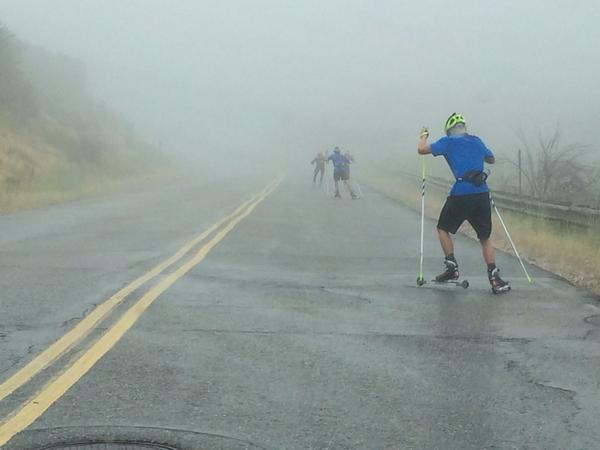
    U.S. Nordic Combined skiers tackle a foggy training session near Park City, Utah (including  Bryan Fletcher, Taylor Fletcher, Ben Berend,  Brett Denney, Michael Ward, and Adam Loomis). (Photo: Dave Jarrett/Twitter)
    U.S. Nordic Combined skiers during a recent, foggy rollerski session near Park City, Utah (including Bryan Fletcher, Taylor Fletcher, Ben Berend, Brett Denney, Michael Ward, and Adam Loomis). (Photo: Dave Jarrett/Twitter)

    July 31 was the day. On Thursday morning when U.S. Nordic Combined Head Coach Dave Jarrett walked into his office at the U.S. Ski and Snowboard Association (USSA) Center of Excellence in Park City, Utah, he knew he’d leave there with his job still in tact.

    That was one takeaway from meetings with USSA in the last few months since the association, which serves as nordic-combined’s national-governing body (NGB), revealed in April that it would no longer fund the team after July 31.

    According to Jarrett, USSA reasoned that if nordic combined wanted to raise money to sustain itself, it needed someone in charge. With help from USSA’s trustees, his position remained “pretty stable,” he said on the phone Thursday afternoon.

    “The whole thing from the beginning was that they were trying to shake the trees and see if they could find more money,” he said.

    Most recently, it was the status of his team’s other coach, Greg Poirier, he was uncertain of.

    “He was ready to turn in his stuff at the office [on Thursday],” Jarrett said. “They came back to Greg and said we have some money for you to take care of you.”

    While Poirier’s position as jumping coach wasn’t finalized, Jarrett said USSA had indicated it could cover Poirier as well for another season. That brought Jarrett to the next item on his wish list: securing a Continental Cup coach.

    “Things are moving forward for sure, and it’s a little bit more hopeful than in April,” he said.
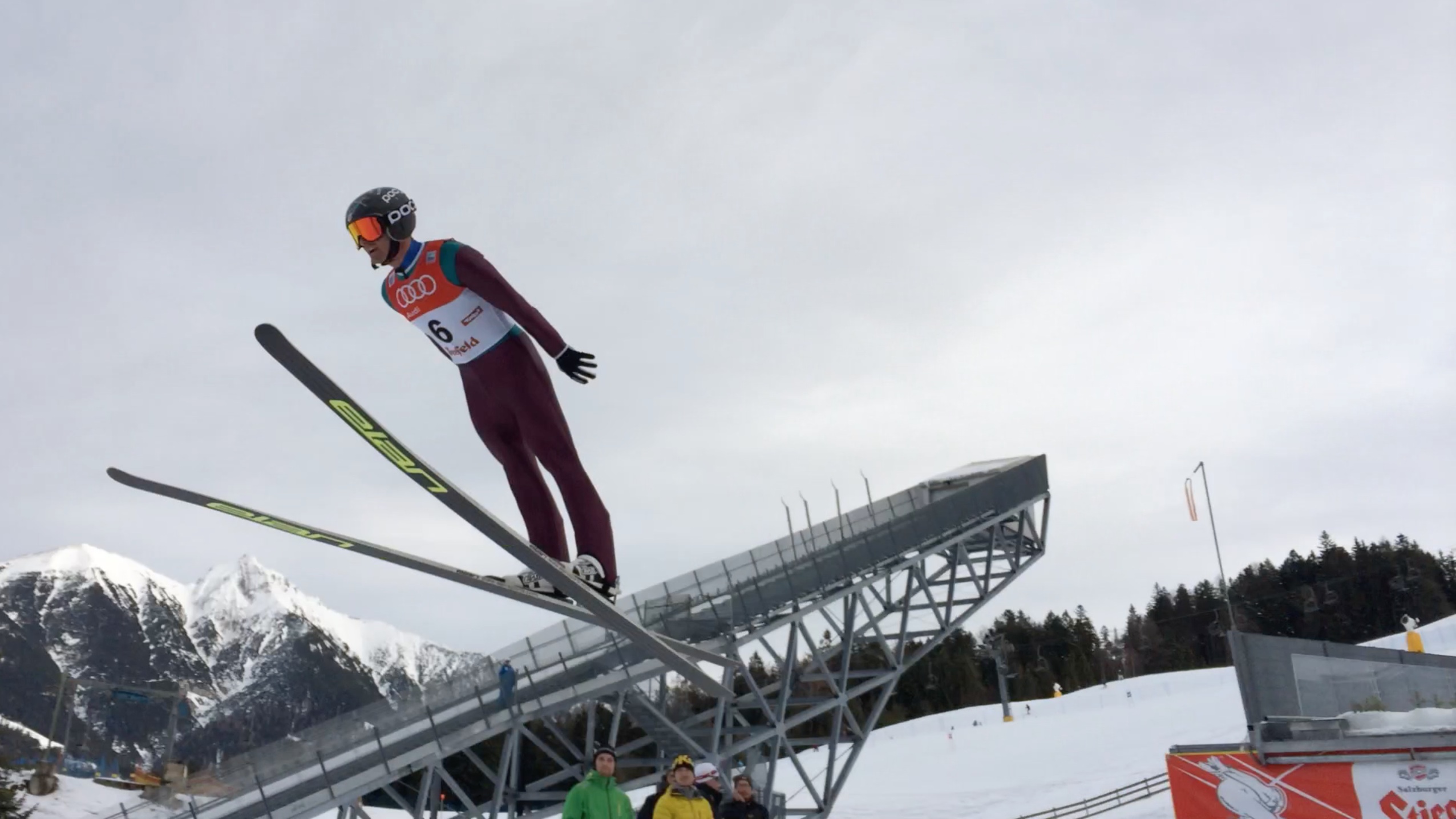
    Bryan Fletcher (U.S. Nordic Combined) jumping to ninth on Day 2 of the Nordic Combined World Cup Triple in Seefeld, Austria. Fletcher improved to sixth in the 10 k. (Photo: Fast Big Dog)
    Bryan Fletcher jumping at the FIS Nordic Combined World Cup Triple in Seefeld, Austria, last season, where he ended up with a season-best fifth overall. (Photo: Fast Big Dog)

    Money Game

    As of Aug. 1, USSA will fund individuals rather than the team. According to Bryan Fletcher, for next season, that means him and his younger brother Taylor. Based on Bryan’s understanding, those two demonstrated the most “podium potential,” and with that came a set dollar amount from USSA to be used toward expenses next season. That amount is payable upon receipt, not a cash advance or stipend.

    “Instead of funding an entire team and giving them a set budget, [USSA is] giving individuals who meet a set criteria for the ski team or based on the executive’s judgement … a set amount of money to pay for their season,” he explained. “Essentially Taylor and I are in that situation, given a little bit of money to fund our individual movements…”

    The Fletchers have already spent their USSA funds on re-hiring the team’s two wax technicians, Andrej Jezeršek and Matjaz Dobrovoljc.

    “There’s no point in showing up for World Cups if you have no support,” Bryan said. “Ideally that would be used for plane travel and [other travel expenses] … We decided that the most important thing was our wax techs’ salaries. It’s much easier to make ends meet while you’re over there.”

    Jarrett agreed: “It’s the most cost-effective place [to compete], because you get paid to be there,” he said of the World Cup and the monetary perks (including comped food and lodging) that come with top international results.

    “We decided that the most important thing was our wax techs’ salaries. It’s much easier to make ends meet while you’re over there.” — Bryan Fletcher, on using his personal USSA funds to pay for his team’s wax techs

    At the same time, he’s optimistic that future arrangements and partnerships, both within and outside of USSA, could be used to pay for those two techs — adding it was essential to lock them down for another season first.

    The team can also count on Switzerland to pay for about 30 percent of their servicemen’s salaries. Jarrett said they teamed up with Swiss nordic combined last season, waxing and testing some of their nordic skis in exchange for reimbursement.

    As for the total cost of the season, with camps and competitions U.S. NoCo has yet to finalize its budget for, Jarrett estimated it amounts to roughly $250,000 dollars. That’s for the entire program, including travel expenses like airfare, room and board, fuel, and rental cars for all team and staff members. It does not include employee salaries or benefits, and equipment costs, such as jumping suits, bindings, wax and supplies — all of which Jarrett described as another huge cost.

    Bryan estimated that waxing and travel expenses in Europe could amount to $2,000 a week per athlete — a figure that could be lower depending on how much other teams, like Switzerland, or race organizers help with defraying costs.

    Regardless, they need cash to train — ideally at international venues — and get to the highest-level competitions.

    That’s where Billy Demong, the team’s veteran and most-decorated athlete, has stepped up. As U.S. NoCo’s point person for marketing and fundraising, he plans to keep training and compete next season, but has already devoted a large part of his offseason to securing finances for his program.

    “He’s pretty well-connected,” Jarrett said. “He really selflessly took that on … It’s a lot, that’s no question, but we know Bill…”

    While Demong has been working out on his own schedule, the Fletchers have been training with the rest of the team in Park City. Aside from Todd Lodwick retiring from the A-team, the program has retained and slightly grown its training group, and Jarrett said all of its members are excited and motivated to make the jump from the development ranks.

    A New Team Structure

    New this season, U.S. NoCo is looking to fill a C-team, which Jarrett described as mainly a junior squad.

    “Our goal now is to take care of the sport from top to bottom: A, B, C, and a development team,” he said. “The clubs really aren’t equipped to handle post-grad in nordic combined … [Athletes] need to be either on the Continental Cup or training.”

    With its budget in flux, the program hasn’t decided how to divvy up funds for athletes among those teams. Jarrett said C-team will likely be unfunded, while providing a sense of national-team belonging and training opportunities for young skiers. At this point, B-team members that don’t make it to the World Cup will likely have to self-fund as well next season.

    The big questions that remain for the U.S. team include its competition schedule and how many world and continental cups it can afford to attend, as well as whether it can swing an international training camp this fall.

    “We didn’t do a camp in July. We’re not doing a camp in August,” Jarrett explained. “We’re hoping to have a big camp together with the Swiss guys, go to Lake Placid [for U.S. Nordic Combined nationals] in October, then go to Europe after that to have a camp [in Germany and Switzerland].”

    Bryan pointed out that the team needs to jump at lower elevations than Park City and would benefit from the ice track in Oberstdorf, Germany.

    “You’ve got to see the level of how everyone’s jumping,” Jarrett said.

    In the past, the team held three summer training camps, most of which were in Europe. This year, its athletes skipped their usual Tour-de-France camp, replacing it with a five-day endurance camp/fundraiser in Aspen, Colo.

    “We had donors come to pay and ride with us for a week,” Bryan explained. “We had an awesome time. …  That was mostly Bill’s idea, just to continue that bike idea in Aspen.”

    Craig Ward is heading up another nordic-combined fundraiser in line with the USA Pro Cycling Challenge from Aug. 14-19 in Aspen, Bryan added. Because of funding uncertainty this spring, the team had to rule out competing at the International Ski Federation (FIS) Summer Grand Prix in Germany and Austria in late August.

    As for the team’s winter World Cup schedule, Jarrett said it will be similar to in the past, with specifics being worked out in the next few months.

    “It’s moving in the right direction,” he said.

    USASJ and NoCo Unite

    By partnering with USA Ski Jumping (USASJ) to form a singular “USA Ski Jumping and Nordic Combined,” Jarrett hopes his sport continues to grow, both in participation and financial stability, for seasons to come.

    The agreement was sort of a natural byproduct of the two sports’ commonalities, he explained. Not only is jumping essential to the success of both, but they also share the few jumping venues scattered across the U.S. Plus, most nordic-combined skiers start out as jumpers — and if they don’t, they have to move to a place with jump hills to learn how.

    “There’s much more in common with ski jumping than there is with cross-country for nordic combined,” Jarrett said. “It’s just a better fit, a better understanding of how this sport works.”

    Since 2006, USASJ has operated independently of USSA (which also remains its NGB), coming up with its own marketing and fundraising strategies. While Demong will continue to work on landing sponsors for nordic combined, the two sports won’t likely combine marketing efforts in the near future — unless a major sponsor wants them as a unit and each slice of the pie is large enough to make it worth pursuing, Jarrett said.

    “There’s much more in common with ski jumping than there is with cross-country for nordic combined. It’s just a better fit, a better understanding of how this sport works.” — Dave Jarrett, U.S. Nordic Combined Head Coach

    “Right now there’s no downside for [USASJ]; they’re not giving up anything,” he said. “They’re just sharing a place for us to raise money. That was the goal that we started with. They’ve already been down this path … they’ve already suffered through all the growing pains that’s involved with getting cut like that. It’s been definitely a good partnership … [and] we’re coming into it with pulling our own weight.”

    In the future, Jarrett said they could revisit collaborating with Women’s Ski Jumping USA, too. However, that program has opted to remain separate for the time being.

    “That could be a really good dream: to have both men’s and women’s ski jumping and both men’s and women’s nordic combined under the same roof,” Jarrett said. “But Women’s Ski Jumping USA is also protective with what they’ve done as an organization and rightly so.”

    The next couple years could be telling for all the aforementioned organizations.

    “We need to keep together to keep our sports alive,” Jarrett said. “I think [Women’s Ski Jumping USA needs] to figure out how they’re going to proceed now that they’re into the Olympics and the suffrage story is over. Hopefully we can talk and figure out what’s the best for our sport. … FIS and the IOC, they really want women’s nordic combined … to flourish.”

    Coaches education, development outreach, jumping equipment and technique are among many elements ski jumping and nordic combined could share, Bryan said. But they’re also different sports and not everything overlaps.

    “We need our own staff and they need their own staff,” Jarrett said of USASJ.

    NoCo and NNF

    A longtime supporter of U.S. NoCo, the National Nordic Foundation (NNF), a nonprofit designed to help fund developing nordic athletes in the U.S., will continue to back nordic combined.

    NNF Director Dave Knoop explained the foundation is currently working on its upcoming “Drive for 25” fundraiser, typically launched in late fall, and intends to include Nordic Combined in that movement.

    “We understand how and why NC has merged with Jumping and what they are doing makes a lot of sense,” Knoop wrote in an email. “The NNF has not abandoned funding NC Pillar Projects and we look forward to funding NC designated projects in the future.”

    Meanwhile, nordic combined will receive support from both NNF and USASJ. NoCo representatives Demong and Kerry Lynch remain on the NNF board.

    “In the past few months we have stepped back a bit to let Billy and others define how Nordic Combined would fit within the USA Ski Jumping [organization],” Knoop explained. “Now that this is clear we will begin defining and communicating NC’s role within the NNF. Specifically the transparency aspect of what we will fund and why so donors know where their donations are going.

    “If anything can be said of this episode regarding USSA’s actions regarding Nordic Combined funding is that I am hopeful that it just made NC rebuild [itself] in a way that eventually will make it a stronger organization,” he continued, “that the sport will grow in numbers and develop great athletes in the future.”

  • Mäkäräinen Shows U.S. Biathlon Women the Ropes (and Swimming Holes) in Kontiolahti

    Mäkäräinen Shows U.S. Biathlon Women the Ropes (and Swimming Holes) in Kontiolahti

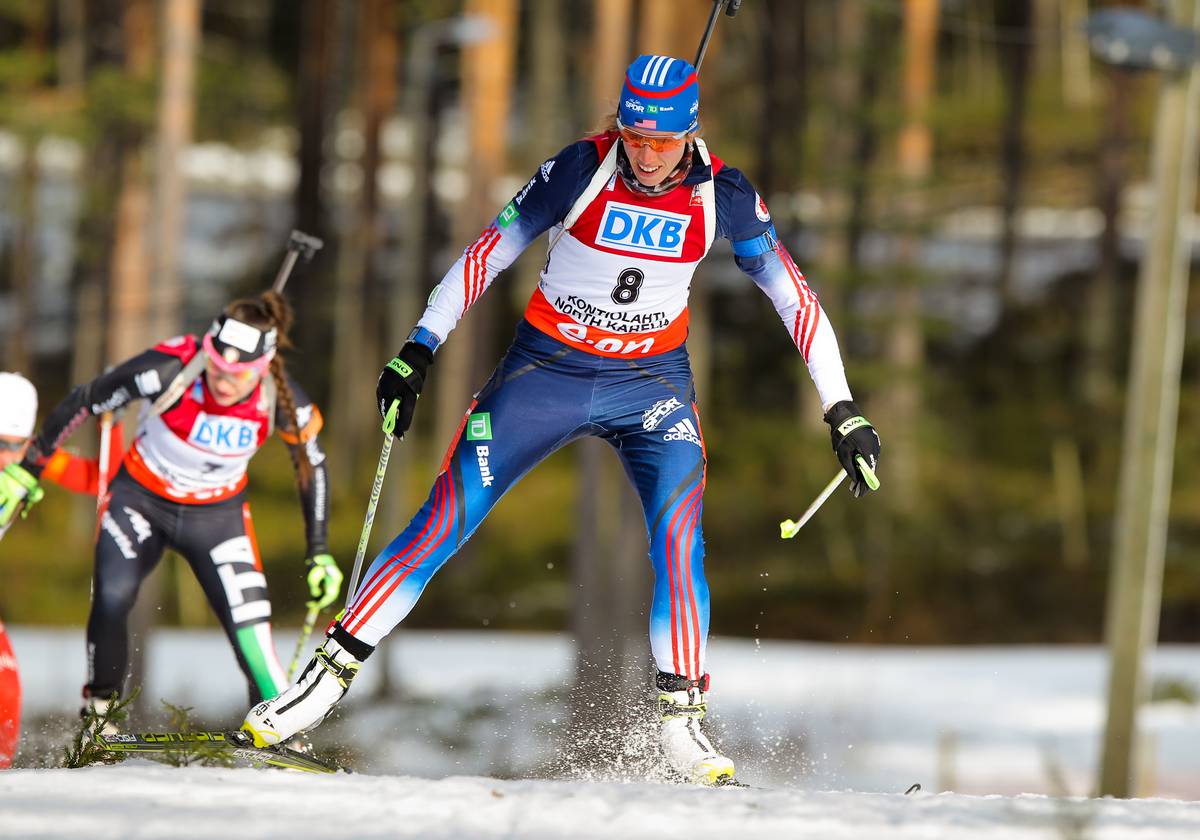
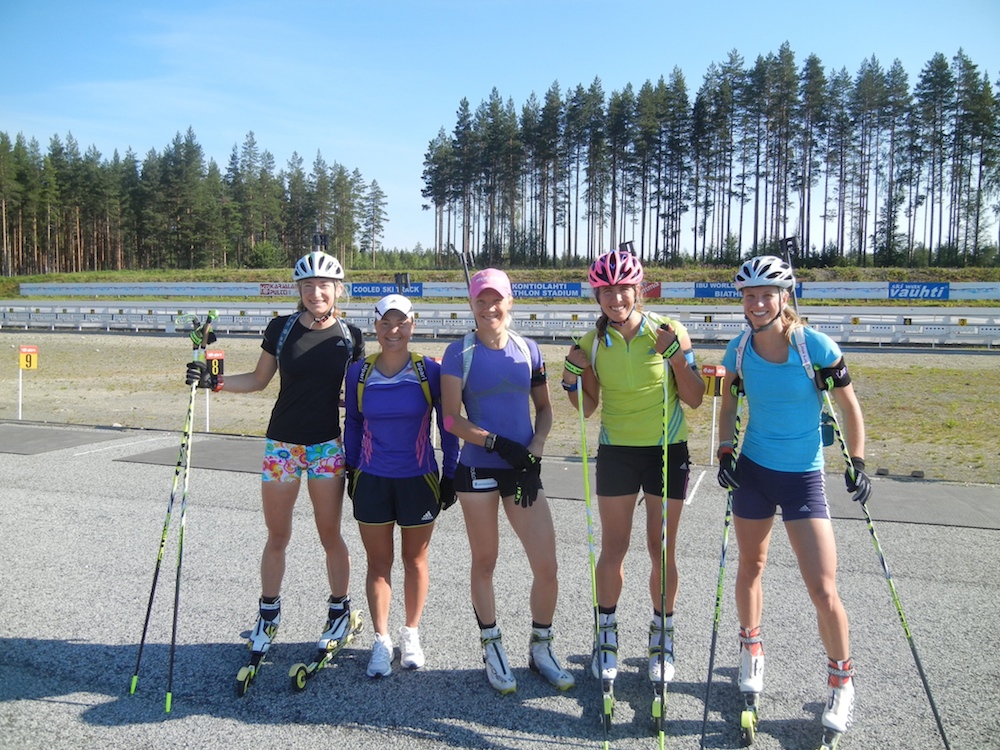
    The U.S. Biathlon women's team, including Hannah Dreissigacker (l), Susan Dunklee (second from r) and Annelies Cook (r), with Russia's Ekaterina Yurlova (second from l) and Finland's Kaisa Mäkäräinen (c) at the 2015 World Championships range in Kontiolahti, Finland. (Photo: Jonne Kähkönen)
    The U.S. Biathlon Women’s A-team, including Hannah Dreissigacker (l), Susan Dunklee (second from r) and Annelies Cook (r), with Russia’s Ekaterina Yurlova (second from l) and Finland’s Kaisa Mäkäräinen (c) at the 2015 World Championships range in Kontiolahti, Finland. (Photo: Jonne Kähkönen/USBA)

    When the U.S. Biathlon women step out onto the trails at Kontiolahti, Finland, next March, there should be some muscle memory that comes into play on the 2015 International Biathlon Union (IBU) World Championships course.

    They’ve been spending the last two weeks there, rollerskiing and testing their technique and fitness the loops, and learning more about the course and Finnish culture with reigning Overall World Cup champion Kaisa Mäkäräinen.

    On July 20, the three 2014 U.S. Olympians and women’s A-team members — Susan Dunklee, Annelies Cook and Hannah Dreissigacker — arrived in Kontiolahti, about 450 kilometers northeast of Helsinki. There, U.S. Women’s Coach Jonne Kähkönen set up several training sessions with Mäkäräinen, his former athlete, who also took the team orienteering, to her favorite local swimming holes, and joined them for a barbecue.

    Susan Dunklee racing her way to seventh place in the World Cup pursuit in Kontiolahti, Finland, on March 16. (Photo: USBA/NordicFocus)
    Susan Dunklee racing to seventh in the IBU World Cup pursuit last March in Kontiolahti, Finland. (Photo: USBA/NordicFocus)

    “It has been helpful to try to keep up with her on skis and have a few head-to-head shooting duels,” Dunklee wrote in an email. “Ekaterina Yurlova from Russia joined us one morning as well.  A few Finnish juniors also joined us for a time trial.  It can be difficult in the race season to really get to know athletes from other countries, but it is a lot easier in the summer when everything is more relaxed.”

    On Wednesday, Dunklee flew to Norway with Mäkäräinen to compete in the Blink rollerski festival from Thursday to Saturday in Sandnes and Lysebotn. She will be the first U.S. female biathlete to race in the world-famous event, and plans to do the uphill climb and biathlon races at Blink.

    “I am most excited about the opportunity to get lots of head-to-head shooting practice against some of the world’s best under the pressure of a race,” she wrote. “That is something that is very difficult to simulate in the training season, so it will be a valuable experience.”

    Before her team’s camp in Finland, Dunklee spent her rest week backpacking between huts in Norway. Despite hiking one day for more than nine hours by herself (after bypassing one hut to get to the next), she described it as relaxing.

    “The week in Norway was good for the soul,” she wrote. “Sometimes your head needs some recovery too.”

    In Kontiolahti, the U.S. women did most of their rollerski-combo workouts at the World Championships range, familiarized themselves with the course’s climbs, and experimented with corners and transitions throughout the loops, Dunklee explained.

    “Of course skis move a lot differently than rollerskis, and even in the winter, we have to be prepared to adapt our skiing style day-to-day based on snow conditions,” she added. “This course has one steep wall that I absolutely love (mostly because I know lots of other athletes hate it) and the terrain suits my strengths: V1 and V2 alternate.”

    “This course has one steep wall that I absolutely love (mostly because I know lots of other athletes hate it)…”  — Susan Dunklee on Kontiolahti’s 2015 IBU World Championships course

    Cook explained that her main goal at the Scandinavian camp (with another stop at the Torsby ski tunnel in Sweden next week) was to focus on quality training without distractions.

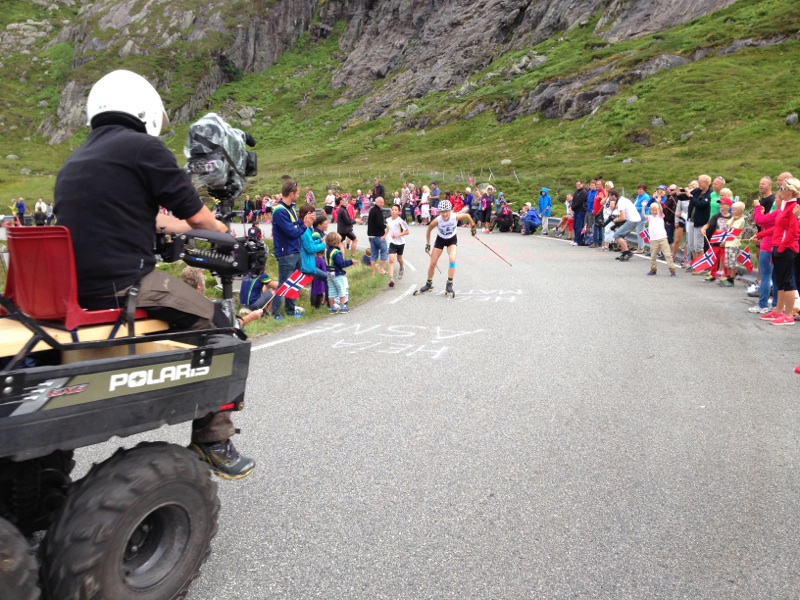
    Kaisa Mäkäräinen (FIN) climbs to victory in the Lysebotn hill climb on Thursday. (Photo: blinkfestivalen.no)
    Finland’s Kaisa Mäkäräinen climbing to a victory in the Lysebotn hill climb last season at the Blink Festival in Norway. The 2014 edition of the race took place Thursday, with Makarainen and Americans Susan Dunklee and Lowell Bailey competing. U.S. cross-country skier Liz Stephen won the women’s race. (Photo: blinkfestivalen.no)

    “I hate missing out on life and sometimes at home that means I get overwhelmed trying to do everything,” she wrote. “Here in Finland, I can just keep it simple. I also want to do that for training — to keep working on confident shooting and skiing, but keeping it really simple and intuitive.”

    While in Kontiolahti, the team stayed at cabins at a campground near town, Cook explained. They commuted on trails with a cruiser bike, visiting lakes and picking blueberries along the way. Outside of training, they didn’t have to worry about too much; Kähkönen’s wife cooked them Finnish meals and treats.

    Mäkäräinen also went out of her way to accommodate the Americans.

    “It was great for me to get the chance to ski against her in a normal time trial just to see where she is better than me,” Cook wrote. “We also have a small group so it is great to have one extra person around to mix it up!”

    Dreissigacker explained that it had been fun getting to know Mäkäräinen better.

    “It makes you realize that the World Cup leader is just a normal, hardworking person,” she wrote.

    “It makes you realize that the World Cup leader is just a normal, hardworking person.” — Hannah Dreissigacker on training with Finland’s Kaisa Mäkäräinen

    Finishing up their second week in Kontiolahti, Dreissigacker described the beautiful weather and valuable training they’d experienced. Even a windy day, like Thursday, made for good practice on the range.

    “It’s a unique course with some really steep big hills, but also a lot of flat,” she added. “So it’s good to get more practice skiing here.”
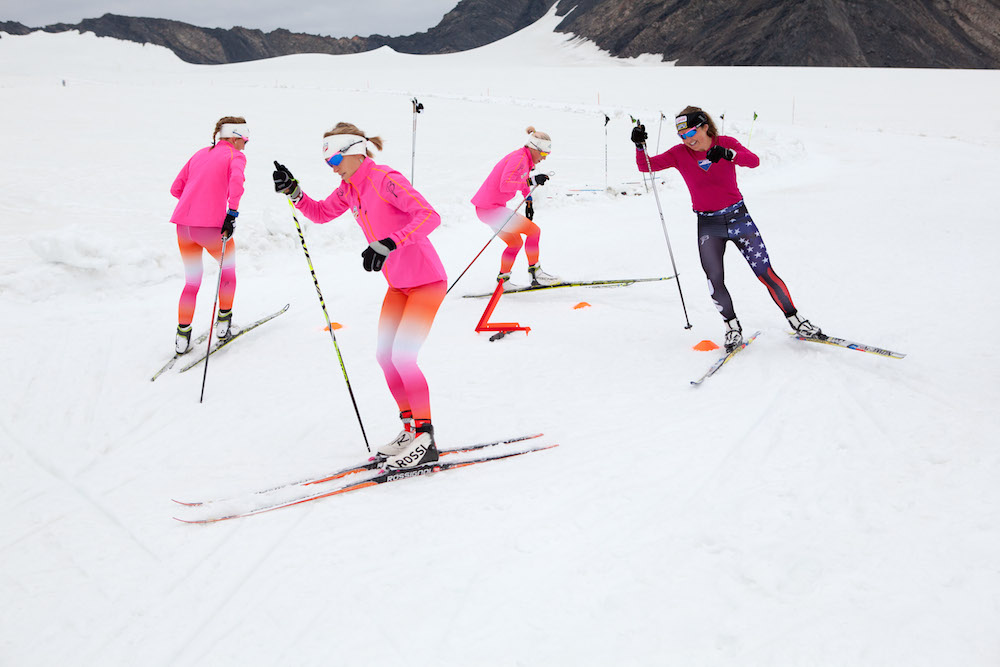
    “The world championship course is just hard,” Cook wrote. “There is a massive uphill wall that is going to be a killer no matter what way you slice it. But it is cool to try some things that will make it faster to ski up so the suffering has a bigger payout!”

    In Torsby, Cook and Dreissigacker will meet up with other U.S. Biathlon teammates (including Dunklee) and shift to snow for technique work and ski testing.

    “It will be fun to have the entire team there — men, women, techs and coaches,” Dreissigacker wrote. “The team atmosphere is always a lot of fun when we’re all together.”

  • U.S. Ski Team ‘Man Camp’ a Success on Eagle Glacier (Video and Photo Gallery)

    U.S. Ski Team ‘Man Camp’ a Success on Eagle Glacier (Video and Photo Gallery)

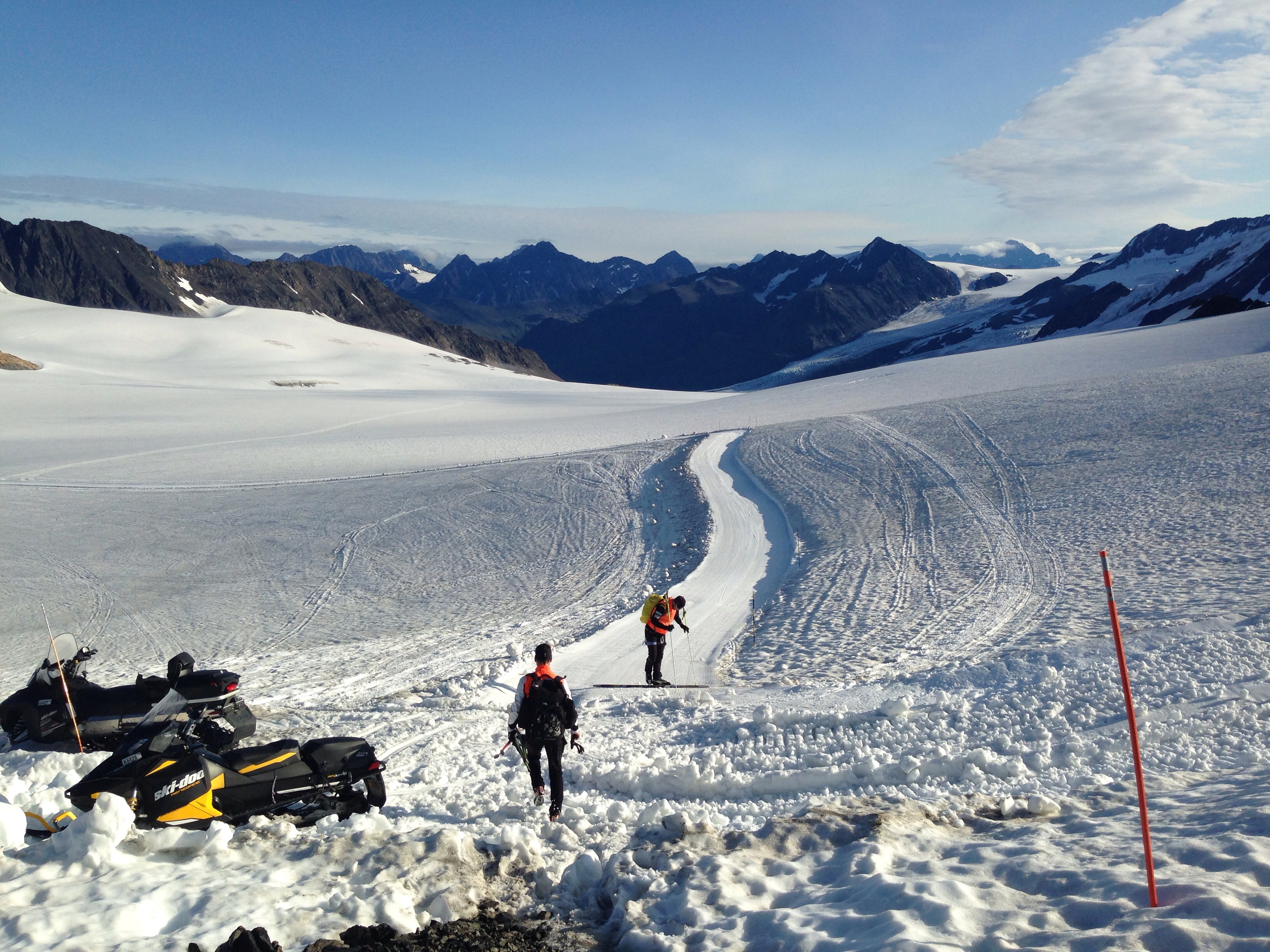
    Alaska's Eagle Glacier served as the location for second week of the 2014 'Man Camp.' The camp was a joint effort by the U.S. Ski Team and Alaska Pacific University to create a high volume, intense period of training both on-snow and off. (Photo: Andy Newell)
    Alaska’s Eagle Glacier served as the location for second week of the 2014 ‘Man Camp.’ The camp was a joint effort by the U.S. Ski Team and Alaska Pacific University to create a high volume, intense period of training both on-snow and off. (Photo: Andy Newell)

    Much has been said of the tight-knit dynamic of the U.S. Ski Team. Whether it’s the closeness of its members or the fun-filled atmosphere created by athletes and coaches, the Americans are often seen as the perfect example of a well functioning team.

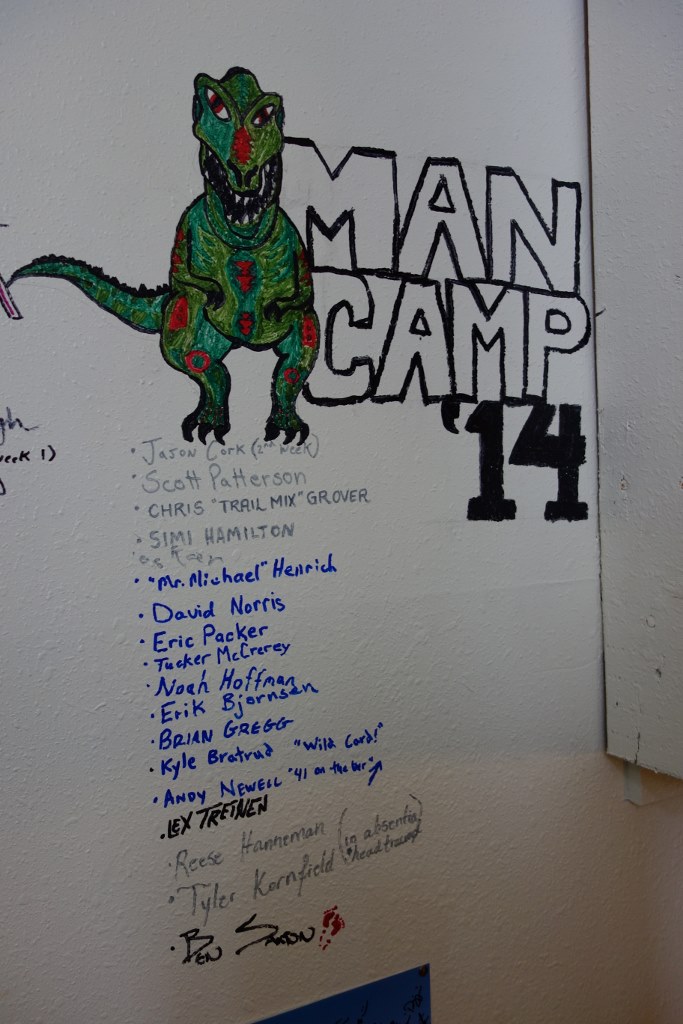
    The full list of attendees at the joint U.S. Ski Team and APU 2014 'Man Camp' held in Alaska this July. (Photo: Noah Hoffman)
    The full list of attendees at the joint U.S. Ski Team and APU 2014 ‘Man Camp’ held in Alaska this July. (Photo: Noah Hoffman)

    However, this recognition is more-often-than-not attributed to the women’s side of the team. Maybe it’s due to the small number of males on the actual U.S. Ski Team or their contained demeanors, but the U.S. men do not have the same reputation as their female counterparts.

    The recent camp on Alaska’s Eagle Glacier underscores how wrong appearances can be.

    The joint U.S. Ski Team and Alaska Pacific University on-snow camp was held on the glacier from July 21 to July 26 and included the five U.S. Ski Team Athletes: Noah Hoffman, Andy Newell, Simi Hamilton, Erik Bjornsen, and Ben Saxton. APU skiers Reese Hanneman, David Norris, Lex Treinen, Tyler Kornfied, Eric Packer, and Scott Patterson were also in attendance along with APU training partners Tucker McCrerey, Kyle Bratrud and Brian Gregg.

    The group of fourteen skiers, who make up some of the best athletes in the U.S., used their talents to not only improve each other’s skiing but also to create a more cohesive environment for male cross country skiers in America.

    “It’s not too often that we can get all the best male skiers in the country together for two weeks of training sessions so it was pretty unique and we took advantage of it by skiing a log of big hours but also pushing each other,” wrote Newell in an email to FasterSkier.

    He continued, saying it’s hard not to grow close when you are living with 18 guys under one small roof.

    Hanneman agreed, writing, “This camp was pretty unique in that it put the best American male skiers all together on snow together during the heart of the training year. That never happens.”

    By all accounts the camp went very smoothly and athletes were able to get in roughly 25 to 27 hours of training in during the six days they spent on the glacier.

    The week on Eagle Glacier marked the second week of the joint USST/APU men’s camp in Alaska. Previously the men had been training in Anchorage while the women were on the glacier.

    According to U.S. Ski Team Head Coach Chris Grover, on-snow camp was intended to be one of the year’s biggest training weeks for many athletes in attendance. In addition to the large volume of training, Grover said there were two other goals to the camp from his perspective.

    The first was maintaining on-snow technique, which is often easy to lose during several months of rollerskiing.

    “This is a critical camp in terms of adjusting technique mid-summer,” Grover wrote in an email. “We won’t be back on snow for a few months now so this was an important camp for touching base with good skiing,”

    Hoffman felt the camp helped him do just that. The on-snow training allowed him to shift technique changes he made on rollerskis this spring and summer to his actual skiing.

    The second goal of the camp was to hold several workouts in which the men could push each other to their limits. One such workout was a sprint simulation on a course modeled after the 2015 World Championship course in Falun, Sweden.

    For Hamilton the soft, warm conditions helped him work on weaknesses he experienced in last year’s World Cup season. In addition, he felt the group training aided him in his tactical skiing, whether it was for sprinting or distance.

    “We did a lot of group workouts – both distance skis and interval sessions – and to re-familiarize yourself with skiing fast in big, tight packs is always a great thing to do in the summer,” Hamilton wrote. “Whether it’s a sprint heat or mass start distance race on the World Cup, being comfortable with skiing in a tight pack of guys is a really important thing.”

    Overall the camp was a huge success for both the U.S. Ski Team and APU skiers. However, there was a small mishap that ended the camp early for one APU athlete.

    During one of the group sprint workouts, Hanneman tripped and suffered a concussion after slamming his head into the snow. The 2014 classic sprint national champion left the camp to ensure there hadn’t been any further damage, and while he was cleared to return to training Hanneman opted to not return to the glacier.

    See Hanneman’s fall in his Instagram post documenting the accident (story continues below):

    http://instagram.com/p/rAAl-uFf80/?modal=true

    While the camp was an opportunity to increase fitness and improve technique, it also served as a time for few laughs.

    According to several of the camp’s attendees, the comedic highlight of the camp was finding a vintage VHS tape filmed primarily by Kikkan Randall at the 2001 World Junior Championships in Poland.

    Ben Saxton (l) and Andy Newell (r) pose on the Eagle Glacier. (Photo: Andy Newell)
    Ben Saxton (l) and Andy Newell (r) pose on the Eagle Glacier. (Photo: Andy Newell)

    “It was absolutely hilarious to witness what was regarded as ‘cool’ back then,” said Hamilton. “And of course seeing what people like Kikkan, Andy, Eric Strabel, and Colin Rodgers looked like 13 years ago gave us some pretty big laughs.”

    Apparently Randall also had a weakness for the Norwegian men’s team at the time.

    “We cracked up at Kikkan and her female teammates commenting on the looks of all the male athletes passing by in the race. Kikkan really liked the Norwegians,” Hofmann added.

    The camp is now over and its attendees have left feeling both tired and accomplished. Not only did they make several big steps forward to achieving their personal goals, they also demonstrated that the American men can be just as cohesive as the women; which can only mean good things for the future of the U.S. Ski Team.

    “Between my APU team-mates and the US Ski Team guys, I believe this is the group that, for the most part, is going to represent the US in international competition for the next few years,” said Hanneman.

    Check out video footage of the camp from Newell and a photo gallery of the camp from Newell and Hamilton below.


    Newell’s Eagle Glacier camp video, Alaska XC with Andy Newell:

  • Two Dozen Canadians Seek Summertime in Bend

    Two Dozen Canadians Seek Summertime in Bend

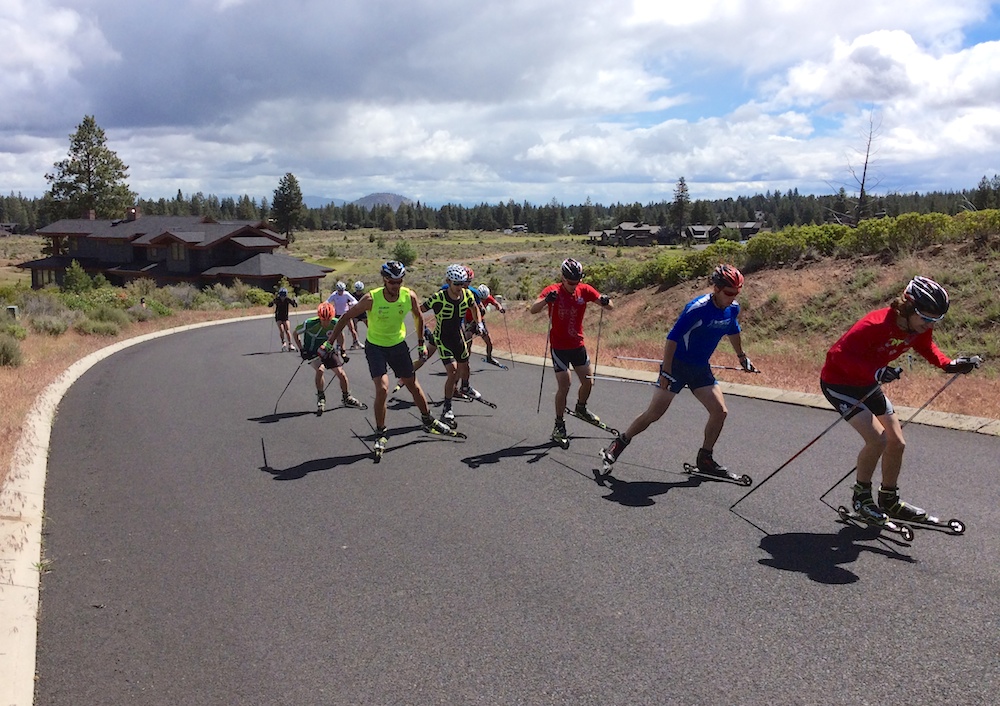
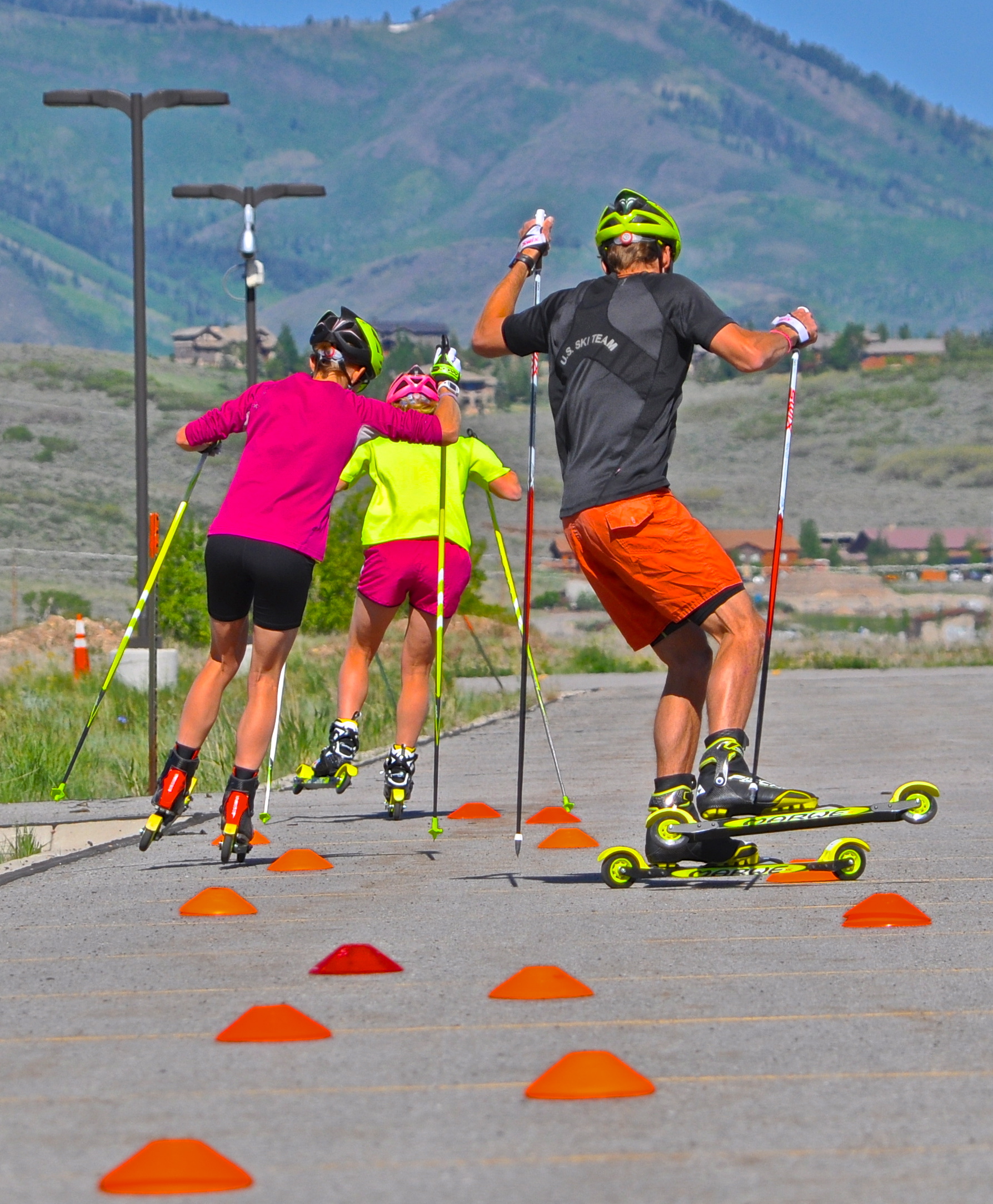
    Several Canadians get after a rollerski workout in Bend, Ore. (From right to left) first 5 athletes): Alexis Dumas, Alexis Turgeon, Olivier Hamel, Alex Harvey (black and yellow suit), Lenny Valjas (bright yellow sleeveless top) (Photo: Cross Country Canada)
    Alexis Dumas (r) leads several Canadians during a rollerski workout in Bend, Ore., followed by Alexis Turgeon (second from r), Olivier Hamel, Alex Harvey (black-and yellow-suit), and Lenny Valjas (in bright yellow). (Photo: Cross Country Canada)

    As if 12 five-hour training days in Bend, Ore., weren’t enough, the Canadian World Cup Team packed up and headed home to Canmore, Alberta, earlier this month for five more days of camp.

    In all, it was a total of about two weeks, the usual for a training camp of this caliber. In a recent phone interview, national-team coach Justin Wadsworth explained it was important to “mix it up” and take advantage of training with out-of-town athletes like Alex Harvey, who is based in Quebec and one of the four men on the World Cup Team.

    “We originally were trying to get up on the Haig Glacier when we came up here, but that didn’t happen,” Wadsworth said of Canmore, some 1,200 kilometers (760 miles) northeast of Bend.

    So they took advantage of having in-house tools, like testing and meetings with strength trainers at the Bill Warren Training Centre at the Canmore Nordic Centre.

    In Bend, a destination the team picked for its rollerskiing and other dryland options, Canada was represented in numbers with about 27 athletes. The Canadian World Cup Team, made up of Harvey, Devon Kershaw, Ivan Babikov, and Lenny Valjas, was joined by nearly two dozen skiers from mostly the Pierre-Harvey (CNEPH) and Thunder Bay (NDC) national-training centres.

    Wadsworth explained that the Alberta World Cup Academy (AWCA), of which he is head coach, was also invited, but didn’t come. Head coaches of CNEPH and NDC, respectively, Louis Bouchard and Timo Puiras helped oversee a select a group of their own athletes in Bend.

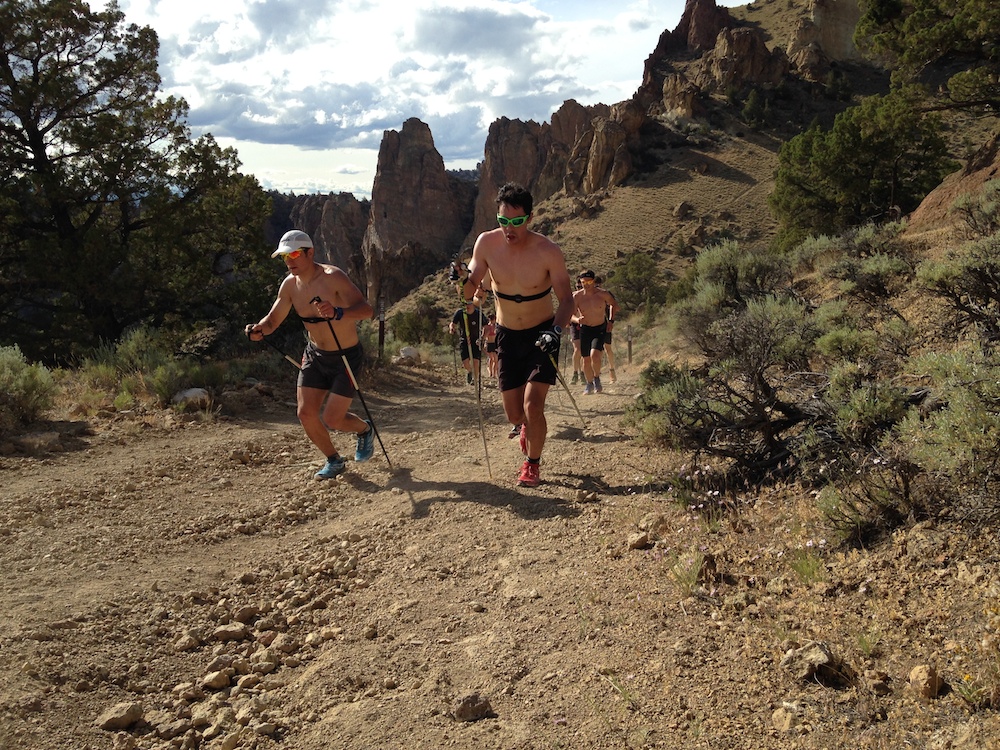
    Ivan Babikov (l) and Jesse Cockney during a bounding/trail running workout near Bend, Ore. (Photo: Cross Country Canada)
    Ivan Babikov (l) and Jesse Cockney during a bounding/trail running workout near Bend, Ore. (Photo: Cross Country Canada)

    “It was a really nice-sized group,” Wadsworth said. “We want to push for that … and get everybody in this country together. That was the first step. I would say very successful, I think [everybody] would say this was a good camp.”

    In terms of gender, it was mostly men. Two-time Olympian Perianne Jones, now part of the AWCA and Canada’s B-team, trained with women like Cendrine Browne (CNEPH), Jennifer Jackson (NDC) and Alannah MacLean (NDC), Wadsworth said.

    “We would have liked to have more women there, but this was a good start,” he added.

    This season, there is no women’s A-team, or World Cup Team, because there weren’t any Canadian women that met the qualifying criteria at the end of 2013/2014.

    In May, Cross Country Canada (CCC) nominated World Cup (A), B , C and D teams instead. The B-team includes three AWCA skiers: Jones, Graeme Killick and Jesse Cockney. Mostly U23-aged athletes make up what Wadsworth called the C-team: Browne, Dahria Beatty (AWCA) and Raphaël Couturier (CNEPH). The D-team is reserved for development-team athletes who meet high-end domestic criteria and includes five AWCA skiers: Emily Nishikawa, Heidi Widmer, Alysson Marshall, Kevin Sandau, Michael Somppi.

    July marked the Canadians’ second time in Bend for a summer training camp after they held one of their altitude camps there last year (Mount Bachelor’s summit elevation is 2,764 meters — more than 9,000 feet). Before that, the World Cup Team trained on snow at Mount Bachelor in the spring for several years, but this time, the goal was to pound pavement and mountainside dirt.

    “Graeme and Peri got on snow, but that was the first day the team got there,” Wadsworth said of the beginning of camp in late June. “They were just wrapping up the grooming on Mount Bachelor. We had been on snow at the Sunshine camp [near Canmore in May] so we weren’t too focused on getting on snow there.”
    Bend was an attractive option for a number of reasons. For one, it’s Wadsworth’s former hometown.

    “We looked at doing something in Whistler and the East, but we came back to Bend because we felt like it was the best place for an all-around camp with a big group,” he said. “The roads are really good there and there’s a ton of rollerskiing.”
    The backside of Mount Bachelor is paved and “about the most flat place in the world,” he explained. “Beautiful road and no traffic.” They also trained on the mountain’s access road (about a 40-kilometre climb) and in gated developments with loops to avoid traffic.
    “The goals from the physiological side was the volume, intensity, and the little bit of strength,” he said, adding that the weather was expected to be conducive for outdoor training.

    “One thing about being around in the Rockies in June is that they call it ‘Monsoon June,’ ” he said. “It’s also good to have a place where we know we are going to be warm and dry and we can get a lot of training in.”

    Workouts emphasized distance slightly more than speed, but the group logged two-to-three intensity sessions each week. The men and women teamed up for a sprint relay, which started with a prologue to match up athletes.

    “The women were racing with the guys,” Wadsworth said. “It was fun and hard and we were really happy with how it worked out.”

    Camp participants also did a bounding workout, marked by an extremely steep uphill, ran trails, and mountain biked one day for fun, with the option to road bike.

    “They got to see a rattlesnake out there, too, and just experience quintessential Oregon,” he added.

    “They got to see a rattlesnake out there, too, and just experience quintessential Oregon.” — Justin Wadsworth, Canadian National Team Head Coach

    New to the World Cup’s coaching staff, Tor-Arne Hetland worked with Bouchard to lead the camp after planning workouts with Wadsworth.

    “Tor-Arne, I think he works really well with the athletes and he’s a real professional and expects the athletes to give it their all,” Wadsworth said. “He’s been really good for the team so far, and [we’ll] continue to work like that for coaching and work on the training plans together.”

    From Aug. 4-19, Hetland will head up another camp with Bouchard and the World Cup Team in Stratton, Vt. At the Stratton Mountain School, they’ll train with U.S. Ski Team members Andy Newell and Simi Hamilton.

    “[Nordic director] Sverre Caldwell and everybody at Stratton has been really open to help us there,” Wadsworth explained. “We’re looking forward to having a camp and working together with them.”

    In late September, the Canadians will have their annual altitude camp in Park City, Utah, then return to Canmore for on-snow, fall-prep at Frozen Thunder.

  • Three Swiss Biathletes, Sochi Olympians, Train with Canadians in Canmore

    Three Swiss Biathletes, Sochi Olympians, Train with Canadians in Canmore

    Switzerland's Benjamin Weger (l), Serafin Wietner, Ivan Joller and Weger's good friend Roman (bottom) during their weekend camping trip on the ice field in  Jasper National Park in Alberta. (Photo: Benjamin Weger)
    Switzerland’s Benjamin Weger (l), Serafin Wiestner, Ivan Joller and Weger’s good friend Roman (bottom) during their weekend camping trip on the ice field in Jasper National Park in Alberta. (Photo: Benjamin Weger)

    Benjamin Weger remembered Canmore, Alberta, as a 19 year old, competing for the first time in Canada as a Swiss biathlete at the 2009 International Biathlon Union (IBU) Junior World Championships. There, he grabbed silver in the sprint and placed ninth in the pursuit.

    The next year, Weger went one province west to Vancouver, British Columbia, for the 2010 Olympics. Results-wise, he didn’t come close to the podium on the world’s biggest-racing stage — placing 55th in the individual race and 69th in the sprint — but he returned to the IBU circuit the following season to notch his first World Cup medal, second in an individual race in December 2010.

    Multiple World Cup podiums and another Olympics later, Weger, now 24, returned to Canmore with two teammates, Serafin Wiestner and Ivan Joller, to train for three weeks from July 4-July 26. Wiestner, 23, also competed in Canmore, where he placed 39th in the sprint (and went on to finish fifth in the Junior Worlds sprint in 2011).

    In an email, Weger recalled meeting Biathlon Canada Head Coach Matthias Ahrens in Canmore in 2009. He extended an open invitation for the Swiss biathletes to come train with his team there any time.

    “It was [such] a nice place with great tracks and nice nature,” Weger wrote. “There we said to come once in summer for training.”

    Joller (l), Weger (c) and Wiestner during an uphill, double-pole training workout near Canmore. (Photo: Benjamin Weger)
    Joller (l), Weger (c) and Wiestner during an uphill, double-pole training workout near Canmore. (Photo: Benjamin Weger)

    Last season at the first IBU World Cup in Östersund, Sweden, Weger took Ahrens up on his offer. From there, the two coordinated a plan with Wiestner and Joller, 30, which involved several shooting-and-rollerski sessions with the Canadian biathletes on their home turf.

    The three men stayed in Canmore with a Canadian wax tech, enjoying sights like the Calgary Stampede festival (rodeo), Banff, and a weekend trip to Jasper National Park, Weger explained. After, they were headed to the Yukon for a week of “fly fishing and relaxing,” and visiting a longtime friend of Wiestner.

    “We did a lot of trainings with the Canadians in the shooting range and on the roller ski track, but also some nice tours on roller skis like near Banff to Lake Louise and than up to the Moraine Lake,” Weger wrote. They also joined one of the team’s sprint competitions.

    Before the trip, Weger knew some of the Canadian men, but not very well.

    “We talked sometimes together but not much,” he wrote. “Now we learned to know those guys better. We learned to know some young guys as well. They are all very motivated. That’s a cool team!”

    In terms of a training venue, Weger explained Canmore is similar to his hometown in terms of elevation, around 1,300 meters above sea level. The weather in his mountain village of Geschinen can also be variable “from nice and warm to rainy and cold.”

    Swiss biathletes Serafin Wiestner (l), Benjamin Weger (c), and Ivan Joller during a trail run to the Three Sister Pass in Canmore, Alberta. (Photo: Benjamin Weger)
    Swiss biathletes Serafin Wiestner (l), Benjamin Weger (c), and Ivan Joller during a trail run to the Three Sister Pass in Canmore, Alberta. (Photo: Benjamin Weger)

    But his experiences were different — even different from that of five years ago.

    “Last time it was a competition, this time we are there for training,” Weger wrote. “This time we had more time so [we’re going to] see some different places. We had also more time to get to know people. And during the training we saw a lot of nice places along the roads during the roller ski, or very nice places in the nature during our hikes or running.”

    In terms of goals, Weger wants to get back to the World Cup podium, where he was three seasons ago. At the Sochi Olympics, he placed 48th in the individual, 63rd in the sprint, and anchored his men’s relay to 14th with Claudio Boeckli, Joller and Wiestner.

    “I want catch up to the best athletes in the World Cup,” Weger wrote. “To reach this I have to stabilize my shooting on a high level. And I have to improve and stabilize my skiing performance. To stay in a good health is the prerequisite for good results and this was the main problem in the last season.

    “My Olympics were very bad,” he added. “Shooting performance was ok, but the skiing was the big problem. I think it was because I was not in good health.”

    Weistner placed 40th in the Sochi sprint and 57th in the pursuit, and Joller finished 67th in the individual race.

  • Masters Minds: Motivating, ‘Part-Hardcore, Part-Fantasy’ APU Glacier Camp

    Masters Minds: Motivating, ‘Part-Hardcore, Part-Fantasy’ APU Glacier Camp

    Caption: 2014 APUNSC Masters Camp (L to R): Kathy Christy, Dan Libbey, Berit Flora, Coach Erik Flora, Sam Flora, Gavin Kentch, Coach Don Haering, Gil Lund, Coach Greta Anderson, Shannon Gramse. (All photos: Shannon Gramse/Flickr)Masters from around the world, we want to hear from you! FasterSkier is seeking dedicated masters contributors from various clubs and regions, including any and all skiers who aren’t quite pro or collegiate skiers anymore (or ever — as we know how many catch the bug later in life!) Whatever your level of skiing, if you can write, please do!

    Submit camp or training recaps or announcements to info@fasterskier.com with the subject line “Masters Minds”. Articles can be informal, first-person accounts or written from an observatory standpoint with thoughts from others, like below.

    ***

    By Shannon Gramse

    The gods of American skiing have gathered on Eagle Glacier over the past few weeks, but July started off with a very different group of skiers at this world-class training facility 5,000 feet above Girdwood, Alaska.

    From June 28 to July 1, Alaska Pacific University Nordic Ski Center (APUNSC) held its third-annual Masters Glacier Camp, hosting nine skiers ranging in age from their 30s to their early 70s. Skiers enjoyed outstanding coaching, good weather and excellent fresh summer snow over a few days that were part-hardcore training session, part-fantasy camp, part gathering of family and friends.

    Helicopter service to and from Eagle Glacier above Girdwood, Alaska.Eagle Glacier is permitted by the U.S. Forest Service as a special use Olympic development facility, and while Pyeongchang may be decidedly out of reach for these nine older athletes, it could be argued that no group of Eagle Glacier skiers — this month or ever — will have more fun.

    This year’s Masters Camp was coached by APUNSC mastermind Erik Flora, who was recently named U.S. Olympic Committee National Coach of the Year, and assisted by Don Haering and Greta Anderson, elite skiers turned APUNSC masters coaches.

    “I’m a nothing-special recreational skier,” said APUNSC master skier Gavin Kentch. “To have access like that to the same facilities and coaching as the best skiers in the world is obviously something that you don’t get in other sports.”

    Kentch, who at 32 was by far the youngest athlete at camp, saw immediate benefits from his time on Eagle Glacier. “I made more progress as a skier in just a few days than I would have thought possible.  I’ve been skiing nearly all my life, and skate skiing for over 20 years now.  In just a few days, we came up with some technique changes that bordered on the epiphanic.”

     “In just a few days, we came up with some technique changes that bordered on the epiphanic.” — Gavin Kentch, APUNSC master and Eagle Glacier camper

    Coach Anderson said such epiphanies are by design. “Due to the camp environment we can share a lot of ideas and technique concepts with instant trial and feedback in a relatively short window of time,” she said.  “On Eagle we have nothing but time to discuss, share and implement technical improvements.

    “The Stadium” on Eagle Glacier“It can be incredibly motivating after a month of ski walking/bounding and rollerskiing for the body to be reminded, ‘Oh hey, this is why we are bounding,’ ” Anderson continued. “That can be a really great boost in confidence and motivation. It’s also a great way to break up the summer training, give the joints a rest, and get in some high-quality skiing on challenging terrain in conditions that aren’t otherwise experienced in Alaska — which are relatively soft and wet or klister conditions.”

    And ice the Gatorade-and-Geritol narrative.  Like the elites, summer on-snow training is an important step toward these skiers’ upcoming race seasons, including, collectively, the Norwegian and American Birkebeiners, the 350-mile Iditarod Trail Invitational, and highly competitive age-group rankings in local events such as the Tour of Anchorage and the Anchorage Cup race series. Then again, these athletes are a reminder that skiing at a relatively high level has its own intrinsic rewards.

    More important in the end than race results is the active, outdoor lifestyle that undergirds one’s experience on race day, an ideology reflected by the APUNSC Masters Program goals: “to develop cross-country ski skills, improve fitness, and promote skiing in the community.”

    The facilities at Eagle Glacier overlook the Chugach and Kenai mountain ranges. Photo: Shannon Gramse/Flickr)
    The facilities at Eagle Glacier overlook the Chugach and Kenai mountain ranges.

    Compared to elite-glacier camps, Masters Camp was more individualized and less structured. As Coach Anderson put it, “Elite camps tend to be very structured and goal-oriented. In contrast, our camp for Masters this year was all about skiing many kilometers and learning as much as each individual desired. Whereas elite athletes tend to finish their recommended time skiing each day and head inside to recover for the next session, masters this year had four days to ski their legs off as much as they wanted.”

    A typical day at glacier camp started with a big breakfast and instruction on waxing, structure, or technique, then a two-to-three hour skating session on the immaculately groomed 10 K course.

    It snowed three feet on the glacier in June, so the skiing was fantastic, despite a relatively sparse winter and spring in Southcentral Alaska. After a tough morning of skating — elevation effects, big terrain and soft snow conspire to make glacier skiing especially exhausting — skiers returned to “The House” for lunch, naps, and World Cup videos while the indomitable coaches scrubbed the skate lanes and set track with the facility’s PistenBully 100 for a late afternoon red-klister classic ski session.  Athletes were free to ski at their own pace, for as long as they wished, and 40-50 k days were the norm.

    “My main goal for the camp was just to get in a lot of time on snow,” said Kentch, “because of the self-evident training benefits, but mostly because I just really, really like to ski.  So I went in hoping to have a lot of fun skiing for a lot of hours.  I skied 12 hours in five sessions, and had a blast in the process, so I’d say it was a successful camp.”

    Dessert on the glacierEvenings were filled with hearty family style meals, saunas and hours of stories and ski talk. The special sense of warmth and intimacy at this year’s camp had a lot to do with the presence of Flora’s parents, Sam and Berit, both internationally competitive ski marathoners, and longtime family friend and onetime Norwegian national-level racer Gil Lund. Tales from the trail and memories of races and ski trips of yore were intertwined with reflections on parenting, family, the passing of time and tradition.

    “One of the best parts of the trip was just the chance to spend more time with my coaches and teammates,” said Kentch.

    Coach Anderson echoed those feelings. “Master skiers generally have other things going on in life — jobs, families, home improvement projects, and cabins just to name a few. Sharing that really special period of time — a trip of a lifetime for some and a highlight in their year for others — is the greatest feeling,” she said.

    ***

    About the Author: Shannon Gramse is a longtime member of APU Nordic Ski Center’s Masters Program. When he’s not skiing, he’s thinking about skiing while being a father and a husband and a professor at the University of Alaska Anchorage.

  • Norway’s Brun-Lie Impressed with U.S. Women’s Team: ‘I Think We Have A Lot to Learn’

    Norway’s Brun-Lie Impressed with U.S. Women’s Team: ‘I Think We Have A Lot to Learn’

    Four women with the 2014 North American Women's Training Alliance (NAWTA) on Eagle Glacier last week (from left to right) Jessie Diggins (SMST2/USST), Celine Brun-Lie (Norway), Rosie Brennan (APU), and Rosie Frankowski (APU). (Photo: Chris Hodel)
    Four women with the 2014 North American Women’s Training Alliance (NAWTA) on Eagle Glacier last week (from left to right) Jessie Diggins (SMST2/USST), Celine Brun-Lie (Norway), Rosie Brennan (APU), and Rosie Frankowski (APU). (Photo: Chris Hodel)

    It all started with brown cheese and banana bread. While the U.S. Ski Team was just warming into its five-month World Cup grind, one act of kindness in Beitostølen, Norway, had a lasting effect into the following year.

    Last November, Norway’s Celine Brun-Lie visited the U.S. women’s team at their cabin in the village affectionately known at Beito, bringing Scandinavian cheese with her. Then, the group made banana bread.

    Eight months later, they were doing more of the same, baking some 4,000 miles away on Eagle Glacier near Anchorage, Alaska.

    “It’s amazing,” Brun-Lie, 26, said on the phone last Friday from the glacier. “We are, like, 14 girls and it works really well. The girls are just nice to each other. They want everybody to have a good time. We bake a lot and do nice stuff for each other, so we have good food and everybody’s just smiling.”

    Finding Falun on Eagle Glacier:

    Before the NAWTA arrived on Eagle Glacier, APU went to work on a loop that replicated the sprint course at the upcoming 2015 World Championships in Falun, Sweden.“It’s amazing how the tracks are,” Brun-Lie said of how the grooming holds up in often humid daytime conditions. “I don’t know what Erik [Flora] does with the grooming but it’s always really good.”

    As for the Falun-like course: “That’s really cool,” she said of the course with big hills and a technical, curving descent. “[It’s] really, really good training. You have to ski hard uphill and your legs are so tired and you have to ski down. I think it’s really important that you have to do that. It’s just amazing.”In Norway, she said her team will find terrain with similarities to a particular course, but in parts — nothing in its entirety like what APU created.

    In the fourth year of the North American Women’s Training Alliance (NAWTA), Brun-Lie, part of Norway’s selective Sochi Olympic team, was invited to be the Americans’ international guest at their Alaska training camp. She’d been to Alaska once before — at least 10 years ago.

    But back then, she went with her family on a cruise, visiting what she referred to as tourist spots in places like Juneau. Nothing like what she’d experience in Anchorage.

    For two-and-a-half weeks, Brun-Lie explored Anchorage and the Kenai Peninsula, stopping at places like Homer and Seward (for Mount Marathon on July 4) while staying with U.S. Ski Team (USST) member Sadie Bjornsen.

    “She is friends with Marine Dusser, my brother’s girlfriend, so I always heard how much fun she was from Marine,” Bjornsen wrote in an email. “Last winter we threw around the idea of her coming to Alaska to visit, and by World Cup Finals she was sold.”

    Visiting Alaska had been on Brun-Lie’s mind for the last several years, ever since U.S. women first asked the Norwegian women to come over. Astrid Uhrenholdt Jacobsen joined the camp last July and returned with raving reviews.

    “I just asked the girls if I could come and they said yes,” Brun-Lie explained.

    Brun-Lie booked her flight in April and took some classes toward her engineering degree at the Norwegian University of Science and Technology in May. With just one stop in Iceland en route from Norway, she arrived in Anchorage with a few days to play before the USST camp.

    “We went to all these cool places, doing all these Alaska things, which was really cool,” Brun-Lie explained.

    She watched Holly Brooks, Bjornsen’s Alaska Pacific University (APU) teammate, win the prestigious-and-gut-wrenching Mount Marathon hill climb, and later visited Brooks at her cabin in Hope. She took a ride in a bush plane (which she called one of her greatest experiences ever), ate Alaskan salmon (drier than Norwegian salmon, but still good), saw moose, and checked out Anchorage’s abundant recreation and rollerski trails.

    Norway's Celine Brun-Lie at the NAWTA Eagle Glacier camp last week. (Photo: Chris Hodel)
    Norway’s Celine Brun-Lie at the NAWTA Eagle Glacier camp last week. (Photo: Chris Hodel)

    After a week of dryland training around Anchorage and another week of on-snow skiing on Eagle Glacier, she spoke excitedly about the camp. Had she been home in Trondheim, Brun-Lie would’ve had the month of July to train by herself.

    Instead, she joined a selective group of 14 women in a foreign place. Five belonged to the USST (Bjornsen, Sophie Caldwell, Jessie Diggins, Kikkan Randall, and Liz Stephen), five more came from APU (Brooks, Rosie Brennan, Rosie Frankowski, Becca Rorabaugh, and Lauren Fritz), and three were from other U.S. clubs (Erika Flowers of SMST2, Chelsea Holmes of Sun Valley, and Caitlin Gregg of Team Gregg).

    Not only was the trip good for her English (she fielded questions from local reporters at media day on the glacier last Wednesday) , but it was also good for her skiing, Brun-Lie said. A week before the camp, she reviewed the Americans’ two-week training plan with her coaches. It was comparable to what she would’ve done on her own, so she had no problems jumping right in. To her surprise, the U.S. coaches gave her daily feedback.

    “I didn’t know if they would care so much about me, but they do,” she said of the camp’s coaches, including APU Head Coach Erik Flora, USST Women’s Coach Matt Whitcomb and USST assistant Jason Cork. “They tell me their ideas and I tell them about mine. It’s really fun to see how similar it actually is. Maybe Matt tells me a little different than something my coaches tell me.”

    International Exchange

    A sprinter by nature who placed sixth in the classic sprint at the 2010 Olympics, she had been focusing on her stability skills this summer. Last season wasn’t her best, she said.

    “I think I was in good shape most of the winter, but I had a tendency to fall in every sprint I did,” she said. “I’m more stable in skating than I am in classic.”

    One of eight women to make Norway’s selective 2014 Sochi Olympics team, Brun-Lie had previously claimed two Junior World Championships medals (in 2006 and 2008) and went on to win a Norwegian national skate sprint in 2009. At the pre-Olympics World Cup in Sochi in February 2013, she placed third in the skate sprint.

    But she didn’t compete in Russia. Her team was too competitive.

    “We have a lot of good skiers; I didn’t race so I didn’t really make the team … I was kind of the reserve,” she said. “It was really tough to know that you were in a dangerous position and you might make the team but maybe not … and then go to the Olympics and be there and really want to race, but I couldn’t race.

    “I learned a lot about those two weeks I was there, about myself, about how the team works and everything,” she continued. “It motivates me a lot for next season to not be in that position.”

    She was glad to have made the team in the first place, because not making the team would’ve meant she had a bad season, Brun-Lie explained.

    “I learned a lot about those two weeks I was there, about myself, about how the team works and everything. It motivates me a lot for next season to not be in that position.” — Celine Brun-Lie, on being ‘on the bubble’ of Norway’s Olympic team

    “The hard part this year was that I was good enough to take a medal, but I kept falling in every sprint, and I didn’t know why,” she said. “But just to be there with the girls and … the U.S. Ski Team girls were so nice to me. I got to hang out with them a lot — they took care of me. I was happy to be there.”

    Norway’s Untimely Tragedy

    The day before the Olympics started in Sochi, Russia, Astrid Jacobsen’s brother died unexpectedly, and the team was left to cope with the tragedy throughout the next two weeks of competition.“It’s really a sad thing and I knew him also,” Brun-Lie said. “No one saw it coming. … I’m amazed how we took care of each other and got a bigger perspective of what we were doing — the races were really important, but there was a life that was more important, especially for those who didn’t race well.

    “But at the same time we were there to do a job and it was important because we worked on it so long. We learned how the team works and it made us closer than we were before.”Staying in the Olympic village and speaking with athletes from other teams made for “a big family,” she added. “We had amazing coaches and doctors and all the people around us that were doing an amazing job. We got out of it pretty good compared to how tragic it was.”

    That kind of relationship prompted her to solidify her trip to Alaska, where she learned more about the U.S. women’s team. Close with her own teammates, especially after the sudden death of Jacobsen’s brother on the eve of the Sochi Olympics, Brun-Lie was especially in awe of the Americans.

    “I’ve always been impressed with how they can stay together and have a good time in Europe for five months at a time and not get sick of each other,” she said. “Everybody has their place on the team.”

    One thing she noticed was a lack of team-building activities, which they apparently didn’t need during the two-week camp.

    “We have a lot of meetings ,” she said of the Norwegian women’s team. “How we want to be with each other … You put kind of the most selfish girls in the country together and we have to work together and it’s amazing it works as well as it does.”

    But the Norwegians go home after every World Cup weekend and for some quality alone time, or time with people outside of their team.

    “I think it’s amazing how they keep up the good mood and if someone has a bad day, they learn how everyone reacts,” she said. “They learn how to handle it much better than we do. I think we have a lot to learn.”

    Bjornsen, 24, explained this year’s camp was one of the best to date — and she trains on Eagle Glacier multiple times a year.

    “We do a lot of baking, giggling, recalling stories from our fun times together — and our training is always great,” she wrote. “With 14 girls you can push each other and encourage each other to make one more step forward in training. There is always something to learn from someone else, and someone to follow! I have always loved girls camp.”

    As for her team in particular, Bjornsen felt they’re unique because of their different personalities and ability to work together.

    “We are all very patient and encouraging of each other which allows us to be individual,” she wrote. “In the summer for example, we are all working on different things. We have different training goals, and different approaches…. yet we are able to come to a camp, work together and have a ton of fun.”

    “I think it’s amazing how they keep up the good mood and if someone has a bad day, they learn how everyone reacts. They learn how to handle it much better than we do. I think we have a lot to learn.” — Brun-Lie after getting to know the U.S. women’s nordic team

    Bjornsen and Brun-Lie talked a lot about their teams, and ultimately, Bjornsen didn’t think the two were very different.

    Sochi Olympians (from left to right) Sophie Caldwell, Liz Stephen, Kikkan Randall, and Holly Brooks work on a one-pole cornering drill during their annual NAWTA camp on Eagle Glacier last week. (Photo: Chris Hodel)
    Sochi Olympians (from left to right) Sophie Caldwell, Liz Stephen, Kikkan Randall, and Holly Brooks work on a one-pole cornering drill during their annual NAWTA camp on Eagle Glacier last week. (Photo: Chris Hodel)

    “They too have tons of fun together, they have good chemistry, good leadership, and a great team,” she wrote. “I think the awe comes from seeing this phenomena in a different place. While we are not doing the ‘exact same thing’, we are finding a way to push each other along in a fun and healthy way! There are so many ways to do this that I think Celine just finds it interesting and exciting.

    “I can imagine it would feel the same way for any of the US girls when we join the Swedish Team, or the Norwegian Team, or maybe some others,” she added. “It is a natural thing for woman to bond together — we are just lucky we have some great leadership that has allowed this to happen!!”

    Brun-Lie even offered Bjornsen some training tips.

    “One day after training, Celine asked if she could tell me something, and she explained what she has been working on and what I was missing a bit,” Bjornsen wrote. “It has been amazing to see how open these girls are, and how we all just want to learn from each other and have a good time together. Training with new buddies, and learning new techniques and ideas keeps things fresh for everyone!”

    Six days before flying back to Oslo, before upcoming summer and fall training camps in Norway and Italy, Brun-Lie was already starting to feel nostalgic.

    “I was thinking about that, like, ‘Oh no we only have five days left!’ ” she said.

    Regardless, she was excited about her own team, with 11 women — the most Norway has had in recent years. In addition to distance skiers, she also has a number of sprinters to work with at home.

    Before she left on Tuesday, she extended an invite to her U.S. training partners.

    “I hope if they want to come to Norway, they will,” she said. “It’s really nice for the World Cup next year to know them, so if we want to hang out get a coffee, they will.”

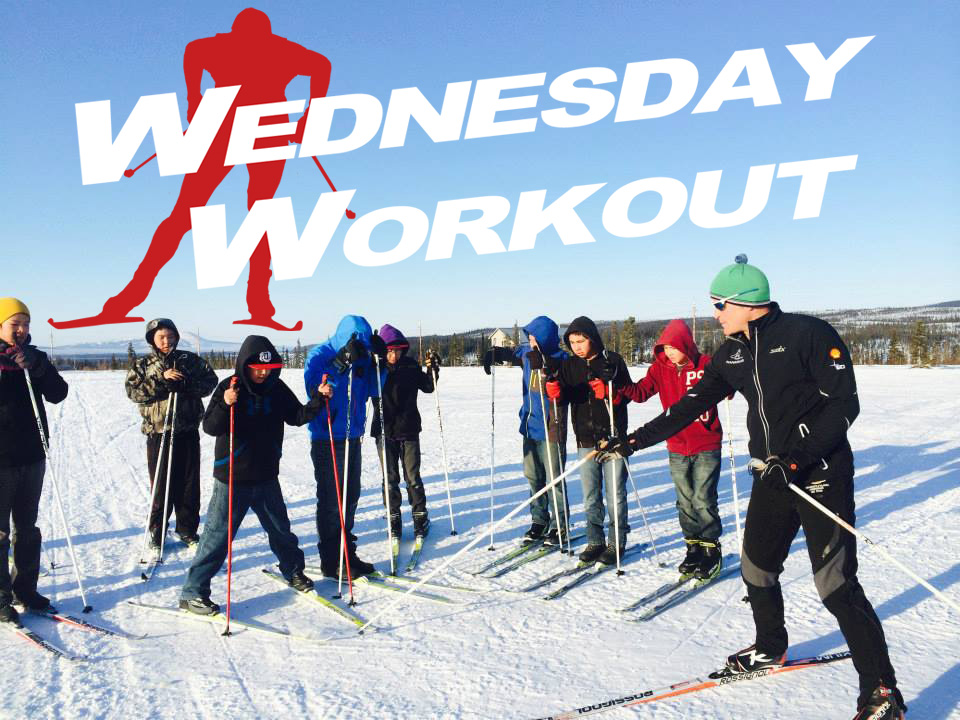
  • Wednesday Workout: Make Every Shot with Norwegian Coach Joar Himle

    Wednesday Workout: Make Every Shot with Norwegian Coach Joar Himle

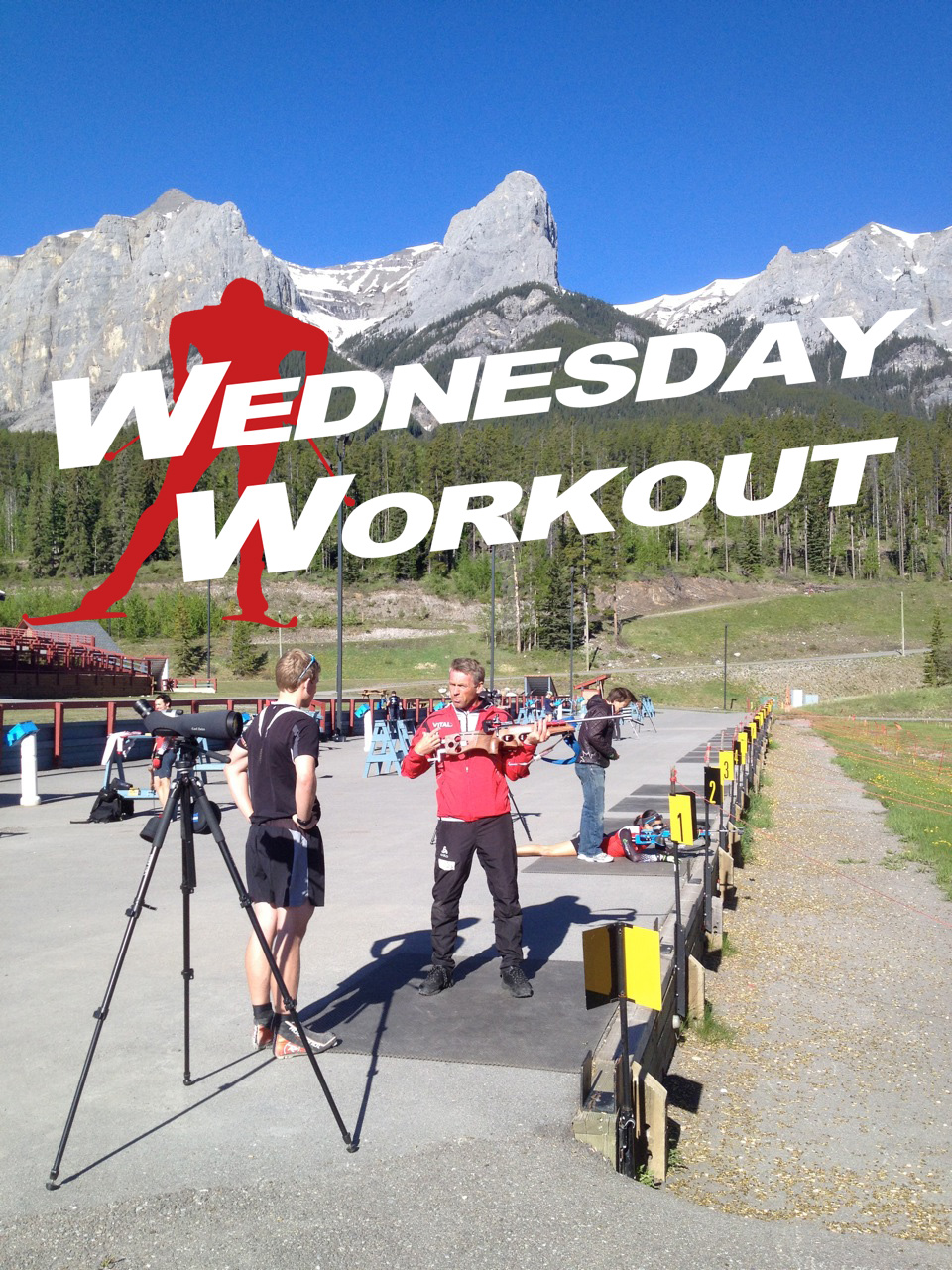
    Joar Himle, a personal shooting coach from Norway, assists Canada's Scott Gow during a recent shooting camp in Canmore, Alberta. (Photo: Matthias Ahrens)
    Joar Himle, a personal shooting coach from Norway, demonstrates shooting technique with Canada’s Scott Gow (l) during a shooting camp from June 8-14 in Canmore, Alberta. (Photo: Matthias Ahrens)

    There’s nothing wrong with getting a little outside perspective — at least that’s how Biathlon Canada’s national-team head coach Matthias Ahrens and his staff sees it.

    Ahrens explained in an email that he’s been trying for years to bring experts from around the world to observe his team and help enhance its athletes’ skiing and/or shooting. He finally pinned down Norwegian shooting coach Joar Himle, and from June 8-14, Himle worked with the Canadians at a shooting camp in Canmore, Alberta.

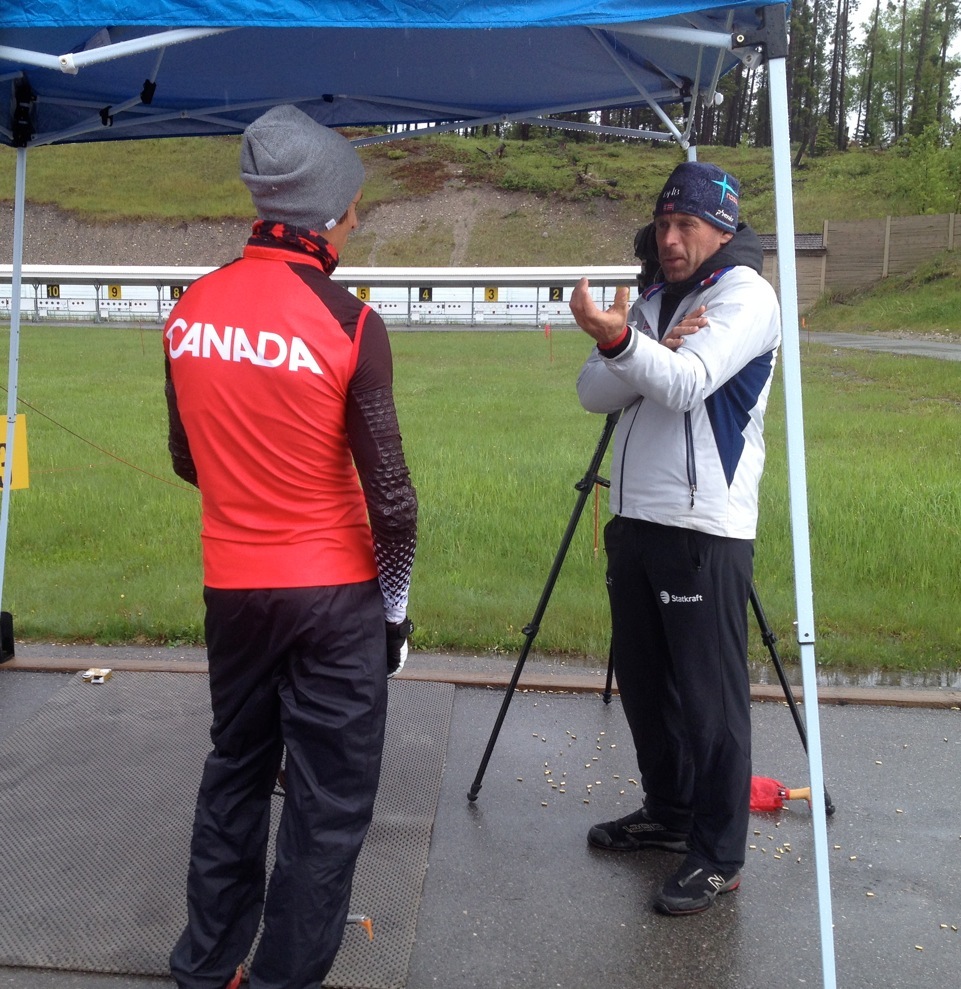
    Joar Himle, a personal shooting coach from Norway, converses with Canada's Brendan Green during a shooting camp in June in Canmore, Alberta. Himle worked with the team as a guest coach. (Photo: Matthias Ahrens)
    Joar Himle, a personal shooting coach from Norway, converses with Canada’s Brendan Green during a shooting camp in June in Canmore, Alberta. Himle worked with the team as a guest coach. (Photo: Matthias Ahrens)

    With experience coaching Olympic gold medalists like Ole Einar Bjørndalen and Halvard Hanevold, Himle was also the Norwegian team’s shooting coach until 2011. He currently works contractually for the national team as well as other athletes, including Germany’s Miriam Gössner.

    And while Biathlon Canada works with in-house specialists on a daily basis, including physiologists and physiotherapists, “over the past few seasons we have also brought in more outside expertise for shorter periods of time,” coach Roddy Ward wrote on his blog.

    “We have had a ski technique specialist and a functional movement and technique specialist, both from Sweden,” Ward wrote. “Recently, we brought in a shooting specialist from Norway. Each time I have been impressed and satisfied with what our team has got out of this work and I have grown to really appreciate bringing in someone new to work with the team.”

    “It has been very educational and motivational for our athletes but also us coaches,” Ahrens noted. “Sometimes it is even not anything new than what we already are coaching but it might be presented in a different way and therefore clicks with the athlete. But it also gives us some insight how other Nations train and where our strength or shortfalls are.”

    “Biathlon Canada has been great that they don’t let their ego get in the way of making us better athletes,” national-team member Rosanna Crawford wrote in an email. “We know that there are other countries who are better and stronger than us and if we can work with them then that will make us stronger and better!”

    Crawford explained that the shooting camp with Himle involved mostly one-on-one consultations, along with a couple of group sessions.

    “I worked on positional stuff in prone mostly and each athlete had things they wanted to work on,” she wrote. “He was great to work with and you never felt stupid asking him questions about shooting.”

    One drill Crawford found “both interesting and frustrating” was a shooting exercise done at the end of a shooting-specific workout. It’s simple enough: shoot ’til you miss.

    • Take a box of 50 bullets and try to hit every single shot. “You can start over if you don’t make it past 15 hits, but after that as soon as you miss you’re done,” she wrote. “I really feel like I learned a lot and am exciting to implement theses changes into training!”
    • Do 50 shots for prone and then 50 shots for standing.

    In all the Canadian team fired about 220 to 240 bullets during that drill and was on the range for about an hour.

    “After we were done we had strength that day, so went to the gym to warm up as soon as you finished,” she added.

    And while Himle has gone back to Norway, the team can continue to pick up new tips from Swiss biathletes Benjamin Weger, Ivan Joller and Serafin Wiestner — who are training in Canmore for three weeks.

    All three men competed at the 2014 Sochi Olympics. Weger, 24, has notched multiple World Cup podiums in his career and made two Olympics and three World Championships. Joller, 30, competed at five World Championships and Wiestner, 23, represented Switzerland at four consecutive Youth/Junior World Championships.

  • ‘I Want to Be a U.S. Biathlete Because…’ (Video)

    ‘I Want to Be a U.S. Biathlete Because…’ (Video)

    LAKE PLACID, N.Y. — Imagine taking your first shots on a biathlon range one week and being named to a national development, or even better, an ‘X’ squad a couple months later.

    That’s the reality that a select few out of 11 at the U.S. Biathlon Association (USBA) Talent ID and Recruiting Camp (held June 23-26) could face when the USBA staff makes its picks in the next few weeks. Make the next round and be invited to a Talent Group Camp back in the same place, Lake Placid and its Olympic Training Center facilities, in late August and find your fit within the team.

    In April, USBA named three juniors to its X team: Anna Kubek, Maddie Phaneuf and Sean Doherty. Kubek opted for college, but Phaneuf and Doherty, along with anyone else named to what’s expected to be a small squad, earn residency in Lake Placid and training-camp days with national-team coaches. New development coach Jean Paquet, who will move to Lake Placid and start in earnest in August, will head up this team along with the national development group, which already includes Clare Egan and Brian Halligan. Development group skiers will be invited to training camps, where they’ll also receive coaching support.

    The difference between the two development tiers generally boils down to experience and proven results.

    “The X team, we’re looking for athletes out of two categories,” said USBA Chief of Sport Bernd Eisenbichler, who made the trip over from Germany to oversee the tryout camp. “The first one is our young juniors or youth athletes who have proved through excellent results at Youth or Junior World Championships, we’re looking for probably top-eight result there, like Sean had and Maddie had … and then we also look to find excellent cross-country skiers that are willing and want to change over to biathlon. If we find someone who has a good handle on the rifle and wants to go that route we have the chance to … name them to this X team.”

    The development group could either be someone who achieved a top 20 at Youth or Junior World Championships, or “a really good cross-country skier that wants to change to biathlon or has big progress in biathlon already,” Eisenbichler said.

    “The whole idea was to not cut on the junior level in America for biathletes so we’re still supporting them in these different two teams, but to really open it up for these cross-country athletes that are willing and have potential to do biathlon on a high level. … What we’re looking for here is athletes we can work for the future with.”

  • Wednesday Workout: U.S. Biathlon’s Tim Burke Uphill Run Test

    Wednesday Workout: U.S. Biathlon’s Tim Burke Uphill Run Test

    Patrick Johnson (Far West) was second fastest on the Tim Burke Uphill Run Test, held Tuesday at Whiteface Mountain in Wilmington, N.Y. He was just a second behind winner Max Durtschi.
    Patrick Johnson (Far West) was second fastest in the Tim Burke Uphill Run Test, held Tuesday at Whiteface Mountain in Wilmington, N.Y. He was just a second behind winner Max Durtschi.

    WILMINGTON, N.Y. — Go out and find a hill, a mountain even — something with a steep, sustained pitch that goes on about 2 1/2 kilometers. Those were the instructions Bernd Eisenbichler, U.S. Biathlon chief of sport, more or less gave to team veteran Tim Burke, who grew up in nearby Paul Smiths, N.Y., just a short drive away from Whiteface Mountain.

    While Burke mostly cut his teeth on the local cross-country terrain around Lake Placid, rather than the alpine slopes of Whiteface, he knew one dirt road that followed a couple ski trails backwards up the mountain. And it wan’t easy.

    Legend has it that Burke, 32, ascended the climb — from the beginner-run Kids Kampus up to Easy Street and Easy Way — in 17 minutes at Level 3 (not quite race pace). The hill climb ended just above the Whiteface’s Face Lift, halfway up the 4,867-foot mountain.

    Erika Flowers racing to the fastest women's time in the inaugural Tim Burke Uphill Run Test at Whiteface Mountain.
    Erika Flowers racing to the fastest women’s time in the inaugural Tim Burke Uphill Run Test at Whiteface Mountain.

    Trail names aside, the route was settled. It would become the new standard for the U.S. Biathlon Association (USBA) in its dryland camps throughout the summer. Eisenbichler dubbed it “The Tim Burke Uphill Run Test” and sent 11 athletes up it for the first time at race pace on Tuesday, the second day of the USBA Talent ID Recruiting Camp. Max Durtschi (Dartmouth) and Erika Flowers (Stratton Mountain School T2 Team) posted the fastest male and female times of 13:56 and 17:54, respectively. So much for Burke’s record.

    Eisenbichler was quick to explain that Burke hadn’t actually raced it yet.

    “He for sure would be faster to be honest, but they did a really good job, too, today,” Eisenbichler said.

    “We were really happy to see the tempos on the men’s and women’s side,” he added. “We call it Tim Burke because I asked him to scope a good uphill, gave him the time frame and the kilometer frame and I think he did a great job finding this track. From now on this will be our testing track.

    “In Germany we have fixed times from 30 years ago,” said Eisenbichler, who lives in Munich. “It’s just fun, you know, when you were growing up an athlete and you can see the times from Peter [Angerer], an Olympic champion in ’84, and Mark Kirchner, an Olympic champion in ’92, and try to beat them or try to get challenged by them.”

    So try it yourself — either by following the orange spray-paint arrows up Whiteface’s winding trail  — or pick a mountain or large hill of your own that takes about 30 minutes to hike. Shoot for steep enough terrain that’s going to require 13-23 minutes of running, depending on the athlete.

    With the help of new men’s national-team coach Jonas Johansson and Erik Lewish, assistant coach at the Lake Placid high-performance center, Eisenbichler started the athletes off in 30-second intervals. Johansson gave splits at roughly halfway and Lewish logged the finishing times.

    Durtschi, a former professional cyclist (for three different teams, including Garmin-Cervelo and Leopard-Trek) and member of the U.S. national cycling team, set a new Whiteface standard in just under 14 minutes, just a second ahead of Far West skier Patrick Johnson. Durtschi started off nordic skiing, and like 10 other athletes at the USBA tryout camp, he’s now considering a career in biathlon.

    “It hurt,” said Durtschi, a Dartmouth junior from Ketchum, Idaho. “I haven’t run much at all in the last five years because I’ve been cycling and you’re not even supposed to really walk in cycling. It was really humid, which I’m not quite used to from the high desert, but it was a nice effort and it feels good to blow out the legs and lungs sometimes.”

    Dartmouth neuroscience major Max Durtschi on his way to winning the inaugural Tim Burke Uphill Run Test at Whiteface Mountain.
    Dartmouth neuroscience major Max Durtschi on his way to winning the inaugural Tim Burke Uphill Run Test at Whiteface Mountain.

    Eisenbichler explained that the 11 athletes were selected from 28 applicants, and that an undetermined number of them will be invited back for Lake Placid for a follow-up Talent Group Camp from August 24-31. From there, those athletes will be named to either USBA’s development or X teams.

    “It’s not about the shooting part so much … it’s introducing to biathlon,” he said of the four-day camp, which includes everything from a 30-meter run to a SkiErg 7-8 minute test as well as interviews to gauge each athlete’s attitude toward the sport.

    “What we for sure look at, the uphill run is important, is endurance,” he added. “We have a shuttle run tomorrow, that gives you a little bit of an idea about the engine, then for sure we look a lot at technique. Coaches will be out skiing with different athletes and see how they are on skis … and then it’s a combination of things, looking at the flexibility and strengths.”

    And if an athlete doesn’t make the cut, they’re not going to be sent home empty handed.

    “They all will get recommendations for their training, they will get all their tests analyzed … I think everybody, even if they’re not willing to change to biathlon, should get something out of this week,” Eisenbichler said. “They have the chance to come back next year for the same thing and it’s not that if we don’t select them for this next camp that we lose sight of them. If they want to change to biathlon we will try to help them connect with a club, connect with a coach and supervise them too, because there should be sustainability about it.”

    The faces of the U.S. Biathlon Talent ID Recruiting Camp together on Whiteface Mountain after completing a 2.5 k Uphill Run Test named after Tim Burke (not pictured), who mapped the course. From left to right: (back row) Paul Schommer, Casey Shannon, Paul Everett, Luke Brown, Patrick Johnson, Max Durtschi, (front) Elizabeth Izzo, Greta Anderson, Erika Flowers,  Kelsey Dickinson, and Elizabeth Guiney.
    The faces of the U.S. Biathlon Talent ID Recruiting Camp together on Whiteface Mountain after completing a 2.5 k Uphill Run Test named after Tim Burke (not pictured), who mapped the course. From left to right: (back row) Paul Schommer, Casey Shannon, Paul Everett, Luke Brown, Patrick Johnson, Max Durtschi,  Elizabeth Guiney, (front) Elizabeth Izzo, Greta Anderson, Erika Flowers, and Kelsey Dickinson.
    End of the Tim Burke Uphill Run Test at the US Biathlon Talent ID Recruiting Camp in Lake Placid.
    End of the Tim Burke Uphill Run Test at the US Biathlon Talent ID Recruiting Camp in Lake Placid.


  • Canada’s Newest Coach, Tor-Arne Hetland Gets Dose of Canadian Ski Life at Sunshine Camp

    Canada’s Newest Coach, Tor-Arne Hetland Gets Dose of Canadian Ski Life at Sunshine Camp

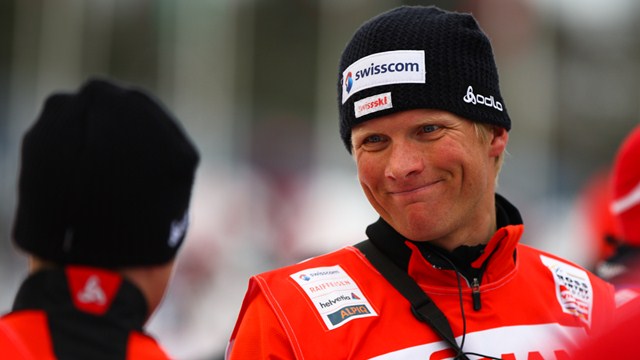
    Tor-Arne Hetland, Swiss sprint coach from 2010-2014 (Photo: FIS) http://www.fis-ski.com/cross-country/news-multimedia/news/article=tor-arne-hetland-nor-become-world-cup-team-coach-for-canada.html
    Tor-Arne Hetland, Swiss sprint coach from 2010-2014 (Photo: FIS-Ski.com)

    Tor-Arne Hetland can now add Canada to his list of homes-away-from-home after wrapping up his first training camp with the World Cup team at the Sunshine Village ski area in Banff, about 45 minutes northwest of Canmore, Alberta.

    Yes, he’s Norwegian — and a gold-medal Olympian at that (in the individual sprint at the 2002 Salt Lake Games). He also won silver in the 2006 Olympics classic team sprint and tallied five World Championships medals (three golds, a silver and a bronze) before retiring as a result of a knee injury and asthma in 2009.

    That year, he started coaching for Germany. The next season in 2010, he became a sprint coach for the Swiss World Cup team.

    Tor Arne Hetland, a Norwegian gold medalist and world champion in cross-country skiing, will become one of Canada's World Cup coaches. (Photo: FIS/ NordicFocus)
    Tor-Arne Hetland, a Norwegian gold medalist and world champion, former German and Swiss sprint coach, whom Canada recently hired as a World Cup coach.  (Photo: FIS/ NordicFocus)

    His contract with Switzerland could have been terminated at any time, he said, and he would’ve been gone in three months. Yet he worked side-by-side with his wife, Guri Hetland, head coach of the Swiss team, for four years until both ended their contracts with the Swiss-Ski Association this spring.

    Meanwhile, Tor-Arne had something in the works with Canada, ultimately agreeing to a one-year contract as World Cup coach. He started in earnest in mid-April and once March 31, 2015 rolls around, he predicted he’ll likely sign on for another year or more.

    “If things are working well I am very open-minded to keep on the work,” Hetland said on the phone in mid-May from Sunshine Village, where the Canadians held their first on-snow camp of the 2014/2015 season.

    Between training sessions, he talked about his first few weeks with the team and what he had observed so far. The approximately 10-day camp wrapped up on May 20, at which point Hetland headed home to Davos, Switzerland, to see his wife before returning to North America in June for the team’s annual camp in Bend, Ore., later this month.

    Here’s what he had to say about first impressions:

    FasterSkier: How has it been going — getting to know the team?

    Tor Arne Hetland: It has been very interesting. [National-team head coach] Justin [Wadsworth] and I … we’ve been sharing information and training philosophy. We’re starting to get a plan. It’s good, the athletes are very motivated for the training and ready to do the work that they have to do to be on the top. They are also training with the younger athletes and the development team and it’s good to see the whole team starting to train.

    FS: Out of the four men on the  World Cup team, who was there?

    TAH: Alex [Harvey] is doing his courses on the school, so he is not here, but Ivan [Babikov], Len [Valjas], Devon [Kershaw] – there are like 20 [athletes] on the mountain and also the biathletes are also training up here and [Para Nordic] athletes so it’s the best skiing in the world … I have been skiing in a lot of places and it is not possible to get it better.

    FS: Have you spent much time in Canmore before?

    TAH: As athlete and also as trainer so I know the nordic center, but now I have tried some of the trails for running and it’s good, very good training there.

    “I think it is possible to be the best skier in the world while living in Canmore.” — Tor-Arne Hetland, Canadian World Cup Coach

    FS: When were you last home in Davos?

    TAH: After Easter I was going home because I had my tests on the trainer-education program in Switzerland, so I had to do the test and do some waiting and doing some work. Now I am done with … the highest education you can get as a coach in Switzerland so that was two years with working on this one, so that’s cool (laughs).

    FS: How’s it going back and forth from Europe?

    TAH: It’s eight hours [time difference], but I’m getting better and better with it, and I’m taking one day extra in front of training camp so that I’m ready to coach the athletes … I’ve been prepared to go to training camp before I leave Europe so then I can adapt a little bit for the time difference.

    FS: Is it hard being apart from your wife?

    TAH: We are thinking about the life. That is fine. We have been working very close the last years and it would be good to be working a little bit on different things now and having a little bit difference. We are used to this from when I was athlete so we will spend more quality time together when we are together. I think it will be good for both of us.

    FS: Has it been hard dealing with the media attention on both sides, from your hire to her leaving the Swiss team?

    TAH: Nah, not at all. I’m used to it, to be in the news that three days and then it’s over. That’s no problem.

    FS: What about Guri? 

    TAH: Nah, it’s a little bit strange that Switzerland had those results, the best ever the last four years [and then to not have her contract renewed]. The team has been very strong and done steps in the right direction and not going on with the same program, but it’s good with some changes and go on in life. The politics in Switzerland, you have to discuss with other people than me.

    FS: So what training camps are coming up this summer — I heard you might be taking the Canadians to Europe in July?

    TAH: We are discussing. New Zealand is on the calendar, and that’s the Plan A, but there is the invitation to go to Europe also, so the final call of this one we haven’t [made] … we have New Zealand on the plan in August.

    FS: And Park City in October and Bend in June/July, right?

    TAH: Yep.

    FS: Will you be at all of the training camps?

    TAH: I will go to all the training camps and then also the whole World Cup season, maybe taking one weekend off in the World Cup. That’s maybe the biggest change for the athletes that they will have a coach in Europe now, so it will be easier for Justin and for Louis [Bouchard] also. Base camp will be in Central Europe — Davos … so that would be easier for me to cover.

    FS: Does that mean your athletes are going to be staying at your place?

    TAH: (Laughs) No. We will rent a flat or find a hotel for the athletes.

    FS: Did you go to all the World Cup races last year?

    TAH: I think I did everything. Maybe the last part of Tour de Ski I didn’t do it. Also not in Lillehammer. That’s what it normally is for me.

    Tor-Arne Hetland, Swiss sprint coach from 2010-2014 (Photo: FIS) http://www.fis-ski.com/cross-country/news-multimedia/news/article=tor-arne-hetland-nor-become-world-cup-team-coach-for-canada.html
    Tor-Arne Hetland (Photo: FIS-Ski.com)

    FS: How many athletes were you responsible for? 

    TAH: In sprinting, it was seven total [athletes].

    FS: So this team is a little smaller.

    TAH: Yep. That’s good.

    FS: What have you noticed about your athletes so far? Anything specific you’re working on?

    TAH: I have seen them and I have also told them what I am seeing, and we will would work together and improve it, and then we would take step by step to try to see how far it’s possible to go.

    FS: How much potential do you see in veterans like Ivan and Devon, guys who have hinted at retirement in the coming years?

    TAH: I would not put money that Ivan and Devon will not ski in the next Olympics. I think they have the best years in front of them because, like 31, 32, that’s starting to have a lot of experience, and if you are motivated for the training — and the guys are really motivated for the training — then I think they will improve and also can have very good years the next four years.

    FS: Are you showing them anything they haven’t seen or heard before?

    TAH: Maybe not heard before, but maybe I’m telling it in other ways or it comes out a little bit different so that can be a positive thing or a negative thing. So I try to find out how does this spoken here, and try to bring my ideas of training and coaching.

    FS: How different are the Canadian and Swiss systems, for instance?

    TAH: Some different. It is going on how much you are training and that’s quite equal with other countries. We have everything we need here in Canada, but it’s different and I try to learn this system, and I tried to get them a little bit more knowledge, but we have what we need.

    FS: As a sprinter, how is it coaching distance or more all-around skiers?

    TAH: As athlete I was trying to be all-around skier, and one of four men’s athletes that had been winning sprint, classic and skating, and distance skating and classic, so my goal the whole time was to also be good in distance skiing. In the last years, we had been working together, Guri and me, with the distance and sprinters in Switzerland so I’m well-known with distance skiing also. And, finally a lot of this is going over, with sprint and distance, their aerobic capacity and the possibility to be moving very, very fast at the end of races and that’s the thing in distance and in sprint. And then we have to do the good qualities from each athlete, improving this so the athletes can be even better the next years.

    FS: Why did this opportunity coaching for Canada appeal to you?

    TAH: For me the motivation is to work with motivated athletes and a motivated team [that] really, really want to be the best, and I am motivated to give my knowledge away and try to be a part of this team and bring Cross Country Canada on a new level.

    FS: Why do you think Canada wanted you?

    TAH: (Laughs) You have to ask somebody else, but I think they have seen me around in more than one year in the World Cup circuit and I think they saw some of my qualities and they wanted to put this together with the team.

    FS: What about a new perspective?

    TAH: It is asked for new ideas into the team and I’m ready to give this, and also more stability in the World Cup. That’s the main thing and the ideas.

    FS: Did you explore this possibility because you knew you weren’t going to continue with the Swiss team?

    TAH: I don’t know when we had the first contact, but it went out that it was possible to finish the work in Switzerland and then start in Canada, so it’s worked very well with the work situation for the moment.

    FS: Were you ready for a change?

    TAH: Yes.

    FS: How would you describe your time with the Swiss team and working with your wife?

    TAH: It was good years and interesting years. I learned a lot of new things and also got more experience as a coach because I was going directly from athlete to coach. Those years I have been learning a lot and I think that’s important. It’s not 100-percent sure, but an athlete can be a good coach … You have a lot of experience from your racing time that is very important, you know what where training is going over and you know of the feelings from the athletes. And you get this together from the work experience that’s something that brings you to a new level.

    FS: Do you have any emotions tied to how things ended with the Swiss team and the direction they’ve chosen to go?

    TAH: Nah. No emotions over this. We have a contract and the contract is clear that it can be stopped in three months, so that’s okay for me. For sure I would like to keep the contact with the athletes that want my helping in Switzerland, that are giving me a question or asking me for advice I will surely help them, and also they are a part of my life and that’s cool to keep a little bit of contact with them. But doing coaching work on the side with the swiss team — I will not do that (laughs).

    FS: So now you’re the point person for the World Cup team while they’re racing in Europe, right? Will Louis Bouchard retain his role as an assistant coach?

    TAH: Louis will be for sure in mostly of the World Cups also, so they will be covered with two coaches. And Justin will come to the first World Cup up in Finland so that the team is good, everybody knows what they have to do and so on. Justin will also be in Tour de Ski last part and also in the World Championships. I’m a little bit unsure when Louis will be here, but he will be for sure in something like the last years, and that’s good.

    FS: Who is writing the training plans for the Canmore-based World Cup skiers?

    TAH: [Justin and I] are doing this together and also with the sports psychologist in Canmore. And we end up doing this together to make a year plan and Justin will run the training from training camp to training camp and I will plan the main things in training camp together with … Justin. And then we will see how it’s working out and the needs of each racers.

    “If you are trying to do everything then it’s too much.”

    FS: Last question: how has the sport changed since when you were racing?

    TAH: First of all, from all the mass-start races, you have to have a good finish. If it’s the last three kilometers or the last 300 meters you have to be even more practical. The speed is higher and that demands something different in the training. Also the work with the skis, it’s even more professional for each year, and to have good enough racing equipment is maybe the main part. It was important earlier, but now that every country is running their own program they are getting better and better each year. I think the Canadian team is good in this and what I have seen the Canadian team from outside they had very good skis. That’s maybe the three main points. … Finally it has come down to the athletes.

    FS: Really the last question: what are your thoughts on the race formats? 

    TAH: It’s good in the Tour de Ski, but I can also see that it’s a question which races you are peaking to and say that’s my race, that’s the race that I want to win each year, because it’s not so many that can be fast from Kuusamo until Holmenkollen. So it’s very important to have individual race plans where we are saying that’s your goal, that’s your goal, because if you are trying to do everything then it’s too much. That’s also in the World Championships in Falun — you have to pick the right distance for each athlete.

  • U.S. Ski Team Starts Anew at Annual Bend Training Camp

    U.S. Ski Team Starts Anew at Annual Bend Training Camp

    Kikkan Randall leading Fast and Female in Bend, Or. as part of the Annual Bend training camp in May. (Photo: Matt Whitcomb)
    Kikkan Randall (l) leading a Fast and Female event in Bend, Ore., as part of the annual Bend training camp in May. (Photo: Matt Whitcomb)

    When the U.S. Ski Team rolled into Bend, Ore., for their annual spring training camp in May it felt like home. With outstanding support from Mount Bachelor and its staff, excellent conditions, and a welcoming community, the team and their coaches were more than comfortable in what many would call the contiguous United States’ spring-skiing mecca.

    Despite the usual volatility of the weather in Bend, the 2014 camp held only one day of significant snowfall for the team which included 2014 Overall World Cup Sprint Champion Kikkan Randall, 2014 Olympic standout Sophie Caldwell, and veteran Andy Newell.

    According to U.S. Ski Team (USST) Women’s Coach Matt Whitcomb, the conditions were the best that the team had seen in four to five years. The crust cycle this past May, which had been unfavorable in the past, allowed the team to complete the tradition an over-distance ski in the Broken Top meadows on the camp’s last day.

    “That workout alone is reason enough to cross country ski,” said Whitcomb of their workout in an email.  “If you can ski well enough to get up there safely, it’s just something you need to do. That’s a direct order.”

    Andy Newell tests pair of Fischer boots while training with the U.S. Ski Team last month in Bend, Ore. In a post Olympic year, the camp serves as an opportunity to try new equipment and sign new contracts. (Photo: Matt Whitcomb)
    Andy Newell tests pair of Fischer boots while training with the U.S. Ski Team last month in Bend, Ore. In a post Olympic year, the camp serves as an opportunity to try new equipment and sign new contracts. (Photo: Matt Whitcomb)

    The Bend camp served as fresh start for the U.S. Ski Team as it begins its quest for even stronger results in the 2014-2015 season. However, that doesn’t mean the camp consisted of nonstop intensity and endless over-distance skis. Rather, it was an opportunity to regroup and establish plans for the coming year. As part of this strategy, USST Head Coach Chris Grover, articulated his plan for each athlete and asks for feedback in return so that all parties are on the same page.

    The Bend camp also served as an opportunity for team building. While it’s hard to imagine the U.S. Ski Team getting any closer than they already are, the Bend camp cemented their bonds as both the women’s and men’s team developed team goals that involve training, racing, and community involvement.

    The actual training in the 2014 camp was comprised of less intensity this year, and focused on bolstering technique early on in the season. Using a visualization practices involving video, U.S. Ski Team coaches aided athletes in their technical skiing.

    “It’s a new quadrennial and we want to enter the World Cup season having the most technically improved team. We ski well but can do better,” said Whitcomb.

    In order to enter their new era of technical advancement, the U.S. ski team coaches reviewed every World Cup race from the 2013-2014 season. They then converted these races into accessible clips that featured foreign competition so that the year’s evolutions in technique could be studied.  These clips were then used for specific workouts so athletes could visualize the technique they were working towards. An example of a visualization workout involving striding can be found in this week’s Wednesday Workout.

    Andy Newell (r) chases Liz Stephen and Jessie Diggins in a post-Bend agility training involving skiing a slalom course with one foot. (Photo: Matt Whitcomb)
    Andy Newell (r) chases Liz Stephen and Jessie Diggins in a post-Bend agility training involving skiing a slalom course with one foot. (Photo: Matt Whitcomb)

    According to Whitcomb, athletes found the visualization practice productive as well as challenging, especially once it was applied on snow. However, the exercise involved some amusement as well.

    “I think the team had some fun with it,” said Whitcomb. “Some of the drills included skipping on skis in classic tracks, downhill striding, one ski slalom followed by a 2-ski GS course, and various cornering exercises to improve comfort while skiing on the outside edge of the ski.”

    Despite the camp’s success, the Bend also brought some challenges to the team. These troubles came in the form of injury to both Sophie Caldwell and Erik Bjornsen.

    “It’s definitely a bummer to have couple injuries during a camp,” said Whitcomb.  “It’s tough for everyone because Erik and Sophie are such great personalities to have at training. In elite sport we do our best to push the physical envelope in smart, creative ways to gain fitness while trying to remain injury free. Sometimes it isn’t enough.  It can be that we pushed too hard, and it can sometimes be a matter of chance.”

    According to Bjornsen’s support staff in Alaska, he irritated his L3/4 disc during a double pole interval session as a result other discs being so tight.

    “A strong guy like Erik can put down a lot of force and he got unlucky,” Whitcomb said. Despite his injury, Bjornsen is predicted to return to training in a matter of weeks.

    Caldwell’s status, on the other hand, is still up in the air. After a mountain-bike tumble in Bend, the rising star fractured her elbow. While remaining upbeat, she has begun a training regimen that isolates her legs and protects her arm with activities such as skating without poles, hiking, and spinning.

    Erik Bjornsen showing off his new Rossignol equipment in Bend. Bjornsen suffered an injury to his back during a double pole interval session, but will be back to full training in a matter of weeks. (Photo: Matt Whitcomb)
    Erik Bjornsen showing off his new Rossignol equipment in Bend. Bjornsen suffered an injury to his back during a double pole interval session, but will be back to full training in a matter of weeks. (Photo: Matt Whitcomb)

    After her second MRI in Park City, Utah, on June 2, specialists had yet to give a full prognosis. According to Whitcomb, there is a possibility that Caldwell’s radius may have been injured in addition to the humorous. There is also a chance that several floating bone flecks may not absorb naturally, thus requiring surgery to remove them.

    While injuries are always unwanted, Whitcomb stressed that sometimes it is impossible to avoid injury while training 800-plus hours a year. In the wake of Caldwell’s accident, he believes mountain biking can be useful for training.

    “Mountain biking will always be a risk, but we’re also aware it is fun and has some important application to what we do,” he said. “We try to add things like swimming and biking that are low impact and allow for more volume. I suspect it’s something we’ll continue to do for those that like to bike, but at the moment we’re kicking ourselves.”

    Injuries aside, the U.S. Ski Team will continue their work towards improved technique, speed, and strength throughout the summer months. Their next summer training camp will take place Alaska next month.

  • Wednesday Workout: Tackling Technique with Visualization (like the U.S. Ski Team)

    Wednesday Workout: Tackling Technique with Visualization (like the U.S. Ski Team)

    Andy Newell while training with the U.S. Ski Team last month in Bend, Ore. (Photo: Matt Whitcomb)
    Andy Newell while training with the U.S. Ski Team last month in Bend, Ore. (Photo: Matt Whitcomb)

    This week’s Wednesday Workout comes from Matt Whitcomb, the U.S. Ski Team women’s coach. Whitcomb and the team recently returned from their on-snow camp in Bend, Ore., where they practiced improving technique with visualization. 

    ***

    Before starting the workout the coach identifies one 10-second clip of one male and one female World Cup skier classical striding up gradual terrain and then plugs it into iMovie. I like the clips of Anne Kyllönen striding up the sprint course in Sochi. If you don’t have access to these clips, YouTube something and video your own computer screen. The quality will be lower but you’ll be surprised at how well it works.

    In iMovie, create a project that plays your 10-second clip in regular speed and then in 1/2 speed (totaling 30 seconds), and repeat that six times in your movie project without music or any sound to remove sensory interference so the women’s clip is 2 minutes long. Add a 2-minute clip for the men to watch. Paste a 30-second clip of the women to see one last time at the end followed by a 30-second men’s clip. The total movie is only 5 minutes so you can get out the door and ski more.

    Keep the men and women together for the viewing in case one clip works better than the other. Watch on a large TV screen or with a projector play your iMovie clip to the team immediately before going out to ski. As a variation try talking them through the clip one one day, focusing in one one thing the World Cup athlete does well, and on another day try not talking at all to prevent polluting what they are seeing on their own. Many athletes are much better coaches than we are!

    If you don’t have access to footage, here is a YouTube video of Anne Kyllönen in addition to other World Cup athletes:

    Warm-up for 30 minutes and encourage the athletes to ski by themselves and on similar terrain to what you just watched, trying to channel and emulate the World Cup skier. It’s very easy for some and nearly impossible for others, but the process opens up new windows regardless.

    Meet your team on a very gentle downhill slope that is 200-meters long for a drill. Have them ski back and forth, striding both the gradual downhill and uphill. This isn’t about holding your glide for as long as possible on the gradual downhill, but more about feeling the flow of good striding under low tension. Watching our team do this left us feeling that the gradual downhill section unlocked some hip and shoulder tension in many athletes.

    Encourage the athletes to ski by themselves and on similar terrain to what you just watched, trying to channel and emulate the World Cup skier. It’s very easy for some and nearly impossible for others, but the process opens up new windows regardless.

    After the drill, film your athletes one at a time skiing up a gradual hill. Before they begin to ski toward you, have them rest on their poles, eyes closed and without talking, and visualizing that World Cup clip for 30 seconds. Then have them ski past you. Film the pass on your iPad or phone so they can look at it immediately.

    If it works out, great. Please let me know. If not, there are many creative ways to trigger technical improvements. Email me at mwhitcomb@ussa.org if you have a cool idea to share or just drop it anonymously into the comment section :). I would love to take a couple of your thoughts to our glacier camp in Alaska next month. Keep it fun and focused out there!

  • Sophie Caldwell Fractures Elbow in Bend, Crosses Fingers for No Surgery

    Sophie Caldwell Fractures Elbow in Bend, Crosses Fingers for No Surgery

    Sophie Caldwell with fellow U.S. Ski Team member Erik Bjornsen during an "injured kids" field trip/hike to Tumalo Falls near Bend, Ore. (Photo: Sophie Caldwell/http://sophiecaldwell.blogspot.com/2014/05/bend-field-trips.html)
    Sophie Caldwell with fellow U.S. Ski Team member Erik Bjornsen during an “injured kids” field trip/hike to Tumalo Falls near Bend, Ore. (Photo: Sophie Caldwell/sophiecaldwell.blogspot.com)

    Two days into the U.S. Ski Team’s first training camp of the 2014/2015 season in Bend, Ore., and Sophie Caldwell was out. The 24-year-old Stratton Mountain School T2 Team and USST member had been skiing on snow with the team last Thursday morning, and later that afternoon, they headed out for a mountain-bike session.

    “We throw in a few non-skiing workouts like mountain biking and cool runs, and Bend is a great place to take advantage of those other activities,” Caldwell wrote in an email.

    Sophie Caldwell covers her sling with a shirt from USST coach Matt Whitcomb (r) before walking under Tumalo Falls near Bend, Ore. (Photo: Sophie Caldwell/http://sophiecaldwell.blogspot.com/2014/05/bend-field-trips.html)
    Sophie Caldwell covers her sling with a shirt from USST coach Matt Whitcomb (r) before walking under Tumalo Falls near Bend, Ore. (Photo: Sophie Caldwell/sophiecaldwell.blogspot.com)

    But it was fun until it wasn’t anymore. A misstep unclipping and Caldwell went crashing to the ground, with her arm extended. She fractured her elbow and sprained ligaments in the process. “I really wish it was a cooler story,” she wrote on her blog. “But I wasn’t doing anything impressive, I just didn’t unclip in time and toppled over onto a straight arm.”

    We followed up with Caldwell on Wednesday, six days after her accident. That morning was her first time back on skis. “It’s definitely feeling better,” she wrote in an email. “Think I’ll be doing a lot of no poling for the next month!”

    In a follow-up email, Caldwell elaborated on the crash, as well as the news of the passing of her cousin-once-removed, Ezra Caldwell (Zach Caldwell’s younger brother).

    FasterSkier: When did you arrive in Bend and start skiing? How were those first couple days of training?

    Sophie Caldwell: We arrived [last] Monday [May 19] and went for our first ski on Tuesday. I was able to ski Tuesday, Wednesday, and Thursday mornings and do some dryland and strength in the afternoons. The snow and weather in Bend have been great this year — much better than last year.

    FS: Who were you mountain biking with when you fell, and how did the rest of the afternoon play out?

    SC: I was mountain biking with the team when I fell. I think I was in a group with Grover, Ida, Sadie, Kik, and Matt. It was part of our training session. We throw in a few fun non-skiing workouts like mountain biking and cool runs and Bend is a great place to take advantage of those other activities. My arm really hurt when I first fell over, but I’ve never broken a bone before and wasn’t sure what had happened. It stopped hurting for a minute, so I was going to keep biking, but it got pretty bad when I got back on the bike, so Matt and I biked to the road and carefully biked home. We went to see our PT and he recommended I go to the ER and get an xray, so we did that. They were able to tell that it was fractured from the xray and put me in a brace and sling.

    FS: Have you seen a specialist yet? What’s the prognosis?

    SC: I got an MRI on Friday, but I wasn’t able to straighten my arm enough to get a great picture. I saw a specialist yesterday [Thursday] and I have a radial humerus fracture and two ligaments that are either torn or sprained and possibly a chip. I’m going to get another MRI in Park City next week that should be able to tell us more about the chip and whether or not I need surgery, but the doctors yesterday seemed to think that I probably wouldn’t need surgery based on the amount I could move it and the fact that I wasn’t in much pain, so I’m keeping my fingers crossed! I was in a brace that kept my elbow pretty immobile, but yesterday they switched me to one that allows more movement. I guess one of the most important things with an elbow injury is to start moving it as soon as the swelling and pain go down.

    Sophie Caldwell (second from r) with her USST teammates, including (from left to right) women's coach Matt Whitcomb, Kikkan Randall, Liz Stephen, Ida Sargent, Sadie Bjornsen, and Jessie Diggins. (Photo: Sophie Caldwell)
    Sophie Caldwell (second from r) with her USST teammates, including (from left to right) women’s coach Matt Whitcomb, Kikkan Randall, Liz Stephen, Ida Sargent, Sadie Bjornsen, and Jessie Diggins. (Photo: Sophie Caldwell) 

    FS: What have you been doing in the last week since?

    SC: I’ve been going for a lot of walks! [See her blog post about hiking to the 97-foot-Tumalo Falls.] I actually accidentally found myself in a spin class for senior citizens and it was one of the top ten sweatiest workouts of my life. We did stage 14 of the Tour of Italy. I was spinning by myself and then people started filing in and before I knew it, I was immersed in a spin class. It was actually great because I get really bored spinning and this made an hour go by much faster. I skated without poles the last two mornings and that felt good. It was nice to be back out with the team and back on skis.

    FS: When’s the last time you were injured?

    SC: My last injury was when I sprained a ligament in my foot last spring, but those are the only two serious injuries I’ve ever had and this is my first broken bone (besides a couple broken toes when I was younger).

    FS: We’re sorry to hear about Ezra: how have you coped with the loss while being far from family?

    SC: It’s always hard to be away from the people you love the most when you hear news like that, especially when it’s family. Luckily, our team is like a second family and the news about Ezra wasn’t totally unexpected [he passed away after a six-year battle with rectal cancer, complete with two surgeries and rounds of chemotherapy]. He outlived what the doctors predicted by far and I think everyone is trying to celebrate his life and the time he was with us. For me, I think the hardest part of being on the road so often is the fear of something happening to friends or family back home and not being able to be there. That’s a risk we take, but I think we also have to realize that the people who are most important to us wouldn’t have it any other way. You can’t live your life waiting for something bad to happen and you can always fly home if you need to. I’m looking forward to seeing Zach, Amy, Gunnar, and the rest of my family when I get home in a week.

    FS: How much longer are you in Bend? What’s next for you after that?

    SC: We leave Bend tomorrow [Saturday] and I’ll be in Park City for a week before returning to Vermont. I hope to get another MRI in Park City next week and continue training while having access to the US Ski Team resources that might be helpful for my recovery!

  • US Biathlon Debuts Tryout Camp to Target Development

    US Biathlon Debuts Tryout Camp to Target Development

    Dunklee in Lake Placid.
    2014 Olympian Susan Dunklee training in Lake Placid, N.Y., last fall. US Biathlon is hosting a tryout camp for its development team in Lake Placid this summer from June 23-26.

    There could be such a thing as national-team walk-ons as a result of an upcoming US Biathlon (USBA) tryout camp, a new format of its kind aimed at talented endurance athletes in the J1, OJ or collegiate age category.

    The camp itself will be include four straight days of dryland sessions and evaluations from June 23-26 at the Olympic Training Center in Lake Placid, N.Y. Anyone interested in becoming world-class competitors is encouraged to submit an application.

    Max Cobb, the USBA president and CEO, explained in an email that the camp is about evaluating one’s stage in the journey toward becoming a world-class competitor. “If you are a top J1 / OJ or college age skier and want to pursue biathlon this is a great opportunity for you to get to know the sport and hear from top World Cup biathletes,” he wrote.

    Coach Jonne Kähkönen (l) assists Leif Nordgren with his final lactate test on Oct. 3.
    Coach Jonne Kähkönen (l) assists Leif Nordgren with a lactate test last October during a rollerski workout in Lake Placid, N.Y.

    “We will not have more than 10 athletes at the camp to ensure they get good coaching attention and we have time to get to know each athlete,” Cobb explained. “We hope to find athletes that, with a year or two of training, could be on the X-Team, and if they progress as fast as Susan Dunklee did perhaps contend for a spot on the 2018 Olympic team and be medal contenders for the 2022 Olympics.”

    He added that there is no fixed upper age limit, but the USBA is looking for athletes ready to commit four to eight years to succeeding at the Olympic level.

    Women’s national-team coach Jonne Kähkönen, who heads up most of the team’s offseason training in Lake Placid, explained that they came up with the tryout format due to growing interest and inquiries received in the past year.

    “We also will focus more on the biathlon development to ensure a good pool of athletes in the future,” Kähkönen wrote in an email.

    As for who should apply, Kähkönen wrote that those who’ve achieved some top results would be a plus, “but we will run a few field tests and want to see the potential the individual has to grow as a biathlete. Any biathlon experience is also a plus, but not necessary; it is more about the talent and the ability to learn the skills. We have done this successfully with college-aged athletes and they have been able to built the skills at a later age, so any ‘time gain’ we can get is a good thing.”

    And what will the four days hold?

    “We haven’t finalized the exact schedule for the days, but it will be full four days of action,” Kähkönen explained. “We want to see everyone on foot / on roller skis, shooting, skills / coordination in general physical exercising (games, strength circuit, flexibility etc.), so it will be an exciting and action packed mini-camp!”

    Details below:

    (From Team USA.org)

    US Biathlon Tryout Camp

    Olympic Training Center
    Lake Placid, NY

    Dates:
    Start: June 23rd, after lunch
    End: June 26th, after lunch


    Camp Activities:

    US Biathlon is looking for talented endurance athletes who are interested in becoming world-class competitors.  The tryout camp will help us evaluate your stage in this journey.

    –        Physical tests, e.g. uphill run, 30 meter test

    –        Strength tests and flexibility screening

    –        Roller ski technique training with World Cup athletes Tim Burke, Susan Dunklee and Olympic Champion Andrea Henkel

    –        Shooting drills and precision test

    –        Question and answer sessions with World Cup athletes Tim Burke, Susan Dunklee and Olympic Champion Andrea Henkel

    –        Final running Biathlon competition running at the Olympic Biathlon venue Mt van Hoevenberg

    Needed material:

    –        Gear for indoor and outdoor sport

    –        Gym shoes

    –        Running shoes

    –        Roller skis, ski boots, poles

    –        Writing material

    Applications: please fill out the attached application form and email it to US Biathlon Chief of Sport Bernd Eisenbichler: b_eisenbichler@yahoo.de

    Invitations: will go out latest by May 20th

    Travel: Applicants are responsible for their own travel.  Those arriving by air should plan to arrive in Albany, NY.

    Housing & Meals: The camp will take place at the Olympic Training Center in Lake Placid, NY.  Meals and lodging will be provided there.

    Application For US Biathlon Tryout Camp

  • Wednesday Workout: Volume Training (Long Days, Piggybacks and Alaska’s Version of Sharks and Minnows) with NANANordic

    Wednesday Workout: Volume Training (Long Days, Piggybacks and Alaska’s Version of Sharks and Minnows) with NANANordic

    Andrew Kastning teaching the 7th grade boys to V2 in Kiana, Alaska. (Photo: Celia Kastning/Facebook)
    Andrew Kastning teaching the 7th grade boys to V2 in Kiana, Alaska. (Photo: Celia Kastning/Facebook)

    The following non-traditional workout comes from Andrew Kastning, head coach of the University of Alaska Anchorage. Kastning recently returned from his third trip to remote Northwest Alaska (where he visited Kiana and Noorvik) with the NANANordic program, which brings cross-country skiing knowledge and equipment to elementary through high-school students.

    ***

    Having the opportunity to teach 8 days of cross country skiing to the remote villages of Alaska is both rewarding and demanding. It’s hard to pin down an exact ‘workout’ we do up there, because by the end of just one day, your feet burn, and your mental focus just got tested by 100+ eager Inupiaq kids, thirsty for time on skis. There can, however, be progress made toward personal growth depending on how you want to slice it.

    Every day you’re there, you wake with the spinning sun to eat breakfast with the kids, some whom like to greet you with a speedy free climb to hang on your neck. Throughout the day you get 1 hour with each grade, k-12, to teach skating and play games. Almost all sessions match different grades together to get everyone out at least once, and to spread the demand for different boot sizes as far across the spectrum as possible.

    Coach Andrew Castning answers a few questions in Noorvik, Alaska. (Photo: NANANordic/Facebook)
    Coach Andrew Kastning answers a few questions in Noorvik, Alaska. (Photo: NANANordic Facebook)

    So your day might start with eight too-cool-for-skiing 9th and 10th graders and sixteen energetic 2nd graders. They all request boots that are too big, and poles that are too small, so individual negotiation periods ensue during checkout, as we try to promote proper ankle support for skating, and adequate leverage opportunities for the ‘sticks’. The little ones need help properly fastening the boots, so you get about 8 squats tying bows, and strapping Velcro, followed by a quick sprint outside to catch the quick ones before they zoom off to the river bluff to hit a ‘fly’.

    The curriculum throughout the day is a sliding scale based on age and ski aggression, all of which land you on a certain point of the learning curve. The goal of the whole experience is to catch that point on the curve and nudge it along through brief demonstrations, laps around the school yard, games, and zigzagging adventures through town.

    Your heart rate doesn’t quite reach level 1 during all this, but your cheek muscles might get tested for smiling endurance. Your core strength can get a workout depending on how many tree well hazards your constituents find, and your legs can get a solid workout if you succumb to all the requests for chariot pulls. After an hour of this, it’s either a race or a plod back to the ski room to switch the gear out to the next group… and repeat!

    When the final school bell rings for the day, a line of the 70 most enthusiastic kids shows up at your makeshift ski room, clamoring their way through the line to get another hour and a half on skis. Here you have free range to take the better ones on a distance ski up some icy river, or meandering toward a far hillside on the ‘snowgo’ trails. The young ones stay back and work with you on 1-ski balance with a piggyback ride, or jumping skills, or some food-chain style sprints of wolves chasing caribou (sharks and minnows). All this can leave you firmly planted in the teacher lounge chairs for the remainder of the evening, or you could go get schooled in basketball by the same locals you just schooled in skiing.

    In 2012, this routine played out in 4 villages, last year jumped to 11 villages, and this year we expanded once again to 26 villages, each getting about 4 days of concentrated skiing! If you were still standing at the end of four days, there were a lot of 20-60 mile skis you could challenge yourself down the snowgo trail to the next village.

    Some of these were into the wind across parts of the Chukchi Sea, others had a strong tail wind down a frozen river hopping from windblown patch to windblown patch. My first year I skied from Noorvik to Selawik (32mi) with Lars Flora, Reese Hanneman, Charlie Renfro, and Evelyn Dong and we ran into about 2,000 caribou sidling across the frozen tundra! Each of these trips left you with a sense of being in the middle of nowhere, on a grand adventure hoping to have a brush with raw nature. No matter how tired you got though, as you came gliding into the next village, you had to be sure to smile and exude a big love for skiing, because you were about to be overwhelmed with the next kids excited to cross country ski.

    By the time I boarded the commuter jet back to Kotzebue this year, I felt like I had just finished a volume week at training camp. Be sure to inquire about volunteer opportunities with NANANordic and Skiku, for 2015, and you too can take part in this unique volume training camp while spreading the good vibes of sliding on snow!

    NANA Nordic 2014: The Kiana, Noorvik Experience from Andrew Kastning on Vimeo.

  • Finding Serenity in Bruksvallarna: A Snow-Seeking Citizen Skier Amongst the National Teams

    Finding Serenity in Bruksvallarna: A Snow-Seeking Citizen Skier Amongst the National Teams

    Early morning in Bruksvallarna. Photo: Simon Evans.
    Early morning in Bruksvallarna. Photo: Simon Evans.

    About the author: Simon Evans is a British postdoctoral researcher in the Animal Ecology department of Uppsala University’s Evolutionary Biology Center, and an avid skier. In 2013, his second year in Sweden (and thus his second year skiing), he finished the 90 k Vasaloppet in five hours and 57 seconds, placing him 692nd of the 15,800 total participants. Unsurprisingly, he was the first Brit. He is now planning a long-distance bike trip in northwestern Canada.

    Uneasy in the icy conditions, I move out of the tracks for the steep downhill route that leads – via a tunnel that I am going to have to negotiate at speed – to the relative tranquility of the flatter tracks alongside the river. It’s my first time on skis for the winter and I am aware how conspicuously I look like Bambi as I struggle to portray myself as anything other than Horrendously Misplaced Brit, a characterisation my Swedish friends – schooled to ski from a young age – so often amuse themselves with. On this occasion, though, I was out of the door and clipping in my boots whilst they slept off our late arrival the previous evening. The result is an absence of sympathetic, friendly faces to turn to for reassurance, as far more accomplished skiers – Charlotte Kalla, Jörgen Brink and the Thunell brothers, to name a few – effortlessly glide past, seemingly immune to the difficulties I face, and clad in bright kit that boldly pronounces their national allegiances. My confidence takes a battering and after a couple of short loops I beat a hasty retreat to the safety of the lodge, consoling myself with unconvincing mutterings about “the wrong kick wax”. But how did a guy raised in a seaside town in southern England come to be sharing the tracks with some of the sport’s biggest names?

    Bruksvallarna 1I moved to Sweden two years ago, having completed my PhD in the UK and been offered a job at Uppsala University, a small city about an hour north of Stockholm. Eager to make the most of what Scandinavia has to offer, and having been a keen runner, cyclist and university rower, the decision to take up cross-country skiing was an easy one. So it was that within a month of arriving in Sweden, I found myself in one of Uppsala’s sports stores worrying how a complete novice – and an appropriately impoverished graduate to boot – can justify spending several thousand kronor on a couple of thin planks and some flimsy carbon fibre poles.

    Yet, as you probably already know from your own experience if you’re visiting this website, cross-country skiing is an enormously enriching pastime, so it didn’t take long before I was hooked. For someone with a marked sensitivity to the cold (and an accompanying hatred of being chilly), this speaks loudly of just how enjoyable Nordic skiing is. The weekends of my first winter were spent tracing circles across a frozen lake, the only place where the marginal snow depth of that year didn’t pose a threat to the precious base of my skis. As my second winter approached, my local ski shop’s friendly assistant, endlessly plagued by my questions on glide waxes, optimal skier weight and the rolling resistance of roller-ski wheels, pushed a pamphlet for the local ski club into my hands. I tentatively attended my first training session a few weeks later and, whilst my self-taught technique raised much amusement (“your technique is about 40 years out of date”, somebody eventually ventured to tell me), everyone was welcoming. My technique remains pretty rough, but I at least know now what I should be striving (and striding) for.

    Now, with my second year of skiing behind me and my third winter in Scandinavia approaching, I joined a few club mates for an early-season trip to Bruksvallarna,in the Swedish mountains. Being decidedly less fashionable than their Alpine counterparts, Sweden’s ski resorts offer much better value for money, and my share of our lodge cost me 800 kr for four nights. This, for a lodge that was sited less than fifty metres from the tracks. And – this being Scandinavia – equipped with its own sauna.

    Bruksvallarna 4We arrived a week after the snow in Funasfjällen, the umbrella name for the five neighbouring skiing resorts that have interlinked their ski trails and other aspects of their organisation, to create what is, in effect, a meta-resort. Whilst the other centres were yet to start preparing trails, at Bruksvallarna (or ‘Bruks’, as it’s generally called by those in the know) the snow machines had been working overtime to create thick trails in advance of the opening FIS races scheduled for the following weekend, from which Sweden would choose its World Cup team. There were thus a couple of fairly technical loops open and in heavy use, by both national teams and serious club skiers who were eager to get in some early training on the white stuff before it arrives in places like Mora.

    Alongside these loops, there was also a trail open that led up the slope overshadowing Bruks, which climbs steadily for perhaps 5 k. The high plateau and offers great views of the ski slopes of Ramundsberget, the northernmost of the five resorts that nestles into the head of the valley. The Mittåkläppen trail then descends into a depression in the plateau, terminating at a river crossing some 11k from Bruks. After my ‘Bambi’ moment and a cup of tea in the chalet to restore my bravado, it was up the mountain that I fled, where I could remind myself how to ski without feeling embarrassed in front of more accomplished practitioners. More relaxed, having found myself alone on the trail, with the aggressively undulating terrain of the trail loops down in the valley replaced by a satisfyingly elongated ascent (for some reason, I love going uphill), my limbs started cooperating. And the views from the ridge top are pretty special, more than enough to draw a smile on my face as I sucked in the pleasingly cold air and tried to focus on the technical flaws my club’s coaches had highlighted during the autumn’s roller-skiing. Here, on snow rather than a rural road, the skis slid near effortlessly with each heave of my quads or push on my poles. Having earlier arrived back at the chalet in a state of intimidation (at both skiing and skiers), I returned in a state of reverie, that feeling of wonderful bliss that accompanies many ski outings. And for me, that’s one of the greatest features of this addictive sport, that the simple act of a training ‘run’ takes me into some stunning terrain, beautiful scenery that I am immersed in as I traverse the landscape.

    So it was that I largely abandoned the valley tracks over the next few days and instead pursued the vistas that the ridgetop track presented. I’d set my alarm to rouse me while it was still dark, distractedly eat some breakfast as I gazed out of the window at the oncoming daybreak, and then dash up the mountainside so as to be above the treeline as the colours of dawn were thrown over the peaks and gradually spilled down the slopes. By the time I’d made it to the trailhead and was on my way back, the sun would be flirting with the horizon.

    It was still very early to be skiing, and we were lucky that fresh snow fell in the days before we arrived. We enjoyed two good days but on the third the wind turned, bringing warmer air that forced the mercury up and the thin covering of snow on the Mittåkläppen accordingly began to subside. As long as the accumulated efforts of the snow machines left the valley tracks unaffected, I persisted with my morning routine (although now armed with universal klister), eager to get my fix of mountain sunrise. However, with a lot of debris on the snow and the tracks barely existing, I struggled for grip on the long ascent out of the valley. So I unexpectedly began the next phase of my development as a nordic skier: skating. And this proved something of a revelation, for I discovered that freestyle is not necessarily the brash upstart I had assumed it to be. Rather, it had a serene rhythm all of its own.

    This unplanned introduction to a whole new dimension of skiing challenges would make the long drive into the mountains worthwhile on its own. But when placed alongside the confidence regained, the friendships made and the household names spotted, our short break in the early season snow was even better than I had hoped.

    Now, back in the flatlands of Uppsala, with the mountains and skiable tracks of Bruksvallarna far beyond the horizon, my clubmates wait impatiently for the arrival of snow. As for me, I’ve got more pressing concerns: which skate skis should I buy?

    Bruksvallarna 3

  • Pre-SuperTour, Thanksgiving Day Video

    Pre-SuperTour, Thanksgiving Day Video

    WEST YELLOWSTONE, Mont. — Some of the most competitive skiers in the U.S. SuperTour circuit give thanks and express appreciation for friends and family before, during and after their Thanksgiving Day ski sessions. The first SuperTour of the season starts Friday with the 1.3-kilometer skate sprint at the Rendezvous Ski Trails in West Yellowstone. On Saturday, hundreds of skiers will take part in the 10/15 k distance skate races.

    “Super thankful for my family, friends, and my wife Sarah (we haven’t been able to spend a Thanksgiving together yet),” said Sylvan Ellefson of Ski & Snowboard Club Vail/Team HomeGrown (whose video interview was inadvertently lost).

    “Thankful for blue skis, fast ski tracks, and great November mustaches!” Ellefson added. “I’m really excited to get this ski season going and I know everyone else is pretty antsy as well!”

  • Yellowstone Ski Festival: A Place for Reunions

    Yellowstone Ski Festival: A Place for Reunions

    Visually impaired skier Nancy Stevens and her guide Tony Neaves race in the 1998 Nangano Paralympics. They are reunited at West Yellowstone this week.
    Visually impaired skier Nancy Stevens (l) and her guide Tony Neaves race in the 1998 Nagano Paralympics. They are reunited in West Yellowstone, Mont., this week.

    Note: The following has been corrected to reflect that Caitlin Gregg approached Nancy Stevens this week. 

    WEST YELLOWSTONE, Mont. — When Nancy Stevens moved to Summit County, Colo., 21 years ago, her guide dog kept bringing her to the door of the same shop. Blind since birth, Stevens, 52, finally went inside and discovered that the door entered a bike-store owned by Tony Neaves. Her dog knew something. Nancy needed some work done on her tandem bike, and she needed a strong able-bodied person to ride it with her. It turned out the Neaves could do both.

    Stevens and Neaves at one of their many races leading up to Nagano. (Courtesy photo)
    Stevens and Neaves at one of their many races leading up to Nagano. (Courtesy photo)

    “Tony was great because he would call me and say ‘Hey, I’m free this evening do you want to go for a bike ride?’ ” Stevens said. “It was so nice because I didn’t have to coordinate it.”

    Thus began a relationship that would continue into 1993 when Stevens came to West Yellowstone with Neaves as her guide to try out for the Lillehammer Paralympic Games. “We didn’t know what we were doing yet, and we didn’t quite make it that year,” Neaves said.

    For the next four years, the duo raced in the U.S., Sweden and Norway, and by 1998 they had built their racing communication skills to the point where the duo went to Lake Placid where they won gold to qualify for the Winter Paralympics in Nagano, Japan.

    They describe the moment as the race of a lifetime, where 4,000 people crowded around a 5-kilometer loop yelling Nancy’s name. It was so loud, she had trouble hearing Neaves’ commands on their electronic communications system.

    Fast-forward to May 2013, when several U.S. Paralympics Biathlon coaches approached Stevens. Fifteen years after their last race, Neaves received an “out-of-the-blue” call from Stevens, announcing that she was coming out of “retirement” to compete in biathlon in West Yellowstone. By the way, would Tony be her guide?  Neaves, who now lives in Montana’s Bitterroot Valley and operates the Como Ski Trails, three miles west of Darby, agreed, and the racers competed in the adaptive biathlon sprint in West Yellowstone on Wednesday.

    The only woman in her class, Stevens won the 6 k race in 36:14 with 4-for-10 shooting. Disappointed with her first round, in which she missed four out of five, Stevens was pleased with hit three targets on the second stage. Overall, she was glad to be back.

    The reunited Paralympic pair, Nancy Stevens and Tony Neaves at the finish line of the adaptive biathlon race at the 2013 West Yellowstone Festival on Wednesday.
    The reunited Paralympic pair, Nancy Stevens and Tony Neaves at the finish line of the adaptive biathlon race at the 2013 West Yellowstone Festival on Wednesday.

    On her first day in West this week, Stevens and Neaves were in the warming hut when 2010 Olympian Caitlin Gregg walked in.  Another reunion was about to happen.

    “Hey, weren’t you at Lake Placid in 1998 and aren’t you Nancy Stevens?” asked Gregg, who is racing in West Yellowstone this week.  Gregg reminded Stevens that they had met in Lake Placid when Gregg (formerly Compton) was a 16 -year-old junior. Gregg said she would never forget Stevens, the Paralympian, taking the time talk to her give her encouragement to go for her Olympic dream.

    “Really, that makes me feel so good that I could make that difference to her,” Stevens said.

    Stevens hopes to compete at U.S. nationals in Soldier Hollow in January for a spot on the U.S. Paralympics team, but since she and Neaves live so far apart, she is having difficulty finding strong skiers willing to guide her in training.

    “The key for blind skiers is finding a guide,” she said. “I can always find recreational skiers to ski with, but finding a guide to train with is the only thing holding me back right now.”

    Interested skiers are encouraged to contact their local ski areas or adaptive sports programs to volunteer to be a guide for skiing or other outdoor sports.

    A goal achieved, Paralympians Neaves and Stevens 2nd row 4th and 5th from right. (Courtesy photo)
    A goal achieved: Paralympians Neaves and Stevens (second row, fourth and fifth from right). (Courtesy photo)
    A perk of being Paralympians, Nancy Stevens and Tony Neaves Meet President Bill Clinton
    A perk of being Paralympians, Nancy Stevens and Tony Neaves meet then-President Bill Clinton. (Courtesy photo)
  • West Yellowstone by the Numbers

    West Yellowstone by the Numbers

    Hundreds of skiers took to the Rendezvous Ski Trails on Tuesday in West Yellowstone, Mont.
    A view of the Gallatin Range north of the Rendezvous Ski Trails in West Yellowstone, Mont. Hundreds of skiers took trails on Tuesday during the annual Yellowstone Ski Festival.

    WEST YELLOWSTONE, Mont. – West Yellowstone is one of those places steeped in history, blessed with snow, and encouraging of all-comers. Come to think of it, there’s not many places in the world like it, which is why U.S. Ski Team coaches like Marty Hall deemed it a perfect fit for their annual Fall Camp starting in 1978.

    On Tuesday night, Thor Godar, self-proclaimed keeper of the gates at the Rendezvous trailhead and a historian at the Yellowstone Historic Center, spoke to festival-goers about the history of skiing in West Yellowstone. Several parts of his presentation are woven into the following facts about West Yellowstone – by the numbers.

    -66: Lowest recorded temperature (Fahrenheit) in West Yellowstone, on Feb. 9, 1933.

    -53: A pretty darn cold low (Fahrenheit) recorded three years ago.

    -16: Temperature (F) last Friday.

    3: Inches of snow Yellowstone Ski Festival organizers had to work with as a base last November on the South Plateau – one of the lowest on record.

    8: The length of the cross-country skis (in feet) locals used to trek around town (and miles away for food and supplies) more than a century ago.

    10: Inches of snow in town on Tuesday, Nov. 26, with about 3 ½ feet at higher elevations.

    15-16: Inches of new snow at higher elevations on the Rendezvous Ski Trails, thanks to a storm last week.

    Hundreds of skiers took to the Rendezvous Ski Trails on Tuesday in West Yellowstone, Mont.
    Windy Ridge Loop, a regional favorite at the Rendezvous Ski Trails, is open, which is somewhat rare for November.

    25: Percent chance that Windy Ridge Loop is open during the Yellowstone Ski Festival. It opened on Monday.

    32: The previous typical high temperature during winter in West Yellowstone. Back in the day, it rarely got above freezing, Godar explained. Occasionally, warm “Chinook” winds push daytime temps into the 40s, according to National Park Travel.

    35: Years since the first Fall Camp, which started in 1978 with then-U.S. Ski Team coach Marty Hall and skiers like Bill Koch, Dan Simoneau and Tim Caldwell. Koch didn’t come too many years after because of exercise-induced asthma, which worsened with altitude.

    35-plus: Kilometers open at the Rendezvous Ski Trails – basically all of it.

    100: Estimated population of West Yellowstone when it was founded in 1908. By 1910, it was up to 140.

    171: Inches of snow fall annually, on average, in West Yellowstone. Nearby ski resorts like Grand Targhee in Alta, Wyo., receive more (around 500 inches per year), but West usually keeps most of theirs. The secret? “Ferociously low temperatures,” Godar said.

    400-500: Estimated skiers on the Rendezvous Ski Trails on Tuesday, four days before the season-opening U.S. SuperTour race there (with a freestyle sprint on Friday and 10/15 k freestyle race on Saturday).

    600-650: Competitive racers at the Yellowstone Ski Festival last year. This year, participation is expected to reach new highs.

    1271: Population of West Yellowstone in 2010.

    1807: Part of the Lewis and Clark Expedition, John Colter, becomes the first-known white man to explore Yellowstone National Park (before it was officially established). Native Americans had Colter beat by about 13,000 years, and trappers, including French Canadians, also set foot inside the park before him.

    1862: Skiers start to explore the park. Uncle Billy Hofer was perhaps the first to circumnavigate the park on skis in 1979. He later became a scout for the U.S. Army when it came to Yellowstone to discourage poachers.

    1872: Yellowstone National Park established, spanning 2,219,789 acres across Wyoming, Montana, and Idaho. Approximately 96 percent of the park is in Wyoming, 3 percent in Montana, and 1 percent in Idaho.

    1887: Park opened to winter travel, thanks to Lieutenant Schwatka, who didn’t exactly succeed in his expedition to do so. He and his scouts were severely overdressed and packed way too many supplies. Swatka got sick before entering the park and called it quits at a nearby hotel, but his crew pressed on – including Frank Haines, who dubbed himself the official park photographer.

    Bison in winter (circa 2006) in West Yellowstone, Mont. (Photo: Wikimedia Commons)
    Bison in winter (circa 2006) in West Yellowstone, Mont. Before 1894, their population was down to 25. (Photo: Wikimedia Commons)

    1886: Congress decides to stop poaching (elk, bison, etc.) in the park and stations the U.S. Army there. With troops from Arizona, most of the men weren’t too keen on winter, and enforcement lacked as a result. Scouts from the area ended up showing them the ropes and together they build snow cabins around the park. These men, stationed there by the thousands, became the forerunners of the National Park Service. They skied 15 to 20 miles per day and were in darn good shape, Godar said.

    1894: Since there was no law against poaching, the bison population went as low as 25 in West Yellowstone, no thanks to a notorious poacher named Howell. The army eventually caught and imprisoned him, but couldn’t convict Howell of any criminal wrongdoing. That prompted Congress to pass the Lacey Act of 1894 to end poaching in West Yellowstone.

    1908: The town of West Yellowstone founded, thanks to the Union Pacific Railroad’s extension of the Oregon Short Line to the west gate of the park. According to Godar, the town started as a tourist trap (with the park as the main attraction) and still is.

    Lewis & Clark Exploration's Yellowstone "Wonderland 1904" flier. (Photo: NPS.gov)
    Lewis & Clark Exploration’s Yellowstone “Wonderland 1904” flier. (Photo: NPS.gov)

    Without any roads, the railroad was the only means of mechanical transportation in and out of West Yellowstone, and was closed November through March (many transporting tourists June-September). That left West in complete isolation during the winter, and skiing was the best way to get around. Skiers first came to the area to deliver products and goods, including mail and food, like they did in nearby mining towns, including Cooke City.

    Knowing the railroad was coming, Yellowstone park employee and a local bartender Sam Eagle bought a piece of commercial space next to the railroad’s right of way. Today it remains in the family trust as Eagle’s Store, near the Freeheel & Wheel ski and bike shop – a local favorite (est. in 1996).

    Eagle and his wife, Ida, had 10 kids: nine boys, the youngest of which went on to ski for Montana State College’s first-sanctioned team: Walter Eagle. Wally became the first paid ski coach at Gallatin County High School, instructed at the former Lionhead alpine area near West Yellowstone, and was on the board for Bridger Bowl in Bozeman, Mont., according to The Bozeman Daily Chronicle. Part of the U.S. Freestyle Moguls Team, Olympian Heather McPhie is a great-granddaughter of Sam and Ida Eagle.

    1935: First plowed streets in West Yellowstone.

    1941: With fears of World War II looming, the U.S. Army considers starting first ski division in Yellowstone. Trumpeter swans were nearing extinction at the time in nearby Island Park (the poachers again), and one Congressman exclaimed that they couldn’t bring the military to such a delicate region. Instead, they established a base in Colorado, which became the 10th Mountain Division.

    1948: Lionhead, West Yellowstone’s first ski hill, established, but “wildly unsuccessful,” according to Godar. Despite plowed town roads, the dirt routes that led to West were too harrowing to drive in the winter.

    1971: High-school ski teams start coming to West for preseason skiing, with camps that started as early as September on the South Plateau.

    1978: U.S. Nordic Ski Team comes to town for the first of many Fall Camps, and the Rendezvous Ski Trails, founded by Neal and Grace Swanson, become a go-to destination.

    1980: First Ski Rendezvous Race (50 k classic), which reached an all-time high with 900 skiers seven years ago. Next year’s Yellowstone Rendezvous Race (with distances of 2 k, 5 k, 10 k, 25 k classic, 25 k and 50 k) is set for March 8, 2014.

    1984: Rendezvous groomer Doug Edgerton starts his own company, Yellowstone Track Systems, which distributes grooming equipment worldwide. Edgerton worked many high-profile events since, including several Olympics like the 2002 Winter Games in Salt Lake City, where he was chief of course preparation. “In my opinion, [he’s] the best groomer in the world,” Godar said.

    2002: Many of the world’s best biathletes come to West Yellowstone to train for the Olympics. According to Godar, they racked up 18 medals that year.

    2004: Fall Camp renamed the Yellowstone Ski Festival (YSF).

    3,000-3,500: Anticipated total participants in this year’s YSF, a near-record, up from around 2,000 last year, Godar said.

    6,663: Elevation of West Yellowstone. The Rendezvous Ski Trails are about 6,800 feet above sea level (2,000 meters), and the South Plateau just outside the park is about 1,000 feet higher.

    ***

    See also: Another Strange Year for West, in a Good Way (Photo Gallery)