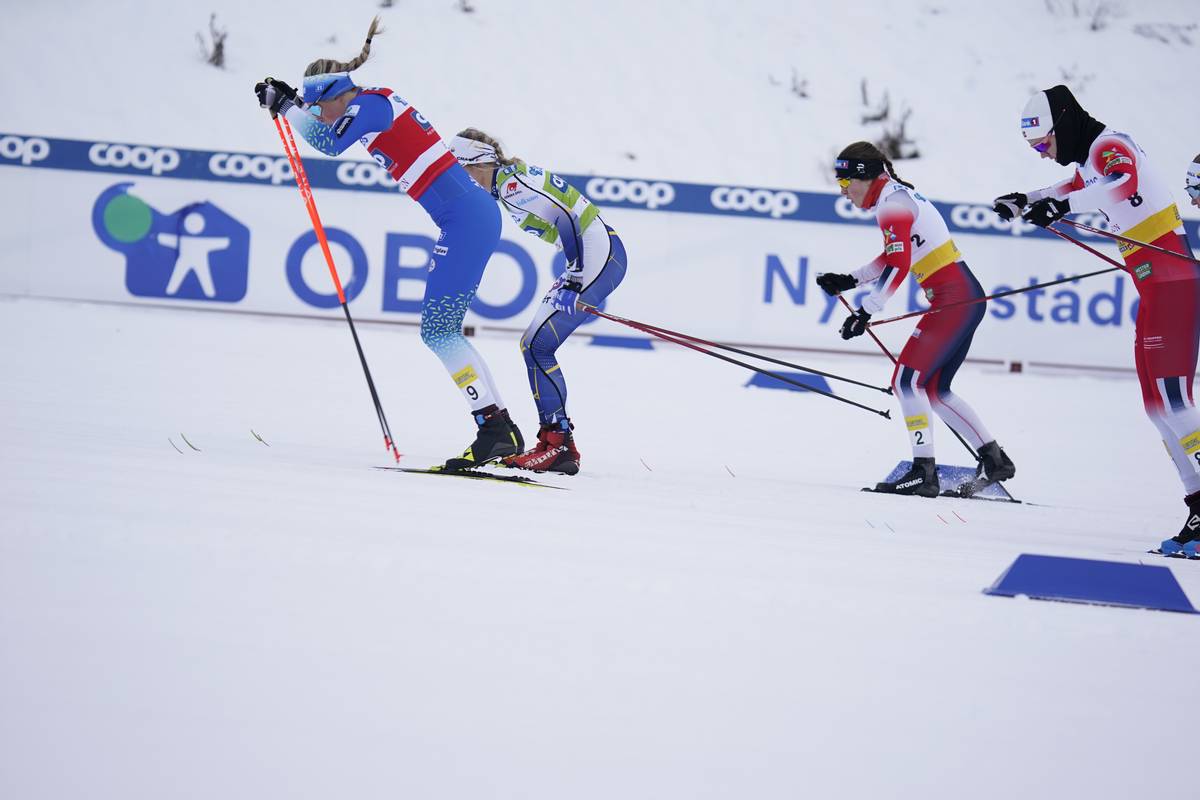
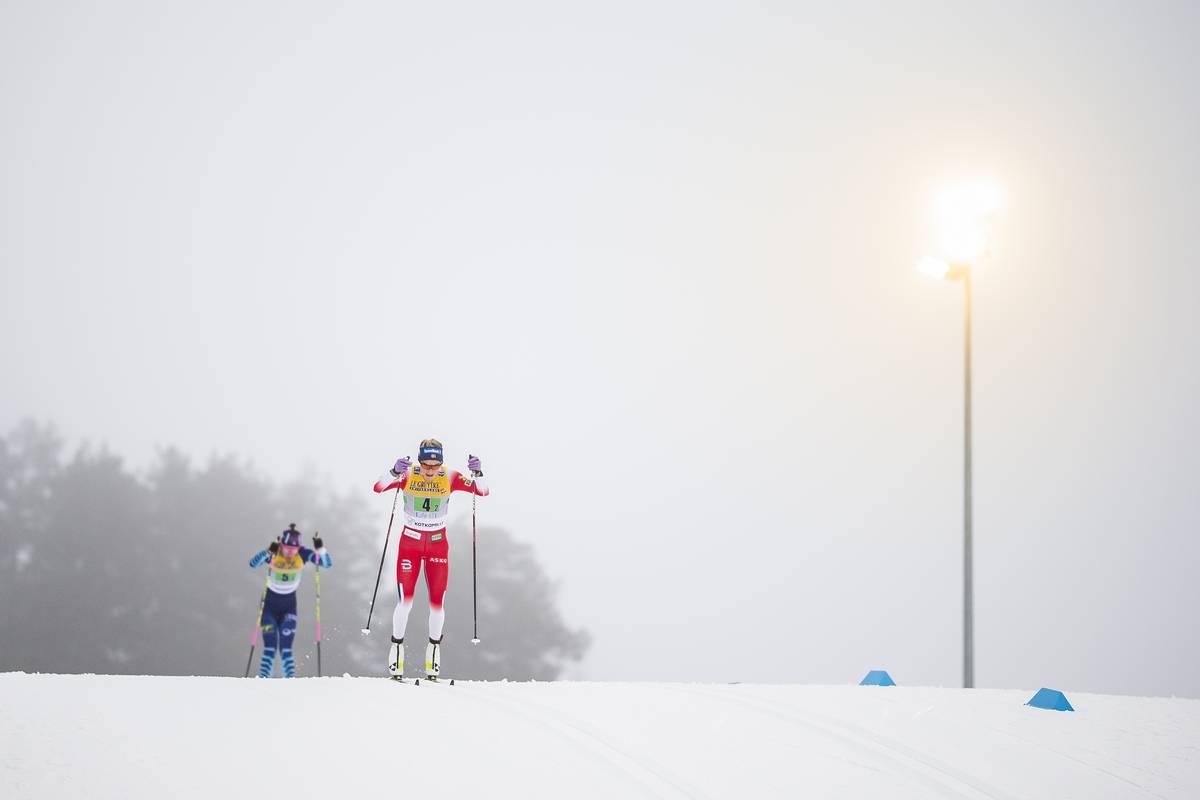
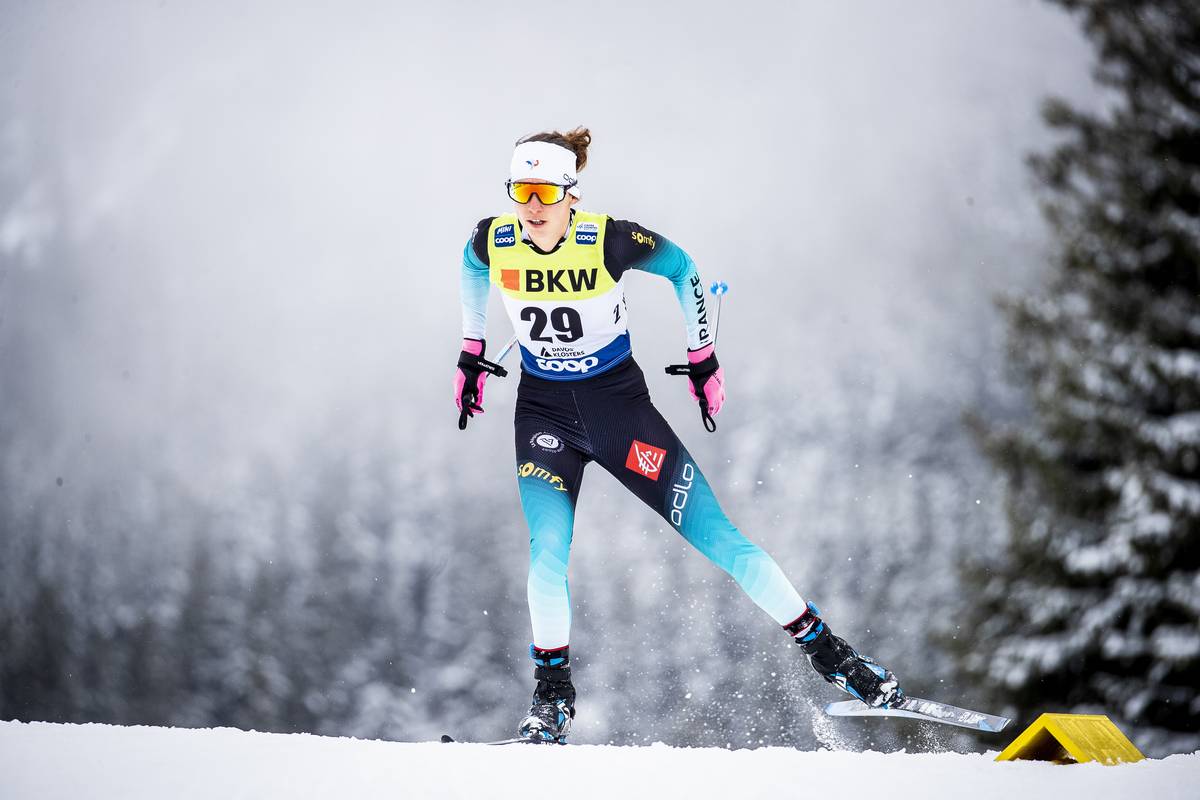
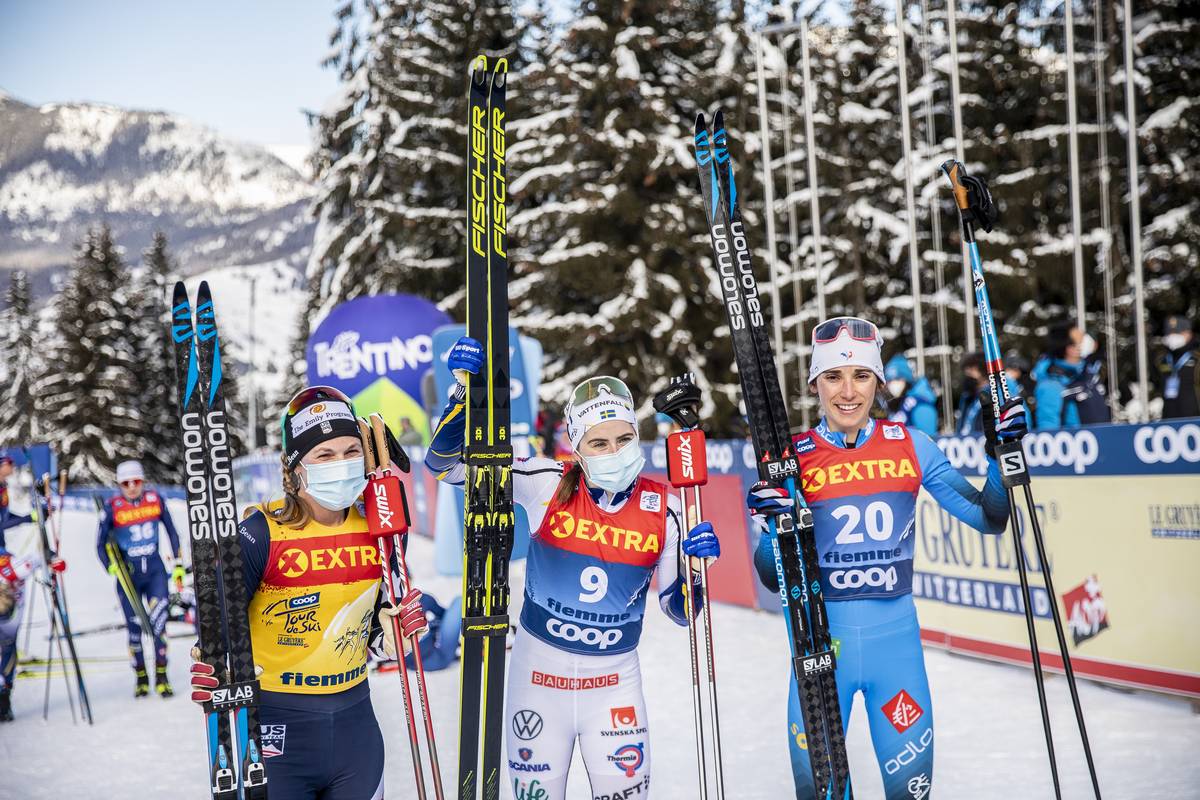
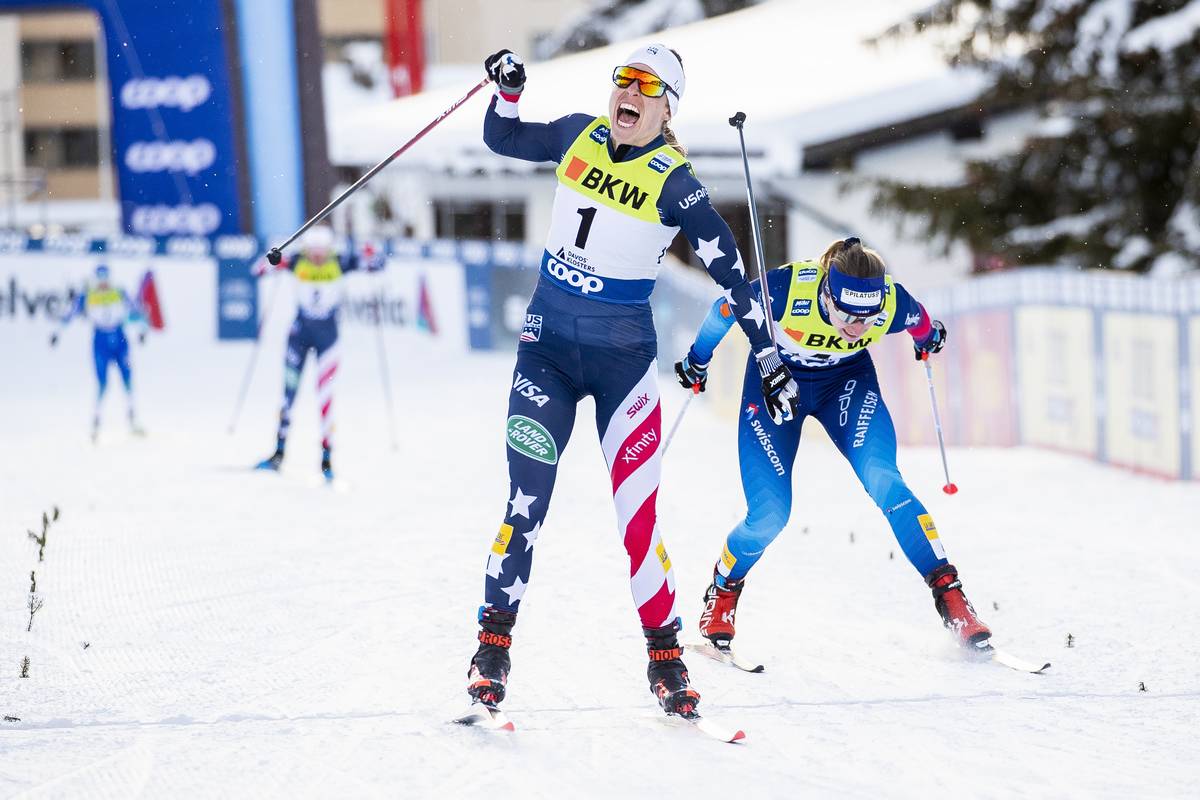
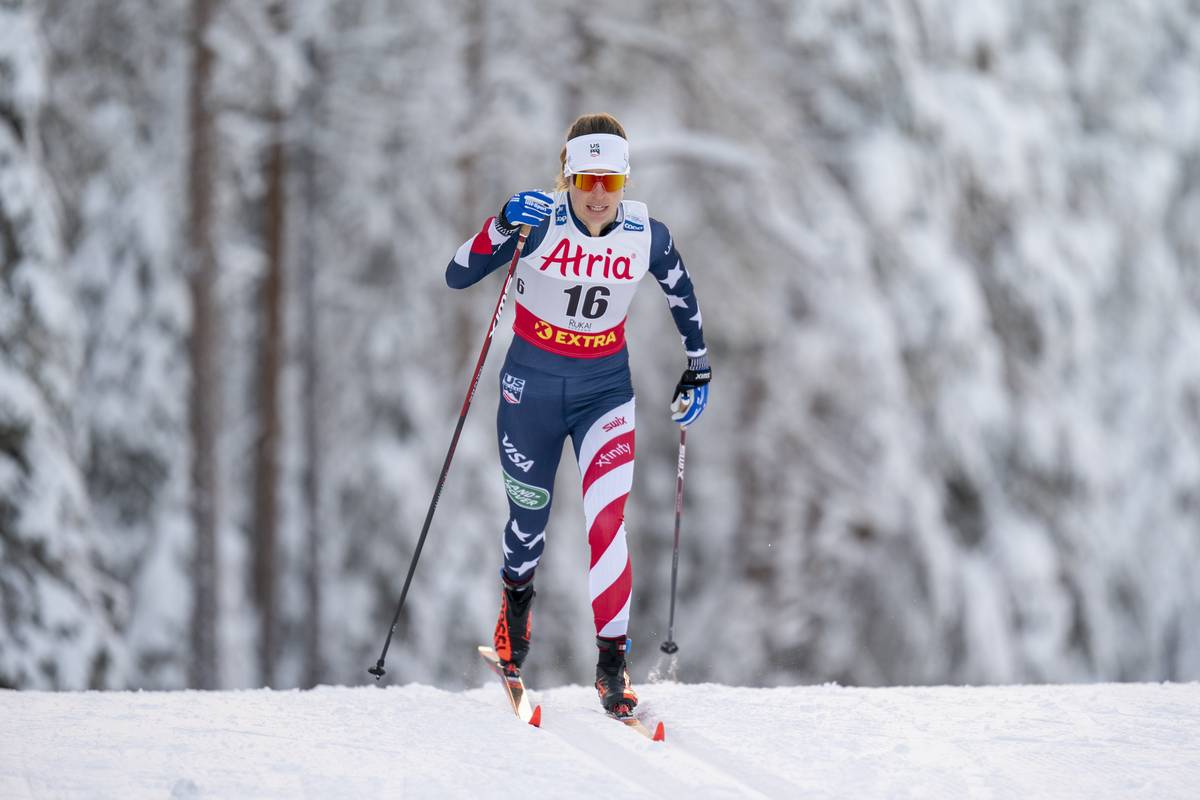
*This is the last piece of a multi-piece series on photographing skiing, ranging from capturing skiing on your smartphone to taking a deep dive into how professionals capture skiing on the World Cup. Take a look at the last three pieces in case you missed them. Part 1, Part 2, Part 3.
From making the most of your smartphone in your pocket to picking the right camera for your photography goals, and to experimenting with snowscapes, we have covered a range of photography topics revolving around skiing and beyond. To cap off this series, I interviewed Federico Modica, the expert in World Cup Photography to learn more about how he became a professional photographer and his experiences and tips for photographing skiing.
Julia Kern: What steps did you take to become a professional photographer?
Federico Modica: To become a professional photographer the steps are different and the ways are multiple. In my specific case, it was a coincidence. In those years (2006-07) I was a pretty good athlete, running the 800m, 1500m, and 3000m on a very strong team. But when the game became really interesting and my time was allowing me to compete for a national group, my body decided to say to me “bye-bye”.
Due to a problem with my right knee, I decided to stop training for a couple of years but I was not able to imagine a life without sport. Also in 2006, I started getting fascinated by photography so it’s very easy to imagine what I started to do: taking sports pictures. I started with Volleyball and Football (soccer) and in 2007 I took pictures of my very first World Cup Race: the finals of Tour de Ski in Val di Fiemme.
JK: How did you get into photographing the World Cup?
FM: Photographing the World Cup was an easy step. Imagine you are a young guy, imagine you are born in the beautiful Val di Fiemme, imagine you really like sports… It’s impossible not to be involved in Cross Country Skiing. That’s my story with cross-country: I worked many many years with the LOC of Val di Fiemme until the World Championships in 2013. After that event, I started working for NordicFocus and this was the key fact to be sure to live taking cross country pictures at some of the biggest events.
JK: How do you frame a World Cup action shot? Do you scout out locations along the track in advance? How do you choose which locations to capture the action? (Close-ups versus wide-angle shots to capture some context or various spots on the course, for example)
FM: In my case, a World Cup shot has always been a long story. I never take a random shot during a race but every choice is prepared well beforehand. The cases are two: if I already know the venue and the courses are the same, I already think in my hotel what to do and how. If I go to a new venue or a new course then I try to be there one day before and I walk almost every corner. There are some places in the course that may be nice but not tactical as well as there are places that are nice but too far.
You have to keep in mind that we, photographers, need to get the highest number of different pictures but we also have to get to the finish line at the right time to prepare for the most important part of the race. After I study the fastest way to the finish line I start thinking about which camera and lens work in that specific spot that I chose.
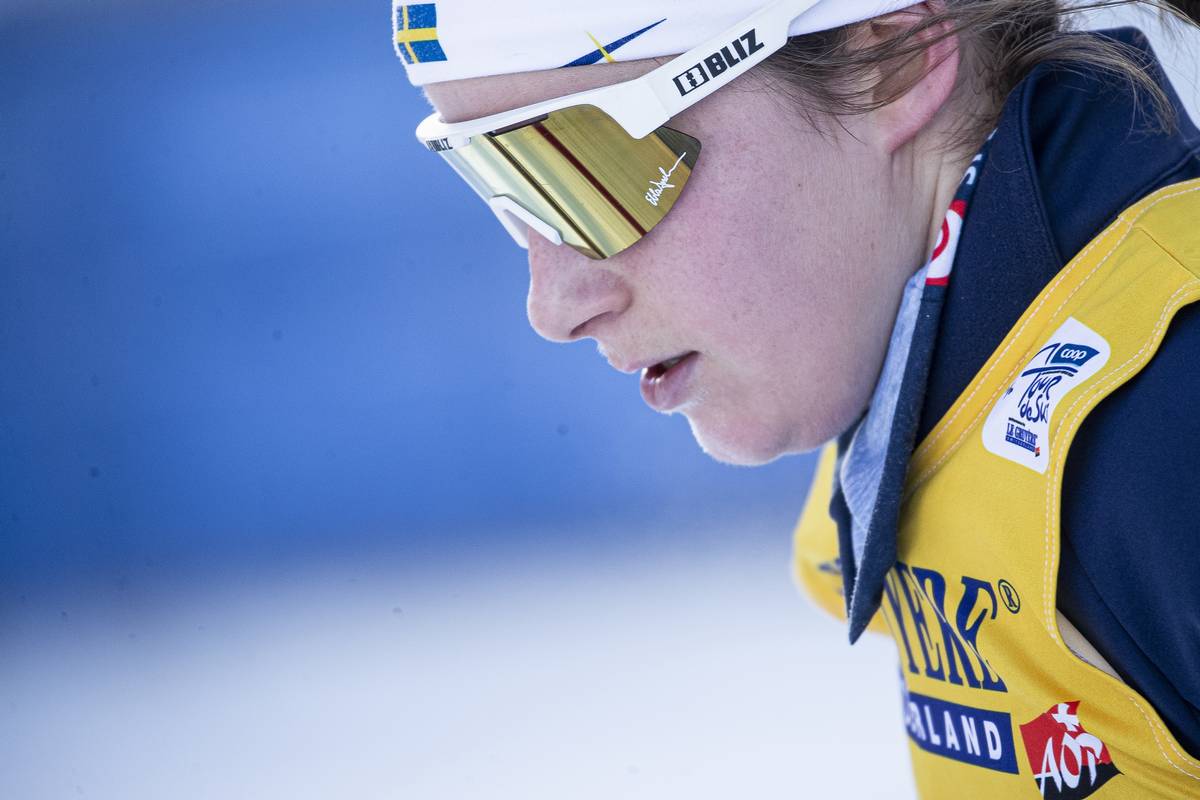
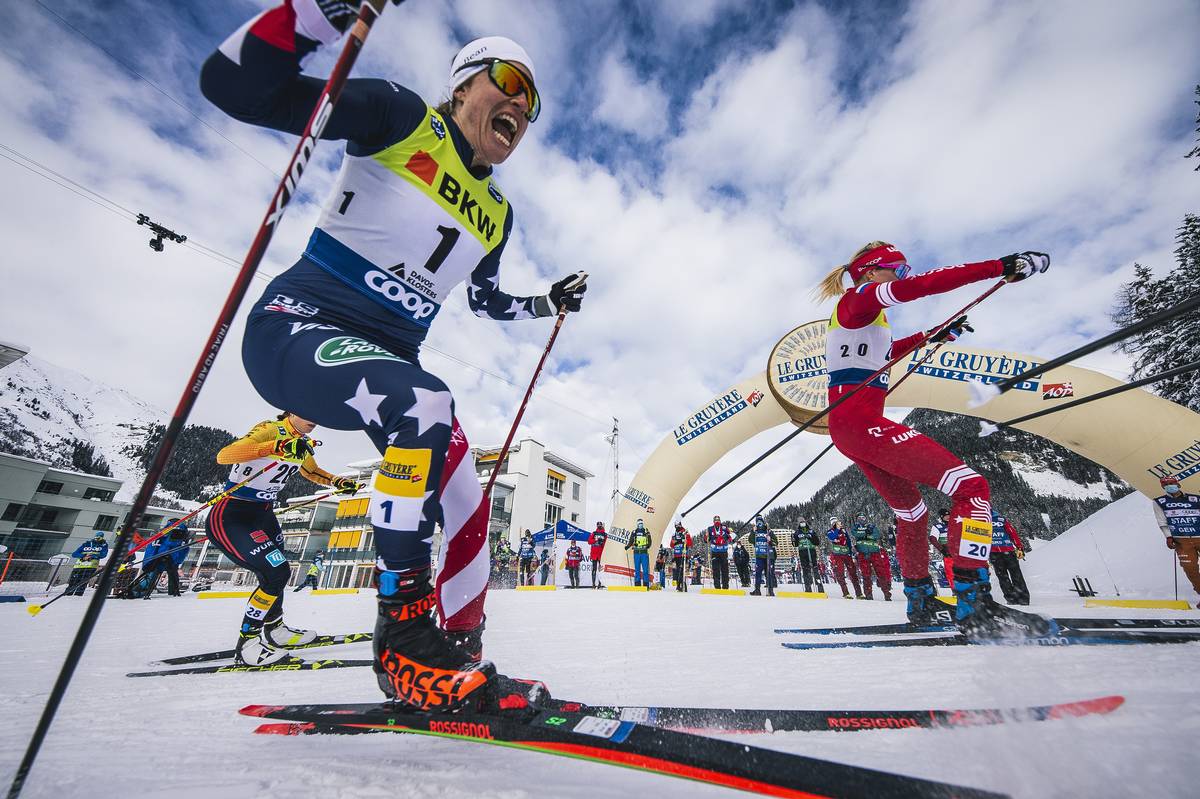
Deciding between landscape or artistic shot and closeup is not that hard. The first part of the season requires some good close up. Then we are a bit freer to play. One of my mental rules is that I always have to take one clean shot per athlete (in individual races) because this is the best way to present the athlete and the gear. A clean shot permits the eyes to focus on the athlete, the gestures and the gear used like ski or poles without distractions. After that, I can start to think about artistic shots.
If the race is too short then I put in remote cameras. This means cameras that I prepare before the race and that shoot at the same time I shoot with my main camera… the result is to have a second point of view!
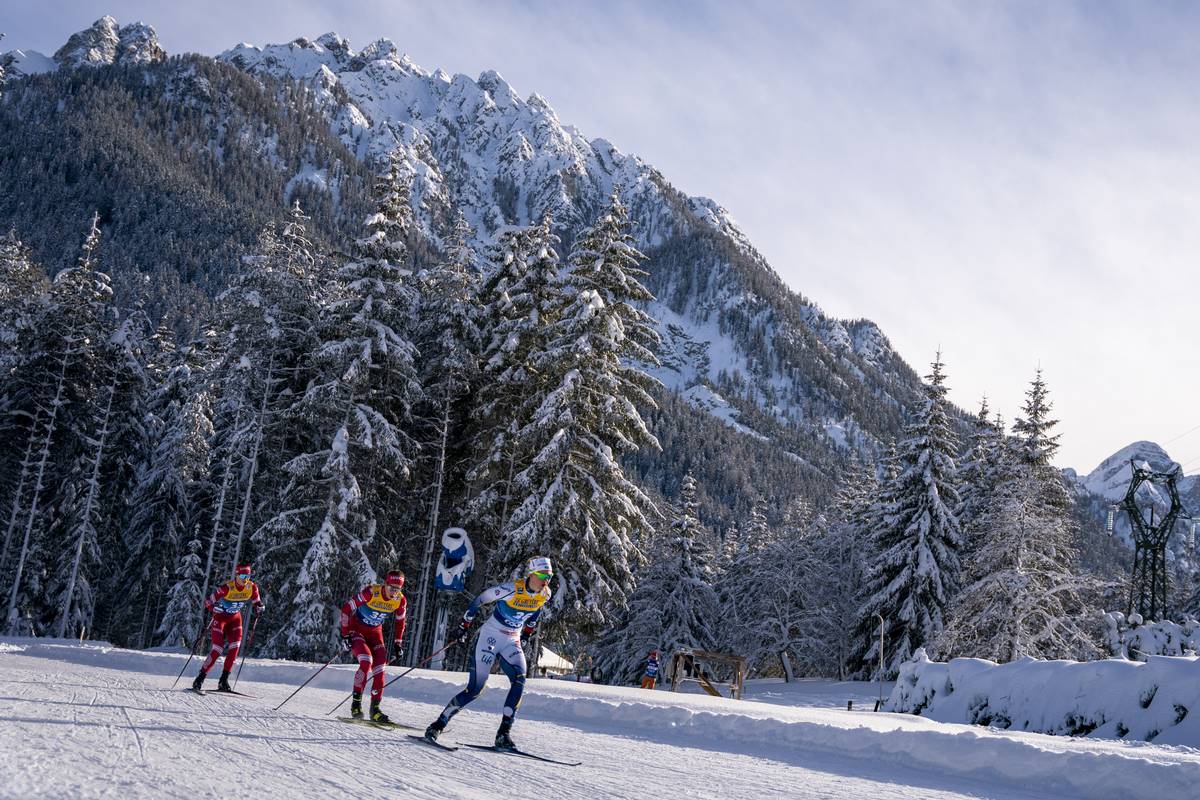
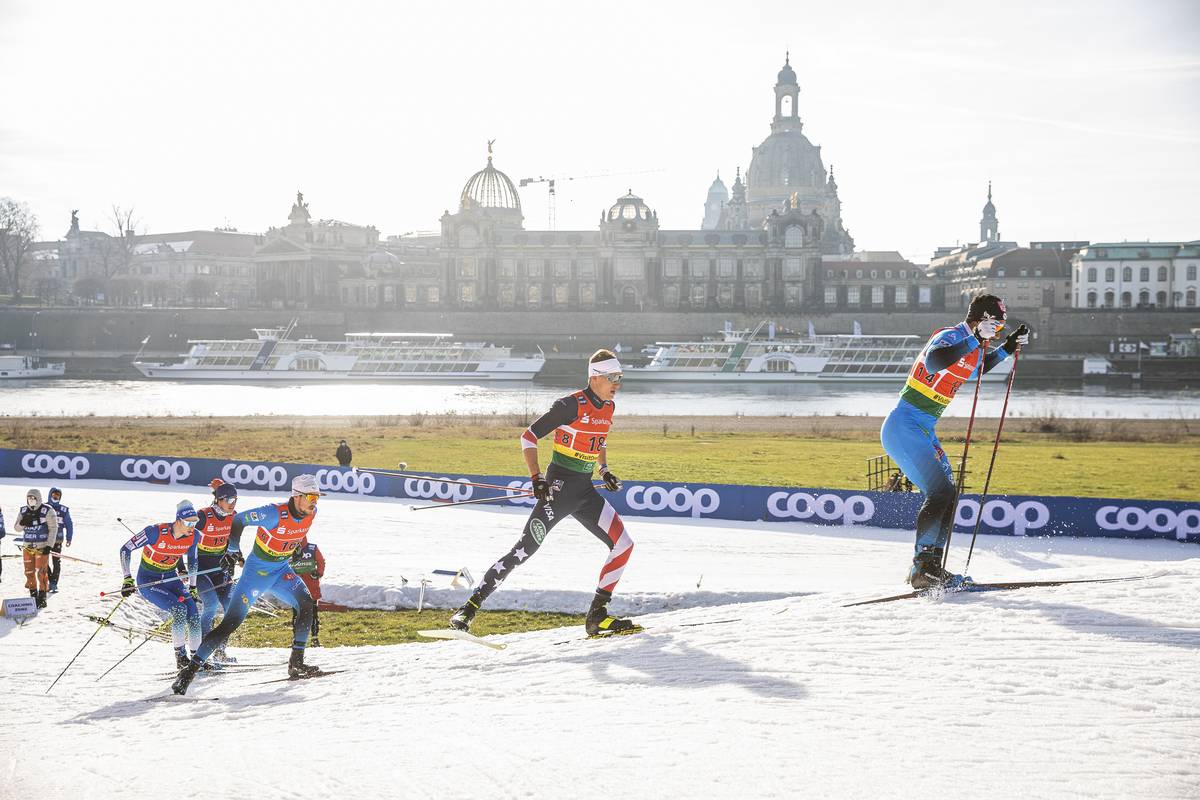
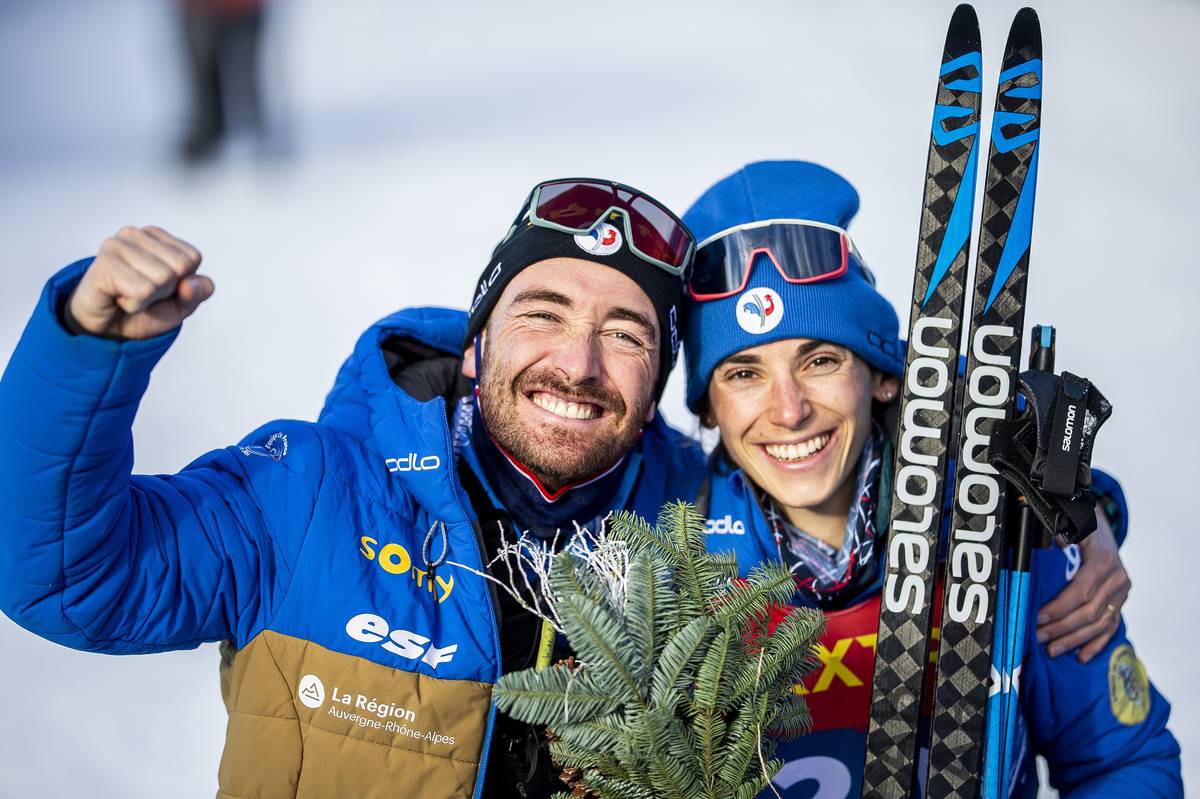
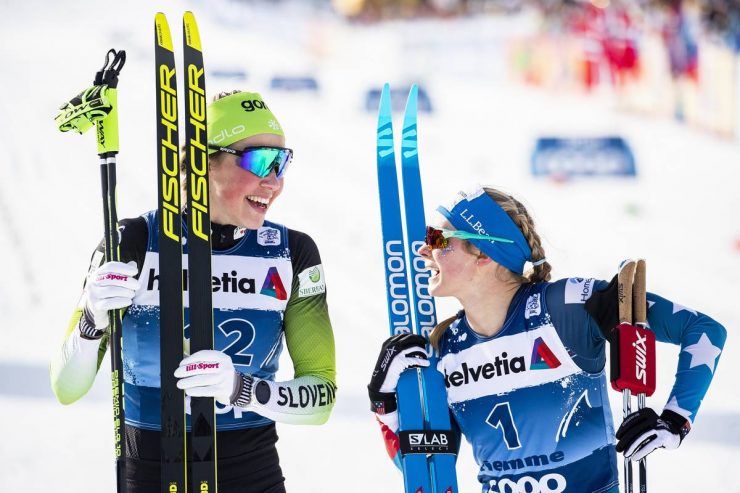
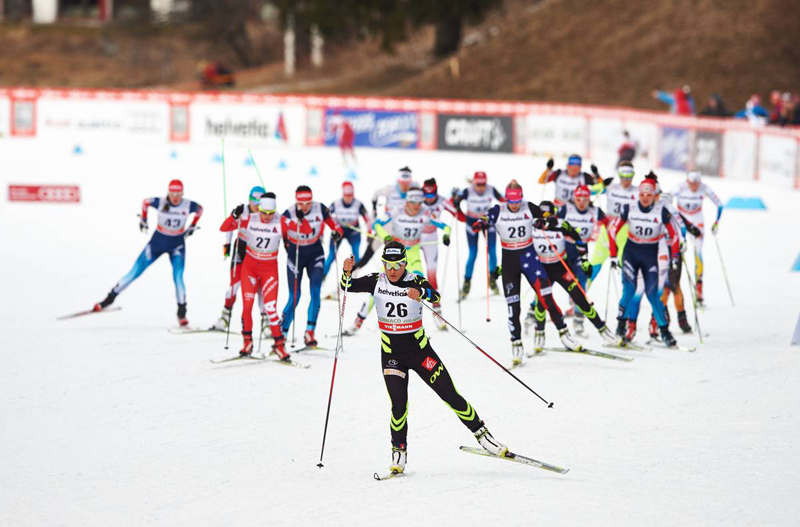
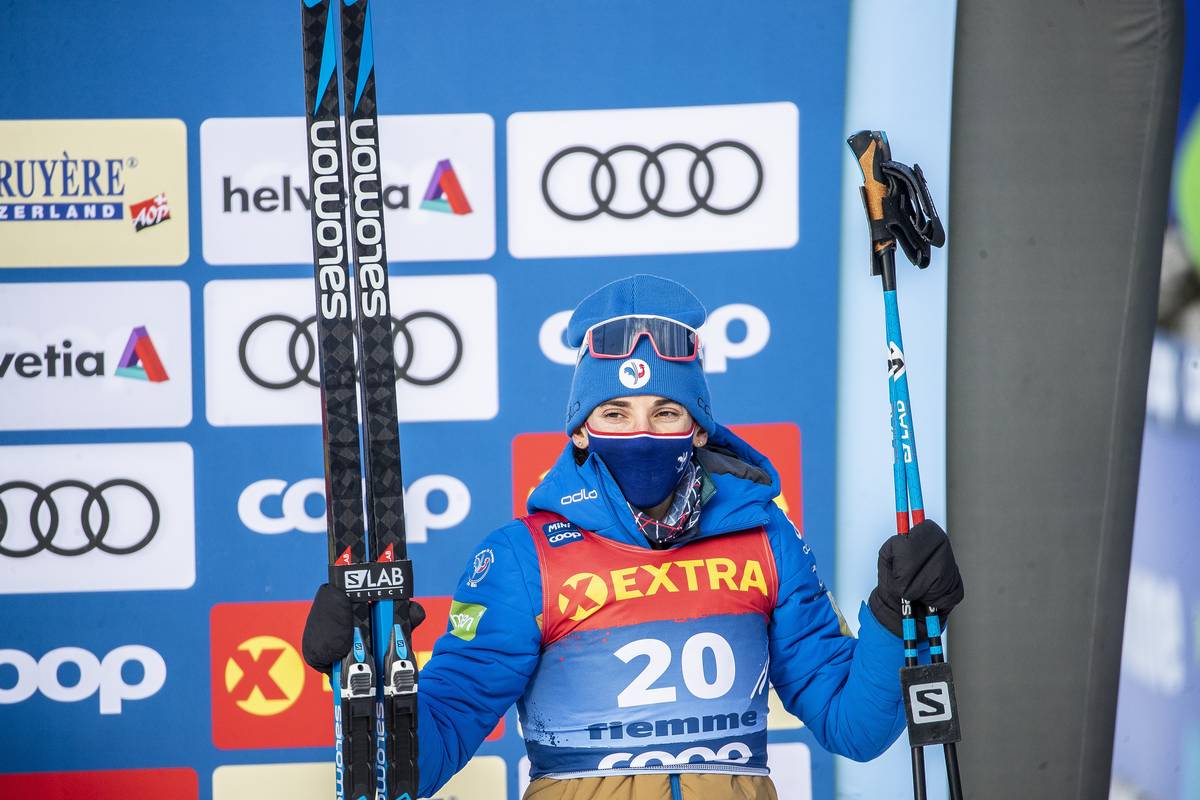
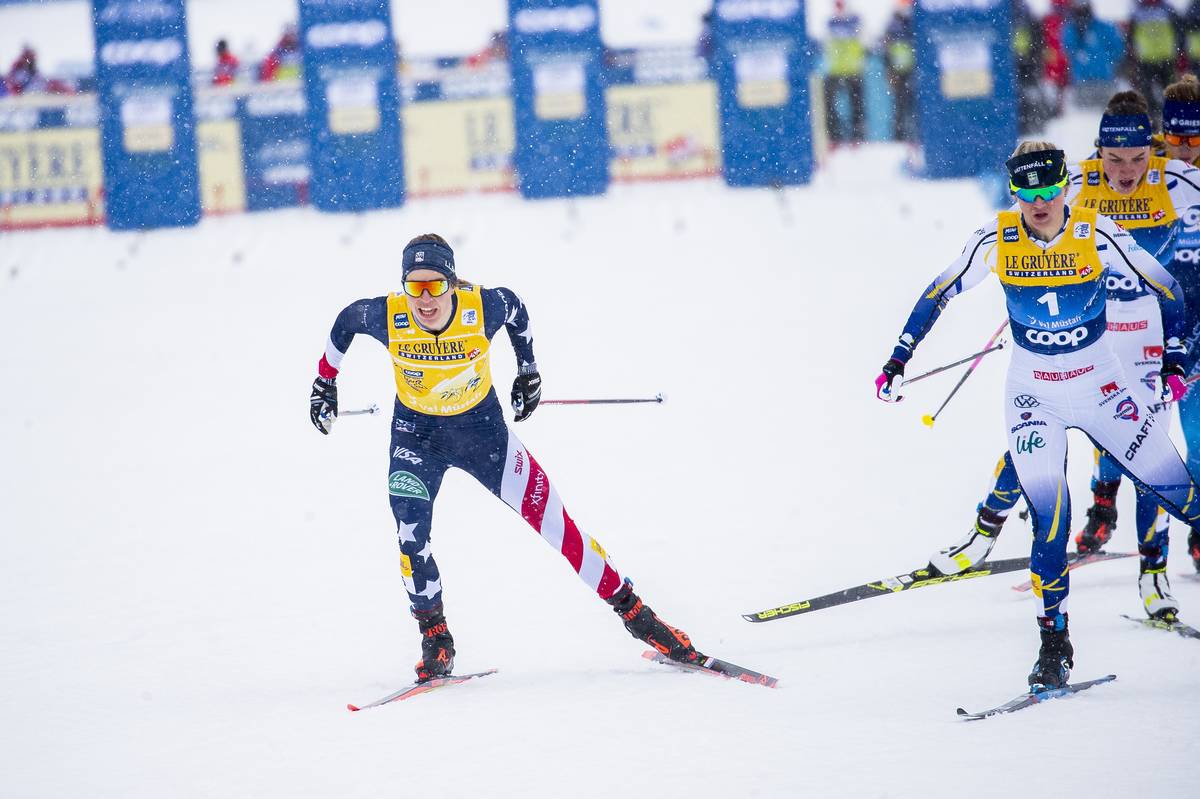
Capturing the scenery of Toblach in the action shot. (Photo: NordicFocus/Federico Modica)
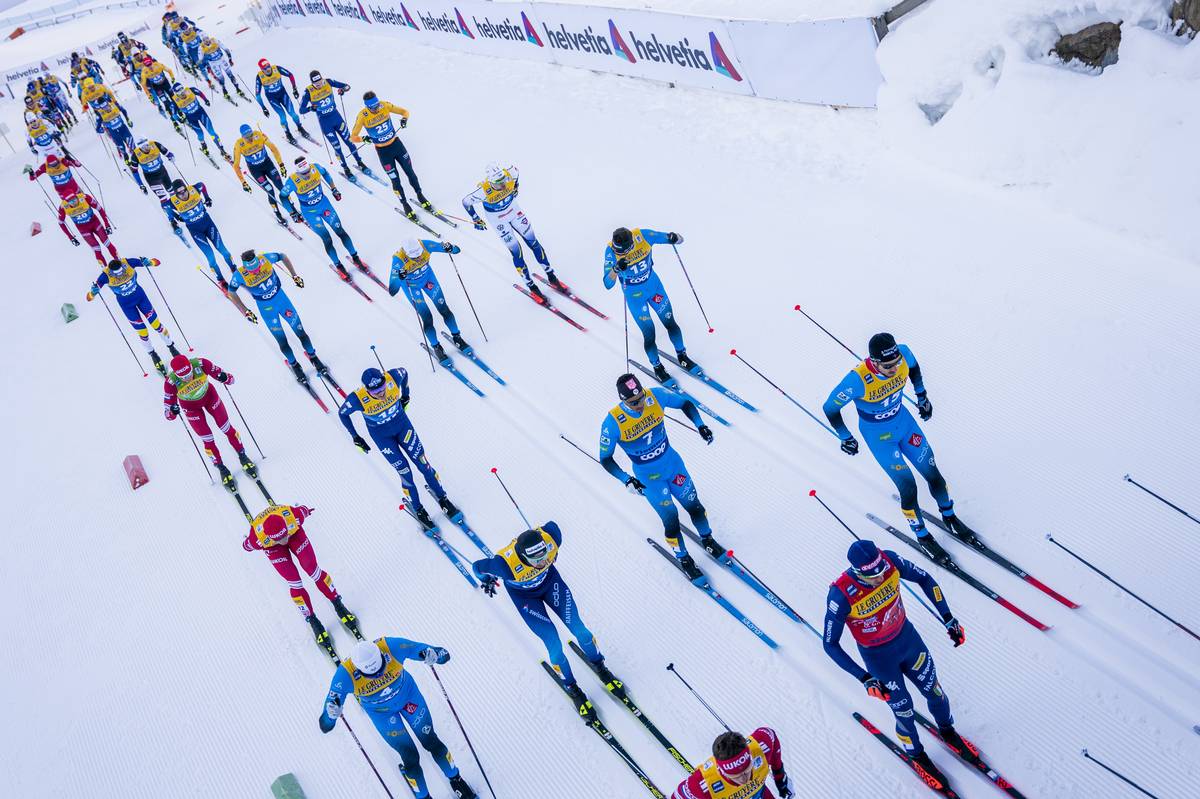
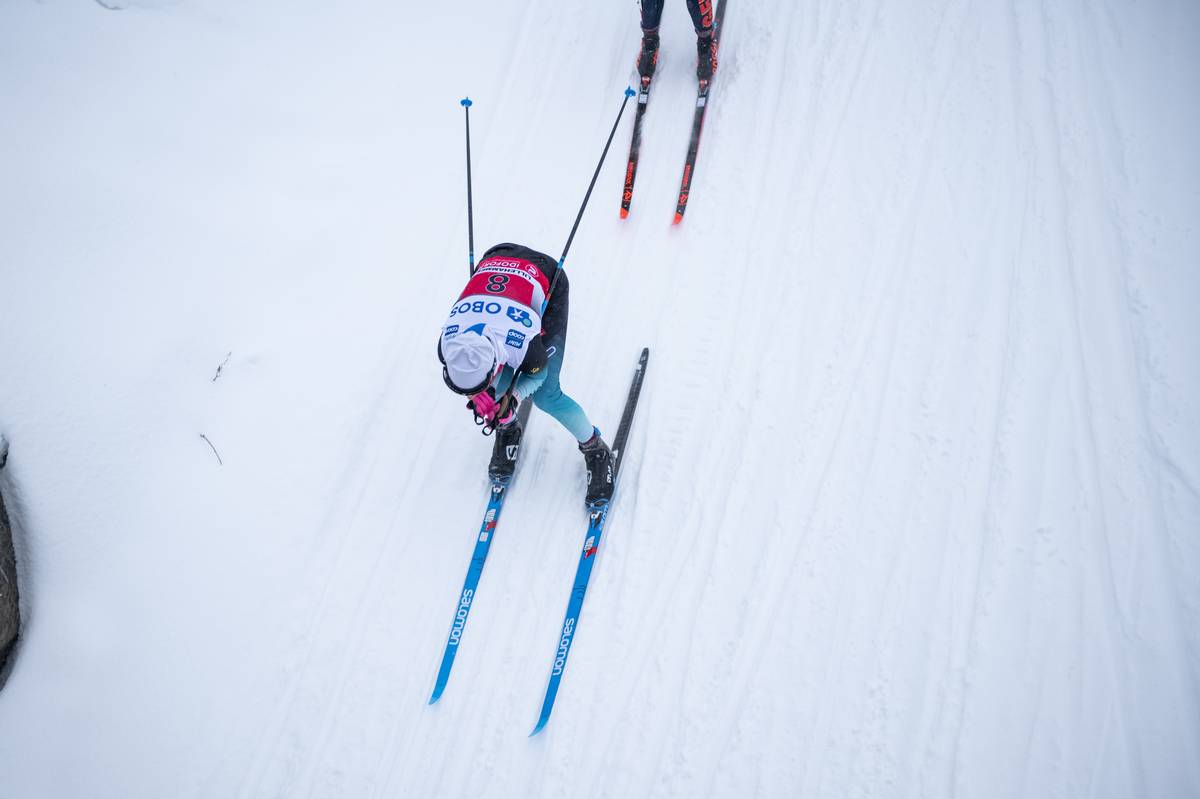
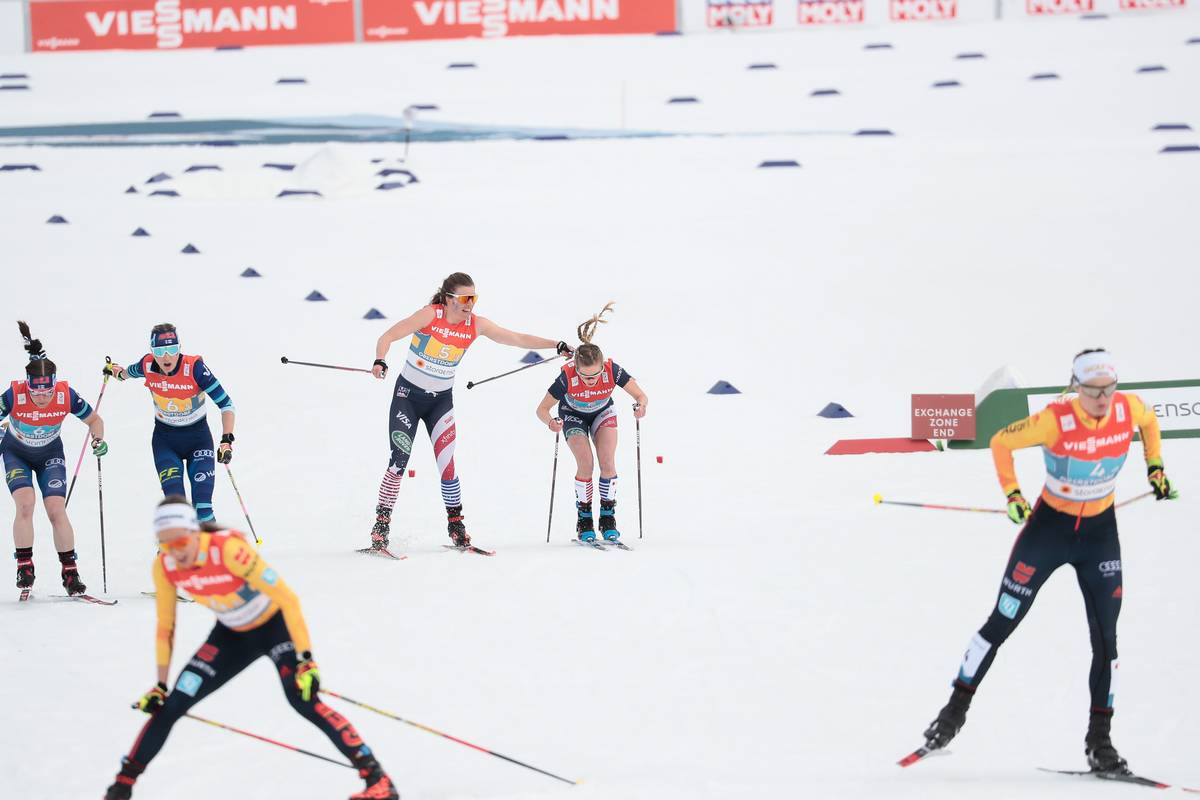
This image was shot on a bridge to capture a different perspective than we normally are able to capture. (Photo: NordicFocus/Federico Modica)
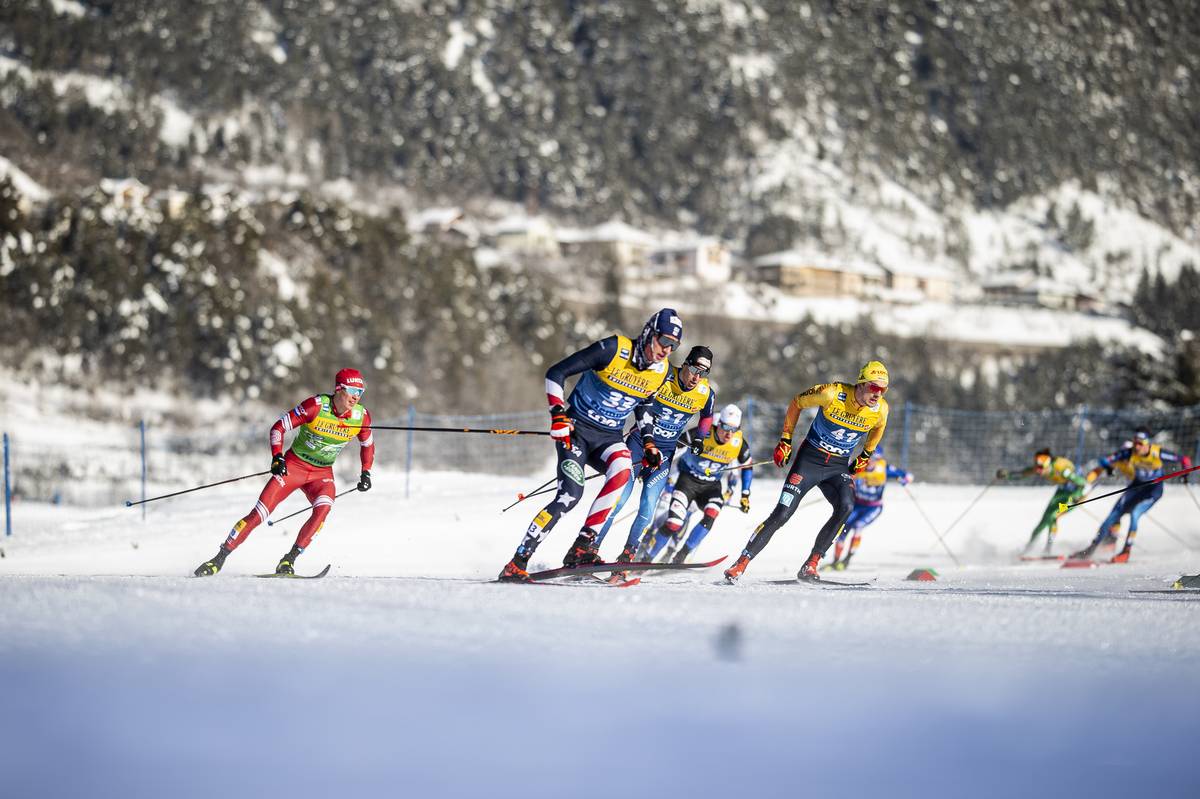
One shot may be from above, and another may be shot close to ground such as this shot of Gus Schumacher. (Photo: NordicFocus/Federico Modica)
An example of a clean, up close image of Sweden’s Ebba Anderson. (Photo: NordicFocus/Federico Modica)
JK: I noticed you capture images from different angles and often set up remote cameras such as the Davos World Cup this year. What does that process look like? How do you decide when and where to use a remote camera set up?
FM: To decide when and where to use a remote camera is just a matter of time. I need to be in position 1/2h before the race to put the camera, find the focus, frame the shot. I also need to think if it will take good action or if I will delete all the pics. I’m very strict about judging my pictures and I’m not afraid to put them in the bin if I don’t like their quality.
Remote cameras are perfect for covering those nice spots where photographers can’t stay… For example, close to the action with a wide-angle or trying an artistic shot or different point of view without the fear of losing the main shot.
A remote camera shot of Rosie Brennan cornering in Davos, SUI. (Photo: NordicFocus/Federico Modica)
Kevin Bolger in this action shot incorporating a scenic backdrop and (Photo: NordicFocus/Federico Modica)
JK: How do you capture shots showing movement? For example, a shot where the athlete is in focus but the background is blurred? Conversely, a shot where the athlete is blurred slightly and the background is in focus? (Do you have any details on these photos you could share, such as shutter speed, aperture, etc.?)
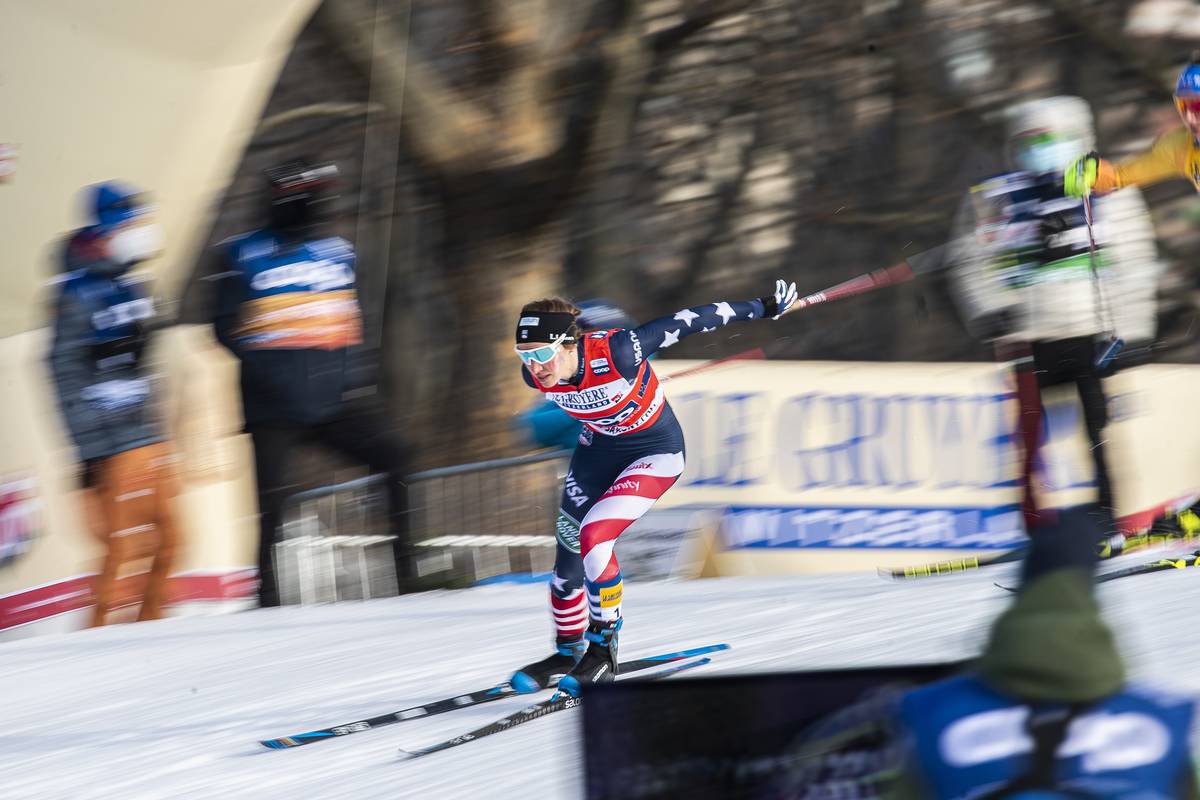
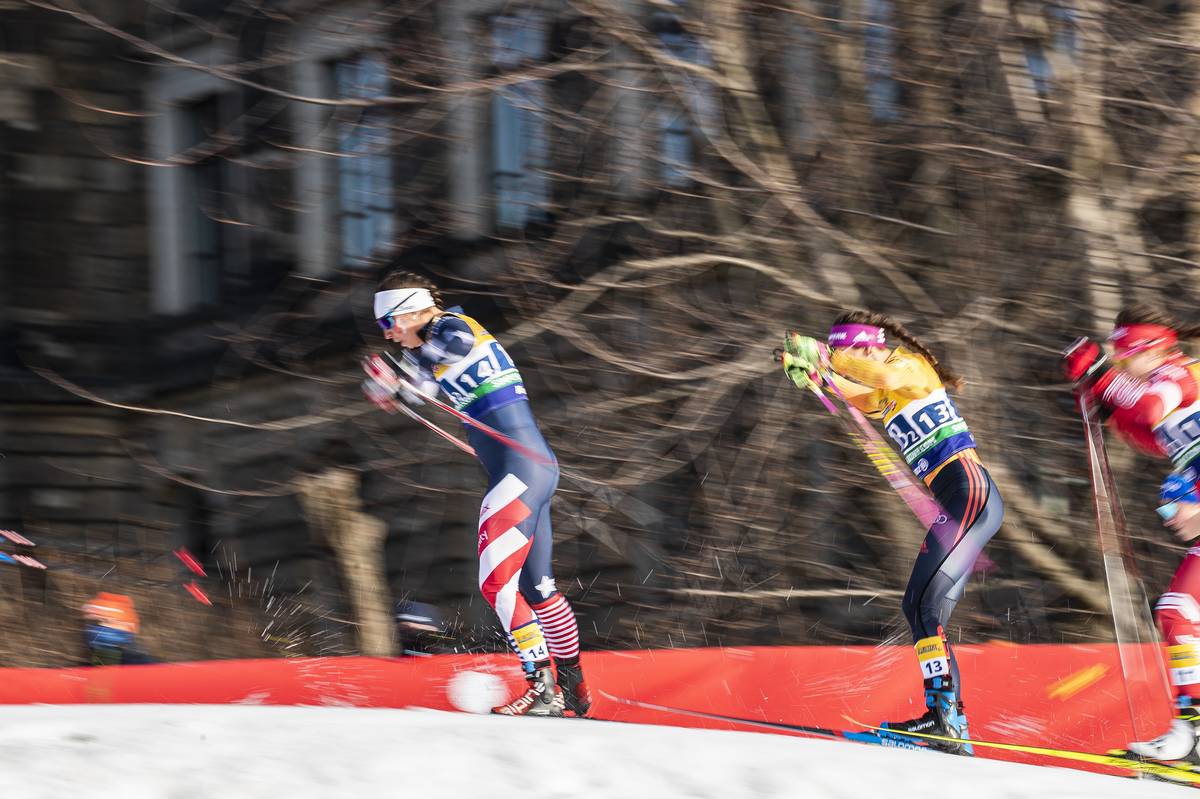
FM: Showing the action is not easy in cross country…Only experience helps to achieve this result. When the background is in motion and the athlete is sharp, we call it panning. Panning shots are technically super easy but in practice, they’re not.
The technique is easy because a photographer only needs to use a shutter speed slow enough to move the background but to still let the skier sharp. But there’s a lot more behind this: the choice of the background, the position of the body, the position of the camera, the lens… I think it’s one of the most complicated but fascinating techniques.
Sophie Caldwell’s motion was captured by a panning shot in the Dresden city sprint. (Photo: NordicFocus/Federico Modica)
Julia Kern cresting the hill in Dresden with her body in focus, but pole movements blurred. (Photo: NordicFocus/Federico Modica)
This is part II of an interview with U.S. biathlete Susan Dunklee. In her final season racing World Cup, Dunklee has decided to take on a leadership role, as an Athlete Ambassador for gender equity, with the International Biathlon Union. You can find part one of the interview here.
This portion of the interview focuses on an incident that crystalized Dunklee’s resolve to foster cultural change in her chosen sport. Dunklee posted a two-Instagram post back in March in which she documented a transgression in the workplace.
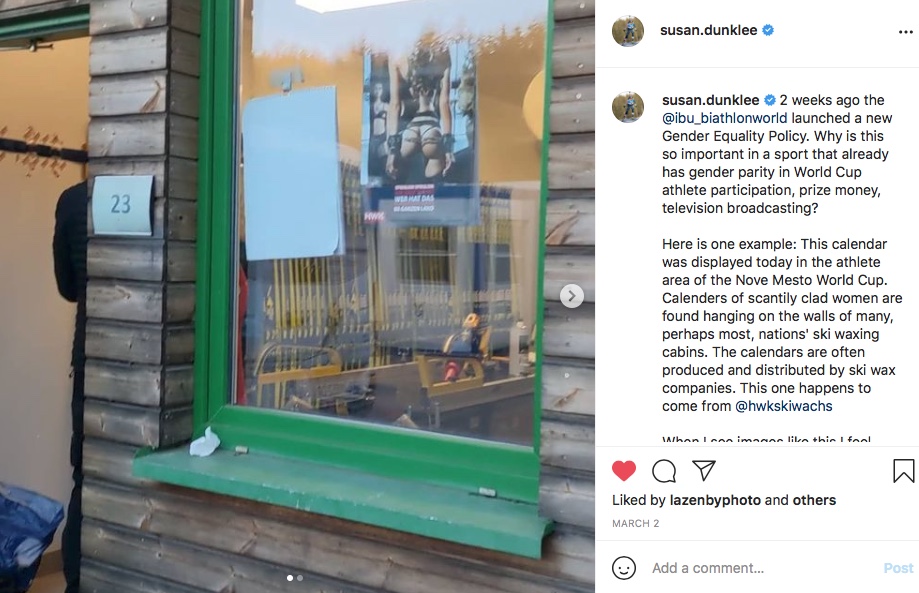
She posted an image of an HWK Wax calendar featuring a photo of a mostly naked woman. The image in question was taped to a wax cabin window, facing outward, for athletes and staff to see as they walked by.
Dunklee wrote in her Instagram post:
“2 weeks ago the @ibu_biathlonworld launched a new Gender Equality Policy. Why is this so important in a sport that already has gender parity in World Cup athlete participation, prize money, television broadcasting? Here is one example: This calendar was displayed today in the athlete area of the Nove Mesto World Cup. Calenders of scantily clad women are found hanging on the walls of many, perhaps most, nations’ ski waxing cabins. The calendars are often produced and distributed by ski wax companies. This one happens to come from @hwkskiwachs
When I see images like this I feel uncomfortable and objectified. It sends the message that a wax cabin is not a welcome space for me or for other women.
If we want gender equality let’s start with respect.
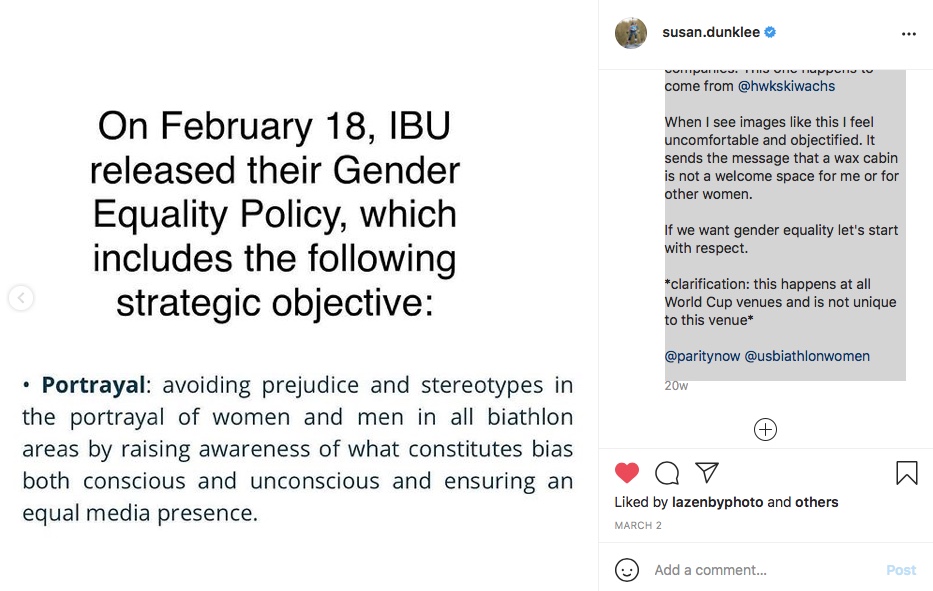
*clarification: this happens at all World Cup venues and is not unique to this venue*”
The first portion of Dunklee’s Instagram post regarding gender equity in her work environment on the IBU World Cup. (Screenshot: @susan.dunklee)
The second portion of Dunklee’s Instagram post regarding gender equity in her work environment on the IBU World Cup. (Screenshot: @susan.dunklee)
***
FS: Ok, let’s drill down on gender equity in the sport. There have been some inroads in terms of gender equity in male-dominated sports, you know, in some mainstream sports. For example, there’s a female who is an Asian-American General Manager for a Major League baseball team. There’s Becky Hammond who is a longtime assistant coach for the San Antonio Spurs who, you know, living here in Oregon, Hammond was considered for the head coaching job for the Portland Trailblazers – which made some news here, but she did not get the job. There is clearly more work to be done. But those are two examples in very traditional mainstream sports where some headway is being made. But, let’s speak personally about what you see going on in the U.S. in terms of gender equity in biathlon, and then we can jump to the international arena. Specifically, I would like you to discuss what you feel are the issues for gender equity in biathlon?
SD: In the U.S., we have some female coaches, we certainly don’t have as many as we have male coaches. When I’ve looked at the numbers of participants in team trials over the years, we have often had decent size fields on the Junior men’s side and some years we’ve only had three or four women – if that – on the women’s side. For some reason, at the youth level, it seems to be a lot more balanced. I’m not certain why, but we tend to lose a lot of women as they age. And I don’t know why, and I don’t know why that’s not also happening on the men’s side.
I think it can be an intimidating sport to get into. I do know my former teammate, a few years back, Emily Dreissigacker started the Girls with Guns program. This was a workshop for girls to try biathlon. Emily had this experience as a kid where she was deterred from the sport early on because of the weight of the rifle and simply skiing around with a rifle. You know, little things like that are our barriers for people.
Shooting and hunting sports are traditionally more male-dominated spheres. So, the sport can be kind of tricky to get into. It is really nice to know that within our federation we have serious women like Sara Studebaker-Hall, hired to help with our leadership and administration at a really high level. We have Danika Frisbie helping coach and assisting with athlete development. But a few years back, we really didn’t have much of a female presence or leadership either. So we’re getting there, but I would still love to see more girls or programs, specifically for women to develop women coaches and mentor them and give them support.
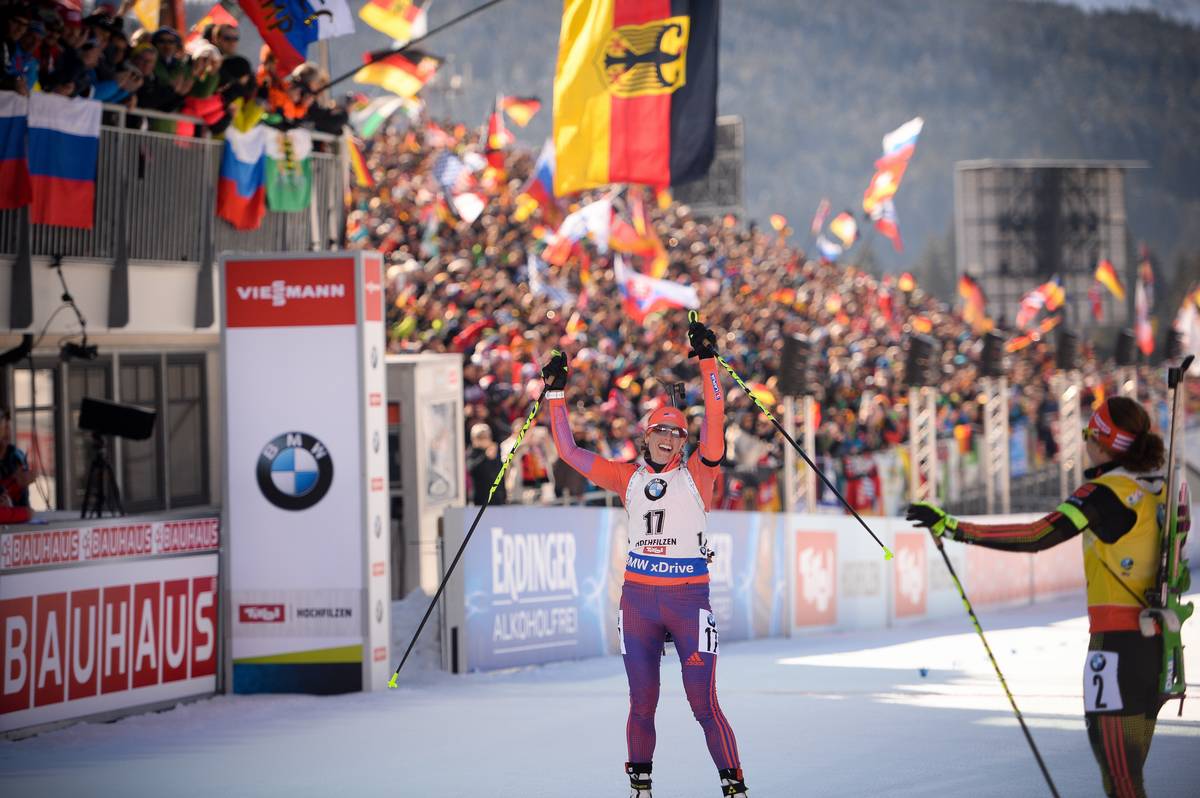
Susan Dunklee celebrates silver in the women’s mass start at the 2017 IBU World Championships in Hochfilzen, Austria. She became the first U.S. woman to earn an individual medal at Biathlon World Championships. (Photo: USBA/NordicFocus)
FS: Off the top of my head, I think Lowell Bailey has been retired for maybe three years now. I’m not sure that is accurate, but he’s retired. Your name and Lowell’s have been associated with the sharp end of the sport now for nearly a decade, you have been the go-tos. And I know Clare has had a really solid run in recent years. But that said, do you feel heard within the U.S. when it comes to your voice for equity?
SD: Oh, yeah, I mean, I would hope I certainly am. I think it can be tougher on the road in the winter because one of the problems with traveling around in a group like ours, is you have a very small group of people that you’re interacting with all the time. And for us, that is the team of athletes, the coaches, our support staff, which includes technicians, physios, sometimes a team doctor. Maybe a press person. And we seldom have any staff on the road that are female. We usually have four female athletes, and then everybody else that we’re traveling around, all winter long, are mostly guys.
I don’t feel like that’s a challenge that is always totally understood or acknowledged within our federation. I don’t know, sometimes they feel like you’re a little bit of a good old boys club socially, and it’s tough, and a lot of our staff represents a wide variety of nationalities. So the norms can be very different.
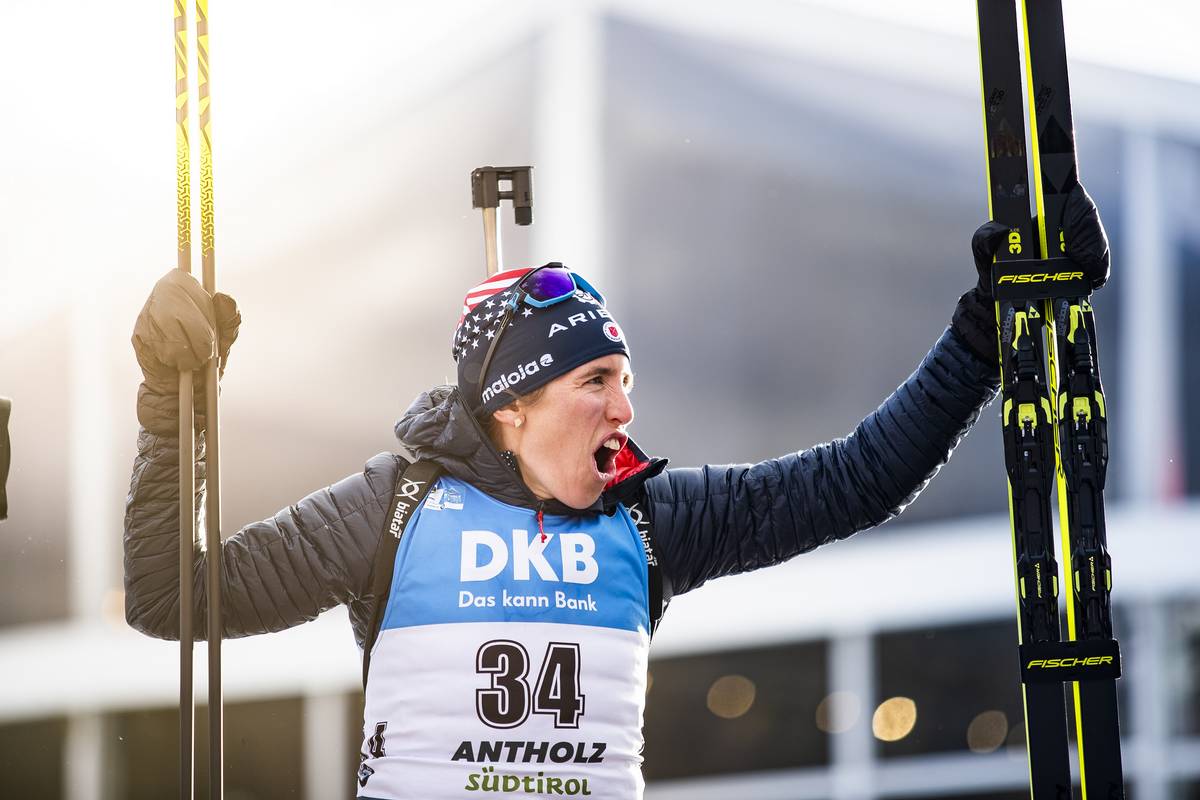
Roar. Susan Dunklee captures an IBU World Championship silver in the 7.5 k sprint in Antholz, Italy. (Photo: NordicFocus)
FS: I think it is well understood that gender inequality has been around for thousands of years. In the recent past, since the #MeToo movement began, it just seemed to be a moment in time, culturally, where people are becoming more aware. But that said, to your liking, and more specifically, has the national federation begun equity training for staff?
SD: I don’t think so. I don’t think that has been a thing, I mean I haven’t been part of any staff training, so I don’t know what they actually have trained in, but I feel like that’s kind of become a hot button issue in the past year or two. And I don’t know. That’s a great question.
FS: And I bring that up because I do feel like, you know, a lot of people know a lot of people maybe roll their eyes and, but the bottom line is that training moves the needle a little bit. It informs people.
You have signed on as an Athlete Ambassador for gender equity at the international federation level. Why did you feel prepared now to take on a leadership role, and then specifically, why gender equity? Although, you have touched upon that already.
SD: I can go into more detail. First of all, I do not feel prepared. And I think I have a long way to go to learn and educate myself about these topics and feel more articulate about them. But I don’t necessarily think that I have to feel 100% prepared to start working on it. The only way I’m going to learn more about this and become more effective at this is by putting my feet in the water.
The incident that really sparked my interest in this occurred this past winter. I don’t know if you follow my Instagram account, but I made a post in March, we were in Nove Mesto towards the end of the season.
And for my entire World Cup career, it has been normal in the wax cabins, of most of the teams I would guess, I don’t know for sure, but I’m assuming, it’s probably most of the teams to have calendars on the walls. Calendars of scantily clad women. And a lot of times these calendars are manufactured and distributed by wax companies. That’s just one of those sorts of things that you just have to accept if you’re going to the World Cup: that this is going to be the culture. You are going to walk into the wax cabin to pick up your race skis or to drop off your skis, and you’re going to see these images all over the wall.
Coming from the US where that sort of thing just seems so outdated to me, it’s like you don’t see images like that in a professional work environment. I think that’s really common still over in Europe and even talking to some of my friends in Germany, they don’t understand why I feel so upset when I see stuff like that. But that’s always bothered me and it’s just kind of been in the background all these years.
My teammates have felt the same way when you walk into a room — you feel objectified when you see shit like that. And we’ve tried some kind of playful and fun ways to bring up the issue. We went to a store and found a male calendar and we put it up on the wax cabin walls.
That’s a tradition that we do once a year or so, and it usually would get ripped down right away by our wax staff. It was very much just kind of a fun way to say, ‘hey this is a thing and we think it’s kind of ridiculous and this is happening and we’re going to try to make it more equal.’
But at the end of the day, I think it’s really better to not have any images at all like that.
So back to my Instagram post – when I was in Nove Mesto at the biathlon venue, I’m walking through the athlete area and I saw on the window, it’s not our team and the team doesn’t really matter, there’s a calendar, one of those calendars, but it’s facing outwards so you can see it from the athlete area.
I thought, ‘Ooh this is a perfect opportunity, I’m just going to take a picture of that.’
I posted the photo on Instagram. And I just talked about it on Instagram, like, ‘Hey this is in the athlete area. And this is kind of a norm, the wax companies actually give out these calendars.’
It created this crazy outrage, I’ve never had an Instagram post go so wild before. The first thing that happened was I had a lot of support and Mona Brorsson and Sebastian Samuelson, some of the Swedes, reposted it too.
The Swedish media picked up on it, absolutely outraged, and I think Sweden is one of the places where gender equality has been thought about for some years now. I think a lot of Swedish media stories actually put some pressure on the wax companies like HWK, which published the particular calendar I had posted a photo of. That response was kind of cool to see.
But, then about 12 hours later the Czech news agencies picked up on the story, and I just got slammed with all sorts of stuff, really negative and poisonous and toxic comments that were hurtful. I was really glad to have my teammates to talk to about that.
But it was like, wow, this is a place where something that I thought was so obvious and that should not be there, there should be no room for this sort of image, and more specifically at the professional sports level like this. The fact that this was so controversial was really enlightening. We have a lot of work to do to create an environment that’s welcoming to everybody.
I think a lot of athletes don’t really feel comfortable speaking up about that stuff and it’s taken me 10 years to speak up about something like the calendar.
Susan Dunklee celebrating her 2020 IBU World Championship silver medal. (Photo: NordicFocus)
FS: Wow, I’m sorry you were exposed to that type of toxicity. And when you began your story, I defaulted to the trope of automobile or auto-part calendars, not ski wax companies. Some of the biggest role models in skiing across the disciplines are women.
Ok, so you’re talking about the international community with so many different cultural norms. How do you go about it? I’m assuming since you are an IBU Athlete Ambassador, that you have to examine this from an international perspective. If you are thinking of creating solutions, how do you start that discussion or how do you think you should push that discussion to get people in the room who might not necessarily agree with you?
SD:I think from the outside it really looks like a progressive sport in terms of gender equity, sure. It’s one of the few sports out there where women and men have equal prize money, equal participation at the highest level, equal TV coverage for the most part. We even have formats like the single mixed relay and mixed relay where the woman and men race together in the same race, and they’ve even started experimenting with switching the order up so sometimes the guy goes first, sometimes the girl goes first.
And when they do that, it changes the race distance, and in a single mixed relay when the woman goes second she actually skis more kilometers than the man in that race, I think that’s really kind of cool. That’s also controversial and not everybody’s happy with it, including a lot of women, but they’re definitely pushing the envelope on that sort of format.
If you were to look around behind the scenes at a World Cup, you would see one wax technician out of about 100 in total, that is female — her name is Stefani and she’s from Bulgaria. She’s a badass.
You’ll see a couple of coaches perhaps. But, it’s rare to ever see anybody in a technical role, maybe every now and then you might see one woman there, but technical delegates, most international referees, tend to be male.
And I think one of the images that really struck me this spring, I joined an unconscious bias training the IBU was running, and they contracted out with a university in Berlin to run this program. The professor started by showing us a picture of different boards, executive boards from organizations around the world of businesses. Of course, there’s still a lot of businesses that still have a high percentage of older white males on their boards.
Then she showed us a picture of the IBU Executive Board. And even though I know Clare really well and I hear her talk about her work with the IBU on the Executive Board, I had not processed, just how crazy it was that she’s the one woman in that group of 10 people.
Just that visual, to me, was very powerful and as an ambassador, I am trying to identify things that will be powerful for people to see or hear about, and that will help move the needle a little bit.
Yes, it’s interesting to try to think through what are the things people are going to respond to, because, I can see that there’s a problem, but if other people don’t see a problem there’s never going to be change.
FS:What comes to mind is when Laura Ingraham, a conservative commentator, said of LeBron James, “Shut up and dribble,” when the athlete discusses being a Black male in the U.S. I know biathlon is not the NBA, especially in the U.S., but it is a major, if not the major winter sport in much of Europe and Russia. I’m just curious, are you preparing yourself psychologically for some major pushback and people demanding that you stay in your lane?
SD: I did already see a lot on social media. But, I think, going back to where we started in this conversation though, when I view all that corruption in the top leadership, that was really eye-opening to me. And if we didn’t do something as athletes, then nothing was going to change.
I felt like it is and was our responsibility when you see that sort of stuff happening, but you have to speak out about it.
If it’s really important to you, you cannot sit there expecting somebody else to take care of the problem. I think I’ve gone from wanting to focus mostly on my sport and my individual performance, to now where I want to be able to have the time and energy to put energy where it is actually needed.
I think there are times and places where you have to say what matters, what really matters in life, and what type of legacy can I help leave behind.
Yeah, I can leave some good results and that’s something that I can be proud of and the country can be proud of me. But what actually matters in life? I think gender equality is one of these big things that I would love to see a more lasting change.
FS: The Olympic cycle is coming to a close this winter and will start anew. Is this your last year?
SD: It is my last year. I’m done in the spring. This is one of the things, honestly, this kind of work motivated me to go ahead and to see what I can help accomplish on this front, in addition to my racing.
FS: You know this, but every four years, it’s a big cycle for folks, that lead-up into the Olympics and the expectations. Athletes need to compartmentalize. There’s the added attention that you get, and the demands on your energy.
You mentioned this up-front in this conversation, that historically you really just focused on the athlete part, the results-oriented part of the sport. Have you already tried to figure out how you’re going to compartmentalize each of these, the performance side and ambassador side, and make it work?
SD: I think I can do a lot right now over the summer and to start thinking, or at least I’ve been trying to be more strategic in my social media posts, in general, the past year in terms of having to plan for what sort of content I want to put out there. Maybe have a month where I post on one type of type, and I change it up the following month. Then analyzing what picks up steam or people push back against.
I know in Olympic years we can be overwhelmed with media requests. And you can’t say yes to everything and so you have to be strategic about that too. I look forward to relying on teamwork with some of the other ambassadors, being able to chat over stuff with Kelsey Dickinson, who lives here in Craftsbury, and working with the group to coordinate on which things to push for and which things are the most important to tackle and keeping the focus on that.
I think just like having a training plan, having a goal in mind, and a particular roadmap to get to that goal, you have to just not say things willy nilly or, or do things willy nilly, but have a goal that you want to achieve. Right now, I’m in the process of fleshing that out and figuring that out exactly.
*This is the third piece in a multi-part series on photographing skiing, ranging from capturing skiing on your smartphone to taking a deep dive into how professionals capture skiing on the World Cup. Take a look at Smartphone Photography and Manual Camera Basics in case you missed them.
The first step to manual camera photography is understanding the parts of your manual camera. Once you have a basic understanding of how a manual camera works, the functionality built into this tool reveals endless creative tools to paint on a blank canvas. Whether you are shooting in a snowstorm, on a sunny bluebird day, or at a night race, there are a lot of ways you can adjust to the environment and improve your photography.
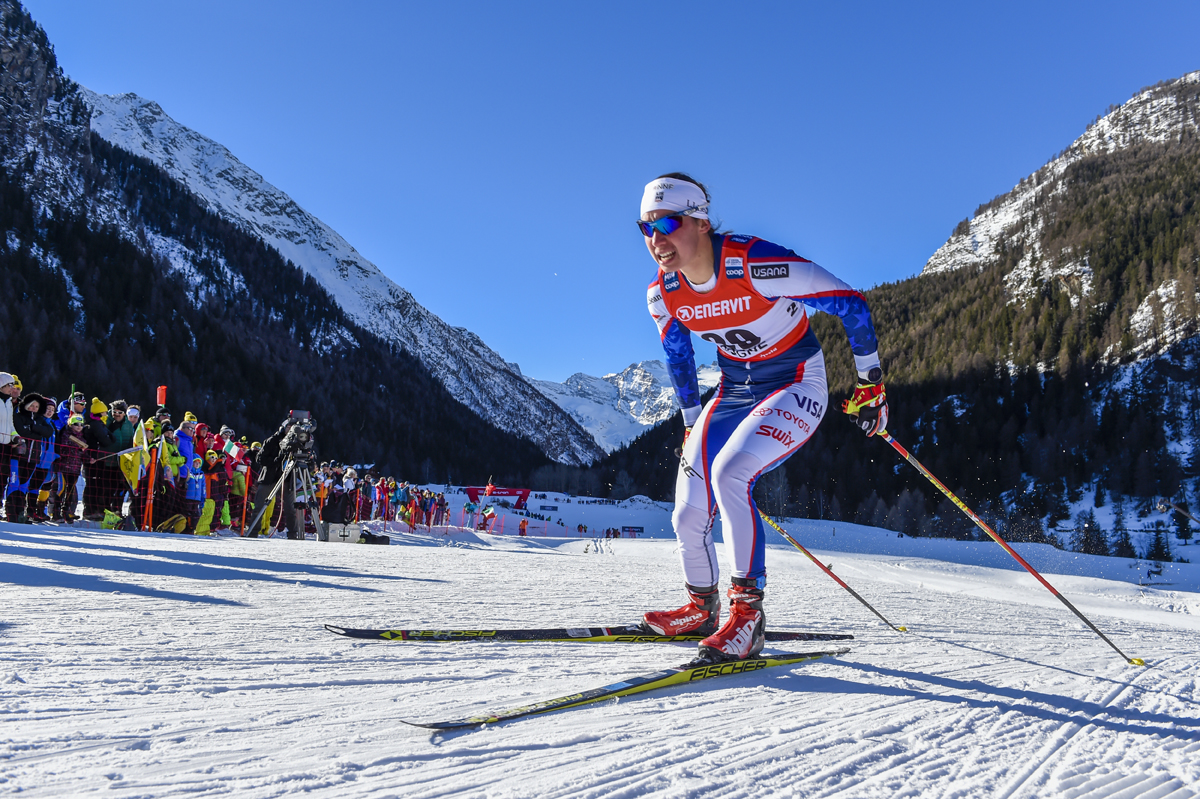
Julia Kern on course in Cogne, ITA in February, 2019. (Photo: Fischer/Nordic Focus)
File Types
Before you go out and shoot, you will want to decide which file type to capture your images in. This is something that cannot be changed after you take an image and is an important setting to decide on beforehand. Manual cameras often have 2-3 different file types for image capture: JPEG, RAW, and sometimes TIFF (not as relevant here). The file type determines how large your file size is, how easily it can be viewed on different devices and the array of much how post-processing capabilities you have.
JPEG
JPEG is the most common image format and the one you are likely familiar with. The images you see on your smartphone, thumbnails on your camera, or on a point-and-shoot camera are likely JPEG files. JPEGs are compressed images that are already processed and “developed” by your camera based on your camera settings. Those settings include white balance, color saturation, and color space, and help minimize your post-processing time.
JPEG Pros
Most common image format. When sharing images with other people, devices, on social media. JPEGs are easy to share and compatible with most software.
File sizes are smaller. JPEGs take up less storage space allowing you to save more images on your devices without the worry of large file sizes. In addition, the images are quicker to capture since the file sizes are smaller.
Already processed. JPEGs are already edited versions in a sense, saving you editing time after the image has been captured.
JPEG Cons
Loses image information during compression. Since the files are compressed, it will be harder to extract and change information such as colors, dynamic range, or overexposed areas since that data will be potentially lost during compression.
Color limitations. When the file is compressed to a JPEG, the file is reduced to 8 bits which means that the full spectrum of colors that your camera can record is lost.
Camera settings matter. Since the camera processes the image based on the existing settings, certain camera settings such as sharpening can be irreversible.
RAW
Raw files are the “digital negative”, changing nothing about the image when storing the unprocessed image from the camera sensor. This is often the file type preferred by professional photographers because no information is lost and you have numerous options for post-process editing. (*Note: Depending on your camera, the RAW file type may be called something else such as NEF (Nikon), DNG, KDC (Kodak), RW2 (Panasonic), RAF (Fuji), ARW (Sony), CRW (Canon), and others. You may have to research what your camera RAW format file is called).
RAW Pros
Lossless information. All information is captured and stored in the file, no information is lost when storing the image.
Larger post-processing capabilities. The metadata can be altered (such as white balance, exposure, etc) when you edit the photo while keeping the original photo data intact.
More colors. Since there is no compression, a raw 12-bit file can contain a much larger range of color, up to 16.8 million times larger color range than a compressed JPEG file.
RAW Cons
Post-processing is often required. Raw images alone often look very dull since they have not been processed yet, so oftentimes, it takes more time to adjust your photos through post-process editing.
Large file types require more storage. Each RAW file fills more space on your memory card, computer, or other storage device compared to JPEGs. You will be able to save fewer images on your device for the same amount of storage.
Compatibility and sharing issues. Often, if you want to share your images you will need to convert your image to JPEG or another file type since RAW formats are not compatible with all software.
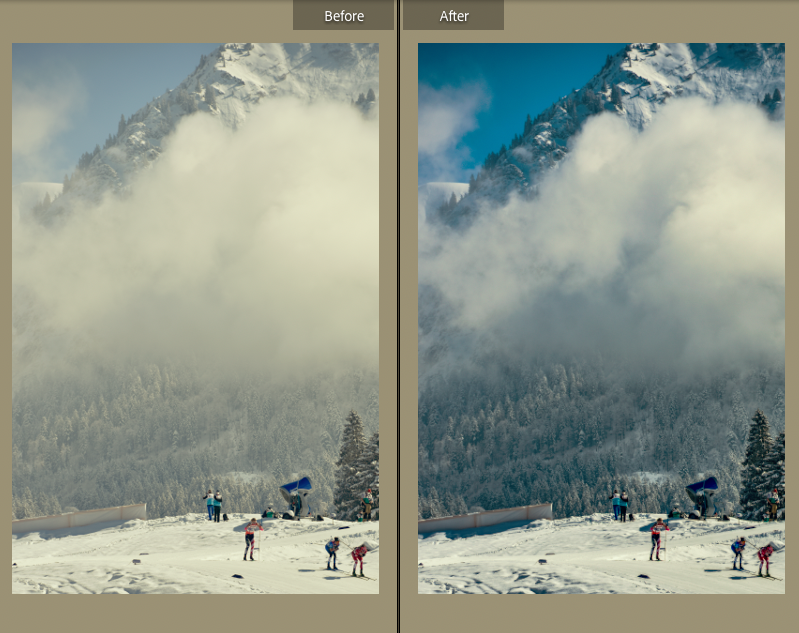
On the left, you can see a raw image looks blander so it will require some editing to pull out the colors. (Photo: Julia Kern)
If you are looking to capture pictures but don’t want to spend time editing them afterward, JPEG will be your ideal file type. Some cameras offer the option to select JPEG basic, or fine, allowing for a little more flexibility in how compressed the stored files are. However, if you are looking for the darkroom equivalent of creativity and you plan on diving into the world of post-processing images and adding a creative touch, shoot RAW images. This affords you the full range of editing capabilities.
Post Processing
The post-processing piece of photography is an area that offers endless opportunities for creativity. There is no limit to what you can learn about post-processing images and it can be an exciting area to dive into. I will touch on the basics of photo editing software so that if you decide to shoot RAW images, you can have an understanding of how to develop your photos.
There are hundreds of editing software choices to choose from. The most well-known software is Adobe Lightroom which is user-friendly and can be used as both a photo editor and photo organizer. Most RAW files are compatible with this software and your editing options are limitless. Other photo editing software includes Adobe Photoshop, Skylum Luminar, ON1, Corel Paint Shop, DxO, and many more that are offered by camera manufacturers. This is not an exhaustive list and other free or paid software options are available.
When choosing editing software, you should factor in how much/if you are willing to pay for software, where you will store your images, what file type you are using, and which software seems to be the most user-friendly for you.
Shooting a Snowscape – An Exploration of White Scenery
Now that you have a basic understanding of file types, it is time to make the most of your camera when capturing images of skiing or other activities! Shooting in the snow can be both challenging and exciting since everything seems bright and white.
Shoot your images in RAW. The first step will be to shoot your images in RAW. Shooting snowscapes often leads to overexposed images due to the white-brightness of the snow or being underexposed due to the lack of daylight in the winter. Your goal is to retain as much information as possible on the image file so that you can adjust any setting in post-processing.
Set your camera exposure compensation to +1 or +2. Essentially, exposure compensation is an override of the camera’s sensor. Without exposure compensation, the camera’s software will default to underexposing snowscapes (the camera detects the copious amounts of light reflected off the snow) which makes the white snow look gray in your unprocessed images.
Here you can see how different exposure settings can make the white snow look gray. (Photo: Julia Kern)
Adjust your metering. Metering settings allow you to tell the camera if it should measure the light coming into the camera from a single spot (spot metering) or measure light from the whole frame (evaluative metering). Often, evaluative metering will produce more consistently exposed images.
Shoot in aperture priority. This function allows you to focus on tuning in your depth of field while ensuring that your images do not become over or underexposed in the bright white spaces.
Experiment with white balance. One of the most tricky aspects of shooting in a snowy environment is finding the proper white balance. It may vary depending on the situation, so my suggestion would be to experiment with your white balance settings. There is no better way to learn the power of white balance than testing it out in the snow and seeing how much it changes the look of an image. Begin with auto, but if the snow has a blue tint, try adjusting your white balance to cloud/shade or flash. If you want to explore a bit further, change your setting to sunny/daylight and see how that modifies your image. Just a reminder, by shooting in RAW, you have the option to choose an array of white balance settings when editing.
Here I switched the white balance from “as-shot” to “shade”, pulling out the blue hue of the white snow. (Photo: Julia Kern)
Look for contrast. Take a look around and see what catches your eye in the white-blanket snowscape. Is it a skier striding in a white field or a lone tree in an open meadow? Seeking out subjects that provide contrast to the white backdrop can make for eye-capturing pictures.
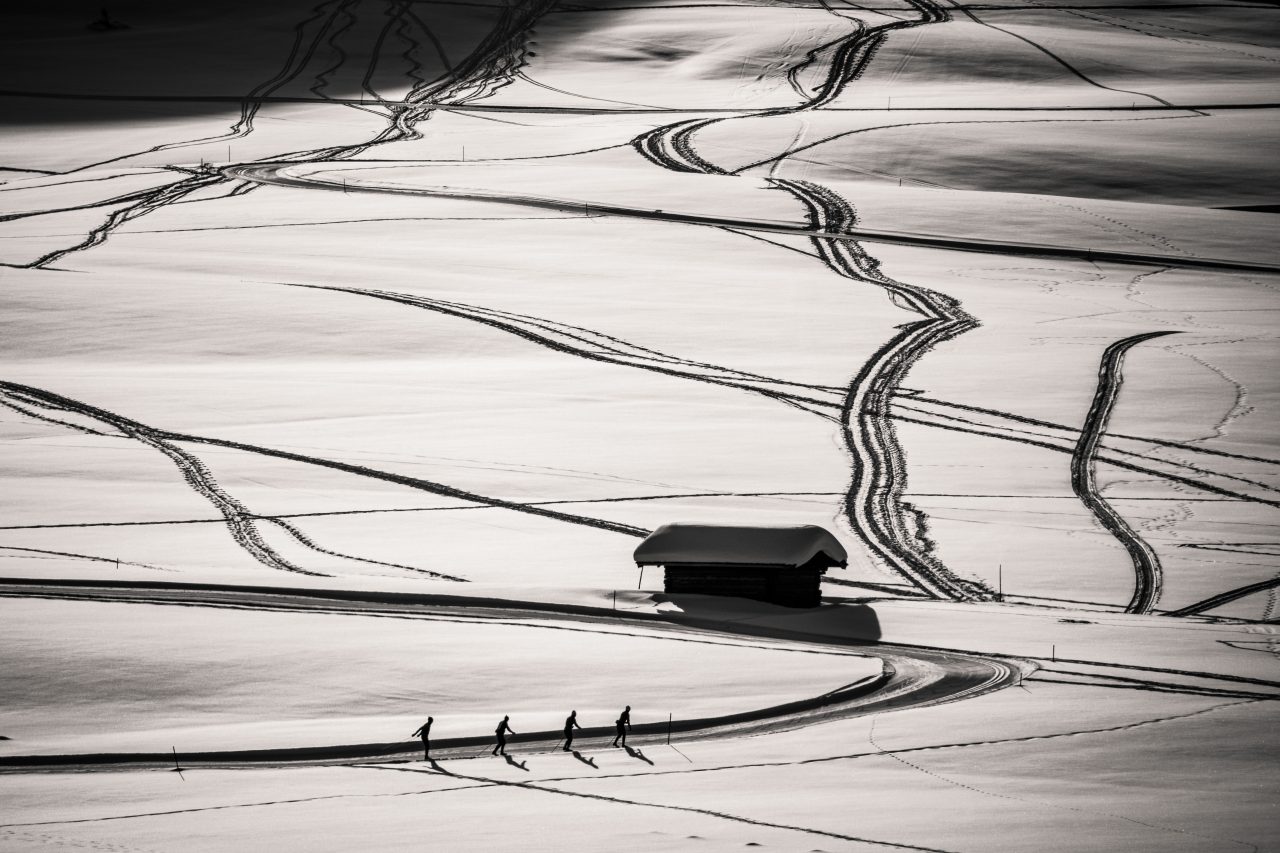
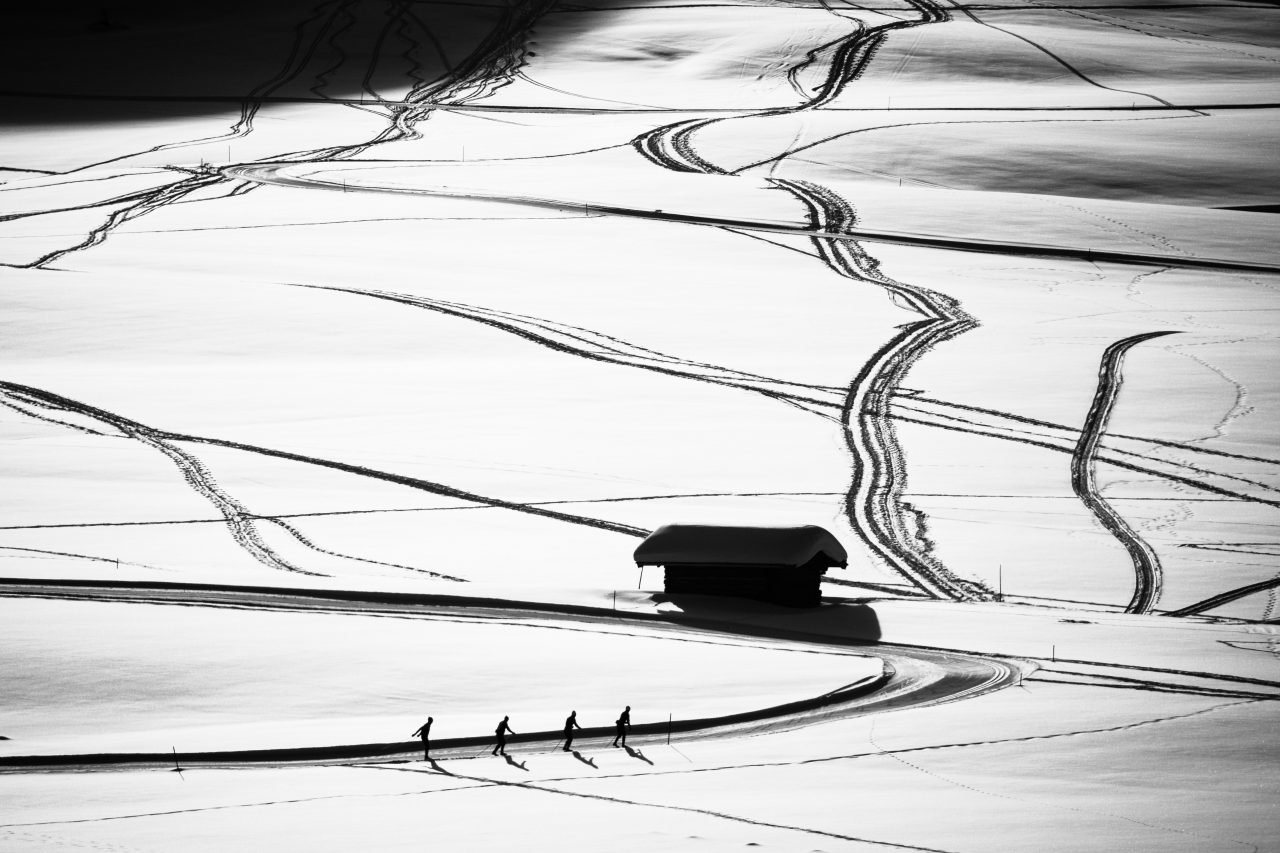
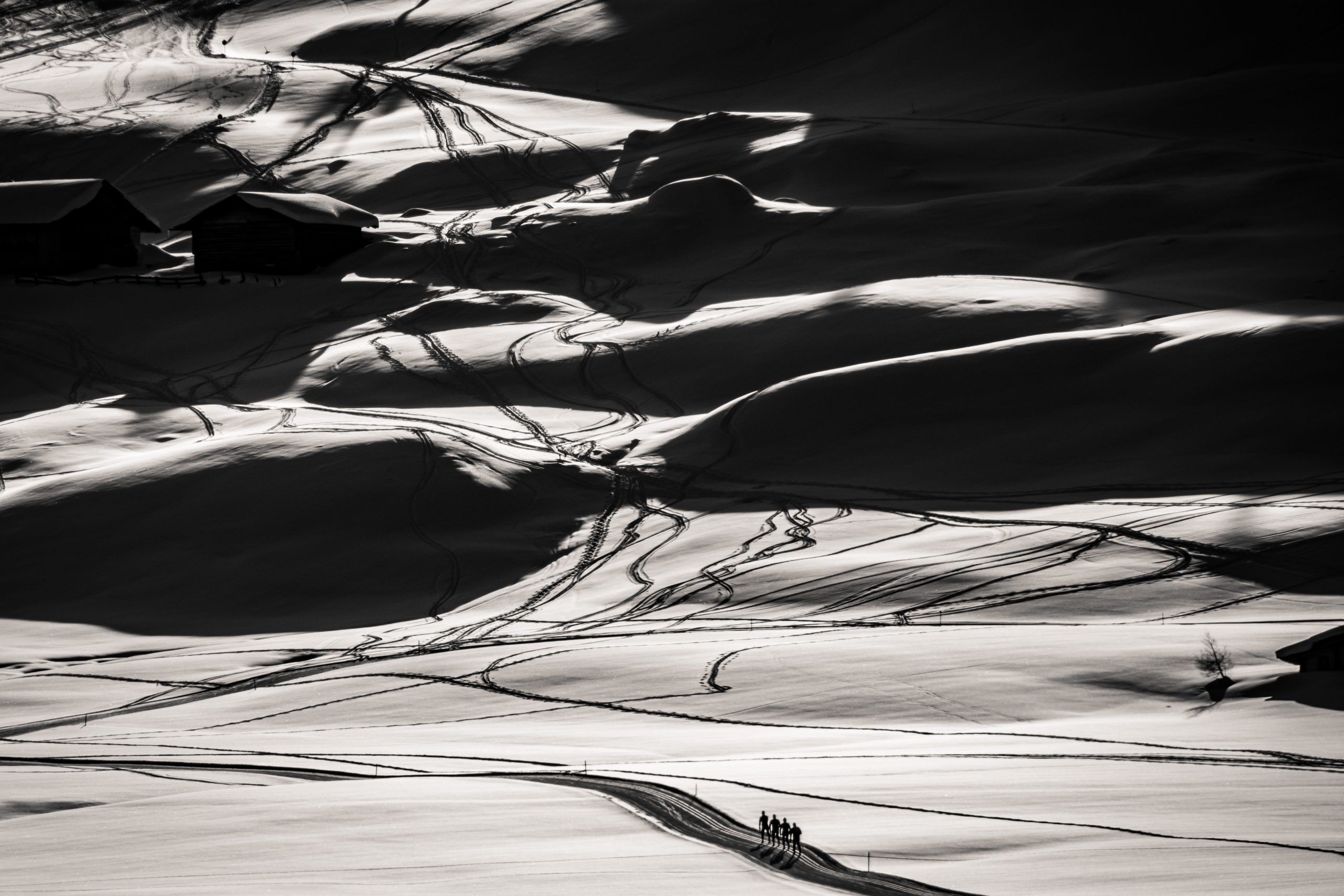
One beautiful aspect of snowscapes is their extreme light and dark contrasts. For this reason, snow photography can be beautiful presented in black and white. The crisp, bright nature of snow creates stark outlines or large shadows that add a dramatic feel.
Look for shadows created by the landscape, trails, or by skiers. (Photo: Julia Kern)
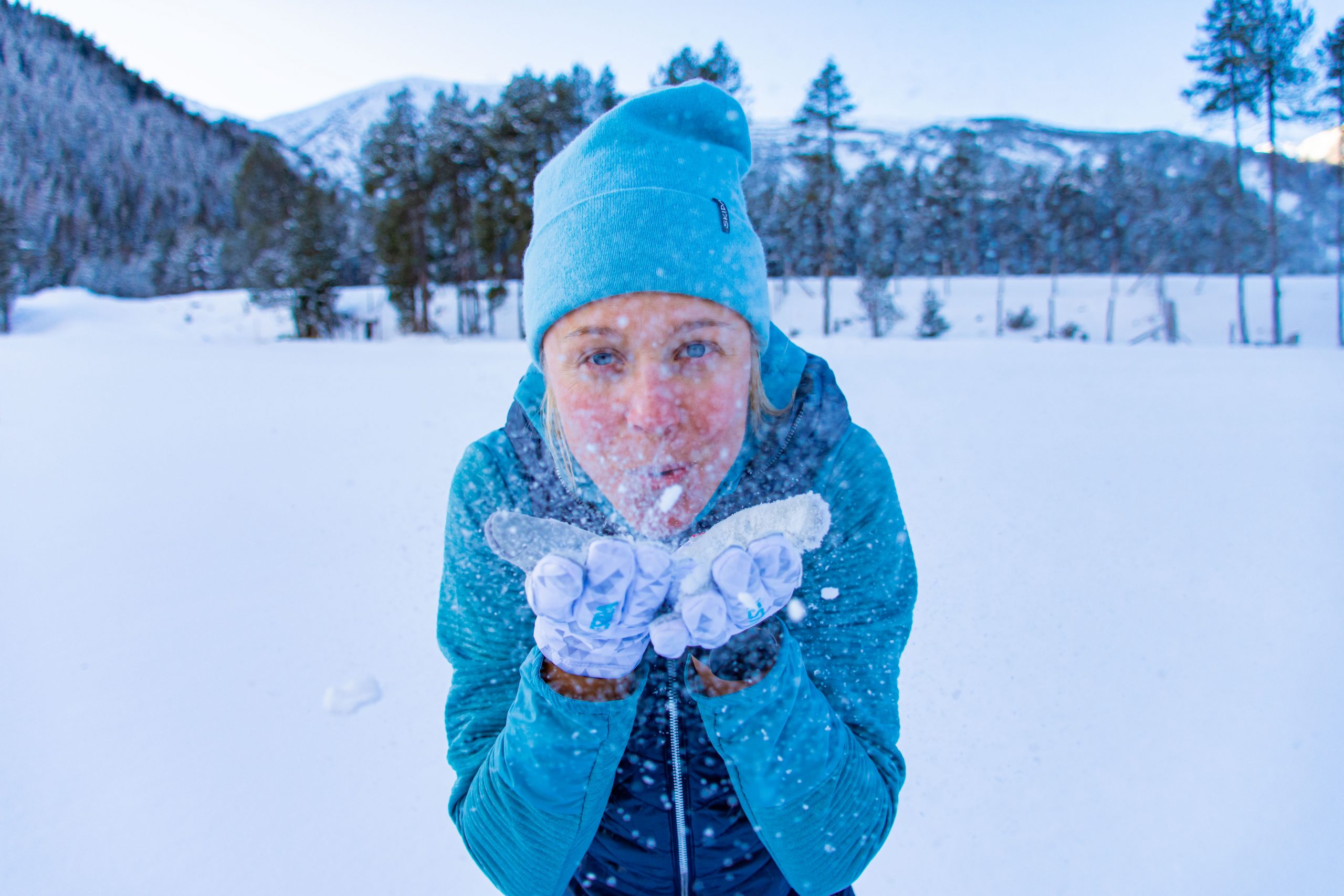
Play with the snow! Falling snow, spraying snow off of skis, or throwing snow can be a fun way to add movement or action to your photo.
Sadie Bjornsen playing with snow. (Photo: Julia Kern)
Born and raised in Vermont, Dunklee finds comfort in familiarity. During the offseason, she is based near Craftsbury and can often be found training with her Green Racing Project teammates or in Lake Placid, at the Olympic Training Center, with her cohort on the National Team.
She prefers the slower pace and quietness of Vermont’s Northeast Kingdom. As this is her last season of racing, Dunklee will retire after this World Cup season, she plans on settling for good, close to Craftsbury.
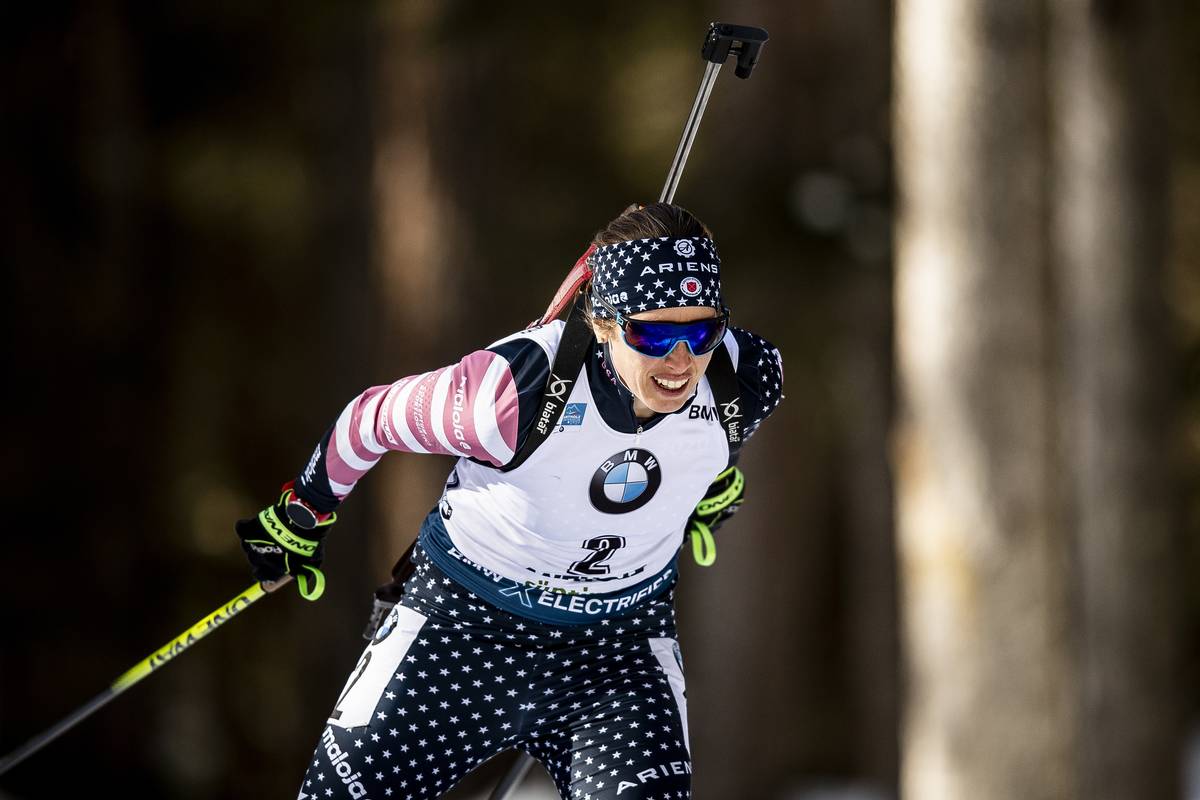
Susan Dunklee at the 2020 IBU World Championships in Antholz, Italy after winning silver in the 7.5 k sprint. (Photo: NordicFocus)
During her time on the World Cup, Dunklee said in this two-part interview, that although she had concerns about the culture at the International Biathlon Union and the racing scene, she simply preferred to expend her energy on racing, not pushing reforms. We do know that for North Americans racing World Cup, the emotional and physical tax of racing and training is compounded by living abroad for six months.
However, recently, Dunklee signed on as an Athlete Ambassador for the IBU. Dunklee will serve as an ambassador for gender equity, a cause she is passionate about. Rather than leave the details up to a press release, we connected with Dunklee to explore her new role, and what prompted her now to become more involved with bettering the IBU and biathlon. This is part I of the interview. Part II will be released separately.
Susan Dunklee, racing here at Rupholding, Germany. (Photo: NordicFocus)
***
FasterSkier: I wanted to dig a little deeper than the press release about the Athlete Ambassador initiative and your involvement, but also I’d like to learn about your perceptions of the changing nature of the sport.
So I’d like to get your ideas about what changes have occurred, and what changes remain when it comes to your ideal vision of the sport and the IBU. The IBU had a come to Jesus moment and they’ve made some positive changes — I’ve spoken to Clare Egan quite a bit about it. And Max Cobb off and on, but just generally, what are your impressions of the sport’s culture?
Susan Dunklee: Yeah I was gonna say, absolutely there was a turning point. And that was when our president of many years, Anders Besseberg, was arrested by the Austrian police and there was a raid on the headquarters a few years back. And that caused a whole cascade of changes, and changes to the leadership of the IBU,
They brought in some outside consultants to help the organization identify how to avoid problems of corruption in the future. And they set up the Biathlon Integrity Unit, which is totally separate from the rest of the IBU’s governance that traditionally, I thought, had a lot of authority, and authority over important matters of integrity and doping.
And I think that turning point was when that leadership group left, and they brought in this new way of doing things. Stakeholders took the initiative and rewrote the Constitution to create more integrity and greater transparency. That really set us on a course for a better direction.
In the past, I never really felt like my values and the IBU’s values lined up all that well. And now I really feel like there’s an organization behind my sport that shares a lot of the same values I do. There’s a lot of things that still need to be fixed, but I feel good about the direction we’re headed.
Susan Dunklee and her steady hand on the range: 2019 in Östersund, Sweden. (Photo: NordicFocus)
FS: I’m glad you mentioned that, because I do feel like as a parent, I feel we talk about values all the time with our kids, and you know, you have to take a stance sometimes, and there are costs to taking some stances. It could be losing friends. It could be alienating whomever, but if you feel like you’re doing the right thing and it doesn’t hurt other people, you know, physically, emotionally, then you need to do it.
Can you maybe talk a little bit about maybe what your values were or are and how they developed? And in answering that, maybe explain how they contrast with what you perceived as the values of the IBU? I’m qualifying that question within the context of perhaps when you were a younger athlete and you’re kind of looking around and putting your toe in the water and trying to understand what the culture of the sport was and just competing, rather than taking on a leadership role and having that sap some of your energy.
SD: I think for most of my career I wanted to compete and not really distract myself or invest energy in places that weren’t directly related to performance. That’s because it can be exhausting to speak up about some ideas and my values. I really value community and I value honesty. I value having a clean sport. I value making an environment where everybody feels welcome, supported, and valued.
There were periods early on in my career where I felt like we didn’t have that value system in place. It was really frustrating actually when we found out about the stuff that was happening in Sochi a year or two after the fact. With the doping issue on our minds, as athletes, we got together and we had never really organized before. We started to organize at that point, post-Sochi, with a mixed group of international athletes.
We discussed all the relevant athletes’ rights issues, and collectively we were like, ‘hey this is not okay what is going on.” We wanted to know how this happened, and how our international federation was going to deal with us, and the issues we raised.
It became very clear, very fast at most meetings, that the Federation wasn’t really interested in bringing things to light, it was trying to hide things and trying to evade questions. It was trying to not take responsibility for anything. And that was very concerning for me. I definitely started to lose a lot of faith in our Federation at that point. I think a lot of athletes did.
It was really cathartic to see, in the last couple of years, after the raid, the culture started to change pretty fast. And to go from a Federation that I had absolutely no confidence in, to one that wants to do the right thing — and obviously, there’s still work to be done — but I think that being on the right course is important.
FS: Do you have faith in the IBU? There was this seismic moment that everyone can look to in the police raid — that prompted a change. Whereas a lot of other international NGBs are still mired in the typical semi-opaque power and financial hierarchy that dictates policy. Do you think we are in a time now where the IBU can or may serve as a model and these other NGBs won’t need their own take-down before a change is made? I guess, in other words, a horrible event like a police raid or Sochi does not need to occur for change to come about?
SD: I guess it totally depends on the circumstances. Every circumstance is a little bit different. Sometimes you have to gather some momentum to make those acute moments happen and sometimes change happens in a key moment by some smaller gradual incremental moments. But I feel like those acute moments came about because people were starting to put the pressure on. The IBU athletes were starting to organize for the first time, and there were some great people within the organization, and I believe Max Cobb is one of them who were trying to change our values and draw attention to the problematic pieces.
I can’t speak for the change in every sense of the word, but I think it’s possible to come about on different paths. It is tough within an organization, I think, organizational culture can be really, really tough to work with sometimes and to change. It is a huge process. We’ve got a bunch of actors and these different norms. If you take gender equality, or gender equity which is my preferred term and you look at the norms of different countries that we’re working with here. It’s a very different landscape from country to country, say in the U.S, for example, than it might be in say in the Czech Republic, or in Italy,
With all these different cultures, you have to work with different sets of standards and differences in social acceptance. That’s a really interesting puzzle to put together.
FS: I know you are only speaking for yourself, but do you feel like the contingent from the U.S. is perhaps, on the political spectrum, perhaps more liberal than, say, your counterparts from Central Europe, or Eastern Europe, and even Scandinavia?
SD: I certainly cannot speak for every member of my team or my cohort. We do have some voices, I think Clare Egan being on the IBU Executive Board has really pushed them. First of all, she’s on the Athlete’s Committee and that group pushed to get her on the Executive Board for the first time. So that’s a huge progressive change.
So I have a teammate in that position who is certainly pushing for good changes and helping advance the athlete perspective within the international Federation. And I have a teammate, Kelsey Dickinson from the Green Racing Project who is also joining me on the Athlete Ambassador Program, and she too cares about these things. She’s been involved with the Women’s Ski Coaches Association since its inception. So we certainly have people who want to be activists within our team, more so than some other teams.
Part II will be published next week and further explores Dunklee’s motivations for becoming a voice for change, while pursuing the podiums on the World Cup and 2022 Olympics.
We often hear of the pipeline in Olympic sport. The path to the highest level of elite competition. The pipeline is not consistent in diameter: Wide-mouthed at its start, tapered to needle-wide at its terminus. There are many ways to identify talent within a pipeline. In the cross-country ski world, there are incremental benchmarks to progress to the next tier. Within U.S. Ski & Snowboard, for example, skiers in the pipeline begin in the club system and might progress from local, regional, Junior Nationals, Junior Worlds, to senior-level racing.
It’s a system with a relatively steady influx of skiers at the pipeline’s intake.
Kikkan Randall racing here in 2013 on the World Cup, advanced through the U.S. Ski Team’s pipeline. (Photo: Fisher/Nordic Focus)
One aspect of the product, the potential to advance in the pipeline, can, in many ways, sell itself. If you live in a mountain town or northern latitude city, odds are cross-country skiing is on the menu of outdoor activities for certain demographics. Two American women winning gold in 2018 is also a wonderful sales pitch to aspirants. This healthy lifestyle and medal-winning context afford stakeholders a modicum of breathing room when considering marketing approaches to athlete recruitment and the ability to maintain pre-existing participants. Although the problem of attrition in youth sports is real, and cross-country skiing is no exception, junior-level ski racing remains popular in traditional cross-country ski hotbeds.
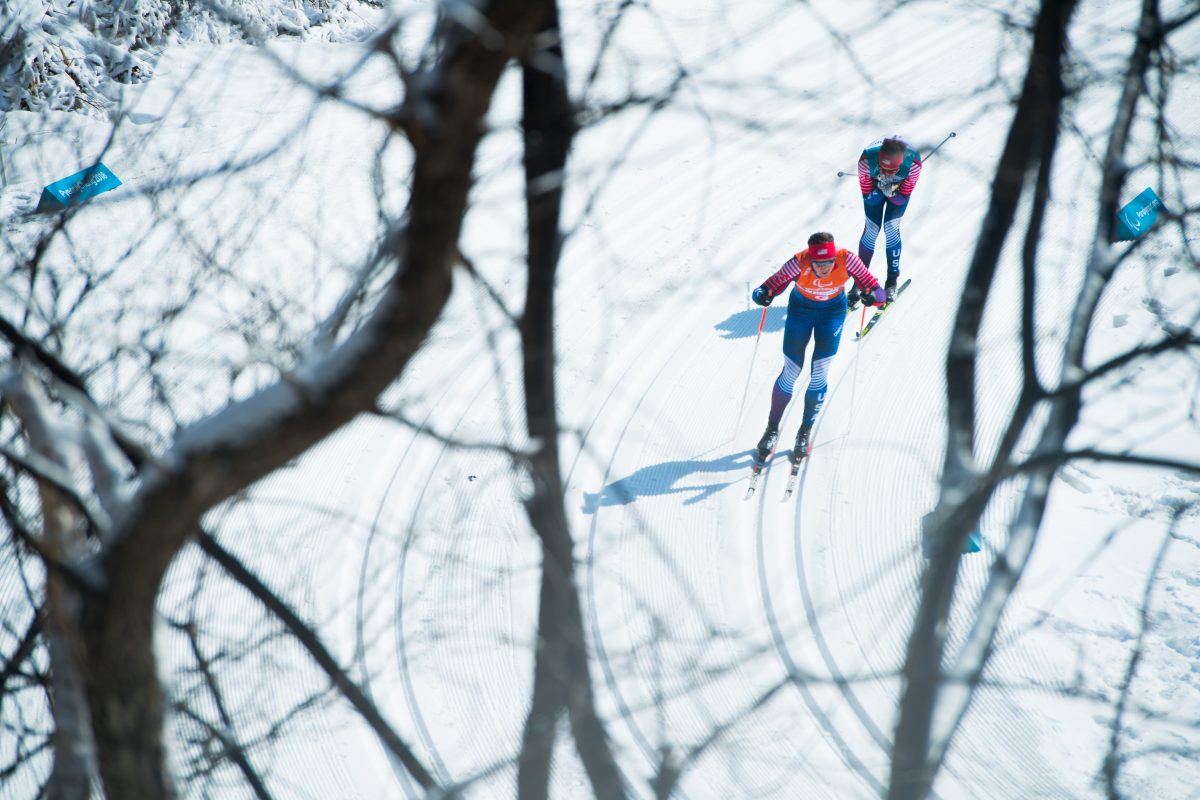
Sawyer Kesselheim guides his U.S. teammate Jake Adicoff, a visually impaired athlete, during the open relay at the 2018 Winter Paralympics in PyeongChang, South Korea. (Photo: U.S. Paralympics/Mark Reis)
The Para side of the sport, however, must take a more active approach when it comes to marketing. Drawing athletes into the Para Nordic disciplines requires a significant time investment with national-level coaches often meeting in small groups with raw beginners to introduce their respective disciplines.
A few weeks back, US Para Nordic hosted a Zoom call for visually impaired (VI) athletes and families interested in learning more about how to become involved.
Two US Para Nordic coaches were on the Zoom call, Kristina Trygstad-Saari, and BethAnn Chamberlain, along with several veteran athletes and a few newcomers. In terms of grassroots, this was the seeding process. A visually impaired participant logged in from Los Angeles, another potential visually impaired athlete, a teenager, logged in from Indiana. Neither had easy access to snow. Neither had skied before.
A basic Q & A ensued. There was nothing extravagant about the presentation. Lots of nuts and bolts. Let’s call it pithy. Yet, the level of engagement was high. The meeting, which could have trended towards perfunctory, was not. By the end of the call, maybe 45 minutes later, the hook was sunk.
My intent for listening in was to learn how US Para Nordic pitches their sport and attracts prospects to their respective pipeline, and then write up a brief story. I became sidetracked.
***
Fifty-two-year-old VI biathlete Michael Stone, who spoke during the Zoom call, was my hook setter. Stone resides in Boulder, Colorado. According to Stone, his first race of any kind was the Bolder Boulder — an iconic 10-kilometer road running race that snakes through Boulder’s neighborhoods and finishes in a packed Folsom Field on the University of Colorado campus.
“That was probably one of the most spectacular days of my life. And since then, over 21 years, I’ve done over 230 races,” said Stone.
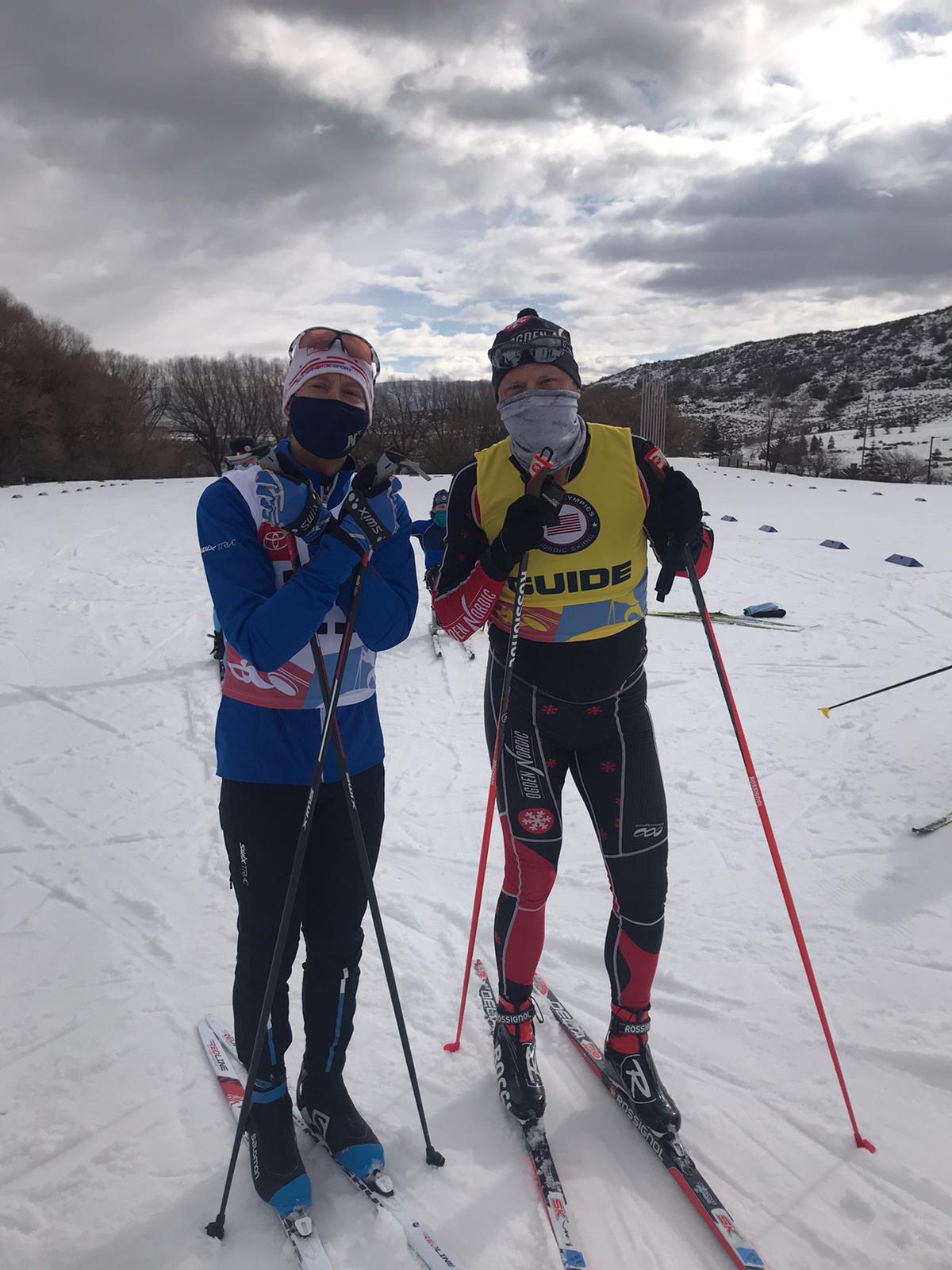
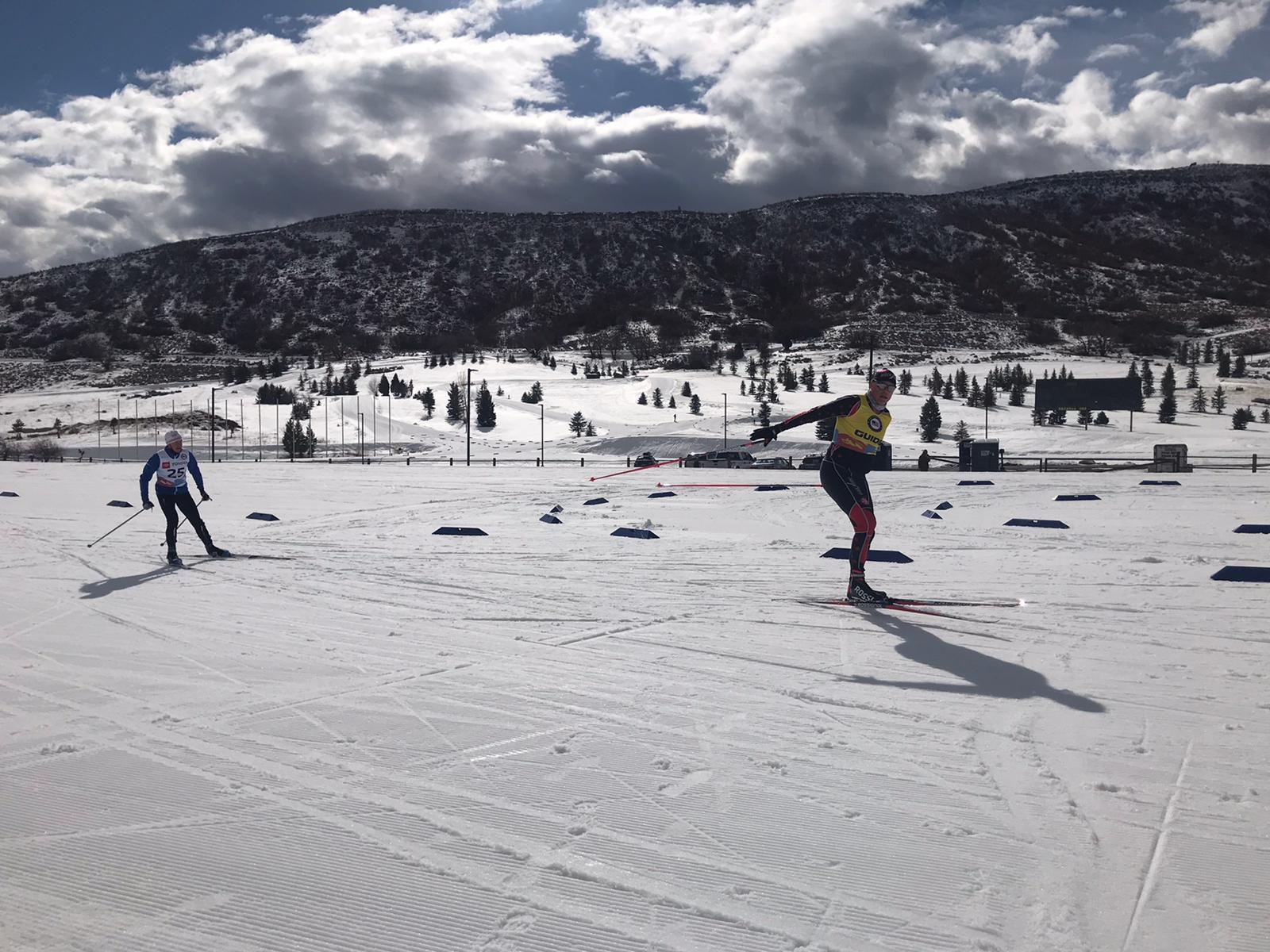
Colonel Don Hickman guiding Michael Stone at Soldier Hollow. (Courtesy photo)
In 2003, Stone completed his first Ironman. That race, in contrast to Stone’s first Bolder Boulder experience, was inauspicious. The race was in New Zealand, and at one point Stone inadvertently took a wrong turn. “I remember one of the course marshals yelled, ‘What are you blind?’ At that moment, I actually wondered if I was,” recalled Stone. “I mean, I remember feeling very, you know, dejected.”
There’s a backstory here worth telling. Post-New Zealand, Stone returned to his childhood home in Chicago to seek advice from his family physician.
The abridged version of Stone’s adolescence, which the doctor took notes on, goes something like this. A caring family that exposed Stone and his siblings to sports and the arts. There were eventual vacations to Aspen for downhill skiing which Stone began to dread. “Everybody else would be exhilarated and I’d be miserable,” said Stone. “We’d be skiing in the trees and I’d fall, and not even know why. I was screwed, even in good light. And it should have been a good indicator that something wasn’t adding up.”
There were attempts at ball sports where Stone often could not see the ball thrown his way. There were laughs, and the “he sucks” microaggressions.
“At some point, you just stay away from sports because it’s intimidating, it just eats away at your soul,” said Stone. “For a young person struggling, with their vision of something undiagnosed like dyslexia, every aspect of life is going to be very hard.”
Stone withdrew. He folded himself into music where he learned to play the guitar and other instruments. “That’s where I hid from the world,” he said.
But if you thrive on moving your body, as Stone does, the draw of sports can be irresistible. Stone eventually found martial arts, and then rock climbing – which initially brought him out to Boulder. According to Stone, hearing his climbing partners constantly tell him where to place his hands and feet pushed him out, saying it became too exhausting emotionally. He purchased a bike and he began to run.
Then there was that goose-bump Bolder Boulder where Stone came running into that packed stadium. “It was just such a spectacular feeling that I forgot all about anything related to my vision or whatever,” said Stone. “It was simply that I ran six miles and that was huge.” Then came the Ironmans and the demeaning “What are you blind?” comment from the course marshall.
***
Back in Chicago, Stone visited his physician and then a specialist who sent him to another specialist. The MD-PhD diagnosed Stone with a genetic degenerative disease called retinitis pigmentosa. The disease affects the retina’s photoreceptors.
“The doctor was just beside himself,” said Stone. “He asked, ‘How have you gotten through life like this?’ It was like he knew everything, and he quickly told me what my life was like because obviously, it was a familiar story to him with sports and with school and family life, everything, he just sort of knew it. He had been diagnosing these things for probably 40 years. He was shocked that I had gone through life undiagnosed.”
Stone said he had most likely been legally blind since he was five. His youngest brother was also diagnosed with the disease. Eventually, they traced the gene back in the family’s genealogical tree.
The diagnosis helped Stone define his life trajectory. But as a successful hotel and spa developer, Stone has not defined himself solely as an endurance athlete. He is, like many role models among us, capable of compensating, adapting, thriving, and finding community. Stone understands his predicament but moves forward. He knows he’ll occasionally miss his toothbrush with the toothpaste, have issues making a simple cup of coffee, or have difficulty finding a public bathroom. Stone navigates a physical and emotional culture set up for the able-bodied. He’s still out there riding, running, swimming, skiing, and running a business — all at a high level.
During some background reading about life as a visually impaired person, I came across this excellent story in the New York Times: Is There a Right Way to Act Blind by Andrew Leland. In short, Leland, who himself is blind, keenly explores how some people experience blindness, but also how sighted actors portray blind characters.
This passage from Leland’s piece caught my attention: “I recently spent a weekend with a friend who has been blind since childhood. I watched him pat and fumble for objects, but he did so in a way that struck me as utterly assured, and entirely unembarrassed — his fingers scanned the table just as your eyes might: quickly, casually, without apology. I aspire to this kind of blindness. The only way to get there, I suspect, is through rehearsal — practicing until my blind presence becomes convincing, if not to the world then at least to myself.”
Leland’s words, for me, resonated. It was a reminder that we travel the world on a gradient. We are constantly aspiring to be “utterly assured, and entirely unembarrassed.” I’m still trying to let that all sink in and imagine what that might be like for someone experiencing a disability and hailing a cab, or simply bathing. Let alone performing an endurance sport like biathlon at a high level.
***
Stone discovered cross-country skiing over a decade ago and ultimately found an interest in biathlon. Para biathletes use an audio rifle with no live rounds. As the biathlete aims closer to the target, remember, this is the visually impaired class, the noise projected from the rifle becomes higher pitched. The VI athlete pulls the trigger when they sense via the rifle’s audio signal the shot is on target. Like able-bodied biathlon, keeping range time to a minimum is part of the challenge.
Michael Stone (left) with his guide, Colonel Don Hickman (right), at Soldier Hollow. (Photo: BethAnn Chamberlain)
Stone admits, although he is an accomplished triathlete, that he desires more independence. He rides on a tandem bike, and in some situations remains tethered to a sighted guide when running. Stone equates freedom with cross-country skiing. The closest he feels to being able-bodied is when he is skiing and then shooting on the biathlon range, explained Stone.
“Cross-country skiing is one of the most spectacular sensations because it’s the closest thing I get to freedom and independence out of any sport I do,” said Stone. “I’m not tethered cross-country skiing, as I would be for running or swimming like we do in triathlon, I’m not on the back of a tandem. We’re on our own skis, on our own snow, and we have our own mistakes to make. We do get lefts and we get rights and a few whoops as verbal cues from a sighted guide, just to keep straight. And once we drop down in the shooting range, as we always shoot prone, it is pure freedom.”
In the Para Nordic biathlon world, VI athletes are relatively scarce. That makes sense considering the logistics of transport, arranging a sighted guide if needed, and having access to a rifle and shooting range, let alone snow. Stone, for his part, has become an unassuming ambassador who wants to give back to a community of coaches and peers who have refeinforced his self-assurance. He is, as I came to realize, the perfect salesperson for any athlete hoping to get motivated and seize any opportunity.
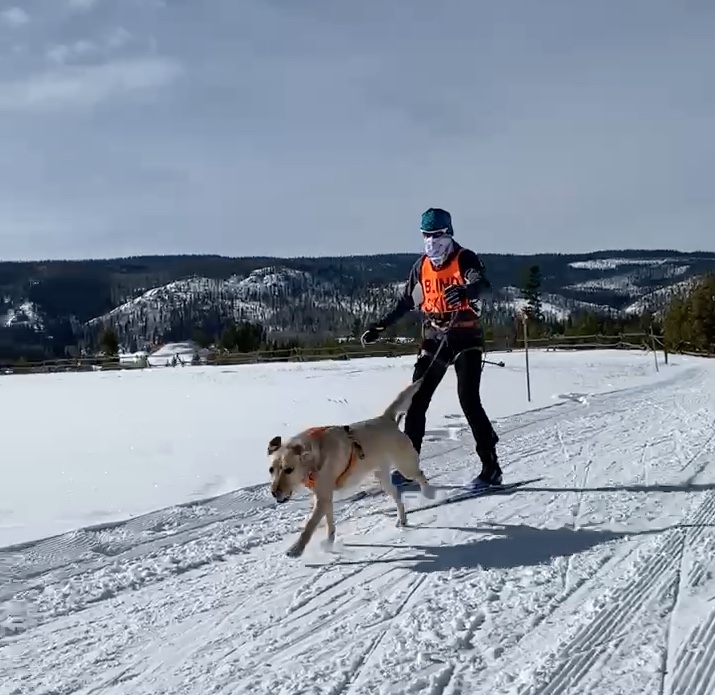
Michael Stone skiing with his guide dog Geo. (Courtesy photo)
“I’m not a young guy, and so when there are younger people, say in their teens and 20s and 30s, I don’t want them to miss out on this opportunity to experience biathlon — not to mention, just to be able to experience the love we get from the coaches,” said Stone. “I really don’t know why it’s there, they’re like higher beings to me. Nobody should face the world alone. And the fact that there are people that are willing and capable to at least try to walk in your shoes and create an opportunity for you when there are really few opportunities in this world that will be generated like this. I live by only a couple really important codes and one of them is you owe your best to the people who love you most.”
My impression from Stone is that he could do most anything he wanted with his life. It’s a good thing he found cross-country skiing and biathlon. We’re better for it.
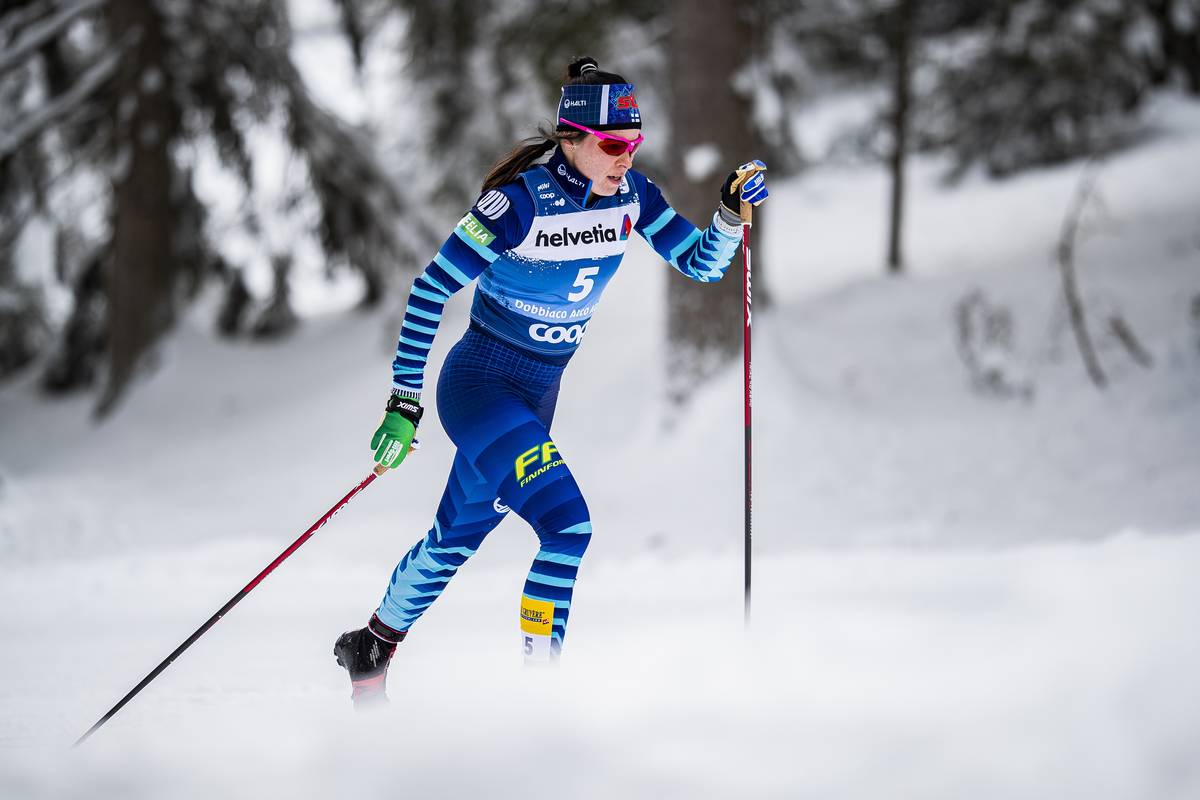
Finland’s Krista Pärmäkoski racing during the 2021 Tour de Ski. (Photo: NordicFocus)
This is Part 2 of a series delving into how biomechanics and movement patterns affect skiing technique. If you haven’t already, start with the introduction and Part 1, which introduces the concept of a neutral spine posture.
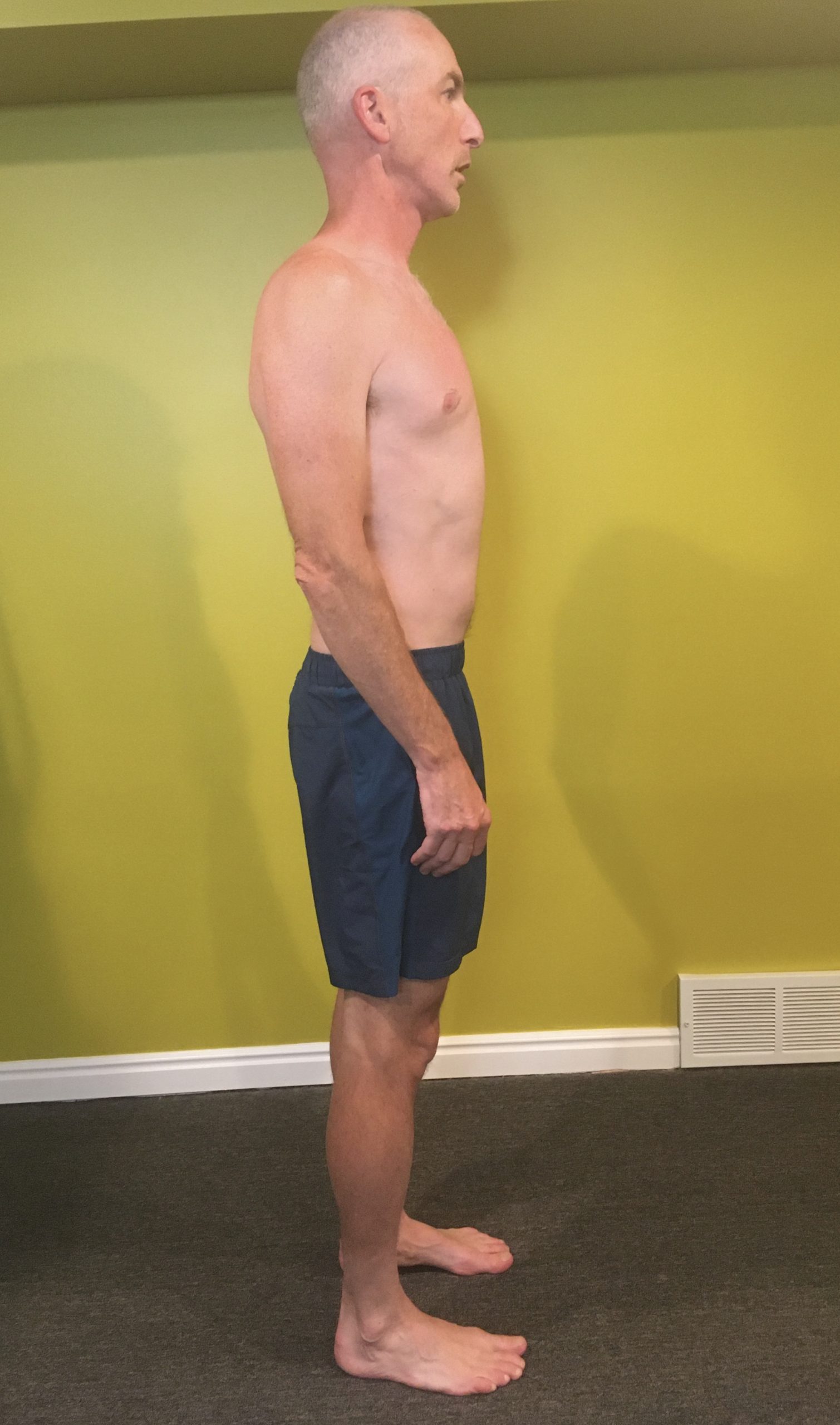
There are many ways to conceptualize biomechanics, but they all need a starting place. If we think about ski technique, where do we want to start? On the glide leg? With the poles? At the hips? For this series, I have opted to start with the core and work outward. I could have started with the foot and moved upward; however, I see posture as an integral part of any movement. If the posture is compromised to begin with, then that deficit permeates the activity.
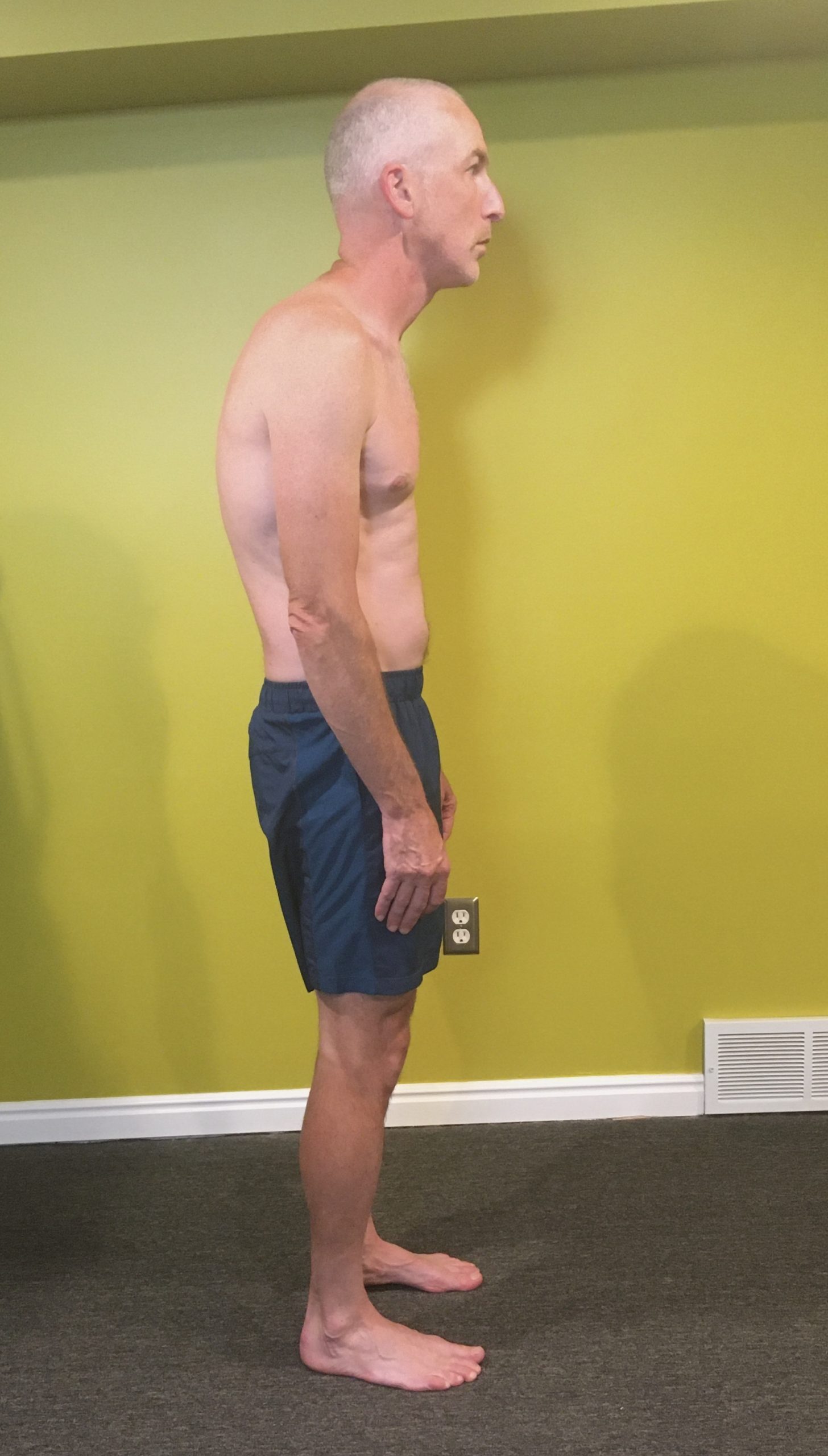
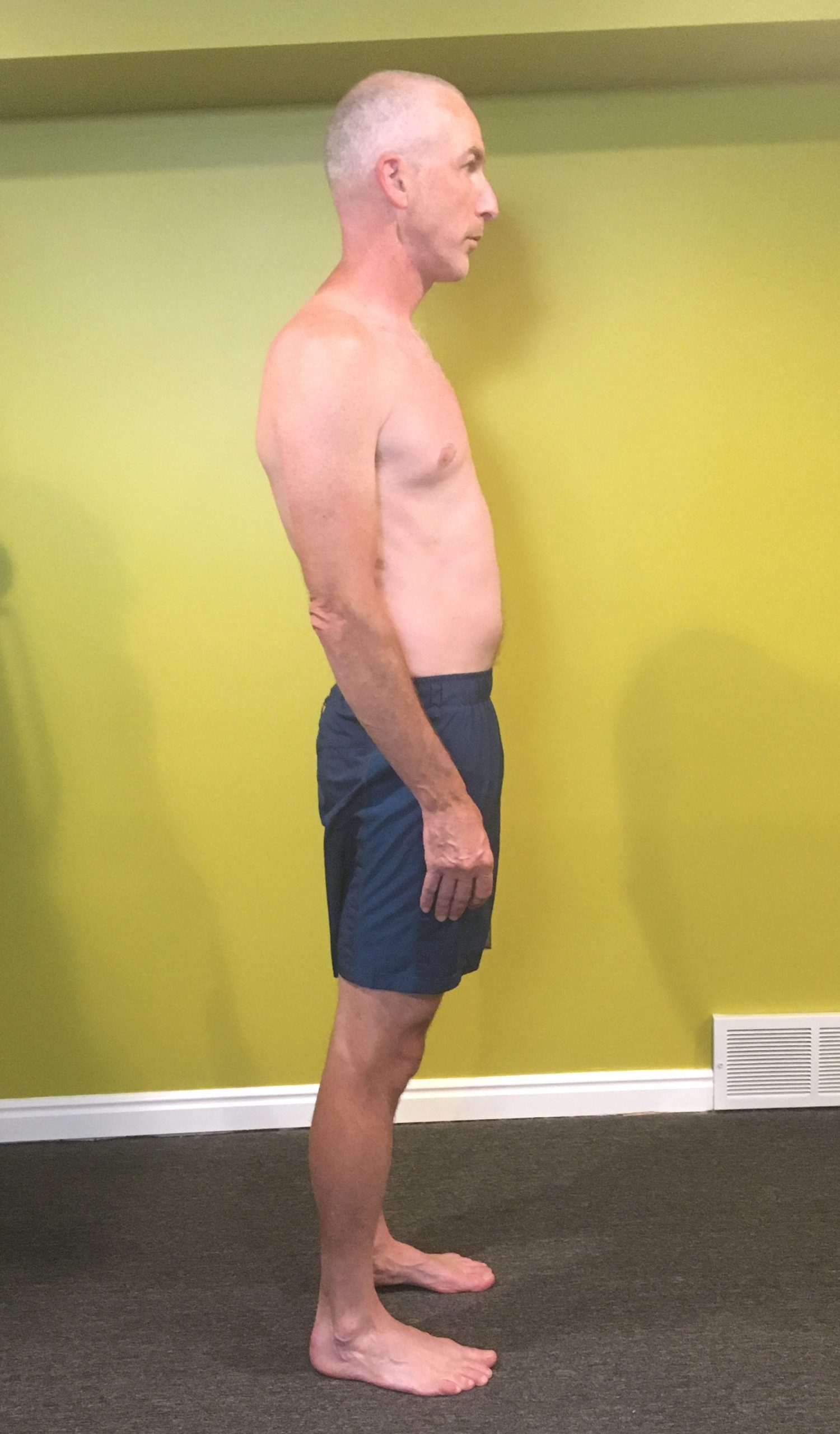
As was emphasized in Part 1, posture exists on a bandwidth of acceptability–everyone is a little different. But postures that fall outside of the bandwidth, especially when occurring within a dynamic activity like cross-country skiing, compounds load on the body. In the best case scenario, this increased load is inefficient and bleeds power. Worst case scenario, the additional load can exceed the body’s tolerance and lead to musculoskeletal injury.
And yet the spine does move. Perhaps one of the best examples is the thoracic rotation that occurs with running. The shoulders do not stay pointed straight ahead. As the right leg and left arm swing forward (with the left foot on the ground) the shoulders are going to rotate to the right. This should be a product of rotation in the thoracic spine. If the thoracic spine has limited mobility, the motion will occur elsewhere, most often in the lumbar spine which has less motion available and will likely be less tolerant of this load. A case in point may be this recent study which found that the addition of thoracic mobility exercises decreased the incidence of low back pain in cross country skiers.
If you’re not already, sit with a neutral spine posture. Cross your arms with hands-on opposite shoulders. Rotate your body to the left and to the right. Make a mental note of how these movements felt. Now let your back flex forward in a slumping position. Try the same rotation to the left and right. I suspect they felt different. When the thoracic spine is flexed, its ability to rotate is decreased.
Use it or lose it. Our bodies are use it or lose it machines. If we do not stretch a muscle to its full length, it will tend to shorten. If we do not move a joint to its end range of motion, it will tend to stiffen. As we get older, this becomes even more pronounced. If you are of Masters age, you should probably think of stretching and mobility exercises as more about maintaining what you have versus expecting to gain flexibility. The older we get, the less pliable our bodies become. But there’s a lot to be said for maintenance.
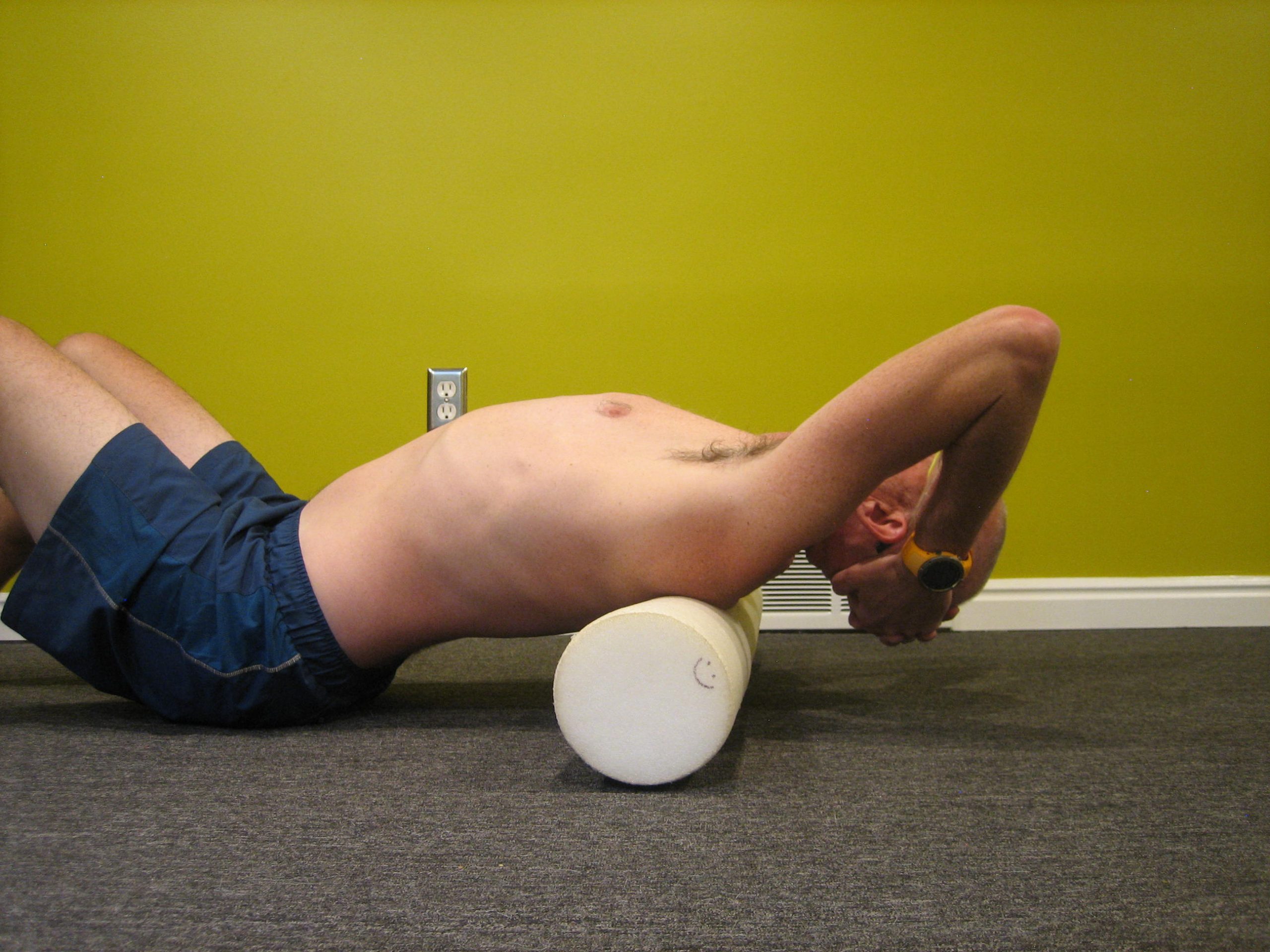
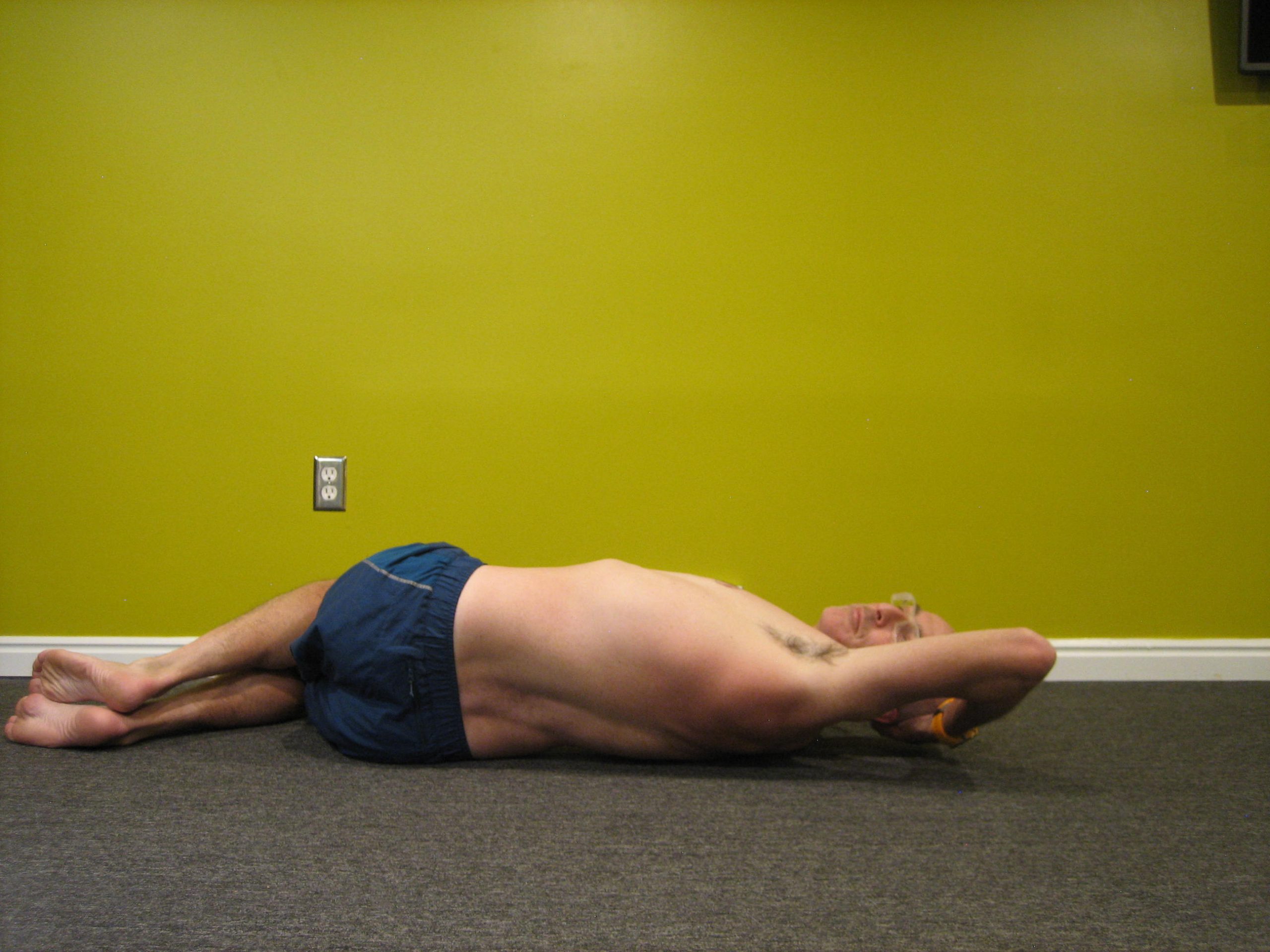
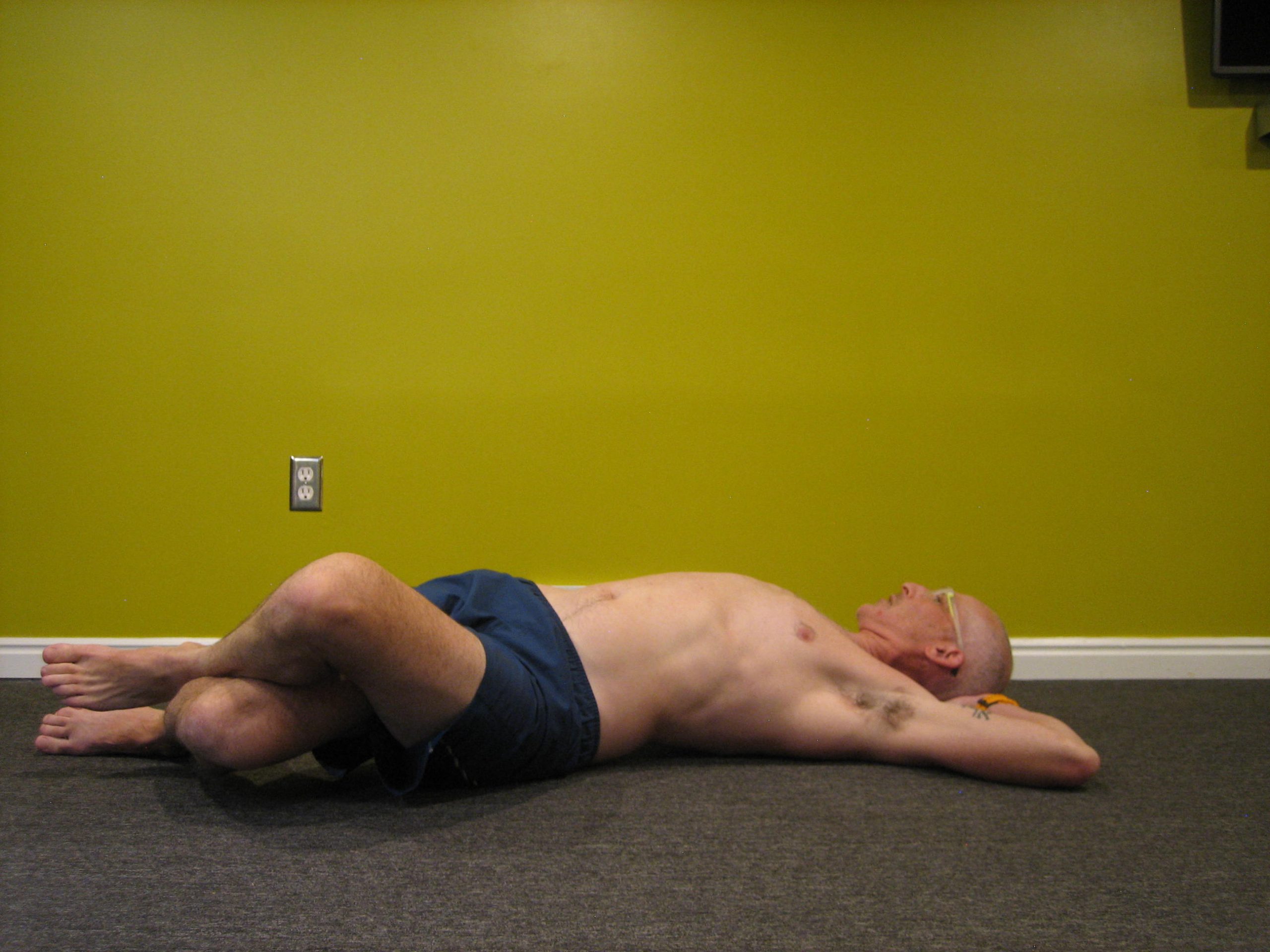
Here are my three favorite thoracic mobility exercises – (aim to do these daily–1 or 2 minutes on the foam roll, 10x to each side with the rotation).
Foam roll thoracic extension: lie on your back with a foam roll perpendicular to your spine. Support your head with your hands. Drop your shoulders towards the floor. Pause here for a few seconds then return to your starting/neutral position. Scoot on the floor so the foam roll moves up your spine. Repeat the extension motion dropping the shoulders towards the floor. Continue this process until you have worked the length of your thoracic spine. Avoid going into the lumbar spine as the fulcrum of the foam roll tends to be too sharp. On the upper end, once the foam roll is under the shoulder blades, it’ll be tough to get much motion. This exercise can also be done with an exercise ball.
Book openings: Begin lying on your side with your knees bent and hands behind your head. Rotate your trunk like you are trying to get the top shoulder down to the floor. Pause here for a second or two and return to the starting position. This should be done on both sides.
Lower Trunk Rotation: Lie on your back with both knees bent. Cross one leg over the other. Let the legs drop towards the floor to the side of the top leg. Pause here for a few seconds and return to the starting position. Do this on both sides.
Stability could be defined as the opposite of mobility. If we are striving to maintain available mobility of the thoracic spine, perhaps it makes sense that we are striving to maintain stability at the lumbar spine. Anatomically, the body is well equipped to stabilize the lumbar spine. We have multiple layers of abdominal and back muscles that create a stable platform for the arms and legs. While the lumbar spine is lacking in rotary motion, it has quite a large range of available motion for bending forward, backward, and to the sides. Depending on the activity, this available motion needs to be either locked out like keeping a rigid trunk with skating V1 or well-controlled while bending over to put on your socks.
If we are working under the assumption that neutral spine is the ideal, then it makes sense that our core strengthening or stability work should be done in neutral spine. Traditional sit-ups that involve considerable lumbar flexion are great for building those six-pack abs that look good on Instagram, but the exercise itself only contributes to a greater tendency to over-flex the spine during activity. “Flatten your back into the floor” is a frequent cue with core exercises. While this cue, and the associated posterior pelvic tilt, is effective at recruiting abdominal muscles, it also has the effect of training the body to rely on a flexed position for muscle activation.
Lie down on the floor with your knees bent and feet on the floor. Your lumbar spine will now be in its neutral position. If you slide a hand under your low back, your hand will likely have a bit of wiggle room between the floor and your back. This is the natural lordotic curve, and we want to maintain this during exercise (and activity). It’s easy to feel the increase in pressure on your hand when you tighten your abs and flatten your back. Conversely, if you tilt your pelvis in the other direction, arching your low back, you will have much more wiggle room. This excessive lordosis tends to be less stable since the abdominal muscles are in a lengthened, disadvantaged position for dynamic stability with much of the burden placed on the static stability of the joints.
If you had a hard time controlling movement or differentiating between the flat, neutral, and arched positions, the following exercises can be helpful to train your awareness and coordination.
***
Lumbar spine proprioception
Pelvic tilts: Lie on your back with both knees bent. Start by trying to tilt your pelvis towards you. Think of trying to flatten your low back into the floor or of shortening the distance between your ribcage and pelvis. Now tilt the pelvis in the other direction like arching your back away from the floor. These motions should be isolated at the pelvis and lumbar spine–your legs shouldn’t feel like they are doing any work.
Cat/Cow: This involves the same pelvic tilt motions but without the feedback of the floor. Again, the idea is to isolate the motion at the lumbar spine not by arching the upper back.
A quick Google search for “core exercise videos” brings up over 66 million results. Clearly, we are not lacking in the number of possible exercises. But what about quality? In the treatment of chronic low back pain, there is no best exercise. From the perspectives of performance enhancement and injury prevention, while there is an argument for simply being strong, there is perhaps a better argument for incorporating exercises that help the body meet the specific demands of the activity or sport. If good ski technique demands maintenance of a relatively neutral spine, then exercises should be performed in a neutral spine. If the sport includes load through the upper extremities, like poling with skiing or weighting the handlebars with cycling, then core exercises that include weight-bearing through the arms should be included. Skate skiing places a large rotational force through the core; thus we ought to have exercises that train the body to counter-rotation. Conversely, running and classic diagonal stride involves thoracic rotation so it makes sense to train the body to perform lumbar stability and thoracic rotation simultaneously.
Here are my Top 3, best-bang-for-the-buck-exercises in each category. Remember, the goal is to maintain neutral spine. If you are unable to control the motion, then the exercise represents too much resistance/load and needs to be regressed. These are quality-intensive exercises. A reasonable program would include 2 or 3 sets of 5 to 10 repetitions (depending on fatigue) of each exercise. Doing the routine twice a week should be adequate.
***
Stability exercises: these will challenge your ability to maintain a neutral lumbar spine
Femur arc progression: Begin by lying on your back with knees and hips bent at 90°. Your back will be in its neutral position, which you are striving to maintain (there will be a little wiggle room between your low back and the floor–the amount will vary by the individual but the goal is the same). The basic femur arc is performed by lowering one foot to the floor while keeping the knee bent at 90°. The motion is isolated at the hip. There should be no motion in the low back–it will have a tendency to want to arch away from the floor as the leg goes down. Return to the starting position and repeat on the other side. Continue alternating legs. Progressions include straightening the knee as the leg lowers, lowering both legs together with bent knees, lowering both legs together with straight knees.
Mountain Climbers: These can be done with frisbees on carpet, socks on hardwood or tile, or with a TRX. The goal is to move alternating legs back and forth with no motion in the low back. There will be a tendency to flex as you pull a leg underneath you. This should be controlled by the core but also recognize that if you are trying to pull the leg through too far, you will run out of hip range of motion and be forced to flex the spine.
Roll Out: Start on hands and knees with your hands on frisbees or a laminated placemat on the carpet, a towel on hardwood, TRX, or an old-school ab roller. The roll/slide-out motion will be a combination of shoulders and hips, but the spine stays in its neutral position.
***
Anti-rotation exercises — as the title would imply, the resistance will try to twist your spine and your goal is to fight it
Plank with Shoulder Tap: From a straight arm plank with shoulders, hips, and knees in line, tap a hand to the opposite shoulder. There will be a bit of a weight shift that needs to happen to maintain stability, but this should be in the form of a side-to-side movement of the pelvis, not a rotation. This can be made easier by doing from your knees. Make it harder by substituting the shoulder tap with a dumbbell row.
Paloff Press: The Paloff Press is a great lesson in the physics of levers. Stand using both hands to hold a resistance band or handle from the cable column weight machine. Push your hands straight out in front of you. As your arms straighten, the length of the lever increases and the resistance will exert more rotational force. Fight the twist. For more of a challenge, other than just increasing the resistance, stand with your feet together or in a lunge (with the band coming from the opposite side of the front leg).
Lunge with unilateral shoulder extension: Go into a static lunge with a resistance band in the opposite hand of the lead leg. Keeping the elbow straight, pull on the band until your hand is just past your hip. This can also be done with a cable column weight machine.
***
Combination lumbar stability with thoracic rotation: simply put, the lumbar spine stays still while the thoracic spine rotates
Seated Unilateral Row: This is a twist (sorry, bad pun) on a standard one-arm row. Sit on an exercise ball or chair facing the resistance band’s anchor. As you pull on the band, bend your elbow so your hand aims for the side of your ribcage, and rotate your chest and shoulders towards the band. Your butt should stay firmly planted and not rotate.
Lunge Rotation with Band: Stand with the resistance band coming from one side. Go into a lunge with the opposite foot forward (band from the right = left foot forward). Keep your hips pointed forward while your upper body rotates against the resistance.
Seated Rotation (aka Russian Twist): This exercise gets a bad reputation because it’s very easy to do incorrectly, potentially placing a lot of load on the lumbar spine. It is often done in a V-sit position (like the photo but with the feet off of the floor), which is very difficult to maintain without collapsing into lumbar flexion. Add the potential to rotate through the lumbar spine and the combined motions create high loads. But we’re going to keep the lumbar spine neutral and isolate the rotation to the thoracic spine. The key points are attaining and maintaining a neutral spine while sitting with your knees bent and feet on the floor. Think about the rotation coming from the shoulders. Your belly button should stay pointed straight ahead. You can start without weight and progress to a medicine ball, dumbbell, or resistance band coming from the side.
Notably absent in this list are exercises that target the glutes. As the primary stabilizers of the hip joint, the gluteal muscles should not be ignored in any “core” routine. However, for the sake of organizing this series, the glutes will be addressed in Part 3 on single-limb stability. If you want a head start, this Faster Skier article includes some excellent exercises.
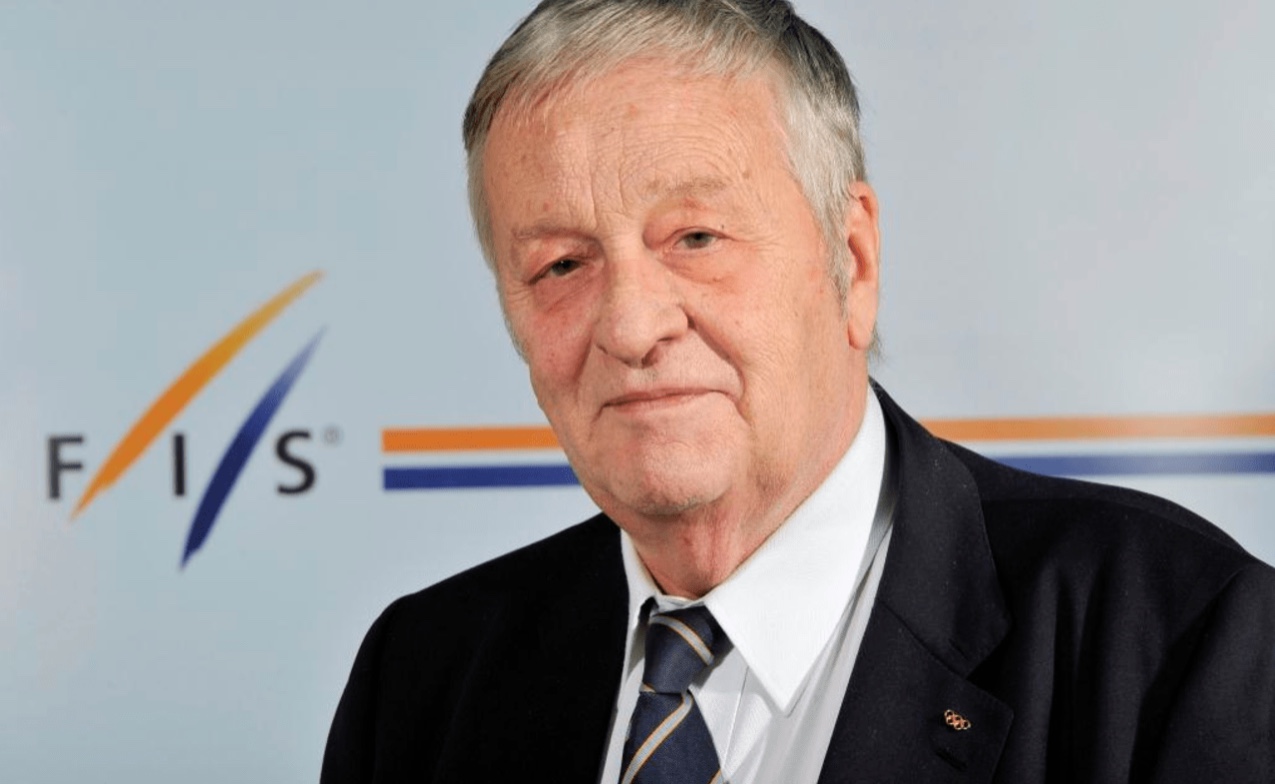
Gian Franco Kasper, President of FIS for the past 23 years stepped down earlier this month. Under his leadership, FIS grew to be the preeminent winter Olympic sport federation. Yet despite its growth, Kasper resisted most efforts to reform and modernize FIS, and he left the organization much as he found it.
In 1975, FIS President Marc Holder needed a hand at FIS and brought in the then 29-year-old Kasper—who up to that point had worked as a reporter and representative of Swiss tourism—to serve as the FIS Secretary General. Holder would become his mentor and when he retired from the presidency in 1998 after 47 years at the helm, Kasper began his tenure as president in what was an uncontested transfer of power.
Gian Franco Kasper stepped down as the President of the International Ski Federation last month after 23 years in the position. (Photo: Fis-Ski.com)
Kasper was already a creature of FIS, he spoke five languages and was suited to a winter life, claiming to be uncomfortable in temperatures above 54 degrees Fahrenheit.
“The guy is super smart and very dedicated to FIS” said Dexter Paine, former U.S. Ski & Snowboard chairman and current FIS Vice President and councilor. “He was dedicated 24 hours a day, 365 days a year to the sport for 40 years. There’s no one I know who has the kind of encyclopedic knowledge around the sport that he did. If you wanted to know who won the cross country world championships in 1993, he could tell you—it was extraordinary.”
Kasper became most known to the public for making politically incorrect comments and chain-smoking. The two habits often went hand in hand as reporters could count on unfettered access to Kasper while he smoked somewhere quiet. He is said to have devised his own elaborate—and illegal—method of smoking undetected in airplane bathrooms.
His sarcastic and unfiltered speaking style did him no favors on the written page. Paine said, “You were never quite sure what was going to come out of his mouth, he was always brutally honest and at times politically incorrect. The press only picked up certain things, but he wasn’t a guy who was different privately than he was publicly…did he say many things that you thought, ‘I can’t believe he said that?’ the answer is absolutely.”
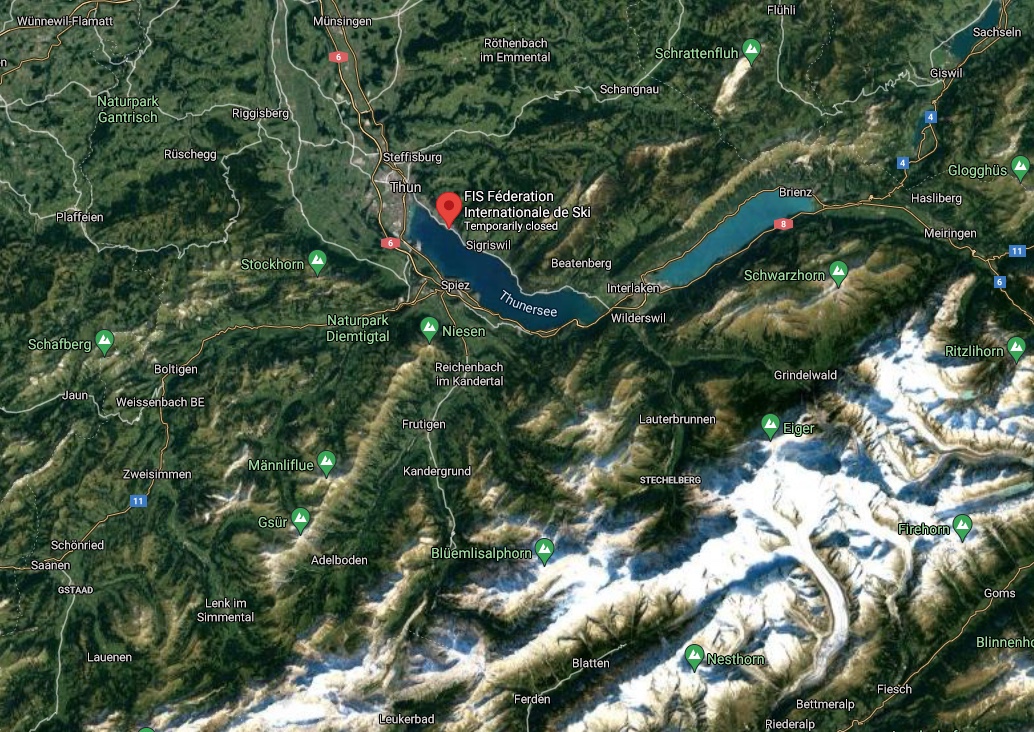
In February 2019, the Swiss paper Tages-Anzeiger visited Kasper in his FIS office overlooking Lake Thun in the charming Swiss city of Oberhofen, and described the scene: “Downstairs at the reception the smoke was already in the nose, upstairs in the study the boss smoked one Marlboro red after the other during the conversation, until only his contours could be seen.”
The red pin identifies FIS HQ near the shores of Lake Thun and sporting an Alpen backdrop. (Screenshot: Google Maps)
René Hauri, a journalist for Tages-Anzeiger who held the interview with Kasper told FasterSkier in an email, “Gian Franco Kasper is an extremely interesting and entertaining conversation partner. It never gets boring with him.”
In that 2019 interview, Kasper held forth, sardonically doubting climate change and mocking environmental concerns over building ski resorts. When asked if he was concerned about hosting events in countries with poor human rights records, he responded with stark honesty: “The fact is that it is easier for us in dictatorships. From a business point of view, I say: I only want to go into dictatorships, I don’t want to argue with environmentalists.”
The interview caused an uproar when it was picked up and relayed beyond the readership of Tages-Anzeiger, which seemed to catch Kasper off guard, further reinforcing the idea that he had become out of touch with the wider world.
“The statements he made in the interview,” wrote Hauri, “…did not come as a surprise to me, he had already expressed himself in our newspaper in a similar form, especially with regard to climate change.” Indeed, Kasper had long been vocally doubtful of climate change, a position that he best summed up to Ski Racing in 2004 when he said, “Basically, I just don’t want to believe in global warming, that’s clear.”
If Kasper’s comments had only created a modest stir in the past, his interview with Tages-Anzeiger proved to be a bombshell. Hauri explained what set this interview apart: “In 2019 it caused an international uproar because Greta Thunberg was just becoming famous and the World Ski Championships in Åre was coming up. So the timing was one of the deciding factors. Kasper’s problem is that he says a lot of things ironically, flippantly, that he talks like that – and this then seems very hard on paper.”
POW cut to the chase with this terse Tweet regarding Kasper’s 2019 comments about climate chamge. (Photo: Twitter @ProtectWinters screenshot.
After the 2019 interview, Kasper faced a new level of scrutiny and pressure to reform FIS. He confided that spring that he didn’t want to be a ‘lame duck’ as he navigated his final term in office. In November 2019 he reached a conclusion and declared he would stand down from the presidency two years into his term at the 2020 Congress. When the pandemic canceled the 2020 Congress, he stayed on for a final year.
Still, Kasper did manage to expand the role of FIS sports at the Olympics. Kikkan Randall wrote FasterSkier in an email that Kasper had, “helped the organization retain good awareness and respect in the snow sports world. He was well connected within the greater International Federation world and the IOC.” As a member of the International Olympic Committee, Kasper deftly used his contacts and position to expand FIS by adding 23 medal events, largely by embracing snowboarding and freestyle events, with the two disciplines adding 16 medal events between them. Under his leadership FIS has become the preeminent winter sports federation. The FIS portfolio of sports includes alpine, cross-country, ski jumping, nordic combined, freestyle & freeski, and snowboard.
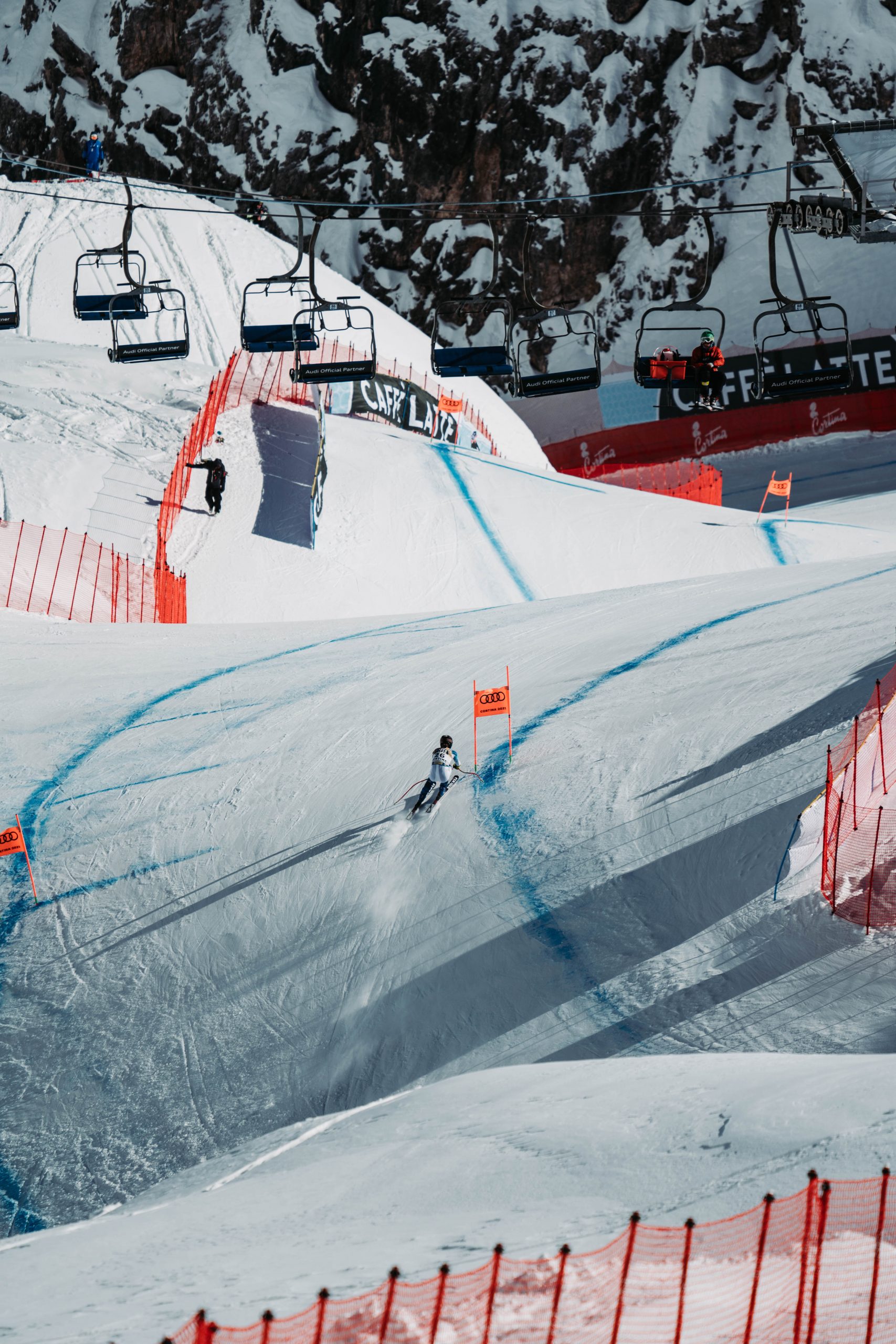
Under Kasper’s tenure, alpine skiing experienced a growth phase. Here, a U.S. Ski Team alpine skier races at the Cortina, Italy 2021 FIS World Championships. (Photo Credit: Ryan Mooney – U.S. Ski Team)
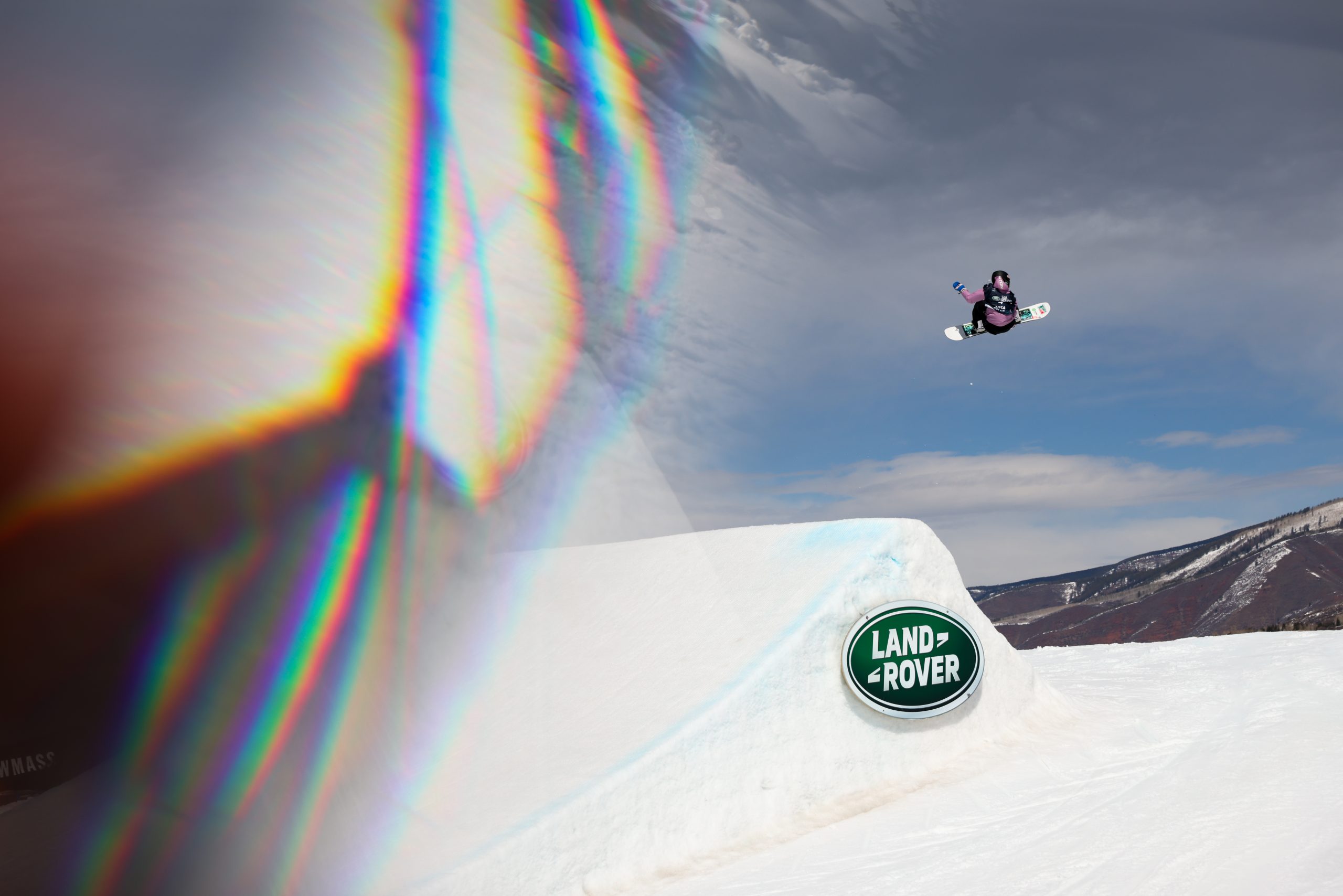
A U.S. Ski Team athlete finding air at the Snowboard Slopestyle Finals of the 2021 Land Rover U.S. Grand Prix – Aspen, CO. (Photo: @ussnowboardteam)
While the sports under the FIS umbrella grew rapidly, the organization’s structure remained largely unchanged under Kasper. The Neue Zürcher Zeitung described FIS as a “sedate club,” and suggested that there were inherent political reasons for the status quo, namely, that it concentrated power in the hands of Kasper. “We are a small association, the board consists of people who are not too involved,” Kasper said, adding, “That is also pleasant for me.” Kasper told the paper he could not remember ever failing to get a proposal passed.
Kasper held sway in part through a council that met just twice a year and remained largely, though not wholly, aloof and disinterested. Leadership on many levels ultimately fell to Kasper, so much so that when World Cup race organizers ran into problems, they went directly to Kasper for assistance. “I’m a Vice President of FIS,” said Paine, “that and five dollars buys you a cup of coffee at Starbucks—there was one guy who ran the organization. He led the organization in a very typical sort of old fashion IF [International Federation] way,” said Paine, “It was very hierarchical, but we weren’t the only IF run that way.”
Kasper was cautious about turning ski events into a commercial spectacle. In 2001, he said, “There is a certain balancing act between putting on a show and what I would almost call prostitution.” The idea, and phrase, would become a recurring theme for Kasper. Wary of marketing, FIS mostly offloaded the task to a separate entity in 2009— FIS Marketing AG—a concoction between FIS and two competing marketing firms. In total, it employs 8 people. Kasper shrugged off criticism of its laconic strategy, saying, “We are still a sports association and not a commercial company.”
“Kasper is an old-school functionary who primarily wanted to preserve the old,” Hauri wrote. “He has rejected numerous reforms. The FIS could certainly have grown significantly more, but Kasper always resisted too much marketing.”
Structurally, the organization did little to develop under Kasper, even as the sport grew rapidly. Dexter Paine introduced a package of reform proposals that included more frequent board meetings, term limits, increased transparency and a restructured role for the president. “We introduced the reforms in 2014, 2016, 2018 and 2020,” said Paine, “so at multiple congresses.” Unfortunately, the reforms were never adopted under Kasper.
Instead, Kasper favored a system that allowed initiatives to work their way slowly through committees and Kasper deftly maneuvered to ensure reforms he resisted were put to rest. The Neue Zürcher Zeitung reported that Kasper directed the FIS board to send the reforms that Paine introduced to the good governance working group, headed by Janez Kocijančič, (who passed away in 2o2o) and who was then a Vice President of FIS and a counselor since 1981. Under Kocijančič’s review, Kasper could be assured that the reforms would fester and eventually be forgotten.
In the later years of Kaspers’ incumbency, the ignored reform measures piled up and the backlog of inaction frustrated many ski nations. “IFs tend toward inertia and not toward action,” said Paine. “I would describe my experience on the council as being frustrating. It was an organization that really didn’t want to change but now is our opportunity for change and we’re really very much looking forward to being part of building a more modern FIS under Johan Eliasch’s leadership.”
Though Kasper never faced a contested election, he did have a political foe in Peter Schröcksnadel—the President of the Austrian Ski Federation. Frustrated with FIS, in 2009 Schröcksnadel openly rebelled with the formation of a breakaway entity—the Continental Association—which was joined by Urs Lehmann, the president of Swiss Ski, and runner up in the 2021 FIS election. In the end, the breakaway organization never materialized as a viable alternative to FIS. Through some method, Kasper found a way to tame his rival. “In the beginning he [Schröcksnadel] was against everything, on principle, the votes ended 16:1,” Kasper recounted in 2018. “But I was able to control him.”
As Hauri put it to FasterSkier, “Kasper understood perfectly how to keep calm in the FIS. He could also hold out until a storm or criticism had passed.”
Part of this method of control was through the FIS voting system. Each full member ski association receives between one and three votes depending on its size as a ski nation. 73 associations have voting rights, of which a good number have only rudimentary ski programs. Associations such as Mexico, South Africa, and Hong Kong each receive a vote. In that way, voting power within FIS remains in the hands of small ski associations, many of them from places without much snow. The 18 large ski nations comprise a 43 percent share of the votes, insufficient to maintain a base of power on their own. “He must have watched the small nations well,” wrote Hauri, “which helped him for the support. In the whole 23 years, there has never been an opponent.”
Kasper managed to keep FIS free from corruption scandals that have plagued other sport federations. “I have to say he’s an incredibly moral and ethical guy,” said Paine. “FIS never had many of the issues that biathlon had where ultimately the transition occurred because they threw out the President, so that really speaks to Gian Franco being a really honest, straightforward guy.”
A 2019 report by Play the Game on sports governance found that FIS received an overall score of 74%. FIS scored highest on transparency and societal responsibility, and lowest on democratic processes, and the report placed the organization amongst the best run federations. By comparison, scandal-plagued biathlon ranked low on the list, with an overall score of 39%. (Since that time, the International Biathlon Union has implemented massive reforms including the formation of the independent Biathlon Integrity Unit.)
—
At the most recent FIS Congress, delegates elected Johan Eliasch, the billionaire CEO of ski company HEAD. He won 54% of the vote.
“We were big fans and big supporters of Johan and are very happy that he was elected the next President,” said Paine. Eliasch’s campaign was also supported by others from the U.S., notably Secretary John Kerry, the current Climate Envoy for the Biden administration.
Kikkan Randall wrote FasterSkier that she thought Kasper’s “perspective was a little conservative and ‘old school’ at times, and while we are grateful for his leadership over the years, it was time for FIS to get some fresh new thinking.”
With Eliasch as FIS President, there is now a receptive audience for the reforms that Paine has called for over the past eight years. “We’ve been very outspoken,” said Paine, “that we need a lot more transparency around financials and executive compensation. We are advocates for using the significant cash reserves for increasing prize money for athletes, and to put more money into athlete safety. It’s just very important that we become more athlete centric with a focus on increasing prize money, safety, and youth development.”
Paine continued, “While Gian Franco certainly had his shortcomings and said many things that we did not endorse, it’s important to thank him for working at FIS for 40 plus years; he really gave his heart and soul to the organization.”
Due to a medical event, Kasper was not able to attend his final FIS congress.
“We didn’t get a chance to say thank you at the Congress, and whether you agree with his views or don’t agree with him, I think it’s really important that we all say thanks for what he has done for the sport. Not everything we wanted got done, but during that time the number of ski and snowboard events at the Olympics has increased significantly. Today we represent 52% of the winter Olympic medals, the dominant winter sports federation, and he had a big part in creating that success. Despite our frustration, I hope what’s not lost is our thanks to a guy who gave his life to the sport and FIS.”
In 2019 Kasper was asked how his career will be remembered, and he reminisced in his typically blunt fashion, “I may have managed more than anything else, but one thing is certain: I kept this pig heap together.”
Posture matters. Norway’s Therese Johaug racing last season in Lahti, Finland. (Photo: NordicFocus)
Building a Better Skier is a multi-part series born from the inquisitive mind of a physical therapist and late-blooming Nordic skier. (You can find the intro to the series here.) The objective is to explore how biomechanics and movement patterns affect skiing technique, and more importantly how you can apply these concepts to improve your skiing. To cover this topic thoroughly would likely require a hefty book, so apologies in advance if these articles lack depth or specificity. Please feel free to email the author with any questions: ned.dowling@hsc.utah.edu.
Posture is loosely defined as our body’s position or the way we hold ourselves. We tend to think of posture only in a static form like sitting or standing. But posture can be observed with dynamic activities like running, cycling, or skiing. Truly, we can talk about posture with anything the human body encounters.
The primary influencers of posture are mobility and awareness. (It could be argued that strength plays a role in posture, and that is true for many sedentary people, but the readers of FasterSkier are far from sedentary.)
The mobility or range of motion that is readily available through joints and soft tissue (muscle, tendon, ligament, and fascia) will affect our posture simply because we will always default to moving through the path of least resistance. If a joint is stiff, we will find a way to move around it. If a muscle is tight, it changes the position and efficiency of its associated joint. But also, if the ligaments around a joint have become loose like with recurrent ankle sprains, the muscles and associated tendons will have to work harder to maintain stability. Like with skiing technique, and posture in general, mobility occurs along a bandwidth. There is no single optimal measure, but there is a range that if exceeded on either end will lead to inefficiency. The old saying that everything in the body is connected is not an understatement, but it is a bit of an oversimplification. That everything in the body has the potential to affect everything else in the body might be more appropriate.
The awareness of our body’s position in space is called proprioception. This is a broad concept that simply relates to the incoming signals the brain receives from the body so it knows how to move the body—how far, how fast, how powerfully—across multiple joints, muscles, and tendons. The brain receives this information via nerve receptors in our muscles, tendons, joints, and arguably even skin and fascia. It is what allows you to close your eyes and touch your nose without poking out your eye. Also without looking, you know that as you read this your left elbow is not fully straight and could tell us the angle of the joint with pretty good accuracy.
So if we put the two concepts of mobility and awareness together, the former will dictate what shapes the body is capable of making and the latter will determine how accurately those shapes are made. If you are trying to make a hypothetical circle but a joint is restricted, you’ve only made an oval. If your mobility is good, but you are lacking in awareness, then you’ll be making squares or pentagons because you can’t smooth out the motion required for a circle.
While I’ve just made the case that posture is a product of the whole body, it is commonly thought of as related to the spine. As the foundation of our movements and literally the center of the body, the spine is an ideal place to start.
The human spine itself consists of 24 vertebrae with a skull on top and ending with the sacrum and coccyx. That stack of bones is held together by countless ligaments. Between each vertebra is a disc that acts as a spacer, a shock absorber, and as a pivot point for motion. The vertebrae articulate with each other through small sliding joints located bilaterally. The orientation of these joints, which changes with the region of the spine, will determine the available motion and optimal movement pattern. Running through the center of the spine is the very precious spinal cord. Simplistically, the spinal cord is a superhighway with on and off-ramps between every vertebra. It carries information both to and from the brain. Movement and dynamic stability are provided by numerous muscles, which we will get to in more detail shortly.
Anatomy of the spine or spinal curves infographic illustration. (Photo: www.freepik.com)
Basic anatomy having been covered, perhaps the more important implication for posture is the architecture of the spine. Contrary to the instructions to “sit up straight,” the spine, when looked at from the side, is not straight. (It’s not always straight from the front either, but the functional implications of scoliosis are beyond the scope of this article.) The spine, in fact, curves in a bit of an S from the head down in what is referred to as neutral spine. The cervical portion, comprising the 1st seven vertebrae, makes a concave curve. The next twelve vertebrae in the thoracic region have a convex curve. The last five in the lumbar are again concave.
The appropriate amount of curve in each region is also on a bandwidth; however, the curve in one region can have profound effects on another such that they cannot be looked at in isolation. Stop reading for a moment and “sit up straight.” Now tilt your head and look up at the ceiling. Make a note of what that felt like or what you saw on the ceiling. Next slump down like a texting teenager. Look up at the ceiling again. Any difference? You probably noticed that it was much harder to look up from the slumpy position. This is because the increased flexion or convex curve of the thoracic spine changes the starting point for the extension (looking up) motion that occurs in the cervical spine. Think about how this might affect your neck when sitting on a bike. You can do the same experiment with your arms. Sit up tall and raise your arms overhead. Then repeat in a slumped position. Much easier when done in a neutral spine.
A functional application here is how easily (and quickly) you can get your poles up to begin the next stride.
So what exactly does “good posture” or a neutral spine look like? Remember that a neutral spine occurs along a bandwidth of variability. Just as we all share the same basic anatomy, we all come in different shapes and sizes. However, the ears, shoulders, hips, knees, and ankles should generally line up while standing. Sitting is the same with a straight line connecting ears, shoulders, and hips. Again, there should be an inward curve at the low back and an outward curve through the mid to upper back. The neck will also tend to have an inward curve.
In clinical practice, the majority of postural deviations appearing outside of bandwidth tend to fall into two categories: excessive thoracic kyphosis (to much flexion or outward curve in the upper back) or too much lumbar lordosis (excessive extension or inward curve at the low back). It is also worth noting that in clinical practice, the research would tell us that there is no evidence of “poor” posture causing musculoskeletal pain and is merely correlated with pain—not everyone who slumps all day has neck pain; not everyone with “sway back” has back pain.
But posture that falls outside of the bandwidth creates an increased load on the body. The majority of nontraumatic musculoskeletal injuries arise as a result of an imbalance between load that is placed on the body and the body’s ability to tolerate load. So from a clinical perspective, improving posture is unlikely to be the Holy Grail, but it may be part of the solution, especially when a change in posture creates a change in pain levels.
Thoracic kyphosis tends to be an issue of mobility and/or awareness, at least in static postures. With dynamic movements, the complexity of the task may outweigh either the neuromuscular coordination or simply the requisite strength to maintain a neutral spine. Both of these scenarios will be discussed further in the next article.
Thoracic kyphosis
Excessive lumbar lordosis that is observed in standing, but decreases in sitting, tends to be much more complex. A simple explanation may be that the knees are hyperextending while standing. This has a simple solution: Stop hyperextending your knees! But this is way easier said than done.
Lumbar lordosis
This is a pattern that has developed over years and is a tough habit to break. A much more complex pattern is one of relatively tight hip flexors along with relatively weak glutes and hamstrings. This effectively tilts the pelvis forward thereby increasing the curve in the lumbar spine. Again, this scenario might not be an issue with static posture but will be exacerbated by activities requiring hip extension such as running and skiing. This will also be covered further in the next section.
Sitting is the new smoking. If you spend long hours sitting in front of a computer, STOP! Not your job, but the prolonged sitting. Height adjustable desks have become much less expensive and allow you to move frequently between sitting and standing. My typical advice is to change positions every 20-30 minutes. Standing is likely better, but put in one position too long and we’ll still get lazy with posture. If you don’t have this option, getting up and moving every hour can help.
With both sitting and standing at the computer, keep your elbows at your sides and bent 90 degrees or a little less. When sitting, keep your pelvis vertical and all the way back in the chair. You should be on your sit bones. If you roll back onto your tailbone, it’s all over. The pelvis needs to remain vertical (or horizontal from front to back) in order to maintain a neutral spine. A lumbar support, or even a folded towel, placed in the small of the back will make it easier to maintain this position.
Maintenance of neutral spine with dynamic activities is no different, just harder. Again, posture falling outside of bandwidth equates to increased load which equates to inefficiency. Cycling is the easiest, at least conceptually, to transfer the ideals of sitting posture. It just requires tilting the pelvis forward on the saddle. “Bellybutton to the top tube.” Bike fit and hip mobility will both have a significant impact on how comfortably this can be accomplished.
Neutral spine
Running, swimming, and classic skiing get more complex due to the inherent rotation involved; however, a neutral spine as observed from the side remains ideal. A full discussion of form and technique for these sports, excepting Nordic skiing, is well outside the scope of these articles. It should also be noted that the human spine is fully capable of motion in all planes. It should not be inferred that the spine should be forever fixed in neutral.
Stay tuned for the next part of this series which will dig deeper into spine mobility, stability, and proprioception.
I used to think cross-country skiing was a niche sport. Any self-proclaimed Nordic skier can relate to telling someone you’re a “skier” and having them automatically assume you mean alpine skiing. And if you bother to explain what kind of skier you actually are, there’s a good chance they will still have no idea what you’re talking about. Now combine Nordic skiing with the similarly-niche (though better known in Europe) sport of orienteering and you have a very particular sport — ski orienteering.
An athlete navigates tricky conditions in Kääriku Estonia for the 2021 Ski Orienteering World Championships (Photo: WSOC 2021 Facebook)
Orienteering is something that has always interested me. I like the added intrigue to a running race of having to find specific points along the way. It helps that I consider myself competent with maps and directions. However, I knew very little about the actualities of orienteering until moving to Europe and being introduced to the orienteering world. For readers who have not heard of orienteering, races do not have a marked route or set distance. Instead races involve athletes navigating with a compass and detailed maps of an area to find waypoints in the landscape and complete a course. I should note, the sum total of my orienteering experience had been using hand-drawn maps and cryptic clues to find points around my hometown during fall dryland team practice.
It turns out that’s not how the pros do it.
Ski orienteering involves the same elements of traditional foot orienteering but is completed on nordic skis. An official orienteering map is quite detailed and in addition to marking the course with the control points that must be visited, it also provides detailed information about the terrain such as hills, ground surface, and notable features such as boulders, logs, or cliffs.
An old orienteering map of Kääriku Estonia from the 2006 European Orienteering Championships, map does not display the control points.
The race course is not revealed to competitors until they start, meaning they can’t plan their route ahead of time. These events place a premium on one’s ability to navigate. The definition of ski orienteering says, “Skiing and navigational skills shall be tested in such a way that navigational skill is the decisive element. In ski orienteering the course shall be completed predominantly on skis. Parts may be completed on foot, in which case the competitor must carry appropriately-sized skis, ski poles and ski boots.”
2021 World Championship Pursuit winner, Audun Heimdal (NOR) consults his map on the go. (Photo: WSOC 2021 Facebook)
Ski orienteering is both mentally and physically challenging, requiring mathematical and spatial ability and short-term memory while executing the physical demands of a cross-country ski race. Compared to a traditional cross-country competition, ski orienteering takes place on technically challenging, narrow, soft tracks. Athletes are required to read a map and make route choices while maintaining ski speed.
Reading on the move (Photo: WSOC 2021 Facebook)
As in other Nordic ski competitions, ski orienteering races can be interval start, mass start, or pursuit start format. Instead of distance, the events are categorized by time given that competitors will take different routes to complete. For example, Long distance events should last between 85-95 minutes whereas the Middle distance event should last between 40-45 minutes. The courses are designed to require a range of different orienteering techniques and require concentration throughout the race, calling for detailed map reading and frequent decision making. As the athletes find each control point, marked by a distinct flag, they use an electronic punching system to monitor their progress through the course.
A Finnish athlete passes a control point, scanning his GPS on the move. (Photo: WSOC 2021 Facebook)
The sport of orienteering originated during the late 19th century in Sweden and has a long history in Scandinavia. What started as military training in land navigation grew into a competitive sport for military officers and then civilians. The first competition open to the public was held in Norway in 1897.
The ski orienteering World Cup began in 1989 with the premier event taking place in Austria. In 2012, the first stage of the World Cup season was held in Lake Tahoe, California, despite few American competitors in the sport. While most of the events for this past winter were cancelled due to COVID, World Championships for ski orienteering were held in Estonia and had participants from 17 countries. Looking at the World Ranking list it seems that, as in cross-country skiing, the Russians and the Scandinavians are dominant. On the men’s side, the top three ranking athletes are all Russian, followed by three Norwegians and a Swede. On the women’s side, Daisy Kudre of Estonia leads the rankings, followed by Swedes and Russians.
Tight corners and low snow make for challenging conditions in Estonia (Photo: WSOC 2021 Facebook)
The 2021/22 ski orienteering season kicks off in December with the Winteruniversiade taking place in Switzerland, followed by World Cups in Austria and World Championships in Finland. If you’re looking to spice up your Nordic routine and try something new, ski orienteering could be for you.
Juniors lunge for the line in Kääriku Estonia at the Junior World Championships (Photo: WSOC 2021 Facebook)
The International Biathlon Union (IBU) remains committed to improving its online and mobile products according to a recent announcement. The IBU, along with the global app and web developer Vincit, claims the new products, “will allow fans to follow competitions in real-time, as well as provide a second-screen experience with user-friendly statistics and insights into competitions, personalized user experience, and top-notch content with images and video.”
More on this in a bit.
Live event streaming or on-demand replays or race highlights play a key role for entities like the International Ski Federation (FIS) and the International Biathlon Union (IBU) to retain and expand their fanbase. Unless you are attending a race, this remains the easiest way for fans to access the elite tier of the sport. It’s the gateway by which many of us become addicted to following biathlon or cross-country skiing.
Over the last decade, watching televised or streamed biathlon compared to cross-country skiing has been far easier. The IBU’s website, biathlonworld.com, once provided unblocked live and full replays of World Cup racing. With the growth of boutique cable and online subscription services, over time, watching these sports has become more restrictive. Today, the landscape in which the IBU announced the future launch of its revamped website and app, for the time being, remains a desert in North America.
Television cameras at work during the 2020 Oberhof, Germany IBU World Cup. (Photo: NordicFocus)
This past season, watching the biathlon and cross-country live in the U.S. market required a modest subscription to NBC’s Peacock.tv (online) or a subscription to a cable provider offering the Olympic Channel, or Peacock Premium. NBC pulled live coverage of the cross-country World Cup in mid-December from the Olympic Channel, after which only a live feed with no commentary was available on the Peacock.tv website.
During the offseason, without a VPN, watching full replays, highlights, and press conferences from the IBU World Cup is simple – head to biathlonworld.com, click on live broadcasting, and you’ll be redirected to eurovisionsports.tv. The race coverage includes commentary from the stable of excellent British Eurosport commentators. You can also log into a Peacock.tv account for full race replays without commentary.
On the other hand, in the U.S. at least, the cross-country World Cup, absent commentary and featuring the basic live feed, is the available go-to for watching replays without a VPN or working YouTube for an archived race with Norweigan or Swedish commentary.
Both the IBU and FIS present digital platforms, that with some light lifting, allow fans to mine information regarding a race in real-time or parse out post-race data. The FIS digital environment provides real-time splits during races via their “live timing” platform. You can identify specific athletes to follow. Otherwise, it’s nothing elegant, but it serves basic live timing needs. FIS has upped its game in the last two years with higher production value video shorts featuring race highlights, comments from athletes, and lifestyle pieces to enhance the fan experience. The IBU has also offered a similar initiative regarding live splits, and a menu of videos offering a behind-the-scenes look at the sport. For the deep dive into real-time data, absent race video, you must head over to the IBU’s biathlonresults.com.
Both the FIS site and biathlonresults.com allow for searching an array of stats. The IBU’s stats are primarily text and numbers-based. The FIS stats are a mix of graphics, charts, and basic spreadsheets. (Here’s a link to the main FIS general stats menu.) There, you can search and analyze an individual athlete’s stats, or cross-reference up to 10 athletes and compare several categories like victories and top-10s. All this is to say, whether it’s biathlon or cross-country skiing, that it takes a bit of legwork to find useful information regarding a specific race (beyond elapsed time and time back), or an athlete.
Coming off an unsettled Covid plagued race season, who knows what the future holds for production values.
For their part, the IBU claims it is attempting to make the online/smartphone experience better for fans. Part of the IBU’s motivation is codified in what it calls Target 26 – a set of guidelines to improve biathlon’s viability by 2026. In the case of the new app, Target 26 guidelines set forth a deadline for developing a brand-specific app by 2022.
The new app being developed by Vincit provides what the IBU calls a “second screen experience”. This means fans watching a race live on one screen can use their phone – the second screen – for a more personalized user experience. In the event you’re busy and unable to watch the race live, the new IBU app will feature a more dynamic interface allowing users to view a real-time leaderboard featuring elapsed time and that ever-important metric – hits and misses on the shooting range. (Users will also be able to follow their favorite athletes in real-time.) In the case of biathlon, which often proves to be a more unpredictable sport than cross-country skiing, the app should enhance the experience for those on the go or needing that dual-screen experience while watching live.
The new IBU smartphone app should be available this fall. (Photo: screenshot IBU press release)
According to our email correspondence with the IBU, they claim 80% of respondents to their fan surveys in 2020 and 2021 stated they would use an IBU app. The new app, however, will not provide access to a live stream.“The first version of the app won’t provide live video stream of events,” emailed Christian Winkler, the IBU’s Communications Director. “The provision of a live stream depends on the media rights situation in each market. The IBU and its media rights partner Eurovision Sport are currently working on a digital distribution strategy across platforms, especially for markets without a rights holder.”
Along with the real-time enhanced functionality of the proposed stand-alone IBU app, the IBU said the app will provide more detailed information and notifications regarding their competitions. The IBU plans to release an updated version of biathlonworld.com concurrent with the release of the app this fall. This is good news for those looking for more when it comes to nordic sport.
It’s safe to assume the viewing landscape in Europe is driving the IBU’s digital initiative. A February 2021 European Broadcast Union (EBU) report claimed a 7% increase in total hours viewed for the 2021 IBU World Championships. The report attributed that significant jump to increased viewing of the women’s events. The growth in biathlon viewership, in general, mirrors the findings from the most recently concluded 2021 World Championships, as far as winter sports go, biathlon remains popular with viewers. (The IBU and the EBU share an agreement for “free-to-air coverage” of the IBU World Cup – which means viewers within Europe do not need a subscription service to watch events.)
From the data cited above, the trends for viewing the cross-country World Cup from 2018-2019 to 2019-2020 show a decreased overall audience. (Image: screenshot from Nielsen report)
Although not a thorough analysis, FasterSkier glanced at a Nielsen report titled “COOP FIS Cross Country World Cup 2019/20 – TV Media Evaluation Event Summary“. One trend evident after the 2018-2019 season, according to the data above, is the decreased cumulative American viewing audience in 2019/2020. Despite a significant increase in total broadcast time of cross-country events in 2019/2020 within the U.S. compared to the previous year, the cumulative audience decreased markedly.
Here in North America, a daunting issue remains. While the digital environment makes access to highly produced live events and replays easier, we have had setbacks in North America. App or no app, it’s harder to watch live nordic sport without a VPN.
No two bodies are alike. This holds true for athletes and non-athletes. As activewear becomes an increasingly popular outfit choice, the clothing market has seen a proliferation of brands — from Lululemon to Athleta, to Girlfriend, the options seem endless. In spite of the availability of activewear, it is perhaps not always designed with a spectrum of athletic body types in mind. Enter Indura Athletic, a small-business startup run by nordic skier Abby Drach.
Her company’s ethos is forthright about inclusivity. Its mission statement reads, “Indura Athletic stems from the desire to have athletic apparel that works with women’s athletic bodies. Through artfully designed and well-fitting apparel women can tackle their workouts with greater confidence. Indura Athletic aims to build women’s inner endurance through making her feel confident in her own unique and beautiful skin”.
Indura Athletic products in action (Photo: Indura Athletic).
Drach was inspired to launch Indura based on her personal experience using athleticwear as an athlete. “I have muscular quads, and even the shorts that are supposed to be made with muscular quads in mind are often too small in the legs and too large in the waist,” said Drach, “Athletes have a variety of builds that allow them to perform well, but often the available apparel doesn’t always suit their needs. I saw that the athletic apparel industry needs more clothes for athletic bodies. I want to create and design activewear that inspires confidence in women.”
Indura is the latest evolution in the arc of Drach’s sewing and business career. Drach, who graduated from Dartmouth College in June 2020, has been a competitive nordic skier since high school. First racing with Loppet Nordic Racing, Drach took a gap year to pursue skiing before joining the women’s nordic team at Dartmouth for the next four years.
Drach racing the eastern collegiate carnival circuit (Photo: Dartmouth Ski Team).
Majoring in psychology with a concentration in design thinking, Drach worked at Dartmouth’s costume shop throughout her time in college and started her first business, Unfaded Denim, all while ski training full-time. With Unfaded Denim, Drach turned discarded jeans into stylish skirts and bags, selling them at the Hanover Farmers Market.
Like many who graduated during the pandemic, Drach was unsure of her future plans, saying, “I graduated from college last spring in the midst of a global pandemic without a plan in the world of what I would do next. I felt lost in the job search as well as the unfamiliarity of post-collegiate life.”
This aimless feeling of uncertainty didn’t persist. She quickly found a niche in the market and capitalized on it, sewing athletic masks and selling them on Etsy. The business took off, leaving her hand-sewing hundreds of masks a week and shipping them around the country and overseas.
Drach modeling one of her home-made athletics masks which quickly became best-sellers on Etsy (Photo: @drachdesigns).
Of her mask-making success, Drach said, “I could have never predicted that this is what I would be doing post-grad, but I am thankful for the opportunity that making masks has provided for me. It [gave] me the platform to begin building my brand by getting my name out to new people, it has given me the confidence that other people are interested in what I make, and it has allowed me to begin venturing into larger projects like designing a more comfortable sports bra for athletic bodies.”
Drach in her home studio, pictured here sewing a mask (Photo: Abby Drach).
As the demand for masks started to decline towards the end of winter, Drach was once again pondering her next step.
Designing and creating women’s athletic clothing has been a long-time dream job for Drach but she wasn’t expecting to jump into it so soon after graduating. While maintaining her mask production, she started experimenting with more clothing designs on the side. It was around this time that this season’s World Cup Overall winner Jessie Diggins reached out to Drach and expressed interest in ordering a custom sports bra. “She said that she wasn’t able to find sports bras that were low-cut enough under the arms for double-poling in order to avoid chafing,” shared Drach. “She also had trouble finding sports bras that fit both her chest and her ribcage, as an elite nordic skier she has a wider ribcage and back that allows her to be a powerful skier but proves to be more difficult to fit into typical sports bra sizing.”
Not allowing her limited experience to get in the way of this opportunity, Drach delved headfirst into crafting the perfect sports bra for Diggins. “The fact that one of the best skiers in the world was having trouble finding activewear that fit her athletic body made me realize that this is a problem that needs to be solved,” said Drach. “There needs to be more activewear that works with women’s active bodies rather than against them.”
Her experience with Diggins was a spark: Drach launched Indura Athletic. Her first collection was released in early April and featured the Stay Put Running Shorts, sports bras, and an athletic hoody, all designed and crafted by Drach. Using the lessons she learned from her process with Diggins, Drach incorporated several key features into the Indura sports bras, such as customizable chest and band sizes. “This allows women to have a traditional style sports bra that still fits her unique chest and band measurements,” explained Drach. “The bra is also cut lower underneath the arm, with straps that look cute, but avoid the lats. Women want a bra that not only fits great but looks cute too, which is why I went for pretty patterns and a unique square-neck design. Some of my customers have told me that this is the best sports bra they have ever owned, which is the best feedback and encouragement I could receive.”
The Indura sports bra from the first product release in April (Photo: Indura Athletic).
Drach found inspiration for the Stay Put Shorts after conversations with 2015 World Championship bronze medalist, Caitlin Gregg. “She was struggling with the way her shorts fit,” explained Drach, “Caitlin has narrow hips and strong quads, which allows her to perform well in skiing, but makes it difficult to find shorts that fit and avoid chafing. The shorts I designed are longer between the thighs and have a grip strip at the bottom to prevent them from riding up. Having shorts that fit her well allows her to stress less about where her clothing is going, and focus more on what she is doing.”
Caitlin Gregg wearing the Stay Put Shorts while out for a spring ski session (Photo: Indura Athletic).
On the creation process, the Indura website shares, “Everything at Indura is made with care for ethics and sustainability. All products are completely handmade from start to finish by Abby Drach in her Minneapolis home studio. Each item is made-to-order so no resources and fabric are wasted in the production process. Fabric is sourced locally from SR Harris, a local fabric warehouse that buys unwanted, end-of-bolt fabric from other retailers. All pieces are made using zero waste practices, as the fabric scraps go towards furniture stuffing processes. By purchasing through Indura, customers support responsible making and distributing methods.”
Drach sewing at her home studio in Minneapolis, MN (Photo: @drachdesigns).
While this process is extremely time-consuming for Drach, she finds it rewarding. “I believe that people think differently about their clothing when they actually know and see the person behind the production,” said Drach. As for the zero-waste aspect of the business, she added, “[it] just makes more sense when I am making all the pieces myself, as it is easy to put all of the scraps towards other uses. I think people are willing to pay more for responsible sourcing. While my prices aren’t necessarily cheap, I did make sure not to price them higher than typical high-end athletic clothing like Athleta, Nike, or Lululemon. So, not only are customers not spending more than they would at these high-end brands, but they know that their clothing is being produced both ethically and sustainably.”
Scraps from the production process ready to be re-purposed for new projects (Photo: Abby Drach).
Looking towards the future, Drach was recently accepted in the University of Oregon’s Sports Product Design masters degree program but is still undecided as to whether she will attend or not, given the success and momentum of her latest endeavor. Drach says, “It has been a dream of mine to start my own clothing company for as long as I can remember. I have been sketching clothes since I had crayons in my hands… The journey of an entrepreneur is not smooth, nor did I think it ever would be, but I have been enjoying figuring it out along the way. Through my love of clothes and sewing, I don’t know if there is anything else I’d rather be doing.”
Drach making measurements and fabric selection before the sewing begins (Photo: Abby Drach).
The next collection launch at Indura Athletic will be June 7th when the summer clothing line is released. Whatever items it may feature, they are sure to be practical, chic, and adventure-ready.
An aerial view of Snow Mountain Ranch. (Photo: courtesy Snow Mountain Ranch)
The decade of the aughts witnessed the decimation of wide swaths of forest in Colorado due to a pine beetle infestation. This was no slow drip affair. What was a tree-to-tree process eventually swallowed whole green mountainsides morphing them into a desiccated dead-tree blight. Those dead trees, unable to hold moisture, were hundred-foot matchsticks during wildfire season.
Over the past few decades, an ominous cycle prevailed. Warming temperatures due to climate change made life easier on pine beetles. Drought made for more combustible forests and extreme wildfire danger. Across the West, cross-country ski areas rely on trees for shade to prevent premature snowmelt on trails. They also serve as wind blocks in mountain-scapes prone to winds. Trees are a skier’s friend when considering trail design, maintenance, and longer ski seasons. Some die-hard skiers might know the climate data suggests winters are becoming noticeably shorter.
Skiers in Colorado’s Winter Park-Fraser Valley were witness to the pine beetle kill and its inexorable apocalyptic roll. If you skied at Snow Mountain Ranch or Devil’s Thumb during this era, in a few winters, much of the forests constituting those ski areas died off.
According to Devil’s Thumb Ranch, the kill became apparent in 2005. A larger outbreak in 2007 impacted much of their lodgepole pine. The same was true for Snow Mountain Ranch. The two areas are separated by eight miles or so, as the bird flies.
2005 Google image of Snow Mountain Ranch’s incipient beetle kill.By 2007, much of the forest in and around Snow Mountain Ranch had browned due to the pine beetle infestation. The removal of some of the impacted forests began as early as 2006 at Snow Mountain Ranch.
Forest conditions across much of Colorado, and certainly in the Fraser Valley, were ripe for wholesale die-offs due to the beetle – it was a perfect storm. Leading up to 2005, Colorado had suffered several drier than normal years. Warmer winters also allowed the beetle to persist: beetles are often killed off by long-duration cold spells of below 20 degrees Fahrenheit. Beetles survived the winter, as they continued their life cycle. Trees were stressed, making them more susceptible to contagion.
Compounding these variables were fire mitigation practices that promoted unnaturally dense forest. The forests, like much of the timbered land in the West, were managed in a way that suppressed any fire that might potentially rip through and naturally thin it. Dense forest made it easier for beetles to do their thing, and with the now browned forest, the threat of wildfire intensified.
What ensued was wholesale landscape change. Rust-orange trees, not green lush forest, became the backdrop for skiers. Both Devil’s Thumb and Snow Mountain Ranch had to act. Their assets, trails, buildings, and a back-to-nature experience were threatened by the possibility of tree blowdown and fires.
By 2014 the widespread removal of beetle-infested trees is evident at Snow Mountain Ranch.In this 2019 image, taken in mid-September compared to the 2014 image taken in late October, green vegetation appears to be making a comeback.
Both areas logged heavily to remove potential fuel sources. Devil’s Thumb used some of their beetle-kill timber as they built new outbuildings and housing.
“We did have industrial level logging that we had to do around 2006 to around 2010,” said Mary Ann Degginger, the Program Director at Snow Mountain Ranch. “We started first with the front of our property just to take out the dead trees and leave the younger healthy ones because there was some research out at the time that said, pine beetles were driven towards trees that were four inches or diameter or bigger – so we left the little trees. They didn’t bother them. And what we found is that because of the nature of pine trees and how they grow, they have very shallow root systems, that they just blew over naturally when we logged around them. The trees we tried to leave ended up dying anyway or falling over.”
Massive piles of logs built up around the outbuildings at both ski areas. It resembled a full-scale timber operation. Saving trails and ski terrain remained paramount, but bigger issues remained – creating a resort environment where physical assets were not threatened by fire.
“We had to prioritize from a fire mitigation standpoint — our whole property and operation,” said Degginger. “We determined where we needed to log first. For us, that meant protecting buildings and common areas. Once we felt that we had done that, we moved on to mitigation and cutting trees along our trails.”
Degginger explained that Snow Mountain Ranch created a buffer along their ski trails as the next step in their risk mitigation plan.
A decade later, forests in the region have renewed. Areas of new tree growth have allowed the return of a natural windbreak. And in some places, Snow Mountain Ranch has begun grooming trail sections once lost at the onset of the infestation.
“We’ve learned a lot since 2005, starting with the process of thinning, removing, and harvesting dead beetle kill,” emailed a representative from Devil’s Thumb. “We also cut some of the green timber to allow sunlight for the growth of healthy trees and to prevent greater damage/falls during windstorms.”
The past few summers in the intermountain West have witnessed a conflagration. In June 2007, hundreds were evacuated from Snow Mountain Ranch due to an encroaching wildfire. In 2020, the area witnessed two historic fires. Snow Mountain Ranch ultimately served as a camp for firefighters battling those blazes. The point remains, fires remain a risk as they burn hotter and bigger than in the past.
All this leaves ski area managers broadening their scope of expertise. There’s still the marketing and soft goods to order pre-season. But there’s also the responsibility of understanding fire risk, holistic forest health, and planning long-term for cyclic variability that might impact a ski area’s bottom line.
Resources have been allocated across the West for forest thinning projects. Here in Bend, Oregon a multi-year thinning project has transformed the overly dense Ponderosa pine forest. To new eyes, the change was stark. Yet after only a few months, with ground fuels reduced through controlled burns and selective tree thinning, more appropriate spacing between trees was re-established and native grasses returned. Locally, there was no wholesale beetle kill or wildfire that decimated the city’s nearby forests — but that was only a matter of time. Stakeholders got ahead of the inevitable firestorm. The recreation economy in places like Bend and Grand County, Colorado where Snow Mountain Ranch and Devil’s Thumb reside, rely on healthy and intact forests. The overriding philosophy now is to be proactive with forest management.
That’s the case at Snow Mountain Ranch and Devil’s Thumb. These two iconic Rocky Mountain cross-country ski areas are better positioned to weather environmental changes with buildings and ski trails intact. Snow Mountain Ranch’s Degginger understands that as the new forests surrounding the Snow Mountain Ranch complex matures, new, but smaller-scale thinning will take place. The eyes are on the future in the Fraser Valley.
“We need to manage this forest better and not be in the same position,” said Degginger. “So that’s certainly something we are taking expert advice on. We’re not quite to the point where we’re thinning yet, but that’s on our radar, that’s something that’s going to need to happen for the forest that receded naturally and came back super thick and super. We don’t want to be in the same boat 100 years from now.”
Delphine Claudel (FRA) racing the 4x5km women’s relay in Lillehammer, Norway. (Photo: NordicFocus)
Pursuing my interest in the French women’s team further, I was put in contact with Thibaut Chene, the women’s coach for L’équipe de France. Before coaching the women’s national team, Chene worked with the French junior team for four years. Thus, many of the women now at the senior level have worked with him since they were junior skiers. In 2015, the prior women’s team coach, Anaël Huard, left and Chene took over. An article written at the time stated, “the French women’s cross-country ski team is shattered. They were five in group A a year ago; there are only two left.”
These two remaining women were Anouk Faivre-Picon and Coraline Thomas-Hugue and following that season, they were not renamed to the A-Team. After thirteen years of racing at the World Cup level, Thomas-Hugue retired in 2018. When the team for the 2019/2020 season was announced, Faivre-Picon was also absent from the list, choosing a different path to focus more on marathon racing. As such, the French women’s A-Team for the 2019/20 season had no athletes, while eight women were named to the B Team. Of those eight, Delphine Claudel, who was 24 at the time, was the most senior member. Half of the eight had yet to race a World Cup event when they were named to the team. Absent older and more experienced leadership, Chene and his group of relative newcomers forged ahead. After finishing the 2019/20 season ranked 32nd overall in the World Cup standings and 26th in distance, Claudel was the first woman named to the A-Team since 2015/16.
Thibaut Chene with Delphine Claudel after her maiden World Cup podium, finishing third in the Alpe Cermis hillclimb during the Tour de Ski. (Photo: NordicFocus)
In his interview, Chene alluded to various reasons for this gap in the women’s team, ranging from systematic inequality in sport in France to the popularity of biathlon in Europe. However, with the recent success of Delphine Claudel and as his young athletes gain more experience on the World Cup circuit, Chene is hopeful about the future. The following interview was conducted in French and has been translated and edited slightly for clarity.
* * *
Faster Skier: While no nation is equally balanced in success and ability between their men’s and women’s teams, the depth of the French men’s team is unmatched on the women’s side. In your view, are there systemic reasons for this or would you attribute it simply to the cyclical nature of athletes and success?
Thibaut Chene: This observation is real. And in France, it is extremely true in all sports. For example, France is the only nation in the top 8 for Olympic medals at the Summer Olympics that does not have parity in its medals (around 20% of Olympic medalists are women). Women’s sport is therefore a sector which remains to be developed in order to increase the number of medals or successes. Personally, I think that this comes above all from the relationship to sports education for girls in France as a whole. In the approach to sport, in education, or in French culture, it is not natural to play sports for girls. In any case, it is not as natural as for boys (an OECD study showed that less than 30% of young French people under the age of 15 played sport outside of school, against 50% of boys. And many countries such as Norway, Sweden, or the USA exceed 50%. France is generally well below the OECD average) This is a finding, a fact that I regret and on which it is important to fight. The reasons for the imbalance in France are therefore systemic and multiple. However, it is up to us to change the situation and work to correct it.
FS: From the perspective of capturing a younger athlete, how difficult is it in France to attract, and retain young athletes… Does it differ for men vs. women?
TC: World-wide, cross-country skiing has had a rather declining image lately indeed. The competition with the biathlon is complicated because, in terms of audience, performances, or career opportunities, we suffer by comparison. And this is also a global phenomenon.
The hardest part is keeping athletes between the ages of 20 and 25 because they don’t all make a living from their sport and these are big sacrifices. And with the girls, quitting is often done before the age of 20. This relates to what I said previously about sports culture in France etc … Still, there is one thing to remember: We are having amazing times and we have a great life. We are lucky and cross-country skiing remains a traditional sport with a strong history. It is practiced in the heart of nature and allows you to exercise. We are able to accommodate many young people who want to exercise outside and surpass themselves.
Covid-19 has also enabled many people to see how interesting and stimulating outdoor sports are. It’s up to us to develop and promote our sport.
Flora Dolci (FRA) leads Laurien Van Der Graff (SUI) during the team sprint at the 2021 Oberstdorf World Championships. (Photo: NordicFocus)
FS: Does France collaborate with other international programs at the junior level to increase the level of competition and exposure for their junior women?
TC: This is often done informally when we meet in the same places. We often shared joint sessions with the Italians, or Laurien Van Der Graaf (of Switzerland) in Davos for example in November. After that, we have no official collaboration with another country. Everyone also has their own program and plan of action and it is often difficult to coordinate. In the end, the current situation suits us quite well.
On the other hand, we collaborate a lot with our male teams. Gender diversity is a lever on which we have relied. Last year, we shared all of our preparation with the French distance and sprint teams. This is a very important axis and the men’s teams are helping us a lot.
FS: What/who are some international models you look towards for guidance?
TC: Norway or Sweden among the ladies are the undisputed leaders. So these are the best to watch to beat them. But I prefer to be inspired by a model more similar to France in terms of Nordic culture, let’s say much more restricted. In this sense, the success of the USA in terms of the women’s team or leader like Jessie Diggins is exemplary. This is the model we look at most, especially in the state of mind. It’s a team that makes you want to. Likewise, Slovenia is also a very strong team with Lampic. It is up to us to be inspired and also to invent our model.
All smiles at the finish, Jessie Diggins (3rd) celebrates with winner Anamarija Lampic after the 1.5-kilometer classic sprint in Val di Fiemme. (Photo: NordicFocus)
FS: In a previous interview, you talked about a “hole” in the French women’s team with Delphine Claudel being ten years younger than the previous generation, why is that and what is your approach for moving out of this “hole”?
TC: Yes, indeed. I had spoken of a generation gap to explain why it had taken us time and energy to rebuild a team when I arrived in 2015 in the U20 women team.
This hole happened for multiple reasons which added up. The strong success of biathlon in France meant that many young girls naturally turned to this sport, as did seniors with Célia Aymonier at the time, for example. Likewise, we may also have had a deficit in our support for the next generation during this period. This is why we made every effort to work in this sector and to support the girls who were taking over at that time, which included Delphine Claudel.
We are trying to continue the work in this direction.
Celia Aymonier (FRA), leads ahead of the wave start, before she transitioned to biathlon. (photo: Fischer/Nordic Focus)
FS: This season Delphine Claudel had her first podium finish and top-ten World Cup results, do you think her performance will influence the rest of the team and/or the upcoming generation of female skiers?
TC: Yes I think so. She broke the glass ceiling of the result. She shows that it is possible for the whole young generation of cross-country skiers. Telling yourself that it is possible and seeing that it is, are two important dimensions to inspire other girls.
Delphine Claudel (FRA) finished 3rd in the final stage of the 2020/21 Tour de Ski, her first podium finish. (Photo: NordicFocus).
FS: What are your goals for this team and the women’s program in the next few years?
TC: Our objectives are diverse:
– Continue to play the leading roles in the world with Delphine and to progress against the backdrop of the Olympic Games of course.
– Support new girls emerging on the World Cup circuit with Léna Quintin in sprint or Flora Dolci in distance for example.
– Continue to train female skiers and allow the emergence of talent in women’s cross-country skiing.
– Participate in the influence of the French team as a whole: men and women, seniors and juniors.
Kerttu Niskanen did her final PyeongChang 2018 preparation at altitude at Seiser Alm, along with Charlotte Kalla, Marit Bjørgen and Ingvild Flugstad Østberg, but without the majority of their teammates.
The Journal of Science in Sport and Exercise recently published a paper titled ‘Preparing for the Nordic Skiing Events at the Beijing Olympics in 2022: Evidence-Based Recommendations and Unanswered Questions’, written by Øyvind Sandbakk, Guro Strøm Solli, Rune Kjøsen Talsnes, and Hans-Christer Holmberg.
This is essential reading for anyone who is hoping to represent their country next year, covering the basics of elevation, time zone changes, cold weather, and the possibility of race format changes during a pandemic.
The paper is also interesting for less elite skiers. Most North American favourites for Olympic starts are very familiar with managing jet lag and travel (the trip from the final World Cup race to Beijing is not too different from leaving Canmore for Europe), but there are few masters and juniors whose publicly shared race travel matches the suggested protocols.
The paper strongly recommends training at least 60 days per year at or above 1700m and racing at elevation. Many racers will not have achieved these targets during the pandemic, notably those living in low-lying countries or regions.
The Beijing venue has a very high probability of temperatures near the lower limit permitted for FIS races (-20C). Combining cold with higher elevation and low humidity results in suggested pacing adjustments to ensure good lung function at the end of races.
For the final preparation, there are three model strategies explained. As race fans discover at most major championship events, the ‘perfect’ prep for some team members may leave their teammates struggling to perform. More experienced elite athletes know which suits them best, but only the most highly funded can step outside the team program to build their own solution.
One of the things that makes this paper so readable and understandable is that it is focussed on just one event. That said, for those of us who are less than elite, it is a very helpful guide for higher-elevation race trips.
Sadie finishes third in the women’s 10-kilometer freestyle pursuit at 2018 World Cup Finals in Falun, Sweden. (Photo: Fischer/NordicFocus)
Part I of this article examined Sadie Maubet Bjornsen’s childhood, World Cup debut, and the injuries that she overcame along the way. This article, Part II, starts with a frank look at some of the challenges of being an American World Cup skier, then discusses her overall career highlights, her final World Championships earlier this year, and what comes next.
In addition to the injuries, there are some challenges to life on the World Cup circuit, particularly as an American away from home for so long. Sadie is clear-eyed about these drawbacks, reflecting, “World Cup racing has its shine, but certainly there are things that are really tough. For me the toughest thing was always being away from home for that long, and then when things were more serious with Jo it was being away from him for that long. I would say, I managed the pressure of feeling like I needed to do well by having school. I think that was such a savior for me through the process. I think I never got too terribly wrapped up in doing perfect racing. I think the other thing that was really important for me was I developed some close friendships with my teammates. We had some things to talk about aside from ski racing. I think having these partnerships with people you are racing with makes you think about things aside from ski racing and having the capacity to laugh and not having everything result focused.”
APU teammates Sadie Maubet Bjornsen and Rosie Frankowski chat trailside during a training day before World Cup races in Lillehammer Norway in December, 2019. (Photo: NordicFocus)
There are also challenges to being an aspiring American junior skier in 2021, and to seeing the levels of performance that have become seemingly routine – as a ski nation, we’ve come a long way from the early-Randall period, when a single top-30 result would cause the FasterSkier comments section to fill up with jubilant congratulations. While this is hardly the fault of any current World Cup athlete, the rousing American success can make it daunting for juniors trying to keep up. Sadie is asked what she would say to a hypothetical American junior following pro skiers on social media, and thinking to herself something like, “If I’m not training 700 hours a year at age 17 or I’m not on a World Juniors relay podium team by age 18, I’m a complete failure; that’s what it takes to be successful on the national team these days.”
Sadie has thoughts on this: “I think there will always be a standard to compare yourself to. I think that is how the world works, and the more things go on social media, the more visual that standard is. I think that is going to be our biggest challenge going forward. When I was younger, I did not even know who World Cup athletes were; I did not watch the World Cup. I hardly knew what cross-country skiing was, so I had a really soft entrance into what I wanted to accomplish. I think that before people go too far, I think they have to work on the true goal-setting process. And that sounds funny, but it is as simple as, ‘Okay, I want to get better next year. I am training 450 hours right now.’ Well, of course you are not going to train 800 hours next year. Instead, you need to take the time to identify, Where am I, where do I want to go. You need to be sure you are not just skipping that whole process and just using a standard to compare yourself to.
“I think really working on the goal-setting process from a young age and identifying yourself as an individual is really important, because we will always be comparing ourselves to some standard like, ‘Do you I have a six pack, I do not have a six pack at all, everyone seems to.’ You know what, not everyone is going to have a six pack. Or, ‘Everyone seems to be training at 800 hours, but I take 400.’ Again, not everyone does that, not everyone can. I think that we just have to be – as a junior you just have to recognize that not everyone is the same and you are never going to escape the comparison game. But that is what is going to help you create your own path, is being able to identify your strengths and your goals. I think that is such a necessary part that can be easy to skip when all you think about is where you want to go.”
* * *
Sadie’s words are wise, but this is a retirement article, so we’re going to move on to where she ended up going: to the top of the sport, or very close to it. She was on the U.S. Olympic team in 2014 and 2018, and all six American World Championships teams from Oslo in 2011 through Oberstdorf in 2021.
Sadie Bjornsen skis the second classic leg in the women’s 4 x5 k relay at the Sochi Olympics in 2014.
Sadie was on American relay teams 14 times in senior-level international competition, half of them at the Olympics or World Championships. There have been five times in, well, ever that the U.S. women notched a podium finish in a World Cup relay; Sadie was on the team for four of them. Each time, she skied the second classic leg, historically where each nation places its strongest classic skier in an attempt to string out the field. She filled the same role in two Olympic relays and three World Championships (2017–21), too, after skiing the scramble leg in 2013 and 2015.
And while Sadie won her World Champs medal in the classic team sprint, at Lahti in 2017, she was the first alternate for the epochal skate team sprint, at Pyeongchang in 2018, winning universal praise from her coaches and teammates alike for the poise and magnanimity with which she handled being, in effect, the first person left off this team. (Her blog post about this moment is better written and more insightful than anything in this article: “A small piece deep inside my heart crumbled at the same time, knowing that I had missed such an amazing opportunity,” Sadie wrote after the fact, while also lauding the team and its accomplishments with surpassing grace.) She would later team up with Rosie Brennan for the skate team sprint in Oberstdorf this March, coming one ill-timed “that’s sprint racing” final-leg tangle away from contending for a medal there as well.
Sadie Maubet Bjornsen in her yellow World Cup leader’s bib and her new wax tech, Per Erik Bjornstad of Norway, in November 2019.
Oh, and she was also the first American woman ever to wear the yellow overall World Cup leader’s bib, early in the 2019/2020 season, followed this past season by first Brennan and then Diggins, marking a moment when she literally did reach the top of her sport. (Other moments: the four separate times that she posted the fastest time in a World Cup sprint qualification, two in sprint and classic.) She earned the yellow bib by placing third in a sprint and fourth in a 10 k on successive days in Ruka. And she ranked 16th or higher in the overall World Cup standings for five consecutive years, often slightly higher in sprint than in distance but with strong results in both disciplines.
table: Gavin Kentch for FasterSkier
As this (partial) palmarès shows, Sadie is an exceptionally well-rounded athlete – balanced, even. In fact, she was the first American ever to post a podium finish in all four World Cup disciplines (classic sprint, freestyle sprint, classic distance, freestyle distance) and is still one of only two to do so, with Diggins being the other. (Diggins got there first if you count a “time of day podium” in a pursuit race as a standalone classic distance podium, which most people probably would not.) She retires as the second most well-rounded or broadly competitive American skier ever, after only Diggins.
This “career slam” was a longtime goal for Sadie.
“Since I was a young girl I always used to get so frustrated when somebody would tell me that I was just a sprinter,” Sadie notes, “or I was just a distance skier, or anything like that. I hated being identified by something; I wanted to be the person that could do it all. As I progressed and made the national team, I remember there being this talk about this classic deficit, and when will Americans have ‘real’ classic skiers. That used to make me so mad because I did not feel like we had any classic skier specialists, I thought we were all just skiers! So there are always these little motivators that push me to keep improving all elements in my skiing and it has been something that has been a personal goal.
Sadie racing in the FIS Ski Tour 2020 in Trondheim, Norway. (Photo: NordicFocus)
“It is hard to be the first to do something on our team, because everyone is so darn good. It feels like they have kind of reached a level already before you. So that was kind of my own personal thing, that was going to be my goal. I did not really feel like it was specifically anybody else’s at the time. That was going to be my thing, to be the one who was going to do everything. I could be ready to be on the podium on any given day, I could be on the relay on any given distance or any given position, and so I started slowly working towards that mission. Part of doing it – I can’t remember what came first, getting the yellow jersey or when I got that sprint podium, because that completed the cycle; I can’t remember what it was. But for both of those moments, the achievement I felt was so huge because I knew it was the thing I had been working on. So it definitely gave me a lot of happiness just knowing there was no limit to what I could do. It could be any given day, any given race, so that is actually my greatest achievement is accomplishing that.”
Finally, here’s longtime USST coach Matt Whitcomb on what Sadie brought to the starting line on race day: “I’m feeling grateful for Sadie’s commitment to a long career with the team, but this retirement hurts a lot. The first time I met her was in 2007 at World Juniors in Tarvisio, Italy, so my entire existence with the U.S. ski team has had Sadie as a part of it. She’s one of those athletes that keeps coaches coming back every year. Her style of racing is an inspiration to watch; she can really hurt herself. Coaches and scientists talk a lot about the importance of athletic talent, but they don’t talk enough about the importance of being willing to access that 100% effort. Anyone has that choice, but it’s not so easy. I’ve never heard Sadie say, ‘I think I could’ve gone a little harder.’ If she’s on the starting line, she’s there to give it. As I look back on her career, I know she could not have tried harder. She did her best, and that deserves a standing ovation.”
This undated, uncredited photo is the oldest image of Sadie in the current FasterSkier image library. It seems to be from the 5 k classic at 2008 World Juniors in Italy. Sadie placed 24th in the interval-start race, 59.7 seconds behind winner Therese Johaug.
* * *
However, not all goals come true – as a wise person named Sadie Maubet Bjornsen once said, sometimes you have to announce a goal that is “really risky and really scary and really intimidating to say.”
And so, as Sadie recently wrote on Instagram, hearkening back to summer 2020 and her decision to dedicate herself to one more year of training, “Last summer I danced between hanging up my skis, or continuing on. There was one last goal I wanted to accomplish not just for myself, but for the team that taught me what it meant to dream bigger than big. This goal was an Olympic/World Championship 4×5 podium. I knew in my heart we were forming into the strongest relay team we had ever had, and I felt the need to lay it all on the line for my team in @oberstdorf2021.”
Sadie training at Hatcher Pass in Alaska (with, from left, APU teammates Rosie Frankowski, Sadie, Hailey Swirbul, Becca Rorabaugh, and Caroline Brisbois) in May 2020, Covid-era social distancing in effect. (photo credit: courtesy Sadie Bjornsen)
Sadie continued on for one more year, one more season of intervals in the sun and ODs in the rain and logging her total tendon load following each workout. She stayed in Alaska in the summer while the world shut down for Covid. She was on snow early in the fall. She skied a ton. She trained hard. She stayed home in Anchorage through all of World Cup Period I, all of Period II (Tour de Ski), and the first half of Period III to better peak for World Champs. She donned a mask and flew over to Europe in mid-January, after doing just one citizens race and two Anchorage FIS races that winter, and promptly placed 10th in her first World Cup race in nearly a year – despite having abstained from hard intensity for the previous five weeks while nursing a back injury. She would finish 15th, 15th, and 4th in her next three World Cup races, then 11th in her first race at World Champs. All the pieces were in place.
When race day dawned in Oberstdorf, it was the 15th, and final, international relay of Sadie’s career. While there was, technically, one race remaining at World Champs, the 30-kilometer classic two days later, her teammates knew that this was the race she had stayed in the sport for. As she had told them the previous summer, “I am staying one more year with ski racing and this is why.”
Put another way, Sadie had literally dedicated one year of her life to ski for less than 15 minutes – one last classic leg on one last American women’s relay team, “for the team that taught me what it meant to dream bigger than big.” Try not to get goosebumps while you read that.
Her teammates were not unappreciative of her dedication. Their mindset going out to the start line, Sadie recalls, was, “okay, if we can see when we tagged each other, we know we did not give enough.” She adds, “We all knew how invested we were and I really felt like that was the strongest ski race we had ever had, and the most ready we had ever been.”
Sadie Maubet Bjornsen (far right, green bib 5) is tagged by Hailey Swirbul in the women’s 4x5km relay in Oberstdorf. (photo: Modica/NordicFocus)
After a year of preparation, Sadie’s relay leg – the second classic leg, one last time – took her 14 minutes and 40.5 seconds. She took the handoff from Hailey Swirbul in eighth after the chaos of the scramble leg, 13 seconds out of third. Halfway through her 5-kilometer leg, she was still 11 seconds off the podium. Less than a kilometer later, she had moved the Americans up into third. She would tag off in fourth, 0.3 seconds out of third, having done precisely what she needed to do to help her team.
If you watch the replay, it is very plausible to conclude that Sadie could not indeed see by the end of her leg.
If you’re reading this website, you probably know what happened next: Sadie tagged off to Rosie Brennan for leg three; Brennan pushed hard but was unable to drop anyone around her, tagging off to Diggins in a virtual tie for third; Diggins took off for her anchor leg alongside Finnish anchor Krista Pärmäkoski; Diggins skied her heart out; it wasn’t quite enough; Finland took the bronze, with the U.S. 0.8 seconds back in fourth. It was the American women’s, and Sadie’s, fourth fourth-place finish in the last five World Championship relays. Between the relay and the team sprint, Sadie would leave Oberstdorf a combined 3.17 seconds out of taking home two medals and realizing this whimsical GIF after a year of training.
Sadie digging deep on leg two of the 4 x 5 k relay. (Photo: NordicFocus)
Sadie has no regrets: “We wanted to go to the point where we could not even see where we were going anymore,” she reflected on the relay after the season ended. “I think we literally did that. There were no regrets with that day. … It’s just an achievement in itself to know that there are no regrets. Of course you feel different when you also get the medal but I am so glad I came back for another year. This just felt different than any of the other relays I have been part of so it was certainly worth it.” Sometimes you have to set dream goals that scare you.
* * *
Sadie spent her ski career setting results goals, but she also spent it pursuing a rigorous course of study. She earned two degrees – not a double major, but two separate B.A. degrees – from Alaska Pacific University (the school, not the eponymous domestic ski club), in accounting and nonprofit management. She has embarked on coursework for her M.B.A. She has passed the first of four sections of the fiendishly difficult Uniform CPA Examination to become a certified public accountant, and sat for the second section last weekend.
She studied in the team van by headlamp while driving to and from Hatcher Pass for early-season skiing. She attended class remotely from all around the world, years before “Zoom” became a part of everyone’s lexicon. The former NCAA athlete did, in fact, go pro in sports, but she ably laid the groundwork to go pro in something other than sports now that her ski career is over.
To hear Sadie tell it, these academic demands helped, rather than hindered, her ski career. She explicitly says that doing both at the same time helped her to stay in “a perfect balance”: “When I was trying to do the best that I could in school, when you have the personality that you’re just, like, a bit of a perfectionist, it’s easy to kind of get out of balance. So for me, with ski racing, it was easy to try to perfect every single thing. And when it couldn’t happen, I would really struggle. And so school always provided that balance for skiing, and skiing provided that balance for school. And so I never looked at it that I was like, doing either of them imperfectly. I was just in a perfect balance of challenging myself both physically and mentally. So I think that it just took the pressure down enough to do both of them really well.”
Sadie Maubet Bjornsen (left) and Rosie Brennan (right) stride in sync during the 2020 Tour de Ski in Toblach, Italy. (Photo: NordicFocus)
Balance sometimes comes at a cost. The World Cup end-of-season celebration, notorious as the first time in months when a group of the most highly disciplined athletes on earth can finally let their hair down? She pre-gamed for that by signing on to class. The morning of her first ever Olympic race? Class was at 7:30 to 9:30 p.m. Alaska time the night before, which was 5:30 to 7:30 a.m. Sochi time. Sadie, who woke up early to attend the class, appreciated the timing, as only someone who has negotiated balky European wifi for a decade can: “That was great, because that’s before anybody wakes up and breaks the internet or shuts you down.”
“That is what makes things so rewarding,” Sadie reflects on the school–skiing balancing act, “is working really hard at them and giving up things for them. Again, it was something that worked really well for me to do them together.”
Verrier, the UAA volunteer coach and longtime friend, makes similar observations.
“Sadie said something to me recently that I’ve been thinking about a lot,” Verrier wrote to FasterSkier this spring. “She told me that the most unpleasant and darkest time in her ski career was when she decided to put everything else aside and focus solely on being a professional ski racer. That approach just didn’t work for her at all. She found that she actually needed something else – her academic studies – to keep the skiing from becoming too ‘heavy.’ When she recently started working toward becoming a CPA, while still ski racing, she immediately felt much ‘lighter’ – and more successful. When I think back to when I was first getting to know Sadie at UAA, it all starts to come together and make a lot of sense to me. I don’t think she’s ever been one who thrives best with a singular focus. I think Sadie’s at her best in more complex environments. Whether it’s focusing on academics and athletics at the same time, or having chronic health issues thrown up in front of her skiing goals, I think Sadie’s most at home when there’s more than one thing going on at a time. And I don’t think I realized that about Sadie when she was a freshman at UAA. And maybe she didn’t either.”
Another consistently strong performance by Sadie Maubet Bjornsen (9th) at the 10-kilometer skate race in Davos, Switzerland, in December 2019. (Photo: NordicFocus)
Everyone needs to figure out the version of balance that works well for their lives. For Sadie, this ultimately involved earning multiple degrees and studying for one of the most difficult professional licensing exams out there. Here’s Verrier again: “Now that she’s shifting her focus to a career in accounting, she recently told me she’s totally loving the challenge of being the ‘minnow’ again, instead of the ‘shark.’ And when she says it, you can see her eyes light up and you know she’s enjoying starting something new that she feels she’s not very good at yet.”
* * *
So, what’s next? For the immediate future, prepping for the CPA exam is pretty much a full-time job. Sadie passed one section, out of four, this spring, and just sat for the second section. Eventually, she will have passed all of Auditing and Attestation, Business Environment and Concepts, Financial Accounting and Reporting, and Regulation, and will be qualified to work in any of a broad range of fields, from assurance and attestation services to forensic accounting to regulatory compliance.
She has already started a business, Bjornsen Bookkeeping, and is providing simple accounting services on the side in addition to studying. She is also transitioning to a life in which she has to specifically carve out time to exercise outdoors, as opposed to automatically doing so twice daily for her job. “Being physically active used to be my job, so it was easy,” she recently wrote on Instagram in a post advocating for physical activity through local group Healthy Futures. “In the past month I have learned how easily a busy day doesn’t include activity… and it makes me feel horrible!”
Sadie plans to stay in Alaska for the time being; it is a good place to be active outside. “I do plan on staying in Anchorage and staying involved in this community despite the fact that I am done racing as a professional athlete,” she says. “I found it really inspiring this winter that Holly Brooks is still racing. She is not the Olympic athlete that she was six years ago, but she is still out there enjoying the process and racing with no shame and I found that so inspiring this winter. I also hope that I can stay involved without having such a high standard as I would have had as a professional athlete.”
Sadie Maubet Bjornsen at a Healthy Futures community event, ca. 2017 (photo: Instagram/Anchorage Salmon Run)
An Anchorage citizens race can often boast five former Olympians in the field; Sadie may make it six. She may also continue to lend her presence to the various outreach groups and activities – Fast and Female, Healthy Futures, Tuesday Night Races – that have ensured that hundreds of kids in Anchorage already have a signed Sadie poster on their walls, or have had her lead warmups before their race.
And finally, speaking of kids, when Sadie spoke with FasterSkier for a 2016 profile, she answered the “where do you see yourself in five years” question with, “Anywhere in the world, hopefully starting a family.” It’s now five years later. While Sadie and Jo’s personal life is their own and this is emphatically not intended as a birth announcement, it seems safe to say that, should children indeed be in the picture some time soon, Sadie is well qualified to take on the prodigious balancing act that is modern motherhood.
* * *
Disclaimer: Anchorage is a small town, and Sadie and I are both affiliated with the same club program, Alaska Pacific University Nordic Ski Center. Over the years, Sadie has signed multiple posters for my children (okay, also for me as well); I have trained with her a handful of times in APUNSC program-wide bounding sessions; and my wife and I are currently hiring her husband to do light handyman work at our house. If you conclude from all of this that I cannot be completely unbiased toward her, that is, frankly, correct. However, I promise that anyone on the FasterSkier team, let alone anyone involved in American skiing over the past fifteen years, would speak of Sadie in roughly the same glowing terms that I have done here. That does not mean that this article is unbiased; it does suggest that it is representative.
* * *
Further reading (if this wasn’t enough):
Anchorage Daily News: This January, local photojournalist Marc Lester wrote and photographed a superb photo essay on Sadie’s approach to what she knew at the time was her final season of World Cup skiing
Alaska Public Media: Earlier this winter, Sadie spoke with Adam Verrier for local public radio show Outdoor Explorer, pairing with UAA/USST skier JC Schoonmaker in an hour-long episode entitled “Starting and ending World Cup ski careers”
Nordic Nation: Sadie spoke with Jason Albert for the FasterSkier podcast in 2018 about the “Sadie System,” the approach she took to managing tendon load and overall life balance alongside of competing as a professional skier
U.S. Ski & Snowboard: Sadie spoke with Tom Horrocks immediately after this season for an interview that is a far shorter version of this article and that provides a fine complement to some topics discussed here
NBC New York, “Sadie Bjornsen and Jessie Diggins explain cross-country skiing with Legos”: A delightful two-minute video that is precisely what the title promises. Plus, your chance to see Sadie enact a finish-line lunge using Lego characters.
The letter opens with a strong message: “In this time of unparalleled social change and reflection, we request that this Committee take an important step forward for equity and inclusion by creating domestic race schedules that offer equal race distances for women and men.” Letter signatories include several head NCAA coaches like Becky Woods of Bates and Tracy Cotes of Colby, as well as U.S. legend Bill Koch, and current World Cup overall winner Jessie Diggins.
Head Cross-Country Ski Coach at St. Michael’s. (Photo: St. Michael’s)
In speaking with Peters, she emphasizes the desire to equalize the race experience.
“We used to hear that we’re trying to equalize the time on course and we want people to have the same race experience – which is based around time,” said Peters. “The current model of racing, where women generally race 5 k less than men, offers completely different race experiences for men and women. When you look at the data we provide in the letter, race times get closer when you analyze the longer distances. In those longer distances, race times are much closer when men and women are doing the same distance, not women racing 5 k shorter.”
The data provided to The Ski Equal Team by Lily Koffman, a Harvard biostatistician and former collegiate skier, tells a simple story. Of the four classic races analyzed by Koffman, finish times were more similar when men and women both raced 10 k rather than 5 k and 10 k respectively, or 10 k and 15 k, respectively.
The same trend holds for the skate racing data. The finish times for men and women overlapped more when both genders raced the same distance. In this case, equal distance skate races of 15 k and 13.2 k, respectively. Conversely, skate race data show little overlap in times comparing unequal race distances. What appears to hold true is that if stakeholders want roughly equal time racing for men and women, at least according to this sample, all skiers should race longer distances and of equal length.
“The difference in time on course for men and women competing in separate distance races show a significant gap and virtually no overlap of time,” asserts the Ski Equal Team letter to U.S. Ski & Snowboard. “By contrast, equal distance races show a significant overlap in finish times and consequently a similar race experience for the men’s and women’s fields. This is not an isolated example – we see similar patterns in other collegiate and junior races. There is no compelling reason to require women and men at any level to race different distances.”
“By providing equality of opportunity in sport, the Nordic ski community will prepare women to expect equality of opportunity in areas beyond sport, such as employment and compensation,” reads the Ski Equal Team letter.
The equal distance initiative has set its eyes on the NCAA ski championships too. The Ski Equal Team’s proposal to the NCAA’s Ski Committee includes several scenarios including sprints, mass starts, and individual start races — all equal distance.
Below are the potential formats proposed by the Ski Equal Team:
o Year 1 – 5k & 20k mass; Year 2 – 10k & 15k mass
o Year 1 – Sprint & 10k; Year 2 – 5k & 15k
o Year 1 – Sprint & 20k; Year 2 – 10k & 15k
CU Head Cross-Country Coach Jana Weinberger. (Photo: CU)
University of Colorado Head Nordic Coach Jana Weinberger expressed she does not have strong feelings about the equal distance debate. Weinberger raced at CU as a student-athlete and has coached at the school for many years. “When I was a competitive athlete, I was happy women skied shorter distances, and it never crossed my mind that we should, or that I wanted to, ski the same distance. I was solely focused on competing against the women I raced, as opposed to racing the same distance as men. I never felt that racing a shorter distance was a sexist decision.”
According to Weinberger, many of her female athletes are focused on performing their best at the predetermined distances, which in this case are 5 k shorter than the men’s distance. “Additionally, I had this discussion with many of the women on my team in the past, and the strong majority did not want to race the men’s distances,” Weinberger added. “For them, it was not a matter of; I can’t race that far, or, the men race farther because they are stronger, but more from the standpoint that I like racing the distances we currently have and am focused on racing women.”
Weinberger also has the distinction of serving on the NCAA’s Ski Committee. One glaring absence from collegiate racing, well represented at seemingly all other levels of cross-country ski racing, are sprints. The CU coach said she considers adding sprints to the NCAA Championship calendar a more important short-term goal.
“As a member of the NCAA committee, I feel it is more important to add a sprint race to the Championship weekend than to spend our time and resources in having equal distances for men and women,” wrote Weinberger.
A 2016 FasterSkier article featuring the different distances raced at the NCAA level for men and women reflected an antiquated notion, or myth, regarding a woman’s ability to endure. Former ski racer Annie Pokorny, quoted in that piece, said, “that conception turned into tradition, one that still thrives today in the form of shortened distances for female endurance athletes.”
During this inflection point in history when equity and inclusion have become keystones for many evolving institutions, modifying race distances by making them equal in length, has gained traction.
There is talk of equal distance racing for next season. With the racing calendars at the national level to be formalized at the upcoming U.S. Ski & Snowboard Congress from May 17-21, the topic of equal distance racing is expected to be discussed. On a regional level, Justin Beckwith, the Competitive Program Director for NENSA, expects some experimentation with equal distance formats to take place next year.
NENSA Competitive Programs Director Justin Beckwith.
“The underlying sentiment from most parties is that decisions of race distances should be made on the basis of development/speed development,” Beckwith emailed. “There are complicating factors in all of these discussions, like NCAA, Junior World Ski Championships and World Cup distances — those training for these specific events feel compelled to do just that.”
Those examples of unequal distance racing cited by Beckwith remain for the time being. It’s true, women race shorter distances than men in the distance events at Junior Worlds, U23 Worlds, Senior World Championships, Olympics, and the World Cup. That might be another debate altogether: is cross-country ski racing a means to train up the pin-prick of light at the sharp end of the pipeline, and prepare those athletes for specific distance races, like a 5 k for women and 10 k for men? Or should it function as a completely different competitive enterprise?
This strange ski racing season, Beckwith explained, allowed for some experimentation with organizing events where equal distance racing came into play.
“Through our pandemic 2021 season we had some latitude to try equal distance in a few more events than we normally would — it seemed to be well received minus some feedback from college athletes,” said Beckwith. “As we are planning for 2022 we are looking at the opportunity to shake up distances to make exciting events for competitors, venues, and spectators alike. Specifically, if Eastern SuperTours are approved for Period 3 we have a proposal that would have not just equal distances, but also unique formats.”
Back at St. Michael’s College in Vermont, Peters knows change starts somewhere. The two most common approaches are from the top down, or at the more local level, from the bottom up. Peters’ family owns and operates Vermont’s Sleepy Hollow Nordic Center. Peters has helped develop a statement called the Sleepy Hollow Ski Equal Pledge. If you are racing at Sleepy Hollow, everyone races the same distance.
It might make sense before you grind out training for specific distances to check out the set-in-stone race schedules, when they become available, and plan accordingly. They might just be equal.
Sadie Maubet Bjornsen (left) skis alongside Yana Kirpichenko (RSF) in the 30 k classic in the 2021 World Championships in Oberstdorf. The race closed out Maubet Bjornsen’s international race career. (Photo: NordicFocus)
To classic ski, and to do so well, requires an athlete to perform an almost stupidly large number of tasks at the same time. You have to move two arms, two legs, and two ankles in alternation, in almost infinite variations depending upon the snow, the wax, the course, and your remaining energy. You have to mediate between power and finesse, kick and glide, stimulus and weight transfer. In short, you have to balance a whole lot of things.
If you’re this country’s most beautiful classic skier of the past decade, you’re going to have a pretty darn good sense of balance. If you’re going to train at international levels while also earning multiple degrees… and call into class the morning of your first Olympic race… and earn World Cup podiums in all disciplines… your sense of balance is going to be off the charts.
If you can do all these things, your name is Sadie Maubet Bjornsen, who retired from professional skiing after this year’s World Championships in Oberstdorf. If you’re anyone else, read on for a look at her career, and what she brought to American nordic skiing over the past decade-plus.
* * *
Sadie’s ski career had humble if bucolic beginnings in Washington’s Methow Valley. She skied, of course. The Methow is a pretty good place to do so. She attended an Olympic homecoming parade for neighbor Laura McCabe after Nagano, and realized that the Olympics were something you could do.
But she also ran and biked and played in the woods, and worked on construction sites moving boards around, and in general had an active and, well, balanced childhood. She didn’t rollerski till high school. She trained 250 hours as a high school freshman, up to only 380 as a senior (some high-level American juniors now train twice as much). The humorless application of a rigid and dogmatic training schedule it was not.
“I am not a good ski racer because of what I have done in the past five years, but because of the way I was raised,” Sadie noted in an April phone interview with FasterSkier. (Such a childhood seems pretty well suited to making ski racers; her younger brother, Erik Bjornsen, was also a longtime member of the national ski team.)
Sadie was not unskilled at skiing; she represented the U.S. at World Juniors at Kranj, Slovenia, in 2006, alongside future USST teammates Liz Stephen and Morgan Arritola. But, tellingly, those races in 2006 are the very first FIS races in her profile; she hadn’t been, say, shuttling between U.S. Nationals and RMISA from a young age. Sense of balance, indeed.
Sadie decided to continue skiing in college, heading north to join head coach Trond Flagstad and volunteer assistant coach Adam Verrier on the ski team at the University of Alaska Anchorage in fall 2008. On paper her results were hardly bad – she was third at 2009 NCAA Championships in the 5-kilometer classic race, for example, slightly ahead of Rosie Brennan, Caitlin Patterson, and Sophie Caldwell Hamilton, and her coaches were thrilled for her potential – but things were not going well for her as she began life as a college student. When she moved across the street to Alaska Pacific University, or APU, after the 2008/2009 season, it was as a somewhat broken athlete.
Sadie (bib 17) competes at 2009 NCAA Championships in Rumford, Maine, for UAA. (photo: Trond Flagstad)
“I came in [to APU] kind of as a broken, injured race car,” Sadie recalls. “I could not train for more than 30 minutes and I was not training much, under 500 hours, and somehow [APU head coach Erik] Flora believed in me. I have no idea why; I still wonder that to this day, what gave him the belief because I was not racing well the year that I came here. I had had my worst season ever, I dropped out of college and I had my worst season ever because like I said, I need balance. He took a chance on me, and I remember telling him I wanted to make the World Championships team. And that was certainly a laughable thing to say, but he was totally supportive and he designed a program for this girl who could only train 30 minutes at a time.”
Reader, she made the World Championships team. She made the team for Oslo, in 2011; for Val di Fiemme, in 2013; for Falun, in 2015; for Lahti, in 2017; for Seefeld, in 2019; and for Oberstdorf, in 2021. She also made two Olympic teams in that time, in 2014 and 2018. We’ll have more on her results later, but that’s a heck of a CV for someone who couldn’t train for more than 30 minutes at a stretch two years before her first World Cup podium.
* * *
Sadie, of course, did not know that any of this would come to pass when she toed the line in her first-ever World Cup weekend, a skate sprint and 10 k classic in Drammen, Norway, in February 2011. 1.2 kilometers for the qualifier, go as fast as you can, top 30 athletes make the heats and get to keep on racing. Everyone else goes home.
There were 71 athletes in the field that day. Maiken Caspersen Falla of Norway won qualifying. Kikkan Randall won the final. Sadie, then 21 years old, finished 42nd, nearly two seconds out of qualifying – frankly, in sprint racing, at least a 1.2-kilometer sprint covered in roughly 2:16, that’s not particularly close. Sadie’s name appears nowhere in this website’s contemporary race writeup, not even a half sentence at the end giving a cursory listing of other North Americans who also raced.
Sadie in her inaugural World Cup weekend, in February 2011, in the 10 k classic. (There are no photos of her in the sprint qualifier in the FS database.) This photo was originally captioned, “Sadie Bjornsen (USA) with her sharp classic form.”
Was Sadie surprised that she didn’t make the heats? Oh yes.
“I had a really strong memory from that first one,” she now reminisces. “I remember crossing the line after the sprint and going up to [USST head coach Chris] Grover and saying, ‘There is no way I did not qualify. I think the timing is wrong.’
“I cannot believe how sure I was of myself at that age, because now I look at the young kids and think, Wow, how do they think they can win? That is incredible, I think I missed that! I was not thinking that I was winning, I was just sure that I had qualified. I think there is something to be said about being young, just having so much confidence. After asking him, ‘Did they mess up?’ my next question was, ‘What did I do wrong? Where did I lose that time, because I know I did it perfectly!’ He went on to explain, ‘Oh, well, in this finishing stretch there is a lot of time you can lose,’ and so on.
“It was a little bit of a learning experience for me. It turns out World Cup skiing is pretty darn fast, I just had no idea.”
Less than a year later, Sadie was standing on the World Cup podium: Sadie Bjornsen and Kikkan Randall, second, team sprint, Düsseldorf, Germany, December 2011. It was the first World Cup team sprint podium in American history. FasterSkier’s race recap was headlined “Americans pull off surprise second,” and expressed sentiments such as, “the American pair, while talented, was going to have to have a good day to make the final.” No insult was intended, it was just a very, very different era in American skiing.
Randall (L) and Bjornsen (R) on the podium in Düsseldorf, Germany, December 2011. Team Sprint World Cup silver. Photo: Kieran Jones
Both athletes, when asked about this race a decade later, independently sound similar notes as they recall this moment: Randall was the seasoned veteran with multiple podiums to her name who knew what she was doing; Sadie was the 22-year-old rookie who had never made the World Cup sprint heats in her life, with a 34th in qualifying on the same course the day before serving as her previous highwater mark through that point in her career.
Here’s Randall, in a recent email to FasterSkier: “One great memory was in 2011 when Sadie and I teamed up for the World Cup team sprint in Düsseldorf. In between the semis and finals Sadie was so nervous she could hardly sit still. I managed to fall asleep for a few minutes and she couldn’t believe I was able to be so calm. Once we got out on the snow, Sadie found her composure and we went on to win the silver medal together for the first ever World Cup team sprint podium result.”
And, in much the same vein, here’s Sadie, earlier this spring: “I would say Kikkan did the brunt of the work in that race but it was like a race car driving race. All I had to do was stay on my feet. Somehow I did that and she had that killer finishing sprint. But it was a great moment.”
(For historical perspective, here’s Sadie’s quote to this website in December 2011, from the race writeup linked above: “It’s the greatest thing to happen so far! It hasn’t even sunk in yet! It helps to have a sprint champion like Kikkan on your team, that’s for sure.”)
Hindsight is, famously, 20/20, and we all know now that both athletes would earn a World Championships medal in this event within their careers, Randall in 2013 and Sadie in 2017 (in each case teaming up with Jessie Diggins). But what was Sadie thinking at the time?
U.S. Ski Team teammates Jessie Diggins (l) and Sadie Bjornsen celebrate their bronze medal in the women’s 6 x 1.3-kilometer classic team sprint at the 2017 Nordic World Championships in Lahti, Finland. (Photo: John Lazenby/Lazenbyphoto.com)
“I definitely did not expect that,” she says now, “and I would say that was a shiny moment before the next three years of near misses. I think it took me about three years to consistently qualify top-30. … I do remember that podium being like, Oh wait! I might actually be good after all! You know, World Cup racing does not make you feel good about yourself when you are never racing top 30. That Düsseldorf podium was definitely the thing that fueled me for the next three years as I went through the tough process of making the steps to being a World Cup racer.”
* * *
This process is tough for any World Cup skier; any athlete competing at this level is working her butt off to excel in a sport where small margins mean medals. But few athletes did this work against such a consistent backdrop of injury and limitations as Sadie dealt with throughout her entire career.
When Sadie was 16 years old, she took an antibiotic, Levaquin, that had been prescribed for a sinus infection. It had enduring and devastating effects: “it had this side effect of permanent damage to your tendons and your ability for your tendons to recover,” as Sadie puts it.
Sadie Bjornsen, of APU and the U.S. Ski Team, during a SkiErg interval workout at her home in Anchorage, Alaska. She didn’t have to do this workout in sandals or some other form of heel-less shoe, as was sometimes the case. (Courtesy photo)
The result was, in Sadie’s words, “continuous injury” for the next 15 years of her life, variously manifesting as, among other things, foot tendonitis and/or elbow tendonitis and/or knee tendonitis – these are sort of important joints and body parts for a pro athlete. Most World Cup skiers spend, in round numbers, 40 percent or more of their average annual training hours running. Some years, Sadie couldn’t run at all. Some years, it was SkiErg, and aqua jogging, and ski walking, or even skipping, sometimes in 30-minute increments or less when that was all that her body could handle, as many times a day as she could manage and her tendons could bear. Sadie estimates that she was able to consistently run for only around a fifth of her competitive career.
It seems slightly dismissive to call all of this “injuries” – an injury is typically something that you come back from, recover from, and move on, maybe even stronger than before. Sadie’s tendinopathy was far more endemic, insidious, ever-present. You don’t have an independent blank in your training log for “overall tendon load,” in which you carefully estimate the strain placed on each of several large tendon groups in the body, with an eye to curtailing or cancelling the next day’s training session if that cumulative load is too high, a decade after a broken bone. You don’t literally drill a hole in the back of your ski boot a decade after a stress fracture. There are injuries, and then there’s continuous injury.
Sadie recovers after the 10 k interval start skate at this year’s World Championships in Oberstdorf. (photo: Modica/NordicFocus.)
Whatever you call it, it would be blithe to dismiss its deleterious effects on Sadie’s career: In a sport defined by physical performance, any limitation on what you can do, physically, is not going to help you, physically. But mentally, or conceptually, or holistically, or on some other facets that help to make up a complete athlete? The entirety of Sadie’s career makes a profound argument that there are some silver linings to be found here.
Here’s Adam Verrier, the longtime UAA volunteer, reflecting on these issues. He doesn’t quite say “talent needs trauma,” a shorthand for the notion that talented potential is often well-served by some form of challenge, but it’s close:
“As I’ve watched Sadie’s athletic career and her academic path, it’s become clear that she really enjoys the process of trying to accomplish a goal that is so challenging that she doesn’t know whether she’ll be able to succeed or not,” Verrier wrote to FasterSkier. “Sadie’s tendon problems have been a constant throughout her entire career, and they’ve hampered her training to the extent that she can’t train in the ‘typical’ way at all.
She’s relegated to lots of aqua-jogging and Ski-erging, and I don’t mean to talk shit about aqua-jogging, but it’s not the typical path to the World Cup ski podium.
“I’ve sometimes wondered, though, whether Sadie would have done as well as she did if she didn’t have her health problems. I’ve wondered if her chronic tendon issues have put up the roadblock that she’s needed – as a foil – something to fight against. I wonder if her chronic tendon issues are the thing that’s made this whole thing interesting for Sadie and has kept her attention throughout her ski career and has, in fact, enabled her success. I recently asked her about that, and she agreed that perhaps the whole experience would have been less interesting and compelling if she could run a lot and rollerski a lot, like most everybody else.
“Sadie’s a problem solver by nature, and she has the patience and the resolve to take on big goals and try to find a way over, around, or through the roadblocks to reach her ultimate goal. Watching Sadie’s career over the years, the thing that has stood out for me has been her willingness to embrace difficult challenges and go into the fight with one hand tied behind her back.”
Randall, writing separately, observed almost exactly the same thing: “I don’t think I can recall a time when Sadie wasn’t dealing with an injury,” she told FasterSkier. “Yet she never let the injuries be setbacks or excuses. She was always so determined and creative in finding ways to train in alternative ways and she made the adversity into her own magic. Her example helped influence a positive can-do culture on our teams. … Sadie got so good at managing her alternative training and I wonder if it actually gave her an advantage in the long run. Kind of like tying one hand behind your back and then all of the sudden having two hands to work with. It takes incredible mental fortitude and belief, but it has its upsides too. You could say that is Sadie’s super power!”
And, just to complete the trifecta, here’s Sadie herself on this issue: “Things have never been steady, smooth sailing for me. But sometimes that is what created who I was. It actually forced me to make my brain the strongest muscle in my body, and I think we do not always train the brain enough. We think about training our quad muscles or our arm muscles the best, and so something that was a bit of a challenge to me actually created some strength of its own.
Sadie Bjornsen (USST/APU) rollerskiing at Soldier Hollow in Midway, Utah, in 2014, a loop course unlike the one-way uphill climbs on the Anchorage Hillside. (Photo: USSA)
“It definitely was unbelievably frustrating when I am on the tenth injury of the summer, I am having to do my own thing and I cannot come to normal training, and I have to make Flora carry my classic skis in the car because I can only ski for 30 minutes and I will be way out on the Hillside and cannot get back to my car. Often I just felt like a pain in the butt, like why does this keep happening to me? It was something that I always had to work around and I think that it actually made me stronger in the end. Because when I did have the chance to race, it was such a gift, it was never something that I took for granted because I never knew that I was going to actually show up and be able to do it.”
Sadie continues, “A part of being injured all the time is you have to learn to forget it, or not let it hold you back. I would not say I ever truly conquered that, but I made sense of it. I do remember summers where … literally I would not classic ski the whole entire summer. Or, I believe, there was a summer that it was skating. I do remember when you are showing up at Ruka [for the opening World Cup weekend], I had not been able to ski for basically two months before I showed up. I had literally had to hole out the back of my boot. I showed up to the organizers and asked permission to modify my equipment, and my tech just took a knife and made a bolt hole out the back. Then I went out the next day and I won the qual. Nobody believed it, I did not believe it, but I think that fight that keeps you pushing through injuries gives you so much power.”
U.S. Ski Team and Alaska Pacific University teammates Sadie Bjornsen (r) and Kikkan Randall during a ski-walking workout on Gasline in fall 2016. (Photo: courtesy Sadie Bjornsen)
Call it what you will – flexibility, response to adversity, talent needs trauma – but these themes came to a head in summer 2016. Randall had just had a baby, developed diastasis recti during pregnancy, and didn’t get back into running until six or seven months after Breck’s April birth. Sadie was suffering from worse tendinopathy than usual, and couldn’t run. Or classic ski. And so that summer, the two of them ski walked up Gasline, a rolling, five-mile climb at the edge of Anchorage, at least, literally, 100 times. Meet at Glen Alps, stash a car, carpool down to Hillside, ski walk up, drive back down to Hillside. Repeat. Watch out for bears.
“Sadie and I did a bunch of Gasline and alternative training sessions” that summer and fall, Randall recalls. “I remember it being so nice to have those workouts to talk and push each other and feel like we weren’t totally alone and away from the team. It almost didn’t seem like we were missing anything because those workouts were so enjoyable and productive. I appreciated the time to spend one-on-one with Sadie and get to have fantastic conversations, and jokes.”
“We had to come up with something to talk about all 100 days,” reminisces Sadie. “It takes about an hour and 20 minutes to walk up that hill and there are bears along the way so we had to be loud. I remember bonding with her that year like I never had and developing an incredible friendship with her. I think we both went through it that summer because she was coming back from having a kid and you know there are challenges with that. … I think that day after day we believed that it did not matter that it was weird or different or imperfect, we both were bonding together knowing that we could make it happen. … It definitely is a great example of being in an individual sport with a team. I bet we both carried each other a bit that year.”
Sadie Bjornsen (r) tends to her U.S. teammate Jessie Diggins after Diggins outlunged Sweden’s Stina Nilsson (not shown) for the bronze medal in the women’s 6 x 1.3-kilometer classic team sprint on Sunday at the 2017 Nordic World Championships in Lahti, Finland. (Photo: John Lazenby/Lazenbyphoto.com)
After ski walking through summer and fall of 2016, both athletes would medal at World Championships in Lahti in spring 2017 – Randall in the individual skate sprint, Sadie in the classic team sprint, skiing in a technique that she literally had been unable to do all summer.
“When I did have the chance to race,” Sadie says now, “it was such a gift. It was never something that I took for granted because I never knew that I was going to actually show up and be able to do it.”
At the time, a day after the medal in Lahti, Sadie gave an interview to FasterSkier in which, referring to setting the goal of medaling in this event when she couldn’t even classic ski, she said, “If you don’t have those dream goals, then maybe you don’t belong here, because you’re not reaching for the highest level. … Or maybe you’ll never reach this level, because you never put something out there that was really risky and really scary and really intimidating to say, even. And I think that’s really important in making this step, and maybe even a really integral part of our team.”
In part two: some not-so-glamorous parts of the World Cup grind; Sadie’s overall career accomplishments; and why she trained for one more year to race for 15 minutes.
Delphine Claudel (FRA) racing a skate sprint qualifier, in 2019, Davos, Switzerland (Photo: NordicFocus)
Living in France for the past year, and with ski racing never far from my mind, I was interested in learning more about the athletes and system here, particularly for the women. While the French men’s team is a force to be reckoned with, both in sprinting and distance, results, or even athletes, on the women’s side are sparse. For example, at the Oberstdorf World Championships in Germany this past season, the French men’s relay team finished third while on the women’s side they did not field a team. To begin my investigation, I reached out to Delphine Claudel, the sole member of the A Team on the women’s side representing France during the 2020/21 season and an athlete steadily gaining success.
Delphine Claudel (FRA) striding through a sunny championships in Oberstdorf, Germany (Photo: Nordic Focus)
Claudel’s first full World Cup season was 2018/19 and she finished the year ranked 69th overall and 53rd in the distance standings. That same season, she posted three top-ten finishes at U23 Championships in Lahti, Finland. The next season (2019/20), Claudel was 32nd in the overall World Cup standings and 26th in the distance at the season’s end. This year, she improved yet again, finishing 26th overall and 23rd in the distance ranking. In addition, she scored three top-ten finishes this season, including a podium in the notorious Alpe Cermis hill-climb, the final stage of the Tour de Ski.
First three to the top of the hill, Jessie Diggins (USA), Ebba Andersson (SWE), Delphine Claudel (FRA) (l-r) in the 2021 edition of the Tour de Ski. (Photo: NordicFocus)
***
Claudel was gracious enough to respond to my elementary-level French emails and the following interview has been translated.
Faster Skier: Can you give us a little background on yourself? How did you start skiing and what made you want to pursue competition at the highest level?
Delphine Claudel: I started cross-country skiing when I was 10 years old thanks to school friends who convinced me to come and try. I immediately liked the atmosphere, the fact of being outside, of having fun on the skis, so I stayed and I joined the ski club in my town. As the years went by, I continued to enjoy cross-country skiing. I stopped other athletics, which I had been practicing for a long time, to go to a middle-school with a ski section. I started to do national competitions. I joined a high school with a cross-country skiing development center and I got a taste of international competitions. My results were good and I joined the French team. I have always loved sports and have always imagined myself playing sports. I have devoted myself fully to this since and I love it.
FS: You joined “L’Armée de Champions” (part of the French military) this past October, can you explain a little what that means?
DC: The Army of Champions is a turning point in my life as a high level athlete. The army is my biggest support to date. This allows me to practice my sport 100% while being paid. Before I practiced my sport but could not live fully off it, now it is the case. I am part of the army as a top athlete. I represent their values and France in my competitions.
Delphine Claudel (FRA) pre-tour stage in Toblach, Italy. (Photo: NordicFocus)
FS: Despite all the challenges with COVID, you had a strong season this year, including your first podium finish and three top-ten results, can you talk a little bit about that success?
DC: The 2020-2021 season is for me the most beautiful that I have done so far in my career. Despite the health crisis, our world cup circuit could be organized. Thanks to that we were able to have a season full of competitions. I was able to express myself as I wanted and I won my first podium in the World Cup, on a legendary stage of the Tour de Ski. I am very proud of this performance and also of my great places in the top 10. I particularly remember my 7th place at the Oberstdorf World Championships in skiathlon which allowed me to really achieve the level I had produced. My training and my willingness paid off this season, psychological barriers have broken down. A new season will start. I leave [last season] motivated and I am convinced that I can get even better results.
FS: You were the only woman named to the 2020/21 women’s A Team for L’equipe de France and the only woman representing France at many of the World Cups this season, is that ever challenging? Especially travelling and being on the road for longer periods of time?
DC: Unfortunately, the season has been complicated for our women’s team because of the coronavirus pandemic and some injuries. I have been alone a lot for these reasons. I am fortunate to have a coach who listens and allows me to feel at ease and relaxed in competitions. The men’s team is great with me too so I managed to have some fun with them. Now the goal is to build a stronger female team because the competition that we can create between us can only be beneficial for the whole team.
Delphine Claudel (FRA) in a 10 k skate in Toblach, Italy. (Photo: NordicFocus)
FS: As the next training year starts and you look towards the upcoming season, what are some of your goals and aspirations for this year?
DC: This season all eyes and goals are fixed on the Beijing Olympics. Two distance races give me great desire and I will prepare myself as best as possible to reach the best possible places. I have shown great things, I will now train to show very great things. However, I do not forget all the competitions besides this big event. The Tour de Ski is a concept that I particularly like. It is a demanding week which requires a lot of seriousness and which puts forward the complete athletes. The stages are all great and the last event particularly pleases me. In addition, other great World Cup stages will take place, like the one organized in France at Prémanon (tentatively slated for January 15-16, 2022). It is a chance to be able to host the circuit on our home soil. Hoping that our families and friends can come and encourage us, this is all the more motivating, but I take the days one by one to build a solid preparation. Above all, I want to have fun doing what I do and winter is still far away. For the rest, nothing is fixed, we will see over time.
Rosie Brennan celebrates her victory and first World Cup podium after the freestyle sprint in Davos, Switzerland. Photo: NordicFocus
Last fall, one thing was certain — the pandemic would worsen. And it did. Rosie Brennan, summed up her feelings about traveling to Finland for the first round of World Cups by jumping in head first, masked, of course.
“I don’t believe anyone knows the answer [to if we should or should not have a World Cup] as we are all experiencing this pandemic for the first time and still don’t have a full grasp of what is safe and what isn’t,” Brennan wrote in early December. “At this point, I made the big journey to get over here so I am going to stay and continue to race as long as it feels safe enough. There is obviously no such thing as zero risk so it’s all a balancing act and weighing the risks versus rewards daily.”
Brenna’s big journey paid off. She finished that first weekend in Ruka, a three-race series, fifth overall. Norway’s Therese Johaug won, followed by Tatiana Sorina of Russia, and Sweden’s Ebba Andersson and Frida Karlsson, respectively. Outside of Jessie Diggins, Brennan’s U.S. teammate, no other North Americans placed in the top-30. (Canada, due to Covid related issues, would not arrive on the scene until much later in the season.)
Crushing. Rosie Brennan on her way to eighth overall in the 2020 Ruka 10 k classic. (Photo:NordicFocus)Rosie Brenna on a career-best day in Ruka. (Photo: NordicFocus)
At 32-years-old, fifth place was then a career-best result. That high water mark would soon fall. Shattered might be a better way to describe it.
For a time, the World Cup seemed like it was teetering on collapse. Shortly after Ruka, Norway, Finland, and Sweden pulled from World Cup competition. Sweden and Finland returned for the Tour de Ski. If you have followed the sport closely, grit is an adjective to describe both Diggins and Brennan. Diggins’ grit shines on race day. She’s never to be counted out. Brennan’s grit, on the other hand, is the kind we tell our kids to possess when life doesn’t quite go their way. On and off, and on again, it was for Brennan and her U.S. Ski Team status. She hung in there. That’s been a boon for Brennan and the national team.
Brennan cashed in her chips in Davos, Switzerland. She won back-to-back races, a skate sprint, and the storied 10 k interval start skate. According to the data-crunching over at @StatSkier, Brennan was the oldest first-time winner of a sprint since the 2009-2010 season.
Brennan became the third American woman along with Sadie Bjornsen and Diggins to wear the yellow bib as the World Cup’s overall leader. She earned five podiums during the season. After five stages of eight during the Tour de Ski, she was second overall behind eventual winner Diggins. With performance bumps in stage six and seven, Brennan placed sixth overall.
Rosie Brennan during the stage 1 skate sprint in Val Müstair, Switzerland. Brennan, who came into the day wearing the World Cup’s yellow bib as the overall leader, placed fourth overall. (Photo: NordicFocus)
With her electric start to Period I and Period II, Brennan was in the conversation among the World’s best. By her own admission, the voltage eventually waned. She missed out on some goals later in the season. No matter, it was a breakthrough. She finished fourth in the overall standings, fourth in distance, and ninth in the sprint standings.
The capstone is that Brennan is relatively late in her career. The grit, which has sustained her for more than a decade, paid off with a signature 2021-2022 season. The interview with Brenna that follows has been lightly edited for clarity. We spoke with Brennan on April 23.
***
FasterSkier: You’ve had some time to reflect on your season. There was a lot to it. Some wins, a yellow bib, and traveling amidst a pandemic. Now that it is in the rearview mirror, what resonates the most?
Rosie Brennan: Honestly, I think just kind of making it through the season. Most of the summer and fall I didn’t know anything about what their schedule might look like. I mean no one did. And so I am definitely proud of myself for making the most of that. And I guess dealing with the adversity we all dealt with as best as I could.
I think that’s something that I will always remember, and hopefully, it will serve me well in my next life. Of course, those were my first podiums on the World Cup. You know it’s not something I ever take for granted…ever. That’s been the goal for a while. So it felt like one of those life goals that are out there that you’re never really sure if you’re going to get or not. So to get that kind of feeling, and to achieve some of the other goals that I set for myself, that was big for me.
FS: Our ears in the ground in Alaska tells us you had a speedy running time trial on Anchorage’s gas line TT course. I think you broke the record. And we are talking about a long legacy of very fit people who have time trialed that run. I’m guessing when you broke the record, you have a good idea that you were coming into some historic fitness for yourself.
RB: Gosh, that must have been in July of last summer. I definitely felt good. We do that time trial multiple times a summer, so I’ve done it at least once, if not twice a summer, for quite some time now, and I’ve been somewhere between one and five seconds off the record for the past two or three years now. So yeah it’s been a big goal, I’ll just put it that way.
And every time I had done it the past couple of years, I would just be a few seconds off the record. So I knew I was working with seconds, I just needed to figure out how to make up a second or two out there, Like it’s only a 10 and a half minute race so that shouldn’t be that hard to come up with a second. And when I broke the record, I actually broke it by quite a bit. That felt good, just thinking about my ability to break the record. But I didn’t think that I could break it by as much as I did. So after that, I knew that I was in the best shape I had ever been in.
Then we had some other rollerski time trials and other kinds of events that aligned with that. So it wasn’t just really good running shape, it was just good shape in general. So I did have a good sense of my fitness throughout the summer.
I would say, you know, that’s, to me that’s one of the things about Flora, is that he has always believed that I’ve been capable of that. So I wouldn’t say it was anything new, I continued to believe for sure and the excitement definitely but yeah I would say that he has made me believe that I was capable of a World Cup podium for quite a few years now so we were just chipping away at that and it took some time but we got there.
Rosie Brennan powers through the final meters for a commanding second-place finish in Stage 4 of the 2021 Tour de Ski. (Photo: NordicFocus)
FasterSkier: Last season was unique, as we mentioned, for everyone. In particular, the APU training group normally is on snow at least once a month at the Eagle Glacier. Due to the pandemic, restrictions on travel, and group size, you were unable to get on snow until I think late fall on some of the higher elevation snow around Anchorage. You had a great season from a stats point of view. Does last summer’s training, and the lack of on snow time, make you think more about how to modify your training coming into this new training cycle?
RB: I would not say not being on snow was helpful, but I would say COVID was extremely helpful for me in some ways. I am somebody that works really well off of consistency, and I’m really lucky that we have such a strong group in Alaska, so I wasn’t missing people pushing me or having different challenges, or people to learn from. I had that every day still, but not traveling and not adding additional stresses into my schedule was hugely beneficial. I think I just simply had the most consistent trading I’ve ever had in my life — it was just everyday training twice a day, day in day out for forever.
There were no distractions, no, no nothing. And that might be hard for some people but for me, particularly, I think as an older athlete that’s pretty attuned to training like that it was really enjoyable. Honestly, it worked really well for me. I’ve always had a feeling that would be the case for me but I’ve never gone so extreme, and I don’t know that I want to go that extreme this year. It is nice to see some different places, see some other teammates and family and stuff every once in a while, but I’m hoping to minimize my travel, and just have a consistent training schedule with my team in Alaska.
FasterSkier: Let’s circle back to reflecting on the race season. You arrived in shape. Two wins in Period 1. A fantastic Tour de Ski. But the energy, as the season progressed, waned a bit if we are speaking strictly of results. How would you describe this season?
RB: I would definitely call it a breakthrough season for myself as a whole. Any season, and fortunately this one was long enough that there were high points and low points, and goals exceeded as well as goals not met. Period I was a huge high point for me. And, you know, I think I’m far enough away from the Tour de Ski to call it a microcosm of the season.
It was a really big learning experience for me. Some real positives came out of it and also some tough days. I was really happy with how I handled the racing after the Tour. I think I had a good plan working through all that, but World Champs was a big disappointment for me. And I’m not sure I have all the answers to why I guess that’s just sport. I have some ideas, some takeaways, to try and adjust for next year.
Brennan tagging Diggins and Ropenan tagging Pärmäkoski for the anchor leg drama about to unfold. (Photo: NordicFocus)
FasterSkier: All things considered with travel, you did have a dense race schedule. You race most of the World Cups. You skipped the sprint weekend in Dresden, as well as the sprint weekend in Ulricehamn. With next season an Olympic year, do you look at your intense race schedule and think maybe in the run-up to the Olympics, you might try something different, like not doing the Tour, or racing more selectively when it comes to distance races too?
RB: It’s funny, because yeah, I did race more or less everything. But we did have a few race cancellations in there so it still felt like less racing than I’ve done in past years. So I felt relatively comfortable with the amount I raced. I think that’s kind of, I guess what I found to be the sustainable amount, right around what I did this year. But, you know, the interesting part was World Champs are always later than the Olympics. So, it’s always more of a little bit of a puzzle to figure out how the Tour fits into that racing. It was just really hard to travel, so the risk of coming home and going back over was exponentially higher than it is in other years. In a normal year, it’s worth the risk of travel to go home for me. I like that kind of mental break from the road. But this year was just a little much. You just never knew if a race was going to get canceled the next weekend, so I felt like I just had to keep throwing my hat in the ring until the season was over.
Just because we didn’t know what was coming. That also makes it hard to plan for the Olympics just solely based on this year because there were just enough unknowns that the plan was always a bit of a moving target. But I’ve done enough championships now at this point in my career that I have more data points than just this year to go off of. So, I will be looking at, you know, kind of all the championship years to figure out what schedule will work best for me. But one of my goals is to come into the Olympics with a little more energy. Maybe, I don’t know, we’d call it an excitement that I had out here definitely kind of hitting the low energy stores at that point.
FS: Would you consider skipping the Tour de Ski next year? It is not uncommon for some top World Cup skiers to pass on that race series in a World Champs or Olympic year.
RB: Yeah, for sure. Yeah, I did that in 2019 before Seefeld. I raced Period I, and then I skipped the Tour. I felt that was a positive thing for me, I think it gave me a little more energy and motivation heading into those Championships. The hard part is I love doing the Tour. It’s a really fun event. So it’s always kind of a battle of what my personal goals are. But obviously, the Olympics are a big one so that’s something I’m considering and, you know the other thing is that the Olympic venue is almost the same altitude as Soldier Hollow and so the fact that Park City is, is another place I call home, makes it so the benefit of training here is that much greater. So I definitely would like to try to incorporate a trip back home to Park City at some point, to do an altitude camp and prepare for the Olympics. Both, during the summer and then also during the season.
FasterSkier: How do you see your role on the U.S. Team now that some heavy hitters have retired? You have had a more than simple relationship with the national team with the main idea being that you’ve been on the team, off the team, on the team again, and now finding success on the World Cup. How important is it for you to be part of shepherding this younger crew along to fill some of the voids that have been created with recent retirements?
RB: That’s important to me. I don’t know how many years I have remaining in my career but that has been one of my biggest motivators to keep racing — just to make sure that we don’t lose momentum on our team, and that I’m leaving the young girls in a place where they’re ready to have success. To make sure it is a seamless transition. That’s been a huge motivator for me to keep going. I’m lucky that a lot of those girls and boys are on APU and so I’ve worked with them every day, and they challenge me as much as I challenge them and we learn a lot from each other. I do like that energy…I used to get embarrassed by my age, but I feel that I’ve grown and embraced it a bit, and I enjoy working with this group. It’s an incredible group. It’s fun to be a part of so it’s not a burden. I enjoy working with them and I hope that is helpful. I want to be a good leader, that’s a goal.
It’s hugely satisfying to know that you can be as good as you thought you could. And, you know, more than anything for me, it’s so satisfying because of all the ups and downs I’ve had, and the perseverance I found to stick it out. It gives me that much more satisfying to meet some of those goals. I have some unfinished business with the Olympics. So I’m hugely motivated for this coming season.
The author crosses a snow field on a long run near her home in Colorado last summer.
Last year at this time, I was primarily gym-ridden. After roughly five months on snow, my fitness was high but my tolerance for the impact and specific demands of running were low. Throwing better judgement to the wind, I gave in to the allure of warm days, rapidly drying trails, and beloved road loops around town, and paid the price.
Despite running between zero and ten miles total between December and the end of February, I took off for my first run of the season: 4.5 miles. That first week totalled 20 miles in four runs. Much lower than summer totals, but far greater than the sum of the months prior.
Two weeks later, I did a 90 minute trail run with roughly 1,200 feet of climbing and descending. What started as the sensation that a tendon on the lateral side of my right knee was snagging with each leg swing quickly turned into a sharp stabbing pain. I hobbled my way home and by that afternoon, I couldn’t walk downstairs without sidestepping or even make it down the gentle slope of my front yard. Sound familiar?
This experience is not uncommon. When snow conditions deteriorate in the spring but weather is perhaps not yet conducive to cycling or rollerskiing, our options for aerobic exercise that provides the same satisfaction as the kilometers we logged all winter are limited. The best available early season option is often running, so we lace up our cobwebbed sneakers, and fight the temptation to jump back in too quickly.
While some may tolerate a rapid transition, there are a myriad of running related injuries that could easily crop up. Last year at this time, FasterSkier featured recommendations from Dr. Ross McKinnon, DPT, to address the topic of a healthy transition to running. His advice included a slow increase in running volume, working on running mechanics, beginning with soft surfaces, and making sure your shoes are up to the task.
To add on, we reached out to DPT candidate, Olympian, and former APU Teammate Jess Yeaton for additional information to support a healthy return to running.
Jess Yeaton heads for home to win the 2018 Mt Marathon race in Seward, AK. (Photo: Anchorage Daily News/Lauren Holmes)
Seconding Dr. McKinnon’s first recommendation, Yeaton began with the importance of committing to a gradual return.
“I think the absolute biggest thing is taking a slow progression back and not increasing your weekly mileage too much, as well as adding in exercises that target strengthening glute med.”
The gluteus medius muscle, or glute med, is a fan shaped muscle on the outside of the hip which connects the iliac crest to the top of the femur. The glute med plays a vital role in single leg stability, in particular, in maintaining level positioning of the hips and proper alignment of the leg during each stride. After all, running is essentially a repetitive high-impact single leg motion, so stability at the hips and through the core are key.
By strengthening the glute med, runners can reduce “hip drop” and prevent the knee from caving inward with each stride. These phenomena reduce the body’s natural mechanisms for absorbing the impacts of running. They put abnormal strain on various ligaments, tendons, and joints down the chain, leading to IT Band Syndrome, knee and low back pain, and more.
The gluteus medius, or glute med, provides stability at the hip, a source of injury risk for runners. (Photo: Human Anatomy and Physiology Lab, LumenLearning.com)
“Examples of [exercises to strengthen the glute med] would be things like donkey kicks, fire hydrants, bridging up with both legs and then holding with one leg,” Yeaton explained. “I actually had to do a community project working with a running group here in Albuquerque for school and made a video with some of these exercises, which is available on YouTube.”
In the video, Yeaton demonstrates forward and lateral walks with an exercise band looped above the knees. Maintaining tension in the band activates and strengthens the glute med, promoting better stability in single leg movements, such as running — or skiing!
Yeaton also contributed to an article on single-leg stability geared toward better balance on skis this fall, which can be found here.
In the gym, you could try single leg deadlifts with a kettlebell or free weight to build stability. To execute this move correctly, it is important to keep the hips level to the floor and avoid the tendency to rotate away from the standing leg. While keeping a flat back, focus on hinging from the hip and staying within the range of motion that your hamstring flexibility allows rather than reaching the weight toward the floor, which often leads to rounding at the low back. In addition to challenging your single leg balance, you should feel this in the glute and hamstring of the standing leg.
Aim for a flat back with hips squared forward, and keep the toes of the lifted leg pointed toward the ground.
Another option for enhanced glute med strength is to try a split squat with the rear leg elevated, also known as a Bulgarian split squat. With one foot resting on a box, stair, or bench, complete a single leg squat, creating a 90-degree bend in the knee of the standing leg. The knee of the elevated leg should drop straight down toward the ground, while the other knee stays stacked over the ankle and in line with the foot.
Be sure to keep your chest up and core tight to reduce wobbling and work the correct muscles.
By pushing your heel into the ground as you come out of the squat, you can keep the action in your glute muscle, rather than letting the quadriceps muscles on the front of the upper leg take over. Again, the positioning of the hips is important; here they should stay squared forward throughout the movement.
Yeaton also noted that she commonly sees skiers develop calf and achilles related injuries from jumping back into running too quickly and recommended variations of calf raises and heel drops to combat these issues.
“Another one you could add is doing calf raises with a ball between your ankles, which puts you in a supinated position (meaning the foot is rotated slightly inward), which helps target tibialis posterior. I’ve noticed this muscle is a BIG problem for a lot of skiers.”
Keeping pressure on the ball as you rise onto your toes and slowly lower cues and strengthens the tibialis posterior.
The tibialis posterior lies underneath the gastrocnemius, more commonly known as the calf muscle. Running the full length of the lower leg, the tibialis posterior begins behind the knee and connects to the arch of the foot. It helps to flex the foot and reduce pronation, where the arch collapses and the ankle tracks inward. This is commonly seen in runners.
To perform the exercise, hold a soft ball, such as a tennis ball, between the heels of your feet. Slowly rise onto your toes while maintaining the positioning of the ball, hold briefly at the top, then return slowly to standing.
“For achilles strength, you can do heel drop exercises on the stairs. Push up into a calf raise on both feet, then lower down slowly on one foot. The eccentric, or the slow, controlled lowering part is what’s important.”
Use both feet to rise onto your toes, then slowly lower with just one foot to target the achilles.
Returning to the concept of a gradual increase in running volume, Yeaton recommends actually calculating how quickly you are ramping up. Yeaton recommends the 10% rule — meaning volume should increase by no more than 10% per week. She referenced a 2014 study titled “Excessive progression in weekly running distance and risk of running-related injuries: an association which varies according to type of injury”, which followed roughly 900 runners for one year, tracking mileage increase and injuries. The research showed that athletes who increase by 30% or more were at a higher risk for injury, whereas those who increased by 10% or less were the least likely to incur a running-related injury.
“I think this is crazy when skiers put a number to it, because that really isn’t much of an increase… from what I’ve seen, what most athletes consider taking it slow and easing back in is really a pretty significant progression.”
Obviously, there are caveats — if you start with one three mile run, you’ll probably be okay running more than 3.3 miles total the next week. If you ran 12 miles over four runs last week, you probably shouldn’t run 13 in one go the following week. However, paying attention to frequency, distance, and intensity of your runs as you progress can play a vital role in keeping your body happy.
Anecdotally, running 5-7 miles once per week through this winter has made a big difference in my ability to progress this spring.
So there you have it. Work on hip stability and core strength (bonus: this will help your skiing too!), incorporate calf raises and heel drops, and keep an objective eye on your progression. Have fun and stay healthy!

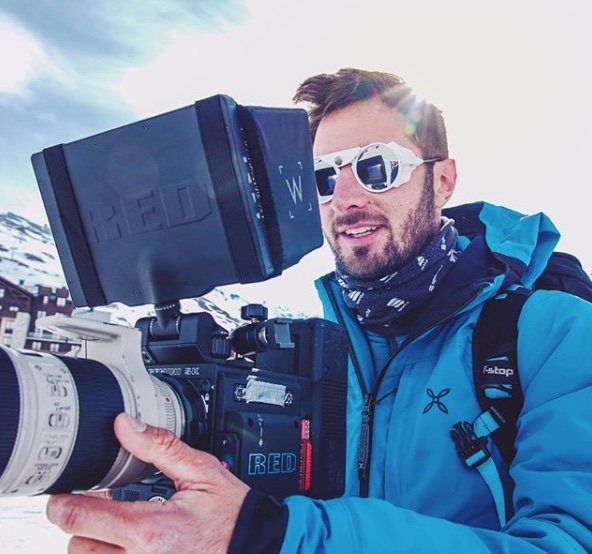 Federico Modica: To become a professional photographer the steps are different and the ways are multiple. In my specific case, it was a coincidence. In those years (2006-07) I was a pretty good athlete, running the 800m, 1500m, and 3000m on a very strong team. But when the game became really interesting and my time was allowing me to compete for a national group, my body decided to say to me “bye-bye”.