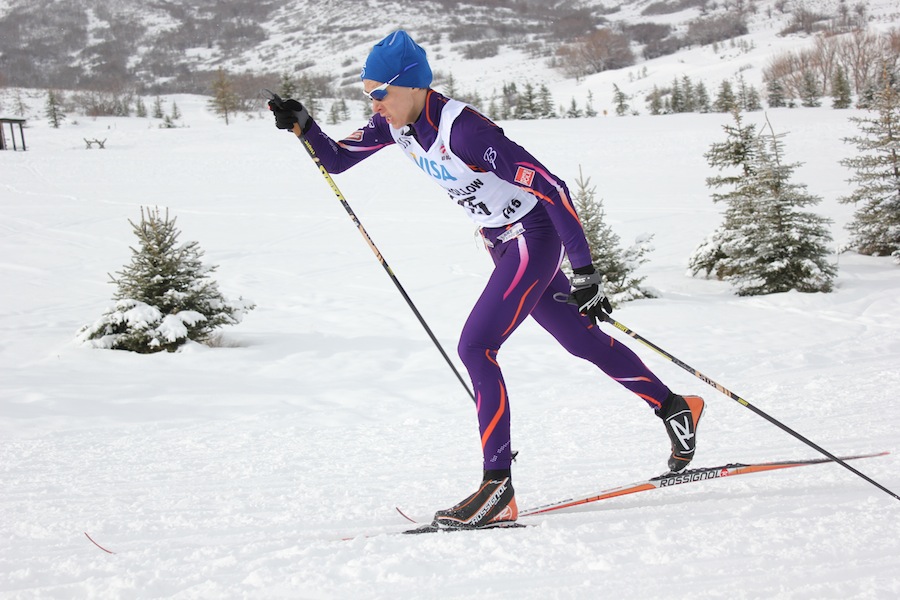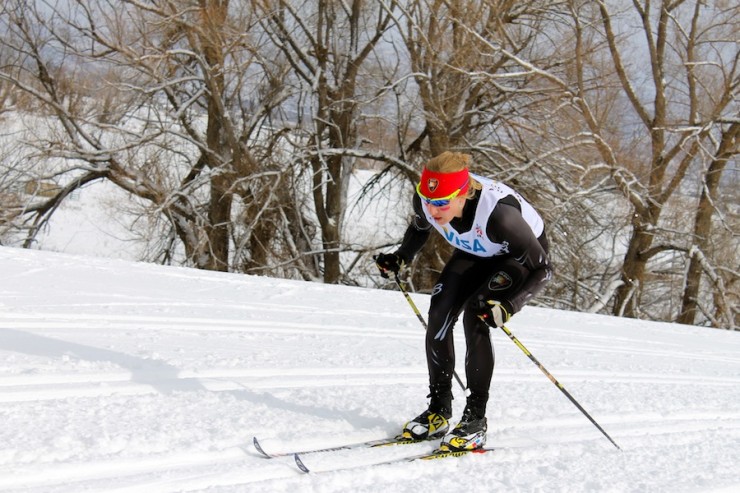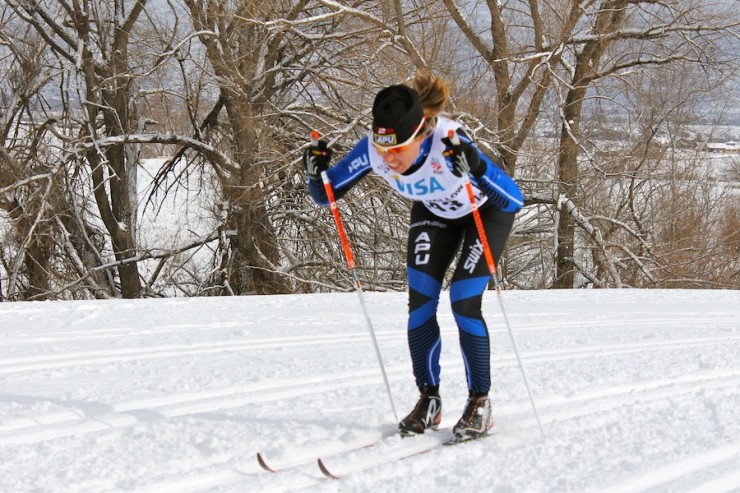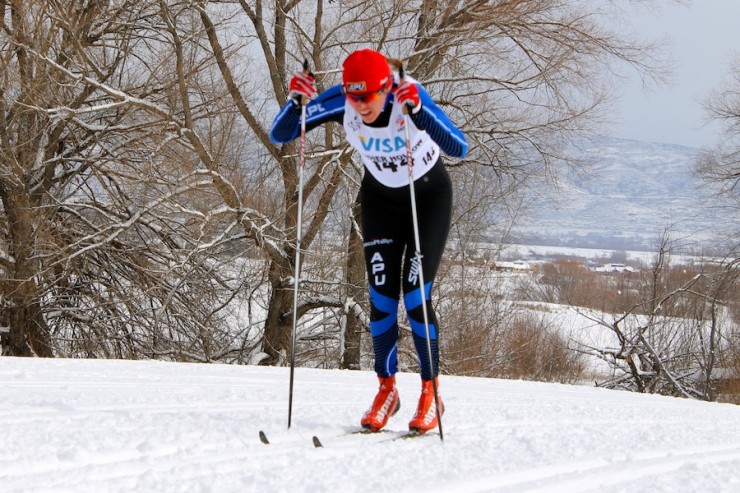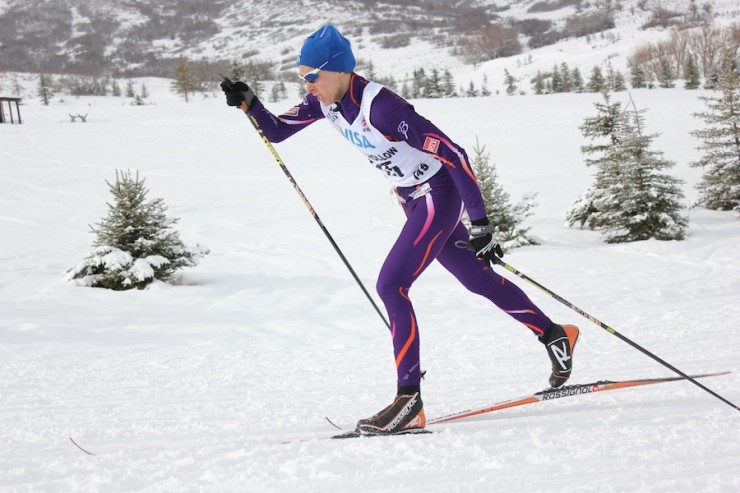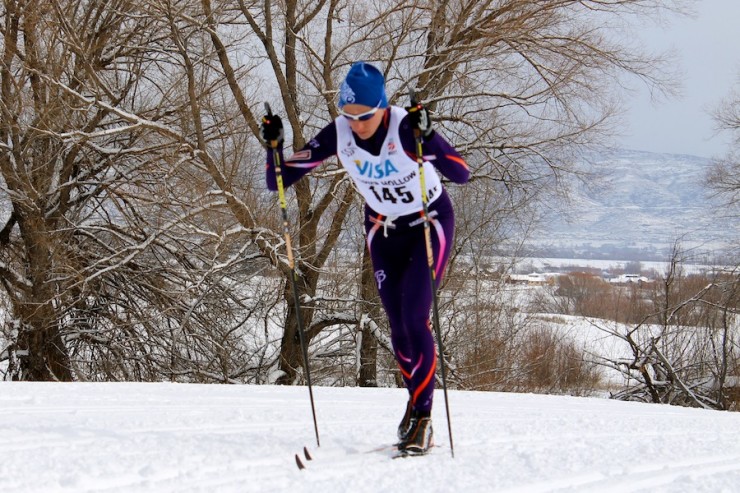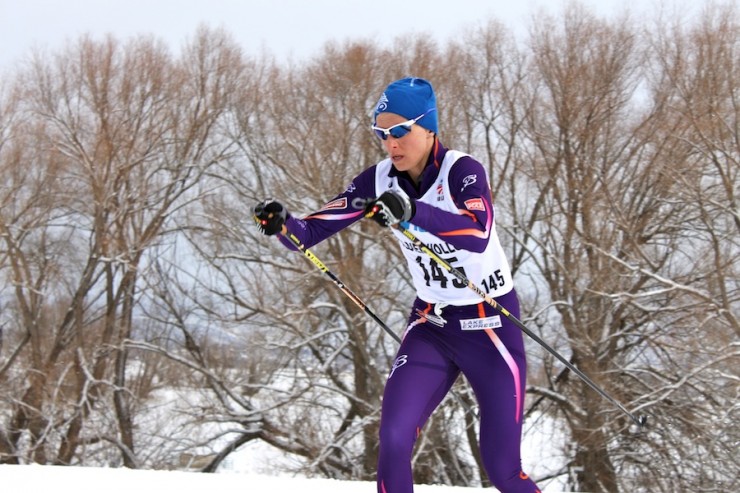
Tag: Rosie Brennan

  • Brennan Powers to Second-Straight National Title in Houghton

    Brennan Powers to Second-Straight National Title in Houghton

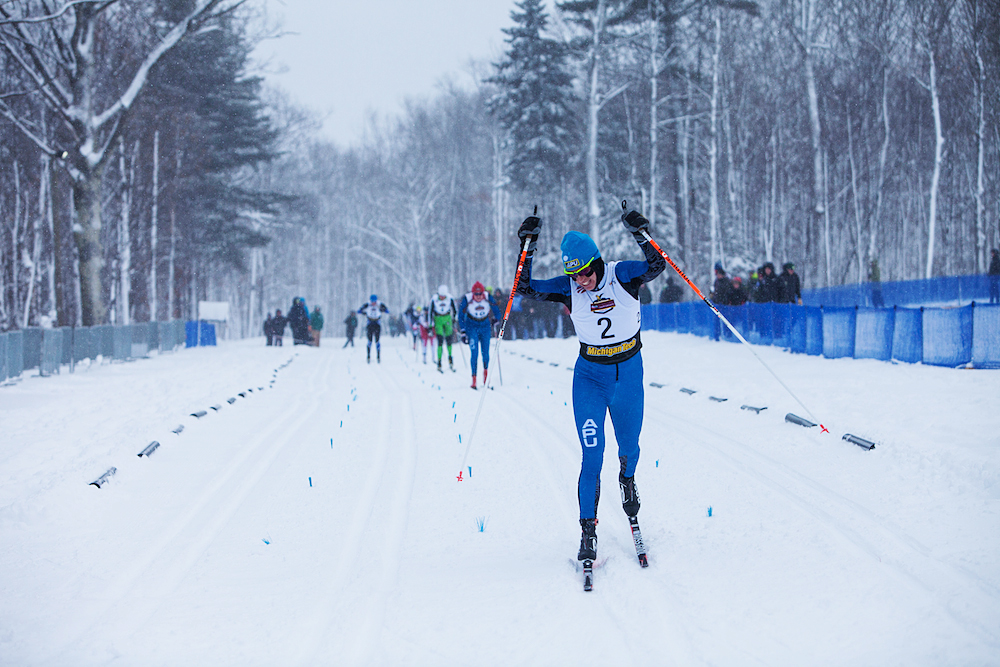
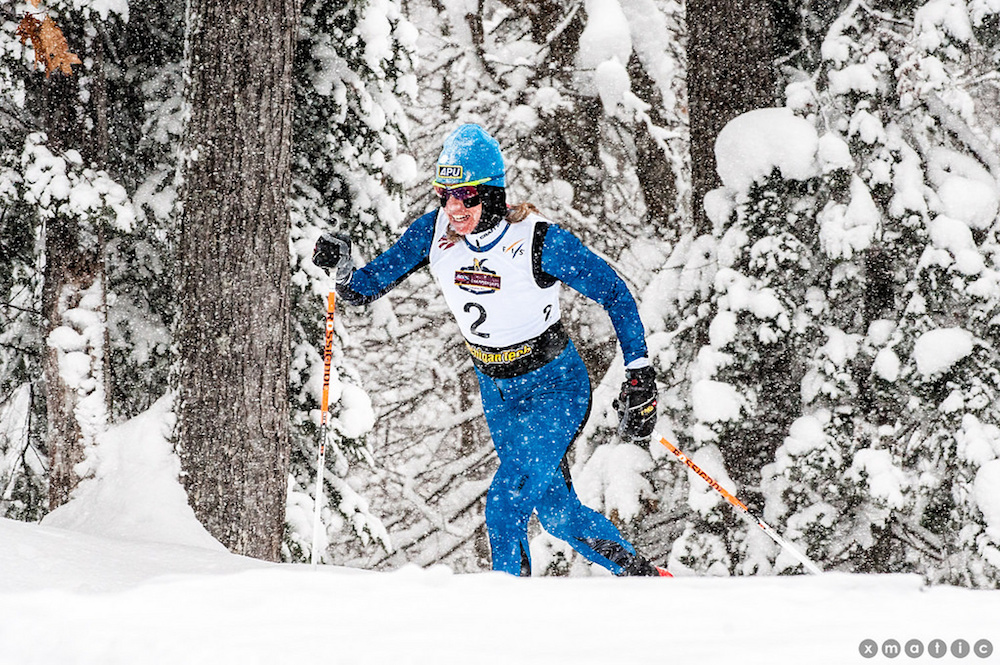
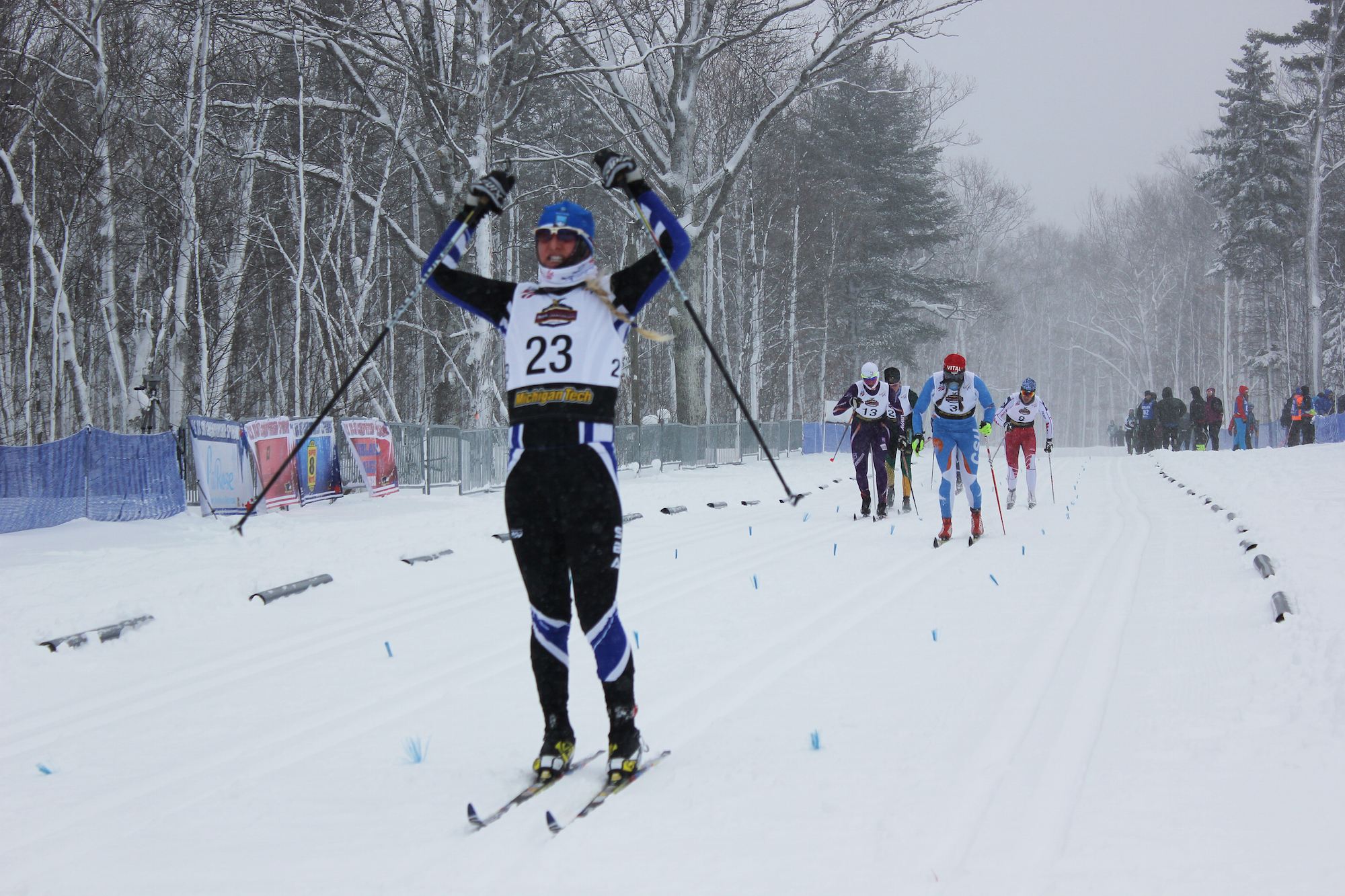
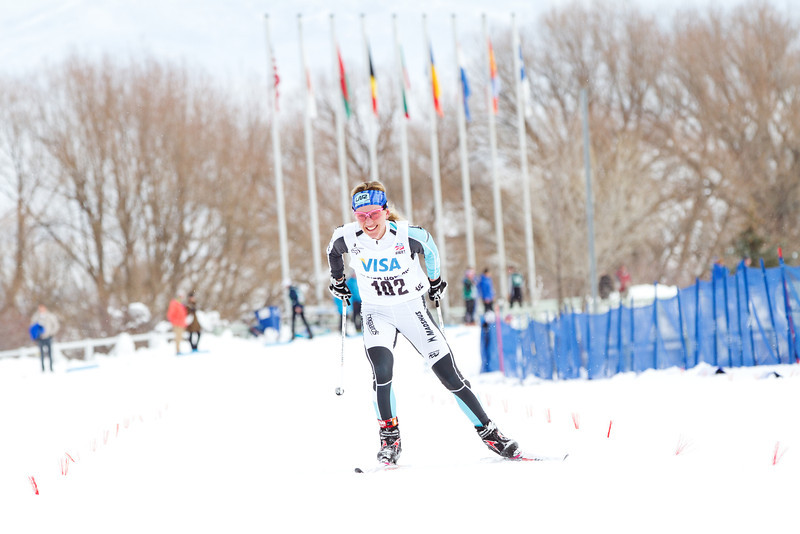
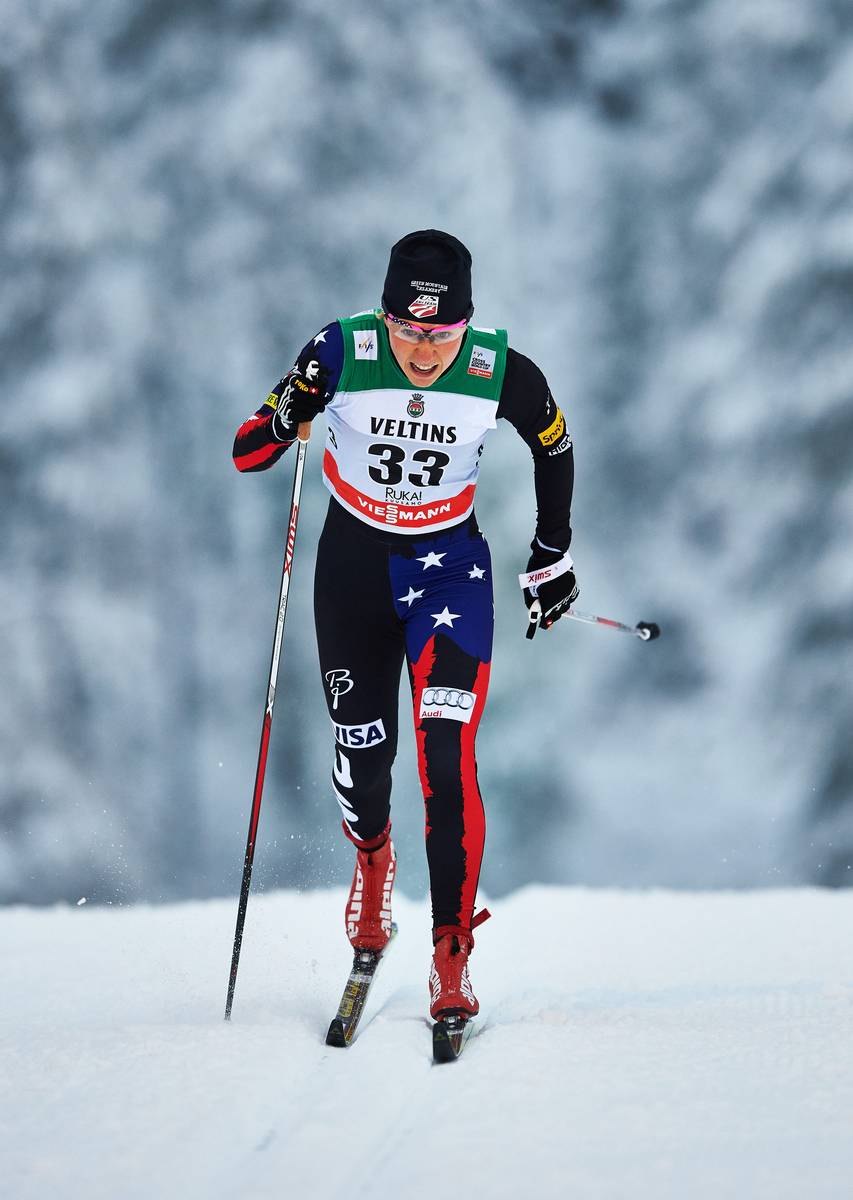
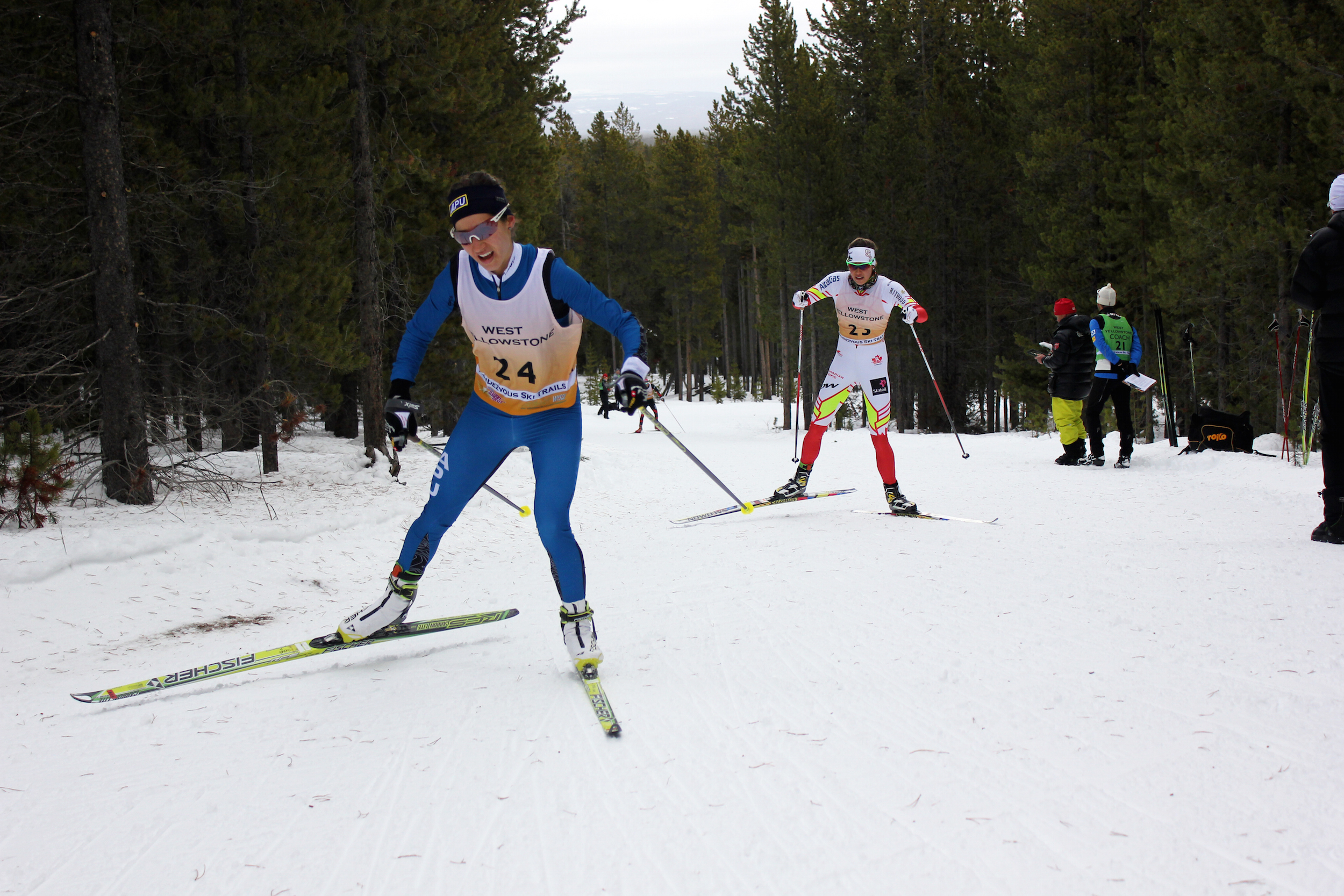
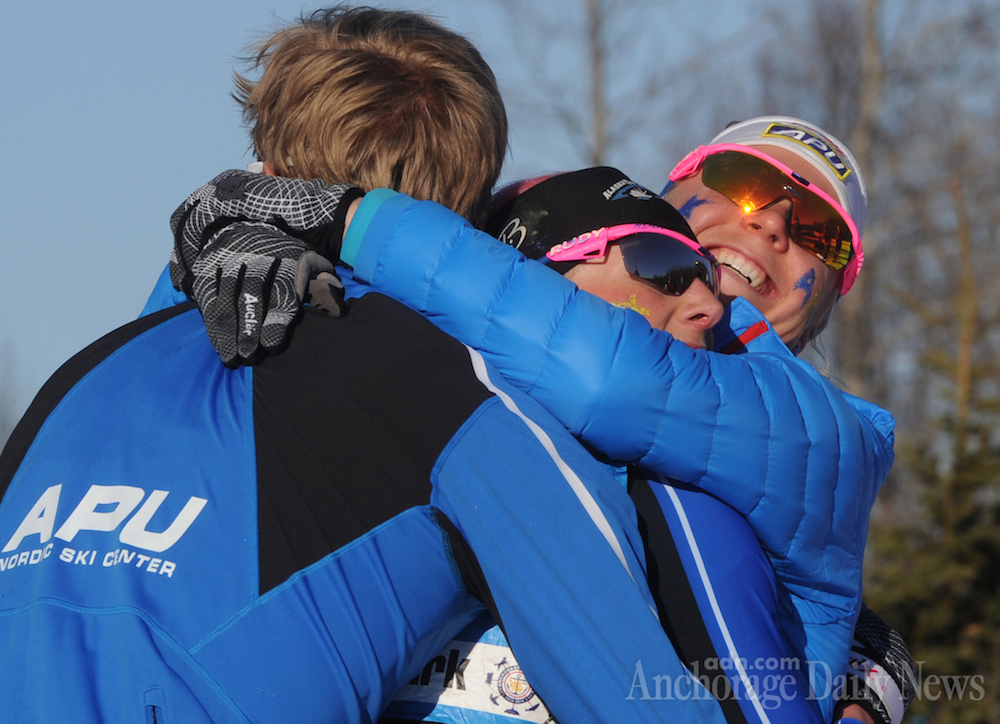
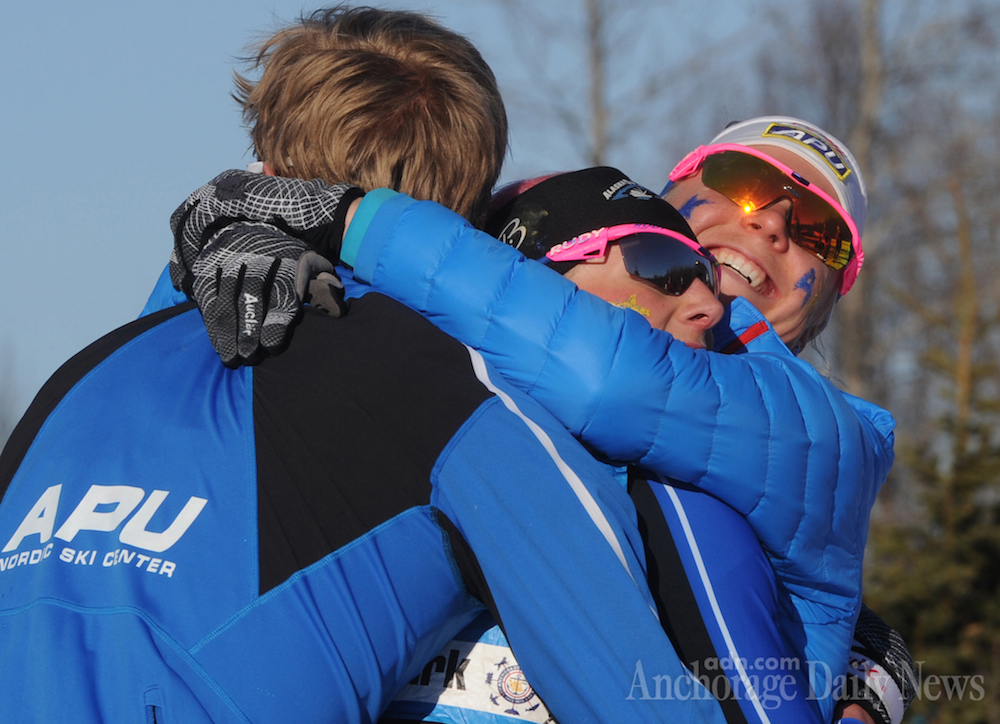
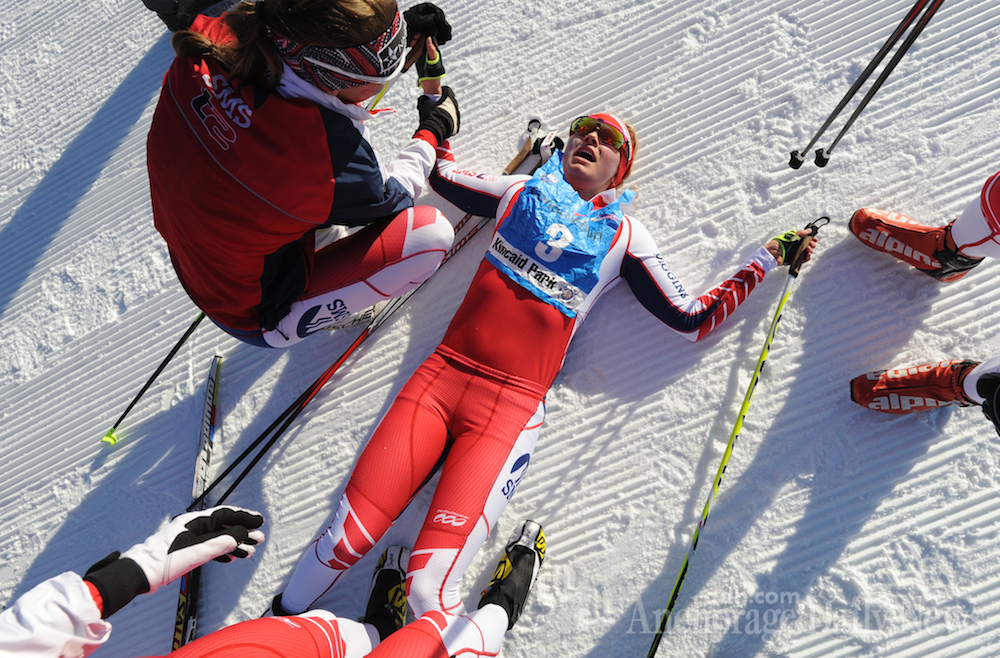
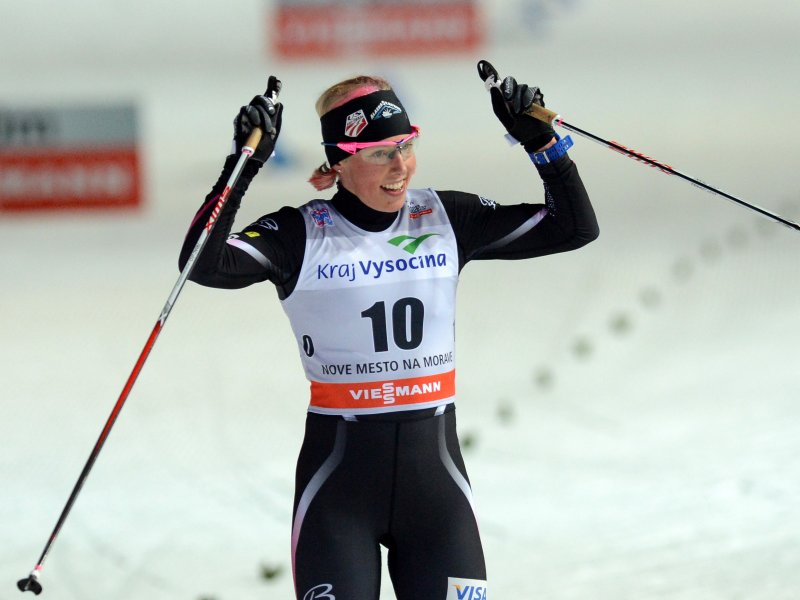
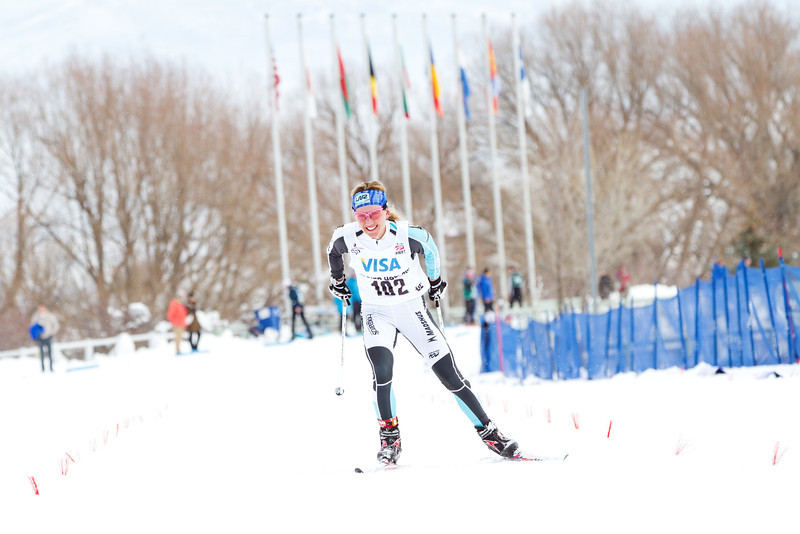
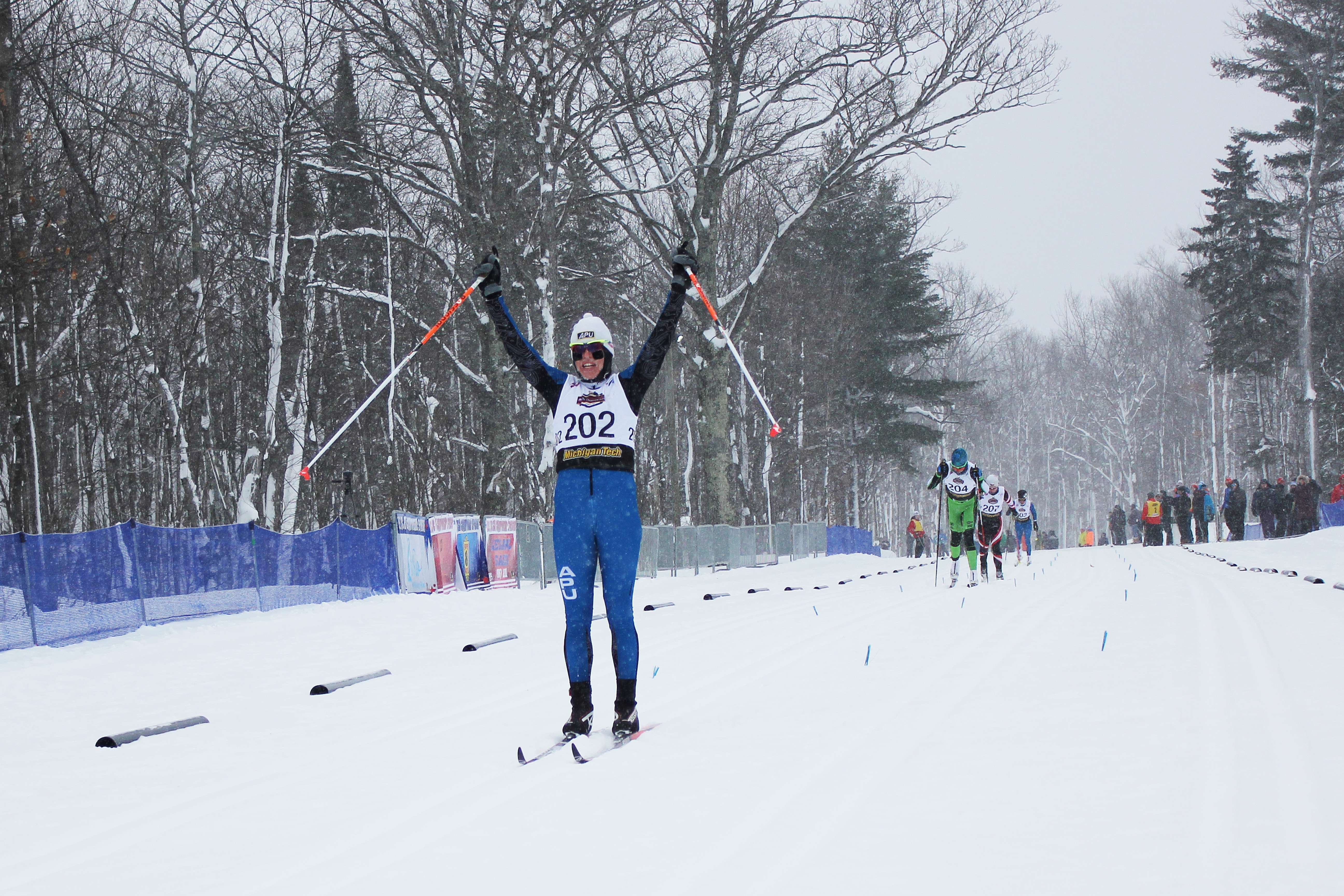
    Rosie Brennan (APU) celebrates her win in the 20 k classic mass start at the 2015 U.S. Cross Country Championships in Houghton, Mich.
    Rosie Brennan (APU) celebrates her win in the 20 k classic mass start at the 2015 U.S. Cross Country Championships in Houghton, Mich.

    HOUGHTON, Mich. — When Rosie Brennan lined up for the 20 k classic mass start at the 2015 U.S. Cross Country Championships there was a target on her back. Having won four of six SuperTour races, including Tuesday’s classic sprint, the Alaska Pacific University skier was the clear favorite in the field of 61 racers, and the nation’s best were looking to see if they could topple this season’s highest-performing domestic racer.

    At the end of the day none succeeded in ending Brennan’s reign, as she crossed the finish line with a time of 1:10:42.4. The victory was hardly contested as she sped down the final meters, with second place finisher Caitlin Patterson of the Craftsbury Green Racing Project finishing 5.5 seconds back.

    The 20 k marked the the third race of the Championships and featured two laps on a 10 k loop. With little wind and temperatures sitting around three degrees Fahrenheit, the weather seemed tame in comparison to the previous two days of racing which featured strong winds and heavy snow.

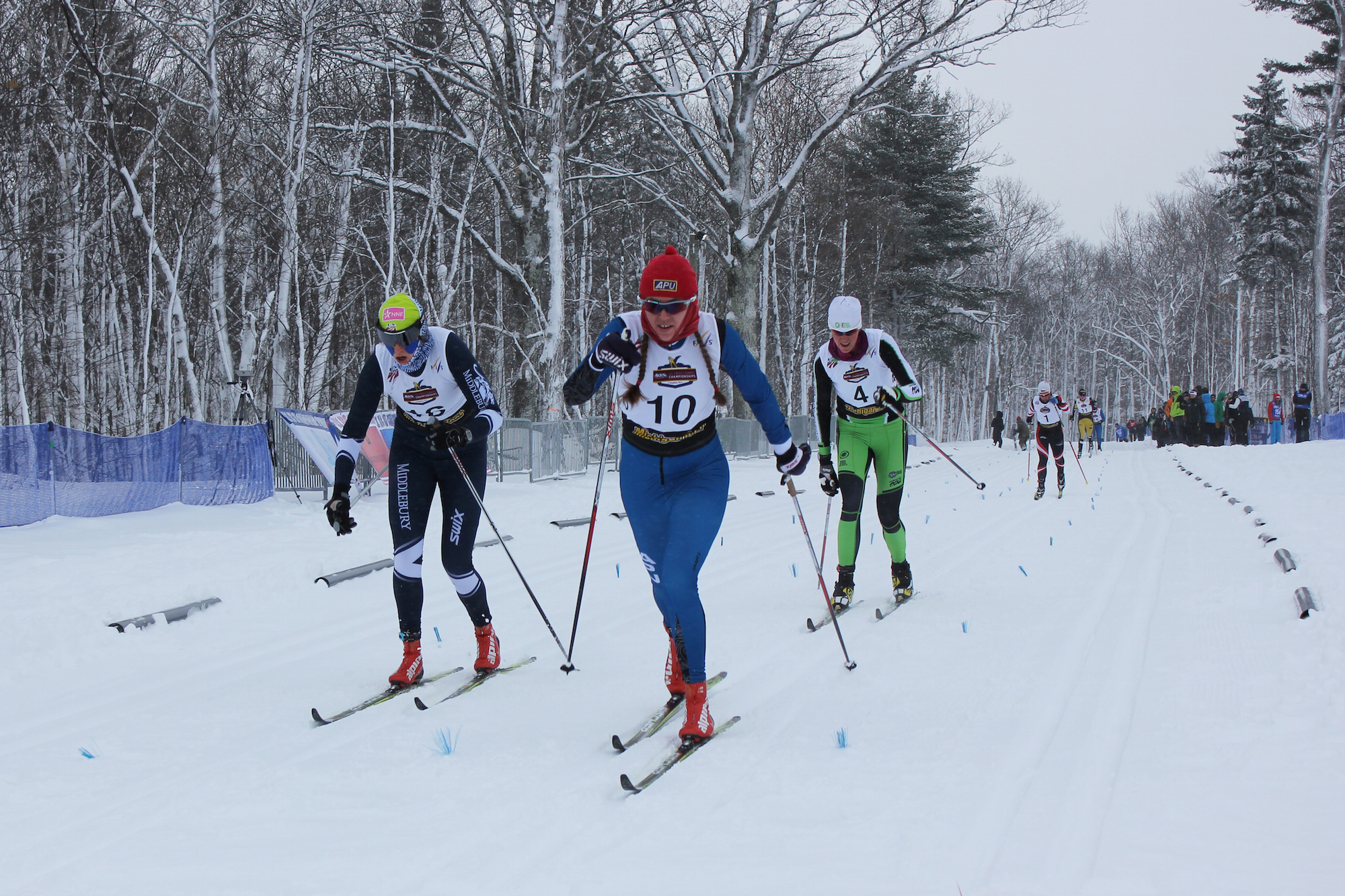
    In the first kilometers of the 10 k loop, Brennan, Patterson, APU skiers Becca Rorabaugh and Chelsea Holmes, and Czech skier Eliska Hajkova (Boulder Junior Nordic Racing Team) emerged as the lead pack. With each stride the group of five extended their margin over the remainder of the field, as the three APU women communicated to take turns in front.

    However, as the race progressed the communication thinned as each skier eyed the prospect of a national championship title.

    “Earlier on in the first lap when Chelsea and Becca were there, we were talking and switching up leading,” Brennan said of the group tactics in a post-race interview. “But when it gets down to it everyone wants their piece of the pie.”
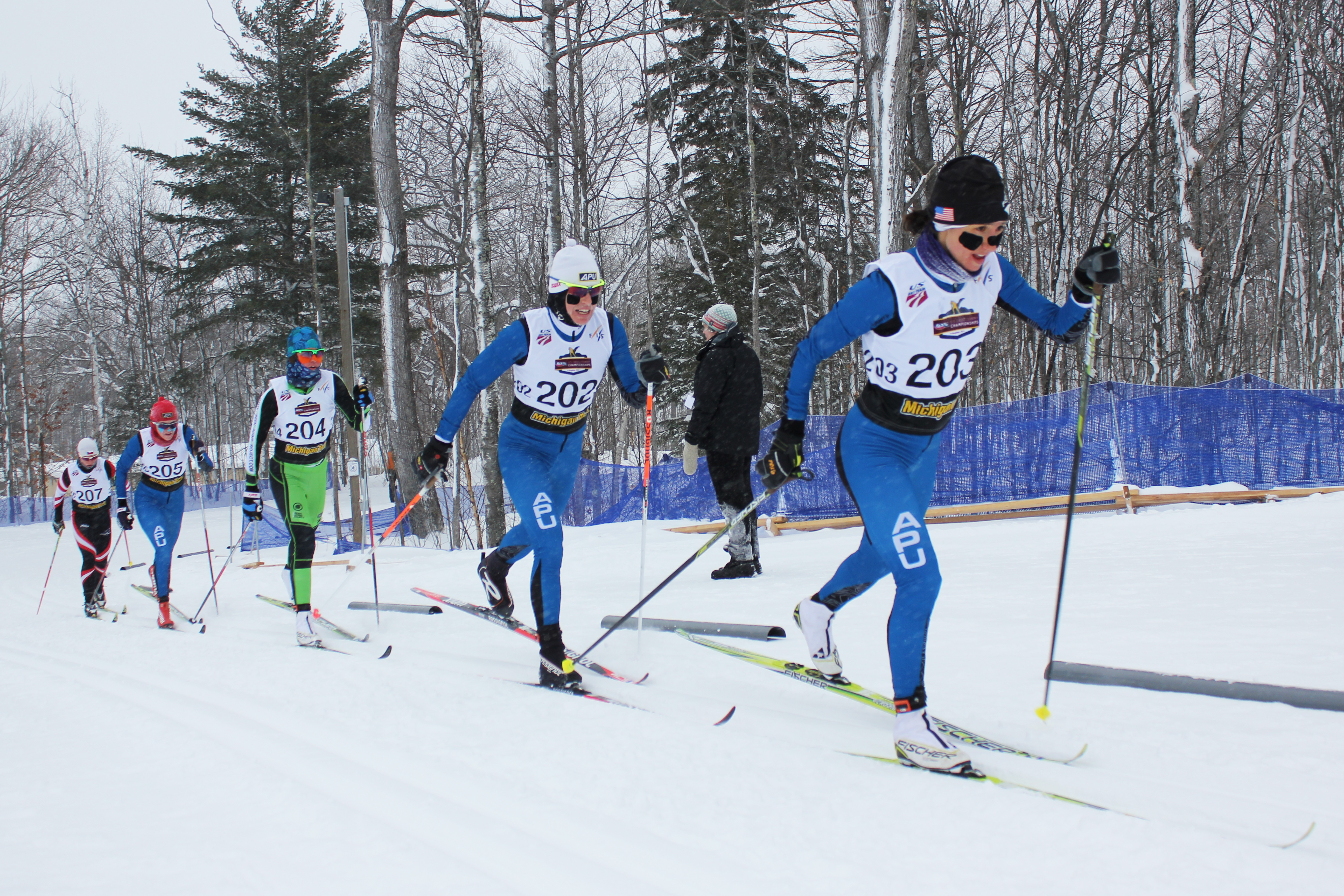
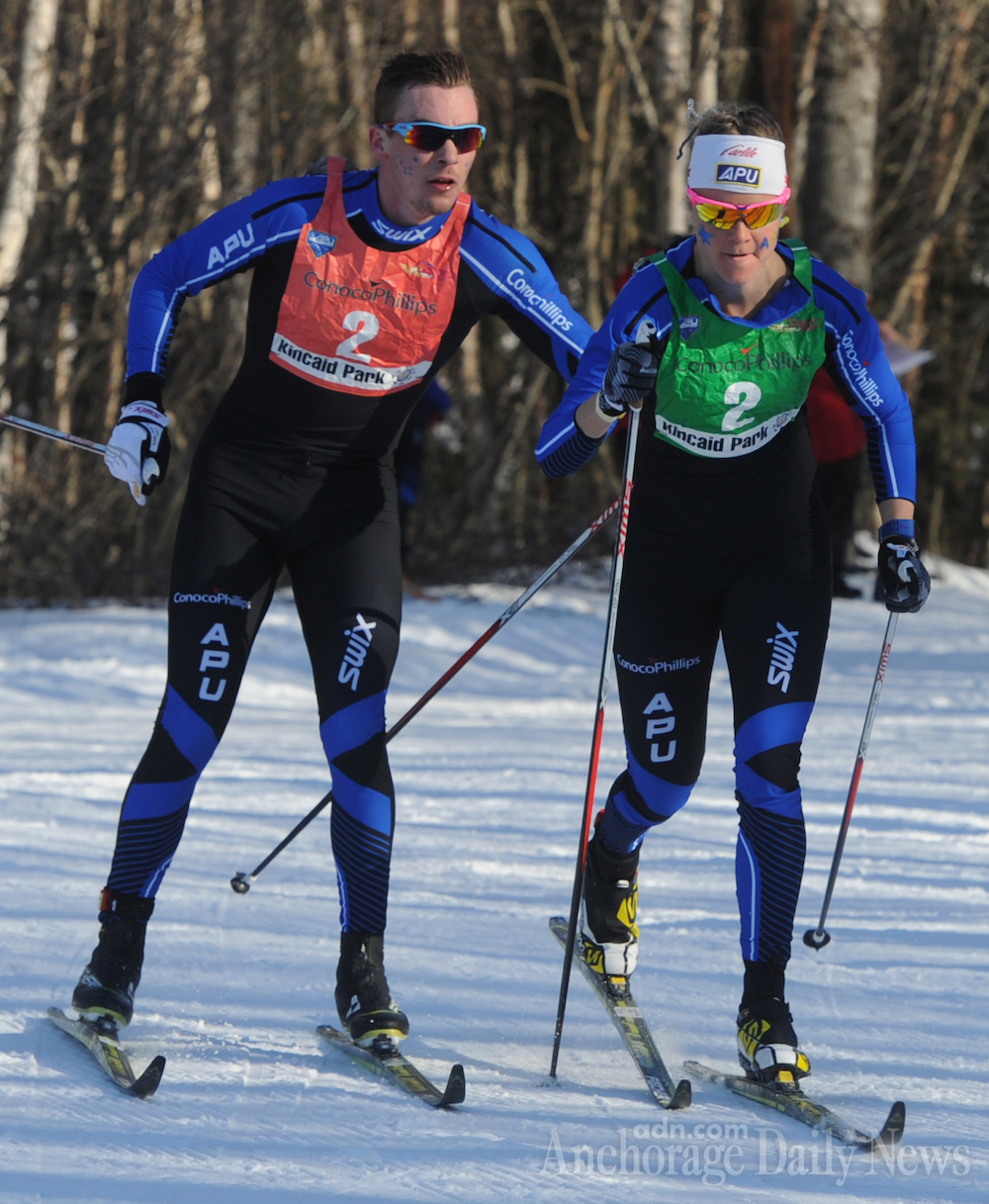
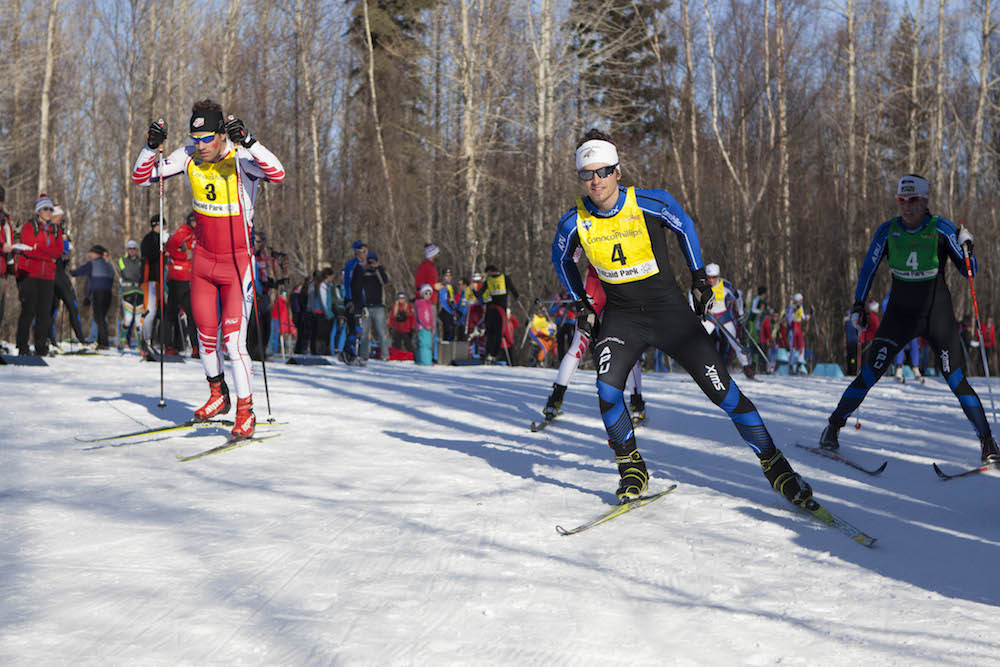
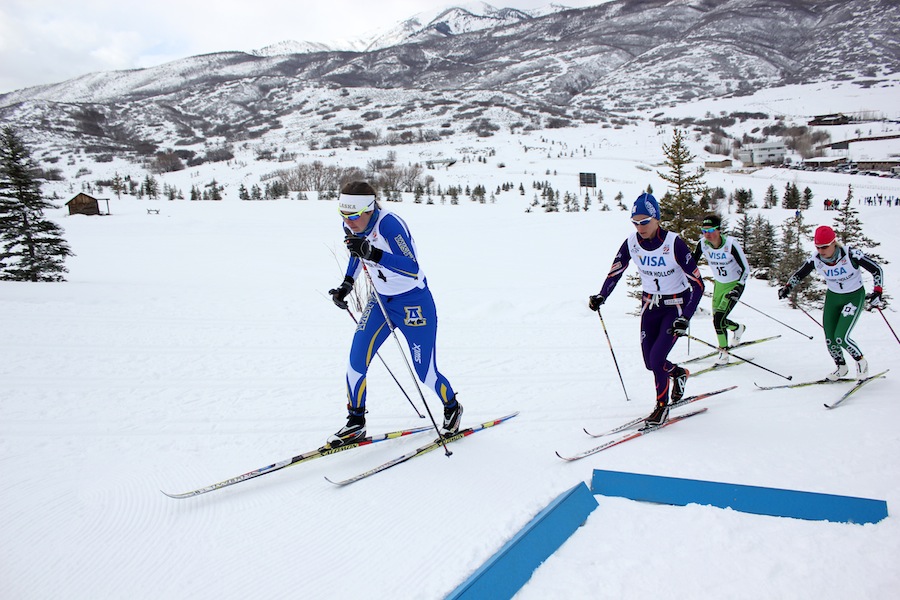
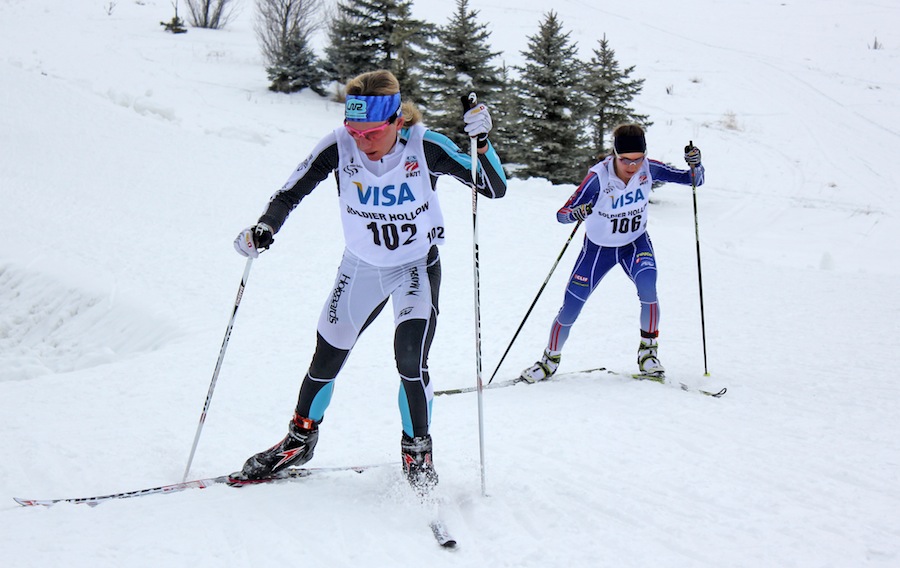
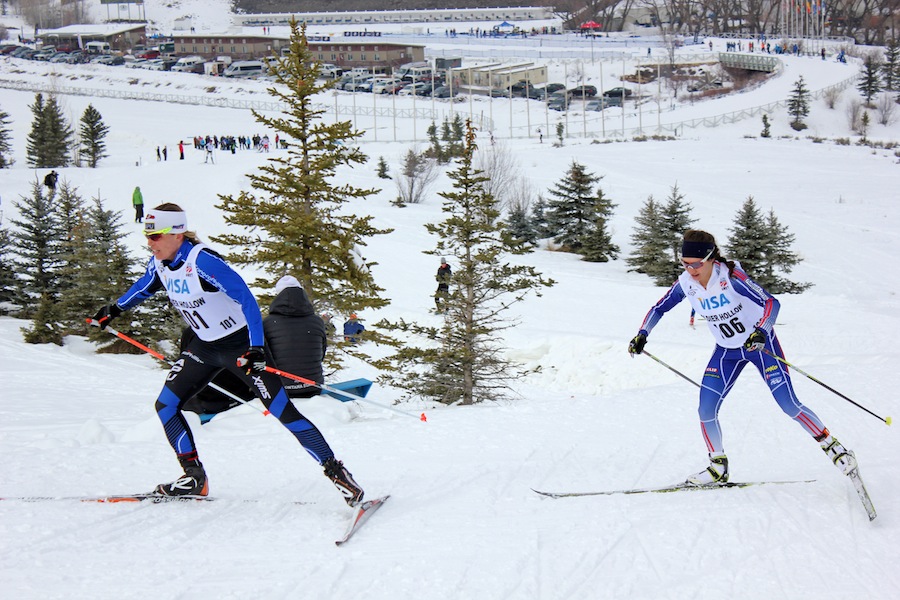
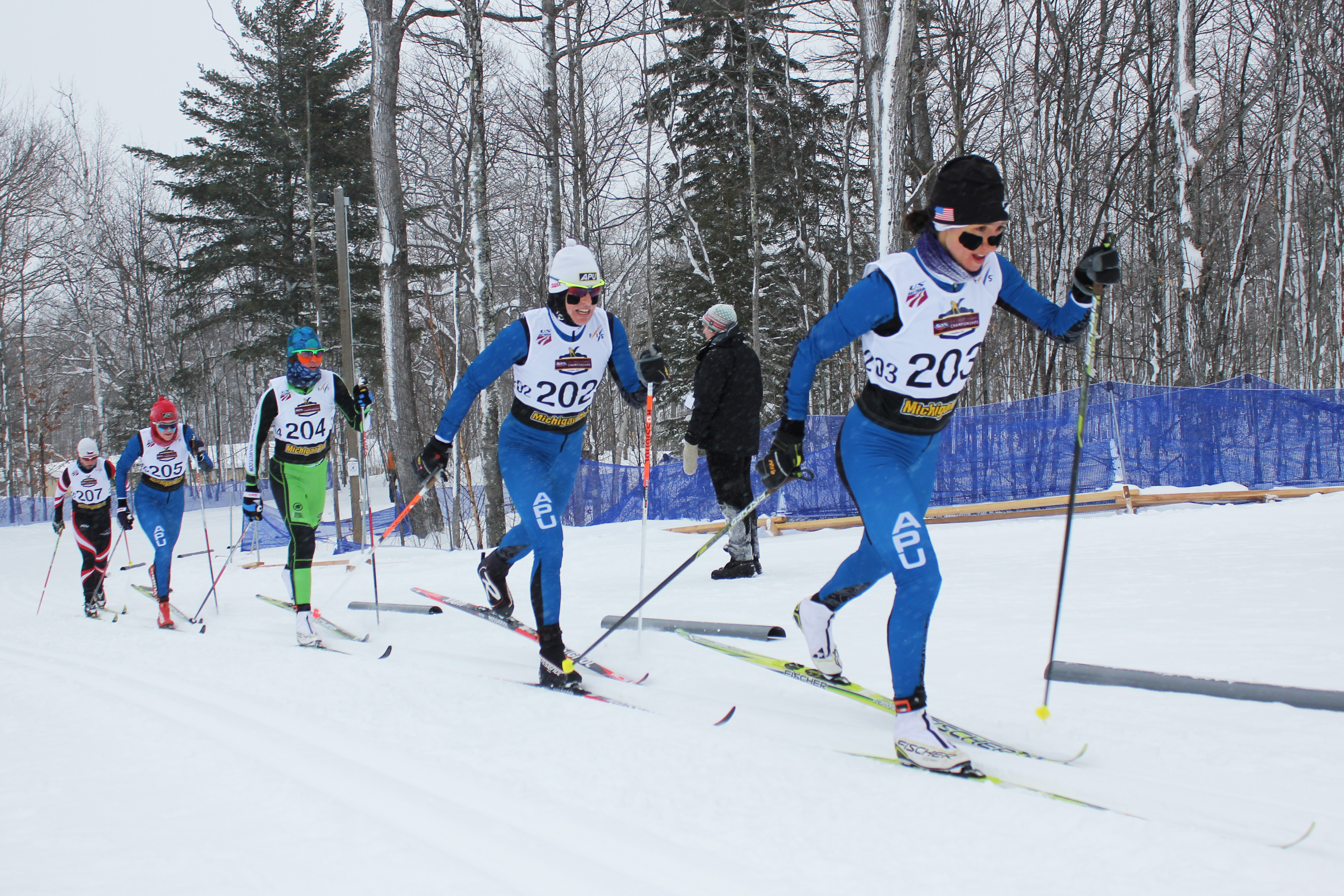
    Chelsea Holmes (APU) leads Rosie Brennan (APU), Caitlin Patterson (CGRP), Becca Rorabaugh (APU), and Eliska Hajkova (BJRNT) in the women's 20 k mass start at the 2015 U.S. Cross Country Championships in Houghton, Mich.
    Chelsea Holmes (APU) leads Rosie Brennan (APU), Caitlin Patterson (CGRP), Becca Rorabaugh (APU), and Eliska Hajkova (BJRNT) in the women’s 20 k mass start at the 2015 U.S. Cross Country Championships in Houghton, Mich.

    From then on, it was Brennan and Holmes who traded the lead, each looking for a chance for a breakaway to secure the win. The chances were slim, however, due to light layer of new snow that coated the course. Instead of the calm, stable conditions seen in the men’s race, the women faced a slight wind and falling snow – making the tracks extremely slow for the leaders and much faster for anyone who followed.

    “You are plowing in the front. You can be tucking and not working in the back, but when you’re leading it’s a lot of work,” Holmes said of skiing at the front in Thursday’s conditions.

    Brennan agreed, explaining that while the snow was light, it made a decisive move mid-way through the course nearly impossible.

    “I was hoping to break a lot earlier but with the falling snow it just wasn’t possible. It was so much slower in the front,” she said.

    Despite her inability to leave the four women behind, Brennan forged ahead and set a pace that would allow her to have a strong finish.

    “I kind of felt like I had a target on me, so no one really wanted to lead – everyone was kind of pushing me to lead. I expected that… Halfway through the first lap when I realized it was the group of us, I just picked a comfortable pace and tried to stick with it,” she explained.

    The relaxed pace was part of an overarching plan for Brennan to save energy before the final kilometers. Given the abilities of the four other women – all of whom are traditionally stronger distance skiers – Brennan was confident that if the race came to a sprint she would be able to take the win.

    By the final lap of the race, the leaders’ number was reduced to four as Rorabaugh fell off the back on one of the course’s many climbs. The group almost shrank to three when Hajkova and Patterson collided around the 14 k mark, snapping one of the latter skier’s poles. Patterson continued to stride as the three skiers ahead of her began to inch away. According to the 24-year-old, a spectator gave her a new pole roughly two minutes later and she was able to “claw” her way back.

    When the four women reached the 400-meter mark, they passed APU Head Coach Erik Flora who gave Brennan the final push she needed to take the win. Brennan, who had been waiting for a moment to make her final push, received the sign she was looking for when Flora urged her to attack. With her coaches encouragement, Brennan powerfully strode up the final climb into the stadium leaving the other three fighting for the remaining podium spots.

    Patterson, who attempted to make a move earlier in the final kilometer, had a small advantage over Hajkova and Holmes when Brennan took off. It was an advantage that proved valuable, as Patterson held her position through the finishing stretch and across the line.

    Following Patterson was Hajkova who finished 7.5 seconds back from the winning time to take the final podium position. Holmes earned fourth after falling behind the Czech skier, 12.8 seconds off pace, while Rorabaugh trailed by 38.9 seconds in fifth.

    Brennan said that her strong results this season, including Thursday’s 20 k victory, are a product of a productive summer of training.

    “I feel really good in my fitness and really confident. I just had a really good summer and everything in terms of racing has been going really well. I’ve just been trying to focus on that,” she said.

    According to Flora, the past few seasons have proven Brennan is one of the top skiers – in both distance and sprinting – in the country. Given her World Cup experience, he believes that she ready to make the next step in her skiing.

    “She is gritty, super gritty,” Flora said of his athlete.“I definitely think she is one of our top ladies and she is right at that point to make that next step and jump in with the World Cup crew.”

    With possible U.S. starting spots at the 2015 World Championships on the line, Brennan said that she hopes to earn a trip to Sweden later this winter. At the same time, however, she hasn’t let the prospect of the season’s biggest event dictate her season.

    “I decided that if I could ski my best, it could work out the way it was going to work out. Of course I’m aware of how to qualify, but I’m just trying to focus on each day as a new ski race and how I can ski that day,” she said.

    In second, Patterson said that it was her goal to get on the podium in Thursday’s 20 k after Tuesday’s sprint where she failed to qualify for the heats.

    “I had a really rough day in the classic sprint – I didn’t qualify… I just had to believe in my fitness and I did completely [today],” she said, also pointing to her extremely fast skis as another reason for her success.

    Hajkova, a former collegiate skier, was an unknown entering the championships but has risen to the top of the national field, finishing eighth in both the 10 k freestyle and classic sprint.

    The Czech citizen left the U.S. after graduating from the University of Colorado in the fall of 2013 to return to her home country. Once there, she attempted to ski for the Czech Olympic team but cited politics surrounding the selection as the main hindrance her failed attendance.

    Hajkova returned to the U.S. on an optional practical training visa, and is the junior coach for the Boulder Nordic Junior Racing Team based out of Boulder, Colo. As a coach for the team, Hajkova explained most of her skiing hours come from training with her juniors so that they don’t get lost on the local trails. While in West Yellowstone, Mont. for the 2014 Yellowstone Ski Festival, Hajkova competed in the SuperTour races to see where her fitness placed her in the national field. When she landed in the top-30, Hajkova decided to continue racing.

    After the Thursday’s 20 k, Hajkova said her skiing has gone well beyond her expectations at the U.S. Championships. In her joy of earning a podium finish, she explained that much of her success comes from her focus on the skiers she coaches, rather than herself.

    “Taking care of other people takes your mind off your pain. Training the juniors really relaxed me. It didn’t matter if I was last of first in this race, so maybe it’s easier to race when you don’t think of yourself,” she said.

    Fifth place finisher Rorabaugh explained that while she fell off the leaders’ pace and ultimately out of medal contention, she was proud that she was able to ski efficiently once she was by herself.

    “I was able to ski my own transitions and in a way it was better just to ski by myself for a while – I actually made up time but I wasn’t able close on them,” she said in a post-race interview. “I’m very happy that I was able to keep my head in the race and keep plugging away even after I got separated from the lead pack.”

    Absent from Thursday’s race was 2015 10 k national champion Caitlin Gregg (Team Gregg/Madshus), who was the only person to overcome Brennan since the the APU skier placed fifth in the West Yellowstone sprint earlier this season. According to Gregg, a bout of shingles she contracted in November is still effecting her energy levels.

    “Sunday went great and was actually the first time I’ve been able to push to a higher level in a long time. I sat out the classic sprint for the same reason… I want to make sure that I’m not pushing the limit and have the end of my season come before I need it to,” she said.

    Brennan said was disappointed that Gregg sat out Thursday’s mass start, but that there was nothing she would do but manage her own skiing.

    “[Gregg’s absence] was a bummer of course. I only got to race her once and it was a disaster – falling and crashing and everything. It’s not something I can control, so I just have to do my best and hope that’s enough,” Brennan said, referencing Sunday’s 10 k freestyle where she fell and broke a pole before finishing 12.7 seconds behind Gregg.

    The 2015 U.S. Cross Country Championships continues in Houghton with Saturday’s freestyle sprint.
    Women’s 20 k results

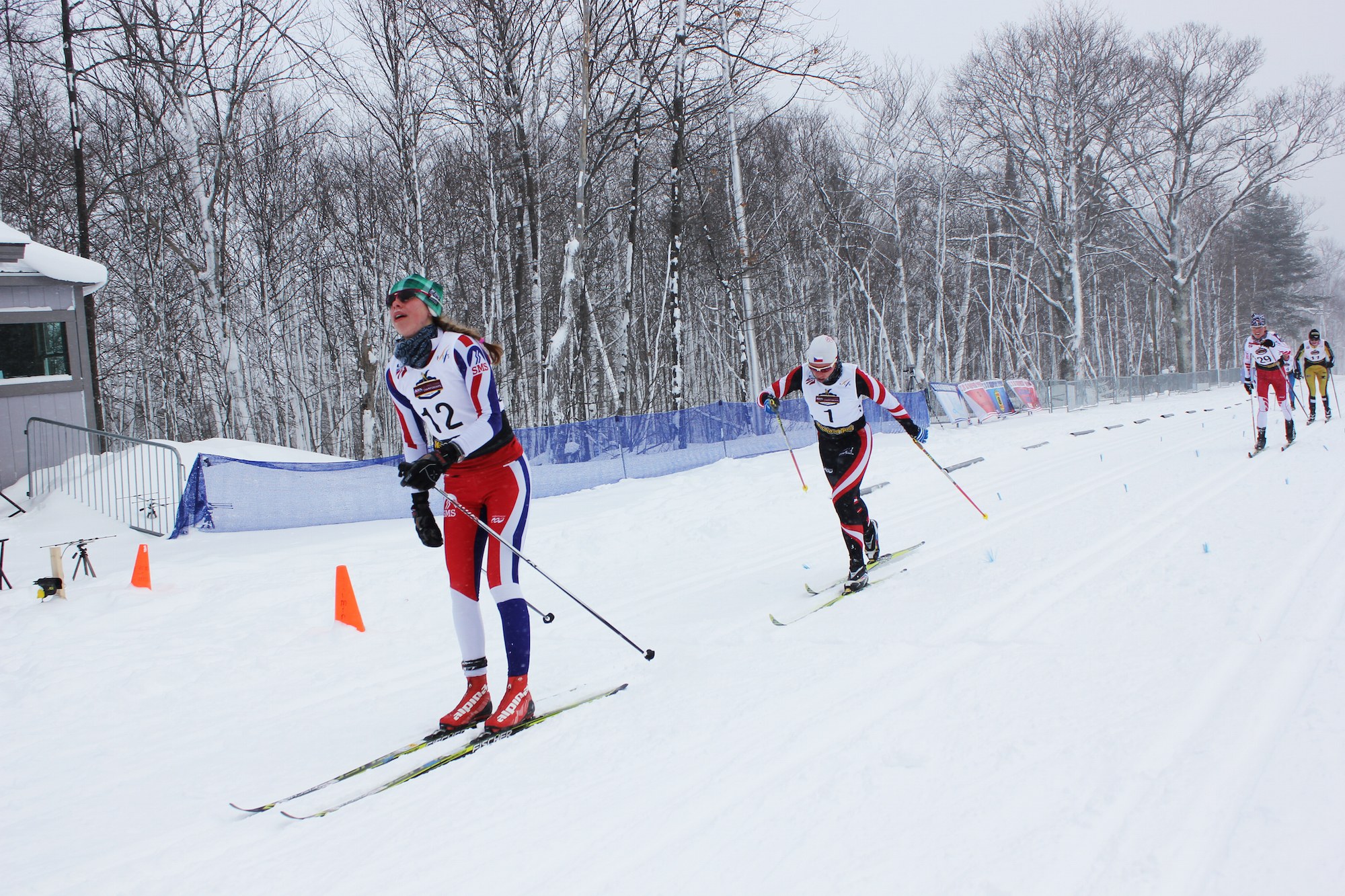
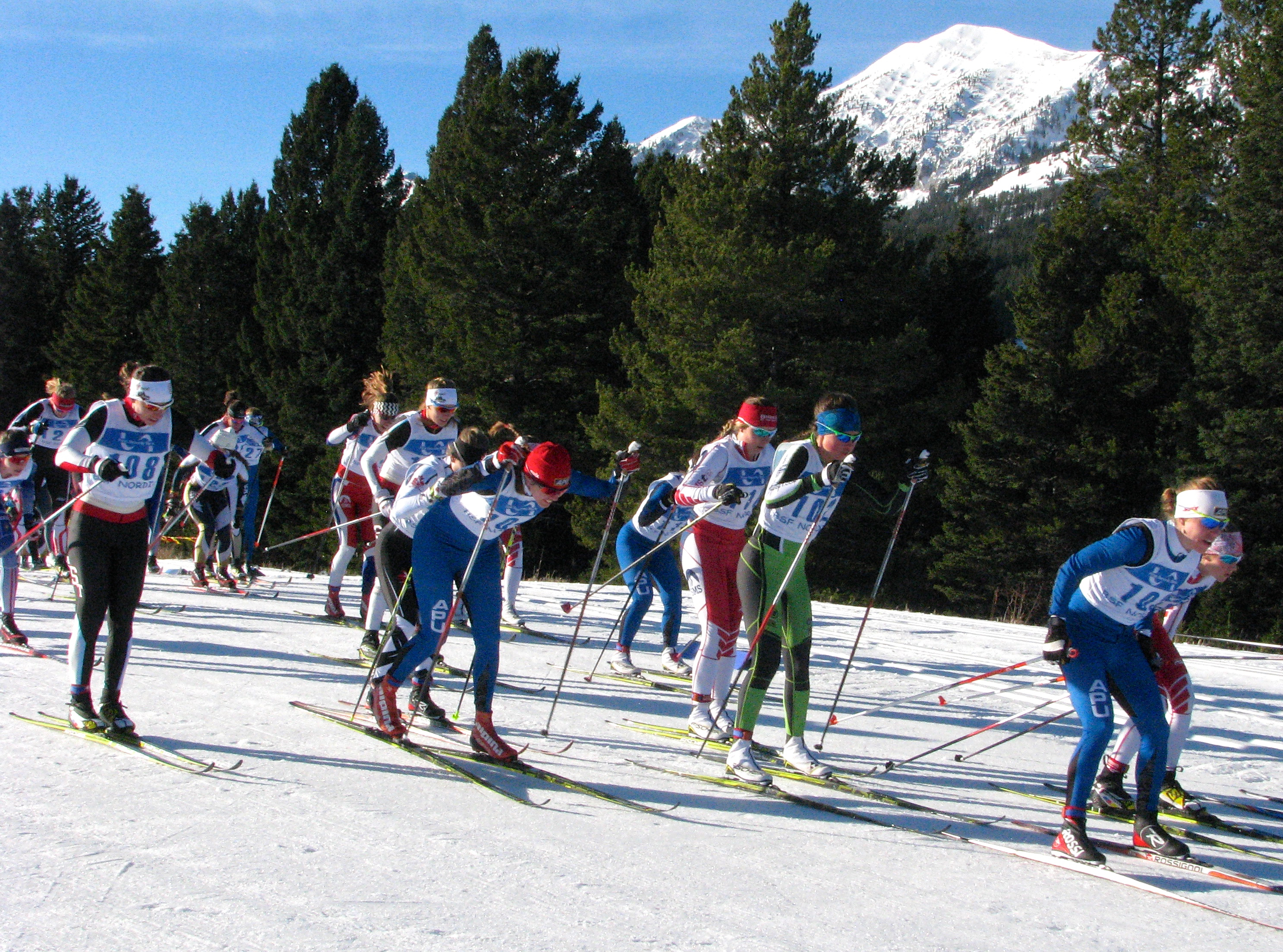
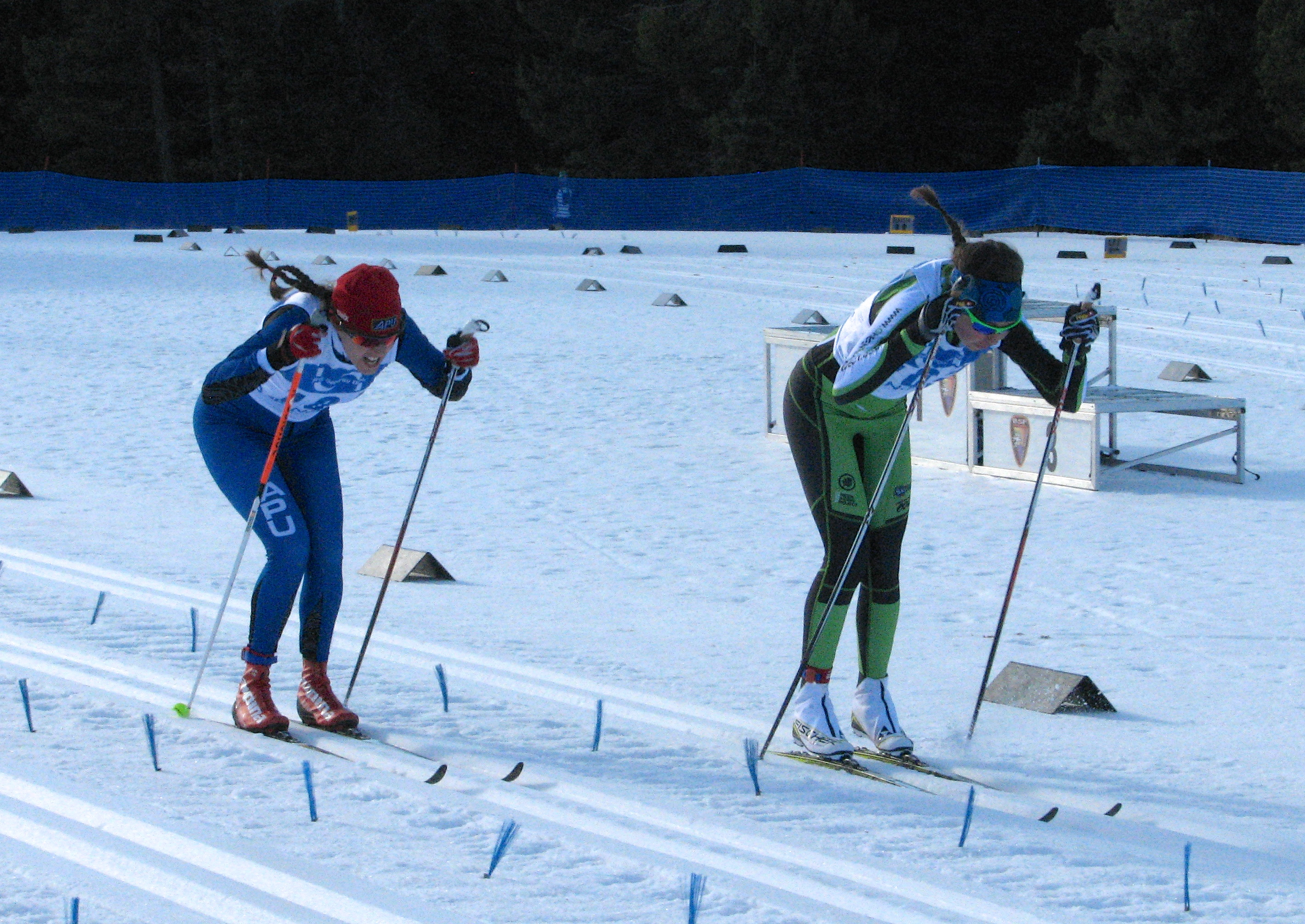
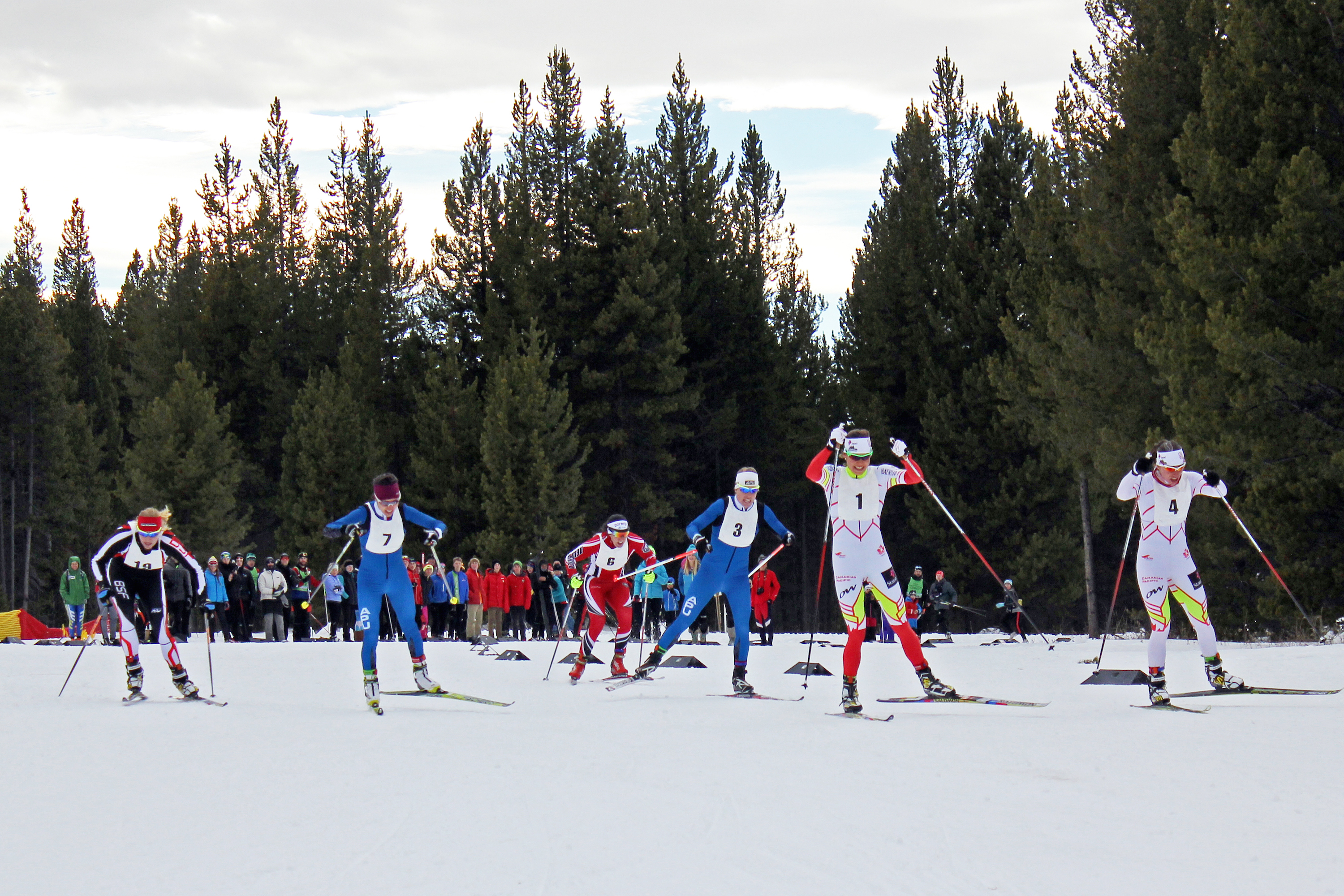
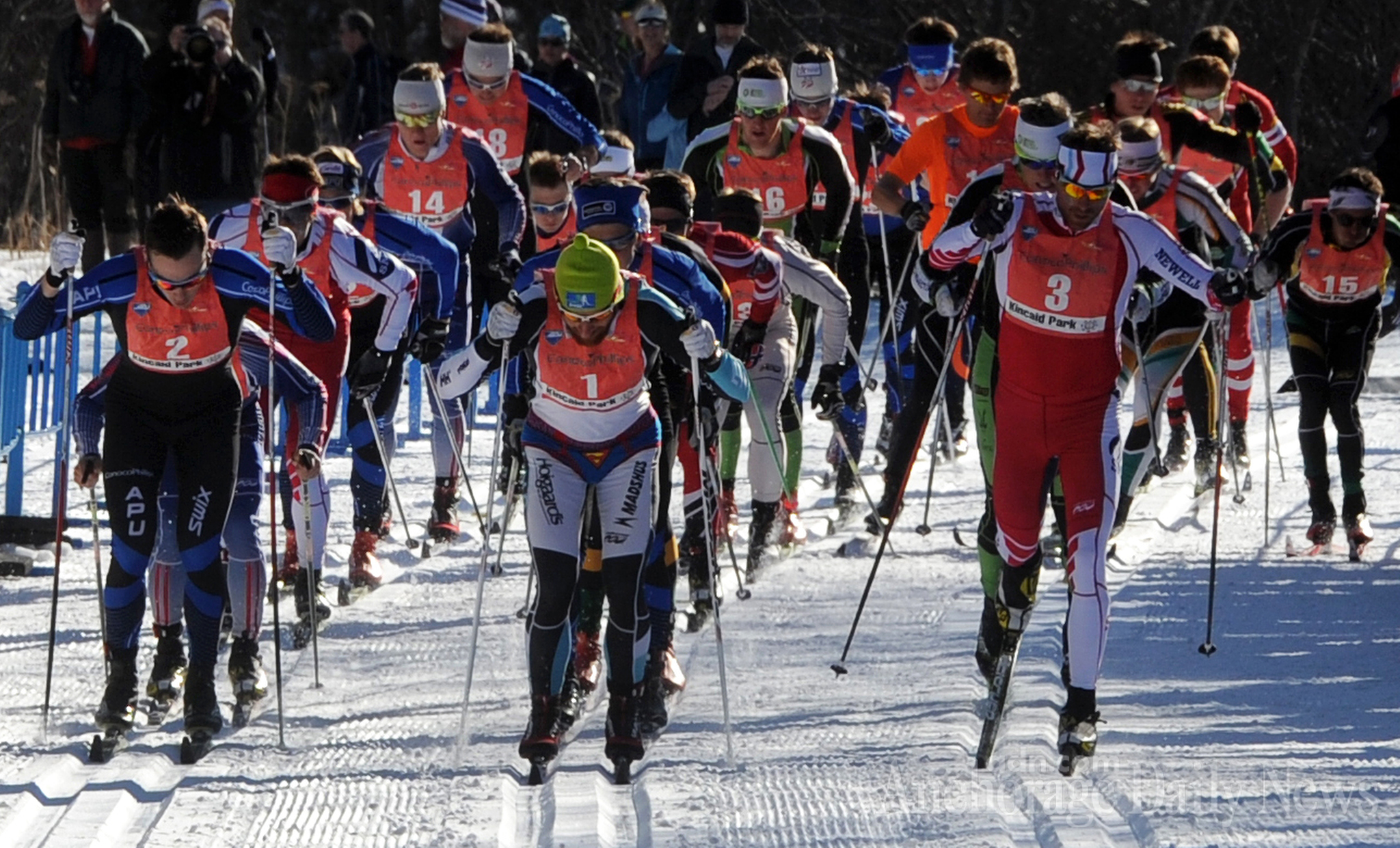
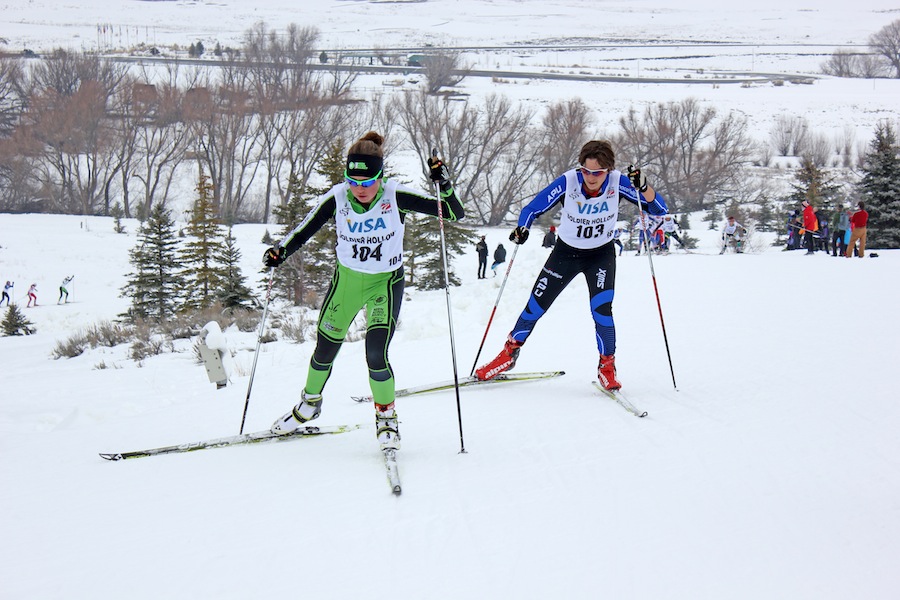
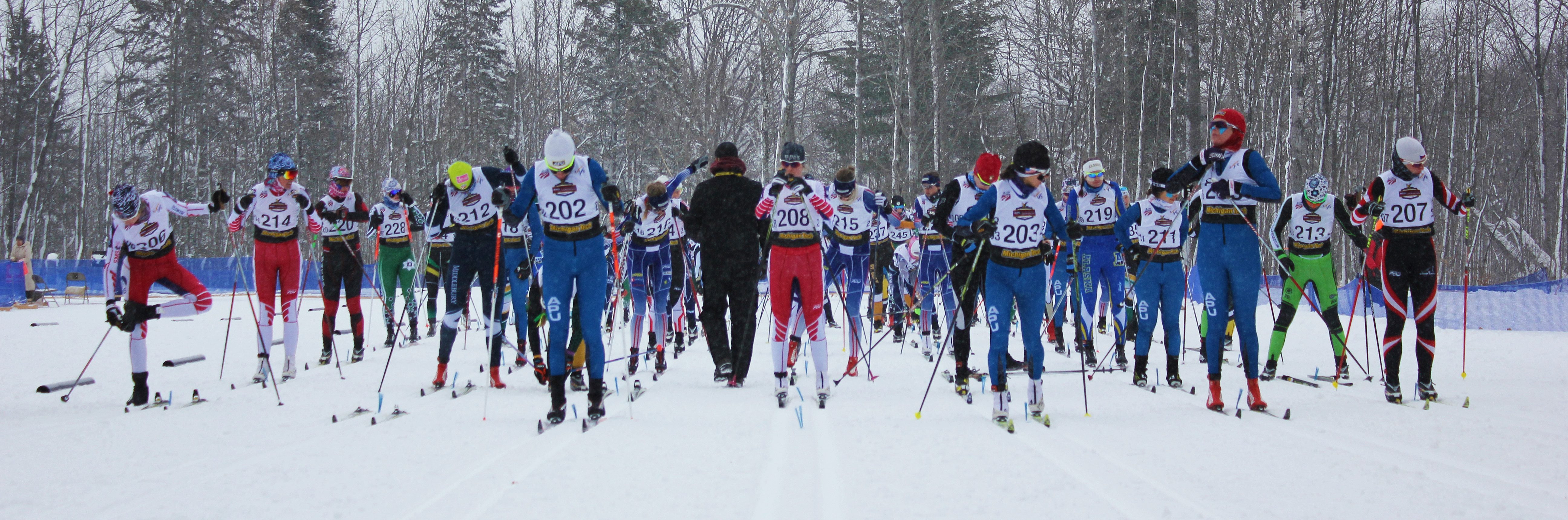
    The start of the women's 20 k classic mass start at the 2015 U.S. Cross Country Championships in Houghton, Mich.
    The start of the women’s 20 k classic mass start at the 2015 U.S. Cross Country Championships in Houghton, Mich.
  • Brennan Paves the Way, Keeps on Plugging for Classic-Sprint National Title (with Gallery)

    Brennan Paves the Way, Keeps on Plugging for Classic-Sprint National Title (with Gallery)

    Rosie Brennan (APU) celebrates her definitive win in the women's 1.5 k classic sprint on Tuesday at U.S. Cross Country Championships in Houghton, Mich., where she notched her third national title. (Photo: Jake Ellingson)
    Rosie Brennan (APU) celebrates her definitive win in the women’s 1.5 k classic sprint on Tuesday at U.S. Cross Country Championships in Houghton, Mich., where she notched her third national title. (Photo: Jake Ellingson)

    HOUGHTON, Mich. — As Rosie Brennan plowed through the fresh powder and tried to pick out what she thought was the best lane for the women’s 1.5-kilometer classic sprint at U.S. Cross Country Championships on Tuesday, she thought, this is brutal.

    Not only did she have to start first in the qualifier, which began at 10 a.m. after nearly half a foot of fresh snow had fallen since two hours earlier, when the groomer last passed over the Michigan Tech course, but Brennan had nobody starting directly behind her, either. Caitlin Gregg (Team Gregg/Madshus) in bib No. 2 had scratched.

    “I had no idea how fast I was going relatively, plus I was plowing the tracks for everybody so it actually was kind of unfortunate,” Brennan recalled with a laugh. “But I just tried to tell myself that if I skied well, that I had to be moving fast enough and just hope for the best.”

    The Alaska Pacific University (APU) veteran ended up second in the qualifier, 1.16 seconds behind Eliška Hájková, a 2013 University of Colorado Boulder graduate and current Boulder Nordic Junior Racing Team coach, who clocked the fastest time of 5 minutes, 18.63 seconds.

    After the race, several described it as more like a prologue or even a distance race than a typical sprint. At least for many, it felt that way.

    “I kind of felt like I was doing a 5 k,” said Brennan’s APU teammate Becca Rorabaugh, who qualified 10th.

    Fortunately for the racers, the track got faster by the time the heats rolled around at 12:30 p.m., and there were more options that the one track Brennan picked to lead 136 women out in the qualifier.

    The organizers re-groomed the loop after the men’s qualifier ended at 11:50, and with wet snow from a northwest wind off Lake Superior about 10 miles north, the course set quickly before the women’s quarterfinals started 40 minutes later.

    It was still about 7 degrees with a biting wind shooting across the stadium start and finish, but racers seemed unfazed once they got moving. With the snow still falling, as long as they could find a skied-in track, they were generally happy.

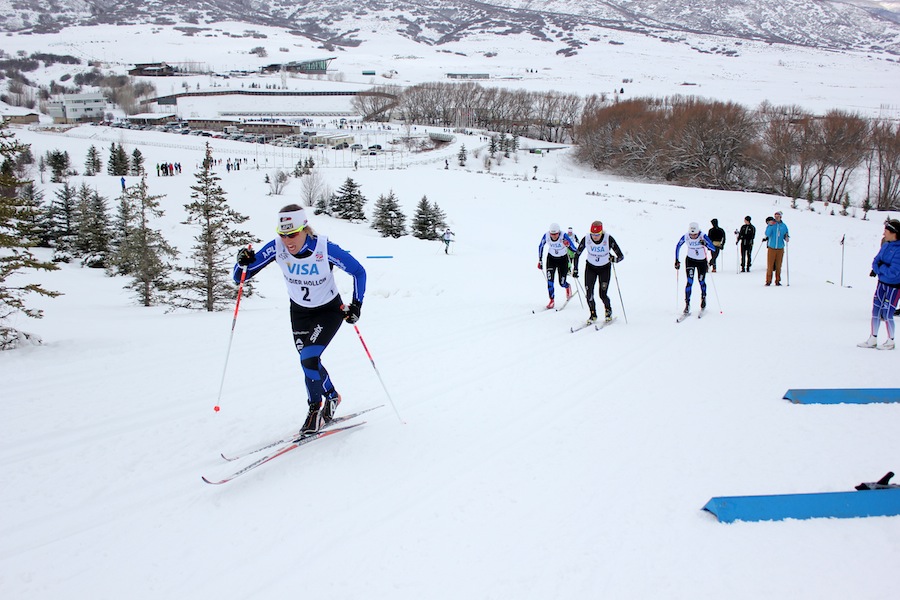
    Rosie Brennan leading her quarterfinal in Tuesday's 1.5 k classic sprint at U.S. Cross Country Championships in Houghton, Mich. (Photo: Christopher Schmidt)
    Rosie Brennan leading her quarterfinal in Tuesday’s 1.5 k classic sprint at U.S. Cross Country Championships in Houghton, Mich. (Photo: Christopher Schmidt)

    The blizzard let up by the afternoon, right about the time Brennan started to come into her own. With three SuperTour victories out of four races on the circuit this season (and a national podium on Sunday), she had the confidence — and she soon realized she had the ski speed as well.

    “I thought it would be more prudent to be patient basically on top of the big climbs because it’s still half a [kilometer] to the finish,” she explained, “But I just noticed how fast my skis were.”

    Seeing that, the 26-year-old Park City, Utah, native decided to take advantage of the gap she had created and extend her lead on the downhills then up the final gradual climb to the finish.

    Brennan won her quarterfinal by 2.55 seconds over 17-year-old Katharine Ogden of the Stratton Mountain School (SMS) in second. In the semifinal, she again stole the show ahead of 16-year-old runner-up Hannah Halvorsen (Sugar Bowl Academy) and Anne Hart (SMST2), who advanced as the lucky loser in third, 1.18 seconds behind Brennan.

    Ogden in fourth — ahead of Erika Flowers (SMST2) in fifth and another New England skier, Julia Kern (Cambridge Sports Union) in sixth — did not advance. The three women went head-to-head in the B-final (along with Hájková, Michigan Tech’s own Deedra Irwin, and APU’s Rosie Frankowski), where Ogden bested Hájková by nearly a second to win the heat and tie her best-senior-nationals result in seventh.

    Katharine Ogden (SMS) winning the women's classic-sprint B-final on Tuesday at U.S. Cross Country Championships in Houghton, Mich.
    Stratton’s Katharine Ogden (l) winning the women’s classic-sprint B-final for seventh overall on Tuesday, ahead of Eliška Hájková (Boulder Junior Nordic Racing Team), at U.S. Cross Country Championships in Houghton, Mich.

    “I kind of went in with not a lot of expectations, just hoping to do the best I could and I was pretty psyched with how it ended up,” Ogden said. “It’s also really cool to see Julia Kern [who qualified in third], is a junior; she was in my heat, and Hannah Halvorsen is even younger than me and she [was] in this A-final.”

    Six women lined up for the A-final, four of them ages 23 and under. Brennan and Rorabaugh were the most experienced in the group, and Hart had raced one national A-final before, but none of the other three — Halvorsen, Liz Guiney (Craftsbury Green Racing Project) and Heather Mooney (Middlebury College) — had previously made it that far in national sprint.

    “At that point, it was just very exciting,” Halvorsen recalled. “I wasn’t really worried — I just wanted to have fun out there. It was just an honor to get to race with those super-fast girls and go as hard as I could.”

    For Brennan, it was a matter of business. She wondered if she had the snap she needed to win her third national title, especially given how long the course felt and how cold it was.

    “It’s hard to feel great all the time,” Brennan said. “I really just tried to trust the fitness that I’ve built and try to keep skiing and not look back and just keep going.”

    That’s exactly what she did, and to no one’s surprise in the final.

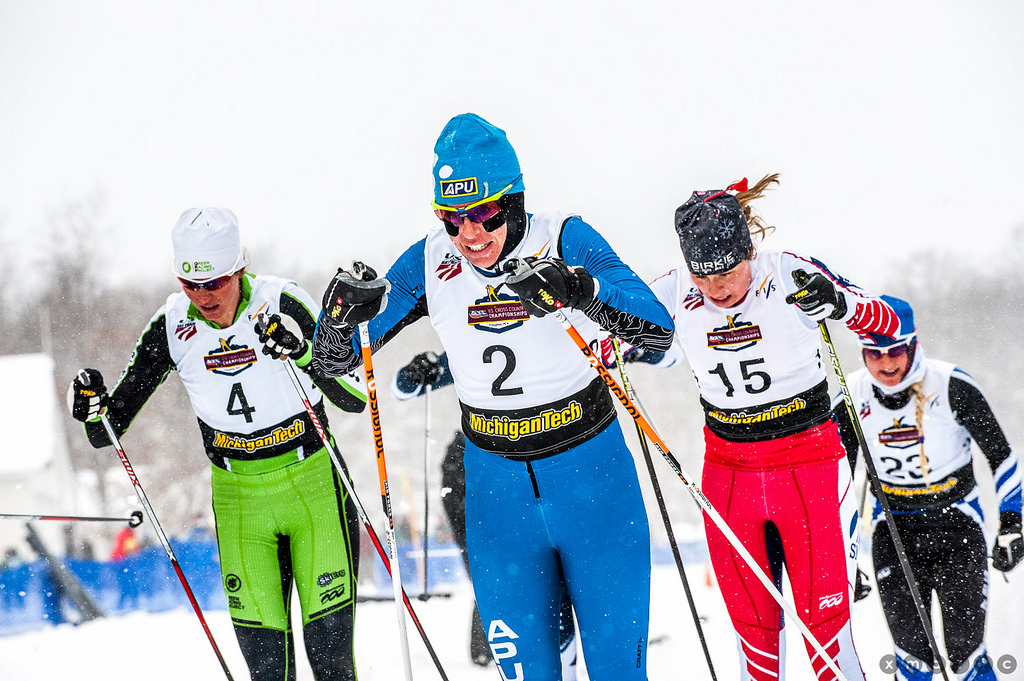
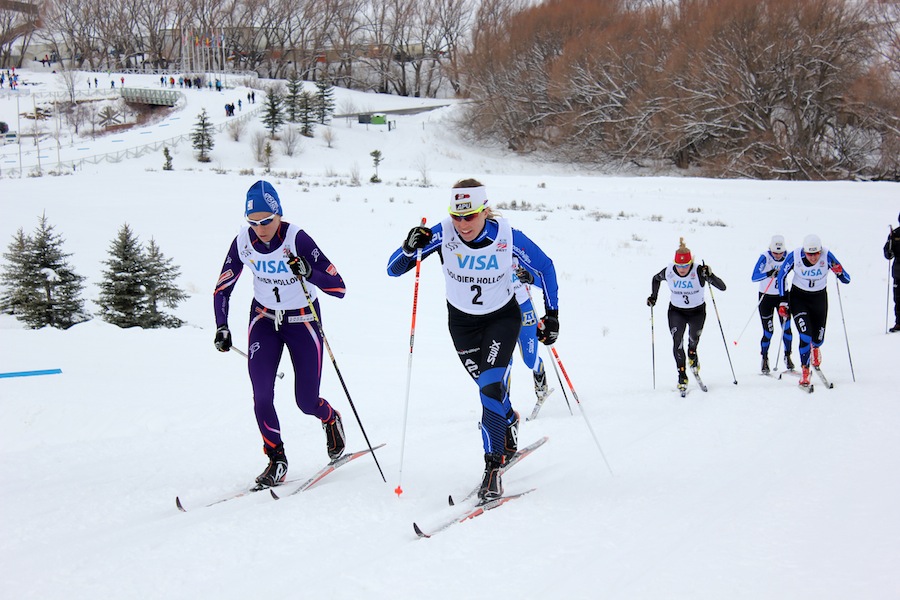
    Rosie Brennan (c), leads Liz Guiney (l) and Anne Hart shortly after the start in the women's 1.5 k classic sprint final at U.S. Cross Country Championships in Houghton, Mich. (Photo: Christopher Schmidt)
    Rosie Brennan (2), leads Liz Guiney (4), Anne Hart (15) and Hannah Halvorsen (23) shortly after the start in the women’s 1.5 k classic sprint final at U.S. Cross Country Championships in Houghton, Mich. (Photo: Christopher Schmidt)

    “I knew Rosie was just gonna blow it out of the water so I just tried to hang on,” Rorabaugh said with a laugh.

    Brennan did just that, surging to front of the pack out of the start, slightly ahead of Rorabaugh and Guiney, and directly in front of Hart before the downhill out of the stadium. According to Rorabaugh, Brennan attacked on the course’s two steeper climbs — most notably on the slight downhill in the middle and on the second hill about two-thirds of the way through.

    “It’s kind of like training, like, ‘Oh, Rosie’s going away on a hill again, this is my chance to hang on,’ ” Rorabaugh said.

    But unlike some training sessions in Anchorage, Alaska, this time, Brennan dropped Rorabaugh and the rest of the field for good.

    “I actually was putting most of my time in over the top of that first uphill and in the downhill,” Brennan said. “And then I guess the second uphill, I just surged to the top of that and then just tried to relax and ski it in.”

    Becca Rorabaugh (10) leads Heather Mooney (l) and Liz Guiney (r) into the finish in the semifinal of the U.S. Cross Country Championships women's 1.5 k classic sprint on Tuesday in Houghton, Mich.
    Becca Rorabaugh (10) leads Heather Mooney (l) and Liz Guiney (4) into the finish in the semifinal of the U.S. Cross Country Championships women’s 1.5 k classic sprint on Tuesday in Houghton, Mich.

    Just like each of her preceding heats, she won the final comfortably by 6.82 seconds in 4:52.72.

    Rorabaugh sensed a couple women gunning behind her for second, so she sped  up on the final gradual climb before the stadium straightaway.

    “I figured they were close enough that I should just go as hard as I could, so I was happy that the finishing stretch was striding today,” she said of the still-dragging conditions.

    After securing the win, Brennan looked behind her to welcome her teammate and the rest of her competitors (including Guiney as a former Park City teammate) across the line. She and Rorabaugh embraced after delivering the 1-2 APU punch, and Guiney, who finished 3.67 seconds later, stayed 2.4 seconds ahead of Hart for her first national podium in third.

    “[I’m] tired, cold. I’m ecstatic, honestly,” Brennan said with a laugh after. “Last year, I technically got the national championship [in the classic sprint], but I was second [to Russia’s Natalja Naryshkina] so to win outright is that much sweeter. I really like classic sprinting so it was just good — good course and good skiing for me.”

    “It’s hard to feel great all the time. I really just tried to trust the fitness that I’ve built and try to keep skiing and not look back and just keep going.” — Rosie Brennan (APU), two-time national classic sprint champion

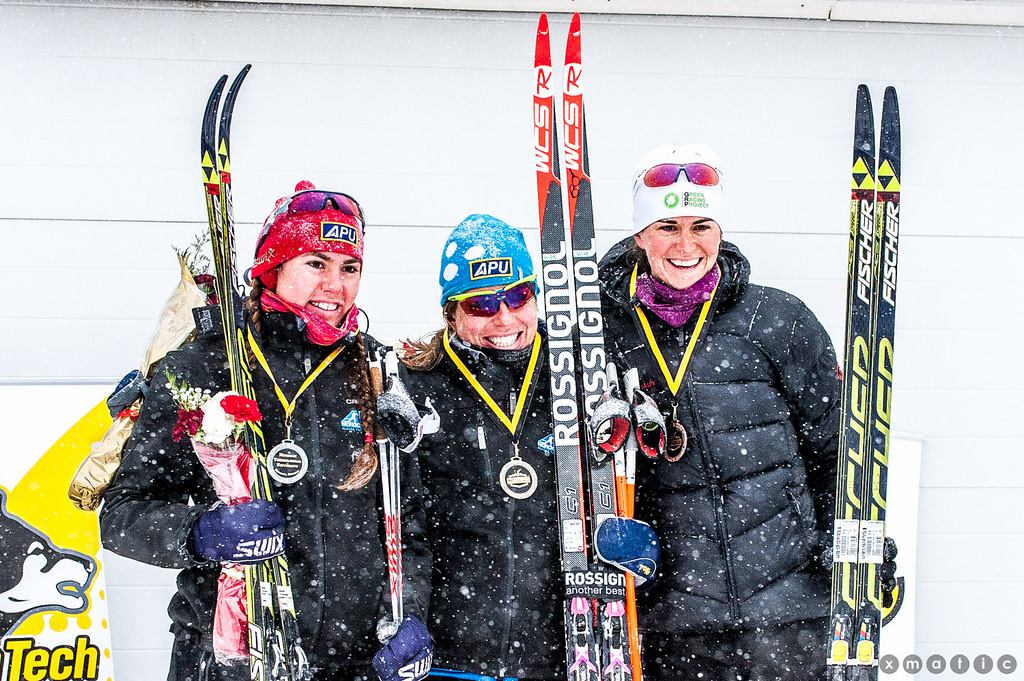
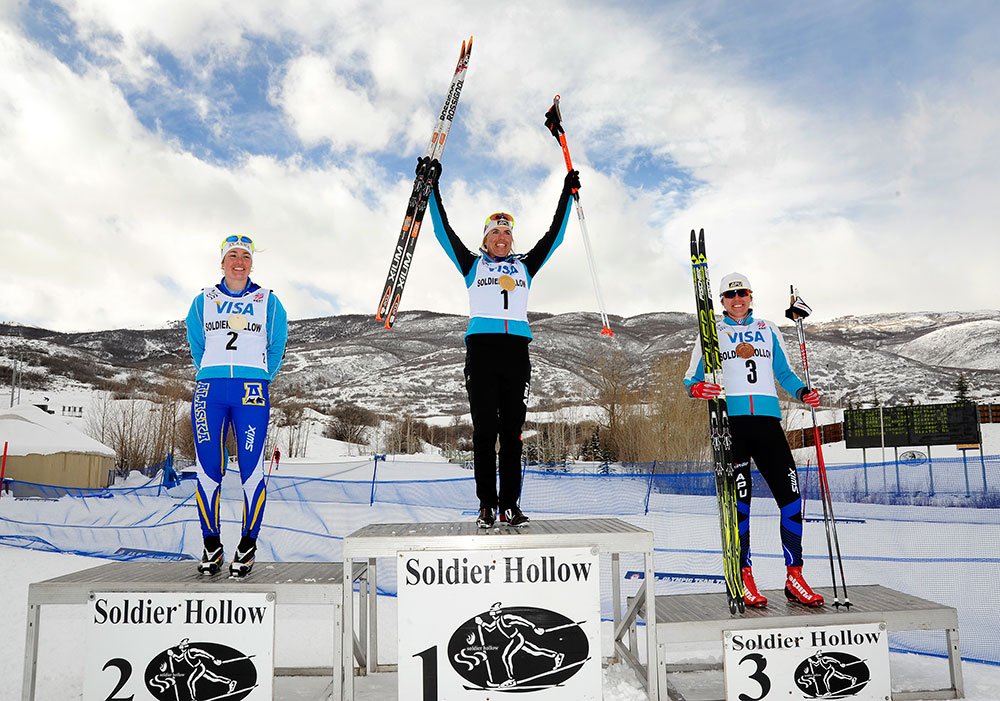
    APU's Rosie Brennan (c) and Becca Rorabaugh (l) on the podium in first and second, respectively, and Liz Guiney (Craftsbury Green Racing Project) in third in the women's classic sprint at U.S. nationals in Houghton, Mich. (Photo: Christopher Schmidt)
    APU’s Rosie Brennan (c) and Becca Rorabaugh (l) on the podium in first and second, respectively, and Liz Guiney (Craftsbury Green Racing Project) in third in the women’s classic sprint at U.S. nationals in Houghton, Mich. (Photo: Christopher Schmidt)

    It was also her fourth win out of six SuperTour races this year. Rorabaugh said she was happy the two could team up to take first and second.

    “We work really hard together all the time so it’s really great to have it play out like this,” she said.

    Guiney, a 23-year-old, first-year senior who qualified in fourth, placed ninth the last two years at nationals in the classic sprint (in 2013) and freestyle sprint (in 2014).

    “It’s really exciting,” said Guiney, who won her quarterfinal ahead of Frankowski and placed third in her semifinal behind Brennan and Rorabaugh, respectively. “It’s kind of a cool realization for me that I can be up there.”

    Hart improved upon her best nationals finish (which was fifth in the 2013 skate sprint) in fourth on Tuesday, about 13 seconds behind Brennan, and explained her main goal after qualifying in 15th was to keep an open mind and chip away at the heats.

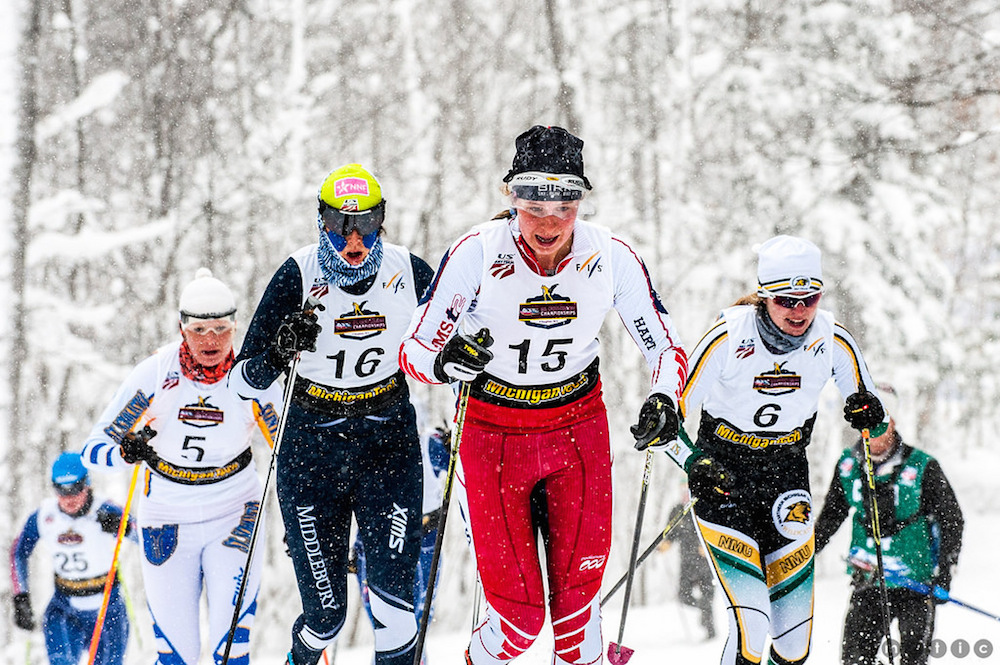
    Anne Hart (SMST2) leads her quarterfinal ahead of Middlebury's Heather Mooney (16) and Northern Michigan University's Vivian Hett (6). (Photo: Christopher Schmidt)
    Anne Hart (SMST2) leads her quarterfinal ahead of Middlebury’s Heather Mooney (16) and Northern Michigan University’s Vivian Hett (6). (Photo: Christopher Schmidt)

    “It was really anyone’s day out there,” she said. “When you look at [Sunday’s 15 k] skate race with Kyle [Bratrud] having such a standout race, you just have to remember that anything can happen.”

    Hart won her quarterfinal by 1.32 seconds over Mooney, advanced out of the semifinal in third, and by the time the final rolled around, she was mostly aiming to stay in front of her fellow U23 competitors.

    “[Stratton coach] Pat [O’Brien] gave us stunningly fast skis today, so all of the starts the plan was, I figured Rosie was going to be the fastest out there,” Hart recalled. “I was just like, if I can just get myself right behind her and stay on her as long as possible…”

    She did so on the first climb, but by the second hill, she thought, “ ‘OK, maybe not,’ ” Hart said. “From there on out, it was just kind of battling for spots and with U23’s, every spot matters, so I was just willing myself to the finish line.”

    Her father was cheering her on from the sidelines, which helped, she said.

    “I graduated from Dartmouth last year and the first year out of college, I’ve been told a million and a half times by everyone and their mother that … it’s really different,” Hart said. “I just had what I call a bunch of vanilla races [to start the season], and so it’s just a confidence booster to say, ‘I’m doing this for a reason, I can do this.’ … So it’s gonna help me sleep better at night I think.”

     “It’s just a confidence booster to say, ‘I’m doing this for a reason, I can do this.’ ” — Anne Hart (SMS T2 Team), fourth

    Sixteen-year-old Hannah Halvorsen celebrates her quarterfinal win on Tuesday in the women's 15 k classic sprint at U.S. Cross Country Championships in Houghton, Mich.
    Sixteen-year-old Hannah Halvorsen celebrates her quarterfinal win on Tuesday in the women’s 15 k classic sprint at U.S. Cross Country Championships in Houghton, Mich.

    Halvorsen in fifth (+15.16) said her parents also buoyed her throughout the day.

    “My parents were really believing in me so I decided I’d give it what I have and I was pretty surprised that I was able to do really well in the heats,” Halvorsen said. “I had a lot of fun skiing with some fast girls.

    “I’ve been training this year with World Juniors kind of on my mind, but just trying to focus on the process and ski as well as I can,” she added. “So we’ll see what happens and how the points play out.”

    Twenty-year-old Mooney in sixth (+15.36), in her senior year at Middlebury, improved upon her two eighth-place finishes at nationals in the classic sprints in 2013 and 2011.

    “I was in the A-final at Spring Series when I was a J2, same race, but I was psyched [about today],” she said after qualifying 16th. “[I] tried to go into it without any expectations … definitely was intimidated by a six-minute sprint course, but just took each one as it came.”

    As for her goals for the rest of the season — and whether U23 World Championships are at the heart of them — Mooney said not necessarily.

    “This sounds really silly — I’d like to race fast enough to be among the top U23’s, but I love college racing and this is my last year and I’m really excited to try to race really consistently and be at the top of the college circuit, focusing on NCAAs,” she said. “I’d love to make [U23 World Championships], but also I’m going to spend the winter in the East and I’m excited for that.”

    Note: The defending freestyle sprint champion and 2013 classic sprint champion, Jennie Bender of the Bridger Ski Foundation crashed out of contention while leading up and over a climb near the end of her quarterfinal.  She placed fifth, 7.8 seconds behind Rorabaugh as the quarterfinal winner, and did not advance to the semifinals.

    “I was leading, then I was on my face,” Bender recalled in an email. “Knocked the wind out of me. … I am pretty disappointed, because I came into this race with high hopes, but that’s sprint racing. Looking forward to the skate sprint.”

    — Lander Karath contributed reporting

    Results

  • Gregg Battles Conditions, APU Women to Notch Her First Win of Season in Houghton

    Gregg Battles Conditions, APU Women to Notch Her First Win of Season in Houghton

    Caitlin Gregg (l) of Team Gregg/Madshus leads Rosie Brennan (r) of APU on in the final lap of the 10 k freestyle at the 2015 U.S. Cross Country Championships in Houghton, Mich. Gregg won the race, while Brennan earned third place.
    Caitlin Gregg (l) of Team Gregg/Madshus leads Rosie Brennan (r) of APU on in the final lap of the 10 k freestyle at the 2015 U.S. Cross Country Championships in Houghton, Mich. Gregg won the race, while Brennan earned third place.

    HOUGHTON, Mich. – Individual starts are often considered less exciting than their mass start counterparts, but the women’s 10-kilometer freestyle at the 2015 U.S. Cross Country Championships proved they can hold just as much exhilaration.

    Caitlin Gregg of Team Gregg/Madshus won the race with a time of 30:31.5, roughly 12 seconds ahead of the next competitor. What the results don’t say, however, is how Gregg earned her first victory of the season.

    Two of the competition’s favorites, Gregg and current Super Tour leader Rosie Brennan, of Alaska Pacific University (APU), started 30 seconds apart with Brennan donning 283 and Gregg 285. Gregg would have to gain on Brennan if she had any hope of winning, while Brennan needed to ensure that Gregg didn’t make up any ground.

    At roughly 1 k into the race, misfortune hit Brennan as she planted a pole between in her ski and fell face-first into the snow. Getting up quickly, Brennan tried to pole again but face-planted for a second time before realizing her pole was broken.

    While she retrieved a replacement, it was too big, causing her to ski in a lopsided manner. She didn’t receive a smaller one until two or three k later when she passed her APU coach, Erik Flora.

    At that point Gregg had already made up the 30-second deficit.

    “I was definitely a little flustered and then Caitlin caught me as a result. I tried to just relax and tell myself that she could be winning by a minute,” Brennan said in a post-race interview.

    Now skiing together, the two competitors worked in tandem to battle the slow terrain resulting from cold temperatures and blowing snow.

    Rosie Brennan (APU) skis with an oversized pole in the first lap of the women's 10 k freestyle at the 2015 U.S. Cross Country Championships in Houghton, Mich.
    Rosie Brennan (APU) skis with an oversized pole in the first lap of the women’s 10 k freestyle at the 2015 U.S. Cross Country Championships in Houghton, Mich.

    “I was really fortunate because Rosie Brennan had a crash and broke her pole and so I caught her. Skiing behind someone is a lot easier so I got a good ride with her. We switched on and off,” Gregg said after the race.

    After the two reached the middle of the second 5 k lap, Brennan explained that she decided there was nothing to lose, and took off in an attempt to earn back the 30 seconds she lost to Gregg.

    “I felt a lot better in the second lap. I pulled myself together and I found the fitness I was looking for,” she said of her last-ditch effort.

    While she pulled away and finished a sizable distance ahead of Gregg, it wasn’t enough to bridge the 30-second gap, and Brennan ultimately finished 12.6 seconds back for third place behind Gregg and APU teammate Chelsea Holmes in second.

    “It makes me feel frustrated, but also happy that I have the fitness I thought I did,” Brennan said of the day.

    Flora, who has coached Brennan for several years, explained that he was proud of his skier even though she was unable to demonstrate her full potential.

    “She is in good racing form. The pole thing, that is unfortunate, but I guess that is racing.  She did well, really well considering everything,” he said after the race.

    Attributing much of her success to the fast skis and her ability to fight in adverse conditions, Gregg explained she’s often at her best on a restless course like Houghton’s and that slow conditions like Sunday’s bring out her best skiing.

    Gregg, who recently returned stateside after competing on the World Cup this fall, said that she hasn’t felt like herself this year but that Sunday’s race was a step in the right direction. She explained that after being near the back of the pack in Europe, seeing her name at the top of the result sheet was a confidence booster.

    “The idea of being towards the front of the result sheet – that’s a lot better for sure, psychologically.” She said pointing out that she’s still searching for her highest gear but that she’s “optimistic in the sense that this year can really get better.”

    Prior to Sunday’s race, Gregg explained that a possible reason for her poor results on the World Cup came in the form of shingles. Having contracted the illness upon arriving in Europe, Gregg said that she often felt drained of energy while racing against the best in the world.

    “It wasn’t until the second weekend in Davos, when it was a 10K Skate race at altitude and should have been my best race, that I realized the virus might have zapped me a bit more than I thought. I am still not sure if it had any affect on my race results though?” she wrote in a previous email.

    Gregg explained the 10 k at nationals marked an improvement in her energy — in Europe she would often tire after 3 k of racing while in Houghton she said it was after 7 k where her drive started to wane.

    In second place, Holmes (+12.1) also said that Sunday’s race didn’t “feel great,” but chalked it up to the slow snow and arctic winds. She explained that the near zero-degree temperatures motivated her start and finish her race as fast as possible, so that she could stay warm.

    Chelsea Holmes (APU) finished second in Sunday's 10 k freestyle individual start at the U.S. Cross Country Championships in Houghton, Mich.
    Chelsea Holmes (APU) finished second in Sunday’s 10 k freestyle individual start at the U.S. Cross Country Championships in Houghton, Mich.

    Holmes joined the APU squad this fall after skiing for Sun Valley in the 2014 season. Flora said that while fall is often too late for skiers to join his team, the combination of familiarity with Holmes and her roots in Girdwood, Alaska, won him over.

    “She’s awesome; lots of energy, good enthusiasm, hard trainer, and brings a lot of really good distance skills to our group and so it helps balance the team. We have a few good sprinters, a few good classic skiers, and a few good skaters, so having Chelsea on our team is great,” he said of the 27-year-old Holmes.

    Caitlin Patterson (+32.2) of the Craftsbury Green Racing Project finished fourth, and said that she was hoping for a better performance. She explained that unusually icy conditions in her hometown of Anchorage, Alaska, had her used to fast skiing with long glide, resulting in a rough transition to the slow snow in Houghton.

    “It’s interesting coming from Anchorage where we were skiing on ice. That snow was so fast and I was working on V2ing up the hills and feeling like I could glide a lot. Here it’s hard to get a sense of whether I’m actually moving, when I’m feeling like I’m not gliding at all on the uphills,” she said.

    Fifth-place finisher Jessica Yeaton (+32.8) cemented APU’s dominance in the women’s 10 k delivering the team’s third finish in the top five. Yeaton, who graduated from Montana State University in the spring of 2014 is a dual citizen of the U.S. and Australia. After racing in the southern hemisphere this past summer she is now a member of the national team who trains with the APU squad in Alaska. Later this winter she will compete abroad in several World Cups and the 2015 World Championships in February.

    Yeaton, who had a self-described slow start to the season in the West Yellowstone and Bozeman SuperTours, said as soon as she caught 18-year-old superstar and eventual sixth place finisher Katherine Ogden, she realized she was having a good race. The pair skied together for the remainder of the competition playing what Yeaton called a “game of cat and mouse.”

    And while the races in Houghton mean nothing for qualification or points for Yeaton, she explained that they were good practice for later in the season.

    “I’m using U.S. nationals as good training races and it doesn’t really matter how I do here, but it does in the sense of building confidence,” she said.

    With three skiers in the top five, Flora said his team’s success was attributed to the athletes’ motivation and camaraderie

    “Today was probably the training, good teammates pushing each other, and all that good stuff,” he said. “Chelsea and Rosie we definitely expected them to be in the fight for the podium, but I think the big success of the day is Jessie Yeaton,” he said.

    — Alex Kochon contributed reporting

    Results

  • Course-Side Quotes: Catching Up with U.S. Nationals Top Dogs

    Course-Side Quotes: Catching Up with U.S. Nationals Top Dogs

    Rosie Brennan (Alaska Pacific University)
    Women’s SuperTour leader Rosie Brennan (Alaska Pacific University) getting some race prep in Saturday morning before the first race of 2015 U.S. Cross Country Championships on Sunday: the 10/15 k freestyle individual starts at the Michigan Tech Trails in Houghton, Mich.

    HOUGHTON, Mich. — After touching down in Houghton later Friday afternoon, FasterSkier chatted with a couple of podium favorites at the U.S. Cross Country Championships over the next week, including World Cup and top SuperTour skiers. The first race of 2015 nationals kicks off Sunday at 10 a.m. with the women’s 10 k freestyle individual start, followed by the men’s 15 k freestyle at 1 p.m. at the Michigan Tech Trails.

    ***

    – Rosie Brennan (Alaska Pacific University)

    Women’s overall SuperTour leader, who earned World Cup start rights after nationals with her November-December results

    Last two races: 1st Bozeman SuperTour classic sprint (Dec. 6), Bozeman SuperTour 10 k classic (Dec. 7)

    On period between Bozeman SuperTour in early December and U.S. nationals: 

    “It’s been a little weird because I was actually dryland training in Utah for a few weeks and then I had a week-and-a-half of OK skiing, so it feels like I’m starting my season over again. I actually have really fond memories of racing here so I think it’s a good mindset to be in. “

    On the where she’s at:

    “I’ve been working on a lot of more process-oriented things in my racing. If I do that, more result-oriented goals will follow. I had a really good summer of training; I think I just learned a lot over the last season more in terms of just how to be a better racer and I think that’s proven really helpful in being able to use the fitness that I’ve gained over the summer more effectively.”

    On racing the World Cup starts after nationals: 

    “I’m just looking to use what I’ve learned from my past experiences on the World Cup and hope to improve upon other times I’ve had over there.”

    Caitlin Patterson gliding through the finish during Saturday morning race prep at the Michigan Tech Trails in Houghton, Mich. U.S. nationals kick off Sunday in Houghton with the 10/15 k freestyle individual starts.
    Caitlin Patterson gliding through the finish during Saturday morning race prep at the Michigan Tech Trails in Houghton, Mich. U.S. nationals kick off Sunday in Houghton with the 10/15 k freestyle individual starts.

    – Caitlin Patterson (Craftsbury Green Racing Project)

    Second-overall ranked SuperTour woman

    Last two races: 4th in 10 k skate at Besh Cup in Anchorage, Alaska (Dec. 21), 6th in Besh Cup skate sprint (Dec. 20)

    On racing again:

    “I’m looking forward to another round of competition. It was fun to start off the SuperTour like always in West Yellowstone and Bozeman, and those races went well but I still felt like I was rounding into good shape and figuring out some early season bugs. So I’ve been feeling good and I’m looking forward to these, to fight it out again and there’s a lot of fast people here so it should be pretty cool.”

    On skiing the skiing Anchorage (in late December):

    “Anchorage has really low snow, so it actually wasn’t as bad as I’d expected. I brought rock skis and used them a lot, but there was snow. I skied every day. The [Besh Cup] races were a little bit changed from what they had planned, like we did a sprint that was not even 900-meters long, a skate sprint, so that was funny, but it was good, enough to throw off your balance a little bit. I was there until [Thursday] and then I flew here. ”

    On U.S. nationals goals:

    “I’m definitely shooting for some podiums; I see that top fives should certainly be within my reach. We’ve raced on the SuperTour with a lot of these girls, everyone except Caitlin Gregg has been around and we’ve been bouncing back and forth a bit, so I guess just looking forward to putting out there whatever I can and see how it turns out.”

    On what she needs to do to succeed:

    “Keeping nerves in check a little bit, but I think it’s good to get a little bit nervous because it shows that you care about it and care about racing and are ready for it. It’s sort of just part of the preparation. I definitely need to get in a good warmup — that’s one of the things I’ve been trying to focus on this year because it’s pretty important to come into the races right from the first kilometer, not start slowly and try to wake up … Then just keep in the zone and have a lot of focus during the races and go for it. ”

    Chelsea Holmes (Alaska Pacific University)
    Chelsea Holmes (Alaska Pacific University) training on Saturday morning at the Michigan Tech Trails, the day before U.S. nationals kick off in Houghton, Mich.

    – Chelsea Holmes (APU)

    Third overall

    Last two races: 2nd in 10 k skate at Besh Cup in Anchorage, Alaska (Dec. 21), 5th in Besh Cup skate sprint (Dec. 20)

    On first impressions of the conditions at Michigan Tech: 

    “Great, lots of snow, it’s cold, hard wax so I’m pretty happy so far.”

    On memories of Houghton [when it last hosted U.S. nationals in 2007 and 2008]: 

    “Those races, I don’t remember anything of the actual experience, which seems silly, other than I remember it being really warm. I did senior nationals those years when I was in college and I had never done it prior, but I mean, I think my first year of senior nationals I was close to the one-hundreds and maybe the second year I was in the forties or fifties. It was the first races of college skiing and it was just race as fast as you could.”

    On how it feels to be in Houghton now, in the top three overall?

    “Not too different. I’ve tried to make the switch where I’m just going out and having fun, but also, the races are a big deal and you want to do as well as you can, but I try to keep it in the context of, it’s a race and there’s only so much I can control … I can’t control how everyone else skis, so I can, even if I have a terrible day, I would like to say, I’m happy with that. That’s my goal.”

    On her target race(s):

    “I’m definitely a stronger distance skier so I would say those [races] more, but I’m really working on improving my sprinting, so I’ve discovered that if I try to stress about that less, that can be fun, too. Honestly, I’m really excited about the whole week. I think it should be really fun, and I love to race so four races in a week is a good bang for your buck.”

    – Caitlin Gregg (Team Gregg/Madshus)

    2013/2014 women’s overall SuperTour winner, started 2014/2015 season on World Cup

    Last two races: 47th in Davos World Cup sprint (Dec. 21), 54th in Davos 10 k freestyle (Dec. 20)

    On how she feels heading into nationals, her first domestic races of the season: 

    “I’m feeling pretty good. I think the one thing that I’ve realized, though, is I don’t know where I’m at. I always say, ‘I’m never 100-percent confident going into a race,’ or anything like that. I’m always like, anything could happen. I could have a great day, but then someone could have an even-better day so anything is always possible. Going forward, I’d say I feel good, energy feels good, but we’ll have to see what happens. … It is definitely fun to be back and have the whole [Loppet Nordic Racing] crew here, our club team, for Brian and I to be training with and prepping with.”

    On how she’s recovered since four weekends of World Cup racing in Europe:

    “I ended up taking a number of days off from training when I got home and a number of days off from skiing. I’ve been pretty conservative, trying to maintain my fitness, but also kept things really short, kept things kind of focused on not pushing the body too far.”

    And after contracting shingles at the start of the season in Muonio, Finland (as explained in an email):

    “The small rash healed up in less than 3 days and was never as painful as others have shared in their stories! I felt a little tired and lethargic for about a week (but I also just traveled 24 hours to Europe!). After taking it easy I resumed normal training and my energy felt great, especially at the lower intensities, but when I went to race I realized that my highest gear wasn’t quite there.

    “It wasn’t until the second weekend in Davos, when it was a 10K Skate race at altitude and should have been my best race, that I realized the virus might have zapped me a bit more than I thought. I am still not sure if it had any affect on my race results though?

    “I decided to get home and give myself a good couple of weeks to recover. I went to Hayward with Brian and didn’t train for 5 days. After that I started jogging easy and finally began skiing after a week. I feel great, especially at lower intensities, but I still don’t know where my energy at higher intensities is? I am excited to race and look forward to the rest of the season!”

    On goals at nationals:

    “For sure, when you’re on the World Cup and you’re kind of getting toward the back of the pack, you’re kind of like, ‘Man, that really doesn’t feel so good.’ I can deal with it, but you’re like, ‘It would be fun to feel good and finish a race,’ and be like, ‘All right, that was fun again.’ The races are fun over there for sure, but I want it to be a good feeling all around. Feel good energy, feel great skis and obviously great course, and have everyone I know here for it.”

    On how she’s feeling about Sunday’s 10 k skate, her target race:

    “I’m really excited about it. I love this course. I heard there was going to be a little adverse weather conditions and that kind of gets me excited, too. We kind of get a lot of that in the Birkie and I’m kind of preparing for it in a similar way where you never know, is there going to be a lot of snow? Is it going to be blowing sideways where the windchill’s just horrific? All that just makes it more interesting.”

    ***

    Matt Gelso racing to first in the West Yellowstone SuperTour 15 k freestyle on Nov. 29, 2014. (Photo: Toko)
    Matt Gelso racing to a win in the first distance race of the season at the West Yellowstone SuperTour 15 k freestyle on Nov. 29. (Photo: Toko)

    – Matt Gelso (Sun Valley Ski Education Foundation)

    Second-overall ranked SuperTour male, first American, who earned World Cup start rights after nationals

    Last two races: 6th Rossland NorAm 10 k classic (Dec. 13), 2nd Rossland NorAm 15 k classic (Dec. 14)

    On how he’s been feeling in the time since those races:

    “I’m feeling good. I got a strong solid block of training in California during Christmas. I managed, knock on wood, to not get sick. I’d like to feel good and be up in the results. I know I’m skiing good and skiing fast; I want to set myself up well to go to Europe and  have a platform at least and try and have some success over there.”

    – Miles Havlick (SVSEF)

    Fourth overall in the SuperTour, second American

    Last two races: 2nd Bozeman SuperTour 15 k classic (Dec. 7), 9th Rossland NorAm 10 k classic (Dec. 13)

    On arriving in Houghton: 

    “It’s been fantastic. The conditions are as good as they get. I had a little bit of illness after Rossland but a little time at home fixed that.”

    On racing prospects: 

    “I’d like to have a few podiums. That’s my goal. I think with these trails – the laps are long – the race is going to be a little different than we’re used to so pacing is very important. Warming up well in the cold temperatures and gritting your teeth and staying focused in the race.”

    Kris Freeman on his way to winning the 30 k freestyle interval start by more than a minute and a half on Dec. 20 at the Sovereign Lake NorAm in Vernon, B.C. (Photo: Frances Weeks)
    Kris Freeman on his way to winning the Sovereign Lake NorAm 30 k freestyle by more than a minute and a half on Dec. 20 in Vernon, B.C. (Photo: Frances Weeks)

    – Kris Freeman (Team Freebird)

    Seventh overall in SuperTour, Canadian NorAm leader

    Last two races: 1st in Sovereign Lake NorAm 30 k skate (Dec. 20), 1st in Rossland NorAm 15 k classic (Dec. 14); has won every NorAm he’s entered this year.

    On how he’s feeling:

    “It’s been a couple weeks now since I raced, but I had good momentum coming out of the NorAms in Canada so I feel good and good on my skis and looking forward to racing.”

    On goals at nationals:

    “I want to keep on having the good sensations that I’ve been having racing. When I’m skiing well, skiing is just so fun. And to be skiing well again this year, I’m really enjoying it.”

    – Paddy Caldwell (Stratton Mountain School T2 Team/Dartmouth)

    21st overall in SuperTour, U.S. Ski Team D-team member who skipped the Bozeman SuperTour and is focusing on 2015 U23 World Championships in Kazakhstan

    Last two races: 4th Middlebury Eastern Cup 10 k classic (Dec. 20), 1st Middlebury Eastern Cup 15 k skate (Dec. 21)

    On goals for the week:

    “My goal is to, honestly, feel good racing. I always have a rougher start at the beginning of the season. I’m starting to feel good so I’m hoping to race as hard as I can and feel good about the effort about the performance.”

    On racing blueprint for rest of the season:

    “My plan is to head back to Dartmouth after the races to start classes and feel it out from there.”

    – Reese Hanneman (APU)

    2013/2014 men’s overall SuperTour winner, started 2014/2015 season on World Cup

    Last two races: 86th Davos World Cup skate sprint (Dec. 14), 79th Davos World Cup 15 k classic (Dec. 13)

    On what he’s been up to since: 

    “I came back from Europe on the World Cup [around Dec. 17] before Christmas and have been in Anchorage for a week then Fairbanks for a week then here.”

    On re-entering the domestic-racing scene:

    “This is the first year that I’ve done the World Cup to start off my season. That was different and obviously a huge learning experience and I didn’t perform like I wanted to or like I knew I can, but I got a lot out of it. It was really productive. So now to come to nationals, I remember maybe a couple years ago where I’d come to nationals and be stressing out like, ‘Oh man, this is such a big race,’ and now it seems pretty relaxed. It’s more homey. It feels like less of a mob scene. I guess it makes me a little more comfortable here.”

    On his memories of Houghton (at Junior Nationals in 2006 and senior nationals in 2007):

    “All of the races as a junior … here, I really struggled. I remember being way, way back in the pack, like, hundreds except for the skate sprint at U.S. nationals here. I had a really uncharacteristically good race and that got me to World Juniors [Championships in 2008]. At the time I didn’t even know what World Juniors was, but I had just made it and that ended up being really sweet. I remember coming up that hill on the sprint course here and passing everybody [laughs].

    “To be honest, that’s probably a race or a day or even a moment that probably got me to where I am now. because who knows, if I hadn’t done well that day, maybe I wouldn’t have gone to World Juniors and I wouldn’t have kept skiing, you know? So I remember that and I have some good memories and it’s been a while so I’m looking to ski a lot faster than I did when I was here.”

    On goals this time around at nationals:

    “I always want to do well at nationals. Obviously the World Cup is sweet and I would’ve loved to have performed better there, but U.S. nationals is still some of the biggest races, and maybe not the highest level of race that I’ll do this year, but pretty important just to qualify for [international-racing] teams and all that stuff.”

    10/15 k start lists (scroll down past first 200 racers for women)

  • Despite Slow World Cup Start, Gregg Optimistic and Working Toward World Champs

    Despite Slow World Cup Start, Gregg Optimistic and Working Toward World Champs

    Caitlin Gregg (Team Gregg) skiing to 56th place in the Davos World Cup 10 k classic, Dec. 13. (Photo: Toko)
    Caitlin Gregg (Team Gregg/Madshus) skiing to 56th place in the Davos World Cup 10 k classic on Dec. 13. (Photo: Toko)

    Caitlin Gregg had big plans before arriving in Europe to race the World Cup circuit as the 2014 SuperTour leader. Aiming to qualify for the 2015 World Championships in Falun, Sweden, Gregg intended to ski for World Cup points. If she accumulated enough, a top-50 ranking would mean automatic qualification for World Championships.

    After three World Cup weekends, that strategy appears to be out of reach for Gregg.

    In the first few weekends of the 2014/2015 season, the 34-year-old Minneapolis native has been near the back of the World Cup pack. Choosing not to start in November’s opening World Cup races in Kuusamo, Finland, Gregg’s first World Cup competition was the mini tour in Lillehammer, Norway, where she placed 78th in the sprint. The following day, she was 62nd in the 5-kilometer freestyle. In the final 10 k pursuit, she skied the 70th -ranked time and finished 68th overall  in the mini tour out of 74 women.

    In the latest World Cup in Davos, Switzerland, Gregg improved on her previous results, skiing to 56th in the 10 k classic and 60th in the 1.3 k freestyle sprint. However, it wasn’t close to the top-30 she had been aiming for.

    “I’d be lying if I said I wasn’t a little bit disappointed with the results,” Gregg said after the Davos 10 k. “I was gunning for a little bit higher, especially in that 5 k skate. I was looking to be in the points.”

    Some of Gregg’s fellow U.S. competitors have started their seasons slower than they’d hoped as well, with several of them outside the points.

    While not everyone has posted strong results, the difference between the U.S. Ski Team (USST) women and Gregg is that they have each cracked into the top-30 at least once.

    According to Gregg, members of the USST also have more wiggle room at the beginning the season, while she doesn’t as a Continental Cup leader.

    “Obviously the ideal thing would be to be on the ski team, because they have a little bit of leeway in terms of, OK, are they firing on all cylinders now or are they waiting for World Champs?” she said. “In my position, or really anyone on the SuperTour, we don’t really have that opportunity.”

    She said she was in a similar situation last year, when she started the season on the SuperTour circuit in the U.S. She believed a fast start was necessary to earn a spot on the Olympic team.

    Gregg delivered in late 2013, earning a podium in every nationally attended race she competed in before leaving for Europe in January for the Word Cup. However, she was not selected to the Olympic team.

    “But it’s a tough position on either side,” she acknowledged.

    Caitlin Gregg (Team Gregg/Madshus) racing to a nearly four-minute victory in the 20 k freestyle mass start at U.S. Cross Country Championships on Jan. 8 at Soldier Hollow in Midway, Utah. (Photo: U.S. Ski Team/Sarah Brunson)
    Caitlin Gregg (Team Gregg/Madshus) racing to a nearly four-minute victory in the 20 k freestyle mass start at the 2014 U.S. Cross Country Championships at Soldier Hollow in Midway, Utah. (Photo: U.S. Ski Team/Sarah Brunson)

    Her current situation is reminiscent to that of Alaska Pacific University’s Rosie Brennan last season.

    The 2012/2013 SuperTour leader, Brennan started her winter on the World Cup with the hope of earning a spot at the Olympics. However, her best result was a top 60. While she earned a national title and several podiums at the 2014 U.S. national, she did not make the Olympics.

    Even with the fast track to pre-qualification rapidly escaping, both Gregg and her husband, Brian, are still gunning for World Championships — they’ll just have to be picked by discretion or USSA points.

    “We’ve seen people turn around some maybe slower starts to the season. We’re still optimistic,” she said. “We put in some good training this year. We want to go as the husband-and-wife duo. We got blocked last year, so now we have to go again strong.”

    Gregg believes her best chance for qualification is to perform well in the upcoming World Cup 10 k freestyle in Davos this weekend. Now that she’s already raced the course, Gregg believes that knowledge and experience will help her accomplish a strong result.

    When she returns to the domestic circuit for the 2015 U.S. national in Houghton, Mich., Gregg will again look to make an impression in the 10 k freestyle.

    “A good statement in the 10 k at nationals and hopefully [it will] really put that little thought in the back of their minds again to bring us. Again, it’s all based on USSA points, so really looking to chase those down and see what we can do there,” she said.

    Despite the challenge of skiing at the international level, Gregg said that the trip to Europe has been worthwhile for a variety of reasons.

    “I wouldn’t trade this – even if it means that I don’t make World Championships because I came over here. I just have learned so much,” she said.

    “I wouldn’t trade this – even if it means that I don’t make World Championships because I came over here. I just have learned so much.” — Caitlin Gregg (Team Gregg/Madshus) on starting the 2014/2015 season on the World Cup

    Gregg explained that after racing two weekends on the World Cup, she’s seen improvements in her skiing, especially in classic skiing.

    Traditionally stronger in skating, Gregg’s 56th in last Saturday’s 10 k classic is her strongest result thus far on the 2014/2015 World Cup. She started amongst some of the strongest skiers on the circuit including Krista Parmakoski of Finland and Justyna Kowalczyk of Poland. She said that her race felt better than the earlier distance races of the season.

    “I think last weekend I was like, ‘where did I give up all that time?’ Today was one of those days where you think, OK, that’s where it was,” she explained on Saturday. “I was happy when I got to the line with what I did out there, and I couldn’t have done anything else. My skis were dialed, I felt great, everything was great.”

    As she enters the last World Cup weekend before returning stateside, Gregg said she’s excited to take advantage of the opportunities skiing on the World Cup has given her.

    “[I’m] disappointed, but still really taking it in and learning so much. Psyched for the opportunity and knowing that it will make me a stronger skier down the road,” she said.

    If she doesn’t make World Championships, you can expect to see Gregg competing her “other passion,” the American Birkebeiner on Feb. 21 in Hayward, Wis. “I don’t want to say [that’s] the second choice or anything like that, but that’s the plan,” she said.

  • Weekly Roundup: Lillehammer Mini Tour, Östersund and Bozeman

    Weekly Roundup: Lillehammer Mini Tour, Östersund and Bozeman


    Look familiar? We saw this all-Norwegian podium twice, except with Therese Johaug (r) as the winner and Marit Bjørgen (c) in second in the 5 k freestyle on Day 2 of the Lillehammer World Cup mini tour. On Day 3, Bjørgen won it outright over Johaug, and Heidi Weng (l) was once again third. (Photo: Fischer/NordicFocus)
    Look familiar? We saw this all-Norwegian podium twice, except with Therese Johaug (r) as the winner and Marit Bjørgen (c) in second in the 5 k freestyle on Day 2 of the Lillehammer World Cup mini tour. On Day 3, Bjørgen won it outright over Johaug, and Heidi Weng (l) was once again third. (Photo: Fischer/NordicFocus)

    As Chelsea Little pointed out in her story about France’s Martin Fourcade dusting the men’s field in the 10-kilometer sprint last Saturday in Östersund, Sweden, “when he’s on, he’s on.”

    And he wasn’t the only one repeatedly in the headlines of the IBU and FIS World Cup and U.S. SuperTour coverage this past weekend. We got used to Norwegian winners like Marit Bjørgen and Martin Johnsrud Sundby, and Alaska Pacific University’s Rosie Brennan — who’s won three out of four SuperTour races this season.

    A pumped Martin Johnsrud Sundby (Norway) after winning the men's 15 k classic pursuit for the overall Lillehammer mini-tour title on Sunday in Norway. (Photo: Fischer/NordicFocus)
    A pumped Martin Johnsrud Sundby (Norway) after winning the men’s 15 k classic pursuit for the overall Lillehammer mini-tour title on Sunday in Norway. (Photo: Fischer/NordicFocus)

    Then there were consistent top performers in the Lillehammer World Cup mini tour: Alex Harvey of the Canadian World Cup Team placed fifth in last Friday’s skate sprint and ended up 10th overall in the three-stage series, and Sadie Bjornsen led the U.S. Ski Team in 18th overall.

    Also in Lillehammer, Bryan Fletcher of the U.S. Nordic Combined team rose from 36th to eighth on Sunday for a season best. His teammate, Adam Loomis notched a career-best 35th.

    At the five-race IBU World Cup in Östersund, Canada’s Megan Heinicke rose to a career-best 12th in the women’s 15 k individual last Thursday.

    “I have never started the season so relaxed and feeling so little pressure,” Heinicke explained after the race, in which she shot 19-for-20. “I wasn’t even sure if I should start this season and I think the low expectations (from myself and others) really helped me lose that nervous ‘I have to hit’ feeling.”

    After placing ninth and 12th, respectively, in Saturday’s sprints, Canadians Nathan Smith and Rosanna Crawford qualified for the Östersund pursuit, where Smith was on track for a possible top-four finish before missing his first three shots of the day in the final standing stage.

    C’est la vie — that’s biathlon. He ended up 16th and Crawford took 14th. Meanwhile, Americans Lowell Bailey and Susan Dunklee finished 17th and 19th, respectively. In the 20 k individual earlier in the week, Tim Burke placed 11th and Bailey was 20th, and Dunklee took 21st in the women’s 15 k. Burke went on to place 17th to lead the U.S. in the sprint.

    FasterSkier was on site for the second SuperTour the season in Bozeman, Mont., as racers weathered unseasonably warm temperatures on Saturday and Sunday — well above 40-degrees Fahrenheit.

    Rosie Brennan (APU) glides to a first-place finish during the women's SuperTour classic sprint at Bohart Ranch near Bozeman, Mont.
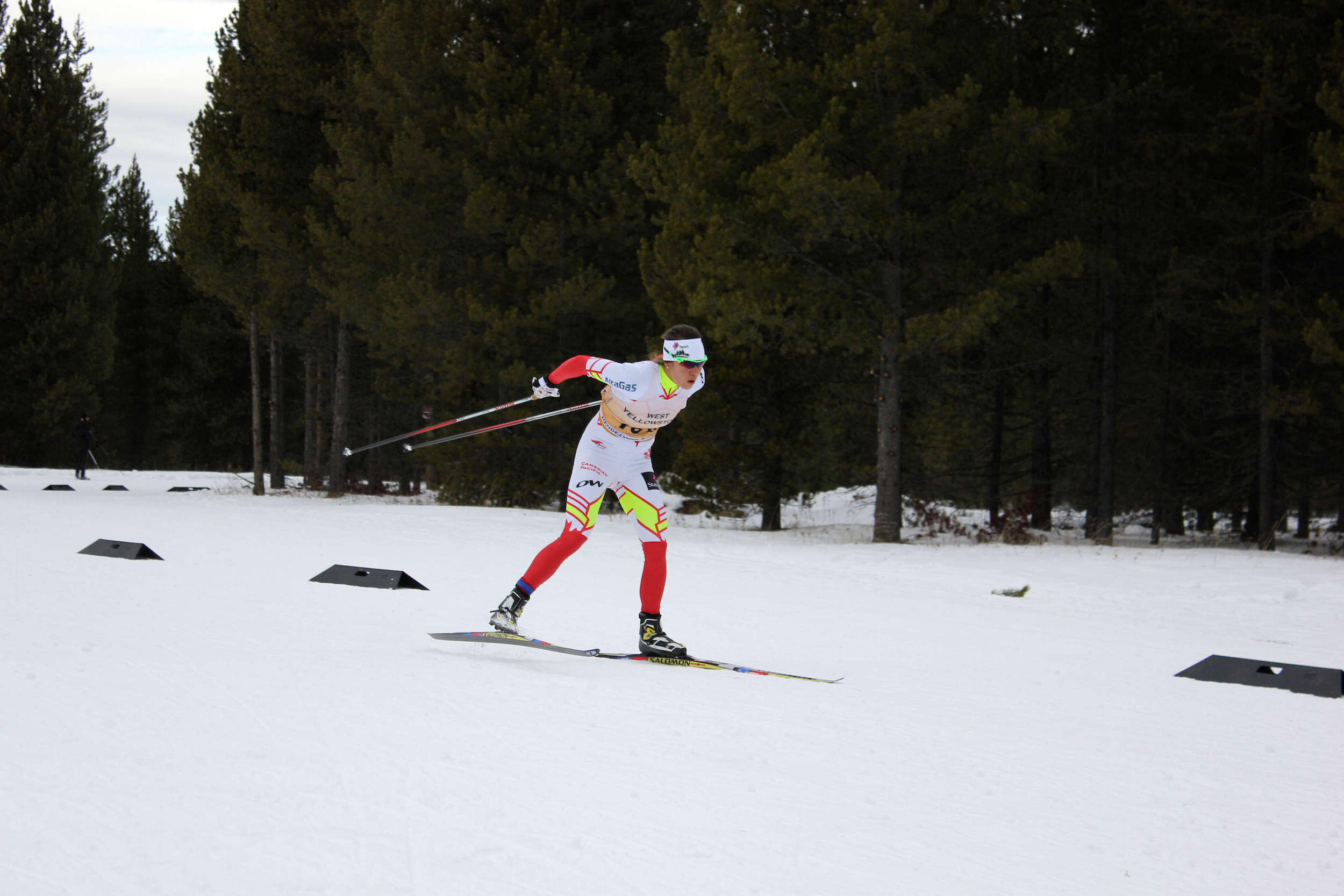
    Rosie Brennan (APU) double poling to the women’s SuperTour classic-sprint victory last Saturday at Bohart Ranch near Bozeman, Mont.

    But with freezing temperatures overnight, the 5 k distance course became fast and icy Sunday morning, and organizers postponed the classic mass starts an hour to let the snow thaw. Still, Brennan dreaded what awaited her in the women’s 10 k.

    She called the conditions her least favorite, in fact, “her worst nightmare,” she said. But the Anchorage, Alaska, resident used the race as an opportunity to conquer some fears. Brennan ultimately edged APU teammate Chelsea Holmes by five seconds for the win.

    “She just crushes me in double pole,” Holmes said, “Which is good — I see her go by and I go as hard as I can to keep up with her, and maybe one day I will be able to.”

    The next-closest finisher, 17-year-old Katharine Ogden finished 1:20 back in third. She called the conditions “an extra challenge,” but was glad to have kick that lasted throughout. “Our skis were really fast,” she said.

    In the men’s race, Matt Gelso of the Sun Valley Ski Education Foundation (SVSEF) Gold Team racked up his third SuperTour podium of the season so far, finishing third behind winner Mads Strøm (University of Colorado) and SVSEF teammate Miles Havlick, respectively.

    At Canada’s opening domestic biathlon races (and Youth-Junior World Championships Team, as well as IBU Cup Team trials) in Canmore, Alberta, Sarah Beaudry won back-to-back sprints to punch her ticket to the IBU World Cup this coming weekend in Hochfilzen, Austria.

    SuperTour #2, Bohart Ranch, Bozeman, Mont.

    FIS Cross Country World Cup #2, Lillehammer (Mini Tour), Norway

    IBU World Cup #1, Östersund, Sweden

    FIS Nordic Combined World Cup #2, Lillehammer, Norway

    Biathlon NorAm, Canmore, Alberta

  • Brennan Continues to Dominate SuperTour, Winning Bozeman 10 k Classic

    Brennan Continues to Dominate SuperTour, Winning Bozeman 10 k Classic

    Race organizers delayed by an hour the start of the women's SuperTour 10 k classic mass start at Bohart Ranch near Bozeman, Mont., in order to let the course thaw.
    Race organizers delayed the start of the women’s SuperTour 10 k classic mass start by an hour Sunday at Bohart Ranch near Bozeman, Mont., in order to let the course thaw.

    BOZEMAN, Mont. — Rosie Brennan of Alaska Pacific University (APU) overcame what she called her “least favorite conditions” to notch her third-straight SuperTour victory on Sunday in the women’s 10-kilometer classic mass start at Bohart Ranch.

    Saturday’s 45-degree temperatures left the course fast and icy upon freezing overnight, making the numerous corners even trickier. Race officials delayed Sunday’s race by an hour to allow for the 40-degree weather to help thaw the course.

    But the conditions did not stop Brennan, 26, and teammate Chelsea Holmes from immediately breaking away from the rest of the pack. They maintained a safe distance throughout the two laps, and Holmes completed the first 5 k lap with a 1-second lead over Brennan.

    Caitlin Patterson (Craftsbury Green Racing Project) holds a slim lead over Becca Rorabaugh (APU) during a sprint to the finish of the Bozeman SuperTour women's 15 k classic mass start.
    Caitlin Patterson (Craftsbury Green Racing Project) holds a slim lead over Becca Rorabaugh (APU) for fourth place during a sprint to the finish of the Bozeman SuperTour women’s 15 k classic mass start.

    However, Brennan would take over on the second lap, cruising into the stadium with the lead and finishing in 31:07. Holmes’s final charge came up 5.2 seconds short.

    Katharine Ogden, 17, of the Stratton Mountain School (SMS) – who was second at last weekend’s 10 k freestyle in West Yellowstone – finished in third, 1:20 behind the APU skiers. Caitlin Patterson (Craftsbury Green Racing Project) was in fourth (+1:30.8), narrowly beating APU’s Becca Rorabaugh by 0.3 seconds in a sprint finish. Sloan Storey of the University of Utah was sixth (+1:59.4).

    Holmes said she lost her small lead on the second lap due to Brennan’s strong double poling up the long climbs.

    “She just crushes me in double pole. Which is good – I see her go by and I go as hard as I can to keep up with her, and maybe one day I will be able to,” Holmes said. “If not, I’ll work in the meantime on making up time on the uphills.”

    Brennan described the conditions as her “worst nightmare,” but said that it was time for her to “conquer some fears” and ski confidently down the icy, technical hills.

    “It gives you confidence for skiing in weaker conditions,” she said.

    Katharine Ogden (SMS) cruises to a third-place finish in the Bozeman SuperTour women's 15 k classic mass sprint.
    Katharine Ogden (SMS) cruises to a third-place finish in the Bozeman SuperTour women’s 15 k classic mass sprint.

    Ogden, who maintained third place while trying to catch the two leaders and was 33 seconds behind Holmes after the first lap, said she was “really psyched” about her result.

    She explained that while the course was slippery, “that added to the fun of it. It was an extra challenge.” She recalled agility training on rollerskis last summer, saying it probably helped her in navigating such a technical course.

    Meanwhile, she said her wax techs’ work gave her “kick that lasted the whole race.”

    “Our skis were really fast,” she said. “So despite the tricky conditions, they made it work.”

    Rorabaugh’s fifth-place finish was an improvement over Saturday’s sprint, where she was relegated to last (sixth overall) by a jury decision after double poling too aggressively (i.e. skating) outside of the tracks.

    Sunday’s race got off to a rocky start for Rorabaugh, as the basket popped off her pole right out of the gate, and she could not get a new pole until “about half a kilometer” into the race. This left her “kind of behind,” she said, though she made up time on downhills and the double-pole sections.

    “I wasn’t super confident in my kick, so I double poled a lot of gradual uphills and really, really tried to make it up on the downhills,” she said.

    After a holiday break, the next stop on the SuperTour is U.S. nationals from Jan. 4-10 in Houghton, Mich.


    Women’s 15 k class mass start top ten | full results

    1. Rosie Brennan (APU) 31:07

    2. Chelsea Holmes (APU) +5.2

    3. Katharine Ogden (SMS) +1:20.0

    4. Caitlin Patterson (Craftsbury Green Racing Project) +1:30.8

    5. Becca Rorabaugh (APU) +1:31.2

    6. Sloan Storey (University of Utah) +1:59.4

    7. Liz Guiney (CGRP) +2:01.2

    8. Jennie Bender (Bridger Ski Foundation) +2:15.3

    9. Kaitlynn Miller (CGRP) +2:17.8

    10. Erika Flowers (SMST2) +2:42.6

  • Brennan Rolls To Second-Straight SuperTour Win in Bozeman Classic Sprint

    Brennan Rolls To Second-Straight SuperTour Win in Bozeman Classic Sprint

    Jennie Bender (Bridger Ski Foundation) leads (from r-l) Erika Flowers (SMS) and Katharine Ogden (SMS) into the stadium during the second quarterfinal during the women's SuperTour sprint classic at Bohart Ranch near Bozeman, Mont.
    Jennie Bender of the local Bridger Ski Foundation (r) leads Stratton’s Erika Flowers (second from l) and Cendrine Browne (l) into the stadium during the second quarterfinal of the women’s 1.5 k SuperTour classic sprint at Bohart Ranch near Bozeman, Mont. Bender went on to place second to APU’s Rosie Brennan in the women’s final.

    BOZEMAN, Mont. — On a 45-degree day with spring-like conditions, Rosie Brennan of Alaska Pacific University (APU) cruised to first place in the women’s 1.5-kilometer classic-sprint final at Bohart Ranch on Saturday, the first day of the Bozeman SuperTour.

    While 26-year-old Brennan crossed the line in 3:55.83, a small crowd cheered for Jennie Bender of the local Bridger Ski Foundation (BSF) as she powered her way to second, 5.4 seconds behind Brennan, for her second-straight podium in as many SuperTour sprints. Caitlin Patterson (Craftsbury Green Racing Project) took the final podium spot in third, 9.44 seconds back.

    Patterson placed fourth in last weekend’s SuperTour 10 k skate in West Yellowstone, Mont., the distance opener of the season, which Brennan won. Rounding out the final was Russian Natalia Naryshkina (CXC Team) in fourth (+17.35) and Alysson Marshall (Alberta World Cup Academy/National Development Team) – who won last week’s West Yellowstone SuperTour skate sprint – in fifth (+17.40). Becca Rorabaugh (APU) was relegated to last in the final and sixth overall based on a jury decision.

    Rosie Brennan (APU) glides to a first-place finish during the women's SuperTour classic sprint at Bohart Ranch near Bozeman, Mont.
    Rosie Brennan (APU) double poling to first in the women’s SuperTour classic-sprint final at Bohart Ranch near Bozeman, Mont.

    Unofficial results following the race had listed Rorabaugh in fourth after Patterson. But a jury decision relegated her to last in the final for sixth.

    According to Rorabaugh, she found that it was faster skiing outside the tracks and was double poling between the tracks through the upper stadium.

    “As I was double poling next to the tracks, I turned too aggressively into the upper hill, and course officials decided it was worth bringing up,” she wrote in an email. “The funny part is that it wasn’t advantageous for me; in retrospect I should have been striding to try and accelerate into the hill.  People say you learn something new every day, and now I really know how I should ski that transition!”

    “Since technical limits aren’t actually the ones that we’re supposed to push as skiers, and I crossed the line on that one, it makes sense that I was relegated to the back of the A final,” she added.

    After the clear-cut win, Brennan said her strength is “working the uphill sections,” and the difficult, hilly Bohart course certainly played to her advantage. She explained her strategy was to use her strengths “to tire people out and then just go for it.”

    Brennan’s tactics were effective, as she was the top qualifier by 0.53 seconds over Marshall in 3:51, and Brennan went on to win her quarterfinal and semifinal. In the final, she grabbed the lead from the start and maintained it throughout the race, while none of the other skiers could match her speed and strength.

    Brennan said she had fast skis and was not too worried about being caught on the course’s downhill sections, which included a steep hill halfway through the course that was immediately followed by a sharp, precarious curve. This curve gave skiers trouble throughout the day, particularly during the qualifier before the sun rose over the mountains and icy patches were still present.

    Patterson was one of those skiers who had a close call.

    “In my qualifier, I went way past the V-board and didn’t make the turn very well,” she said. “I think two people had to jump out of my way.”

    Patterson managed to qualify in 11th before successfully navigating her way to the final (after placing second to Brennan in the quarterfinal and third behind Brennan and Bender, respectively, in the much-faster semifinal). After all that, Patterson was satisfied with third.

    “I’m getting a lot better at sprinting than I used to be, and typically it wasn’t exactly my forte,” she said. “But I had a good fight with the other competitors and I’m pretty happy with how I did.”

    Patterson recalled being in fifth or sixth after the first downhill and going into the first uphill, but switched tracks and passed a few others on the inside of a corner. By the time the group reached the halfway point – the tall hill before the steep downhill section – Patterson was third behind Bender, and the two would remain in those positions through the finish.

    Ultimately, no one was able to catch Brennan.

    “[She] was really good today, just about untouchable,” Patterson said.

    Caitlin Patterson (Craftsbury Nordic Ski Club)   skiing to an 11th place qualifying position during the women's SuperTour sprint classic at Bohart Ranch near Bozeman, Mont. She would eventually finish third in the final.
    Caitlin Patterson (Craftsbury Green Racing Project) in qualifying. She went on to place third in the women’s Bozeman SuperTour classic-sprint final.

    Bender was excited about her second-place result and said she’s looking forward to “battling it out” with Brennan in the future. “She’s looking strong, and I was psyched about how our final heat flew,” Bender said.

    Starting on the outside, she said she was “boxed out” right away and pushed to the back of the pack. However, she “punched it on the first hill” and spent the rest of the race trying keep up with Brennan.

    Unsurprisingly, there was a lot of hometown enthusiasm at the finish for Bender. “It’s so fun with all the home crew … a lot of people cheering me on, that means a lot,” she said, smiling.

    Despite her strong finish, she explained that she has a lot of work to do moving forward, and that there is always something she can change or improve upon.

    “I was psyched about today, but it’s just the tip of the iceberg,” she said.

    The Bozeman SuperTour continues on Sunday with the 10 and 15 k classic races at Bohart Ranch.

    Results | Brackets | Qualifier

  • Weekend Roundup: Goodbye Ruka and West, Hello Rest of 2014/2015

    Weekend Roundup: Goodbye Ruka and West, Hello Rest of 2014/2015

    Ida Sargent racing to a career-best fifth in Saturday's classic sprint at the World Cup opener in Kuusamo, Finland. She placed 51st in the 10 k classic the next day. (Photo: Fischer/Nordic Focus)
    Ida Sargent racing to a career-best fifth in the classic sprint at the World Cup opener last Saturday in Kuusamo, Finland. She placed 51st in the 10 k classic the next day. (Photo: Fischer/Nordic Focus)

    Ruka and West came and went like the went, but the biathletes are just getting things going in Östersund, Sweden. The 2014/2015 International Biathlon Union (IBU) World Cup season kicked off Sunday with the mixed relay, where the U.S. pulled out its best performance in the last several years in seventh.

    And Susan Dunklee, Annelies Cook, Tim Burke, and Lowell Bailey were just 17 seconds off fourth.

    “I don’t remember our exact place here last year, but we definitely weren’t that close to a podium finish,” Burke said. “We were in it all the way until the end. It gives us good confidence going forward.”

    The men get after it again in Östersund on Wednesday in the 20-kilometer individual race, starting at 17:15 CET (11:15 a.m. EST). The women’s 15 k individual will be held Thursday at the same time.

    But before we launch into more biathlon, then more cross-country World Cup in Lillehammer, Norway (with three days of action Friday through Sunday) and SuperTour stop No. 2 in Bozeman, Mont., here’s what happened in the last week — starting with West Yellowstone on Friday, Nov. 28.

    Dakota Blackhorse-von Jess of Bend Endurance Academy pushes in front of the University of Colorado's Mads Stroem during the A-final of the SuperTour men's skate sprint in West Yellowstone, Mont. (Photo: Toko)
    Dakota Blackhorse-von Jess holds off Mads Strøm during the A-final of the SuperTour men’s skate sprint in West Yellowstone, Mont. (Photo: Toko)

    Things got a little stalled on Day 1 at the Rendezvous Trails with timing, but at the end of the day, Dakota Blackhorse-von Jess and Alysson Marshall emerged as the definite winners.

    “West Yellowstone’s a hard place,” Blackhorse-von Jess said of the early-season race, after edging the University of Colorado’s Mads Strøm by 0.9 seconds in the men’s skate sprint. “I’m tired, everybody’s tired.”

    Then there were two Canadian women that dominated the women’s sprint: Marshall in first and Heidi Widmer in second, teammates on the Alberta World Cup Academy and Canadian National Development Team. Marshall won the 1.5 k final by a boot length.

    Day 2 saw Rosie Brennan outlast 17-year-old Katharine Ogden in the women’s 10 k individual start, and the win meant everything to her after facing some tough times this summer. In the men’s 15 k, Matt Gelso put himself in contention for domestic World Cup starts in just over a month with a nearly 10-second win over Brian Gregg.

    The International Ski Federation (FIS) Cross-Country and Nordic Combined World Cup seasons also got rolling last weekend at the Ruka venue in Kuusamo, Finland. There, Ida Sargent was the biggest thing going for North America after a career-best fifth in the classic sprint — the U.S. Ski Team’s first race of the season. The next day, Sadie Bjornsen skied to 17th to lead the Americans in the opening 10 and 15 k distance races.

    “Finland loves Ida Sargent and I know that Ida loves Finland!” former U.S. Ski Team member Holly Brooks wrote on Facebook. “So impressed w/ @sadzarue who skis fast & studies hard! Currently presenting senior thesis while racing WC in NOR!”

    Alex Harvey put down two top-15 performances for Canada, including seventh in the 15 k classic, and teammate Devon Kershaw wasn’t far behind him in 14th on Sunday. Canadian development-team member Emily Nishikawa struck a career-best World Cup result in Europe, placing 38th in the 10 k.

    Noah Hoffman did not finish a race for the first time in his career after crashing hard off the trail and into a fence with slightly less than 2 k remaining in the 15 k. After seeking immediate medical attention, he learned he broke his fibula, according his blog post, and headed home to the U.S. on Monday for further evaluation.

    Also in Ruka, the NoCo guys got after it in the large-hill individual competition and team sprint, where Bryan Fletcher led the U.S. in 17th on Day 1 and was 13th with brother Taylor Fletcher on Sunday.

    U.S. SuperTour Opener, West Yellowstone, Mont.

    Friday’s freestyle sprint: men’s report | women’s report

    Saturday’s 10/15 k freestyle: women’s report | men’s report

    Photo Gallery: race photos

    FIS Cross Country World Cup, (Ruka) Kuusamo, Finland

    Saturday’s classic sprint: U.S. report | Canadian report | international women’s report | international men’s report

    Sunday’s 10/15 k classic: Canadian report | U.S. report | international men’s report | international women’s report

    Hoffman’s injury: In his words | Initial report

    IBU World Cup, Östersund, Sweden

    Sunday’s mixed relay: France wins | U.S. report | Canadian report

    FIS Nordic Combined World Cup, (Ruka) Kuusamo, Finland

    Saturday’s large hill/10 k: recap

    Sunday’s team sprint: recap

  • Brennan Holds Off Ogden to Take Women’s SuperTour 10 k in West Yellowstone

    Brennan Holds Off Ogden to Take Women’s SuperTour 10 k in West Yellowstone

    Rosie Brennan (APU) took the lead in the first of two laps and held on to win the women's 10 k individual start freestyle in West Yellowstone, Mont.
    Rosie Brennan (APU) had the fastest time in the first of two laps and held on to win the women’s 10 k individual start freestyle in West Yellowstone, Mont.

    Note: This article has been corrected to state that Katharine Ogden is a member of Stratton Mountain School (SMS), not the Stratton Mountain School T2 Team (SMST2). 

    WEST YELLOWSTONE, Mont. — Rosie Brennan surged into the lead with a strong first lap, then maintained her advantage over 17-year-old Katharine Ogden to win Saturday’s women’s individual-start 10 k freestyle in West Yellowstone, Mont., the weekend’s second SuperTour race.

    Brennan, of Alaska Pacific University (APU), had a 19-second lead over Ogden, of Stratton Mountain School (SMS), and teammate Chelsea Holmes after the first 5 k loop. While Ogden skied an impressive second lap – the fastest in the field – she was overcome by Brennan, as the 26-year-old won with a time of 26:59.9, while Ogden ended up 8.3 seconds behind.

    Katharine Ogden (SMST2) posted the fastest second lap in the field en route to a second-place finish in the women's 10 k individual start freestyle in West Yellowstone, Mont.
    Katharine Ogden (SMS) posted the fastest second lap in the field en route to a second-place finish in the women’s 10 k individual start freestyle in West Yellowstone, Mont.

    Holmes skied a strong race especially on the hills, but lost ground to the leaders on the second lap and finished 26.2 seconds behind. Caitlin Patterson of the Craftsbury Green Racing Project (CGRP) maintained her position after the first lap to finish in fourth (+42.6) while Sun Valley’s Mary Rose did the same to take fifth (+54.8).

    Joanne Reid, a former University of Colorado star and NCAA Champion in the 15 k freestyle, took seventh (+1:01.0). However, the 10 k marked her first time racing on the national circuit since attending graduate school last year.

    Though temperatures were above freezing, athletes encountered strong winds and blowing snow, adding challenge to a course that already offered no rest.

    “Racing in West Yellowstone, it’s hard to actually feel good when you’re racing; it’s kind of brutal,” Brennan said. However, the Park City native said she was accustomed to the altitude – West Yellowstone is situated at 6,667 feet – and established a comfortable pace that she was able to maintain throughout the race. The result follows what she said was a “really good summer of training.”

    Brennan explained that the race meant a lot to her, as her father passed away in August.

    “Just to be able to put together a race is huge for me, so I’m just really psyched to be able to race,” she said.

    APU Head Coach Erik Flora was thrilled with Brennan’s performance.

    “Her training has been going really well, and you can see that she’s been ready to race, so today she skied strong. She’s made a lot of technical improvements over the year and she showed all those today,” Flora explained.

    Though Ogden put together an impressive performance, she said that she did not have much of a strategy, saying she likes the hills and altitude and “was just thinking of not blowing up.”

    Chelsea Holmes (APU) is pursued by Heidi Widmer (AWCA-NST) in the women's 10 k individual start freestyle in West Yellowstone, Mont. Holmes finished in third while Widmer would finish in ninth place.
    Chelsea Holmes (APU) is pursued by Heidi Widmer (AWCA-NST) in the women’s 10 k individual start freestyle in West Yellowstone, Mont. Holmes finished in third while Widmer would finish in ninth place.

    “I started out and I was cold, which wasn’t good. But I warmed up pretty quickly and felt really good. I was mostly thinking about pushing off my legs because I usually don’t do that enough,” she said.

    The 30-second interval start allowed her to catch up to and ski behind teammate Erika Flowers, of SMST2. “I like skiing with her. She has really good technique and it makes mine better,” Ogden said.

    Ogden would eventually pass Flowers who ended up in 15th (+1:41.6).

    Though just barely missing the podium, Patterson was satisfied with herself and her effort. She said she felt “bogged down” and was experiencing tired leg muscles right from the start, but maintained a strong V2 wherever she could and made up time on the numerous corners.

    The wind was a noticeable factor in the race, Patterson said.

    “I was certainly wishing I had someone to draft out there, but with the interval start race and the 30-second intervals we were all very well spaced out. I think I maybe passed one or two people, but I wasn’t able to tuck in behind anyone,” she explained. “It’s a bit of wind in your face, but you go with it.”

    Mary Rose (Sun Valley SEF) conquered the hills and managed a fifth-place finish in the women's 10 k individual start freestyle in West Yellowstone, Mont.
    Mary Rose (Sun Valley SEF) conquered the hills and managed a fifth-place finish in the women’s 10 k individual start freestyle in West Yellowstone, Mont.

    Rose attributed her fifth-place finish to the nature of the course, saying she is a climber and the course had plenty of hills she could use to her advantage. Though she went out “kind of easy” at the beginning of the race, she said she pushed herself through the hills and “kept charging.”

    However, Rose did not attach too much significance to the result, saying she is taking it weekend by weekend.

    Meanwhile, there was a worrisome scene on the course as APU’s Rosie Frankowski collapsed 7.5 kilometers into her race. Coach Flora was unsure of exactly what occurred — whether it was dehydration, the altitude or something else — saying she simply “blacked out” at the top of a climb.

    Course officials and spectators immediately covered Frankowski with coats after she collapsed, and she was soon transported back to the warming hut at the starting line. Flora said once they got her warmed up, she was back on her feet and “feeling good.”

    SuperTour racing continues next weekend at Bohart Ranch Cross Country Ski Center near Bozeman, Mont., with a classic sprint on Saturday and a classic mass start on Sunday.

    Women’s 10 k freestyle top ten (full results)

    1. Rosie Brennan (APU) 26:59.9

    2. Katharine Ogden (SMS) +8.3

    3. Chelsea Holmes (APU) +26.2

    4. Caitlin Patterson (CGRP) +42.6

    5. Mary Rose (Sun Valley SEF) +54.8

    6. Becca Rorabaugh (APU) +57.5

    7. Joanne Reid (Atlas) +1:01.0

    8. Makayla Cappel (Sun Valley SEF) +1:19.9

    9. Heidi Widmer (AWCA-NST) +1:25.1

    10. Aja Starkey (Montana State University) +1:26.3

  • Canadian Women Dominate SuperTour Sprint; Bender Narrowly Claims Third

    Canadian Women Dominate SuperTour Sprint; Bender Narrowly Claims Third

    Alyson Marshall (AWCA/NST) in bid four and Heidi Widmer (AWCA/NST) in bib one lead (from l-r) Rosie Brennan (APU), Eva Severrus (UNM), Chelsea Holmes (APU) and Jennie Bender (BSF) in the women's A-final of the 2014 West Yellowstone SuperTour freestyle sprint. Marshall won the event with Widmer and Bender finishing second and third.
    Alysson Marshall (AWCA/NST) in bib 4 and Heidi Widmer (AWCA/NST) in bib 1 lead (from l-r) Rosie Brennan (APU), Eva Severrus (UNM), Chelsea Holmes (APU) and Jennie Bender (BSF) in the women’s A-final of the 2014 West Yellowstone SuperTour freestyle sprint. Marshall won the event with Widmer and Bender finishing second and third.
    WEST YELLOWSTONE, Mont. — Alysson Marshall had plenty of opportunities to practice her finishing lunge in Friday’s SuperTour freestyle sprint in West Yellowstone.

    The Canadian National Development Team member, who skis for the Alberta World Cup Academy (ACWA) in Canmore, Alberta, barely earned an automatic qualifying spot in her quarterfinal after outlunging Stratton Mountain School (SMS) T2 skier Erika Flowers for second place in the heat.

    Alysson Marshall (AWACA/NST) racing to a 4th place finish in the qualification round of Friday's SuperTour freestyle sprint in West Yellowstone, Mont. Marshall went on to win the event.
    Alysson Marshall (AWACA/NST) racing to a fourth place finish in the qualification round of Friday’s SuperTour freestyle sprint in West Yellowstone, Mont. Marshall went on to win the event.

    In the semifinal, Marshall was neck-and-neck with University of New Mexico’s Eva Severrus, but was able to eke out a position in the A-final despite finishing in fourth behind her competitor. Both Severrus and Marshall earned the lucky loser positions as their times were faster than the second semifinal’s third-place finisher, Becca Rorabaugh of Alaska Pacific University (APU).

    When it came to the last heat of the day, Marshall positioned herself in third for most of the A-final. When she reached the finishing stretch into the stadium, however, she surged past APU’s Chelsea Holmes to go head-to-head with fellow AWCA and Canadian national team member Heidi Widmer. As the two approached the finish, Marshall did what she had been doing all day and lunged for the win.

    Her practice paid off as she edged Widmer by 0.28 seconds.

    “In sprint races, I tend to get stronger as it goes on, so I felt good in the final and had enough in the final kick,” Marshall said.

    Marshall, who has competed in both the Canadian and international World Cup circuits, said that the result was an indication that she was on the right track for her season goals. While she considered Friday’s sprint a warmup and acknowledged that anyone in the A-final could have nabbed the top spot, she said that her win was a confidence boost that would serve her well in future races.

    Just a boot length behind Marshall, Widmer lost steam in the finishing stretch of the 1.5-kilometer race.

    “I felt really strong but I’m a little disappointed that I lost in that little finishing stretch there… It’s nice to have it under the belt and get into the rhythm of ski racing,” the 2014 Olympian said after finishing the A-final.

    Heidi Widmer (AWCA/NST) racing to a first place finish in Friday's SuperTour freestyle sprint qualification round. She finished second in the A-final behind teammate Alysson Marshall.
    Heidi Widmer (AWCA/NST) racing to a first place finish in Friday’s SuperTour freestyle sprint qualification round. She finished second in the A-final behind teammate Alysson Marshall.

    Widmer started the day with a strong finish in the qualification round, where she placed first ahead of Annie Pokorny (SMST2) and Rosie Brennan (APU), who were second and third, respectively.

    The qualification result propelled Widmer throughout the heats as she won both her quarterfinal and semifinal by healthy margins.

    Like Marshall, Widmer said that the result added to her confidence but had no concrete significance regarding her season goals – racing on the World Cup and skiing at the 2015 World Championships in Falun, Sweden.

    Despite the significance of the race, Widmer said the American competition was refreshing, as Canadian sprint heats are often only competitive in the final.

    “It is always good to practice skiing in the heats… getting used to that kind of stuff, especially when we can come down to the states and ski in more competitive heats,” she said. “In Canada we have great skiers, but often it won’t really come together until the final, so we won’t have a competitive heat until the final.”

    Two-time U.S. National sprint champion Jennie Bender (Bridger Ski Foundation), agreed, saying that the competition, especially in the A-final, was “stacked.”

    Bender, who finished in third position as the top American, fought back after 17th in qualification to handily win her quarterfinal and semifinal.

    Once in the A-final, Bender said that it was one most competitive heats she has ever raced, with all six women jostling for a strategic position the entire 1.5 k.

    “It was fun and awesome, but scary because you’re in self-preservation mode and you’re trying to hold your line,” she explained. “That was one of the closest finals I’ve had in a long time — just five of us right there.”

    Bender, who was in fifth as the skiers crested the final hill into the stadium, looked to find an opening in which she could make her move.

    All that was open between the five skiers was a gap to her far right. Although she had to use precious time to place herself into the opening, Bender explained that she believed it was better than the alternative of sitting in behind another athlete.

    “You pick [an opening] and you go for it, there’s no time to really jump in behind anyone in my opinion,” she said.

    Jennie Bender (BSF) was the first American in Friday's SuperTour freestyle sprint in West Yellowstone, Mont. She finished the day 3rd overall.
    Jennie Bender (BSF) was the first American in Friday’s SuperTour freestyle sprint in West Yellowstone, Mont. She finished the day 3rd overall. (Photo: Toko)

    Bender was happy with her third-place finish, but acknowledged that she needed to improve if she wanted to accomplish her season goal of making World Championships.

    “I have high expectations for myself, and this is what I wanted to do,” she said. “So, a podium’s good – it’s okay, but it’s not first.”

    Just five-hundredths of a second behind Bender was Holmes, positioned in second before Marshall and Bender passed her in the finishing stretch.

    Holmes, who qualified in seventh and is traditionally a stronger distance skier, said she was excited to perform well in sprinting and explained that it was a testament to the work she has put into her training the past year.

    She said that what set her apart from much of Friday’s field was her ability to climb the final hill into the stadium.

    Her teammate, Brennan was also in the hunt for a position on the podium. The 2014 national champion in the classic sprint was a favorite for the top spot and skied both a strong quarterfinal and semifinal to make her way into the A-final.

    Brennan said that she was happy with her fifth-place finish and explained it was a victory in itself that she was racing Friday because of the many difficulties she has dealt with in the previous months.

    Rounding out the A-final was Severrus, a Slovenian who skis for University of New Mexico. She finished sixth, 1.8 seconds behind Marshall.

    Despite the high spirits of the SuperTour racers, there were several organizational issues that caused the day to be longer than planned.

    As skiers prepared for their second round of heats, several coaches, including Sun Valley’s Rick Kapala and Stratton’s Patrick O’Brien noticed that the semifinal lists were incorrectly ordered. While the issue was eventually fixed, racing was postponed, leaving skiers in the cold wind while they waited for their start order.

    The incorrect order of the men’s semifinal would soon become the least of the organizers’ worries as it was soon discovered that they had incorrectly placed Hailey Swirbul (Aspen Valley Ski Club) into one of the women’s semifinals.

    Swirbul had placed fourth in the quarterfinal, 3.03 seconds behind Flowers, but the results read that Swirbul had instead finished ahead of Flowers.

    Flowers and several other members of SMST2 alerted organizers of the mishap, but it wasn’t until Swirbul herself came forward that the timers reversed the placement and gave Flowers a position in the semifinal.

    When all was said and done, the schedule was delayed by more than 40 minutes.

    Flowers said she understood that mistakes happen and explained that the best ski racers are the ones who can work past such setbacks.

    “There are a million things that can affect you on race day and that’s just something you have to be prepared for,” Flowers said after placing fifth in the B-final for 11th overall. “The best racers are the ones who can roll with it and that’s always something I can work on so this was good practice of that. It’s frustrating but everyone’s trying to make the best outcome. I think ultimately it worked out even if it added some delays.”

    Other athletes were equally as graceful, with Marshall joking that the delays had made her “ready for lunch.” She explained that her key to staying warm and snappy during such a long waiting period was to do a signature running shuffle — a move that often draws the laughter of her teammates.

    The SuperTour women will continue competition Saturday with a 10 k freestyle individual start.

    — Colin Gaiser contributed reporting

    Women’s 1.5 k freestyle sprint results

    Saturday’s 10/15 k freestyle start list

  • U.S. SuperTour Preview: Anyone’s for the Taking

    U.S. SuperTour Preview: Anyone’s for the Taking

    The men's 15 k freestyle individual start podium at SuperTour Finals in Anchorage, with winner Noah Hoffman (c), runner-up Scott Patterson (third from l) and Erik Bjornsen (second from r) in third.(Photo: Rob Whitney)
    The men’s 15 k freestyle individual start podium at the 2014 SuperTour Finals in Anchorage, with (from l-r) Patrick Johnson (6th), David Norris (4th), Scott Patterson (2nd), winner Noah Hoffman, Erik Bjornsen (3rd), and Lex Treinen (5th). (Photo: Rob Whitney)

    Note: This article has been corrected to describe the race women’s SuperTour leader Caitlin Gregg is shooting for at World Championships: the 10 k skate.

    WEST YELLOWSTONE, Mont. — National racing begins Friday as the SuperTour kicks off in West Yellowstone, Mont., and the excitement on the Rendezvous trails couldn’t be higher. The best skiers from around the country have been training for at least a week in the little Montana town as they prepare to compete for American dominance and possible positions on World Cup and World Championship teams.

    With several departures from the racing scene including, Olympian Torin Koos (BSF), Rose Kemp (SVSEF), and Kate Fitzgerald (APU), and a multitude of up-and-coming racers on the cusp of success, the 2015 SuperTour will be anyone’s game.

    When the USST selected four men (Erik Bjorsen, Brian Gregg, Koos and Kris Freeman) and no women from outside the regular World Cup team, it left many skiers hungry to show that they could perform well on the international level.

    This year they’ll have another shot with the 2014 Nordic World Championships in Falun, Sweden.

    While the U.S. is allotted 12 spots for each gender in Falun, USST head coach Chris Grover explained that he and his staff would select eight skiers per gender at most.

    World Championship team selection will be based on several criteria. Those skiers ranked in the top 50 in the World Cup sprint or distance standings as of January 18 will be named to the team. After that coaches’ discretion kicks in. If coaches feel that the World Championship team could benefit from additional skiers after their discretionary picks, they will then begin selections from the USSA points list.

    The selection is identical to last year’s Olympic process, with the exception of the USSA points. When making selections for the Olympics, coaches picked three non-USST skiers from the FIS points list to fill in the gaps.

    According to USST Head Coach Chris Grover, the reason for the switch to USSA points is to emphasize domestic racing so that potential candidates for the championships will be racing against each other, rather than chasing FIS points across the globe like many did last season.

    Due to the emphasis on USSA points this season, the SuperTour will be where non-World Cup team athletes will have the chance to prove they have what it takes.

    The Veterans

    Brian Gregg (USA).  Photo: flyingpointroad.com / NNF.
    Brian Gregg (Team Gregg) will be a top competitor in 2015. Photo: flyingpointroad.com.

    On the men’s side, 2014 overall SuperTour champion Reese Hanneman (APU) will be competing in the first period World Cup races and will return to the national circuit in Houghton, Mich. for the 2015 U.S. Cross Country Championships. While the benefits of early-season World Cup racing are considered mixed, Hanneman can expect his chances of racing in Falun to increase if he demonstrates that he can keep up with the Europeans and his fellow American teammates.

    With Hanneman out of the picture in West Yellowstone and Bozeman, the men’s SuperTour favorites are the remaining two non-USST members to attend the 2014 Olympics – Brian Gregg and Kris Freeman.

    Freeman, a 34-year-old former USST member, will be racing in West Yellowstone for the first time in nine years. Freeman, who lost his position on the USST in 2013, was one of three non-USST members to qualify for the 2014 Olympics. Despite high hopes of his best olympics yet, he struggled in Sochi. This season he is looking to turn around his skiing and earn a spot on the World Championship team. As one of most experienced skiers on the SuperTour circuit he will have an advantage over much of the competition.

    Gregg, like Freeman, will also enter the 2015 SuperTour with a multitude of experience. The 2013/2014 season saw Gregg on the SuperTour podium several times, most notably with his two second place finishes in the 2013 West Yellowstone 15 k freestyle and in the 2014 U.S. Nationals 30 k freestyle. At the Olympics, he constantly finished in the 40s and 50s.

    As he starts the season, Gregg acknowledged that the first races of the season would be challenging.

    “Kris is in really good shape so I think there are going to be some very competitive races. I’m excited,” Gregg said from West Yellowstone Tuesday.

    Joining Freeman and Gregg as veterans of the SuperTour are Matt Gelso of the Sun Valley Gold Team and Dakota Blackhorse-von Jess of the Bend Endurance Academy. Gelso will be looking to build on past results while Blackhorse-von Jess will pursue success in sprinting, especially since U.S. sprint champion Torin Koos retired from competition.

    After disappointment in the freestyle sprint at the 2014 U.S. Cross Country Championships and a failure to qualify for the 2014 Olympics, Blackhorse von-Jess said that nothing has changed in his career trajectory.

    “I’m re-energized after the disappointment of the Olympics with the reaffirmation that I still want this and believe I have what it takes… My career/goal trajectory hasn’t changed in the least: I’m focused on racing my best in the biggest international competitions and just need to make sure I do what is necessary to make those trips and come to the starting line in Falun prepared to light it up,” he wrote in an email.

    Matt Liebsch of Team XC United will also be returning to racing after missing out on Olympic qualification. However, Liebsch, who works near full time for Gear West, has lightened his training load as is looking to “maximize fun and earning potential ” rather than qualify for international events.

    “I’m not going to be chasing FIS points around the world or country necessarily. If they fall in my lap because I’m racing well, that’s great, but I’m not going to be stressing about it… It’s not really a change for me. I’m still going to try to race as fast as I can only I won’t be training as much,” he said in a phone interview.

    Ryan Scott, living and training independently in Boulder, Colo., will also return to competition, but, like Liebsch, has cut back his training as a result of work.

    For the women, one name has particularly dominated the domestic circuit for years – Caitlin Gregg.

    Gregg, like Hanneman, will start her season on the World Cup after earning the women’s overall title at the SuperTour finals in Anchorage last season. Gregg said earlier this fall that she is as motivated as ever and has her sights set on a particular race: the 2015 World Championships 10 k skate. To get to Sweden, however, she’ll need to demonstrate that she’s on par with USST and dominate when she returns for the U.S. championships in January. In the meantime, she’s excited for the 5 k next weekend in Lillehammer and aims to earn a start in that race.

    With the absence of Gregg, the West Yellowstone and Bozeman SuperTours are anyone’s for the taking.

    Rosie Brennan (APU) leading her semifinal in the 2014 U.S. Cross Country Championships. (Photo: http://bertboyer.zenfolio.com) All proceeds from photo sales will be directly donated to NNF.
    Rosie Brennan (APU) leading her semifinal in the 2014 U.S. Cross Country Championships. (Photo: http://bertboyer.zenfolio.com).

    Always a strong skier, APU’s Rosie Brennan will once again attempt to demonstrate her mettle as she makes a bid for World Championships. Last year Brennan started her season on the World Cup and returned to the U.S. exhausted, but earned a national title at U.S. Nationals in addition to several podiums. This year she will enter the season with fresh energy despite a turbulent fall after loosing her father in August.

    Joining Brennan at the top of the SuperTour expectations are APU teammates Chelsea Holmes and Becca Rorabaugh.

    Holmes demonstrated her strength throughout the 2013/2014 season with a win in the 10 k classic mass start in Bozeman, a second to Gregg in the 20 k at the 2014 U.S. Nationals, and several other strong performance throughout the entire SuperTour season.

    Rorabaugh won the 10 k interval start classic at the 2014 U.S. Cross Country Championships for her first national title, and is looking to have even more time upon the podium as she continues through the season.

    Last year Bridger Ski Foundation’s Jennie Bender repeated a national title in the freestyle sprint. While she’s dealt with illness and injury for the past two years, Bender told FasterSkier that her summer training this year was her best to date, and that she is looking to find success domestically and qualify for World Championships.
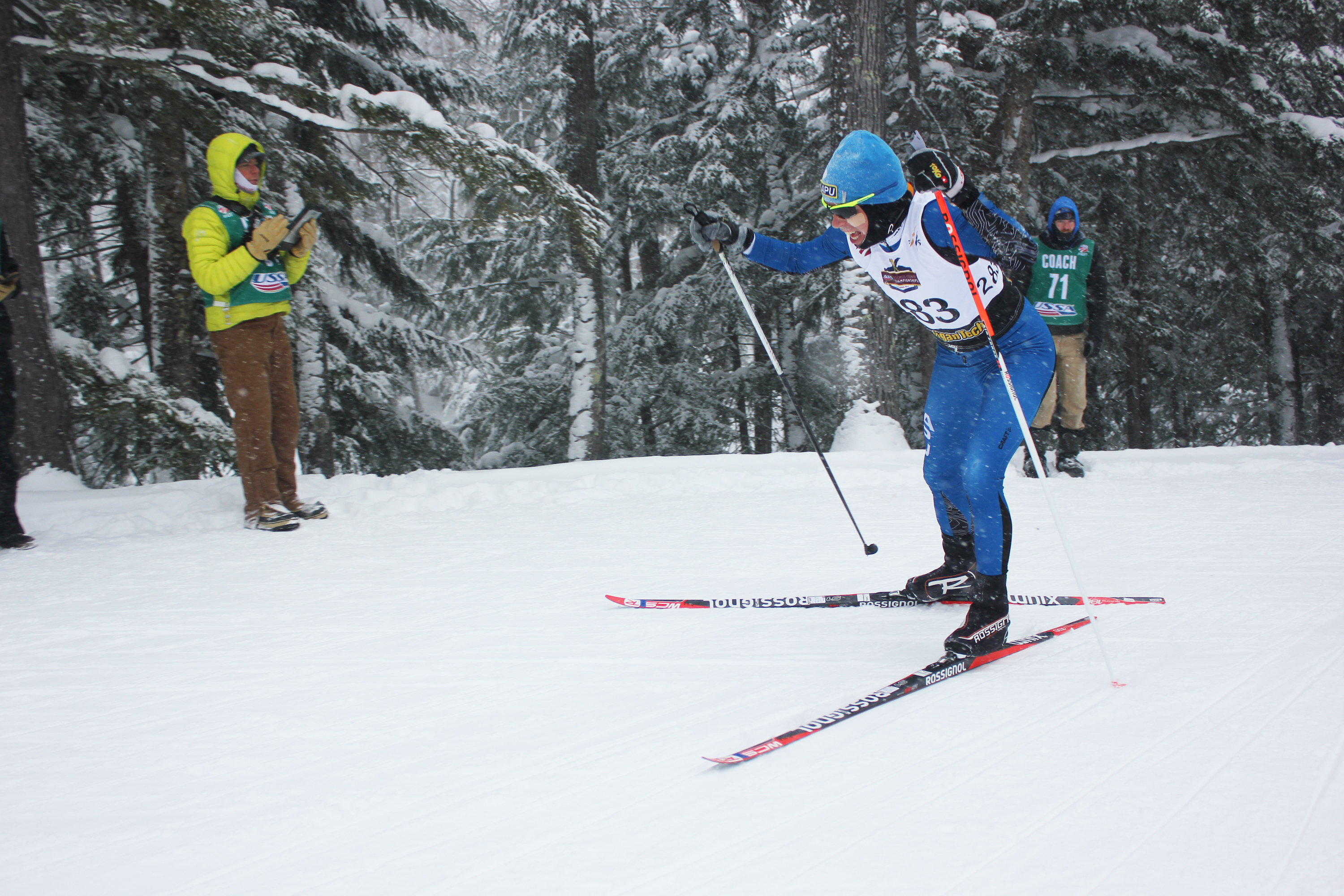
    The Wild Cards

    Miles Havlick (Sun Valley Ski Education Foundation) tucking down the high point of the course on the fifth of six laps at U.S. nationals in the 30 k freestyle mass start at Soldier Hollow. While the veterans of the 2015 SuperTour are names we’ve seen at the top of the result sheets for years, there are several skiers who have an excellent opportunity to shake up the status quo and make a name for themselves on the domestic circuit.

    Sun Valley Ski Education Foundation’s Miles Havlick didn’t have the season he wanted in 2014, but has come back with a vengeance in 2015. While he has yet to face his competitors on-snow, Havlick has won a slew of time trials including the USST1o k freestyle rollerski time trial in Park City, Utah against the country’s best. He also broke a 25-year-old record in the Baldy Hill Climb this year.

    According to Havlick, he has the all the ingredients for a breakout season. Now it’s only a matter of time.

    “I think on any given day – when I am mentally competent, carrying confidence from previous races, focused, and my wax is good – I can be the best skier out there. The college skiing is when I was really able to prove that to myself. Last year was kind of tough because I felt like I was spinning my wheels by the end, but I think I’ve made some adjustments this year that can fix that,” he said in a phone interview in October.

    Havlick also has gained the attention of Grover and the USST.

    Erika Flowers racing to the fastest women's time in the inaugural Tim Burke Uphill Run Test at Whiteface Mountain.
    Erika Flowers racing to the fastest women’s time in the inaugural Tim Burke Uphill Run Test at Whiteface Mountain this fall.

    “I’m excited to see how Miles Havlick is going to ski. He’s had a great fall. He won our US ski team time trial that we did in Soldier Hollow. He set a new course record on the Baldy Hill climb that stood for 26 years or something. There’s some new emerging faces to keep an eye on,” he said.

    For the women, a possible 2015 wild card is a less well known. However, despite her lack of national attention Stratton Mountain School T2’s Erika Flowers has all the makings of an up and coming skier.

    Flowers has always been a strong and consistent skier with the majority of her SuperTour results landing in the top-ten. However, when she traveled to Europe in the spring of 2014 she demonstrated her potential, wining a 10 k mass start in Silvapalana, Switzerland. Several weeks later she placed 14th in the Alpen Cup mini-tour. She finished the tour as the second American behind Holmes and had the fifth-fastest time in the final 10 k pursuit.

    While Flowers has struggled with sprinting in the past, she demonstrated that she could stick with the best of them at the 2014 Frozen Thunder races in Canmore, Alberta ending the day in 7th.

    The following day she finished 7th in the 7.2 k freestyle at Frozen Thunder. She was the 3rd American, and placed ahead of several notable Olympians including Jessie Diggins.

    The Rest 

    In addition to Havlick, there are several other men who could make the domestic season anyone’s game.

    Recent college graduates Ben Lustgarten of SVSEF, David Norris of APU, and David Sinclair of Green Mountain Valley School will be looking to take their success from NCAA racing to the SuperTour.

    Scott Patterson (APU) is another notable graduate who had success on the SuperTour both at the 2014 Nationals and 2014 SuperTour finals. According to his family, Patterson will not be starting his season in West Yellowstone due to a skiing accident that occurred Oct. 31st in which he was impaled by a broken ski in his upper leg. While the leg wound healed, Patterson developed a pulmonary embolism (blood clots in his lungs) which has limited his exercise to walking. However, according to his family, Patterson is optimistic that he will return to racing at U.S. Nationals.

    Ben Saxton (SMST2) and Paddy Caldwell (SMST2/Dartmouth) will be the sole USST members starting the season in West Yellowstone. Saxton who was second in the freestyle sprint at U.S. Nationals last year, is aiming perform well in Friday’s sprint. Caldwell, who has yet to decide whether or not he will ski for Dartmouth this year is a strong distance skier and will be vying for top results amongst the country’s best.

    “They need to prove themselves and make those teams just like any other athlete that is on the domestic scene. Obviously those guys are younger guys and they’re still focused on the U23 World Champs,” Grover said of the two USST D-Team athletes.

    Welley Ramsey (MWSC), Tad Elliott (SSCV), and a slew of other men from APU and Craftsbury will also look to challenge the national favorites as the season gets underway.

    On the women’s side recent graduates Anne Hart (SMST2), Rosie Frankowski (APU), and Anja Gruber (Far West Elite) are new to full-time racing on the national circuit after having successful college careers. While the adjustment from college skiing to professional racing is often difficult, these women will still be a strong force to contend with.

    Annie Pokorny (SMST2), Caitlin Patterson (CGRP), Liz Guiney (CGRP), and Mary Rose (SVSEF) are shaping up to be strong competitors in the 2014/2015 season after a productive summer and fall trainings with their respective teams.

    [See the Super Tour schedule here]

  • Canadians Head South to Stratton for New Camp, Combine with SMST2 (with Photo Gallery)

    Canadians Head South to Stratton for New Camp, Combine with SMST2 (with Photo Gallery)

    Canadians Alex Harvey (r), Devon Kershaw (front left) lead six others, including Ivan Babikov (third from l), Kris Freeman (second from l) and Andy Newell (l), during a combi over-distance rollerski near Stratton, Vt.
    Canadians Alex Harvey (r), Devon Kershaw (front left) lead six others, including Ivan Babikov (third from l), Kris Freeman (second from l) and Andy Newell (l), during a combo over-distance rollerski on Aug. 15 near Stratton, Vt.

    STRATTON, Vt. — When Tor-Arne Hetland thought of the U.S., his mind went to places he had been before, like New York City and Park City, Utah.

    Stratton — a small town in southern Vermont with roughly 200 year-round residents (not including the private ski school near the height of the land) — was a surprise, but Hetland figured if Andy Newell grew up training there, it had to be worth visiting.

    Canada’s newest World Cup coach and his four-man team of Ivan Babikov, Devon Kershaw, Alex Harvey, and Lenny Valjas ventured to the land unknown in early August for a sea-level, dryland intensity camp with the Stratton Mountain School (SMS) T2 Team. They rented a house in Stratton and brought a physical therapist along, and let Newell, an SMST2 skier and longtime U.S. Ski Team (USST) member, show them around.

    Newell, of nearby Shaftsbury, Vt., picked the rollerski routes and joined the Canadians for about half of their workouts during their two-week stay, as did fellow USST and SMST2 skier Simi Hamilton.

    APU's Rosie Brennan leads Stratton skiers during a over-distance, combi rollerski in Stratton, Vt.
    APU’s Rosie Brennan leads Stratton skiers Anne Hart (second from r), Annie Pokorny (c), Sophie Caldwell (second from l), and Jessie Diggins (l), during a combo over-distance rollerski in Stratton, Vt.

    Stratton’s new head coach in his third month with the team, Patrick O’Brien said the Canadians were a welcome addition while most of his team was training together, two weeks before the USST training camp in Lake Placid, N.Y.

    Hetland and Canada’s World Cup assistant coach Louis Bouchard, who drove five hours down from Quebec City, came with two vans — making logistics somewhat easier for supporting eight men during a given workout. On Aug. 15, they did a three-hour, combo over-distance rollerski (mimicking a skiathlon), looping around hilly backroads.

    “It’s been really cool working with Tor-Arne and Louis,” O’Brien said. “As a young coach, I’ve been picking their brains … They’ve been really accommodating.”

    Not all the workouts lined up. The Canadians, with a fifth athlete in Raphaël Couturier of the Pierre-Harvey Training Centre (where Bouchard is head coach), generally focused on high-intensity (Level 4-5) rollerskiing during the camp. The amount of hours they wanted to put in didn’t always match those of Newell, Hamilton and Ben Saxton on the T2 Team, O’Brien explained.

    “Kind of our go-to is threshold and speeds with some L4,” O’Brien said.

    Newell had been scaling back the amount of L4 workouts this summer and doing longer workouts to increase volume, he added. Plus, Newell and Hamilton recently returned from the USST camp in Alaska.

    During the Canadians’ camp in Stratton, O’Brien also had five female athletes to coordinate workouts for: Jessie Diggins, Sophie Caldwell, Erika Flowers, Anne Hart, and Annie Pokorny.

    The crew from north of the border originally wanted to hold their own camp in Lake Placid at the recommendation of U.S. head coach Chris Grover. When they couldn’t find a house to rent in August, they turned their attention to Vermont at the suggestion of Grover and Justin Wadsworth, Canada’s other World Cup and National Team head coach.

    Canadian World Cup Team coach Tor-Arne Hetland (r) talks with the SMST2 Team during a water stop on its over-distance rollerski session on Aug. 15 near Stratton, Vt.
    Canadian World Cup Team coach Tor-Arne Hetland (r) talks with the SMST2 Team during a water stop on an over-distance rollerski session on Aug. 15 near Stratton, Vt.

    “Londonderry, Brattleboro,” Hetland read out loud from street signs along the rollerski route. Not much imagination those English settlers had, he chuckled.

    No, not in New England, but weren’t these 18th-century buildings neat? More like cute by his standards, considering Norway was 900 years older.

    Regardless, Stratton had something he wanted to see in person.

    “I was thinking, Andy Newell can train here for many years so … that’s the reason we are here,” said Hetland, an Olympic gold medalist who coached the Swiss national team with his wife from 2010-2014. He and his wife, Guri Hetland, currently live in Davos, Switzerland.

    Another plus: Stratton’s near-sea-level altitude with a low point around 1,900 feet (580 meters). The Canadians wanted to train a lot and test their limits, so recovery times needed to be shorter, Hetland explained. In mid-October, they’ll head to Park City for their annual altitude camp with less intensity, and they previously got together as a group in Canmore, Alberta, and also in Bend, Ore.

    Back when they were planning their late-summer camp, they ruled a few locations out. Their regular stop in New Zealand for actual skiing at the Snow Farm couldn’t happen because of Cross Country Canada’s budget cuts. Whistler, British Columbia, was a possibility, but it wasn’t great for rollerskiing, Hetland said. Then they couldn’t find a place to stay in Lake Placid.

    But Newell, Hamilton and their SMST2 teammates: “We can use [them],” Hetland said.

    “The U.S. and Canada have great skiers, but they’re alone,” he explained. “[That’s the] biggest difference to Russia and Norway.”

    “Anytime you can make the group larger without sacrificing quality, it’s great,” O’Brien began, noting the high-caliber of the Canadians. “These guys are really fast.”

    An hour and 30 minutes in, eight men — Newell, Hamilton, Babikov, Kershaw, Harvey, Valjas, Couturier, and Kris Freeman of Waterville, N.H. — clicked out of their bindings and switched from classic to skate. Hetland and Bouchard had parked their two vans on the side of the road and carefully laid out each athletes’ equipment a few minutes before.

    Four months into his new role with the team, Hetland was still getting to know them. He remembers his parents’ first impression of the Canadians, having only seen them on TV.

    “My parents, who never met them, said that will be good,” Hetland said.

    Simply put, they seemed like they liked each other, and having worked with them for the last few months, Hetland could attest to that.

    The key to their chemistry over the years hasn’t been a fluke: consistency in training partners and coaches has been a major factor, Hetland said. For instance, he linked Harvey’s success to his longtime coach, Bouchard.

    As for the changes he’s instilled within the team, Hetland said there’s no one secret.

    “The work over a long time is important, and also for the athletes to hear the same ideas about technique,” he said. “I’m saying it a different way … something old, but in a new way.”

    Andy Newell (l) and Alex Harvey (r) lead an over-distance rollerski past the Stratton Mountain School while Canadian coach Tor-Arne Hetland (l) checks in.
    Andy Newell (second from l) and Alex Harvey (r) lead an over-distance rollerski past the Stratton Mountain School while Canadian coach Tor-Arne Hetland (l) checks in.

    Just a few minutes earlier, five women — Alaska Pacific University’s Rosie Brennan in place of Flowers — transitioned from skate to classic (Flowers helped at the Stratton junior camp that morning). Three of them — Caldwell, Hart and Pokorny — logged three hours for their longest rollerski of the season.

    After picking their way through the woods to bypass a culvert-construction site on their go-to rollerski road, appropriately called Mountain Road, they ended in Stratton’s town center, a quiet intersection with a couple municipal buildings.

    “26.25 miles,” Caldwell read off her GPS watch. “We just rollerskied a marathon!”

    Later this month, after the USST camp in Lake Placid, the SMST2 Team plans to do its annual 100-kilometer (62-mile) rollerski to raise money for travel expenses for the upcoming season.

    “I really enjoy watching and supporting these guys in training sessions,” said O’Brien, a Stratton alumnus who raced for the Craftsbury Green Racing Project until this spring.

    Now he’s writing training plans for Hart, Pokorny, Flowers, and Saxton. The rest of the T2 skiers are on the USST, and O’Brien collaborates with their coaches to make sure they’re on target.

    “I’m as much a facilitator as I am a club coach,” O’Brien said. “It’s kind of like putting pieces of a puzzle together.”

  • Business First, But Fun Throughout: APU Dominates Inaugural Mixed Relay at Distance Nationals

    Business First, But Fun Throughout: APU Dominates Inaugural Mixed Relay at Distance Nationals

    APU's first team congratulates anchor Kikkan Randall after she solidified their national title in the 4 x 5 k mixed relay on Tuesday. It was Randall's third-straight win in as many races this week in Anchorage, Alaska. (Photo: Bill Roth/Anchorage Daily News)
    APU’s Reese Hanneman (l) and Sadie Bjornsen (r) congratulate their team’s anchor Kikkan Randall after she solidified their national title in the 4 x 5 k mixed relay on Tuesday. It was Randall’s third-straight win in as many races this week in Anchorage, Alaska. (Photo: Bill Roth/Anchorage Daily News)

    ANCHORAGE, Alaska — No matter how many times you looked at the start list on Tuesday, watching Reese Hanneman tag Sadie Bjornsen, and Bjornsen tag her brother, Erik, and Erik tag Kikkan Randall, it was sort of surprising.

    Unusual, really, as it was the first time a mixed-gender relay had been put into motion on the U.S. Ski and Snowboard Association (USSA) level. According to Randall, it was like a test event — athletes proposed the 4 x 5-kilometer mixed relay with two males and two females teaming up for two classic and two skate legs to the International Ski Federation (FIS) last year. FIS agreed to try it after individual nations give it a whirl at home first.

    Start of the 4 x 5 k mixed relay, the first of its kind in U.S. cross-country skiing, at U.S. Distance Nationals on Tuesday in Anchorage, Alaska. Up front (from l to r): Reese Hanneman (APU), Brian Gregg (Fastest of the Fast Twitch) and Andy Newell (SMST2). (Photo: Bill Roth/Anchorage Daily News)
    Start of the 4 x 5 k mixed relay, the first of its kind in U.S. cross-country skiing, at U.S. Distance Nationals on Tuesday in Anchorage, Alaska. Up front (from l to r): Reese Hanneman (APU), Brian Gregg (Fastest of the Fast Twitch) and Andy Newell (SMST2). (Photo: Bill Roth/Anchorage Daily News)

    So that was the basis of USSA’s decision to hold the first event of its kind in the U.S. at the annual Spring Series and Distance Nationals at the end of the 2013/2014 season.

    On Tuesday, the race that teams like Alaska Pacific University (APU) had kiddingly called a focus all season became a reality.

    Each official team was made up of two men and two women from the same USSA-affiliated club. A man skied the first classic leg, two laps that amounted to about 6.6 k, then tagged off to a female teammate for the second classic leg on the same course.

    Men were the first out on the 2.6 k freestyle course, two laps of which were about 5.2 k, then tagged to the final female anchor for another 5.2 k of skating.

    Twenty-six teams took part, 18 of which were official (all from the same team), and two of those were junior squads from APU.

    The hometown squad, APU entered eight teams into the relay — a testament to the program’s depth at home before the race even started. The Stratton Mountain School (SMS), Craftsbury Green Racing Project (CGRP), Sun Valley Ski Education Foundation (SVSEF) each had two teams. Six official college teams raced (Vermont, New Mexico, Northern Michigan, APU, and two from Alaska-Anchorage).

    Reese Hanneman of Alaska Pacific University's (APU) first team tags Sadie Bjornsen (APU/USST) in the lead at the U.S. Distance Nationals 4 x 5 k mixed relay on Tuesday in Anchorage, Alaska. (Photo: Bill Roth/Anchorage Daily News)
    Reese Hanneman of Alaska Pacific University’s (APU) first team tags Sadie Bjornsen (APU/USST) in the lead at the U.S. Distance Nationals 4 x 5 k mixed relay on Tuesday in Anchorage, Alaska. (Photo: Bill Roth/Anchorage Daily News)

    With a national title at stake, the senior race was the marquee event of the evening, with a start time of 5 p.m. under brightly illuminated skies on another bluebird day in Anchorage. The question of who was strongest on Tuesday was quickly put to rest when Hanneman of APU’s first team gapped the field early and took a 20-second lead halfway through the first classic leg.

    “I came into the bottom of the big hill and just felt good and I kind of accelerated by everybody,” Hanneman said. “It was not planned, but I just decided to go with it at that point. Once you make a move you kind of have to commit.”

    The last time Hannemen, 24, raced a relay was Junior Nationals — five years ago, he estimated. On Tuesday, he held on to tag Sadie Bjornsen, one of his three teammates, all of which are on the U.S. Ski Team, in first by 12.3 seconds.

    “I definitely was looking back, and about 4 k into the race, a couple k to go, I was definitely dying pretty hard,” he said. “But I could hear people cheering for Lex [Treinen]. I knew he was the next guy behind me so I knew we at least had a two-pronged attack going on.”

    Treinen of APU’s second team passed Stratton’s Andy Newell, who initially led the chase behind Hanneman, on the second loop. Treinen, 24, sent Rosie Brennan off in second, 3.8 seconds ahead of the University of New Mexico (UNM), which Mats Resaland put third, and 16 seconds ahead of Stratton, with Newell tagging to Sophie Caldwell.

    Caldwell went on to pick off two places early to rise to second by the end of her first classic lap, but said she paid the price the second time around Kincaid’s up-and-down classic loop.

    Stratton's Simi Hamilton (l) and APU's David Norris head out of the exchange on the first of two skate legs in Tuesday's 4 x 5 k mixed relay at U.S. Distance Nationals. (Photo: Chris Hodel)
    Stratton’s Simi Hamilton (3) and APU’s David Norris (4) head out of the exchange on the first of two skate legs in Tuesday’s 4 x 5 k mixed relay at U.S. Distance Nationals. (Photo: Chris Hodel)

    “When I started there were a couple people I could see so I just tried to catch them and then got a little tired, but I think it went well,” she said. “There were very different conditions in different parts, but we had good skis.”

    From there, Sadie Bjornsen extended APU’s lead to 50 seconds, tagging off to her younger brother. Brennan put APU 2 in second, half a second ahead of Stratton’s first team. U.S. Ski Team member Liz Stephen lifted her unofficial team, Fastest of the Fast Twitch (FOTFT), with Brian Gregg, Noah Hoffman (also of the USST) and Caitlin Gregg, from sixth to fourth, 2.2 seconds behind third by the exchange.

    As a side note, Brian Gregg (Team Gregg/Madshus) scrambled for the team in Superman underwear outside his Loppet Nordic race suit (Hoffman did as well). Brian’s wife, Caitlin, also of Team Gregg/Madshus, anchored the team wearing a bikini outside her uniform.

    By the time Erik Bjornsen finished his two-lap skate leg, he was 28.7 seconds ahead of anyone else, and Hamilton lifted Stratton to second. David Norris kept APU 2 close in third, another 6.7 seconds back.

    “It’s a good atmosphere — it’s laid back but still serious,” Hamilton said after the race, with red hearts painted on his face. While the men sported their softer side, Stratton women wore painted mustaches.

    Stratton teammates greet and assist Jessie Diggins (SMST2/USST), who anchored them to second place in Tuesday's 4 x 5 k mixed relay at U.S. Distance Nationals in Anchorage, Alaska. (Photo: Bill Roth/Anchorage Daily News)
    Stratton teammates greet and assist Jessie Diggins (SMST2/USST), who anchored them to second place in Tuesday’s 4 x 5 k mixed relay at U.S. Distance Nationals in Anchorage, Alaska. (Photo: Bill Roth/Anchorage Daily News)

    Her first time around a fast skate loop, Randall widened APU’s gap to 46 seconds. Stratton’s Jessie Diggins followed, and APU 2’s Holly Brooks lapped through another eight seconds back in third.

    As spectators, volunteers and teammates from the previous three legs waited at the finish, it was pretty clear who the first-ever national mixed-team title and $750 dollars ($187.50 apiece) of prize money was going to.

    Randall crossed the line uncontested in 55:51.5 minutes, 45.6 seconds ahead of Diggins, who locked up second for Stratton. Brooks anchored APU 2 to third, 32 seconds behind Stratton.

    “Coming into today we knew it was gonna be tough competition,” Randall said. “We knew Stratton would have a good team, our other APU team, Craftsbury, the mixed team with Liz and the Greggs and Noah, so it was kind of fun to have the nerves come into the club relay.”

    Fortunately for Randall, she didn’t have to stress too much.

    “I just thought it was fun to try to at least hold the gap or make time,” she said. “We have so many fans out here. I’ve had so many people say it’s fun to watch us race this week so I figured why not race with what’s in the tank today? I had fun catching a couple young [junior and university] boys out there, and giving them a challenge.”

    Holly Brooks (APU/USST) anchoring APU's second team to third at the U.S. Distance Nationals 4 x 5 k mixed relay at Kincaid Park on Tuesday. (Photo: Bill Roth/Anchorage Daily News)
    Holly Brooks (APU/USST) anchoring APU’s second team to third at the U.S. Distance Nationals 4 x 5 k mixed relay at Kincaid Park on Tuesday. (Photo: Bill Roth/Anchorage Daily News)

    After Eric Packer brought Stratton’s second team from seventh to fifth, anchor Erika Flowers passed Caitlin Gregg on the second lap to finish fourth, 51.5 seconds back from third and 13.9 ahead of FOTFT in fifth.

    Sun Valley’s first team placed sixth, CGRP 1 was seventh, APU 3 was eighth, University of Vermont ninth, and Sun Valley’s unofficial team 10th.

    So will we see this format again? Chances are, you can count on it.

    “I always think it’s fun to mix it up a little and do something we don’t see on the World Cup, but I’d also love to see this on the World Cup,” Caldwell said. “To have a club event, I think we can all find an extra gear for the team which is fun.”

    “We discussed the mixed relay in the FIS meetings last spring because … a lot of the athletes supported adding that to the calendar, testing it out,” said Randall, a FIS Cross Country athlete representative.

    “What a great idea,” she said. “The clubs have been getting so much stronger over the last 10 years, but the depth is still building. So to have two men and two women, that makes sure it can be a very competitive race. I think it’s fun … certainly makes it interesting, hopefully this proved to be a good example so they’ll consider experimenting with it on the World Cup.”

    The 4 x 5 k mixed relay at U.S. Distance Nationals, with winners APU 1 (c), the Stratton Mountain School T2 Team in second (l), and APU 2 in third. (Photo: Chris Hodel)
    The 4 x 5 k mixed relay at U.S. Distance Nationals, with winners APU 1 (c), the Stratton Mountain School T2 Team in second (l), and APU 2 in third. (Photo: Chris Hodel)

    APU head coach Erik Flora explained the relay was a motivator for his team throughout the season.

    “When we did intervals back in June, we’d tell the athletes, ‘Technically this is the trials for the relays,’ ” Flora said. “We kept that joke going all year long so by the time we got to this point we had so many jokes about it was probably pretty simple.”

    He said they selected the teams mostly based on recent results, with two individual races (the 10/15 k freestyle and classic sprint) earlier this week.

    “Reese is in really good shape right now … and Erik always has a pretty good finishing kick,” Flora said. “Then you have Sadie who’s a really strong distance racer right now, so you put her in the middle, and then Kikkan for the finishing speed as well.”

    He added that it was “a great surprise” to see Hanneman with such a significant lead after the first lap, and even more exciting when he and Treinen tagged off first and second. The fact that they more or less held it through three more legs capped off another successful day for APU.

    “Coming through an Olympic cycle, we’ve been working for the last eight years toward the last Olympics and so now to turn the page and then have the depth of our team expanding so quick, it gets me fired up for the next four years,” Flora said.

    “This is probably the highlight of the year so far,” Hanneman said.

    “This is a really fun accomplishment for us,” Randall said. “The women’s team has certainly been strong for several year, but the men’s team is really coming on strong, so to put together a complete team today … I think everybody is gonna be super proud about this.

    “The techs have been working really hard for us all week; there’s a lot of skiers to manage,” she added. “It’s really cool for our whole community-based program to see this. Our juniors are out here hopefully going, ‘Man I want to be on the APU A-team someday for the club relay!’ ”

    Results

    The Stratton Mountain School T2 Team's post-race pow wow, celebrating a second-place finish in the 4 x 5 k mixed relay at U.S. Distance Nationals. (Photo: Rob Whitney)
    The Stratton Mountain School T2 Team’s post-race pow wow, celebrating a second-place finish in the 4 x 5 k mixed relay at U.S. Distance Nationals. (Photo: Rob Whitney)
  • SuperTour Resumes in Craftsbury; Caitlin Gregg, Scott Patterson Top Podium

    SuperTour Resumes in Craftsbury; Caitlin Gregg, Scott Patterson Top Podium

    Patrick Caldwell leads a group of skier's in Friday's 10-kilometer freestyle race in Craftsbury, Vermont, as part of the USSA SuperTour. Photo courtesy John Lazenby.
    Patrick Caldwell leads a group of skier’s in Friday’s 10-kilometer freestyle race in Craftsbury, Vermont, as part of the USSA SuperTour. Photo courtesy John Lazenby / lazenbyphoto.com

    Craftsbury, Vermont hosted the USSA SuperTour this weekend under blue skies and on top of firm tracks, with racers calling it “the best conditions of the year.” The three days of racing comprised women’s and men’s 5 and 10-kilometer freestyle races (respectively) on Friday, a 15/20 k classic on Saturday, and Sunday Sprints.

    Friday’s Interval-Start Skate

    On Friday Caitlin Gregg showed that she is a dominant skate skier, starting hard and holding it through to the finish in the 5 k, finishing first in 13:50.8. Caitlin Patterson (+42.9) found herself in a race for second with Erika Flowers, who took third just 1.6 seconds behind Patterson (+44.5).

    “I haven’t felt quite as good this weekend as I had hoped to going into it,” Patterson wrote in an email. “Caitlin Gregg started only 15 seconds behind me and caught me within 1.5 k, proceeding to drop me by about 2 k into the race. She was skiing with very high tempo and extremely well.  Her final time was 43 seconds faster than mine, which is a painfully large margin for a 5 k.  I struggled to hang on and make it to the finish, and I consider myself pretty lucky that I found just enough energy to hold off the other girls who were just seconds behind in the final results.”

    Flowers was happy with her race, and was excited by the extra competition offered by Gregg’s presence on the course.

    “I just tried to focus on really accelerating throughout the 5 k loop, skiing smooth and then hammering the tops of the bigger climbs. I had no idea how my time was when I finished since most of the faster girls were behind me, but I felt good and was excited to be on the podium! Caitlin Gregg still had a runaway win but its great for the rest of us to have someone challenging us and helping us get to that next level.”

    Scott Patterson (Caitlin Patterson’s brother) took first in the men’s 10 k, leveraging his familiarity with the course for all it was worth.

    “Sections out in the depths of the course determine the placing, and I know exactly which parts and how to ski them to win the race” he wrote in an email. “I was also focusing a bit on some of the things that I recognized as potential areas for improvement during [the U23 World Championships in Italy].  By combining all of that on a course that I like and know how to ski well, I think I made it pretty tough to post better splits than I did.”

    Indeed, it proved too tough for any of the other racers to post faster splits him, and he won the race with a time of 24:54.2. Raphael Couturier skied his way into second 27.2 seconds later, and Dartmouth College freshman Patrick Caldwell took third (+49.6).

    Caldwell said that this weekend was about “being with the team and getting [his] feet back under [him] after travel.” Indeed, it was his only race of the weekend, as he wanted to focus on recovery.

    A skier pauses for a memorial to Torin Tucker, a Dartmouth College skier who died suddenly on February 1st during the Craftsbury Marathon.
    A skier pauses for a memorial to Torin Tucker, a Dartmouth College skier who died suddenly on February 1st during the Craftsbury Marathon. Photo courtesy John Lazenby / lazenbyphoto.com

    Saturday’s Interval-Start Classic

    Gregg and Scott Patterson were asked on Friday to make a prediction for Saturday’s interval-start classic race; Gregg picked Anya Gruber as the winner, singling her out as an “amazing classic skier.” Patterson, on the other hand, picked himself.

    “I don’t like publically predicting places of races that I am in, but I am feeling pretty confident,” he wrote in an email.

    His confidence was well placed, as he handily won his second-straight race. Gregg, for her part, ended-up besting Gruber, but she could not out ski Rosie Brennan, who won the 15 k race in 47:55.8. Gregg was 19.2 seconds back, while Gruber took third (+58.2).

    Gregg was graceful about her missed prediction, however, writing that “I felt like I skied one of my best classic races ever today, my skis were great again, my energy was great and I even felt strong double poling! Rosie skied a fantastic race and I am very impressed! She is tough and talented!”

    Brennan was uncertain about her pacing for the race, but she seemed to make it work.

    “I wasn’t sure how to pace given that we don’t do individual 15km very often, if ever. But the skiing in Craftsbury is amazing right now, perfect, soft, cold snow so I figured that if I just enjoyed the skiing and kept moving things would work themselves out. After the first lap, I was getting splits off of Caitlin Gregg that we were tied and throughout the 2nd lap my splits were varying between being up a little, down a little, and tied. I knew it was going to come down to the end, so I just went for it the last lap and things turned out well. I was excited with how I skied because I have not been pacing myself well this season and I finally felt like I nailed it. I have also struggled in classic, but with the tracks as they were today, it was impossible to not just love classic skiing.”

    Scott Patterson’s time-to-beat in the 20 k was 55:21.9, while Reese Hanneman battled his way to second (+22.9) and Welly Ramsey was third (+55.5).

    Hanneman’s Saturday performance was redemption from a disastrous ski on Friday, where he finished 78th.

    “I’ve been at home in Alaska since Nationals, training quite a bit, and I am feeling super tired,” he wrote in an email on Saturday. “I figured I would be pretty flat yesterday, but did not anticipate it would be that bad.”

    But that wasn’t all:

    “I also realized today that I raced yesterday’s skate race with my classic poles, which would explain why my back was killing me, and why I had multiple coaches tell me my technique looked horrible.”

    He was able to pull himself together for Saturday’s race, though.

    “I just tried not to think about yesterday too much, and just went out and […] just tried to do my thing. It was nice to have the right poles today too!”

    Sunday’s Sprints

    On Sunday racing wrapped up with sprinting, bringing exciting spectator action, in spite of reduced competition – the sprints were not an NCAA event, so many of the collegiate skiers did not participate. Third-place Caitlin Patterson summed up Sunday’s racing:

    “Today was an exciting day of racing in Craftsbury,” she said in an email on Sunday, “after two individual start races, it was certainly fun to have a sprint and give the spectators head-to-head racing to watch.  I think many of the competitors, myself included, were starting to feel the physical toll of the past few days of racing, but there was some pretty high speed skiing out there anyway.”

    Caitlin Gregg returned to the top of the podium, followed by Jennie Bender and Caitlin Patterson. A surprise entrant into the top six was 18-year old Gatineau, Quebec native Sophie Carrier-Laforte, who finished 5th after making it into the finals.

    “I don’t think I knew who she was before this weekend,” Caitlin Patterson said of her young rival, “but she certainly has some impressive sprint speed. It was great to have someone unexpected to challenge the rest of us US SuperTour skiers.  The men had even more challengers, with quite a few fast Canadians down here for the weekend.”

    None of those Canadians were able to get on the podium, however, as Sam Naney took the top spot in the sprint in a big victory for him, Dakota Blackhorse-Von Jess took second, and Reese Hanneman took third.

    “I was pretty tired from the previous hard training and two consecutive distance races,” Hanneman wrote in an email. “But I was content with the qualifier, and then felt okay in the heats. I tried to break away in the final on the big climb, but couldn’t get enough of a gap and then Sam and Dak took it into the line a little faster than me.”

    Looking Forward

    Many of the racers said that these races were an exciting way to continue their preparation for the remainder of the spring racing season, particularly the remainder of the SuperTour races.

    The SuperTour circuit continues next weekend in St. Paul, Minnesota.

    Complete Results:

    Friday Men’s | Women’s

    Saturday Men’s | Women’s

    Sunday Men’s | Women’s

  • Weekend Roundup: Sprintacular

    Weekend Roundup: Sprintacular

    Kikkan Randall (U.S. Ski Team) celebrates her victory in Nove Mesto, Czech Republic. The American superstar won yet another freestyle sprint in preparation for the Sochi Olympics in February. (Photo: Fischer/NordicFocus)
    Kikkan Randall (U.S. Ski Team) celebrates her victory in Nove Mesto, Czech Republic. The American superstar won yet another freestyle sprint in preparation for the Sochi Olympics in February. (Photo: Fischer/NordicFocus)

    It was a spectacular weekend for sprinting as the World Cup continued in Nove Mesto, Czech Republic, with both an individual and team sprint. FasterSkier was on site at the 2014 U.S. Cross Country Championships in Midway, Utah, as well as the biathlon World Cup in Ruhpolding, Germany. Action in the nordic ski world also took place at the Nordic Combined World Cup in Chaux-Neuve, France.

    Fresh off a training block and ready to go after skipping the Tour de Ski, Kikkan Randall was victorious in the Saturday’s World Cup freestyle sprint in Nove Mesto. The U.S. Skit Team member bested Lauren Van Der Graff of Switzerland and Ingvild Flugstad Østberg of Norway.

    Canadian Dasha Gaiazova just missed the semifinals for 13th overall. American Sophie Caldwell was the only other North American to make the rounds after qualifying in 25th and finishing 15th.

    The World Cup men's classic team sprint podium in Nove Mesto, Czech Republic: (from left to right) runner-up Norway I, winner Russia I, and Norway II in third. (Photo: Fischer/Nordic Focus)
    The World Cup men’s classic team sprint podium in Nove Mesto, Czech Republic: (from left to right) runner-up Norway I, winner Russia I, and Norway II in third. (Photo: Fischer/Nordic Focus)

    On the men’s side it was Sergey Ustiugov of Russia who came out on top in the freestyle sprint. He was followed by Italian Federico Pellegrino and Russia’s Alexey Petukhov, respectively.
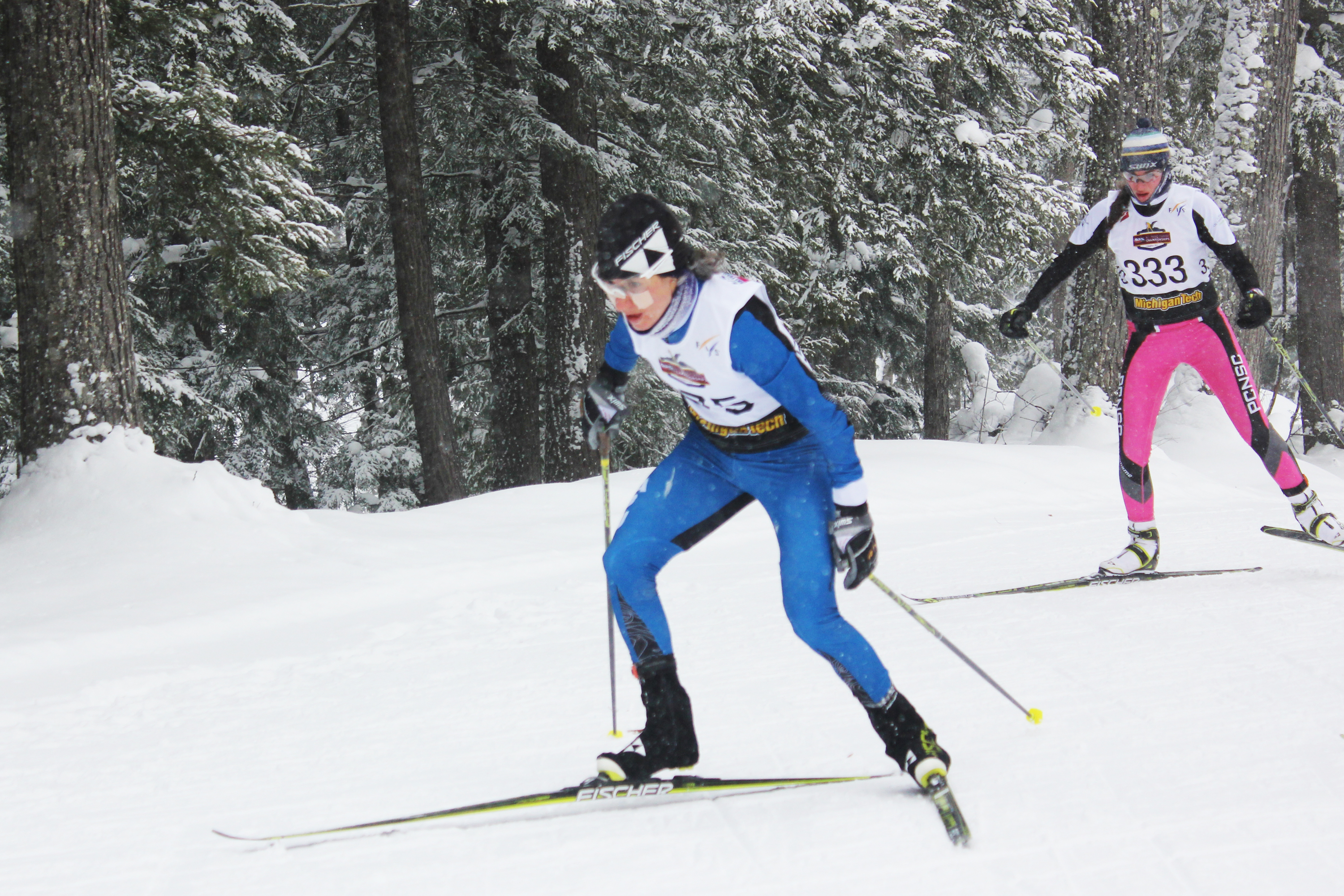
    American Andy Newell qualified second to start off the day but was unable to capitalize on his previous speed in the finals and finished in 17th. Teammate Simi Hamilton, who also qualified for the finals, finished 20th overall.

    The Russians were once again triumphant in Sunday’s team sprint, with the team of Maxim Vylegzhanin and Nikita Kriukov winning the men’s competition over Norway I and Norway II. The win set the Russians up as the favorites going into the Olympics that will be hosted in their home country next month.

    Newell and Hamilton placed fifth overall for one of the best U.S. men’s team sprint results in recent memory.

    Norway had some redemption in women’s team sprint with Østberg and Maiken Caspersen Falla. They bested the Finnish and Russian teams, who placed second and third, respectively.

    With Randall and Sadie Bjornsen recovering this Sunday, Caldwell and Ida Sargent stepped up to that challenge and skied an impressive race. They went on to place sixth in the final.

    Canada’s team of Gaiazova and Perianne Jones finished 13th, just missing the qualification for the final.

    Reese Hanneman (APU) celebrates his win in the classic sprint at the 2014 U.S. Cross Country Championships in Midway, Ut. The win marks Hanneman's first national championship.
    Reese Hanneman (APU) celebrates his win in the classic sprint at the 2014 U.S. Cross Country Championships in Midway, Ut. The win marks Hanneman’s first national championship. (Photo: U.S. Ski Team – Tom Kelly)

    The 2014 U.S. Cross Country Championships wrapped up last Friday with classic sprints. In the women’s race, Russian Natalja Naryshkina of CXC won the sprint over Rosie Brennan (APU) and Nichole Bathe (UAF). Brennan was crowned national champion as she was the first American in the race.

    Reese Hanneman (APU), who won the qualification round and every one of his heats that followed, dominated the men’s race. He was followed by Erik Bjornsen (APU/U.S. Ski Team) and Dakota Blackhorse-von Jess (Bend Endurance Academy).  Hanneman made the podium in every race in which he competed, and is now the overall SuperTour leader.

    This weekend also marked the end of the Canadian Olympic Team Trials in Canmore, Alberta. Based on the results from the week’s results, Canada will name two men (one distance ski athlete and one sprint skier), and two women (one distance ski athlete and one sprint skier). The four athletes will be named at Cross Country Canada’s Olympic Team announcement on January 14 in Calgary, Alberta.

    As if the weekend wasn’t busy enough, the women’s 15 k individual took place in Ruhpolding, Germany, on Friday as part of the fifth week of the IBU World Cup in which Canadian Rosanna Crawford finished 26th and teammate Maggie Heinicke crossing the line in 30th. The top American finisher was Susan Dunklee who finished 41st.

    The men raced in their 20 k individual on Saturday in Ruhpolding. Lowell Bailey was the only North American to place in the top 30, finishing 25th. Scott Perras was the top Canadian in 36th.

    Todd Lodwick in the 2014 Olympic Team Trials for Nordic Combined at Utah Olympic Park, Park City Cross Country. Lodwick suffered an injury in France and is now going through rehab in Park City, Ut. (Photo: Sarah Brunson/U.S. Ski Team)
    Todd Lodwick in the 2014 Olympic Team Trials for Nordic Combined at Utah Olympic Park, Park City Cross Country. Lodwick suffered an injury in France and is now going through rehab in Park City, Utah. (Photo: Sarah Brunson/U.S. Ski Team)

    Dunklee was the top North American in Saturday’s 10 k pursuit, placing 33rd. In the men’s 12.5 k pursuit, Canadian Nathan Smith placed 16th with Bailey not far behind in 21st.

    In addition, US Biathlon announced its 2014 Olympic Team nominations on Sunday.

    In the world of nordic combined, American Todd Lodwick crashed in Friday’s provisional jump in Chaux-Neuve, France, sustaining an injury to his shoulder. He immediately flew to Park City, Utah, where he is currently receiving further evaluation and taking part in rehab before next month’s Olympics.

    The next day, the World Cup races continued. Billy Demong finished 18th in Saturday’s HS 10 k and Bryan Fletcher placed 28th. In Sunday’s team sprint, the two Americans teamed up for seventh.

    FIS Cross Country World Cup, Nove Mesto, Czech Republic

    Saturday’s freestyle sprint: women’s report | men’s report | North American Women’s report | American men’s report

    Sunday’s classic team sprint: women’s report | men’s report | Canadian women’s report

    2014 U.S. Cross Country Championships, Midway, Utah

    Friday’s classic sprint: women’s report | men’s report

    2014 Canadian Olympic Team Trials, Canmore Alberta

    Weekend report

    Saturday’s freestyle sprint: recap

    Sunday’s 15 k and 30 k skiathlon: press release

    IBU World Cup, Ruhpolding, Germany

    Friday’s 15 k: women’s report | American report

    Saturday’s 20 k: men’s report | American report

    Sunday’s 10 k and 12.5 k pursuit women’s report | men’s report | Canadian report 

    U.S. Biathlon Olympic nominations

    IBU Cup 5, Val Ridanna, Italy

    Saturday and Sunday: recap

    FIS Nordic Combined World Cup, Chaux-Neuve, France 

    Saturday’s LH 10 k: recap

    Sunday’s team sprint: recap

  • Naryshkina Adjusts in Time to Win U.S. Nationals Classic Sprint; Brennan Top American

    Naryshkina Adjusts in Time to Win U.S. Nationals Classic Sprint; Brennan Top American

    Rosie Brennan (APU) in second stands up just before the finish as Russia's Natalja Naryshkina (CXC) wins the women's classic sprint A-final by 0.3 seconds. (Photo: Tom Kelly/U.S. Ski Team)
    Rosie Brennan (APU) in second stands up just before the finish as Russia’s Natalja Naryshkina (CXC) wins the women’s classic sprint A-final by 0.3 seconds. Nichole Bathe of the University of Alaska-Fairbanks (l) placed third after outsprinting Becca Rorabaugh (APU). (Photo: Tom Kelly/U.S. Ski Team)

    FasterSkier’s coverage of the 2014 U.S. Cross Country Championships is brought to you through the generous support of The Memory Clinic in Bennington, Vt.

    MIDWAY, Utah – Natalja Naryshkina just needed another day. Acclimating to racing at Soldier Hollow’s elevation of more than 5,500 feet was hard enough, and Naryshkina had flown in from Russia just over a week earlier.

    A student in Saint Petersburg, she had to adjust to an 11-hour time difference. But more than a decade of World Cup racing had taught her that racing is racing – and when you feel your best, you can achieve it.

    Natalja Naryshkina (1) leads Erika Flowers (SMST2) in the quarterfinals of Friday's 1.5 k classic sprint. Naryshkina went on to win the quarterfinal, semifinal and ultimately the A-final for the overall victory at U.S. nationals at Soldier Hollow.
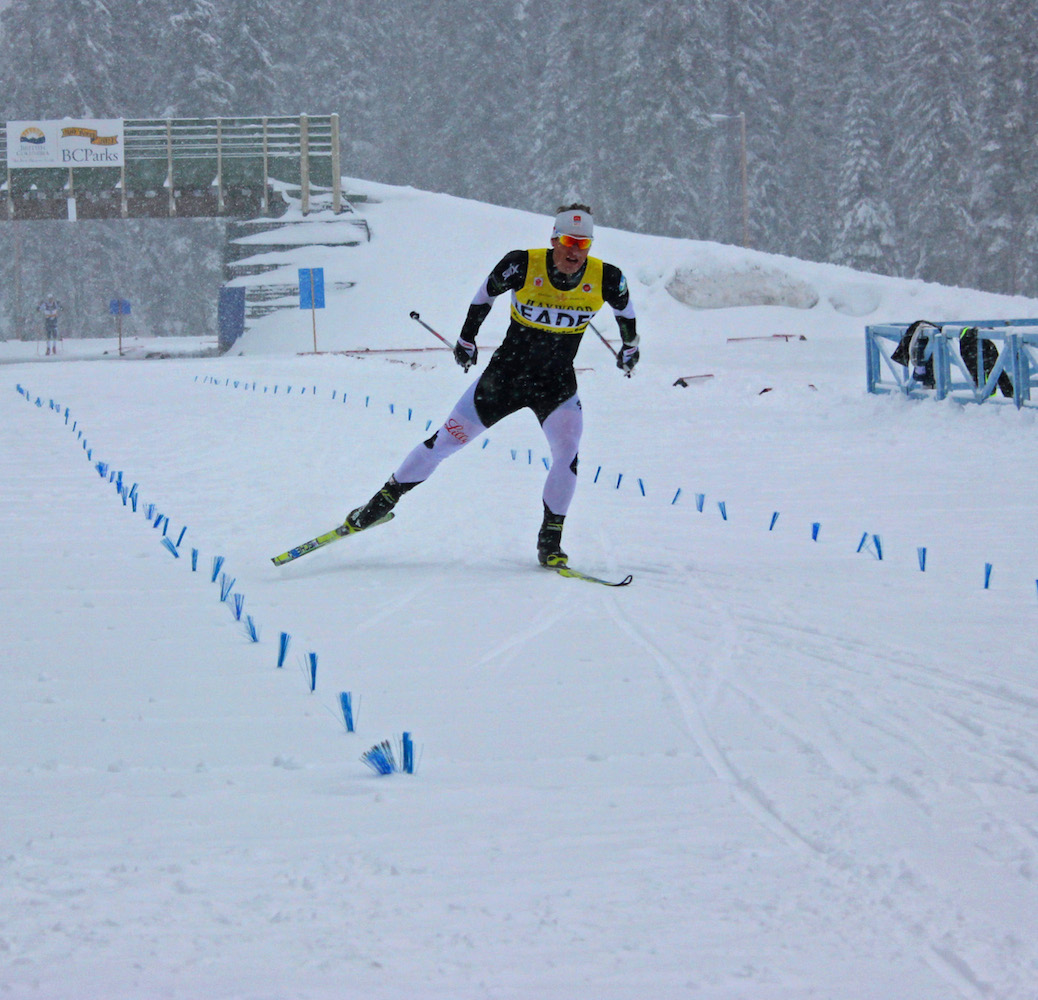
    Natalja Naryshkina (1) leads Erika Flowers (SMST2) in the quarterfinals of Friday’s 1.5 k classic sprint. Naryshkina went on to win the quarterfinal, semifinal and ultimately the A-final for the overall victory at U.S. nationals at Soldier Hollow.
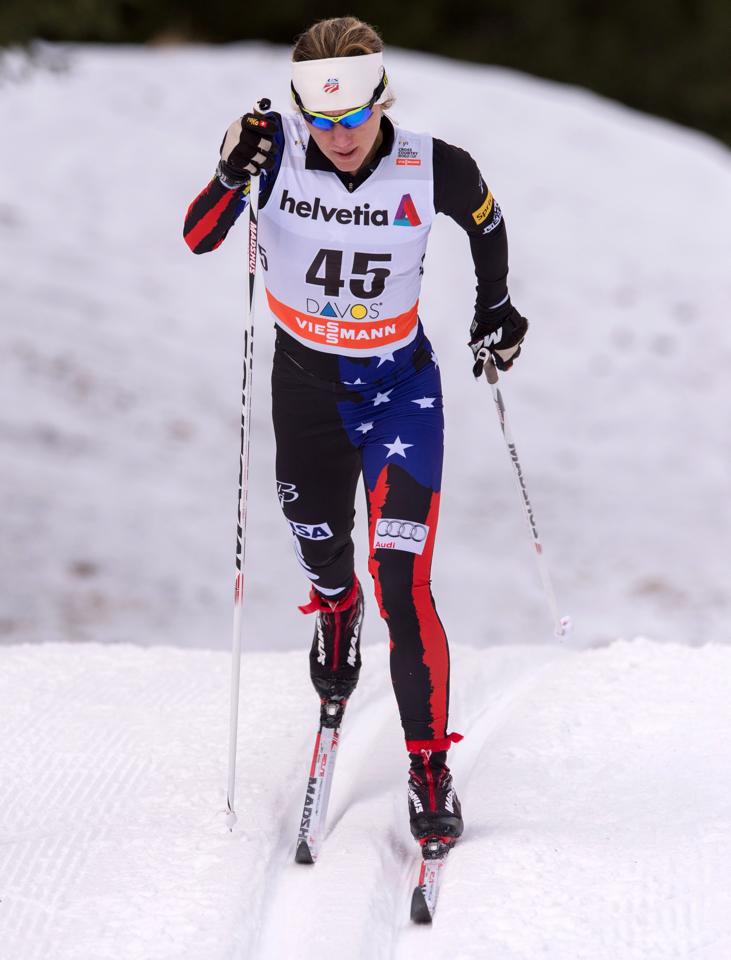
    “She expected it,” said Dmitriy Ozerskiy, a Moscow native and Naryshkina’s teammate at the Wisconsin-based Central Cross Country (CXC), who translated for her on Friday after she won the classic sprint at U.S. Cross Country Championships.

    In the last of four races at nationals, the 1.5-kilometer classic sprint, the 29-year-old Naryshkina clocked the fastest qualifying time by 0.02 seconds over Rosie Brennan of Alaska Pacific University (APU), then won her quarterfinal and semifinal to start as the A-final favorite.

    There, Naryshkina hoped the good feelings from earlier in the day would help her win the final. She did so, leading out of the start then skiing even with Brennan up the lone-yet-massive climb known as Hermod’s.

    Brennan reached the top first, but Naryshkina trailed closely down the descent while Nichole Bathe (University of Alaska-Fairbanks), Becca Rorabaugh (APU), Jennie Bender (Bridger Ski Foundation), and Lauren Fritz (APU) followed, respectively.

    As the two frontrunners rounded a tight corner toward the finish, Naryshkina stepped left and nearly tangled with Rorabaugh, who had caught up on the descent. Brennan continued on in first while Naryshkina moved right to the inside lane to stay in second. Meanwhile, Rorabaugh recovered and searched for an opening, which Bathe found to make her way to third. Naryshkina pushed over the last rise into the stadium, accelerating past Brennan as she double poled to the line.
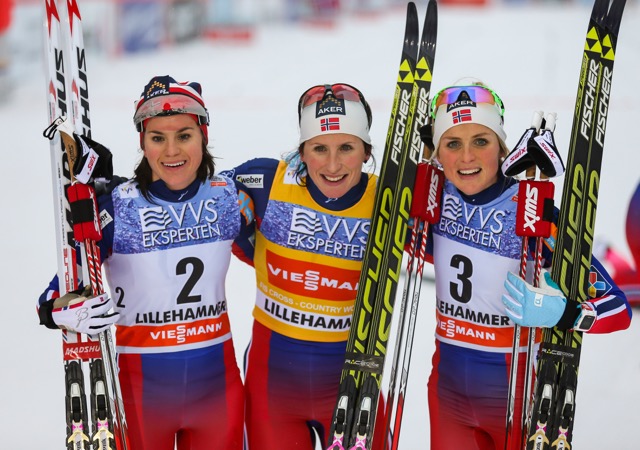
    Brennan jumped in the track behind her, following closely to ensure second and a national title as the first American. From her perspective, it was hard to know who was behind her and how close they were.

    “My back was giving me a lot of trouble today so I was nervous about the double pole,” Brennan said. “So I thought, ‘I’m just gonna get in behind her and try to hold off anyone that comes off behind,’ and I started catching her more and more.”

    A few feet before the finish, Brennan stood up to avoid riding up on Naryshkina’s skis, stepping to the side just across the line as Naryshkina took the win in 3:53.1. Brennan finished second, 0.3 seconds back, and the 18-year-old Bathe captured her first national podium in third.

    “Retrospectively I probably should’ve stepped out and tried to do something, but I don’t know, it just worked out,” Brennan said with a laugh. “I just didn’t really think about it until I was practically running into her and then the line was right there. So I’m like, ‘No one’s coming behind me so it’s good.’ ”

    “The first race here when I have so many people cheering for me it’s like, ‘Oh God, I have to do so well, there’s so much pressure.’ But then as the week goes on, I start to just relish in it.” — Rosie Brennan (APU), first American, second overall

    Bathe finished 2.2 seconds later after outsprinting Rorabaugh by three-tenths of a second. Rorabaugh placed fourth, 1.3 seconds ahead of Bender in fifth, and Fritz placed sixth, 9.6 seconds behind Naryshkina.

    “Today, I’m feeling better,” Naryshkina said. “Yesterday was acclimatization. Today is better.”

    In her third season with CXC, the Russian is a familiar face on the SuperTour circuit and in marathons like the American Birkebeiner. However, Friday’s victory was special after she placed 52nd in the 10 k classic and 13th in the skate sprint earlier in the week.

    “I love this course,” Naryshkina said. “It’s the very best competition. [Everyone is] very strong, good shape, very good conditions.”

    CXC Head Coach Bill Pierce wasn’t surprised, but said she gave them a scare in her quarterfinal and semifinal, which she led from start to finish.

    “You watched her double pole in really easy,” Pierce said. “She just saved it for the last [race] … smart bold moves in the final. It was cool.”

    Nichole Bathe (University of Alaska-Fairbanks) leads Russian Natalja Naryshkina (CXC) in the 1.5 k classic sprint semifinal at the top of Hermod's. Naryshkina won the heat, 0.2 seconds ahead of Bathe, and the two went on to place first and third in the A-final, respectively.
    Nichole Bathe (University of Alaska-Fairbanks) leads Russian Natalja Naryshkina (CXC) in the 1.5 k classic sprint semifinal at the top of Hermod’s. Naryshkina won the heat, 0.2 seconds ahead of Bathe, and the two went on to place first and third in the A-final, respectively.

    Another highlight for Pierce was Bathe, a UAF freshman whom he’s worked with since her first year as a J3. A former CXC athlete, she’ll return to the Midwest to train with the team next summer, Pierce said.

    “She’s been through the whole program,” he explained. “She’s just strong. She’s doing well up there, doing really well.”

    The fourth-fastest qualifier after Naryshkina, Brennan and Bender, respectively, Bathe won her quarterfinal by nearly a second ahead of Dartmouth’s Anne Hart. In her semifinal, she placed second, just 0.2 seconds behind Naryshkina.
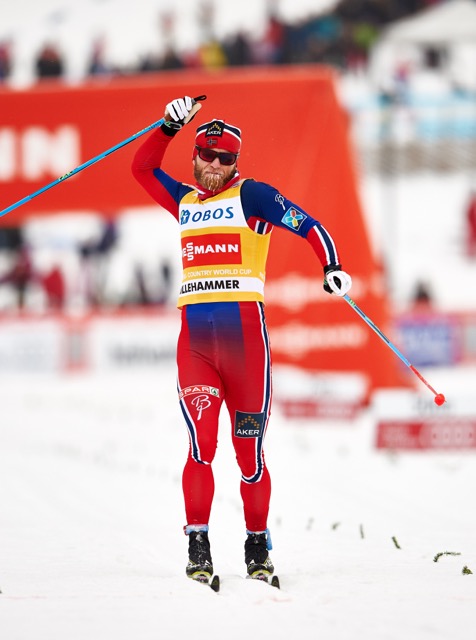
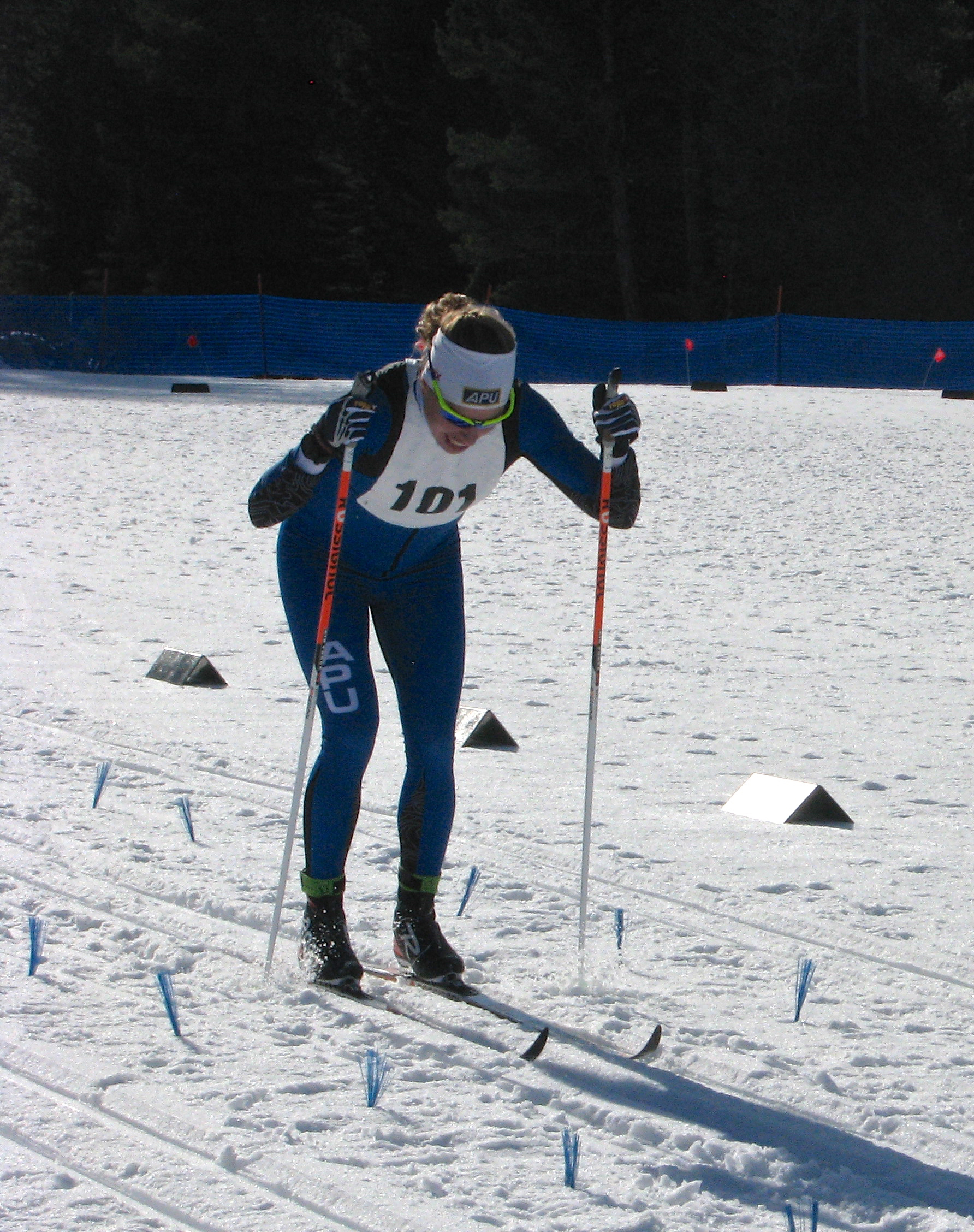
    “The quarterfinals and semifinals were good; I went out from the start pretty hard,” Bathe said. “In the finals, I knew that I wasn’t gonna be able to hold that if I tried, so I just kind of went behind people and it just seemed to work out for me.”

    Following Brennan and Naryshkina up Hermod’s with Rorabaugh, she put herself in fighting position for the finish.

    “I tried to go as hard as I could, push over the top and try to hold on at the end,” Bathe said.

    As for her best senior nationals result by 36 places, she said it was a confidence booster heading into her first collegiate season.

    “I’m planning on going to Junior Worlds so I’m hoping [after] the results here, I can help our team out there,” Bathe said.

    Rorabaugh had mixed feelings about her week after opening with her first national title in the 10 k classic individual start. The next day, she placed seventh in the skate sprint and was 13th in the 20 k freestyle mass start on Wednesday.
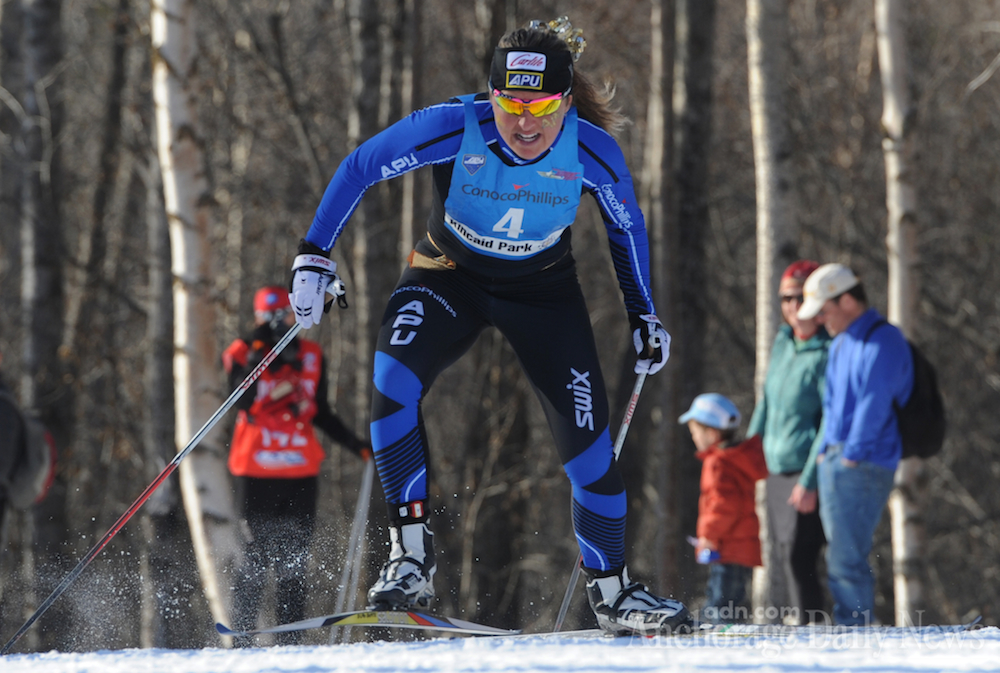
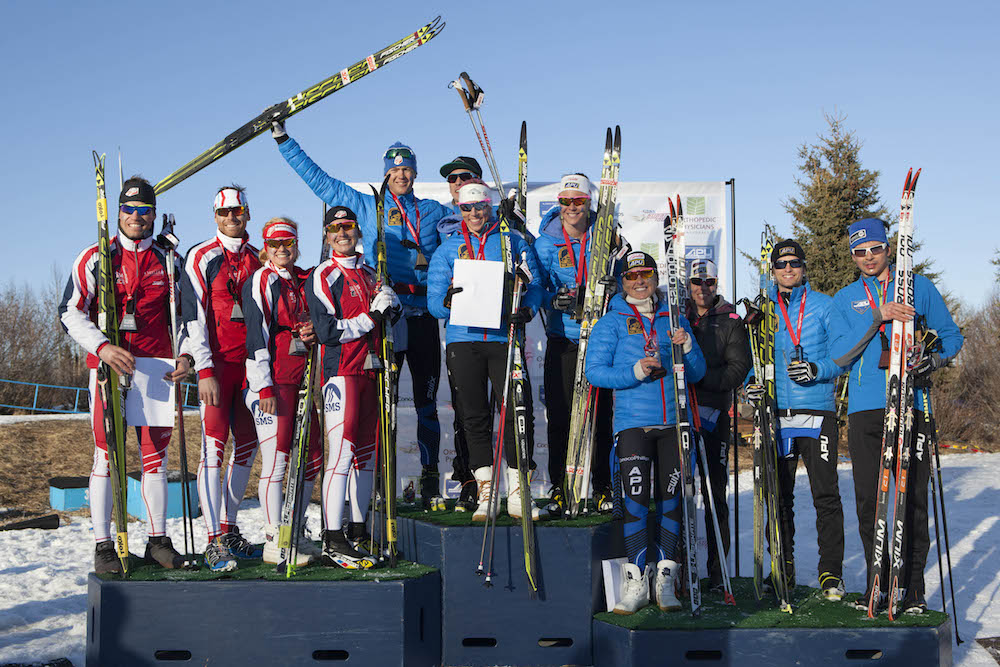
    “It’s been a crazy week, lots of ups and downs,” Rorabaugh said with a laugh. “I think I’m in better classic shape than skating shape right now so I’ll see where that takes me.”

    Natalja Naryshkina (1) and Rosie Brennan (2) go head-to-head up Hermod's in the women's classic sprint A-final at U.S. nationals at Soldier Hollow on Friday. Naryshkina ended up edging Brennan by 0.3 seconds for the overall win, but Brennan was the top American in second.
    Natalja Naryshkina (1) and Rosie Brennan (2) go head-to-head up Hermod’s in the women’s classic sprint A-final at U.S. nationals at Soldier Hollow on Friday. Naryshkina ended up edging Brennan by 0.3 seconds for the overall win, but Brennan was the top American in second.

    The final turned out to be interesting after Brennan decided to pick up the pace early.

    “Rosie would much rather have it come down to the hill than come down to the final sprint, so she took it out as hard as she could, which made it fun because it was definitely all-out the whole time,” Rorabaugh said.

    Fourth up the hill, Rorabaugh soared back into contention on the descent with noticeably faster skis.

    “I had amazing skis; our wax techs really killed it today,” she said.

    Skiing in third, she said both she and Naryshkina moved to the outside track around the 180-degree corner.

    Naryshkina eventually took the inside lane, but the tangle gave Bathe “an opportunity to come in with a little more speed,” Rorabaugh said. “We had a good sprint finish; it was really exciting. I think I gained on her a little bit toward the finish, but didn’t quite get it so ended up fourth, which is still a pretty darn good day.”

    Brennan was also excited about her second U.S. title after she won the 10 k freestyle last year at Soldier Hollow – her home course.

    “I can’t say I ever expect to win a sprint, but it’s sprinting so you really never know what happens,” Brennan said. “It’s cool that way. I’m excited.”

    With a new sprint course this year that included a grueling ascent up Hermod’s, Brennan said it suited her strengths.

    “I felt like, ‘If I can just wear people out and take the sprint out of them a little bit then I have a chance,’ ” she said.

    Rosie Brennan (APU) takes charge up Hermod's in the women's 1.5 k classic sprint semifinals at U.S. nationals at Soldier Hollow. Jennie Bender (second from r) ended up winning the heat, followed by Brennan's teammate, Becca Rorabaugh, in second. Brennan made the A-final in third as a lucky loser.
    Rosie Brennan (APU) takes charge up Hermod’s in the women’s 1.5 k classic sprint semifinals at U.S. nationals at Soldier Hollow. Jennie Bender (second from r) ended up winning the heat, followed by Brennan’s teammate, Becca Rorabaugh, in second. Brennan made the A-final in third as a lucky loser.

    After breaking away in her quarterfinal, she avoided a downhill crash that left Deedra Irwin (Michigan Tech University) on the ground for several minutes, but ultimately able to walk off the course.

    “I had no idea that that happened,” Brennan said. “Everyone was like, ‘You can slow down, you’re winning by a lot now.’ I was like, ‘Oh, OK. Thank you.’ ”

    She went on to lead her semifinal before ending up third, 1.9 seconds behind Bender and 1.7 behind Rorabaugh, but she didn’t regret going out hard from the gun.

    “It worked out perfectly because I don’t think I would’ve been lucky loser if I didn’t do that,” she said.

    As for her best result of the week, the Park City native said it felt great.

    “The first race here when I have so many people cheering for me it’s like, ‘Oh God, I have to do so well, there’s so much pressure,’ ” she said. “But then as the week goes on, I start to just relish in it. It’s so awesome to have so many supporters that come out. My best friend from since I was born is out her cheering for me and my brother and my dad and mom … so it’s really nice.”

    Results | Complete U.S. nationals results

    — Lander Karath contributed reporting

    The U.S. women's classic sprint podium with Rosie Brennan (APU) as the top American (second overall), Nichole Bathe of the University of Alaska-Fairbanks (l) in second, and Becca Rorabaugh (APU) in third. (Photo: Tom Kelly/U.S. Ski Team)
    The U.S. women’s classic sprint podium with Rosie Brennan (APU) as the top American (second overall), Nichole Bathe of the University of Alaska-Fairbanks (l) in second, and Becca Rorabaugh (APU) in third. (Photo: Tom Kelly/U.S. Ski Team)
  • U.S. Nationals: Women’s Classic Sprint Qualifier Photos

    U.S. Nationals: Women’s Classic Sprint Qualifier Photos

    MIDWAY, Utah — It’s all about ups and downs at Soldier Hollow, and Natalja Naryshkina of Central Cross Country (CXC) proved to be fastest up, down and around the 1.5-kilometer classic sprint course on Friday morning at U.S. Cross Country Championships with the fastest qualifying time of 3:58.20.

    Rosie Brennan of Alaska Pacific University (APU) was just two-hundredths of a second of the pace in second and Jennie Bender (Bridger Ski Foundation) ranked third, 3.40 seconds behind her former teammate Narshykina. Heats start at 12:15 p.m. MST.

    Note: Our apologies for not catching a photo of Deedra Irwin (Michigan Tech University), who qualified in ninth.

    Qualifier results


  • U.S. Nationals Photo Gallery: Women’s 20 k Freestyle Mass Start

    U.S. Nationals Photo Gallery: Women’s 20 k Freestyle Mass Start

    Caitlin Gregg (Team Gregg/Madshus) smiles with relief after winning the women's 20 k freestyle mass start at U.S. Cross Country Championships on Wednesday in Midway, Utah. Gregg won by 3:36, the biggest margin at nationals in recent memory.
    Caitlin Gregg (Team Gregg/Madshus) smiles with relief after winning the women’s 20 k freestyle mass start at U.S. Cross Country Championships on Wednesday in Midway, Utah. Gregg won by 3:36, the biggest margin at nationals in recent memory.

    FasterSkier’s coverage of the 2014 U.S. Cross Country Championships is brought to you through the generous support of The Memory Clinic in Bennington, Vt.

    MIDWAY, Utah — Caitlin Gregg didn’t waste any time getting out front and out of range on Wednesday, opening up an 11.5-second lead by the first of four laps in the women’s 20-kilometer freestyle mass start. The 33-year-old SuperTour leader went on to post the fastest lap each time around the Olympic 5 k course at Soldier Hollow en route to a 3:36.4-second victory in the penultimate race of the 2014 U.S. Cross Country Championships.


  • Gregg Aims for Dominance, Wins 20 k by Over Three and a Half Minutes at U.S. Nationals

    Gregg Aims for Dominance, Wins 20 k by Over Three and a Half Minutes at U.S. Nationals

    2014Jan11_9974-L
    Caitlin Gregg (Team Gregg/Madshus) is nothing but smiles as she crosses the finish line 3:36 ahead of the second place finisher in the 20 k freestyle to claim her fourth national title. (Photo: U.S. Ski Team/Sarah Brunson)

    FasterSkier’s coverage of the 2014 U.S. Cross Country Championships is brought to you through the generous support of The Memory Clinic in Bennington, Vt.

    MIDWAY, Utah – At the 2014 U.S. Cross Country Championships, winning by any margin is enough to make most competitors’ day. Not so for Caitlin Gregg of Team Gregg and Madshus, who won Wednesday’s 20 k freestyle mass start with a time of 55:33 and a lead of over three and a half minutes, a gap that has not been seen at the national level in recent memory. Unsatisfied with a mere win, Gregg set a blistering pace that left her fellow racers in the dust after the first few kilometers, ultimately resulting in her fourth national title.

    “I had a game plan. It was to try and see what kind of a gap I could create,” Gregg said in post-race interview.

    IMG_9771_edited-2
    Caitlin Gregg (Team Gregg/Madshus) leads Chelsea Holmes (SVSEF) up Hermod’s Hill in the first lap of the 20 k freestyle at the 2014 U.S. Cross Country Championships. Greg handily won the the race, with Holmes following in second.

    The 20 k race started out like most. The gun went off and the 78 women fought to find the best place they could in the sea of brightly colored spandex. “We were all in front and then I let some people step in front of me thinking that I would relax,” said Rosie Brennan, eventual third place finisher and skier from Alaska Pacific University. “Then I looked up again and Caitlin [Gregg] was gone.”

    With an extensive history of success in skate mass starts like the Birkie, Gregg knew to take the first few kilometers easy to see how she was feeling and to observe how well her skis were running. After the first few downhills, she realized that she had skis like rockets.

    “I’m risking the rest of the field getting all tangled up and falling on each other, just siting around here and trying not to pull,” she said. “At the top of the second big climb I took the lead. Once I started going, I finally got into my groove. I couldn’t stop smiling.”

    As Gregg took off, only one skier attempted to stick with her. Chelsea Holmes of the Sun Valley Ski Education Foundation, who eventually finished second, took what she thought would be a short ride to the front of the pack. Instead, she realized that Gregg wasn’t going to slow down, but it was too late.

    “It was brutal. I felt like a child; a small, floundering child,” said Holmes. “I didn’t think [Gregg] was going to actually go that hard.”

    Holmes did her best to stay with Gregg through the first lap, but a five meter gap turned into 10, which then turned into 20, and pretty soon she found herself alone on the course with the blue and white Team Gregg suit off in the distance and a hungry Brennan coming up from behind.

    IMG_9860_edited-1
    Rosie Brennan (APU) leads Chelsea Holmes (SVSEF) up Hermod’s Hill in the third lap of the 20 k at the 2014 U.S. Cross Country Championships at Soldier Hollow. Holmes finished second and Brennan finished third.

    ”That was one of the harder races I’ve done, knowing that there were people behind me, catching me,” said Holmes. “I was very deep in the pain cave the entire time.”

    However once Brennan overcame her near the end of the second lap, she was able to rest a little while the two worked together. “I think that was a good thing,” she said of Brennan catching her.

    After watching the men’s race, where initial breakaways were slowly reigned back in, Brennan assumed she would just relax and slowly catch up to Holmes. “Once I got there I thought we could work together, but this course is so hard,” said Brennan of the 5 k olympic course that the women completed four times. “There is no rest. Even when I was following [Holmes], it felt like I was maxed out.”

    While the race for second was being waged between Holmes and Brennan, another pair was skiing behind them to keep their position on the challenging course. Kate Fitzgerald (APU) and Caitlin Patterson of the Craftsbury Green Racing Project used each other to try and close the gap between them and Holmes and Brennan

    “We were switching leads out there, which made it a lot more fun; way more fun than skiing by yourself,” Fitzgerald said. “We were chasing Rosie and Chelsea. They were like a carrot over there.”

    Caitlin Patterson (Craftsbury GRP) and Kate Fitzgerald (APU) work together in the 20 k freestyle mass start at the 2014 U.S. Cross Country Championships.
    Caitlin Patterson (Craftsbury GRP) and Kate Fitzgerald (APU) work together in the 20 k freestyle mass start at the 2014 U.S. Cross Country Championships.

    “It was fun to work together with her. I don’t think either of us would have been as strong without each other,” said Patterson. “For a while I thought maybe we could get them, it seemed like we were closing for a little bit. But they definitely didn’t die and they had a pretty strong push at the end.”

    In the end, the pair was unable to reach the second and third place finishers. Fitzgerald skied across the finish line in fourth and Patterson followed in fifth.

    While the two pairs were working behind her, Gregg was continuing to surmount an increasing lead. With each glide of her ski she gained more confidence as she made her way around the hilly course.

    “The hills were so tough, and for some reason I’m silly and I love that,” she said with a laugh.

    Even though it was apparent that nobody would be able to catch her, she never slowed down. “I wanted to see what I could do and I just felt too good. It was really fun, and I definitely skied relaxed and there’s definitely that point where skiing relaxed is faster.”

    Testing her limits wasn’t the only motivating factor for Gregg in Wednesday’s 20 k. In an Olympic year where there are many strong women who have already met the criteria for the Olympics, she needed to prove that she was more than worthy of a spot in Sochi.

    IMG_9804
    Caitlin Gregg (Team Gregg/Madshus) takes a feed at the top on the 5 k olympic course en route to her fourth national championship.

    When asked about whether or not the Olympic Games were an influence in today’s race, she recalled something Pete Vordenberg, the former U.S. Ski Team Head Coach, said to her before she made the Olympic team in 2010.

    “He said ‘when you’re on the bubble, the best place to be is not on the bubble.’ And if you’re not going to be on the bubble you’re going to have to make it pretty apparent,” she said.

    She did her best to make it apparent, and skied the fastest time each lap. By the time the next competitor had crossed the line Gregg had already finished over 3:36 before.

    With many strong American sprinters, Gregg knew she had to shine in another discipline. She also knew that there would be a 30 k skate race in Sochi. A smart and calculated move, she saw the chance to demonstrate that she could be a strong contender in that race.

    “[The 20 k was] that opportunity to make it easy for them. Don’t leave any doubt in their minds. And so [today] was my attempt to do that.”

    While the U.S. Ski Team coaches are waiting to announce the Olympic team until the 21-22 of January, Gregg and her husband, Brian, have plenty to do in the meantime. On the same day that Gregg was crowned national champion in the 20 k and her husband placed second in the 30 k, both were scheduled to fly to Europe to compete in the period II World Cup races taking place in the Czech Republic.

    The couple qualified for the World Cup by taking the top spots in the SuperTour standings, and if all goes well, she’ll continue her quest to “get off the bubble,” while competing at the World Cup level. However, the most important thing is that she and her husband are on the journey together.

    “I cannot express anything better than being able to share this with my husband,” said Gregg, who upon her husband’s second place finish broke out into a fit of emotional exuberance. “It’s a great way to end our nationals. We’re going to get on that plane and we are just going to have all sorts of war stories, and then crash something fierce on that flight.”

    Results

    — Alex Matthews contributed reporting

    Laurie Humbert and Caitlin Gregg
    Laurie Humbert hugs Caitlin Gregg after Gregg claimed her fourth national title in the 20 k freestyle mass start. Laurie has been a large part of Gregg’s journey to nationals.