This article was made possible through the generous support of our voluntary subscribers. If you value coverage like this, please support FasterSkier with a voluntary subscription.
Matt Dougherty has a way of knowing in September exactly what he is going to say in February.
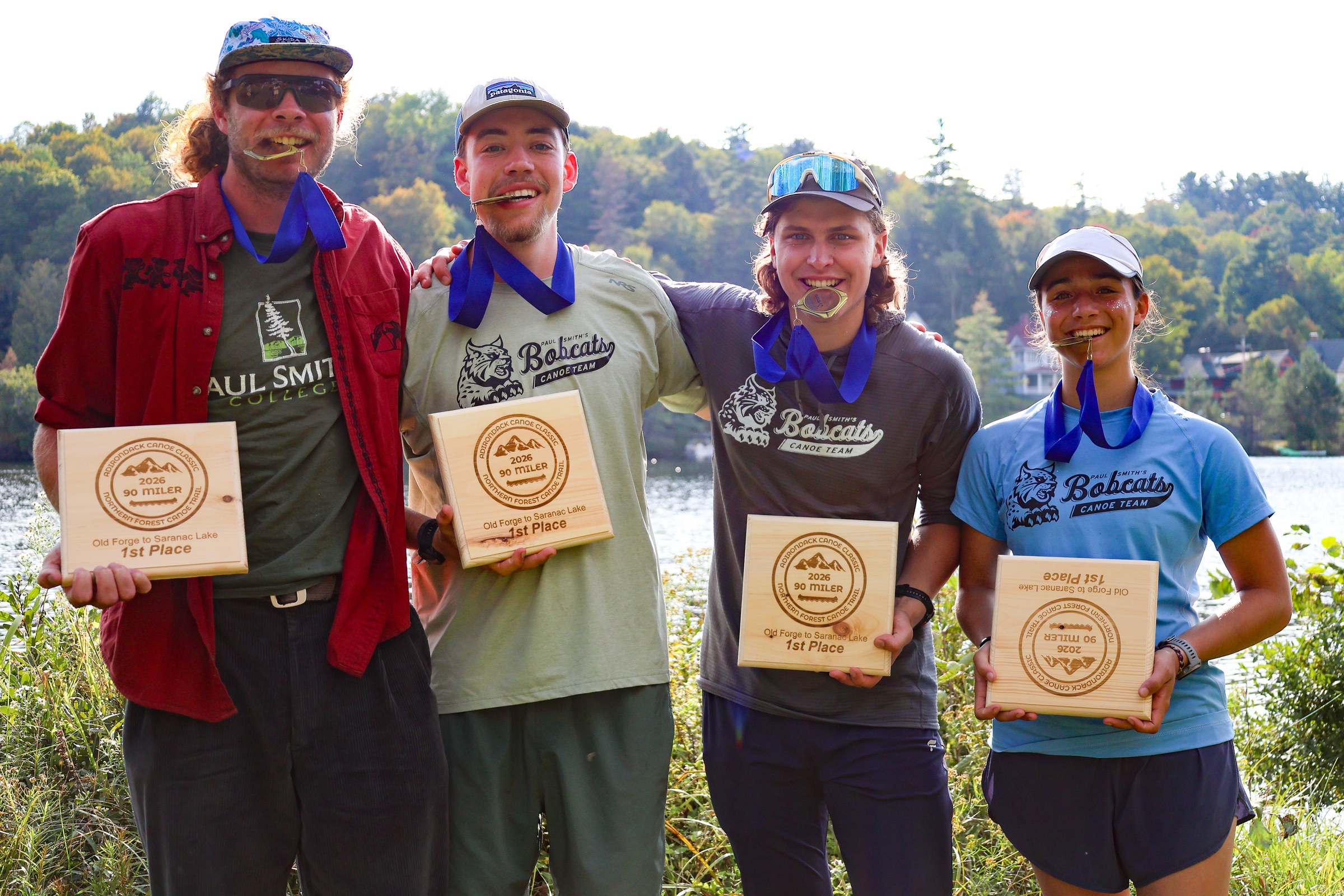
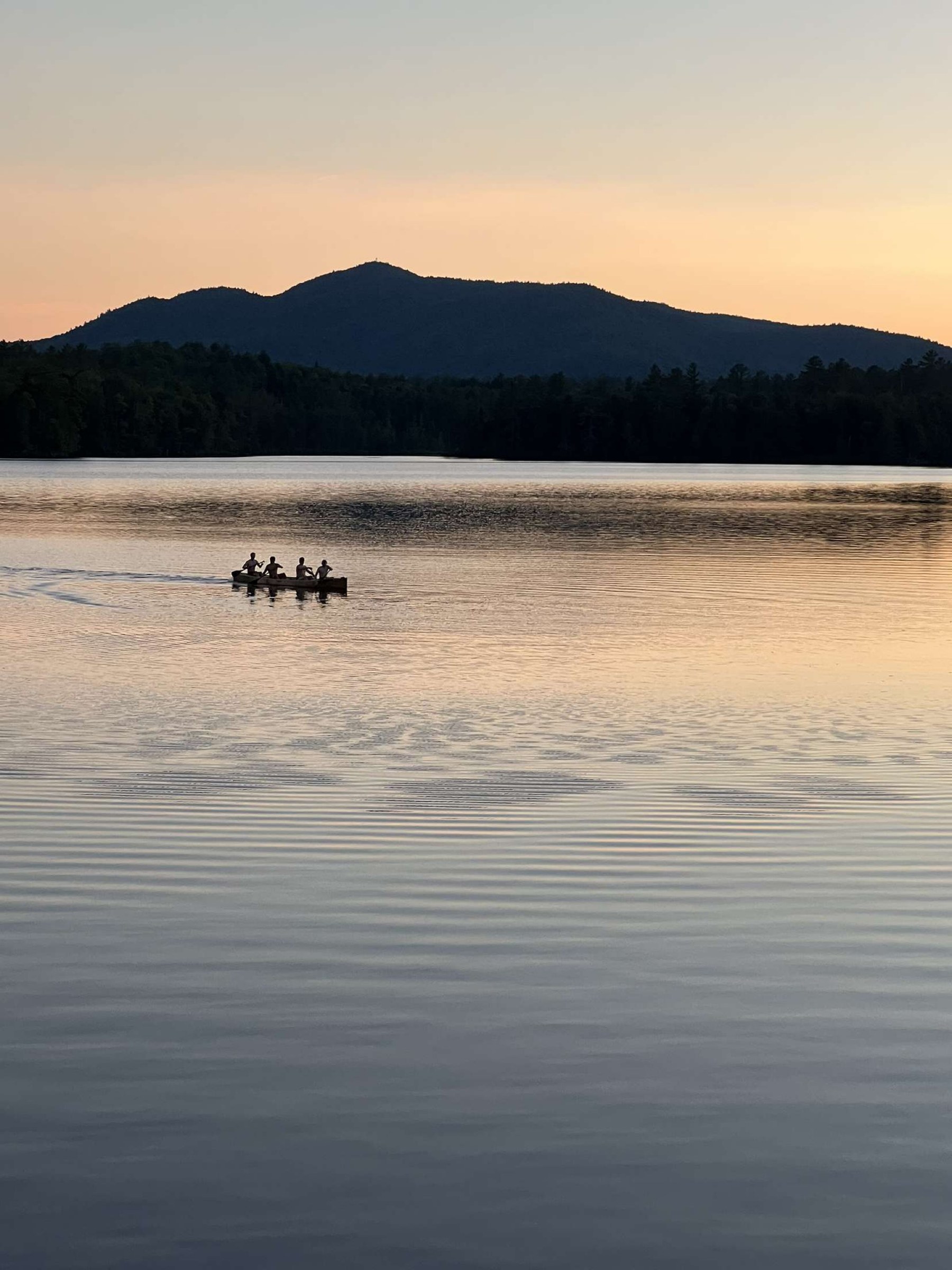
It usually happens on the second day of the Adirondack Canoe Classic, the three-day, ninety-mile paddle from Old Forge to Saranac Lake that everyone in the North Country calls the 90-Miler. By then his skiers have been in a boat for two days. They have carried it over roughly five miles of portage trails. They are, by his description, flat on the ground.
“It was six hours of just going as hard as you can, which is still low on the L zones, but you’re putting out power for hours and hours and hours,” Dougherty said. “And then you get back in the boat.”
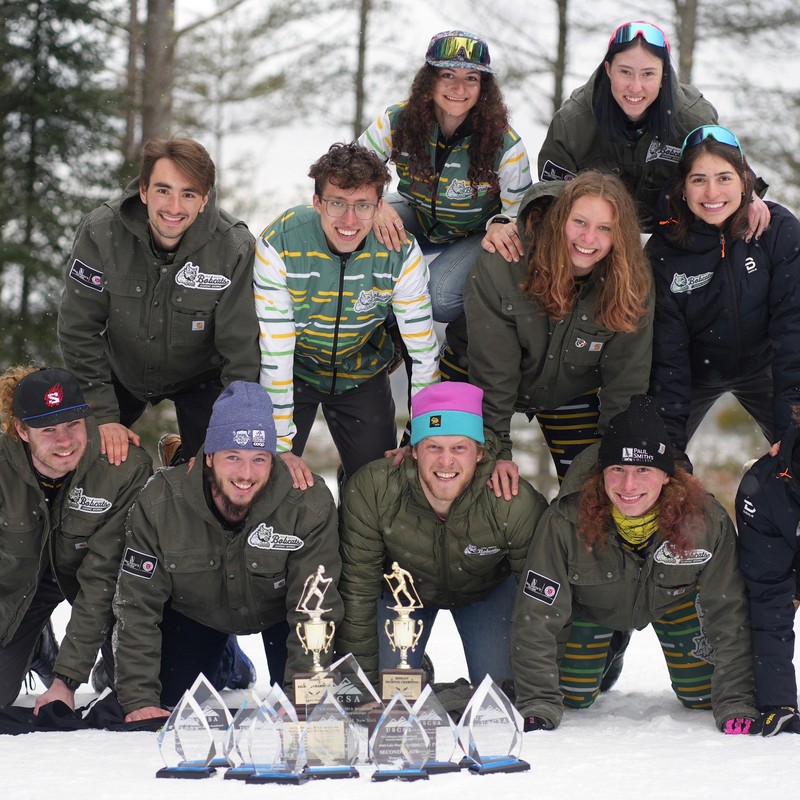
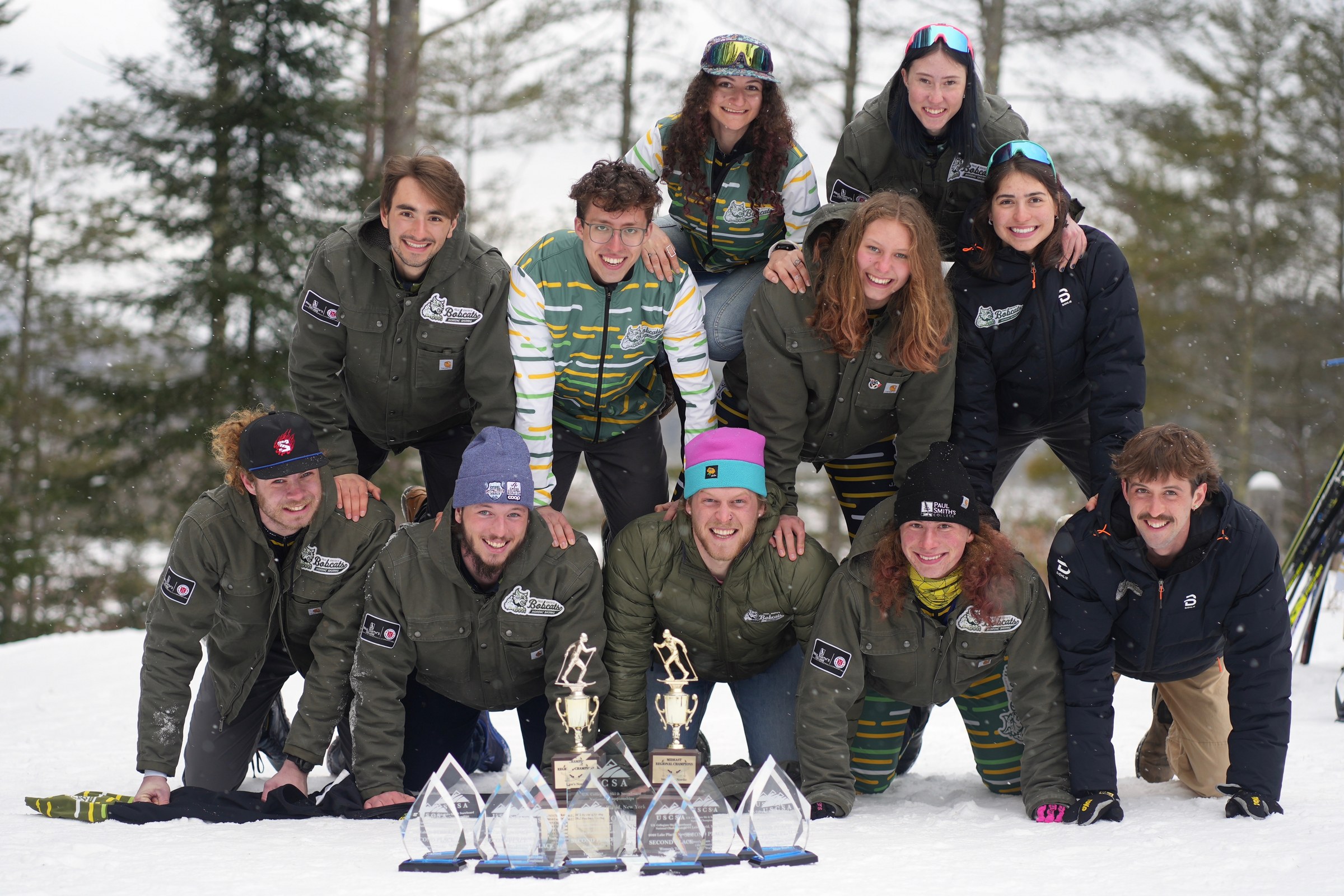
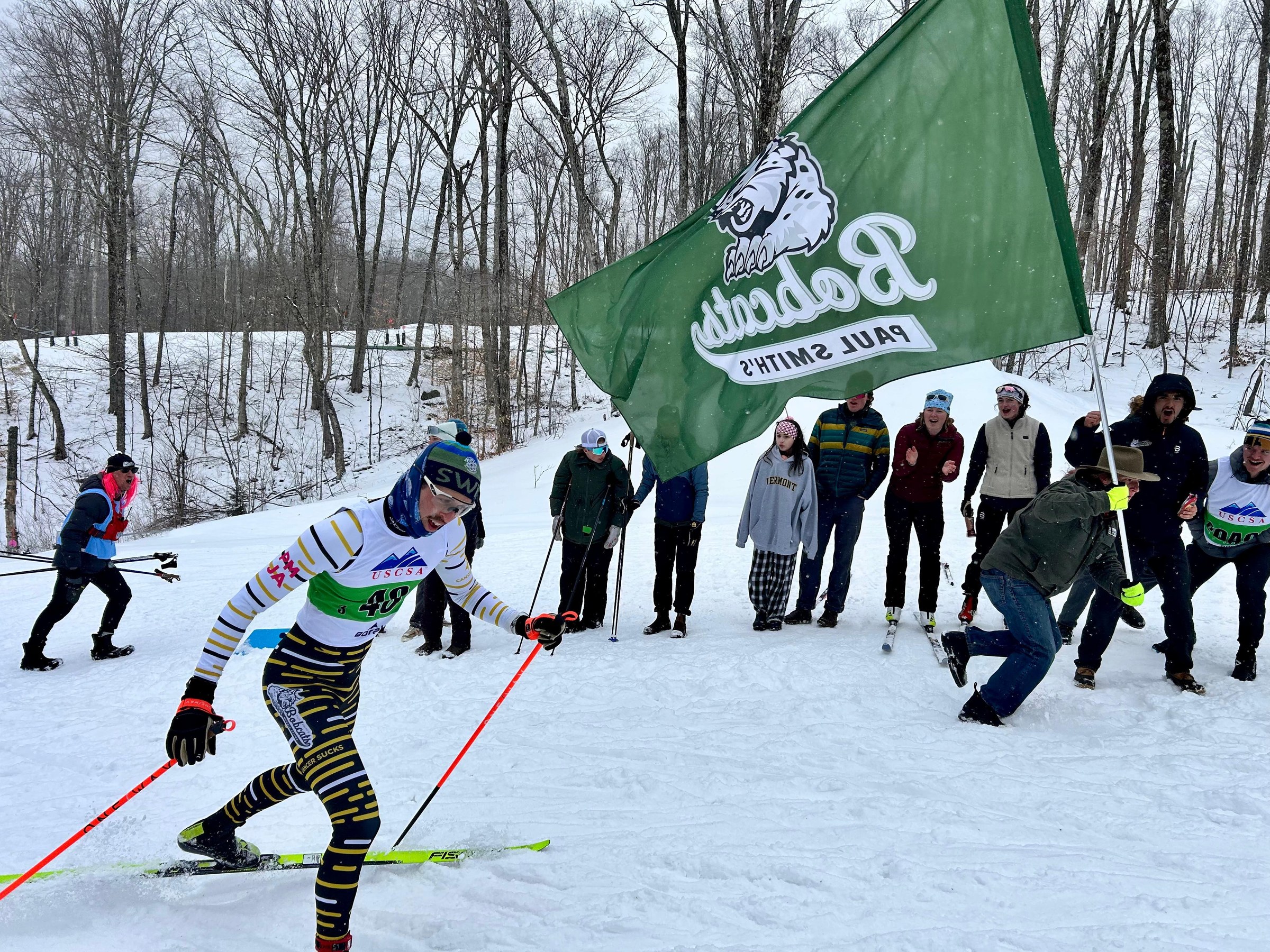
Dougherty is the head nordic ski coach at Paul Smith’s College, and also its head marathon canoe coach, which is not a combination most ski programs carry. In March his men won the USCSA national championship at Mount Van Hoevenberg, 68 points to St. Olaf’s 108, the program’s second national title in five seasons. His women finished second, as they did in 2022 when the men won the first one. He took the ski program over in the fall of 2020 with one skier on the roster and no recruits, at a college in the woods with fewer students than most high schools.
He is also, as of this year, the subject of a feature documentary, which is a strange thing to happen to a coach at a school of this size and which he did not see coming at all.
Three days in a boat
The marathon canoe team is not a requirement for skiers at Paul Smith’s. A lot of them do it anyway.
“It gives me the opportunity to do the important lessons,” Dougherty said. “The 90 mile canoe race is super hard, and I can go back and be like, look at what we can do when we put our mind to it.”
The boats are the point. In the Voyageur class, where Paul Smith’s entered a seven-paddler crew in 2024 and won its division by two hours, the craft itself becomes part of the problem.
“It’s raining and you paddled,” Dougherty said. “You had to carry a boat that’s 300 pounds if you’re in the Voyageur canoe up and over a literal side of a mountain in a race.”
He is after two things. One is the plain demonstration that his athletes can do more than they think, a claim coaches make constantly and almost never get to prove in September.
“A lot of times our preconceived notion of what we can do is only limited by our own mind,” he said. “If you ask them at the end of day one, they’re like, there’s no way I can do that again. Day two, and you keep doing that, and you’re like, but what can you actually do if you open up your mind and say, like, I’m just willing to see, I’m willing to test those boundaries?”
The other is more useful to him in February.
“To affect change, you got to have shared experiences, even with a coach involved in it,” he said. “That say, like, we shared this really hard time, and there’s this high level of trust, and we can do super hard things. From there, we can then we can get into the training, and we can say, yeah, we’re gonna do 44 weeks of training next year, and you’re gonna put on 10 pounds in the weight room, and things that they’re like, what? But now it’s like, okay, we have a place to start from.”
There is a third thing, which he raises without being asked.
“It’s really hard for college students to understand all the hard things you’re going to go through in life, and I want them to be tempered and ready,” he said. “This is going to be hard to experience all of the emotions, sadness, grief, pain, but also to be like I can endure this.”
The long way back to Saranac Lake
Dougherty graduated from Saranac Lake High School in 1997 and got a running scholarship to Houghton University, then a small NAIA school in western New York, which is where the pattern that governs everything else started.
“Sport was an avenue to change my circumstances in life,” he said. “It changed my life because it got me to college. I paid for college. I got a degree, and then changed my circumstances drastically.”
He has two degrees, an undergraduate in outdoor education and ceramics, and a master’s in education from St. Lawrence in what he describes as cognitive behavior. He coached track and field for two decades before this, and he spent some of those years around people whose approach he took wholesale. One of them was Clyde Hart, the Baylor coach who put Michael Johnson, Jeremy Wariner and Sanya Richards-Ross on Olympic 400-meter podiums.
“You’d think, man, you have like three gold medalists on your team right now,” Dougherty said. “And you’d see him interact with his athletes, and you’d be like, wow, it’s always the person first. It is what’s going on in your life today, what’s going on the person before the athletic part.”
As a coach, he had chances to move up into Division I teams. He turned them down, and he credits his wife with the reasoning.
“What I realized then is, it’s a numbers game and it’s not a person game,” he said. His wife, he said, put it to him as a trade: “If you do this, you lose that, and it’s going to be miserable for you.”
He is now coaching three miles up the road from where Bill Demong grew up, at a college where Tim Burke’s father was a vice president for thirty-five years. He has a theory about what sticks from a life in that company.
“He would probably just hide his Olympic gold and silver medal for the rest of his life,” Dougherty said of Demong, who won gold and silver in nordic combined at the 2010 Vancouver Games. “But he would happily talk about what sport did, like what those experiences were.”
Goals that do not squeeze anyone out
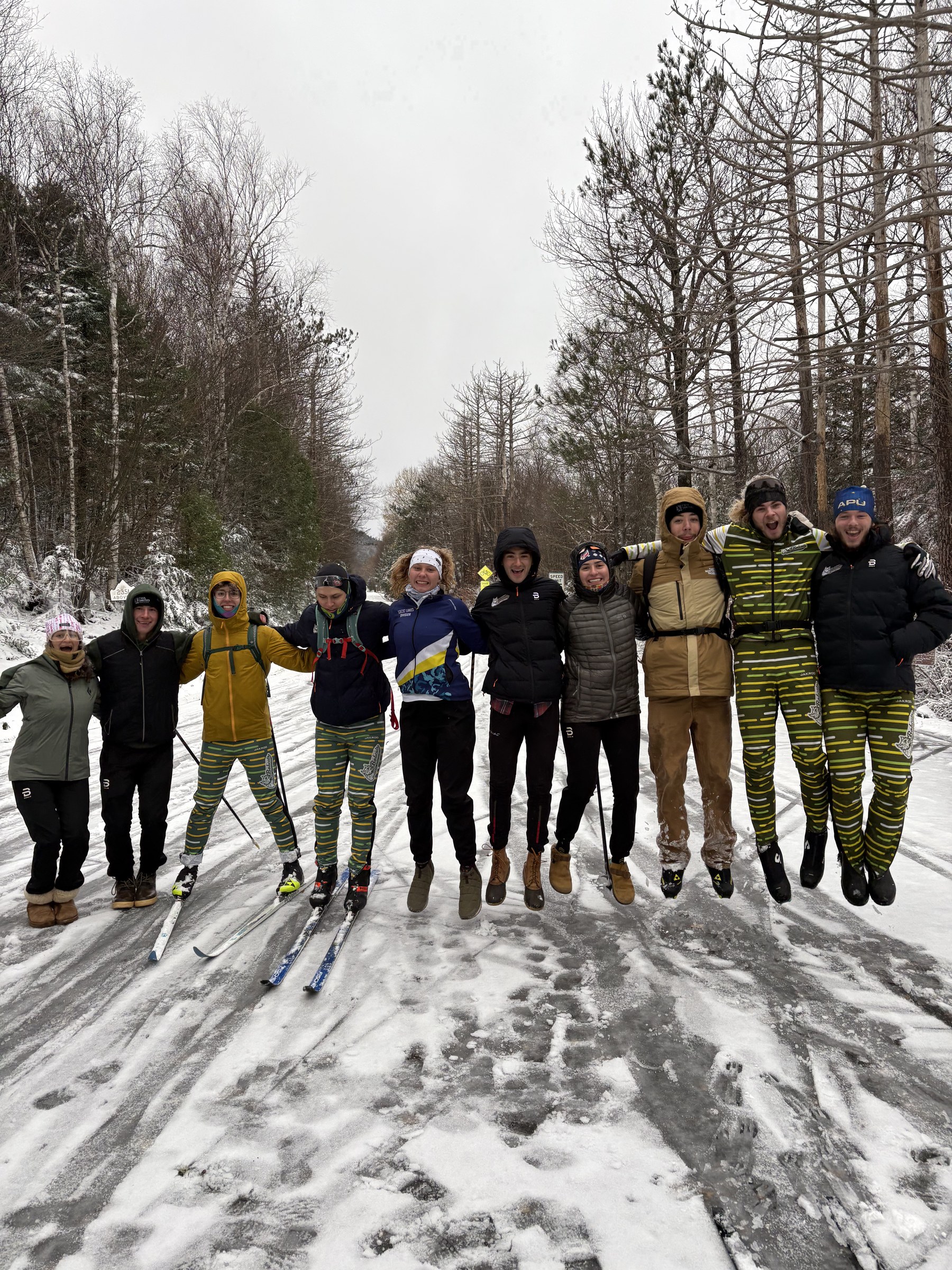
Paul Smith’s does not set a team goal of winning a national championship, even in years when it wins one.
“We just set process goals, because that’s the only thing we can control is what we do there,” Dougherty said. “And we caveat that with a little like, what do we hope that gets us. If we do all those things, we hope it can lead us to contending for a national title.”
The reason is not modesty. It is arithmetic about who a team goal excludes.
“I take such an individualized version of goal setting,” he said. “If we put a performance metric behind it, it often squeezes out other people in the program. It doesn’t allow their goals to exist.”
Last season one of his athletes was named to a US biathlon team for an international championship, which meant flying back from Germany and landing roughly a day before the national championships started.
“If the women’s team had said like our goal is to only win nationals and they were second overall, like that would have put her in a position where she’s like, well, I’m taken away from the team by going to World Juniors,” Dougherty said.
She went. The team finished second anyway. Nobody had to choose.
The team does have expectations, two of them, and he recites them the way people recite things they have said several hundred times.
“To be on this team, you got to be a good teammate first, and then maximize your opportunity,” he said.
What that produces, in his telling, is a program where the standard gets set from the back of the group.
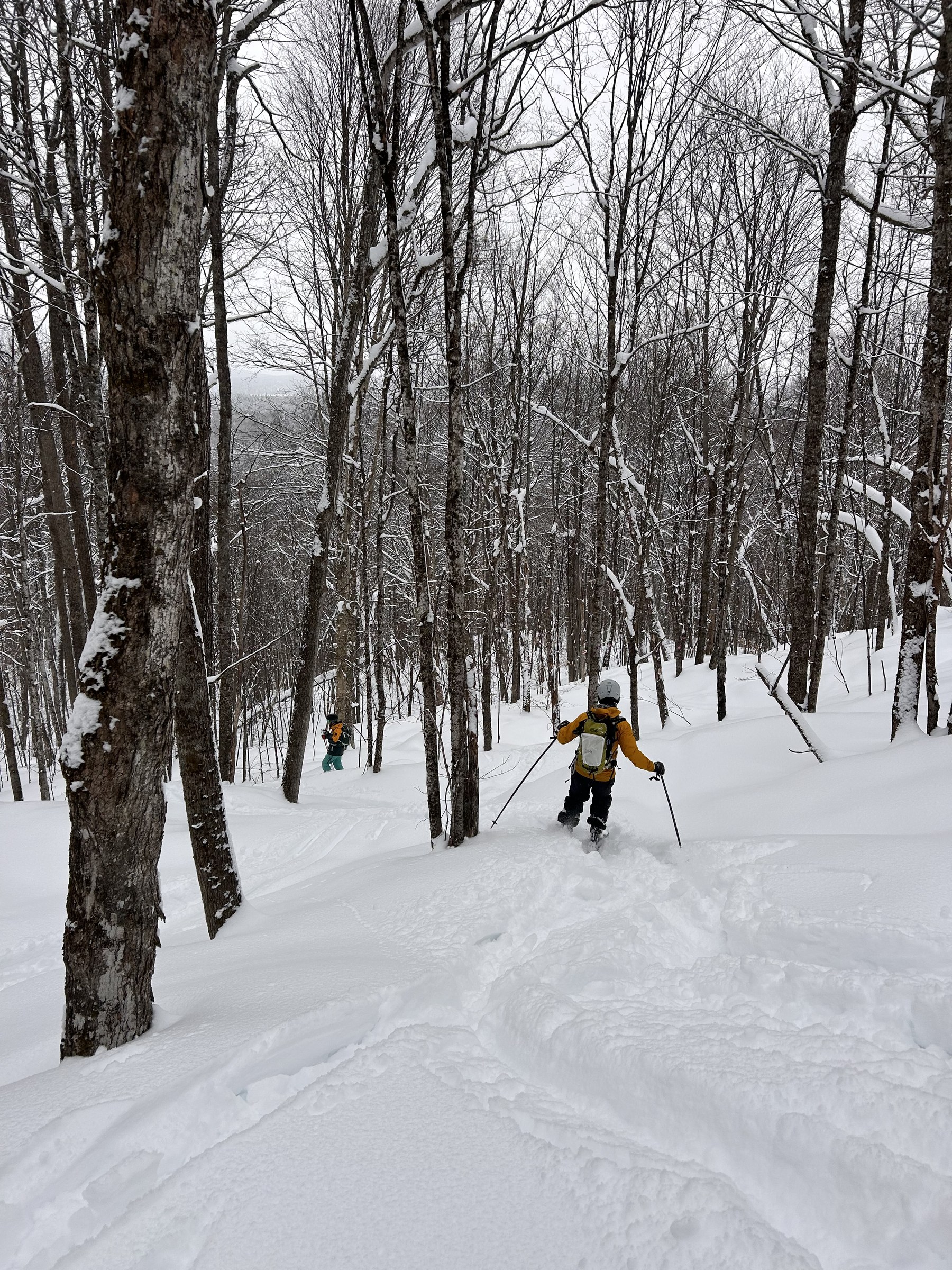
“When a star is like, oh, I’m tired today, or this morning it’s raining and it’s 38 degrees, no one wants to ski, but they see the slowest guy kitting up and going out, then it allows all of us to kind of gain from that,” he said.
The person before the athlete
The documentary spends real time on mental health, and it is the part of the conversation Dougherty warms to fastest. He starts from what he does not know.
“I only get a piece of the story of this athlete,” he said. “We don’t know if they came from rough family life or they just feel like they don’t belong. All these things. Mental health issues are real, and I need to know about those. But I have to allow space for them to come up organically.”
“I can’t be like, who has mental health issues?” he said. “I’ve got to create the space for that.”
The space, in practice, is a rule about curiosity that the team applies to each other.
“We’re constantly like, we’re not judgmental on this team. Let’s be curious,” he said. “If as we look at a teammate and we wonder what they’re going through, instead of saying like whatever, we say like, oh, what’s the source of that?”
The same approach applies when he already knows an athlete is struggling. The problem then is how to open the door without making the asking the event.
“The really hard thing is when you get to the point where you know stuff’s going on, finding the way to indirectly be direct,” he said. “What do you need?” is the question he finds himself asking, and it generally opens the door.
That extends to how he thinks athletes should hold their own results. A race result, in his view, is a terrible place to store your sense of self.
“Their performance isn’t who they are, and it’s not anything connected to their value,” he said. “Whether we win by 20 points, lose by 20 points, doesn’t change their person or their value as a person.”
As he has gotten older he has become more concerned with sportsmanship, and he treats it as something other than a courtesy. It is how he teaches athletes to handle a disappointment and to recognize somebody else’s work.
“When you can say like, yeah, I didn’t have a great race today, instead of being sad and dour, if you go to celebrate someone you know who’s trained hard for a year and had a great day, you can’t be sad anymore,” he said. “It just changes you.”
He means it specifically. Clarkson won the USCSA men’s title at Mount Van Hoevenberg in 2024 and Paul Smith’s finished second, and Dougherty’s response was to have his team look closely at what the Clarkson skiers had done to get there.
“Even though we’d love to win, when you see someone perform like that, it’s actually inspiring,” he said. “The more we can be open to looking at performance and saying like other teams did great, but there’s value in me not just celebrating them, but seeing what they did and honoring it. I think it makes us better athletes in the end.”
A small college and a film crew
Paul Smith’s enrolls roughly 750 students by the college’s own count, on 14,000 acres at the northern edge of the Adirondack Park. Nearly half the bachelor’s degrees it awarded last year were in natural resources and conservation. It is the kind of place where a skier’s Saturday gets rearranged by a professor.
“When you come here, it’s individualized; it is a personal relationship school,” Dougherty said. “My students are working with a professor; he takes an interest, he gets to know them, and then I find out, well, Saturday we’re actually going out with this professor. He’s taking us into the mountains to show us this specific part of our research.”
“It is harder when you have 700 students. Everything about that is harder: recruiting, getting people here,” he said. “But because of that, we live in a culture where everyone on campus knows the ski program.”
That extends past the campus. Dougherty calls the Saranac Lake and Lake Placid community around the program super fans, and he puts the college president, Dan Kelting, in that category.
“He shows up at ski races and he’s not just there to like cheer,” Dougherty said. “He’s also there like, what do you guys need? What does the program need? What do we need to keep bringing in great students as a ski program?”
His summary of the whole arrangement is that it could not exist anywhere else.
“It’s this weird subculture that probably could only exist in the Adirondacks,” he said.
Which brings up the film. A donor with a seasonal home on one of the lakes near the college met the team at an event, decided there was a story, and asked whether Dougherty would sit down with a documentary crew. Dougherty said yes without any clear idea what he was agreeing to.
“I expected a three to five minute kind of like infomercial type thing for YouTube,” he said.
What arrived was Adrenaline Films, an Orlando company that Dougherty said had got its start on the early seasons of Survivor and had lately been following a ballet company through the war in Ukraine. The crew embedded with the ski team for close to two years.
“This was like pretty legit documentary crew following us for a long time,” Dougherty said.
The result is Coach Matt and the Outdoor ‘Cats, directed by Robert Jury and produced by Michael Murray and Tim Ranzetta. It runs about 95 minutes, and it is free to watch, with ads, on Amazon Prime Video and on Tubi. Its spine is the 2024 season, in which the Paul Smith’s men lost the national title by two points.
“They’re really just telling the story of a team,” Dougherty said. “Small, tiny school in the woods is really another theme there. You can do anything, anywhere, kind of an idea.”
Any money the film makes goes back to the program, and he doubts there will be any.
“My guess, without knowing all the specifics of cost, is that this is a net loss,” he said.
The team that lost by two points in that film won by 40 in March. Nobody set that as a goal.
Help Support Our Coverage!
If you value the thoughtful work and access FasterSkier provides, please consider becoming a Voluntary Subscriber. Your support directly fuels our work to cover the people, places, and moments that make our sport special.
Join the FasterSkier community!
Leave a Reply
You must be logged in to post a comment.